



Richard Baldasty taught philosophy and history at SFCC from 1984–2007, and during his tenure, he was regularly published in this journal and contributed significantly to the arts on our campus. Upon his retirement, The Wire Harp honored the spotlight he shone on art by naming our poetry award for him. Each year, The Wire Harp staff selects what we consider the most artistic poem (or this year, two poems) and piece of prose as the recipients of these awards. We also give an award to a photograph and a work of fine art. Each of these four student artists receives a $150 prize, as a result of a generous gift from Richard. We appreciate Richard for supporting students in their creative arts.

Brandi K. Maas
being the person who is always running behind certainly takes a toll, and it doesn’t make one particularly popular, but what can be done? there are a set number of hours minutes seconds in any given day to do what must be done but what must be done and what can be done are separate matters the biggest problem is that time is a construct because today is just yesterday, again and again and so is tomorrow but then on one of the yesterdays that’s also today I notice how my cat’s tail suddenly has so many gray hairs that weren’t there on the yesterday yesterday and he’s having a hard time jumping up onto the bed when he used to be able to clear the room in a single leap so I get him some of those carpeted pet stairs but he’s afraid of them at first, silly boy silly baby boy silly fifteen-years-old-and-that’s-seventy-six-in-cat-years baby boy but I can’t worry about that right now because I have an assignment due Thursday supposedly but which of the todays that’s also yesterday is Thursday? the clock is ticking but I can’t see the hands moving because the clock manufacturers decided second hands are too much of an expense, perhaps, or maybe they don’t suit the fashionable aesthetic of this decade so I try to count the ticks and I look away for what feels like a thousand ticks but when I look back the hands never moved, so I pull up an app on my phone and scroll for a handful of ticks and now it’s midnight, god how is it midnight? and suddenly I’m exhausted so I rush to get ready for bed and then I’m lying there and can’t sleep, my eyes are closed but now it’s one and now it’s two and now it’s three-forty-seven, my eyes are still closed but now they’re weeping, my alarm is set for six-thirty, I’ll be tired again tomorrow I mean today I mean yesterday, again and again and the circles under my eyes are darker but that clock is still ticking
which all of my relatives are keen to remind me of when they decide my birthday is the best possible time to ask in-depth questions about whether and when I intend to breed, and the answer is “no, never” just like last year and the year before and the year before and so many years before even then but they don’t like “never” so they keep asking, hoping the “never” goes away, as if the idea that I’m running out of time to ruin my plan of childlessness will encourage me to decide to ruin it after all, because how could I possibly be happy if I don’t?
”Your clock is ticking!” they say as if their clocks aren’t also ticking as all clocks do regardless of whether you create life or succumb to death those wretched timepieces carry on
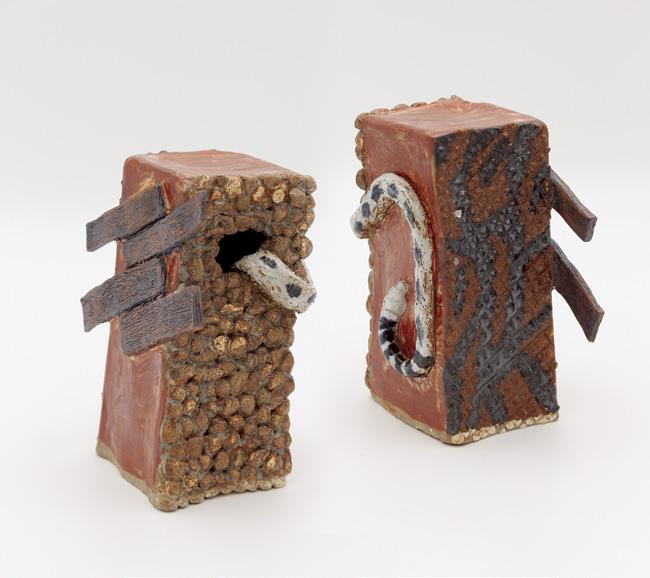
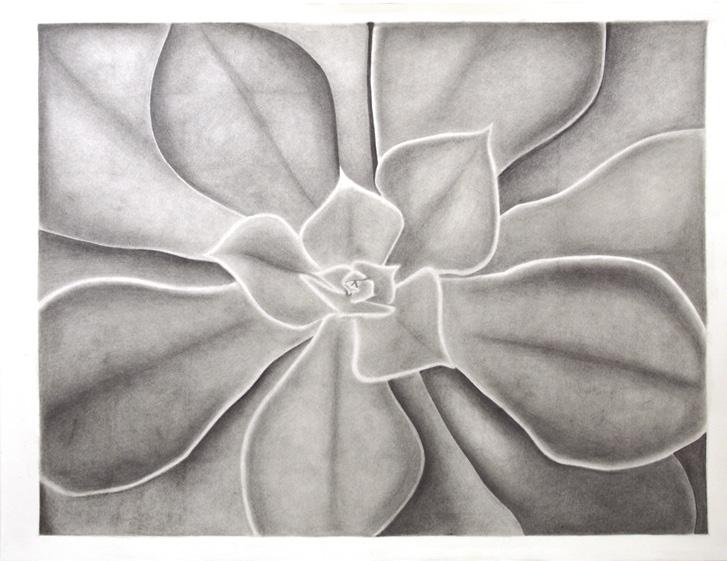
Abstracted Arizona - Sinora Desert Museum
This will be difficult for me. My tea is too warm tonight. Not like the burning feeling before. This cold won’t leave my body. Painful heavy coughs and hot sweats. My average struggles as a human. A very human body weighing down. My body gets in the way. Tonight I will close my eyes. My soul will detach from me. She will float above the sky. She cannot look back until morning. Imagining the things that could’ve been. This alone will ease my soul. Today I have nothing to say. And still I continue to write. How much longer do I have? How many hours will be enough? This longing will stop, I’m sure. Until then I will understand her. I will paint my own sky. I will wipe my own tears. Pulling myself up, keeping myself strong. Escaping a labyrinth isn’t always hard. I can make it look simple.
Matt Lindsey
I sat, staring at the album cover, trying to remember every face on it. Even after seeing it a hundred times, I still couldn’t remember every name, what everyone had done. Honestly, I’m still not sure who Sergeant Pepper is. I slipped the record out of itssleeve, put it in the player, and listened. Memories flooded through me, sitting with my grandpa, as he explained everything there was to know about each song. The Beatles were his favorite band, and he knew everything about them. Every time we listened together, he would tell me about when he saw them play this song or that one live.
He met John Lennon one day, you know; it was during a particularly cold December in New York. My grandpa managed a deli at the time, and none other than John Lennon walks in. He was overjoyed. The entry bell wasn’t done ringing before he was at the counter. Grandpa was too excited to even ask him for an autograph, just made John a sandwich and sent him on his way before he even thought to ask. It was only two days later that John was shot outside his hotel.
Man, I really miss Grandpa. He was so healthy. Sure, his hip hurt a little, but he was 76. What else do you expect at that age? One week he was jogging every morning, and next he was lying in bed looking ghastly. Turns out it was more than just hip pain. Smoking in his younger years had become lung cancer, which spread everywhere, eventually ending up in his bones and killing him.
Everything fell apart after that. Me and Grandma never got along super well, but we were civil.
After he died, we weren’t even civil. I visited so many times with cookies, hoping to make amends. It always started okay, but ended in a yelling match and an angry drive home. My most recent visit was the final straw. Before I left, I decided this was the time, we would talk things through, I would keep my cool, and life would be simple again.
My mind quickly changed when I saw a car I didn’t recognize in the driveway. In my spot.I was a little peeved before I decided it was probably a kindly neighbor paying the old widow a visit. Annoyance turned to a seething fury when it wasn’t Grandma who opened the door, but a man I didn’t recognize. I pushed my way past him, ignoring his pleasant greeting, and stormed straight to Grandma’s room. “What do you think you’re doing with him? You couldn’t even wait a year before you had a new boytoy?”
“Oh, come on sweetie yo-”
“Don’t you dare ‘sweetie’ me, you cold-hearted witch. I’m done with you!” I slumped against the hallway wall, to catch my breath, surprised by my own outburst.
Somehow, I ended up in Grandpa’s bedroom, which still lay untouched from the day he died. Through my tears I was able to just make out the flowers spelling out BEATLES at the bottom of a wardrobe. I bent over, grabbed the album, and made my way to the door, barely noticing Grandma and the old man as I cleared them from my path to the door.
The drive back to my apartment felt like hours. I wondered if I should stop on the side of the road, I could barely see through all of my tears. When I finally got home, I sat in silence for hours, not knowing what to do with myself.
Eventually that brought me to where I am now. The chaotic orchestra at the end of “A Day In The Life,”leaving me with just a final chord on the piano ringing out. Until, yet again, I sat in silence with only my memories of Grandpa.
Walking into pale walls, of some past love, much too bright. It made me so uneasy, almost out of body, floating above. It feels like the song where the levee finally dries. It’s been so long, almost a lifetime, but definitely not for you. You moved on so quick, became just a ghost of what you were, the person I once knew. I don’t wish it turned out any different, not if this is who you wanted to be, if this was underneath (so belligerent). Why did you have to leave just to show me. I thought you were forever, for years. But in that room, you became my only fear.
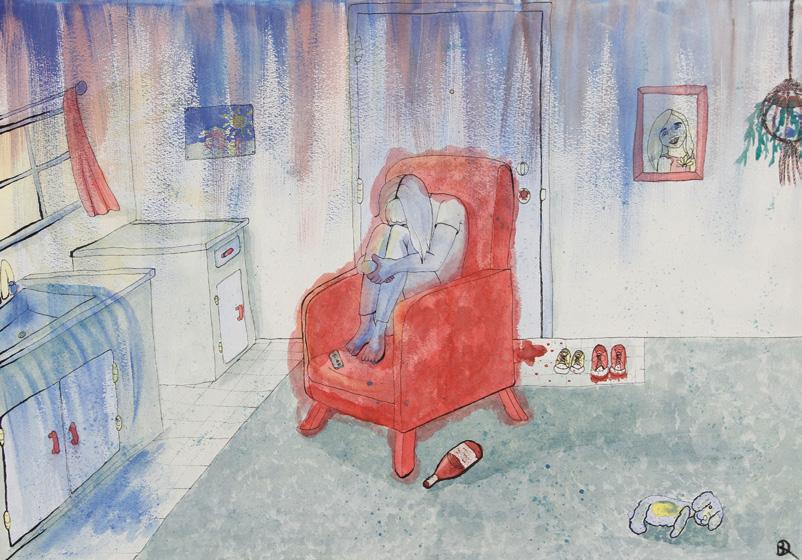
Desiree Fouraker
After the storm, you could barely tell what the building at the edge of town was supposed to be; the tree branch through the old sign that used to read “Presbyterian Church (please park around back)” made sure of that. Barely visible beneath the canopy of branches, Alice made her way through the skylight Mother Nature had so graciously put in and into the empty halls in search of trouble. Cold hands against the shattered window, she pocketed bits and pieces of colored glass to save for me once I came home. December wouldn’t feel quite the same without the godawful Christmas pageant the church insists the kids in town put on every year, but maybe the pieces of glass in Alice’s pockets could fill a little bit of that hole.
“Ethereal,” Alice’s mother used to applaud and take thousands of pictures when Alice and I came downstairs every year dressed as Mary and a sheep, respectively. For years, Alice had complained about how small of a part I got as she picked at the hems of her secondhand Mary costume, but in the broken down lobby of the church, I think she almost missed the little girls in badly made dresses that we used to be. Ghosts are not a rare occurrence in the empty halls of old memories.
Holding a candle, Alice sat, cross-legged, inthe middle of the room. I stayed in the shadows, quiet, as she lit the candle with a match from the old matchbox her mother kept on the highest shelf. Juxtaposed against the flickering shadows, Alice looked as tiny as she did the day we met. Knots crept through my stomach. Long lost soliloquies from plays long forgotten filled my head as her eyes darted around the room, looking for something. My cue. Nothing would ever be as important as right now. Over the years, Alice and I have grown apart. I’ll admit she doesn’t talk to me when I pass her in the hallways anymore and she brushes it off whenever her mother brings up how good of friends we once were, but that happens to everyone. Pretty soon, we’ll be best friends again. After all, she is here to see me.
Quietly, I walk toward her as the candle flickers out and I hear her muttering something under her breath, her eyes fixated on her reflection in the stained glass shards. Reaching out, my hand barely touches her shoulder when she screams and falls backwards, the box of matches scattering across the floor. Someone starts laughing, but I’m too busy trying to help Alice clean the matches up to care.
“Told you it’s scary!” Unnoticed until now, the laughing voice gets closer, walking right past me on its way toAlice and offering a hand to help her up.
“Very funny, I wasn’t even scared!”
Watching from the shadows again, I see Alice walk away with this girl, this replacement version of me. Xenial voices from the girl I thought I knew fade in through the hole in the roof, leaving me behind. Cold. Years of following Alice from place to place have left me invisible to everyone I used to know. An imaginary friend, zealous for reality.
Shiloh Bergman
The last row of seats is full of roots and leaves. Honeybees are growing bold, drunk on pollen, they slowly poise themselves to dance in the air between passengers on the midnight train to Westlake. Flowers bloom in the underground station, wreathing the string of cars like a halo. They block out the sun, an invasive species to the mortar and brick, learning to choke the system. Drag transportation to a halt. Wind whispers look the other way. For a while, passengers are content to pretend this slow intertwine is harmless. But one day, when the Westlake train isn’t running, maybe we will admit we were the weeds.
I step over a large cedar, recently fallen. Stiff and straight, on the forest floor, it begins to die, leaving a gaping shock of blue above in the canopy, a rude eye staring.
Surrounding leaves and branches slowly fill the opening, shading the decay below. Beetles bore into bark, accelerating its shrug and shred. Pith and heartwood bow with an exhale and slump into the bosom of the earth.
After a season of cold quiet brilliance and white thought, gray fiber softens and warms hosting fungi and spores. Cushions of moss cover cuts.
Freckled domes of mushrooms and orange lichen rib round bole and limb. I run my fingers down its flanks.
En février, j’entends le début du chant du bruant chanteur le petit oiseau tacheté chante à mis-voix, gazouillant comme une cascade au dessus des notes, sa pratique le mène à la mélodie de virtuose de mars.
Je suis une spectatrice imprévue, mais à l’arrivée du printemps j’imagine qu’il ne change que pour moi.
translation by Cierra Grove
In February, the song sparrow’s song begins.
The singer start slow and warbling, tumbling like a waterfall over the notes, his practice leading him toward the sweet virtuoso of March’s song.
I am an unintentional audience, but come every spring I imagine that he sings just for me.
JJ Jacobson
Sometimes after I shower I wrap myself in a towel and stand in the mirror I look just like my sister
You have the same hairstyle as my old best friend And my uncle’s eyes crinkle like my mom’s when he laughs
Have you ever seen the answer to a prayer in the trees
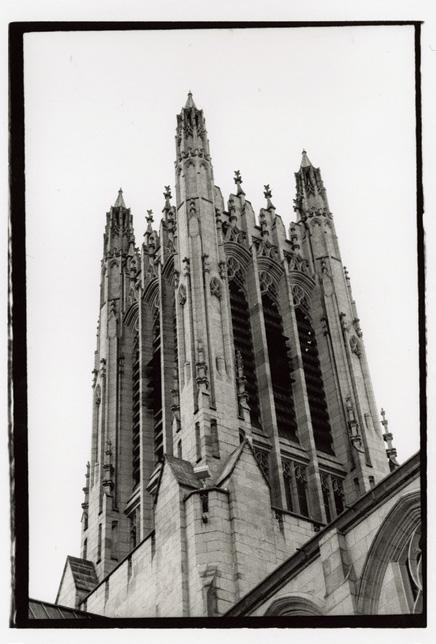
Desiree A. Gibson
Carla Chapman
He stood at the door. The long silk tie neatly knotted at his neck felt formal, out of place, made him feel a little like running away. He exhaled the breath he had been holding, moved the wrapped gift from his right hand to his left, and pushed the doorbell.
He had not called on her as often as he knew he could have, visiting less and less over the last few years. He had had the time. He hadn’t had the courage.
She opened the door, and smiling, she greeted him with a slight nod.
Looking into her eyes, he bowed at the waist, remembering this used to amuse her. As he did so, his tie oddly dangled as gravity worked its magic making it appear that he was somehow tethered to the ground. He noticed the lift at the corners of her mouth as she bent her elbow, her hand coming up reflexively to rest on his outstretched palm. He kissed her hand lightly and stood up straight. She appeared a bit shy, maybe blushing a little. She glanced around behind her, then invited him in.
He followed her, distantly registering that the walls she led him through were The Same. It looked to him as if time had not just stood still, but had been thrown into reverse; this space had not been touched by the present. He had stepped over a threshold and into a time capsule.
She slid the familiar heavy wooden double doors open. The room he entered in her wake was what one might have called “nicely appointed” a couple of centuries ago. Damask drapes in a soft yellow, the pale blue tufted velvet chair, the crease-lines of the roughed-up leather loveseat. Ceramic and brass knick-knacks scattered over the mantle like kids playing freeze tag in the park, the blackened brick of the cold fireplace that was fenced off by the sooty mesh screen. And there, to the right over the mantel in a frame with flaking gold leaf paint, hung the haunting sketch of an angel. It was eons since he was that young man meeting her eyes with promises of forever, her eyes making those same promises. Eons ago, their beginnings. This scrap of then—this scrap of them—was buried in his heart.
He turned back from the mantel to find her sitting on the velvet chair, gently
pulling the green and red ribbon from the bright holiday wrappings of the gift he had brought. He and their granddaughter had spent an afternoon “making something nice for Gramma.” He wanted to give her something they had made together, had made with their hands, something made with love. He had wanted to give her a piece of his present, something to hold her focus, if only for a moment.
She lifted it up out of the box. The crystals of the ornament in her hand spun magic of the sunlight coming through the southern facing window. The walls and ceiling transformed into an enormous palette of dancing colored prisms, and she was mesmerized.
“Merry Christmas. I…”
He spoke the words softly and felt them fall into the abyss swallowed up by the room itself. The sentiment he meant to express hung unfinished in that space, in that air between them. Had her eyes flickered some bit of recognition? Had she started at his voice? Probably wishful thinking… his imagination. Afterall she had not turned to face him, and now, he knew, she was somewhere, but not here in this room with him.
Her now and his now were not the same. She moved in her own time, marking her own journey. A journey not encumbered by another’s timepiece.
The gift he brought had been created with love and wrapped in hope. His now was filled with quiet despair at the knowledge she had once again slipped away.
His gaze was drawn back to the angel where she hung like the star over some Bethlehem stable, as if continuing to track their passing time, of their world together. And she was his angel. The two—the clock and the angel—had melded into one image in his mind. Inseparable in that space. Reality, he knew, proved they were separate, and he had moved forward while she had not.
The tarnished gold hands of the clock had continued clicking forward for him. The perpetual circular journey. A journey of darkness and light, and darkness again.
Broken
PHOTOGRAPHY
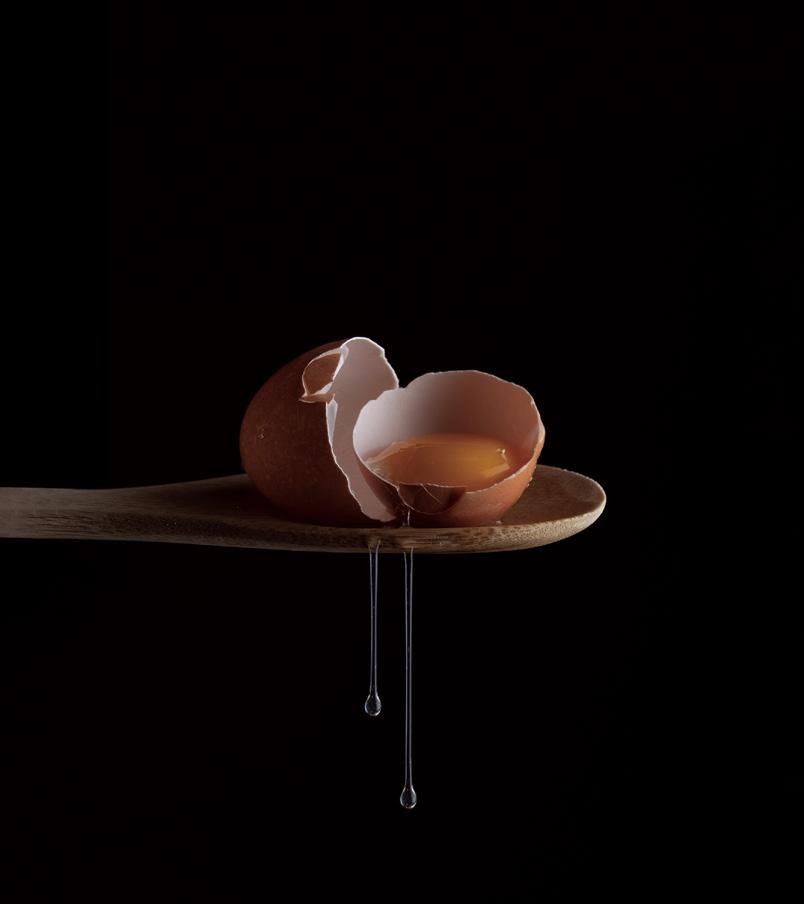
Rachel Evans
I wander into my parents’ bedroom and peer into the glass case by the bed. Therein lay a white basket with pearly handles, filled with wedding petals.
I got to hold it once, as my cousin’s flower girl in Tennessee. My three-year-old hands grasped the pearls dutifully. Those same hands caught fireflies in my cousin’s backyard.
I was small enough to be bounced to the moon when one of my other cousins cannonballed onto the massive trampoline. Under the trampoline was shaded gravel... I found a tall green weed growing there once. How could it survive without soil and sunlight?
I came out from under the trampoline and beheld a group of teenage girls, chatting as they walked toward me. They did not smile when they saw me. I felt a little shunned; my toddler self thought that was pretty mean.
Fourteen years later... I stand outside the glass case, looking in to see the little white basket, and I remember it all again. This time, the image of the teenage girls haunts my thoughts: I’m as old as they were back then. Have I become one of them, unfriendly to children who just want a smile? Did any of those girls have an experience like my own, clueless that she was repeating the cycle by not smiling at my toddler self? Am I a part of this cycle? Will it ever end?
I was born in Dallas, in a building that no longer exists. My birth, a mythology, a rushed occasion. A doctor’s final shift. I rose from the rubble and smoke. I already knew how to walk.
The leftovers of my mother’s dreams, I was a threat.
Most days, my mother was too tired to call me by my own name. She often mistook me for herself, my sister, or a stranger.
On Swan Street, life seemed beautiful. The neighbors’ lives looked like paradise. I peered in through the windows and got hit with big sticks. Don’t look at what you can’t have.
My grandparents’ house used to feel like a sanctuary, until the trees began to close in around us. The ones my grandpa planted twenty years earlier wore spikes.
My grandmother saved everything. I kept telling her spoiled milk can make you sick. Some things are perishable, let them perish.
Swan Street became nothing more than a memory and moving on is better than being stuck.
Our new house had bugs I had never seen before. I slept with both eyes open. They stared back at me with pity.
The silence found me so soon. I vowed to never speak of those years, the bugs, the spoiled milk.
School is heaven for small devils. A bigger one lives at home; I know the burning well.
The taste of unfairness bubbled up inside me, I could no longer swallow. Strep throat or hatred.
I stopped calling her mom. I stopped calling her. I dance at the altar of our broken home.
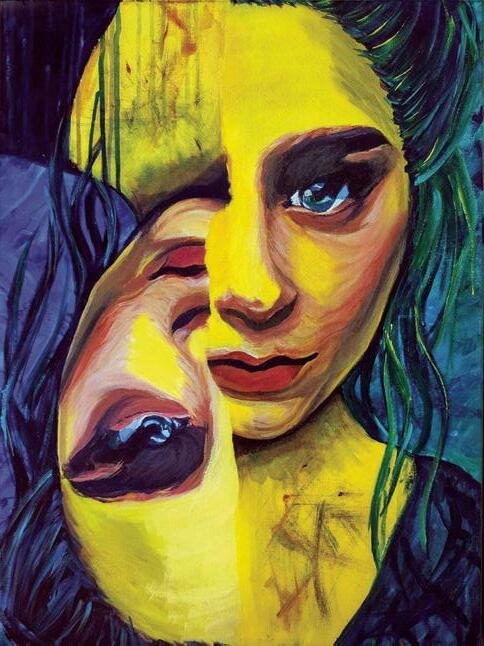
Lorelai Jonason
We built our house on quicksand. The difference in our age would one day be insignificant, we said, and so we saw it that way from the beginning. Our first kiss was my first kiss, and I hated it. I tried to break up with you, but you were persuasive. You said I was just afraid of love, and I believed you. The manipulation and naivety were imperfections in the concrete we mixed to pour our foundation; there was no way it would ever hold without cracking. When you pressured me into touch I did not desire, we built our walls lopsided. So when we added the roof by getting married, it caved in on itself. We lived under that roof for eleven years before I looked up and saw the wreck we’d built. You say I broke our home. I didn’t. I realized our home was already broken, so I set the whole safety-hazard mess of a house
on fire, and left. It’s not my fault you stood in the flames and cursed your burns.
Willow Johnson
The first thing I learn is that some men take what they want and then take some more.
I’m talking about a body.
I usually cover my chest and thighs until I’m nearly impenetrable against the sun and the red summers, against everything but a failed no.
But I love this chlorine heat.
I love that half my ass hangs out of these bikini bottoms.
You can’t stop me. I love summer like I love everything: tenderly, timidly, a little bit bloody.
I reach out like I cannot be afraid; I don’t have the time or the survival instinct.
Have you flicked the light on in the dark room of my heart? Smelled the insides of my wrists, stroked my fire hair?
It’s true. I taste like lavender and peach pits— what I’m trying to say is there are parts of me so difficult to swallow.
I choke me down before someone else finds a way into my stomach.
I’m not a temple but a driftwood fort on the beach cracked jade palm stone and the smell of sea.
Damn, I’m beautiful in the moonlight.
I had a man twice my age tell me I brought the moon out to play but I don’t agree because the moon is a woman
unleashed and uncaged, dressed in silver silk sinking stardust teeth into the blue waves.
I am the captain of one vessel.
I call her the M.Y. Body. She’s not indestructible but God, she’s soft.
Laika “Gerry” Darjany
Bitterness is best left to coffee grounds and tomato seeds. The bite it leaves on my neck is not a claim but a threat And I must depart from its cloying hands.
The inky smell of aching pine is sweet in the way That compares to spring-sweet basil roots, Or sticky ponderosa sap, and it
Blankets the ground behind me. If I let the worms compost my bitterness, I wonder absently,
Will it feed my garden the same way it fed me, Or is the power of the worm grander than my own?
The sharp too-sweet that accompanies rot is bitter in its own right, I remind myself.
I should not be either the petal nor the leaf of the dandelion, Both are the extremes that peel back my wallpaper
Like mildew.
I must find my peace in the petals of lavender, Familiar and kind, And the salt-rich taste of pickle brine.
I may be sour as vinegar and sharp as dill, But my fermentation will settle your gut before I spoil.
Flies flock to my room to die, their broken legs pointing up at my cracked ceiling. I hang up posters of dead writers on my walls, calling them my mentors when I haven’t picked up a pen since summer ended. Father imagines me waiting for him when he gets home from work, sitting on the top of the white picket fence we never had. At the end I will write I love you just to lie, and whisper to you goodbye and mean it. It will never be the same as when I tasted Grandpa’s plums for the last time, letting the juice run down my fourteen year old tongue that only ever lied in the language of the stories you told her.
They all thought it was some kind of performance art. The man filming stops the video just as they step into the air, and there’s no sound, so you can’t hear any kind of sickening crunch. I only read a few lines of the first comment, a multi-paragraph thing explaining the logistics of the stunt. I didn’t scroll down further. I only read a few of the Tweets about it.
I watched the video at least twenty times, though, that first day. I showed it to Yvonne. Have you seen this? I asked her. She stared intently for the video’s 48-second runtime. When it ended and an ad for insurance began, she turned to stare at me instead.
Are they okay? she asked. I told her nobody knew who they were. Back then, nobody did.
In the video, a man and a woman slow dance atop the flat roof of a low, tan building. They’re being filmed from the ground, and the sky is gray behind them. They both wear long coats; the woman’s is red and the man’s is black. Their arms are wrapped around each other, heads on each other’s shoulders. They sway back and forth, moving together in a slow circle. Then, with no hesitation, just a small jump in perfect tandem, they step off the building.
The day after the video was posted, I must have watched it forty times. Yvonne went to work and I curled in bed, one eye closed and the other on the screen of my phone. I got up eventually, ate three tangerines and took the dog for a walk in the bitter fall air.
Of course, I thought about nothing else. I left my phone in the other room so I couldn’t start watching it again. When Yvonne got home I was watching an infomercial. She didn’t even know we had cable.
Yvonne took my face in her hands and stared into my eyes, which were red and half-closed. Oh, Jenny, she said. That’s what she called me. No one else called me that. She ruffled her hand through my hair, and walked deeper into the house.
It took a few days, but I started painting again. Watercolor for a while, then acrylics, then watercolor again. I sat on our bedroom floor with the window open, spring air eating away at my brain, canvas resting on my outstretched legs. Some of the paints were dried out, depleted, or mixed rudely into some muddy, dingy un-color. Some brushes were hardened to sad skewers from past-me’s irresponsibility.
It took me a long time to get the color exactly right, that gray that whispered around the heads of the man and the woman. I kept trying until it was impossible to tell the colors apart. When I did, I moved on to a new canvas, the different paints, until I got the color right again. I had five versions laid out around me.
Yvonne says that one of the things she likes most about me is my perseverance. I call it obsessive, worryingly so, and she laughs and says, well, that too. But I like it.
I liked to braid her hair, but she’d only let me if she wasn’t in a rush. I have to do it and undo it and try again at least ten times, compulsively. She’d kiss my hand, say thank you, Jenny, then she’d leave, and I’d stare at the red lipstick mark on my skin until she came home again.
I painted the woman’s red arm where it circled around the black shoulders of the man. It had been hours since I’d seen the video, just its motion was in my mind, so the figures melted and bled into each other and into the air, a cyclone, a living suffocation. Each time I painted them it was the same, but as well they contorted in some new way, every iteration was in some respects unrecognizable. All the colors were the same, though.
Painting always tasted like something to me. There was the sharpness of the paints themselves, settled in the back of my throat, but there was also something darker, something soaking, wrapped in that familiar smell. It unwrapped itself like a flower in my mouth. I kept my teeth shut around my tongue.
Yvonne found me on my back, on the floor, covered in the dusk that had gathered while the lights had been off. She grabbed me under the arms and lifted me up, her long, straight hair brushing my face. She knelt in front of me with her hand at the back of my neck.
Looking at all the paintings, slowly, giving her attention to them one at a time, Yvonne’s brow furrowed even as she smiled. I’m glad you’re painting, Jenny, she said.
I made her dinner, and while we ate, she told me how the people in the video had been identified. She told me their names, read from an article about their lives before they became an internet spectacle. I listened. The video had been taken off of YouTube.
I put all the paintings in a box, tucked them away in a closet. All my paints I brought out, though, arranged them on the table where I’d remember them. Yvonne held me that whole evening like she was an easel.
Months later, I was asked to participate in an art show. All the paintings were of Yvonne—standing in front of the TV, walking down an alley, smiling at me from the passenger seat of a car. Yes, there was one in which she stood atop a building, looking down. But the sky around her was blue and cloudless.
Vanessa Graham
I walked down the empty halls aimlessly, hoping for better news soon. My body took control as my mind drifted—I’ve done this so many times before, there’s no need to think about it.
“Excuse me, miss?” My body comes to a quick halt. I reversed myself back to the doorway of the waiting room, its bland exterior and beige accents seemed suffocating.
“Yes? Is there something I can do for you?” I put on a polite smile. This is not uncommon. Despite my well-worn jeans and baggy cardigan, people often mistake me for working here. I’m a familiar face after all, the bleached floors so amicable to my feet like sand or fresh cut grass on a summer’s day.
The elderly woman asked me if I could see if there was an update on her son’s condition. I nod, making my way to the desk. The nurse knows me by name. Time and time again, we’ve grown to chat like friends, sometimes even like family. She shook her head and I returned.
“There’s no news as of yet, but you’ll be notified as soon as they hear something. In the meantime, if you need anything, please let one of the staff know, and they would be happy to help in any way that they can.” It was at that moment that I noticed that no one in the room had a cup of coffee. It was a relatively cold day, and even if it wasn’t, it’d still be uncommon for a waiting room. People in hospitals have a tendency to drink coffee, sometimes whether they like the taste or not. Maybe to some it’s comforting, to others it may be a distraction. I don’t really know. It’s something to avoid the insanity, I suppose. Something to tune out the bustling of nurses, the monotone soap opera on the TV, or the never-ending tick of the clock. Or it could just be the idea of having something to do with your hands while you wait for news on whether things went well or not. Either way, my hands worked fast. I opened the pot and as expected, it was empty. My body practically works on its own.
As I start the process of making more, I chat with the family offering my
condolences and ears. Sometimes all you want is for someone to listen. The lady tells me about her grandkids and all the things they’ve been up to, as if telling an old friend all the new things they’ve just now experienced.
“Do you take sugar?”
“Oh, yes. One please.” She offers me a kind smile as I set the coffee down in front of her.
“Thank you, dear.”
“You’re very welcome. I have to go now, but if you see me and need something, feel free to flag me down and let me know.” I offered her a gentle pat on the shoulder, I took my leave. As I reached the doorway, I looked back over my shoulder, “Your son’s gonna be just fine. They’re gonna take real good care of him. I promise.” She nodded to me, and I headed on my way.
My family is crowded around in a small room, hurting hearts and sad eyes. No one will ask me where I’d been or why I’d been gone for so long. Maybe they knew, so they didn’t push the subject, or maybe they just didn’t care. Either way, it’s all the same to me. I know I can’t do much, but if I can do something, that’s all that matters.
Elizabeth K. Hart
The heat of the baby placed on your chest— Swelling of the breast
Intense
Like no other.
Cradle her tight, froggy legs fitting beneath your rib cage, Squeezing the discomfort and the rage
From the pits, Hellish,
Like no other.
Warm, tear-filled eyes gaze from the side of the couch
Celebrating a birthday, complaining of being a grouch While taking care of the little one, in the Rocking chair
Like no other.
The emptiness dissipates like clouds after a storm, Evaporating into fluffy white balls, warm
To the touch for the Baby
Like no other.
Taiyanna Pereira after Shel Silverstein
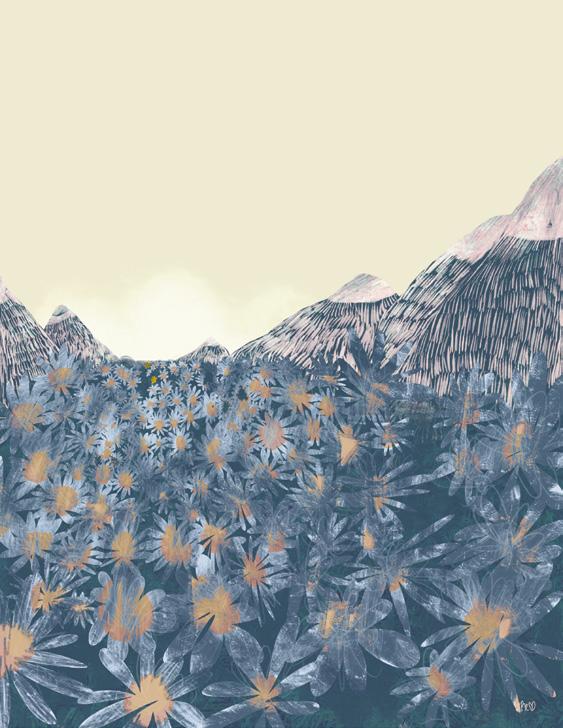
Petals and vines are all over the place, they grow past my window and up to my face! It moved to the floor and covered the door, it yanks at my ankles and winds up my leg, it tickles me softly and continues to grow. I can’t seem to stop it, so I just let it go.
Mama said to use a pot, but I guess I simply forgot. Now the house has overgrown, weeds and petals have overthrown. I couldn’t stop it, try as I might. The crazy plant gave me a fright, but mama knew I had forgot, so she brought home an extra flower pot.
Melani Dubon
Even in that tiny apartment where only one person lived, silence was never long to stand. There was always something, be it the TV, the voices of people visiting, or my favorite, the ringing of great-grandma’s bells. There were the big, clanging brass bells, the ones I practiced on to become a professional handbell player, and the soft glass ones that barely made a sound. But the best, the ones put at the place of honor in the bell case, were the small ones, the ones with pictures and figures and names. As my little fingers would skim over the cold enamel, I would always come back to my favorite, a warm bronze bell that fit so perfectly in my hand and whose bright ring stood out
Renn Francis

Gillian Janda
Tout les jours, tu attends à la porte
Et toujours, Elle ne revient pas.
Je suis désolée, mon ami
Je ne parle pas ta langue
Tu ne me comprends pas Mais toujours, je te dis
Que tu n’es pas seul.
Tous les jours, nous attendons à la porte
Et toujours, Elle ne revient pas.
translated by Gillian Janda
Everyday, you wait at the door
And always, She does not return.
I am sorry, my friend I do not speak your language. You do not understand me
But always, I say to you You are not alone.
Every day, we wait at the door
And always, She does not return.
I offer goodbyes as a whisper With your back turned so you Cannot see me like everything I am in some time and place It is raining and the sun is Scorching our skin as we crawl Towards a lack of resolution We are everywhere and Everyone fighting about The dishes and divorce and You do not touch me the right Way I do not think I am weak Because I am kind mother you Will hate me because I love Girls and I will still want to be Near you and laying my head In your lap while you play with My hair I know you will not love Me less but will you hate me more— And I will learn to grieve in a way that Widows are fluent in and I am everyone Who sings loudly in their room Until they hit a wrong note and then Fall silent and speak quietly until You hurt people I do not know I Am everything that I touched carelessly As they flourish and crumble underneath The weight of my fingerprint I was born
To write the way my parents were made
To mourn I do not pray to god and will Hate him regardless he cannot do What I can he will never kiss a girl Or bring her flowers and never see Something beyond you in her eyes.
Awaken me,
Crawl up my legs like varicose veins, Make me ugly.
I know you want to. You cannot stop the emptiness that persists between us, No matter how far you put your fingers up into me. It’s too late anyway, I’m under your nails now, All scraped together and bloody. You’ll never get rid of me, Never.
Your tongue felt sharp again, And your eyes looked right past mine. There are bruises all over: my skin, The walls.
I can no longer tell the difference. Purple, yellow. Rotten. Lights shine into my sockets, But I am very quiet. I always am.
I let myself pretend tonight. The teeth are coming closer And there is a growling somewhere inside the mouth of this. I reach for something.
“I’ve been working out,” I say, naked. Licking your lips you say, “Oh, you look the same.”
Alexa Tomkowiak
sometimes in the bath
I’ll pretend that I’m drowning
not in a thrashing painful way but in the way that I’ll be slowly engulfed by the still water until nothing and nobody remains. the heat will soothe my aches and stiff limbs that shouldn’t have come until years down the line and for a moment I think that when my head is submerged and the water fills my ears maybe things will be quiet for once
maybe my head will finally stop sifting through memories like a secretary desperately trying to find a paper in a file cabinet and maybe my thoughts will stop chasing each other back and forth like a pair of dogs that never seem to tire
but sound travels fast over water that’s what my dad always said when we were trampling around on the boat and laughing until we couldn’t breathe You’ll scare away all the fish! he’d say and we’d plant ourselves back in our seats and giggle not as quietly as we thought we were but even then was quieter than in the bath with my thoughts traveling fast in the water bouncing off the corners of the tub until they were right back where they started
so, no I don’t think I’d like to go drowning if that answers your question
Through the Archway
Nico Falcone
Foul words on the screaming beast’s breath
Make me cry out in protection of myself
Standing up for what I believe in
For my rights—for my life—for my mother
But beasts are monsters of a different kind
With ugly minions by their sides
Waggling tongues of filth
And shaking clawed fists into my face
Threatening my safety
They’re the people I used to love
Now I see them as they truly are
Bulbous and dull with scratch marks on their faces
Slithering through life
With a slime trail oozing behind in their wake
The snowflake landed in your hair
There was the ear of the dog
In front of me the perfect star pressed into
The layers of the fur clear enough to see
Too fragile to touch
If I pulled apart your lips to look at Your teeth where they
Attached to the gum I would see the gold gleam
From behind your tongue
You tasted like silver
My mouth held copper and yours a Precious metal
It was like the rocking of our bodies
To compete for the final howl
Against our will
We are dogs
We are hounds and we hold
Each other tight so we may hear poetries And songs and the curl of your hand
In mine because werewolves are Transgenderism is
Us together worshiping the snarl on our Lips where they press together like
The oars of a boat against Water when it meets land With me we are the only
Two people connected by the sinew that Crawls across our joints
We have the capability to rip apart and Bleed but why draw blood when we could
Just embrace again enough
To clack our teeth together
I am you as you are me
The moon has her phases and Us our faces let’s
Curl our head upward and sing
Dogs are wolves are
Long forgotten beasts
We know each other and Preen at the sight let us Nest so we may see the day new
And hear our hearts beat
Again and again
We are dogs
He knew people who collected only perfect specimens. When he would go to the market late at night, perusing the bits and the Bobs the vendors had to offer, he would inevitably hear the emphatic musings of a bedraggled, seasoned enthusiast. The old man’s speeches on the importance of proportions, or the ever-present tale of the specimen that was once stolen from their grasp, were as enchanting as they were irritating.
If I had enough money, that could be me, he thought, scanning the crowd.
He had only a handful of coins, however, so he made his way through the stall to the back right corner. A tear had been ripped through the gray canvas wall above the Clearance Barrel. The hot rays of the suns’ light had faded the once-vibrant red lettering on the hanging sale sign. Half off, a bargain no matter who you were.
He placed his basket down and picked up the sampling gloves resting on the right side of the barrel. They needed a wash. He slid them over his hands, and began sifting through the bin. The specimens had clearly been picked through. Arms and legs were bent this way and that, those would be difficult to repair if he were to pick them to pin. They weren’t out of the realm of possibilities, but low on his list.
He licked his lips, running over the rough patches as his mind wandered. The first specimen he had ever seen at this stall still visited him from time to time in his thoughts. It had been displayed with skill, placed vertically on a spreading board, pinned by the thorax, with the owner proudly standing next to their creation. It stayed there for about a week as it dried, then was sold to the highest bidder in an illegal road-side auction down the street by the diner.
He thought about the perfectly preserved body, every hair combed pristinely into place with a sort of care he could only aspire to gain one day. She had won beauty pageants, apparently. He remembered reading her biography, which had been lovingly
hand written on crisp white cardstock. There had been a small apple sticker in the corner, as red as her lips had been. Painted of course. She was a rare specimen—she had been hit by lightning. Lichtenberg scars had left impressions that branched like tree limbs across her chest from her blood vessels popping. They weren’t what drew him to her, however. It was her eyes. The collectors around him had praised her as an anomaly, their camera’s flashes lighting up her bare, crystalline skin. No, there was something in her eyes that whispered only to him. They held in their core the sentiment of having lived. He knew he would search, he would gather as many as he could until he could look at his collection and glimpse humanity.
One specimen’s long black hair caught on a splinter as he was rummaging through the assortment of smaller pieces. He turned her over, carefully placing his pinky finger behind her neck to prop her head up. Around six years old, some damage on the bottom of her plaid purple dress. His lips tightened into a line for a second before he placed her aside. A bit too chipped for his taste.
Kaitlin Creeger
Welcome SUBJECT 456-23.
How may THE COUNCIL OF SOCIETY help you today?
Here is our INDEX. You can choose between 0-INFINITE.
INDEX [REDACTED]
Sinkholes, tirades, and snowballs 149
Crazed human rarities 154
Golden trees 155
Edible gems 156
Apolithonmena osta 157
Illnesses designed to murder 158
Details of eyes 159-172
Golden crimson birds (What are you looking for?)
Silverfish glows
Broken blood wineglasses
Human beings stuck in Time 173-182
[redacted] [redacted]
A cellar to hold your lies 183
Boxes of secrets holding more truth than trapped souls 184
Lost souls accounted 185
Doc Martin 187
Erin Yeager 190
GOD 192
Allen Turner 195
Got scales? Dragon Century Control 196 (Who are you?)
Looking for Zodiacs? 204-234
Gemini 205
Libra 206 (Hey! You can save me!)
Taurus. . . 206
We’re experiencing a malfunction—
For further help, please visit THE COUNCIL OF SOCIETY’S BOARD OF DIRECTORS.
Your name HERE. (I’m SUBJECT 666. My name’s xxx xxxx! Please, you have to help me! THE COUNCIL OF SOCIETY trapped me here!)
Have a nice day. Goodbye, SUBJECT 456-23.
(No, wait—!)
*The ENTITY was REMOVED from INDEX [REDACTED] OF THE COUNCIL OF SOCIETY.
It seems sort of weird to consider myself the last human on planet Earth. Statistically speaking, my status as the last human alive with enough wherewithal to understand English is about as likely as getting struck with an orbital laser. I was a boring guy before the Quiet Rapture, working a soul-sucking, part-time job in a supermarket, juggling university on the side, going home just long enough in the interim to sleep through the night, before waking up and doing it all over again.
But one day, following a late-night shift that my supervisor had asked me to do—bear in mind that ask in this context is used in the same sense as your mom asking you to do the dishes—I woke to the sounds of the birds in the trees. I’d forgotten to close my window before I fell asleep, something that becomes significantly more irresponsible when I say that I was living in Chicago at the time, and any lunatic from the street could have come sauntering in during the night.
Of course, there wasn’t much to steal. The newest thing I owned was a laptop I’d bought almost three years ago, and even then it barely worked most of the time. There’s no guarantee the burglar wouldn’t wake me up in the middle of the night to ask how I was doing, after seeing the sorry state of things.
The important thing you need to draw from that unnecessarily long bit of exposition, is that I could hear the birds. Living in one of the largest cities in North America, on a street rife with backfiring engines and crotch-rocket motorcyclists who liked to play chicken on an almost nightly basis, I could hear the birds chirping.
The most hilariously pitiful part is that it took me almost three hours before I realized something was wrong. And it only came when I noticed the absence of my upstairs neighbor’s heavy footfalls stomping across the ceiling. Somehow, after two years of being greeted first thing in the morning with what sounded like a herd of second graders bound for lunch, it was the silence that was more jarring.
And outside, the story was pretty much the same. Cars were where one
would expect, some pulled over to the side of the road, others stalled right in the middle. Bicycles laid discarded on sidewalks, tipped over as if their rider had suddenly vanished. There weren’t newspapers fluttering in the wind, catching on street lights proclaiming that the end was near, with cinematic photos of invading alien spaceships, or the digitally rendered image of some virus.
Because everything had been just fine when I went to sleep. It was appropriately loud, appropriately smelly and crowded. I was so convinced—or perhaps deluded, depending on your opinion—that there were still people out there. Something must have happened that left me behind, and… Seven-billion people on Earth, three-hundred million in the US alone. There had to be more. There had to be.
After exhausting my contacts list, I started dialing random numbers, praying that someone would pick up. Cell reception seemed fine enough, but aside from a few automated messages giving me the ‘your call is important to us’ spiel, there wasn’t another voice to be heard.
The Internet provided similar results. There hadn’t been an update anywhere for hours, and there didn’t seem to be a consistent time when things went dark either. The latest I could find was on Twitter, posted by an account masquerading as a politician at 1:33 a.m. wherein the politician confessed to sneaking around in people’s walls and complained about how cold it was.
I even tried dialing 911. There’s nothing more shocking than hearing the buzz of a disconnected line when you’ve just called for emergency services. After that, I stopped trying.
Radio stations hissed with dead air, occasionally broken up by preassigned ad slots. There was no repeating emergency broadcast alert with that traumatic buzzing that was always issued to warn of severe weather or dangerous individuals. Never in my life had I wanted to hear something more. Even the aggressive
preaching of some evangelical fundamentalist calling for the worship of God on an obscure AM station would have eased the pounding in my chest.
For a while, I didn’t leave my apartment. My brain decided it was going to ignore the impending horror of the world, because why face your problems when you can hide from them? I cooked meals from recipes posted on the Internet, something I normally never would’ve had the time for. I devoured books I’d been intending to read for months or even years. I streamed movies and shows I’d wanted to watch forever.
Only occasionally would the illusion be broken. Be it when I would forget to shut the stovetop off after I was done cooking and remember no one would come to put out a fire, or simply when a deer, a bona fide, cloven-hoofed deer wandered into the street, the moments came like heated blades, driving into my gut and immediately ruining whatever I happened to be doing. But eventually, the fantasy would flood back, and I would forget.
Things became more complicated when I ran out of food. I didn’t want to go to the store, in fact, I didn’t even think about the store for fear of shattering my delusion. But after a day spent opening and closing and reopening my refrigerator repeatedly, each time becoming more inclined to eating some suspiciously stiff bread and the hard piece of cheese left in a package I’d forgotten to close, I decided that maybe it was time.
But was there any sense in staying in the city? I’d always wanted to live in the country, but never had the means. Now I did.
So, in a spur of the moment, potentially life-changing decision, I pulled my neglected little Peugeot out of the building garage, the car I’d rescued from certain death at an auction two years before for a modest four hundred dollars. I never drove it, because the roads were always too clogged for it to be worthwhile, so the expense of gas spent idling at red lights outweighed the price of a subway ticket.
I left with nothing but a duffel bag, stuffed with old keepsakes and a few changes of clothes. I’d locked the door to my apartment when I left, so if there was anyone left to go around looting, and they decided to ransack my very specific
building, then they’d have some difficulty getting in. You can always come back, I told myself, knowing full well that I wouldn’t ever.
The smog and silence of the city gave way to the quiet, slowly darkening fields of sparsely inhabited farmlands. I stopped at a roadside diner to get something to eat and walked right in to find the same uneasy quiet inside as everywhere else. I burned my burger, standing at the grill in the back, but I didn’t want to waste food, so I ate it anyway.
I left a ten-dollar bill on the counter when I left.
I listened to old CDs my mom had given me a while back, feeling like I might go mad in all that absence. I drove through the night, and into the next day, until I felt so tired, I might’ve fallen asleep at the wheel.
Not once did I have a destination in mind. To be honest, I’m not sure that I’d fully grasped what this meant going forward. Even then, there wasn’t a knockdown drag-out moment when it hit me. It came only when I stopped bothering to leave money behind when I took something. When the autopilot shut off, and suddenly I was sitting in my own bones again, gazing placidly across the steering wheel and onto the road lit only by the faded glow of moonlight.
And now, ten months, three weeks, five days, and six hours later, here I am. Sitting in the middle of a desert road twenty miles from nowhere, with nothing to do and no one to see. Phoenix was nice, I suppose, but cities are more unsettling than anything else without people. Story’s the same with Vegas. No bustling crowds or feathered showgirls or sign-toting fake ID dealers prowling the glistening strip. It just wasn’t right.
Once upon a time, the world felt so big. I felt trapped in Chicago, bound by chains to a job I hated, going to a university for a degree with the shallow hope that life would eventually be better, and finally, finally, I could live like I’d always wanted to. Tell the truth, I’d talked to so few people over the past three years of my life, that when there was no one left to talk to, I didn’t feel that much worse. The monotony of life had me in its grasp, and I was doing nothing to fight it.
But over the past ten months, three weeks, five days and six hours, I’ve
crisscrossed the grand ol’ US of A. I drove into Mexico briefly, before the oppressive heat killed my engine and left me stranded twenty miles outside of El Paso and forced me to huff it all the way back. Once, I went into Canada, wandered around the shining streets of Toronto. I went to Los Angeles and strolled down Hollywood Boulevard, climbed halfway through Burbank to stand in front of the sign. I’ve been to New York and explored the Empire State Building with no security guards to worry about, gallivanting through executives’ offices, publishing companies, corporate headquarters all without the stench of income gaps. Denver, Minneapolis, Milwaukee, Saint Louis, Boston, Seattle, Houston; all blurring together into a single, monochrome sight, a modest ‘oh’ issued at the sight of their historic landmarks before I drove on.
Zion, the Grand Canyon, Mount Rushmore, Niagara Falls, Yellowstone, Yosemite; all left the same bland flavor of embittered disinterest on the back of my tongue.
Even the continent I happen to live on is finite. I can drive from coast to coast, Augusta to San Diego, but no further. I felt free until I came to this horrible realization. What am I going to do with my life, without a society? I’ll never live like I’ve always wanted, because there’s nothing left of the bubble I’d so childishly dreamed within. It’s just a broken mess of slow decay. When I’m eighty, the world won’t have changed. Nature will just swallow all of it back and think twice about cultivating a cognizant species again.
So, what’s the point? I call it the Quiet Rapture, as if that makes sense. What sin could I have committed that was so great, so offensive, that God would pull the writhing mass of flesh and sinew, made of the combined bodies of all of humanity into the great palace on the other side of eternity, but leave me to suffer alone? But what else could it be? There was no sign, no warning, no mass exodus, or flood. I’m just by myself, and it’s miserable.
There’s no one to laugh with, no one to cry with, and worst of all, no answers.
I crashed my car into a power pole about twenty minutes ago. The worst part is, I’m not sure if it was intentional or not. My thoughts have coalesced into a hot plasma, so it’s hard to see which belong to me anymore. I don’t even know why I’m writing this. I’m so lonely. I haven’t spoken a word in so long that I’m not even sure if my vocal cords still work. They probably don’t.
So, goodbye to no one. I hope you’re having a good time. Because I’m not.
Over the years, I have forgotten how to breathe. The rise and fall of my chest say otherwise, but I can’t seem to get the air to fill my lungs the way it’s supposed to. I am hit with a nostalgic sense of calm. Nobody can find me down here, I’m sure of that. The waves crash over my head like the final nails in my coffin before I disappear forever. I could call out, disturb as many people as possible as the cold water hits my face, but I don’t. Instead, I swim down, diving into the wreck. My hands touch an algae covered plank. I can breathe again.
In the lighthouse by the bay, I make conversation with some tourists. “How long have you lived here?” they ask, feigning curiosity.
“My whole life, and then some.”
The man, with a Hawaiian shirt and binoculars he bought for $10 at the aquarium, insists I tell him and his wife everything I know about this place. I comply, more as a way to pass the time than out of any duty to entertain these people. “What do you know about the sea monsters?” His wife treats the words like a secret, as if I haven’t spent this whole conversation waiting for this exact question to be asked. I’ve heard it, word for word, every day for years.
“They aren’t real,” I say, “at least as far as I know.” Nobody will give them a straightforward answer here, I’m sure of that. The couple buys overpriced t-shirts and the lighthouse gift shop and leaves. I go back to the water.
I admire the curiosity of unwelcome tourists to some extent, but their fears aren’t justified. I lie here, in my shipwreck at the bottom of the ocean, and try to think of the best way to explain my predicament. As far as you need to know, monsters are nothing but fairy tales told to stop small children from swimming too deep. But I will remind you, as the algae fills the gaps between my scales and I descend deeper into the pages of myth, that things are not always what they seem.
Often I think of her, a statue, a mannequin, light caressing her salaciously. When she had to be in a photo, she said she would most like to be holding a book. Some women get fated. Tragic hero. What did Marilyn Monroe think of Ulysses? Once I start loving her I can’t stop. It takes time. If I die young, I want to be remembered only by you.
Sometimes the morning starts with my breath stopping. You unlock the cavities of my lungs, gather up the light that drapes across all of our earthly possession, while time tries again to dig up her grave, to get in there with her, but in that photo she looks so happy. So peaceful. I look at that world and Marilyn Monroe waltzes her away into my poem again, though I wish I could burn that book.
I have a hard time connecting with people when there is a book to be read. It was nearly two years ago when I asked you what keeps you up at night. While waiting to cross Monroe Street I was overcome with how desperately I needed to show you this light as it burned itself up over the traffic and the buildings, I took a photo and sent it to you just as the cars began to move, ending my time.
It’s gone, but I saw her face on a poster, subtly alien, out of time in more ways than one, and I find comfort in the fact a book slows everything down. I hope she found that solace too, a photo takes something from you, and a book gives it back. I told you the way your arms look when you cross them over your chest gets me light as a feather, and believing in angels still. In the interim, Marilyn Monroe
leaves her schedule wide open. In the song “Early Sunsets Over Monroeville” the words are hidden like mortar between bricks like time between my fingers, but does anyone notice? Does anyone care? The light in the song goes dark quick, but it makes me feel like a tell-all book published years after the fact, needing nothing from you. While no real wolf howls you raise your head to take a photo.
I wanted to live, too, even when I wanted to die, the photo you took of me looking precious on the stairs reminds me. Marilyn Monroe never graduated high school, but that doesn’t translate to photos. If you and I were perfect, we would be dead like her. We still have time. I am no savior. In all my life I have only understood one book. And that was only because of how it looked in the light.
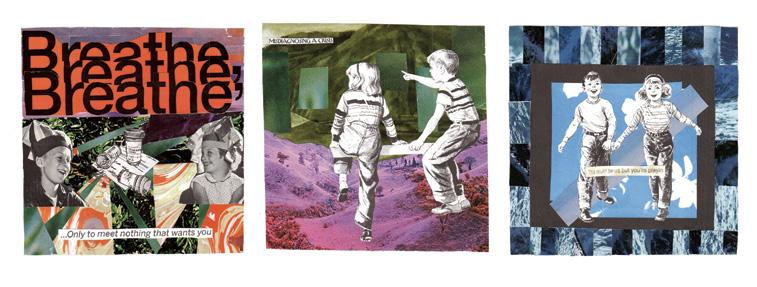
In high school, my best friend’s father thought I was a bad influence. I wanted to argue but I was young and my words didn’t matter. I let him believe I rolled joints for his daughter in the bedroom of my father’s fourth apartment, silhouetted against the little box shaped T. V. I found in a dead woman’s house, when instead we made art on the carpeted floor, bought white clothes from Goodwill one afternoon so we could use each other as a canvas.
We left perfect handprints on each other’s bodies in half-mixed gold and pink and blue, the paint seeped through to our bras, our shorts, splattered on the antique vanity, mirror covered in bird stickers and music notes, You’re beautiful written in lipstick, signed with a kiss, back when I believed it.
We spent a frantic thirty minutes picking dry colors out of the fibers, slowly chipping away specks of pink with our glossy fingernails, erasing any lingering trace of our pursuit before the adults saw the mess.
I let her father think I was everything I wasn’t. It was easier to let him believe he had all the answers, that despite my sister’s addiction I didn’t know the price of drugs, preferred temporary feeling over risk.
I still have a picture, somewhere, of me in my father’s bathroom, covered in paint (before we ran the bathwater ankle-deep and soapy and scrubbed until our skin turned red) smiling as if I’d never known joy until then.
Relationship Status
Renn Francis
You are sitting there, for several hours watching the tattoo artist etch lines into your skin. Slowly working purple lines always and morphing them into a permanent black. Ink covers your skin as skillful hands wipe the excess color away. Time goes by and you get antsy, just waiting for the end. Small strokes and cross hatching finally form an image. Five hours later you are finally free. You take one look, and you are transported to memories starting to fade away.
Memories of you sitting on your bed while you vent to your mom about a friend at school going back on their word. Your mother stops you and asks, “Can I tell you something?”
You respond with a simple, “Yes.”
“Honey,” your mother starts to say. You think she is going to say something along the lines of that’s just how life is. “Here is something I learned when I was younger. A snake is a snake. And a snake will always be a snake.”
You start to shake your head as if to say, well duh.
“Listen,” she says to you in that firm mom voice, and you do. You sit there and well, listen. “You can love a snake for what it is. But you have to remember that it will always be a snake.”
You look at her a little confused and say, “How does this relate to my friend?”
“How many times has your friend done this?” your mother asks you.
“Several,” you admit begrudgingly. You don’t want to tell her all the times they have lied to you and made you look like a fool.
“Then your friend is the snake. You can love your friend, but they will always still act the same way and be the same person. You can love them for their strength, but you cannot ignore their flaws and expect them to change,” she says to you.
You sit there for a moment trying to grasp what she is saying and as it finally starts to click into place you start to have a new outlook on your friendships.
Another memory materializes just after the last one and you are thrown back into another time. This one only a few years ago on a random day.
You and your mother were fighting about something you care not to remember. You just know it was probably your fault. Words are said and feelings get hurt. Nobody wins. You walk away from her slamming your door and getting upset about whatever it was she said. God how you wish she would just understand you.
You sit there, pondering all the things about her that make you mad and how you would fix her. You don’t know when it happens but somehow a cloud of clarity washes over you. You have been looking at this situation with your mother the wrong way. You want to change her to be the way you wish she would be. You have forgotten the parable she has told you since you were a child. The words are etched into your head, snake their way out to remind you that a snake will always be a snake.
You decide maybe there isn’t anything wrong with her, that it’s just the way you are looking at her. You then spend months fretting and fearing that you will never be able to fix your relationship with her. But slowly and steadily it heals. Brick by brick. Hug by hug.
You feel a tear well up in your eye as you try to blink it away before anybody can see because you are in a hard core tattoo studio and people don’t cry here.
“How does it look?” your artist asks you as they pull off their gloves and get ready to take a picture of it.
“He looks great,” you say back to him, admiring the intricate tattoo on your shoulder.
“Did you name him?” he asks.
“Yeah. His name is Dante,” you say as you sit mesmerized by the scales and movement of the snake that is now forever etched into your shoulder, forever there to whisper in your ear your mother’s parable, those words of wisdom.
Brandi K. Maas
To say that Stumpy the cat has a familial reputation for foolishness is quite an understatement; he is living proof that the stereotype of orange cats being the dumb ones is not universally true, and therefore unjust. Stumpy, as a lanky tuxedoed shorthair, is by far the least intelligent cat that I have ever encountered. Initially, I intended to name him Sherlock… this name was quickly proven to be inappropriate, and the derogatory nickname he was given by my family for his oddly stubby whiskers quickly replaced it, adopting first Stubble-face, then Stumpy-face, then just Stumpy, as his moniker. He did his best to prove that name incorrect as well, growing to be the tallest, longest, and most lanky cat I’d ever seen in person, with long elegant whiskers to match. His determination to become the polar opposite of whatever he was called encouraged me to stop changing his name to suit him… and a new name wouldn’t have stuck at that point anyway.
Over the ensuing years, he has worked hard to earn the title of Dumbest Cat I’ve Ever Met. His stubborn refusal to understand that just because windows are clear does not mean one can pass through them, in spite of many headfirst bonks into solid glass; his determination to consume as much sticky tape, stickers, and sticky notes as possible; his abject terror upon encountering crinkly shoes, plastic bags, and a hamster in a ball; his penchant for getting himself trapped in easily-escapable enclosures, and rapidly succumbing to sheer panic; his insistence on grooming blankets, sweaters, stuffed animals, furniture, and occasionally carpet; and his insistence upon attempting to nurse every kitten he’s ever come into contact with, in spite of being both male and neutered, do not inspire confidence in his mental faculties.
All of this to say, my cat isn’t particularly bright, so when he found a glass of spoiled milk I’d accidentally left out on a secluded shelf and decided to drink more than half of it, in spite of his being lactose intolerant on top of having a delicate stomach, I won’t pretend I was surprised. When his reaction to
having diarrhea for the first time in his life, while also vomiting profusely, was to frantically run all over the house as fast as he could in the middle of the night, effectively maximizing the surface area covered by his expelled bodily fluids, I wasn’t particularly surprised either. I was, however, gravely concerned, so I resolved to take him to the vet first thing in the morning, and when his breathing grew ragged and the inner eyelid drifted across his distant and watering eyes, I grew frantic, waking my sister in hysterics and asking her if we should take him to the pet emergency clinic.
At this point, I had been up all night, cleaning up after him and trying to stave off panic; it was during my stress-cleaning that I discovered the milk glass, and put two-and-two together. Initially I wasn’t sure what had gone wrong, knowing only that my poor kitty was extremely ill, and I still couldn’t say with absolute certainty that he was the one responsible for the missing milk. I explained this to my sister, who was just as concerned as I was, given the state he was in.
The verdict was that we should take him to the normal vet clinic first thing in the morning, since the drive to the emergency clinic would take so long that it would only be an hour’s difference in the end. Poor Stumpy was in such terrible shape that we couldn’t help but think of his beloved late sister, who had languished in illness for over a week before she passed, and their beloved mother, who had passed the same day as Queen Elizabeth after a long battle with age and illness. I resolved that I would not allow Stumpy to suffer any more than he already had, and I braced myself to make one of the most difficult decisions any person can make; the decision to let a loved one go. My sister called Mom; my future brother-in-law paced anxiously. I stroked Stumpy’s head and told him I loved him, praying, begging God that no matter what happened, he wouldn’t suffer any more than necessary.
I drifted off to sleep in my armchair, having curled up next to Stumpy to keep him company, but my nap was cut to only twenty minutes as it came time to go. I soon
found myself sitting in the backseat of my sister’s car, holding my best friend in my trembling arms, wrapped in a towel to keep the cold off of him, knowing that my arms would likely be empty on the trip home. He always screamed bloody murder in the car, it being one of his many phobias, but today he barely protested. The pale winter sun streamed through the window and onto his head, making his black fur shimmer with brilliant gold where it caught the light, so unlike his mother and sister whose black fur always glowed red in the sun. We laid one to rest last Christmas, and the other the following summer. Those wounds were still so fresh in my heart.
My tears fell silently now, but when the veterinary clinic came into view I completely lost my composure. I looked into Stumpy’s eyes one more time before we got out of the car, and I was struck by how distant and unnaturally empty they looked. I couldn’t help but think how similar they looked to my mother’s eyes on the day she had been admitted to the ICU with a near-fatal infection of COVID and pneumonia, that’s taken a year and counting to heal from. There is a universality to the look in the eye of someone facing their own mortality: an indescribably vast distance, and profound anguish. I could tell by his lack of protestation that poor Stumpy had given up on himself. I told him how much I loved him, and how special he is, as my mother walked across the parking lot to meet us, and my sister ran inside to let the vet know we were there. I then carried my best friend to what I thought would be his death. It wasn’t.
The vet heard our story, and she saw how distraught we were, and she swiftly and expertly diagnosed pancreatitis. If treated quickly, an easy fix; left untreated too long, entirely fatal. We’d gotten him in quickly enough. The vet even expressed surprise that he’d reacted so extremely; apparently cats often try to hide their symptoms, sometimes succeeding for days, inadvertently causing their deaths. The vet thanked Stumpy for being a drama queen, as the techs administered treatment. Some meds and fluids, and we were on our way home with a week’s supply of “gentle digestion” food and probiotics. Old Stumpy had perked up quite a bit just by the time we got back to the house, enough to wiggle and complain about being in the car. My family damned him for scaring us so badly, as I thanked God for letting my friend live.
I got him back home with just enough time to get ready for the meeting I had that afternoon, and when I looked in the mirror to get my ratty hair under control I found myself laughing hysterically at my eyes, swollen almost completely shut from weeping. As soon as I was back home from that meeting, I stripped my bed of any bedding that had been caught in the crossfire of Stumpy’s raging bowels. This left me with a throw blanket and one pillow on a naked mattress, but having been awake for thirty-seven hours straight at that point, it was the coziest spot on earth. After tucking myself in, I felt a tugging on my blanket; Stumpy was requesting access, as he often does, by grabbing the edge of the blanket with his paw and lifting. I lifted the blanket and he curled up next to me, and I drifted off with my best friend purring beside me, as I have nearly every night since eighth grade.
I know that although this close call worked in my favor, the next may not, and while it is easy to say that I am cognitively aware of the inevitability of Stumpy’s death, I know damn well when the time comes it will break me. That is, of course, the cost of loving deeply. In the meantime, the old boy’s got a new laser pointer, and a few cans of the more expensive wet food he likes. And unlimited cuddles, of course… and not one goddamn drop of milk.
On a Sunday afternoon, the summer sun sweltered, burning radiance on my gentle eyes. Just below the park, along a calm and familiar road, a long-legged dog appeared.
This dog, with a swirl of spumoni along her coat, was unfamiliar, but never one to back away from a good dog, especially not one so magnificent, I pet the dog.
It’s such a shame no one was able to say with an honest heart this wonderful dog was theirs. I knew then with the summer sun long set, the brisk wind of fall on the horizon, what I had to do.
I sit here, my gentle, spumoni pooch snoring and snoozing so softly. This dog, once so unfamiliar, has become my companion in the world.
Her fur, an ornate blend of warm and cool to the touch, perplexed and drew me in. Closer, the unfamiliar nature of the dog brought some doubt. In my defense, everyone feels mixed when encountering dogs like this for the first time. Despite this, feelings soon passed, I was left with adoration. As she became more familiar and I got my bearings in the sweltering heat along the road, I found myself loving the long-legged spumoni-furred beast.
I sat there, petting her more and more, allowing the fur to spread along my shirt and pants, thought:
nobody has picked up the dog, not a single person has come by to pick up their now-stray dog.
A river flowed right outside my grandma’s house, but only on the hottest days of summer. The river was freezing cold and strong. It carved tiny rivulets through the hard summer dirt, revealed shiny rocks and pebbles. And my brother and I were the rulers of it. We could make it get stronger or softer, even stop it completely, just by turning the faucet of the hose.
The water did the hard part, carving away the dirt, but we could control it. We made channels and barricades, dams and streams. If any grass came in the way, it didn’t matter, we just took grandma’s shovel from the shed and pulled it out. Even better, we could dig pits that the river flowed into. It was our kingdom. Full of moats, seas, creeks, and lakes, the parched earth was the most beautiful land anyone could ever imagine.
The river would find things for us, too. As it carved away dirt and grass, pebbles would appear in every color. Brown, red, white, all infinitely valuable. They were rubies and crystals, marbles lost long ago and found were crystal balls that told the future. They littered the ground of our kingdom. We were as rich as we could imagine.
Like most grandmas, mine had a kids’ room in her house. It wasn’t very exciting at all, and not a place that we chose to go, but usually a place to which we were relegated whenever Dr. Phil came on. he room had two twin beds, an empty toy chest, and four blank white walls. Those walls became a symbol of our boredom while we served time. We could stare at them, prop our feet up on them, and even hit them with toys, but they still stood, blandly.
Baldasty Award Winner
It was during one of these times of boredom, although for some reason my brother had escaped imprisonment (most likely because I’d been misbehaving somehow) when I couldn’t bear the walls anymore. I had gone recently to a collector’s shop with my dad, and I remembered it being covered in posters, from the floor to the ceiling. I wasn’t sure what it was about that store, but I was inspired. I found a stack of nature calendars that had come in the mail from all kinds of charities. My grandma just couldn’t resist giving to nearly every charity, nor could she stand to throw away the pretty calendars.
I went through all the calendars, ripping out my favorite pictures, then laying them out in my own specific order. There was a special place for each one—there was the butterfly wall, the flock of birds flying across the top of the room, the winter animals, the water animals, all in special little groups. Any other little thing that I found interesting went up, too. Maps, dream catchers, and postcards joined the eclectic mix. Soon, the white spaces on the walls weren’t torture anymore, they were a break for your eyes from the bright colors. I laid back on one of the beds and observed my hard work. Birds, snakes, koalas, and all the other animals stared back at me. These weren’t grandma’s walls anymore, they were mine. And they were beautiful.
Mason
It had always sounded like such a thrill to introduce yourself to a stranger under a fake name. When you did it, you practically became a spy, I believed. Not that I’d had an opportunity to do it, but one day, I would.
My opportunity came at an unlikely time as any. I was in the front yard of grandma’s house with my brother AJ and my cousin Rachel. We had been kicked out of the house for being too loud and were, in open rebellion, making mud, digging holes, and mixing together expired food we’d stolen from the cupboards into smelly glop.
We had been vaguely aware that Grandma had neighbors, and that one of them had a kid, but it wasn’t until we heard a voice behind us asking, “What are you making?” that it really struck us.
I gestured to my bowl of brown goop, to which I had just added a generous amount of stale Fruity Pebbles. “Brownies.”
The kid was maybe 7, a few years younger than all of us at the time. His features weren’t anything to describe, but for some reason, he struck us as a Mason. Whatever his real name was, it was soon forgotten, and we referred to him as Mason from then on, though not to his face.
Mason must have been eager for friends. He went up to my cousin and asked to play with us. She generously agreed, then introduced herself, grinning at me. “I’m Melani.”
I took the cue. “And I’m Rachel.” I pointed to AJ, who was looking concerned. “That’s Alexis.”
“Isn’t that a girl’s name?” Mason asked.
I shrugged. “His parents wanted a girl.”
With the new names came identities. I became an extroverted and popular cheerleader, Melani was a track star, and Alexis was a jock. We took on our roles with determination. We weren’t sure why it was so important that Mason believe us, but we tried with every part of us to sell the act.
Once he left and we were allowed back inside, we were ecstatic. Now we had secret identities. We immediately began planning the next episode to our drama.
Eagerly, we would stare outside whenever we were at Grandma’s house after that, waiting for Mason to show himself. Even though he never did after that day, our hope and our game didn’t end. We discussed what would happen next if Mason ever showed up, practiced our characters, and looked forward impatiently to our next performance.
The Basement
It is my firm belief that every house has at least one room that scares people to go into. It might be because it’s haunted, or because there are bad memories, or even just because it smells funny. In grandma’s house, there were a few mysterious rooms, but only one that truly scared me.
The basement was dark, and maybe a little haunted in my imagination, but that
wasn’t what scared me. Even the mice, the dripping pipes, and the creaky stairs weren’t the worst part. Everywhere you looked in the basement were boxes and bins, stuffed and overflowing with an intriguing assortment of nobody-knew-what. Even going down the stairs toward the basement was terrifying.
There were no lights, so if you wanted to see what was surrounding you, you had to bring a flashlight with you. Whatever was outside of that small halo of light always seemed to be silently creeping closer, invisible, and when you turned to look, there was nothing there. A little light did come in through the crumbling foundation of the house, but if you were brave enough to get close to the wall where it shone, you would have had to navigate the maze of clutter, a task that I barely thought was possible. Sometimes, Grandma would go down into the basement, and of course, I would follow close behind, eager to find treasures and nervous to discover monsters. We would only step a few feet into the labyrinth, Grandma acting as a tour guide of the room. She would point out my mom’s old toys, her sister’s arts and crafts, her husband’s tools. All the relics that she couldn’t part with, but couldn’t look at, either.
Over the years, every kind of fascinating thing came out of the basement: old coins, a worn out gun, droves of spiders, faded china, sticks of dynamite. It was all old, wet, dusty and broken. Everything that came from the basement seemed to smell mysterious. I could see it plainly in good light, but it still felt like it was hiding something. Maybe an old vase was really a priceless artifact; hidden in the floors of the room itself, there were secret passages. Even when it was cleaned and illuminated, I knew that basement had secrets it wasn’t ready to give up.
There came a day when Grandma said enough was enough. The house was too old, too expensive, the yard was too ugly and hard to maintain. After decades, my grandma finally decided to leave her house and find an apartment.
The effect it had was immediate. The whole family was called to action to scrub the house clean of all its memories. We went through the yard and tried to make it
look nice, filling in holes and watering the grass. The walls were stripped; someone went into the kids’ room and, without my permission, tore down all my beautiful posters and threw them away without even letting me know. The basement was emptied, cleaned, and repaired.
Grandma found an apartment, and we all got to tour it together. It was empty and cold.
“It smells weird,” my brother commented.
I rubbed the wall. It felt chalky, newly painted. Grandma’s walls were smooth and poked full of holes from pictures.
Looking at the outside of the building, I said, “The colors are boring.”
Grandma’s house was painted strangely, we often noted, but it was her favorite. “Canary yellow and chocolate brown,” she always said. “I saw a house those colors when I was five years old, in New York, and it was beautiful, and I decided right then that those were the colors I was going to paint my house.”
The lawn was beautifully manicured, too. The grass stayed alive during the summer, and the sidewalks were kept clean. There were no holes or dead spots or swampy areas.
“I don’t know,” I told my brother as we left. “It’s kinda empty.”
“It won’t be for long,” he said. “We’ll fill it up.”
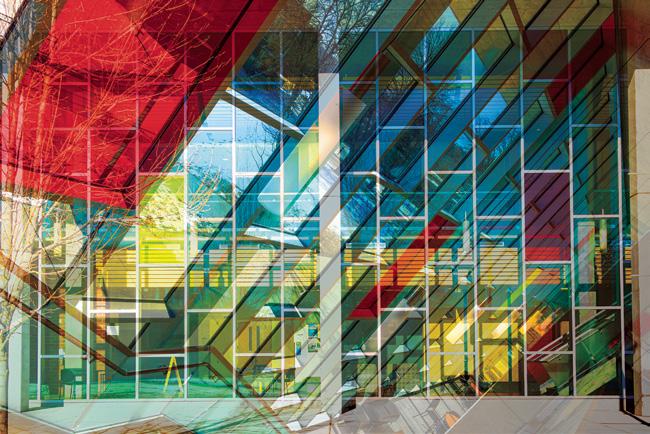
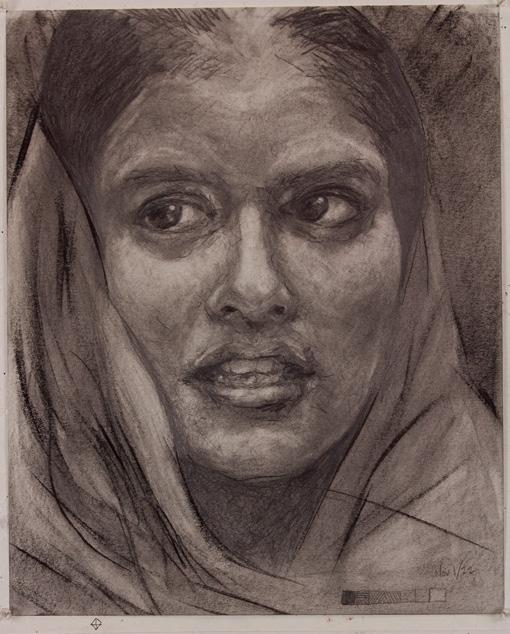
As I sit eighth in line at the stop light the only signs of life I see are the manicured tree and meticulously planted all weather bushes dividing two stretches of pothole ridden pavement and a mangey, urban crow with a Cheeto in its mouth that it probably picked up from the Walmart parking lot sitting on the street light then, the vague outline of a face behind illegally tinted glass in the car next to me that’s looking down at that delicious Chalupa he has in his hands which tastes worse when you’re driving still good just not worth it and while his mind is occupied by the salty, cheesy, fatty taste I try to figure out the meaning of life which entails vague questions. Hello God I’m really trying here. These questions are classic but many people ignore them. Perhaps if it weren’t for the juices from that strange taco dripping down his face and distracting him then we would both be having an existential crisis.
I find myself making the bus into a new metaphor whenever I ride it. I text you, “the bus is like you and me” “the bus is like a beautiful ocean, sometimes” “the bus is like a sunday morning cartoon. you know i only ever watched tom and jerry once, but it’s like that.”
I tell my professor the bus is like God to me, and then cannot explain it. I guess because I put faith in the bus and even when I get lost I am eventually found. I guess because I do not understand the bus, it works in mysterious ways.
The bus is like my house. House: “a building for human habitation”
All these people on here with me, we are going the same direction, we are in the same boat, sorry, bus, and we do not know each other. Sometimes we speak, largely we do not, and often we don’t get off at the same place.
Different metaphor.
The bus is like my home. Home: “relating to the place where one lives.” Because the bus was my first measure of independence, freedom, intoxicating.
Because I love the bus, it is beautiful, and every time I ride the bus I love everyone who is riding with me.
Because I trust the bus, and even when I get lost I am eventually found. And I always want to talk to you while I’m on the bus. So I text you: “When I think of living with you I feel like I’m getting from point A to point B.”
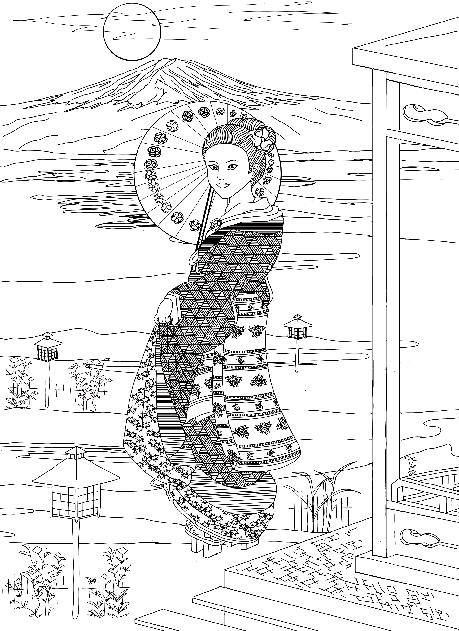
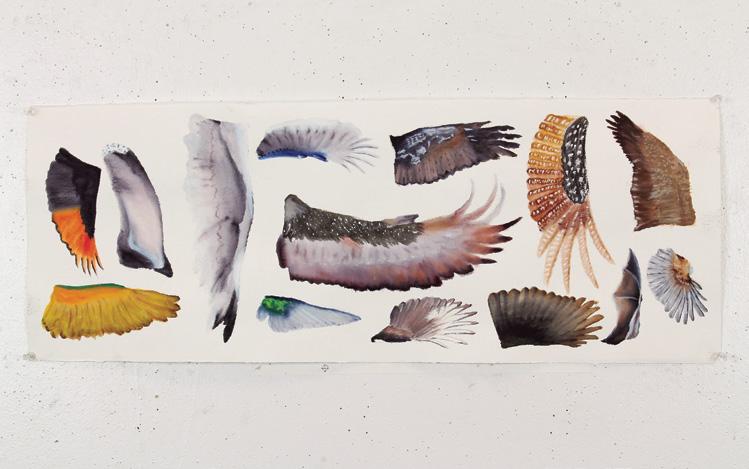

Literary Editor: Fig DePaolo
Literary Staff:
Caleb Beiers, Jacqueline Dwight, Kaitlyn Kerns, Brandi Maas, Marina Marsalis, Taiyanna Pereira, Nico Simpson, and Aeden Swink.
Graphic Arts Advisor: John Mujica
Graphic Arts Editor: Clover S.
Literary Advisors: Laura Read and Connie Wasem Scott
Special Thanks:
Richard Baldasty, Heather McKenzie, Shelli Cockle, Linda Beane-Boose, Anna Gonzales, Carl Richardson, Becky Turner, Ben Cartwright, Tim Greenup, and Ben Read.
Print Production: HP Indigo 15K Digital Press
Paper:
Cover: White 110# Bright white Linen
Text: 100# Uncoated
Ink Color
Cover: 4/4 Color Process
Text: 4/4 Color Process
Bindery
Perfect
Typefaces
Owners
Lexia Mono
Printer
LawtonPrinting 4111 E Missoon Ave. Spokane, WA 99202 lawtonprinting.com

THE WIRE HARP - 2023