OUTWARD BOUND
Members Take New Skills into the Wild









– page 30

MULTNOMAH ATHLETIC CLUB MAY 2023 WINGED M

Multnomah Athletic Club’s mission: Enrich lives, foster friendships, and build upon traditions of excellence in athletic, wellness, and social programs.



FEATURED 24 Mother’s Day Messages
MAC’s youngest members share thanks and special messages for their moms.
30 Adventure Awaits
From climbing to paddleboarding and everything in between, the club’s programs create endless opportunities for outdoor adventure and exploration.





COMMUNICATIONS
TEAM
Project Manager
Molly Brown
Director
Stephanie Cameron
Photographer
Brandon Davis
Graphic Designer
Kari Kohrmann
Digital Content Specialist
Laura Lawrence
Communications Manager

Adam Linnman
Communications Coordinator
Carina Mears Connery
Graphic Designer/
Ad Services Coordinator
Julia Omelchuck
Content Manager
Deanna Pogorelc
Marketing Manager
Jessie Smith
Senior Copywriter
Jake Ten Pas
ON THE COVER
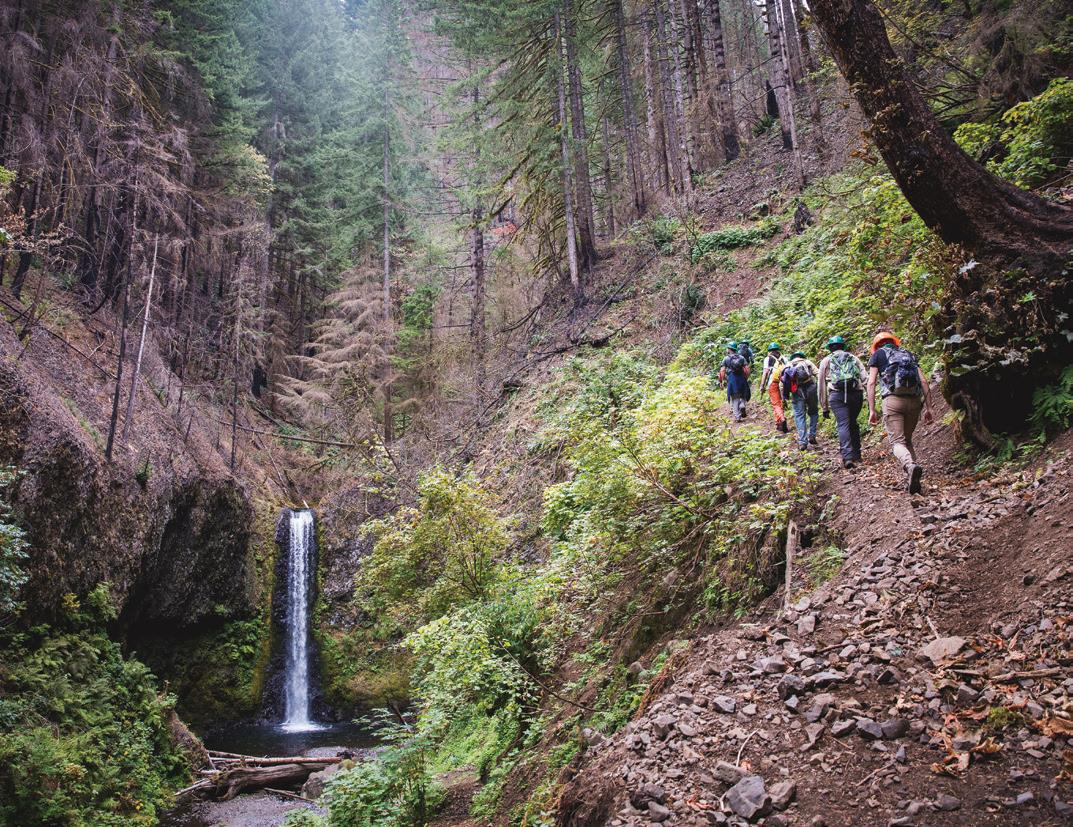
Members explore the natural wonders that surround Portland and beyond with the assistance of MAC’s adventurous Outdoor team. Cover design by Kari Kohrmann.

483-210) is published monthly by Multnomah Athletic Club at 1849 SW Salmon Street, Portland, Oregon 97205. Advertising from members and nonmembers is accepted by The Winged M. Advertisers in The Winged M are not endorsed by Multnomah Athletic Club unless otherwise noted. For questions concerning mailings and subscriptions, call 503-517-7280 or email membership@themac.com. Periodicals postage is paid at Portland, Oregon. POSTMASTER: Send change of address to Multnomah Athletic Club Member Services, 1849 SW Salmon Street, Portland, Oregon 97205. ©2023 Multnomah Athletic Club. For advertising information, email advertising@themac.com.
Submit magazine content ideas to wingedm@themac.com. View current and past issues of The Winged M online at thewingedm.com.
MAY 2023 | The Wınged M | 3
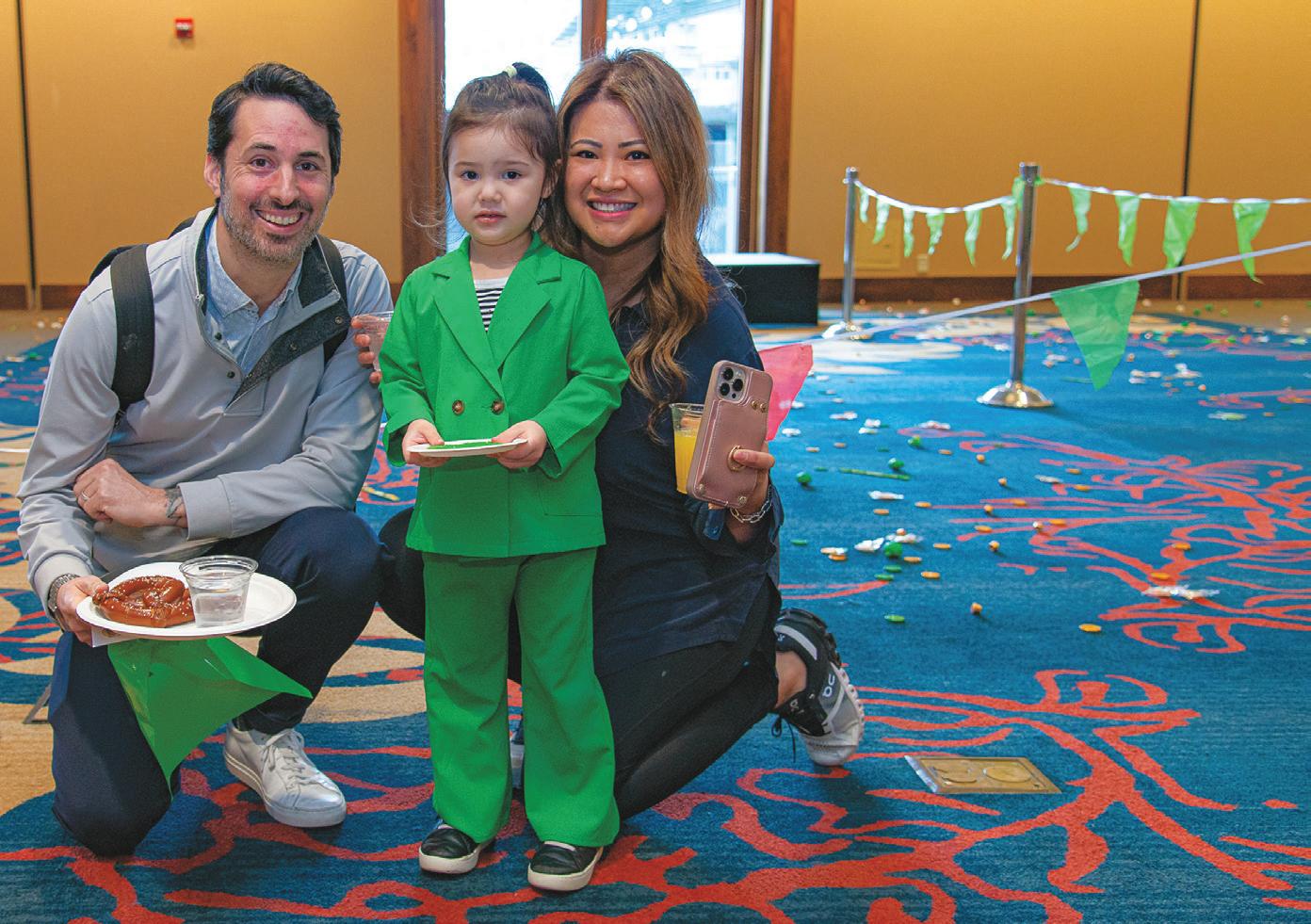
Contents 46 MAY 2023 | VOL. 112 No. 5 A PLATINUM CLUB Matthew, Olivia, and Thuy Gordner celebrate St. Patrick’s Day at the 2023 Coin Hunt. Turn to Club Scrapbook for more event photos. CLUB NEWS 5 Vice President’s Column 7 Director’s Column 9 Athletics Column 11 Faces of MAC 13 Artist Profile 14 Al Tauscher Award 17 Foundation 19 MAF Tributes 20 Military Honor Wall 21 House Committee 22 In Memoriam CULINARY 26 Passport to Pinot 27 Culinary Calendar EVENTS 38 Broadway Across America 39 May Event Listings 42 June Event Listings 46 Club Scrapbook FITNESS & WELLNESS 48 Triathlon Training 50 The Murph Challenge 52 Yoga & Hiking Retreat 54 Fitness & Wellness Corner 56 Foam Rolling ATHLETICS 58 Tennis 60 Volleyball 64 Climbing 66 Racquetball 68 Pickleball 69 Walk Across America 70 Basketball 71 Advertiser Index 72 MAC Marketplace 74 From the Archives The Winged M (USPS






Committee Chairs
STANDING
Audit Alison Rosenblum
Athletic Ken Meyer
Budget & Finance Alison Rosenblum
Communications Jake Laban
Diversity Admissions Ann Blume
Diversity, Equity & Inclusion Tanya McGee
House Brad Miller
Member Events Alex Page
Membership Dave Hanna
Property Jenna McPherson
BOARD
Food & Beverage Brian Juckeland
Human Resources Katherine VanZanten
Land Use Greg Specht
Technology Xavier Clark
SPECIALIZED
Arts Susie Younie
Community Involvement Sheri Anderson
Investments Ryan Cotton
SPORT
Artistic Swimming Marni Davis
Basketball Kyle Hypes
Climbing Jeremy Cohen
Cycling Bryan Leslie
Dance Andrea Malloy
Early Birds Rich Director
Fitness & Decathlon Lori Webb
Golf Larry Vanlaningham
Group Exercise Neisa Dokken
Gymnastics Marilyn Litzenberger
Handball Conor Casey
Karate Elizabeth Flores
Outdoor Activities Program
Laura Johnson-Graham
Pickleball Dana Bach-Johnson
Pilates Julia Ju
Racquetball Sanjay Bedi
Ski & Snowboard Audra Galler
Squash Steve Schaller
Swim Brad Fennel
Tennis Gram Leahy
Triathlon & Running Erica Chiotti
Volleyball Melissa Nelson
Walking & Hiking Anna Kanwit
Water Fitness Joanna Bartlo
Water Volleyball Steve Watson
Yoga Miki Chown
SOCIAL
20s/30s Alex Moreland
Balladeers Chris Rasmussen
Culture & Style Shannon Conrad
Family Events Annie Barry
Holiday Decorating Bridget Connolly
MelloMacs Kirsten Leonard
Social Activities Louie Paul
VICE PRESIDENT’S COLUMN
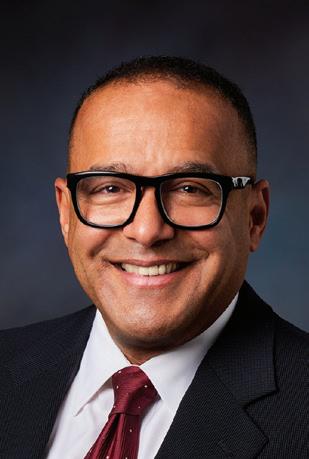
Many of my friends have asked why I love this club so much. It’s simple — we’re a community. Our employees and members are passionate about our club, and that resonates when you walk through our door. I graduated from Lincoln High and was a member of the swim team. We practiced here, and I remember how I felt the first time I walked through these doors. Ten years later I became a member. It was clear that there was a strong sense of community then, and it’s even stronger now. I would have never imagined that my daughter, and now my grandson, would take their swim lessons and play basketball here.
Club Committees
Our club is unlike any other athletic/social club in the nation. Our Fitness Room, sports activities, dining options, and social activities make us a well-rounded club that caters to a wide range of interests, preferences, and individuals. This would not be possible without our committee system. My committee experience began with the Diversity Admissions Committee (DAC), as well as chairing a Diversity, Equity & Inclusion Subcommittee. Committee members are important because they contribute their unique perspectives and knowledge to the group, helping to ensure that the final decision or recommendation is wellinformed and considers multiple viewpoints.
The club’s 52 committees are the lifeblood of MAC and are one of the best ways to get involved and make a difference. They offer chance to work with other dedicated members who share a passion for MAC, and they are critical in operations, deciding policies and programs and helping guide our club. To join a committee, fill out an interest form online or join us at the club-wide committee celebration in September, when you can learn more information.
Diversity, Equity, and Inclusion
The most recent addition (2021) to our group of standing committees is the Diversity, Equity & Inclusion Committee. DEI is crucial for our club because it not only fosters a culture of respect and understanding but
also helps us thrive and succeed. A diverse club brings in a variety of perspectives, experiences, and skills that can drive innovation and creativity, leading to a stronger connection with our community. It also helps us to better serve our diverse membership and create more inclusive experiences for everyone. When our community feels valued, respected, and included, they are more engaged, motivated, and productive, resulting in extraordinary experiences for our community. Members currently have an opportunity to share their personal club experiences by filling out an inclusion survey at themac.com. The survey, which is available until mid-May, will help us better understand how different aspects of our club culture contribute to a sense of belonging and feeling welcome and represented, and the results will provide a benchmark for measuring improvements in the future.
Many of you have attended some of the amazing events that represent the inclusive culture we are striving for, such as Lunar New Year, Diwali, and Black History Month. These incredible events were managed by our Culture & Style and DEI Committees, who I can’t thank enough for their incredible work. I’m happy to share that the Board of Trustees has approved the creation of a specialized committee under Member Events specifically to manage the celebration of these and many other cultural/heritage events. This committee will be up and running for the 2024-25 committee year, and I encourage all who are interested to submit a committee interest form.
In closing, I want to take a moment to express my sincere gratitude to my family, fellow board members, staff, and members. Your unwavering support and dedication have been instrumental in our success thus far, and I am honored to be a part of the MAC community.
These past three years, we have overcome countless obstacles and achieved incredible feats. We have paved the way for a brighter future. So let us take this moment to celebrate our triumphs, to reflect on our journey thus far, and to look forward to exciting opportunities that lie ahead.
Finally, let’s remember how important it is to treat people with kindness and respect. When we show kindness and empathy towards others, we create a ripple effect of positivity that spreads far beyond our immediate interactions. We inspire others to do the same, and we create a culture of respect and compassion.
MAY 2023 | The Wınged M | 5
CLUB NEWS
Richard Maxwell VICE PRESIDENT












1634 SW MYRTLE ST | HISTORIC SIGNIFICANCE IN THE GRID PORTLAND HEIGHTS | 7 BR 6.5 BA 8,413 SF + 1,277 SF ADU | CALL FOR PRICE Brian Pienovi, Principal Broker (503) 577-5858 | bpienovi@pienoviproperties.com Andrew Pienovi, Principal Broker (503) 913-1200 | apienovi@pienoviproperties.com OUR FEATURED LENDER: Greg Mirecki, Mortgage Banker NMLS 5208 (503) 789-1435 | greg.mirecki@pmrmtg.com Co NMLS 1169 | Equal Opportunity Lender 2029 NE KNOTT ST | SPANISH COLONIAL REVIVAL IRVINGTON | 4 BR 2 BA 4,092 SF | $1,350,000 1927 NE THOMPSON ST | PRIME IRVINGTON DOUBLE LOT IRVINGTON | 5 BR 3 BA 4,453 SF | $1,799,000
Board of Trustees
President Nathan Ayotte
Vice President Richard Maxwell
Treasurer Alison Rosenblum
Secretary Katherine VanZanten
Trustees
Susan Bladholm
Ryan Chiotti
Jenny Kim
Victor Perry
Andrew Randles
Dana Rasmussen
Jennifer Strait
Alex Young
General Manager
Charles Leverton
Executive Leadership Team
Strategy & Portfolio Director
Matt Abraham
Culinary & Events Director
Erik Anderson
Finance & Accounting Director
Mary Averette
Chief of Staff
Laura Boley
Communications Director
Stephanie Cameron
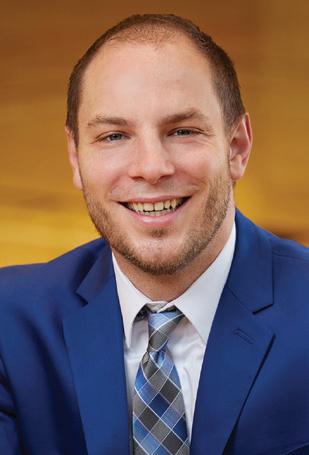
Interim Athletic Director
Chad Failla
HR Director
Amy Mattson
Engagement Director
Derek Pratt
Club Operations Senior Director
John Sterbis
Senior Leadership Team
Strategy & Special Projects Manager
Nathan Loomis
Technology Director
Mark Marcelline
Portfolio Manager
Patrick Martin
Experience & Member Services Director
Kevin Pollack
Membership Manager
Kelly Robb
Fitness & Wellness Manager
Maddy Sweeney
Employee Engagement Director
Carrie Tarbell
DIRECTOR’S COLUMN
In the last six months, I’ve felt welcomed into your second home and have enjoyed meeting so many members while working out, swimming, and climbing, as well as during sports programs and club-wide events. Those members have been more than happy to share their perspectives and their recommendations for making MAC even better. Through the Membership team, the Member Services team, and a focused effort on member experience club-wide, the Engagement department is dedicated to taking action on some of those recommendations to increase satisfaction and participation across all parts of MAC.
In Member Services, we are partnering with the globally recognized leader in service standards, Forbes Travel Guide. MAC is starting a process to improve consistency and quality in every part of the member experience. The Forbes Travel Guide team has toured our spaces and spoken with staff and members and is now defining a set of custom standards that MAC’s leaders can use to set the expectations for every detail in the club. This will help us build on our foundations by capturing the process for the way things work here, so that future staff and leaders can have that understanding to create continuity and meet the high expectations MAC has for all our programs and services.
With these improvements underway, the Engagement department is also looking to drive an emphasis on experience enhancements across MAC based on direct feedback from members. Experience & Member Services Director Kevin Pollack is improving the current ways we hear from members, such as Sounding Boards, and developing all new ways to listen, like the new MAC Secret Shopper program. We’ll also leverage the tried-and-true techniques of surveying and holding focus groups with an approach that lets us act on the feedback we hear.
This year, we plan to launch an all-member satisfaction survey to give us a detailed overview of how members currently feel about their varied experiences at MAC. With such a vast array of opportunities in the club for
members to connect with each other and be their best selves, this baseline understanding of member feedback will give us some clarity of which areas need focused attention by working with committees and staff leadership to steer improvements to the club based on members’ input. We’re also facilitating a member inclusion survey, so please be sure to complete the survey and make your voice heard. Listening to members is how this member-owned club ensures that the experience is directly supporting our members in the ways they most value.
As Membership Manager, Kelly Robb is working with the Membership Committee to focus on welcoming new members to the club. We have relaunched new member happy hours to celebrate and prioritize helping these newer members get a strong start by giving facility tours led by current members and emphasizing our Club Rules, which aim to create a safe and respectful environment for all. As we complete this outreach to all those who joined in the last few years, we will bring back an educational welcome series for every new member to attend in their first month of membership. With these efforts in place, it’s a great time to invite someone you know to apply.
Allison Grebe Lee, last year’s Membership Committee chair, mentioned in the October 2023 issue of The Winged M, “It’s always a great time to recommend MAC.” Encouraging the incredible people in your life to consider MAC is a great way to strengthen our community. Dave Hanna, the new Membership Committee chair, said, “MAC offers a number of ways for prospective members to learn and experience the club as part of both their vetting and onboarding processes. We are ready and excited for our current members to seek out their family, friends, and coworkers who they feel would be poised to experience all that MAC has to offer, and the Membership Committee and staff are prepared to assist!” Longtime members should also be reminded that parents can put their junior’s initiation fees on payment plans as early as age 11, so they can transition seamlessly to elected membership later in life. Whether inviting, proposing, or giving the gift of MAC to the special people in your life, this is how our community continues to be filled by the amazing people I meet in our club every day. Visit the Recommending Membership Page on themac.com or reach out to membership@ themac.com for more information.
MAY 2023 | The Wınged M | 7
CLUB NEWS
Derek Pratt ENGAGEMENT DIRECTOR
50 hours . 50 smiles . 50 thousand .

[ THANK YOU FOR 50 YEARS OF GIVING ]










We all give in different ways. Whether you give of your time, skills, pocketbook or otherwise, we thank you for your generosity. As your community foundation, we count on generous people like you to help us improve the lives of all Oregonians. So in this, our 50th year, OCF is celebrating YOU. Thank you. Visit oregoncf.org/50 to see the positive impact we’ve made together, nd new ways to give and get inspired.

OREGONIANS HELPING OREGONIANS SINCE 1973 OCF 5O
Ways to Reach
At Your Service
atyourservice@themac.com
Text or call 503-517-7235 themac.com/group/pages/contact-us
Additional Points of Contact
Accounting
503-517-7200
Athletics & Wellness
503-517-7525
Events & Catering
503-517-6600
Child Care
503-517-7215
Facilities
503-517-6656
Food & Beverage
503-517-6600
Lost & Found
503-517-7235
MAF
503-517-2350
Maintenance
503-517-6665
Membership
503-517-7280
Mporium
503-517-7290
ATHLETICS COLUMN
It happens all too often. Someone who appears fit and healthy suddenly gets injured when participating in a game or during their favorite outdoor sport, like hiking through the woods or kayaking down the river. Outdoor activities are a great way of keeping fit and active, but if you’ve been sedentary over the winter months, jumping into a lot of activity too suddenly can sometimes produce painful results.
Chad Failla INTERIM ATHLETIC DIRECTOR

Many outdoor activities take place in remote areas that you might not be able to travel to regularly. But being able to train regularly in an indoor environment enables you to develop and maintain your skills in activities such as climbing, stand-up paddleboarding, kayaking, scuba diving, and many more. Another benefit of indoor training is that practicing the activity is not reliant on weather conditions. Although May often promises flowers and sunshine, those of us who live in the Pacific Northwest know that this time of year can bring unfavorable weather conditions to our area.
At MAC, the Outdoor department provides opportunities for members to get outside, as you can see featured on page 30, to rock climb and mountain climb. Utilizing our Climbing Gym and following the guidance of the club’s certified outdoor guides is a great way to train for and make the most of your outdoor experience. Indoor climbing offers the perfect introduction to the sport and allows you to connect with the basics in a controlled, safe environment without having to be concerned about weather or any other factors. Controlled environments also help alleviate any intimidation or hesitation prior to hitting the crags for an outdoor climbing adventure.
If you’ve ever considered giving stand up paddling a try, we offer training in the West Pool. Before taking part in one of our standup paddleboard adventures, think about learning the basic skills in the safety of an indoor pool. Training in a pool, and not in a natural body of water, allows you to benefit from the still and warm water, and your instructor is able to keep close contact with you to help you perform maneuvers safely. Also, don’t forget about our fitness professionals when preparing for your outdoor summer fun. We have trainers that specialize in techniques that will help you be more successful in any adventure. Call a training professional and let them know your planned activities, and they’ll establish a workout plan to help you accomplish your goals.
May also brings a new pillar of our Build program. This is a five-month series that offers a deep dive into MAC’s pillars of wellness that support the lifelong athlete. Each month has focused on a new pillar, and May is Recover Daily. The body needs rest and recovery to stay healthy and well. Life moves fast, and in order to keep up, learning to slow down is essential. This month, members lean how to build recovery into their day and listen to their body’s cues for rest.
Summer Camps and Classes
There is still plenty of time to register for our popular summer camps and classes. Opportunities for kids ages 4-17 are abundant and will not disappoint. Athletics is excited to showcase its many programs and passionate instructors for members this summer. The club is committed to creating a safe and fun environment for children. Unique to MAC is the variety of both athletic and non-athletic camps for the entire summer. We offer competitive, recreational sports and offsite adventures that are all designed specifically for younger kids. You also can combine all these offerings to make a full day. We ensure that children are having fun and engaged every day, so visit the Program Guide and Registration page on the mac.com and sign up today!
MAY 2023 | The Wınged M | 9
CLUB NEWS

















2566 NW Marshall St, #A3 $499,000 4409 SW Carl Place $2,379,000 4640 High Ridge Rd $2,525,000 PORTLAND 2846 NW Fairfax Terrace $2,850,000 13285 NW Greenwood Drive $1,100,000 Aimee Virnig (503) 803-7678 3632 NE Flanders Street $1,785,000 2765 SW 325th Avenue $1,100,000 13707 NE Marine Drive $800,000 Brian C Johnson (503) 957-5587 Susie Hunt Moran (503) 970-9866 Todd Talcott (503) 975-8111 Todd Talcott (503) 975-8111 2627 Pine Ridge Drive $1,080,000 2219 NE 57th Avenue $825,000 Rene Susak (503) 449-2313 Cary Perkins (503) 720-4455 Aimee Virnig (503) 803-7678 2669 SW Vista Avenue $1,300,000 Susie Hunt Moran (503) 970-9866 87689 E Creek Ridge Rd $755,000 Melissa Eddy (503) 440-3258 PORTLAND GEARHART PORTLAND PORTLAND HILLSBORO PORTLAND PORTLAND PORTLAND GEARHART GEARHART PORTLAND GOVERNMENT CAMP windermere.com 2244 NE Alameda Street $1,250,000 PORTLAND Cary Perkins (503) 720-4455 Jan Carlson (503) 267-3278 415 Spruce Avenue $659,000 Judy Paulsen (503) 998-8975 Melissa Eddy (503) 440-3258 920 Beach Drive $1,245,000 Michele Johnson (503) 440-0921 SEASIDE Portland Business Journal’s #1 Most Admired Company Residential Real Estate Category
FACES OF MAC
has this shroud of shame around it; people don’t like to use the word ‘seizure.’ I want this book to normalize the conversation for people all around the world.”
Because of her epilepsy, Staggs doesn’t drive, which makes her appreciate the walkability of Westmoreland, where her family moved in 2007. “We love that Portland is like a little town in a big city. The restaurants, the activities, and the access to nature are some of our favorite parts of living here,” she says. Similarly, MAC has provided a convenient base of operations for her whole household since they joined in 2022.
Unputdownable!
Toni Morrison once said, “If there’s a book you want to read, but it hasn’t been written yet, then you must write it.”
“That’s what I’m trying to do,” says MAC member Sara Staggs, who releases her first book, Uncontrollable, through Black Rose Writing on May 25. The author celebrates with readings at Annie Bloom’s Books at 7 p.m. Tuesday, June 6, and the University Club at 6 p.m. Wednesday, June 14.


The title of Staggs’ novel is a reference to not only the nature of life and tough decisions many women face in trying to balance a career, family, and their own well-being, but also to the condition that regularly challenges her own sense of bodily autonomy — epilepsy. “As the workplace and the world have become more competitive and complicated, self-care for women has taken a backseat even more in the past few years, and this book addresses the choice that the protagonist Casey has to make — her health or continuing to move forward in her career — and the answer is not as simple as it might seem,” she says. Like the fictional Casey, Staggs was a civil rights litigator here in Portland before giving up her career to take care of herself. While recovering from two brain surgeries over the past six years, she used journaling as a form of writing therapy, in the process turning her own adversity into the inspiration for Uncontrollable.
“There are 65 million people worldwide who have epilepsy. I run an epilepsy support group, and I hear stories of stigma, being ashamed to tell people, families who are struggling to get the resources they need for various reasons, people afraid to lose their jobs, and a lack of seizure first aid knowledge. Epilepsy is the fourth most common neurological condition in the United States, but people still don’t want to talk about it. It still
“Our two sons have taken swimming lessons, and the oldest, Max, is now doing rock climbing. I took the women’s climbing class, I’m taking an advanced writing workshop led by the legendary Tom Hallman, and I love the gym. My husband is a huge fan of the gym, too, and our family uses open swim time on a regular basis.”
In addition to Hallman, Staggs hopes to share her recent writing with a younger audience. She’s finished a second manuscript that should be ready to send out to agents in the fall. Because it’s geared toward the young adult audience, she’s looking for high schoolers to look it over and offer feedback. “Contact me if you are interested!” she offers, which readers can do via her website, sarastaggswrites.com.
Like Elton John, she’s still standing, and as evidenced by her resilience and athleticism, looking like a true survivor and feeling like a little kid. Lund says she spent two to three hours a day working out at MAC over the course of the five-week Winter Blitz, taking classes such as Cardio Sculpt and the fast-paced circuit training of MAC Fit. “I almost stopped coming, but the instructor, Alyssa Dalton, inspired me. She went out of her way to tailor exercises I could do during the 45-minute class. After the competition, both she and Christy Johnson, another inspiring coach, congratulated me and bought me a special gift. When I told Alyssa that I wanted to do this same workout at 90, she assured me that I definitely could.”
Lund also used the elliptical trainer every day and spent hours walking her and husband Michael Muzikant’s English Springer Spaniel, Petra, around the neighborhood. “I married into MAC 29 years ago, learned to play mahjong, and have taken cooking classes. Best of all, I’ve made many friends at the club. It has such a warm, friendly atmosphere. I call it my second home.”
When not at either of her two abodes, Lund and Muzikant love to travel and have visited more than 70 countries, including Ethiopia, Syria, Iran, Myanmar, and Cuba. By the time members read this story, they’ll be off again, enjoying a sojourn in England and Portugal. Staying fit not only fuels Lund on her adventures, but keeps her mentally sharp and spiritually active, as well. The retired investigative journalist is working on a memoir about the time she spent in Israel, where her daughter was born. The Lund-Muzikants are members of two local synagogues, P’nai Or and Haburah Shalom.
Putting on the Blitz
At age 84, Diane Lund winning the over-65 category of MAC’s Winter Blitz competition is mighty impressive, at least until she tells you about some of the other things she’s accomplished in her life. “I’m a 28-year breast cancer survivor and believed, if I climbed to the Mt. Everest Base Camp, which I did in 1999, my cancer would never return,” she says.
For Lund, nothing can take away her sense of accomplishment. “I was absolutely thrilled to have won. I’d never entered an athletic competition before, and I was nervous at first, not knowing if I could endure such a tough workout schedule at my age, but decided to challenge myself. I soon realized that, yes, I could do this. It was a feeling of pride. I definitely plan to enter the competition again next year!”
MAY 2023 | The Wınged M | 11 Submit information for Faces of MAC to wingedm@themac.com.
CLUB NEWS


Artist Profile: Stephen Hayes
This is the eighth submission in our ongoing Artist Profile series featuring MAC’s extensive collection of Northwest art. Our interview began with a warm welcome from Stephen Hayes in his spacious studio in Southeast Portland, where an entire wall of windows provides ample natural light.

Born in Washington, D.C., Hayes studied drawing and painting, earning a bachelor’s degree in 1977 and an MFA in 1980 from the University of Wisconsin in Madison. Subsequently, he spent four years exploring Cypress and Jordan. It was during this time that he developed a connection to the land and the innate power and beauty of the landscape. He was aware that it was passé to be interested in plein air painting at the time, but these landscapes demanded his attention. He spent another year in London, which led to his interest in portrait painting.
In 1985, Hayes relocated to Portland because of a family connection. Here he was introduced to the landscape of Sauvie Island by a fellow painter, and much of his work has been inspired by this location. Many of his paintings are studio oils which are based on smaller plein air sketches.

More recently, Hayes started working on a project entitled In The Hour Before, using Google Earth to travel virtually to places where social injustice, political power struggles, and tragedy are prominent. This method has allowed the artist to see the inherent beauty of the land and juxtapose it with the current events from these specific areas. A few examples include the 2015 terrorist attacks in Paris, the 2015 school shooting in San Bernardino, the 2020 fatal beating of George Floyd in Minneapolis, and the current war in the Ukraine. Hayes describes The Hour Before as an odd marriage of beauty and tragedy. Once he concluded this series, he took a sabbatical between October 2020 and October 2021 to focus on recovering and rejuvenating his energy. He received a prestigious Guggenheim Award for this work and is committed to continuing the project.
For over 30 years, Hayes has been combining his intellectual and emotional energy to create compositions that capture the essence of his favorite subjects: groves of trees, water, pathways, and the sky. In 2015, MAC acquired two oils, Path and Pool, that now hang side by side outside the Sports Pub. These are fine examples of Hayes’ favorite location, subject matter, and authenticity.
The artist’s sole medium is oil, because “paint has viscosity and density.” The drying rate is slower than acrylic paint and evolves with time. Because of the time lag, he sometimes returns after several hours and adds another layer to the piece. He often sees something else, and that, in turn, presents new options as he goes forward with a piece. “It is not a linear projection,” he explained. “It’s a dance or conversation between me and my work.”
Hayes has shown his artwork regionally, nationally, and internationally, including exhibitions at the Portland Art Museum, The Art Gym at Marylhurst University, the Northwest Museum of Art and Culture (Spokane, Washington), American Culture Center (Sapporo and Nagoya, Japan), and The Phillips Collection (Washington, D.C.). He has had several commissions for public art projects in the region, and his works can be found in the collections of Oregon State University, New York Public Library, Portland Art Museum,
University of Oregon, and Randall Children’s Hospital at Legacy Emanuel Hospital, as well as numerous private and public collections. In 2013, Hayes was the subject of a 30-year career retrospective at the Hoffman Gallery at Lewis & Clark College, which included a fully illustrated catalogue.
Stephen Hayes has been in Portland for 37 years and has exhibited at the Elizabeth Leach Gallery since his arrival. The professional relationship that he and Leach share is one of mutual trust and admiration. He has an upcoming show in November at the Gallery, located at 417 NW 9th Avenue in the Pearl District.
— Jeanne Neville and Nancy Smith
MAY 2023 | The Wınged M | 13 CLUB NEWS
Stephen Hayes with his oil painting, Pool, located outside the Sports Pub, and his studio in southeast Portland.
Al Tauscher
JUNIOR AND TEEN AWARDS


Multnomah Athletic Club partners with the Multnomah Athletic Foundation to honor remarkable young people actively engaged in athletics, school, and community with the Al Tauscher Junior and Teen Recognition Award. Bestowed upon more than 100 outstanding young MAC members since 1995, the award recognizes MAC members from grades 6 through 12 who have experience in various athletic and social opportunities. This award emphasizes overall participation, rather than excellence in a single activity, in honor of Al Tauscher. Candidates for this award are inspirational to others; participate in extracurricular activities; devote time and energy to their community; and demonstrate leadership and the ability to be a valued team player. To honor these MAC members’ community connections and leadership, the Multnomah Athletic Foundation (MAF) provides a $300 grant for each recipient to donate to a foundation community grant partner. The foundation is thrilled to support youth leadership and its positive impact on the community. MAC also hosts a banquet for the families and mentors of the winners on May 1.
JUNIORS
Marcus Fong
Robert Gray Middle School
Grade 8
MAF Grant: LEAP
Marcus is a remarkably driven individual. He puts in the time, and he cares about the little things that will lead to his success. Already a 4.0 student, he took the initiative to accelerate his math studies during the pandemic, and he understands the importance of commitment and practice in everything he does. He participated in the MAF Youth Grant Initiative last fall and is looking forward to participating in YGI 2.0 this spring. Marcus is an accomplished climber on the MAC Climbing Team, and an exceptional ski racer who continued to support his team even after a season-ending injury last year. His ski coach describes him as, “driven, passionate, a good team player, a leader, and an all-around great kid.”
Gorman Jaeger
West Sylvan Middle School
Grade 7
MAF Grant: Adaptive Sports
Northwest
Gorman has played on a MAC basketball team for the past three years. Basketball is his favorite sport, and he hopes to continue to play for MAC in the future. Gorman also runs track. He is a 4.0 student in middle school, and he participated in the Friday Evening Dance class program this year. Gorman tries to be a role model for his friends and other students in doing the right thing, even when teachers are not watching. He has volunteered his time with the Children’s Book Bank, Rose Haven, and Cascade Aids Project.

Layla Stevens
French International School of Oregon
Grade 6
MAF Grant: Community Transitional School
About Al Tauscher:
Al Tauscher was an inspirational instructor, coach, and youth mentor who joined MAC as an athletic member in 1915. He became assistant athletic director in 1923 and director in 1928. His impact at the club was felt at social events, the father-son and mother-daughter banquets, MAC’s Junior May Festival, tours and trips, and photography and craft classes. He was a legend at the annual Junior Christmas Party, where he handed out more than 400 bags of candy yearly. In 1953, Tauscher became a fulltime instructor and still taught golf, tap dancing, archery, badminton, and other sports in his 80s. He marked his 50th anniversary at MAC before retiring in 1983.
Layla is an impressive young person. She competes for MAC on the Gold swim team, practicing four or five times per week. She also practices tennis at MAC four times per week. Her swim coach describes her as, “consistent and hard-working.” Layla greatly values the relationships she has developed with her teammates and friends and tries to be a leader and set a good example in all her activities. She is a strong student, with classes taught in English, Spanish, and French. She has volunteered with the Refugee Care Collective and plans to expand her community involvement with her mother through the National Charity League.

14 | The Wınged M | MAY 2023
Photos by Brandon Davis
Annie Chang
Catlin Gabel

Grade: 12
MAF Grant: Big Yard Foundation
Annie Chang is an example of excellence in service to others. She has participated in MAC athletics from an early age and in recent years has become an integral part of the nationally competitive MAC squash community. Annie has received funding from national organizations to bring mental health resources to her school community. In addition to volunteering for Youthline, an organization that supports young people in times of need, Annie founded POC Voices Heard in her school. Together, they strive to highlight the remarkable talents and voices of students of color. Annie is a dedicated student, accomplished cellist, and role model to all.

Dillon Garg
Jesuit High School
Grade 10
MAF Grant: Elite Sports Academy

Dillon Garg is clearly a driven individual. Participation in the prestigious Kumon Leadership Conference and summer NASA camps have set him on a course toward STEM career. He plays year-round baseball for Jesuit High School and Gunderson Baseball while maintaining a 4.2 GPA, including AP classes. As a lifelong member, Dillon has been involved in junior sports and activities at the club, including the Junior Events Committee and the MAF Youth Grant Initiative. He is a community volunteer with service to many organizations including the Young Men’s Service League, which is a mother-and-son leadership and service organization, and as a member of the Youth Leadership Council of Lake Oswego. Dillon is committed to continuing deep engagement through community service around issues he is passionate about.


Ella Kim
Lincoln High School
Grade: 10
MAF Grant: Parrott Creek Family & Child Services
Ella Kim is a vibrant young person who cares deeply for under-served and marginalized community youth. Her community services include volunteering at Oregon Food Bank, tutoring students in rural Oregon, and joining MACorps community events. She has grown her leadership skills in Model United Nations and Lincoln’s Constitutional Debate Team. Over the years, she has participated in MAC athletics, including artistic swimming, swim, and ski. Ella brings enthusiasm and passion to all she does and is eager to explore and grow her knowledge and general understanding of the world.

Miles Levine
Lincoln High School
Grade: 10
MAF Grant: Parrott Creek Child & Family services
Miles Levine is a fierce and committed advocate for those who are most vulnerable in our community. He has volunteered for those individuals experiencing houselessness in our community and commits ongoing time and energy to supporting and working with organizations that support those in need. Miles brings a fun-loving energy to all he does in his community, with his family, his classmates, and his time at MAC. Miles strives to ensure that student voices are heard by being a member of student government and working on his school newspaper. Miles has been involved with MAC since an early age participating in classes, camps, social activities, and spending lots of time in the pool!
Creighton Martz
Jesuit High School
Grade 12
MAF Grant: Adaptive Sports Northwest
Creighton Martz is a committed supporter of helping address Portland’s homeless crisis. During his sophomore year at Jesuit High School and at the onset of the Covid pandemic, he co-founded the Portland chapter of Handle With Care. He and his partner raised over $7,000 and distributed over 1,000 care kits through a partnership with Blanchet House. Later, he volunteered as an intern at CityTeam Portland and built meaningful relationships with the residents and staff, supporting their mission to address addiction and homelessness in our community. In addition to his academics and service work, Creighton is also a fouryear football and baseball athlete. As a recent MAC member, he enjoys pick-up basketball, workouts, and socializing at Joe’s with his Jesuit classmates.
Chloe Nelson
Ida B. Wells High School
Grade: 11
MAF Grant: Portland Tennis & Education
Chloe Nelson strives for excellence in all aspects of her life. She has channeled her love of science and math into volunteering with youth and family outreach at OMSI. Chloe’s passion inspires and excites kids by providing opportunities for students to experience the joy in science and learning. She is a leader in the field of sports as well. Chloe competes in volleyball for both her high school and the MAC team. She is a teammate and person who is positive, caring, dedicated, and motivating to others, both on and off the court.
MAY 2023 | The Wınged M | 15
TEENS

Make a Difference for Remarkable High School Seniors

The Multnomah Athletic Foundation’s (MAF) 30 Futures Club is an incredible initiative that has already made a positive impact on the lives of many students. This initiative invites individuals to join the foundation in making a difference in the lives of high school seniors through the Loprinzi Scholarship Program. With the support of committed donors, the Loprinzi Scholarship Program can provide financial assistance to individuals who have demonstrated outstanding academic and athletic achievements, as well as community leadership.
The Multnomah Athletic Foundation recognizes that extracurricular activities and sports are not just hobbies but vital life skills that shape the character of young individuals and prepare them for a bright future. By becoming a part of the 30 Futures Club, donors become a part of a larger community who believe that their contribution, made through the Multnomah Athletic Foundation, can really make a difference in the lives of youth in the Portland community.
In the pursuit of building sustainable funding, consider joining the foundation with a one-time gift or three-year commitment of
$3,000, as a minimum. With your gift, the program can provide a $1,000 scholarship to three high school students. This scholarship program not only encourages students to strive for the finalist award at their school level, but it also shows them that their community believes in them and their future.
To all those who have already donated, MAF extends its gratitude for your generosity and unwavering commitment to the future of our community’s youth. Your support has already made a difference by turning dreams about the future into a reality, and we are proud to have you as partners in this endeavor. Your support helps provide remarkable students that have financial need with access to education and opportunities.
Interested in becoming a part of the 30 Futures Club? Join by completing the commitment form on the foundation’s website or contacting Lisa at Lisa@MultnomahAthleticFoundation.com. The foundation looks forward to celebrating all our donors throughout the 2023 scholarship season, because MAF knows that together we make a positive impact on the lives of the community’s youth.
30 Futures Club Donors
Name listing as of April 2023
Marjorie Belson & Mel Shulevitz
Lisa & Tom Bendt
Maryam Bolouri
Tom & Nancy Brugato
Sarah Burczak
Bill & Phyllis Cordano
Martha & Allen Denison
Linda & Terry Favero
Jim & Morley Knoll
Jacqui Monahan
Doug & Kim Monahan
Traci Rossi
Julie Solomon
George & Molly Spencer
Roger & Gale Swanson
Mary Turina
Pam Welch
Add your name to this list by becoming a 30 Futures Club donor today.
MAY 2023 | The Wınged M | 17 MULTNOMAH ATHLETIC FOUNDATION
Scholarship Recipients Celebrate at MAF’s 2021 Scholarship Celebration Event
Personalized SAT prep in an engaged setting.
Led by our professional tutors, our SAT and ACT Small Group classes and College Essay Workshops foster an intimate, peer-driven learning environment while allowing ample time for one-on-one support.



LEARN MORE AT NORTHAVEEDUCATION.COM


18 | The Wınged M | MAY 2023
MAF Tributes
Honor someone special or memorialize someone who has passed away by making a tribute gift to the Multnomah Athletic Foundation. Tributes are typically noted as memorial, anniversary, get well, birthday, or recognition.
May tributes are listed below, with the honored individuals’ names in bold.
Sally Broughton (memorial)
Wilson H. Hulley
Mary & David Munro (Celebrating of their wedding)
Janet Lueddemann
John & Paula Penrod
Beth Skillern (memorial)
Missy Gerber and Steve Reinking
Youth Grant Initiative
The Youth Grant Initiative program is an exciting opportunity for seventh and eighth graders who are passionate about community leadership and philanthropy. The program provides a hands-on experience in grant making and allows participants to make a positive impact within their community.
Multnomah Athletic Foundation provides community grants and post-secondary scholarships focused on increasing access in sports and education in the Portland metropolitan area. Contributions made to the foundation are tax-deductible. A written acknowledgment and tax receipt will be mailed following the contribution.
MAC members can encourage a young person in their life to apply for the Youth Grant Initiative program by helping them understand the program’s goals and importance. The program is open to rising seventh and eighth graders as of fall 2023, and applications are accepted from May 1 to May 26 at 11:59 p.m.
During the program, the cohort meets six times between September and November, where they learn about leadership, nonprofit organizations, community engagement, and the grant-making process. The Multnomah
Important Dates
For more information, contact MAF Executive Director Lisa Bendt at 503-517-2350 or Lisa@MultnomahAthleticFoundation.com
Athletic Foundation aims to recruit diverse members to ensure a wide range of perspectives and insights, which they believe fosters richer discussions and better decisions.
By the end of the program, the Youth Grant Initiative team collectively makes grant awards and funding recommendations to the foundation’s Board of Directors. This is a unique and valuable opportunity for young individuals to develop valuable skills, build relationships, and make a positive impact in their community.
Encourage students to apply for the Youth Grant Initiative program and help them develop a deeper understanding of the importance of community engagement. To learn more and to apply, visit MultnomahAthleticFoundation.com.

Monday, May 1: Applications Open Information Sessions: ask questions of past participants and program coordinators
Thursday, May 11: Informational Zoom Webinar — 4-4:45 p.m.
Monday, May 15: Informational Open House — Reading Lounge 4-6 p.m.
Friday, May 26: Applications Due by 11:59 p.m. PST
October–November: Program sessions held in person on Sunday afternoons
MAY 2023 | The Wınged M | 19 MULTNOMAH ATHLETIC FOUNDATION
Inaugural YGI 2.0 cohort presented at the 2022 Impact Award. Brady Vinh, Piper Winder, Avery Meyer, Jocelyn Luong, and Adin Joseph (pictured left to right) are all alumni of the YGI program.
CHAMPIONSHIPIMAGES.COM
Honoring Members Who Sacrificed Their Lives
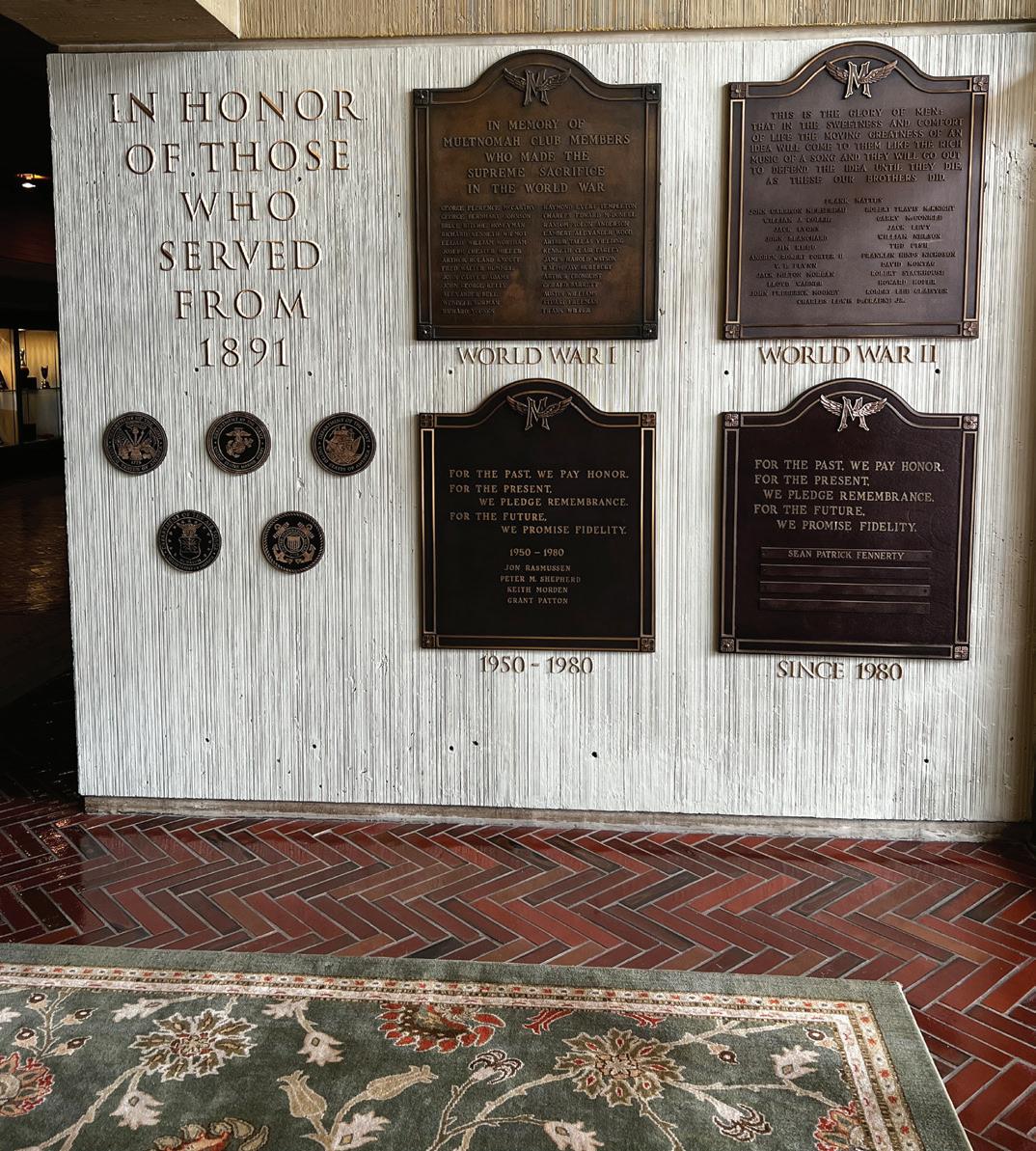
The Military Honor Wall, situated across from the Reading Lounge in full view from the Turnaround, is being refreshed this fall. The wall recognizes MAC veterans who served in our armed forces and MAC members who sacrificed their lives in combat for our country.
MAC’s Honor Wall Subcommittee, formed in late 2021, is in the final stages of planning and designing the refreshed wall while also determining an official name for it. As part of this work, the subcommittee invites members to submit names of MAC members who died in combat.
Resources
Here are some websites where members may find information for their submissions:

National Gold Star Family Registry: goldstarfamilyregistry.com
Honor the Fallen: thefallen.militarytimes.com
National Archives: archives.gov/research/military
National Archives NextGen Catalog: catalog.archives.gov/id/703

Find the submittal form on the website or by using the camera on your phone to scan this code.

6-7 p.m. Wednesday, May 24
The Honor Wall Subcommittee hosts an open house in the Reading Lounge to share the final design with members and conduct a vote to select the titles for the bottom two plaques on the wall. MAC veterans and the families of those MAC members who served are encouraged to come and provide input.

CLUB NEWS Flathead Lake, Montana May 17-20th | September 28th - October 1st
MAC Military Honor Wall Open House
House Committee
Monthly Report

Occasionally, the House Committee must face reprimanding MAC’s junior members who violate Club Rules. Up until recently, the only method of doing so was to follow the Club Rules’ violations and sanctions for adults.


Year after year, precedent has shown that most juniors are handed considerably lesser sanctions by the House Committee and the Board of Trustees. Though this is the case, members of both the House Committee and Board often feel like the sanctions are still too harsh, because, at the end of the day, these members are children.
At the start of the 2022-23 committee year, the board charged the House Committee with reviewing sanctions as they related to juniors. After many hours in both subcommittee and full committee meetings, House proposed a separate sanction list for violations made by junior members, almost all of which came with significantly lesser suspensions. There were two main reasons for doing this: First and most importantly, children are still developing and learning how to apply consequences to actions. Second, a child’s perception of a monthlong suspension from the club is of substantially greater impact than an adult’s. Missing a whole month (or months, depending on the violation) of training or camaraderie for a high school sport could be potentially detrimental to a child’s future.



These are the members we hope will make up the next generation of club membership, and we ultimately want their memories of MAC to be positive. To review the full list of junior sanctions, visit themac.com/group/ pages/club-rules.
— Emily Yensen, 2022-23 House Committee Chair
MAY 2023 | The Wınged M | 21 CLUB NEWS PRINCIPAL BROKERS WINDERMERE REALTY TRUST MACEYANDMJ.COM | 503 730 4576 1741
PENDING • 12808 SE JUBILEE 1825
3000
John P. Ward Senior Vice President/Investments (866) 431-2335 | wardj@stifel.com To receive your free copy of current Oregon municipal offerings, please call or e-mail: Specializing in Fixed Income Investments Bonds may be subject to state and alternative minimum taxes as well as possible capital gains tax if sold prior to maturity. When investing in bonds, it is important to note that as interest rates rise, bond prices will fall. Stifel, Nicolaus & Company, Incorporated Member SIPC & NYSE | www.stifel.com TAX-FREE BONDS
SW HAWTHORNE TERRACE
SW ELM STREET #7
SW MONTGOMERY DRIVE
IN MEMORIAM
Mina Metson Parker
Sept. 6, 1926-Jan. 21, 2023
Mina Metson Parker, loving wife, mother, grandmother, and great grandmother, passed away peacefully at the age of 96 in Walnut Creek, California, on Jan. 21, 2023. Mina, a longtime resident of Portland, was born on Sept. 6 , 1926, in Oshkosh, Wisconsin, to Edna and Ernest Metson but soon moved to Brandon, Manitoba, Canada. She attended elementary school at St. Augustine and then high school at St. Michael’s Academy. Mina had fond memories of being able to ice skate down the street to school as well as ice skating on a nearby frozen river with her friends.
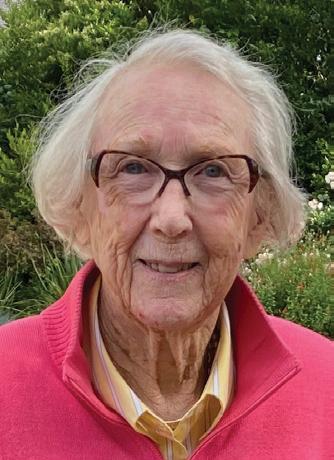
After high school, Mina attended the University of Buffalo before moving to Los Angeles and then to Portland, where she met her future husband, Thomas Brant Parker, and they were married on June 21, 1951. After Tom’s return from the Korean War, they moved for two years to Los Angeles, where their son, George Thomas Parker, was born on March 22, 1954, but decided they missed Portland and moved back in 1956.
Mina loved living in Portland and was especially proud of her volunteer work as Chairwoman of the Women’s Council of the Portland Art Museum, and she later served on the Board of Trustees for the institution. She also volunteered to teach children at Christie School. Mina was a past member of Multnomah Athletic Club, Waverley Country Club, Town Club, and The Racquet Club.
Mina loved spending time with her numerous friends and her family, whether it was skiing at Mt. Hood Meadows, Mt. Bachelor, and Sun Valley; playing numerous rounds of golf at Waverley; or exercising and dining at MAC. She was also very adventurous, such as when she agreed to ski KT-22 at Squaw Valley
with her son, Tom, when the weather was so bad that nobody else was on the lift or paddling a kayak on Lake Tahoe with her son, daughterin-law, and grandchildren at the age of 86.
Mina was able to spend the last few years of her life with her family, living with Tom and his wife, Marcy, through the COVID years in Diablo, California, and later living close by at an assisted living facility.
A special thank you goes out to Lisa Frey, Mina’s goddaughter, for all her love and support.
Mina was predeceased by her siblings Hazel, Margaret, George, and John. She is survived by her son, Tom; daughter-in-law, Marcy; grandchildren Thomas (Bianca), Eryn (Riley), and Kat (Brian); and great-grandchildren Aiden, George, and Oliver, as well as her brother, Walter, of Toronto, Canada.
Roland A. Haertl
May 6, 1936–March 17, 2023
Roland Haertl died peacefully on March 17, 2023, due to complications of heart disease.
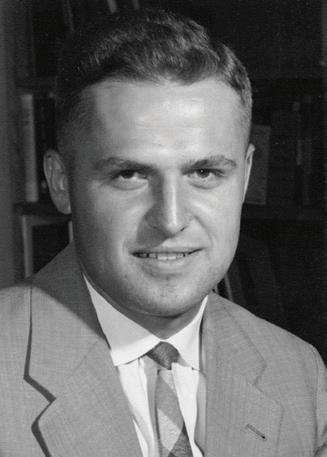
Roland will be remembered for his intellect, wit, and zest for living. He was a polymath, fluent in three languages, and had wide-ranging interests. The depth and breadth of his knowledge gained him the respect of everyone who knew him. He was an optimist and a risk-taker. He was also playful. He had an unmistakable twinkle in his eye.
Roland was born in 1936 in Czechoslovakia and described his childhood as “idyllic,” because he had freedom and opportunity to learn, explore, and grow. His family fled to southern Bavaria in 1945 ahead of the Russian Army, where he experienced the ravages of war, including lack of housing, inadequate food, and uncertainty about the future.
In 1956, Roland was awarded a Fulbright scholarship to the University of Oregon. He was sponsored by Theta Chi fraternity and promptly nicknamed “Otto Von Volkswagen.” After returning to Germany to finish his graduate studies, he settled in Portland, raised his family, and began a long career in engineering, construction, and real estate development. All his experiences gave him endless stories that he loved to tell.
He had a lifelong love of travel. He and his wife, Leslie, visited 34 countries. He loved sports, especially skiing and handball. He coached Little League and soccer. He gave back to his community through work with advisory councils for the city of Portland and Washington County, Rotary and City Club, and the local board of directors for the American Red Cross, including two years as chair.
In the last few years, Roland found his voice as a writer. He joined a class that became a close family of supporters and friends. It opened a new world for Roland, leading to the publication of his memoir, Escape to Freedom, A Perpetual Optimist’s Path.
To celebrate his 80th birthday, in ultimate Roland style, he gave a big party and called it a living wake. It was a true celebration of life, and he was there to enjoy it. It was his wish that there be no further ceremony.
Roland is survived by his wife, Leslie Kolisch; daughters Jennifer Doyle, Helen Haertl, and Kimberly Johnston; sons Jeffrey Johnston and Gregory Hartl; and grandchildren Gavin and Charlotte Doyle and Gregor Hartl Watters.
Donations in his honor may be made to the ACLU.
22 | The Wınged M | MAY 2023 CLUB NEWS Please send obituaries for current and former MAC members to obituaries@themac.com. Submissions should be 500 words or less and may be edited for MAC style, grammar, and clarity.
Thomas Robert Marineau
Oct. 7, 1929-Jan. 18, 2023



Thomas Robert Marineau was born in Weiser, Idaho, on Oct. 7, 1929, to Nora and Fred (Lefty) Marineau. He attended Fernwood Elementary, Lewis and Clark High in Spokane, and Grant High, where he was a three-year letterman in basketball. He graduated from Oregon State University, where he was a member of Phi Delta Theta fraternity and made many lifelong friends. He was also a member of Kappa Delta Pi, an educator’s honorary. Following military service, Tom began his career with Portland Public Schools. Along the way, he studied at USC, San Jose State University, and Portland State University. In 1957, he married Sue Davis, and they celebrated their 65th anniversary last summer with all their family.
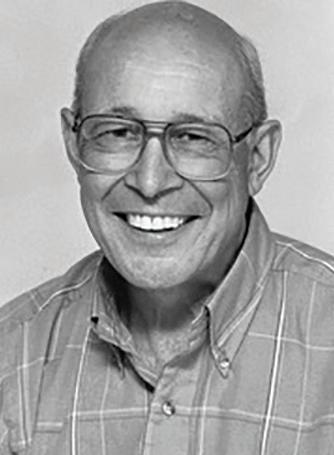
A longtime educator, Tom started as a teacher at Beaumont Elementary School and ended his 36-year career as Beaumont’s principal. In between, he was principal of Highland (now King), Linnton, Maplewood, and Hosford Schools. While at Hosford, he helped redesign it from a K-8 school to a middle school. His fun-loving personality often spread throughout the students and staff. He was active in the Middle School Principals’ Association, Portland Association of Public School Administrators, and the National Association of Middle School Principals. He enjoyed coaching basketball teams at most of the schools where he worked, as well as his young son Craig’s team. Following retirement in 1990, Tom took Master Gardener classes and became a “gentleman farmer,” growing a variety of vegetables with a specialty in composting. He was an avid fisherman and crabber (crafting his own crab rings) and was enthusiastic about bicycling and ski vacations with family and friends. Tom also served on the board of the Portland Youth Philharmonic and as a West Slope Water District commissioner for several years.
Tom and Sue enjoyed many years of international and domestic travel, including to western France and Quebec to learn more about his Marineau roots going back to the 1600s. He was also a 50-year member of the Multnomah Athletic Club and the Lang Syne Society.

Tom loved being around people. He had a quick wit and hearty, infectious laugh. Listening to or telling and embellishing his own stories, playing a prank or joke, or having one played on him, brought him joy. He relished the special moments in his children’s and grandkids’ lives and was constantly proud of his family. A warm, friendly smile was always on his face, and his upbeat spirits through recent health challenges helped sustain his family. We’ll miss our dear husband, dad, and grandpa, but the memories he’s left will last forever. He was predeceased by his brother, Nick.

MAY 2023 | The Wınged M | 23 CLUB NEWS Principal Broker | Urban Specialist & Resident 5 0 3.312.9770 | erika.wrenn@where-inc.com www.pdxurbanproperties.com Erika Wrenn 1221 SW 10th Avenue Unit 405 $975,000 | 2 Bed | 2.5 Bath | 2,135 sq. ft. ELEGANT LUXURY AT ELIOT TOWER
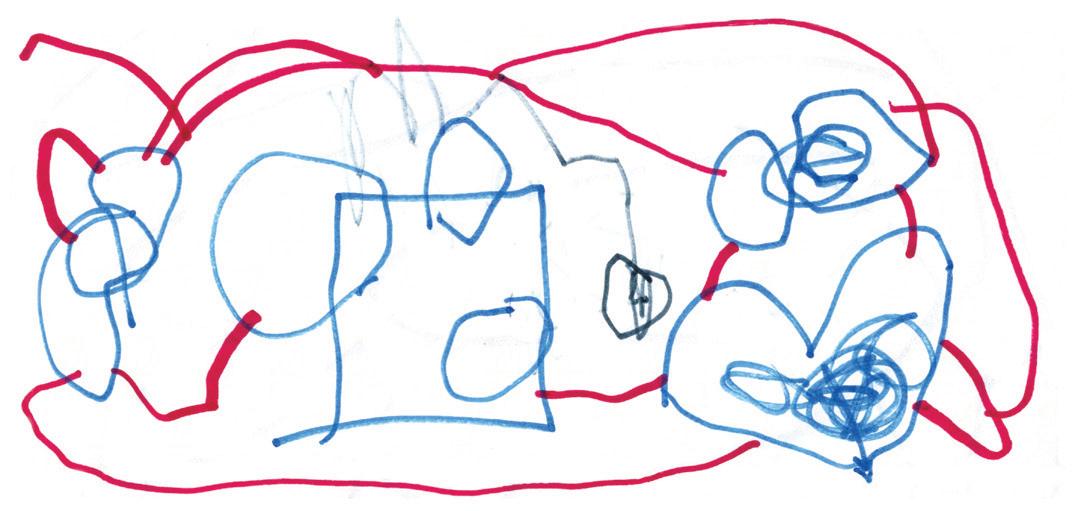
Some of MAC’s most junior members express love and appreciation for their moms.
I

…she gives me flowers. – Crew, age 5


…we snuggle a lot and she reads 100 stories a day. – Emerson, age 5
…she makes the best pizza. – James, age 4
…she snuggles me while we watch TV together. – Parker, age 2
24 | The Wınged M | MAY 2023
love my mom because...
…she cooks when I’m Sad. – Poppy, age 3
…she gives me hugs and lets me play with the weed wacker. – Rory, age 3
…she makes me soup and plays babies with me. – Scottie, age 2
…she cooks for me and gives me so many kisses. – Cooper, age 4
…when I find her missing puzzle pieces, I get a prize. – Jamie, age 3
…she gives me lots of cheese.
– Nell, age 3





…she always gives me big hugs and says, “I love you!” – Ali, age 3
…she gives me dried mangos and wet mangos. – Ruby, age 3
MAY 2023 | The Wınged M | 25
Wine Lovers, Unite!

26 | The Wınged M | MAY 2023 CULINARY
12:30-7:45 p.m. Sunday, July 30
Linfield University, McMinnville
The cost is $225 per person.
Register at themac.com SCE0730
Sample Wines From Dozens of Top Pinot Producers

The Culture & Style Committee invites MAC members and guests to join in a deep dive into pinot noir and Northwest farm-to-table cuisine at the worldrenowned International Pinot Noir Celebration (IPNC) in McMinnville. The IPNC is a celebration of all things pinot noir — an event that the Washington Post calls the “greatest consumer wine event in the world.” MAC has reserved a block of tickets for this event that Chef Philip Oswalt has participated in for the past 15 years.
Originating in 1987 and hosted at the historic Linfield University, the IPNC brings together pinot noir producers, industry experts, journalists, wine lovers, and foodies to enjoy lectures, farm tours, tastings, and some of the best farm-to-table food available in the area.


The Sunday Passport to Pinot event is an alfresco afternoon sampling of 70 different pinot producers, as well as bites prepared by 15 Pacific Northwest chefs. Chef Oswalt likens his participation as the chef coordinator of the event to being at chef summer camp — he enjoys the excitement, expertise, and inspiration that comes from talented local chefs and amazing food and beverage pairings.
Come raise a glass with Chef Oswalt and fellow MAC oenophiles at this exciting event! Ticket price includes transportation to and from the club.
— Shannon Conrad, Culture & Style Committee Chair
CULINARY CALENDAR
May Wine Dinners
Thursday, May 4 — Star Wars-themed dinner with Skywalker Vineyards WINE0504
Thursday, May 18 — Jordan Winery WINE0523
Thursday, May 25 — Chateau Montelena FBY0525
Experience a delicious five-course dinner with pairings from select wineries. These events are for members ages 21 and older. Doors open at 6 p.m. with dinner at 6:30 p.m., and seating is first come, first served.

Pizza Pop-Up Soul Food Menu

Tuesday, June 20 4-9 p.m.
Stop by the Sunset Bistro to check out a special soul foodinspired menu and hear the sounds of local one-man-band Mr. Dragonfly. This evening is sponsored by the Social Activities Committee.

Restaurant Hours
Wednesday, June 21 4-9 p.m.
MAC hosts an evening of delicious eats in 26 Founders, including mouthwatering appetizers, artisan pizza pies, delectable desserts, and hand-crafted cocktails by Roni Pervizi. This is a first-come, first-served event; no reservations are necessary.

1891 & MACtinis: Tuesday-Saturday 4-9 p.m.
Sports Pub: Monday-Friday 6 a.m.-9:30 p.m.; Saturday 11 a.m.-9:30 p.m.; and Sunday 11 a.m.-8 p.m.
Joe’s: Monday-Friday 6 a.m-7 p.m.; and Saturday 8 a.m.-4 p.m. Reservations are recommended, but not required, for 1891. Visit the Dining page at themac.com to make a reservation and for the most up-to-date hours.
GETTY IMAGES GETTY IMAGES GETTY IMAGES MAY 2023 | The Wınged M | 27 CULINARY
Cape Cod Estate


Cape Cod Estate meets meticulous European interior design and impeccable quality. This five-bedroom, private retreat offers expansive Southwest views perfect for entertaining and family gatherings. Attention to detail everywhere, this Estate has been meticulously updated to include the finest materials and finishes: Wolf and Meile appliances, custom cabinetry and built-ins, home theatre, sports court, weight room, hot tub, and built-in European sauna. Minutes to Downtown, Nike, and OHSU. Elegance and tradition reimagined. 5553Hewett.com

 Broker,

*All information deemed reliable but not guaranteed
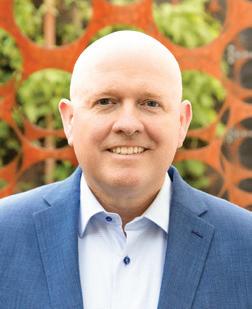
Patrick Clark Principal
Partner 503.789.1699 pclark@InhabitRE.com
For Sale in Portland, OR
5553 SW HEWETT BLVD, PORTLAND, OR | $3,995,000 | 5 BED | 5 FULL BATH | 2 HALF BATH | 7,455 SF












We Deliver Results In Any Market More than $120 million and 101 properties sold since 2021! $1,699,000 TheCasey-903.com $875,000 Riverpoint-PDX.com $819,000 | 937NWGlisan.com $3,500,000 | MetropolitanPH.com $695,000 | TheStrand1004.com $1,050,000 | TheCasey-1204.com $470,000 | WaterfrontPearl-405.com $650,000 | PDX-EnglishCottage.com $1,695,000 AtwaterPlace-1308.com $1,695,000 Encore-ParkPenthouse.com $850,000 937Condos-1331.com $950,000 WaterfrontPearl-801.com PENDING
MAC HELPS MEMBERS BRANCH OUTDOORS
By Jake Ten Pas
Outdoor enthusiasts should prepare themselves. There’s an actual college major called “adventure education,” and it’s probably too late for most of the people reading this to pursue it. The good news is MAC Outdoor Supervisor Jonathan Morell took one for the team and earned his master’s degree in adventure education from Prescott College, and his expertise is available to all members.
“Curiosity is my religion, and I firmly believe that wilderness is medicine,” says the lean, silver-haired instigator of awe-inspiring experiences. His background includes working at universities in three states, several of them faith-based, and Morell also has an MA in environmental theology. He knows of what he speaks.
While Morell comes from a religious family, he doesn’t describe himself as devout, and it’s clear that the only proselytizing he’s interested in doing at MAC revolves around helping the club community access the wonders of nature. Like Outdoor Manager Drew White, he is a fervent believer in an
ethical approach to exploring the outdoors, including being a Leave No Trace Master Educator; they are two of less than 10 in the state of Oregon.

Wherever members want to go, Morell, White, and the rest of the Outdoor department are prepared to help them get there safely and in good spirits, while not detrimentally impacting Oregon’s jaw-dropping natural wonderlands. Outings departing this spring and summer include the culminating climbs of the Gym to Crag program, a mountaineering mission to the top of Mt. Hood, and standup paddleboarding training in the 50-meter Pool that flows naturally into nearby lakes and rivers. For a full list of Outdoor offerings, check out the Spring and Summer Program Guides. To get a taste of what might await any adventurous member, read on!
Inside-Out
MAC’s Climbing Gym is a supervised space, and as safe as any place that encourages athletes to get on the wall and elevated.
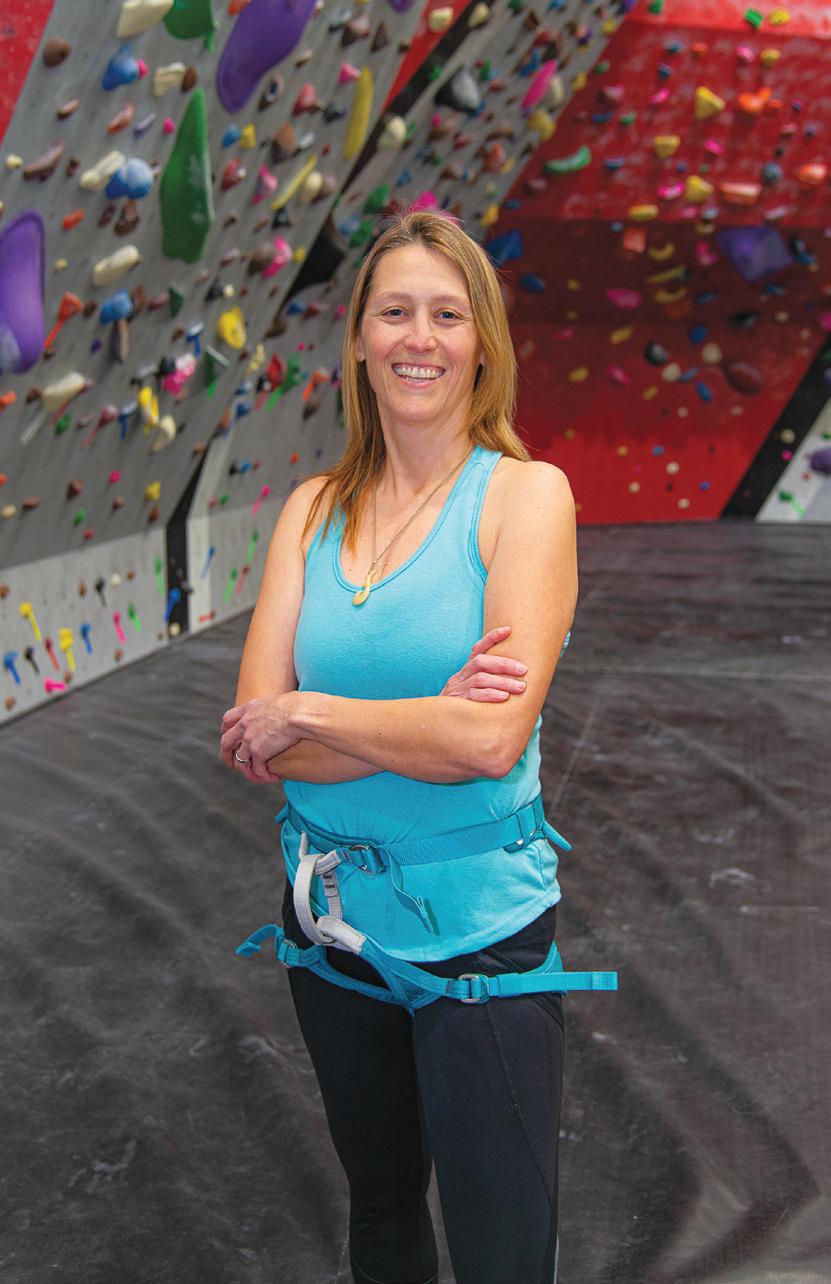
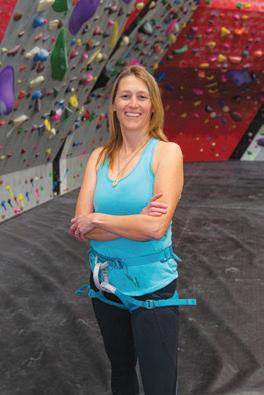
Certainly for members, it’s a hub of learning, exercise, and community, and Morell is very aware of the risks that taking any climbing practice from the Climbing Gym to the outdoor crag can entail. “Our guides are singularly focused on the safety of each member,” he says. “When members feel safe, they are more likely to make connections with the natural world, themselves, and others. Climbing might be intimidating at first, but we’ve got you.”
One family who knows how to maximize the club’s climbing possibilities is the Eddy entourage. Parents Reniera and Cory own East Side Deli, which has been serving up some of Portland’s highest stacked sandwiches since 2008. The Eddys joined MAC in 2015, and their kids, Autumn (14) and Rowan (12), have been taking full advantage of a variety of club programs ever since. While Autumn climbs occasionally, her primary passion is the Swim Team. Rowan, on the other hand, took to climbing before he was tall enough to see over the staff counter in
30 | The Wınged M | MAY 2023
SARA SENTELL
CORY EDDY
RENIERA EDDY
and helping out at the competitions, which involves belaying or judging, ever since. I don’t have a lot of outdoor experience, and I want to be able to take my family outdoors, belay them on a rock, and not be worried about dropping them into a chasm. That’s why I was really excited about this Gym to Crag program. I’m involved in the climbing community, and now I’m ready to get outside with confidence.”
The Eddys love to travel, and if there’s a climbing gym wherever they’re headed, the whole family is packing their climbing shoes. Whether road-tripping to Yosemite or Joshua Tree, where they’d eventually like to climb; flying to Austin; or making the leap across the pond to Chamonix, France, as they will this summer, outdoor adventure is often on their itinerary.
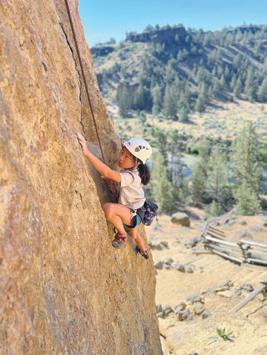
The Gym to Crag program teaches basic to intermediate skills, as well as mitigating risk while fostering ethical considerations and community. The adventure education culminates in a day of single-pitch climbing that allows members to put their newfound skills and confidence into practice. “We teach awareness of movement and balance, as well as important skill sets, such as belaying, proper use of the harness, technique, and more,” White explains. “Participants learn about weather concerns; hazards to avoid, such as snakes and poison ivy; proper waste disposal; and how to care about the environment during the process.”
“We ensure participants are aware of how to live harmoniously with the natural world,” Morell adds.
Eddy, who served on the Outdoor Activities Program Committee before joining and eventually chairing the Climbing Committee, couldn’t have more faith in White, Morell, Climbing Gym Supervisor Isaac Shoman, and the whole Outdoor team. “Drew is fantastic. He’s super supportive. Isaac’s been doing Women Who Rock for a long time, and he’s wonderful, too,” she says.
“Jonathan instructed the women’s class for a while, and that’s when I really got to know him. He’s great and so fun to work with, so I was stoked to see that he was going to be leading that Gym to Crag class. He’s someone I know I can feel comfortable climbing with in terms of safety but also someone you can go and hang out with for a whole day of what can be hard, stressful work.”
Despite seeing climbing as a demanding sport, Eddy ultimately finds it enjoyable enough not just to pursue with her family, but to recommend to any other member who might be looking for their next athletic pursuit. “There are a lot of opportunities to climb at MAC, and it’s not intimidating. MAC’s a great place for someone who’s new to the sport to get into it. Basically, it’s really cool, and you won’t know how amazing it is until you try it out.”

Stand and Deliver
the gym and has never looked back, or down as the case may be.
“As soon as he was old enough to join the Climbing Team, Rowan was like, ‘Drew, I’m 6 years old, and I need to be on this team,’” Reniera recalls. “So, I’ve been volunteering, climbing with Women Who Rock,

“When planning this trip, we asked ourselves, ‘Do we go in the winter and ski it, or do we go in the summer?’ If we go in the summer, it’d be crazy to not climb while we’re there, right? We’ll get a guide because we’re still going to be pretty novice as far as outdoor experience, but we want to have some skills to be able to really enjoy and have the confidence to do some climbing in Chamonix.”
Dogs don’t tend to take to climbing, but stand-up paddleboarding is a sport into which even a woman’s best friend can dip his paws. “Our dog is really good at it. He loves it!” Eddy says of Boomer, the family’s shepherd mix. “I like to be out in nature. I like the view from the board, and just that calmness of being on the water. My dog totally rides on the back. He gets on it before it’s even in
Continued on page 32
MAY 2023 | The Wınged M | 31
PHOTOS BRANDON DAVIS
BRANCH OUTDOORS
Continued from page 31
the water. We just are out there hanging out together.”
To paraphrase the movie Zoolander, “Paddleboarding is so hot right now!” and MAC is making sure members have opportunities to explore it “at their leisure,” a phrase that is unlikely to be applied to climbing. For those interested in trying out a sport that has kicked up a wake of popularity in recent years, both MAC’s 50-meter Pool and local bodies of water can serve as easy-to-access training areas.

Instructor Jana McGill first tried standup paddleboarding around 2012, and it became her primary sport when she moved from Seaside to Portland in 2017 to work for MAC. “I surfed all the time in Seaside. I worked for parks and recreation there and lifeguarded in Cannon Beach during the summer season. I always want to be around water, whatever I do. I think surfing is somewhat hard and dangerous, which is what I like about it. Stand-up paddleboarding is not an adrenaline sport.”
McGill was hired by MAC’s Outdoor department in February to lead club walks and hikes, bringing with her a history of traversing forests up and down the West Coast. She’ll also teach cross-country skiing, first aid and safety, and aquatic pursuits such as stand-up paddleboarding.
Her experience turning friends onto paddleboarding goes back years. “When we are swimming, we are huffing and puffing, but with stand-up paddling, you can have a conversation. You are on the water outside, and you get a good workout, but it’s social. If you hike with friends, you can stand up with friends,” she says.
“I usually bring friends to Cook Park on the Tualatin River because it’s really calm out there. The only thing we have to look out for is logs under the water. There are no gaspowered boats, and the wind is not really an issue because there are high banks and trees. It’s just amazing standing on the water and exploring waterways and nature.”
In fact, McGill is so eager to get others into SUP, as it’s known, that she sometimes loans her board and paddle to curious strangers when she comes in from an outing. “I think it’s a really healthy sport, so I offer my equipment to anyone who wants to try it!”

JANA MCGILL
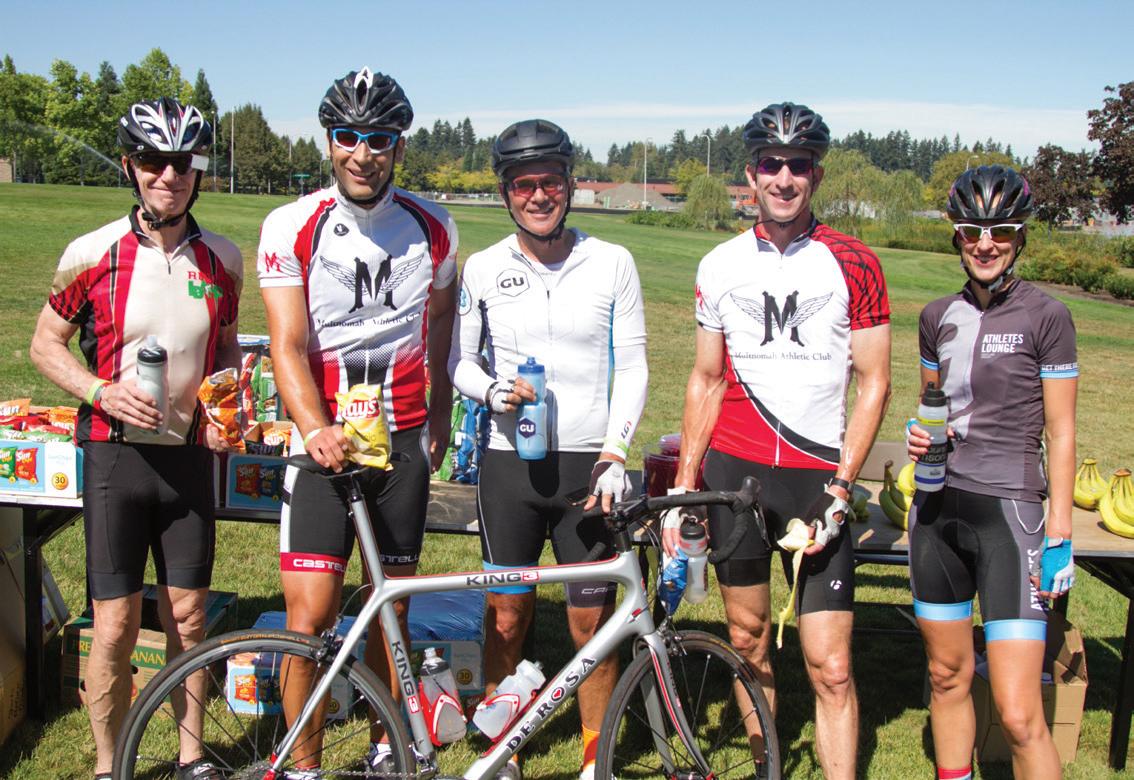
MAC continues to evolve its programs to meet and try to predict member needs, and that means looking for new ways to take the club’s sense of community onto the water. In addition to offering SUP training in the 50-meter Pool in the spring, and outdoors as the weather improves, the hope is to eventually offer weekly outings along the lines of what Cycling has done with its Wednesday evening rides.
“I sometimes think of my job as throwing spaghetti against the wall to see what sticks,” Morell says with a smile on his face. “The great thing about this club is there are so many people with so many interests. It’s all about finding the things that bring our members together and help them find a sense of belonging, whether that’s fly-fishing, standup paddleboarding, or climbing Mt. Hood.”
Knives Out
Roughly 180 degrees away from the serene exploration of SUP is one of MAC’s most extreme offerings, a Mt. Hood climb that can push members to their physical limits in pursuit of one of Oregon’s most stunning views. After an early start, they see the sunrise
on the glacier while steadily making progress up an international climbing destination.
“It also requires guidance and training. You’re basically strapping spikes to your feet and holding a knife in your hand,” Morell says of the crampons, ice axe, and other equipment necessary to reach the summit of Oregon’s preeminent peak.
Continued on page 36
32 | The Wınged M | MAY 2023
PHOTOS
JANA MCGILL






SCHEDULE YOUR FREE CONSULTATION TODAY SKINBYLOVELY.COM | 877-568-3594 Put your best you forward As Oregon’s #1 Botox ® Clinic since 2016, we ignite self-love through medical aesthetic & skin rejuvenation treatments. LAKE OSWEGO CAMAS PORTLAND LOCALLY & EMPLOYEE-OWNED NOW OPEN IN CAMAS FACE THE WORLD WITH CONFIDENCE
OUTDOOR EVENTS
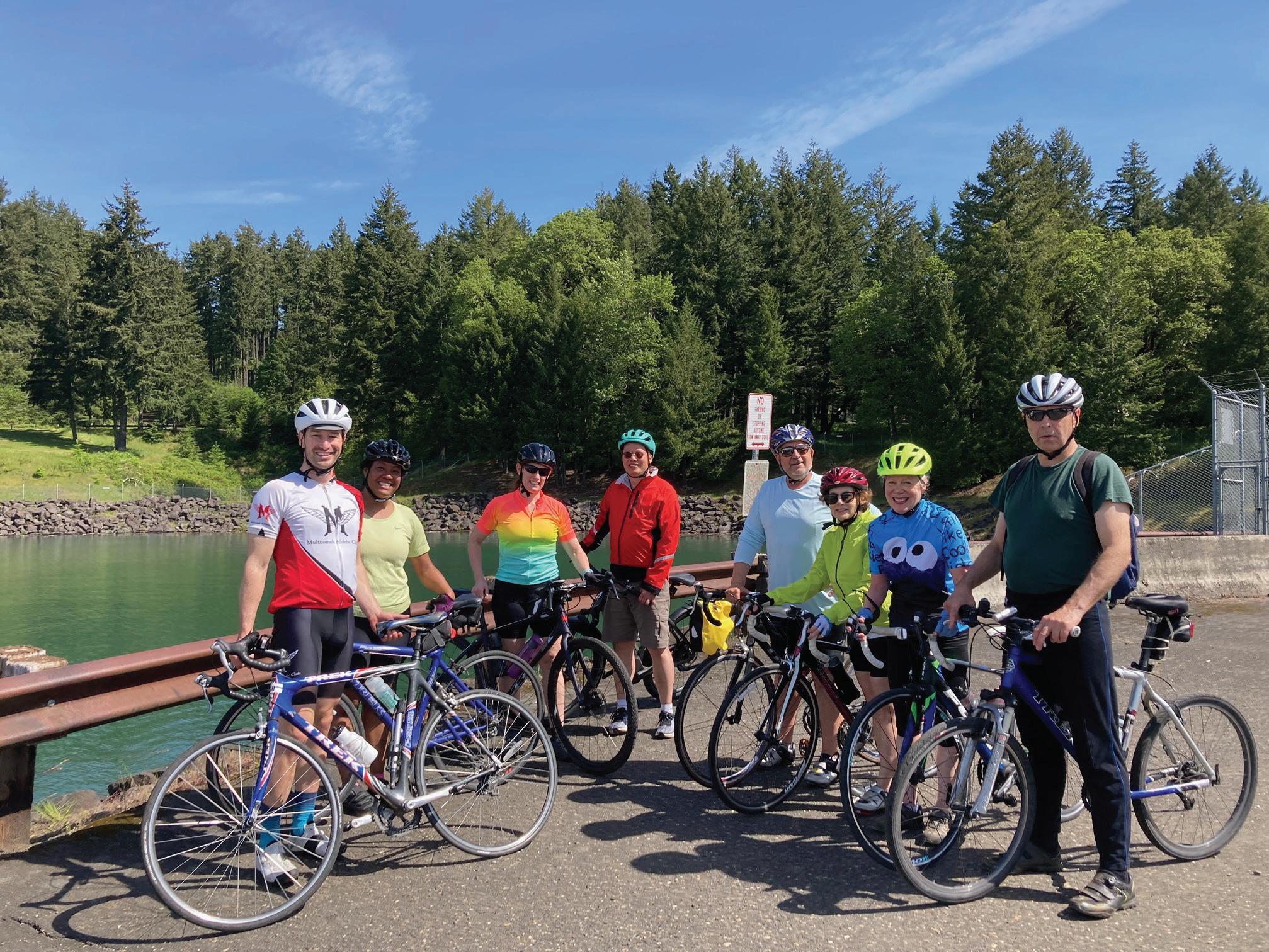
Looking for more ways to get outside this summer? Check out these bike rides, walks, hikes, and more.
Performance Ride
5:30-7 p.m. Wednesdays
Meet at the Turnaround to join other MAC members and cycling leads on a higherpace, no-drop ride through the hills of Portland.
Social Ride
5:30-7 p.m. Thursdays
Meet at the Turnaround to join other MAC members and cycling leads for a leisurely ride through Portland. Routes vary but usually include a brewery stop. All bikes are welcome.
Blumenauer Bridge Walk

9:50 a.m. Tuesday, May 9
(All Ages)
The recently opened bike/pedestrian bridge was named in honor of Rep. Earl Blumenauer, a longtime advocate of alternatives to automobile transportation in the city. Park and meet at meet at MAC in the lobby near the Main Entrance. Roundtrip, the walk is on mostly level urban terrain and just over 2 miles each way. WHF0509
Second Saturday Ride
9 a.m.-noon Saturday, May 13
Check themac.com for the latest information, including where to meet. CYF0513
Hood River History and Architecture Walk
8:50 a.m. Tuesday, May 23
(All Ages)
Take a short and easy urban stroll through downtown Hood River and choose from a number of lunch offerings close by. In the afternoon, go on an optional 3-mile hike on the scenic Indian Creek Trail on the edge of the city. Meet at gallery above the Fitness Room to carpool. WHF0523
Smith Rock State Park Rock Climbing
8 a.m.-2 p.m. Saturday, June 24 (Adult)
Climb outside with experienced MAC guides and a small group of fellow members at Smith Rock State Park in Terrebonne. No prior experience is required, and equipment is included. ODA130

Local Rock Climbing
8 a.m.-4 p.m. Saturday, July 15 (Adult)
Climb local crags while learning new skills from experienced MAC guides. No prior experience is required, and equipment and transportation are included. ODA120
Cannon Beach Surf Lessons
10 a.m.-noon Saturday, Aug. 5 (Adult)
Surf lessons are for all levels: first-time, beginner, intermediate, and advanced surfers. Safety in the water is the instructors’ first priority, as well as teaching students how to ride waves and have fun! ODA140
Cannon Beach Surf Lessons
10 a.m.-noon Saturday, Aug. 12 (Family)
Surf lessons are for all levels: first-time, beginner, intermediate, and advanced surfers. Safety in the water is the instructors’ first priority, as well as teaching students how to ride waves and have fun! ODA140
34 | The Wınged M | MAY 2023

BRANCH OUTDOORS
Continued from page 32
“For this reason, we require members to go through a full day of snow school to learn how and when to use the tools of the trade,” he explains. MAC Outdoor also helps participants improve their physical fitness and practice teamwork to prepare for the trek, taking every opportunity to make sure members are ready for the experience of a lifetime.
With the assistance of Kaf Adventures, climbers depart around midnight in order to ensure that they reach the summit before rising temperatures make the journey any more difficult. Kaf provides not just the hard-to-acquire climbing permit, but also a mountain range worth of experience, all the necessary certification, and the trust of Morell and the rest of MAC’s Outdoor team.
“These guides are some of the best in Oregon, and they’re experts at leading our members and helping them to put into practice the mountaineering skills we’ve taught them,” Morell says. “Their support and communication is top-notch, and we feel like our community is in the best hands with them.”

“Members need to be willing to train hard and build skills. There are definitely fitness benchmarks for something like this,” White says. “Our job is to get members outside, and along with our Gym to Crag program and Stand-Up Paddleboard offerings, we feel like we’ve found a way to create opportunities for every goal, level of fitness, and tolerance for risk. Whatever members are motivated to do, we’ll be there to support them.” WM

36 | The Wınged M | MAY 2023
DREW WHITE
GETTY IMAGES
They say it takes a village to raise a child...
Together, with you, we're the village it takes.
Relief Nurseries partner with parents to give them the support, tools, and information they need to be the best parents they can be.

Together, we can give Oregon's children the best start possible.
LEARN MORE AT OregonReliefNurseries.org
2023-2024 SEASON
For all shows:
Ticket price includes transportation to Keller Auditorium. A bus leaves MAC at 7 p.m. Reservations are firm; cancellations or reductions in party size are not allowed.
Register at themac.com.

Plan Your Broadway Year Ahead
A New Lineup of Live Shows for 2023-24
Here’s your chance to enjoy the best of Broadway in Portland. Every year, MAC partners with Keller Auditorium to provide members and their guests access to discounted tickets to some of the premier traveling live shows. Park for free at the club and catch a ride to the venue to catch the following shows.


Six – From Tudor queens to pop icons, the six wives of Henry VIII take the microphone to remix 500 years of historical heartbreak into a euphoric celebration of 21st-century girl power!

Tina: The Tina Turner Musical – An uplifting comeback story, Tina: The Tina Turner Musical is the inspiring journey of a woman who broke barriers and became the queen of rock ‘n’ roll.

Les Misérables – Set against the backdrop of 19-century France, Les Misérables tells an enthralling story of broken dreams and unrequited love, passion, sacrifice, and redemption. This epic and uplifting story has become one of the most celebrated musicals in theatrical history.

Disney’s The Lion King – Tony Award-winning director Julie Taymor brings to life a story filled with hope and adventure set against an amazing backdrop of stunning visuals. The Lion King also features the extraordinary work of Tony Award-winning choreographer Garth Fagan and some of Broadway’s most recognizable music, crafted by Tony Award-winning artists Elton John and Tim Rice.

Beetlejuice – Based on Tim Burton’s beloved film, this hilarious musical tells the story of Lydia Deetz, a strange and unusual teenager whose whole life changes when she meets a recently deceased couple and a demon with a thing for stripes.

Annie – Little Orphan Annie has reminded generations of theatergoers that sunshine is always right around the corner. Now, the best-loved musical of all time is set to return in a new production — just as you remember it and just when we need it most.

Girl From the North Country – It’s 1934 in Duluth, Minnesota. A group of wayward travelers’ lives intersect in a guesthouse filled with music, life, and hope. Experience this beautiful production brought to life by an extraordinary company of actors and musicians.

Company – It’s Bobbie’s 35th birthday party, and all her friends keep asking why she isn’t married. Why can’t she find the right man, and isn’t it time to settle down and start a family? As Bobbie searches for answers, she discovers why being single, being married, and being alive in the 21st century could drive a person crazy.
Ticket sales for all shows open May 10. Visit themac.com for dates and to purchase tickets. Shows are subject to change based on availability.
38 | The Wınged M | MAY 2023
EVENTS
GETTY IMAGES / BROADWAY ACROSS AMERICA
May
Wednesday, May 3
Business Networking Mix & Mingle
5-8 p.m.
MAC Professional Business Networking Group invites you to mix and mingle with other MAC professionals. Stop by the Reading Lounge to enjoy happy hour pricing and expand your network.
Ladies Golf Night Hosted by X-Golf Tualatin
5:30-7:30 p.m.
MAC members and guests are invited to spend an evening virtually teeing off at one of the country’s most coveted courses. The scramble format consists of three-person teams playing nine holes at Pebble Beach Golf Links. Arrive at 4:45 p.m. to mix and mingle and tee off at 5:30. Enjoy light appetizers and a no-host bar. GOE0503
Friday, May 5 Junior
Game Night
6-8 p.m.
MAC members ages 8-12 have the opportunity to learn racquetball and handball and compete against each other in Super Smash Bros. Don’t miss this trifecta of fun! The cost is $30 and includes dinner and beverages. The event is supervised by MAC staff members.
SJE505
Saturday, May 6
Kentucky Derby Casino Party
1:30-4:30 p.m.
Dress up and join MAC members and guests for a lively and exciting afternoon featuring the Kentucky Derby and related horse races. Enter a hat contest, choose the winning horse, and play casino-inspired games, including blackjack, poker, roulette, and craps.
SAE0506
Dancers ages 3-6 perform at the Mac Dance Mini Recital on Sunday, May 7.
Wednesday, May 10
MAC Professional Business Networking Group
7:30-9 a.m.
Members meet monthly to discuss challenges, successes, and hurdles facing professionals and their enterprises. The group is moderated by Dave Hanna, an organizational development professional and MAC member. The cost to attend is $5. NET005
Sunday, May 7
Dance Mini Recital
Noon-1 p.m.
The Mini Recital is a culmination of the winter term for the youngest Creative Movement, Preschool Ballet, and Rhythm and Tap dancers (ages 3-6). The performances promise to be truly entertaining for all ages, members, and guests. DAE0507
Tuesday, May 9
Spring Indoor 3-on-3 Basketball Tournament
6-9 p.m.
This 3-on-3 competition features roundrobin-style action with single-elimination playoffs. Teams are picked by tournament organizers; requests are accepted but not guaranteed. Spectators are welcome! Entry is open to everyone 18 and older (junior members are considered upon request). The $30 entry includes pizza, snacks, beer, and Gatorade. BBE0509
Tuesday, May 9-Wednesday, May 10 Bud Lewis Blood Drive
8 a.m.-7 p.m.
MAC Wellness and the American Red Cross join forces to help save lives. Honor the late Bud Lewis by donating blood, volunteering at the drive, or helping to register fellow members. Give blood – WEF151, WEF0059, WEF510; volunteer – WEF0501, WEF059, WEF0510
Wednesday, May 10-Wednesday, May 17

Donation Drive for Rose Haven
This Mother’s Day, MAC is collecting donations to benefit Rose Haven, a day shelter and community center serving women, children, and gender non-conforming folks experiencing the trauma of abuse, loss of home, and other disruptive life challenges. Members can drop off donated materials in bins located at the Main and Fourth Floor Entrances. Suggested donations include hygiene products, socks, underwear, bras, outerwear, baby clothes and diapers, and practical and household items such as batteries and plants.
Friday, May 12
Family Fridays
6-8 p.m.
Bring the whole family for a night of free fun and games around the club. All events take place in the Main Gym, and concessions are available for purchase. Registration is required. SOY102
Untapped Trivia Night
7-8:30 p.m.
The Social Activities Committee welcomes members ages 21 and older to an evening of fresh factoids and friendly competition. Build your team of six or come as a single player to be paired with others. TRIV512
Continued on page 40
MAY 2023 | The Wınged M | 39 EVENTS
Select May and June events and classes are presented here. Additional experiences are listed on the Events and MAC@Home pages at themac.com.
Continued from page 39
Saturday, May 13
MAC Mile 2023
9-11 a.m.
The Tri/Run Committee invites members to partake in the annual MAC Mile tradition at Duniway Park. This event is open to members of all ages and abilities, and small prizes are awarded for the first-place men’s and women’s winners. The cost is $10. TRE0513
Monday, May 15
Listen & Learn – Recovery
6:30-8 p.m.
Engage with a panel of experts and athletes on insights, personal stories, and advice for tips and tools on the recovery process, and also learn practices for how to be resilient in mind and body. The panelists include: physical therapist Karl Kolbeck; naturopath Dr. Lindsey Nelson; water fitness supervisor Lisa Best; personal trainer, runner, and Fitness & Wellness staff and enthusiast Matt Gerber; and a MAC scholar-athlete. CAE0515
Wednesday, May 17
Vintage Vogue Fashion Show
5-8 p.m.
Join the Culture & Style Committee for Vintage Vogue, a vibrant cocktail party, fashion show, and shopping event celebrating nostalgia for fashion through the decades. Delicious drinks and era-inspired hors d’oeuvres are served. In the salon-style show, MAC members model gorgeous pieces from the 1950s to 2000s, all procured by exclusive vendors MODIG and Bliss House Museum. Attendees are encouraged to wear their own vintage fashions to compliment the event experience! Immediately following the show, shop in a beautiful vintage fashion boutique. SCE0517

Thursday, May 18
20s/30s Thirsty Thursdays
6-8 p.m.
Stop by MACtinis to mix and mingle with friends new and old. Registration is not required.
Friday, May 19-Sunday, May 21
Father-Daughter Dance
5-8 p.m.
Dads and daughters are invited to deep dive into a delectable buffet and dancing tunes by a professional DJ in the Grand Ballroom. Attendees can garnish their attire with corsages and boutonnieres, available for pre-purchase, and capture memories with a professional portrait by Jal Duncan Photography. SFE0519, SFE0520 - waitlist only, SFE0521
Saturday, May 20
MAC Yoga: Flight Over Fear, On the Journey to Inversions
1:30-3 p.m.
Yoga inversions are various poses in which your heart and hips are above your head. This could include anything from a basic forward fold to a headstand. In this workshop, explore unique movements and step-by-step techniques on how to get into inversion poses and then practice and execute specific arm balances. Prior yoga experience is recommended. YOE0520
Monday, May 22
History Book Club
6:30-8 p.m.
This month’s book is G-Man: J. Edgar Hoover and the Making of the American Century by Beverly Gage. Brooks Cofield is the questioner.
Portugal & Southern Spain Trip Information Session
5:30-6:30 p.m.
This fall, pack your bags and golf clubs for a 10-day, guided excursion around Portugal and southern Spain. Discover hidden sights, taste unpretentious wine, tour historic towns, and play many rounds of golf, of course! Learn more about the trip at this information session. GOE0522
Tuesday, May 23
MAC Senior Happy Hour
4-6 p.m.
Senior members are invited to stop by MACtinis to mix and mingle. Seating is first come, first served. Registration is not required.
Continued on page 42
40 | The Wınged M | MAY 2023 EVENTS
The Culture & Style Committee presents this year’s spring fashion show on Wednesday, May 17.










No sales tax, no resort fee, no tipping, free wifi & parking www.Silvies.us Enjoy springtime on the ranch with NEW all-inclusive packages to choose from! Book Your Stay Today! “It’s worth the trip!” -Bruce (The Goat) Enter to win a 3 night stay! ($5,000 Value) Weekly raffle awards in newsletter Horseback Riding Lakeside Cabins Baby Goats (Future Caddies) Razor Ranch Tours Full Service Spa 1-800-SILVIES
Continued from page 40
Tuesday, May 23
Evening Literary Group
7-8 p.m.
Join the Evening Literary Group for a lively discussion on A Bend in the River by V.S. Naipaul. Members and their guests are always welcome. Please email Martha Dixon at jollyology@aol.com with any questions.
Monday, May 29
MAC Murph Memorial Day Fitness Challenge
8:30 a.m.-1 p.m.
Honor fallen soldiers with a hero workout. See page 50 for details. CAE0529
Monday, June 5
Big Picture Book Group
7-8 p.m.
The Big Picture Book Group reads nonfiction, covering a wide range of subjects. This month’s book is Astoria by Peter Stark. Please email Virginia Terhaar at tvirginia@gmail.com with any questions.
Monday, June 5-Wednesday, June 7
Racquetball Club Singles Championship
4:30-10 p.m.
All the action happens on Racquetball Courts
5-10, and the entry fee includes food and beverages. Spectators are welcome! RBE0605
Tuesday, June 6
Senior Adult Singles Happy Hour
4-6 p.m.
MAC senior adult singles are invited to gather at MACtini’s Lounge to socialize and enjoy happy hour prices on bites and cocktails. No registration is required. SHH0606
Upcoming Thorns Games
Tickets for games go on sale one month prior to game day. Visit themac.com. All matches are subject to change by the NWSL.
vs. Chicago Red Stars
2 p.m. Sunday, May 21
PTFC142
vs. Angel City FC*
7:30 p.m. Wednesday, May 31
PTFC143
vs. Washington Spirit
7:30 p.m. Friday, June 23
PTFC144
vs. OL Reign*
7:30 p.m. Wednesday, June 28
PTFC145
* Match is part of 2023 Challenge Cup.
Wednesday, June 7
Business Networking Mix & Mingle
5-8 p.m.
MAC Professional Business Networking Group invites you to mix and mingle with other MAC professionals. Stop by the Reading Lounge to enjoy happy hour pricing and expand your network. No registration needed.
Thursday, June 8
Listen & Learn – Get Ready for Running and Walking Season
6-7 p.m.
Dave and Paula Harkin from Portland Running Co. help members get ready to move with the right equipment. Light appetizers will be served. CAE0608
Saturday, June 10
MAC Dance Recital
3 & 6 p.m.
At this end-of-the-season showcase, all age classes and the MAC Dance Company each present a piece that fits this year’s theme, “The Writings on the Wall.” The recital takes place at Lincoln High School. DAE0610
Sunday, June 11
Dad & Me Timbers Game
7 p.m.
Enjoy a special “Dad & Me” section on the Stadium Terrace in celebration of Father’s Day. All matches are subject to change by NWSL. PTFC049
Wednesday, June 14
MAC
Professional Business Networking Group
7:30-9 a.m.
Members meet monthly to discuss challenges, successes, and hurdles facing professionals and their enterprises. The group is moderated by Dave Hanna, an organizational development professional and MAC member. The cost to attend is $5.
Thursday, June 15
Thirsty Thursdays
Hosted by 20s/30s
6-8 p.m.
Stop by MACtinis to mix and mingle with friends new and old. Registration is not required.
Juniors Night at Defy
Trampoline Park
6:30-9:30 p.m.
MAC juniors ages 8-12 are invited for an awesome summer kick-off night at Defy. Chaperones supervise the outing, and transportation is provided along with a pizza dinner. SJE615 – registration opens May 15
Continued on page 44
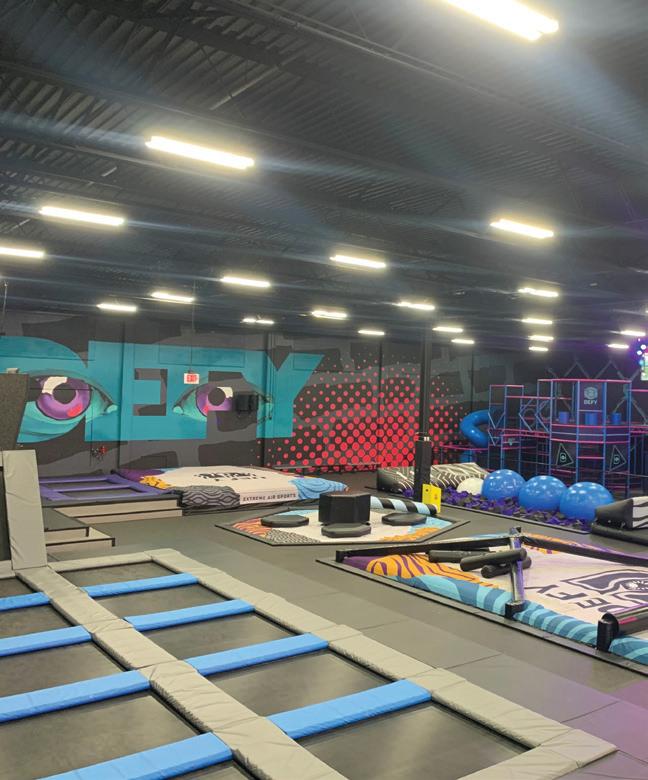
42 | The Wınged M | MAY 2023 EVENTS
June





MAY 2023 | The Wınged M | 43 EVENTS
Upcoming Timbers Games

Tickets for games go on sale one month prior to game day. Visit themac.com. All matches are subject to change by MLS.
7:30 p.m.
May 6
Continued from page 42
Friday, June 16
Pride Celebration
6:30-8:30 p.m.
Poison Waters, Meesha Peru, and friends host a night of dinner and entertainment in celebration of Pride Month. All members and their guests are invited. SAE0616
Sunday, June 18
MAC Market
10 a.m.-2 p.m.
MAC members, guests, and neighbors are invited to stroll and shop MAC’s farmers and artisan market in the Turnaround featuring local vendors, live music, and more. There is no cost to attend, and registration isn’t required. Don’t forget your reusable bag! SOE0623, SOE0723, SOE0823
Monday, June 19
Wednesday, June 21
International Day of Yoga
10 a.m.-noon
Celebrate the International Day of Yoga with a special hour-long yoga class in Ainsworth/Lownsdale led by Wellness Supervisor Katarina Simko, followed by a Smith Teamaker tasting on the Second Floor Terrace. YOE0621
Sunday, June 25
MAC Golf Scramble at Pumpkin Ridge
8 a.m.-3 p.m.
Come one, come all to this year’s MAC Scramble, held at the Ghost Creek Course at Pumpkin Ridge Golf Club. The cost is $155 per person or $620 for a team of four, and includes green fees, cart, range balls, and food. Members and guests are welcome. GOE0625
Tuesday, June 27
7:30 p.m.
History Book Club
6:30-8 p.m.
This month’s book is Genius of Place: The Life of Frederick Law Olmsted by Justin Martin. It’s an easy read that shares a lot about what made Olmsted one of greatest landscape designers. Alan Barker is the questioner.
Evening Literary Group
7-8 p.m.
Join the Evening Literary Group for a lively discussion on O Caledonia by Elspeth Barker. Members and their guests are always welcome. Please email Martha Dixon at jollyology@aol.com with any questions.
Save the Date
Saturday, July 8
Movie Night at Providence Park – The Sandlot
Enjoy an evening under the stars with family and friends at Providence Park! In honor of National Be A Kid Again Day, MAC plays the classic summertime film The Sandlot. A light snack pack is included upon entry, and a no-host bar and concessions are available. Movie viewing takes place in the stadium seats with closed captioning in English. No outside food or beverage is permitted. Registration opens June 1. SOE0708
44 | The Wınged M | MAY 2023 EVENTS
vs. Austin FC
Saturday,
PTFC046 vs. Vancouver Whitecaps
Saturday,
PTFC047 vs. Minnesota United FC
May 13
Saturday,
PTFC048 vs. FC Dallas
p.m. Sunday, June 11 PTFC049 vs. Chicago Fire FC
Wednesday,
PTFC050
New York City FC
Saturday,
PTFC051
7:30 p.m.
May 20
7
7:30 p.m.
June 21
vs.
7:30 p.m.
June 24
GETTY IMAGES
CRAIG MITCHELLDYER






MAY 2023 | The Wınged M | 45 MAKE MAC MORE approachable curious inviting diverse equitable inclusive loving excellent MAC DEI SURVEY Help MAC better serve your needs, as well as your hopes for the future of the club. Take a short survey to share a bit more about you and inform MAC's Diversity, Equity, and Inclusion efforts going forward. Completing the survey is its own reward because it shapes the club experiences you enjoy. Just in case that isn't enough motivation, gift cards, massages, Blazers tickets and more are awarded to select respondents! Scan the QR code to get started now! www.jmilimousine.com 503-671-9966 JMI Limousine JMI Limousine 503-671-9966 www.jmilimousine.com THE RIP CITY RIDE Party Buses Game Day Special Occasions Wine Tours Team Building Extreme Adventures MAC MEMBER SPECIAL 20% OFF MAC MEMBER SPECIAL 20% OFF *Excludes Saturdays | Ask for details *
St. Patrick’s Day Celebration

The Social Activities Committee hosted an evening of live music, dancing, yard games, and an Irish-inspired dinner buffet on March 17.


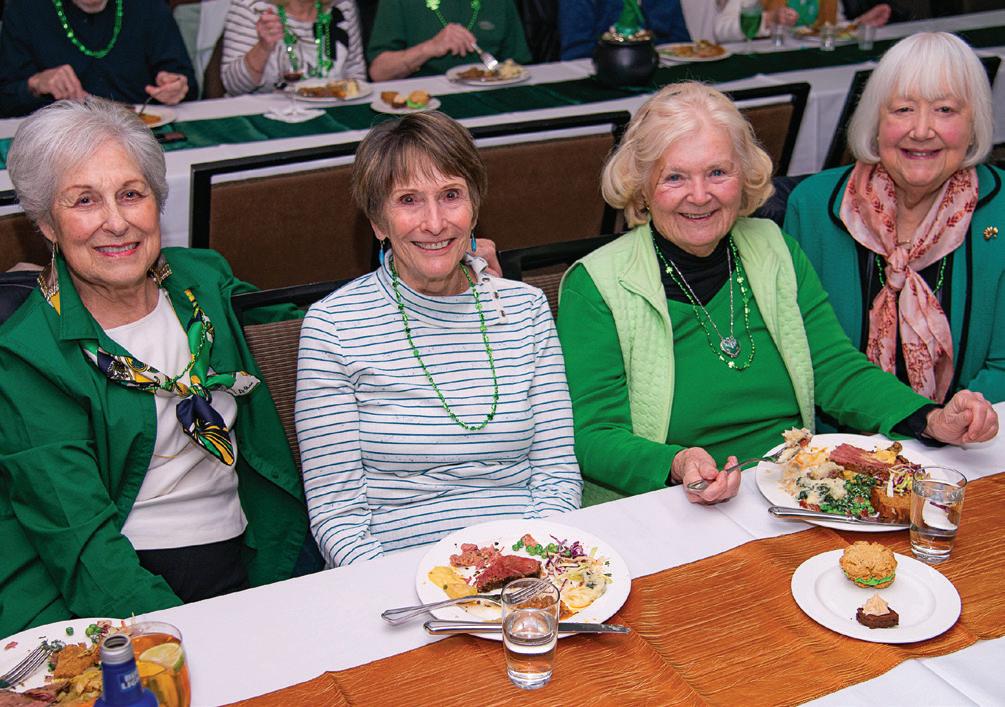

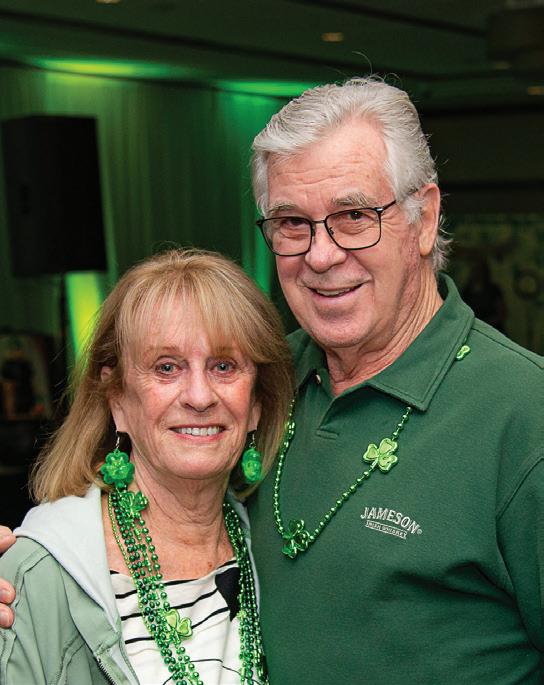
1. RayAnn DuBose, Sandra Crost, Tracy Leimer, and Aishu Deenadayalu 2. Fran Scearce, Donna Ashley, Pat Martinelli, and Dee Moore 3. Alex Stock and Emily Bolton 4 Louie and Becca Paul
5. Sally Ford and Denis Ryan
St. Patrick’s Day Coin Hunt
In its second year, the Family Events Committee’s Coin Hunt provided an afternoon of festive family fun.



6. Wayne and Nancy Lo 7. Danica and Ian McCulley 8. John, Lauren, Anh Thu, and Matthew Oh 9. Mike Ziegler, Elle Ziegler, and Jessica Lorenzen 10. MAC youth enjoyed collecting treats in the Ballroom

46 | The Wınged M | MAY 2023 CLUB SCRAPBOOK 1 2 3 4 5 6 10 7 9 8
PHOTOS BY BRANDON DAVIS
PHOTOS BY BRANDON DAVIS
Fitness Party
About 140 participants from all seasons of life joined in a celebration of movement with backto-back, high-energy group exercise classes in the Ballroom.


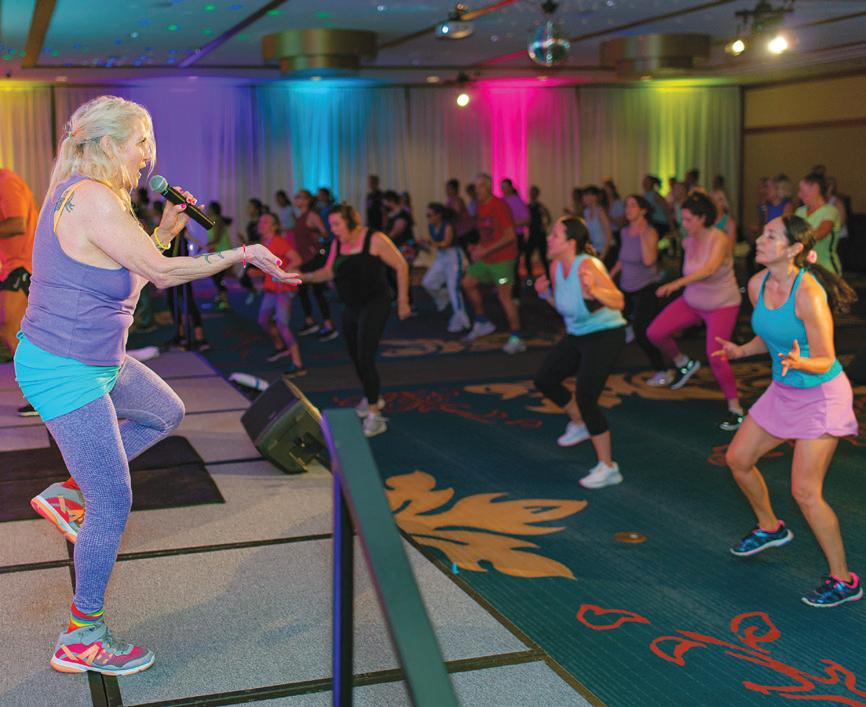
11. Andrea Sexton leads an MClubbin’ class 12. Amy Chandler, Audrey Chiotti, Mia Kim, and Jenny Kim 13. Janae Pyle and Whitney Preece 14 Instructor Ace Cauthen with Madeline Rose 15. Kristin Morgan and Colleen Yoshihara
Juniors Night at the Timbers Game
The Timbers match against LA Galaxy on March 25 included a special section for junior members ages 10-15 with coloring, bingo, and raffle prizes.

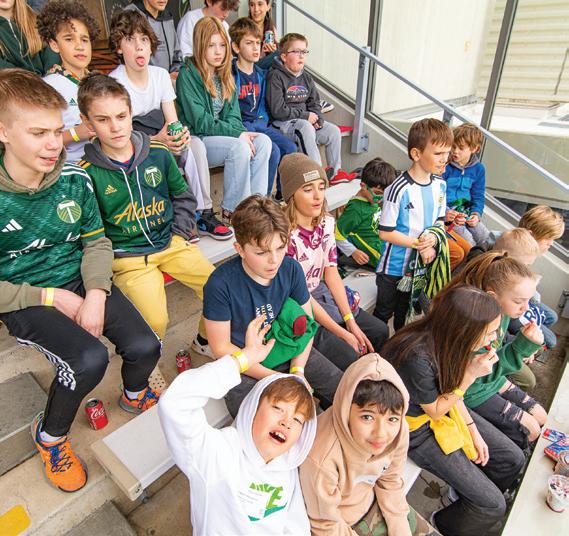
16U Spring Invitational
April 8 marked the first MAC-hosted volleyball tournament since 2019. Three club teams competed in the tournament.
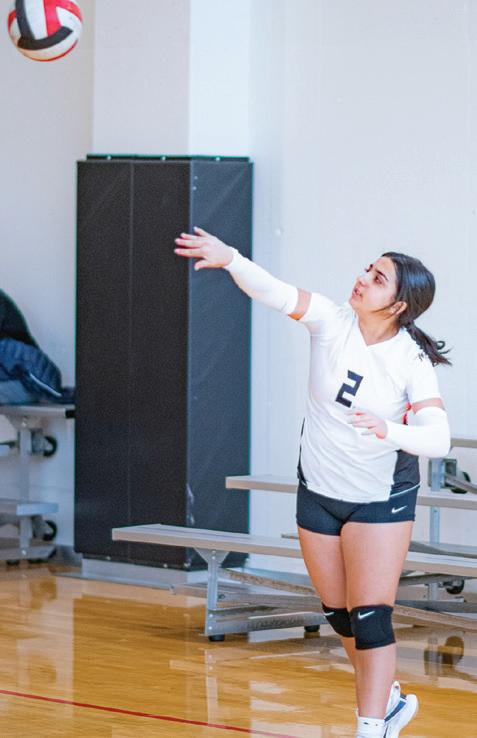

16. Weilan Nathan puts up a block 17. Amaia Ravago sets up for an assist to Weilan Nathan 18. Selin Dogan serves for the 16 Premier team
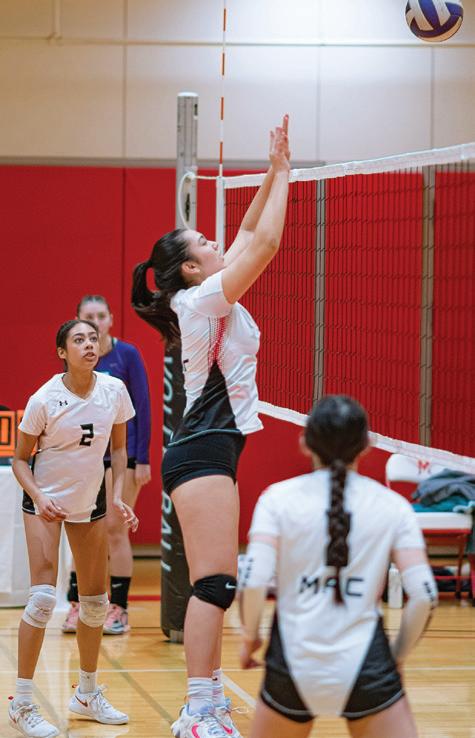
MAY 2023 | The Wınged M | 47 11 12 13 14 15 16 17 18
PHOTOS BY BRANDON DAVIS
PHOTOS BY BRANDON DAVIS
PHOTOS BY BRANDON DAVIS
Triathletes Gear Up to Race
For a shining example of what it looks like to make a plan, stick to it, put in weeks of hard work, and accomplish something spectacular, look no further than the triathlon and running community at MAC. There’s the weeks of training — both mentally and physically. There’s choosing the right gear and practicing how to transition from swimming to biking to running. There’s figuring out how to fuel oneself for several hours of taxing physical activity. Then, eventually, there’s the thrill of crossing the finish line on race day.
It’s all part of the experience that keeps triathletes like MAC members Dave Hanna and Charles Turner coming back for more. They’re both gearing up for Ironman 70.3 Oregon in July — a test of endurance that takes racers on a 1.2-mile swim in the Willamette River, a 56-mile bike ride through Salem, and a half marathon run through Minto-Brown Island Park.
The Why Behind the Tri
Hanna is a seasoned runner and triathlete who’s completed many races, including Olympic distances, two 70.3 Ironman races, and one full-course 140.6 Ironman. “I love the variety that triathlon brings to exercise,” he explains.
What drives him isn’t the desire to win or compete with anyone besides himself but rather an intrinsic motivation to challenge his own limits. “For Ironman, the likelihood of winning your age division is minimal, and if that’s the recipe for success or enjoyment, you’re likely to be disappointed,” he says. “My favorite part of training might be the
individual time to think, plan, pray, and converse with myself. I love knowing that I’m doing something that is truly challenging.”
Turner has also been active in the tri scene for a while, having been persuaded by a cycling buddy to sign up for an event four years ago. He’s completed five Ironman 70.3 races and two full Ironmans, and ran his first marathon in April.
“I was absolutely not a runner,” he declares. “I started running in 2018, figuring if I couldn’t run a half marathon, a 70.3 wouldn’t happen. I vowed not to buy a tri bike until completing one, but the bike I was looking at went on sale. I bought the bike so had to figure the running out.”
Training
Preparing the body and mind for a race like an Ironman 70.3 could mean 12 to 16 weeks of workouts, pushing up to 10 to 15 hours per week — plus the right balance of rest and recovery, adequate sleep, equipment and mechanical maintenance, and proper nutrition.
According to MAC personal trainer Patrick Fisher, the most important aspect of any training plan is consistency. “Depending upon the event and the distance required, the mix of activities should be training Tuesday through Sunday. Some training plans may require two sessions a day,” he says. “Making a spreadsheet or writing in a journal detailing each workout helps when looking at the days, weeks, and months leading up to the event. Include days off for recovery and a couple of days a week for mobility and strength work.”

48 | The Wınged M | MAY 2023 FITNESS & WELLNESS
As Turner nears peak training, he says his routine will become two or three swims, five runs, and five bike rides per week. He also trains with Fisher three times a week, which he credits with keeping him injury-free recently.

Hanna started stacking his workouts in April. He notes that there’s also a good deal of mental work that’s needed to prepare for an hours-long race outdoors in the elements. “It’s important to feel the grind and push through it and know that you can push through it [on race day],” he says.
A few weeks before race day, it comes time to taper workouts and give the body a chance to recover and build energy for the big event. “I had a friend once tell me that you should feel like a caged animal on race day,” Hanna explains. “Another said, ‘You’ve spent so much time stacking hay inside the barn, don’t be foolish and burn the barn down just before race day.’”
Finding Community
While each of the three triathlon events are uniquely individual endeavors, both Hanna and Turner attest to the community-building element of the sport at MAC. “Hours of training, week-in and week-out, can get lonely,” Turner notes. “Let’s face it: Misery loves company. But it’s also nice to share in the triumphs.”
Hanna agrees that running with friends, meeting up at the pool, or taking a Sunday ride with fellow triathletes add a much-needed element of fun and socialization to the training. “Following each other on social media platforms has been helpful for me as well,” he says. “When you know you have a community that is supporting you, you don’t want to let them down.”
Both men are part of the Tri/Run Committee, which supports MAC athletes involved in triathlon and running endeavors. Members who are interested in triathlons or running are invited to join the community on Wednesday evening cycling events, 5K opportunities such as the Turkey Trot and Jingle Bell Run, and the MAC Mile event later this month. Reach out to trirun.chair@ themac.com or visit the Tri/Run page at themac.com to learn more.
Meet the Trainer
MAC’s personal trainers help members reach their fitness and athletic goals with individually tailored programs. From sports-specific training to weight loss to injury prevention and rehabilitation, the staff has a diverse range of specializations and interests.
This month, get to know Alyssa Dalton, who recently celebrated her two-year anniversary at MAC. She transitioned from a career in events to one in fitness and has found it to be a fun and inspiring change.
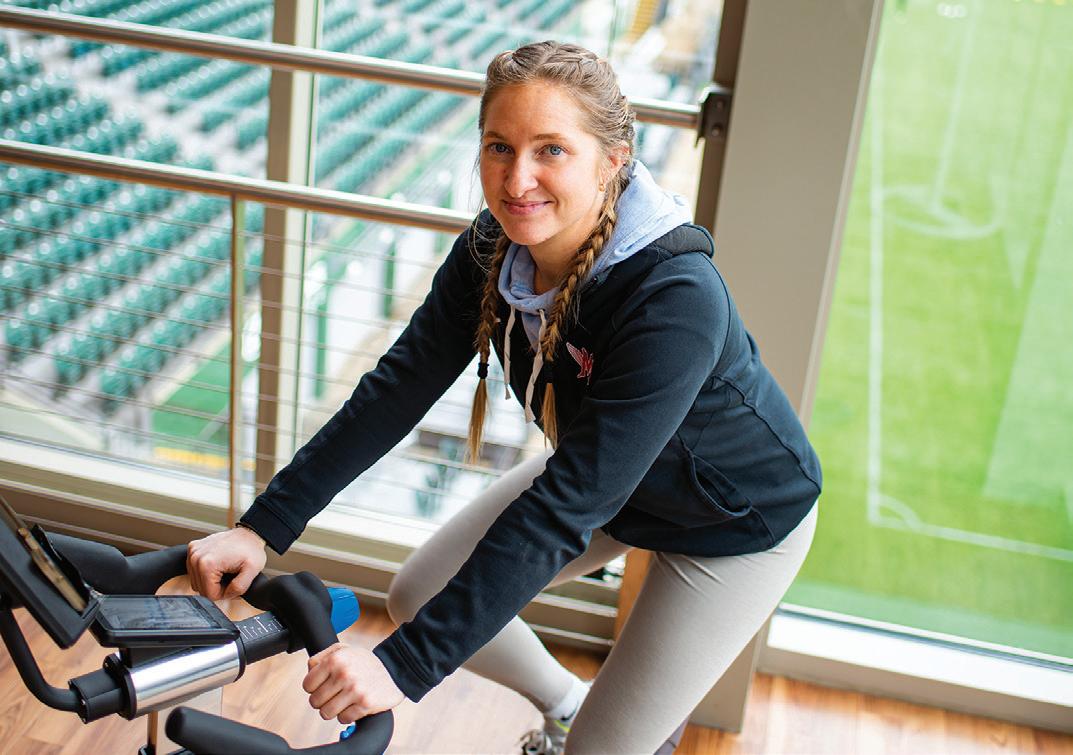
If you’d like to make an appointment with Dalton or another MAC personal trainer, email personaltraining@themac.com or fill out a Personal Training Request form at themac.com/group/pages/ fitness-personal-training.
Winged M: What got you interested in fitness and working in the fitness industry?
Alyssa Dalton: I’ve always gravitated toward fitness since I was a kid. I grew up playing soccer just about every day, so when the time came that I was no longer on a team, working out with friends and being in the gym really helped me stay positive and happy on a daily basis.
WM: What is your training philosophy or style?
AD: Giving people the tools they need to build confidence and feel successful through exercise. Unless you’re training for something, I encourage clients to take it one day at a time. Our fitness journeys change and evolve as we do, and we have our entire lives to enjoy all the different things fitness has to offer. One of my favorite quotes is from Nike is, “There is no finish line.”
WM: What are you most proud of yourself for accomplishing in your career so far?
AD: The confidence that I had to give myself for surviving the pandemic! Being newer to the fitness industry and then having to start my own business when I felt like I had so much more to learn made me feel very vulnerable, but I am proud of putting myself out there and my successes from that point on.
WM: What does a typical non-workday look like for you?
AD: I am an early riser — I love my mornings! I enjoy drinking my coffee on my deck and go usually go for a walk. There are a lot of trails and a lake near my house, so I like to get out and do something active. Whether it’s a hike or paddleboarding, at least in the warmer days, outside is where you’ll find me. Then I’ll usually have friends over for a barbecue and bonfire in my backyard.
MAY 2023 | The Wınged M | 49 FITNESS & WELLNESS
Charles Turner runs along the waterfront with his silver lab, Addie, and Dave Hanna (opposite page) cycles during Ironman Coeur d’Alene.
MAC personal trainer Alyssa Dalton
BRANDON DAVIS
A Memorial Day Workout to Remember
Every Memorial Day, fitness enthusiasts across the country put their will, strength, and endurance to the test in honor of service members killed in the line of duty. This year, MAC members and staff join in the tradition of the Murph Challenge.
The Murph is a demanding workout inspired by — and named after — Navy SEAL Lieutenant Michael Murphy, who died in combat in 2005 and posthumously received the Medal of Honor, the U.S. military’s highest award for valor. The workout consists of a 1-mile run, 100 pull-ups, 200 push-ups, 300 squats, and another 1-mile run.
Starting at 8:30 a.m. on May 29, the club hosts the Murph Memorial Day Fitness Challenge in the Turnaround. Members and staff are invited to honor fallen soldiers and put their fitness to the test. Movements can be scaled, and MAC Fitness staff will be on hand to offer guidance.

There are various options for completing the challenge:
• 8:30 a.m. Mini Murph – A modified workout for kids ages 11-14. It consists of a half-mile run, 25 pull-ups, 50 push-ups, 75 squats, and a half-mile run.
• 10 a.m. Masters Murph – For members 60 and over. The workout can be done individually or in teams of three to four people. Sign up as a “free agent” to be placed on a team with other members.
• 11:20 a.m. Moment of silence
• 11:30 a.m. Vest Murph – For members 14 and over who bring their own weighted vest and compete for the fastest finish time.
• 11:30 a.m. Scaled Murph – For members 14 and over. Members can participate as individuals or in teams of three to four people. Sign up as a “free agent” to be placed on a team with other members.
• 11:30 a.m. Staff Murph – Staff members can participate as individuals or in groups of three to four people.
Everyone who finishes the workout will have their names entered into a raffle to win a selection of MAC gift cards and Oregon-inspired prizes. Visit themac.com to learn more. CAE0529
Bounce Back Baby Bootcamp Returns
Class Brings Together Friendship, Fitness, and Fresh Air
For the first time since the start of the pandemic in 2020, MAC’s Bounce Back Baby Bootcamp group exercise class returns to the club! For new parents, the class is as much about exercise as it is about building community.
Heather Lawson, a mother of two and a certified group fitness instructor, started the class back in 2001. Her trademark upbeat personality and endless energy have helped secure it as a fixture for moms with new babies at the club.
Bounce Back Baby Bootcamp takes place at 9:30 a.m. on Tuesdays and Fridays. Participants meet at the Turnaround with their baby or toddler in a stroller before taking off. This outdoor class is free, but registration is required. Visit the Group Fitness Calendar on themac. com to sign up.

50 | The Wınged M | MAY 2023 FITNESS & WELLNESS
Mandy Kavanaugh, instructor Heather Lawson, Abby Wood, and Lauren Robinson
GETTY IMAGES
BRANDON DAVIS

WWW. STANDARDTV AND APPLIANCE .COM BEST SERVICE. BEST SELECTION. BEST PEOPLE. HOLLYWOOD 503.542.5120 BEAVERTON 503.619.0500 PORTLAND 503.777.3377 FEATURING 541.388.0088 STANDARD TV & APPLIANCE LARGEST DACOR DEALER IN THE NORTHWEST LIVE DACOR KITCHEN AT OUR SE 82ND SHOWROOM
Fall Yoga and Hiking Retreat
Connecting to Sky and Earth in the High Desert
MAC members are invited for a Pacific Northwest yoga and hiking retreat this fall to connect with their spirit in a place of incredible natural beauty. Join from Oct. 6-8 for two nights and three days in the light of Central Oregon. MAC yoga instructor Jennifer Holzapfel-Hanson, who has led yoga and wellness classes at the club since January 2009, will be your guide.
MAC has partnered with the spectacular Juniper Preserve to provide a deeply healing and moderately active retreat emphasizing nature, breath, well-being, and appreciation. Really, there could be no better place for this gathering. This sanctuary, in the mystic juniper forest between Smith Rock and Bend, supports feeling alive. Through yoga and hiking, ritual and rest, we will foster balance and grounding, discover inspiration and clarity, and find inner connection along our diverse paths.
Agenda
Day 1: Friday, Oct. 6 — Arrival at Juniper Preserve
Participants begin to arrive at Juniper Preserve for the start of the weekend retreat. Participants can check in starting at 4 p.m. At 5 p.m., the group meets for a ceremonial welcome before Jennifer leads the first yoga class followed by dinner at the resort.
Day 2: Saturday, Oct. 7 — Hike and Yoga
After breakfast, the group enjoys a morning hike. An easier/shorter and a more moderate/longer hike are offered. Participants savor a picnic lunch before returning to the lodge. Later this afternoon, Jennifer leads a restorative yoga class.
Day 3: Sunday,
Oct. 8 — Aqua Yoga and Departure
Enjoy the heated pool as Jennifer leads a special aqua yoga class this morning, which includes a closing session before breakfast. After breakfast and check-out (11 a.m.), participants can continue using the pool, hot tub, spa, and fitness facilities at the lodge.
The cost is $850 per person (double occupancy for a standard king size lodge room); and $435 for a single supplement; and includes:
• Hotel accommodations at Juniper Lodge, taxes, and resort fees

• Two breakfasts, one picnic lunch, and one dinner
• Yoga sessions with MAC instructor and a guided hike

Transportation to retreat, bar beverages, travel insurance, and spa services are not included.
Contact Customized Journeys to secure your spot at 503-914-6452, info@customizedjourneys.com, or www.customizedjourneys.com
An information session takes place at 12:30 p.m. Wednesday, May 10, in Kamm. YOE0510
52 | The Wınged M | MAY 2023 FITNESS & WELLNESS
PHOTOS COURTESY OF JUNIPER RESERVE


ELAINE MCMANUS Sr. Recruiter NICOLE SMITH Sr. Recruiter KATHLEEN EVERETT Director, Client Relations ROXANNE ROTTICCI Director,BusinessStrategy KATIE BICK Recruiter MAYA BAKER-FREID Recruiter 920 SW Sixth Avenue, Suite 100 | Portland, OR 97204 503.242.1300 | connect@bolywelch.com | bolywelch.com Boly:Welch is bullish on Portland. We’ve spent decades building relationships with clients in banking, manufacturing, and professional services, and we’re committed to continue finding top accounting & finance talent for the organizations driving the future of our city. Accounting & Finance | Administration & Operations | Footwear, Apparel & Outdoor Human Resources | Legal Support | Attorneys | Marketing & Advertising | Executive Search
Members Asked, Coach MAC Answers
MAC’s team of trainers, health and sports coaches, and massage therapists are here to answer member questions.
Question: What type of portable foot/ calf massage equipment would be appropriate for airline flights and legal to use as well? For those members who are high-risk for deep vein thrombosis (DVT), or even just looking for comfort on a long flight, this would be great information to know.
Answer: Normatec compression equipment is not recommended for those with DVT, per the company’s website. However, if you’re looking for a lightweight and TSA-friendly compression device to help with circulatory concerns, Normatec’s portable calf sleeve, Normatec Go, may be a good option. It can be purchased through the Hyperice website.
Other tips for a long flight for those at risk of DVT, or to combat uncomfortable circulatory issues, are to elevate your feet using a personal item, drink extra fluids, avoid alcohol before your flight, wear compression stockings, and keep moving. Muscle contractions help pump blood through the legs. Northern Michigan Sports Medicine Center recommends seated exercises like: ABCs – Lift your feet off of the floor and “draw” the ABCs (capital letters) once every half hour.
Heel/Toe Lift – Keep your feet on the floor and lift your toes off the floor (hold for 10 seconds), then lift your heels off the floor (hold for 10 seconds). Alternate 10 times every half hour.
FITNESS & WELLNESS CORNER
Glutes –Squeeze your buttocks muscles together as if lifting yourself up in your seat (hold for 10 seconds), and repeat 10 times every hour
Visit themac.com/group/pages/wellness or use the QR code below to submit questions about training, nutrition, recovery, and more! Answers to submitted questions are published online, in The Winged M, or in a club newsletter. Please note that questions are not guaranteed to be answered.

Fitness Room Equipment Refresh

The Fitness & Wellness leadership team, alongside the Fitness & Decathlon Committee and Portfolio Management Office, are currently working through collecting final bids for a Fitness Room equipment refresh. The team is excited to bring members a large inventory of updated pieces to replace the aging selectorize (pin-selected) and plateloaded machines. Expect many more details in the coming months!
Personalized Recovery
The Normatec recovery equipment is adding a new control console that connects directly to a phone. Members can download the Hyperice app on their chosen device and control their recovery session in real time. Staff are available with a connected device to assist members using the new console. A set of leg sleeves in a shorter size, recommended for heights 5’3” and shorter, is now available.

A tip from the Hyperice team: Different pressure ranges (from 1-10) have different benefits based on your recovery goals. Levels one to three support lymphatic drainage; levels four to five are perfect for body maintenance; and levels six and seven mimic a deep tissue massage.
A new inversion table is also on its way to the recovery room. Keep an eye out for more information about when and how to use it.
Junior Massage Now Available
The MAC Massage team is now offering a junior massage for members ages 14-17. Parents/guardians of minors are required to sign a waiver, located in the confirmation email. Massages are performed by LMTs who have been SafeSport certified. All appointments are in the Recovery Room and can be booked for 12, 25, or 45 minutes. Find appointments online by searching the service “Junior Massage.” For more information email massage@themac.com.
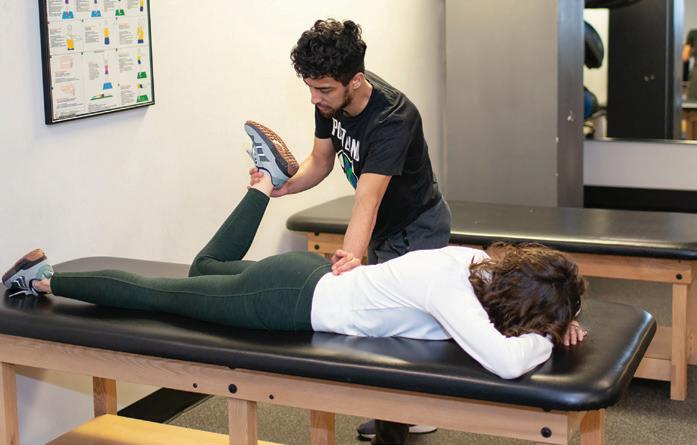
54 | The Wınged M | MAY 2023 FITNESS & WELLNESS
BRANDON DAVIS GETTY IMAGES
HYPERICENORDIC.COM


d e s i g n • b u i l d • r e m o d e l CCB# 184317 | WA# MOUNTHI918PW mountainwoodhomes com
Foam Rolling for Recovery
Training — whether for strength, endurance, power, cardio, or a combination of these — has the goal of increasing performance for recreation or competition. Maximizing performance involves not just training but a balance of training and recovery. Recovery addresses muscle damage, tissue inflammation, delayed-onset muscle soreness, and fatigue. One recovery technique is foam rolling. Foam rolling involves self soft-tissue mobilization using a half or full roller. In addition, foam rolling can provide performance benefits.
Flexibility is one of the benefits afforded by foam rolling. The effect is short-term (approximately 10 minutes), but when completed routinely, the benefit can be long-term. The flexibility gain can increase joint range of motion, which can improve movement and performance. Research shows that 20 seconds of foam rolling per area can be sufficient. There is also the added benefit of maintenance of increased range of motion when it’s used after stretching.
Delayed-onset muscle soreness (DOMS) is the result of microtrauma to the muscle. Soreness typically occurs 12 hours after exercise, during the repair process. In addition to pain, there may be swelling and temporarily decreased strength. While foam rolling cannot speed the repair process of DOMS, it can decrease the soreness that occurs, which can help with training tolerance.
In relation to performance, a 2019 metaanalysis by Wiewelhove and colleagues looked at pre- and post-workout rolling. The results for pre-rolling showed a small improvement in sprint performance and flexibility without decreasing muscle performance. Post-rolling decreased muscle pain and was superior with use of a foam roller versus a massage roller.
Recommendations from research for best outcomes promote the use of a foam roller versus a massage roller. A 2020 randomized controlled trial by Adamczyk and colleagues
reports that the type of specific foam roller (grid or smooth) does not influence recovery rate, but use of a foam roller was superior to passive rest. Looking at various research recommended, parameters for use include three to five sets of 20-30 seconds for three to five times a week.
Consider adding foam rolling to your toolbox for recovery to improve your workouts, training, and performance.
 — Sasha Kolbeck, MPT, DPT, OCS, COMT
Instructor Spotlight
Meet Kelly Ann Barton, who has been a fitness instructor at MAC since before the pandemic and is thrilled to be back teaching in-person Pilates, barre, and dance classes.
Winged M: What’s your background/training?
Kelly Ann Barton: I am a Pilates certified instructor and a former professional dancer.

WM: Can you describe your teaching approach/philosophy?
KB: I want my clients to feel good from the inside out!
WM: What are some things you like to do outside of work?
KB: When I’m not at work, I’m keeping my nieces and nephews in line!
56 | The Wınged M | MAY 2023 FITNESS & WELLNESS
GETTY
IMAGES
JORDAN BECKETT
MAC instructor Kelly Ann Barton
GET READY FOR SUMMER CAMPS
3x10



Full Page AD
MAC summer camps are almost here! June 19 is the beginning of the summer camp season. Members and guests can still choose from a variety of camps to create their own schedules, or opt for full-day camps, and camps run all summer long. To make life easy, check-in and check-out once again take place on the third floor of the member garage. Lunch is available for those staying at the club all day.
Contact ajohnson@themac.com with any general camp questions, or reach out to the departments for specific camps. Visit themac.com or scan the code on the left to see the full Summer Program Guide with all camps and classes.
AQUATICS YOUTH ACTIVITIES/ SPECIAL INTEREST BASKETBALL COURT SPORTS RACQUETBALL CLIMBING OUTDOOR SQUASH DANCE PICKLEBALL TENNIS GYMNASTICS YOUTH PROGRAMS VOLLEYBALL
STILL TIME TO
FOR SUMMER CAMPS
THERE'S
REGISTER
ATHLETICS 58 | The Wınged M | MAY 2023
What’s in the Bag?
Preparation. It is vital to any athletic competition. Tennis players must be physically and mentally prepared to play every time they step on the court. However, there is also something all tennis players need to consider before taking the court: What’s in the bag? There are essentials every player needs to have, and even some items that may not get used too often. But, in the middle of a match, it is better to have something and not need it than need it and not have it. Often, it can be the difference between winning and losing.
MUST HAVE:
Racquet(s) – If a player is prone to breaking strings, multiple racquets will be needed. An extra racquet also allows players to experiment with string and tension to find the optimal combination for play.
Tennis balls – Ideally a new can, but at least some old tennis balls to hit with when the opportunity arises.
Tennis shoes – Some players wear their tennis shoes to the match while others only wear tennis shoes on a tennis court. Regardless, all players need a good pair of tennis shoes. High-level players pack a second pair just in case of a malfunction in the initial pair of shoes.
SHOULD HAVE:
Towel – Players who sweat a lot should definitely carry a towel to the courts. Remember, play can be slowed down between points with a towel at the fence. Controlling the pace of play is something all players can look to do, and a towel helps accomplish that.
Water bottle – Whether there is a fountain or not, all players should have a water bottle big enough to last an entire match. Players who are forced to leave the court to get more water should consider a water bottle large enough to last an entire match.
Older tennis balls – There is nothing worse than getting to a court and not having any tennis balls for play. An old, dead ball is better than nothing, should the opportunity to hit arise.
Hat/visor – When one is while playing inside or out, it is awful not to have one.
Wristbands – Again, for the heavy sweaters, this can be vital.
Sweatsuit/warmups – Even for players whose body temperature runs a little hotter, it is important to put on sweats after a match. Stepping outside in cold weather can be a shock to warm muscles and cause more stiffening, prolonging the recovery phase. It is better to cool down gradually, even if it means sweating longer.
Extra socks – There are few better feelings than taking off wet, sweaty socks and putting on a fresh pair. A player’s feet will thank them later.
GOOD TO HAVE:
Overgrips – If used, it is advisable to carry extras just in case. Vibration dampener – If it goes flying in the middle of a match, it can change the feel of the racquet and the sound that contact produces. Carrying a spare will avoid these issues before they start.
Strings – For those who break strings, carrying some extra string in the bag will allow the racquet to be dropped off for stringing without the need to “find” the string at home. This can make turnaround time faster in most cases.
Change of clothes – Same as with extra socks. It is a good feeling to get out of wet workout clothes and into something dry. Not to mention, it is better to get out of wet clothes as soon as possible for comfort and optimal recovery.
Shoelaces – It may seem crazy until a lace is needed. An old lace from the last pair of shoes a player wore out will work just fine in a pinch. Waterproof/wet bag – For the heavy sweaters, this is a must to keep the rest of the items in a bag dry.
CONSIDER:
A lucky charm – There is no proof a lucky charm may ever have won a match for a player, but they certainly have never caused a loss! Face it — athletes can be superstitious. It may not help, but what if it does?
Pen and paper/notebook – Taking notes on an opponent or on the match just played is a good way to reflect and gain knowledge and confidence for later.
Ice bags and wrap – An ounce of prevention is worth a pound of cure. Ice is the best friend of small, nagging injuries.
Fingernail clippers – Yes, a nail may be an issue, but there are innumerable instances where a small pair of clippers can come in handy. Anyone who has had the end of a string too long or has a tag left on clothing can attest to this.
Tape measure – If the net it too high or too low, there is only one way to find out. Without a tape measure, the debate on a net’s height can carry on well past leaving the court.
A Friend at Court – This is the tennis rulebook, and it is never a bad thing to have it handy.
For those wanting to have it all, consider the following:
Snack/energy bar
Sunscreen
Band-Aids/blister treatment
Stretching/resistance band
Travel-size massage roller
Massage gun
Jump rope
Ibuprofen
For anyone ever wondering why a tennis player’s bag is so large, the mystery is hopefully solved. In the heat of battle, having all the items necessary to finish the task and be ready for the next match is essential.
MAY 2023 | The Wınged M | 59 ATHLETICS
That’s a Wrap! MAC Volleyball Rounds Out 2022-23 Club Season
MAC Volleyball teams have been hard at work the last five months, and it’s hard to believe that the season is already coming to an end. The competitive club program had 10 teams this season, with a total of 115 athletes. Those teams consisted of athletes ages 8-18, with 12U to 18U teams.
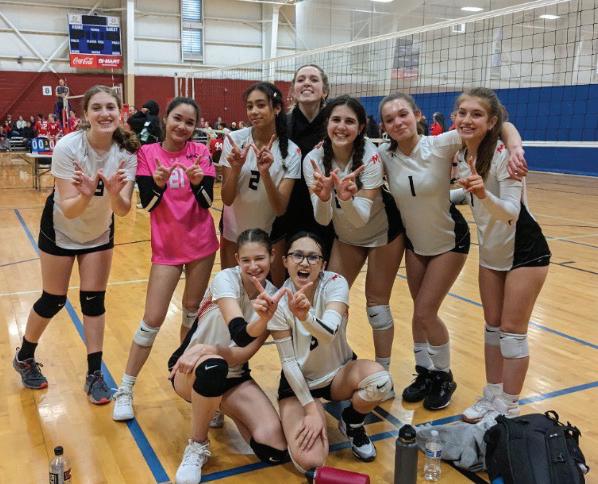

The tournament season began in January for all teams, which consisted of Power League (regional tournaments) as well as some local and regional friendship tournaments. The teams came out strong for their first Power League Qualifier tournament, which sets their ranking for the season. There were also six teams that traveled for threeday MLK weekend tournaments, including the NPJ Kickoff Tourney in Salem (12 Elite, 13 Elite, and 14 Elite), and the Matt Hartner Memorial tournament in Eugene/Springfield (15 Elite, 16 Elite, and 18 Elite).
In February, teams continued to compete in Power League tournaments, and most of the teams continued to climb the regional rankings, including four MAC teams who found themselves ranked top 20 in the entire CEVA region (12 Elite, 14 Elite, 14 Premier, and 18 Elite). The 14 Elite and 14 Premier teams also found their way to the championship game
of the Axiom Friendship tournament, where they finished first and second, respectively. Presidents’ Day weekend was a big weekend for the teams, as 13 Elite and 14 Elite traveled to Spokane for the CEVA Region Rumble, 14 Premier and 16 Premier headed to Springfield for the CEVA Presidents’ Day Tournament, and four teams participated in the NPJ Presidents’ Day tourney in Salem (12 Elite, 15 Elite, 16 Elite, and 18 Elite).
Some other noteworthy highlights from February and March include:
• 13 Elite finishing first at the MHAC Sandy Tournament (14U Division)
• 12 Elite finishing first at the MHAC Sandy Tournament (12U Division)
• 12 Premier finishing second at the MHAC Sandy Tournament (12U Division)
• 14 Elite finishing fourth out of 48 teams in Spokane (CEVA Region Rumble)
• 12 Elite finishing fourth out of 12 teams in Salem (NPJ Presidents’ Day)
• 14 Premier finishing first at the AGILE Friendship tournament (14U Division)
• 12 Elite finishing first at the AGILE Friendship Tournament (12U Division)
At the time this update was written, the teams were preparing for the final month of the season. April 8 marked the first MAC-hosted volleyball tournament since 2019 (MAC 16U Spring Invitational). April and May also mark the last month of Power League tournaments, which is the last chance for teams to rank the best they can as they head into the CEVA Regional Tournament (April 29-30 for 12U/14U and May 6-7 for 16U/18U). The 14 Elite team heads to Salt Lake City for the SLC Showdown National Qualifying tournament (April 14-16), and three of the teams head to Reno for the Far Western Girls National Qualifier (15 Elite, 16 Elite, 18 Elite). Finally, 12 Elite and 14 Premier head to the Willamette Valley Classic at the Portland Expo Center May 13-14.
Heading into April and the regional tournament, MAC teams to look out for are 12 Elite (ranked 14 out of 76), 14 Elite (ranked 14 out of 144), and 18 Elite (ranked 20 out of 66). Don’t forget to cheer on MAC’s 16/18U teams (15 Elite, 16 Elite, 16 Premier, and 18 Elite) at the Regional Championship Tournament May 6-7 at the Portland Expo Center!
— Taylor Canoso, Head Volleyball Coach
The 16 Premier volleyball team.
The 15 Elite volleyball team.
60 | The Wınged M | MAY 2023 ATHLETICS
JUNIOR VOLLEYBALL



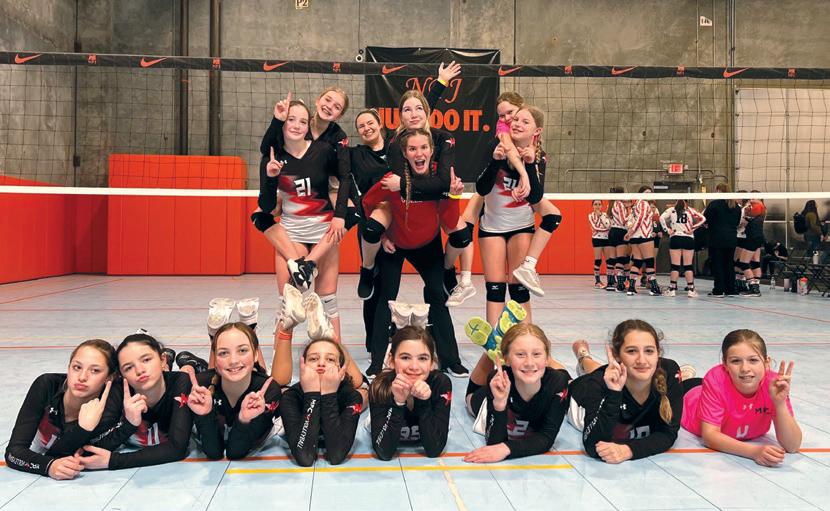
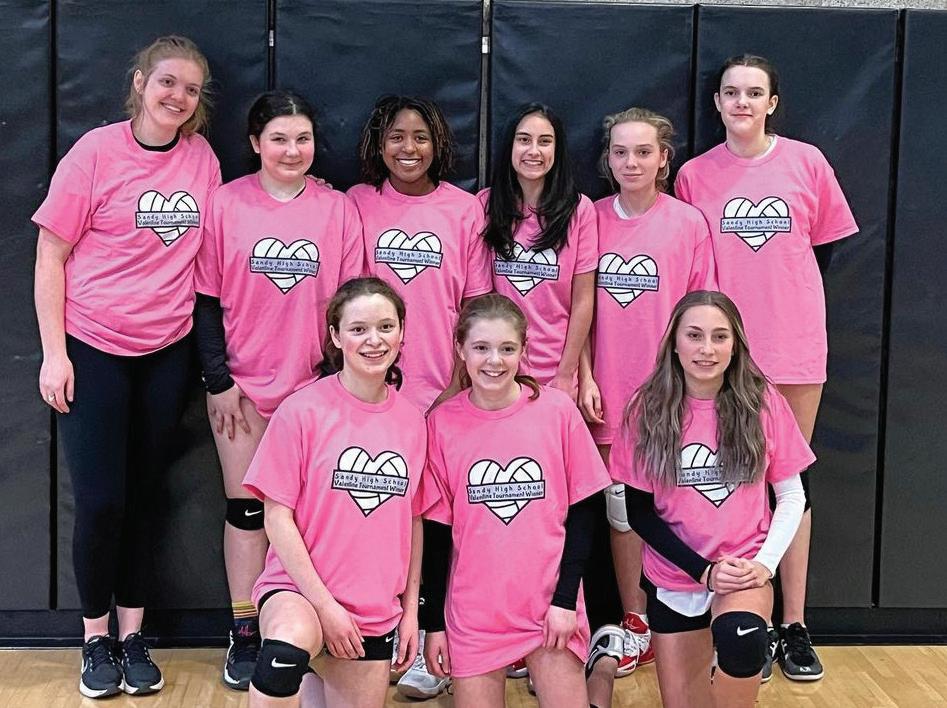
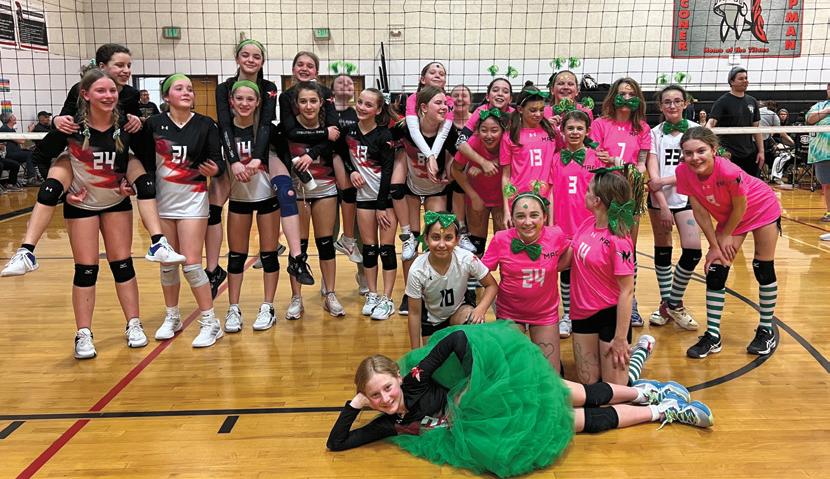
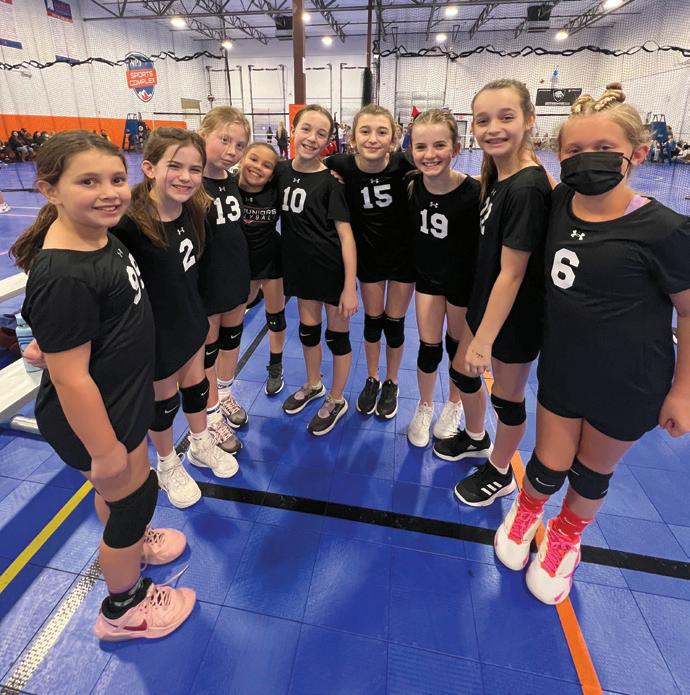
MAY 2023 | The Wınged M | 61 ATHLETICS Your Central Oregon Resort Experts ARENDSREALTYGROUP.COM PHIL: 541.420.9997 THOMAS: 541.285.1535 Each office is independently owned and operated. All brokers listed are licensed in the state of Oregon. There’s a difference between understanding your vision and making your vision happen. At Key Private Bank, our wealth management team works with you to help you get where you want to go. Whether you’re across the table or across town, we act as an extension of you, navigating the road ahead, so you can focus on what’s important. We see your potential. We know how to help you achieve it. And we’re here for you every step of the way. Put your plan into action. Contact Your Key Private Bank Team at 503-790-7622 or visit key.com/kpb today. Key.com is a federally registered service mark of KeyCorp. ©2020 KeyCorp. KeyBank is Member FDIC. 200304-754982-1185611687 NOT FDIC INSURED • NOT BANK GUARANTEED • MAY LOSE VALUE • NOT A DEPOSIT • NOT INSURED BY ANY FEDERAL OR STATE GOVERNMENT AGENCY Key Private Bank is part of KeyBank National Association. Bank and trust products from KeyBank National Association. Investment products are: We’re Here to Help You Get There
The 11
Select volleyball team, 12 Elite volleyball team, 13 Elite volleyball team, and the 12 Elite & 12 Premier volleyball teams.
Fostering the Whole Athlete
How MAC Volleyball Incorporates Mental Training Into a Competitive Program

Anyone who has ever participated in a competitive sport knows that there is more that is required of the mind and body than just the physical performance of the sport. To be serious about competitive sports is to realize that progress is a marathon, not a sprint; this is why it’s crucial that there is recognition and support for the mental requirements of sport, too.
Mental training and sports psychology are being more recognized throughout competitive sports, as coaches, athletes, and parents have seen the benefits of this type of training. There are many sports psychologists that specialize in working with teams throughout their seasons to help keep their mind and emotions in check, especially as their bodies start to exhaust. Mental training can be used to improve confidence, focus, selfbelief, and motivation — all things that are crucial to athletic performance.
Mental training in sports also exercises the mind so that athletes are learning tools and strategies to prepare for life’s uncontrollables while also striving to perform at their best. Proper mental training will propel young athletes into dealing with adversity and challenges, even after they are done playing competitive sports.
MAC Volleyball Coach Quin Kloppenburg takes mental training very seriously with her team. Kloppenburg currently coaches the 12 Elite team at MAC and is a huge advocate for proper mental training for athletes. No matter what, her team always starts the first 10 minutes of their practice with a group checkin, where they review inspirational quotes, videos, or books together and talk about the meaning behind the messages. Once they’ve discussed, they each spend some time writing in their journals. The kids are able to see their own thought processes throughout the season, and it creates a great opportunity for reflection and growth. Kloppenburg’s ultimate goal in providing this team check-in time is to create a space where the kids feel autonomy, support, inclusiveness, and safety. “They buy in to their team so much more when they feel like they have a say or something to give,” explains Kloppenburg. “It’s really important for young athletes to have this time to mentally and emotionally shift from whatever just happened during the rest of their day, before they transition into training time. It’s a time to respond and mentally reset,” she says.
So how does a coach decide what approach to take to mental training or what their team might need? Coaches can identify what their team might need by asking some questions about their team’s performance:
• Are they having a hard time fighting through failure?
• Are they showing fear over failure and not being perfect?
• Are they lacking drive and goal setting? Perhaps one of the most important lessons of mental training that many athletes overlook is learning how to fail. No one enjoys failing at anything, but it’s a reality that all athletes have to face. It’s also a lesson that carries on for life. Sometimes it’s not about winning or losing but how athletes respond to both scenarios. How will someone respond to losing the biggest game of their life? How will they respond to not getting the job they apply for or being accepted into their dream school? Knowing how to fail properly and respond to failure are both huge indicators of an individual’s future success.
Interested in learning more about how to optimize mental and physical training? Kloppenburg recommends these books to athletes and parents of athletes who want to dive deeper:
Atlas of the Heart by Brene Brown
What it’s about: Learning about and identifying emotions and how to manage them
The Score Takes Care of Itself by Bill Walsh
What it’s about: Learning that the basics of the game are the game itself
Mindset by Carol Dweck
What it’s about: Learn the power of positive thinking, how to train with a growth mindset versus being focused on outcome and results, managing aggression, and identifying thoughts and compartmentalizing them from reality.
62 | The Wınged M | MAY 2023 ATHLETICS
VOLLEYBALL
Coach Quin Kloppenburg with the 12 Elite volleyball team

IN THE PEARL DISTRICT AND LAKE OSWEGO YOUR DOCTOR MAKES A DIFFERENCE. TOWER OCULOFACIAL PLASTIC SURGERY, PC Yale-trained, and current Associate Clinical Professor of Plastic Surgery at OHSU, Robert Tower, MD offers a personal physician level of care, performing all lasers, injectables and surgery. Come experience the difference a board certified, fellowship trained oculofacial plastic surgeon can offer. WWW.TOWERPLASTICSMD.COM | 503.227.5075
Kids Can Learn the Ropes at MAC
By Isaac Shoman, Climbing Gym Supervisor
Photos by Brandon Davis
Summer is an amazing time of year in the Climbing Gym at MAC. Camps and classes are a great way to stay active and try a new sport this summer. With camp and class offerings beginning as young as age 4, there is something for every member to enjoy!
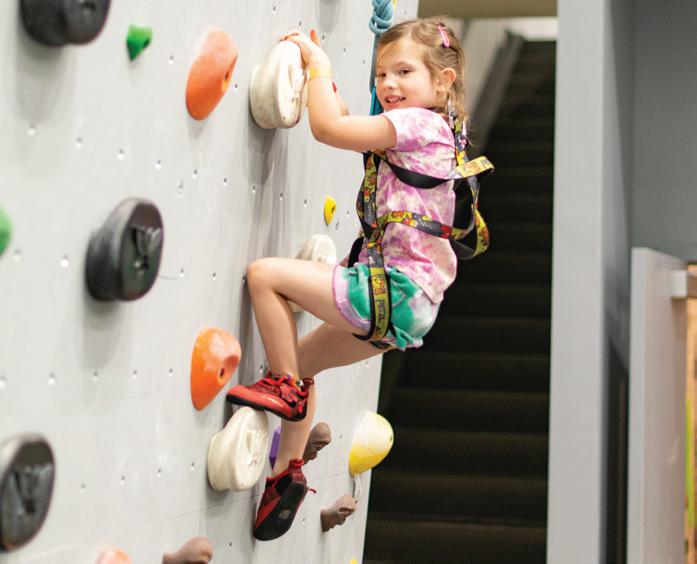
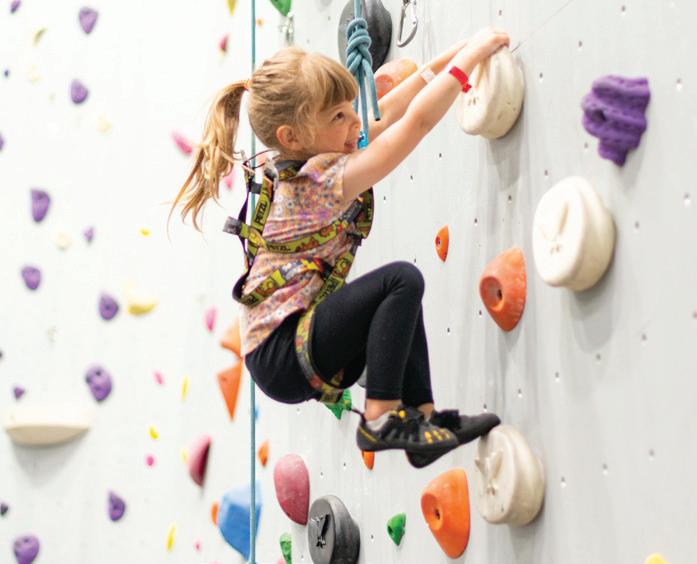
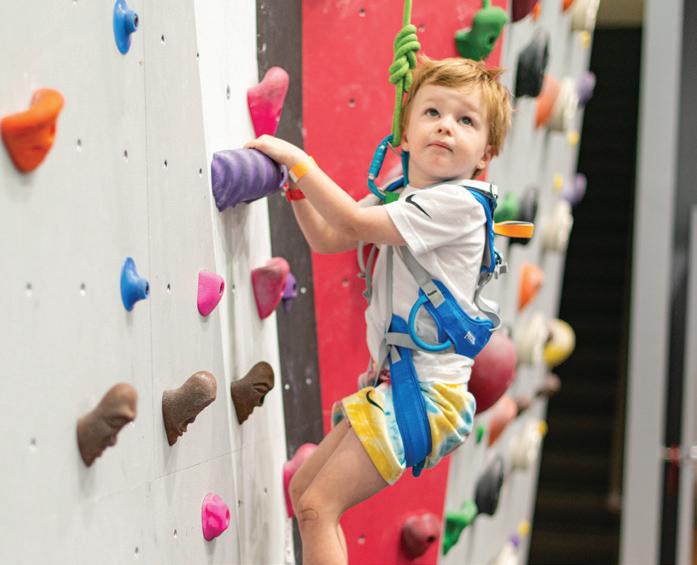
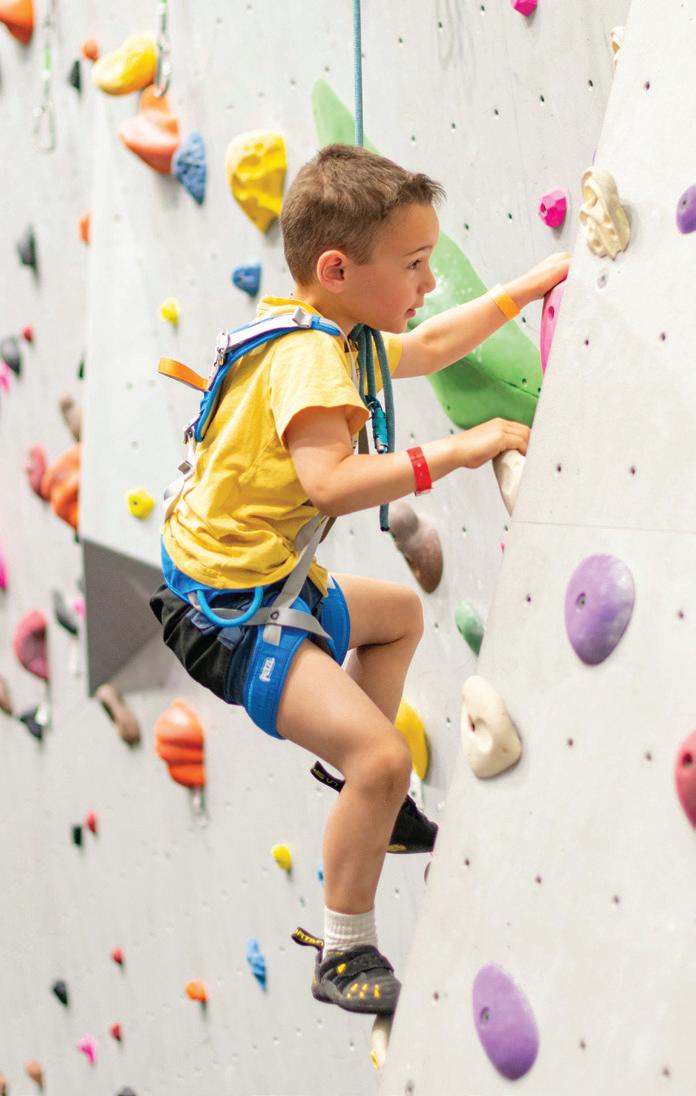

Five-day climbing camps give junior members ages 6-8 and 9-13 the opportunity to grow in confidence through group games and climbing activities while instructors work to increase their climbing skills. Relay races and climbing up stacks of milk crates are just a few of the amazing activities that they will get to experience. These camps are for members ages 6-8 and 9-13.
For junior members ages 9-13 that have previous climbing experience and want to see what it would be like to be on the competitive climbing team, the Competitive Camp is a perfect fit. This camp is instructed by coaches and former competitive athletes from MAC’s nationally ranked climbing team. Campers will run the same drills that the competitive teams utilize and develop skills that are necessary to take their climbing to the next level.
New this summer, the Climbing Gym is offering Tiny Tots (ages 4-5) classes in the afternoon. These classes follow the same curriculum and five-week schedule as the Tiny Tots climbing classes throughout the rest of the year. Junior members will climb from 4-4:45 p.m. once a week for five weeks. This is a great opportunity to try out a new sport while building confidence and motor skills. Belay classes will also be offered on Saturdays throughout the summer from noon-1:30pm. This one-time class will provide members with all the skills necessary to start top rope belaying in the Climbing Gym at MAC.
The final addition to the summer schedule is the PDX Explorers camp. This camp is an exciting opportunity for members ages 8-13 who want to step outside the walls of the club and explore MAC’s neighborhood. Instructors will take participants to Washington Park to see the International Rose Test Garden which has been offering Portlanders amazing sights (and smells) since 1917. Campers will also cool off in a few of Portland’s fountains and taste some world-class ice cream in this exciting week-long camp.
64 | The Wınged M | MAY 2023 ATHLETICS
CLIMBING
VIP Treatment. Five-star Service.
Trust
At Mercedes-Benz of Portland, we make servicing your car just as rewarding as the joy you get from driving it. From convenient drop offs to loaner vehicles to our expertly-trained certified technicians, we give you the VIP service and attention you deserve. Treat your Mercedes-Benz to the skilled professionals that will keep it performing at its best for years to come.







Why Go Anywhere Else?
 Rich Fox, Dealer Operator
Naito Parkway Mercedes-Benz of Portland
your vehicle to the experts who know it best. SW
RACQUETBALL
Team Lincoln Finishes 5th at National High School Racquetball Championships
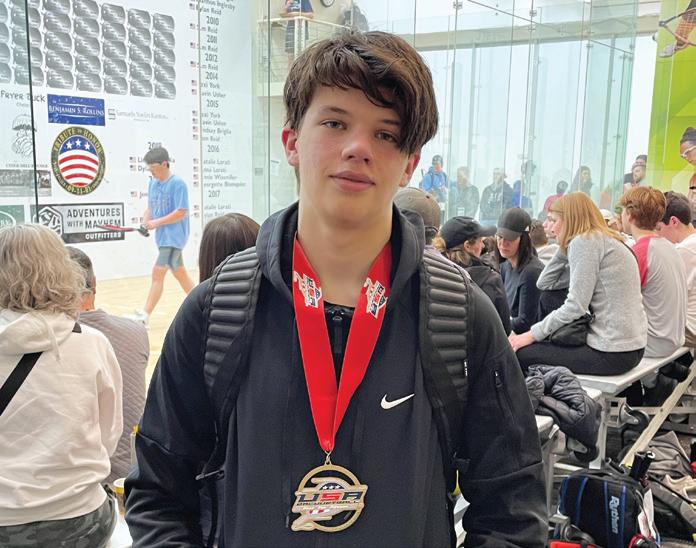
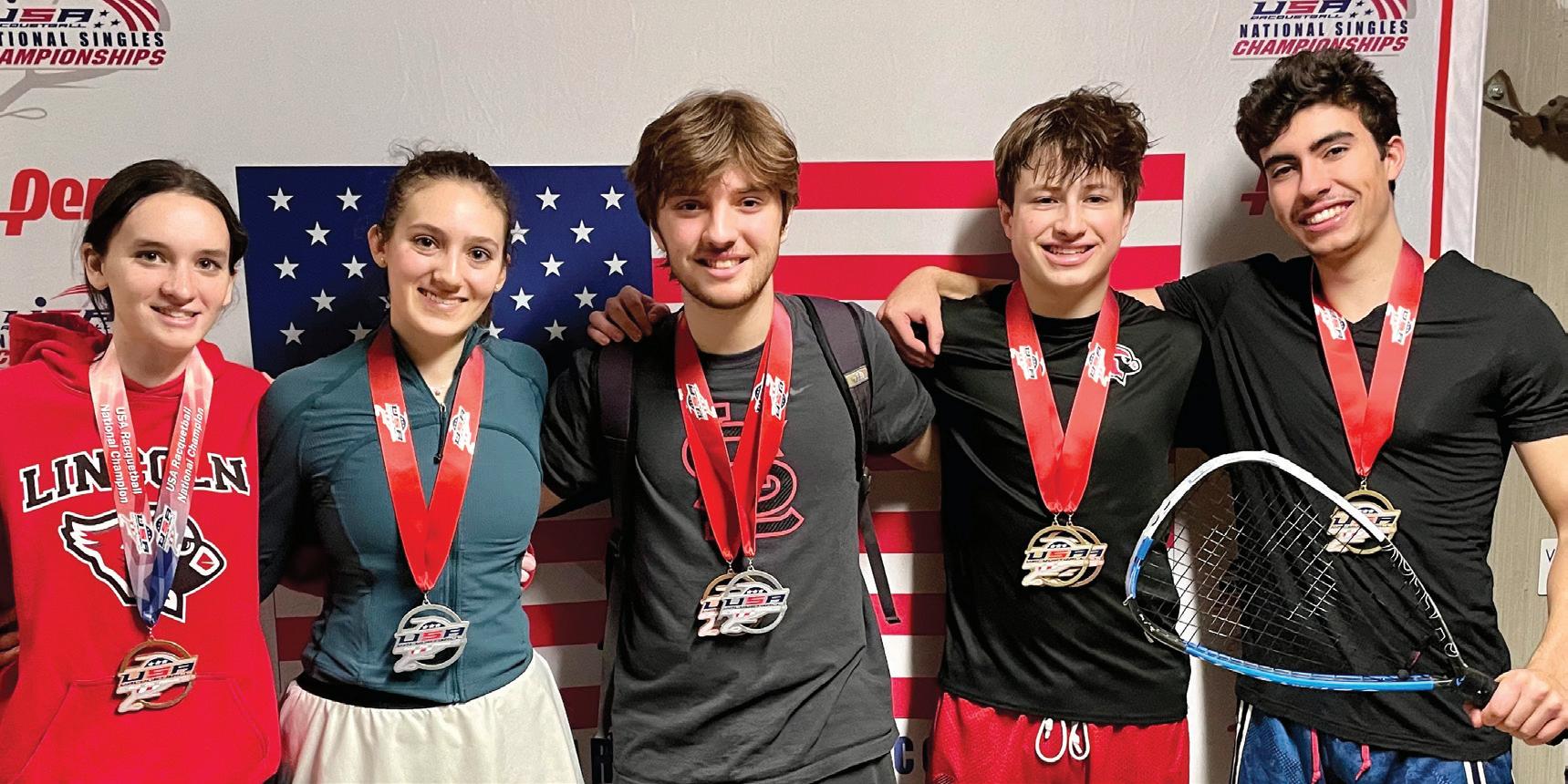
On March 1-5, MAC hosted the National High School Racquetball championships. Over 230 kids from around the country came to Portland to try and win a title. However, the competitors with the shortest trip were the 20 student-athletes from the Lincoln High School Racquetball team, which included 12 MAC members. The Lincoln team practices at MAC throughout the racquetball season, and they used that home court advantage to finish fifth place in the overall team competition! The Lincoln boys led the way, finishing as the highest-ranked Oregon team and the fourth-best overall.
There were some great individual performances, headlined by three MAC members that took home gold medals. Julian Krozel won an exciting final 11-10 in the tie-break to take home the Boys #2 Blue gold medal. Roberto McKillop took home first place in Boys #3 Red, and Zach Bouska won gold in Boys #4 Red. Overall, eight Lincoln athletes — six of them MAC members — took home medals in their divisions. The Lincoln racquetball team was led this season by Head Coach Seth Bouska and Assistant Coaches Georgette Blomquist, Sanjay Bedi, Bruce Reid, and Zach Banks.
Huge congratulations to the Lincoln High School Racquetball Team!
Camden Schnebly and Adam Lancia
Zach
66 | The Wınged M | MAY 2023 ATHLETICS
Elle Newton, Anabella Wilkinson, Jackson Fletcher, Roberto McKillop, and Julian Krozel
Bouska Division Details Name Final Result Boys Singles: #1 Blue Camden Schnebly 2nd Place Boys Singles: #2 Blue Julian Krozel 1st Place Boys Singles: #3 Red Roberto McKillop 1st Place Boys Singles: #4 Red Zach Bouska 1st Place Boys Singles: #5 Red Jackson Fletcher 2nd Place Boys Singles: #6 White Gianluca Agudelo 3rd Place Girls Singles: #1 Red Anabella Wilkinson 2nd Place Girls Singles: #2 Gold Elle Newton 4th Place Boys Doubles: #2 Cons Jackson Fletcher & Roberto McKillop 3rd Place Mixed Doubles: #1 Gold Elle Newton & Camden Schnebly 3rd Place

Mike Monroe, Gary Smith, Myra Friedman, Dave Davidson, Tracie DeJager, Wes Gabrielson, Julian Illingworth, Mike Saito, Joy Leising, Bob Hansen, Kim Rolfs, Mark Jansa, Dana Bach Johnson, and Jeff Malzahn
Julian Illingworth, Tracie DeJager, and Wes Gabrielson
For the Love of Pickleball PICKLEBALL
More than 200 people signed up for an exciting night of pickleball at MAC’s first-ever Professional Pickleball Exhibition. The event featured MAC pickleball pro Julian Illingworth along with local pros Joy Leising, Tracie DeJager, and Wes Gabrielson. The MAC Pickleball Committee was able to secure the entire main gym for the event, allowing for a center court surrounded by bleachers and also another court dedicated to paddle demos and games with fun prizes. MAC members and guests enjoyed pizza, snacks, and a no-host bar for the event.
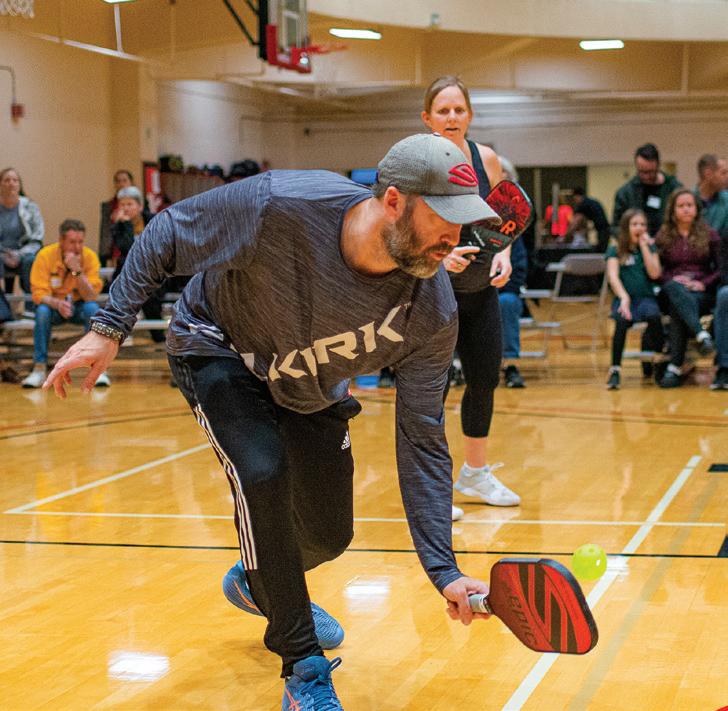
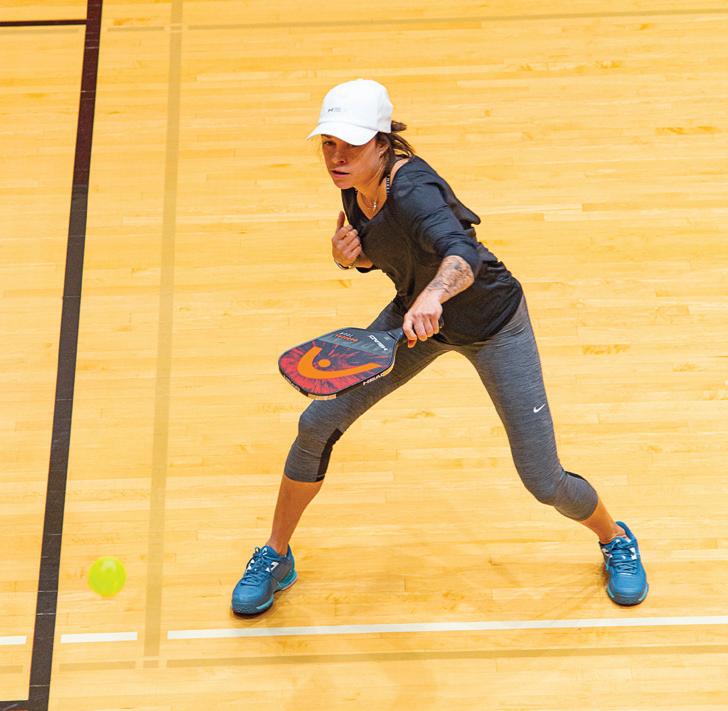
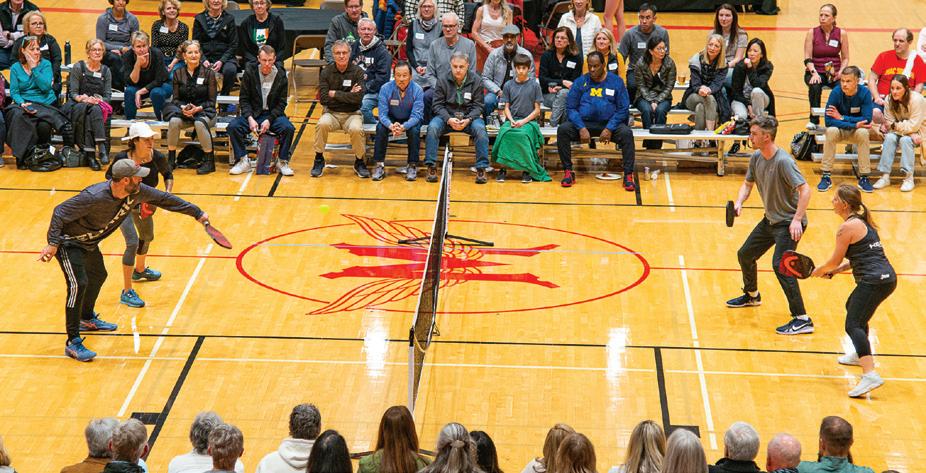
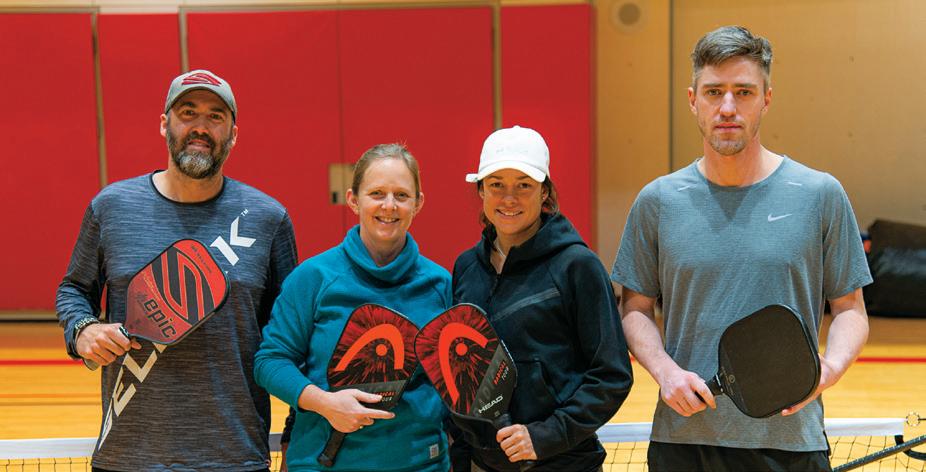
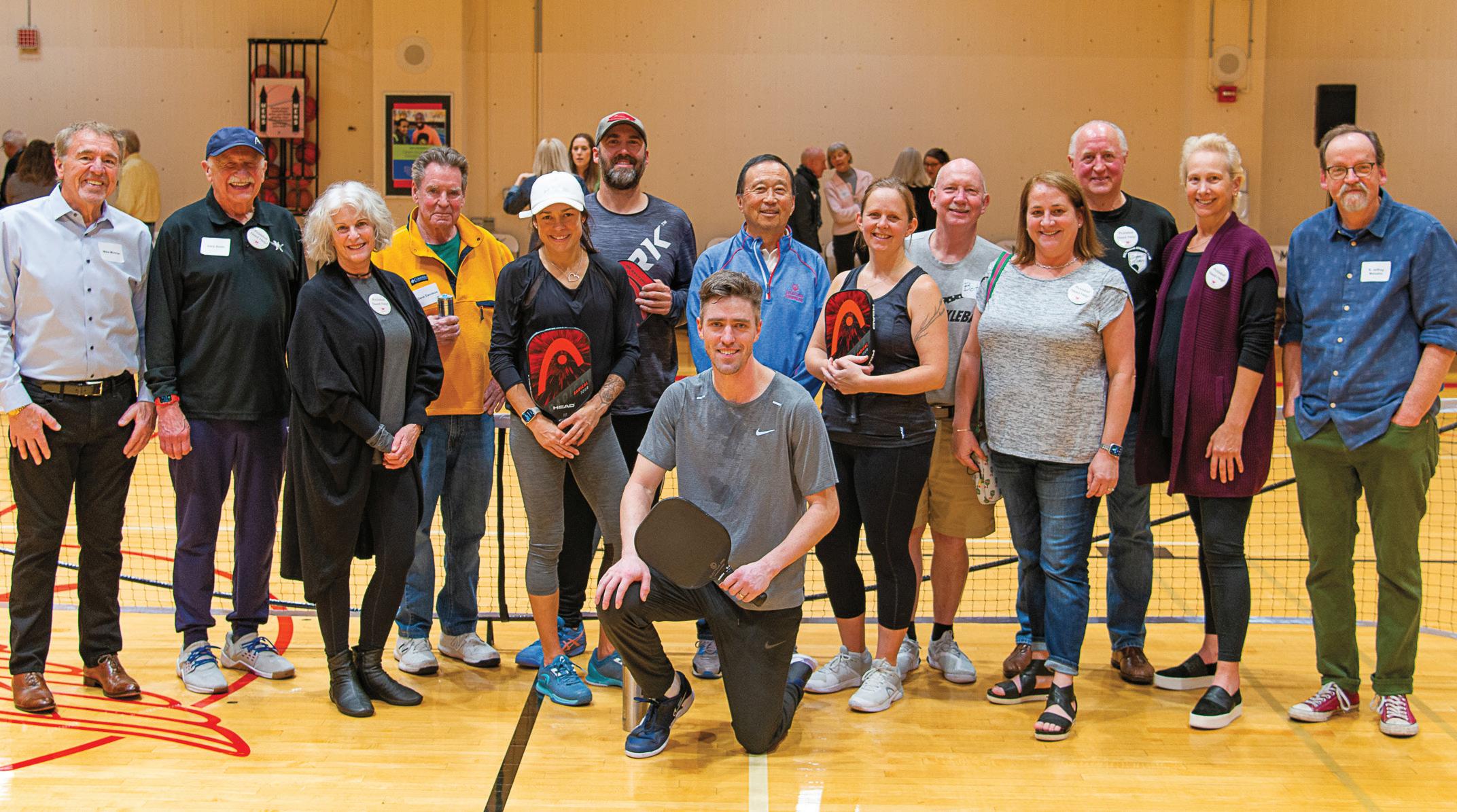
The pros entertained everyone with their expertise, showmanship, and love of the game. Plus, they taught everyone that there is tons of room to improve their skills in this popular game. Rob Torch served as the spirited commentator and made the evening super entertaining. The evening set the stage for more pickleball events as the love for the sport continues to grow at MAC.
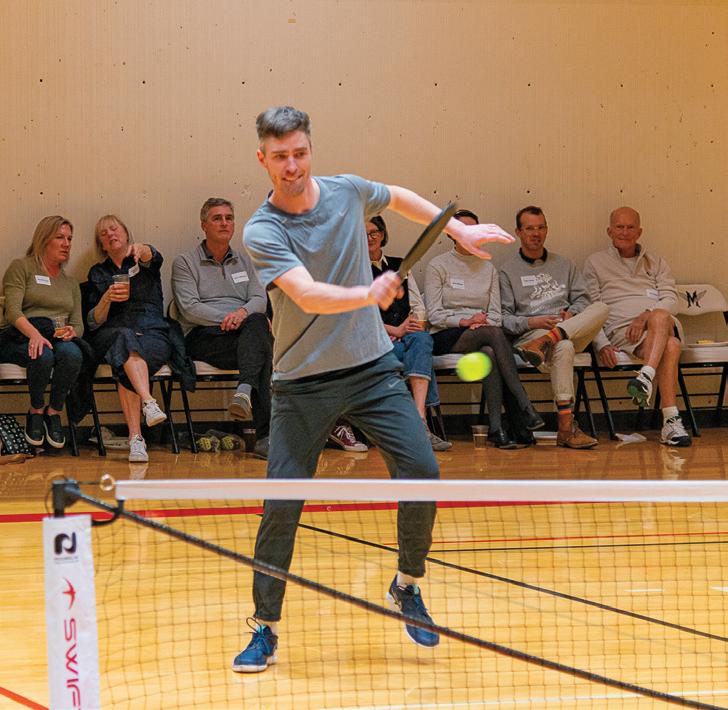
68 | The Wınged M | MAY 2023 ATHLETICS
Wes Gabrielson, Joy Leising, Tracie DeJager, and Julian Illingworth
Congratulations to the Pickleball Committee for being named Sport Committee of the Year. Awarded by the Athletic Committee, this award recognizes the Pickleball Committee for going above and beyond to work crossfunctionally with other committees, staff, and board members. In an effort to grow the pickleball community at MAC, the committee has hosted a number of introductory clinics for members and staff who want to learn to play, and explored options to expand courts and play time for members.
Ted Austin Market Leader 503.464.4881 ted.austin@usbank.com
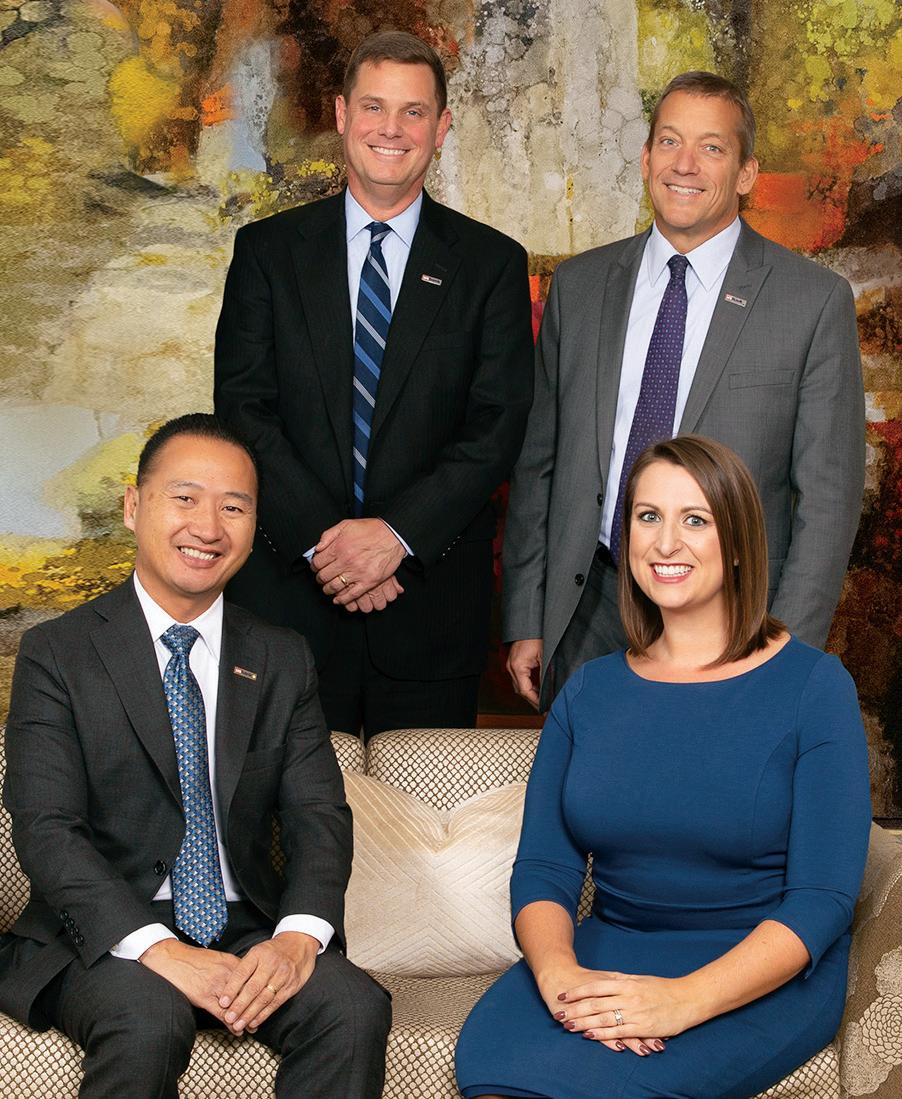

usbank.com/privatewealth
Member Numbers: Walk Across America Mileage
Walk Across America is a national program that allows members to create annual mileage goals, with end-of-year rewards. The idea is to set a mileage goal that is reasonable, attainable, challenging, and motivating. MAC members may join at any time.
For more information or to submit mileage, please contact Claire Galton at galtoncc@gmail.com.
Mileage as of March 31
Ann Blume 6,632
Hal Broughton 25,759
Ann Durfee 48,147
Claire Galton 44,770
Norm Frink 15,063
Vuong Vu 2,546
Shannon Leonetti 84,834
Harriet Maizels 27,612
Tom Neilsen 6,706
Linda Opray 22,123
John Popplewell 3,709
Dee Poujade 14,191
Nancy Sergeant 29,462
Carrie Stucky 29,207
Barbara Wetzel 29,290
Ellen Wax 3,005
Dave Huffman 2,336
MAY 2023 | The Wınged M | 69 ATHLETICS
U.S. Bank and its representatives do not provide tax or legal advice. Your tax and financial situation is unique. You should consult your tax and/or legal advisor for advice and information concerning your particular situation. ©2021 U.S. Bank 522807 (4/21)
Our
team is ready to help you navigate complex financial situations and advise you every step of the way.
Mac Ad Size: 4.75”h x 4.625” w
Insight founded on experience
Golden Masters Become Two-Time Champions at PCAC Tournament

On March 3, MAC’s adult basketball teams traveled down to San Francisco to compete in the 2023 Pacific Coast Athletic Clubs (PCAC) tournament. A total of five teams made the trip to compete against other premium athletic clubs on the Pacific Coast. The Open, A, AA, Masters, Golden Masters, and Platinum teams all competed extremely hard and represented MAC well. After hard-fought back-and-forth games by all teams, the Golden Masters were able to bring home a championship.
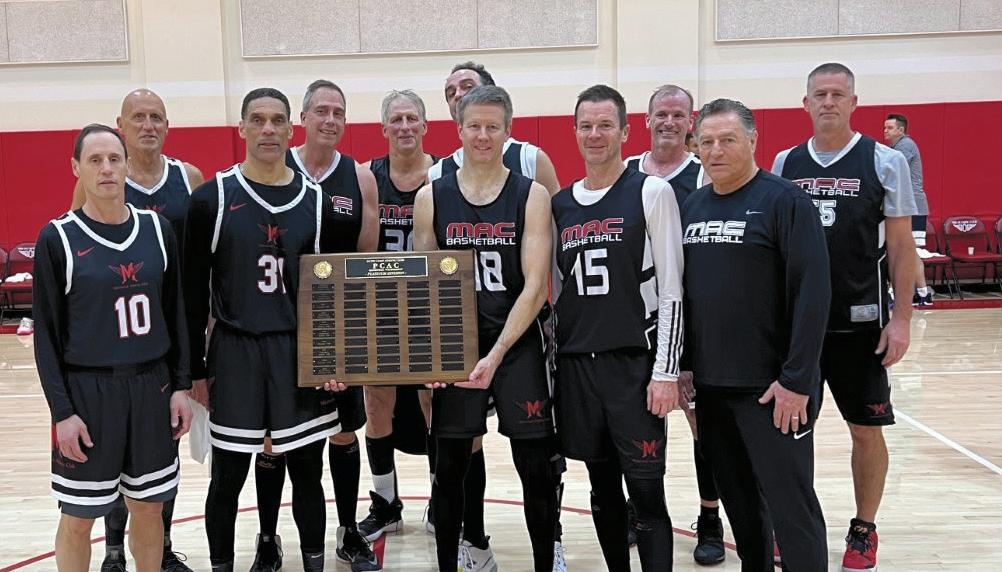
Along with the Golden Masters winning a championship, MAC had an extraordinarily strong showing by the A’s team. On Friday, the A’s battled against Bellevue Athletic Club and came away with a well-deserved close victory. Later in the evening, the team played Olympic Athletic Club and won in convincing fashion. Going into Saturday afternoon, the team was riding its undefeated streak and pulled out another close one against Washington Athletic Club. The A’s were 3-0 going into their last
game against the Spokane Athletic Club. Spirits were high but energy and stamina was low from the sheer amount of effort expended in their three victories. Spokane got out to an early lead after hitting a few threes, and MAC was chasing the rest of the game. Unfortunately, due to the point difference, the A’s barely lost the championship and took home second place.
Back to back! The MAC Golden Masters are two-time defending champions, winning the PCAC tournament in 2022 and 2023. This team is the shining example of what a championship team should consist of. Unselfish teamwork, high basketball IQ, effective communication, and genuine friendships make this team a formidable opponent. The Golden Masters Basketball Team is made up of Mike Aas, Glen Coblens, Peter Coffey, Brian Currier, Mark Hesse, Doug Kitzinger, Rodd
Miller, Robert “Doc” Phillips, Rick Raivio, Kurt Weiss, Steve Lommen, Tom Ferris, and Coach Randy Krichevsky. The Golden Masters had strong showings against the Olympic Club and Washington Athletic Club, securing both wins. The championship game was a completely different story. From the opening tip-off, it was clear MAC was there to play. The Olympic Club battled the entire game, but the MAC Golden Masters team had an unrelenting defense and well-executed offense. MAC won in convincing fashion and was able to cruise through the second half to defend their title and bring the championship back to MAC.
70 | The Wınged M | MAY 2023 ATHLETICS
BASKETBALL
ADVERTISER INDEX

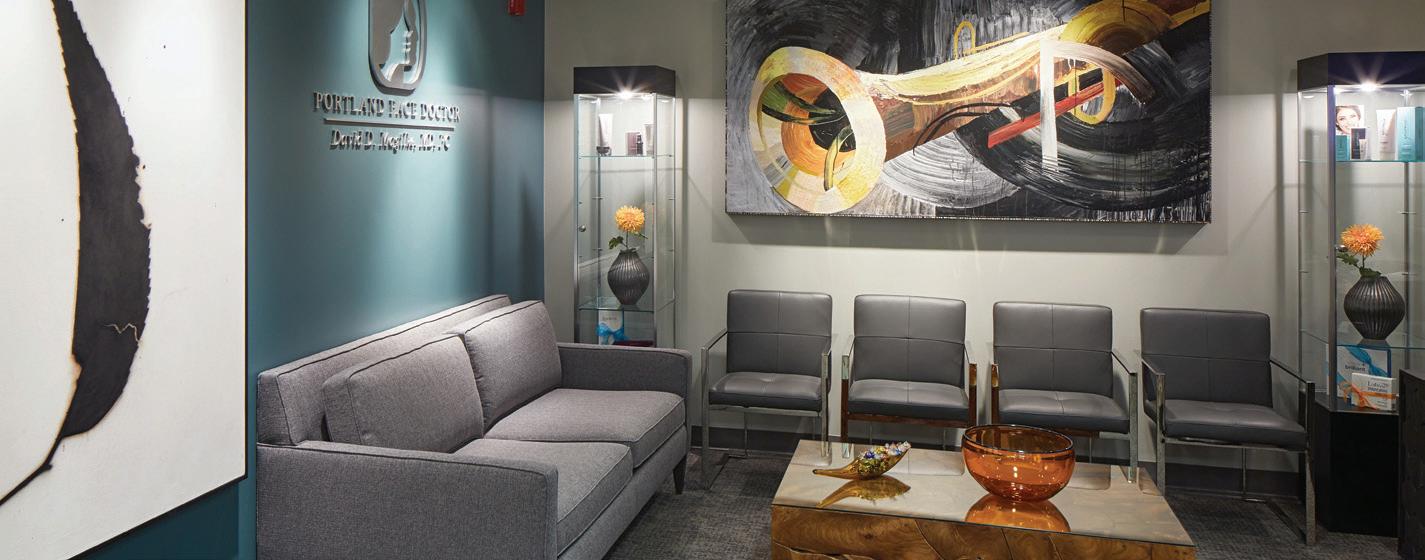
MAY 2023 | The Wınged M | 71 PORTLAND FACE DOCTOR From Botox Cosmetic and Lasers to Facelifts, and Everything in Between… LET US HELP YOU BE MORE YOU. Mention you’re a MAC member when calling and receive a free consultation ($100 Value) www.PortlandFaceDoctor.com 503-297-6511 PROVIDENCE ST. VINCENT’S MEDICAL CENTER, 9427 SW BARNES RD., #394 ENHANCING YOUR NATURAL BEAUTY DR. DAVID MAGILKE Board Certified Facial Plastic Surgeon The Wrenn/Ferguson Group The Wrenn/Ferguson Group, helping individuals and families with financial planning and professional investment management for over 30 years. You can reach us by emailing wrennferguson@ubs.com, or by calling 503-248-1309. www.ubs.com/team/wrennfergusongroup Wrenn/Ferguson Group, UBS Financial Services, Inc. Member SIPC 5285 SW Meadows Rd., Suite 495, Lake Oswego, OR 97035 Joseph M. Ferguson Senior Portfolio Manager Senior Vice President – Wealth Management John D. Wrenn Senior Vice President – Wealth Management James A Wrenn, CIMA, CRPS Senior Vice President – Wealth Management Ted Ferguson, CFP® Senior Portfolio Manager Senior Vice President – Wealth Management (W)HERE REAL ESTATE 2, 4 (W)HERE REAL ESTATE (ERICA WRENN) 23 ANN MCCULLOCH 43 BOLY:WELCH 53 CASCADE SOTHEBY’S INTERNATIONAL REALTY (PHIL & THOMAS ARENDS) 61 INHABIT REAL ESTATE 28, 29 JAGUAR LAND ROVER PORTLAND 76 JAMES DIXON ARCHITECT 67 JMI LIMOUSINE 45 JOHN P. WARD 21 KELLEY DULCICH PHOTOGRAPHY 69 KEYBANK 61 LARRY & CO 12 MERCEDES-BENZ OF PORTLAND 65 MJ STEEN TEAM (MJ STEEN & MACEY LAURICK) ........................................... 21 MOUNTAINWOOD HOMES 55 MURMURATION 20 NIFELLE DESIGN-FINE INTERIORS 35 NORTH AVENUE EDUCATION ......................... 18 OARN 37 OREGON COMMUNITY FOUNDATION 8 PIENOVI PROPERTIES 6 PORTLAND FACE DOCTOR .............................. 71 PROVIDENCE REGIONAL FOUNDATION 75 SILVIES VALLEY RANCH 41 SKIN BY LOVELY 33 STANDARD TV & APPLIANCE .......................... 51 TOWER OCULOFACIAL PLASTICS 63 U.S. BANK PRIVATE WEALTH MANAGEMENT 69 UBS FINANCIAL SERVICES 71 WANDER HOMES NW 16 WINDERMERE REALTY TRUST (LIBBY BENZ & DREW MCCULLOCH) 18 WINDERMERE REALTY TRUST (MEREDITH KANE) 10
ATHLETICS
EQUAL HOUSING OPPORTUNITY
All Winged M real estate advertising is subject to the 1988 Federal Fair Housing Amendments Act, which makes it illegal to advertise “any preference, limitation or discrimination based on race, color, religion, sex, national origin, handicap or family status, or an intention to make any such preference, limitation or discrimination.”
For Sale
Lovely house in Provence – 1/10 share ownership, 3 BR, 2 BA , Lg. terrace. Visit www.chezmirabel.com to viewproperty. 95k, seller pays closing costs. Katy Qualman 503-388-0464.
Services
SAILBOAT CRUISE – Experience the beauty of sailing the Columbia River onboard a Hunter 38 ft yacht. Sightseeing, birthdays, anniversaries, engagement photos, company events, corp team building, entertain your friends or business clients. Private chef available. Max 6 passengers. 503-330-4737 portlandyachtingadventures.com
Classifieds
Central Oregon
www.BlackButte182.com
Visit website to appreciate. 4 BR/2.5 BA on Big Meadow Golf #16. Sleeps up to 12. Gourmet kitchen, big screen TV, oversized hot tub, spacious deck, bikes. 503-246-2601 or Byron@AdvancedMedSystems.net
SUNRIVER – Fremont Crossing, 2,200+, 3 BR, 3.5 BA, 2 masters, slps 8, all amenities, access to The Cove, Sage Springs. Hot tub, p-pong, bikes, no smkg/pets. 503-706-8886
SUNRIVER – Quelah 3 BR (K, Q, 2 sets of bunks), 2 BA, private pool, spa & tennis courts. 503-329-1653. DCCA #762
Coastal
GEARHART – Beautiful and spacious
4 BR, 3 BA, sleeps 8+. Near beach, park, golf, tennis. Gourmet kitchen, TV room, Wi-Fi, great deck/yard. jim@whittgroup.com 503-804-5606, www.gearharthouse.com
GEARHART OCEAN VIEW CONDO
2-Bed / 2-Bath – Great deck! www.st-maison.com
2023 CLASSIFIED ADVERTISING RATES
Member rate $10.75 per line
Member business rate $19.50 per line
Non-member rate $19.50 per line
To advertise, call 503-517-7220 or email classifieds@themac.com.

CONDITIONS FOR ADVERTISING
It is the responsibility of the advertiser to review their ad for accuracy.
Please see all terms and conditions for advertising in The Winged M at themac.com/web/pages/wingedm.
International
PARIS APARTMENT: At Notre Dame. Elegant 2 BR, 2 BA, with lift. 202-285-1201
PROVENCE: 4 BR, 4 BA Amazing views. Owned by MAC member. 202-285-1201
Out of State
INDIAN WELLS – S. PALM DESERT / NEAR THE VINTAGE CLUB
3-Bed / 2-Bath Mid-Century Pool Home. www.st-maison.com
PALM SPRINGS – 1-level, fully furnished Twin Palms home. 4 beds/2.5 baths. Sleeps 8 Private pool/spa. Short term rental preferred Jan-April. 503-449-4964 3D tour: TheAnzaPalmSprings.com
72 | The Wınged M | MAY 2023 MAC MARKETPLACE
Follow us on Facebook + Instagram multnomahathleticclub
Guide to MAC Businesses and Service Professionals MAC Professionals









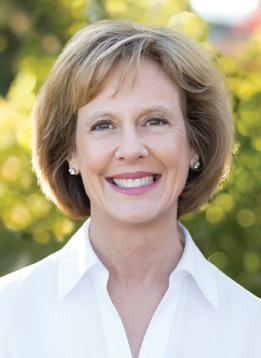
To




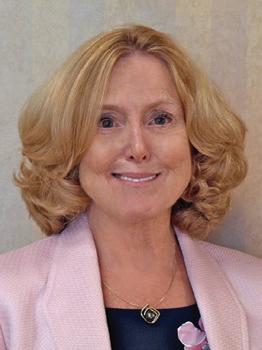
MAY 2023 | The Wınged M | 73 Residential Real Estate Cindy Banzer Principal Broker | PMAR Master’s Circle 503-709-7277 cell www.cindybanzer.com cbanzer@eastpdxproperties.com Proud 42 year MAC member LICENSED IN OREGON & WASHINGTON Residential Real Estate 503-780-1890 lynnmarshall@windermere.com lynnmarshall.withwre.com Lynn Marshall, Real Estate Broker PMAR MASTERS CIRCLE 5TH GENERATION MAC MEMBER
Ferguson, CFP®, CDFA™ Senior Portfolio Manager CERTIFIED FINANCIAL PLANNER Professional (503) 248-1309 edward.s.ferguson@ubs.com Wrenn/Ferguson/Heath Group UBS Financial Services, Inc. 5285 SW Meadows Rd, Lake Oswego UBS Financial Services is a subsidiary of UBS AG. Financial Planning & Investments Chris McGehee/Owner Conveniently located in Raleigh Hills, providing our special residents with quality care and services 24 hours a day. 4815 SW Dogwood Lane 503.297.3200 • susan@rhliving.com Assisted Living & Enhanced Memory Care Unit Assisted Living & Memory Care Jim Pittman Objective Insurance Advice Since 1970 (503) 542-4085 www.icspdx.com Insurance ABI Insurance Complete Insurance Solutions Commercial | Condos | Benefits | Home, Auto, Life 503-292-1580 www.abipdx.com 4800 SW Griffith Dr., Suite 300, Beaverton Serving Northwest businesses and families for over 40 years! James J. Hisatomi, CIC President Insurance Solutions Residential Real Estate NATHAN AUSTIN REAL ESTATE BROKER Nate knows homes on slopes! 503-530-9446 Nathan.Austin@EleeteRE.com nathanaustinrealtor.com Residential Real Estate Madeleine Rose OR Principal Real Estate Broker Cell: 503-781-4667 Madeleine@MadeleineRose.com www.MadeleineRose.com Premiere Property Group, LLC 5000 Meadows Road, Suite 150 Lake Oswego, OR 97035 Office: 503-670-9000 Commercial Residential Real Estate Brent Barker, PC, CRS Principal Broker International President’s Circle – Top 7% Worldwide MAC Member – Seamless Transactions – Project Driven Direct +1 (602) 697-7769 BrentBarker@outlook.com Licensed in OR | WA | AZ Psychology Therapist
Buller, MA Professional Counseling Associate Specializing in teen and young adult depression and anxiety
Ted
Natalie
schedule: call 503-381-6201 or
DepthPsychologyTherapy.com
email nataliebuller@gmail.com
FROM THE ARCHIVES
This month in history … Check out covers of May issues of The Winged M from past decades.

Scenes from the All-Committee Dinner graced the May 1974 cover. At the time, the club’s system included many of the committees that exist today plus others such as Badminton, Billiards, Entertainment, and Single Macs.


1987
The MelloMac celebrated 25 years of singing on the May 1987 cover.

1974 2001
Civic Stadium, formerly Multnomah Field, reopened as PGE Park in 2001. Over the years, the stadium was used for various sports, including college football and minor league baseball, and served as an important place for the community to gather. The park was renamed Jeld-Wen Field in 2011 before becoming Providence Park in 2014.
74 | The Wınged M | MAY 2023
The May 1990 cover showcased ‘90s style and MAC kids’ summer camps, from cheerleading to football camps hosted by former NFL player Neil Lomax.
1990
NOW OPEN: MORE CANCER CARE IN CLACKAMAS COUNTY
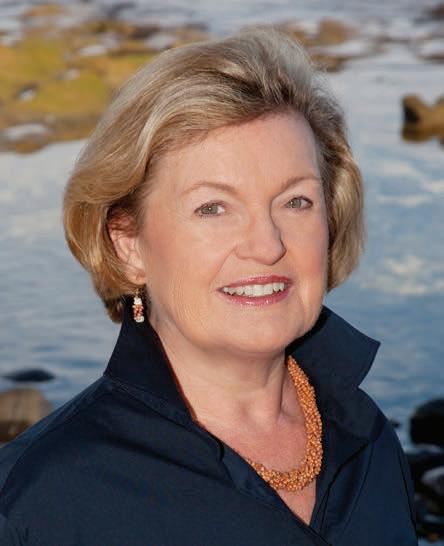

Patients in Clackamas County can now receive cancer care closer to home.
The new Carol D. Suzuki Cancer Center at Providence Willamette Falls Medical Center offers consultations, clinic visits, surgery, chemotherapy and immunotherapy treatments in one location. Patients also have access to more than 150 clinical trials and research studies through Providence Cancer Institute.
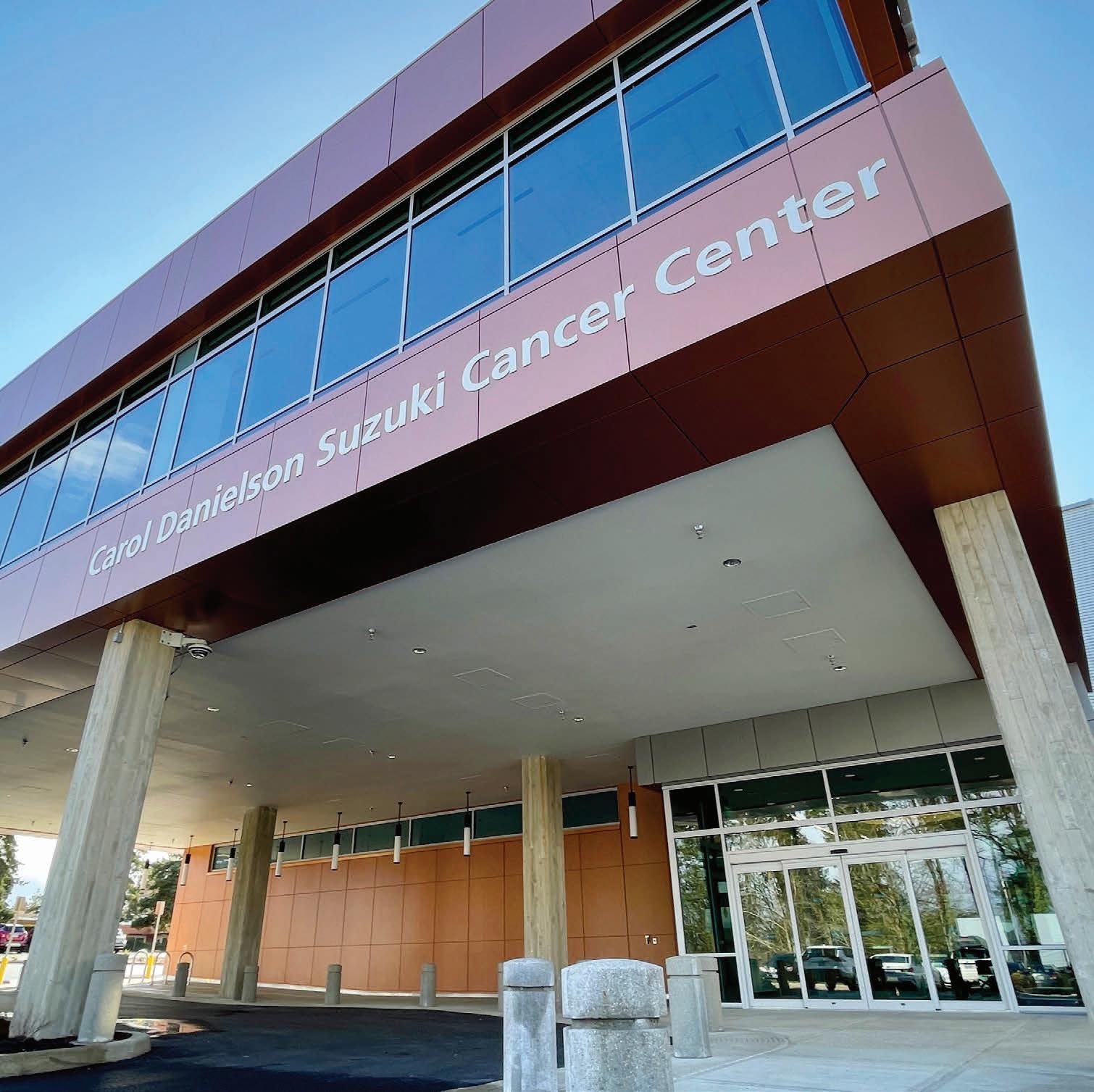
The new facility is dedicated in memory of Carol Danielson Suzuki, who battled cancer for more than two years. Thanks to the support of the Danielson and Suzuki families and donors who gave over $3 million, expanded expert cancer care is now a reality in this community.
Learn more at ProvidenceFoundations.org/cancer
Carol Danielson Suzuki