

EBELECHUKWU NWACHUKWU
Breaking Barriers





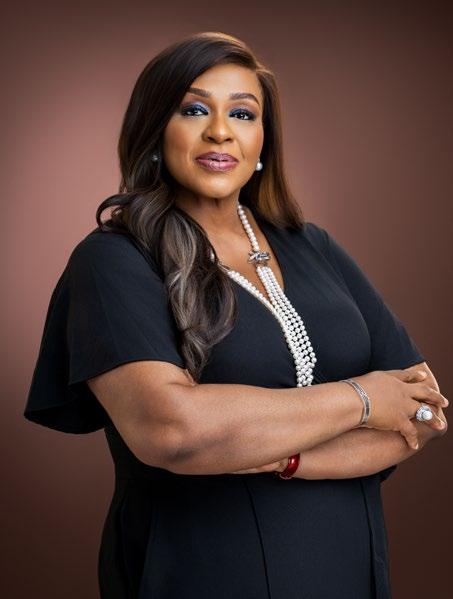
Photo: Kola Oshalusi @insignamedia Makeup: Zaron
Ebelechukwu Nwachukwu’s career spans over three decades across different insurance companies, including Standard Alliance Insurance, UBA Insurance, Zenith General Insurance, and NSIA Insurance, with each role presenting its unique challenge. However, the defining moments were those that demanded strategic transformation.
This year, she made history as the first female chairman of the Nigerian Insurers Association (NIA). She says the most significant preparation for her role as NIA Chairman came from steering Rex Insurance (formerly Royal Exchange General Insurance) through a complete repositioning. An experience which taught her that leadership is not about maintaining the status quo but about having the courage to reset systems, upgrade standards, and restore confidence in environments where stakeholders increasingly reward responsiveness and consistency.
As she assumes office as the 27th and first female Chairman of the NIA, Nwachukeu says she is deeply honoured and takes her responsibility seriously. She emphasises that she comes into office at a pivotal moment, as the industry implements comprehensive reforms in the Nigeria Insurance Industry Reform Act (NIIRA) 2025. She lists her agenda in this interview.
Read Ebelechukwu Nwachukwu’s inspiring story on pages 8 through 10 of this issue.
Mental fatigue is different from physical tiredness. While your body may still have energy, your mind can become overwhelmed by the sheer volume of decisions, information, and emotional demands it processes every day. In our wellness article this week, we highlight why your mind feels tired even when your body isn’t, on page 13.
The way you communicate, handle responsibilities, treat colleagues, and respond to challenges can leave a lasting impression on people long before your next big accomplishment. We list some workplace habits that people secretly respect on page 17.
Until next week, enjoy your read.



AUSTYN OGANNAH PUBLISHER/EDITOR-IN-CHIEF
Executive Editor: Onah Nwachukwu @onahluciaa
Writers:Dorcas Akintoye, Johnson Chukwueke & Evi-Ben Ezaga
Design & Layout: Hogan Effiom
Digital Media: Oladimeji Balogun, Victoria Dairo & Olamide Abolarin
Consulting Art Director: Sunny Hughes ‘SunZA’



Boluwatife Adesina @bolugramm - Contributing Writer
Boluwatife Adesina is a media writer and the helmer of the Downtown Review page. He’s probably in a cinema near you.

Sally Chiwuzie @unshakable.is.a.state.of.mind - Contributing Writer
Sally Chiwuzie is a non-practising barrister who owns the brand #Unshakable. She is the author of Silent Symphonies, a fictional love story, and the creator of the podcast Chronicles of #Unshakable Truths.

Ada Obiajunwa @aaddaahh - Contributing Writer
Ada Obiajunwa writes from Lagos about the big truths tucked inside ordinary moments — friendship, self-discovery, and the quiet revolutions of everyday life. She believes in the power of presence, good banter, and decoding the unsaid. Through her fragrance studio, WhiffWonders, she also crafts scents that weave memory and emotion into experiences that feel like home.


4 COLOURS THAT ALWAYS LOOK EXPENSIVE

BY DORCAS AKINTOYE
Some outfits look expensive even when they are not. It is not always about the price tag or designer label. Most of the time, it comes down to colour choice. Certain colours naturally give a clean, rich, and polished look. They make outfits look intentional and well put together. In this article, we will show you four colours that will always help you achieve that “expensive” look and feel, if you want to look more refined without stressing too much about clothes.
BROWN
Brown is one of the most underrated luxury colours. It is deep, rich, and warm, which makes it look very premium. Unlike loud colours, chocolate brown feels grounded and expensive at the same time. It gives a strong but soft appearance that works well in both casual and formal outfits. It looks especially good in leather, knits, and tailored pieces.


NAVY BLUE
Navy blue is a strong alternative to black. It looks professional, deep, and refined. It is often used in corporate wear because it gives authority without being too harsh. It has a softer edge than black but still carries that expensive, structured feel. It works perfectly for suits, dresses, skirts, and trousers.When paired with white or gold accents, navy blue looks even more premium.

WHITE
White gives a fresh and clean appearance. It looks simple but very elegant. People often associate white with luxury because it feels neat, calm, and intentional. A white outfit can instantly make you look more polished. Whether it is a white shirt, dress, or trousers, it always stands out without trying too hard. The key to wearing white well is keeping it clean and well-ironed.Wrinkles can quickly reduce the “expensive” feel.

BEIGE/NUDE/ CREAM
These soft tones are quiet but very powerful in fashion. Beige, nude, and cream shades are often linked with luxury because they feel calm and don’teffortless.They shout for attention, but they still stand out in a soft way.These colours work well for both casual and formal outfits.They also give off a “rich neutral” vibe often seen in high-end fashion styling.
Looking expensive is not always about buying expensive clothes. It is often about choosing the right colours that naturally car When you build your wardrobe around these colours, you instantly elevate your overall appearance without overdoing it.



SALLY CHIWUZIE @unshakable.is.a.state.of.mind
TRUTHS
UNTOLD TRUTHS
Leaving is not always freedom. Sometimes it is simply relocation with the same wound packed neatly in your luggage.
We leave the relationship but carry the resentment. We leave the job but carry the fear. We leave the friendship but carry the betrayal. We leave the disappointment but carry the story. We tell ourselves we have moved on, yet somehow we remain close enough to the ashes to smell what burned us.
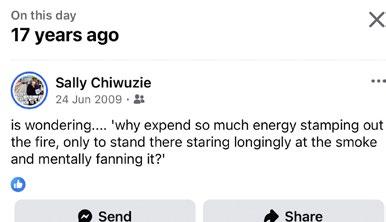
Seventeen years ago, I wrote a line that recently found its way back to me: “Why expend so much energy stamping out the fire, only to stand there staring longingly at the smoke and mentally fanning it?”
At the time, I thought I was writing about letting go. Now, I think I was writing about attachment.
The older I get, the more I realise that walking away from the fire is only the first exit. The second exit is more complicated because it asks us to stop breathing in the smoke.
The fire is what happened. The smoke is what remains. It is the replaying, the explaining, the imaginary arguments, and the exhausting desire to be understood by people who may never have the capacity to understand us.
Stop Breathing in the Smoke

I know this because I have had to ask myself difficult questions, too. Am I healing, or am I rehearsing? Am I reflecting, or am I ruminating? Am I protecting my peace, or am I using old pain as an excuse not to open the window?
The answers are rarely simple. Some stories still sting. Some memories know exactly where to press. Some disappointments take longer to let go of because they did not just hurt my feelings; they changed the way I saw myself.
Still, there comes a point where honesty requires more than naming what happened. It requires asking whether we are still participating in our own emotional captivity.

It is the way an old wound can become a reference point, a defence mechanism, or even an identity.
We see this everywhere if we are honest enough to look.
Perhaps this is why some exes cannot cope when the person they once had finally moves on. The relationship may be over, but the illusion of
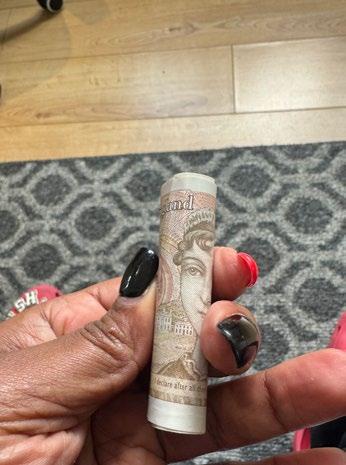
ownership is still alive. They may not necessarily want the person back; they want the comfort of believing they still matter most. This is why coparenting can be brutal on the emotions. The romance may have ended, but the residue keeps turning up at school events, birthdays, handovers, decisions, new partners and old wounds disguised as logistics.
Perhaps this is why career changes often come with so many stop-starts. We leave the job, but we do not always leave the identity or salary expectations behind. This is why some people give up smoking every two weeks. It is rarely just the cigarette. Sometimes it is the ritual, the pause, the reward, the rebellion, the comfort, or the small private ceremony of escape.
That is the uncomfortable truth. We often say we want freedom, but what we really want is freedom without grief, discipline, awkwardness or the strange loneliness of becoming unfamiliar to ourselves. We want the new life, while still being comforted by the old patterns that made the old life possible.
This does not mean we rush healing. It does not mean we perform forgiveness before we are ready. It does not mean we pretend the pain did not happen or dress up betrayal as a lesson too quickly just because it sounds mature. Some smoke must be named before it can clear.
You have to admit what hurt. You have to tell the truth about what it cost you. You have to sit with the disappointment long enough to understand it, but not so long that you build a home inside it.
We cannot become #Unshakable by denying pain because denial is not strength; it is delay. Equally, we cannot become #Unshakable by romanticising our pain until it becomes the most interesting thing about us.
There is a point where reflection becomes rumination, remembering becomes rehearsing, and protecting yourself becomes imprisoning yourself.
The fire may not have been your fault, but the smoke you keep fanning eventually becomes your responsibility.
Perhaps the #Unshakable truth is this: becoming free is not only about extinguishing the fire. Sometimes it is finally having the courage to stop breathing in the smoke.
‘See’ you next week.

EBELECHUKWU NWACHUKWU Breaking Barriers
Leadership is often measured by the impact it leaves behind. Across every industry, there are people whose work quietly shapes institutions, inspires confidence, and opens doors for others. In Nigeria's insurance sector, a new chapter is about to begin, one that carries both historic significance and high expectations for the future.
For more than three decades, Mrs Ebelechukwu Nwachukwu has built a career defined by transformation, innovation, and steady leadership. Nwachukwu has led some of Nigeria's leading insurance companies, successfully repositioned Rex Insurance into a modern, customer-focused brand, and played key roles in shaping the industry’s growth through several strategic committees and policy initiatives. On July 3, 2026, she made history as the first female Chairman of the Nigerian Insurers Association (NIA) since the association’s establishment. Her emergence marks more than a personal achievement; it reflects a defining moment for an industry looking to deepen public trust, embrace technology, expand insurance access, and strengthen its role in Nigeria's economic development.
In this interview with THEWILL DOWNTOWN's Executive Editor, Onah Nwachukwu, Ebelechukwu Nwachukwu discusses her remarkable career journey, the lessons that have shaped her leadership, her vision for the Nigerian Insurers Association, the future of insurance in Nigeria, and the opportunities and challenges that lie ahead as she prepares to lead the industry into a new era.
Your career spans three decades across different insurance institutions. Looking back, what have been the defining moments and leadership lessons that prepared you for this role at the helm of the Nigerian Insurers Association(NIA)?
After over three decades in the insurance industry, my journey has been shaped by the privilege of leading and learning across multiple institutions, including Standard Alliance Insurance, UBA Insurance, Zenith General Insurance, and NSIA Insurance. Each role presented unique challenges, but the defining moments have been those that demanded strategic transformation. The most significant preparation for my role as NIA Chairman came from the task of steering Rex Insurance (formerly Royal Exchange General Insurance) through a complete repositioning. That experience taught me that leadership is not about maintaining the status quo but about having the courage to reset systems, upgrade standards, and restore confidence in environments where stakeholders increasingly reward responsiveness and consistency.
The key lesson I carry into this role is that transformation is possible when leadership chooses substance and execution. It has also reinforced that effective leadership in our industry requires building institutional cultures that move with speed, accountability, and commitment to customers.
As you assume office as the 27th and first female Chairman of the Nigerian Insurers Association in its history, what are the top
priorities you intend to pursue during your tenure, and what specific outcomes would you like the industry to achieve under your leadership?
I am deeply honoured to be the 27th and first female Chairman of the NIA, and I do not take this responsibility lightly. I come into office at a pivotal moment, as the industry implements comprehensive reforms in the Nigeria Insurance Industry Reform Act (NIIRA) 2025. My chairmanship will be defined by a three-pronged agenda aligned with the NIA's core mandate:
- Deepening Penetration via Strategic Alliances: Insurance must move from a niche product to a mass-market essential. We will pursue partnerships with banks, fintechs, microfinance institutions, the energy sector and retail platforms to leverage digital channels and reach millions of underserved Nigerians.
Nigerians that insurance is a reliable financial safety net?
Trust in insurance is not demanded; it is earned through repeated proof of reliability. To rebuild confidence, we must ensure claims processes are clearer and more transparent, because when people understand what insurance offers and how claims work, trust follows. We must share practical examples of insurance delivering value, protecting families and businesses. Engage media partners to help reshape public perception by highlighting insurance's role in protecting families and businesses.
"Leverage technology to reach millions of unserved Nigerians and micro-businesses. Launch sustained enlightenment programmes across both public and private sectors to drive awareness and adoption."
Ultimately, we must earn the trust of Nigerians by being the professionals who pay claims promptly, give honest advice, and treat every client with dignity, as I emphasised in previous discussions.
- Rebuilding Public Trust through Simplification: We will demystify insurance by simplifying policy language, improving claims processes, and launching massive public enlightenment initiatives. When people understand insurance, they trust it; when they trust it, they buy it.
- Executive Compliance and Regulatory Advocacy: With the recapitalisation deadline weeks away, the NIA will serve as a constructive partner to regulators, providing technical input and advocating for policies that support a healthy, competitive industry. The specific outcomes I seek are: an insurance sector that all Nigerians can trust, deeper market penetration across urban and rural communities, and an industry positioned as a critical pillar of Nigeria's economic development.
Nigeria continues to grapple with low insurance penetration despite the industry's growth over the years. In your view, what are the major barriers preventing wider adoption of insurance products, and how can the industry collectively address them?
Despite being Africa's largest economy, Nigeria records one of the lowest insurance penetration rates globally. To address these challenges collectively, we must: Embrace partnerships with banks, fintechs, and digital platforms to distribute products through accessible channels. Simplify our products and language to make insurance understandable to every Nigerian. Leverage technology to reach millions of unserved Nigerians and micro-businesses. Launch sustained enlightenment programmes across both public and private sectors to drive awareness and adoption.
You have consistently championed innovation and technology-driven transformation. How do you see emerging technologies such as artificial intelligence, data analytics, digital distribution platforms, and embedded insurance reshaping the Nigerian insurance landscape over the next decade?
The world is moving faster than ever, and we cannot afford to be left behind. Emerging technologies will fundamentally reshape our industry. We plan to maximise and revolutionise how risk is assessed, priced, and managed. That will enable more accurate underwriting, faster claims processing, and personalised products tailored to individual needs.
Under this tenure, we plan to invest in continuous learning and ensure that our industry embraces these technologies. At Rex Insurance, we have already begun this journey through the digitisation of processes, improved customer service, and technology-driven transformation. The next decade must see Nigerian insurers become digital-first, customer-centric organisations that leverage technology to build trust and deepen penetration.
"I am confident that the next generation of leaders in our industry will rise to these challenges and build an insurance sector that every Nigerian can trust and every practitioner can be proud of."
The transition from Royal Exchange General Insurance to Rex Insurance has been one of the most notable transformation stories in recent years. What was your vision when you took over, and what were the biggest challenges you encountered during the rebranding and repositioning process?
One recurring challenge for the industry has been public perception and trust, particularly around claims settlement. How can insurers rebuild confidence and convince more
When I assumed leadership of Rex Insurance (then Royal Exchange General Insurance) in January 2023, my vision was clear: to transform a century-old legacy institution into a modern, digital-first, customer-centric insurer built, not on meeting today's expectations, but on the future. The rebrand to Rex Insurance in 2024 was not merely a change of name; it represented a strategic intent to compete differently, with sharper customer focus, clearer market presence, and stronger operational capability.
Today, Rex Insurance stands as a testament to
COVER
what focused leadership can achieve when anchored on service, organisational discipline, and commitment to customers.
As Nigeria seeks to diversify its economy and attract greater investment, what role should the insurance industry play in supporting national development, infrastructure growth, entrepreneurship, and financial inclusion?
The insurance industry must position itself as a critical pillar of Nigeria's economic development. Our role extends far beyond risk transfer; it pans further to stronger capitalisation, which will enable insurers to retain more risks within Nigeria rather than ceding them abroad. We have a moral obligation to provide financial protection to the millions of Nigerians who go to bed without any safety net. By developing simple, inclusive products and leveraging digital channels, we can reach underserved populations and micro-businesses. A robust insurance sector strengthens the entire financial system, providing a buffer against shocks and enabling long-term investment. Under the new Insurance Act (NIIRA) 2025, we have the capital strength to innovate. But capital alone is not enough; we need partnerships across the financial services ecosystem to deliver these benefits to all Nigerians.
The future of any industry depends on its people. How can insurance companies attract younger professionals, retain top talent, and position insurance as an exciting career choice for the next generation? Attracting these talents is not the issue; it is making them stay, grow and thrive


in the industry. We must tell the story of insurance as a noble and rewarding career. To attract and retain young talent. Insurance must shed its outdated perception and be presented as a dynamic, technology-driven profession. Young professionals need to see that insurance offers opportunities in data analytics, behavioural economics, customer experience, and regulatory dynamics. Our examinations and training programmes must be globally competitive. We need to equip young professionals with skills that are relevant in a rapidly changing world.
Young professionals need to see a future in our industry, a path from entry-level to leadership. As I have emphasised in previous discourse, leadership must be marked by mentorship and inclusion. We must build bridges, share knowledge, and advance the collective good of Nigeria’s insurance industry and make it future-ready.
Over the years, you have taken on demanding leadership roles across the insurance industry while also navigating life beyond the boardroom. How have you managed to balance the pressures of a high-level career with your personal life, and what has helped you stay grounded through it all?
Balancing demanding leadership roles with personal life requires intentionality and discipline. What has helped me stay grounded is a strong value system that shows leadership is measured not by the comfort it creates at the top, but by the confidence it builds across the institution. I surround myself with capable teams, and delegating effectively has been essential. I also believe in creating environments where work and life can be balanced.
Many who have worked with you describe your leadership style as transformational and people-centred. How would you define effective leadership in today's business environment, and what qualities do you believe
future industry leaders must possess?
Effective leadership in today's business environment must be transformational and people-centred. My definition is simple: leadership is not measured by the comfort it creates at the top, but by the confidence it builds across the institution. Future industry leaders must have the courage to reset systems, upgrade standards, and restore confidence in environments where stakeholders demand responsiveness.
Policyholders must remain central to every decision. Trust is earned through repeated proof of reliability, and leadership must be defined by collaboration, not competition; by deepening public understanding, not industry jargon; and by building bridges across the entire financial services landscape. I am confident that the next generation of leaders in our industry will rise to these challenges and build an insurance sector that every Nigerian can trust and every practitioner can be proud of.
She did it the way she locked the gate. Without deciding to.
Plates by the sink. The generator settling into its hum behind the house.
Light off in the parlour.
Wrapper retied.
The day folding itself away.
And then, lying down, she would go back over the evening.
The places that caught.
Something she had said that came out flatter than she meant.
A pause on the line she had not been able to read. She had done it so long she no longer felt herself doing it.
The way you run your tongue along your teeth.
This night, the house was quiet in the same way.
LUXURY SILK
IT HAD ALREADY STOPPED


The compound dog gave up barking. The AC ticked.
She lay down and waited for the evening to come back to her. And it did not.
She waited a while longer.
It felt like standing at the gate with your hand already on the bolt, unable to remember whether you had shut it.
The tea went cold at her elbow. She lifted the cup. Put it down again.
She poured the rest away.
Rinsed the cup.
Wiped the counter

She lay listening for it to start, the way you listen for a child’s cough in another room.
Nothing came.
She closed her eyes.
Opened them again.
The room had not changed. At some point, she slept.
She made tea and waited for it to begin.
The kettle.
The cup.
The first warmth of the day.
She stood by the window while it brewed.
Someone across the compound was shaking out a rug.
A tap running somewhere. A gate opening.
with the edge of a cloth already damp from the night before.
She brushed her teeth and caught herself listening. At the wardrobe, a blouse in her hand, she stopped. Blessing’s radio was already going in the back. She reached for her phone, her thumb moving before the rest of her.
Her thumb rested on the screen. There was nothing to mend.
She put the phone down.
A few nights later, she woke at two, the way she used to when something sat unfinished between her and somebody.
She lay in the dark and felt for it. There was none.
Only the AC. The gate.
Her own breathing. A few days later, she was halfway through the office door before she noticed something missing.
She stopped with one hand still on the handle. The meeting usually began in the car.
The first sentence tried. Thrown away. Tried again.
Not too annoyed. Not too cheerful either.
Warm at the start, in case the start was all anyone remembered.
A way to say the hard thing that let everyone keep their

face.
By the time she reached the office, she had usually met everyone in the room already.
This morning, she had only driven.
The radio low.
A hawker’s tray at the junction.
Her fingers keeping time on the wheel without her.
The light.
The crawl.
The turn into the car park.
She parked badly the first time.
Straightened the car.
Checked the mirror.
Picked up her bag from the passenger seat.
She stood there a second, feeling for it. Nothing came.
She took her seat.
And still she lay down each night and waited for the evening to come back to her, and went on lying there when it did not, in case it did.
LIP FILLER AFTERCARE TIPS YOU NEED TO KNOW
BY DORCAS AKINTOYE
Lip fillers are a popular cosmetic treatment for people who want fuller, more defined lips. While the procedure itself is quick, proper aftercare is important for achieving the best results. After treatment, it is normal to experience some swelling, tenderness, or mild bruising. Knowing how to care for your lips can help reduce discomfort, support healing, and ensure your results look as natural as possible. Here are five essential lip filler aftercare tips everyone should know.

AVOID TOUCHING YOUR LIPS
After getting lip fillers, avoid touching, pressing, or massaging your lips unless instructed by your practitioner. The filler needs time to settle properly, and excessive touching can affect the final result. Touching your lips can also introduce bacteria to the injection sites, increasing the risk of infection. Even if you are curious about how your lips feel, it is best to leave them alone for 24 to 48 hours and let them heal naturally.

USE A COLD COMPRESS FOR SWELLING


Swelling is one of the most common side effects after lip filler treatment. In some cases, the lips may appear larger than expected during the first few days. This is usually temporary and improves as the swelling goes down. Applying a cold compress can help reduce swelling and make your lips feel more comfortable.

STAY HYDRATED AND AVOID HEAT

Drinking enough water is important after any cosmetic treatment. Staying hydrated helps your body recover and supports overall skin health. It is also a good idea to avoid excessive heat for the first few days. Activities such as hot showers, saunas, steam rooms, and intense exercise can increase blood flow and worsen swelling. Giving your body time to heal in a cool, comfortable environment can help your lips settle more quickly.
CHOOSE
YOUR

FOOD AND DRINKS CAREFULLY
Your lips may be sensitive after treatment, so being mindful of what you eat and drink can make recovery easier. Avoid very hot foods and drinks, as they may increase swelling or discomfort. Spicy foods may also irritate the treated area. Soft foods are often a better option during the first day or two. It is also recommended to avoid using straws immediately after treatment, as the sucking motion can place unnecessary pressure on your lips.


FOLLOW YOUR PRACTITIONER’S INSTRUCTIONS

Every lip filler treatment is different, which is why following your practitioner's aftercare instructions is essential. They may provide advice on products to avoid, activities to limit, and what to expect during recovery. If you notice unusual symptoms such as severe pain, excessive swelling, or signs of infection, contact your practitioner as soon as possible.
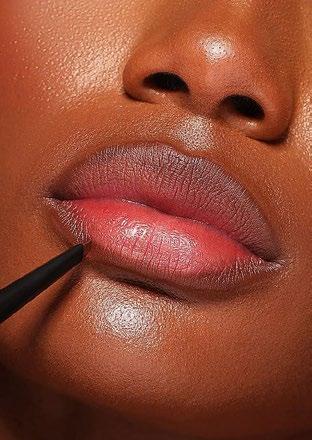
Proper aftercare is an important part of getting lip fillers. By avoiding unnecessary touching, using a cold compress, staying hydrated, being careful with food and drinks, and following professional advice, you can help your lips heal properly and achieve the best possible results. A little extra care during recovery can make a significant difference in both your comfort and your final outcome.

Why Your Mind Feels Tired Even When Your Body Isn't
BY NATO CHIMA
Have you ever eneded a day feeling completely exhausted despite barely doing any physical activity? You may not have lifted heavy objects, exercised, or spent hours on your feet, yet your brain feels drained, and your motivation is nowhere to be found. This experience is becoming increasingly common, particularly among Millennials and Gen Z, who navigate a world filled with constant notifications, endless information, work pressures, social media updates, and daily responsibilities.
Mental fatigue is different from physical tiredness. While your body may still have energy, your mind can become overwhelmed by the sheer volume of decisions, information, and emotional demands it processes every day.
Understanding what causes this exhaustion is the first step toward managing it more effectively.

YOU'RE PROCESSING MORE INFORMATION THAN EVER
The average person consumes an enormous amount of information daily through social media, emails, news updates, videos, and messages. Even when you are not actively working, your brain is constantly absorbing and sorting information. This continuous mental activity can leave you feeling drained, even without physical exertion.

DECISION FATIGUE IS REAL
From choosing what to wear and what to eat to responding to messages and managing work responsibilities, modern life requires countless decisions every day. While each choice may seem small, they add up. Over time, decision-making can wear down mental energy and make even simple tasks feel overwhelming.


YOUR BRAIN RARELY GETS A BREAK
Many of us move directly from work screens to entertainment screens without giving our minds a break. Constant stimulation leaves little room for mental recovery. Moments of silence, reflection, or simply doing nothing have become surprisingly rare, yet they are essential for mental well-being.

STRESS DOESN'T ALWAYS LOOK LIKE STRESS POOR SLEEP AFFECTS MORE THAN YOUR BODY
Many people associate stress with obvious pressure, but chronic stress can quietly build in the background. Financial concerns, career goals, family responsibilities, and future uncertainties can occupy mental space even when you're not actively thinking about them. This ongoing mental load can contribute significantly to fatigue.
Even if you spend enough hours in bed, poorquality sleep can prevent the brain from fully recovering. Excessive screen time before bed, inconsistent sleep schedules, and stress can all reduce sleep quality, leading to mental exhaustion the next day.
Feeling mentally exhausted while physically energetic is not unusual in today's fast-paced world. Information overload, constant decision-making, hidden stress, lack of mental downtime, and poor sleep can all contribute to a tired mind. The solution is not always doing less—it is often creating healthier boundaries, prioritising quality rest, reducing unnecessary mental clutter, and giving your brain the opportunity to recharge. A healthy mind deserves the same care and attention as a healthy body.
EZAGA EVI-BEN
THE RISE OF A MORE EXPRESSIVE CULTURE CULTURE
Afew seconds on social media is enough to show how much public expression has changed. A viral TikTok dance, a comedy skit that sparks debate, a hit song dominating charts, or a trending conversation on X can reach millions of people within hours.
Young people are now more visible, vocal, and connected than ever before. Through music, film, comedy, and social media, they are sharing ideas, creativity, and identity in ways that were once harder to access. Rather than simply consuming what is put before them, many are helping to shape the conversations around them.
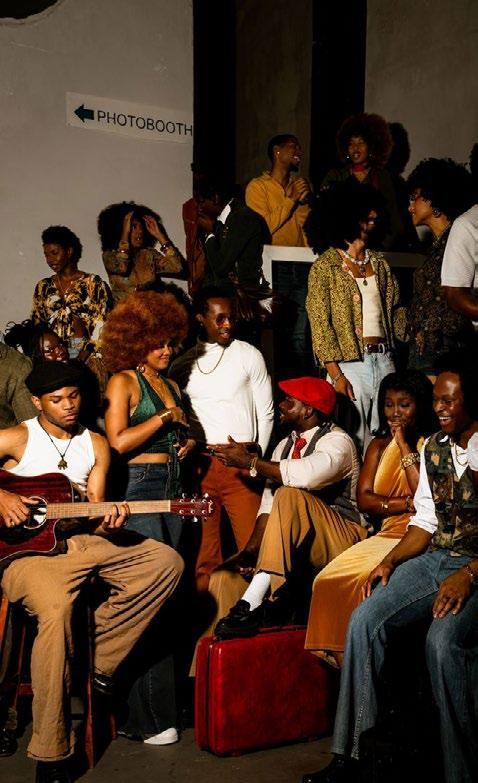
while connecting directly with those who relate to their stories. This has opened up space for more voices and forms of expression than traditional media once allowed. It has also changed what gets reflected back. Musicians turn personal and shared experiences into lyrics and performances. Films explore relationships, ambition, social
a sense of recognition. When viewers or listeners see their experiences reflected in a song, film, or skit, it can make those experiences feel less like something to carry alone.

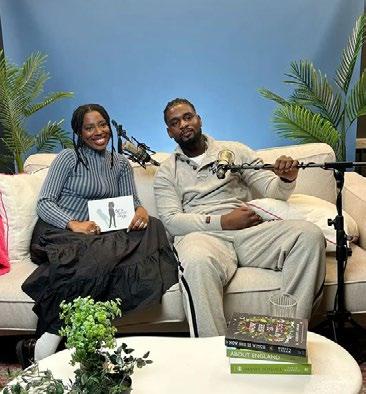

In the past, opportunities to reach a wide audience often depended on traditional media outlets such as television, radio, and newspapers. Today, digital platforms have expanded those opportunities. With a smartphone and internet connection, people can share their opinions, talents, and experiences directly with others.
This has changed not only who gets to speak, but also the kinds of stories that are told. More people can now build audiences around their personalities, ideas, humour, or creativity

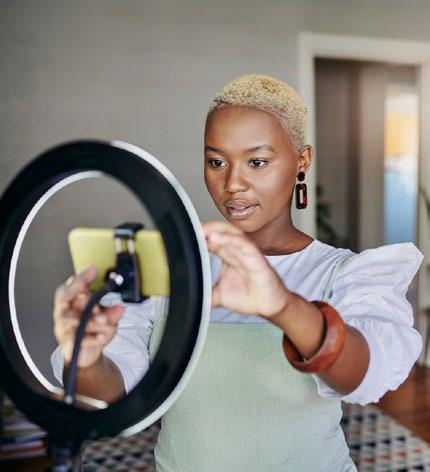
issues, and identity. Comedy finds humour in familiar situations, from daily frustrations to wider national conversations. These art forms do more than entertain. They capture what people are feeling, draw attention to issues that might otherwise go unnoticed, and give audiences
Social media has made this process faster and more interactive. Platforms such as TikTok, Instagram, YouTube, and X allow people to share opinions, tell stories, and respond to events in real time. Everyday users can become influential voices, while audiences are no longer just watching; they are commenting, remixing, reposting, and adding their own perspectives. For younger generations, fashion, language, humour, and online trends have also become ways of showing identity and belonging. What people wear, say, post, and share can communicate their interests, values, and sense of self.
Representation has become an important part of this. People increasingly want to see different backgrounds, experiences, and perspectives reflected in the stories they watch and the conversations they join. That demand has encouraged broader storytelling across entertainment and digital spaces. For many, seeing a familiar accent, neighbourhood, or struggle portrayed honestly carries a different weight than seeing it explained from the outside. Expression is now a defining part of modern life. Through creative work and online platforms, people are finding more ways to be seen, heard, and understood. Today's generation is not standing outside the conversation; it is helping to shape it every day.
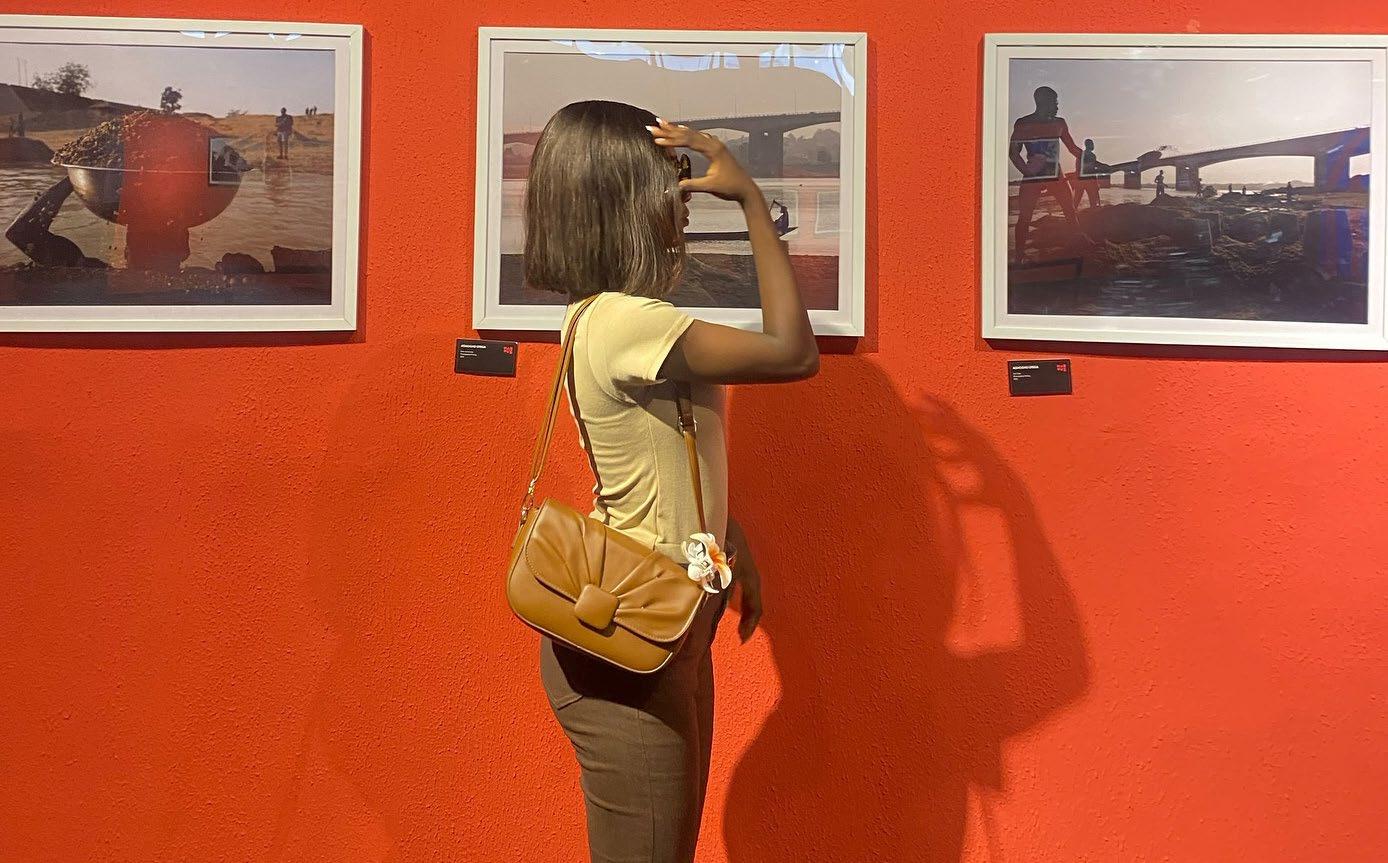
WHERE ART, LIFESTYLE, AND CULTURE MEET

Freedom Park, Lagos
Originally a colonial-era prison, Freedom Park has transformed into one of Lagos' most vibrant cultural destinations. Located on Lagos Island, the venue blends history, art, music, literature, and lifestyle into a unique experience. Throughout the year, it hosts live performances, art exhibitions, cultural festivals, poetry sessions, film screenings, and food events that attract a diverse audience of creatives and culture enthusiasts. Its open-air atmosphere and rich historical significance make it more than just an entertainment venue; it is a space where Lagos' past and present come together. Whether you're attending a concert or simply exploring the grounds, Freedom Park offers an authentic cultural experience that captures the city's creative spirit.

Alliance Française / Mike Adenuga Centre, Lagos
Located in Ikoyi, the Mike Adenuga Centre has become one of Lagos' most dynamic cultural destinations. The venue regularly hosts art exhibitions, film screenings, concerts, literary events, and cultural showcases. Its modern design and diverse programming attract creatives, professionals, and culture enthusiasts seeking experiences that go beyond traditional entertainment.

Thought Pyramid Art Centre, Abuja
For art lovers in the capital city, Thought Pyramid Art Centre stands as one of Abuja's premier creative spaces. Known for promoting contemporary African art, the gallery features exhibitions from both emerging and established artists. It has become a gathering point for collectors, creatives, and individuals interested in experiencing the evolving landscape of African visual arts.

BY JOHNSON CHUKWUEKE
Lagos and Abuja are often celebrated for their business opportunities, vibrant social scenes, and growing influence across Africa. Beyond the skyscrapers, traffic, and bustling city life, however, lies a thriving creative ecosystem where art, culture, and lifestyle intersect. These spaces have become more than just destinations; they are hubs for self-expression, creativity, networking, and cultural appreciation. Whether you're an art enthusiast, a culture lover, or simply looking for an inspiring place to spend your weekend, these hotspots offer experiences that showcase the richness of Nigeria's creative landscape.

Terra Kulture, Lagos Yaradua Centre, Abuja
The Yaradua Centre has earned a reputation as one of Abuja's leading cultural and intellectual hubs. From theatrical performances and music concerts to art exhibitions and literary discussions, the venue provides a platform where creativity and culture thrive. Its diverse events attract audiences from various backgrounds, making it a cornerstone of Abuja's cultural scene.
Few venues embody the fusion of art, lifestyle, and culture quite like Terra Kulture. Located on Victoria Island, it has become a cultural landmark known for its art exhibitions, stage plays, book events, and Nigerian cultural experiences. Whether attending a theatre production, exploring local art, or enjoying Nigerian cuisine, visitors encounter a rich blend of entertainment and heritage under one roof.
As Nigeria's creative industries continue to grow, spaces like these play an important role in preserving culture while fostering innovation. They offer opportunities to experience art, connect with like-minded individuals, and engage with stories that reflect Nigeria's diverse identity. For anyone looking to explore the cultural heartbeat of Lagos and Abuja, these hotspots prove that art, lifestyle, and culture are not separate experiences—they are most powerful when they come together.
5 Things in Your Home Office to Get Rid of

BY DORCAS AKINTOYE
Your home office is supposed to be a space where creativity flows, productivity thrives, and, most importantly, ideas come to life. But let’s be honest: most of the time, your home office turns into a cluttered mess that drains your energy instead of boosting it. And, as we all know, a messy environment can affect your focus and even cause unnecessary stress. If you’ve been feeling overwhelmed or unmotivated in your workspace, it might be time for a little decluttering session.
OLD PAPER AND DOCUMENTS
It is very easy for stacks of old papers, outdated bills, and unnecessary documents to pile up quickly. It’s easy to keep papers “just in case,” but chances are that at the end of the day, you might not eventually need them. Go through your stacks and shred anything that’s no longer relevant. For important documents, consider scanning and storing them digitally. By doing this, you can free up physical space while keeping your records safe and accessible.

BROKEN OR UNUSED OFFICE SUPPLIES
It is time to let go of pens that no longer work, markers that have dried up already, or even staplers that jam every time you use them. Holding on to broken or unused office supplies just adds to the clutter. Keep only what you regularly use, and replace broken items with working ones. In case you don't know, a tidy and well-equipped workspace makes your tasks smoother and less frustrating.
OUTDATED TECHNOLOGY AND CABLES
We all have that drawer filled with old chargers, tangled cables, and gadgets we haven’t touched in years. If you have devices that are outdated or no longer compatible with your current setup, it’s better to recycle or donate them. For cables, keep only the ones you need, and use cable organisers to prevent future tangles. A techsavvy workspace doesn’t need to be a jungle of wires.
EXCESSIVE DECOR AND KNICK-KNACKS
Even though personalising your office is great, too many decorations can make your space become visually cluttered. If your desk is overcrowded with trinkets, souvenirs, or decorative items, it might be distracting you more than you realise. Choose a few meaningful pieces that inspire you, and store or donate the rest. This way, your workspace stays inspiring without feeling chaotic.
UNCOMFORTABLE OR WORN-OUT FURNITURE
Your chair with the wobbly leg or the desk that squeaks every time you type? They might be silently sabotaging your productivity. Apart from that, uncomfortable or damaged furniture can affect your posture, cause physical discomfort, and even make you dread working. If something is beyond repair or doesn’t support your well-being, it’s time to invest in better options.

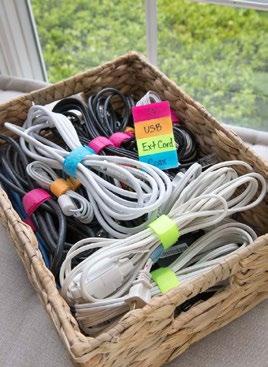


Decluttering your home office doesn’t just create more physical space; it clears mental space, too. When your environment is organised and intentional, it becomes easier to concentrate, stay motivated, and actually enjoy your work. Start small, tackle one area at a time, and watch how a simplified workspace can transform your productivity.

SIMPLE WORKPLACE HABITS PEOPLE SECRETLY RESPECT

BEING RELIABLE MATTERS MORE THAN YOU THINK
One of the most respected qualities in any workplace is reliability. People appreciate colleagues who do what they say they will do. Meeting deadlines, following through on commitments, and being dependable during important projects create confidence and trust. You do not have to be perfect, but consistently delivering on your responsibilities makes people view you as someone they can count on.

RESPECTING OTHER PEOPLE'S TIME
Time is one of the most valuable resources in any professional environment. Arriving on time for meetings, responding when necessary, preparing adequately, and avoiding unnecessary delays demonstrate professionalism. People notice when someone respects schedules and values others’ time. Small actions like being punctual often communicate respect without saying a word.

COMMUNICATING CLEARLY AND PROFESSIONALLY
Many workplace misunderstandings arise from poor communication. Professionals who communicate clearly, listen attentively, and express themselves respectfully are often easier to work with. Good communication reduces confusion, strengthens teamwork, and helps projects move forward smoothly. People naturally respect those who make collaboration easier rather than more complicated.

TAKING RESPONSIBILITY FOR MISTAKES
Nobody gets everything right all the time. However, one habit that earns tremendous respect is the ability to acknowledge mistakes and take responsibility for them. Instead of making excuses or shifting blame, respected professionals focus on finding solutions and learning from the experience. Accountability often builds more trust than perfection ever could.
BY NATO CHIMA
Success at work is often associated with big achievements, impressive presentations, and major promotions. While those things certainly matter, some of the most respected professionals are not necessarily the loudest people in the room. Instead, they are individuals who consistently demonstrate small habits that make working with them easier, more pleasant, and more productive.
The truth is that workplace reputation is often built through everyday behaviour. The way you communicate, handle responsibilities, treat colleagues, and respond to challenges can leave a lasting impression on people long before your next big accomplishment. Many of these habits seem simple, but they quietly earn trust, respect, and credibility over time.

TREATING EVERYONE WITH RESPECT
Workplaces are built on relationships. Whether interacting with senior executives, colleagues, support staff, or new employees, treating people with courtesy and respect leaves a lasting impression. Professional success is often influenced not only by what you know but also by how you treat others. Respect tends to create more opportunities than people realise.
The workplace habits people admire most are often the simplest ones. Reliability, professionalism, accountability, communication, and respect may not always attract immediate attention, but they quietly shape how others see you over time. Because in many careers, success is not only about talent—it is also about becoming someone others genuinely enjoy working with.
WEEKNIGHT DINNER
After a long day of work, school, meetings, traffic, or errands, the last thing many people want is to spend hours preparing dinner. Yet ordering takeout every night is not always practical or budget-friendly. This is where pasta comes to the rescue. Quick to cook, versatile, and satisfying, pasta can be transformed into a delicious meal in under 30 minutes. Whether you prefer creamy sauces, rich tomato flavours, or lighter dishes packed with vegetables, there is a pasta recipe for every mood and occasion.

BY JOHNSON CHUKWUEKE
CREAMY CHICKEN ALFREDO
A classic favourite, Chicken Alfredo combines tender chicken strips with pasta coated in a rich, creamy sauce made from butter, cream, and Parmesan cheese. It is comforting, filling, and surprisingly easy to prepare. Add a sprinkle of parsley and black pepper for extra flavour. This recipe is ideal for anyone craving a restaurant-style meal at home.
SPAGHETTI BOLOGNESE
Simple, hearty, and loved around the world, Spaghetti Bolognese is a weeknight staple. Ground beef is cooked with onions, garlic, tomatoes, and herbs, then served over perfectly cooked spaghetti. The result is a flavourful dish that satisfies both adults and children while requiring minimal preparation.
GARLIC BUTTER SHRIMP PASTA


For seafood lovers, Garlic Butter Shrimp Pasta is a quick and elegant option. Juicy shrimp are sautéed in garlic-infused butter and tossed with pasta for a dish that feels special without demanding much effort. A squeeze of lemon juice adds freshness and balances the rich flavours.

JOLLOF PASTA
A Nigerian twist on a global favourite, Jollof Pasta delivers the bold flavours of jollof rice in pasta form. Cooked in a flavourful tomato and pepper sauce with vegetables and protein of choice, it is vibrant, delicious, and perfect for those looking for something familiar yet different.
VEGETABLE STIR-FRY PASTA
Packed with colourful vegetables such as carrots, bell peppers, broccoli, and sweet corn, this recipe is both nutritious and delicious. Tossed in a light sauce and paired with your favourite pasta, it offers a healthy alternative without sacrificing flavour.

Weeknight dinners do not have to be stressful or boring. With a few simple ingredients and less than 30 minutes, pasta can become the foundation for a variety of satisfying meals. Whether you prefer creamy, meaty, spicy, seafood-based, or vegetable-packed dishes, these quick pasta recipes prove that great food does not always require a lot of time. Sometimes, the best meals are the simplest ones.


cassy’s chronicles
SLOW BURN


Inever imagined I would sleep with him.
If you had told me that on the day he resumed work, I would have laughed and called you a liar.
He wasn't my type. Not even close. Besides, my heart was still occupied by someone else.
My ex.
The man I loved with everything in me, even when he kept giving me reasons not to. He lied, disappeared whenever he wanted, and
somehow always found his way back with sweet words that made me forget how badly he had treated me. When it finally ended, I wasn't just heartbroken. I was exhausted. For months, I convinced myself I would never like another man.
Then Tobi joined our office. He was quiet, respectful and always smiling. The kind of person everyone seemed comfortable around. I noticed him, but that was it. I didn't feel butterflies. I didn't imagine a future. He was simply another colleague. Somehow, life kept pushing us together.
We worked on the same projects, had lunch with the same people, and started talking after work. At first, our conversations were about deadlines, annoying clients and Lagos traffic. Then they became about family, dreams, childhood memories and everything in between.
He never pushed me to open up. He just listened.
For the first time in a long time, I didn't feel like I had to pretend I was okay.
One Friday evening, after work, he asked if I wanted to stop by his place before heading home. He had made jollof rice and insisted I should at least taste it. I almost said no, but something in me was tired of always saying no to life.
His apartment wasn't fancy, but it felt warm. We ate, laughed over a terrible movie and talked for hours. Time disappeared without either of us noticing. After that day, we would always go to each other’s places. We got really close, and everyone at work knew us as best friends. Everything changed on my fifth visit to his place. We were talking about something, and then there was this awkward silence. Then, he looked at me the way no one had looked at me in years. Not with pity. Not with desire alone.
He looked at me in a way that made me feel like I mattered.
When he reached for my hand, I didn't pull away.
Everything after that happened naturally. That night, I slept with a man I once believed I could never be attracted to.
As I lay beside him afterwards, I expected to feel guilty. I didn't.
I expected to compare him to my ex. I couldn't.
Instead, I felt something I hadn't felt in years. Peace.
It wasn't because the sex magically healed my broken heart. It didn't.
It was because, somewhere between the conversations, the laughter and that quiet evening in his apartment, I had unknowingly started letting someone in again.
I realised attraction isn't always instant. Sometimes it grows quietly.
Sometimes it hides inside kindness. Sometimes it arrives when you're too busy trying to convince yourself you're done with love.
Looking back now, sleeping with him wasn't the biggest surprise.
The biggest surprise was that my heart, which I thought had died with my last relationship, was still capable of choosing someone new.
I just never expected that someone to be him.
BY BOLUWATIFE ADESINA
MOVIE REVIEW:
Toy Story 5

Has it really been 30 years? An animated film that tapped into our childhood nostalgia right from the get-go back in 1995, a new Toy Story movie now feels like a time machine back to the time we first watched a Toy Story movie – a kind of meta-nostalgia, there’s definitely a German word for. Poor Woody has a bald spot now – although of the original gang, only Woody seems to have aged. And us.
Wisely, the pacy and imaginative Toy Story 5 leans into the same tensions that fuelled those first three films: the fear of being outgrown and left behind, and the peace that comes from accepting when it’s time to let go.
Cynics will note that Pixar itself is having a similar problem with letting go of its OG franchise. And they’ll also point out that introducing a fear of technology –embodied here by a tablet called Lilypad (voiced by Greta Lee) – is a bit rich from a pioneering tech studio that helps keep kids glued to screens.
But this franchise still has the power to defy cynicism. Call me a softie, but Toy Story 5 left me feeling giddy, original-trilogy wonder. A sense of joy at being back in this delightful world, with its golly-gee Randy Newman anthems, its celebration of the eccentric, odd and plain doolally, and its big heart. Barbie made us feel empathy for one toy; this film does it for a dozen.
Most of the playthings and gadgets from the four previous films are back, including Forky (Tony Hale),
Keanu Reeves’s stunt biker Duke Caboom and cult hero Combat Carl (Ernie Hudson). Woody and Buzz take a backseat this time, with Andrew Stanton and Kenna Harris’s screenplay deputising Jessie (Joan Cusack) as the favourite toy of the painfully shy Bonnie – until she’s usurped by Lilypad.
‘The age of toys is over!’ yells a panicked peanut toy in a lucha libre costume called Dr Nutcase –spinoff, please. They’re all right to be worried, because Lily is soon facilitating new online friendships for Bonnie, and screentime is all the time. Even first-generation tech like hilarious potty-training toy Smarty Pants (a show-stealing Conan O’Brien) is getting mothballed. The future is here, and it’s rechargeable.
This is Stanton’s first Pixar directorial gig since Finding Dory, and he brings the pep and vim largely missing from Toy Story 4. It needs them because the story darts from one rescue mission to another, as various toys get marooned, stranded or thrown away.
A squad of next-gen Buzz Lightyears, meanwhile, is en route to reprise some hardy old Toy Story beats, while the real space ranger goes a bit ‘Spanish Buzz’ in his efforts to woo Jessie.
Jessie, though, is busy trying to keep her human smile and finding her own way past her own fear of rejection in a journey that takes her to another lonely girl, Blaze (MykalMichelle Harris), on a farm out of town. And if you’re thinking trusty steed Bullseye is going to meet a real horse and have a full-blown identity crisis, well, you’d be half right. The two become firm friends, one of the touching new bonds that keep this fifth movie feeling fresh.
The message of finding balance between analogue and digital, old-school toys and tech, may seem woolly to some. But balance feels like the solution to this 21stcentury parental quandary – and maybe to Hollywood’s legacy sequel problem: play to your old strengths, but have a timely purpose in doing so. Toy Story 5 strikes that balance nicely.
Rating: 8.5/10

Scan this with your camera or click to access the playlist (Youtube


WATCH OF THE WEEK
MAXIMUM PLEASURE GUARANTEED
Maximum
Pleasure Guaranteed is stressful.
Not white knuckle, ill feeling in your stomach, anxious, but queasy enough that sometimes you just have to stand up, take a deep breath and shake it off.
So many things go wrong in this thriller/ comedy/drama streaming series, it’s surprising that its protagonist, Paula Sanders (Tatiana Maslany), ever manages to make it home and to bed.
She’s not a super spy being chased by an international cabal, she’s not a high-level chief executive trying to fend off a hostile takeover, she’s not even a wedding planner trying to pull off a 500-head reception.
Paula is like someone you know, a normie. She’s a fact checker for a publication. She’s a single mum still fighting for custody against her ex-husband (Jake Johnson), who wants to move their daughter to a different state. She’s lonely and doesn’t have that many friends.
So Paula has been seeking companionship with a cam-boy, an online sex worker whom she pays by the hour. Trevor (Brandon Flynn) listens to Paula like no one else in her life, and she confides in him all her stuff. Big mistake.
During one session, Paula watches as a masked figure breaks into Trevor’s home, assaults him and then seemingly abducts him. She’s recorded the encounter and reports it to the cops, but Detective Sofia Gonzalez (Dolly de Leon, from Triangle of Sadness) has seen it before, and tells Paula to look out for a scam call, asking for at least $10,000, or Trevor is going to be further hurt.

Scan this with your camera or click to access the playlist (Spotify)




The call comes, but then everything goes wild.
Before long, Paula has stumbled across a murder scene, barely makes her escape, is suspected of said killing, and becomes embroiled in a plot so dangerous, she’s only half-aware how deep it goes.
The tension of Maximum Pleasure Guaranteed is just how easily someone “normal” could be caught in a bonkers web. It’s how the show takes what should be banal – an office job, a backyard birthday party, kids’ football games, and laces them with high-stakes peril.
The fast-paced and close-up editing in some scenes is a masterclass in creating suspense.
Part of the danger is how her circumstances throw her some curveballs, but the other part is that she is a bit of a high-strung person who can’t leave things alone. That’s not a bad thing, and in many ways, you won’t disagree with her choice to pursue things from which you would steer clear.
It’s a combination of stuff happening to her and stuff she’s made happen, but it’s underpinned by this sense that life is a bit unfair.
Her ex-husband is not an outright dirtbag, but you can see the little things about him that have made it harder for Paula, and her colleagues (Charlie Hall and Kiarra Hamagami Goldberg) are both hindrances and helpers.
It’s chaos, but it’s managed chaos. Maximum Pleasure Guaranteed, created by David J. Rosen, never loses the many threads it’s weaving. That
confidence and competence are rare in a story with so many parts.
Maslany’s talents as an actor are crucial to why this series works. She won an Emmy for best actress a decade ago for Orphan Black, a Canadian sci-fi drama which asked her to play over a dozen distinct clones, each with their own personality and physicality.
Here, she embodies a character who seems almost addicted to panic but probably tells herself she would love nothing more than a chill spa day.
That push-and-pull, and the way Paula propels herself through this story, is what makes it so fascinating to watch.
Maximum Pleasure Guaranteed treats the viewer like the story treats Paula; it surprises and throws you around, but it’s enthralling, and you always want back in.

Doechii - Alter Ego
(KAYTRANADA Remix)[with JT]
Chaos In The CBDEmotional Intelligence
Tamae - Drive Thru (Icee Red Edit)
Wilfy D - IDKW
KAYTRANADA - DO IT! (AGAIN!) (feat. TLC)
Jungle - Back On 74 - Full Crate Remix
Music)