JAG
Spring 2026
Spring 2026
Spring at Wellington! Middle schoolers energetically debating legislation they drafted themselves; seniors carefully modeling loan payments; and prekindergartners confidently placing a cast on a classmate’s arm under the guidance of an orthopedist parent. These are just a few examples of what engagement looks like at our school.
This issue of The Jag shows how we enact our belief in the power of engaged learning—just as we promised in our strategic plan, A Bold Leap: 2032. Our commitment to passionate, deep learning is central to our history and our influence as a school for intellectually curious learners in Columbus.
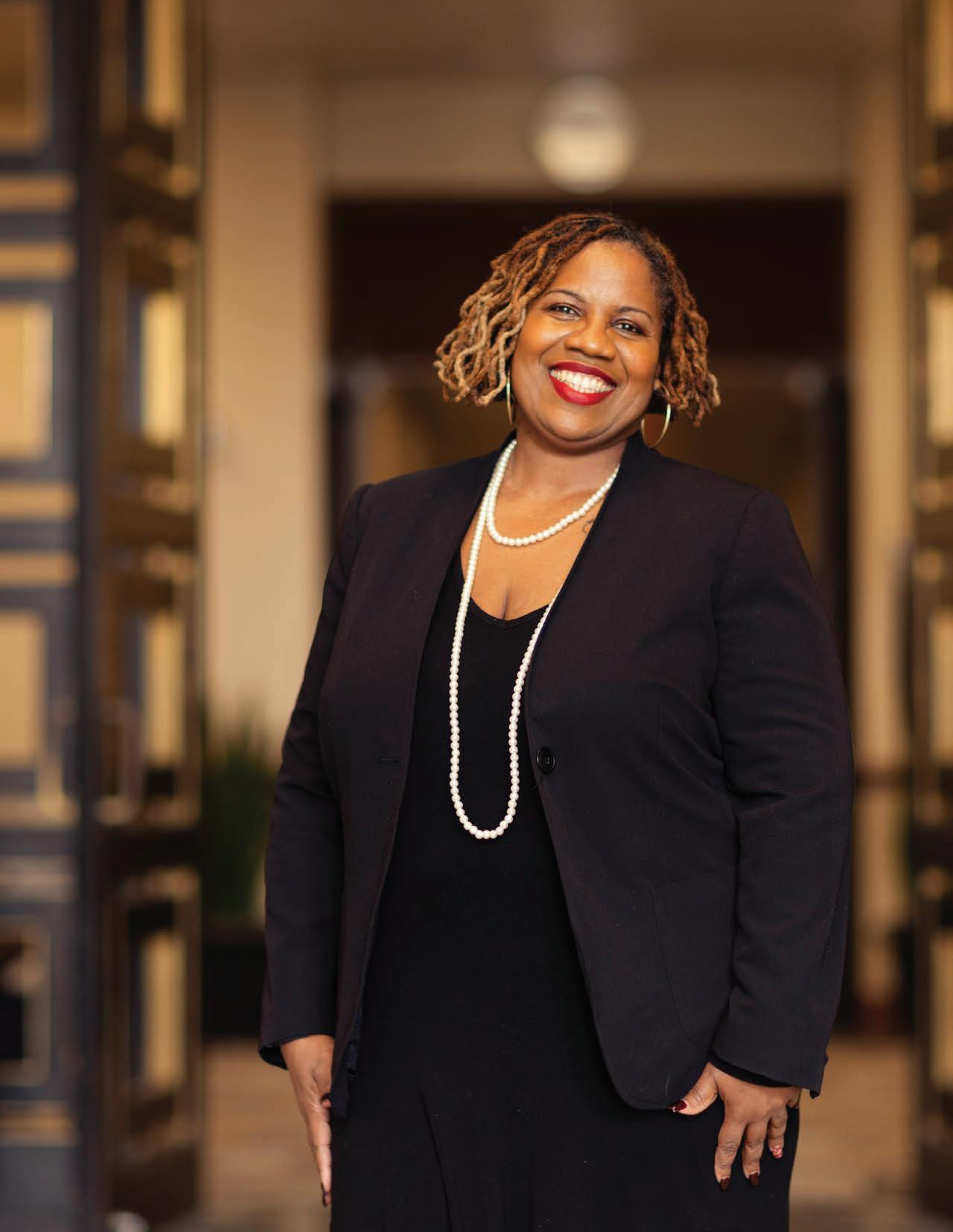
Tanikka Price ’92, J.D., Ed.D., embodies the longstanding Wellington Way. When she was admitted to Wellington, she was reluctant to leave her friends behind. From the moment she arrived at Wellington, she connected with teachers who believed in her and a community that embraced, nurtured, and
“ Engagement is the foundation—and the joy—of everything we do! Ours is a community of intellectually curious students who embrace challenge and love learning, of educators empowered with the autonomy to be creative and responsive, and of families who form deep partnerships in this shared work.”
challenged her. From community health worker to a nationally recognized leader, Tanikka has never stopped asking what people need to realize their potential.
That same conviction runs through alumni entrepreneurs, Laura Cooke ’90, Andres Marquez-Lara ’00, Adam Claytor ’04, and Jill Lukeman ’06 –exceptional leaders building organizations where people show up authentically and connect genuinely.
As these alumni represent Wellington’s legacy of engagement, our commitment to belonging, authenticity, and impact remains evident in our students today. When they use the Wellington Engagement Index to reflect on how they learn, our students send a powerful message that passionate learning is the best learning. When JagsConnect
volunteers bring real-world insight into our classrooms, they amplify this message. And our upcoming campus transformation will honor our founders’ vision by creating spaces worthy of the education we are proud to offer.
Engagement is the foundation— and the joy—of everything we do! Ours is a community of intellectually curious students who embrace challenge and love learning, of educators empowered with the autonomy to be creative and responsive, and of families who form deep partnerships in this shared work.
Thank you for building and sustaining a school where substance matters and, as always… Go, Jags!
Eliza McLaren Head of School
THE JAG is published by Wellington for all members of its community. Please send any comments to Jessica Young at communications@ wellington.org.
EDITOR: Jessica Young
CONTRIBUTORS: J.J. Bain ’06
Kim Catley
Jacob Ely
Jessica Young
COPY EDITORS: J.J. Bain ’06
Kim Catley
Christine Conkle
Melanie Eggleton
Amanda Pierce P ’40
Brenda Porter P ’12 ’17
PHOTO CREDITS: Benjamin Derkin
Nick Fancher
Grace Flynn
Molly Owens
Amanda Pierce P ’40
Jon Vaughn P ’32
Kevin Whitlock / Massillon Independent
DESIGN:
Bluewave Creative

“ It felt like all that pain I had gone through was giving people hope. I could see it. I could feel it.”
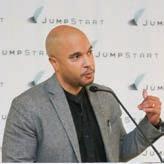



Tanikka Price ’92, J.D., Ed.D.: Study Yourself, Then Build
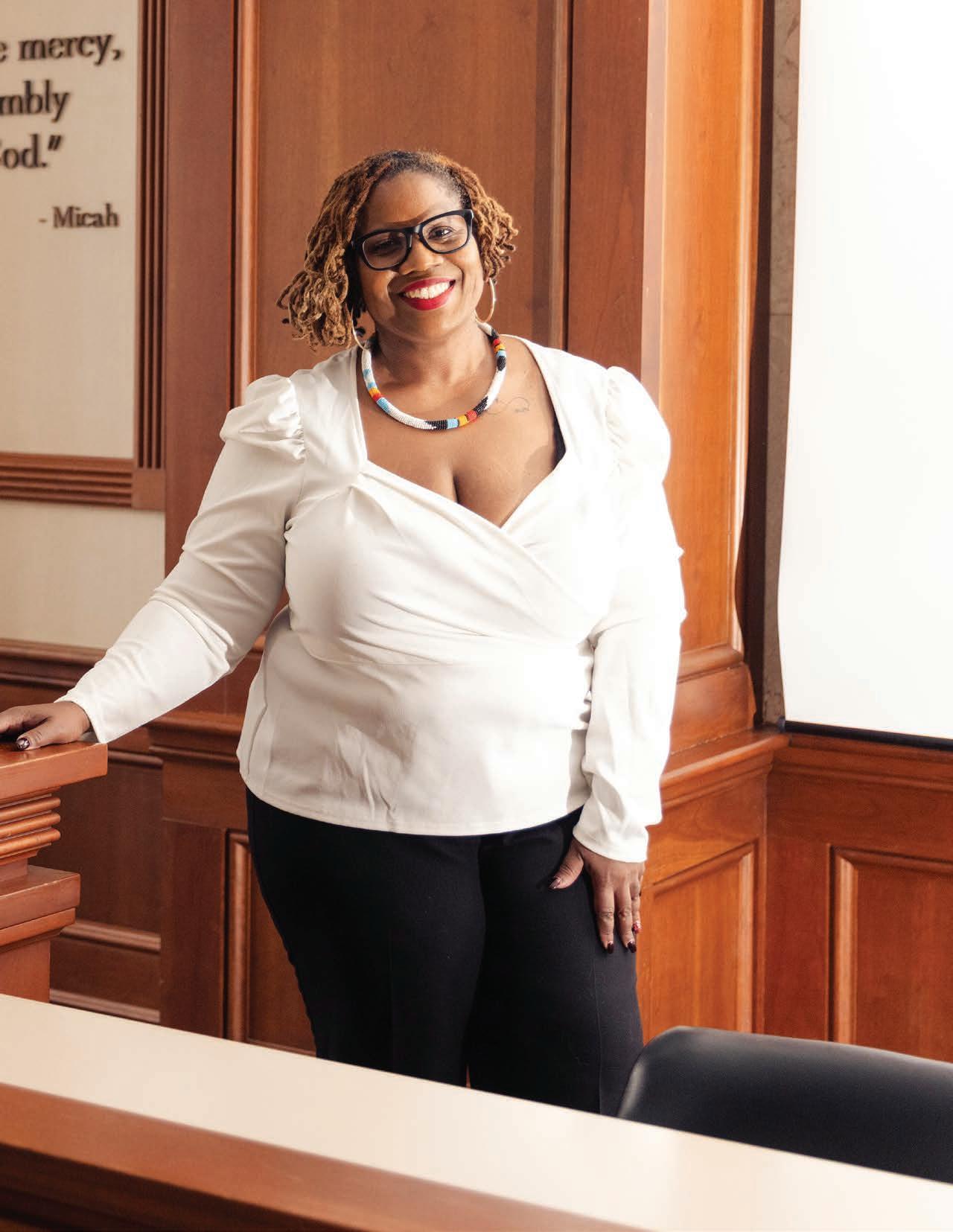
Tanikka Price ’92, J.D., Ed.D., has never been interested in work that gathers dust. Instead, she’s always looking to use what she’s learned to make a difference in the world.
Today, she trains community health workers (CHWs) across Ohio through Health Impact Ohio’s certification program, now in its 11th cohort. A mother of six, she brings lived experience to her work developing curricula and training programs that remain in use today. Her Ed.D. dissertation, in which she studied Black women with high ACE scores and educational attainment, revealed a powerful insight: self-efficacy is the determining factor in success.
But Price’s path to this work began long before the credentials.
Wellington Opens a Door
Price was a sophomore at St. Francis DeSales High School when she received a recruitment letter from Wellington and her parents encouraged her to apply. She even tried to fail Wellington’s entrance exam, but she was offered a full scholarship, and her parents enrolled her anyway. Price could only see the loss of leaving her friends and teachers behind.
“I had my guard up high,” she said. “I thought it was going to take me months to adjust.”
As it turns out, she only needed a few hours. The first person she met at Wellington was Dannette Sharpley ’92. The two became instant best friends and remain so today.
Once Price found her footing, she was all in. She was editor-in-chief of the yearbook, helped found the Black History Club, and served as manager of the basketball team.
Two teachers were especially influential in her growth. L’Tanya Evans, her English teacher and guidance counselor, brought Black voices and authors into the curriculum and made Price feel her own experience was worth centering. That lesson set her on a course to minor in Africana Studies and laid the groundwork for her research on Black women, single motherhood, trauma, and education. Another English teacher, Elizabeth Richmond, spent hours alongside Price in the computer lab, helping her craft college application essays. “She believed in me completely,” said Price. “I tucked it in my heart and carried it with me.”
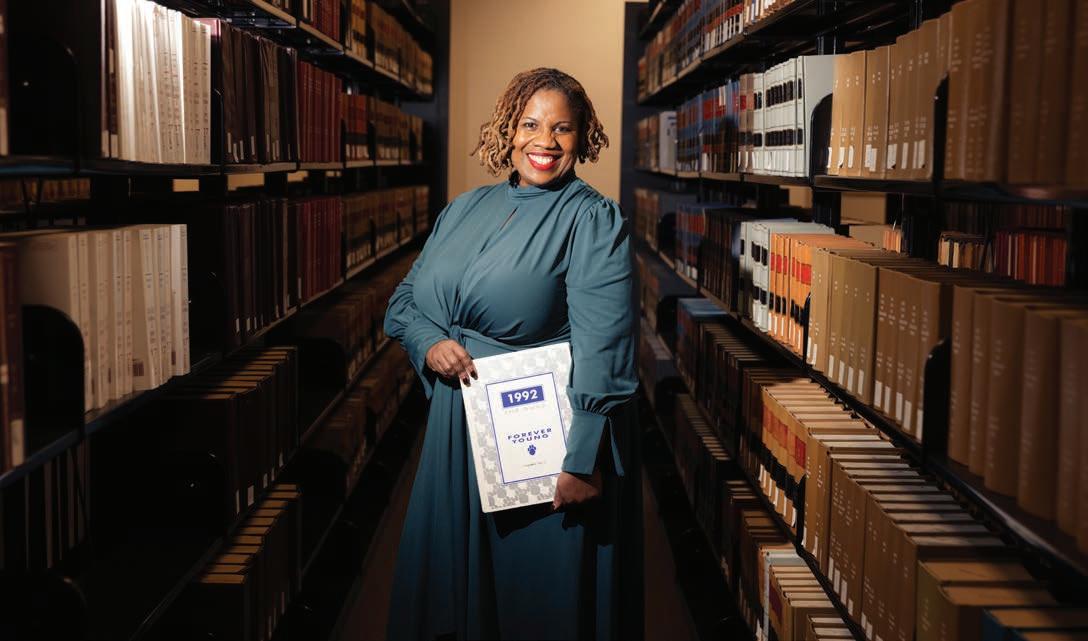
TANIKKA PRICE ’92, J.D., ED.D. “
I don’t want anything I do to just sit on the shelf. It has to be practical, applicable, and usable in real time.”
After Wellington, Price attended Vassar College where she expolored potential majors until Larry Mamiya, a professor of Religion and Africana Studies, offered the advice that changed the course of her life: study yourself.
It was the permission she had been waiting for. Instead of forcing herself into majors that didn’t resonate, she chose to major in American culture, an interdisciplinary program that allowed her to take courses in women’s studies, Africana studies, and urban planning, all subjects that placed her own life at the center of inquiry.
During college, Price became a mother to her daughter, Kalia. Vassar provided off-campus housing with her same financial aid package and allowed her to take independent study courses the semester she was due to give birth, all of which kept her on course to graduate. Her senior thesis, “Moving Beyond Invisibility: America’s Perception of Young, Single, Black Motherhood,” was inspired by her own experiences and foreshadowed her future life’s work.
Again, a Vassar professor helped her uncover her next step. Luke Harris, a political science professor, recognized her ability to persuade during classroom debates and encouraged her to consider law school.
Price was accepted to nearly every school to which she applied and chose Capital University Law School in Columbus. In 2008, she founded Price Legal Services, committing to serve clients who could not afford an expensive retainer—people whose experiences looked like her own, whose needs she had studied by living them.
“I don’t want anything I do to just sit on the shelf,” said Price. “It has to be practical, applicable, and usable in real time.”
In 2006, Price faced a medical crisis during her pregnancy with twins. At 21 weeks, she went into labor and was placed on bed rest for five weeks at Mount Carmel West. Mikaya and Kiara were born weighing just 2 pounds, 3 ounces each and spent nine weeks in the neonatal intensive care unit. Price had to juggle their needs with those of her other three children, Kalia, Kaisa, and Jamir (she would later have another son, Cristiano).
Throughout that time, Shawntaye Beckford, a community health worker, and Sheri Shetrum, a nurse, offered both skilled medical care and a sense of hope to carry her through.
Once the twins came home, Price called Grace Kolliesuah, who ran Caring for 2 at Columbus Public Health, because she wanted to become a community health worker.
Kolliesuah said she couldn’t pay Price what she was worth, considering her law degree. Price took the $11/hour job anyway.
“I wanted to do for other people what [the health workers] did for me,” she said.
As a community health worker, Price served as a bridge between community members and local health services and offered public education to improve the health of her neighbors. It required her to build trust and a close understanding of her community and the challenges they faced.
From that starting point, Price’s work expanded. She partnered one-onone with mothers and taught other community health workers. She applied to certify The Ohio State University’s CHW training program, helping establish it as an officially recognized program. Years later, she joined Health Impact Ohio and built the organization’s CHW certification program, the second in central Ohio. Now in its 11th cohort, the program trains health workers across the state.
She earned her Ed.D. with distinction from North Central University in 2021, formalizing the career she was already building. In her dissertation, she studied Black women with high Adverse Childhood Experience (ACE) scores—a measure of childhood trauma—and their educational attainment. The determining factor was not resources
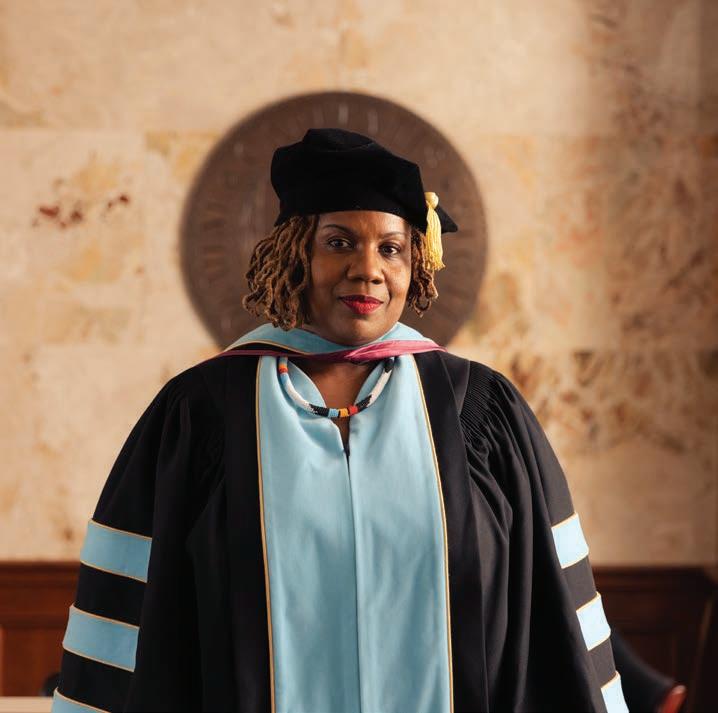
or preparation. It was self-efficacy, the belief that you can do what you say you are going to do.
Once again, she was studying herself— a Black woman with a high ACE score who survived physical and sexual assault, yet built a thriving career because she believed in herself.
“Self-efficacy is the secret sauce,” she said. “We’ve got to figure out a way to give that to young adults and teenagers.”
In 2025, Price received the Visionary Award from the Sexual Assault Response Network of Central Ohio and the Bridging the Gap CHW Professional Award from the Regional CHW Summit in Cincinnati.
That same year, she got a call with 24 hours’ notice: the keynote speaker at the National Association for Community Health Workers conference had a scheduling conflict. Could Price step in? She said yes.
When she finished speaking, people from across the country lined up to talk to her, take pictures, and share their stories. She received speaking offers from Hawaii and beyond. “It felt like all that pain I had gone through was giving people hope,” she said. “I could see it. I could feel it.”
Price hopes to develop a legal clinic that would marry her experiences in law and community health and offer wraparound services to clients who need both. She is still studying herself, still building something new.
Price’s connection to Wellington has endured.
She remains especially close to Sharpley. The two are godmothers to each other’s children.
In 2020, Price helped Wellington organize gatherings of Black alumni, creating space for connection and conversation and laying the groundwork for the school’s ongoing work in diversity, equity, and inclusion.
She has spoken at alumni career days, returned to campus, and made clear that the call will always be answered.
When asked whether she would be where she is today without Wellington, she responded without hesitation: “Absolutely not.”
With teachers who encouraged her to center herself and believed in her completely, Price has forged her own path. She has turned every credential into a tool to help others.
The line was never straight. But it was always leading her here.

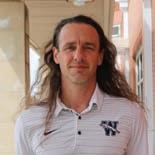
By J.J. Bain ’06
ASSISTANT DIRECTOR OF DEVELOPMENT
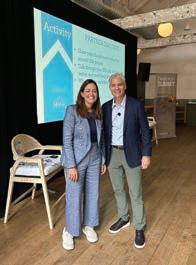
Laura Cooke ’90 Founder & CEO, Positive Foundry
Works with organizations across the country to build well-being into the rhythm of weekly team life through science-backed skills that people can actually use.

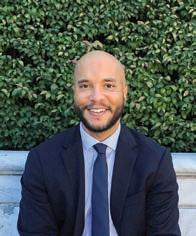
Adam Claytor ’04
Founder & CEO, Coltrane Logistics
A freight and logistics company operating across the Midwest, built on the conviction that relationships matter more than transactions.

Andres Marquez-Lara ’00 Founder & CEO, UFacilitate
A global network of 200+ facilitators working across 40+ countries that helps purpose-driven organizations navigate the messy human stuff, the trust breakdowns, cultural friction, and misalignment.
Jill Lukeman ’06 Co-Founder, Arden’s Rowayton and The Mariner & The Muse
A neighborhood café built around daily ritual and connection, and a vintage interiors brand where objects with history find new homes.
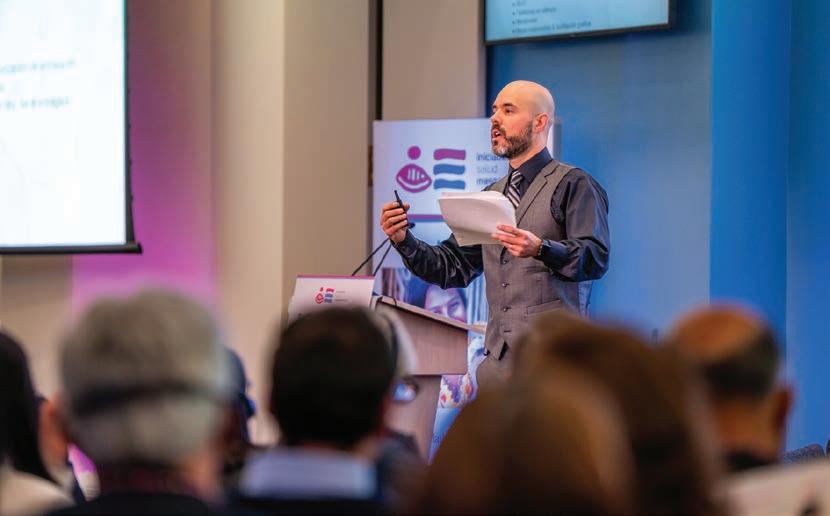
Marquez-Lara speaks at a workshop— his global facilitation network, UFacilitate, works across 40+ countries
Wellington alumni are building facilitation studios, coastal cafés, well-being platforms, and logistics operations that answer the phone at midnight. What drives these graduates isn’t markets or metrics. It’s something closer to what drove the founders: the conviction that people deserve spaces—physical and organizational— where they can show up, connect genuinely, and feel a little less alone.
That conviction is the school’s inheritance. In 1979, a group of Columbus business leaders looked at the city and decided something was missing: a school built on the belief that curious and ambitious young people deserve an education as original as they are. The spirit of that original act went out into the world not as a lesson explicitly taught, but as something quieter: an instinct absorbed and calibrated that still guides these alumni.
Each of the alumni in this story has a distinct journey—but they all share one thing in common. Their careers didn’t
start with a plan, but with a sense that they had something to build.
For Jill Lukeman ’06 and Laura Cooke ’90, the signal came through absence. Lukeman left New York City for coastal Connecticut and felt it almost immediately: it wasn’t the bustling restaurants or the fast pace she missed, but the feeling of being known, of daily life organized around shared ritual. “It was less about opening a cafe,” she said, “and more about creating a daily ritual space for the town.”
Cooke’s signal was more obvious. Stress-related illness forced a real stop, and in that pause, she found the science of positive psychology— research so practical and underutilized that sitting on it felt wrong. Both had lost something integral to their wellbeing. Both built what they needed to thrive.
Adam Claytor ’04 traces his entrepreneurial instincts back to Wellington. Business owners came through the school and talked
about their lives with a candor that no classroom could manufacture. Those early interactions went beyond inspiration; they gave him a network of professionals eager to give back. “You can’t be what you can’t see,” he said. The shape of a life spent creating something of your own opened a door in him.
The door for Andres Marquez-Lara ’00 opened more dramatically. His north star has always been intuition and synchronicities that guide him in which direction to walk. He was anxious at his own goodbye party, leaving a stable job to build something of his own, when a call arrived: he had been selected for a prestigious emerging leaders bootcamp. He took it as a sign. It was, he said, the poet Antonio Machado who captured his journey better than any business plan: “Caminante, no hay camino, se hace camino al andar.” Walker, there is no path. The path is made by walking.
What emerged from those recognitions looks different in every case. Underneath, it is the same: all of them are building what people need to realize their potential.
Marquez-Lara built UFacilitate around a question that began in Chris Robbins’ drama class, where improv first made him feel seen. At the time, it was about belonging. Over time, the question evolved: how do we create spaces where people not only feel included, but come together to work on what truly matters? In 2018, while facilitating a workshop in Panama for an InterAmerican Development Bank initiative to reduce maternal and child mortality across Latin America, he introduced a framework that changed how people worked together across the initiative,
ultimately contributing to a program that reached more than 3 million people in eight countries. At its closing ceremony in Washington, D.C., in early 2025, the director opened her remarks by citing the framework he introduced in that workshop, one that helped shape how the program thought about its own sustainability.
Cooke is building at a different scale, but from the same conviction that people deserve better tools to thrive. Positive Foundry, celebrating its 10th year this December, works with organizations across the country to embed science-backed well-being skills into the rhythm of team life. The results are concrete: 86% of participants report an increase in personal wellbeing. “Small, proven techniques that can make a big difference if people are given the opportunity to learn and grow,” she said.
PICTURED
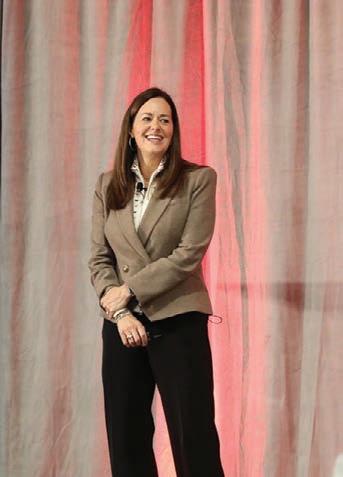
Cooke shares the science of well-being at work—her company, Positive Foundry, has helped 86% of participants report an increase in personal well-being
Where Marquez-Lara and Cooke work at an organizational scale, Lukeman works at the scale of a room, a table, and a Tuesday morning. Arden’s Rowayton is a neighborhood cafe in Norwalk, Connecticut, built around the belief that a town needs a place where daily life can be organized around ritual and connection. “I’ve always believed that people are the color in the room,” she said. The cafe’s After Hours dinner series, set around long tables and candlelight, is the manifestation of that belief. Meanwhile, at The Mariner & The Muse, Lukeman’s vintage interiors brand that just opened its first brickand-mortar location, shoppers can connect with objects that carry history and character while adding something personal to their own homes.
If Lukeman’s work is about creating the conditions for people to show up, Claytor’s is about showing up himself, without exception. Claytor built Coltrane on a simple conviction: show up like a partner, not a vendor. Late on a Friday, an automotive manufacturer faced a crisis: a delayed component threatened to shut down a production line for the long weekend, at a cost of hundreds of thousands of dollars. Larger competitors had gone quiet. Coltrane located the parts, coordinated the delivery, and stayed on the line with the client through Saturday morning. In an industry that treats relationships as transactions, Claytor treats transactions as relationships. When you call, someone picks up.
The industries and scales differ, but the inheritance remains the same.
Wellington was itself an entrepreneurial act, and it has since become an incubator of entrepreneurial spirit, even
for those who didn’t recognize it at the time. Marquez-Lara and Lukeman discovered something they weren’t looking for. Cooke and Claytor knew early on that they were somewhere alive with possibility.
Lukeman didn’t think of herself as a creative person at Wellington. But in middle school, she dreamed up something she called Single’s Bread, a half-loaf for people living alone, two strangers reaching for it in a grocery aisle. Marquez-Lara didn’t realize that belonging wasn’t guaranteed everywhere. At Wellington, it just was. Lukeman recognizes now: “I think even then, I was drawn to the idea that businesses could create connections.” The confidence to name it came later, but the instinct was always there. For Marquez-Lara, Robbins’ drama class planted a seed that has grown into a global facilitation network shaping how organizations navigate complexity together. “Wellington felt like family,” he said. “It gave me a model of what community can feel like when it actually works.” Thirty years later, that seed has grown into a global facilitation company.
Cooke felt it from day one in 1982. She came up in an environment where everything was being invented in real time, and students were trusted to do the inventing. They built student council from scratch, launched a Battle of the Bands, and started sports like girls lacrosse. They even chose their own name, deciding they’d rather be Jaguars than Wildcats. “Everything was new, and everything was possible,” she said.
Claytor absorbed it differently. It was the frankness of the business owners who came through Wellington that
For these four, the finish line keeps moving.
Marquez-Lara has a book arriving this spring. “Rituals 2.0” explores the modern rituals humans need to feel less alone in a world that keeps accelerating. His Second Place Fund supports women social innovators who came close to winning major competitions but didn’t, giving them the runway to keep going.
Cooke published her chapter in “How to Flourish” on March 20, World Happiness Day, with Wellington’s own Engagement Index featured in it. She recently welcomed Milan Gonela ’20 to the Positive Foundry team in its firstever sales role, bringing the next generation of Jaguars into the work she has spent a decade building.
Lukeman is refining what she’s built and dreaming about what comes next. Arden’s is launching a catering arm and opening Bar Arden on weekend evenings. Quietly in the background, a second hospitality concept is keeping her up at night, in the best possible way.

Arden’s Rowayton, the Norwalk, Connecticut cafe Lukeman built around daily ritual and connection
Claytor is growing Coltrane across Columbus, Cleveland, and Detroit, and giving back the same energy he brings to his business. He is a driving force behind JagsConnect and a volunteer golf coach at Ted Ginn Sr.’s renowned Ginn Academy in Cleveland.
stayed with him, their willingness to talk openly about risk, failure, and passion. Both came full circle: Cooke returned as faculty and was trusted by former head of school Rob Brisk to design and teach two new courses. She discovered through her students the passion that became Positive Foundry. Claytor now drives JagsConnect (see page 18), making sure the next generation of Wellington graduates has the same opportunity he did. The inheritance keeps growing.
Wellington doesn’t teach entrepreneurship—it seeps through the walls. Wellington puts young people in proximity to real builders, real risk, and real community, early enough that something gets calibrated. Call it instinct. Call it intuition sharpened by experience. By the time Cooke, Marquez-Lara, Claytor, and Lukeman were ready to build something of their own, they already knew how to trust themselves.

Scan the QR code to learn more about these entrepreneurs

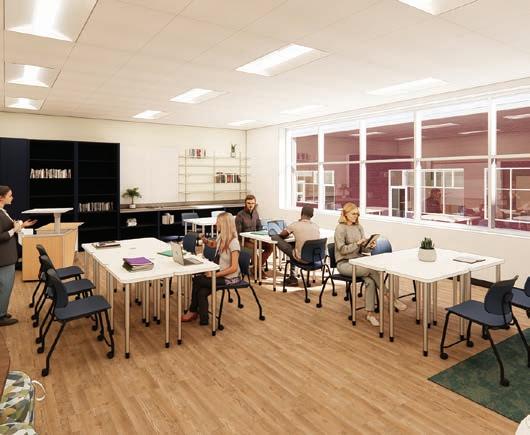
This summer, as part of Wellington’s Bold Leap Strategic Plan, construction will begin on a new upper school entrance and a significant renovation of the Fishinger Road side of campus. This work marks an important milestone in Wellington’s long-term campus master plan— one that strengthens our learning environment while honoring the School’s history and values.
The project includes the demolition of the original 1918 building on Fishinger Road, which has been closed since 2010, along with the renovation of nearly 60,000 square feet of existing campus facilities. Together, these changes
will create a dynamic new home for our upper school, enhance visual and performing arts spaces, expand academic space for our middle school, and improve campus flow and safety.
Adopted last year by the Board of Trustees, Wellington’s strategic plan charts an ambitious course as the School approaches its 50th year. It reflects a shared belief that while we remain true to our mission—helping students find their purpose and realize their potential for tomorrow’s world—Wellington must continue to evolve. A comprehensive campus master plan is a central expression of that commitment, ensuring our physical spaces reflect the excellence, creativity, and ambition at the heart of our educational program.
This moment also carries deep historical significance. When Wellington’s founders purchased the 23-acre campus in 1981, they acquired the original Perry Township
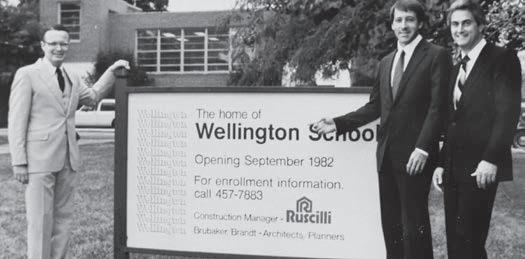
schoolhouse built in 1918, along with a mid‑20th-century addition that had served as an Upper Arlington elementary school. These buildings became Wellington’s first home when the School opened in 1982 with 132 students, and for more than 40 years, the campus has grown and adapted around them through the generosity and stewardship of the community.
This phase of the campus master plan brings that history full circle. Through the careful demolition of the original schoolhouse and the complete renovation of the 1950s structure, Wellington will complete the buildout of its campus while honoring its roots. On May 9, the School gathered with alumni and founders to commemorate the history of the original building and the many memories created within its walls.
The design of the new and renovated spaces has been shaped by faculty, students, and trustees serving on vision committees. Their insights will continue

HEAD OF SCHOOL ELIZA MCLAREN “
This moment reflects decades of thoughtful stewardship and a shared commitment to Wellington’s future.”
to guide the project as it comes to life—creating learning environments that support independence and collaboration, academic focus, and creative exploration. This important work is made possible through the extraordinary generosity of Wellington families and reflects the thoughtful stewardship of the School by generations of leaders and trustees.

•

Wellington’s newest initiative bridges alumni and student connections for mentorship, career insight, and lifelong support.
At the start of his junior year, Grant Spirko ’25 contacted 11 Columbus-area architecture firms seeking an inside look at their operations. His outreach led to a two-day shadowing opportunity, where he learned more about the career path he was considering.
The next semester, he tried again, walking into a real estate development firm with his résumé in hand. This time, he landed a summer internship.
“I always thought I wanted to study architecture,” said Spirko. “But between the job shadow and the internship, I realized it wasn’t for me. Architecture involves a lot of engineering and design, and I realized I enjoy the business and numbers side. That’s why I’m majoring in finance at The Ohio State University now.”
Spirko found the hands-on experience so valuable that he wanted other Wellington students to have the same opportunity to test the waters and explore potential careers. His junior year, he approached Rishi Raghunathan P ’27 ’30, head of upper school, and former upper school dean of students David Glover with a proposal.
He wanted to expand Wellington’s LEAP Day offerings—a dedicated time for personal exploration, projects, and community connection—to include career exploration
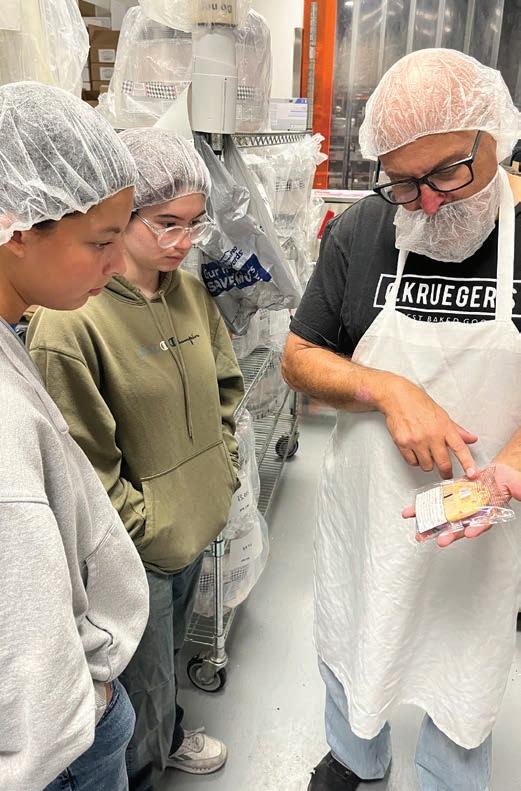
Wellington seniors getting a behind-the-scenes look at C.Krueger’s production processes during a JagsConnect industry visit hosted by Duncan Forbes ’04
opportunities. For 9th and 10th grade students, speakers from a range of fields would share their paths. And 11th and 12th grade students could use the time to visit Central Ohio companies for job shadowing or internships.
“I think it’s important for all high school students to get that experience,” said Spirko. “Any size company, any field—it doesn’t matter right now. It’s about gaining hands-on experience and figuring out what you enjoy.”
A version of Spirko’s vision is now taking shape through JagsConnect, an initiative that bridges alumni and students for mentorship, career insight, and lifelong support. The program connects Wellington students, staff, faculty, parents, and alumni to share expertise and create opportunities for career exploration.
The initiative began in spring 2024 when the Wellington Alumni Advisory Board (WAAB) began exploring ways to better support recent graduates. Outreach to alumni from the previous five years revealed a need for long-term career support and stronger connections to the wider Wellington community.
JagsConnect officially launched in August 2024 with an online platform where members can volunteer to offer support or request it. A student might
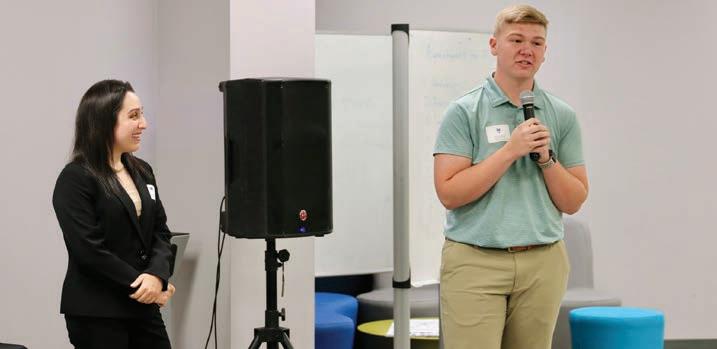
Liz Kazemi ’17 and Grant Spirko ’25 leading JagsConnect volunteer training
ask for career advice, for instance, or a recent graduate might reach out for job connections in a new field. Alumni, parents, faculty, staff, and others can offer their expertise and introductions to their networks.
“We wanted to make sure that we weren’t just building college-ready students,” said Liz Kazemi ’17, a member of WAAB who now owns an HR consulting business, The People Advisor. “We wanted to equip alumni with the tools and resources to succeed and use the talents they cultivated at Wellington to reach their full potential and pursue their passions.”
The fall of 2024 focused on volunteer recruitment and awareness building. In January 2025, the program began introducing JagsConnect volunteers to those seeking support.
This school year, JagsConnect programming has expanded to the upper school with guest speakers, industry visits, résumé workshops, and professional development sessions.
who speak about their experiences. For 11th and 12th grade students, programming shifts to career readiness. In hands-on workshops, students craft LinkedIn bios, develop their résumés, learn how to network, and participate in mock interviews. From there, they can apply to connect with alumni and community members available for job shadowing, mentorship, or conversations about their professions.
WAAB created JagsConnect to ensure equitable access to networking and career development experiences for the Wellington community. Programming in the upper school allows students to begin exploring possible paths while still at Wellington—and to continue building those connections throughout their lives.
“College preparation has been a huge strength for the school, and we wanted to take it a step further,” said Kazemi. “We want to give students and alumni the tools, knowledge, and resources to take their passions and talents and shine in a way that employers and professionals see what they have to offer. And we want to make sure they’re connected—that they always have someone to reach out to along their journey.”
“We want them to know their journey doesn’t end here at Wellington.”
The focus for 9th and 10th grade students is exploration, said Kazemi. Through JagsConnect, they map their interests, talents, and sense of purpose to different career pathways. They also attend panel discussions featuring professionals from various industries WANT TO REQUEST OR OFFER SUPPORT THROUGH
Visit www.wellington.org/ jagsconnect-get-started to get started as an alum or volunteer.
At Wellington, excellence is inherent in all that we do. It’s in the academic mastery that prepares students for college and beyond, and in the curiosity, collaboration, and creativity that carry them through life. It’s found in the earliest foundations for Little Jags to advanced seminars for seniors. At every step, Wellington students are encouraged to stretch their minds and discover what’s possible.
At the start of each year, as Kathy Yant gets to know families in her prekindergarten class, she asks the same question: Is there something you would like to share with the class?
“This is my 39th year at Wellington,” she said. “From the very beginning, I’ve invited parents to celebrate a tradition, talk about their career, or share a hobby they enjoy with their child.”
These visits range from bread baking and Lunar New Year celebrations to football drills with a former Ohio State player. In one memorable experience
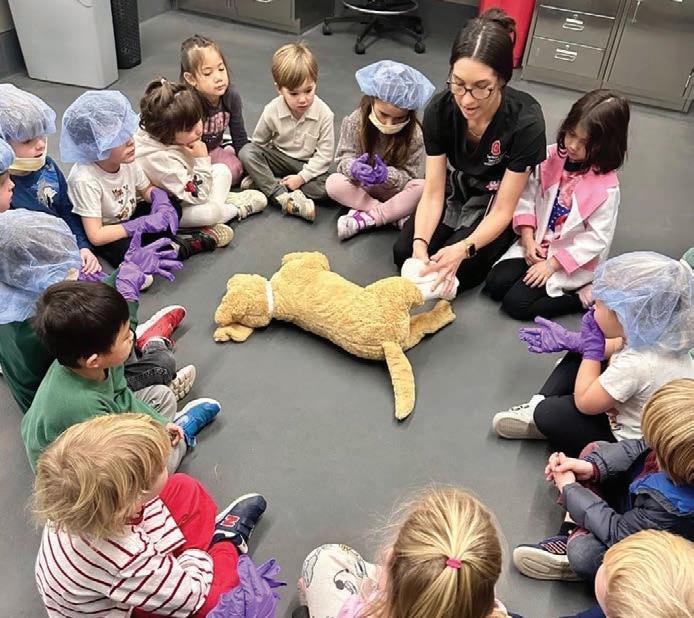
this year, an orthopedist parent spent two hours teaching students about the skeletal system, assembling Styrofoam bones, and placing casts on students.
Sometimes, these connections lead to field trips. Students visited a specialty veterinary clinic, where they learned how to care for horses and examined X-rays, and toured a parent’s research lab at a local children’s hospital, where they dissected a strawberry to study DNA.
Yant said students often replicate what they see through pretend play, a critical avenue for developing language and social skills.
“They use the equipment we’ve provided in a more meaningful way than if they had never met a doctor or visited a veterinary hospital,” said Yant. “At this age, hands-on learning is far more valuable than anything they could get from paper and pencil.”
One Small Spark Great ideas often begin with a single spark. They need space to grow.
That thinking led to Wellington’s SPARK Project, a year-long, projectbased learning experience for 8th grade students. Students identify a topic, conduct research, connect with experts, and visit relevant organizations. The project culminates in a TED Talk-style presentation for peers and faculty.
Simon Leadston, middle school science, and Marianne Crowley, middle school language arts, received a Wellington Community
Engagement Grant to pilot the program with the 8th grade team.
“The SPARK Project was born out of a desire to create more opportunities for authentic, service-based learning and student-driven research,” said Leadston. “We wanted students to explore what they care about through intrinsically motivated learning rather than traditional grading structures.”
At the heart of the project is community, Crowley said. Each project addresses a community need, helping students understand how they can contribute to solutions. A panel of Wellington-area professionals introduced students to service-oriented careers.
“Ultimately, the project encourages students to see themselves as capable of making a difference,” said Crowley. “It reinforces the idea that meaningful change often starts small but can grow through curiosity, empathy, and responsibility.”
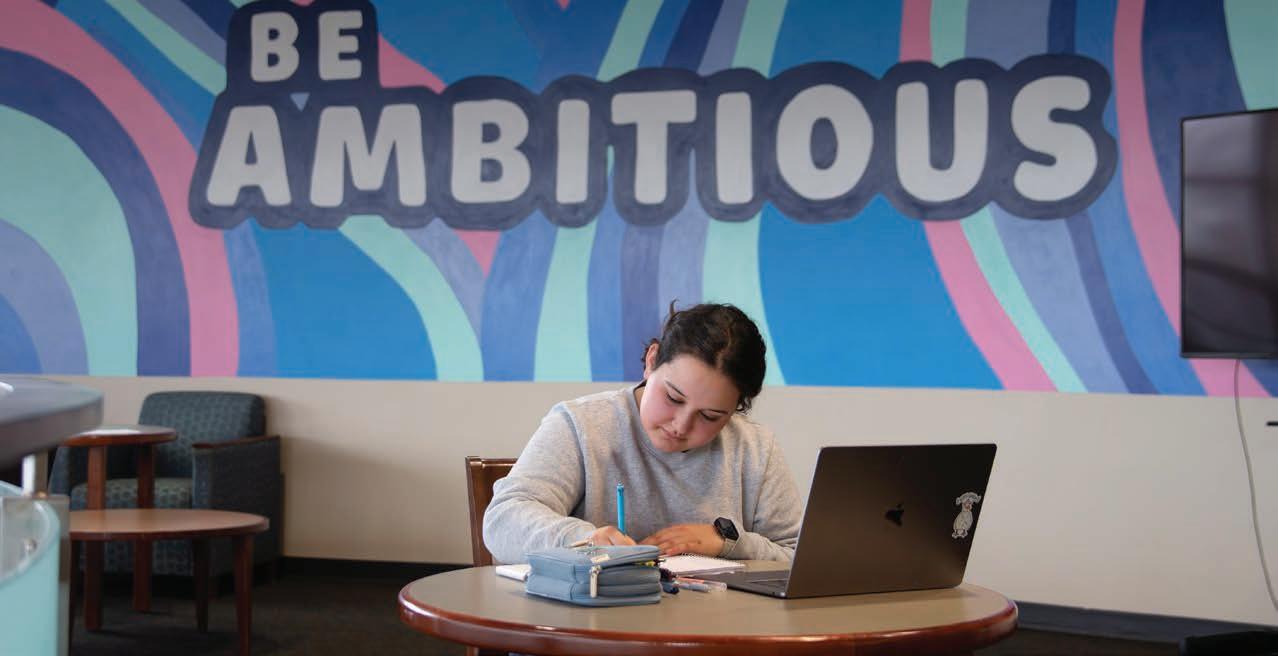
Mariem Khallout ’27 has a clear plan for a future in healthcare and is already taking steps toward it.
As a 9th grade student, she chose to pursue College Credit Plus (CCP), an Ohio Department of Education program that allows high school students to take college courses. She wanted an academic challenge and the opportunity to begin earning college credit early.
“My goal is to pursue both nursing and premed so I can work as a nurse while attending medical school,” she said. “CCP gives me a head start on the classes I will need.”
Balancing coursework at Wellington and Columbus State Community College, along with spring lacrosse, is challenging, she said, but it is helping her build time management and organizational skills.
She has found strong support at Wellington. Upper School Academic Dean Sharla Starker P ’17 ’22 and Assistant Director of College Counseling Ivy Mitchell guided her through the process and course selection. Her science teachers, including Bryan Brautigam P ’38 ’40 and Trent Neely P ’30, are available to help her navigate college-level material.
“The foundation from Wellington classes has prepared me for college coursework,” said Khallout. “CCP has helped me become more independent and given me a clearer picture of what college will be like as I work toward my goals in healthcare.”
Yant’s students at the veterinary hospital
From fractions and percentages to complex calculations, finance and economics bring math concepts to life in lessons that last a lifetime.
Each spring, students in Jodi Porterfield’s 4th grade class combine social studies, math, and literacy for a project-based learning unit.
Fractions and decimals are layered into lessons on money, recipes, and percentages as they learn more about the economy. Then, they incorporate the Junior Achievement BizTown curriculum, which introduces banking, investments, loans, insurance, and job responsibilities. The unit culminates with a day at BizTown, where students are assigned a job and given a plan for the day.
PICTURED
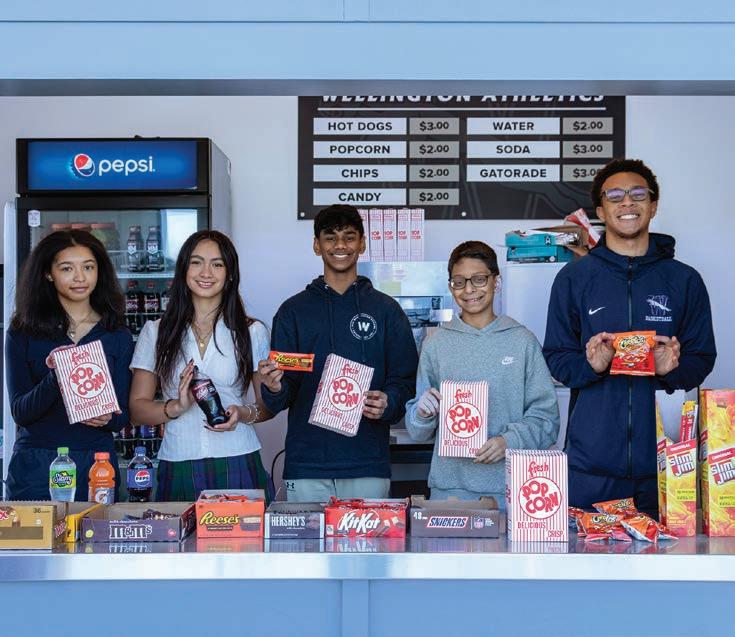
Snacks for $uccess leaders
Sophia Scott ’29, Sasha Swarthout ’29, Vikram Dasa ’29, Ahmad Awan ’29, and Jasiri Dial ’28
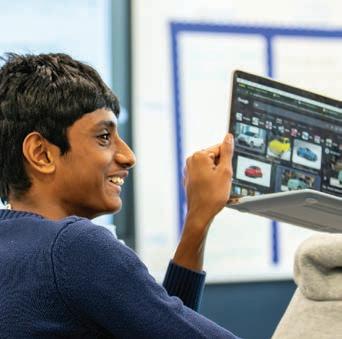
“If they work at Huntington Bank, they cash checks, open accounts, and provide loan options,” said Porterfield. “If they work at Honda, they build a prototype, ask the bank for a loan, and market their product. These hands-on experiences go beyond the math book.”
Students then apply what they’ve learned to their own businesses: first, a lemonade stand at Grandparents and Special Friends Celebration, followed by a fictitious food truck. Teams test recipes before deciding what to bring to market. They calculate the cost of supplies, adjust recipes, determine break-even points and sales prices, and draft budget and profit reports.
Middle schoolers may be far from buying their first car, but the process offers lessons about loans, maintenance costs, and financial decision-making.
In January, Ryan Gill ’98, owner of a multi-dealership auto group, visited the Algebra 1 Advanced class taught by Anthony Constantino P ’38 as part of
a unit on financial decisions. Students selected a dream car and job, then used loan calculators to explore how term variables and credit scores affect cost and what their salary might cover.
“Having Ryan visit made the learning feel authentic,” said Constantino. “They were able to ask questions directly to someone in the industry, which helped them connect the math to the real world.”
Math and science teacher Me-Chelle Burkhalter P ’22 brings similar realworld application into her classroom. In her 6th grade pre-algebra class, students choose a profession—such as an architect, event planner, or sports analyst—and research how ratios and percentages are used in that work.
“The world is changing, and it seems like our students are starting businesses and managing money sooner,” she said. “This makes them more aware and helps them see the value of being producers, not just consumers.”
While lower and middle school classes weave financial literacy into other subjects, every senior spends one trimester immersed in financial terminology, habits, and real-world application.
“The goal has always been to help students leave Wellington feeling confident about the financial decisions they will soon encounter,” said Erin Cornett ’96 P ’34, upper school history, who helped develop the course.
Matthew Bardoe, who now teaches the class, says spreadsheets are a key tool. Students use them to model how they will pay debts, save for a car, plan for
retirement, and calculate how money grows with interest. Lessons also address inflation, credit ratings, and how credit cards work.
“Everybody needs a certain level of financial knowledge just to make their way in the world,” said Bardoe. “It’s important to offer this class to seniors because it’s not so abstract. They’re ready to engage with the material because it’s meaningful and current.”
Last year, as Vikram Dasa ’29 traveled to basketball tournaments, he noticed a range of good options—something he felt was lacking at Wellington athletics events. He pitched his idea for concessions to Dr. Nick Williams, director of athletics and physical education, who agreed to pilot it.
Dasa began selling pizza at soccer matches, quickly generating more than $650 in sales. He then proposed forming a student club to run concessions, drawing strong interest at the next club fair.
Today, Snacks for $uccess has more than 20 active members. The studentrun stand provides experience in sales tracking, data analysis, and decision-making, with support from the Wellington business office.
Snacks for $uccess has earned $2,700 in revenue, including $1,390 in profit, and plans to reinvest proceeds to support Wellington programs and local charitable causes.
“By leading and running Snacks for $uccess, I’ve learned to manage the club’s money, save for bigger goals, and make smarter financial decisions,” said Dasa. “All of these things will stick with me into adulthood.”

Student engagement is one of the most talked-about concepts in education today. But behind the buzzword is a critical question: how can teachers measure how well students are connecting with what they’re learning?
Wellington is walking the walk. A suite of proprietary tools, developed by Wellington educators and now distributed by The Wellington Initiative, has opened new avenues of understanding, but it’s our culture of curiosity, empathy, and community that drives Wellington’s leadership in this area.
At Wellington, student engagement involves participation, deep listening, trust, communication, and adaptability.
Louis Frank, head of middle school, said engagement starts with
“ Students have the autonomy to decide what works for them and to explore their personal interests and strengths.”
JUSTINE SMITH P
’39
students connecting what they learn with their authentic experiences. It answers the questions “Why does this matter?” and “When will I use this?”
“Students aren’t empty vessels for teachers to fill with knowledge,” he said. “They are co-creators of a learning experience where the teacher acts as a facilitator, a guide, a coach.”
Sloan Magliery, assistant head of middle school, added that the beauty of Wellington is the autonomy teachers have and the creativity they bring to the content, increasing engagement for students and faculty alike. Initiatives like middle school Dive courses and lower school LEAP (Learning, Exploration, and Projects) Days are stand-out examples. In Dives, students explore passions ranging from robotics
to podcasting. LEAP Days offer playful workshops on topics such as dance, coding, and mindful art.
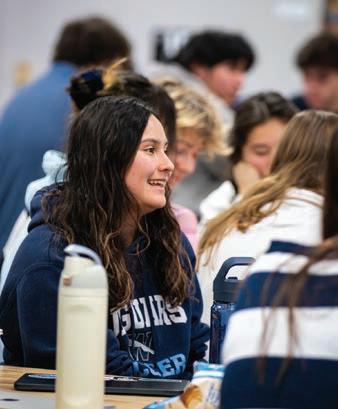
“Students have the autonomy to decide what works for them and to explore their personal interests and strengths,” said Justine Smith P ’39, early childhood and lower school learning specialist. “It increases engagement, motivation for learning, and helps them develop decision-making skills.”
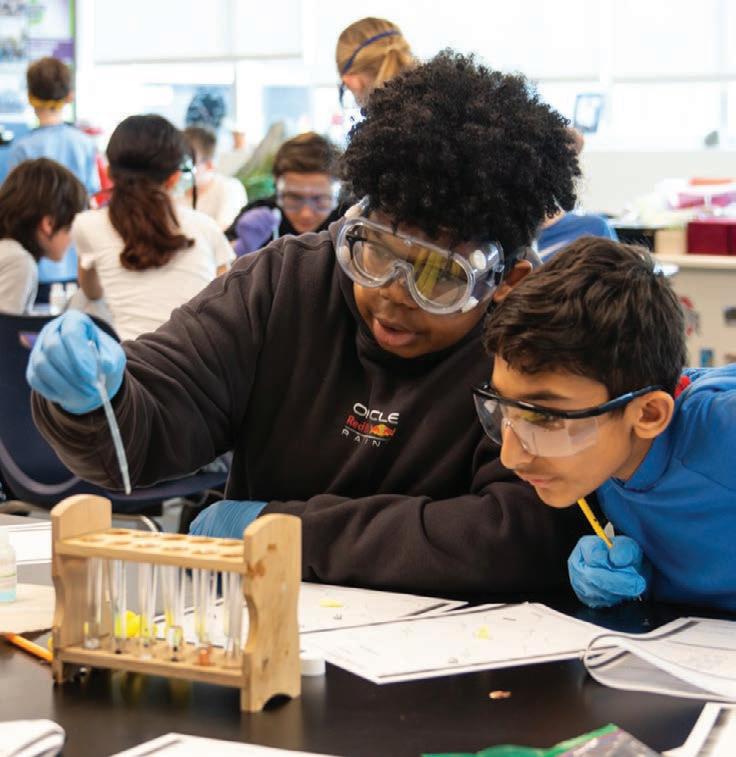
For Cristen Geary P ’35 ’36, middle school science, there’s no better indicator of student engagement than a constant hum of noise—students talking to each other, debating a concept, or working together on a lab.
When things go quiet, that’s when she starts tuning in.
“Maybe they don’t work well with their partner, and I need to help them develop the skills so that they can,” she said. “Or, if it’s someone who is typically really engaged, I wonder if they’re not understanding the material or if they have something external going on.”
Those micro-assessments are one of the many ways Geary gauges student engagement. She often starts the year by asking students about their interest in different branches of science, then adapts the curriculum based on their passions.
Surveys are another tool. Geary will write three prompts—keep doing, stop doing, and start doing—on the whiteboard, then leave for five minutes while students add anonymous feedback.
Jeanie
DeSantis ’26
Some suggestions, like “stop giving homework,” lead to dialogue about the value of outside work. Others offer a chance for Geary to consider alternatives.
“I always tell them, if there’s something I can change and still do a good job of teaching, then I’ll consider it,” she said. “Even though I’m the teacher and they’re the student, this is a partnership, and if something isn’t working or doesn’t make sense, I want them to feel safe enough to say, ‘Can you help me?’”
For Brynae Harvey ’30, that sense of partnership comes alive in class discussions. “When a teacher gives my class a topic or question to answer, and we help each other understand or add on to what we already know, it’s so much easier to participate and share ideas,” she said.
While teachers have their own methods for measuring engagement, a suite of tools developed by Wellington educators brings a standardized approach schoolwide.
The centerpiece is the Wellington Engagement Index. Students plot each class on a grid based on enjoyment and challenge. A dot in the upper right quadrant signals high engagement; other quadrants reveal different patterns—challenged but not enjoying, bored, or entertained but not intellectually stretched.
“The survey gives a 30,000-foot view of teaching and learning across the school,” said Sarah Allen, director of business development for The Wellington Initiative. “Or, we can look at a single student and see they’re thriving in biology, but Spanish is really challenging.”
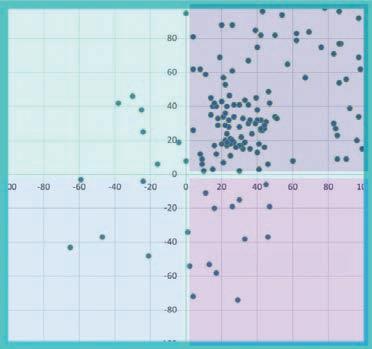
Additional surveys add nuance. The Mattering Index asks students how connected they feel and whether they’re contributing. The Engagement Dimension uses sliders to capture how students interact in class and how the structure of the class affects their learning.
“Engagement is notoriously hard to measure unless you’ve got a system like ours,” said Allen. “Student voice is rarely part of the picture, even though it’s one of the most critical pieces.”
Harvey said filling out the surveys forces her to think about her classes differently. “It’s not just about the
assignment or the grade I got, it’s about how I felt as a student while I was doing it,” she said.
Annie Shen ’26 said the Engagement Index encourages her to step back from the course content and reflect on the values, experiences, and life lessons she’s gaining.
“I have a clearer grasp on how I interact within and feel about what I do each day at school, as well as ways to improve myself in the future as a person and a student,” she said.
Data from the surveys is instantly available to faculty, allowing them to
quickly adapt. For instance, a teacher might incorporate more collaborative work after seeing a positive response to an assignment.
Bryan Brautigam P ’38 ’40, upper school science, said the Index adds a new lens to his own observations. If students show signs of being overwhelmed, he might slow down a lesson and give them more time to reflect. Or, he may switch from a direct lecture to small group instruction.
“It’s nice to get an overview and see if I’m reading the room correctly,” he said. “I can find out if students are distracted or stressed about something else. I can figure out where they are as a group.”
When feedback is mixed, it can be challenging to know what next steps to take. But Magliery said the point of the Index is to begin a dialogue and ensure all voices are heard.
“Teaching is a hard job, and learning is a hard job,” she said. “What’s beautiful about the data is that it puts those two things in conversation. When you have teachers who are confident in their ability to be vulnerable and students who are confident in their safety, then the conversation is fruitful.”
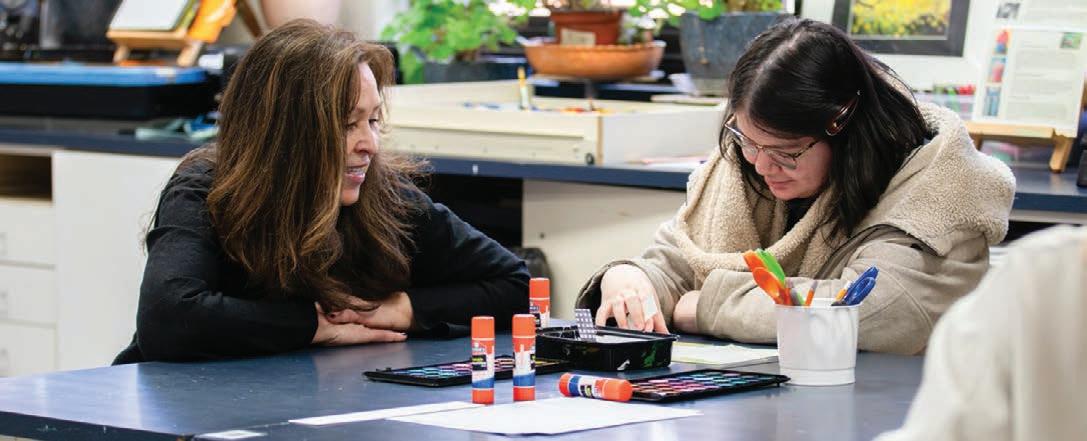
There’s no better way to understand the role we each play in a democratic society than to experience it firsthand. At Wellington, students at all levels are practicing civic engagement by drafting legislation, reporting news, and exploring history.
Each fall, students in Jodi Porterfield’s 4th grade class take a deep dive into democracy, citizenship, and the election process. They start with lessons on the Magna Carta and the founding of the U.S., including the Declaration of Independence, the Constitution, and the three branches of government.
Porterfield’s students then put what they learned into action by writing their own charters and legislation to improve areas of the school.
PICTURED BELOW
Gia Malhi ’32, Carrie Williams, and Marco Littleton ’32
This year’s legislation proposals ranged from more dress-down days and additional recess time to bringing pets to school and trips to exotic locales. In small groups, students chose one change to focus on, exploring the benefits to the classroom and the wider Wellington community. They wrote letters and created campaign posters to advocate for
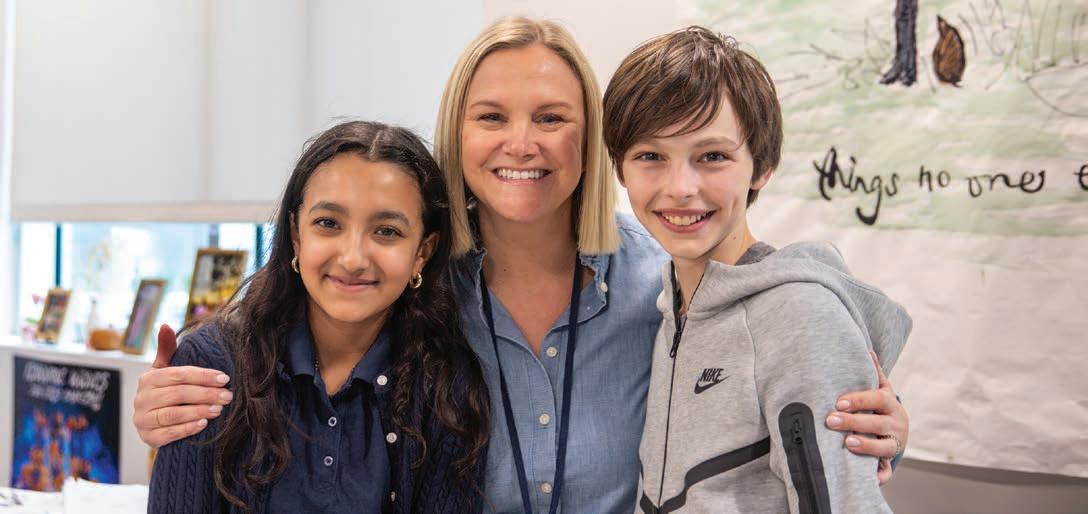
CARRIE WILLIAMS, MIDDLE SCHOOL MATH
their bill as it moved through each branch of government, with their classmates representing the House of Representatives and Porterfield serving as the Senate. Each bill was then reviewed by Wellington’s leadership team, who collectively represented the executive branch.
“The only rule was that students could not vote for their own bill,” said Porterfield. “They had to lobby their constituents and convince them to vote for it.”
Four bills made it to the Senate floor. The executive branch ultimately passed two. One allows students to rearrange the daily schedule to include mindful time in the middle of the day. The second approved a class fish and the purchase of necessary supplies.
Students now get to reap the benefits.
“If you need some Zen time in your day,” said Porterfield, “swing by our classroom for yoga.”
Porterfield’s 4th graders aren’t the only Wellington students drafting and
advocating for legislation. This year, 107 upper school students—more than half of the upper school—participated in the 75th session of Ohio Youth in Government (OYG), a statewide initiative that invites students to draft and debate legislation through a mock legislative process. A second group attended Model UN, where students play the role of delegates from different countries and attempt to solve realworld issues.
“By giving students hands-on experience with how these systems work, they begin to see themselves as part of the process rather than outside it,” said Jackie Butler P ’27 ’30 ’37, upper school history, who advises students in both OYG and Model UN. “My hope is that they leave these experiences feeling empowered to ask questions, stay informed, and take action in ways that matter to them.”
At OYG, students from across Ohio write their own bills on issues they care about and support them as they move through the full legislative process, including committee debate and advocating on the House and Senate floors.
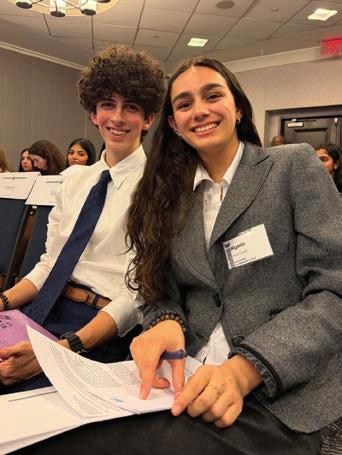
PICTURED
Rio Price ’28 and Sophia Patel ’28 at George Washington University’s 2026 Model UN
The entire process takes place at the Ohio State House—and the topics often mirror the issues debated by legislators. Recently, many have focused on issues affecting schools, such as driver’s education, mental health resources, physical education, and financial literacy.
“Students experience government in a way that is authentic, relevant, and empowering,” said Erin Cornett ’96 P ’34, upper school history teacher and OYG advisor. “They grapple with the challenges of compromise, persuasion, and policymaking.”
While much attention is often placed on the democratic process, journalism is equally critical to maintaining an informed electorate.
Two middle school students, Marco Littleton ’32 and Gia Malhi ’32, are now getting an inside look at reporting the news with the launch of their own newspaper, MS Madness.
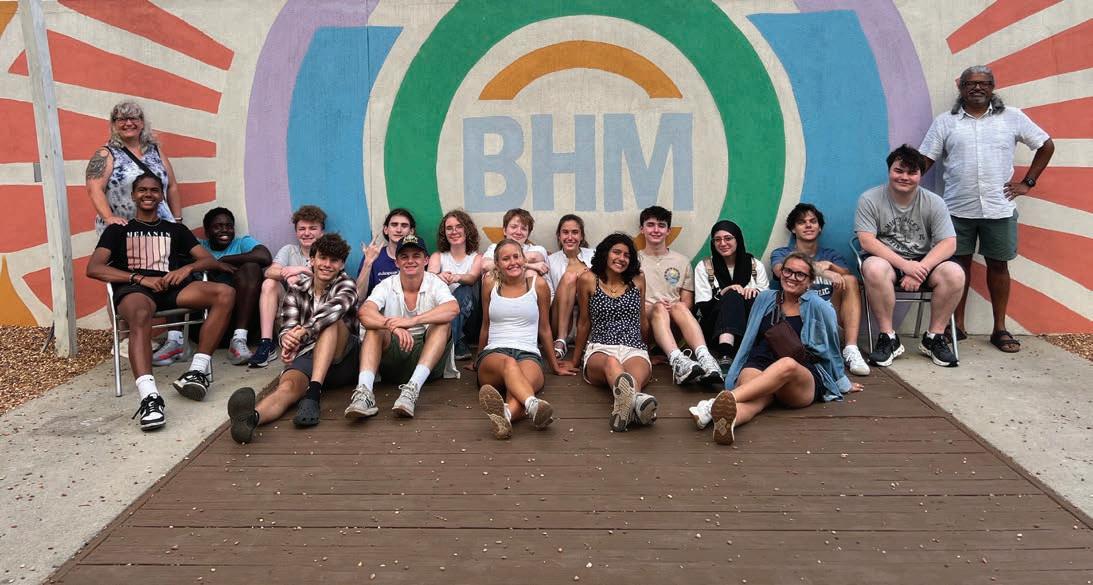
Marching Towards Justice students during this visit to Birmingham
“We had both read books about middle schools with newspapers and wondered why Wellington didn’t have one,” said Littleton. “We had the idea to go to [Sloan Magliery, assistant head of middle school], and ask if we could have a newspaper club.”
The first issue was released last spring. This year, they’ve built a student team with reporters, editors, photographers, and comic artists. Coverage includes announcements about school, studentcreated comics, and interviews with students and teachers.
“We have learned a lot about news and reporting, like how to better format articles, writing out questions before interviewing someone, and how to lead a group of writers and reporters,” said Malhi.
The newspaper is student-driven, but Carrie Williams, middle school math, serves as an advisor. She helps the team brainstorm story ideas, strengthen their interviews, revise their
writing, and meet deadlines. Building a newspaper from the ground up is an opportunity to develop lifelong skills, said Williams.
“They’re practicing collaboration, time management, and problem-solving as they work together to meet deadlines and produce a finished publication,” she said. “Even more importantly, they are building confidence in sharing their voice and recognizing that their perspectives and stories matter.”
To understand present-day issues, it often helps to look to the past.
That’s the thinking behind Marching Towards Justice, a three-week course for sophomores, juniors, and seniors led by Chris Robbins P ’17 ’22, upper school English, and Molly Owens, middle school social studies.
Last summer, 14 students spent a week delving into the people and places of the Civil Rights Movement. They then
spent five days visiting major sites in Alabama, such as the Tuskegee Airmen National Historic Site and the National Memorial for Justice and Peace in Montgomery, and Kelly Ingram Park in Birmingham.
Standing in the same place where civil rights demonstrators were once sprayed with fire hoses made history come to life.
“The kids come away with a much better understanding,” said Robbins. “It helps them draw lines between what happened historically and what is happening in the present day.”
Following the trip, the students spent a week developing a website (marchingtowardsjustice.com) with photos, memories, and reflections from the experience.
As Gareth Cheslock ’27 wrote, “This trip has made me realize that the fight for rights and its opponents never really dies but changes.”
Sarah Allen
DIRECTOR OF BUSINESS DEVELOPMENT, THE WELLINGTON INITIATIVE
Eliza McLaren
HEAD OF SCHOOL
Louis Frank
HEAD OF MIDDLE SCHOOL
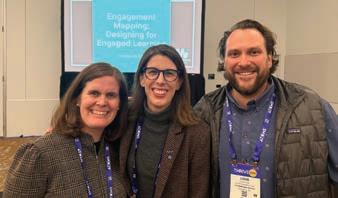
Wellington was represented on the national stage at NAIS Thrive 2026 in Seattle, where Ms. McLaren, Allen, and Frank led a three-hour workshop, “Engagement Mapping: Designing for Engaged Learning.” Their session highlighted the Wellington Engagement Index and guided independent school leaders in analyzing engagement data, mapping instructional strategies, and designing more intentional learning experiences.


Nicole Franks P ’38
ASSISTANT HEAD OF EARLY CHILDHOOD AND LOWER SCHOOL
Louis Frank
HEAD OF MIDDLE SCHOOL
Aaron Frim P ’19
ASSISTANT HEAD OF UPPER SCHOOL
Shelley Brown P ’32 ’33 ’38
ASSISTANT HEAD OF SCHOOL FOR ACADEMICS AND HEAD OF EARLY CHILDHOOD AND LOWER SCHOOL
Marty Frazier
INCOMING HEAD OF UPPER SCHOOL
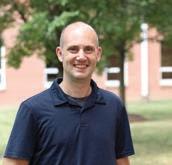
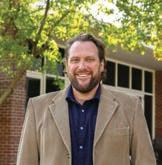
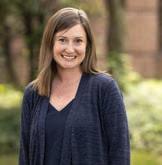
Franks, Frank, Frim, Brown, and Frazier attended the ISACS Division Heads Conference. Sessions with diversity practitioners focused on building community through collaboration and shared leadership across schools. They returned with practical strategies for leading with openness and trust and strengthening relationships across the school.
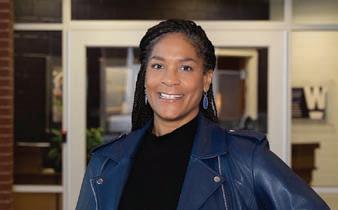
DIRECTOR OF ADMISSIONS
Jackson was featured in the October issue of Mahogany Columbus magazine in a profile highlighting her leadership in admissions at Wellington and within the Columbus independent school community. Under her leadership, Wellington enrolled the largest student body in its history for the 2025-26 academic year.
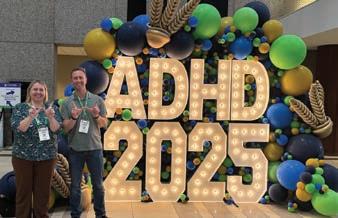
Clark P ’28
DIRECTOR OF STUDENT SUCCESS K–12
MIDDLE SCHOOL SCIENCE
Clark and Leadston attended the International Conference on ADHD in Kansas City this fall. They explored strategies to support executive function and emotional regulation, examined emerging research in neuroscience and therapeutic approaches, and gathered ideas to strengthen student learning and focus at Wellington.
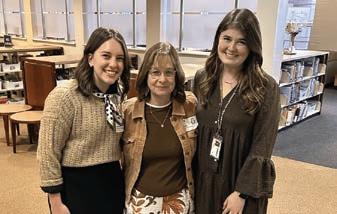
EARLY CHILDHOOD LEAD
Charbonneau welcomed a former professor and a senior from Heidelberg University to her kindergarten classroom, where they observed and gathered insights for research on positive, child-focused learning environments. The visit provided an opportunity to showcase Wellington’s early childhood program while contributing to ongoing research in the field.
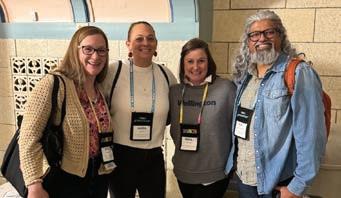
LOWER SCHOOL LEAD
Justine Smith P ’39
EARLY CHILDHOOD AND LOWER SCHOOL LEARNING SPECIALIST
ASSISTANT HEAD OF SCHOOL FOR ACADEMICS AND HEAD OF EARLY CHILDHOOD AND LOWER SCHOOL
HEAD OF UPPER SCHOOL
Brown, Presson, Raghunathan, and Smith attended the ISACS Annual Conference in Indianapolis this November. Brown and Smith presented “Building Connections: Engaging Activities for Students and Staff,” and Raghunathan presented “Not Another Exit Interview: Retaining Teachers Through Purposeful Leadership.” Presson represented Wellington as the lead learner.
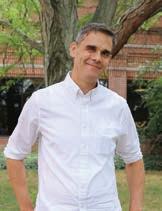

UPPER SCHOOL ART
Smith and Ellie Kirsner ’26 were selected to exhibit in “State of the Arts: Mentor + Mentee,” a statewide exhibition at Ohio University highlighting student artists and their mentors from high schools across Ohio. The selection reflects Smith’s work as a practicing artist alongside his teaching at Wellington.
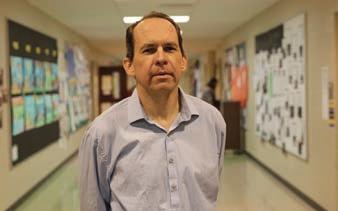
MIDDLE SCHOOL ROBOTICS DIVE
Fischer is serving on a Forging Industry Association committee working to revamp a professional development course for engineers in the forging industry. Some of the material informing that effort was originally developed for Wellington’s Engineering Materials and Manufacturing course.
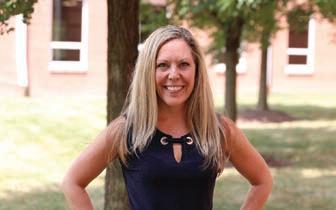
UPPER SCHOOL SPANISH
Trent was featured in the Collaborative Articulation and Assessment Project (CAAP) program newsletter at The Ohio State University as part of its Teacher Highlight series. Wellington’s thirdyear Spanish students participate in CAAP’s language proficiency assessment, which measures listening, speaking, reading, and writing skills and estimates students’ potential university language course placement. Trent has partnered with the program for more than a decade, helping Wellington students demonstrate their language proficiency through the assessment.
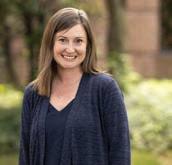
Shelley Brown P ’32 ’33 ’38
ASSISTANT HEAD OF SCHOOL FOR ACADEMICS AND HEAD OF EARLY CHILDHOOD AND LOWER SCHOOL
Sharla Starker P ’17
UPPER SCHOOL ACADEMIC DEAN
Brown and Starker recently attended Strategic AI for K–12 Schools at Denison University, where independent school educators explored practical and ethical approaches to integrating AI in teaching, learning, and school operations. They are continuing conversations at Wellington about thoughtful and responsible uses of AI in teaching and learning.
By Jacob Ely ASSISTANT DIRECTOR OF DEVELOPMENT FOR THE
Thanks to the generosity of Wellington community members, we are able to make big things happen.
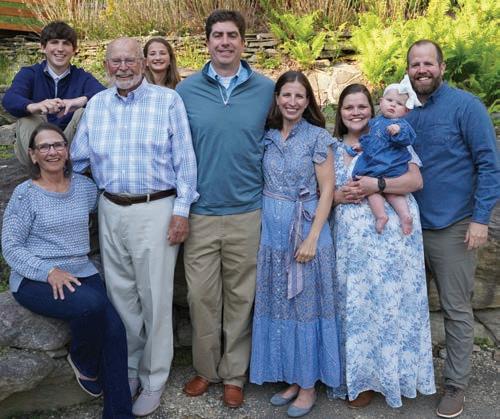
Peter and Kristi Johnston P ’99 ’01
“We have long said that The Wellington School was the best investment that we ever made,” said Peter and Kristi Johnston P ’99 ’01, parents of Wellington Lifers Amy Estes ’99 and Jud ’01. Their Wellington journey began with Amy’s enrollment in kindergarten, a decision they credit with shaping their lives today.
From the start, the Johnstons were drawn to Wellington’s collaborative and inclusive environment. Faculty, staff, and parents worked together to create a community that extended well beyond academics. Through their involvement with the Wellington Parents Association, athletics, and Board service, they experienced that partnership firsthand. “Parents were embraced from the beginning as part of the process,” they said. Open communication and engaged teachers made it easy for their family to feel deeply connected to their children’s education.
Many of their most meaningful memories are rooted in traditions that brought the community together, including Ski Fridays, the Senior Buddy program, and the Prom Pledge. They also valued the opportunity for students to
explore a wide range of interests, participating in theatre, music, and athletics. “The education our children received addressed their unique personalities and created an excellent foundation for college and for life,” they said.
Today, the Johnstons remain closely connected to Wellington and take pride in watching the school continue to grow. Their philanthropy is grounded in gratitude and a desire to sustain the community that meant so much to their family. By giving back, they hope to ensure that future students and families experience the same sense of belonging, opportunity, and support that defined their Wellington years.

Katz Kadlic ’19
Katz Kadlic ’19 reflects on his time at Wellington as a chance to build a strong foundation for his future while shaping an experience that reflected his interests. The school’s supportive environment allowed him to grow in multiple ways through a wide range of opportunities. “I loved my 11 years at Wellington,” he said. “The environment allowed me to thrive academically, socially, and athletically, providing a strong foundation for my development.”
Among his favorite memories are participating in Ohio Youth in Government and scoring the game-winning goal in the district final during his senior year. “I loved playing on the soccer team, and that was a memory that will stick with me forever,” he said.
That sense of connection has continued well beyond graduation. Kadlic remains actively engaged with Wellington through its alumni community, both benefiting from and contributing to the network. As a JagsConnect volunteer, he offers career and college guidance to current students and fellow alumni. He also stays connected by participating in a pickup soccer league with fellow alumni.
His first gift to Wellington last fall was a natural extension of that connection. “Having benefited so much from my time at Wellington, I wanted to pay it forward to support future students,” he said. For Kadlic, philanthropy is a meaningful way to invest in the community that shaped him and to help ensure future Wellington students can share in similar experiences.
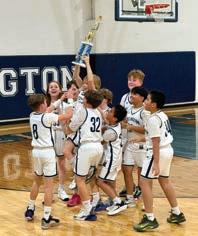
Wellington’s middle school basketball program saw incredible success this past season. The 7th grade boys and 6th grade girls teams went undefeated in the regular season, while the 6th grade girls and 5/6 boys blue team each won their championship. Coaches and players reflected on what went into their standout seasons.
The 7th grade boys basketball team started the season on a challenging note, with a loss in its first scrimmage at the IBT Middle School Shootout.
“That loss ended up becoming our best lesson of the entire season,” said coach D’Aaron Garrett.
From that early setback, the team rallied to a winning regular season and outscored opponents 535–296.
Andrew Harry ’31 recalled a close game against Fairfield Christian Academy. Wellington trailed 23–17 going into the fourth quarter, but Garrett encouraged the players to trust one another.
“We quickly caught back up,” said Harry. “That quarter, I shot 5/6 on my free throws. We finished the game winning by six points.”
Garrett added that the season “was defined by consistency, toughness, and togetherness. I had a team of boys who loved
PICTURED
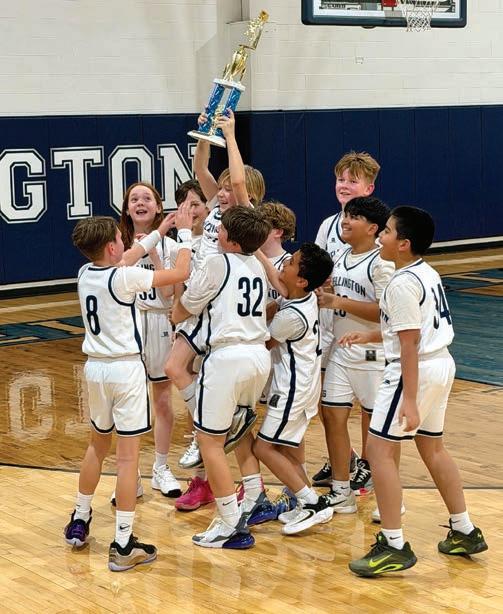
The 5/6 boys blue team celebrating their championship win
being around each other, who were coachable, and who embraced the competition together.”
Throughout the season, 6th grade girls coach Pete Baumann encouraged players to stay present, control what they could, and keep fighting.
That drive showed up in different ways across the team. Lauren Roginson ’32 handled the ball while defending opponents’ top players and making key decisions on the court. Elle Green ’32 and Fallon Mermis ’32 anchored the team as dominant rebounders, while Karter Wells ’32 and Brayden Effler ’32 stood out defensively and helped maintain a fast pace.
“It seemed like every game, a different player would come off the bench and make a big contribution,” said Baumann.
The winning season also reflected the team’s commitment to growth.
“They struggled last year and worked hard every practice and workout to improve,” said Baumann. “They did a great job understanding what we were trying to do and executing.
“Now the challenge will be how they handle success going into next year.”
For the 5/6 boys blue team, one key source of motivation came from Artie Taylor P ’23, former assistant athletic director and upper school basketball coach, who founded the Wellington Youth Basketball League. Taylor passed away from pancreatic cancer early in the season (more on page 45), and his loss gave the teams an added sense of purpose.
“Blake Aungst ’34, our only fourth grade student, had spent time working closely with Taylor and was especially motivated to win for him,” said coach Mason Roulston P ’31 ’34, middle school humanities and writing support specialist. “We also adopted Coach Taylor’s phrase, ‘We Fight,’ as our mindset all season. It set the tone every game and reminded the boys to play with grit, resilience, and for the person next to them.”
Roulston added that the team’s balance and discipline were central to its success. Aungst and Jio Susie ’32 formed a strong one-two punch on offense, while Cooper Borntrager ’32 elevated his play in the postseason. A connected defense—“rare at this age,” Roulston said—and trust in one another served as the team’s backbone.
An early loss at Brice Christian revealed growth opportunities and forced the team to regroup. By the time the teams met again in the championship, Wellington was ready, defeating Brice Christian on its home court.
“One of the things I will remember most is the composure the boys showed in that championship game,” said Roulston. “You could feel their focus from the opening tip. It was a full team effort, and that made it especially satisfying.”

Jack Mahaffey ’27 captured the state championship in the 100-yard backstroke this season, setting a new school record with a time of 48.38 seconds. He also placed seventh in the 50-yard freestyle, capping a dominant year in the pool.
Mahaffey entered the race with focus and control. “I was just trying to stay calm and focus on my race strategy,” he said. “I like to be in control of my races.”
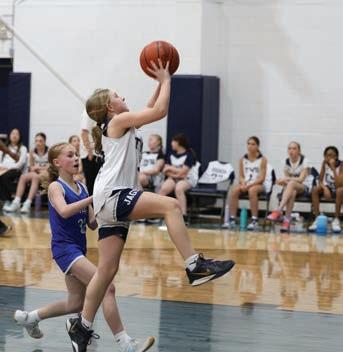
Lauren Roginson ’32 drives to the basket
The title also marked a long-term goal realized—one Mahaffey has held since the start of high school.
Coach Bill Miller P ’15 ’17 ’21 said Mahaffey’s discipline is at the root of his success. “He set a goal to win a state title, then went out and did it.”
Tucker Böhm and his wife, Michelle, purchased and reopened the Rambling House Music Bar in Columbus’s Old North neighborhood this past December, bringing a beloved community venue back to life after its closure last fall. The couple stepped up to preserve the venue’s roots-oriented programming and tight-knit community, bringing back former staff and reinstating the shows that made Rambling House a Columbus institution for more than a decade. “Something about Columbus without a Rambling House just doesn’t sit right,” said Böhm.
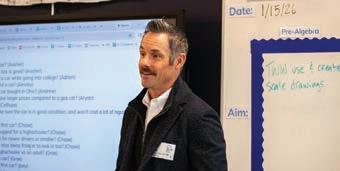
Ryan Gill, now the owner of a multi-dealership auto group, returned to Wellington as a JagsConnect volunteer to bring the real world into an Algebra 1 Advanced class taught by Anthony Constantino P ’38. Students came prepared: they had each selected a dream car and a dream job, modeled loan terms, and used algebraic thinking to calculate how credit scores and financing decisions shape the true cost of ownership—often delivering a quick reality check on those dream vehicles. With that foundation in place, they

developed questions for Gill, who drew on years of experience across every corner of the auto industry to address everything from interest rates and total cost of ownership to safety, environmental impact, and what actually makes sense for a first-time buyer. It was algebra in action, exactly the kind of connection JagsConnect was built to make.
Ryan Martin has been named head coach of Oakland Roots FC for the 2026 United Soccer League (USL) Championship season. Martin brings seven years of professional headcoaching experience to Oakland, most recently leading Loudoun United FC to its first-ever postseason berth in 2025. His career in professional soccer also includes scouting, development, and academy roles with Toronto FC, Columbus Crew, FC Cincinnati, and D.C. United. “I’m here to build something for the long haul and make it quite special,” said Martin in his introductory announcement. THE
THE CLASS OF
Carter Kalchik has taken on the role of chief technology officer at the AFL-CIO, the largest federation of labor unions in the United States. In this capacity, he leads data, technology, and strategy for the U.S. labor movement.
Do you have a new job, recent publication, or did you receive an honor or award? Did you recently marry, have children, or travel? Did you have a mini Wellington reunion with your classmates? The Wellington Alumni Office wants to share your good news with your fellow alumni.

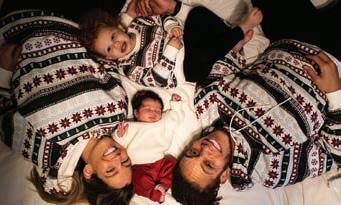
Liz (Craig) Stinson and her husband, Colin, welcomed Everly Joy Stinson on December 2, 2025. She joins big sister Charlotte.
THE CLASS OF
Tom Fenner has earned his Professional in Human Resources (PHR) certification through the HR Certification Institute and is looking forward to applying this continued development to his work in HR and talent development.
THE CLASS OF 2009

Caroleen Wilkes has launched STRAATEGIES LLC, a commercial real estate development advisory firm focused on mixed-use communities. Through STRAATEGIES, she provides feasibility analysis, program management, and portfolio optimization services to developers, investors, and government agencies. She brings more than 13 years of experience to the work, having helped deliver over 4,000 multifamily residences, 600,000 square
feet of office space, and multiple hospitality developments. Wilkes previously served as vice president of development at Wood Partners, leading teams through every phase of the development process. Based in Nashville, she is also a Member of the Royal Institution of Chartered Surveyors and serves on the boards of the YMCA of Middle Tennessee and a Wedgewood-Houston neighborhood alliance.
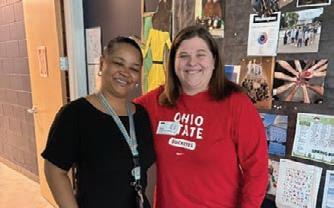
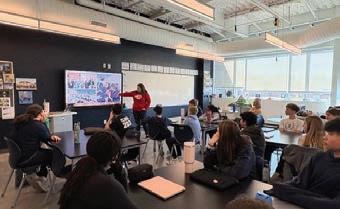
Dr. Laura Wilkie is an emergency medicine physician at Mount Carmel Health System and a JagsConnect volunteer who is bringing her skills back to Wellington this spring in a hands-on way. Dr. Wilkie joined Me-Chelle Burkhalter’s middle school Dive to help students learn about dissecting and suturing, creating a memorable experience for aspiring scientists and curious minds alike.
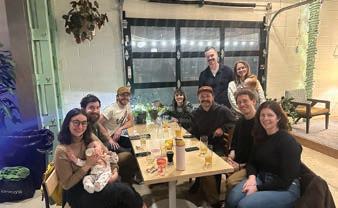
Members of the Class of 2009 gathered over the holidays this winter for an evening of reconnection and good company, a welcome reminder that the Wellington bond doesn’t fade.
Helen Fite is joining Porter Wright Morris & Arthur LLP in Columbus, where she will focus her practice on litigation and regulatory law. Fite comes to the firm following a judicial clerkship with the Honorable Edmund A. Sargus Jr. of the U.S. District Court for the Southern District of Ohio.
THE CLASS OF
Marcus Adams has started a new role as a senior financial analyst at Komar Industries LLC.
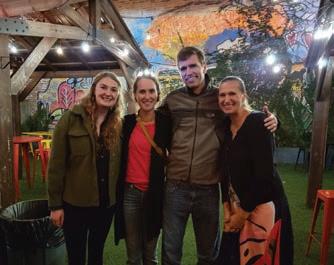
Jacquie Sierzputowski has cofounded The Siposium, a Columbusbased lecture series that brings expert speakers and curious minds together at local bars and breweries for evenings that blend academic inquiry with community conversation. Launched in 2024 and featured in Columbus Monthly, The Siposium creates a space for people beyond college to engage with big ideas over drinks. A recent event featured Bart Elmore P ’36 ’38, husband of Wellington’s Director of Nature-Based Learning Joya Elmore P ’36 ’38, speaking on the environmental impact of corporations and capitalism, with Joya in the audience.
THE CLASS OF
India Carter has begun her doctoral studies at the University of California, Berkeley.
Liv White has started a new role as Growing to Green manager at Franklin Park Conservatory and Botanical Gardens. When she is not leading conservation work, White also serves as a Muay Thai instructor for youth ages 8 to 14.
John Riley O’Toole has advanced to Ph.D. candidacy in the Plasmadynamics and Electric Propulsion Laboratory at the University of Michigan after passing his preliminary coursework exam this past fall. He was also awarded the NASA Space Technology Graduate Research Opportunities (NSTGRO) fellowship for his proposed research on laser-based measurement techniques in Hall Effect Thrusters, work aimed at enabling more efficient plasma-based propulsion for cis-lunar, Mars, and deep space missions. The fellowship will support his research over the course of his doctorate and include rotations at NASA centers across the country.
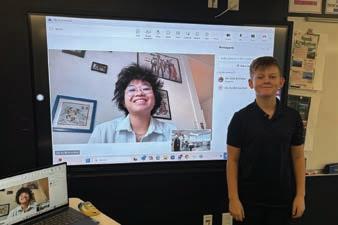
Ellie Rui 瑞 is continuing to build her jazz career in Chicago, where she has been performing and recording since graduating from the Oberlin Conservatory of Music. When she is not on stage or in the studio, Rui 瑞 made time to come back to Wellington as a guest speaker in Me-Chelle Burkhalter’s 6th grade math class.
Milan Gonela has joined the Positive Foundry as a business development representative, working alongside fellow Jag Laura Cooke ’90, founder of the Columbus-based personal development company and a featured alumna in this issue of The Jag.
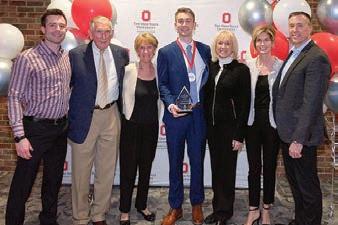
Caleb Wooddell has been named the 2026 recipient of the S. Maurice Bostic and Birch S.M. Bostic Memorial Award at Ohio State’s Fisher College of Business, one of the most prestigious honors in the Pace Setter program, which recognizes the top students among Fisher’s more than 9,000 undergraduates. Wooddell was also recognized as a Pace Setter in 2025, making this endowed senior award an especially high honor. He additionally serves as the student ambassador team captain in the Undergraduate Programs Office.
Parker Haskett has accepted a software engineering internship with FMX, where he is excited to expand his technical skills alongside professional engineers.
Rex Harvey-Thurston placed first among undergraduate students at the Entomological Society of America conference in Portland, Oregon, this fall, competing against more than 600 students from across the country. Harvey-Thurston presented their research on the effects of land cover on butterfly biodiversity and is also conducting forensic entomology research back in Ohio.
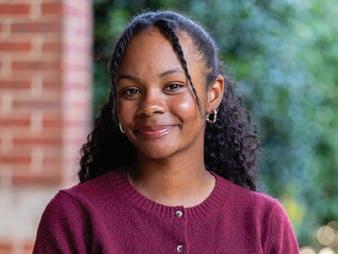
Alexis Burkhalter graduated from Belmont Abbey College this May with honors and will go on to pursue a graduate degree in sports administration. At Belmont Abbey, Burkhalter served as student government vice president, president of the sport management program, and student activities representative. On the court, she earned multiple honors as a varsity tennis player, including Regional Rookie of the Year, two All-Conference recognitions, an undefeated conference singles record in 2025, and the Belmont Abbey Impact Player Award. She also completed an internship with the Big South Conference and supported student-athletes through the Athletics Academic Services office.
Ben Beckman has accepted a Grounds Crew Internship with the Columbus Crew this summer, where he will gain hands-on experience maintaining an MLS-level pitch and learning the day-to-day operations of professional sports turf management.
Abdullah Amir presented his ovarian cancer screening research at the Student Internship Showcase during Denison University’s Big Red Career Expo this spring. The research, conducted at the University of Kentucky College of Medicine under Dr. Ed Pavlik, was shared with students and visiting employers through the Knowlton Center for Career Exploration.
Emma Cooke is joining IGS Energy in Dublin, Ohio, this summer as a campus talent engagement intern, where she will support the Talent Acquisition team by sharing stories of the intern experience and strengthening connections with college campuses.
Madeline Meimaridis is in her second year at Kenyon College and is competing as a member of the Owls’ inaugural women’s golf team, the program’s first-ever season in the North Coast Athletic Conference. Meimaridis is part of the founding squad helping to build what promises to be an exciting new chapter in Kenyon athletics.
Armaan Chaudhary has been selected for the John Glenn College of Public Affairs’ Washington Academic Internship Program at The Ohio State University, joining a cohort of 30 students for a summer semester in Washington, D.C. As a 2026 John Glenn Fellow, Chaudhary will pursue his interests in fiscal policy, legal studies, and artificial intelligence while gaining hands-on experience in public service.
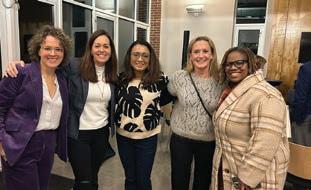
Ashley Koff ’91, RD, returned to Wellington this winter to speak about her New York Times bestseller, “Your Best Shot.” The Q&A was moderated by Brea Porter ’12, and classmates Laura Cooke ’90, Laura (Miller) Thompson ’90, Sophia (Baidya) Mohr ’91, and Tanikka Price ’92 came out to support the event. Koff carried that momentum to Cincinnati the following weekend, where she delivered her talk at the city’s TEDx event.
Ben Starker ’17 organized a Wellington alumni co-ed indoor soccer team this winter, and for the second year running, the team brought home the league championship. Teammates spanning the Classes of 2004 through 2025 have made the league title almost secondary to the time spent together on and off the field.

Friends from the Classes of 2018 and 2019 got back together over the holidays for a night out in Columbus.
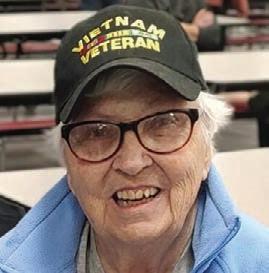
Karen Pauline Downey, longtime Wellington school nurse and devoted parent of three Wellington alumni— David ’91, Chris ’94, and Debbie Beers ’98—passed away on June 1, 2025.
Karen began her nursing career in the Air Force, where she met her husband, Walter, before bringing her talents and compassion to Wellington. Known for her signature ice packs and “prescription-strength crackers,” she cared for students with equal parts professionalism and warmth. After retiring, she continued nurturing new caregivers by teaching part-time in Columbus State’s Nurse Aide program.

Erin Elizabeth Finn ’23 passed away on October 3, 2025, at 21, after living with cancer. Known affectionately as “Peach,” Erin radiated joy, humor, and warmth, leaving a lasting impression on all who knew her. Born in Upper Arlington, she graduated from Wellington in 2023 and was a sophomore at Rollins College at the time of her passing.
Erin’s quick wit and vibrant spirit made her a beloved friend and classmate.
Debbie (Downey) Beers reflects:
“Mom loved her Wellington kids and families. Several handmade presents were mainstays in her house, and she loved to talk about the stories behind them. She treasured her relationships with coworkers throughout the school. Wellington was a special time in her life and crackers cure all!”
Outside of school, Karen cherished summers fishing on the Pickerel River in Ontario and was known for her enduring love of Disney adventures. She never missed a school event for her children and grandchildren and believed deeply
in showing up for the moments that mattered most.
Our thoughts are with her children; her grandchildren, Ashley, Ethan, Holly, Brooke, and Zachary; and her brother, Louis Fielder. The Wellington community will long remember Karen’s steadfast care and generous spirit.
Her love of music and film—paired with a beautiful singing voice that often filled her home—reflected her artistic heart. During her illness, the compassion she received from nurses and caregivers inspired her to consider a future in helping others.
Her longtime academic advisor, Jennifer Frim P ’19, shared how Erin approached her goals with sincerity and purpose. As Erin moved through upper school, those conversations deepened into broader reflections on her future. Frim recalled Erin’s growing sense of direction and her desire to support others through personal connection, noting, “She had a deep interest in psychology that stemmed from her desire to help people who were struggling. Erin believed that her experiences would help her connect with people and partner with them on their mental health journey.”
“When I moved to Columbus our junior year, Erin was one of the first friends I made. She made me feel excited to be
in such a new place despite how nervewracking changing schools was. To this day, she is the silliest person I’ve ever met, but her humor was never at the expense of others. She was an amazing listener and an even better friend. I miss her every single day.” — Sam de Lima ’23
“Erin is the most free-spirited, true-toherself person I have ever met. She was one of the greatest friends I’ve ever had. I am grateful every day for all the time we had together, though it would never have been enough. No matter what, she was always happy for others’ good fortune and ready to say a kind word. I miss her immensely and feel so lucky that we came into each other’s lives. I love you, Erin!” — Abigail Noritz ’23
She is survived by her loving parents, Matthew and Stacey Finn, and her brothers, Brendan and Jack. Erin now rests beside her grandparents, John and Faye Kaelber. Those who knew Erin continue to carry her kindness and spirit with them.
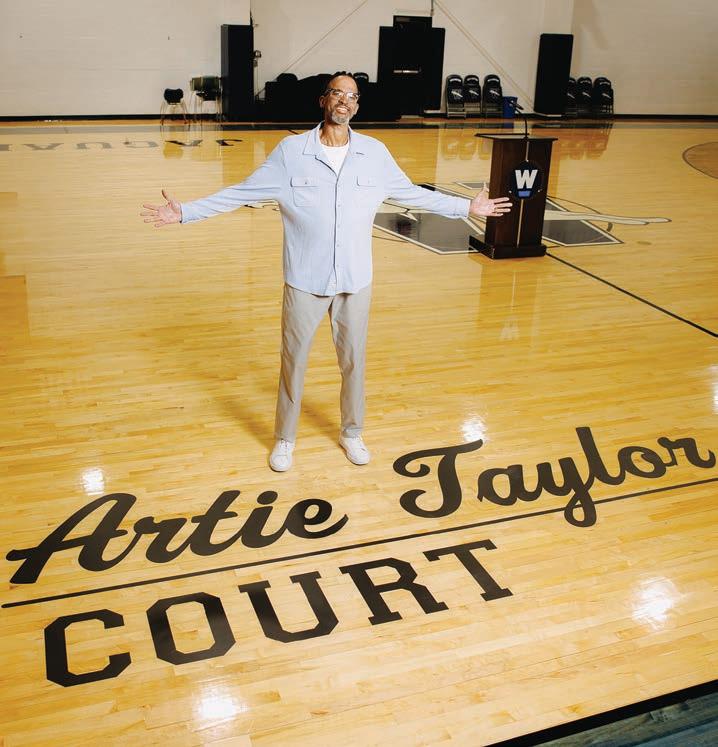
Artie “Coach” Taylor P ’23 passed away in December 2025 at the age of 50, leaving behind a presence that had filled every room he ever entered.
Since joining Wellington in 2014, Artie served as assistant athletic director and head coach of the varsity boys basketball team, building a program defined by success and purpose. Under his leadership, Wellington earned 143 wins, two regional titles, and two appearances in the OHSAA Final Four. Yet statistics never fully captured what made Artie exceptional.
His players learned discipline, commitment, and accountability, but they also learned something deeper: how to support one another, persevere, and carry themselves with humility and character. Artie often described
the “Wellington Way” as striving to be better while helping those around you improve. It was a philosophy he lived every day, reinforced by his signature mantra: “We Fight.”
“Basketball was simply the vehicle through which Artie shared his love and passion for others,” said Lindsey Smith P ’33, Wellington’s chief operating officer and former athletic director. “He was generous, thoughtful, and humble. He made everyone feel as though they were his very best friend.”
His impact extended well beyond varsity competition. Artie created the Wellington Youth Basketball League, welcoming hundreds of young players from across Columbus into the game he loved.
Away from the court, Artie was a constant presence around campus. He rarely passed someone in the hallway without stopping to ask how they were doing, and he meant it.
Above all, Artie’s greatest joy was his family. He is survived by his wife, Christine P ’23, and his son, A.J. ’23, who now plays basketball at Wittenberg University. In A.J.’s first game back after stepping away during his father’s illness, he scored a threepointer, a poignant reminder of the bond they shared through the sport they both loved.
In November 2025, Gard Gym filled with former players, colleagues, and families who had come back for one reason: to honor their coach. Artie was there to see it. When it was over, the gym rang out with the mantra he had instilled in all of them: “We Fight!” Artie Taylor Court now bears his name, and every student who steps onto that court carries forward the spirit he brought to Wellington: work hard, stand together, and keep fighting to become better, for yourself and for those around you.