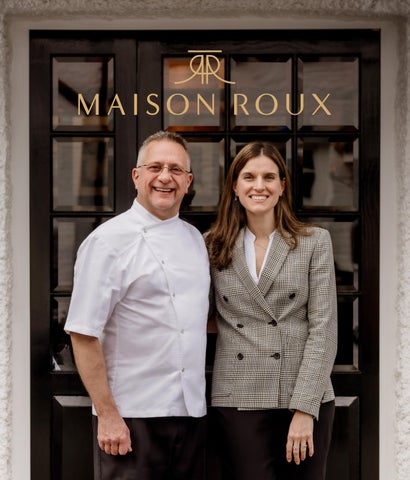
WELCoME to tHE first issue of Maison Roux. For more than 30 years, our annual magazine has carried the name of The Waterside Inn. That legacy remains at our core and is our inspiration. With a gradual evolution across the years, we felt the need to introduce a new expression, not only for our magazine but also for our operation in general, reflecting something more personal. Maison Roux now brings together all our ventures under one umbrella.
This is our house magazine in every sense, a glimpse of Maison Roux ahead of its wider unveiling, as we open our doors to the full family. You will find the same standards, discipline, passion, and spirit across every part of it – from The Waterside Inn and the Alain Roux Culinary School to Brasserie Roux, the Alain Roux Boutique, events, partnerships and more. Each has its own character and is shaped by the same intent: to give pleasure, share knowledge, create memorable experiences, and extend a warm welcome to everyone.
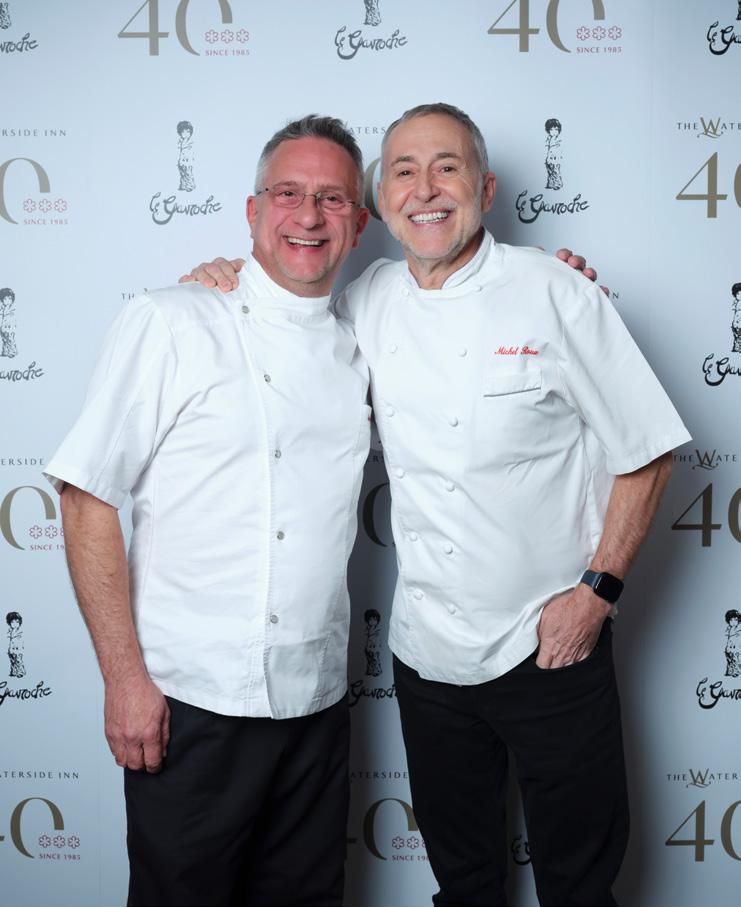
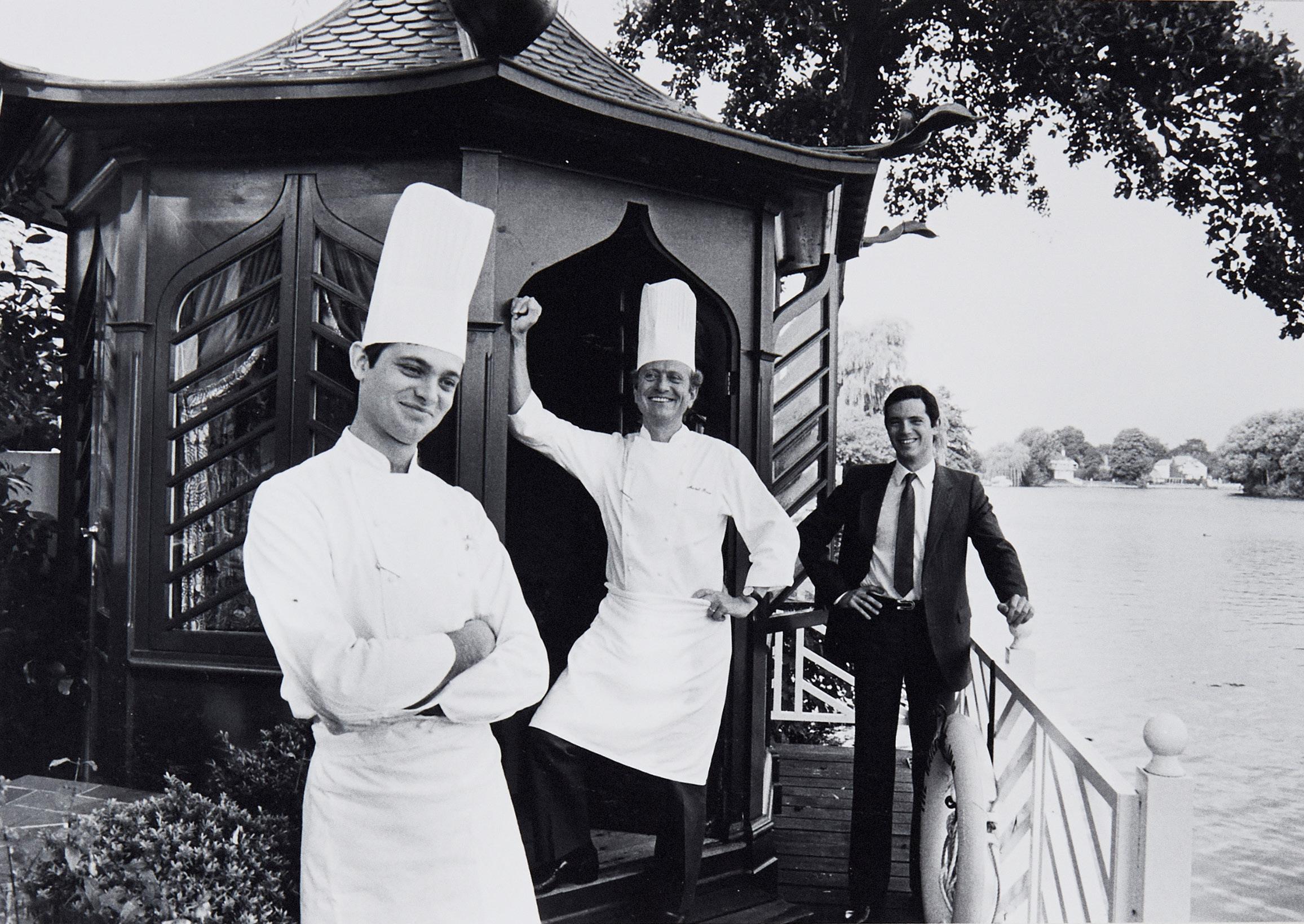
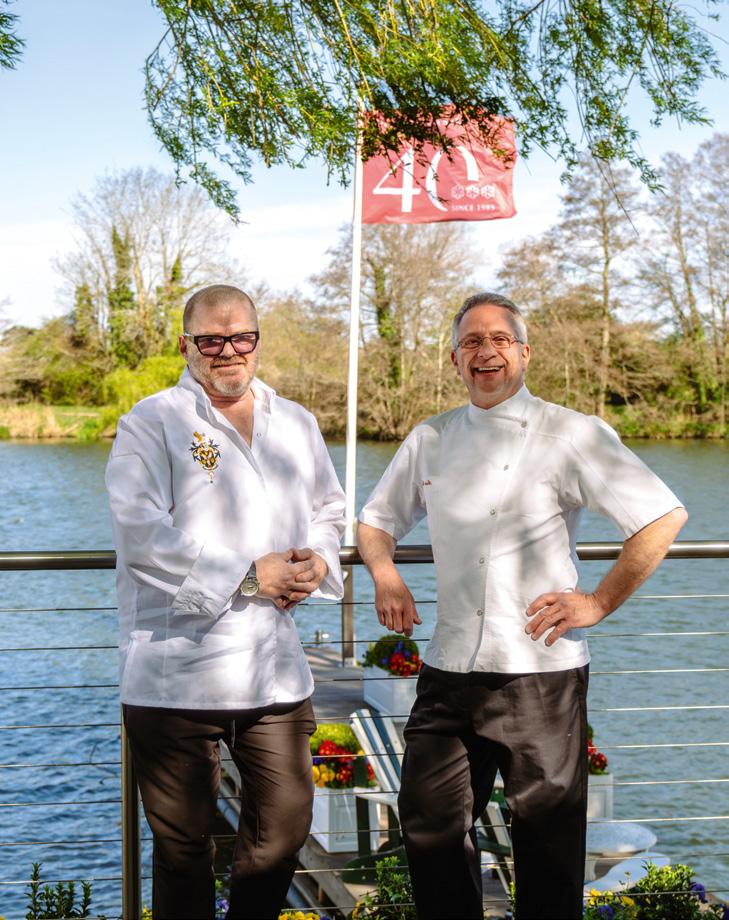
This issue marks an important moment. In 2025, The Waterside Inn reached 40 consecutive years of holding three Michelin stars – a rare milestone. We now move into the next decade. It demonstrates consistency, resilience, and a deep commitment to our craft. It also honours the teams, past and present, who have built, protected, and carried our high standards forward every single day. You will meet many of them in these pages. Their stories sit alongside reflections on 1985, when that third star first arrived under the leadership of my father, Michel Roux OBE. His vision launched a quiet gastronomic revolution and his influence runs through every part of Maison Roux today. Alongside highlights from the celebrations in 2025, you will see how the same energy and camaraderie runs through the wider group. We visit the Culinary School and step into Brasserie Roux. In our culinary gardens, a wide variety of produce is grown with care to be used by our chefs. Across every space, the approach stays consistent. Details matter. People matter more.
MAISON ROUX
MAGAZINE 2026
EDITOR
Ben Winstanley
CREATIVE DIRECTOR
Matthew Hasteley
PUBLISHING MANAGER
Lee Whitlock
SENIOR DESIGNER
Lucy Javanshir
LOGO DESIGNER
Claire Whyte
CONTRIBUTORS
Carolyn Boyd
Mike Gibson
Nick Savage
Christy Spring
PHOTOGRAPHY
Ian Dingle
Jodi Hinds
Dan Kennedy
Jamie Lau
Ciaran McCrickard
Lateef Okunnu
PUBLISHED BY
Threadneedle Media Ltd
MANAGING DIRECTOR
Mark Hedley
ON BEHALF OF Roux Waterside Inn Ltd THREADNEEDLEMEDIA.COM
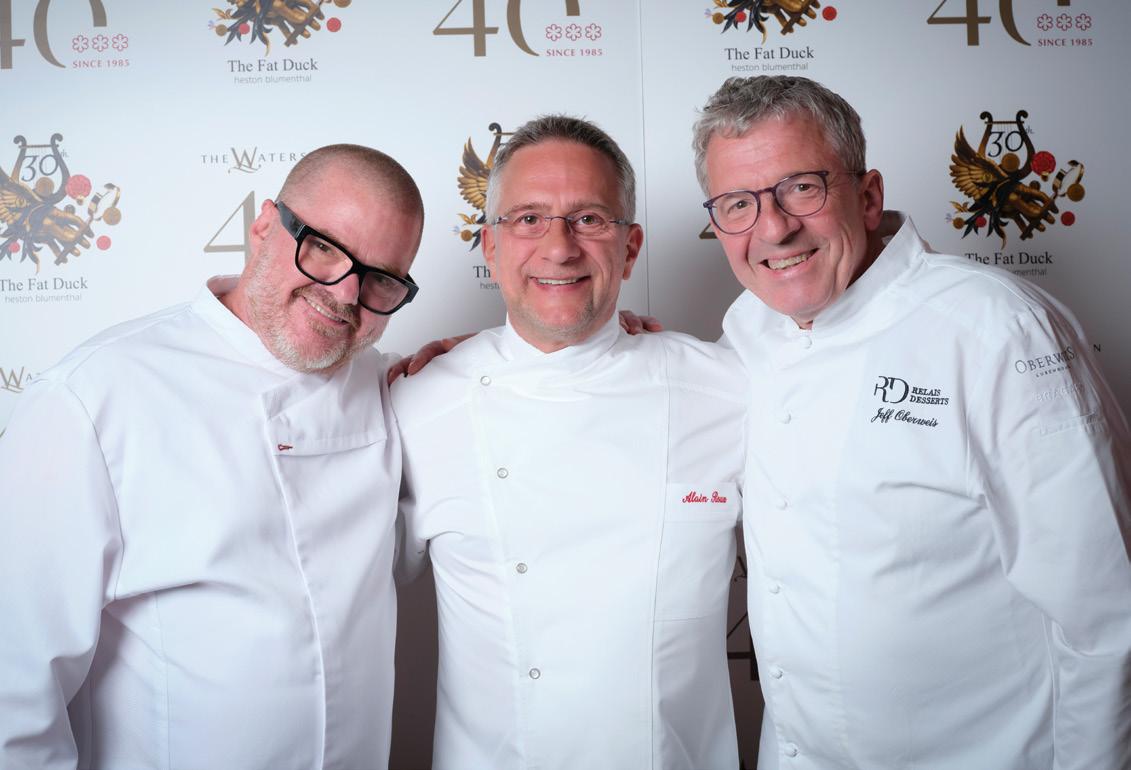
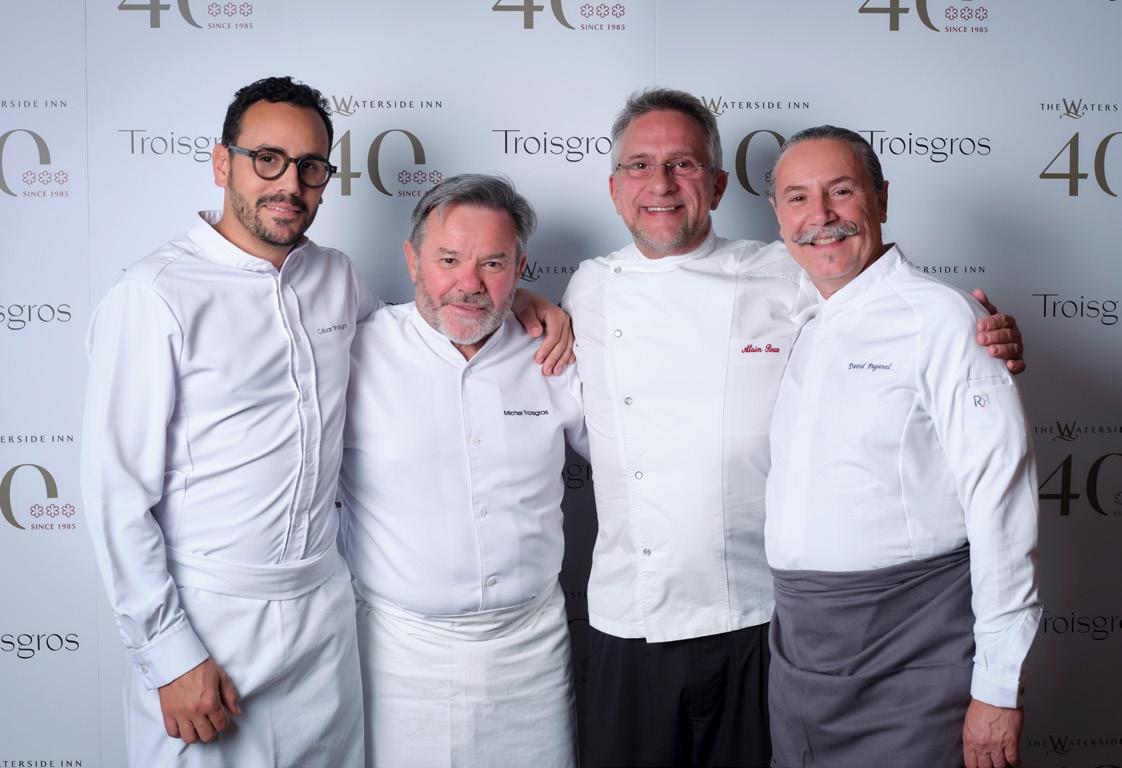
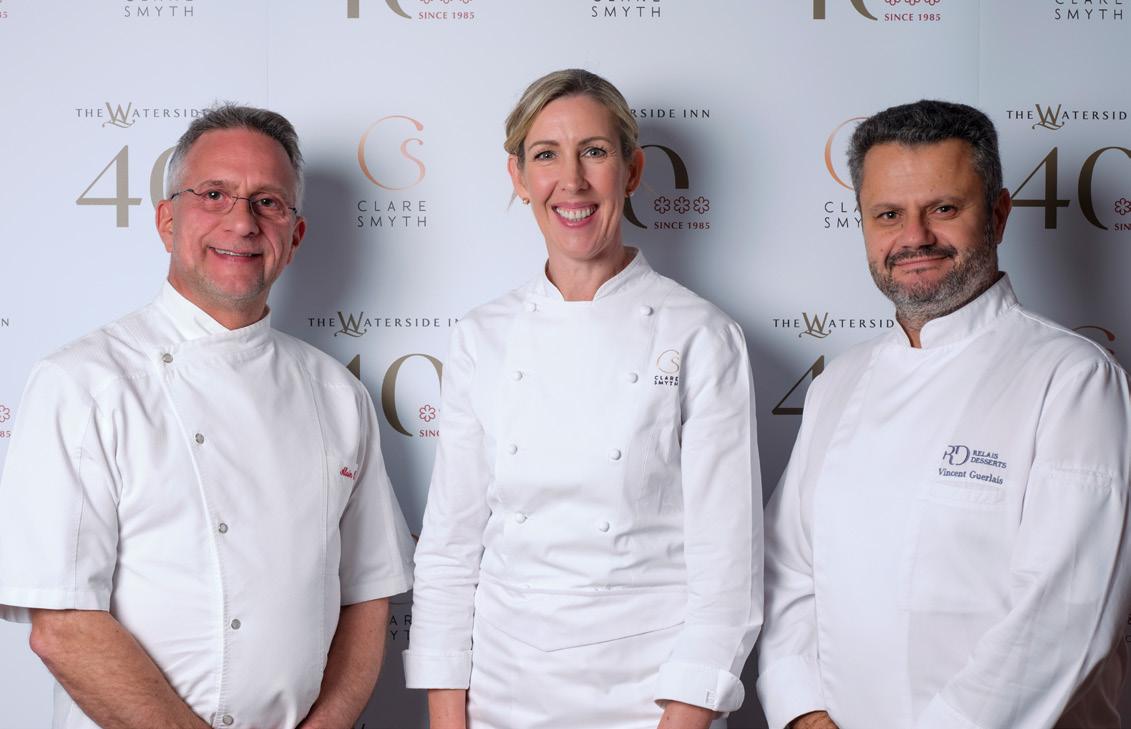
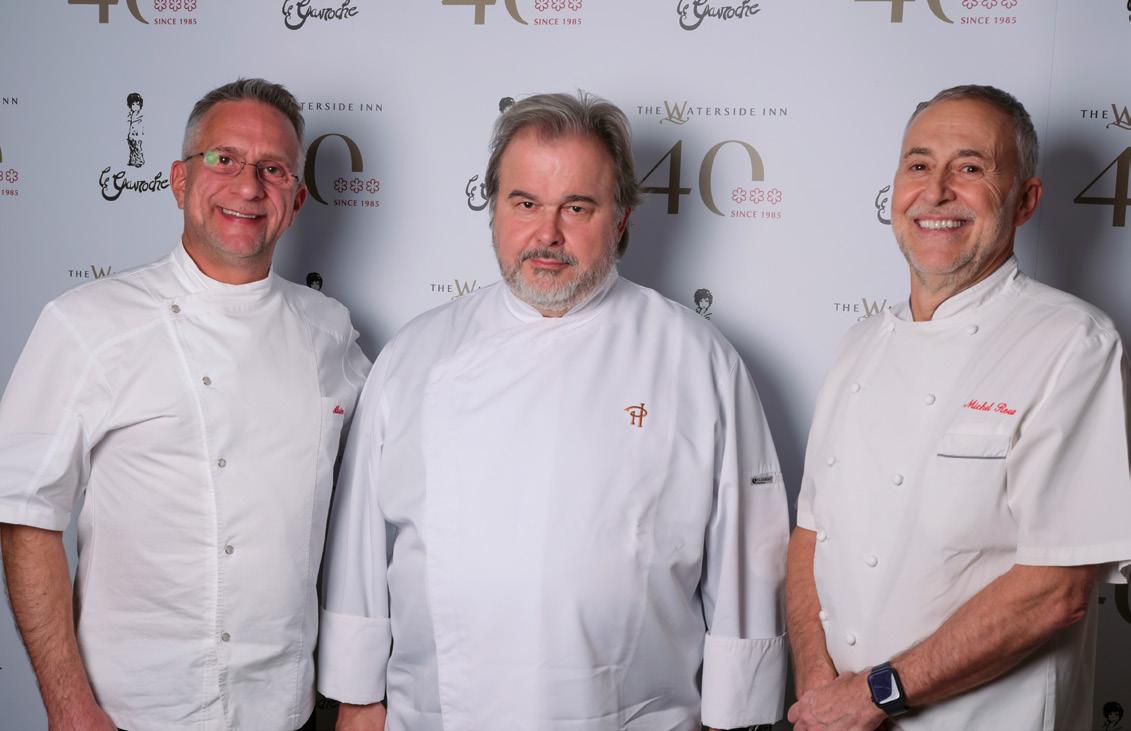
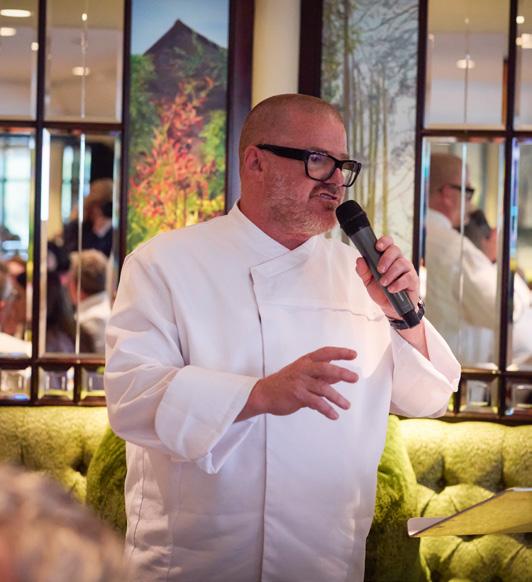
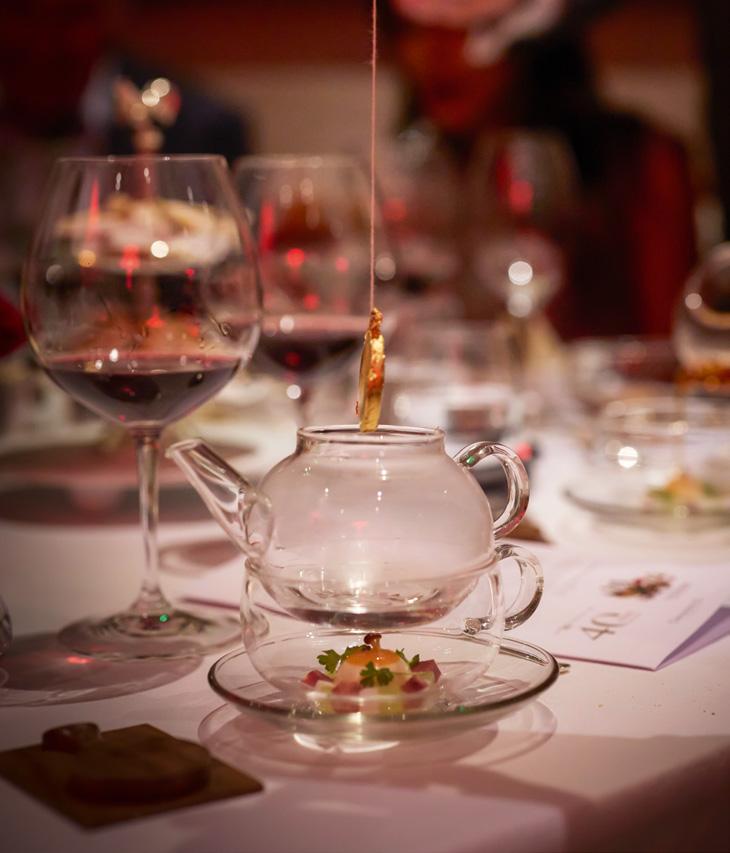
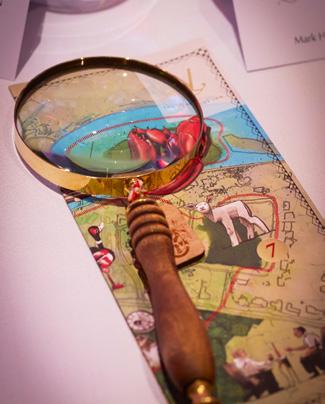
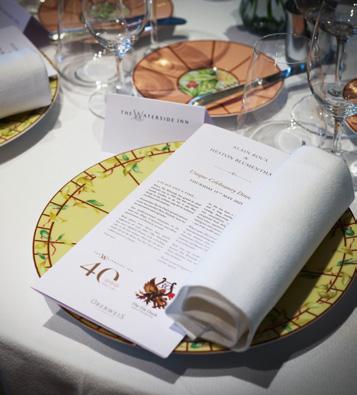
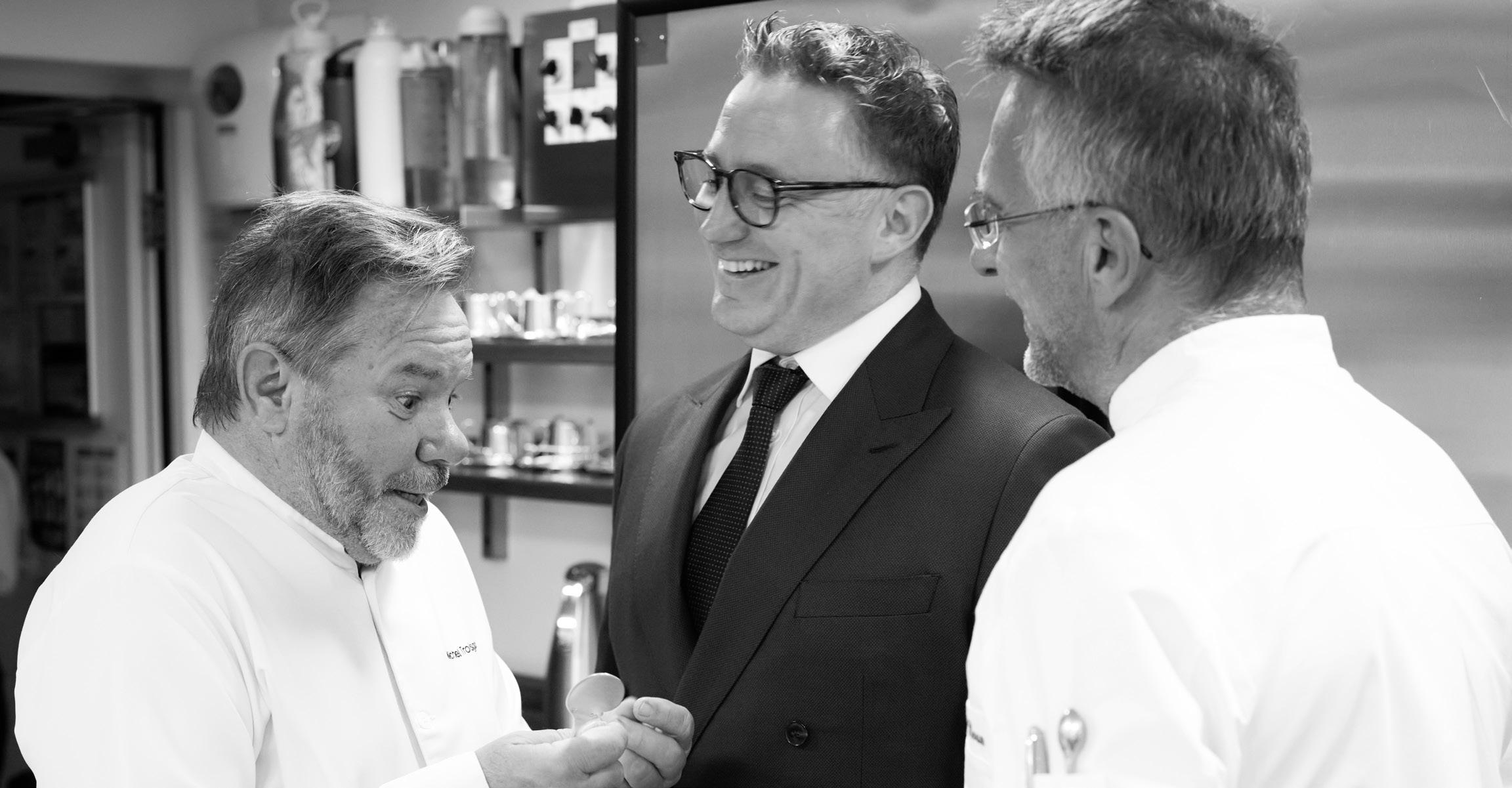
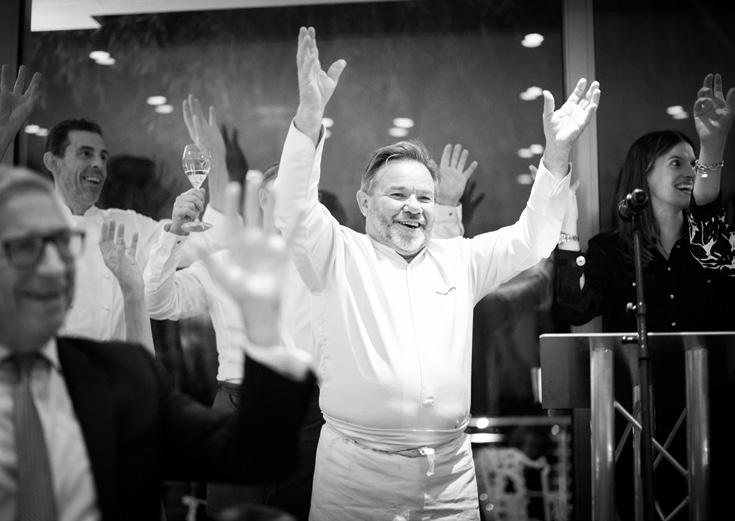
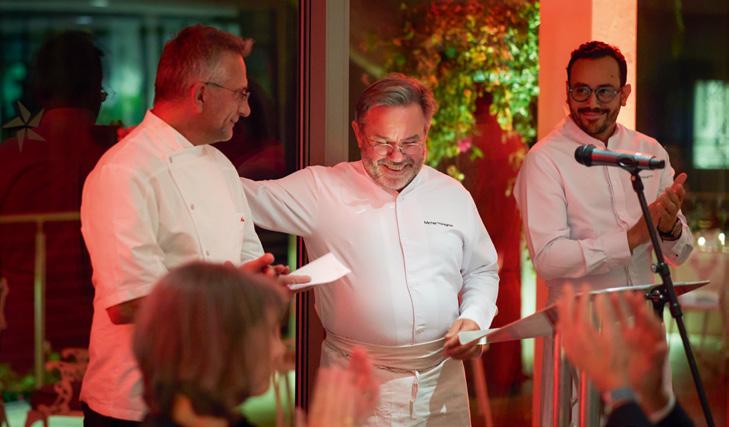
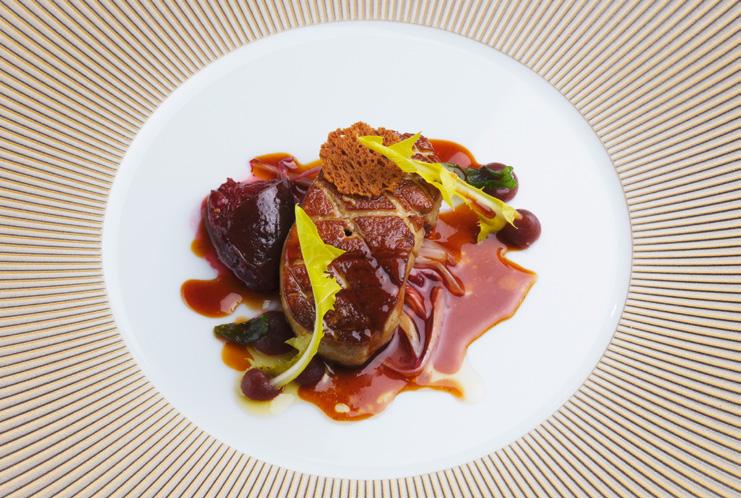
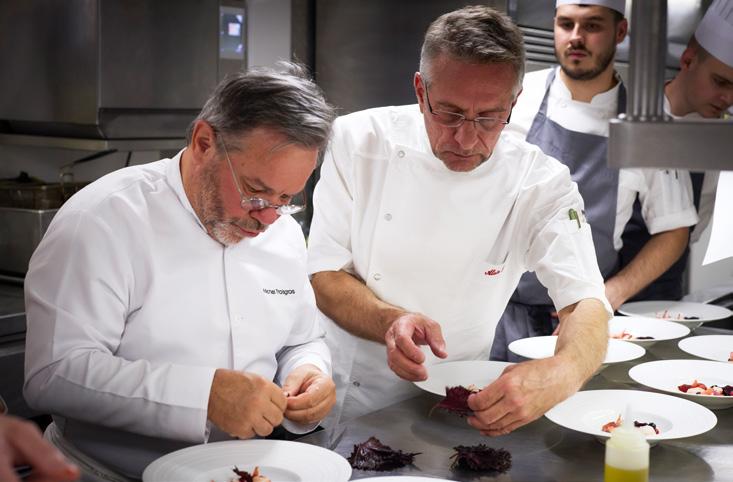
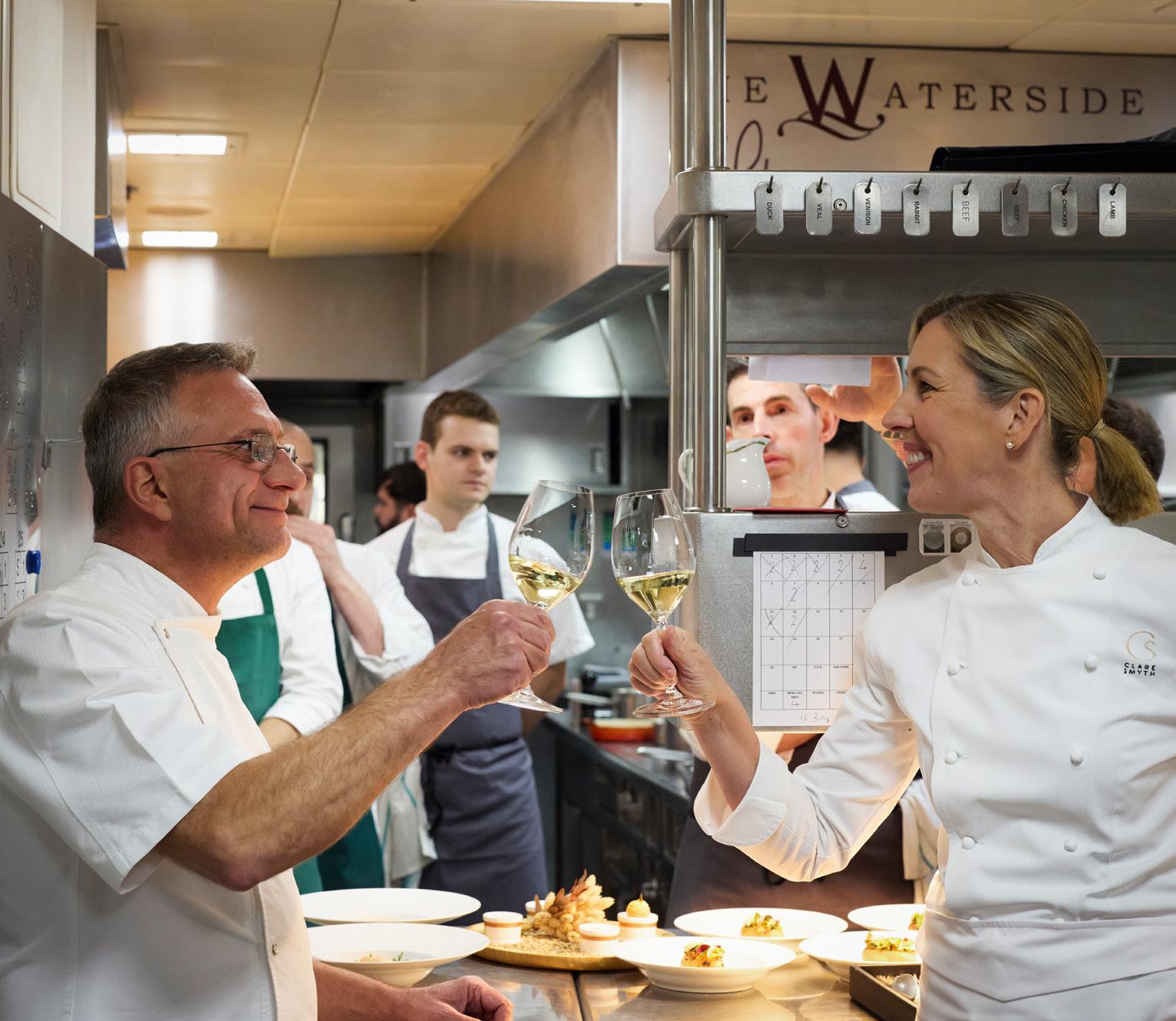
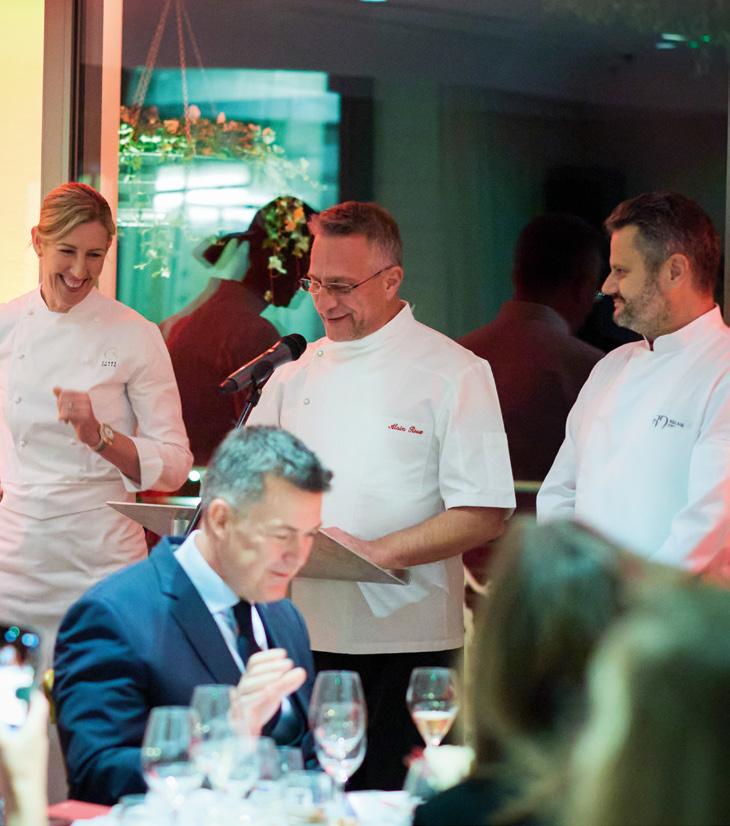
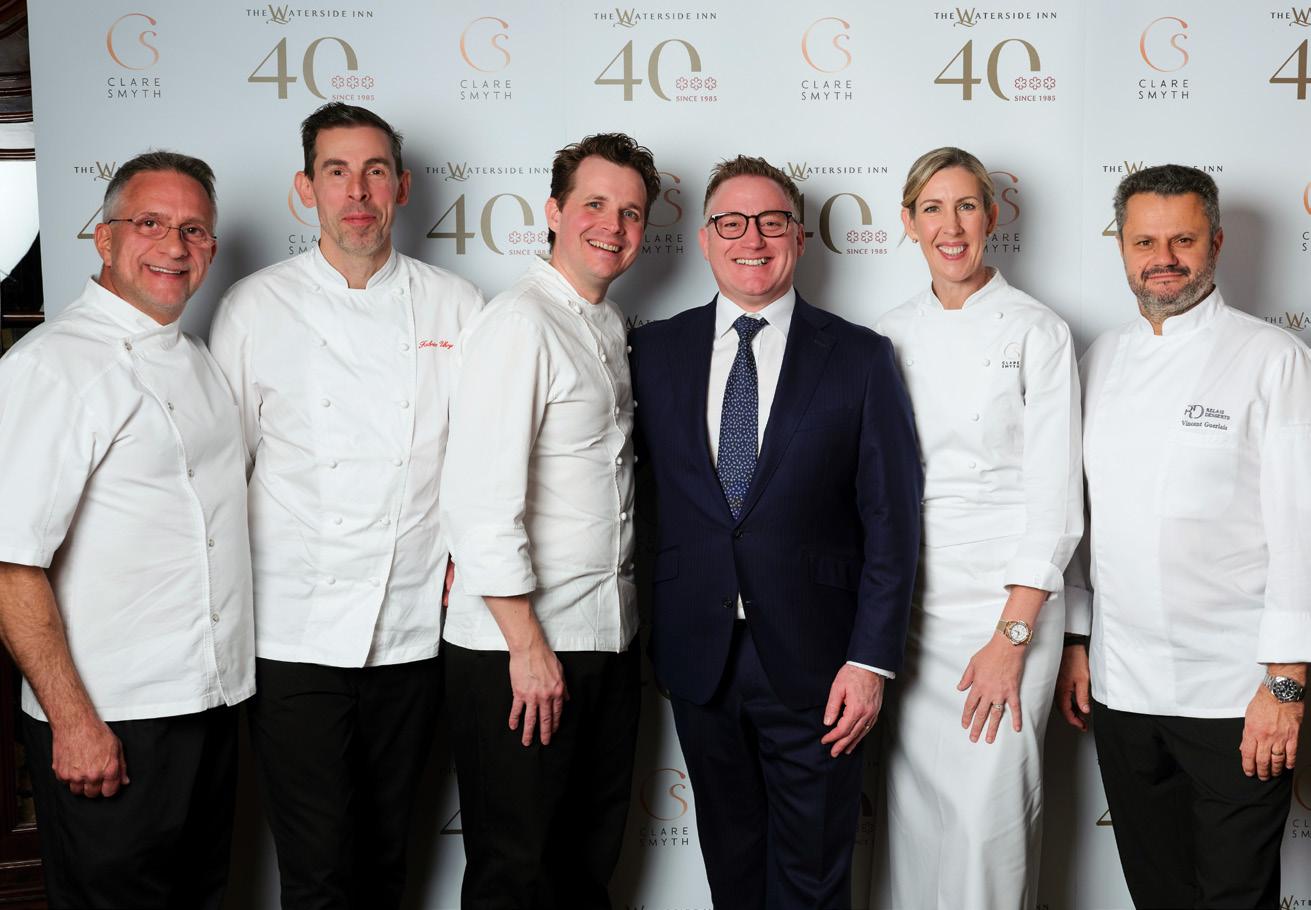
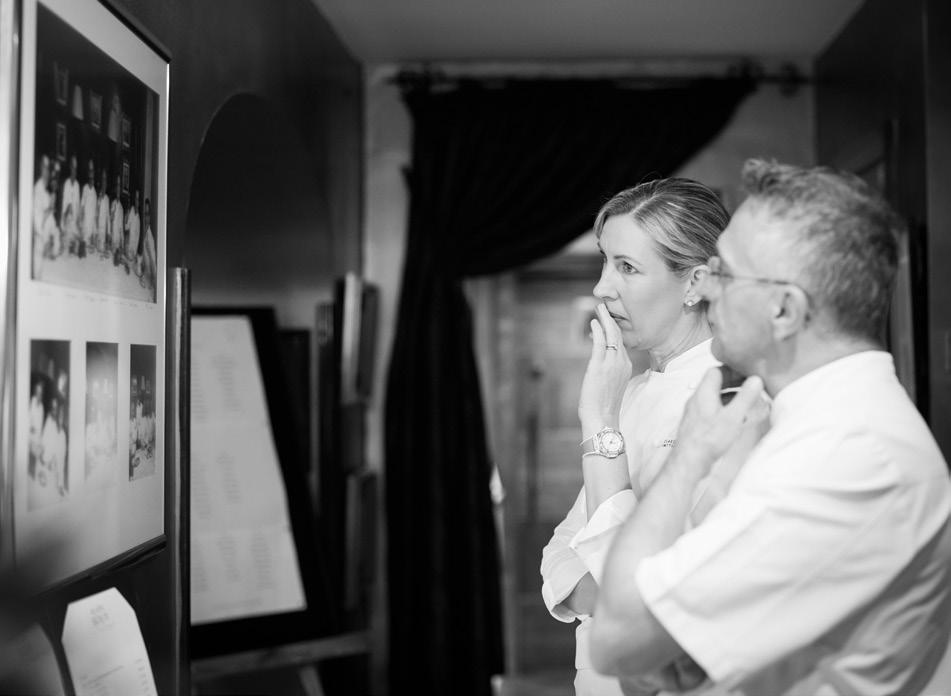
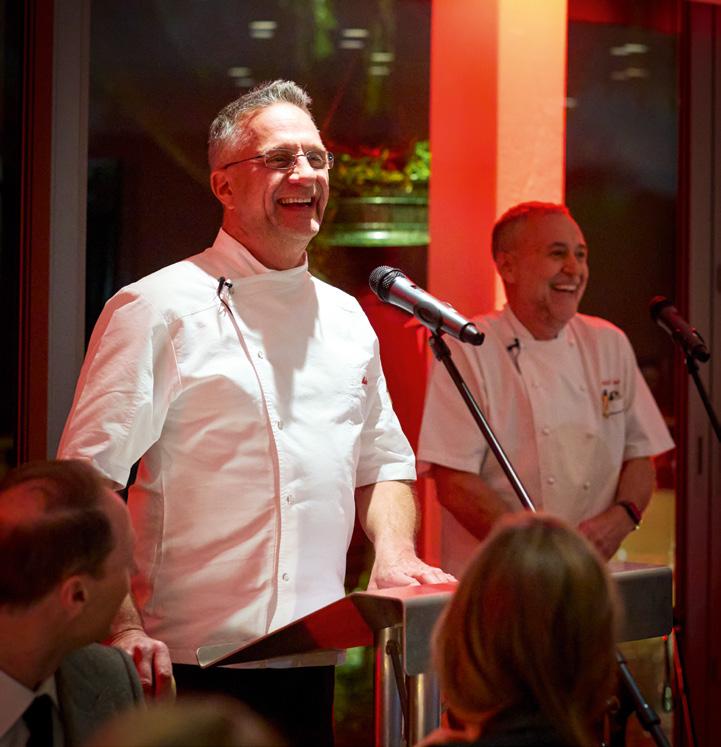
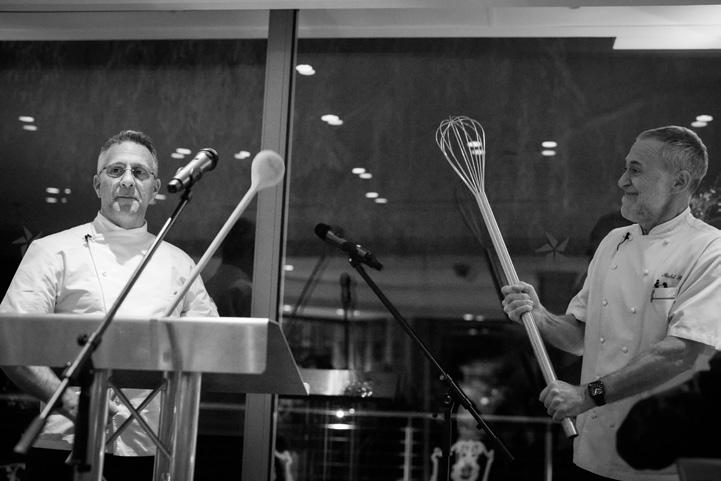
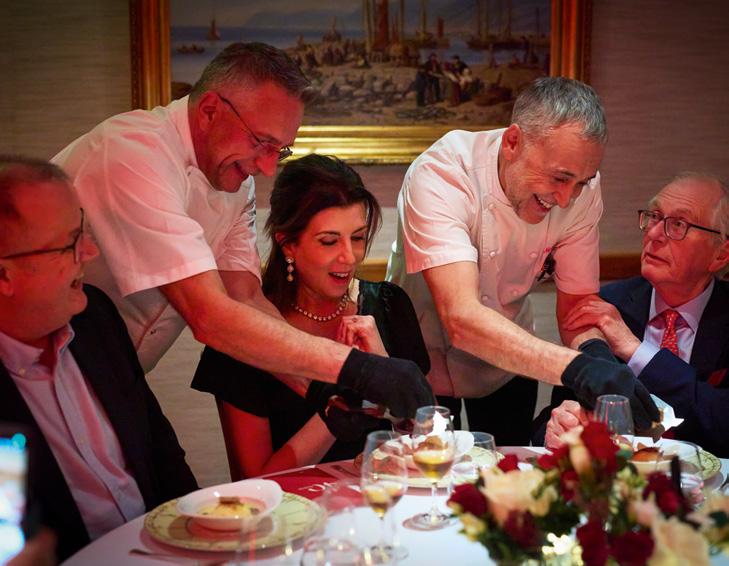
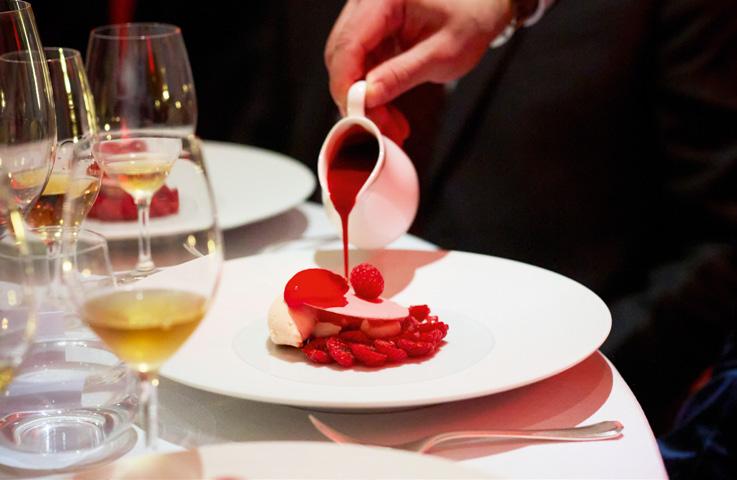
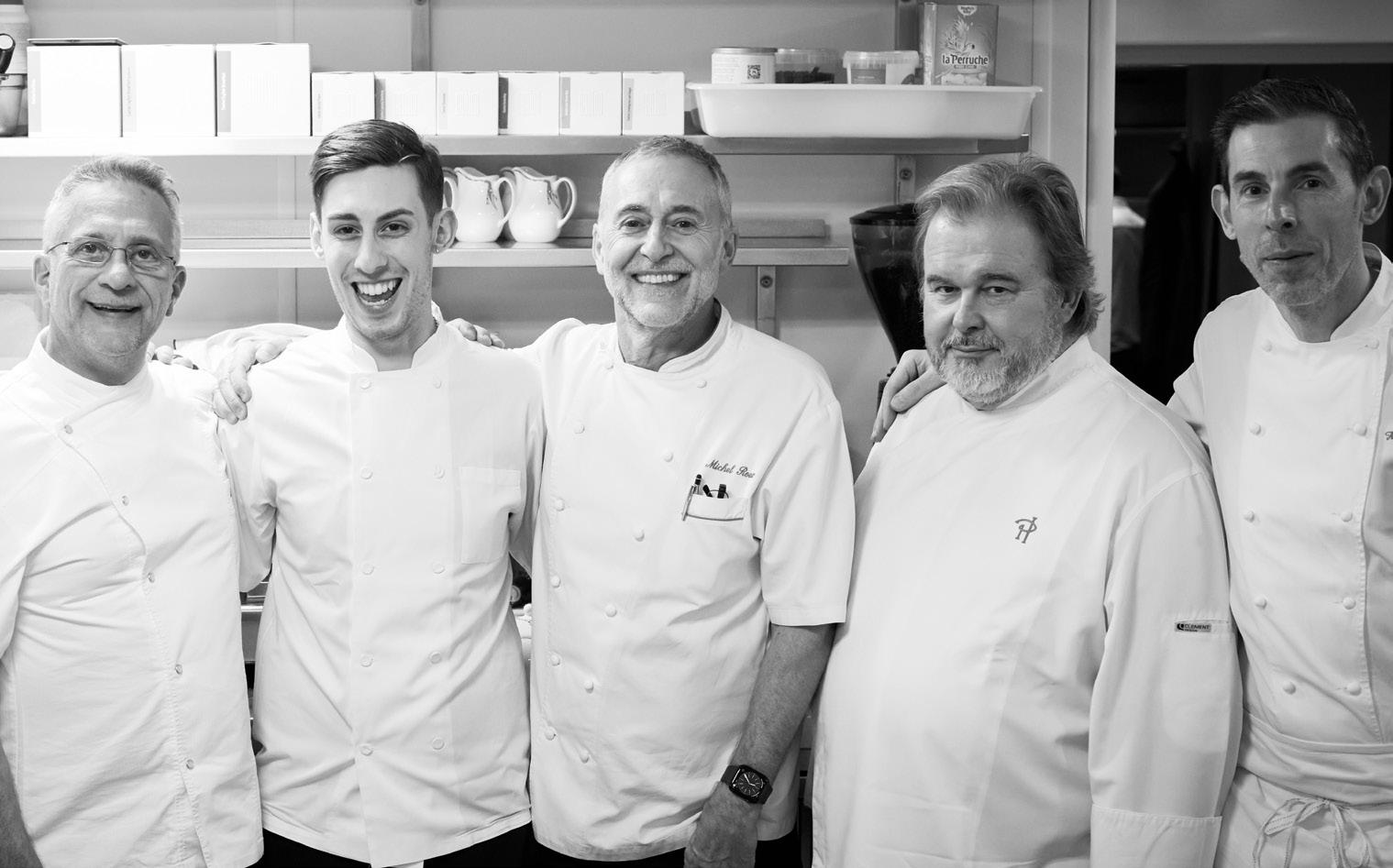
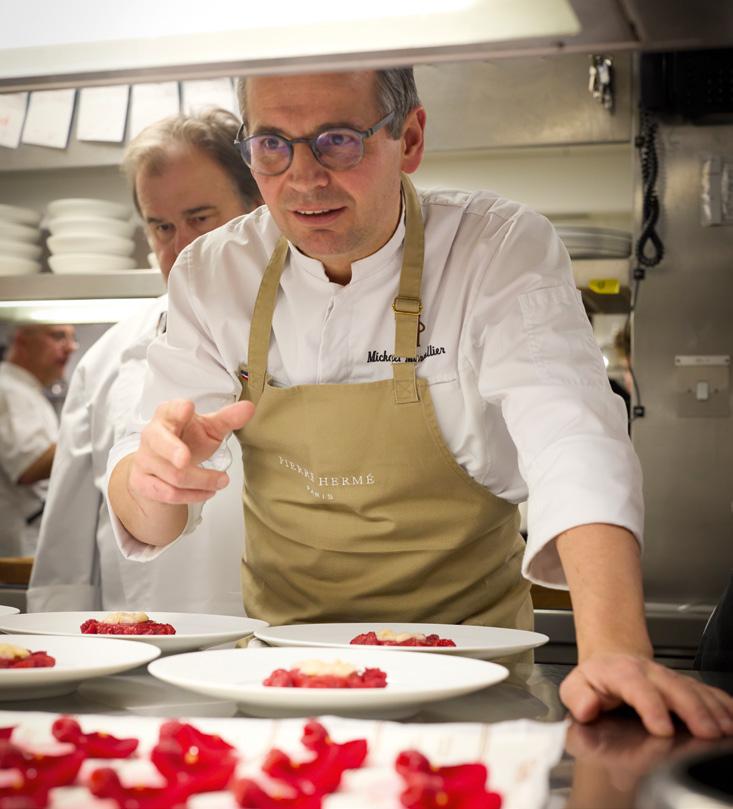
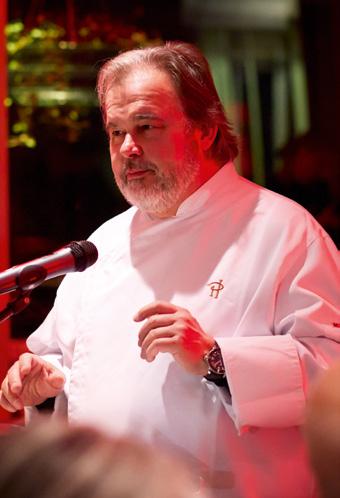
To celebrate our 40th anniversary, we looked beyond our own kitchens. I had the pleasure of inviting and cooking alongside friends and peers I admire deeply, including Clare Smyth MBE, Heston Blumenthal OBE, Michel Troisgros, César Troisgros, my cousin Michel Roux Jr, and Pierre Hermé. You will find highlights from those occasions here. They allowed us not only to celebrate, but also to raise a remarkable sum for a range of charities. Beyond this, a conversation with Heston reflects on how our small village, Bray-on-Thames, continues to punch well above its weight in the culinary world.
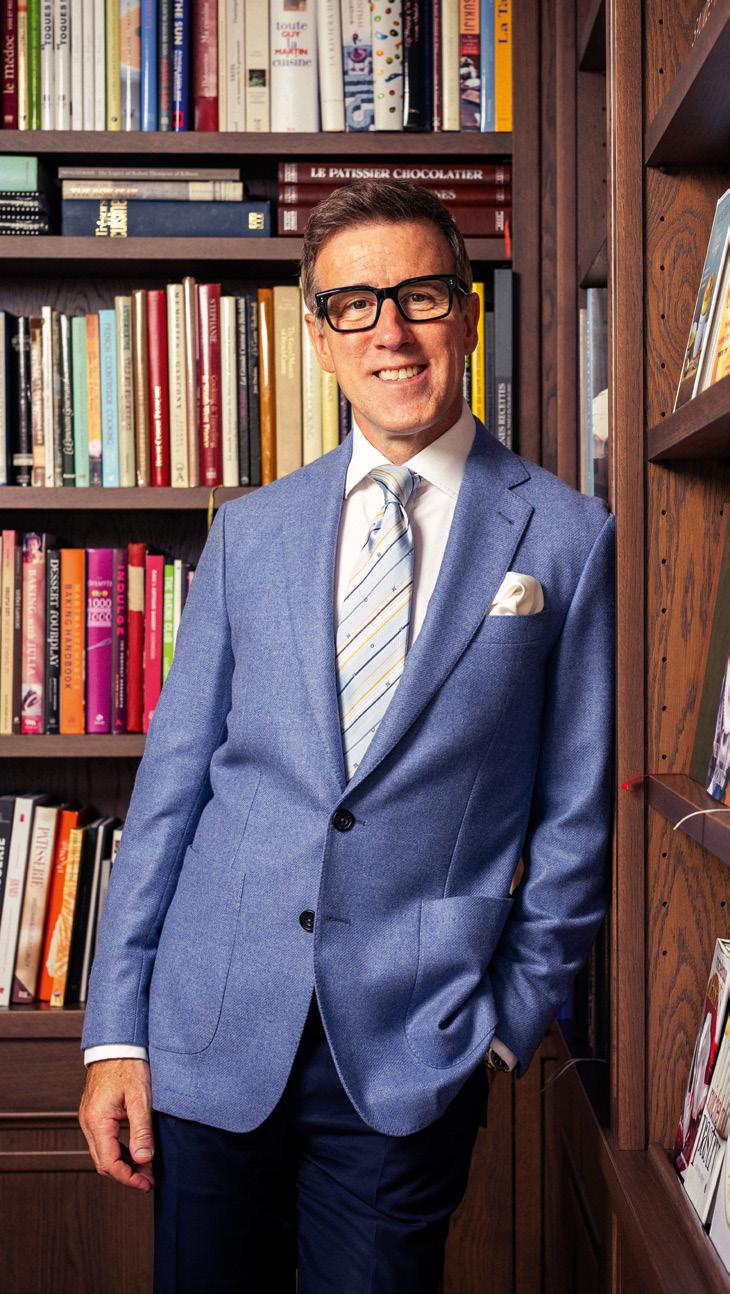
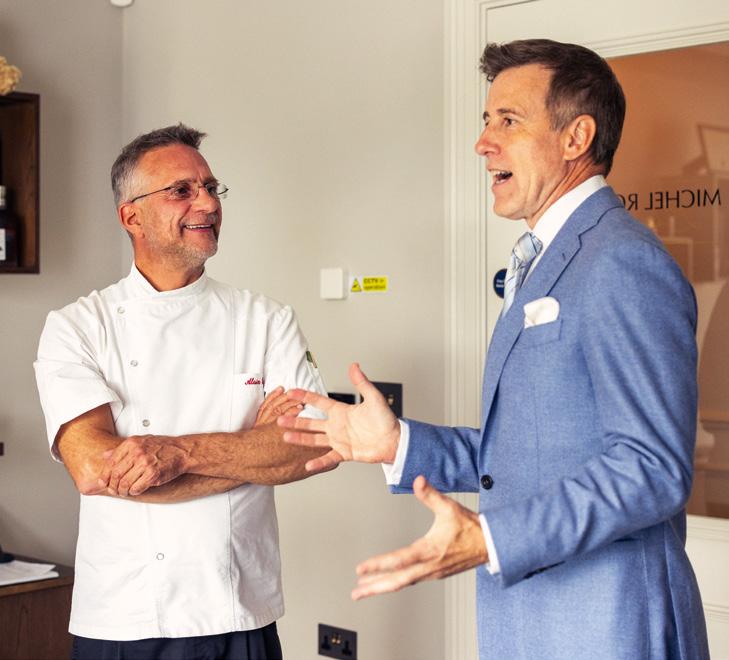
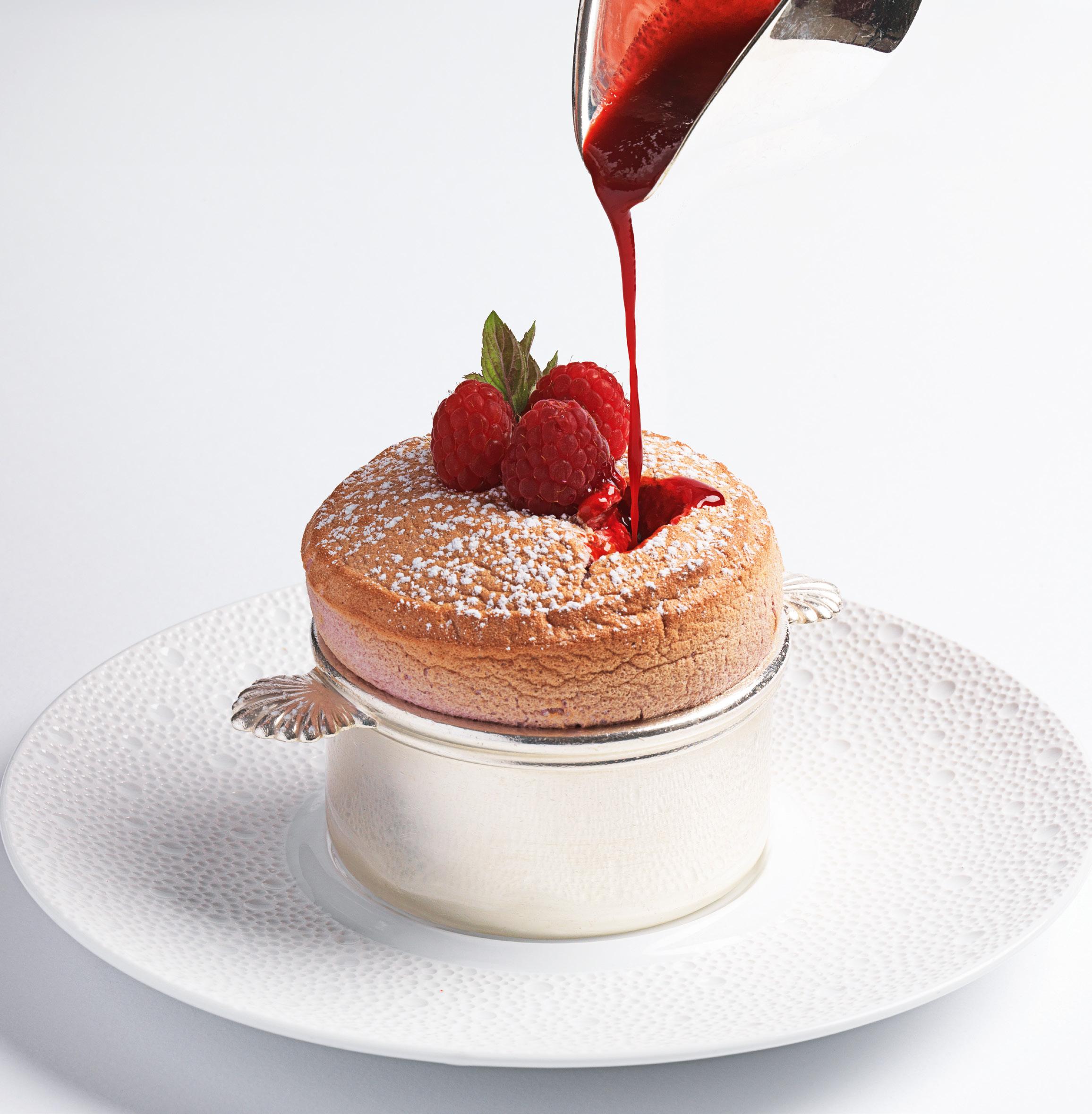
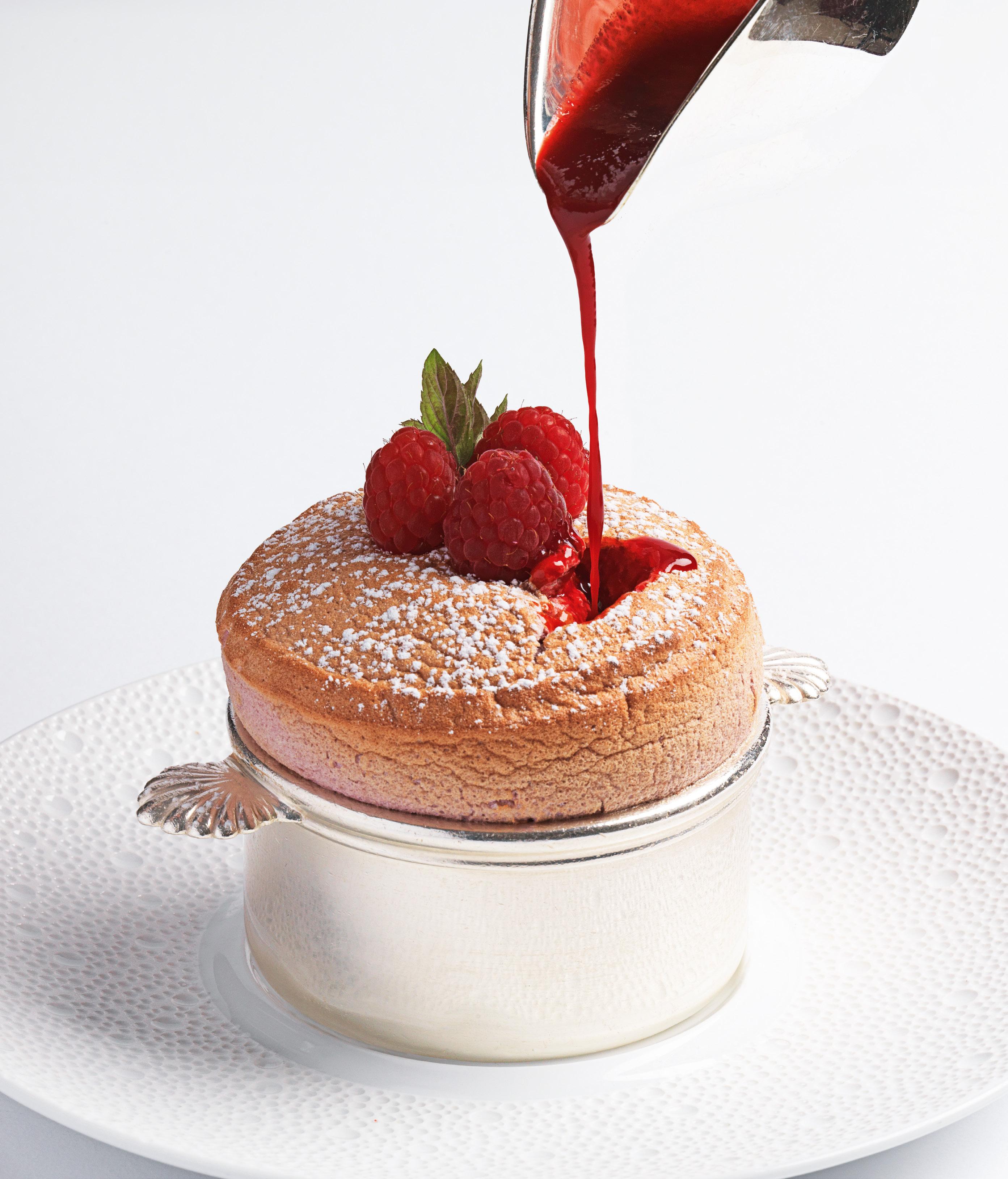
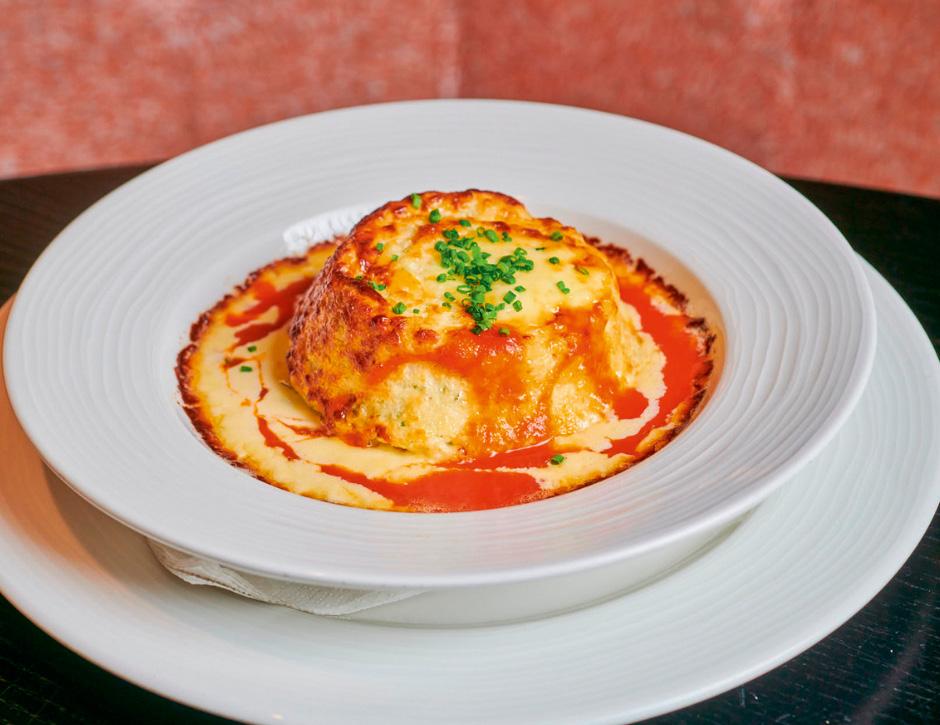
There is plenty more to discover. Our gardener James offers his entertaining perspective from the ground up; my wife, Laura, shares her beautiful redesign of our private dining room; and we welcome Anton Du Beke, who shares his reasons for returning time and again to his favourite restaurant. I have always suspected it is the soufflés, but Anton insists it is the welcome.
I hope you enjoy Maison Roux. It’s a wonderful celebration of community, craft, continuity – and a platform for what comes next.
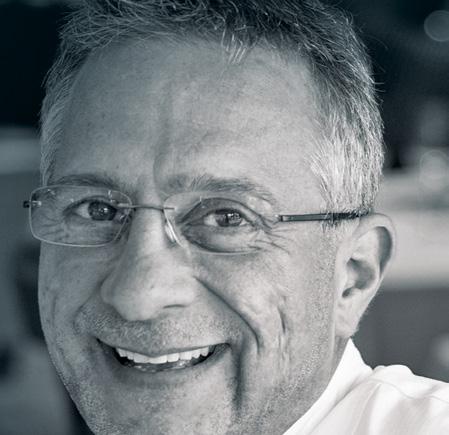
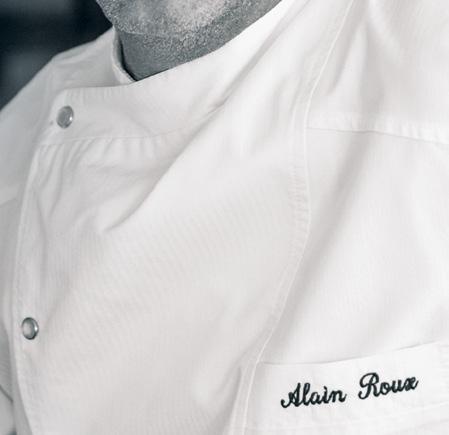
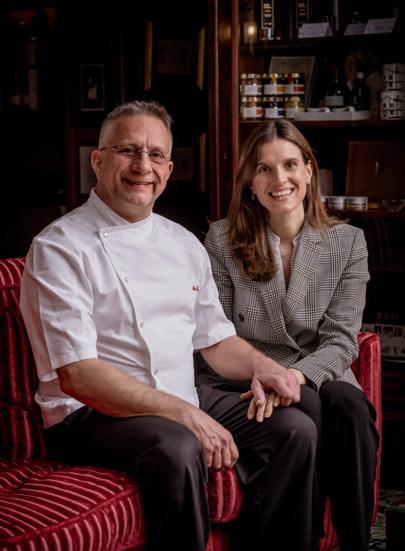
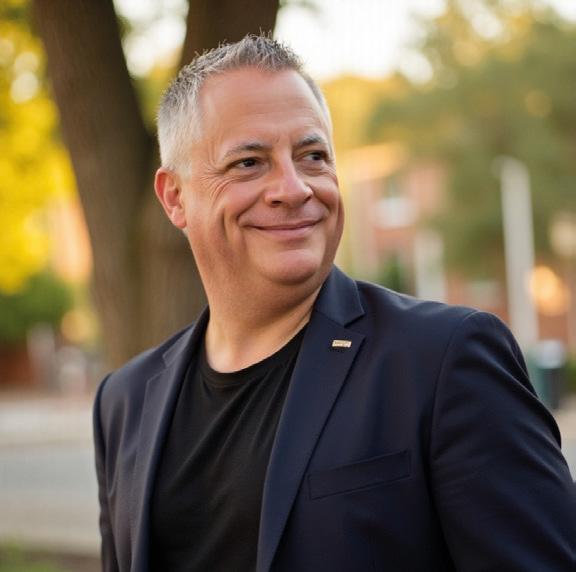
Alain Roux Chef patron
SUBSCRIBE: Be the first to hear about Waterside Inn news, exclusive events, wine tastings and Culinary School classes by subscribing to one or both of our mailing lists.
45 WHEN THE STARS ALIGN
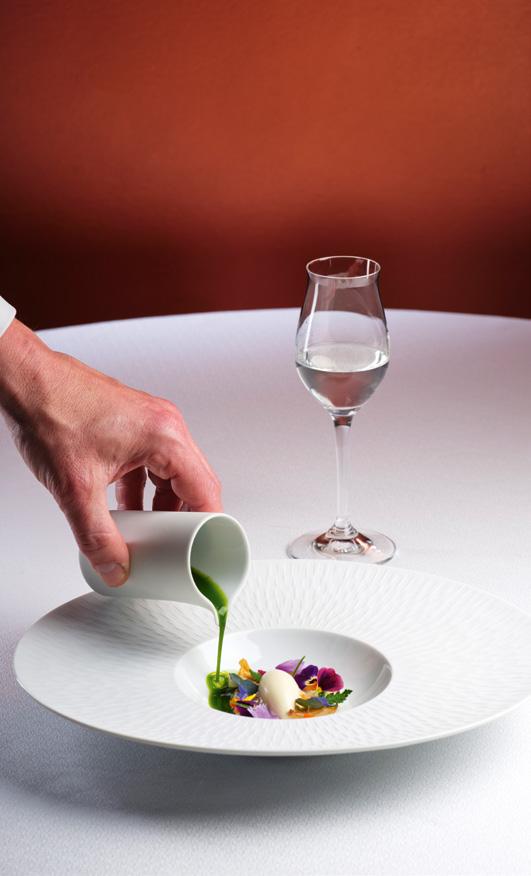
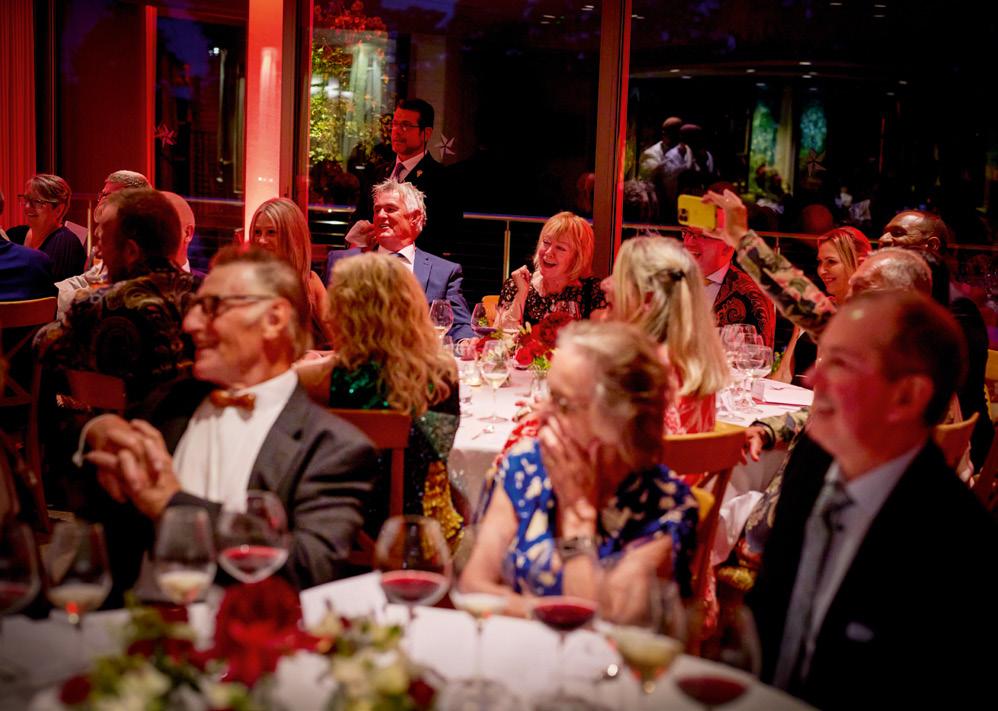
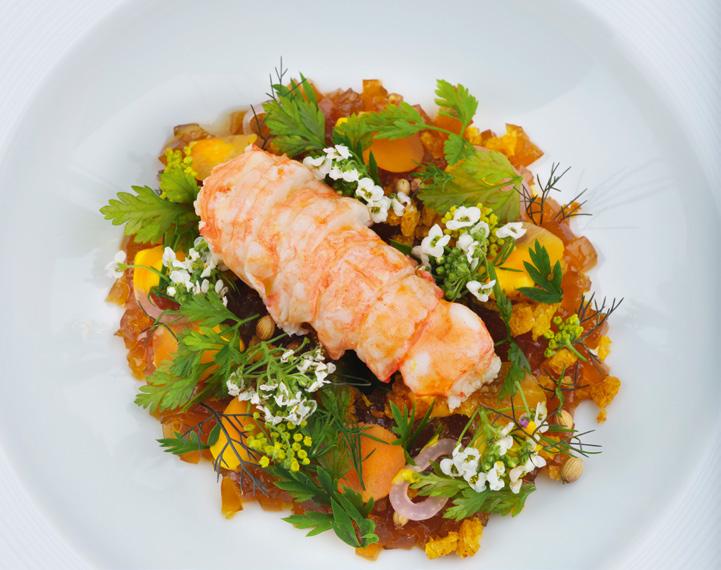
In 2025, The Waterside Inn teamed up with some of the world's best chefs for a series of unforgettable collaboration dinners.
54 HISTORY IN THE MAKING
Since 1985, The Waterside Inn has continually held three Michelin stars. This is the story of where it all began…
60 THE ALCHEMIST AND THE CHEF
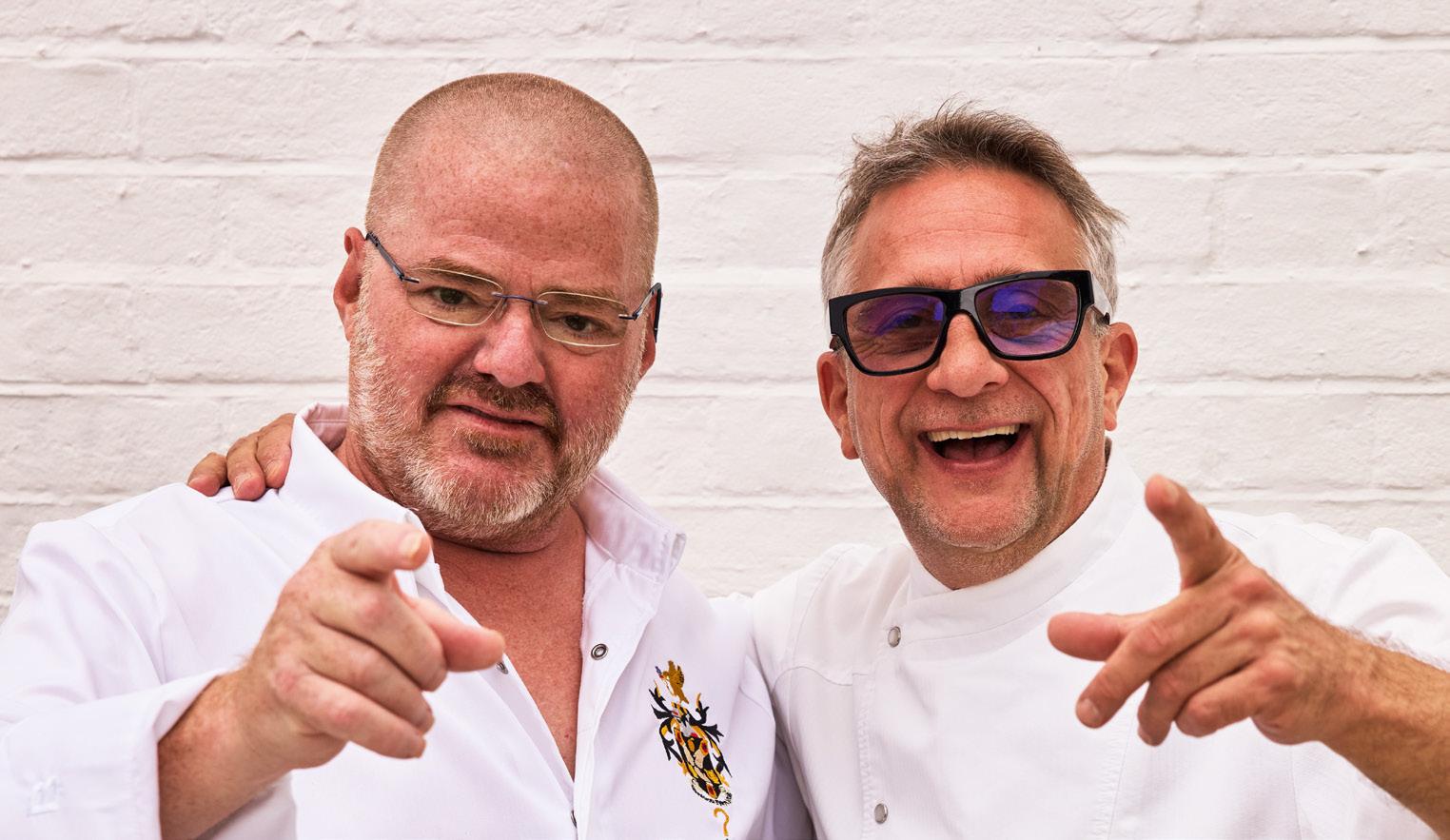
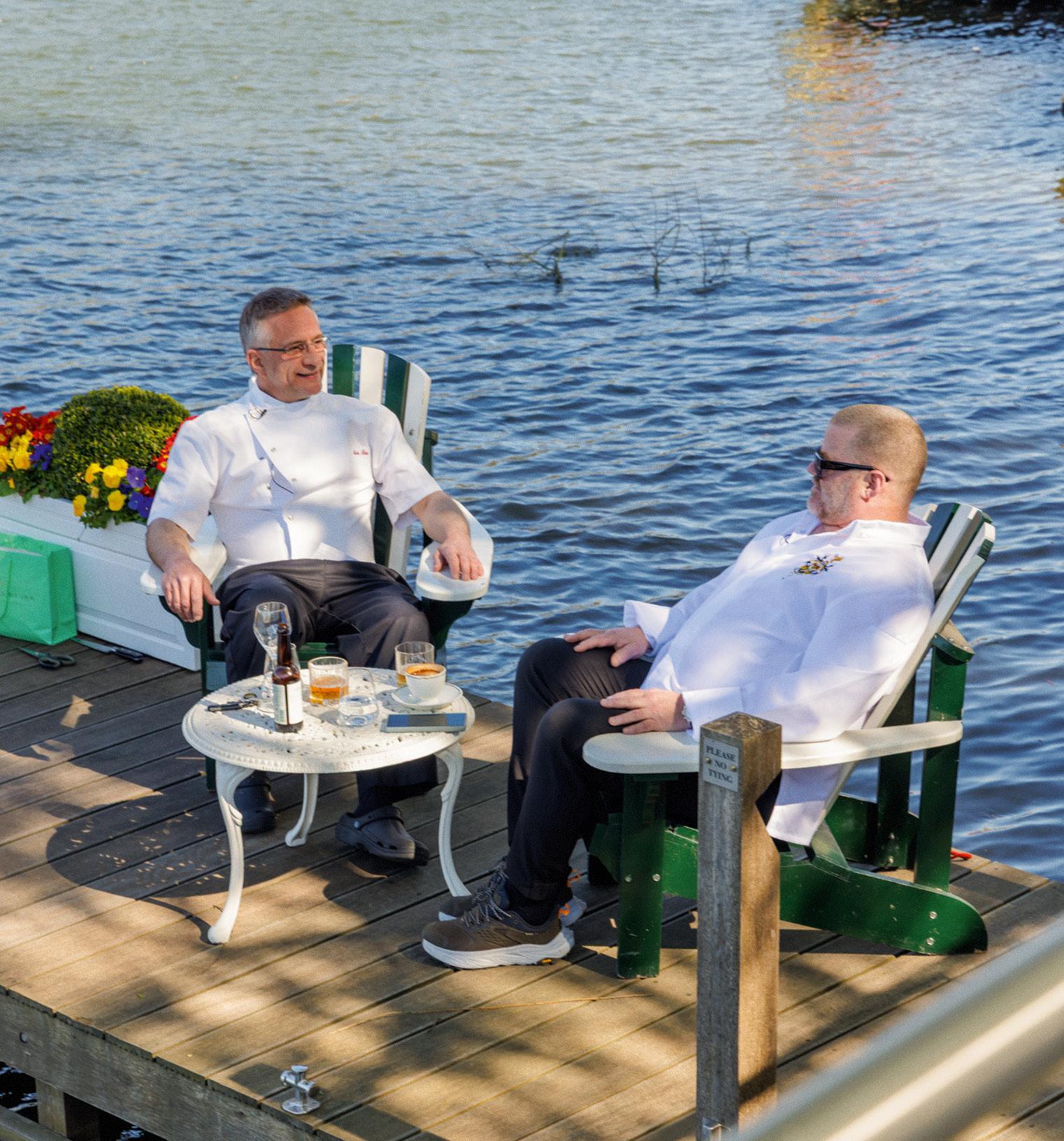
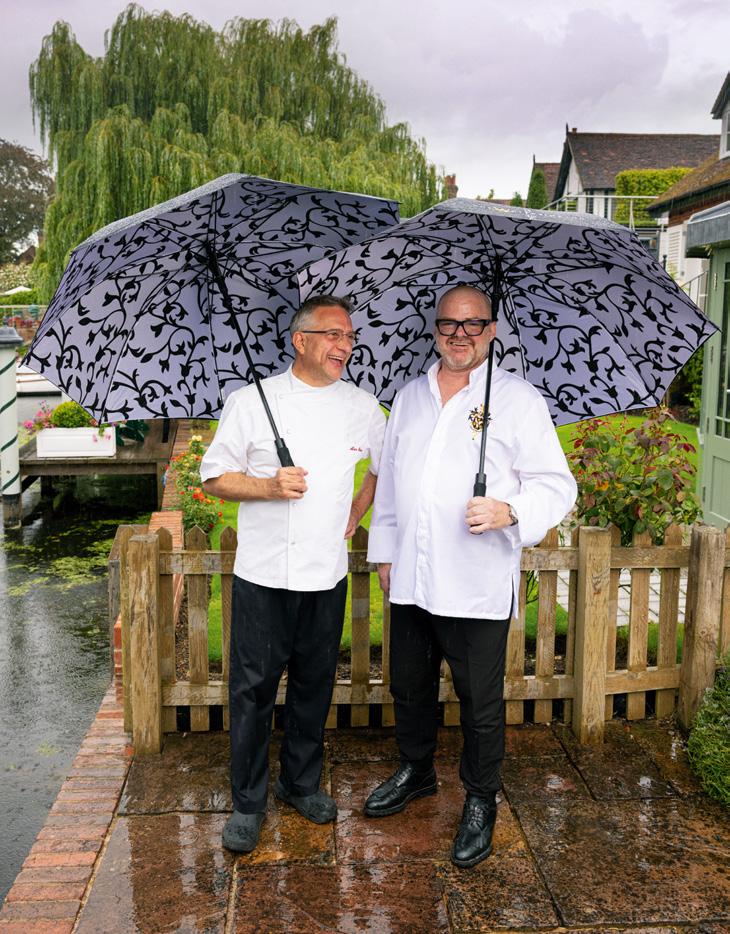
Alain Roux sits down with Bray neighbour Heston Blumenthal to discuss food, The Fat Duck, and navigating a bipolar diagnosis.
66 DANCING IN THE SPOTLIGHT
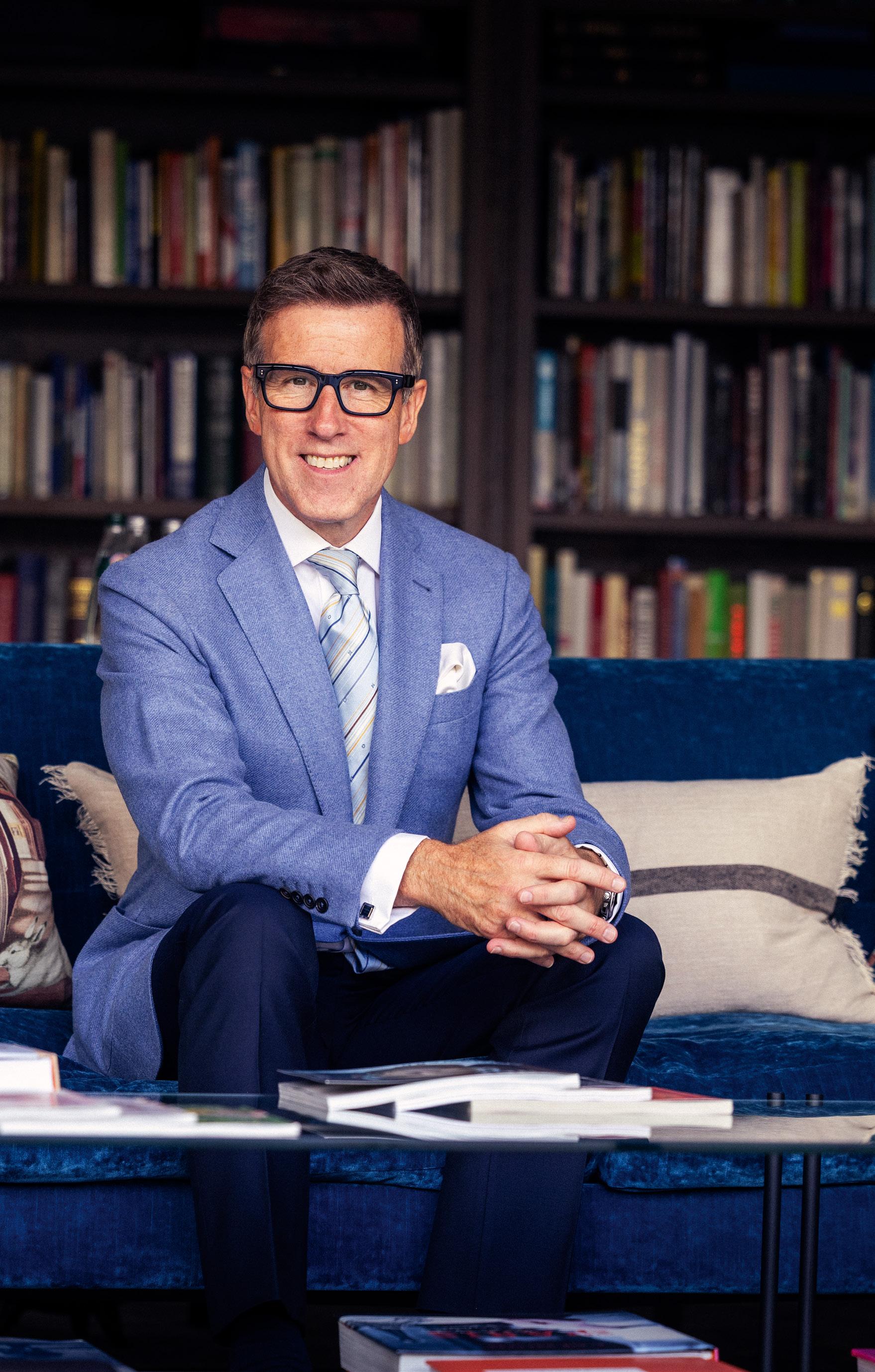
British ballroom dancer and TV personality, Anton Du Beke explains why The Waterside Inn is his favourite restaurant on the planet.
70 DISHES OF THE WATERSIDE INN
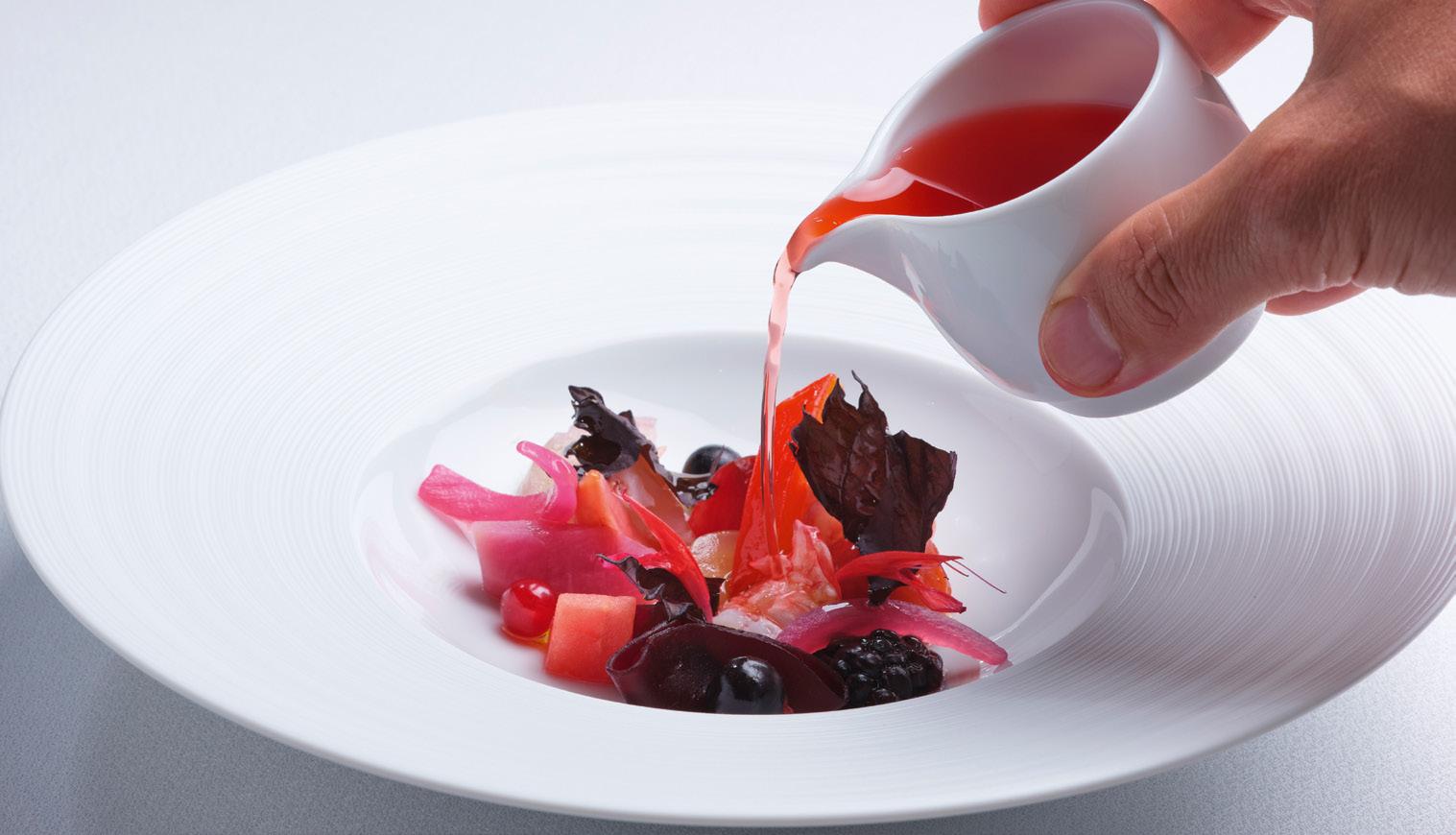
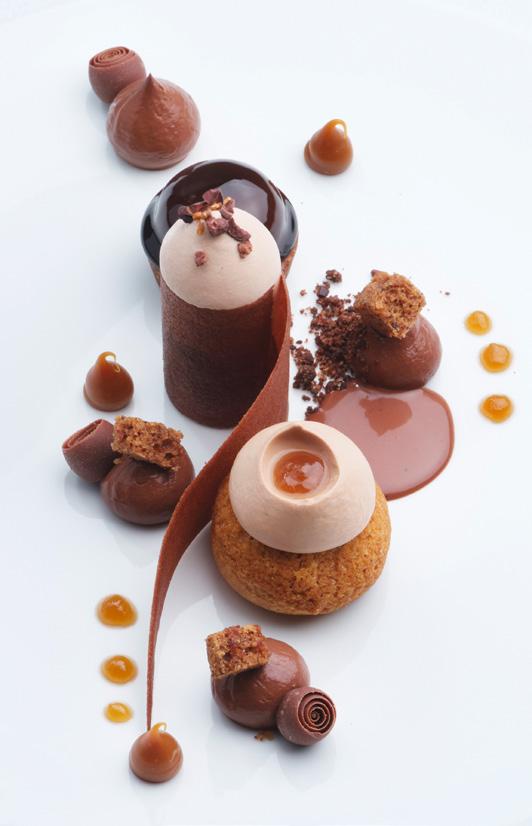
Discover a few of The Waterside Inn's signature dishes in this in-depth view.
78 SCHOOL IS IN SESSION
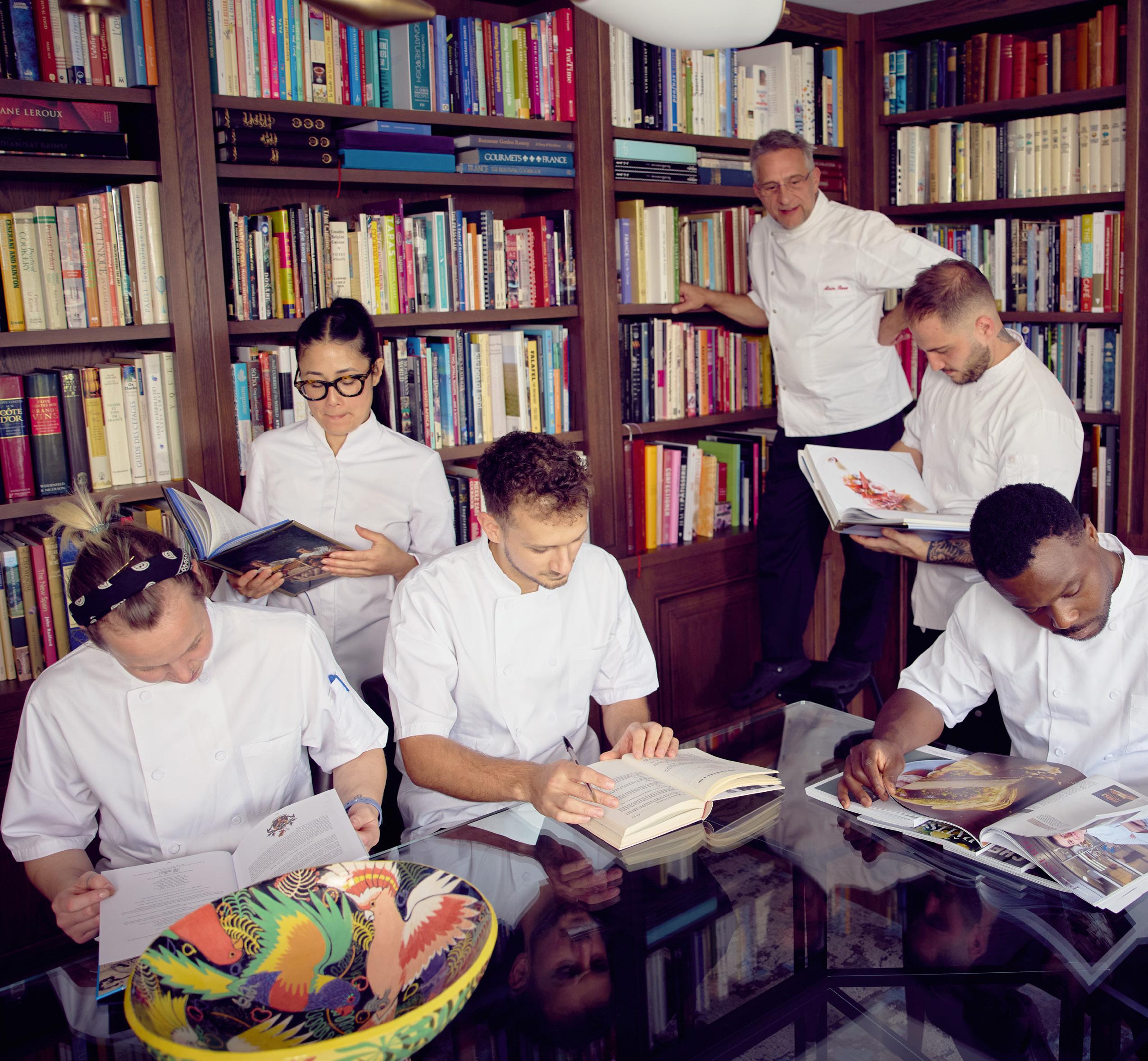
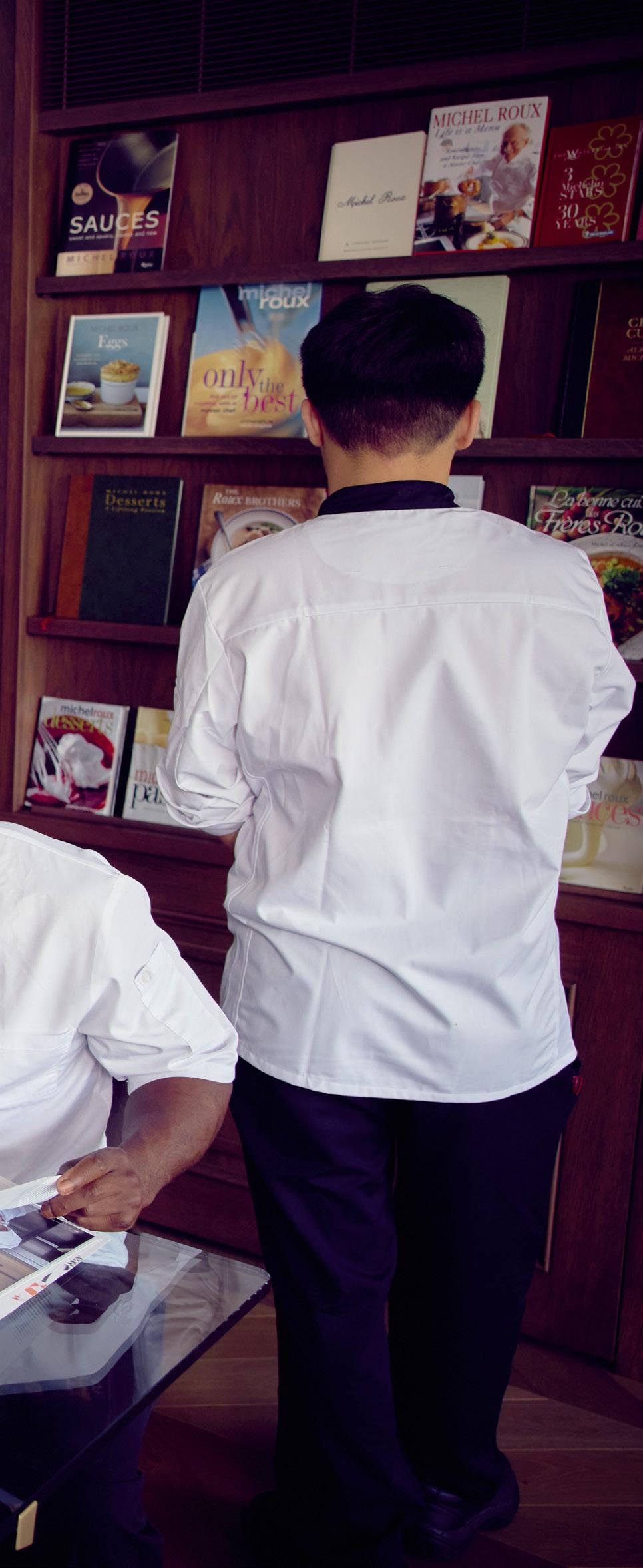
The Michel Roux Library and Alain Roux Culinary School are two of the core pillars in educating The Waterside Inn's young talent.
BERKMANN WINE CELLARS ARE PROUD TO WORK WITH THE WATERSIDE INN.
60 years experience supplying wine drinkers nationwide, our portfolio contains some of the most recognisable and pre-eminent names in the wine world. For information on our wines and our services please contact: Peter Lowe, Chairman on 0207 609 4711.
www.berkmann.co.uk @Berkmann_Wine @BerkmannWine
NEWS
From Bray to the world stage, The Waterside Inn continues to set the pace in modern gastronomy
Years in the making
Longevity at The Waterside Inn is never accidental. As the restaurant marks 41 consecutive years of holding three Michelin stars, three figures stand out for the constancy behind the craft.
Claude Grant, Director and confidante, has been a guiding presence for 42 years this May –a steady hand on the tiller as the restaurant evolved without ever losing its sense of self.
Maggie Fairbrother, Reservations Manager for 26 years, is often the first voice guests encounter, shaping the
From Bray to Langkawi
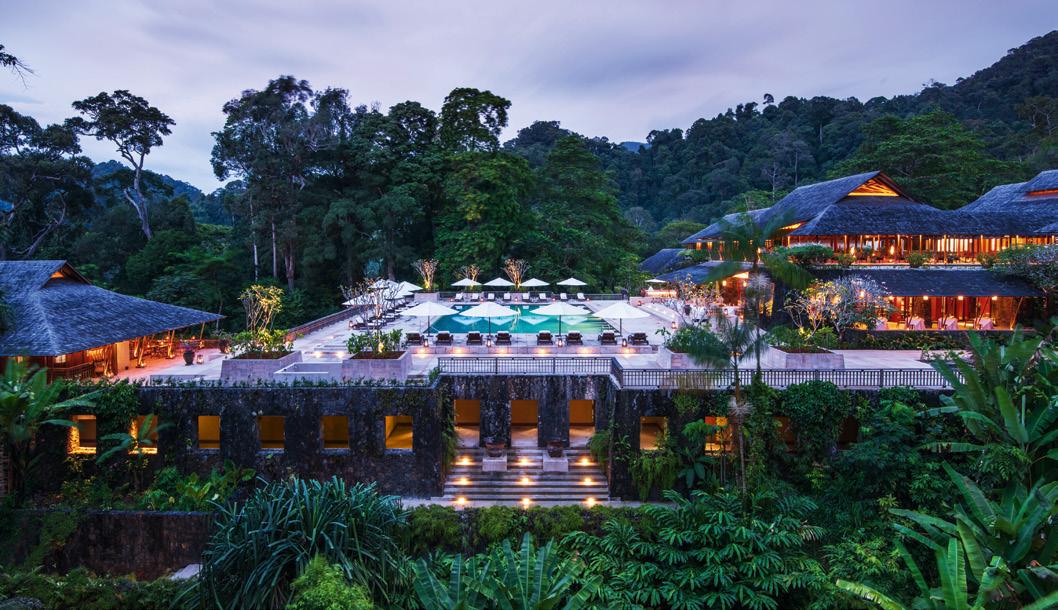
In January 2026, Chef Alain swapped the Thames for Langkawi, headlining The Datai Langkawi’s Chef Series. Set between ancient rainforest and a pristine beach, The Datai provided a spectacular stage for Alain and the Waterside Inn team.
Joining forces with the Datai’s brigade, they delivered a run
experience long before a napkin has even been unfolded.
And in the kitchen, Executive Chef Fabrice Uhryn marks 25 years of precision and consistency, translating the Roux philosophy into dishes that continue to meet and exceed the world’s most exacting standards.
Together, they represent something increasingly rare: institutional memory matched with unwavering commitment. Three Michelin stars may define the headline – but it is loyalty like this that underpins the achievement.
of tasting menus, beachside demonstrations and a sunset champagne cruise. Classic Roux signatures were reworked with a light tropical hand, drawing on hyper-local produce, much of it from the hotel’s zero-waste Permaculture Garden.
There was a sense of continuity, too. Alain’s father Michel forged ties with the resort a decade earlier. The result was a meeting of heritage and place, received with warmth.
The Waterside Inn shines at Obsession25 Grand Finale
Last spring, Northcote marked a milestone with Obsession25 – its 25th annual celebration of fine dining, often dubbed Europe’s Glastonbury of gastronomy.
Across 17 nights, 21 leading chefs – collectively holding 27 Michelin stars – turned the Lancashire restaurant’s kitchen into a rolling showcase of technique and creativity, serving close to 10,000 plates alongside a tightly curated wine programme. The event raised £77,000 for Hospitality Action, taking Obsession’s grand total to more than £500,000 since it launched.
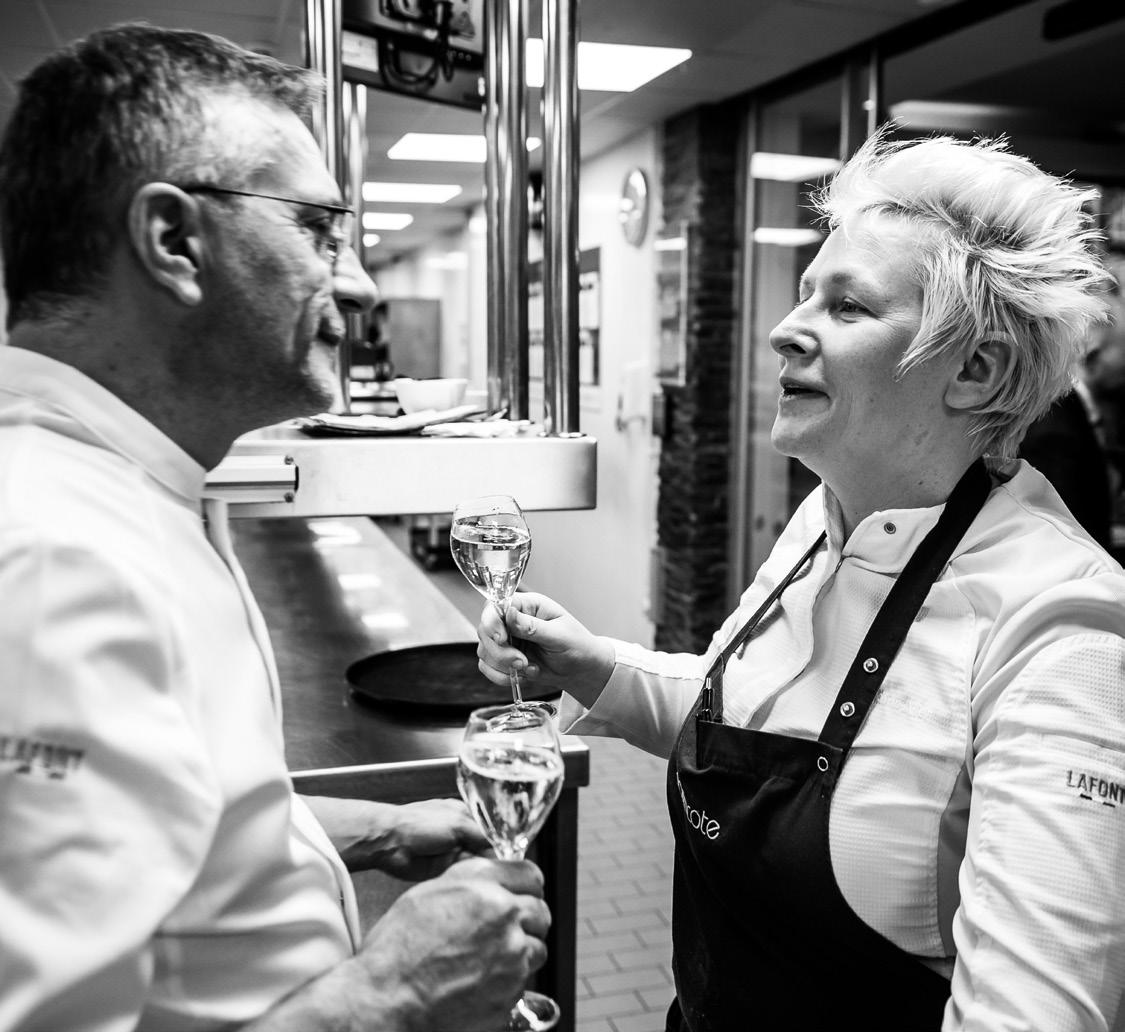
The festival’s Grand Finale was the ultimate highlight – and The Waterside Inn proudly took centre stage. Alain Roux and his team were invited by Northcote Chef Patron, Lisa Goodwin-Allen, to close the festival, following in the footsteps of his cousin Michel Roux Jr and daughter Emily Roux, who hosted the finale in 2024. The result was a five-course signature menu demonstrating the precision, elegance, and hospitality The Waterside Inn is renowned for, leaving guests in raptures long after the last plate was cleared.
Celebrating Sofitel’s 60th anniversary in Colombia
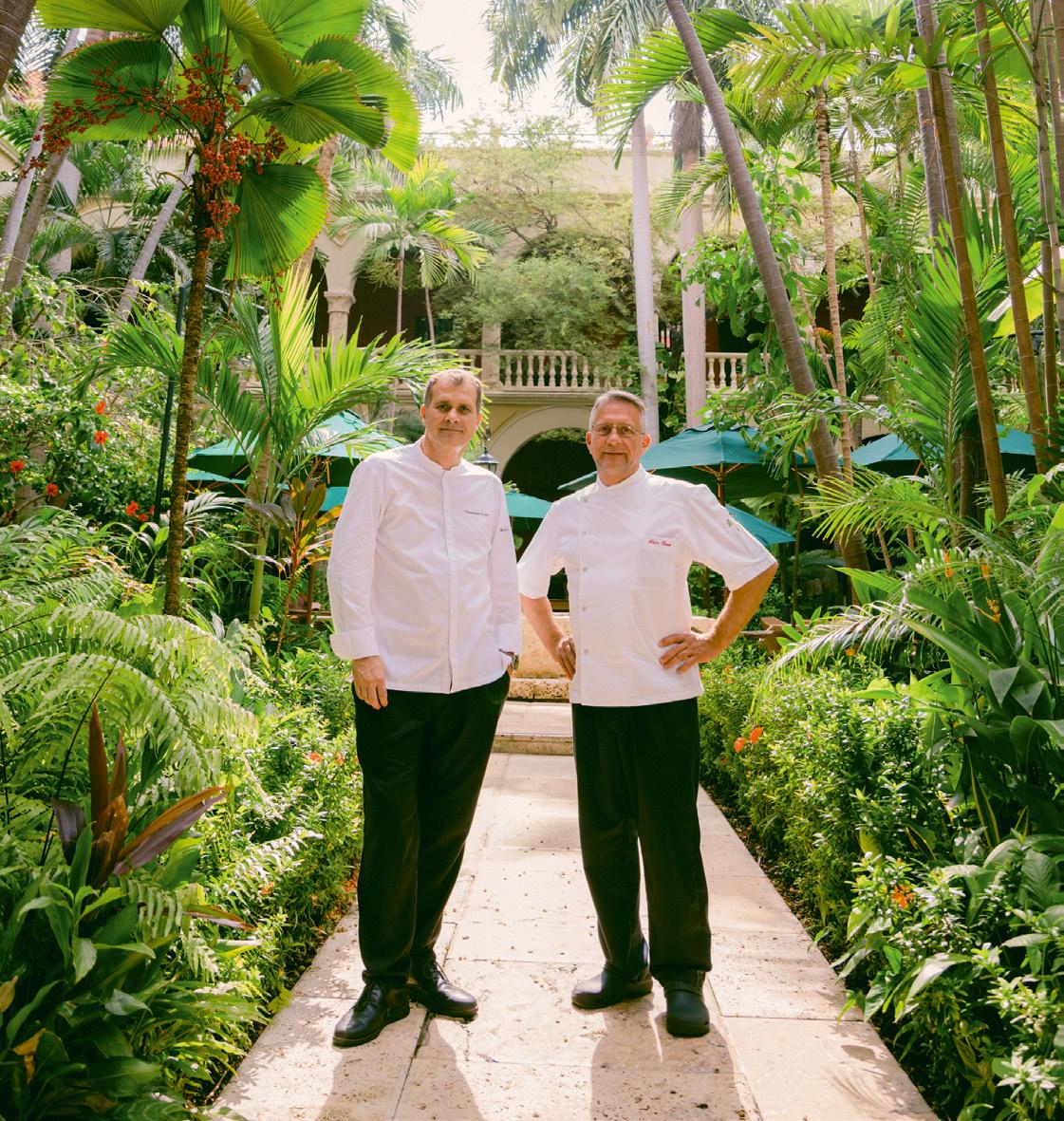
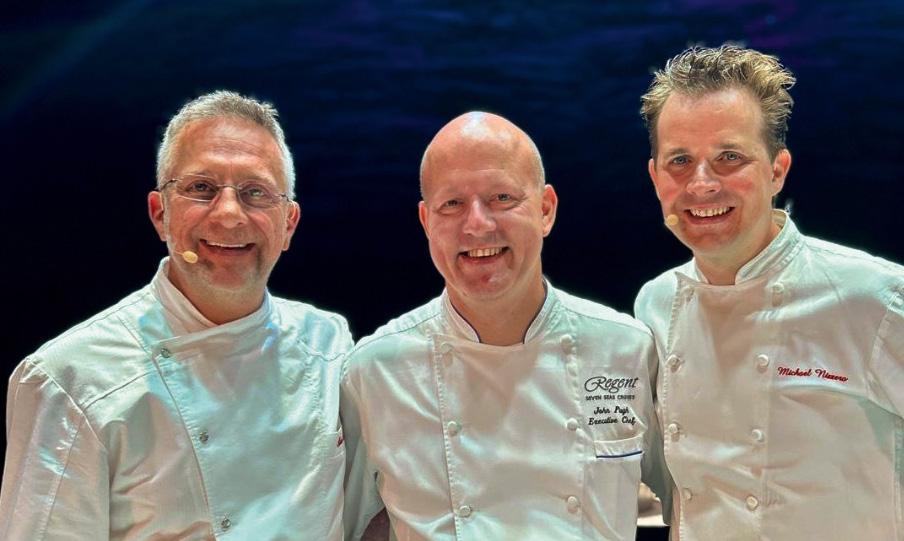
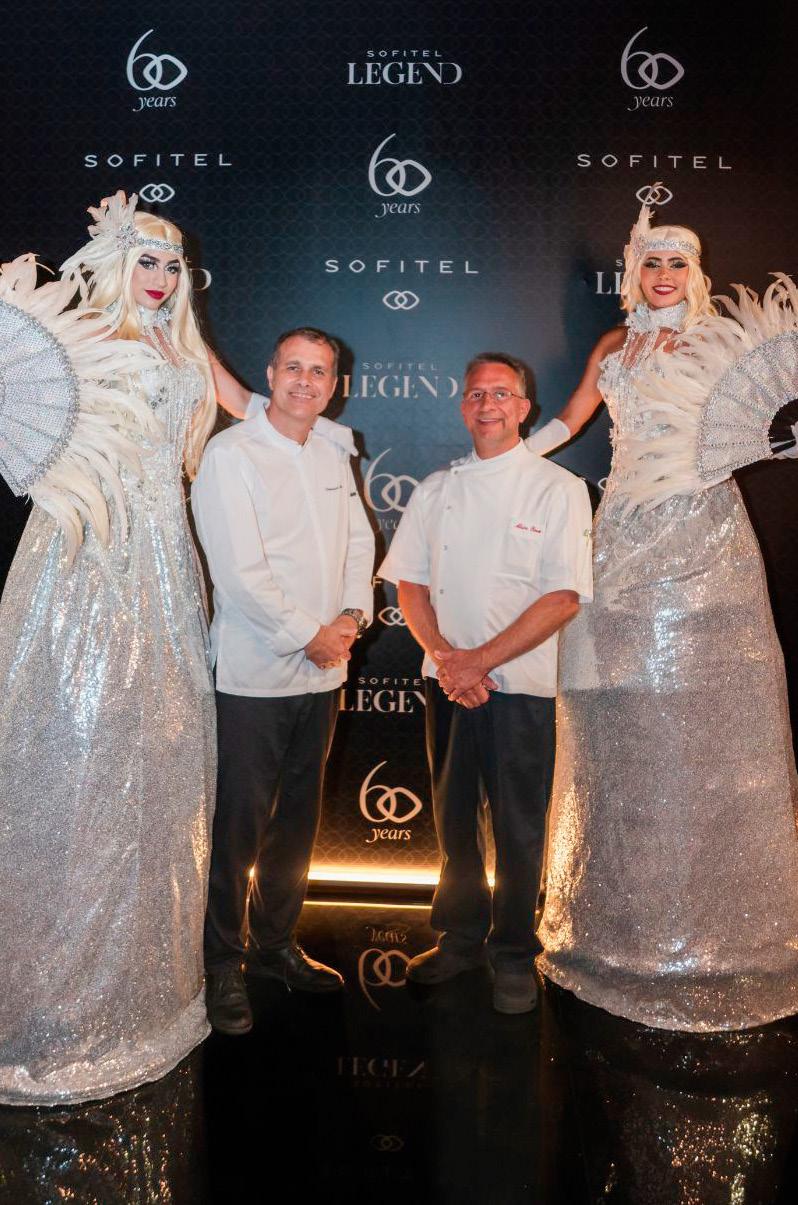
In August 2024, Alain Roux and Chef Instructor Michael Nizzero joined Sofitel’s 60th anniversary celebrations across its Cartagena, Barú and Bogotá hotels. The pair hosted a series of dining events and masterclasses, blending classical French technique with Colombia’s vibrant local produce. A standout moment came in Cartagena, where Alain reunited with former colleague Dominique Oudin for a series of four-hands dinners – a full-circle return to a
Bocuse d’Or 2025
In November 2025, The Waterside Inn held the spotlight at the Bocuse d’Or UK President’s Gala Dinner at Claridge’s – a highprofile fundraiser for the world’s most prestigious chef competition.
Invited by Clare Smyth MBE, Alain Roux and his team joined Britain’s three-Michelin-star elite for a one-night-only collaboration, delivering a seven-course gala in the hotel’s iconic ballroom.
Olive joins the team
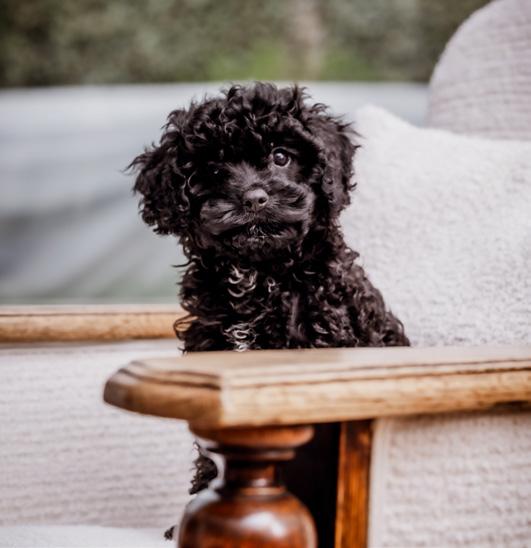
Earlier this spring, Alain and Laura Roux welcomed the latest addition to their family, Olive Roux.
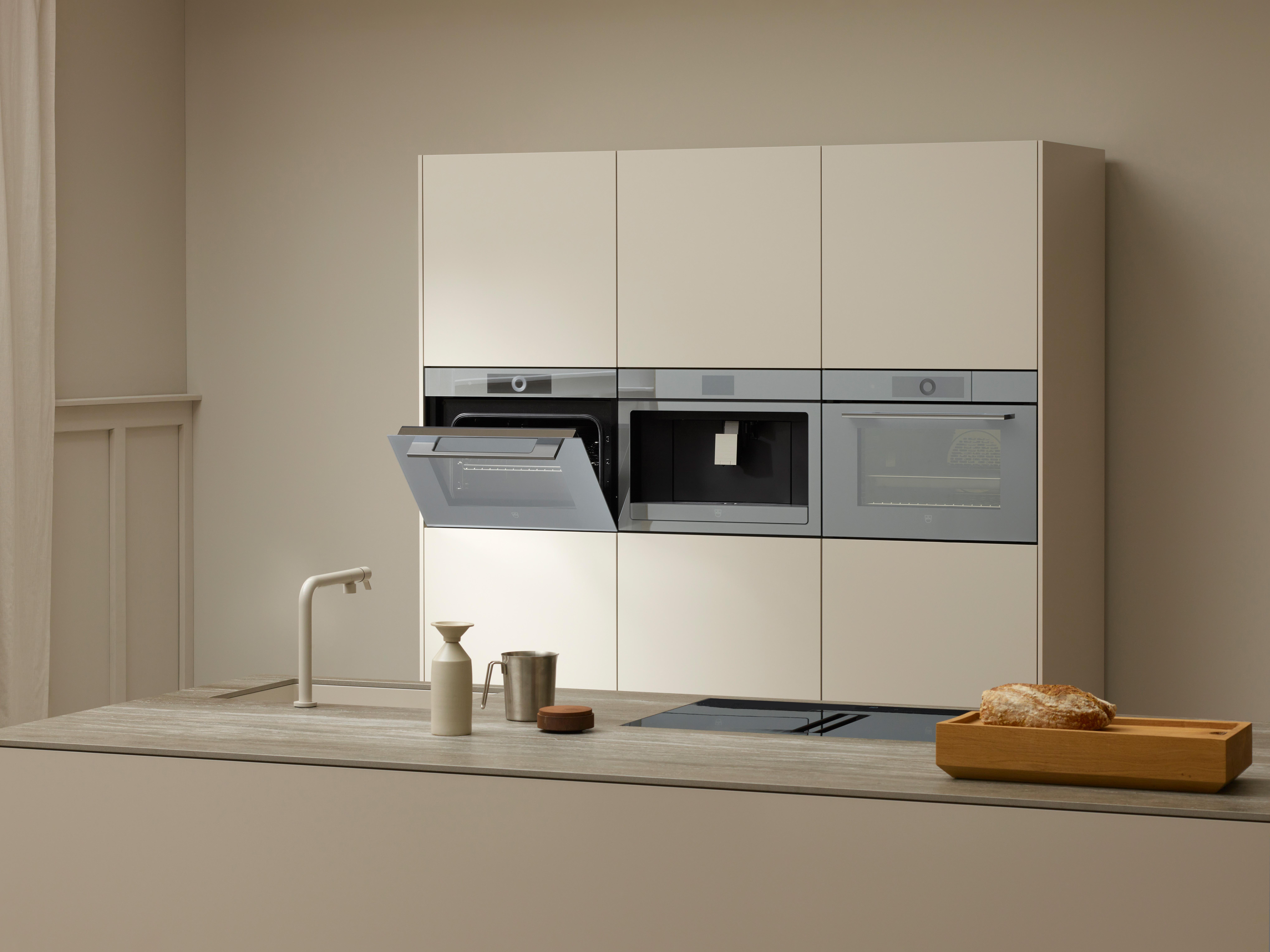
The Cavapoo has already begun working for the family business – including taking an unplanned part in a photoshoot with Poggenpohl.
When she’s not posing for the cameras, you’ll spot her out and about on regular walks around the village of Bray.
Olive even has her own Instagram account – you can follow her and her adventures on @oliverouxcavapoo
partnership first forged in Bray. The result was a showcase of precision, hospitality and place – The Waterside Inn’s signature approach, reimagined for a new setting. Reflecting on the visit, Alain commented: “We were overwhelmed by the beauty of the country, the extraordinary ingredients and the warmth of the people. It was a privilege to celebrate Sofitel’s 60th anniversary and especially special to cook again with Dominique.”
Le Manoir x The Waterside Inn
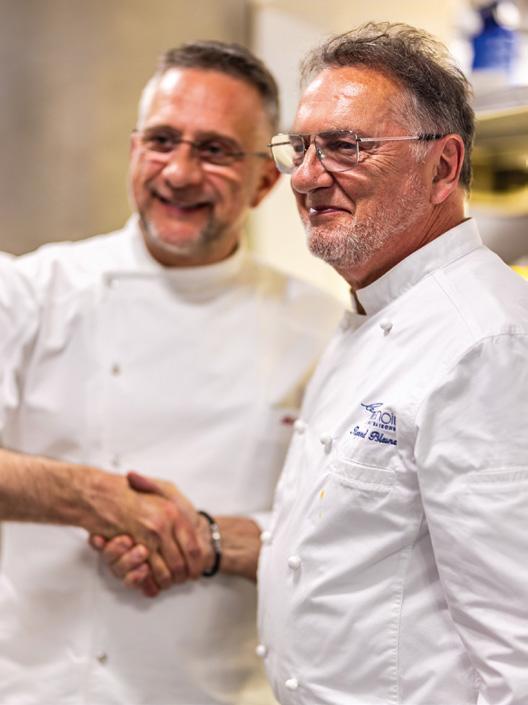
On 9 May 2024, The Waterside Inn welcomed Raymond Blanc OBE, Luke Selby and Benoit Blin MCA of Le Manoir aux Quat’Saisons for an unforgettable eight-hands dinner. The six-course celebration menu raised funds for Adopt-a-School. Later in the year, The Waterside Inn team travelled to Oxford to return the favour as part of the 40th anniversary celebrations of Le Manoir aux Quat’Saisons.
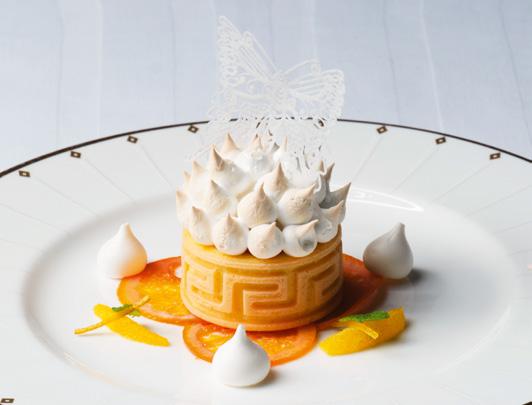
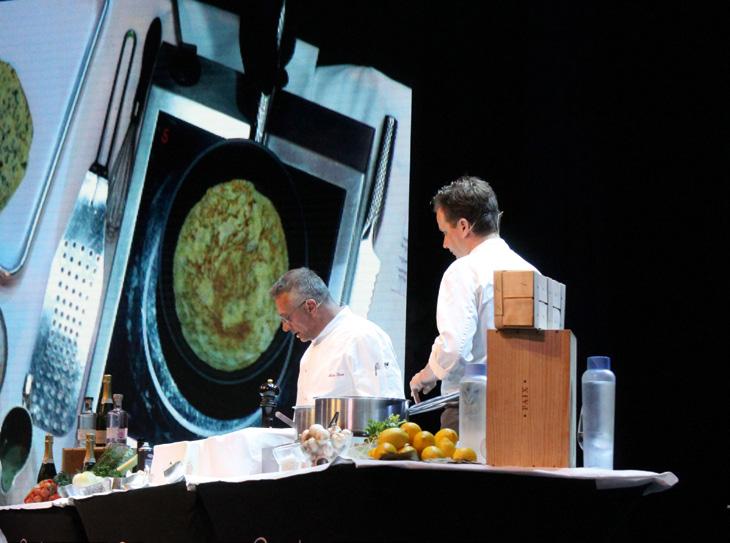
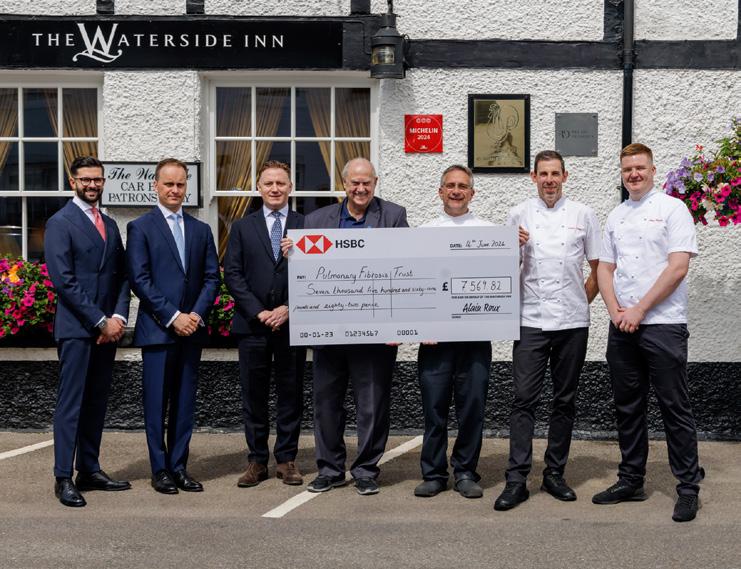
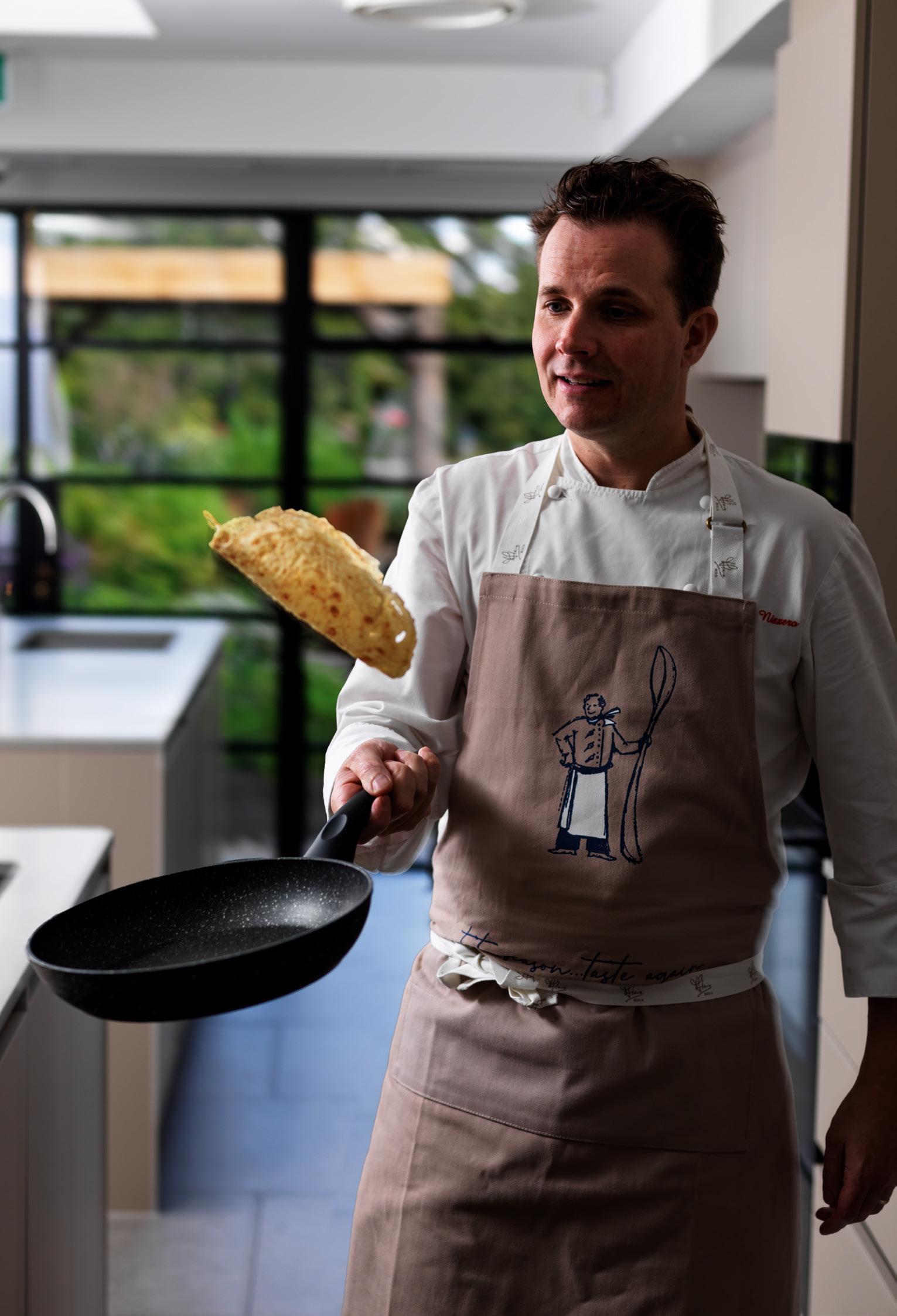
The evening raised £136,000 providing support for Team UK candidate Oliver McGeorge, with Roux’s blood orange Norwegian omelette – a nod to his father, Michel Roux – bringing a touch of Waterside heritage to the table.
School is in session
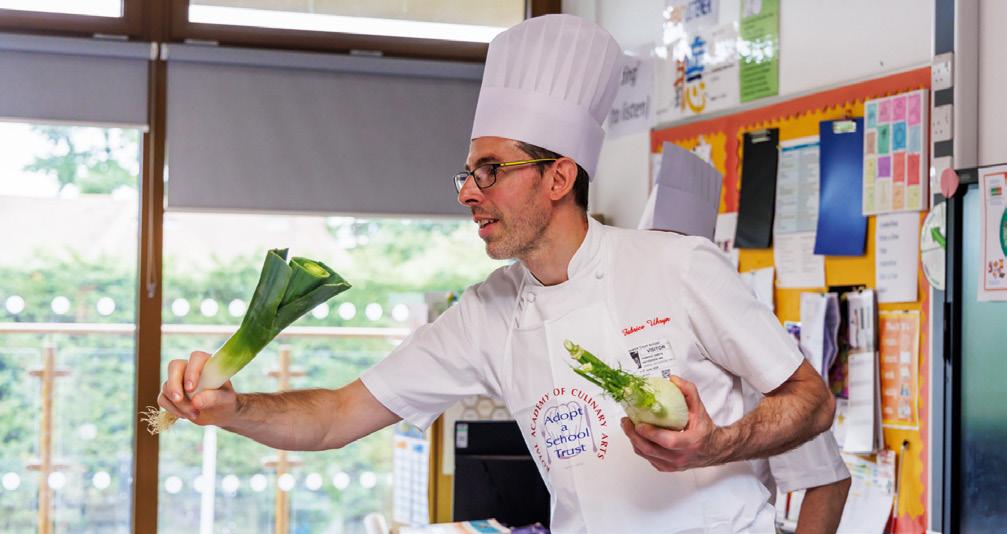
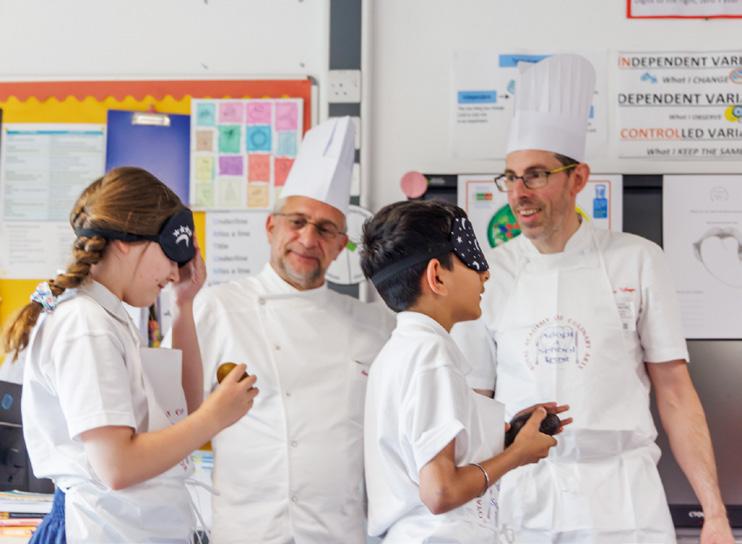
Alain Roux and Fabrice Uhryn brought The Waterside Inn into the classroom at Braywick Court School. Through the Royal Academy of Culinary Arts’ Adopt a School programme, 30 pupils swapped textbooks for hands-on cookery –learning knife skills, preparing
fresh ingredients and plating their own dishes. A simple aim, expertly delivered: build confidence, spark curiosity and offer a glimpse into the craft behind the plate. Through collaboration dinners with Raymond Blanc and Clare Smyth, The Waterside Inn has raised over £25,000 for Adopt a School in the past two years alone.
Bespoke Luxury Travel, Tailored for the Discerning Traveller
From private jets to exclusive yachts, 5-star resorts to curated experiences, Martin Bristow at Not Just Travel crafts tailored journeys for the world’s most discerning travellers. With expertise in ultra-luxury destinations and personal service, every itinerary is as unique as the individual. Explore, indulge, and arrive in style — with access to the experiences most can only dream of.
Get in touch today and start the journey to holiday & travel planning bliss.
Martin Bristow
Tel: 0333 004 0100
WhatsApp: wa.me/447941257574
Email: martin.bristow@notjusttravel.com
Website: martinbristow.notjusttravel.com
Facebook: NotJustTravelMartinB
Scan the QR code to begin your bespoke journey and explore a world curated exclusively for you.
Martin is proud to support the Roux Scholarship Educational Trips, delivering exceptional travel expertise and bespoke planning services.
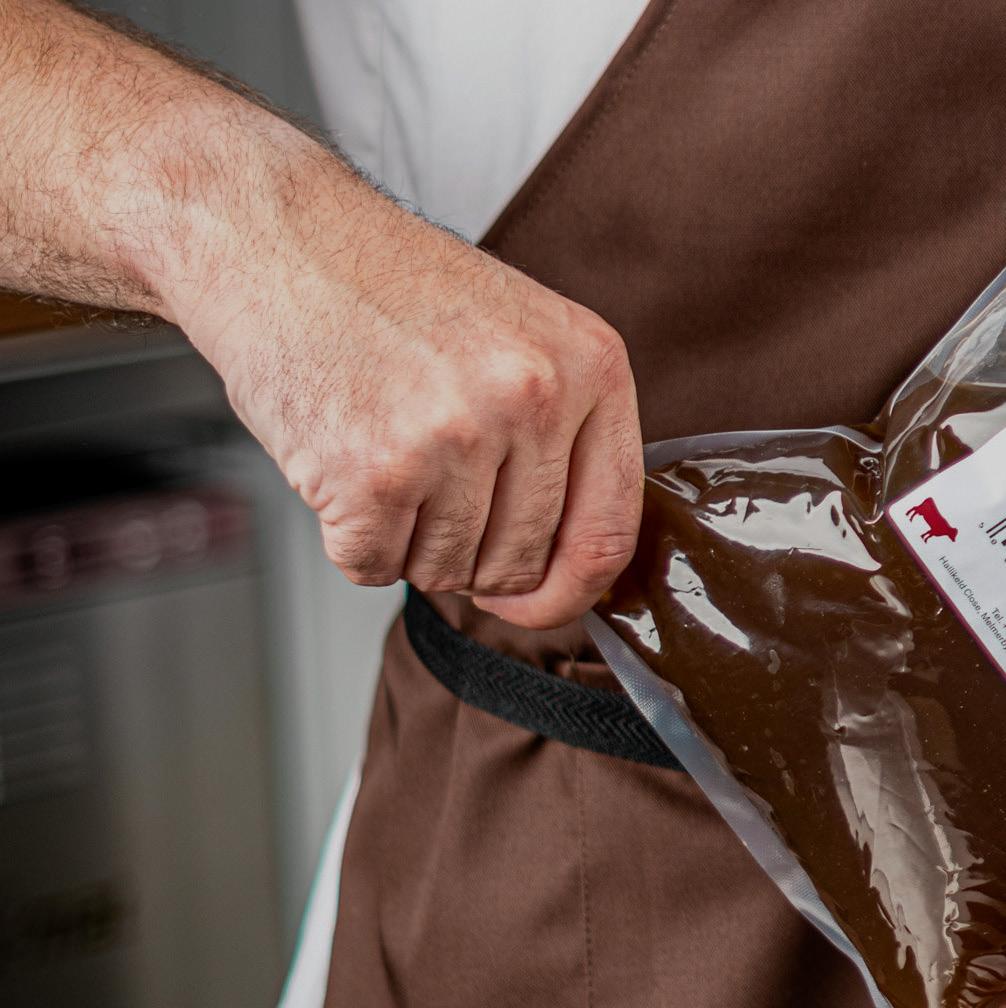
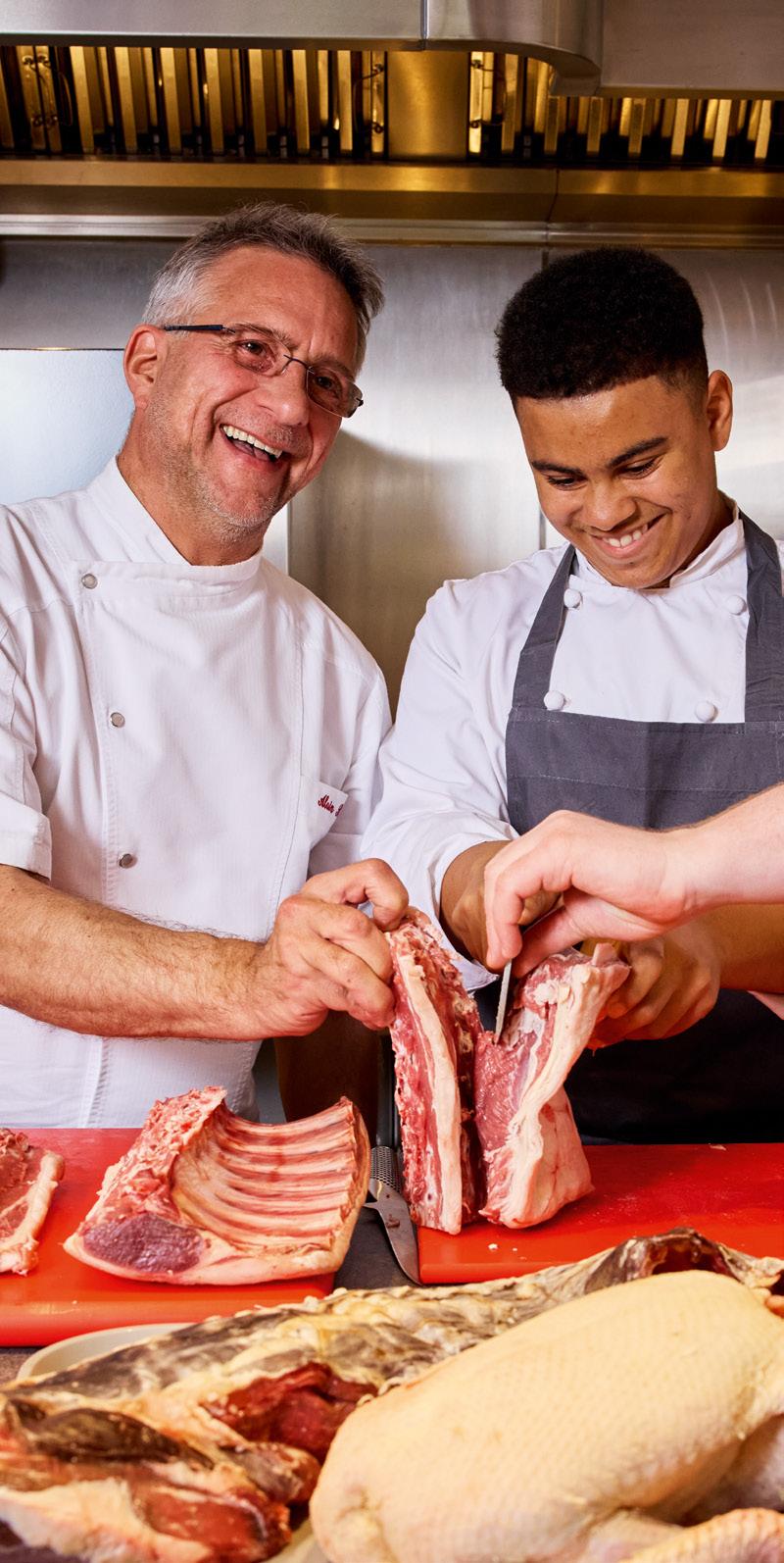
The Allen family have been butchers to the Roux family for over 20 years
A cut above
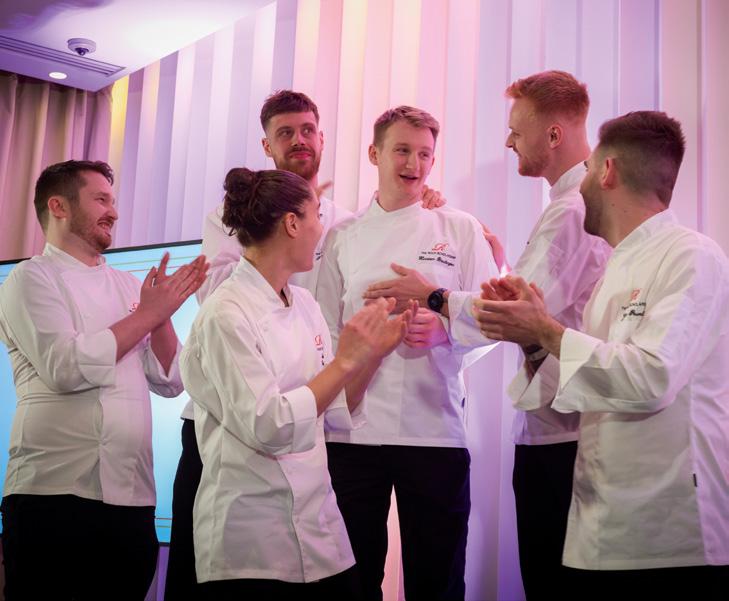
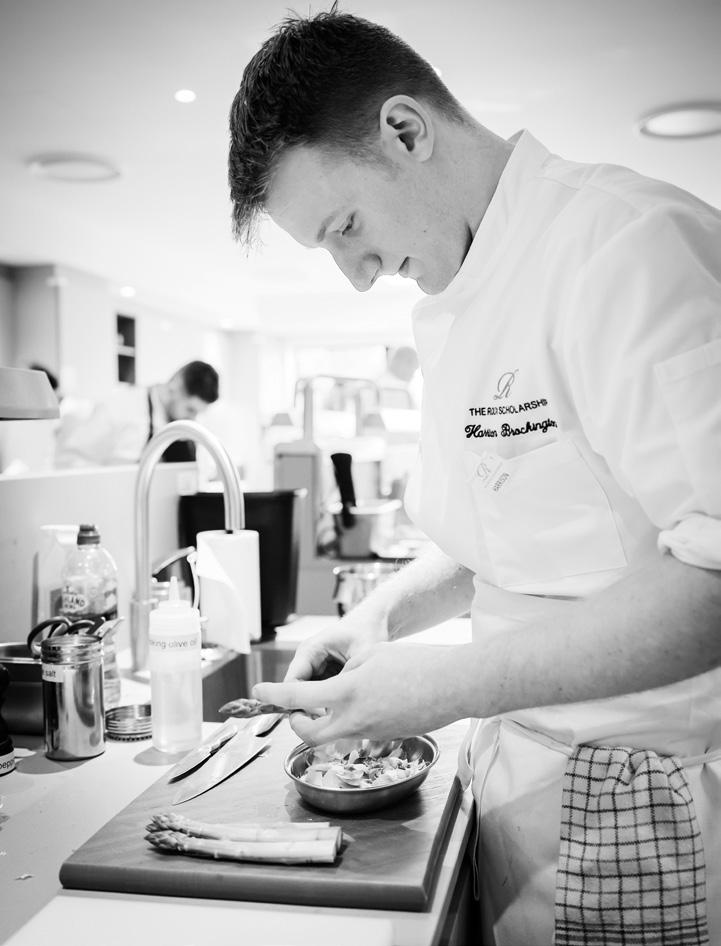
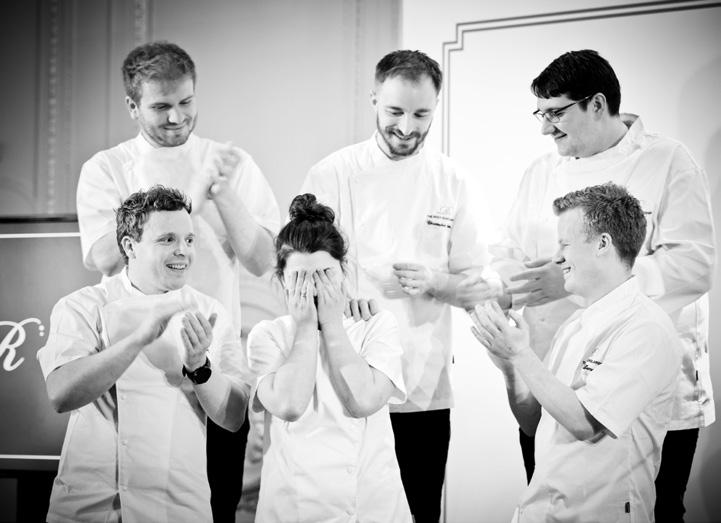
In a fiercely contested final at The Waterside Inn, Devon-born chef Harrison Brockington claimed The Roux Scholarship 2026
I n B r I t I s H Coo KI n G, few accolades carry the weight of The Roux Scholarship. It is a competition that rewards not just skill but judgement. On Monday 13 April at The Waterside Inn, that distinction belonged to Harrison Brockington, a 28-year-old chef from Devon who emerged from a fiercely contested final as the 2026 scholar.
Brockington – head chef and co-owner of Gather in Totnes – was named the 2026 scholar after a final that demanded not just technical fluency but clarity of thought. His reaction, delivered shortly after the announcement at Coworth Park, was simple: disbelief, followed by joy. He had entered, he said, merely to see how far he could go.
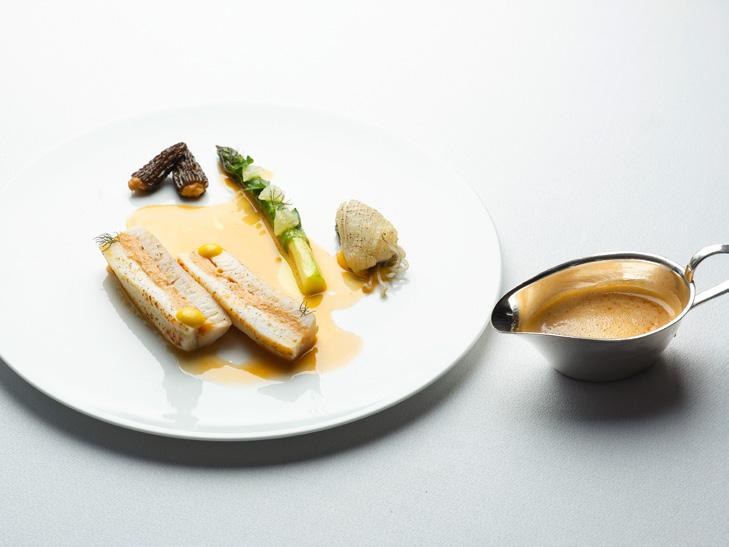
The brief offered little room for hesitation. Under the guidance of Mauro Colagreco – known for his nature-led, deeply seasonal cuisine at three-Michelinstar Mirazur – the finalists were tasked with interpreting a Mediterranean-inspired surf’n’turf. It’s a deceptively sunny concept that conceals serious complexity. Dover sole and cuttlefish met pork sausage meat; asparagus and mushrooms demanded balance; citrus from the gardens of Mirazur offered precision and lift. Combined, they were a test of judgement as much as skill.
Colagreco, who led the judging alongside Alain Roux and Michel Roux Jr, was clear in his assessment. The standard was high, the ideas varied, but conviction made the difference. Some chefs, he noted, were tentative in marrying land and sea. Others showed greater confidence in both flavour and intent. In a competition decided by fine margins, that distinction matters.
Brockington’s cooking at Gather leans into foraged ingredients and the rhythms of the Devon landscape. His background –from the Michael Caines Academy at Exeter College to time spent in kitchens across the South West – speaks to a chef grounded in produce and place. The Scholarship, however, has always been about expansion: of perspective, of technique, of ambition. That ambition is now formalised in the prize itself. Brockington will receive £6,000, with a further £6,000 awarded should he remain in his current role for the next 15 months, alongside a bespoke training programme tailored to his own interests and areas for development. It is a structure that has, since its founding in 1984 by Michel and Albert Roux, helped to reshape British cooking. Alumni – including two-Michelinstar chef Sat Bains and three-Michelin-star Mark Birchall – have gone on to define it.
The final, staged in the Alain Roux Culinary School at The Waterside Inn, felt symbolic. Here, in a space dedicated to the passing on of knowledge, a new chapter begins. Each winner becomes part of that continuum, expected not only to absorb what comes next, but to carry it forward.
Brockington triumphed over a strong field, including chefs from Midsummer House, Trinity and Coworth Park, each
bringing their own interpretation to an exacting brief. That his dish stood apart is telling. Where every finalist is already an accomplished chef, it is judgement – the ability to edit, to commit, to execute without hesitation – that separates the winner.
For Brockington, the immediate future will be one of travel, learning and refinement. For the wider industry, his name joins a list that continues to carry uncommon weight. And for those still working their way through the ranks, it serves as a reminder that, in the right hands, a single plate of food can change your life for the better.
See more at rouxscholarship.co.uk
In
a space dedicated to the passing on of knowledge, a new chapter begins. Each winner is part of that continuum
▴ JUDGEMENT DAY: [top] Harrison Brockington working on his winning surf’n’turf dish [above].
▴ WINNING MENTALITY: Brockington [centre] being warmly congratulated by his fellow finalists.
Jodi Hinds
The art of the pour –where great bottles speak
Rare wines, remarkable stories and bespoke menus come together at The Waterside Inn, where each wine dinner celebrates terroir, tradition and time
WI n E H as a LWaYs represented far more than a mere accompaniment at The Waterside Inn. It is an essential part of its history and culture, as much as the food and hospitality, a living archive of relationships spanning decades, families spanning generations, and terroirs patiently developed over time.
The 2026 series of wine dinners continues this popular tradition, an annual highlight that offers guests the most immersive, authentic and enriching way to experience this extraordinary legacy, alongside great wines, inspired cuisine and convivial
company in true Waterside Inn style.
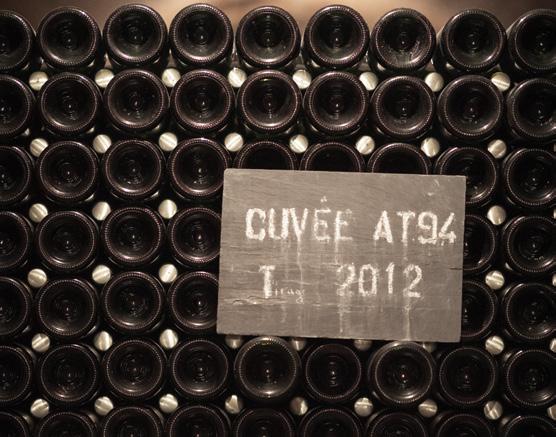
At the heart of the tradition lies one of the most important private restaurant cellars in the country. Today, The Waterside Inn cares for around 17,000 bottles on site, representing more than 1,000 different French labels, with a further 30,000 bottles stored under perfect conditions at Octavian Wine Services in Corsham, Wiltshire.
General Manager Frédéric Poulette explains: “From the moment a wine leaves the château, its provenance is meticulously traced. It is transported under strict temperature-controlled conditions and stored with the utmost care, so it reaches the glass in pristine condition, with minimal disturbance – exactly as the winemaker intended.”
The cellar itself is spread across three carefully controlled spaces that are fully insulated with temperature and humidity control to ensure the wines are stored in perfect condition. Among the treasures within are bottles that speak to both rarity and heritage, including Château d’Yquem 1975 and Château Lafite-Rothschild 1966.
A LEGACY BEGUN BY MICHEL ROUX
Much of the cellar’s depth and distinction can be traced back to the late Michel Roux OBE, whose passion for wine matched his dedication to cuisine.
From the late 1960s onwards, Michel built direct and deep relationships with the great families of Bordeaux, stemming from his time as Head Chef for the Rothschild family. Many wines were sourced directly from the châteaux themselves, with Michel buying extensively en primeur.
“Wine was a great passion of my father, on a par with food,” says Chef Alain Roux. “The key has always been consistency,
spending time with these distinguished families, walking their vineyards, understanding their terroir and making our choices based on trust built over years.”
Those relationships were never simply transactional. They were personal, reinforced by shared meals, mutual exchange and repeat annual en primeur tours, with Alain often travelling alongside Michel in the later years.
Over time, Burgundy followed Bordeaux into the cellar, again through friendships with the great houses and families including Drouhin and Jadot.
Today, around 70% of the cellar is ex-château, a distinction that brings both authenticity and assurance to the offering.
In recent years, significant investment has also been made in acquiring rare back vintages, ensuring the cellar remains not just historic, but alive and evolving.
Treasures of France: Cellar Discovery Dinner
CHAMPAGNE · ALSACE · RHÔNE VALLEY · BURGUNDY · BORDEAUX
A rare journey through France’s most celebrated wine regions, drawn from The Waterside Inn’s legendary cellar, this exceptional event showcases a panorama of mature and perfectly stored bottles. It offers a unique opportunity to experience the depth, diversity and longevity of France’s greatest terroirs in a single evening.
FIVE-COURSE CELLAR
DISCOVERY DINNER
DATE Friday 25 September 2026
TIME 7.00pm – 11.00pm
PRICE £890 per person
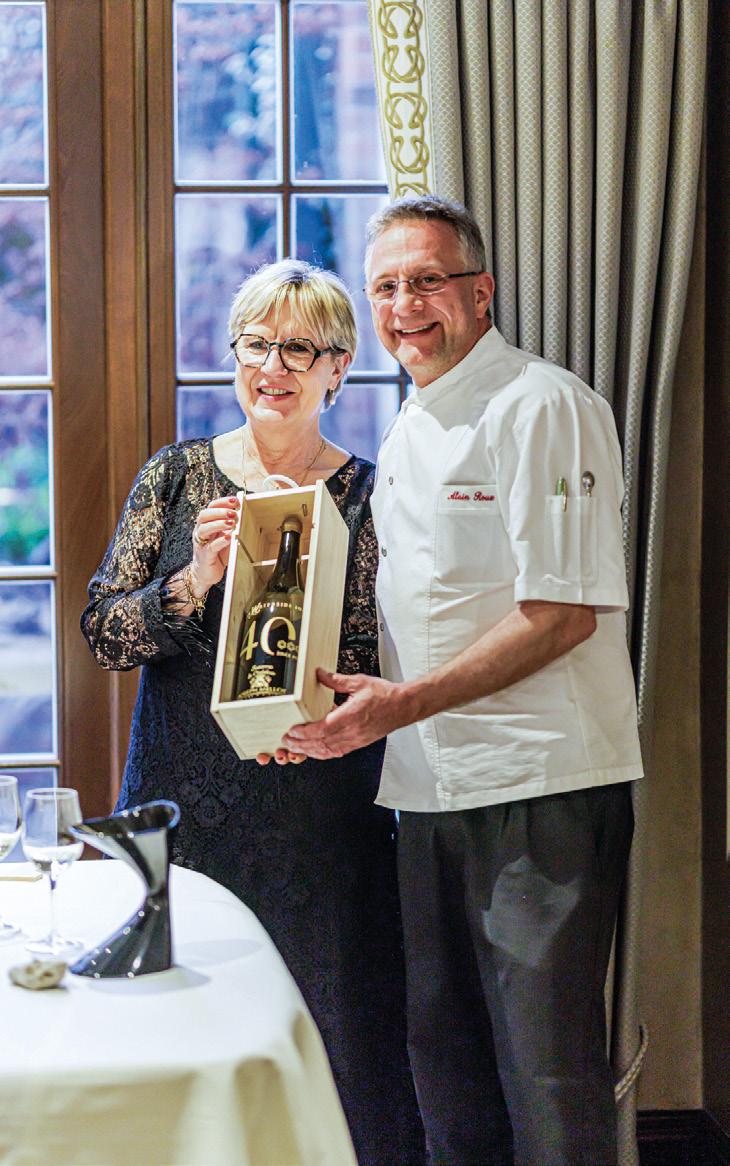
▴ WINE OF THE TIMES: Alain is presented with a special bottle of Sancerre Domaine Joseph Mellot to commemorate 40 years of three Michelin stars.
WHY THE WINE DINNERS MATTER
While buying wine en primeur has become increasingly complex, the relationships behind these purchases remain central. “That is why the wine dinners are so important,” Frédéric explains. “They maintain and reinforce our connection with the châteaux and, just as importantly, allow us to share that passion and history of their craft directly with our guests. They learn the background and care that goes into their glass of wine. They gain a deeper understanding
Luxuries of Land & Sea: Caviar & Truffle Dinner
CHÂTEAU HAUT-MARBUZET (SAINT-ESTÈPHE)
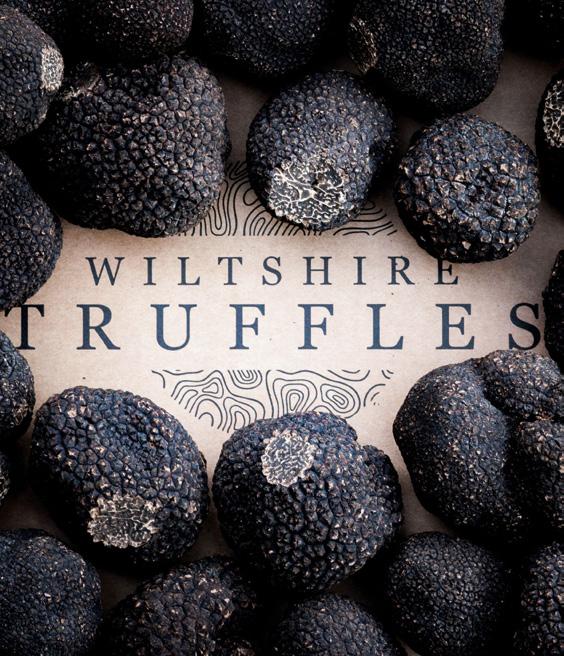
An indulgent evening celebrating caviar from King’s Fine Food, and spectacular British truffles from Wiltshire Truffles, paired with the generous, opulent wines of Château Haut-Marbuzet.
Owned by the Duboscq family since the 1950s, this Saint-Estèphe estate is admired for its richly textured style, polished tannins and distinctive character that have helped redefine modern Bordeaux.
FIVE-COURSE CAVIAR & TRUFFLE DINNER
DATE Friday 30 October 2026
TIME 7.00pm – 11.00pm
PRICE £990 per person
of the alchemy, patience and wisdom that defines truly great wines.”
Each dinner is built around a longstanding relationship with a château, domaine or family, many spanning generations. The winemaker or owner hosts the evening in person, guiding guests through the wines, the vintages and the philosophy behind them. These are not presentations, but memorable conversations, rich with anecdote, humour and a genuine passion.
For each dinner, a bespoke multi-course menu is designed to perfectly enhance the structure, evolution and character of the wines themselves. The challenge, as Frédéric notes, is one the kitchen relishes: “Our chefs love the process of tasting the wines and finding the perfect match. When the pairing works, it’s incredibly rewarding, an unbeatable experience. Each dish is conceived as the perfect partner, helping to tell the winemaker’s story and revealing the wines at their peak.”
WHERE KNOWLEDGE FLOWS AS FREELY AS THE WINE
Held in The Waterside Inn’s riverside dining spaces, each dinner is elegant, intimate, often enjoyed around a single table and defined by an atmosphere of warmth and fun. Guests sit alongside fellow enthusiasts, sharing discovery as much as the exceptional food and wine itself.
“It’s all about learning and having fun,” says Frédéric. “For the winemakers, it’s a joy to pass on their knowledge. Like chefs, they feel a deep responsibility to keep their craft alive and to share it.”
These evenings are also invaluable for The Waterside Inn team, deepening their understanding of viticulture, vinification and terroir, and reinforcing the culture of excellence that defines the restaurant.
“But more than anything, we love hosting these dinners to give something wonderful back to our guests,” says Frédéric. “They taste, learn, but most importantly have fun.”
A LIVING EXPRESSION OF THE WATERSIDE INN
“For those who love fine wine, great food and meaningful connection, these evenings represent the most complete and rewarding way to experience The Waterside Inn’s remarkable wine heritage: one glass, one dish and one conversation at a time,” continues Frédéric. It is, quite simply, The Waterside Inn at its most generous – a rare chance to experience its cellar, its relationships and its hospitality in full voice.
HIGHLIGHTS FROM THE 2025 WINE DINNER PROGRAMME
Last year’s programme showcased the remarkable breadth of The Waterside Inn’s wine relationships, with seven dinners ↘
From the moment a wine leaves the château,
its provenance
is meticulously traced and reaches us in pristine condition
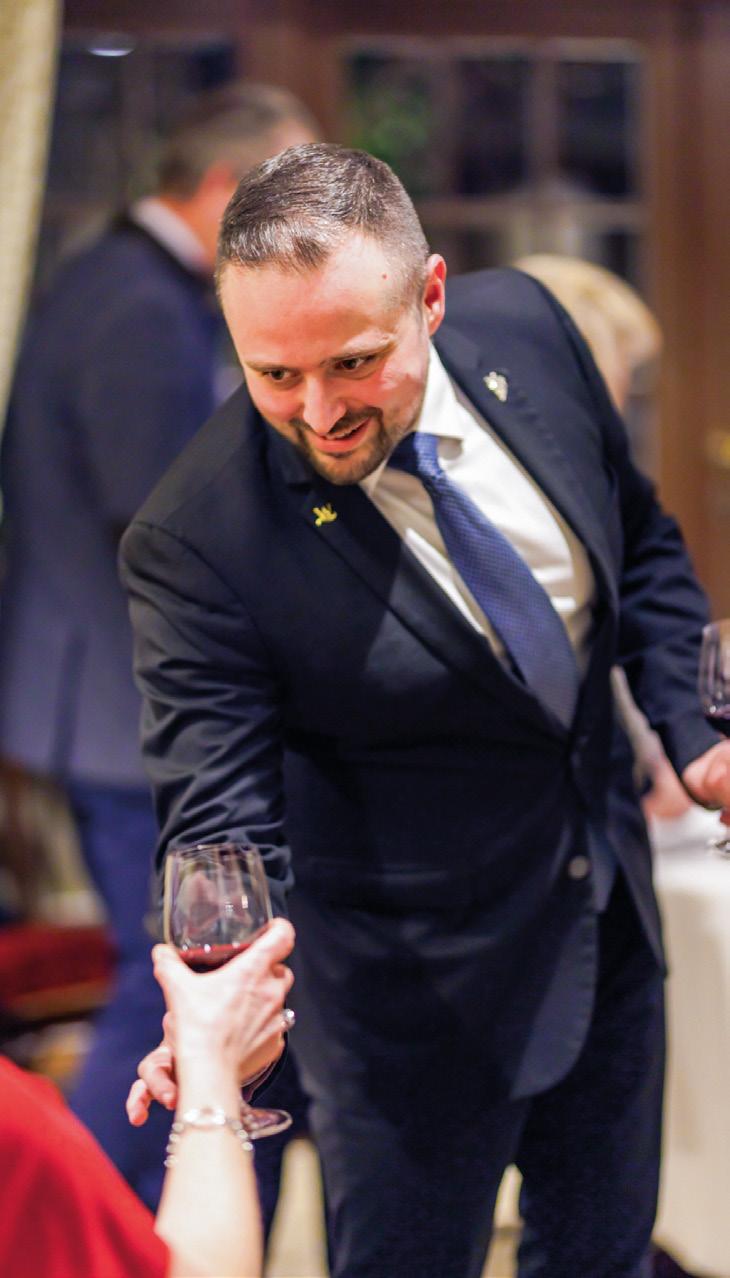
▴ THE GRAPE AND THE GOOD: Marius Plesa serves a glass of claret at the Château Haut-Bailly dinner.
Guests will gain a deeper understanding of the alchemy, patience and wisdom that define truly great wines
↘ celebrating some of France’s most respected estates and regions.
Spring highlights included a memorable Bordeaux evening with Château Haut-Bailly and Château Giscours, hosted by owners Alexander van Beek and Véronique Sanders, who shared insights into centuries of estate history and the fine balance between vineyard management and winemaking. Guests also enjoyed elegant wines from Domaine Joseph Mellot in Sancerre and the iconic Trimbach family in Alsace. The Domaine Joseph Mellot dates back to 1513 and has been in Mellot family ownership ever since.
The Autumn programme returned to Bordeaux with dinners hosted by Jean-Charles Cazes of Château Lynch-Bages, famed for its Pauillac wines and ageing potential, and Daragh Quinn of Château de Fieuzal, a Cru Classé de Graves Pessac-Leognan estate renowned for both red and white wines.
The year concluded on a celebratory note
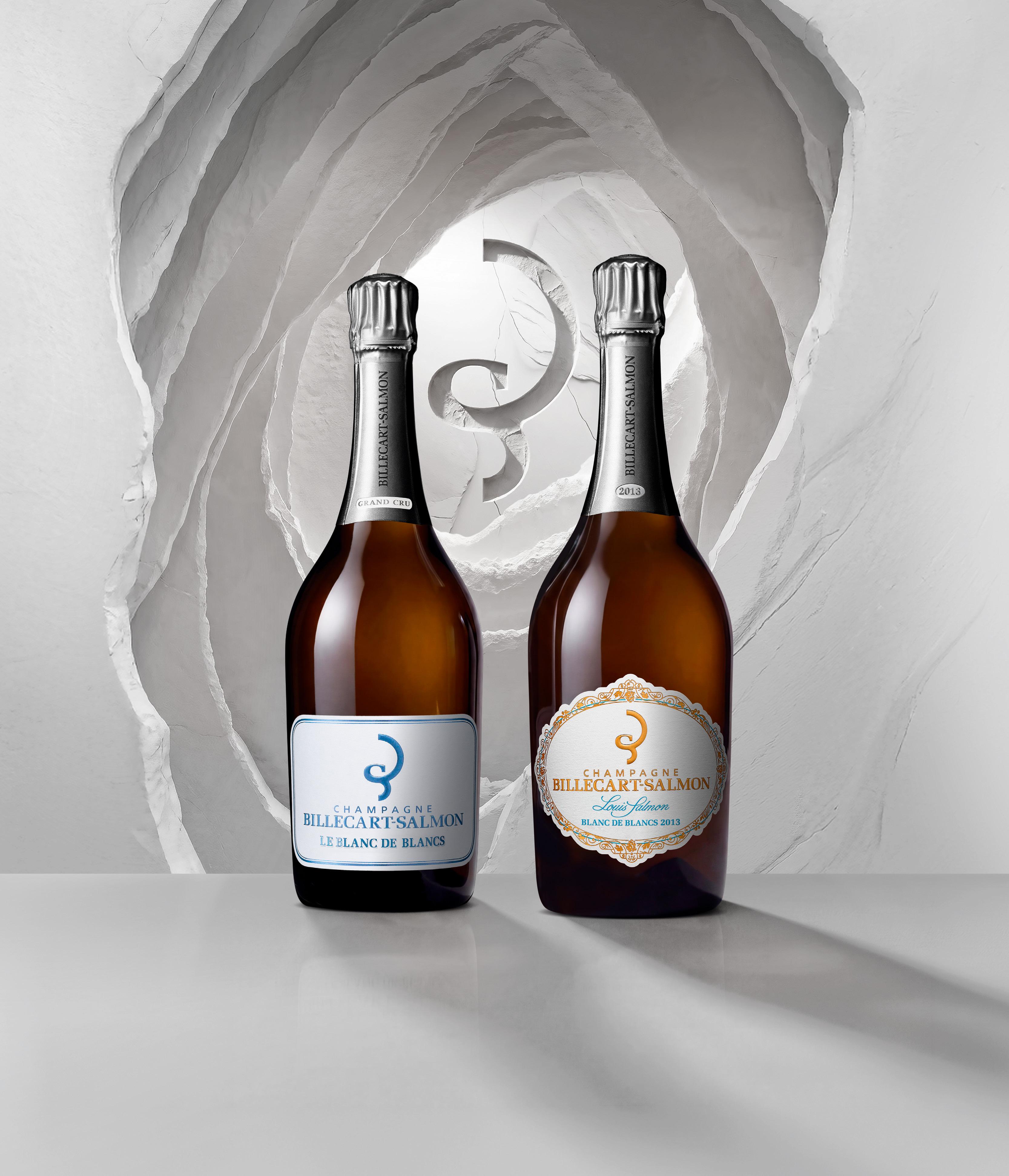
with Champagne Billecart-Salmon, admired worldwide for its finesse and craftsmanship.
A CALENDAR OF FRENCH EXCELLENCE
Chef Alain Roux invites connoisseurs and curious enthusiasts alike to discover France’s most revered vineyards through the 2026 programme of Luxury Wine Dinners. Each evening pairs rare, expressive wines with a bespoke five-course menu, carefully composed to showcase the natural harmony between cuisine and cellar.
The calendar reflects long-standing friendships with some of France’s most distinguished winemaking families, every one shaped by generations of devotion to the land and the craft. Together, these exceptional gatherings embody the spirit of The Waterside Inn’s wine dinners: direct access to the families and growers behind the labels, expertly chosen bottles, and lively, cordial evenings where knowledge, passion and pleasure are shared at the table.
SPRING HIGHLIGHTS: MARCH TO MAY 2026
The first months of the year set an exceptional tone for the 2026 programme. In March, guests gathered to celebrate the aristocratic precision of Château Léoville Barton, one of Bordeaux’s most historic family estates. Showcasing two centuries of SaintJulien excellence, the evening highlighted the depth, structure and longevity that define this revered Second Growth.
April transported diners to the Rhône Valley with Maison Chapoutier – a pioneer of biodynamic viticulture and a benchmark for terroir-driven winemaking. Sophisticated whites and profound reds from celebrated single vineyards offered an intimate portrait of place, purity and precision. Together, these evenings demonstrated the breadth and depth of The Waterside Inn’s wine programme – spanning regions, philosophies and styles, united by both excellence and conviviality.
Four-Hands Dinner
CHÂTEAU PALMER (MARGAUX)
A special collaboration celebrating one of Bordeaux’s most revered Grand Cru Classé estates. Guided by biodynamic viticulture and a philosophy of balance and precision, Château Palmer produces some of Margaux’s most sensual and expressive wines. Chef Alain Roux welcomes Château Palmer’s Executive Chef, Jean-Denis Le Bras, for an exceptional four-hands dining experience inspired by shared values of craftsmanship and terroir.
FIVE-COURSE WINE DINNER
DATE Friday 20 November 2026
TIME 7.00pm – 11.00pm
PRICE £890 per person
2026
WINE
DINNER
PROGRAMME: SEPTEMBER TO DECEMBER
The remainder of our 2026 calendar promises another remarkable season of discovery and celebration. With limited availability and strong demand, these evenings traditionally sell out quickly. To ensure you are first to hear about the wine dinners, subscribe to our newsletter via the link below. waterside-inn.co.uk/subscribe
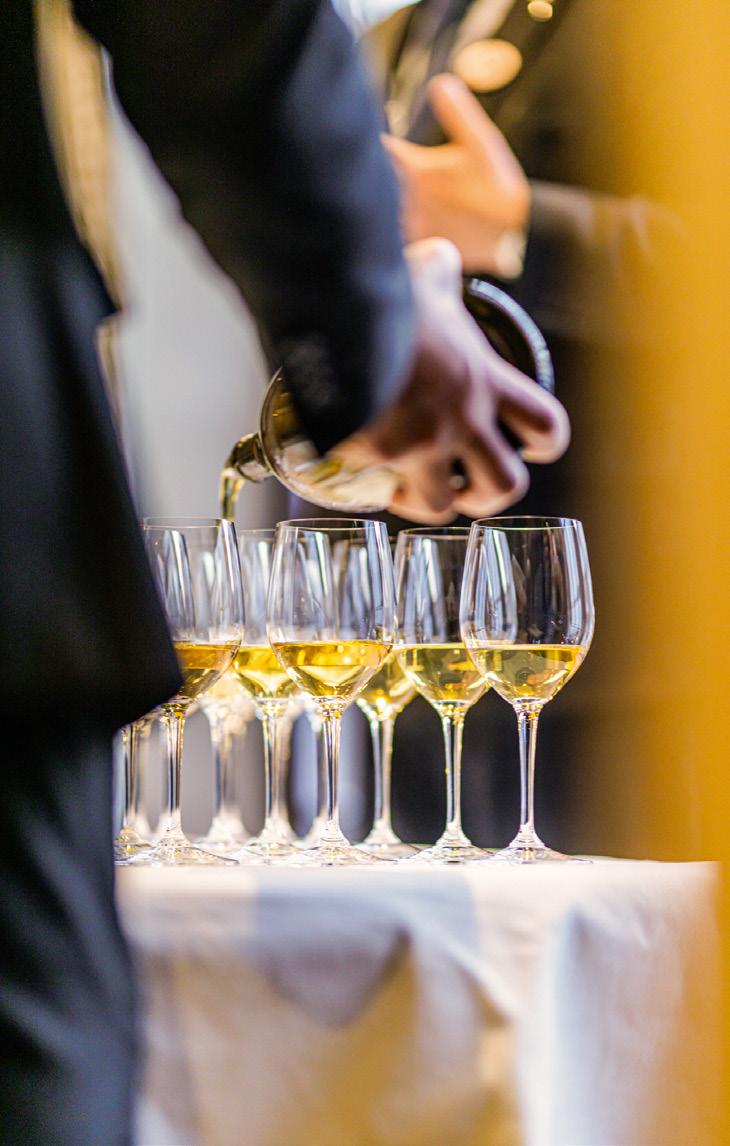
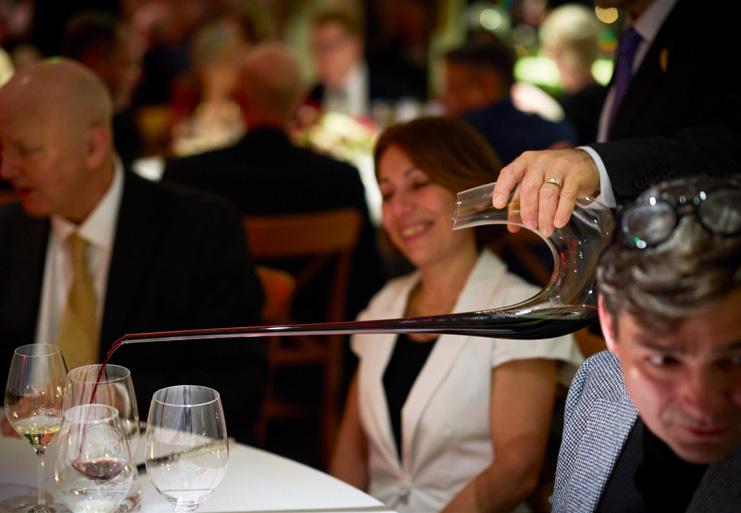
▴ IN FULL FLOW: The ritual begins with the first pour – then the stories follow close behind.
Where the kitchen becomes the boardroom
Looking for an unforgettable day with colleagues, friends, or family? At the Alain Roux Culinary School, the only one attached to a three Michelin-starred restaurant in the UK, Alain Roux and his expert team work closely with you to craft the perfect group class, designed to inspire, empower, and entertain
soME o F t HE best team-building days don’t happen in a conference room. They happen at a kitchen station, with an apron on, a dish in the oven, and something unexpected at stake.
For a group of colleagues from Softcat, the technology solutions company based in Marlow, a morning at the Alain Roux Culinary School turned out to be precisely that kind of day – one of those rare experiences that leaves people talking long after they’ve returned to their desks.
The brief was simple: bring a team together, away from screens and spreadsheets, and give them something genuinely different.
What unfolded was a morning that blended laughter, focus, a little friendly pressure, and a great deal of delicious food.
The day began with breakfast in the Michel Roux Library, a room that carries a palpable sense of history and nostalgia, its shelves lined with Michel’s 12 published books, displays of family photographs, engraved knives, and a handwritten message
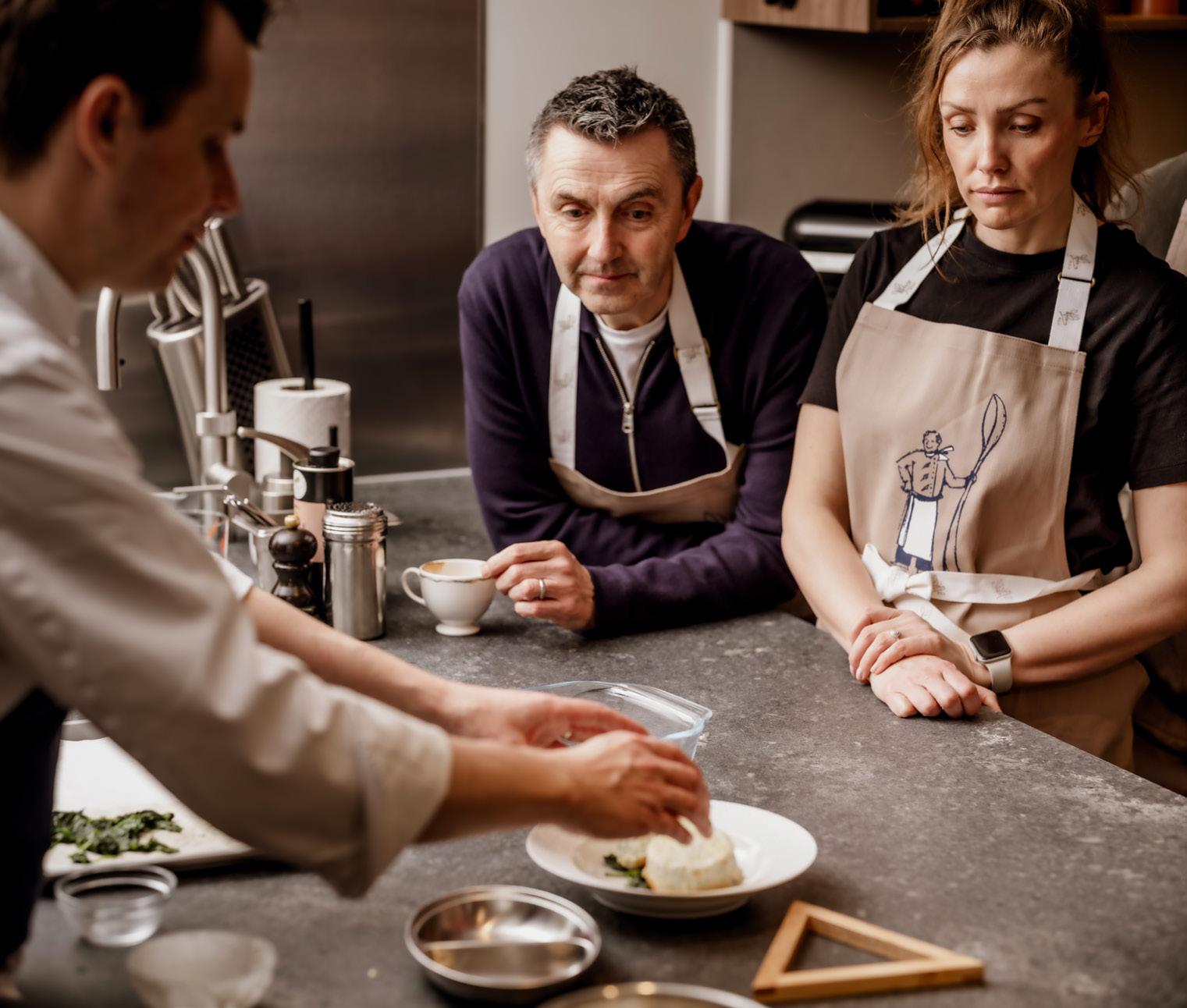
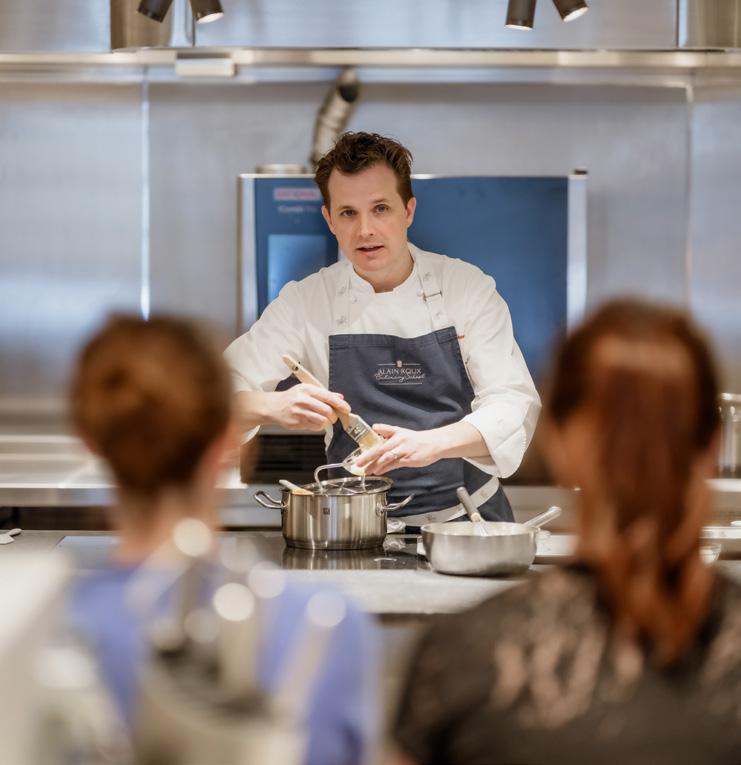
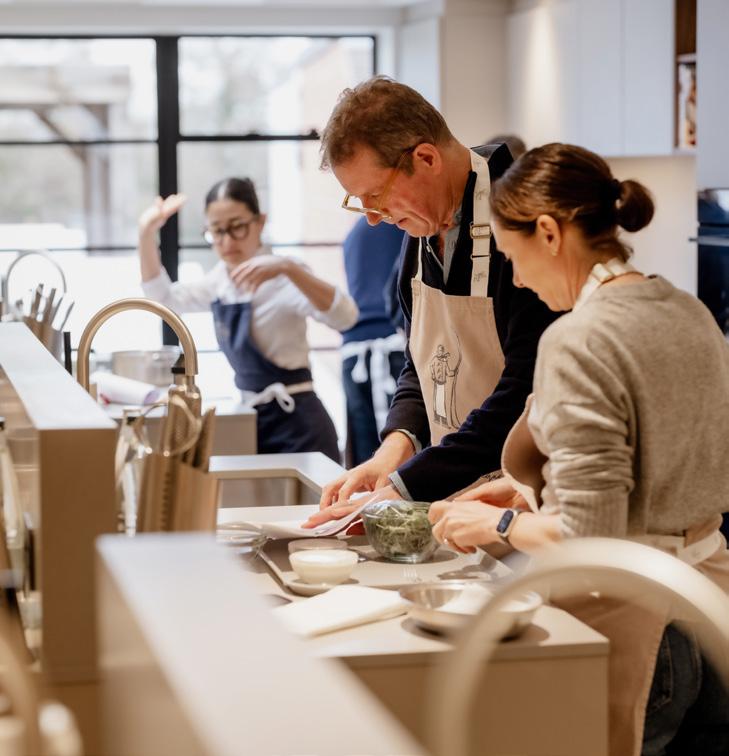
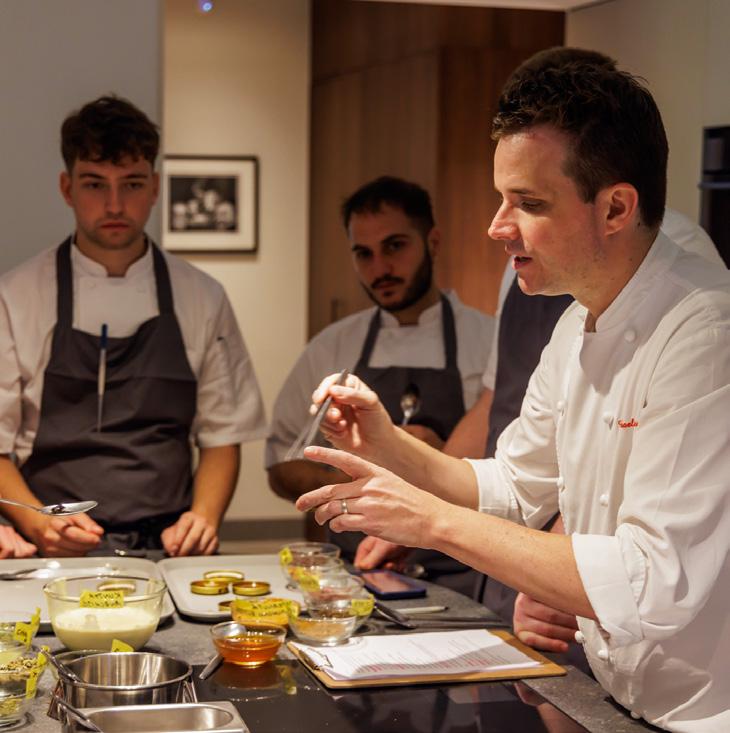
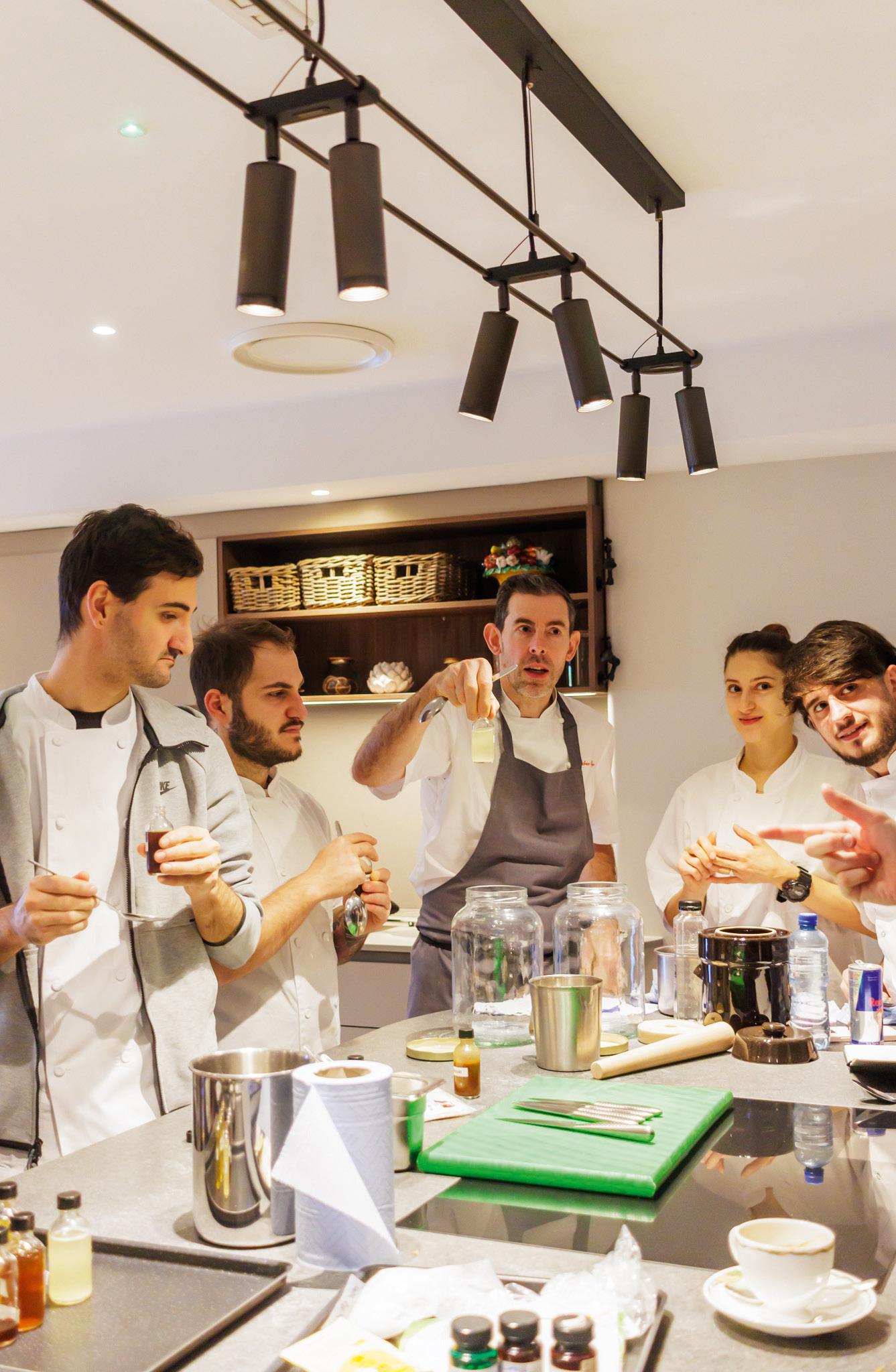
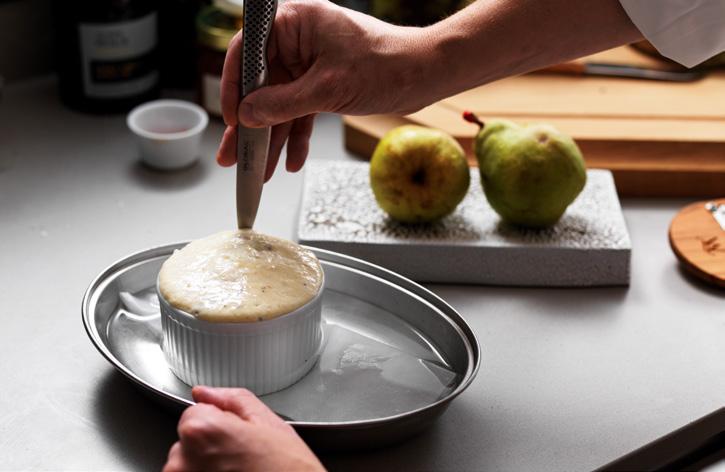
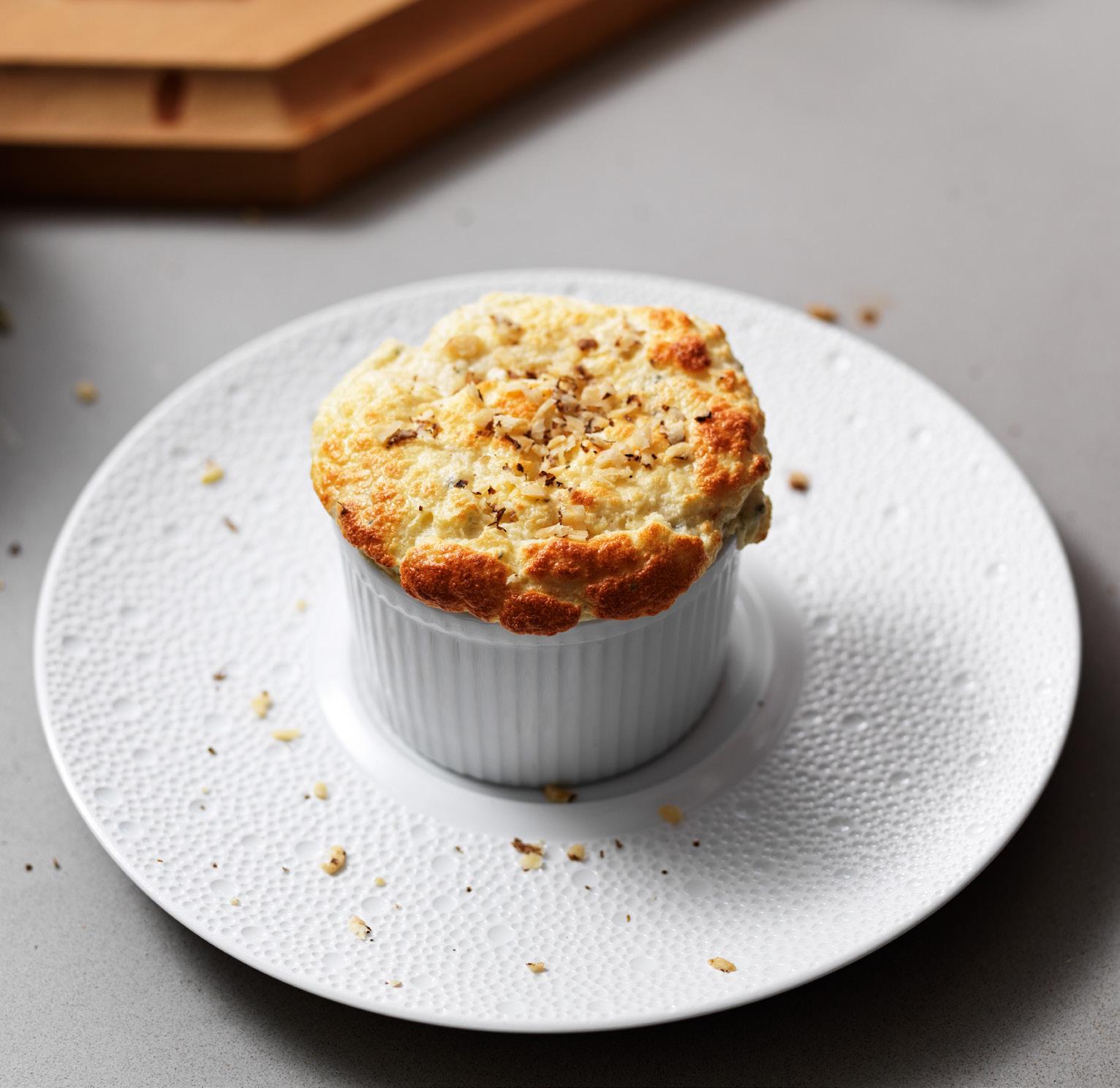
◂ LEAD BY EXAMPLE: To begin the group class, Chef Instructor Michael Nizzero demonstrated the art of creating the perfect twice-baked cheese soufflé.
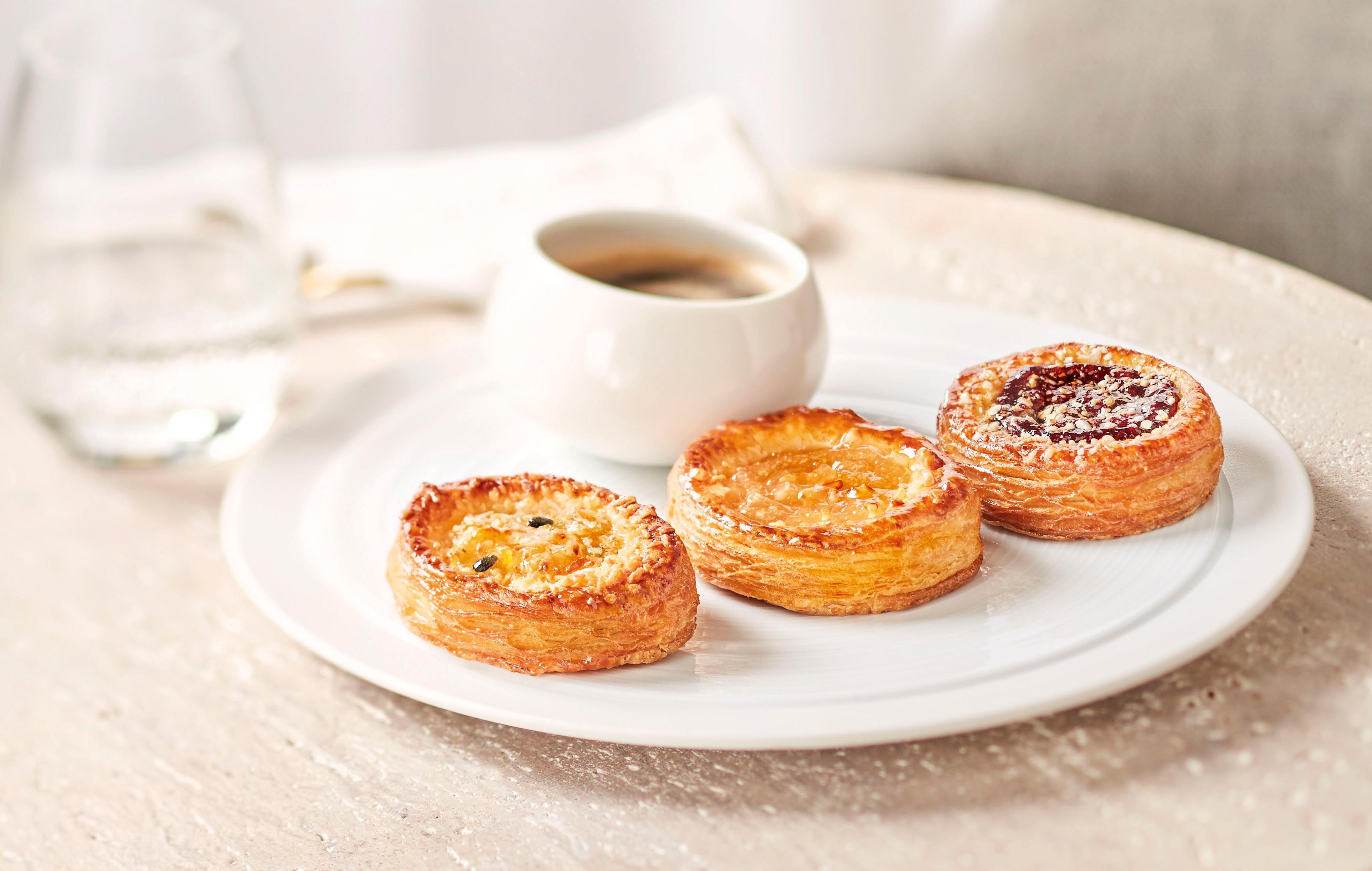
from Her Late Majesty The Queen. The Softcat group settled in over coffee, freshly baked croissants, and warm pastries. The atmosphere, from the very first moment, was relaxed and generous. This was not a corporate away day dressed up in chef’s whites.
The library and adjacent culinary school set a tone that no hired conference suite can replicate. It’s intimate and personal, and speaks of a family for whom cooking has never been merely a profession, but rather a way of life, a language, a form of love.
Then came the soufflé. Chef Instructor Michael Nizzero took to the demonstration kitchen to walk the group through one of the most iconic and famously unforgiving dishes in the classical French and Roux family repertoire: the twice-baked cheese soufflé. With the precision of a chef trained at the highest level and the warmth of someone who genuinely loves what he does, Michael guided the group through every stage: the preparation of the dishes, the béchamel base, the careful folding of egg whites, and the critical timing that stands between triumph and deflation.
Then it was the class’s turn. Working in pairs at fully equipped stations, the Softcat team rolled up their sleeves and set to work. And this is where something interesting happens in a kitchen that rarely happens in a meeting room: everyone is equal, everyone is slightly out of their comfort zone, and everyone is working towards the same goal. Hierarchy dissolves. People who might barely interact day-to-day find themselves consulting, encouraging, problem-solving, and most importantly, laughing together.
As Softcat CTO Mark Forster explains, “The cooking experience was a fantastic way to develop teamwork in a fun and engaging way. The expert tuition and facilities ensured that all we had to worry about was having a good time, together, as a team.
The team at the Alain Roux Culinary School have developed a programme which encourages teamwork
“Personally, I loved it! Getting time away from the office but also being surrounded by people and facilities which demanded quality was really energising.”
The results, it must be said, were impressive. Soufflés rose. There were moments of genuine tension as oven doors were watched with an almost athletic intensity. And when the dishes appeared –golden, proud, and perfectly risen – there was a collective sense of achievement.
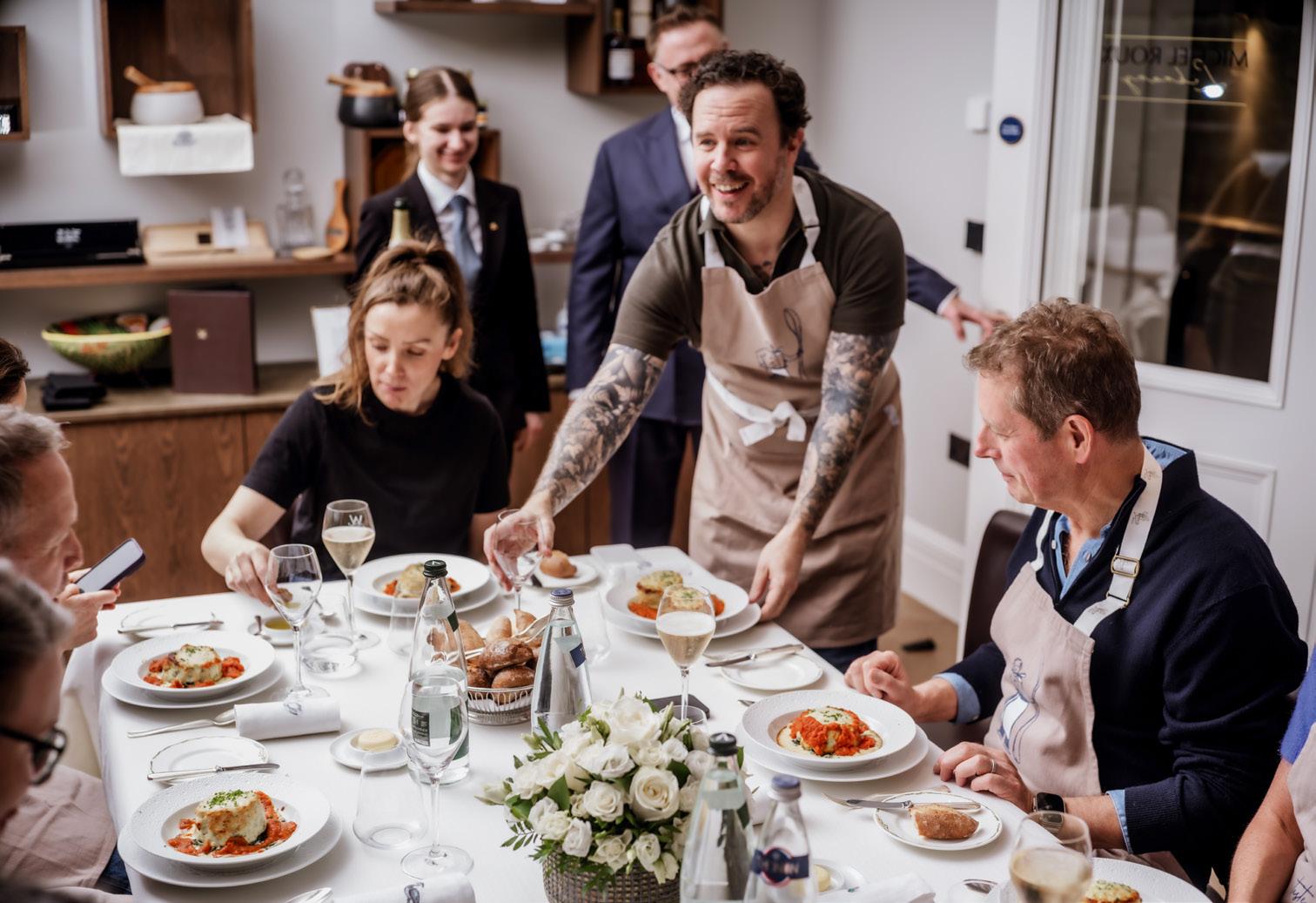
Back in the Michel Roux Library, the group gathered once more to share what they had created. Soufflés accompanied by thoughtfully prepared sides, served alongside good wine, in a setting that made the meal feel like a genuine occasion rather than a working lunch. It’s this closing ritual, the sitting together to eat what you have created, that quietly does much of the heavy lifting of a day like this. The shared table, achievement, and meal.
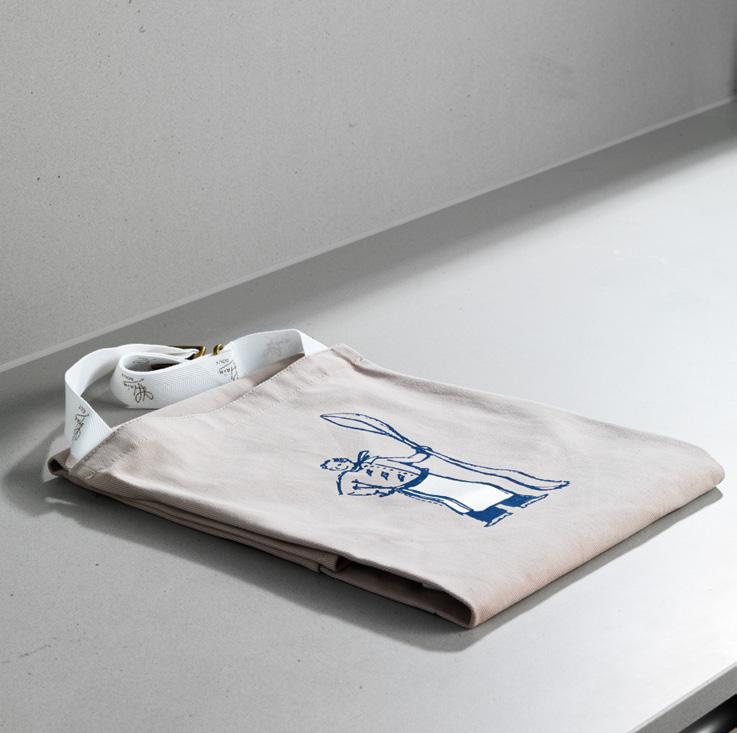
Each guest left with a goody bag, a small, tangible reminder of the day, but the more lasting takeaways were harder to package. Confidence in the kitchen, certainly. New skills, absolutely. But also something less quantifiable: a renewed understanding of the people they work with, seen in a different
light, in a different setting, doing something totally new together.
“The team at the Alain Roux Culinary School has developed a programme which is perfectly formed to encourage teamwork. Whilst one person is chopping and on prep, the other is heating and preparing the pans. Watching the various activities come together to make some truly stunning food was hugely rewarding,” Forster said. “I’d absolutely recommend the experience.
The setting is stunning, the tuition is informative and fun, the food is amazing, and the facilities are expertly constructed to encourage the best corporate experience.”
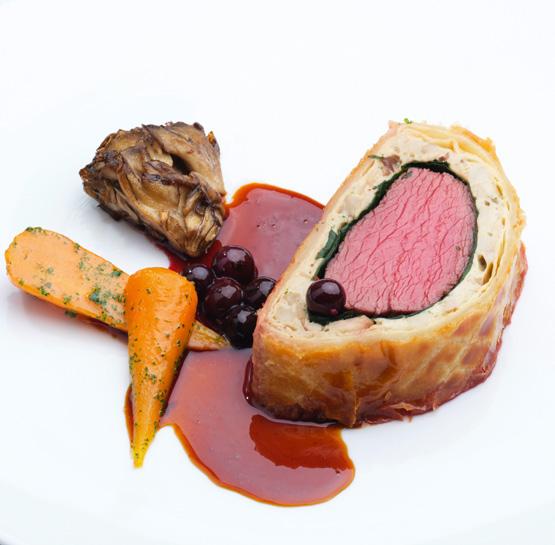
While the Softcat group discovered their inner chef through the lens of a classic soufflé, no two days at the school need look the same. The culinary school team works closely with each group to design a class that fits, whether that means mastering a Beef Wellington, exploring the art of French pastry, building a summer feast around the BBQ, or crafting a bespoke menu. The format, the focus, the pace, and the occasion are all shaped around you and what you want to take away from the day.
And it needn’t be a corporate group at all. Friends marking a milestone birthday, families wanting to do something genuinely memorable together, a hen party with a difference, a festive Christmas gathering. The school welcomes all kinds of groups. What they tend to have in common is that they leave having had far more fun than they expected, and with memories that outlast even the best restaurant meal.
The soufflé, as it turns out, is an excellent metaphor for a high-performing team. The ingredients matter. The method matters. But it is the care, the timing, and the trust in the process that makes everything rise. To find out more or to begin planning your bespoke corporate class, please speak to a member of the culinary school team. Email arcsadmin@waterside-inn.co.uk
▴ AND RELAX: Once all of the dishes are plated, it’s time to sit down and enjoy the fruits of your labour.
▴ WORKING TOGETHER: Beyond the technical skill required to make each dish, the Alain Roux Culinary School teaches an important lesson in togetherness and the benefits on working as group towards a common goal.
Your forever starts here
The Waterside Inn hosts intimate, bespoke weddings featuring an extraordinary location and three-Michelin-starred cuisine
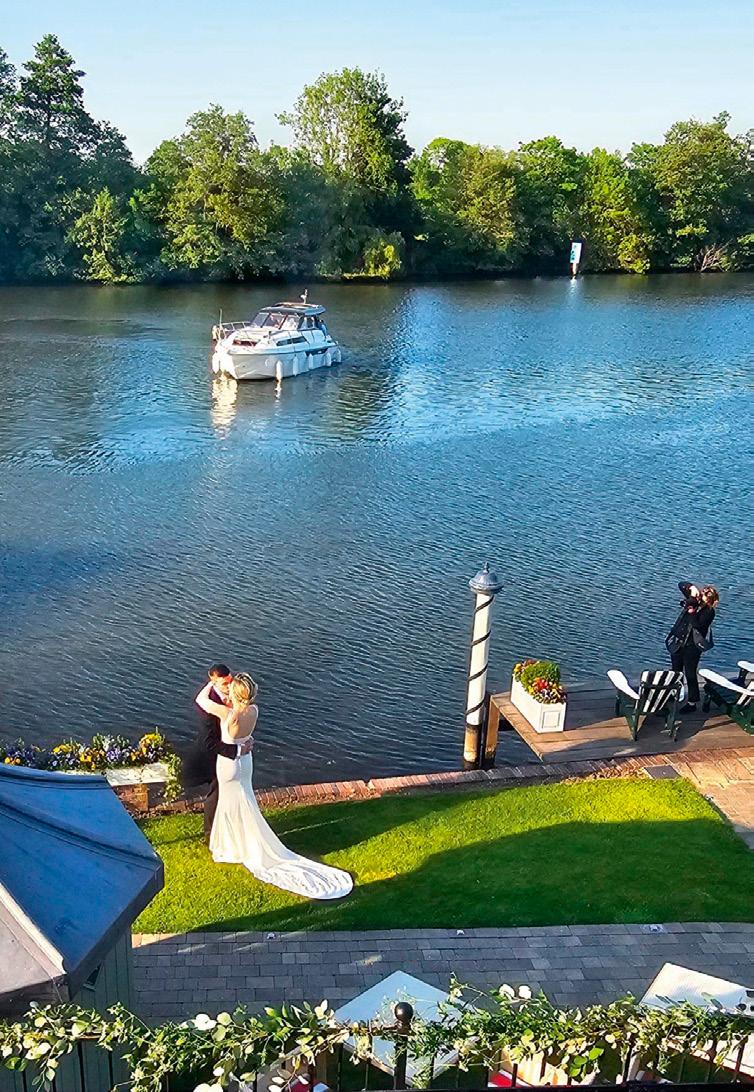
For Co U p LE s s EEKI n G a refined wedding venue in a breathtaking setting, The Waterside Inn offers a bespoke celebration in one of England’s most scenic riverside locations.
Set on the banks of the River Thames, the venue combines natural surroundings with understated luxury in abundance. Gardens, terraces and river views provide a peaceful and elegant backdrop, while the atmosphere remains reassuringly private and welcoming. With more than 30 years’ experience hosting weddings, our team offers a seamless and highly personalised approach. Couples can hold both their ceremony and reception in one place as The Waterside Inn is licensed for civil ceremonies. Celebrations can be tailored for intimate gatherings or larger occasions, with spaces suitable for 60 seated guests or up to 120 standing.
Eleven individually designed bedrooms and suites are available for overnight guests, each offering comfort, privacy and most offer views across the river or gardens. During the spring and summer months, couples and
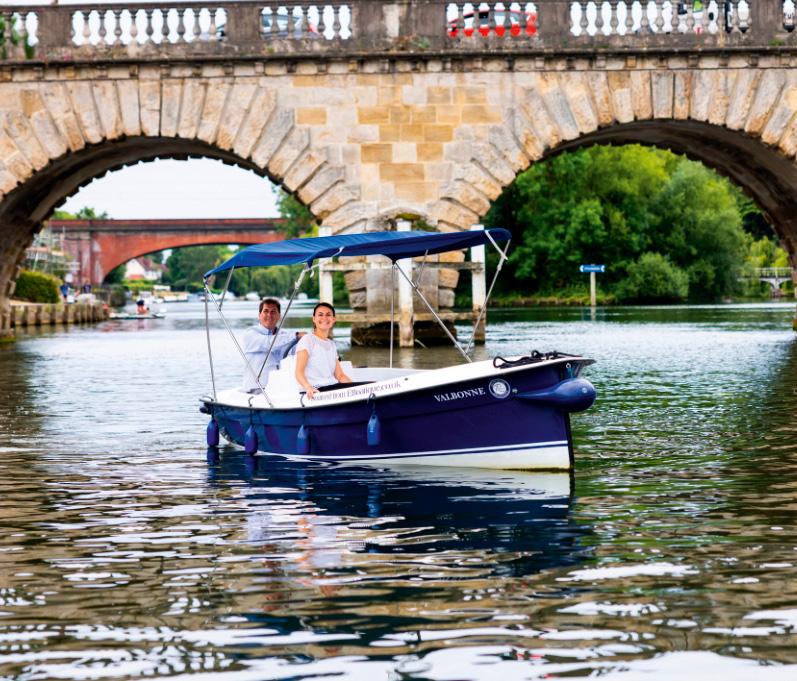
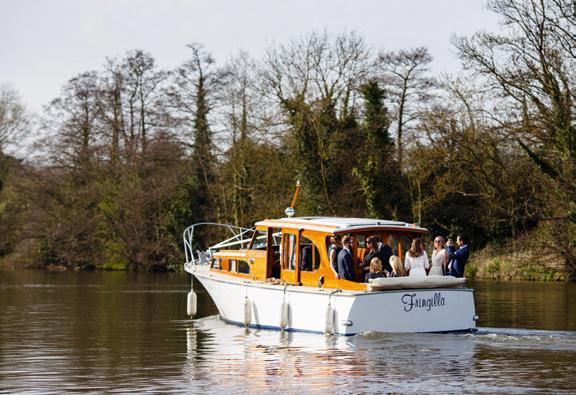
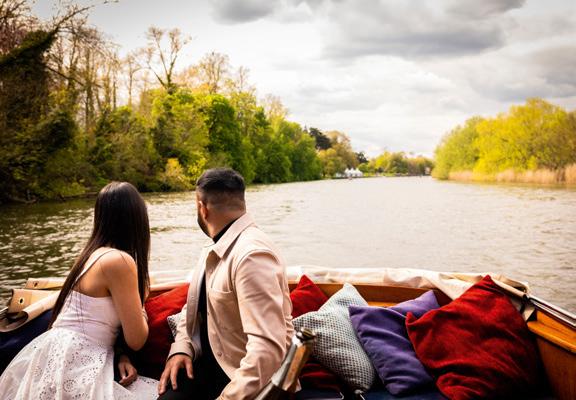
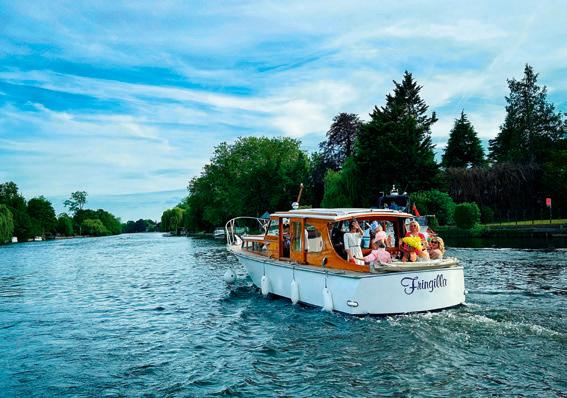
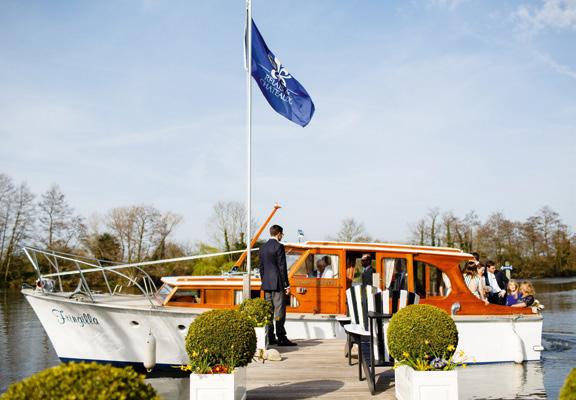
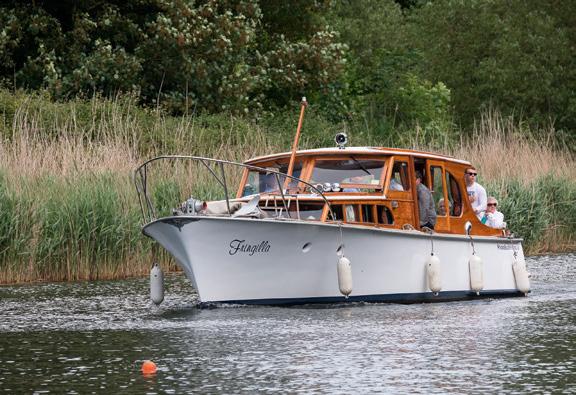
guests may also wish to take a spin in the Inn’s electric launch for a private Thames cruise – complete with champagne, of course – as a memorable addition to the day.
Internationally recognised for its threeMichelin-starred cuisine, The Waterside Inn is equally known for its generous hospitality. Under the guidance of Alain Roux, the restaurant can create bespoke menus rooted in classic French cuisine. Wines are selected with the help of the sommelier from a cellar of more than 1,000 French labels, while the pastry chefs can design an elegant wedding cake to complete the celebration. Every detail is carefully considered, ensuring each wedding exceeds even your highest expectations.
Every detail is carefully considered, ensuring each wedding exceeds even your highest expectations
Rasmus and Nevena, who celebrated their wedding at The Waterside Inn during the summer of 2025, enjoyed a perfect celebration: “Our wedding at The Waterside Inn was immaculate,” they said. “At this idyllic venue, nestled in the riverside village of Bray, we created treasured memories elevated by divine cuisine and service. Every wish, from the mundane to the finest detail, was attended to with care and excellence. We’re grateful to Alain and his team for all their efforts on our special day, and we can’t wait to revisit our happy memories at The Waterside Inn in the years to come.”
Just 25 miles from central London, the venue is easily reached by car or train. It’s also accessible by boat, offering a tranquil setting while remaining convenient for guests.
At The Waterside Inn, weddings are meticulously planned, carefully delivered and deeply personal – creating enduring memories for the rest of your lives. For enquiries and more information, please contact office@waterside-inn.co.uk
Jodi Hinds
Stars behind the stars
Behind The Waterside Inn’s three Michelin stars is a team united by craft, care and exacting standards – from chefs and housekeepers to the front-of-house staff whose unseen work makes every service feel effortless. We meet five of them…
at t HE Wat E rs IDE Inn, three Michelin stars are not maintained by talent alone. They are upheld, service after service, by a team whose work is often felt more than seen. Behind every polished glass, perfectly turned room, immaculate plate and instinctive gesture lies a network of people
who make excellence appear effortless –though, of course, it is anything but.
These are the stars behind the stars: the chefs, front-of-house team and housekeepers whose skill, discipline and care help keep one of the world’s great restaurants at its highest level. Some are at the very beginning
of their careers; others have already made The Waterside Inn their professional home. All share a belief in standards, teamwork and the kind of hospitality that reaches far beyond the dining room.
Together, their stories reveal the human craft behind an extraordinary institution.
‘Matthew’ King Fung Tang
COMMIS DE CUISINE/ APPRENTICE CHEF SINCE AUGUST 2024
At just 23 years of age, Matthew is already making his mark in one of the country’s most celebrated kitchens.
WHAT DOES THE WATERSIDE INN MEAN TO YOU? It’s hard to put into words, but the best way I can describe it is that it feels like home and school at the same time. Every time I come in, I know I’m going to be taken care of, and I know I’m going to take something away with me. I came straight here from university, so this is my first real workplace, and yet I never feel the pressure of it just being “work.” Everyone genuinely cares about how I’m doing. I’m being nurtured as a chef, I’m learning constantly, and there’s this very harmonic feeling about coming in every day. The restaurant has held three stars for so many years for a reason, and I think the way the whole team is looked after, the way everyone is treated with real warmth, is a big part of that.
IS THERE A MOMENT HERE YOU’LL NEVER FORGET? It’s hard to pick just one, but if I really have to, it would be the 2025 Roux Scholarship
final cook off, held in April 2025 at the Alain Roux Culinary School. I was chosen as the commis to support one of the competitors, Craig Johnston and I helped him throughout the cook off. When he was announced as the winner, I was following the live stream of the ceremony and I was genuinely in shock. I kept thinking, “no way”. I was just there helping a little bit on the side. But that memory is still
so vivid for me. To know I was part of something like that, even in a small way, means a great deal.
WHAT’S THE MOST CHALLENGING PART OF YOUR ROLE? It changes as you grow, which I think is the interesting thing. Early on it was about working more efficiently, more precisely, caring about the details. Now it’s more about managing pressure, staying organised, and learning how to bring a whole section together. But honestly, I wouldn’t call any of it a grief. I see it as a progression, a curve I’m climbing. If I get a little stressed or find myself in a tricky situation, I try to take the experience, hold onto it, and use it next time. Whether it’s good or bad, you build on it.
WHAT’S SOMETHING GUESTS WOULD NEVER NOTICE, BUT MAKES ALL THE DIFFERENCE? The care, the ideas, the effort that goes into processing every ingredient. A dish might look beautifully simple on the plate, generous, unfussy, but behind it there are so many steps, so many cooking methods, so much thought and so many chefs involved. Guests often won’t know that a single dish might have taken months to develop, that chefs will have tried it countless times, adjusted the ingredients, changed the method, reworked it
entirely. It’s like piecing together a puzzle, trying to find the perfect fit. And it’s always a team effort, everyone tasting, giving opinions, each chef perhaps presenting their own version before one direction is chosen. It can be draining, but in the best possible way. In all the time I’ve been here, I’ve genuinely never sent a dish to a guest that I felt wasn’t right.
DO YOU HAVE A FAVOURITE DISH YOU’VE WORKED ON? There’s one that stands out. It was a duo of game with garnishes, from when I was first on that section. The garnishes were what made it: a chartreuse built from layers of two different carrots, sand carrots and yellow, with artichoke in the centre. And then there was a fine potato basket, which was extraordinarily delicate to make. You’d deep fry it so it formed just the right shape, and the slicing of the potatoes had to be precise, not too thin or it would break, not too thick or the texture and cooking time would be off. It looked quite simple on the plate, but it took real patience and care to get right. Every time I made it well, I felt genuinely proud. There’s still so much to learn, and I know every ingredient and every new dish can always be made even better, but that one is a moment I hold onto.
Billy Bonwick
ASSISTANT MAÎTRE D’HOTEL
Billy joined The Waterside Inn in January 2022. Still in his early twenties, he has grown from a shy newcomer into a confident member of the front-of-house team and is now beginning to teach others.
WHAT DOES THE WATERSIDE INN MEAN TO YOU? It’s a great place to be. You’re working alongside brilliant leaders, and everyone is encouraged to do things in the right way, to always be their best. It feels like a family, a bit like being at home, though a wonderfully challenging home at that. And the friendships you make here are real ones. The hours we work aren’t like a normal job, so the people you work with become your social world too. You end up spending time together outside of work as well, going out as a group, doing things together. It’s that kind of place. Many team members share accommodation too.
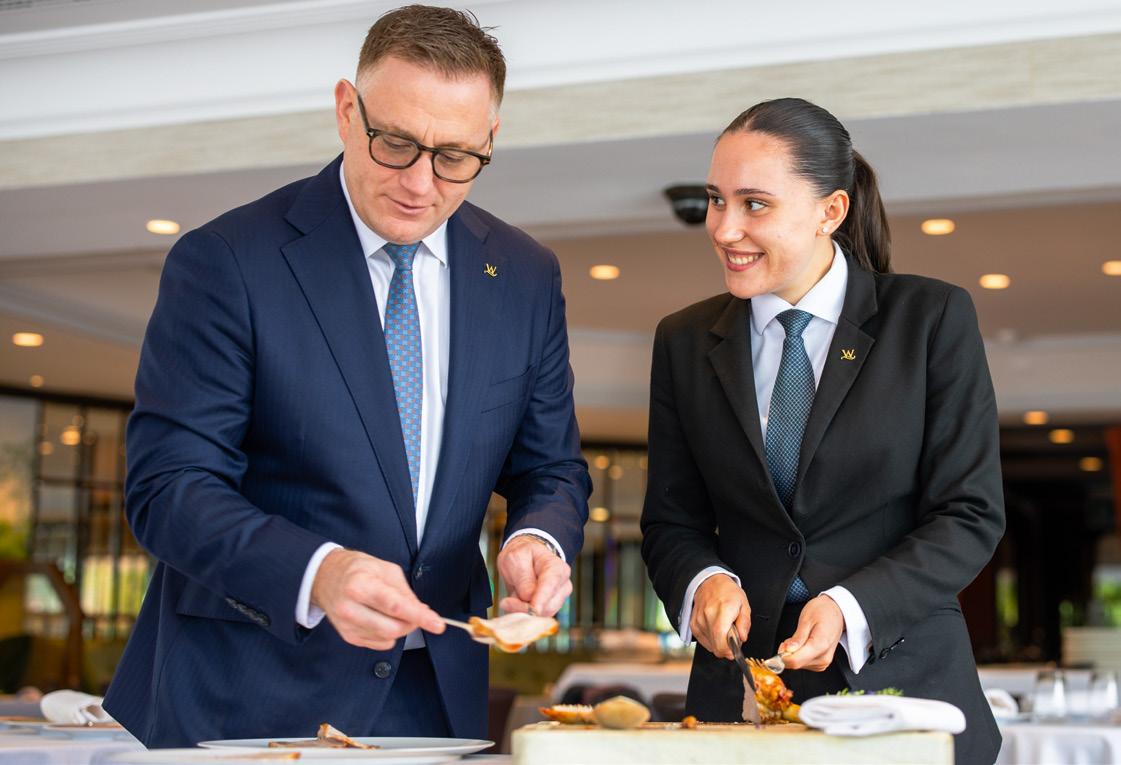
IS THERE A MOMENT HERE YOU’LL NEVER FORGET? The training sessions we do stand out for me. Particularly the carving training – duck, chicken, the sauces, wines. Those are skills I’ll carry with me wherever I go from here. You don’t often get the opportunity to learn things like that. Very few restaurants invest in that kind of training, so it really does feel special. It’s built my confidence enormously.
WHAT’S THE MOST CHALLENGING PART OF YOUR ROLE? The high standards. But I enjoy the standards, I really do. What surprises me is how much they stay with you outside of work. The way you carry yourself, the way you speak to people, working here changes you in ways that go beyond the restaurant floor. And now I’m moving into a new phase where I’m beginning to teach others, which is a whole new challenge. Learning the best way to pass on what you know to each person is something I’m really
focused on. I was quite shy when I first arrived, so to be in that position now means a great deal.
WHAT’S SOMETHING GUESTS WOULD NEVER NOTICE, BUT MAKES ALL THE DIFFERENCE? All the preparation and organisation that happens behind the scenes, making sure everything is ready for service or a special event, that the chefs have what they need, that everything on the floor is in exactly the right place. Guests walk in and see everything looking perfect and effortless, but they don’t see what’s gone into it. There’s also the art of anticipating what a guest needs before they’ve even asked, reading body language, noticing the little things. If someone might want water, you’re already moving. When it works, guests don’t think anything of it –and that is exactly the point.
DO YOU HAVE A FAVOURITE DISH?
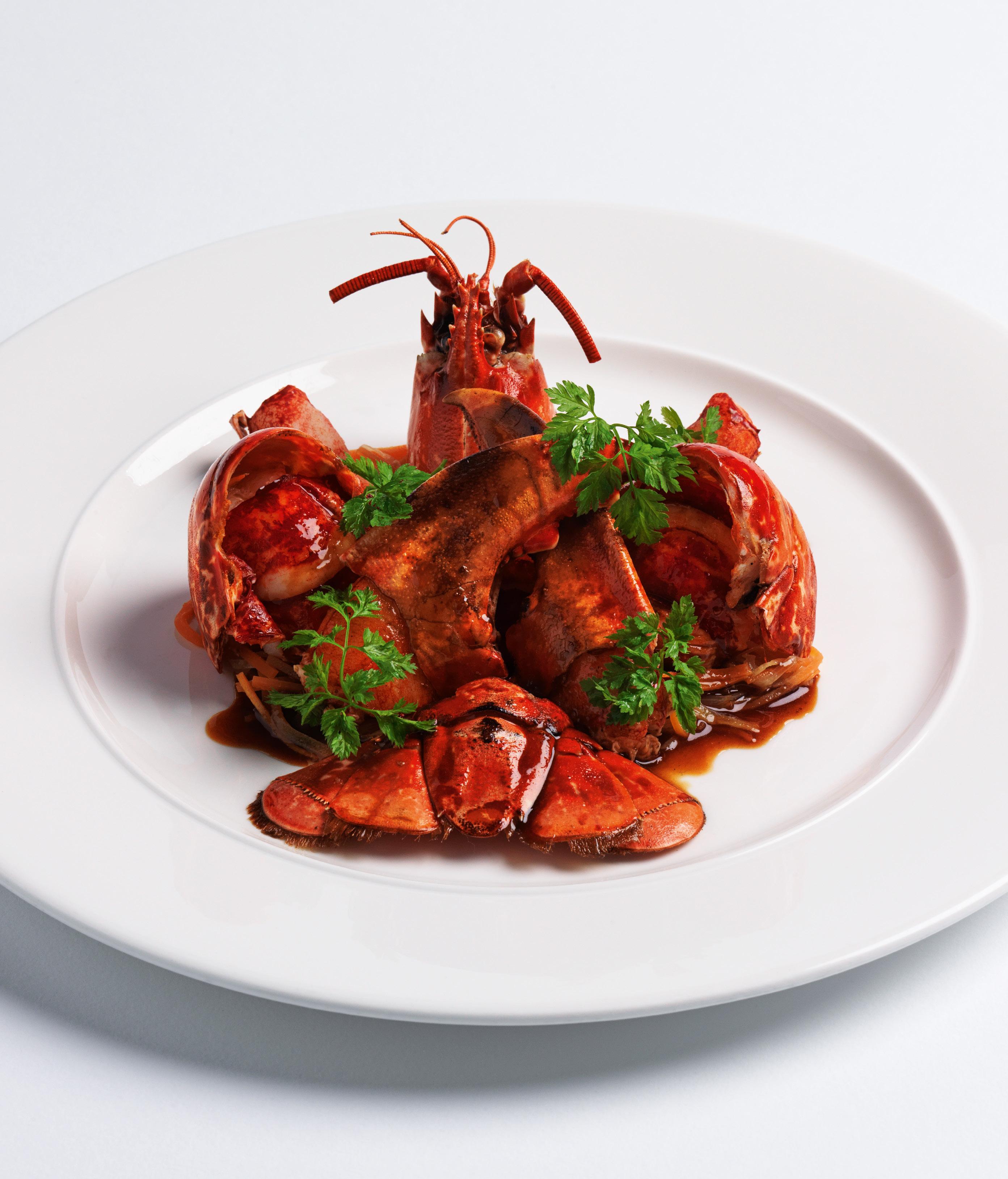
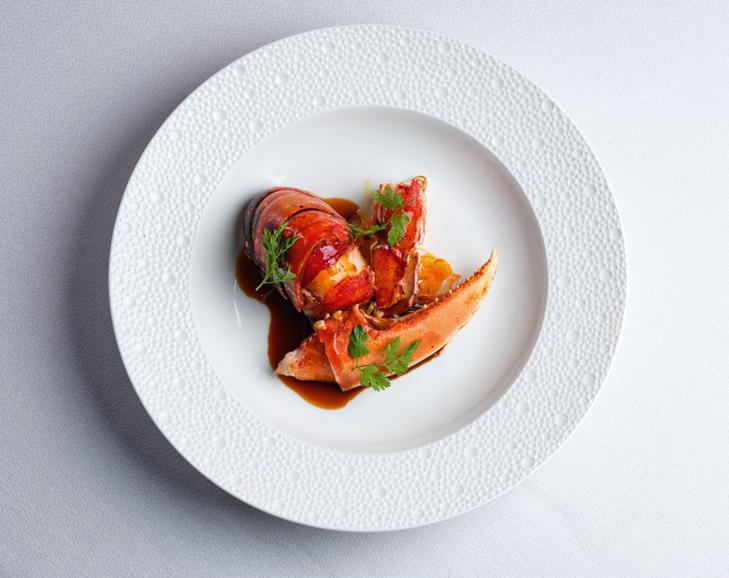
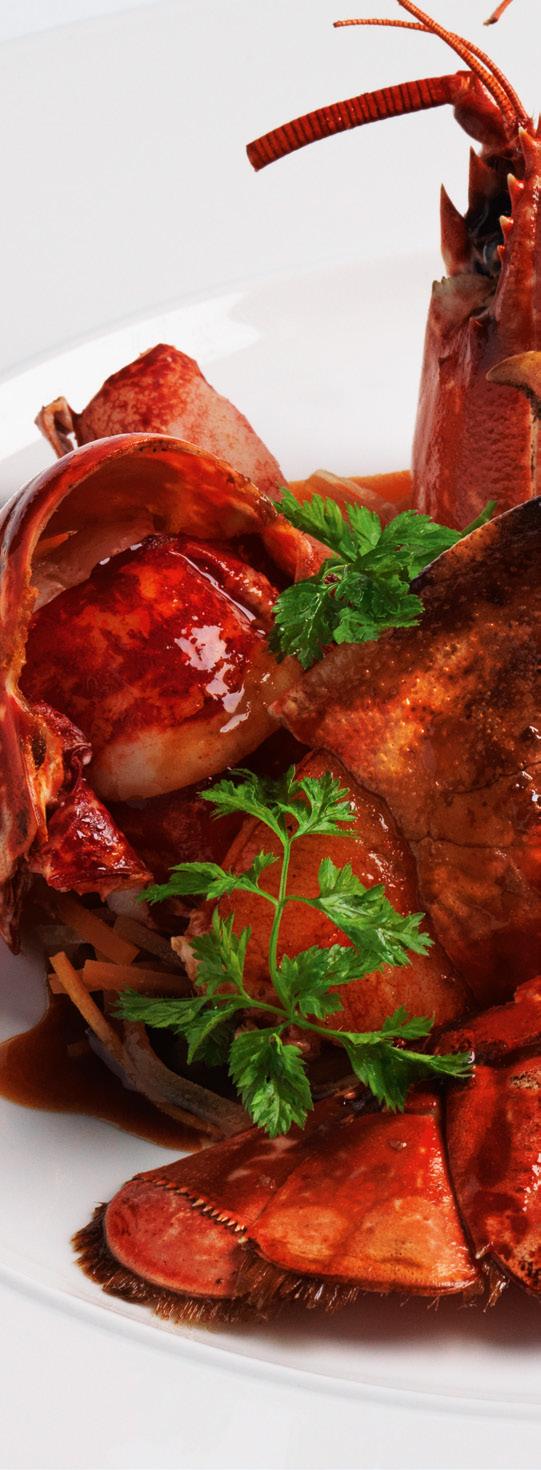
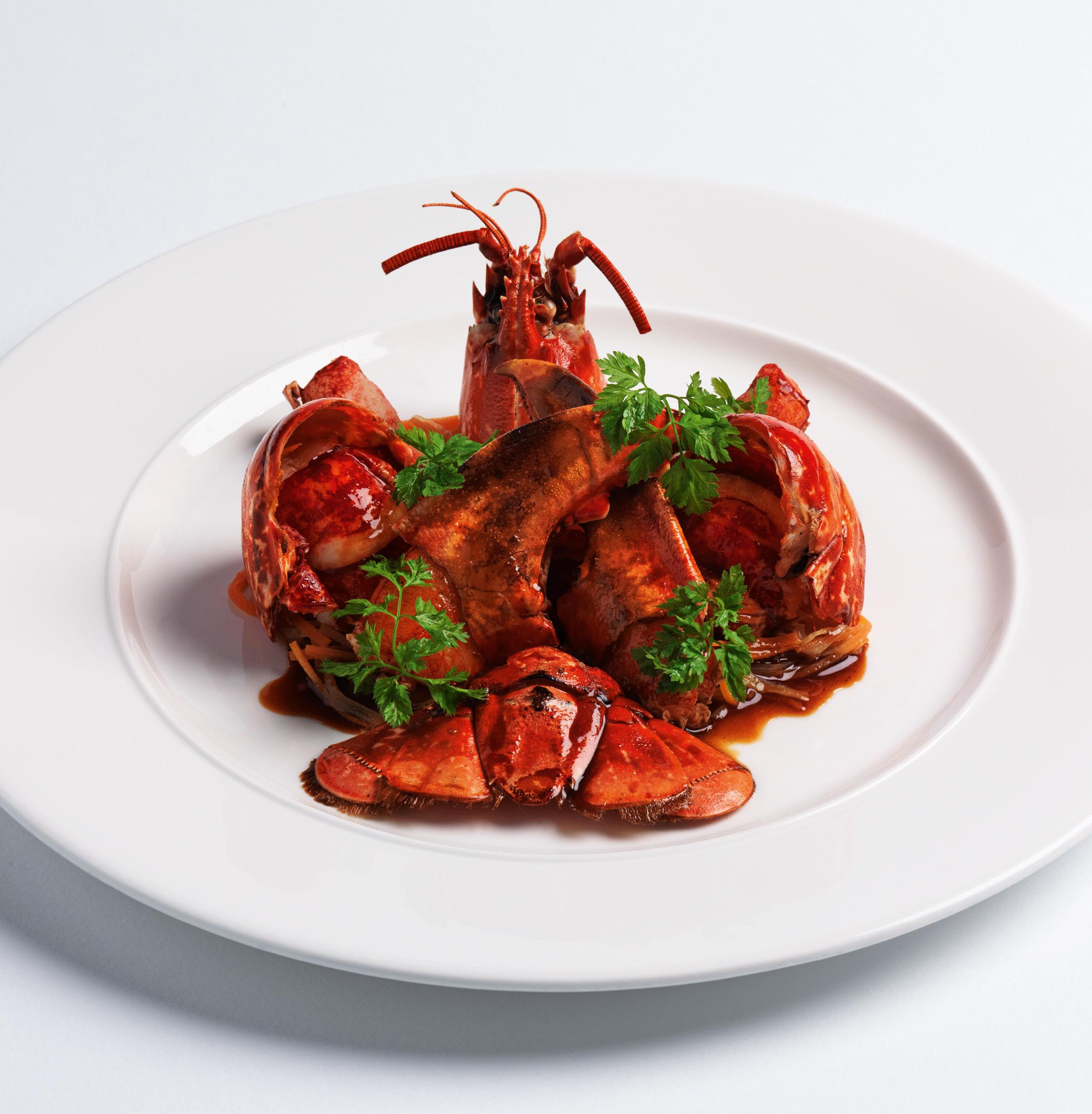
The lobster tronçonnette: panfried lobster medallion and gingerflavoured vegetable julienne, with
white port sauce. It’s a signature that Michel Roux created after one of his early trips to Asia in the 1980s, before many of us working here were born. It creates such excitement, guests come in specifically for it, they talk about it before they’ve even sat down, you overhear them mentioning it. What I love is that it’s on the menu every season, whether it’s winter or spring. It never loses that sense of occasion.
IS THERE ANYTHING ELSE ABOUT WORKING HERE THAT YOU PARTICULARLY ENJOY? The special events with guest chefs are a wonderful learning experience. And the wine, I love learning about wine. When specialists come in, the family winemakers and explain how different châteaux work, the stories behind the bottles, the way food and wine match together, I find that fascinating. There’s so much knowledge involved and every day there’s something more to discover. It never feels like work.
Natalya Kostik
HEAD HOUSEKEEPER
Natalya joined The Waterside Inn in April 2018, age 40 making her one of the longer-serving members of the team. As Head Housekeeper, Natalya leads a team whose work touches every corner of the business, far beyond what most guests ever realise.
WHAT DOES THE WATERSIDE INN MEAN TO YOU? When I think of it in my mind, I think of champagne. There is something about this place that feels truly special. It hasn’t always been easy. The work is hard and the standards are high. But slowly, slowly, it becomes part of you. It’s a place where you can understand who you are –every day you come in and grow.
IS THERE A MOMENT THAT STANDS OUT FROM YOUR TIME HERE? Every day is special. I never come in and feel like it is just another day. That is something I think about, how to keep that feeling, and how to make sure the people on my team feel it too.
WHAT DOES RUNNING YOUR TEAM LOOK LIKE DAY TO DAY? Each day, I check in with everyone, making sure that they are well, that they know what they are doing, that they are happy. We all have days when we don’t feel our best, all different ages and backgrounds. But we work together, enjoy it together, and get through it together. That is what a team is, and that means a great deal to me.
WHAT’S THE MOST CHALLENGING PART OF YOUR JOB? Maintaining the standards, always. But I don’t dwell on the difficult moments, I think about how we can work better, how we can improve. If something should go wrong during cleaning, we look at it and make sure it doesn’t happen again. It’s a constant process of improvement.
Every guest who comes here is equally important. Every room is cleaned as if it were the first time, as if it were our own home, every single day. That is the challenge.
WHAT’S SOMETHING GUESTS WOULD NEVER NOTICE, BUT MAKES ALL THE DIFFERENCE? They wouldn’t realise what a room looks like two hours before they walk into it. After evening service, rooms can be left in a topsy turvy state and in that time, we go in and make everything perfect again. Bathrooms, beds, every surface. Guests arrive and it is as though nothing ever happened. That transformation, in that short a window, takes real effort and a real team. Nobody sees it. That’s exactly as it should be.
WHAT’S YOUR FAVOURITE PART OF WHAT YOU DO? All of it. Everything has its importance. I respect every person who works here because everyone contributes. And what people perhaps don’t realise is how much the housekeeping team does beyond the rooms. We launder and iron the uniforms and aprons, and clean the offices. It’s not just the guest rooms, we work across everything. We are part of the whole, and that feels good. A key member of our team is Victor, who tends the gardens every day. He is one of our older members often out in all weathers, keeping everything beautiful. We make sure he has his hot tea. Small things like that matter. I also think I am lucky in the nature of the work itself. I love being active – moving, stretching, doing something physical and tangible. And although I am cleaning rooms, I am doing it somewhere truly beautiful. You could not ask for a lovelier environment to come to every day. That never gets old. For me, The Waterside Inn is somewhere I truly belong, more than just a workplace.
COMMIS DE CUISINE / APPRENTICE CHEF
Yehor came to the UK through the Government’s Homes for Ukraine scheme after being forced to leave Ukraine at 14 due to the war. After travelling through Romania and the Netherlands, he arrived in Berkshire, where he was sponsored by the James family. Two and a half years later, The Waterside Inn has become both his career and second home.
WHAT DOES THE WATERSIDE INN MEAN TO YOU? It’s like a big family. We work, laugh and support
each other. We all come from different backgrounds, but we enjoy it together and get through it together. That is what a team means to me. My family and I were happy in Ukraine before the war changed everything. I didn’t know much English when I arrived. What The Waterside Inn has given me goes so far beyond cooking, it’s taught me how to communicate, how to organise myself, how to grow as a person. It’s given me confidence and a real sense of belonging. I found a family here.
IS THERE A MOMENT YOU’LL NEVER FORGET? I started in hospitality when I was 15 at McDonald’s in the Netherlands. I’m truly thankful
Yehor Kamin
Naomi Shepherd
ASSISTANT MAÎTRE D’HÔTEL
Naomi joined The Waterside Inn two years ago with no previous experience as a waitress. Today she is Assistant Maître d’Hôtel. Her story is one of the most joyful transformations in the business.
WHAT DOES THE WATERSIDE INN MEAN TO YOU? It means so much more than I ever expected. When I joined, I had no idea what I was really walking into. I didn’t realise it would be more than just a job, but it is so much more than that. You become part of a family. You meet so many different people and you grow in ways you never anticipated, not just professionally but as a person. My confidence has changed completely. When I first arrived I was so quiet. People would always tell me, you need to speak up – and here I am now, so more self assured. The place has given me that. I didn’t know how much it would mean to me, and I didn’t know how much I would love the people I work with. I genuinely do. It means everything.
IS THERE A MOMENT HERE YOU’LL NEVER FORGET? The first time I carved a duck in front of a guest with Frédéric Poulette beside me. We had done the training beforehand, but nothing quite prepares you for the real thing. The duck came out and normally Fred would carve while I stood alongside plating, but he just turned to me and said: “You’re doing it now.” I was so nervous. I literally said, “I can’t, I can’t.” But he said, “yes you can”. I carved
the duck and it actually went well, but what stayed with me was that moment of someone else having complete confidence in you when you don’t yet have it in yourself. Something switched in me that day and I never really looked back.
WHAT’S THE MOST CHALLENGING PART OF YOUR JOB? In a threeMichelin-star restaurant, you never cut corners. It would be very easy, after a while, to let things slide slightly but the standard
that The Waterside Inn gave me the opportunity to begin my career here, it’s a brilliant place. What I remember most in those first days is starting with Ivan Petrinets, he’s the same age. We had our interviews together, and then spent those first weeks finding our feet side by side. It was difficult at first, a real challenge, but we pushed through it together. That bond from those early days stays with you.
I’m truly grateful to Chef Fabrice for his constant support and guidance. He is both a leader and a teacher to me.
WHAT’S THE MOST CHALLENGING PART OF YOUR JOB? Organising yourself for service, making sure
you’re never going to run out of anything, that you’re always one step ahead in case something unexpected happens. Every day is unpredictable. A guest might have a special menu, particular requirements, and you have to be ready for every possibility. Being prepared is a discipline here.
WHAT’S SOMETHING GUESTS WOULD NEVER NOTICE, BUT MAKES ALL THE DIFFERENCE? So much of what ends up on the plate starts days before the guest ever sits down. Some preparations take the better part of 24 hours – long, careful processes involving making many varieties of stock that cook and reduce overnight, blending cream
and butter, with layer upon layer of work of which the finished dish gives no hint. Or butchering: you might start with a large carcass and work it down to a perfect fillet. Even something like an artichoke or new potatoes: what looks simple and beautiful on the plate has involved so many small, precise steps to get there. The guests see the end result, they don’t see the effort behind it.
DO YOU HAVE A FAVOURITE DISH? I love the lobster tronçonette. It’s a classic, unique in the way it’s prepared and presented, and never loses its magic. But one of my real favourites, one I think about often, is the grilled rabbit
is the standard and it never changes – and keeping that front of mind every single service is a real discipline. Then there is the specialist knowledge side of things: the menu, the cheeses, the wines. Learning about dishes and ingredients I never knew existed before I came here, keeping it all fresh, knowing it inside out. It’s intense, but I love that about it too.
WHAT’S SOMETHING GUESTS WOULD NEVER NOTICE, BUT MAKES ALL THE DIFFERENCE? Everything that happens from nine o’clock in the morning before a single guest walks through the door. Every little detail: the butter knife placed at exactly the right angle, every fold of a tablecloth ironed and set just so, three fingers of space between each place setting. A guest is never going to walk in with a ruler and check, but when you sit down in that dining room and everything is at exactly the same distance, height and angle, you feel that balance. That sense of absolute perfection, everything being just right, that comes from hours of invisible work and devotion. It makes all the difference.
leg and loin fillets, served on a celeriac fondant with an Armagnac sauce, sweet glazed chestnuts, a single ravioli containing finely chopped leg, shoulder and liver, and rabbit-shaped fried bread. It has been on the menu since the restaurant opened. Those classic combinations, as well as the little crispy rabbit on the special plate, there’s something so lovely about that detail. It makes the whole dish feel like an occasion.
DO YOU SEE YOUR FUTURE HERE AT THE WATERSIDE INN? For now, I just want to keep learning. I love it here, and I love the teamwork. That’s enough for me. This is where I want to be.
Built from the ground up
At The Waterside Inn, the garden is much more than a garnish. CH r I st Y spr I n G talks to head gardener James Perry and Alain Roux about growing with purpose, the harmony between nature and the kitchen, and the benefits of seasonality
t HE I ron Y I s not lost on me that the day I visit The Waterside Inn to learn about its culinary garden, I arrive walking through sheets of rain on a brisk December morning, temperatures hovering in the single digits. It’s not the time of year associated with plenty and abundance. The beds are sparse, the ground is heavy, and the Thames beyond is steel-coloured and swollen, moving steadily past the restaurant’s edge.
That said, the restaurant’s head gardener, James Perry (Jim to you and me), has no trouble painting a vivid picture of what this same stretch of land looked like just a few months earlier in late summer. He talks of trees heavy with apples and pears, blousy roses, raised beds thick with herbs, golden ears of sweetcorn, bushy brassicas and French beans in abundance.
The stark contrast with this December morning is instructive – The Waterside Inn’s culinary garden and Ryepeck kitchen garden are not a fantasy of constant plenty or an aesthetic endeavour. They are, and will be, working systems of food production, bound tightly to the seasons, the weather, and most importantly James’s green touch.
The decision to create a dedicated culinary garden and to redevelop the Ryepeck kitchen garden across the property did not come from a desire to become selfsufficient in the manner of Le Manoir aux Quat’Saisons. For Chef Patron Alain Roux, the motivation was far more exacting.
A garden, he explains, offers chefs something that even the very best suppliers cannot always provide: a direct, physical
reference point for flavour, freshness and timing. “It’s not about feeding the restaurant from the gardens,” explains Alain. “It’s about understanding ingredients properly. When you grow something, you see how it behaves. You understand the seasons, the weather, and the limits. That changes how you cook.”
Alain has always loved gardens (and gardening), but he is pragmatic about them. Space at The Waterside Inn is finite and the land uneven, shaped by the river and its history. “I love English lawns and borders,” he says, “but when you don’t have endless space, it makes more sense to grow something you can eat.” The restaurant has a main kitchen, a cookery school, staff to feed, and guests with high expectations. Within that context, the culinary garden becomes a valuable tool – a place for testing varieties, experimenting, and anchoring the kitchen more firmly to the rhythm of the year.
What the garden offers above all is immediacy. “Anything that’s picked and used straight away will taste better,” Alain says. “And if it hasn’t seen the fridge, that’s the most important thing.”
He is particularly animated on the subject of cold storage. Tomatoes and strawberries, he insists, lose flavour the moment they are chilled. “Do the test at home,” he laughs. “Put one tomato in the fridge and one on the table. After two days, they’re not even the same fruit.” For a threeMichelin-star restaurant built on precision and flavour, those differences matter.
The task of turning that philosophy into reality falls to James, who has been at The ↘
It’s not about feeding the restaurant from the garden; it’s about understanding ingredients properly
IS
▾ A ROSE
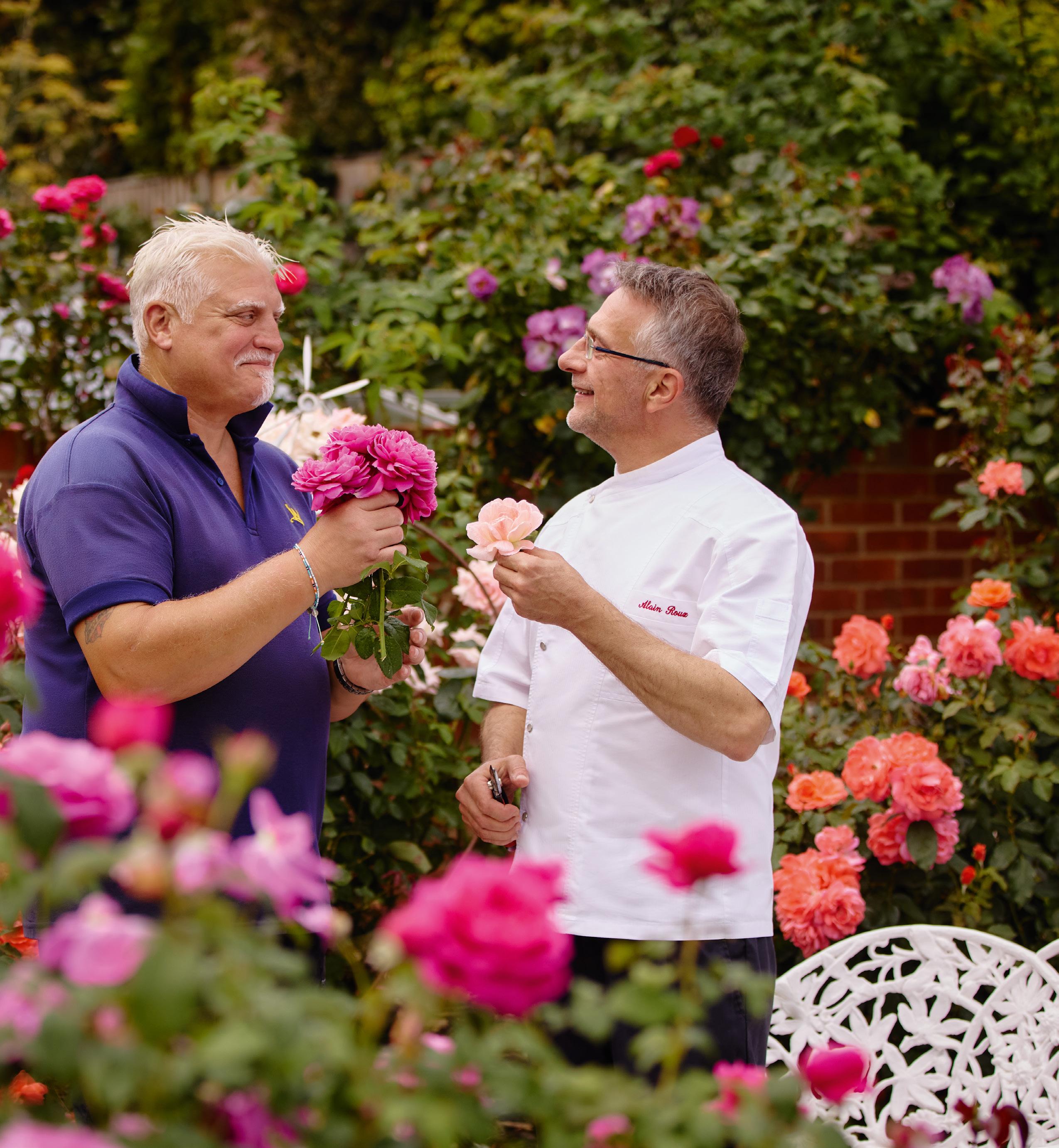
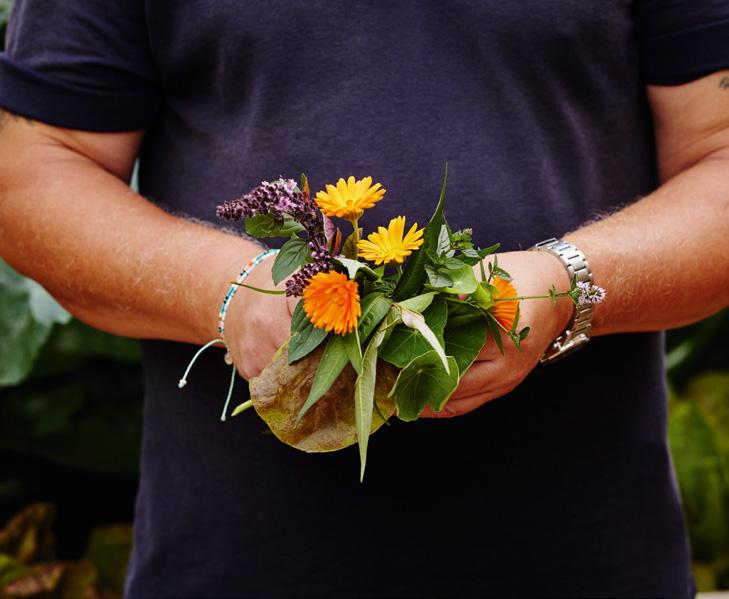
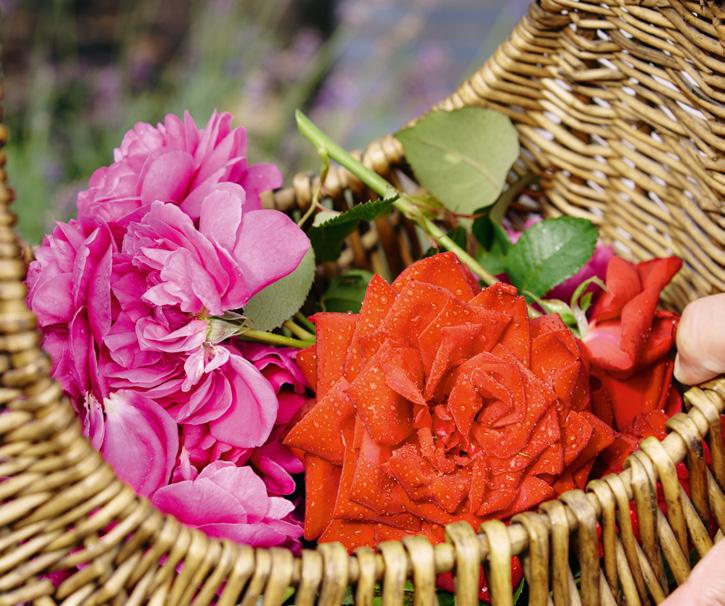
A ROSE: Head gardener James Perry and Alain Roux pick flowers in the rose garden. There are 45 varieties of roses grown here – their petals used in numerous ways by the restaurant.
Dan Kennedy
↘ Waterside Inn for three years. His route into horticulture has been anything but straightforward. Before becoming a professional gardener, he worked in metal finishing, in the print trade, and later as an airport baggage facilities officer. Redundancy nudged him towards horticulture, a discipline he had grown up around with his father.
By the time he arrived in Bray, James had spent more than a decade gardening professionally, often on much larger sites. He admits he was hesitant at first, since he was living in Dorset; the role demanded both physical stamina and emotional investment. But the offer proved irresistible. “The opportunity to create something beautiful, functional, and educational won me over,” he says. “If you’re serving the world’s finest food accompanied by the world’s finest wines, you want to have the world’s finest gardens, too.”
What he inherited was a collection of gardens with potential but little cohesion. Herbs had overgrown, plants competed for space, and much of what was growing was decorative rather than useful. “Many plants
were dying because they couldn’t compete.” His response was methodical, removing what the kitchen didn’t need, reorganising the beds, installing a cold frame, reviving neglected roses and retraining fruit trees. “It was about asking what each area was actually for,” he explains. “Once you know that, the decisions become much easier.”
The culinary garden and Ryepeck kitchen garden now focus on herbs, edible flowers, and small quantities of vegetables and fruit that benefit disproportionately from being harvested and used the same day. Executive chef Fabrice Uhryn, himself an accomplished gardener, describes the difference as unmistakable.
“If you pick something in the morning and cook it that day, it’s incomparable,” he says. While the garden could never sustain a restaurant of this calibre, its contribution
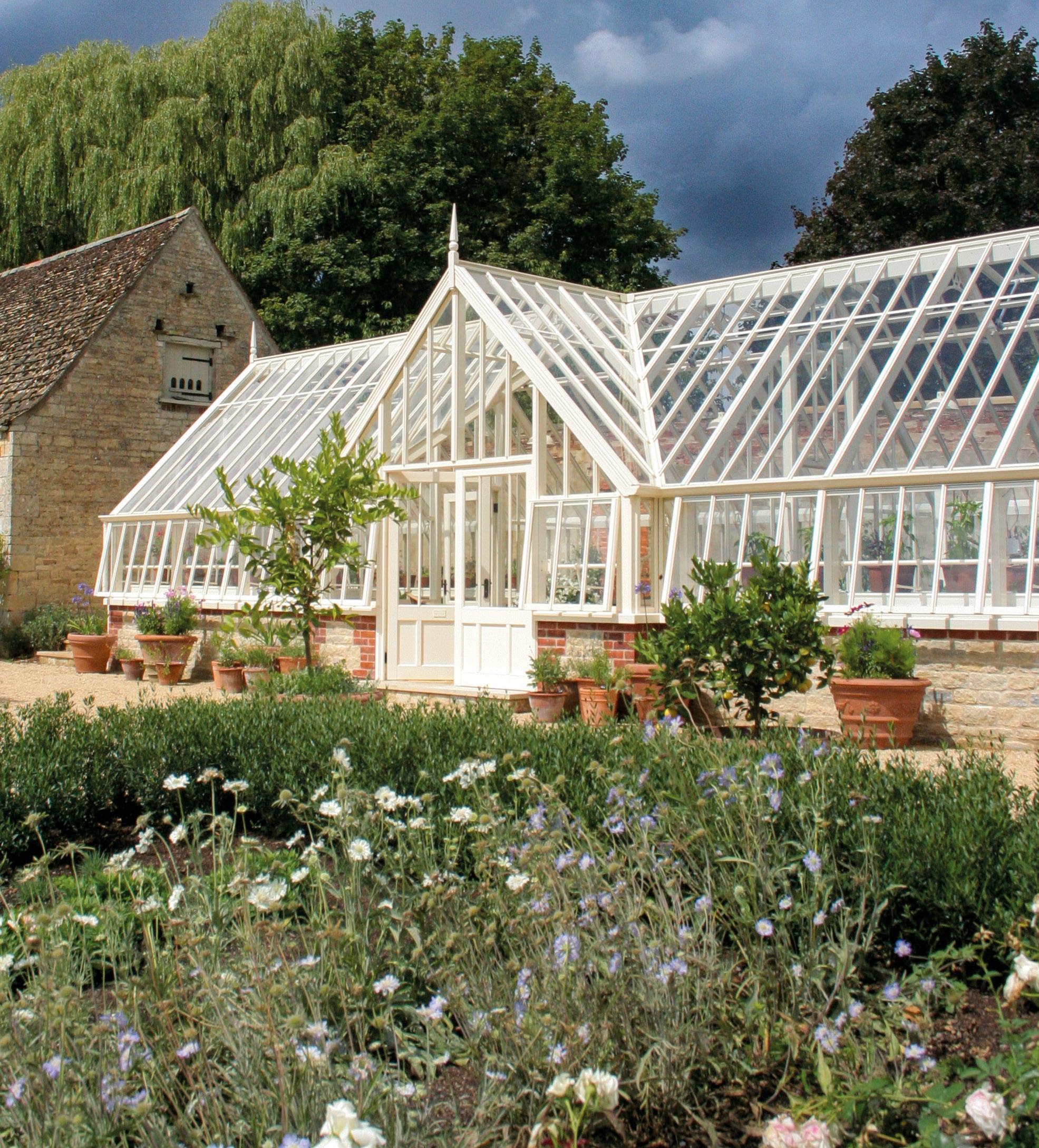
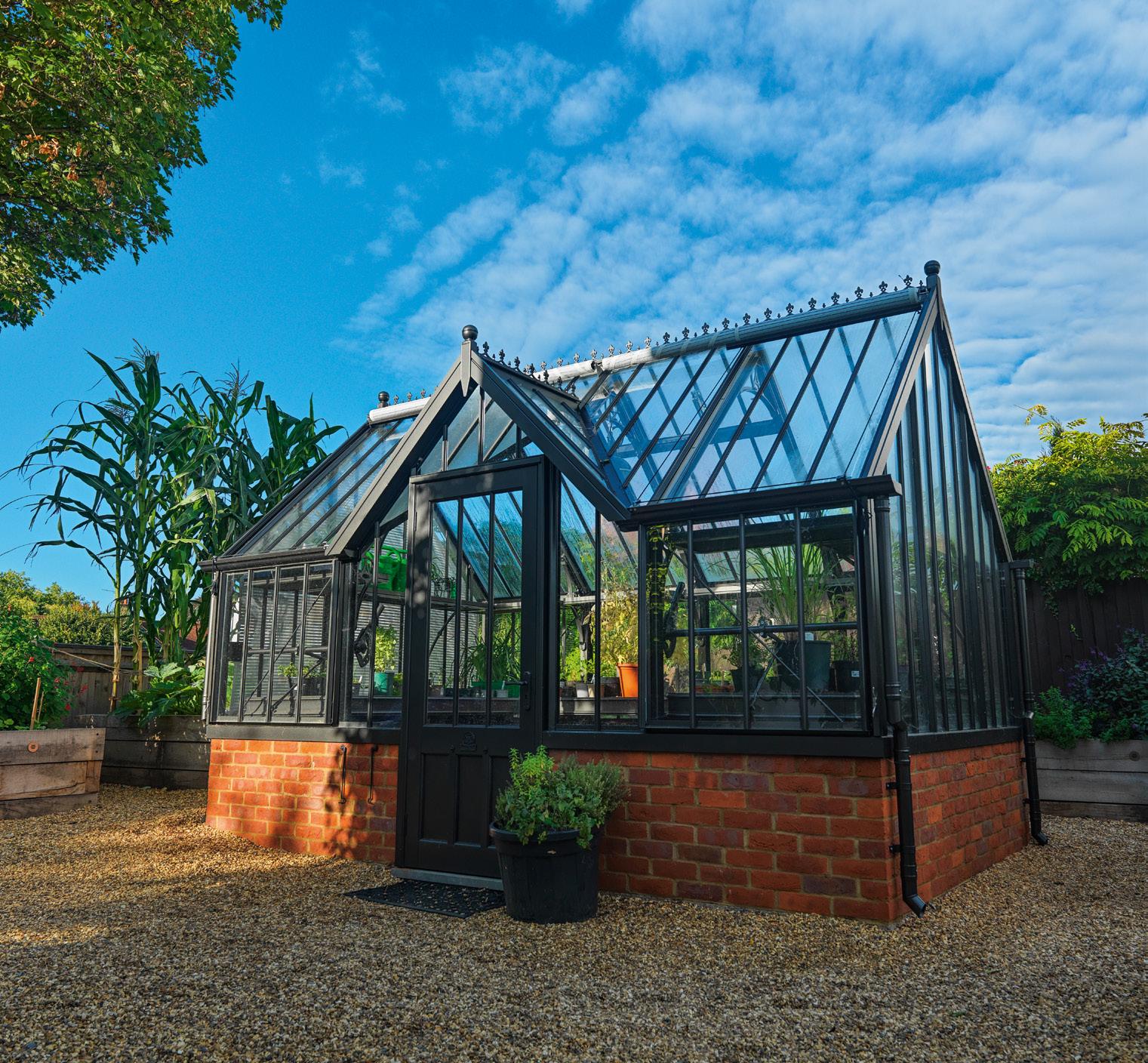
◂ NATURE'S BOUNTY: The Alitex 'Mottisfront' greenhouse is the proud centrepiece of the newly reimagined Ryepeck kitchen garden.
is valuable. “It’s not about quantity but the quality of small flourishes.”
Flowers, in particular, are a point of principle. Edible flowers are often used decoratively and without thought in professional kitchens. Fabrice is selective.
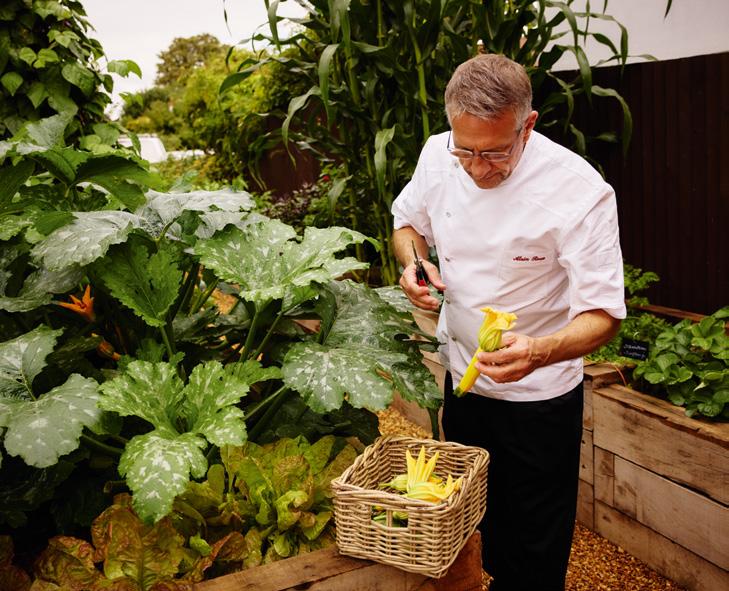
“I only put flowers on a dish if I grow them,” he says. “Otherwise, what’s the point? You buy them in plastic, they sit in the fridge, and by the time they reach the plate, they’re tired.” Instead, flowers are harvested early each morning, before the heat of the day. “You pick what you need for that day.”
James sees the full arc of those ingredients, from seed to service. “That’s the most rewarding part,” he says. “You grow something from nothing, you nurture it, and then you see Fabrice coming along, harvesting it, and it’s being used that afternoon.” The gardens are run organically, which brings inevitable challenges, particularly when you factor in the riverside location. Slugs, snails, whitefly and white butterflies are constant visitors, and netting is often necessary to prevent any damage. “It’s a labour of love,” James says. “You don’t want anything to die.”
One of the most transformative developments in the garden has been the installation of the Alitex ‘Mottisfont’ greenhouse in the Ryepeck kitchen garden, which Alain describes as “the beating heart of the space”. The greenhouse allows seeds to be started properly, cuttings to be overwintered, and the growing season to begin earlier with greater control. “If you want to grow properly, you need stability,” Alain explains. “Temperature and humidity –you can’t leave these factors to chance.”
The choice of Alitex was carefully considered by Alain and his wife, Laura, The Waterside Inn’s interior designer. A British, family-run company known for craftsmanship, Alitex had already supplied a cold frame for the main culinary garden.
If
you pick something in the morning and cook it that day,
it’s
incomparable.
It’s
not about quantity but the quality
If you’re serving the world’s finest food and the world’s finest wines, you want the world’s finest gardens, too
As Laura jokes, “If it’s good enough for David Beckham’s garden, it’s good enough for us.”
The Mottisfont model appealed not only for its build quality but for its presence. With a front-facing entrance, it acts as a focal point rather than a functional afterthought. “We wanted it to lift the whole garden,” Laura says, “not hide it away.”
Though unheated, the greenhouse has expanded what is possible. Tender herbs that would not survive winter outdoors are protected inside, and cuttings are being prepared for the coming year.
Even in December, James takes me to the greenhouse, and we root around different pots of herbs, plucking the leaves and crushing them between our fingers to release potent scents of chocolate mint, lemon verbena, sage, lemongrass and Vietnamese coriander. Nearby, a box of seeds in the shed tells the story of Alain and James’s shared love of exotic, unusual herbs, fruits and vegetables. Some experiments succeed, others fail. “But that’s half the fun,” James laughs.
Beyond the kitchen gardens, the grounds encompass 11 distinct garden spaces, each with its own purpose. Among them is the Ryepeck cottage garden, with a Zen-style planted corner. This garden is currently undergoing redevelopment with cottagestyle planting throughout. James describes the change as a move towards a garden that feels generous and natural. “It’s too beautiful a spot to be overly controlled,” he says.
Another key area is the rose garden, created, in part, to support the kitchen’s long-standing use of rose petals. Roses grown for floristry are often treated with chemicals unsuitable for consumption; growing them organically on site ensures safety, quality and a delicate flavour. Around 45 varieties of roses are planted, chosen for colour, vigour and suitability to the space. Their petals are used in the flavouring of sorbets, as well as rose and champagne jellies.
In the centre of the rose garden sits a bronze bust of Alain's step mother, Robyn Roux, relocated from a private dining room
so that guests might encounter her presence outdoors. There is no overt symbolism beyond placement. As Fabrice puts it simply, it feels right to place her among living things, in a garden that continues to bloom.
The culinary garden also plays an educational role. Fabrice speaks about teaching young chefs when and how to harvest, explaining why certain cuts encourage regrowth and how timing affects flavour. Many arrive with little exposure to growing food, and the garden becomes a classroom without walls, reinforcing seasonality and respect for ingredients in situ.
For Alain, this connection between growing and cooking is essential. Gardening, like cooking, is a skill never completely mastered. “There’s always something to learn,” he says. “That’s the beauty of it.” James echoes the sentiment, already thinking ahead to next season. New varieties, new challenges, cucamelons, peppers, perhaps even Sichuan peppers, on Alain's request, if the climate allows. “Bring it on!” he smiles.
For all the planning and labour, the value of the garden is perhaps best captured in a single, fleeting moment. Fabrice tells me about a meal he prepared for the famous French chef Michel Troisgros and his son, César, the night before the anniversary dinner event hosted at The Waterside Inn. He plucked florets of sprouting broccoli from the culinary garden and used them sparingly as the final garnish on a meat dish. Michel and César, two chefs renowned for their deft touch when it comes to vegetables, were extremely complimentary about the garnish, stating that the little broccoli on the plate was simply the star of the show.
For Fabrice, that comment makes the whole task of the kitchen garden worthwhile. “A lot of people who eat at The Waterside Inn are protein-oriented,” he laughs. “It gives me purpose when guests praise the flavour of our vegetables. It means I’m not picking stems of broccoli for nothing.”
The Mottisfont greenhouse by Alitex (£26,717) is ideal for small-to-medium spaces and country gardens. For more information, see alitex.co.uk
▴ FRESH PERSPECTIVE: James Perry inherited gardens that were more for show than practical use. Under his careful direction, it has now become an integral part of The Waterside Inn’s culinary offering.
A year in the life of a Roux scholar
What does winning the Roux Scholarship really mean? n ICK saVaGE speakers to two recent recipients to get the inside track
WI nn I n G t HE ro UX Scholarship has never been about adding a line on the CV. For more than four decades, it has functioned as a kind of culinary lodestar – a proving ground, a passport and, for those who wear it well, a lifelong support system. The Scholarship offers two principal awards. Winners may choose one of two pathways: either a placement of up to two months in a threeMichelin-starred kitchen of their choice, or a
bespoke year-long programme featuring up to six tailored experiences that build specialist expertise, global perspective and professional development. But what does that feel like, day to day, once the applause has died down and the white jacket goes back on?
To find out, we sat down with two recent scholars whose winning years tell very different but complementary stories: April Partridge, who took the title in 2023, and Jonnie Ferguson, winner in 2022. One embraced the Scholarship’s newly introduced bespoke programme, carving out a year of highly personal learning across disciplines and continents. The other was the recipient of the traditional prize: a full-immersion stage at a three-Michelin-star restaurant of his choosing. Together, they offer a neat diptych of how the Scholarship has evolved –and why its influence endures.
Jodi Hinds
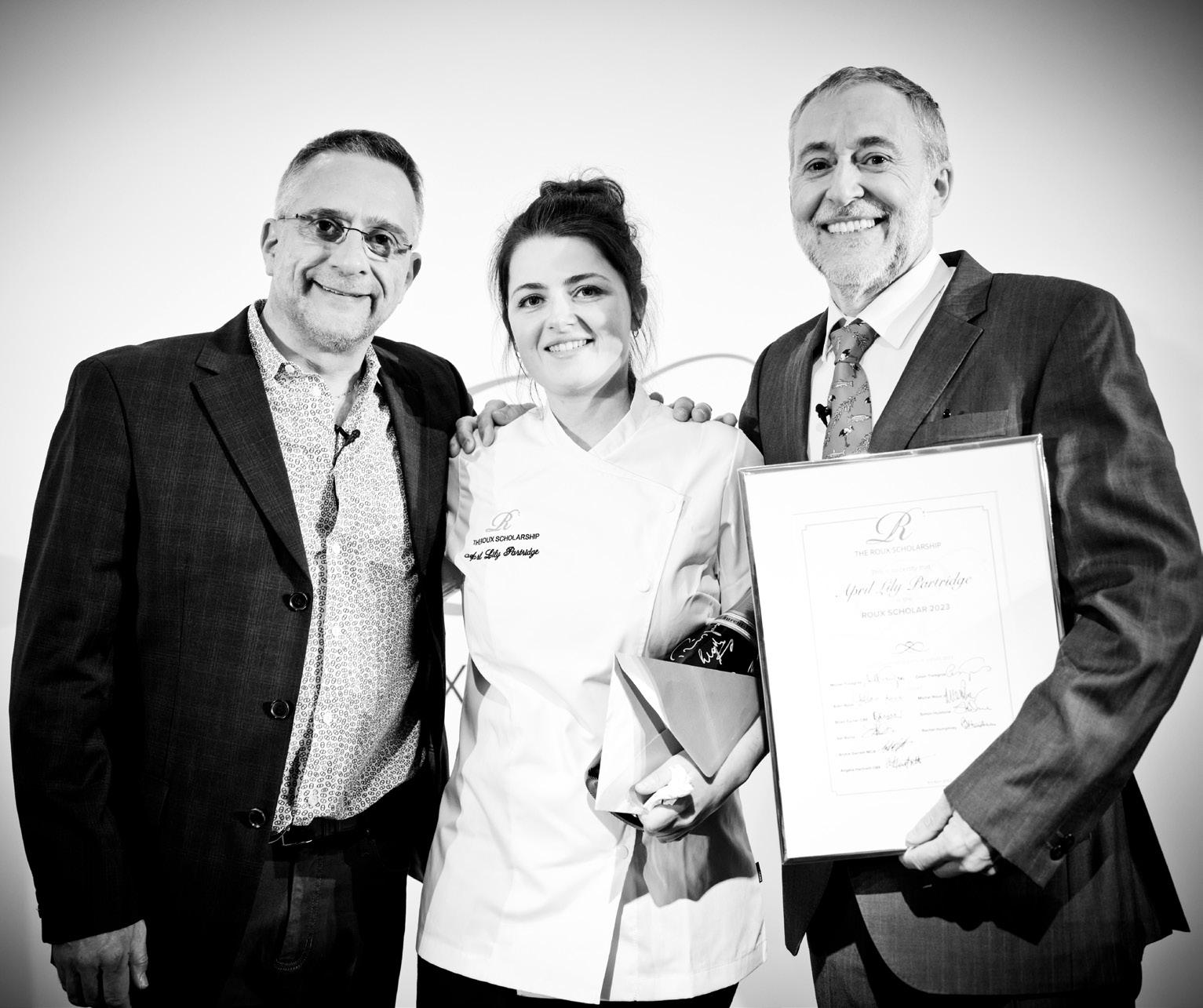
For Partridge, the moment itself arrived almost out of nowhere. Working as a sous chef at The Ledbury, she entered the competition in the year before the age cutoff, more out of instinct than expectation. “I was convinced I hadn’t had my best day,” she recalls. “I spent the whole time afterwards dissecting everything I’d done wrong.” When her name was announced, by honorary presidents of judges Michel Troisgros and César Troisgros, it felt unreal – but also restorative. “I’d lost some confidence. Winning made me realise I was on the right path.”
That sense of recalibration proved important. Partridge had already worked at some of the most exacting kitchens in London and New York, including The Clove Club under Isaac McHale and Blue Hill at Stone Barns under Dan Barber. Yet the Scholarship arrived at a moment when she was questioning not just how to cook, but why. The introduction of the bespoke programme in 2023 gave her a way to answer that question on her own terms.
Rather than committing to a single, long stage at one restaurant, Partridge designed a year that addressed gaps in her knowledge and leaned into long-held interests. Fish cookery took her to Sydney, Australia, where she trained at Saint Peter with Josh Niland, followed by time at Quay with Peter Gilmore. Baking – a lesser-explored obsession – led her to Bath to work with Richard Bertinet, then to Mexico City’s Panadería Rosetta under Elena Reygadas, before further time with Richard Hart at Green Rhino. Add in placements exploring cheesemaking and bean-to-bar chocolate with William Curley and Willie Harcourt-Cooze, and the shape of the year becomes clear.
“I stayed true to myself,” she says. “I didn’t want a three-star stage. I wanted specialist knowledge – things I’d always dreamed of doing but had sidelined.”
The Roux family and the Scholarship’s partners, she adds, were unfailingly supportive, flexing schedules around work commitments and encouraging her to follow her instincts. The result was less a victory procession than a culinary reset.
If Partridge’s year was about breadth, Ferguson’s was about depth. A second-time finalist, who applied three times, he won the
Scholarship in 2022, with Hélène Darroze announcing his victory and Ferguson paying tribute to the late first scholar Andrew Fairlie, whose influence loomed large over his career. Raised in Renfrewshire and Inverclyde, Ferguson had cut his teeth at Restaurant Andrew Fairlie, The Raby Hunt and The Glenturret Lalique Restaurant under Mark Donald. When it came to choosing his prize, there was no hesitation.
“The chance to spend time at any three-Michelin-star restaurant in the world is unbeatable,” he says. “Could you do it off your own back? Maybe. But having it organised through the Roux family – with those relationships already in place – that can’t be bought.” His destination was The French Laundry, working under the great Thomas Keller. For Ferguson, his motivations stretched beyond technical refinement to thoughts of leadership and ambitions of running a team of his own. “Managing people effectively was my weakest area. I wanted to see what excellence there looked like.”
The experience did exactly that. In a poetic decision, Ferguson returned to California in 2024 to take up a permanent role as sous chef at The French Laundry. Yet he is careful to stress what anchored him in the immediate aftermath of winning: “I was offered multiple jobs, but staying with the people who helped get me there mattered.” Remaining at Glenturret after his win kept his feet on the ground – and reflected the
I was convinced I hadn’t had my best day. I’d lost a bit of confidence. But winning made me realise I was on the right path
Scholarship’s mentorship award, which incentivises scholars to continue developing within their existing kitchens.
Where Partridge and Ferguson align most clearly is in their description of the network that surrounds the Scholarship. Both talk about mentorship not as a formal, or indeed, forced arrangement, but as an open line of communication. Advice, reassurance and reality checks are, as Ferguson puts it, “never more than a text away”. For Partridge, the sense of being welcomed by figures such as Oli Williamson, Ian Scaramuzza and Adam Smith MCA has been both grounding and empowering in equal measure.
That community comes into sharp focus on the Scholarship’s educational trips – an opportunity for scholars to travel to culinary hotbeds around the globe, learn from local masters, and bring these lessons back to their own kitchens.
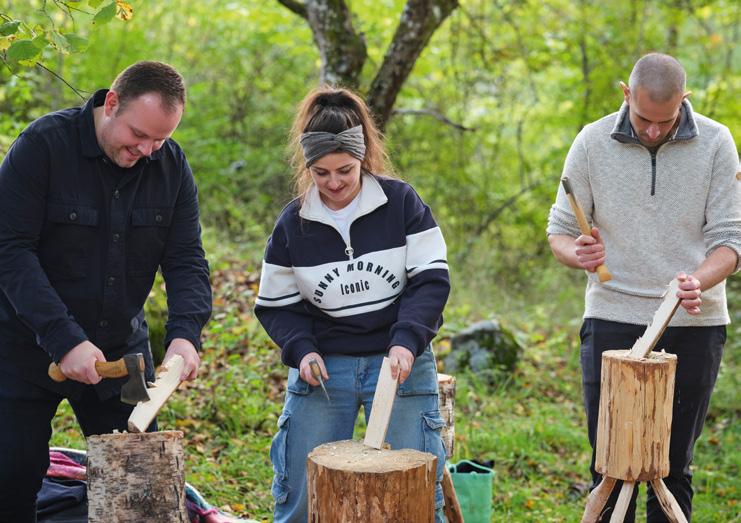
Ferguson joined the Sweden visit in 2023; Partridge has taken part in Sweden and Mexico, most recently in November 2025. “There are no egos,” Partridge says. “It feels like growing as a chef and as a person, together.” Ferguson agrees, recalling a week that encompassed Magnus Nilsson’s apple orchards to distilleries, axe-carving and art galleries. “In a profession that’s often about appearances, it was almost cathartic.”
Perhaps this is why the Scholarship is so often described as being ‘for life’. For Partridge, now head of development at Opus Provisions, the year has brought her closer to the producers and farmers she has long wanted to champion. For Ferguson, the path leads, inevitably, towards running his own restaurant – with the tacit confidence that the Roux family will remain part of that story. Different routes, different temperaments, the same conclusion: the Roux Scholarship is less a prize than a platform. A year in the life is only the beginning of the story.
▴ THE WORLD WAS HER OYSTER: After winning the Roux Scholarship in 2023, April Partridge toured the world exploring specialisms in different areas, including a stint at Mexico City’s Panadería Rosetta.
Keeping things private
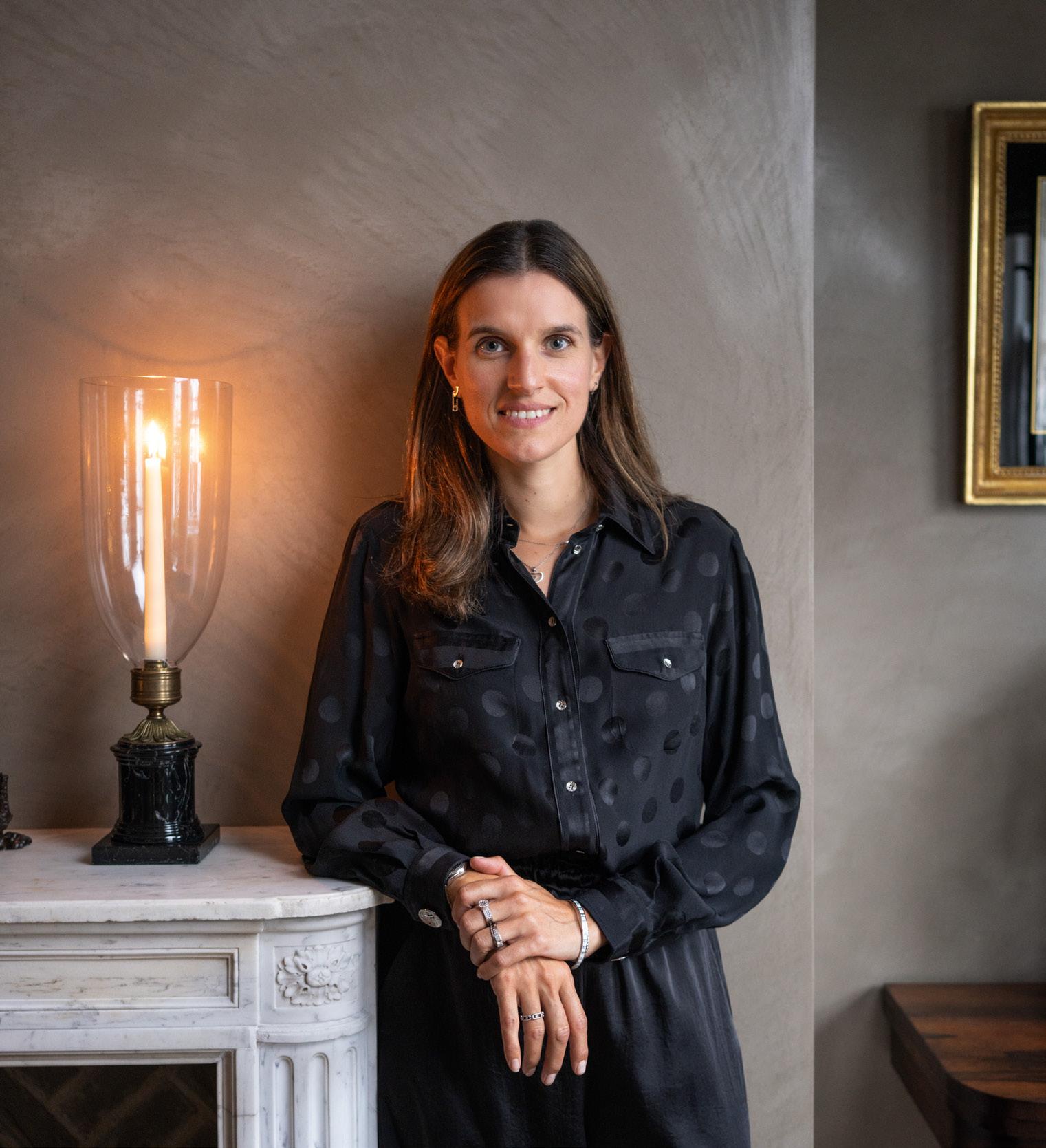
River Cottage, The Waterside Inn’s most intimate dining space, has its own storied past. L aU ra ro UX shares the vision behind its recent transformation
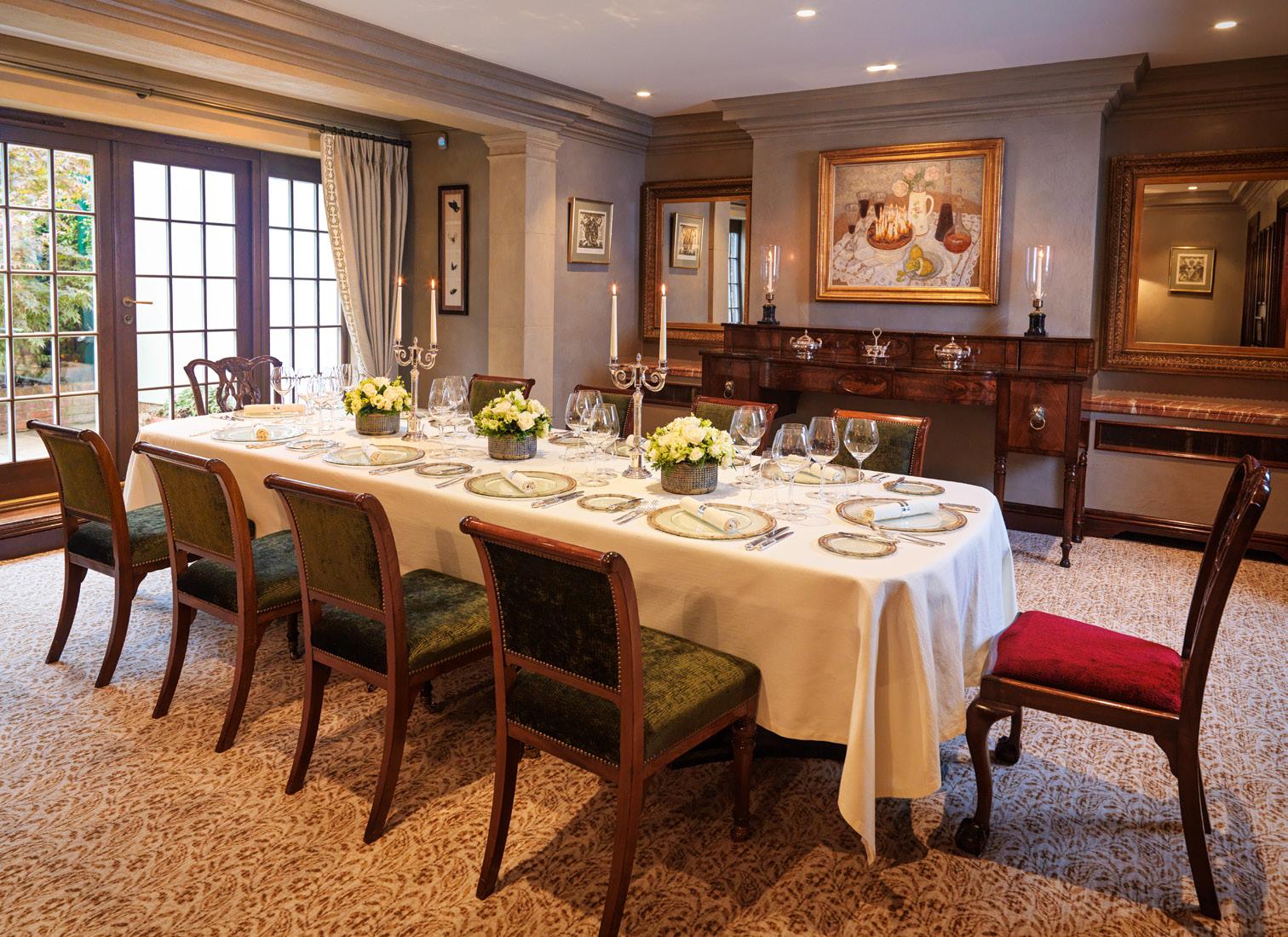
t UCKED BEHI n D a discreet front door beside the main restaurant, the private dining room at The Waterside Inn is perhaps the restaurant’s best-kept secret. Known as River Cottage, this little self-contained house has long been treasured by guests for its privacy, intimacy and sense of occasion.
Following a sensitive refurbishment led by The Waterside Inn’s very own interior designer, Laura Roux, the space has entered a new chapter – one that honours its
illustrious history while subtly reshaping its composition for contemporary diners.
From the drawing room fireplace to the secluded courtyard garden, every detail has been revisited with care, intention and respect for its past. We sit down with Laura to share the remarkable story behind River Cottage, the precious memories it holds within its walls, and the creative vision that has shaped its most recent transformation into the space guests can enjoy today.
BEN WINSTANLEY: The Private Dining Room and adjacent courtyard are hidden gems among The Waterside Inn’s spaces. Could you tell us a little about the history of the two?
LAURA ROUX: River Cottage was acquired in the early 1990s with the idea to create a private dining room unlike any other. It marked an important phase in The Waterside Inn’s evolution, allowing the creation of six bedrooms above the restaurant, supporting its transformation from a stand alone restaurant into a “restaurant avec chambres”, a popular concept in the late Michel Roux’s much-loved France.
The project was led by Michel’s wife, Robyn Roux, whose flair for design and love of colour, texture and theatrical detail shaped the private dining room’s original interiors. The space was intended to be entirely separate from the main restaurant, a private retreat offering an alternative hospitality experience but, above all, privacy and discretion. It allows guests to gather with friends and relatives, including children, who are not permitted in the main restaurant. They can enjoy the tranquil space and garden, ensuring everyone can feel at ease.
For more than a decade, River Cottage was also home to Michel and Alain Roux’s original culinary school. Lessons and demonstrations were held in its small, intimate kitchen with guests loving the hands-on spirit and rare opportunity to learn directly from Michel Roux himself. Although the school closed in 2002, its legacy remains part of the room’s history and predecessor to the Alain Roux Culinary School, fulfilling a long held dream of Alain and his father.
With the main dining room seating a maximum of six guests per table, River Cottage provides the perfect setting for multi-generational gatherings of up to 12. Its discreet entrance and homely atmosphere make it one of The Waterside Inn’s most enchanting spaces.
BW: There have been a number of esteemed guests who have enjoyed this dining room. Can you share a few stories from the past?
LR: What truly defines River Cottage is not who has dined there, but how it makes every
Ian Dingle
guest feel. Over the years, people from all backgrounds and walks of life have chosen this space to celebrate life’s most important moments: families marking landmark birthdays, christenings, anniversaries, weddings; friends gathering for long-awaited reunions; and businesses celebrating achievements, retirements or simply spoiling their teams and clients. It is a place where everyone is welcomed with the same warmth and respect. Here, the luxury we offer is guaranteed: true privacy and discretion.
River Cottage has also quietly hosted royalty, pop stars, film stars and VIPs, all entering through the discreet entrance and seeking the same thing as every other guest – the freedom to celebrate in surroundings that feel special yet relaxed. Privacy here is instinctive and absolute, which is why many of its most fascinating stories will never be told. If only the walls could talk!
The room is woven into the Roux family’s own history, too, having hosted countless private gatherings over the years, from Michel Roux’s annual shoot dinners to festive celebrations, not forgetting my own 30th and 40th birthdays. Both occasions were enjoyed in the company of my friends and family including young nephews and children, who loved playing hide and seek in the garden.
It was also a favourite venue of Her Late Majesty The Queen, who visited across the years as both host and guest, especially to celebrate private occasions with her family, appreciating the privacy and cosy opulence of the setting. Visits that always called for the reinstatement of The Waterside Inn’s silver tableware. Not to mention her favourite dishes, the warm raspberry soufflé and poached eggs served in a pastry case, with asparagus tips and mousseline sauce.
BW: Could you tell us about your recent renovations of River Cottage?
River Cottage was a favourite venue of Her Late Majesty The Queen, who visited across the years as both host and guest
LR: My starting point was timelessness. At The Waterside Inn, renovation is never about reinvention for its own sake. Materials, fabrics and finishes were selected with great care to create harmony throughout the space. Every element was considered as part of a whole, resulting in an interior that feels composed, elegant and enduring. The project is another example of my collaboration with Pierre Frey, from whom I sourced some of the key elements, including the Braquenié Okinawa fabric and Paisley carpet. The beautiful embroidered serpentine borders on the curtains are courtesy of Samuel & Sons.
Another intention was to create the perfect backdrop to the beautiful ornaments and paintings. It was a matter of decluttering and refining what was there. It was overwhelming before with bright colours and a clutter of objects fighting for attention. I have streamlined the display and introduced a quieter atmosphere with muted hues and touches of understated luxury.
Nothing within River Cottage has been treated as an afterthought. The reimagined ladies’ and gents’ cloakrooms reveal the same imaginative design, atmospheric lighting and
unexpected details as the rooms they serve, turning a traditionally overlooked space into something unexpectedly beautiful.
BW: Robyn Roux was responsible for the previous design. Did you feel a certain pressure when it came to bringing your own creative vision to light?
LR: I felt no pressure at all. I enjoy and am inspired by the dialogue between past and present. With more than 30 years having passed since Robyn completed the décor, the place was ready for a refresh. It was important to preserve what was already beautiful and fascinating – including antiques, artworks and especially paintings – while subtly introducing new elements that respect the room’s history rather than compete with it. For the walls, I chose the same plasterer that worked with Robyn on the original design, Perucchetti, who specialises in bespoke Venetian plaster finishes, to create the softly textured finish. It was touching and purposeful to take inspiration from Robyn and to maintain this connection with her original work. ↘
▴ BREATHING FRESH LIFE: The private dining space isn’t a complete reinvention, but a subtle refresh of the existing space. That means careful modernisation while retaining the heritage that makes the room special.
↘ BW: How does the design reflect the heritage of The Waterside Inn?
LR: Heritage is expressed through restraint. We retained the most beautiful existing pieces and leaned into a distinctly French sensibility. The family heritage is further reflected in the many personal items and furniture selected from the archives. There is something to interest everyone. A favourite and unusual piece is the life-size sleeping greyhound, carved in walnut wood by Jacqueline Geldart, reflecting Robyn and Michel’s love of canines.
BW: What is your design philosophy in reimagining the interiors of The Waterside Inn? What kind of atmosphere are you trying to create for your guests?
LR: The aim was to create a space that feels both refined and deeply comforting. Guests should feel at ease, while also sensing that they are somewhere special; an environment that elevates the dining experience without ever overwhelming it. Filled with heirlooms, antiques and mementoes, many gathered during the Michel and Robyn’s travels, River Cottage has a unique atmosphere that feels deeply personal.
BW: How did you approach colour palettes and textures to evoke a certain mood?
LR: The palette is earthy, natural, designed to feel trans-generational rather than trendled. Subtle touches of gold and patina add depth and softness, enhancing the sense of quiet luxury. The natural tones and beautiful textures have been used to create harmony with the natural garden setting– and to enhance rather than compete with the carefully chosen ornaments and paintings.
BW: Tell us about any standout materials or lighting choices used in the design?
LR: The lighting was completely reworked to create a more intimate atmosphere. The soft spotlights are courtesy of Astro Lighting and our beautiful feature lights in the newly designed cloakrooms are by J. Adams & Co, both fantastic British companies. The
stunning “Kashmiri” wallpapers in the cloakrooms are by Lewis & Wood.
BW: For guests who are familiar with dining at The Waterside Inn, how does the experience differ in the private dining room?
LR: Guests can enjoy the same refined cuisine and intuitive hospitality as in the main restaurant, but in a setting that is entirely their own – with every detail devoted to a single table. A dedicated team is on hand to assist and ensure that each event is personalised according to the wishes of the client, from flowers, candles and balloons to tailored menus, special dishes and carefully chosen wines, ensuring every detail is considered and expectations are not only met, but exceeded. The experience is more informal and personal, closer to being in a private home than dining in a restaurant.
BW: Finally, what was the most rewarding part of redesigning the Private Dining Room?
LR: Sourcing the antique Carrara marble fireplace was especially satisfying. I searched for a long time and was eventually tipped off about this beautiful example being removed from a local house. It was perfect, adding character and a quiet sense of ceremony, anchoring the room with elegance. It’s of French origin in the style of Louis XVI – a rare example, especially in the UK.
I also love the paintings. One in particular, by French painter Antoine Roux, of a masted sailing ship titled “Gange”, painted in Marseille in 1798. We brought it from Michel’s home in Gassin, south of France, and it has found its perfect place here in the drawing room of the River Cottage. I also love the set of exquisite Chinese lithographs of creatures and plants, that Michel brought back from his travels in Asia, one of his favourite parts of the world.
Rich in untold stories, River Cottage remains a unique setting in which to create your own memories. A hidden sanctuary where heritage, privacy and exceptional hospitality come together, it offers not just a place to dine, but a special place to mark life’s most meaningful moments.
For bookings, please visit waterside-inn.co.uk
▴ TOUCH OF CLASS: River Cottage includes personal mementoes from Michel and Robyn Roux’s travels, tastefully incorporated into Laura’s vision.
Ian Dingle
Ian Dingle
When the stars align
To celebrate 40 years of three Michelin stars, Alain Roux and The Waterside Inn teamed up with some of the world’s best chefs for a series of dinners raising £127,755 for charity. Each evening was an unforgettable experience to be savoured for a lifetime CELEBRATORY DINNERS
H oW D o Yo U do justice to 40 consecutive years of three Michelin stars? You invite some of the world’s finest chefs to create one-off collaboration menus and pair them with suitably spectacular wines. The final flourish? Donate half the proceeds to charity.
The 2025 dinner series was a masterfully choreographed celebration of modern gastronomy, with The Waterside Inn welcoming a roll call of Michelin-starred royalty to cook alongside Chef Alain Roux. It began in May with Heston Blumenthal OBE, continued in September with Michel
Troisgros and César Troisgros, moved into October with Clare Smyth MBE, and concluded with a deeply personal finale –a Roux cousins’ collaboration between Alain and Michel Roux Jr in December.
Those fortunate enough to attend were treated to an experience shaped by extraordinary attention to detail, including photographs with the chefs on arrival; a vintage champagne and canapé reception by the river; bespoke, signed menus; and thoughtful goody bags to take away. Inside the dining room, Michelin-red lighting paid
homage to the multitude of stars, setting an evocative mood that balanced ceremony with a familial warmth.
After the final courses were cleared, each team was invited to step forward for a tribute toast – a shared moment of recognition that captured the spirit of the series.
Beyond the table, the celebrations carried real impact: an equal proportion of discretionary proceeds from each dinner was donated to charities personally chosen by the visiting chefs and The Waterside Inn team, raising an impressive £127,755.31 in total. ↘
▴ A STELLAR EVENING: The once-in-a-lifetime collaboration saw Alain Roux, Heston Blumenthal and Jeff Oberweis unite in Bray to celebrate Michelin history, culinary legacy and a lifetime of friendship.
Jodi Hinds
Heston Blumenthal OBE and Jeff Oberweis
to op E n t HI s landmark series of four anniversary dinners, Heston Blumenthal did something he has never done before: collaborated on a dinner with another chef. That alone made the evening historic. Sharing it with his long-time friend and neighbour Alain Roux turned it into one of those rare, pinch-me moments in Michelin history.
Alongside The Waterside Inn’s own 40-year landmark, the dinner also marked 30 years since The Fat Duck first opened its doors, as well as its extraordinary 21-year run holding three Michelin stars. Tickets sold out within eight hours of going on sale, with a waiting list stretching into the hundreds –hardly surprising given the promise of two of the world’s great kitchens uniting for one extraordinary night of gastronomy.
Set within the intimate dining room of The Waterside Inn, the seven-course menu unfolded as both a culinary and personal journey. Between courses, Alain and Heston took turns to introduce dishes, trading anecdotes with a warmth and humour that spoke to decades of deep friendship, trust and mutual admiration. This was less a formal gala than a family gathering – guests welcomed like old friends, the atmosphere alive with laughter and shared history.
The menu itself was a joyful meeting of creative brilliance and technical perfection.
From The Waterside Inn came the likes of pan-fried lobster medallion with gingerflavoured vegetable julienne – a dish credited with helping Michel Roux OBE secure the restaurant’s third Michelin star in 1985.
From The Fat Duck kitchen arrived Heston’s theatrical flair: an Alice in Wonderlandinspired mock turtle soup, Victorian toasted sandwiches, and a succession of playful surprises that reminded everyone why his cooking continues to fascinate.
Throughout the evening, the sense of camaraderie was infectious. Heston later reflected: “This is what cuisine is all about –teamwork, creativity, rising to the challenge and making something beautiful and delicious.” But there was a greater purpose at
play, too. Proceeds supported two charities of personal importance to both chefs: the Pulmonary Fibrosis Trust, following the loss of Alain’s father to the disease, and Bipolar UK of which Heston is a proud ambassador.
The finale came courtesy of legendary pâtissier Jeff Oberweis, whose Dark Sáo Tomé chocolate dessert with bergamot-scented pear and Koa sorbet provided a fitting close. As
It’s little wonder tickets sold out in just eight hours with a waiting list stretching into the hundreds
Alain noted in his introduction, the two had been friends since college – with Oberweis finishing top of their pâtisserie class.
Alain wrapped the evening with a twinkle in his eye: “I think we did a proper decent job.” Few would disagree. One of the culinary highlights of the year, it was a night where world-class hospitality, storytelling and genuine joy combined – and two neighbours reminded everyone why great cuisine still has the power to delight and surprise.
Partner suppliers: Aubrey Allen, Berkmann Wine Cellars, Flying Fish Seafoods Company, Hatch Mansfield Agencies, Nash & Sons Florist, Smith & Brock, and Ulysse Cazabonne.
Charity partners: bipolaruk.org and pulmonaryfibrosistrust.org ↘
THE BRAY NEIGHBOURS
Michel and César Troisgros with David Paganel
I n t HE Wor LD of haute cuisine, certain family names carry the weight of generations. In September, two of the most illustrious culinary dynasties came together at The Waterside Inn for an evening that celebrated not just extraordinary food, but the remarkable parallel journeys of families dedicated to gastronomic excellence across multiple generations.
The Roux and Troisgros families share an enduring friendship and passion for French cuisine – they embody the art of passing
culinary wisdom from one generation to the next. Together, these two legendary houses represent an astonishing 97 combined years of three Michelin stars. Alain Roux, continuing the legacy established by his father Michel and uncle Albert, welcomed Michel and César Troisgros, representing the third and fourth generation of their storied family. Restaurant Le Bois sans Feuilles has held three Michelin stars for an unprecedented 57 consecutive years in Ouches, located between Lyon and Vichy.
The reunion began in earnest, long before the first dish was ready to be served to eager diners. That afternoon, Alain took Michel and César upstream on his boat for lunch at Brasserie Roux – an easy, unhurried prelude that set the tone for the evening to come. It was the kind of afternoon that speaks to a natural, effortless friendship between kindred spirits.
This extraordinary collaboration brought together esteemed guests and long-time patrons of the Berkshire restaurant who were treated to more than sublime cookery and great wine, but the privilege of listening to these two great families who have helped shape British and French gastronomy for nearly a century – sharing their heritage and respect for one another as they regaled diners with old war stories from their time behind the pass as well as tales from the generations that preceded them.
What struck Alain most about his collaborators, he reflected, was their manner in the kitchen – no airs and graces, just two
THE FRENCH LEGENDS
generations of Troisgros cooking as though in their own home and attending to every detail with a quiet humility.
The six-course menu showcased both heritage and innovation, alternating between signature dishes from each house. Among the standout creations was the Troisgros’ iconic escalope de saumon à l’oseille –salmon with sorrel – a dish, dating back to 1962, that has become the emblem of their restaurant and represents the family’s philosophy of simplicity, respect for ingredients, and precise technique. This legendary preparation, which helped define modern French cuisine, demonstrated why the Troisgros approach continues to influence chefs worldwide.
Chef Alain’s contribution included his celebrated pigeon en feuilletage (pigeon encased in puff pastry) with sauce périgourdine – a dish that exemplifies the refined French tradition and technical mastery for which The Waterside Inn is renowned.
The evening concluded with a reimagined warm raspberry soufflé, created in tandem by Alain Roux and guest pâtissier David Paganel from Geneva. Paganel, a master chocolatier and long-time friend, trained under Michel Roux OBE at The Waterside Inn in 1986.
As the dinner drew to a close, the Troisgros family led the room in the dance of the Burgundy winemakers – a spontaneous, joyful echo of La Paulée, the communal celebration that marks the close of harvest. It is a tradition that speaks to everything the evening embodied: camaraderie, gratitude, and the pleasure of true equality at the table. For a room full of distinguished guests, it was perhaps the most unscripted and unforgettable moment of the night.
That these two great families should share the spotlight was a privilege unto itself, but there was a heartfelt purpose at the centre of this exclusive gathering. A donation from each ticket sale was contributed to Swan
The Troisgros family led the room in the dance of the Burgundy winemakers –a joyful echo of La Paulée
Lifeline, a Thames Valley charity dedicated to caring for injured and sick swans – of which Alain Roux is patron – and FriendsInternational, chosen by Michel and César Troisgros. The latter runs training restaurants across Southeast Asia for marginalised young people, supporting their reintegration into employment and education.
As Michel and César Troisgros later said, the evening was “much more than just a dinner: it was a meeting of friendship and shared passions... at the crossroads of
tradition and modernity.” For the guests present, this was a window into culinary history – a moment when two great houses came together to honour the past while celebrating the future of French gastronomy. Partner suppliers: Flying Fish Seafoods Company Ltd, Le Marché des Chefs, Ritter Courivaud, Le Marché, Nash & Sons Florist, Smith & Brock Ltd, Champagne Laurent-Perrier, Domaine Joseph Drouhin, and Ulysse Cazabonne. Charity partners: swanlifeline.uk and friends-international.org ↘
▴ TWO TRIBES: The Roux and Troisgros families have shaped British and French gastronomy for nearly a century. This evening was a celebration of their place in the annals of culinary history.
Jodi Hinds
Clare Smyth MBE and Vincent Guerlais
For t HE t HI r D dinner in The Waterside Inn’s once-in-a-generation anniversary series, Chef Alain Roux welcomed Clare Smyth MBE to Bray for an evening that celebrated far more than Michelin stars. It was a reunion steeped in history, mentorship and mutual respect – a meeting of two chefs whose careers have intertwined for decades.
Long before Clare Smyth became the first British woman to lead a three-Michelin-star restaurant, and before CORE by Clare Smyth secured its own trio of stars in 2021, she was a young stagiaire in the kitchens of The Waterside Inn. Returning now as one of the most influential chefs of her generation, the evening marked an emotional reunion of mentor and protégé sharing the culinary stage as respected equals.
Together, Alain and Clare created a one-off six-course menu that wove classical French foundations with the refined, produce-driven
modernity for which CORE is celebrated. From Clare came dishes that showcased her unmistakable style – clarity, restraint and deep respect for British ingredients. Her opening langoustine with English saffron, sweet cicely, carrot and coriander set the tone, followed by the now-iconic “Potato and roe”.
Alain Roux presented The Waterside Inn signatures: first, foie gras with apple strudel and calvados jus and later the main course, venison in puff pastry with blackcurrant sauce. This was Roux tradition at its most assured – elegant, generous and timeless.
For many, the highlight of the evening was Alain and Clare visiting each table themselves to pour the blackcurrant sauce for every guest. Alain’s pride was evident in sharing that moment with someone who, more than just a contemporary, had also diligently presided over the Roux Scholarship as one of the judges from 2018 to 2025.
Throughout the evening, each chef introduced their courses in turn, trading stories marked by warmth, humour and shared history. The atmosphere was animated as the dining room realised it was witnessing something rare: not simply a collaboration, but a relationship decades in the making. For those fortunate enough to attend, it was the kind of occasion that stays with you long after you’ve finished the final spoonful.
For dessert, Alain invited another longstanding friend, Vincent Guerlais, to deliver the final flourish. A celebrated French
Chef Alain described it as “a full-circle moment” to cook alongside a formerstagiaire and global talent
pâtissier and chocolatier, Guerlais travelled from France to be part of the dinner. The president of Relais Desserts – the elite association of pastry chefs of which Alain is a member – closed the evening with Chuao Intense, a dish that showcased his remarkable bean-to-bar chocolate expertise. Featuring multiple complex elements in a deceptively simple guise, Vincent’s masterpiece allowed the rare Chuao cacao to be the star. Alain declared it “the finest chocolate dessert I have ever tasted”.
Beyond the table, a discretionary donation from each ticket was shared between two charities. The Royal Academy of Culinary Arts’ Adopt-a-School Programme –which works to educate children about food, cookery and healthy eating – and Contact, a UK-wide charity supported by Clare Smyth, dedicated to providing guidance, resources and a vital community network for families with disabled children.
Reflecting on the night, Alain described it as “a full-circle moment” – cooking alongside a former stagiaire who has become a global standard-bearer for excellence and leadership. Clare echoed his sentiments, remarking on an evening “full of warmth
and generosity” and expressing deep personal pride that this special celebration could help make a meaningful difference beyond the dining room.
This beautiful reunion of culinary heavyweights was a potent reminder of what Michelin recognition represents – not just longevity or technical brilliance, but mentorship, respect and collaboration. You could say the stars aligned.
Partner suppliers: Flying Fish Seafoods Company Ltd, Ritter Courivaud, Le Marché, Nash & Sons Florist, Classic Fine Foods, Champagne BillecartSalmon, Louis Jadot, and Ulysse Cazabonne. Charity partners: contact.org.uk and royalacademyofculinaryarts.org.uk ↘
▾ THREE WISE CHEFS: For one night only, Alain Roux shares the stage with former Roux Scholarship judge Clare Smyth, and celebrated French pâtissier and chocolatier, Vincent Guerlais.
Michel Roux Jr and Pierre Hermé
“WHY DID I sign up to this?” asked Michel Roux Jr, as he stood beside Alain Roux in a packed Waterside Inn dining room.
In his defence, his beloved cousin was brandishing a large wooden spoon and had just presented Michel with a wooden box, intended to lend him the extra height needed to reach his microphone. Familial ribbing, it seems, never gets old.
The question was said jokingly, of course, but it did have a very real answer. This was the culmination of the exquisite dinners discussed in these pages, with the aim of celebrating the heart, artistry and dedication that shaped one of the world’s greatest gastronomic dynasties. December brought together not only Alain and Michel for their first-ever co-hosted dinner, but also distinguished diners and long-time regulars of both The Waterside Inn and the iconic former Roux restaurant Le Gavroche in Mayfair – which Michel had so humbly stewarded from the time his father Albert handed him the reins in the early 1990s until its closure in January 2024.
Underlining how special this occasion was, the cousins were joined by legendary pastry chef and family friend Pierre Hermé, who had flown in from France to provide the evening’s dessert. Chef Mickaël Marsollier –right hand of Pierre Hermé for more than 30 years – spent time with The Waterside Inn’s chefs in preparation for the dinner, as well as the macaron masterclass hosted by Hermé the next day in the Culinary School.
The evening also celebrated a nostalgic reunion of the legendary Le Gavroche team led by Executive Chef and Roux Scholarship judge Rachel Humphrey, alongside the everpopular identical twin sisters, Ursula and Silvia Perberschlager.
The atmosphere was suitably electric. Alain and Michel Jr set the tone early on, their cousinly exchanges seemingly emulating their fathers a generation before, recounting Michel and Albert’s shared hatred of coriander, which the younger Roux used to sneak into their meals and even G&Ts by any means necessary.
But beyond the jokes and cousinly rivalry was an evening built on the family’s passion, precision and the pursuit of perfection. The second generation of the Roux family may have plied their trade only 20 miles apart on the same river, but so devoted have they been to their own restaurants, multiple businesses and The Roux Scholarship they co-chair that it remains an exceptionally rare
treat for many to see them addressing the same dining room.
“Look who’s back together,” said Alain, warmly. Many guests were regulars at The Waterside Inn, but others came as long-time patrons and alumni of Le Gavroche, with stories to tell about bringing children in prams and borrowing ties at the door.
That bond, of course, extends to their cooking – four hands, after all, can coordinate all the more elegantly when they share so much DNA – and the menu alternated some of Alain and Michel’s classic dishes from days gone by, with accompanying stories. A stunning poached langoustine with ginger and Champagne beurre blanc from Michel was followed up by a pan-fried scallop that took inspiration from Alain’s time cooking in Thailand; coeur d’artichaut “Lucullus”, artichoke heart filled with foie gras, truffle and chicken mousse, was a revival of a Gavroche favourite. The main, a roasted fillet of Angus beef with a potato rosti and a classic zingara sauce, was paired with a supreme Forts de Latour 2000, before Pierre Hermé’s artful ispahan brought the curtain down with its ingenious combination of rose, lychee and raspberry.
Family anecdotes were dropped in throughout the meal, as were stunning accoutrements from sponsor Wiltshire Truffles. During an apparent “delay” with dessert, chefs Alain and Michel prepared an off-menu treat, hopping from table to table to shave opulent fresh truffles for each guest on top of a surprise course of soufflé Suissesse –another Le Gavroche classic.
The money raised on the night is a fitting testament not just to the power of these people and places, but the generosity of spirit from sponsors, and in particular the attendees. Four decades of three stars is remarkable, but 2025’s celebrations ensured the benefit for these great causes is, too.
Partner suppliers: Wiltshire Truffles, Aubrey Allan, Moët-Hennessy UK, Domaine Joseph Drouhin, and Nash & Sons Florist. Charity partners: nsif.org.uk and hospitalityaction.org.uk
▸ FAMILY MATTERS: Cousins, Alain Roux and Michel Roux Jr, joined forces for one night only to create a very special collaboration dinner that no doubt would have made the Roux brothers very proud.
Jodi Hinds
History in the making
Achieving greatness is one thing; sustaining it for four decades is something else entirely. This is the story of how The Waterside Inn has managed to retain three Michelin stars for more than 40 years. By MIKE GIB son
I t Was Jan UarY 1985. In the leafy village of Bray, it appeared like any other winter’s evening. A chill was in the air, the Thames jet black and silent as it snaked its way towards the capital. A month before, the chefs were in the kitchen, preparation long since done, in the flow of a weeknight’s service at the busiest time of year. Front-of-house staff were attending to their guests, some regulars, some first-timers keen to dine at one of the UK’s only two-Michelin-starred restaurants. Now, during The Waterside Inn’s
allotted annual January closure, that flurry of activity was replaced by a sense of stillness. The restaurant’s lights were off, its tables, terraces and jetty empty. On the other side of the world, though, on a warm summer’s morning, a phone was ringing.
“I received a call from an Englishman about 8am who wished to speak to Michel,” recounts Chris Joyce. “I explained he was on a plane and would arrive back in a few hours. He asked that Michel ring him on arrival. When I explained that it would be about 2am
in England, he was insistent. He gave his name as Mr Brown, and left his number. I had no idea who Mr Brown was. When Robyn woke, she knew very well who had called. It was the head of Michelin.”
Joyce picked up the phone that day from his house in Sydney. The brother of Michel Roux’s wife Robyn, he was hosting the couple on their annual winter trip to Australia. Robyn had arrived a few days before, and Michel had been requested for a trip to Hong Kong before joining the pair for some rest
and relaxation. “Knowing it was that time of the year when the new Michelin Guide was published, Robyn immediately returned Derek’s call,” Joyce continues. “Robyn at her most charming can be most persuasive, but she was unable to find out anything more from Derek. He was insistent that he would only speak to Michel.
“We knew that the call would be the news on whether The Waterside would achieve its third star. Perhaps, like a year earlier, the news would be that the status would stay at two. Our family had a dilemma. Should we prepare for a celebration or commiseration?”
Robyn at her most charming can be most persuasive, but she was unable to find out anything more from Mr Brown
to carry the torch – to bring their technique, and the cuisine of their country, to new shores. Nouvelle cuisine was in full flow in France, and it was intent on dragging the level of cooking in the UK, Spain, the USA and many others along with it.
Rewind to June 1972. On a sunny afternoon, in a restaurant on the banks of the River Thames in that self-same Berkshire village, happy diners ordered plates of jambon de Bayonne and blanquette de veau from a menu written entirely in French, possibly with a side of gratin dauphinois priced at 45 pence.
If such a scene conjures up memories of blissful holidays in France eating at unassuming French bistros during long, lazy summers, it’s probably not an unfair comparison. But the restaurant in question is The Waterside Inn, which just over a decade later was completing its ascent to the very upper echelon of the world’s restaurants.
It’s a venue whose reputation, it’s fair to say, has since far exceeded that of a mere riverside bistro to become one of the only restaurants in the world – and the only one in the UK – to have held three Michelin stars for four decades and counting. While its colourful history has taken on innumerable great chefs, multiple renovations and a consistent commitment to gentle evolution in the years since, the 13 years after it was opened by the great Michel Roux OBE in 1972 to that pivotal phone call in 1985 were instrumental.
In the early 1970s, British food was down-at-heel, and the hospitality industry in the UK lagged so far behind its neighbour France as to be almost incomparable. What it needed to begin its rise to prominence, like so many other countries around the world, was a backbone of classical French technique, installed by an influx of iconic French chefs and their acolytes, and a few masterful chefs
Michel and Albert Roux’s first restaurant outside of London, The Waterside Inn won its first star in the inaugural Michelin Guide for the UK in 1974 – alongside their Mayfair restaurant Le Gavroche – no small feat considering the brothers had turned it from a run-down country pub to an ambitious French restaurant just three years before. In 1977’s guide, The Waterside Inn and Le Gavroche were awarded two stars.
“When I started at The Waterside in September 1983, there were obviously discussions about the forthcoming Michelin Guide that was coming out the following January,” says Mark Dodson, Michel’s sous chef at the time and a longstanding friend of
The Waterside Inn. “That came and went and we remained at two. This was, for me, already an amazing achievement, bearing in mind that in 1983 there were only four two-star restaurants in the UK and Ireland, and Le Gavroche stood alone at that time as the only three-Michelin-star.”
Not content with the family achieving three stars at Le Gavroche, Michel was hungry for more. “In 1984, Michel’s routine meant he would start the day in Wandsworth at Roux HQ and be back in Bray for the tail end of lunch,” says Dodson. “He’d be at the pass every evening, tasting, tasting, looking at every dish to try to find improvement. Sitting in the office, he asked us to prepare every starter from the à la carte menu. ‘No rush, send them as they are ready.’ I wondered if he’d had feedback from Michelin about the starters?”
Michel’s response was to look inward at the standards being set, and focus his ↘
▴ A FAMILY AFFAIR: [above] Michel and Robyn Roux with Chris Joyce and family on a regular winter retreat in Australia. [Opposite] Michel with then general manager Olivier Ferretjans and head chef Michel Perraud in 1984.
↘ energy. Being overlooked for a third star at The Waterside Inn would have been a disappointment, but as Dodson says, “It was a minor setback. He was driven and the third star was his goal.”
continues. “He was clearly nervous, not a condition I had ever seen in the always selfconfident Michel. He paced around before making the call. As he dialled the number, he converted to blue-eyed, charming Michel.”
“There was a distinct delay on the line and then the voice of Michel Roux,” says Brown. “I remember that his response to the news was to sound cool as a cucumber. There was a moment of silence before he said ‘Merci, merci,’ with a certain emotion in his voice. Understandable in the circumstances!”
“Michel gave us all a quiet hug,” says Joyce. “There was no celebratory shouts or dancing, except by Robyn. Michel was quietly, reflectively, appreciating the goal he had worked so long to achieve. We went to the terrace and enjoyed the Krug.”
“I, meanwhile, was keen for his reassurance that the restaurant would open on time,” says Brown. “But, of course, it did –and continued serving the kind of food that, along with the wonderful service, delivered, as our famous guide would define: ‘Exceptional cuisine, worthy of a special journey.’”
Next it was time for Michel to tell his loyal staff. “Michel asked Isabelle, my wife and assistant at the time, to join him with the rest of the management team – Michel Perraud, his head chef, and (then) sous chef Mark Dodson – to Ryepeck Cottage to announce the amazing news,” recalls Olivier Ferretjans, The Waterside Inn’s general manager at the time. “We had become a three-Michelin-star restaurant!”
“Michel said that the award was for all of us, which I felt was very magnanimous,” remembers Dodson, “But this does in many ways sum him up. It was about the team, The Waterside Inn, the Roux brothers – not just about himself.” Ask anyone who worked under Michel during The Waterside Inn’s ascent to the top of the table and they’ll doubtless identify with both sides of the character shown here: exacting standards, delivered with humility and a constant sense of togetherness underpinning it all.
“How well I remember that call,” recounts Derek Brown in the foreword of a book published by The Waterside Inn alongside the Michelin Guide three decades later.
“I collected Michel from the airport,” Joyce recalls. “He’d had a bad flight, it was late, and he’d had a run in with immigration or customs. He was tired and grumpy. A treasured bottle of Krug was put in the fridge. Had the news been bad, we could remove it while he had a shower.
“Only as we walked up the path to the house did I tell him that Mr Brown wanted him to call, regardless of the time,” Joyce
For those not au fait with the precise descriptions given to the Michelin Guide’s most famous accolades – or the usual circumstances behind opening a bottle of Krug – Brown’s call was, of course, one that bore good news. Michel and his team had done it. And not just for The Waterside Inn: by the mid-1980s, the fact that a restaurant in a Berkshire village could be awarded three stars in the Michelin Guide illustrated just how far the country’s hospitality industry had moved forward. As Brown puts it, “It was a very significant moment in British culinary history. The Waterside Inn being recognised was due only to the appreciation that the cooking was of the highest level and on a par with those who already had three stars. It was significant that there were then very few cooks in the UK who were capable of achieving this standard.”
A treasured bottle of Krug was put in the fridge. Had the news been bad, we could remove it while he had a shower
“It was the culmination of many years of hard work and dedication,” Ferretjans continues. “Twelve to 14 hours a day, six days a week… Yes, back then that was the way things were. We would never complain as Michel had told us, we were all in it for something big. Something huge. We would put all the power and energy we had to obtain that coveted, ultimate star. We had been warned when we had signed our contract: it was going to take hard work, dedication and determination.
“The kitchen and the dining room, working hand in hand, were all determined to do anything it would take to achieve the vision Michel had for The Waterside Inn. Attention to details and a constant search for excellence was our motto.”
While Dodson fondly recalls a boat trip down the Thames to allow The Waterside Inn’s staff to let loose and celebrate the award [pictured overleaf], Michel had another treat in store for those closest to him. “Michel had a tremendous talent, many qualities, and one of them was his generosity,” says Ferretjans. “To celebrate the third star, he asked if Isabelle would look after The Waterside Inn while he would take Michel Perraud and me to France to visit some of the most famous three-Michelin-stars. Isabelle was all too happy to do so – she loved looking after our
▴ MEMORY LANE: Olivier Ferretjans and Michel Roux enjoying a reunion at The Waterside Inn in 2017.
(With Ferretjans) Lizzie Mayson
clients as well as the staff who used to live above the restaurant.
“The first day we went to Alain Chapel, a wonderful experience to start with. The second night was also an amazing experience at Georges Blanc, and on the third night we made our way to Paul Bocuse. What an unforgettable experience! Paul Bocuse himself sat with us the whole time and we shared some of the most interesting stories about the wonderful professional career we all had chosen. During all that time we felt we were finally part of a special club who thrived for the best and only the best.”
It was a significant moment in British culinary history. Very few cooks in the UK were capable of this standard
are close friends. They deserved it as much, if not more than me. We represented the whole team – past and present – on whose shoulders the accolade rests.”
It is January 2025. On a winter’s day like any other, in that French restaurant in Berkshire, a phone is ringing. It’s picked up by an attentive member of reception staff –a guest checking a reservation, perhaps –while across the hallway, a small envelope is pushed through the letterbox and gently falls onto the welcome mat. Over the course of the morning, it makes its way into the hands of Chef Alain Roux.
“Once you receive that invitation, you know that something good – or bad – is about to happen.” says Alain. “This time, I called Michelin with a special request. Normally, an invitation is for one person plus one guest only. This time I had a cheeky request. I asked if I could bring my Executive Chef, Fabrice Uhryn, and my General Manager, Frédéric Poulette. Michelin made me sweat for a few days before calling me back to give special permission for them to accompany me. Of course, in making my request, I was in effect asking Michelin if we had the three stars.”
Alain had been helping to guide The Waterside Inn for more than three decades, but it was in 2020, after Michel’s passing, that he’d become the sole torchbearer for the restaurant, and the one responsible above all others for its continued success.
Like his father all those years before, Alain hatched a plan to celebrate with those closest to him. “We went off to Glasgow to attend the ceremony together,” he recalls fondly. “It was so important to have my team with me. More than colleagues, we
There is, of course, a difference between being awarded three stars for the first time and the 40th. One is a brave new world, the culmination of a singular goal; the other is the recognition of a constant and unerring commitment to the highest standards set a generation ago. Not to mention the fact that holding the accolade for four decades was a totally unique feat in the UK.
“Until I heard the announcement at the ceremony I didn’t believe it. Only then does it sink in. Only then do you realise you have achieved something really special. To hear the news with them and to go on stage together meant the world to me – and was entirely appropriate. I felt so proud of everyone. I am so grateful to Michelin for allowing
that privilege. It was unique. It was a sign from Michelin, too, of its recognition of the milestone. To stand on the stage with my team was awesome, I felt so happy for them,” Alain says. “We also received a generous video message from Gwendal Poullennec, Director of The Michelin Guide, sharing congratulations on the 40th anniversary.”
“At the time, I’m not sure if any of us saw the significance or the potential longevity of the award,” says Dodson, reflecting on the four decades earlier that set all this in motion. “We just knew we were with the best, at the best, doing our best. Three stars isn’t only about the standard of cooking and service, it is an attitude, a discipline, and a way of life – and one that we never questioned. The standard set was perfection and it had to be that or better.”
“Being awarded three stars today is just as demanding as it was in 1985,” says ↘
▴ FRIENDS REUNITED: Derek Brown and Michel Roux enjoy a drink in France during the summer of 2011.
↘ Derek Brown, now a director of The Waterside Inn. “Recipes have developed, new ingredients have been discovered, there are more talented cooks today than there were then and there is demand for their cooking. It’s a virtuous circle. Cooking has developed significantly since the day I called Michel in Australia, but the need for understanding products, their selection, their treatment and how to put flavours together hasn’t changed.”
So, after spending the majority of his life so committed to his and his father’s shared goal, can the second generation of this titan of hospitality step back and appreciate the
modern-day achievement of keeping it going for more than four decades – or dare I say even enjoy it? “Forty years is an incredible milestone,” says Alain. “Standing on the stage, so many names and faces ran through my mind and so many memories. My dad, the family, all our head chefs, kitchen porters, front-of-house staff – everyone who has built the business and made it what it is today. For 33 years since I started working with my dad I have had to prepare myself for bad news every year, and then felt the flood of relief when you realise you’ve retained the stars for another year. You never take them for granted.”
The need for understanding products, their selection, their treatment and how to put flavours together hasn’t changed
“Getting the grail was one thing, and was an achievement we are all proud of,” says Ferretjans, “But keeping it year, after year, after year like Alain, his chefs, Frédéric Poulette and his team have done is something that has never been seen in the profession. Huge congratulations to all of them.”
Alain, as the chef-patron of The Waterside Inn, he will invariably be tied through this special place to his father, and draw inevitable comparisons to him as he goes about his work. The sense of humour and the twinkle in his eye are the obvious ones, but that shared sense of humility, togetherness, and a recognition that his achievements are built from the hard work of those who came before him, and who share his vision now, are perhaps the more apt. See more at waterside-inn.co.uk/our-story
▴ MAKING WAVES: Michel organised a boat party for staff to celebrate the third Michelin star. “I’m not sure who, probably me, thought it would be a good idea to hire the boating costumes,” says Mark Dodson. “We hired them from Henley, had a pint in the Ringers, and then made our way up Ferry Road to much amusement. I remember both Michel and Robyn being delighted with our smart attire.” Pictured are Mark Dodson, Mark Prescott and Chris Rowland with Michel and Robyn Roux.
The alchemist and the chef
They say a "good neighbour is a priceless treasure," but is the village of Bray too small for culinary giants Heston Blumenthal OBE and Alain Roux? The pair sit down with MoLLY CoDYrE to discuss molecular gastronomy, family legacy, and sharing a postcode
o F t HE t E n three-Michelin-star restaurants in the UK, two of them can be found in Bray, a tiny village just off the M4 on the River Thames, a stone’s throw from the commuter town of Maidenhead. If it seems unlikely, that’s probably because it is. When The Waterside Inn first opened here in 1972, the village was little more than a smattering of houses and pubs, resolutely English and more than a little wary of the family suddenly settling in to cook French food out of a former public house. The restaurant quickly became one of the most formative in the UK – in two years it had its first star and, after a little more than a decade, it earned the coveted three which it has since held onto for 41 consecutive years. Suddenly, this sleepy enclave was a magnet for gourmands with diners travelling far and wide to taste Michel Roux OBE’s cuisine. Even the Royal Family were known to make appearances.
They say that lightning doesn’t strike the same place twice, but Bray has proven itself to be an exception to the rule – thanks to the arrival of its next culinary innovator.
Two decades after brothers Michel and Albert Roux took a risk opening The Waterside Inn, another restaurant threw open its doors – also in a former pub – that would go on to become one of the most transformative in the country. Heston Blumenthal’s The Fat Duck fundamentally changed our perceptions of fine dining in the UK, heralding an era of molecular gastronomy and sending out ripples of influence that can be felt in restaurants across the globe. In a similar period of time to The Waterside Inn, The Fat Duck earned its third star in 2004. While London had a profound size advantage, by Michelin’s measure, Bray was officially the most exciting place to eat in the UK.
What makes both restaurants so unique, however, is less their earning of this coveted honour than it is their enduring retention of the highest culinary award. Between them, The Fat Duck and The Waterside Inn have a combined six decades of three Michelin stars – it’s the kind of legacy for which most chefs can only dream.
In the wake of their exclusive collaboration dinner at The Waterside Inn, Alain Roux and Heston Blumenthal sat down over lunch to discuss the pressure of Michelin stars, what the Roux family thought of Blumenthal’s unusual food combinations, and the push and pull of fine dining in the modern age.
HESTON BLUMENTHAL: You guys had been operating in Bray for 20 years when I opened The Fat Duck. How did you and your family feel when I opened it?
ALAIN ROUX: If my memory is right, you tried to get in touch with Dad to present yourself, and you sat down together here (at The Waterside Inn) and you had a good chat. I remember he came back to see me and said, “I met this lovely young chef and he’s taking over The Ringers and opening a restaurant. He sounds cool.”
HB: That’s nice.
AR: And we ended up looking at each other and I think one of the last words we had in that conversation, if I’m right, was, “Is he not crazy?” Or at least a bit crazy. But you were doing classic French dishes at first. The menu wasn’t quite so modern as today.
HB: I remember after that I got a phone call from Marco Pierre White and he said, “I’ve got you a great piece of publicity.” I went, “Oh, thanks. Great. What is it?” He said, “I said the sooner The Waterside Inn falls into the Thames, the better.” And I said, “What? What?”
So I put the phone down then and I phoned and I spoke to Robyn, Michel’s wife. And I said, “Look, Marco’s phoned me and said this. It's absolutely ridiculous.” And Robyn, she was brilliant, and said, “Don’t worry about it. That’s just Marco.” ↘
I opened The Fat Duck thinking maybe one day I could get a Michelin star… I had no idea how to run a restaurant
↘ AR: What was it about our little village of Bray that made you choose it as the place to open The Fat Duck?
HB: I moved out of London when I was nine years old and I went to school in High Wycombe, and then I grew up basically in Marlow. So when I was looking for places to open a restaurant, I looked at Beaconsfield, I looked at Amersham. I’d been to The Waterside Inn once – and then the space in Bray came up, it was £250,000. I borrowed £10k from my dad and opened the restaurant. I opened The Fat Duck thinking maybe one day I could get a Michelin star. Maybe one day, that was it. No more than that. I just wanted to cook. I had no idea how to run a restaurant. It was completely chaotic.
AR: Do you know now?
HB: No, I still don’t know. I’m just a bit less delirious than I was before. What did you and your dad make of this guy suddenly cooking up the road, and making wacky dishes like bacon and egg ice cream?
AR: Well, I think my dad and I were shocked. A bit surprised, I would say. Because I’m not sure how long you did that French brasserie,
top quality cooking, but my memory is that you closed for your first holiday since you opened and maybe did a bit of refurbishment at the same time. That was the excuse. And then you reopened and it had a new menu and dishes that none of us in the country had ever seen before. And we thought, ‘Where has he spent his holiday?’
HB: Timbuktu.
AR: It sounded intriguing. I remember saying that, knowing what Heston could cook, we need to look at it. And sometimes it takes time to go out when you are in the business, so we couldn’t wait to hear the feedback.
HB: We’ve mentioned the bacon and egg ice cream. The origin of that came from something that I developed called ‘flavour encapsulation’. So, if you have a crunch of a coriander seed or a peppercorn, you get a burst of flavour in your mouth. If you micro-plane a truffle, you get a lot of truffle, but you don’t get much flavour. Whereas if you have a bite of a truffle, it’s different; it’s a flavour burst. It’s a bit like me clapping rather than rubbing my hands together. Back in the 1990s, I felt that ice cream in classical French cooking could taste very eggy, and I wanted to get a cleaner, less eggy taste. So I reduced the cooking temperature of the crème anglaise, the custard, to 67 degrees. And then I thought, ‘What would happen if I
overcooked the ice cream?’ Like, scrambled it and then puréed it and then turned it into an ice cream. And it was so eggy – real flavour bursts – and it reminded me of bacon and eggs as a kid and how comforting that was. That was the origin of that dish. How did you feel the first time you ate it?
AR: That particular dish, I have to say, the first time I tried it, I didn’t like it. The second time I think the recipe improved. Or was I more prepared? I don’t know. But I was impressed by the thought behind it.
HB: There’s a Greek philosopher called Heraclitus, who said 2,000 years ago, “No man ever steps in the same river twice. For the man is never the same and the river is never the same.” So it could have been both of those things.
AR: For me, it was a big discovery because I’ve never seen a chef think and approach cooking that way. You know, the way I see it is there’s obviously a journey, but it’s the thinking behind everything. To come up with something like that is unique. And as we all know in cooking there’s no invention, hardly any, but this was new. This was different. This was a first. You are easily one of the most ground-breaking chefs in the UK. The way you cook has never been seen here before.
HB: There were a few dishes that changed Dan
Kennedy
▾ SEEING EYE TO EYE: Despite contrasting culinary methods, Blumenthal and Roux have always shared a mutual passion for hospitality.
gastronomy and changed my life. One was a crab ice cream. When it was called crab ice cream, people felt it to be something like 20% more salty than when it was called frozen crab bisque. Because when you say ice cream, you have an expectation of something sweet. Whereas a frozen crab bisque, it’s a cold mousse. It’s a cold parfait, something savoury. These expectations influence our flavour perception of everything we put in our mouth. And that’s the dish that got me to think about the dictionary definition of gastronomy, which is the sourcing, preparing, cooking and eating of good food. So that could be a sandwich. I thought gastronomy was all about fine dining, but that’s not the definition. I used to have a big problem with molecular gastronomy because people associated it with pipettes and tweezers and stuff like that. Then I thought, molecular gastronomy is gastronomy; you’re just looking more in depth at things. What I ended up developing... I think I’m in the business of generating emotion. I just happen to use food to trigger that emotion. And so I developed what I now refer to as multi-sensory gastronomy: food that appeals as much as possible to all the senses at once – sight, smell, taste, touch and even sound.
AR: Which was unique. I mean, I had never heard or had an experience like that. How did people initially react to that? Were their emotions powerful?
That dish, bacon and egg ice cream, the first time I tried it, I didn't like it. But I was impressed by the thought behind it
HB: Yeah, I suppose. The most powerful emotion was me crying in my own restaurant. I had tears in my eyes. Other people cried. Not necessarily because the dish was so amazing, but because it took them to a place from their childhood, like looking at an old photograph. I didn’t plan on that, it just happened. And there's several dishes that do that now and people cry in the restaurant, which is an amazing feeling.
Alain, British culinary tastes can’t have been incredibly open-minded back in the 1970s. What were people’s initial reactions to your dad’s French cuisine?
AR: There were maybe seven or eight restaurants with Michelin stars awarded that first year of the guide in 1974, and The Waterside Inn was one of them. When Dad and Uncle opened The Waterside Inn in 1972, it took them a good ten years to break even. And I mean they had three or four chefs and some front-of-house. People used to go and eat French fine dining in the city, but not that in the countryside. So on the weekends, yes, it was people coming out of the city or going back to their countryside house for the weekend. They used to enjoy a Sunday lunch. But during the week it was very, very quiet. Their businesses in the city,
Le Gavroche, used to pay for the rent, for the lease. That lasted a long time.
HB: And Bray must have been a very different place than it is today.
AR: Oh, yeah. I mean, all those places were pubs. So there were five pubs. The Fat Duck was a pub called The Ringers.
HB: A rough pub. They used to have bareknuckle fighting!
AR: I remember Dad came to see me and said, “This is totally bonkers.” Because we knew the place. It was smelly, dirty. I thought our staff were mad for going there. But they would have the time of their life playing snooker or darts. It was a proper pub.
HB: I remember the first week, I opened the pub for ten days and I ran it, I worked behind the bar. I wanted to see what it was like. And somebody pulled a knife out on somebody else in the garden. And then I decided, I’ve got to shut this. I can’t run it any more. I have to shut it and reopen it as a restaurant.
Alain, The Waterside Inn had three Michelin stars for 17 years when you took over. What did that pressure feel like? ↘
AR: I worked with my dad for ten years and after he pulled out in 2002, he told me to take over the kitchen. Yeah, I definitely felt apprehensive, but he was still there somehow. And at the end of the day, it’s never been a one-man show. It’s a team, you know? Front-of-house, in the kitchen.
HB: But you didn’t take the reins overnight?
AR: No, no. Personally, until he passed away, he was, for me, the big chief. He was the boss. It was his home and I just had more responsibility over the years, which
is normal. I had eight years’ experience in France before coming here and I worked for ten years with Dad here.
Not that I was bored with my work –trust me, they gave me enough work to do! – but it’s just that with Dad, even if he left me the responsibility, I was never left alone. Even my dad, he had a head chef. I’ve always had a head chef. So maybe being chef patron is one thing, but to run a business like this, you can’t do it alone.
I think it’s also really amazing to have teams around you that you can depend on and people you can trust as well.
Bipolar is very different. You have these incredible highs where you think you can save the world, and then deep lows
HB: It's so different. People associate restaurant cooking with home cooking, but the truth is it couldn't be more different.
AR: There’s very little comparison or similarity. It's quite difficult to explain.
HB: There’s a reason why it’s called a brigade. It’s like an orchestra: everyone is working together in harmony to create sweet music. But it needs someone to bring the thing together to get the food out in time, and on time, and synchronised. That’s why you have the conductor who’s at the pass and brings everyone along as they focus on their work.
AR: And with my dad, you know, he was the best teacher for any chef, to be honest. For me, he was my best teacher and we wanted to work as a family business. Things went gradually and he was always here, and he had his say. I always used to ask his opinions. Did I listen? Not always, but I always tried to respect him. That’s for sure.
HB: You're his son, so of course you wouldn’t always listen.
AR: You have talked previously about how close you were to bankruptcy at the time you received your third Michelin star. How much do you attribute that third star to helping you turn that around?
HB: Yes. Thankfully, that’s the point that the phone started ringing.
AR: And is there a distinct difference, do you feel, between two Michelin stars and three?
HB: Now, I don’t know. I think three stars has been devalued. But at the time, to get the third star was something really special. Like you say, I was about to go bust within two days, but the next day the phone started ringing and the bookings spiked. I had paying customers coming into the restaurant.
AR: I think still in today’s world, if you’re not in the business, you can’t understand it. And yeah, there’s some craziness, but at the end of the day it’s the passion, it’s the love of it. We all have very similar reasons why we do
▴ TAKING IT EASY: A moment of reflection before the chefs collaborated for one exclusive dinner in May 2025.
(main)
Lola Laurent; (inset) Dan Kennedy
At the end of the day it’s the passion, it’s the love of it. We all have very similar reasons why we do it
it, and we get something out of it, but certainly not money.
HB: Certainly not money.
AR: What do you think it takes to hold onto those three Michelin stars?
HB: Consistency. I got kind of shocked and scared when the restaurant was awarded the third star because I didn’t want to lose it. Once you’ve got it, it’s the devil to lose it. I had a meeting with the guys from Michelin after. I was sitting at the table with them and they said, “It’s not for what you’re going to do; it’s for what you’ve done.” And just at the moment they said that, someone wheeled two Biffa wheelie bins in through the front door because it was the only door that we’ve got at the restaurant. It was just very funny and they laughed. So I’ve had a good relationship with them. Still, having said that, for a year, I thought I’d lose the first star.
AR: Does that anxiety ever go away?
HB: No, no it doesn’t.
AR: Recently, you have bravely shared your bipolar diagnosis as part of a new documentary. In the show, you talk about how the high-octane restaurant environment fuelled your behaviour.
HB: I don’t think my high-octane behaviour was down to my bipolar. I didn’t start cooking due to my bipolar-ism. I’m still stabilising from my bipolar, so I can talk normally. My balance is wobbly, but that will go. It was only after I got diagnosed that I realised how high-octane I was before my diagnosis. I was also diagnosed with ADHD in 2017, and the diagnosis of both of them was really important.
AR: They must interact together quite interestingly as well.
HB: Oh, they definitely do. Being in the kitchen, working 120 hours a week for ten years, which I did, it was too much.
It kept me secure in a funny way. ADHD is a completely different thing entirely. You don’t need medication for ADHD, but I was prescribed it when I got diagnosed, but you don’t need it for that.
The ADHD diagnosis can help you start to learn more about it yourself. So, I don’t like being late. I’ve never liked being late, but sometimes I’d run out of the house, I’d run upstairs, grab things. I’d get a whole armful of stuff, like a watch that I’ve lost six months ago, run downstairs, forget what I went for in the first place, and then end up running out of the house with one shoe on, one shoe off –and I realise now that was my ADHD.
Bipolar is very different. You have these incredible highs where you think you're Superman or Jesus Christ, and you can save the world. And then you have these deep lows where you’re suicidal. And you need the medication because it stabilises that, but it can take up to five years to stabilise.
It’s interesting how the anxiety and pressure interact with that, but I’d say with the third star, it’s more of a legacy thing.
I mean, Alain, you’ve been celebrating 40 years of The Waterside Inn holding three stars. No one else in the country has achieved that. Has the pressure ever eased for you?
AR: Pressure? I know I have some, but I try not to put pressure on myself. I try not to think too much about it, but it is in the back of my mind. I know one day we will lose the stars because in life you never have things forever. But 40 years is an opportunity to celebrate and to mark a milestone, which as we know, there’s not many places which have achieved that in the past. And now we’re the third-oldest restaurant in the world to retain the stars so long, which is quite amazing. It gives us a chance to do things like the collaboration dinner we put on. Did you enjoy cooking with me here?
HB: I think I’ve annoyed people because I’ve said no to other requests for collaborations. However, it was a wonderful experience. I felt really comfortable. It was a special evening. I didn’t know what to expect, but my feeling was that I left feeling happier than I arrived –and I think that’s a great measure.
AR: I know you’ve never done a collaboration before, but with these celebration dinners I really wanted to kick things off with you. For me, the logic was, well, it should be and it needs to be you. However, because you hadn’t done one before, I did wonder, is he going to find an excuse?
HB: I said yes because it’s you, Alain. Because we’re neighbours. Because we've had years of association. And The Waterside Inn is a special place.
AR: And this event, the whole thing, of course the reason why, was we were celebrating 40 years of three stars. But on top of it for me, it was because it was you, Heston. It felt like a joint celebration of 30 years of The Fat Duck. So for me, it’s unique. Last November, we asked my son, “What do you want for your birthday treat?” And do you know what he said? He replied, “I want to have dinner at The Fat Duck.”
Heston Blumenthal is a Bipolar UK ambassador. For more info or to donate, visit bipolaruk.org
Dancing in the spotlight
From the ballroom to a three-Michelin-star kitchen: restaurant regular Anton Du Beke tells C aro LY n B oYD why The Waterside Inn mirrors Strictly’s ballroom magic
I t Wo ULD s EEM on the surface that a three-star Michelin restaurant has little in common with the professional dance floor; certainly, there are fewer sequins, but you could say the grace and elan with which the waiters serve their dishes is akin to a Viennese Waltz, or that the chefs’ speed and meticulousness are as fine-tuned as the Quickstep. Yet, for Anton Du Beke, the comparison between The Waterside Inn and Strictly Come Dancing, the BBC’s long-running dance show which made him a star, goes far deeper: both come from people dedicated to creating a great experience.
“It takes somebody with vision. It takes all the people involved to build that vision. It’s giving the whole experience, and that takes time. It takes trust,” he says. “Passion is one thing, but I think it takes somebody with love. You’ve got to love it. You’ve got to love what you do, and you’ve got to love the results of what you do.” He was inspired to make the comparison after a conversation with Alain Roux, in which The Waterside Inn’s Chef-Patron said that pleasing his guests comes first and foremost.
“And I think about that with Strictly Come Dancing: it’s absolutely about the audience. On the show, our job is to make everything we do the best that it can be. So we’ve got the best judges, we’ve got the best hosts, we’ve got the best production, we’ve got the best camera operators in the business,” he tells me, as we sit in the peaceful surrounds of the Michel Roux Library; his words coming with as much ebullience as you see on TV.
When
we came here to The Waterside Inn for the first time, it blew my mind because it’s everything a dining experience should be
“We’ve got the best set, we’ve got the best music, we’ve got the best live musicians in the business: our drummer is a worldrenowned drummer, who plays with Van Morrison. We’ve got Dave Arch, what a legend! We’ve got the great pros, all brilliant. I mean, look at them. They’re extraordinary! We’ve got the best costume people in the business; the makeup team is extraordinary. The lighting, the sound. Even our warm-up man is the best in the business!
“It’s our job to bring all these brilliant people together and put on the best show we can for the audience, not for what we want to do. It’s not about us. We want you to be invested in it. I always think that Strictly Come Dancing is made by the BBC, but owned by the audience.”
With its first series airing in 2004, Strictly Come Dancing is one of British TV’s longest-running series and, with Craig RevelHorwood and Tess Daly (whose final series was in 2025), Du Beke is one of its three longest-standing cast members. After several years partnering with the likes of Esther Rantzen OBE, Nancy Dell’Olio, Jerry Hall and – most entertainingly – Ann Widdecombe, he made the switch in 2021 from professional dancer to judge following the departure of Bruno Tonioli. The audience went on to adore him in the new role, thanks to his charming critiques and encouraging words for each contestant and their professional partner.
Alongside Strictly, Du Beke is a busy man: he has regular tours, special events and a series of best-selling novels to his name. He is husband to Hannah, whom he married in 2017, just a few months after they welcomed the arrival of twins George and Henrietta. Now aged 59, he has been on British TV screens for 22 years and is certainly a household name, if not a national treasure.
But between all the professional engagements, he is a huge fan of dining out, with The Waterside Inn holding a special
place in his heart since he first experienced it some 12 years ago: “I’d known about it forever, but I didn’t realise Bray was so close to where we live, just about 15 minutes away, because I didn’t grow up around here. Hannah and I came for dinner, and it was the greatest dining experience of my entire life,” he says.
It’s a compliment Du Beke feels he should quantify because he knows restaurants. “I used to go out for dinner every day. I lived in Central London for many years before I met Hannah, and I didn’t cook at all. I know some people might read this and go, ‘How can you do that? It must cost you a fortune!’ But I find that alcohol is the thing that spikes the price. I don’t drink, so I’d just have a bottle of sparkling water, and so dinner was a reasonable price,” he explains.
Over time, Du Beke and his flatmate – an old friend from Sevenoaks – came to dine in a huge range of restaurants, such is the variety of venues in London. “Somebody once said to me – it was a gentleman of a certain age, a man about town – ‘Get to know all the doormen of all the best restaurants in London. You’ll never want for a table.’ It was a good tip! And I ate everywhere.”
And so, with dining experiences that ranged from high street chain Wagamamas to The Ritz (though he laments that he never dined at Le Gavroche), Du Beke is qualified to make such a big statement. “When Hannah and I got together and we came here to The Waterside Inn for the first time, it just blew my mind because it’s everything I think a dining experience should be,” he says.
“We’ve been here a number of times. We’ve visited in all seasons through the year. We’ve brought the children and they loved it! It’s never disappointing. It’s just the most wonderful, quintessentially French place here in a quintessentially English setting.” Coming to The Waterside Inn also gives him a chance to dress up, which he loves – unsurprisingly, given his dapper attire on Strictly and other dance floors – as much as the idea of making dinner ‘an event’. “I’m disappointed that the day came when people stopped dressing for dinner. I love dressing for dinner.”
Du Beke grew up in Sevenoaks in Kent to a Hungarian father and Spanish mother, and first felt inspired to dance when he picked up his sister from a dancing class. Soon, he was ↘
↘ taking classes too, the only boy in the group, and his idols were Fred Astaire and Frank Sinatra. In the background, a love of food and dining was also unfolding; but it was seen from the hospitality staff’s point of view.
“When my father came over from Hungary, he worked in restaurants as a waiter. A lot of Hungarians did, actually –at the end of the ‘50s, beginning of the ‘60s – after the uprising,” he explains. “My father worked as a waiter, doing Silver Service. In those days, it was all Silver Service, with a fork and a spoon. So I was always aware of restaurants. Often, I’d be dropped off at his work after school and I’d be there with the chef and the waiters and I’d be tucked in the corner eating too. Of course, it was French style, nouvelle cuisine; everything was served
I’ve always loved it, and I still love it. I love it as much now as I did when we first did it in May 2004, when we first stepped on the floor
with these incredible sauces,” he explains. “My friends at school weren’t aware of that world but I was because I had this connection, right? Not that we ate in restaurants, we lived in a council house and we had no money. But if I turned up at the restaurant when the waiters were eating, I was invariably given a lovely steak with super sauces.”
With his parents still having family in their home countries, Du Beke’s childhood holidays were spent travelling through Europe. “Because my parents are foreign, the continent wasn’t another planet to me; it was normal. We used to drive there every year, so we’d always end up in Calais.” His interest in France also came thanks to a particularly inspiring French teacher, while his regular trips opened a new world of food to him.
“France always seemed much more romantic. It wasn’t just baguettes and cheese – there were wonderful charcuteries. Everything felt fresh. Whereas it didn’t feel like that in the UK. It all felt supermarketled; I bemoan the death of the high street. Everyone’s so health-conscious and foodaware now and I think the demise of the high street – so the butcher and the fruit and veg guy and the bakeries – I think that’s one of the things that has contributed to the demise of people’s health.”
As someone with such a physical job, good health is obviously paramount and key to his flawless performances, but does that mean he needs to follow a strict diet when he’s on tour? “I try to only eat well. If you eat badly, it just makes you feel terrible and my brain doesn’t work, which is a danger, especially if you’ve got song lyrics to learn. You’re on the edge the whole time and it’s only because you’ve eaten poorly. Food is such a massive influence; you can track it,” he says. “When I’m doing a show, I tend to try and be done food-wise by half past three.”
Eating early is a way he has had to adapt. Another factor of his fame is that eating out always brings the chance that he will be recognised by fans, who may ask him for autographs and photos. Has this affected his enjoyment of restaurants? “I love it. I love it. I don’t mind it at all,” he says. “To start with, there’s a bit of nudging. Then you can hear people whisper; people are terrible whisperers, by the way, but they want you
to hear them. Then when, say, my wife gets up and goes to the loo, somebody will come across and say ‘I didn’t want to disturb you. Can I have a quick photo?’ I say, ‘Yeah, of course you can!’ Hannah is absolutely lovely and takes the pictures for us too.
“The new thing now is ‘Can you have a quick word with my mum?’ And their mum’s on the other end of the phone. So I say ‘Hello, my love. How are you?’ Or it might be: ‘Can you do a video for my Auntie Jean?’ No one ever wants an autograph. That finished decades ago; they can’t share an autograph, no, it’s all selfies and videos. Hilarious.”
With Strictly’s 23rd series now under his belt and presenters Tess Daly and Claudia Winkleman standing down from their roles, how does he feel about Strictly now in 2026? “I’ve always loved it, and I still love it. I love it as much now as I did when we first did it in May 2004, when we first stepped on the floor.”
Over that time, he has seen many new professional dancers join the programme and shared in their joy at being part of the Strictly family. “We had two new pros this year [Alexis Warr from America and Julian Caillon from Australia], and they’re just so elated and delighted to be involved with the show, they just think it’s the best thing they’ll ever do. And it should be like that,” he says.
“I want to continue on because it’s so special. It’s a special experience, but coming to The Waterside Inn is exactly the same. It’s the most wonderful experience.”
▴ STRICTLY BUSINESS: Alain Roux and Anton Du Beke talk shop in the Michel Roux Library. Du Beke has been a regular visitor to The Waterside Inn since
Ciaran McCrickard
NOBODY DOES IT BETTER™
Spaciously Intimate All-Suite, All-Balcony Ships
Welcoming No More Than 822 Guests
Nearly One Dedicated Crew Member Per Guest
Exquisite Fine Dining, Wines and Spirits
Sailing the World with Over 3,400 Included Excursions
One All-Inclusive Fare
Signature dishes of The Waterside Inn
From time-honoured classics to refined seasonal compositions, these dishes reflect a kitchen rooted in tradition yet constantly evolving. a L a I n ro UX and Fa B r ICE UH rY n guide us through some of The Waterside Inn’s enduring signatures
CH oos I n G a H an DFUL of dishes that capture the spirit of The Waterside Inn is no easy task. Each plate carries decades of refinement, collaboration and evolution – a reflection not just of classical French technique, but of a kitchen that continues to question, refine and elevate. After careful consideration, Chef-patron Alain Roux and
Executive Chef Fabrice Uhryn have selected a group of dishes that speak to both heritage and progression – signature creations alongside newer compositions that showcase the breadth of the kitchen’s craft.
Across these dishes, the philosophy remains constant: exceptional seasonal ingredients, paired with a considered number
of complementary elements, and unified through carefully constructed sauces rooted in the traditions of French cuisine.
It is a style that values clarity over complication, and flavour above all else –a confidence that defines The Waterside Inn to this day. Every dish here has been built to delight, but also to endure.
(Lamb)
Jodi Hinds
Celebrating the fleeting window of spring, this dish showcases Pyrenean milk-fed lamb – prized for its delicate flavour and melting texture, available only from midwinter through to late spring.
The lamb is presented in two forms: a roulade of saddle filled
with minted lamb farce and fresh morels, alongside a simply roasted cutlet. Around it, the season’s best produce – green asparagus, baby carrots and leeks – brings freshness and vibrancy.
A green asparagus subric, filled with creamy morels, adds both
warm richness and texture.
A white wine lamb jus infused with savory provides depth, while a Paloise sauce – a mint-inflected Hollandaise – lends brightness and lift. The result is a dish that feels both precise and expressive of the season. ↘
Duo of Pyrenean milk-fed lamb
WITH MORELS, ASPARAGUS AND PALOISE SAUCE
Pan-seared Orkney
WITH VADOUVAN-SPICED SAUCE, SWEETCORN AND WHITE MISO PURÉE
Sourced from the cold, clear waters of Orkney, these scallops are prized for their purity and natural sweetness – widely regarded as among the finest available. They are panseared to achieve a delicate
caramelisation, then paired with a Vadouvan-spiced sauce, a French interpretation of a curry blend that adds a gentle complexity.
Alongside, a smooth purée of sweetcorn and white miso introduces a subtle umami depth,
while grilled baby sweetcorn, coriander oil and a dusting of scallop roe powder bring texture and nuance.
Though the flavour profile leans more contemporary, the execution remains classical.
Jodi Hinds
scallop
WITH APPLE STRUDEL, APPLE GEL AND CALVADOS JUS
A dish rooted in one of the great French pairings – foie gras and fruit – this composition balances richness with freshness through carefully judged contrasts. Duck foie gras, sourced from the south-west of France, is pan-
fried until golden, its richness offset by a delicate apple strudel and a bright apple gel made from a blend of Granny Smith and Pink Lady varieties. Toasted sesame seeds introduce a gentle nuttiness,
while a Calvados jus ties the dish together with warmth and depth. It is a deceptively simple idea, elevated through precision – a balanced blend of sweet, sour and savoury – and long-time favourite of Waterside Inn patrons. ↘
Pan-fried foie gras
Lobster tronçonnette
WITH CARROTS, LEEKS AND FRESH GINGER
A true hallmark of The Waterside Inn, this dish has remained a constant presence on the menu for more than four decades – a testament to both its balance and its enduring appeal. Live Cornish lobster is lightly seasoned
with cayenne to gently awaken the palate, then pan-roasted to order to preserve its natural sweetness and texture. It is served on a bed of carrot and leek, subtly lifted with fresh ginger, while the sauce delivers remarkable
depth: a reduction of lobster shells, aromatics and vegetables, enriched with fish and veal stocks and finished with white port, with tarragon providing a defining aromatic note. It’s an elegant and enduring menu mainstay.
(Lobster) Ian Dingle; (beef) Jodi Hinds
Beef tournedos
WITH ZINGARA GARNISH AND GREEN OLIVE CRUST
Beef fillet remains one of the most enduring favourites among guests, and this dish embraces that appeal while drawing on the classic Zingara garnish for inspiration. Carefully selected Angus beef, sourced from the
south west of England, is paired with a potato rosti, wilted spinach, and mushroom purée.
Pickled onions add acidity, while a green olive crust introduces a savoury edge. The Zingara sauce – built from veal
stock, white wine, Madeira, tomato and paprika, finished with grape must mustard – brings everything together in a richly layered composition.
It has become a house classic at The Waterside Inn. ↘
WITH GARLIC MASH, CHARD AND TRUFFLE SAUCE
Sourced from Brittany and fed on a carefully controlled diet of corn and chestnut flour, our squab pigeons have a unique flavour profile matched with remarkable tenderness. The breast is wrapped in a fine
pigeon farce, then encased in puff pastry – a technically demanding preparation that requires the pastry to achieve a perfect golden crispness while the meat remains pink and succulent within. It is served with a smooth garlic mash,
alongside a terrine of Savoy cabbage and Swiss chard, before being finished with a Madeira and black truffle sauce that adds richness and depth.
This is pigeon pie taken to three-Michelin-star heights.
Pigeon in puff pastry
(Pigeon)
Jodi Hinds; (soufflé) Ian Dingle
Few desserts are as closely associated with The Waterside Inn as its warm raspberry soufflé – a cornerstone that has graced the menu for more than half a century. Created by Michel Roux OBE, it remains a defining expression
of the restaurant’s approach to dessert: lightness, precision and an unwavering focus on flavour.
The soufflé is intensely perfumed with raspberry, accompanied by small vanilla macarons and raspberries
steeped in raspberry eau-de-vie. At the table, a warm raspberry coulis is poured into the centre, completing the dish with a flourish of theatre. It is a timeless classic – one that continues to delight generation after generation.
Raspberry soufflé WITH VANILLA MACARONS AND RASPBERRY COULIS
School is in session
The Michel Roux Library and Alain Roux Culinary School stand as twin pillars of The Waterside Inn, where books inspire, techniques are taught and generations of culinary knowledge are preserved, shared and reinterpreted, says MIKE GIB son
a Coo KB oo K Can be a powerful thing. Far from simply a collection of recipes for home cooks, the best can be a bible from which hundreds of thousands – including professional chefs – draw daily inspiration. Beyond that, they can offer a window into a
◂ RECIPE FOR KNOWLEDGE: [Left] Chef Alain Roux with members of the Culinary school and kitchen team inside the Michel Roux Library – a global culinary resource for all Maison Roux members of staff; [below] Michael Nizerro leading a class.
chef’s philosophy – as well as becoming a physical representation of their influence on the world’s food culture.
There are many iconic cookbooks that fit this description, and most chefs would be happy to have released just one of them. Michel Roux OBE released 12. “When I travel, so many people know about the family name, even if it’s someone I haven’t met,” says his son, Alain Roux. “And if they haven’t met my uncle or dad, they know about my dad’s books. And they still refer to the likes of New Classic Cuisine and Pâtisserie. Chefs that are 30, 40, 50, 60 years old – they have them on their bookshelves and they use them.”
There are many things that chart the Roux family’s prodigious influence on food culture in the UK and beyond, started by Michel and Albert Roux and carried on in the present day by their sons Alain and Michel Jr. The Waterside Inn itself, for one, and its retention of its hard-won three Michelin stars for 41 years. But there’s something about books – whether written by the Roux family, their contemporaries in fine dining, or even up-and-coming writers and chefs who have grasped the opportunity to share their recipes and stories. On their own, they can be powerful enough; collectively, when curated, they can seem to represent the entire breadth of the food culture that diners and the chefs who cook for them so love and cherish.
Imagine, then, three walls of such cookbooks, more than 1,500 in number, dating from the 1800s to the present day. This is what you’ll find in the Michel Roux Library at The Waterside Inn, painstakingly curated by Michel during his life and by Alain into the present day, and displayed as a powerful symbol of the continuation and expansion of food culture, the likes of which are unmatched in any top-level restaurant in the UK, and possibly the world.
“It’s a different space compared to anything else in the business,” says Alain. “It’s a peaceful space, I’m not expecting to have too many people at the same time – staff or guests. But it’s being used more and more,
especially by guests who have been shown around. Some of them come here before they eat or after the meal, and they just sit at the table or sit on the sofa and flick through a few books for half an hour – and they go and they get inspired. It’s a place for reflection.”
The centrepiece of the library is, of course, Michel’s books along with a glass vitrine that showcases a small collection of the medals and awards given to him during his life. Texts from the 1800s jostle for position alongside the likes of Tom Kerridge’s Pub Kitchen. Tomes by Ferran Adrià, Raymond Blanc and, more locally, Heston Blumenthal, are proudly displayed, but so are recently released cookbooks by young chefs on Lebanese and Chinese cuisine. The first I notice when looking around is Mrs Beeton’s Guide to Household Management, first published in 1861. It might feel incongruous compared to a modern cookbook, but, like everything in the collection, it’s there because it too forms part of food culture’s history, and informs its current identity.
As Alain says, the recipes in these books, and the culture they create when they’re served to diners, are not created from scratch each generation – they’re handed down, ↘
The Library is a different space than
anything
we
have in the business. It’s a place for reflection – and it’s being used more and more
↘ preserved by continuation. “People, if they don’t have access to all the theory in Dad’s books – because some of them are difficult to find or buy – can come here, read them, photograph a recipe, and see, in the context of everything around them, that this is our world,” says Alain. “With cooking, there is
There is always something to learn about and be inspired by. There are so many different ways to use different ingredients
always something to learn about and be inspired by, to gain knowledge and see that there are so many different ways of utilising different ingredients. It’s not one thing for one thing – it’s multiple. And you can do it, as we say in French, à ta sauce – your fashion, your way, your sauce, your concoction. No one has invented anything. My dad’s never invented anything, and I’m the same. Our knowledge and our passion is what we want to share with people. And if it’s through books, it’s no problem. We can share them with great joy.”
Two years after it opened, the Michel Roux Library forms one half of arguably the most significant development at The Waterside Inn in decades, as Alain set about repurposing his much-loved and dearly departed father’s former house next to The Waterside Inn. The building would become not just a library that sought to pay tribute to him, but also a brand-new Culinary School, which would take the Roux’s approach to classic French cooking, along with its modern influences, and place it within a gleaming, beautiful and high-tech venue in which to teach it to keen enthusiasts, who come from miles around to learn from chef instructor Michael Nizzero and his team.
Both spaces are clean and contemporary in their own way – the library’s comfortable central sofa, facing the beautiful garden and flanked by gorgeous bespoke wooden shelves; the Culinary School a slick, symmetrical formation of cooking stations that stretch down to broad French windows flooding the space with light.
This triumvirate of library, classroom and outside space – the latter with its sharp grey paving, benches, olive trees and herb gardens abounding – give the look and feel of a kind of culinary campus, where professionals and amateurs can come to soak up knowledge and hone their skills with guidance and education from masters of their craft, both in person and from the pages of books.
During our journey of working with Alain and his team – on this magazine and the two preceding it – I have seen this transform from a bold plan to a building site, then a just-opened space and, now, two years later, to a fully functioning and integral part of The Waterside Inn. There is a certain symmetry, or symbiosis, in the two venues
being on either side of one wall, because in many ways the Alain Roux Culinary School and the Michel Roux Library are two sides of the same coin: the role of both is in the passing down and sharing of knowledge –across generations, and to professionals and enthusiasts alike. While one is in the form of archival knowledge, the other hands-on tuition – one restful and contemplative in its soothing silence, the other hands-on and filled with the clanking of pots and pans, voices and laughter. Both fulfil a crucial role.
Of course, the history of The Waterside Inn, well before both of these spaces were introduced, was one in which the handing down of knowledge was central. Classes for enthusiasts have been run sporadically from smaller spaces in The Waterside Inn’s network of buildings, and chefs learning their trade and front-of-house staff learning the art and science of hospitality have always left here more knowledgeable and with a keener understanding of their work than when they arrived, whether they were there for a two-week stage or for decades.
And technique, it seems to me, is the key. There’s a marked difference between cooking by reading a recipe and cooking by learning technique, especially when the technique is classical French and taught by the foremost purveyors of French cooking in the UK. “You can read a recipe, but someone else can read the same one, understand it, and cook the dish in a completely different way,” says Alain. “It’s night and day. But when someone
shows you properly – when you learn the right way – those small tips give you the confidence to try it in the session and recreate it at home. You begin to carry them across into other recipes, and that’s when you realise you’re really improving as a cook.”
That’s the driving force behind the Culinary School. “The guests, I think they really realise that if you want to achieve our style of top-quality food, that it is all about a few tips – we call it tour de main in French – which is just chef skills,” Alain continues. “When they’re shown and explained, they put it all together. They’re shown one recipe, one dish, and after they go to their station and they recreate it, with our help, that’s when they realise that those tips make all the difference. And the beauty is that we have people – not only Michael but normally another assistant with him – who are there to support at any time the guest requires. So if they have a doubt or a question, they ask and we show them again. They feel so confident, so happy to do that. And at the end, they realise that here they can achieve this style of cooking.”
The style of cooking is, of course, paramount. This is not necessarily a culinary school with a huge range of eclectic classes spanning multiple cuisines – generally it’s as classically French as the restaurant’s menu. “The more I taught here, the more I thought I should stick to my guns and be classic,” says Michael Nizzero, a long-standing senior member of the team, now a consultant, who
Our knowledge and our passion is what we want to share with people. And if it’s through books, we can share them with great joy
was trusted to take on the Culinary School as Chef Instructor. “I love cooking these classic dishes. The more I put these classes out, the more I’m like, ‘Wow. You know what? Chicken chasseur is the most simple thing, but if you do it right, it actually can be quite complex –and there’s nowhere to hide.’”
With that in mind, the Culinary School’s focus – and its point of difference from other cookery schools – quickly became clear to Alain and Michael after opening. While a certain level of exploration was done in the beginning, and while guest chefs and other cuisines still form a part of the programme, its heartland is in teaching classic French techniques and recipes to aspirational home cooks – as well as a handful of professional chefs who book in, and occasionally to younger members of The Waterside Inn team. As with the restaurant itself, a roster of regular bookers has formed naturally, alongside those who come as a one-off treat.
“I think we found who we are, at the end of the day,” says Michael. “It’s the Roux name – people come here because that’s what they want to learn and that’s what ↘
Dan Kennedy
▴ CULTURE CLUB: Executive Chef Fabrice Uhryn joins his team for a fermentation session with Dr Johnny Drain, bringing specialist knowledge into the School.
↘ we’re good at, so we might as well give them that. You can go round and round and round with recipes, but we teach the basics, and they’re the things people always go back to. There’s nothing better than something done technically well, well executed and flavoursome, even if there are just two components to the dish.”
It’s syntax versus semantics, then. Personally I have always believed that, rather than the strict following of recipes, learning proper technique – be it as simple as knife skills, the balancing of flavours or correct seasoning – is the foundation of improving your cooking at any level, whether at home or in a three-Michelin-star kitchen.
Recipes and stories play the crucial role of inflaming the imagination, but what Alain
refers to as “little tips” and Michael calls “basics” – characteristically humble from the purveyors of three-Michelin-star cooking –I understand as technique, French in accent and, when applied properly, the bricks and mortar of any dish.
The Waterside Inn has been keeping that alive for generations, as have Michel and Alain in their books – they are recipe
It’s the Roux name – people come because that’s what they want to learn; that’s what we’re good at. So we might as well give them that
books, of course, not their own versions of Larousse Gastronomique, but they are foundational in their approach. Now, with the Culinary School, there is a more ambitious – and more symbolic – setting for the passing down of not just recipes, but the bones and muscle of truly aspirational cooking. Together, the two form a kind of yin and yang: hands-on technique and the practical improvement it brings, set against carefully archived books and recipes, and the inspiration – the fuller picture of food culture – they provide.
Taking his father’s old house and converting its interior into two distinct but connected spaces, and committing so fully to both of those aforementioned concepts, was a bold move for Alain – one that, it’s fair to say, could have been a risk if not done in just the right way. But over the last six years, Alain’s journey has been one of turning loss and grief into renewed vigour and ambition; of distilling his late father’s passion for cooking and his famed generosity of spirit into something tangible, which inspires others; and of not just honouring his late father’s huge legacy, but finding his own place within it, too. The two spaces either side of Michel’s former sitting room form one physical monument to that aim. As someone who has watched it closely over that time, I would say he’s done this flawlessly.
“I think I’ve achieved what I wanted, definitely,” Alain says. “And I see the benefit for all the team here. It’s just incredible to see this – not far from 1,500 books in total. And even if I only had my dad’s books, for me that would be enough. Those are still the ones I refer to the most. And for me to have them presented that way, I’m not only, of course extremely proud of my dad, but I’m grateful, too – grateful for what is left written in a book. And that’s the thing about books –they don’t fade away.”
It’s a fact of life that, over time, memories will fade – even those of the people we’ve lost and still feel most keenly. In both the Culinary School and the Library, through the tactile energy of the classroom and the quiet ritual of turning pages, Alain has ensured that his father’s legacy will not.
For more information and book your place, see waterside-inn.co.uk/culinary-school
Francesca Agosta
▴ CLASS ACT: [main] Chef Alain Roux leading a lesson in the finer points of butchery, passing on the classical skills and standards that define The Waterside Inn; [left, top and bottom] a guest session with Ren broadens the team’s understanding of spice, part of the Culinary School’s wider culinary education.
Seal the deal.
Vacuum Packaging Solutions from MULTIVAC.
“MULTIVAC has been with us since the beginning and, personally, I couldn’t see anyone else coming close to them.”
Alain Roux, Chef Patron, The Waterside Inn
Talk to our experts:
Tel: 01793 425899
Email: sales@multivac.co.uk www.multivac.co.uk
LONDON’S INDEPENDENT PRODUCE & FINE FOODS WHOLESALER
S m i t h & B ro ck are m ore tha n a supp li e r; th e y’re a tr u e partne r to o ur k i t c hen. As a famil y -
r u n b u s in ess, th e y bri n g a l ev e l
o f pe r s on a l se r vice, passi o n , pr o fess ion al i s m , a n d c o mmitme n t that’s r a r e .
Alain Roux
SCAN TO VISI T OUR WEBSIT E
A river runs through it
Brasserie Roux signals a refined chapter, where riverside ease meets French precision, underpinned by the unmistakable DNA of a culinary dynasty
t HE r E ar E FEW surnames in British hospitality that carry the same authority as Roux. For more than half a century, it has signified not just technical excellence, but a particular way of making people feel –looked after, anticipated, and remembered. Now, as Alain Roux gathers his culinary and educational ventures under the new Maison Roux umbrella, one of his most personal projects steps into sharper focus.
Roux at Skindles Brasserie is relaunching as Brasserie Roux. The essentials remain:
the riverside setting, the convivial energy, and the reassuring sense of a place that understands both pleasure and precision. What has changed is the clarity of authorship. The identity is now explicitly tied to the Roux family – one of the most influential culinary dynasties in modern history.
Set on the banks of the Thames near Maidenhead, the brasserie occupies a stretch of river that feels remarkably bucolic given its proximity to London. Time seems to loosen here as boats drift past and light plays
◂ KEEPING IT IN THE FAMILY: The renaming of Roux at Skindles to Brasserie Roux is not a reinvention so much as a refinement. The restaurant’s boat Valbonne [left] remains a seasonal attraction.
across the water. If the refinement of The Waterside Inn – Alain’s three-Michelin-star flagship – represents the apex of classical French gastronomy, then the brasserie is its relaxed, open-collared counterpart. It shares the same DNA, but offers a different mood.
That sense of ease was always part of the plan. The original vision, shared by Alain and his late father, Michel Roux OBE, was to create a space that belonged as much to the local community as it did to destination diners. Since opening in 2018, that ambition has been realised with conviction. Regulars return with the frequency usually reserved for neighbourhood pubs, staff greet guests by name, and tables host everything from multigenerational family lunches to impromptu midweek drop-ins.
THE ART OF THE OPEN KITCHEN
Inside, the energy is immediate. The open kitchen hums with confidence – a steady rhythm of chefs practising classical French techniques. There is something inherently reassuring about seeing your food come together in real time, with stocks patiently reduced and sauces coaxed into being. This is cooking that respects process without becoming beholden to it.
The menu reflects this balance. Alain’s favourites – a neatly judged prawn cocktail or a goat’s cheese soufflé with exactly the right degree of wobble – sit comfortably alongside dishes that draw from wider global influences. It is deliberately uncomplicated but never careless. Ingredients are sourced with the scrutiny one would expect from a Roux establishment, ensuring a clear through-line between quality and value.
What elevates the experience is the service. Roux hospitality has always been about nuance: the small adjustments that make a guest feel understood rather than managed. Here, that translates into a style that is warm and unforced.
The team is not simply executing a brief; they are embodying a philosophy. As one regular noted, “It’s like coming home.”
THE PERSONAL TOUCH
This level of personal investment starts at the top. It would be easy for a chef of Alain Roux’s stature to adopt a figurehead role, but he remains deeply involved. He tastes every dish before it makes the menu, refines descriptions, and even oversees the photography. There is an old-school pride in this level of detail –a refusal to let standards drift simply because the setting is more relaxed.
Then there is the personality. Alain possesses a streak of mischief that contrasts gently with the precision of his craft. At the brasserie, he might arrive unannounced by motorbike or boat, occasionally spending the evening moving between tables to chat with guests, and even pouring wine during the monthly wine dinner events. Over the festive period, he has been known to serve from the pass in full Christmas regalia. It is hospitality with a knowing wink, though never at the expense of the guest’s experience.
Stories like these travel quickly. When Michel and César Troisgros – heirs to another of France’s great culinary lineages – visited The Waterside Inn, Alain ferried them downriver for lunch. They ordered the lemon sole. Naturellement.
A SENSE OF OCCASION
Beyond the daily service, the brasserie has developed a calendar of events that leans into its social instincts.
Themed wine dinners – ranging from Champagne-led evenings to tasting tours through Provence – routinely sell out. Master Sommeliers, including those from The Waterside Inn, guide guests through pairings that are informative yet unpretentious.
The same adaptability applies to private events. Whether it is an intimate dinner in the Chairman’s Room or a full takeover, the principle remains: the experience will mould itself around the guest. It is an approach that feels increasingly rare in a sector often driven by rigid formats.
Then there are the rituals. Sunday lunch has taken on near-mythic status. Tables sell out quickly for roasts that inspire fierce loyalty – Yorkshire puddings with real lift and roast potatoes that strike the balance between crunch and fluff. There’s even a roast takeaway service for locals who miss out on a booking.
SETTING THE TEMPO
On Friday evenings, the rhythm shifts as the first-floor cocktail bar and terrace pivot into a neighbourhood hotspot playing host to an eclectic live music programme. A roster of accomplished musicians – including Andrew Bourn [pictured above] – set the tone each week. As the evening gathers pace, guests are naturally drawn to dance the night away.
Sunday lunch has taken on near-mythic status. Tables sell out quickly for roasts that inspire fierce loyalty
FLOW STATE
And as always, there is the river. The terrace offers a vantage point for ‘river-watching’ –a more gentle yet glamorous pastime than people-watching. And guests can even enjoy a jaunt along the river during the spring and summer months aboard the brasserie’s electric boat, Valbonne. A graceful end to a visit you won’t soon forget.
In bringing the brasserie under the Maison Roux banner, Alain Roux is drawing direct links between the values that have defined his career and his family’s enduring culinary legacy. The new name makes that connection explicit.
For guests, the promise is simple: the same warmth, the same attention to detail, and the same sense that you are somewhere run by people who care deeply about what they do and how you feel. In an industry preoccupied with novelty, that kind of consistency feels radical.
▴ SPARKLING ATTRACTION: From Champagne tasting to live music nights, Brasserie Roux will give you many reasons to head downriver – including one of Alain’s favourite dishes, the goat’s cheese soufflé.
Taking to the high seas
The Waterside Inn’s decades-long collaboration with Regent Seven Seas continues to inspire and influence one of the finest culinary offerings aboard a cruise ship
soME CULI narY I n FLUE n CE s travel quietly yet leave an enduring mark. The Waterside Inn has long been one of them. Its impact is measured not in trends, but in standards: of classic technique, iconic dishes, and hospitality defined by an instinctive understanding of what makes guests happy.
Over a decades-long collaboration, it’s these values that have come to influence the culinary offering of Regent Seven Seas Cruises, helping shape the way the celebrated team approaches dining across its fleet.
The recent Epicurean Spotlight voyage aboard Seven Seas Splendor, hosted by Chef Alain Roux and Chef Instructor Michael Nizzero, was not simply a guest-chef residency. It was the representation of a culinary relationship that has been evolving for years, one rooted in shared principles and dedication to the craft of hospitality; a natural culinary alliance.
The connection between Regent Seven Seas and the Roux family predates the fleet’s Epicurean programme. Long before pop-ups
and Spotlight Voyages became part of the luxury cruise vernacular, Regent Seven Seas’ UK Managing Director, Graham Sadler was a regular at Le Gavroche, leading to Albert Roux taking over one of the restaurants aboard the Seven Seas Voyager to become “Le Gavroche at Sea” in 2003.
In his extensive career, Michel Roux OBE spent more than 12 years as the Wine and Culinary Consultant to Celebrity Cruises and built a strong network within the cruise industry. In 2017, the Apollo Group’s Steve Furness and former Waterside Inn employee Jean-Pierre Hervio approached Michel to discuss working with the Regent Seven Seas brand. The shared values between the businesses as well as the opportunity to develop the cruise ship’s culinary offering proved too appealing to ignore.
An invitation soon followed for Michel and Alain Roux to take part in the remarkable venture, setting the course for an enduring alliance based on mutual respect, classic foundations, consistency without
compromise, intuitive service, and luxury without rigid formality.
That alignment became tangible in 2019 when Alain Roux and his late father were invited to join Seven Seas Explorer for a landmark Mediterranean voyage. It was the only promotion that father and son hosted together at sea, and it proved transformative. The Waterside Inn dishes became best-sellers on board, and their demonstrations and Q&A sessions proved a great success with guests.
At the same time, Michel and Alain’s engagement with the ship’s culinary and front-of-house teams left a lasting impression. From that moment, Regent Seven Seas Cruises began to see The Waterside Inn not merely as a collaborator, but as a benchmark.
Fast forward to the latest Epicurean Spotlight voyage in Europe in summer 2025, and the influence of The Waterside Inn is
▴ VOYAGE OF DISCOVERY: Chef Alain Roux has been invited by Regent Seven Seas to join exclusive “Epicurean Spotlight” voyages, featuring cooking demonstrations and specially curated menus.
now deeply embedded in Regent Seven Seas’ culinary culture. When Alain Roux and Michael Nizzero brought the Alain Roux Culinary School aboard, the emphasis was firmly on Roux fundamentals: sauces, seasonality, seasoning, balance, respect for ingredients and, of course, fun.
Hands-on classes in the Culinary Arts Kitchen saw guests prepare some Roux classics including poached Dover sole stuffed with smoked salmon mousse, finished with sauce vierge, followed by a raspberry soufflé, dishes chosen not for complexity, but for what they teach. A live theatre demonstration, where Alain and Michael cooked a coulibiac of salmon served with beurre blanc, along with leading a chef-led tour ashore in Rome, reinforced the same message. As Alain explains, “Simplicity is often the hardest thing to master. That’s something we live by at The Waterside Inn, and it’s something that resonates strongly here.”
That message has been embraced by Regent’s culinary leadership. Corporate Executive Chef Aurélien Dumeylet credits the Waterside Inn influence with sharpening focus across the fleet. “Working with the Roux family has inspired our teams to return even more to focus on classic technique,” he says. “It has refined how we think about flavour balance and execution. It complements what we do and elevates it. Their passion and precision are truly inspiring.”
Throughout the voyage, The Waterside Inn’s presence extended to the plate. In Chartreuse, Seven Seas Splendor’s fine dining restaurant, a series of Roux classics featured on the menu including pan-fried foie gras with cherries, almond crumble, and a Kriek beer sauce; barbecued Angus beef fillet with caramelised shallot tarte tatin and sautéed girolles; and sliced pears and blueberries on shortbread biscuits. At the same time, The Compass Rose restaurant also shone the spotlight on the salmon coulibiac dish.
These respectful recreations were adapted for service at sea while remaining faithful to the Roux spirit. Many guests said the
dishes were the highlights of their voyage. Enthusiastic feedback focused on the clarity of flavours and beautiful presentation.
For Chef Dumeylet, that response was telling: “Guests appreciate authenticity. When a dish has a clear identity and a strong foundation, it resonates. As for the teaching and demonstrations on board, guests loved being so involved and had a lot of fun, which after all, is the best way to learn. Cooking alongside world-class chefs and seeing where ingredients come from made the experience much more personal.”
The Waterside Inn philosophy has influenced how Regent Seven Seas approaches hospitality as a whole. Both share a belief that luxury is not defined by opulence alone, but by anticipation and care. At The Waterside Inn, the adage is simple: if a guest has to ask, then something has been missed. Regent Seven Seas operates by the same principle, reinforced by a near 1:1 staff-to-guest ratio.
Chef Roux appreciates the parallel: “Our team members are special people who care about creating special memories. That’s where the real luxury lies, not in formality,
At The Waterside Inn, the adage is simple: if a guest has to ask, then something has been missed
but in warmth and attention to detail.”
For Nizzero, the experience highlighted how those values translate at scale: “The operation on board is vast compared to our kitchen in Bray,” he notes. “But the intention is identical. Excellence is non-negotiable, even if the execution looks different.”
The influence of The Waterside Inn extends beyond menus and service into education. Regent Seven Seas Cruises’ role as exclusive cruise sponsor of The Roux Scholarship since 2022 reflects a shared commitment to developing future talent. Many within Regent Seven Seas’ culinary leadership, including Chef Dumeylet, see this as a natural extension of the partnership. “The Roux family’s dedication to teaching is inspiring,” he says. “It reminds us that the future of great dining depends on the passing on of knowledge.”
As Epicurean Spotlight voyages evolve, the lasting imprint of The Waterside Inn on Regent Seven Seas is unmistakable. From refined technique and classical grounding to a deeply human approach to hospitality, the influence runs through kitchens, dining rooms and guest experiences alike.
In that sense, the Waterside Inn has not merely inspired Regent Seven Seas’ culinary offering. It has helped define it.
For cruise enquiries and more info, visit rssc.com
▴ CRUISE CONTROL: Alain Roux and Michael Nizzero with Regent Seven Seas’ Executive Chef John Pugh.
At the heart of it all
Chef Alain Roux has long understood that legacy is not just built in the kitchen, but in the lives The Waterside Inn can touch beyond it
For a L a I n ro UX, hospitality has never ended at the pass. While The Waterside Inn is celebrated worldwide for its three Michelin stars and classical French cuisine, its influence reaches far beyond the dining room into schools, research laboratories, hospitals and the riverside community it calls home. Through a carefully chosen group of patronages, Alain has transformed the restaurant into a powerful platform for awareness, education and meaningful support, proving that culinary legacy can –and should – extend beyond the plate.
The Roux family has long believed that success carries responsibility. The Roux Scholarship is the best example of this. From Michel Roux OBE to the present day, giving back to both profession and community has been a constant thread. Where charity is concerned, for Alain, that responsibility is expressed not through distant donations, but
through personal involvement: “We receive many requests, from home and abroad,” he says. “But rather than spread ourselves and myself thinly, I choose to focus on charities where there is a genuine personal connection with organisations I know, trust and can actively support. Our support can be in the form of auction prizes, but where possible, we organise in-house events with a view to raising our own funds. I have been honoured to accept a small number of patronages, but only if I can be closely involved. Patronage without purpose is meaningless.”
That principle defines every cause Alain supports, and shapes the role The Waterside
◂ BEYOND THE PASS: Alain is the official patron for the Pulmonary Fibrosis Trust, the incurable disease that claimed his father’s life in 2020. Here he meets the Trust’s youngest ambassador, Jacob McDonald.
Inn plays as a vehicle for change. “None of this would be possible without the generosity of our gracious guests and suppliers. It’s a true community effort”.
Alain’s patronages are united by one theme: personal connection. Each charity touches his life, his family, his profession or the place he calls home.
His patronage of the Nicholls Spinal Injury Foundation (NSIF) continues a deeply rooted family commitment. Founded by chef and former Roux Scholarship judge, David Nicholls after his son Daniel was paralysed in a diving accident aged 18, the charity funds pioneering spinal cord research. Michel Roux OBE supported NSIF for 15 years, and when Alain became patron in 2020, it was a continuation of trust and shared resolve.
Rather than lending his name alone, Alain uses the restaurant to bring the charity’s story to life through hosting dinners, introducing founders to guests and ensuring the human reality behind the research is understood and heard.
At a collaboration dinner with Michel Roux Jr in December 2025, marking The Waterside Inn’s 40th consecutive year of three Michelin stars, guests heard directly from David Nicholls, with £14,557 raised for NSIF. “The Roux family embody strength and support,” says Nicholls. “That commitment has passed seamlessly to the next generation, ensuring vital funds for spinal injury research.”
NO CAUSE IS more personal to Alain than the Pulmonary Fibrosis Trust, the incurable lung disease that claimed the life of his father in 2020. “When something affects your family, it changes everything,” Alain says. “Pulmonary fibrosis is devastating, yet few people have heard of it. It kills more than 6,000 people a year in the UK.”
Alain became a patron in 2023, ↘
I have been honoured to accept a small number of patronages, but only if I can be closely involved. Patronage without purpose is meaningless.
↘ determined to use his voice and his restaurant to raise awareness as much as funds. Discreet guest donations, educational opportunities and collaboration dinners have turned The Waterside Inn into a focal point for visibility. This is an example of turning personal loss into public action.
“Having someone with Alain’s stature is extraordinary,” says Pulmonary Fibrosis Trust chairman Peter Bryce. “Each of the 70,000 sufferers in the UK is grateful for his kindness, commitment and support.”
That commitment is deeply human. In 2024, Alain met the Trust’s youngest ambassador and champion fundraiser, Jacob and his father Kenny McDonald, who lost his wife, Vivienne to the disease at just 32. Supporting families like theirs, Alain believes, gives true meaning to patronage.
FLOWING PAST THE Waterside Inn’s terrace, the River Thames brings with it a sense of stewardship. Alain’s patronage of Swan Lifeline, the Thames Valley’s oldest swan rescue charity, reflects his belief in caring for what surrounds you.
“The swans are part of our everyday life here,” he says. “They belong to this place as much as we do. They are the emblem of The Waterside Inn.”
Based in nearby Eton, Swan Lifeline rescues and rehabilitates injured swans while delivering vital education programmes, especially to young people.
Alain became patron in 2023 after calling on their expertise several times. “With his strong connection to the river, it’s a natural fit,” says Trustee Tania Dawson. “Alain and his team actively raise funds and awareness and we are deeply grateful.”
EDUCATION HAS ALWAYS been central to the Roux philosophy. Through the Royal Academy of Culinary Arts’ Adopt a School Trust, Alain continues a family commitment dating back to when it was founded in 1990. Alongside his Executive Chef, Fabrice Uhryn, he will from time to time deliver practical
cooking sessions in local schools.
“Food is a powerful teacher,” Alain says. “It encourages discipline, teamwork and pride – skills that stay with you for life.”
“Education is one of the most enduring forms of legacy,” says RACA CEO Lisa Jenkins. “We are incredibly grateful for Chef Alain’s long-standing support.”
AS PATRON OF Hospitality Action, Alain turns his attention to the wellbeing of the hospitality industry. Founded in 1837, the charity supports those industry workers and their dependents facing illness, bereavement, mental health challenges and financial hardship. Through a new partnership with The Roux Scholarship, all Roux Scholars past and future now have access to Hospitality Action’s comprehensive wellbeing support.
“The Roux Scholarship is more than just a competition,” Alain explains further. “It’s a community. And a community has
Food is a powerful teacher. It encourages discipline, teamwork and pride – skills that stay with you for life
a duty to look after its people.”
“Whatever the challenge,” says Hospitality Action CEO Mark Lewis, “we’re here to help people get back on their feet.”
WHAT UNITES ALL of Alain Roux’s patronages is action. He attends events, hosts, teaches and listens, using The Waterside Inn not simply as a venue, but as a place where generosity feels natural rather than performative. The Waterside Inn is a vehicle for good.
The restaurant’s 50th anniversary celebrations in 2022 raised £21,000 for Alain’s patronages. In 2025, celebrating 40 consecutive years of three Michelin stars, collaboration dinners raised £127,755.31 for charities selected by Alain and his guest chefs.
“I won’t put my name to something unless I’m prepared to give it my time,” he says. “That’s what patronage should mean.”
In an industry often defined by accolades, Alain Roux offers a more enduring, understated measure of success, one that is rooted in care, responsibility and the belief that hospitality, at its best, extends far beyond the kitchen.
▸ A LEGACY OF CARE: [clockwise from main] The Roux family has supported Swan Lifeline for many years; raising funds for the Pulmonary Fibrosis Trust; supporting Royal Academy of Culinary Arts’ Adopt a School Trust.
V-ZUG Excellence Line
Proudly installed at the Alain Roux Culinary School
No reservations required
The Waterside Inn’s world-renowned excellence and culinary precision are made possible by using the right tools. Now, with the help of the restaurant’s boutique, you can bring those same standards into your home kitchen.
Chef Instructor MICH a EL n IZZE ro puts some of the products through their paces in the Alain Roux Culinary School
Crêpe expectations
“I cook crêpes often at home since they’re a favourite with my family, simple and delicious,” says Chef Michael Nizzero. “We love them with Alain Roux Hazelnut & Chocolate Spread – and the Alain Roux house preserves; apricot, strawberry, or a jelly such as blueberry or rose petal with Champagne, all made to Roux family recipes. I serve using the Alain Roux canapé spoon, and our stunning petits fours plate. Elevate them for a dinner party using a splash of 1985 Castarède Armagnac to bring added depth and warmth.” Homemade by Alain Roux Chocolate & Hazelnut Spread, £12; Preserves, £8; Canapé Spoon, £7.50; Castarède 1985 Bas-Armagnac, £490. Ian Dingle
Rise to the occasion
“For the Roquefort and walnut soufflé from Eggs, precision at every stage gives you consistency,” says Nizzero. “The signature ramekins support an even rise, the pestle and mortar release the full flavour of the walnuts, and a Global knife ensures clean, accurate preparation of the ingredients. These beautiful products are like having your own sous chef in the kitchen, helping you produce a refined, restaurant-level result at home every time.”
Berard Olivewood Mortar & Pestle, £150; 50th Anniversary Chef’s Global Knife Set, £345; Selected by Alain Roux – Mouseman Chopping Board £450. All available from waterside-inn.co.uk
1 BERARD OLIVEWOOD MORTAR & PESTLE A beautifully grained, handrafted olivewood mortar and pestle by Berard, France. £150
2 BONINI MODENA BALSAMIC VINEGAR VIVACE 3 YEARS Handcrafted balsamic, matured for three years, ideal for salads. £22
3 ALAIN ROUX SIGNATURE CHEF’S APRON A stylish chef’s apron, perfect for channelling The Waterside Inn spirit at home. £37
4 EGGS BY MICHEL ROUX OBE Michel Roux’s definitive guide to cooking with eggs. £20
5 PETITS FOURS STAND —
STUDIO MATTES A shrink hollow rectangular versatile plate as used in The Waterside Inn. £25
6 TRIO OF GRAND CRU DE BATZ
SALTS & WILLIAM YEOWARD LOTTIE SALT DISH WITH SPOON Three rare Brittany sea salts selected by Alain Roux, £49, with handmade crystal
salt dish and wooden spoon, £170.
7 ALAIN ROUX ENGRAVED CHEESE KNIFE SET Three cheese knives by Claude Dozorme with engraved blades and olivewood handles. £85
8 CASTARÈDE 1985 BAS-ARMAGNAC Ltd edition of 180 bottles to mark 40 years of 3 Michelin stars. £490
9 EXTRA VIRGIN OLIVE OIL - ALAIN ROUX SELECTION A single-estate extra virgin olive oil sourced in France by Alain Roux. £24.50
10 50TH ANNIVERSARY CHEF’S
GLOBAL KNIFE SET Three-piece anniversary set by Global: cook’s, paring and santoku knives. £345
11 ALAIN ROUX SIGNATURE CHINA
- SORBET DISH, MINI COCOTTE, RAMEKIN & CANAPÉ SPOON Each piece sold separately. £7.50
12 OLIVE WOOD TRUFFLE SLICER
An elegant olivewood truffle slicer for paper-thin shavings of truffle, cheese or vegetables. £36
13 ALAIN ROUX SIGNATURE CHEF’S CLOTH UK-made 100% cotton chef’s cloth, as used in the Alain Roux Culinary School. £14
14 SELECTED BY ALAIN ROUX –MOUSEMAN CHOPPING BOARD Handcrafted English oak board by ‘Mouseman’ Robert Thompson,
with signature mouse motif. £450
15 HOMEMADE BY ALAIN ROUX SPREADS AND PRESERVES Lovingly made in Bray. From £8
16 FINE BONE CHINA MUG – WILLIAM EDWARDS FOR ALAIN ROUX Handmade UK bone china mug. £25 Available from waterside-inn.co.uk
The ocean’s most exclusive reservation
The world’s most extraordinary private members’ club is setting sail in 2030. The Maybach Ocean Club welcomes Alain Roux and The Waterside Inn aboard, bringing four decades of three-star mastery to an entirely new stage
t HE M aYBaCH na ME has been synonymous with the pursuit of excellence for more than a century. Its connection to the water runs deeper than most people know: as far back as the 1920s, Maybach engines powered the most elegant and highperformance vessels afloat, including those built for the legendary German shipyard
Lürssen. That heritage is being extended into an entirely new dimension, a first-of-its-kind private members’ club set aboard a 508ft superyacht, one of the largest private vessels ever to sail. The Maybach Ocean Club is a stage for community, lifestyle, and design.
From 2030, it will welcome a chosen circle of 300 remarkable individuals – and offer
some of the finest dining experiences ever conceived at sea. At any one time, no more than 72 members and guests will be on board, ensuring an atmosphere of rare intimacy, with just 30 generously proportioned member suites and six guest suites.
Alain Roux and The Waterside Inn, two of the most revered names in world gastronomy, holders of three Michelin stars for over four decades, will serve as the food and beverage partners of the Maybach Ocean Club aboard the superyacht Beyond Horizons.
“Bringing The Waterside Inn to the Maybach Ocean Club is a rare privilege. The standard we uphold has always begun with a feeling – of welcome, care, and something beautiful and special on the plate. That is exactly what we will bring to sea: every dish, every wine chosen, every detail crafted to create a community where moments linger,
Every dish and every detail will be crafted to create a community where moments linger and horizons expand. This will be excellence without limits
horizons expand, and members experience hospitality, discovery, and excellence without limits,” said Alain Roux.
This will not simply be a name above the door. Alain and his team will be woven into every aspect of the culinary world onboard, from the architecture of the galleys to the design of the dining spaces, from the philosophy and training of every kitchen and front-of-house team member to the curation of wines and the relationships with producers. Three-Michelin-star standards of hospitality, craft, and care will not be a promise aboard Beyond Horizons – they will be the only standard.
For members, the dining world is one of rare breadth. A signature fine dining restaurant – intimate, considered, classically French – will set the tone for evenings that last long in the memory. A beautifully designed beach club with its infinity pool open to the sea will offer something altogether more languid: an anything, anytime, anywhere all-day experience where the same exceptional quality is present in every detail, however relaxed the hour. And when the suite itself becomes the preferred sanctuary, Alain’s vision will follow members there too, through an in-suite dining experience worthy of the host.
The wine and beverage programme will draw on something that cannot be manufactured: Alain’s lifetime of personal relationships with the great châteaux and winemakers of France. Access to private allocations, vertical tastings in legendary cellars, and encounters with the custodians of the world’s most storied vineyards: these are not experiences that can be acquired through a concierge. They derive from decades of mutual trust, shared passion, and the reverence in which The Waterside Inn is held across the finest tables in Europe.
Maybach Ocean Club members will benefit from every one of these connections.
The Club itself is a concept unlike anything that exists today. Membership is deliberately limited to 300, shaped by chemistry and connoisseurship rather than status alone.
Life on the 508ft Beyond Horizons will feel intimate, unhurried, and infused with the sense that everyone present has been thoughtfully selected. Each member’s 800sq ft private suite, with its own oceanfacing balcony, 22ft bed, and dining area with butler hatch, is a retreat designed for ease. Beyond four weeks at sea each year, the Club extends into a year-round cultural platform: global gatherings, guest chef residencies, special events, and moneycan’t-buy bespoke experiences that reach into every season of a member’s life.
This defines perfectly what the Maybach Ocean Club ultimately is: a cultural amplifier.
A community whose reach extends far beyond the ship, and whose experiences, shaped in close collaboration with partners of the calibre of Alain Roux and The Waterside Inn, belong to a category that simply did not exist before. The partnership with Alain is one of the most significant announcements for the club yet – but it’s only the beginning of the story.
Initial registrations from prospective members are already coming in. Beyond Horizons will be operational from 2030. There is so much more to come.
For information and to register your interest in membership, we invite you to scan the QR code. To explore further details, including forthcoming announcements and insights into life aboard Beyond Horizons, please register your interest on maybach-ocean-club.com
A culinary partnership –Alain Roux & Poggenpohl
From Michelin-starred kitchens to home life, Poggenpohl delivers discipline, material integrity and design excellence whatever the setting
as part o F a recent refurbishment, Alain and Laura Roux chose Poggenpohl to create the kitchen at the heart of their family life. Here, the world-renowned chef discusses the synergy between fine cuisine and German engineering.
MAISON ROUX: What drew you to Poggenpohl for your own home?
ALAIN ROUX: We were attracted by a shared philosophy of craftsmanship, longevity, and the pursuit of excellence.
With a heritage dating back to 1892, Poggenpohl’s reputation as the oldest German kitchen brand is unrivalled.
In professional kitchens, we rely on precision and durability; I wanted those same qualities at home. Poggenpohl offers a timeless classic aesthetic rather than fleeting trends, focusing on understated luxury and beautiful materials. The design process was seamless; the team provided an intuitively inspired layout that exceeded our expectations from conception to aftercare.
It is a space designed to be lived in for
years; a perfect balance of serious culinary utility and stunning beauty.
MR: Do you see parallels between German engineering and fine cuisine?
AR: Absolutely. Both fields demand discipline, precision, and a deep respect for materials. In high-end cooking, ingredients must be treated with immense skill. In design, the construction requires that same exacting attention.
German engineering is synonymous with durability and exactness, qualities we value deeply in gastronomy. Ultimately, both disciplines strive for excellence through minute detail, making this partnership feel entirely natural.
MR: How does the kitchen’s design enhance your social and family life?
AR: The kitchen is the true heart of our home. It’s a place of warmth where our family gathers, children run in and out, and friends
lean on the counter with a glass of wine. It is a relaxed, intimate space centred around family. In truth, the home kitchen is my wife Laura’s domain; she is a wonderful cook and handles most of our daily meals. After long days in a professional environment, there is a simple, profound joy in sitting around the island and enjoying a meal someone else has prepared with love.
Because cooking and entertaining is so important to us, the functionality had to feel effortless. The workflow is logical, storage is beautifully integrated, and the materials are as practical as they are elegant. This balance between efficiency and openness allows guests to feel comfortable without getting in the way. It’s a welcoming, quietly luxurious space that transitions perfectly from a highperformance workspace to a social hub.
MR: You have built an extraordinary culinary legacy. Looking back, what moments have most shaped you as a chef and a leader?
AR: My foundation was built on watching my father and uncle cultivate something exceptional through hard work, consistency, and a profound respect for both ingredients and people. Over time, I have realised that leadership in the kitchen is truly a matter of stewardship. We inherit traditions and values, our responsibility is to protect them while fostering an environment where the next generation can evolve.
The defining moments aren’t the awards or stars. The true reward is found in patience, humility and the mastery of precision,
ensuring every guest leaves happy. We work to an extreme level of quality not to protect our stars, but because it is who we are.
MR: After decades at the pinnacle of fine dining, what still excites you when you step into the kitchen?
AR: It is the alchemy of seasonal ingredients, and the energy of my team. Many of my colleagues have been with me for decades, some even worked with my father, yet I am equally energised by the passion of the young chefs by my side. For me, this isn’t ‘work’ – I love it. Whether it’s discovering a new flavour profile or mastering a technique, that rhythmic transition from preparation to service is a process I never tire of.
MR: What does a beautifully designed kitchen contribute to the experience of entertaining?
AR: Exceptional design shapes the atmosphere of the entire living space. When materials are timeless and the layout is thoughtful, the space exudes a sense of calm. Quality design should never feel forced; it should seamlessly support your lifestyle, allowing you to focus entirely on the food, the conversation, and the people around the table.
The family kitchen is a social hub rather than a stage. While I might step in
Dating back to 1892, Poggenpohl’s reputation as the oldest German kitchen brand is unrivalled
to help with a dish or take over the stove occasionally, I am quite happy to be spoiled by Laura’s cooking. It is about shared moments, not technical displays.
MR: What makes a kitchen truly exceptional?
AR: An exceptional kitchen is one that works perfectly for the people using it. In a restaurant, it allows a team to perform at the highest level; in a private setting, it becomes a natural hub. When world-class craftsmanship, intuitive functionality, and domestic warmth combine, a kitchen becomes much more than just a workspace, it becomes the heart of the house.
For those demanding the same precision at home as Alain Roux does in his kitchen, Poggenpohl offers an unrivalled fusion of 134 years of heritage with bespoke innovation. Our designers can transform your vision into a timeless, engineered masterpiece tailored to your lifestyle.
For more inspiration, visit poggenpohl.com
▸ HEART & SOUL: For Alain and Laura, the kitchen is a real place of warmth to share with family.
▴ MATERIAL WORLD: the materials incorporated by Poggenpohl are as practical as they are elegant.
Distilled excellence
Two crafts, one philosophy: Alain Roux and Hawkridge Distillers unite to produce a whisky shaped by heritage barley, French oak and uncompromising standards
s I t Uat ED I n t HE heart of Berkshire, Hawkridge Distillers is the country’s most decorated distillery, an accolade earned through an unwavering commitment to craftsmanship that perfectly mirrors the standards of Maison Roux.
Hawkridge’s partnership with Alain Roux is built on a natural kinship. Two houses, separated by craft but united by the same exacting standards: that the finest things are made slowly, with exceptional ingredients, and with no compromise.
That partnership began with gin. Hawkridge created The Waterside Inn’s own multi-award-winning London Dry Gin and Rhubarb & Ginger Gin, spirits that many readers will know well, and which have been enjoyed and celebrated both by guests and across the industry.
When the opportunity arose to invite Alain into Hawkridge’s first whisky venture as a genuine partner, not merely a name, it felt like the natural next chapter.
A WHISKY UNLIKE ANY OTHER
The Alain Roux Reserve is a limited-edition English whisky of rare distinction: just four separate small-run caskings, where every decision in its production has been made in pursuit of the exceptional.
The foundation is Chevallier barley, a heritage grain that evokes the golden age of 19th-century whisky making, delivering a rich, fruity character simply unavailable from modern varieties. It is fermented using a unique 120-year-old yeast culture, producing a depth and complexity of flavour that cannot be replicated.
The casks are French oak, sourced from ancient forests and crafted exclusively by the Meilleurs Ouvriers de France, the finest coopers in the world, at Tonnellerie Radoux. The result, in the glass, opens with gentle notes of banana and toasted biscuit: a new make that already signals something extraordinary in the making.
RARE BY DESIGN
The First Reserve – just 86 individually numbered casks – sold out immediately upon release. In April 2026, the Second Limited Edition Alain Roux Reserve was launched, comprising just 92 hand-selected Oloroso sherry casks from a premier producer in Jerez, Spain. The Oloroso influence will layer the whisky with dark fruit, chocolate and toffee, a spirit of remarkable depth, warmth and complexity. As with the First Reserve, once these casks are gone, they are gone.
In Alain’s words, “Hawkridge has become part of The Waterside Inn family. The team created our London Dry Gin and Rhubarb & Ginger Gin, both multi-award-winning and loved by our guests. So when the opportunity arose to become personally involved in their whisky, I jumped at it. I own the first three casks and they are maturing beautifully. Visiting the distillery and seeing all the casks with my name on literally fills me with pride. Helping create something exceptional and rare is a true pleasure.”
For Managing Partners James Gurney and Phil Howarth [pictured below with Alain], the feeling is mutual. “Working with Alain is a real privilege. Being able to tap into his expertise, when it comes to whisky, Alain and his team are true experts.”
These are not simply bottles of whisky. They are numbered, collectible expressions of two crafts at their finest, limited in quantity, unlimited in character.
For the whisky enthusiast, the collector, or anyone who simply appreciates the rare and the exceptional, we will simply say, the First Reserve is gone and the Second will quickly follow.
To secure your cask or find out more, visit hawkridgedistillers.co.uk
MINI TARTELETTES
Experience the exclusive Alain Roux collection at The Waterside Inn.
• Camembert Cheese
• Truffle
• Caramel Macchiato & Whisky
• Toffee Apple & Cinnamon
• Mint Chocolate.
Joe & Seph’s are winner’s of 100+ Great Taste Awards.
See our full range here: www.joeandsephs.co.uk
Follow our journey: @joeandseph
Candid kitchen
Beyond the culinary mastery of The Waterside Inn lies a restaurant full of laughter, joy and the human stories that bring this iconic institution to life
1 Frédéric Poulette shares Chef’s Table with Alain Roux in the Michel Roux Library.
2 Head sommelier and guitar hero, Michael Trenga.
3 Alain Roux, Frédéric Poulette, Fabrice Uhryn, and Michael Nizzero aboard Gadis Pulau, The Datai Langkawi’s catamaran, following their champagne and canapé reception.
4 No job too big for the intrepid Mark Quarterman.
5 Celebrating 60 years of Sofitel Legend Hotel, Santa Clara in Cartagena, Colombia, with Executive Chef Dominique Oudin.
6 Chefs united on and off the pitch.
7 Alain Roux and Raymond Blanc sharing a laugh during a special eight-hands dinner hosted at Le Manoir Aux Quat’Saisons.