Mastercard is committed to being the wind beneath small business’ wings
By Georgette Gouvei a / ggouveia@westfairinc.com
Ginger Siegel — head of North America small and mid-market business at Mastercard International in Purchase — has a passion for small business that is as palpable as it is personal. For the Chicago native, and South Salem resident, it began with a grandfather who “started a business out of the trunk of his car and grew it into a national wholesale drug company, for which I later worked and saw the fruits of his labor firsthand,” she said in an online piece for Mastercard, one of the world’s largest payment technology corporations, operating a global network across more than 210 countries with a market capitalization of approximately $430 billion and annual revenues beyond $32.8 billion.
“For me, it’s always been about underdogs,” continued Siegel, whose résumé includes executive positions at professional services firm Deloitte, SunTrust Bank and PNC bank. “I admire their ambition and understand their struggles, and I appreciate how their collective entrepreneurial spirit powers communities and fuels the economy. That’s why I work hard — both in my role leading Mastercard’s small business efforts and as a mentor to hundreds of entrepreneurs over the years — to put the wind at their backs.”
That wind was set to blow toward Modern on the Rails restaurant in Mamaroneck June 17 at a Mastercard event celebrating 250 years of small business in the United States with business owners, community leaders and such elected officials as Rep. George Latimer (D-New York) and Rep. Mike Lawler (R-New York). The program featured panel discussions and interactive sessions focused on what Siegel told the Westfair Business Journal were the three main concerns for small business owners — access to capital; security, particularly cybersecurity, as about half of small businesses have experienced a cybersecurity attack; and operational efficiency.
Small business is the backbone of the American economy, making up more than half of the nation’s Gross Domestic Product (GDP) — nominally about $32.38 trillion, or $24.15 trillion adjusted for inflation. Ninety-nine percent of U.S. businesses are small businesses, Siegel added, while 60% of all employees are employed by them.
With a goal of setting and maintaining 500 million people and small businesses on the path to financial success by 2030, Mastercard takes a proactive approach to the sector. As Siegel said of the company — which was founded in 1966 and
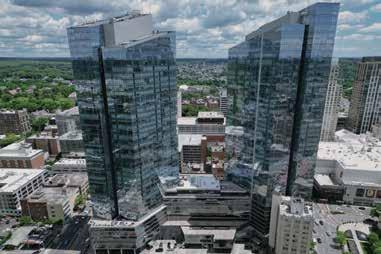
relocated in 1995 to an I.M. Pei-designed building in Purchase created for but never occupied by Nestlé: “We don’t wait for (small businesses) to come to us.”
Instead, Mastercard has an extensive online Small Business Community, where you’ll find tools and resources including the Mastercard Small Business Navigator, and the Mastercard Digital Doors program.
“Small business owners need to know it’s OK if they don’t have all the answers,” said Siegel, who holds a Bachelor of Arts degree in advertising from the University of Illinois Urbana-Champaign and an MBA in marketing from DePaul University’s Driehaus College of Business in Chicago. “Surround yourself with people. You can’t do it alone.”
To this end, Mastercard will also launch its Virtual CFO within the next two quarters to help entrepreneurs manage cash flow, among other tasks. Also launching are Amazon’s two new credit cards — Amazon Business Card and Prime Business Card — transitioning its
small-business credit cards to U.S. Bank, fueled by Mastercard’s global network.
The June 17 event has come amid the company’s series of one-day Small Business Summits that began in New York City May 6 and has continued through Atlanta, Chicago, San Francisco and Toronto. It’s at such events that you meet entrepreneurs like Héctor Carvajal, founder of the Dominican-flavored Don Carvajal Café in Irvington and recipient of a 2022 grant from the Mastercard Strive Innovation Fund to help new businesses financially and technologically; and Ramona Cedeño, CEO of FiBrick Inc., a Dobbs Ferry accounting firm for technology companies and small businesses, who has done webinars for Mastercard on everything from taxes to AI.
Mastercard also makes videos posted on its corporate site that offer a personal perspective on small business owners like Gloria Jeng of Hunan Village II in Hartsdale, who speaks about emigrating from China and working her way up in the restaurant industry to give her children a better life
and more opportunities.
At a time when many corporations are shying away from diversity, Siegel said, “we believe in helping people across the board. All small businesses are equal. All needs are equal. And all are protected under the umbrella of Mastercard.”
And while the next 250 years might be impossible to predict, Siegel said small businesses will continue to be at the
of the global economy. And Mastercard is determined to be there to help them.
heart
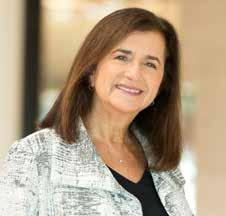
Ginger Siegel — head of North America small and mid-market business at Mastercard International in Purchase. Courtesy Mastercard.
From left, Héctor Carvajal, founder of the Dominican-flavored Don Carvajal Café in Irvington, and barista Andy Tena were part of Mastercard’s Small Business Summit in New York City May 6. Photograph by Arsalan Danish for Mastercard.
From left, Maureen Pritchard, attorney, Wheatley Pritchard & Associates PLLC; Ramona Cedeño, founder and CEO, FiBrick Inc.; Maria Rassoulis, market executive and senior vice president, Citizens Bank; and Ginger Siegel, head of North America small and mid-market business at Mastercard International in Purchase. Photograph by Arsalan Danish for Mastercard.
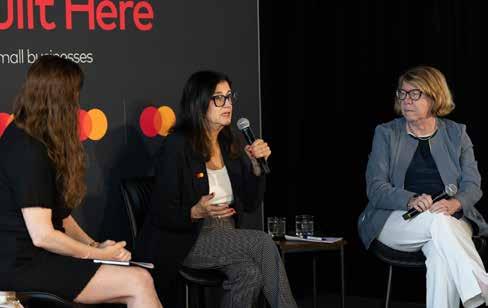
From left, Tara Rosenblum, lead reporter, News 12; Ginger Siegel, head of North America small and mid-market business, Mastercard; Joan McDonald, Westchester deputy county executive. Courtesy Mastercard.
From left, Tara Rosenblum, lead reporter, News 12; Rep. Mike Lawler (R-New York). Courtesy Mastercard.
From left, Tara Rosenblum, lead reporter, News 12; Rep. George Latimer (D-New York). Courtesy Mastercard.
The U.K./U.S. ‘special relationship’ is alive and well in London
By Jeremy Wayne / jwayne@westfairinc.com
It’s an irony too delicious to be lost on anyone: Almost 250 years after the American colonies broke up with King George III, his great-grandson five times removed, King Charles III, was being feted in the United States for four days in April.
Ironic yet not surprising. Despite American independence, or maybe because of it, the United States has long had a “special relationship” with Great Britain. As a Brit who has lived nearly half his life in America, my conclusion is that the special relationship remains alive and well.
That’s because the same spirit of recognition and ease flows, as it has always done, in the opposite direction as well. For Americans arriving in London, the city – with its curious Britishisms, its quirky street names, its weird parking rules and, dare I say it, its unpredictable weather – is going to feel different to wherever it is you
call home. Nevertheless, it is immediately familiar, both culturally and socially, in a way that the rest of Europe isn’t. Instead, London reveals itself as a place filled with echoes of home – subtle at times, unmistakable at others.
Walk through London and you encounter American touchstones all over. I recently wrote in the Westfair Business Journal about London’s swankiest new hotel, The Chancery Rosewood,located in the former U.S. embassy on Grosvenor Square, It was on Grosvenor Square that the first U.S. minister to the Court of St. James (and the second president of the United States), John Adams, lived from 1785 to ’88, and where Dwight D. Eisenhower, later the 34th American president, set up his military headquarters during World War II.
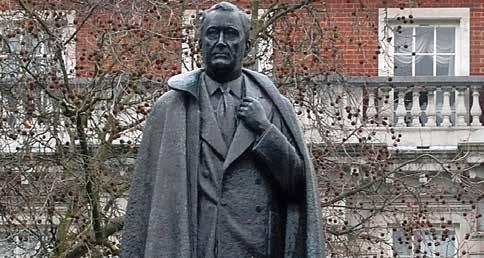
There is a statue of Eisenhower in the square, as well as statues of presidents Franklin D. Roosevelt and Ronald Reagan, with the United Kingdom’s 9/11 Memorial in the small garden on the square’s east side. (In Manhattan, (In
5 Shelter Rock Road, Suite 8 Danbury, CT 06810 P. (203) 744-9206
(203) 744-8461
www.nyconncorp.com
Manhattan, Charles and Camilla visited the National September 11 Memorial & Museum, ahead of the 25th anniversary of the terrorist attacks that killed 67 Britons, more than any other terrorist attack.) Just a couple of hundred yards away from Grosvenor Square, on not-sopretty Oxford Street, stands the famous
Selfridges department store, founded in 1909 by American Harry Gordon Selfridge. No wonder the area came to be known as Little America, or the American Quarter.
London hotels have always provided a home away from home for visiting Americans, too. Conrad Hilton didn’t build one, Page S10
The Franklin D. Roosevelt Memorial, Grosvenor Square. Courtesy Creative Commons.
YOUR EXPERTS IN COMMERCIAL AND RESIDENTIAL LENDING.
FOR 250 YEARS, AMERICA HAS BEEN BUILDING. FOR 20 YEARS WE’VE BEEN HELPING YOU BUILD TOO!
but he did oversee the development of the London Hilton on Park Lane, the first Hilton hotel in the United Kingdom and, for a brief period after it opened in 1963, London’s tallest building. One of America’s richest women, the philanthropist and hotelier Caroline Hunt, scion of the Texas oil family, owned the five-star Lanesborough London for 20 years between 1991 and 2011, making the hotel the watering-hole of its day for wealthy Americans. (It still is for many.)
And while you don’t have to be American to visit The Savoy hotel’s American Bar – opened all the way back in 1893 to make its transatlantic visitors welcome and still mixing what many Americans claim is the driest martini in London – American accents abound there, gently reassuring this born Londoner.
Meanwhile, London restaurants, inspired by American ones or actually launched by them, have come to define whole areas of London as American.
“The Great American Disaster has struck London,” The New York Times reported in August,1970. “Berkeley coeds, Boston hippies and even the British stand on Fulham Road to push into the tiny, wood‐paneled restaurant that offers Great
American Milkshakes, Great American Apple Pie and, of course, the Great American Hamburger. Mia Farrow, André Previn, Warren Beatty and Roman Polanski have already bitten into the hamburgers with relish.”
A year later, the Disaster’s 22-year-old co-founder, Peter Morton, opened the first Hard Rock Café at Hyde Park Corner, where, 55 years later, it is still going strong. (The Disaster eventually became the Texas Lone Star Café, with Boston University and Ithaca College opening London outposts just down the street.)
Up in leafy St. John’s Wood, a tony district just north of Regents Park, sits the American School in London (ASL,) a prekindergarten through 12th grade private day school where despite yearly tuition costing $62,000 (for the high school), getting a place is nevertheless extremely difficult, due to the high number of expatriates applying and the school’s high academic bar.
If their pocketbooks can stand it, American expatriate families in London, I daresay, would like to live in village-y St John’s Wood, with its handsome brick and stucco houses, along with Panzer – the upscale delicatessen catering to the local
expat community and selling hard-to-find American items like Hershey’s chocolate, Pepperidge Farm cookies and crackers and Old Bay seasoning.
In adjacent Regent’s Park, you’ll come across Winfield House. This was “poor little rich girl” Woolworth heiress Barbara Hutton’s London mansion, which she sold to the United States government after the Second World War for the token sum of $1. Set back from the road and well-shielded by trees, the house has been the official residence of the United States ambassador to the Court of St. James (as in the United Kingdom) since 1955. Although closed to the public, the grand house nevertheless imbues this part of the vast, beautiful park with a kind of American flavor. In other words, it feels good just to know Winfield House is here.
From T.S. Eliot to Henry James, famous Americans have always enjoyed setting up home in London. It’s been a particular haven for American music stars. “Mama” Cass Elliot lived (and died) in London; ditto Jimi Hendrix. Paul Simon lived in London in the mid-1960s. Madonna and John Legend call London home. And Bob Dylan currently lives in Crouch End – a modest suburb of North London. (To
put this in context, the equivalent might be Mick Jagger, who lives primarily in Manhattan, moving to a small townhouse in Tuckahoe.)
One particular American who actually might not receive a rapturous welcome should she choose to return to her husband’s native city, is the former Meghan Markle, Duchess of Sussex, now living with said husband, Prince Harry, and children in Montecito, California. But never say never, because she may yet be back, and I’ve no doubt that in time the easygoing Brits would warm to her again – well, quite a lot of time, if I’m being honest. (And don’t even get me started on the Peltz–Beckhams.)
But to conclude, I would say London offers Americans a quiet reassurance: Come here, and you will not feel entirely abroad. The city reflects back a familiar identity, refracted through what’s left of British tradition, yet unmistakably American in its presence.
And, just as Washington opened its arms to a visiting king, London, in its own way, continues to extend its standing welcome to American visitors – proud to have them explore a city where their own story has long been part of the landscape.
At Cummings & Lockwood, you receive sophisticated and carefully curated legal advice based on decades of experience and tailored to your specific goals, together with the personalized attention and elevated client experience you should expect from your professional advisors.
n Private Clients | Trusts and Estates
n Family Offices and Closely Held Businesses
n Fiduciary and Probate Litigation
n Corporate and Finance
n Business Litigation
n Commercial and Residential Real Estate
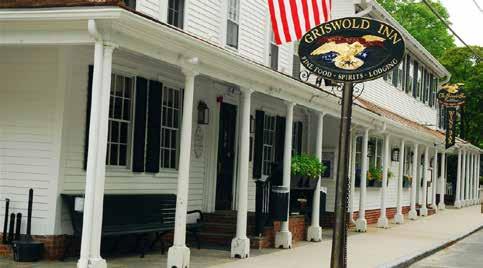
Few businesses from American Revolutionary times remain extant in our area, due to the destruction of the so-called “Neutral Ground” of Westchester County and the burning of coastal Fairfield County. Remnants of farms, mills and taverns survive, of course, as local historical sites. But actual businesses from that period that are still operating are virtually nonexistent. An exception is The Griswold Inn in Essex, Connecticut, which opened in 1776 to accommodate those working on the Patriots’ first warship, the Oliver Cromwell. It remains one of the oldest continuous businesses in the United States.
And if it looks a little familiar, particularly to those of a certain vintage who have never actually visited it, that’s because “The Gris” played the Collinsport Inn on the 1960s vampire soap opera “Dark Shadows,” a cult classic, as well as “roles” in Hallmark’s “Christmas at Pemberley Manor” and Netflix’s “The Noel Diary.”
Here are some other companies that have had a long-running role in shaping our region, either on their own or as ancestors/descendants of prominent businesses:
Hudson’s Bay Co. (HBC) — Long before there was a United States of America, there was the Hudson’s Bay Co., a Canadian fur trading company founded by royal charter in 1670 that would become a holding company for department stores and commercial properties until its liquidation in 2025.
Its primary claim to fame in the United States was its pivotal acquisition of Lord & Taylor and Saks Fifth Avenue. For Lord & Taylor, the HBC years (201219) marked the last chapter of its storied brick-and-mortar history as HBC sold the Manhattan flagship to WeWorks and then the company to Le Tote Inc., which in turn filed for Chapter 11 bankruptcy on Aug. 2, 2020 and announced L & T’s liquidation some three weeks later. (New owner Saadia Group, which acquired Lord & Taylor that October for $12 million, then announced that it would run L & T as an online business only. Today, the online retailer is owned by Regal Brands Global, which acquired it in 2024.
Historic business ties that still bind
By Georgette Gouvei a / ggouveia@westfairinc.com
Hudson’s Bay bought Saks Fifth Avenue in 2013 and owned it until 2024, placing two of the Saks Off Fifth locations, offering off-price clothing and accessories, in the former Lord & Taylor locations in Eastchester and Stamford. Saks Global Holdings LLC resulted when the American assets of Hudson’s Bay were spun off in November 2024 and expanded with the acquisition of the Neiman Marcus Group a month later. However, that also precipitated Saks’ own Chapter 11 bankruptcy and a restructuring that forced the closure of Saks Off Fifth in Eastchester, White Plains and Stamford and threatened the closure of Neiman Marcus at The Westchester in White Plains.
With Neiman Marcus now the point brand for Saks Global — the tail that wags the dog, as experts put it — Neiman’s remains a fixture at The Westchester, while The Saks Shops at Greenwich are ensconced there.
Meanwhile, Montefiore Health System’s White Plains Hospital has expanded its White Plains Physician Associates locale in Eastchester in what was once Lord & Taylor’s distinctive, curving white Modernist home.
BNY Wealth Management, White Plains and Greenwich — One of the ancestors of BNY was The Bank of New York, which merged with the Mellon Financial Corp. on July 1, 2007, to become The Bank of New York Mellon Corp., refreshed as BNY in 2024. In the wake of the American Revolution, The Bank of New York not only helped resurrect a ruined New York City after the defeated British finally left on Nov. 25, 1783; it would also buoy the financially fragile infant nation.
The bank resulted from a group of businessmen gathering at the Merchants’ Coffee House on Feb. 24, 1784, to discuss plans to recall the city to life. Founding Father Alexander Hamilton wrote a constitution for the bank that called for balanced books, paid dividends and no overdrafts. That call for liquidity, transparency and solvency would establish the bank and New York’s credit. It would also bail out the federal government with a $200,000 loan negotiated by Hamilton two day after his appointment as secretary of the Treasury on Sept. 11, 1789.
The Bank of New York would become the first company to be publicly traded when the New York Stock Exchange was founded in 1792.
JPMorgan Chase & Co. (JPMorganChase) — The Bank of New York wasn’t the only one Alexander Hamilton
helped found. On Sept. 1, 1799, he and archrival Aaron Burr helped establish a company to bring potable water to New York’s growing population. The charter allowed The Manhattan Co. to use its surplus for banking. The enterprise, however, was soon eclipsed by New York’s second commercial bank, The Bank of The Manhattan Co. In 1804, Hamilton and Burr’s tempestuous relationship would come to a climax in a duel in which Hamilton was mortally wounded. (The bank would acquire the pistols Hamilton used in 1930.)
Meanwhile, banker John Thompson had founded Chase National Bank in Manhattan in 1877, naming it in honor of Salmon P. Chase, the former Treasury secretary under President Abraham Lincoln. In 1955, Chase merged with The Manhattan Co. to form Chase Manhattan Bank and, 45 years later, joined with J.P. Morgan & Co., originally co-founded in 1871 by financier J. Pierpont Morgan, to become JPMorgan Chase & Co. Today, it has more than 40 branches in Westchester and Fairfield counties alone.
Shreve, Crump & Low — With a New England pedigree that was a contemporary of Paul Revere, Shreve, Crump & Low lays claim to the title “America’s jeweler.”
It was established in 1796 by watchmaker and silversmith John McFarlane in Boston, across the street from fellow silversmith Revere, became Shreve’s in the 19th
century and then Shreve, Crump & Low after an 1869 merger. Over the years, the business, owned by the Walker family, had various elegant locations in Boston reflecting changing architectural styles. The flagship is at 39 Newbury St. The Greenwich location at 125 Greenwich Ave. opened in 2014.
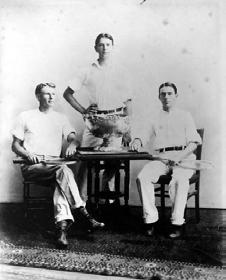
Along with jewelry, a Watch Salon, home goods and gifts, the jeweler is credited with numerous commissions, including supplying the original Davis Cup trophy for men’s tennis in 1899 and Cy Young Award to honor the namesake Boston Red Sox pitcher in 1908. Today, the Davis Cup is the premier international team event in men’s tennis, while the Cy Young Award is presented to the best pitcher in Major League Baseball’s (MLB) American League and in its National League.
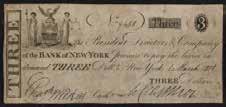
Bank of New York, $3 bank note (1808). Courtesy Baker Library, Harvard Business School, Historical Collections.
This 1900 photograph shows Harvard University tennis player Dwight F. Davis (center) with the punchbowl trophy he ordered for roughly $1,000 from Shreve, Crump & Low a year earlier to honor a competition of men’s teams from various nations. Today the Davis Cup is the premier international team event in men’s tennis.
AVE HAMILTON GREEN
220 HAMILTON AVE & 20 BARKER
THE RITZ CARLTON
From inns to manufacturers to newspapers, Fairfield County businesses date back to Revolutionary and Civil War times
By Gary Larkin / glarkin@westfairinc.com
Most of the Fairfield County historic businesses that date back to the American Revolution and American Civil War fell into a handful of categories: inns, banks, newspapers and light manufacturing.
While the state of Connecticut is known as having oldest continuous newspaper in The Hartford Courant (1764) and the oldest operating inns in Essex’s Griswold Inn (1776), Fairfield County’s claim to historic fame is as an early manufacturer of hats; hospitality provider at its many inns, taverns and restaurants; banking hub for growing businesses and prolific newspapers that provided the main means of communication back then.
Inns, taverns, restaurants
According to the Fairfield Museum, The Sun Tavern (1780) located on the historic Town Hall Campus (611 Old Post Road), this was a vital inn and gathering place during the Revolutionary War. While it no
longer operates as a commercial inn, the site is maintained by the Fairfield Museum and hosts seasonal tours and historical events.
The Burr Mansion (1734) located at 739 Old Post Road was a hub for prominent early American merchants and is now primarily a beautifully preserved event space.
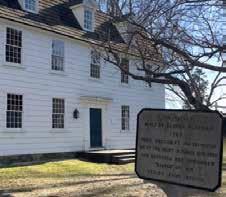
The Fountain Inn Bed & Breakfast, named after Cass Gilbert Fountain, located at 114 Main St. was built in 1740. The builder and owner of the home was David Hoyt, a prominent loyalist to the British, demanded the British troops stop shooting artillery at the Keeler Tavern, which was the headquarters of the local militia during the Battle of Ridgefield.
The Stanton House in Greenwich (1843) is a historic bed & breakfast inn at 76 Maple Ave. Stanton House Inn was built on land granted to the Rev. Richard Sackett while he was pastor of the Second Congregational Church in 1717, according to Stanton House Inn website. The family kept the land for 150 years, and in 1840, John Sackett built the original structure on its present location. It was called the Seaman-Brush house, which was originally in
the Greek Revival style, with a large central hallway and two large, symmetrical rooms on either side.
Tavern at GrayBarns in Norwalk is situated at 194 Perry Ave., as an upscale New American restaurant housed inside a preserved 19th-century inn set along the Silvermine River.
The Arcade Mall at 1001 Main St. in Bridgeport dates back to 1841. It is one of the oldest enclosed shopping malls in the United States, featuring a restored, glass-painted ceiling.
Banks
Fairfield County Bank (Ridgefield) was established in 1871 as the Ridgefield Savings Bank. It has been serving the county continuously for over 150 years.
Savings Bank of Danbury at 220 Main St. was founded in 1849 and has been serving generations of Danburians from its historic downtown presence.
Ives Bank (formerly Savings Bank of Danbury) operates as the oldest continually operating business in Danbury, also founded in 1849. Originally operating directly
out of the Ives homestead on Main Street (where Mrs. Ives accepted deposits on a dining room desk while her husband was out), the bank has anchored downtown for 175+ years.
Union Savings Bank, which was established by an act of the Connecticut State Legislature in 1866, is a mutual savings bank that was founded by local hat manufacturers to protect the savings of Danbury residents. Its iconic Romanesque Victorian headquarters is located on “Bankers’ Row” at 226 Main St.
The Greenwich Trust Co. was founded in 1887 and operated as the oldest bank in
The former Remington Arms Munition factory in Bridgeport was razed years ago. Photo courtesy of Mannafort Brothers
Honoring Our Legacy, Building the Future of Care
As our nation approaches its 250th anniversary, we have been reflecting on the moments and milestones that have shaped both our country and the communities we are privileged to serve across Connecticut. At Yale New Haven Health, that reflection is grounded not only in history, but also in an enduring commitment to advancing care for future generations.
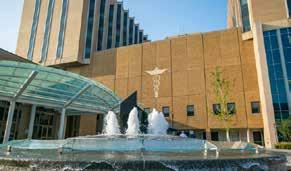
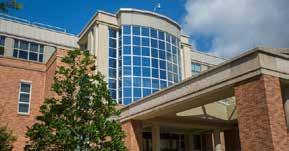
For Bridgeport Hospital and Greenwich Hospital, that commitment has always centered on caring for the communities around us. For decades, both hospitals have been trusted places of healing for patients and families during life’s most important moments. Today, we are building on that legacy by investing in safer care, expanding access and bringing more healthcare services directly into the communities where people live and work.
Bridgeport Hospital continues to strengthen its role as a leading community teaching hospital, advancing specialized care in areas such as cancer, heart and vascular, neuroscience and surgical services. It’s also home to the only verified burn center in the state. We are also expanding ambulatory and outpatient operations throughout the region, making high-quality care more accessible and convenient for patients beyond the walls of the hospital. The hospital’s commitment to quality and equity was recently recognized when Bridgeport Hospital became the first hospital in Connecticut to earn The Joint Commission’s Excellent Health Outcomes for All Certification, acknowledging systemwide efforts to reduce healthcare disparities and improve outcomes for every patient.
At Greenwich Hospital, advancing care means bringing world-class expertise directly into the community. The new Smilow Cancer Hospital at Greenwich Hospital will transform cancer care in lower Fairfield County by bringing the expertise of Yale Cancer Center physicians closer to home for patients and families. The project will expand access to leading specialists, innovative treatments and clinical trials through a more connected and comprehensive approach to cancer care.
Bridgeport Hospital and Greenwich Hospital continue to earn national recognition for their commitment to quality, safety and patient outcomes. Both hospitals recently received Leapfrog “A” Hospital Safety Grades, reflecting exceptional performance in protecting patients from preventable harm and delivering safe, high-quality care. They also earned Magnet designations from the American Nurses Credentialing Center, considered the nation’s highest recognition for nursing excellence. Greenwich Hospital was recently awarded a prestigious 5-star CMS quality rating, placing it among the nation’s top-performing hospitals for patient outcomes, experience and clinical excellence. Together, these recognitions underscore Yale New Haven Health’s commitment to providing compassionate, equitable and world-class care for the communities we serve. They reflect the trust our communities place in us and the dedication of thousands of healthcare professionals who work tirelessly to serve patients with skill and compassion.
Healthcare is changing rapidly, and our responsibility is not only to keep pace but to lead thoughtfully and responsibly. Our goal is simple: to make healthcare more connected, convenient and responsive to the needs of patients and families across Connecticut.
Our longstanding partnership with Yale School of Medicine also continues to drive innovation, education and clinical excellence throughout our health system. Together, we are translating medical advances into tangible improvements in patient care while helping train the next generation of healthcare leaders.
Looking back reminds us how much medicine has evolved over time. Looking ahead reminds us that progress depends on continuing to invest in people, innovation and access to care.
As we prepare to celebrate our nation’s 250th anniversary, we are deeply grateful to the caregivers, patients and community members who have shaped these institutions and placed their trust in us. Together, we look forward to building the next chapter of healthcare in Connecticut: one defined by safety, innovation, access and exceptional care close to home.
Christopher O’Connor CEO, Yale New Haven Health
Pamela Sutton-Wallace President, Yale New Haven Health
Anne Diamond, DBA, JD President, Bridgeport Hospital
Robert Blenderman, PA President, Greenwich Hospital
Greenwich, housing the oldest chartered Trust Department in Fairfield County. Through a series of major mid-century mergers, it consolidated into The National Bank and Trust Company of Fairfield County in 1958.
Industry and manufacturers
Ezra Mallory was born in Redding in 1785 and started the Mallory Hat Co. in Danbury in 1823. He set up his shop near his home in the Great Plain district of town. He produced high beaver hats called stovepipes that had bell shaped crowns and heavily rolled brims.
The Hatch & Bailey Co. in Stamford, which was founded in 1872, holds the title of Connecticut’s oldest lumberyard and is still supplying professional builders and remodelers.
Yale & Towne Manufacturing Co., once the largest employer in Stamford, produced the world-famous pin-tumbler locks after Linus Yale Jr.’s invention in the 1860s.
Gault Family Companies in Westport, which started in 1863 as a hauling and farming company, has evolved into Gault Energy. It provides home heating oil to area homes and businesses.
Jelliff Corp., which was established in 1880. has produced precision wire cloth, mesh products, and screen packs for over a century. Located at 354 Pequot Ave in the Southport section of Fairfield, it started as a small hardware store owned by Charles Jelliff.
Bigelow Tea Co., which started in 1945, is a major Fairfield family-owned business rooted in local commerce history.
Remington Arms Munition factory was built in Bridgeport in 1867. All that remains of the now-abandoned factory is the iconic shot tower, which bears more than a passing resemblance to a giant whiskey bottle. The complex was built by the Union Metallic Cartridge Co., and the shot tower was completed in 1909. The 10-story, 190foot tall tower was the tallest building in Connecticut for years.
Acme Shear Co. at 100 Hicks St. in Shelton, was founded in 1876. It grew to be one of the largest manufacturers of scissors, shears, and surgical goods in the world.
Frisbie Pie Co. opened in 1871 on Kossuth Street in Bridgeport by William Frisbie, this operation sold hundreds of pies daily, accidentally inventing a cultural phenomenon when college students began
tossing the empty pie tins.
Newspapers
The Stamford Advocate starting publishing in April 1829 as The Intelligencer. It was relaunched and renamed The Sentinel. In 1843, the name “Stamford Advocate” first appeared on the front page. In 1892, it transitioned from a weekly publication to a daily newspaper.
The Norwalk Hour (now commonly known as The Hour) is 155 years old. It was first published on May 6, 1871, originally starting as a weekly paper in Westport
before moving to Norwalk in 1873 and transitioning to a daily publication in 1895.
The Danbury News-Times is 142 years old. The publication originally debuted as the Danbury Evening News on Sept. 8, 1883. In 1933, it merged with the Danbury Times (founded in 1927) to form the present-day News-Times.
The Connecticut Post, operated by Hearst Media, was founded in 1883 as the Daily Post in East Bridgeport. It was renamed The Bridgeport Post in 1906. In 1992, it was renamed the Connecticut Post.
The Fairfield Citizen was founded in October 1970 by resident Peter Ball under the original name Fairfield Citizen and Chronicle. It traces a historic lineage back to 1867 to the Southport Chronicle.
The Ridgefield Press was founded in 1875 as Baxter’s Monthly briefly, before becoming a weekly paper later that same year. The founder was David Crosby Baxter.
The Newtown Bee was founded by John Pearce in June 1877. The hometown newspaper for Newtown has been owned and continuously published by the Smith family since 1879.
The site of the Sun Tavern in Fairfield, which stood at the Town Green near Town Hall, was where a major Revolutionary War battle was fought. Photo courtesy of Fairfield Historical Society
Since 1891, PKF O’Connor Davies has served clients through change, growth and opportunity. As America marks 250 years of independence, we proudly celebrate the businesses, families and communities that continue to define our nation’s future.
This milestone birthday honors generations of vision, resilience and progress — and the promise of all that is still to come. Happy 250th Birthday, America. From your 135-year old friend.
Happy Birthday
A Message From Westfair Business Journal
For decades, Westfair Business Journal has been committed to telling the stories of the businesses, leaders and communities that drive Fairfield County, Westchester County and the Hudson Valley forward.
As we recognize America's 250th anniversary, we also celebrate the entrepreneurial spirit, innovation and determination that continue to shape our region. Through periods of growth, challenge and transformation, business has remained at the center of progress.
We are proud to serve as the region's trusted source for business news and information, and we thank our readers, advertisers and community partners for being part of that journey.