A Publication of Maranatha Volunteers International
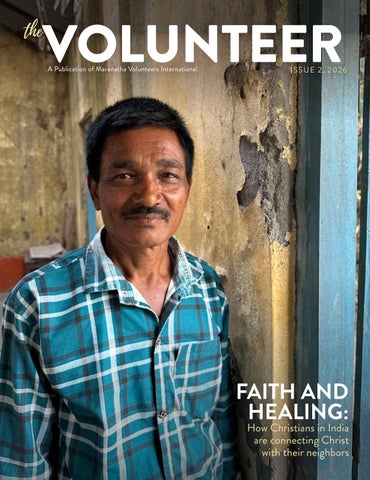
A Publication of Maranatha Volunteers International
How Christians in India are connecting Christ with their neighbors
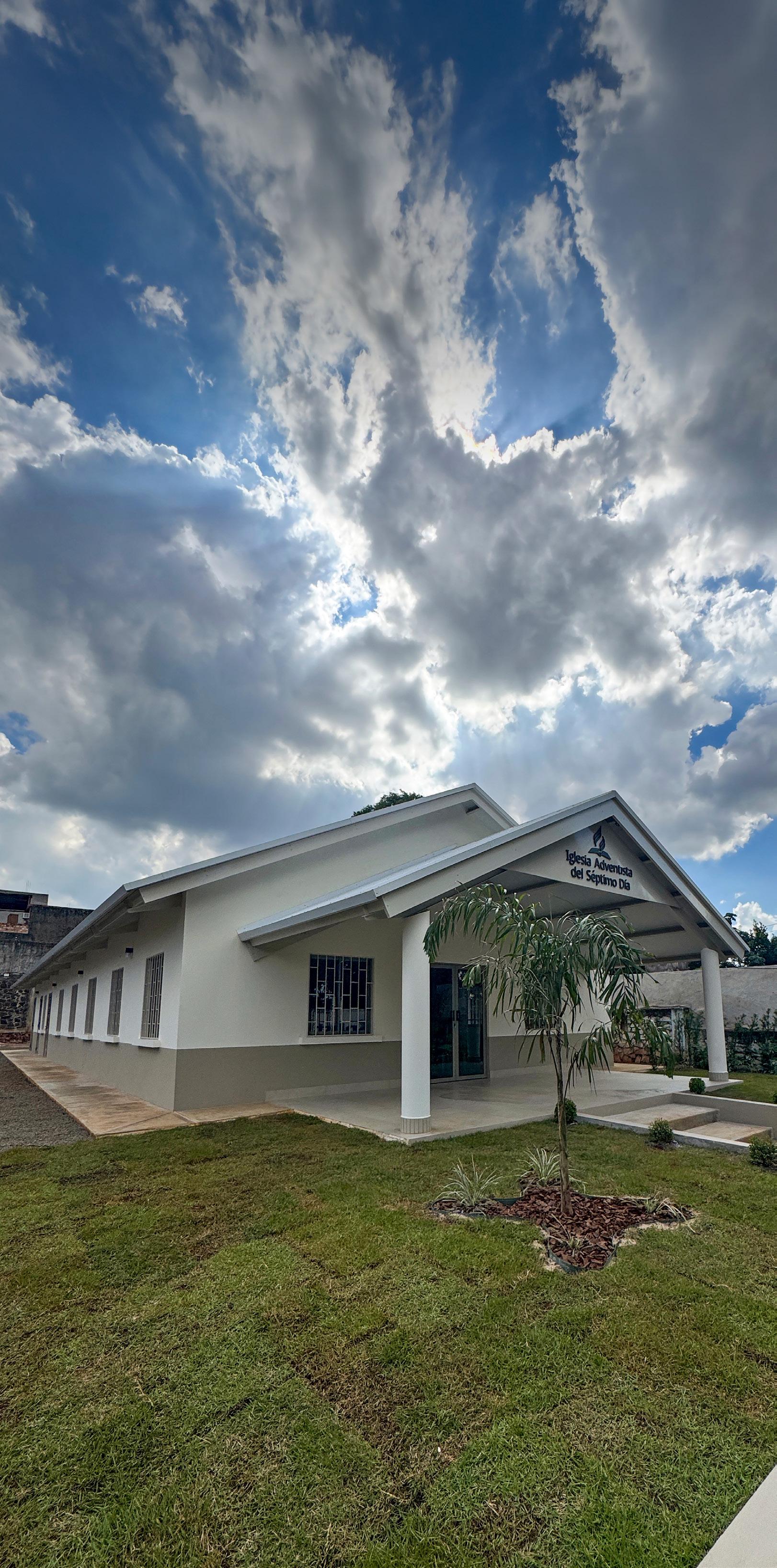
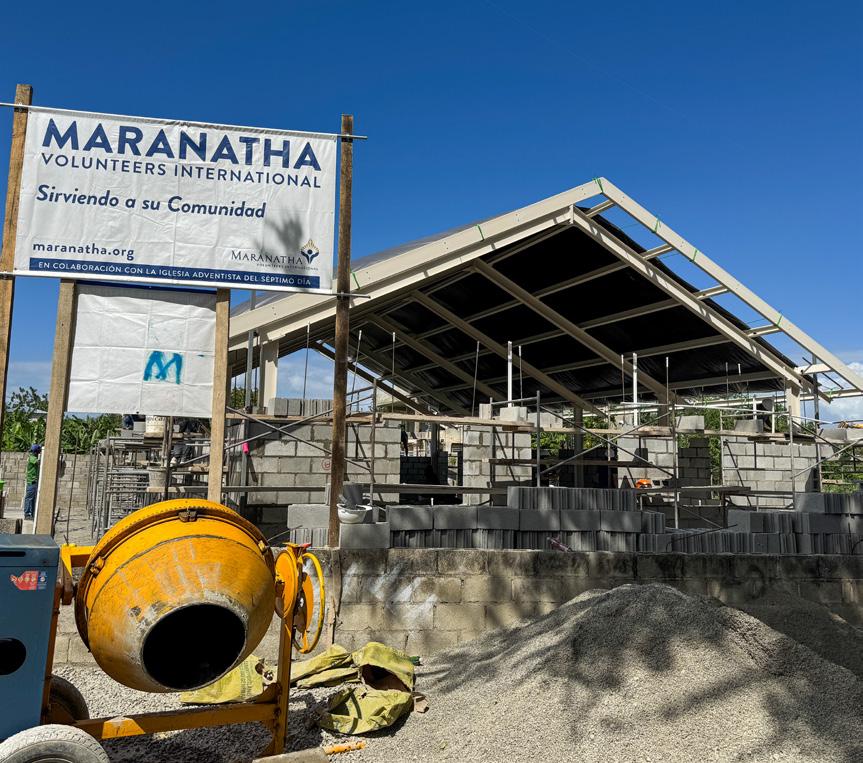
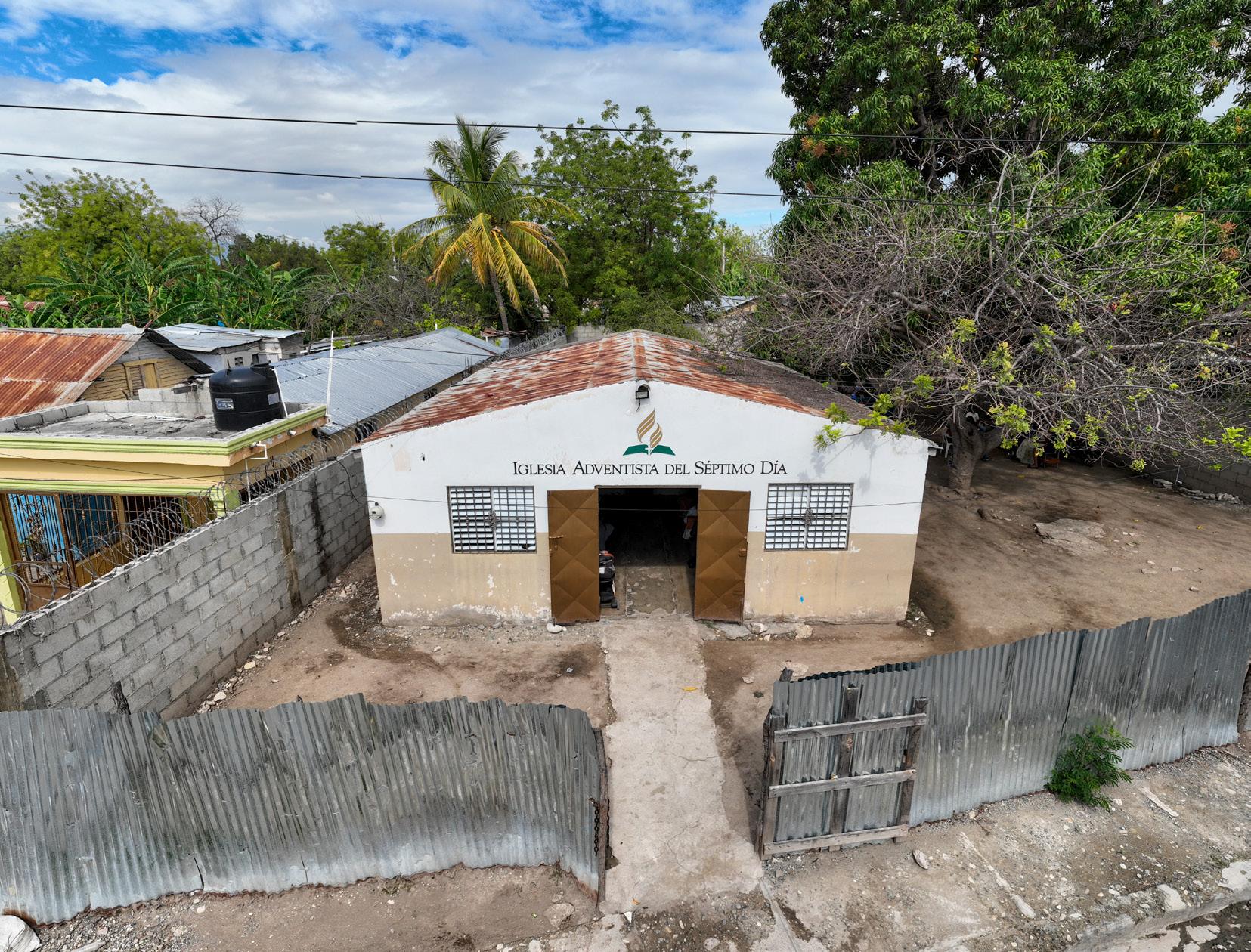
The San Alfredo Seventh-day Adventist Church started as a handful of people gathering in a home each week but grew into the fastest-growing Adventist church in their area, at 75 members. The group bounced around from place to place in a suburb outside of the city of Ciudad del Este, eventually settling in a home. But the layout of the house limited their growth and made for an unpleasant Sabbath worship experience; members sat in the hallways outside the main room— some couldn’t even see the sermon being preached. There just wasn’t
enough space, and it caused some people to stop attending. Maranatha responded to a request from the Adventist Church in Paraguay to help San Alfredo, and, with the help of Family Project volunteers in 2025, constructed a large sanctuary that has plenty of space with a direct line of sight to the platform. Plus, the new church building allows this passionate congregation to continue growing and spreading the gospel in their community. Maranatha also added landscaping on the property to cap off this beautiful new beacon of hope in Paraguay.
Julie Z. Lee Editor Heather Bergren Managing Editor/Designer
Comm Writer Sidney Needles Writer
UNITED STATES HEADQUARTERS:
Maranatha Volunteers International 990 Reserve Drive Suite 100
Roseville, CA 95678
Phone: (916) 774 7700
Website: www.maranatha.org
Email: info@maranatha.org
IN CANADA:
Maranatha Volunteers International Association c/o V06494C PO Box 6494, Station Terminal Vancouver, BC V6B 6R3 CANADA
All notices of change of address should be sent to the Maranatha Volunteers International United States address.
MISSION STATEMENT: Maranatha spreads the gospel throughout the world as it builds people through the construction of urgently needed buildings.
About the Cover:
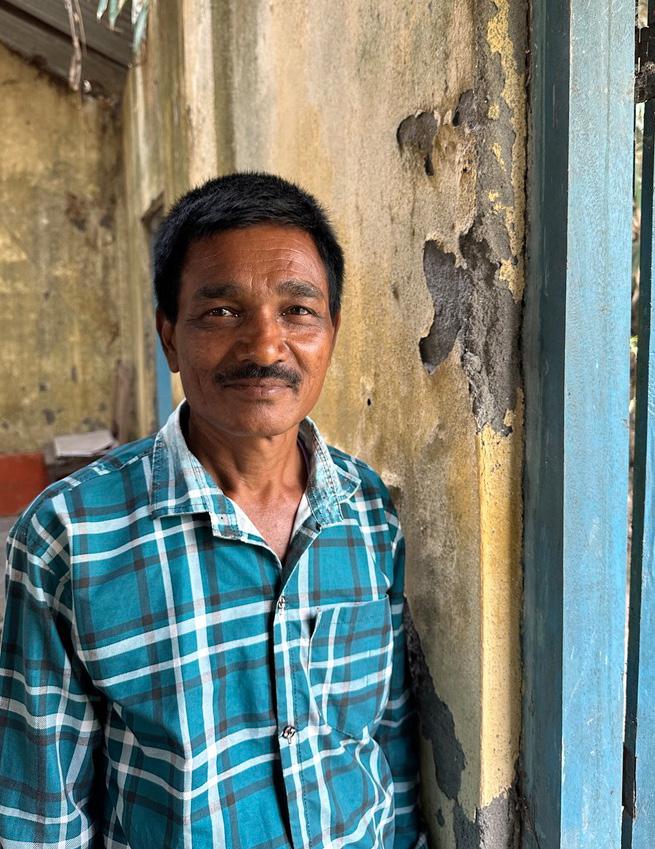
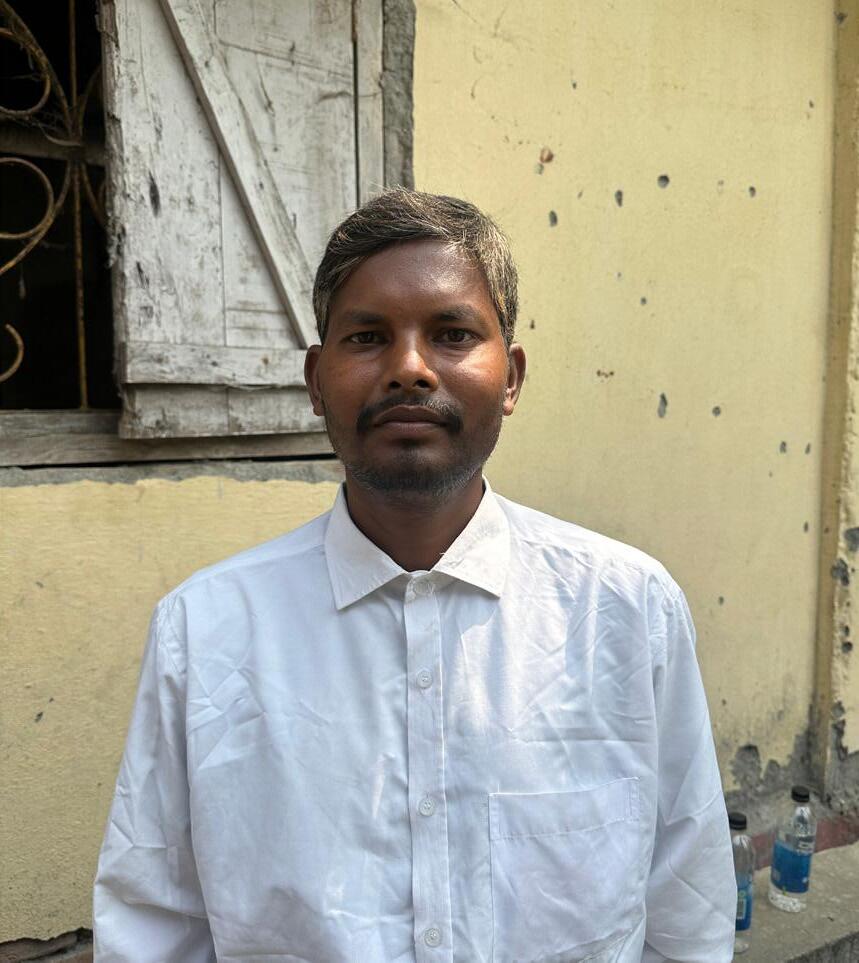
Sushil Nag stands in the doorway of his crumbling church in West Bengal, India. His father founded the congregation more than 50 years ago. Maranatha is hoping to build them a new temple.
Photo by Julie Lee
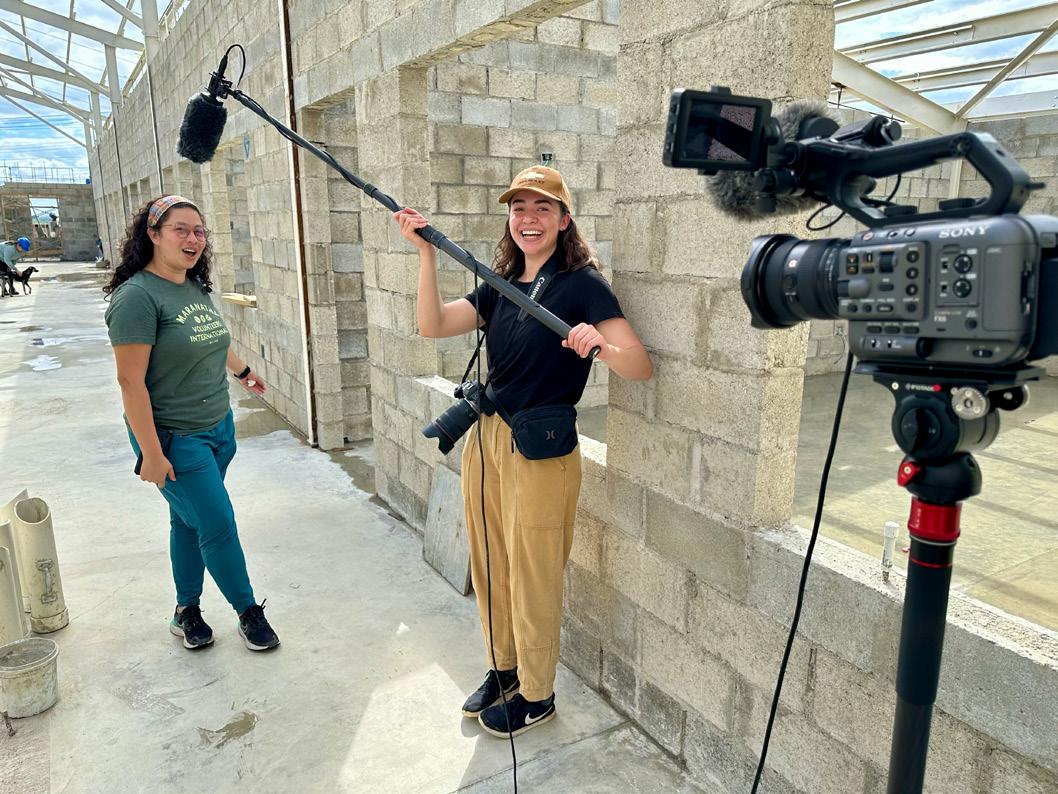
Much of Maranatha’s work is tangible. As a writer and producer on Maranatha’s marketing team, I’ve travelled to project sites all over the world, experiencing Maranatha’s physical impact firsthand. I’ve pumped water from a Maranatha well. I’ve sat at a desk in a brand new classroom. I’ve helped lay block walls for a church building. Things like watching crystal clear water fill a jerrycan and lifting a rough cinderblock into place have made the Maranatha mission feel very real to me. But according to our mission statement, these things are only a means to an end. Our real purpose and goal is building people.
This part of Maranatha’s work is trickier to report on with numbers or capture in photographs. We don’t measure someone’s growth potential like we would a plot of land. There’s no before and after picture that can truly illustrate heart change. People aren’t projects; they’re people. So what blueprint do we use to “build” people? What does a “built” person even look like?
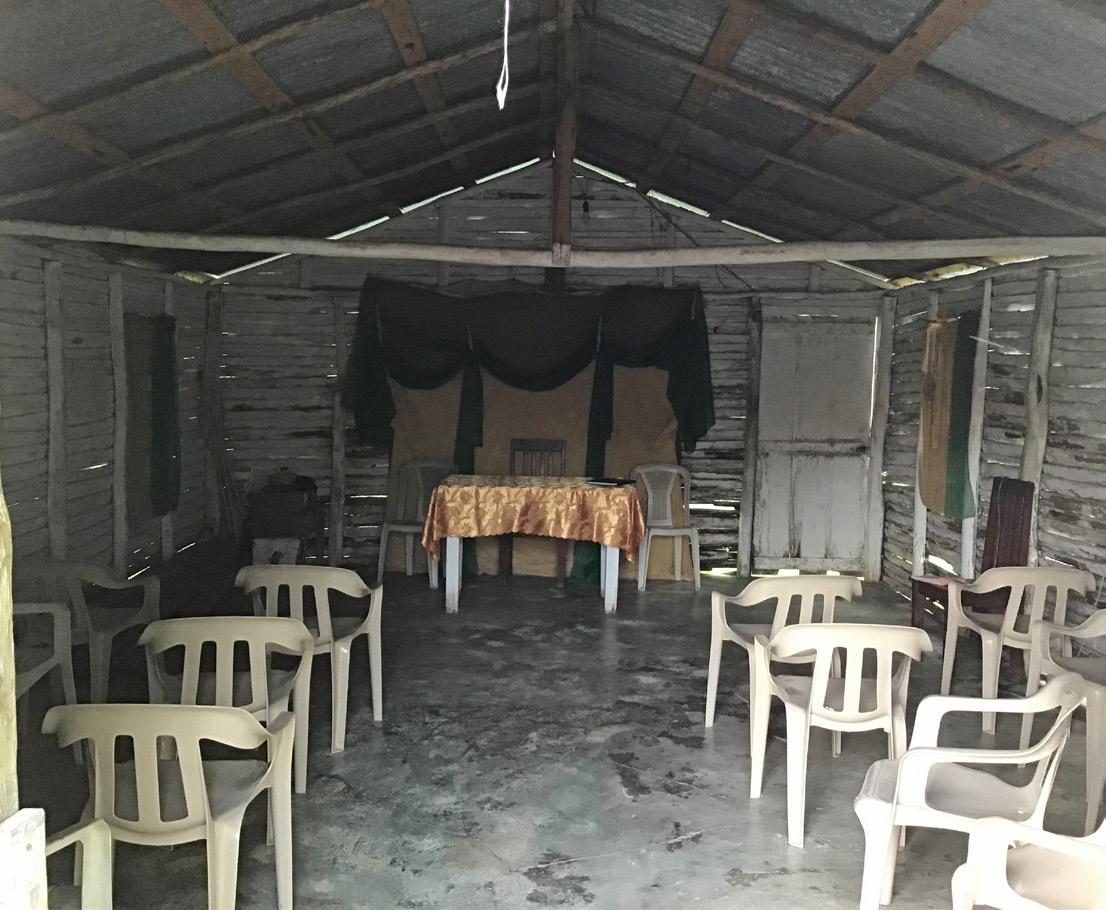
On a recent media trip to the Dominican Republic, I met a woman named María Elena Rosario, or Malena for short. For the past 30 years, Malena has attended the Hija del Rey Seventh-day Adventist Church in the northern coastal tourist town of Puerto Plata. It’s a congregation that struggled to have a comfortable meeting place without adequate funding. Hija del Rey has worshipped in rented rooms, a simple wooden shelter, and even under trees. Malena has watched other founding members grow old and pass away without ever seeing their dream of a church building materialized.
This type of long-term struggle is hard on the morale of a congregation, and Malena was no exception. But she and fellow members persevered through each inadequate meeting place and the fear that their situation would never improve.
During our visit, we brought Malena to the concrete slab where Maranatha was in the early stages of constructing her new church. We wanted to film her reaction to the progress, expecting a
thoughtful countenance and maybe a smile. Instead, Malena was overcome by emotion. Tear slid down her face as she prayed, thanking God that her longawaited building was in progress. That slab was a reinforced foundation for Malena’s faith, in addition to her church structure.
Building people may seem like a nebulous task, but when we focus on our job instead of God’s, it’s really quite simple: use what you can to do what you can, to make something better for someone. Let God be in charge of the results. And when we do have the pleasure of witnessing His impact, through us, on others, like that precious moment with Malena, we can know that the parts of our mission that may seem incredibly intangible are no less real than the parts made of concrete and steel.
Sidney Needles is a communications specialist for Maranatha
A snapshot of volunteers and projects in the mission field.
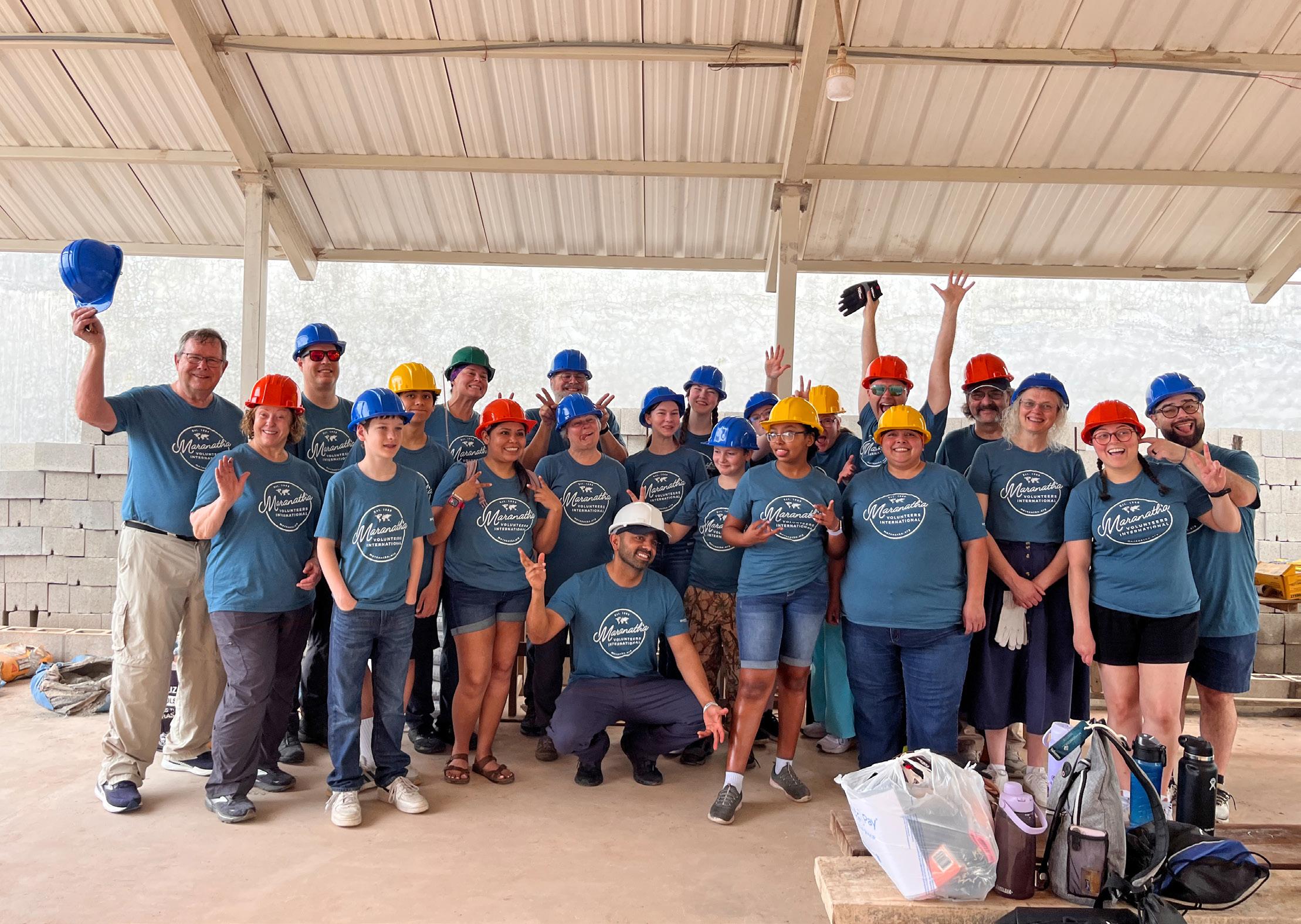
Volunteers from the Piedmont Park Church in Nebraska helped to build the walls of the Villa Selva Seventh-day Adventist Church.
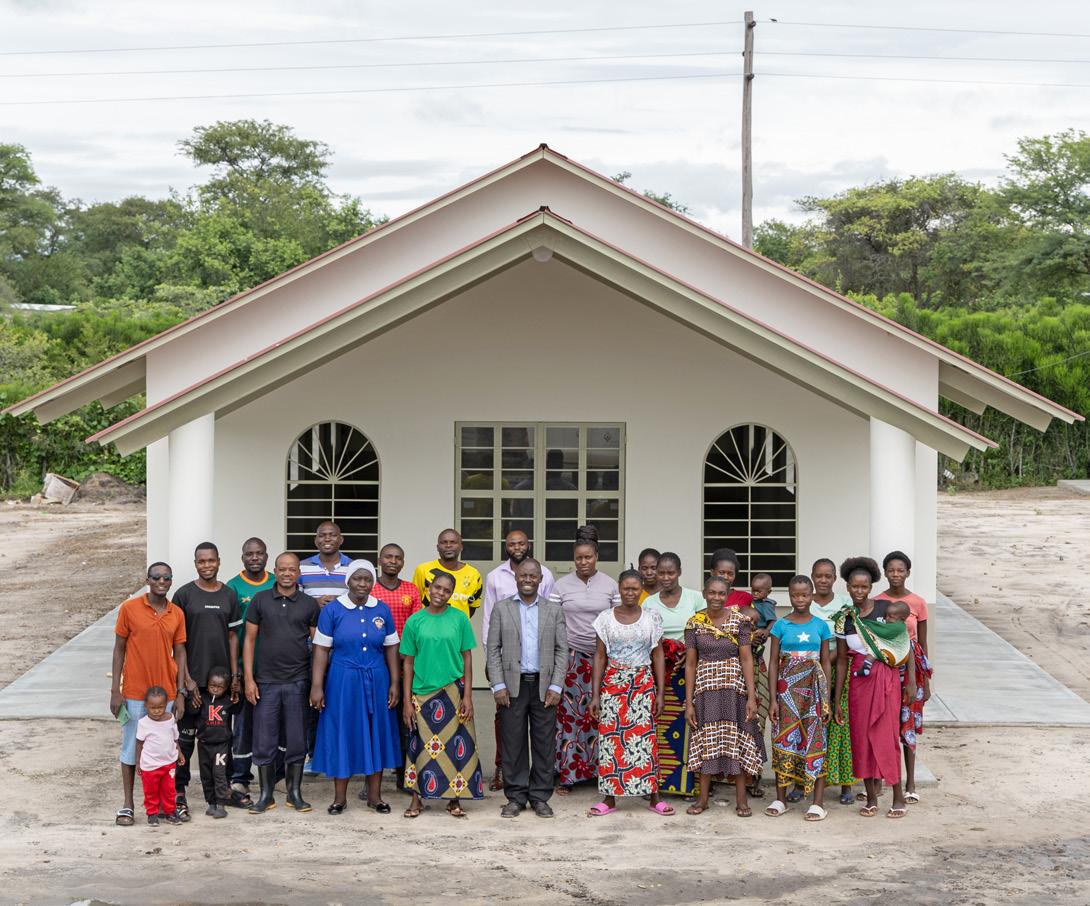
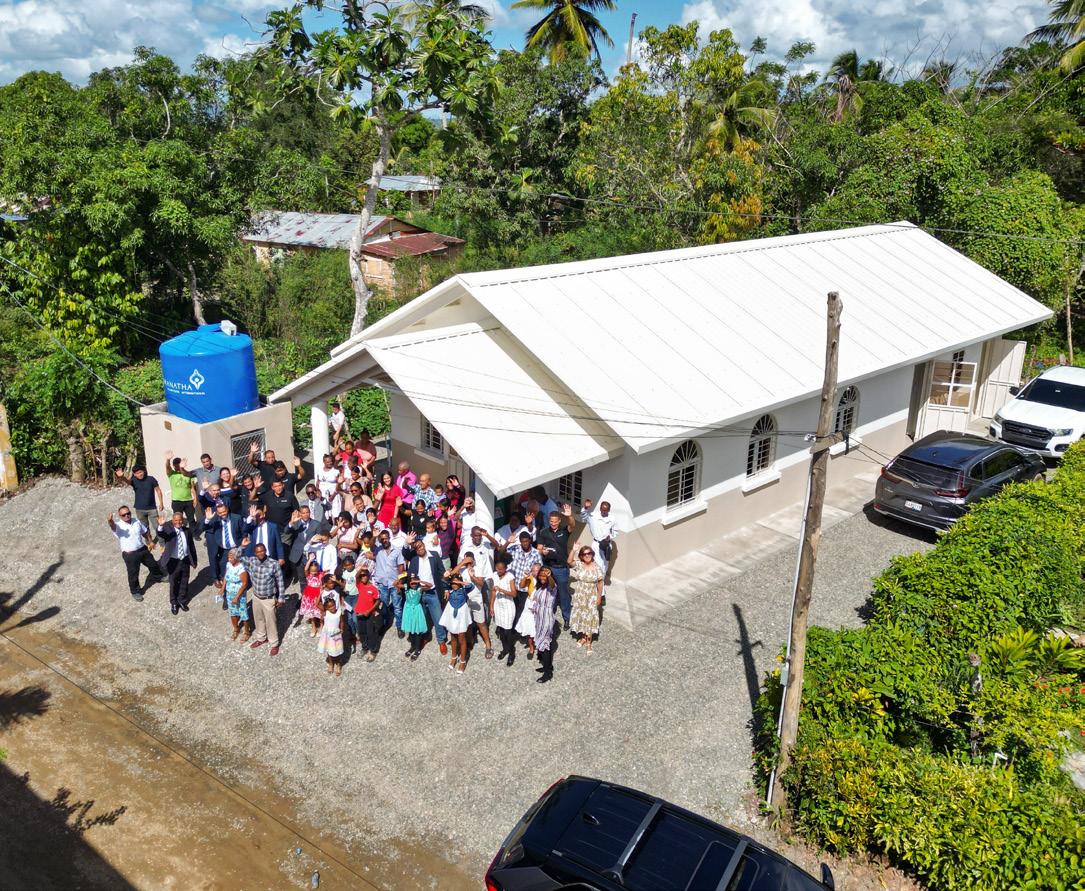
Members of the Golden Hope Seventhday Adventist Church are grateful for a new Maranatha-built sanctuary.
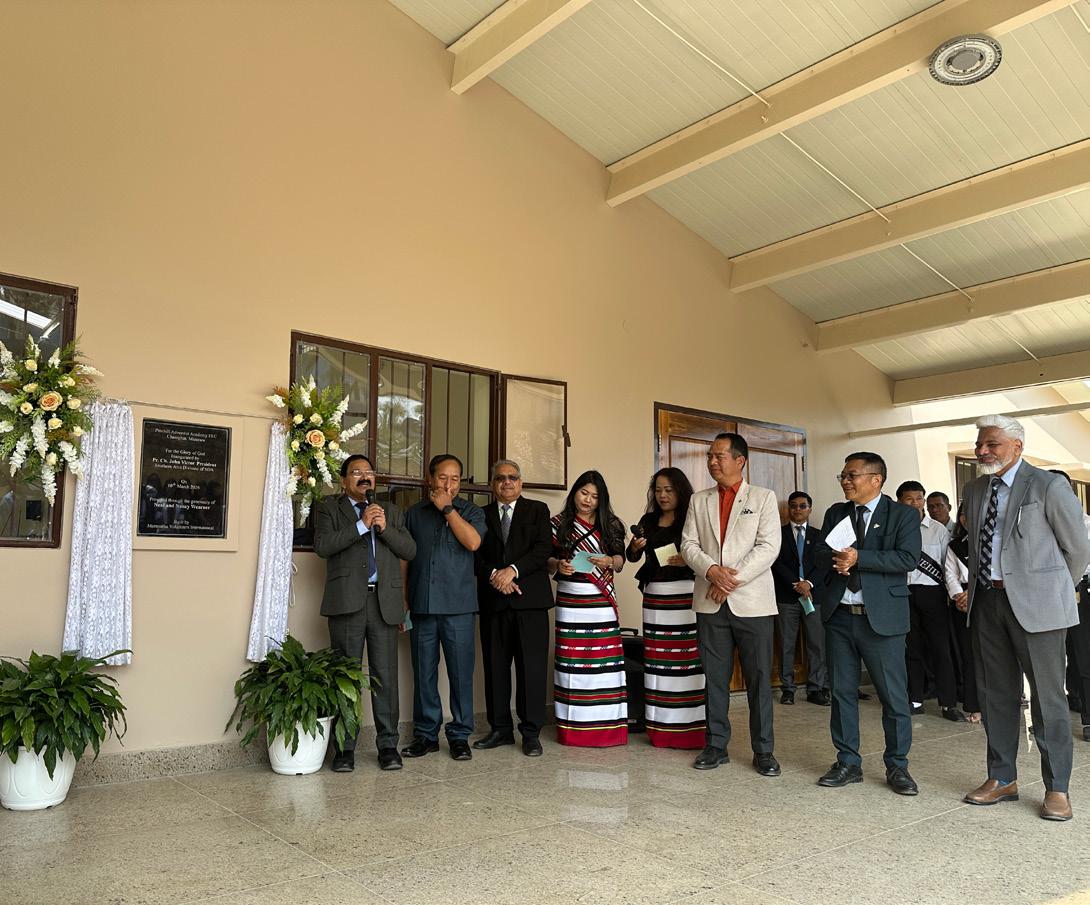
John Victor Chinta, president of the Adventist Church in Southern Asia, along with several other church leaders, participated in the dedication ceremony of the new Elementary Education Center at Pine Hill Academy in Champhai, Mizoram.
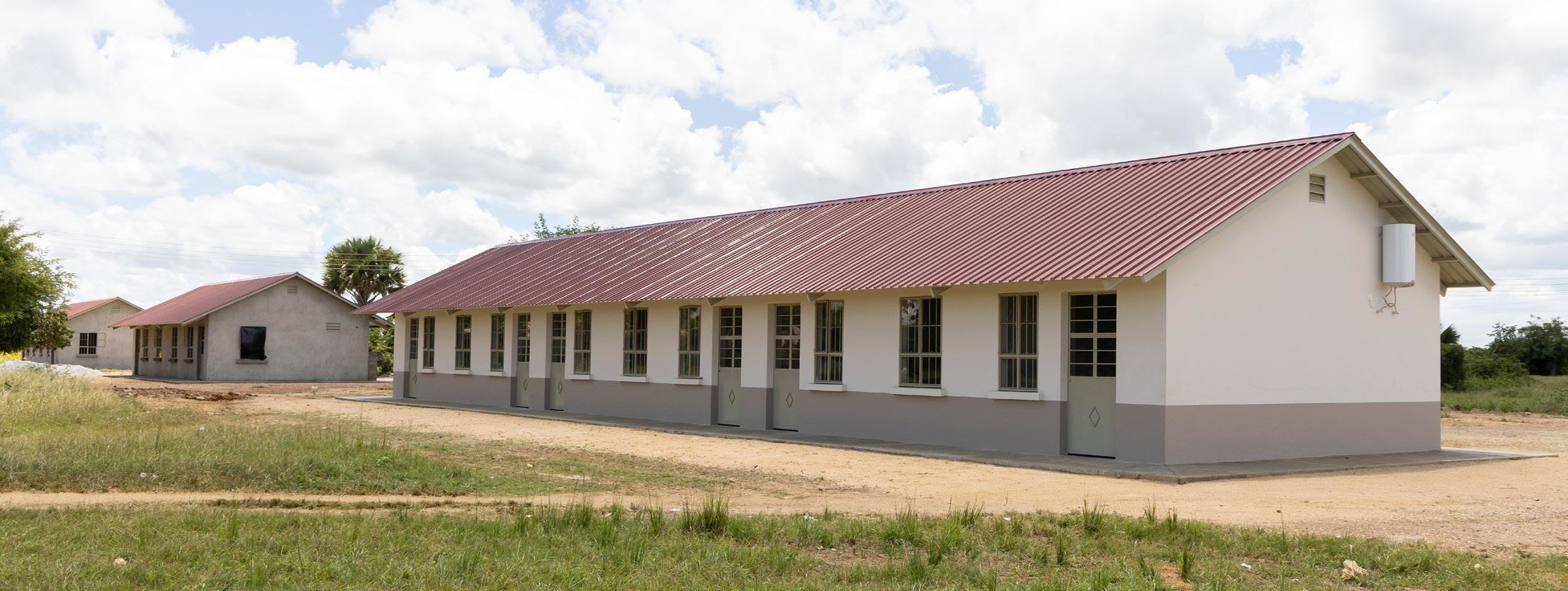
ZAMBIA
Staff housing at the Sala Adventist School is now complete, allowing the school to hire desperately-needed additional teachers.
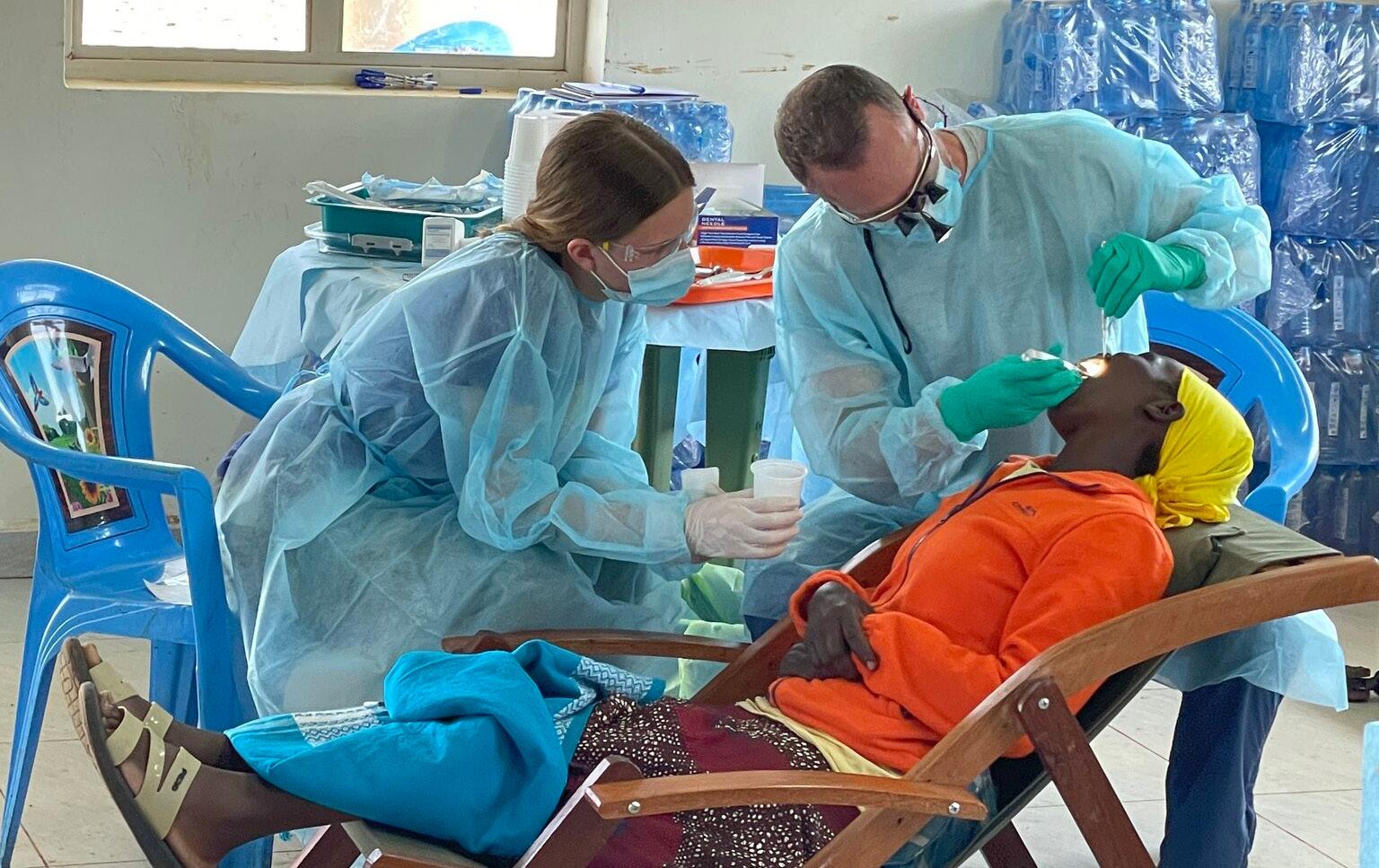
KENYA
Besides construction, volunteers at the Kimogoro Adventist School provided dental clinics to the community.
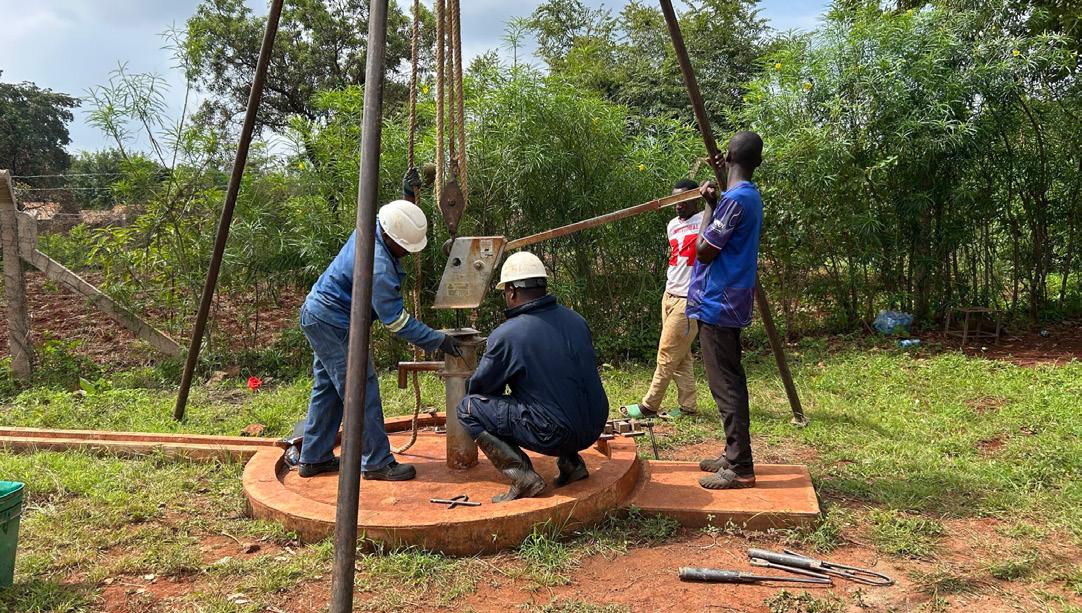
KENYA
Maranatha’s well-maintenance team repairs the Mithigini Seventh-day Adventist Church water well.
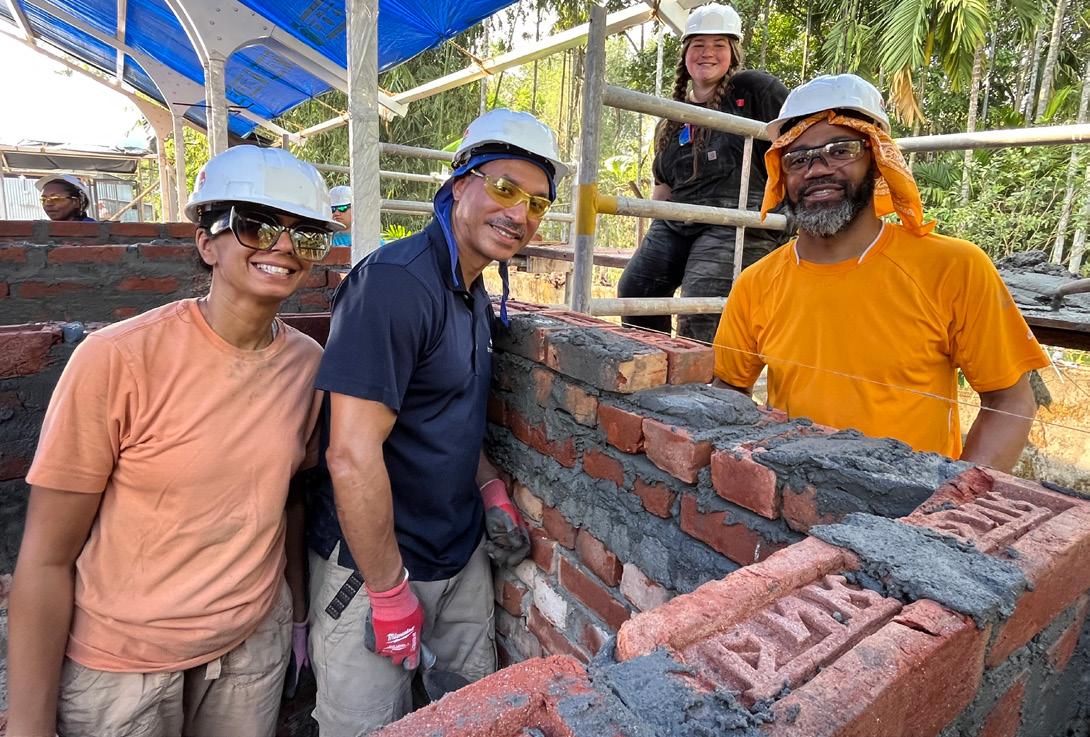
Maranatha volunteers with the “Mission IS Possible” group helped to construct a new girls dorm at the Irvine Adventist School.
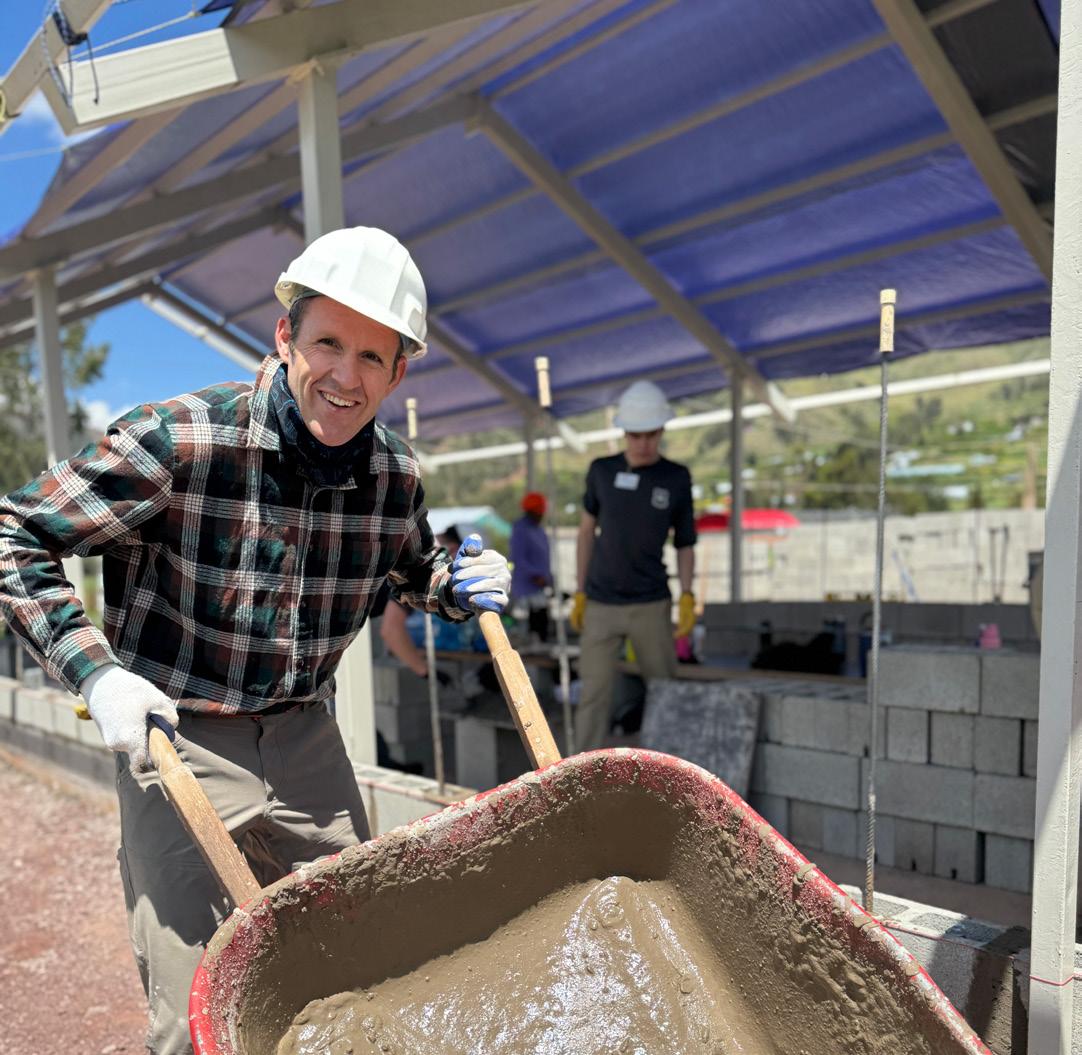
PERU
Volunteers helped to construct the Ccorao Seventhday Adventist Church
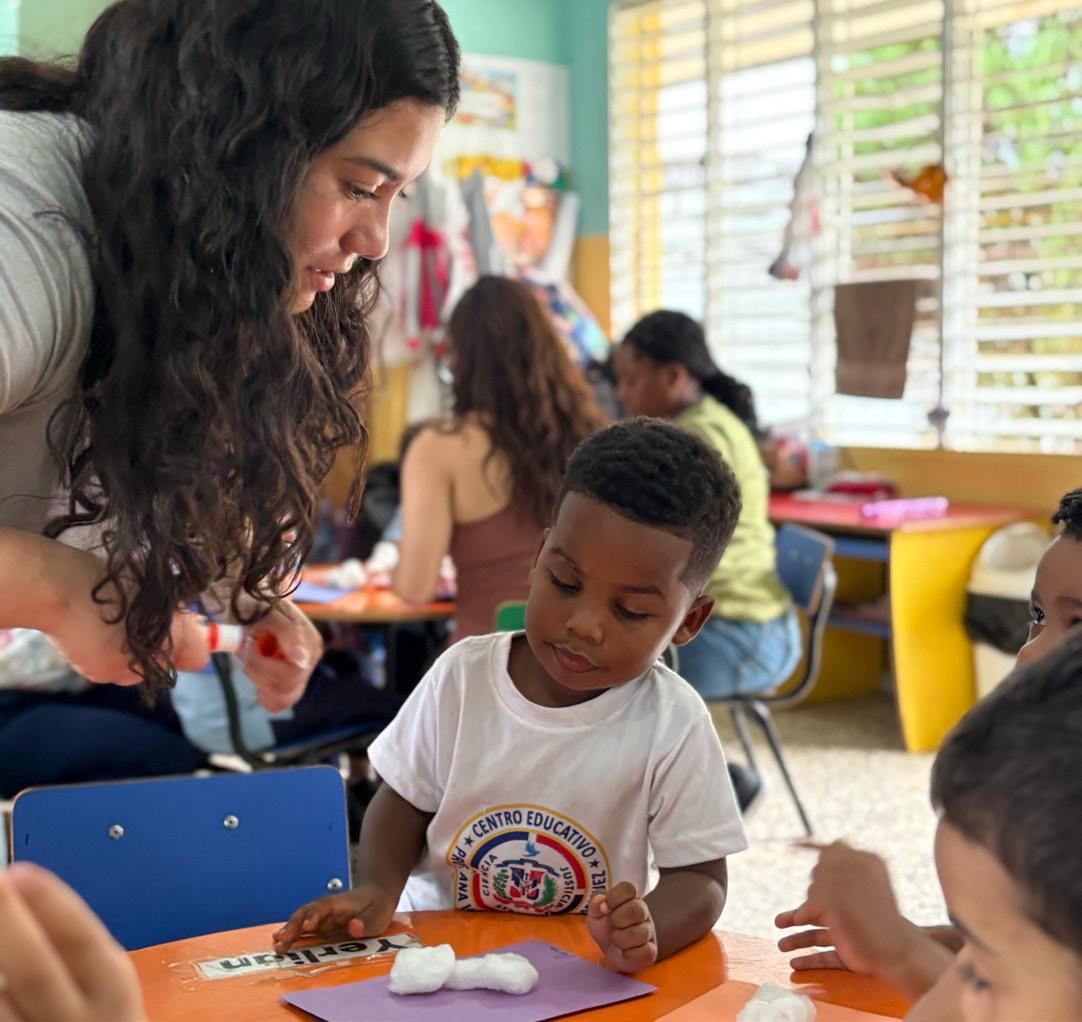
Maranatha’s Multiple Group Project volunteers not only constructed a new church, but they also put on children’s programs in the community.
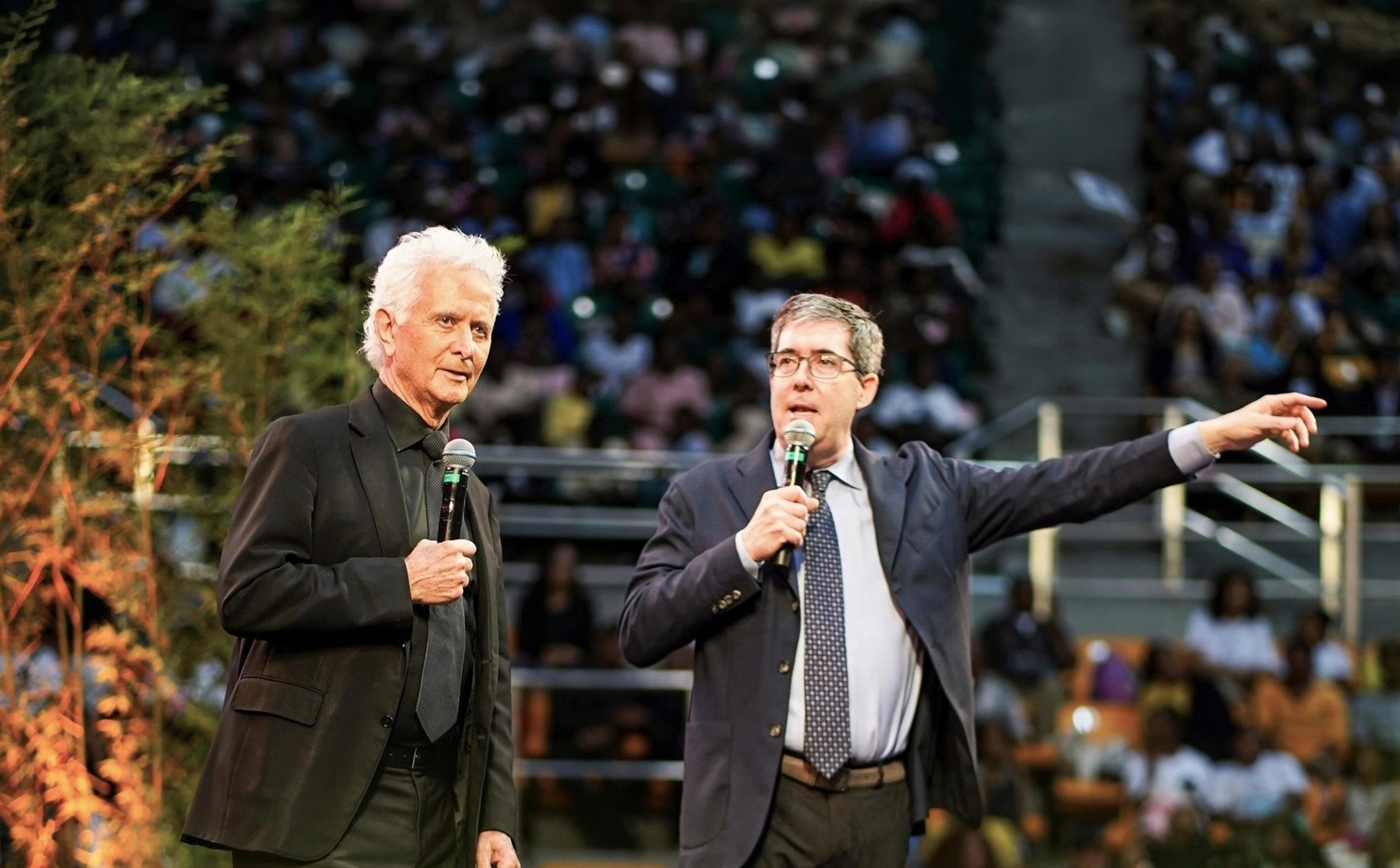
In March, Don Noble and Kenneth Weiss spoke at a special event coordinated by the Seventh-day Adventist Church in the Dominican Republic. The program, which took place in Santiago de los Caballeros, welcomed 8,000 people.
Maranatha President Don Noble and Chief Operating Officer Kenneth Weiss appeared at a special event hosted by the Seventh-day Adventist Church in the Dominican Republic on March 21, in the city of Santiago de los Caballeros. Eight thousand people gathered for the Sabbath program, which concluded an evangelistic series and celebrated Adventist Youth Day. Noble and Weiss took the stage to accept gratitude from Church leaders for Maranatha’s support through vital infrastructure. This year Maranatha is helping put roofs over the heads of members at nine churches and one school campus in the country.
“We are so pleased to be part of this grand event for the Church,” said
Noble to the crowd. “This is really exciting–to see God’s work going forward. And your Church leadership has invited Maranatha to continue to be involved here in this country. … We want the same thing you want: we want Jesus to come back.”
In addition to thanking Maranatha for past work, President of the Adventist Church in the Dominican Republic Teófilo Silvestre announced the organization’s next major construction project in the country. “We have just closed an agreement with Maranatha … to build a complete school from initial level to secondary level in the city of Cotuí,” he said. “The Cotuí school currently has 325 students, but every year it rejects more than 100 students
because they do not have space to receive more students. And this is an answered prayer because, here, we will be able to house more than 600 students for the glory and honor of the Lord!”
“We want to put this project and all Maranatha projects in God’s hands,” explained Silvestre. “Glorified be the name of God. Let us pray for this ministry that has helped so much in the development and growth of the Church in the Dominican Republic.”
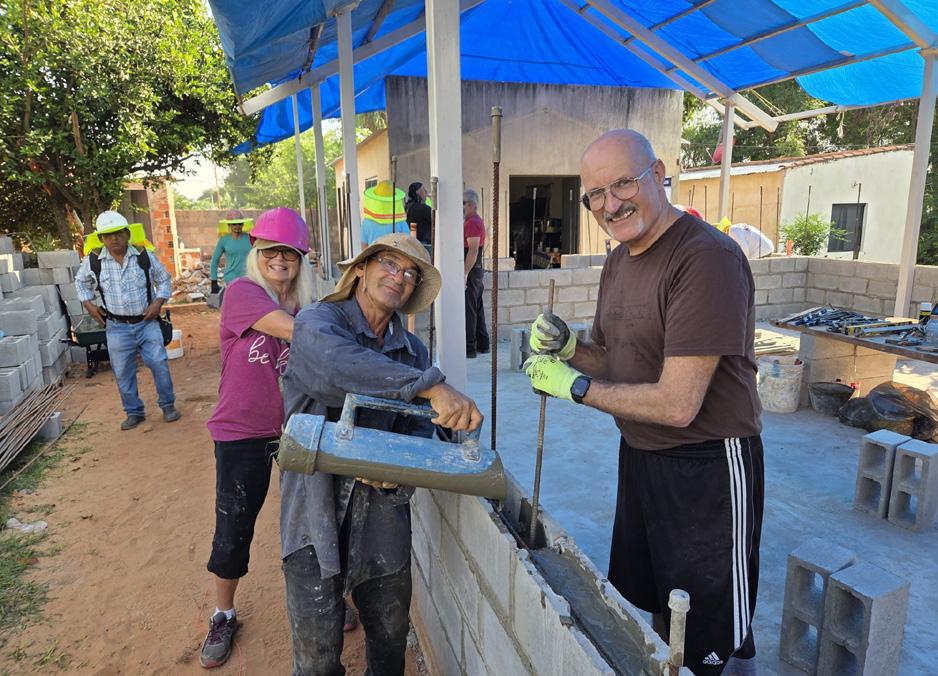
Adedicated group of 30 volunteers from the SAGE Ministry of the Washington Conference recently returned home following a successful and inspiring mission to Paraguay with Maranatha. SAGE, which stands for “Seniors in Action for God with Excellence,” is a ministry that invites individuals ages 50 and up to connect with each other and bless the world around them–including on Maranatha mission trips. This year, the team made a profound impact on the local community of J. Augusto Saldivar, near the capital city of Asunción, with a range of projects that addressed both physical and spiritual needs.
The mission, which spanned nearly ten days, was a testament to the power of coordinated volunteerism. SAGE successfully built a new church structure for the J. Augusto Saldivar Seventh-day Adventist congregation,
providing a permanent place of worship and community gathering. Beyond construction, the mission extended vital healthcare services, seeing more than 800 people for medical screenings and distributing 1,500 pairs of eyeglasses to those in need. The team’s outreach also included educational components, as they conducted nine evening health education lectures and led engaging Vacation Bible School activities for local children.
expansion to roughly 15,000 members. In response to this growth, Maranatha returned again in 2024, and is now nearly finished with 25 churches during this current effort.
Maranatha renovated a church building in Paraguay from 1988 to 1989 and built more church structures and classrooms from 2001 to 2002. This work helped lay the foundation for Paraguay’s Adventist Church
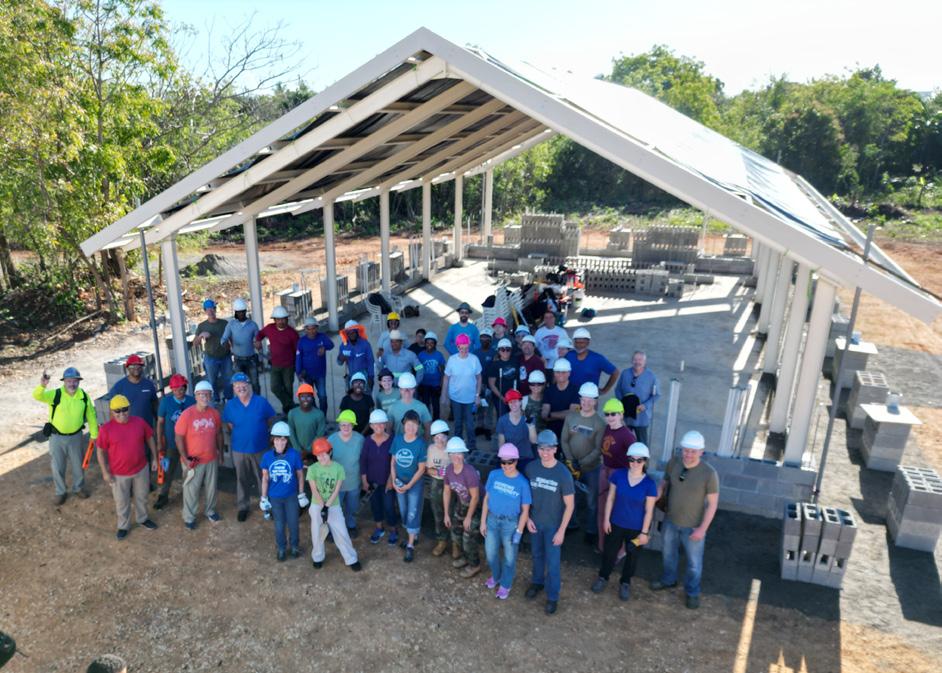
In the educational world, spring break is a time for teachers and students to slow down and take a breather. In the Maranatha world, spring break means it’s time to get busy with service. From mid-February to mid-April, 514 international volunteers did just that on Maranatha projects in the Dominican Republic, Peru, Paraguay, Kenya, and India. Twelve groups constructed new church buildings for congregations in need, and three groups built vital infrastructure at school campuses. On each worksite, Maranatha’s in-country construction crews guided volunteers through the block-laying process and are now adding finishes, like stucco and sidewalks, to each structure.
“The spring is always a popular time
for groups to plan a trip with Maranatha because of that common weeklong break from school,” explained Maranatha’s Vice President of Volunteer Services Lisandro Staut. “Although the work may be strenuous, these trips are an important break from everyday life. They let volunteers step into a new place and move their focus from self to others.”
Since 1996, SAGE has organized nearly 30 mission trips with Maranatha to 17 countries around the world.
Ten of the projects that took place this spring were what Maranatha calls “Group Projects.” These teams included volunteers from the same church, school, or friend group, who relied on Maranatha’s expertise and a
vast network of field staff to organize their trip. The remaining five trips were what Maranatha calls “Open Team Projects.” They were open for anyone to join and brought volunteers together from all over the world.
How a combination of prayer and health ministry is opening doors to the gospel
“In this area, Christianity can face much prejudice, even violence, from those unfamiliar with the faith.”
In a rural village in the Alipurduar district of West Bengal, India, a slow moving river hosts a flurry of activity. On one end, a woman sits on a rock, her feet dangling in the water. Beside her, a colorful mound of clothing shrinks in size, as she takes piece by piece, washes them in the water, and stacks them into a basket. A hundred yards away, a group of women walk through the current with nets in hand and dinner in mind. Water lilies dot the surface, undulating with the ebb and flow of the waves.
On the adjacent road, people stroll on simple bikes that are void of fancy gears or brakes. Others
walk by with piles of wood on their heads, delivering fuel to their homes. In the background there are fields where a lone worker harvests the crop for the day.
It is a peaceful, bucolic setting, far from the energy, technological advancement, and wealth of India’s larger cities. The people here live a simple life, farming and selling their yield or working in the tea fields that dominate the region.
And it is here where Maranatha has been asked to build churches for congregations in need of a new place of worship.
Pastor
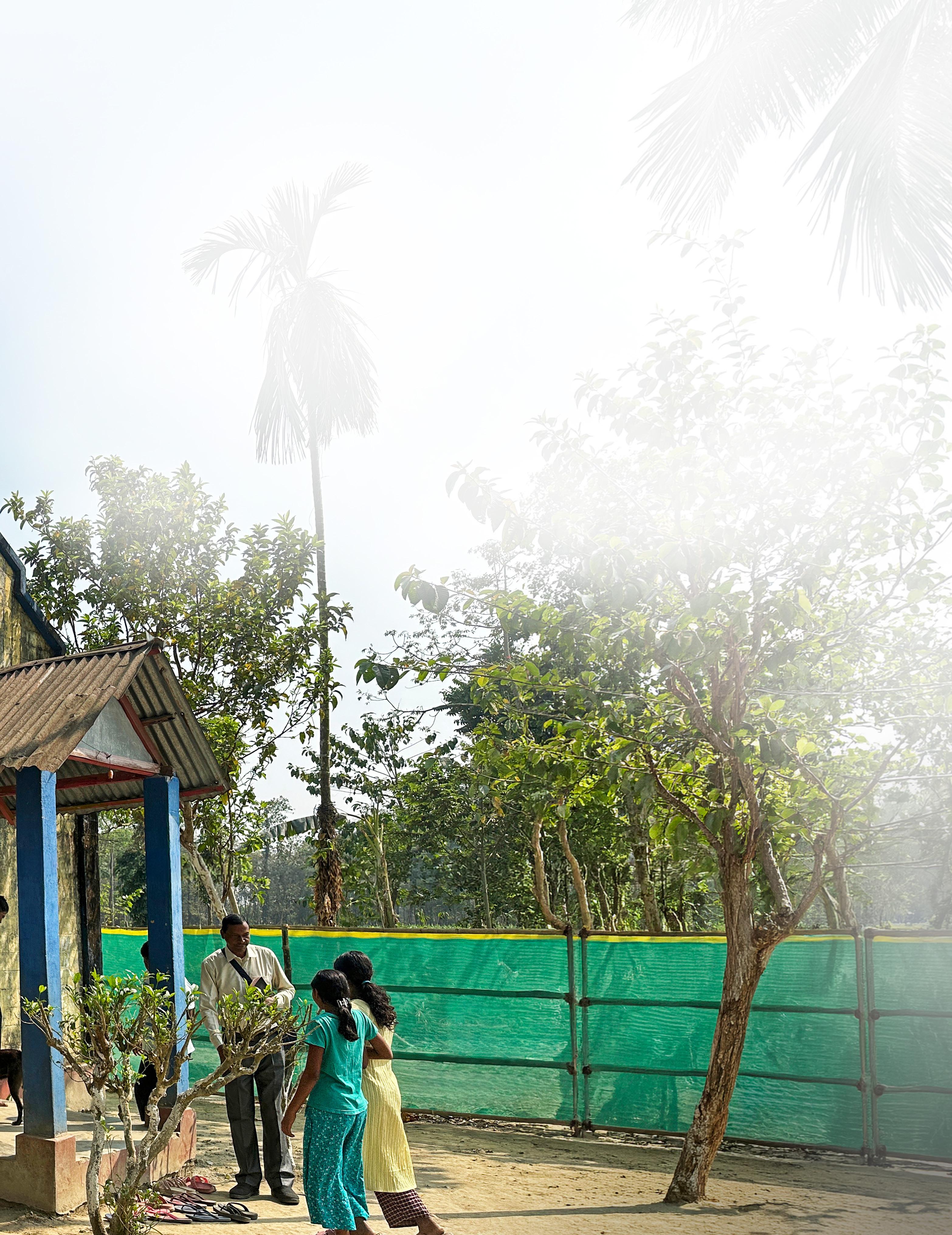
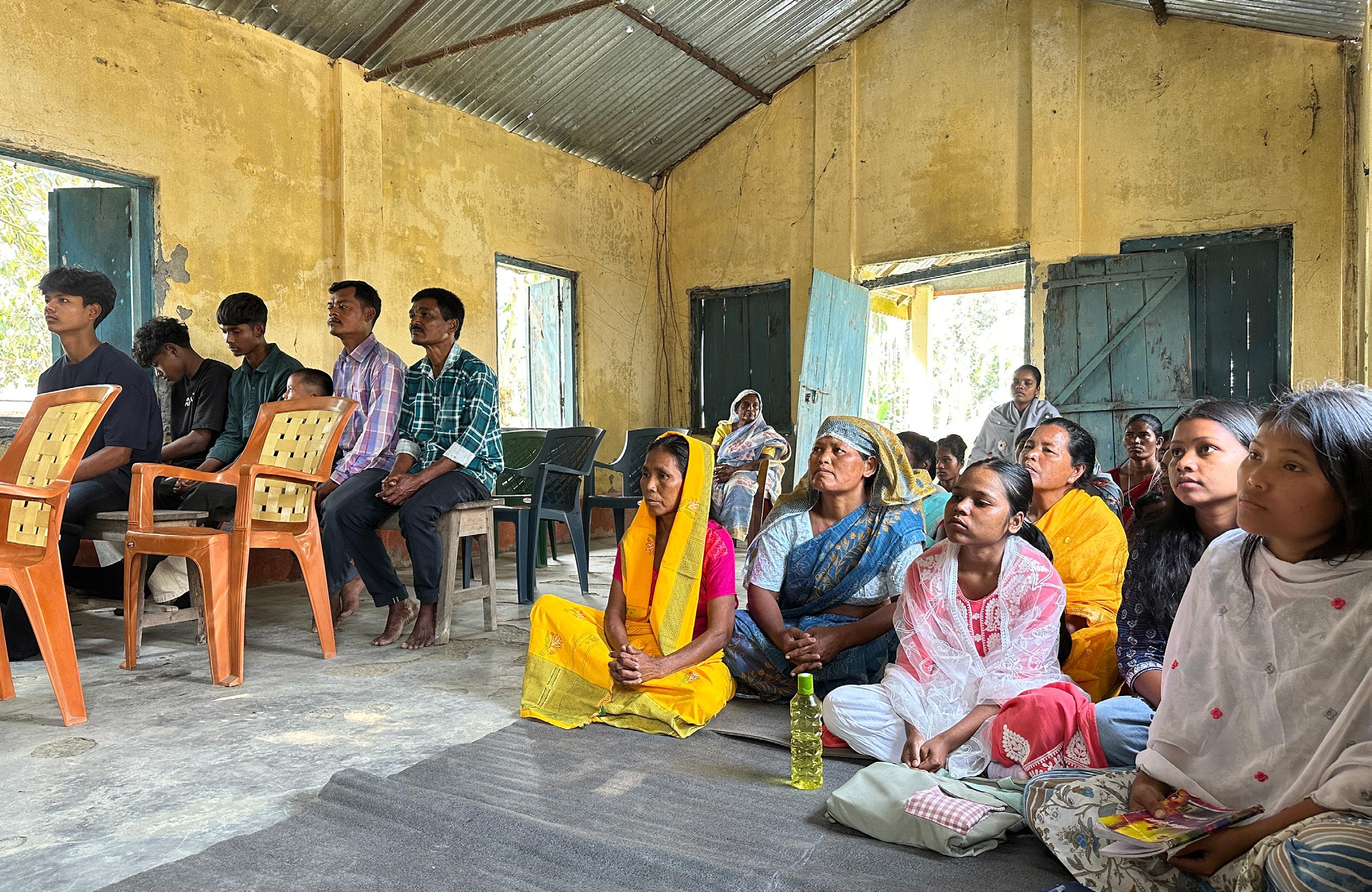
greets people to the Guavar Seventh-day Adventist Church in the northern region of West Bengal. Despite its dismal and dangerous physical condition, more than 160 members attend this church.
“These are people who do not have easy access to healthcare... you can see why healing is so important.”
The Seventh-day Adventist Church in West Bengal is divided into two sections, North and South Bengal. There are more than 11,000 baptized Adventists in North Bengal and 117 congregations. A little over half of the groups have a church in which to worship, and out of those, about half were built by Maranatha in the early 2000s. Since Maranatha’s involvement, the region has experienced rapid growth, and Maranatha has returned twice to build more churches.
Most recently, Maranatha was invited to build in the Alipurduar district, which is in the North section. Situated at the foothills of the Himalayas, the area is known for its tiger reserve, a national park, and tea gardens. There are also extensive tea plantations that employ a good portion of the population. There are multiple churches scattered throughout, but many of them are falling apart due to age, extreme weather, and other environmental conditions. This year, Maranatha is committed to constructing five churches in this area, and in March, a team from Maranatha visited the sites to collect information on their needs.
What was striking about each place was not only the condition of the buildings but the similarity in their stories. And the one element of faith that threaded through them all.
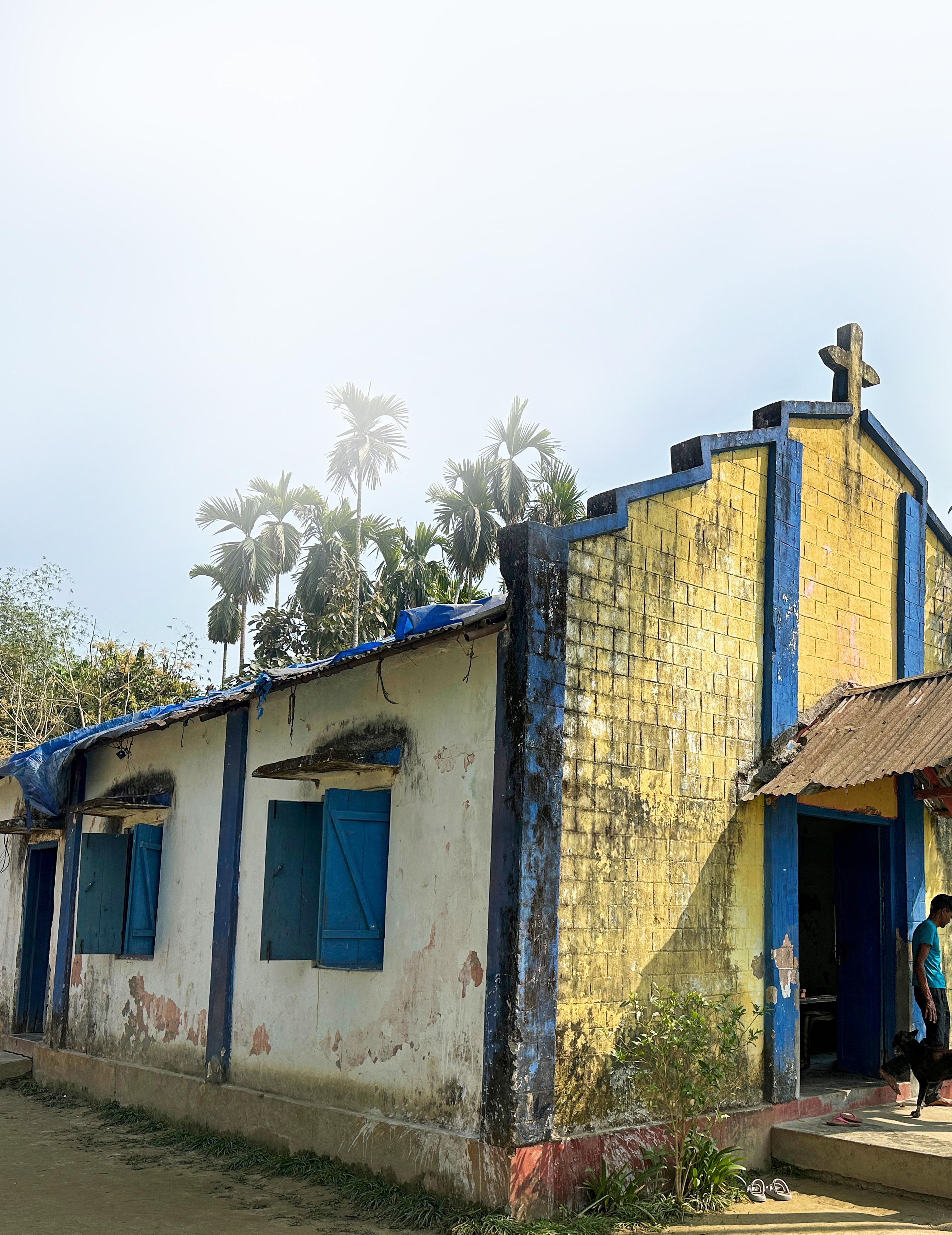
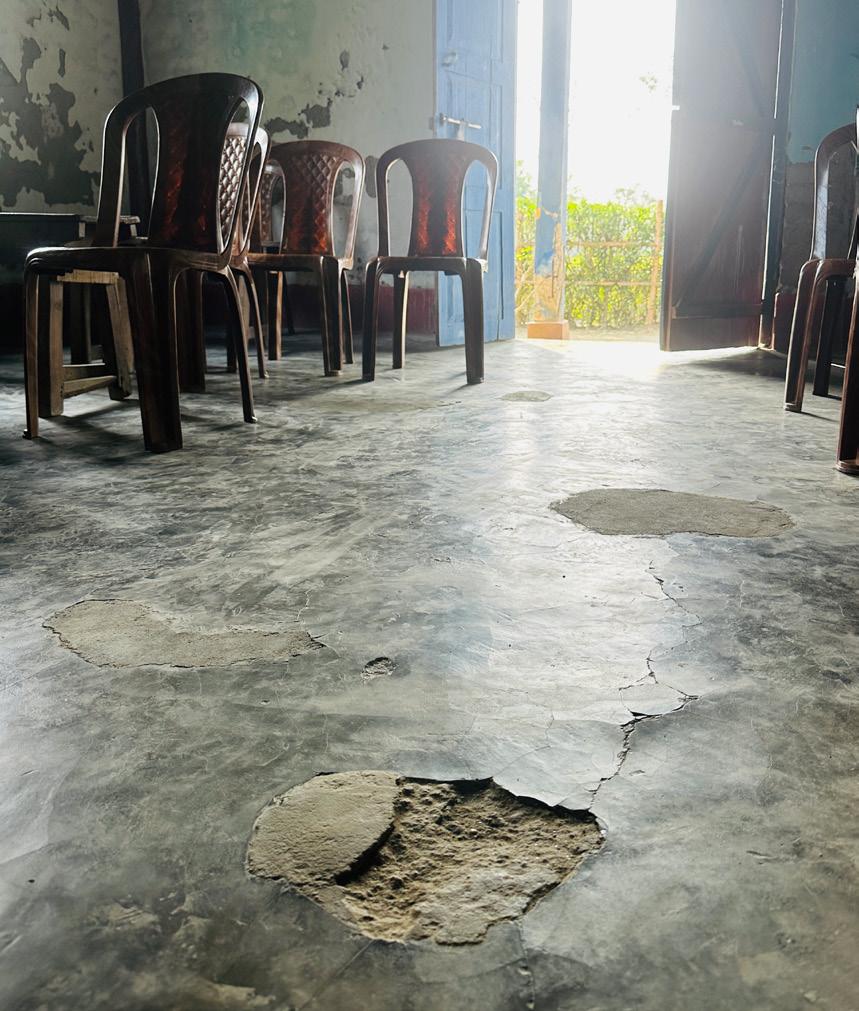
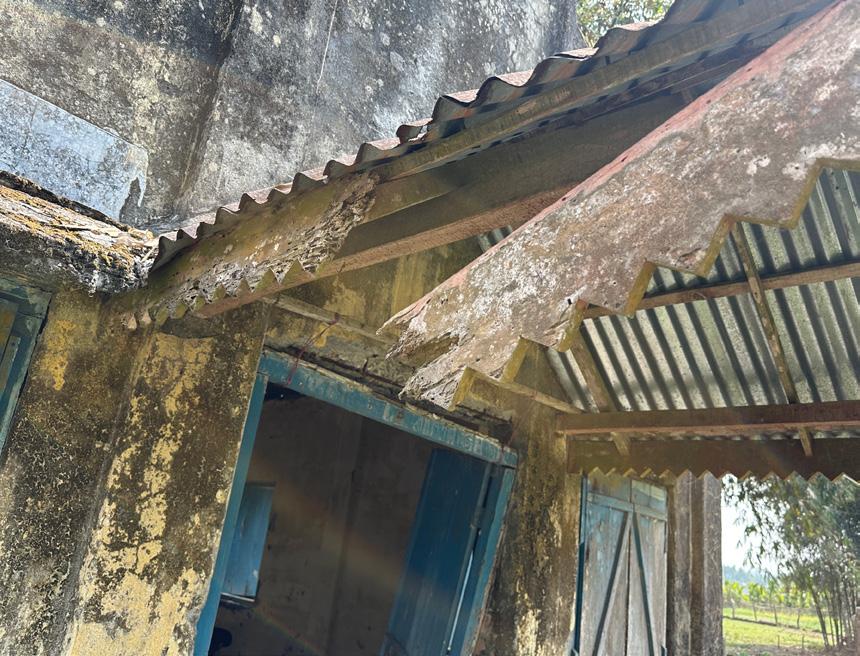
The Guavar Church is one of the five. The building sits across from an expansive tea plantation where many of its members work. Relatively speaking, the building isn’t too old–it was built in 2006. But it is literally crumbling. The once cheery yellow exterior has faded and is speckled with mold. Inside, there is a buckled foundation, crumbling walls, and a rusty roof that turns into a sieve during the rainy season. Termites have taken hold, spitting out piles of dirt and sand on the perimeter of the floor.
Twenty-seven years ago, a man named Soharay Munda fell very ill. Locals
described it as “the devil attacking” him and his family. Soharay sought healing from his priests, witch doctors, gods–anyone who could help. But it was to no avail.
Then, he heard about the Christian God. It was a faith foreign to him, but he was in no place to be picky. He wanted to get better. So he traveled to another town where he had heard of an Adventist Church and asked them to help.
The Adventists prayed with Soharay. Day after day, they prayed with him, and slowly Soharay became well. He was baptized, along with his brother, then started meeting in a family member’s house, which became the founding of the Guavar Church. They went from home to home, offering to pray for the sick, in faith that God would heal them.
In a population of nearly 1.5 billion in India, only about 2.4% are Christians. In some areas, Christianity is a very unfamiliar religion, which can create much tension, prejudice, and even violence between belief systems--especially in rural areas. The situation was arguably worse decades ago, when Christianity was first introduced to Guavar. For these early Adventists, even walking to church could be dangerous, as
people waited in the dark to attack them on the road. Sometimes, Soharay and his family received death threats. When they were building the church, people tried to stop the construction.
But over the years, the community began to see the power of the Munda family’s God. They not only stopped harassing the Adventists, they began seeking them out for advice on health and asking for prayers. Whatever tension they had dissipated with each miracle.
Today, Guavar has 160 faithful members.
Amazingly, this story of friction, healing, then connection is repeated in all of the villages Maranatha visited: Chengmaritari, Guavar, Rajabhatkhawa, Bamchuka, Gadadhar. At each, there are testimonies after testimonies of faith being born from the miracle of prayer and the power of healing.
“These are people who do not have easy access to healthcare. There are no clinics, no hospitals nearby,” says Christos Mathew, construction manager for Maranatha India. “If they get sick and miss a few days of work, their families will suffer. You can see why healing is important.”
It speaks volumes, and perhaps it is loudest in
1 Maranatha churches in India are not only designed beautifully, they are engineered to withstand severe weather and seismic activity.
2 The Guavar Church was constructed in 2006, but already the building is falling apart due to poor materials.
3 Erosion of the floor and walls is common in this area, where there are issues with expansive soil and extreme weather. Maranatha would compensate for those vulnerabilities in the new construction.
4 Every inch of the church is disintegrating, making it a safety hazard for those who worship inside.
places where there is no other option but to rely on faith for your healthcare.
“Only through medical ministry work are we able to present the love of Christ toward others.”
Navin Mahato is a member of the Gadadhar Church. In 2015, a friend invited him to attend a program on health. Back then, Navin had no idea that it was organized by Adventist Christians; had he known, he would have turned down the offer. But he attended and fell in love with the information and the people. His bias against Christians melted away, and he began to read the Bible. “In my life, I had never touched a Bible. [But as I read], I could see the picture of God. It touched my heart…. It was totally different from what I had been taught,” says Navin, who was baptized in 2020.
He began helping with health ministries, going from door to door to check people’s blood pressures, share natural remedies, and talk about health in general. “We visit weekly ... then when we approach them and ask ‘Can we pray for you?’ They’re more than happy to accept it. We have visited more than a few hundred houses in many different religious communities, and nowhere have we been rejected or threatened with anything.”
For Navin, it’s been the key to opening people to the gospel. “Only through medical ministry work are we able to present the love of Christ toward others. And we see in the Bible that when Christ was here, more than preaching, he was involved in healing. So Christ also calls us to do the same thing.”
The final piece to this outreach? A dignified church home.
In places like India, where the barrier to Christianity is especially wide, a beautiful temple can be a powerful symbol of strength and hope. On the flip side, a damaged one can represent weakness in not only the building but in God.
Each of the churches Maranatha has been asked to replace are suffering
from eroding walls, broken roofs, and cracked foundations. The spaces are not only unsightly, they are dangerous; the next big storm could topple the building. All of these factors serve as deterrents to potential and even existing members.
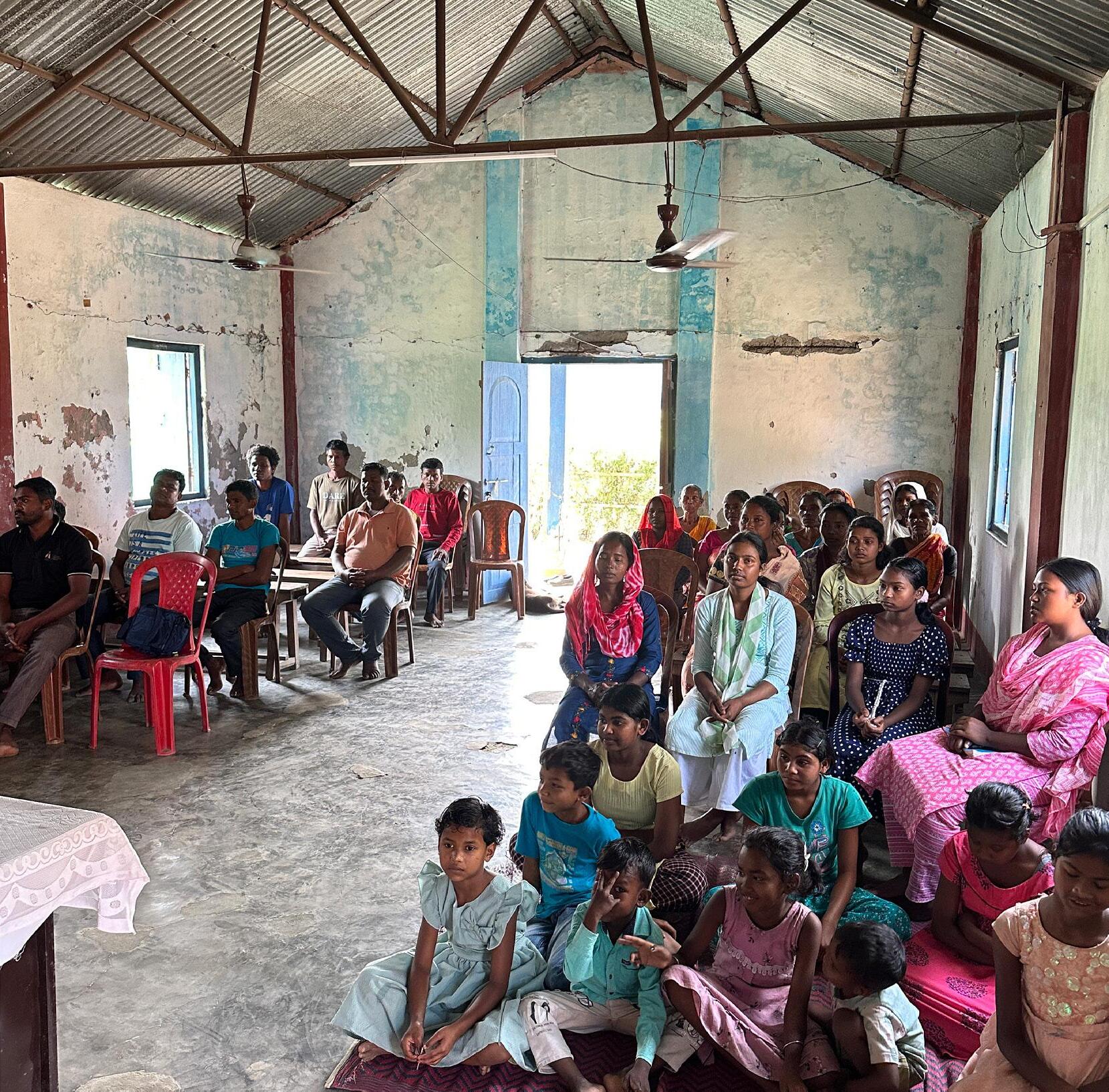
“It is difficult to hold church here,” says Nirmal Minz, pastor of the Rajabhatkhawa Church. “When it rains, water leaks. When the sun shines, the sun and heat are too strong–all this is difficult when trying to have church services … People do not want to come after seeing the church.”
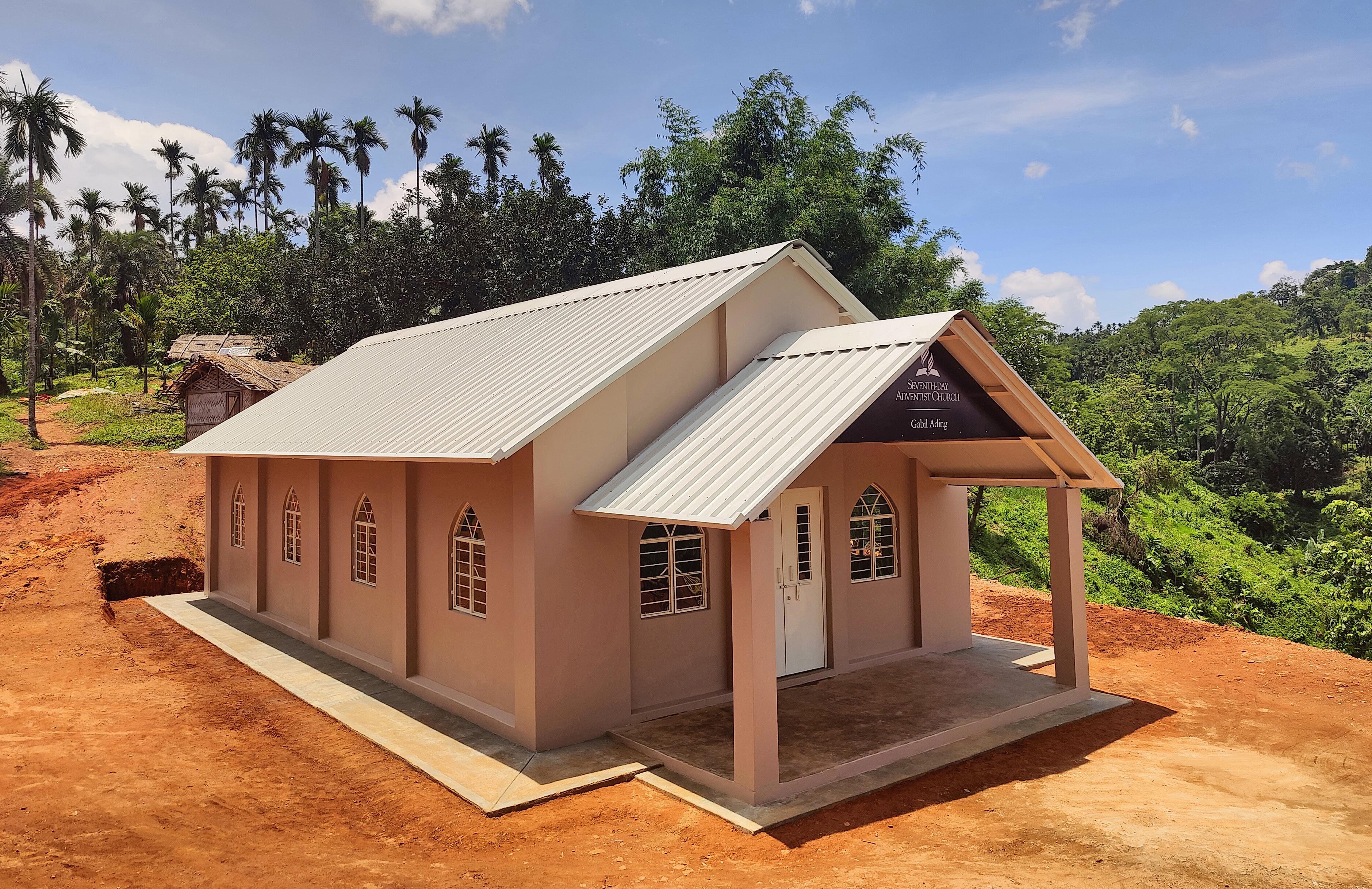
Soon, Maranatha crews will roll into town and knock down what is old and crumbling and replace it with a beautiful, new temple. In India, Maranatha churches are designed with stained-glass-like windows and porticos. Some sites also have bathrooms. In this region, where the environment suffers from seismic activity, cyclones, and expansive soil, the standard India church plan will be adjusted to account for the specific vulnerabilities. Every detail will be considered to provide a dignified, lasting place of worship.
Through powerful health ministry and
miraculous answers to prayer, the members of these Adventist congregations have broken down barriers of prejudice and opened doors to the gospel in the rural Alipurduar district. Maranatha’s commitment to building welcoming, safe, and durable churches is a vital part of this effort. These new places of worship will not only house the congregation but also serve as symbols of strength and hope, empowering the local members to continue their spiritual and healing work within their growing communities.
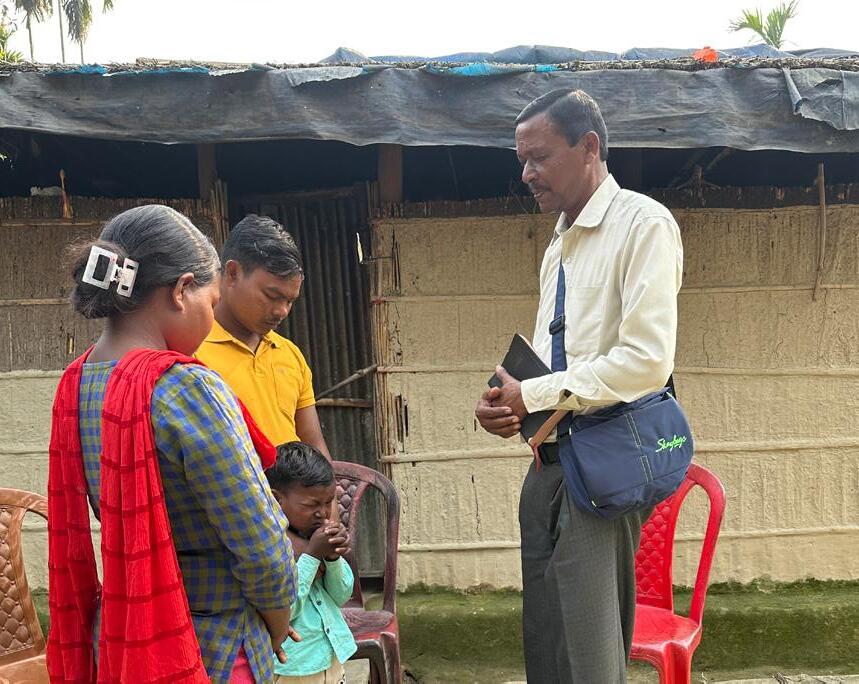
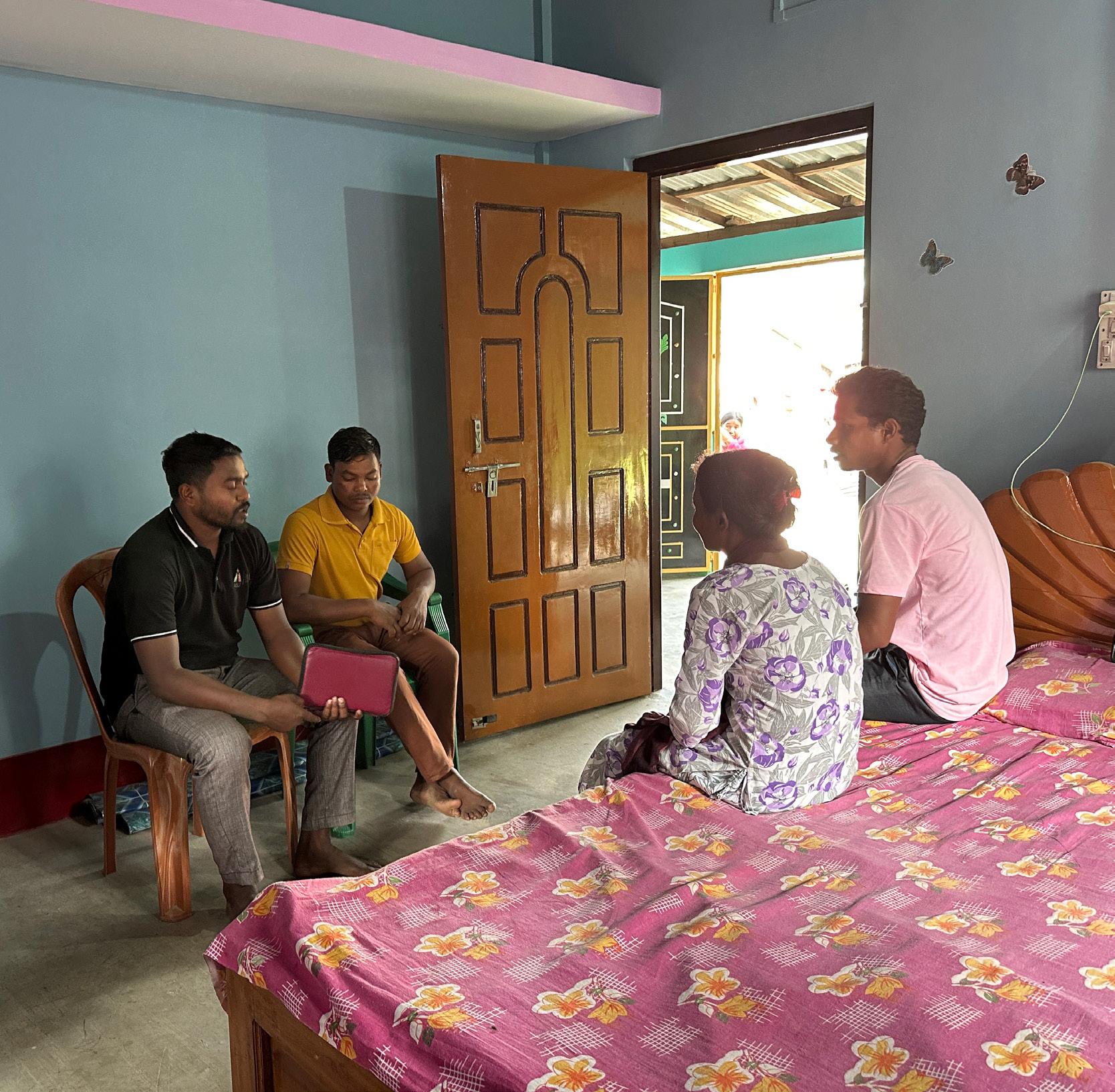
1 Members of the Rajabhatkhawa Church meet in their decrepit building.
2 Navin Mahato visits homes to provide basic healthcare information and check ups as part of his medical outreach ministry.
3 In this area, it is common for non-church members to request visitation and prayer from the Adventists whenever they are sick. It has been a powerful way to introduce Christianity to a reluctant community.
4 Guavar church members meet with a woman, who has asked them to come and pray for her to overcome her illness.
By Sidney Needles
“
This is not for me. I can’t do this. I can’t pick up a block–I can’t do any of this!”
Yamile Gonzalez’s mind was a whirlwind, and it took all the focus she could muster to hold back her tears. She glowered at the construction site around her. A hard hat and work gloves were on the packing list, so she packed them. But Yamile had no intention of actually using them.
Her choice to join Maranatha Volunteers International’s Multiple Group Project (MGP) in the Dominican Republic this March was a surprise to Yamile’s family. “I think out of my three siblings, my parents thought I was probably the last one that would’ve wanted to come on a mission trip,” says Yamile. “They’re always telling me, ‘Oh, you’re the most delicate out of the three. We don’t see you doing all of that.’”
“I felt alone. It was very confusing for me. I didn’t know what to do.”
Her parents were right to some extent, because Yamile planned to limit her service to the least strenuous options. MGP included opportunities for volunteers to help construct a new church for the Eben-Ezer II congregation, lead Vacation Bible School (VBS) programs at two schools, and operate a medical clinic. “When I came I said, ‘I’m only doing VBS. I don’t want to do construction. I don’t want my clothes to get dirty. I don’t want my hair to be like, all frizzy and all of that.’ My plan was to do VBS and the medical clinic,” Yamile explains. These options weren’t only appealing because they didn’t involve dust or
heavy lifting—Yamile’s background prepared her to excel at them.
She was born in Waco, Texas, but spent most of her childhood in Venezuela and Peru. By the time Yamile finished middle school, her family had moved five times for her dad’s job as a pastor. When she found out that they would move yet again to New Jersey, right before Yamile started high school, she was shocked and staunchly opposed. “It didn’t even cross my mind that I was gonna end up in the United States. Actually, I didn’t want to go … I was like, ‘No, no, no. I’m not going. I’m not going to go. You can go–I’ll stay here with Grandma,’” Yamile recalls. “I guess that’s the hardest part of being a pastor’s kid. But at the end of the day, I look at all the friends that I have around the world and, well, I guess that’s the amazing part.”
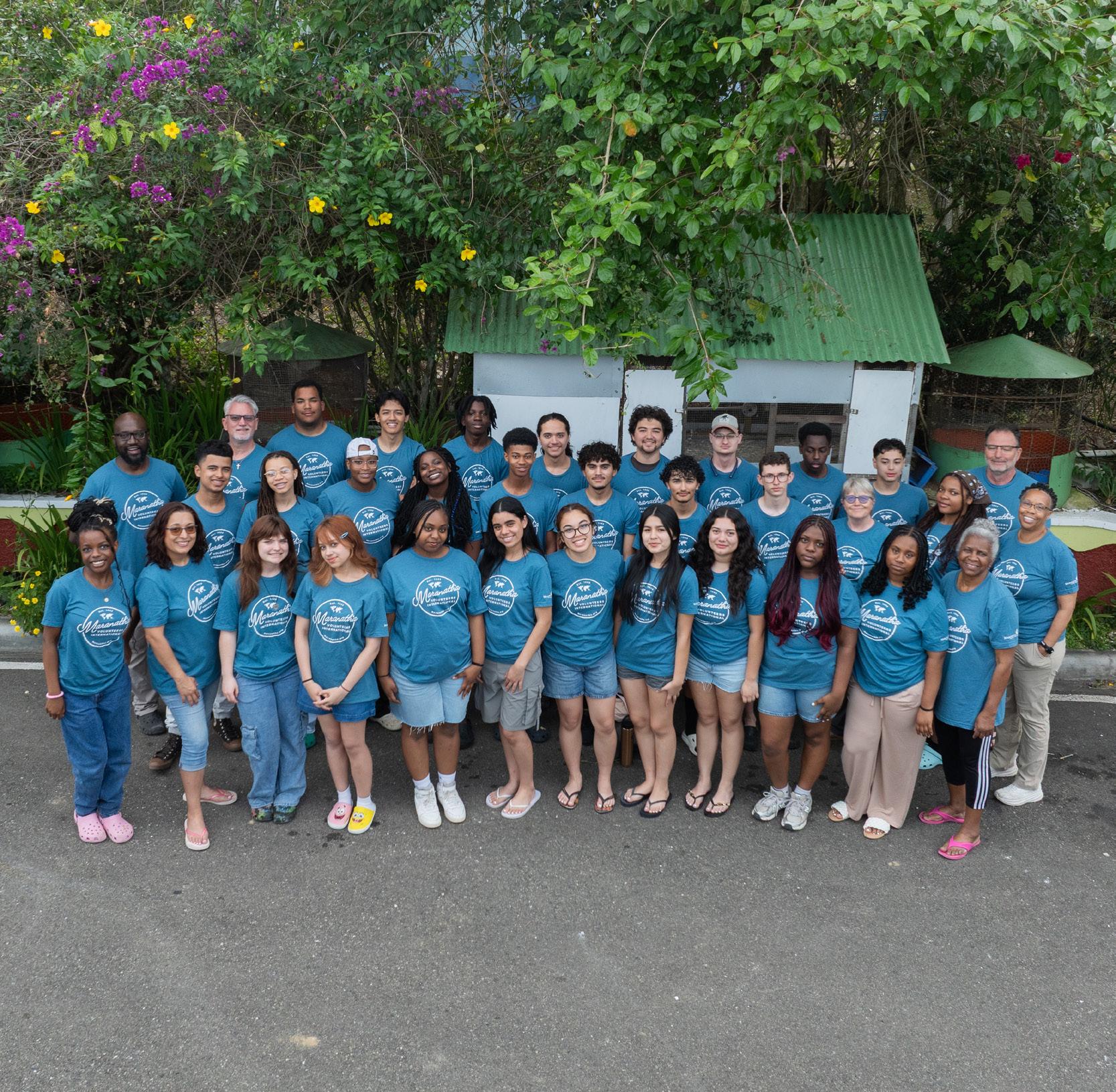
Repeatedly uprooting her life taught Yamile valuable interpersonal skills, which she applied to MGP’s unique social dynamic. Maranatha created this annual mission trip for small groups to join forces. This year’s installment included Yamile and 18 other volunteers from Lake Nelson Adventist Academy in New Jersey, 13 from TriCity Christian Academy in North Carolina, and two individuals who joined solo. While exploring a place so far from home, most volunteers felt the natural urge to stick close to the people they came with. Yamile felt it too, but tapped into her years of practice making new friends. “I’ve been the new kid at a new school for about probably nine or eight times because of my dad’s job,” she explains. “I feel like all of those new experiences
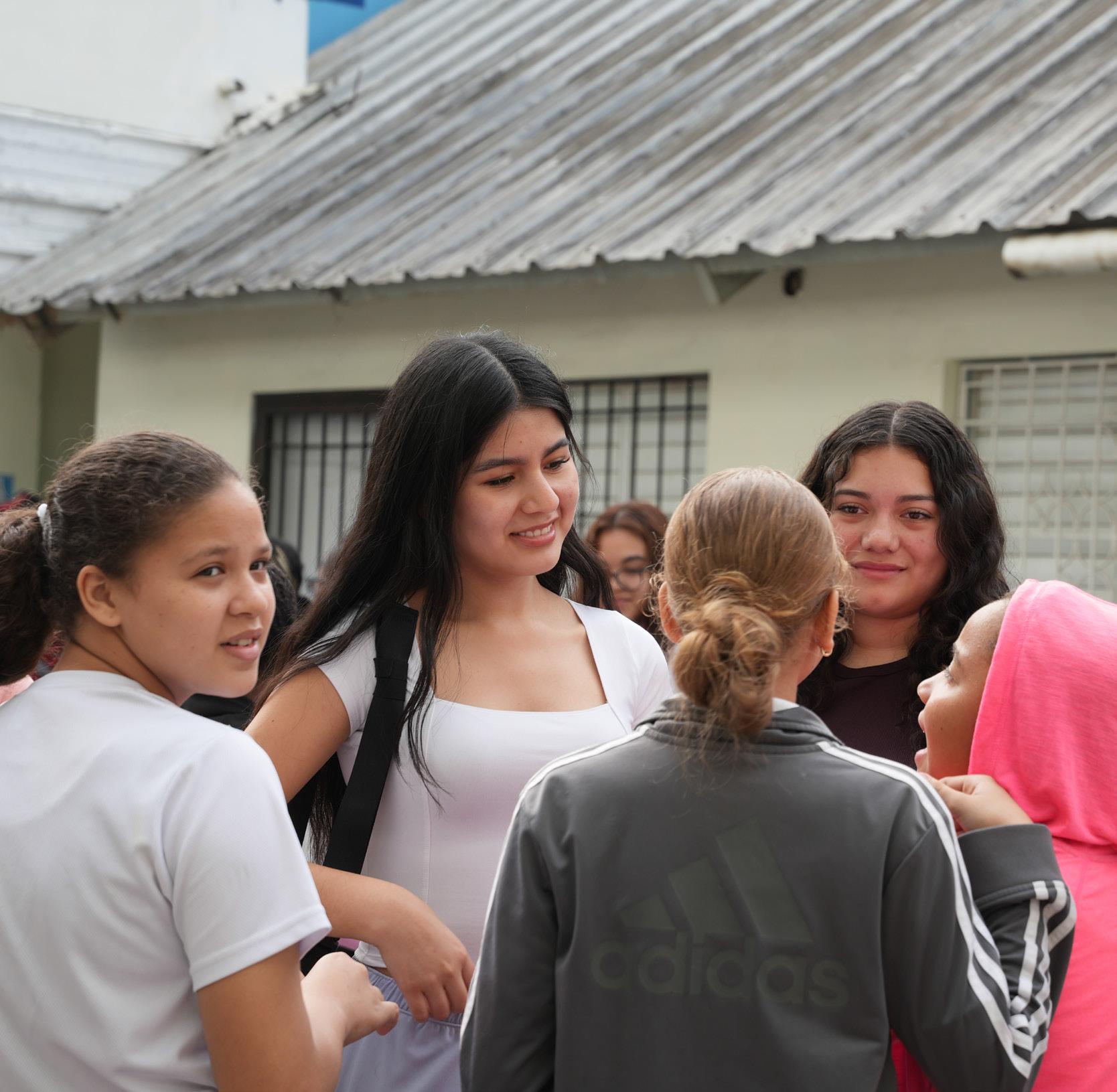
that I had growing up are what helped me to be able to socialize more with the kids here.”
Her friendliness and fluency in English and Spanish, meant Yamile could connect with students at VBS and patients at medical clinics. And construction work? That just wasn’t on her radar–until the first workday that is. “The first day [project leaders] were like, ‘So everybody goes to construction–only a few people go to VBS.’ And I was stuck right there in construction,” recalls Yamile.
Her first day on the jobsite unfolded as one might expect. “It was a failure the first time. I kept on laying the mixture on the block. It kept on falling off. I was getting frustrated. And then, when they told us to move the blocks, I was like, ‘There’s no way I’m going to do this. This is so heavy!’”
It would’ve been easy for someone to watch Yamile’s construction site struggle and make a quick assumption: she was a teen, unaccustomed to manual labor, and annoyed by the inconvenience. This was certainly a
piece of Yamile’s story, but her true pain wasn’t from sore muscles. Her restrained tears weren’t because of the dirt on her clothes. Yamile’s heartache was much deeper.
“The second day I got here, I received the news that my grandma passed away,” she explains. “I received a text from my brother Friday morning when we were about to leave for the first day of construction.”
Yamile grew close to her grandma while living near her as a child in Peru and missed her very much while living on two different continents. But now, Yamile missed her more than ever. She held back tears for the entire day, awkwardly attempting construction work while masking her sorrow. “I felt alone,” Yamile says. “It was very confusing for me. I’m like, ‘What do I do?’ I didn’t know what to do. I didn’t want to cry in front of everyone because I’m like, ‘No, that’s embarrassing.’”
By the next evening, Yamile couldn’t hold her emotions in any longer. “It was on Saturday night [when] they were having the memorial
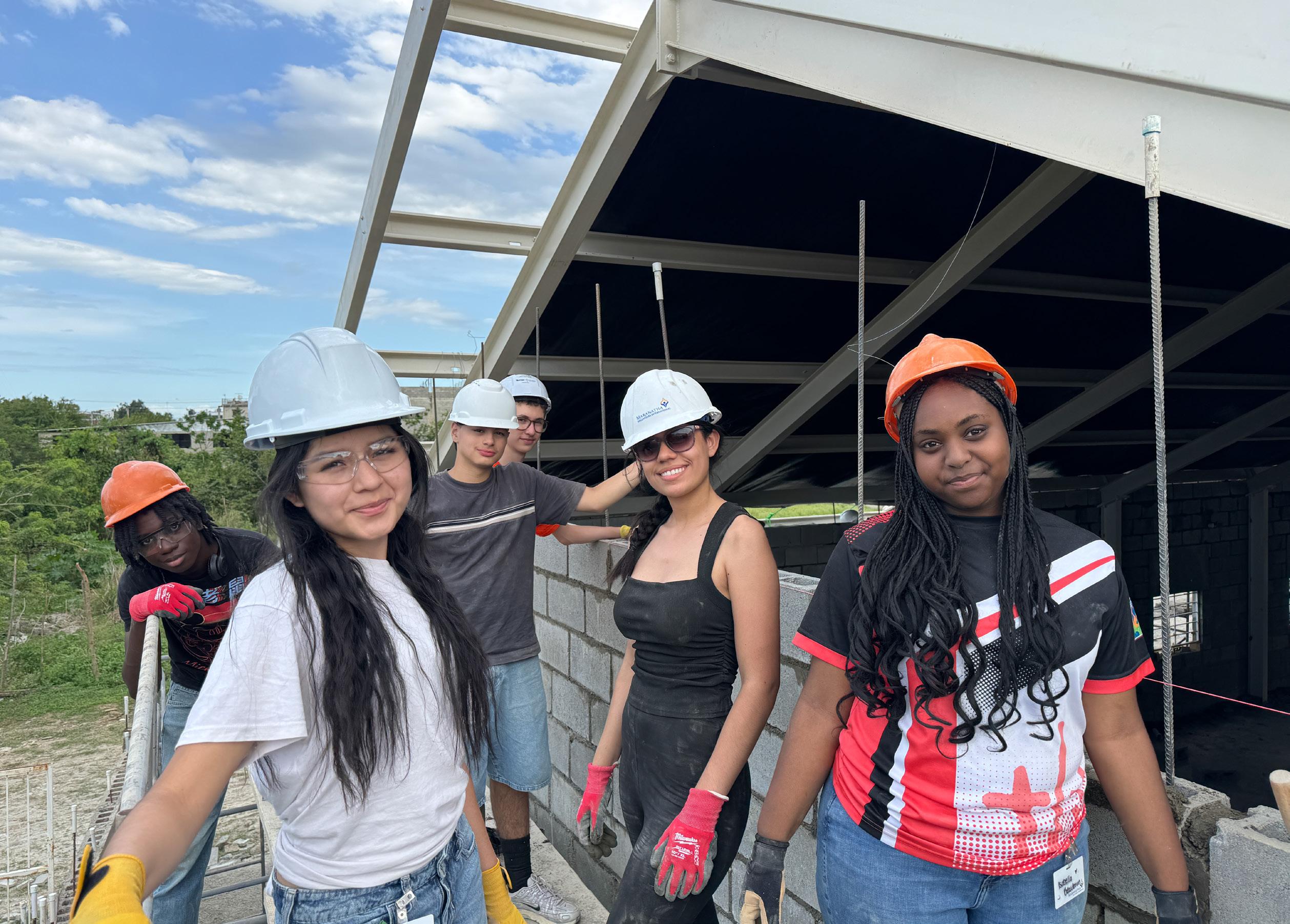
TEAMWORK: Yamile (second from left) and friends make good block-laying progress on the last workday of the project.
PHOTO BY SIDNEY NEEDLES
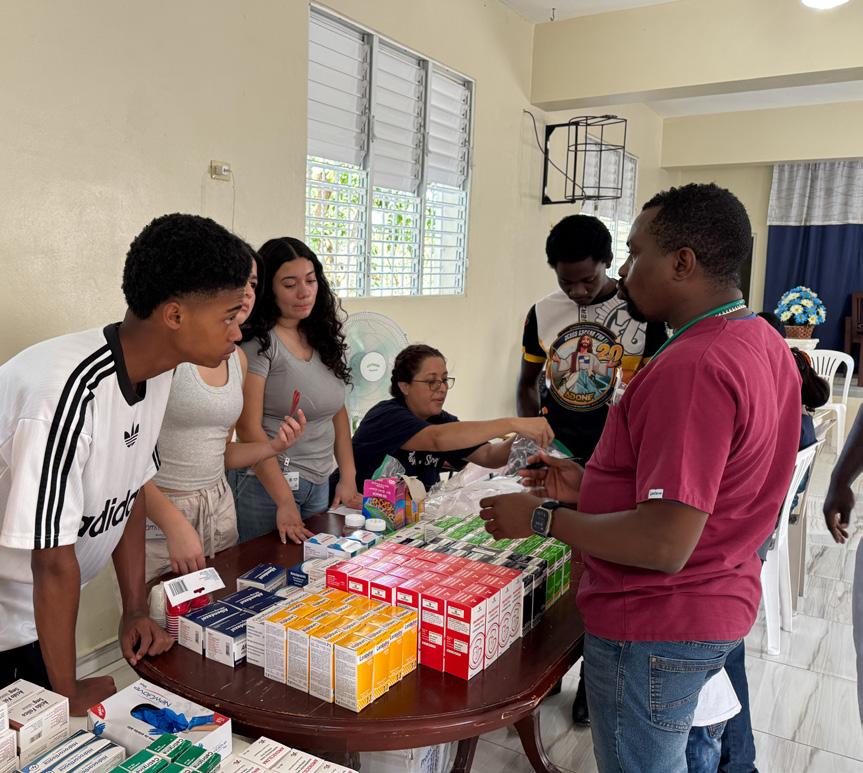
for my grandma,” she recalls. “I had to watch it through Facebook because we had asked one of my aunts to livestream it so we could watch. And I just saw all my family there–all my cousins, my aunts, my uncles–and that’s when I started crying. I remember I was sitting by the pool with my phone, fighting with the Wi-Fi connection because it was going on and off.”
“I felt the warmth of the people around me; I just felt a sense of support.”
For the next few days, Yamile found some comfort in the fact that her plan was back on track. She taught little kids about Jesus during VBS and helped pass out medications at the medical clinic. “When we would come back to the construction site for lunch, I would see everybody so sweaty and so, like, dusty. And I was like, ‘Oh, I’m so happy I’m not doing that!’” But every positive feeling, whether fulfillment from service or relief from avoiding manual labor, was overshadowed by Yamile’s cloud of grief. It felt heavier than the cinderblocks she couldn’t lift and seemed to follow her everywhere. How could she manage this weight by herself? Thankfully, Yamile didn’t have to.
At the end of each workday, volunteers gathered on their hotel’s veranda for worship. One night, as string lights cast an orange glow on chattering faces and freshly-showered latecomers filled empty seats, Project Coordinator Loretta Spivey brought order to the chaos with a question, “How has your faith been strengthened on this project?” Yamile listened as friends–old and new–embraced vulnerability to share their testimonies. Their example made her feel safe enough to do the same. With a quiet voice, Yamile told the group about her grandma and the sadness she felt.
“After that, I just felt the warmth of the people that were around me,” she recalls. “I just felt a sense of support. Even if it wasn’t shared through words, I just felt like their presence there was kind of like a warmth for me–to be surrounded by people that I guess understood … what I’m going through.” Yamile’s grief wasn’t gone completely. But with fellow volunteers to lean on, she felt better prepared to face
her sadness. Their support helped her clear a path through her grief to better see the needs of others.
“It’s been really hard for me to be away from my family during times like this,” says Yamile. “But at the same time, I thank God [that] this happened while I’m here, because I feel that while I’m on this mission trip, it’s [all] about forgetting the needs that I have and seeing what other people are going through … so I think that He gave me the peace that I needed during this time–that I didn’t know I could have.”
On one of the last days of the project, Yamile armed herself with this revelation and returned to face her old nemesis: construction work. “I remember that whole night I was thinking about it. I was like, ‘Ugh, I don’t think I can do this.’ And especially in the morning, I was like, ‘Ugh, no. I don’t think I can do this,’” recounts Yamile. “But I was able to do it. [We] finished a whole line of the brick. I was even able to pick up the bricks … and that’s when I started getting better at it. I was able to lay the blocks better, you know, straight. And it wasn’t as bad as I thought it was gonna be … it was actually very fun being there with all of the other
6
kids from the project. And yeah, it was just a fun experience.”
“I have two other younger siblings, and they usually tease me about how delicate I am. The two of them, they’re like, ‘You never do any hard work.’ And now I can prove them wrong. Look! I’m literally building a church! … I thought I couldn’t do it, but I’m proving myself wrong.”
A Multiple Group Project (MGP) invites groups of 15 people or less to join forces to create a larger team. Maranatha will provide a seasoned leader to oversee the larger team, but you’ll also be able to maintain the intimacy of your small group. This project is perfect for smaller schools, churches, work groups, families, and other entities.
The Multiple Group Project is typically in March, during spring break.
SOFT SKILLS:
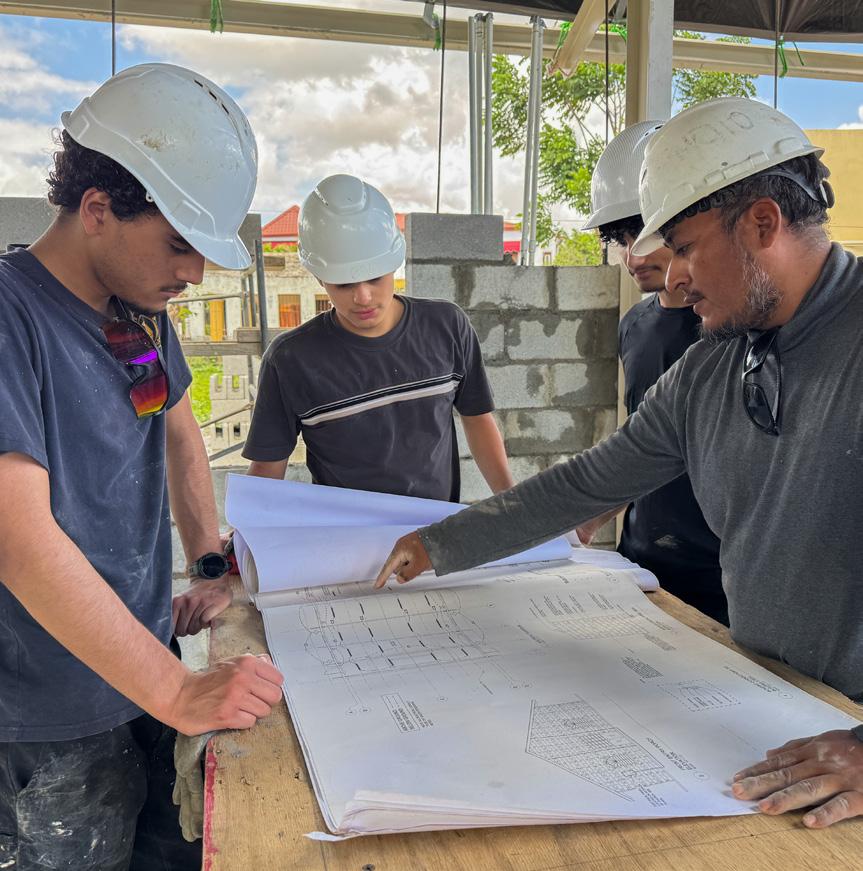
1 Maranatha’s incountry construction crew members go over blueprints with curious volunteers.
2 Patients receive basic medications at the medical clinic’s pharmacy station.
3 Yamile puts her Spanish to use, making friends with VBS kids.
4 Two schools and two solo volunteers blended well into one cohesive team.
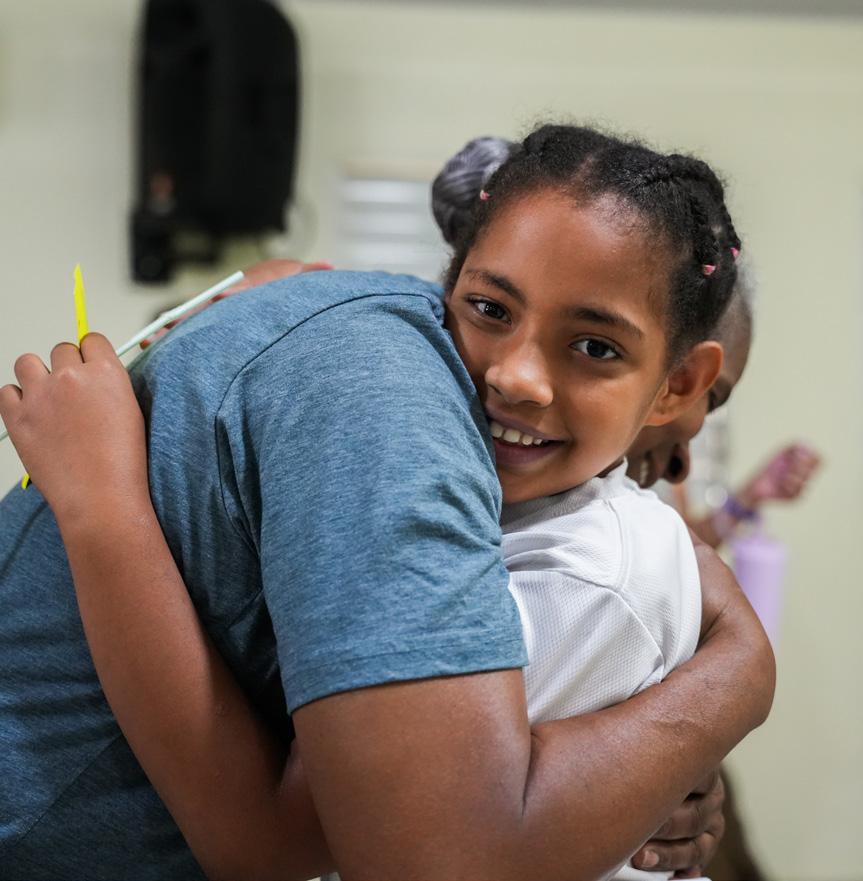
5 They also formed strong bonds with new friends from the Dominican Republic.
6 Volunteers’ construction efforts resulted in a new church building for a group of Haitian immigrants.
The simple interaction that changed a man’s life, and the Maranatha building that will transform his church in the Dominican Republic.
By Sidney Needles
“They went out of their way to make sure I was comfortable ... it was the way I was treated that truly made an impression on me.”
Life has a penchant for the unpredictable. It dresses up pivotal moments in everyday clothes, sending them off to meet us in ordinary places. When 12-year-old Nestor Sanchez set out on a quest for a new shirt, he couldn’t possibly have recognized this errand for what it really was: the on-ramp to the rest of his life.
An evangelistic campaign was underway in Nestor’s hometown of Azua on the southern coast of the Dominican Republic. It was organized by a religion called “Seventh-day Adventism.” Nestor wasn’t planning to attend, but that quickly changed when he learned about the event’s clothing drive–Nestor needed a new polo.
“They were giving away clothing, and, since I didn’t have a polo shirt or anything like that, I went to see if they would give me one,” recalls Nestor. “They gave me a polo shirt and invited me to attend the campaign that evening. … At that point, at such a young age, I became interested in learning about the Adventist message.”
Which particular tenant sparked young Nestor’s desire to know more? Was it teachings about the Sabbath? The health message? Revelatory prophecy? “What really caught my attention was the fact that they paid attention to a child that they sought to meet his needs and took a genuine interest in him,” explains Nestor, now an adult. “They went out of their way to ensure that I felt comfortable and at ease something that isn’t always common for a 12-year-old boy. So, rather than the message itself, it was the way I was treated that truly made an impression on me.”
Soon after, Nestor began attending the Barias Adventist Church and found a wonderful sense of community there. A woman named Thomasina Ramírez started this congregation with seven members in 1978 and worked tirelessly to grow the group thereafter. Inspired to show others the same kindness that he experienced, Nestor helped Thomasina with her evangelistic efforts.
Six years later, when Nestor was a fixture and leader at the church, he experienced another life-changing introduction. “At that time, before she was an Adventist, my [future] wife was taking Bible studies with that same sister. So, that is where I met her, and I felt inspired to give her Bible studies myself.”
“When I saw him, I liked him,” Nestor’s wife, Bianny de Leon, recalls of their first meeting. “I liked the way he preached, and he caught my attention.”
“Naturally, the interaction that followed our study sessions blossomed into a friendship between the two of us and, eventually, we decided to start dating,” says Nestor. “Even while we were dating, however, she hadn’t yet been baptized. She would visit
the church, but she wasn’t ready to make the decision to follow Christ. So, a moment arrived when I had to make a choice … because I simply couldn’t remain with her if she wasn’t part of the church community.”
Nestor was confident in his feelings for Bianny. He knew that he wanted to spend his life with her, but he also knew that their relationship would only work if she shared his conviction. Nestor decided to give Bianny a letter, explaining his predicament.
“The moment that I read the letter I said, ‘I have to get baptized,’” Bianny recalls. “I truly feel that the Lord called me, and I feel very good serving Him.”
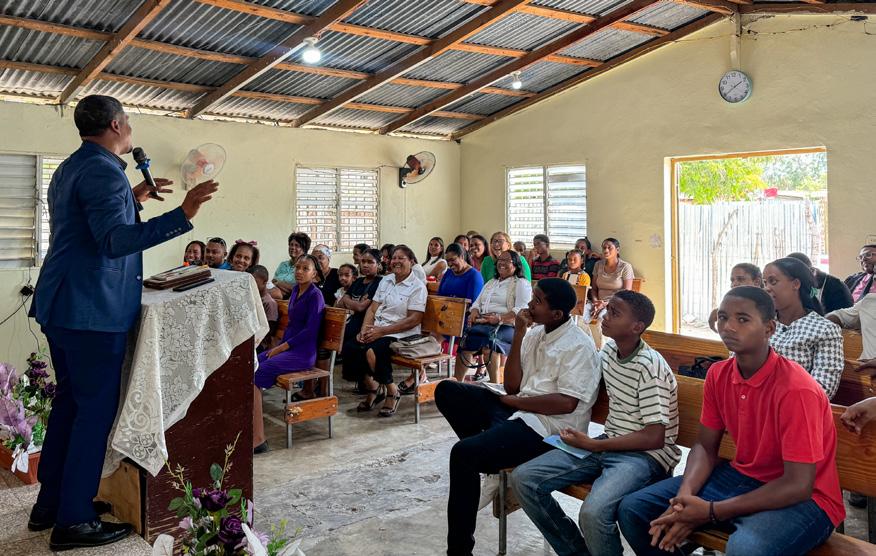
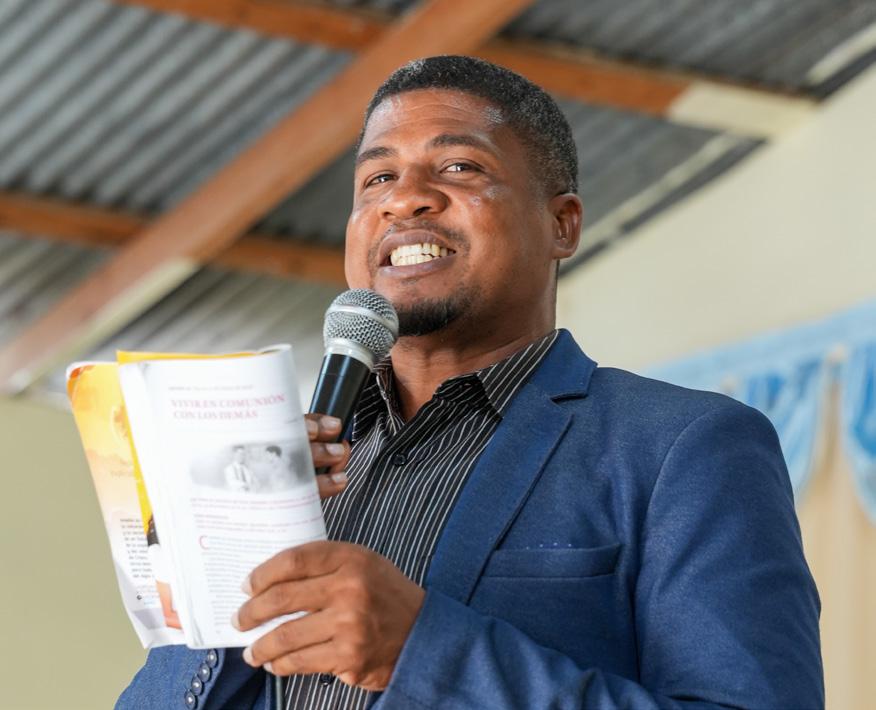
Today, Nestor and Bianny are happily married and attend the Barias Church with their two children. Sadly, Thomasina has passed away, but Nestor continues the evangelistic work she started. In addition to his job as a Bible teacher at the Adventist school in Azua, Nestor leads Bible studies, helps guide Sabbath School discussions at the Barias Church, and sometimes preaches there.
The congregation has now grown to roughly 50 members, thanks to the warmth of members like Nestor and Bianny. Unfortunately, their building isn’t quite so welcoming. Its walls have cracks and water damage, its roof is full of rust, and there’s a serious space issue. “The temple where we currently worship lacks adequate comfort for the congregation. As our numbers have grown, consequently, we no longer fit inside. There is insufficient ventilation, and there is no
space for the children to hold their classes. They are forced to take them outside in the courtyard,” explains Nestor. “Obviously, we need a place where visitors feel comfortable upon arrival and where we, the congregation members, can also feel more at ease.”
Because of these problems, the Adventist Church in the Dominican Republic requested that Maranatha Volunteers International prioritize constructing a new, larger church building for the Barias congregation–and Maranatha accepted. The project is still in the planning phase. It will be at least several months before Barias members can experience their new structure, but the end to their discomfort is in sight.
“Having a new sanctuary would impact not only the lives of the congregants who gather there, but the community in general,” Nestor says. “We truly care deeply for every individual. We always seek to assist others. Therefore, just as we received the message of Christ, that same experience motivates us and fills us with joy to share it with others.”
While 12-year-old Nestor certainly didn’t anticipate the significance of visiting a clothing drive, his life wasn’t changed by chance. It wasn’t a new shirt that caught his attention. It wasn’t airtight theology that touched his heart. It was kind words, thoughtful actions, and sincere care. Now, Nestor and the Barias Church are spreading these things throughout their community because they have come to understand that some pivotal moments aren’t so unpredictable after all.
CLOTHED IN CHRIST:
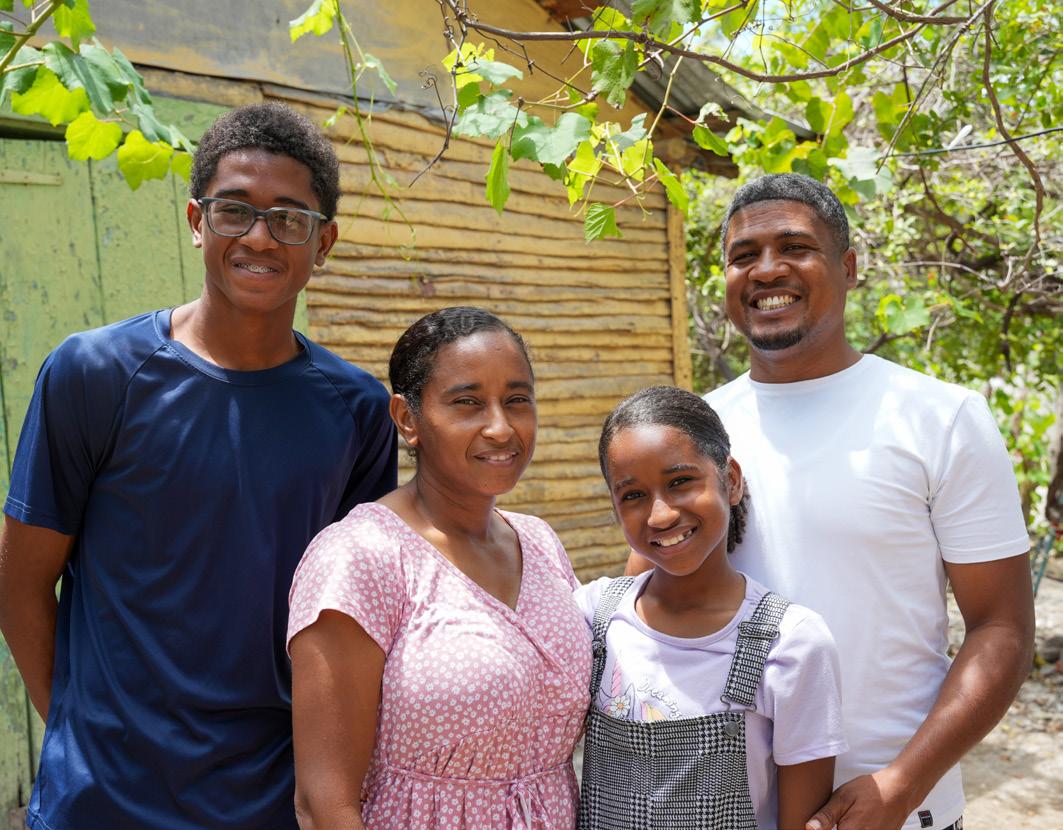
1 Nestor Sanchez with his wife, Bianny, and their two children.
2 Nestor leads Sabbath School inside the old, cramped Barias Church.
3 While first enticed to the church by free clothes, Nestor is now one of the leaders of his congregation.
4 The Barias Church is deteriorating from wear and tear, but the bigger issue is the lack of space for the growing congregation.
Build Barias for $10!
Read how you can sponsor Nestor’s church on page 21.
REFORMA, DOMINICAN REPUBLIC
A look at how your support is making a real difference for communities around the world.
Texas worshippers funded a One-Day Church in Zambia–one children’s offering at a time.
“We’re a small church,” said Julie Smith of the Mount Pleasant Seventh-day Adventist congregation in Northeast Texas. “At the moment, my three kids are the only [children] who are there on any kind of normal basis.”
Mount Pleasant’s children’s offering may have been short on both givers and collectors, but they did have plenty of patience. After slowly collecting for more than a year, they raised more than $7,500–enough to build a One-Day Church for the Mukamba Kaoma congregation in Zambia. “We had actually looked online to see how much the One-Day Church was, and I was like, ‘Oh, we have that much, so we can do that,’” recalled Julie. When asked to give advice to other churches
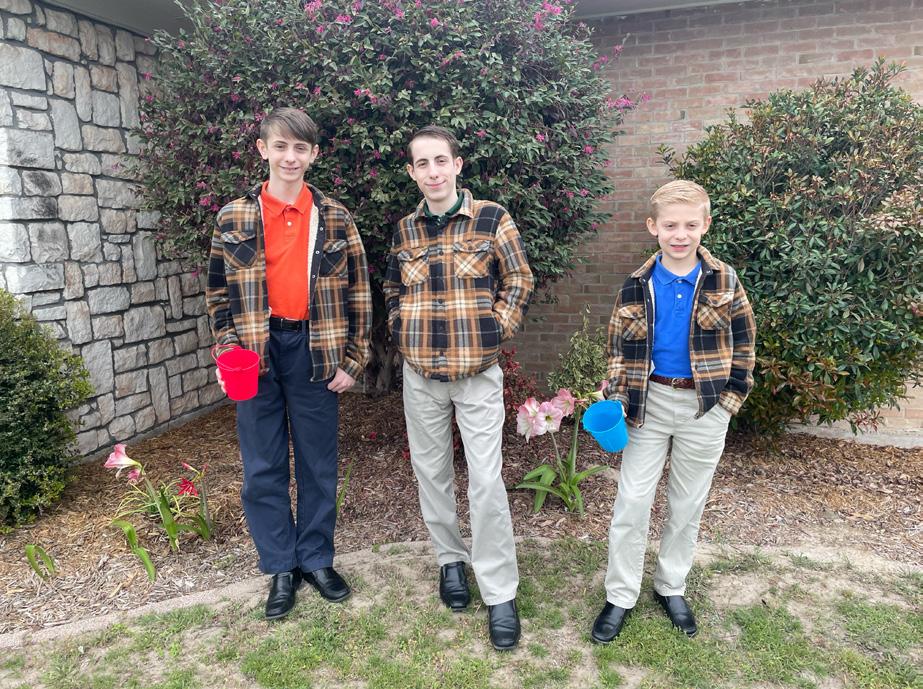
that feel too small to fundraise effectively, Julie said, “Just start it up … You may only get just a little bit each week, but over time it will be more and more and more. And once you get to a certain amount, you can give it to projects around the world and actually change people’s lives.”
“Let the kids pick up the money because it gives them something to do. Even if you’re walking around helping pick it up, you’re helping accomplish a project in the future,” she said. “Even little things can add up over time.”
Are you ready to help solve a 28-year old problem?
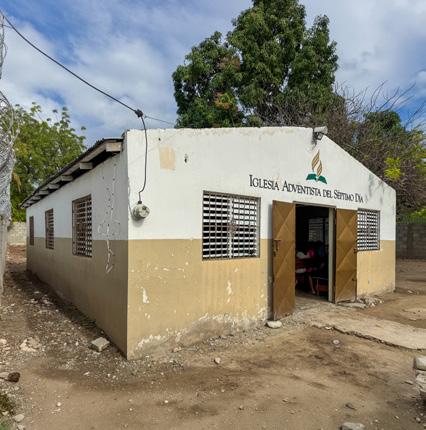
In 1998, a group of Seventh-day Adventists in the town of Azua, in southern Dominican Republic, constructed a simple, small building to serve as a place of worship. The hope? That they would one day replace the structure with something more spacious and dignified. They named it the Barias Seventh-day Adventist Church.
Today, this original structure still stands. But now the concrete is crumbling. The walls are cracked and damaged by water. The roof is rusting. There are gaps between the wall and where the rafters connect, leaving plenty of space for pests to invade.
Beyond the visual aesthetics, the Barias church building is simply too small. The congregation, which started with seven people in the 1970s, is now at 50 members. They can barely fit into the space. When visitors arrive, the crowding is exacerbated, leaving everyone uncomfortably cramped, hot, and frustrated.
The congregation itself does not have the means to build a new church. But the potential for growth is huge.
But what good is growth if there is no place to sustain it?
This is why Maranatha has chosen Barias as the next recipient of The $10 Church. We would like to provide the largest church (capacity for 150) we build in the Dominican Republic. The cost for this church is $250,000. It’s a large sum of money, but with everyone giving a little, we can accomplish a lot.
Barias will be constructed during the 2026 Christmas Family Project. So your dollars will double the impact by not only building a strong, lasting place of worship, but by also providing an opportunity for families to experience the transformative power of service!

Thanks to the generosity of thousands of $10 Church donors, we were able to fully fund the first $10 Church of the year, Calapuja, in Peru. This July, a team of young adults on the Catalyst mission trip will be building this church. Thank you to all who gave! Scan to
Here’s where Maranatha is working this year.
BRAZIL
CUBA
DOMINICAN REPUBLIC
INDIA
KENYA
PARAGUAY
PERU
UNITED STATES
ZAMBIA
CHURCHES
SCHOOLS WATER WELLS CAMPS
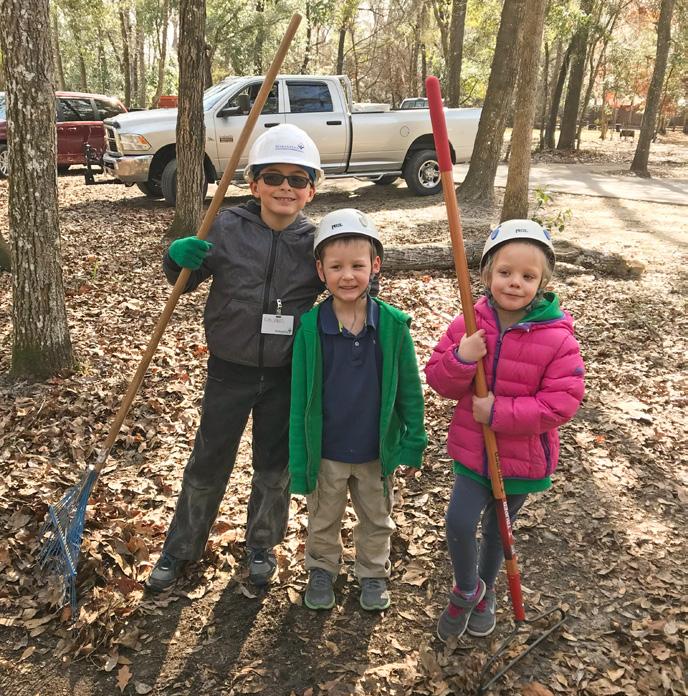
Anyone can join a Maranatha mission trip! Check out our upcoming opportunities here or go to maranatha.org for the most updated list.
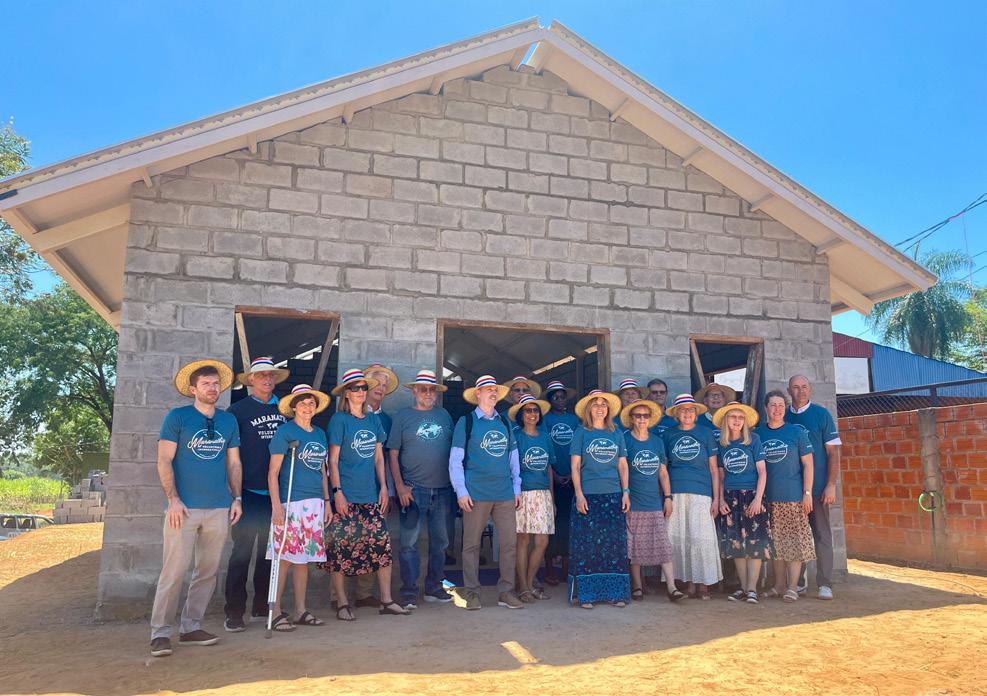
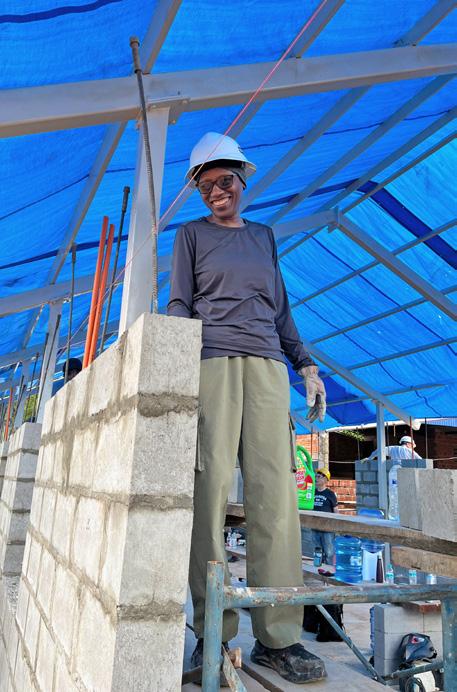
Aug. 6 - 16, 2026 Newbury Park Academy Project CALIFORNIA, USA Ron and Nancy Davis, Luther Findley Roofing
Aug. 10 - 20, 2026 Pacific Union College Project CALIFORNIA, USA Ed Jensen, David Gott Dorm renovations
Sep. 21 - 30, 2026 Camp Lawroweld Project MAINE, USA Lee and Glenda Davidson Kitchen renovation
Oct. 29 - Nov. 10, 2026 Brazil Project BRAZIL Lisandro Staut Church construction
Nov. 12 - 22, 2026 Peru Project PERU Elmer Barbosa Church construction
Dec. 21 - 31, 2026 Family Project DOMINICAN REPUBLIC David and Susan Woods Church construction
Go to maranatha.org to see all the volunteer opportunities being offered, including full projects and mission trips being coordinated by church or school groups.
Thank You FOR SERVING
DOMINICAN REPUBLIC
Southern Adventist University: Vision Trips | Tennessee
Bluebonnet Missions FOUNDations | USA
The following Group Project teams served during the months of April through June.
Fraser Valley Adventist Academy | British Columbia, CANADA
PARAGUAY
Markham Woods SDA Church Team | Florida
A young girl pumps water from the well in front of the Chengmaritari Seventh-day Adventist Church, located in the state of West Bengal. This well, drilled in 2019, is just one of more than 1,000 that Maranatha has drilled since launching the India water program in 2018.
While images of India may not conjure up dry, desolate landscapes, the need for clean water is just as desperate as other places with water scarcity in the world. According
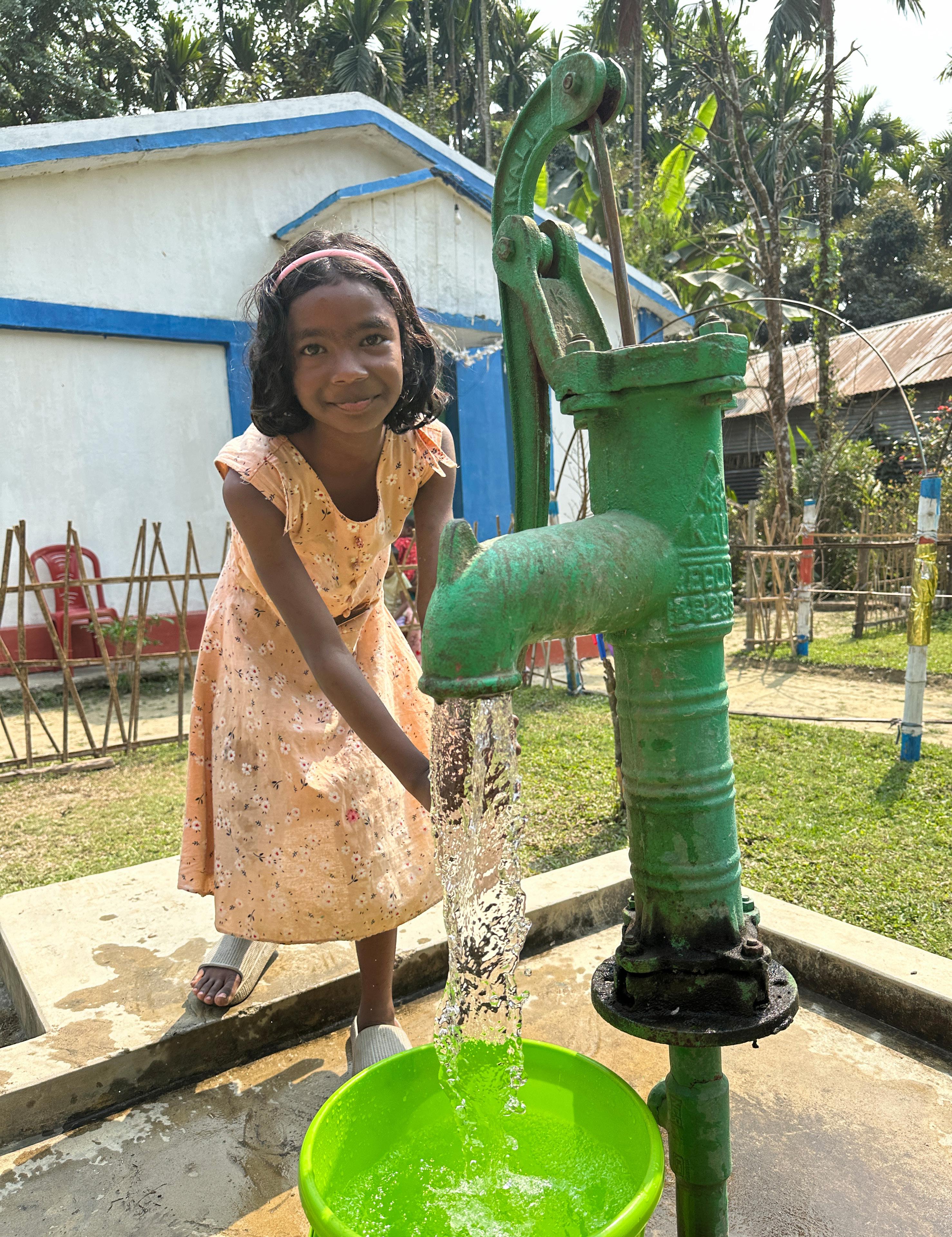
to the World Bank, India has 18% of the world’s population but only 4% of its water resources in 2024. According to water.org, an estimated 342 million people in India do not have access to clean water, and an estimated 21% of communicable diseases in India are linked to contaminated water and the lack of hygiene.
In the Alipurduar district, where Chengmaritari village is located, rainfall is high but there
are challenges with collection due to runoff, porous soil, and declining groundwater. These wells not only give church members a life-saving resource, they also offer opportunities to provide a service to neighbors, as Maranatha wells are intended to serve the community. In regions where suspicion of Christianity is especially high, the resource of water can open doors to connection, trust, and faith.
Photo by Julie Lee
990 Reserve Drive, Suite 100
Roseville, CA 95678
September 19, 2026
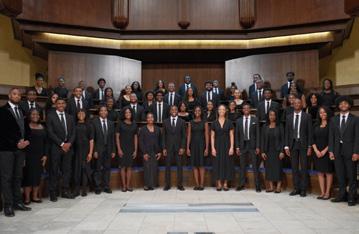
Celebrate the power of service and how you can get involved in the mission of Maranatha, featuring music by Oakwood University’s Aeolians

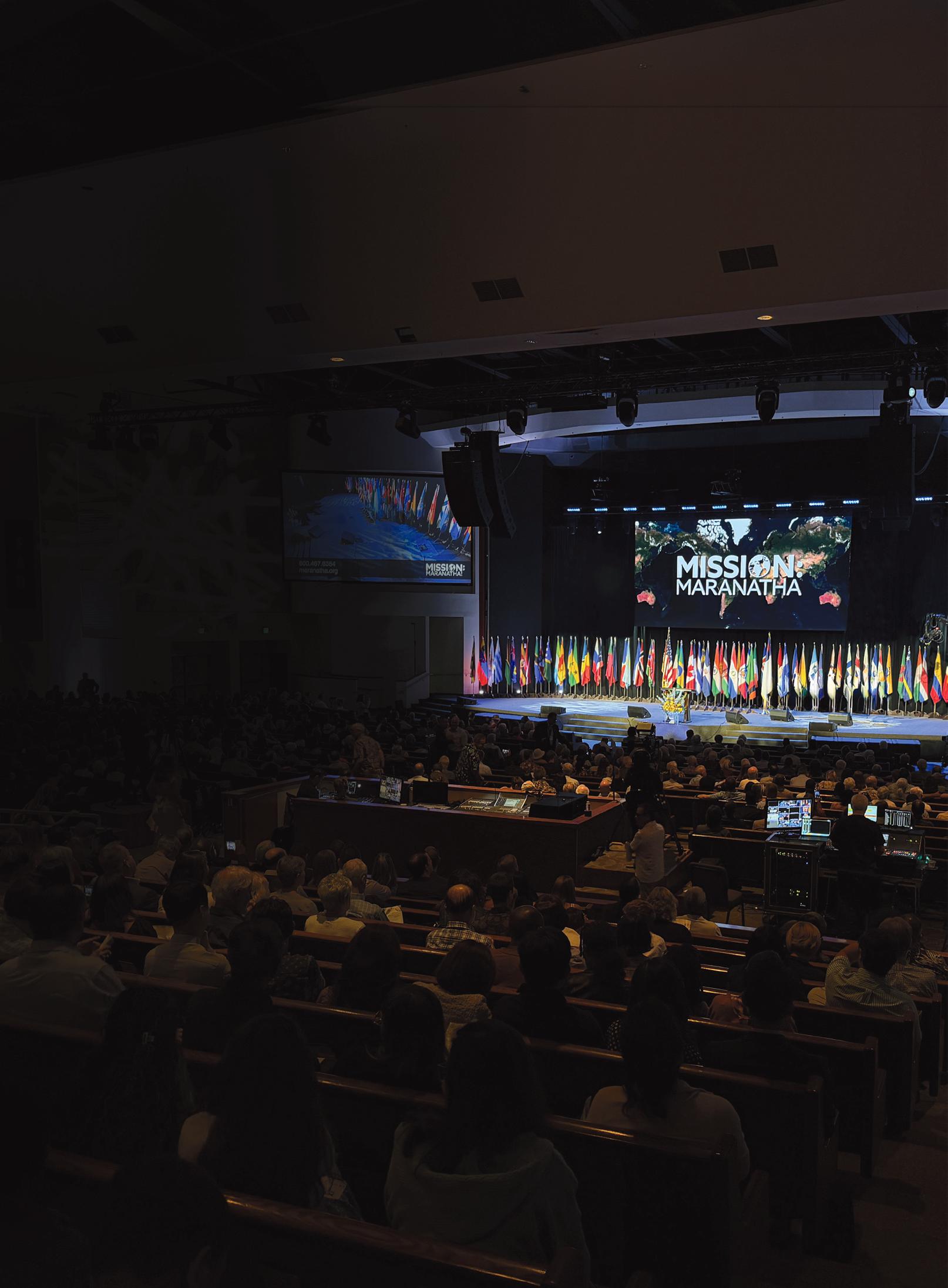
Watch live on Hope Channel, or stream online via The Maranatha Channel app. Broadcast begins at 10 a.m. Scan for more information.
Travel into the mission field and see how God is leading ordinary people to make an extraordinary difference in communities around the world with our television program, "Maranatha Mission Stories."
BROADCAST CHANNELS (All times PT)
3ABN Friday, 8:00 p.m. Saturday, 2:00 p.m.
Hope Channel Saturday, 3:00 p.m.
ON DEMAND
The Maranatha Channel App
Watch current and archived episodes, and other videos on demand. Download for Apple, Android, Amazon Fire TV, and Roku.
watch.maranatha.org
View all episodes online at Maranatha’s video website. Find segments by using our “Search” function.