“Life isn't just about passing on your genes We can leave behind much more than just DNA. Through speech, music, literature and movies...what we've seen, heard, felt...anger, joy and sorrow...these are the things I will pass on. That's what I live for. We need to pass the torch, and let our children read our messy and sad history by its light. We have all the magic of the digital age to do that with.”
– Hideo Kojima
This quote from Metal Gear Solid 2: Sons of Liberty, by the legendary Hideo Kojima, perfectly illustrates the theme of this issue of VOICE: Chiaroscuro: Art That Inspires. ‘Chiaroscuro’ is an Italian term translating to ‘Light-Dark’ used in art to describe the contrast of light and shadows within a composition of work. This bold contrast creates volume, drama, and mood. This issue’s theme is about stepping inside the world of light and shadows, joy and doubt, confusion and clarity, peace and conflict. Art surrounds us, and it undoubtedly inspires us. Every bit of art is a part of history that is passed on to the next generation, a physical remnant of human emotion.
Art is subjective; take, for example, Maurizio Cattelan’s Comedian, what one person may call art, another might call it a banana duct-taped to a wall But it is the difference in what people consider to be art that makes us all unique I may be rather liberal in my classification of what I consider art, as I include not only traditional media such as paintings, sculptures, and photographs, but also literature, poetry, movies, music, and even television. I’d even go so far as to claim anime and video games as a form of art.
In our modern world, where the rise of generative AI is imminent, the line between what is real and AI art becomes blurrier each day I want this issue to unblur that line, highlight the emotions and influence real art has on our lives, the human experience passed through art.
When I first pitched the theme for this issue of the voice, I expected to be editing it whilst travelling throughout Europe. The idea of conducting a VOICE issue on the art that inspires us, while in the countries that birthed some of the world’s greatest works, was almost poetic. However, the world had other plans, and so my flight was cancelled.
Throughout this issue of VOICE, experience what makes us human through art, stories, poetry, and ideas that highlight the human struggle between light and dark, remembering who you are and who you’re becoming.
The student associations always seek volunteers with a ‘here to help’ attitude. Want to be involved?
Lake Macquarie Campus: asapresident@avondale.edu.au
Sydney Campus: ansapresident@avondale.edu.au
Security
Lake Macquarie Campus 24/7 Phone: (02) 4980 2333
Sydney Campus 24/7 Phone (02) 9487 9988
Email: security@acondale.edu.au
Instagram
Avondale University: @avondale_uni
Avondale Student Life: @avondalestudentlife
Avondale University Church: @avondaleunichurch
University Student Ministries: @usm_avondale
Ella Boyd and Andre Hall: @weareellaandre Watson Hall: @wearewatson
Nurses of Avondale: @weareavondalenurses
Avondale Sport: @avondalesport
Avondale Eagles: @avondaleeagles
by EMILY CHESTEr
↓ DARK SIDE
I AM SCARED OF THE DARK SO IT DOESN’T MATTER THAT THE SUN WILL DAWN WARM AND BRIGHT EACH MORNING I KNOW THAT AFTER A WHILE THE LIGHT DISAPPEARS WHICH MEANS THAT EVEN WHEN LIGHT EVENTUALLY FILLS MY ROOM AND MAKES ME FEEL SAFE IT WON’T LAST FOR EVER DARKNESS IS LONG AND COLD AND SCARY I MUST REMEMBER THAT EVEN THOUGH LIGHT IS POWERFUL IT IS ALSO TRUE THAT DARKNESS IS ALL I SEE WHEN THE SUN SETS SO MAYBE IT’S A LIE THAT I CAN SURVIVE THE DARK
↑ LIGHT SIDE
Things to do this month
real story – someone missing, someone taken. As she cite the verses, I realised it was something more profound, deeper. I didn’t understand the names – Churchill, Garibaldi, Guevara, Hitler, Mao – but I understood the feeling. It was unfamiliar. But that line, “I grew whiter and whiter,” hit home. It was the first time I viewed school as a battlefield. In those days, I was a promising student. Teachers looked up to me. Prideful. So, I wore my grades like an armour. Polished, impenetrable, admired. But inside, my world was crumbling, like a careless touch on a perfect sculpture. I studied hard, for the people who believed in me. Every perfect score felt like a transaction: my achievement for their approval. I knew what people expected from me, not knowing who I truly was. The Western philosophers’ names, I could recite them. But I couldn’t put my hands on why they were important. I wondered, “How am I succeeding in a foreign language that wasn’t even mine, a history that I never existed in?” I grew up in Samoa, the “Heart of the Pacific.”
FRANCINE AUSAGE
It is a place where the morning air smelled of vaisalo and keke mamoe, students walking to school and the sound of the ocean was never far from our doorstep.
down notes, struggled to translate between two different realms: the content and the culture. I missed my people and the warmth of Samoan storytelling. It felt like I was listening to my ancestors breathe. Here, I was learning to adapt, to perform well, but mostly, to survive. Deep down, I sensed myself grieving over something unnamed –the unspoken departure of my cultural familiarity. Every day, I walk with my politest smile, my best grammar and my hope of not being asked to speak aloud. As I sat in the middle row of chairs, I was held hostage by readings, worksheets and PowerPoint slides, waiting for my story to be allowed in. It was like a ransom note crafted to meet expectations and not honest truths. Education was supposed to be a ladder. But for me, it became a disguise. I wore it so well that the world couldn’t see my real face. Underneath it all, I wanted my story to be heard without subtitles. During lecturers, we studied wars, revolutions and empires. The curriculum, a fortress of Western thought, was a parade of powerful men during the war period – Churchill, Hitler, Mao. I remembered them from Kidnapped. Their names kept popping up on the slides, their legacies were analysed, like a science experiment, cold and calculated. They represented a broken world. I stared at their faces on the projector screen, long and hard. Churchill was highly regarded for his wartime leadership. Hitler was condemned, rightly, but still studied eagerly. Mao was debated – is he a tyrant or revolutionary? I focused, listened, took notes, and passed the exams. But, how about Samoa? The Pacific? The silent resistance of my people?
1
TheDailyGracePodcast
Short, scripture-focused episodes designed to help women ground their daily lives in God's word One of the most consistently downloaded Christian women ' s podcasts.
2
MessageswithDavidPlatt
Deep, expository Bible teaching from the pastor and author of Radical Platt challenges comfortable Christianity with a call to costly, global discipleship.
3
Rise&ThrivewithSadieRobertsonHuff Sadie brings faith, culture, and mental health conversations into one relatable space for young Christian women Her interviews blend vulnerability with practical biblical encouragement
4
TheologyintheRaw PrestonSprinkle Tackles hard theological and cultural questions with careful scholarship and genuine curiosity Episodes range from sexuality and gender to eschatology and social justice
5
AskPastorJohn—DesiringGod John Piper answers listener questions on faith, life, and scripture in concise, thoughtful episodes A go-to resource for Reformed listeners seeking biblically rooted answers
Whatareyou listeningto?
Thetop5ChristianAlbums
AllofMyBestFriends HillsongYoung&Free Hillsong's youth worship arm delivers an upbeat, synth-driven record - a collection of faith filled tracks centred on what God is doing in the hearts of young people.
2 Praise ElevationWorship
Elevation's richly produced worship album blends contemporary pop textures with scripture-soaked lyrics Songs like "Give Me Faith" and "Praise" have become staples in churches across denominations.
3 FortheOne BethelMusic
An intimate and tender worship record that captures the heart of a shepherd God who pursues every lost person Features breakout tracks by Kristene DiMarco and Amanda Cook
4
Something Has to Break Kierra Sheard & KarenClarkSheard
A powerhouse gospel collaboration between mother and daughter, blending traditional gospel fire with modern production The title track is a declaration of breakthrough faith
5 To Love a Fool – A Rooftop Experience - Cory Asbury
An intimate live experience of Asbury’s fifth album He delivers raw and tender devotions and explores what it means to be a flawed human but constantly seek God’s perfect grace
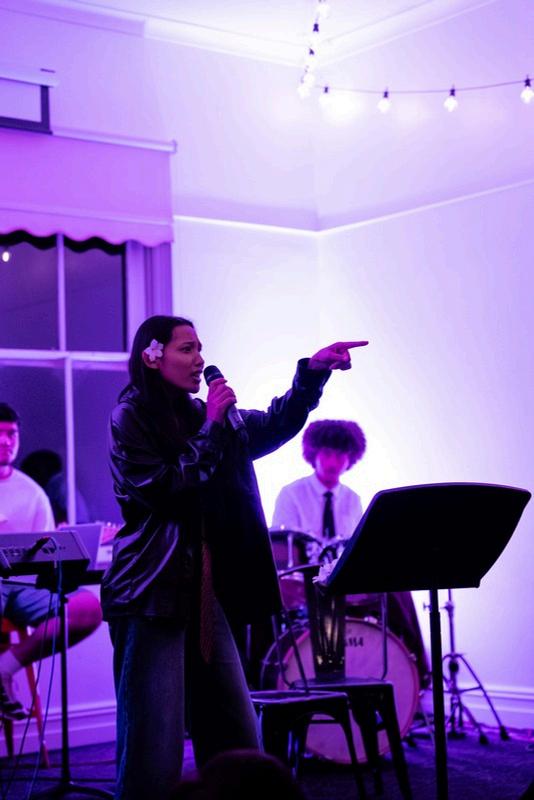
The Space Between:
An interview with Jesse Heise
What's your favourite place to visit on the central coast?
There’s a spot behind box head called iron ladders beach. It’s a rocky little beach with great spots to jump into the water.
Where have you most enjoyed playing music on the central coast/newcastle area?
I really enjoyed playing at a fundraising event we had last year. There was heaps of people and it was cool to know our music was attracting people who were making a difference with their money.
Whats your favourite iconic aussie band?
I love Ocean Alley. They are a big influence for our band the Saltheads, they find a really nice middle ground between folk, indie rock and Aussie rock and have a lot of really singable songs.
What do you love most about the australian music scene?
I love the Aussie audiences - on the Rock the Boat 2025 cruise ship, there were so many nice people who were so supportive of our journey, and we made some very valuable connections that landed us a couple more really good gigs.
If you could say one thing to up and coming aussie musicians, what would it be?
Getting gigs is all about who you know - so immerse yourself in the music around you, whether it’s pubs and bars, festivals, studios, stuff like that. Become a familiar face and have conversations with everyone, you never know which person you talk to is a bookie or is holding an event somewhere. Also, practice practice practice. Practicing as a solo musician is distinctly different to practicing as a band too. Make sure everyone says their piece, make sure you come with a tuned guitar or a warm voice to maximise time, be creative in delegating different parts of the songs to each musician. When you’re playing covers, make decisions that are different to the original song in order to curate your band’s own distinct sound.
When you’re writing music, don’t shoot ideas down too soon or feel embarrassed that the lyrics are “cringe” or “weird” - everyone has to go through the phase of being embarrassed by their work. We have only really just started writing songs that we like, and there were hundreds of fails before we reached that point. As a parting statement, remember when you’re on stage that the entertainment isn’t just in the music, it’s in the space between. What kind of person are you on stage? Be the kind the makes a joke or asks the audience a question or tells a story. The audience’s engagement isn’t conclusively determined after your first few songs, it’s after the words you say during the break between them.
Levi Bruderlin
(Because “vibes-based politics” isn’t a major… yet) Welcome to your crash course in how countries actually run.
Democracy
Power to the people… in theory, anyway. Citizens vote, leaders are (supposedly) accountable, and elections happen regularly
Example: Australia: compulsory voting, sausage sizzles, and a strong belief that yelling at politicians counts as civic engagement Flaw? Sometimes people who elect someone because they are charismatic and interesting, or because they straight up lie - NOT because they actually know how to lead a country
Oligarchy
A small group of elites call the shots, usually extremely wealthy, well-connected, or both. It’s less “power to the people” and more “power to the group chat.” In democracies they do this by donating to political leaders and lobbying (with cash) to get laws passed that they want.
Example: Russia: where political influence and billionaire networks have historically overlapped in ways that raise eyebrows (and occasionally sanctions).
Military Junta
When the military decides democracy is optional and takes over. Think tanks through the main streets.
Example: Myanmar: where the armed forces seized power in 2021, sidelining elected leadership.
Totalitarianism
The government doesn’t just run politics, it wants a say in everything: media, culture, even what you think if it could. High control, low freedom
Example: Turkmenistan: known for extremely tight government control over media, limited political freedoms, and a strong personality cult around its leadership It’s one of those places where the state narrative isn’t just dominant… it’s basically the only one available
Time travel for dummies
I love reading. I love reading new books. I love reading old books.
But my favourite kind of book to read is one that I have already read.
There are a lot of people who hate reading books more than once, and I’ll admit I used to be one of those people, that was until I discovered a secret about rereading books
When you read a book for the first time you view it through a lens of your current circumstances, and whatever is happening in your life at that time gets sucked into the book Your brain associates events, feeling and experiences with that book, turning it into a landmark on your life’s timeline And so, when you go back and read a book again you are transported not only into the story you are reading but the time in which you first read the story.And so, through rereading books I discovered that I could experience a very rudimentary form of time travel, but instead of literally traveling through time I would take a journey through my memories
Now my bookshelf has become a time machine of sorts, where each book represents a moment in time And all I must do to experience it, is open the pages and start reading. I call it my library of moments Each book on my bookshelf now has two stories, the story from the author and the story from me, they intertwine to create an entirely new narrative, that is so much deeper than the original story I often find myself re-reading books from when I was really young, because it takes me back to a time when life was so much brighter, the world was a bit kinder, and I was living life blissfully ignorant of everything
One of my favourite books to reread is called Ranger's Apprentice The first time that I read this book, I was in about grade 7. Not only do I love rereading this book for the story, which is amazing by the way, but also because it takes me back to a time when my biggest worry wasn’t a looming 2000-word essay or having to get my car registered, but being scared if my parents were going to get me in trouble for spending too long on the toilet reading. Or accidentally dropping a book from the school library into the bath and having to try and dry it with a hairdryer, hoping the library ladies wouldn’t notice that the book was now a lot fatter than it was before.
At times I find it hard to read new books because I don’t want to remember certain moments in my life But I persist, because in life there are many moments that not only define us and make us who we are, but can only be understood when we look back on them. By allowing ourselves to be transported back whilst re-reading a book, we gain unique insight and perspective that we could never achieve before We can take current problems or feelings and look at them from the perspective of a younger version of ourselves, a version that is not bound by the same realistic worldviews
To re-read books is to become a different version of yourself, a version that doesn’t have to worry about the stresses and pressures of being an adult, a version that aims high and falls far, a version that has an innate sense of optimism and positivity, a version that exists purely to dream
To re-read books is to grow from past experiences and to draw insight from a younger version of yourself
Whilst re-reading books is important, it is also crucial that you keep reading new books to create new landmarks on your timeline so that once this moment has passed, you can revisit it and learn something entirely new.
So go out and read all the books you have ever read before. Take a trip into the past so that you can take a step forward into the future
light vs dark edition
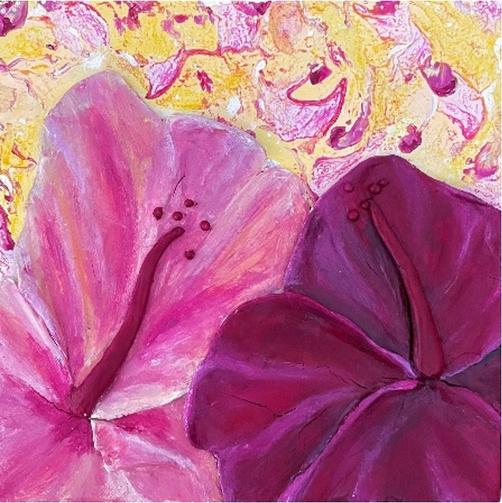
My most recent completed works consist of these mixed media paintings using clay on canvas to create expressive 3D floral subjects that emerge from the traditional uniformity of paint on canvas. These works are primarily experimentation pieces which were informed by the wonderful works of contemporary floral artist, Nisha Boehm.
In this season of my artist era, I have also been learning how to turn my work into prints, which has been a process of trial and error. Though there has been much frustration, the skills that I am developing are very much intrinsic to the artistic experience and it is certainly rewarding to see my larger canvas pieces being transported into small, pocket sizes prints
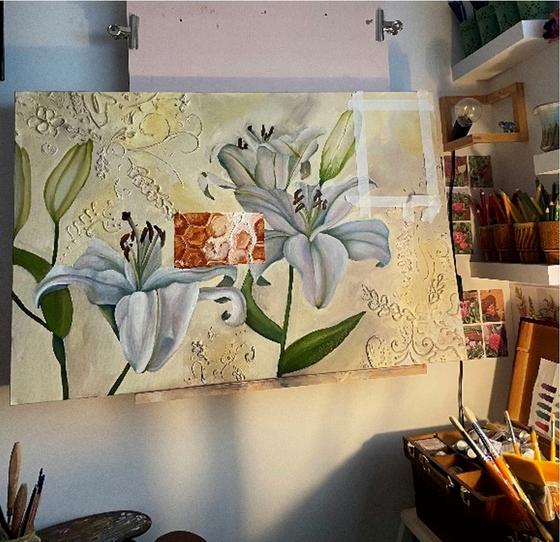
I am currently in the process of completing a series of paintings that reflect the personality of the people whose homes these artworks will end up in in this painting, I have experimented with piping modelling paste on canvas to create interest in the background in order to avoid using a boring solid colour Sticking with my floral subjects, I have painted lilies to represent God’s prosperity in times of uncertainty. In contrast, thick, expressive paint has been applied to the taped boxes in this painting to similarly communicate related bible verses and personal ties to this specific individual. Despite this still being a work-in-progress, I think this may be my favourite piece yet and I will be sad to see it go, yet glad that it has already found its forever home.
Are Video Games Literature?
Lachlan Alderson
ironic given the game’s stylised art style Another staple of director Y the inclusion of LGBTQ+ characters, with NieR Replicant featuring Kainé character, and Emil, a gay character. However, these traits are never brough with Yoko Taro stating that there are intersex and gay people “going about the real world, and we simply don’t know about it ” And that “There ar here, too. That’s the kind of world this is.” I personally feel like the inclusion like this helps elevate them to a literary level through the complexities of
The watchmen
A Short Story by
Patrick Murphy
“It’s starting to rain.” I grimaced. Rolan loaded the bag onto the wagon and scrubbed the dirt off his cuff. “Don’t you mind that…” he warned in gravelled tones. Drops trickled down my coat. It would be torn to pieces before the day was done. My Sunday best, too. Mam will kill me when I get home. I didn’t let the thought out. Rolan wasn’t a man to aggravate. She’d bring me back to get me again if she knew the full story…
Rolan had lurched onto the rider’s seat in the wagon, which left me to steer the horses. The road was twisted all the way to the river. Sharp stones pointed out along the way, and once we’d made it into the forest, it was little different from a dried-up creek. I thought the smaller horse, ‘Snowy’, was going to trip and bring the whole carriage down for a moment. Who knows what Rolan would have done then… It wouldn’t have been good for the horse. Musket Jack only sent Rolan out when he needed something done, no matter the cost. I’d been told not to give him any ‘if’s or ‘why’s while we were out here. Just keep my head down and obey. I was good at that. I’d brought home enough already to keep Mam and Pa fed through the winter. For a while, I wanted more. That folly was gone. Rolan leaned forward and spat out the side of the wagon. He scraped his face with a dirty sleeve that prickled against his grey and black stubble.
“How much further?” he growled. “A couple of miles,” I said dutifully. He crinkled his brow and flared his nostrils before nodding. I eyed the flintlock pistol on his left hip and a wooden stake on the right. I still hadn’t asked him what was in the bag I wasn’t going to
“Here’s good”, I heard from behind me. I stopped the horses. “We’re still a couple of hundred yards away,” I said, instantly regretting it. Rolan just looked at me.
“Here is good,” I answered, adjusting my glasses. We dismounted and started digging. The bag sat beside us. It smelled like metal and death. Please be black market silks. I thought. Or dirty money. I had never done anything too wrong with the Watchmen. They only kept me around ‘cause my cousin Rob is in the force. I’d tell them where the cops were sniffing, and they’d shuffle things around. This was something else.
“How much deeper?” I asked, sweating.
“Couple’a feet”, he told me. We’d already gone a couple of feet… Money didn’t need to go that deep Constables don’t dig six feet down for untaxed silk. I tried to bury the thought. It didn’t matter. But my mind kept coming back to it. I couldn’t cross this line. Rolan was filling his canteen from the river I shuffled over to the bag Quietly, I drew it open A face looked at me, pale, grey skin. Its eyes looked on behind me. Its mouth hung open with long, sharp teeth hanging out of it.
I held a gasp in my throat. It wasn’t moving. What had they done? What was I doing? There was a body in the bag! I stared at it. I knew it was dead from the sight of it, and the smell. I couldn’t fathom what would make a man do that to their teeth. Maybe Rolan did it. Rob said you could find out who a man was by their teeth.
I went to draw the bag closed. As I fiddled with the strap there was a bolt of action. All at once, the body wrapped its hands around me. Long, sharp claws jutted out from each finger. It hissed as it scratched deep into my arm, bearing those savage teeth. I howled out in pain. It gnashed down, and I could feel myself growing weak.
“Pity,” I heard. Rolan stood there. All five portly feet of him, with his pistol drawn. I could have hugged him then. Musket Jack’s body burying psycho, was going to save me from this rotten thing. Then I realised… The pistol was aimed at me.
Did We Run Out of Original ideas?
Daniel Carrigy
racing of Star Wars: The Phantom Menace, Simba’s struggle in The Lion King, or the
of Nassau in Assassin’s Creed, each of them were magic because they were unique. experienced anything like them before.
Yes there is an argument that today’s younger audiences (I’m devastated I can no longer this) might not be familiar with the original source material of reboots/remakes, and thus, these as much more novel. However, the core audience of these texts, the ones who theatres, stream the show, or play the game, are familiar with these worlds. They have worlds and stories before, and they are becoming increasingly less novel and appealing.
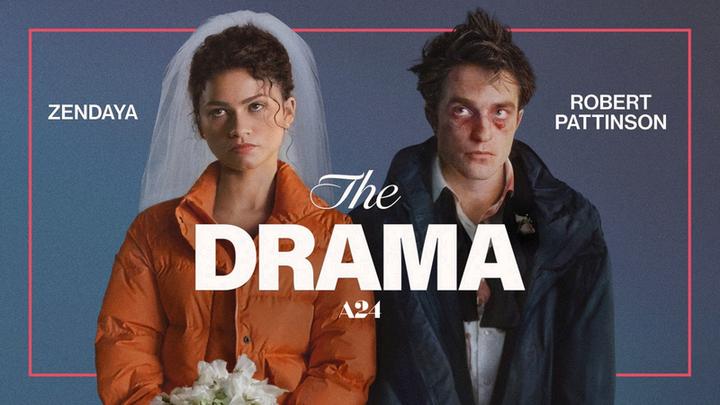
Lynnette Lounsbury film review
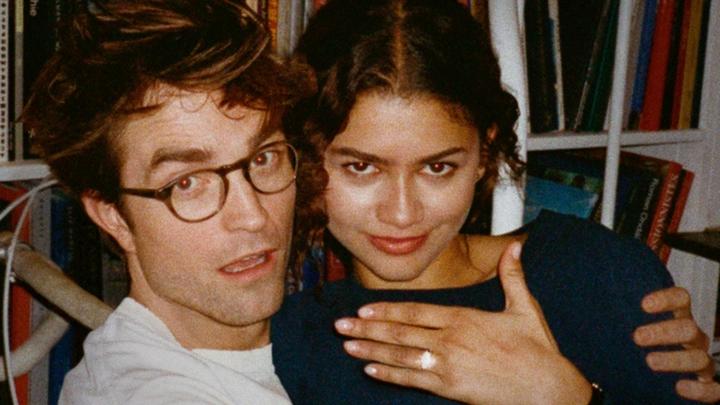
What Are You able to forgive? What are you willing to overlook? And who takes the blame and who gets off the hook? The Drama Forces You to Ask
Both leads are fully committed: Zendaya carries most of her character's turmoil internally, a performance of her usual brilliant restraint, while Pattinson spirals visibly and hilariously, his paranoid daydreams providing the film's sharpest comic relief. Alana Haim, meanwhile, delivers what may be the most passive-aggressive and horrific maid of honour speech ever committed to screen You will cringe
What elevates The Drama beyond a well-crafted relationship study is its unflinching examination of who receives grace and who doesn't And how race quietly governs that calculus. Emma, a Black woman, is denied the benefit of the doubt as a matter of course: by her friends, by her fiancé, arguably by the audience The film doesn't announce this as a theme. It simply builds it into the architecture of every scene, which is far more powerful. You catch yourself later going... wasn’t everyone actually worse? Why did she get all the blame?
It isn't a flawless film The pacing sags in places, and viewers hungry for resolution will find it frustrating there were a couple of times where I remembered I was watching a film.
But that said this is a film that makes you sit in discomfort
And that difficulty is the point. The Drama is not here to make you comfortable. It's here to make you think. You’ll think about the people you love, what you're willing to overlook in them, and who in this world ever truly gets the grace of human forgiveness and a fresh start. It makes you consider that question - are we really the worst thing we have ever done? Or are we who we become after that?
Complicated, challenging, and quietly devastating
BOOK REVIEW
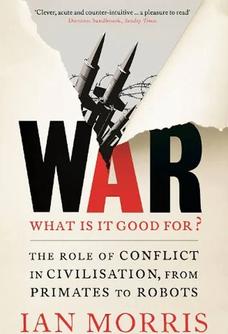
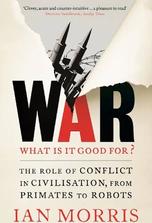
War: What is it good for? By Ian Morris
The Role of conflict in civilisation, from Primates to robots
Ian Morris does not advocate for war, he calls it “one of the greatest human evils” however he acknowledges the benefits, or at least the positives that have come out of that evil. His main points consist of the gradual development of larger more centralised states that could police their lands, impose laws and build infrastructure, all of which would not be possible without conflict to inspire innovation to end the conflict. While this point is true, and largely accurate. Ian Morris himself states that you must look at the ‘big picture’ and not get distracted or too focused on what this means at a local level. He acknowledges that the ‘loser’ in any conflict is going to suffer and makes special reference to the colonial era and the myriad of atrocities committed in the name of ‘progress’.
If we are to read this as Morris wishes and look only at the big picture, he is right, war, conflict and competition on the national scale has undeniably benefited humanity. Antibiotics where first mass produced to be used in World War Two, and now you can buy them over the counter, taxation, while a great burden on the average person, could only occur when a state could enforce its edicts, the British raised the first modern income tax in 1803 to fund the military during the Napoleonic wars, made permanent in 1842, and by extension, this tax would later be used to fund roads, hospitals, railways, schools and airports contributing to the betterment and greater prosperity of the people.
Conflict is pressure, it pushes a state to adapt, to change, to be more efficient and ‘lean’ to overcome the ‘enemy’. The benefits that come out of this conflict do not disappear after the conflict. For example, The French were the first European country to build a professional Standing army, the Compagnies d’ordonnance were created to defend the Kingdom of France from the invading English in the Hundred Years War. This military did not disappear after the conclusion of hostilities with the English, it remained, and France to for the better part of five hundred years was the dominant military power on the European Continent and continuously one of the more opulent, advanced and developed nations of the world.
However, it would be inconsiderate to not account for the natural progression of time and diplomacy to counter Morris. While conflict has benefited humanity, many of the benefits would have been possible through peaceful coexistence and diplomatic relations. However, as Morris himself points out, conflict is quick and decisive in comparison, if it were a race, conflict wins but peace would still make it in the end. Furthermore, trade, diplomacy and commerce drive innovation just as much as war, especially as time has progressed. We see this exemplified in the modern world, in just the last thirty years, the world has changed rapidly, with no decisive conflict or war to drive it. However, Morris could apply his position if you take competing businesses as a form of conflict, in which case his position is still applicable.
I mentioned the idea of the big picture and its position of acknowledging but ignoring human suffering that may occur as a result, a position of ‘the ends justify the means’, while I intellectually agree with Morris and his points, I cannot morally agree with him. The means, the method in which we do things is important, the idea that good comes from evil, justifies the existence of evil, by advocating that conflict is necessary for humanity to progress, one justifies conflict and all its evils. Morris acknowledges this, and I stress that, he is not ignorant of the evils of war and conflict, nor is he advocating for war. In his closing chapter, he warns that the ever-increasing lethality of war and the degradation of moral thought in its operation is and will continue to outweigh the progress that has now shifted to other avenues of ‘conflict, i.e. competition in business.
This book is worth a read, not just as a look at the progress of humanity and its drivers, but also as a moral condemnation of conflict itself. However, I would encourage a further look at the conflicts mentioned, as the brutality and harshness of conflict is often overlooked in favour of what the conflict brought about, essentially belittling conflict to a transaction rather than a tragedy. Further reading along this vein of thought are Steven Pinker’s The Better Angels of our Nature, and Jared Diamond’s Guns, Germs, and Steel.