


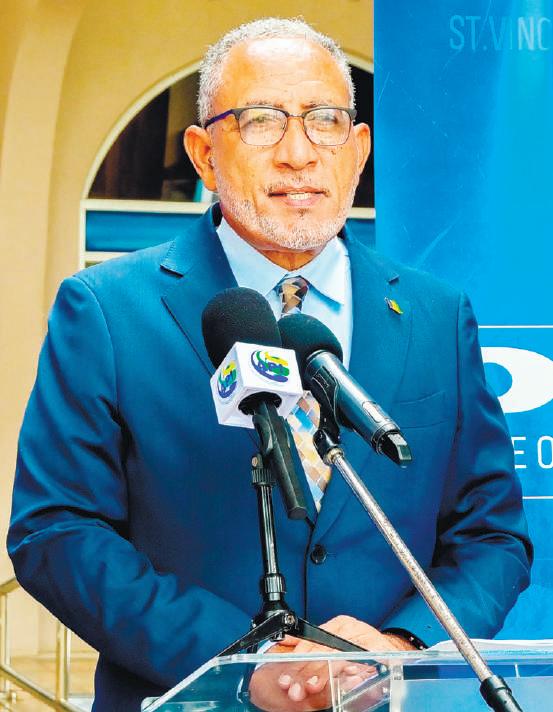
Dr. Friday said that the emergency package was a fiscally responsible shield against extraordinary pressures.
“The truth is, we are facing a difficult global reality; across the world, conflicts have caused disruptions,” Friday said.
“They have caused disruptions in international shipping that has pushed up the price of fuel, of electricity costs, of cooking gas and of imported goods,” he continued.
The government, Dr. Friday said, was intervening across the fuel, freight, electricity, and agricultural sectors to “cushion the blow for the average family” and protect the nation’s food budget.
by DAYLE DA SILVA
DR. GODWIN FRIDAY, Prime Minister and Minister of Finance, on Wednesday 27th May announced a package of fiscal measures, i.e. temporary tax reductions and waivers, aimed at stemming the rising cost of living resulting more recently from the rising cost of fuel due to the ongoing conflict in the Middle East.
In outlining the proposed the 90-day initiatives,
Petrol/diesel prices will go up but not to the extent that an unperturbed regime would have allowed.

According to the Dr. Friday, between January and May this year, the price of Brent crude rose to over US$100 per barrel, and for a small developing state such as St Vincent and the Grenadines, those price increases have reached us quickly and have impacted the consumers.
Among the measures announced, Friday said that effective immediately, government was implementing a threemonth intervention measure to suppress the effects of the high fuel prices, by reducing both the excise tax and custom service charge on imported petroleum products by 50 percent.
Therefore, the price at the pump is expected to increase, but not as much without the initiative he explained.
Gas will move from EC$13,22 to $16.92 per gallon rather than the $18,82, and the price for diesel is expected to increase from EC$12.56 to $16.26 per gallon instead of $17.71 Friday said.
The price for low-sulphur diesel will now increase to EC$16.40 per gallon and not the
$17.85, he added.
The prime minister announced adjustments in electricity costs saying that VINLEC’s fuel cost had risen by 29 percent in the first quarter of 2026.


Continued from Frontpage.
“We cannot allow electricity bills to become unbearable for households and small businesses,” Friday said.
He announced a twopronged intervention to deal with the rising cost of producing electricity saying that in the first instance, government will remove the customs service charge and excise tax on diesel purchased for the generation of electricity, for a period of three months.
This measure, he said, was expected to cost the government EC$1.65 million in lost revenue earnings over the three-month period.
And the second initiative — VINLEC will contribute to creating a cushion.
So, should the fuel surcharge exceed $0.71 cents per kilowatt hour, VINLEC will provide a 50 percent matching discount on the fuel cost formula; and if it exceeds $0.77 cents, the company will provide a 100 percent matching contribution.
“For households, this intervention means relief on utility bills and protection against runaway increases,” Friday said.
The prime minister also added that government intended to maintain the 100 percent waiver on solar voltaic systems as an incentive for more Vincentians to transition to renewable sources of energy.
“We want to use this new oil crisis as an opportunity forced upon us to move aggressively towards renewable energy production, especially solar,” Friday

contended.
The government has implemented temporary measures to curb the increasing prices for Liquified Petroleum Gas (LPG).
The prime minister said that the international benchmark for LPG had increased from US$0.70 cents to $0.90 cents per gallon over the past few months.
“Without intervention, these costs would inevitably push up the price of cooking gas locally.”
He announced the 100 percent removal of customs service charge (C.S.C) on all Liquified Petroleum Gas estimated to cost the government EC$504,368 in lost revenue over the three-month period.
“Again, this is money we believe is
best left in your hands and in your homes to help you ride out this new crisis,” he said.
Consumers will see initiatives to set off the cost of goods by implementing fiscal measures for shipping essential goods to St Vincent and the Grenadines.
Friday explained that a few months ago, shipping a
standard 20-foot container from the United States cost in the range of EC$2,200 to $3,000.
But since the increases in energy prices, shipping costs now ranged between EC$3,300 to $4,800.
Friday explained that under the existing system, taxes on these containers are calculated based on not just the goods in the container, but the inflated freight charges.
And when the shippers raise prices, the taxes paid by the importers rise automatically which is then passed on to the consumers as reflected in the prices on the supermarket shelves, he said.
The government has therefore proposed the removal of shippers’ charges, including fuel and congestion fees from the tax calculation.
He added that government
intended to benchmark freight rates, for tax purposes, back to January 2026 levels.
“So even if a shipping company charges EC$4,800 for a container, the government would calculate the freight taxes as if it were still at January levels.”
This, he said, was expected to lower landing costs of imported goods, reduce imported inflation and assist businesses to avoid passing on these price increases to the consumer.
Farmers will benefit from the fiscal measures with subsidized prices for seeds, and a 30 percent discount on fertilizer.
The prime minister said that the government will be monitoring the construction costs as well, particularly the price of cement.
“And if we see the price of cement cross a critical threshold, we are prepared to implement a VAT (Value Added Tax) waiver on cement to protect jobs and housing projects,” Friday said.



Jeremiah Samuel pleaded guilty to the lesser charge of manslaughter and was sentenced accordingly.
Stories by HAYDN HUGGINS
A 24-YEAR-OLD mentally ill man, a resident of Rose Hall who kidnapped and killed a one-month-old baby girl about two years and three months ago, will spend the next 19 years, nine months and six days behind bars, for manslaughter, and will receive psychiatric treatment while in prison.
The accused, Jeremiah Samuel, was also sentenced to four years, one month and seven days for kidnapping the child.
The sentences, handed down by Justice Rickie
Burnett at the High Court Criminal Assizes on May 22, are to run concurrently.
Samuel was originally charged with murder, but on January 29, 2026, he pleaded guilty to manslaughter by reason of diminished responsibility. He also confessed to kidnapping, to which he had initially pleaded not guilty.
Attorney Carl Williams represented Samuel.
The offences were committed at Rose Hall on January 10, 2024.
The facts showed that Samuel left the home of his grandmother where he lived, and went to his mother’s home on February 10, 2024, where he snatched the child from a chair, while other occupants of the house were not looking, ran away with toddler, jumped over a wall into some bushed with her.
Using a black handle knife he had taken from his grandmother’s kitchen earlier that day, he cut the baby’s throat and left her body and the knife under a lemon tree. He then escaped into some bushes.
Sometime later, the
baby’s body was found in lying in some bushes under a lemon tree with her head in a tilted position. She was later pronounced dead by the district medical officer, and Samuel was taken into custody at the Rose Hall Police Station.
The Court took note of the Social Inquiry report, the fact that he was 22 years old at the time. and lived in the care of his paternal grandmother. He did not comply with parental instructions and dropped out at Form 1 because he believed he was wasting time in school.
Members of the community described him as easy, good, helpful, calm and quiet. They were saddened and shocked by his actions.
A mental health evaluation by Kevina Williams, approved by Dr. Alisa Alvis, stated that Samuel began smoking marijuana before he was 16, and smoked two spliffs a day. The evaluation found that at the time of the offences, Samuel had a psychotic disorder.
Samuel stated that he had a history of marijuana use up to one month before the offences were committed.
One person in the
community found him to be acting strange and heard him saying that demons were in the baby and she had to die. He was hearing voices saying that he had to kill the baby.
After the baby’s death, he was talking to himself, saying that he could bring back the dead.
The Eastern Caribbean Supreme Court’s guidelines for homicides, has no special guidelines for manslaughter by diminished responsibility, but there are UK guidelines and several case laws on the point.
Manslaughter by diminished responsibility reduces murder to manslaughter, and applies when a person has a serious abnormality of mind. The Court considers the level of responsibility as per UK guidelines.
Justice Burnett, in handing down the sentences, weighed the mitigating and aggravating factors and did the calculations.
The judge also ordered that Samuel received adequate psychiatric treatment during his incarcerated.
SHENICE WILLIAMS, a 33-year-old therapist of McKies Hill, may be able to rest more comfortably now that the man who had been traumatizing her has been taken off the streets.
At the Kingstown Magistrate’s Court on Monday, the culprit, Jamel Miller, a 46-year-old man of Kingstown, was sentenced to three months in prison for entering the property of Shenice Williams at McKies Hill on April 29, 2026, to wit, her yard, with intent to commit the offense of theft. He was also sentenced to five months in prison for entering Williams’ property on May 22, 2026 with intent to commit the offence of theft.
Miller, who was unrepresented, pleaded guilty to both offences.
The sentences, handed down by Senior Magistrate Tammika McKenzie, will run consecutively. It means that Miller will serve a total of eight months in prison.
In presenting the facts earlier, Prosecutor Aliston Stapleton told the Court that around 7am on April 29,
Williams woke up and saw an alarm notification on her cellular phone. As a result, she reviewed the CCTV cameras at her home and saw a slimly built male, dark in complexion, dressed in a red shirt, long pants and slippers.
According to the footage, he was inside her yard at around 2:44 am on that said date.
However, Williams had been encountering traumatizing situations at her home even before.
Since January of this year, she had been noticing scratches on her vehicle, and there was also an occasion when she heard someone knocking on her window. She became concerned and was scared to sleep at her home.
On May 22, 2026 about 8:30pm, she left home and went to hang out with her friends. Around 11pm that day, she was at a bar in Richmond Hill when she received an alarm notification on her phone. She checked the cameras and saw a slimly built male with disheveled hair and dark in complexion, dressed in a red shirt, white pants, with a red and
SENIOR MAGISTRATE
TAMMIKA MCKENZIE
is of the view that most teenagers need guidance.
McKenzie voiced her feelings on Tuesday while presiding over a matter at the Kingstown Magistrate’s Court in which a 33year-old man was charged with assaulting his 12-year-old daughter, causing her bodily harm by slapping her several times.

He pleaded not guilty and was granted bail when he initially appeared in Court. However, when the matter was called on Tuesday and Prosecutor Shamrock Pierre asked the girl, a secondary school student, if she was proceeding with the case, she did not answer.
The matter was then stood down for a few minutes and when it was recalled the Prosecutor again asked the girl if she was offering any evidence against her father. She said no.
But before the duo left the docks, the senior Magistrate offered sound advice to both of them. When she asked the girl if her father usually beat her, she said sometimes.
When McKenzie asked her father for his version, he said he gets annoyed when his daughter misbehaves.
But the Magistrate told him there were other methods of discipline. She informed him that his daughter may be entering a stage of life that may be difficult for her, and the best way for him as a father to deal with it, should not be to embarrass her.
“Most parents seem to believe that puberty is a bad thing. All of us went through it. Most teenagers need guidance. They have to go through it (puberty), it is a part of life,” the Magistrate advised.
She told the man that if his daughter was doing things that he does not approve of, he should get someone appropriate to speak to her.
Jamel Miller spate of dishonest acts spanned some ten years.
black backpack on his back leaving her property. She immediately contacted the police and reported the matter.

Officers from the Criminal Investigations Department (CID) were dispatched to the scene but the defendant was not met.
On May 23, about 8:20 am, Williams went to the CID and handed over the CCTV footage.
The police took a report, and recorded a written statement from her, then visited the scene.
Continued on Page 23.
Turning to the daughter, the Magistrate said, “Just like how you as a child make mistakes, parents make mistakes too. You might think the world is ending with your parents trying to prevent you from experiencing all the things that other people are experiencing. The world ain’t going nowhere.”
McKenzie told the student, “Right now your primary focus needs to be your education. Everything else is there. Try to focus on your school work and on getting the best grades you can.”
Information reaching THE VINCENTIAN is that around 9pm of April 6, the girl, who is living with her father, went out with her cousin, after spending the day in Bequia.
The defendant went to her cousin’s house and met his daughter there. He got annoyed and slapped her about her face with his hands. He then took her home and slapped her again, resulting in immediate pain and dizziness.





STUDENTS OF THE ST. JOSEPH’S CONVENT KINGSTOWNare celebrating the honour of being the first cohort of participants in a new hospitality training initiative launched by
Sandals Saint Vincent and the Grenadines.
The Hospitality Etiquette and Service Excellence Programme, projected to be an annual exercise, was officially launched at Sandals Resort on Wednesday, May 27, with officials describing the initiative

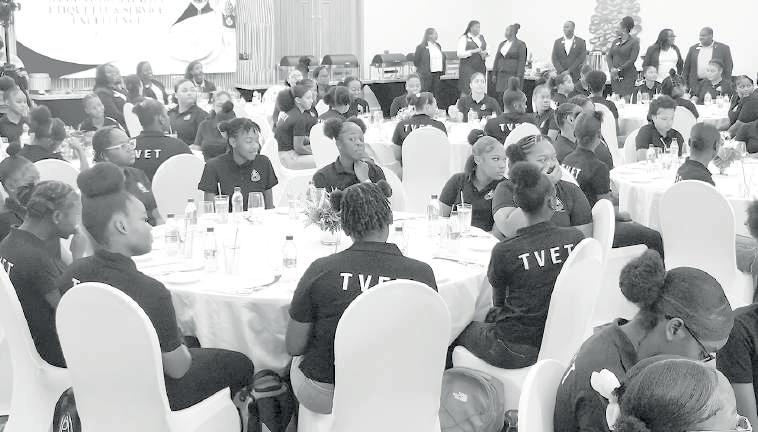
as an important investment in youth development and workforce readiness within the tourism sector.
Delivering opening remarks, Public Relations Manager at Sandals Saint Vincent and the Grenadines, Aviar Charles, highlighted the importance of the programme and Sandals’ commitment to community development.
Charles said the Sandals brand recognizes the importance of contributing to the development of the communities in which it operates and the wider Vincentian society.
“This morning is a momentous occasion,” Charles told students.
“We at Sandals pride ourselves in continuously developing not only our employees but also persons who are desirous of entering the workforce.”
She explained that the programme was specifically designed to expose students to the hospitality industry at an early stage, particularly within the food and beverage sector, while also introducing them to the principles of service excellence.
Minister of State in the Ministry of Education, Senator Lavern King, commended the initiative and stressed the importance of practical training opportunities for
young people.
She said programmes such as the Sandals initiative help bridge the gap between classroom learning and real-world experience while exposing students to international hospitality standards.
According to King, the initiative aligns with the Ministry of Education’s focus on Technical and Vocational Education and Training (TVET) and demonstrates the value of partnerships between the public and private sectors.
President of the SVG Hotel and Tourism Association, Isola Giddings, encouraged the students to absorb as much knowledge as possible throughout the programme.
“You are being exposed to the best training in hospitality,” Giddings stated. “It is not where you start, but where you end.”
General Manager of Sandals Saint Vincent and the Grenadines, Tamon Allen, also addressed the students, sharing his personal journey within the hospitality sector.
Allen explained that he originally intended to pursue a career in civil engineering before discovering his passion for hospitality after taking a temporary job in tourism.
“I fell deeply in love with tourism and hospitality,” Allen said. “If I had to relive that

Aviar Charles, Public Relations Manager at Sandals Saint Vincent and the Grenadines, spoke of the programme being another Sandals investment in Vincentian youth.
era of my life, I would have made the same decision.”
He encouraged students to follow their dreams and remain focused, committed, and passionate about their chosen career paths.
During the course of the day, the students had hands-on demonstrations related to the food and beverage department, setting up a table properly and the standard practices of serving beverages.
After completing their hands-on and teaser sessions, the students then practised their newly acquired etiquette skills during a formal dinner. At the conclusion of the programme, participating students were presented with certificates. (KH)



The National Newspaper of St. Vincent and the Grenadines
Managing Director: Desiree Richards
Editor: Cyprian Neehall
Telephone: 784-456-1123 Fax: 784-451-2129
Website: www.thevincentian.com
Email: thevincentianpublishing@gmail.com
Mailing Address: The Vincentian Publishing Co. Ltd., P.O. Box 592, Kingstown, St Vincent and the Grenadines.
ALWAYS AT THIS TIME,when the carnival ghosts begin to creep in on us, some Vincentians are moved to examine just where we are in terms of what we call our culture; moved to reflect on whether we are in an era of cultural evolution or dilution.
But even as we would want at this time to give into the strong pull of things cultural, we should be mindful that this multi-island state we call home, surrounded by turquoise waters and cooled with a breeze some say are blessed by the gods that feed our laid-back attitude, is confronting a quiet but troubling reality — one in which we are swiftly being overcome by cultural erosion.
In this reality, many of our young people, a whole generation we shudder to acknowledge, is becoming disconnected from traditions, values and symbols that define us.
If this trend continues, we risk weakening the very identity that has distinguished St. Vincent and the Grenadines on the world stage. We have got to be intentional about preserving what makes us uniquely Vincentian, and lest we think it is, this does not refer to succumbing to a practice of imbibing oneself with over-proof liquor thinking this ‘act’ makes us more Vincy.
Yes, we must be intentional about preserving our culture — our music, not that which we copy and realign and call it our own, but that which has been with us for generations or that which we have created from our own sensibilities and relationship with nature.
Add to this, the commitment to preserve our cuisine, language, and cultural expressions, the first step being to shake off any “shame” we might harbor about what is ours. We must resist being pulled into some ‘globalised’ culture driven by trends, virality (the digital world), and social media validation. In that pursuit, to fall prey to that pull is to sacrifice authenticity for “keeping up with the trends”.
The recent revival of traditional rhythms should have been an opportunity to celebrate the rich Vincentian heritage that has made us unique. Instead, it has highlighted a growing disconnect as much of the content now associated with this iconic rhythm lacks the cultural depth and pride it once embodied.

This is not cultural evolution, it is cultural dilution.
Institutions such as the National Cultural Foundation, the St. Vincent and the Grenadines National Trust, the National Broadcasting Corporation and the National Lottery (for its financial support) must take a more proactive role. Cultural preservation cannot be left to chance, nor should it be compromised in the name of entertainment.
The issue extends beyond music, as the home also plays a critical role in preserving a people’s cultural identity. Parents and guardians are a child’s first teachers, and when cultural traditions, history, and national symbols are not reinforced at home, young people can become disconnected from their heritage.
This is evident in the growing number of Vincentians who mistakenly identify salt fish and breadfruit as the national dish, unaware that jackfish and breadfruit holds that distinction. Or that strong rum or hairoun beer is not our national drink; that distinction belongs to golden apple juice.
This might seem a minor issue, but such basic misconceptions reveal a deeper erosion of cultural awareness caused by the dominance of foreign influences, a distorted representation of what is Vincentian, and the lack of intentional cultural education within families.
Our sense of self is deeply rooted in the places we call home and the heritage we inherit therein. These elements shape our values, beliefs, and identity, creating a foundation that guides us through life.
Homes should, therefore, serve as spaces where Vincentian traditions are celebrated through storytelling, traditional meals, music, language, and discussions about the nation’s history, ensuring that future generations develop pride in and appreciation for their Vincentian identity.
The way forward requires deliberate action. We should reinvest in cultural programming that informs and inspires.
Additionally, stronger partnerships between cultural agencies and schools are needed to ensure that culture is not merely taught, but actively experienced.
Our cultural identity is not a trend, it is a legacy. Preserving it must be a national priority.
THE WORLD IS ENTERING A PERIOD of profound change. Longstanding global assumptions about trade, security, and economic stability are being tested. Conflicts far from our shores are reshaping the world around us. Shifts in global markets are altering prices at home. Decisions made in distant capitals now reach SVG households with lightning speed.
For a small, dependent economy like SVG, these realities are not theoretical. They shape the cost of living, job and entrepreneurial opportunities, and the long-term resilience of our country; issues that matter deeply to the current and next generations. That is why this moment matters.
For the last two generations, assuming each generation is twentyfive years, we have spent time trying to secure a Caribbean Common Market and regional unity, only to see it on the verge of crumbling under the current pressure from the United States. We are at an inflection point. How we re-engage with each other and with the world will define this generation. Every generation faces a choice: whether to accept inherited systems as they are, or to improve them. Maybe this is the point at which I apologize to the next generation, on behalf of my generation, for not doing enough to strengthen the homeland and the regional system to withstand the global pressure we are facing today.
The unfortunate reality at home today is that the new administration is showing off its lack of preparedness to govern. While in opposition, they had a lot to say about public safety, accountability, transparency, oversized bureaucracy, bad budgeting practices, and a host of other social issues. So the first thing out of the door under this administration was a budget with a deficit twice as large as the previous year’s numbers. This budget included over a million dollars in renovations to the primary ministry’s house and the purchase of new cars. It should not surprise anyone that I continue to object to deficit budgeting. I am also on record calling for the government to stop this nonsense of providing “living quarters” for someone who is elected or enlisted in service to the people of our nation.
My personal preference is for the Prime Minister’s residence to be

converted to a museum. We should have no obligation to provide a place of board for our Prime Minister.
Now, six months into the administration, we are advocating for police in schools. How did we get to this point? How will this help our children? What do we expect these officers to do at the schools? How are we going to repair the lives of our children after this experiment? Yes, changers and improvements require resolve, since progress is rarely found within comfort zones. This one is difficult for me to let go of, simply because it involves our kids. The idea of police officers becoming a standard feature at our schools is a bridge too far based on the evidence presented to date. Mr. Deputy Prime Minister, you might think my objection, along with others, to this decision is just noise, but I can assure you it is a very thoughtful policy disagreement. History is full of well-intended men in leadership positions who choose not to listen to others and go their own way. I invite you to consider some other meaningful changes to the police force before unleashing this illprepared group of officers on our school.
Looking for examples of how illprepared they are to address issues at school. Just reflect on our latest incident of police brutality on the streets of Kingstown. The public beating of a suspect under arrest (fully restrained) by about six officers tells the whole story. And please don’t tell me that all those present and participating in this crime were junior officers with little or no experience in law enforcement.
It’s time for the Teachers Union to step into the conversation. I noticed they weren’t included in those consulted on this important issue. Don’t let silence be your only voice. As an organization, your purpose is to provide clarity and leadership. What is your position on this transformative experiment?
The true role of leadership in our schools is not command-and-control. Real leadership is about providing the right climate for learning. If you do that, our children will rise and achieve things you didn’t anticipate.
Horatio
TACKLINGVIOLENCE in schools calls for a stronger school climate, mentorship, and community involvement.
However, while the problem is clearly outlined,
the conversation must now move towards identifying models of character formation that go beyond enforcement and intervention, like placing
AS I WRITE THIS,the NDP has been in government for six months and understandably, criticism of its approach has not been lacking. That might be so, but I wonder how balanced the criticism really is.
I honestly feel that while too much attention has been placed on possible employment displacement, etc., not enough attention has been given to the fact that the NDP inherited challenges it could know about unless it was in government, e.g. things like the national debt, operation on certain stated owned corporations.
I want to say to my people that not even the most serious
police officers in schools. In this regard, we are not without precedent. I speak of the scout movement - a character building movement if
government can repair years of neglect without making difficult decisions. That is so but affected workers must be treated with compassion and the people must be told why changes were needed and how public resources will now be better protected and utilized.
Yes, the Opposition has a right to criticise. The media has a duty to scrutinise. But criticism must not become selective and be outrageous. We must judge this this Government not by political convenience, but by facts, context, and how it goes about the difficult work of national repair.
Grant, L Lowmans
CALLIAQUA, the southernmost town on mainland St. Vincent and known for its fishing prowess, has got a facelift with a mural on the perimeter wall of the playing field.
The Parliamentary representative for the area, the Hon. Laverne Gibson-Velox, apparently the trail blazer behind this brilliant initiative, deserves a public plaudit.
The mural is informative, educational and full of history. For example, the portraits of our second Chief Minister (1967), first Premier (1969) and first Prime Minister (1979), is a historical anecdote, and it is also civic eductaion.
The portraits of His Excellency the Governor General, Stanley John, K.C. and the memorable Louis Jones, who was a Member of Parliament for East St. George representing the New Democratic Party and a
* WHY THE RECENT ‘CONVENTION’by the ULP sounded like a church meeting?
* Is only now that certain people realise that calypsonians get the smallest share of the carnival pie?
* If nobody wants to rent shops in the Glen Community Market, why don’t we think about changing the use of the building?
* How many “rum songs” are we going to get for Vincymas 2026?
* What is it that we are not doing why so many people, and young people too, are dying of cancer?
* What is the latest in that matter where a police officer was ‘bounced’ by a medical doctor who claimed he was on an emergency call?
* Are police officers no longer expected to maintain a certain size and level of fitness? How come there are so many officers with “big bellies”?
* Are we going to revert to the name Victoria Park from the Ralph Gonsalves imposed Independence Park?
* Why is it the public never hears about the action if any that is taken against police officers who abuse their authority?
ever there was one.
AI Overview tells us: “The Scout movement was introduced in St. Vincent and the Grenadines on April 17, 1914, in Georgetown by Methodist Minister Rev. Julian A. Archer. While some reports suggest early scouting activities occurred around 1911, official records and centenary celebrations in 2014 establish 1914 as the official founding date.”
As far as I know (from my own experience) the scout movement was never an extracurricular activity. Scouting was embedded within school life, with teachers serving as mentors and leaders, guiding students both academically and morally. With its structured approach, it encouraged discipline, responsibility and a sense of service among
boys and young men.
It’s a funny thing but the very things we long to see in our schoolsrespect, discipline, positive peer engagement, leadership, accountability - were provided and nurtured through the scout movement as it functioned as part of the school programme.
I am not saying that the scout movement is the panacea to our problem (school violence), but when an honest appraisal is made of the type of students we produced through the scout movement, they are exactly what we want today.
A friend informed me that that scouting has been introduced at the teacher-training level in one Teachers’ College in Jamaica. Maybe they recognize something that at which we should be

taking a close look. When teachers are equipped to lead with discipline, integrity, and purpose, the impact extends far beyond the classroom.
If we are serious about transforming our schools, we must look beyond control and towards character. The solutions we seek may not be new, they may simply require rediscovery and renewal.
A Senior Citizen
minister in that party’s administration; are also commendable as they are informative.
Undoubtedly, nostalgia will immediately come to the fore, particularly among the older generation, in remembrance of Mrs. Gurley of blessed memory, who devoted most of her life to delivering instructions to the young ladies who were desirous of learning to type and to do shorthand, skills that prepared them for the job market.
Patrick ‘Gray’ Baptiste and Cecelia ‘Ringie’ Richards, are deserving to be on the Calliaqua Playing Field Hall of Fame for their excellent services in culture and sport respectively.
The scenery that depict Calliaqua as a tranquil fishing community that abounds with culinary diversity is simply awesome.
This exhibition is a wonderful collection of the past and the present, and Mrs. Laverne Gibson-Velox has exemplified leadership in fostering community spirit through this undying memorabilia on the wall of the Calliaqua Playing Field.
Patmos Richards

(Excerpts of Prime Minister Honourable Dr Godwin Friday’s Address to the Nation)
WE UNDERSTANDthat while we fix the big picture, you are still feeling the squeeze. Responsible leadership means balancing the books while protecting the vulnerable.
We have development investments while sustaining necessary social programs. That is why we are committed to the measures to reduce the high cost of living on households and to ease the pain on our people.
Today, I am speaking directly to every mother who is stretching a dollar at the supermarket, to every father who is trying to keep fuel in the tank and tyres on the road to get to work, to business owners wondering how much longer they can absorb rising costs without passing them on to their customers.
The truth is, we are facing a difficult global reality. Across the world, conflicts have caused disruptions. They have caused disruptions in international shipping that has pushed up the price of fuel, of electricity costs, of cooking gas and of imported goods.
Between January and May of this year, the price of Brent Crude Oil rose by 68 percent, from around US $64.50 per barrel to over $108 per barrel. That is a massive increase in a relatively short period of time.
For a small island developing state that depends on imported fuel, those price increases reach us quickly and they affect us directly. If those price increases are passed through directly to the consumers in our country, the impact would be very severe. Without our government taking steps to cushion the impact of global price increases. Gasoline prices at the pump would go up by approximately $5.60 per gallon, an increase of over 42%, and would mean consumers would pay nearly $19 per gallon at the pump, diesel would be near $18.00 per gallon.
That kind of increase would not just affect drivers, it would affect transport fares, food prices, electricity bills, farming costs, business costs, and ultimately the cost of living for every household in our country.
My government refuses to sit back and allow that to happen. We will do all that we can to keep those prices as low as possible and reduce the impact of global oil prices as much as possible.
At the beginning of the year, we introduced several measures that put money back into your pockets. You are familiar with those measures. Today, I am announcing a set of urgent cost of living measures, designed to cushion the blow for the average family while protecting jobs and businesses and promoting economic stability. These are targeted, responsible measures aimed at helping people through a difficult time that has resulted from circumstances beyond our control. What we can do to make things easier for ordinary people, we will do. My fellow Vincentians, for months we

have worked to maintain price stability despite growing international pressures. But the global market pressures have persisted longer than we had hoped. And we must now respond carefully and effectively.
The global oil market currently demands an increase of approximately $5.60 on gasoline and over $5 on diesel. Without government action, gasoline would rise from what it is now of $13.22 a gallon to approximately $18.82 per gallon. Diesel would increase from $12.56 a gallon to roughly $17.71. While low sulfur diesel would climb from $12.93 to nearly $17.85 per gallon.
Our people have endured many shocks over the past few years. We are still recovering from Hurricane Beryl and even from the La Soufriere eruptions. The people of this country deserve more than a government that simply watches global inflation crush household budgets.
Therefore, effective immediately, we are implementing a three-month intervention measure to suppress the effects of high fuel prices by one, reducing excise tax and also by reducing the custom service charge by 50 % on imported petroleum products. What does this mean in practical terms? Instead of gasoline reaching nearly $19 per gallon, the intervention will hold the price to approximately $16.92 per gallon.
Instead of diesel, climbing to almost $17.71, the intervention keeps the price at $16.26 per gallon. And instead of low-sulfur diesel rising to $17.85, the adjusted price will be $16.40. Those reductions represent real savings for ordinary people.
On gasoline, the government intervention is absorbing approximately $1.90 per gallon that would otherwise have been passed on to consumers. And for diesel, it is absorbing approximately $1.45 per gallon. Without this intervention, a standard vehicle owner would have seen fuel costs jump higher in a single month. Instead, this measure puts meaningful savings back into household budgets so people can shop for groceries.
For a minivan operator, a taxi operator, for farmers and for fishers, it means operating costs lower than they might have been based on the world oil prices. That is, the measures keep prices lower for these producers. It means slowing the increase in food and other material prices, delaying the passing on the costs to consumers. Without intervention, St. Vincent and the Grenadines would have become one of the most expensive Eastern Caribbean countries for fuel. Now, because of the intervention, it keeps gasoline prices at $16.92 and diesel at $16.26. We are among the lowest in the OECS region. Now that matters because it eases the burden of adjustment for our people.

“If you think you are too small to make a difference, you haven’t spent the night with a mosquito.” – African proverb
THERE ARE MANY AFRICAN PROVERBS that are considered to be loaded with wisdom. The one that was used to introduce this essay fits this category. And while it may initially appear to be humorous, a closer examination of the thoughts contained would reveal its power to influence positive thoughts and to inspire the young and/or inexperienced to realize and appreciate their ability to make a positive impact on others. It is therefore imperative that decision makers in our homes, schools, churches, and workplaces provide ample opportunities for such individuals to display their talents and abilities and to develop the confidence that they can make a positive contribution to society.
Every individual possesses the ability to make a positive difference in the lives of others. Multiple opportunities arise daily to remind us that we have the capacity to impact the lives of those we interact with. The ability to have a positive influence is not limited to the rich and famous; neither is it the exclusive domain of the highly educated, political leaders, or business magnates. The process begins and is strengthened through simple acts of kindness, responsibility, acceptance, appreciation, and compassion. Caring enough to listen to and encourage others can go a long way toward enhancing an individual’s well-being and creating harmony within and among communities.
Attitude and character are foundational to making a positive difference. Individuals who demonstrate a positive attitude in their homes and workplaces often attract others because people enjoy being around them and working with them. Demonstrating honesty, patience, respect, and integrity inspires confidence and trust. Having a likable personality also helps attract others. This is especially evident in industries that require personal interactions with customers. Jesus Pazos, former CEO of Neal & Massy, once said, “People prefer to do business with people they like.” Likable people attract others and are therefore valuable assets to the organizations where they work as they foster camaraderie among the workforce while simultaneously attracting and retaining customers.
We all have the capacity to support and encourage others in their pursuit of being better. A student who helps a struggling classmate, a teacher who encourages struggling learners, or the individual who assists a vagrant, the elderly, or mentally challenged soon discovers that many of these “small acts” influence and inspire the recipients and other observers. In addition, when done with selfless motives they elevate the joy and sense of wellbeing of the giver. Jesus Christ’s comment that “it is more blessed to give than to receive” is not limited to material gifts — it also encompasses acts of kindness and expressions of love and care.
We commend the members of various service clubs and community groups who provide positive influences through their service and sacrifice. Such individuals make a positive difference when they provide individual and communal service that benefit others. They strengthen the fabric of society as they contribute their time, energy, and talents to benefit others. We applaud those volunteers who selflessly support charitable activities, mentor young people, aid in literacy programmes, and participate in

environmental clean-up campaigns. Their visible commitment reminds others that genuine progress is built upon cooperation and compassion. As they stoop to lift up the fallen and encourage those struggling with life’s varied challenges, they discover that their joy and humanity become elevated; as they pause to be a blessing, they are further blessed. They reflect on the truism that it is not what they get from their acts of kindness but what they become.
We value and appreciate those among us who inspire hope — individuals who intercept with intent as they observe others who struggle with loneliness, disappointment, personal failure, financial hardship, rejection, abandonment, or mental illness. A sincere gesture of encouragement through providing a listening earn, thoughtful advice, or a non-condemning comment could ignite and sustain unimaginable hope. To such individuals, “the little things are the big things” — little acts of kindness can inspire the weary and weak to continue life’s uphill journey. History is replete with examples of individuals who faced multiple intense challenges and overcame adversity because someone believed in them at a critical moment. Positive words, especially when perceived as genuine, have the power to uplift wounded spirits and ignite or rekindle dreams previously thought impossible.
A commitment to making a positive difference requires courage and persistence. This is especially so when we are required to stand for what is right. Dr. Maya Angelou (1928-2014), the American poet and civil rights activist, reminds us that, “Without courage we cannot practice any other virtue with consistency. We can’t be kind, true, merciful, generous, or honest.”
Standing for what is right is not always easy. The biographies and autobiographies of many of the civil rights leaders of the 1950s and 1960s confirm that they were often the subject of criticism, rejection, and ridicule. Such situations may emerge when seeking to challenge injustice or improving the plight of others. However, these were often the conditions that strengthened their resolve. They knew that meaningful change often comes through those who remain committed to noble principles despite obstacles. Similarly, parents who make sacrifices for their children, leaders who promote fairness and equity, and citizens who advocate peace and unity, all contribute to building and sustaining healthier and more productive societies.
Imperfect as we are, we will make mistakes and experience setbacks and failures. Be that as it may, we all have the potential to better our best efforts as we strive to make this world a better place through our efforts to make a positive difference. What matters most is our commitment to contribute positively wherever and however possible. A smile, a helping hand, a listening ear, or a word of encouragement may seem insignificant in the moment, yet such gestures can have a positive impact on another person’s life … and our own.
Send comments, criticisms & suggestions to julesferdinand@gmail.com
THE NEWSof Renwick Kamara Rose’s passing did not shock me. Many of us whose minds and thinking he helped mould, shape, sharpen, and correct knew his presence in the earthly realm was in sharp decline. We kept a vigil of sorts with visits to the hospital, his home or with constant inquiries as to his stateyet the death unnerved me. Though expected, the reality of it all unwired my mind. I got up from my work desk, walked to the bathroom for no pressing biological reason, slammed the door shut, only to immediately walk back to my office. The calls and texts started coming.
Engels, upon learning of the death of Karl Marx, wrote, ‘What a mind that ceases to reason. What a heart that ceases to beat.’ More than a few of us who held Kamara Rose in reverence endorse Engels words. Kamara Rose, as someone said in another context, was not only ‘profoundly simple. He was simply profound.’
The current generation doesn’t know Kamara Rose well. Their best glimpse of him may have come from his weekly column, ‘The Eye of the Needle.’ He was this nation’s longestserving journalist, with a media career spanning more than 50 years. Some of us may have soured on his writings as he aged, but for decades, he was one of the sharpest political minds our nation produced.
His career was long and varied. He reinvented himself multiple times in the service of our people and nation. He was a titan of our people’s struggles for emancipation from colonial domination and for independence, a teacher, a humble revolutionary, a developmental economist, a fighter for fair trade in banana production and sale, and a stalwart in civil society activism. He spoke with conviction and had the uncanny ability to explain the most complex ideas, policies and concepts in ways that the least educated among us could understand.
He was the editor of Freedom, the mouthpiece of the Youlou United Liberation Movement (YULIMO), and of Justice, the paper of the United People’s Movement, two organisations in the 1970s and 80s that shaped the consciousness of many progressives and revolutionaries of the era. There were weeks when every single word published in those papers came from his pen. It was under his watchful, caring eyes and direction that I found myself and charted my course. Kamara Rose was my star to steer by. It was for these reasons that I dedicated my Master’s thesis to him with these heartfelt words: To Kamara Rose for teaching me how to think and for offering me the opportunity to write.’
He was the embodiment of discipline and self-sacrifice. He, more than any other Vincentian I knew, displayed what those of us in the People’s Movement for Change called ‘Country before self.’ He pioneered people-to-people relations with socialist Cuba. We formed the St Vincent Cuba Friendship Society in 1976, the year an American-sponsored terrorist, financed and trained by the Criminal Central Intelligence Agency (CIA), blew up a Cuban airline just after takeoff in Barbados, resulting in the death of 73 passengers. He was a true friend of revolutionary Cuba. Kamara Rose was the brain behind the initiative to provide free university education for young Vincentians. Through Cuban scholarships, a cadre

of young Vincentians was trained in medicine, economics, agronomy, computer science, dentistry, journalism and engineering. In the current period, when university training is more readily available, many may miss the significance of his effort, but make no mistake: those were the heady days of backwardness, the Cold War, and anticommunism.
Some of the young students who went to Cuba to study had to be spirited out of the country under the pretext that they were going to Barbados and Grenada. On graduation, in the mid-80s, they, like many of their fellow graduates across the region, were denied employment on the grounds that they were indoctrinated in Cuban communism and would subvert these islands if they were brought into the public service.
Vincentian farmers and civil society generally owe a debt of gratitude to this humble giant. He was small in stature, but huge in intellect and influence. When Bill Clinton’s regime conspired with the giant American corporations Dole and Chiquita to dismantle and eventually destroy our banana industry, Kamara Rose became a central organiser and executive in the Windward Island Farmers Association (WINFA) and did yeoman work to carve out a niche for our farmers demanding fair trade. These efforts ensure that banana farmers across the Windward Islands make a living long after the removal of the preferential treatment for our bananas in the United Kingdom.
In a country mired in partisan politics, some may criticise, assault and attempt to diminish Kamara Rose’s contribution to SVG, but as ole people say, ‘who nah kno, nah kno.’ Those who criticise him may fault him for not speaking out about the numerous excesses of Ralph Gonsalves and his administration. But we all have our blind spots.
I remember going to his home and beseeching him to speak out against the sellout at Canouan. He never did, but I knew that so many of us are caught in the growth-and-development trap. Too many of us improperly believe that we have no way out. In one of his columns, he implores ‘progressives’ to avoid criticism of the new Gonsalves government so as not to ‘give succour to the enemy.’ In political terms, that might have meant the then-opposition NDP.
It is blind spots like these that prevented many so-called progressives from seeing the deep rut that had set into what we all called ULP’s progressive agenda. Towards the end, though, he brought himself to comment, however tepid, on Gonsalves’ failure to seriously engage leadership transition in the ULP, as well as his vainglorious ‘World Boss’ boast.
The Vietnamese revolutionary leader Ho Chi Minh said, ‘Death is not real when one has done his life’s work well.’ The Argentine writer Jorge said, “We die twice, first, when our hearts stop beating and then when there is no one left to say our name.’ Say his name: Renwick Kamara Rose, a tireless working-class warrior. May we long remember and honour him.
Send comments, criticisms & suggestions to jomosanga@gmail.com

by Muhammad Ibrahim Director General, IICA
CASTRIES, ST LUCIA, MAY 27, 2026, IICA ECS – The extreme variant of the El Niño phenomenon predicted by international weather forecasts, combined with the global fertilizer crisis, poses a dual threat to rural economies, social stability, and agricultural production in Latin America and the Caribbean—a region critical to global food security.
Even separately, both factors pose enormous challenges for regional agriculture. Combined, they could become a perfect storm for millions of producers, affecting food security in quite a few nations.
Forecasts indicate a high probability of El Niño developing this year, with potentially uneven effects: heavy rains and flooding in some regions; prolonged droughts and water stress in others. The common concern is the uncertainty regarding the phenomenon’s potentially greater intensity.
In the Southern Cone, particularly in Argentina and Brazil, some regions could benefit from increased rainfall and a recovery in crop yields. In Central America, the Caribbean, and northern South America, the outlook is less favorable.
There, the risk of lower yields and crop losses, decreased livestock productivity, disruptions in agricultural markets, and sharp increases in food prices is significant, which can lead to a deterioration in food security and force producers and consumers to face costs running into the millions. These are not potential dangers; recent history bears them out.
These impacts, particularly in rural areas, are often followed by debt, migration, and nutritional decline.
For agricultural producers, especially small and medium-sized ones, climate uncertainty makes it difficult to decide what to plant, how much to invest, or what level of fertilization to apply. And when fertilizers become more expensive or scarce, many choose to reduce application rates, decrease the area planted, or switch to less demanding crops, with immediate and negative effects on yields and production.
Unlike in the past, it is now possible to anticipate the occurrence, impacts, and consequences of climate phenomena such as El Niño–or its counterpart, La Niña.
Today, it is unjustifiable to act only on the consequences and limit ourselves to reacting when drought is advanced, floods occur, crops are lost, or prices rise. We must act sooner to minimize negative impacts.
For all these reasons, the time has come to move toward a proactive regional strategy. It is imperative to promote a broad hemispheric dialogue on agri-food resilience that brings together governments, international organizations, producers, the financial sector, academia, and the private sector around a common agenda: developing anticipation capabilities to protect both agricultural production and life in rural areas.
In this context, international technical cooperation, with its capacity for political and technical coordination and its relationships with governments, producers, companies, and international financial institutions, is
uniquely positioned to promote regional cooperation agreements and proactive responses, as well as, if necessary, to coordinate aid and solidarity efforts to address emergencies.
Among the publicprivate collaboration mechanisms that can be promoted are regional platforms for climate and agricultural coordination; agreements with fertilizer and logistics companies to ensure supply in vulnerable areas; innovative financial instruments in partnership with public and private banks; the expansion of climate insurance; and joint technological adaptation programs for small and medium-sized producers.
Private sector participation is crucial for these strategies to be viable and scalable, given that chemical companies, agribusiness, banks, technology firms, and export chains play a fundamental role in the shared development of agricultural resilience.
Strengthening early warning systems and transforming climate information into concrete decision-making tools must become a regional priority. Latin America and the Caribbean produce meteorological and agricultural data of immense value, but often that information does not reach producers in a timely manner.
The widespread adoption of droughtresistant seeds and tools for efficient water management, combined with an agronomic management strategy that incorporates advanced technologies (such as GPS, drones, and sensors), should be among the other objectives of this coordination.
The dual challenge posed by El Niño and the fertilizer crisis can also become an opportunity: that of building a new agri-food governance system based on regional cooperation, innovation, and foresight.
Latin America and the Caribbean produce food for billions of people, both within and beyond their borders. Protecting this productive capacity is not merely an economic challenge. It is a strategic issue for development, rural stability, and global food security.




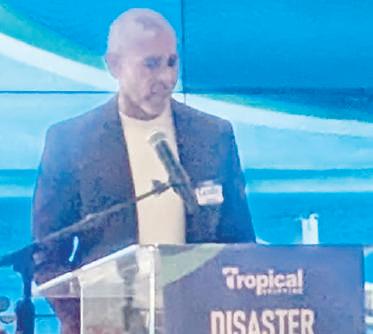


SOME OF THIS COUNTRY’S FINEST sons and daughters teamed up with some of the top brass from Tropical Shipping to map out practical solutions to respond to and recover from the impact occasioned by natural hazards.
This activity was held at the local Sandals resort on Wednesday, May 20 2026, and was designed to give participants an opportunity to plan better to reduce the impacts of rain storms, hurricanes, volcanic eruptions, earthquakes and the possibility of tsunamis.
Over 80 participants from the public and private sectors were invited to brainstorm strategies and ideas that will prepare Vincentians for the theme of the workshop: “Without resilience, One Big wave can change everything”. The activity was called to order by Island Manager Cedric McIntyre.
Before the brainstorming activity, several keynote speakers delivered timely addresses all focusing on ways public and private sectors can cooperate to streamline preparedness, response and relief mechanisms, to

allow affected communities to bounce back effectively and as quickly as possible from the impact of natural hazards.
Mr. Gerard Bergasse, Regional Manager Tropical Shipping, gave an overview of the workshop and urged participants to design the best plan to mitigate the effects of disasters.
Prime Minister Rt. Hon Dr. Godwin Friday set the stage for a series of powerful presentations by expert presenters including: Director of NEMO Ms Michelle Forbes; Anthony Regisford, Executive Director of the Chamber of Industry & Commerce; Mr. Teeka Ramgolan, Environmental Health & Safety Officer MPOC (St. Vincent Modern Port Operating Company); Ms. Vanessa Ledesma, CEO/Caribbean Hotel and Tourism Association and Mr. Billy Jeffers, Manager of the SVG Meteorological Services.
Mr. Regisford noted that “building a culture of preparedness is no longer an option. It is the foundation of our survival” as he spoke to the theme of the workshop: Without resilience, one big wave can change everything.
He went on the say that, “the private sector must play a leading role in building this culture of preparedness because there is going to be no abatement to the threat of natural hazards and the recurrence of catastrophic shocks.
Mr. Jeffers noted that while current conditions favour less storms, he warned that those that form could be intense systems like Beryl and Melissa, for which we need to prepare.
Two additional expert presentations were delivered.
Ms. Eva Martin, a Maritime Engagement Manager for Global Support and Development, spoke about lessons learned from Disaster Relief Response in the region; and Ms.
Nugent/Hill, Senior Director Governmental & Community Affairs — Tropical Shipping focused on “Preparing for the Unthinkable”.
The workshop participants formed two groups following the presentations and were tasked with identifying risks and vulnerabilities to help businesses avoid these risks, communications frameworks necessary for an effective response and recovery communications plan.
Also considered by the groups was legislation as a deterrent to cyber crime. This area of concern arose following ‘Mellisa’ in Jamaica, when it was it was alleged that several online agencies claiming to be ‘official’ agencies were soliciting and receiving financial and other material assistance on behalf of affected Jamaicans.
The local participants numbering over 60 represented NEMO, NTRC, Flow, Digicel, Supermarkets, NGO’s, Rotary club, Red Cross, Banks, Police & Fire Service, Insurance, YARA, ECGC, Brewery, EC Metals, SVG Port/MPOC, AIA, SOL, Construction Companies, MCMH, SVG Hotel Association, and Senior government officers among others.
Closing remarks were delivered by Mr. Andre Gibson, AVP -Tropical Shipping.
This workshop is one of several workshops hosted by Tropical Shipping across the Caribbean and is a demonstration of the main ‘take away’ of this workshop ... private sector amplifying the need for corporate society to play/provide an active role in the entire process and network of disaster management.
Report submitted by:
Donald A. De Riggs

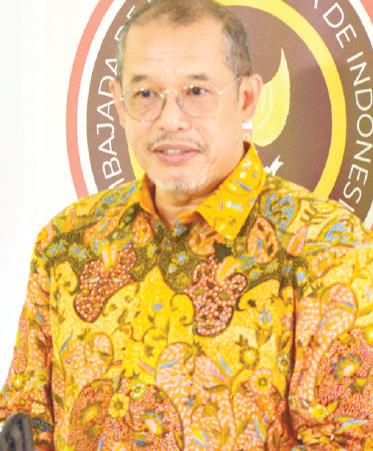
H.E. Firky Cassidy, Ambassador Designate of the Republic of Indonesia to Saint Vincent and the Grenadines married creating Bantik to the journey of empowerment.
TWENTY PERSONShave been equipped with the skills to create Batik following a three-day training workshop, compliments of the Dame Susan Dougan Foundation for Girls and the Embassy of Indonesia.
The training sessions, facilitated by Angela Mata, are the first phase of the project, which was offered to teachers and students drawn from secondary schools on the Windward side of the mainland.
Former Governor General Dame Susan Dougan, speaking during a brief opening ceremony, on Tuesday May 26, 2026 at the building that formerly housed the National Foundation Centre, New Montrose, expressed her appreciation to the Embassy of


Indonesia for realizing the training. She explained that the project has come to fruition six months after the initial discussion with the embassy.
“I am so pleased that the mere six months after the Embassy of Indonesia has not only included the Batik project in their work programme, but they are here to introduce traditional Indonesian batik to Saint Vincent and the Grenadines. We are happy to welcome you. We hope our collaborative efforts will continue”, Dougan highlighted.
Dougan, in noting that the venture was twofold ibn intent, stated: “We decided to have joint initiatives to promote tourism education and the cultural exchange.”
Meanwhile, His Excellency Firky Cassidy, Ambassador Designate of the Republic of Indonesia to Saint Vincent and the Grenadines, lauded Dougan’s vision in providing a second chance to young women.
“Today marks a unique milestone through thousands of miles, and not only an ocean, but two oceans and one sea. We bridge the distance through this beautiful universal language of arts, culture, and shared human empowerment. Batik is not just a fabric; it is far more than a simple textile technique in Indonesia. Batik is a living heritage. It is a canvas of our history, our values, and our identity”, Cassidy expounded.
Giving an insight into the intricacies of Batik art, Cassidy revealed, “To create batik, one must apply hot wax with a steady hand, layer by layer, colour by colour, before the final beautiful pattern is revealed. It is a process that demands immense patience and resilience.
The Ambassador philosophied that like the partnership of the two entities, so too is Batik.
“The journey of creating Bantik mirrors the very journey of empowerment, just as a piece of cloth is meticulously transformed into a masterpiece. The young women here today are learning to save their own future layer by layer

with skills, determination, and grace”, Ambassador Cassidy noted.
The Dame Susan Dougan Foundation for Girls is a charitable initiative launched in September 2023 by the former Governor-General, primarily to assist young girls who have dropped out of the formal education system, but with the aim for
their reintegration into the academic programmes in schools.
Thus far, the programme has assisted over 200 students throughout St Vincent and the Grenadines Currently, twenty-two students receive direct assistance, such as payment of fees, transportation assistance, school meals, hygienic and school materials.
Batik is practised globally, but it is famously associated with Indonesia.

NOTORIOUS JAMAICAN
kingpin Christopher ‘Dudus’ Coke — the man once called the “President of Tivoli Gardens” — is now less than two years from walking free, with a projected release of January 2028 after time was shaved off for good behaviour.
This development comes as popular pastor Merrick ‘Al’ Miller, a longtime friend of the Coke family, said he has been told that the ‘Dudus’ is participating in religious-based and other programmes in prison.
Once accused of running the feared Shower Posse, so named because of its members’ fondness for spraying its rivals with bullets, ‘Dudus’ was linked by US authorities to drug trafficking, gun-running
and deadly violence across borders. Yet back home, some saw him as a provider and protector, fuelling the myth of a Robin Hood-style don.
New York U.S. Attorney Preet Bharara said in a statement following ‘Dudus’ extradition to the US, “From his home base in Jamaica, Christopher Coke presided over an international drug and

weapons trafficking organization that he controlled through violence and intimidation for nearly two decades; enlisting an army of ‘soldiers’ to do his bidding,” His 2010 extradition under then Prime Minister Bruce Golding sparked a bloody military siege in Tivoli Gardens, leaving around 70 dead in one of Jamaica’s
darkest episodes.
A popular local preacher managed to arrange Coke’s peaceful surrender to authorities on June 22, 2010.
Now 57, the big question looms – is Dudus a changed man… or a legend waiting to step back into the spotlight?
(Jamaica Gleaner)









ARIES (Mar. 21- April 20)
Older family members may try to make demands that are impossible for you to handle. Go out with friends. Knowledge can be acquired if you listen. Don't let your health suffer because of worry. Talk to someone you trust.
TAURUS (Apr. 21- May 21)
Look into events that you might find interesting, and compromise by doing a few things that you both like to do. Don't let your boss make you feel guilty enough to take work home with you. You might have some problems balancing your books.
GEMINI (May 22-June 21)
Concentrate on work and on making money. You must make sure that all your personal documents are in order. Take a break; you can finally mend any disputes on the home front. Your time, not your cash, will do a lot more for your relationship.
CANCER (June 22-July 22)
Your ability to put things together will be appreciated by your comrades. Your best efforts will come through making changes in your home. Camping, swimming, and biking expeditions should all be considered. You may not have the same ideas when it comes to what you both enjoy.
LEO (July 23-Aug 22)
Be careful when dealing with superiors. You should get into programs that will enhance your appearance and help you to be the best that you can. Don't donate more than you can afford in order to impress others. Your intuition will be right on.
VIRGO (Aug. 23 -Sept. 23)
Your dramatic approach to life has probably gotten to your mate. You can ask for favors and get sound advice from close friends or relatives. Your ability to talk circles around your colleagues will help you forge ahead in the workforce. Residential moves will be


favorable, and larger quarters the most probable direction.
LIBRA (Sept. 24 -Oct. 23)
Don't overspend to impress others. False information from someone trying to start problems is likely. Health problems may prevail if you haven't been getting enough rest. Seminars will provide you with knowledge and amusement.
SCORPIO (Oct. 24 - Nov. 22)
You should be putting your cash into longterm investments like real estate. You can expect opposition from family as well as colleagues. You might have a problem juggling your time. Major job changes or opportunities to get ahead professionally are apparent.
SAGITTARIUS (Nov. 23 -Dec. 21)
Matters pertaining to work must be completed before you leave. Elders may need your help. If you are not already, think about going into business for yourself. Don't give them the use of your credit card.
CAPRICORN (Dec 22.- Jan. 20)
Don't allow someone to do a job that was designated specifically for you. Travel opportunities must be taken advantage of. You can receive recognition for the work you've done. Let your lover know what your personal intentions are.
AQUARIUS (Jan. 21.- Feb. 19)
Catch up on any correspondence you've neglected. You might find it difficult to control your emotions. You will have no trouble getting things to fall into place. Your ability to help others will win you points.
PISCES (Feb. 20-Mar. 20)
Get the red tape and the unwanted paperwork out of the way. Chances to express your ideas and beliefs can bring popularity as long as you're not arrogant. Make career changes that may increase your income. Don't overreact to someone's advances.


Narrow strip of wood
River in central Switzerland
Colored
Sacramental anointing
Former weight for wool
Monetary unit of `
Large white stork




19. Attempt 21. Vessel built by Noah 22. Toward the stern 23. Forfeit or sum paid into the pool
Hold as an opinion
for cutting grass
Sudden convulsion
Chield 25. Browncapped boletus mushroom
Sink or bend backwards
French vineyard
A dynasty in China
Malt beverage 32. Advanced in years
Front part of an apron 34.


THE YEARwas about 1995. Mr. Steve Eugene Stewart gave his class at the Union Island Secondary School a research assignment. The task was simple: find, visit, and interview the older members of the Union Island community to learn their experiences from the infamous hurricane Janet of 1955. At the time, it was the worst hurricane to hit the island in known history.
For the first time, many of the students realized that the islanders were not alerted by telephone, television, or radio–but from an aircraft that dropped leaflets from above to warn the residents of the coming danger. The students were able to hear firsthand accounts of the destruction, the neighbourly love, and the profiles of courage that followed. After spending time with centurions and other senior islanders, it became clear to the students that this was more than an exercise of information gathering. It was Mr. Stewart’s way of instilling a love of living history, continuation of the oral traditions, respect for the elders, and the importance of knowledge transfer to the next generation.
This was the genius of Mr. Stewart. He could have chosen a generic project from the history textbook or given a conceptual research assignment to be found in encyclopedias. But instead, he came up with a living history project where the students had to visit the homes of the elderly, sit with them, speak with them, listen to them, and even honour them. Many of the elderly were happy just to be visited. It gave them a sense of value; that they were still needed in society. They were happy to make the connections with the younger generation and even trace the family bloodlines.
This assignment encapsulates part of the legacy of Steve Eugene Stewart,
the teacher. He was intentional in connecting students to their roots, exposing them to knowledgeable/experienced experts, and helping them to have a deep love for their homeland. As a teacher, he was so committed to his craft, that he joined his students one year to sit the CXC exam which he had taught them. Little did they know that he didn’t have the subject which he was graciously pouring into them. His commitment to empowering others went beyond his students. Steve Stewart took the time to offer evening classes to other teachers across the island so that they passed needed subjects before their jobs were in jeopardy. He immersed himself in local advocacy and was a founding member of the Union Island Museum Society trying to reclaim artifacts from the early settlers of Union Island that were being displayed in European museums. He played a pivotal role in sports, recreation, and culture with his contributions to the Easterval committee, O.S.D.E.R. (NGO), “May Day” celebrations, drama, and the arts on Union Island. His love for youth advancement often led him to look out for Union Island students studying on the mainland, assisting with housing, and even job placements after school.
An avid writer, Stewart wrote articles on notable people, historical events, and controversies surrounding his homeland. He advocated for landmarks and older buildings to be made historically designated buildings, and even had students learn the significance of many places of interest on Union Island– including the first wall house near “cross road”, the “old post office” cotton-era building , the “overseer” house on health-center hill, and many other relics from the past. One of his final projects was the restoration of “Society Hall” as a living museum and witness to the financial organization of a formerly enslaved people. He emphasized family values like respect, manners, love of learning, and helping others. His love for knowledge, inspired him to study law after many years as an educator–reminding his students “to never stop dreaming, never stop learning, and never stop seizing opportunities”.
An extensive traveler and thought leader on subjects of island improvements, government efficiency, and effective education, Stewart was a champion for positive change. Throughout his life, he always sought to make a difference. Whether by selling newspapers to islanders as a young man or representing his country on the international stage in Switzerland, he was a change maker. His greatest joy, however, was talking about the importance of faith in one’s personal life. He was committed to his church, led out in Bible study classes, and encouraged a personal relationship with Jesus for all those withn whom he came into contact.
Submitted by: Nkarlo Alexander


A 53-YEAR-OLD FARMER of Carriere will appear at the Serious Offences Court, Tuesday, June 2, in connection with an incident in that community on Monday, May 25.
Enos Browne has been charged with possession of a firearm or imitation firearm with intent to commit the offence of wounding, possession of an offensive weapon, to wit, a cutlass, and assaulting Desree Guy of Carriere causing bodily harm.
All three offences were reportedly committed at Carriere on May 25, 2026, and are said to have stemmed from the same incident.
Browne, who was unrepresented, made a brief appearance at the Kingstown Magistrate’s Court yesterday (Thursday), where he plead not guilty to the charges.
Prosecutor Alston Stapleton did not object to bail, but requested suitable conditions and surety. He also asked for a no contact order.
Senior Magistrate Tammika McKenzie granted bail in the sum of $5,000 with one surety, on condition that Browne has no contact with the Virtual Complainant and report to the Mesopotamia Police Station on Mondays and Tuesdays. The matter was transferred to the Serious Offences Court which did not sit this week.
A LAYOU RESIDENT was this week fined and handed a suspended sentence for stealing from the Layou Petroglyph site.
Augustus Alexander was fined $450 forthwith or six months in prison, after pleading guilty to entering the Layou Petroglyph site as a trespasser and stealing one orange and white Stihl trimmer valued at EC$2,680, one pick valued at EC$69, one red gas jug valued at EC$145, one red five litre gas jug valued at EC$70, one bottle of Stihl oil valued at EC$221 and one roll of nylon valued at EC$50. The items, property of the government of St. Vincent and the Grenadines, amounted to a total value of EC$3,235.
Alexander was also sentenced to five months in prison, but that sentence was suspended for 18 months.
Continued from Page 4.
The police circulated the footage throughout the department and the intruder was identified as Jamel ‘Shrek’ Miller of Kingstown. He was apprehended and volunteered a written statement admitting to both offences. He was apprehended in the same clothing seen on the footage.
Miller had 14 previous convictions, mostly for dishonesty and two for criminal trespass. Most of these offences were committed in the last ten years. He told the Court he went into Williams’ yard to pick mangoes, and knocked on her window to ask for a bucket.
But Magistrate McKenzie told him, “You can’t go in people’s place dem hours of the night, suppose they shoot you. You heard the alarm go off and you did not seem to be bothered.”



A RECORD TEN VINCENTIAN TRACK AND FIELDclubs were part of the 2026 edition of the Whitsuntide Games, held at the Kirani Athletics Stadium, Grenada, May 23 and 24.
To the good, all clubs returned with medals.
Topping the list was IT

DAT Academy, whose athletes pouched 13 medals inclusive of five golds.
Accounting for IT DAT Academy’s first places were Jeremiah Wright, who claimed the Under-17 Boys 1500m; Naaliah Stevenson, the Under-
13 Girls Long Jump; and Roy George copped the Under-15 Boys 100m.
Reine Browne took the Women’s 400m Hurdles and IT DAT Academy’s quartet topped the Under13 Girls 4 x 100m relay event.
Securing one gold among nine medals was Team Mustangs, as T’ Niyah Stapleton won the Under13 Girls 400m.
Locked on eight medals each were the St Vincent Grammar School and XCeed Sports Club.
The St Vincent Grammar School though pouched two gold medals, attained by Evonte Nimblett, as he took the Under-17 Boys High Jump and Ethan Kent captured the Under-15 Boys High Jump. X- Ceed had a solitary gold medal through Amaia Edwards, as she won the Women’s Open/ International High Jump event.

Meanwhile, High Performance had six medals, likewise X-Cel Track Club.
Ariah Carter won the Under-15 Girls 400m event for High Performance, landing the club its lone gold medal. XCel Track Club’s take were all bronze medals.
KYLE LAWRENCE, representing Chatoyer Club, took the men’s 100m Open International at the 2026 Whitsuntide Games held at the Kirani James Athletic Stadium in St. George’s in Grenada, over the weekend.
Lawrence, who was 3rd in the 100m in 2025, clocked 10.45 ahead of Juquone Hoyte of Velocity Management in 10.46, and Keo Davis of IT DAT in a time of 10.47

at the 2026 edition.
After the race, Lawrence said he was pleased with his performance, “It was just going through the phases. The time was not want I wanted because I know I am in pretty much better, but I just want to keep going through the phases.
He added, “I’m truly grateful for the opportunity to compete at this level, and I’m eager to continue taking the
IN HIS FIRST MAJOR EVENT, promising middle-distance runner, Vincentian Joranny Welcome secured gold at the just concluded Open & International race at the 2026 Whitsuntide Games at the Kirani James Athletic Stadium in St. George’s in Grenada over the
weekend.
The St. Martin’s student who represented the Chatoyer Club clocked 50.46 in the Boys Under 17 400m dash for his first title at this level. Vincentian, Nazeo Free from IT DAT Academy finished second in a time of 50.72 while Rashawn Holder from
necessary steps toward achieving even greater things in the sport.
“Overall, I am pleased with where I am right now; however, I know there is still room for improvement. I’m working on the right things, and I trust my coaches to help me reach where I need to be… . I am confident in my ability to continue doing just that as I pursue my goals.”
He also expressed gratitude to the Creator. coaches at South Plains College in the United States and local coach Pamenos Ballantyne.
I.B.A. ALLEN
the Extreme Velocity Track Club was the third to cross the finish line in a time of 50.97. Speaking to the VINCENTIAN on his return home, Welcome, acknowledging that he had bettered his previous best, said. “The experience was excellent. I learned how to compete
… not to under estimate the other athletes to focus on what I needed to do to win my race.
“I want to give credit to my training partner, my big brother, role model, Kyle Lawrence, the specialist 100m runner. He really instructed me well .. on how to manage the race,
A catch of three medals was ROSES Academy’s showing, but there were two golds in the lot.
Umar Pierre secured the Under13 Boys High Jump and Samara Pierre took hold of the Women’s Open 3000m.
Chatoyer scalped two gold medals, thanks to Kyle Lawrence as he claimed the Open/ International men’s 100m and Joranny Welcome added the Under-17 Boys 400m title.
And, the

Georgetown Secondary Schooltwo silver and Biomechanicstwo bronze, complete the Vincentians’ medal haul from this year’s Whitsuntide Games.
The ten Vincentian clubs all tolled featured over 150 athletes at the 2026 Games, that dates to more than seven decades of hosting.
so I am looking forward to having him push me. I am also grateful to my coach Pamenous Ballantyne who always encouraged me to do my best, and my parents and well-wishers.:”
I.B.A. ALLEN



FOUR CYCLISTS have been named by the St. Vincent and the Grenadines Cycling Union (SVGCU) to represent St. Vincent and the Grenadines at the 2026 ABWU Invitational
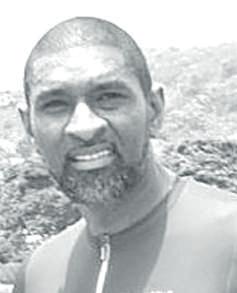
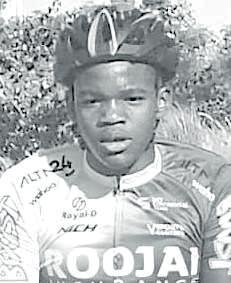
OECS Cycling Championships, set for Antigua and Barbuda, May 31.
The quartet includes Lucky Antrobus and Zefal Bailey who compete in the Elite Category, whilst Desron Bynoe and Sage Williams are in the Masters and Youth
categories, respectively.
Bynoe and Williams are based in Barbados. Williams though will be making his debut for St Vincent and the Grenadines at the championships.
Apart from the four cyclists, a management team that includes
Emmerson HolderManager, along with officials- Michael Ollivierre and Peter Durrant are part of the Vincentian contingent.
The sub- regional championships are making a return after a seven -year hiatus.
Sunday’s event starts at the Old Parham Road, before moving on to Airport Road going through Coolidge, Hodges Bay and Cedar Grove.
Thereafter, cyclists head to Friars Hill Road then into St John’s and back to where they started at Old Parham Road.
As such, cyclists will complete about 55 miles.
The last OECS Cycling Championships were staged in 2019.
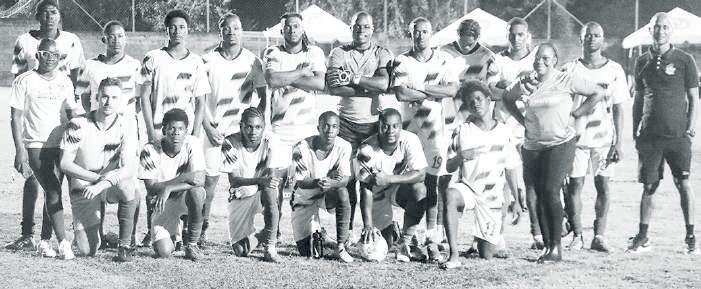
SV United took the Tier Two title of the SVGFF 2025/2026 National Club Championships with a 2-1 win over Sparta FC on Sunday, May 24, at the Brighton Technical Centre.
A goal each from Davarno Sutton and Akram Edwards accounted for SV United’s goal, while Suenalli Richards converted for Sparta.
Both SV United and Sparta will advance to the next edition of the Vincy Soccer Premier League (VSPL).
SV United is returning to the topflight, having
been demoted from the 2024/2025 edition of the then Premier Division.
Before that SV United lost their place from the Premiership in 2020 but regained their place following their hold on the First Division title in the 2022/2023 season.
SV United’s elevation to the Premier Division first came in 2013, when they champed their first national accolade by claiming the First Division’s top place.
On the other hand, Sparta, a unit from Diamonds Village, will experience their first entry into the big league of St Vincent and the Grenadines’ Football.
They two had assured their promotion status following semi-final wins on May 6, also at the Brighton Technical Centre.
SV United had stopped Glenside Ball Blazers, 41, while Sparta had a 2-1 win over Richmond Hill United.
Richmond Hill went on to finish third, defeating Glenside Ball Blazers 5-4 on penalties, after both had played to an exciting 5-5 tie in regulation time.

Meanwhile, prior to Sunday’s final, there was a consolation final played on Saturday between Parkside Rollers and QCESCO Titans, with Parkside coming away with a 2-1 victory in the South Leeward derby.
The consolation segment featured thirteen teams that did not attain any of the top four positions in the respective zones of the preliminaries.
Twenty- five club teams stashed into four zones competed for honours in the preliminary round of the Tier.


SYSTEM THREE SPORTS ACADEMYis one win away from claiming the 2026 Vincy Soccer Premier League (VSPL) title.
A hard fought 2-1 win over Layou on Friday May 22, at the Brighton Playing Field, pushed System Three to 38 points from 15 matches.
A goal each from Azhino Solomon and Shemron Philips ensured System Three’s triumph. Kennija Joseph responded for Layou, who remained on 30 points.
Je Belle, on the same night, drew 0-0 with Camdonia — Chelsea and moved to 28 tp occupy third position.
Camdonia — Chelsea is in seventh place on 17 points.
In fourth place is North Leeward Predators on 24 points, following a 2-0 blanking of BESCOPastures on May 26. Scoring for Predators were Kurtland Williams and Gideon Richards.
BESCO Pastures with 19 points is in sixth position.
Meanwhile, Awesome moved to 21 points and a fifth place, when they edged out Hope International 3-2 on May 20.
A double by Odey Cupid and a Shequean Millington strike gave Awesome their three goals. Valdo Anderson registered Hope International’s goals.
Hope International stays in eighth place on 14 points.
And, Bequia United made a push for a possible evasion from relegation, beating winless Avenues United 3-0 on May 26.
Mark Browne hit a brace and Devin Forde the other, as Bequia United climbed to 13 points, whilst remaining in ninth place.
For Avenues United with just 3 points from their 15 matches, will be relegated.
Each of the ten clubs has three matches to go, but the title can be sown up, should System Three beat North Leeward Predators, when they meet Sunday May 31, from 8pm, at the Brighton Technical Centre.
Other fixtures in match day 16, feature Awesome versus Je Belle from 7pm, May 29 and from 9pm, Bequia United meets CamdoniaChelsea.
Sunday’s other matches pit Hope International against BESCO- Pastures from 330pm and from 6pm, Avenues United takes on Layou.
SUNDAY MAY 31marks the end of the 2026 Indian Premier League. Royal Challengers Bengaluru (RCB) disposed of the number two team Gujarat Titans in the build-up.
Number 0ne team RCB stormed into the final with a 92-run win over second placed Gujarat Titans on Tuesday. Titans have another bite of the cherry when they play Rajastan Royals in another eliminator.
Rajastan Royals beat Sun Risers Hyderabad to secure the next stage. It boils down to the top three, indicating that persistency adds to your prospect of success.
The IPL is announcing itself as the T/20 competition wherever. There is an atmosphere that draws even viewers into the drama.
The IPL is taking cricket to another level. It is ensuring that India is a force with which to reckon. It is evident by the players who are breaking through from early ages.
The technology, presentation, tightness of package, and quality of cricket together serve as its standard bearer. The pre-season auction engenders intrigue, and the whole operation fits into one of global excellence.
The off-field interaction presents a pool of knowledge that benefits individuals and countries. Experience from players who have made their mark, help to nurture the future crop. There is no scarcity of talent in India. The competition and love for the sport is as overwhelming as the nation’s position in the world when comes to population density.
The dominance and growth of the IPL ensure dividends for the home country, and by extension, some of the spoils filter into economies of countries world over.
Other nations have the opportunity of seeing the IPL in motion. Their desire to maintain the standard, redounds to assured quality.
The bar is rising considerably. This is obvious with the higher scores that teams are setting. And the trend is seeing the winning chase go up time and time.

Pitch conditions produce results that highlight the unpredictable nature of the game. Spectators are held to their seats as those cliff hanger games unfold.
The IPL shows what can happen when sporting enthusiasts put passion into a hobby. Just like that, the world is transforming into a T/20 wagon.
The good thing about T/20 is that it prepares one to perform at all other forms of cricket. A One Day International (ODI), usually of 50 overs, can be altered by weather factors, and adjusted to become versions of T/20.
The scenario can unfold in Test matches. Situations arise where requirements change the fundamentals making them comparable to T/20. All together, the basic of sports are changing to accommodate the reality. One has to be prepared to adopt to the situations as they happen. That seems to be the course of operation. It is no mystic or wonder. They are the signs that manifest before our eyes.
Gudakesh Motie 2 for 45.

Evin Lewis achieved a significant milestone by scoring his second-ever first-class (4-day) century, 122, breaking a 10-year gap between his first-class hundreds, to lead T&T to a second innings 267. Amir Jangoo got 48, Shamar Joseph 2 for 86, Keemo Paul 3 for 47, Veerasammy Permaul 4 for 14 were Guyana’s chief wickettakers.
Interestingly, play was significantly delayed during the morning session of Day 1, when a piece of the pitch dislodged on just the fourth ball of the match, forcing the umpires to halt action for further pitch preparation.
TRINIDAD AND TOBAGO RED FORCE have returned to the pinnacle of 4day cricket in the West Indies, after a painstaking two years of one disappointment after the other.
The long wait came to an end after they defeated Guyana Harpy Eagles by 141 runs in the finals of the 2026 CWI four-day championship, played at the Sir Vivian Richards Cricket Stadium, Antigua in Antigua, May 17 — 20.
Defending champions Guyana Harpy Eagles went into the finals chasing their fourth consecutive CWI Championship title, but the Trinidad & Tobago Red Force, determined to recapture glory after 20 years, played their best all round cricket in this format to outplay the Eagles in a revived format.
In pursuit of 280 for victory on the final day, Guyana Harpy Eagles were skittled out for 139.

JOSHUA

Kevlon Anderson showed some fight with a patient 41. Jayden Seales with 3 for 39, Anderson Phillips 2 for 63, Terrance Hinds 3 for 20, and Joshua James 2 for 12 were wicket takers for Red Force.
Guyana Harpy Eagles made 247 in their first innings, Tagenarine Chanderpaul hit 33, Jonathan VanLange 50, Keemo Paul 49, and Gudakesh Motie 33. Jayden Seales picked up 4 for 56, Terrance Hinds 3 for 46, Anderson Phillips 2 for 91.
Trinidad and Tobago Red Force posted 260 in their first innings, Jayden Seales top scored with 70 not out, Khary Pierre 40. Guyana’s Nial Smith had 3 for 51, Keemo Paul 3 for 28, and
Eagles left arm spinner Gudeskesh Motie topped the batting and bowling averages respectively in the just concluded CWI four-day championship.
DaSilva who led his team to their first fourday championship in 20 years, totaled 413 runs at an average of 59.00 in 7 innings with a top score of 220 and two fifties. Amir Jangoo left hand middle order batter also from T&T was second in the runs tally with 411 at an average of 68.58 from 7 innings, his highest being 203 not out and one fifty. Kevin Wickham of Barbados
Following multiple inspections, play finally resumed after lunch. This pitch scare followed a round-two match between the Leeward Islands and Trinidad and Tobago at the same venue, which was abandoned as a draw due to dangerous and unpredictable pitch conditions that compromised player safety.
I.B.A. ALLEN

Pride was third with 393 runs at an average of 78.60 with three hundreds from 6 innings. Motie picked up 27 wickets at an average of 15.22 and an economy of 3.30. His best bowling figures was 6 for 73.
Anderson Phillips from Trinidad and Tobago Red Force took the second most wickets 25 at an average of 21.24 and an economy rate of 3,82. His best bowling figures was 6 for 38. Jayden Seales from Trinidad and Tobago Red Force took the third most wickets 23 at an average of 13.08 and an economy rate of 2.62. his best bowling figures was 7 for 34.

I.B.A. ALLEN Gudakesh Motie took the most wickets, 27.
from Page 28.
Slater also revealed that the outing was his first trip for the year after carrying out repairs to his vessel, including fiberglass work and rebuilding the icebox.
“This is excitement for me,” he said. “Most of my winnings will go to my grandchildren. I’m happy the government gave fishermen money instead of only fishing gear.”
Oscar Richardson
placed second in the competition with 742 pounds of fish and received EC$12,000, while Lamar Cordice captured third place with 587 pounds and a cash prize of EC$7,000.
The day’s activities recorded a total catch of 5,872 pounds from 28 returning vessels, representing a slight increase over last year’s figures.
Among other category winners, Alla Matthews
captured the female competition, Leon Mascal won the Class Two category with 231 pounds, and Glenroy Grant landed an impressive 9,859 pounds in the beach seine category.
A major highlight of the event was the official recognition of the newly established Ministry of Fisheries, Marine and Land Conservation, and Climate Resilience, which was recently separated from the
Ministry of Agriculture.
Prime Minister Godwin Friday said the move underscores the importance of fisheries and agriculture as key pillars of the national economy and part of the government’s wider plan to expand the blue economy.
Friday also announced that his administration intends to improve access to financing for fisherfolk through the proposed National Development Bank, expected to become operational later this year.
Continued from Page 28.
“It has truly been a pleasure to have Sandals here,” he said. “It has brought opportunities across many sectors and helped elevate our tourism industry. For me, Sandals is about development and raising our standards. If we want to benefit from tourism growth, we have to continue improving our service and professionalism, because when visitors come here, they are experiencing our country through us,” he said. His journey is another reminder that the impact of tourism extends far beyond the resort itself.

Minister of Fisheries Conroy Huggins also highlighted several policies currently being considered to further strengthen the fisheries sector.
Meanwhile, President of the National Fisherfolk Organisation, Winsbert Harry, acknowledged the challenges facing fishermen but encouraged those within the industry to remain committed.
Harry also commended the organising committee for successfully staging the 49th Fisherman’s Day celebrations at the Kingstown Wharf.
2 Bedroom Upstairs Apartment Fully Furnished Tel: 491-1338










by KENVILLE HORNE
VETERAN FISHERMAN Eli Slater of Clare Valley is the 2026 Fisherman of the Year in St. Vincent and the Grenadines. He claimed the coveted title during the country’s 49th edition of Fisherman’s Day.
This year’s celebrations were held in Kingstown on Monday, May 25. The annual event,
Consumers cashed in on reduced prices for fish on the day.
Victoria Village 10,892 sq.ft @ $12.00 p.s.f - $130,704.00
BB331 (784)- 457-2087/(718)-807-4376 office (784)-493-9431/(784)-533-0431 whatsappcell donp@vincysurf.com
which celebrated the nation’s maritime heritage and the contribution of fisherfolk, was held under the theme “Right to Food, for a Better Life and a Better Future,” with the slogan “Healthy Fish, Tasty Dish.”
This year’s celebration marked the first Fisherman’s Day under the new administration, which has pledged to place greater emphasis
on developing the blue economy.
Slater’s achievement
Slater secured his seventh overall Fisherman of the Year title and the second on the trot, after reeling in an impressive 929 pounds of fish. For his achievement, he received a cash prize of EC$25,000, a Samsung Galaxy S26 smartphone, engine oil, a compass, and other fishing supplies.
Speaking following the announcement, Slater credited his success to adapting modern fishing techniques, particularly the use of a semi-long line with live bait, a drift line method he learned from a fellow fisher in Grenada.
“I left home this morning around quarter to two and travelled to Buccament to get bait before heading about fourteen miles offshore,” Slater explained. “We set 250 hooks because we wanted to return in time for the event. During the trip, we caught ten tunas and two ocean gars.”
Continued on Page 27.


FOR MORE THAN FIFTEEN YEARS, Kendal Neverson has been welcoming visitors to Saint Vincent and the Grenadines from behind the wheel of his taxi. It was steady work, but in 2024 things began to change in unimaginable ways.
A member of the Taxi Association, Neverson has built his reputation on professionalism, hospitality and deep pride in representing his country. When he first heard that Sandals Resorts would be opening a new resort in Buccament Bay, he wasn’t entirely sure what to expect. But that uncertainty quickly turned into opportunity.
Following a competitive selection process to identify drivers who would assist with airport transfers and guest transportation, Neverson was among those chosen to work as one of the local taxi drivers transporting guests.
Since then, he says the impact on the tourism sector has been transformational, “Saint Vincent and the Grenadines has moved very swiftly from the moment Sandals started operating here. Our tourism sector has risen drastically and it has been a great upgrade for taxi drivers, especially for those of us involved in the transfers between the airport and the resort.”
For taxi operators like Neverson, the growth has translated into more consistent work and the chance to provide service to visitors from around the world.
As one of the first local voices guests hear when they arrive, he takes that responsibility seriously.
“When it comes to Sandals, it’s all about standards,” he said. “That’s something I’ve learned and continue to apply every day.”
Furthermore, he believes the presence of Sandals has had a positive impact across multiple industries, from transportation and agriculture to fishing and other sectors that support tourism. ontinued on