

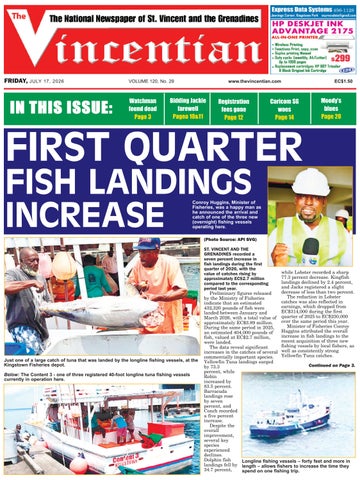
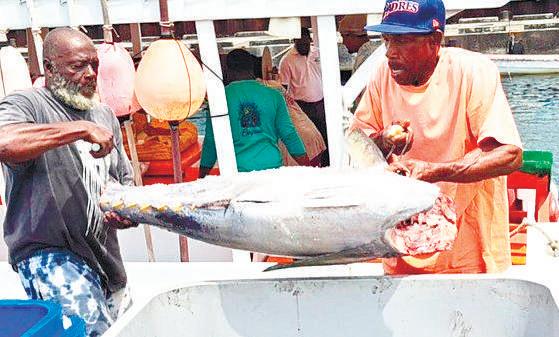
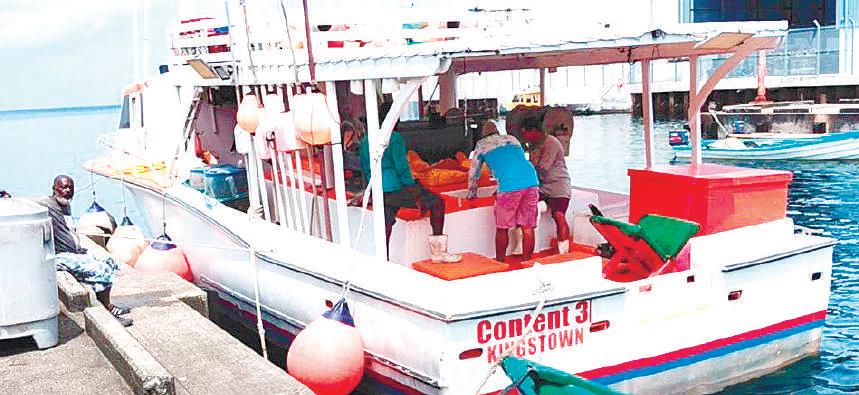
(Photo Source: API SVG)
ST. VINCENT AND THE GRENADINES recorded a seven percent increase in fish landings during the first quarter of 2026, with the value of catches rising by approximately EC$2.7 million compared to the corresponding period last year.

Preliminary figures released by the Ministry of Fisheries indicate that an estimated 432,320 pounds of fish were landed between January and March 2026, with a total value of approximately EC$3.89 million. During the same period in 2025, an estimated 404,000 pounds of fish, valued at EC$2.7 million, were landed.
The data reveal significant increases in the catches of several commercially important species. Yellowfin Tuna landings surged by 73.3 percent, while Robin increased by 83.5 percent. Barracuda landings rose by seven percent, and Conch recorded a five percent increase.
Despite the overall improvement, several key species experienced declines.
Dolphin fish landings fell by 34.7 percent,
while Lobster recorded a sharp 77.3 percent decrease. Kingfish landings declined by 2.4 percent, and Jacks registered a slight decrease of less than two percent.
The reduction in Lobster catches was also reflected in earnings, which dropped from EC$314,000 during the first quarter of 2025 to EC$230,000 over the same period this year.
Minister of Fisheries Conroy Huggins attributed the overall increase in fish landings to the recent acquisition of three new fishing vessels by local fishers, as well as consistently strong Yellowfin Tuna catches.
Continued on Page 3.

and
A 35-year-old vendor from Glen was shot and killed in his community on Friday night, becoming St. Vincent and the Grenadines’ 23rd homicide victim for 2026.
The deceased has been identified as Sandre Matthias, who residents described as a quiet, easy-going individual who kept to himself and avoided trouble.
The fatal shooting occurred at approximately 8:15 p.m. on Friday, July 10.
According to a statement issued by the Royal St. Vincent and the Grenadines Police Force (RSVGPF), officers received reports of a shooting in Glen at about 8:15 p.m. Matthias was
reportedly shot by an unknown assailant and succumbed to his injuries. He was later pronounced dead by a medical practitioner.
Police have since launched an investigation into the incident. It is ongoing and they have not disclosed any information with respect to motive.
Watchman found dead
And in another gunrelated incident considered to be a homicide and therefore number 24 for the year, but not yet confirmed as such by the authorities, a body was discovered during the early hours of July 14 in the vicinity of
the Anglican Church at Golden Vale, this according to a police report.
The body, described by the police as exhibiting “injuries appearing to be consistent with gunshot wounds,” was later identified to be that of Nicholas Oliver, a 51year-old watchman of Arnos Vale.
Oliver was pronounced dead at the scene by a medical practitioner.
There have been no responses to the discovery with residents uncharacteristically quiet about the discovery.
Below: Sandre Matthias – the latest Vincentian young man to die by the gun.

Post-mortem examinations were expected to be conducted on Matthias and Oliver to determine the exact causes of death. The police are appealing to anyone with information that could assist the investigation to contact the Criminal Investigations Department/Major Crime Unit at 456-1810, Police Control at 457-1211, or the nearest police station. Authorities have assured that all information received will be treated in the strictest confidence.
(KH)

QUICK REPONSE by resdicents of the Norther Easterm community of Owia led to the rescue of two St. Lucia fishermen last Friday evening (July 10).
According to the Royal St. Vincent and the Grenadines Police Force (RSVGPF), the Coast Guard Service received a distress call at approximately 6:21 p.m., July 10, from the operator of the “Time and Chance”, described as a white pirogue registered in Saint Lucia.
The person making the report informed that the vessel had developed engine trouble and was
drifting aimlessly. He was able to provide its location to the Coast Guard.
Before the Coast Guard could arrive, and in worsening weather conditions, the fishing boat ran aground in Owia.
Recognising that they could well be within a residential area, the fishermen began crying out for help.
Luckily for them, their cries did not go unheard. Residents who first heard the cries immediately organised a party and headed in the direction of the cries.
They were able to pull both men and the boat to safety.
Police confirmed that neither of the fishermen sustained any injuries during the incident. (KH)
Continued from Frontpage.

“We have to be able to go deeper. We have to be able to go further and spend more time,” Huggins said, explaining the government’s long-line tuna initiative aimed at encouraging greater investment in the fishing industry.
According to the minister, following the government’s call for investment late last year and during the 2026 Budget presentation, three investors –including one from the Vincentian diaspora – purchased fishing vessels ranging from 40 to 60 feet in length. Two of those vessels have been operating since late June.
Huggins said the impact has already been evident, pointing to one Bequia-based vessel which recently returned with a catch of more than 66 Yellowfin Tuna. During its maiden voyage in late June, the vessel landed 49 Yellowfin Tuna weighing between 70 and 140 pounds each.
“Immediately we have seen the results,” the minister said, while noting that improvements to fisheries infrastructure are still needed to support the industry’s expansion.
He disclosed that the government plans to undertake restoration and renovation works at fisheries centres across the country over the next two years, a move he believes will further boost fish production.
Officials said the decline in catches of some species may be linked to a combination of factors, including climate change, shifting ocean currents, rising sea temperatures, severe hurricanes, habitat destruction, pollution, damage to coral reefs and mangroves, and coastal development. (Compiled by Kenville Horne, Source: API SVG)



Zimran Cupid not only found some favour with the court but also with the businessman from whom he had stolen.
Stories by HAYDN HUGGINS
A 19-YEAR-OLD BOY who recently entered Ranjhomae Bakery at Stoney Grounds, commonly known as Randys’ Bakery, and made off with a cash register containing cash, was placed on a suspended sentence on Monday, but he will also have to pay compensation to Randy Kennedy, the owner of the bakery.
On his return to the Kingstown Magistrate’s Court on Monday, the defendant, Zimran Cupid, was sentenced to 19 months in prison, but that was suspended for two and a half years.
Cupid had pleaded guilty on June 29, to entering the bakery as
a trespasser on June 16, and stealing a Casio cash register valued at EC$3,500 containing $90 in cash, the property of Ranjhomae Bakery, but sentencing was adjourned to Monday, June 13.
In addition to the suspended sentence, the Court made an order for Cupid to work at a property, of which Kennedy is in charge, so that he could repay the cost of the cash register, and the stolen money.
That property is located next to Independence Park, and is close to Ranjhomae Bakery.
Kennedy, who was previously summoned to the stand in connection with the matter, had told the Court he was willing to allow Cupid to work for him, thereby giving him the opportunity to pay compensation and still earn some money for himself. The nature of that work will be arranged.
Cupid has until May 5, 2027 to comply with the order. He is expected to return to Court on May 7, and if the Magistrate hears that he did not comply, he will go to prison for one year.
Cupid is currently serving time for breach of a suspended sentence for phone theft, which was activated at the Kingstown Magistrate’s Court on Monday, but Cupid is expected to be released from prison on time for his scheduled date to return to Court.
Before Senior Magistrate
SERIAL THIEF CURTIS
‘SELASSIE’ JOSEPHchalked up his 46th conviction on Friday, July 3, when he was sentenced on two additional theft charges and an assault charge, at the Kingstown Magistrate’s Court.
The 52-year-old Sion Hill man was sentenced to ten and a half months in prison for stealing a one litre bottle of strong rum valued at EC$56.69, the property of Massy Stores, Kingstown, on June 23.
Joseph was also sentenced to: nine months and 24 days in prison for stealing two transparent plastic bags containing codfish, valued at EC$45.70, the property of
Peppakorn Supermarket, Kingstown, on June 2; and 16 months and 18 days in prison for assaulting Travie St. Hillaire of Greiggs, with intent to commit an offence, to wit, wounding. That offence was committed in Kingstown on June 23
The sentences, handed down by Senior Magistrate Tammika McKenzie on July 3, are to run consecutively.
Joseph had pleaded guilty to the charges at a previous Court appearance, but sentencing was adjourned to July 3.
Joseph is also facing another theft charge, as well as an assault charge, but he pleaded not guilty to those,
Tammika McKenzie handed down the penalties on Monday, Cupid, responding to questions from the Magistrate, told the Court he saw the door to Ranjhomae Bakery open and he went inside.
“You were going to take up night duties?” the Magistrate asked Cupid, who replied that he was going to look for something to eat. He added that his father lives in Mustique, but does not help him.
But the Magistrate told him to “Watch all the strength you have in your body. Instead of putting it to good use, you trying to…” stopping short of completing what she was saying.
He blamed someone, whom he identified, for forcing him to burglarize the bakery.
McKenzie said that for the offence, she found the aggravating factors to have outweighed the mitigating.
In relation to the offender, she noted that Cupid had previous convictions but she also considered his age, apparent desperate circumstance and his assistance to the police.
The facts showed that at around 7pm on June 15, Maimai Williams, the Assistant Manager of the bakery secured the business place and went home.

Curtis Joseph may just have created history with his litany of infractions of the law.
and they were adjourned. Before his three recent convictions, Joseph had 43 previously, mostly for offences of dishonesty, and ten of those convictions were recorded within the last ten years.
JUST TWO WEEKS after recently appointed resident psychiatrist Dr. Elroy Asanza Castillo of Cuba deemed Kesroy Williams fit to plead and participate in the Court process on firearm and ammunition charges, Williams has pleaded guilty to those charges.
The 27-year-old Belair man, who is represented pro bono by attorney Grant Connell, is charged with possession of a firearm, make and serial number unknown, which is a prohibited weapon, without the authorization of the Minister.
Williams is also charged with possession of a .32mm firearm, make and serial number unknown, without a license, and possession of three rounds of .32 ammunition, without a license.
The offences were committed at Belair on February 5, 2006.
Williams had pleaded not guilty to the charges at one of his earlier Court appearances, but because of his documented mental health history, he was sent to the Mental Health Rehabilitation Centre for evaluation, and the preparation of a report for submission to the Court.
However, because there was nobody qualified then to do the report, the Court did not receive that report until July 2 following the appointment of Dr. Castillo as this country’s resident psychiatrist, filling a gap which was vacant for several years.
The findings of the report deemed Williams fit to plea, and the Serious Offences Court on July 2 granted bail in the sum of $15,000 with one surety, on condition that he report to the Calliaqua Police Station every Wednesday. The matter was adjourned to Tuesday, July 14.
Williams however, could not find a surety and was kept at His Majesty’s Prison, Kingstown.
On his return to Court on Tuesday, Prosecutor Shamrock Pierre read the charges to him again, and he pleaded guilty to them.
He would be sentenced next Monday, July 20, following the presentation of the facts. He will remain in prison pending sentencing.
Dr. Castillo will be summoned for the sentencing at the request of Williams’ lawyer.
A 25-YEAR-OLD SION HILL MAN who pleaded guilty last month to multiple traffic offences, received his penalties at the Kingstown Magistrate’s Court on Friday, July 03.
Adriel Prince was penalized as follows: fined $1,250.00 to be paid by May 5, 2027 or six months in prison, for driving motor vehicle RAA 769 in a manner dangerous to the public; $1,000.00 to be paid by October 9, 2026 or five months in prison, for driving the said vehicle without insurance; $650.00 to be paid by October 15, 2026 or four and a half months in prison for being the driver of the vehicle having been involved in an accident, owing to the presence of the vehicle in the road, did fail to stop at the scene of the accident; $850.00 by July 3, 2027 or four months in prison for using the

vehicle without being the holder of a driving permit. The offences were committed on May 24 in Kingstown. Senior Magistrate Tammika Mckenzie hand down the penalties on July 03.
Prince is also charged with intent to deprive Ariel Samuel of Gibson Corner, mother of Ezekiel Samuel a child under the age of 14, enticed and detained such child (child stealing).
The charge lists the action as being committed on May 24,2026 at Gibson Corner.
He had pleaded not guilty to this and it was adjourned and transferred to the Calliaqua Magistrate’s Court.
All of the other charges are said to have stemmed from the same incident.
SINCE THE COVID-19 ‘vaccine’ has been exposed for what it was really made for, many persons have been skeptical of all the vaccines and other medications associated with it.
These scientists and International Health Organization cannot be trusted. Many, if not all of them, should be serving time. I am sure “Frankly Speaking” will agree with me.
I don’t know if the makers of these white lights (LED) have a hidden agenda. These lights have taken over (from streets, motor bikes, flashlights, cars. etc.).
A friend told me he slipped in a drain a few nights ago. As he was walking home, his eyes were ‘dazzled’ by the lights of an approaching vehicle.
Can someone in the Ministry of Health say if these lights are affecting our vision?
If we don’t di something to curb or ban their (lights) use, we’ll soon have a nation of visually impaired persons, to add to those who have hearing issues due to exposure to excessively loud music in public vehicles public and a few private ones.
Concerned Citizen
AS THE FESTIVE SEASONcomes to a close, we can all be thankful for what appears to have been a peaceful Carnival. I have not heard of any major incidents, and that is something we should all appreciate.
I would like to take this opportunity to commend the officers of the Royal St. Vincent and the Grenadines Police Force for the excellent job they did throughout the Carnival season. While many of us were celebrating, they were working tirelessly to keep the peace, maintain order, and ensure the safety of everyone.
Thank you for your dedication, professionalism, and service to our nation. Your hard work did not go unnoticed.
Well done, and may God continue to bless and protect you all.
Aunty G
HERE ARE THREE THINGS (there are lots more but three will suffice for now) that caught my fancy for Vincymas 2026. (Used to be Vincy Mas now its Vincymas – a wonder who change it and why?)
First to begin with, after all the emphasis on Miss SVG over the recent past, this year’s Pageant was a letdown. Would you believe how many people I ran into who didn’t know the date for the Miss SBG Pageant? And there were even some people who were asking on the very day of the show about who were the contestants.
Now CDC, you got to come better than that. And when I checked who attended the show, it looked like only the big brass, those who could afford the VIP tickets, who came out in numbers. What a letdown!!
Then there was the Kiddies Carnival. At one time there I thought we had brought a “Coney Island” into town. I mean, when all was send and done, I wonder how many children and adults who
TEAM ATHLETICS ST. VINCENT AND THE GRENADINES (TASVG) joins the entire Vincentian sporting fraternity in expressing our sincerest condolences to the wife, family, relatives, and loved ones of our dear friend, colleague, and brother, Karl Woodrow “Keylee” Williams, who passed away on Friday, 10 July 2026.
Woodrow’s contribution to the development of sport in St. Vincent and the Grenadines remains legendary. The many areas in which he served and contributed were always dedicated to the advancement of Vincentian sport, and the full extent of his impact could fill several pages.
The heartfelt tributes that have been pouring in are testament to the far-reaching impact of his work in, for, and through sport. No single sporting discipline can claim
Woodrow as its own, as he so generously devoted his knowledge, time, energy, and expertise to countless individuals and organisations throughout St. Vincent and the Grenadines and beyond.
As one of the sporting organisations that benefited greatly from his many talents and contributions, TASVG remains profoundly grateful for all that he did for us in every aspect. We ask only that all of our stakeholders and everyone who benefited from his education, training, experience, guidance, and influence preserve his memory as a cherished part of their personal history, always.
May our dear friend, colleague, and brother, Karl Woodrow “Keylee” Williams, rest in eternal peace.
came to Victoria Park for Kiddies carnival, actually saw the costumes. Has the mandate of the CDC changed? Did the CDC get anything from those games and rides?
And was the same old thing with the Junior Panorama. More games and rides than pan, which by the way was a slap in the face for the Pan Against Crime programme. Six pan sides for Junior Panorama??? Will the Youlou Pan Movement (YPM) take the ‘cussing’ for this poor showing? And when the ‘cussing’ start, I wonder if Mr. Small will take off his YPM hat and put on his CDC hat so he could run from the cussing? A man could run but he can’t hide.
Mr. Editor, I can’t remember more money being spent on pan than what the ULP government spent, beginning with the Pan Against Crime programme. It
would be interesting to find out how many pan sides were formed with Pan Against Money and how many are still in existence today. Regardless, is we carnival but we have to be careful we are not taking it away from the people.
Charles, Edinboro

CAN THE SAME ENERGYused by Police to clamp down on number plates be used to pull out boom boxes from public transportation?
How many vaccinated persons are there on the stats of the HIV uptick in S.V.G.?
Why are persons who should know better asking why government is borrowing money to add to the “Hook in the Gill”?
When is the leader of the opposition going to admit that it was he as prime minister and the ULP government that put the country in billiondollar debt?
Is the government maintaining the same
twice per year road cleaning, although in opposition they claimed it should be every quarter?
When will the opposition leader face the fact that he is no longer P.M. and has no position in CARICOM?
Has Rayneau been granted approval to operate an asphalt plant somewhere in Argyle?
When are radio personalities and radio stations going to learn not to get too deep into the pockets of politicians?
Under the ULP the authority of Permanent Secretaries was often sidelined. Are we see the same thing under the NDP?
The National Newspaper of St. Vincent and the Grenadines

Managing Director: Desiree Richards
Editor: Cyprian Neehall
Telephone: 784-456-1123
Fax: 784-451-2129
Website: www.thevincentian.com
Email: thevincentianpublishing@gmail.com
Mailing Address: The Vincentian Publishing Co. Ltd., P.O. Box 592, Kingstown, St Vincent and the Grenadines.
FOR THE FIRST TIME, this country’s credit profile has been downgraded by Moody’s, one of three (the others being S&P and Fitch) global financial services company that evaluates the creditworthiness of borrowers, corporations, and governments.
Moody’s provides data, intelligence and analytical tools which it says, are intended to help business, financial leaders and governments make confident decisions.
Our situation as exposed to the world by Moody’s is that we have been downgraded from a B3 rating to a Caa1 rating, which speaks to a vulnerable fiscal profile and elevated debt risks, and therefore projects a negative outlook going forward.
It means that somewhere in Moody’s lofty offcies, a team of rating analysts has determined that a borrower’s, in this case, St. Vincent and the Grenadines’ credit profile is relatively weaker, projecting a situation in which this country will be hard-pressed to meet its debts on time and in full as would have been previously expected.
A few things before we labour into what all this means for us now, i.e. the NDP government.
Let’s be clear: Moody’s rating is not based on an assessment predicated on data collected over recent times like the last eight months or so. It includes data in greater part from the period of the Unity Labour Party administration. And while we are wont to factor in challenges like Covid-19, the eruption of Soufriere and the passage of hurricane Beryl as contributing to challenging economic and fiscal periods through which the ULP had to navigate, we must accept that the economy is not to be dissected to soften the reality. What matters is how we navigate through the challenges and how the economy and fiscal policy are set to meet the development needs and loan obligations of the state.
The fact is, we have been accumulating debt over the years with, it seems, no serious regard for, especially, the short term, the present in which citizens must work, eat, sleep, feel safe, educate their children, take care of health issues, afford some leisure activity, simply live a contented life as promised by those who seek to represent their interest and safeguard their welfare.
Moody’s rating is not a flippant

reaction to some immediate scare. It is profound in that it is founded on data over time, not just last night.
So what lies in waiting for the NDP administration?
A downgrade can make it more expensive for governments to borrow internationally, exacerbating existing fiscal pressures. Essential capital projects could well be shelved. It may trigger investor panic and increased market instability leading to reduced foreign investment. In a case in which we had our own currency and not one backed by a consortium of governments and diverse economies, a depreciation in currency would also be considered a likely repercussion.
The NDP, whether or not it had earlier indication of Moody’s rating, had advanced three key measure to advance economic growth and fiscal prudence.
These include (in brief): rationalization of recurrent spending; tighter control of non-priority capital outlays; a proposed World Bank supported Debt for Development swap; and introducing policies that would expand the productive capacity of the economy and encourage private investment.
We await to see how these would unfold in the course of time and whether they will have to be adjusted in implementation, revisited in intention, or if successful, whether Moody’s will return to reassess SVG and upgrade its credit rating.
Yet there is another connected argument in this whole affair that needs to be revisited.
Given that Small Island Developing States (SIDS) like ours face unique challenge and vulnerabilities in the global financial landscape, would it not be fair to have credit rating methodologies reformed?
Can there be any sound rebuttal to the argument that the global financial system is inherently biased, favouring wealthier nations and therefore will reflect whatever ratings are assessed?
Reforming credit rating methodologies so that they consider factors such as disaster preparedness and resilience investments is a moral imperative, maybe wishful thinking in a shark-infested global pool, but a truism if ever there was one.
Moving forward, it is crucial for international financial institutions, credit rating agencies, institutional investors and national governments to collaborate in advocating for and implementing these reforms if we are to see fair credit rating standards.
THIS SUMMER,I have the pleasure of hosting my two grandsons in my homeland. At 12 and 9 years old, I am busy trying to make their experiences as authentic as possible. We walked to the market to get fish, an experience they had never had. We enjoyed our daily beach runs and occasional river runs.
One of my boys attended a soccer camp at the “Richmond Hill Pastures”, and they both did a bit of sailing–things I never did as a child growing up.
I must take a moment to commend my friend and former classmate from St. Martin’s, Ian Sardine, for his dedication and commitment to the development of our young men. I want to take this opportunity to encourage the government and the football federation to be as supportive as possible of programs like these. The football pitch needs a coordinated maintenance approach. We cannot have the grass mowed at the same time the kids are scheduled to train and practise basic skills.
One day, my grandsons commented that they felt the city needed cleaning up. One of them asked me why people did not use the provided trash cans. I had no reasonable explanation for him. So, all I am going to say today is that we must do better, take ownership, and be proud of our country.
My extended time with these kids has made me acutely aware of how much Artificial Intelligence (AI) is in our children’s lives. It appears on their iPads, in the internet search engines, in homework tools, in games, and in online learning environments. The question today is not whether our children will use AI – they already do. The real question is whether we will teach them to use it wisely. They are very aware of what AI looks like in videos and advertisements; however, when searching for random facts, they are sometimes misled by quick, unsubstantiated information online.
When discussing AI with our children, we must avoid presenting it as a replacement for human learning, judgment, or responsibility. Instead, it should be introduced as a tool that supports and enhances human capabilities rather than as a substitute for a child’s mind. This distinction is crucial. AI is part of our children’s lives; we are responsible for ensuring they use it responsibly.
If our children learn to see AI merely as a machine that provides
answers, we risk them outsourcing their thinking. They may come to accept polished, confident responses as truth without the ability to question, verify, or challenge them. We must teach our children to understand that AI is a tool meant to assist human intelligence. We must teach them to use AI to explore ideas, clarify concepts, organize information, test assumptions, and nurture their curiosity.

Our children must see AI as a learning partner, not a teacher or a final authority. Remember that education is not solely to produce answers. Education should shape young minds, fostering judgment, discipline, creativity, ethics, memory, imagination, and the ability to navigate complex issues. While AI can support this process, it cannot replace it.
Adults can often recognize when an answer is incomplete, biased, inaccurate, or misleading. Children, however, may not possess this awareness. It is therefore vital that we spend time with our children, helping them develop critical thinking skills. Our children should be encouraged to ask questions such as “Is this information accurate?” Did I ask the correct question? Where did this information come from? What might be missing? Could this be biased? Does this answer make sense? Can I verify it another way?
AI education must also incorporate ethics. Our children need to understand that using AI to cheat is different from using it as a learning tool.
While AI can explain concepts, it cannot replace the human guidance that shapes character, discipline, and social development. As a grandparent, my role is more than supervising homework when available; it is to help my grandchildren understand the appropriate uses and limits of this technology.
I am learning that my best approach is neither blind rejection nor careless adoption. Completely banning AI might leave our children unprepared for the world ahead, while unrestricted use could weaken their independent thought.
The responsible path is guided use.
Horatio
“I am not a product of my circumstances. I am a product of my decisions.” – Dr. Stephen R. Covey (1932-2012) – Motivational speaker and best-selling author.
DR. WILLIAM GLASSER (1925-2013), the American psychiatrist who championed W. Edward Deming’s workplace ideas, reality therapy, and choice theory, had focused intently on highlighting personal choice, personal responsibility, and personal transformation as efforts were made to have individuals accept responsibility for their actions and inactions. An attachment to the Florida-based St. Petersburg TriCentre in the early 1980s provided opportunities to observe some of his theories in action. Some teenagers who had previously engaged in elicit drug activities were counseled to accept responsibility for their choices (and to avoid transferring blame to others). Many had been influenced by their peers to engage in impulsive elicit activities and, once caught, were required to engage in programmes aimed at influencing alternate, more socially acceptable, behaviours.
Life presents us with choices every day. Some decisions are driven by emotions or the urgency of the moment while others require more detailed and careful planning. We are reminded to be guardians of our thoughts and to make sure, as best we can, that we avoid rushing into activities noting that some impulsive behaviours can have lifechanging and prolonged consequences — especially when fueled by anger.
The difference between being proactive and being impulsive often determines the quality of our relationships, personal well-being, financial security, and career success. Although both involve taking action, they stem from fundamentally different mindsets and frequently produce very different outcomes.
Many Eastern cultures have intentionally socialized their children to be proactive, encouraging them to prepare carefully and to take calculated risks rather than acting on impulse. Recognizing the value of this approach, some Caribbean communities and educational administrators have introduced credit union savings programmes, even at the primary school level. This initiative is highly commendable because it exposes young minds to be proactive as they value the importance of saving, investing, and planning for the future.
Over time, it is anticipated that these young people will develop the knowledge, confidence, and discipline needed to make sound financial decisions and pursue wise investment opportunities. Equally important, such programmes encourage them to resist impulsive spending, cultivate prudent financial habits, and adopting a more thoughtful, disciplined approach to managing their personal finances and conducting business.
The concept of Action Learning, developed by Professor Reginald Revans (1907—2003) in the 1950s, encourages proactive behaviour and innovation by inviting participants to observe, question, and analyse situations before embarking on a particular course of action. Many individuals who have embraced Action Learning testify of the significant benefits of asking thoughtful and insightful questions before pursuing a specific mode of operation. In its own way, this approach fosters proactive problem-solving, informed decisionmaking, and continuous improvement

while discouraging impulsive behaviour. There is considerable wisdom in this philosophy, particularly as individuals and organisations strive to enhance personal effectiveness, strengthen organisational performance, and achieve sustainable success.
A proactive person anticipates challenges and opportunities before they emerge. Such individuals develop the discipline to observe, review, prepare, plan, and make thoughtful decisions based on their values and long-term goals. They avoid being emotionally driven into actions and recognize that while they cannot control every event in life, they can control their response to those events. This is especially critical if/when the choices can be lifechanging.
Dr. Lucas E. Shallua reminds us that, “Choices are like stones cast into the waters of life, creating ripples that extend far beyond what we can see.” This powerful statement reminds us that our decisions can have far-reaching consequences. As best we can, we should therefore avoid impulsive decisions.
Impulsive behaviour is characterized by acting without enough thought or contemplation of the consequences (e.g., engaging is risky sexual activities). An impulsive person may engage in activities that result in mammoth credit card debt as they engage in procuring non-essential items that they may desire but not necessarily need at the time of the purchase. Such individuals may speak harshly in anger, make commitments without weighing the possibilities of being able to fulfil the vow, or seize an opportunity without weighing the benefits or risks. While “gut feelings” and impulsive actions may occasionally yield positive outcomes, they often lead to regret and remorse because they are driven by fleeting emotions rather than sound judgement.
History is replete with examples that demonstrate the benefits of proactive thinking. Accomplished athletes, great leaders, outstanding academics, and successful entrepreneurs rarely achieve enduring success through impulsive decisions. Rather, they attain lasting success by cultivating the discipline of careful preparation, strategic planning, focused implementation, and continuous review of their progress. They recognise that effective plans are not cast in stone and that circumstances may require them to refocus, adapt, or even temporarily change direction.
Enhanced modern technology has intensified the temptations for impulsive behaviour. Online shopping makes purchasing effortless and social media encourages instant reactions. Under such conditions, it is imperative to cultivate patience, self-control, and careful reflection if we are to avoid the pitfalls and chasms that emerge when embracing impulsive thought and action. In the end, each of us must choose whether to be guided by wisdom or by impulse. The proactive individual engages in thoughtful planning, responsible action, and determination, while the impulsive individual allows emotions and circumstances to dictate their pursuits. There is wisdom in pursuing foresight instead of hastiness, discipline instead of compulsion, and purpose instead of reaction. Such an approach develops strong character and ushers in a more successful, rewarding, and meaningful life. Send comments, criticisms
A HIGH-POWERED DELEGATIONof Caribbean Reparationists ramped up the push for reparation during a visit to London early this week (July 13 to 16). The delegation’s mission is to strengthen strategic partnerships to promote a programme of public education and civil society engagement on the reparations agenda.
The members of the Caribbean Reparations Commission (CRC) delegation are Professor Sir Hilary Beckles, Chairman, CRC; Dorbrene O’Marde, Chairman, Antigua and Barbuda Reparations Support Commission and Vice Chair, CRC; Eric Phillips, Chairman, Guyana Reparations Committee and Vice Chair, CRC; Professor Verene Shepherd, Vice Chair, CRC, and Vice Chair, UN Committee on the Elimination of Racial Discrimination and Ambassador David Comissiong, Barbados Ambassador to CARICOM.
In an important strategic development, Dr Ron Daniels, Convenor of the National African Reparations Commission (USA), will also join the delegation. Reparations advocates in the United States have credited the emergence, dynamism and advocacy of the Caribbean Reparations Commission with infusing new energy and purpose into the reparations drive in the United States.
The Commission’s visit takes place during a period of significant developments in international reparations efforts and as CARICOM Member States prepare for the Commonwealth Heads of Government Meeting in Antigua and Barbuda.
In March 2026, the United Nations General Assembly adopted the landmark Ghana-led resolution declaring the transatlantic trafficking of enslaved Africans and chattel enslavement as the ‘gravest crime against humanity.’
Following this important United Nations vote, Ghana hosted the HighLevel Consultative Conference on Reparations in Accra in June 2026. Described as a ‘historic turning point for Africans and People of African descent,’ the conference brought together governments, legal experts, civil society leaders, and international organisations to develop a unified framework for advancing reparatory justice worldwide.
In another significant development, the revised CARICOM Ten Point Plan for Reparatory Justice was finalised and approved by the Conference of CARICOM Heads of Government. A Manifesto for the Coming Enlightenment, which positions reparations as a ‘global human rights imperative.’
CARICOM’s reparations manifesto, presented to British parliamentarians, demands that former colonial powers not only offer financial compensation but also cede their territories in the region.
During the visit to the United Kingdom, Dr Hilary Beckles, the CRC chair, called on Britain to give up its overseas territories as part of slavery reparations. The Caribbean region remains the most colonised area in the world 66 years after the United Nations passed the historic decolonisation resolution in 1960. Dr Beckles told the UK newspaper, The Telegraph: ‘We are still here, from being the first part of the world to be colonised. The world has been maybe 90 per cent decolonised. We cannot abide the fact that maybe 20 per cent of the

population in the Caribbean are still living in colonies.’
The struggle for reparatory justice is more akin to a marathon rather than a sprint. This battle is not going to be easy. Still, it will be won once African people on the African continent and the African diaspora strengthen their commitment, guard their unity and build up their organisation. A disunited and unorganised people have never won anything.
Already, there’s increased, aggressive push back from the UK and the other former slave-trading powers. Britain has long dismissed the call for compensation, saying it prefers to look forward and not backwards, noting that slavery was legal. It has refused to issue a formal apology.
Conservative forces in the UK are becoming even more strident in their opposition to any form of reparations payment. Some have even argued that the demand for reparations by formerly enslaved peoples perpetuates a historical scam. For example, the Church of England, recognising that it benefited handsomely from the profits of slavery, had set aside £100 million to address the legacies of slavery. A protracted, concerted effort is underway to compel the church to renege on its pledge.
Others say that British foreign development aid since the independence of former colonies has more than compensated for the years of colonial domination. Barbados has pushed back against this argument with its own quantification plan, which shows that if the free labour extracted over the years of chattel slavery using the wages of the lowest-paid agricultural labourer in the UK during the same period, Barbados would be owed about £9 trillion.
There are also conservative efforts to apply maximum pressure on any formerly colonised country demanding reparations. The recommendation is for the the UK government to deny visa access to nationals ofom those countries.
Responding to some of the anticompensation arguments, Caricom leaders, through the Caribbean Reparations Commission, have long insisted that the reparations movement is not about extracting ‘billions’ from European powers, but working in partnership to develop the Caribbean, a region left with a burgeoning debt burden and numerous developmental deficiencies.
Consequently, the new aggressive advocacy and diplomatic push by Caricom’s delegation is timely and critically important. It is worthwhile noting that Britain’s legal argument about the legality of slavery is false. Chattel slavery was never legal in Britain, as the 1773 Sommerset case proved. The argument that slavery was long ago and that the descendants of the formerly enslaved must pull themselves up and move on is also debunked with the disclosure by the British government that the 1833 loan of £20 million used to pay enslavers after the emancipation in 1834 was only paid off in 2015.
The Caribbean, Africa and much of the Global South remain crime scenes as they struggle with the legacies of genocide, slavery and colonisation. Injury invites reward. Reparations now.
THE GOVERNMENT of St. Vincent and the Grenadines notes the rating action announced by Moody’s Ratings, which downgraded the sovereign’s long-term issuer ratings to Caa1 with a negative outlook.
The Government takes seriously the concerns raised regarding the country’s elevated debt burden and financing needs, which reflect the cumulative and extraordinary impact of consecutive exogenous shocks over the past six years – including the COVID-19 pandemic, the 2021 La Soufrière volcanic eruption, and Hurricane Beryl in 2024, which alone caused damage equivalent to approximately 22% of GDP.
The Government wishes to assure citizens, residents, investors and development partners that it is taking decisive and coordinated action on three fronts: fiscal consolidation, prudent debt management, and growth-enhancing reform.
1. Commitment to Fiscal Consolidation and the Path to Primary Surpluses
The Government reaffirms its firm commitment to a credible, sustained programme of fiscal consolidation. On the expenditure side, the Government will pursue a rationalisation of recurrent spending, tighter controls on nonpriority capital outlays and continued strengthening of public financial management and procurement systems to improve the efficiency of every dollar spent.
On the revenue side, the Government will advance measures to broaden the tax base, improve compliance and collection efficiency through digitalisation of revenue administration, while continuing to pursue economic diversification that widens the sources of government revenue over time. The objective of these expenditure and revenue measures is unambiguous: to move the fiscal accounts from deficit to sustained primary surpluses, thereby stabilising and ultimately reducing the debt-to-GDP ratio and restoring fiscal buffers to absorb future shocks.
2. The Proposed World Bank-Supported Debt for Development Swap: A Liability Management Operation, Not a Haircut
The Government wishes to state clearly and unequivocally that the debt operation currently being explored in partnership with the World Bank is a regional Liability Management Operation (LMO) involving other OECS countries, not a restructuring and not a haircut. The transaction is designed exclusively to lower the Government’s overall debt service costs and smooth its repayment profile by exchanging existing obligations for instruments with improved terms, including through World Bank credit enhancement mechanisms.
This operation does not involve any reduction in the principal owed to any creditor, nor any impairment of investor claims. Bondholders and other creditors participating in the exchange will do so on a fully voluntary basis and will not incur economic losses as a result of the transaction. The Government’s intention is for this operation to ease near-term rollover and liquidity pressures while preserving the value of creditors’ claims in full – the opposite of a distressed exchange.
The Government notes that the final structure, scope and terms of the transaction remain under development in consultation with the World Bank and other technical partners, and further details will be communicated in due course as the operation is finalised. The Government remains committed to transparent and orderly engagement with all stakeholders throughout this process.

Recognising that fiscal sustainability cannot be achieved through consolidation alone, the Government is equally focused on policies that expand the productive capacity of the economy and crowd in private investment. This includes continued investment in transformative infrastructure such as the Kingstown Cruise Terminal modernisation. This public-private partnership investment will enhance St. Vincent and the Grenadines’ appeal as a cruise tourism destination and contribute positively to economic activity.
The Government is also advancing reforms to improve the ease of doing business, strengthen investment facilitation, and support diversification of the economy beyond its traditional narrow base, including through tourismlinked development, the blue and green economy, and targeted incentive frameworks designed to attract highquality foreign and domestic direct investment. These measures are intended to durably lift growth, broaden the revenue base, and reduce the economy’s vulnerability to external shocks over time.
The Government of St. Vincent and the Grenadines remains steadfast in its resolve to restore fiscal and debt sustainability while safeguarding the gains of recent reconstruction and development efforts. Through disciplined fiscal consolidation, a carefully structured liability management operation that protects investor value, and sustained investment in inclusive growth, the Government is confident that it can place the country’s public finances on a stronger and more resilient footing. The Government will continue to engage openly with citizens, credit rating agencies, investors and development partners as we proceed.
The agricultural sector in St. Vincent and the Grenadines continues to propel following a recent handing over of a leafy vegetables and root crop processing and packaging facility at Langley Park. This is part of the Republic of India SME Development Project.
High Commissioner of the Republic of India to Saint Vincent and the Grenadines, H.E. Subhash P. Gupta, presented the facilities to the Minister of Agriculture, Forestry and Rural Transformation, Hon. Israel Bruce. The two officials also unveiled a commemorative plaque marking the project’s completion.
The facilities are part of a US$1 million investment by the Government of India aimed at strengthening food security and increasing agricultural value addition. Agro-processing hubs at La Croix and Lauders are also upgraded through the project.
The ceremony was also attended by area representative, Hon. Shevern John, Minister of Social Welfare and Community Empowerment, Disaster Management and National Heritage, along with other government officials and farmers of the surrounding areas.
The project reflects the continued partnership between India and Saint Vincent and the Grenadines in advancing agricultural development and economic growth.

ON
TUESDAY 14TH JULY, 2025
Dame Susan Dougan (left) accede a monetary donation on behalf of the Dame Susan Dougan Foundation for Girls, from Michelle Charmaine James FIBMS MSc PGC BSc, UK State Registered Biomedical Scientist.
A shipment of supplies through the same donor is currently being prepared for delivery to the Foundation later this year.
A hearty THANK YOU was
Ms. James serves as one of the Directors of the Dame Susan Foundation in the UK, where she plays a key role in facilitating UK?based donations to support the Foundation’s work
extended to Ms. James for her kind generosity and for her support going forward.
Dame Susan Dougan Foundation for Girls is a charitable organization in Saint Vincent and the Grenadines dedicated to supporting vulnerable youth, especially young girls.
Zaire Henry from the Lowmans Leeward Anglican School, Gabrielle Glasgow Lowman’s Windward primary, and Nia John Biabou Methodist — will pursue their secondary
education with assistance from the Agricultural Input Warehouse Limited (AIW).
They received their certificates of support last Thursday, July 16, at a ceremony staged at

Grenadines House. They will each receive $1,500.00 every year for the next seven years.
Two of the recipients are children of farmers, and the third is a child of an AIW staff.
Sharen Bascombe, General Manager at the Agricultural Input Warehouse, described the award as “one of the most meaningful events in our company’s calendar.”
She noted that “success is beyond the balance sheet.”
The general manager reminded the new recipients that the event is “not the finish line. It is the start.”
This year marked the third year the AIW was helping students with secondary education.
The recipients also heard some words of experience from Yohance Gibson, Senior Education Officer.
He reminded them of the “beautiful opportunity to be


educated” and that they “..have the right set of things to achieve anything they put their mind to” but advised, “You have to want the education.”
He projected that “qualifications will come,” adding an appeal to the recipients to “develop your character, and “to stand firm for something.” Gibson threw out the suggestion to the AIW to think about offering

to
who may not have done outstandingly at the Caribbean Primary Exit Assessment. Two former

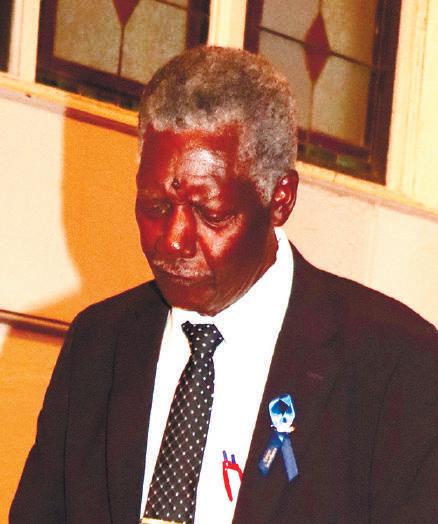


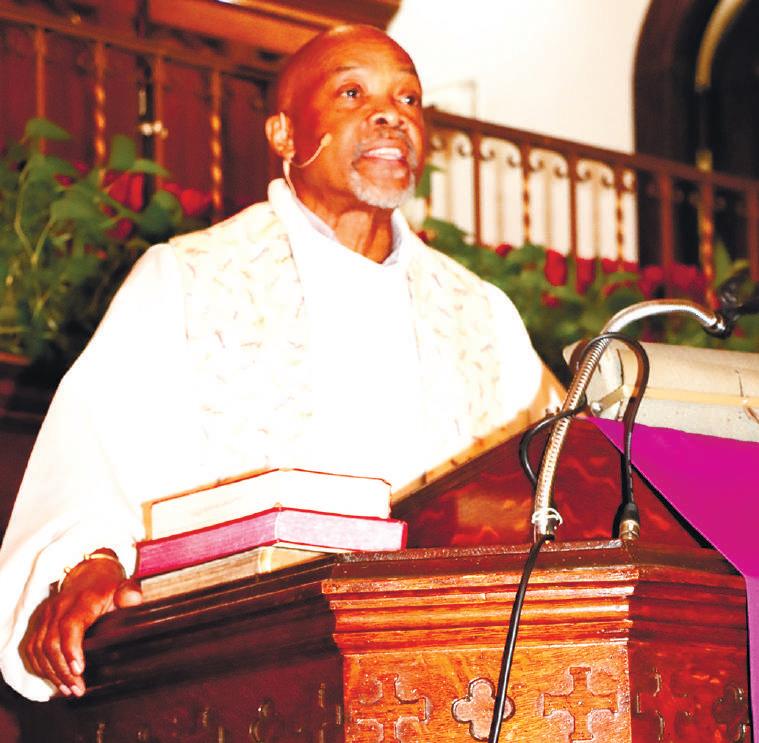


IN ONE OF HIS FIRST MAJORpolicy pronouncements on taking office, Prime Minister Dr. Godwin Friday announced the removal of admission fees at the St. Vincent and the Grenadines Community College (SVGCC), signalling a decisive push to make education more affordable and inclusive.
At the December 02, 2025 swearing in of the new NDP Cabinet, Prime Minister Dr. Godwin Friday announced the removal of the $20.00 application fee and all other fees associated with programme-specific admission charges across the college’s four divisions.
This, Dr. Friday said, was an action underscoring his government’s commitment to treat education as a national investment “rather than a slogan,” and more specifically, the removal of barriers that made it difficult for families to have their children attend school.
That commitment was demonstrated in further reach when on Tuesday, Minister of Education Phillip Jackson announced the removal of registration-related fees for Form 1 students entering public and government-assisted private
secondary schools throughout the state.
Alluding to what the Prime Minister would have implied in December 2025, Minister Jackson described the removal as “part of the government’s broader push to ease the cost of education for Vincentian families.”
He referred to the intention behind the removal as one of aligning with the Education Act and the stated policy of the NDP government as it relates to access to education.
As per the new policy, fees designated as registration-related fees (including registration, processing, admission) for Form 1 students entering public and government-assisted secondary schools, are to be abolished.
In a statement aired on NBC Radio, Minister Jackson explained that the decision (to abolish registration etc. fees) followed “much research and deliberation” within the Ministry of Education.
In the same statement, he appealed to parents and guardians to await direct communication from the
secondary school their child will attend before taking further steps, even as he noted that some parents and guardians had already paid the advertised fees.
He promised that those parents and guardians who have already paid registration and any other fees, will be refunded, with the schools concerned making arrangements for how and when the refunds will be paid.
The Minister urged the parents and guardians for patience as schools adjust to the new policy.
And as for the discomfort the timing of the policy implementation might have occasioned, Minister Jackson said he took “full responsibility for the timing of the policy shift and any disruption it may cause.”
He stressed, however, that “We are acting in the best interests of our students and their families, as our administration and the ministry implements its commitment to ensuring that every child has equitable access to quality and affordable education.”

by SHIMANO BAILEY
EVERY YEAR, VINCYMASbrings thousands of people into our streets. The celebrations are visible. The excitement is obvious. The cultural impact is undeniable. Yet, the economic impact remains largely unmeasured.
The sheer number of people attending events and filling the streets of Kingstown is a clear indication of why Vincymas has grown into one of the Caribbean’s most recognizable carnival brands. Through strategic marketing, creative innovation, and the tireless efforts of the Carnival Development Corporation (CDC), Chief Executive Officer Rodney Small and his team have elevated the festival’s profile both regionally and internationally.
Today, Vincymas is frequently described as the “Hottest Carnival in the Caribbean.” Social media engagement continues to rise, visitor arrivals increase during the festival period, and Vincentians at home and abroad eagerly anticipate the annual celebration. But beyond the music, costumes, fetes, steel pan, and road march celebrations lies an important question:
While there is little doubt that carnival generates economic activity, the reality is that we do not yet have a
comprehensive economic impact study that quantifies its full contribution to the national economy. During the carnival season, hotels and guesthouses experience increased occupancy. Airbnb operators often report a surge in bookings. Airlines add flights to accommodate increased travel demand. Taxi operators, tour guides, restaurants, bars, vendors, event promoters, photographers, entertainers, security personnel, and countless small businesses benefit from the influx of visitors and local spending.
For many entrepreneurs, the carnival season represents one of the most profitable periods of the year. The economic ripple effect extends far beyond the CDC and carnival bands. Every visitor who travels to St. Vincent and the Grenadines for Vincymas spends money on accommodation, transportation, food, entertainment, shopping, and other services. This spending circulates throughout the economy, supporting jobs and generating income for individuals and businesses alike.
However, without a formal economic impact assessment, we are largely estimating rather than measuring the festival’s contribution.
An economic impact study would help answer important questions:
* How much revenue does Vincymas generate annually?
* How many visitors travel specifically for the festival?
* How much do visitors spend during their stay?
* How many jobs are supported directly and indirectly by carnival?
* What sectors benefit the most?
* What is the return on investment for public and private sector funding?
These answers are critical for policymakers, investors, sponsors, tourism stakeholders, and the wider public. Such information could also help guide future investment decisions. If evidence demonstrates that carnival generates significant economic returns, it strengthens the case for increased investment in cultural tourism, event infrastructure, marketing, and visitor experiences. The study could further identify growth opportunities. For example, can visitors be encouraged to stay longer? Can carnival be packaged with eco-tourism, heritage tourism, sporting events, or community experiences? Can more local businesses be integrated into the carnival value chain?
Around the world, major festivals are increasingly viewed not only as cultural celebrations but also as economic development tools. Events

such as Trinidad Carnival, Notting Hill Carnival, and (New Orleans) Mardi Gras have been studied extensively to understand their contribution to employment, tourism, and economic growth.
Vincmas deserves the same level of analysis. As we continue to celebrate the success of our carnival brand, perhaps the next step is to move beyond anecdotal evidence and develop a comprehensive understanding of its economic impact.
There is no question that Vincymas brings people together, showcases our culture, and generates excitement throughout the nation. The question now is whether we can quantify its contribution and use that information to make an already successful festival even stronger. After all, if Vincy Mas is indeed the hottest carnival in the Caribbean, then understanding its economic value may be just as important as celebrating its cultural significance. Because what gets measured gets managed, and what gets managed has the potential to grow.
THE CONVERSATIONS seem to have begun, and it is imperative that they continue and intensify, if our beloved country is to be spared from the threatening calamity. Sometimes, I cannot help but make the comparison to the cart/wagon which was being drawn by a team of reckless run-away asses,
their mouths were full and they brayed in rebellious mirth, as they bolted headlong towards the precipice just ahead. The order shouted by the alert farmer to “cut those asses loose” was effected just in time to save the valuable carriage from going over the cliff with that wild rebellious team. Every citizen should

see it as his duty to give his assistance in helping to determine the way forward, which offers a reasonable chance for success. As the situation is today with criminal behaviour and general lawlessness enveloping the land, our Police Department will have to be restructured to play effectively the central role which falls on this body to do. It is evident that it cannot be business as usual. The Police Department needs to be recommissioned in a manner reflective of sensitivity to the present needs so palpably evident in this society today. We have had enough of “games playing”. There is the perception that our Police Force has been significantly debilitated, so that now it does not have the confidence of the populace that it commanded several decades ago. Political interference has been identified as one of the prime reasons
effecting this weakening of the Force. There have been too many incidents over an extended period which betray serious weaknesses in this important organization, and it cannot be realistically expected that there will be any reversal of this slide. Our present administrators do not seem to be of the maturity required to effect any reversal of the erosion of citizens’ confidence. By now, we ought to have seen that the Police Services Commission was diligently pursuing the addressing of this sad situation.
Some other topics for these conversations across the state are Agriculture, Fishing, Road Maintenance, the selling off of our lands, the maintenance of our important buildings, and the hygiene of the Capital, Kingstown.
It is indisputable that we are experiencing a crime wave in SVG. Dr.
Gonsalves and Dr. Friday seem to have differing views, both of which could be agreed with. The person who steals items valued at less than one hundred dollars was trying to provide food for two young children; then there is the case of the successful lawyer who is supervising at the Registry from which he steals hundreds of thousands of dollars. Yes, violent crimes are on the increase. We cannot deny that and the response will have to be broadbased.
Agriculture offers the real hope to address the issues of employment and poverty reduction. The Banana Industry could be revived, bringing in hundreds of millions of dollars to the economy to fortify our tradespeople and our young entrepreneurs. The Churches will help us to clean up our moral fabric. They will influence the radio stations not to be the agents for the
promotion of vulgarity through the music they play. In this area, the National Radio Stations will lead the way, “set the pace”. By the way, the Churches seem to be the accommodating punching bag sometimes. The question would be asked, “What is the Church doing about that?” But have we been giving the Churches the necessary support? Are the preachers of the Methodist Church not often drowned out by the noise from the road and sidewalk? Is the area of the Salvation Army treated with respectful consideration by the authorities and others? When do the political parties have their bashments, not on Sundays during church service hours?
So there is much work to be done, so let the conversations continue on Police, Peace, Prosperity and Progress.
LeRoy Providence

Julian Rogers has criticized CARICOM leaders’ decision to refer SecretaryGeneral Dr. Carla Barnett’s reappointment to the Caribbean Court of Justice. (Photos courtesy Julian Rogers/Caribbean Community (CARICOM).
VETERAN CARIBBEAN MEDIA
CONSULTANT Julian Rogers has fiercely criticised Caribbean Community (CARICOM) leaders for referring the reappointment of Secretary-General Dr Carla Barnett to the Caribbean Court of Justice (CCJ).
Rogers contends the decision avoids leadership responsibilities while publicly humiliating the region’s premier civil servant.
Speaking on Monday, the Barbadian-born broadcaster stated the referral is “a maneuver so wrapped in legal irony and political evasion that the giants who labored to establish the court, both living and dead, must be scratching their heads.”
The move effectively halts Dr. Barnett’s tenure until the CCJ provides an advisory opinion, bypassing standard executive frameworks requiring six months’ notice.
Rogers argued the situation ignores the basic decencies of executive talent management. He warned that “by running to the Court, the leaders haven’t solved a legal problem; they have merely outsourced a political hot potato to buy time.”
Highlighting the severe reputational damage inflicted on Dr. Barnett, Rogers noted she now faces “administrative purgatory under a public cloud of uncertainty.”
He questioned how a secretarygeneral could effectively manage the Secretariat or represent the region globally whilst her mandate has been transformed into a “political football.” Rogers, the executive director of Caribbean Bridges, a multimedia platform and strategic communications consultancy dedicated to regional integration, governance
and geopolitical analysis, further cautioned that such actions deter future regional talent.
“What young, brilliant West Indian technocrat... would choose to eschew a lucrative private-sector career to return and labor in the regional vineyard if this is the reward for an impeccable career?” he asked.
According to Rogers, an independent board of jurists could have resolved the mechanics swiftly, but leaders actively avoided a rapid solution.
“Faced with an acrimonious disagreement over executive leadership and a ticking contract window, the head table defaulted to intellectual laziness,” Rogers concluded.
Rogers expressed the view that, The CCJ will eventually hand down an opinion that carries strong persuasive authority as the ultimate interpreter of the Treaty,” added the executive director of Caribbean Bridges. “But that opinion will simply be referred right back to the Conference of Heads of Government, the exact same body currently locked in stalemate.”
The move to freeze Dr. Barnett in her position until the Court delivers an advisory opinion was advanced by Trinidad and Tobago, via a 22-page objection letter, and accepted by the broader conference of Heads of Governments.
“By using the court down the street to park an uncomfortable political gridlock, Port-of-Spain (the capital of Trinidad) is opening itself up to the biting charge of treating the highest tribunal in the region as the ‘Convenient Court of Justice,’” he continued. (Source: Tobago Channel 5)


ST. VINCENT AND THE GRENADINEScan now boast two Regional Junior Squash Champions.
Jayden George topped the list with his sixth straight Junior Caribbean Area Squash Association (CASA) title, whilst Zavin Garrick got his first in singles play of the 2026 edition.
En route to his uninterrupted reign, George returned to the Tortola Sports Club in the British Virgin Islands, the venue where in 2024 he retained his Under-15 title, to win
again among the Under17.
Seeded number one, George beat Nixon Callender 11-1, 11-0, 110, also outdid fellow Vincentian- Aiden De Freitas, 11-7, 11-2, 11-6 as well as Ross D’ Juran 12-10, 11-3, 11-3. Also suffering from the skills of George was Ethan Miller, whom he beat 11-8, 11-4, 11-6. George’s run of titles began in 2019 when he copped the Under-11. There were no tournaments in 2020 and 2021. He then took the
Under-13 in 2022, the Under-15 in 2023 and 2024 and last year, the Under-17.
Meanwhile, an 11-5, 11-1, 11-3 win over Trinidad and Tobago’s Evan Ghuran landed Garrick his Under-11 title.
After receiving a firstround bye, Garrick beat Alexander La Roda Thomas of the Cayman Islands, 11-3, 11-6, 11-4
The Vincentian then ousted Javed Ishmael of Trinidad and Tobago 111, 11-4, 11-0 to set up the final versus Ghuran.
St. Vincent and the Grenadines’ next best showing was Jaydon Williams third place in the Boys Under-19. Williams saw off William Frith of Bermuda, 11-8, 11-7, 118 but was defeated by Eli Caprol also of Bermuda, 11-7, 9-11, 11-6, 13-11.
Facing Shiloh Asregado of Guyana in the third place play off,

ST. VINCENT AND THE GRENADINESMen’s Basketball Team (Team SVG) finished third in Group B at FIBA AmeriCup 2029 Caribbean Pre-Qualifiers held from July 8-12, 2026 at the Cliff Anderson Sports Hall in Georgetown, Guyana.
Team SVG’s final position came on the basis of two convincing victories against Grenada (85 — 66) and Cayman Islands (96 — 63), and two losses, a rollover defeat to Haiti (100 - 66) and a hard-fought loss to Barbados (96 — 84).
The final Group B standings read: 1st. Barbados (Undefeated), 2nd. Haiti, 3rd. St. Vincent and the Grenadines, 4th. Cayman Island, 5th. Grenada.
Rookie Shad Thomas led the Vincentian effort as leading scorer for his team finishing his final game against Barbados with 16 points, 8 rebounds, 5 assists and 3 steals.
According to statement by the
SVG Basketball Federation, Thomas is expected to continue his basketball career with a professional contract with Spanish Club Bisbal Bàsquet Club, for the 2026 — 2027 season.
Also in that statement, the Federation disclosed that Team Captain Chrisford Telesford, Phillip Lawrence-Ricks and Sean Baptiste will retire from national duty.
The Federation said it” remains proud of the team’s performance and the resilience displayed throughout the competition,” thanked the technical and managerial staff and sponsors (including former NBA player Adonal Foyle for the team’s uniforms), and said that it viewed the experience gained

as “a foundation for continued growth as the SVGBF remains committed to developing the sport and creating more opportunities for Vincentian basketball.
I.B.A. ALLEN


Williams trumped 4-11, 11-8, 11-9, 11-6.
Other results for the boys saw De Freitas finishing fifth place in the Under17, and Savante Padmore fifth in the Under-13.
Ethan Webster also competed in the Under13.

Among the girls, Caeli George competed in the Under-15 age group, while her elder sisterCiara George did so in the Under-19 and Naira Skye John, the Under-17. 2026 Junior CASA was set to end July 16, with the teams’ competition.
AKQUIN JOHNSON was the bright spark for the Fuzion Tennis Academy at last week’s (July 6 — 10) Caribbean Open Junior Tennis Championship, host by Liguanea Tennis Club, in Jamaica.
Johnson reached the finals in the Under-16 category losing 6-3, 6-2 to one of Jamaica’s top juniors - Ajani Robinson
Janelle Gonsalves, coach of the Fuzion team said, “Despite battling an injury, Johnson showed tremendous determination by competing through the pain, earning admiration for his resilience and fighting spirit.”

She added, “The tournament also highlighted the depth of emerging talent in Jamaica and the other countries, with players displaying skill, composure, and sportsmanship throughout the competition.”
And with an eye on the future, Gonslaves declared, “We at the Fuzion Tennis Academy are pleased with the performances and look to the players improving both mentally and physically going forward.”
I.B.A. ALLEN
THE HOSTING of the Veronica Bishop Classic and the Camp Introspect, is designed to build character via the medium of Basketball.
That is the ultimate aim of the two activities, as expounded by Kishon Bishop, founder of the BlueChip Basketball Academy, host of the two activities.
The Veronica Bishop Classic took place at the Camden Park hardcourt, July 8 to 12, 2026, immediately followed by Camp Introspect, July 13 to 17, at the Bishop’s
BlueChip Academy and Heat Seekers engaged in play at the Campden Park hard court during the Veronica Bishop Classic.

College Kingstown hard court.
Reflecting on the

Basketball Classic which featured four teams, Bishop commented, “The outcome was pretty good, God blessed us with good weather. We are hoping to grow this event to become an after Carnival Basketball event, where people can come, relax, have a family friendly environment, just sports, we banter, we talk and those are things we are trying to do”.
Bishop who grew up in Campden Park, but migrated to the USA, returns annually to ensure that the sport gets his input as he seeks to give back to the country of his birth.
Noting that the

The players are: fast bowlers Kazado Henry and Elron Glasgow, off spinner Kevin Joseph and batter Zach Thomas. Another Vincentian- Javid Harry, serves as a manager of the team. The Windward Islands Under-19 team reads: Theo Edward, Earsinho Fontaine, Kazado Henry, Elron Glasgow, Zach Thomas, Johnathan Daniel, Kevin Joseph, Tyler Venner, Cody Fontanelle, Aravinda Bishop, Kavaughn Bartholomew, Derwin Lewis, Aiden Burton, Nathaniel Joseph. Barbados are the defending champions.
I.B.A. ALLEN
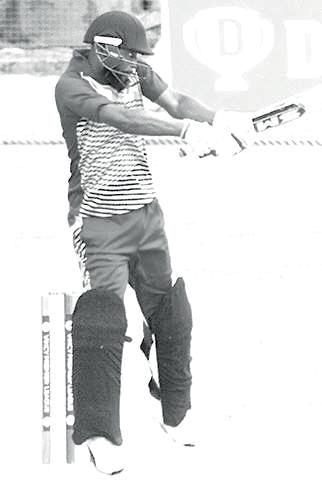
ASIF HOOPER, captain of the senior national men’s cricket team, stroked his second century for the season to help propel Flow Radcliffe to a 111-run win National Lottery Authorities (NLA)Victors One, in the SVG Cricket Association 50 overs Premier Division Cricket Competition on the weekend.
annual camp is holistic in perspective, Bishop related, “We help kids build their spirit mind and body. Our goal is to use the sport of Basketball to show the gospel of Christ, as well as to help kids get some life skills, things that are not within the schools’ curriculum per se, because we want to build and raise the character of our citizens here in St Vincent and the Grenadines.”
During the camp, attendees were taught reproductive health, goal setting, abstinence, whilst imploring them to follow the teaching of Jesus Christ.
Bishop revealed that despite the recurring challenges faced each year, he and his team plan to endure as their well doing makes the obstacles surmountable obstacles.
The match, one of three weekend fixtures, and played at Park Hill, was reduced to 45 overs. Victors won the toss and opted to bowl. Flow Radcliff made 173 off 30.5 overs a total to which Hooper contributed a top score of 111 runs. Luke Wilson 3 for 31, Victors; best biowler withn 3/31. Victors One, in reply, stayed the course for 18.5 overs before withering for 62 all out. Newton Browne top scored with 32 not out. Hooper, 2/17, and Dillon Douglas, 3/11 did the damage.
At Cumberland in a game reduced to 25 overs, Police Two beat MSDA Julius Anthony Northern Stars by 7 wickets. Northern Star posted 61 for 8 off 14.1 overs batting first. Kesrick Williams top scored with 32. Bowling for Police Shaman Hooper took 5 for 8.
Police Two replied with 62 for 2 off 6.1 overs. Jadi John took 2/13 for Northern Stars.
In a First Division match played at the London Playing Field, Super Sixers defeated A&A Electronics North Windward by 2 wickets. A&A Electronics made 122 runs off 15 overs, Ian Gonsalves top scoring with 56 runs. Bowling for Super Sixers, Dan Harry took 4/20 in 5 overs foe Super Sixers.
Super Sixers replied with 124 for 8 off 22.3 overs. Wesley Roban top scored with 82. Super Sixers’ Shem Brown had 3/11 in 6.3 overs, and Drumo Toney 2/8 off 2 overs.
I.B.A. ALLEN
TEAM
SVG has made public the selections for two upcoming championships.
Heading to the Commonwealth Games in Glasgiow, Scotland are: Shafiqua Maloney, who will compete in the Women’s 800m; Handal Roban, the Men’s 800m; Mc Kish Compton in the Men’s 100m; Uroy Ryan - the Men’s Long Jump and Amal Glasgow, the Men’s 400m.
For Maloney, Ryan and Glasgow, it will be their first outing at the Commonwealth Games, while Roban and Compton debuted in 2022 at the Birmingham edition in England.
The Commonwealth Games runs
from July 27 to August 2. Immediately after the Commonwealth Games, Maloney and Glasgow head to Santo Domingo, Dominican Republic, to compete in their respective events at the Central American and Caribbean -CAC Games, from July 24 through Aug. 8. The CAC Games is expected to attract an estimated 6,200 athletes from 37 countries and will feature thirty sports. Around 3,000 athletes from 74 nations and territories are expected to compete in the XXIII Commonwealth Games which caters for competition in ten sporting disciplines.

ANYWAY IT GOES,Spanish speaking people will feel a sense of pride. No other nation will enjoy the taste of the 2026 FIFA trophy as much as the Spaniards.
Defending champion Argentina earned their final spot with a semi-final 2:1 win over England. That sealed the clash with Spain who disposed of France the previous day.
France and England can salvage pride when they meet in tomorrow’s third place match.
Attention shifts to Sunday’s finale. The diversions, and other spheres of influences make for a grand spectacle.
There are suggestions of impropriety during the tournament. Some observers argue that certain teams had things designed to accommodate them.
African nations showed some improvement and indeed turned up some surprises. There is the hint that there was little tolerance for those from the African continent.
The flair and explosiveness of many an African team marked a display of athleticism.
It takes more than assembling on the field to create an impact in football.
More than passion is needed. Cohesion, and willingness to adjust have to be included.
Cape Verde still stands out for their display. Spain recovered from their opening salvo with Cape Verde, a result which set the competition’s bench mark.
However the results go, there is no question as to the Euro-centric nature of the accumulation of teams. Nations outside that zone have far to go to gain respect on the world stage.
It is unfortunate that Mexico, Canada and United sates hosted; a sure way of automatic qualification. CONCACAf has to improve their level if they are to make an impact.
It is significant that Haiti and Curacao earned places in the 48-nation showpiece. It is vital for teams in this sphere to show an extent of commitment that makes them suitable for football on the world stage.
Countries can’t be satisfied with qualifying. St. Vincent and the Grenadines can learn from every tournament. This year’s World Cup revealed the height of fitness necessary to ensure success on the field.
Any squad short of preparation will be blown away. The science and dynamics of the sport have advanced.
Nations are embracing the value that sports. Appearing at a World Cup football competition or any global event has the magic of engendering universal appeal.
That has to be of some significance and the earlier nations realise that, the better their country will be positioned to take advantage of opportunities to develop.
There is distraction, some deliberately implanted to downplay and even dismiss some countries on the basis of political or religious belief. This nefarious intent leaves scars on those who profess to manage sporting events.
While the trend is on the World Cup final, I cannot avoid the Woodrow ‘Keylee’ Williams episode. He served this nation with dignity in a number of areas.
Tributes are flowing. Vincentians take a sudden death with grief. They think that death is something that should be telegraphed.
The community of New Montrose provided the impetus for “Keylee” to hone his skills.
People who experienced his impact will testify to the discipline with which he immersed himself in sport, culture and national development.
Keylee’s versatility is well known. His positive impact on individuals will take some time to be truly assessed.
SINCE TRANSITIONINGfrom kicking bottles on the streets of Paul’s Avenue, to “kicking: footballs at the Bishop’s College Ground, at the Victoria Park and Richmond Hill Playing Field, Kevonte “Ty” Clarke has had his first taste of being a professional footballer.
Schooled in the sport here in St. Vincent and the Grenadines, primarily by the System Three Sports Academy, Clarke came on in the second half for Inter Toronto versus Vancouver on July 4, 2026, signalling a new pathway for him in the Canadian Football League (CFL).
Clarke 18, a midfielder known for his dribbling skills and creativity abilities, played the entire second half in his debut match.
Steadily growing his pedigree, Clarke moved to Inter Toronto after stints with Sigma FC and Toronto FC.
According to an Inter Toronto release, Clarke related that he was delighted with the opportunity.
“I chose Inter Toronto because they believe in youth and push players toward where they need to be. The pathway to the CPL is clear. I see the pathway as a very good one; If you perform, there’s a clear route to the First Team.” Clarke related.
Clarke Earlier this year, Clarke made his senior St. Vincent and the Grenadines team debut, following appearances for the Under-17 and Under-20 outfits.
A former student of the CW Prescod Primary School, Clarke led the institution to the national Primary Schools’ Football title in 2018.
Moving to the St. Vincent Grammar School, Clarke immediately forced his way into the school’s Junior team at the

Kevonte “Ty” Clarke is looking forward to advancing to the upper tier of the CPL with Inter Toronto.
VINCENTIAN — SHAFIQUA
MALONEYremains the holder of the women’s 800m title at the 2026 Ed Murphey Classic.
This after she clocked a time 1:58.72 to strike gold in the Track Classic staged in Memphis, Tennessee.
Her victory in Memphis came on day two, July 11, and she beat Jamaican- Natoya Goule into second place. Goule’s time was 2:00.50. Third was USA’s Honour Finley, whose time was 2:01.17.
Maloney’s victory marked a repeat. In 2025 she inked the twolap event, setting a meet record of 1:58.13.
Her retention of the Ed Murphy Classic title, came exactly one week after Maloney took gold at
the Barbados Grand Prix.
These events are preparations for her upcoming national representations.
St. Vincent and the Grenadines will field teams at the Commonwealth Games in Glasgow Scotland from July 23 to August 02, and the Central American and Caribbean (CAC) Games in the Dominican Republic carded for July 24 to August 08.

Shafiqua Maloney was the only athlete in the Women’s 800m City Auto at the 2026 Ed Murphey Classic to go under two minutes with a time of 1:58.72.

UROY RYAN,St. Vincent and the Grenadines’ lone representative at the 2026 North American, Central American and Caribbean Athletic Association (NACAC) Under-18 and Under-23 championships, held in Mexico, July 10 to 12, pouched a gold medal.
Competing at the Estadio Una Nueva Historia in Apizaco, Tlaxcala, in the Under-23 category, Ryan was first in the men’s Long Jump, with a leap of 8.04m.
It was his second gold at the
Uroy Ryan shows good form ahead of what is expected to be his representation of SVG at upcoming Games.
NACAC age group level, after his 2021 exploits, then in the Under18.
At the lower age category, Ryan jumped 7.40m at the championships staged in San Jose, Costa Rica.
Ryan’s other outing in 2023 at the NACAC Under-23 championships, saw him finishing just outside the podium, placing fourth in the Long Jump.
At age 22, Ryan is the holder of the St Vincent and the Grenadines Indoor Long Jump record as well as the National Male Under-20 Long Jump record.
Ryan is expected to represent St. Vincent and the Grenadines at upcoming Games.
Continued from Page 4.
At around 9:15am on June 16, she was at home when she received a phone call from the Manager, who is her sister, informing her that the bakery had been burglarized. She left home and went to the bakery to make checks. She reported the matter to the police, and handed over CCTV footage of inside the store to the police.
The police reviewed the footage and Cupid was identified as the suspect.
Cupid was taken into custody and he took the police to an area between Stoney Grounds and the Park where he had dumped the cash register.
2 Bedroom Apartment Fully Furnished Location: Queen’s Drive Tel: 494-2209











ON JUNE 30, 2026, Moody’s Ratings announced a downgrade of the Government of St. Vincent and the Grenadines’ long-term local- and foreign-currency issuer ratings to Caa1 from B3.
As such, the downgrade all but labelled the nation’s outlook as negative.
This is predicated on an assessment that recognised that said the country has experienced, “….intensifying liquidity pressures and a rising debt burden that has become increasingly difficult for the small, undiversified economy to
manage.”
Moody’s reasoning for the downgrade included that the primary driver of the downgrade “is the government’s high level of gross financing needs, which are estimated at approximately 18 percent of GDP for 2025.”
This level, according to Moody’s, exceeds the medians for peer countries in the Caa1 and Caa2 rating categories.
In this situation, these elevated needs are meeting an increasingly narrow and concentrated domestic funding base, where commercial
banks now hold 62.4 percent of domestic debt.
Also contributing to the downgrade was Moody’s identifying that the secondary market trading in government bonds has effectively ceased, and recent bond issuances have shifted entirely to private placements with a small group of commercial banks.
Government bonds have served previous governments well especially as they sought to avoid sinking further into foreign and private related debt.
Moody’s also highlighted that the
country’s fiscal position “has been weakened by sustained deficits and a series of significant external shocks.
Those shocks were primarily the COVID-19 pandemic, the 2021 La Soufrière volcanic eruption, and Hurricane Beryl in 2024, the latter of which caused damage equivalent to roughly 22 percent of GDP.
The impact of these successive shocks added to the capital intensive (i.e. expenditure) for projects like the Kingstown Port Modernization, pushed general government debt to 103.0 percent of GDP as of 2025.
Moody’s projection was that this debt will continue to climb, peaking at approximately 124 percent of GDP in 2029, hence its negative outlook for the country.
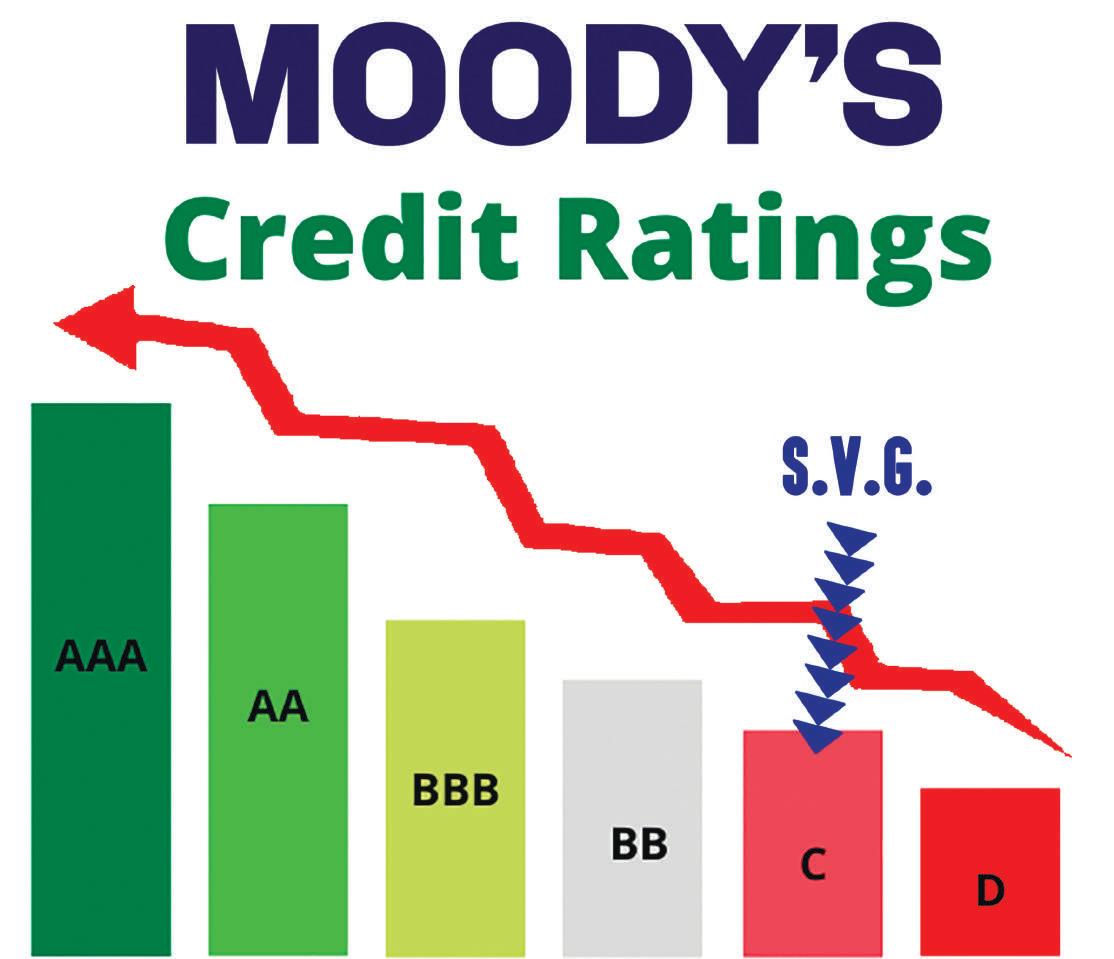
And in response to at least one measuredebt swap - the present government has identified in response the current situation, Moody’s warned that “if this is executed on terms that lead to economic losses for privatesector creditors, it would be classified as a distressed exchange and a credit event. Furthermore, the rising sovereign-bank nexus means that the materialization of any contingent liabilities could add further pressure to the government’s credit quality.” Environmental and social factors also play a significant role in the country’s credit profile, Moody’s added, with a high exposure to natural disasters like hurricanes and volcanic activity contributing to recurrent fiscal outlays and reconstruction spending.
Despite these challenges, the rating agency noted that the country recorded a real GDP growth of 3.4 percent and a GDP per capita of 20,777 USD in 2025. However, the fiscal balance remained at negative 12 percent of GDP during the same period.
And toward effecting a upgrade in its rating — a likelihood not expected anytime soon - Moody’s indicated that the outlook could be stabilized if the government provides clarity that its proposed debt swap will not result in a distressed exchange.
And in challenging the sitting government, Moody’s advised, “Long-term upward pressure on the rating would require evidence of successful fiscal consolidation, a meaningful improvement in debt dynamics, and the restoration of regular access to market-based domestic financing channels. Conversely, further deterioration in liquidity or the execution of a restructuring that leads to private investor losses could result in additional downgrades.”
SVG is challenged to lift itself up for it lies currently among the lowly placed echelons.