

Viking CORRUPT WORLD magazine
The2026WorldCupcomeswithaneweraofAmericanizationwhile soaringticketpricesandpoliticaltensionstestthespiritofthegame.
Viking magazine
Letter from the EDITORS
Hey Vikes! As the weather is getting warmer, spring sports are coming into full swing. As always, we are posting scores and updates on our website, Instagram and X. We hope you enjoy our fourth issue of Viking for the 25-26 school year!
Student crowds have been dwindling over the years, and “Echoes in the Gym” takes a deeper look into the impact of this on athletes.
“Going For Gold” (page 18) looks back on the fiery Winter Olympics, and features Paly athletes who participate in the unique sports displayed at the games.
Our cover story “World Corrupt” (page 20) builds the excitement for the upcoming World Cup—the student spirit, ticket prices, and the vibrant culture—while also unpacking the political tensions present as the world dives into this tournament.
Check out “Out of Sight, Still in Play (page 24) to learn about the sports that get less coverage but still hold great impact.
“Turning to Tonga” (page 26) lays out the story of the newly

STAFF OPINION
Opt
Out, Opt In to Controversy
The current system of competition within the CCS in any sport allows teams to choose whether or not they wish to accept the division they are placed in during the playoffs, and to opt into a weaker level of competition if they wish. During the 2025-26 basketball season, the Milpitas boys varsity team was given an invitation in the Open Division of the CIF Central Coast Section playoffs, which is the best division in California. However, instead of accepting the invitation to play in the best division, Milpitas passed on the opportunity to play in the less competitive Division I level. The move came at the expense of Paly. Paly was matched against Miltiptas, and was defeated decisively in a blowout. Milpitas would then go on to defeat every team they played by a significant margin and brought home the championship in a division they should never have played in to begin with. The Viking staff believes that teams should not be allowed to play in divisions below their level of compe-
hired football coach, Edward Tonga, kicking off a new chapter for the Palo Alto Football program.
“Following in her Footsteps” (page 31) highlights the impact of female role models in honor of Women’s History Month.
“One Game, Different Pathways” (page 34) ...
“BULK UP!” (page 38) features Coach Anthony, the new Paly athletics strength coach that helps bring teams to the next level.
“Paly Play by Play” (page 40) covers Malcolm Ginwalla, a rising sports commentator.
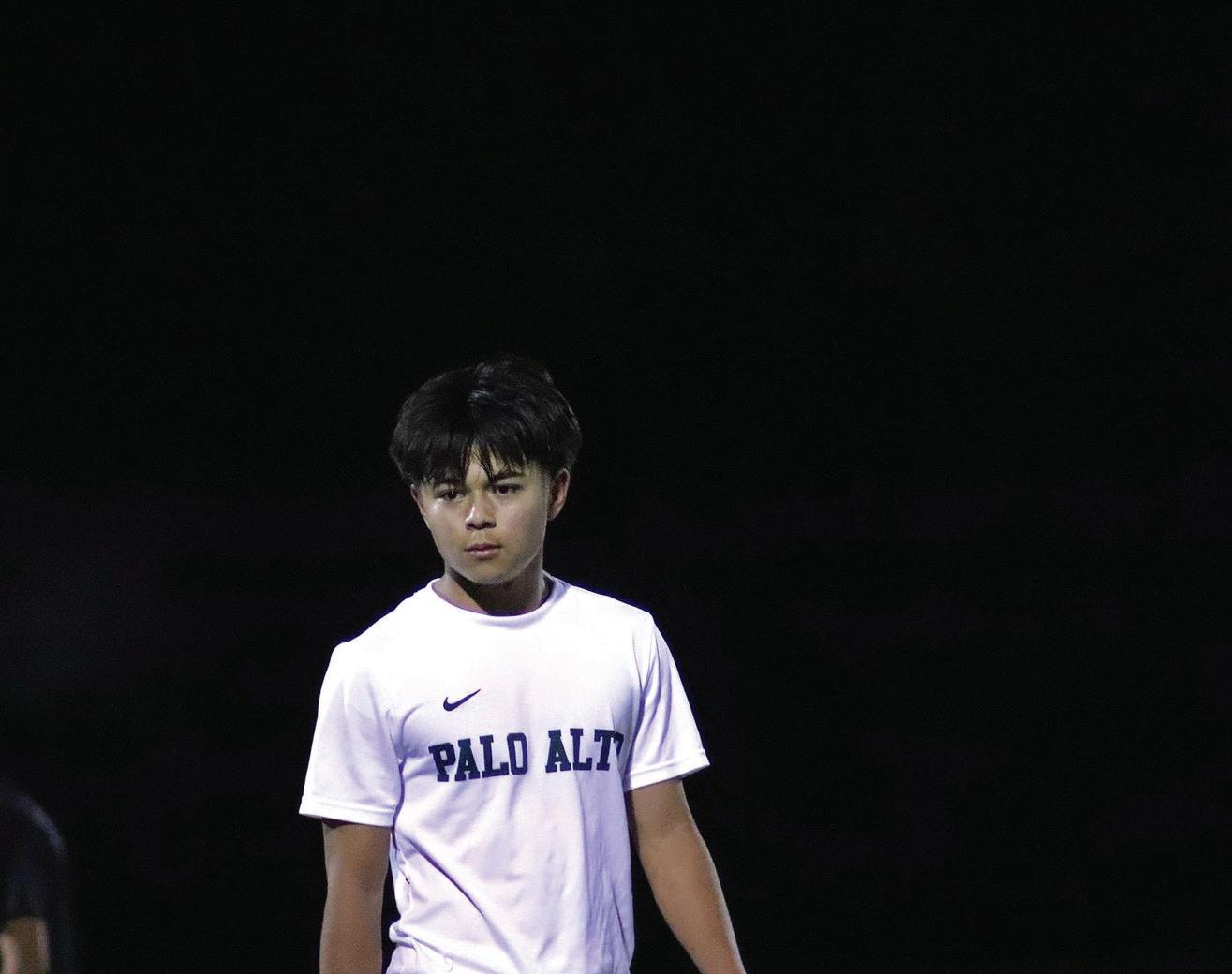
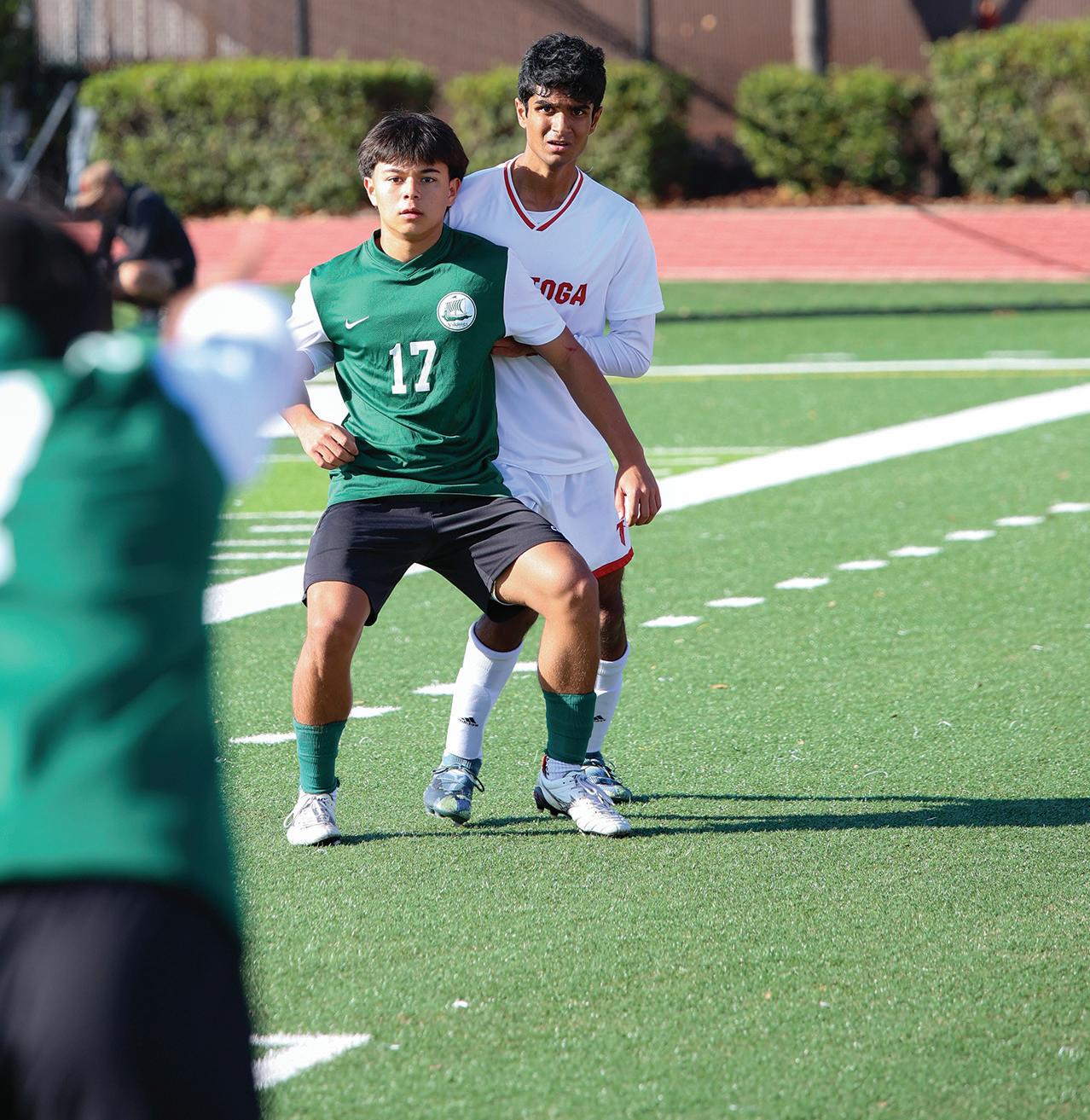
“Crossing Courts” (page 42) spotlights freshman Mikael Honrado and his journey coming from the Filipino national team to competing on Paly’s Varsity tennis team.
Finally, our final word, written by our Head Columnists Greg Goody and Mabel McCarter discusses the pros and cons of athetes leaving class early for competitions.


tition because it allows them to dodge stronger opponents and is a disservice to the sport.
One of the things to consider is what the other teams in Division I experienced. Every team in that bracket worked hard and competed hard to earn their position and play at that level. They expected a fair field of teams when they got there. What they got instead was Milpitas, a stronger opponent that chose to pass on the opportunity to compete at the highest level and opted instead for a lower bracket. That is not real competition. It is a shortcut taken at the expense of every other team in that division.
A good playoff system relies on honest seeding. The purpose of divisions is to place teams in brackets based on their competitiveness, so outcomes are determined by skill and preparation, not by who gets to choose weaker opponents. Allowing teams to opt out of their assigned division undermines the integrity of the entire system. If the stron-

gest teams can choose to avoid the division they are seeded in, then divisional placement becomes meaningless, and every bracket below the Open Division becomes distorted as a result.
Some might argue that schools should be able to decide what is best for their program. However, what is best for one school individually cannot come at the expense of the section playoffs as a whole. The playoffs are not an individual event, and a decision like this does not just affect a team competitively. It affects every other team in terms of fairness.
Paly’s own playoff experience this season was in Division I. Our athletes competed hard and deserved a fair playing field, and every team in every division deserves that same standard. CCS needs to close this loophole. When a team receives a division assignment, they should be required to honor it. Competitive integrity should not be an opt-out option.
Scarlett Frick Arjun Bharat
Tyler Cheung Sarah Thieman
On Behalf of the Viking Staff, we would like to thank our sponsors!
Alex Comsa
Amy McCarter
Anthony Custodi
Carol Burnett
Cheung Family
Filiz Dogan
Tamlin Connel Kinnan
Kaiyu Li
Stephanie and Ryan Frick
Hsu Family
Kaposhilin Family
Joachim Family
Liu Family
McCarter Family
Carol Mueller
Porat Family
Schoebel Family
Segev Family
Tung Family
Julie Wissink
Viking Vision Statement
Our mission is to create and maintain a magazine that can be a preeminent voice for Paly athletics, celebrating our community through powerful storytelling. We strive to foster a positive culture by giving a platform to diverse voices and challenging readers to think critically.
additional information
Viking Magazine
Palo Alto High School
50 Embarcadero Road
Palo Alto, CA 94301
650-329-3837
Email contact: vikingeds@gmail.com
Follow us @vikingsportsmag or go to vikingsportsmag.com for current game updates/scores.
Viking, a sports magazine published by the students in Palo Alto High School’s Advanced Magazine Journalism class, is an open forum for student expression and the discussion of issues of concern to its readership. Viking is distributed to its readers and the student body at no cost. The staff welcomes letters to the editor, but reserves the right to edit all submissions for length, grammar, potential libel, invasion of privacy and obscenity.
Advertising in Viking
The staff publishes advertisements with signed contracts providing they are not deemed by the staff inappropriate for the magazine’s audience. For more information about advertising with Viking, please contact Viking by email at vikingeds@gmail.com
Printing Services
2,500 copies of The Viking are printed, five times a year by Folger Graphics in Hayward, Calif.
Logo Font Courtesy of Måns Grebäck
Editors-in-Chief
Arjun Bharat, Tyler Cheung, Scarlett Frick, Sarah Thieman
Creative Director
Amanda Goody
Photo Editor Lucas Tung
Business Manager
Dylan Robinson
Online Editors
Copy Editor
Juliet Frick
Head Columnist
Greg Goody, Mabel McCarter
Social Media Manager
Elena Salvatierra
Luke Joachim, Max Merkel
Staff Writers
Carter Burnett, Ian Cierniak, Andy Comsa, Elif Dogan, Dylan Fujita, Natalya Kaposhilin, Andrew Knapp, Jake Liu, Zoe Pashalidis, Shira Porat, Carys Olsen
Isaac Telyaz, Daniel Segev, Silas Steele Finnegan Schoebel, Lucas Wu, Michael Wu
On the cover:
The cover, with photo by Arjun Bharat, features various International soccer jerseys. Read about World Cup tensions in “World Corrupt?” on Page 20.

IN THIS

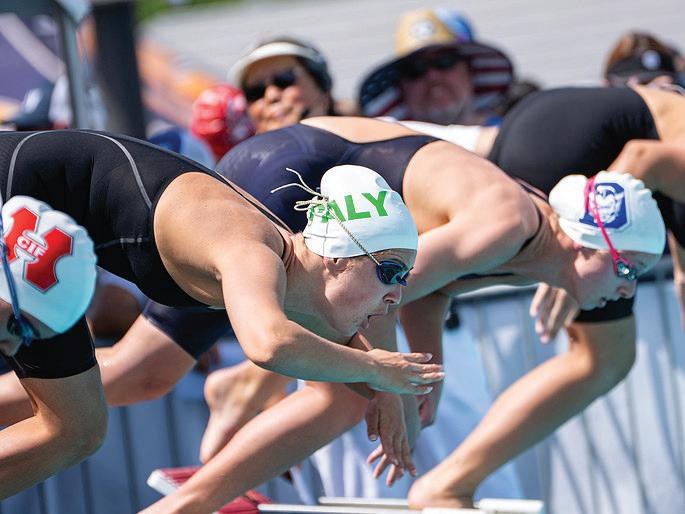
Carlos Cheung strives to the finish line as he competes in the 200 freestyle race during the varsity swim meet against Homestead on March 13. Photo By
Dylan Fujita

Tough Finish
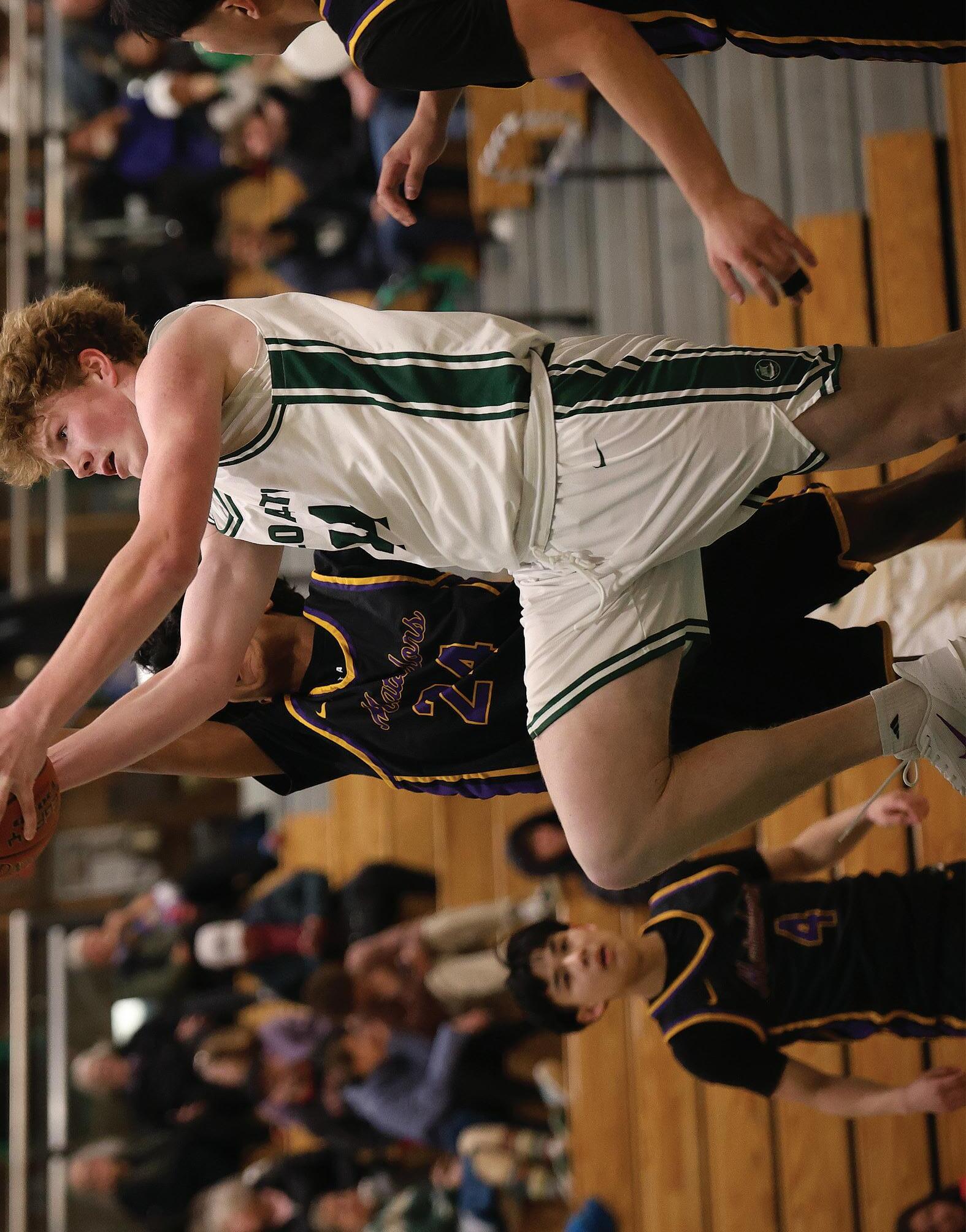
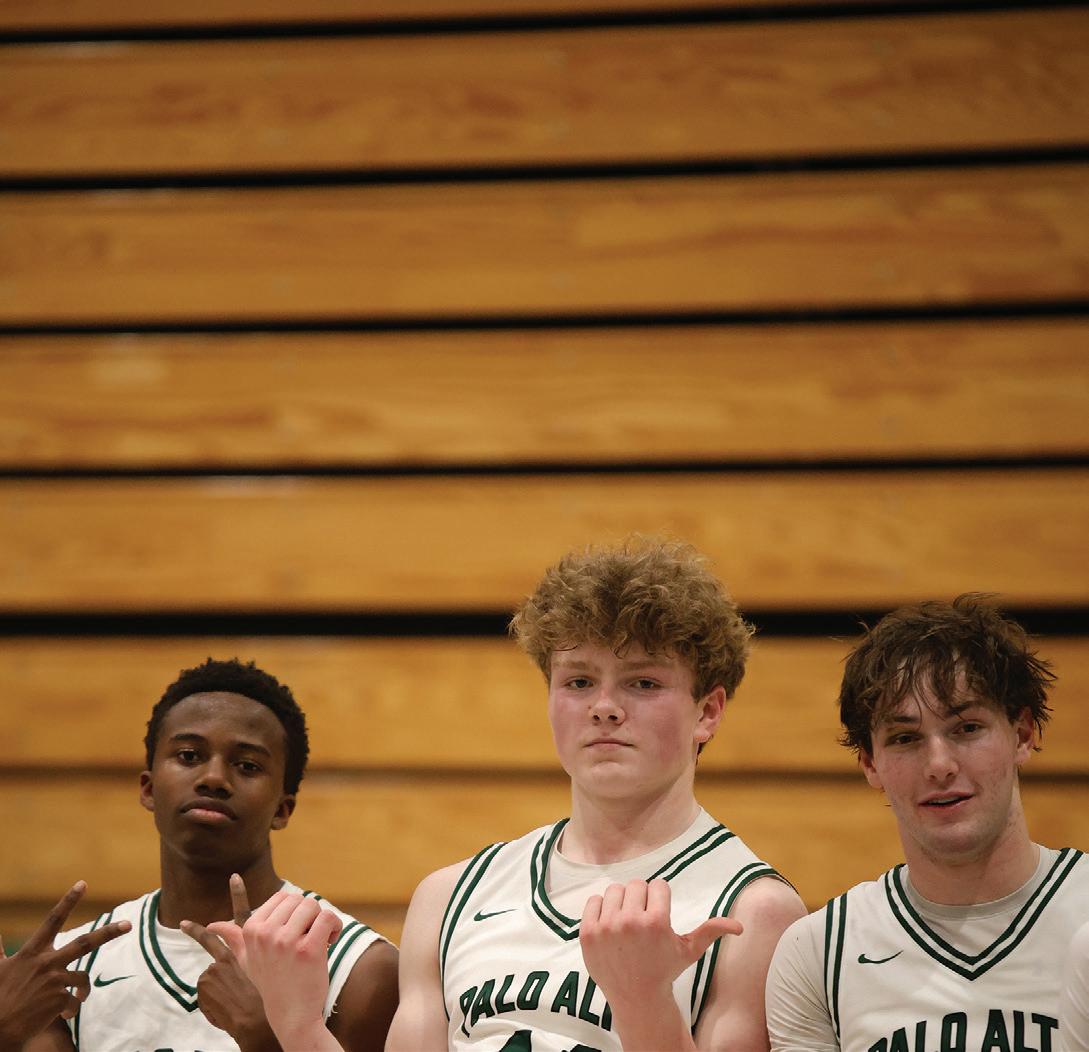
Kevin O’Brien (‘26) leaps past two defenders on his way to a layup in a 65-22 win vs Monta Vista on Feb. 17.
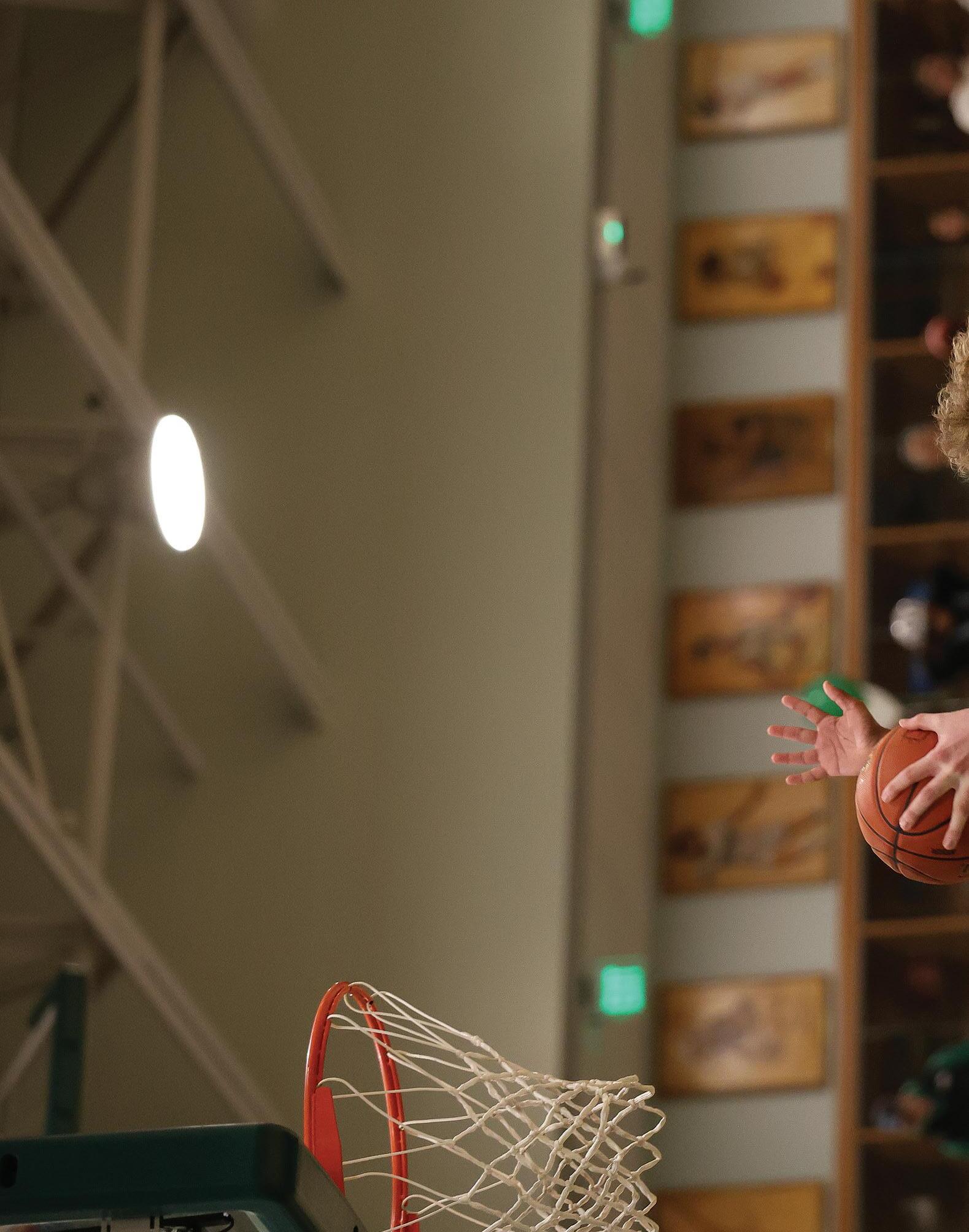
Photo by Daniel Segev


Rapid Rush
Luka Balva (‘26) grinds his way to the finish line during a Mar. 13 win over Homestead.
Photo by Dylan Fujita
Rally
Attack
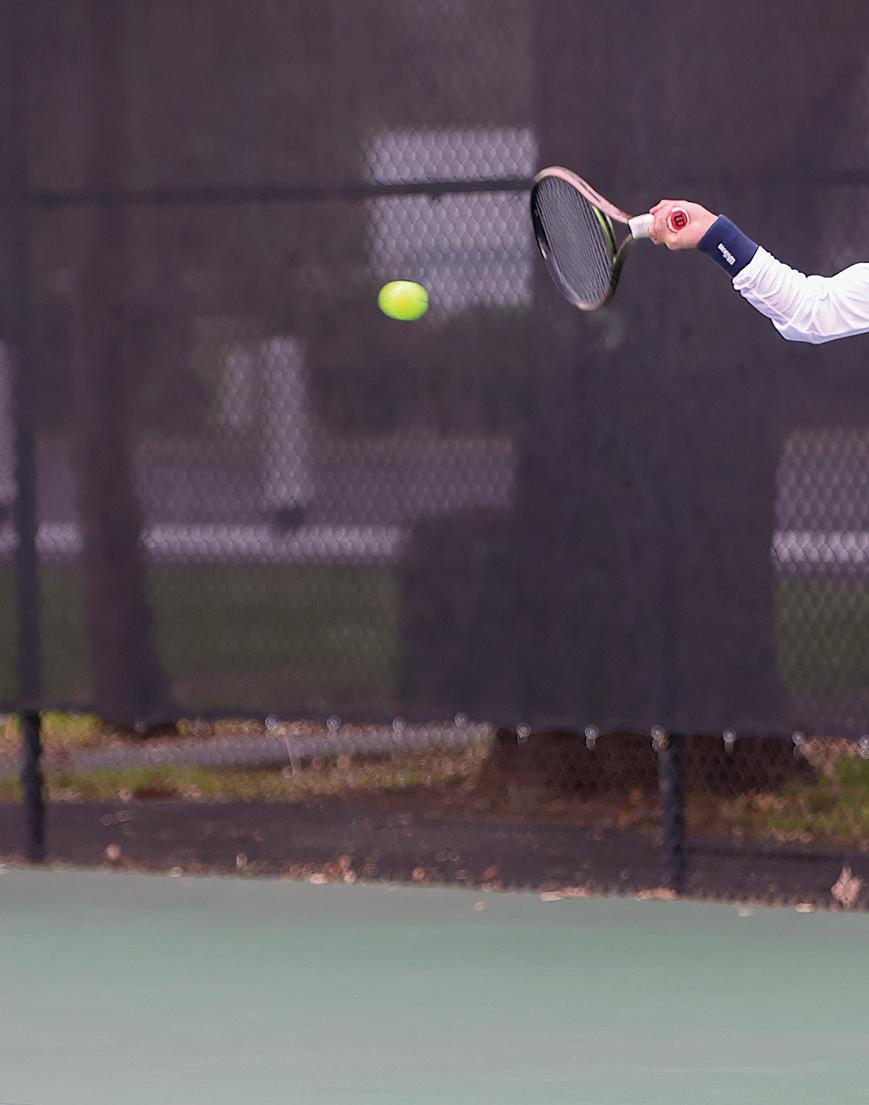
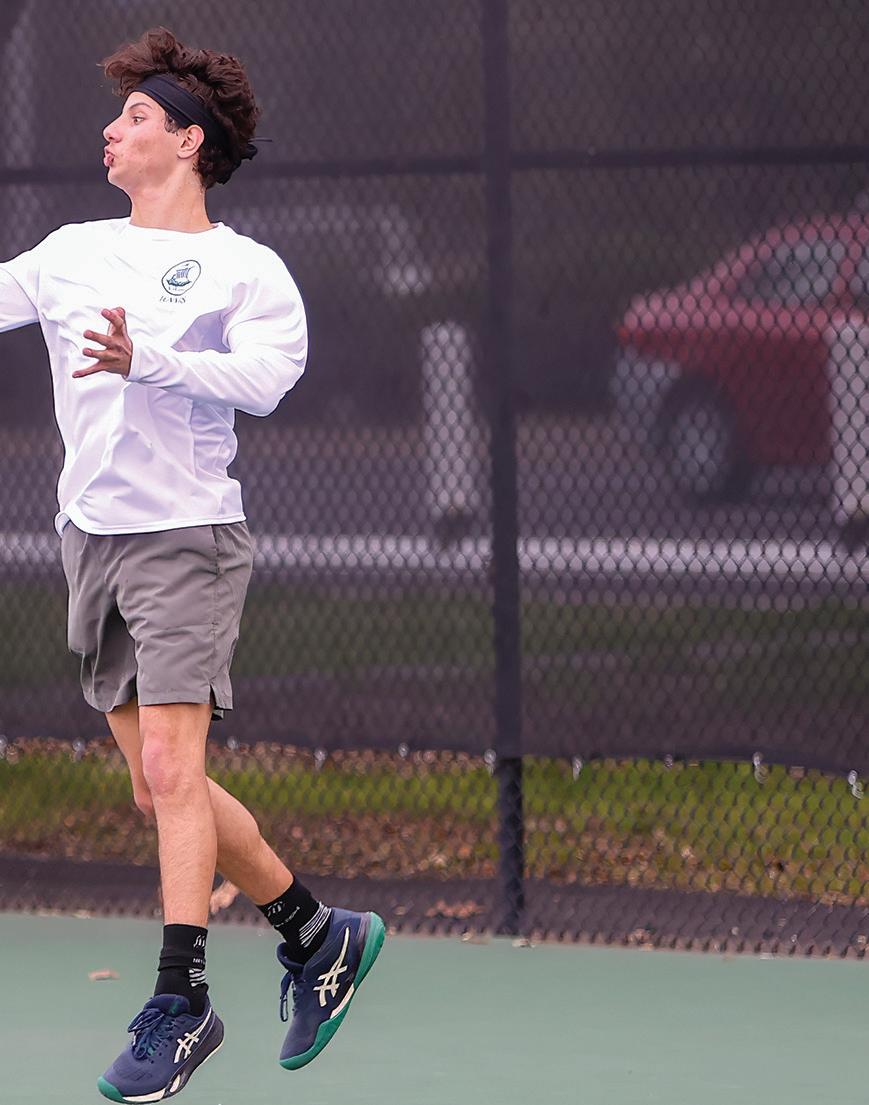
Oscar Barillas Otsby (‘26) rips a forehand during a 7-0 win against Aragon on Feb. 23.
by Lucas Tung
Photo
protein protein PACKED
By AMANDA GOODY and ISAAC TELYAZ

We asked Paly athletes their favorite ways to meet their protein goals and to share a favorite “protein packed” recipe!

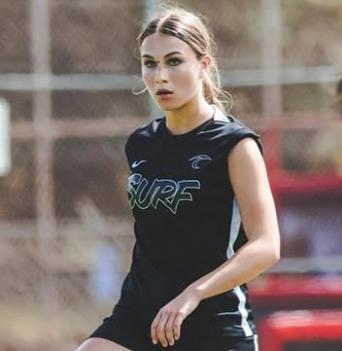
REYES ARONSON
“I consume around 80-100 grams of protein per day.”

“I really consuminglikeprotein through cottage cheese or yogurt.”



Reyes’ yogurt bowl:
1/2 cup cottage cheese

Katie’s
breakfast:
1 piece of toast
1 fried or scrambled egg
1 cup greek yogurt
1 handful of mixed berries (of your choosing)


3 big spoonfuls of greek yogurt
2-3 cut strawberries handful of granola
chocolate drizzle sprinkle of cinnamon
“I’m a vegetarian so it can be very difficult to get enough protein as well as iron!”
“With this meal [my breakfast], I probably get around 20 grams of protein.”
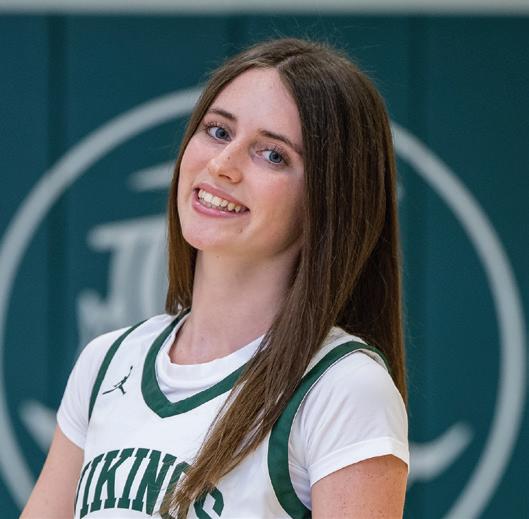
KATIE

Brian’s
serrano pepper
Handful of serrano peppers
1/2 cup greek yogurt
1 chicken breast or piece of salmon preference)(personal sauce


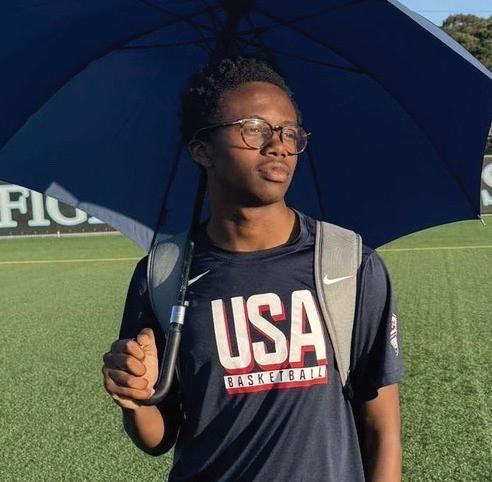
“My favorite protein is definitely red meats. I would say definitely steaks. Grilled Chicken is also really good and quick protein bars before practice.”
KACEY
WASHINGTON

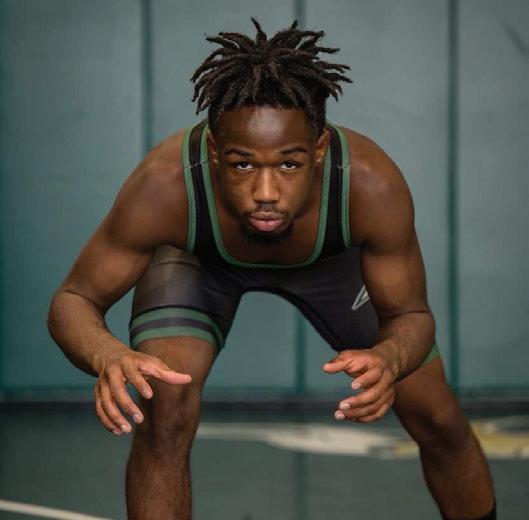
“I consume protein like not even just on a daily basis but like I would say an hourly basis. Like I make sure that I’m consuming enough protein throughout the day so my body can process it.”
Kacey’s BRIAN MILLER
milkshake:
1 cup frozen strawberries

1 scoop vanilla protein powder
1 cup milk
1/4 cup greek yogurt

By AMANDA GOODY and ISAAC TELYAZ
Maeva Paz

injury: broken collarbone
description: Fracture of the mid left clavicle with overlapping (3-4 in) fracture fragments.
Injuries :WRAPPED WRAPPED

“My road to recovery now is just by bones healing in the right places with the assistance of the metal from surgery and then physical therapy for months.”

Iverson Lee

injury: dislocated knee
description: Knee got worse because of cartilage damage.

“I’m doing PT 1–2 times a week, focusing on light exercises and getting my range of motion back, but recovery isn’t linear.”

injury: spinal stress
description: Back injury (spinal stress) for about three years from overuse due to swimming.
“I’ve done physical therapy, ultrasounds, cupping, massage and electrotherapy. I can now sit comfortably, wear a backpack and swim fully again.”
Fallon Porter Romy Kirby

injury: broken finger
description: Broke left middle finger during a game against Lynbrook.
“I went to PT for six months but my finger is still pretty stiff and I’m supposed to wear buddy tape to help keep it from breaking again.”

Paly athletes share their experiences with season-altering injuries and their journeys through the recovery timeline.
G OF F BLOWIN



After a long practice or grueling game, athletes find ways to help their bodies recover. From saunas to hot tubs, each player finds their own way to blow off steam.
By AMANDA GOODY and ISAAC TELYAZ

JAYDEN ISHIHARA, ‘26
“I use the sauna, steam room and cold plunge regularly. The sauna and steam room help me relax my muscles, improve circulation and loosen up after intense practices. The cold plunge helps reduce inflammation and soreness, so I feel fresher and can recover faster for the next session. They help me stay consistent and avoid burnout or injury.”
KEERTHI RAJ, ‘26
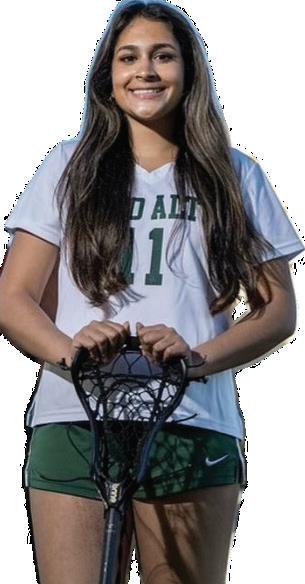
“I play lacrosse so I’m constantly running a lot, which leads to a lot of lactic acid buildup and my legs can get really sore because of it so the sauna and the steamroom help to relax my muscles and ease the pain. It makes running a bit better since it mitigates the effects of lots of sprinting.”



WILLEM MADWED, ‘27
“I lift regularly and I use is a hot tub in my backyard to recover. The hot water helps increase blood flow to my muscles, which reduces soreness and speeds up recovery after workouts. The heat also relaxes tight muscles and joints, to aid recovery after lifting and training. Importantly, it also helps me wind down after studying and makes it easier to relax at night, which helps me sleep better.”

ECHOES
in the
By ELIF DOGAN and CARYS OLSEN
Just a few years ago, the basketball gym would have been filled with students, chanting, cheering and creating the home-court advantage and atmosphere that allows athletes to thrive.
The student section was once a central part of the basketball experience, bringing energy to every game and giving players a sense of community support.
Now those events are few and far between and the stands are mostly dedicated to supportive parents. Boys’ varsity basketball Assistant Coach and JV Head Coach Brandon Byer has been able to witness this decrease firsthand over the past several years.
“We just haven’t had the same turnout that we’ve had in the past,” Byer said. “Especially from last year, but it’s also just been a major change since the COVID pandemic happened.”
COVID-19 has proven to be a major factor in student attendance, even six years after the lockdown started.
According to boys varsity basketball head coach, Jeff Lamere, the attendance has never fully recovered to the same amount it had before the pandemic.
“I think we lost something with COVID and students have never come back,” Lamere said. “We had two years where student athletes had zero fans, so something was lost there.” Despite strong
“ We are always motivated during games regardless of the crowd because love basketball.
— Abby Neumann (‘28)

Photo of Abby Neumann by JOHNNY CHEN
momentum.
“Without a crowd in the stands, it has to come from our guys on the bench,” Byer said. “When you have acrowd you kind of feed off of that. When you don’t have a crowd, you’ve got to create your own energy.”
For players on the court, having a crowd in the stands does not go unnoticed. Especially when they travel to other schools and experience what a full student section looks like.
“I think now they’re used to not having fans, but there are comments when we play at other places and their students are there,” Lamere said. “You go down to Los Gatos and they have a great student section, Homestead gets a great student section and has a band playing, so you notice it.”
Varsity junior basketball player Rocco Smith, states how the presence of a student section directly impacts how he plays.

challenges as well. According to sophomore girls varsity basketball player Abigail Neumann, the presence of fans can make a major difference in the energy of a game.
“When there are more people watching our games it definitely affects how I play because there is so much energy coming from the crowd,” Neumann said. “It also gives me more energy and excitement to play.” With less people in the stands, the atmosphere is noticeably different.
“ ”
We do deserve to have a fanbase, we work hard and try our best.
“When the gym is mostly empty even if it is a competitive game it definitely feels a little dead at times,” Neumann said. Despite this, the team has been able to find their own way to create energy, through their passion for their sport and dedication, regardless of who is watching.
— Rocco Smith (‘27)
“I think that having a student section really helps us perform better and gives us a home court advantage,” Smith said. “It gives us a better opportunity to win games.”
According to Smith, the lack of students in the stands can be discouraging for the team while they are playing.
“Not having anyone come to watch you makes you think no one cares about you as an athlete,” Smith said. “I think we do deserve to have a fanbase, we work hard and try our best.”
Although there are smaller crowds this year, that makes the moments when the fans do show up even more motivating for players. During a recent home game against Monta Vista High School, Paly won 65-22, Smith recalls having a noticeably larger crowd than normal.
“Playing Monta Vista at home was a good game because we had a somewhat bigger crowd,” Smith said. “That motivated us to play well and ended up being our best game of the year.”
The effects of lower attendance are not limited to the boys team. The girls varsity basketball team has faced similar
“My team and I are always motivated during games no matter the turnout in the crowd because we all love basketball,” Neumann said. “At the end of the day we want to win no matter what.” While both girls and boys basketball are competing at a high level and each had successful seasons in their own right—coaches say that attendance now depends on the fans’ commitment and a shift in school culture as a whole.
“How do we find a generation of kids that want to enjoy that again?” Lamere said, “I think that there are so many demands on kids at Paly and so much academic pressure.”
He also noted how football games often attract larger crowds because they occur less frequently and have become social events for students.
“Football games are once a week,” Lamere said. “The kids go there to gather. Many don’t go to watch the game but it’s very social.” Basketball games, which occur multiple times a week, do not have the same build up or tradition that football games do. Even with the longstanding trend of low attendance, students and players still hold hope for the future.
“What do we need to do to be responsible for creating an environment where
students would like to come to,” Lamere said. “Obviously the game itself is not enough, supporting the students is not enough, so we need to create something that is enough.”
Lamere says he is dedicated to working in the offseason with the athletic department to explore ways to improve gameday atmosphere.
“We also as an athletic department need to make it enjoyable with entertainment,” Lamere said.
While this responsibility partially lands on the athletic department, it also falls on ASB, who are responsible for facilitating school spirit within the school.
According to senior and ASB spirit commissioner Arabella Guinle, there have been steps taken to improve school spirit and attendance at games.
“Themes are a great way, creative social media posts and just word of mouth,” Guinle said. “Some changes for the future would be having the opportunity to do mini-games for the grown during the game, it is hard to do a lot though due to safety guidelines.”
The players were able to supply their own ideas as well of how to increase attendance. Smith believed that stronger promotion leading up to the games would help more students recognize the level of talent on the court.
“If we posted our good plays on social media it would give us more recognition,” Smith said. “Students could get a glimpse of us and hopefully come out of their house and watch us.”
For athletes who put countless hours into their sport and improving their game, the return of a packed student section would provide meaningful support and motivation.
As the basketball program continues to grow and rebuild, players and coaches hope that the bleachers will once again be filled with the cheers of the crowd.

Photo of Rocco Smith by DANIEL SEGEV

byCarterBurnettandDylanRObinson

This February, the iconic Winter Olympics took place in Italy. It consisted of many thrilling, emotional and unique events, living up to its hype and then some.

Every four years, the Winter Olympics capture the world’s attention as athletes from across the globe compete in some of the most challenging and unique sports imaginable. From the speed of downhill skiing to the precision of figure skating, each event showcases years of dedication and training. This rare combination of intensity, skill and variety is what makes the Winter Olympics such a captivating and unforgettable experience for fans
ALESSIO DORIGO, ‘26
Many Paly students watch these games at home behind a screen, but senior Alessio Dorigo was able to attend the 2026 Winter Olympics in Milan and Cortina d’Ampezzo in person.

everywhere. This year, the US made Winter Olympic history, earning 12 gold medals across various events.
At Paly, many students participate in sports featured in the Games, despite the fact that they are much less common in the Bay Area. Watching other young, inspiring athletes like Alyssa Liu and Eileen Gu as they sweep the podiums reminds them why they choose their respective sports.
“Being
“Being there in person and watching these athletes perform at the highest level of competi tion was super cool and a crazy expe rience,” Dorigo said.
Dorigo has been a lifelong fan of winter sports, especially skiing and snowboard ing, so being able to witness these sports per

true. The Winter Olympics was full of unique and interesting events that each deserve their own recognition, but there was one event that separated itself from the others in Dorigo’s
there in person and watching these athletes perform at the highest level was super cool.”
“Watching the snowboarding was my favorite because it was cool seeing them do flips up close and in person,” Dorigo said.
Dorigo and his dad at the winter olympics.


Photo courtesy of ALESSIO DORIGO
LEILANI CHEN, ‘27
Figure skating is one of the fastest-growing sports in popularity, with stars like Alysa Liu and Ilia Malinin coming to the spotlight, especially after this year’s Olympic Games. Despite living in California, where it is primarily warm throughout the year, figure skating still remains popular among the youth. Leilani Chen has found a valuable community through figure skating and continues it as a passion.
After viewing the Winter Olympics from home and knowing of Alysa Liu’s background leading into the games, Chen found her story incredibly powerful.
“She showed the figure skating world and the athletic world that you don’t need to continue with something if it’s burning you out and hurting you,” Chen
IAN JOHNSTON, ‘26
The display of these unique sports allows for lesser-known sports to gain popularity. Senior skier Ian John ston talked about his favorite part of the Winter Olympics.
“My favorite part of the Winter Olympics is how it brings attention to sports that don’t usually get the spotlight, like skiing,” Johnston said. “It not only helps grow the sport as a whole, but shows viewers how difficult the sport really is.”
said. “And that doesn’t mean that’s the end of your journey.”
Reflecting back on this year’s Winter Olympics and Alysa Liu’s performance, Chen recalls her incredible routine, but also noticed how happy she seemed to be while competing.
“It was so inspiring to see somebody enjoying herself and having a blast on the ice,” Chen said.
If Allysa Liu’s impact is not enough alone to get you interested in figure skating, Chen shares why she finds it so interesting to watch.
“Ice skating is such a fantastic sport to watch because it’s not only insanely athletic, but it also has that art quality, not just showing off their skills, but their skating to a musical program.”

This year’s Winter Olympics had many unique and impactful stories. Johnston shares one that stood out to him as a skier.
“Seeing Lindsey Vonn...showed how much work they put in.”
“I know she didn’t get the result she wanted, but seeing Lindsey Vonn train and give it her all in the downhill event showed how much these athletes care and how much work they really put in,” Johnston said.
MILES JOING, ‘27
One of, if not the biggest, event of the Winter Olympics was hockey, with the women winning gold for the first time in eight years and the men winning for the first time in 46 years. Junior hockey player Miles Joing talks about the impact the Winter Olympics had on hockey.
“I think the USA winning gold in both men’s and women’s will have amazing impacts on the youth community and will encourage more kids to get into hockey,” Joining said. “I started playing hockey after watching the movie about
the 1980 Olympic hockey gold medal team, so I hope kids who watched them win this year will be inspired to play as well.”
There were many impressive stories in this year’s Olympics, but Joing shares what made the mens and womens hockey run so special.
“The men’s and women’s hockey teams overcame a lot of adversity on the way to winning gold, as their hard work and refusal to give up ultimately led to their success,” Joing said.
“It was so inspiring to see somebody enjoying herself and having a blast on the ice.”


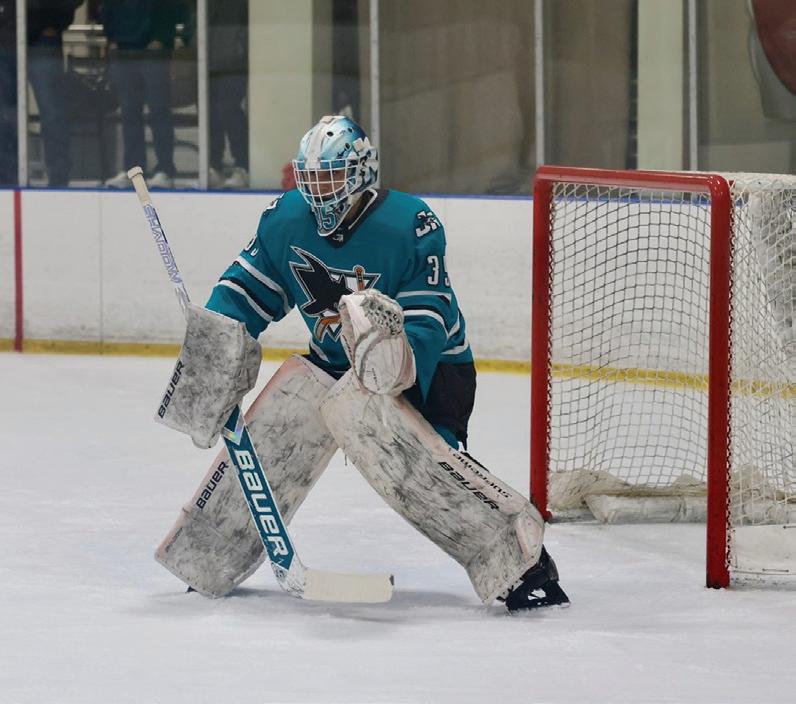

Photo courtesy of LEILANI CHEN
Photo courtesy of IAN JOHNSTON
Photo courtesy of MILES JOING
WORLDCORRUPT




The 2026 World Cup comes with a new era of Americanization while soaring ticket prices and political tensions test the spirit of the game.
By IAN CIERNIAK, MABEL McCARTER and MICHAEL
WU

This summer, one of the world’s largest sporting events will take place across North America. The 23rd FIFA World Cup, organized by the International Federation of Association Football (FIFA), will be hosted jointly by the United States, Mexico, and Canada, drawing global attention and millions of traveling fans.


FIFA projects the tournament could reach a record audience of up to six billion viewers worldwide. Combined with a newly expanded format, the 2026 World Cup is expected to be the largest in the competition’s history.
However, one thing is certain: the tournament won’t come without its controversies.
With the World Cup finals coming to the United States, many critics have come out to protest, believing the game is becoming more “Americanized”, and that the sacredness of the game is being sacrificed to generate revenue.
“America is banking on the diversity of many communities from across the world showing up in force this summer — though Canada and Mexico are sharing hosting duties with the United States, the bulk of the games, money, and specta cle will be held on continental U.S. soil,” critic and writer Justin Tinsley wrote in his opinion piece “America wants the World Cup but not the world”.
Additional concerns have emerged over proposed changes to the event’s presentation. FIFA is reportedly planning a Super Bowl-style halftime show for the World Cup final, with British band Cold play expected to perform. Supporters see the move as a way to broaden the event’s appeal, but critics argue it risks turning the final into a spectacle that distracts from the match itself.
There are also logistical questions about whether such a performance could fit within soccer’s traditional 15-minute halftime without disrupt ing the flow of the game.
Sophomore and member of the var

early games, prices can range anywhere from $213 to $4,185 for general admission, according to a report from Al-Jazeera.

soccer, which will have an impact on the future of soccer and the World Cup,” Chung said.
Critics point out that FIFA president Gianni Infantino is turning a blind eye to the Americanization of the event due to his close relationship with United States President Donald Trump. While FIFA is supposed to stay neutral, in December of 2025, Infantino awarded the first-ever FIFA-Peace Prize to president Trump.
“I feel like corruption in FIFA definitely exists, and it is completely unfair to loyal fans who love the game,” Chung said.
Many fans have bigger concerns to take care of as a result of the World Cup coming to the United States. 2026 World Cup ticket prices have soared past previous records, affecting fans globally. Although the tournament is often promoted as a global event meant to bring people together, the reality is that high ticket prices and high costs for transportation and hotels can make attending nearly impossible for many people. For families who
Sophomore Tomas Marcello Madeira has been watching the World Cup as a Brazil fan for as long as he can remember. Recently, he has seen the World Cup change for the worse. He noticed that the accessibility of the World Cup has lessened as the prices increase, stopping many eager families from buying tickets.
“I believe the cost is way too expensive, especially for families that have never gotten the chance to travel to another country and watch the World Cup,” Marcello Madeira said.
“When they finally have the chance to [attend], it is way too expensive.”
Rather than rewarding


generation of supporters. If younger audiences have difficulties experiencing the tournament in person, the World Cup risks becoming something they can only admire from a distance.
“It’s not realistic at all for someone my age to attend a World Cup unless their parents are buying tickets for them,” King said. “The tickets are crazy expensive from what I’ve seen.”
Beyond ticket prices, some fans are thinking about how the growing scale and commercialization of the tournament is changing the event.
Sponsorships and large corporate involvement have become a major part of the modern World Cup.
“Having a halftime show takes away the focus from soccer, which will have an impact on the future of soccer and the World Cup.”

1
—Brian Chung ‘28
reach for the people who care about it the most.
Junior and varsity soccer player, Luiza Teixeira, expresses a similar reaction to her family’s experience.
“My dad had a fit about this year’s ticket prices when they first came up, but I’m pretty sure they changed for the public,” Teixeira said. “It seemed to have caused an annoyance through the community because it seemed way out of an average price range from the past years.”
This growing gap in affordability reinforces concerns that access to the World Cup is increasingly tied to wealth rather than a shared passion for the game.
This concern becomes even clearer when looking from a younger fan’s perspective. Senior and varsity soccer player Brenden King believes that it’s especially inaccessible for teenagers and younger fans, even though they would be the next
Junior and varsity soccer player Lilo Sayag believes this has shifted how the event feels to some supporters.
“For most soccer fans, the World Cup has always been the pinnacle of the sport,” Sayag said. “But recently I think this has changed due to high ticket prices and big sponsors making it more of an event for people with money rather than everyday fans.”
However, not everyone views the tournament’s scale as a negative. King believes the massive size of the event actually highlights soccer’s global impact.
“The scale of the tournament shows how widespread and global the game is,” King said. “That’s why it’s also the most unifying sport and tournament.”
The World Cup is also expanding from 32 teams to 48 teams for the 2026 World Cup. This expansion is the first since 1998. The expansion will result in more games for fans to watch while also giving more countries an opportunity to play on the global stage.
Chung believes that the expansion has its positives and negatives.
“While it is great that more countries will get to participate, it feels like the World Cup is losing its tradition and qualifying won’t be nearly as competitive,” Chung said.
Politics has also become an unavoidable conversation surrounding major sporting events. The World Cup has often intersected with global issues, from the human rights debates to political tensions between countries.
Leading up to the World Cup, tensions have arisen in multiple regions worldwide. In the Middle East, conflict has ensued after the United States struck Iran. With the United States being a host country, Iran has threatened to boycott the 2026 World Cup after military and economic tensions have escalated. While the withdrawal is unlikely if it were to occur, Iran’s withdrawal would join the handful of times a team has withdrawn due to conflicts. Conflict in the Middle East not only affects Iran but also the countries in the region. The World Cup may become an indirect way for the people of certain countries to fight and achieve victory in a battle for pride.
with sporting events, especially an event of this scale like the World Cup,” Sayag said. “But I like to separate the politics from the game when watching soccer.”
Chung agrees, pointing out where most players still hold their main focus.
“Politics don’t really have any effect on the World Cup because the players are more focused on their games,” Chung said.
Teixeira highlights the other aspects of the controversy.
“Politics have been a huge part of the World Cup, especially when it comes to sexuality and race,” Teixeira said.
“Politics have been a huge part of the World Cup, especially when it comes to sexuality and race.”
—Luiza Teixeira ‘27
According to the Pew Research Center, Global sporting events increasingly intersect with politics, as conversations about race, representation, and LGBTQ inclusion become part of the public discourse surrounding competitions like the FIFA World Cup. Currently, FIFA has a Pride match scheduled on June 26, which features Egypt and Iran. The match is in Seattle during their annual Seattle Pride Weekend, which is one of the largest LGBTQ celebrations in the United States. Even though FIFA wanted to use the match to celebrate LGBTQ rights, the match is shrouded by heavy controversy as homosexuality is criminalized in both Egypt and Iran.
Another issue some students discussed was immigration enforcement and concerns about whether international supporters will feel safe while traveling to the United States.
Teixeira said conversations around immigration enforcement have been spreading online and within fan communities.
“People are seeing the World Cup now as a dangerous place due to the events that are occurring in the U.S.,” Teixeira said.
Marcello Madeira expressed similar concerns, emphasizing that the tournament should represent inclusion rather than division.
“I believe it is unfair that ICE will be attending the World Cup, and it shows me how America could potentially change the World Cup for the worse,” Marcello Madeira said. “America is the most diverse country in the world, and everyone should feel accepted.”
Despite these debates, many fans still believe the World Cup has the power to

Marcello Madeira believes nations may use the tournament as a platform to promote their image.
“Countries could use the event as a way to show power, and maybe promote their image,” Marcello Madeira said.
At the same time, not everyone views those political undertones as central to the experience. For some fans, the focus remains firmly on the sport itself.
“Politics are always associated
Representatives of both countries have already publicly called out FIFA regarding this matter, with Egypt threatening to back out of the tournament.
According to The Guardian, the Egyptian Football Association (EFA) has sent a letter to the FIFA secretary general, saying, “We call on FIFA to guarantee that the match takes place in an atmosphere focused solely on sport and free from displays that contradict the beliefs of the participating nations.”
The topic raises the question of whether host countries can force participating countries to participate in social events that go against their own values.
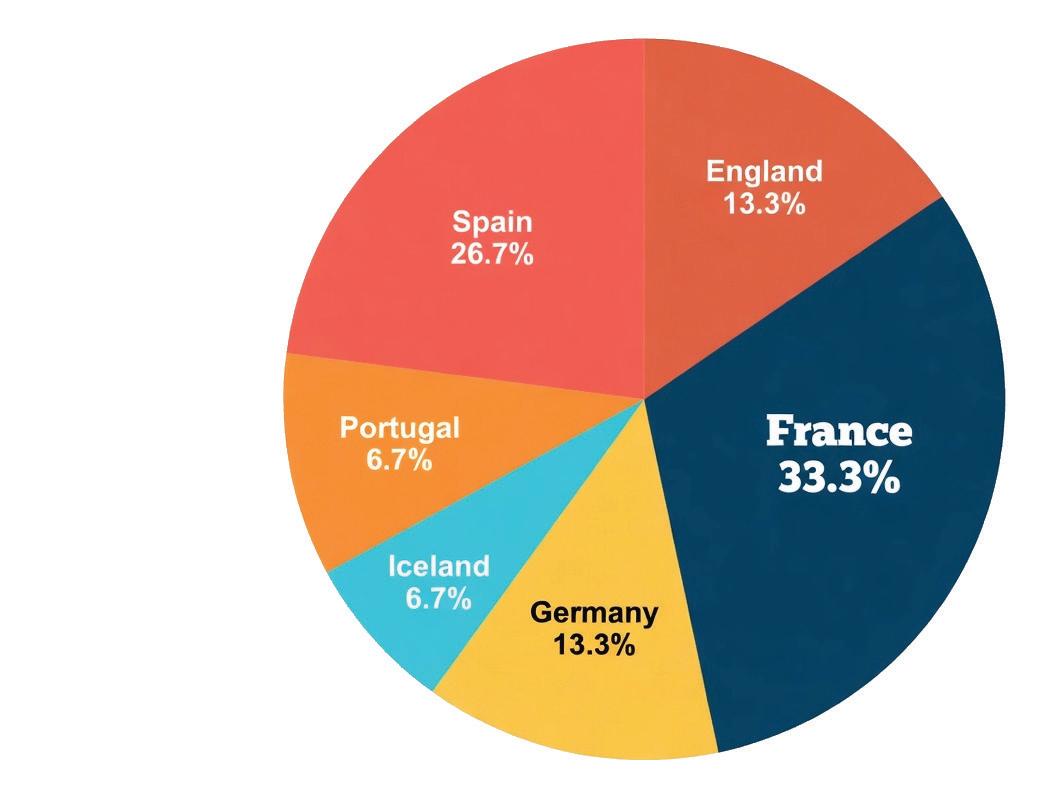
WHich Country do you think will win the world cup?



bring people together. For decades, the tournament has been known for uniting countries and cultures through a shared love of soccer.
“Besides what is happening with ICE, the World Cup will for sure be welcoming to everybody,” Marcello Madeira said. “America is the most diverse country in the world, which means everyone should feel accepted if they attend a game that is within this country. People from all around the world watch the World Cup, even if they don’t specifically watch soccer. Everyone enjoys it, but the ones who enjoy it the most are the ones who are passionate about their country’s soccer team, which is a certain type of audience.”
Lilo Sayag agrees and also believes that tradition is still important today.
“Sports, especially soccer and the World Cup, have a tradition of bringing people from different countries and cultures together,” Sayag said.
Teixeira believes that the event will bring people together during times of conflict.
“Now more than ever, especially during the World Cup, is the time to celebrate the athletes from our country and our country pride,” Teixeira said.
To many, the 2026 FIFA World Cup symbolizes a clash between traditions and American-led commercialization. Even though the expansion to 48 teams can lead to a more entertaining viewing experience, rising ticket prices and viewer discrimination may take the game away from true fans. The future of the World Cup will rely on whether it can overcome the rising tensions and remain as a symbol of unity.
“Sports, especially soccer and the World Cup, have a tradition of bringing people from different countries and cultures together.”
What is your favorite thing about the world cup?
“The World Cup is a really big event and it allows people to embrace their national identities and it unites soccer fans around the world.”

— Alon Milman ‘28
“I love how one country can come together to support one team and have fun while doing it.” – Mathias Sommer ‘28
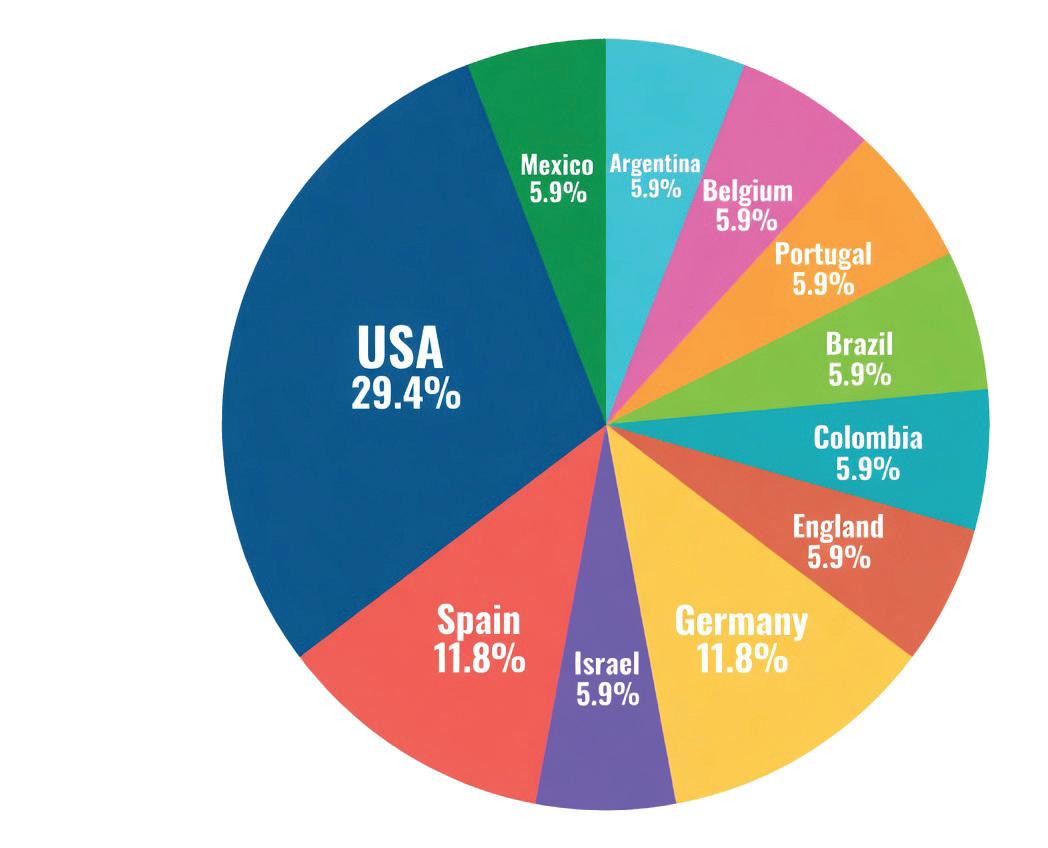
—Lilo Sayag ‘27 which Country do you want to win the world cup?



Photos by MICHEAL WU



Still In Sight

At Paly, many sports consistently deliver top results, yet remain outside the spotlight. This story specifically explores the athletes, culture and commitment behind some of the school’s most successful but least recognized teams.
he sun had barely risen when sophomore Finn Rich adjusted his grip on the club and stared down the fairway, his fingers stiff from the morning breeze. In his back pocket, a folded scorecard waited like a receipt — proof of whether over four years of practice would hold up when it mattered most. Wind, tempera

If [golf is] not publicized and glorified, it disappears.
He had to judge exact distances, account for the wind and elevation and decide which club would carry the ball just right without overshooting or undershooting. One small error in tempo or contact turns a clean shot into a mistake, which is why golf demands a level of consistency most people can’t grasp when they watch from the sidelines. Every hold asked for something different and every choice had consequences that stayed on that same scorecard.
go?’ as they did following basketball and football games. In a school where attention follows what gets announced, posted and repeated, Rich realized how quickly a moment in a smaller sport can be overshadowed.
“I came back and realized almost every one wasn’t aware that we had a tourna ment,” Rich said. “Not because everyone was trying to ignore our schools golf team, it was because if it’s not publicized and glorified, it disappears.”

— Finn Rich ‘28

When he finished the round, the adrenaline didn’t dim. It followed
Rich’s experience points to something much larger than one tournament. At Paly, visibility isn’t evenly distributed across sports and for smaller teams, rec ognition often comes down to whether






Photo by DYLAN FUJITA


the past four years, there have been five members of the swim and dive team to compete at the Division I collegiate level. One of whom went on to win a National Championship, while another currently holds the 50 freestyle school record at Stanford University.
Last season, the Vikings made Central Coast Section (CCS) history by capturing both the boys’ and girls’ CCS titles in a single year. This is the first time in history that a school has ever swept both championships in the same year.
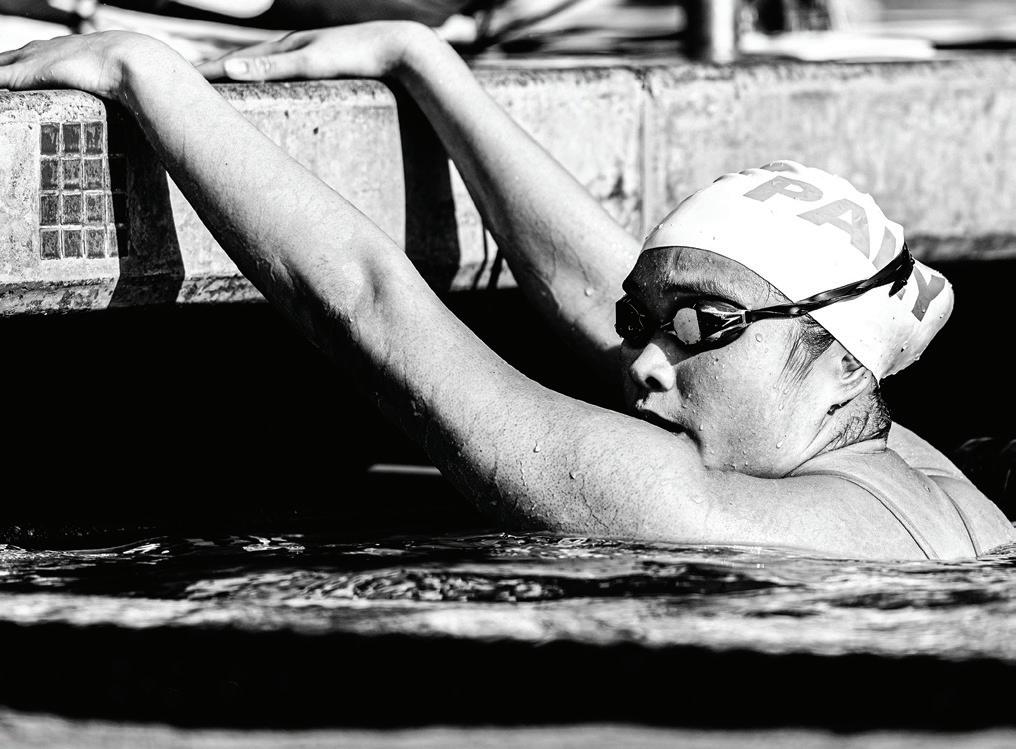
For many swimmers, though, that kind of accomplishment doesn’t always translate into recognition across campus. Paly junior and member of the 2025 CCS championship team, Carlos Cheung, relates to this issue.
“Not really. I think people know swim [at Paly] is good, but they don’t actually see it,” Cheung said.
sions every other day. When we get home from practice, we only have one or two hours for homework.”
Even during competitions, the experience can feel very lonely. When swimmers dive off the starting blocks, their focus narrows to the lane ahead of them.

“Most of our biggest meets happen off campus, so unless you’re directly involved, you probably don’t realize how competitive we are year after year,” Cheung said.
Part of the disconnect comes from how the sport is experienced. Meets run for hours and the scoring isn’t obvious to those who aren’t regular fans. Without consistent updates or coverage, it’s harder for the broader student body to follow what is actively happening, regardless of the success the team is having in a sea-
“When people think about the major sports here, they usually imagine football games under the lights or packed basketball gyms,” Cheung said. “Those sports have visible crowds and obvious school spirit moments. Swim doesn’t really have that kind of atmosphere, even though our results are just as strong.”
For many swimmers, the work that leads to those results is largely unseen. Every week, swimmers spend 21, if not more hours in the pool. Training often begins before school with early morning practic es, followed by hours in the pool later in the day during afternoon practices. Out


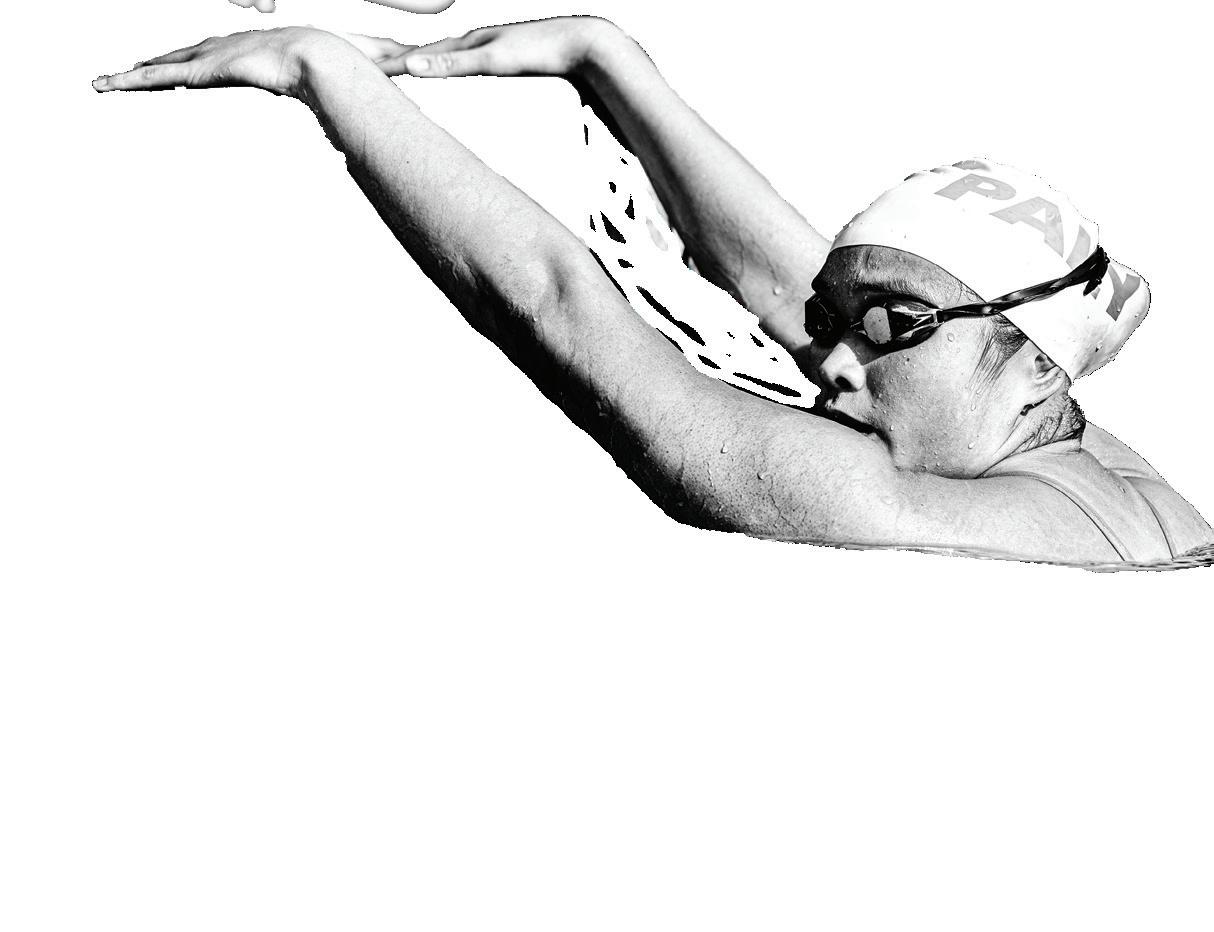
achievements more visibly would help people understand how successful some of the less visible sports really are.”
“When you’re on the block, it’s just you and the clock,” Cheung said. “There’s no teammate you can pass the ball to. That individual pressure makes it mentally tough in a different way.”

At the same time, the team environment is still a key part of the sport. While swimmers race individually, the culture within the program is focused on a collective effort and their teammates support.
For teams like Paly swim and dive, success doesn’t always translate into campus-wide recognition. But beneath the surface, race by race and stroke by stroke, the impact is measurable with the tro phies won, the records broken and the count less hours of work that deserve to be recog nized beyond solely the pool deck.

People know swim is good, but they don’t actually see it.
— Carlos Cheung ‘27

“Our team culture is very supportive and hardworking,” Oh said. “Even though we compete individually, everyone is always encouraging each other.”
For many swimmers, recognition isn’t what drives them to the pool each day — motivation comes from the improvement of shaving fractions of a second off a time or contributing points toward the team race at a meet.
“For most of us, the lack of recognition actually pushes us more,” Cheung said. “Motivation comes from personal improvement, time drops and representing the team well at big meets rather than external attention.”
Even with that, swimmers still say that greater awareness of their accomplishments could help others see what happens beyond the pool.
“If I could change one thing, I’d want


Back on campus, Rich’s tournament round won’t show up on the major scoreboards or even in the gym on Monday. But the work behind each swing, the early mornings, which is prominent for golf and the late nights, is as real as any other sport. The same is true for swim and dive, where champi onships and records can happen a few miles away from campus and still feel en tirely invisible for students.
For athletes in smaller sports, their idea has never been to take attention away from any of their competing sports. It’s simply to get recognition for their big moments and to make sure they don’t disappear the moment their match ends. Because at Paly, intensity isn’t the prob lem; visibility is. And when a school notices more of its athletes, individual school spirit doesn’t just prosper — it tells a broader, truer view of Viking sports and life.
By lunchtime, Rich’s scorecard was already bent at the corners in his back pack. The numbers and work still there.



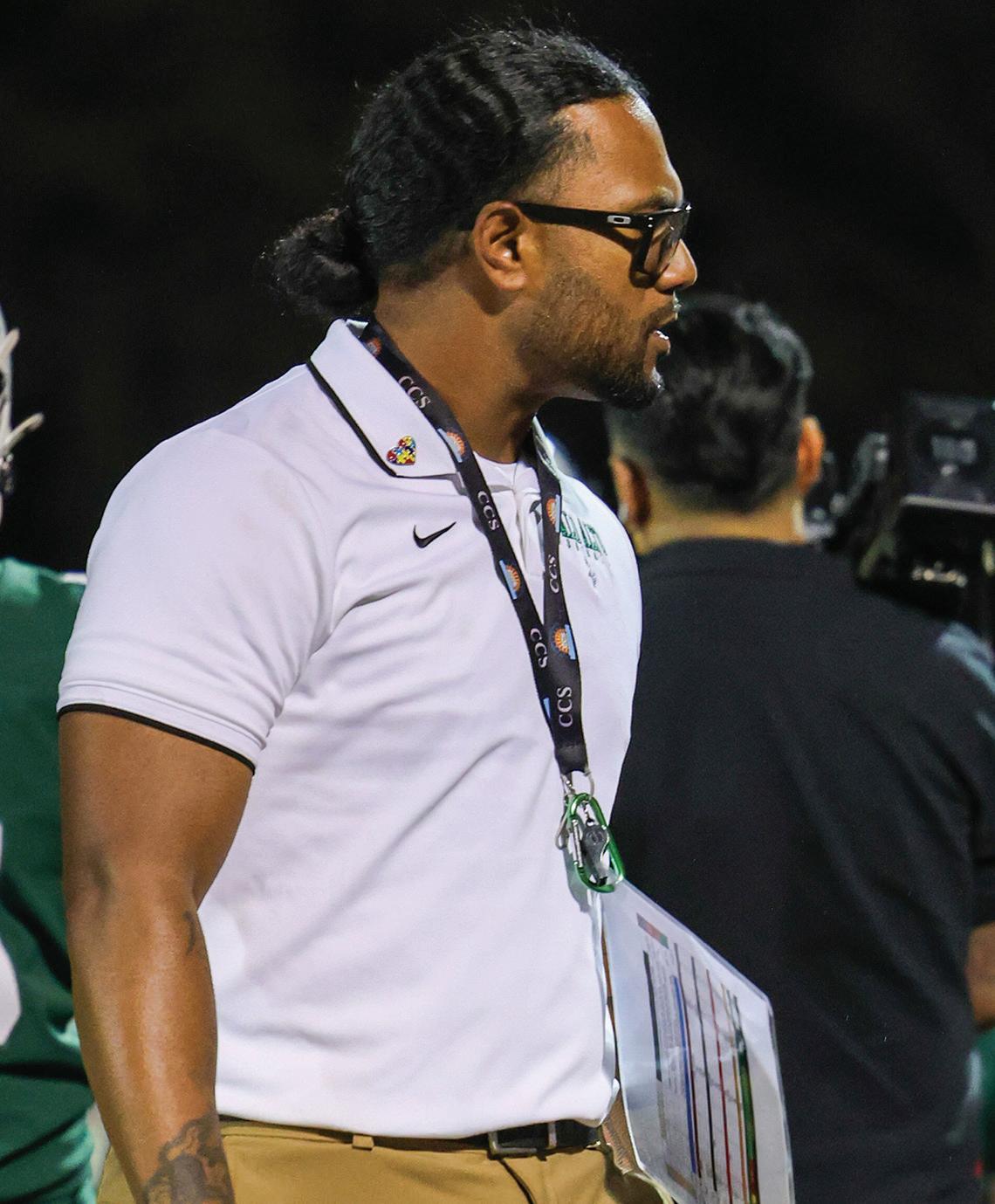

Photo by LUCA VOSTREJS


Photo by SACHIN GURUNATHAN


tive changes. One of the few coaches who retained their jobs after Tonga was hired was assistant coach Momin Marof. Marof, a Paly grad and assistant coach of three years, is also eager about the new
“I’ve sat in on a few of the meetings and honestly I like what I’m seeing,” Marof said. “The energy is good and the staff works well together. It’s a group of coaches who’ve either played at a high level or coached guys at a high level, so the standard is going to be high.”
” whether they’re a
Marof believes that the rebuild was needed and that the new spirit in the program will reflect well on the field.
“Even though not much of the old staff is back, the new energy they’re bringing in is something the kids are going to feed off of,” Marof said. “I expect a disciplined, high-level product on the field.”
Marof has been a witness to the Paly football program for almost a decade now after beginning to follow the team during middle school and looks back on the energy the school used to have as


Photo by SACHIN GURUNATHAN

Energy in not just the team, but the community is also a major goal for Ton ga in the upcoming years and he has plans for the future to fulfill the need for school spirit at Paly.
“We have an alma mater [song] and I hope this whole school decides to learn it,” Tonga said. “Right now I am working alongside the choir director and I think it’s very important that we get to know who we are not only as a school, but as a community. If we can come together during the fall season, that would be great.”
Marof believes that Tonga will be able to successfully bring the football spirit back to Paly.
“He wants to build the whole culture back up, making Friday nights some thing the whole school is excited about again,” Marof said.
However, this school spirit is not likely to come without a successful team, so to achieve greatness, Tonga has more fo cused goals for the players. This includes adaptations to the way the program is run, including different weight-training and conditioning in the off-season.
““I’m a true believer in the off-season,” Tonga said. “I like to do specific training and I like to venture off into other people’s training. I hold a specific training program here in Palo Alto called Journey that happens on Mondays, Wednesdays and Fridays.”
Tonga isn’t only enforcing physical changes, but personal ones as well.
“I think before you get to the football field, it’s important that the individual, or the kid knows who he is exactly and what his ‘superpowers’ are,” Tonga said. “And if they can figure out what it is that they can do well in the off-season, they’ll be prepared for the season.”
Coaches and players believe that the reason Tonga can channel these su perpowers is because he cares deeply about chemistry between players and coaches.
“What I respect most is that he [Tonga] cares about every kid, whether they’re a starter or on the bench,” Marof said. “He’s not just focused on football.”


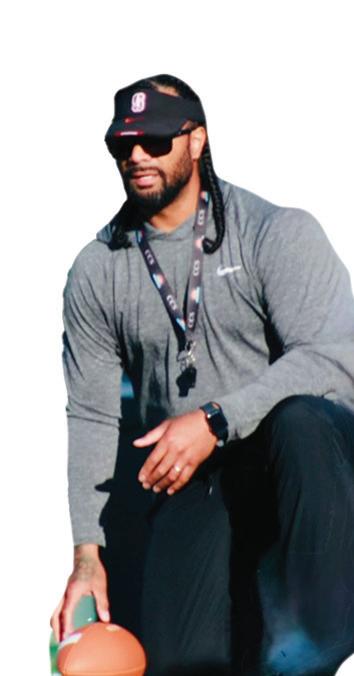
Photo courtesy of EDWARD TONGA




In Her Footsteps Following
By NATALYA KAPOSHILIN, SHIRA PORAT and LUCAS WU
Women are redefining leadership in sports today and becoming tomorrow’s

R“I think Naomi Girma is a really great player and defender.”
— Reyes Aronson ('26)
achael Corelli is an assistant coach at Stanford University, working with the women’s volleyball program that has put together a 29-5 overall season. Within the team, she’s known for bringing consistency to a long season of travel, film and constant change.
In women’s sports, Corbelli believes being a strong leader matters.
“Setting an example and helping inspire the next generation of female leaders in sports,” Corbelli said.
That message has clearly stayed with her. It shows the kind of energy and commitment required to work as a coach at such a high level and it helps explain the passion she brings to the court each day.
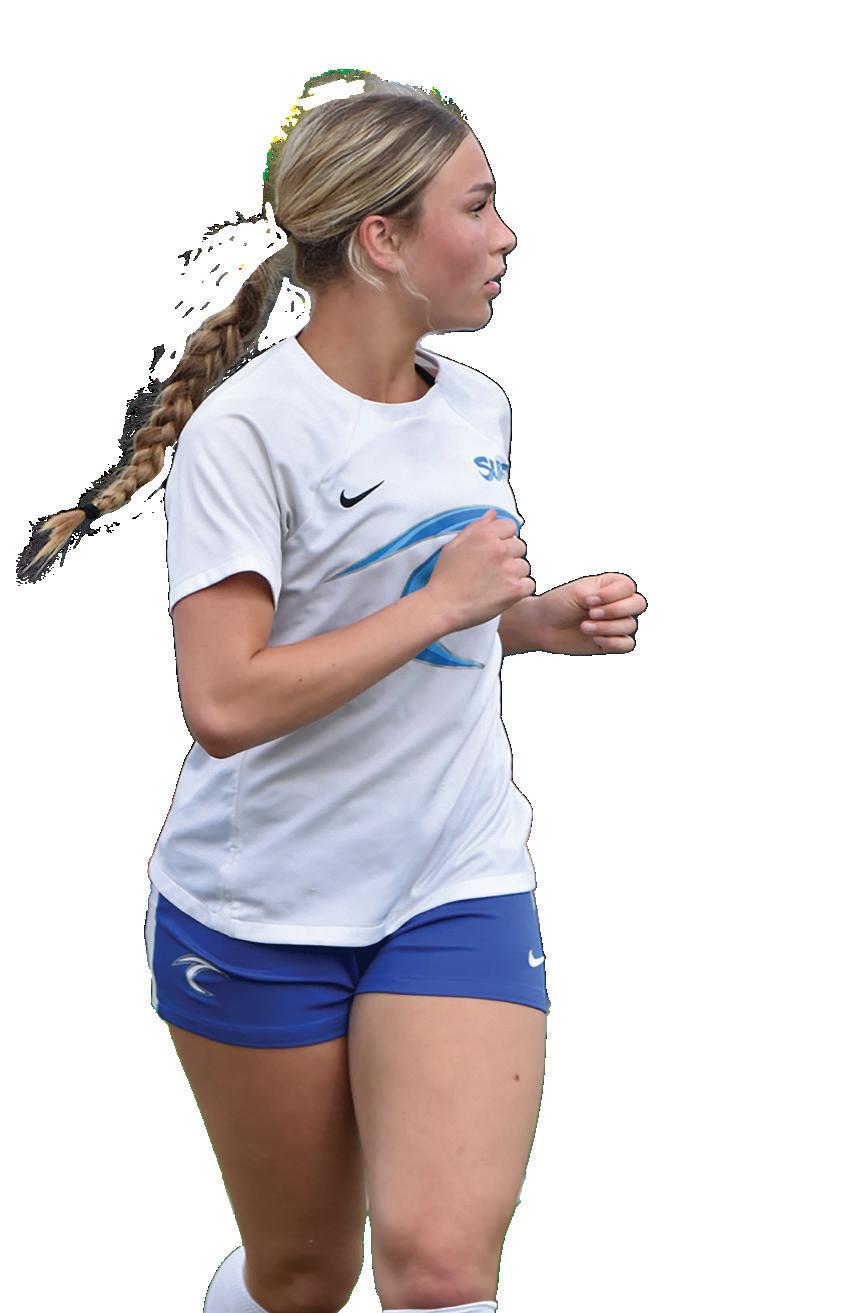

For her, leadership is not just about giving direction. It is also about the example set every day through practices, communication and the way coaches carry themselves around their athletes. That example can leave a strong impact, especially for young women hoping to build their own career in athletics.
A lot of that mindset comes from Corbelli's mom, who was both a coach and Olympian. That influence still carries into the way she coaches now.
“Find something you’re truly passionate about and channel that energy into being excellent at it,” Corbelli said.
Before Stanford, Corbelli worked at Auburn as an assistant coach and recruiting coordinator starting in 2022. Now at Stanford, her experience has fit in well as the team focuses on improving and keeping its standard high. Her background has given her experience in both player development and what is needed to build a strong program. Corbelli is also clear about what she still wants to see in women’s sports. She believes schools and organizations need to do more for women’s athletics.
“Invest more in women’s sports and pay female athletes what they’re worth,” Corbelli said. She believes that when resources match the level of talent and commitment, “the entire ecosystem will grow.” That belief reflects a larger issue in women’s athletics, where interest and performance continue to rise, but investment does not always keep up.
She also believes that womens sports and women coaches are still misunderstood. Too often, womens sports are treated as something smaller.

“The level of competition, preparation and com mitment is the same as men’s sports,” Corbelli said.
For Corbelli, that is something people should better understand, especially as women’s pro grams continue to grow in visibility and success.
Coach Paige Hsieh is currently an assistant track coach at Palo Alto High School and also coaches the junior varsity girls soccer team. Athletics have always been a major part of her life, especially soccer, which she played throughout her child hood and continued at the collegiate level. Even during her high school years, she began gaining experience as a coach, showing an early passion for mentoring younger athletes.
Hsieh emphasizes the importance of represen tation in coaching, particularly for female athletes.
“I feel like having more repre sentation in the field of coaching is really im portant, especially coaching females… to push past their limits and help build confidence.”
Despite progress over time, Hsieh notes that coaching remains a male-dominated field. When she first started, most of the coaches she encoun tered were men. While she has seen an increase in female representation in recent years, she rec ognizes that there is still work to be done to cre ate more balance and inclusivity in athletics.

“I’d say it’s definitely more male dominated field, where women have a hard time making an impact.”
Overall, Hsieh hopes to see more females drawn to coaching the next few years and be lieves that they add valuable knowledge, per spective and experience to sports.


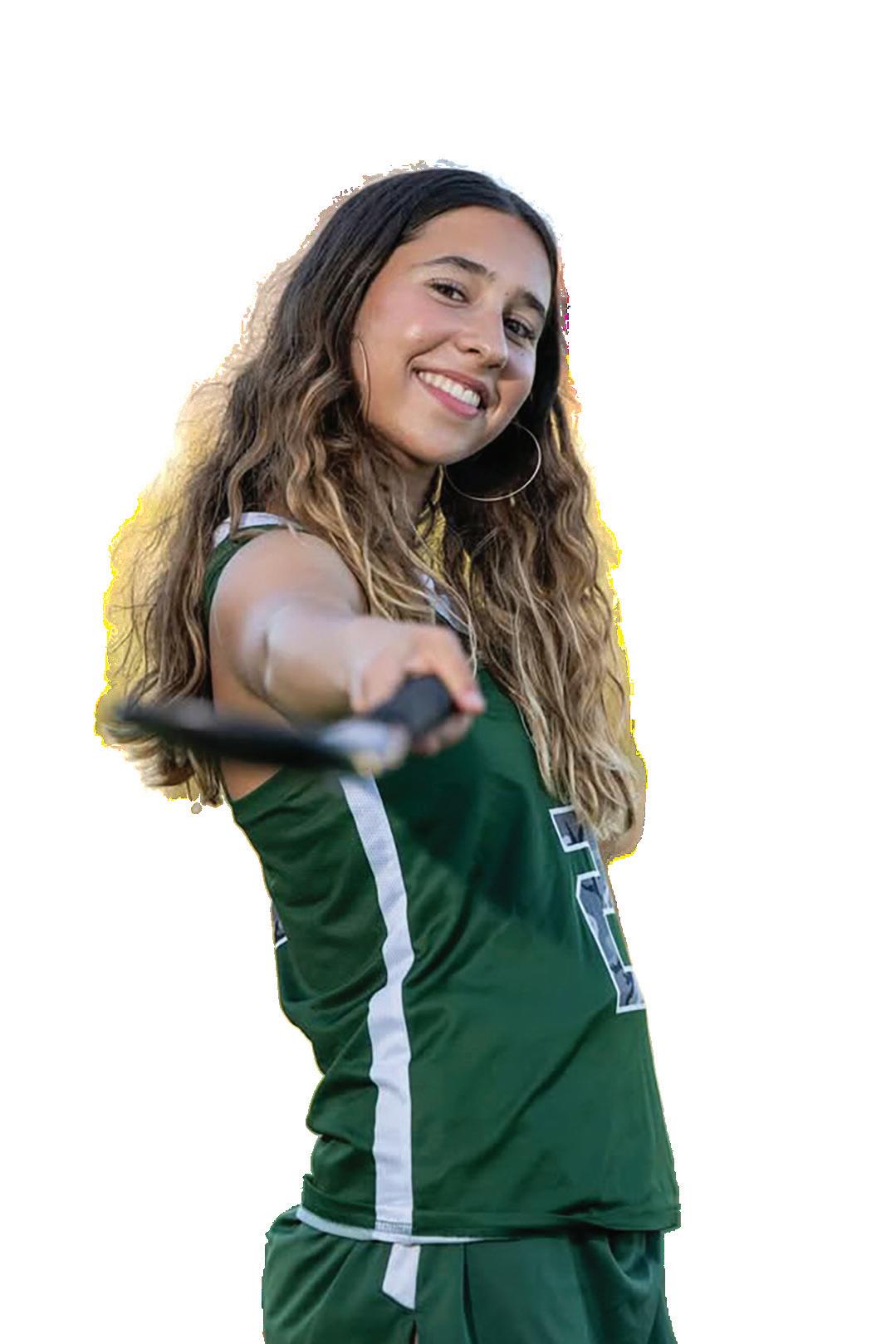
“I look up a lot to Alyssa Liu who just won the Olympics. She wasn’t enjoying herself and then she came back on her own terms, not because of anyone else. It really emphasizes playing for the love of your sport and not because of any external pressures.”
— Ela Aba ('28)

“I look up to my flag coach Nancy Nguyen. She showed me that women’s sports are just as big as mens sports and no dream is too big to dream cause anything is possible.”
— Mia Hong ('29)



outside world is something that I really look up to and strive to replicate. I think she’s an athlete who is able to keep herself composed in hard situations,”
— Sloane Nagayama ('29)
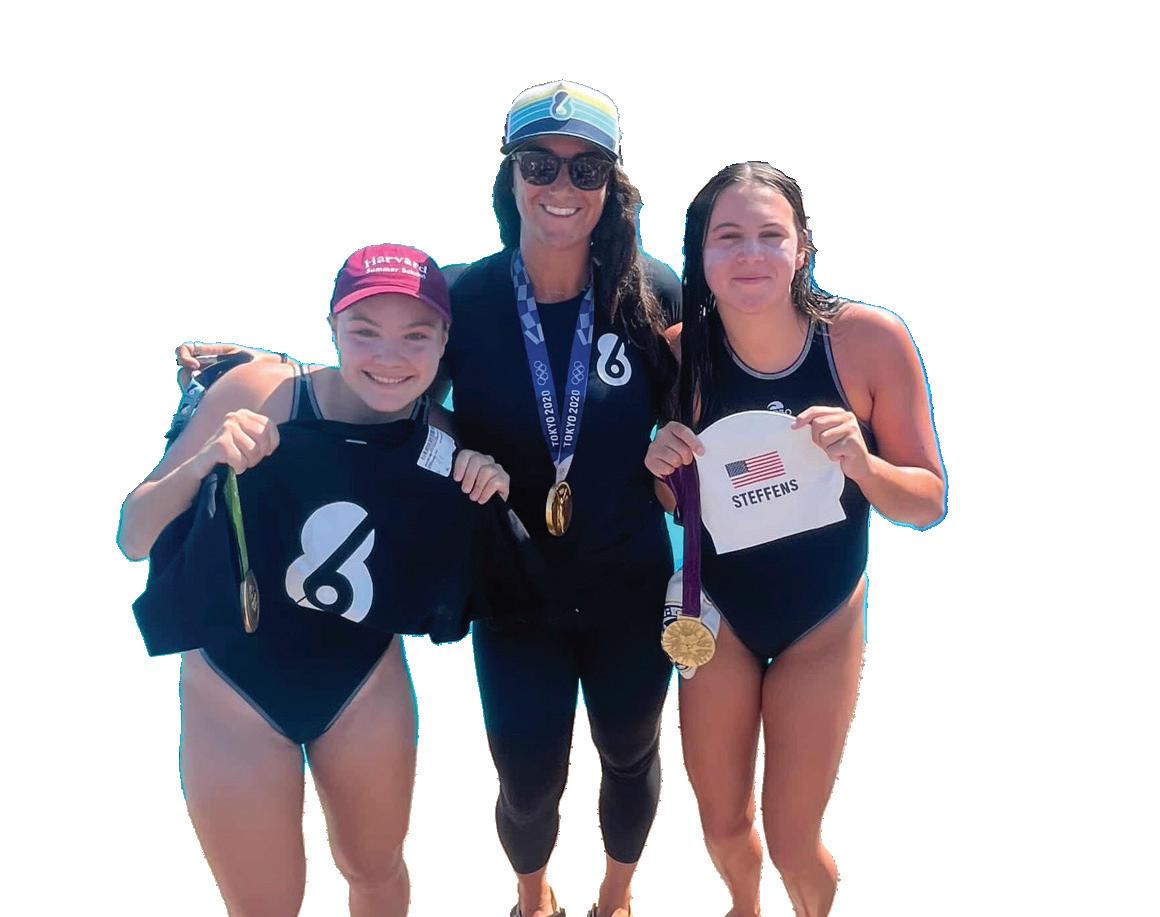
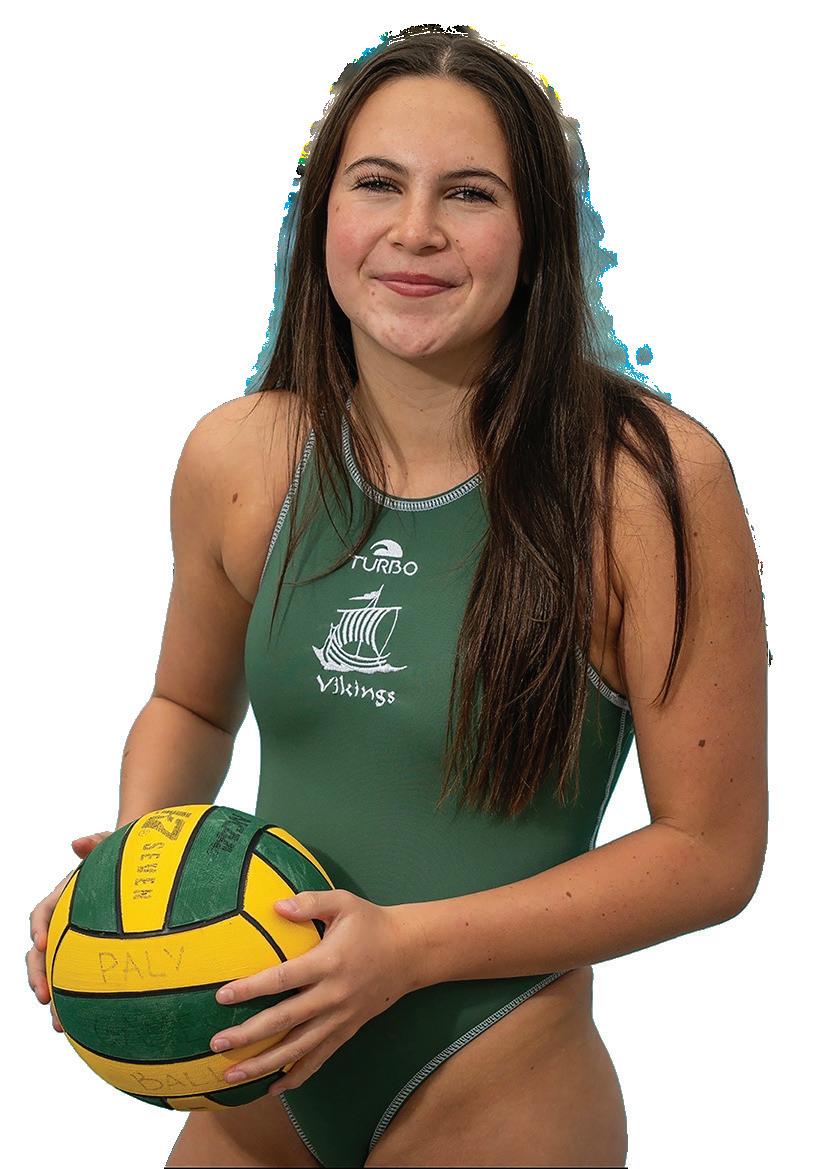
Photos courtesy of MIA WONG
Photo courtesy of SLOANE NAGAYAMA
By ANDY COMSA, ANDREW KNAPP and DANIEL SEGEV
ONE GAMEDIFFERENT PATHWAYS
From coaches to photographers, Palo Alto High School students and teachers share how their early professional sports experiences built their life-long connection to the game.
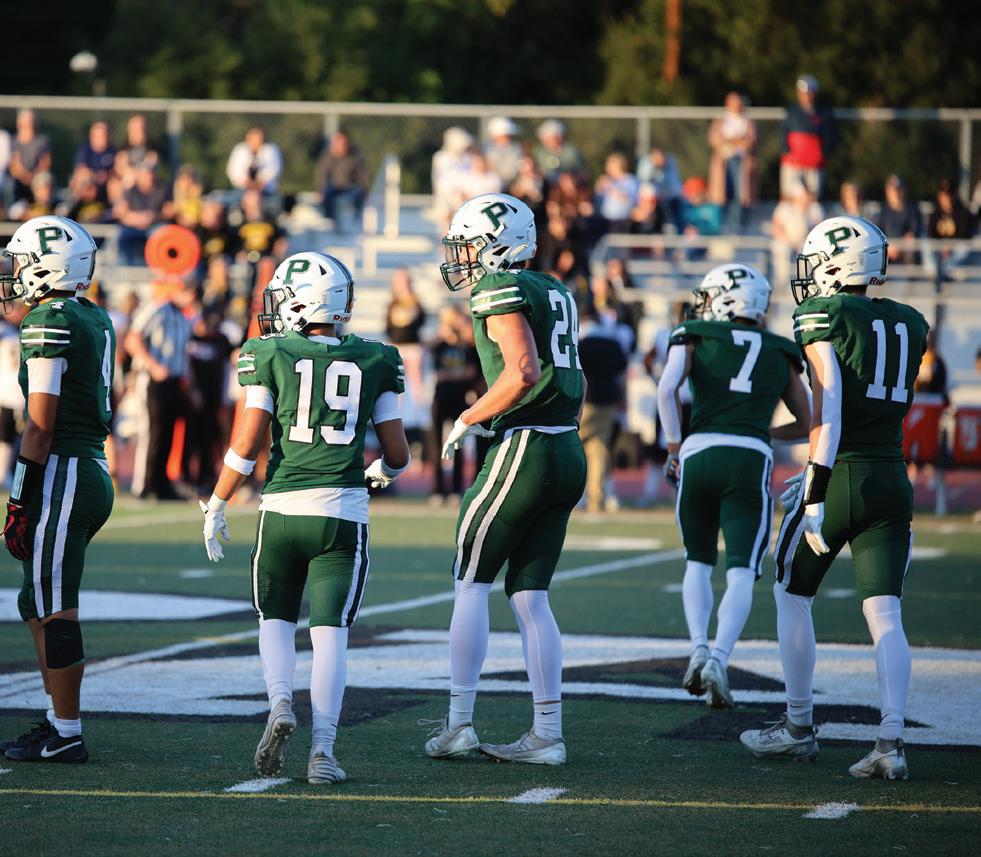
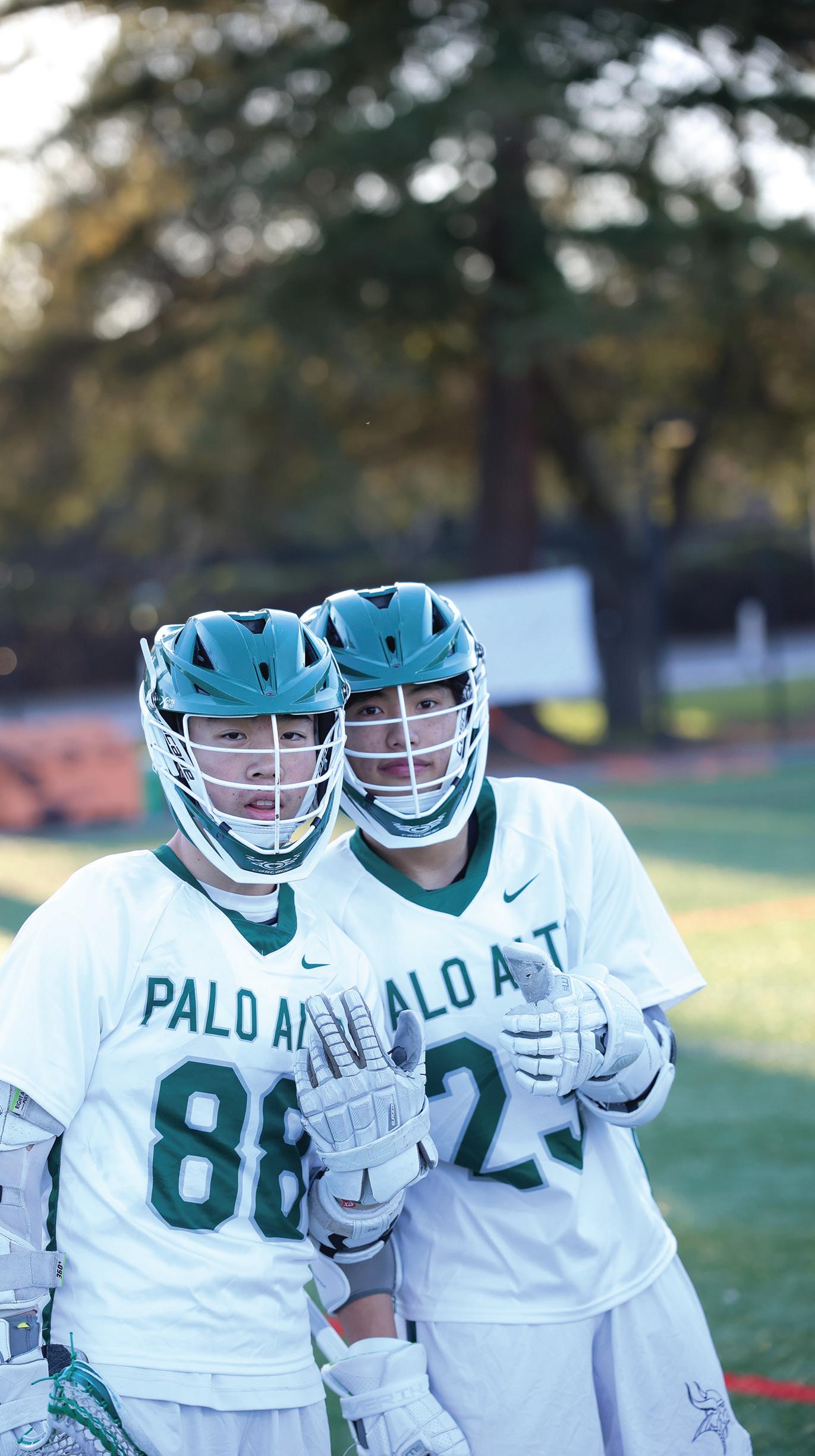
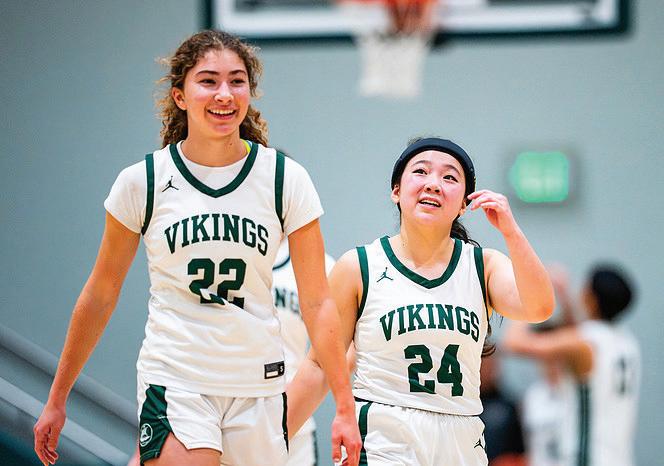
Photos by DYLAN FUJITA, DANIEL SEGEV and LUCAS TUNG
For many sports fans, that first time attending a professional sporting event is an experience that stays with them. It’s not so much the result of the match that occurred, but more so the feeling that comes with the result. The sound of thousands of voices electrifying the environment, the way the stadium appears larger than the playing field of a child, and the minute-to-minute suspense leading up to the big moment are all aspects that seem to spark and accumulate to an extraordinary experience.
For some students and teachers at Palo Alto High School, that same spark sets them on different paths, all rooted in a similar origin: their first professional sporting event, an experience that opened their eyes to a world of sports far beyond anything they had known before. Physical Education teacher and long-time basketball coach Peter Diepenbrock describes his memory going back to his first ever childhood and Giants game that he attended with his dad.

“When I was a kid, my dad took me to a Giants game,” Diepenbrock said. “We didn’t go that often, but it was just a really memorable experience. Watching that first pro game showed me how exciting sports moments can be.”
For an aspiring athlete, the excitement of entering a professional stadium can be an incredible feeling that will stay with you for the rest of your life. Specifi cally, the size, the larger-than-life players, and the feeling that every play is crucial. The introduction to professional sports was the catalyst for what would become a lifelong relationship for Diepenbrock, and that relationship continued to grow for the young man as he transitioned from watching the Warriors play basket ball to playing the game himself. It was not just the game that was important; it was the opportunity to learn about the game on a level that he hadn’t experi enced before.
“I just always really enjoyed the game and the strategy behind it,” Diepenbrock said.
And that curiosity was evident from an early age. While most kids were focused on the reps and the drills in the high school hallways, Diepenbrock was more focused on the system his coaches were teaching.
“I remember my coach asking ques tions, and I would be the first to answer,” Diepenbrock said. “My teammates even started calling me Coach Diepenbrock even back then.”
Diepenbrock was very interested in the strategic aspect of basketball, noting he was fascinated in his high school coach’s alley of attack. Watching professional basketball games would only increase his interest in the strategic side of the game.
That spark that he had from adolescence eventually led him into a long-lasting career. His first opportunity came in 1987, when he was given a real chance to coach basketball in Copenhagen, Denmark.
“I remember after a few days of coaching thinking, ‘Yeah, this is what I want to do for the rest of my life,’” Diepenbrock said.
From that point forward, coaching became his focus. He developed a new coaching style over the years that suited him and the game he understood. For many basketball coaches, the focus is on the offensive side. For Diepenbrock, his focus has always been on the defensive side.
“Defense is very black and white,” Diepenbrock said. “You’re supposed to be here, you’re supposed to do this. It’s very structured.”
Diepenbrock has built his career around defense and made it a key part of his teams.
For Diepenbrock, one defining period in his coaching career came in 2011 at Kenyon Junior College, when he felt a
That was the first time I felt like our offense was clicking just like I wanted it to.”
The coaching road he was on eventually led him to Palo Alto High School, but it all began as a young fan at his first professional game. Events like these may not mean much at the time, but they can lead to something much greater. At Palo Alto High School today, inspiration can still also be found by some of its students.
For soccer player and junior Koji Silverberg, it was his first professional soccer game that set the pathway for his love for soccer. The match was a UEFA Champions League game featuring Barcelona vs. Borussia Dortmund in the 2019–2020 season at Camp Nou Stadium, one of the
“
Watching that first pro game showed me
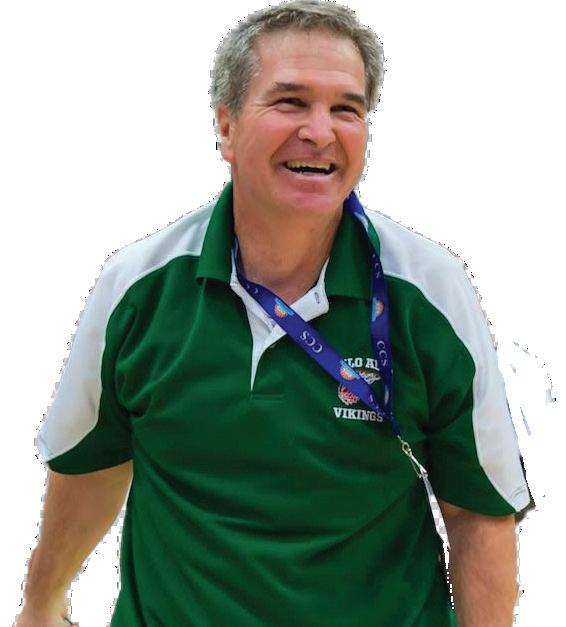
Photo courtesy of DAVID HICKEY
Koji Silverberg’s Pathway
world’s largest venues. Walking into a venue like Camp Nou as a young athlete is like nothing else. The venue has a seating capacity of nearly 100,000 people, and when that crowd erupts together, it is an overwhelming feeling that could only be understood if you were someone attending.
“Being at Camp Nou was unforgettable,” said Silverberg. “The crowd was so loud, and seeing the players live made the whole game feel way more real. Most of Barca’s team inspired me because of how smooth they played, but Messi in particular.”
Not all inspiration from sports comes from playing. Some people stay involved in many different ways.
For junior Jonny Chen, the majority of his spark came from his experience with sports photography. His first real pro game experience was at an NBA G League game for the Santa Cruz Warriors. The game was between S.C and the Oklahoma City Blue. Even though the G League is considered the step before the NBA, the experience Jonny had at that arena certainly left a mark.
“The atmosphere was incredible,” Chen said. “The crowd was loud, and every possession mattered.”
game. While doing so, he realized that it wasn’t about the scoreboard anymore, but the reactions of everyone around the court: players high-fiving, coaches calling plays, and the crowd going wild on every big play.
“When you’re watching a game while shooting, you realize how fast everything is happening,” Chen said. “There are countless small moments that stack up to one big play.”
In sports photography, there is an element of anticipating where the action is going to swing and placing yourself in a position to capture the exact moment at the exact second. Chen feels that his experience playing multiple sports helps him anticipate the flow of the game.
“Because I used to play a lot, I can usually predict where the play might go next,” Chen said.
One of Chen’s favorite photos was taken during a Paly-Gunn rivalry game. At the end of the game, Paly’s junior guard Ben Laris made a clutch three-pointer to give Palo Alto the slight lead over Gunn. Jonny was able to catch the exact moment that the ball went through the hoop.
“Everyone in the crowd was wearing green and waving three signs,” Chen said. “It was a really cool moment to capture.”
“ Most of Barca’s team inspired me because of how smooth they played, but Messi in particular. —Silverberg ‘27
Photos by DANIEL SEGEV
From the moment the game started, his perception of sports was forever changed. He sat in the upper seats to watch and observe the
Not all sports fans are athletes. For some, their passion is fueled by the arena or the environment surrounding the game. This was Theodore Williams, a Paly sophomore who walked into the football program a year ago and quickly realized that it was not his path. He didn’t, however, walk away from the program. He found a way to stay involved, even if it was in a different role.
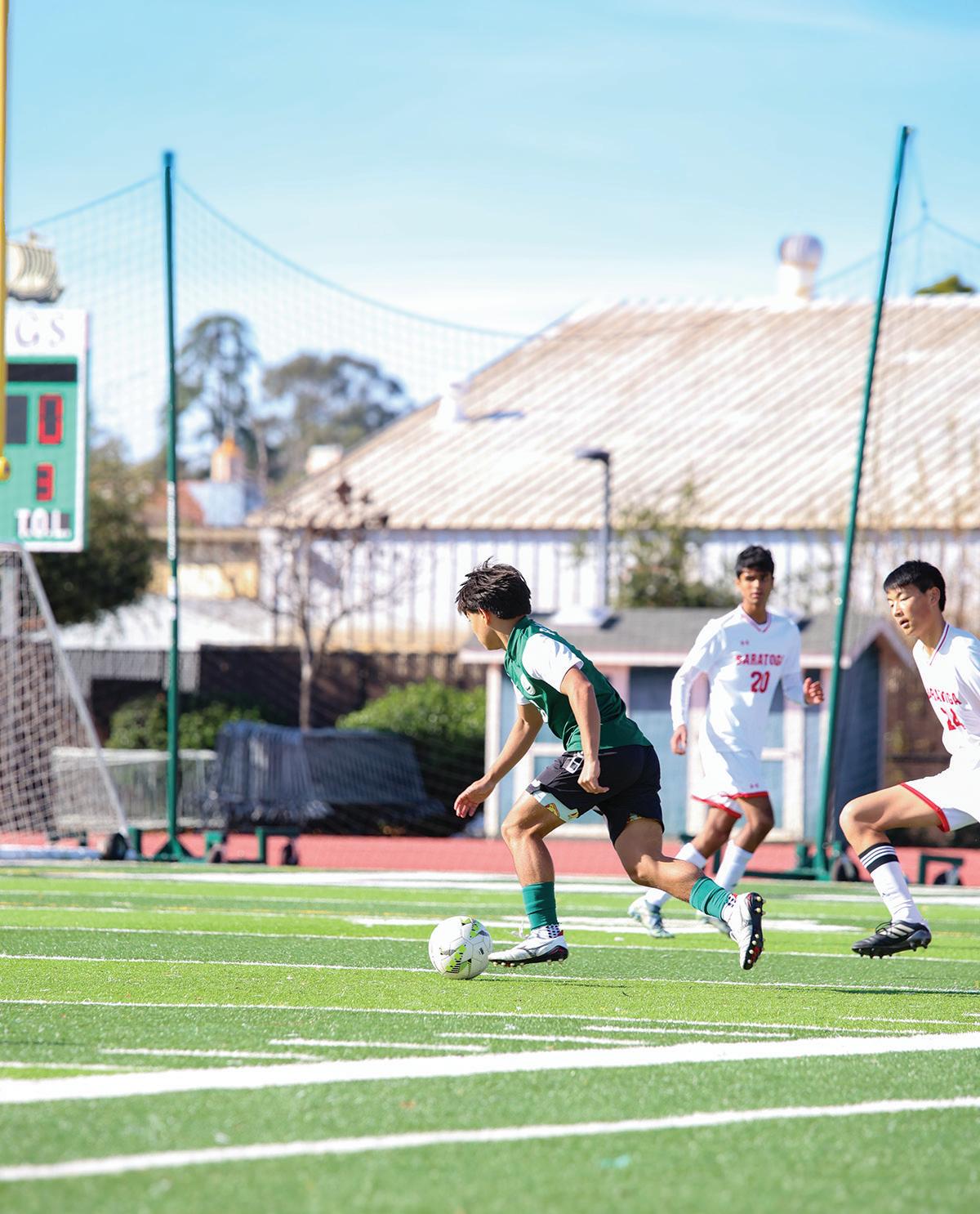
“I chose to help record the games because I wanted to stay in the program even without playing,” Williams said.
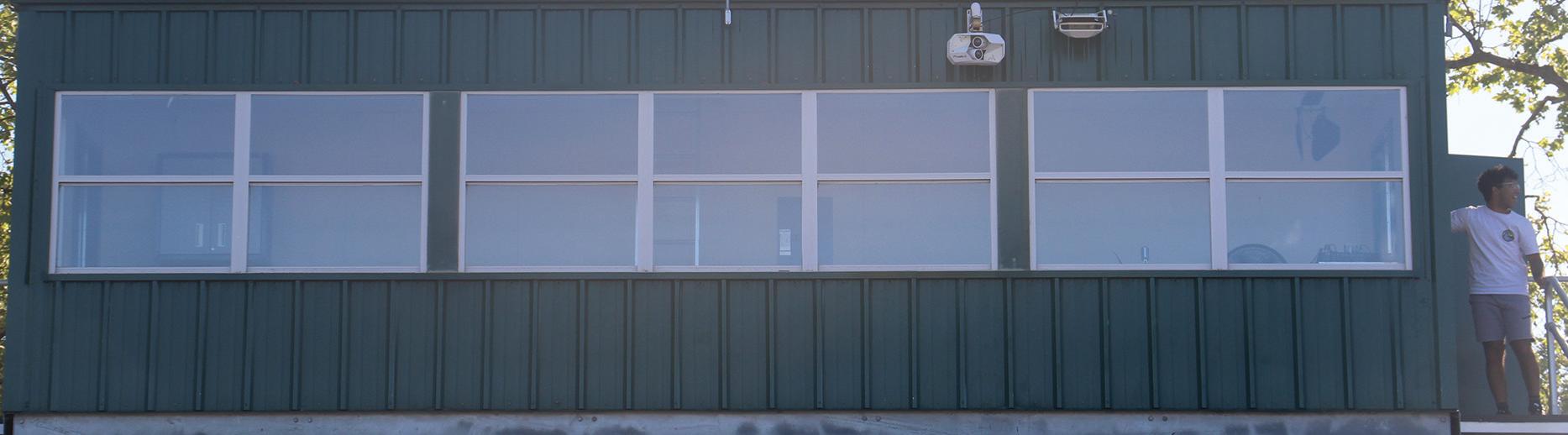
Now, on Friday nights, Williams is stationed in the press box above the field, capturing every moment of both junior varsity and varsity games. After every game, he sends the footage to the coaching staff so that they can review it and prepare for the next week.
Williams’ love of sports goes back even further than this. At a baseball playoff game in Arizona, he had a defining moment. He went to the National League Wild Card game in 2017 between the Diamondbacks and Rockies at Chase Field in Phoenix, Arizona.
“It was my first playoff game, and the energy was incredible,” Williams said. “It was amazing to root for the hometown
team and see them win on a big stage.”
This experience did not lead Williams to his current football recording job, but it reinforced the idea that sports give people the chance to feel connected to something larger than themselves.
Paly English teacher David Dodd’s first professional sports memory goes back even further. In kindergarten, his dad surprised him with Giants tickets to a Giants vs. Dodgers game.
“He walked in and said, ‘Hey, I’ve got Giants tickets,’” Dodd said.
Growing up, Dodd mostly knew baseball through collecting cards. Seeing the field in person was different from what he expected.
“The field’s measurements didn’t line up with what I pictured,” Dodd said. “I remember the ballpark feeling really big. And I remember it being really cold.”
That season was also happening around the same time as one of baseball’s most
“
[Bonds] was definitely the cool kid in my eyes. —Corbin Dodd

legendary achievements.
The San Francisco Giants’ star player, Barry Bonds, had just broken the single-season home run record with 73.
“[Bonds] was definitely the cool kid in my eyes when I was growing up,” Dodd said.
Though he cannot point to any single game as the catalyst for his love of sports, it is undeniable that the game played a significant role.
“I don’t think it was the one event that hooked me,” Dodd said. “But it sure sped up the process.”
Even today, Dodd is still heavily involved in sports. He is also reminded of where it all started because he lives a short walk from the Giants’ stadium.
Through all of these events, however, there is one thing that can be said: while the first game may only last a few hours, the impact of the event can last a lifetime. Though the exact route may be different for each of the people involved, the first game is often the start of a much longer journey.
“Long after the crowd has gone home and the lights have dimmed at the ballpark or the gymnasium, the memory of the first game will stay with the people who were in the stands,” Dodd said.

“ There are coutless small moments that stack up to one big play.
—Chen ‘27
Photo Jonny Chen by ARJUN BHARAT
Corbin Dodd’s Giants Journey

Photos courtesy of CORBIN DODD
BULK UP! BULK UP!
Strength and conditioning training has increasingly become an essential part of modern high school athletics. As current sports are becoming more competitive and physically demanding, high school athletes are required to do more than simply work on their respective sports. At Palo Alto High School, Coach Anthony Thomas, the head of strength and conditioning, plays a crucial role in helping athletes achieve those goals.



As high school athletics gRow more competitive, Palo Alto High School’s strength Coach Anthony Thomas is shaping athletes through structured training, accountability and passion. By ZOE PASHALIDIS and JAKE LIU
program, I believe the best characteristic a student athlete will develop is confi-
teur skateboarder.”
Thomas’s passion for strength and conditioning began long before he stepped into his role of strength coach at Paly. Growing up, he was constantly active and involved in athletics.
“I grew up during a time when most children and teenagers were very active,” Thomas said. “I was always outside playing and finding many different activities to keep my friends and me busy and by default, stay in good physical shape.”
In addition, his early experiences included a wide range of sports, and even for a short time as an amateur athlete.

Thomas’s path into strength and conditioning began in 2001 when he became a certified personal trainer. His interest in athletic performance and training continued to grow, and after he became eligible to take the test through the National Strength & Conditioning Association. This led to him becom ing a Cer tified Strength & Conditioning Specialist in 2012. With Palo Alto High School need ing a strength and conditioning coach, everything fell into place, and Thom as was offered the position. The opportunity allowed him to combine his pas sion for athletic performance with the chance to work with young high school athletes who are still in the process of growing both physically and mentally.
Junior Ella Hoy, a girls’ varsity basketball player, feels that the structure and organization of Thomas’s training programs really stand out for his attention to detail and how the workouts are designed to benefit each athlete’s specific sport.
“You can tell he is very organized and puts thought into the workouts,” Hoy said. “He adjusts the workout based on the sport and what is most beneficial for each
“When we combine the psychological and physical benefits of my training program, I believe the best characteristic a student athlete will develop is confidence.”
—Coach Anthony
For Thomas, the greatest reward of his job comes from the opportunity that he gets every single day to work with athletes and help them grow.
“I get to do what I love and have a passion for for a living,” Thomas said.
Through carefully structured workouts, he guides athletes to improve every day and gain confidence.
“When we combine the psychological and physical benefits of my training
The impact that strength training has had on athletic performance is also evident from his
“Being stronger has helped us build strength and has a positive impact in games and practices,” Hoy said. “It shows through all aspects, from balance to injury prevention to speed.”
Accountability is also another key part of Thomas’s coaching style. Athletes are expected to maintain proper form, complete their assigned sets, and stay focused throughout the workout. Senior Jake Wang, a varsity football and basketball player, appreciates how Thomas expects everyone to be at their best.
“His attitude and energy are extreme-
ly consistent,” Wang said. “Every day his standards do not change, and he expects each person’s best during every training session.”
Thomas also has high expectations and pushes athletes to push towards their full potential.
“I like how he has high expectations for you and pushes you to be your best,” Wang said. “You just know that no matter what, he is gonna get the best out of you.”
Junior Rocco Smith, a varsity boys basketball player, attributes the time spent with Thomas to success on the court.
“I think training with him really helped the overall team culture and togetherness,” Smith said. “This then translated to our practices and the way we played during games.”
Some teams struggle with staying together and being positive as a group. Thomas works to combat this struggle through his training and attitude to wards the group.
“Coach Antho ny is someone who takes train ing seriously but is positive and brings another level of energy, which is real ly contagious throughout the team,” Smith said.
variables, such as repeti tions, weight, and intensity, can be modified to ensure that every athlete is training effectively and safely.
Focus is a major priority in the weight room. This is a requirement when you step into a workout ses sion with Thomas.
“In my weight room, we all must have and maintain a great focus,” Thomas said. “Staying focused throughout our training session will keep you safe and utilize the time we have together and the exercises we are performing more effectively and efficiently.”

Although Thomas enjoys his work and the chance to see athletes grow every single day, the profession of a strength and conditioning coach comes with challenges beyond the weight room.
Strength and conditioning training has obvious benefits, but it can also come with its challenges. One of the biggest obstacles is working with athletes that are at different levels of experience and physical development.
For Thomas, he addresses this common challenge with a key training principle known as individualization.
“I follow one of the strength and conditioning principles of physical performance called individualization”, Thomas said. “The principle of individualization considers an athlete’s training age, meaning how many months of quality training they have completed, exercise knowledge, individual movement patterns and form and technique, previous or current injuries, chronological age, and gender considerations.”
By considering these factors, Thomas can adjust his workouts to fit each athlete’s needs. Exercises can be regressed or progressed, equipment can be changed, and many other weight room
“Although this reality provides me with emotional fulfillment, one of the most glaring challenges of being a Strength & Conditioning
come and is a place for athletes to learn and grow into much more than an athlete. For Thomas, the weight room itself will not create life lessons. Instead, he has helped to create an environment where students can challenge themselves and learn how to be responsible and respectful.
“My program emphasizes understanding and meeting expectations, consistent and effective communication, standards that are consistent and must be met by myself and the student athlete, and respecting our time together and each other,” Thomas said.
the lowest-paid industries you will find, but there are current efforts by national organizations to make it a high er-paid profession.”
Despite this, he remains committed to the pro fession because of the passion that he has for helping athletes develop.
“Getting to do what I love for a living puts me in a unique category that everyone may not experience while doing their job,” Thomas said. “Sometimes the financial sacrifice is worth the price of do ing what you love.”
Ultimately, the weight room at Palo Alto High School is about much more than lifting weights. It has be
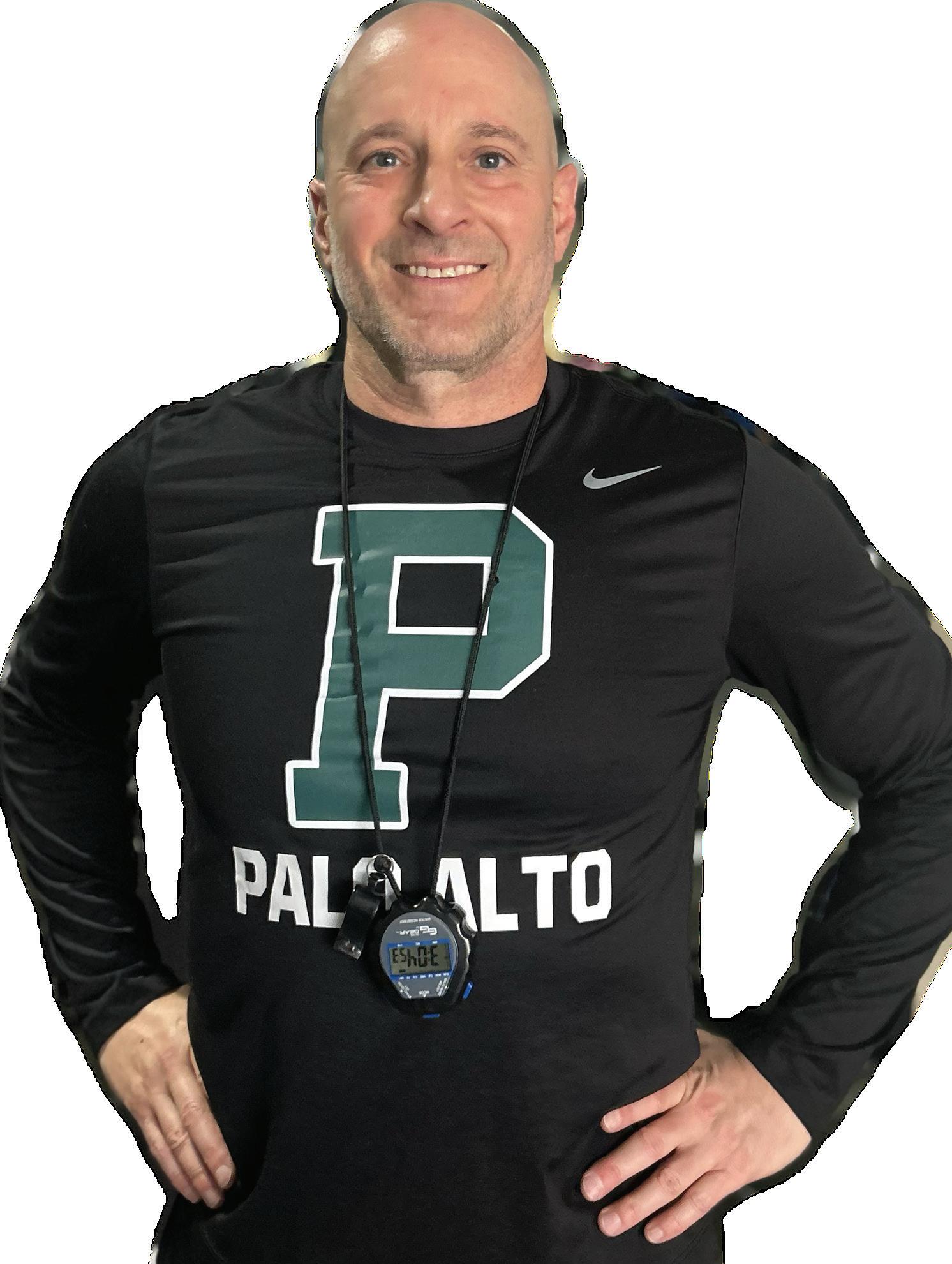
Photo by ZOE PASHALIDIS
Paly Play Play
By
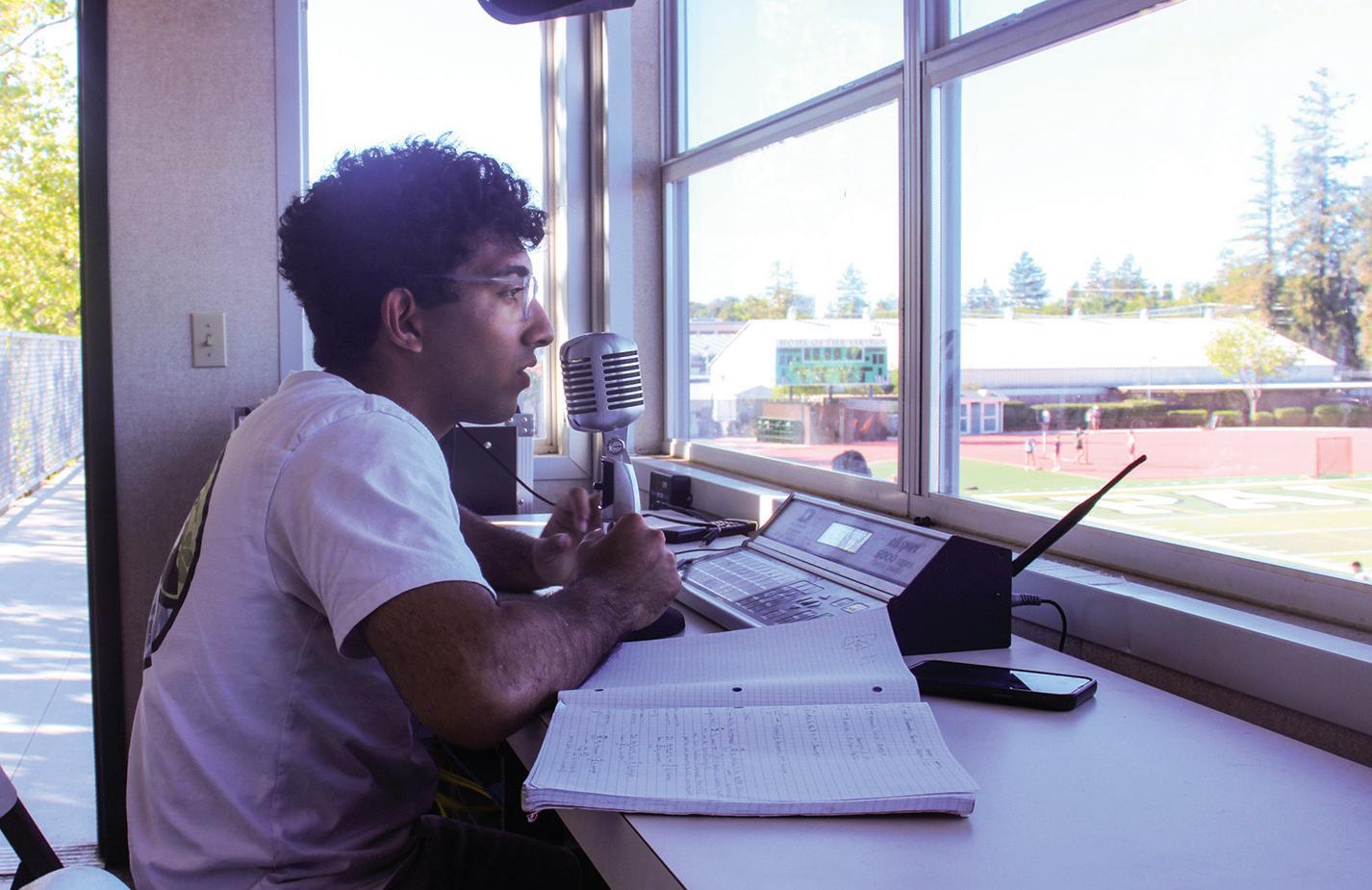
By
Through the back and forth of a Paly varsity soccer match, the game ebbs and flows, with the balance between Palo Alto and Homestead shifting constantly. But as the match flows, one thing remains constant: Paly senior Malcolm Ginwalla’s voice, which can be heard echoing throughout the stadium and on the field through each play. Ginwalla, who is a volunteer announcer for many Paly sports games, keeps an animated stream of comments flowing throughout the match, giving a live-action play-by-play of the sport in addition to pre- and post-game spiels.
For Ginwalla, his adventures into commentary are little more than an extension of his sports-filled life. Ginwalla competes on Paly’s varsity tennis team, while simultaneously playing pickup sports like basketball, football and soccer during almost all of his free time.
“If I’m not doing my work, I’m trying to play a sport or do something sportrelated,” Ginwalla said. “I enjoy all the time with my friends and there’s something so
freeing about playing any sport, even for fun.”
Commentating Paly varsity sports games has long been limited to football. One senior hopes to help see a change.
Ginwalla credits his love of sports to his longtime passion for friendly competition, coupled with enjoyable early sports experiences that helped facilitate his love of play. Though his passion for sports has sometimes been sidelined by other responsibilities, Ginwalla nonetheless tries to stay connected to the games wherever he can.
This love of sports extends beyond the field. Ginwalla is an avid sports video Games player, like EA FC—the leading soccer video game—or Madden. Similarly, he spends hours watching NFL games or strategizing his fantasy football teams. Over time, his immersion in the world of sports slowly bled into an interest in commentating.

began expanding, recently starting to commentate for Paly’s varsity soccer team, with hopes to provide similar work for spring sports like lacrosse and baseball.
“At first, I did some podcasting, analyzing the NFL and NBA,” Ginwalla said. “But then I realized that there were opportunities to actually commentate over Paly games live and I got really
“I started having a ton of fun with the basketball games,” Ginwalla said. “At first, I was just having some fun, but I soon realized that this [commentating] was something I could do more.”

FINNEGAN SCHOEBEL and MAX MERKEL; Photos by FINNEGAN SCHOEBEL
But while Ginwalla enjoys the fun of providing live commentary for Paly games, a large amount of work is required to prepare for each match. Ginwalla needs to know the roster of each team well enough to name anyone by their shirt number, team records, past performances and other useful tidbits to spout over the course of a match.

“It’s actually a surprising amount of work,” Ginwalla said. “I’m probably spending two to three hours preparing for every matchup, though I’ve been getting more efficient, better at cutting down the required time.”
For each game he plans to commentate on, Ginwalla allocates two pages in a large blank notebook, where he will write down the pre-match information he needs and leave space for notable plays and scores to refer back to over the course of the game. While the work is complex, the availability of information on online high school sports databases makes the work much

sometimes even see highlights so I can know what someone looks like before they touch the field.”
But the work pays off; Ginwalla enjoys his time commentating and players appreciate the attention and energy that Ginwalla’s work brings to their matches.
For Max Nicole, a Paly senior who also plays for the varsity soccer team, Ginwalla’s commentary uplifted the atmosphere and made the game more fun.

opportunity you have to reach out to others.”
“I realized that there were opportunities to actually commentate over Paly games live.”
—MalcolM Ginwalla
“Playing with a live commentator that you can hear on the field is just so fun,” Nicole said. “I could hear [Ginwalla’s] calls from the booth at the top of the stadium even on the bench. I remember laughing a couple of times when he cracked a joke.”
While Ginwalla has only been commentating for a few games, he hopes that his commentating can leave a lasting legacy of student commentators at Paly varsity sports games. But while he hopes another hopeful commentator will take his place, he remains focused on his own enjoyment of commentating and the impact that he can personally bring.
“Of course I hope that someone else will commentate more after I graduate,” Ginwalla said. “It’s so fun and I’ve heard many people come up to me and thank me for making the game more interesting.”
“The availability of something like MaxPreps is an absolute lifesaver,”
Ginwalla said. “I can see all the players on a team, their numbers, how many points and rebounds they have and
Ginwalla started his commentating journey by helping with the JV football games, learning the ropes by listening in to Paly’s rotating cast of varsity football commentators and applying the skills he picked up to the JV games. For Paly Athletic Director Scott Davis, the most impressive part of Ginwalla’s journey so far was Ginwalla’s effort to initiate his journey.
“Malcolm [Ginwalla] is our first student commentator,” Davis said. “It was great, the fact that he reached out. It’s a win-win for both sides for sure.”
More than just providing entertainment for the games and elevating the overall quality, Davis thinks that Ginwalla’s work can help rally students to varsity matches across sports.
“I don’t think we got great crowds across the board for sure,” Davis said. “So we’re trying to see what we can do for next year and I think it would be valuable to have a student. You can say ‘oh, come check out this game, I’m commentating’. The more students involved, the more
Though Ginwalla’s time as a sports commentator is still in its infancy, Ginwalla has already considered the potential of stretching his work into college and potentially beyond. Ginwalla hopes to stay close to the sporting world throughout his days and commentating provides an exciting and front-row opportunity to have an impact on sports and those who watch it.
“Of course, there’s stadium work at high level professional games,” Ginwalla said. “But there’s so much opportunity, in broadcast, radio, punditry. I think that talking about these games gives me an awesome experience in sports that I can take wherever I go.”
For now, Ginwalla expects to continue his commentary, expanding through different Paly sports and finding his favorites. The next time you attend or play in a Paly Varsity sports game, keep an ear open for the sounds of humorous commentary punctuating each play: you may have been treated to a special performance from Paly’s first student commentator.

By ELENA SALVATIERRA and LUCAS TUNG
r ssing

ourts
From competing on the Philippines national team to stepping onto Paly’s courts, freshman Mikael Honrado has had a long and exciting journey to the top of junior tennis.
freshman Mikael Honrado was already competing on one of the biggest stages of junior tennis. As a member of the U14 Philippine national tennis team, Honrado hard. It took me a year to get that spot. I barely made it as well.”
Making the team was more than just an achievement for Honrado; it was proof that he could compete at a high level.
The national team allowed Honrado to discover a broader sea of tennis beyond his peers and 5 friends in the Philippines. On the national team, Honrado got the opportunity to compete against players from different countries, with the support of his family

“He’s almost always the last person standing and the whole team goes to support him at the end of the match.”
“It was a good way for me to bond with the other players on the team—going to the mall, supporting each other, and becoming like brothers,” Honrado said.
—Nuri Hafizi (‘26)
After this eye-opening experience, Honrado decided that being in a bigger pool of tennis players was preferable for improving his abilities and expanding his horizons.
“I’ve definitely improved a lot,” Horando said. “When I came here, I was a 6.6 ETR, and now I’m basically a nine. So from January to December, I went from a, I went up by
2.4, so it was definitely better coaching, better players, and better experience.”
His competition, mentorship, and education in the Philippines were limited compared to the opportunities that America offered him. Honrado and his family made the difficult decision to move to America prior to his freshman year.
“There’s a bigger pond, a bigger community out there outside of the Philippines,” Horando said. “And it was a good way for me to bond with the other good players in the country, especially because I never talked to these guys and barely spoke English.”
Although moving to California from the Philippines was a drastic shift, Honrado is grateful for the education, new experiences, and community Paly has to offer. The Paly boys’ tennis team was lucky enough to receive Honrado as an addition to their team this spring.



Photo by LUCAS TUNG
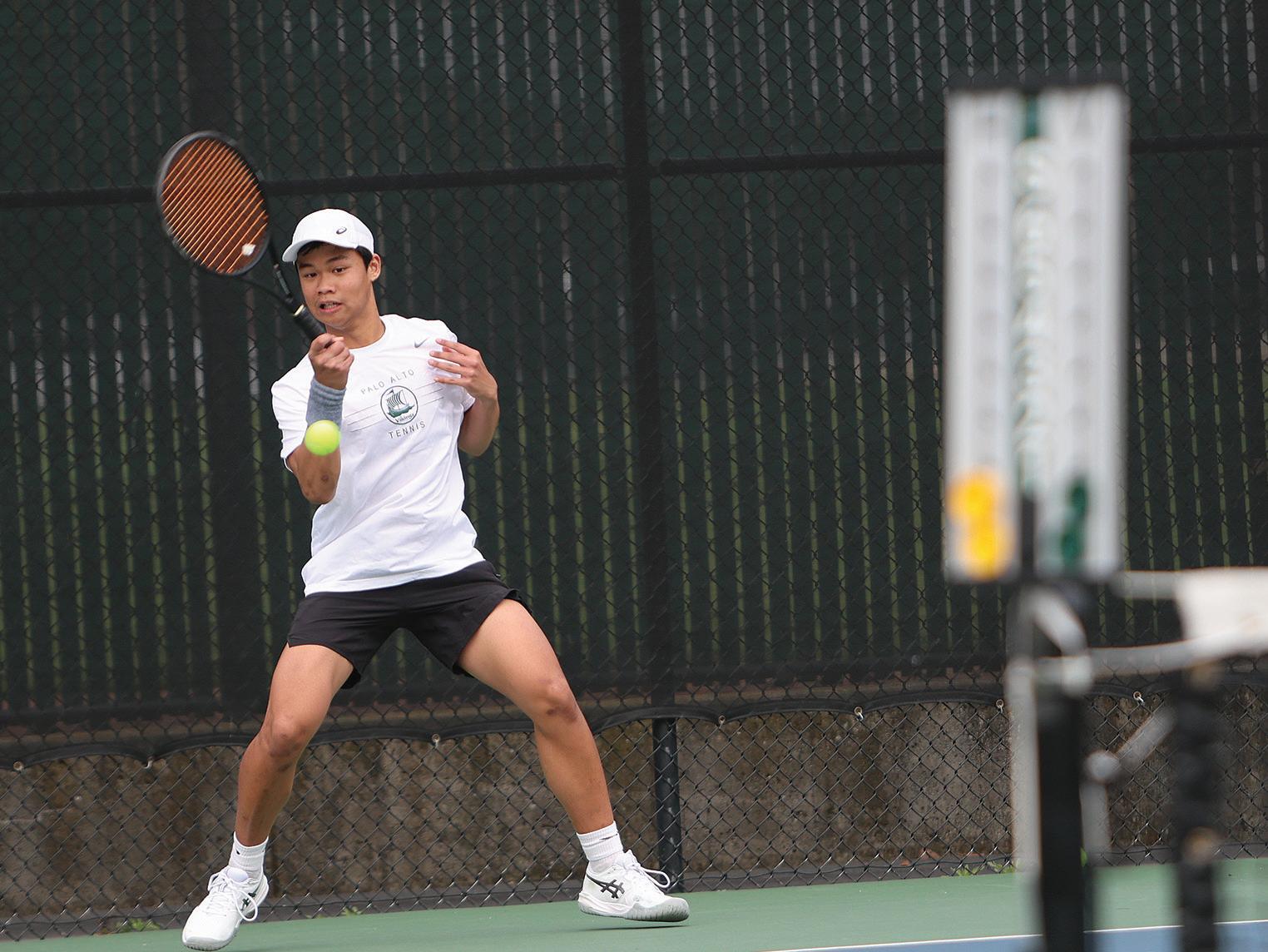
Having a player with international experience is something entirely new to the Paly boys’ team. According to teammate and senior Nuri Haifizi, Mikael, with his impressive background, has quickly become known not just for his skill on the court but also for the energy and commitment he brings to the team.
“Mikael’s an absolute dog. He’s an absolute team player. He’s always, almost always the last person standing, and the whole team goes to support him at the end of the game,” Hafizi said.
Even though Honrado came into Paly Varsity tennis as a freshman, this does not halt his ability to mesh into the team dynamic.
“At that level you’re training very hard and playing against other top juniors representing their countries.”
—Coach Andy Chang
Paly Boys Tennis Coach Andy Chang has nothing but good things to say about Honrado’s abilities.
team, which is great,”
“I’m looking forward to being able to play more schools and being able to have a fun time in varsity, especially because it’s my 1st year,” Honrado said. “As a freshman, being in a team, it’s so fun…encouraging each other to do better. Everyone was watching me, and it was fun… seeing [my teammates] support me.”
That sense of support reflects something deeper than just wins and losses—it reflects the shared values between his experience on the Philippine national team and his new role at Paly. Whether representing his country or his school, Mikael carries the same sense of pride, discipline, and connection.
Looking ahead, Mikael is excited to continue growing both as a player and as a teammate.
“I’m looking forward to being able to play more schools and have a fun time in varsity,” Honrado said.
From competing on an international stage to finding his place on a high school team, Mikael Honrado’s journey shows how culture, opportunity, and community can shape an athlete.

“At that level you’re training very hard and playing against other top juniors representing their countries, some of whom are going to be future top 100 players in the world,” Chang said.
Part of Mikael’s impact comes from his mindset and discipline, which have developed through competing at such a high level. Chang also notes that a key trait of Honrado’s is his humility throughout. “Mikael is modest, so I haven’t heard him talking that much about playing for the Philippines’ national junior team,” Chang said.
Beyond the court, Honrado’s family has also become part of the team community. Hafizi noted that their involvement and support have helped create a welcoming environment for players.
“His parents are very involved, actually,” Hafizi said. “They provide a lot of the snacks, and they come to support the games a lot. His whole family is just very supportive of not only him, but the whole
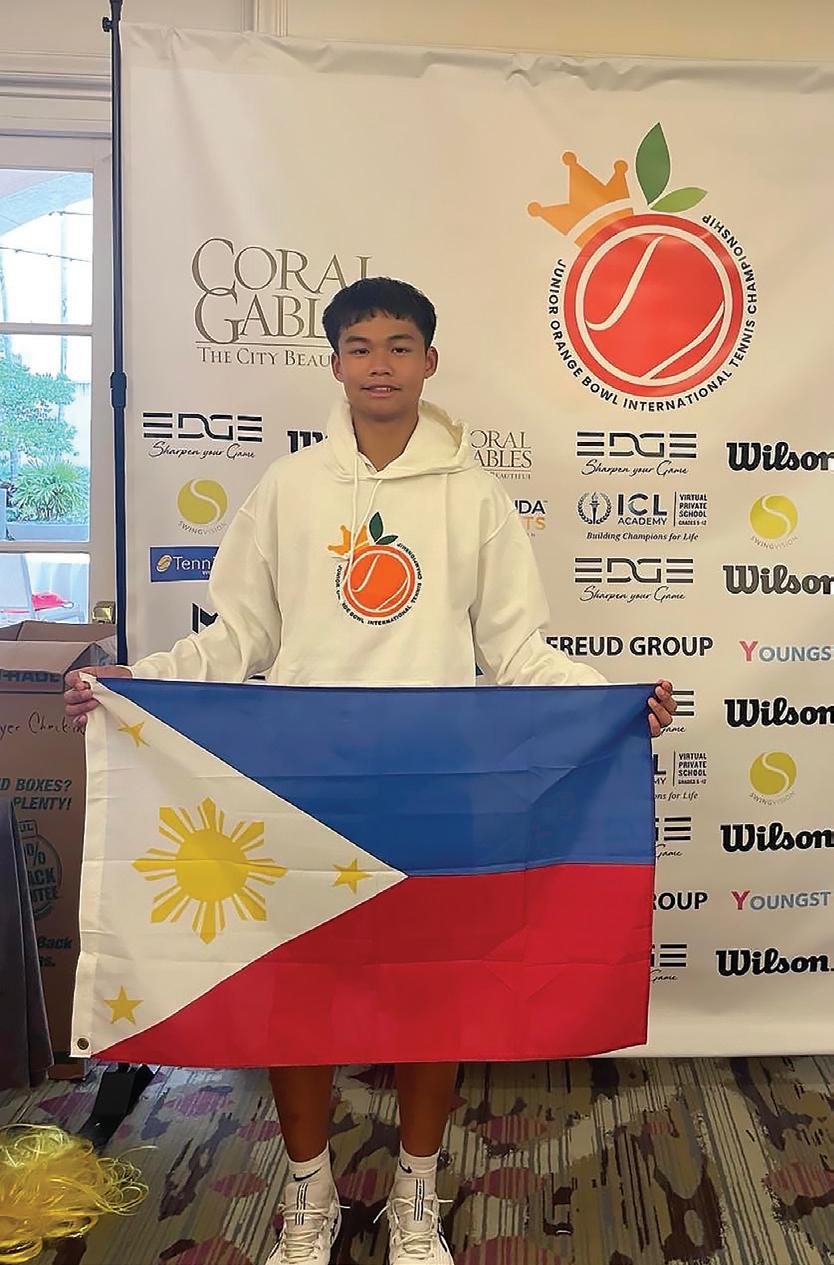

Honrado (‘29) rips a forehand cross-court during the season opener vs Aragon.
Photo by LUCAS TUNG
Honrado (‘29) representing the Philippines at the 2025 Junior Orange Bowl International Championship. Photo courtesy of MIKAEL HONRADO




By GREG GOODY
On a hot sunny spring afternoon, the Paly boys lacrosse team sits through a fourth period class, nervously watching for the clock to strike 3:15, the moment they are dismissed for their game. Although the team has to leave class early, it doesn’t concern them, they are focused on their big
TIME
where athletes are bound to miss multiple classes due to the high volume of games. Speaking from personal experience as a former player, it can be especially stressful when a teacher isn’t accommodating.
“I’ve had this mixed experience,” Revenaugh said. “My
Junior basketball player Aadi Tripathi is in Mrs. V’s sixth period APUSH class, and constantly has to work to find a good balance between school work and being an athlete.
“In a stressful class like APUSH that demands a lot of your time, it can be hard to keep up during the season, practicing two or more hours a day,” Tripathi said. “But I think Mrs. V does a great job of understanding each of us and letting us complete our work on our own time. Overall it is necessary for us to get out of class early, but I think more teachers could learn from Mrs. V.” For most classes, work can be completed outside of school, but in subjects like math, being present for instruction is often crucial. Even so, many student-athletes find ways to work around this by scheduling more flexible classes during commonly missed periods, such as fourth or sev-


Additionally, if students were not allowed to miss class for sports, scheduling games would become a major issue. During the winter season, for example, there are not enough daylight hours for all teams to compete after school. With school ending around four p.m., some games would be pushed dangerously
While start times could shift in the future, it currently does not make sense to prevent students from leaving early, only to have games begin as late as eight p.m. or later. This would negatively impact both performance and student well-be-
Although missing class can create stress for student-athletes, it is essential that they have time to prepare for competition. Teachers should continue making efforts to reduce unnecessary stress by offering flexible deadlines and support, recognizing that student-athletes operate on a different schedule and face
Many student athletes miss class time for their games, however this is necessary for students to excel on the field.

TIME
By MABEL McCARTER
When student athletes miss class, they miss valuable learning and instructional time that can be difficult to make up.
Leaving class early for sports games has become a normal part of high school, but that doesn’t mean it should be. While athletics are an important part of student life, they should not interfere with the time spent in the classroom. Missing school for games creates academic disadvantages, increased stress and puts sports ahead of education when unnecessary.
“
The primary purpose of school is learning. Every class period is designed to help students understand new material, build skills and prepare for future academic and career opportunities. When athletes leave early for games, they are missing vital time in the classroom whether that be lectures, assignments, discussions, group projects and even assessments. These cannot always be replicated through notes or online materials.
be replicated outside of the classroom. This causes students to have to rely on teacher flexibility and creates inconsistency and added pressure for both students and teachers.
Junior football and baseball player Justin Fung agrees.
You miss discussions and chances to ask questions, which makes it more stressful later
— Justin Fung (‘27)
Junior volleyball player Maura Hambly believes missing class effects her work.
“When we leave early for games, I feel like I miss important explanations, not just work”, Hambly said. “It’s harder to fully understand the material later”.
Over time, these absences add up. Many sports have multiple games each week, meaning some athletes consistently miss the same class over and over again. This creates gaps in learning that can be difficult to recover from, especially in subjects that build on previous knowledge. This shows how falling behind isn’t always because of a lack of effort; it can simply be the consequence of not being in class enough.
Supporters of early dismissal often argue that teachers are accommodating and allow students to make up missed work. While this may be true in some cases, it is not a reliable or fair solution. Not all teachers have the same policies, and not all students have the ability to catch up quickly; some things just can’t
“Even if teachers give us the work, its not the same as being there,” Fung said. “You miss discussions and chances to ask questions, which makes it more stressful later.”
Missing class for sports can also increase stress rather than reduce it. Student-athletes are already juggling demanding schedules that include practices, games, homework and studying. When they leave school early, they often return with even more work to complete in less time and with less understanding. Instead of being able to focus on their sport, they may feel overwhelmed trying to balance everything at once. This can lead to late nights, burnout and a de crease in overall performance both aca demically and athletically.
An effective solution to this problem would be to schedule games after school or on weekends. This approach allows student-athletes to attend all of their classes while still participating in sports. Many schools already use this model successfully, provided that it is both prac tical and beneficial. While it may require additional planning, these challenges are manageable and are worth overcom ing in order to get rid of the academic consequences of missing class time.
Holding games later in the day also benefits the broader communi ty. More students, teachers and family members are able to at tend games when they are not scheduled during school hours. This in creases school spirit
and support for athletes without disrupting the academic schedule. It creates a better experience for everyone involved.
“Games later in the day would actually make it easier for more people to come support us without missing class,” Hambly said.
Separating academics and athletics helps students develop stronger time management skills. Instead of relying on early dismissal, athletes learn to balance their responsibilities more effectively. They must plan, stay organized and complete their work while still committing to their sport. These are essential life skills that will benefit them long after high school.
Sports are valuable, but they should never take priority over education. Schools have a responsibility to ensure that students receive the full benefit of their time in the classroom. Forcing students to regularly miss class is unfair and avoidable.
By moving games after school or weekends, schools can support both academ


Photo by LAUREN GOODY