I L
C A
C
E
I S
B I S
S I S
Y T U
E
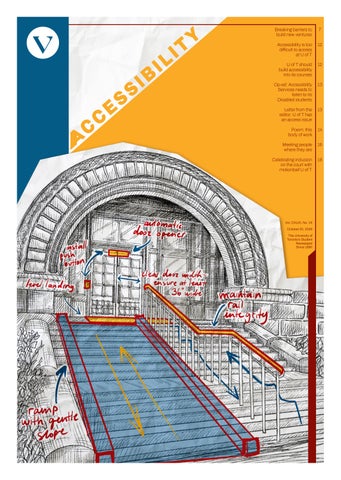
Breaking barriers to build new ventures
7
Accessibility is too difficult to access at U of T
12
U of T should build accessibility into its courses
12
Op-ed: Accessibility Services needs to listen to its Disabled students
13
Letter from the editor: U of T has an access issue
13
Poem: this body of work
14
Meeting people where they are
16
Celebrating inclusion on the court with motionball U of T
18
Vol. CXLVII, No. VII October 20, 2026 The University of Toronto’s Student Newspaper Since 1880
2
THE VARSITY
news@thevarsity.ca
NEWS
The Varsity acknowledges that our office is built on the traditional territory of several First Nations, including the Huron-Wendat, the Petun First Nations, the Seneca, and most recently, the Mississaugas of the Credit. Journalists have historically harmed Indigenous communities by overlooking their stories, contributing to stereotypes, and telling their stories without their input. Therefore, we make this acknowledgement as a starting point for our responsibility to tell those stories more accurately, critically, and in accordance with the wishes of Indigenous Peoples.
THE VA
THE VARSITY Vol. CXLVII, No. 7 21 Sussex Avenue, Suite 306 Toronto, ON M5S 1J6 (416) 946-7600
thevarsity.ca
the.varsity
thevarsitynewspaper
Letter from the Editor: Introducing the Accessibility issue
the.varsity
@TheVarsity
The Varsity
MASTHEAD Junia Alsinawi Editor-in-Chief Brennan Karunaratne Creative Director
creative@thevarsity.ca
Callie Zhang Managing Editor, External
managingexternal@thevarsity.ca
Sofia Moniz Managing Editor, Internal
managinginternal@thevarsity.ca
Aksaamai Ormonbekova Managing Online Editor
online@thevarsity.ca
Raina Proulx-Sanyal Senior Copy Editor
copy@thevarsity.ca
Cate Woodhead Deputy Senior Copy Editor Celesta Maniatogianni News Editor
deputysce@thevarsity.ca news@thevarsity.ca
Vacant Deputy News Editor
deputynews@thevarsity.ca
Prekshaa Surana Assistant News Editor
assistantnews@thevarsity.ca
Vacant Opinion Editor
opinion@thevarsity.ca
Audrey Kim Business & Labour Editor
Write to me at editor@thevarsity.ca
editor@thevarsity.ca
JUNIA ALSINAWI Editor-in-Chief Since 2022, The Varsity has published its Climate issue every October. The importance of this theme is obvious: the climate crisis is Print only worsening as governments, billionaires, and companies continue to prioritize profit over the health of the planet and humanity. Still, after four years, we thought it was time for a change.
1
2
3
Student journalism does its most important work when it focuses on the university-level issues that directly impact students. Say whatever else you want about U of T, but it consistently excels in sustainability and environmental research. The same cannot be said for accessibility, as your peers will tell you in these pages. In this inaugural Accessibility issue, student experiences and opinions take the lead. I’d like to thank all of our contributors for their honesty and bravery. I’d also like to thank Sofia Moniz, who
organized and edited all of the contributions that appear in the Opinion section this week, and without whom this issue would not have been possible. This issue is meant to platform students’ stories and highlight the areas where the university must do better. In reality, something as simple as publishing an Accessibility issue will not produce any meaningful change. That comes from consistently writing, advocating, and protesting. One themed issue can be ignored; every issue cannot. If you have something to say about accessibility at U of T, write for us.
You Want Alchemy
4
biz@thevarsity.ca
Omar Al-Rawi Difficulty: Easy
Ella MacCormack Features Editor
features@thevarsity.ca
Bushra Boblai Arts & Culture Editor
arts@thevarsity.ca
Lauren Robinson Science Editor
science@thevarsity.ca
Taimoore Yousaf Sports Editor
sports@thevarsity.ca
1. Diva moment
Simona Agostino Design Editor
design@thevarsity.ca
5. Peel
Loise Yaneza Design Editor
design@thevarsity.ca
Erika Ozols Photo Editor
photos@thevarsity.ca
Chloe Weston Illustration Editor
5
ACROSS
6
7
jennifersong@thevarsity.ca
Gabriella Wrona Long-form Video Editor
gabriella@thevarsity.ca
Emily Shen Front End Web Developer
emilyshen@thevarsity.ca
Sataphon Obra Back End Web Developer
sataphonobra@thevarsity.ca
Nguyen Bao Han Tran UTM Bureau Chief
utm@thevarsity.ca
Yana Kundu UTSC Bureau Chief
utsc@thevarsity.ca
Nicholas Socholotiuk Graduate Bureau Chief
grad@thevarsity.ca
8
Dowon Kim Associate Illo Editor
Juliet Pieters Associate A&C Editor
Jordyn Smith Associate Photo Editors
Parmin Sedigh, Mehar Singh Associate Science Editors Jean Patrick Vidad, Cameron Ashley Associate Sports Editors
9. Smelting byproduct
DOWN 1. With 7-down, great cost
9
2. Funny people 3. Maker of chips but not crisps 4. Slovak singer who was spared from joining Katseye
Roya Alisultanova, Zaneb Asad, William Kook Harbanee Kaur Sports Photographer Associate Senior Copy Editors Rebecca Liu Isabella Bixler Associate B&L Editor Associate News Editor Vacant Harman Banga Associate Design Editor Associate Opinion Editor Alec Zelek Associate Features Editor
Rapper’s Delight 8. Prefix for genic or kinetic
illustration@thevarsity.ca
Jennifer Song Short-form Video Editor
6. “Hotel, ___, Holiday Inn” lyric in
7. See 1-down
THE VARSITY MAGAZINE
FALL 2026
Vacant Associate Video Editor Vacant Associate Web Developer
Lead Copy Editors: Malaika Ali, Harman Banga, Cassandra Iadipaolo, Taqwaa Kazi, Rubab Shamsi Copy Editors: Alexander Austen, Annamarie Bai, Jacinta Ceballos Fernandez, Doris Chen, Paige Franko, Nuha Kazi, Kayla Kim, Kayla Kisacik, Luca Locanto-Mazzoli, William Nguyen, Veer Patil, Pascal Petherick, Chloe Tam, Brandon Tang, Dayne Troy Muffty, Joel Tunikaitis, Shruthi Umashankar Designers: Alex Ellis, Zaire Gibbons Jisun Meang Cover: Chloe Weston
BUSINESS OFFICE
Muzna Arif Business Manager
business@thevarsity.ca
Vacant Business Associate
vacant
Kuriakose Cherian Advertising Executive
kuriakosecherianyes@gmail.com
Jake Takeuchi Advertising Executive
jaketakeuchi@thevarsity.ca
The Varsity is the University of Toronto’s largest student newspaper, publishing since 1880. It is printed by Master Web Inc. . on recycled newsprint stock. Content © 2026 by The Varsity. All rights reserved. Any editorial inquiries and/or letters should be directed to the sections associated with them; emails listed above. The Varsity reserves the right to edit all submissions. Inquiries regarding ad sales can be made to ads@thevarsity.ca. ISSN: 0042-2789
TH E VARS IT Y ’ S S PIT HIT S THE S TA ND S L ATE N OV EMB ER CORRECTIONS In Issue 6, we made several errors in the crossword template and clues for 'Story Time'. We are sorry.
In Issue 6, the article “U of T students organize in commemoration of October 7” has been updated to reflect that the UTM Campus Council Meeting ended early because all agenda items had been addressed and to clarify that O4P is not a recognized student group.
thevarsity.ca/section/news
OCTOBER 20, 2026
Rotman hosts mayoral debate between Brad Bradford and incumbent Olivia Chow Candidates discuss housing, homelessness, economy, transit CELESTA MANIATOGIANNI News Editor On Thursday, October 15, Toronto mayoral candidates Ward 19 Councillor Brad Bradford and Mayor Olivia Chow went toe-to-toe at a debate focused on affordability, hosted by the Rotman School of Management in Desautels Hall. Hosted by TVO Today Live host and political journalist Steve Paikin, this was the sixth major mayoral debate ahead of election day on October 26. Housing affordability and homelessness When asked how Toronto’s mayor could make a dent in housing affordability, Bradford pointed towards his background in urban planning. “That’s my professional training and my life’s work. I actually ran for council to build more housing,” he said, adding that “housing is one of the biggest challenges most folks are facing on the affordability front here in the city.” Bradford mentioned past initiatives and his work as chair of the Planning and Housing Committee between 2022–2024: “We did a lot of work to increase housing supply, more housing options in more neighbourhoods,” and “brought forward a plan to legalize multiplex and laneway suites, and we removed a lot of the barriers to get housing built quicker.” Bradford criticized Chow’s housing plan, saying that it “called for 65,000 new housing units by 2030. Unfortunately, today we only have 1,500 of them constructed. That’s two per cent of the target.” Chow responded, “I wake up every morning thinking about and working on how to build more housing,” adding that “under my watch, 15,000 homes are being built right now, being
constructed as we speak [...] seven out of 10 cranes in the sky is because of my [financial] incentive.” Chow’s Rental Housing Supply Program provides a range of financial supports to eligible housing projects in the city. When asked about plans to address chronic homelessness in the city, Chow pointed towards Dunn House, the country’s first social medicine supportive housing initiative, which opened in 2024. Social medicine housing combines affordable housing with on-site supports, allowing residents to live independently as they stabilize their lives. “We’re building many more supportive housing. I have 600 more units being constructed right now.” On October 1, new federal support was announced to construct three new social medicine housing sites in Toronto, which does not include the investment made for Spring House, the city’s second social medicine housing site, announced this March. Bradford echoed the need for supportive housing to combat chronic homelessness, saying that Chow has “a lot of promises and a lot of rhetoric, but it’s not a lot of results.” He added, “One of the most difficult things that I did as a local councillor was build supportive housing just down the street from where I live, and you know there was a lot of concern from the community. There was a lot of pushback, but we worked through that.” Bradford also criticized Chow’s administration’s response to chronic homelessness, saying that “over her term, we still have 20,000 people who are sleeping rough on the streets, in the parks, on our transit system, and while there has been some improvement, it’s not good enough.” He added, “There is now funding for Dunn House two, but I want to talk about Dunn House
The debate was moderated by TVO Today Live host and political journalist Steve Paikin (left). CELESTA MANIATOGIANNI/THEVARSITY
three and four and five and six.” Chow responded by referencing the October 1 announcement of three new social medicine housing sites. Economic development When asked how he would improve Toronto’s economy, Bradford pointed to President Donald Trump attacking Canadian sovereignty and economy, “and he’s coming to steal our jobs.” Bradford said that he will ensure Toronto “is the number one destination in the country and competitive around the world for talent, for capital, and for investment.” He criticized Chow’s administration, saying that she has not been “focused on the economy at all, and it’s regrettable.” He also brought up high youth unemployment rates in the city, mentioning his plan to create the Toronto Youth Economic Challenge, which would plan to create 15,000 full-time youth jobs. In response, Chow said that “we need to build Toronto strong, and that’s precisely what we are doing.” She referenced investments in the city that are creating jobs, including Hitachi Rail Canada’s signal work on the TTC’s Subway Line 2 and a new Toyota headquarters in Toronto. “And I have the confidence of the prime minister,” Chow said, “that’s why he’s investing in the city. That’s why he’s joined with us.” Traffic and transit Bradford said his plan to tackle traffic and congestion in the city is to increase safety and reliability on the TTC, namely, by stationing uniformed police officers in TTC stations, universal lighting and cleanliness standards, and platform-edge doors. He said, “If it looks and feels like TTC infrastructure is not kept up to
3
par, that’s when you start to see the antisocial behaviour that we see on the transit all the time.” Chow referenced transit and congestion projects completed during her term, including construction on the Gardiner Expressway being completed in one and a half years rather than the scheduled three years, and the recent opening of the Scarborough Busway. What is the election all about? In the debate’s final section, Paikin asked each candidate to share what they believed the election and their campaigns were ultimately about. To Chow, the election is “ultimately about making life more affordable, because it is tough out there. In uncertain times, we have to have the stability and the optimism to move ahead together. What we don’t need is someone that changes his mind, someone that didn’t take care of the kind of work that needs to be done in his ward.”
Chow has “a lot of promises and a lot of rhetoric, but it’s not a lot of results” Bradford said, “You have an incumbent here who thinks the city’s reached its full potential, is very comfortable with the status quo because the status quo works for her, but it doesn’t work for the folks at home. So this is about change. And if we change, if we want to change the city, we have to change the mayor to build a beautiful and formidable Toronto.” October 26 is Toronto’s municipal election day.
4
THE VARSITY
news@thevarsity.ca
NEWS
Public lecture at UTSC honours lawyer Iris de Freitas Brazao
Historian Joanne Collins-Gonsalves highlights Brazao’s legal career and educational barriers YANA KUNDU UTSC Bureau Chief On October 15, UTSC hosted a free public lecture celebrating the life and legacy of Iris de Freitas Brazao, a trailblazing Black woman. She challenged gender and racial barriers in fields such as education and law during the early twentieth century. The public lecture was held at the Instructional Centre as part of UTSC programming for Women’s History Month. It was led by historian Joanne Collins-Gonsalves, author of the 2023 biography Iris de Freitas Brazao, Legal Luminary and Trailblazer. The lecture was planned and presented by Afua Cooper, a professor in the Department of Historical and Cultural Studies. Brazao studied at St. Hilda’s at Trinity College in 1918. She was a graduate from the University of Oxford and the first woman of African descent to be a lawyer in the entire Commonwealth Caribbean and Guyana. Speaking to The Varsity, Cooper explained that her interest in organizing the event began after learning about Brazao’s achievements through Collins-Gonsalves’ research. “I was of course interested as a historian of Black women and also as a historian who is interested in legal studies,” Cooper said. For Cooper, the timing of the lecture held particular significance. October marks Women’s History Month in Canada. U of T is also set to celebrate its 200th anniversary in 2027. The lecture also attracted attendees with personal and academic connections to the history being discussed. Charmine Naturu, an attendee of Guyanese heritage whose research focuses on decolonizing higher education pedagogy, said she was driven to the event because of its connection to her background and academic interests.
Historian Joanne Collins-Gonsalves delivering a lecture on the life and legacy of Iris de Freitas Brazao at UTSC on October 15. YANA KUNDU/THEVARSITY
“Anything to do with decolonization, where we’re looking at leaders, racialized leaders… from where I’m from, where I originate, is what interested me in this,” Naturu said. Naturu added that she attended hoping to learn more about Brazao’s life and find connections to her ongoing research.
Beyond Brazao’s groundbreaking achievements, both Cooper and Collins-Gonsalves spoke about the perseverance required to achieve them. Cooper discussed the racism and gender discrimination Brazao faced while studying abroad and how important it was to have support from family, friends, and colleagues.
Ward 11 city councillor candidates debate at Hart House ahead of election The debate was attended by candidates Mike Layton, Terri Hawkes, Alice Li, Diana Yoon
As the one-hour lecture concluded, Collins-Gonsalves reflected on what she hoped attendees would remember most about Brazao. “Her perseverance. She was brilliant, but she also persevered,” Collins-Gonsalves told The Varsity. Layton was not able to respond during the debate as the moderator moved on to the final segment. However, he later said in an interview with The Varsity, “I can’t commit to [...] what may or may not be in a budget, but at the same time my position has been very clear… and I don’t think police response will be number one on the mayor’s list for next year’s budget.”
“Mike, if elected, will you hold Olivia to not increase the police budget?”
Nicholas Silver, Vice President External of the University of Toronto Graduate Students’ Union, moderated the debate. JUAN DIEGO AREIZA/THEVARSITY
ISABELLA BIXLER Associate News Editor On Thursday, October 15, students and community members gathered in the Debates Room of Hart House to hear candidates for Toronto City Council Ward 11 University— Rosedale debate ahead of the municipal election on October 26. Moderated by Nicholas Silver, vice president external of the University of Toronto Graduate Students’ Union, the candidates were asked a series of questions written by U of T students.
Pushback on closing remarks While the setup of the debate did not allow for cross-fire between candidates, Layton’s response to the final question before candidates gave their closing remarks received pushback from Yoon. Responding to a question on public safety and police response, Layton said, “My record after years of being on the Budget Committee was very clear with respect to this that I don’t think investments in police should be our primary response to trying to address some of the safety issues in our city.” After Layton’s
time was up, Yoon jumped in to ask, “Mike, if elected, will you hold Olivia to not increase the police budget?” Yoon later clarified in an interview with The Varsity that she asked the question because “It’s no secret that Mike is Olivia’s stepson [...] I understand that Mike has had that position in the past to not support as substantial of an increase to the police budget under different mayors, but can he vote against the things that the current mayor, if reelected, is putting forward?” Layton last served on city council in 2022, and Olivia Chow was voted Mayor in 2023.
“Organized by students for students” “This debate is organized by students for students. Our goal is to make local politics more accessible, so students can participate in the decisions that shape their communities,” said Nadège Jackiw, the University of Toronto Students’ Union’s vice president of public and university affairs, as she opened the debate. The questions fell into three categories: transit, housing, and public safety. Candidates Mike Layton, Terri Hawkes, Alice Li, and Diana Yoon were asked to respond to each question within the debate’s enforced time limits of 1–2 minutes per question. Due to space limitations, only the four candidates with the highest following counts on their campaigns’ social media pages were asked to attend. “We had originally actually conceptualized an event with the mayoral debate candidates; however, due to scheduling conflicts and things along those lines, we weren’t getting the response we wanted […] So we decided to shift focus on the city council,” said Japnam Dhaliwal, cochair of the Debates and Dialogue Committee at Hart House, in an interview with The Varsity. “We feel like focusing more on a localized level provides the opportunity for students to speak to governance while also learning.”
thevarsity.ca/section/news
OCTOBER 20, 2026
UTMSU hosts Mississauga mayoral candidates forum
The Varsity
Candidates discuss transit, housing, and employment ahead of October 26 election
Newswire
details about how the proposed routes would operate, and a timeline for when the promised improvements could be delivered. Crombie also acknowledged the need for better transit connections to UTM, particularly from Malton. She supported adding student representatives to an existing municipal transportation committee rather than establishing a separate advisory body. Damerla supported student representation on the city’s existing Transit Advisory Committee and proposed establishing a youth standing committee that could vote on recommendations before bringing them to city council for consideration. The candidates were also asked whether they would support free or discounted MiWay fares for post-secondary students beyond UTM’s existing U-Pass program. Crombie and Damerla both said they would consider the proposal but needed to assess its financial implications. Tedjo expressed support for making transit more affordable for post-secondary students across Mississauga but did not outline a specific funding arrangement.
U of T libraries provide access to The Globe and Mail, NYT Prekshaa Surana, Assistant News Editor
NGUYEN BAO HAN TRAN UTM Bureau Chief At the October 14 University of Toronto Mississauga Students’ Union (UTMSU) Municipal Election Forum, three Mississauga mayoral candidates outlined competing plans to improve public transit, address unsafe student housing, and create more jobs for young people. The event was hosted at the Blind Duck. Ward 2 Councillor Alvin Tedjo, former Mississauga mayor Bonnie Crombie, and Ward 7 Councillor Dipika Damerla participated in the event ahead of the October 26 municipal election. Incumbent mayor Carolyn Parrish declined to attend. UTMSU President Adam El-Falou, who moderated the forum, said the union invited four candidates based on top public polling. He said organizers were not given a specific explanation for Parrish’s absence, but had been referred to her previously stated decision to participate in only three debates during the campaign. Each candidate appeared separately for approximately 30 minutes, answering questions about issues affecting students, including rising living costs, unreliable transit, and limited employment opportunities. El-Falou said the union organized the event to give students an opportunity to learn about the candidates and raise concerns about policies affecting their daily lives. Candidates outline transit plans Tedjo proposed five new Bus Rapid Transit routes along Erin Mills Parkway, Dundas Street West, Lakeshore Road, Derry Road, and Dixie Road. He said work could begin during his first term, with dedicated bus lanes and traffic signals intended to improve reliability and reduce travel times. He also argued that Mississauga needs improvements to its existing transit network rather than relying solely on major rail projects that could take decades and billions of dollars to complete. “While we’re working towards [Light Rail Transit and subways] over the next 15–20 years, we need to build rapid transit right now to help people get around the city right now,” Tedjo said. Tedjo did not provide a cost estimate for the five proposed routes during the forum. For Joshua Wuebbolt, a fifth-year computer science student, unreliable public transportation has made driving a more practical option despite the costs of owning a vehicle. Wuebbolt told The Varsity that Tedjo’s emphasis on transit stood out to him, but he wanted more
“While we’re working towards [Light Rail Transit and subways] over the next 15–20 years, we need to build rapid transit right now to help people get around the city right now,” Tedjo said Student housing Housing safety was another focus of the forum, as El-Falou raised concerns about overcrowded and potentially illegal rental accommodations near campus. Tedjo proposed regulating multi-tenant houses under stricter occupancy and safety standards, arguing that the existing system had failed to adequately protect tenants. He also proposed creating a municipal housing corporation that could use public land to develop affordable housing, including student accommodations. Crombie and Damerla both raised concerns about the difficulties municipal inspectors face when
investigating potentially unsafe rental properties. Crombie proposed an anonymous reporting mechanism for tenants and eliminating development charges to encourage housing construction. Damerla also supported an anonymous reporting hotline but argued that provincial legislative changes were needed to strengthen municipal inspection powers. Damerla said building more purpose-built student housing would help address the shortage of suitable accommodations near UTM. Youth employment The candidates also faced questions about youth unemployment and their plans to expand paid internships, co-op placements, and entry-level jobs. Tedjo proposed providing incentives to small businesses that hire local students and said the city could also work more closely with university and college co-op offices to connect students with employers and support local start-up businesses. Crombie called for expanding internship and coop opportunities within the municipal government and encouraging local employers to recruit more young workers. “Don’t do internships if you’re not paid; they should be paid,” Crombie said. She also proposed reactivating the Mayor’s Youth Advisory Committee to give young people more opportunities to participate in municipal decisions. Damerla proposed establishing an innovation district focused on health sciences and developing a municipal internship program across city departments. However, when El-Falou pressed her for a timeline, Damerla acknowledged that the internship program would likely not launch until 2028 because the city would need time to design and implement it. She said beginning work on the program and establishing a youth standing committee would be among her priorities during her first 100 days in office. Noureldin Abu-Ghazaleh, a third-year statistics student, told The Varsity that affordability and housing were important issues for him. “We need to create more jobs and more housing,” he said. Abu-Ghazaleh said Tedjo stood out among the candidates but wanted more detailed explanations of how the proposed employment and co-op programs would create opportunities for students. El-Falou told The Varsity that the event’s success would ultimately depend on whether students become more engaged in municipal politics and vote in the upcoming election. “The most important thing is that students get their questions answered,” he said. He added that he hoped the event would contribute to higher voter turnout among young people on October 26.
On October 15, University of Toronto Libraries announced expanded digital access to The Globe and Mail and The New York Times for current students, staff, faculty, and librarians. Access includes news, podcasts, games, recipes, and archives. Director of Communications Larysa Woloszansky wrote to The Varsity that “The initiative supports students’ access to credible journalism and news literacy,” and has already recorded 2,000 signups in its first week. Three people arrested amid ongoing Bloor Street bike lane protests Prekshaa Surana, Assistant News Editor Three people have been arrested while protesting bike lane removals on October 14 and 15 on a portion of Bloor Street West in Etobicoke. Toronto Police Service confirmed the first arrest on October 14, the second on October 15, and the third on October 16. Demonstrations took place as construction crews began removing bike lane barriers. Cycling advocates have warned of safety risks, and Cycle Toronto plans to seek Supreme Court permission to appeal the removal ruling. Three career colleges barred from OSAP funding Paige Franko, Varsity Staff Ontario University and College Minister Nolan Quinn has barred three career colleges from accessing Ontario Student Assistance Program (OSAP) funds until at least 2030. Following an OSAP noncompliance investigation, three Academy of Learning locations have been suspended from receiving funds for three more years, after previously being blocked from accessing OSAP for just this 2026–2027 academic year. These three colleges were part of Quinn’s decision in May to bar six schools, including four Academy of Learning locations, from receiving OSAP funding for a year. Most of these schools are fighting that decision in court, and Academy of Learning has since updated its court complaint. US “closely watching” Canadian politicians following anti-tariff ad Roya Alisultanova, Associate Senior Copy Editor
(Pictured from left to right) Alvin Tedjo, Bonnie Crombie, and Dipika Damerla appeared separately for 30 minutes each. NGUYEN BAO HAN TRAN/THEVARSITY
On October 14, US ambassador to Canada Pete Hoekstra stated that the US is “closely watching” Canadian politicians for indications of “interference” with upcoming midterm elections. The US government began this “monitoring” after President Donald Trump’s criticism of Ontario Premier Doug Ford’s decision to air an anti-tariff ad during the 2025 World Series, which garnered over a billion views provincewide. Hoekstra referenced recent comments about tariffs by former prime minister Justin Trudeau and industry minister Mélanie Joly, and mentioned they could also be classified as interference, despite Prime Minister Carney’s apology to Trump for airing the 2025 World Series ad.
5
creative@thevarsity.ca
DIVERSIONS
Aries (March 21 – April 19) It will be difficult to fall into the usual rhythms this week. Try not to look at your feet; it won’t help you learn the steps. Don’t let the noise distract you from the marching drums. Taurus (April 20 – May 20) Look to see where the wind is blowing. Is anything forming in your dust? A clean sweep would do you some good in the upcoming days. Gemini (May 21 – June 20) Budget your words carefully this week, you will easily run out of things to say. Avoid long phone calls and discussion board posts. Cancer (June 21 – July 22) You don’t know what’s coming, do you? Leo (July 23 – August 22) Don’t get involved in the rat race; they play dirty. Try to climb the ladder instead, walking under it is bad luck.
1/1
Jishna Sunkara
Virgo (August 23 – September 22) You will get mistaken for a stranger this week, but who can blame them. Do you still recognize yourself? Libra (September 23 – October 22) You will do better on that assignment than you are anticipating. Don’t forget to finish it off with a punctuation mark though; everything needs to have its end.
1/1
Scorpio (October 23 – November 21) It all comes back to you. When you walk out the door, which way will you go? Sagittarius (November 22 – December 21) Don’t forget to brush up, your mouth will get you in trouble this week. They listen to you more than you’d think. Capricorn (December 22 – January 19) You are changing others, and being changed. So why are you dragging your feet? Aquarius (January 20 – February 18) You will get what you want, not what you need — might as well indulge regardless. Trust your instincts, not your thoughts.
ded) ded) ded) ded) ded) ded) ded) ded) ded) ded) ded) ded) ded) ded) ded) ded) ded) ded)
31 (Clue to be added) 33 (Clue to be added) 34 (Clue to be added) 35 (Clue to be added)
60 (Clue to be added) 65 (Clue to be added)
45 (Clue to be added) 47 (Clue to be added)
48 (Clue to be added) 49 (Clue to be added)
27 (Clue to be added) 28 (Clue to be added)
44 (Clue to be added)
67
I C H 68
R I
62
69
I
O E L
added) I 4 N (Clue S to be A N 5 (Clue to be63added) 57 53
52
58
added) S 3 U (Clue P toEbe R
H E R M E S
C L O G A U
70
71
T A E K
64
G E R E D
59
L
I
54
60
O 2 M(Clue S toKbe added) L O C K S 50 149 (Clue to be added)
T O R E V
DOWN
45
A D
I
38
37
33
32
34
35
27 28 (Clue to be added) 29
ACROSS 22
A S
17
18
I
N P
61
O A T S
51
T O N
46
47
J O U R N A L
A 4 W(Clue A toKbe E added) R H L E
N H
66
A R N E Y
55
S E
N 6 O (Clue V toAbe added) B A R O N 1
72
65
A D V E N T U R E
7 (Clue to be added) T O R R E 8 (Clue 41 to be42added)
40 26
58 (Clue to be added)
74
C K E N
56 48
59 (Clue to be added)
43 (Clue to be added)
S H E N N O N G
73
68 (Clue to be added) 39
S O S
24
19
I
A S
43
44
N D
A P T E R
30
A T A C O S T
23
R
36
I
31
U V U
25
G E E
20
E G
2
3
4
5
6
7
8
9
10
4
21
i6Amini R Tomar H U alrawi R H E R A C L E S 15 16 ByTBrennan Karunaratne O T O R O B R O C C O L I 1
B 6 E 7 E 8 N
11
12
13
14
1
D O N T I
2
A S N A G
3
Y 5 O M U I T S H T
Answer Keys
ded) ded)
69 (Clue to be added) 70 (Clue to be added) 72 (Clue to be added)
53 (Clue to be added) 55 (Clue to be added)
Issue 6
ded) ded) ded)
39 (Clue to be added)
CALL FOR POETRY SUBMISSIONS submit to poetry@thevarsity.ca
42 (Clue to be added)
Pisces (February 19 – March 20) You will be floating on high this week, so don’t let the past hang on too tight. You’ve made it this far already, don’t give up the game yet.
ded) ded) ded) ded) ded) ded)
THE VARSITY
https://puzzleme.amuselabs.com/pmm/crossword-pdf
6
Business & Labour
October 20, 2026 thevarsity.ca/category/business biz@thevarsity.ca
Breaking barriers to build new ventures
Investing in a U of T innovation network for community members with disabilities JOHN DIAS Varsity Contributor I recently started my fourth U of T degree, a PhD in education at the Ontario Institute for Studies in Education (OISE). Having completed two undergraduate degrees, a master’s degree, along with several additional qualifications, certificates, and entrepreneurial programs across all three U of T campuses, I have been fortunate to explore a spectrum of academic disciplines. Returning to higher education can open exciting opportunities to pivot professionally. In some cases, however, a change in careers or in studies may not be a matter of choice, but a matter of survival. Today, it is common for people to return to some form of education or training when their circumstances change. Unlike previous generations, who could often map their lives along the steady trajectory of a single career, younger generations navigate an ever-changing career landscape defined by diverse pursuits and reinvented paths. Reinvented paths and reclaimed purpose Halfway through my first undergraduate degree at UTSC, I suffered a life-changing injury. Overnight, my weekly schedule of lectures and campus events was replaced with medical appointments. I was forced to transition to part-time studies and register with Accessibility Services to receive course accommodations. I found adapting to my new limitations to be very challenging, but I persevered. I recovered enough to return to full-time studies and complete my first three U of T degrees. I worked the next years as a full-time elementary public school French immersion teacher, and I observed how children with learning disabilities were being pushed out of French immersion programs. I was convinced these children could succeed in French immersion if they could just access the accommodations they needed. If the public school system would not accommodate children with learning disabilities, I had to build an inclusive education platform that would. In 2020, my father and I co-founded the startup Dias Learning, a gamified French immersion learning platform designed to teach language and literacy skills to children with learning disabilities. The platform gained adoption during the COVID-19 pandemic, reaching thousands of children and teachers. Then, a disability caused a sudden deterioration in my health, rendering me unable to work. There
was uncertainty over whether I could ever sustain a full-time teaching career again. Tragedy doubled when my dad died. The last thing I told him was that I would lead Dias Learning on my own. I had no idea how I would achieve this given the severity of my health problems, but I knew I would endure any amount of illness, exhaustion, and stress to keep my promise to my dad. I would have never imagined that the company we designed to support children with disabilities would become my lifeline as I strove to rebuild my career while managing a disability of my own. The paradox of disability entrepreneurship: Is forced self-employment empowering? I was among the nearly three out of every four individuals with disabilities who remain outside the traditional labour force, and found myself stepping alone into what researchers describe as “necessity entrepreneurship.” When traditional employment is inaccessible, many people with disabilities (PWD) are pushed into self-employment and entrepreneurship. We must therefore recognize necessity entrepreneurship as an essential means of achieving financial autonomy and economic inclusion for countless PWD who face barriers in entering or sustaining traditional jobs. Nevertheless, entrepreneurship comes with its own inherent challenges, which can be further compounded by the unique difficulties PWD may face. According to the National Disability Institute, entrepreneurs with disabilities are “hindered by limited access to affordable start-up capital and a scarcity of support, services, and programs tailored to their unique needs and challenges.” I can personally attest to these challenges. The first years of my entrepreneurial journey as the sole surviving co-founder of a startup were harrowing. I endured constant health problems in addition to the countless challenges tied to founding and growing a company, such as high stress, long hours, no funding, and no days off. Many studies, including those by the University of Technology Sydney and Konkuk University, describe a phenomenon often coined as the “paradox of disability entrepreneurship,” where PWD are pushed into entrepreneurship because the traditional workforce is inaccessible to them. They nonetheless often encounter additional barriers in entrepreneurship, which is often cognitively and physically demanding, and where there is no specialized support. I was pushed out of the traditional workforce due to health problems, then pulled into
Award-winning founder of Dias Learning among U of T student collaborators. JOHN DIAS/THE VARSITY
entrepreneurship, which ironically took a further toll on my health, as it was high-risk and far more demanding than my previous job as a teacher. I, nonetheless, persevered. I refused to give up on my promise to my late father to help other PWDs. If I could not work in a traditional job, then I just had to create a new job myself.
several important specialized initiatives designed to support other equity-deserving groups who have historically been marginalized and underrepresented. For example, InnovED, an OISE entrepreneurship initiative focused on “education systems improvement”, is a network focused on education innovation through diverse perspectives.
Community-driven innovation for systemic change By collaborating with U of T experiential learning and undergraduate student interns, I launched a program that offered free language and literacy programs to children with learning disabilities and children from low-income families. I then founded a second startup, TILE (Toronto International Language Exchange), a fast-growing community-building language education platform, which has helped immigrants, newcomers, and international students adapt to life in Canada and develop language skills. I am now a full-time U of T PhD student, the founder and CEO of two startups, and a disability advocate. I still, however, have not been able to find specialized support for entrepreneurs with disabilities. Countless researchers, such as those from the Technological University of Dublin, highlight the importance of creating more inclusive entrepreneurial ecosystems that support PWD through equitable access to funding, mentorship, tailored resources, flexible supports, and disabilityinclusive programs. I am very involved in the University of Toronto Entrepreneurship (UTE) ecosystem, which has
U of T ABLE MIND: A proposed tri-campus network for entrepreneurs with disabilities We need to create similar initiatives to include U of T students, alumni, faculty, and other community members with disabilities. I am planning to work with the university community to establish a student-led tri-campus network known as U of T ABLE MIND (Accessible Business Leaders & Entrepreneurs Mobilizing Innovation, Neurodiversity & Disability). The tri-campus network aims to connect student entrepreneurs with disabilities with each other. This includes neurodivergent students, those living with mental health conditions, learning disabilities, physical disabilities, and other accessibility needs. A review from the University of Leicester shows that startups founded by PWD can make important contributions to the economy and generate jobs for other PWD as they grow, fostering a socially responsible, self-sustaining cycle that empowers others who face similar barriers. U of T ABLE MIND also represents an opportunity for our university to lead higher education in accessible, inclusive innovation, research, and entrepreneurship.
The technologies improving everyday life Inside the world of assistive technology
AUDREY KIM Business & Labour Editor Many of the buzzier headlines relating to entrepreneurship and research at U of T focus on AI development or other emerging technologies, like quantum computing. Within these spaces, there are also start-up niches and AI verticals — AI designed for specific industries, some of which are looking to solve more human obstacles. For example, some seek to make life more accessible for individuals who are disabled, have long-term health conditions, or are older in age. This specific sector is known as assistive technology. The World Health Organization broadly defines assistive technology as a way to “maintain or improve an individual’s functioning related to cognition, communication, hearing, mobility, self-care and vision, thus enabling their health, well-being, inclusion and participation.” Assistive innovation on campus An example of a notable U of T-affiliated startup innovating in assistive technology is Trexo Robotics. Founded in 2016, two former U
of T graduate students, Manmeet Maggu and Rahul Udasi, built this company on campus. The company offers wearable technology that helps young children with physical disabilities learn how to walk and improve mobility. Their product has supported children with various conditions, including cerebral palsy and spinal muscular atrophy, as well as children who have experienced brain injuries and strokes. The two participated in Y Combinator, a notable startup accelerator in the Bay Area funding some of the decade’s most explosive technology companies, like Stripe, Airbnb, DoorDash, and many more. However, before Trexo set foot in the shiny world of Silicon Valley, U of T offered the network and funding support in its beginnings. The pair participated in the inaugural cohort of U of T’s Hatchery LaunchLab, a program dedicated to research-based start-ups, and also won the Lacavera Prize, a $20,000 cash prize at the Hatchery’s annual Demo Day competition. Assistive technology beyond the campus Trexo Robotics is one case of a company starting on campus and leaving to pursue
CHLOE WESTON/THEVARSITY
something bigger — the consumer market. Life science innovation in general is a challenging space, with a long, if not nearly impossible, path to commercialization, However, assistive technology is diverse. Some other U of T-affiliated companies, such as ImaginAble Solutions and iMerciv, also offer
wearable technology products. Braze Mobility, which received material support from U of T’s Impact Centre incubator, is building sensors for wheelchairs to help them detect nearby objects. With varying offerings and business models, these startups have varying paths to social and financial success.
Arts & Culture
October 20, 2026 thevarsity.ca/category/arts-culture arts@thevarsity.ca
To A Flame Review
Watching oppression crumble under a harvest moon
A still from To a Flame showing characters Harriet and Madeline tending to their sister Fanny. PHOTO BY ELANA EMER/COURTESY OF NIGHTWOOD THEATRE
JULIET PIETERS Arts & Culture Associate Editor A production of Canadian playwright and actor Erin Shields’ play To A Flame premiered at the Nightwood Theatre on September 22. The play is set in England during the Victorian period and follows the lives of three sisters who are confined in a mansion by their abusive father. The play is co-produced by 1s1 Theatre, a Deaf-led theatre company founded by Dawn Jani Birley, whose mission is to create theatre at the intersection of the Deaf and hearing world –– creating new theatrical languages through Deaf-led stories. The Gothic atmosphere The play is inspired by the works of Edgar Allan Poe, particularly his short story “The Fall of the House of Usher.” Poe’s story is a cornerstone of Gothic literature because of its focus on themes of isolation and supernatural horror. To A Flame expands these themes by conveying the horrors endured by women in the domestic sphere in the nineteenth century and exploring how this oppression was further enforced through white supremacy. The story is centred around the domestic confinement of three sisters who were adopted by a white doctor and brought to a mansion where he subjected them to his experimental ideas of human ‘betterment.’ The play begins with the three sisters — Madeline (Dawn Jani Birley), Harriet (Nickeshia Garrick), and Fanny (Juliana Monk) — turning to face the audience and slowly creeping towards the edge of the stage. Image projection is then used to rewind time back to when the sisters arrived at the mansion. From the beginning, the play sets an ominous tone through the live string instrumentals, green and blue stage lighting, and the background of a crumbling stone mansion. The audience is prepared for suspense and the supernatural.
A supposed rescue The Father’s — an off-stage character — medical obsession with curing the sisters of their ‘natural deficiencies’ haunts the trajectory of the play. Madeline is deaf, and the father thinks that to ‘fix’ her he must teach her to speak. Harriet is a Black woman, and the daughter of a slave –– something the father believes makes her less intelligent than the white standard established by European colonialism. He uses the pseudoscience of phrenology to dehumanize Harriet and then teaches her a version of human physiology that reinforces his racist idea of her inferiority. To ‘cure’ her, he needs her to accept and believe in her own dehumanization. Lastly, it is insinuated that Fanny is hysterical. Nineteenth-century doctors believed that hysteria was a psychological condition exclusive to women. Women experiencing hysteria sometimes had emotional outbursts, hallucinations, and displayed histrionics. Fanny has sexual desires and wants autonomy, and her current lack of autonomy causes frustration, which comes out in bursts of passion. Father believes that sedating her will keep her docile and cure her. Madeline was the first to be adopted by Father, followed by Harriet and Fanny. Madeline also communicates solely through American Sign Language (ASL), which she teaches to her sisters, beginning with teaching them the sign for each letter of their names. ASL and English were intertwined throughout the performance with Madeline, Harriet, and Fanny often speaking and signing as a trio. This choral unity in the performance is important because it does not portray ASL as something that needs to be translated, but rather interpreted. Madeline was chosen by Father because he hoped to teach her to speak vocally. His first instinct was to force Madeline to speak in his language. However, when Fanny and Harriet
are confronted with signing, a language that they do not understand, their first instinct is to learn it. Their eagerness to learn ASL encourages Madeline to have more confidence in her ability to communicate. Madeline begins to see that sign is equal to verbal speech, if very different. During the late Victorian period in England, Deaf education was experiencing radical changes and was shifting away from the use of Sign Language due to the rise of oralism. Oralism, the belief that speech is superior to Sign Language as a way to communicate, produced strict methods of oral education post1880, which restricted access to education for deaf individuals by removing Sign Language as a method of teaching. The Milan Conference and Deaf education In 1880, at the Second International Congress on Education of the Deaf held in Milan, the conferencegoers determined that the use of Sign Language and lip-reading was an obstacle to Deaf students learning to vocalize and decided that oral methods of teaching were preferred to Sign Language. Schools in Europe and the United States were required to use speech therapy without Sign Language as an educational method for the deaf. This resulted in deaf educators losing their jobs and led to an overall decline in deaf professionals, such as writers, lawyers, and artists. As a direct result of this conference, Madeline is subjected to a torturous form of speech therapy, which involves inserting a metal tool into her mouth to try and force phonic sounds and speech to come out. This procedure makes her feel both physical and emotional pain. Madeline later disregards this ‘therapy’ and tells Harriet that she is just as intelligent and capable as someone who can speak and hear. Additionally, her successfully teaching Harriet and Fanny to sign, and the three signing and speaking simultaneously, contradicts the ignorant conclusion of the Milan
Conference that speech was a superior mode of communication to signing. Strength in unity In a panel discussion after the performance on September 30, Birley told Shields and Assistant Director Andrea Donaldson that she felt one of the project’s most important statements was that ASL and English “exist in parallel” rather than in opposition, or with ASL merely being a translation of English. This parallelism advocates for an equality in communication by establishing both ASL and English as separate languages. ASL is not a substitute for speech; it is a language just like English is a language. This distinction of ASL defies ableist stereotypes that deaf people cannot communicate as well as a hearing individual. This intertwining of languages aligns with the portrayal of the sisters’ relationship as well. They are stronger together, and attempts to separate them from each other ultimately fail. Birley, Garrick, and Monk turned out wonderful performances portraying their characters’ passions and intellect through blood, sweat, and tears. The most chilling performance of the play happens in its penultimate scene. The sisters describe how they manage to escape their father’s abusive control using his own methodology. The sound effects, lighting, and background images are eerie, but the clinical descriptions delivered by Garrick are the most haunting. Garrick signs to her sisters, and the brief silence before her signs are interpreted is ripe with horror. Monk, Garrick, and Birley act with their whole bodies; it was captivating. To A Flame is a thrilling story of defying stereotypes. The ending of the play is victorious. It is satisfying to see these women take ownership of their stories despite the oppressing narrative that had been imposed on them. They are united in their love for each other and, because of that, are in the end able to forge a path of their own making.
thevarsity.ca/category/arts-culture
OCTOBER 20, 2026 9
The cost of accessing the Toronto art world The paywalling of the city’s culture
JOYA BHATTACHARYA Varsity Contributor As a queer, neurodivergent woman of colour living in Toronto, accessibility has always shaped how I approach social events. When spaces aren’t built with your needs in mind, it becomes habitual to vet the logistics of safely showing up as yourself. Navigating these obstacles can often undermine the desire to participate, making meaningful connections even more challenging. Nicole Crawford, the programming coordinator at Tangled Art + Disability, which operated this year’s “Remote Access Hub” for Nuit Blanche, wrote to The Varsity that the principle of accessibility extends beyond the physical and social to include the rising costs of economic barriers as well. Recently, the Toronto Arts Council (TAC) reported that only 36 per cent of Torontonians find arts and culture activities affordable. Price barriers to arts events don’t just exclude individuals from entry; they also homogenize who gets to shape a city’s culture, whose stories get heard, and who belongs. “So much of our event programming evolved because of the people who attended it,” Crawford wrote. So what happens to Toronto’s cultural identity when the idea of community becomes commodified? More imperatively, what happens to the people who cannot afford to ‘buy belonging’? Emily Maxwell, founder and artistic director of The Disability Collective, wrote: “When art becomes primarily a commodity, we risk valuing it according to what people can afford to pay rather than what it contributes to our lives and communities.” The cost of belonging We live in a time when much of our social life has moved online. While virtual participation can offer a reprieve from inaccessible spaces, it cannot replace physical gathering, nor should it be a substitute for accessible community building. The demand for physical gatherings isn’t insignificant either; a 2026 survey prepared by the Toronto Arts and Environics Institute associated regular arts participation with stronger feelings of belonging, social connections, and openness to different perspectives. Despite the vital role art events can play in sustaining opportunities for community and creative exchange, Toronto’s third spaces face mounting economic pressures. TAC’s 2025 budget showed that nearly $9.2 million worth of funding for qualifying arts grant applications had to be rejected due to limited funding.
That disparity is further punctuated when we consider the financial collapse of Artscape in 2023. For more than three decades, Artscape was one of Toronto’s largest arts community hubs, providing affordable housing and studios for artists. After years of struggling with debt, further exacerbated by pandemic losses, the organization had to file for insolvency. Although the City ultimately intervened, the collapse exposed the fragility of Toronto’s arts infrastructure, as hundreds of artists’ homes and workspaces were put at risk. The organization that had once supported accessible arts participation became vulnerable to the same economic pressures it had been created to help artists navigate. In stark contrast, commercial brands like Mattel or Art Battle that can afford Toronto’s egregious real estate have an economic advantage in redefining the way Torontonians socialize and congregate. A market for curated experiences has emerged. These companies have the economic means — which are largely unavailable to many arts organizations — to effectively place paywalls on yet another avenue of social connection. You can buy a $43 ticket to sit at the Malibu Barbie Cafe for 90 minutes, or $58.80 before taxes and fees to attend Heated Rivalry author Rachel Reid’s author talk at Massey Hall, which does not include the book. As most author talks and book launches are free to attend, this new trend of charging exorbitant prices to hear writers speak only further alienate general audiences. Later this month, Art Toronto, Canada’s leading contemporary and modern art fair, is hosting its 2026 Opening Night benefit. Tickets start at $350. Opening Night is an opportunity to meet curators, collectors, gallerists, and art consultants, while the First Look tier, priced at $440, provides earlier access to buy art being exhibited at the fair. The pricing structure, while indeed for a fundraiser, reinforces the barriers of the art world. “A city’s cultural identity should be shaped by the people who live there, not just by those who can afford admission,” wrote Maxwell. Who pays the price? TAC’s The Case for the Arts reported that 87 per cent of Ontarians agree that the arts foster a sense of community. Yet, the City of Toronto reported that 43 per cent of Torontonians felt a weak sense of belonging in their local community in 2023–2024, making them more than three times more likely to report fair or poor mental health. TAC’s survey found that engaging in arts and culture is associated with building belonging.
The consequences of economic exclusion are felt disproportionately by people already facing marginalization. Statistics Canada found that “racialized groups, Indigenous peoples and people with disabilities continue to experience higher poverty rates.” The disparities bleed into arts attendance — nearly a third of respondents with mental health or physical disabilities considered Toronto arts unaffordable, according to TAC. “For some people, the cost of a ticket is only the beginning: transportation, support workers, accessible accommodation, and other access needs can make an event significantly more expensive,” wrote Maxwell. But Maxwell also wrote that “making events cheaper by underpaying artists, particularly disabled artists and other artists already facing systemic barriers, simply shifts the burden of accessibility onto the people creating the work.” The concern is valid: 74 per cent of Toronto individual artists or arts groups surveyed report financial instability. The people we depend on to produce the art that brings communities together are also the most economically precarious and deserve fair pay. Pathways to different possibilities Still, Torontonians haven’t given up engaging with art just yet. Nuit Blanche, an all-night free event that attracts over a million visitors a year, celebrated its 20th anniversary this year. As for ticketed events, arts attendees rely on rush tickets, deal days, and 25 and under ticket discounts. But access to cultural life shouldn’t depend on navigating the system; it should be embedded within it. At Tangled Art + Disability, a working model is already in place: “…all of our programming is free to attend,” wrote Crawford, noting that the organization tries to offer free food because it “always draws a crowd but it lessens the burden on those who have less to eat as well.” The Toronto Fringe Festival’s paying of nearly $660,000 of ticket revenues to its artists, free programming at Word on the Street, and the Toronto Public Library’s Salon Series all demonstrate that affordable arts aren’t impossible. “Ultimately, the question shouldn’t be whether we can afford to make the arts accessible. It should be how we can afford not to,” wrote Maxwell, and I have to agree. When we price people out of participating in their city’s arts and culture, we lose more than an audience; we lose possibilities, and most significantly, a communal sense of belonging.
Art Flash Major moments in the zeitgeist this week Audrey Hobert’s music video for “Phoebe” delights! Juliet Pieters, Associate Arts & Culture Editor Audrey Hobert leans into an aesthetic of weirdness in her music. She recently released the music video for “Phoebe,” a track from her debut album Who’s the Clown?. Most of Hobert’s music videos bring her weirdness to life through awkward dancing, unnecessary hair flips, and deadpan stares. “Phoebe” is no different. Hobert stars as the music video’s protagonist and narrates her disillusionment with her life. Made up of clips of Hobert walking along the beach, talking to trees, bed-rotting, and dancing all on her own, the video is funny and upbeat. And sure, it’s weird too –– but that’s what makes it so fun!
It must be the season of the witch! Juliet Pieters, Associate Arts & Culture Editor Alanis Morissette has released a cover of Donovan’s “Season of the Witch.” The cover took centre stage in the trailer for the highly anticipated adaptation of Kat Sandler’s play, YAGA. The series is set to premiere on Crave later this month and follows a private detective (Noah Reid) investigating the disappearance of a wealthy commercial fishery heir, Henry Park (Hudson Williams). Morissette’s cover is reflective of her signature edgy-rock style, which really suits the spooky subject matter. Her distinctive sound and velvety voice, in particular, bring power to the high notes of the song. This song has gone straight to my autumn and Halloween playlist!
Chrystia Freeland’s ultrawoke version of Justin Trudeau is missed in the Carney era Bushra Azim Boblai, Arts & Culture Editor I was resolved to not read Chrystia Freeland’s awfully titled memoir, Unreliable Boyfriend. In Catherine Tsalikis’ biography of her, Chrystia, she described cartoonishly evil Ontario Premier Doug Ford as Freeland’s “therapist,” and I had no desire to be subjected to any more of that. Last week, however, reviews of the book highlighting the surprising presence of former Prime Minister Justin Trudeau’s woke backbone went viral on Twitter. I’m sorry. Am I supposed to be mad that Trudeau woke-policed white politicians? When the current Prime Minister plans on destroying the habitats of orcas and ramming through data centres under the supervision of his former art dealer? Vivre le multiculturalisme! Vivre les wokescolds!
TIFA brings an exciting cadre of international writers to Toronto from October 28 to November 1! Bushra Azim Boblai, Arts & Culture Editor The Toronto International Festival of Authors (TIFA) returns to Victoria College from October 28 to November 1. Featuring exemplary writers like Ruth Ozeki, Lisa Robertson, David Szalay, Marie NDiaye, Alicia Elliott, and Jeyamohan — this is not a festival to miss! Events include author conversations, panel discussions, masterclasses, and workshops that encompass a wide variety of bibliophilic tastes. Programming includes free and ticketed events, with discounted passes available for purchase at their box office during the festival or online on their website. SIMONA AGOSTINO/THEVARSITY
10
THE VARSITY
FEATURES
UNIVERSITY—ROSEDALE ELLA MACCORMACK Features Editor Election day is Monday, October 26 — that’s reading week, so we know you don’t have class then. If you are a Canadian citizen, above the age of 18, and a resident of Toronto, YOU CAN VOTE. This includes first-years living on campus in residence. There are multiple voting locations on campus, including Hart House, Goldring, St. Joseph's College, Knox Presbyterian Church, and the Lillian H. Smith Public Library, among others. You must vote in the ward you live in. Toronto Voting staff confirm each location has a barrier-free path of travel from the sidewalk, ramp access to accessible doors, and adequate lighting. Even if you have not yet registered to vote, you can add yourself to the voters’ list at the polls by providing an ID with your name and current Toronto address. Acceptable IDs also include documentation such as university transcripts, residence agreements, bank statements, leases, or utility bills. If the document was issued electronically, you can show the ID on your phone. A TCard is not an acceptable ID. We asked University—Rosedale candidates to answer in two to three sentences why students living in their ward should vote for them, and what they can offer us on the issues of HOUSING, EMPLOYMENT, AFFORDABILITY, AND TRANSIT. Only a few got back to us… Take that as you will. We also reached out to the frontrunners of the mayoral election. The only one to get back to us was Chris Alexander, who informed us that, since our email, he was no longer in the race. Why Keenan Courtis? For many U of T students, university is your first experience of Toronto, or your first chance to live downtown. My goal is to build a Ward 11 that convinces you to stay after graduation by making it easier to get around and explore the city, improving living conditions for renters, and extending the walkability of U of T’s campus to the rest of the ward. Ward 11 is the gem of Toronto, but it consistently fails to live up to its potential. Transit is slow, even when it has a dedicated lane like Spadina, and Ward 11 still has no fully pedestrianized streets despite being home to Kensington, Yorkville, and now Markham Street. As councillor, I will focus on pushing these projects through and letting their success speak for itself. H: To alleviate rents, Toronto must expand below-market co-ops, push for rent freezes, and boost private supply via low- and mid-rise infill development. This requires growing its middlemarket developer pool and incentivizing contractors to upskill into multi-unit construction. Because land acquisition is the biggest hurdle downtown, the
City must coordinate with provincial and federal governments to create dedicated financing structures. This will help smaller, local builders secure land for these vital housing projects. E: Regarding direct employment, we need more young people in City Hall. Already, we are seeing some of the biggest changes in our city being driven by co-op students, including the Church Street pedestrianization push. Otherwise, aside from past grants for entrepreneurship, the most important impact the city can have is by reducing rents. Job hunting and entrepreneurship are both easier when you have breathing space on rent payments. The twofold crisis we have today is that there are no jobs and rent is too high to weather a month of unemployment. As councillor, I will fight for full-stock rent controls, support mid- and low-rise development, and champion co-op housing projects. A: To combat the rising cost of living, Toronto must support its public grocery pilot and improve commercial rent protections to shield local restaurants, corner stores, and independent grocers from inflation. However, because residential rent remains the largest financial drain on most Torontonians, the comprehensive housing and infill densification initiatives mentioned above are what will ultimately deliver the greatest and most lasting economic relief to our communities. T: First off, student passes should always be charged at the lowest fare category. I will fight to expand fare capping to university student transit passes. Additionally, we need to improve all methods of movement through our city. Marginal improvements across multiple modes of transportation are the only ways we are going to produce real results. We must optimize transit, pedestrianize walkways, and rapidly build a protected cycling grid. This means implementing far-side streetcar stops with signal priority, capping slow zones, improving safety in current bike lanes, and reclaiming our sidewalks for walking. Why Terri Hawkes? I offer a strong, independent community voice, beholden only to the residents and businesses of my home ward, University—Rosedale. I have a proven record of success in speaking up at City Hall for a more Liveable, Mobile, and Safe City. My two graduate degrees and international career as a producer/screenwriter/actor have equipped me to spearhead projects with tight timelines and limited budgets — skills sorely needed at City Hall. With a strong commitment to extensive community communication and collaboration, I promise to be a well-informed, level-headed member of City Council who makes decisions based on fact, not ideology. Together we can do better! H: We need a multiplicity of housing choices to accommodate different needs: affordable, supportive with wrap-around services, Naturally Occurring
Retirement Communities, gentle and missing middle density. We also need to continue to focus on tenant rights, including safety and health standards for student housing — both on and off campus. Everyone deserves a safe place to live. E: We can do better in supporting young adults as they face a challenging economy. The City could focus on more direct hiring of youth, coupled with internships and apprenticeship targets that prepare folks for long-term professional careers. Removing practical barriers like the cost of transit for those under 25 would alleviate some of the cost of getting to school or job interviews, etc.; it would have the added bonus of discouraging turnstile jumping and thus lessening the expenses the City incurs by monitoring these infractions. Mentorship programs, especially in marginalized communities, and building bridges between colleges and universities will increase networks, communication, and knowledge of available employment opportunities. A: One of three main priorities I hear from Ward 11 residents is Liveability, of which affordability is a crucial element: how do we give our younger generations the option and the tools to remain in Toronto if they so choose. Affordable housing options — a multiplicity of choices for safe, stable homes must be at the core of this action. Councillor pressure toward the province for greater required affordable housing in new developments could help, along with fighting demovictions, illegal renovictions, and unsafe rooming houses. My aforementioned idea to explore the possibility of giving youth under 25 free access to transit would be another way to counter the cost of living. T: Another priority I hear in Ward 11 is Mobility. It bears repeating: exploring the financial feasibility of giving youth under 25 free access to transit could open a door to defray the high cost of living, and allow folks to get to classes, job interviews, or visit friends without feeling the need to jump a turnstile. At this evening’s U of T debate for candidates in University—Rosedale, I floated that concept along with an idea I’ve discussed with Aaron — the owner of Curbside Cycle, a local bike shop, who has suggested creating a bridge between the TTC and Bike Share Toronto — City’s bikes for rent — creating a local network of transportation that would allow users to easily move from one City-run mode of transportation to another; we could also explore potential discounts geared to financial ability. Let’s think creatively and get Toronto moving! Why Mike Layton? Students should support my campaign because I understand youth are on the front lines of the climate crisis and are going to feel the impacts of inaction more acutely than any other generation. They deserve an elected representative who’ll fight alongside them to protect our city for
future generations. To do this, we must fund and implement TransformTO to reach net zero by 2040: this means real investments in green transit fleets and reliable, affordable transit; mass retrofitting City and commercial properties; building out BikeShare and advocating for our bike lanes; expanding our solar and wind energy capacity; and making our waste and recycling systems more sustainable. This will create a greener, climate-resilient future in Toronto and create good jobs for students to potentially graduate into. H: Every student deserves safe and affordable housing near their school. To achieve this, the City must grow its capacity to build affordable and supportive, eco-friendly, rent-controlled housing on City-owned lands, and keep securing funding with other orders of government to pay their fair share. We can and should invest even further in the MultiUnit Residential Acquisition (MURA) Program, partnering with groups like the Kensington Market and Chinatown Community Land Trusts in Ward 11 to keep properties in public hands and prevent the loss of existing affordable units. We need to protect students and renters by cracking down on bad landlords to ensure repairs are done, and fight back against bad-faith evictions. E: The City must be ambitious in tackling youth unemployment by creating good jobs and pathways to job security for students. I would be a fierce advocate for implementation and expansion of the Mayor’s Youth Employment Strategy — which has already created 2800 jobs within two months through a partnership with the United Way — as well as programs providing more job opportunities in our Parks and Recreation division to youth. We must keep students meaningfully engaged, through groups like the Toronto Youth Cabinet, for example, to ensure issues important to youth are reflected and prioritized in City decision-making. A: Food security is a top priority for me: we must ensure no student is forced to make tough choices between groceries, rent, or tuition. No one should need to rely on school food banks to get by. I support options to save students money through municipally owned and operated grocery stores, banning surveillance pricing at big box stores, strengthening and expanding food co-ops like Karma Co-op in University—Rosedale, and bolstering and expanding local community gardens. T: We need to make transit students’ first choice to travel through the City, to cut congestion and make the TTC affordable and accessible. This means the implementation of weekly fare caps, continuing to freeze fares, and investing in service quality and safety. We should implement 10-minute
features@thevarsity.ca SIMONA AGOSTINO/THEVARSITY
CANDIDATES VIE FOR YOUR VOTE or less service on as many routes as possible, and eliminate reduced speed zones on the subway. I’ll be advocating to implement transit signal priority across multiple streetcar routes to ensure students commuting to school, especially on the Spadina streetcar, have fast and reliable service. Why Alice Li? The student voice matters, and a Ward 11 Councillor should be someone who truly understands the issues from students’ perspective. After I graduated from U of T, I remained active on campus and this is a second home to me. As one of the youngest candidates, I hope to be a Councillor who is relatable for U of T students and increase the youth vote. H: Students should not have to commute hours per day to class just because housing near campus is unaffordable. Students’ housing situations have a direct impact on their academic performance, mental health, and overall quality of life. We need to build more affordable student residences on public land, include students in affordable unit targets, and protect students renting in the private market. E: My campaign plan is to create more local jobs, local opportunities, and hire local. Too many students are being undervalued in the job market and working for free. Students deserve equal consideration for the contribution that they bring to the economy, and gaining work experience should not come at the expense of free labour. A: Too many students are skipping meals to save money, and too many students are only one missed rent payment away from being evicted. I have a student affordability action plan which includes: more generous TTC student discount, low-cost campus meals, student housing, and close partnerships between institutions, local organizations, and City services. T: As someone who has worked in the TTC for nine years and gained a deep understanding of internal operations, transit is my top priority. Students should not be late for an exam because of the TTC. After consulting with hundreds of TTC workers, I built an action plan to make transit reliable, safe, and affordable.
H: As a renter, I know housing security means being able to afford a safe, well-maintained home and having protection against unfair eviction or displacement. I will push for stronger renter protections, consistent enforcement of rental housing standards, and support for people at risk of losing their homes. I will also work to protect existing affordable rentals and support more non-profit and co-operative housing, with well-designed development and services that keep pace with growth. E: I will work to expand paid training and entry-level opportunities through City hiring and partnerships with local employers. My experience in education and workplace training will inform efforts to help people build skills and adapt as technology changes. I will also support local businesses through clearer permit processes and predictable timelines, helping them establish themselves and grow. A: Affordability means being able to cover everyday essentials, including food, clothing, housing, entertainment, and transportation. I will support community programs that improve access to affordable food and essential items, affordable transit and recreation, and simpler access to City assistance based on actual financial need. I will also advocate to the province for accessible, reliable education funding and push for City eligibility rules that recognize hardship caused by gaps, delays or difficulties accessing OSAP and other support. T: Public transit should be affordable, reliable, clean, safe and accessible, with shorter, more predictable commutes and fares that offer value even for occasional riders. I will push for frequent service, better priority for buses and streetcars, and enforcement against vehicles blocking transit lanes and stops, while advocating for discounted passes and flexible fare options. Clear disruption announcements and public reporting on service problems should make it easier to plan journeys and hold the TTC accountable.
Why Gian Pileri? With more than 15 years working in universities and colleges supporting faculty and students, and my own experience as a student and long-time renter, I understand the pressures of housing and food costs, finding work, long and expensive commutes, and accessing mental health and disability support. As a councillor, I will advocate for affordable housing and transit, better access to employment opportunities, and accessible, inclusive City services that help people meet these challenges. My commitment is to a City Hall that listens, explains and delivers, where everyone is included and supported.
Why Paul Viret? They will be voting for their neighbour; I live across from St. George subway and experience the same things they do every day. H: We need more student housing. School is expensive enough as it is, and it’s already hard to find a place to live. They need cheap, designated student housing. E: Students should get realistic information about what their chosen field will look like when they graduate so they can make an informed decision on whether or not to continue. Why spend four years in school for an industry that’s currently being taken over by AI?
A: I want student discounts for everything. People are starting their adult lives in massive debt. We need to lower that debt as much as possible from the get-go. T: We need a cheaper student rate. School and Toronto are expensive enough as it is. Why Diana Yoon? Our campaign is taking on the real issues that affect students: rent, transit, and the cost of living crisis. We have a plan to stand up for renters and build affordable housing. I started my political career as a community organizer in the youth climate movement, and I continue to organize for housing justice and solidarity with Palestine. My campaign is powered by young people — we represent the next generation of politics in this city. H: I’m a tenant organizer and housing professional. I helped secure $1.5 billion from the federal government for new affordable co-op housing, and we’re going to bring more co-ops to Toronto. I’m a founding member of the Toronto Tenant Union and have supported renters on Spadina to organize and push back against corporate landlords. I will fight to expand renter protections through doubling RentSafeTO officers and expanding protection to student residences and renters who live in small apartments under 10 units. E: Every day I hear from people who are applying to entry-level jobs and get turned away due to a lack of experience. This is an unjust economic
system, and governments need to step in. I have long supported the Youth Climate Corps, and if elected will make it a priority that the City creates a jobs program to hire young people to build new renewable energy projects, protect biodiversity, and retrofit our buildings. A: We know that the corporate monopoly on groceries results in higher prices for everybody. Using the resources of the City as a bulk purchasing power, we can help lower costs for everyone. I would push for the current pilot public grocery program to be expanded across the city, prioritizing areas with many young people. T: We need a modern transit system that is affordable and works well. I will make it a priority to get streetcars moving quickly. I have advocated for daily fare capping for the TTC that goes beyond the mayor’s plan for 10 fares a week. I would also support integration into the GO transit fare system to make sure suburban commuters are able to save money. For colourblind readers, the chart below is available in an interactive form on The Varsity’s website. The Varsity also reached out to Karina Lemke, Huy Lieu, Olivia Chow, and Brad Bradford, but did not hear back in time for print publication. Karina Lemke’s response can be read on The Varsity’s website.
Opinion
October 20, 2026 thevarsity.ca/section/comment comment@thevarsity.ca
Accessibility is too difficult to access at U of T U of T is not designed for neurodivergent individuals MANAHIL FARHAN Varsity Contributor I could use this space to talk about ADHD and shame, the long road to self-acceptance, internalized ableism, low self-esteem, invisibility, and masking. I could talk about my experiences — trace them from childhood to my third year of university, to the moment where things began to click, to the worst my mind has ever been, the most I have ever been frightened and distrustful of myself. Signs and symptoms I could speak about all day. But I want to talk about barriers. U of T is not designed for — nor considerate of — neurodivergent individuals. When I first attempted to pursue a diagnosis with the Health and Counselling Centre (HCC) at UTM, it was June 2025. I had a general appointment with a mental health care coordinator. We booked a doctor’s appointment the following month. I arrived 15 minutes late; they slapped me with a $60 fine, and my appointment was rescheduled. A month later, I attended the doctor’s appointment. She asked me a few general questions, and then I was placed on a waitlist for an ADHD assessment. They did not get back to me until winter. I went, and it was the worst experience I had ever had with the healthcare system in my life. The practitioner arrived 20 minutes late (did she receive a $60
fine?), asked vague questions, spoke over me, defined my experiences for me, and actively argued with me about my life. I left feeling gaslit and disoriented — so I was wrong? So, I did not have ADHD — I had anxiety. Misdiagnoses are the lived realities of women with ADHD everywhere. I knew myself; I knew what I had experienced in that appointment was strange — on a personal level and on a factual one. I did more research, read further on the subject, analyzed myself, questioned my intentions — and then I went to my family doctor. They set me up with a psychiatrist within three weeks, and I was officially assessed. I am now medicated, and there’s still so much I could say! About how self-acceptance, kindness, and the unlearning of shame did more for me and my executive dysfunction than medication ever could — but we need to focus. I am diagnosed, but I am not yet registered under Accessibility Services due to document processing issues. There are services on UTM campus for people like me that I have not been able to access. The ADHD Skills Group and programs like Momentum Mondays and Focus Forward Fridays all require some degree of bureaucratic access: a door to get in, placed inside a room with a door, placed inside another room with another door. The process stretches out endlessly. Students like me try to get help — we fight so hard for a little sheet that explains our world — and even then, it isn’t enough. Why
is accessibility so difficult to access? Why is the process so complicated and long? Where is the support system for neurodivergent and disabled people at U of T? This is a call to all U of T students, alumni, and faculty across all three campuses to mobilize. I am developing a club at UTM (but all students, alumni, and faculty across the three campuses are encouraged to get involved), and while we are still at the beginning stages, I need your support. The yawning gap between neurodivergent individuals and the services at U of T must be addressed. The university does not seem to understand what students need — and it’s a two-way street. What is offered to students is obscured, made illegible, or concealed behind doors. Simultaneously, any pursuit of help takes so long due to waitlisting, short-staffing, and bureaucratic red tape. Needless suffering takes place. We do not have the luxury of time. Students need guides to navigate existing services, clarity about what is offered, and transparency about processes. We need specialized mentorship programs, drop-in workshops, accessible, open programs that require no barrier to entry — skills groups, streamlined resources; plans to raise awareness, destigmatize struggle, erode shame. We will push U of T — specifically UTM — to implement these changes. In the meantime, we will do what we can ourselves.
Every student deserves an equitable university experience. ALEX ELLIS/THEVARSITY
Please email me at manahil.farhan665@ gmail.com to share your experiences with accessibility, neurodivergence, disability, or ideas about how to implement structural change across U of T. My desire is for individuals to experience a breaking of the type of barriers I bumped against in my undergrad. When students seek help, the walls should give way. Every student deserves an equitable university experience. Manahil Farhan is a fourth year student doublemajoring in criminology, law and society and English literature.
U of T should build accessibility into its courses
Proving you need accommodations shouldn’t be the price of getting them JASMINE PATEL Varsity Contributor Even though I knew something was wrong long before my diagnosis, it took years of appointments, referrals, and explanations before anyone took my pain seriously. My diagnosis didn’t make my pain any more real; it just gave me the paperwork to prove what I had been saying all along.
I think about that experience whenever I consider how U of T approaches accessibility. Its system asks disabled students to do something similar: prove their needs before the institution will meet them. At UTSC, registering with AccessAbility Services includes completing an intake form, uploading medical documentation, and meeting with a disability consultant. The office also asks students to consult a health care practitioner
Accessibility is a shared responsibility, not something each disabled person must secure alone. ERIKA OZOLS/THEVARSITY
about why they are registering before doing so. To be fair, the system has safeguards. Students aren’t required to disclose a diagnosis, and none of these steps are unreasonable on their own. Consultants do need information to recommend accommodations that actually fit. But this process assumes every student has a health care practitioner. While some students can see their family doctor within the week, others are still looking for one, waiting on
specialist referrals, or paying out of pocket for forms. Some, like me, are dismissed repeatedly before anyone writes anything down. The Ontario Human Rights Commission recognizes this problem. Its policy on accessible education notes that students with lessrecognized disabilities may struggle to have their conditions verified by a doctor. Therefore, it urges institutions to prioritize students’ needs over specific diagnoses and design their programs, policies, and environments inclusively from the outset. This emphasis on designing for access, rather than waiting for students to request it, is also central to disability justice. Its principle of collective access treats accessibility as a shared responsibility, not something each disabled person must secure alone. Yet at U of T, receiving formal accommodations still depends heavily on a student’s ability to navigate health care and bureaucracy. Paradoxically, the system that intends to remove barriers creates additional ones for students. Addressing this doesn’t mean scrapping documentation. Individualized accommodations will always be necessary because no single approach meets every student’s needs. But U of T could reduce how many students need to ask in the first place. For example, instructors could post lecture recordings and slides by default. Courses could build flexibility into deadlines and participation grades, rather than reserving it for students with an accommodation letter. Students awaiting documentation should receive clear, written guidance on interim support, so their education isn’t put on hold while they wait for a doctor’s signature. The students who most need support are often the ones with the least time, energy, and access to health care to pursue it. And a system that asks students to prove themselves first will always leave someone behind. So, if U of T is serious about accessibility, it should design for disabled students from the outset, not wait for them to make their case. Jasmine Patel is studying population health, health humanities, aging and society, and psychology.
thevarsity.ca/section/opinion
OCTOBER 20, 2026
Op-ed: Accessibility Services needs to listen to its Disabled students U of T is not as accessible as it portrays itself to be LAUREN MORIARTY Varsity Contributor U of T makes it a point to portray an image that welcomes Disability and promotes accessibility and inclusivity. This is demonstrated through the “Accessibility Services in the News” section of the U of T Student Life website that consolidates “the latest reporting about Accessibility Services and accessibility on U of T campuses” in one easy-to-access page. Most of the 14 articles covered are either inspirational stories featuring students with a Disability or selfcongratulatory articles. In actuality, U of T often fails to uphold the promise of accessibility for many of its Disabled students. Many will never become the focus of a success story because the university is not as accessible as it portrays itself to be. Overwhelmingly, critiques of Accessibility Services calling on them to improve the experience for its Disabled student users circulate on the web, rather than gratitude. This past summer, as a University of Toronto Research Excellence Award recipient, I spearheaded a research initiative focused on exploring how Disability is accommodated in post-secondary institutions, with a focus on U of T. Despite Accessibility Services vaunting its inclusive service, I believe that, at best, it provides little to no improvement for the Disabled student, and at worst, it demoralizes and dehumanizes the Accessibility Services user. In exploring Accessibility Services’ open-access resources, I discovered their Accessibility Peer Advisor Drop-in sessions, which are offered both in person and virtually. This resource allows students who are registered or are considering registering with Accessibility Services to ask questions and learn more about registering and the process of utilizing accommodations. I joined a drop-in session with the hope that an Accessibility Peer Advisor might be able to answer my questions about the specific role of Accessibility
Advisors, as U of T’s information only provides vague explanations such as enforcing “best practices” or reviewing provided documentation. Unfortunately, when I joined virtually, nobody was there; in fact, I joined multiple times that day. I decided to give them the benefit of the doubt — perhaps a busy student had missed their shift. I joined around a week later, and unsurprisingly: Still. No. Peer. Advisor. The fact that U of T advertises this service but does not provide it as advertised is performative; it seems to me that their commitment to including Disabled people is simply symbolic. It wasn’t just my personal investigation into U of T’s Accessibility Services that created a cause for concern. Discussion critiquing Accessibility Services or, more broadly, the lack of empathy towards Disabled students and faculty frequents the U of T subreddit. Posts such as “BEWARE: UofT pretends to be accessible but furthers the “super crip” narrative,” “Had this response about a year ago from a prof after giving a descriptive email trying to explain what depression was like, on top of showing him accommodation disability form. Mental Health isn’t taken seriously enough here,” and “People with light sensitivity at UofT… how are you surviving” frequently amass over 100 upvotes. These posts often share some type of ‘horror story’ regarding specific interactions or repeated experiences as a result of a student’s Disability. These posts receive heavy engagement, with some users sharing their personal experiences in the comments of these posts, ranging from Accessibility Services being inflexible in providing accommodations to even faculty weighing in on how U of T’s fluorescent classroom lighting causes debilitating migraines. These Reddit posts and comments create a safe and anonymous space for Disabled students and faculty to seek out solutions and compassion surrounding the navigation of institutional barriers. I first became familiar with the field of Disability studies in education just over a year ago in the first-
year seminar class ENG198: Representing Disability. Although this class unfortunately no longer exists, it was made up of both Disabled and non-Disabled students. Week by week, everyone contributed to fruitful conversations about Disability, each one of us becoming a little more disheartened by the world we live in. It wasn’t all sad, though. At the end of the course, we were assigned to research a particular accessibility or humanity concern regarding Disability and design an intervention using the critical frameworks learned in class. We were all ecstatic to share our research; we came up with possible ways of resolving issues Disabled people faced as a result of the unaccommodating built world. I know that I don’t just speak for myself when I say this course was life-changing. It sparked hope and optimism; coming together brought different perspectives — the same community that can be witnessed on r/uoft. I urge members of U of T Accessibility Services to listen and participate in community conversations about Disability, such as the ones fostered on topical posts in r/uoft. This could be done through integrating more community events focused on Disabled people, and open-ended feedback sessions that are anonymous. The Reddit threads may simply seem like a casual place to vent, but they reflect the growing concern
Institutions must start asking the right questions in order to help students be seen. ERIKA OZOLS/THEVARSITY
ERIKA OZOLS Photo Editor By the time you’re reading this, it will be Invisible Disabilities Week, an awareness campaign I am ashamed to have only learned about a year ago, but am proud to be celebrating from here on out. As a Black U of T alum living with a nonvisible disability, something I had to learn the hard way throughout my undergrad was that accessing university and social services required far more than just signing a few forms and handing over my health card or TCard. I had to constantly advocate for myself in spaces that did not account for the complexity of my experiences. It required constant surveilling and check-ins.
I’ve had accommodation requests denied without reasoning. I’ve had doctors make decisions about my health based on false conclusions. I’ve had professors mistake my absences as negligence, failing to ask why I didn’t make it to class. Accessibility is not just about whether we are able to enter a room; it is about whether we can exist, feel supported, and actively participate in that room without always having to justify our needs. Institutions must start asking the right questions in order to help students be seen. While completing an assessment for my accommodations, I was misdiagnosed with ADHD in my first year of my undergrad. This meant a year of taking the wrong medication, a year of accommodations that did not suit my academic needs, and a year of doctors running
about accessibility (or lack of) for Disabled students at U of T. Most concerning, though, is the fact that these conversations all happen publicly, but Accessibility Services has not taken action to meaningfully address these people’s experiences. For now, this article may provide validation to Disabled U of T students if they are having difficulty navigating Accessibility Services or U of T more broadly. For the non-Disabled readers, I hope this article provides insight into the much-needed community, support, and allyship for people with disabilities. U of T is a prestigious research institution, and it is troublesome that its student services have such difficulty putting the most current research literature within the field of Disability studies into action. However, I remain optimistic; in the past, the Disability community has sparked innovative change together with non-Disabled allies. If we involve both Disabled and non-Disabled people in accessibility initiatives, we will build community understanding, forcing U of T Accessibility Services to truly epitomize accessibility. Lauren Moriarty is a second-year undergraduate student pursuing a specialist in psychology and a minor in education & society. She is a polite disrupter and enjoys fighting the system, advocacy, and chai lattes.
There’s an elevator in the ivory tower, but you’ll need to get through Accessibility Services to access it. ERIKA OZOLS/THEVARSITY
Letter from the editor: U of T has an access issue Accessibility is not an afterthought
13
me around in circles. This is an experience that has forever altered my brain chemistry. For some, a diagnosis is a massive influence on how we understand ourselves, how others perceive us, and what forms of support then become available to us. When a healthcare system fails to recognize the intersections of someone’s experience, it can have lifelong consequences that extend far beyond a doctor’s office. Racial bias in healthcare is a prevalent factor which affects the livelihoods of thousands of Black patients, through dismissal of concern from healthcare workers. Accessibility, then, can’t be separated from racial justice. Ableism can’t be effectively challenged without first dismantling the colonial systems which determine whose disabilities are recognized in the first place. My understanding of disability deepened during my time in the Critical Studies in Equity and Solidarity (CSES) program through New College, particularly in their Introduction to Critical Disability Studies, and Disability Arts and Culture courses. These courses were the first time in academics where I genuinely felt like my experience was something of value, rather than a disruption or an inconvenience. Throughout my time both enrolled in and working for the program, Anne McGuire, Loree Erickson, and Jose Miguel (Miggy) Esteban were instrumental in helping me navigate my own experiences. They gave me a place to put name to my anger and frustration with the institution, while learning the right academic language to describe the feeling. But the best part was that I never had to ask. I never had to disclose my life story just to get some help. Accommodations were put in place for every student in every class, no questions asked. When accessibility is grounded in care, collaboration, and an understanding that students do not all experience university in the same way, it creates endless opportunities for learners to succeed. These are lessons I will carry with me for the rest of my career.
As an alum now, navigating the trepidations of post-graduate life, I am exhausted. Asking for access is exhausting. My needs should not have to be repeatedly justified to receive the basic support needed for me to thrive. We need to ask the right questions, we need to challenge the spaces we come across, and think about every single opportunity for improvement. We need to think about the in-betweens and the what-ifs. If we don’t ask these questions, we risk letting accessibility become an afterthought. We risk others slipping through the cracks. Change is possible, we just need to open the floor to those with lived experience. To anyone reading this who might feel as exhausted as I am, just know there is strength in collectivity. There is beauty in uniqueness. You, too, deserve to feel supported. I see you, always. Navigating accessible services can be overwhelming, but support is available. The following resources offer informational sessions, advocacy, and assistance for disabled people in Toronto and the GTA. 211 Ontario 20 Bay St. 11th Floor Room 508, Toronto, ON M5J 2N8 1-877-330-3213 ARCH Disability Law Centre Telephone: 416-482-8255 Tel. Toll-free: 1-866-482-2724 Centre for Independent Living in Toronto (CILT) 365 Bloor Street East, Suite 902, Toronto, Ontario M4W 3L4 Phone: (416) 599-2458 Ase Community Foundation for Black Canadians with Disabilities Connect@asecommunityfoundation.com City of Toronto: City Services for People with Disabilities 311 Toronto Within Toronto city limits: 311 Outside city limits: 416-392-CITY (2489) Community Living Toronto 20 Spadina Road, Toronto, Ontario, M5R 2S7 416-968-0650
14
THE VARSITY
opinion@thevarsity.ca
OPINION
Letter from the Editor: Pain and humiliation for disabled students How Victoria College’s lack of urgency put me in a world of pain last semester
The elevator at Victoria College was not fixed until after classes were over. CHLOE WESTON/THEVARSITY
BUSHRA AZIM BOBLAI Arts & Culture Editor The first time I felt incendiary bitterness about being subjected to ableism was at 18 on a hike with my friends from high school. My friend, instead of enjoying our time together on a lush green wood trail, decided to be annoyed at me because I wasn’t able to walk as fast as she could. Her callous attitude towards me, in spite of the pain and humiliation I was putting myself through, made me want to shoot fire at her from my palms in a fashion that wouldn’t be out of place in a fantasy soap opera. Luckily, we aren’t friends anymore.
I have experienced disability my entire young adulthood, and my former friend wasn’t the last or even the worst of the ableism I would be subjected to on a daily basis through structural and interpersonal interactions. But no experience has made me feel as morose and desperate as a disabled person –– with both a physical and mental disability –– as attending this university has. Unfortunately, like many other disabled U of T students, instances of ableism are too many to recount here. One that I would like to highlight is the physical torture I was subjected to by the lovely people at Victoria College throughout most of the winter semester in the last academic year.
I was enrolled in a class that met twice a week at Victoria College in room 215 on the second floor for a two-hour lecture and a one-hour lecture. During the lecture, the wonderful and amazing Professor Katherine Williams would convey important tidbits that could be included in the testing materials. Missing the class was not an option. Missing this class –– an introduction to the works of William Shakespeare –– was also something I really did not want to do. I loved asking questions about religious persecution and Witchcraft in Elizabethan and Jacobean England. I loved learning about the class and gender dynamics of theatre in the sixteenth
century. Subject-wise, it was a very academically fulfilling class. Additionally, Professor Williams is one of only two professors who have anticipated my shortcomings with ADHD and not subjected me to a ritual of shame and begging to be accommodated academically –– something I like to call the ADHD humiliation ritual. It is funny that while I was having one of my disabilities accommodated, another was treated with callous indifference. Because two or four classes later, the elevator at Victoria College broke down and would not be fixed until classes were over. To an able-bodied person, this does not seem like a very big deal. My classroom was only one flight of stairs up. However, at that time, my right foot was limping, and both feet would be in varying stages of pain throughout the day. I could only walk excruciatingly slowly in hiking boots and had to soak my feet in hot water every night. Every day was a nightmare of pain. This suffering was made a thousand times worse by the Victoria College administration failing to repair the elevator in a timely manner. By the time I would reach Victoria College from Sidney Smith Hall –– the location of my preceding class –– I would already be out of breath and in slight pain. When I had to start climbing the dauntingly large set of stairs, it felt like a cruel joke. There were so many days when I would clutch the railing and limp at a snail’s pace and have to collect myself before attending class. Some days, I would break down on Hoskin Avenue in front of Trinity College in anticipation of being subjected to more pain than I was already in. My only solace would be to call my mother and cry or pray to God to give me the strength to finish my journey. Now, due to the work put in by my doctor and me, I am able to walk without pain for longer distances again. But recounting that semester of pain and humiliation made me cry again. There was no reason for Victoria College not to make that elevator repair a priority. It simply demonstrates what little respect and care they have for disabled students — a fact that should deeply shame them, but won’t. My story is not the only or even an exceptionally bad example of the ableist norm at U of T. I am dreading thinking about how inaccessible the campus will be again when the snow comes, and sidewalks and entrances get blocked and navigating campus becomes a nightmare for wheelchair users and other physically disabled students. Disabled students should not have to subject themselves to danger and suffering just to access an education that they pay thousands of dollars for. If the university can brag about its international rankings, it can also make the campus accessible and safe for everyone.
this body of work
existence itself can become work with invisible disability ROYA ALISULTANOVA Associate Copy Editor eating is an essential function of life. if i am not careful, mine will kill me. another is gnawing beyond my mouth: the body meant to protect me. i want to drink without pain. i want to eat without pain. i want to swallow warmth on a winter’s night and not end curled into my body, crying in the bathroom.
i want to enjoy the taste of things without the terror made inevitable when they travel into me — i will not be poetic. it is an ugly, ugly disease to try and portray only the beauty of a life marred by horrors, i will be truthful. it is a beautiful, beautiful taste to eat another attempt into this body of work.
i want to enjoy the taste of things. ERIKA OZOLS/THEVARSITY
thevarsity.ca/section/opinion
OCTOBER 20, 2026
15
Disability legibility
Coherence shouldn’t be a prerequisite for belief KATHRYN RICHES Varsity Contributor It took me years to learn that I didn’t have to explain myself — that understanding my own body and mind was all that mattered, and I didn’t need to justify my disability experience to anyone else. Unfortunately, when it comes to finding support, access, or simply validation, selfunderstanding doesn’t seem to be enough. Getting what you need often depends on making your experience make sense to someone else; if you want it to be legible, you have to change its shape. When you package your experience neatly, tie it with a bow, and place it in their hands, they look down and ask how it feels so light — why couldn’t you carry this yourself? They don’t realize how much you had to shrink it down to fit their hands. You can only convince them by speaking with a certainty you might not really feel. An experience can’t cross from one mind to another untouched. It’s like sending a document to a computer that doesn’t have your fonts installed: the file arrives, but the layout shifts and the text scrambles. By the time you’ve swapped
the typeface and tweaked the margins, the version that appears on their screen isn’t the one that was true to you. You’re forced to choose between honesty and coherence. The words leave your lips, and you watch them mutate in mid-air and land on ears that think they’ve heard everything. Even writing this forces my question marks into explanations of uncertainty, filling in the gaps with descriptions of what’s missing. My disability feels like it stacks vertically; to put it on the page, I have to make it sequential. But the truth feels buried in line breaks. I don’t think the answer is to stop trying to explain our disability experiences. Communication lets us reach each other, our needs, and ourselves. There is a huge difference, however, between communicating a need and having to make it perfectly coherent before it’s taken seriously. An unclear account can be taken as evidence of an unclear need, even when it’s the most accurate representation of your experience. Being understandable is not the same as being understood. We have to stop making coherence a prerequisite for belief.
An experience can’t cross from one mind to another untouched. ERIKA OZOLS/THEVARSITY
I thought this was just an eldest daughter thing What I called normal
ZAHRA BA Varsity Contributor Throughout my life, I kept thinking that the way I was wired was simply because I was the eldest daughter and the firstborn in an immigrant family. On a daily basis, some aspects of that experience impaired me, while others empowered me. The former was seen in my struggle to control the many tabs of thoughts popping up in my head, all loading at lightning speed. The latter appeared with my highly structured and organized routine. Nonetheless, I knew I needed more than a diagnosis — I needed to better understand myself. Understand why I ruminate so often, have a hard time letting go of my mistakes, why
I felt guilty when resting, worried about work or daily events. Even as I work with UTM’s Health & Counselling Centre (HCC) to know myself better, I keep coming back to: “I thought this was just an eldest daughter thing.” In my culture, responsibilities and expectations are heavy on me. There is more emphasis on what you get wrong than what you get right, so rumination might be a natural symptom. Anxiety? There is always something to do or someone needing help, so a lack of rest is normal. When I rest, guilt might follow, as there is clearly always something to do. Anxiety? Brushing my teeth twice a day is another task to do on the already very long list.
Anxiety? Keeping up with all my assignments and exams, while needing a certain average for law school. Anxiety? I started to wonder: Anxiety, or ‘eldest daughter syndrome?’ Was it both? Was one causing the other, or vice versa? Was there an order to how things developed within me over time? Even these questions are causing me anxiety. But when I had my first meeting at the HCC with my physician, and she said sentences like “I’m sorry that happened to you,” “that must be really hard,” and “you have a lot on your plate,” I felt more than relief: I felt understanding. I felt like someone was seeing me, inside my head, my thoughts, and all the things that contribute
to: anxiety? That same reaction is triggered in me when my therapist tells me, “You got this.” As I get closer to a diagnosis, I hope that those words can eventually come from myself. And acknowledging that there is an added layer to my childhood— anxiety— that has contributed to me being wired the way I am. I’ve learned that my experience was my ‘normal,’ but that doesn’t mean I don’t deserve support. With support comes a chance to better understand myself, to be kinder to myself, to know what to ask of my support system, and to express how I want the world to receive me, in all my struggles and imperfections. Maybe then, the voice in my head can start saying it too: it’s ok, and I got this.
FLORENCE TANG/THEVARSITY
Science
October 20, 2026 thevarsity.ca/category/science science@thevarsity.ca
Meeting people where they are
U of T research aims to improve health care access DINELI FERNANDO Varsity Contributor In recent years, pop-up health clinics — sites offering short-term health care services — have risen in popularity. These sites were particularly common during the COVID-19 pandemic, when access to immunizations allowed communities to meet rapidly changing health care needs, ultimately contributing to the virus’s mitigation. Beyond managing health care needs during a pandemic, pop-up clinics can reach groups who face barriers to quality health care, such as income, transportation, and immigration status. Preventing diabetes in the Peel Region The Peel Region has Ontario’s highest rate of type two diabetes, with one in six adults living with the condition. The region also has a large South Asian community, which is especially relevant since a 2024 study from the Canadian Journal of Diabetes found that South Asian caregivers living with prediabetes develop type two diabetes three to four years earlier than their non-South Asian counterparts. Ghazal Fazli, an assistant professor at UTM and a Novo Nordisk Research Chair in the field of social and environmental determinants of health, aims to address barriers related to accessing primary health care services for South Asian populations. Fazli and her team have developed Diabetes Prevention and Wellness Fairs, which are informational events focused on bringing early detection and preventive strategies for diabetes and prediabetes to individuals living in the Peel Region.
In collaboration with community organizations in Brampton and Mississauga, including the Black Health and Social Services Hub, Punjabi Community Health Services, and LAMP Community Health Centre, the team hosted two diabetes prevention and wellness fairs in June 2025. At these fairs, a diagnostic point-of-care tool rapidly tested glycated hemoglobin (HbA1c) levels in individuals, where high levels indicate a higher-than-normal blood glucose level. The researchers screened over 200 attendees, identifying over 25 per cent of individuals as living with prediabetes or diabetes. The number of Peel Region residents without a primary care provider is projected to reach 430,000 by this year. Fazli and her team collaborated with local clinics to connect individuals with a primary care provider. This was critical in helping patients get the early support they needed to manage prediabetes or diabetes. In the spirit of the public health mantra, “meeting people where they are,” Fazli’s research initiative brings preventive health services to communities that face significant barriers in accessing health care (such as those related to language, income, and geography). Given the success of the project’s first phase, Fazli’s team aims to launch phase two in spring 2027, which will include pop-up screenings. Bringing cancer screenings to patients Pop-up clinics are a useful tool to conduct screenings for other diseases. In Canada, cancer accounts for one in four deaths, making it the leading cause of mortality. Black Canadians are at a higher risk of developing cancer. Yet,
they remain underrepresented in preventative screenings due to limited access to primary health care providers and uncertainty regarding health care eligibility. Another project led by principal investigator Rosanra Yoon, assistant professor in U of T’s Lawrence Bloomberg Faculty of Nursing. In collaboration with Mid-West Toronto Ontario Health Team’s (MWT-OHT) Open Door Program, which provides health education and wellness resources to residents by creating catchment areas — places that connect the region’s population to health care resources. Yoon’s team aims to address the hesitance some feel about getting screened for breast, cervical, and colorectal cancer. “We are exploring how the healthcare system can better adapt to the needs of communities that have historically been underserved,” Yoon wrote in an email correspondence with The Varsity. For Black Canadians, gaps in screening translate into worse health outcomes, including greater rates of late-stage diagnosis and high mortality rates compared to their white counterparts. Yoon’s team aims to better understand the barriers faced by racialized populations by engaging individuals at various stages of the research process. Using focus groups, interviews, and other co-design activities, the team hopes to “identify strategies that reduce fear and make cancer screening feel more approachable and supportive,” Yoon wrote. Are pop-up clinics enough? The province’s ambitious Your Health: A Plan for Connected and Convenient Care plan aims
to connect every Ontarian to needed medical services by reducing geographical barriers and faster access to health care. In 2024, more than 2.2 million Ontario residents did not have a family doctor, with an estimated 671,000 Ontarians living at least 51 kilometres from their family doctor. Moreover, at least one in 10 individuals in 70 per cent of Ontario Health Teams (OHTs) lacked their own family doctor. OHTs consist of various health care providers and organizations, including hospitals, primary health care, longterm care, mental health and addictions care, and community care. While the province’s plan aims to increase the health care workforce, there are limited initiatives to measure whether individuals are connected to a primary care provider, or to ensure that high-quality primary care is received. Additional concerns include culturally sensitive care, access to translation services for language-minority groups, referrals to specialists, follow-ups, and connecting individuals to social services, when appropriate. On her collaboration with MWT-OHT, Yoon underscored in her email to The Varsity the need for health policies and continued funding for sustainable health care initiatives “informed by the people they are intended to serve.” U of T students interested in learning more about addressing the social determinants of health can explore research opportunities through the Novo Nordisk Network for Health Populations and courses such as PHS209H1: Introduction to Social Determinants of Health, PHS306H1: Health, Nutrition and Food Security, and SOC316H1: Sociology of Health Care.
DOWON KIM / THEVARSITY
thevarsity.ca/category/science
OCTOBER 20, 2026 17
Play science games, win science prizes
The 2026 winners for the Nobel Prize in the sciences, explained Nobel Prize in Physiology or Medicine Parmin Sedigh, Associate Science Editor A neuron, algae, and three scientists walk into a bar. The scientists receive the 2026 Nobel Prize in Physiology or Medicine. Karl Deisseroth, Peter Hegemann, and Georg Nagel have been awarded the prize for discovering how to use light to turn on neurons, the brain’s messenger cells. When you think or want to act, the relevant group of neurons spring into action through signalling from neighbouring cells. Then a neuron will open its ion channels, and like floodgates, these channels allow positively charged Sodium ions to enter the neuron. This influx of positive charge triggers another signal that travels down the neuron, helping it pass on its cellular message in a process called ‘firing.’ Experimentally manipulating neuronal firing is no easy feat. Neurons are not easily accessible, tucked away under the skull and several protective layers. In addition, using previous manipulation methods, it wasn’t possible to dictate which precise neurons received the scientists’ messages. Enter Chlamydomonas (green algae). This single-celled organism has a protein named Channelrhodopsin-2 (ChR2) that, when hit by blue-coloured light, allows positively charged particles to flood into the cell, in a process not dissimilar from our neuronal firing mechanism. Nobel laureates Deisseroth, Hegemann, and Nagel used rat and mouse neurons to synthesize the ChR2 protein. When they shone blue light onto these neurons, they began firing. Other neurons without the protein did not fire. The ChR2 protein provided a highly specific method to manipulate neuronal firing. In one experiment studying the mechanisms behind memory, Xu Liu and colleagues induced fear in mice by administering electric shocks. At the same time, they manipulated the neurons that began firing to produce the ChR2 protein. They hypothesized that these neurons were involved in forming the fear-associated memory. Later on in the experiment, when they shone blue light onto the mouse’s brain, without the initial fear inducer, the mice froze up, almost as if they were re-experiencing the scary event. This experiment led Xu Liu and colleagues to identify the specific neurons implicated in memory formation. This field — named optogenetics — has since opened up a world of possibilities, exciting neuroscientists and clinicians across the world, their neurons firing with glee.
IceCube won the 2026 Nobel Prize in physics. BRENNAN KARUNARATNE/THEVARSITY
Nobel Prize in Physics Lauren Robinson, Science Editor American rapper and songwriter Ice Cube did not win any Nobel Prizes this year. Instead, Francis Halzen, inventor of IceCube, was awarded this year’s Nobel Prize in Physics for his contributions to the IceCube Neutrino Observatory. Neutrinos are tiny, neutral particles that are formed every time atomic nuclei break apart or come together. While they can come from our Sun, neutrinos are also derived from other parts of space. Capturing these cosmic particles could reveal more about the environments from which they originated, giving researchers insight into the universe’s neutrino sources. These tiny particles are particularly useful for capturing information since, unlike other particles, they can reach the Earth without losing energy, which is crucial for studying distant astronomical sources. But studying neutrinos is notoriously difficult. Namely, a neutrino rarely collides with an atomic nucleus. Measuring devices must therefore compensate for a lack of abundance by housing thousands of tonnes of atoms for passing neutrinos to strike. Ice — because it is transparent — is particularly useful for detecting the blue light emitted from the neutrino-nuclei collision. It was Halzen’s realization that the ice at the South Pole provided the enormous volume of ice required to observe collisions. This discovery led to the IceCube Neutrino Observatory, which consists of thousands of light sensors spanning an entire cubic kilometre of ice. Researchers looking to observe these elusive particles face yet another problem: too much
interference. IceCube detects more particles than just those of interest because of the interference from cosmic rays entering Earth’s atmosphere. However, researchers can estimate with a high degree of accuracy whether a neutrino originated from outside of Earth by evaluating its properties and comparing them to Earth-originating neutrinos. Soon after Halzen’s IceCube was built in 2011, researchers discovered the first high-energy neutrinos, publishing their findings in an article in Science in 2013. An extension of the original observatory, IceCube-Gen2, is set to become operational by 2033, encompassing an additional eight cubic kilometres of ice and detecting 10 times as many neutrinos as the current IceCube. Nobel Prize in Chemistry Parmin Sedigh, Associate Science Editor Imagine having a chemical reaction named after yourself. Kensō Soai doesn’t have to imagine. Soai and Henri Kagan jointly received this year’s Nobel Prize in Chemistry for laying the foundation for and ultimately discovering the Soai reaction. This reaction allowed scientists to produce molecules with specific 3D arrangements. Even though the individual atoms that make up two molecules may be the same, the way they are arranged in 3D space — whether one atom is pointing forwards or backwards, for instance — can be different. Importantly, these differing arrangements lead to different properties. In an infamous and tragic example, pharmaceutical companies manufactured a morning sickness drug that contained both mirror images of a molecule called thalidomide. They assumed that both versions were identical in their effects. But this wasn’t the case.
One mirror image was harmless. The other, despite the seemingly minute spatial difference, led to congenital impairments in the children of those who took the medication. Scientists have long struggled with how to create just a single version of a molecule, rather than producing both of its mirror images. It seemed like an impossible problem: they would begin with the starting materials for a reaction, try to guide the reaction towards just one product, but end up with both mirror images. In 1995, Soai and colleagues finally cracked the code, building on work done by Kagan. Perfecting a process called asymmetric autocatalysis, Soai found one catalyst, a molecule that both speeds up a reaction and is regenerated so it doesn’t run out, that got the job done. He was now able to take his starting materials, add the specific catalyst, and watch as the reaction proceeded towards an increasingly pure solution containing just one of the mirror images of the product. Outside of the world of pharmaceuticals, the Soai reaction provides a starting point for answering important evolutionary questions. The building blocks of life, including the sugars in your DNA and the amino acids in your body’s proteins, exist in just one of their mirror image forms. Take the opposite mirror image, try to incorporate it into your proteins, and they will stop functioning as expected. But it’s thought that before life began on Earth, there was a mixture of both mirror images of key molecules. So which reactions pared things down, possibly paving the way for living organisms to exist? Though the exact reactions responsible for the emergence of life remain unknown, Kagan and Soai’s work provides the first step to finding answers.
Sports
October 20, 2026 thevarsity.ca/section/sports sports@thevarsity.ca
Celebrating inclusion on the court with motionball U of T
A look into the student-led chapter’s advocacy for the Special Olympics TAIMOORE YOUSAF Sports Editor In the broader conversation around accessibility, sport is often an overlooked frontier. While one of the greatest aspects of sport is its ability to develop community, systemic barriers to accessing the playing field remain for athletes with intellectual and developmental disabilities. The motionball chapter at U of T is bridging this gap to ensure that individuals with intellectual disabilities are “included, supported, and celebrated.” As part of The Varsity’s Accessibility issue, we sat down with motionball U of T’s senior event director, Alaina Tsimicalis, to discuss the club’s initiatives and its impact on the U of T community. What is motionball? motionball is a national not-for-profit organization that raises funds and awareness for Special Olympics Canada through sporting events and social programming. Special Olympics Canada is an organization that dedicates itself to empowering athletes with disabilities “through the transformative power of sport.” U of T’s motionball chapter was founded in 2018 through the Faculty of Kinesiology and Physical Education, and as the club has grown, the team has grown to include students of several academic backgrounds. “What started as something mostly based within kinesiology grew so much further to the point where we [now have] people from various programs and degrees… just a couple kids who would have never thought that they would have really grown this chapter into [what it is today],” said Tsimicalis.
In recent years, motionball U of T has seen steady growth in its fundraising efforts. In 2026, it raised $50,000 through its programming. It was the most money raised in a single year among motionball university chapters across Canada — all of which goes to the Special Olympics Canada Foundation. Impact beyond fundraising Every year, motionball holds its flagship event, the Marathon of Sport. This is where around 40 Special Olympics (SO) athletes and their families team up with U of T students to partake in a full day of sports. Since inclusivity is a key aspect of this event, it provides a platform for SO athletes to foster a sense of belonging in their community, beyond the funds raised for Special Olympics Canada. Marathon of Sport places university students and SO athletes on the same platform, where everyone is a competitor first. “I’m a firm believer in celebrating everybody, and that no one should be discriminated against just because of how they were naturally born, especially,” said Tsimicalis when asked about her experience with the organization. “It honestly brought me to tears seeing the impact on other people.” Another key event is motionball’s #NoGoodWay anti-bullying campaign, which targets ableist language and educates students about its harm. To address this issue, the organization emphasizes encouraging inclusive terminology and creating a safer environment for those with intellectual disabilities “by choosing kindness and inclusion.” motionball U of T will be hosting an outreach booth in November at Sidney Smith Hall, which will offer educational resources to students and a
motionball celebrates after their 2026 Marathon of Sport event. COURTESY OF MOTIONBALL
chance to sign a pledge against the use of derogatory language. Beyond its two flagship events, motionball holds other initiatives throughout the year, from hosting SO athletes at Varsity Blues games to running workout classes. For students looking to get involved, the U of T chapter offers general membership and applications to become a committee member. These executive roles include fundraising, recruitment, first-year representation, and varsity athlete ambassadorship. Fostering inclusivity When it comes to raising awareness and improving access to sport for individuals of all backgrounds,
such movements begin locally before truly taking off. The continued growth of the motionball U of T chapter is a great demonstration of this grassroots idea and shows the potential for university communities to drive positive change. Regardless of intellectual or developmental disability, every individual deserves to be celebrated and recognized equally as an athlete. It is through such events, such as motionball’s, that lifelong connections are forged and a more inclusive campus is built. “At the end of the day… as much as these athletes believe that we have an impact on them, they are truly the ones that inspire us to get involved,” said Tsimicalis.
The Raptors’ high-stakes reunion with Kawhi Leonard If the team stays healthy, the Kawhi trade is a championship formula MARYAM MOBASHIR/THEVARSITY
ASHMAL SHOUKAT Varsity Contributor On September 14, two-time NBA Finals MVP Kawhi Leonard was finally traded back to the Toronto Raptors from the Los Angeles Clippers. The trade had faced an unprecedented months-long delay caused by the NBA’s investigation into the Clippers regarding salary cap circumvention. With Leonard returning north of the border, expectations for the upcoming season have now dramatically shifted from a steady developmental phase into a high-stakes, win-now pursuit. Breaking down the blockbuster trade The Raptors acquire: Forward Kawhi Leonard The Clippers acquire: Forward Brandon Ingram, guard Gradey Dick, two first-round draft picks, two second-round picks, and a first-round pick swap In trading away Ingram, acquired by Toronto in 2025, the Raptors lose a highly productive offensive engine who averaged 21.5 points, 5.6 rebounds, and
3.7 assists last season. Ingram stabilized the Raptors’ attack as an elite mid-range shot maker. Parting with Dick sacrifices perimeter shooting and floor spacing, although his role under head coach Darko Rajaković had diminished to just 14 minutes per game in 2025–2026. Furthermore, mortgaging future draft assets can severely limit the front office’s transaction flexibility in the coming years. However, the return is generational. The Raptors know all about Leonard — the enigmatic superstar who led the team to that legendary 2019 NBA championship. Seven years later, they are reacquiring a 35-year-old Leonard who remains in the upper echelon of NBA superstars and is coming off his highest-scoring season, averaging 27.9 points on 50.5 per cent shooting. Leonard is one of the most unguardable pullup shooters in the league and an equally dominant defensive juggernaut. While Ingram is more of a volume shooter, Leonard thrives on methodical shot selection and efficiency. His on-ball gravity instantly elevates the Raptors to championship contention.
But the trade is a calculated gamble. The Raptors are trading very good scoring production and significant future draft capital in exchange for a superstar who, while past the prime of his career, remains capable of taking over any playoff series. Beyond Leonard: Signings, draft picks, and departures Signing Kyle Anderson in free agency this past July provides a nice boost to Toronto’s bench, as he is a brilliant positional defender, a high-IQ cutter, and a secondary playmaker. In the 2026 NBA Draft, Toronto selected power forward Allen Graves, 19th overall, and point guard Jaden Bradley, 50th overall. Graves brings size and defensive intensity to the roster rotation, while Bradley shores up the team’s backcourt depth. In free agency, the Raptors lost centre Sandro Mamukelashvili to the Los Angeles Lakers and forward Jonathan Mogbo to the Sacramento Kings. These losses thin out the frontcourt rotation behind forward Scottie Barnes and centre Jakob Poeltl. Veteran guard Garrett Temple, a long-time presence in the Raptors locker room, announced his retirement from basketball in July, signalling a shift towards relying on newly drafted youth and free agents to bolster the back end of the bench. Offensive projections: The Barnes-Leonard dynamic Pairing the emerging superstar Barnes with the veteran Leonard creates a synergy that could prove terrifying for opposing NBA defences. Over the past few years, Barnes has blossomed into a legitimate primary offensive engine. He can operate out of the high post, run the pick-and-roll, and push the pace in transition, all of which will help take the scoring burden off Leonard. Barnes’ high energy allows Leonard to focus on what he does best: taking efficient shots. And when the half-court offence stalls and the shot clock winds down, Leonard’s mid-range game remains a lethal weapon. In the preseason, Barnes has already shown an improved mid-range jumper, and his immediate
chemistry with Leonard showed just how special this duo can be. Against the New York Knicks on October 13, Barnes scored 19 points on 80 per cent shooting, while Leonard put up 21 points with four threes made. After losing Dick and Ingram, guards Immanuel Quickley and RJ Barrett will be expected to provide secondary scoring and stretch the floor with their perimeter shooting. Expect Rajaković to stagger Barnes and Leonard’s minutes to ensure that at least one dynamo remains on the floor at all times. Defensive projections: An incoming nightmare for the NBA? The Raptors’ defence looks downright suffocating. Leonard, a seven-time NBA All-Defensive team selection, still possesses the strength and wingspan to disrupt multiple positions. The Raptors already boasted a top-five defence last season, and replacing Ingram with Leonard is an unequivocal upgrade on that end of the floor. In crunch time, a defensive lineup featuring Barnes, Leonard, and ascending second-year forward Collin Murray-Boyles gives the Raptors the ability to seamlessly switch across screens, shrink passing lanes, and blow up pick-and-rolls to force opponents into contested jumpers. Good luck scoring when this trio is on the floor. Final predictions The 2026–2027 season is a high-risk, high-reward gamble centred on Leonard’s return. While Leonard brings undeniable championship upside, his growing age and history of load management create significant injury risk. If the Raptors prioritize player health over regular-season standings, they will likely secure around 47–50 wins and a mid-tier playoff seed. Regardless, this roster is built for the postseason. After a hard-fought seven-game series against Cleveland last spring, the Leonard trade is a vote of confidence for this young Raptors team. If Leonard and Barnes remain healthy, we might start talking about ring number two for Toronto.
thevarsity.ca/section/sports
OCTOBER 20, 2026 19
Varsity Blues win 3–2 in overtime against Laurier in nail-biting debut U of T’s adaptability leads them to season-opening victory
Three Stars
of the week TAIMOORE YOUSAF, SPORTS EDITOR OCTOBER 9 - OCTOBER 16
MARTA ANIELSKA Varsity Contributor The U of T Varsity Blues women’s hockey team officially opened its 2026–2027 season on Thursday, October 15, in a tight game against Laurier’s Golden Hawks. Given that the Blues beat the Hawks less than a week ago in an exhibition game, both teams entered this season debut with something to prove. The result was a highintensity, aggressive game in which Toronto had to adapt its strategy several times to come out on top in overtime. What happened? Much of the start of the first period was spent in the Blues’ defensive zone as the team found their footing on home ice. The Hawks came into the game determined to win, and an early penalty just 90 seconds into the game against Blues forward Petra Klimes forced goalie Lyla McKinnon into early action as Laurier took some early shots on the power play. Luckily, Toronto managed to kill the penalty with a proactive approach that they would pursue throughout the game. In a post-game interview with The Varsity, forward Abby Whitworth, who contributed to that first kill and would later go on to score the Blues’ first goal, emphasized the team’s time and effort spent on perfecting the penalty kill. “We always attack on loose pucks. If we think we have a chance, we totally take [possession] away and get on them fast… so they’re not able to make that next play.” The next six minutes saw a few neutral zone scrambles, with the Blues mostly playing defence until the referee called a penalty against Laurier. The Hawks quickly killed the penalty before defender Sydnie Miller fired a shot from the blue line through traffic, which was tipped in by forward Estee Fodor for a goal against the Blues. The puck bounced around for the remaining time in the first period. Laurier kept the Blues tied up along the boards in the offensive zone, but Toronto got a key chance around 90 seconds before the period ended, with Hawks defender Marra Klassen taking a penalty to stop defender Abby Dingwell’s breakaway. The Hawks held their ground for most of the penalty, but Whitworth managed to tie up the game with a buzzer-beater to close off the first period.
BLUES WOMEN’S TENNIS WINS OUA CHAMPIONSHIP, MEN’S TENNIS CLAIMS BRONZE
Toronto and Laurier battle in front of the net. SEYRAN MAMMADOV CC VARSITY BLUES MEDIA
The Blues’ offensive adjustments The second period was a no-goal affair, but that’s hardly to say nothing happened. The Blues cleaned up their neutral zone play and adjusted their offensive style to respond to Laurier’s aggressive defensive strategy. Though Toronto started the period in Laurier’s end, they quickly went on the defensive with a penalty early in the period. Following a hooking penalty by the Hawks, the teams were back on even ground for a few minutes of fouron-four. Both teams got their chances to score in the next few minutes, but the Hawks were eventually stuck in their end, with the Blues defence doing a great job of keeping the puck in the Laurier zone and taking shots from the blue line. Post-game, Blues defender Jaia Freer noted that Laurier “liked to play low” in their own zone and that “when they’re playing low, it’s always good to send [the puck] high and just get traffic in front of the net.” The Blues dominated play until there were about five minutes left in the period, when the Hawks put pressure on them and evened out the shot count to end the period. As had become expected, the third period started with a penalty — this time against Laurier. Toronto handled the puck well during their power play and were rewarded with a quick goal by Klimes to take the lead.
The first 10 minutes of the period were filled with back-and-forth play, but Toronto managed the upper hand, getting more chances off of sustained time in the Hawks zone while Laurier relied on breakaways that often led to turnovers. The Hawks adjusted their own strategy to Toronto’s game plan, monitoring the defence more closely to prevent shots from higher up the ice. “You could see [our response] in our special teams play… in the first period, we were playing our power play a little higher, and then reading off of what they gave us… We adapted and started moving the puck lower, and we got a goal off of it,” said Freer. The Blues continued to commit penalties in the closing minutes of regulation. Toronto’s penalty kill stood strong, but the Hawks were determined to keep the game going. After pulling their goaltender for an extra skater, Laurier tied up the game off a shot from forward Alexa Giantsopoulos. Overtime was fairly evenly matched and even tipped in Laurier’s favour a few times. Toronto ultimately won the day, however, when Freer made a pass up from the defensive zone to forward Emma Elders, who scored the game-winner on a breakaway. After a thrilling home opener, the Blues followed up with another statement win, shutting out Waterloo 3–0. Next, Toronto will visit TMU on October 23 and look to maintain their undefeated start to the season.
Varsity Blues men’s hockey opens season against Brock
In spite of Toronto’s defensive efforts, Brock followed with a second goal by forward Ryan Johnstone to complete a two-on-one breakaway chance. As both teams wrestled for possession of the puck, Toronto retaliated with 25 seconds left in the period. Second-year forward Ryan Evenhuis navigated past the Badgers’ defence and fired the puck into their net, scoring his second goal of the year. The stadium erupted in cheers as the Blues celebrated their first home goal of the young season. However, the celebrations were short-lived. Once the second period began, the Badgers capitalized on a power-play opportunity to stretch their lead. Éthier found an opening in the middle of the man-advantage to score his second goal of the game, and put the difference at 3–1 for the Badgers. Attempting to reignite momentum, Toronto continued to force their way into the offensive zone, but struggled to find the net. Brock’s Ben Bonisteel committed to spectacular goaltending and firmly denied the Blues any chances to score. Within the final minutes of the third period, the Blues pulled their goaltender in a desperate attempt to even the score, but Éthier followed with a shot into the Blues’ empty net, sealing the game with a hat trick. Toronto responded with a 5–1 win at York the following afternoon to earn their second win of the season. The team will return home for a game against Laurier on October 22.
Ryan Evenhuis scores, Toronto loses 4–1 in first clash of regular season
The Blues and Badgers battle for the puck. AIDEN FUNG/THEVARSITY
AIDEN FUNG Varsity Contributor On October 16, the Varsity Blues men’s hockey team took on the Brock Badgers in their home opener and fell 4–1. With a crowd of over 500 — including the attendance of U of T Engineering
Society’s Lady Godiva Memorial Band — spirits were high as the Blues took the ice. Straight off the opening faceoff, the Badgers came out hot. Just over four minutes into the game, forward Natan Éthier opened the scoring with a firmly placed shot into the Blues’ net.
The Varsity Blues tennis teams closed out the 2026 season by adding even more silverware to an already bountiful collection. The women’s team defended their provincial title and earned a fourthstraight Ontario University Athletics (OUA) championship, while the men’s team claimed the bronze medal to make it 11 straight years with a podium finish. Women’s tennis narrowly beat the Queen’s Gaels in a hard-fought contest to clinch the banner. Toronto earned the lone doubles point by winning two of three matches, powered by OUA All-Star pair Anastasiya Dyadchenko and Maria Popova. It proved to be the difference-maker, as the Blues and the Gaels split the six singles matches, 3–3, in a thrilling display of tennis prowess. Men’s tennis took down the Ottawa Gee-Gees, 5–2, in the bronze medal showdown. Ben Whitley earned victories in both the doubles phase with partner Eric Ma and the singles phase, where he beat Ottawa’s Alexander Lungu, 6–4, 3–6, 7–5.
KIRILL MARCHENKO SCORES FIRST HAT TRICK AS A MAPLE LEAF A blockbuster trade that sent fan-favourite power forward Matthew Knies to the Columbus Blue Jackets in exchange for Russian winger Kirill Marchenko capped a whirlwind 2026 offseason for the Toronto Maple Leafs. The move raised eyebrows around the league, but the newest member of the Leafs offered a glimpse of his game-breaking profile that the team will rely on to succeed this season. On October 15, Marchenko scored his first hat trick as a Leaf in his 300th career game. His first tally of the game was an early contender for the goal of the season. Centre John Tavares wired a pass to Marchenko, and with his back facing the Buffalo Sabres goaltender, he slipped the puck between his legs and fired a forehand shot into the roof of the net. Few players in the NHL possess puck-handling skills like that — Marchenko is one of them.
BLUES MEN’S BASKETBALL COMPLETES PRESEASON TUNE-UP WITH WIN It has been a productive preseason for Varsity Blues men’s basketball as they wrap up their preparations for a big season ahead. In the final exhibition match on October 16, Toronto recorded a 94–84 win over Université du Québec à Montréal (UQAM). The Blues shot the basketball exceptionally well. They recorded a 52.4 per cent field goal percentage, including an impressive 51.6 per cent clip from three-point range. Forward Simeon Jeffers and guard Mikey Ballout led the scoring effort with 24 and 22 points, respectively. Ballout was especially hot from beyond the arc, shooting 71.4 per cent from the three. He will be an important part of the team’s offence as a primary perimeter shooting threat. If Toronto continues to take care of the ball and yield scoring contributions from all over the lineup, then they are well on track to have another strong season in OUA competition. The regular season tips off in an away game against York on October 23.
20
THE VARSITY
ADVERTISEMENTS
Fast-forward to what’s next
The high-speed train will improve our access to education, employment and health care.
OCTOBER 20, 2026