We are thrilled that you have chosen to join us at the University of Winchester on our BA programme in Musical Theatre. We cannot wait to meet you in a few short weeks.
Our aim is to put you through your paces, enabling you to become a well-rounded and versatile performer. To achieve this, we offer a rich learning experience that brings together technical training in singing, acting and dance, with contextual studies to frame numerous industry focused practical projects. Teaching takes place in a unique interdisciplinary environment drawing on the combined strengths of the musical theatre team, with contributions by industry professionals.
This quick ‘hello’ is to provide you with as much course information as possible to make your time with us as smooth as possible.
The most important thing is that you have had a look at the below resource list. We do not expect all the below to be purchased by Welcome Week, but we do request that you have considered and purchased most of this by progress week (mid-November) in term 1 –hopefully lots of it you will already have. You are, of course, welcome to wait until you meet your tutors before buying anything, so that you can ask any questions. You can also contact them via email should you have any burning questions.
Sustainability: every little helps
• Bring a reusable water bottle, coffee cup, and lunch box.
• Use a backpack or tote bag for rehearsal essentials.
• Use digital or double-sided scripts where possible.
• Buy second-hand yoga mats or get one free on a freecycle site.
• Buy, borrow, or swap second-hand rehearsal clothing.
• Wear natural fibre clothing where possible and bring layers.
• Look after and repair your clothes, shoes, costumes, and equipment.
• Use rechargeable batteries where needed.
• Walk, cycle, use public transport, or car share when possible.
• Reuse and share materials before buying new.
• Reduce waste and recycle correctly.
Rehearsal clothing
The BA Musical Theatre degree at the University of Winchester has some standardised clothing measures for practical classes. Firstly, these measures establish a way of dressing that is different to how you might dress outside, and so clearly demarcates ‘this is time to work’. Secondly, they prevent students from arriving at practical classes or rehearsals in clothes that are not suitable for practical work.
Essentially, we ask students to wear rehearsal clothing for practical classes and rehearsals. These need to be plain, including outer layers (like a hoodie), and very easy to move in. We expect clothing to be unbranded, meaning no big obvious logos, but you may where any University of Winchester branded clothing as an exception to this.
Everyday rehearsal clothing should be in muted colours, such as navy, burgundy or grey. In addition to this, we expect all students to have at least one full outfit in black, for either classes or performances. Clothing should be close fitting so that the teacher is more able to view your movement and physical engagement across disciplines. If the clothes are too loose fitting, this will be harder to assess, and it may also compromise your safety.
Performance clothing
We suggest you have a small selection of smart clothing available for occasions where a more professional appearance is required. This should include a pair of smart black shoes, which all students are expected to have, as well as appropriate clothing for performances, auditions, and industry engagement opportunities, such as meetings with agents or other professional visitors. This may include a white shirt and black trousers, or a simple dress, as appropriate. Being prepared with suitable smart attire will help you present yourself professionally whenever these opportunities arise.
Dance attire
The BA Musical Theatre degree at the University of Winchester includes some standardised requirements. Although the lists below are organised by traditional gender categories, students may choose the list that they feel most comfortable following. Note, also, that tap shoes are not required as essential purchases for this course. They may rarely be required for certain projects, but you will be informed of this in advance.
WOMEN
Black leotard; tights; jazz pants; split sole ballet shoes; split sole jazz shoes (Capezio Suede sole jazz shoe, U458); black character shoes (Bloch Broadway-Hi S0377L).
Note: for more advanced dance students, we recommend a 3-inch split sole character shoe, acceptable brands price point LaDuca, Bloch, So Danca. If you are less experienced at dancing in heels, you may find that a 1- or 2-inch character shoe is best at first. Do check all websites for possible Student Discounts.
MEN
Vest top (sleeveless top/tank top); jazz pants; sweatpants (no drop crouch or over size); tights (for ballet); split sole ballet shoes; split sole jazz shoes (Capezio Suede sole jazz shoe, U458).
Note: a dance belt is recommended for safety, so please purchase and wear one for all dance classes and rehearsals.
Other equipment
ESSENTIAL
• A standard sized straw for breathing exercises. Try and get one that will last or a pack of disposable ones that can be cut to size if needed. Not a cocktail sized straw.
• A yoga mat for floor work in voice classes. This will no doubt come in handy for dance and acting classes as well.
• A black A4 ring binder folder, a hole punch, and cello tape for collating printed sheet music.
These basic stationary items will be useful for voice classes, industry audition sessions, and some performance opportunities. Essential for all students, whether you have a tablet or not (see below).
RECOMMENDED
• A tablet with stylus
Many students find it easier, and cost effective over time, to work from a digital tablet when navigating scripts and sheet music. While the university provides a small printing budget to each student, this can be used up very quickly. We insist that students either print or use a tablet for materials. Mobile phones are too small to read from efficiently and having a phone out during class would not be acceptable within our usual expectations, while laptops are generally too large and cumbersome to be held or used practically in rehearsal.
• ForScore app
This app helps students keep their sheet music, audition material, and rehearsal scores organised in one app. You can annotate music, create set lists, and use built-in practice tools like a metronome and page-turner, making rehearsing and performing more efficient.
• Music file folder
If not using a tablet, instead favouring printing and using paper copies of sheet music, this style of folder will be useful as you can write on it without removing the sheets. You can purchase on Amazon here: Music File folder.
• Portable speaker
Many students find it helpful to have a portable speaker to make rehearsing in different venues as easy as possible. Our performance studios have a sound system, of course, but many students find it easier to bring their own speaker, if they have one.
Books /reading list
Taylor, M. and Rush, A. (2022) Musical Theatre Histories: Expanding the Narrative. London: Bloomsbury Methuen.
Essential for MTH4004 Musical Theatre Histories (Year 1).
Taylor, M. and Symonds, D. (2014) Studying Musical Theatre: Theory and Practice. London: Red Globe Press.
Essential for MTH5004 Studying Musical Theatre (Year 2).
Riley, C. (2020) Music Fundamentals for Musical Theatre. London: Bloomsbury Methuen.
Recommended for MTH4001 Voice in Action (Year 1) and MTHR5001 Developing the Voice (Year 2).
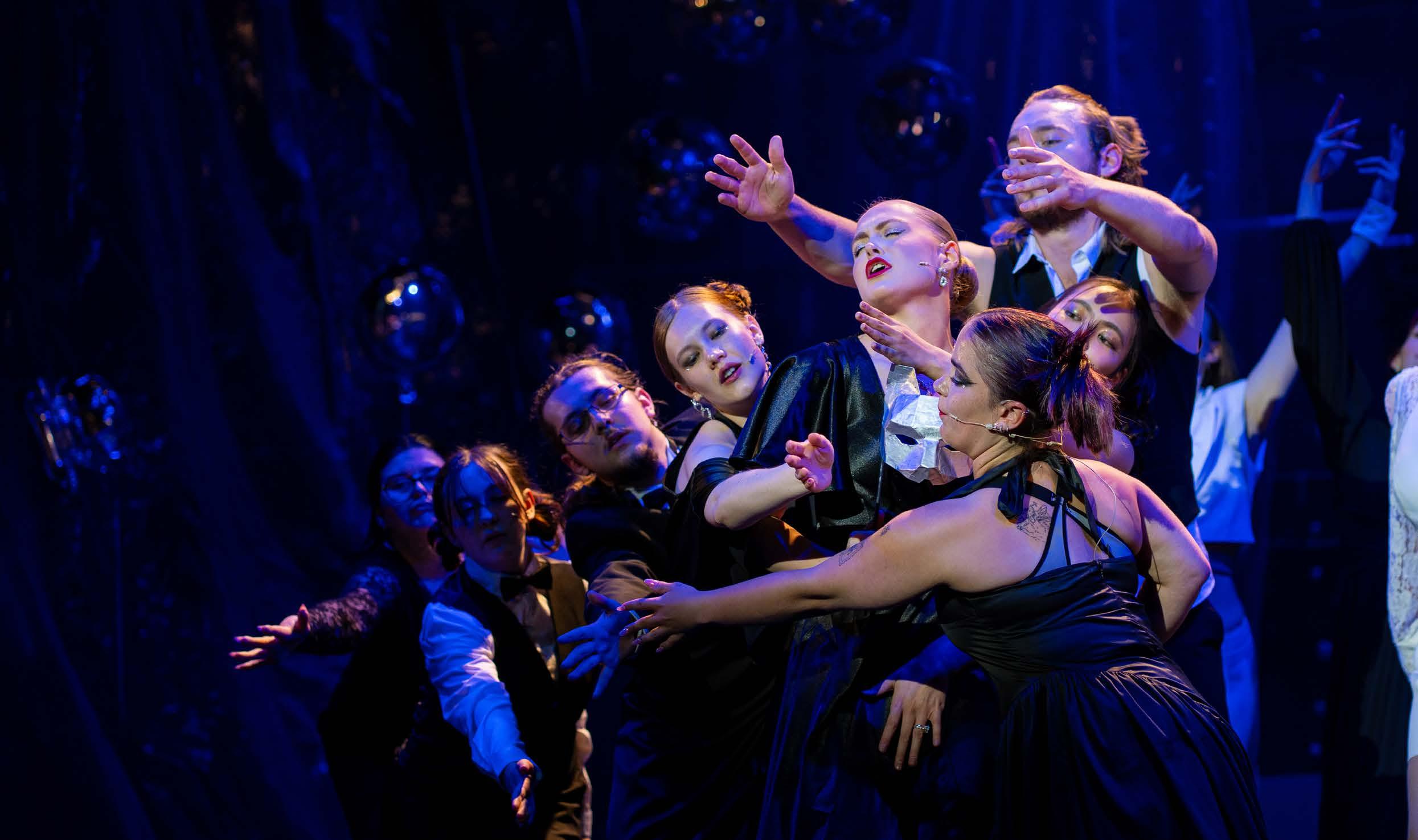
Pictured: Pippin, May 2025.
Funds for theatre tickets/performances
Engaging with live theatre is an important part of your training, and we encourage students to attend a range of productions throughout the year, including work created by fellow Musical Theatre students. You should expect to purchase tickets for at least:
• New Musical Theatre Production (Jan/Feb) – typically £5 student tickets
• Music and Lyrics Concert (April) - typically £5-£10 student tickets
• 3rd Year Final Production (May) – typically £10-15 student tickets or group discounts.
• London Theatre Trip (typically Spring term) – the university usually purchases theatre tickets for students for free, but students need to cover their travel. This allows students to use railcards on trains or book cheaper coach tickets in advance. The cost therefore depends on how organised you are and whether you have purchased a railcard or similar. We also suggest that students explore group travel discounts.
This information pack will also be available on Canvas (our online learning network) throughout the year and can be discussed again in Welcome Week. Please don’t worry if you feel overwhelmed by the amount of information – this document is simply to give you a heads up!