The Road to 50 has not been easy for all
By Alicia Wallace
THE Bahamas became an independent nation in 1973, and it has been celebrated on July 10 of every year.
This year, the celebration has been months-long as the country acknowledges that it has now been independent for 50 years — a golden jubilee.
In previous years, we have made our way to Clifford Park to watch the same show, over and over again, or watched it on television or online.
There has been particular excitement when the production included the tattoo, with police on motorcycles and police accompanied by dogs.
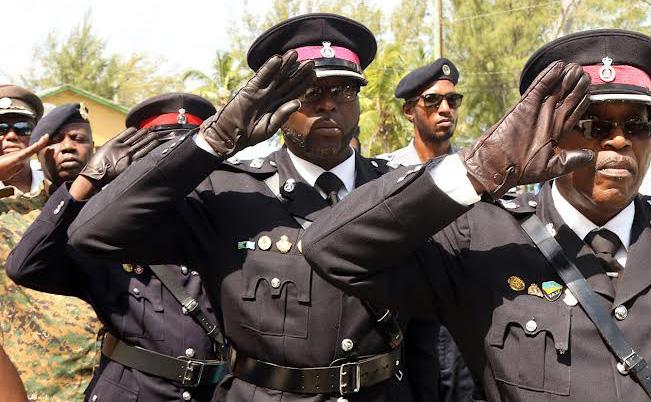
Uniformed officers of the Royal Bahamas Police Force, the Royal Bahamas Defense Force, the Department of Customs, and the Department of Immigration practice for weeks in preparation for the march and inspection on the park. The public enjoys watching and judging their precision and synchronicity, and laughing at the inscrutable commands barked at them which they somehow understand and to which they respond.
As July 10 draws nearer, vendors pop up along the roadside, selling T-shirts, golf shirts, caps, car flags, and all kinds of other paraphernalia. People who may not be patriotic on a regular day suddenly feel the need to literally wear their Bahamianness and don their cars in the Bahamian aesthetic.
Assumptions are made about the people who take it relatively far. “Must be PLP,” people whisper, because everyone knows Bahamian Independence is a Progressive Liberal Party affair. At least that is what, for years, they have wanted us to believe, making Majority Rule and Independence into partisan days with
party-specific festivities, sometimes competing with national events. Still, people want to be a part of Independence events. “Dis we tings!” they say.
Workplaces have T-shirt days. Summer camps have special crafts. Entrepreneurs come up with ways to make money during this period with variations of blue marlins, conch shells, flamingos, and the map of The Bahamas printed on every item imaginable. Businesses have Independence specials. Hair braiders buy hair in the colors of the flag because there are sure to be scores of requests for it. Churches and hospitals are adorned with large bows, and streamers are draped from ceilings in commercial banks and grocery stores. There is black, aquamarine, and gold everywhere.
Is this Bahamian pride?
It is not quite Christmas in July, but it sure is a large display of capitalism?
Somehow, Independence celebrations come down to two questions:
1. What can we sell?
2. What can we buy?
The sellers will take any opportunity to make (more) money. Make it aquamarine and you can charge 15% more in June and July!
The consumers want something new, preferably if it is unique and they can be the only one in certain spaces to have it, and if it has brand recognition and/or a relatively high price point that is easily recognised. Appearances. They are important to many consumers. Sellers have figured this out and also know how to ensure that people want — or think they need — new attire for every Independence, though the colors never change.
They started printing the number of years of independence on the shirts. It likely started with the jersey style shirts, and they golf shirts with the number on the sleeve were not far behind. They date the independence garb — an element that increases the cost and drives the price up — so the age of the clothing is evident, and the day of celebration in one year is the highest value it could have. (Let’s face it: Most of the independence clothing are not collectibles.)
Independence celebrations are largely a mindless exercise, especially for those of us who were born after 1973. Most of us, in fact, were taught nothing about Independence, beyond the date, in our school years. It is a matter of fact and part of our history, but we were given more information about the Arawaks than we were given about Independence and how it came to be in The Bahamas, much less the other countries in the region and the British Commonwealth.
The Independence season is actually a great time to consider our place in the British Commonwealth. What does it mean to be a part of it? How are we participating, as members? How are we facing, and how must we face, the lasting consequences of colonisation?
In what ways has Britain
evolved since its rule of The Bahamas ended? How have we refused to evolve? Which other countries in the British Commonwealth have made significant changes to move beyond the conditions that constrained them before independence? How can we learn from them?
There are key questions that we need to ask about our current state of affairs and the ongoing debates that frequently appear in the news. Why are people afraid of the word “gender”? What is at the root of the opposition to human rights? Why are we committed to rules and regulations that are obviously ill-suited to our climate? Why is there strong resistance to addressing issues of race and racism? How is the distinction made between migrants and expats? What are the consequences of economic-focused development, and what are the alternatives? Why are there different levels of citizenship (in practice)?
Independence for The Bahamas is not the onetime event we seem to celebrate year after year. It is not a one-time job. It is a process. It is both a call and a commitment to progress. Our self-governance should not lead to the same outcomes as colonisation. It is not enough to sign a document or check a box. Education is critical to
independence, and it is not limited to learning. The biggest, heaviest part of the work we have to do is unlearning. Harmful ideologies have to go. Then oppressive systems have to go. We need people who are committed to liberation and equality. We need to be able to elect representatives who believe in and are committed to liberation and equality, and value the common good above self-interest.
The Road to 50 has not been pleasant for most of us. It is not unlike the roads we travel every day in this country. There a holes too big to call potholes. There are roads too narrow for two cars to pass each other. There are roads with no sidewalks. There are roads that we get stuck on for long periods of time because the traffic lights are not timed properly, an authority figure is directing traffic and causing it to move less efficiently, or we have to be extra cautious due to flooding. There are roads that have been badly patched. There are roads that are blocked. There are roads that are being worked on, so access is limited. There aren’t many roads that we can appreciate, and definitely not for a long time.
At 50 years of independence, we need to conduct an assessment. What have we done, since July 1973,
to move out of the box that colonisation put us in? What have we left undone? What are the issues that we need to address? How do we engage the public in important conversations about the current state and the prospects of this country? What do we need to do, as citizens and residents of The Bahamas, to make our demands clear and move our employees — representatives and Ministers — to take action?
Equality Bahamas is launching the Feminist 50 project, inviting people in and of The Bahamas to contribute to set of public demands to be met. We should not get to 100 or even 75 without achieving gender equality. We should not get to 60 and still have Queen Elizabeth II on any of our money. We should not get to 55 without electoral campaign finance reform and a recall system. We should not get to 51 without criminalising marital rape.
What is your dream for The Bahamas? What do you need the government to action? What are the improvements that need to be made to existing systems? Which systems need to be abolished? What do we need to (re)create?
This is an opportunity for us to share our ideas and build on each other’s recommendations.
Equality Bahamas is collecting inputs and facilitating group working sessions this year, and it will publish a report on the contributions.
It will publicise the Feminist 50 — recommendations for a country we can be proud to live in because we have contributed to its development as a home (before a destination) that we can enjoy peacefully and equitably — and advocate for its implementation.
To share your ideas in a short form, go to tiny.cc/ feminist50form. To learn more about the project and register for live sessions, email equalitybahamas@ gmail.com.
THE TRIBUNE Friday, July 7, 2023, PAGE 25
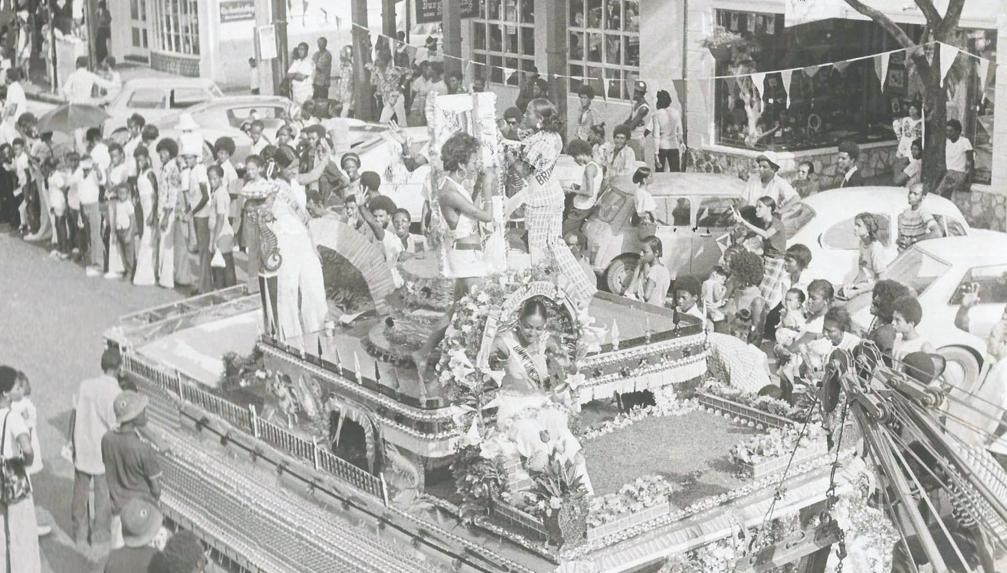
A SCENE from the Independence Float Parade in 1973 - but the road to 50 has not been easy for all Bahamians.
We must also reflect as we celebrate
A GOOD deal of the official 50th independence anniversary celebrations and some of the commentary has been lopsided. Even as we joyously celebrate this half century milestone, including various social and other events, we should concomitantly and more seriously reflect on our accomplishments and failures.
Some of those who feverishly suggest that there is little to nothing to celebrate, including in certain letters to the editor and talk show rants, have been hyperbolic, unconvincing and imbalanced.
Many Bahamians feel a certain independence spirit and are happy to celebrate with various commemorations and parties, public and private. Still, there is more ambivalence at this anniversary than most public officials may realise.
This is especially the case for those of a certain age who witnessed 1973 and have played a part in the country’s development. Those approximately 60 and over and those born after 1973 are celebrating the 50th with different feelings.
Several editorials in the major dailies as well as some commentators in the media and in speeches at various venues have been balanced and probing in describing the proverbial road we have successfully trod and where we have fallen down during the journey to July 10, 2023. Both dailies are also producing independence supplements.
It is unfortunate that there have not been more structured opportunities for analysis and dialogue on these accomplishments and failures hosted by the state cum Independence Secretariat.
The Secretariat did partner with the Antiquities, Monuments & Museums Corporation of The Bahamas (AMMC) in hosting at the University of The Bahamas, The Distinguished
Conversation under the theme, ‘A Return to Idealism’.
Still, neither major political party, particularly the government of the day, has offered an in-depth reflection on the state of the nation and our future prospects. Imagine one or both parties offering a broader vision, with some major ideas or initiatives for this anniversary and the years to come. Why has there been no time set aside in Parliament for a broad debate on the state of our Commonwealth during this anniversary? Perhaps, there could be a mock parliament of young Bahamians debating their vision and ideas of where they would like to see The Bahamas in the decades ahead.
With the disturbing news that more than 50 percent of our workforce has not completed high school and that thousands have dropped out of the workforce, what are the ideas for education and training? Neither party seems to fully appreciate the difference between economic growth and integral human development.
And we are still egregiously failing young Bahamian men, resulting in greater social dysfunction, alienation, criminality and violence. The drug era helped fuel the social morass suffocating and poisoning our national health, literally and figuratively.
It is telling that no one among the political elite who aided and abetted this hellish descent has ever truly acknowledged the effects of the era and the role they played. As way back as 1973, then Roman Catholic Bishop Paul Leonard Hagarty noted in an independence statement the social problem of drugs.
Meanwhile, neither major party has advanced any serious proposals for sustained youth intervention programs despite the depth of the dysfunction.
How much do the political and economic elites care about this major failure of a sovereign Bahamas?
We are spending millions on these celebrations. Can we not find millions for youth intervention programs such as successful models like Outward Bound?
When the tea parties, banquets, marches, receptions, games and extravaganzas are over, will we be left with more than memories of a good time? How much will these events end up costing?
A look through the archives from 1973 reveal more than celebratory events. There was greater discussion then of the work ahead for national development. Both government and non-government officials offered ideas for our future.
Further, as noted in a column last year, the 50th is an opportunity for the public and private sectors to sponsor artistic and cultural events and pieces, such as plays, sculptures, installations, essays, murals, poetry, etc. commemorating this anniversary and which will prove more lasting than social events.
Cultural expression is a form of reflection and dialogue and would serve as
cultural artifacts long after the anniversary is a nice memory.
Before he passed away some weeks ago, George Smith, who played a prominent role in 1973, noted to this columnist and others that he wished that the 2023 celebrations were more reflective, balanced and creative.
Imagine a major artistic contest for outside installations marking the 50th. This might have included a piece for the entrance at Government House, replacing the Columbus statue, which as a part of our history should still be publicly displayed at a more appropriate location, including a retelling of its history.
With the passing of a truly national treasure, Dr Gail Saunders, our preeminent historian thus far, who helped to set up the National Archives and was instrumental in documenting and preserving myriad heritage sights and artifacts, we are reminded of those in that independence generation who lent their prodigious energies to a sovereign Bahamas.
This roster of patriots included individuals like Winston Saunders, Kayla Lockhart Edwards, Sir Durward Knowles, Cleophas Adderley Jr, Monsignor
Preston Moss, Rev Charles Sweeting, Rev Charles Saunders and a host of public servants, religious leaders, artists and musicians who demonstrated genuine pride through their commitment to service and excellence, an excellence sadly missing in numerous areas of national life today.
Still, there are a number of young people in the arts, business, education and other areas of national life who show great promise and strive for excellence. How will we mentor and guide them to become leaders and men and women for others in the years to come?
Especially impressive is a new generation of female artists, entrepreneurs and activists who hunger for more for themselves and The Bahamas. They are seeds and sprouts of hope who need encouragement and other communities of hope.
Before we can even begin to truly speak of a return to idealism, we must be ruthlessly honest about the dramatic decline in basic standards and civility. The Bahamas is so pockmarked with poor standards in most areas of national life, that we seem not to even know what certain standards are anymore.

Meanwhile, we revel in
slackness. There remains widespread corruption in public life. The moral gaze of many is occluded by greed and self-interests that are indifferent to the poor and marginalised. There is greater racial and gender equality. But the fullness of equality for women remains a struggle, and economic inequality seems entrenched.
It is stunning that the mostly male leadership of the country has failed to outlaw marital rape and that so many men and male religious leaders still view women as chattel, despite so many Bahamian women demonstrating their dignity and excellence over the past 50 years, outstripping men in many professions.
Sadly, it is in part because of these accomplishments that many of these misogynists want to keep women in their place, despite their and our collective failure to model better images of manhood and to help many more of our boys to become men.
It appears that a younger generation of men is taking a more active role in the lives of its children, acknowledging paternity and being more supportive, though this remains a perennial problem.
What of our democratic well-being? We have sustained our two-party system and generally free and fair elections. In 1992, with the election of the Opposition to government, democracy was entrenched, followed by the freeing of the broadcast media.
We have a vibrant print and broadcast media that works to hold other institutions accountable, though the state of journalism is decidedly mixed and not appreciably improving, including at times the lack of accountability by some media houses.
Despite our democratic stability and assimilation of parliamentary democracy,
SEE NEXT PAGE
PAGE 26, Friday, July 7, 2023 THE TRIBUNE
“SOME OF THOSE WHO FEVERISHLY SUGGEST THAT THERE IS LITTLE TO NOTHING TO CELEBRATE, INCLUDING IN CERTAIN LETTERS TO THE EDITOR AND TALK SHOW RANTS, HAVE BEEN HYPERBOLIC, UNCONVINCING AND IMBALANCED. MANY BAHAMIANS FEEL A CERTAIN INDEPENDENCE SPIRIT AND ARE HAPPY TO CELEBRATE WITH VARIOUS COMMEMORATIONS AND PARTIES, PUBLIC AND PRIVATE.”
MANY

feel a certain independence spirit and are happy to celebrate with various commemorations and parties, public and private. Still, there is more ambivalence at this anniversary than most public officials may realise.
FROM PAGE 26
both of which we should celebrate, we do not appear to be maturing as a democracy.
The quality of those in parliament and in cabinet has precipitously declined and standards continue to worsen. Democracy requires certain qualities of leadership, of which there is a major deficit in 2023. Democracy should not be taken for granted.
Despite recently celebrating its 247th anniversary of independence, we are witnessing democratic upheaval in the United States, including the January 6, 2001, attack on the US Capitol, gross and undemocratic gerrymandering, coordinated strategies
to disenfranchise people of color, and the often inability of the Congress to act on certain pressing matters such as reasonable gun control.
During the days ahead, a certain thanksgiving and gratitude for the blessings of our Bahamas is due. This patriotism also necessitates sobriety and honesty about where we have faltered, and the generosity of spirit needed to improve the common good.
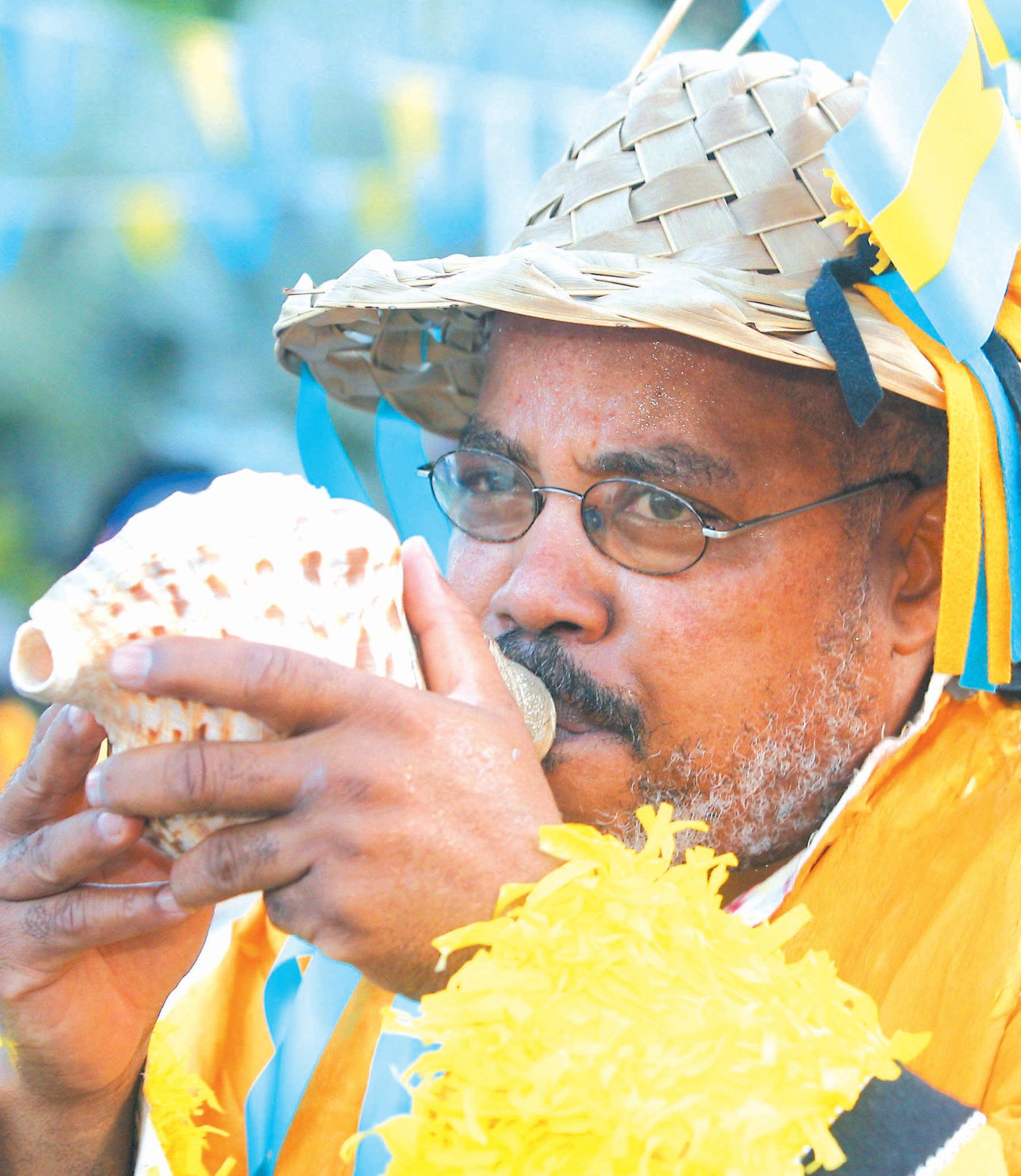
In our greetings of “Happy Independence” in the coming days, may there be a spirit of joy but also remembrance of the need for renewal. And may our prayer be that taken from the words by Rev. Philip Rahming and the music of Timothy Gibson and
Clement Bethel from God Bless Our Sunny Clime:
“Let gratefulness ascend, courageous deeds extend
From isle to isle. Long let us treasure peace, So may our lives increase, our prayers never cease. Let freedom ring! Let freedom ring!
“The long, long night has passed, the morning breaks at last, From shore to shore, sunrise with golden gleam Sons ’n’ daughters, share the dream, for one working team One brotherhood, one brotherhood.”
More in the weeks ahead. (Front Porch is now available in podcast on The Tribune website under the Editorial Section)
THE TRIBUNE Friday, July 7, 2023, PAGE 27
Bahamians
PAGE 28, Friday, July 7, 2023 THE TRIBUNE
A GESTURE by a Bahamian entrepreneur will have Bahamian legislators looking sharp and patriotic as the country celebrates 50 years of Independence.
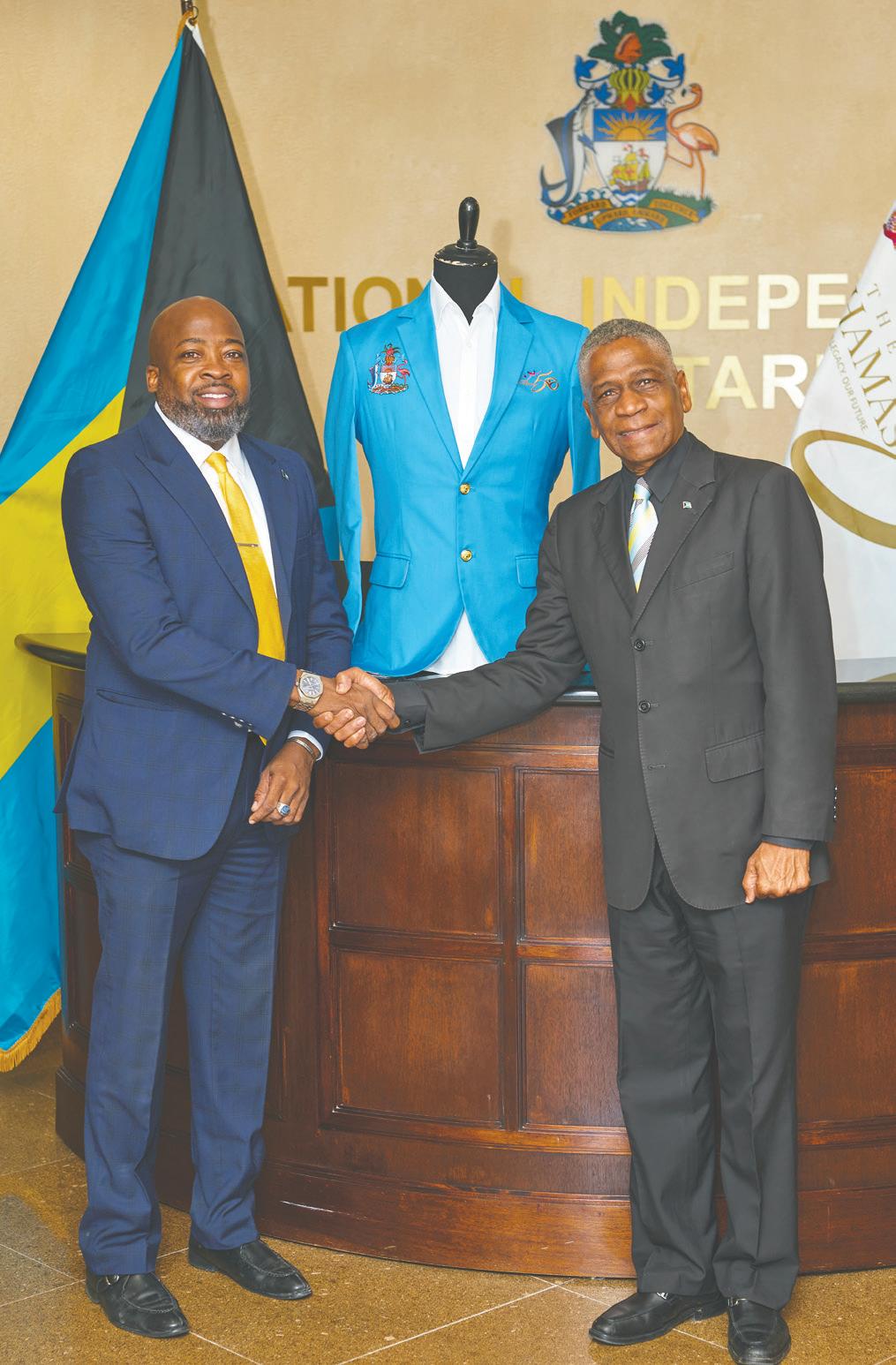
Nolan Carey of Kingsman Collections recently presented the National Independence Secretariat with the model of a custom tailored aquamarine blazer, which will be gifted to all Members of Parliament and Senators in The Bahamas.
“These one-of-a-kind commemorative blazers can serve as symbols of unity, patriotism, and achievement,” said Mr Carey.
“They represent a unique milestone in our country’s history and can be a cherished keepsake for the leaders who wear them. These blazers can become a part of the country’s legacy and remind future generations of the remarkable journey the nation has undertaken.”
Chair of the National Independence Secretariat Ambassador Leslia MillerBrice and Permanent Secretary Jack Thompson
Suits you for the occasion
were on hand to receive the blazer at the Secretariat office at One Montague Place. They thanked Mr Carey responding to the call for Corporate Bahamas to join in the Golden Jubilee by finding unique ways to showcase their products and services, while supporting the historic occasion.
“By presenting these blazers, we hope to make a meaningful contribution to the celebration of our country’s 50th anniversary,” Mr Carey said.
“Not only will they add a touch of grandeur and distinction to the occasion, but they will also serve as a tangible representation of the collective accomplishments and progress of the nation.”
“Having our nation’s leaders wear these blazers can create a sense of camaraderie and shared pride among them. It can foster a spirit of unity and collaboration as they commemorate this important milestone together. This is a wonderful way to honour our country’s history and leaders.”
THE TRIBUNE Friday, July 7, 2023, PAGE 29
NOLAN Carey presenting the blazer to Jack Thompson.
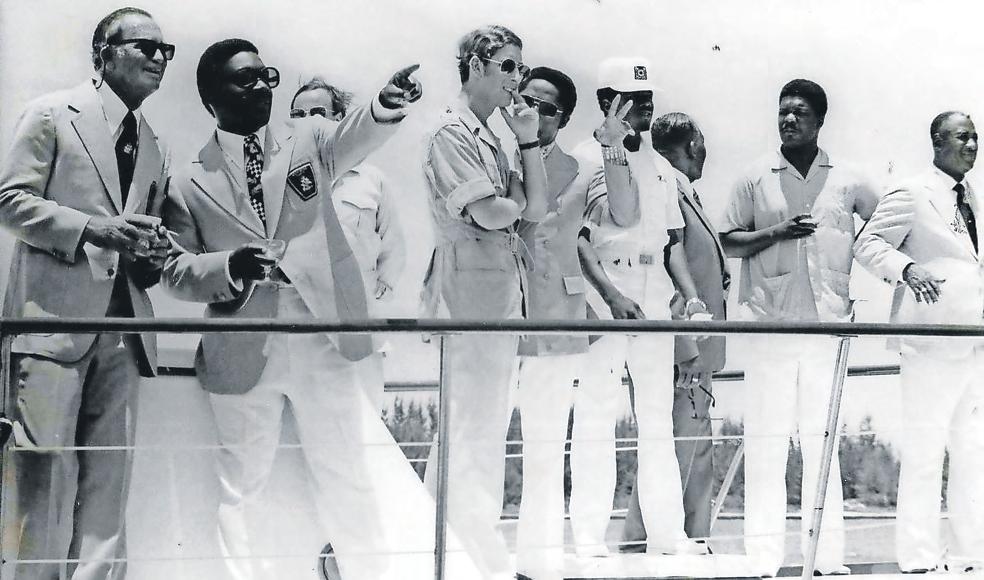
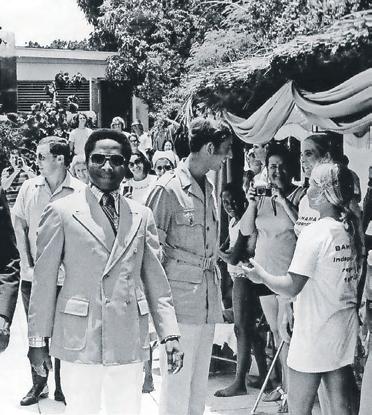
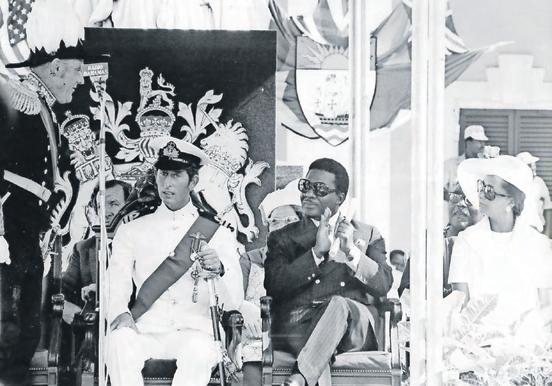
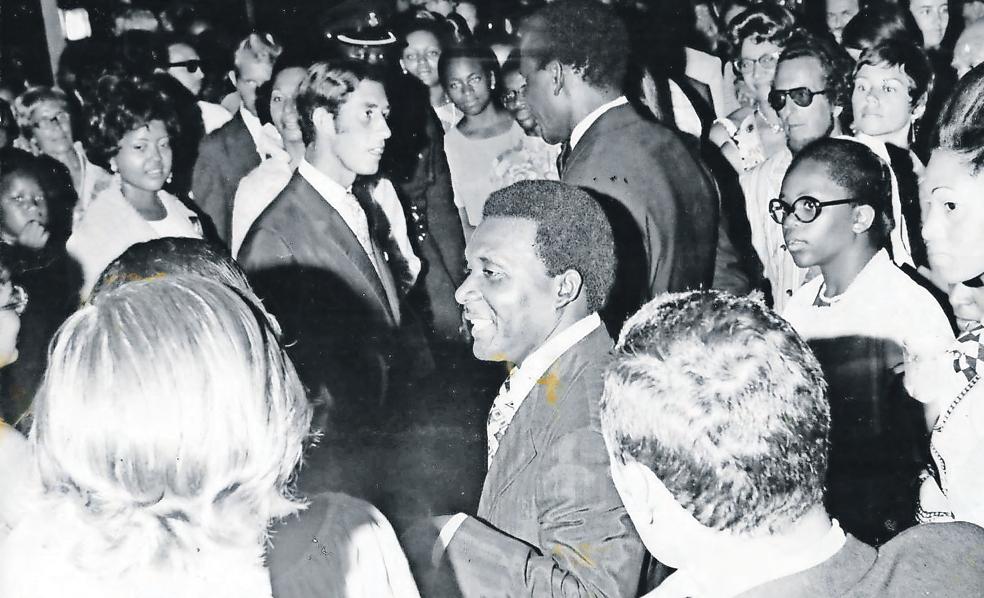
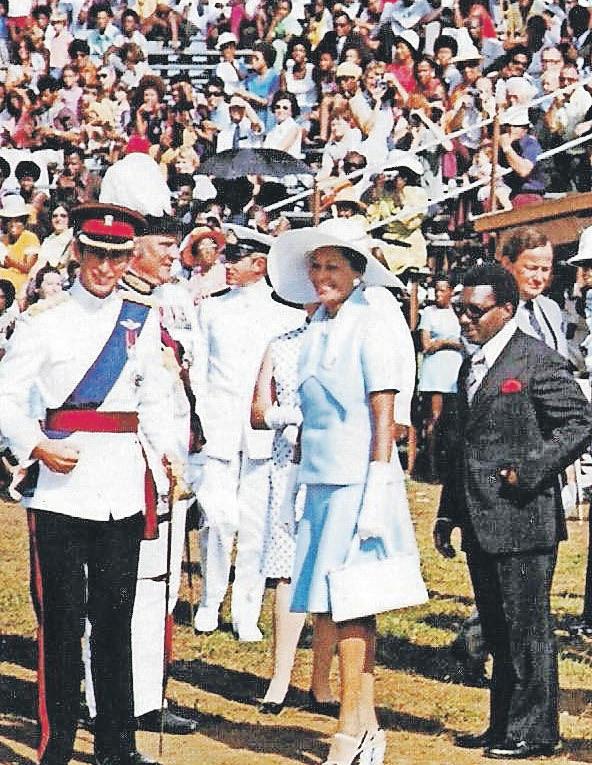
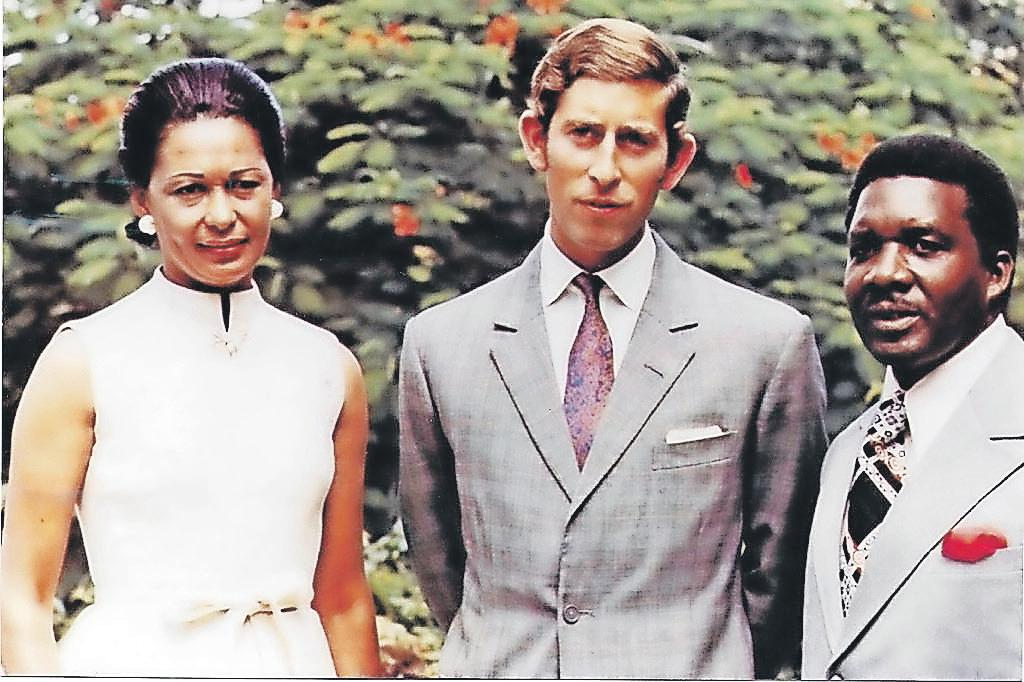
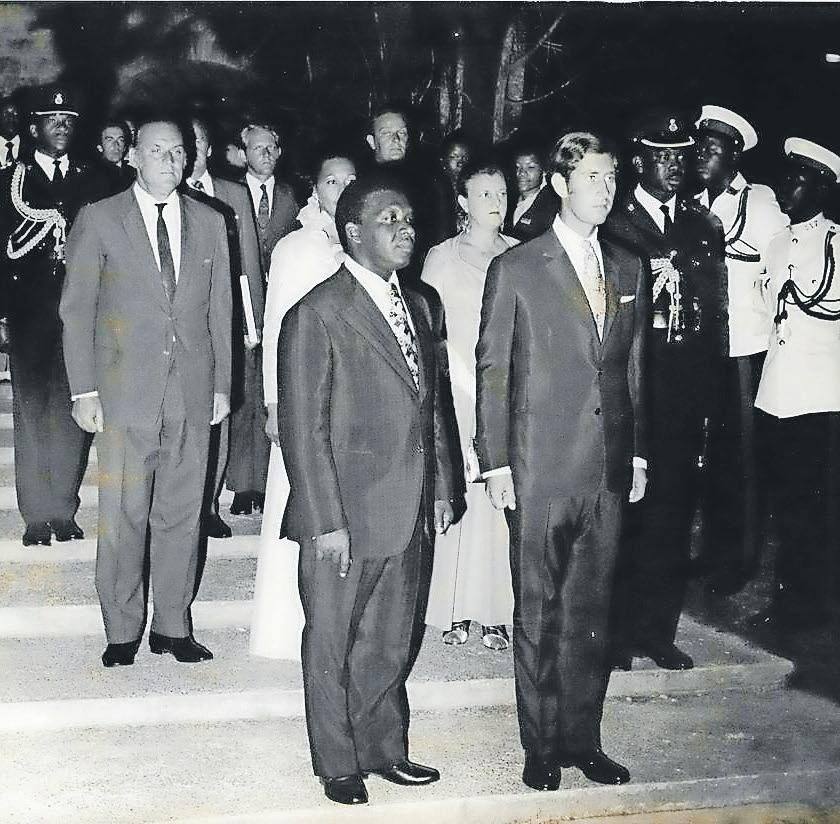
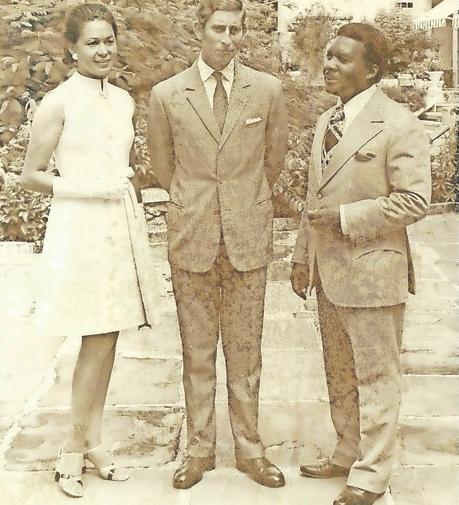
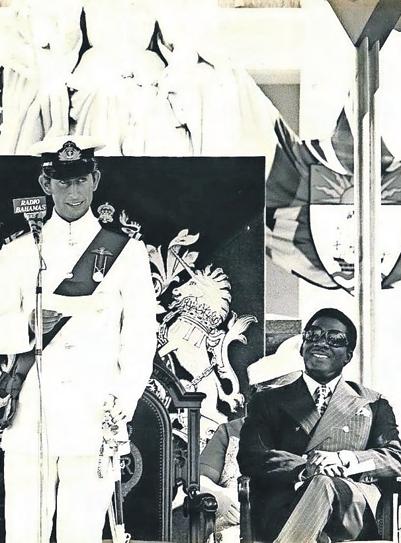
PAGE 30, Friday, July 7, 2023 THE TRIBUNE A PRINCE WHO BECAME A KING WHO CAME TO SEE THE BAHAMAS BECOME INDEPENDENT SCENES from the then Prince Charles’ visit to The Bahamas to witness Independence.
THE TRIBUNE Friday, July 7, 2023, PAGE 31
PAGE 32, Friday, July 7, 2023 THE TRIBUNE
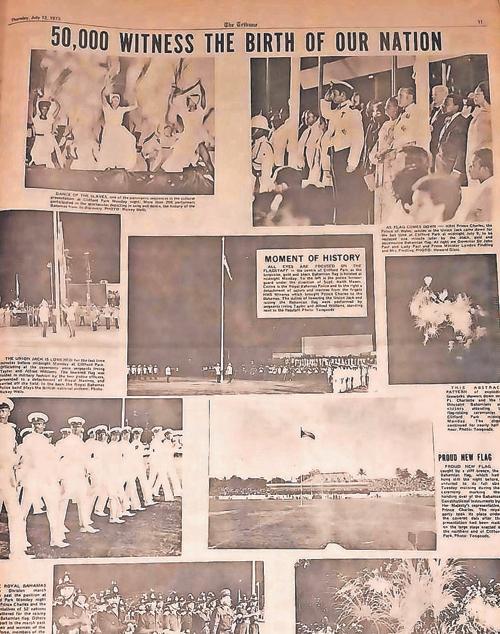
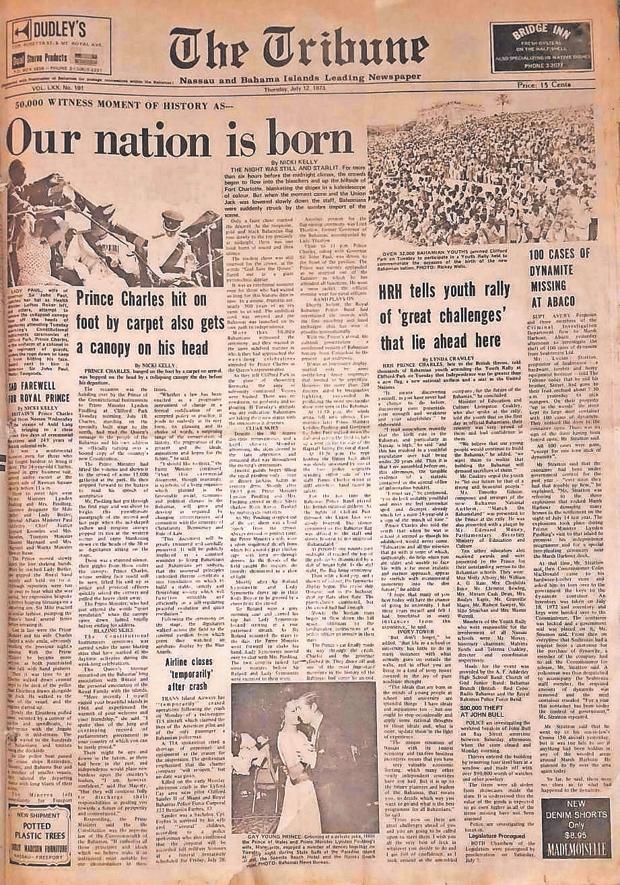
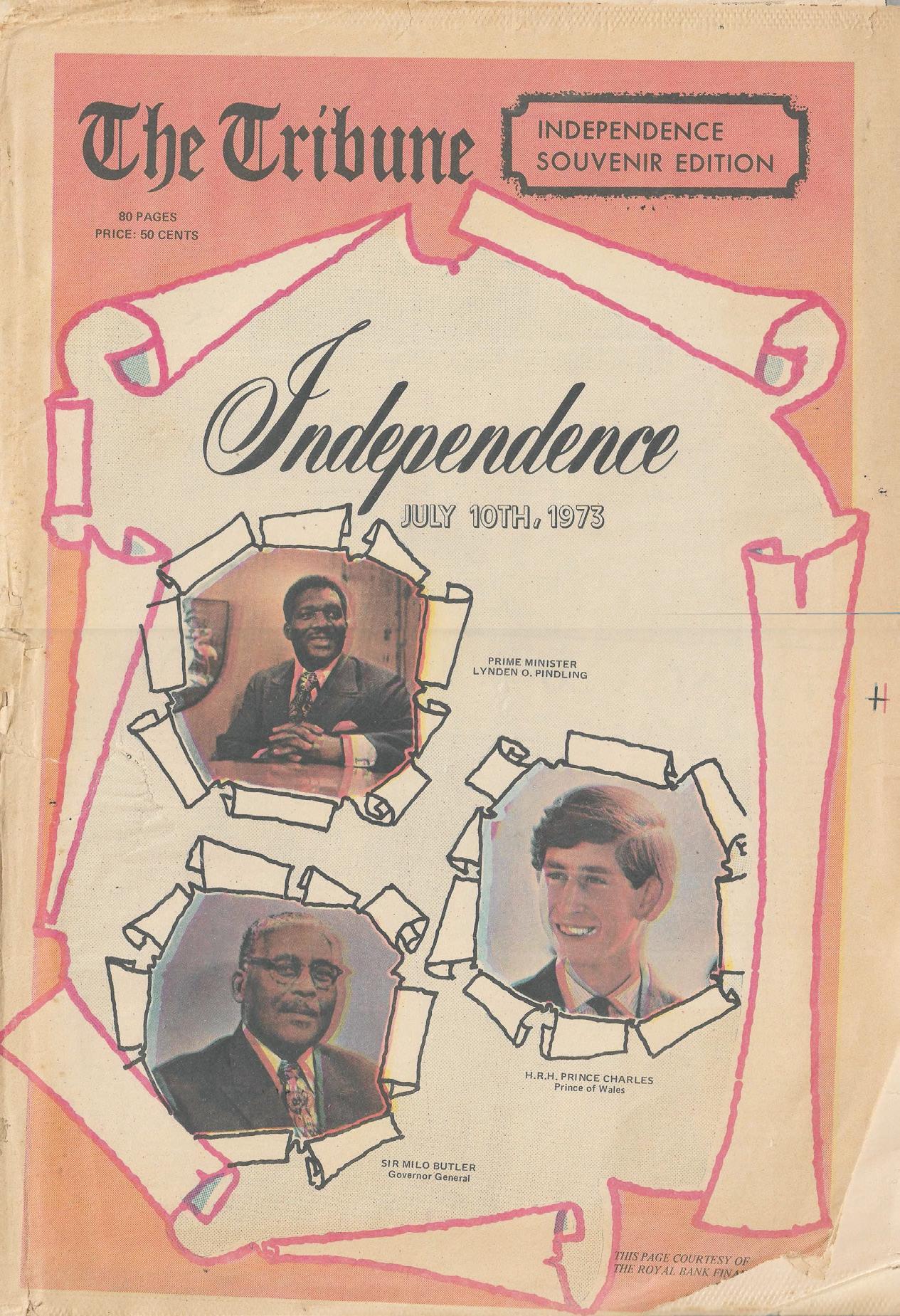
AS you would expect, The Tribune had extensive coverage of the nation’s Independenceincluding reports on the new prime minister, the new governor general and the visit of Prince Charles, the future king. A crowd of 50,000 was reported to have witnessed the birth of the nation.


THE TRIBUNE Friday, July 7, 2023, PAGE 33
good education system will go a long way towards a better Bahamas’
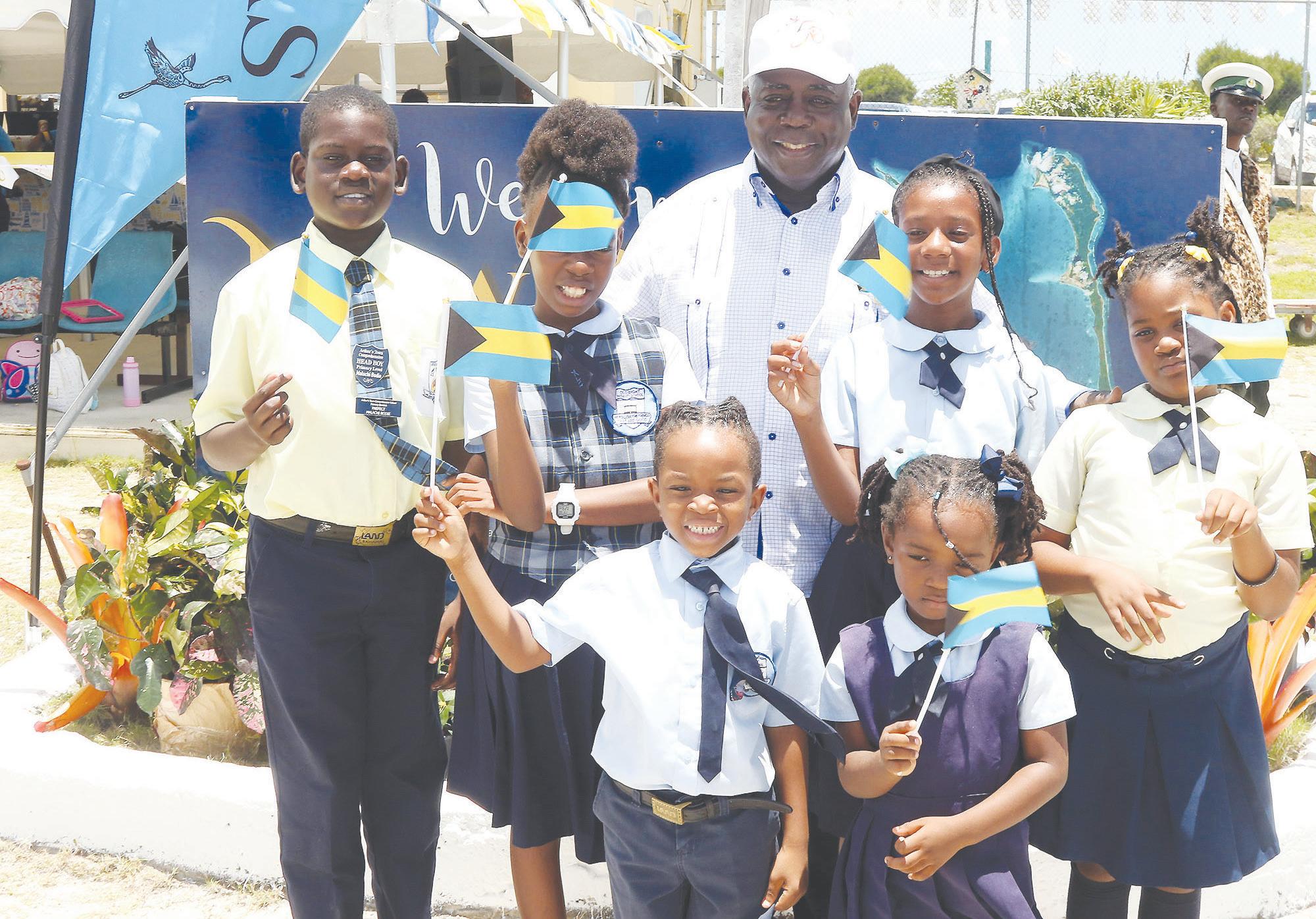 By TIMOTHY ROBERTS Tribune Night Editor troberts@tribunemedia.net
“Life can only be understood backwards; but it must be lived forwards.”
- Søren Kierkegaard
AS WE pause to reflect on what has come before and where we indeed are now as an independent nation, we should be mindful to not linger long here. There are a good many things we can reflect upon and be proud of as a country and as a people, and yet maybe just as many we would like to fix or even forget. But regardless, the past will forever remain what it is, though our perspective on it may change in time.
But we simply must continue to look forward, and as a country pursue progress and growth in ways that benefit all people. It is the people, after all, that are the heart and soul of a nation.
The improvement of one thing in The Bahamas can have an incredible impact on the progress of our country; education.
A good education system, strengthened with educators who care about the individual lives they come into contact with, modernised and streamlined to effectively assist in producing competent adults, will go a long way towards a better Bahamas. Education alone is not a panacea for all the societal ills with which we are faced, but it is one major part of a set of tools that can repair the many social ills that afflict us.
According to statistics, people who get an education have higher incomes,
have more opportunities in their lives, and tend to be healthier.
Societies benefit as well, as with high rates of education there are lower instances of crime, better overall health, and more civic involvement.
Lack of access to education is considered the root of poverty. Not getting an education can lead to a cycle of poverty. However, access to education can mean getting out of that cycle.
The benefits of education lead to a healthier lifestyle, the opportunity to grow
as an individual, through experimenting with what you are passionate about, and exposure to a diverse set of people and ideas which expand the mind.
Education is crucial in socialising and later benefits in the skills to network which has personal and professional benefits.
Education is a foundational aspect of developing the framework that can sustain you through life, finding your passion and purpose and pursuing competence that leads to fulfillment.
When you become competent it has benefits that
extend beyond just the personal as more competency helps develop a better community and society.
Competency leads to (generally), better productivity, better communication, better critical thinking, better discipline, and finally a better financial status. The ultimate goal of education should be focused on the end product of a welladapted and competent human being; not merely to be a cog in the wheel of society, but to be filled with pride of being someone who is able to sustain
themselves, mentally and emotionally balanced and ready to face the real world.
When education works, and accomplishes these goals, society in general will benefit.
Currently, our education system is not working as well as it should, and many kids are just allowed to fail, allowed to slip through the cracks, and their broken state, or their incomplete growth becomes a bigger burden to the rest of society.
I am speaking here to the more extreme ends of the spectrum of our children that fail out of school and
flounder in life, but more so those who then act out in anger and desperation, then ultimately land in criminal activities.
We can absolutely speak of the many pieces that lead to the course these young men (as predominantly young men appear to fall in this category) take in life, but here I think education has a chance to step in and “stand in the gap” as it were, to be that helper, that one who cares about the individuals under their care, and make an impact where other parts of their growth are lacking the help.
As such, the education system as it stands at 50 years of independence shows decline, as it not only is failing to keep up with modern education systems, leaving many students without a modern set of skills for the current world we live in, but are also losing control of their ability to impact character.
While needing to absolutely develop a curriculum that includes the development of critical thinking and problem-solving skills, it also needs to be adapted to develop children as individuals with different temperaments, skills, and aptitudes and be rid of archaic basic wrote memory learning and teaching to the test methodologies that don’t allow kids to graduate with the lasting benefits of an education that has taught them to think and reason for themselves.
If we are serious about the development of The Bahamas as a country and want something truly worth celebrating at our 100th independence, invest in our people, and watch how we build a truly better Bahamas for all.
PAGE 34, Friday, July 7, 2023 THE TRIBUNE
‘A
OUR education system as it stands at 50 years of independence shows decline, as it not only is failing to keep up with modern education systems, leaving many students without a modern set of skills for the current world we live in, but are also losing control of their ability to impact character.




THE TRIBUNE Friday, July 7, 2023, PAGE 35
SCENES from the visit of the then Prince Charles, pictured with the nation’s first prime minister Sir Lynden Pindling and with Dame Marguerite Pindling.

PAGE 36, Friday, July 7, 2023 THE TRIBUNE
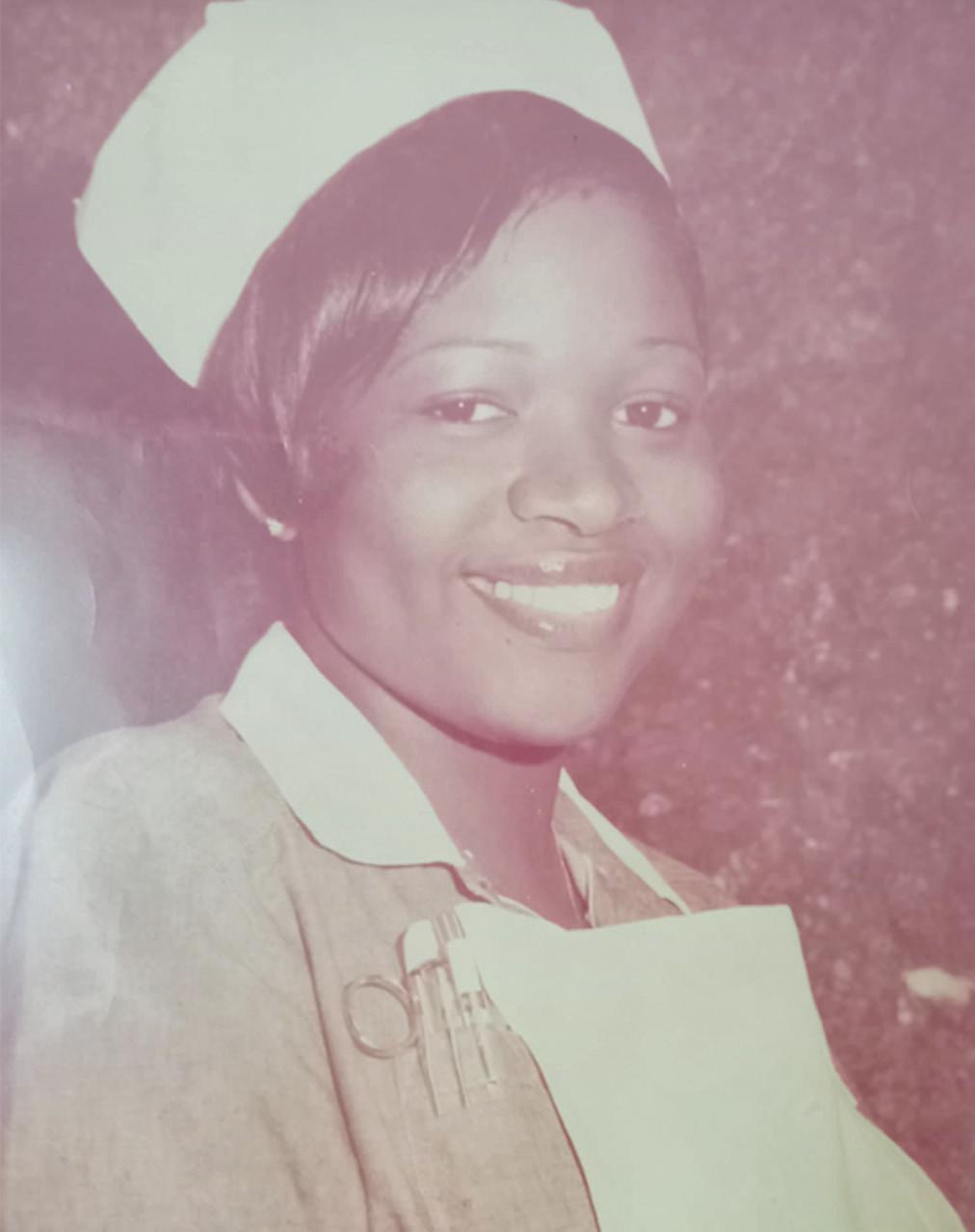
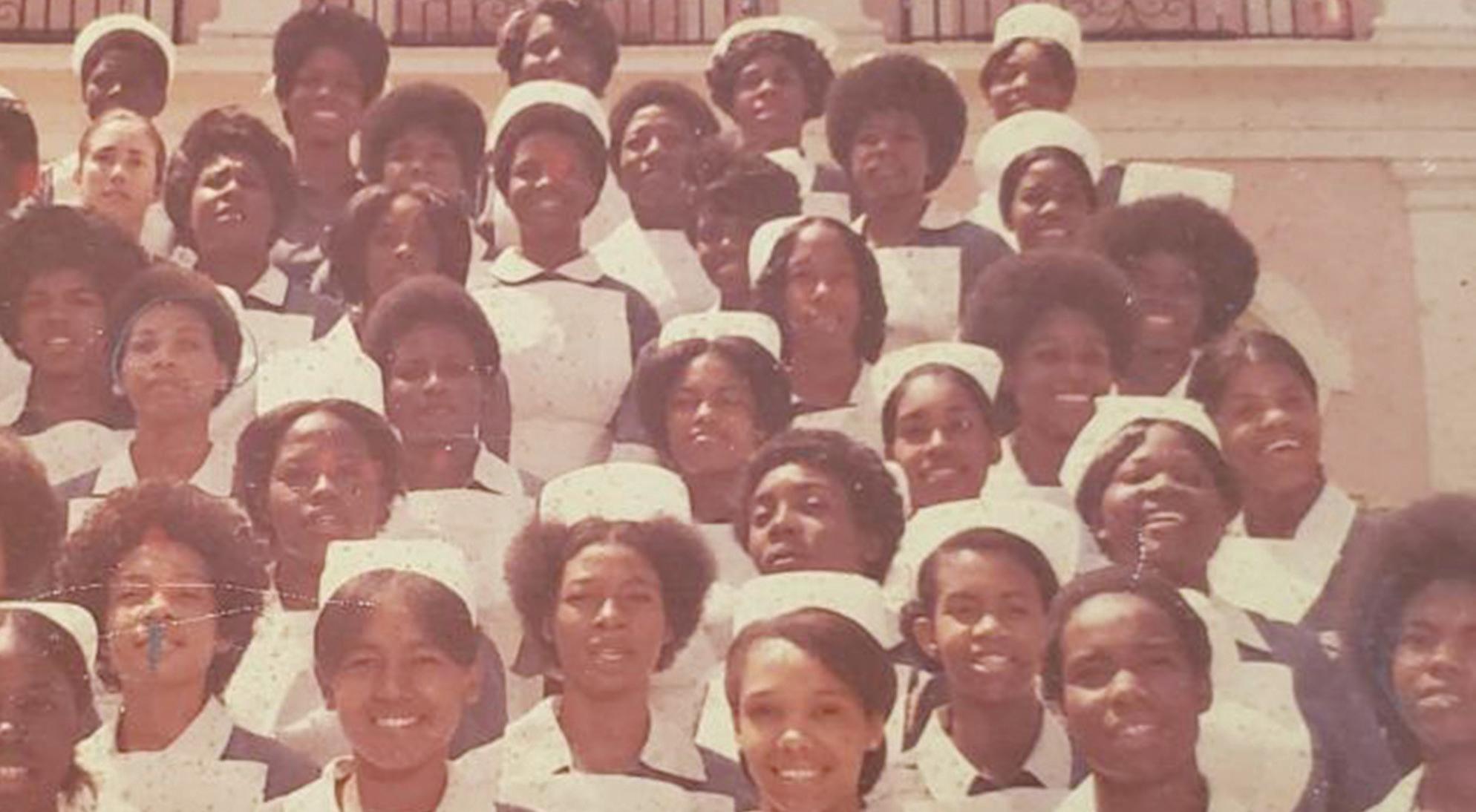
WE WERE FIRST CLASS: Gwendolyn Brice-Sealy, who was part of the group pictured here, fondly remembers when they began training in 1973 which they completed three years later. They were the first class to begin nursing training in an independent Bahamas.
First class!
By LEANDRA ROLLE Tribune Staff Reporter
THEY were the first class to begin nursing training in an independent Bahamas.
Gwendolyn Brice-Sealy, who was part of the group pictured, fondly remembers when they began training in 1973 which they completed three years later.
“We were the first class to come in an independent Bahamas,” said Mrs Sealy in an interview with The Tribune.

“We started with 46 people but there were 35 of us who graduated in July 7, 1977.”
Back then, she said training for nurses was very hands on and practical. Students also were required
to live on property at the Department of Nursing Education, as it was formerly called back then.
“You had to be a minimum of 17 years and we were required to live in, so we stayed on the compound in the nurses’ dorms for three years,” she said.
“You would’ve started like with introductions to medical surging nursing or you would’ve done like fundamentals of nursing so you would learn how to do a bed bath, how to take temperature, pulse respiration.”
“So, you would be in the classroom for a certain time and then after that, let’s say about four weeks, you would go to the clinical area, and you practiced all of those skills that you would’ve learnt.”
But she said the nursing field has changed drastically over the last five decades and so has the training process for nursing students.
“Things have totally changed, and a lot of students now come it at a later age,” she added. “Like I said, we were 17. You hardly will see a 17-year-old student at UB and I’ve had the good fortune of becoming a nurse educator, so I know what transpires now as opposed to what transpires for my own training.
“They don’t live in anymore and you find that you couldn’t go on streets in our uniforms because of the whole infectious process and they have a lot more simulation.”
She added: “A lot of the skills, they call them the principles of nursing now, they are done in the classroom where we used to go on the wards to do
certain procedures. We now have mannequins that they can do these same procedures on so with technology, they have so many films they can go and view a particular procedure that we didn’t have access to in our day.”
She said the role of nurse has also expanded.
“You have so many different areas like the nurse researcher and so many different disciplines,” Mrs Sealy continued. “You have the ophthalmic nurses and of course you have the psychiatric nurse, the nurse who deals with dialysis and the ICU nurse, that requires special training and then there’s the midwives and all of these are courses you would do after you become a registered nurse.”
THE TRIBUNE Friday, July 7, 2023, PAGE 37
lrolle@tribunemedia.net

PAGE 38, Friday, July 7, 2023 THE TRIBUNE
Independence: The next 50 years
By RUPERT HAYWARD
THOUGH this country is no stranger to major storms, the extraordinary power and violence of Hurricane Dorian shocked and alarmed us all. It was an unprecedented national tragedy which despite the ongoing heroic efforts of so many, we continue to recover from.
Low-lying coastal countries like The Bahamas face a future likely to be challenged by stronger and more powerful hurricanes, warmer oceans that threaten marine life, and rising tides that impact our coastal communities. As we prepare to celebrate our 50th year of nationhood, Bahamians must ask ourselves: can a society facing such formidable forces consider itself to be truly independent?
If our next half century is to be even greater than our first, it must be a story of sustainable development and
climate resilience; of building the Blue and Green economies with new technologies that protect our country from climate change while also generating economic independence for Bahamians, individually and collectively.
It must be the story of a diversified economic model that prioritises new skilled jobs for our young people, creating a community that is socially and professionally equipped to be at the global forefront of tackling the biggest challenge of the 21st century.

What could a resilient future for The Bahamas, driven by sustainable development, look like? It could involve the adaptation of our communities to meet the threat of rising seas and bigger storms, tapping into international capital markets that prioritise funding for climate solutions. This would allow us to build effective dykes and berms,
and elevate critical infrastructure to a safer height above sea level, among other innovations.
It could see the construction of cutting-edge renewable power generation systems, funded through innovative financing mechanisms specifically designed to support the transition to clean energy while also fighting climate change.
Mitigation operations to restore mangroves, reef systems and other natural assets that protect coastal communities will be key. So will carbon capture strategies aimed at sequestering large amounts of carbon from the atmosphere to generate credits, while developing a whole new economy built around carbon development, trading and verification.
We could develop an island such as Grand Bahama into a hub for testing of climate solutions to benefit The Bahamas and the world, and a cutting-edge
training center that will lead to employment and entrepreneurial opportunities for thousands of Bahamians in exciting emerging fields. This will facilitate investment in new top-notch schools, modern and affordable climate-resilient housing and cutting-edge public medical facilities for our communities. Crucial to such a future would be the protection, enhancement and effective utilisation of the largest and most diverse ocean Exclusive Economic Zone (EEZ) in the world. An EEZ is an area of ocean, generally extending 200 nautical miles beyond a nation’s territorial sea, within which a coastal nation has jurisdiction over both living and nonliving resources. The Bahamas could work to preserve and protect, but also profit from, the marine resources that surround us in abundance but which are also under
serious threat from climate change. Our reefs in particular need to be protected so that we can enhance their value proposition for tourism in the 21st century. If no action is taken, it is forecast that by 2050, 90 per cent of Caribbean reefs will be dead.
With the proper utilisation of our EEZ, training and employment opportunities would become available not just in ecological preservation, but also in a greatly expanded tourism product including the thriving high-end ecotourism market. Here, we must learn from examples such as Costa Rica which successfully built a new tourism model around preservation and enhancement of that country’s unique ecology. Costa Rica’s sustainability revolution began around 50 years ago; since then, the country’s per capita GDP has grown by more than 3,000 per cent.
The future is entirely in our hands. If we can turn one of the world’s existential problems into an opportunity by riding the sustainability revolution, The Bahamas can thrive at the forefront of the global climate change fight and become a thought leader in this space for the next 50 years and beyond. Forward, Upward, Onward, Forever.
Rupert Hayward is founder and president of the Blue Action Lab and Blue Action Ventures, organisations dedicated to nurturing entrepreneurial efforts to build coastal climate resilience solutions. He is an executive director of the Grand Bahama Port Authority and the Grand Bahama Disaster Relief Foundation. Rupert holds a government-appointed board seat on The Bahamas Protected Areas Fund and is an advisor to the University of The Bahamas on climate resilience.
building a sustainable future for The Bahamas such as ecological/sustainable development, oceanography, marine biology, natural resource management and other disciplines related to climate and the environment.
THE TRIBUNE Friday, July 7, 2023, PAGE 39
If our next half century is to be even greater than our first, it must be a story of sustainable development and climate resilience
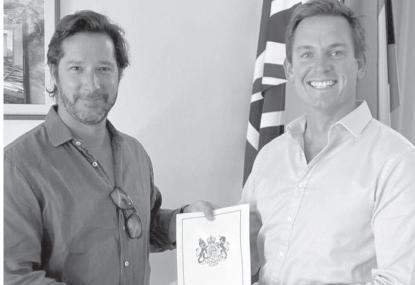
RUPERT Hayward (left) presents British High Commissioner to the Bahamas Tom Hartley with a Partnership Agreement between the Charles Hayward Foundation and the prestigious Chevening Scholarship to Bahamian students to pursue funded postgraduate studies at UK universities in fields related to
RUPERT Hayward (right) at London Tech Week 2023, speaking about building ocean ecosystems to accelerate climate technology.
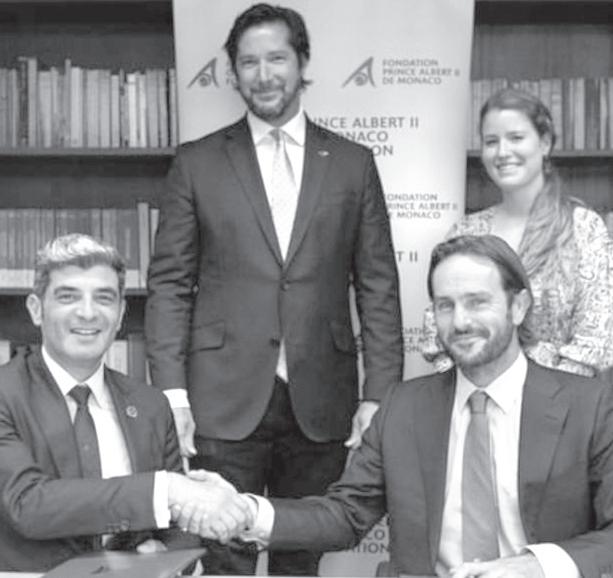
RUPERT HAYWARD, (second from left) signing an agreement on behalf of the Grand Bahama-based Blue Action Lab to accelerate ocean innovation with the Prince Albert II of Monaco Foundation.
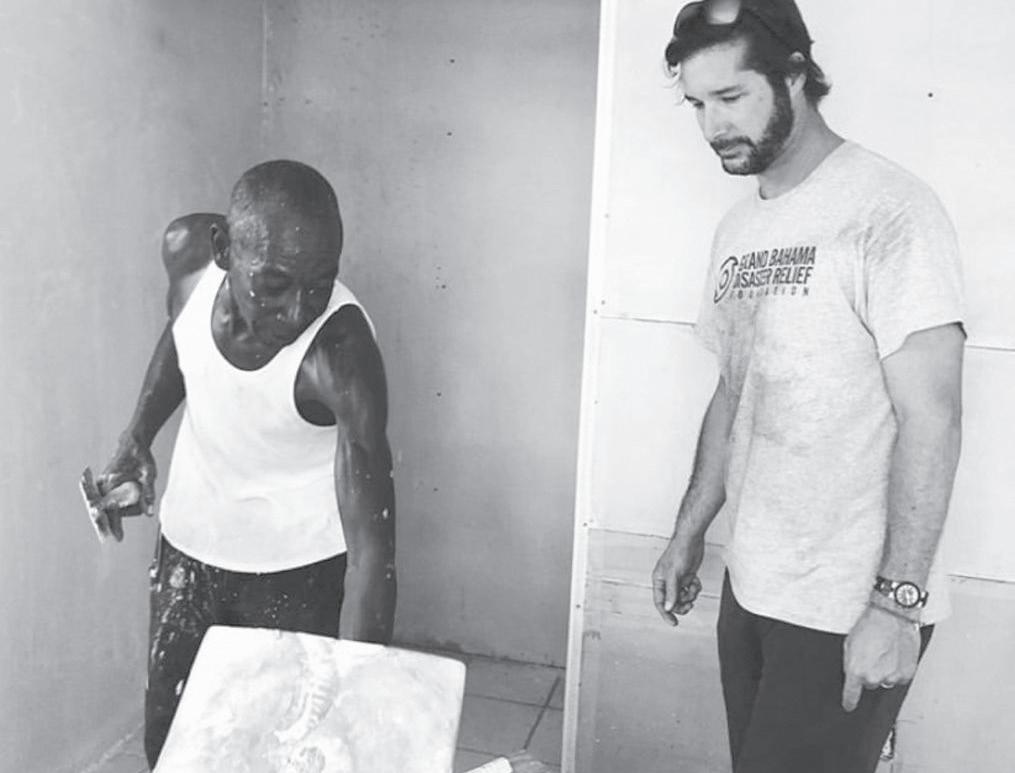
RUPERT Hayward (right) taking part in rebuilding efforts in Grand Bahama following Hurricane Dorian.
BY DENISE MAYCOCK
Tribune Freeport Reporter dmaycock@tribunemedia.net
AS THE Bahamas celebrates its 50th anniversary of Independence, there is no denying that the island of Grand Bahama has significantly contributed to the nation’s growth and development.
Although challenged over the years following a series of natural disasters since 2004, Grand Bahama continues to be an important “economic pillar”.
The island contributes between 12 and 14 percent to the Bahamas’ GDP, more than the consolidated total of all the other Family Islands, wrote Tribune Business E ditor Neil H artnell. Grand Bahama also has the second largest population and contributed close to $200m in taxes and National Insurance Board (NIB) contributions pre-pandemic.
In 2019, the devastation caused by H urricane Dorian and the COVID pandemic in 2020 significantly impacted the island’s economy, which has been struggling to recover over the last three years.
Grand Bahamians are now on the road to recovery. The nation’s second city, once called “the Magic City”, is now known for its resilience.
H omes are being rebuilt and restored; businesses have reopened, and many new small businesses have popped up. Foreign investors are also investing again on the island. It is estimated that Freeport contributed $1.4bn to the country’s GDP, despite the blows from Dorian, and the pandemic.
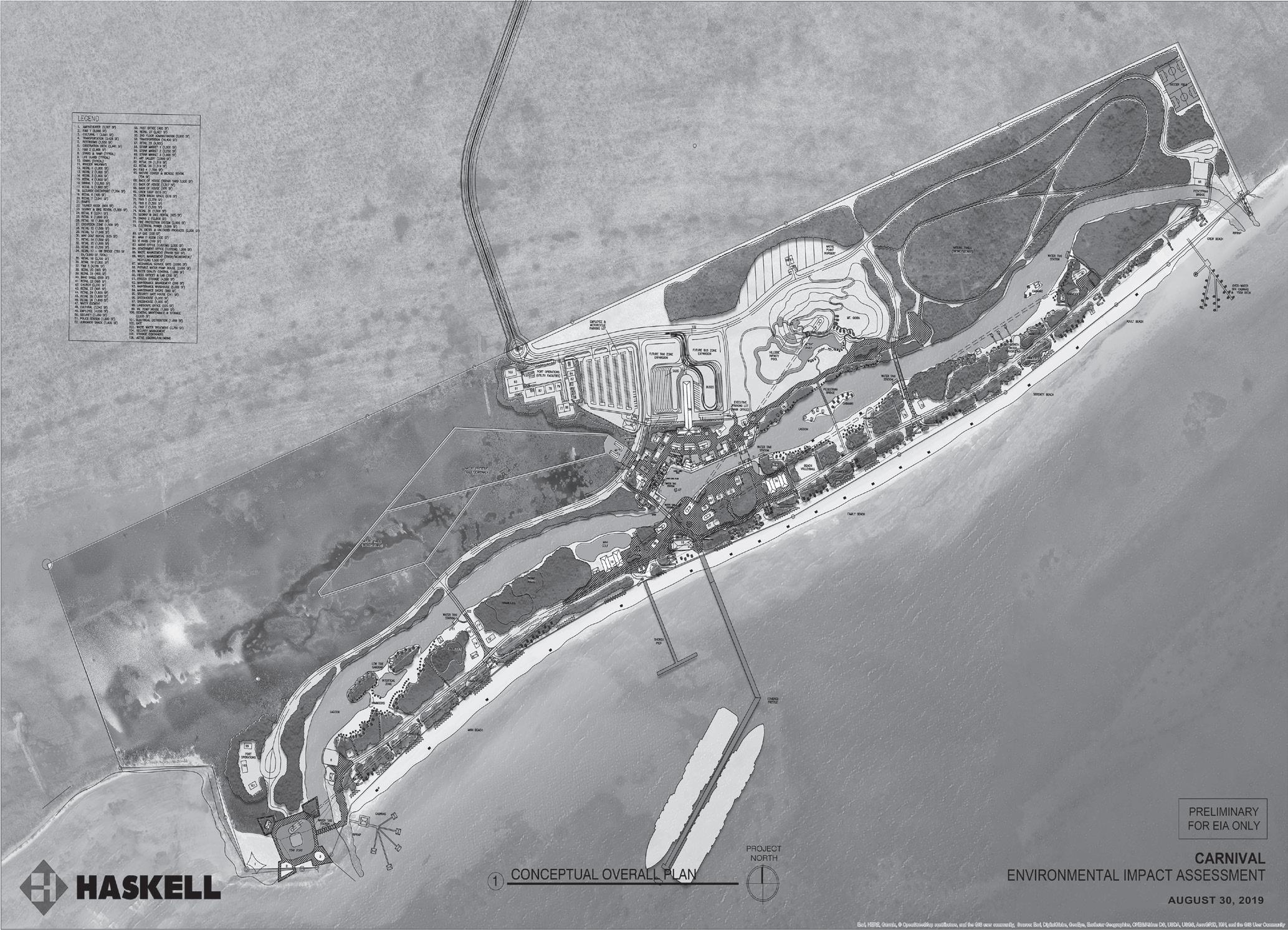
S ome of the new investments on tap include Carnival’s $200m Mega Cruise Port, $15m-Lucaya S olar Plant; a new $20m Doctors H ospital, $70m Royal Caribbean, ITM, and M S C cruise port, a $250m world-class hotel, residential and luxury resort by Weller and S ix S enses brand, and a $3m to 5m Xquisite Yachts Catamaran Centre, to name a few.
The Bahamas’ ‘Magic City’
There are also major expansions underway on the island, particularly at the Grand Bahama S hipyard to the tune of $500m. The $45m Western Atlantic University S chool of Medicine (WAU S M) has also launched phase two expansion at its Freeport campus. WAU S M’s total investment will reach between $200m and $250m when all phases of the construction are completed.
Freeport boasts of the unique distinction as the only free trade zone in the Bahamas, operated by the Grand Bahama Port Authority under the H awksbill Creek Agreement, which was signed on August 4, 1955.
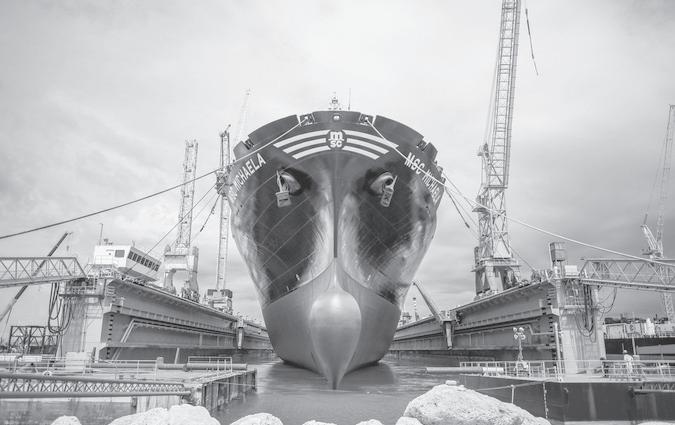
Almost two decades before the Bahamas gained its Independence on July 10, 1973, the agreement was the catalyst that initially spurred economic development and transformed Grand Bahama into ‘the industrial capital of the Bahamas.’
The creation of Freeport’s deepwater harbour - now the largest in the Western H emisphere - has attracted multimillion dollar maritime investments to the island, namely the Freeport Container Port and the Grand Bahama S hipyard.
These mega investments have put Grand Bahama, and indeed The Bahamas, on the map as a premier destination for maritime, transshipment, and ship care/repair in the region.
The Grand Bahama Port Authority (GBPA) has also promoted the island as a major tourist and second-home residential destination. The quasi-governmental entity has been a partner, advocate, and investor in Freeport for almost 70 years, and also supports education, healthcare, and infrastructure.
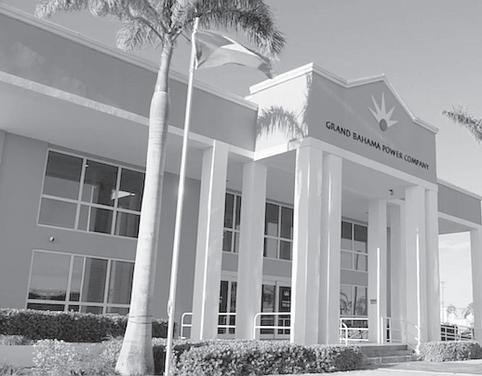
On the country’s 50th anniversary, the GBPA has indicated its unwavering commitment to working hand in hand with residents, government, and partners for the betterment of Grand Bahamians.
PAGE 40, Friday, July 7, 2023 THE TRIBUNE
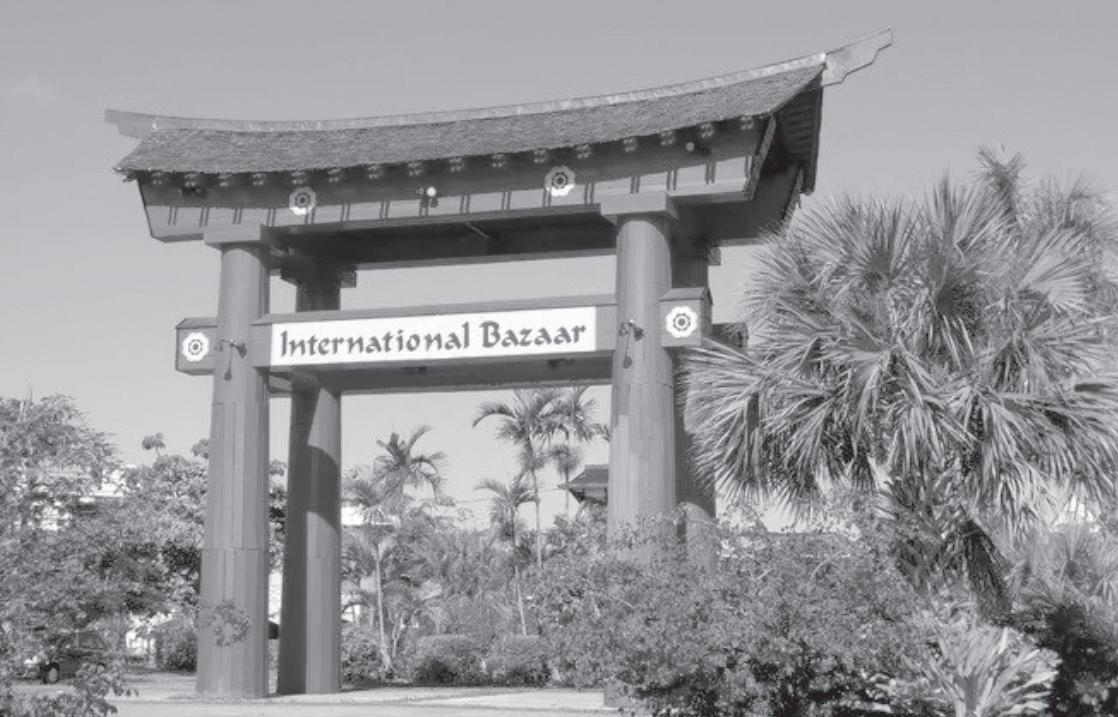
LONGTIME residents and visitors alike will always remember the iconic entrance to the International Bazaar in Freeport, Grand Bahama. Sadly, as the the Bazaar feel into disrepair and several fires razed portions of the former hotspot, this iconic monument has been dismantled.
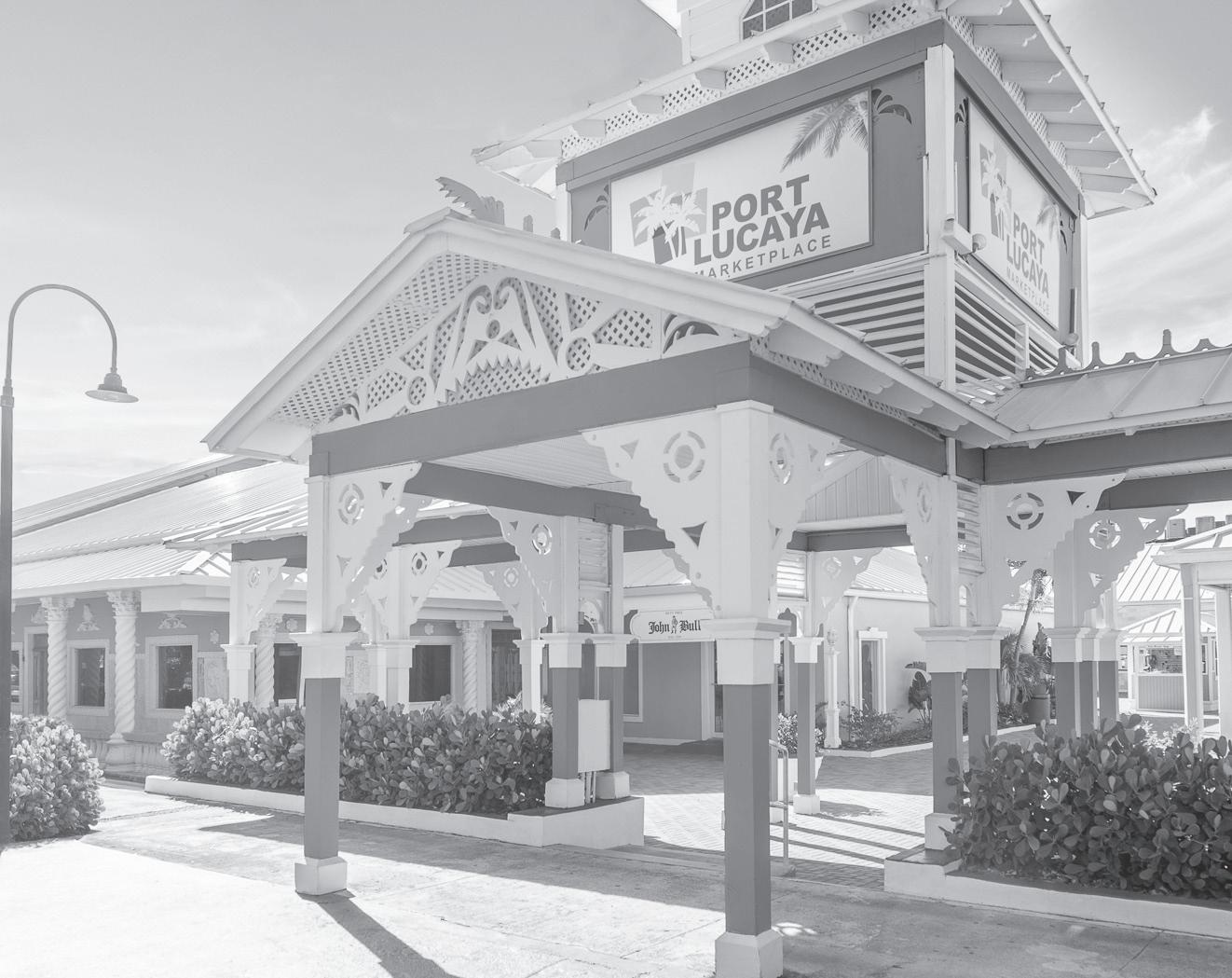
PORT Lucaya is considered the tourist hotspot and is home to numerous shops and restaurants.
FREEPORT boasts of the unique distinction as the only free trade zone in the Bahamas, operated by the Grand Bahama Port Authority (GBPA) under the Hawksbill Creek Agreement, which was signed on August 4, 1955. Almost two decades before the Bahamas gained its Independence on July 10, 1973, the agreement was the catalyst that initially spurred economic development and transformed Grand Bahama into ‘the industrial capital of the Bahamas.’
Sports legends and icons of Grand Bahama
BY DENISE MAYCOCK Tribune Freeport Reporter dmaycock@tribunemedia.net
GRAND Bahama is also known for its sports legends and icons that have brought international recognition to The Bahamas.

Bahamian NBA star Chavano “Buddy” Hield, a native of Eight Mile Rock, West Grand Bahama, has made a name for himself in college basketball and the National Basketball Association league.
He has also embraced his role as a Tourism Ambassador for the Bahamas. The shooting guard for the Indiana Pacers was first drafted in 2016 by New Orleans Pelicans. Buddy also gives back to the country by returning to host basketball summer camps and clinics for young people.

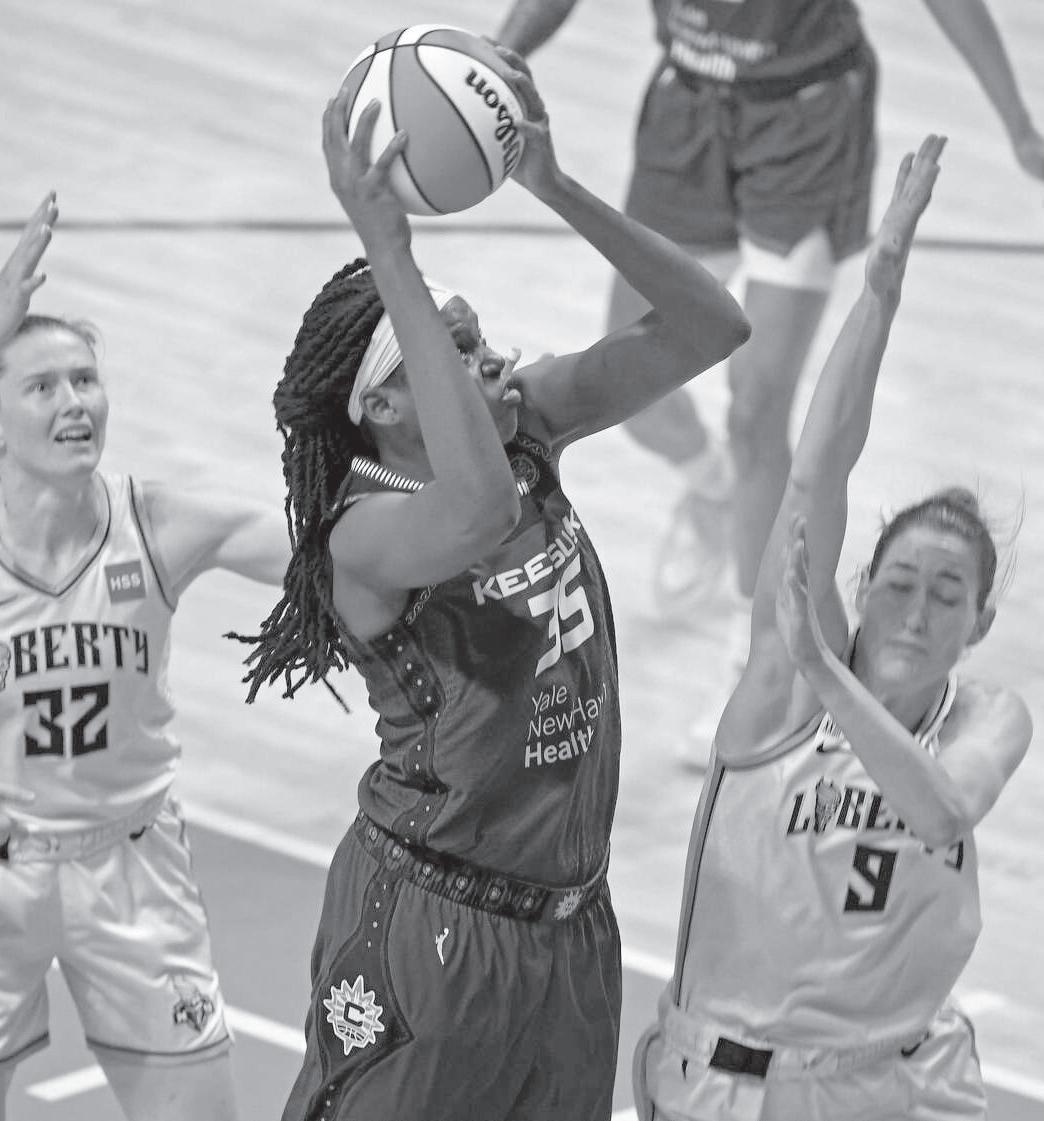
Grand Bahamian Jonquel Jones, a native of Holmes Rock, West Grand Bahama, also made her hometown proud when she was drafted into the WNBA in 2016. She now plays with the New York Liberty.
We cannot forget Bahamians Donald Thomas, high jumper, also of Eight Mile Rock; and Demetrius Pinder and Michael Mathieu, our icons of Track and Field. The Golden Knights duo made sports history winning gold in the 4x400m Bahamian Men’s relay at the 2021 London Olympic Games. A monument paying tribute to Pinder, Miller, along with their teammates Chris ‘Fireman’ Brown, and Ramon Miller, for their outstanding achievement was constructed at the Coral Road and Settler’s Way roundabout. Bahamian Andre Deveaux also made his name as an NHL player
Many young athletes from Grand Bahama are doing great things in track and field, such as hurdler D evynne Charlton, Tynia Gaither in the women’s 100m; Terrence Jones in the men’s 100m, D onald Thomas, and
A lonzo R ussell in the men’s 400m. Other Grand Bahamian ath letes who have made their mark in other sports genres are A D eveaux, an player; Joanna Evans, an Olym pic swimmer; player Magnum R olle; Michael Stra chan, a Bahamian N FL player with the Indianapolis Colts; and Bahamian Major Baseball League player A dari Grant, of the St Louis Cardi nals to name a few.
Another Gladstone ‘Moon’ McPhee, affection ately known as Coach, who has contributed to the development of Bahamian athletes for decades, particularly in the sport of basketball. He has helped countless young basketball players obtain college scholar ships. His daughter, Yolett McPhee-McCuin, was also trained by her father. She was a phenomenal col lege basketball player who followed in her father’s footsteps. McPhee-McCuin is the head coach of the Ole Miss Rebels wom en’s basketball team at the University of Mississippi. Under her tutelage, the Rebels have signifi cantly improved in the college basket ball ranking over the years, and in 2022- 20223 made their second straight NCAA tournament, and the Sweet 16 round for the first time since 1990.
Bahamian Track Coach Henry Rolle at Auburn University in Ala bama, has also touched the lives of many Bahamian athletes who are excelling in track and field.
BAHAMIAN basketball star Chavano “Buddy” Hield (left), a native of Eight Mile Rock, West Grand Bahama, has made a name for himself in college basketball and the National Basketball Association league where he is known as one of the leagues best three-point shooters.
MEANWHILE, Jonquel Jones (below) from Holmes Rock, West Grand Bahama was drafted in the WNBA where she is the reigning MVP and a ranks in the top tier of the league.
There’s a brigh T f u T ur e ahead for g ra nd b ah ama
BY DENISE MAYCOCK Tribune Freeport Reporter dmaycock@tribunemedia.net
THE FUTURE for Grand Bahama is indeed promising, with lots of potential opportunities in the maritime, agriculture, tourism, and business sectors.
It has been proposed that the container port, shipyard, and harbor could set the stage for Grand Bahama to be the “Maritime Center for the Americas”.
Grand Bahama is expected to play a major role in the Blue Economy, and in building climate change resilience in The Bahamas.
Coral Vita, the first landbased commercial coral farm in Grand Bahama, is helping to restore the world’s dying coral reefs. Launched in 2018, the facility grows coral in tanks 50 times faster than in the natural environment. The corals are also created to be resistant to climate change.
In 2021, Coral Vita won the Earthshot Prize Revive Our Oceans category.
Mangrove restoration underway in Grand Bahama will also help to significantly increase the inventory of ocean-based carbon sink assets in the Bahamas.
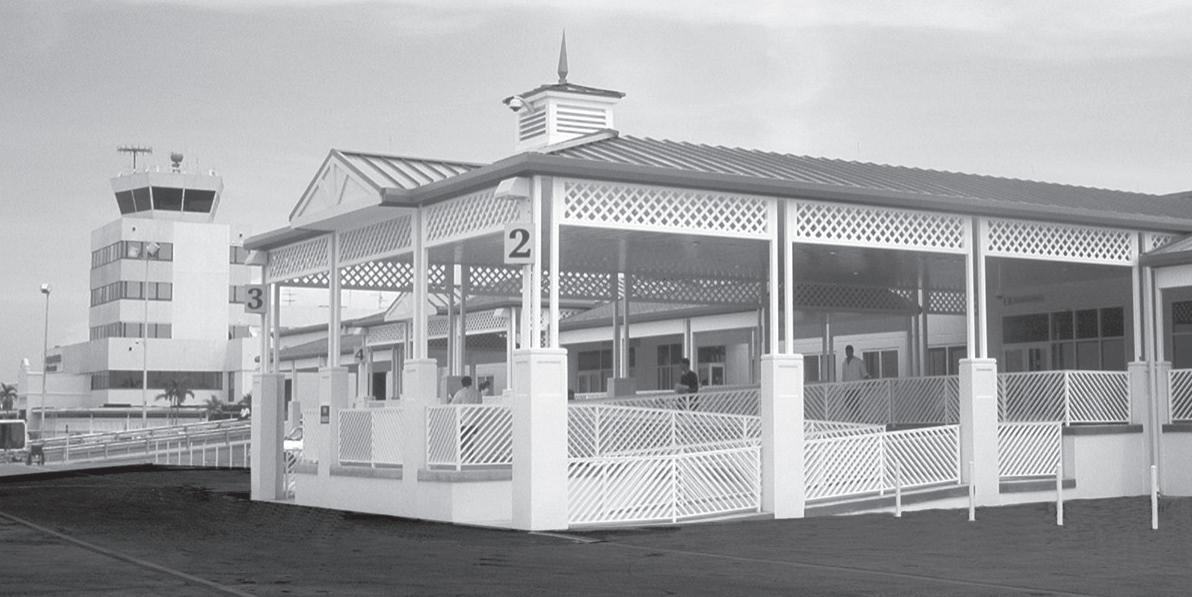
Plans have been announced for a $430m Agri-haven development in East Lucaya, and for the development of a new $200m Grand Bahama International Airport, which is expected to transform the facility into an international “air cargo hub” for the Caribbean and Latin America.
The sale of the Grand Lucayan Resort will also significantly impact the tourism industry as it would provide many jobs,
and increased business for local businesses in the Port Lucaya Marketplace, straw vendors, taxi drivers, and tour operators. Grand Bahama will also get a new $200m Medical Health Campus that will include an oncology center to allow for chemotherapy treatments in Grand Bahama.
In the business sector, Grand Bahamians are also taking huge leaps of faith in business.
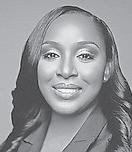
Among them is Glennett Fowler, who is considered one of Grand Bahama’s bright stars and new “visionary leaders”.
Ms Fowler, president and CEO of Fowlco Limited, a leading marine and logistics management company, has made the bold step into the concrete business with the groundbreaking and launch of the new $6.2m Heroic Concrete and Concrete Products. The new manufacturing plant will provide sustainable environmentfriendly products in the construction industry. Grand Bahama will always be an important contributor to the national development of The Bahamas. Happy 50th Independence.
THE TRIBUNE Friday, July 7, 2023, PAGE 41
ANDRE Deveaux (below) from Freeport, Grand Bahama also made his name as an NHL player playing for the Toronto Maple Leafs and New York Rangers.
SOME of the new investments on tap include Carnival’s $200m Mega Cruise Port (pictured here), $15m-Lucaya Solar Plant; a new $20m Doctors Hospital, $70m Royal Caribbean, ITM, and MSC cruise port, a $250m world-class hotel, residential and luxury resort by Weller and Six Senses brand, and a $3m to 5m Xquisite Yachts Catamaran Centre, to name a few.
GLENNETT FOWLER, CEO of Heroic Concrete and Concrete Products
AN INVE S TMENT of $200m to repair and develop the Grand Bahama International Airport is expected to transform the facility into an international “air cargo hub” for the Caribbean and Latin America.
We are 50 and we are blessed
Write from the heart, the editor told me when I asked if there were a specific topic he wanted me to cover for Independence. Just write from the heart. So I will, because it was the heart that drew me to The Bahamas in the first place and in the four plus decades since I arrived there have been times The Bahamas has nearly broken that heart and times I am so proud I think the heart will burst all on its own.
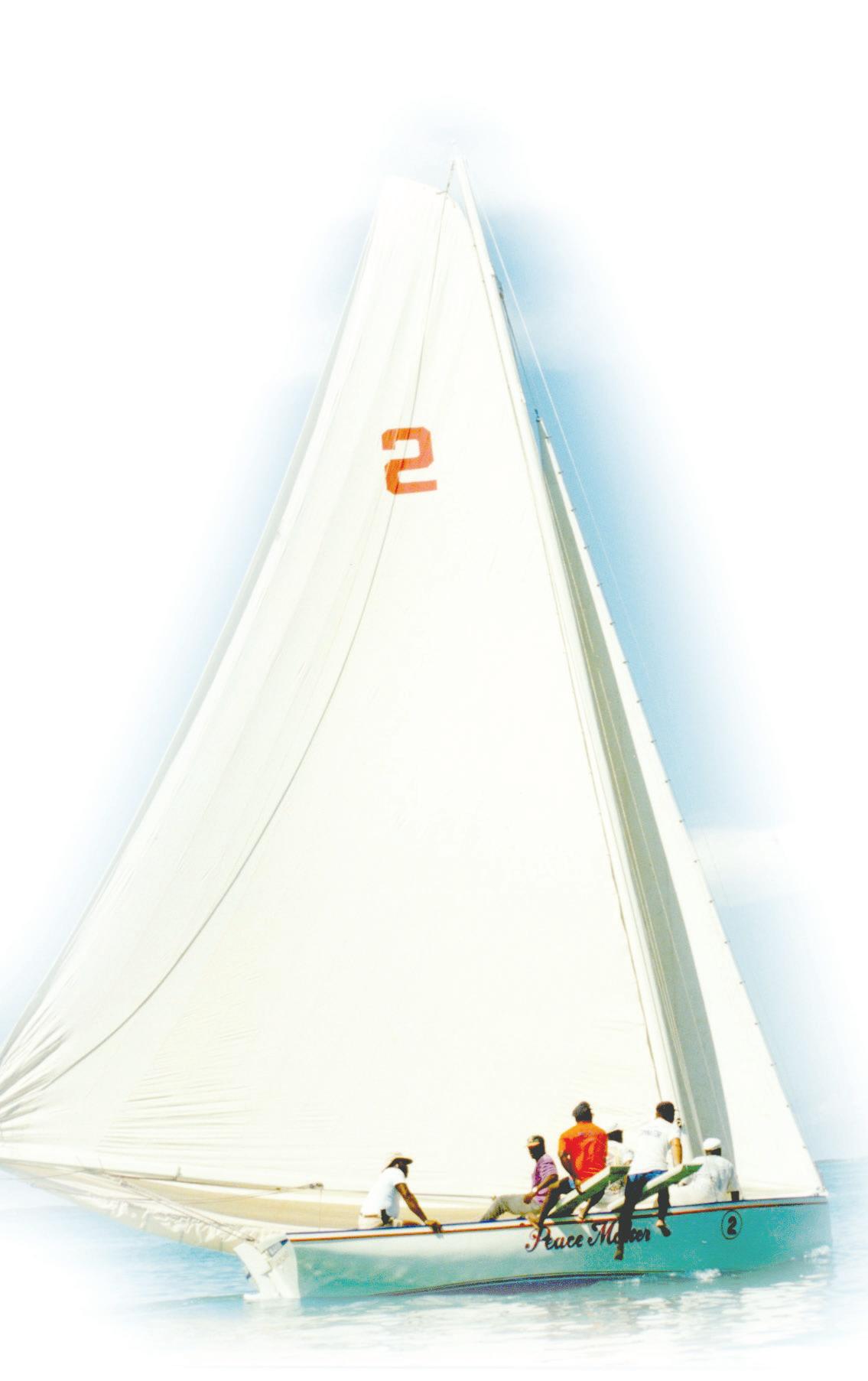
In the beginning, The Bahamas I discovered was as a journalist, amateur photographer and sailor. If I had dreamed of a perfect life, I could not have made it better. After years of covering heinous crimes, tedious city council meetings, and later, celebrity foolishness at the National Enquirer and aliens at Weekly World News, while raising a daughter as a single mom, I discovered a land where every sunrise and sunset over the water was bathed in breathtaking splendor. There was romance and friendship and a world like I had never seen before where you could swim with turtles and dine with Olympians. It was into this world of wonder I sailed, literally, discovering a land so rich in colour that film could not do it justice, a people so proud it made you stand up taller just to be close.
It was the early 80s. Lynden Pindling was prime minister. I remember the first time we met, a sailing event dinner when he was in his prime - dancing, chatting, laughing, - and the last time I saw him. He had lost the election, and there he sat at a regatta, in his white pants and flowered shirt, alone, on a closed doorway stoop in Harbour Island, the father of the nation. People walked by.
The drug days had taken their toll on that national pride. I remember how the late Norman Solomon cried when Pindling died. Just the day before, he had sat at Pindling’s bedside, the two men embracing, knowing that the country they helped shape was, in some ways, slipping away.
Differences and politics melted away between men who loved this country so intensely each
By Diane Phillips
would have given his life for it.
There are only a few of the old ones left. Someone should record tales by Sir Arthur Foulkes whose mind is still razor sharp. Last week we lost Dr Gail Saunders. The list of others who built the nation on whose foundation we stand could fill this supplement. It would be easy to dwell on the past, to recall the moments that shaped us from the scurrilous claims of malfeasance in office to the shouts and screams of joy when the Golden Girls swept Olympic Gold and it felt like the whole country leapt to its feet at the same time. We’ve had internationally-acclaimed athletes, sailors, scientists, entrepreneurs, artists and musicians, dancers, actors, playwrights, authors and performers. We’ve celebrated photographers like Roland Rose and Antoine whose bodies of work would match the best the world has to offer. For 50 years, The Bahamas has shown the world outsized talent that almost seems too great for a small nation to have produced. What has changed over the years for the
better is opportunities. There are more Bahamians in professional positions, mid- and upperlevel management than ever before. What have we made not of our nation but of ourselves in the last 50 years? We are richer, we are
poorer, we know more about wellness and have never been in such poor health, we have geniuses and superstars and a serious brain drain among the successful and an education system that is failing too many. We have faster speeds of communication than ever before and less sense of community than our ancestors did. We are both happier and sadder, less likely to ask to borrow a cup of flour from a neighbour and more likely to shut and lock our door to keep others out.
There is greater distance than ever before between the haves and have-nots and more gates in more communities to keep the latter from getting in where the former live. The disparity is partly the fault of an education system that has failed the people for nearly five decades when every Education minister has kicked the can down the road and none has had the courage to say our system is failing our people and a D grade is not good enough. If we have to bring in teachers who understand that mediocre doesn’t cut it, bring them in. We have the wherewithal to create specialised vocational and academic schools and centres of excellence. We have the means to boost support for teachers and staff who are giving their all in government schools, buying supplies out of their own pockets, grading papers at midnight because days are devoted to keeping discipline in class. Soon we will have new resources from carbon offset credits to create a better way of educating those into whose hands the country will fall in the next 50 years. If we fail to change the education system and make innovation and problemsolving instead of recitation the goal, we will have a very sad 100-year anniversary of Independence.
Fifty years and we have
become a more sophisticated population. We speak up, demanding things we never dreamed of asking 40 years ago – transparency, accountability, information. We are moving in the right direction, perhaps not as fast as some would like, but governments tend to lead from behind so as long as the push continues, we will get the government we demand.
But our call for gender equality in all its forms is still lagging and yet we consider ourselves First World. The fact that we are even debating marital rape and talking about violence against women and children while cases of rape and incest increase is abhorrent. Surely, we can do better.
We face a frightening uncertainty as the future of this nation will be decided by forces beyond our control, none more potent than climate change. How we build, especially in lowlying areas and in low elevation Family Islands, must become a priority. How we feed ourselves is another. There is good news as non-profits work to increase backyard, community and commercial farming with thousands of backyard farms planted in the past year.
There are a few easy wins at our fingertips –naming the waters the Lucayan Sea, for instance, instilling pride with an identity that separates us from the Caribbean Sea and from the vast Atlantic Ocean where the little Bahamas is lost in thousands of miles of water.
Write from the heart, the editor said, so as I close, I share these thoughts. We are blessed to live in The Bahamas where despite the ranting of a few, we feel like we are all one family united by a love of this country, of the warmth of the people, of the soul and spirit and goodness within, of the waters that give us life and the sun and sky and sounds that make us joyous every day. We are joined in love and in friendship, regardless of colour, and in our loyalty to this, our land. We are 50 and we are blessed.
PAGE 42, Friday, July 7, 2023 THE TRIBUNE
‘We are moving in the right direction, perhaps not as fast as some would like, but governments tend to lead from behind so as long as the push continues, we will get the government we demand.’
THE TRIBUNE Friday, July 7, 2023, PAGE 43

PAGE 44, Friday, July 7, 2023 THE TRIBUNE
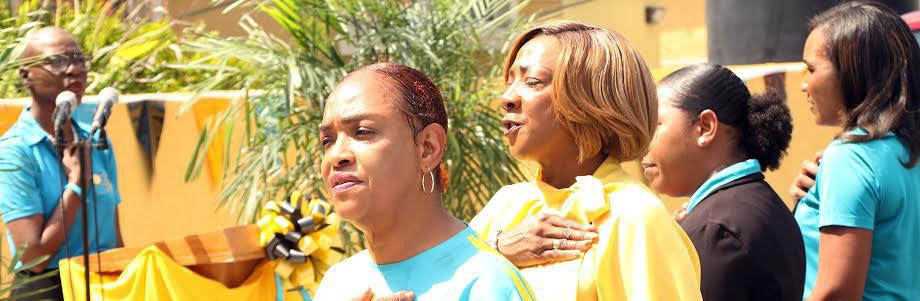
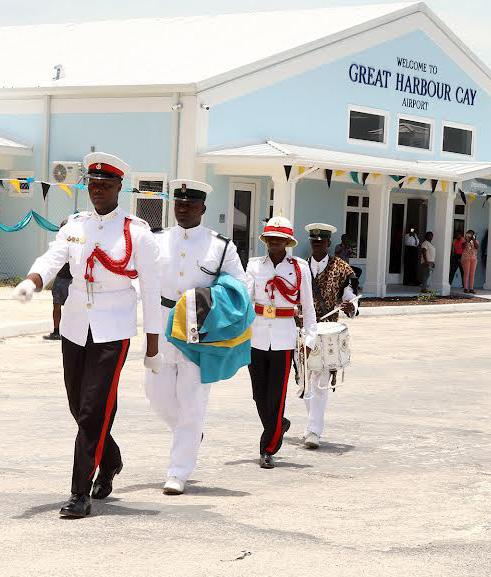
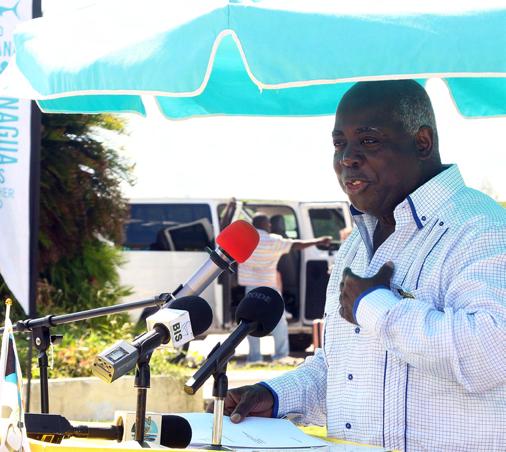
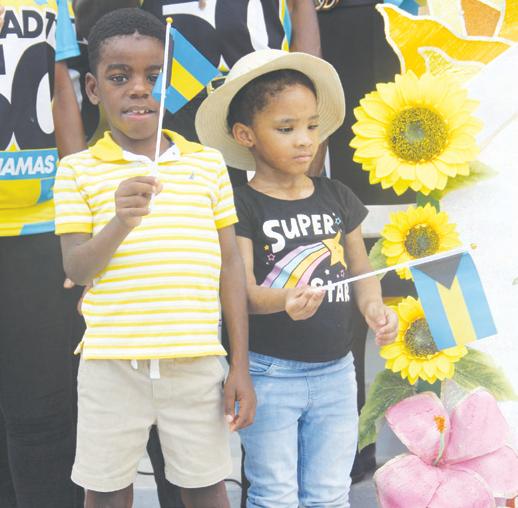
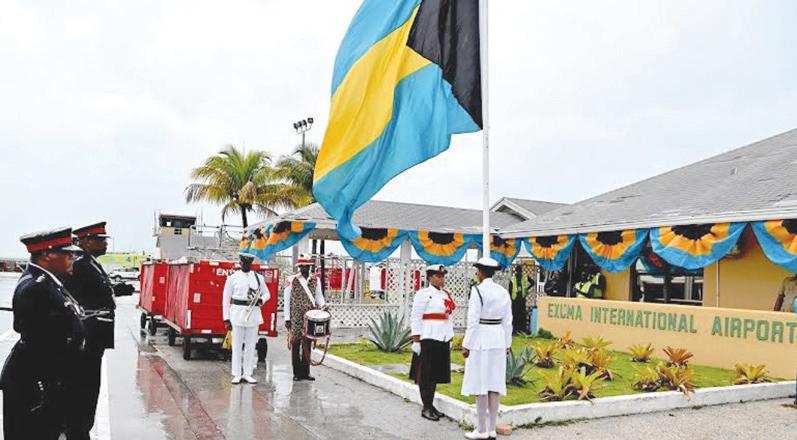
Golden Jubilee Flag Relay creating a stir across our Bahamas
ANDROS SAN SALVADOR
THE TRIBUNE Friday, July 7, 2023, PAGE 45
THE Golden Jubilee Flag Relay is making its trek across our islands.
EXUMA
BERRY ISLANDS BIMINI
I grew up in an independent Bahamas - but how independent are we?
 By LYNAIRE MUNNINGS Tribune Staff Reporter lmunnings@tribunemedia.net
THE pleasures associated with being a Bahamian are far too many to name, but there is still room to question.
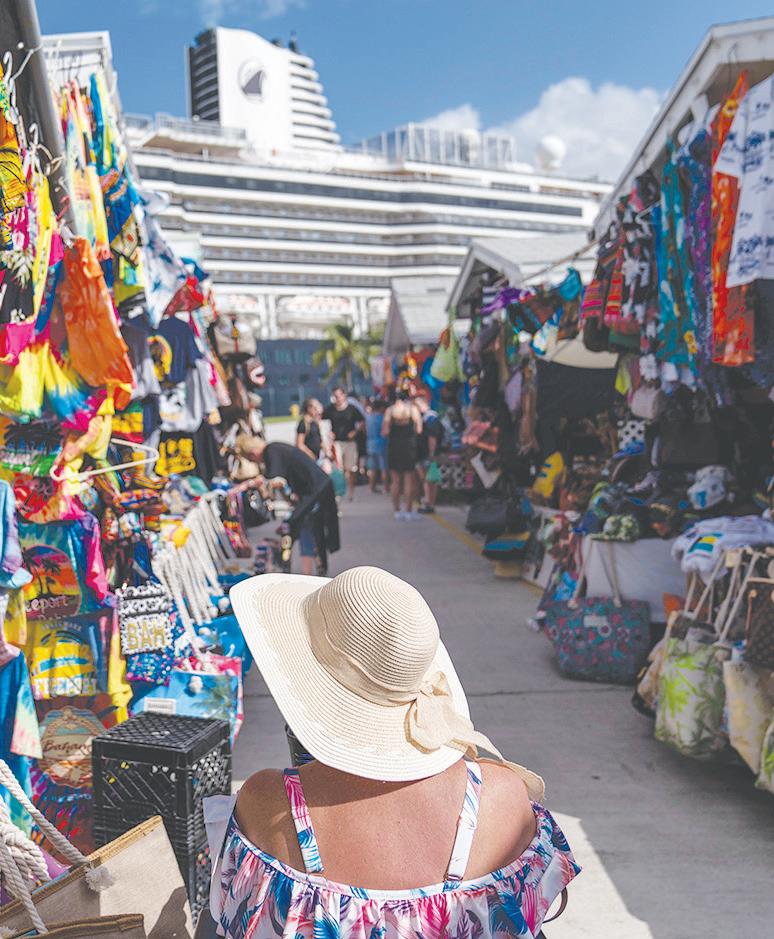
Celebrating this significant milestone of being an independent sovereign nation for 50 years, I want to trickle down the memories associated with living in the Bahamas for the past 23 years.
Having been born in the 2000s, life as I know it now compared to then is far different. The economic, technological, and cultural growth over the years is substantial while also noting that some things have not changed.
The Bahamas is widely known for its sun, sand and sea, contributing to the idea of paradise.
As a child, life is carefree, adventurous and filled with “paradise”.
Growing up as a child in a country known for its natural features, you are bound to resonate with it and become one. Playing in the streets barefoot in excruciating heat, to climbing walls
and mango trees during the summer months were all paradise to me.
As a youth, life was simple and living in a beautiful country filled with everything in my reach at this point and time seemed enough for me. It made life feel like a movie, a whirlwind of new adventures.
Adolescence allowed me to become a bit more socially and politically awoken. I now understood death, crime, and politics enough to express views or reiterate the opinions of my elders.
In my teenage years, I would now be able to develop a better understanding of my country. Now understand the different variants of the country in some respects, but not entirely. However, it was not until now as a young adult that I am able to decipher that paradise might not really be paradise.
Imagine living in a country where one is doing the catering rather than being catered to. This does not take away from the pride and joy of being a Bahamian but rather makes you question and realign your views.
As a young adult attempting to conquer the world one day at a time in a country where the cost of living exceeds your salary it makes you question the
reality of things. How independent are we?
Is paradise really paradise? Or is the idea of paradise primarily associated with the need to cater
in attempts to barely make ends meet?
The older you get in some sense it seems merely impossible to enjoy paradise. Now that we are celebrating the country’s independence, we should take the time to evaluate what it means to be entirely independent.
Many Bahamians are suffering and the cycle seems to repeat itself through successive governments. The country ought to be further along culturally, economically and socially.
Life in The Bahamas is reduced to so much less as some people’s paradise is the plantation for many residents. This harsh reality has crippled so many Bahamians and will continue to do so until a change comes.
I know I am not the first to be of this view and I most definitely will not be the last as this is only the beginning; more persons will continue to vocalise in hopes of seeing better for the generations to come.
It is my hope that in the next few years, we will see a substantial difference in our country’s delivery and social challenges. Sell the product of sun, sand and
sea while Bahamians are able to excel.
Life as a Bahamian is bittersweet as the sun, sand, and sea cannot pay the bills. I aspire to experience the paradise which is frequently advertised. Paradise brings heartache for its citizens but we celebrate nonetheless.
Regardless of my views, it does not take away from the loyalty I have for my country.
However, it must be noted that Bahamians aspire for better. It must be noted that the country has made significant strides but we need more, we demand more.
We must also applaud the people who have been progressive in wanting better for the country a this serves as a step forward into our Jubilee year.
I stand tall in supporting The Bahamas’ 50th anniversary, but when we celebrate, we deserve to celebrate so much more. Celebrate the highs, lows, and the people who make this nation great. Being a Bahamian brings me pride because we are like no other, but once again there is still room to question.
PAGE 46, Friday, July 7, 2023 THE TRIBUNE
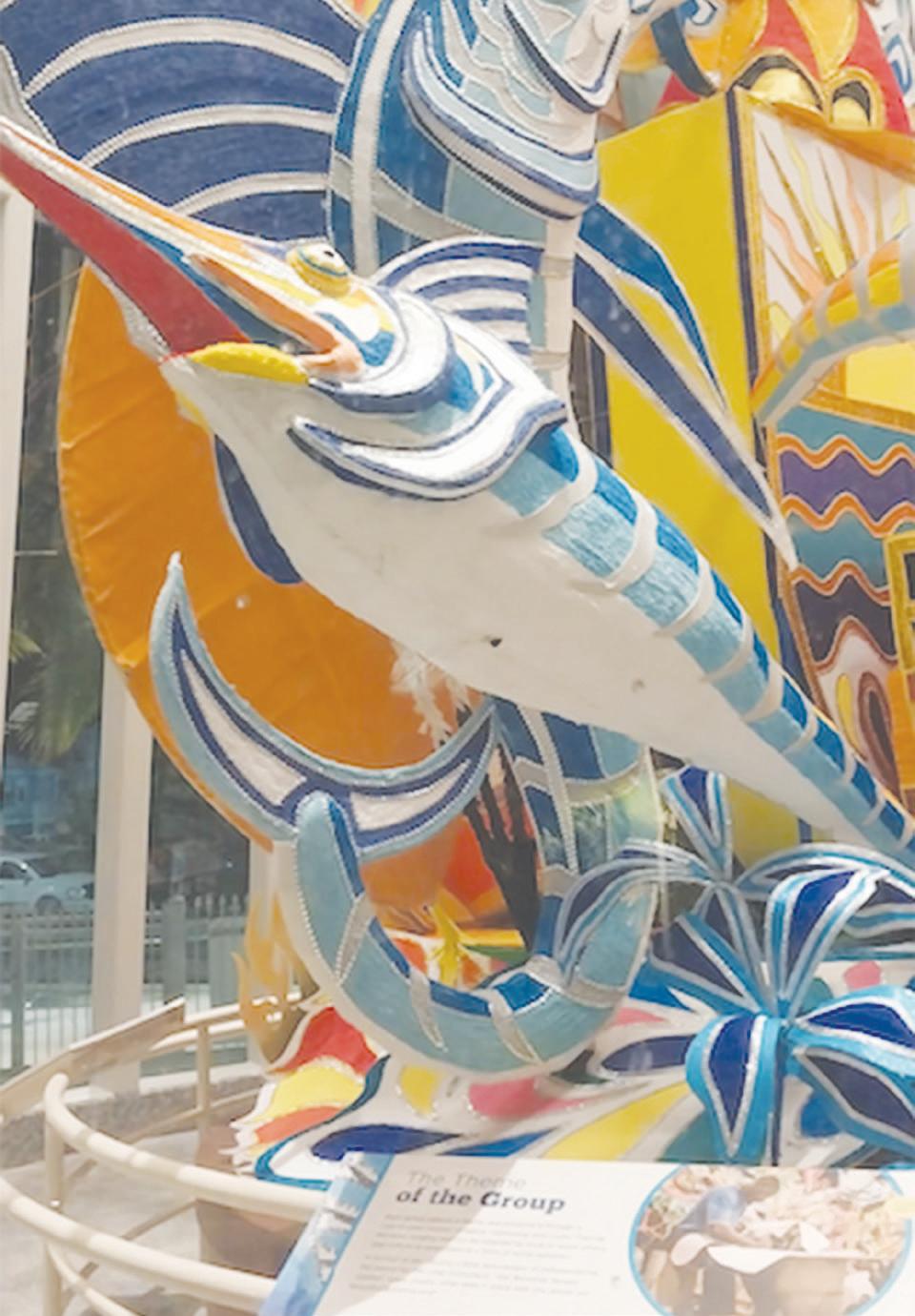
PROUD TO BE BAHAMIAN: Look at our Junkanoo Museum.
TOURISTS love The Bahamas for its sun, sand and sea.
Tribune Editor who has dared to walk alone
By SIR ETIENNE DUPUCH OBE, KCSG, Litt D, LLD
As reprinted from the first Independence supplement in 1973.
DURING a visit to me in Coral Gables a couple of months ago my son-in-law, Roger Carron, managing Editor of The Tribune, told me that they were bringing out a Special Independence Issue of The Tribune He brought with him a list of articles he wanted me to write for the Special.
I told him I understood that he would have to publish a special edition on such an historic occasion but I was sorry I could not write anything for it.
Although I disagreed with the PLP and hated everything the party stood for they had set themselves an objective… they had achieved their objective … I could say nothing good about it but it was nonetheless a great achievement for them and so I would make no criticism of them on THEIR DAY.
He insisted that I had to do something for this. He argued that it wouldn’t seem right for me not to be a part of it.
“All right,” I said. “I will write the editorial for this issue. It will be the shortest I have ever done and I want it set off in the centre of the double-column under the Editorial masthead. This is what I will write.
“Today you are free under the Union Jack and all for which it stands.
“Tomorrow you will be independent under a new national emblem and all for which it stands.
“May God continue to help you and to guide your footsteps into an uncertain future.”
“All right,” he agreed. “But I do feel you should do something very special on this occasion.”
“What can I do special without feeling it way down inside me?”
This convinced him because he knows that I cannot write anything I do not feel deeply within myself. Nor would he want me to try because both he and my daughter take pride in the knowledge that I have never written a single line that I did not believe to be true and fair at the time it was written.
• • •
Now I sit down to write this brief article I feel an urge to do more. Plenty more. This feeling has been aroused by events of recent weeks in the Bahamas and especially in London. Today I am going to write about men and women who, because of deep convictions, dare to walk alone through life … right to the end. And I am going to include myself in this highly privileged group.
To the average observer this role in life may not appear easy. It is not easy but it is highly rewarding because – whatever the object you may pursue –every inch of the way you are able to preserve, bright and clean, your own selfrespect, which is the most precious of all God’s gifts to His children.
• • • It is difficult to know at what point to start because the story goes back to my father’s time.
It was he who chose the motto for The Tribune: “Being bound to swear to the dogmas of no master”. It was he who set the standards for his tiny sheet which we have consistently followed throughout its growth to full maturity … and are determined to maintain as long as our name is associated with its publication.
• • •
As Editor of The Tribune I have scored so many right decisions, both on the local and international scene, that some people call me a prophet. A Priest, a close friend of mine, often comments: “The Pope is infallible in faith and morals. You seem to be infallibale in all things. You always seem to come out right”.
This is excessive praise and I don’t deserve it but he doesn’t express this opinion lightly. He really means it.
There is nothing prophetic in any of my decisions. The explanation is simple.
Many people go wrong in life because they are like sheep being led to the slaughter. Their actions are influenced by fear and hope.
For me, life is too short not to live it fully … it is too real to be fed on hope.
In the lines of Longfellow: Life is real! Life is earnest!
And the grave is not its goal;
Dust thou art, to dust returnest, Was not spoken of the soul.
And Walter Ellery Channing wrote: “Life is a fragment, a moment between two eternities, influenced by all that has preceded, and to influence all that follows. The only way to illumine it is by extent of view”.
R F Horton wrote: “Success lies, not in achieving what you aim at, but in aiming at what you ought to achieve, and pressing forward, sure of achievement here, or if not here, hereafter.”
“Great minds have purposes,” wrote Washington Irving, “others have wishes.
Little minds are tamed and subdued by misfortunes; but great minds rise above them.”
Longfellow emphasised the fact that “life is real” and President F D Roosevelt led the American people to victory in the most deadly of all wars with the declaration: “The only thing we have to fear is fear itself”.
world war, when I declared that Britain would lose India. At the time people laughed at the thought.
I could go back through the period when Britain and France failed in their obligations to tiny Ethiopia to protect her against the rape of Mussolini’s legions.
I could retrace the period when Hitler was barnstorming across Europe and Britain and France were trying to crawl into their own little hole. I made myself unpopular with the English element in the Bahamas – and earned the label of warmonger –because I insisted war was inevitable. The war came. When it came I was ready for what it would mean for my family … like Noah was with his Ark.
I could go over the long years when I was out in the wilderness – most of the time alone – fighting for justice in human relations in the Bahamas and warning the Old Guard of the disaster that would follow if they did not stop resisting longoverdue reforms and start leading the people out of the dark valley of privilege.
I could dwell again on the two letters of admiration written to me during this period by a young Bahamian student in England … no less a person than L O Pindling himself.
• •
•
Readers of this column are already familiar with this story.
I will start this article with events on the night I was instrumental in breaking down the barriers of racist discrimination in the colony with a resolution I pressed through a stormy meeting of the House of Assembly that could have ended in
bloodshed had I not exercised restraint during this period.
And I will end the story with recent events in London that will finally take the Bahamian people down a new and uncharted fork in the road of life.
• • • In my resolution I demanded legislation to end racial discrimination in the colony.
The resolution was sent to a committee under the chairmanship of Frank Christie, one of the blindest reactionaries in the Legislature of that period.
A demonstration by the people inside and outside that night so frightened resisters to this reform that they realised that something had to be done … and quickly.
At the end of the debate –when a riot almost occurred – the House adjourned in confusion until the next night.
Mr Christie realised that there would be serious trouble in the Public Square if the committee did not report when the House met again. And so he called a meeting the following day.
The Speaker, the Hon Asa Pritchard, had given Mr Christie a majority of members of his reactionary stripe. They agreed to a resolution condemning discrimination in public places in the colony. But they refused to consider legislation.
The committee agreed to the report. There was not a single dissenting voice. I was satisfied for two reasons. First, if it didn’t work out satisfactorily I could come back for legislation; and, secondly, it is a
long established fact that custom is stronger than law. A lawyer can always find a way around a clause in an Act. But no one dares to infringe on a custom. And I was happy with the arrangement because, before I went to the meeting of the committee, I had received advertisements from the major hotels for publication in The Tribune declaring that the barreirs were down.
My movement in the House, backed by a demonstration by a long-suffering people whose anger had finally been aroused had already had the desired effect without benefit of legislative action.
The Hon Gerald Cash, who is now President of the Senate, was a member of the committee. Some time before the House met that night to receive the report, he came to my office. He told me that “the people” were not satisfied with the report. They wanted legislation. He thought that he and I should sign it.
I told him no. We had agreed on a report and I was going through with the agreement, regardless of public emotion.
I signed the main report. Mr Cash put in his minority report.
• • • When I came out of the House the first night of the battle I was surrounded by my wife and members of my family. The crowds in the Square wanted to lift me to their shoulders and carry me triumphantly down Bay Street.
I refused because I knew then that I would not meet their demands and might lose their favour.
The day after the big night a strong delegation of coloured men came to my office. They wanted me to know that they were behind me in any plan I might have to destroy Bay Street. They were surprised and disappointed when I told them that I had no intention of trying to destroy Bay Street because I had nothing to put in its place. I intended to work for a united Bahamian people, a society in which all men were born equal and enjoyed equal opportunities … a society in which men rose to the limits of their God-given capacity on their own merit and not by political pressure.
• • •
This was the second time that men had come to me with the proposition that Bay Street had to be destroyed before human justice could be established in the islands.
The first occasion was when I wrote a series of 21 editorials in which I produced evidence of serious irregularities against certain men in Government that required action by the Governor.
The Governor failed to act. It was at this point that people began to lose faith … even in Britain.
On the second occasion the delegation reminded me of their previous visit. They went away saying that I was wrong in my approach to reform through peaceful means … they were convinced that Bay Street must be destroyed.
My great friend the Rt Hon Lord Beaverbrook was visiting Nassau at the time. He lived at his house on East Hill Street which is now the East Hill Club.
SEE PAGE 48
THE TRIBUNE Friday, July 7, 2023, PAGE 47
• • • I could go back over the years, just after the first
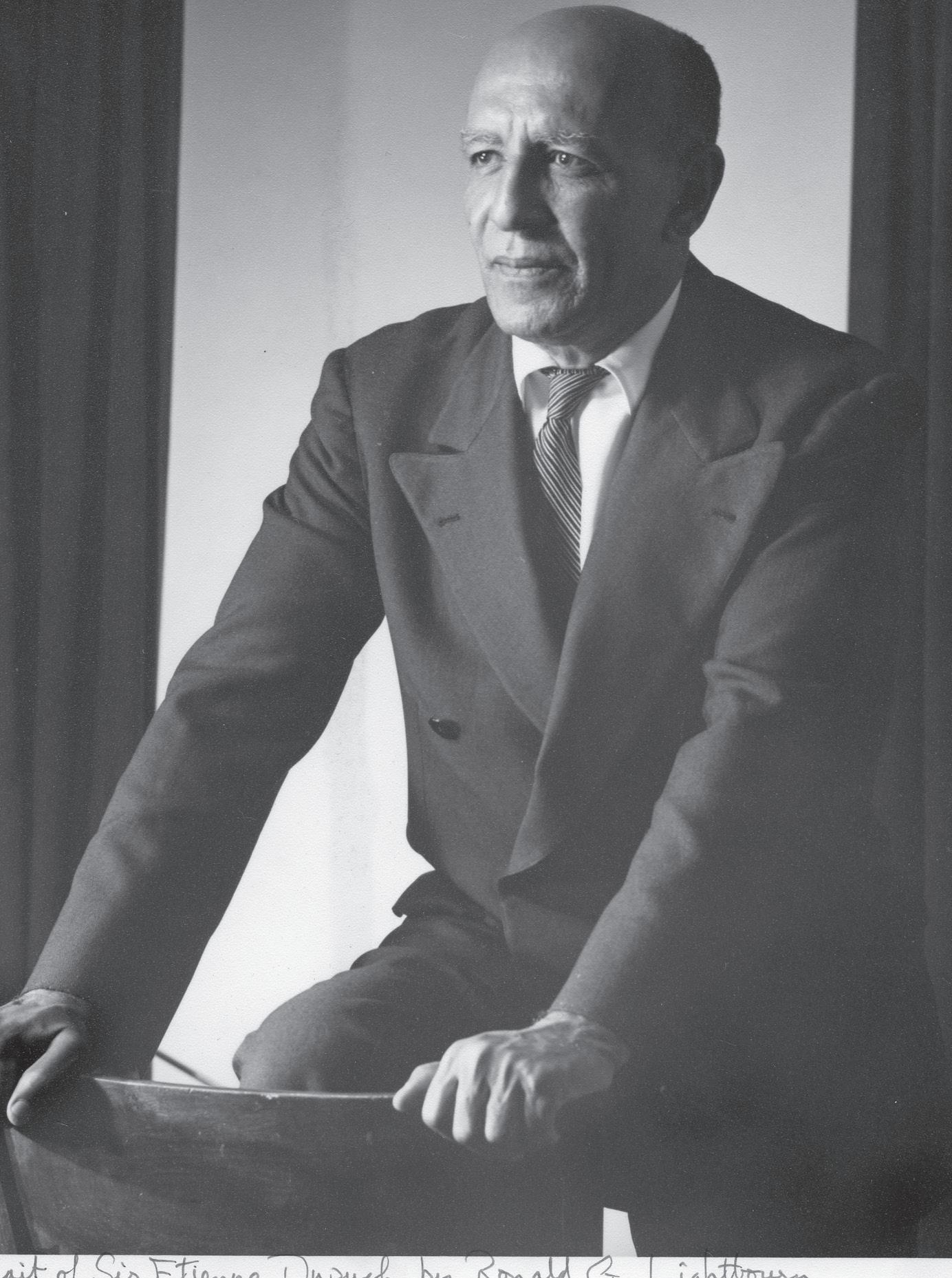
SIR ETIENNE DUPUCH, AS PHOTOGRAPHED BY RONALD G LIGHTBOURN
‘UBP work quietly to knife me in the back’
from page 47
He sent for me. He wanted to tell me that in all his experience he had never seen any major reform accomplished so smoothly.
In addition to me, Lord Beaverbrook’s friends in Nassau were Sir Harold Christie and Sir Roland Symonette, but he had a deep-rooted contempt for the “Bay Street Boys” and what they represented in the life of the colony.
“Have you heard of Etienne Dupuch?” he told me he asked the agent. He got the booking at the Royal Victoria and he came in to thank me. This was the last time this great Bahamian actor found it necessary to make contact with me.
The last time I saw Lord Beaverbrook was at his house in London. This was in 1963. He was then an invalid and I knew that I would never see him again.
“Why aren’t the
maoeuvered into this position by the UBP because immediately they laid on a racist propaganda that swung a large section of that vital area against me.
My supporters urged me to give up the campaign against this wall – at least until after the election. I refused. They said it could lose me the election. I said I would rather lose the election than fool the people of the area into believing that I was reconciled to the wall.
I lost the election by a few votes on ballots cast in that area but there were still enough coloured votes in the district to have returned me with a landslide vote, had the people any understanding or appreciation of what I had done for them.
About two years after the election the UBP politicians who had raised the racist propaganda against opening the Collins Wall, opened the wall themselves but took the credit for it!
I hated politics but I felt I should stay in because of the help I could give poor people who were often crucified behind closed doors in committees and boards. I particularly hated elections. I had hoped that some day I could do something big enough to completely win the confidence of the electorate so that I would be spared the agonies of campaigning.
When I found that the most important reform for coloured people since emancipation had failed to gain the full confidence of the people, I knew that nothing I could do – short of some violent action –would ever establish me in their affection. That night I decided to withdraw completely from active politics.
a delegation to London to fight the UBP demand.
Governor Sir Raynor Arthur, a fair and courageous man, went to England and supported the PLP protest.
The PLP delegation was a success. On their return to Nassau Cyril Stevenson, Secretary General of the PLP and one of its founders, wrote an article in his Herald newspaper lauding me to the skies and saying that the articles I had written to help them had a great effect at the Colonial Office. They were all surprised at the weight The Tribune carried in London.
And then Mr Pindling called a meeting to report to the people on the success of the delegation. Instead of thanking Sir Raynor Arthur for his help, he condemned him.
Already it was becoming apparent that the Englishman in the colony was to be used as a political football to create national and racial hatred among the people.
It was then that I decided that I could not be identified with the PLP. I could not support a movement that would cut down a friend to serve a political end. I said so in The Tribune.
This put me right out in the middle, with the PLP on one side and the UBP on the other
Although they were now facing formidable opposition from the PLP for the first time, the UBP still regarded me as their Public Enemy No 1.
And then in 1958 the taxi drivers struck a blow. The Government was tolerating a situation with the hotels that was unfair to the taxi drivers.
and me that, without our help, the Government would have collapsed.
Through a friend of mine in England I had warned the Colonial Office in London that if the British Government didn’t do something to force reforms in the colony all hell was going to break loose in Nassau. This was several months before the strike.
At the time Britain was concerned with problems in one of her African colonies and brushed the warning aside. My friend wrote back to say that the Colonial Office was not concerned about the Bahamas. “Only tourists happen in the Bahamas” was the Colonial Office’s appraisal of the islands at the time.
When the strike made international newspaper headlines the Secretary of State woke up. Lennox Boyd decided to fly to the Bahamas to see the situation for himself.
I was given advance information of his plan by my friend in London. As soon as Mr Boyd landed at the airport – even before he came to town – he sent me a message to say that he wanted to see me.
I worked closely with him during his stay in the island. He squeezed out of the UBP all the reforms for which I had presented petitions to the House from the BDL.
I had not been active in the demand for votes for women. I supported it but was not involved. Mrs Rufus Ingraham was leading this movement.
appointment, he was put in cold storage by the Colonial Office on his return to England. The Colonial Office has never once consulted him on the situation in the Bahamas.
He could have given the Colonial Office valuable information about the Bahamas at the time.
Lord Ranfurly, who followed Sir Robert Neville, tried to introduce reforms in Labour Legislation. His efforts were rejected by the House. I have written so much about the Neville and Ranfurly period in my editorials in The Tribune that my readers are familiar with the story.
Now let us get back to the mainstream of the story.
During the near general strike sparked by the Taxi Union protest, the UBP realised that the age of privilege was dead. They realised – too late alas –that, if life in the colony was not to swing to the other extreme, they must make an effort to provide more enlightened leadership for the people. They realised too that, while I had fought them for reforms I had no desire to destroy the structure. I wanted reform within the structure. At that time they came to me, admitted that they had been wrong, apologised for the persecution both my father and I had suffered under their system, and asked me to hellp them to save the colony from what was clearly an extremist element.
“Now you must destroy the Bay Street Boys and take control,” he told me. He took it for granted that this is what I intended to do.
He was surprised when I told him what I hoped to do.
“If you don’t take control now somebody else will,” he said, “and it will probably be badly done.”
“That’s the way it will have to be, I suppose,” I told him, “because to destroy Bay Street I would have to create vicious racial forces that would probably get out of hand. In any event,” I told him, “I am not a politician by nature. I don’t want power.”
He was disappointed.
In the days following the success of my resolution taxi drivers brought coloured American tourists to my office. They said all they wanted to do was “touch the man” and to go back home and say they had “seen the man”.
They were surprised –and unbelieving – when I told them not to give me too much adulation because I felt that the people would turn their backs on me.
I felt this way because, after I refused to sign Mr Cash’s minority report, a rumour was started among the people that “Dupuch has started a fire, now he wants to put it out”.
One of the first people to call on me after the resolution had passed the House was the great Bahamian actor Sidney Poitier. He told me that he went into a tourist agency in New York and asked for a booking at the Royal Victoria Hotel. He was turned down.

The newspapers of the world had carried stories on the change in social trends in Nassau and so the booking agencies were informed of the situation.
Dupuches, and not the Symonettes running the Bahamas?” was the last question he asked me, sadly shaking his head, before he parted.
Although R T Symonette was his friend, it was clear that he felt that until the image of what “the Bay Street Boys” had represented in the life of the islands was completely removed, there could be no peace in the Bahamas.
He was more than ever convinced that what he had advised me to do in 1956 was right. And I was equally satisfied that, if a complete purging was necessary, someone else would have to do it.
In the meantime, several important things had happened. Some time before the “big night” in the House I had formed the Bahamas Democratic League.
For the first time in the history of the colony white and black people were working together on equal terms in a political organisation. It wasn’t a very strong group because coloured men of ability who could have made it strong were still afraid to come out in the open against the big colossus. White men of influence, who could have given it muscle, did not believe that white control was in the balance and, even though they might be in sympathy with the movement, they lacked the desire or the courage to come out in the open against their friend in the city.
I presented a number of petitions to the House on behalf of the BDL but the Speaker referred them all to a reactionary committee that never met and so they died in committee.
But there was hope after the success of my anti-discrimination resolution.
Everything seemed to be going well for me in the Eastern District, even in the white Centreville area, until one day the late Donald Davis came to my office to tell me about the Collins Wall.
I had never heard of it before. He urged me to go and see it. I went with him and took a photographer with me.
The wall was an antisocial – really anti-black – situation. I was shocked and immediately started a campaign to remedy the situation. Somehow I have always felt that I was
I resigned as chairman of the BDL. My brother Eugene was elected in my place.
He was so upset by what had happened to me that he let it die – and moved into the ranks of the UBP.
I have always felt that this was an unfortunate decision because it left no
My brother, Eugene, had been the legal adviser to the Taxi union and I had tried to help him to help them. But we got exactly nowhere. The Government of that period was always on the side of vested interests.
The day in 1958 that the International Airport opened the taxi drivers
Mr Lennox Boyd told me that the only reform he couldn’t press on the UBP was the demand by women for the right to vote.
I told him that I thought the UBP was making a mistake. At the time the women were only asking for a limited franchise. If they were not given something then, the people had now learned the power of protest, within six months they would demand – and get – the full franchise. I told him that I favoured votes for women and that the Government was blind if they though they could stop this reform by refusing the small bit the women were then asking.
On his return to England Mr Lennox Boyd wrote to thank me for my help. He added that his wife agreed with me on votes for women.
I was right. When the Legislature was convened by the Governor less than six months later, women staged a mass demonstration in the Public Square. They took possession of the Supreme Court. Their leaders sat on the Chief Justice’s bench. Soon after this demonstration the women got the works from a frightened Legislature.
At this point I should remind readers of The Tribune that I have omitted two important administrations from this review. To include them would make this article too long.
These people were interested in saving their own unwise skins. I was interested in any effort that might lead to a united Bahamian people in which merit alone was the consideration in shaping the society’s way of life.
I agreed to help them.
Although I threw all the strength of The Tribune behind them there were still some of the leaders in the UBP who had not forgiven me for breaking down discrimination and they worked quietly to knife me in the back at every opportunity. One such case was when Sir Raynor Arthur offered me a seat on the Legislative Council. I had hated the House of Assembly but I had always wanted a seat in the Legislative Council, whose members were then the Elder Statesmen of the colony. In this body I could continue to be involved without experiencing the unpleasant sides of public life.
I accepted the offer without hesitation. But a year passed before Sir Raynor sent for me again and made the appointment.
In the meantime my friend, the late Sir George Roberts, told me the reason for the delay. He said that the news of Sir Raynor’s offer to me had leaked out and a powerful member of the Executive Council not only protested but said he would take his protest as far as the Colonial Office. He must have carried out his threat. Hence the delay.
alternative for the large number of coloured people who had given me their loyal support, especially the fine community in Fox Hill. These people felt they could not support the UBP and so – many of them reluctantly – turned to the PLP which they later learned to support enthusiastically.
After the election in which I was defeated the UBP moved in to take away some of the Governor’s prerogatives. Up to that time the Governor selected and appointed Public Boards. The UBP wanted to make the selection.
The PLP had secured several seats in this election and for the first time the UBP were facing a vigorous organised opposition. The PLP opposed this move by the UBP.
After the failure of my movement I had nowhere to go. I couldn’t be identified with the UBP. My sympathies were more with the PLP and so I tried to help them. I wrote several articles to support their protest. I helped to finance
blocked all approaches to –and exits from – the airport with their vehicles. This completely closed down the airport for almost two days.
This protest by the taxis was justifiable… it was provoked by the indifference of the Government to the interests of the taxi men.
But this protest immediately spread and soon reached the proportions of a general strike that threatened to cripple the colony’s economy.
At this point both my brother and I felt we had a larger obligation. He was then chairman of the Bahamas Electricity Corporation. If the strikers succeeded in shutting down the power plant that would be the end.
For my part, I felt that it was my duty to use The Tribune to helpl the Government save the economy. A collapse at that time might have led to complete chaos.
When the strike ended Sir Raynor Arthur and Colonial Secretary Kenneth Walmsley told my brother
These are the administrations of Major General Sir Robert Neville and Lord Ranfurly. It was Sir Robert Neville who courageously attacked the Ivory Tower of racial discrimination in the Bahamas. This was the first time a Governor of the colony had dared to challenge unfairness in the islands. His activities incurred the displeasure of the UBP who made such strong representations to London that, although he was allowed to complete his three-year term of
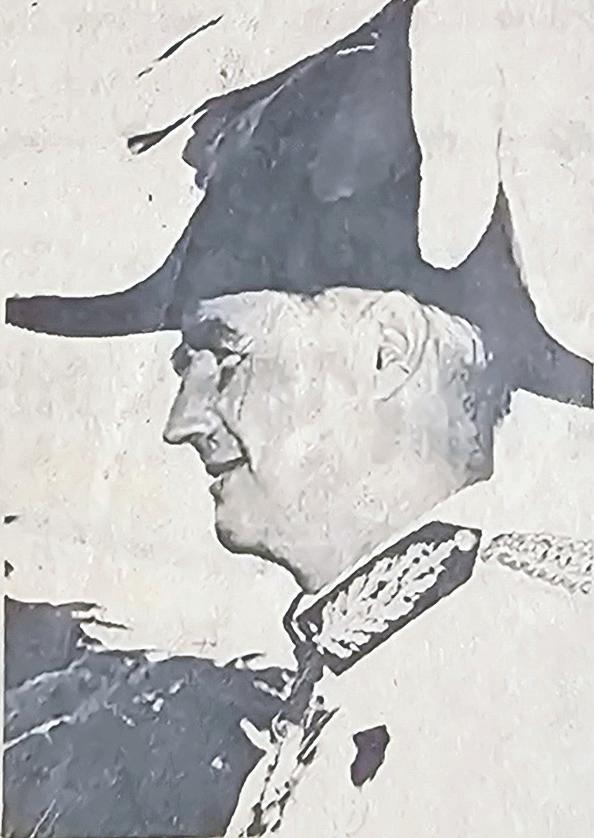
I wondered at that point whether I should break with the UBP. I decided against such an action because it would destroy all the progress that had been made towards a happily integrated society. And so I carried on, despite threats on my life by supporters of opposition parties.
The UBP kept control of the country and they themselves acknowledged that this had been made possible only because of the strong support given them by The Tribune
Everything was going well for an integrated society but the PLP – still a small unit – kept boring in.
In 1966 the late Stafford Sands involved the UBP in a major scandal over the introduction of gambling at Freeport. The British and American press blew it up to the skies. The PLP capitalised on this situation and, although their campaign was financed by an “unscrupulous” American character who later claimed
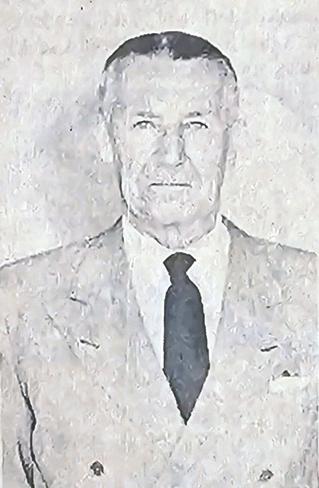
PAGE 48, Friday, July 7, 2023 THE TRIBUNE
SIR RAYNOR ARTHUR
PAGE 49
SIR ROBERT NEVILLE
SEE
LORD BEAVERBROOK
SIR SIDNEY POITIER
‘We dared to walk alone and pay the price’
that he was promised a casino licence if the party won the election, they used the gambling scandal effectively in their campaign.
The election ended in a draw – 18 seats each – with Randol Fawkes holding a seat for Labour and A R Braynen an Independent member. These two men held the balance of power.
Mr Fawkes, who was the father of Labour Unionism in the colony, had always wanted to be Labour Minister. Mr Pindling offered him this plum and he joined the PLP.
Mr Braynen, who had been a devoted UBP up to the time of this election, had broken with the party as a result of a quarrel with Sir Roland Symonette and Sir Stafford Sands. He had always wanted the Speaker’s chair.
Mr Pindling baited him with this plum and he bit.
By securing the support of these two men, Mr Pindling took control of the country with a majority of one vote.
It was believed at the time that had either Mr Fawkes or Mr Braynen held out it would have been necessary to call another general election to break the tie and that possibly the UBP would have had an opportunity to mend their fences. One of their big mistakes in the election had been a quarrel in the party over the two Eleuthera seats. This created a situation that lost them both seats … in addition to the Braynen seat.
The day after the 1967 election my daughter, Eileen Carron, who has succeeded me as Editor of The Tribune, personally interviewed the major investors in the Bahamas. She told them that they could talk freely to her without fear of their names ever being revealed. They trusted her and talked freely. Without exception they expressed great fear for their investments and the future of the islands under an inexperienced and racist Government.
A few days after this interview was published The Tribune received from the Cabinet Office a sheaf of statements signed by the major investors in the islands expressing pleasure at the change of Government and confidence in the future of the Bahamas under the new administration. Some of the most enthusiastic statements came from the men who had been interviewed by Mrs Carron! They had all been whipped into line by fear of reprisals from the new Government. They were all running for their little holes in which to bury their manhood. And because their interviews were “off the record” we were in honour bound not to reveal their names. Had these men stood together at that time they could have had a sobering influence on Government policy. The Government would not have dared to follow a repressive policy.
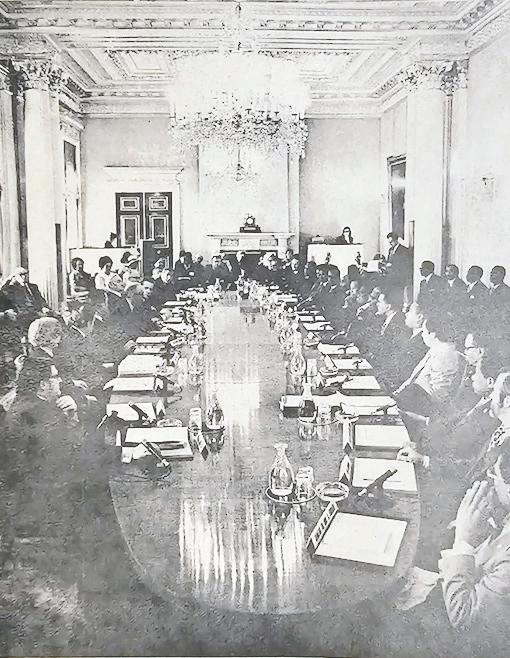
We were then approached by supporters of the Government and urged to jump on the band wagon and share in the spoils of victory. Great inducements were held out to us.
Should we follow the example of the investors and seek our own interests?
Oh no! Fully conscious of the consequences of doing our duty to the Bahamian people by continuing to print the truth in the columns of this newspaper … we dared to walk alone and pay the price so often exacted for honesty by Governments in a frightened and corrupt society.
In 1968, Mr Pindling went back to the people. By this time they were enthused over the idea of having a black Government. He won the election with a landslide vote.
One of the first things Mr Pindling did was to dump Mr Fawkes. He stuck with Mr Braynen who had been removed from the mainstream of politics in the Speaker’s chair. In the
September 1972 election, both Mr Fawkes and Mr Braynen were dumped by the electorate and both men disappeared from view. It is reported that Mr Pindling may give Mr Braynen the job as High Commissioner in Britain in spite of the fact that Mr Braynen turned bitterly anti-English after becoming identified with the PLP.
In this connection, it is important to note that the PLP won the country in 1967 with the help of the expatriate vote, especially the English vote. English people not only contributed to their campaign fund and voted PLP, some of them openly campaigned for the party.
A majority of the Turks Islanders at Inagua gave the PLP their support.
One of the first things the PLP did on gaining control of the Government was to deprive all British expatriates of the vote and of rights in labour unions. This was followed by a Bahamianisation programme which purged both the English and the Turks Islanders from jobs in the islands. The case of the Smith family at Inagua is an example of how far the PLP went in purging “foreign” elements from the Bahamas society.
The Smith case is worthy of the Nazi Gestapo of the Hitlerian regime in Germany.
I suppose I would have been justified in feeling that the expatriates had received their just desserts and left them to stew in their own fat. But I didn’t. I felt that it was the duty of The Tribune to fight injustice in any form in the colony.
Then the PLP made its first move to curb the freedom of the Press. I fought and won this issue for the Bahamas press. Curiously enough, The Guardian,
which was toadying to the Government and still enjoys preferential treatment at their hands, fought me on this issue. And for the second time the Inter
at the polls while the American press rewarded me “for services to a community”.
Just about this time Lord Shepherd made his first visit to the colony. I welcomed
I was still a member of the Senate. When Lord Shepherd came for a private discussion with the Senate he deliberately turned his back on me. He knew what I stood for and it was clear that he didn’t want to hear from me.
At a press interview The Tribune asked him if the Commonwealth Office in London knew that British expatriates in the colony –including Englishmen – had been stripped of their civil rights.
He said that he had not heard of it.
Would he look into this unjust situation?
He said he would. But he did nothing about it.
It was clear to me at the time that the only purpose of Lord Shepherd’s visit to the colony was to lay the groundwork for getting rid of the Bahamas.
Once again I had to examine my conscience. If England wasn’t interested in the welfare of her own people, was it my business to continue fighting on their behalf?
I decided that it was my business … that I must never allow The Tribune to fail in its duty because of the failure of others – even the mighty England – to do their clear duty.
maintains a strong loyalty to Britain.”
And now let us skip over a long period and shift the scene to a recent event in England which has caused me to write this article for the purpose of historical record.
My wife and I were in London when the Bahamas Independence Bill came up for second reading in the House of Lords. We were invited by Lord Belhaven, who was trying to amend the Bill to help the Abaco movement, to come to the Lords for the debate.
While waiting to be ushered to our seats a lady passed us in a corridor of the Lords. Our eyes met. She smiled. There was a look of recognition on her face. I could see that she thought she had seen me somewhere before but wasn’t sure. The same thing happened to me.
“I’ve met that lady somewhere before,” I remarked to my wife and we both started to probe our memories in an effort to identify her.
American Press rewarded me with a coveted award.
The first time I received recognition from this powerful press body was on the occasion that I was instrumental in breaking down the barriers of racial discrimination in the colony. Ironically, the Bahamian people for whom I had brought about the reform at the cost of almost losing my business, walked out on me
this visit because I felt that England was checking up on reports of corruption and brutal oppression under the PLP Government which were being charged in the Legislature, on public platforms, and published in both the local and world press. Maybe England would seek justice for the oppressed. But this was not the case.
At this point I feel justified in quoting a passage from the book Grand Bahama by PJH Barratt.
Commenting on journalism in the Bahamas, Mr Barratt wrote that “the editor of The Tribune is a remarkable Bahamian, Sir Etienne Dupuch. A sound reformer … he was instrumental in accelerating the pace of desegregation in the colony though he is oddly out of fashion in the Bahamas of today in that he
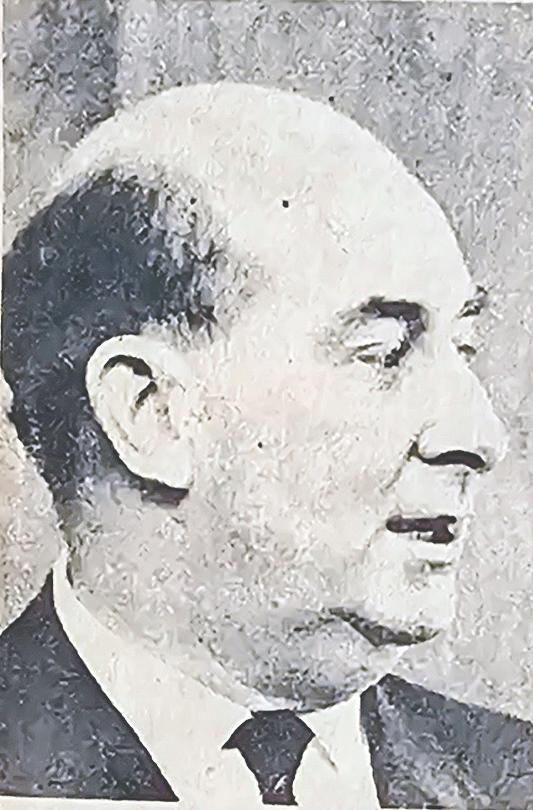
We didn’t have long to wait. When we took our seats in the visitors section of the Lords we saw this woman sitting on the government benches in the Chamber and her name was on the agenda to lead the Bahamas Independence Bill for the government. This was Lady Tweedsmuir, a Scottish peeress in her own right.
Two years earlier I met Lady Tweedsmuir briefly in Edinburgh Castle when she welcomed members of the Commonwealth Press Union to Scotland at a
THE TRIBUNE Friday, July 7, 2023, PAGE 49
from page 48 SEE PAGE 50
THE 1972 INDEPENDENCE CONFERENCE IN LONDON, ENGLAND.
LORD SHEPHERD
sound reformer, but oddly out of fashion today’
reception given by her in their honour.
I was selected by the CPU to move the vote of thanks to Her Ladyship.
In my speech I spoke feelingly of “our” great British heritage and of the glorious British tradition.
My speech was received with prolonged applause by everyone in the Castle that night and later many of my press colleagues added their personal compliments.
Lady Tweedsmuir was so impressed that she went out of her way to express both pleasure and surprise at the sentiments I had expressed. She commended me highly.
Every person in the Castle that night valued their British heritage.
And now, two years later, I was to witness an action –led by Lady Tweedsmuir – that would deprive me and thousands of other loyal Bahamians of their treasured rights as subjects of the British crown and of the protection of the Union Jack which stood for British Justice wherever this emblem was unfurled. She had no conscience about it because she emphasized in her speech that care had been taken to make sure that these people would not have the right to claim a British passport. She rejected any suggestion of setting aside just one –repeat, JUST ONE – of the thousands of islands and cays in an open ocean where Bahamians like me could retain their British connection!
Her motion was supported by Lord Shepherd who had made his position clear during his visit to Nassau a few years earlier.
Then came Lord Thurlow, the colony’s most recent Governor, to support the Bill.
Lord Thurlow was fully conversant with charges of corruption and persecution in the colony. He knew of the oppressive measures that were enforced by the PLP Government against helpless people in the islands, including his own citizens of the British Isles.
He knew that the gushing claim of the previous speakers that dire poverty existed in the Bahamas and that the British government must use the money of the most heavily taxed people in the world to relieve poverty in an affluent tax haven, was not true and that there was more real poverty in Britain than was being experienced in the Bahamas … and yet he could stand up in the Lords and support a Bill that he must have known from his own experience in the Bahamas was a painful injustice!
I left the chamber in the middle of Lord Thurlow’s speech. An English lady sitting near to my wife and me, who knew the truth about the Bahamas, leaned across my wife to ask: “Doesn’t this give you the sick stomach?”
I agreed and told my wife it was time for us to leave.
I had had enough. I could not stay there and hear a man, for whom I had had great respect, perform what he must have known to be morally wrong.
During the debate the members referred to each other as “My Noble Lord”.
I left this chamber wondering where nobility was to be found … and with the realisation that nobility was not a thing of blood but of the human spirit. It was more likely to be found in a humble cottage than in the vaulted halls of Parliament.
The appointment of the Hon Milo Butler as Governor-General of the Bahamas shocked many people but it did not come as a surprise to me. When the PLP first won power in 1967 young Sammie Isaacs said in a public place that Milo Butler would be the next Governor.
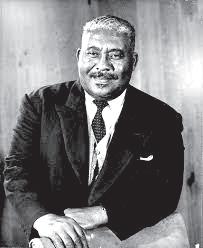
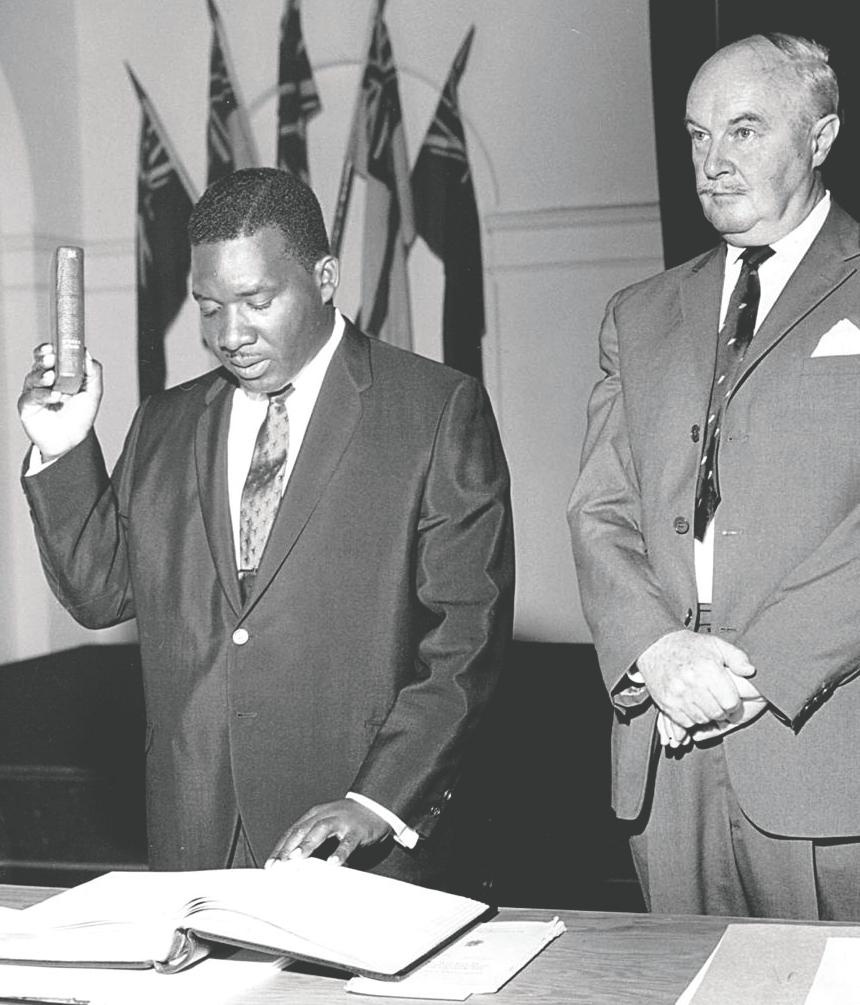
At that time people laughed this statement off as a big joke. But I believed
him … as I had been right in so many cases in the past by believing what appeared to be ridiculous statemets by dictatorial regimes. Never discount what a dictator says, however absurd it might sound. If he says
after he has been Governor for a while. Want to take a bet?” he challenged.
I didn’t take a bet because I felt he was right. This had been a long established practice. He was temporarily
Knighthood, having been appointed a Knight Bachelor on June 2, 1973,” The Telegraph reported, and then added:
“Her Majesty then invested him with the Insignia of a Knight Grand Cross of the Most Distinguished Order of St Michael and St George.”
Knight Grand Cross is the highest level in any Order of Chivalry. In the same Honours List, Lord Grey, a former Governor of the Bahamas and then GovernorGeneral of Northern Ireland, was created a Knight Grand Cross of the Royal Victorian Order in recognition of a lifetime of service to the Crown. I sent him a cable of congratulations and he wrote me an interesting letter which I do not feel at liberty to quote.
supported me on the night in 1956 when I succeeded in breaking down the barriers of racial discrimination in the islands. And so I am fully aware of his merit as a man of the people.
But England and treasured old British institutions are something apart. They have no place in a struggle for raw power in an emerging society that in many of its aspects has been anti-English.
And so, all this political jockeying in England must
their concept and harsh in their execution.
Is there a lesson to be learned from these experiences on the human stage?
Yes … a simple and important lesson.
It is that if … at the end of his life a man hopes still to believe in and trust anything … even himself … he must decide early in life to boldly walk his own road … looking neither to the right nor to the left … to the very end. A MAN – if he is to be a MAN – must dare to walk alone.
it, he will do it. As I have no doubt that Mr Arthur Hanna will change the Bahamas constitution – as he threatened to do during the Independence Conference in London – should it serve his selfish ends.
I suppose I was amused more than shocked when Mr Butler’s appointment was announced.
“He will now be knighted and given a KCMG,” I teased an English friend who has earned high recognition from the Crown.
“This is impossible,” he declared. “Appointments in the Order of St Michael and St George are reserved exclusively for men who have given a lifetime in the British Civil Service. He will probably be made a Knight Bachelor
you
proven right when it was announced in the Queen’s Birthday Honours that the Hon Milo Butler, Governor-General designate of the Bahamas, had been made a Knight Bachelor by the Queen.
On June 13th, Mr Butler went to Buckingham Palace to receive the accolade from Her Majesty. In its Court Circular section on June 14th The Daily Telegraph reported that, in addition to being made a Knight Bachelor, Sir Milo had actually been given a much higher award.
“The Hon Sir Milo Butler (Governor General Designate of the Bahamas) had the honour of being received by Her Majesty the Queen who conferred on him the honour of
No one can deny that His Excellency the Governor General Sir Milo Butler, GCMG, has been a great warrior in the vanguard of the fight staged by the PLP to get control of the Government of the Bahamas and to completely crush the former leaders of the Bahamas.
It is understandable that today he should be a hero in the eyes of followers of his party.
While I cannot endorse their philosophy and I openly and unreservedly condemn their methods, I nevertheless admire the courage Sir Milo has displayed, especially during a period when he stood almost alone in demanding fair and decent treatment for black people. I recall with appreciation that he was one of the men who
seem both remarkable and confusing to readers of The Tribune when they recall that in November 1965 Sir Milo was in a group of PLP politicians at the opening of Holiday Inn in Freeport who refused to stand for the loyal toast to Her Majesty the Queen … now he is Her Majesty’s honoured personal representative; it was he who wanted to change the name of the Churchill Building because of anti-English feelings; it was he who declared some years earier that blood would flow in Bay Street … white Bay Street blood; and he pioneered in helping to build and maintain a party whose members have pursued a course that has been unfair to English people … and other nonBahamians in the islands … and also to Bahamians who choose not to fall in line with political practices that have been un-Christian in
Just one final word to the Government in Britain. They must be made to understand that when they place Her Majesty –our splendid Queen – in a position where she feels obliged to accommodate the demands of political expediency … then are they placing the axe at the very root of ancient institutions that had been respected and admired – even envied – by the whole world.
THOUGHTS FOR TODAY
In 1939 Ross Parker and Hughie Charles wrote the song “There’ll Always Be An England.” This song cheered men into battle in the second world war. They were shedding their precious young blood in the cause of human freedom. I have often quoted this line with pride and conviction.
Today I must ask the question: Will there always be an England? - DUPUCH
PAGE 50, Friday, July 7, 2023 THE TRIBUNE
like
from page 49
SIR LYNDEN OSCAR PINDLING BEING SWORN IN AS PRIME MINISTER OF THE BAHAMAS
SIR Milo Butler
A MAN – if he is to be a MAN –must dare to walk alone.
‘A
