One of the men told police he rescued the girl after seeing her in distress and brought her safely to shore. When he returned to help Alfred, both men were swept farther out by the current.
Alfred disappeared beneath the water and could not be found.
Police launched a search with assistance from Royal Bahamas Defence Force divers after being alerted to the incident shortly after 7pm. His body was later recovered about 300 feet from the shoreline, and he was pronounced dead at the scene.
Ms Alfred, a 41-year-old mother of three, said she had grown concerned earlier that day when repeated calls and text messages to her son went unanswered.
Alfred’s father also tried to contact him before calling one of his sisters to ask whether she knew where he was.
One of Alfred’s friends eventually answered his phone and told the family to go to the police station because “something bad happened to Ryan”.
“My daughter called and said ‘mummy, something wrong’. I didn’t have no ride and their daddy went there. I called him and he explained to me what happened,” Ms Alfred said, adding that police were
questioning Alfred’s father and friends when she arrived at the station. At that stage, her son’s body had not been recovered.
She said officers later returned from the scene and confirmed his death.
“The first thing I asked them ‘was my baby okay, Ryan okay’ and they said ‘no Ryan is dead’ and I said ‘what,’ and as a mother, I was at that station like crazy crying.”
Ms Alfred described her son as a quiet young man who loved video games and was well known in the Johnson Road community.
“He was my everything,” she said. “I know when he was in that water, I know my baby was thinking about me. He was that type of person.”
Alfred, a 2025 graduate of Doris Johnson High School, had recently begun working at Super Value and was apprenticing as a welder under a businessman in the St Anne’s community.
His mother said raising him and his siblings had not been easy, but he always tried to help the family.
One of their final conversations concerned his plans to buy school supplies for his 11-year-old sister.
“He was saying, ‘Mummy, I gone help you with my 11-year-old sister because I know you’re not working,” she said. “I gon’ help you out and I think Clarks was on sale, and he was saying he’s gonna get the shoes.
He’s like, ‘Mummy, what her size is and everything’.”
Ms Alfred said her son left for work after that conversation, and it was the last time she spoke to him.
“My son was 18. He had plans. He wanted to help me take me on my situation,” she said.
She said Alfred’s father was also struggling with the death.
His sister, Monica Alfred, said she had been unable to eat or sleep since the tragedy and wished she had been able to say goodbye.
“I’m gonna miss the phone calls, the texting, the getting offs, the cracking jokes, the hugs, me being the annoying sister but I thank God for the 18 years he give us him,” she said.
She also questioned how her brother came to be in the water, saying he did not like it.
Tributes were posted on social media following Alfred’s death.
St Anne’s MP Adrian White described him as a kind, well-mannered and respectful young man.
“Despite not wanting to be in the water, Ryan found himself there. He has now gone on to heaven, leaving behind a grieving mother and two siblings,” he said.
Senator Keno Wong also offered condolences and asked the community to pray for the family.
The family said anyone wishing to assist with burial expenses can contact Ms Alfred at 809-1474.
Westernair launches inauguaral flight from Freeport to Bimini
TODAY, Westernair provided a boost for domestic aviation and tourism, through the launch of its inaugural service between Freeport, Grand Bahama and South Bimini, Bahamas. This move affirms the Bahamas Government’s
mandate to provide safe and reliable air services to island destinations, while accelerating the construction of over 19 Family Island Airports. The new domestic flight comes on the heel of the recently launched international direct service by
American Airlines from Miami in February of this year.
Passengers on this new Westernair route can travel direct between Freeport and Bimini on Mondays & Thursdays, with service expected to ramp up as demand grows.
RYAN ALFRED
Five days of BPL blackouts push residents to the brink
we can again control what we have and improve our service that we deliver to the customers,” Mr Christie said.
The latest outages followed Thursday’s island-wide blackout and continued through the holiday weekend, affecting Coral Harbour, Sea Beach, Sandyport, Tropical Gardens, Jacaranda, Gambier, Carmichael West and other communities.
BPL attributed the disruptions to tripped feeders and breakers, damaged power lines, cable faults, limited feeder capacity, fires and rotational power supply measures intended to prevent the system from becoming overloaded.
The sustained failures prompted some residents to call for outside assistance, saying the country appeared unable to contain what they described as an electricity crisis.
In Coral Harbour, residents endured outages lasting as long as eight or nine hours a day from Tuesday through yesterday.
Ms Marshall, who has
BPL URGES GOVT
lived in the area for 14 years, said the disruptions were the worst she had experienced and accused BPL of offering excuses instead of reliable service.
“Every day from Tuesday, we’ve been off. We haven’t missed a day that we haven’t been off, and not just one hour. We’ve been off for hours,” she said. She said a television had stopped working and she had recently replaced a refrigerator, leaving her worried that more appliances would be damaged by the repeated loss and restoration of power.
She and her elderly mother sometimes stayed with her sister, who has a generator, to escape the heat.
Ms Marshall said residents should not have to organise their lives around whether BPL would keep the electricity on.
“The light bills aren’t decreasing,” she said. “Every month, our light bills increasing, doubling, and they can’t explain it to us, but yet we can’t get power.”
Some Coral Harbour residents were directed to collect complimentary ice at
Bacardi Road yesterday as a temporary relief measure.
BPL reported that electricity had been fully restored to the community by 2.17pm, but further outages were recorded elsewhere later in the day.
In Sea Beach, residents said they had experienced repeated cuts since last
AND BUSINESSES TO CONSERVE POWER AS OVERLOADED GRID NEARS CAPACITY
By KEILE CAMPBELL Tribune Staff Reporter
kcampbell@tribunemedia.net
BAHAMAS Power and Light has appealed to government agencies, large businesses and ordinary customers to reduce their reliance on the electricity grid as New Providence’s system approaches capacity, with overloaded circuits and transformers already contributing to outages across the island.
BPL Chief Operating Officer Anthony Christie said several circuits were overloaded, transformers were operating at peak capacity and the utility was being forced to relieve pressure on equipment to prevent further damage.
Mr Christie said the utility was asking customers to help manage demand by reducing their electricity consumption, particularly their use of air conditioning.
“Everyone can play a part in this,” he said. “We hear talks of higher bills, etc so we want to make sure that everyone is aware that you can control that, and we want you to help us help you provide the service that we're supposed to do.”
During a press briefing at BPL’s System Control Room, he added:
“We've seen an increase in demand, and we're approaching our capacity. A lot of our circuits are overloaded. Transformers
are at their peak capacity.”
He said BPL was balancing loads and relieving circuits where necessary as it responded to outages that he described as uncommon during the summer.
“We do have a number of other areas that have some overloading situations, and again, we're in a period of high temperatures, high demand on our systems so we're seeing some outages occur that are not common or not frequently seen by us during the summer period,” he said. He also urged larger customers and government entities to reduce the pressure they place on the system.
“We're also asking larger customers, government entities to assist us in managing their demands so that we can again control what we have and improve our service that we deliver to the customers.”
Deputy Director of Energy Verron Darville said ministries and government agencies had been instructed to switch to backup generators during periods of peak demand so more electricity would remain available for residents and small businesses.
“By freeing up some of this demand on the grid by the government agencies and by the large private customers, we have more energy available for our residential and small businesses,” he said.
Mr Darville said the Ministry of Energy, Utilities and Aviation had conducted energy audits of government agencies and large private consumers over the past three years to identify ways they could reduce consumption during periods of high demand.
He said recommendations were made according to the function and energy profile of each building.
The warnings came as BPL responded to several equipment failures and overload conditions across New Providence.
A transformer overload in Palmdale disrupted electricity to businesses and nearby homes on Friday, with Mr Christie warning that repairs could take some time.
BPL said the outage affected Rosetta Street near Geoffrey Jones & Co. and Grace Funeral Home. Witnesses said the transformer smoked, caught fire and later exploded before firefighters extinguished the blaze after BPL disconnected the power.
One nearby business continued operating with a generator, but other businesses without backup electricity were forced to close.
Mr Christie described the conditions as an unprecedented heat wave and said increased air-conditioning use had driven demand higher over recent months.
Wednesday. Some were forced to discard spoiled groceries, while others described the conditions as inhumane.
One resident said she was too exhausted to attend church after spending the previous night without electricity.
“I couldn’t even go to church because I was so tired from being unable to sleep the night before because the power was out all night,” she said. She urged the government and BPL to seek help from abroad if they could not resolve the crisis themselves.
“My thing is if they need help, ask for it,” she said. “Go to Florida and say, Florida, I need your help because we’re having too many crises here in The Bahamas, and we’re not able to deal with it. Ask for the help. It’s not going to kill you. It’s not going to embarrass you.”
Residents also rejected any assumption that homeowners could simply depend on generators, saying many landlords were unwilling to buy them.
For those who have generators, the cost of keeping them running has created another burden.
A Skyline resident said she and her husband had spent more than $500 on generator fuel during the prolonged outage — more than they had spent on groceries.
“It’s a shame that a nation has to go through this,” she said. In Opulent Drive, Carmichael West, residents also reported power cuts lasting about nine hours a day from Thursday.
One woman said the heat and lack of sleep had affected her physically and emotionally.
“I had migraines attack,” she said while sitting in her car on Saturday morning. “I cried all last night. I prayed. I was like, ‘Please turn on the power.’ The sweat. I haven’t slept. I’m frustrated now. I’m snapping at my family. I’m snapping at people because mentally, it’s the heat.” She called on BPL to secure rental generators from another country and urged Bahamians to protest.
“They could call some other country and get some rental generators,” she said.
“We need to protest and shut the place down.”
BPL executive chairman Christina Alston acknowledged residents’ anger in
a video released yesterday and apologised for the disruptions.
She said the utility was operating with ageing infrastructure and a power grid that had been under pressure for years.
Record-breaking heat, equipment failures and fires had placed further strain on the system, she said.
“I want you to know that we have a plan in place,” Ms Alston said. “We have contingency measures in place but these contingencies have limits. When several serious events occur in close succession, even the best black up plans can be stretched beyond what they are designed to withstand.”
Her admission followed warnings from BPL officials that New Providence’s electricity system was approaching capacity, with circuits overloaded and transformers operating near their limits.
Killarney MP Michela Barnett-Ellis said apologies were no longer sufficient and called for clear answers, decisive leadership and a credible recovery plan.
She said her office had been inundated with complaints from residents suffering financial losses and dangerous conditions during one of the hottest periods of the year.
“This affecting every aspect of daily life,” she said. “Families are losing groceries. Businesses are losing income. Employees are losing productive hours. Elderly residents, young children and those with medical conditions are enduring unbearable conditions during one of the hottest periods of the year.”
As of 5pm yesterday, BPL reported additional outages affecting Ferguson Road, Mount Pleasant, Shrimp Road and sections of West Bay Street because of cable faults and overgrown vegetation.
The utility also reported service disruptions in Andros and Abaco, where severe weather, damaged infrastructure and heavy power surges were blamed.
Elderly residents frightened and overheated during BPL power outages
By JADE RUSSELL Tribune Staff Reporter jrussell@tribunemedia.net
ELDERLY residents at two New Providence care homes were left frightened, overheated and without parts of their normal medical routine during recent power outages, forcing staff to move bedridden patients in the dark and exposing the human cost of unreliable electricity service.
At Pat’s Senior Home, which accommodates more than 50 residents, staff placed some elderly people on the porch to escape the heat and brought in extra workers to move residents from their rooms after the power failed.
Patricia Moxey, the home’s owner, said some residents became so frightened that they wet themselves, while others screamed when the lights went out.
“Everything was in darkness and they screaming and trying to get them out,” Ms Moxey said. “They were miserable in the heat.”
About 13 residents are bedridden, and some have no legs, she said.
“Some of them just started to sit up because they were too hot. And
earlier that morning we brought a lot (of them) on the porch.”
The home has a generator, but it ran out of fuel during last Thursday’s island-wide blackout after consuming five gallons of diesel.
The outage began at about 1.45am and lasted seven hours or longer in some communities, leaving thousands of residents without electricity overnight.
Ms Moxey said the frequency of the outages made it difficult to anticipate how much fuel would be needed.
“Sometimes you're not keeping check of the amount of diesel that you putting in there because you're not expecting the amount of outages that we had, and still having,” she said.
She said the home depends on the generator to keep residents comfortable but is now facing higher fuel costs.
“Also when we find that diesel is at its highest ever, and some of the service stations have even went up on their prices,” Ms Moxey said. “I think they're taking advantage of the situation.”
She is considering buying a second generator,
although she said it would cost thousands of dollars.
The home also suffered damage to two refrigerators, security cameras and a television during multiple outages last week.
Ms Moxey called on the government to do everything possible to restore reliable electricity service.
Residents at Good Samaritan Home faced similar disruption.
Serenity Cash, a worker at the home, said staff could not take residents’ blood pressure during the outage, while medication that had to be refrigerated was also affected. The home accommodates 23 residents, including people who are bedridden, paralysed, suffer seizures or have high blood pressure. Neither home had residents dependent on oxygen machines during the outages.
Ms Cash said workers tried to keep residents calm while also enduring the heat. The home is now planning to purchase a generator.
“We don't let it be known that it's frustrating because at the end of the day, they are patients, and that's our job,” she said.
CHIEF Operating Officer Anthony Christie (left) speaks with Prime Minister Philip ‘Brave’ Davis during a tour of the Blue Hills sub-station after an island-wide blackout last week.
Photo: Chappell Whyms Jr
Mourners bid tearful farewell to Shirley Street crash victims
By EARYEL BOWLEG Tribune Staff Reporter ebowleg@tribunemedia.net
BERTRICA Brown’s older brother recalled going without food and raising her from a shack after both of her parents died, as loved ones gathered over the weekend to mourn two of the five young people killed in the Shirley Street crash.
Anthony Thompson became Bertica’s guardian when she was nine after their mother died in 2015. Brown had lost her father when she was two.
Mr Thompson said he was still a teenager and homeless when he took responsibility for his younger sister, raising her with his wife and their two children in Abaco.
“When I received Trica, I was living in a shack,” he said. “But I didn’t let anybody know because I knew God’s journey.”
Mr Thompson said he struggled to understand how he would raise a young girl but became deeply involved in her development, coaching sports and even establishing a track club after she expressed an interest in throwing events.
He said there were times he sacrificed his own needs to ensure Brown was cared for.
“I sacrificed so much,” he said. “There were times I didn’t eat because I was trying to make sure she had food. I felt like I grew up so quickly.”
Brown’s funeral was held at Church of God Temple, where mourners dressed in green and could be heard wailing during parts of the service. She will be buried in Abaco at a later date.
A separate funeral was held at Living Waters Kingdom Ministries for Evalena
Johnson. Brown and Johnson were among five people killed in the Shirley Street crash. Diamond Stubbs, 17, Stania Webb, 19, and Keno Gordon, 19, also died.
Most of the eight occupants of the vehicle had known one another since childhood.
Mourners gathered in Cat Island last weekend for a joint funeral for Webb and Stubbs. Stubbs’ parents also attended Brown’s funeral.
Mr Thompson said he was inspired to speak after hearing Stanley Webb’s tribute to his daughter during that service.
He recalled the difficulty of balancing his role as Brown’s brother with the responsibilities of a father.
“There were times the brother in me wanted to let her do her own thing,” he said. “Then the father in me would stand up and say, ‘No, I’ll give you every opportunity I possibly can.’”
Mr Thompson said Brown was never rebellious, although he watched her experience the adolescent struggle of finding her identity.
Financial hardship followed the family throughout her childhood, including periods when he could not afford her private-school tuition.
“There's been times where I put in private school and couldn't pay a school fee. For months on end, but I thank God because of the favor she already accept. God's already placed in her life.”
He also wanted Brown to travel and gain opportunities that could help her secure a college education.
“There were many times I wanted to take her on trips so she could have
Two dead in separate shootings as murder count climbs to 48
TWO men are dead after separate shootings in the capital less than a week apart, pushing the country’s murder count to 48 for the year, according to The Tribune’s records
The latest shooting happened near a liquor store in the Delaporte area off West Bay Street yesterday.
Police said they received reports of the incident shortly after 1pm.
Officers initially told reporters at the scene that the shooting stemmed from an altercation between two men known to police.
However, in a later press release, police said two men were inside a business establishment when two masked gunmen forced their way in and opened fire.
One of the victims sustained multiple gunshot wounds and later died in hospital.
The second victim was shot in the left shoulder and arm. He remains in hospital in stable condition.
The Delaporte shooting was the second
opportunities for college,” he said. “Because of God’s favour in her life, Trica sponsors always came through.”
Brown graduated from Agape Christian School in Abaco after excelling in
volleyball and track and field. Her relatives said she had received several scholarship offers before her death.
Tributes remembered her as a warm and loving person whose kindness, rather than
any single achievement, defined her.
One mourner said Brown had a beautiful heart and that loving her came naturally.
Bishop Denczil Rolle, who delivered the sermon,
violent incident reported yesterday.
About an hour earlier, police said a 44-year-old man was shot during an armed robbery behind a business establishment on Rosetta Street.
Police said the victim was standing in the area when two men approached.
An argument broke out and one of the suspects opened fire before fleeing the scene along with his accomplice.
The victim was taken to hospital, where he remains in stable condition.
Meanwhile, police also confirmed the death of a 71-year-old man who was shot on Wednesday.
The victim was reportedly sitting inside his vehicle near his Wilson Tract home preparing to leave when a purple vehicle pulled up. A gunman got out, opened fire and fled the scene. The victim was taken to hospital in critical condition but succumbed to his injuries on Friday. Investigations into these incidents are continuing.
BABYSITTER ACCUSED OF BEATING TWO YOUNG GIRLS WITH A STICK
By PAVEL BAILEY Tribune Staff Reporter pbailey@tribunemedia.net
A WOMAN was accused of beating two young girls with a stick while babysitting them last week at Fox Alley and Cox Street.
Prosecutors allege Tamia Rolle, 25, struck and injured a three-year-old girl and a nine-year-old girl on July 24. Rolle pleaded not guilty
to two counts of cruelty to children before Senior Magistrate Algernon Allen Jr. Sergeant 3004 Forbes, the prosecutor, raised no objection to bail.
Rolle was granted $6,000 bail with one or two sureties. She was warned not to interfere with any witnesses or risk having her bail revoked. She returns for trial on October 21.
ing him for university sponsorship. He said her forthright but respectful manner impressed him and reflected the determination with which she pursued her goals.
RT HON EILEEN DUPUCH CARRON, C.M.G., M.S., B.A., LL.B.
Publisher/Editor 1972-
Published daily Monday to Friday Shirley & Deveaux Streets, Nassau, Bahamas N3207
News & General Information
TELEPHONES
(242) 502-2350
Advertising Manager (242) 502-2394
Circulation Department (242) 502-2386
Nassau fax (242) 328-2398
Freeport, Grand Bahama (242)-352-6608
Freeport fax (242) 352-9348
WEBSITE, TWITTER & FACEBOOK
www.tribune242.com
Cubans sleep on seaside boardwalk for relief from crippling blackouts
ALEXEY Ríos García awoke not to his bed in Cuba ‘s capital on Monday, but to an ocean breeze and the concrete of Havana’s famous seaside boulevard.
The 30-year-old construction worker ended up curling up with other Cubans on the city’s sea wall, the Malecón, in a desperate attempt to escape the suffocating summer heat during yet another islandwide blackout.
Sunday night marked the sixth islandwide blackout since Trump administration effectively cut Cuba off from oil — its main energy source — in January. The move plunged the endemically crisis-stricken country into freefall. While authorities on Monday said they were working to get the power back on, much of the island still had no electricity.
The energy grid collapses have left people like Ríos García with fewer options to get by as the U.S. maintains its pressure campaign against the communist-led government.
“Things are only getting worse. Tomorrow it’ll collapse again ... and we’ll be back to sleeping on the Malecón,” said Ríos García, who used a piece of yellow foam as a pillow to cushion his head from the tough concrete.
The recurring power outages combined with the stifling heat have created collective insomnia on the island as residents struggle to get through the night. While some like Ríos García have slept on the boulevard, others struggle to get some rest on balconies and front porches.
The day of the latest blackout on Sunday, the temperature hit 93 degrees Fahrenheit (34 Celsius), but ended up feeling like 106 F when combined with the Caribbean’s 80% humidity levels.
It marks just one of a growing number of struggles on the Caribbean island where day-to-day life has grown increasingly difficult since the U.S. threatened to impose a tariff on any goods from countries that sell or provide it with oil. That was a debilitating
blow after decades of U.S. economic sanctions, with the island’s infrastructure crumbling and a surge in migration.
Multiple outages since March
Sunday’s latest total blackout confirmed by the state-run energy company came after sweeping outages across western Cuba, including the cities of Pinar del Río, Matanzas and Havana the day before.
Energy authorities reported two nationwide grid collapses in March and three in July, along with several partial outages.
Rolling blackouts now last more than 20 hours a day. Obtaining gas and basic goods have become daylong endeavours.
Cubans worry about precious food like frozen chicken rotting in their fridges without power. The island’s once bustling tourism industry has bottomed out, leaving even fewer with a source of income allowing them to get by. With little fuel, public transportation in Havana has effectively collapsed. Hospitals have been left reeling and have sought to install solar panels to keep the lights on.
Cubans have long displayed a characteristic resilience to hardship, adapting to twists and turns and unexpected shortages after decades of living under a U.S. trade embargo. But in recent months and years, a sense of hopelessness has increasingly gripped those still remaining on the island.
Among them was 30-year-old physical education teacher Elaine Delis Ramos, who curled up next to loved ones on the boardwalk on top of a thick blanket in search of a breeze.
“Just when we start hoping (the energy grid) wouldn’t collapse again, there it goes again,” she said. “We don’t have any solution.”
By ARIEL FERNÁNDEZ and ANDREA RODRIGUEZ Associated Press
A current of rage and the circuit of surrender
EDITOR, The Tribune.
I AM writing this as residents in New Providence light their homes with battery lamps, with refrigerators full of spoiled food and their hearts heavy with something more than frustration.
It is grief. Grief for a country that, in its abundance of sand, sun and sea, has somehow accepted living in the dark.
The ongoing failure of our national electrical grid is not just an inconvenience; it is a public betrayal unfolding in real time, a slow-motion collapse of the social contract that binds a government to its people.
Across New Providence, we have long treated Bahamas Power and Light as a tragic punchline. In the Family Islands, the situation has been so dire for so long that intermittent darkness became normalised, a permanent brake on dignity and economic life. But a new and chilling frontier has now been crossed.
For years, Grand Bahama was largely unaffected, its privately operated grid a proof that reliable power was possible. That proof was erased with the government purchasing the utility. The darkness has been democratise.
The reliable power that once set Grand Bahama apart might become a thing of the past, as businesses may now face the same crippling uncertainty as elsewhere. The last functional hope has been extinguished, and the rest of us watch as a national crisis deepens into something unmanageable.
The consequences go far beyond sitting in a hot house. This is a cascading failure of civil society. Grocery stores and restaurants have been forced to discard millions of dollars in spoiled inventory, losses that small business owners and families can never recover.
Our hospitals, where the most vulnerable seek healing, are now compromised, with lifesaving equipment and temperature-sensitive medicines held hostage by a failing grid.
Schools are closing early or not opening at all, robbing our children of education, while businesses slash work hours or shut their doors.
Our vital tourism sector, the engine of our entire economy, is faltering as hotels scramble for diesel and guests swelter through a holiday they will never forget for all the wrong reasons. And all of this is compounded by an unrelenting heat wave that transforms a power outage from an inconvenience into a genuine public health emergency. How did we arrive here?
The recent elections, which returned the PLP Administration on a cloud of fallacious progress promises, now look like a cruel mirage. Five years in, the primary offering from our leaders is not a solution but a relentless blame game, a political strategy as exhausted as the generators they so often criticise.
We are watching a pantomime of leadership, a performance designed to manage our perception while the physical world crumbles. History will record this era with stern judgment. It will be remembered as the time when Bahamians were given the most literal possible test of governance. Can the state supply the current needed for modern life?The answer, delivered in daily blackouts, was a deafening no. We missed the real opportunity to judge our leaders by the reality of a functioning country, not the emotion of a political rally.
What follows is a pattern we know all too well. It is a cycle of rage.
A furious storm erupts on social media and talk shows, a cathartic release of righteous indignation. Then, a provisional restoration of power here, a convoluted ministerial statement there, and a temporary calm descends. But the underlying system does not change, and so the cycle resets.
In any functioning democracy, the collapse of the electrical grid would trigger mass protests, ministerial resignations, a change of government. In The Bahamas, it triggers something far more dangerous, a phenomenon called learned helplessness.
We have been conditioned into becoming a collective of sufferers, a community where misery does not just love company but has become a primary form of national identity. The relentless daily struggle just to survive, keeping food from spoiling, finding water, enduring the heat, leaves precious little time or energy to organise, to demand change, to participate in genuine solutions.
This is the deeper, more insidious blackout. A modern, adapted compliance mechanism has taken root, where the chains we wear are no longer physical but mental. It is a slavery of the mind so effective that we have become our own wardens, defending the very forces that keep us in the dark.
The path ahead is grim. The planned integration of Grand Bahama’s once-reliable system into the failing national grid is not a technical merger. It is a death sentence for the final pocket of economic hope. We are drifting toward a future where crisis is not a headline but the very landscape, managed by a political class that benefits from chaos and a populace too exhausted to demand more.
The ultimate tragedy is not that The Bahamas is failing, but that so many of us have been trained to accept that failure as fate. The darkness outside is merely a reflection of the surrender within. I refuse that surrender. This is a plea for my fellow Bahamians to wake from the cycle, to see that our power does not come from any grid or political party but from our refusal to normalise the unacceptable. We must stop confusing a temporary calm with a solution. We must judge our governance on the hard, non-negotiable reality of a light that stays on.
The real current that needs restoring is not measured in volts, but in our collective will to demand accountability, not in the next election cycle, but right now, before the last spark of hope goes out.
THE FNM WHISPERER Freeport, Grand Bahama August 2, 2026.
Govt launches forensic review of foreign hiring practices in GB
By KEILE CAMPBELL Tribune Staff Reporter kcampbell@tribunemedia.net
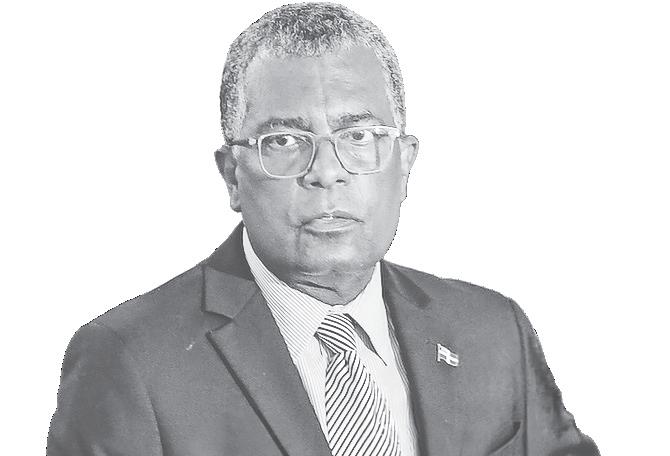
THE government has launched what Foreign Affairs Minister Fred Mitchell called a “forensic” review of hiring practices in Grand Bahama and the hotel sector, with particular scrutiny on management positions held by foreign workers.
Mr Mitchell said the Departments of Immigration and Labour were examining employment practices as the government prepares legislation aimed at strengthening enforcement against abuse of the work permit system and unlawful hiring.
The review comes amid longstanding complaints from investors that they
cannot find enough Bahamian workers to meet their needs, despite the Department of Labour maintaining a registry of job seekers and operating the Bahamas Online Skills Portal to match qualified people with vacancies.
Mr Mitchell questioned why foreign nationals continue to occupy management positions at hotels and restaurants.
“It's always interesting to go to these hotels, for example, and find foreign labour in management positions,” he said.
“You go into a restaurant, there's a foreign maître d' or manager and you ask yourself, why is this?”
Current labour and immigration policies generally require employers to
FOREIGN AFFAIRS MINISTER FRED MITCHELL
demonstrate that suitably qualified Bahamians are unavailable before they are permitted to recruit foreign workers.
Employers seeking work permits are typically required to advertise vacancies locally and
obtain certification from the Department of Labour before hiring from abroad.
However, Mr Mitchell warned that investors should not be allowed to “plan Bahamians out of our country”. He also questioned why
Heads of Agreement must explicitly require investors to hire Bahamians, arguing that local employment should be presumed when companies invest in The Bahamas.
Mr Mitchell asked whether similar agreements in the United States would have to specify that Americans should be hired before foreign workers.
“Major investments are required in roads, in training, in new hotels and new construction, in energy and garbage collection and the environment and water and sewerage,” he said.
“Billons of dollars, and tens of thousands of laborers, and who will finance it, and who will build it?
Bahamians first.”
The government announced in the Speech
from the Throne in May that it plans to introduce an Employer Immigration Compliance Act to strengthen enforcement against work permit abuse and unlawful employment practices.
Prime Minister Philip Davis also hosted an Opportunity Hub roundtable in April to examine the Notice of Vacancy Enforcement Policy and its role in expanding employment opportunities for Bahamians.
The meeting brought together labour officials and representatives from the cruise and sporting industries to discuss improving the vacancy notice process and strengthening cooperation between the government and private sector.
Teen remanded over $21K in summer shop break-ins
By PAVEL BAILEY Tribune Staff Reporter
A 17-YEAR-OLD boy was remanded to the Simpson Penn Centre for Boys on Friday after he was accused of a series of shop-breakings in New Providence this summer.
Prosecutors allege the teenager, whose name is being withheld because he is a minor, and several accomplices broke into The Men’s Show Room on Wulff Road and stole
$14,715 worth of clothing between 6.30pm on July 1 and 10.40am on July 2. During the same break-in, the suspects allegedly caused $2,500 worth of damage to the store’s doors, locks, clothing racks, cameras and cash registers.
The teenager and his alleged accomplices are also accused of breaking into Luxury House Boutique at Robinson Road and Seventh Street and stealing $6,312 worth of merchandise between 6pm
on June 18 and 9.45am on June 19.
The teenager was allegedly found with seven pairs of luxury underwear valued at $150 that were reasonably suspected of having been stolen sometime
between 7pm on June 15 and 9am on June 16.
He was charged with two counts of shop-breaking, two counts of stealing, three counts of receiving and one count of damage.
The teenager denied
all charges before Senior Magistrate Algernon Allen Jr. He was arraigned in the presence of his guardian. Sergeant 3004 Forbes, the prosecutor, objected to bail, citing the extensive nature of the charges and
the increased likelihood that the teenager would reoffend if released.
Bail was denied, and he was remanded to the Simpson Penn Centre for Boys. He returns to court on November 6.
By PAVEL BAILEY Tribune Staff Reporter
pbailey@tribunemedia.net
A MAN awaiting murder trial was denied bail on Friday after he allegedly breached his curfew and tampered with his monitoring device twice this year. Prosecutors allege Kazinski Johnson Jr, 22, breached his curfew at 10.46pm on March 15 and 4.18am on May 4. On both occasions, Johnson allegedly deliberately wrapped tinfoil around his monitoring device to interfere with its ability to track his movements. Johnson was on release pending charges of murder, attempted murder and possession of a firearm with intent to endanger life. He allegedly shot
Turvaughn Nairn, 29, and Reuben Martin, 18, while attempting to steal Nairn’s motorcycle in an area known as “the tracks” on December 24, 2023. Both victims were taken to hospital, where Nairn died from his injuries. Martin was treated for his injuries.
Johnson pleaded not guilty to two counts of violating bail conditions before Senior Magistrate Raquel Whyms. Sergeant 2257 Wilkinson, the prosecutor, objected to bail, citing the serious nature of Johnson’s pending charges and the risk to public safety. Johnson was denied bail and remanded to the Bahamas Department of Correctional Services. He returns for trial on October 28.
MURDER SUSPECT DENIED BAIL AFTER WRAPPING MONITOR IN FOIL FOX
By PAVEL BAILEY Tribune Staff Reporter pbailey@tribunemedia.net
A 19-YEAR-OLD man awaiting trial for a Fox Hill murder last month was sentenced to 42 months in prison for possessing a loaded gun.
Senior Magistrate Algernon Allen Jr sentenced Teveras Cleare to three and a half years in prison for possession of an unlicensed firearm on Friday. Cleare was also sentenced to 18 months in prison for possession of ammunition. The sentences will run concurrently.
He was found with a Smith & Wesson .40 pistol and five rounds of ammunition on July 14. The firearm charges against Cleare’s 17-year-old male co-accused, whose name is being withheld because he is a minor, were withdrawn.
Cleare was charged with murder last month. Prosecutors allege Cleare and an accomplice shot and killed Rashad Sullivan, 36, at about 7pm on July 12. The suspects reportedly exited a silver Nissan Cube while Sullivan was sitting in a yard with other men on Davis Street. They allegedly opened fire on Sullivan as he attempted to run away. He collapsed on Armbrister Street, where the suspects allegedly continued shooting him. The suspects then returned to their vehicle and fled the scene. Sullivan was taken to hospital, where he died from his injuries.
Cleare’s voluntary bill of indictment for murder is set for service on November 19.
Sergeant 3004 Forbes prosecuted the case.
Ingraham • Facing Reality
The finish line is never the end
HUMAN beings have an odd relationship with winning. We celebrate achievement, hang trophies on walls, frame certificates, and announce our successes as though we have finally arrived at some permanent destination. Society encourages us to believe that crossing the finish line means we have conquered life itself. Yet life has a way of reminding us that every finish line is merely the beginning of another race.
There’s nothing wrong with accomplishment. There’s nothing wrong with being proud of hard work. But when celebrating
leave with knowledge. They know where they became tired. They know where they slowed down. They know where they made mistakes. More importantly, they know that they survived the experience and can run again.
who remain students of the race.
achievement turns into the constant need to toot our own horn, we forget a very important truth: nobody gets anywhere alone. Every success story is filled with teachers, parents, friends, colleagues, mentors, and even opponents who helped shape the journey. To act as though we climbed the mountain entirely by ourselves is not confidence. It’s often insecurity dressed up as superiority.
The person who comes first experiences something different. Victory floods the brain with excitement and exhilaration. It creates a sense of accomplishment that can sometimes become dangerous because it suggests that there’s nothing left to improve. Winning can produce the illusion that the journey is complete.
But the journey is never complete.
a destination but part of an ongoing process of learning and growing. The person who comes last is in a better condition to run the next race because they’re forced to reflect. They’re forced to make adjustments. They’re forced to become stronger.
The desire to appear better than everyone else often stems from low self-esteem. We want to be noticed. We want applause. We want people to recognize our worth. We want to be the star of the show. In chasing recognition, we begin to measure ourselves against everyone around us, believing that first place is the only place that matters.
But what if we have misunderstood the purpose of the race? What if coming first is not the ultimate victory? What if losing is not the ultimate defeat?
Life teaches us something entirely different.
It’s okay to be bad at some things. It’s okay to lose. It’s okay not to be the most popular person in the room. It’s okay to come last. In fact, accepting those realities may be one of the greatest victories a human being can achieve.
Failure has a strange way of teaching lessons that success often cannot. The person who comes last in the race may leave with bruised pride, but they also
There’s always another race. There are always more obstacles. There are always more opponents. There are always new challenges waiting just beyond the finish line.
The trophy sitting on the shelf may look impressive today, but over time it becomes little more than an object collecting dust. Its value fades because the moment it represents has already passed. The applause ends. The crowd goes home. The headlines disappear. Life, however, keeps moving.
The person who believes that one victory defines them is often unprepared for what comes next. Life has a way of humbling everyone. Today's champion may become tomorrow's underdog. Tomorrow's setback may follow today's success. The finish line does not announce that we have conquered everything. Instead, it quietly whispers that another starting line is approaching. This is why humility is so important.
Humility allows us to enjoy our victories without becoming imprisoned by them. It reminds us that every achievement is temporary and every success contains lessons that must be carried into future battles. It teaches us that winning is not
The winner, on the other hand, can easily become compla-
cent. Life rewards those
Every race offers information. Every challenge provides experience. Every success and every failure becomes a tool to use in the next competition. The real prize is not the medal around the neck or the trophy in the cabinet. The real prize is the wisdom gained from participating.
The fictitious measuring stick of success has led many people to run in the wrong
direction. Society tells us that we must always be first, always be better than someone else, and always be recognized. We spend so much time searching for a finish line that we forget the race itself is where life actually happens.
The friendships made along the route matter. The lessons learned from losing matter. The resilience developed through hardship matters—the courage to begin matters again. The race is never truly about the finish line. The race is about becoming.
Life is not a single sprint but a series of endless competitions, each one preparing us for the next. Some races are won. Some are lost. Some end in disappointment. Some end in celebration. Yet all of them contribute to the person we eventually become.
The individual who understands this no longer fears failure. They understand that a bad result is simply information. A defeat becomes a lesson. A setback becomes an opportunity. A loss becomes preparation.
Likewise, they do not become intoxicated by success because they know another challenge is already waiting.
This understanding creates a healthier relationship with both winning and losing. Success becomes something to appreciate, not to worship. Failure becomes something to endure, not to fear.
That may be the greatest lesson of all.
Being human means accepting that we are all runners in a race that never truly ends. We will all have moments of triumph and moments of
disappointment. We will all experience seasons when we are leading and seasons when we are struggling to keep pace. But none of these moments defines us forever. The only real failure is refusing to keep running.
So celebrate your victories, but don’t become captive to them. Accept your defeats, but don’t allow them to discourage you. Keep your head in the game of life because there are still more races ahead. There are still obstacles to overcome, opponents to face, and lessons to learn.
The finish line is not the end.
It’s merely a marker that says, "Well done. Catch your breath. Learn from this experience. Then prepare yourself." Because another race is already waiting.
And perhaps the greatest life satisfaction is not found in winning a single event, but in continuing to run—learning, adjusting, growing, and discovering that every result, whether good or bad, becomes another valuable experience in the long and beautiful marathon of being human.
A blanket of seaweed smothers coastlines from the Caribbean to Mexico
By FABIOLA SÁNCHEZ and DÁNICA COTO Associated Press
PUERTO MORELOS, Mexico (AP) — Swaths of seaweed are blanketing the beaches and coastlines of the Caribbean and Gulf of Mexico, suffocating shorelines and snuffing out marine life while spooking visitors in areas that depend heavily on tourism.
Some 27 million metric tons of self-sustaining sargassum have been recorded in the Atlantic, Caribbean and Gulf of Mexico in July, according to a report released Friday by the University of South Florida’s Optical Oceanography Lab.
The prickly seaweed covers miles of coastline, releasing a foul smell as it rots onshore.
This year marks the first time that scientists have observed sargassum growing in large quantities in areas including the Caribbean and Gulf of Mexico, instead of being swept into those areas by ocean currents.
The algae usually reproduces asexually as it travels from Western Africa, said Brian Barnes, a marine scientist and research assistant professor at the University of South Florida. “None of this is normal,” he said. “Every year is a little bit of a new story.”
The Great Atlantic Sargassum Belt has been growing since 2011, dumping an
increasing amount of seaweed along coastlines in the Caribbean and Gulf of Mexico.
Experts have said that agricultural runoff, warming waters and changes in wind, current and rain could be factors.
The sargassum that began reproducing in the region earlier than usual this year stems from a record 40 million metric tons reported last year.
“The 2025 bloom was so big it never really left,” Barnes said. “It was enough to start a new bloom locally.”
Seaweed threatens tourism Sargassum levels in the Caribbean reached record levels in June, while the amount present in the Gulf hit 5 million metric tons in June, nearly double last year’s record, according to the University of South Florida.
Scientists expect 2026 to be the second largest amount of sargassum recorded in the Atlantic, Caribbean and Gulf of Mexico, noting that June alone saw 34 million metric tons, which was only 10% lower than the year-earlier period.
Mexico said Thursday it plans to invest $115 million to tackle the blooming algae, which poses an environmental and economic threat. The government estimates that up to 9,000 tons reach its Caribbean coastline on the worst days. Given current resources, Mexico says it can only gather 1,200 tons of sargassum a day.
On a recent evening, Alan Vázquez closed the restaurant where he works as a waiter in the popular tourist town of Playa del Carmen because there were no customers. He had resisted closing for several hours, hoping he would receive a tip and salvage the day, but vast quantities of decomposing sargassum are turning the famed turquoise waters black, driving away tourists.
“It’s sad that such a beautiful and lively place...has ended up like this,” Vázquez said.
He fears suffering the same fate as four of his colleagues who were laid off two months ago due to a drop in tourism that has devastated hotels and businesses in the state of Quintana Roo, one of Mexico’s tourism gems, where sales fell 30% in the first half of the year, according to estimates from local businesses.
In Puerto Rico, sargassum blankets the waters around popular tourist areas, including La Parguera.
“I don’t recall ever having that much concentration in so many places at once,” said Waldemar Quiles, the U.S. territory’s natural resources secretary.
Much of the record sargassum reported last year ended up along Puerto Rico’s coastline, prompting the governor to declare a state of emergency.
It surpassed the previous record set in 2022 with a peak
of some 22 million metric tons.
“It’s not a one-off event anymore,” said Emmanuel Maldonado González, an environmental sociologist at East Carolina University. “It’s becoming a growing hazard.”
Experts warn proliferation will worsen
Patches of sargassum in open waters provide a healthy breeding ground for wildlife,
sea turtles from reaching the ocean, while the heavy machinery used to remove it from beaches risk destroying fragile turtle nests, scientists say.
“The coastlines are not built for this,” Barnes said.
In the U.S. Virgin Islands, people are walking up to 25 feet (seven meters) on mats of seaweed before even reaching the water, according to Amy
“The effects of these gases on people can be severe,” warns the U.S. Environmental Protection Agency, noting it can cause nausea, headaches and lung irritation. Used in composting and bioenergy production
Officials on the French Caribbean island of Martinique recently opened a shelter to temporarily house those affected by the toxic gases
including turtles, fish and seabirds, and can be “a bit of an oasis of life in the middle of the ocean,” Barnes said.
But once it’s closer to shore, it reduces oxygen in the water, smothers mangrove roots and blocks sunlight from reaching coral and sea grass.
Once it washes ashore it can prevent newly hatched
Dempsey, an environmental consultant. “This is by far the worst I’ve seen it in the last five years,” she said. “We are getting slammed in the Virgin Islands.”
The smell of rotten eggs permeates communities where large piles of decaying sargassum emit ammonia and hydrogen sulfide.
after residents protested.
So far this year, crews in Martinique have collected more than 11,500
Photo: PedroFertado /pexels
Photo: WWarby/pexels
SARGASSUM gathers in the water off the coast of Tulum, Mexico, Thursday, July 30, 2026. AP Photo/Fernando Llano
Nicaragua’s abandoned ballot
what the OAS can and cannot do
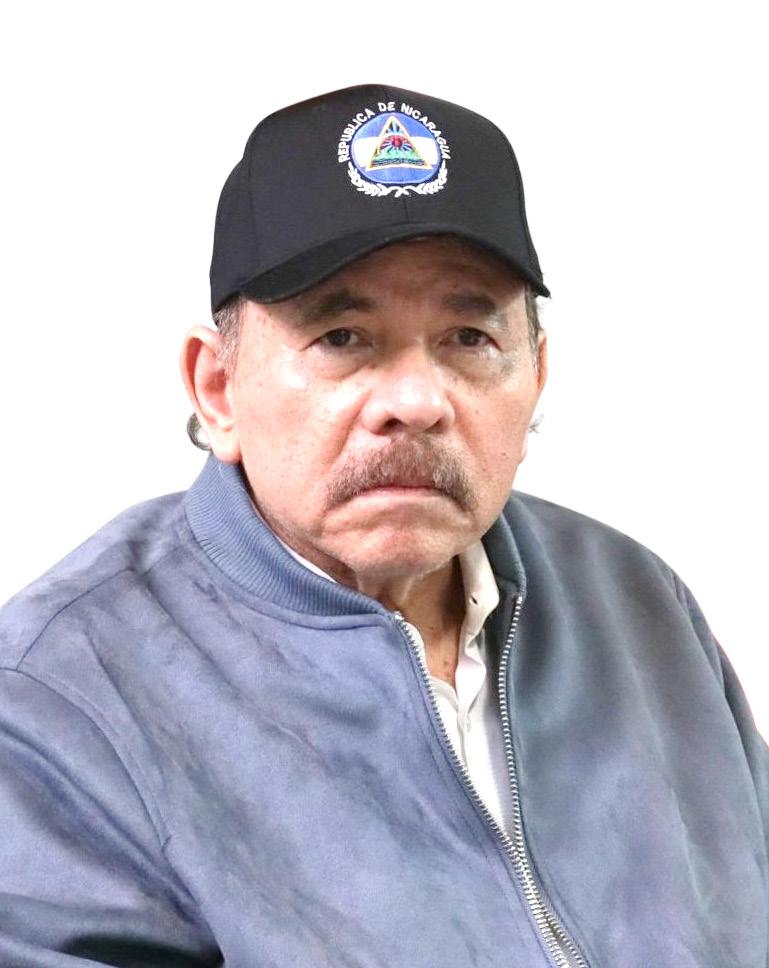
DANIEL Ortega has now said openly what his regime has demonstrated for years: the people of Nicaragua are not to be permitted to remove their rulers through elections.
During celebrations marking the 47th anniversary of the Sandinista Revolution, Ortega declared that there would be “no more elections” through which opposition parties could attempt to take power. He also promised a legislative “wall” against persons his government labels coup plotters and traitors.
The irony is stark. A revolution that overthrew the Somoza family dictatorship has produced another dynastic system, led by Ortega and his wife and co-president, Rosario Murillo.
I responded immediately on X, tweeting: “I unequivocally condemn Ortega’s outrageous announcement that Nicaragua will end elections. This is an assault on democracy and human rights. All responsible governments should condemn this unacceptable act. The people of Nicaragua have suffered long enough.”
However, Ortega’s declaration changed the official rhetoric more than the reality. Elections had already become a gimmick preserving the appearance, but not the substance, of popular choice. Before the 2021 election, opposition parties were outlawed and prospective presidential candidates arrested. Media and civil society organisations were closed or forced into exile. The latest declaration removes the remaining pretence of electoral competition.
Several member states of the Organization of American States (OAS) have condemned Ortega’s announcement. Secretary General Albert Ramdin has rightly described the elimination of elections as a denial of the Nicaraguan people’s sovereign right to choose their government. Neither the Secretary General nor individual governments can, by themselves, express the collective position of the OAS. And, while a month ago, the OAS General Assembly issued a declaration on the deterioration in Nicaragua, the OAS has not responded collectively to Ortega’s subsequent edict. The delegations of Canada and Chile sought to remedy
this silence by preparing a statement for member states. As Dean of the OAS Corps of Ambassadors, I contributed language to that statement, firmly condemning Ortega’s actions and calling for genuine multi-party elections. At the time of writing, that text has not been considered by the Permanent Council, and the United States has since proposed a separate resolution that is also awaiting consideration. The central issue
Convention on Human Rights.
The government chose with- drawal
are parties, and Nicaragua is no longer one.
ertheless, meaningful actions that the OAS can and should take.
More importantly, Ortega’s oppression of the Nicaraguan people, while reprehensible, does not constitute an armed attack upon another state or justify claiming that Nicaragua presently threatens hemispheric peace and security.
The law cannot be stretched merely because the political conduct being condemned is offensive. Doing so would weaken the rules-based order that defenders of democracy seek to uphold.
There are, nev-
now before the OAS is how Ortega’s actions should be characterised.
What is happening in Nicaragua is a crisis of representative democracy, human rights and the rule of law.
The Ortega-Murillo government continues to deprive Nicaraguans of their rights, deepen instability and fear, and drive people to escape repression through irregular migration, creating pressures for receiving states. But this does not transform an internal human rights crisis into a threat to hemispheric peace and security. Nicaraguans fleeing persecution are victims, not security threats to the countries in which they seek safety.
This distinction also matters legally.
Nicaragua withdrew from the OAS in November 2023.
I was President of the Permanent Council when the withdrawal took effect. We made clear that the withdrawal did not erase the international human rights obligations applicable to Nicaragua, including those arising from the American
after a majority of member states resisted its violations of democracy and the rule of law and while suspension under the OAS Charter and the Inter-American Democratic Charter remained possible. Those suspension provisions apply only to member states and therefore no longer provide a course of action.
This does not mean that the OAS must remain silent or inactive. It means that the organisation must distinguish between political and human rights measures within its competence and any coercive measures which would require a different legal basis that is outside its authority.
Within the inter-American system, binding collective sanctions would have to be pursued, if at all, by states parties to the Inter-American Treaty of Reciprocal Assistance, or the Rio Treaty. This separate procedure is available only to parties to that Treaty and requires a credible determination that the peace of the Americas is endangered. Not all OAS members
The Permanent Council can adopt a clear resolution condemning the elimination of meaningful electoral competition and rejecting the exclusion of candidates or organisations solely because they peacefully oppose the government. It can demand the release of political prisoners, the restoration of civil and political rights, and the reopening of space for independent media and civil society.
It can keep Nicaragua under sustained consideration pursuant to the June General Assembly declaration. It can receive regular briefings from the Inter-American Commission on Human Rights and support the Commission’s monitoring, hearings and precautionary measures.
The OAS can call upon Nicaragua to comply with decisions and provisional measures of the Inter-American Court of Human Rights. The Secretary General can offer good offices, even if the government refuses to engage. Member states can also support civil society in exile, cooperate with United Nations mechanisms to preserve evidence, and protect those forced to flee.
Individual governments may consider their own lawful diplomatic measures. But these should be identified honestly as national decisions, not represented as collective OAS action unless authorised by the organisation’s competent organs.
The message to Ortega and Murillo must therefore be unmistakable. Nicaragua’s withdrawal from the OAS has not placed their regime beyond scrutiny or accountability. The OAS must maintain constant vigilance, document continuing abuses through its human rights institutions, and keep Nicaragua under sustained consideration by its political organs. It must insist that those responsible for violations are held accountable under applicable international law.
Ortega may have abandoned the ballot because he fears the verdict of his own people, but the Inter-American community must neither normalise his conduct nor allow it to disappear from hemispheric attention. Its response should be united, persistent and unambiguous, while remaining firmly grounded in the rule of law.
The author is Antigua and Barbuda’s Ambassador to the United States and the OAS. He is also Chancellor of the University of Guyana. The views expressed are his own
Russian paddle-fest!
Photo: Duma.gov.ru,/wikimedia
People steer their stand-up paddle (SUP) boards along the Moyka River at the annual costumed ‘Fontanka’ SUP-boards festival in St. Petersburg, Russia, Saturday, Aug. 1, 2026.
AP Photo/Dmitri Lovetsky
Fusion questions Sony block on new Spider-Man release
By EARYEL BOWLEG Tribune Staff Reporter ebowleg@tribunemedia.net
SONY Pictures has withheld Spider-Man: Brand New Day from Fusion Superplex without explaining why, prompting the cinema to question whether the decision is connected to its recent cyberattack and ransomware incident.
Fusion said its international film booker tried unsuccessfully to secure the movie for its July 31 release and that Sony had not responded to questions about the decision.
“For reasons Sony has not communicated to us, the studio has elected not to license the film to Fusion at this time, despite our account being in good standing with a zero outstanding balance,”
Fusion said.
“We did inquire whether this decision was in any way related to the recent cyberattack and ransomware incident, and we are still awaiting a response from the studio.”
Spider-Man: Brand New Day opened in theatres in the United States on July 31, but in The Bahamas it is being shown only at The Island House, a boutique resort and independent cinema.
The Island House announced additional showtimes on social media.
Fusion’s co-founder and chief legal officer, Tecoyo Bridgewater, said Sony licenses films to cinemas on a title-by-title basis.
“Sony Pictures is the distributor for Spider-Man: Brand New Day. As is standard in the industry,
films are licensed to exhibitors, including Fusion Superplex, on a title-by-title basis,” Mr Bridgewater said.
Fusion said the limited release had made the film inaccessible to many Bahamians who would ordinarily watch it at its nine-screen complex.
“As it stands, the film is currently available only at a single boutique cinema, making it inaccessible to the vast majority of Bahamians who would ordinarily enjoy it at our nine-screen entertainment complex,” Fusion said.
The cinema said it remains hopeful that Sony will license the film for release on August 7.
Fusion apologised to customers who had expected to see the movie at the cinema.
THIS image released by Sony Pictures shows Tom Holland in a scene from “Spider-Man: Brand New Day.”
Photo: Sony Pictures/AP
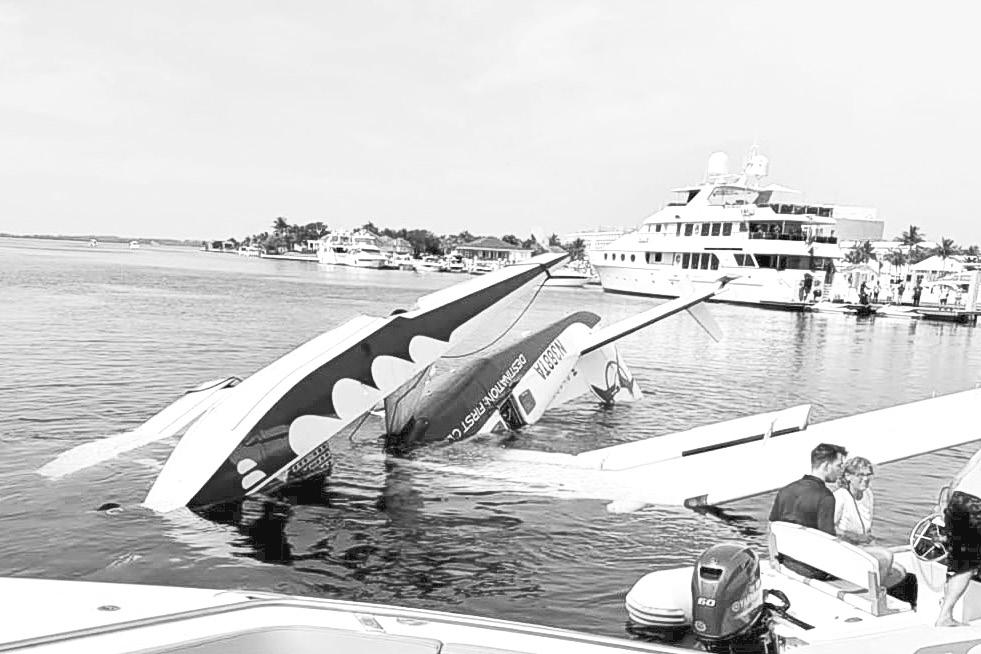
Tourists flee sinking seaplane after collision at North Bimini dock
United States registra-
tion N388TA, was taxiing at the North Bimini Seaplane Base at about 10am when the incident occurred.
Police said the pilot encountered heavy vessel traffic in the intended departure path and diverted northward in an attempt to make a safer take-off. While taxiing on the water, however, the aircraft began pulling to the left, failed to respond and collided with a dock.
American tourist
Jeanne O’Brien, who was among those aboard, told ABC News the aircraft
“went down pretty fast”.
“All of a sudden, the dock started getting closer and closer, and one of the people in the plane behind me said, ‘Where are you going?’ And then it just was boom, and it hit,” she said.
Video recorded inside the cabin captured the aircraft jolting before a
warning beep sounded. “Time to get out,” one passenger could be heard saying.
Passengers quickly unbuckled their seatbelts and climbed from their seats. As the aircraft drifted closer to shore, one passenger was seen throwing belongings onto land before everyone evacuated.
Boat captain Nick Pavlakis, who witnessed the crash, said he rushed to assist after hearing panicked voices and seeing people waving.
He said passengers and luggage were removed as the pontoons and then the cabin began filling with water.
“At that point, we said, ‘Okay, luggage comes off, all the passengers are safe.’ Copilot comes off, pilot getting everything off of the plane, and it was filling up in the pontoons, and then it starts filling up in the cabin. He got off of the plane just as it started to roll, and it eventually rolled, sat on
the bottom where it still is today,” Mr Pavlakis told WPBF. He said everyone except the pilot and co-pilot was aboard the rescue boat within five to ten minutes, although
the entire operation felt much longer.
“We got everybody on the boat from leaving the dock and having people on board, minus the pilot and co-pilot,” he said. “It must have been
five minutes, ten minutes tops. But between getting the boat situated, getting all the luggage off, it felt like a few hours. But I think it was probably 20 or 30 minutes.” Mr Pavlakis said the
aircraft struck a seawall, damaging a pontoon and causing it to take on water.
The AAIA has launched an investigation under International Civil Aviation Organisation Annex 13 procedures and local regulatory requirements. It said further updates would be issued as the investigation progresses.
Tropic Ocean Airways described the incident as a mishap while the aircraft was taxiing before departure and said it was cooperating fully with the authorities.
The crash occurred only weeks after ten people were killed when an aircraft travelling from New Providence to Andros crashed on Independence Day.
Preliminary findings in that investigation indicated the aircraft struck trees while apparently configured for landing before crashing into a wooded area and erupting in flames.
THIS screencapture shows the Tropic Ocean Airways Cessna 208B seaplane sinking after crashing into a dock in north Bimini Saturday.
Public education system has increased capacity to serve students with autism
Howard Univ. president says more than 200 students readmitted after mass unenrolment
By COREY WILLIAMS Associated Press
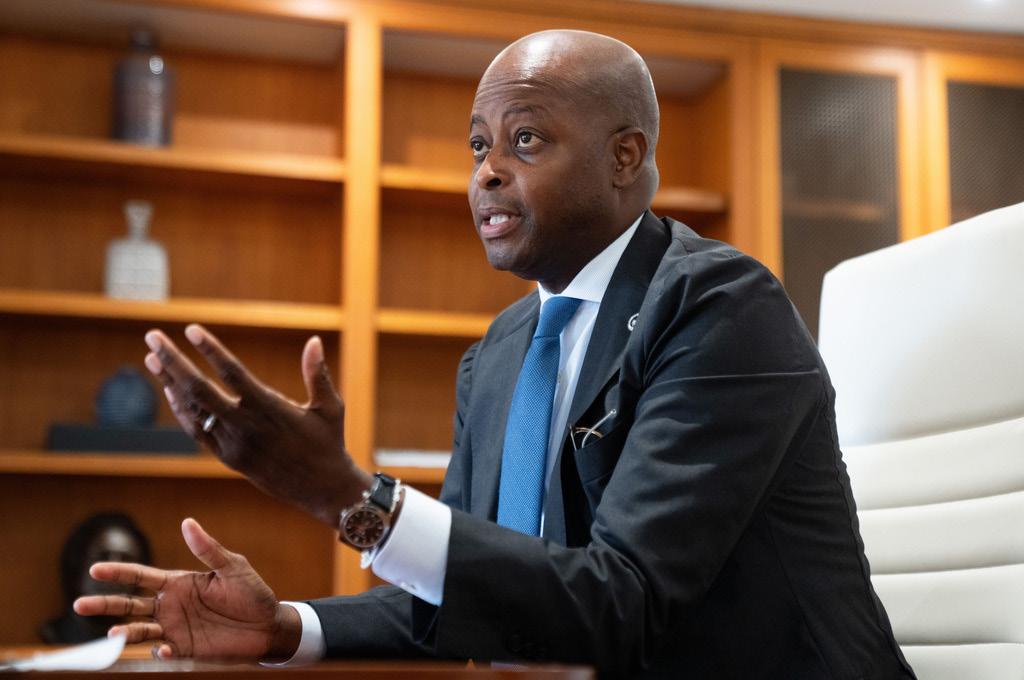
WASHINGTON (AP) — The interim president of Howard University said over 200 of the more than 500 first-year incoming students who were unenrolled for the fall semester have been readmitted to the Wash ington, D.C. school.
In an interview with The Associated Press on Wednes day, Wayne A. I. Frederick defended the way the his torically Black university handled the initial unenroll ment, saying many students and their families apparently misunderstood the communicated financial obligations they were expected to meet before the start of instruction in August.
education so close to the start of fall semester at most schools.
Some students and parents said they had trouble reaching officials at Howard by phone or email, leaving them unsure of how to resolve issues with tuition and housing assignments.
“There were no issues as far as what we communicated," Frederick said, adding that the school had been clear since March about unpaid balances for tuition that were due by mid-July.
Students who were unenrolled for financial reasons had outstanding tuition balances after their financial aid and scholarships were applied, he said. Others were unenrolled because of unreported immunizations.
“I don't think it's just a simple matter of right or wrong. I think Howard adhered to its policies or procedures,” Frederick said.
As students learned last week that they no longer had spots at Howard, one of about 100 historically Black colleges and universities in the United States, dozens took to social media panicked about their next steps. Many wondered where else they would continue their
AP Photo/Allison Robbert
Frederick acknowledged that the deluge of calls was overwhelming, but he added that emails were responded to.
He said the school started meeting and speaking with parents and students last week, which led to the reenrollments.
“We looked at several things," Frederick said of the process for reinstating the students, including documents for incoming financial aid.
The school received about 37,000 applications for enrollment this fall. About 2,200 incoming students remained enrolled after 502 were removed last week, Frederick said.
Keana Johnson was one of the students initially unenrolled. The 17-year-old lives in a shelter for teens and young adulwts in New York City. A staffer at the shelter rode with her Wednesday morning by train to Howard to ask how she could be reenrolled. She was told after speaking in person with a Howard official that her enrollment had been reinstated.
“I feel great,” Johnson told the AP.
DIRECTOR of Education, Ministry of Education, Science and Technology, Dominique McCartney-Russell said the Department of Education's work is to translate the national commitment to inclusion into meaningful support in schools.
“Through our longstanding partnership with R.E.A.C.H. and the commitment of families and professionals, the public education system has increased its capacity to serve students with autism and other exceptionalities,” the Director said during a Town Hall Meeting dubbed “From Awareness to Action Building Opportunities for Every Stage of Life” hosted by the Ministry of Education and R.E.A.C.H. (Resource and Educational source for Autism and other related challenges in The Bahamas) held at Stephen Dillet Primary School on Monday, July 27, 2028.
“Today, support includes specialized classrooms, inclusive placements where appropriate, individualized educational planning, classroom accommodations, assessments, counselling and consultation with families and teachers. Students also access speech and language therapy, occupational therapy, behavioural support, physical therapy and educational psychology services.”
She explained that across the Ministry’s special education services, 120 plus trained special education teachers are currently supporting a growing population of learners, with more than 40 additional teachers recruited over the past three years.
“To strengthen capacity within the system, we partnered with Barry University to enable 14 educators to pursue master's degrees in Special Education. The Marjorie Davis Special Education Institute has been strategically realigned to provide targeted support for students requiring Tier II interventions.
“We have also expanded access to specialized services through the increased use of pull-out programmes and self-contained units, ensuring that more students receive the individualized support they need.”
The Director said in keeping with the Ministry’s commitment to inclusive education, a greater number of students with special needs are now participating in Technical and Vocational Education and Training (TVET) programmes.
She explained that this summer, both teachers and parents are benefiting from Applied Behaviour Analysis (ABA) training, equipping them with practical strategies to support student success.
The Director also noted that the Ministry has engaged with allied professionals and specialists to identify opportunities for collaboration and to strengthen the range of services available to students. “Looking ahead, we have been tasked with developing a National Special Education Registry and establishing a Special Education Diploma pathway. These initiatives will help create a more coordinated and responsive system of support.” She said, “Significantly, we anticipate celebrating our first formally recognized Special
Education graduate in 2027, marking a major milestone in the advancement of special education in The Bahamas.
“Our immediate priorities are clear: earlier identification; shorter and better-coordinated referral pathways; continued teacher training; increased specialist capacity; stronger access for the Family Islands; and improved transition planning.”
The Director said the Ministry is working to expand services in Grand Bahama, Eleuthera and Long Island, while using hybrid support services to reach students where on-site specialists are limited. “Families must remain active members of the educational team, particularly in individualized planning and decisions about transitions.”
She said the Ministry’s responsibility does not end with school attendance, as it must prepare students for further education, technical and vocational training, employment, greater independence and participation in community life.
“Progress will require honest evaluation and sustained collaboration. The Department will continue working with R.E.A.C.H., families, educators, therapists and partner agencies to strengthen both the quality and reach of services.”
The Director said, “Our goal is straightforward: every learner should be known, supported and given a meaningful opportunity to progress. We are proud of the advances made, mindful of the gaps that remain and committed to the work ahead.”
LITERARY ASSOCIATION DANCE FUNDRAISER
STUDENTS across The Bahamas are expected to benefit from the Bahamas Literacy Association's (BLA) upcoming Dance Fundraiser, with proceeds helping to expand literacy programmes, teacher development initiatives, and community outreach efforts throughout the country.
The fundraiser will be held on Friday, September 5, at the St. John's College Auditorium and marks one of the Association's first major fundraising events as it works to strengthen literacy support in New Providence and the Family Islands.
Funds raised will help sustain the Association's free reading intervention and tutoring programme, teacher professional development workshops, book club initiatives, reading promotion activities, community outreach, and future educational projects.
The event will also support the continued growth of the National Literacy Teacher of the Year Award, which will
be presented for the third time this year.
The award recognizes educators who demonstrate exceptional commitment to literacy instruction and student achievement. As The Bahamas continues to face challenges related to teacher recruitment and retention, the initiative aims to celebrate teaching excellence while encouraging educators who are making a meaningful difference in students' lives.
Established in 2017 and formally registered in 2022, the Bahamas Literacy Association has expanded its work in communities throughout the country with programmes designed to improve literacy outcomes for children and strengthen classroom instruction.
Over the past several years, the Association has conducted Trainthe-Trainer literacy workshops in Cat Island, facilitated literacy outreach initiatives in Long Island, and visited Eleuthera on two occasions to provide
professional development for teachers and reading intervention activities for students.
Since September 2024, the Association has also operated a free annual reading intervention and tutoring programme that serves children from September through April, providing literacy support to students and families at no cost.
Association officials say literacy is a shared national responsibility and are encouraging parents, educators, alumni, corporate partners, and members of the public to support the fundraiser. Every contribution, they note, helps provide resources that improve reading opportunities for students while supporting teachers and strengthening literacy programmes across The Bahamas.
For tickets, sponsorship opportunities, or additional information, members of the public may contact the Bahamas Literacy Association.
Photos: Patrice Johnson/BIS
HOWARD University interim president Wayne A. I. Frederick sits for an interview, Wednesday, July 29, 2026, in Washington.