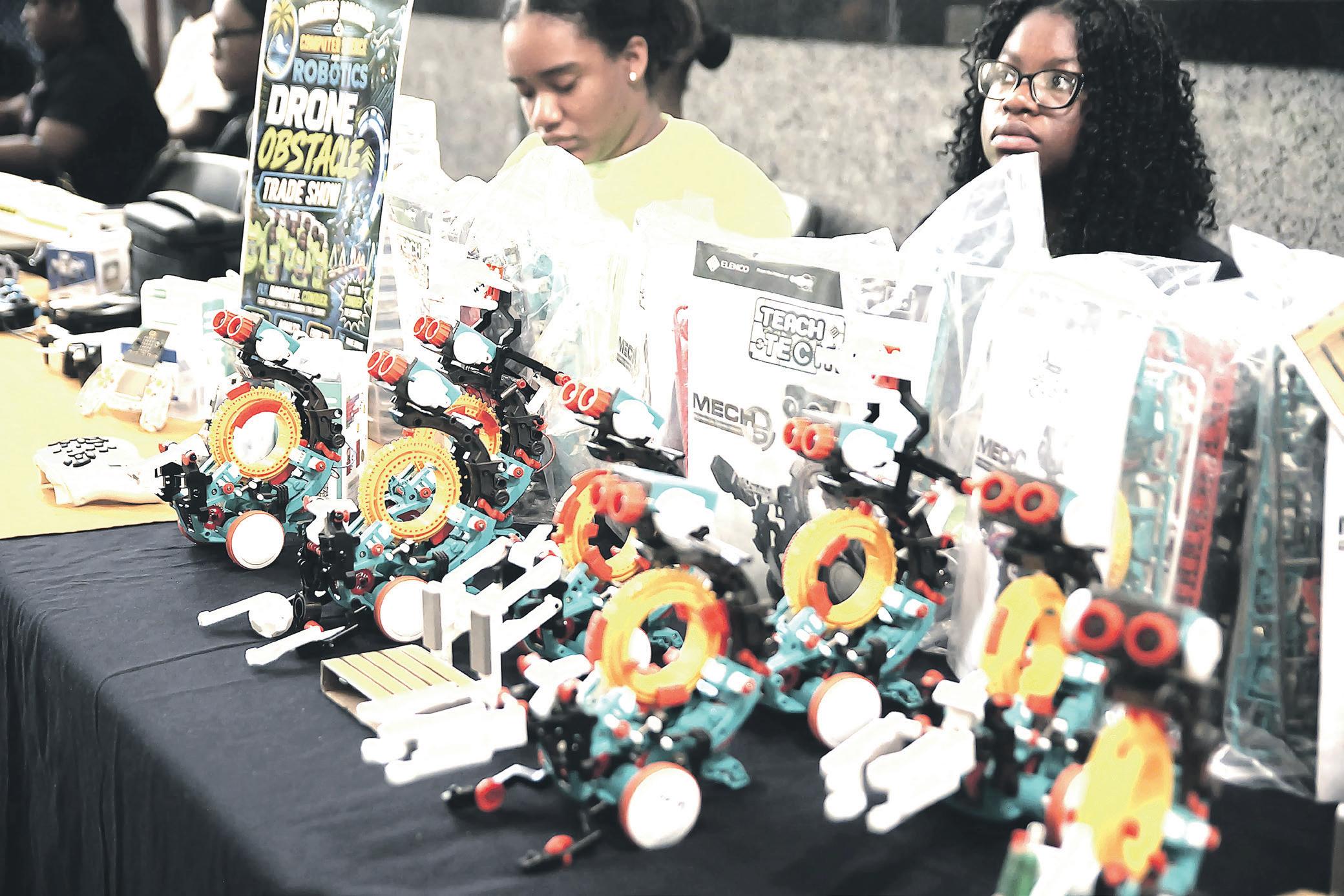
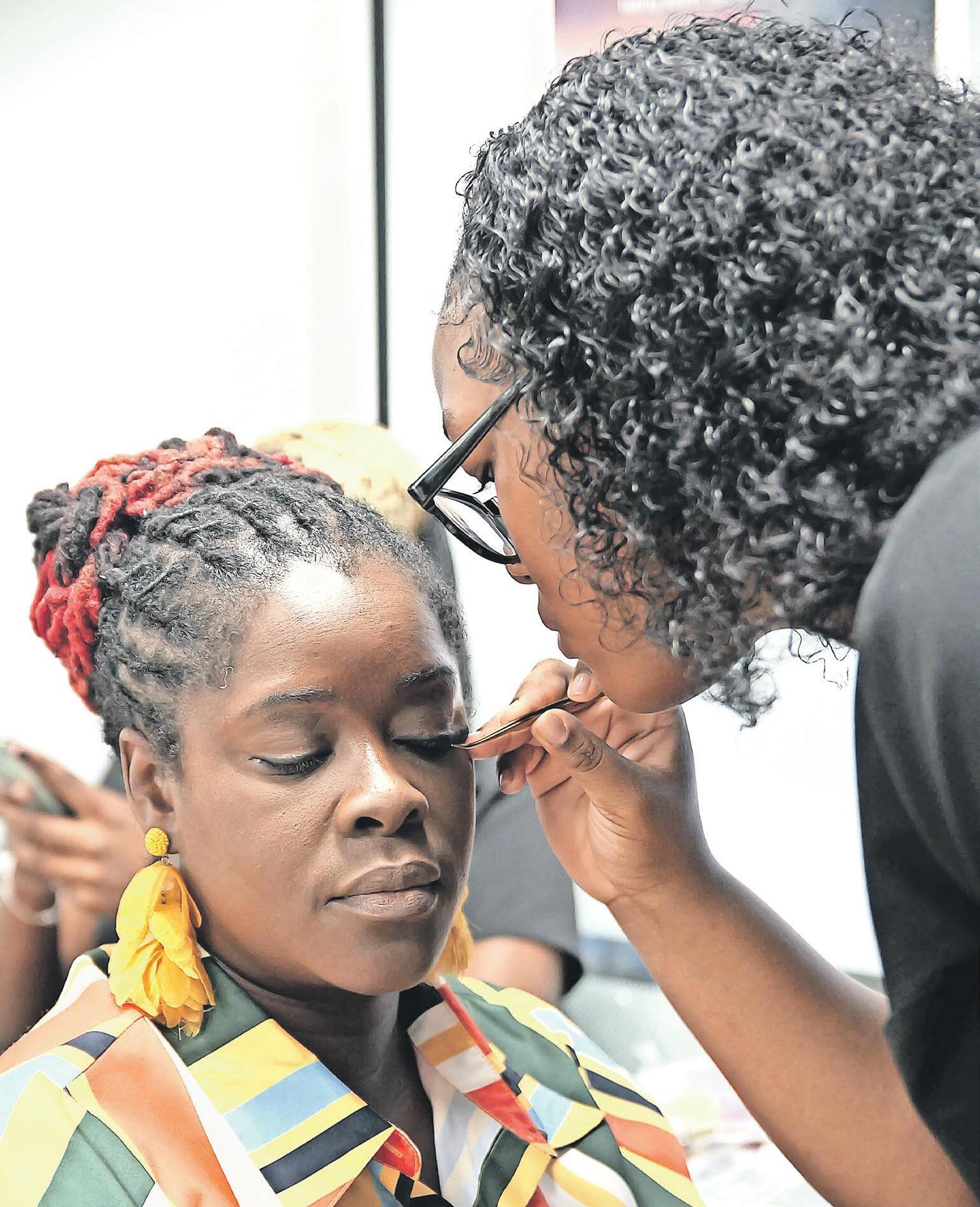
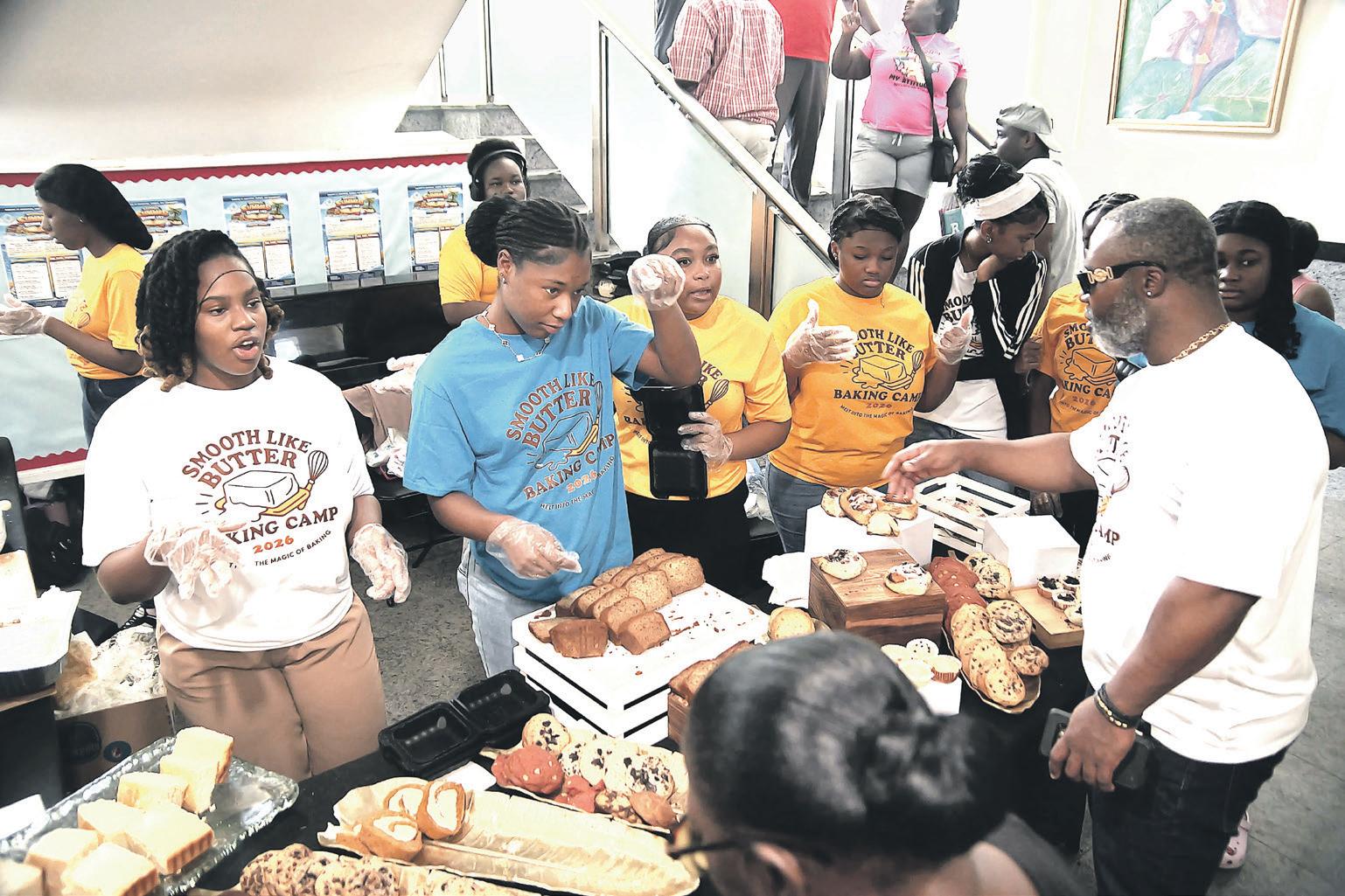
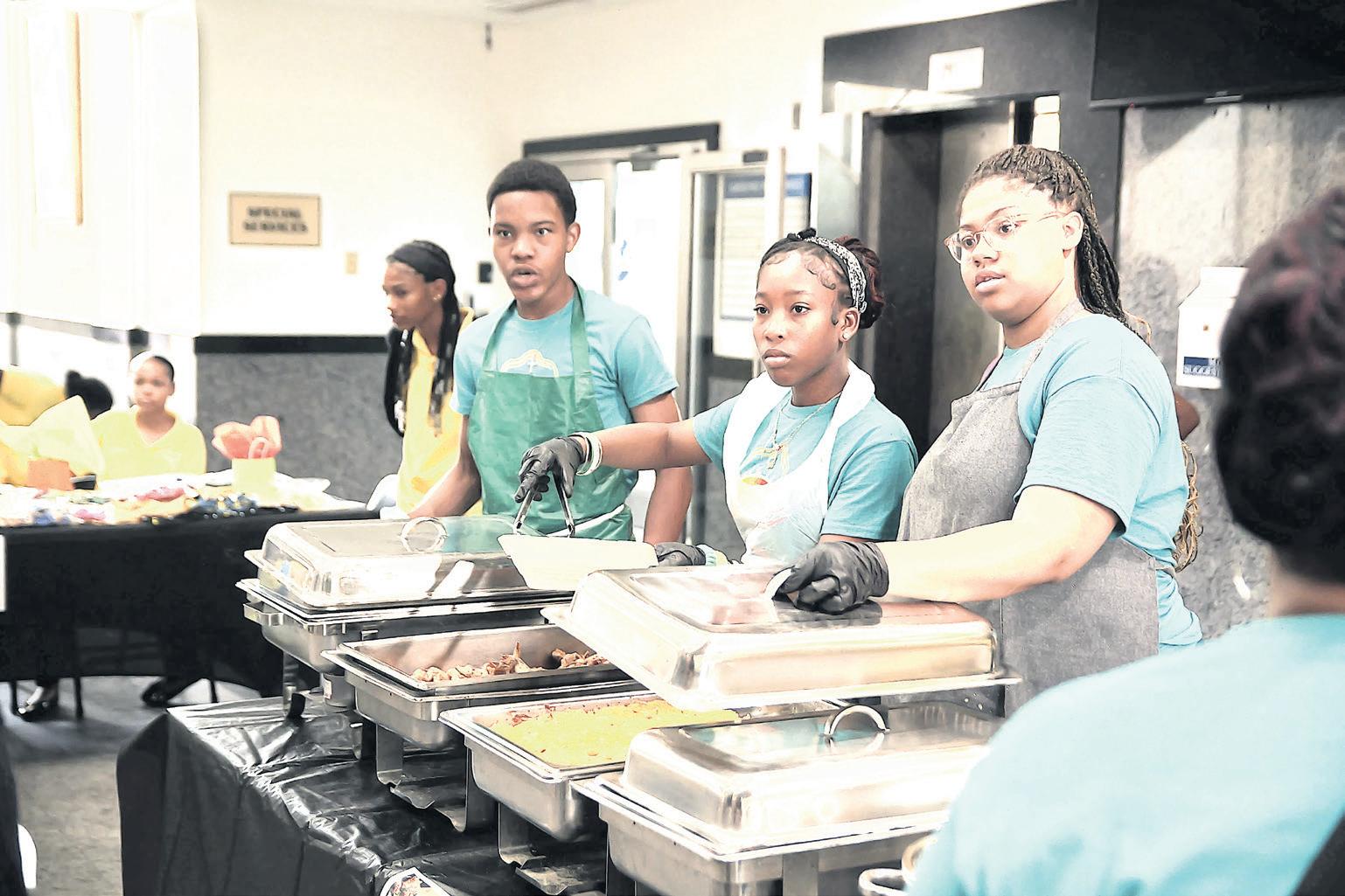
MINISTRY of Youths and Sports held a trade show after the completion of their youth summer trade programme for the kids to show and sell the products that they learned to make at the Dame Ivy Dumont Building on Wednesday.
Photos: Chappell Whyms Jr
Island-wide blackout sparks anger over high BPL bills
Many residents slept inside their vehicles to escape the heat, with fogged-up windows suggesting they had spent hours there. Groups also gathered at gas stations, sitting in their cars for relief.
Others said they woke drenched in sweat as temperatures remained high.
The blackout triggered a food of complaints on BPL’s social media pages, with customers condemning the utility’s service while continuing to receive costly electricity bills. Some called for BPL to be privatised, while others demanded competition in the electricity sector.
“Hours after they sent those crazy bills, a night of darkness and sweat…what are we paying for?” one Facebook user wrote.
Another wrote: “It seems completely unfair to be paying hefty bills and melting in the heat. You want the customers to be patient but the scales are tipped in your favour.”
The disruption spread beyond homes.
Fast food restaurants experienced long lines and delayed openings as some employees arrived late.
At Lynden Pindling International Airport, long queues formed at Bahamasair check-in counters after an internet interruption prevented international passengers from checking in.
The disruption caused delays before operations
resumed using a backup internet service. The airport operated on generator power for several hours before electricity was fully restored shortly after 8am.
Princess Margaret Hospital experienced little disruption. Ofcials reported some temperature fuctuations but said patient care was largely unafected.
Energy Minister JoBeth Coleby-Davis acknowledged the frustration caused by the blackout and said teams were immediately deployed to support restoration eforts.
She said a fault in BPL’s high-voltage system at the Blue Hills Primary substation caused the loss of one of its primary transformers. The failure triggered a fashover, forcing workers to isolate critical equipment to protect employees and the wider electricity network, she said.
Once the system was stabilised and safety procedures were completed, BPL began what Mrs Coleby-Davis described as a black start restoration.
She said a black start is among the most technically demanding operations an electricity provider can undertake, requiring generation units to be brought online in a controlled sequence before substations are progressively energised and electrical load is restored in stages.
Every switching operation had to be coordinated in real time among the control room, generation facilities, substations and feld crews, she said.
“While I fully understand the frustration experienced by households and business, I also wish to express my sincere thanks to the dedicated men and women of
BPL,” she said. “Many BPL employees have worked continuously under extremely demanding conditions while mourning the recent loss of
a valued colleague.” FNM leader Michael Pintard blamed the Davis administration for the state of the energy sector, rejecting recent comments by
PLP chairman Fred Mitchell that sought to place responsibility on the previous FNM administration.
Mr Pintard said the administration cancelled the Wärtsilä deal, terminated contracts for Station A and took several generators ofine.
He said the FNM returned generators to service and stabilised the transmission and distribution network while it was in ofce.
“What’s the bottom line? What accounts for the chaos that we now are experiencing with BPL? The PLP,” he said. “They have had carte blanche—In other words, nobody has been able to interrupt what they have done in terms of privatizing BPL—and yet they have not been able to provide cleaner power, more afordable power, or worst of all, consistent power for the Bahamian people.” Electricity was restored in phases, returning to some areas by 6.30am and gradually reaching others throughout the day. However, the crisis did not end with the restoration.
BPL announced temporary rotational outages to maintain the stability of the electricity grid, warning customers in parts of western New Providence to expect scheduled disruptions between 1pm and 1am this morning.
The utility also reported several separate problems across New Providence yesterday but did not disclose the cause of each incident.
PM warns of ‘growing pains’ after island-wide blackout
By KEILE CAMPBELL Tribune Staff Reporter kcampbell@tribunemedia.net
PRIME Minister Philip Davis defended his administration’s handling of the electricity crisis, insisting yesterday’s island-wide blackout was caused by factors beyond the government’s control and warning Bahamians that further disruptions could occur as the power system is overhauled.
His comments came hours after an electrical fre at Bahamas Power and Light’s Blue Hills Power Station plunged New Providence into darkness, forcing residents from sweltering homes and disrupting businesses and airport operations.
The failure renewed scrutiny of the Davis administration’s previous assurances that BPL was ready to meet summer demand, with this summer’s outages ranking among the worst in a decade on an issue by which every administration is judged.
Mr Davis acknowledged his frustration and disappointment but rejected suggestions that the blackout refected inadequate maintenance or a lack of efort by BPL and his administration.
“I am frustrated because the act that would cause these outages is not because of lack of maintenance, not because of the transformative work that is happening, but rather because of factors beyond our control,” he said.
BPL said a suspected underground cable fault caused a fre involving a 15 MVA transformer, shutting down generation at the Blue Hills and Clifton Pier power stations. However, BPL ofcials said the investigation into the root cause was continuing, and they had not determined what initially caused the cable to fail.
Asked why widespread outages persisted after the government said BPL was prepared for summer, Mr Davis pointed to excessive heat and questioned whether the transformer failure could fairly be blamed on human error.
“You have a transformer that's blown up because of overheating of underground cables, was that man's fault?” he said. “The excessive heat, the record heat that we are experiencing over the last several months. May, for example, was the hottest in history. June — same thing.”
Mr Davis said the heat was overwhelming the transmission and distribution system.
Mr Davis urged Bahamians to remain patient and warned that the modernisation of BPL’s ageing infrastructure could bring further interruptions.
“There will be growing pains to get to where we need to be because of what we inherited,” he said, adding that his administration inherited an archaic system in which much of the infrastructure had reached the end of its useful life.
“Incidents like these remind us of the state of play of BPL,” he said.
Mr Davis also disclosed that BPL had lost institutional knowledge about the electricity grid and did not have a complete inventory showing the location of underground cables.
“For example, the institutional knowledge of the grid in the BPL, BEC is no longer there,” he said. “Where the underground cables are, there's no asset
inventory. We're now trying to develop that.”
The Prime Minister said he had asked BPL to consider concessions for customers afected by the blackout and that the utility would determine what it could do.
He argued that The Bahamas was not alone in experiencing power-delivery problems but said the government was focused on addressing the country’s defciencies.
“If you do your investigative reporting and understand what's happening around the world, you see that The Bahamas is not unique in what is happening with power delivery,” he said. “But we are not looking at elsewhere, we're dealing with our own problems, we are facing those problems, and we are delivering aggressively.”
Mr Davis pointed to transmission and distribution upgrades, new substations and renewable energy projects at Blue Hills as evidence that work to modernise the system was continuing.
He said the completed Blue Hills project would include 20 megawatts of solar generation and 25 megawatts of battery storage.
BPL chief operating ofcer Anthony Christie said the underground cable
may have had an existing fault that became apparent under heavy electrical loading.
“It would have exploded, or the fault would have become apparent due to load on it,” he said. “Once that happened, the chain
reaction was other cables in that same immediate vicinity would have also faulted.”
Mr Christie denied that poor maintenance contributed to the incident but stressed that the investigation was ongoing.
BPL executive chairman Christina Alston later said in a statement that the company had launched an investigation, with preliminary assessments indicating that a suspected underground cable fault led to the transformer fre.
Ms Alston acknowledged that BPL’s contingency arrangements had limits when several major incidents occurred in close succession.
“That is not an excuse,” she said. “It is the reality we're confronting — and responsibility we understand.”
She also acknowledged that public confdence would have to be rebuilt through measurable improvements in reliability and communication, saying assurances alone would not restore trust.
BPL chief executive ofcer Toni Pratt apologised to New Providence residents and said electricity had been systematically restored to most of the island, although some customers would continue to experience outages while repairs were completed.
“We do want to apologize to the residents of New Providence because we know that its an inconvenience,” Ms Pratt said. “We know that it is very, very hot, and we understand your frustration. We are working as safely and as quickly as we possibly can to restore supply.” Bahamas Grid Company chief operating ofcer Ryan Holder said crews began assessing the damaged transformer overnight and expected repairs to take between eight and ten hours.
He said teams were excavating the afected area, installing new conduit and laying replacement cable while working around energised infrastructure.
SCREEN capture shows flames coming from a 15MVA transformer at BPL’s Blue Hills Substation yesterday which led to an island-wide blackout.
PRIME Minister Philip ‘Brave’ Davis speaks with BPL COO Anthony Christie at the Blue Hill Sub-station yesterday after a transformer fire led to an island-wide blackout. Also pictured are Senators Letrae Rahming and Clint Watson.
Photo: Keile Campbell
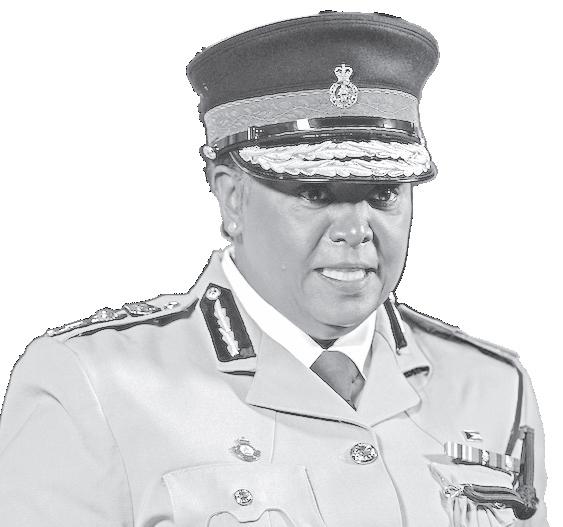
Police investigate suspect
who breached bail 81 times
KNOWLES
CONCERN from page one
Prosecutors allege that Adnan Oliver, 39, killed James McPhee on Carmichael Road on July 12, weeks before McPhee was expected to testify in Oliver’s armed robbery trial.
McPhee, a husband and father of three, was found with severe lacerations and other upper-body injuries early that Sunday, two days after celebrating his 59th birthday on Independence Day.
Mr Laroda said the allegations had underscored the need for greater vigilance in monitoring every person released on bail.
“It is a concern, and
it just raises the awareness that we have to be ever more vigilant with regards to the monitoring of every individual that are on bail,” he said.
“The last consequence is what could happen if any of these individuals slip through the cracks.”
Asked whether anyone found responsible for the alleged failures would face disciplinary action, Mr Laroda said Commissioner Knowles had committed to a transparent investigation.
“I can tell you that the commissioner is transparent, and her words to me is that an investigation will be done,” he said. “Wherever it leads, if there’s anybody to be held accountable, the
individual or individuals would be.”
Crime consultant Carlos Reid called for accountability last week, saying “somebody dropped the ball”.
Mr Reid said the repeated alleged violations should never have gone unchecked and urged authorities to determine how Oliver allegedly failed to report to police for months without being brought back before the court.
Attorney General Wayne Munroe previously played down the public safety significance of the reporting condition, saying its purpose was to ensure that an accused person appeared for trial.
US issues updated warning over crime and jet skis
THE US State Department is urging American citizens travelling to The Bahamas to exercise increased caution due to crime following a series of recent shootings and other violent incidents in the country. Although the department kept The Bahamas at a Level 2 travel advisory, it updated its advisory summary on July 28 to emphasise ongoing public safety concerns.
The advisory said violent crime, including armed robbery, burglaries and sexual assault, can occur anywhere in The Bahamas. However, it noted that most incidents are concentrated in New Providence and Grand Bahama.
The updated advisory follows a recent spate of fatal shootings in the country, with ten murders recorded so far this month alone.
The State Department also urged travellers to remain vigilant in the "Over-the-Hill" area of Nassau, where it said gang-related violence has left residents dead.
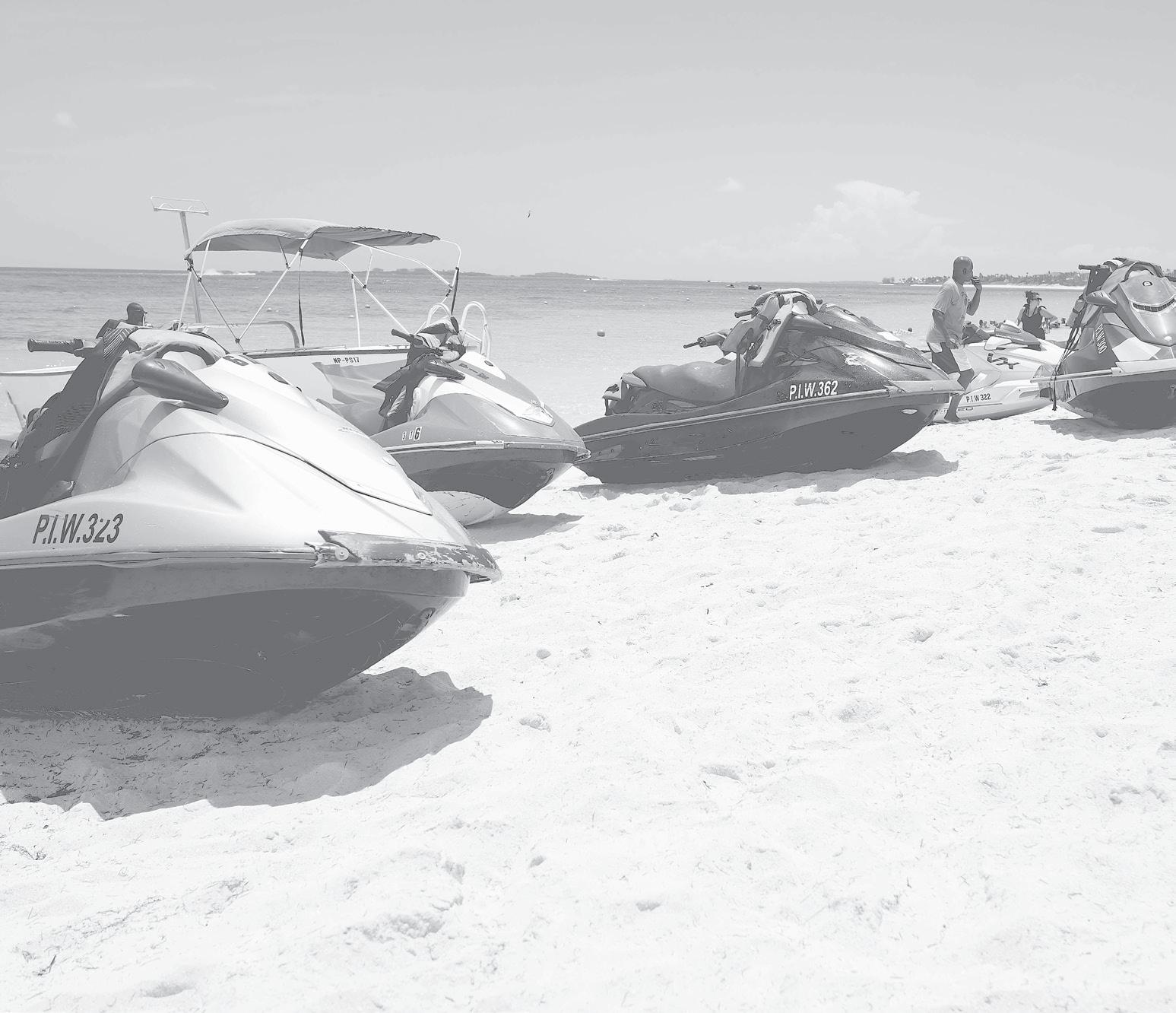
It also reiterated its longstanding concerns about dangers linked to jet ski rentals and the watercraft industry in The Bahamas, citing injuries, fatalities, sexual assault reports.
“Never swim alone and beware of jet skis or other watercraft operating close to shore. Sexual assaults have occurred on and near downtown Nassau beaches. Be aware of your surroundings and stay alert in public restrooms. Be aware of your own fitness and swimming capabilities.”
According to the US embassy, six US citizens have been hospitalised because of jet ski accidents since
August 2024, with three requiring emergency medical evacuation from The Bahamas.
The embassy also said two US women reported sexual assaults by jet ski operators in 2025 and that two more sexual assaults have already been reported in 2026.
Ambassador Herschel Walker recently escalated its warnings and criticism of The Bahamas’ jet ski industry, citing unsafe practices.
“Many watercrafts are unsafe, and operators are unlicensed and uninsured. That's why US government employees are banned from renting or riding jet skis. We're working with the government of The Bahamas to address these issues, but for now, consider all the risks before you get on a jet ski in The Bahamas. Your safety matters,” he said in the public service announcement last month. US
STATE Department Travel Advisor reiterates its longstandin concers over jetski operators.
Man testi es nephew set him on re over dog dispute
By PAVEL BAILEY Tribune Staff Reporter pbailey@tribunemedia.net
A MAN showed jurors his burn scars yesterday as he claimed his nephew deliberately set him on fre at their Gibbs Corner home in 2023 following an argument over dogs, causing him to fall on his elderly mother and burn her as well.
Emile Humes gave evidence virtually in the attempted murder trial of Ricardo Richardson before Justice Guillimina Archer-Minns.
Richardson is accused of setting fre to his grandmother, Magnolia Moxey, then 74, and his uncle following an argument on November 27, 2023.
Mr Humes said he went to the Quakoo Street Police Station at about 5pm that day to report the dogs his nephew kept at their shared home and request assistance having them removed.
He said that when he returned home, he encountered Richardson and told him to move the pit bulls from the porch because Ms Moxey was afraid of them.
The defendant allegedly told his uncle that he would move the dogs “over his dead body”.
An argument lasting between three and fve minutes followed on the porch.
Mr Humes said Richardson told him he had something for him before allegedly running to the back of the property and retrieving a gas jug.
While Mr Humes was speaking to his mother, who was standing two to three feet away, he felt gasoline splash onto his back twice.
He said that when he turned around, he saw Richardson allegedly use a lighter to set him on fre.
Mr Humes said he feared for his life and stumbled around while trying to extinguish the fames. He then fell onto his mother, causing burns to her chest and hands. He said her foot was also burned.
He explained that some of the gasoline allegedly splashed onto Ms Moxey because she was standing close to him when he was doused.
Mr Humes said he felt as though he was losing his life during the ordeal.
While he was on fre, he allegedly heard Richardson repeatedly say, “my Grammy on fre”.
Mr Humes said the accused took Ms Moxey to hospital in a private vehicle. He was later taken to Princess Margaret Hospital after neighbours called an ambulance.
He claimed Richardson appeared angry when he was asked to move the
dogs.
Mr Humes said he suffered burns to between 80 and 90 percent of his body, with only his legs remaining unburned.
He spent between fve and six weeks in hospital, where he received skin grafts and other medical treatment.
Mr Humes said he was alert when he gave police a statement but was later placed in a medically induced coma because of the extent of his injuries.
He brought his arm close to the camera so jurors could see the burns to his hand and arm. He said the scars on his back and chest were the same or worse and described them as being as pale white as those on his hands.
Mr Humes said he never gave Richardson permission to burn him.
During cross-examination by defence attorney Walton Bain, Mr Humes confrmed that he signed a police statement.
Mr Bain suggested that the address Mr Humes gave in the statement differed from the address he provided while giving evidence.
Mr Humes denied that the argument concerned the care of his mother and maintained that it was about Richardson’s four dogs. He said he never had
possession of the gasoline and insisted that the accused set him on fre.
Although the defence suggested the incident was an accident, Mr Humes maintained that Richardson deliberately set him ablaze.
He said that although he fell onto his mother, gasoline must also have landed on her because Ms Moxey sufered burns to her legs, while his legs were not burned.
Mr Humes said his mother had no medical conditions at the time of the incident. He claimed he had cared for her for between eight months and a year before the alleged attack.
When questioned about Richardson’s emotional state after Ms Moxey caught fre, Mr Humes said he could not say because he was trying to save his own life.
He said he asked Richardson why he was doing this as the defendant allegedly threw gasoline on him. Mr Humes maintained that he saw the accused set him alight.
When shown a night-time photograph of a green-andwhite house with a porch, Mr Humes identifed it as his mother’s home.
He also identifed a damaged chair on the porch as the one on which Ms Moxey had been sitting. He
pointed out a black jug that he claimed contained the gasoline Richardson allegedly threw on him.
Valencia Brennen, of the Registrar General’s Department, produced Ms Moxey’s death certifcate in court.
Detective Constable Freddie Moultrie, the investigator, then continued his testimony.
After the death certificate was admitted into evidence, DC Moultrie read a written statement from Ms Moxey to the court.
The ofcer said he obtained the statement from Ms Moxey while she was in the PMH burns unit on November 30, 2023.
Ms Moxey told police that she lived with her son, Emile, and Richardson, her grandson, at the time of the incident.
She said she had raised Richardson and that he had lived with her for fve years following his mother’s death.
Ms Moxey said Richardson and her son became involved in an argument outside the house over the accused’s dogs. She said the defendant threw something onto her son and then set him on fre.
Ms Moxey said Emile fell on top of her while screaming before Richardson lifted him of her and took her to hospital.
She said Richardson placed her in fear and requested police action. She told officers she would recognise the suspect because he was her grandson.
Sergeant 1111 Akeem Nabbie said Ms Moxey identified Richardson as her assailant in photograph number three of a 12-person photographic line-up. He said she circled and signed the photograph.
Sergeant Nabbie said Ms Moxey told him that the accused threw gasoline onto her and her son, causing them to be set on fire.
He said she was coherent during the interview but appeared to be in pain and was bandaged.
Mr Bain alleged that there were gross inconsistencies between the accounts two officers recorded from Ms Moxey. However, Sergeant Nabbie said he did not compare notes with anyone and could speak only to what Ms Moxey told him.
He rejected the defence’s suggestion that she was incoherent because of pain medication.
The officer said he received clearance from a doctor before speaking to Ms Moxey in the burns unit.
Cephia Pinder-Moss and Khaula Reid appeared for the prosecution.
APPEAL COURT UPHOLDS 27-YEAR SENTENCE FOR FATHER’S INCEST
By LYNAIRE MUNNINGS Tribune Staff Reporter lmunnings@tribunemedia.net
THE Court of Appeal has upheld the 27-year prison sentence of a man convicted of seven counts of incest involving his biological daughter, after fnding that his trial was fair and that the sentence was appropriate.
The appellant, identifed in the judgment as O.G., appealed his convictions and sentence, arguing that several issues during his trial afected the fairness of the proceedings. He claimed the trial judge wrongly restricted the defence’s questions to the complainant, allowed an improper audio recording into evidence, continued the trial without a defence witness who was hospitalised, and should not have
overseen the case after a previous trial had ended without a verdict. However, the Court of Appeal rejected those arguments and dismissed the appeal. O.G. was convicted on November 13, 2023, of seven counts of incest under the Sexual Ofences Act. The ofences were alleged to have occurred between February 1, 2015 and October 27, 2020, involving his daughter, who was 16 years old when the frst ofence was alleged to have occurred. He was sentenced on March 19, 2024, to 27 years in prison for the frst count and eight years for each of the other six counts. The sentences were ordered to run at the same time.
The Court of Appeal found that the trial judge acted correctly when allowing the complainant’s
sister to give evidence about a disclosure of abuse. The court said the evidence was not used to prove the allegations were true, but to show that the complainant’s actions were consistent with her account of what happened.
The court also ruled that the defence was properly prevented from questioning the complainant about an alleged sexual relationship with another person, fnding that the information was not relevant to whether O.G. committed the ofences.
The judges said the defence was still able to challenge the complainant’s credibility and argue that the allegations were false. The Court also found that an audio recording used during the trial was properly admitted because
it was relevant to the case and there was no evidence that it had been changed or tampered with.
The recording was considered important because it helped the jury assess allegations that O.G. used threats and intimidation against the complainant.
The appeal court further ruled that O.G.’s rights were not violated when a defence witness could not testify because he was hospitalised.
The court said there was no clear timeline for when the witness would have recovered and noted that the defence had not
applied for other options, such as allowing the witness to testify by video link. The judges also rejected O.G.’s argument that the trial judge should not have heard the case because she had previously handled an earlier trial that ended before a verdict was reached.
It was said there was no evidence that the judge was biased or unable to fairly consider the case. In upholding the sentence, the Court said incest involving a minor is a serious offence, particularly because it involves a breach of trust between a
parent and child.
The judges noted that the abuse was alleged to have occurred over several years, in the family home, which should have been a place where the victim felt safe and protected.
Although O.G. had no previous convictions, the court said that factor was outweighed by the seriousness of the offences. The court concluded that the trial judge followed the correct legal process, that O.G. received a fair trial, and that the sentence was lawful.
RT HON EILEEN DUPUCH CARRON, C.M.G., M.S., B.A., LL.B.
Publisher/Editor 1972-
Published daily Monday to Friday Shirley & Deveaux Streets, Nassau, Bahamas N3207
News & General Information
TELEPHONES
(242) 502-2350
Advertising Manager (242) 502-2394
Circulation Department (242) 502-2386
Nassau fax (242) 328-2398
Freeport, Grand Bahama (242)-352-6608
Freeport fax (242) 352-9348
WEBSITE, TWITTER & FACEBOOK
www.tribune242.com
Restoring trust in e Bahamas’ power system
By CHRISTINA ALSTON Executive Chairman Bahamas Power and Light
ACROSS The Bahamas, recent power outages have disrupted homes, businesses, schools, and the ordinary routines of daily life. For many Bahamians, the issue is not abstract. It is felt in hot homes, interrupted workdays, spoiled food, unsettled children, and the uncertainty that comes each time the lights go out.
I understand that frustration because I live with it too. As a mother, I know how quickly a power outage can disrupt a household. I also know that for families caring for children, seniors, or loved ones with medical needs, the impact can be far more serious than inconvenience.
system, contributing to widespread outages and, in some instances, island-wide disruptions.
The electrical fre at the Blue Hills Power Station, which contributed to Wednesday’s island-wide outage in New Providence, is now under investigation. Our preliminary assessment points to a suspected underground cable fault that led to a transformer fre.
Determining exactly what happened is essential—not simply to explain one incident, but to identify what must change to reduce the risk of similar failures in the future. BPL will share additional information as that work progresses.
Cooper, who lost his life while working on high-voltage lines in Grand Cay, Abaco, underscores the seriousness of that responsibility. His passing is a painful reminder that electricity service depends not only on equipment and infrastructure, but also on people who accept real risk in service to their communities. We extend our deepest condolences to his family, loved ones, and colleagues. His loss should also deepen our resolve to improve the system in a way that protects both the public and the workers who keep the country powered.
@tribune242 tribune news network
Promises don’t keep the lights on
The whole island was probably tired yesterday. Another BPL blackout across the island, just a few weeks after the last one. This one was apparently caused by a cable fault that caused a transformer to explode. The last one was supposedly the result of a lightning strike that led to an explosion. The lightning strike seemed like a rarity, although questions were certainly asked why the strike wasn’t grounded and how it could lead to an island-wide outage. The question comes back again with greater force today as to how an underground cable fault could leave us all without power. Those questions circle around the lack of back-ups, the isolation of systems and the issue of maintenance, but it is not as if we have not seen power issues over and over and over.
Earlier this week, The Tribune reported about power outages at the weekend, stretching for hours on end in both Abaco and New Providence. The list of reasons in New Providence sounded like a laundry list of excuses – lightning storms, cable faults, faulty transformers, damaged high-voltage equipment and high demand. Does it sound like things are getting better to you?
In the early morning in New Providence yesterday, The Tribune saw people sleeping in their cars to escape the heat, or out on the beach with pillows. It’s 2026 for Pete’s sake
Minister of Foreign Afairs Fred Mitchell yesterday described the New Providence electrical grid as being “in a state of collapse”. That, in and of itself, was a remarkable admission for a party that had just won a historic second consecutive term.
Far more concerning, it’s time for the Davis Administration to take responsibility for the transformational change that’s needed; as opposed to laying blame elsewhere.
While It is true that change takes time –but there has been time. After the outage caused by the lightning strike, Minister of Energy, Utilities and Aviation JoBeth Coleby-Davis said that the questions “deserve answers”.
We fnd some comfort to be had in the words of the executive chairman of BPL, Christina Alston, who sincerely apologised after this latest outage caused chaos around town
She said: “I also want to assure you that we hear you.”
Ms Alston went on to point out that BPL’s problems “did not develop overnight.
“We are operating with ageing generation equipment and a grid that has been under strain for many, many years”. She added: “Record-breaking heat, weather anomalies, equipment failures and fres have placed even greater pressure on the system, contributing to widespread –and, in some instances island-wise – power disruptions.”
Fair enough! When will BPL’s strategic plan ensure these issues are a thing of the past. We have heard many plans over the years. By now, the solutions should be here. After all, the citizens bear the costs –including the hidden ones. There is the cost of food that has to be thrown away because it has gone of with the power out. There is the cost of appliances that have burned out as power has surged. There is the cost of fuel for those who have generators. Then there are the bigger costs. Central Bank Governor John Rolle pointed out that power problems could disrupt businesses and discourage investment.
It is not just the dollars we are spending, but the dollars we are losing and lives impacted
The PLP won a resounding mandate in our recent general election based on its slogan of “Choose Progress” It is now time to deliver on that promise for our nation and its citizens.
We need reliable electricity infrastructure in New Providence, Grand Bahama. Andros Abaco, Bimini, Eleuthera, Exuma, Cat Island, Long Island, and, last but not least Acklins, Crooked Island, Inagua and Mayaguana
There have been enough promises. Sadly promises do not keep the lights on. The time has long passed for some bold action
BPL needs accountability
EDITOR, The Tribune.
PLEASE, permit me the space to express my frustration with BPL. We are constantly faced with power outages and partial power outages and no reasonable explanations are being provided. The Minister of Energy, Mrs JoBeth Coleby promised months ago during her press conference at the new Blue Hill Pike power station that power outages would be a thing of the past. Yet, we are still getting total and partial power outages. This is grossly unacceptable. In a y reasonable country, the executive team would have been fred and a new one brought in to rectify the problem. There is a strange math going on here that does not make sense. We have BPL, Bahamas Grid (I think that’s the name) and Pile all involved in this process. Also, we have FOCOL feeding power to the grid. Yet, we cannot have a stable power grid. In addition to the addition leading to subtraction above, there have been multiple incidents of explosions at power stations. Can some engineer please explain how in the 21st century we have an explosion at a power plant?
First, you maintain the equipment to prevent such an occurrence. Did the team not maintain the equipment?
Second, the equipment should be equipped with a fail-safe mechanism to prevent explosions. If the argument is the equipment that exploded was too old to have a fail-safe which does not make sense, you either put one in place, replace that equipment with one that has it or you keep the maintenance up to date to avoid such an incident. This is not complicated. To give an everyday example, your newer model car has a fail-safe to prevent it from bursting into fames if the engine overheats too much. The car cuts of if the internal temperature exceeds a safe level. If you have an older car which may not have this safety mechanism, you make sure the coolant system is functioning property and you also watch your temperature gauge to determine if things are operating as they should.
So, if a non-engineer can manage a car cooling system, how come skilled teams of engineers from several teams combined to address an issue lack the skills to do simple equipment management?
As stated at the beginning, the executive team is accountable for these numerous blunders with the grid. Their job is to ensure they have the right people and processes in place. Also, they should answer to the public as to the state of the system.
In addition, the Minister should resign or be fred as she has a responsibility to demand proper accountability. Clearly, she has not done her job. Further to what is mentioned above (side bar point), she stated that the Pike project deadline at Blue Hill was delayed eight weeks because of the fatal shooting of one of their workers. It was a very tragic and very unfortunate event that should not have happened. It would have undoubtedly afected his immediate colleagues. However, it is unlikely to have caused an eight-week delay. The Minister insulted the entire country by naming such a nonsensical statement. We live in a country where people lack accountability. It is a country where mistakes, poor judgement, outright fagrant abuse and corruption are not addressed or punished. Yet, despite our numerous failings especially with critical infrastructure such as power, we expect the world to invest here. Businesses are supposed to thrive here. There is a disconnect with reality that needs to be looked at.
Hopefully, someone, somewhere gives two cents to look at this letter and make a change.
ALEX MILLER Nassau, July 26, 2026.
I do not have a generator, so when the power goes of, I experience the same discomfort and disruption many customers face. That perspective matters. Public utilities are not judged by promises alone; they are judged by whether people can depend on essential service when they need it.
On behalf of Bahamas Power and Light, I apologize sincerely for the hardship these outages have caused. Customers deserve reliable electricity, timely information, and visible progress. We understand that responsibility.
The question now is not whether the frustration is justifed. It is. The question is how BPL responds—with urgency, transparency, and sustained action.
These challenges did not develop overnight. BPL is managing aging generation assets and a grid that has been under strain for years. Foundational projects are underway and progressing, but they have not yet reached the point where customers can consistently feel their full beneft. Recent record-breaking heat, unusual weather, equipment failures, and fres have added even greater pressure to an already fragile
Contingency planning is part of responsible utility management, and BPL has contingency measures in place. But contingencies have limits. When several serious events occur close together, even strong backup arrangements can be pushed beyond what they were designed to withstand.
That reality is not an excuse. It is the condition we must confront honestly if we are to solve the problem. The public deserves more than reassurance; it deserves a clear-eyed account of the system’s condition and a disciplined plan to improve it.
The immediate priority is to stabilize the system, safely return afected equipment to service, and reduce both the frequency and duration of outages. At the same time, BPL must continue the longer-term work of strengthening generation, modernizing the grid, and building a more dependable electricity system for the country. That work must move urgently, but urgency cannot come at the expense of safety. The men and women who maintain the system often work in difcult and dangerous conditions, and the safety of employees, customers, and the wider public must remain non-negotiable.
The recent death of our colleague Lawrence
Restoring public confdence will take more than statements of concern. It will require measurable improvement, greater reliability, stronger communication, and accountability for results. BPL accepts that responsibility. The Bahamian people deserve a power system that supports modern life, economic growth, and confdence in essential public service. Customers also deserve to know that their experience is being taken seriously. Every outage afects families, businesses, and communities diferently, and BPL must continue improving how it communicates before, during, and after disruptions. There is no simple fx for an island electricity system. The challenges are technical, fnancial, operational, and environmental. Meeting them will require expertise, technology, sound policy, disciplined execution, and sustained public trust. It will also require patience, even as customers rightly expect urgency. The road ahead will require time and sustained efort, but the work is underway. BPL’s commitment must be judged by safer operations, clearer communication, and steady improvements in reliability. That is the standard the public should expect, and it is the standard we must work every day to meet.
More power woes - we must demand better
EDITOR, The Tribune.
I STARTED this Independence month with a letter on BPL and unfortunately, I am ending the month with yet another.
I despair for my beloved Bahamas which appears to be in free fall on its way to implosion. Every day, all day we are being constantly bombarded with one set of drama and foolishness after another. As B Azzan Johnson so rightly pointed out in his letter “The Silence of Misplaced Outrage” published in the press earlier this week; we the people, are overwhelmed by the onslaught and stuck in a state of inertia, unable to react.
How we get so, Bahamas? Wake up and demand better!
This continuous abuse by BPL has to stop! Gubment and BPL should be ashamed of themselves. This gutless gubment has hidden themselves away on their cushy paid vacations (no doubt in air-conditioned comfort) and left us here to sufer. I would like to ask a simple question of gubment and BPL – for what it’s worth - on behalf of we, the people: Please explain how BPL is being operated if our bills are going up, yet their service is going down, and their actions obviously indicate they are getting nowhere fast? Without reliable power, The Bahamas will remain a third world
country and backwards, unable to move forward.
To my way of thinking, the best way to get value for your money is by working smart, strategically, and efciently - doing the right thing the right way the frst time and not in a pitchy patchy way over and over again.
We need to stop allowing gubment to waste our time and money to their advantage and our detriment. We are sufering whilst being deliberately and literally kept in the dark about relevant information, and we demand of both gubment and BPL that you make it make sense. It is beyond disrespectful that nobody is checking for nor protecting our power needs. We, the people, deserve to have consistent and afordable power, frst and foremost! Until that is achieved, no new large developments should be allowed to tie into the power grid. Does recent speculation on the charging demands from the increased sale of electric cars negatively afecting grid capacity hold true? Is proper research being carried out in these areas? The same can be said for the power demands promised to mega cruise ships docked at the Nassau Cruise Port. What will happen when they tie into the grid?
I am sure there are enough longstanding BPL line staf members working on the ground and in the
trenches for many years who have some good ideas about how to address this ongoing unsatisfactory BPL situation. Have they ever been asked for their opinion on how to address these recurring issues? Why, in this 21st century, are BPL stations being struck by lightning? There have to be devices available to mitigate this. Why are transformers blowing up and poles catching fre? Are they wired incorrectly or is there too much load on the line? How can that be remedied?
Why haven’t the smaller stations (especially those on the Family Islands) been converted to solar power to comfortably run the areas they service and reduce the grid load? Can the same thing be done in Nassau on a larger scale in self-contained blocks so that a problem in one area doesn’t compromise the entire grid?
Why hasn’t gubment ofered incentives to citizens to purchase solar power for their homes and businesses to reduce grid demand?
No number of fowery speeches and empty promises can cover up the fact that our power woes are real, hot, and heavy, and we have had enough! We demand better because we deserve better!
PAM BURNSIDE Nassau, July 30, 2026.
Police describe a father’s horror as he realizes then-wife Lindsay Clancy killed their three kids
PLYMOUTH Associated Press
The two police ofcers focused frst on Lindsay Clancy drifting in and out of consciousness in the snow after jumping from her Massachusetts home’s second-foor window. Within minutes, they were racing into the basement after her then-husband screamed that all three of their children were dead.
“I can’t wake them up — I can’t get them up!” he frantically told the ofcers who, along with frefghters and paramedics, gave jurors frsthand accounts on Thursday of the aftermath.
The murder trial has centered on Clancy’s mental state at the time. Her lawyers do not dispute that she strangled the children with exercise bands. But they say she was in the grip of postpartum psychosis, a rare mental illness linked to the stress, sleep deprivation and hormonal changes that follow childbirth.
Prosecutors say Clancy, a former labor and delivery nurse at Massachusetts General Hospital, acted intentionally and is criminally responsible for the deaths in January 2023.
The testimony came after jurors spent two days listening to testimony from Patrick Clancy and his anguished 911 call. He was still on the phone when he discovered the bodies of 3-year-old Dawson, 5-yearold Cora, and 8-month-old Callan, minutes after returning home from an
errand his wife asked him to run.
Patrick Clancy has said in interviews that he forgives his ex-wife, whom he viewed as ill rather than evil. The trial marks the frst time he has seen Lindsay Clancy since the killings.
She remains paralyzed from the waist down after using multiple methods to try to end her life that night. She says a voice told her,
“This is your last chance. Kill the children so you can kill yourself,” according to her lawyer.
Ofcers Stephen Hall and Brian Josephine testifed Thursday that they were each dispatched separately to the house in Duxbury, a coastal town south of Boston. Hall said they arrived to fnd Patrick Clancy yelling for help from behind the home.
Patrick Clancy testifed earlier this week that his injured wife told him the kids were in the basement, but she didn’t say they were dead.
When the ofcers followed the sound of his screams downstairs, only 8-month-old Callan had a faint pulse, Josephine testifed.
“Based on my training experience from previous incidents, I knew it wasn’t going to be good,” Josephine said. They began rendering aid with help from firefighters.
PJ Hussey, a fire department supervisor, arrived in time to glimpse through a basement window as Patrick Clancy
CONGO SAYS EBOLA OUTBREAK DEATH TOLL HAS PASSED 1,500
CONGO Associated Press
EBOLA has killed more than 1,500 people in eastern Congo in the fastest-growing outbreak of the disease, data released Thursday showed, marking a 50% increase in around a week as the emergency continues to outpace response eforts.
As of Tuesday, 3,442 cases had been recorded, with 1,521 deaths, according to the latest government update. The sharp rise since last week partly refects a backlog of cases and deaths that had not yet been confrmed or recorded, the Africa Centers for Disease Control and Prevention said Thursday.
The outbreak, declared on May 15, has been linked to the Bundibugyo virus for which there are no approved vaccines or treatments. Delays in contact tracing, difculties accessing afected areas, mistrust from communities and violence by armed groups and some residents have hampered the response, the Africa CDC said.
The outbreak is mostly concentrated in eastern Congo’s remote Ituri province, which accounts for nearly 90% of cases, but there have been others confrmed in fve provinces, including one of the country’s largest cities, Kisangani.
Neighboring Uganda declared itself free of Ebola
on Tuesday following the discharge of the country’s last patient in mid-June.
Ebola is rare, but highly contagious and can be contracted via bodily fuids such as vomit, blood or semen. The disease it causes is severe and often fatal.
Africa CDC Director-General Dr. Jean Kaseya said Thursday that 63% of confrmed deaths in the last two weeks occurred outside of treatment centers.
Kaseya said this is largely due to the “unsafe handling of infected bodies” by residents. Traditional burial practices in some communities involve touching the bodies of the deceased, which can be highly contagious.
The restrictions that health authorities have placed on such funerals, along with widespread misinformation asserting that the deadly virus isn’t real, have angered some residents and led to attacks on health facilities.
In Ituri’s Nyakunde health zone, international partners supporting the Ebola response had to temporarily relocate after a July 15 attack on a hospital and a treatment center, sparked by a patient’s death.
Ofcials say the relocation of these partners, including Africa CDC and Mercy Corps, has disrupted surveillance, contact tracing and supplies.
Court to decide fate of dogs after American boy mauled
By EARYEL BOWLEG Tribune Staff Reporter ebowleg@tribunemedia.net
AUTHORITIES have empounded a number of dogs as police investigate the mauling of a nine-year-old American boy in Bimini, but ofcials have not said whether the dogs involved in the attack will be euthanised.
Superintendent Nicolas Johnson said police were receiving assistance from Animal Control ofcers on the island, but could not give the number of dogs collected.
The child, who was vacationing with his parents, was attacked by several dogs shortly before 10.30am on Tuesday near a business in Alice Town.
Initial reports said the
unwrapped an exercise band from his child’s neck.
“It turned very chaotic very quickly” as more ambulances rushed to the house, Hussey testified. Duxbury firefighter and paramedic Jennifer Stratton said the infant never regained a pulse.
If convicted of murder, Lindsay Clancy faces life in prison without parole. If found not guilty due to a lack of criminal responsibility, she would be committed to a state mental health facility.
In opening arguments Monday, her attorney said she had bipolar disorder, and that antidepressants prescribed after the birth of her third child worsened her condition.
Patrick Clancy testified about his wife’s deteriorating mental health in the months leading up to the killings. He said she told him about intrusive thoughts of harming the children, as well as thoughts of suicide.
She sought care from experts in postpartum mood disorders and was put on multiple psychiatric medications. When nothing worked, she checked into a psychiatric hospital. She killed the children 19 days after she was discharged.
Clancy and her ex-husband accuse her medical providers of failing to properly diagnose, treat and monitor her, according to lawsuits filed earlier this year.
boy had been collecting sand on a beach near the apartment where his family was staying when the dogs attacked him, biting his face, head, arms and legs.
A passerby intervened and chased the animals away.
The boy was taken to the local clinic before being airlifted to Ryder Trauma Center at Jackson Memorial Hospital in Miami, Florida.
Asked whether the dog involved would be put down, Superintendent Johnson said the decision did not rest with police.
“That will go before the court, and the court will make that decision whether the dog will be put down or not,” he said.
Director of Agriculture Jason Sands said
authorities did not need to have the dog in custody to bring charges against its owner.
“Having the dog in custody isn’t necessary to proceed with a charge against the person for violations of the Animal Control Act or any criminal ofences,” Mr Sands said. He said authorities consider several factors when deciding what should happen to a dog involved in an attack, particularly in the Family Islands, where animal control facilities are unavailable.
“Various matters are taken into consideration as to what happens to the dog,” he said. “We don’t have any animal control facilities there, so we have to make that decision in that context.”
Defence Force officer jailed for 54 months over illegal guns
By PAVEL BAILEY Tribune Staff Reporter pbailey@tribunemedia.net
A DEFENCE Force ofcer cried yesterday after he was sentenced to 54 months in prison for having two guns and ammunition in his Pride Estates home last week.
Able Seaman Anthony Edwards, 24, was found with a black Smith & Wesson 9mm pistol, a black Taurus 9mm pistol and nine .40-calibre rounds in the washroom of his home on July 26. Edwards pleaded guilty before Senior Magistrate
Algernon Allen Jr to two counts of possession of an unlicensed frearm and one count of possession of ammunition.
After Edwards accepted sole responsibility for the weapons and ammunition, the charges against his mother, Altenia Edwards, 54, were withdrawn.
Edwards claimed he had received the guns from a friend for safekeeping years ago and kept them even after the friend died.
Magistrate Allen admonished Edwards for his actions, saying he should have known better because of his Defence Force training. Edwards expressed remorse and asked the court for mercy. He was sentenced to 54 months in prison on the frearm charges and 24 months for possession of ammunition. The sentences will run concurrently.
Edwards broke down in tears after hearing the sentence. He was allowed a moment with his mother before being remanded to the Bahamas Department of Correctional Services. David Cash represented Edwards. Sergeant 3004 Forbes prosecuted the case.
Man convicted of endangering police officers during chase
By PAVEL BAILEY Tribune Staff Reporter pbailey@tribunemedia.net
A MAN was convicted yesterday of endangering the lives of two police ofcers with a gun following a car chase in 2020.
Lasheno Cox was unanimously found guilty of two counts of possession of a frearm with intent to endanger life before Justice Loren Klein. Cox sat silently in the prisoner’s dock, stroking his chin as the eight-person jury’s verdict was read.
On November 5, 2020, Cox allegedly pointed a gun at
Inspector Jermaine Flowers and Police Constable 4856 Travis Davis after a police chase ended on Mutton Fish Drive. Cox was driving a white two-door Honda Civic when he nearly collided with the ofcers’ police car on Reef Street.
After the ofcers activated their emergency lights and signalled for Cox to stop, he sped away. A chase followed and ended when Cox crashed his vehicle on Mutton Fish Drive.
The investigator said Cox got out of the vehicle holding a handgun, which he then
pointed at the ofcers. Fearing for their safety, and after Cox refused orders to drop the weapon, the ofcers fred at him.
Cox then threw the gun over a fence and fed. Following the conviction, prosecutors told the court that Cox had previous convictions. Justice Klein ordered a pre-sentence report. Cox will return for sentencing on September 23 and will remain on remand at the Bahamas Department of Correctional Services until then. Basil Cumberbatch prosecuted the case, while Ian Jupp represented Cox.
DEFENDANT Lindsay Clancy listens during her murder trial at Plymouth Superior Court in Plymouth, Mass., yesterday.
Photo: CJ Gunther/The Boston Herald/AP
Eric Wiberg • Lighthouses
Dramatic Shipwrecks and Rescues on Smaller Islets
IN 1963, a journalist for the Standard Times pointed out how invaluable the ILS (Imperial Lighthouse Service) is for keeping “the lights which mark the sea routes. Those beacons on the deep-sea shipping lanes scattered over the banks and bordering the lesser channels.” The 1966 Fort Lauderdale News pointed out how the lighthouses are “guardians to some of the most important cruising and trade routes in the world.”
The Elbow Reef Light Station is such an extraordinary success and well-loved, restored, and written about by the likes of Dave Gale and Annie Potts, director of the Bahamas Light House Preservation Society, yachtswoman, and author of Last Lights: the hand-wound lighthouses of the Bahama Islands. All have been a great help to those learning about lights.
Longtime keeper Geoffrey Forbes of Salina Point, Acklins, has spent nearly a decade on remote Castle Island Light. This monastic life has for many generations been passed down within families. As Potts put it, the lighthouse symbolizes hope in a town named Hope.
In 1961, a Michigan sailor stopped at Great Isaac Light on a schooner and went ashore in a rowboat to be met with Preston Johnson, another keeper, and a Mr and Mrs Nesbit and their young child, which began a years-long correspondence.
Prime Minister Lloyd George voting, in August of 1895 the British Parliament debated giving funds to ILS in Bahamas, with money approved to maintain and inspect the lighthouses. An opponent asked that the funds would be spent on lighthouses in northern Scotland, to which AB Forwood replied the Bahamas lights “were not maintained for the purpose of the residents of those islands, but for the beneft of the commerce of the world. It is the duty of every county to light its own coasts….” Mr. W Allan said that in his opinion “the chief inspector of the Bahama lighthouses and his assistants were underpaid considering the unhealthiness of the climate, and it was absolutely necessary to maintain lighthouses on the dangerous Bahama reefs.” Dr. Clark felt that the lights “were in the highest degree benefcial to the British mercantile marine, and the colonies were quite unable to pay for them.” Mr. Allan gave a “graphic description of the dangers of navigation through the Bahama Reefs,” and funding for 11 lights was approved.
Goulding Cay, on westernmost tip of New Providence was the site chosen by a scientist named Williamson in 1930 to study the dining habits of sharks in the wild. In 1914 the Delaware County Daily Times reported that a large steamer was seen hard aground on the un-marked Southampton Reef north of Conception Island. The ship was badly damaged and no crew were visible to the passing steamer named Taunton.
What if there had been a lighthouse there?
The New York Times 1888 told of a crew led by Captain Dodge, whose crew survived the wreck of the schooner Elva E. Pettingtill, which ran aground on a reef in Abaco in January. Fourteen years later the Great Falls Leader told of a 108-ton schooner Amelia Hearn also wrecked in Abaco while on its way from Maryland to Tarpum Bay, Eleuthera. In the fall of 1920, SS Naiwa was salvaged and towed to Philadelphia by the British tug Barstow after her hull and propeller shaft were badly damaged in the Bahamas. In November 1977 the remote Cochinos banks of northern Ragged Islands became the setting of a sad and desperate grounding by political refugees from Haiti feeing north. The Miami Herald reports how the US
Source: Miami Herald, Aug. 25, 1985
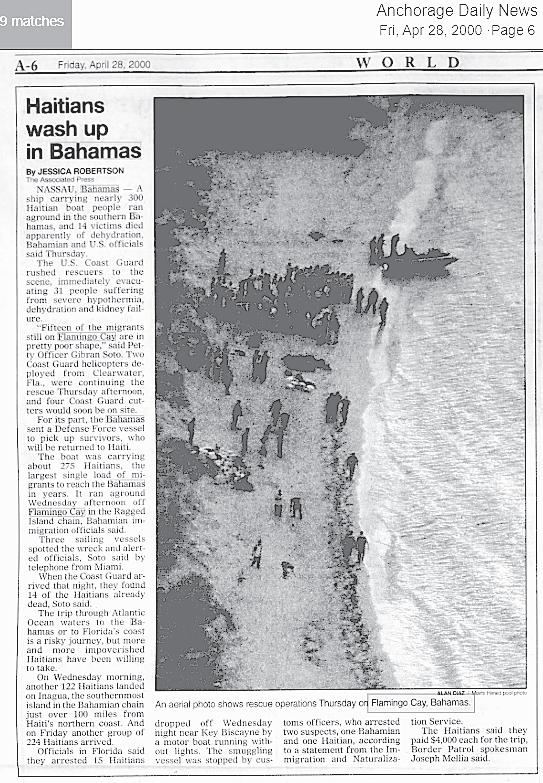
Coast Guard brought 52 Haitians landed in Miami after their homemade wooden sailboat ran out of wind at the Cochinos and they all tried to survive on a Bahamian cay. Then in April of 2000, a wooden sailing boat with 300 Haitian immigrants aboard. Fourteen of them died of dehydration, and 31 were severely dehydrated. When this vessel grounded, three others also en route alerted the RBDF and authorities of their plight. The following day 122 others arrived in Inagua, just 100 miles north of Haiti, followed by 224 more. The Haitians claimed that each of them paid smugglers US$4,000.
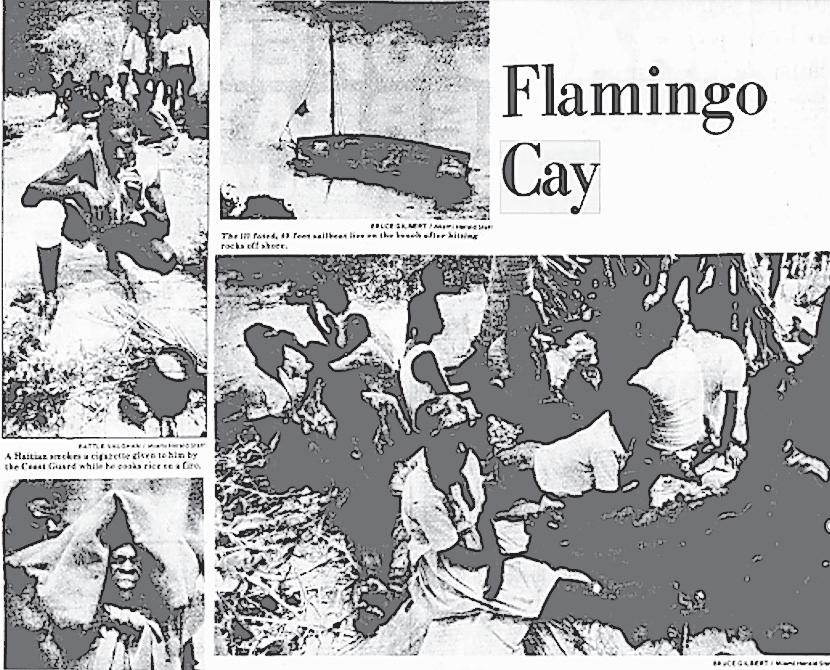
In August of 1985 a Haitian sloop, 11 days from Hispaniola, wrecked on Flamingo Cay, Ragged Island or Jumentos Cays, with 125 refugees. Shortly before this, 135 were wrecked at Cay Lobos Lighthouse.
A few years later a commercial fsherman was diving of Flamingo Cay when he was severely bitten by a shark. Fortunately for Chester Fox, age 34, BASRA managed to have him air-lifted to Princess Margaret Hospital in Nassau with severed arteries and bone exposed – they used special infatable pants to stem bleeding, according to the Nassau Tribune.
A Tampa newspaper in November 1986 ran a story about a Vietnam veteran named Harrell and two women friends, who set of on a sailing voyage aboard Great Escape to the Caribbean and Bahamas. After being stopped and searched for drugs of Jamaica and Exuma, they claimed to have come upon 10 packages of drugs foating on the remote Brown Banks east of Long Island and took them aboard without telling authorities. After being apprehended by the US Coast Guard, they were strip-searched, restrained, interrogated, and kept deck chained and photographed. Later they were unshackled, given dinner and apologized to, before being put back on their boat and released – in Cuban waters.
Quite a memorable trip (after which they sued authorities!)
In 1869, a sailing brig under Captain Haskell named J. McIntyr was wrecked on the same Brown’s Bank, Bahamas with a cargo of sugar and molasses at 4:30 am. Her cargo was saved and taken to Nassau. There is neither land nor a light to mark the bank. Remote Cayo Verde (north of Cuba, not Green Cay, south of Nassau) was purposely visited by bird watchers on the large yacht Thalia in March of 1934. They found many cormorants and booby birds nesting there. In the fall of 1865 Captain Carter’s brig, the Dudley was leaking so
badly, despite being caulked in Aruba, that she had to lay over in Cayo Verde en route to Philadelphia.
Guinchos Cay (aka Ginger Cay) in the southern Bahamas, lies between Cay Lobos, Cay Sal and Orange Cay. It is infrequently visited, tiny, and does not have a light. The islet is only about 10 feet above sea level and 600 feet in diameter. It is a speck, and a 2018 study by Dr. Michael Pateman and Dr. William Keegan turned up no evidence of prehistoric activity. In other accounts of lighthouse tenders, by the head of the Rod and Reel Club in 1944, the tender seemed to always be moving, and full of life, since the captain brought his family along. Of the Bight in Cat Island, one such supply boat brought a Roman Catholic priest with a Cockney accent who would christen babies along the way. The Cold War saw intense patrols by US, British, and Bahamian vessels and aircraft to monitor fshing poachers, people smuggling, and other incursions into remote banks like Cay Sal and Cochinos Bank. In March of 1969, a feet of vessels was intercepted by Spanish ships at Guinchos Cays, consisting of a barkrigged steamer with cannon,
arms, ammunition, and recruits who were being smuggled into Cuba through Bahamas from places like Mexico. In 1947, as many as 360 Cuban rebels were seized with weapons at the Guinchos Cays. In 1894, the schooner Ada Bailey of Camden Maine under Captain Gardner wrecked at Guinchos Banks with sugar, which they worked feverishly to salvage. In 1853, Captain Munson of the brig Amonoosuck bemoaned that this position for the Guinchos are 10 miles of where Imray’s charts said they would be. In July of 1847, the Nueva Yberia from the UK to Cuba was wrecked in Guinchos Cays. In 1861, the Spanish government recommend that the US Secretary of the Navy, William Seward, award the commander of USS Mohawk, Lieutenant Craven, a medal for his heroic rescue of the people of the Spanish polacca named Bella wrecked on Guinchos. Her Majesty the Queen of Spain recommended an award, which was issued. During three days, Lt. Craven stood by saving all the passengers and peoples of the ship. In 1845, the Spanish ship ConcepciÓn under Captain Sanchez of Santander was wrecked at
operations of
Source: Allan Diaz, Miami Herald, Anchorage Daily News, April 28, 2000
Guinchos Cay. All crew were saved and taken to Havana.
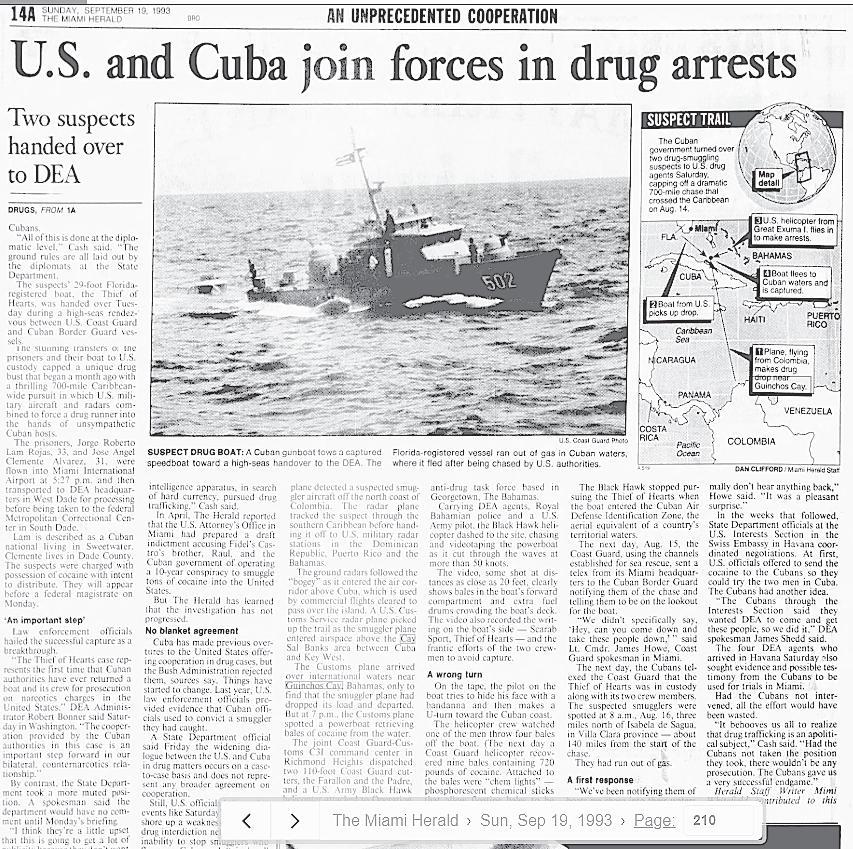
In 1970, the US Coast Guard intercepted a fsh poaching ship named Fram of Guinchos and Cay Lobos, facing Cuba across a narrow channel. In September 1993, a complex drug interdiction efort culminated with Cubans cooperating with the DEA to turn over the suspected drug smuggling 29-foot vessel Thief of Hearts of Guinchos. The small boat was caught while on its way from Colombia to the US via southwestern Bahamas. Planes and boats were being tracked by USCG over Guinchos, since drugs were dropped. When a suspected plane took of, USCG cutters Farallon and Padre, backed by joint operation choppers, were deployed to track or follow it.
Poaching of fsh conch and lobster has long been a cat-and-mouse chase in the southern Bahamas. In November 1979, the RBDF sent 28 Cuban-American fsherman to HMP Fox Hill for stealing the country’s fsh in farfung places like Dog Cay, Guinchos Cay, and
SUSPECTED
Source: The Miami Herald
Anguilla Cay, on Cay Sal. Overall 10 boats and 32 men were seized.
A rather hazy story emerges of international intrigue in November of 1983, when a “big wooden yacht from Miami, the Ricky IV, disappeared in the Bahamas on its way to meet a mother ship.” The US Coast Guard Cutter Cape Gull later found it smashed on the rocks at Guinchos Cay. The crew said they had become lost on a fshing trip, but they were thought to be smugglers.
In July 2003, a people-smuggling boat named Gaviota 16 was intercepted of Florida after it wove a similar route along the Old Bahama Channel and through deserted Bahamian Cays on the way north from Cuba, monitored by the US and Bahamian authorities. With so many cays, reefs, and shallows, folks will always want to hide in the wide uninhabited expanses of the Bahamas, with anchorage provided just a few dozen feet below. So defence forces, like lighthouses, will always have a practical need for funding.
Haitians stranded at Flamingo Cay, Ragged Islands.
A
drug smuggling boat being towed by a Cuban gunboat to US anti-drug authorities.
Rescue
Haitians by Bahamian and US authorities in Flamingo Cay.
Trump’s tari s hang over opening of craw sh season
...but let’s remember America is still the best friend The Bahamas has ever had
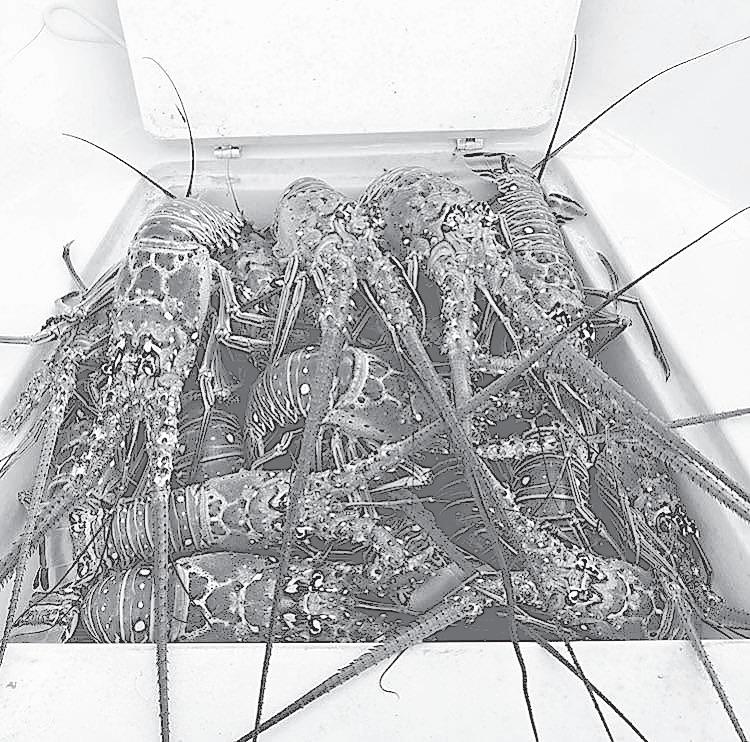
BY midnight, boats that have been fxed up, fuelled up and loaded with food and supplies for the next several days will be seconds away from the silent starting gun. Owners and crew will toss lines onto the dock or up anchor and rev up if they are not already in position. The magic moment – 12:01 am, the ofcial start to crawfsh season and Bahamians by the hundreds will head out to their favourite spot to begin the annual ritual of spearing the Bahamian version of lobster. They’ll hunt for them hidden deep in crevices of coral reefs, in downed airplane wrecks, beneath abandoned underwater jetsam and fotsam that have been ofering safe zones until this moment, the minute the clock strikes go – and the crowds do.
For some, crawfshing is a sport, its consumption a delicacy. For others, the search, spear, sort, pack and export is their livelihood. And for them, the year 2026 will not be like all other years. This year, the American president has imposed a 12.5 percent tarif on exports from countries that do business with countries that use forced labour, which most folks interpret as meaning China, though exports are also being taxed on imports from China which remains America’s third largest trading partner.
IN MIGHTY GOOD COMPANY
The Bahamas is not alone – we are in some of the fnest company in the world, including America’s top two trading partners, Mexico and Canada, along with Australia, India, the UK, members of the European Union, even Norway and, of course, China. While the shadow of hefty tarifs hangs over the export businesses of every size – tarifs that could still be reduced in scope or ruled illegal altogether and shot down by the courts –it is important that we in The Bahamas do not lost sight of one very important fact: America remains the best international friend The Bahamas has ever had.
BEST FRIEND
The US has always been by The Bahamas’ side, even when we were being very, very naughty, happily and readily supplying the drugs the US market wanted, but that aside, America has been the partner we needed and depended upon through thick and thin.
They’ve just been lousy about telling their story. And it’s about time that somebody tells it. I can assure you that I do not want to be accused of being a Trump apologist. Lawd knows, he’s got a highly paid team for that kind of pr and I am most defnitely not part of that team. Truth is, I am far more interested in tasting the frst bite of crawfsh for the season and it was the crawfsh tax, as I called it, that got me thinking about what kind of friend America is if they wanted an innocent fsherman from Long Island or Spanish Wells to pay the price for China policy.
This has been a long time coming.
I frst became seriously curious about how often the US is called on to assist when I received a call from the American Embassy asking who I knew who would send aircraft to the southern islands to evacuate Bahamians in the face of Hurricane Melissa. The Embassy in Nassau was assisting, as always, with the Bahamian government’s rescue.
INTERESTING FINDINGS
What I found was one demonstration after another of partnership. When Hurricane Dorian struck The Bahamas in 2019, devastating Abaco and Grand Bahama, taking untold numbers of lives and uprooting thousands of survivors, the United States poured more than $34 million into direct disaster relief.
The home country where we shop and that gives us much of our music and fashion taste became the shoulder we leaned on and was by far, the largest international donor when our arms were outstretched and our hearts were broken.
Six years later, it was Hurricane Melissa and though causing nowhere near the impact of Dorian, the Embassy heard and responded, this time with $500,000 in life-saving emergency assistance for recovery purposes.
In random order, here are just a few other examples:
$500,000 from Ambassador Herschel Walker to the Bahamas Red Cross when his feet had barely touched the ground;
$245,000 to Ministry of Culture, Arts & Heritage announced earlier this month for the restoration of Fort Montagu, the only fort that linked American and Bahamian confict; Through EXIM, lending support to FOCOL for
LNG funding that led to what was called the “deal of the year”; US Northern Command donation of services and supplies including fre trailers and broad collaboration with AUTEC, including $60,000 in supplies to schools in Andros; What we don’t see in dollars is just as important – leveraging know-how and who they know to foster investment in The Bahamas, including the $50 million American investment that created the Western Atlantic University School of Medicine in Grand Bahama that has created 200 Bahamian jobs.
The Embassy has also lent strong support to the development of the Grand Bahama Shipyard which is now capable of handling the largest ships in the world.
As recently as yesterday, the Embassy was conducting intensive crisis management seminars and workshops for Bahamian agencies, particularly those connected with disaster management and relief.
It continues to run OPBAT eforts with a 24/7 watch over the islands and
Caribbean to monitor for human trafcking and illegal contraband. We don’t stop to think about it but OPBAT monitors 100,000 square miles of our waters alone and the 3,000 small craft that traverse the waters daily. One thing we do think about – the privilege of LPIA pre-clearance. That’s when most of us, you and I and the hundreds in line in front and behind us, truly appreciate the United States, and
could not care less which party is spending the holidays in the White House this year. We are focused on going on holiday to our favourite place, the United States of America, and a tarif (that might be shot down by the courts) is the last thing on our mind. Disneyworld waits, the kids are eager, we want a break from the island and the neighbour to our immediate north is only a half hour away. We can’t wait to land in those
welcoming arms, the ones that belong to the best friend The Bahamas ever had, the one we count on in good times and bad, the same one that needs to do a better job telling its story so when the out-of-character moment like a tarif comes along, we may not like it or understand it, but we swallow and accept it – for now. We know one thing. In the long view, we couldn’t ask for a better friend than the United States of America.
USAID Regional Director Tim Callaghan (left) meets with NEMA Director Captain Stephen Russell (centre), then Permanent Secretary for the Office of the Prime Minister Nicole Miller-Campbell (centre left), and USAID/BHA-NEMA Liaison Beryl Ambrister (right), to discuss disaster response after Hurricane Dorian in September, 2019.
Photo: US Embassy
Movie Review: In 'Spider-Man: Brand New Day,' a lonely superhero grows up and looks inward
By JOCELYN NOVECK
AP National Writer
ARE the ears playing tricks on us? Or does Tom Holland's Peter Parker sound, at the beginning of "Spider-Man: Brand New Day," like more of a native New Yorker than before?
The cadence, the sort-of Queens accent — it's striking, as we watch Peter chat on the phone with police captain Jean DeWolf (Liza Colón-Zayas) about the crimes plaguing the city that'll have him springing into action, because he's a full-time Spidey now. But behind the chipper banter, there's an underlying melancholy. Anyone who saw the last movie, of course, knows we've embarked on a lonely era for Spider-Man.
When we last saw Peter, he was buying the saddest takeout cofee of his web-slinging life. Girlfriend MJ was at the doughnut shop counter, but had no idea who he was, her memory of Peter erased as part of a sacrifce he'd made to save the world.
"It would be as though you never existed," Doctor
Strange had told him before casting the fateful spell at the end of "Spider-Man: No Way Home." But Peter was resolute: "Do it." And now, four years later, he's paying the emotional price. Peter lives alone in a drab apartment; beloved Aunt May, of course, died in the last flm. He's been watching via social media as MJ (Zendaya) and best buddy Ned (Jacob Batalon) have the time of their lives at MIT. That was once the dream for all three: living and learning together at school. Didn't quite work out that way.
These early moments of "Brand New Day" set the tone for a diferent kind of movie. It's not the surprise-a-minute, fan-funfest of "No Way Home," which, in piercing open the multiverse, brought us a hugely satisfying set of reunions. There were all the old villains — Green Goblin, Doctor Octopus, Electro, Sandman. But nothing beat the return of our two previous Spideys, with Tobey Maguire and Andrew Garfeld arriving to bond with Holland over emotional
handily) the two-hour mark.
There are, though, rewards of a diferent kind in director Destin Daniel Cretton's flm, for diehard fans who seek them. Jon Bernthal gives an appealing turn as The Punisher. Mark Rufalo fexes his muscles here too, and Sadie Sink is a very welcome addition, although telling you more might
bath, but don't ask us to elaborate.
arcs, backaches and web-shooting technique.
Hard to top that, certainly. And "Brand New Day" defnitely lags, sorry to say, in its third act, when approaching (and passing,
The Mediterranean's warming waters are drawing hundreds of invasive species
By SILVIA STELLACCI and MENELAOS HADJICOSTIS, Associated Press
The Mediterranean of our ancestors is no more.
Scientists say climate change, caused mainly by burning oil, coal and gas, is making the Mediterranean Sea hotter, bringing hundreds of new and invasive fsh species that decimate indigenous populations.
As biodiversity diminishes, coastal communities will struggle to make ends meet in the ways they've known for generations.
"The Mediterranean of our grandfathers, of our elders, and of the Greeks, of ancient Greece is lost forever. So many of those changes are irreversible," said Ernesto Azzuro, a marine biologist with the Italian National Research Council's Institute for Marine Biological Resources and Biotechnology.
Warmth can't dissipate in the Mediterranean's basin
Scientists have designated the Mediterranean as a climate change "hot spot," with its waters expected to warm by 2 to 6 degrees Celsius (3.6 to 10.8 degrees Fahrenheit) by 2100. Heat waves are likely to become more frequent and more extreme, according to the
Mediterranean Experts on Climate and Environmental Change, an independent network of scientists.
Ronan McAdam, an oceanographer with the Euro-Mediterranean Centre on Climate Change, said a key factor in the warming is that the sea is an enclosed basin and warmth can't dissipate like in the vastness of the oceans.
The warming waters have made an inviting new home for invasive species like the spotted pufer fsh, a voracious predator and the "worst invader," Azzuro said.
These species are now heading toward France and Spain after entering the Mediterranean through the Suez Canal.
The U.N. food and agriculture body's General Fisheries Commission for the Mediterranean said such invasive species have been present for decades, but their spread accelerated after the early 2000s, coinciding with rising sea temperatures. For example, the lionfsh was frst recorded in the eastern Mediterranean in 2012 and has expanded rapidly westward.
"The Mediterranean will be even poorer, even with less species, simply because climate change is really making this part of the Mediterranean, especially
get us banished to another universe (mere mention of her character's name drew applause at my screening.) Likewise, there's a funny cameo with someone who holds meetings in a public
The main reward, though, is Holland, who, a decade into the role, seems increasingly human and vulnerable. Holland is also, well, 30 years old, and the natural creases in his face signify layers to his portrayal as well. We begin, of course, in New York City, which can be the busiest and the loneliest place, all at once. And that's the best way to describe Peter's newly anonymous life, on bustling streets where not a soul knows him. They just know that Spider-Man is an ace crime-fghter. Those streets have never been safer.
Alongside the usual urban crimes, Peter's been recruited by the Department of Damage Control — and the agency's head, Bill Metzger (Tramell Tillman) — to help identify an invisible, insidious threat, a plotline that frankly never feels that compelling. It's the personal stuf that keeps the attention.
To wit: At home, Peter's been writing a letter to MJ, telling her the story of their love. Then one day he sees Ned, newly graduated from MIT, and follows him to his new apartment, where, wouldn't ya know, he rooms with MJ. She's just turned down a job, telling Ned: "Something is just telling me that I'm waiting for something great." But is it Peter? MJ does have a new boyfriend. Seeing that, a dejected Peter heads home, letter undelivered. Don't we all want to see Spidey and MJ back together, swinging joyfully around town? Obviously, we can't tell you what
happens between them. Or much of anything else. Such is the challenge — there are more sticky spoilers in Spidey flms than there are sticky Spidey webs.
But speaking of those webs … things start changing, strangely, in Peter's body. Suddenly, the webs start generating organically, for one thing — à la Maguire's Peter. And there are blinding headaches. It's actually a DNA imbalance. Director Cretton ("Shang-Chi and the Legend of the Ten Rings") puts his Marvel experience to good use here, and weaves nicely together a set of subplots — including telepathy and possession — that keep the flm moving, though 20-some minutes could easily have been trimmed from the denouement.
The urban cityscapes are lovely, as Spidey swings through the Big Apple. Holland, though, is best in close-up, with the hood of, showing time and again how his is a newly grown Spider-Man. The story ends on a note of community and interreliance; nobody can go it alone, the message goes. This is driven home nicely in one fnal image, a simple, sweet handshake with a most unexpectedly poignant punch. After a quarter-century worth of movies, "Spider-Man" still has surprises up its sleeve.
"Spider-Man: Brand New Day," a Columbia Pictures release, has been rated PG-13 by the Motion Picture Association "for sequences of action/violence and some language." Running time: 145 minutes. Two and a half stars out of four.
Lionfish lie on a fishing boat off the coast of Larnaca, Cyprus, in the eastern Mediterranean, early Saturday, Dec. 20, 2025.
the eastern part of the Mediterranean, really unsuitable for native species," Azzuro said.
Cyprus, due to its proximity to the Suez Canal, was frst to feel the impact of these invasive fsh. Lionfsh supplanted indigenous stocks like the red mullet to the dismay of fshers, who have seen local varieties popular with customers greatly diminish. Then there are rabbitfsh that can devour algae from the sea bottom, destroying the habitat for many indigenous species.
"We know what should be done. We should reduce the use of fossil (fuels)," said Piero Genovesi Papik, a zoologist with Italy's Higher Institute for Environmental Protection and Research. "But that's defnitely an urgent matter for the humanity, and we all know the solutions, but of course they require a global and joint vision."
About 1,000 invasive species have been identifed
Azzuro said about 1,000 invasive species have been identifed in the Mediterranean, with 800 of them frmly established.
The changes are stark. Azzuro said the shallows of the eastern Mediterranean have lost 93% of their mollusc population. Along the Adriatic coast, once abundant with mussels, nearly all have died of because of the sea temperatures that at times have exceeded 30 degrees Celsius (86 degrees Fahrenheit).
From Venice in the north to Bari in the south, "the die-of was spectacular," he said. "Unless we … fnd population able to survive through these diferent climates, the future of mussels is not a happy future, at least in the Adriatic Sea."
Azzuro said his institute and its partner a few years ago launched a campaign, "Beware of those four," to raise awareness about the
dangers that invasive species pose to human health.
For instance, pufer fsh is toxic and potentially lethal if consumed by humans. The lionfsh's poisonous spikes can badly hurt anyone who's stung.
Experts say the spread of invasives can't be reversed
Scientists are discussing how coastal communities can cope. One way is to commercialise invasive species that are edible. Another is to pay fshers to catch inedible ones like the pufer fsh so they can be incinerated. Some species, like the lionfsh, have "clear economic benefts because it's sold at very high prices, especially in some countries," Azzuro said. But fshers haven't taken advantage of the invasive dusky spinefoot, whose population has grown signifcantly in Italian waters.
Papik, the zoologist, said that while it's "too late" to reverse the spread
Photo: Petros Karadjias/AP
of invasive species in the Mediterranean, there are practical ways to mitigate the impact.
First is to prevent their further migration by enforcing an international treaty obliging national authorities to treat ballast waters inside incoming ships that may carry such species.
"This is something that is technically doable and that can reduce the number of ... new alien species by 95 to 99%," he said. Another tactic is treating ship hulls with special paint that thwarts unwanted hitchhikers from latching on.
Papik also said fshing policies are being amended that would allow native species to reclaim some of their number, like growing molluscs that are less susceptible to the alien blue crab.
"In the coming years, I think that the challenge will be to restore, to fnd new ways to restore the environment," Papik said.
This image released by Sony Pictures shows a scene from Brand New Day.”