Anglers

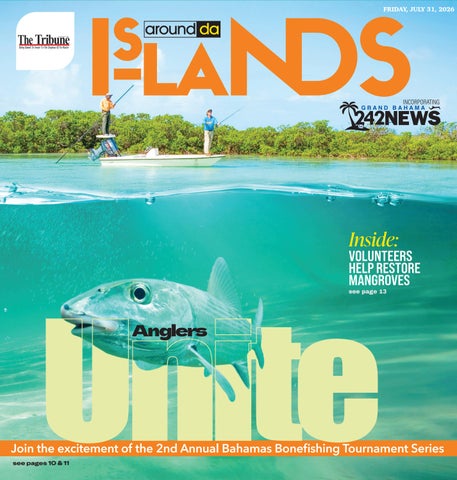
…to Around da Islands, our weekly supplement, free with Friday’s Tribune.
What does it mean to be Bahamian? The answer can be found in our art, our food, our festivals, our communities and, above all, in the people who continue to shape our national story. In this edition of Around da Islands, we celebrate that spirit through stories of culture, achievement, resilience and community from across our archipelago.
First of all, well done to the good people of Grand Bahama who rallied to support an appeal for blanket donations for patients at the Rand Memorial Hospital. As generous donations came in, the Rand expressed heartfelt appreciation to the donors.
It’s also good to see volunteers turning out to help restore mangroves at Dover Sound, Grand Bahama, that was badly hit by Hurricane Dorian.
And we salute GB’s own Jonquel Jones, who has once again cemented her place in basketball history by becoming the rst player in the league’s history to capture all four premier MVP honours.
Every week, Around da Islands, having partnered with Grand Bahama 242, highlights news, features and developments from Grand Bahama and the Family Islands, o ering a broader national perspective beyond Nassau. We hope these stories leave you with an even greater appreciation for the people, ideas and traditions that continue to shape our archipelago.
And don’t forget, this is your supplement too! Send us your story ideas, features and tips. Together, we can continue telling the stories that celebrate the people, culture and communities that make The Bahamas unique.
From all of us here at The Tribune – The People’s Paper.

7
This WEEK in Around da IslandsBahamian News, Features & Culture
GRAND BAHAMA NEWS
Pg 4 — Stay cautious over Causeway concerns, says former MP
Pg 5 — Pilot Club of Lucaya celebrates historic international leadership appointments
Pg 6 — Keeping a close eye on prices at the pumps
Pg 7 — Holmes Rock celebrates as GB’s Jonquel Jones makes WNBA history
NEW PROVIDENCE FEATURES
Pgs 8 & 9 — More than straw: Weaving together a shared heritage
AROUND DA ISLAND FEATURES
Pgs 10 & 11 — Fishing for $100,000 in prizes at annual bone shing tournament
Pg 12 — Island Brainwaves
GRAND BAHAMA FEATURES
Pg 13 — Volunteers help restore mangroves destroyed by Dorian at Dover Sound
Pg 14 — Blanket donations pour in to support Rand Memorial Hospital
ELEUTHERA FEATURES
Pg 15 — 73
bene t from Learn to Swim Summer Programme
By BARBARA WALKIN barbara@barefootmarketing.net
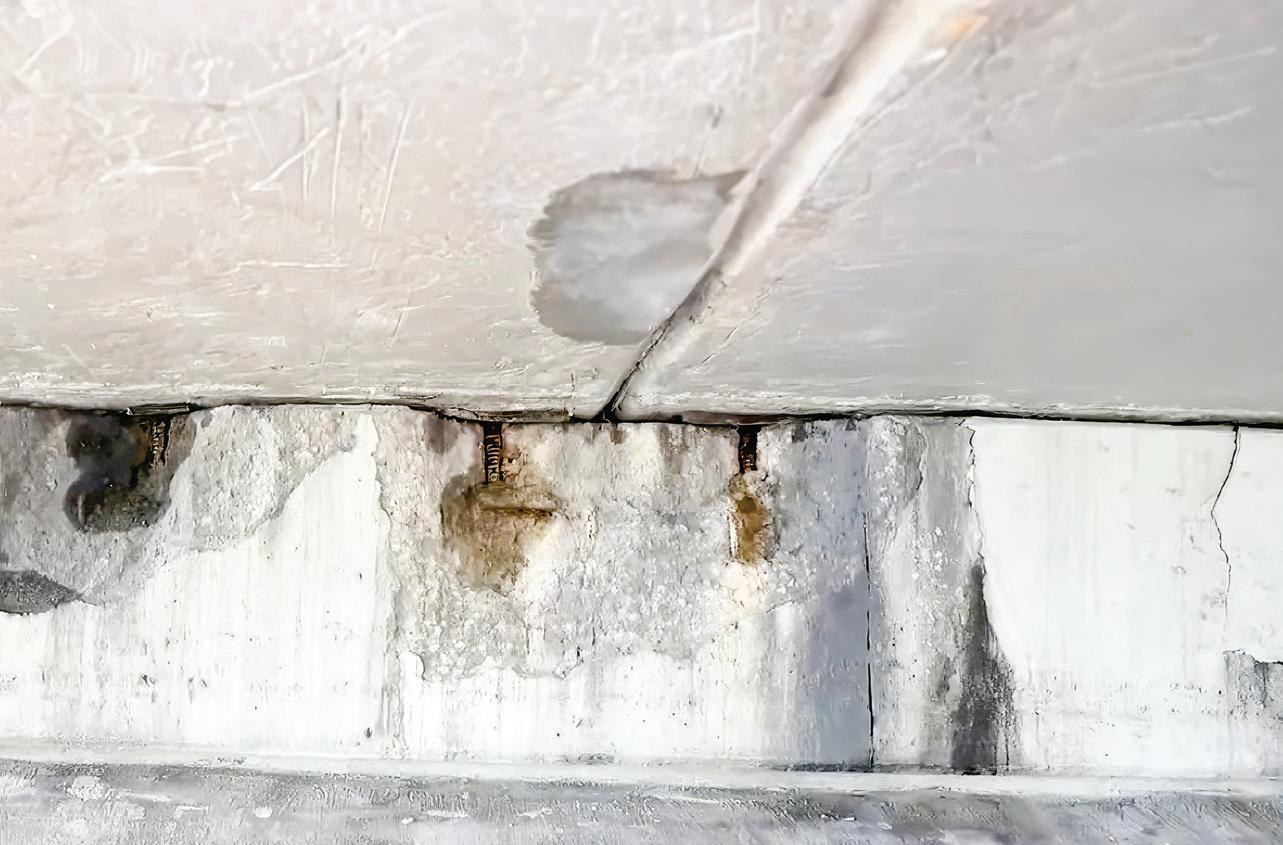
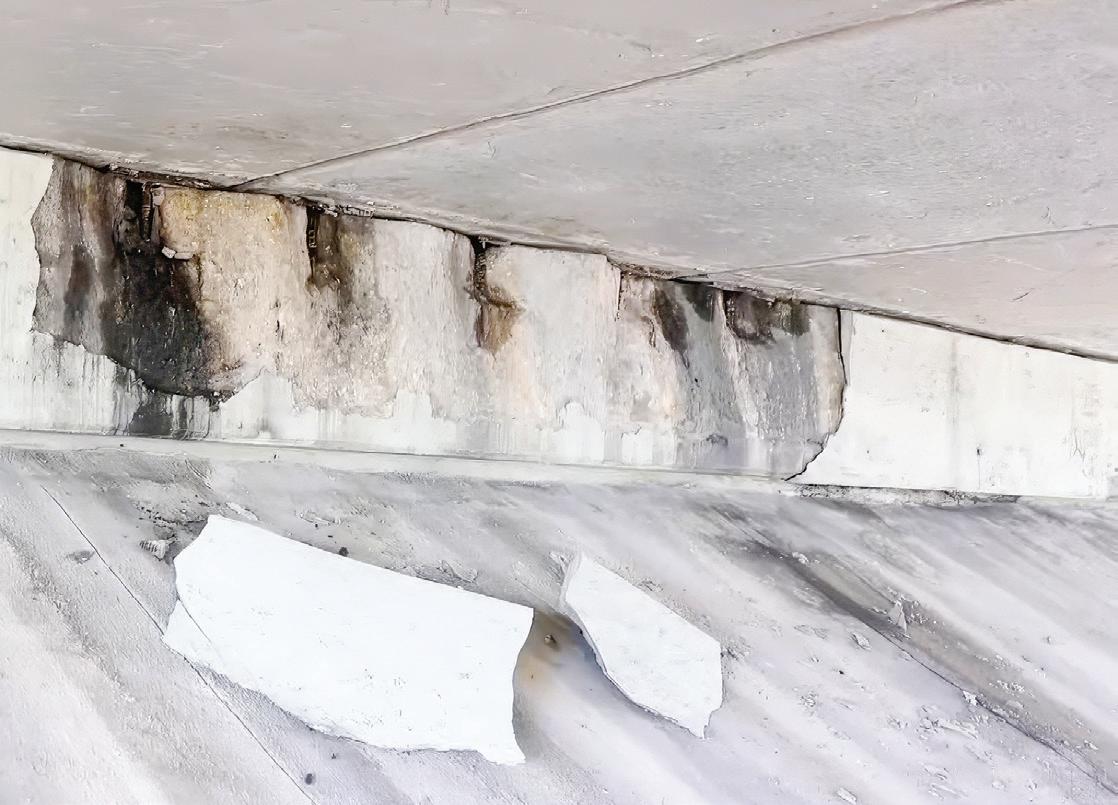
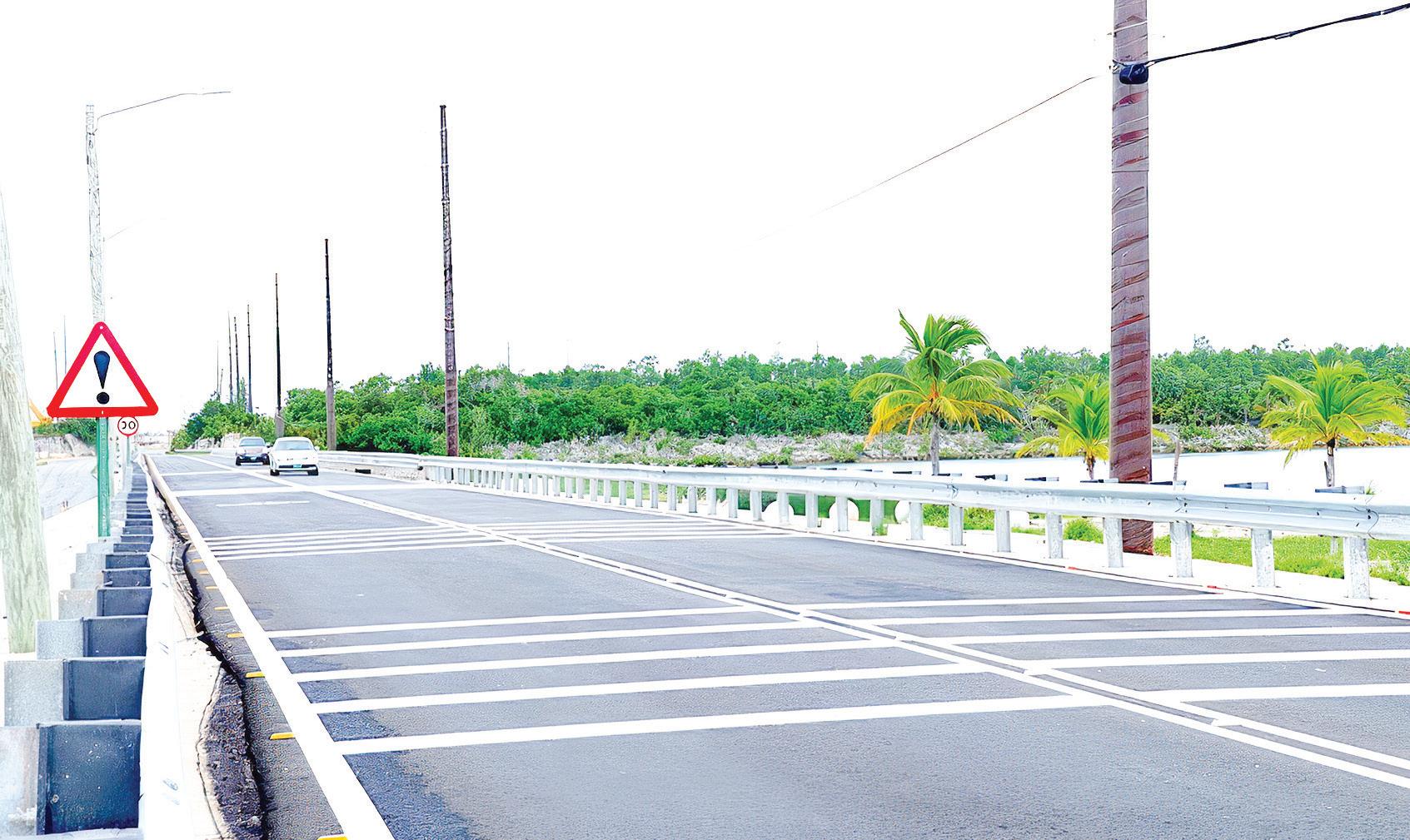
THE condition of the six-year-old Fishing Hole Road Causeway continues to generate public discussion after a video circulated on social media showing former Central Grand Bahama Member of Parliament Iram Lewis pointing out deteriorating concrete beneath sections of the bridge.
While the Ministry of Works and Family Island Afairs has assured the public that the bridge remains structurally sound and safe for normal use, Mr Lewis says he believes those assurances should follow, rather
the results of the comprehensive engineering inspection now scheduled.
On Tuesday, the Ministry of Works and Family Island Afairs responded to the public concerns, stating that the damage shown in the video was limited to localised concrete spalling and did not compromise the bridge’s structural integrity.
In its statement, the Ministry said public safety remains its highest priority and confrmed that its engineering team had been directed to conduct an immediate assessment. It also announced that a comprehensive engineering inspection has been scheduled and that any defciencies identifed will be addressed through its ongoing bridge maintenance programme.

The ministry maintained that
the bridge remains safe for normal trafc operations.
Mr Lewis believes the ministry’s conclusions are premature.
“I applaud them for fnally giving the matter the attention it deserves,” Mr Lewis told Around da Islands. “But my concern is that they’re saying the bridge is structurally sound while also saying a comprehensive structural inspection is still scheduled. That doesn’t add up.”
Mr Lewis, whose background includes architecture with a major in civil engineering, explained that his observations beneath the bridge suggest the deterioration extends beyond simple concrete spalling.
“My initial observation is that it’s more than just spalling,” he said. “If the
He urged the public to remain vigilant.
Mr Lewis said his preferred approach would have been to temporarily close the bridge, divert heavy trafc to the service road, complete the structural inspection, carry out any required repairs, and reopen the bridge only after engineers confrm it is safe.
Beyond the visible deterioration, Mr Lewis believes trafc management is contributing to the bridge’s wear.
He noted that the causeway carries a signifcant volume of heavy trucks transporting materials back and forth between Bahama Rock, Freeport Container Port and the expanded harbour, adding that no posted weight restrictions are visible on the bridge.
structural inspection hasn’t been completed yet, what are you basing the conclusion on that the bridge is structurally sound?”
He argued that the public would have been better served had ofcials waited for the results of the engineering assessment before making defnitive assurances.
“I think it’s a premature conclusion,” Mr Lewis said. “They should have completed the comprehensive report frst, then informed the public of the fndings.”
Mr Lewis said he also observed what appeared to be shear fractures on another beam on the western side of the bridge, adding that those observations reinforce the need for an independent structural assessment.
According to Mr Lewis, the service road built alongside the causeway was originally intended to accommodate heavy commercial vehicles while lighter passenger trafc remained on the main bridge. Meanwhile, longtime Grand Bahama resident Wellington Brown, who uses the Fishing Hole Road Causeway every day to commute, said the issue has left him uneasy.
“I cross that bridge daily because I have to,” Mr Brown said. “When you see those cracks underneath, naturally it makes you concerned. I appreciate the ministry saying it’s safe, but I also want the inspection completed and the results shared with the public. That would give people much more confdence.”
The ministry has said it will continue monitoring the bridge and will provide additional updates following the scheduled engineering assessment.

By BARBARA WALKIN barbara@ barefootmarketing.net
THE Pilot Club of Lucaya (PCOL) is celebrating a landmark achievement after two of its members were elected to prestigious leadership positions within Pilot International, marking a proud moment for the club, the Bahamas’ District and the island.
Karen Ferguson-Bain was ofcially installed as President-Elect during the Installation Banquet held on Saturday, July 18, at the 104th Pilot International Convention and Leadership Conference in Oklahoma City, Oklahoma. At the same convention, Pilot Nicole B. Colebrooke was elected Governor-Elect of The Bahamas District of Pilot International.
The dual appointments mark a historic moment for the Pilot Club of Lucaya, with two members from the same club assuming leadership roles at both the international and district levels.
Speaking during a press conference, Mrs Ferguson-Bain described her election as a victory shared by generations of Bahamian Pilots.
“This accomplishment is not mine alone,” she said. “It belongs to every member of The Bahamas District, past and present, and is shared with our dedicated Pilot, Anchor, and Compass members who continue to serve our communities with leadership, friendship, and compassion.”
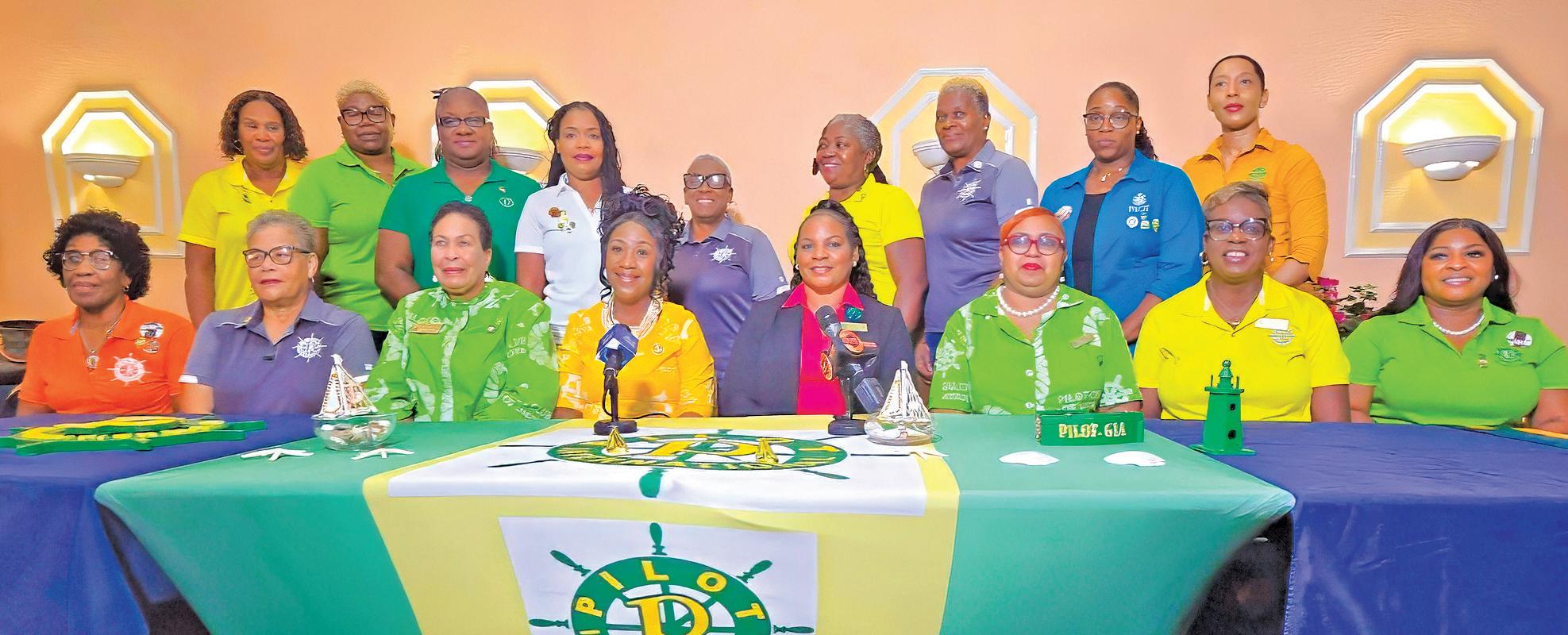
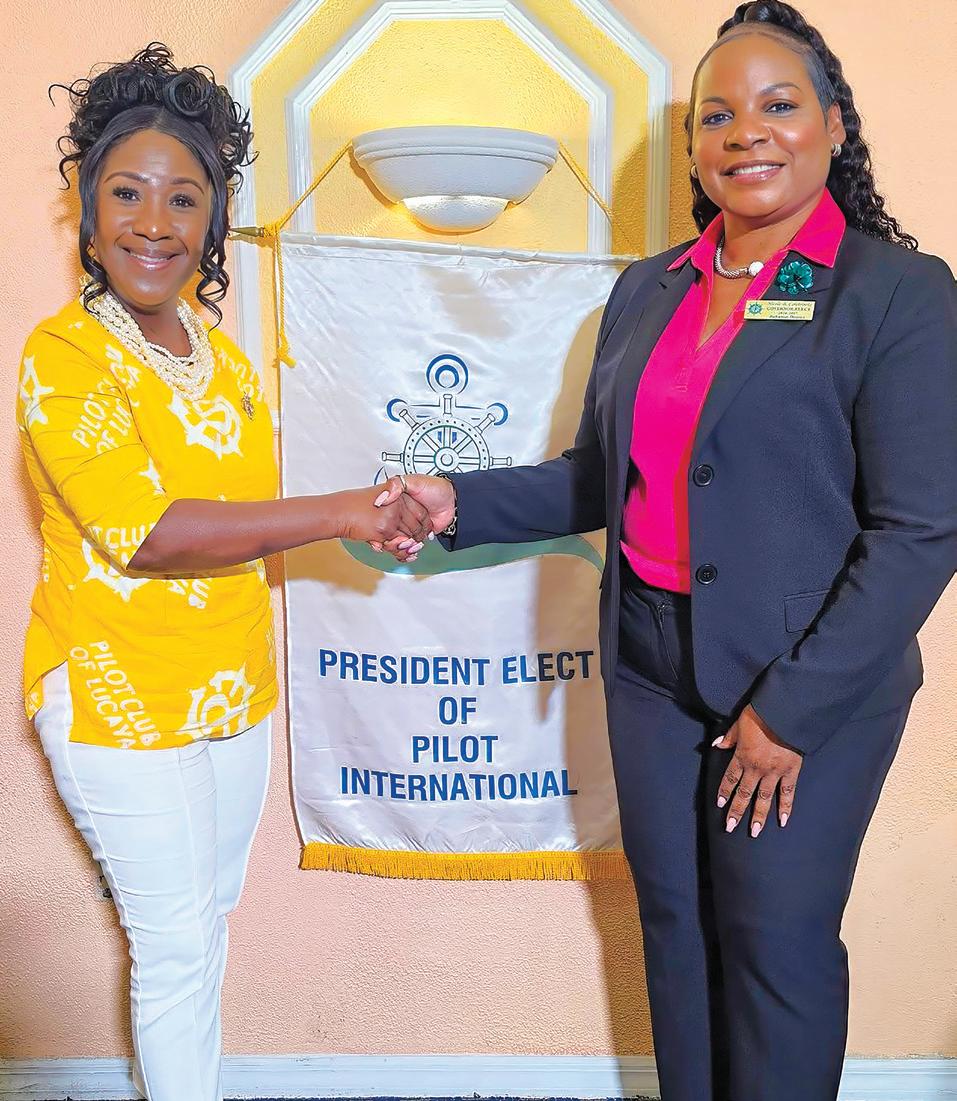
She acknowledged the pioneering leaders of Pilot Debbie Archer and the late Pilot Nicola ‘Nikki’ Dawkins, both of whom previously served as Presidents of Pilot International.
“I stand on their shoulders,” Mrs Ferguson-Bain said. “Their leadership and commitment made
this moment possible, and I am deeply grateful for the opportunity to continue that legacy.”
As President-Elect, Mrs Ferguson-Bain said she focuses on strengthening
governance, developing future leaders, increasing membership engagement, and expanding the global
reach and visibility of Pilot International.
“For too long,” she said, “Pilot has been one of the world’s
best-kept secrets. That changes now. We must tell our story, share our impact, and let people know the difference Pilot is making in communities around the world.”
Ms Colebrooke described her election as a proud moment not only for the Pilot Club of Lucaya but for the entire country.
“To have two women from one club elected to these distinguished leadership positions is a remarkable achievement,” she said. “It refects the strength of our club, our district, and the spirit of service that defnes The Bahamas.”
By BARBARA WALKIN barbara@barefootmarketing.net
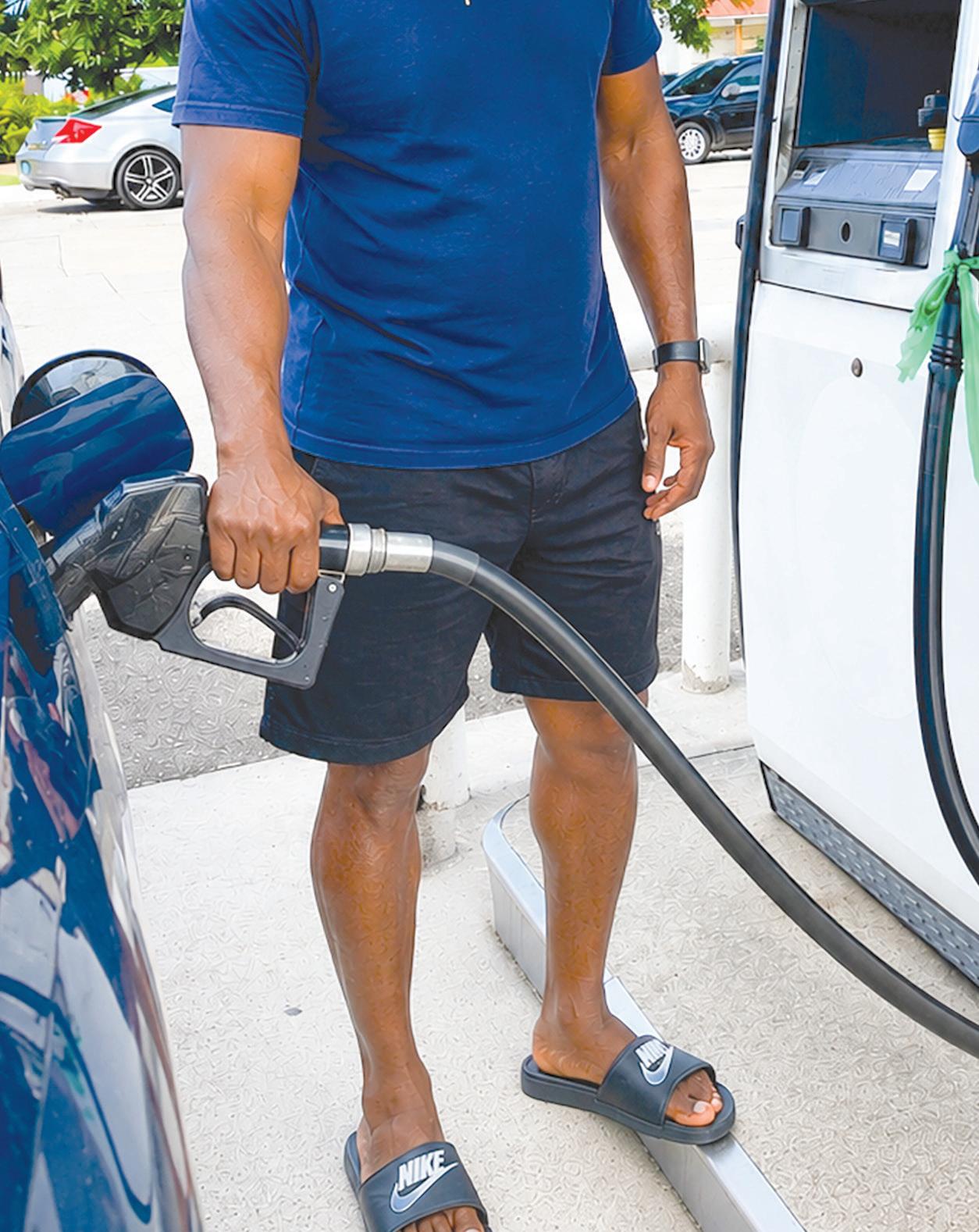
MOTORISTS and boaters in Grand Bahama continue to feel the impact of high fuel prices as global events keep pressure on the market.
Gasoline across The Bahamas is averaging between $6.74 and $7.74 per gallon, with regional marinas listing gasoline at approximately $6.93 per gallon.
Last month, Minister of Finance Michael Halkitis told media in New Providence: “The government is closely monitoring fuel prices and is prepared to consider relief measures should costs continue to rise.”
The minister’s comments came amid growing concerns over the confict between the United States and Iran and its impact on global energy supplies.
Mr Halkitis emphasised that the situation remains fuid and that the government is assessing developments before determining whether intervention will be necessary.
Residents, meanwhile, are adapting to the higher cost of fuel.
“If prices climb or decrease, we as consumers still have to be conservative,” Grand
Bahama resident Markus Skippings told Around da Islands.

more than half of the retail cost of fuel.”
Island nations such as The Bahamas also experience a delay in pricing adjustments because imported fuel can refect international market changes two to three weeks after they occur due to shipping schedules and inventory turnover.
July 2008, both West Texas Intermediate (WTI) and Brent crude reached a record nominal high of nearly $148 per barrel before retreating as the global fnancial crisis weakened demand.

“We need to be wise about our travel. If we don’t have to be on the road, or if we’re only going a short distance, we can take a leisurely walk.
The important thing is to be mindful during times like these.”
Several factors continue to infuence prices at the pump.
The cost of crude oil remains the biggest driver.

Today’s market remains sensitive to developments in the Middle East. Shipping disruptions, tight global fuel inventories, and renewed tensions involving the United States and Iran continue to create uncertainty. Brent crude is trading near $88 per barrel, while WTI is hovering around $83 per barrel.
The current military confict between the United States and Iran began on February 28, 2026. In April, there was a temporary ceasefre which halted major combat operations after 40 days of fghting.
Then in June 2026, both the U.S. and Iran agreed to a short-lived memorandum of understanding aimed at easing hostilities. However, on July 7, President Donald Trump declared the truce over following renewed Iranian attacks on commercial shipping in the Strait of Hormuz, prompting a new wave of U.S. military strikes.
The confict has contributed to sharp swings in global fuel prices because of disruptions in the Strait of Hormuz, one of the world’s most critical shipping routes.
In Grand Bahama and across the globe, people are praying for an end to war.
“I think this war is having an impact not only on gas prices, but only prices as well,” Ms Brown said. “They just need to come to an agreement and settle things. The cost of living is already too high for some, and this is just an added burden.”

By BARBARA WALKIN
barbara@ barefootmarketing.net
GRAND
Bahama’s own
Jonquel Jones has once again cemented her place in basketball history.
After being named the 2026 WNBA All-Star Game Most Valuable Player (MVP), Ms Jones became the frst player in the league’s history to capture all four premier MVP honours: WNBA Most Valuable Player, Commissioner’s Cup MVP, WNBA Finals MVP, and WNBA All-Star Game MVP.
The historic achievement has sparked an outpouring of pride across The Bahamas, especially in her hometown of Holmes Rock, where residents say Jonquel continues to inspire generations through her excellence, humility, and dedication.


AND
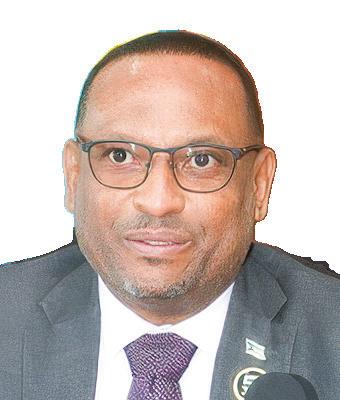

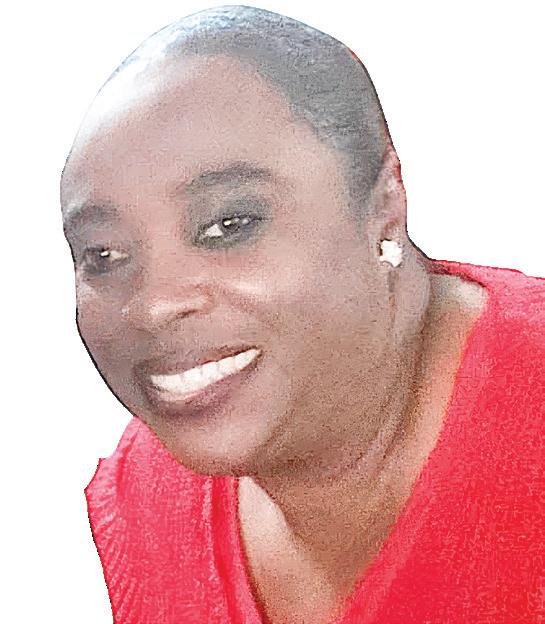

AFTER being named the 2026 WNBA All-Star Game Most Valuable Player (MVP), Jonquel Jones became the first player in the league's history to capture all four first MVP honours: WNBA Most Valuable Player, Commissioner's Cup MVP, WNBA Finals MVP, and WNBA All-Star Game MVP.
should celebrate her for everything she has accomplished.”
Residents of Holmes Rock expressed overwhelming pride in seeing one of their own reach another historic milestone.
Erica McIntosh said Jonquel’s latest victory belongs not only to the athlete herself but also to everyone who supported her journey.
“Jonquel’s recent victory is a major milestone not only for herself, but also for her coaches, sponsors, teammates, family, country, community, fans, and support system.
I can’t express how proud I am to see her determination and love for the game carry her to the very top. She has taken the entire Bahamas, and especially little Holmes Rock with her. Congratulations, JJ!”
Pastor Edmund Munroe described Jones as an inspiration both on and of the court.
“Jonquel is not only an extraordinary athlete but also an extraordinary human being. Her journey from a small country and an even smaller community demonstrates that background does not determine success. She dreamed big, worked hard, and her achievement of winning every major MVP honour in the WNBA is truly one for the ages.”
Dannica Martin, Principal of Bartlett Hill Primary School, said Jonquel’s achievement carries special meaning for the Holmes Rock community.

RESIDENTS of Holmes Rock expressed overwhelming pride in seeing one of their own, WNBA Player Jonquel Jones, reach another historic milestone.
Kingsley Smith, Member of Parliament for West Grand Bahama, hailed Jonquel’s accomplishment as a defning moment for the constituency.
“History made, and it belongs to West Grand Bahama! Huge congratulations to our very own Jonquel Jones. She stands alone at the absolute top of the game,” he enthused.
“Jonquel, you carry the heart of our community everywhere you go, proving that greatness grows right here at home. We are so proud of you.”
Sports advocate and veteran basketball coach Jay Phillippe told
Around da Islands that Jonquel has achieved something unprecedented in the league's 30-year history noting that her remarkable résumé includes WNBA champion, WNBA Finals MVP, WNBA regular season MVP, Commissioner's Cup MVP, six-time All-Star, and Sixth Woman of the Year. Drafted by the Connecticut Sun in 2016 out of George Washington University, she has built a career that, in his view, is already worthy of Hall of Fame recognition.
“If Jonquel retired today, she would undoubtedly be a Hall of Famer,” he said, “Yet she still has years ahead of
her and continues to perform at an elite level.”
He described Jonquel as a quiet, humble professional whose accomplishments speak louder than words.
Coach Phillippe said Jonquel has become a symbol of hope for young Bahamians, proving that greatness can emerge from small communities like Holmes Rock and Eight Mile Rock.
“She represents our country with pride, dignity, integrity, and professionalism,” he said. “She is a beacon of excellence and living proof that dedication, discipline, and determination can take you anywhere. Bahamians
“As a fellow descendant of Holmes Rock, my heart is flled with pride. Jonquel has shown the world that greatness can emerge from our small community through hard work, perseverance, and humility. She is an exceptional ambassador for The Bahamas and an inspiring role model for our children. May her journey continue to encourage young people to dream big and believe that anything is possible.”
Jessica Russell summed up the community’s feelings in a few heartfelt words: “Congrats, homegirl … Holmes Rock to the world.”
By AVA TURNQUEST
Tribune Digital Editor aturnquest@tribunemedia.net
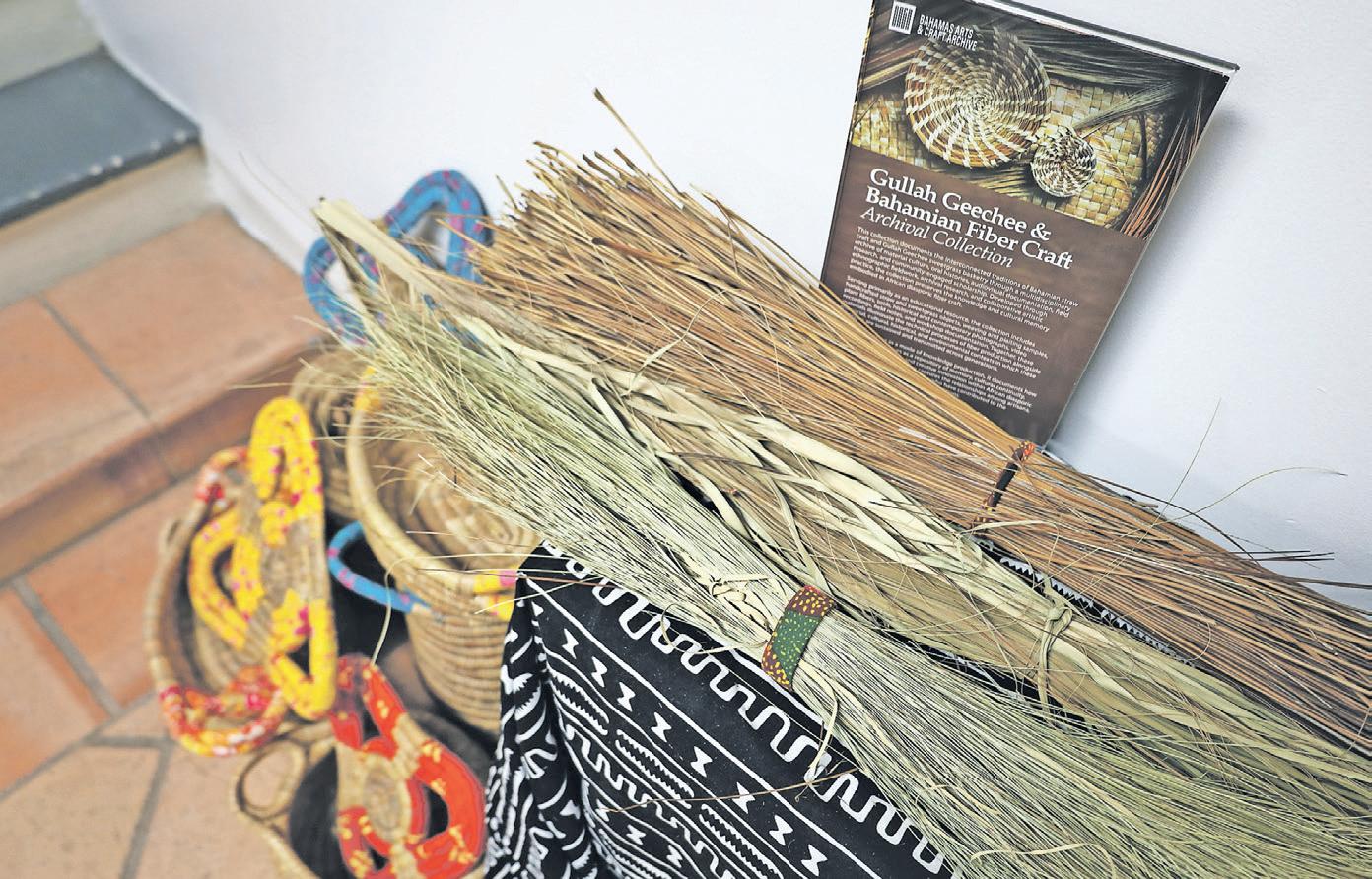
FOR many Bahamians, straw work begins and ends at a tourist market, where woven handbags have become one of the country's most recognisable souvenirs. But behind every plaited bag and carefully coiled basket lies a story that connects communities separated by oceans, and centuries.
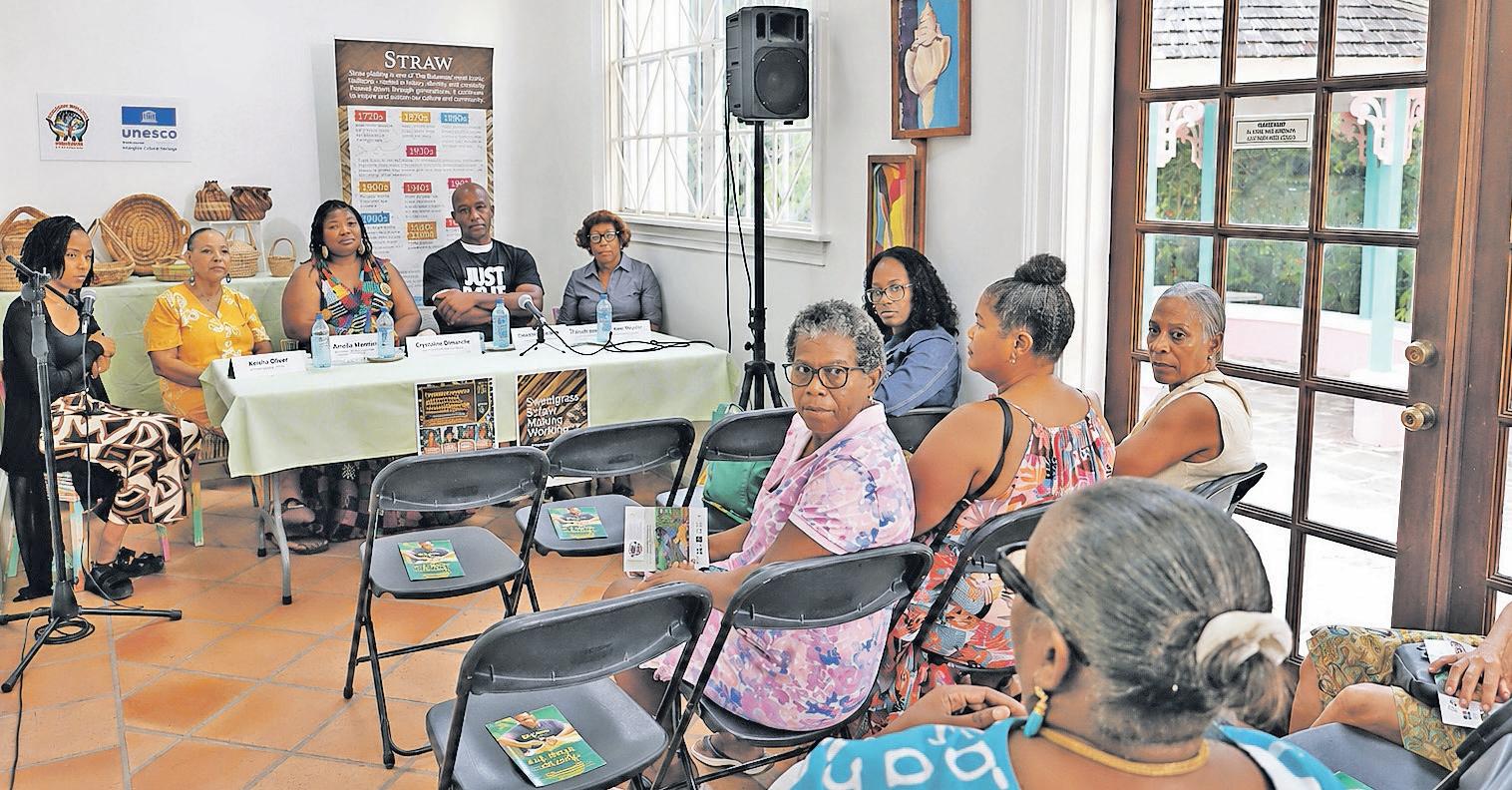
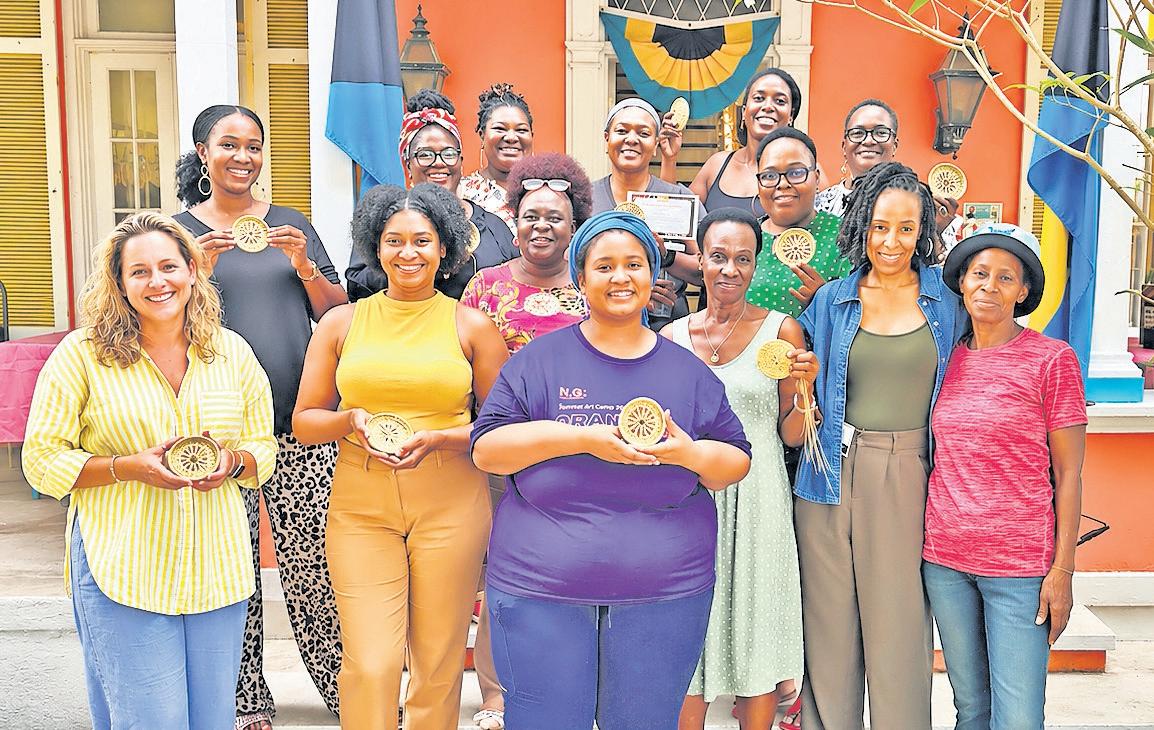
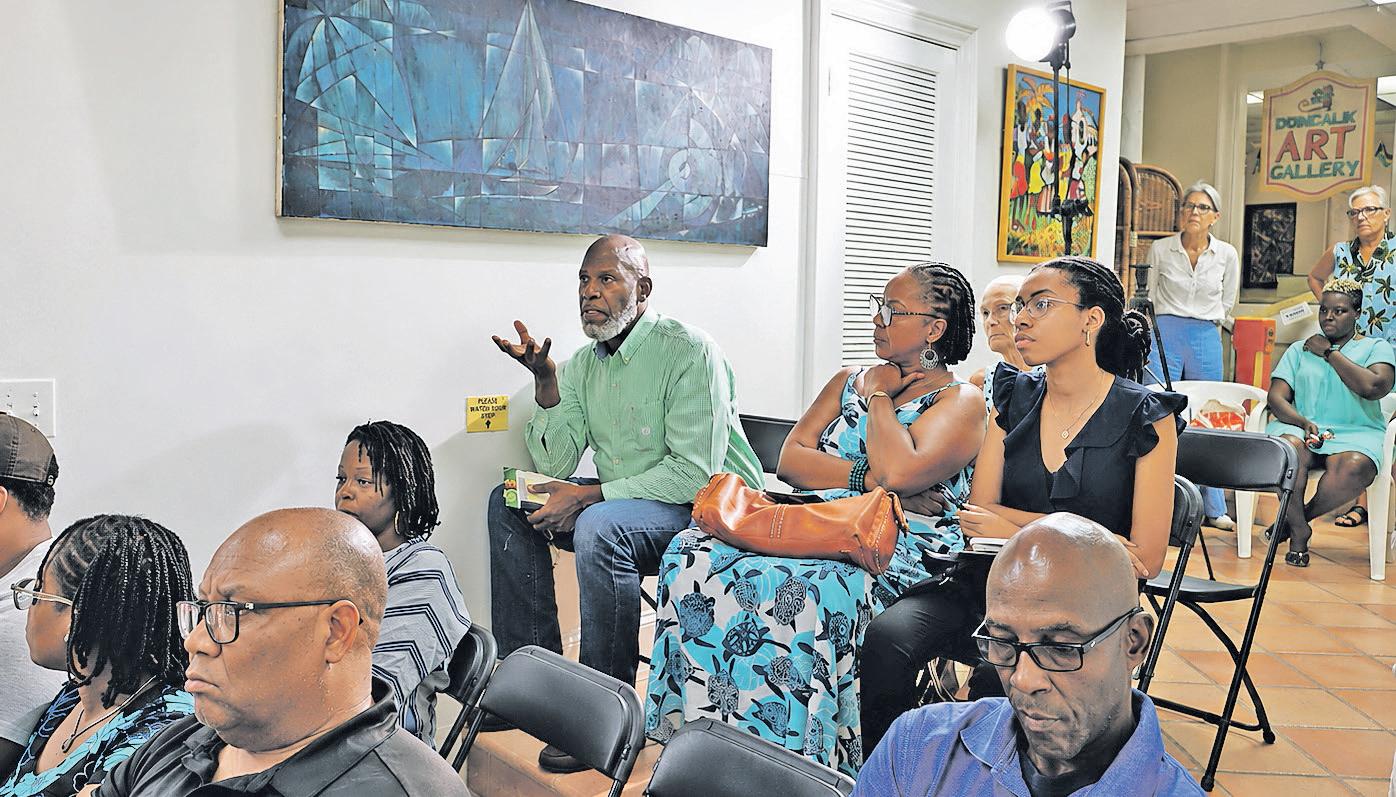
That was the focus of Weaving Legacies: Gullah Geechee, Black Seminole & Bahamian Fiber Crafts, a recent panel discussion at Doongalik Studios, which brought together scholars, artisans and cultural advocates to explore the historical ties linking Bahamian straw craft with Gullah Geechee sweetgrass basketry in the American South and the coiled basket traditions of the Black Seminole community in Red Bays, Andros.
“One of the strongest messages from the discussion was that these traditions will
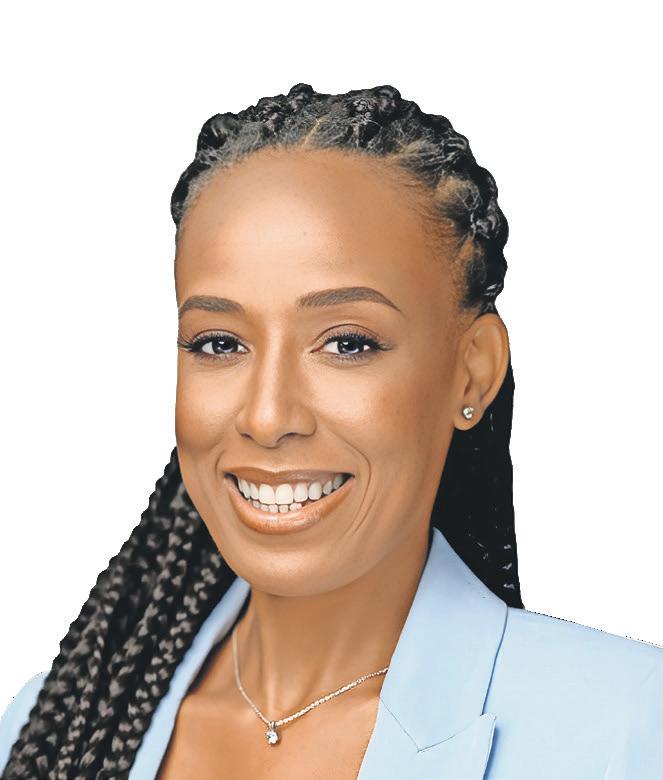
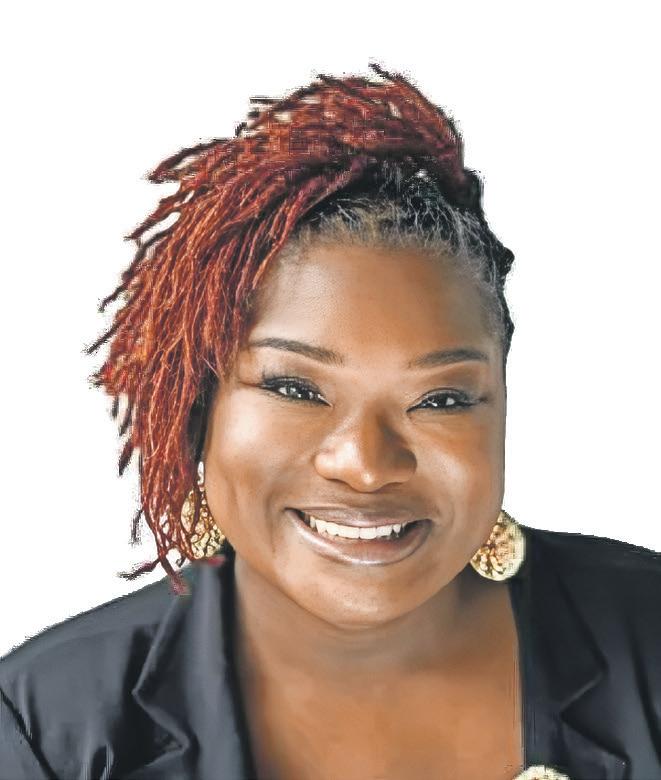
For Ms Oliver, a Bahamian artist, educator and PhD candidate whose doctoral research inspired the event, the discussion was about far more than preserving a craft but placing Bahamian artisans within a much broader history of “movement, adaptation, and cultural survival”. Ms Oliver’s dissertation research “Hands of Remembrance: An African Diasporic Fiber Arts Memory-Making Praxis” is both academic and deeply personal, inspired by her late grandmother, Sylvia Louise Knowles, who built a straw business in downtown Nassau, and the work of Bahamian historian Dr. Gail North-Saunders.
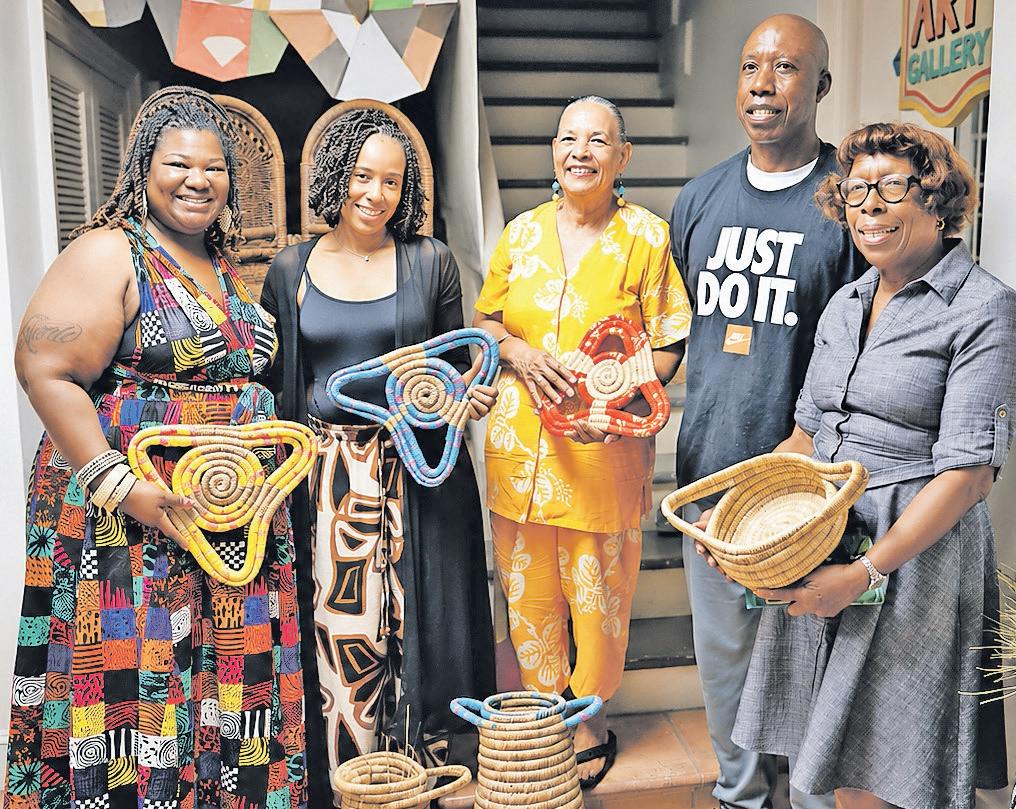
Andrea Cayetano-Jeferson of South Carolina; Creative Nassau co-founder Pamela Burnside; and Red Bays, Andros, straw artisan Douglas Marshall.
The historical links began with enslaved Africans brought to The Bahamas from the rice-growing regions of South Carolina and Georgia after the American Revolution, Ms Oliver explains.
Those settlers brought basket-making knowledge rooted in the Gullah Geechee traditions of the American South but adapted it to their new environment.
engaged over twenty Bahamian, students, straw artisans, and community enthusiasts.
continue to thrive only through intentional investment in the people who carry them forward, the environments that provide the materials, and the educational opportunities that allow knowledge to be passed to future generations,” said moderator Keisha Oliver.
“The conversation emphasized the importance of intergenerational teaching, creating sustainable economic opportunities for artisans, protecting access to natural resources, and encouraging younger generations to recognize these practices as both culturally signifcant and creatively relevant.”
“These histories remind us that cultural traditions are rarely created in iso-
She continued: “These relationships were further strengthened through the migration of Black Seminoles to Red Bays, Andros, whose Gullah Geechee ancestors sought refuge in The Bahamas after escaping enslavement in Florida alongside Seminole allies during the early nineteenth century.”
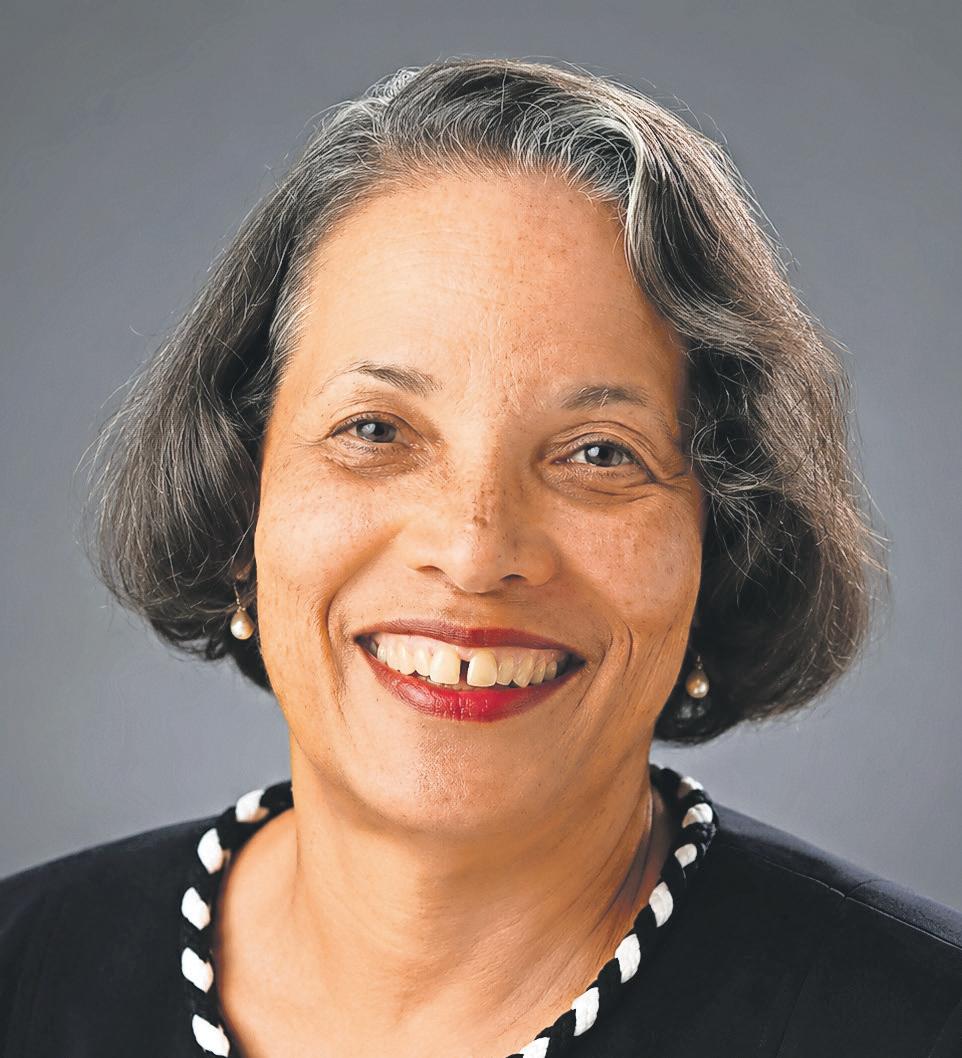
Dr Grace Turner, chief archaeologist at the Antiquities, Monuments and Museums Corpo-
lation,” she continued.
“The movement of African-descended peoples across the Atlantic continue to shape fber crafts, foodways, language, and other cultural practices throughout The Bahamas and the U.S. South. This is an area of research that the late Patricia Glinton-Meicholas was committed to. Recognizing these connections does not diminish what makes Bahamian straw craft unique. Instead, it expands our understanding of its signifcance by placing Bahamian artisans within a broader legacy of Black creativity, innovation, resilience, and cultural preservation.”
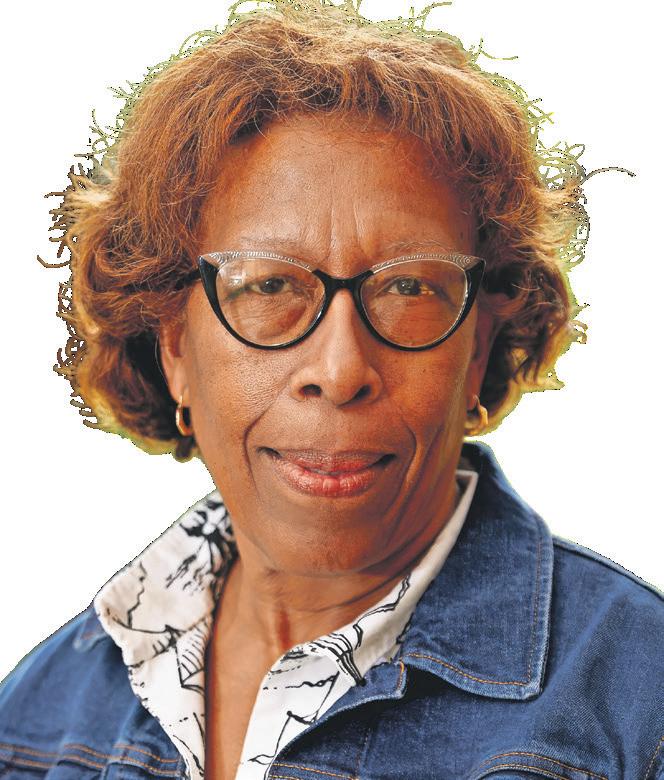
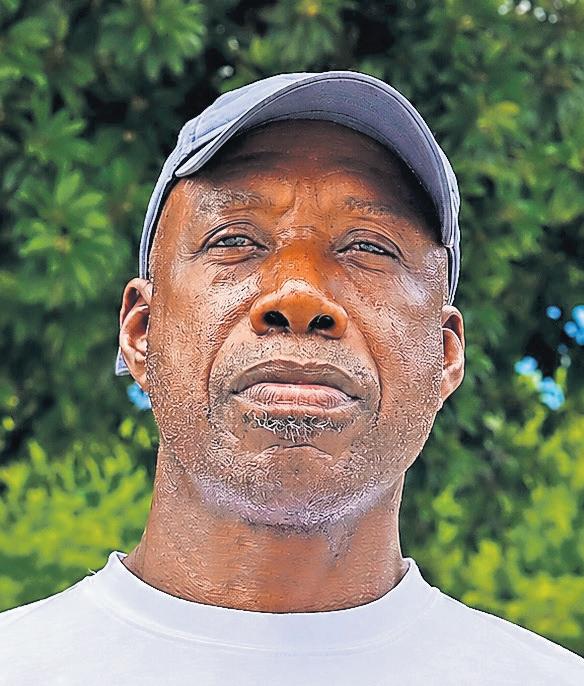
The discussion brought together Dr Grace Turner, chief archaeologist at the Antiquities, Monuments and Museums Corporation; Gullah Geechee basket maker
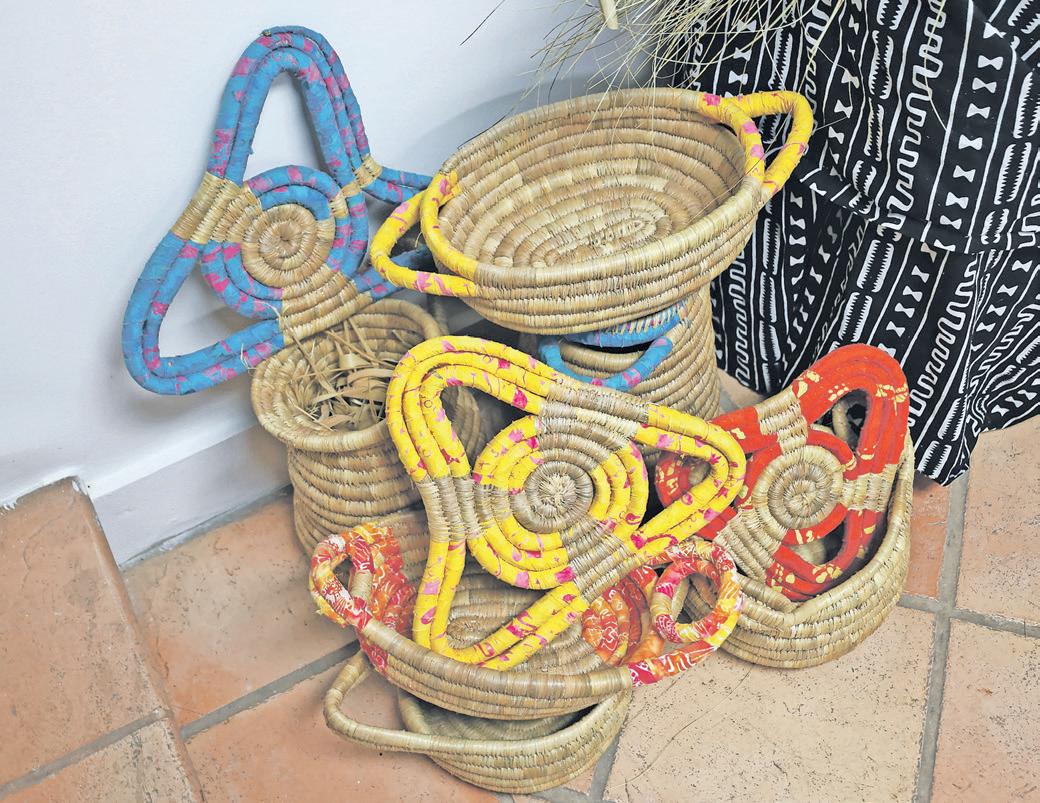
"They had to adjust and adapt to what kind of plant materials were available here," Turner said. "They couldn't continue using the sweetgrass that is common in the Carolinas, so they switched to silver top, which we use here more commonly.
"Over time, their techniques changed into what you see today. During the last 50 years or so, they've also incorporated Androsia fabric into much of their work. Some baskets remain plain, but others include colourful decorations."
While straw bags have become synonymous with Bahamian tourism, Dr Turner said the craft was originally rooted in necessity rather than commerce.
"Originally, all of our straw work in The Bahamas was not sold or given away," she said. "Back in slavery, it was made to use on the plantations. It was utilitarian. There were feld baskets, corn baskets that caught meal beneath the mill, and fans used to separate grain. Diferent baskets were made for diferent jobs."
As tourism developed, artisans adapted those practical skills into products visitors wanted to take home, Dr Turner added.
One of the most memorable moments of the evening for Dr Turner came from Red Bays native Douglas Marshall, an AMMC employee who rediscovered basket making after decades away from the practice.
ration, said understanding those connections helps Bahamians recognise straw work as much more than a tourism product.
She explained that Bahamian straw work encompasses several distinct traditions.
"People here call it 'plaiting', but that's really just another form of weaving. The coiled baskets are often referred to as 'sewn baskets' because you use a needle or another sharp object to push the material through while wrapping it together. They're all diferent ways of weaving straw to produce a fnished piece."
Dr Turner said the distinctive coiled basketry of Red Bays refects the history of the Black Seminole community that settled in Andros after escaping enslavement in Florida during the early 19th century.
Ms Cayetano-Jeferson shared that in her community it was traditionally the men who made the baskets. In the early 1900s, however, men found other work, so women took over because basket making became an important source of income for families. She spoke about learning from Bahamian straw workers and expressed her desire to return to master Bahamian plaiting techniques.
For Dr Turner, that admiration from abroad can encourage Bahamians to value traditions they sometimes overlook.
"When we see other people appreciate our work, it causes us to recognise what a valuable resource we have," she said, recalling how another museum staf member committed to learning the craft after being inspired by the discussion. Dr Turner said the employee later learned that her own mother used to plait as a child but had rarely spoken about it. At the event, Bahamian designer Debbie Strachan shared how she incorporates traditional straw plaits into contemporary handbags that command premium prices. Those examples, Dr Turner said, show that preserving tradition does not mean resisting innovation. She believes that preserving those traditions means recognising them as living parts of Bahamian culture rather than relics of the past.
Mr Marshall learned the craft alongside other boys and girls in his community but ike many men, however, he eventually stopped weaving after moving to Nassau.
"Hearing Mr Marshall talk about getting back into doing something he learned as a child, that was huge," Dr Turner said, “that's what legacy is."
Mr Marshall’s story also challenged the common assumption that straw work has always been women's work, Ms Oliver added.
The panel was part of the public programming the African Diasporic Fiber Craft Residency hosted by Summer Arts Immersion and Incubator for Collaborative Expression. Ms Cayetano-Jefferson, a Gullah Geechee 6th generation sweetgrass basket maker was the 2026 resident artist. She also led two sweetgrass and straw-making workshops which
"The AMMC is ultimately an institution for the preservation and presentation of our cultural heritage," she said. "It's not only important to show the past, but also to show how it is incorporated into our current daily lives and what the implications are for carrying these traditions forward through new generations of Bahamians.”
Dr Turner said: "Sometimes we don't realise the value of what we have until we see someone else appreciating it," Dr Turner said.
"When you realise that something you created from materials gathered in the bush represents a legacy that has existed in The Bahamas for hundreds of years.
She added: "It's generated new discussion. Once you generate new discussion, you begin fnding new ways to use that resource. That's how a legacy moves on to newer generations instead of disappearing."
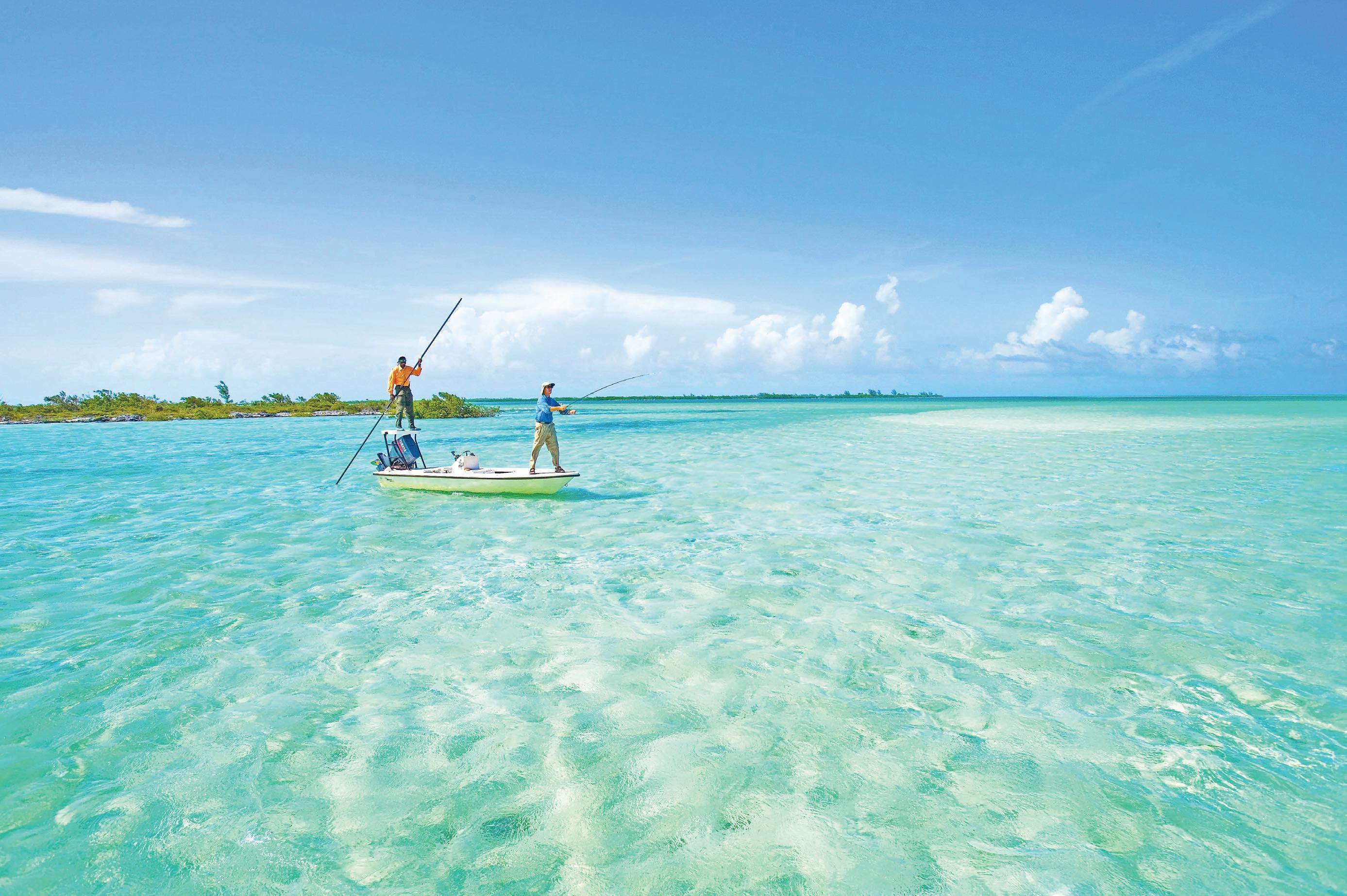
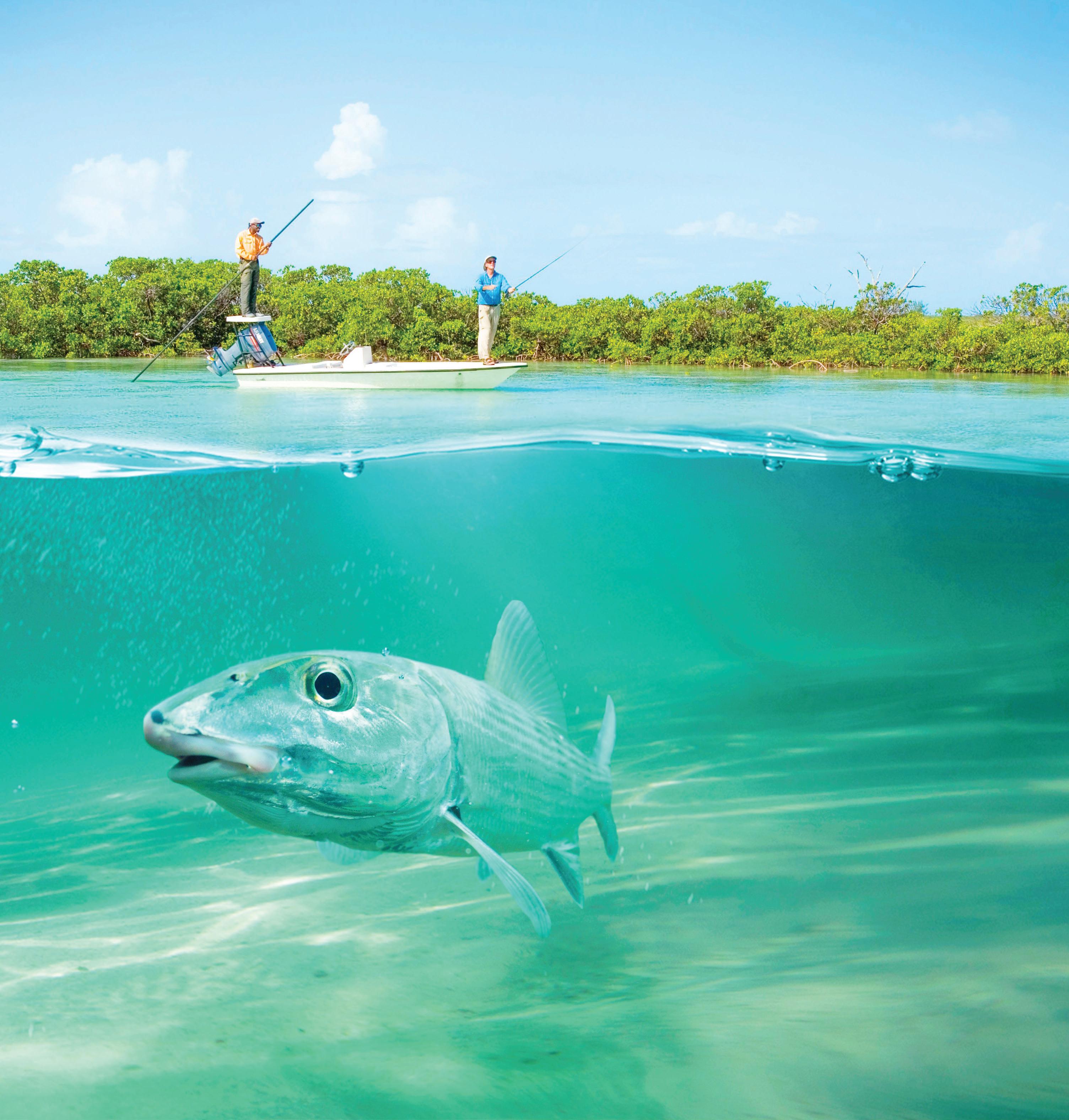
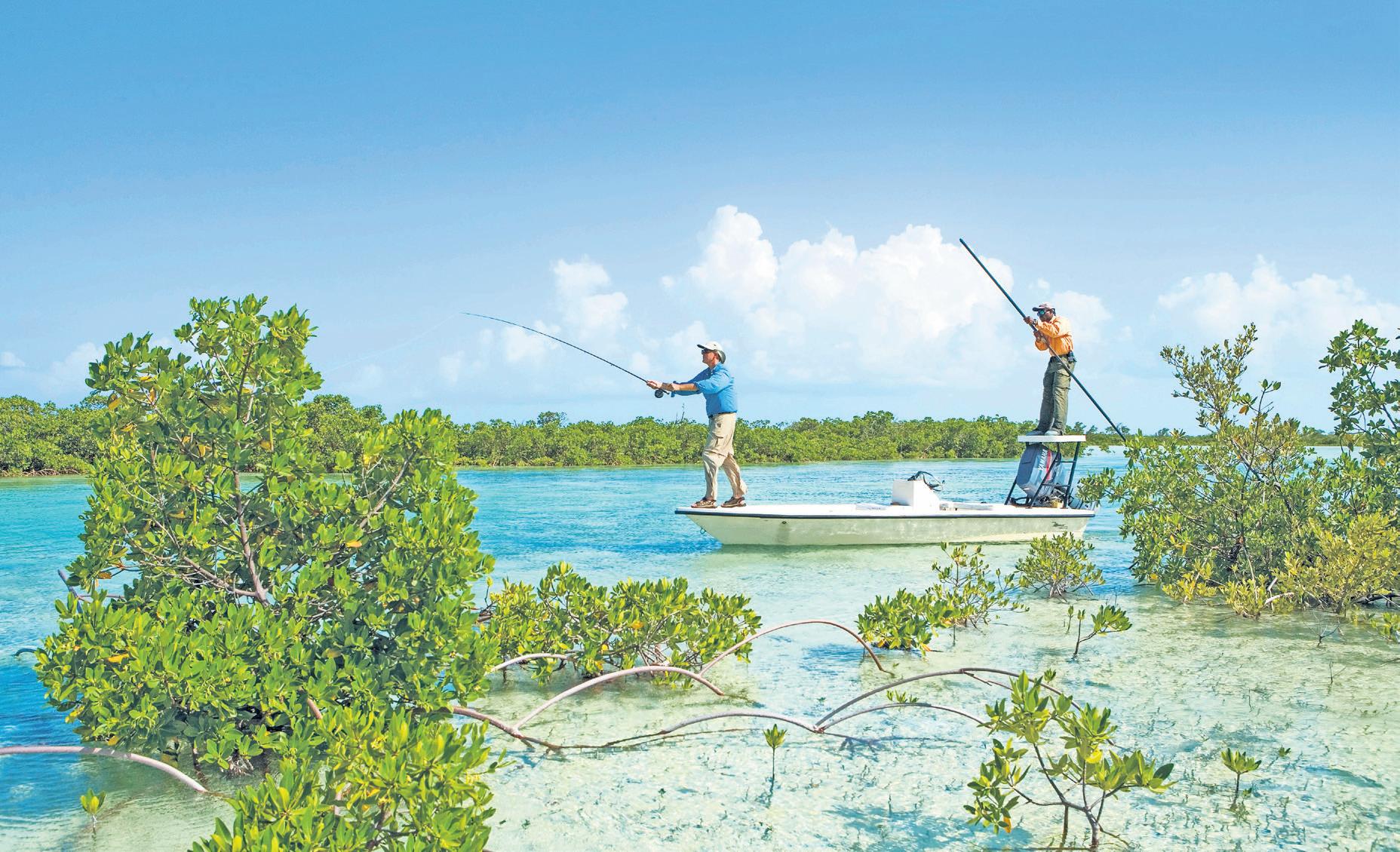
ANGLERS from around the world are invited to participate in the 2nd annual multi-island Bahamas
Bonefshing Tournament Series by the Bahamas Ministry of Tourism, in conjunction with the Tourism Development Corporation (TDC). Scheduled for September through November, the tournament series will ofer more than $100,000 in cash and prizes, reinforcing The Bahamas’ position as a leading destination for world-class fats fshing.
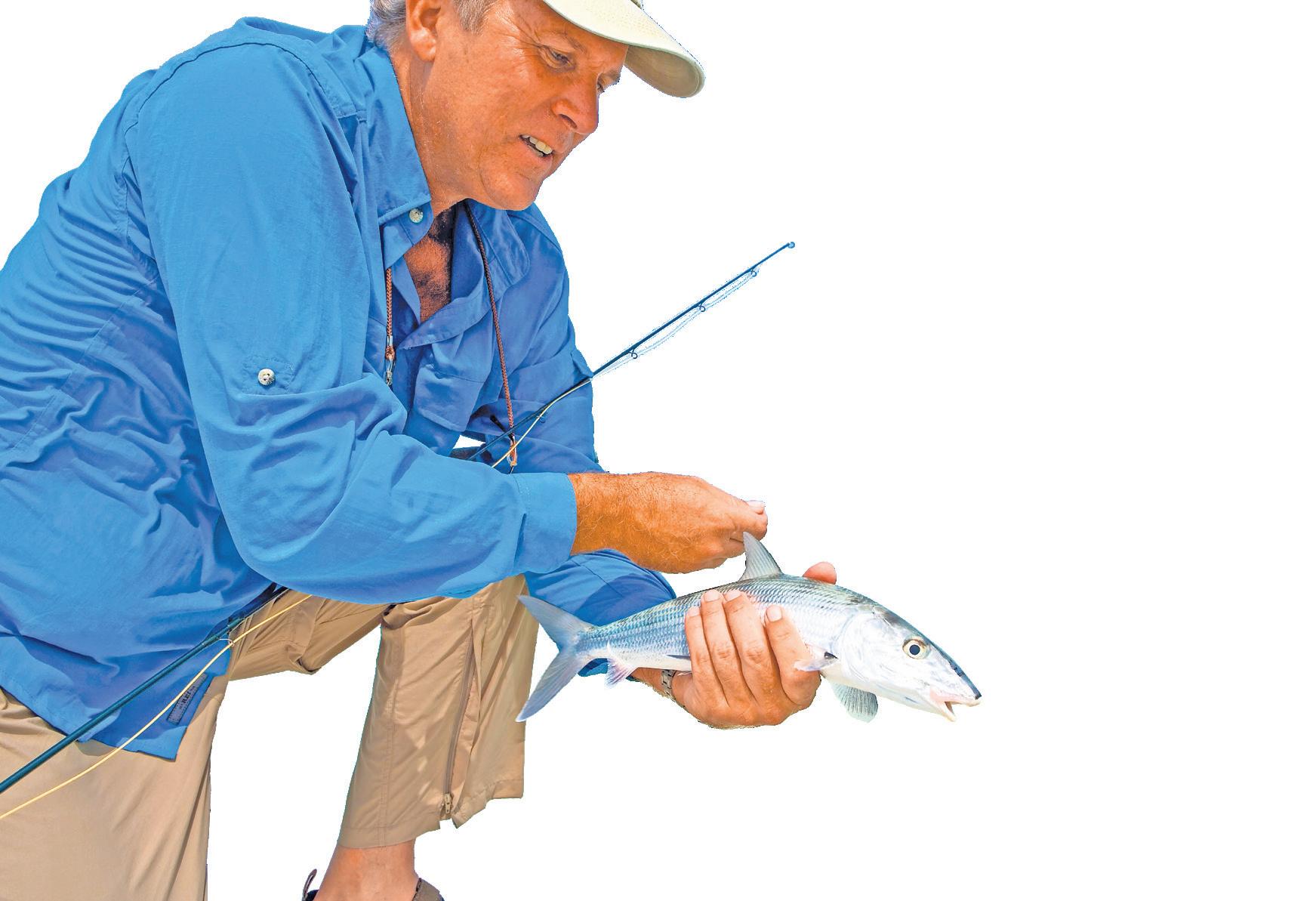
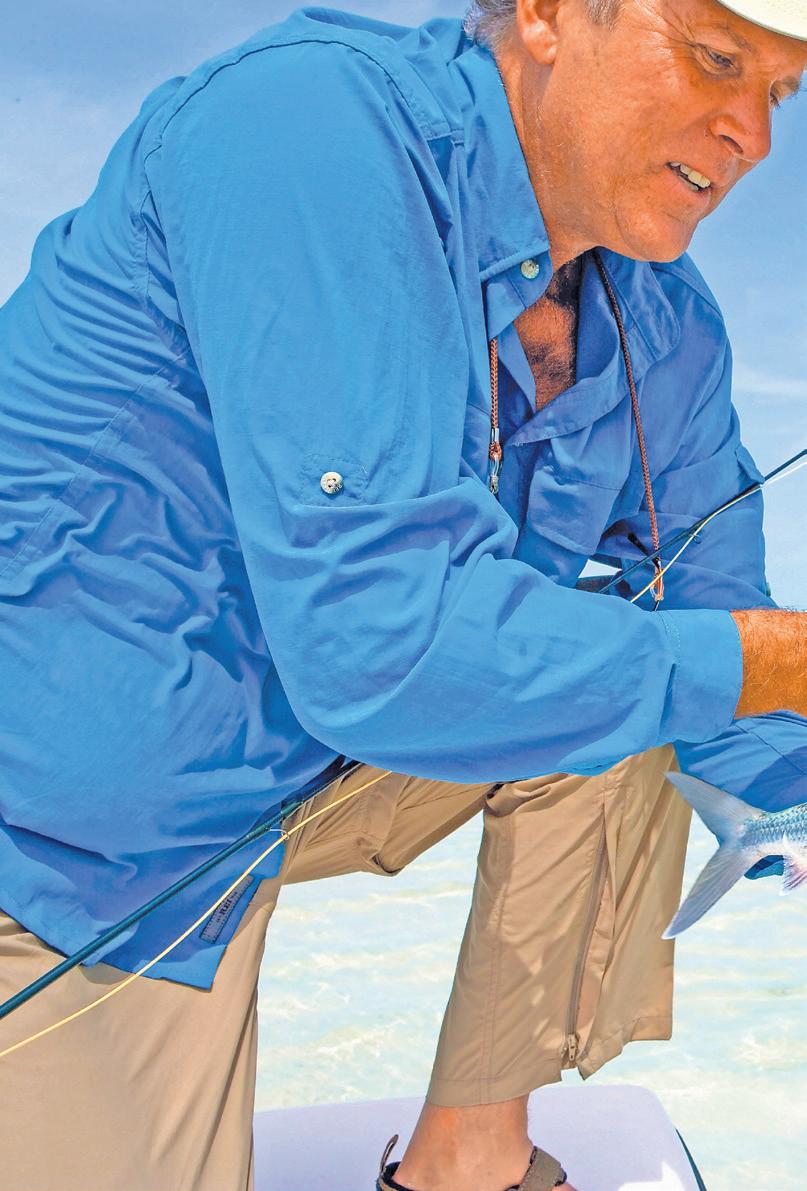
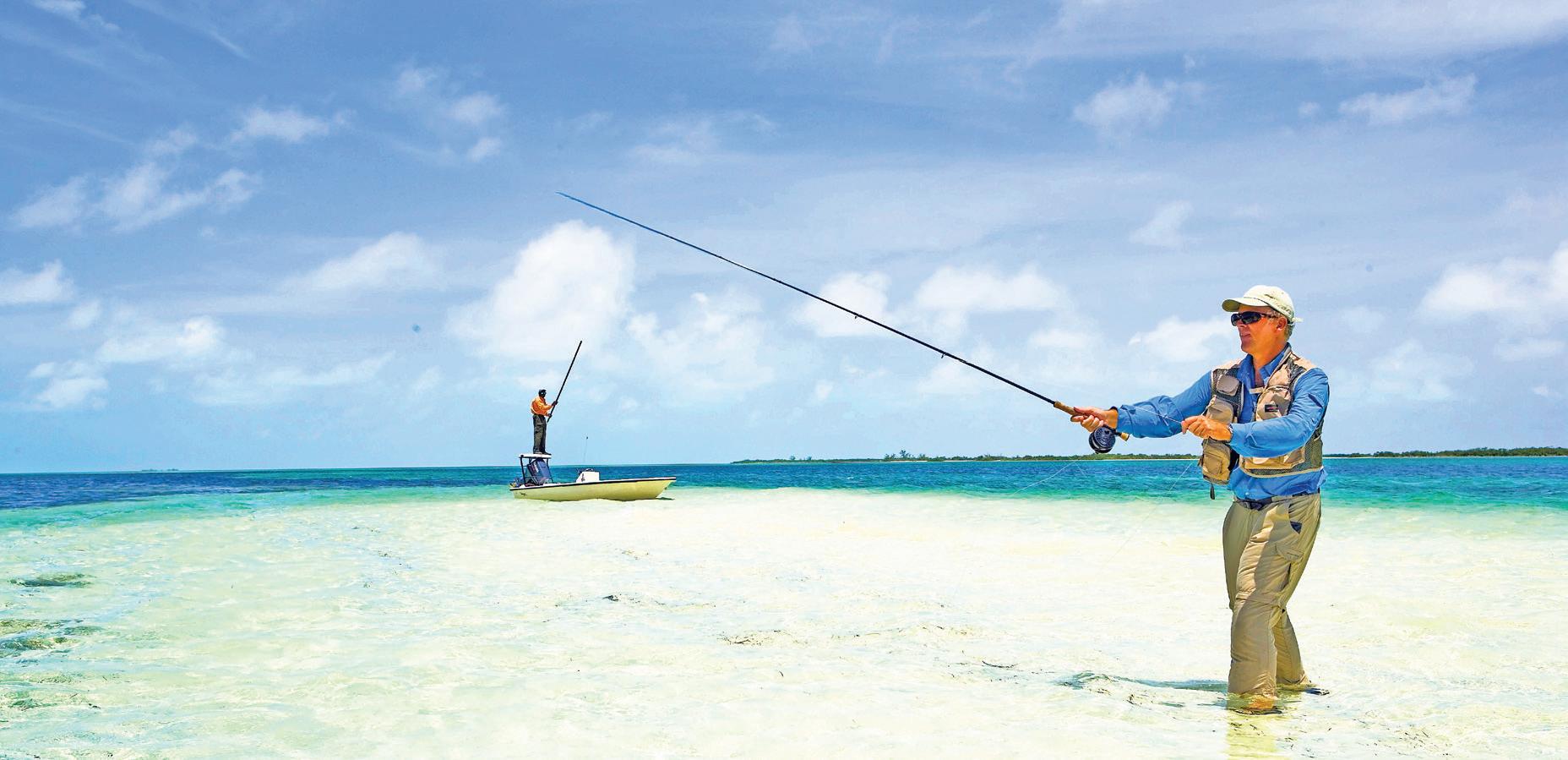
Open to international participants at a registration fee of $500 per entrant, the initiative is designed to elevate the country’s sport fshing sector while promoting sustainable and highvalue tourism experiences. Participants will compete across the renowned fats of Andros and Long Island, culminating in a competitive but fun championship event in George Town, Exuma.
In addition to cash prizes, awards will include curated fshing expeditions within The Bahamas, premium angling equipment, and locally crafted Bahamian artwork.
“The Bahamas ofers a unique and highly diferentiated experience within the global tourism landscape,” said the Hon. Glenys Hanna Martin, Minister of Tourism.
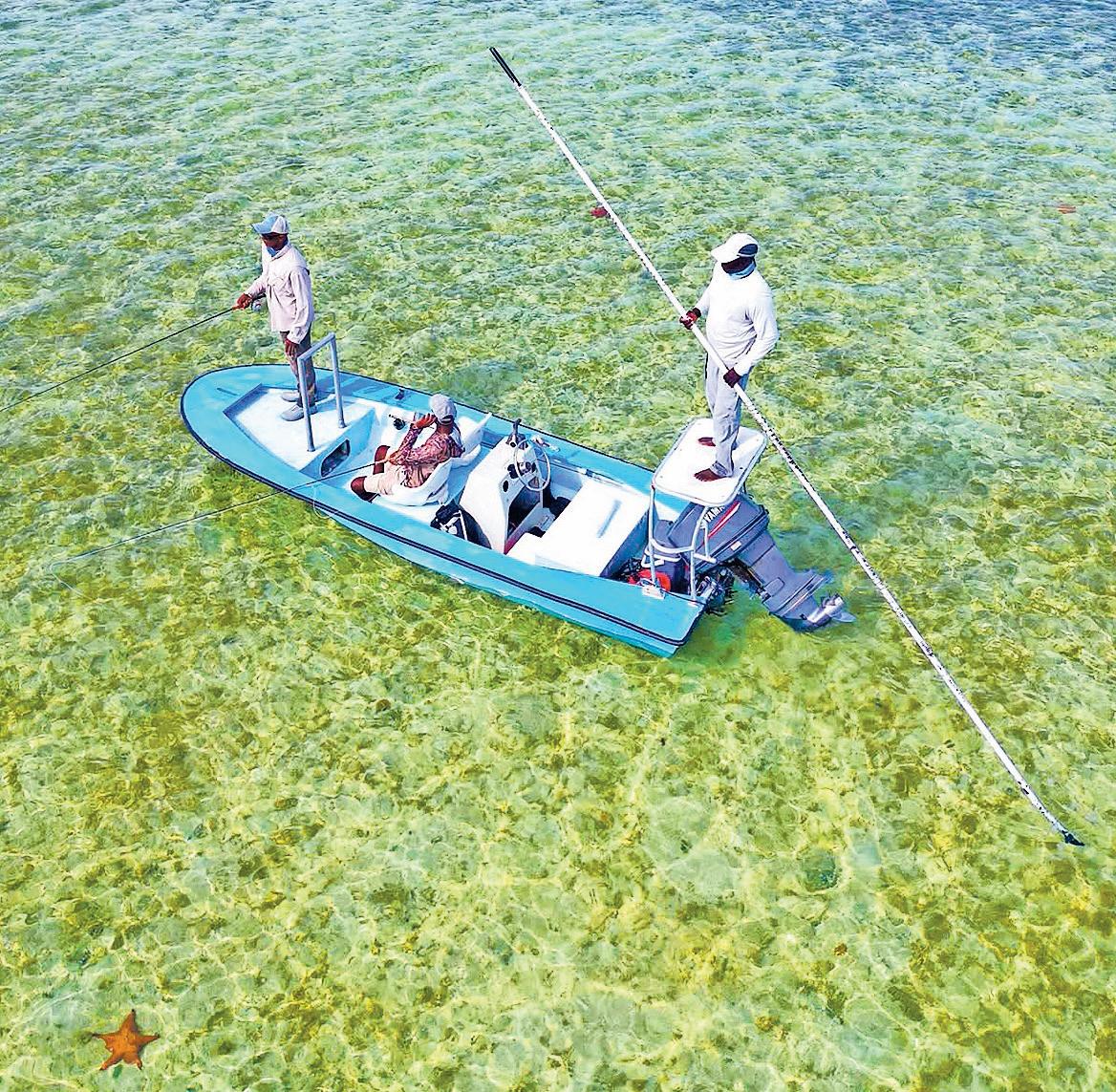
“IT’S shallowwater ecosystems rank among the most productive globally, and its wider marine environment sustains key species that position The Bahamas as not only a leading destination for sustainable fats fshing, but high-quality, nature-based tourism experiences.”
The series will convene participants who share a passion for sportfshing, conservation, and the marine environment, featuring three days of competitive angling in each destination. Complementing the competition, the program will include curated island experiences, angling pairing parties, culturally infused entertainment, festive awards ceremonies, community engagement and networking opportunities among participants.
“The TDC is pleased to support and participate in the evolution of the fy fshing renaissance taking place in the Islands of The Bahamas. We believe the development of the tourism product is not complete until we maximize the majesty of our waters and tap into our natural and environmental assets,” said Ian Ferguson, Executive Director and CEO, TDC.
For the second consecutive time, Bonefsh & Tarpon Trust (BTT) returns as the Tournament’s conservation partner.
“This continued collaboration refects our shared commitment to celebrating The Bahamas’ world-renowned fats fshery while protecting and increasing awareness on the habitats, fsheries, and communities that sustain it,” said Rashema Ingraham, Caribbean Program Director, BTT.
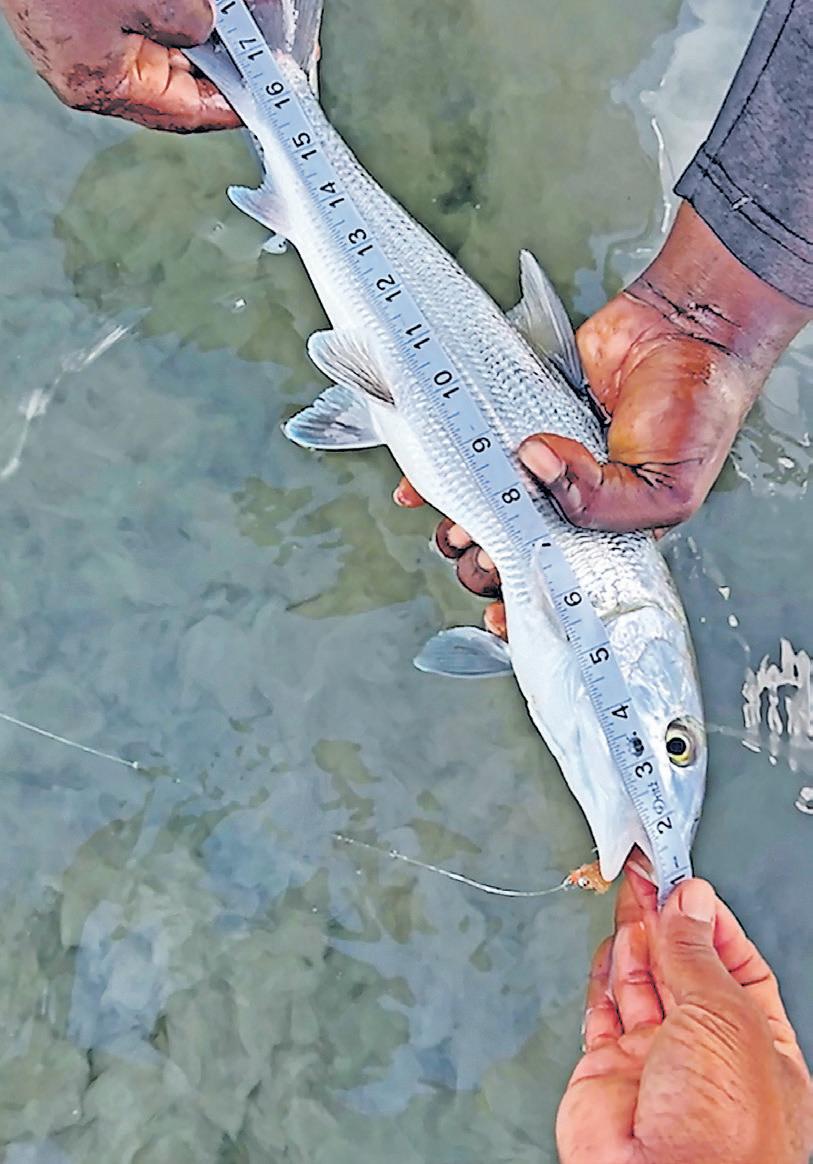
“By bringing together guides, anglers, government, and local communities across several islands, the tournament series creates a meaningful platform for conservation education, stewardship, and action. It also provides an important opportunity to increase visibility on the increasing need to ensure best handling practices for catch-and-release fshing, ensuring that bonefsh are released healthy, and that this iconic fshery remains strong for future generations.
“Together we are advancing a love for the sport but also responsible angling, and a sustainable future for Bonefshing in The Bahamas.”
Governed by the internationally recognised standards of the International Game Fish Association (IGFA), this premier catch-and-release tournament showcases The Bahamas as a worldclass destination for fats fshing.
Targeting bonefsh, with tarpon and permit also in play, the competition adheres to conservation best practices sanctioned by (BTT), reinforcing a strong commitment to sustainable fsheries management.
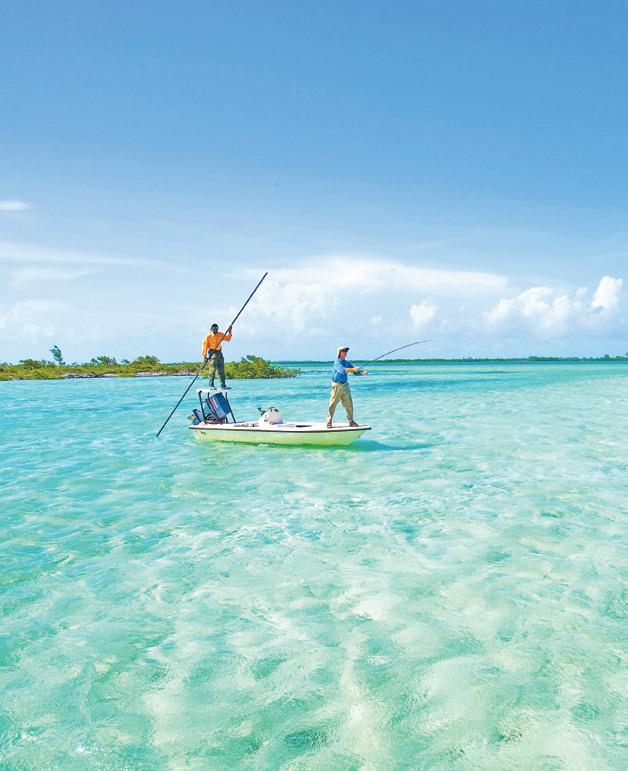
Each event pairs two anglers per vessel with a licensed Bahamian fshing guide, highlighting the expertise of local professionals and the authenticity of the experience. Competitors contend for top honors, including special distinctions such as the GOAT Award, presented to teams achieving a coveted Grand Slam, landing a bonefsh, tarpon, and permit within a single day.
Few destinations command the reverence of The Bahamas within the global angling community. Its expansive shallow-water fats, abundant marine life, and highly skilled guides continue to attract discerning anglers from across the world, season after season.
The full tournament schedule is as follows:
• Andros: September 30 – 4 October 4 at Andros Lighthouse Yacht Club, Fresh Creek
• Long Island: 14 –18 October 14-18 at Stella Maris Resort Club, Stella Maris
• Exuma: 10–15 November 10-15 at Hideaways at Palm Bay, George Town (Championship)

One letter stands for another. In this example, A is used for the three L’s, X for the 2 O’s, etc. Single letters, apostrophes, the length and formation of words are all hints. Each day the code letters are different.
Sudoku is a number-placing puzzle based on a 9x9 grid with several given numbers. The object is to place the numbers 1 to 9 in the empty squares so the each row, each column and each 3x3 box contains the same number only once. The difficulty level of the Sudoku increases from Monday to Sunday Yesterday’s Answers

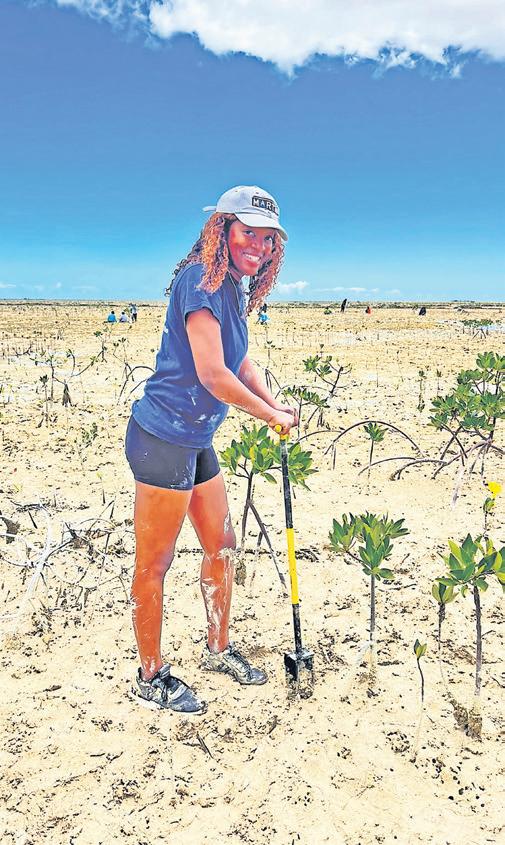
LANIQUAR Martin was among volunteers helping to restore mangroves at Dover Sound, a waterfront residential community and mangrove-fringed creek system located on the northern shore and eastern corridor of Grand Bahama.
The project, for International Mangrove Day on July 26, was organised by Grand Bahama Shipyard Limited (GBSL) and highlighted the continued growth of its mangrove restoration partnership with Waterkeepers Bahamas, an employee-supported efort helping to restore coastal areas damaged by Hurricane Dorian.
For Ms Martin, a Financial Accountant who has worked at Grand Bahama Shipyard for ten years, the programme has grown into a family commitment.
“Participating in the mangrove restoration programme has been incredibly rewarding,” she said.
“I take pride in supporting an initiative that cares for our environment, and my daughters look forward to every planting. It has also been encouraging to see friends, teachers and students become inspired to take part.”
Through the partnership, Shipyard employees have helped plant nearly 25,000 mangrove seedlings at Dover Sound, contributing to a wider community efort involving volunteers, students, government agencies, environmental advocates and corporate partners.
For Grand Bahama, the work carries particular signifcance. Mangrove forests at Dover Sound and in other areas of the island sufered extensive damage during Hurricane Dorian. Restoring these ecosystems helps rebuild natural coastal barriers that reduce wave energy and erosion while providing nursery habitats for fsh and other marine life.
“Restoring Grand Bahama’s mangroves is about helping to protect an ecosystem that also helps protect our island,” said Marvin Basden, GBSL Vice President of Environment, Quality, Facility Maintenance and Infrastructure Development.
“What makes this partnership especially meaningful is the commitment of our employees. They willingly give their time, often on weekends and in difcult conditions, because they understand the lasting value of this work to our coastline, marine environment and community.”
The Shipyard’s involvement extends beyond community planting days. GBSL maintains a mangrove nursery at its wastewater treatment plant and two planting beds near its Administrative Ofce, where collected propagules are nurtured until they are
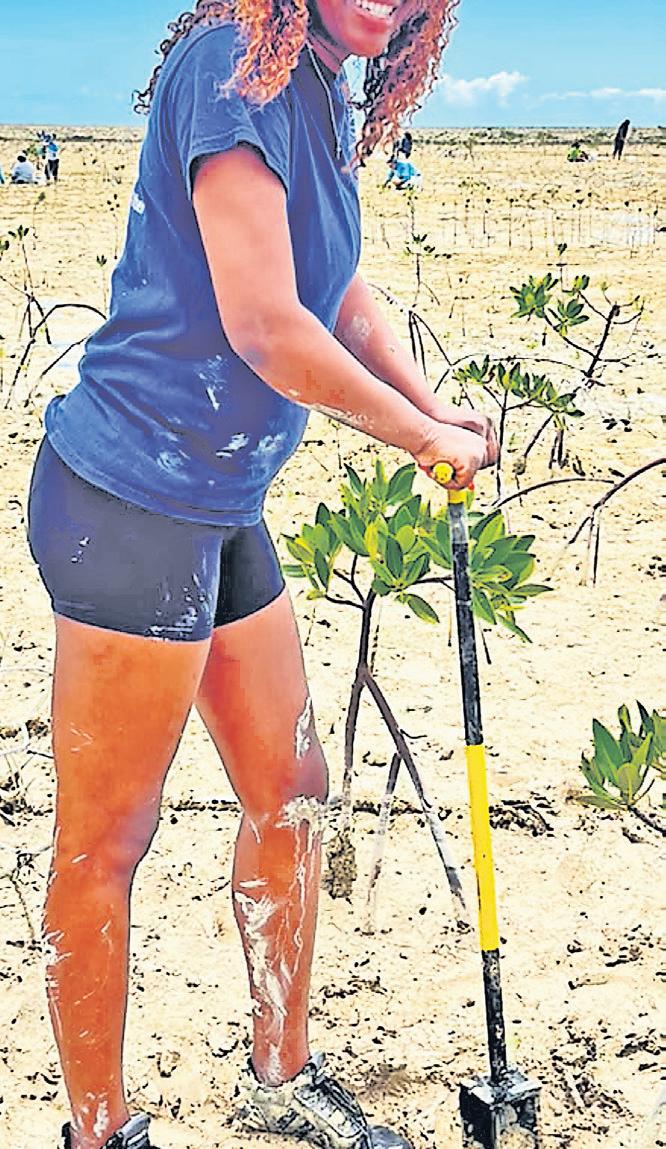
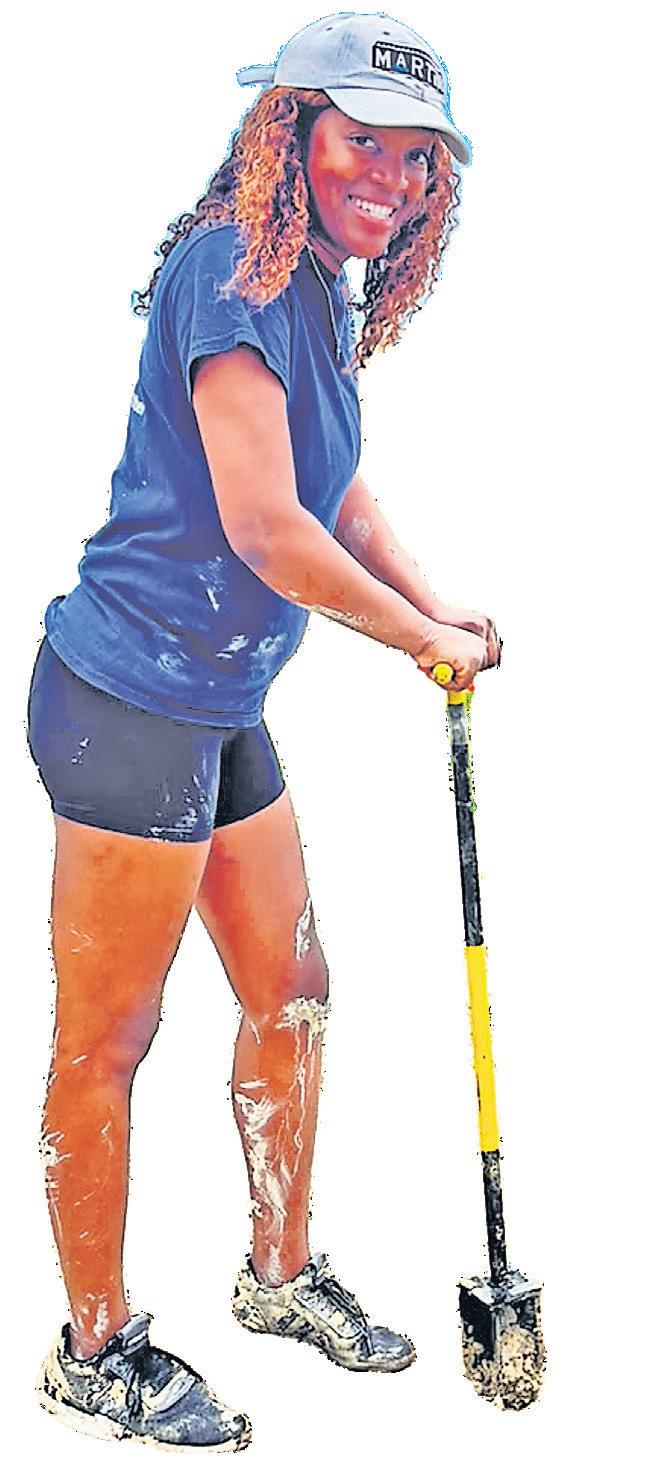
PICTURED in Dover Sound, planting propagules was Laniquar Martin, GBSL Financial Accountant, who has participated in propagule collection and multiple planting events alongside her daughters. "Participating in the mangrove restoration programme has been incredibly rewarding," she said. "I strongly believe that caring for our environment is important, and I take pride in supporting initiatives like this. My daughters and I have participated in every mangrove planting to date, and they always look forward to being involved. It's also been wonderful to see friends and even local teachers become inspired to join and encourage their students to take part."
Photos: GBSL for Barefoot Marketing
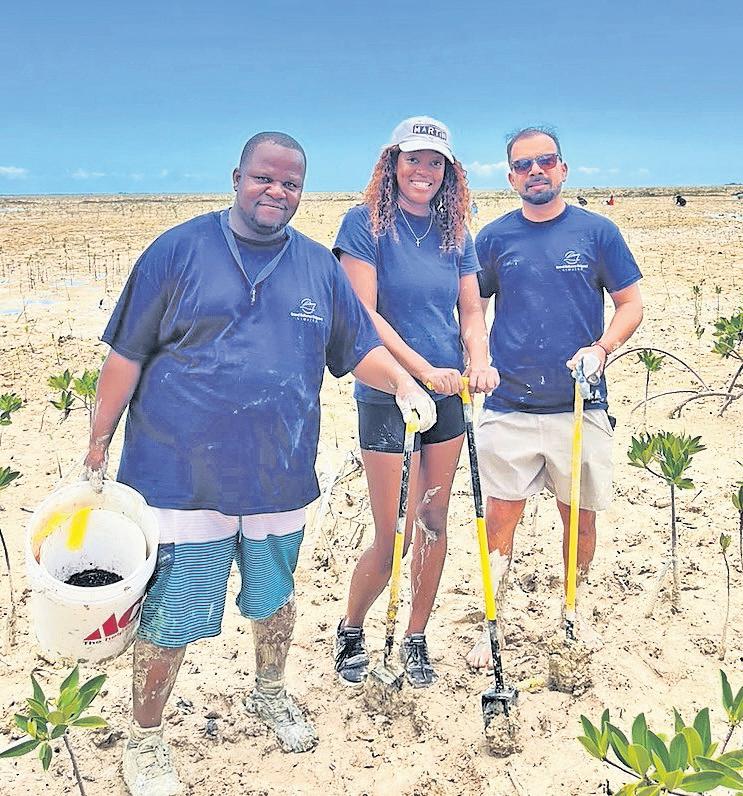
THE SHIPYARD also continues to hold the record for planting the most propagules in the shortest amount of time, with 6,000 propagules planted in just 30 minutes on May 17, 2025. "We'll continue growing and caring for the propagules here at the yard until it's time to plant again," Basden said with a smile. "And when Waterkeepers calls, we'll be ready—and we'll definitely be aiming to beat our own 6,000-propagule record.”
Pictured during one of these planting events are (left to right) Glenvino Moultrie, Environment Services Foreman (Waste Treatment); Laniquar Martin, Financial Accountant, and Ravi Kumar, Production Manager.
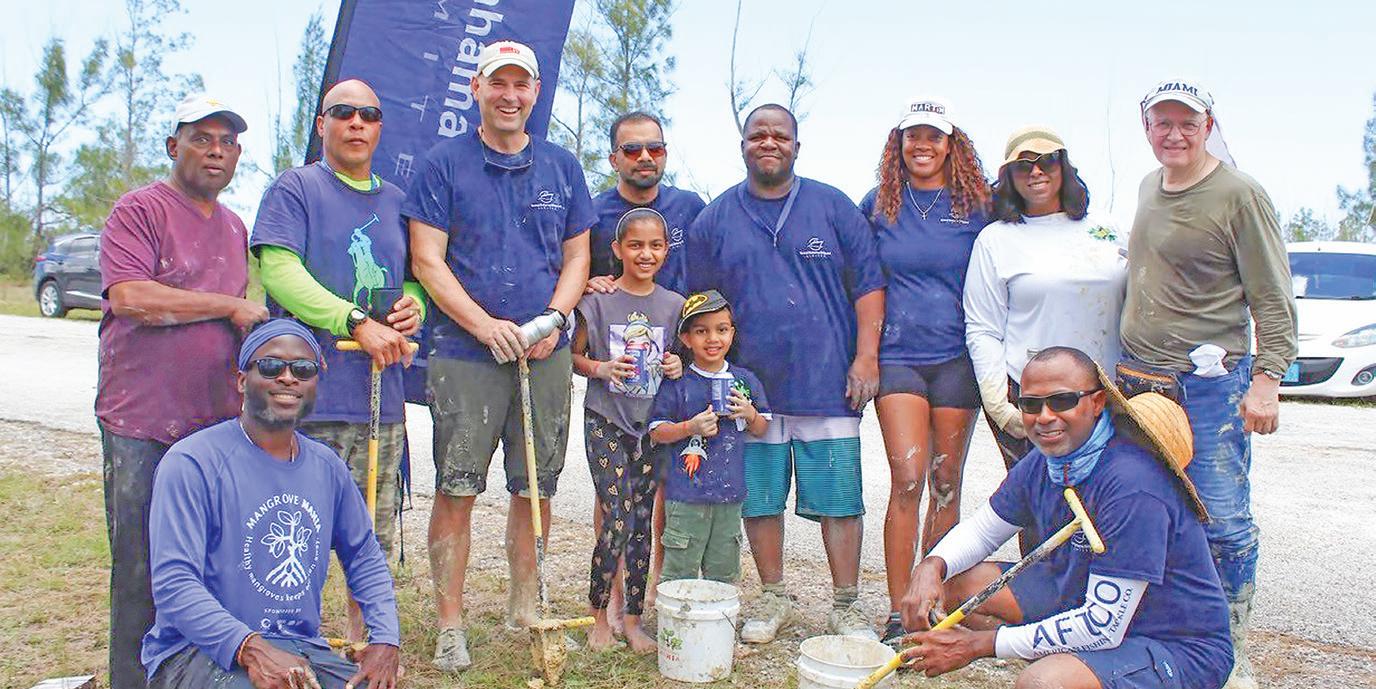
AS International Mangrove Day was observed on Sunday, the GB Shipyard reflected on its ongoing partnership with Waterkeepers Bahamas, which has seen employees volunteer their time to plant nearly 25,000 mangrove propagules over the past two planting seasons. Pictured at one of these events are (left to right) standing, Chandrarathne Gardi, Marine Estimator; William Martin, Environment Services, Clear Blue; Chris Earl, CEO; Ravi Kumar, Production Manager; Glenvino Moultrie, Environment Services Foreman (Waste Treatment); Laniquar Martin, Financial Accountant; Solana Lightbourn, Corporate Relations Officer; and Slawomir Zulawski, Marine Estimator. Kneeling in the front are Javan Hunt, Special Projects Coordinator, Waterkeepers Bahamas (left) and Marvin Basden, VP Environment, Quality, Facility Maintenance & Infrastructure Development (right).
ready for transplantation. Employees also participate in seasonal propagule collection, helping maintain a reliable supply of young mangroves for future restoration activities.
Waterkeepers Bahamas said the Shipyard’s consistent participation and practical support have helped
sustain the programme, expand its community reach and constribute to restoration milestones, including a record 6,000 propaguls planted by Shipyard employees in just thirty minutes.
“This is more than a restoration project; it is a statement that our
community believes in protecting the places that protect us,” said Javan Hunt, Special Projects Coordinator and Mangrove Nursery Manager at Waterkeepers Bahamas.
“Grand Bahama Shipyard has become one of the programme’s most dependable corporate partners. Its team consistently arrives ready to work and provides additional tools, refreshments and clean water to support the wider volunteer efort.”
Although feld planting pauses during the Atlantic hurricane season, the Shipyard’s restoration eforts continue through propagule collection and nursery cultivation. Collected propagules will be nurtured at the Shipyard until conditions allow community planting activities to resume.
Photos:Lynden Lundy
By BARBARA WALKIN barrbara@ barefootmarketing.net
FOLLOWING widespread circulation of a WhatsApp community message that was published in Around da Islands and GB242news appealing for blanket
her husband, who donated blankets and pillows to the hospital’s Accident and Emergency Department.
The couple was inspired to act after Mr Fields’ brief stay in the A&E. While he had the comfort of his own blanket and pillow, they observed that many patients were not as fortunate.
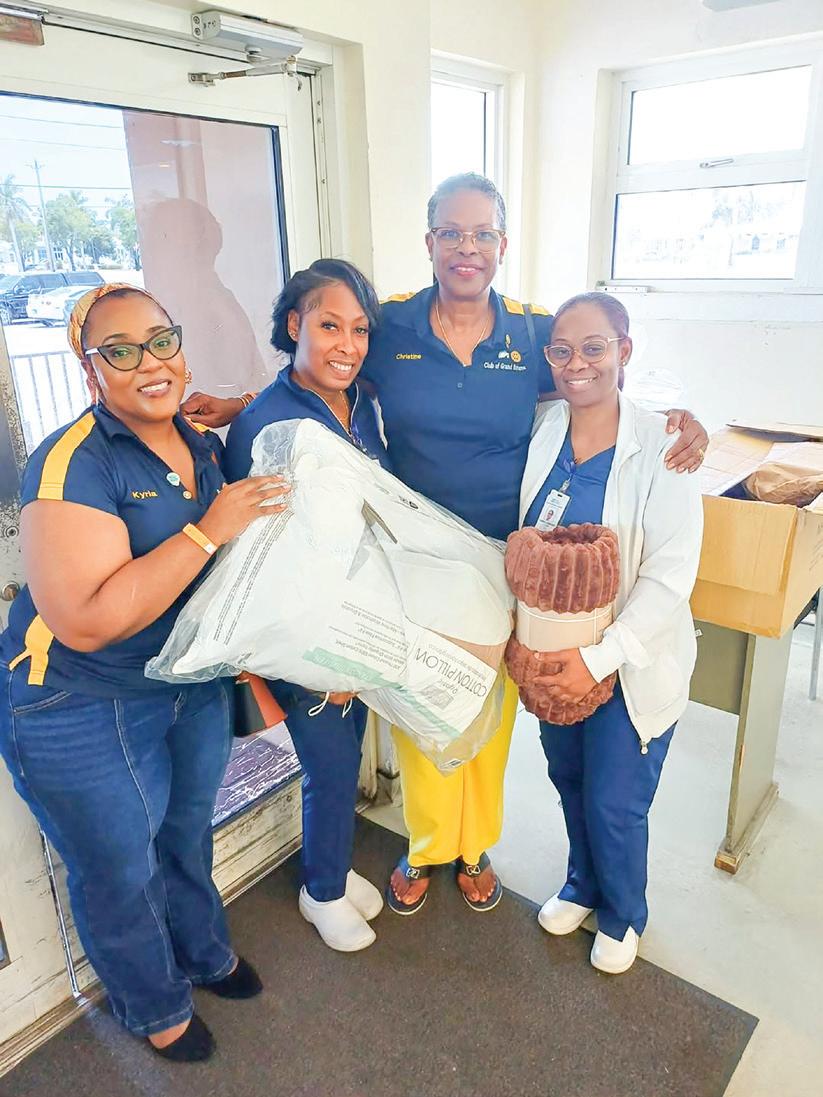
Moved by the experience, the Fields purchased blankets and pillows and donated them on behalf of the Rotary Club of Grand Bahama to help bring comfort to patients during what is often one of the most difcult times in their lives.
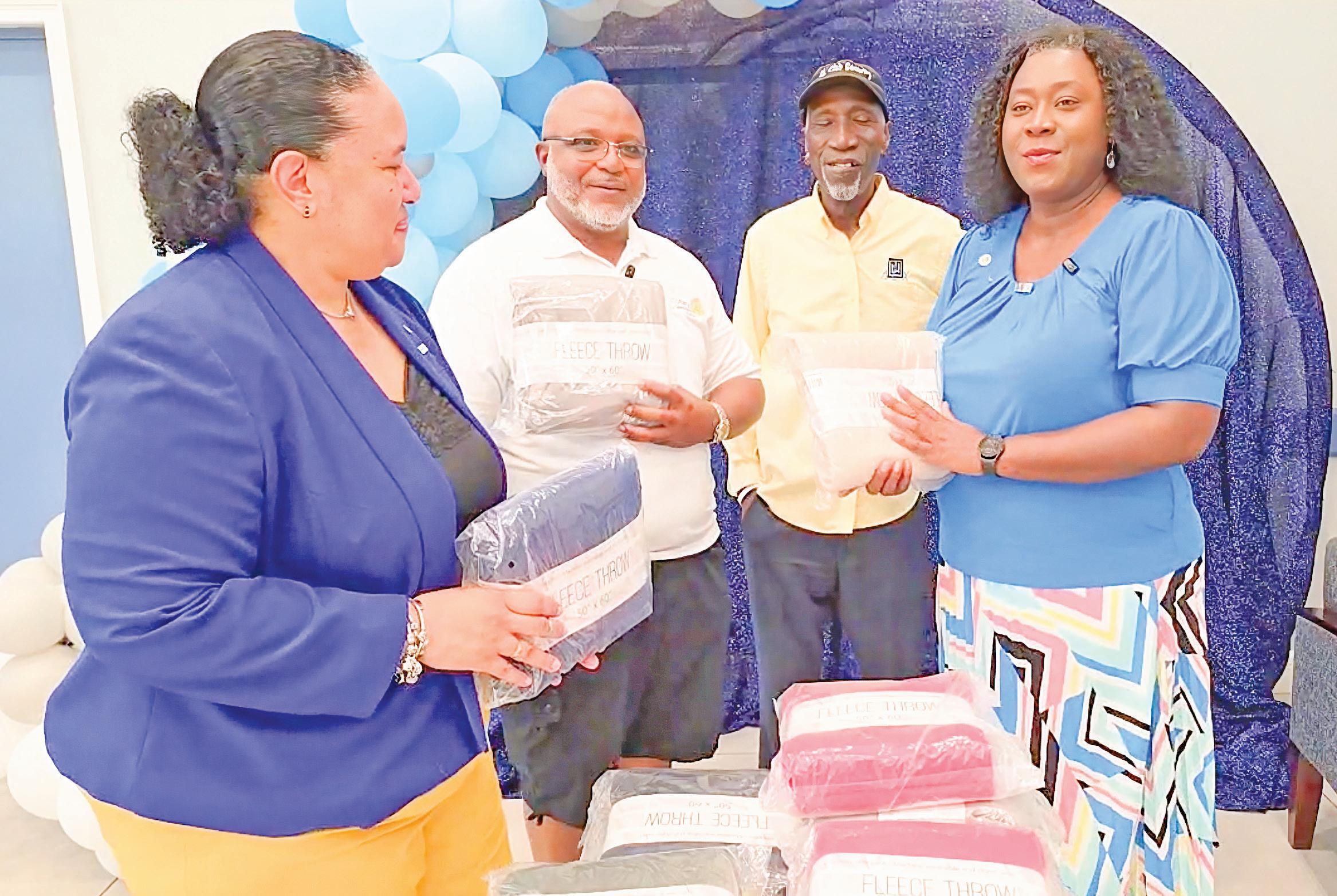
The hospital also received a generous donation from the Cheryl Marshall Campbell Foundation. Founders Chervita Campbell and her father, Clement Campbell, partnered with the Rotary Club of Grand Bahama Sunrise to present several boxes of blankets to the healthcare facility.
“We are answering the clarion call we heard throughout the community about the need for blankets at the hospital,” said Ms. Campbell.
donations for patients at the Rand Memorial Hospital (RMH), residents and community organisations have responded with an outpouring of support.
Among the frst to answer the call were Rotary Area Governor-Elect and Past President of the Rotary Club of Grand Bahama, Christine Fields (van der Linde), and
She explained that while the foundation traditionally makes annual donations to various organisations, the urgent need at RMH prompted them to respond immediately.
“We felt it was important to move quickly with this presentation and answer the call,” she said. “The Cheryl Marshall Campbell Foundation is pleased to partner with the Rotary Club of Grand Bahama Sunrise and President Brian Smith in making this donation.”
Rotary Club of Grand Bahama Sunrise President Brian Smith said the blanket drive would become an ongoing initiative in partnership with the Cheryl Marshall Campbell Foundation to continue supporting the hospital and its patients.
A representative of Rand Memorial Hospital expressed heartfelt appreciation to the donors, thanking them for their generosity and commitment to improving the comfort and well-being of patients receiving care at the facility.
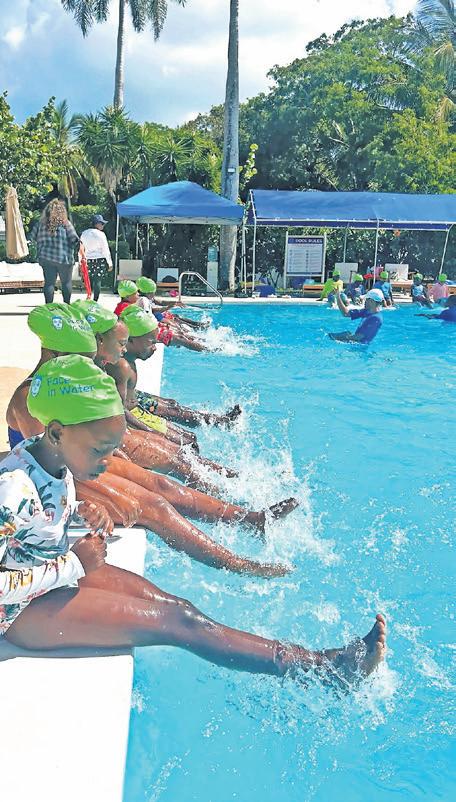
THE Centre for Training and Innovation (CTI) campus pool in Rock Sound was abuzz with excitement as young swimmers participated in a special showcase marking the end of the Learn to Swim Summer Programme organised by One Eleuthera Foundation (OEF).
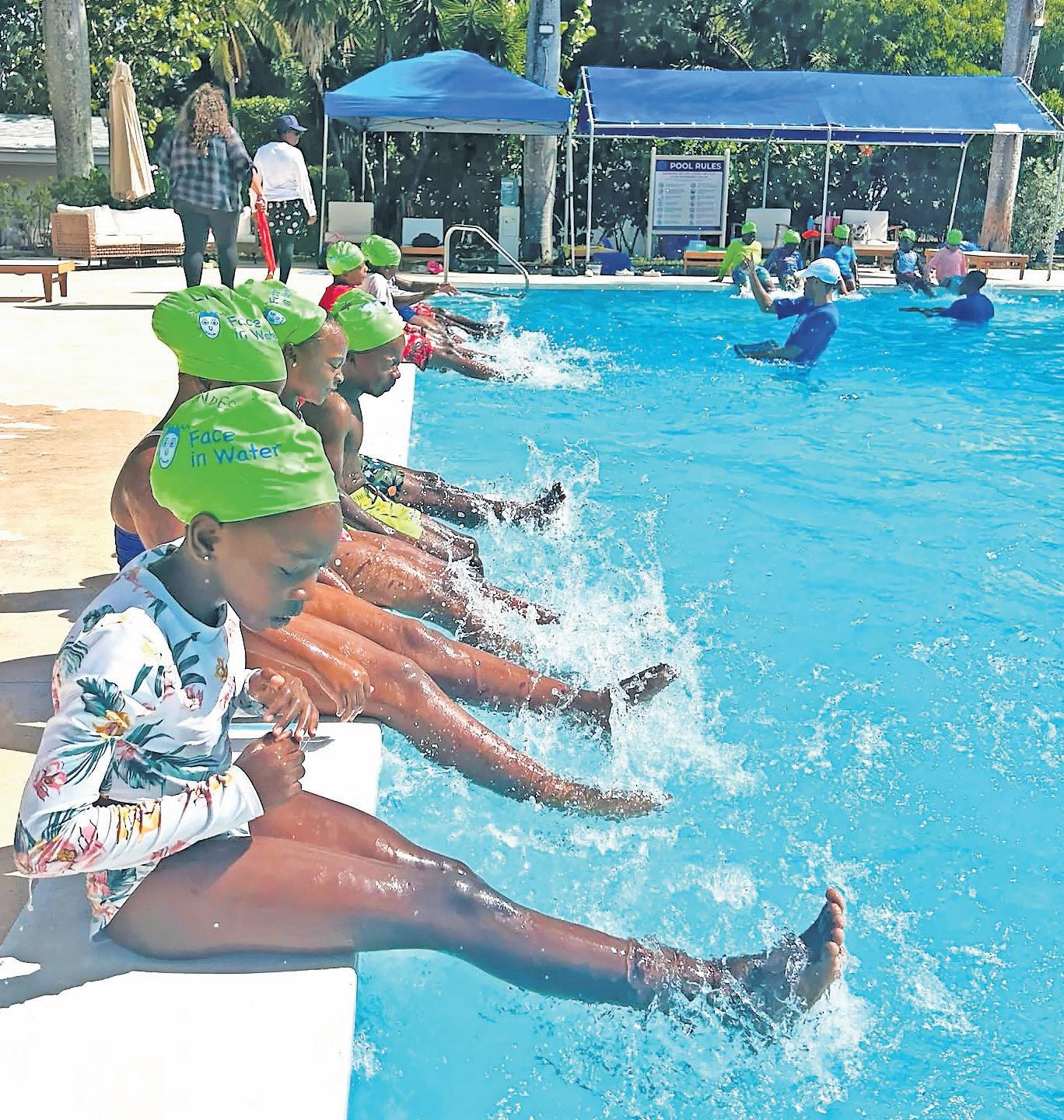
Parents leaned forward with cameras in hand. Siblings applauded gleefully from the pool deck. Swim instructors cheered from the sidelines. Younger children who had approached the pool with hesitation just weeks earlier now entered the water with confdence. Older children proudly showed of their refned swimming and diving skills. As the showcase came to a close, participants accepted certifcates and special awards, their smiles refecting a quiet sense of accomplishment.
Held from June 22 to July 17, the four-week program gave 73 children between the ages of fve and 14 the opportunity to develop essential swimming skills under the guidance of ten instructors and fve volunteers.
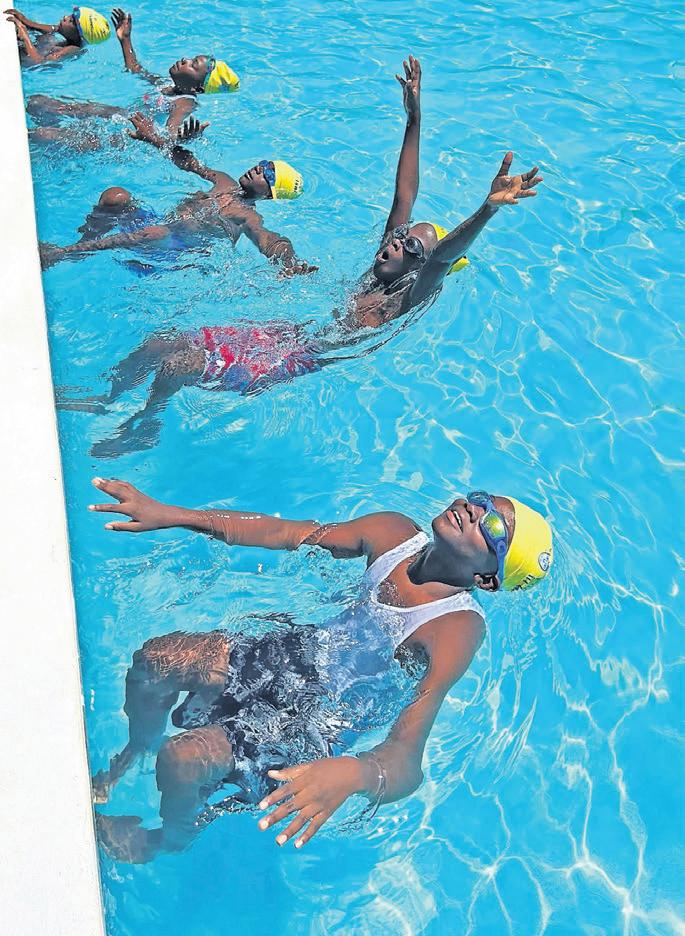
From blowing bubbles and mastering kicking techniques, to swimming with kickboards, learning freestyle and backstroke, retrieving objects underwater, and rolling safely onto their backs to foat, each lesson was designed to help participants become safer and more confdent in the water.
For Acting Chief Programme Ofcer Stefon Evans, the programme, now in its sixth year, has evolved into much more than a programme to teach people how to swim.
“It is about equipping Bahamians with a lifesaving skill in a country where the ocean is part of our daily lives,” he said. “Statistics have long suggested that as many as 90 per cent of Bahamians cannot swim, making drowning prevention and water safety one of the most important public safety conversations we can have in an island nation.”
Evans believes that the confdence children develop through the programme extends well beyond the fnal showcase. By equipping young people with skills and building greater appreciation for the marine environment, the
program helps prepare them to safely explore the many opportunities that life in an island nation can ofer.
Two participants are already demonstrating how the programme can become a springboard to greater achievements. Tyliah Morley and Quinae Carey, who have participated in the programme for the past four years, continued their training with Rev Allison Dean of Lightning Aquatics Swim Club.
Earlier this summer, they went on to compete in the 54th Bahamas National Swimming Championships in New Providence. At just ten years old, they were the only swimmers representing Eleuthera, competing in the 4 x 50-metre and 4 x 100-metre relay events.
Tyliah would tell you that when she frst joined the program, her swimming skills were limited to the doggy
jumped in and I went all out,” said Tyliah.
Quinae’s experience was much the same. “I did not know how to swim at all. I was a complete beginner,” she explained. “In the frst year, I learned all the skills, and in my second year I was placed in one of the advanced groups. I just kept getting progressively better.”
Asked to refect on Nationals, Quinae said that she was proud of her performance but was already looking ahead to future meets.
“I felt we did a good job. I swam to the best of my ability, but I didn't do as well as I wanted to. I have to work harder to be better next time,” she noted.
Rev Dean said that she is proud of how Tyliah and Quinae performed at “the biggest swim meet in the
paddle and she was afraid to put her face in the water. She still laughs about the day Rev Dean, one of the programme's instructors that year, gently but frmly guided her head beneath the water’s surface. Tyliah says that Rev Dean “drowned” her but admits that was the nudge she needed to overcome her fears.
“It gave me courage, and I said, 'I can put my face in the water. I can learn how to swim. I can do these things,’” Tyliah added.
That courage served Tyliah well when she stepped onto the blocks at Nationals.
“Honestly, I was so scared. When Coach [Dean] said I could go to Nationals, I was just very nervous, but luckily, I did the best that I could. I was very, very nervous because those girls are fast, but I just
has come full circle since joining the programme as a participant in 2021. This year, she returned as a swim instructor, encouraging nervous beginners while guiding intermediate swimmers through drills. As Mackey accepted a gift during the fnal showcase, cheers from swimmers and fellow instructors made it clear she had become a trusted mentor.
“I'm here because I love the Learn to Swim Summer Programme. I absolutely love being an instructor, and I like working with kids. They can be chaotic sometimes, but they are adorable and their jokes are hilarious,” said Mackey. “But I also think it's very important that I give back to the camp. 2021 was my frst year living in Eleuthera and the camp was very welcoming. It's a place where I got to meet friends and adults who I consider family now.”
“One Eleuthera Foundation has all of these programmes that feel like one big family, especially this one. It's not just a camp to wait out time in the summer. I have to say that this is one of my favourite summer camps,” she explained.
According to Evans, swimming instruction is only one part of the programme's mission. Equally important are the on-land water safety lessons taught daily.
country.” While the girls did not return home with medals, they delivered strong individual performances and contributed to an impressive overall team efort.
“That is what I always try to emphasise to swimmers. If you have done the best that you can do, then you should be happy because that is success,” Rev Dean explained. “Some years we will win a medal and other years we will not win a medal. The important thing is to do your best job and be pleased with yourself, knowing that you really tried and put in that efort."
Competitive swimmer, 14-year-old Knahla Mackey,
Participants learned essential safety habits, including always asking permission before entering any body of water and never visiting a pool or beach without a parent or guardian. They also learned how to play safely around the water. These lessons reinforce that preventing accidents begins long before anyone enters the pool.
“Our hope is that every child who completes this programme leaves not only safer than when they arrived, but also more confdent, more curious and better prepared to thrive in the country they call home,” said Evans.
Since its launch in 2021, OEF's Learn to Swim Summer Program has served 463 participants. The programme is supported by the Cotton Bay Fund for South Eleuthera.