Argues DEPP wrong to ‘dismiss’ need for envrionment study
Petition opposing Gillam Bay gets 943 signatures in hours
Residents fear Nassau ‘dictating’ and ‘ramming down throats’

Argues DEPP wrong to ‘dismiss’ need for envrionment study
Petition opposing Gillam Bay gets 943 signatures in hours
Residents fear Nassau ‘dictating’ and ‘ramming down throats’
BY NEIL HARTNELL TRIBUNE Business Editor nhartnell@tribunemedia.net
A FORMER Bahamas
National Trust (BNT) chief yesterday argued regulators were wrong to “dismiss” the need for an Environmental Impact Assessment (EIA) study on a Green Turtle Cay project that has sparked an online protest petition attracting over 900 signatures within hours of launch.
Eric Carey, who now heads his own environmental consultancy, told Tribune Business that the circumstances surrounding the proposed Gillam Bay site selected by the developer, Reginald Curry, should have prompted the Department of Environmental Planning and Protection (DEPP) to mandate that an EIA evaluation
BY NEIL HARTNELL TRIBUNE Business Editor nhartnell@tribunemedia.net
A MAJOR credit rating agency yesterday voiced renewed doubt that the Government will hit its forecast Budget surplus for 2026-2027 by instead projecting it will incur a “small defcit” of $64man outcome that would be $287.1m of the Davis administration’s forecast.
Fitch Ratings, in a statement on the Government’s just-released annual borrowing plan for the 12 months to end-July 2027, warned that The Bahamas’ gross borrowing needs over this period “may ultimately be marginally higher” than the predicted $1.024bn based on its own forecast of a defcit rather
Rating agency’s $287m negative swing from Gov’t forecasts
But admits Bahamas ‘outperformed’ over scal consolidation
And praises ‘strong governance’ as ‘underpinning’ progress
than the Davis administration’s projected $223.1m surplus. While Fitch efectively hedged its bets by conceding that The Bahamas has “outperformed” international expectations over its fscal consolidation progress, and forecasting that a frst Budget surplus will instead be achieved in the 2027-2028 fscal year, its forecast for the current period - if it comes
BY ANNELIA NIXON TRIBUNE Business Reporter anixon@tribunemedia.net
TAXI drivers yesterday threatened to “cause whatever chaos in the tourism industry” is necessary, and withdraw their services, in a bid to resolve their long-standing dispute with livery rivals as prepare to meet with the minister of tourism today.
Tyrone Butler, the Bahamas Taxi Cab Union
(BTCU) president, said the trade body is prepared to escalate its dispute with livery operators, threatening to trigger wider industrial action if the Government fails to resolve what it alleges is illegal competition at Lynden Pindling International Airport (LPIA) and major hotels.
He said the union has now placed its campaign under the leadership of the Trade Union Congress
Contractors: Better regulations needed over safety crackdown
BY ANNELIA NIXON
education to avoid unnecessary delays and higher costs while backing the Government’s push to improve workplaces following a string of fatal job site accidents. Their comments come as the Department of Labour moves to strengthen enforcement of the Health
true - would leave a major $287.1m hole in the Government’s fnances. For the Davis administration’s predicted $223.1m surplus, equal to 1.2 percent of Bahamian gross domestic product (GDP) or economic output, is forecasting that the Government’s tax and total revenue income will exceed its spending during the 2026-2027 fscal year. But, if Fitch’s projection
(TUC) after concluding that repeated meetings with government ofcials have produced no meaningful results.
“We presented our case to the Congress, and we said that our goal and our mission is not to keep meeting with the Government and having fruitless meetings,” Mr Butler said.
“Following our last demonstration… we feel that it’s time now for us to take our message to the next level.”
He added that the union will now await direction from TUC president, Obie Ferguson KC, who has assumed the lead
and Safety at Work Act, including plans to increase the number of occupational safety and health inspectors to 30 by the end of the year, having recently shut down “unsafe work practices” at four New Providence construction sites. Don Williams, the Bahamas Chamber of Commerce and Employers’ Confederation (BCCEC) chairman, said the Health and Safety at Work Act requires a comprehensive review involving all stakeholders.
be conducted and made public.
The environmental advocate, who confrmed that he was waiting on a copy of the development plans after being “asked” by Green Turtle Cay residents to review them, said the location’s status as “newly-accreted land” from the accumulation of coastal sand, plus its reputation as a haven for birds and other wildlife and use for recreation by locals, were all factors that weighed in favour of an EIA being submitted.
Mr Carey told this newspaper it was “kind of strange” and “somewhat defcient” that DEPP had decided otherwise, with the environmental regulator’s ofcials telling Green Turtle Cay residents at last week’s Town Hall meeting that the agency determined the project did not meet the legal
turns out to be accurate, this will represent a negative swing equal to 1.6 percent of GDP, as a $64m defcit would represent by how much expenditure will exceed the Government’s income.
Should the rating agency prove correct, the Government will not have a surplus to increase its cash balances by the forecast $223.1m and provide a further “bufer” to debt repayments. It would likely force the Davis administration to borrow beyond the $1.024bn targeted to fnance debt rollovers and refnancing in the 20262027 fscal year.
“The new annual borrowing plan, covering the fscal year ending June 2027, is based on the current Budget,” Fitch said. “Borrowing needs may ultimately be marginally higher than outlined in the plan, as Fitch forecasts The Bahamas will run a
role in co-ordinating any campaign.
The latest developments come less than two weeks after taxi drivers temporarily blocked access to LPIA’s international departures terminal in protest over what they say is the Government’s failure to prevent livery drivers from soliciting passengers who have not pre-booked transportation. Following that protest, Leon Lundy, the newly-appointed transport minister, pledged reforms, including the creation of a transportation desk inside the
“We know that health and safety needs to go through a little bit of an overhaul,” Mr Williams said. “We need to get all stakeholders back to the table so that we could refne the Act.”
Noting that billions of dollars’ worth of construction projects are underway across The Bahamas, he said the Chamber has been working alongside the Bahamian Contractors Association (BCA) to ensure safety reforms
threshold for triggering an EIA because it involves construction on pilings as opposed to excavation, mining and marine works.
While conceding that the law gives DEPP discretion to decide whether an EIA is required for any development, the ex-BNT executive director said: “The determination made by DEPP that no EIA is required for this project at Gillam Bay, I fnd it kind of strange for virgin land, an area discovered to be used by lots of shore birds and wildlife over the years….

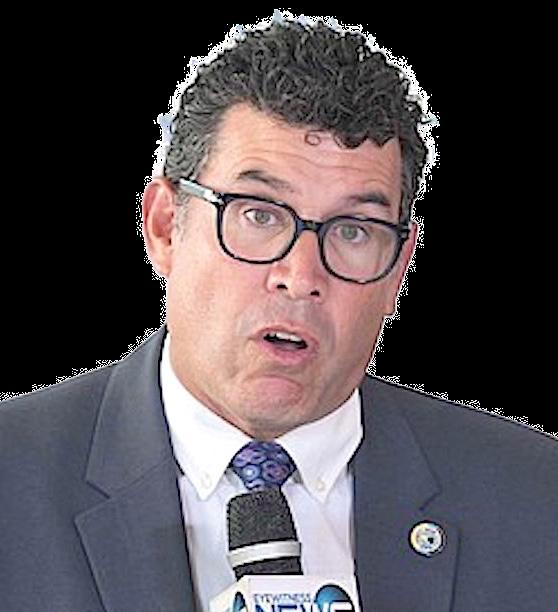
“I fnd the determination by DEPP that an EIA is not required, I fnd that somewhat defcient. The impact on the environment should require a formal EIA and things that determine whether the impact is acceptable. I don’t think DEPP should sit in Nassau, send someone up for a quick view and say they don’t

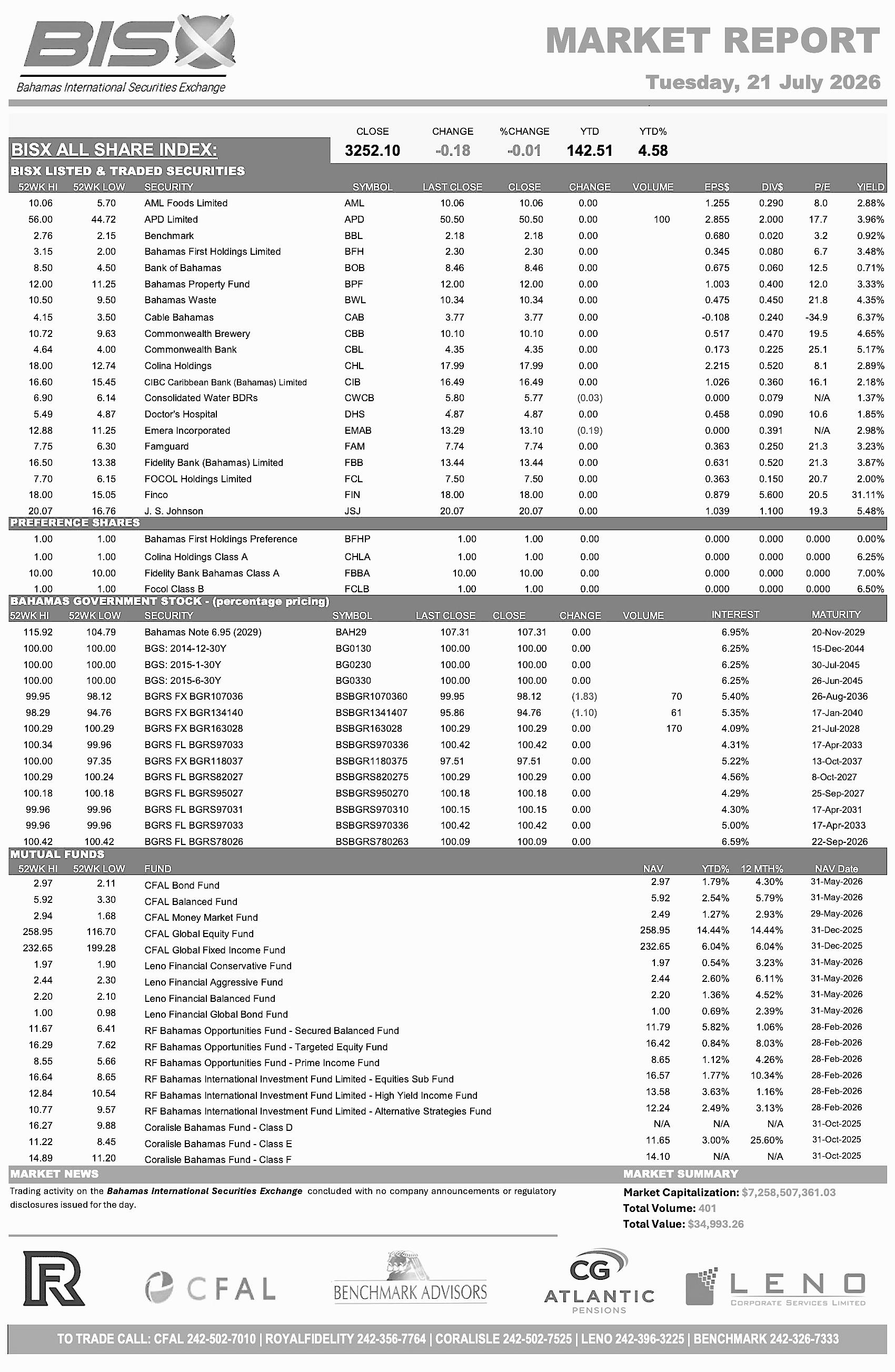
Mandatory pensions revival: ‘We don’t focus as a society’
BY NEIL HARTNELL TRIBUNE Business Editor nhartnell@tribunemedia.net
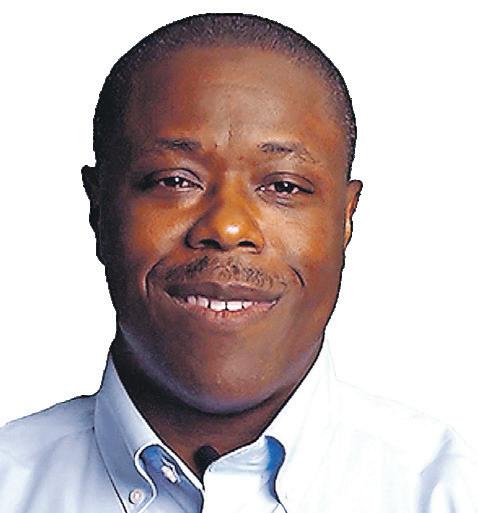
THE Bahamas International Securities Exchange’s (BISX) chief executive last night voiced optimism that a renewed push for mandatory private pensions will fnally end a 20-year wait for progress on an issue “we don’t focus on as a society”. Keith Davies acknowledged to Tribune Business that the Securities Commission’s proposal that all private employers be required by law to establish pension, or retirement
savings plans, for their employees could aid further growth and liquidity on BISX and the wider Bahamian capital markets by creating a larger pool of savings capital seeking an investment home. He spoke after the Securities Commission, in its just-released 2025 annual report, said it plans to revive calls for private pensions to be made compulsory for all working Bahamians as part of a broader research report on further developing the Bahamian capital markets.

BY GLENNETT FOWLER President and chief executive, Fowlco Maritime & Project Services founder
and
president, Heroic Group
HOW should The Bahamas encourage foreign investment while ensuring Bahamian businesses have a fair opportunity to compete?
The Bahamas needs foreign investment. We need capital, technology, international expertise, infrastructure, employment and access to global markets. Foreign investors have played an important role in developing tourism, fnancial services, construction, energy, transportation and many other sectors of our economy.
However, welcoming foreign investment cannot mean abandoning Bahamian entrepreneurs once they enter the marketplace.
The national objective should not be to protect Bahamian businesses from legitimate competition. Businesses must still provide quality products,
operate efciently, manage costs, innovate and serve their customers well. The objective should be to protect the competitive process itself.
That means creating a market in which businesses compete through price, quality, service, efciency and innovation, rather than through fnancial power, market manipulation, exclusionary arrangements or the ability to absorb losses until smaller competitors disappear.
This is not a political issue. It is a national economic issue. It afects every Bahamian who has invested savings, borrowed money, pledged property, purchased equipment, trained employees and accepted the risks associated with building a business in their own country.
Competition is not automatically fair
Low prices generally beneft consumers. A company should not be investigated merely because it ofers a lower price than
its competitors. However, there is an important diference between competitive pricing and pricing designed to eliminate competition.
A well-capitalised enterprise may be capable of operating a particular division at a substantial loss for an extended period. It may be able to fnance those losses from proftable operations elsewhere, receive support from a parent company, spread expenses across several jurisdictions or treat the losses according to the tax rules of another country.
A Bahamian small or medium-sized business usually does not have those options. Its losses remain in The Bahamas. Its bank obligations remain due. Its payroll must still be met. Its equipment must still be maintained. Its electricity, insurance, rent, taxes and regulatory costs must still be paid.
The fact that a foreign-controlled company records a local loss does not automatically prove wrongdoing. Neither does the availability of a tax

deduction automatically make a business practice improper. Tax laws difer across jurisdictions, and the treatment of foreign subsidiaries and business losses is complex.
But policymakers should recognise the practical imbalance. A multinational group may be able to tolerate years of losses in one market in a way that a standalone Bahamian enterprise cannot. When fnancial endurance becomes the principal weapon of competition, the strongest balance sheet can outlast every smaller competitor, regardless of product quality or operational competence.
Once the smaller businesses close, the market may become more concentrated. Prices may rise, customer choice may decline, employment decisions may move overseas, and the country may become dependent on a limited number of suppliers.
That is why modern economies do not simply assume that every market outcome is fair. They
establish competition authorities, anti-monopoly rules, trade-remedy procedures and public procurement protections.
What is predatory pricing? Predatory pricing is a specifc legal and economic concept. It is not simply selling cheaply, reducing margins or ofering promotions.
The Jamaican Fair Trading Commission describes predatory pricing as conduct in which a dominant enterprise temporarily charges unusually low prices to eliminate competitors, accepts temporary losses and intends to recover those losses later after competition has been weakened. Jamaica treats this form of conduct as a potential abuse of dominance under its Fair Competition Act.
A Jamaican competition investigation by the Commission, involving Drug Serv Pharmacy, illustrates the type of analysis required. The authority considered whether the enterprise was dominant,

whether it was pricing below cost, and whether that conduct had the potential to lessen competition. The case demonstrates why allegations must be tested against evidence rather than assumed merely because prices are low.
The US applies a demanding legal test. In Brooke Group Ltd v. Brown & Williamson Tobacco Corporation., the US Supreme Court held that a predatory pricing claimant must generally establish pricing below an appropriate measure of cost, and a dangerous probability that the alleged predator could later recover its losses through higher prices.
The purpose of that strict standard is to prevent courts from punishing genuine price competition. But the case also confrms
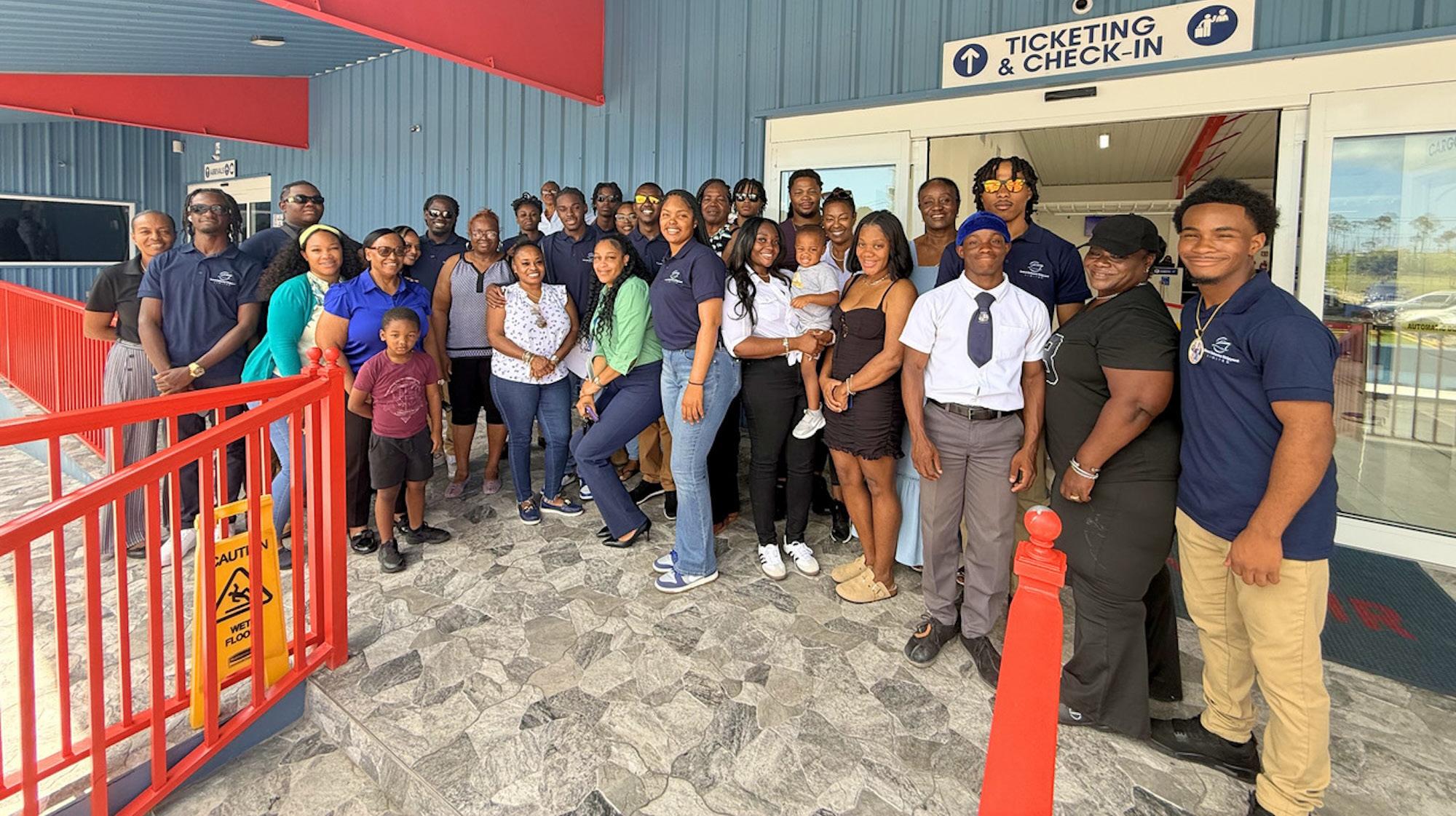
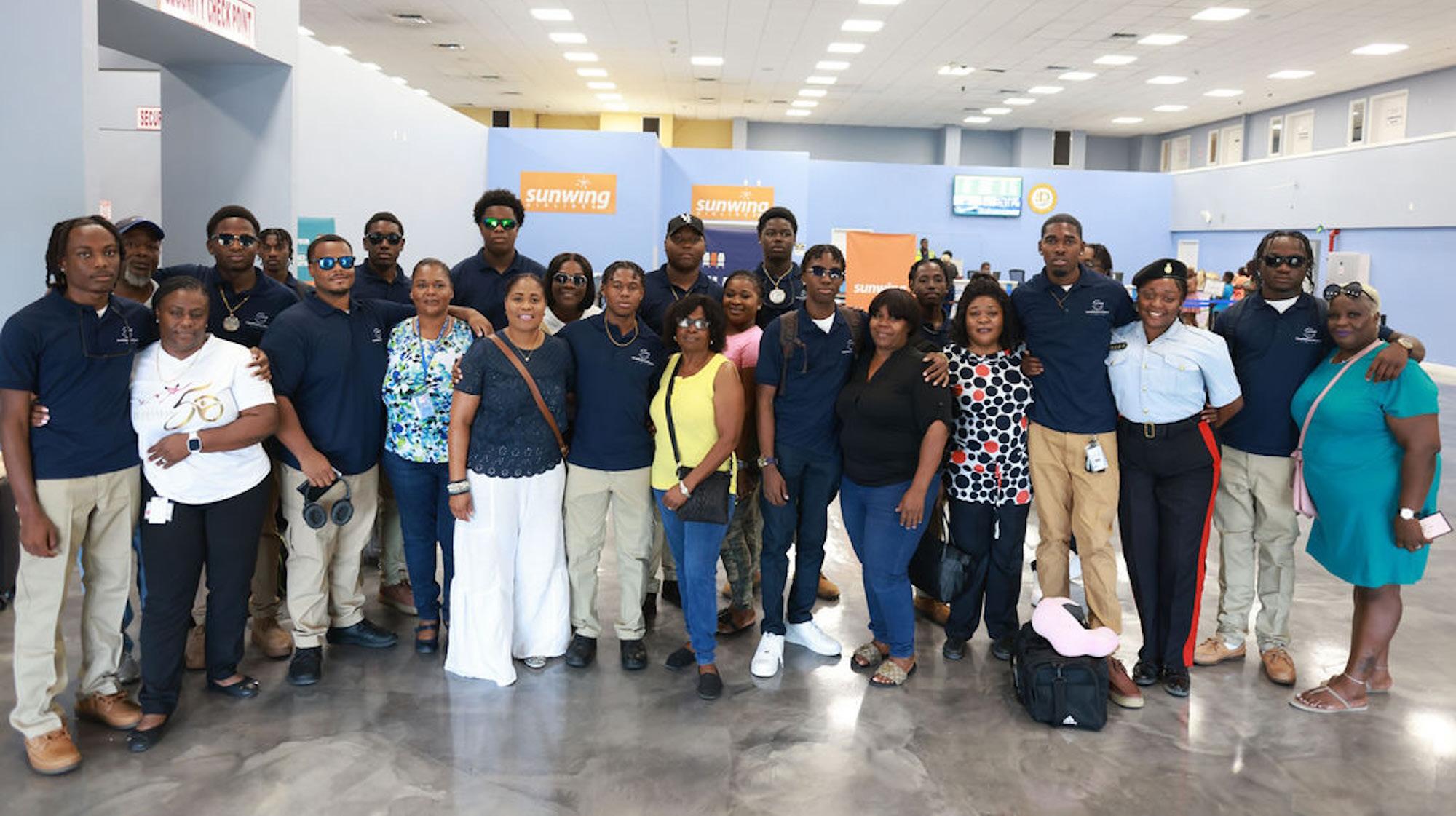
GRAND Bahama
Shipyard (GBSL) has announced that applications are now open for its 2027 Apprenticeship Programme - a four-year initiative that provides internationally-accredited technical education, paid workplace training and experience for young Bahamians.
The Shipyard, in a statement, said the long-term investment in its Apprenticeship Programme refects a shared commitment between industry and education to strengthen The Bahamas' skilled workforce. The initiative is designed to prepare young Bahamians for careers in areas such as marine welding, steel fabrication, pipe ftting and mechanical trades.
Through its partnership with the Bahamas Technical and Vocational Institute (BTVI) in Grand Bahama, and the Engineering College in the UK, the Shipyard’s apprentices complete four months of foundational training at the former, followed by advanced, internationally-certifed trade studies in the UK. The Shipyard said this is designed to create a structured pathway that equips participants with the competence, safety awareness and hands-on experience required by a ship repair facility.
"Developing Bahamian talent is one of the most important investments we can make," said Ekeila Sands, Grand Bahama Shipyard’s human resources compliance and training manager.
"The Apprenticeship Programme refects our commitment to creating opportunities through education, training and meaningful careers. More than 100 members of our workforce have either entered the Shipyard through the Apprenticeship Programme or are currently progressing through it, demonstrating the lasting

impact the programme continues to have."
While experienced international specialists will always perform a key role in supporting complex vessel repairs and transferring technical knowledge, the Shipyard said it remains fully committed to employing Bahamians and growing a pool of skilled talent which will support the the industry’s future and country’s long-term economic growth.
“One of the greatest benefts of the apprenticeship programme was the opportunity to rotate through each trade department,” explained Kieron Nairn, Grand Bahama Shipyard’s dock master.
“During my third year in the programme, I had the opportunity to work closely with the dock masters. Seeing the level of responsibility, leadership and
technical expertise, the role required sparked my interest and ultimately inspired me to pursue that career path.
“For anyone considering applying, I would absolutely encourage you to do it. The apprenticeship is more than just a training programme; it’s an opportunity to build valuable technical skills, develop professionally and establish a rewarding career in the maritime industry. It laid the foundation for my career and I’m grateful I took that frst step.”
Interested applicants who meet the eligibility requirements are encouraged to apply to the programme as soon as possible. Applications are available on the Grand Bahama Shipyard website and Facebook page, and should be submitted by August 28, 2026, to apprenticeship@gbshipyard.com
Y FAY SIMMONS
TRIBUNE Business Reporter jsimmons@tribunemedia.net
THE Bahamas Cannabis Authority’s chairman yesterday asserted the Government is taking a "measure twice, cut once" approach to launching the medical marijuana industry with ofcials prioritising a thorough regulatory rollout over meeting previously announced timelines.
Dr Lynwood Brown, speaking to Tribune Business, acknowledged that the Authority had previously targeted the end of June or early July for the launch of the licensing process,
but said internal matters that needed to be resolved required additional time.
"The Cannabis Authority has been meeting, and there are some issues the Authority has to resolve internally before we can come to market for the Bahamian people," said Dr Brown. "In my previous comments, I gave a timeline of the end of June or early July, but those issues had to be resolved frst, and they took longer than we anticipated."
He said the delays refect the Government's desire to ensure the regulatory framework is properly implemented before applications are accepted.
"The Government and the Ministry [of Health and Wellness] are being extra cautious because we have one opportunity to get this right. Sometimes we have to measure two, maybe three times before we cut once. I appreciate the cautious approach the Government is taking, even though that caution sometimes requires extending the timeline to make sure we dot every 'i' and cross every 't'‘," Dr Brown said. He also outlined how the licensing system will operate once the Authority's online application portal opens. Dr Brown said applicants will frst select the
BY ANNELIA NIXON
THE Bahamas Chamber of Commerce and Employers’ Confederation (BCCEC) is urging the Department of Inland Revenue to announce this year’s Back-to-School VAT-free shopping period as early as possible so businesses have sufcient time to prepare.
Don Williams, the Chamber’s chairman, said the private sector has already reached out to the tax authorities in hopes of avoiding the last-minute announcements that have frustrated retailers in previous years. He added that warning that companies
need advance notice to prepare pricing systems, inventory and promotions.
“We are trying to get more conversations with Inland Revenue because, obviously, it’s July,” Mr Williams said. “August is right around the corner. We need to know when the VAT-free shopping period is going to be. We want to know when that’s going to be rolled out.”
He added that the Chamber is also using the period to encourage Bahamians to support domestic retailers despite the growing ease of overseas and online shopping. “We’ve seen an increase in people shopping abroad specifcally for clothes,” he said. “As the Chamber, we’re
and pot’ held
BY FAY SIMMONS Tribune Business Reporter
jsimmons@tribunemedia.net
FAMILY Island tourism operators yesterday urged that aviation be treated as a national economic priority, warning that inadequate airlift continues to hold back a visitor market they assert represents the greatest opportunity for sustainable growth outside New Providence.
Cheryl Bastian, owner and operator of Swain's Cay Lodge in Mangrove Cay, and a past president of the Bahamas Out Island Promotion Board, said the issue extends far beyond the recent disruption to fights serving Andros. She argued that reliable air service has been the industry's biggest challenge for decades despite growing demand for authentic Out Island experiences. "The real meat in the pot is Out Island stopover tourism. That's the future of the country. People want something authentic, unique and diferent,” she added.
Ms Bastian said while Nassau remains an important tourism hub, increasing numbers of travellers are seeking quieter, more authentic destinations where they can experience nature, fshing, boating and Bahamian culture.
"Nassau is beautiful. I love Nassau. But these Out Islands ofer something diferent. They're quaint, they're not crowded, and the people are so hungry for business that they go the extra mile with customer service and hospitality,” Ms Bastian added.
She warned, however, that unreliable domestic air service continues to undermine that opportunity, making it harder for resorts to attract visitors and creating uncertainty for guests planning months in advance.
The concerns have intensifed following changes to air service in South Andros
after Flamingo Air suspended operations, but Ms Bastian stressed the industry's frustrations long pre-date the recent tragedy.
"That's always been the concern ever since I started in this industry, and started attending the Out Island Promotion Board meetings and the Hotel Association meetings. That's what's on the table every single time. It's time we get to that now,” she added.
According to Ms Bastian, the biggest challenge facing destinations such as Mangrove Cay is not attracting visitors, but getting them there conveniently.
She explained most international travellers arrive in Nassau during the afternoon before connecting to the Family Islands. Without reliable afternoon fights, she said, many visitors are forced to spend an extra night in Nassau before continuing their journey.
"Customers who love the Out Islands don't want to stay overnight in busy Nassau. For our anglers, that's going to be a turnof,” Ms Bastian explained. She said overseas booking partners have already
encouraging Bahamians to shop local.
“Yes, you’re going on family vacations, but it is us supporting the local businesses, the Mom-andPop stores, that is going to continue to ensure that the resources of the country remain within the country. It helps to lower the cost of living. It ensures that everyone has an opportunity to feel the level of prosperity. So we’re encouraging persons to shop local, shop local, shop local.”
Mr Williams added:
“We’ve just found that Bahamians now have more access. With the rising of Amazon, it’s so much more accessible now. With our courier companies providing, you can almost get
raised concerns with government ofcials because many guests have reservations for the upcoming fall and winter tourism season.
"Many of them have already booked their fights for November, December and January. We need a solution as soon as possible because the customers are concerned,” Ms Bastian added.
Without greater certainty, Ms Bastian fears travellers could begin choosing competing destinations.
"Most of our visitors come from the northeastern United States. If we don't resolve this, I'm certain that business is going to be pushed to Mexico and the Dominican Republic. We want that to stop so we can continue getting our lion's share because we have beautiful islands,” she said.
While acknowledging the eforts being made to restore service in the short term, Ms Bastian said the industry needs to focus on long-term aviation solutions rather than temporary fxes.
She called for more Bahamian-owned airlines, additional daily frequencies to the Family Islands and accelerated upgrades to airport infrastructure, including improvements to Mangrove Cay airport to accommodate international service.
"We've been told Mangrove Cay can become an international airport. We

category of licence they are seeking, whether for personal medical use or as a commercial operator, such as a cultivator, manufacturer or dispensary.
The portal will then guide applicants through the required documentation, including information such as Business Licences, principals and other supporting material. Once submitted, applications will undergo an initial review by compliance ofcers, who will identify any defciencies and request additional information where necessary.
Dr Brown said those applications will then be vetted with the assistance
your goods now next day, depending on if you’re willing to pay the extra fees.
“Bahamians now have more opportunity to shop abroad. But we want to ensure that while they’re shopping abroad, there is quite a bit of the local businesses and the economy that still needs to feel that same boost.”
The Chamber’s appeal also refects long-standing concerns among retailers over the timing of the Government’s VAT-free shopping announcement. Businesses have previously complained that the frequent last-minute announcement of the dates leaves insufcient time to reprogramme point-of-sale systems, update pricing and market promotions.
Mr Williams said the Chamber hopes that will change this year. “We defnitely want to get ahead of it this year,” he said. “So we just reached out to Ms Shundra Strachan as late
need that to be fast-tracked because people plan their trips months ahead,” she added.
of law enforcement and other agencies before being presented to the Cannabis Authority's Board for a fnal decision. "The compliance ofcers will vet the applications using other agencies, including the police and other relevant authorities. Once that vetting process is completed, the applications will come before the Board, which will decide whether to approve them, request further information or deny them,” he added. Dr Brown also clarifed the role pharmacies will play in the emerging medicinal cannabis industry, noting they will be permitted to participate but will be subject to additional regulatory requirements.
Under the legislation, pharmacies wishing to dispense medicinal cannabis must obtain a separate licence from the Cannabis Authority and establish a dedicated dispensary area that is physically separate
as yesterday, wondering when they would possibly announce it so that businesses have an opportunity to get ahead of it.
“Whether they need to make adjustments in pricing in their systems, whether they need to physically make some price adjustments in their stores, put out certain promotions, we want them to have the opportunity to get ahead of the curve so that everyone can take advantage of the opportunity.”
Beyond the timing of the VAT holiday, Mr Williams said retailers continue to grapple with global supply chain disruptions and higher freight costs stemming from geopolitical tensions and rising fuel prices. He said some businesses are fnding ways to ofset those challenges through collaboration. “We just had our conversation with a few businesses yesterday,” he said. “A few of them got
from their existing pharmacy operations. He added that licensed pharmacists will play a central role in the industry. "Pharmacists are inextricably linked to this entire industry because there can be no dispensary without pharmacist oversight. No one will be allowed to operate a dispensary in the absence of a licensed, registered pharmacist overseeing it,” Dr Brown said. He said the separate dispensing areas are intended to ensure appropriate controls over cannabis products and prevent unnecessary exposure to minors visiting pharmacies.
The Cannabis Authority was established to oversee the licensing and regulation of The Bahamas' medicinal cannabis industry following the passage of legislation designed to create a legal framework for the cultivation, manufacture, dispensing and medical use of cannabis.
together and they collaborated and consolidated, so that they were now able to ship two 40-foot containers.”
By combining shipments, he said, businesses reduced their shipping costs suffciently to pay for faster transportation. “Because it’s a container and not just the regular pallets, they were able to save on their normal shipping fees,” he said. “Those savings they were able to use to express ship their goods.” Mr Williams encouraged more businesses to pursue similar partnerships. “We’re encouraging businesses as much as possible to collaborate, consolidate and see how you can now mitigate the risks that are happening due to global unrest, the increase in fuel costs, the shipping delays, so that they have the necessary tools and supplies they need to be able to supply their customers,” he added.
"The reality is the airlines can't run on air. There has to be a growing period, and they need to get us the airlines so we can go through that,” she said.
Ms Bastian also encouraged greater private investment in domestic aviation, noting stronger local airline capacity would improve connectivity while helping keep travel costs competitive.
Ms Bastian argued that strengthening Family Island airlift would beneft not only Andros but destinations across the archipelago, many of which continue to struggle with limited fight options despite growing tourism potential. "We've got a great opportunity in The Bahamas to continue increasing our tourism business, but we've got to fnd a way,” she said.
area used by wildlife, an area used by local people for recreation,” Mr Carey reiterated. “They are sufcient factors that should trigger an EIA process. I am not in agreement with that; the requirement for the EIA to be dismissed and done away with. I don’t support that in this case.”
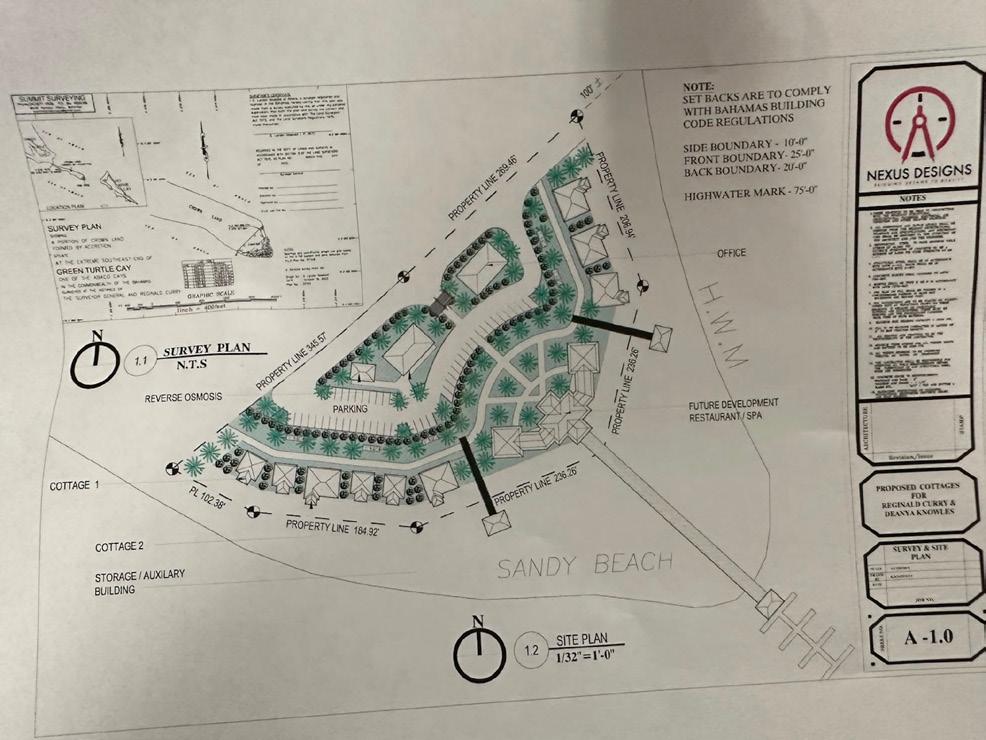
Gillam Bay is shaping up to become the latest development and environment-related controversy in The Bahamas, with Green Turtle Cay residents - including local government and council executives - asserting they had been blindsided by the project’s progress and the approvals granted by Nassau-based regulators.
Mr Curry has received a certifcate of environmental clearance (CEC) from DEPP to proceed with his proposal to construct construct nine 1,900-square foot villas, a single-storey clubhouse with a restaurant and bar, an administrative ofce and a back-of-house facility at Gillam Bay.
But many on Green Turtle Cay, alleging they only became fully aware of the project at Thursday’s Town Hall meeting, voiced frustration over the perceived lack of transparency and Nassau seemingly dictating, and imposing its vision, of development on Family Island communities without locals and those afected having any say.
Similar under-currents existed almost 20 years ago, when opposition arose over the Baker’s Bay project citing largely environmental concerns, and little has been done to address these issues
which continue to surface over foreign direct investment (FDI) projects in the Family Islands.
An online petition launched on change.org, urging the Davis administration to maintain “the current construction pause” until all permits and compliance requirements are met, and a “legal review” conducted, had within hours gained 943 signatures by the time Tribune Business went to press.
The petition, in calling for “an independent review of the environmental assessment and approval process” and for “meaningful time and weight” to be given to Green Turtle residents’ concerns, said: “This petition is led by a collective of Bahamian citizens who believe Gillam Bay is a national treasure worthy of protection.
“It refects the voices of Bahamians who care deeply about preserving our country’s natural heritage, and who want decisions afecting our islands for generations to come to be made with transparency, accountability and respect for the law…. Once an irreplaceable coastal ecosystem is destroyed, it cannot simply be rebuilt. The decisions made today will shape Green Turtle Cay for generations to come.
“We are asking that any development proceed only if and after every legal requirement has been met, environmental impacts have been independently and transparently evaluated, and the people who will live with these decisions have been meaningfully heard. Responsible development and environmental stewardship ca - and should - go hand in hand.”
Mr Carey told Tribune Business: “Clearly this is a project that the local government, local council and local community seems very much opposed to. It appears most of the people believe this area should remain as green space, something for the community to enjoy, rather than be used as commercial space. In that regard, I align myself with local communities who feel strongly about what happens in their area.
“They feel dictated to by central government. It appears they are going against the wishes of the local community. I think we are way past that now. There are one or two projects where the local community may be overruled, but this one, based on what local people are saying, appears to have been rammed down their throats.”
Mr Carey argued that local government councils in the Family Islands, as well as residents in those locations, “need to become more powerful” and assertive of their rights - even if it ultimately requires legal action to be initiated against approvals for projects that are not desired.
The ex-BNT chief, who works as an advisor for Turtlegrass Resort & Island Club, cited the outcome of a recent Exuma town hall meeting on the $200m Rosewood Exuma development where local residents had voiced strong opposition to dredging. However, the Town Planning Committee “completely ignored the views of local people and determined, from a Nassau-centric way of doing things, that they were going to ignore that.
FINANCES - from page B1
small defcit of $64m, or 0.4 percent of GDP, in fscal 2026-2027 before achieving its frst fscal surplus of 0.3 percent in fscal 2027-2028.”
However, despite its concerning forecast, Fitch gave a balanced report by highlighting the positive while conceding that the fnal fgures for the recently-closed 2025-2026 fscal year have yet to be released. The
Davis administration, when it presented the 2026-2027 Budget at end-May, stuck to its original projection that it will run a $75.5m surplus for the prior fscal year - the frst ever in Bahamian history, and two years ahead of Fitch’s forecast. “Fiscal consolidation will continue, supported by strong governance, despite pressure from global economic shocks. The Bahamas’s recent record of fscal out-performance presents
upside risks to Fitch’s slightly more conservative projections, although full-year outturns for fscal 2025-2026 are not yet available,” the rating agency conceded.
“The Bahamas’s recently published annual borrowing plan (ABP) highlights ongoing consolidation eforts and an improving fscal outlook. Gross fnancing needs of $1.024bn (5.5 percent of GDP) will be exclusively used for debt repayment, while the Government aims

“Local government is going to have to start taking out class action lawsuits against central government as this is the only way their voices will be heard or otherwise they will be dictated to.”
Mr Carey also urged Bahamian law frms to ofer their legal services “pro bono”, meaning voluntarily and without payment, to hard-pressed Family Island communities when legal redress through the courts is the only option in development and environment-related cases.
Meanwhile, Matt Aubry, the Organisation for Responsible Governance’s (ORG) executive director, told Tribune Business that the Gillam Bay development and handling of its approvals process are another example of how trust can break down between citizens and government institutions.
Pointing to The Bahamas’ recent signing on to the Escazu agreement, which commits this nation to “the public’s right to access information”, plus transparency and accountability in environmental matter, he added that ORG and other nonproft advocacies have been pushing for local communities to play an increasing role in developments that afect them.
“It’s advantageous for developers,” Mr Aubry said, “so they know what the community’s issues and concerns might be, so they can put that in their plans and not go too far and back up. It’s also good for government so that contentious issues don’t become ‘he said, she said’, and it becomes collaborative, working in partnership to solve problems.”
to use the budgeted surplus of $223.1m (1.2 percent of GDP) to increase cash balances…
“Accordingly, our baseline expectations see gross general government debt continuing to decline to 65.9 percent of GDP in fscal 2027-2028 from an estimated 70.5 percent in 2025-2026, and a peak of 89.5 percent in 2019-2020. While this steady decline signifes signifcant progress in consolidation, debt levels are still high compared to the pre-Hurricane Dorian 59.8 percent of GDP in 2018 and the ‘BB’ category median of 52 percent.”
And, in a further boost for the Davis administration, Fitch cited “strong governance” as “underpinning recent progress on structural fscal consolidation” and supporting the current ‘BB-’ sovereign credit rating it has assigned to The Bahamas together with a ‘stable’ outlook. “High interest and debt burdens relative to peers are rating constraints but are improving with ongoing fscal consolidation eforts,” the rating agency said.
“The bulk of The Bahamas planned borrowing in the annual borrowing plan will come from domestic sources, with $387m (37.8 percent of the total) in Bahamian dollar bonds and $256m (25 percent) from the rollover of a note held by the Central Bank of the Bahamas.
“The remainder will come from external sources, mainly bank loans of $200m (19.5 percent) and direct support from multilaterals of $181m (17.6 percent), which includes $100m (9.8 percent) of new policy-based loans. The Government has no plans for international bond issuance, although it has said it will take advantage of opportunities for liability management if they arise.”
Looking further out, Fitch said the Government is making “gradual progress” towards achieving its medium-term debt management targets by reducing the amount of foreign currency debt it owes as a percentage of the total.
“As part of the medium-term debt management strategy, the Government has broad goals for its portfolio composition by fscal 2028-2029. It is making gradual progress toward those goals, including extending the average time to maturity and decreasing exposure to foreign currency and foating-rate debt,” Fitch added.
“The share of foreign currency debt in total debt fell to an estimated 45.3 percent, compared with a target of 55.4 percent. However, the
The ORG chief, adding that “trust plays a critical role in good governance”, said development projects ofer “a critical opportunity to further trust so persons understand what the process is, what their role and the rules are, and they are not at the mercy of the decision by an entity that is acting with all the best intent but not at the level where the community.
“If you don’t know information or if something is being proposed, this starts every project of on the wrong foot,” Mr Aubry said.
The Gillam Bay petition on change.org states: “A proposed large-scale development threatens to permanently alter this sensitive environment, and with it, one of the beauty spots that draws tourists here in the frst place. Many local Bahamian citizens, longtime visitors and second home owners have expressed that this development would fundamentally change the character of Green Turtle Cay and could infuence whether they return in the future.
“Plans for this development were frst signalled in 2022, when a road bringing water and electricity was extended to the developer’s existing business on No Name Cay. Since then, the scope has grown considerably. The broader Green Turtle Cay community frst learned the full scope of the proposal during a town meeting held on July 16, 2026…
“The sequence of events raises important questions about compliance with the established approval process and should concern anyone who values transparency, accountability and the rule of law, regardless of their position on the development itself. And if procedural defciencies are identifed after irreversible work has commenced, the consequences may be signifcant for the community, the developer, the environment and public confdence in the regulatory process….
“We recognise the importance of investment and economic opportunity in The Bahamas. But development should never come at the expense of transparency, local consideration and our environment. Sustainable development requires that environmental protection, community interests and economic growth exist together - not that one be sacrifced for another.
“Many local Bahamian citizens, residents and stakeholders alike have serious, justifable concerns about whether every statutory requirement, environmental review and public consultation has been properly completed before this project proceeds. These questions deserve clear, transparent answers, and decisions of this signifcance should be made only after all legal processes have been fully satisfed.”
“This is to be developed on approximately three acres of Crown Land, which the developer has been granted permission to build on 40 percent [of]. Community members have raised questions regarding the process through which development rights for the site were granted, and have requested greater transparency surrounding those decisions,” the petition added.
portfolio still includes more short-term and foating rate debt than targeted.”
Tribune Business previously reported how a “cash bufer framework” has been developed to ease the Government’s cash fow and liquidity pressures during the weaker frst half of its fscal year as part of plans to refnance near-$3.4bn in total public debt during the 2026-2027 Budget period. The Davis administration, in unveiling its annual borrowing plan for the new fscal year, disclosed that the Government has worked jointly with the Central Bank to develop a mechanism to relieve any pressures that may result from the traditionally-lower revenue infows during the six months to end-December plus investors’ aversion to 10 and 20-year bonds.
“Given the concentration of revenue receipts in the second half of the fscal year, along with investor concentration at the short end of the yield curve, the Central Bank and the Ministry of Finance have jointly developed a cash bufer framework to manage in-year gross fnancing needs,” the Plan reveals.
“This arrangement helps reduce liquidity risks associated with government securities auctions, provides greater scope to manage borrowing costs and, together with the active use of Treasury Bills, strengthens co-ordination between cash and debt management.”
No other details were provided on “the bufer”, especially what it involves and how it will work. However, fnancial sources consulted by Tribune Business suggested the likeliest explanation is that the Government will rely heavily on Central Bank advances to plug any revenue gaps, and make up funding shortfalls, during the fscal year’s frst-half and then pay these down during the tax and feerich six months to end-June. The Government’s borrowing plan, released in the 2026-2027 Budget’s aftermath to ensure compliance with the Public Debt Management Act’s legal requirements, asserts that the proceeds generated by the year’s forecast $223.1m surplus will provide a further “bufer” for its cash and fnancing needs.
Given the surplus projection, the Davis administration is predicting it will not need to undertake any new borrowings that will add to the Government’s $12.466bn direct debt as at end-June 30. Instead, it is forecasting that it will only borrow to refnance $1.024bn in existing debts, while plans to also rollover
a “combined $2.372bn” in outstanding Treasury Bills are excluded from these calculations.
While the report signals that the Government should have no difculty in meeting its 2026-2027 gross fnancing needs, a slightly deeper look reveals some ongoing challenges with managing The Bahamas’ public fnances - especially the continued heavy reliance on shortterm debt, much of which matures and comes due for repayment in one year.
The annual borrowing plans acknowledges the “refnancing risk” this presents should one major institutional investor, such as a commercial bank, decline to rollover and, instead of refnancing by accepting new securities, instead demands its money back. “Rollover pressure from the large pool of Treasury Bill holdings requires ongoing monitoring,” the report concedes.
And, while no update was given on whether the Government met its 2025-2026 fscal year goals, the annual borrowing plan admits that many target indicators were missed and there is work to be done to hit the Ministry of Finance’s medium-term debt management strategy targets, too. The report also concedes that Bahamian investors have little appetite for, and are shying away from, the Government’s 10 and 20-year bonds - hurting eforts to extend and smooth out its debt maturities.
As for key 2025-2026 indicators, the annual borrowing plan reveals that more than half of the Government’s debt - some 52.6 percentmust be “refxed within one year”. This means that this portion will be subject to a new interest rate, or debt servicing cost, and the percentage is much higher than the 29.4 percent and 37.4 percent, respectively, that were targeted by the Government for both 2025-2026 and over the medium-term. Similarly, more than one-quarter of the Government’s outstanding debt - some 27.4 percent - is still due to mature, and repay investor principal, within one year. This. too, remains higher than the 23.1 percent medium-term target. The weighted average interest rate on the Government’s total debt, plus average time to maturity and refxing, were all below their medium-term targets at year-end, while fxed rate debt - a 69.4 percent of the total - is still short of the 83.1 percent goal.
airport stafed by Nassau Airport Development Company (NAD) personnel to better separate taxi and livery operations. However, the BTCU says it has seen insufcient progress.
Mr Butler confrmed the union will meet Glenys Hanna Martin, tourism minister, at 2pm today and intends to inform her that industrial action remains a possibility.
“Tomorrow we are meeting with the Minister of Tourism at 2pm,” he said. “We’re also going to advise her of our decision.
“If at all possible, if need be, we will cause whatever
chaos in the tourism industry that need be to bring attention to our plight because we hold her as one of the main architects of this mess that we are now experiencing between livery and taxi.”
Mr Butler argued that responsibility for resolving the dispute now rests with the Government. “It is in the hands of the Government through the minister of transport,” Mr Butler said. “So it is their call to decide what course of action they want to take. We’re not going to run behind them and tell them to follow the law.”
The union president accused the Government of allowing unlawful practices
RETIREMENT - from page B1
It added that, if such proposals became law, it would beneft both the capital markets by increasing the available pool of investor capital and making them more “robust”, and wider Bahamian society by ensuring retirees have greater savings to draw upon and do not become a burden for their family or taxpayers.
“The Commission continued its research of the domestic capital markets with the aim of developing a paper that analyses the capital markets and makes recommendations that, if implemented, should lead to a more liquid and diverse capital markets in The Bahamas,” the regulator said of its ongoing activities.
“The focus areas of the analysis covered the domestic capital markets inclusive of public oferings, investor protection measures, investor education and exchange practices….
“During 2025, the Commission continued developing an addendum to
the capital markets paper. The addendum reviews the link between domestic institutional savings, capital market development and economic growth evident in various international markets, and proposes that the Government of The Bahamas adopts legislation requiring that all private sector Bahamian employers establish occupational pension plans for their employees,” the 2025 annual report added.
“If adopted, the mandatory private pension legislation should promote retail and institutional investor participation in The Bahamas’ capital markets, making them more robust and promoting liquidity, while simultaneously bolstering individuals’ future retirement savings.”
Mr Davies, while conceding that the mandatory private pension proposal is not new, nevertheless backed the Securities Commission’s plan to revive the idea. “I think it’s encouraging that stance is being taken by the Securities
to continue, alleging ofcials have failed to enforce existing transportation regulations governing livery operators. Under current legislation, taxi operators contend they have the exclusive right to solicit passengers directly at the airport and hotels, while livery drivers are restricted to transporting customers who have made prior bookings.
Mr Butler said the union remains convinced that some livery operators continue to solicit passengers improperly. The BTCU has repeatedly argued that the dispute is threatening members’ livelihoods while also creating confusion for visitors arriving in
Commission,” he told Tribune Business. “It’s not a new stance. We, being BISX, would have made that recommendation almost 20 years ago.
“We support legislation, and actions, to develop pension reform and to create an environment where companies and individuals start thinking about retirement properly because that’s not something we focus on as a society and country. As previously, we support it, it’s long overdue and we look forward to what comes forward.”
The Christie administration attempted to initiate pension industry regulation via a Bill brought to the House of Assembly in 2013. Although it made it to a second reading and full debate, the Bill has never progressed into law.
The legislation is thought to have become “bogged down”, making it to the House committee stage where “it died”, with others describing the Bill as “probably gathering dust”. Some observers suggested that provisions making it mandatory for all employers to provide pensions became controversial, as the Bill was seen as efectively imposing another “tax obligation” on the private sector.
Mr Davies, meanwhile, told this newspaper that
are practical as well as efective.
While recognising the Government’s increased focus on enforcing existing laws, Mr Williams cautioned against unnecessarily disrupting construction activity. “We’re trying to ensure that those actions are currently in line, that they’re productive for all concerned,” he said.
“We’re trying to ensure there’s a holistic approach to it to ensure that you’re not inconveniencing a business, a development, a project because that does not only cost money in terms of the shutdown, but you’re talking about jobs, you’re talking about incomes, you’re talking about households. Our stance is we’re trying to fnd the happy medium in between.”
While there was broad agreement that safer construction sites are essential, contractors argued that the current legislative framework lacks sufcient clarity to ensure consistent enforcement.
The Bahamas. Mr Butler said the union is prepared to suspend operations if necessary.
“We’re not a union of employees,” he said. “We’re a union of employers. “So at any point we can withdraw our services. That’s what we are attempting to do - just park our cars and withdraw our service.”
Mr Butler acknowledged such action will infict a fnancial cost on taxi operators but said members were prepared to make that sacrifce. “When we did that the other day, the livery drivers were running like crazy,” he said. “We know the sacrifce we have to make.”
The dispute could broaden signifcantly after
mandatory pension legislation, and the pool of investment capital it will create, are no single cure-all or panacea for the Bahamian capital markets. He explained that it needed to also unleash fnancial services creativity, with new products, services and listings that can ofer a home to these funds and generate sought-after investment returns.
“In terms of the capital markets, we need to have several things coming together to help grow the market,” he said. “We need scale, we need liquidity with more persons and entities entering the arena, and when we create mandatory private pension legislation we will have a pool of funds that need a place to be invested.
“To follow that up, the market also needs avenues for those funds to fow through. We need new products, new services, new structures that those pension funds can fow into. We need people to create structures for that capital. The exchange [BISX] is literally the last mile. When you create something, it fnds a home on the exchange. We are hoping those structures that will be created will seek out a home by listing on the exchange.
can become complacent over time.
the TUC agreed to take up the matter. Mr Butler said afliate unions would be informed of the next phase of the campaign.
“We’re going to have the demonstrations, and we’re going to up the process to bring the attention and to bring resolution now. So we’re taking it to another level,” he promised.
The TUC represents numerous public sector unions, including the Bahamas Nurses Union, Bahamas Doctors Union, Consultant Physicians Staf Association, Bahamas Air Trafc Controllers Union and the Bahamas Customs, Immigration and Allied Workers Union.
“The opportunity for new capital, and opportunity for new structures and vehicles, comes together with the new opportunity for savings and investments.”
Christina Rolle, the Securities Commission’s executive director, writing in the 2025 annual report, said the most significant reform that afected its work last year was the legislation that gave it “responsibility for the supervision, oversight, management and enforcement of the Common Reporting Standard (CRS) for the fnancial institutions we regulate”.
The CRS is the global automatic exchange of tax information standard overseen by the Organisation for Economic Co-Operation and Development (OECD).
“Much of 2025 was devoted to preparing our registrants and licensees for two assessments critical to the continued success of The Bahamas’ fnancial services industry: The OECD’s CRS peer review for the automatic exchange of fnancial account information (AEOI), and the Caribbean Financial Action Task Force (CFATF) mutual evaluation - both scheduled for 2026,” Ms Rolle added.
“While readiness preparation is ongoing, the progress achieved to date
Mr Ferguson previously told Tribune Business that the issue had become a priority for the Congress because of the potential impact on tourism.
“We do not want Bahamian transportation operators to be fghting each other in front of the tourists,” he said. “If that happens, things can get out of line, and it could create a woeful experience or reduction in the quality of that ofering.”
He added that unless the confict is resolved quickly, it could “take on a life of its own” and “seriously damage” the country’s tourism industry.
refects high standards of regulatory excellence and reafrms The Bahamas’ commitment to transparency, compliance and international co-operation. Beyond the OECD assessment, our participation in peer reviews and international evaluations more broadly allows us to assess and refne our practices, and remain at the forefront of global regulatory developments.”
As for compliance issues, Ms Rolle added: “Our enforcement and regulatory functions were further strengthened in 2025, evidenced by the issuance of penalties for non-compliance and the Supreme Court of The Bahamas’ approval of an agreement regarding FTX Digital Markets.
“Under this agreement, the joint ofcial liquidators were permitted to subordinate the Commission’s regulatory claim under the Digital Assets and Registered Exchanges Act (DARE Act) - a case that underscores the efectiveness of our regulatory framework in resolving complex cross-border concerns and achieving fair outcomes for all stakeholders.”
Mr Munroe said he would support construction-specifc safety regulations, although he believes the industry itself must also take greater responsibility.
regards to maybe laying guys of for a certain period so that they can understand how serious it is… then so be it,” he added.
“Do they have an actual guideline that they are requiring contractors or construction sites to follow, besides what we already know should be practiced?” she said.
“From my view, you can’t enforce something that I don’t know should be enforceable. So if I don’t know what the rules are, how can I abide by the rules? Are you just showing up haphazardly and saying, ‘Hey, this and that?’
Ms Rahming-Cooper argued that before ramping up inspections, the Government should publish clear guidelines and conduct industry-wide education. When asked whether the Health and Safety at Work Act provides sufciently clear defnitions of safe and unsafe workplaces, she replied: “I would say so. Again, I think there isn’t sufcient public knowledge of what it is.
“You need to be a little bit more explicit in what it is that you want me to do, or what you’re considering as a safe work environment. What I’ve seen is that the rules in The Bahamas change. It’s very fuid when it’s supposed to be pretty standard across the board.”
Ambika Rahming-Cooper, construction administrator and designer with Adrian Reid Construction, questioned whether contractors have been given adequate guidance on exactly what standards inspectors will be enforcing.
Ms Rahming-Cooper warned that inconsistent enforcement and stop-work orders could signifcantly disrupt projects. “If my site is shut down for a week, my project is now stalled by a week,” she said. “I have unhappy clients. I have unhappy fnancial institutions, and it’s going to cost me more.”
Nevertheless, Ms Rahming-Cooper stressed that safer worksites ultimately beneft the industry. “I believe safer work sites would strengthen it, but again, it has to be done fairly across the board.”
She identifed falls and the improper use of tools as the biggest day-to-day safety risks on construction sites, and argued that education should take precedence over hiring additional inspectors.
Ms Rahming-Cooper also said the Government had not sufciently engaged the industry, suggesting ofcials partner with the Bahamian Contractors Association (BCA) to improve awareness.
Matthew Munroe, principal of Integrity Roofng & Construction, also supported stronger safety oversight adding that recent enforcement eforts have changed behaviour within the industry as contractors

“Obviously, over the last couple of months, we’ve been having a lot of fatalities,” Mr Munroe said. “I even started to look at things a little bit diferently within my business. I wanted my guys to wear safety harnesses more, regardless of how steep or low pitch the roof might be. Sometimes we typically get a little bit comfortable.”
Rather than criticising the legislation itself, Mr Munroe suggested the greater problem is limited public awareness. He credited the Bahamian Contractors Association for helping educate the industry but said broader participation is needed.
“We can’t just rely only on one entity,” he said.
Addressing daily safety challenges, Mr Munroe said worker compliance remains one of the biggest obstacles.
“I’ve had guys that would say they don’t want to put the harness on because it’s a regular roof,” he said.
“But now I’m at a point because of what’s going on, I’m making it almost mandatory.”
He added that contractors must be prepared to discipline workers who repeatedly ignore safety procedures. “If we have to make adjustments with
Although adopting international safety standards may increase project costs, Mr Munroe argued the investment is justifed, adding that “a human’s life is worth more than not doing it”.

Western Atlantic University School of Medicine (WAUSM) is an international medical school with a world class preclerkship campus in Freeport, Grand Bahama, and administrative offices in South Florida and New Jersey. We are seeking those with an entrepreneurial spirit, collaborative nature, and a passion for medical education who want to grow and contribute to an institution that values its faculty and staff and seeks to deliver on our mission to train the next generation of successful, patientcentered physicians.
We are currently hiring for several positions, including the following :
• Coordinator, Clinical Sciences Operations
Please visit our website to review the complete job descriptions and apply online at: https://wausm.education/about/careers/ Positions have a closing date of August 10th, 2026.
the underlying concern: A company may incur losses strategically if it expects to recover them after competitors have been eliminated.
A Bahamian competition regime should adopt a similar evidence-based approach. It should not criminalise discounts or efcient businesses. It should examine market power, costs, duration, intent, barriers to entry, access to fnancing, cross-subsidisation and the likelihood that competition will be substantially reduced.
CARICOM has already recognised the danger
The principle of fair competition is not foreign to the Caribbean. Chapter Eight of the Revised Treaty of Chaguaramas establishes the community’s competition policy framework. It calls for institutional arrangements to prohibit and penalise anti-competitive business conduct, and establishes the CARICOM Competition Commission.
The Treaty also provides procedures for conduct that prejudices trade and prevents, restricts or distorts competition within the Caribbean Single Market and Economy (CSME), particularly where the conduct has cross-border efects.
Several Caribbean jurisdictions have moved further by enacting national competition legislation.
Jamaica has operated under its Fair Competition Act since 1993. Its framework addresses anti-competitive agreements, abuse of dominance, misleading market conduct and practices such as predatory pricing. The Jamaican authority has also expressly warned that small businesses are especially vulnerable when dominant frms temporarily set prices below cost to force weaker competitors from a market.
Trinidad and Tobago’s Fair Trading Act established a Fair Trading Commission charged with promoting and maintaining fair competition in the domestic economy. These regional examples show that competition legislation is not anti-business and is not inherently anti-foreign. Properly designed competition law applies to local and foreign enterprises alike. Its purpose is to prevent any enterprise from using market power in a manner that damages competition.
The Bahamas should not remain a market in which entrepreneurs are expected
to take substantial fnancial risks without access to a comprehensive institution capable of investigating anti-competitive conduct. The US does not leave its businesses entirely unprotected It is sometimes suggested that protecting local enterprise is inconsistent with free market principles. The US proves otherwise.
The US welcomes foreign investment and supports open commerce, but it also maintains extensive laws and institutions to protect competition and domestic industry. Under the Tarif Act of 1930, American industries may petition for relief when imported products are sold in the US at less than fair value or beneft from foreign government subsidies. The Department of Commerce examines dumping or subsidisation, while the US International Trade Commission determines whether an American industry is materially injured or threatened with material injury. This does not mean that every imported product ofered at a low price is unfair. An investigation must establish the relevant pricing, subsidy and injury requirements.
The US also uses government purchasing power to support small businesses. Federal contracting ofcers may reserve certain contracts for competition among qualifying small businesses. Where at least two responsible small businesses can perform the work at a fair market price, a contract can be set aside for them.
These measures demonstrate an important principle: A country can support competition, welcome investment and still use law and public policy to preserve domestic productive capacity. The Bahamas should be willing to do the same.
Anti-dumping and competition law are not identical
The public discussion must distinguish between predatory pricing and dumping.
Predatory pricing generally concerns the behaviour of a business within a market, particularly where a powerful enterprise prices below cost to remove competitors and later recover its losses.
Dumping is an international trade concept. The World Trade Organisation (WTO) generally describes
dumping as exporting a product at a price below what is normally charged for that product in the exporter’s home market. Under WTO rules, a country cannot impose anti-dumping duties based only on suspicion. Authorities must investigate whether dumping exists, whether the domestic industry has sufered or is threatened with material injury, and whether the dumped imports caused that injury.
This distinction matters. If goods are being imported into The Bahamas at unfairly low export prices, a trade remedy framework may be appropriate. If the concern is the domestic pricing behaviour of an enterprise operating inside The Bahamas, competition law may be the appropriate mechanism.
In some circumstances, both trade and competition issues may arise. The Bahamas therefore needs institutions capable of identifying the correct legal question and investigating it competently.
Quality must be part of fair competition
Price cannot be the only measure of value, particularly in construction, infrastructure, energy, food production, transportation and other safety sensitive industries.
Concrete, cement, aggregates, blocks and other construction materials afect the durability and safety of buildings, roads, docks, bridges and homes. A price comparison is incomplete if products are not being tested against consistent specifcations. Fair competition requires every supplier to meet the same quality requirements. That should include transparent product specifcations, independent sampling, documented mix designs, material traceability, calibrated equipment and testing by competent laboratories.
ISO/IEC 17025 is the international standard used by testing and calibration laboratories to demonstrate technical competence, and the ability to produce valid results. It is applicable to laboratories testing materials such as concrete, aggregates, cement, soils, masonry and steel.
The CARICOM Regional Organisation for Standards and Quality (CROSQ) has also supported regional quality infrastructure, accreditation

A company is looking for an experienced Senior Accountant to oversee accounting operations.
Key Responsibilities:
• Supervise all activities and staf in the accounting department including accounts payable and receivable.
• Review, analyse and provide monthly and annual consolidated fnancial reports to senior management.
• Develop fnancial reviews and provide investment and proftability advice.
• Prepare and fle Quarterly VAT returns and coordinate and respond to requests
from the Department of Inland Revenue, ensuring timely submission of tax
flings and supporting documents.
• Assist external auditors to facilitate smooth audit processes.
• Drive efciency improvements and cost reductions across the business.
• Management stakeholder relationships.
• Oversee payroll processing.
• Collaborate with management and executive teams to share reports and analysis fndings.
• Prepare annual budgets.
• Establish and maintain internal control guidelines, policies, and procedures for
budget accounting, cash and credit management, and administration.
• Act as liaison agent with banks when required.
• Prepare insurance-related fnancial analyses when needed.
QUALIFICATIONS/REQUIREMENTS
• CPA designation
• Minimum 5 years of supervisory experience in accounting/fnance
• Bachelor’s degree in accounting or fnance
• Profciency QuickBooks and Inventory experience required
• Strong background in internal controls
• Knowledge of Bahamian laws and fscal policies
• Excellent analytical and organizational skills
• Profciency in MS Ofce
• Ability to work in a fast-paced environment and meet reporting deadlines
• Strong communication skills and attention to detail
Email resume to chinainvestment1969@hotmail.com
and harmonised standards.
CARICOM has adopted a regional specifcation for cement, recognising that regional trade must be supported by common quality expectations.
The Bahamas should require consistent quality control obligations for all suppliers, whether Bahamian-owned, foreign-owned, newly-established or long established. No company should gain a market advantage by avoiding testing, reducing material quality, using inconsistent inputs or operating without proper traceability.
At the same time, quality control rules must not become a disguised barrier used to keep new Bahamian competitors out. Testing requirements should be objective, afordable, transparent and equally enforced.
As of July 2026, the Government has publicly committed to introducing modern competition legislation addressing price fxing, abuse of market dominance and unfair pricing practices. It has also announced plans for a National Investment Policy and a Foreign Direct Investment Compliance Unit.
This is an important opportunity. The legislation should not focus only on consumer prices. Consumers matter, but competition law must also preserve the competitive structure that keeps prices, quality and choice healthy over the long-term.
A temporary price reduction may appear benefcial to consumers. But if the strategy removes local manufacturers and creates a highly concentrated market, the long-term consequences may include higher prices, fewer suppliers, diminished resilience and a loss of Bahamian ownership.
The new framework must therefore protect both consumer welfare and the competitive process.
What a Bahamian fair competition framework should contain
The Bahamas should establish an independent Competition and Fair Trading Commission with authority to investigate complaints, demand records, conduct market studies, issue interim measures, approve enforceable undertakings and refer serious violations for appropriate sanctions.
The law should address anti-competitive agreements, price fxing, bid rigging, market allocation, abuse of dominance, predatory pricing, discriminatory supply arrangements, exclusionary contracts, unjustifed refusals to deal and mergers that may substantially reduce competition.
Dominance itself should not be illegal. A company may become successful because it is efcient, innovative or trusted by customers. The law should instead intervene when market power is abused.
The legislation should also create a confdential complaints process so that employees, suppliers and smaller businesses can report conduct without immediate fear of retaliation.
Investigations should be based on commercial and economic evidence. Authorities should be able to examine prices, variable costs, production costs, transfer pricing, related-company transactions, fnancing arrangements, discounts, rebates, customer restrictions and the duration of loss-making strategies.
Where urgent harm is likely, the commission should be able to apply for temporary measures
while a full investigation is underway. Businesses must have due process protections, including notice of allegations, access to evidence, an opportunity to respond and a right of appeal.
Establish a Trade Remedies Unit
The Bahamas should also develop a Trade Remedies Unit capable of investigating claims of dumping, foreign subsidies and serious injury caused by imports.
It should operate according to transparent evidentiary requirements and international trade rules. Its purpose should not be to block imports or insulate inefcient businesses. It should provide a lawful remedy where imported goods are shown to be unfairly priced or subsidised, and are causing material injury to a Bahamian industry. Because trade investigations are technical and expensive, small Bahamian producers should be given procedural assistance in preparing industry petitions and submitting evidence.
Use government procurement strategically
The Government is one of the largest purchasers of goods, construction and services in the country. Public procurement should therefore be part of the national economic development strategy.
A reasonable share of qualifying public contracts should be reserved for Bahamian small and medium-sized enterprises where capable local suppliers exist.
Large contracts should include meaningful local content, sub-contracting, training and technology transfer requirements. Compliance should be audited rather than accepted through promises made during the approval process.
Tender evaluations should not be based on the lowest initial price alone. They should consider quality, whole life cost, durability, local employment, tax contribution, environmental performance, supply resilience and the bidder’s history of delivering work in The Bahamas.
A cheap product that fails early or must be replaced is not truly cheaper.
Apply investment incentives fairly
Foreign investors should receive clear, predictable and competitive treatment. However, incentives must be tied to measurable national benefts.
Before major concessions are granted, the Government should identify expected capital investment, employment, training, Bahamian ownership opportunities, local procurement, export generation and technology transfer. Those commitments should be published, where appropriate, monitored and enforced.
Incentives should also be accessible to qualifying Bahamian companies.
A Bahamian entrepreneur investing millions of dollars, creating jobs and developing industrial capacity should not face greater difculty accessing concessions than a foreign investor undertaking a comparable project.
The objective should be national value creation, not preferential treatment based simply on the origin of the investor.
Create a market injury early warning system
The Bahamas should establish a system for monitoring strategic sectors in which the country has
only a small number of producers.
Warning indicators could include abrupt and unexplained price reductions, prolonged sales below reasonable production costs, rapid increases in market concentration, exclusive supply arrangements, sudden loss of access to essential inputs and the closure of multiple domestic businesses. These indicators would not automatically prove wrongdoing. They would trigger examination. Waiting until every local competitor has closed is not economic policy. It is an autopsy.
Foreign investment and Bahamian ownership can co-exist
The Bahamas does not have to choose between foreign investment and Bahamian entrepreneurship. We can have both. Foreign investors should be welcomed when they bring capital, employment, technology, expertise and access to new markets. Bahamian businesses should be expected to compete, improve their efciency and maintain high standards.
But no responsible country leaves the structure of its economy entirely to whoever has the greatest ability to sustain losses. Fair competition requires rules. It requires oversight. It requires quality standards. It requires transparent incentives. It requires public procurement that recognises national development objectives. It requires institutions capable of distinguishing aggressive competition from conduct that is intended to destroy competition. Most importantly, it requires the courage to acknowledge that the disappearance of Bahamian businesses is not merely a private matter. When a locally-owned manufacturer closes, the country may lose productive capacity, employment, technical knowledge, tax revenue, supply chain resilience and future ownership opportunities. That loss cannot always be reversed.
A national question
The question is not whether Bahamian entrepreneurs should be protected from competition. They should not. The question is whether they should be protected by competition.
They should have the right to enter markets without collusion blocking their path. They should have the right to purchase inputs without exclusionary pressure. They should have the right to compete against prices that refect real commercial economics. They should have the right to challenge conduct that appears designed to eliminate rather than outperform them. Foreign investment should expand the Bahamian economy, not displace Bahamian ambition. The strongest framework will not favour a company because it is local, nor excuse a company because it is foreign. It will require everyone to follow the same rules. That is not protectionism. That is economic governance. That is how The Bahamas can remain open to the world while ensuring that Bahamians are not reduced to employees and consumers in an economy they should also have the opportunity to own. Who protects the Bahamian entrepreneur? The answer should be clear. The laws of The Bahamas, the institutions of The Bahamas and a national economic policy that understands that Bahamian ownership is not an obstacle to development. It is part of development.
The Tribune wants to hear from people who are making news in their neighbourhoods. Perhaps you are raising funds for a good cause, campaigning for improvements in the area or have won an award. If so, call us on 322-1986 and share your story.
By STAN CHOE AP
Business Writer
NEW YORK (AP) — More gains for makers of computer chips and other winners of the artificialintelligence boom carried Wall Street higher Tuesday.
THE S&P 500 climbed 0.9%. The Dow Jones Industrial Average added 385 points, or 0.7%, and the Nasdaq composite rose 1.3%. AI stocks once again were at the center of the action, and they rose for a second straight day after tumbling the week before. After rocketing higher because of the boom in investment in AI chips and data centers, they’ve come under pressure in recent weeks on worries that they
shot too high. Concerns are also weighing that investment in AI may fall of if it doesn’t produce as much proft and productivity as hoped.
Micron Technology jumped 12.2% and added to its 1.9% gain from the day before, coming of its 13.3% drop from last week. Nvidia added 2%, and they were the two strongest forces lifting the S&P 500. The gains came despite more climbs for oil prices, and Brent crude oil briefy got near $92 per barrel for the frst time in more than fve weeks because of continued attacks between the United States and Iran. It later pared its gain to 2% and settled at $91.01. That’s up from less than $72 early this month, which is roughly
Carney says he and Trump will intensify trade negotiations after US imposes 50% tari s
By JIM MORRIS Associated Press
CANADIAN Prime Minister Mark Carney said Tuesday that he and Donald Trump have agreed to intensify negotiations on a trade agreement between Canada, the U.S. and Mexico a day after the U.S. president announced 50% tarifs on most Canadian goods.
Carney’s comments came after Trump declared that Canada has unfairly discriminated against American autos, alcohol and dairy products. The new tarifs were scheduled to come into efect 30 days from Monday.
“I spoke this morning with the U.S. president and we agreed to deepen and speed up our negotiations over the next few weeks,” Carney said in Ottawa. “Canada will do all that is necessary to support our jobs, our workers, our farmers and to make Canada stronger, more independent and more resilient.”
The tarifs could unleash a new wave of economic chaos, with risks of higher infation and further fraying of relations between two nations that previously had warm, close ties before Trump’s return to the White House. The administration ofcial previewing the action Monday said Canada was one of the only nations other than China that
retaliated against Trump’s previous tarifs and must be held accountable.
The US did not renew the US-MexicoCanada Agreement
The new 50% tarifs would exclude energy products, potash, fsh and critical minerals, but would include goods previously protected from import taxes by the United States-Mexico-Canada Agreement, or USMCA. That 2020 trade pact was not renewed by the U.S., triggering a new set of negotiations that could run until 2036.
Carney said he planned to meet virtually with the country’s premiers later in the day Tuesday. British Columbia Premier David Eby was blunt in his criticism of Trump and the proposed tarifs.
“This feels like an increasingly desperate and failing approach to relationships with our country,” he said in Charlottetown, Prince Edward Island, where premiers and territorial leaders were meeting.
“There’s no question it will hurt families in British Columbia.”
Eby said Trump is wrong to think he can “bully us into whatever he wishes.”
“I feel sorry for Americans,” he said. “If you can’t be friends with Canada, then you almost certainly do not have friends
INTENT TO CHANGE NAME BY DEED POLL
The Public is hereby advised that we, Nayvin Deliner Rolle and Destiny Tonisha Horton of Bailey Town, Bimini, Bahamas parents of CHARDONNAY DIVINE FENELON intend to change our child’s name to NAYA DIVINE ROLLE. If there are any objections to this change of name by deed poll, you may write such objection to the Chief Passport Offcer, P. O. Box N-3746, Nassau, The Bahamas or at deedpoll@bahamas.gov.bs no later than thirty (30) days after the date of the publication of this notice.
INTENT TO CHANGE NAME BY DEED POLL
The public is hereby advised that I, CIJI SOLEIL BARR of #6 Rosewood Avenue, P.O. Box N-4684, New Providence, Bahamas, parent of NATHANAEL JOASH RUSSELL, intend to change my child’s name to NATHANAEL JOASH RUSSELL-MCFALL If there are any objections to challenge the name by deed poll, you ay rite such ob ections to the Chief Passport Offcer, P.O. Box N-742, Nassau, The Bahamas no later than thirty (30) days after the date of the publication of this notice.

NOTICE is hereby given that I, WILLNAY FENELUS of Fire Trail Road, New Providence, Bahamas is applying to the Minister responsible for Nationality and Citizenship, for registration/naturalization as a citizen of The Bahamas, and that any person who knows any reason why registration/naturalization should not be granted, should send a written and signed statement of the facts within twenty-eight days from the 15th day of July, 2026 to the Minister responsible for nationality and Citizenship, P.O. Box N-7147, Nassau, Bahamas.
where it was before the war with Iran.
Rising oil prices are threatening a reacceleration of infation, just as increases for prices were slowing more than economists expected. That in turn could push the Federal Reserve and other central banks to raise interest rates, which would slow economies and undercut prices for stocks and other investments.
The yield on the 10-year Treasury rose to 4.63% from 4.60% late Monday and from just 3.97% before the war with Iran began.
On Wall Street, several stronger-than-expected proft reports from big U.S. companies helped stocks to strengthen despite the added pressure.
3M climbed 7.3% after topping analysts’ expectations for both proft and revenue in the latest quarter. It also raised its forecast for proft over the full year of 2026.
Hasbro rallied 8.8% after the toy maker said its Magic: The Gathering game topped $500 million in revenue for a quarter for the frst time. It also raised its revenue forecast for the year. General Motors cruised 4.9% higher after the automaker’s proft and revenue for the latest quarter beat analysts’ expectations and CEO Mary Barra said demand in North America remains strong.
They helped ofset a drop for Danaher, which slid 11% even though it
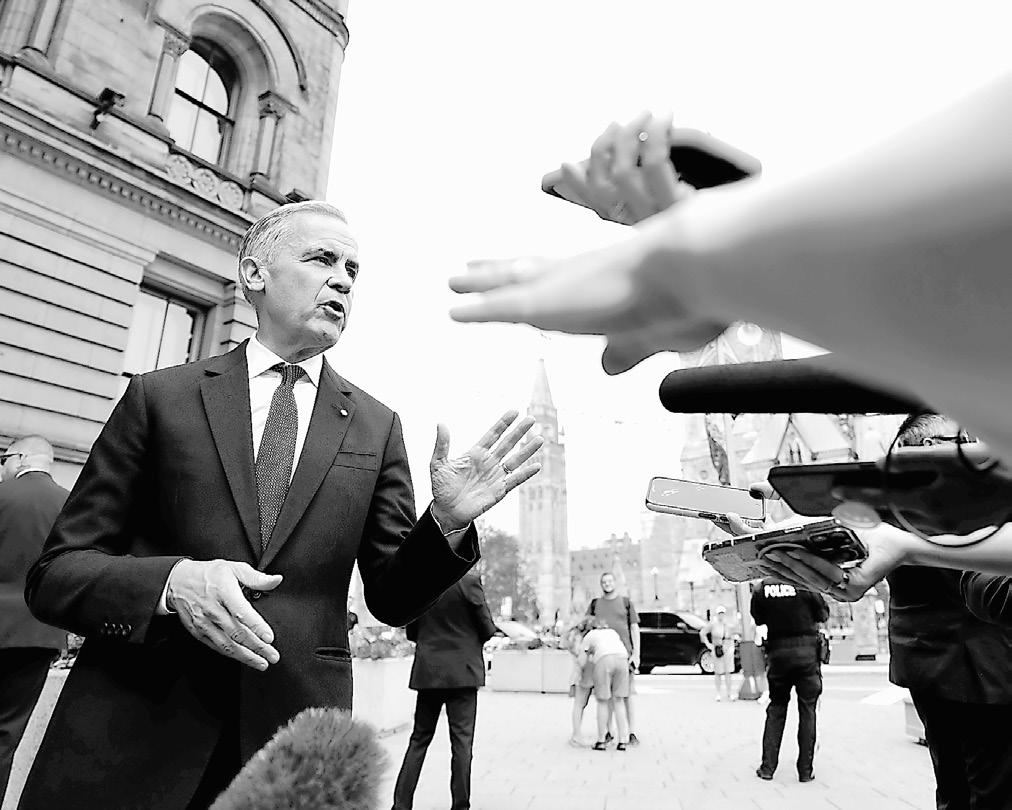
anywhere in the world, and that is a very lonely place to be.”
Saskatchewan Premier Scott Moe said tarifs hurt both countries.
“When tarifs are applied it increases the cost for
families and to do business on both sides of the border,” he said. “These tarifs do nothing for making a more competitive North American economy.”
Premier urges Canada
likewise topped analysts’ expectations for proft and revenue. Analysts pointed to its forecast for an underlying measure of revenue growth for the summer, which was weaker than Wall Street expected.
Homebuilder D.R. Horton slipped 0.9% despite topping proft and revenue expectations for the latest quarter. Executive Chairman David Auld said it’s still feeling the efects of afordability concerns in the housing market and caution among potential homebuyers.
Mortgage rates have already climbed to their highest level in nearly a year because of higher Treasury yields in the bond market. That could force D.R. Horton to ofer more
to be more aggressive with Trump
Ontario Premier Doug Ford said Canada should stand up to Trump.
“We always seem to be on our back heels,” he said.
“We need to be on the ofense. Not constantly on the defense with President Trump. We need to stand up to the bully, and we need to hit him tarif to tarif, all the way across the board.”
Trump on Tuesday told reporters in the Oval Ofce that he loves the people of Canada but claimed the country needs the United States to survive. “Canada’s been very, very tough on us over the years, for many years, and no other
incentives to homebuyers in the current quarter, which would cut into its profts. Companies broadly are under pressure to deliver strong growth in proft and revenue because of how high their stock prices have shot. Indexes are near their records, even with the recent shakiness for AI stocks.
All told, the S&P 500 rose 65.92 points to 7,509.20. The Dow Jones Industrial Average gained 385.38 to 52,224.64, and the Nasdaq composite climbed 329.13 to 25,837.21. In stock markets abroad, indexes rose modestly in Europe. The United Kingdom’s FTSE 100 added 0.6% as new Prime Minister Andy Burnham hosted his frst Cabinet meeting. In Asia, stocks swung more. South Korea’s Kospi jumped 3.6% on strong gains for its two dominant stocks. Both Samsung Electronics and SK Hynix have been big benefciaries of the AI boom, and the Kospi has soared 60% so far this year even with its 20% drop through July.
president’s done anything about it,” he said.
Trump added that the new tarifs are separate from his threats to hit Canada with additional levies due to wildfre smoke that afected millions of people in the Great Lakes, Northeast and Mid-Atlantic regions of the U.S. He repeated his claim that Canada is not managing its forests properly.
Canadian economists say the tarifs are more narrowly focused than frst believed and would afect around 5% of Canada’s exports to the United States. The wide range of goods includes honey, liquor, cement and hockey sticks.