A PROMINENT broker’s bid to obtain regulatory clarity and generate increased Bahamas-based business from foreign carrierrs has survived the Insurance Commission’s eforts to have its legal challenge struck out.
Justice Simone Fitzcharles, in a June 30, 2026, verdict rejected the insurance regulator’s arguments that she should dismiss Orry J Sands & Company’s attempt for Supreme Court afrmation that it represents Sagicor as a standalone agent rather than as a “branch” of the pan-Caribbean insurance and fnancial services giant.
The East Shirley Streetbased broker is arguing that the outcome of the dispute, which centres on “the correct interpretation of Sagicor’s
Orry J Sands ght-o regulator’s dimissal bid on ‘branch’ dispute
Pan-Caribbean giant eyes Bahamas wind-up on ‘erroneous’ status
Outcome critical for regulatory regime, foreign insurer business
Bahamas operations” and whether it conducts these as an independent agent or “branch of a foreign company”, is critical to its ambitions to attract more foreign insurance underwriters into this market and increase business for itself.
Its position is that the Insurance Commission’s decade-long belief that it acts as a Sagicor “branch”, rather than as its local agent, is “erroneous” and impacting
how the business is registered under the Insurance Act. Justice Fitzcharles wrote that this impacts not only Orry J Sands’ “legal and fnancial position”, but has wider regulatory implications for the insurance industry and how “foreign companies may conduct business through local agents.
The Insurance Commission, though, had moved to have the 41 year-old agent and broker’s action struck out, or
obtain summary judgment in its favour, on the basis that Orry J Sands had no standing to bring such a claim, there were no “reasonable grounds” for launching it, and there was “no real prospect of succeeding”.
Justice Fitzcharles, who ultimately dismissed the regulator’s bid to kill-of the action, said Orry J Sands has been in business since October 1985 and represented both Bahamian and international insurers as “managing” or “exclusive” agents. One such client is Sagicor, for whom it acts as its general managing agent.
The Insurance Act and its accompanying regulations give overseas insurance underwriters the option of registering as either a branch or operating through Bahamian agents and brokers.
CHALLENGE - See Page B7
Bank account opening fear must be ‘debunked’
BY NEIL HARTNELL
Tribune Business Editor
nhartnell@tribunemedia.net
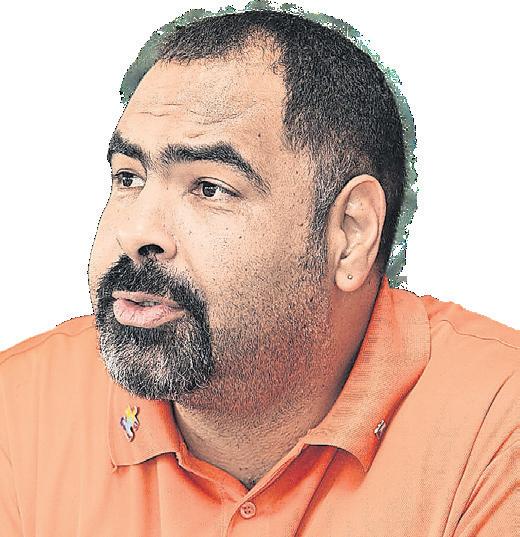
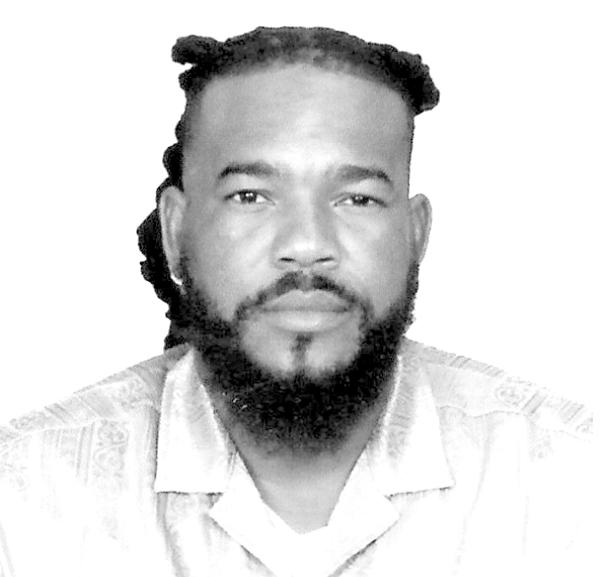
BAHAMAS-based commercial banks must “debunk the theory” it is too hard to open accounts with them, a senior executive argued yesterday, while conceding the industry “should shoulder some criticism” for failing to fully educate residents on digital fnancial services access.
Gowon Bowe, the Clearing Banks Association’s (CBA) head, told Tribune Business that the Gaming Board’s crackdown on the use of web shop accounts as alternatives to the banks for moving
money further exposed the need to better inform Bahamians and residents of legally permitted tools, such as the Sand Dollar, the Central Bank-backed Bahamian digital dollar, and the soon-tolaunch ‘basic bank account’.
Conceding that some will argue the commercial bank exit from many Family Islands drove businesses and residents in those locations to use the web shops, as they sought convenient, low-cost and relatively safe ways to deposit, withdraw and move money through every-day fnancial transactions, he added that it was vital that banks and
Finance chief: Bahamas ‘in a special place nancially’
BY FAY SIMMONS TRIBUNE Business Reporter
jsimmons@tribunemedia.net
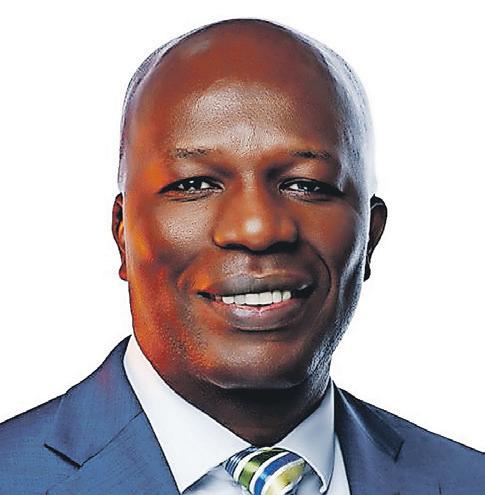
THE Ministry of Finance’s top ofcial yesterday declared The Bahamas is in "a special place fnancially" as it awaits confrmation of its frst-ever annual Budget surplus, while warning that hurricanes, healthcare costs and infrastructure overruns could quickly erode those gains.
Simon Wilson, the fnancial secretary, addressing the Rotary Club of West Nassau, said The Bahamas’ fscal position has improved signifcantly since the COVID-19 pandemic when the annual defcit exceeded
13 percent of gross domestic product (GDP).
"I think I can say without any contradiction that The Bahamas really is in a special place fnancially at this point," he said. "Our objective is that 2025-2026 will be the frst year in our history
Private cruise islands’ value ‘under-estimated’
BY FAY SIMMONS
TRIBUNE Business Reporter
jsimmons@tribunemedia.net
THE Ministry of Finance’s top ofcial yesterday defended the growing role of cruise line-owned private destinations in The Bahamas, arguing they are creating signifcantly more value for Bahamian businesses and government revenues than many critics admit.
regulators partner to address “perceptions” that it is still too expensive, time-consuming and challenging to open regular bank accounts.
Mr Bowe, revealing that his Fidelity Bank (Bahamas) is “on the verge of opening Eleuthera ofces” to go with its existing Exuma presence, with Cash n’Go set to again act as its “cash partner”, he told this newspaper that the BISX-listed lender is now regularly visiting other Family Islands to on-board new clients, open accounts and conduct the necessary Know Your Customer (KYC) due diligence, with debit cards following swiftly behind.
Speaking after the Gaming Board warned it may take “further regulatory action”
TUC chief pledges to revive $350 for minimum wage
Targeting up to 35% increase in ‘worker’s agenda’ Asserts: ‘Everyone getting their share apart from us’ Union body wants House of Labour as ‘historical site’
BY NEIL HARTNELL TRIBUNE Business Editor nhartnell@ tribunemedia.net
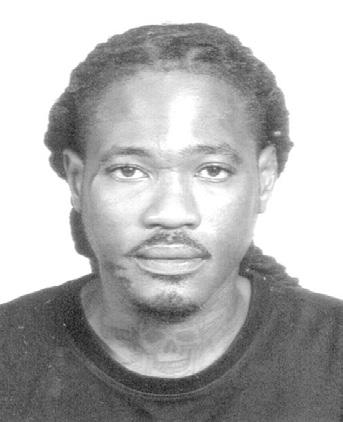
TRADE union leaders are pledging to renew their push for an up to-35 percent increase in the minimum wage to $350 per week, with one asserting: “Everybody seems to be getting their share apart from the workers.”
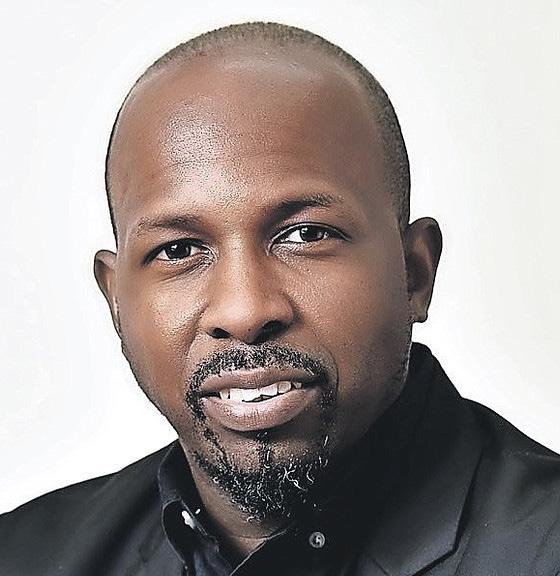
Obie Ferguson KC, the Trades Union Congress (TUC) president, speaking following a recent meeting of the umbrella body and all its afliates said that - post-general election - the labour movement plans to revisit key issues with many asserting they have “had enough of it” and “have waited long enough”. He revealed that increasing the minimum wage from the present $260 per week, which was implemented just three-and-a-half years ago on New Year’s Day 2023, to $300-$350 remains among the TUC’s priority items. That, if achieved, would represent between a 15.4 percent to 34.6 percent increase on the present $260, which was itself raised by $50 or 23.8 percent from the previous $210.
The TUC’s ambitions would, at their peak, represent a $140 or 67.7 percent or two-thirds increase in the minimum wage in three-anda-half years if it ever came to pass. While the Government has acknowledged the continued cost of living and infationary pressures impacting many Bahamian families, it has given no indication that a minimum wage increase is likely in the near future although
"Underpinning all of this is the extraordinary recovery of tourism," he said. "Our cruise tourism is providing more value and driving growth - not just in Nassau, but in the Family Islands."
Mr Wilson pointed to developments such as Carnival’s $600m Celebration
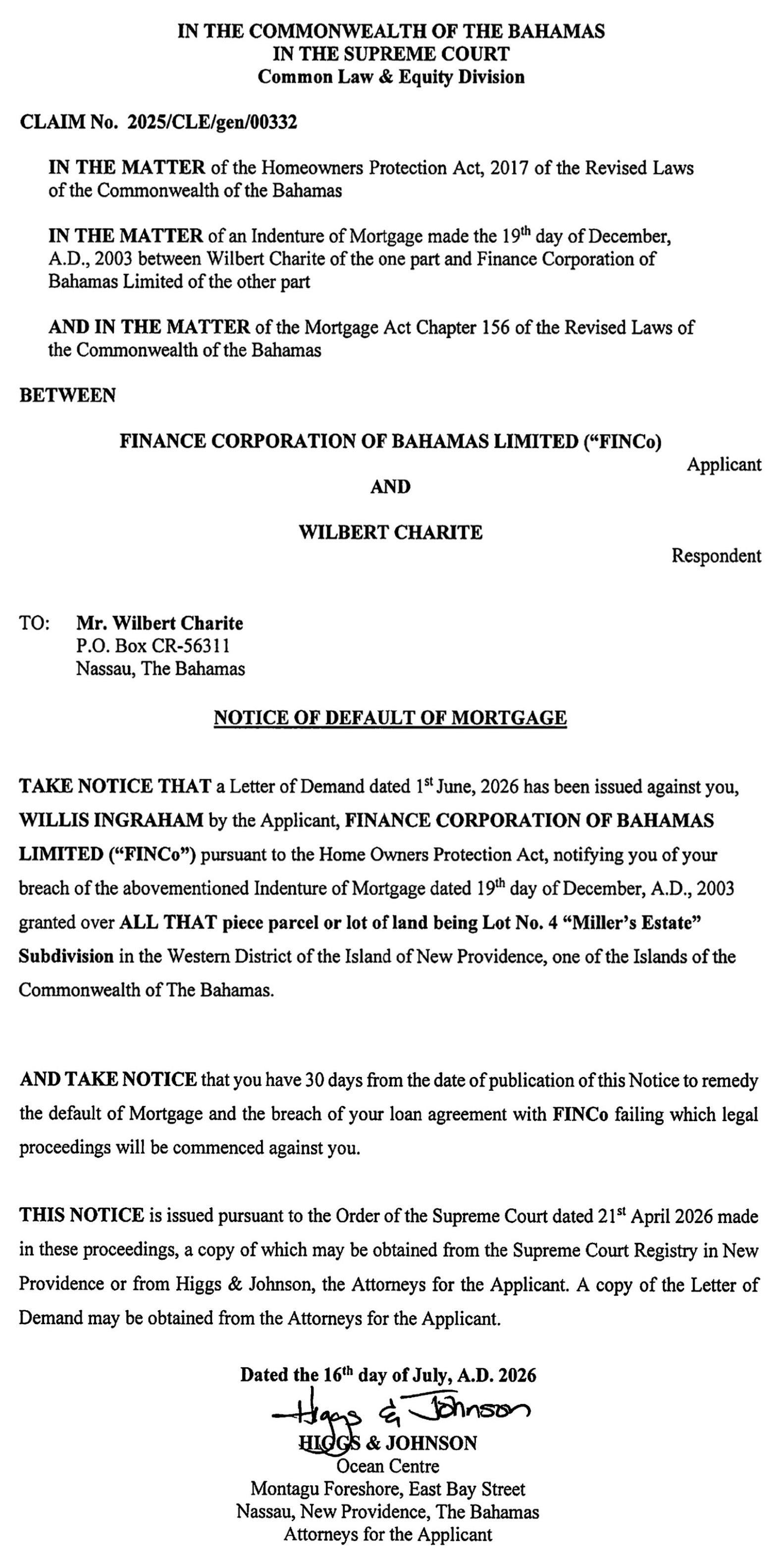
Simon Wilson, the fnancial secretary, speaking at the Rotary Club of West Nassau, said the country's tourism recovery continues to support the Government's improving fscal position, with cruise visitors increasingly spreading economic activity beyond New Providence.
SIMON WILSON
GOWON BOWE
OBIE FERGUSON
Boosting our economy by vacationing at home
As the pace of modern life continues to accelerate, taking time to rest and recharge has become more important than ever. While international travel is often seen as the ideal getaway, Bahamians have an extraordinary opportunity right here at home. The Family Islands ofer breathtaking natural beauty, rich cultural heritag and warm island hospitality that provides the perfect setting for a meaningful vacation. Encouraging businesses and employees to vacation within these islands is not only benefcial for personal well-being
but also strengthens the nation's economy and preserves its unique cultural identity.
From the crystal-clear waters of Eleuthera and the pristine beaches of Long Island to the tranquil settlements of Cat Island, Andros and Mayaguana, each island ofers its own distinctive experiences.
Visitors can explore historical landmarks, enjoy authentic Bahamian cuisine, participate in local festivals or simply unwind in peaceful surroundings far removed from the pressures of everyday life.
The economic benefts of vacationing in the
Family Islands are substantial. Every dollar spent on accommodations, restaurants, transportation, tours, fshing charters, craft markets and local businesses helps support entrepreneurs and creates employment opportunities within these communities. Increased domestic tourism encourages investment, strengthens small businesses and contributes to sustainable economic growth across The Bahamas. Rather than allowing tourism dollars to leave the country, Bahamians can keep those resources circulating within the national economy, benefting
Bahamas must write its next chapter of economic growth
HE 2026-2027
TBudget came into force on July 1 under the theme ‘A Budget that builds on progress’.
A country that only a few years ago faced genuine fscal strain now speaks of Budget surpluses, declining debt, and an ambition to return to investment grade status that has moved from aspiration toward plausibility. The renewed mandate from the May 12 general election gives the Government political capital, and the runway on which it can consolidate these gains. This is a moment for Bahamian optimism. Now that the foundation is stronger, we can aford - indeed, we are obligated - to maintain a more ambitious national conversation.
The question before us is no longer whether The Bahamas can achieve fscal
stability. That question has largely been answered. The question of the next chapter is diferent, and in some ways more exciting: How do we convert stability into dynamism and sustained growth? How do we ensure that the growth which carried us through the recovery becomes robust enough to carry us into prosperity? What follows is ofered in that spirit - not as criticism, but as a contribution to the thinking about what comes next.
What the Ratings Story is telling us
The past 18 months have delivered a remarkable sequence of events. Standard & Poor’s (S&P) upgraded The Bahamas’ sovereign credit rating to ‘BB-’ in September 2025. Fitch assigned, and then
afrmed, a ‘BB-’ rating with a stable outlook. And in April this year, Moody’s upgraded The Bahamas to ‘Ba3’, completing a rare three-agency alignment. Moody’s cited the sustained strengthening of fscal performance, revenue that has become “more durable, extending beyond the cyclical support from tourism”, and a meaningful reduction in liquidity risk. These are signifcant endorsements, and they deserve to be acknowledged as such. But those who read rating agency reports closely, and I would encourage every serious observer of our economy to do so, will detect that the agencies have told us two stories at once. The frst is the story of fscal achievement, and it is glowing. The second is a more restrained story about
families and communities alike.
Equally important are the socio-cultural rewards. Travelling throughout The Bahamas allows citizens to gain a deeper appreciation for the country's diverse traditions, dialects, music, cuisine and history. Employees who immerse themselves in the customs of diferent islands return with renewed pride in their national identity, and a greater understanding of the communities that make The Bahamas unique. Such experiences foster unity, strengthen cultural preservation and inspire younger
FERGUSON IAN
generations to value their heritage.
Employers also stand to beneft. Encouraging staf to take well-deserved vacations within The Bahamas can improve morale, reduce stress and enhance productivity upon their return. Corporate retreats and incentive travel to the Family Islands provide
with climate vulnerability a persistent structural concern. S&P, for its part, conditioned the prospect of further upgrades on The Bahamas continuing “to demonstrate solid growth and sustained near-balanced fscal outcomes”. The International Monetary Fund (IMF) has assessed The Bahamas’ potential growth rate, the pace the economy can sustain once the recovery efects wane, at around 1.5 percent.
economic growth, and it deserves careful attention. Consider what the agencies have said. Moody’s, in the report that delivered the upgrade, projected that economic growth will moderate to around 2.1 percent in 2026 following the stronger expansion of 2025, refecting an economy returning closer to its longrun potential. It fagged the economy’s continued reliance on tourism and exposure to external shocks,
Examined together, these assessments carry an important message. The upgrades we have earned were built substantially on the fscal side of the ledger. The path from ‘BB-’ to investment grade involves three notches, each progressively harder to climb, and will depend increasingly on the economic growth side. The agencies are not warning us. They are, in their own careful language, showing us where the next set of questions will be asked.
Understanding the reversion to potential
opportunities for team building while directly supporting local economies.
Choosing to vacation in the Family Islands is more than a leisure decision - it is an investment in The Bahamas. It supports local businesses, preserves cherished traditions, creates jobs and strengthens national unity. The next unforgettable vacation does not require a passport or an overseas fight. Paradise is already home, waiting to be explored, appreciated and shared by every Bahamian.
• NB: Ian R Ferguson is a talent management and organisational development consultant, having completed graduate studies with regional and international universities. He has served organisations, both locally and globally, providing relevant solutions to their business growth and development issues. He may be contacted at tcconsultants@coralwave.com.
It is worth pausing to explain, in plain terms, what economists mean when they speak of growth “reverting to potential”, because this concept is central to our medium-term outlook and is not often discussed broadly.
The economic growth experienced by The Bahamas in recent years, 4.2 percent in 2024 and, per the Bahamas National Statistical Institute’s (BNSI) stronger-than-expected estimate, 3.8 percent in 2025, refected a particular set of circumstances - the impressive rebound of tourism from the pandemic, an upsurge of foreign direct investment, construction activity and the natural momentum of an economy recovering lost ground. These factors are legitimate, but they are also, by their nature, transitional. An economy can grow quickly while it is catching up. Once it has caught up, however, its growth generally settles toward the rate determined by its underlying capacity:
DEVELOP - See Page B4
HUBERT EDWARDS BY
Bahamians brand BPL’s
$8.45 rebate ‘a stretch’
BY ANNELIA NIXON TRIBUNE Business Reporter anixon@tribunemedia.net
BAHAMIANS yesterday responded with jokes and sarcasm to Bahamas Power & Light’s (BPL) plan to ofer its $72,000 residential customers a one-time $8.45 rebate in their July bills, asserting that it will do little to relieve high energy costs or the misery caused by recent outages.
Speaking after the stateowned utility revealed it will return $610,000 in fnes levied by the Utilities Regulation and Competition Authority (URCA) for events that occurred seven and eight years ago directly to customers, Karen Brown said she was stunned after receiving a July electricity bill approaching $800.
Arguing that this makes the rebate seem insignificant by comparison, she said: “That one is a stretch.
“I probably need to get an electrician to come and look at my house and see if it’s wired properly with how much money BPL charges me.”
Ms Brown said she struggled to understand how the
rebate had been calculated. “They sent me a bill for July for, I think, close to $800 and they only giving me $8 and something cents rebate?” she said.
While appreciative of the gesture, Ms Brown argued that customers need more assistance. “They need to add something else on to that,” she said. “That’s fne if that’s all the rebate works out to, but they need to add something else on to that to give Bahamian people a little relief.”
Ms Brown added that despite having a household of four, she could not explain why her electricity costs remained so high. “I don’t know why mine is so high, honestly,” she said. “I have four people in my household. It’s crazy. I think they need to add a little extra on to that. They can give us that rebate and then give us something else for August, too.”
George Robinson similarly questioned whether spreading the funds across all eligible customers was the best approach, suggesting the money would have made a greater impact if targeted towards lower-income households.
PM calls on JP Morgan to invest more in Bahamians
BY ANNELIA NIXON TRIBUNE Business Reporter
PRIME Minister Philip Davis KC yesterday called on J P Morgan Trust Company (Bahamas) to build on its decades-long investment in this nation by training more locals and partnering with the Government on emerging blue fnance and carbon market opportunities.
Speaking as the fnancial services provider opened its new ofces in Goodman’s Bay Corporate Centre, Mr Davis said the relocation from downtown Nassau represented more than a change of address, describing it as a vote of confdence in the Bahamian economy and industry.
“Continue investing in The Bahamas but also invest in Bahamians,” Mr Davis said. “We have talented young people here. And the only diference between Bahamians and
anyone else is opportunity. Mentor them. Train them. Develop them. Give them the opportunity to become the next generation of fnancial trust professionals and leaders in this industry.”
Mr Davis also invited JP Morgan to collaborate with the Government as The Bahamas seeks to expand opportunities in blue fnance and carbon markets.
“Together, we can position The Bahamas as a leader in the next generation of global fnancial innovation,” he said.
Mr Davis described the frm’s new ofce as “a statement of confdence” in the country’s future. “A move like this is a statement of confdence. It refects a belief in the future, and today it sends a clear message: JP Morgan continues to believe in The Bahamas,” he said.
The Prime Minister noted that JP Morgan has maintained a presence in The Bahamas for more than
“I don’t think that would make a diference in their light bill,” he said. “They wouldn’t feel that.” Instead, Mr Robinson said the rebate should have been concentrated on vulnerable consumers.
“I prefer them to just distribute it among the less fortunate,” he said. “It would help them with their light bill. It’s a small saving. I don’t think it would make a diference in their fnancial situation because the $8, they’re not going to feel that.”
Mr Robinson compared the rebate to receiving a token discount at the gas pump. “That’s just like if they go to the gas station and they take of one cent for a gallon of gas,” he said. “That don’t mean nothing to the average person. I’d rather narrow that down for the people who really need it so they could really feel and see the efect of it.”
Mr Robinson said consumers would beneft more from lower electricity costs than one-time credits. “It’d be better if they brought the prices down, but I guess that’s not on the cards,” he added.
four decades, saying the relationship had “stood the test of time”. He argued that the Government’s fscal reforms and regulatory improvements have helped restore investor confdence since his administration took ofce in 2021.
Mr Davis highlighted reductions in the country’s debt-to-GDP ratio, the move from fscal defcits toward a projected surplus, stronger government revenues through improved compliance, and recent sovereign credit rating upgrades.
He also pointed to advances in The Bahamas’ anti-money laundering and counter-terrorism fnancing framework, noting that the country is now among a small group of jurisdictions
and water cluster analysis conducted across New Providence, and could eventually be expanded to other food-prone communities.
Another resident, speaking omn condition of anonymity, acknowledged that the rebate was a positive step but said it fell well short of addressing the fnancial losses many households sufered following recent power disruptions.
“I think it’s great that we’re doing the rebate, but the amount is kind of small considering so many people had lost food and everything like that,” the resident said. “I don’t want to sound ungrateful, though.”
The resident questioned what practical diference the rebate would make amid rising living costs. “The rebate is actually nice, but it’s $8,” they said. “Come on, in this climate, what can you get for $8? All the prices in the food stores gone up, everything gone up.”
Rather than issuing small rebates, the resident suggested the money would have been better invested in improving the electricity network. “How about less power cuts?” they said. “Put the money towards fxing whatever’s wrong.”
BPL said the rebate represents the settlement of
rated compliant or largely compliant with all 40 recommendations of the Financial Action Task Force (FATF).
“These achievements are not ends unto themselves,” Mr Davis said. “They are about creating the confdence that allows institutions like JP Morgan to succeed here.”
Terraine Smith, executive director and head of JP Morgan Trust Company (Bahamas), said the opening of the new ofce refected the frm’s longterm commitment to the jurisdiction rather than simply a relocation from its previous Charlotte Street ofces at the Bahamas Financial Centre.
“Today marks more than a ribbon cutting,” she said. “It is about commitment, because opening a new ofce isn’t just about a new address. It’s a statement that we are here, we are investing.”
Ms Smith said The Bahamas has built its reputation as an international fnancial centre through professionalism, resilience and integrity, adding that JP Morgan is proud to contribute to the jurisdiction’s continued development.
the exact location so repair crews can respond more efciently.
regulatory enforcement matters dating back several years, and stressed that the cost will be borne entirely by the utility rather than recovered from customers through future electricity rates. It said eligible customers do not need to apply for the credit, which will appear automatically under the ‘adjustment’ section of July bills, with all qualifying rebates expected to be issued by July 30.
The announcement also sparked widespread discussion on social media, where many Bahamians responded with sarcasm. While some users said they appreciated receiving any credit at all, many joked that the amount represented only a tiny fraction of their monthly electricity bills or was barely enough to purchase a fast-food meal.
BPL yesterday said the rebate, approved by URCA, forms part of a settlement over regulatory enforcement action stemming from the September 2018 Clifton Pier Power Station fre and prolonged power outages in New Providence during 2019.
The utility said eligible residential consumers in New Providence who had active electricity accounts in March 2026 will automatically receive the $8.45 credit. It follows an agreement between BPL and URCA under which the utility proposed returning
the value of regulatory fnes directly to consumers instead of paying the full amount to the regulator.
URCA accepted the proposal as part of a negotiated settlement that resolved enforcement matters dating back several years.
URCA's investigations centred on the September 2018 fre at the Clifton Pier power station, subsequent widespread outages and BPL's performance during prolonged power interruptions in New Providence in 2019. The regulator had found the utility breached several licence obligations, including failing to provide information required under the Electricity Act and defciencies related to maintenance, planning and service reliability.
BPL said the rebate will be treated as an unrecoverable expense borne solely by the company and "will not be passed on to consumers through tarifs, rates, future billing adjustments or any other consumer charge”.
The utility added that it will maintain records of the credits issued and submit a fnal report, certifed by its internal auditor, to URCA for review and verifcation, while pledging to work with the regulator to ensure the rebate is applied accurately and consistently.
BY FAY SIMMONS TRIBUNE Business Reporter jsimmons@tribunemedia.net
THE Ministry of Finance’s top ofcial yesterday said the Davis administration’s growing investment in roads, energy infrastructure and public facilities is intended to create long-term economic growth rather than simply expand public spending.
Simon Wilson, the fnancial secretary, speaking at the Rotary Club of West Nassau, argued that infrastructure investment raises property values, attracts private investment and ultimately increases government revenues, making it essential to sustaining economic growth.
"The next phase for us is how do we convert this into sustainable growth - not a sugar high, but sustainable growth," he said. "That only happens by making investments."
increase surrounding property values, resulting in higher VAT collections, property tax receipts and investment activity.
Mr Wilson also cited Acklins, where the Government upgraded the island's main road from sand seal to asphalt. He said the improved road has reduced travel times between settlements, making it easier for residents to commute and encouraging more people to invest on the island.
Mr Wilson argued that similar investments are now taking place throughout the Family Islands, alongside new energy infrastructure, hospitals and utilities. He acknowledged such projects increase the Government's fscal exposure, but said they are necessary to prevent economic stagnation.
BY FAY SIMMONS TRIBUNE Business Reporter
THE Davis administration is investing $2.6m in a pilot project for Pinewood Gardens that it hopes will fnally provide a long-term solution to decades of chronic fooding, with four lift stations designed to pump stormwater underground instead of relying solely on traditional drainage.
Clay Sweeting, minister of works and Family Island afairs, said the initiative marks a shift in how the Government approaches fooding in vulnerable communities, arguing that traditional drainage systems are no longer sufcient to handle increasingly intense rainfall events.
Speaking at the Ofce of the Prime Minister's weekly press briefng, Mr Sweeting said the project will install four lift stations at Sapodilla Street, Bay Geranium Avenue, Pigeon Plum Street between Safron and Croton streets, and Jones Heights of East Street South.
"We're not simply here to make an announcement about the Pinewood Gardens lift station as another
infrastructure project," said Mr Sweeting "We're here to address a problem that has afected families for decades, and to inform you of our engineers' belief that this is the most appropriate and efective solution based on extensive technical studies and environmental assessments."
Mr Sweeting said the stations will automatically pump excess stormwater into deep disposal wells when water reaches a certain level, reducing standing water, improving road safety and better protecting homes and businesses.
"This project represents one of the most innovative food mitigation initiatives ever undertaken by the Ministry of Works," he said. "The lift stations have already been ordered and are currently being manufactured to be shipped to The Bahamas within the next three to four weeks."
He added that piping for the project is expected to arrive within the same timeframe, allowing construction to begin. The ministry is targeting a 12-month construction period once work commences.
Mr Sweeting said the pilot project was selected following food zone identifcation
"A multi-faceted approach is also being utilised in Coral Harbour, where we will be utilising the stations as well," he said.
The announcement came as Ministry of Works ofcials also outlined ongoing road paving and maintenance works throughout New Providence.
Robert Mouzas, director of works, said the Ministry's road programme will continue through the remainder of this year and into 2027, with Shirley Street among the priority projects once utility co-ordination with the Water & Sewerage Corporation is completed.
He said recent paving has been completed on roads including Sea Link Drive, Buttonwood Street, Yamacraw Beach Drive, Western Road and Joe Farrington Road.
The ministry also used the briefng to highlight its broader digital transformation, including a new online Citizen Service Hub that will allow residents to report potholes, drainage issues and fooding directly from their mobile phones.
Lakindes Brown, head of the ministry's digitisation unit, said residents will be able to upload photographs of damaged roads or fooding, while GIS mapping technology will pinpoint
She added that the ministry is also introducing a "FlowSense" smart drainage monitoring system that will use real-time data to identify food risks before they become emergencies, while modernising building permits, inspections and other public services through a single online platform.
Ms Brown said the digitisation initiative is intended to create "a ministry that is faster, smarter, more transparent and built around the people it serves”.
Mr Wilson used Exuma as an example, arguing that improvements to the island's road network helped increase land values and stimulate private development.
"If you look at the land values of Exuma before road rehabilitation and after road rehabilitation, you will see that infrastructure really pays of," he said. "Those land values translate into actual revenue for the Government."
Mr Wilson said infrastructure creates what economists refer to as "shadow rents", where improved public assets
"There is a risk that one event or one downturn puts us back in a situation where the economy doesn't grow," he said. "If it doesn't grow, it doesn't generate jobs. If it doesn't generate jobs, you have social dislocation."
He added that infrastructure investment is intended to position The Bahamas for predictable, sustainable growth over the long-term rather than relying on shortterm economic gains.
PHILIP DAVIS KC
Bahamas must pull on critical expansion levers
Its workforce and their skills, its infrastructure, its energy costs, its institutions and its productivity.
This is the reversion now underway, as acknowledged across every serious forecast, including the Government’s own. The IMF projects growth of roughly 2.1 percent this year, moderating thereafter towards the assessed 1.5 percent potential rate. Notably, the 2026-2027 Budget adopts an even more conservative assumption, projecting real growth of 1.8 percent for the coming fscal year and the year that follows. There is nothing worrying in this pattern; it is the normal performance of a post-recovery economy, and both the rating agencies and the Ministry of Finance have priced it into their projection frameworks. But the pattern does carry an implication we should seek to fully understand: The growth rates of the recovery period were, by their nature, short-lived and cannot be treated as foundational. Nothing of the future turns on them, only on the potential rate. Critically, absent deliberate action, a potential growth rate in the range of 1.5 to 2 percent represents a modest ceiling for The Bahamas given its stated ambitions.
The Bahamas’ performance against expectations
An objective discussion requires an important counterpoint. Over the past four years, The Bahamas has consistently outperformed IMF growth projections. In 2022, actual growth of 10.9 percent exceeded the projected 8 percent. In 2024, against an anticipated 1.9 percent, the economy grew by 3.4 percent. And in 2025, the BNSI’s estimate of 3.8 percent again surpassed the IMF’s 2.8 percent projection. Consecutive years of out-performance cannot be ignored. It is a pattern, and it entitles the country to a measure of confdence that external assessments of our capacity have tended toward the conservative.
Two observations, however, help us hold this performance and the reversion argument together. First, much of the out-performance occurred in the recovery years, when forecasters appear to have systematically under-estimated the speed and power of the tourism rebound. That transitional period is now fading. Second, a portion of the recent upside refects the BNSI’s improvements in statistical methodology, resulting in the capture of economic activity that was always present but previously
unmeasured. Better measurement is certainly a positive, but it represents a one-time recognition rather than evidence of a recurring gain in capacity. The most constructive reading, in my view, is this. The out-performance record tells us that the Bahamian economy may well have greater underlying momentum than the IMF’s 1.5 percent assessment implies, perhaps signifcantly more. The reversion analysis, however, tells us we should not plan on it. Consequently, the Government deserves credit for its own application of conservatism. By building the budget on a 1.8 percent growth assumption while the IMF projects 2.1 percent, the Ministry of Finance has ensured that if the economy outperforms yet again, the outcome fows directly into stronger fscal outturns rather than disappointed targets. The task of national policy is to make the upside scenario the structural one, converting a pattern of above-expectation performances into a durable, higher potential rate.
Here is why this matters. The 2026-2027 Budget targets a fscal surplus of $223m, or 1.2 percent of GDP, with a primary surplus of 5.2 percent and debt falling below 60 percent of GDP by fscal year-end. Moody’s projects primary surpluses averaging approximately 4 percent of GDP through fscal 2028, describing them as among the strongest outcomes for similarly-rated sovereigns. Debt is targeted to reach 50 percent of GDP by fscal year 2030-2031. All of these projections quietly rest on assumptions about growth and revenue buoyancy. A sustained 3 percent economy is likely to deliver them with some margin; a 1.5 percent economy delivers them only with additional efort. This is consistent with the IMF’s observation that achieving the debt target will likely require supplementary measures. This is not a faw in the strategy. It is simply the mathematics of the environment the strategy must now operate in, and it is best to engage that arithmetic early from a position of strength, rather than later and from a position of pressure. Where growth is found If the reversion to potential is the challenge, then raising the potential rate itself is the natural response. This is where the national conversation must now concentrate. Potential growth is not a number handed down by the IMF but, rather, the sum of choices we make. The encouraging news is that many of the levers
Date:
are already identifed and well known, and arguably several are already in motion. What may be in question, if anything, is the quality and thoroughness of the implementation. What the moment calls for, therefore, is sustained intensity, careful strategic sequencing, comprehensive implementation built on proper, accurate, and reliable problem defnition, and consistently disciplined follow-through. Here I examine four levers I consider to have substantial infuence on future growth.
The frst lever: Energy
The construction of the reform programme, broadly speaking, appears to be what is needed: Modernised generation, a transition towards cleaner and cheaper fuels, renewable integration and the overhaul of an aging transmission and distribution network. These are the correct pillars, and the ambition behind them should be sustained. But candour, ofered constructively, is part of any credible national conversation, and the experience of recent months must inform any assessment. Even adjusting for acts of God, the unusually hot early summer has subjected the electricity network to an unforgiving stress test, and the resulting load shedding and rolling outages across New Providence and several Family Islands, with disruptions reaching businesses, homes and critical facilities, suggest that the reform’s promise remains ahead of its delivery. For households and businesses whose competitiveness depends on it, the cost of electricity has not yet fallen and, for geopolitical reasons, is not expected to fall in the short-term. Consequently, there are structural questions that are now more pronounced. The departure of a corporate partner (Island Grid and Eric Pike) opens legitimate questions about the governance and continuity of the transmission and distribution reform programme, the status of the underlying contractual arrangements, and where responsibilities and obligations now rest.
Equally, Bahamas Power & Light’s (BPL) fnancial condition and viability remain to be demonstrated rather than assumed. These matters are not raised to assign fault; the state of our energy infrastructure is the accumulation of decades of decisions and indecisions, and no recent administration inherits it fresh. The issues are raised because clarity on these questions is itself an economic asset, and critical to the fscal disposition of the country. Investors notoriously price uncertainty as a premium on expected returns and, having regard for our stated ambition, we must remain ever-mindful that many of them are active consumers
of the output of rating agencies.
Indeed, this is where the energy question connects directly to the national ambition. The rating agencies, in upgrading The Bahamas, explicitly credited energy sector reform with reducing the contingent liabilities of state-owned enterprises (SOEs). That credit is, in a real sense, an advance against delivery, an assumption of success already embedded in our improved ratings. Validating it requires outcomes: Reliable summer electricity supply, a transparent accounting of the grid arrangements, a clear and demonstrable path to fnancial viability and, above all, a measurable reduction in the cost of power. Success in this sector must be counted in cents per kilowatt hour and uninterrupted service, rather than in stated milestones. The reality is that there is no single undertaking that can do more to lift the growth potential of The Bahamas. The corollary is that there are not many, either, that could do more damage to the growth, fscal health and ratings trajectory of the country if left unresolved.
The second lever: Human Capital
The latest Labour Force Survey brought good news: Unemployment at its lowest sustained level in years, rising workforce participation and thousands of Bahamians absorbed into work. Yet there is a countervailing observation which must be received as valuable intelligence rather than complaint: Employers across multiple sectors report persistent difculty fnding the skills their expansion requires. The response must be deliberate, intentiona and strategic, some of which is in evidence, including deeper alignment between the Bahamas Technical and Vocational Institiute (BTVI), the University of The Bahamas and industry; expanded apprenticeship pathways with employer co-investment; targeted certifcation in the trades, maritime services and technology; and a calibrated approach to work permits that fll genuinely scarce skills today while Bahamian capacity is built for tomorrow. Every dollar invested in closing the skills gap is, in a very real sense, a dollar well invested in defending fscal projections and infuencing growth.
The third lever: The Ease of Doing Business
Capital is mobile, and the investor’s experience of our administrative machinery - from approvals and permits to exchange control processing, land registration and dispute resolution - is a component of our existing and potential growth rate. The digitisation agenda underway should
TAKE NOTICE that anyone knowing of the whereabouts of Kerrington Dellon Knowles Nixon should contact Harry Nixon at 395-4912 or send information to P.O.Box N-4839
be pursued with the understanding that every reduction in an approval timeline is a form of economic stimulus that costs The Bahamas nothing, yet is invaluable to its fscal ambitions and to the growth needed to achieve them.
The fourth lever: Capital Markets
A growing economy needs domestic capital participating in its own growth. Deepening our capital markets, mobilising pension and institutional savings toward productive domestic investment, and expanding the instruments through which everyday Bahamians can own a share of national development would strengthen both the growth rate and its distribution, ensuring expansion is not only measured in GDP but felt at the micro level by households.
The ratings uncertainty
All of this takes us back to the investment grade ambition, because it deserves a sincere framing which is neither pessimistic nor complacent. The path from BB-/Ba3 to investment grade is achievable, but it is not automatic, and the uncertainties are worth sober consideration.
The rating agencies have been clear that further upgrades depend on the continuation of two things simultaneously: Strong fscal outcomes and solid growth. Subject to views that can be taken on the accounting, the fscal side now has a well-demonstrated record. The growth side, on the other hand, is the variable most exposed to forces beyond our shores - the strength of the American consumer, global energy prices, geopolitical developments and the ever-present climate risk.
A hurricane season, a US slowdown or a plateau in stayover tourism would test the growth assumptions embedded in the current trajectory and, with them, the timeline for further upgrades. To these external uncertainties we must add the assumptions the rating agencies have already made about the positive impact of energy reforms. Where recent upgrades have extended credit in advance, the delivery must follow or the assumptions will, in time, have to be revisited.
This is not an argument for anxiety. It is an argument for insurance, and the best insurance against external growth shocks is domestically generated growth capacity. A Bahamas that lifts its growth potential from 1.5 percent toward 2.5 percent or 3 percent through energy reform, skills development, administrative efciency and diversifcation is a Bahamas whose investment grade case becomes progressively harder for any agency to resist.
That is the deepest logic of treating the investment
grade ambition as an organising discipline for the entire reform agenda. Everything done should be examined through the prism of whether, and how, it positively moves the needle on the country’s growth potential. The impetus for reform must be grounded in the economic pay-of of success versus the cost premium that will be imposed if things go otherwise. Such thinking would, for example, naturally direct action towards deep and fundamental SOE reform, an area from which some of the greatest fscal space can be unearthed.
A conversation worth having
The last several years have answered the question of whether The Bahamas could restore fscal credibility. The answer, confrmed by three rating agencies, is yes. The years ahead will answer diferent questions: Whether the response is sustainable, and whether we can build, deliberately and together, an economy whose capacity matches its credibility.
Sustainability, in this context, has a precise meaning. It asks whether the surpluses are built from durable revenue and genuine efciency, rather than from deferral and restraint that merely postpone costs. It asks whether the growth is reaching households, frms and payrolls, rather than resting in the aggregates. And it asks whether the investments postponed today, in infrastructure, in people and in institutional capacity will retard growth for tomorrow. These are questions of quality, not merely of quantity, and they form the standard against which the next fve years should be assessed. We will return to these questions in due course.
Fundamentally, these are not questions for government alone. They belong to employers investing in training, to educators aligning programmes with industry, to fnancial institutions channelling capital towards Bahamian enterprise, to infuential voices and advisors, to those privileged to be consulted on policy, to those who have consigned themselves to silence, and to all of us who participate in the national conversation. The Budget that took efect on July 1, 2026 builds on progress. Progress properly harnessed becomes transformation. Transformation is exactly what The Bahamas needs to approach its full possibilities and expand its growth potential.
The foundation has been laid. The next chapter is now ready for all of us to help write.
destinations are benefting in ways that are often overlooked.
Key, Royal Caribbean’s Royal Beach Club and other private destinations as evidence of changing visitor spending patterns.
“Yes, there are some downsides to private destination operations, but overall these private destinations drive economic growth,” he said.
Mr Wilson also challenged the long-standing tourism industry belief that it takes ten cruise visitors to generate the same economic impact as one stopover visitor.
“I don’t think that applies any more,” Mr Wilson said.
“The money is when you hit the ground.” He argued that businesses supplying cruise
“People who are supporting the industry are making real, real money,” he said. Mr Wilson cited Bahamian suppliers providing products and services to Celebration Key and other cruise developments, adding that the resulting increase in business activity is refected in tax collections and commercial investment. He also pointed to changing dynamics on Bay Street, arguing that increasing commercial rents and new business investment demonstrate that tourism-related businesses continue to see strong earning potential.
While acknowledging calls for greater Bahamian participation in tourism, Mr Wilson said the opportunity now is for more local entrepreneurs to invest in higher-value tourism services rather than viewing the sector as a low-margin business. Cruise visitors account for more than 80 percent, or close to 10m, of all visitors to this nation.
Aviation Safety Committee formed following fatal crash
A CABINET minister
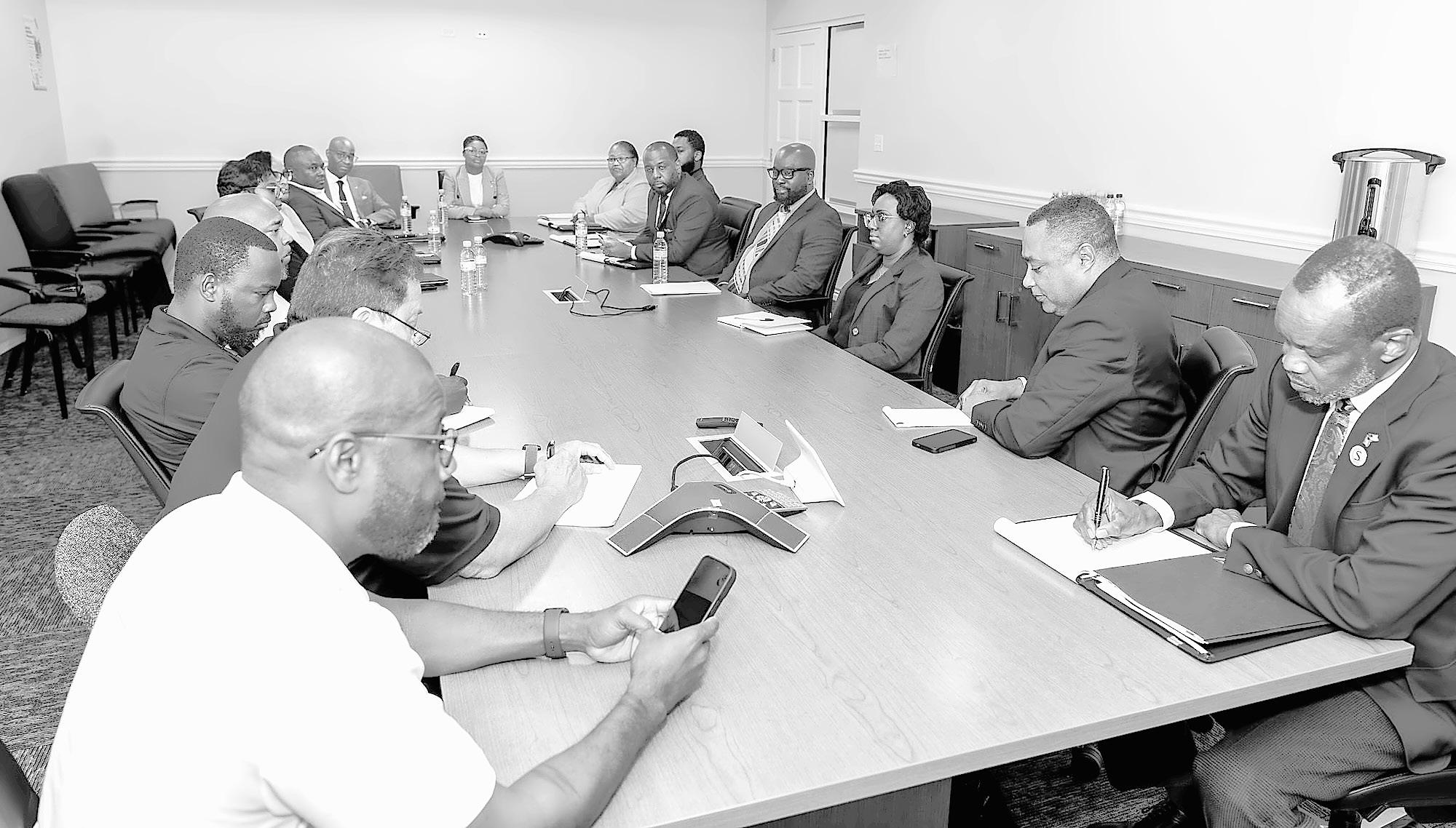
has held a second meeting within a week with stakeholders who will form a newly-appointed Bahamas Aviation Safety Committee and ‘think thank’ in the wake of the fatal Andros air crash.
JoBeth-Coleby Davis, minister of energy, utilities and aviation, had initially met with the new Civil Aviation Authority Bahamas (CAAB) Board and senior leadership on July 8, 2026 - just two days before a Flamingo Air plane crashed killing all ten persons on board.
The minister then held the follow-up meeting over the Bahamas Aviation Safety Committee one week later on July 15, 2026, following the crash.
“My Ministry takes seriously its responsibility for safety, security and economic oversight of the aviation sector throughout the Bahamian archipelago to ensure that domestic and international aviation
operations strictly adhere to standards set by the International Civil Aviation Organisation (ICAO)”, said Mrs Coleby-Davis. Attendees included Dr Kenneth Romer, director of aviation; Chequita Johnson, director-general of Civil Aviation Authority Bahamas (CAAB) and senior leaders; Captain Mornell Brown, president of the Bahamas Airline Owners and Pilots Association (BAOPA) and ofcers; Captain Mark Johnson, president of the Bahamas Airline Pilots
Union (BALPA) and ofcers; Dr. Anthony Hamilton, president of the Bahamas Association of Air Transport Operators (BAATO); and ofcials of the Bahamas Air Navigation Services Authority (BANSA).
“The meeting environment and atmosphere was an excellent stakeholders and gatekeepers strategic experience for the Bahamian aviation sector. This is an exceptional start, and we look forward to collaborating on the way forward,” said Dr Hamilton.
Minister meets with airline operators in e Bahamas
A CABINET minister
this Wednesday met with members of the Bahamas Airline Operators Committee (AOC).
“These meetings reaffrm my ministry’s ongoing commitment since day one to engage in meaningful collaboration with aviation industry professionals on government support, human capital development, standardised operations, enhanced emergency planning, improved passenger experience and enhanced safety and security for all air users”, said Jobeth Coleby-Davis, minister of energy, utilities and aviation.
This attending included: Shekera Sands - Nassau Flight Services business service manager
Carlysle Bourne – British Airways general manager
Dr Anthony Hamilton - president, Bahamas Association of Air Transport Operators (BAATO) and director of administration, Southern Air Charter
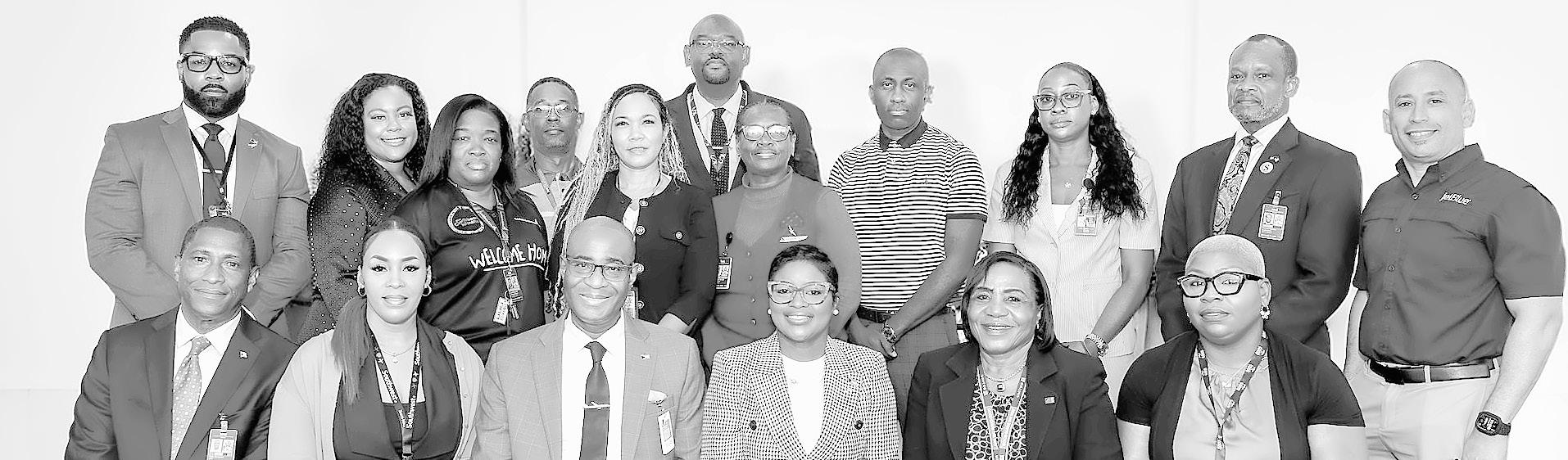
The AOC’s goal is to generate collaboration among airlines operating at Lynden Pindling International Airport (LPIA). It works closely with the Bahamas Department of Aviation and serves as a collective voice to represent member carriers in discussions with government agencies such as the Airport Authority, Nassau Airport Development Company (NAD), Nassau Flight Services, the Civil Aviation Authority, Bahamas Air Navigation Services Authority and other service providers. Mrs Coleby-Davis was joined by Dr Kenneth Romer, director of aviation and deputy director general of tourism; plus Elaine Foster, chairman of AOC and member airline operators including Western Air, British Airways, American Airlines, Caribbean Airlines, Southwest Airlines, JetBlue Airlines, Bahamasair, Delta Airlines, United Airlines, Breezes Airways, Air Canada, Porter Airlines, Westjet and local Bahamian carriers
PM urges institution to aid nance innovation
OPENING - from page B3
She said the new ofce was intentionally designed to promote collaboration while enhancing the frm’s client experience.
“It is designed to support thoughtful collaboration and the kind of client experience that is defned by discretion, responsiveness and care,” Ms Smith said.
“In a business built on long-term relationships, the environment matters because it shapes the way we serve, the way we communicate and the way we uphold the confdence.”
Adam TejPaul, chief executive of J.P. Morgan’s global trusts and estates business, said the frm has conducted private banking business
for nearly 200 years and has operated in The Bahamas for around 50 years. He said trust services remain fundamentally relationship-driven despite rapid technological advances.
“One thing that’s really special about our client base is that it’s not just a transaction; it’s a relationship that lasts a long period of time,” Mr TejPaul said. He noted that JP Morgan clients remain with the institution for an average of more than a decade, with the frm’s goal being to serve families across multiple generations.
While acknowledging the growing role of artifcial intelligence (AI) and digital technology, Mr TejPaul said personal relationships
Ossie David - senior manager, business partner development, JetBlue
Anishka Crawley-Fernander - Caribbean Airlines station manager
Desrick Phillips - Western Air, director of security
Randolph FergusonAmerican Airlines, acting country manager, Bahamas
Jacqueline BernardDelta Air Lines supervisor
India Mackey - Bahamasair customer service manager
Brittni Bullard - customer service manager
Plato Thompson - executive manager projects, Nassau Flight Services, public relations ofcer for AOC
Endeavour Roach - station manager, Southwest Airlines, secretary, AOC
Glendina Woodside
Bethel - JetBlue, vice-chairman, AOC
Elaine Foster - station manager United Airlines, chair AOC
remain irreplaceable in the trust business.
“As much as the world is changing to become more and more digital, and the advent of AI, one thing that is not becoming more digital is the personal relationship you have with your trustees,” he said. Looking ahead, Mr TejPaul said the new ofce would serve generations of global clients, many of whom will choose The Bahamas as the jurisdiction through which their trust structures are established.
“Many of the most infuential people on the planet will walk through these doors over the next 50 years,” he said. “We hope that they leave these doors with confdence in JP Morgan as their trustee, and as an institution, but very much to The Bahamas as the jurisdiction that was chosen to put their trust.”
MINISTER JoBeth Coleby-Davis (centre) meets with CAAB airline stakeholders. Director of Aviation Dr. Kenneth Romer and Director General of Civil Aviation Authority Bahamas Chequita Johnson are also pictured.
Bahamas must target sustainable growth but not seek ‘sugar highs’
FISCAL - from page B1
that we have achieved a fscal surplus.”
Mr Wilson described the prospect of recording a fscal surplus as a milestone in itself, adding that just a few years ago The Bahamas was grappling with unprecedented borrowing needs brought on by the pandemic.
“The fact that we can now credibly talk about
TUC
achieving a fscal surplus is an achievement in itself,” he said, with the 2025-2026 fscal year - which ended on June 30 - forecast to generate a $75.5m fscal surplus.
Mr Wilson added that government revenues have grown by more than 25 percent during the COVID recovery period without introducing any new broadbased tax measures. Fiscal performance is expected to strengthen further in the 2026-2027 fscal year due
head: ‘It can’t be some getting and others surviving’
it has endorsed a move towards the so-called ‘livable wage’.
“We had a meeting on these matters, and these are things the afliates have mentioned, and made very clear to ensure we do what we have to do to make sure these items remain on the agenda,” Mr Ferguson told Tribune Business.
“The $260 minimum wage.. we have resolved we are going to do whatever we have to do in the interests of this country, and the interests of the workers of this country, that the minimum wage be renegotiated and the average Bahamian should be getting a minimum of $300-$350 per week.
“Certainly, everybody seems to be getting their
share so we see no reason why workers in this country are not getting that in this regard. The poverty level in this country, we have to address these things. We know that, for a family of four, you cannot expect a family of four to live on $260 per week,” the TUC chief added.
“And if everyone around us can get an increase, salary increases or allowance increases, we see no reason why the doctors’ raise cannot be paid, the nurses’ overtime cannot be paid, the workers at the Grand Lucayan cannot be paid.”
A minimum wage hike, especially at this time, would almost certainly be opposed by the many Bahamian employers and industries that stand to be impacted by the increased marginal costs of labour
NOTICE
NOTICE is hereby given that MERVIN LANGLEY of Fire Trail Road, New Providence, Bahamas is applying to the Minister responsible for Nationality and Citizenship, for registration/naturalization as a citizen of The Bahamas, and that any person who knows any reason why registration/naturalization should not be granted, should send a written and signed statement of the facts within twenty-eight days from the 17th day of July, 2026 to the Minister responsible for nationality and Citizenship, P.O. Box N-7147, Nassau, Bahamas.
NOTICE
NOTICE is here by given that I JARREY SILIEN of Allen Drive , Carmichael Road, New Providence, Bahamas, applying to the Minister responsible for Nationality and Citizenship, for Registration Naturalization as a citizen of The Bahamas, and that any person who knows any reason why registration/ naturalization should not be granted, should send a written and signed statement of the facts within twenty-eight days from the 17th day of July, 2026 to the Minister responsible for nationality and Citizenship, P.O. Box N-7147, Nassau, New Providence, The Bahamas.
NOTICE
NOTICE is hereby given that I, CHARITE TELFORT of Golden Isles Road, Carmichael Road, New Providence,, Bahamas is applying to the Minister responsible for Nationality and Citizenship, for registration/naturalization as a citizen of The Bahamas, and that any person who knows any reason why registration/naturalization should not be granted, should send a written and signed statement of the facts within twenty-eight days from the 17th day of July, 2026 to the Minister responsible for nationality and Citizenship, P.O. Box N-7147, Nassau, Bahamas.
NOTICE
NOTICE is hereby given that I, CARLOS CASIMIR of Fire Trail Road, New Providence, Bahamas is applying to the Minister responsible for Nationality and Citizenship, for registration/naturalization as a citizen of The Bahamas, and that any person who knows any reason why registration/naturalization should not be granted, should send a written and signed statement of the facts within twenty-eight days from the 17th day of July, 2026 to the Minister responsible for nationality and Citizenship, P.O. Box N-7147, Nassau, Bahamas.
largely to the Qualifed Domestic Minimum Top-up Tax (QDMTT), which is the 15 percent corporate income tax that applies to companies operating from or within The Bahamas that are part of groups with 750m euros in combined annual turnover.
Despite the improving outlook, Mr Wilson cautioned that several risks could quickly reverse those gains, with climate-related disasters topping the list.
and hiring. Companies are already grappling with ever-rising expenses, especially electricity and taxes, plus the related paperwork.
Employers in industries such as hotels, gas stations and food stores that typically hire a large number of minimum wage staf, will likely vehemently oppose any further rise.
Companies would likely also argue that such an increase in their labour costs, with the minimum wage rising from $1,040 to $1,400 for a four-week pay period, would force them to either cut staf working hours or instigate lay-ofs to remain commercially viable. Robert Farquharson, the Government’s former labour director, previously estimated around 20-25 percent of the workforce is earning minimum wage.
Mr Ferguson, though, told Tribune Business that trade unions and the wider labour movement would likely accept a phased-in minimum wage increase, rather than a one-time rise, to ease the burden on employers
Brazil
“Climate is always a risk in The Bahamas. We are in a hurricane zone, and a climate-related event can throw our budget of in a two or three-day period,” he said.
To help cushion against such shocks, he said the Government has established fscal bufers equivalent to about 3 percent of GDP, secured contingent lines of credit from international fnancial institutions and expanded
and the wider Bahamian economy.
“We’ve made a suggestion that if you cannot pay all at one time, let us agree on a formula,” the TUC chief added. “It benefts both sides, but this cannot be disregarded. It’s going to create unnecessary industrial action in our country. You cannot pretend that workers are not part of the deal. They are part of the deal, and this is going to remain on the workers’ agenda for the next fve years.
“There need not be strike action in our country. We don’t need to do that. But it cannot, cannot be that all is well when it is not. We are not going to allow that to happen. Everyone getting their share and the workers not getting anything. Try to justify $260 per week. It cannot be some getting and others not even surviving. If you have four persons in a house, $260 is not adequate. We all need to get together and do what is right, otherwise we will have a problem.”
disaster response funding while placing greater emphasis on climate-resilient infrastructure.
Mr Wilson also identifed healthcare spending as a growing fscal challenge, noting that the Government currently funds a non-contributory healthcare plan for thousands of public servants.
“Our legacy healthcare plan is non-contributory. The Government pays 100 percent of the cost, which is really not market-based in the current environment,” he said, adding that expanding healthcare coverage through a broader contributory system should help ease long-term fscal pressures.
A University of The Bahamas (UoB) study, dated September 30, 2020, and authored by Lesvie Archer, Olivia Saunders, Bridget Hogg, Vijaya Permual and Brittney Johnson, concluded that a living wage in New Providence and Grand Bahama is $2,625 and $3,550 per month respectively.
“Our gross living wage estimate for New Providence is 26 percent lower than the Grand Bahama living wage estimate, nearly 200 percent higher than the national minimum wage, 127 percent higher than 2013 poverty line and nearly 75 percent higher than the minimum wage hike proposed by a local union,” they wrote.
“Our living wage estimate for Grand Bahama is nearly 300 percent higher than the living wage, 200 percent higher than the 2013 poverty line and 140 percent higher than the minimum wage hike proposed by a local union.”
The minimum wage, though, is defned
calls Trump’s 25% tari unjust and vows to impose reciprocal tari s
By MAURICIO SAVARESE and ELÉONORE HUGHES Associated Press
BRAZIL has described the latest U.S. tarifs on certain Brazilian imports as unjust and politically motivated, threatening Thursday to impose reciprocal measures on U.S. products. The country’s top diplomat criticized U.S. Secretary of State Marco Rubio for the move. The United States said Wednesday it would impose a new 25% tarif on certain imports from Brazil, citing unfair trade practices by the world’s 10th-largest economy. The tarifs, frst proposed last month, will
NOTICE
NOTICE is hereby given that I AMANDA ABIGALE ONPROY of #10 Alto Street, New Providence, Bahamas, applying to the Minister responsible for Nationality and Citizenship, for Registration Naturalization as a citizen of The Bahamas, and that any person who knows any reason why registration/ naturalization should not be granted, should send a written and signed statement of the facts within twenty-eight days from the 17th day ofJuly, 2026 to the Minister responsible for nationality and Citizenship, P.O. Box N-7147, Nassau, New Providence, The Bahamas.
NOTICE
NOTICE is hereby given that I, SAINTILMA SAINTIL of Hope Town Abaco, Bahamas is applying to the Minister responsible for Nationality and Citizenship, for registration/naturalization as a citizen of The Bahamas, and that any person who knows any reason why registration/ naturalization should not be granted, should send a written and signed statement of the facts within twenty-eight days from the 17th day of July, 2026 to the Minister responsible for nationality and Citizenship, P.O. Box N-7147, Nassau, Bahamas.
NOTICE
NOTICE is hereby given that I, JAHEIM DARRYON DECIUS of Hope Town, Abaco, Bahamas is applying to the Minister responsible for Nationality and Citizenship, for registration/naturalization as a citizen of The Bahamas, and that any person who knows any reason why registration/naturalization should not be granted, should send a written and signed statement of the facts within twenty-eight days from the 17th day of July, 2026 to the Minister responsible for nationality and Citizenship, P.O. Box N-7147, Nassau, Bahamas.
Mr Wilson further warned that the Government’s ambitious infrastructure programme, including roads, hospitals and energy projects, must be carefully managed to avoid cost overruns that would have to be fnanced through spending reallocations rather than new taxes. Still, Mr Wilson argued The Bahamas is now positioned to move beyond fscal recovery and focus on long-term economic expansion. “The next phase for us is how do we convert this into sustainable growth - not a sugar high, but sustainable growth,” he said. “That only happens by making investments.”
diferently from the “livable wage” measure employed by the UoB study. It based its work on a model employed by Richard Anker, the International Labour Organisation’s (ILO) living wage specialist, who defned a livable wage as one that can sustain a person’s “physical, emotional, social and cultural needs and that of their family beyond mere subsistence”.
Mr Ferguson, meanwhile, said the TUC has also determined to make the House of Labour on Wulf Road an “historic site”. He added: “We have decided for the movement, as far as the TUC is concerned, we need to ensure the House of Labour is made an historic site.
“The commitment made in that regard, we are going to ensure we do whatever we have to do to make sure the House of Labour is renovated and painted by the Government so we can get on a good foot. We need to get these things done. The workers have decided.”
take efect next Wednesday. The order exempts some goods that are not produced in the U.S. or that ofcials worry would disrupt supply chains — including cofee, beef, oranges and orange juice and aircraft components.
Brazil’s government said the decision hits about
3,000 items, but is yet to decide whether and how it could retaliate with a law its Congress passed in 2025 in response to President Donald Trump’s tarifs. Brazil’s industry minister, Márcio Elias Rosa, said Thursday the U.S. move hits about 18% of the country’s exports — or an estimated $7.4 billion worth of products, based on 2024 data. President Luiz Inácio Lula da Silva’s ofce on Wednesday denied U.S. allegations of unfair trade practices.
NOTICE
NOTICE is hereby given that I, JEROME JOSEPH of P.O. Box General Delivery, Bamboo Town, New Providence, Bahamas is applying to the Minister responsible for Nationality and Citizenship, for registration/naturalization as a citizen of The Bahamas, and that any person who knows any reason why registration/naturalization should not be granted, should send a written and signed statement of the facts within twenty-eight days from the 17th day of July, 2026 to the Minister responsible for nationality and Citizenship, P.O. Box N-7147, Nassau, Bahamas.
NOTICE
NOTICE is hereby given that I, MARVIN LUBIN of Central Pines, Abaco, Bahamas is applying to the Minister responsible for Nationality and Citizenship, for registration/naturalization as a citizen of The Bahamas, and that any person who knows any reason why registration/ naturalization should not be granted, should send a written and signed statement of the facts within twenty-eight days from the 17th day of July, 2026 to the Minister responsible for nationality and Citizenship, P.O. Box N-7147, Nassau, Bahamas.
NOTICE
NOTICE is hereby given that I, STEPHANIE PHILOGENE of Hope Town, Abaco, Bahamas is applying to the Minister responsible for Nationality and Citizenship, for registration/naturalization as a citizen of The Bahamas, and that any person who knows any reason why registration/naturalization should not be granted, should send a written and signed statement of the facts within twenty-eight days from the 17th day of July, 2026 to the Minister responsible for nationality and Citizenship, P.O. Box N-7147, Nassau, Bahamas.
Veteran agent: Regulatory clarity vital to increase foreign business
The September 2, 2016, registration certifcate issued by the Insurance Commission to Sagicor identifed it as “a branch of a foreign company” - and not operating via an agentwith its main ofce at Orry J Sands’ address of 300 East Shirley Street.
Sagicor was licensed to ofer property, liability, accident, motor, monetary loss, and marine, aviation and transport insurance policies in The Bahamas. “The main diference between the parties is over the designation of Sagicor as a ‘branch of a foreign company’,” Justice Fitzcharles wrote.
“The claimant avers that the defendant has insisted that Sagicor’s operations in The Bahamas are carried out as a branch of a foreign company, rather than through the medium of a local agent, Orry J Sands.
“The claimant contends that this is erroneous and the defendant [Insurance Commission] has failed to correct this view although the claimant has attempted over years to persuade the Insurance Commission of The Bahamas that the true interpretation of the facts and law is that Sagicor is an overseas company operating in The Bahamas through the medium of a local agent.”
Banks
The judge continued: “In the circumstances, by its originating summons fled on March 30, 2022, Orry J Sands seeks declarations from the court as to the correct interpretation of Sagicor’s operations in The Bahamas in order to clarify the distinction between an agency and a branch of a foreign company for the purposes of registration under the Act.
“Such guidance, Orry J Sands submits, will clarify the relationship with Sagicor and future agency relationships that might be entered into between Orry J Sands as general managing agent and foreign insurers who wish to operate through the medium of local agents.” Sagicor is not named as a party to the dispute, but Orry J Sands said it had always been authorised to handle its registration and conduct business on its behalf in The Bahamas.
“The claimant states that the defendant has not explained why it would accept that Orry J Sands has standing to make the application for registration of Sagicor, but challenge the standing of Orry J Sands to dispute the manner in which the defendant has dealt with that application for registration,” Justice Fitzcharles wrote.
“It appears that Orry J Sands as managing agent
had exclusive control over all details of the organisation and structure of Sagicor’s operations in The Bahamas. Sagicor’s policy and practice relating to the settlement of claims was stated to be under the control of Orry J Sands. In addition, Orry J Sands handled registration of Sagicor exclusively.”
Justice Fitzcharles, in rejecting the Insurance Commission’s assertion that the broker and agent had no standing to bring the action, added: “In this case, Orry J Sands does not have a merely fnancial interest in seeing that what it views as the correct designation of its principal is accurately refected in the Certifcate of Insurance.
“Orry J Sands interest is genuine and direct in the sense that it solely conducts Sagicor’s business in The Bahamas. If the defendant characterises this as a ‘branch of Sagicor in The Bahamas’, Orry J Sands is being deemed to be the ofce of a branch of Sagicor. Orry J Sands contends it is not carrying on the business of providing a branch ofce for Sagicor. Moreover, Orry J Sands insists that it is not in the business of being the managing general agent of a branch of a foreign insurance company.
“The designation afects the claimant’s legal and fnancial position.
‘must shoulder criticism’ over educating their customers
- from page B1
AGAINST companies and individuals using web shop accounts for non-gaming purposes, Mr Bowe acknowledged that persons will blame this on the commercial banking industry’s withdrawal from many Family Islands to leave residents with no alternative for maintaining fnancial services access and conducting regular transactions.
“Many would argue that the use of these gaming accounts for transaction purposes was the absence of availability by the commercial banks,” he said. Mr Bowe said the use of web shop gaming accounts to conduct fnancial transactions has “always been prohibited” and monitored by the Gaming Board, which has now likely seen such activities increase to the point where it has little choice but to act.
“The other thing the Gaming Board indicated is that the volume of activity, which they are monitoring because they have the systems, is at volumes that are of concern to them,” he added. “But in terms of compliance and enforcement, it’s not so much going to have the spillover back to the commercial banks.
“You are going to fnd many people lobbying to say this was done because of the absence of the commercial banks. You are going to get a fair amount of that, particularly with MPs from the Family Islands, who are going to argue that while their constituencies have numbers houses but not commercial banks.”
However, Mr Bowe asserted that many of those described by the Central Bank of The Bahamas as “unbanked”, meaning they have no bank account and lack access to regular fnancial services, are in this category by personal choice rather than circumstance.
“Persons have created perceptions of difculties with opening of bank accounts because of experiences in the past, and have sought easier routes to move money… This afection with cash being available, and gaming houses have cash on hand, allows them to put cash in, take it out.”
The Fidelity Bank (Bahamas) chief said the commercial banks need to work with the Central Bank, Gaming Board and other regulators to convince Bahamians they, too, can move money electronically just as easily - and at similar cost - to the web shops via
Sand Dollar and proposed ‘basic bank account’.
“There are no persons here legally who should have a difculty with opening a bank account in The Bahamas,” Mr Bowe told Tribune Business. “The perception there is difculty is more the perceived reality based on past experience versus the reality of current experience, and we have stations on some of the islands..
“The banks have to take some responsibility. On the closure of banks across the archipelago, it was not done with the level of education that was needed” even though digital channels were in place to facilitate consumers in conducting regular fnancial transactions.
“It’s one where the banks should shoulder criticism for not appropriately preparing individuals,” Mr Bowe said. “This one is going to be a very emotive topic. There’s no gaming house that will acknowledge the industry is used for this purpose, and no patrons will admit to doing so.
“But you will fnd quiet rumours saying this is because of the absence of commercial banks, and we have to debunk that theory by demonstrating the same banking services are available electronically not just the traditional way.”
Mr Bowe said Fidelity Bank (Bahamas) “bank in a box” initiative was providing fnancial services access to consumers on islands such as Long Island, Andros and Bimini, with visits once every two months facilitating the opening of bank accounts. “The reality is how many people take advantage of that?” he added. “More and more people do, but they fnd it easier to use gaming accounts.”
The Gaming Board, in its notice about “the proper use of accounts” held with licensed web shop operators such as Island Luck, Chances and Asure Win, added that some are using these as alternative, or de facto, bank accounts to conduct every-day fnancial transactions instead of for gaming purposes.
“The Board has found that some patrons are using their gaming accounts for purposes other than gaming, including facilitating deposits for non-gaming related services and, subsequently, withdrawing such
Moreover, the broader implications of the declaratory relief sought by Orry J Sands in this matter are such that they may afect the proper regulatory scheme and the circumstances in which foreign companies may conduct business through local agents in the insurance industry in The Bahamas,” the judge said.
“Both the lawful structure of the local agency’s arrangements and the proper interpretation of section 28(1) and the registration regime under the [Insurance] Act are afected by the declarations sought by the claimant.”
The Insurance Commission had also argued that Orry J Sands’ action had no chance of success because it was “based on a mistaken reading of the Act” and a “mistaken premise that operating as a branch of a foreign company is inconsistent with carrying on insurance business through an agent”. However, Orry J Sands countered that the dispute goes to the heart of how Sagicor operates in The Bahamas as there is no branch operating from its East Shirley Street ofces.
Noting that the Insurance Act contains no defnition of a ‘branch’, Justice Fitzcharles wrote: “The Insurance Commission uses the term ‘branch’ and contends that it is not used as a legal term of art and has no legal efect except to describe a certain situation.
“However, the fact that Sagicor has disagreed and
has soon thereafter sought to wind up its afairs in The Bahamas, coupled with the insistence of Orry J Sands in maintaining this application, are factors which reveal that the designation of a foreign insurer as having a ‘branch’ in The Bahamas, when it is contended it operates through a general managing agency, is not taken lightly.
“In some jurisdictions, in the context of cross-border insurance, the designation of ‘branch’ may carry regulatory, legal and tax implications, whether it refers to a direct ‘brick and mortar’ extension of the foreign insurer’s head ofce or not. Further, how the claimant conducts its agency business and advises foreign insurers which approach it to act as general managing agent are some of the factors directly afected by the defendant’s designation,” she said.
“In the circumstances, to confer the designation of ‘branch’ upon the operations of the foreign insurer and the managing general agent without reference to a legal meaning for that term, where such legal meaning may otherwise exist and give rise to other implications, readily invites the enquiry submitted by the claimant.”
Justice Fitzcharles also found that the question of whether, under the Insurance Act, the meaning of ‘branch’ equates to operations through an independent agent, is “ripe for resolution” as she branded
the regulator’s dismissal claim “an unwarranted nuclear option”.
Rejecting the other strand of the Insurance Commission’s strike-out bid, she ruled: “I do not agree at this point that the application discloses no reasonable grounds or that the prospects of success are fanciful and not real… Who is right on an interpretation of the Act?
“The answer is not purely academic, and whatever it may be, it seems to me that the issue gives the claimant at least a concrete commercial and regulatory interest. Therefore, I am of the view that the court should answer the questions posed and refrain from short-circuiting the process by a strike-out or summary judgment, both of which are inappropriate in the circumstances.”
Orry J Sands is seeking Supreme Court declarations that Sagicor’s Bahamas general insurance operations are conducted by itself as its local representative, and not as the branch of a foreign company; that Sagicor’s certifcate of registration be changed to refect this; and that a foreign insurer which meets the Act’s requirements can operate as an agent without needing to maintain a Bahamas branch.
Gail Lockhart-Charles KC represented Orry J Sands, while Dawson Malone of Callenders & Co acted for the Insurance Commission.
deposits without conducting any gaming transactions,” the Gaming Board said.
“Therefore, the public is hereby advised that accounts held with licensed gaming house operators are
only for authorised gaming activities. These accounts must not be used to receive or hold funds for any other business or commercial reasons. Using these accounts for non-gaming purposes may lead to an investigation and further regulatory action by the Board.” The nature of any “regulatory action” was not specifed, but it will likely involve closing such accounts down.
The Gaming Board’s crackdown on how web shop gaming accounts are used is likely linked to the upcoming assessment of The Bahamas’ anti-fnancial crime regulatory regime - and its efectiveness - by global standard-setters. Caribbean Financial Action Task Force (CFATF) representatives are due to undertake the ffth mutual evaluation of this nation’s
anti-money laundering, terror fnancing and nuclear proliferation funding defences in October, and Bahamian regulators and the wider fnancial services industry have been working feverishly to prepare for this. Any misuse of web shop gaming accounts could this undermine the assessment that The Bahamas receives.
CRYPTOQUOTE
One letter stands for another. In this example, A is used for the three L’s, X for the 2 O’s, etc. Single letters, apostrophes, the length and formation of words are all hints. Each day the code letters are different.