WOMAN & HEALTH







By KEILE CAMPBELL Tribune Staff Reporter
kcampbell@tribunemedia.net
THE family of hit-andrun victim Ryan Basden demanded yesterday that police secure and review surveillance footage from the area where he was struck, insisting that cameras could identify the driver who sped away and left the 43-year-old father of six dying in the street. Basden’s brothers said they have been left searching for answers after he was fatally struck on Taylor Street in Nassau Village on July 9, the day before Independence Day.

Police said Basden was attempting to cross the street when the driver of a grey Jeep fitted with large rims struck him and failed to stop. Investigators are still searching for the vehicle and its driver. Kendrick Antonio
By LEANDRA ROLLE Tribune Chief Reporter lrolle@tribunemedia.net
JUST weeks before he was expected to testify against a man accused of robbing him, businessman James McPhee was allegedly killed by the same suspect in a deadly hit-andrun, according to his family.
McPhee, a husband and father of three, was found with severe lacerations and other upper-body injuries early Sunday, two days after
By EARYEL BOWLEG Tribune Staff Reporter ebowleg@tribunemedia.net
THE family of 33-yearold Delano Miller believes he was an innocent bystander caught in a barrage of gunfire that tore through Bain Town on Independence Day, killing him and another man and wounding three women. Miller and Fred Wildgoose, 24, were killed on Friday night in the Dumping Ground Corner area. Three women were injured in the shooting. Larrie Miller Ferguson,
celebrating his 59th birthday on Independence Day.
Police suspect he was deliberately struck.
Two off-duty police officers, travelling east in a private vehicle near Spikenard and Carmichael Roads, reportedly saw a silver Suzuki strike McPhee as he lay in the roadway. Police later pursued the vehicle in a high-speed chase and exchanged gunfire with the occupants. One


By LYNAIRE MUNNINGS Tribune Staff Reporter lmunnings@tribunemedia.net
ENERGY, Utilities and Aviation Minister JoBeth Coleby-Davis yesterday said she could not explain why Flamingo Air's Air Operator Certificate was not suspended sooner despite the airline's history of at least 14 publicly documented accidents and safety incidents over the past two decades, saying she would have to seek
further information from the Civil Aviation Authority of The Bahamas (CAB).
"I am not certain. As the minister responsible, I was advised by CAB after they made the determination, so I'll have to get further information from CAB," Mrs Coleby-Davis said when asked why the suspension came only after Friday's crash that killed the pilot and nine passengers near San Andros Airport.


By LYNAIRE MUNNINGS Tribune Staff Reporter Lmunnings@tribunemedia.net
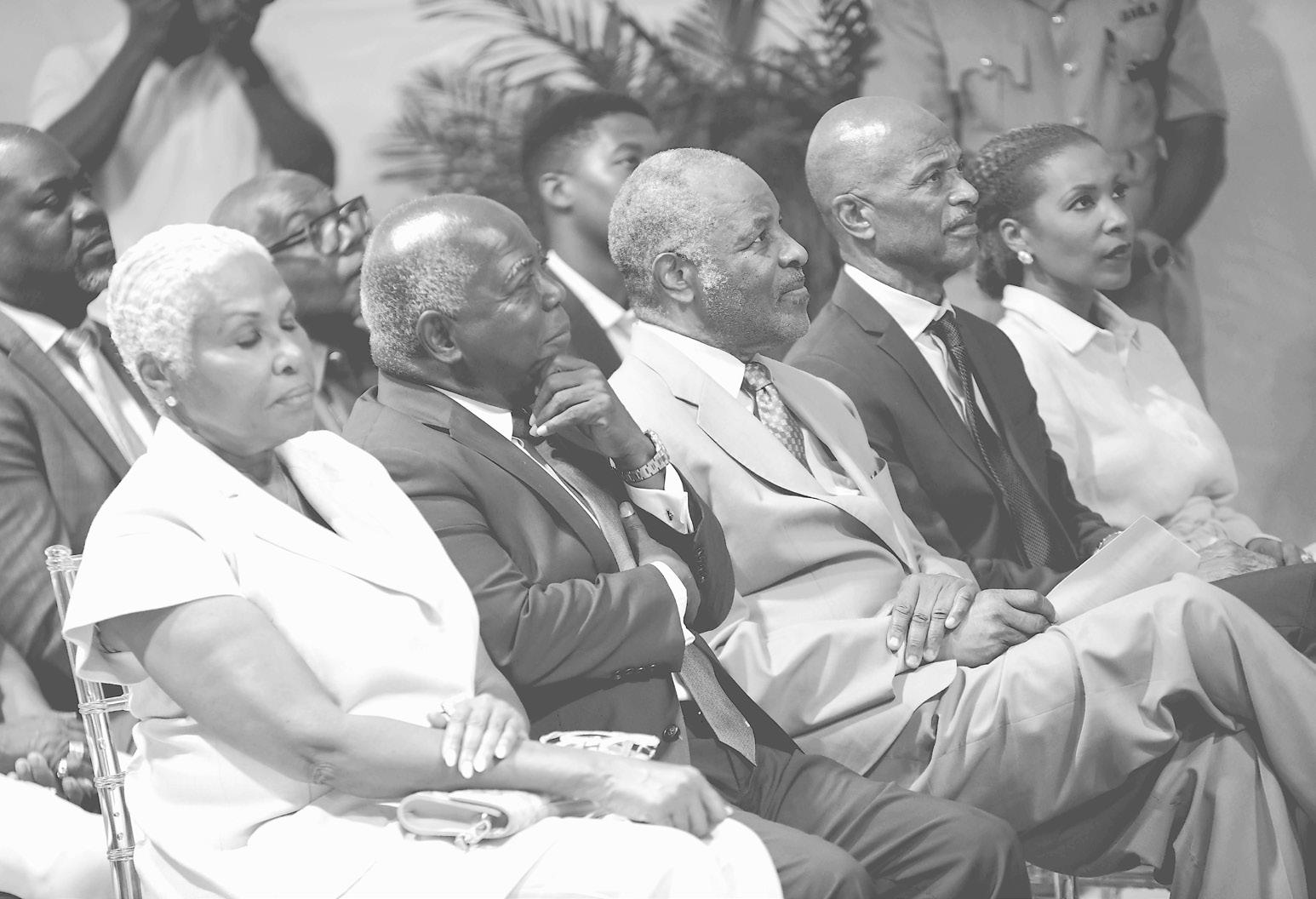
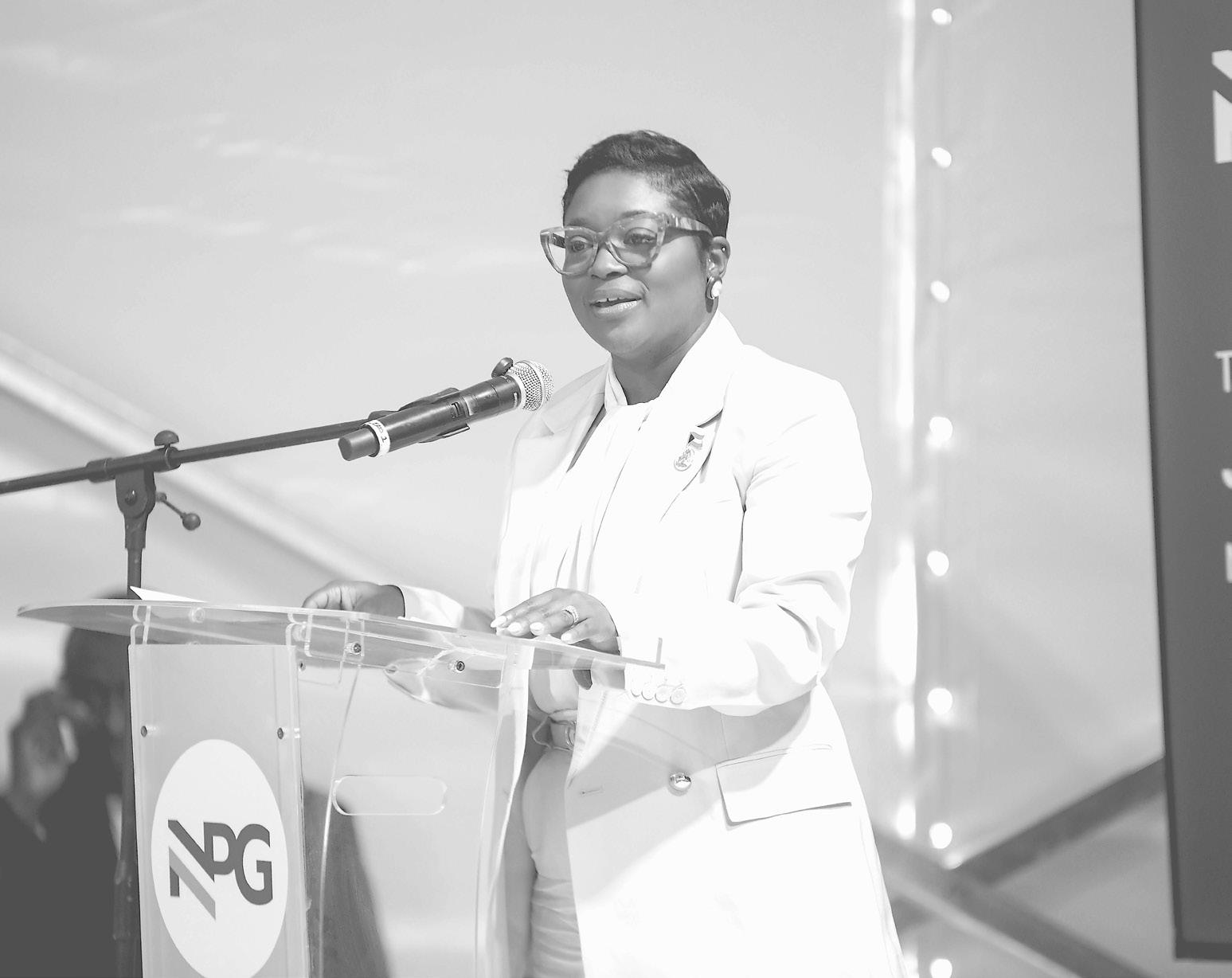
GROUND was broken yesterday for the New Providence Liquefied Natural Gas (LNG) Terminal at Clifton Pier, marking what the government says is a major step in modernising The Bahamas' electricity sector, improving power reliability and reducing long-term energy costs.
The project, a partnership involving FOCOL, Shell North America and Bahamas Power and Light (BPL), forms part of the government's broader energy reform programme and will provide LNG to new gas-powered generation facilities.
Prime Minister Philip "Brave" Davis said the groundbreaking represented "a new chapter" in how The Bahamas generates electricity, following years of ageing infrastructure and recent widespread power outages.
"Today represents our commitment to build an energy future that is stronger, cleaner, and more reliable for our people," Mr Davis said.
He acknowledged the recent nationwide power disruptions, saying they highlighted the vulnerability of the country's electricity network.
"Your frustration is real and your concerns are valid," Mr Davis said. "Over the past few weeks,
many Bahamians have experienced the consequences of an unreliable energy system."
Mr Davis said the administration inherited an electricity grid that required extensive rebuilding rather than minor repairs. He outlined the government's energy reforms since taking office in 2021, including the rollout of solar microgrids in the Family Islands, renewable energy projects and the announcement of a $1.14bn energy transformation plan.
He said LNG would provide a more stable fuel source while supporting the country's goal of generating 30 percent of its electricity from renewable sources by 2030. Energy, Utilities and Aviation Minister JoBeth Coleby-Davis said the project marked the culmination of discussions that first began more than two decades ago.
"As far back as 2002, our nation was debating the introduction of liquefied natural gas (LNG), but today we will see shovels hitting the earth to mark the start of the foundation being poured on an important move in our energy transformation," she said.
Ms Coleby-Davis described LNG as a "bridge fuel" that burns significantly cleaner than the heavy fuel oil currently used for electricity generation while offering greater price stability. She argued that transitioning

to LNG would not only reduce emissions but also strengthen energy security, lower electricity costs and create new economic opportunities.
"As minister with responsibility for the energy sector, I want to assure that the Government's goal is singular and unwavering: reliability and affordability," she said.
"This LNG terminal will help us to ensure that when we flip a switch, the light comes on every time."
She added: "By moving to a more efficient, stable fuel source like LNG, we
SUSPENDED from page one
The minister also declined to comment on whether regulators had done enough to oversee Flamingo Air, referring those questions to CAB while saying the regulator is conducting a comprehensive review of its own processes following the tragedy.
Mrs Coleby-Davis said CAB had already conducted a postmortem review and would continue assessing the country’s aviation oversight framework before providing her with a detailed briefing.
“They are the regulators. They have been leading in the sector, and they have a good relationship with ICAO, and so this is going to require a full assessment of where they are.
But I’ll allow them to complete some of the internal workings, provide me more comprehensive update, and then I’d be able to say more.” Her comments came amid heightened scrutiny of Flamingo Air’s safety record. Public records show the airline has been involved in at least 14 accidents and safety incidents since 2005, including fuel exhaustion, mechanical failures,
repeated landing gear collapses, runway excursions, emergency landings, a passenger door opening shortly after take-off and an emergency exit opening while an aircraft was taxiing. Among the more serious incidents was a 2005 crash in Exuma after a pilot miscalculated fuel requirements, a mechanical failure that forced a Piper Aztec into mangroves near Grand Bahama in 2012, and a Cessna 402 accident at Staniel Cay weeks later that investigators linked to weather conditions, pilot decision-making and unfamiliarity with the aircraft. Between 2016 and this year, the airline experienced numerous landing gear failures involving aircraft at Staniel Cay, South Bimini, Black Point, Marsh Harbour and Lynden Pindling International Airport. Although several aircraft were substantially damaged and some passengers sustained minor injuries, none of those earlier publicly recorded accidents resulted in fatalities. Friday’s crash was the airline’s first publicly recorded fatal accident, and investigators have not linked any previous incident to the disaster. Hours before the fatal crash, another Flamingo
Air aircraft returned to New Providence after the pilot reported a concern. Passengers safely disembarked before the aircraft caught fire on the ground. That incident is also under investigation.
Mrs Coleby-Davis also sidestepped questions about the crash investigation to the Aircraft Accident Investigation Authority, noting that it falls under the Ministry of Transport and operates independently.
The government has since suspended Flamingo Air’s Air Operator Certificate as a precaution while authorities investigate both Friday’s fatal crash and the earlier aircraft fire. Officials have stressed the suspension is not an adverse finding against the airline.
The AAIA said investigators are examining the aircraft, maintenance records, flight operations, weather information, air traffic services and other evidence.
The authority has urged the public not to speculate on the cause of the crash, stressing that the purpose of the investigation is to improve aviation safety rather than assign blame or determine liability.
are creating the pathway to lower electricity bills. This is not a maybe. This is the plan."
She said the development would create construction jobs in the short term and long-term employment opportunities in engineering and operations while encouraging additional private investment.
FOCOL Holdings President and Chief Executive Officer Dexter Adderley said the terminal was the product of years of planning, technical reviews, financing and collaboration.
"This facility is the New Providence Gas LNG Storage and Regasification Facility," Mr Adderley said. He said the project would be developed in three phases. The first phase, expected to be completed in the first quarter of 2027, will supply LNG to 90 megawatts of gas-fired generation at Clifton Pier. The second phase, targeted for the fourth quarter of 2027, will extend LNG supply to the Blue Hills Power Station. The third phase will support a new combined-cycle
power plant at Blue Hills with a baseload capacity of more than 170 megawatts.
According to Mr Adderley, the combined investment in the LNG terminal and associated power generation infrastructure exceeds $500m. Once fully completed, he said, the terminal will have the capacity to supply LNG to projects throughout The Bahamas and the Turks and Caicos Islands.
"This project is estimated to yield significant fuel cost savings for many years to come," Mr Adderley said.
He described Clifton Pier as the country's energy gateway, comparing its strategic importance to Lynden Pindling International Airport.
"Today's groundbreaking is therefore not simply about constructing a new facility. It's about strengthening one of our country's most important gateways and investing in an energy future that is cleaner, more reliable, and built to serve generations to come."
United States Ambassador Herschel Walker praised the partnership between The Bahamas and the United States, noting the involvement of US Export-Import Bank financing, Turner Industries and Shell North America.
He described the project as "game changing" and said it demonstrated the strength of cooperation between the two countries.

Miller’s aunt, said her nephew had spent most of the day inside watching television and had only stepped out to get water when the gunfire erupted.
“He got caught in the crossfire. I think that’s what happened because, based on what his aunt and them who lived there said, he was in the house most of the day watching TV,” she said.
“He had come out to get water, you know. There were guys who always stand out front, and he stopped to talk to them. Next thing we knew they passed by, and the gunfire went off. They thought it was a movie or something. The amount of gunfire that went on.”
Ms Ferguson said her brother, who lives in Bain Town, heard the shots before someone told him that Miller had been hit.
“He heard the shots, and then somebody came and gave him the information, and he called me,” she said. By then, Miller had been taken to hospital. Relatives later arrived and waited for information about his condition.
“We came to the hospital later on and just waited,” Ms Ferguson said. “We had to be asking a number of questions before we got in and found out that he was pronounced dead.”
His killing struck the family only months after the death of his mother, deepening their grief.
Ms Ferguson described her nephew, who worked in construction, as quiet like his late mother and “kind of unassuming”. She condemned the violence and said whatever dispute sparked the attack should have been resolved without bloodshed.
“Violence don’t solve

anything,” she said. “If there was a problem or whatever transpired, we could almost reason and talk it over. But violence don’t solve any problems. You know, just complicates everything. So here it is now. Whoever did it, they’re running. They’re afraid. May even be sorry, but it’s kind of late.”
The Bain Town
bloodshed unfolded during a violent holiday weekend. On Sunday, a 59-yearold man was found with severe lacerations and other upper-body injuries and was later pronounced dead. Later that day, a 36-yearold man was fatally shot in the Armbrister Street area of Fox Hill.

By LEANDRA ROLLE Tribune Chief Reporter lrolle@tribunemedia.net
THE Bahamas Educators, Counsellors and Allied Workers Union has broken with the Bahamas Union of Teachers over plans to recruit up to 300 Ghanaian teachers, embracing the initiative as a necessary response to crippling staff shortages while warning against claims that Bahamian educators are being pushed aside.
BECAWU president Keysha LaRoda called the proposed deployment a “positive step” towards filling critical vacancies in specialist subjects and preventing shortages from further straining classrooms.
Her intervention exposed a divide within the labour movement after Bahamas Union of Teachers president Belinda Wilson blasted the initiative as “egregious and highly offensive” and accused the Davis administration of moving faster to recruit foreign teachers than to settle the pay and employment concerns of Bahamians already connected to the profession.
Ms LaRoda, however, warned stakeholders against “creating the narrative that Bahamian teachers are not being given priority”.
She said overseas recruitment has long been used to plug gaps that cannot immediately be filled locally and argued that leaving classrooms without qualified teachers inflicts greater damage on the education system.
Staff shortages force schools to increase substitutions, swell class sizes and pile additional pressure on teachers already working in the system, she said.
“BECAWU's position is clear: once the Government addresses and executes the outstanding human resource matters affecting Bahamian teachers, including confirmations, reclassifications, and other employment-related concerns, we have no issue with the recruitment of qualified teachers from other countries to fill genuine shortages within the education system,” Ms LaRoda said in a statement.
Ms LaRoda said BECAWU is focused on solving problems and driving meaningful progress rather than inflaming conflict.
“BECAWU has signed an industrial agreement that provides benefits and protections for educators throughout the system,” the union said. “We remain committed to partnering with the Government and

all stakeholders to resolve outstanding issues and strengthen the education system for the benefit of educators, students, and the nation.”
The dispute erupted after Ghanaian Foreign Affairs Minister Samuel Okudzeto Ablakwa announced that The Bahamas was ready to receive 300 Ghanaian teachers this year following talks with Prime Minister Philip “Brave” Davis during the country’s 53rd Independence celebrations.
Mr Ablakwa described the deployment as the first phase of expanded educational cooperation between the countries. He said Bahamian officials moved to widen an existing labour partnership after being impressed by the performance of Ghanaian nurses already working in The Bahamas.
Deputy Prime Minister and Minister of Education Chester Cooper described the proposal as a generous offer from Ghana to help the ministry confront a shortage of roughly 300 teachers. He said the shortfall has been fuelled by retirements, expiring contracts and the expansion of specialist subjects, including special education, technology, financial literacy, digital literacy and entrepreneurship studies.
Mr Cooper insisted that qualified Bahamians would receive first priority and that overseas recruitment would be used only for vacancies that could not immediately be filled locally.
The ministry has assembled a multi-agency task force to attract recent graduates, retired teachers and former educators willing to return to classrooms. The group includes the ministries of Foreign Affairs and Public Service, the Department of Labour, the Royal Bahamas Police Force and the National Accreditation and Equivalency Council of The Bahamas.
Officials have also explored recruitment partnerships with Kenya, the United States, the United Kingdom, the Philippines and other countries.
Mr Cooper said foreign recruits would undergo the ministry’s standard procedures, including rigorous checks of their qualifications and character, cultural-sensitivity training, orientation and a six-month immersion programme.
The assurances have not quieted Mrs Wilson, who questioned how officials could negotiate the proposed deployment “in minutes” while the BUT had spent ten months at the bargaining table without securing salary increases for more than 2,000 Bahamian teachers.
She said hundreds of teachers were still awaiting money owed to them, including rent allowances, while some University of The Bahamas graduates from 2025 had yet to be hired by the ministry.
Meanwhile, Free National Movement deputy leader Shanendon Cartwright demanded that the government reveal the full terms of the proposed arrangement.
He called on officials to disclose the salaries that would be paid to the Ghanaian teachers, any travel and housing costs the public would bear and the process used to determine whether the recruits satisfy the qualifications required to teach in Bahamian classrooms.
“Bahamians have a right to know how decisions affecting our classrooms and our children are made,” Mr Cartwright said. “Vague statements and social media posts are not enough.”
The government has not yet publicly disclosed when the teachers are expected to arrive, where they would be assigned, the precise subjects they would teach or the total cost of recruiting and accommodating them.
Smith, Basden’s 47-yearold brother, said he went door to door after the killing and spoke with residents near the scene. He said the area is covered by surveillance cameras, but claimed police had not yet spoken with some neighbours who heard the impact and saw the vehicle race away.
“Ain’t no one want to reach to try help out,” an emotional Mr Smith said.
“They have all the cameras and are withholding the cameras. He got struck and killed in front of over 20 something cameras. Someone has to know.”
Mr Smith said one neighbour was outside when his brother was struck, while others told him they heard the collision and watched the vehicle speed off.
“I don’t want to have to go myself doing police work.”
Police issued a statement on July 9 rejecting online commentary alleging that a serving member of the Royal Bahamas Police Force was responsible for Basden’s death. The force said no evidence supported the allegation and that the investigation was continuing.
Mr Smith appealed directly to the driver to surrender.
“If you know what’s good for you, please, turn yourself in, sir, please,” he said. “That’s it.” He described his brother as a hardworking and widely known member of the Nassau Village community who regularly helped others and was almost always smiling.
“Everyone knows him. He does great work,” Mr Smith said. “He works alongside the minister, help everyone inside the community, and he’s a nice person. Very good, strong person. Always smiling. Anytime you see him, he always has a smile on his face.”
“The cameras have it, man,” he said. “All I ask is for the proper authorities to be able to access and ask people to give it to the right authorities so they can review over the case and they can get the license plate because the cameras are here, they can probably see who is in the car, they can backtrack and see where they enter into Nassau Village, where they came and where they leave.”
Stephen Basden, 51, another brother, remembered him as loving, caring and devoted to his family.
“We just want closure for that and to be put at ease,” Mr Basden said. “I’m sad. I might not show it, but I’m sad inside. If they’re trying to cover up something, come on, be fair, be all as one. He always sald one love, that’s all. One love.” Basden said he first saw a WhatsApp status reporting a hit-and-run but initially believed someone else had been killed. A cousin later broke the news that the victim was his brother.
“One of my cousins said, ‘Boy, Ryan dead and that touched me right at that moment,” he recalled. “It wasn’t a good feeling, and I never knew it was gonna happen like this.” He said his brother checked on him regularly and visited whenever he was nearby.
The timing of the death, one day before the country celebrated Independence, deepened the family’s grief, Mr Basden said. He said his brother had been focused on continuing to improve his life for the sake of his children.
Basden was the father of five girls and one boy. His brother said he was not known to cause trouble and had been trying to build a better life for his children.
By EARYEL BOWLEG Tribune Staff Reporter
FORMER fashion mogul
Peter Nygard has been convicted of sexually assaulting and forcibly confining an 18-year-old aspiring model after luring her to his Montreal penthouse with promises of advancing her career and offering her a life of luxury in The Bahamas.
The Quebec verdict deepens the legal downfall of the 84-year-old founder of the now-collapsed Nygard International clothing empire, who is already serving an 11-year sentence for sexually assaulting four women in Toronto and faces extradition to the United States on racketeering and sex-trafficking charges.
Nygard appeared by video from an Ontario prison on Monday and declined to contest the prosecution’s evidence just as a ten-day judge-alone trial was set to begin. Court of Quebec Judge Nathalie Fafard found him guilty of one count of sexual assault and one count of forcible confinement.
The abrupt decision spared the complainant from having to testify nearly three decades after the offences, which occurred sometime between November 1997 and November 1998.
Quebec Crown prosecutor Jérôme Laflamme said he had prepared for a full trial and had not expected Nygard to change course.
“Mr Nygard’s change of heart was quite sudden,” Mr Laflamme told reporters after the hearing.
“The plaintiff is present in the courthouse. She’s been prepared to testify ... and I can’t wait to go meet her and explain her the situation.”
The court heard that Nygard met the woman at a bar when she was 18 and hoping to become a fashion model.
They later met for lunch at her workplace to discuss her career. Nygard then invited her to his Montreal penthouse, claiming he had forgotten the keys there.
Once inside, the Crown said, he locked her in a bedroom and sexually assaulted her.
Court documents said Nygard offered the woman the chance to move to The Bahamas and promised her a lavish lifestyle on the condition that she have sex with him and other women.
Judge Fafard allowed evidence of Nygard’s Toronto convictions to be admitted after finding significant similarities between the cases, saying “it would defy coincidence or any other innocent explanation for both events having happened.”
The Quebec conviction is separate from the Toronto case in which a jury found Nygard guilty in 2023 of
TARGET from page one
suspect was wounded and arrested, while the others escaped and remained at large.
Relatives said the arrested suspect was the same man accused of robbing McPhee last year before being released on bail pending trial.
McPhee, who owned a heavy-equipment and environmental-health business, reportedly subdued the alleged robber and handed him over to police. He was expected to testify in the case later this year.
His twin brother, John McPhee, said the family believes the killing was connected to the upcoming trial, based on the information it has received. However, he said relatives would allow police to complete their investigation.
“As far as we are aware, the case was supposed to have started shortly, so
we do believe that there is a connection between the assailant wanting to, I guess, remove any possibility of having a witness in the trial,” he said.
Mr McPhee said his nephew had recently raised concerns about whether his father needed greater protection because of the pending case and his role as a businessman. He said the son believed his father should apply for a concealed gun.
“My brother indicated that would’ve been a very difficult process to navigate based on the current climate in The Bahamas,” he said.
It is not clear when the suspect was released from jail on bail. Mr McPhee acknowledged that bail formed an important part of the legal process but said it carried risks.
“People do have a right to have bail,” he said. “It just obviously that that access to bail has its benefits and its risk and for us, that bail proved to be
the risk that resulted in the unfortunate loss of my brother’s life to to the assailants who obviously were not up to anything good.”
The killing shattered a family that had celebrated the twins’ 59th birthday only two days earlier.
Mr McPhee said he was leaving the Paradise Island area when their older brother called and delivered the news.
Although the twins did not speak every day, he said they shared a bond forged while growing up in Mayaguana, learning about boats and navigating childhood without their mother, who died when they were young.
He described his brother as ambitious, patriotic and the more jubilant of the two.
“I always tell people that you know we were born in the year of the revolution, 1967,” he said.
“We got majority rule, but we were also born on the day that would become Independence Day.”
He said the date helped shape both men’s deep attachment to their country.
“Through no coincidence, we became both very patriotic and two people that really loved The Bahamas,” he said. “I often say to myself that he loved The Bahamas
more than The Bahamas loved him.”
James would often begin singing when he called his brother, who would answer simply by saying hello.
“That was one of his approach, and you know he would always use those songs to connect us to you know pastimes, our childhood, and familiar spaces, whether it was a boating trip, but he was that type of person,” Mr McPhee said.
Relatives regarded James as the male matriarch of the family, someone who pulled loved ones together and commanded their affection.
He was also intensely devoted to his business and regularly spoke about investing in and expanding it.
Mr McPhee began his career as a welder, later became a firefighter and eventually opened a heavy equipment and environmental health company on Carmichael Road.
His brother said he would have loved to watch his young daughter graduate from school. His sons, meanwhile, already miss the Sunday dinners he prepared for them, as cooking was one of his passions.
four counts of sexual assault involving attacks that stretched from the late 1980s to about 2005.
A judge sentenced him to 11 years in prison in September 2024. The Ontario Court of Appeal rejected his challenge to the convictions and sentence in May.
Nygard’s lawyer, Gerri Wiebe, said her client invited Judge Fafard to convict him before his anticipated extradition to the United States, where he has pleaded not guilty to federal charges of racketeering, sex trafficking and related offences.
The Canadian government ordered his surrender to the United States on all nine counts in the American indictment. The Supreme Court of Canada later refused to hear his challenge, leaving the surrender order in place.
However, the extradition cannot proceed until his remaining Canadian criminal matters are resolved.
Ms Wiebe argued that Nygard is in frail health and that transferring him to the United States could endanger his life. She said postponing sentencing would keep him in Canada while his outstanding legal proceedings continue.
Judge Fafard delayed sentencing pending a medical assessment. Lawyers are scheduled to return to court on October 2 with a joint sentencing recommendation.
The US case carries particular significance for The Bahamas, where Nygard maintained the sprawling Nygard Cay estate and hosted lavish parties before his fashion empire collapsed amid investigations and allegations of sexual misconduct.
US prosecutors allege that for about 25 years, Nygard exploited the power, employees and financial resources of his fashion businesses to recruit and sexually exploit women and underage girls.
The indictment alleges that the sprawling criminal enterprise involved at least dozens of victims in the United States, The Bahamas, Canada and elsewhere.
Prosecutors claim Nygard and others working with him targeted women and girls from disadvantaged financial backgrounds, including people who had histories of abuse.
They allege that victims were recruited with promises of modelling opportunities and other assistance before being subjected to sexual assault and trafficking for the gratification of Nygard, his friends and business associates.
Those allegations have not been tested at trial, and Nygard has pleaded not guilty to the US charges.

NULLIUS ADDICTUS JURARE IN VERBA MAGISTRI
“Being Bound to Swear to The Dogmas of No Master”
LEON E. H. DUPUCH,
Publisher/Editor 1903-1914
SIR ETIENNE DUPUCH, Kt., O.B.E., K.M., K.C.S.G., (Hon.) LL.D., D.Litt .
Publisher/Editor 1919-1972
Contributing Editor 1972-1991
RT HON EILEEN DUPUCH CARRON, C.M.G., M.S., B.A., LL.B.
Publisher/Editor 1972-
Published daily Monday to Friday Shirley & Deveaux Streets, Nassau, Bahamas N3207
News & General Information
TELEPHONES
(242) 502-2350
Advertising Manager (242) 502-2394
Circulation Department (242) 502-2386
Nassau fax (242) 328-2398
Freeport, Grand Bahama (242)-352-6608
Freeport fax (242) 352-9348
WEBSITE, TWITTER & FACEBOOK
www.tribune242.com

@tribune242

LET us start with the end goal in mind.
Our children deserve the best. They deserve well-equipped schools and brilliant teachers and an education system that delivers the possibility of a brighter tomorrow.
That is not what we are presently delivering. Notably, there has been a teacher shortage for about as long as we have had a school system. Take your pick of administration to criticise for that, the end point still has us at a moment where results are poor, there is not enough staff and that brighter tomorrow seems a long way away.
One thing is certain – we need more teachers. How we get to that point has different approaches.
The government is planning to recruit up to 300 teachers from Ghana. To say there has been mixed reaction to this on social media would be an understatement.
There have been questions over why the government has looked to solutions from outside The Bahamas rather than here at home, as well as reactions from some as to how well students will be able to understand teachers from Ghana, and vice versa.
We have been here before. Some of those very questions were asked when teachers were recruited from Cuba to fill spaces in our schools.
Whatever the issues there may – or may not be – with communication, the simple fact we have been here before shows that it was a band-aid solution when we recruited from Cuba and it is likely to be the same now. Are all 300 of those teachers likely to settle in The Bahamas for good? And if they do, will they soon run into the same challenges that frustrate teachers here at home already?
Union leaders have been quick to point out that recruiting from overseas does nothing to address the outstanding concerns of Bahamian teachers.
There remain a number of salary and other employment concerns – put simply, we do not pay teachers enough, and they can be lured away elsewhere to places with higher wages.
Beyond that, they become frustrated by always having to plug the gaps in schools, leading to larger class sizes and, especially on Family Islands, entire subject areas where children are left without expert tuition at times.
Education Minister Chester Cooper has welcomed the offer from Ghana to supply 300 teachers, although has moderated that offer by saying Bahamians will receive priority.
That is a crucial focus – but saying and doing are two different things. Mr
Cooper’s ministry has put together a taskforce to attract people to teach in classrooms – well, make it attractive then.
Bahamas Union of Teachers president Belinda Wilson has pointed out that her union has spent ten months at the bargaining table without securing salary increases for more than 2,000 Bahamian teacher, while hundreds of teachers are still waiting for money owed to them.
Other graduates from the University of The Bahamas from 2025 are still to be hired by the ministry. So while we welcome the offer from Ghana, we also need to sort out our own house. There are solutions to be found right here. Mr Cooper is still new in his post – although his party is in its second term dealing with this problem. Teachers should not be waiting this long for issues to be resolved, and nor should the children whose education this affects.
Peter Nygard is guilty. Again.
The former fashion mogul has long been laid bare as a sexual predator and abuser of women.
The man who made a home in The Bahamas and a nest in Bahamian politics was found guilty yesterday of sexually assaulting and forcibly confining an 18-year-old would-be model in his Montreal penthouse.
Nygard is already serving an 11-year sentence for sexually assaulting four women in Toronto.
He is also facing extradition to the United States on charges of racketeering and sex-trafficking charges, as well as a civil case against him. Guilty in Canada. Charged in the US.
There have been many stories of Nygard’s behaviour in The Bahamas and his abusive nature. When will Bahamian justice catch up with the rest of the world? And why are we so slow to hold him to account even when his crimes have been proven elsewhere?
He is accused of using his fashion empire to recruit and sexually exploit women.
His Nygard Cay base in western New Providence was the centre of such activities - and we would be beyond naive to think that he committed crimes in Canada, committed crimes in the US, but drew the line at committing crimes in The Bahamas.
We should hold him to justice here too – for the sake of all those, including any Bahamians, who became victims of his purported crimes.
EDITOR, The Tribune.
ON behalf of Water-keepers Bahamas, I want to thank Prime Minister Philip Davis for his remarks at the 4th Annual Bahamas Youth Climate Conference on July 2, calling climate change “the most pressing issue of our time” and charging every Bahamian, from schoolchildren to Family Island elders, to be a climate activist. We could not agree more, and we stand fully behind him.
The Prime Minister was right to point to our eroding coastlines as evidence of what is at stake.
Water-keepers Bahamas sees this erosion first-hand, and it is worse, and faster, than even the experts warned. Approximately five years ago, international scientists monitoring our shoreline at Banana Bay projected that
we would lose ten feet of land there over the following three years. They were wrong. We have already lost that much, and more. Casuarina trees that once stood on dry shore now stand dead; their roots submerged in open water. We know this because coastal monitoring is one of Water-keepers Bahamas’ core responsibilities: our teams track these changes systematically, year after year, so that the public and policymakers alike are working from evidence, not guesswork. This is why shoreline protection, and the monitoring that underpins it, must remain a national priority.
Water-keepers Bahamas and our partners are working across three fronts: mangrove restoration, coral restoration, and beach profile assessments that measure, foot by
EDITOR, The Tribune.
BAHAMAS Power and Light (BPL) has evolved beyond its initial function as a mere energy provider, but today it now poses a significant threat to the expansion of current economic models, as well as a real hindrance to the establishment of any 21st-century economic models that may be possible in the Bahamas
Electricity is the foundation of a modern country. Without reliable, affordable, and efficiently managed power, serious discussions about economic growth, foreign investment, digital transformation, manufacturing, smart cities, artificial intelligence, climate resilience, and improved quality of life cannot take place. Energy underpins every household, business, school, hospital, hotel, airport, and public service.
For these reasons, the management and operation of Bahamas Power and Light must be transferred to an independent Sovereign Asset Authority.
BPL must not continue to exist within its current politically vulnerable structure where appointments, contracts, priorities, and decisions can be swayed by election cycles, ministerial preferences, party loyalties, or short-term political convenience. Our nation cannot continue to treat electricity as a political pawn while Bahamian families and businesses suffer from high bills, unreliable service, outdated infrastructure, and repeated promises of reform.
The power grid is a sovereign strategic asset and must be governed as such.
An independent Sovereign Asset Authority must be established by law, with a clear mandate to manage BPL using global best practices in the national interest.
BPL’s board and executive leadership would
be selected through transparent, merit-based processes rather than political appointments. Its operations would be subject to public reporting, independent audits, strict procurement rules, real-time performance indicators, published cost analyses, gap analyses, and measurable service standards.
The authority must be insulated from political interference. No minister would be able to secretly direct contracts. No administration would be able to use BPL as a haven for political appointments. No government would be allowed to conceal failure behind vague announcements and recycled promises.
The Bahamian people deserve transparency. Bahamians need to know the costs associated with generating power, transmitting it, and distributing it. Bahamians need to understand how much energy is lost due to inefficiency, theft, outdated systems, and poor planning. Bahamians need to be informed about the real capital requirements to modernise the grid, the timelines for such modernisation, accountability measures, and which benchmarks are being met or missed. Without these answers, there is no true reform, only public relations. This properly designed Sovereign Asset Authority must be made capable of making longterm decisions regarding generation strategy, renewable energy integration, fuel procurement, battery storage, micro grids, transmission and distribution upgrades, debt restructuring, customer service, and national energy security. These decisions would be grounded in engineering, economics, resilience,
EDITOR, The Tribune. MANY enthusiastically celebrated Independence recently, but as I consider the changes and issues (unrelated to our infrastructure) I have observed during my brief lifetime, I couldn’t help but wonder how many gave any serious thought to what they were celebrating! I believe that many are disillusioned with the course of this country and voter apathy, especially in the last general election, was indicative of this.
I preface my comments by noting that at no time was this a perfect country, but I do remember a time when we were a better people.
foot, how our coastlines are changing. Together with the Bonefish & Tarpon Trust, we have already returned some 300,000 mangrove propagules to the waters of Grand Bahama and Abaco since Hurricane Dorian, rebuilding the natural buffers our islands depend on. We hope the Prime Minister and his Government will continue to support Water-keepers Bahamas and our partners in this work. Restoring our mangroves and reefs, and closely monitoring our shrinking shorelines, is not optional. It is how The Bahamas defends itself against a threat that is no longer approaching, but already here.
JOSEPH DARVILLE Nassau, July 10, 2026.
I remember a time when people did business with a handshake, because honesty and integrity in one’s dealings was expected. People placed great value in protecting their name and character, but that is not the case anymore. Even with contracts in place, it’s hard to get people to live up to their agreed obligations. There are too many who will say what they need to say, to get what they want and refuse to keep their word. People have no compunction giving their oath on a bible or taking a vow in church on one hand, and trampling upon their word on the other. Many want the image or the benefits of honesty, integrity, trustworthiness, but do not want to practice those virtues until they become a part of their character. Too many have become morally lazy!
I remember a time when our people were less educated but had more commonsense! But now we have a highly educated population (comparatively) and commonsense
and public benefit, not politics.
This is not a matter of privatising a public asset; it is about ensuring that a vital public asset is shielded from the consequences of political mismanagement.
BPL belongs to us, the Bahamian people, not to any cabinet, minister, board, contractor, political party, or administration. It is a national asset, and national assets must be managed with discipline, transparency, competence, and accountability.
The Bahamas cannot build a 21st-century economy on a 20th-century electricity model. We cannot invite investors into a country where energy costs are unpredictable; power reliability is uncertain, and governance is politically exposed.
It is unrealistic to seriously discuss artificial intelligence, data centers, electric vehicles, climate resilience, advanced tourism, digital finance, or industrial development while the national power system remains structurally weak.
‘Energy Security’ is ‘National Security.’
If our government is truly serious about reform, it must go beyond merely changing boards, executives, consultants, or slogans. It must change the governance model. Remove BPL from political control. Place it under an independent Sovereign Asset Authority. Publish the numbers. Establish the benchmarks. Audit the results. Hold leadership accountable. Protect the Bahamian people.
Our country does not need another promise regarding BPL.
We require a permanent governance solution. Still Optimistic.
NOĒSIS — CRITICAL THINKER Freeport, Grand Bahama July 7, 2026.
is seldom to be found. Just look in our Parliament! There has been regrettable lowering of standards generally, and a complete uncoupling of education and morality, as many use their education purely for self-interest, seldom giving value for money or acting ethically in the administration of their duties. Theodore Roosevelt once said “to educate a man in the mind but not in morals is to educate a menace to society”, and I have lived to see those words are true. Many of our “educated” are unprincipled, unscrupulous and immoral. Too many behave as though money covers the shortfall of their deficient characters.
I remember a time when people travelled to the Bahamas because they found our people to be warm, friendly and hospitable and that was true, but can one truly say that now? Travel advisories are now the norm because of crime and sexual assaults on tourists. I have seen far too many rough looking and disheveled people approach tourists without an ounce of decorum; another symptom of the prevalent broken home where simple courtesies are no longer taught. People no longer take pride in themselves or their surroundings. A simple drive through downtown is enough to soak in the despair that permeates the air. You see it in the faces of employees standing outside of their grungy places of work. This is not something that a coat of paint or a cleaning of buildings can fix, it is something reflective of our people having lost the very things that made us uniquely Bahamian, our sense of
community, pride in ourselves, in our country and respect for others, all rooted in our having been a God-fearing people. Our leaders seem to have forgotten that we are a country with limited resources, and after the days of Loftus Roker, they did not heed his warnings and allowed another nation to develop within our own. We have delivered and immunised their children, fed and educated them in our schools, allowed them to become employees of government, members of Parliament, doctors, lawyers etc, while they proudly hold other loyalties. Our burgeoning national debt and crumbling infrastructure, are in part because we have funded a Trojan horse while diluting the benefits Bahamians should have derived. This is most unfortunate. If we are to be honest with ourselves, we must see that all is not well at home.
We as a people have lost our way. We are a nation of consumers that produce very little and unless we make some very hard decisions to raise our moral and ethical standards by turning our hearts back to God, have a clear vision of what we want our country to be, prioritise the family, restore meritocracy, apply the law equally to all and plan for the future, then very dark days lie ahead. We wanted to be independent, but have failed to act with the responsibility and maturity such a decision required. No number of fireworks, empty speeches, junkanoo music or taking the posture of the ostrich can change that!
JB Nassau, July 12, 2026.
By PAVEL BAILEY Tribune Staff Reporter pbailey@tribunemedia.net
A 31-YEAR-OLD man accused of fatally stabbing a 39-year-old man during a home invasion off Independence Highway in January was remanded to prison yesterday.
Prosecutors allege that Darieo Hunter broke into Jamaal Ferguson’s residence on Daffodil Avenue sometime between 11pm on January 26 and 4am on January 27. Hunter allegedly killed Ferguson during the break-in.
Authorities found Ferguson’s body with apparent stab wounds around 2pm on January 28 after entering the residence during a wellness check. Loved ones had contacted authorities after they were unable to reach him.
Ferguson was an aspiring entrepreneur. Hunter was not required to enter pleas to charges of murder and burglary when he appeared before Acting Chief Magistrate Ancella Evans. He was informed that the case would proceed to the Supreme Court through a
voluntary bill of indictment and that he could apply to the higher court for bail. Hunter was remanded to the Bahamas Department of Correctional Services until October 29, when he is expected to be served with the voluntary bill of indictment.
Inspector Deon Barr prosecuted the case, while Wilber Deleveuax represented Hunter.
The original sentence describing Ferguson as a member of the national volleyball organisation was incomplete, so I left that detail out.
By PAVEL BAILEY Tribune Staff Reporter pbailey@tribunemedia.net
TWO teenage males accused of robbing a man at gunpoint outside a nightclub at the intersection of Dowdeswell and Deveaux Streets earlier this month were remanded to prison yesterday.
Prosecutors allege that Trevon Armbrister, 19, and Jamal Symonette, 18, robbed Carlan Cleare of his black-and-white Yamaha XTZ motorcycle outside Enve Lounge around 2am on July 5.
The pair allegedly
attempted to flee on the stolen motorcycle but were thwarted when it began to malfunction.
Symonette allegedly escaped in a red vehicle that headed south, while Armbrister fled on foot towards Shirley Street. The complainant reportedly caught Armbrister and detained him until police arrived.
Symonette was arrested later.
The motorcycle is valued at $2,800.
Armbrister and Symonette were not required to enter pleas to the armed robbery charge when they appeared before Acting
Chief Magistrate Ancella Evans.
They were informed that the case would proceed to the Supreme Court through a voluntary bill of indictment and that they could apply to the higher court for bail.
The defendants were remanded to the Bahamas Department of Correctional Services until October 29, when they are expected to be served with their voluntary bills of indictment.
Inspector Deon Barr prosecuted the case, while Mark Penn and Tai Pinder-Mackey represented the accused.
By PAVEL BAILEY Tribune Staff Reporter pbailey@tribunemedia.net
A WOMAN who admitted to sexually assaulting a four-year-old boy in Abaco and filming the attack was sentenced to five years in prison last week.
MAINE Associated Press
A FEDERAL immigration officer fatally shot a motorist in Maine on Monday, the second time in a week that US Immigration and Customs Enforcement agents have used deadly force and at least the ninth time since President Donald Trump began his immigration crackdown.
Immigrant rights groups identified the man who was killed as a 26-year-old native of Colombia.
The US Department of Homeland Security said in a post on X that ICE was surveilling an address for a person with a final order of removal. When ICE tried to stop a vehicle driven by someone coming from that address, “The vehicle attempted to flee the scene and, fearing for public safety, an officer discharged his weapon,” the department said.
US Sen. Angus King previously said Homeland Security Secretary Markwayne Mullin told him the officer opened fire after the man tried to use his vehicle as a weapon against ICE agents in Biddeford, a coastal city roughly 15 miles (24 kilometres) southwest of Portland. The agents involved didn’t have body cameras, he said.
When asked about the contrasting statements, King told CNN that that’s what the investigation is all about.
in the direction of the agent. The office said the agent who killed him has been placed on leave.
Witness says he heard driver say, ‘I tried to stop’
Daniel Boucher said he looked out his third-floor window after hearing a “pop, pop, pop” sound and saw a small car “turned 90 degrees to the curb” with an SUV behind it. The driver was wounded and the car started moving down the street until the SUV hit it again, Boucher said.
“His face was bloody. His head was bloody,” Boucher said, getting choked up. “I clearly heard the victim say, ‘I tried to stop.’”
Boucher said he saw an ICE officer bring a medical bag to where the man was lying before an ambulance and fire truck arrived. At one point, Boucher said, the agent who shot the man walked close to him.
“I was emotional and I just let him have it, and he looked at me and said, ‘He tried to run me over,’ or something to that effect,” Boucher said. “I don’t remember his exact words.”
regularly came to her laundromat and would bring his daughter, who he’d give quarters to buy candy from the vending machine.
“He was such a good person,” she said. “He was always cleaning up.”
Anti-ICE protesters gather near the scene
Several hundred demonstrators gathered in Biddeford on Monday night to wave anti-ICE signs and call for the agency to be abolished.
“We will always be a city of immigrants,” said Maine Speaker of the House Ryan Fecteau, a Democrat from Biddeford.
A handful of pro-ICE and pro-Trump protesters demonstrated across the street.
Some demonstrators had gathered in the city within hours of the shooting.
Amy Goodman arrived with a sign that said “Stop Killing Us” and directed it toward police working at the scene.
“Sadly, it’s something we’re seeing a whole lot more often lately, and I’m mad about it,” she said.
Jessica Bobo, 21, reportedly performed a sexual act on the boy sometime in January 2025. A video of the assault circulated on social media, leading to Bobo’s arrest.
As part of a plea agreement before Justice Petra Hanna-Adderley in Grand Bahama, Bobo was sentenced to five years in prison for unlawful sexual intercourse and four years for producing child pornography. The sentences will run concurrently.
“Did this young man actually try to run over an ICE agent or was he in danger of running over other people in the street?” he said. “Was there a reasonable expectation of bodily harm or deadly force to justify this shooting?”
DHS did not immediately respond to an email seeking clarity on what led up to the shooting.
Tameka Roberts represented Bobo, while Eurika Coccia prosecuted the case.
By PAVEL BAILEY Tribune Staff Reporter pbailey@tribunemedia.net
A MAN awaiting trial for a 2020 murder was sentenced to 18 months in prison after breaching his curfew and wrapping his electronic monitoring device in aluminium foil to interfere with its signal.
Tavares Colebrook, 24, breached his court-ordered residential curfew
of 7.30pm to 6am between June 29 and July 6 in New Providence.
During the same period, Colebrook wrapped his monitoring device in aluminium foil.
Colebrook is accused of involvement in the November 5, 2020 murder of Robinson Paul.
He was granted $30,000 bail that year but was not released until 2024, when his family paid a reduced
bail amount of $9,900.
Colebrook pleaded guilty to two counts of violating his bail conditions before Magistrate Abigail Farrington.
He was sentenced to 18 months at the Bahamas Department of Correctional Services. His murder trial is scheduled to begin later this year.
Assistant Superintendent of Police Kendrick Bauld prosecuted the case.

King, a Maine independent, said Mullin also told him the officers were in Biddeford to serve an arrest warrant but that it was not for the person who was shot. King said Mullin told him that earlier information that the man was the target of an enforcement action was incorrect.
Sen. Susan Collins, a Maine Republican, said Mullin told her the Homeland Security Department’s Office of Inspector General is investigating in cooperation with the FBI.
Messages seeking comment were left for the inspector general’s office and the Maine Department of Public Safety.
The Maine attorney general’s office, which is also investigating, said initial statements suggest the motorist was trying to flee
Video from a security camera at a nearby business, obtained by the AP, shows a white vehicle approaching an intersection at a moderate pace before making several slow circles. A law enforcement SUV blocks its path and two officers open the driver’s door and drag out a limp body. It was not clear from the video at what points shots were fired.
The man was authorized to work in the US, advocates say Two advocacy groups — the Maine Immigrants’ Rights Coalition and Presente! — said the man who was killed was authorized to work in the US
After the shooting, his family contacted the Immigrants’ Rights Coalition, but they aren’t ready to speak publicly about the shooting, said the group’s executive director, Mufalo Chitam.
Mary Hayes, who lives close to where the shooting happened, said the man lived nearby with his wife and daughter.
“I watched a wife fall to her knees looking at her husband’s dead body on the ground,” Hayes told the AP as she held a piece of cardboard with “No ICE Stop ICE” written on it. “I watched a little girl crying with a little pink backpack on because she’s never going to see her father again.”
The Colombian Embassy said it is in contact with US authorities and “working to formally confirm the individual’s identity and nationality.”
Sadie Dilboy said the man killed in the shooting
A recent uptick in Trump’s immigration crackdown
On July 7, an ICE officer fatally shot 52-year-old Lorenzo Salgado Araujo, of Houston, after federal agents driving unmarked vehicles pursued him while he was taking his construction crew to a job site.
The shootings come amid a Trump administration push to carry out its mass deportations agenda. During the five-day period at the end of June, ICE arrested more than 10,000 people.
The figures indicate that while the administration is no longer cracking down on individual cities, the arrests are surging. The administration’s enforcement efforts were widely condemned last winter after the killings of Alex Pretti and Renee Good in Minnesota.
Hundreds of Maine ICE arrests since Trump’s return ICE had a significant presence in Maine earlier this year, which prompted several protests. Immigration officials later said in late January that they had ceased “enhanced operations” in Maine after hundreds of arrests.
A Homeland Security spokesperson said at the time that some Maine arrests were of people “convicted of horrific crimes” including aggravated assault and endangering the welfare of a child.
Court records show that while some had felony convictions, others had unresolved immigration proceedings or had been arrested but never convicted of a crime.
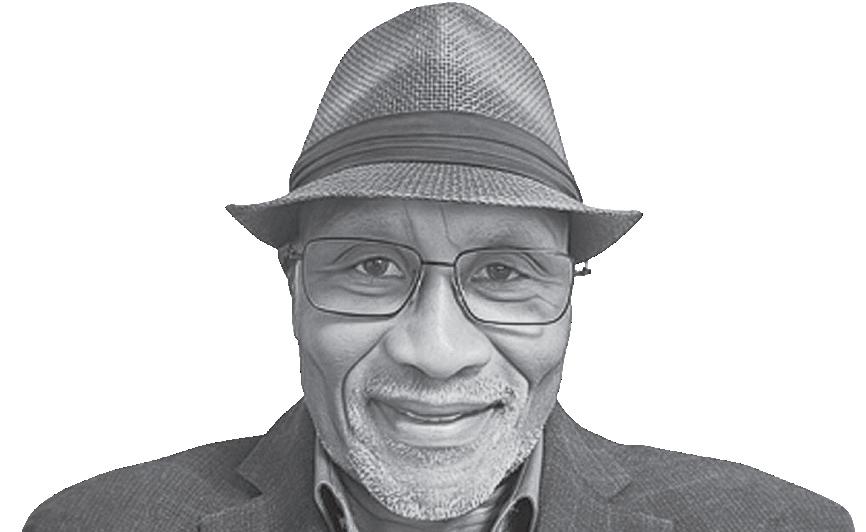

FIFTY-THREE years after the black, gold, and aquamarine flag first rose over Clifford Park, the echoes of colonial control still reverberate through the daily vocabulary and mental architecture of The Bahamas. We celebrate our sovereignty with immense pride, yet we walk on islands where generational land was torn from our forefathers’ hands by deeds they could not read—sometimes traded away in moments of manufactured desperation for as little as a sack of flour. We boast of a modern democracy, yet we must regularly remind ourselves that as recently as 1962, our mothers and grandmothers were denied the fundamental right to vote. There is a comfortable temptation among many to let these uncomfortable truths fade into the background music of history. But genuine progress demands that we confront not only the physical barriers dismantled by the majority-rule movement, but also the psychological guardrails engineered to keep a people permanently in "their place." Nowhere is this psychological conditioning more quietly persistent than in the title we still bestow upon the engine of our national governance: the civil servant.
The Architecture of Disenfranchisement
To understand the weight of a word, one must first understand the world that built it. The colonial system in The Bahamas was never designed to develop its people; it was optimised for maintenance, order, and resource extraction by a privileged few. For generations, the system enforced a strict property qualification for voting. If you did not own land—or if your family held land through traditional commonage or generation property without a clean legal title recognized by the Crown— you had no voice. This was not an accidental oversight; it was a deliberate filter. By weaponising illiteracy and exploiting the lack of formalized legal education among the majority, acres of prime, choice beachfront property across New Providence, Eleuthera, Exuma, Cat Island and beyond were methodically snatched away. The infamous "sack of flour" trades were not merely bad business deals; they were the results of a predatory economic system that starved a population
of opportunity and then bought their birthright for a pittance. When women like Mary Ingraham, Georgianna Symonette, and Eugenia Lockhart successfully fought for women’s suffrage in 1962 and when Ruby Ann Darling was the first to register, they were not just fighting for a ballot; they were fighting against a deeply ingrained doctrine of exclusion. That doctrine relied on a social hierarchy in which the majority of Bahamians were viewed not as architects of their own destiny but as labourers in someone else's vineyard.
The Psychology of the "Civil Servant"
As the political tides began to turn in the mid-twentieth century, the doors of government employment slowly opened to the educated Black Bahamian. Getting a job in the government was the ultimate prize. It meant stability, a pension, social standing, and a guaranteed escape from the gruelling physical labour of the fields, the docks, or domestic work.
Yet, the colonial apparatus ensured that even as Bahamians stepped into offices to administer the affairs of their own homeland, they were handed a title loaded with psychological scaffolding: civil servant.
In the drawing rooms of Whitehall in London, the term might have evolved as a benign descriptor of one who serves the Crown rather than private commercial interests. But context is everything. In a colony whose foundational wound was chattel slavery and whose social fabric was stitched together by rigid racial and economic subservience, words carry a profound psychological freight.
To label the newly emerging, educated Bahamian middle class as "servants" was a masterclass in colonial psychology. It granted the illusion of elevation while subtly enforcing a ceiling on ambition.
A servant, by definition, executes the will of a master. A servant does not question the rules of the house; they simply keep the house tidy. A servant is expected to be dutiful, compliant, and grateful for the shelter provided. By embedding the word "servant" into the highest tiers of local employment, the system subliminally reinforced the idea that these
‘Removing the word is a necessary step in the ongoing unshackling of a people who must realize they are the owners of the enterprise, not the state’s domestic help.’

workers should never think they could—or should— elevate themselves to the level of true masters of their own fate. It conditioned our brightest minds to manage the colony efficiently, rather than dare to reimagine or dismantle it.
Cleaning Up the Guardrails at Year 53
We have reached a critical juncture in our national maturity. Just this past Friday, we marked 53 years of formal independence. We have built institutions, expanded education, and established ourselves on the global stage. But when are we going to systematically clean up the guardrails that were placed on the Bahamian psyche?
Mental slavery does not always look like overt oppression; more often, it looks like unexamined tradition. It looks like clinging to the very vocabulary that was designed to shrink our
posture. How can a professional administrative workforce truly internalize what it means to lead a sovereign nation when their daily professional identity requires them to answer to a title rooted in subservience? Renaming our government workforce is not mere semantics or political correctness; it is an act of cognitive decolonization. Words shape thought, and thought shapes behaviour. Transitioning the terminology from "civil servants" to Public Officers, Civic Professionals, or Public Service Associates represents a fundamental shift in posture. An officer or a professional has agency, authority, and a mandate to innovate. A servant merely obeys. Removing the word is a necessary step in the ongoing unshackling of a people who must realize they are the owners of the enterprise, not the state's domestic help.
Working on "The Bahamian Things"
Of course, language is only the tip of the spear. The persistent, lingering reality that our Members of Parliament, senators, and citizens still swear oaths of allegiance to a British King—a foreign monarch who inherited his title from the very institution that authorized the transatlantic slave trade and the subsequent colonial subjugation of these islands—is the elephant sitting quietly in our national living room. It is another profound reminder that while our flag changed in 1973, many of our institutional foundations were simply repainted. To bring authentic meaning to the word "independence," we must move with a renewed, unapologetic sense of purpose. We must continue to work sensibly, respectfully, but urgently on "the Bahamian things." This means reforming our
land registries to finally protect generational property and settle titles. It means teaching our unvarnished history in every school, ensuring that the sacrifices of 1962 and the injustices of the land grabs never disappear from our collective memory. And it means stripping away the lingering colonial psychology from our institutions, starting with the very titles we give to the people who build and maintain our country.
Facing reality, we are no longer labourers working on someone else's estate, nor are we servants minding the master's house until he returns. We are the architects, the owners, and the guardians of this Commonwealth. If we were to officially retire the title "civil servant" tomorrow, what empowering, sovereign term do you think should take its place to represent the modern Bahamian government worker?
BANKOK Associated Press
MOST of the people who were killed in a huge fire in a Bangkok music bar were found trapped in windowless bathrooms where they may have sought to escape the flames that claimed at least 27 lives, authorities said Monday as investigations began.
The blaze at the Rong Beer Na Ladprao bar was the city’s deadliest in 17 years. It broke out late Sunday in a northern part of the Thai capital, and firefighters needed half an hour to bring it under control. The fire left 25 people hospitalized in critical condition, city officials said.
Bangkok Gov. Chadchart Sittipunt said most of the deaths were caused by smoke inhalation.
By daybreak Monday, the site had been cordoned off as dozens of forensic officers sought clues about what caused the fire. The bar’s street-facing windows were blown out, and debris littered the sidewalk, including charred television sets, speakers and an electric guitar. Associated Press journalists looking through the shattered windows could see empty beer bottles still sitting atop burned tables.
The bar, which in Thai calls itself a brewery or beer hall, claimed to accommodate as many as 600
customers. It was not clear how many were present Sunday night.
According to Bangkok’s Erawan emergency services centre, 73 people were hurt. The Bangkok city government said there were 28 dead, one more than Erawan’s tally. The dead were trapped in bathrooms National Police Chief Kittharath Punpetch said most of the dead were found trapped in windowless bathrooms near one of the rear exits, where they may have sought shelter from the flames.
He said the exit was not used, and people may have been blocked from reaching it by a table set up in a hall to sell candy, or because it was too dark to find the way out.
Access to another exit near the kitchen might also have been narrowed by shelving units and lockers, said Kittharath, who visited the scene Monday. There were signs that at least some of the exit doors might have been locked, he added.
Investigators focused on the ceiling above a performance stage, where they found materials that may have been used as decorative elements, he said. Police will examine whether flammable materials were used in the interior and how electrical wiring was installed across the ceiling.

Prime Minister Anutin
Charnvirakul told reporters that a musician who was performing at the bar told him he saw smoke coming out of a circuit breaker near the stage before the power went out. Then an explosion was heard, and thick smoke quickly filled the place.
Video posted on social media showed people fleeing as flames shot out of the single-story building and black smoke billowed into the sky.
Buddhist monks prayed for the dead
Several Buddhist monks visited the site Monday to pray for the victims, while nurses handed out
face masks to help protect people from lingering smoke and fumes from the building.
A registration site was set up to gather information from relatives looking for loved ones.
Singer Sukanya Wongwongwai said she was performing nearby when she heard about the fire and rushed to the scene because several of her bandmates were performing at the bar. She said one of them died, three were hospitalized and one had not been located. Her band later announced on Facebook that the missing member was also found hospitalized.
Sam Neill, New Zealand actor who starred in ‘Jurassic Park’ and ‘The Piano,’ dies at 78
SAM Neill, the smoothly elegant and versatile actor whose prolific career moved from art films to blockbusters as he dodged velociraptors in “Jurassic Park” and played Holly Hunter’s cruel husband in “The Piano,” has died. He was 78.
In 2023, Neill disclosed he had been diagnosed with angioimmunoblastic T-cell lymphoma, a rare type of non-Hodgkin lymphoma. He died on Monday in Sydney, according to a statement posted to the actor’s social media page.
His death was “sudden and unexpected,” the statement said, adding that he “remained cancer free” when he died. A cause of death wasn’t specified. “Sam was surrounded by family and passed with the dignity that has characterized his whole life,” his family wrote.
Tributes were paid by fellow actors and directors, including Steven Spielberg, who helmed the first “Jurassic Park” movie.
“I adored making all the ‘Jurassic’ movies with him. Along with Laura Dern and Jeff Goldblum, we will always have our Jurassic family and Sam will never be forgotten by us or his many millions of fans around the world,” Spielberg said in a statement.
Actor Sharon Lawrence wrote on Instagram: “Condolences and appreciation for the immense joy and mastery Sam Neill brought our industry.”
Neill was one of a host of actors and directors who achieved international fame after an explosion of Australian films that began in the late 1970s, along with Paul Hogan, Mel Gibson, Geoffrey Rush, Russell Crowe, Jane Campion, Peter Weir and Gillian Armstrong. His range was remarkable, playing opposite Helena Bonham Carter in the Alan Ayckbourn comedy “Sweet Revenge” to chopping off Hunter’s finger in “The Piano” to poking his own eyes out in the sci-fi horror “Event Horizon.”
He portrayed both saintly and sinner: In “Omen III: The Final Conflict,” he played Damien the Antichrist, and he also played Cardinal Thomas Wolsey in “The Tudors.”
The actor first came to the attention of international audiences in Armstrong’s 1979
film “My Brilliant Career,” which also introduced Judy Davis. He later appeared in Phillip Noyce’s “Dead Calm,” a classy thriller set at sea and co-starring the then-relatively unknown Nicole Kidman. Neill twice co-starred with Meryl Streep, in Australian director Fred Schepisi’s “Plenty” and — again for Schepisi — in “A Cry in the Dark,” a film about the sensationalized aftermath of a dingo killing a baby in the Australian Outback.
He earned an Emmy nomination for his performance in the title role of the 1998 miniseries “Merlin” and another as narrator of 2017’s “Wild New Zealand.” Neill also earned three Golden Globe nods — for “Merlin,” “One Against the Wind” and “Reilly: Ace of Spies.”
Richard E. Grant, a longtime friend who co-starred with Neill in 2019’s “Palm Beach,” described him in a post on Instagram as “an officer and a gentleman in the truest sense.” Grant said Neill had “guided and helped me through a very difficult time in my life.”
Perhaps Neill achieved his highest level of fame in “Jurassic Park,” playing paleontologist Alan Grant, who is summoned to an island off Costa Rica where a theme park has been built to house herds of cloned dinosaurs. His character was thoughtful and reasonable, a scientist who warned the mastermind of the theme park before the chaos: “Dinosaurs and man, two species separated by 65 million years of evolution have just been suddenly thrown back into the mix together. How can we possibly have the slightest idea what to expect?” Grant survived the harrowing events when the creatures get loose, but didn’t return for “The Lost World: Jurassic Park II” in 1997. He came back for the third episode in 2001 and “Jurassic World: Dominion” in 2022.
“It’s probably a little late to learn these things,” he told the New York Daily News in 2001, “but I finally feel I’ve worked out how to be an action hero. I’m happier with Grant this time. He’s gnarly and grizzled, but he looks like he knows what he’s doing.”
Born in 1947 in Northern Ireland, Neill emigrated to New Zealand at the age of 7. He was born Nigel Neill, but
told interviewers he started to go by Sam because there were too many Nigels at his school. His family settled in Dunedin on the South Island and he was sent to boarding school in Christchurch. After college, he took the lead in “Sleeping Dogs” in 1977, the first feature made in New Zealand in more than a decade.
Neill’s other film roles included playing a Soviet submarine officer who memorably dreams of a home in Montana in “The Hunt for Red October” and an investigator in
director John Carpenter’s “In the Mouth of Madness.”
On the small screen, Neill played the malign Chester Campbell in TV’s “Peaky Blinders” and Thomas Jefferson in the four-hour CBS miniseries, “Sally Hemings: an American Tragedy.” On Apple TV+, he was on “Invasion,” playing Oklahoma Sheriff John Bell Tyson, a man late in his career searching for his purpose. In 2024, he starred opposite Annette Bening in the Peacock series “Apples Never Fall.”
“From what I heard from people who were inside when the fire started, everything went dark. The power was out, and there was smoke everywhere, so they couldn’t locate other people,” she said. In a statement posted on Facebook, the bar offered apologies and condolences and said it was cooperating with investigators. It said the bar’s owner suffered serious injuries and was in an intensive care unit.
Mourning family members identify the dead at a morgue Family members gathered at Bangkok’s Institute of Forensic Medicine to
identify the dead.
Keo Oudone Poungpany, 24, was at the institute to identify his younger brother’s body. Both of the brothers, migrant workers from neighbouring Laos, were working as bar employees when the fire broke out.
Poungpany said he was using a restroom outside the bar when the fire began.
He described walking back toward the bar and encountering dozens of people running away from the flames and hearing loud noises.
From the outside the bar, he began shouting for his brother. “The heat was unbearable, I couldn’t get back in,” he said.
“For now, I want to bring my younger brother’s body back home,” Poungpany said. “I want to bring him home to my parents. My parents are waiting for their kids to come back together, but now one is gone.”
In 2022, 14 people were killed by a fire at a music bar in the eastern part of the country. And more than a decade before that, 67 people were killed and more than 200 injured in a fire during a Jan. 1, 2009, New Year’s Eve celebration at the Santika nightclub in Thailand’s capital. That blaze was apparently sparked by an indoor fireworks display.


By FAY SIMMONS Tribune Education Reporter jsimmons@tribunemedia.net
LEADERSHIP, public
speaking, financial literacy, community service, and professional development were all on display as 58 young men completed the 35th Annual Gentlemen's Club Programme.
Among this year's participants was Queen's College graduate Evan Davis, who was recognised as the 2026 Gentleman of the Year— the programme's highest individual honour—for his outstanding performance throughout the multi-month initiative.
The Gentlemen's Club, organised by The Bahamas Beautillion Committee and sponsored by the Delta Lambda Boule of Sigma Pi Phi Fraternity, prepares graduating secondary school students for university and professional life through a series of workshops, competitions, and mentorship opportunities.
Participants receive training in leadership, public speaking, financial literacy, etiquette, law, health, and college readiness from accomplished Bahamian professionals and national leaders, including Chief Justice Ian Winder and members of Toastmasters Club 1600.
Rather than being determined by a single event, the Gentleman of the Year title reflects consistent achievement across every aspect of the programme. Participants are evaluated on advertisement and sponsorship fundraising in support of the Club's scholarship programme, performance in the Toastmasters speech competition, punctuality, attendance, and engagement in workshops and cultural activities.
Mr Davis emerged as the top participant from a national cohort representing secondary schools across New Providence.
His recognition also reflects an impressive
academic and extracurricular record. Mr Davis graduated from Queen's College with honours on the Principal's Honour Roll and has already gained experience in the financial sector, completing a Junior Accountant internship at Baker Tilly before his senior year. He also earned a First Class Pass in the Pittman Qualification in Accounts.
Beyond academics, he served as class accountant, represented Queen's College on the school's soccer team, and volunteered with organisations including the Bahamas Humane Society, Bilney Lane Children's Home, and the Ranfurly Home clothing drive. He plans to pursue a Bachelor of Science in Actuarial Science at university.
Queen's College was also represented in the 2026 Gentlemen's Club cohort by Ricardo Ferguson II, Kaden Hart, and Tayshaun Taylor, contributing to the school's strong overall showing in this year's programme.

Reflecting on the experience, Mr Davis said the programme challenged participants to develop discipline and personal accountability.
"The Gentlemen's Club is a programme that comes with high demand. The programme asks that you show up on time every Saturday, mentally and physically prepared to carry yourself in a way that reflects the man you
By FAY SIMMONS Tribune Education Reporter jsimmons@tribunemedia.net
AFTER years of demand-
ing coursework, clinical training, and examinations, a new class of Bahamian doctors is preparing to enter the healthcare profession, marking an important milestone for both the graduates and the country's medical workforce.
Graduates of the University of the West Indies (UWI) School of Clinical Medicine & Research, The Bahamas, were recognised during the School's Annual Induction and Awards Ceremony.
The service celebrated the successful completion of medical training for the Class of 2026 and the Doctor of Medicine graduates of 2024-2025, while honouring students whose academic excellence and commitment to service distinguished them throughout their studies.
Among the evening's top award recipients, Dr Asha Johnson received the Dr Cecil M Bethel Award as the Most Outstanding Student of the Bahamas Class of 2026.
Dr Marisiana Simms earned the Anthony Regis

Award for the Most Outstanding Student in the Final MBBS Examinations 2026, while Dr Stephen Smith and Dr Clevelynn Lowe were presented with the Medical Protection Society's Humanitarian & Civic Engagement Award for their outstanding community service. Keynote speaker Deacon Dr Don Deveaux, a consultant internist, endocrinologist, and graduate of the School's Class of 2008, encouraged the new physicians to lead with humility, compassion, and a lifelong commitment to serving others as they begin their medical careers.
Minister of Health and Wellness Dr Michael Darville reaffirmed the Government's commitment to supporting the school and expanding the country's healthcare workforce, while Parliamentary Secretary in the Ministry of Education, Science and Technology Keenan Johnson emphasized the role of medical education in national development.
Dr Sabriquet Pinder-Butler, Director of the UWI School of Clinical Medicine & Research, The Bahamas, congratulated the graduates on completing one of the most demanding professional programmes
and praised their resilience and perseverance. She reaffirmed the school's commitment to producing highly skilled physicians who will contribute to healthcare throughout The Bahamas and the wider Caribbean.
Since its establishment, the school has trained 737 medical doctors, many of whom now serve communities across the region. This year's graduates join that growing network of physicians as they begin careers dedicated to improving the health and well-being of Bahamians and advancing the country's healthcare system.
want to become. I'm deeply grateful to the Beautillion Committee, the administrators of The Gentlemen's Club, and Toastmasters Club 1600 for their investment in us as young men, to ensure that we are able to fulfil the potential that they can see in us. I am also thankful to each and every sponsor that contributed to my ad campaign."
Lamon Stubbs
of The
"Evan represents exactly what this programme was built to produce: discipline, character, and excellence. The Gentlemen's Club exists so that young Bahamian men enter the world ready to lead."
By FAY SIMMONS Tribune Education Reporter jsimmons@tribunemedia.net
TWELVE high school seniors and first-year university students were honoured during the 11th Munroe-Pinder Leadership Awards, held under the theme, Leadership Thrives Through Relationship. The annual programme celebrates students who have distinguished themselves through scholarship, leadership, and service while providing financial support to help them pursue higher education.
Named in honour of the late Dr Myles Munroe and Dr Richard Pinder, the awards were established to recognise young people whose leadership potential extends beyond academic performance. The initiative reflects the belief that investing in education and developing future leaders is essential to the country's long-term success.
This year's highest honour was awarded to Ethan Turner, who received a $6,000 scholarship. NiaIshia Prince earned the second-place scholarship of $3,500, while Justice Clarke received the third-place
award of $2,500. Kendall Brooks was presented with the Servant Leader Award and a $2,000 scholarship in recognition of exemplary service and leadership.
The programme also recognised six additional top-10 finalists: Amelia Hepburn, Zion Carey, Avani Sawyer, Cassidy Edgecombe, Rogan Smith, and Devinity Bowe.
The evening highlighted the lasting impact scholarship programmes can have on students' educational and leadership journeys.
Former recipient Cordal Ramsey Jr. shared how receiving the award helped reduce financial pressures while attending Virginia State University, allowing him to pursue leadership opportunities on campus. After completing his sophomore year, Mr Ramsey now serves as Vice President of Academic Affairs for the university's Student Government Association.
Former award recipients Zoe Turner and Danielle Wood also reflected on how the programme supported their academic aspirations and encouraged them to continue serving their communities as they advanced through higher education.

SEVERAL Bahamian
patients are walking painfree again thanks to advanced hip and knee replacement procedures that are helping usher in a new era of orthopedic care in The Bahamas. The surgeries were performed by fellowship-trained Hip and Knee Replacement Orthopaedic Surgeon Dr Akin Minnis, who completed his Orthopaedic Surgery training at the University of the Witwatersrand in Johannesburg, South Africa, before undertaking advanced fellowship training in Hip and Knee Replacement Surgery at the University of Toronto, Canada, one of North America's leading centres for joint reconstruction and arthroplasty.
The procedures represent a significant milestone for orthopedic surgery in The Bahamas, with patients now having access locally to modern joint replacement techniques, including the minimally invasive Direct Anterior Approach for hip replacement and outpatient joint replacement pathways that have traditionally been associated with major overseas medical centers. For many patients, chronic hip and knee pain had gradually taken away the ability to enjoy normal daily activities.
One middle-aged telecommunications worker sought treatment after a workplace injury resulted in progressive hip damage and worsening pain. As his
condition deteriorated, he became increasingly concerned about maintaining the mobility required for his physically demanding job.
Following an outpatient hip replacement procedure, he began walking within hours of surgery and progressed from a walker to a cane within days.
"It changed my life," he said. "I was worried about my future, but now I can move again without the constant pain."
Another patient endured years of progressive hip deterioration that made walking, standing, and even rising from a chair increasingly difficult. After surgery, he was surprised by the speed of his recovery. "He was walking the

next day and experienced remarkable improvement in both pain and function," Dr Minnis said. "Cases like these remind us how dramatically quality of life can improve when the underlying problem is treated."
An 84-year-old retiree also found relief after years of debilitating groin and hip pain. Having initially explored surgery overseas, she ultimately chose to have her procedure performed locally after considering the costs and logistical challenges of travel, accommodations, and extended recovery away from home.
She described the experience as exceptional and reported that the pain which once limited her daily activities had resolved significantly.
"I have my independence back," she said.
The benefits have not been limited to hip replacement alone.
One local businessman who struggled with severe knee arthritis for years underwent total knee replacement after conservative treatments no longer provided adequate relief. Prior to surgery, he relied heavily on pain medication and knee bracing simply to get through the day.
Within weeks of surgery, he reported dramatic improvement in mobility, pain levels, and overall function.
"By six weeks, I already felt 85 to 90 per cent better," he said.
According to Dr Minnis, these stories reflect a larger shift in orthopedic care available to Bahamians.
"Whether patients arrive because of trauma, arthritis, age-related wear and tear, or longstanding joint degeneration, the goal is always the same — to relieve pain, restore mobility, and improve quality of
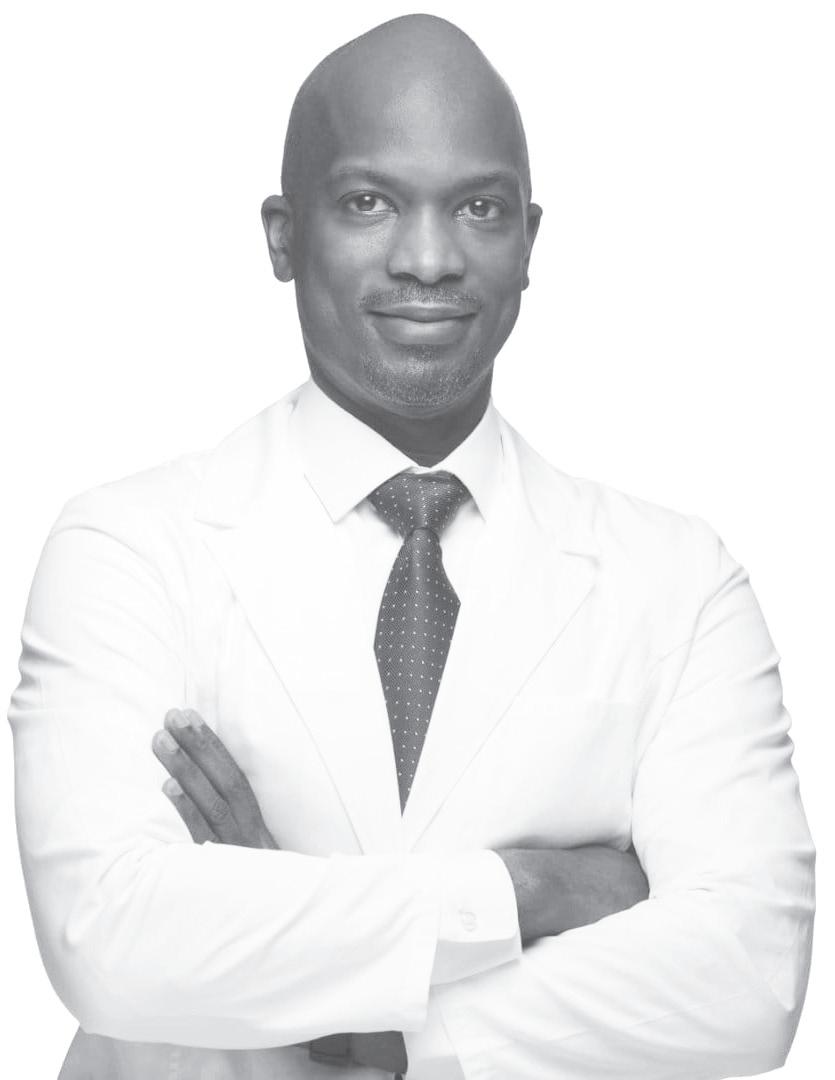

life," he said.
Dr Minnis explained that modern joint replacement surgery has evolved significantly over the past decade. The Direct Anterior Approach for hip replacement allows surgeons to access the hip joint through a muscle-sparing interval, minimising disruption of surrounding tissues and potentially suppporting a faster recovery for appropriately selected patients.
When combined with enhanced recovery protocols, modern anesthesia techniques, coordinated rehabilitation, and outpatient surgical pathways, many patients can return home the same day and begin mobilising within hours of surgery.
"This represents an important advancement for healthcare in The Bahamas," Dr Minnis said. "Patients no longer necessarily need to travel abroad to access advanced joint replacement options. We are able to provide specialised, fellowship-level care locally while maintaining excellent outcomes and a strong focus on patient safety."
The procedures were supported through a coordinated local model of care involving advanced diagnostic imaging,
SO… What Exactly Is Shockwave Therapy?
The name shockwave therapy sounds a little dramatic, doesn’t it? It conjures up images of electric jolts, sparks, or something out of a science fiction movie. In reality, it’s much less theatrical — and far more useful. Shockwave therapy is a treatment that uses high-energy pressure waves (not electricity) to stimulate healing in tissues that have become stubbornly painful or slow to recover. Physiotherapists often use it for chronic conditions like plantar fasciitis, tennis elbow, Achilles tendinopathy, shoulder calcification, and other tendon or soft tissue injuries that just don’t seem to get the memo that they’re supposed to heal. Think of it as a wake-up call to irritated tissue. The pressure waves stimulate blood flow, encourage repair, and may help “reset” chronic pain patterns that have been hanging around far too long. But what does it actually feel like to have it done?
Before the Treatment: A Bit of Detective Work A good shockwave session usually starts with assessment, not machines. Your physiotherapist will first figure out exactly what they’re treating. This may involve pressing around the painful area, testing movement, and identifying the tissue involved. Shockwave works best when it’s aimed precisely at the problem — not just vaguely waved in the direction of pain. A gel is usually applied to the skin (much like an ultrasound gel), because the machine needs good contact to transmit the pressure waves effectively. Then comes the part everyone asks about. Does It Hurt? Short answer? It can be uncomfortable. Long answer? It depends on the area being treated, how irritated the tissue is, and your own pain tolerance.
Shockwave therapy is often described as a tapping, pulsing, or rapid knocking sensation. Some people say it feels strange but manageable. Others
say, “I won’t lie, that got my attention.”
The most tender areas usually feel the strongest. In fact, physiotherapists often use that response as a clue they’ve found the right spot.
The good news? Treatments are usually brief — often only 5 to 10 minutes for the actual shockwave portion. And the intensity can usually be adjusted so it remains tolerable.
It’s not meant to be torture. It’s meant to stimulate healing.
During the Session: Lots of Clicking and Pulsing
Once the treatment starts, you’ll hear the machine making a repetitive clicking sound while the applicator delivers rapid pulses into the tissue. It’s not electricity. It’s not burning. It’s a mechanical pressure wave traveling through the tissue.
Some patients notice discomfort during the session, especially if the tissue is quite inflamed or chronically irritated. Others are surprised that it’s less dramatic than they expected.
A typical session may involve hundreds or even thousands of pulses, delivered in a few minutes.
And no — you don’t usually need downtime afterward.
This is not surgery. You’re walking out of the clinic, not being wheeled out.
What Happens Afterward?
Here’s where people get caught off guard: you may not feel immediate relief.
In fact, some people feel a little sore afterward — a bit like they’ve had a deep tissue treatment or worked an area hard in the gym. That soreness is usually temporary.
Some people feel improvement after the first session. Others need a few treatments before the tissue starts responding. Chronic injuries, especially ones that have been hanging around for months or years, are rarely in a hurry.
Shockwave is often more of a “healing stimulation” treatment than an instant pain switch.
That’s an important distinction.
surgery, rehabilitation services, and post-operative follow-up. This approach allows patients to receive comprehensive treatment while remaining close to family and support systems throughout recovery.
For patients suffering from chronic hip or knee pain, arthritis, stiffness, reduced mobility, or loss of independence, these success stories offer hope that effective treatment may be available closer to home than ever before. As more Bahamians regain mobility and return to the activities they enjoy, Dr Minnis believes the future of advanced joint replacement in The Bahamas is brighter than ever. Historically, many Bahamians have traveled abroad seeking specialised joint replacement care. The availability of fellowship-trained expertise locally now allows many patients to access worldclass treatment while remaining close to family and support systems throughout their recovery "Every patient wants the same thing," he said. "They want to walk without pain, remain independent, and enjoy life again. Helping them achieve that is why we do this work."

This is one of the most common questions, and the answer is: it depends.
Many protocols involve 3 to 6 sessions spaced out over several weeks, but this varies depending on the condition, severity, and how the tissue responds. A fresh problem behaves differently from a stubborn, long-standing tendon issue that has been grumbling for two years. Shockwave is often combined with exercise, stretching, strengthening, or biomechanical correction — because simply zapping tissue without fixing the reason it became irritated in the first place is a bit like repainting a wall without fixing the leak behind it. What Should You Avoid After Treatment?
Your physiotherapist may advise you to take it easy on heavy loading of the treated area for a short time, especially right after treatment. Interestingly, anti-inflammatory medications are sometimes discouraged
after shockwave because part of the treatment’s goal is to stimulate a healing response, and dampening that response may not be ideal.
That doesn’t mean you need to sit perfectly still — just don’t run a marathon on your sore Achilles immediately afterward and call it “testing.”
The Bottom Line
Shockwave therapy is one of those treatments that sounds intimidating but is usually much less frightening than its name suggests.
Expect assessment, some pulsing discomfort, a short treatment time, possible temporary soreness afterward, and gradual improvement rather than instant magic. For the right condition, it can be a very useful tool — especially when pain has become stubborn and traditional treatments haven’t fully done the trick.
And perhaps that’s the best way to think of shockwave therapy: not as a miracle cure, but as a nudge to healing tissue that may have forgotten how to heal on its own.
T HE Order of Saint John of Jerusalem, Knights Hospitaller, Americas Priory, West Indies Commandery recently presented donations of $11,000 each to The PACE Foundation and The Salvation Army of The Bahamas, reaffirming its longstanding commitment to humanitarian service and support for vulnerable communities throughout The Bahamas.
Both beneficiaries called the donations and their timing critical, thanking representatives of one of the oldest humanitarian associations in the world.
“This means the world to us,” said PACE Foundation President Claudette Rolle. “These funds will help us complete the roof and any funds left will allow us to create an outdoor space, to put in a pavilion for the girls to enjoy the fresh air and outdoors.”
Some 22 pregnant teens or young mothers are currently benefitting from the program that allows them to finish their secondary education. After years of operating on the upper floor of a church, in 2017 PACE supporters purchased a rundown residence on East Street and began renovating and repairing.
Today, that space is a welcome haven for young females able to find support and strength, complete their high school education and obtain soft and trade skills training, increasing the chances of brighter futures for them and their child.
The donations are the result of fundraising efforts associated with the West Indies Commandery's 2026 Investiture Ceremony, held in Nassau in May, and reflect the generosity of members, sponsors, partners, and supporters who contributed to the success of the event, according to Owen Bethel, KJSJ, Commander of the West Indies Commandery.
"The Order of Saint John has always been guided by a commitment to care for the sick, the poor, and the vulnerable,” Mr Bethel said. “We are pleased to support the important work of The PACE Foundation and The Salvation Army of The Bahamas, two organisations that continue to make a meaningful difference in the lives of individuals and families across our country. These donations are a testament to what can be achieved through partnership, generosity, and a shared commitment to serving others."
Among its strongest partners for both donations was the Rotary Club of Nassau, Sunrise and both past and newly elected presidents Karen Pinder and Patrick Newman were present for the emotional donations.
While PACE empowers pregnant and parenting teens, The Salvation Army provides a wide range of social services, including food assistance, emergency relief, family support, and outreach programmes assisting many of the nation's most vulnerable residents.
And the donation to The Salvation Army less than 48 hours before Divisional Commander Major Roodolph Meo and Major Aldene Meo were set to relinquish the posts they held for more than five years, keeping hope alive following the COVID pandemic and the aftermath of Hurricane

OWEN BETHEl, 3rd from left, presents cheque for $11,000 to PACE Foundation President Claudette Rolle, one of two equal donations from the Order of Saint John West Indies
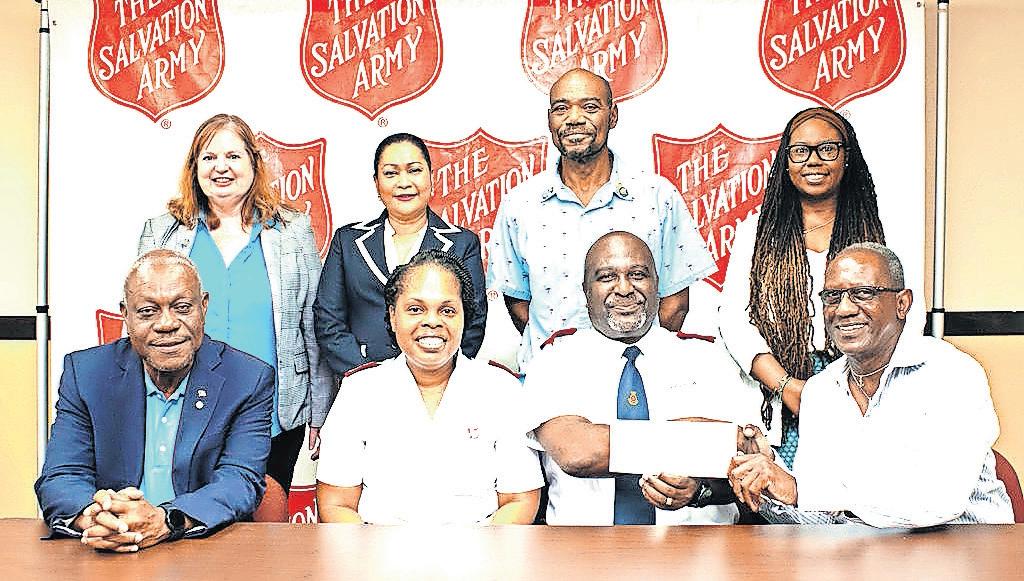
THE SALVATION Army receives a much-needed financial boost from the Order of Saint John of Jerusalem this week, an $11,000 donation presented by the charitable organization’s Bahamian Commander Owen Bethel, seated, far right, to Divisional Commander Major Roodolph Meo and Major Aldene Meo, seated 2nd from left. For Salvation Army Chairman Felix Stubbs, seated far left, the donation is critical and will help fill needs from feeding the hungry to clothing the needy, providing jobs for the visually challenged and a shelter and safe place for abused women and children. Standing l-r, supporters of the initiative including immediate past President of the Rotary Club, Sunrise Karen Pinder, Dame Ivylyn Cassar, Rotary Sunrise President Patrick Newman and Dame Natalie Bethel. Photo: Ashley Bethel/DP
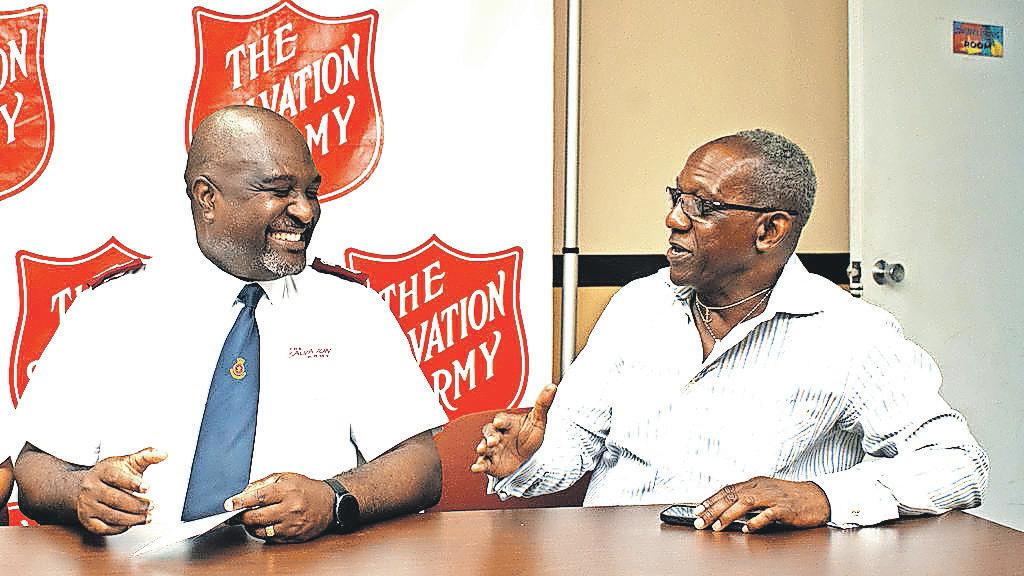
SALVATION Army Divisional Commander Major Randoolph Moo, left, is all smiles as he receives a cheque for $11,000 from Owen Bethel, KJSJ, Commander of the West Indies Commandery for the support of ongoing Salvation Army programmes. It was a bittersweet occasion on the eve of the Meos’ departure from their post in The Bahamas that left several in the room choking back tears as Major Meo talked of the lives The Salvation Army touches. Mr. Bethel represents the Order of Saint John of Jerusalem, a charity that dates back 1,000 years and supports the vulnerable in society around the world. Photo: Ashley Bethel/DP
Dorian, left some in the room fighting tears as cameras clicked.
“This donation is vital to the mission of The Salvation Army,” said Major Roodolph Meo.
“We do not have a lot of fund-raising, but we have a lot of needs. When it comes to Christmas we own your ears, but that carries us through the holidays as it is intended to do with 55 to 60 per cent of what we raise being used during that period so people do not go hungry or feel forgotten and alone.
“The rest of the year, we struggle. We have to find ways to support the women’s and children’s shelter, food parcel distribution, the mop shop, the Centre for the Blind. Sometimes we help with an electricity bill or some of the rent or if we have to keep someone safe, a hotel.”
Behind the better-known initiatives like the mop shop providing employment for the visually challenged, The Salvation Army is a silent partner working closely with law enforcement in the war against human trafficking.
Major Meo shakes his head, an expression of sympathetic despair, as he describes how great the need for a larger shelter is.
The current shelter is often too full to take another victim, he explains, and has to turn away a woman and child pleading for help. Heartbreaking cases like that drive both he and his wife to search for a safe hideaway for the woman who cannot take another beating or stand by as her child is abused.
The Divisional Commander said The Army touches an average of 85 to 120 lives daily and helps feed and clothe between 1200 and 1500 individuals in need every month.
Along with the Order of Saint John and the Rotary Club of Nassau Sunrise, partners and supporters who made the $22,000 donation possible include Dr Alfred Anduze, CJSJ; Dame Natalie Bethel, DGSJ; Mrs Rubie Nottage; Mr Felix Stubbs, CGSJ, who also serves as Chairman, The Salvation Army; and Mr Owen Bethel, KJSJ as Individual Sponsors; Bethel Brothers Morticians and Crematorium as a Community Partner; and Dame Ivylyn Cassar, DSJ, New Providence Ecology Park, and Inti Corporation as Gold Sponsors.
Rooted in a tradition of service dating back to the 11th century, the Order of Saint John supports initiatives that promote health, social care, community resilience, and volunteerism throughout the region.
About the Order of Saint John
The Order of Saint John of Jerusalem, Knights Hospitaller, is one of the oldest Orders of Chivalry, founded in Jerusalem in the late 11th century. Nearly 1,000 years later, it continues to operate globally as a charitable organisation dedicated to humanitarian service, health care, and community support. Through the West Indies Commandery, the Order advances these values in service to Caribbean communities, guided by compassion, integrity, and a commitment to strengthening regional well-being.


By CHAPPELL WHYMS JR cwhyms@tribunemedia.net
FASHION designer Remilda Rose
recently honored eight members of the country’s armed forces who are undergoing cancer treatment at her annual gala.
Under the theme, Beyond the Badge, Beyond the Battle, the dinner and fashion show sought to shine a spotlight on the courage and dignity of these brave warriors and their will to keep going.
Every year Remilida Rose holds the gala to honour those that have struggled and come through the other end of their fights. She uses her creativity and her platform to make the honourees feel love supported and looking red carpet ready with support from her community.
She noted how unfair it was that these brave warriors who have protected our boarders and seas now have to face this battle against their own bodies.
“But thes eeight brave souls picked up the their cross and kept on marching and fighting forward.”
The gala not only allowed them a chance to tell their stores, but also allowed family and friends to celebrate their lives.
Many people often wait too late to give loved ones their flowers, but Remilda Rose designs wanted to break that tradition, by creating a one of a king custom outfit for each honoree.
She spent time with each person listening to their stories to help form the gowns and suits to match them perfectly.
Remilda sourced materials not available in the country to help create a unique outfit that either highlighted the personality of the honoree or pushed them out of their comfort zone with the color or the fit.
Each honoree had a unique tale to tell; however, DeAnne Parker Davis stood out the most. At the show, Mrs Davis pointed out she had always had a tomboyish nature and so when she was diagnosed with breast cancer, it seemed like an attack on the femininity she had never really embraced.
She had to rely on the support of her faith and her family to get through the process particulary because she also had other siblings who were in the midst of their own cancer battles.
She clung to her faith in Jesus and to those that stood by her even in the the midst of covid shut downs and isolations.
At the end of the fight she did lose one sibling ,but she came out stonger not only with her faith and family, but also with a new understanding of her own femininity.