

‘Light at end of tunnel’: Resorts narrow gap to ‘25 by 8% points
Family Island hotels cut early 25% drop to just 17% by end-May
Promotion chief: ‘Starting to see shift’ after sluggish early 2026 Room revenue difference with 2025 reduced to the single digits
BY NEIL HARTNELL
Business Editor
FAMILY Island resorts are “starting to see some light at the end of the tunnel”, a senior tourism executive disclosed yesterday, after they cut the early 25 percent year-over-year decline by around eight percentage points during the three months to endMay 2026. Kerry Fountain, the Bahama Out Island Promotions Board’s executive director, told Tribune Business that its 35 member properties - 80 percent of which are Bahamian-owned - are “starting to see the shift” following a sluggish first two months of 2026 that generated significant concerns about the outlook for the tourism and hotel industry outside Nassau.
Speaking to initial reports on industry performance for the five months to end-May 2026, he said: “January through May is down about 17 percent, but January to February

was down 25 percent. Room nights sold, January through May, we’re down 17 percent, and we’re down 9 percent on room revenues.
“If I was to look at all the reports available to us, January through February was down 25 percent; January through March was down 21 percent; January through April was down 19 percent, and January through May was down 17 percent on room nights sold.
“Then, in terms of room revenue, we were down about 14 percent for the January through February period,” Mr Fountain added. “Then it was about
URCA cuts satellite levy after Elon Musk’s Starlink protests
BY NEIL HARTNELL
Tribune Business Editor nhartnell@tribunemedia.net
THE satellite communications provider owned and controlled by billionaire Elon Musk has persuaded Bahamian regulators to slash the original 5 percent turnover-based fee they planned to levy on the industry because it was too onerous.
The Utilities Regulation and Competition Authority (URCA), unveiling the results of its public consultation on the proposed satellite communications regulatory regime it plans to implement for The Bahamas, revealed that it has cut this fee - to be applied to

to 3 percent following push back from Mr Musk’s Starlink and others.
URCA, which conceded that the consultation
‘Navigating
crosswinds’: RF funds
BY NEIL HARTNELL Tribune Business Editor nhartnell@tribunemedia.net
A BAHAMIAN investment bank yesterday revealed its mutual funds enjoyed $30m growth during the first five months of 2026 despite facing multiple “economic crosswinds” and a subdued first quarter in the local equities market.
David Slatter, RF Bank & Trust (Bahamas) vice-president of investments, told Tribune Business that combined assets under management for its Bahamian dollar and international funds stood at $830m at end-May 2026 with all generating positive returns over the prior 12-month period despite the volatility created by Middle East conflict and the subsequent global oil price shock.
And, despite yesterday’s renewed military hostilities between the US and Iran, he voiced “cautious optimism” that the post-first
‘Optimistic’ 2026 full-year returns match prior year
Bahamian equities in ‘nice rebound’ after soft Q1
Investment chief: ‘There are risks to be navigated’
quarter “rebound” in Bahamian share prices will enable RF’s locally-focused funds to finish 2026 “close to” targeted investor returns and prior year performance with investment managers “doing a job to
navigate” market uncertainty to-date.
Mr Slatter, revealing that RF Bank & Trust expects to add another portfolio manager within the next year, having already expanded staff in this area, also urged Bahamian investors to adopt a long-term strategy, set aside “more of their budget for investing” and not be deterred by local and international economic turbulence as any negative fall-out will ultimately “smooth out”.
lower-yielding investments such as government and corporate paper.
Of the $830m in assets under management in RF’s mutual funds, some $750m or just over 90 percent is held in its Bahamian dollar-denominated structures, with the bulk of that figure - $570m - invested in its Prime Income Fund. That sum, which accounts for 68.7 percent or more than two-thirds of total assets under management, again highlights the conservative, low-risk appetite of most Bahamian investors who prefer securer,
RF Bank & Trust’s Targeted Equity Fund, which is focused on investments in Bahamian public company stocks, in contrast generates returns which - in a good year - are near-double those delivered by its Prime Income counterpart yet it has less than one-third of the latter’s assets at around
“The
of the investment returns generated over the prior year.

BY NEIL HARTNELL Tribune Business Editor nhartnell@tribunemedia.net
THE $200m Rosewood Exuma resort’s chief opponent is maintaining a full-on assault against its rival’s approvals by commissioning a report attacking the “salami-sliced approach” to granting the environmental permits through a process it branded “deeply flawed”.
Andrew Baker, a 40-year British ecology consultant, who asserts that he has worked on numerous Environmental Impact Assessments (EIAs) including in “tropical” climates such as Malaysia, in a report prepared for Turtlegrass Resort & Island Club argued that the study conducted for the Yntegra Group development did not account for all the
changes made to the latter’s design. His report, which has already been admitted as evidence to Turtlegrass’s Subdivision and Development Appeal Board challenge to Rosewood Exuma’s preliminary site plan approval, argues that the EIA used to support the latter’s certificates of environmental clearance (CEC) failed to account
for “all the impacts” of the $200m project because it was based on an earlier plan that was later substantially revised. As a result, Mr Baker is arguing that the correct EIA version was not placed before the Town Planning Committee when it decided to grant Yntegra preliminary site plan approval for the Big Sampson Cay project earlier this year. And, in turn, he argues that a CEC issued on the basis of an incomplete EIA means that Rosewood

DAVID SLATTER
BAHAMAS Hotel & Tourism Association (BHTA) senior executives, representatives from the Ministry of Education, Science & Technology (BMOEST), Ministry of Tourism, (BMOT), University of The Bahamas, College of Tourism, Hospitality, Culinary Arts and Leisure Management (THeCALM), the Bahamas Technical and Vocational Institute (BTVI), teachers, counsellors and host properties’ representatives.
Photo:Kenderick Major


Teachers get educated on tourism industry practices
THE Bahamas Hotel and Tourism Association (BHTA) has held its 21st annual Educators’ Internship initiative to help teachers better prepare their students for jobs and opportunities in this country’s largest industry recently.
The Association, in a statement, said teachers spend three days “walking in the footsteps” of tourism professionals - working in businesses directly related or reliant on our tourism industry - to help them pass on what they learnt and saw to their pupils.
The initiative, hosted by the BHTA in partnership with the Ministry of Education, Science & Technology (BMOEST), gives teachers first-hand experience and insight into how the tourism industry functions on a day-to-day basis. Educators spend time interacting with guests, customers, owners and operators of businesses, gaining an understanding of what it takes to run the business, the required work
ethics and skill-set, and other attributes necessary to thrive in tourism.
Teachers are then able to take this experience back to the classroom, and convey what they learned to their students. The theme of this year’s Internship was ‘Pride in our Past’.
Pamela Burnside, the BHTA’s vice-president of allied members, proprietor of Doongalik Studios Art Gallery, and well-known Bahamian cultural advocate, launched the program with a presentation challenging teachers to remember and cherish unique elements of Bahamian history, culture and customs that the younger generations need to preserve.
The closing ceremony, held at John Watling’s Distillery, included public and private sector partnerssenior BHTA executives, representatives from the Ministry of Education, Science & Technology, and long-standing partners from the Ministry of Tourism, the University of The Bahamas’s College of Tourism, Hospitality, Culinary Arts and Leisure Management (THeCALM) and the Bahamas Technical
and Vocational Institute (BTVI) teachers. Also present were educators and counsellors from more than 20 Bahamian schools and the properties who hosted them.
Jackson Weech, BHTA president, said teachers are preparing the next generation of Bahamians to take over the tourism industry as owners, operators and entrepreneurs.
Ricardo P. Deveaux, the Ministry of Education, Science & Technology’s deputy permanent secretary, and president and chief executive of The Bahamas Primary School Student of The Year Foundation, reminded teachers of the role they play in shaping the lives of their students.
Host properties, some of whom have been participating annually for more than two decades, included Ardastra Gardens, Atlantis, Baha Mar, British Colonial Hotel, Goldwynn Resort and Residences, Graphite Engineering, Graycliff Hotel & Cigar Company, Leisure Travel & Tours Company, Lyford Cay Club, Majestic Tours, Margaritaville Beach Resort, Nassau Cruise Port and Warwick Paradise Island.

Fuel retailers ‘nervous’ on new Mid East oil pressures
BY FAY SIMMONS Tribune Business Reporter jsimmons@tribunemedia.net
A BAHAMIAN petroleum retailer yesterday warned motorists may not enjoy the recent reduction in gasoline prices for long following the renewed eruption of conflict and tensions in the Middle East.
Vasco Bastian, vice-president of the Bahamas Petroleum Retailers Association, said consumers are unlikely to see an immediate increase in pump prices
because local wholesalers - Rubis, Esso (Sol Petroleum) and Shell (FOCOL Holdings) - recently received fuel shipments that reflected lower international oil prices. However, he warned that further prolonged disruption to global oil supplies could quickly reverse the recent relief motorists have enjoyed. "It definitely would have an impact," said Mr Bastian, after hostilities between the US and Iran resumed.
"I don't know that the impact would be immediate because we just had a price reduction on our last shipment, but if this develops into a prolonged conflict or returns to the level we saw before, then it certainly could have a significant effect.
"Once crude oil prices on the global market begin to react, it will definitely have an effect here. This is significant. It's not something anybody is looking forward to, and I'm certainly not looking forward to it."
Family Island resorts disclose mixed Independence outlook
BY ANNELIA NIXON Tribune Business
FAMILY Islands yes-
terday revealed a mixed oulook as as Bahamians prepare to celebrate the country’s 53rd Independence, with some enjoying full occupancy driven by international visitors and others revealing bookings are down and plans to close earlier than usual.
Molly McIntosh, a top management executive at Bluff House Beach Resort and Marina in Green Turtle Cay, said the resort is busy heading into the holiday period, although it is not hosting a major Independence celebration of its own.
Ms McIntosh added that guests will instead enjoy festivities taking place throughout Green Turtle
Cay, including fireworks and community celebrations. She said occupancy is matching last year’s Independence period, while the restaurant and bar business is slightly stronger. Marina traffic, however, is lower. “I would say that our marina business is slightly down,” Ms McIntosh said.
“However, the rooms and restaurants are right about the same. The restaurant and bar business may be up just slightly.” Ms McIntosh said the resort continues to attract mostly international visitors, although she believes Bahamians are increasingly embracing vacations within The Bahamas. “I think Bahamians are travelling more to the Family Islands, to the Out Islands, from Nassau,” she said. “I think they’re enjoying it and appreciating getting away from the city
Boating fee reform impact not fully known until Xmas
BY ANNELIA NIXON Tribune Business Reporter
anixon@tribunemedia.net
THE full impact of the Government’s boating fee reforms will not become clear until the Christmas season, as one marina operator yesterday asserted that only then will the industry know how many long-standing visitors have been permanently lost to rival destinations.
Lee Prosenjak, managing director of Valentine’s Resort & Marina in Harbour Island, said the April 1 introduction of lower cruising permit fees for certain vessels came too late to influence this year’s travel decisions, arguing that many boaters had already
committed to alternative destinations.
“It’s still the same,” Mr Prosenjak said. “Even though that changed on April 1, it doesn’t mean that anybody that was going to take a trip changed their plans and showed up in The Bahamas instead of going anywhere else, like Turks and Caicos.
“I think we won’t see any noticeable difference from that rate deduction until Christmas’ until next season. Christmas will be telling of how many long-standing patrons we’ve lost. That’s when we’ll know.” His comments add to concerns voiced by other marina operators that the Government’s reversal of some of last year’s controversial boating fee increases has yet to restore confidence

Both Brent Crude and West Texas Intermediate oil indices were up by 1 percent last night, with per barrel prices hovering just below $79 and $75, respectively. Ms Bastian’s comments came as the oil markets reacted to renewed fighting in the Middle East. The latest escalation followed additional US military strikes against Iranian targets, while President Donald Trump declared an earlier ceasefire had effectively collapsed, raising fresh concerns about the
security of energy supplies moving through the Strait of Hormuz, a key artery for around 20 percent global oil exports. Mr Bastian said the timing was particularly disappointing because crude prices had only recently begun moving in the consumer’s favour. "When it looked like things were beginning to settle, crude oil prices started trending downward," he said. "That meant lower fuel prices for consumers here in The Bahamas. But any disruption in that region has the potential to send prices back up."
Local motorists have already benefited from that trend, with pump prices falling following lower-priced fuel shipments that arrived about two weeks ago. Mr Bastian said the industry is now watching closely to
see whether the latest geopolitical tensions prove temporary or develop into a longer-term disruption.
"Right now we're in a holding pattern. It's a waitand-see situation," he said. "I hope we're not heading back up, but we'll be following developments very closely."
While expressing hope that diplomacy prevails, Mr Bastian acknowledged retailers are concerned about the potential for another period of elevated fuel costs if crude prices remain under upward pressure.
"I'm nervous because, while the impact may not be immediate, it could become significant if this situation escalates," he said. "I just hope and pray it doesn't return to what we experienced a few months ago."
and from work and from pressure.”
Ms McIntosh added that families make up a large share of visitors during the summer months, traditionally the busiest period for Abaco’s tourism industry.
Lee Prosenjak, managing director at Valentine’s Resort and Marina in Harbour Island, described a contrast between the American and Bahamian Independence holidays. He said the resort performed well during the US ‘Fourth of July’ weekend, with the hotel nearly completely occupied.
“The fourth was booked, and I think we only had one room that ended up being unused in the hotel,” he said. However, Mr Prosenjak said Bahamian Independence Day bookings have been significantly weaker than usual.
among recreational boaters, particularly those travelling from Florida.
The Government introduced two new cruising permit fee categories on April 1 in an effort to regain business after widespread criticism that last year’s fee structure had made The Bahamas less competitive than rival destinations. However, Mr Prosenjak said the industry’s recovery depends on far more than permit costs.
“But that’s assuming if this war is still going on, and if gas prices have increased dramatically around the world,” he said. “They came back down in price in the US. They didn’t go back in The Bahamas. In fact, they’ve increased in The Bahamas. So now we’re at a place where government-regulated fuel is now priced much higher than in the US again. That doesn’t help.
“For Bahamian Independence Day, it’s pretty slow,” he said. “This feels a lot slower than normal on Bahamian Independence Day. Bahamian Independence Day, we don’t have nearly as many bookings at all.”
Mr Prosenjak suggested that stronger advance promotion of Independence celebrations could help attract more domestic travellers and encourage longer stays. Looking beyond the holiday weekend, he said one encouraging sign is that domestic airfares have remained relatively stable.
“The flight prices on Southern and Pineapple and Western all haven’t gone up at all or changed,” Mr Prosenjak said. “So that’s a good thing.” He added, however, that Bahamians often wait until the last minute before confirming travel plans, making it more difficult for resorts to forecast demand.
Meanwhile, Reginald Wood, management consultant at Exuma Palms Resort, said the property is fully booked for the
“And just overall international travel being down quite a bit from the US are all factors that can hurt us. Those are outside of our control. We can’t do anything about the Strait of Hormuz.”
Mr Prosenjak said bookings for the latter part of 2026 have started to come through, although the marina sector traditionally experiences a high level of last-minute reservations and cancellations.
“We’ve had some advanced bookings for the fall and into Christmas and things like that,” he said. “But boating is such a last-minute business for a lot of people with boats that are constantly breaking down and things, that on a good year we’re only ever going to see probably 85 percent of those bookings anyway. So there’s probably a 15 percent cancellation rate, no matter what time of year.”
Independence weekend after also reporting a full occupancy over the US holiday period. He added that most hotel guests are American visitors, although restaurant traffic has also increased.
Mr Wood believes domestic tourism is improving, but said more work is needed to encourage Bahamians to vacation at home. He argued that developing more attractive tourism offerings would encourage greater domestic travel.
“We are seeing an uptick,” he said. “It is moving in the right direction. However, we need to see more Bahamian involvement in local tourism.”
The outlook is less optimistic in Long Island, according to Jill Smith, owner and operator of Stella Maris Resort Club and Marina. She said business across the island has been extremely slow, forcing the resort to close earlier than normal this year.
Based on current trends, Mr Prosenjak said there is little reason to expect a stronger performance next season. “With what we’re seeing right now, I would say that next season looks about the same as this season, which is pretty dry,” he said.
“And that’s, again, bad for everybody because even the restaurants and hotels that are on the island that don’t have a marina associated with them, they’re probably all down between 20 and 25 percent this year from what I’ve heard from the other general managers.
“The marina business is definitely down, probably 50 percent this year, and hotels are down 20 to 25 percent.”
Mr Prosenjak’s assessment follows similar reports from other Family Island operators.
Molly McIntosh, general manager of Bluff House Beach Resort & Marina in Abaco, recently said marina business at the property
Ms Smith also pointed to transportation challenges as a major obstacle to tourism in Long Island, arguing that limited scheduled flights, fully booked domestic services and inconvenient flight schedules make the destination difficult for visitors to reach.
“Getting here [is] too hard,” she said, adding that travellers often find it easier to vacation at larger resort destinations instead
She explained that only a handful of the property’s Airbnb units have been booked, while July business has been disappointing overall. Ms Smith said the resort now expects to close at the beginning of August because of weak demand, adding that Americans are travelling less while many European visitors are focused on this summer’s sporting events. She also argued that domestic tourism remains out of reach for many Bahamians because of the high cost of living. “How can an average Bahamian afford? [They] cannot” she said, pointing to high fuel prices, electricity bills, grocery costs, airfares and restaurant prices.
had declined by between 15 percent and 20 percent this summer despite hotel rooms, restaurants and vacation villas continuing to perform well.
She attributed the weakness to a combination of last year’s boating fee controversy, higher fuel costs and inflation affecting US boaters, particularly families travelling on smaller recreational vessels from Florida. Stephen Kappeler, managing director of Bimini Big Game Club Resort & Marina, also argued that the Government’s revisions came too late to prevent many visitors from changing their travel plans, warning that the decline in boating arrivals hurts restaurants, retailers and other businesses that depend on marina traffic.

PwC Bahamas partner named Caribbean chair
A BAHAMIAN accountant has been named as Board chair for the PricewaterhouseCoopers (PWC) network of Caribbean operations with effect from July 1, 2026.
The accounting firm, in a statement, said Myra Lundy-Mortimer, a partner and territory assurance leader for PwC Bahamas, has become the first female partner to serve in this role. She has more than 25 years’ leadership and public accounting experience, including more than 16 as a partner.
"I am honoured to step into this new role, and energised by the journey that’s brought me here,” Ms Lundy-Mortimer said.
“Each experience has
strengthened my ability to embrace challenges, unlock opportunities and drive impact.
“I look forward to collaborating with colleagues across the region as we continue to build momentum, drive growth and shape the future success of the network of PwC firms operating in the Caribbean together."
In addition to her new role, Ms Lundy-Mortimer will continue to provide client services in the financial services industry where she serves as audit engagement leader for some of PwC Bahamas’ top retail, private banking, insurance, asset management, multinational, listed and quasi-government clients.
She also has extensive experience providing risk assurance services, including internal audit and business continuity engagements, and is an accredited International Financial Reporting Standards (IFRS) financial statement reviewer for the network of PwC firms operating in the Caribbean.
Alongside her client responsibilities, Ms Lundy-Mortimer serves as PwC Bahamas' banking and asset management and diversity and inclusion head, and as human capital partner. She is a certified public accountant (CPA), a member of the American Institute of Certified Public Accountants (AICPA), and a licensed member of the

Bahamas Institute of Chartered Accountants (BICA), where she previously served as a council member and chair of the licensing committee.
Meanwhile, PwC Bahamas has also promoted of Kara Culmer-Wilson to partner with effect from July 1, 2026. She joined the firm as an intern in 2008 while studying at Dalhousie University and, since then, has progressed from audit

associate to manager, senior manager, director and, now, partner. With more than 16 years’ experience across PwC's Bahamas and UK firms, Ms Culmer-Wilson serves clients in the banking, insurance, private banking and capital markets sectors. She leads PwC Bahamas' Pillar Two tax compliance and advisory services, helping clients navigate complexity and unlock sustained value, and serves as an accredited financial statement reviewer for the Caribbean region.
Silver Airways loss still hurts Out Island hotels
11 percent for January through March, January through April, but for January through May we are down only 9 percent. We are starting to see the shift.”
The Bahama Out Island Promotions Board chief said the narrowing of the gap between early 2026’s performance and that of the prior year varied from
island to island. “The islands that are going up, in terms of room nights sold, the islands that are in the green, include Exuma, which had a pretty bad year last year. Exuma seems to be leading the charge. Acklins is up, San Salvador is up over the same January through May period last year,” Mr Fountain said. “All the other islands are down; some slightly, some greatly. Some islands are
just treading water, if I may, and some islands are drastically down. Abaco was down 15 percent, Andros was off 19 percent, and Bimini by 31 percent. That Bimini number was due to the Balearia fast ferry being out of commission for an unanticipated longer period earlier in the year. Eleuthera was down 48 percent, and Cat Island was slightly down at about 16 percent.”

HIRING NOW SENIOR ACCOUNTANT
A company is looking for an experienced Senior Accountant to oversee accounting operations.
Key Responsibilities:
• Supervise all activities and staff in the accounting department including accounts payable and receivable.
• Review, analyse and provide monthly and annual consolidated financial reports to senior management.
• Develop financial reviews and provide investment and profitability advice
• Prepare and file Quarterly VAT returns and coordinate and respond to requests from the Department of Inland Revenue, ensuring timely submission of tax filings and supporting documents
• Assist external auditors to facilitate smooth audit processes
• Drive efficiency improvements and cost reductions across the business
• Management stakeholder relationships
• Oversee payroll processing
• Collaborate with management and executive teams to share reports and analysis findings
• Prepare annual budgets
• Establish and maintain internal control guidelines, policies, and procedures for budget accounting, cash and credit management, and administration
• Act as liaison agent with banks when required
• Prepare insurance-related financial analyses when needed
QUALIFICATIONS/REQUIREMENTS
• CPA designation
• Minimum 5 years of supervisory experience in accounting/finance
• Bachelor’s degree in accounting or finance
• Proficiency QuickBooks is required
• Strong background in internal controls
• Knowledge of Bahamian laws and fiscal policies
• Excellent analytical and organizational skills
• Proficiency in MS Office
• Ability to work in a fast-paced environment and meet reporting deadlines
• Strong communication skills and attention to detail
Email resume to chinainvestment1969@hotmail.com
As for room revenue, Mr Fountain disclosed: “The top performers would be, believe it or not, Eleuthera. Even though Eleuthera was down 48-49 percent in room nights sold, it was up 22 percent in room revenue. Exuma is also up, maybe about 18 percent. and then all the other islands are either holding steady or seeing significant declines in room revenue.
“Because of the Balearia, we saw a significant decline in Bimini. We saw a 13 percent drop in room revenue for Cat Island, and a drop in San Salvador. Again, San Salvador is the opposite of Eleuthera - room nights sold are up, but room revenue is down. That’s what we are looking at, January through March.
“When we had our meeting back on June 10 as a Promotion Board and the membership, a lot of the hoteliers acknowledged the fact that the beginning of the year was a little bit rough, but they are starting to see some light at the end of the tunnel. This is reflected in the numbers which, even though they are in the red, are seven percentage points less than what they were earlier in the year.”
Mr Fountain reiterated that the loss of airlift and connectivity provided by Silver Airways from Florida, due to its Chapter 11 bankruptcy and subsequent failure in June 2025, and failure to adequately replace what could be an up to 135,000 annual seat
capacity, remained a key factor behind why the 2026 first half performance of Family Island hotels is trailing the year-before period.
“The reason why our numbers continue to still be behind 2025 is because we have not replaced the loss of Silver Airways service out of Fort Lauderdale since June 2025. The very fact we are only 9 percent down on room revenue, and 17 percent down on room nights sold, shows the hotels are holding but we really need to reinstate the type of service needed from south Florida to replace what was lost with Silver Airways.”
Mr Fountain said he did not “want to downplay” American Airlines’ introduction of expanded service to Abaco and North Eleuthera, and efforts by smaller carriers such as Tropic Ocean, Aztec, Makers Air and Tradewind to fill the gap, but added that the latter group’s small planes cannot compensate fully for the loss of Silver Airways’ 54 and 70-plus seater aircraft.
Pledging that the tourism industry is “absolutely” working on a comprehensive strategy to replace Silver Airways’ seat capacity, the Promotion Board chief added: “We are also looking at gateways beyond Fort Lauderdale. We talk about sustainability not just in terms of eco-tourism, but sustainability also means financial sustainability.
“We want to be guided by the data that the Ministry of Tourism has tons of, and
A certified public accountant (CPA) and chartered accountant (CA), Ms Culmer-Wilson also serves as treasurer, council member and technical chair of the Bahamas Institute of Chartered Accountants (BICA).
which points to what gateways we should have airlift coming to Marsh Harbour, North Eleuthera, Rock Sound and Georgetown, Exuma. We want to ensure we are not stepping on someone’s feet if they are operating that route sustainably, because if we add some seats what happens is there is some deterioration, and if these guys stop making money and they deploy their aircraft to other destinations.”
Mr Fountain, noting that Bahamian tourism and the Family Islands are competing on value, rather than price, said the Promotion Board is offering visitors a variety of air fare credits to ease the access cost “because we realise it’s relatively expensive, given our proximity, to get into the Out Islands”.
A four-night stay at a member hotel will produce a $250 credit to air fare costs. Europeans, flying in via Nassau, will have one airline ticket paid if they stay between four and six nights, and two tickets covered if they spend a week or longer. Boaters who dock at a Promotion Board resort’s marina, and stay in its hotel, will receive a $300 “dock and stay” credit if they stay for four nights’ minimum. Credits will also be provided to “island hopping” private pilots, with Mr Fountain adding: “We have issue with private pilots feeling we are charging too much for the fees they are paying.”

MYRA LUNDY-MORTIMER KARA CULMER-WILSON
Cat Island sees ‘surge’ in tourism activities
BY FAY SIMMONS Tribune Business Reporter jsimmons@tribunemedia.net
A CAT Island resort owner yesterday said the island is enjoying a “surge” in economic activity and tourism, with his property fully booked for the Independence Day weekend.
Vince McDonald, owner of Curly's Beach Resort, said the holiday weekend has generated strong demand, with every room at the beachfront property booked as Bahamians prepare to
celebrate the country's 53rd Independence. Speaking to Tribune Business, he said infrastructure works and growing visitor demand is fuelling optimism for the destination "It's awesome. Cat Island is really on a surge right now," said Mr McDonald.
"There's a lot of activity across the island. The roadworks and other infrastructure projects that started before the election have continued, and all of that has helped generate more economic activity and renewed confidence.
"We're fully booked for the Independence Day
weekend, which is very encouraging. Demand has been strong, and it's great to see so many people choosing Cat Island for the holiday."
Buoyed by the increase in visitor demand, Mr McDonald said the resort is already preparing for its next phase of growth, with expansion expected to begin before the end of the summer.
"If everything stays on track, we're hoping to begin our expansion before the end of the summer," he said. "Demand has been strong enough that we feel it's the right time to grow." The expansion will increase
Grid operator: Energy demand at record high
BY FAY SIMMONS Tribune Business Reporter jsimmons@tribunemedia.net
THE New Providence electricity grid operator says electricity demand has hit a record high for this time of year with an 8-10 percent increase compared to early summer 2025.
Bahamas Grid Company (BGC), in a statement, acknowledged that New Providence consumers continue to experience frequent power outages but said major transmission upgrades now nearing completion will improve reliability and resilience of the island's electricity grid following Sunday's islandwide power outage.
The company, which is responsible for New Providence's transmission and distribution network, said its ‘Foundational Project’ has reached a critical stage, with all three 132 kilovolt (kV) substations now mechanically complete and in the final testing and commissioning phase.
BGC said commercial operations remain on schedule to begin in August, and the transmission
upgrades form part of a broader effort to strengthen the electricity network as it faces increasing demand and an aging infrastructure.
Dareo McKenzie, its chief executive, acknowledged customers' frustrations, noting the company is aware that consumers have continued to experience service interruptions despite the ongoing investment.
"We are mindful of the frequent outages resulting from peak load demands, an aging infrastructure, combined with the ongoing foundational projects upgrades," said Mr McKenzie.
"Working closely with our partner Bahamas Power & Light (BPL), our primary goal is to minimise outages as we work to upgrade the system. While the immediate benefits might not be apparent to most at the moment, we remain committed to putting in place the foundation and beyond to modernising the grid and improving reliability and resiliency throughout New Providence. There is still more work to be done, and
so we remain focused and committed."
BGC also outlined progress on maintenance and expansion works during the first half of 2026, saying it completed some 900 repairs across the transmission and distribution system, ranging from individual customer connections to major network outages.
It added that crews repaired more than 200 street lights, primarily along John F Kennedy Drive and Milo Butler Highway, while carrying out an "aggressive" tree-trimming programme aimed at reducing vegetation-related faults.
On the network expansion side, BGC said it connected 61 new customers to the grid, installed 10 spans of new overhead distribution lines, laid almost 5,000 feet of underground distribution cable and erected more than 30 new utility poles.
The company said the work forms part of its ongoing partnership with BPL to modernise New Providence's electricity infrastructure while improving the system's ability to

the resort's accommodation capacity while adding new amenities designed to encourage longer stays and enhance the guest experience.
"The plan is to add more rooms so we can welcome more visitors," Mr McDonald said. "We're also looking to expand the activities we offer, build two additional beach bars and add an infinity pool. We want to continue improving the experience for our guests and give them even more reasons to visit Cat Island."
Mr McDonald said the planned investment
withstand growing demand and future disruptions.
The update is the latest effort by energy officials and utility executives to reassure consumers following Sunday's island-wide blackout, which renewed
reflects his confidence that the island's tourism sector is continuing to gain momentum.
"We're investing because we believe in Cat Island," he said. "The island has tremendous potential, and we're seeing more people discover what it has to offer."
Curly's Beach Resort opened last year after Mr McDonald invested about $3.4m to acquire and renovate the former Sammy T's Beach Resort in Bennett's Harbour, a property that had been shuttered for more than a decade.
scrutiny of the reliability of New Providence's electricity system during the peak summer demand period.
BPL's Board has since confirmed the outage originated on the transmission network rather than from
The resort's first phase comprised seven villas, a restaurant and a beach club, and was launched with the aim of helping strengthen Cat Island's tourism product while restoring a long-dormant beachfront property
Mr McDonald said the current level of demand, particularly for holiday weekends, suggests those investments are beginning to pay dividends as more visitors choose Cat Island for both short getaways and extended stays.
insufficient generation capacity, while JoBeth Coleby-Davis, minister of energy, utilities and aviation, has promised a comprehensive review and a more detailed public explanation of the incident.


Early 2026 ‘tough’ for Bahamian stock prices
“The Targeted Equity Fund was at 8.4 percent, and the Secure Balanced Fund at 6.1 percent.” The latter’s investments focus on a more even split between equity stocks and fixed income securities, which typically ensures it yields greater than the Prime Income Fund but below the Targeted Equity Fund.
As for the performance of RF’s US dollar-denominated investment funds, Mr Slatter added: “If you look at the International Opportunities Fund, it was up 13.5 percent for the trailing 12 months. The Targeted Income Fund, the US dollar fixed income fund, was up 3.7 percent, and the Hedged Strategies Fund was up 4.2 percent - a little lower than we’d like.”
Describing the performance of RF’s investment funds, as well as the Bahamian and international markets, as “a mixed bag”, Mr Slatter nevertheless said their combined assets under management grew by a combined $30m during
the five months to end-May 2026 through a combination of organic growth and capital injections from new investor subscriptions.
“If you look at assets under management in the funds as a whole, we’re looking at around $830m between the local and international funds,” he told Tribune Business. “The bulk, $570m is in the Prime Income Fund, and $180m is in the Targeted Equity Fund. During the first five months, year-to-date, there was approximately $30m growth in assets under management for the mutual funds.”
RF, though, has some way to go to hit Mr Slatter’s goal, unveiled in January 2026, of growing total mutual fund assets under management by $175m this year to hit $950m by 2026 yearend. The investment house had hoped to achieve this by increasing the collective value of the funds’ portfolios by $100m, and attracting $75m in new investor subscriptions, but it will have to work hard
to achieve this during the year’s second half. Examining the funds’ performance over the same five-month period to endMay, as opposed to the previous 12 months or year, Mr Slatter said the Prime Income Fund had generated a 2.5 percent return for its investors. Matching that performance over the remainder of 2026, he added, would see the fund hit what it achieved over the trailing 12-month period.
“We’re moving in the right direction with the Prime Income Fund,” the RF investments chief said, adding that the Secure Balanced Fund delivered a 2.4 percent return over the same five-period, while the Targeted Equity Fund was relatively subdued at 2.5 percent. “That was a little below the trailing 12-month roll-back,” Mr Slatter conceded, attributing this to a soft Bahamian equities market in the 2026 first quarter.
“The BISX index was up only 0.5 percent in the first quarter. The first quarter,
particularly March, was a tough month for local equities. There was a month there that was in negative territory,” he recalled.
“There was a sizeable pullback in Commonwealth Bank. Commonwealth Bank pulled back by 11 percent but, since then, it’s come back by 4 percent.
“The pull back in Commonwealth Bak’s stock value in March was a big part of it, and the pull back in Fidelity Bank (Bahamas), too. While other stocks were up, they weren’t sufficient to offset this. If you look at the month of May, Commonwealth is back up about 3 percent and Fidelity is down 10 percent. There are some bright spots: Yearto-date, AML is up over 46 percent; Bank of The Bahamas is up 38 percent; and Colina is up 22.5 percent for the first six months of the year.
“FINCO and Family Guardian are doing well, around 14 percent growth year-to-date. There are some bright lights, but also some pull back. It’s a mixed bag.” Mr Slatter,
Members of a sexual predator network on Telegram tried to hide their crimes with code words
By KIRSTEN GRIESHABER, STEFANIE DAZIO and HUIZHONG WU Associated Press
THEY called themselves the “German driving school for experts,” but prosecutors say the true purpose of their Telegram chats was to brag about the women they raped and share tips about how to drug them.
In posts that sometimes included photos and videos of their attacks on unconscious victims, they referred to women as “cars,” sedatives as “fuel” and rape as “driving,” according to court documents. They called their victims “dead pigs.”
Investigators have been poring through several years’ worth of posts in roughly two dozen group chats on the popular messaging app that authorities believe served an online predator network of mainly Chinese men targeting mostly Chinese women in Germany. Their investigation has already led to the
convictions of three alleged inner circle members on rape and other charges. A fourth was convicted Wednesday in Berlin. “The perpetrators were characterized by a particular ruthlessness, an objectification of the victims, and the perfidious planning of their crimes,” Frankfurt chief prosecutor Dominik Mies told The Associated Press. Major details of the investigation remain unknown, at least to the public, including how many attacks and perpetrators have been linked to the German Telegram chats and how the chats, some of which reportedly had tens of thousands of members, could have operated for so long. It’s also unclear if the chats are linked to a ballooning investigation in Europe and the Americas into drug-facilitated sexual assaults by misogynist online communities.
Chinese community rallies to support the victims Under German privacy laws, prosecutors are limited
in what they can say outside the courtroom, documents are restricted and, in the ongoing case in Berlin, members of the public have been forced to leave the courtroom during parts of the trial.
This may be why the investigation into the Telegram group has garnered less attention in Germany than might be expected.
But members of the country’s Chinese community, mostly women, have been attending court proceedings to show support for the victims even if they don’t know them.
“What makes one really angry is to see that such groups hate women, they have no respect,” said Fu Xiao, who traveled roughly 500 kilometers (310 miles) to Berlin last week to attend the trial. “Women aren’t seen as people.”
In China, state media has covered the cases comprehensively, but wider discussion about the prosecutions on Chinese-language social media

though, said RF continues to believe there is “upside” in Bahamian stock prices during the 2026 second half despite the ever-present geopolitical uncertainties and external shocks that remain an ever-present threat.
“Whether we get close to the trailing 12-month returns of 9 percent for the Targeted Equity Fund, we’ll see, but we’ll definitely get close to 7-8 percent,” he asserted. “On the Prime Income Fund, we expect to be close to 5.25-5.5 percent by the end of the year, and the Secure Balanced Fund to be in the 6-7 percent range. Those are the expectations.”
Describing the investment funds’ performance as “positive for the most part” year-to-date, Mr Slatter said they have had to contend with what he described as “macro economic crosswinds” created by the Middle East conflict and its impact on fuel, energy and other commodity prices resulting from the Strait of Hormuz largely being closed to shipping.
like Rednote has been partially censored. Certain tags have been more likely to get a post deleted or banned on Rednote, screenshots and searches show. But posts using less direct language have survived the censors, including ones that refer to “date rape” or the euphemistic “students studying abroad in Germany.”
China’s Ministry of Public Security and Rednote didn’t respond to requests for comment.
Cases echo a landmark French trial
The German cases have drawn comparisons to the attacks on Gisèle Pelicot, a French woman who, over the course of nearly a decade, was repeatedly drugged and raped by her then-husband and strangers he invited to their home.
The trial — and Pelicot’s decision to waive her anonymity — prompted a reckoning over rape culture in France and beyond.
“Pelicot is not an isolated case,” Judge Markus Koppenleitner said during
This, though, is being counter-balanced by a US economy that is still “chugging along” despite all the adversity, aided by the development of artificial intelligence (AI) technology. Mr Slatter said the addition of extra portfolio managers, and RF’s relationship with Morgan Stanley, has ensured “our ability to navigate these global crosswinds has materially improved”.
“I would say the first quarter was a little concerning, particularly on the equity front, locally and internationally, as the equity industry under-performed, but over the next two months there was a rebound in April and May,” he added. “There was a nice rebound, so now our funds are performing in line with long-term expectations.
“We’ll see what the balance of the year holds, but we are cautiously optimistic this momentum will be maintained over the second half of the year. We realise there are risks to be navigated, but feel we’re doing a good job navigating them.”

a hearing in Munich for one of the Chinese men convicted in the German investigation. “This is not a Chinese or French phenomenon, but one that also exists in Germany and, ultimately, worldwide.”
Similar cases to the “German driving school” investigation have been popping up around the globe. Although authorities haven’t publicly linked them to the German prosecutions, some investigators have
cited tips from German authorities and journalists as crucial to their progress. In Los Angeles, German investigators last year reached out to police about a potential suspect in drug-facilitated sexual assaults. The defendant, a graduate student from China, is accused of drugging and sexually assaulting three women in LA after he allegedly procured the drugs from a Chinese national in Germany.

THE DEFENDANT covering his face in the court during a trial against an online predator network of men accused of using chat groups to share tips on how to drug and rape women, in Berlin, Germany, Wednesday, July 8, 2026.
Photo:Ebrahim Noroozi/AP
Rival’s consultant asserts EIA process ‘deeply flawed’
And, in turn, he argues that a CEC issued on the basis of an incomplete EIA means that Rosewood Exuma “cannot satisfy that pre-condition” in the Environmental Planning and Protection Act (EPPA) which requires that a “valid” permit exists before other approvals - including from the Town Planning Committee - can be applied for and obtained.
Mr Baker’s study is one of six that Callender’s & Company attorneys, representing Turtlegrass and its principal, Bob Coughlin, succeeded in persuading the planning Appeal Board to admit as ‘expert’ evidence in their bid to overturn the Rosewood Exuma preliminary site plan approval. And it is also a document that they were yesterday asking the Supreme Court to include among the evidence at the substantive Judicial Review hearing that seeks to challenge the environmental permits.
Yntegra sources declined to comment on the Baker report, citing yesterday’s Supreme Court ‘settling the record’ proceedings as justification for not doing so. The Miami-based developer, though, has repeatedly asserted that it has complied with all legal and technical requirements involved in obtaining its permits, including environmental ones, with all applications subjected to review and scrutiny by the relevant Bahamian regulators.
The Rosewood Exuma developer is likely to view Turtlegrass’s bid to introduce more evidence, and expert opinion, at the 11th hour as a further attempt to snare its project in lengthy and expensive court proceedings that simply add to time delays and costs. Justice Leif Farquharson, who is overseeing the Judicial Review challenges to the project’s CECs, has already asserted his belief that Turtlegrass’s challenge is “not particularly strong” at present.
Mr Baker’s report, though, argues that the Rosewood Exuma EIA failed to assess all the potential environmental
effects, and especially their “cumulative impact”, which he said created a “salami slicing approach” to granting the CECs which The Bahamas’ own regulatory regime seeks to avoid. He pointed, in particular, to the second schedule in the EIA Regulations 2020, which stated such studies “must address all significant environmental issues associated with a proposed project”.
“My principal finding is that the Environmental Impact Assessment (EIA) supporting the application was deeply flawed. The surveys behind it were far too limited - carried out in a single winter season with only three days of survey work,” Mr Baker wrote.
“The assessment simply does not tell the decision-maker what lives on the island and its surrounds, and the value of these habitats and species present, nor what harm the development would cause. A fundamental flaw of the EIA is that it did not consider all the impacts of the scheme, as the design of the proposal has now moved on. The scheme that was assessed is not the scheme that is now proposed.”
Mr Baker said the EIA presented before the Town Planning Committee was the second revised version dated March 19, 2025, while it was also provided with an Environmental Management Plan (EMP) that had also been altered once. However, Callenders & Co had argued that both documents were prepared for an earlier version of the $200m project “and do not correspond to the site plan submitted”.
Noting that Turtlegrass’s attorneys had identified “specific mismatch points” page by page, the UK ecologist pointed to three issues he asserts “are particularly damaging”. He wrote: “First, the dredge extent assessed in the EIA version two appears to understate the dredge required for [the site plan application] by at least 45 percent on the analysis of Smith Warner’s channel width and depth memorandum of May 28, 2025.
“Secondly, the supply dock design depth has changed from −10 feett MLLW (mean lower low

water) to −7 feet MLLW without justification. Thirdly, the 390 foot × 40 foot seawall projecting through the cut is modelled in detail by Smith Warner but is not assessed at all in the EIA version two.” All of these issues form Turtlegrass’s main objections to the project proposed by its Big Sampson Cay rival.
“The March 2026 [Town Planning] committee report stated it ‘does not consider these variations undermine the overall integrity of the application, as final designs will be subject to detailed further approvals’,” Mr Baker wrote. “Such an approach is inconsistent with the principles of EIA, as it means that at no time were the full impacts of a scheme assessed and, in particular, the cumulative impact.
“Such a salami-slicing approach is also contrary to the second schedule of the EIA Regulations 2020, which state that ‘the EIA must – ...... address all significant environmental issues associated with a proposed project’.
“In my view, the scale of works that have been
omitted because of changes to the design cannot be considered as being insignificant. In my experience, following design freeze, if any material changes are made to the project following the completion and EIA, then a formal update to the EIA is submitted to take into account the changes to the project.”
Seeking to explain what this all means, Mr Baker added: “The proper consequence is that there was no extant EIA of the project actually before the Town Planning Committee. Section 14 of the Environmental Planning and Protection Act makes a valid Certificate of Environmental Clearance a pre-condition for any other approval, including a Town
Planning Committee site plan approval.
“A CEC issued on an EIA that does not match [the site plan application] cannot satisfy that pre-condition. This point is logically prior to the substantive critique below: The EIA is not merely a poor assessment, it is an assessment of a different project….
“An EIA can only be relied upon if it assesses the scheme that is actually going to be built. That is not the case here. The EIA and the EMP were prepared for an earlier iteration of the project, and the scheme has since changed materiallythe marina was relocated, the dredge extent appears to be substantially understated, the supply dock design depth was altered, and a substantial seawall
projecting through the cut is not assessed at all,” Mr Baker continued.
“In addition, it is clear from the chronology of the grant of the four Certificates of Environmental Clearance that these CECs were not informed by either an EIA that was up to date - one which had assessed the scheme which was actually proposed - as they were granted before the EIA version two was published or for the later CECs, which post-dated the EIA version two.
“They were based on a flawed assessment as I have explored in detail here. Furthermore, it should be noted that the early CEC referred to the EMP which, at the time the CECs were granted, had not been produced.”

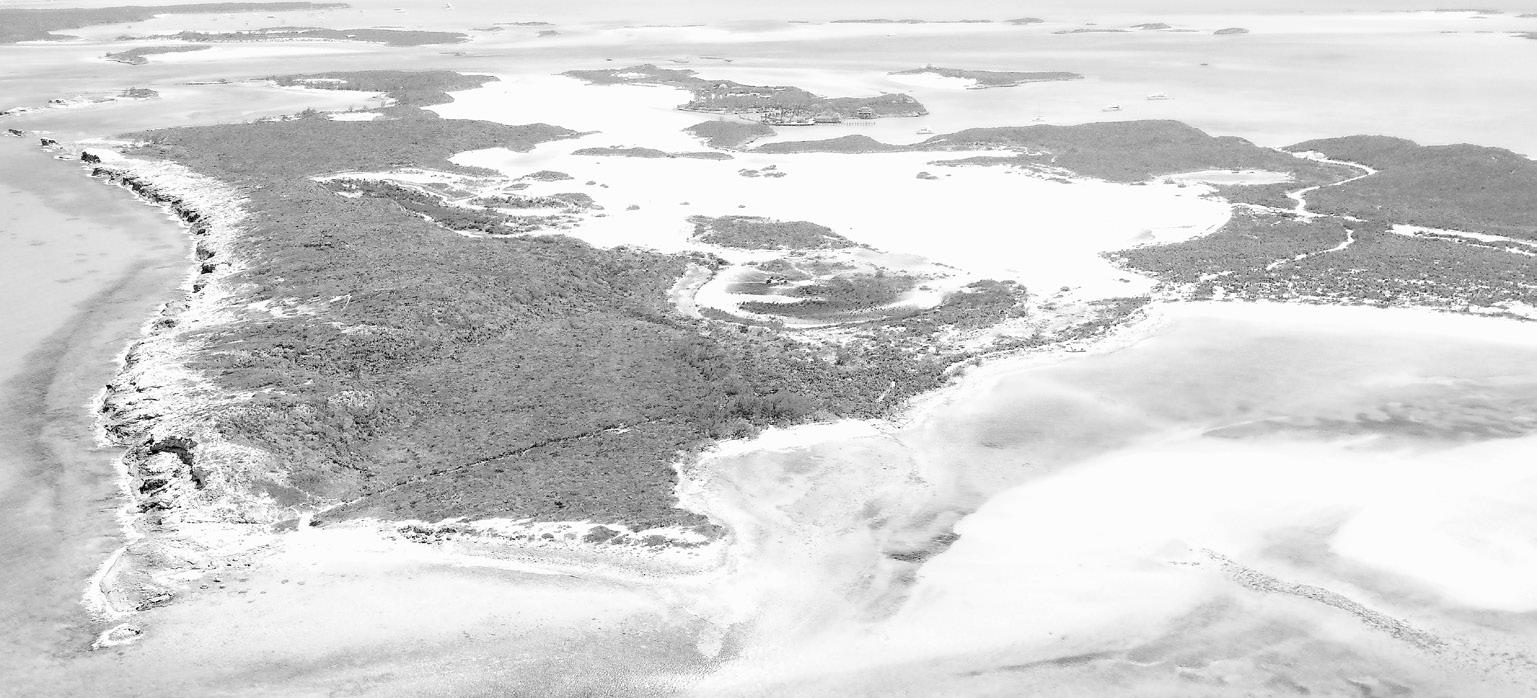
BIG SAMPSON CAY
Regulator alters to avoid Family Islands ‘deterrent’
document included a drafting error creating confusion as to whether the planned turnover rate was 3 percent or 5 percent, nevertheless stuck to its goals and rejected the satellite industry’s arguments that the turnover-based fee be eliminated completely on the grounds that it would impose a “materially higher burden” than in other jurisdictions.
“Responses to the proposed hybrid fee structure, comprising a $40,000 flat base authorisation fee and a turnover-linked component of 5 percent of relevant turnover where annual revenues exceed $500,000 were mixed,” the Bahamian communications regulator conceded.
“The majority of satellite operators and industry associations opposed the inclusion of a turnover-linked component. These respondents argued that satellite spectrum is internationally co-ordinated, shared and non-exclusive in nature, and that revenue-based fees are structurally inappropriate for spectrum that carries low scarcity value and minimal opportunity cost.
“Concerns were raised that turnover-linked fees would create barriers to market entry, discourage investment, penalise subscriber growth and ultimately increase costs for end users, particularly in
underserved areas. Several respondents also noted the practical challenge of attributing relevant turnover to a single jurisdiction in the context of multi- jurisdictional satellite operations.”
URCA added that the satellite industry’s “preferred alternative.. was a simplified flat fee calibrated to recover” the regulator’s “actual administrative and spectrum management costs”. Mr Musk’s Starlink was seemingly especially vocal about the cost burden this threatened to impose.
“A further concern raised within this group was that the proposed fee, when added to the existing annual URCA fee and the Communications Licence fee, would result in a cumulative revenue-linked regulatory burden materially higher than comparable international benchmarks for satellite markets of similar scale,” URCA said of the feedback it received.
“Starlink submitted a specific calculation indicating that the combined regulatory fee obligation, incorporating the existing URCA fee of 1.448 percent of relevant turnover, the Communications Licence fee of 3 percent, and the proposed turnover-linked spectrum component of 5 percent, would produce a total revenue-linked charge of approximately 9.448 percent where an operator’s relevant turnover equals or exceeds $500,000 in a given licence year.
“Starlink characterised this as unusually high by international standards, and as directly undermining affordability and service expansion objectives, particularly in respect of Family Island connectivity,” the regulator added.
“As an alternative, Starlink proposed that URCA not adopt any additional spectrum usage fee in shared frequency bands, submitting that such an approach would align spectrum charges with the non-scarcity and shared nature of satellite spectrum, avoid duplication of existing regulatory cost recovery mechanisms, support affordable access and service expansion across all islands, and encourage continued investment in satellite broadband infrastructure.
“Starlink acknowledged that the hybrid framework represents a significant structural improvement over the previous per-terminal fee approach, but maintained that a turnover-linked spectrum fee remains economically distortive and inconsistent with the stated policy goals of the electronic communications framework.”
Responding to these concerns, URCA argued: “URCA considers that it is appropriate for the spectrum fee framework to reflect, to some extent, the scale of commercial activity within The Bahamas, while ensuring that the overall regulatory burden remains
Obamacare premiums surged this year. A new analysis shows it’s likely to happen again in 2027
By ALI SWENSON Associated Press
MIDDLE-income Amer-
icans straining to pay for Affordable Care Act health insurance are unlikely to get relief next year, according to a new analysis that shows insurers in the marketplace are proposing a second straight year of double-digit premium hikes. Across the 77 insurers in the ACA program that have submitted rate filings that are publicly available, the median proposed premium increase for 2027 is 14%, according to Wednesday’s analysis from the healthcare research nonprofit KFF. The insurers cited mounting healthcare costs, federal regulatory changes and the recent expiration of pandemic-era enhanced subsidies as the biggest factors driving premiums higher.
The rise in premiums adds to what already was a significant jump in 2026, when the median rate increase was 20%, according to KFF.
While most Americans in Obamacare still qualify for subsidies that protect them from paying the full premiums, middle-class enrollees who don’t get those subsidies will face an especially stark increase in costs. That group includes households with incomes at or above 400% of the poverty level — about $63,000 per year for an individual
proportionate and consistent with URCA’s statutory objectives under the Communications Act.”
It countered that “a turnover-based structure can support market entry by ensuring that new or low-revenue operators make lower contributions during the early stages of commercial deployment”, and argued that there would be a limited impact on satellite industry investment. “The main investments of satellite systems are typically fixed and not driven primarily by the number of Bahamian customers served,” URCA added.
“Impact on subscriber growth will not be material. A modest turnover-linked contribution should not materially alter the affordability for end users, wherever there are located. The fee structure will not affect coverage in underserved areas. Unlike terrestrial networks, where extending coverage may require incremental site deployment and backhaul investment, satellite coverage is typically available across wide regions once the satellite system is authorised and operational.”
However, URCA also made a concession to Starlink’s arguments about the total burden when all turnover-based fees are combined. “URCA accepts, however, that the calibration of the turnover-linked component requires careful reassessment in light of the cumulative fee burden
or $129,000 for a family of four. The rate increases come as federal lawmakers have proposed various policy changes to overhaul the expensive U.S. healthcare system, but no comprehensive legislation has amassed enough support to pass. The higher costs are contributing to Americans’ existing worries about overall affordability, a concern that many voters say is front of mind with November’s midterm elections looming.
Insurers cite rising costs and a smaller, sicker covered population
Health insurers must send filings to regulators every year, explaining what they expect to see in premium rate changes for individual market health plans for the coming year.
Next year’s rates will be finalized later in the summer, but KFF’s analysis looked at those in the ACA marketplace that already are public across 16 states

identified in submissions,” it said. “The full revenue-linked regulatory burden applicable to operators comprises the existing URCA annual regulatory fee of 1.448 percent of relevant turnover, the Communications Licence fee of 3 percent, and the proposed turnover-linked spectrum component of 5 percent, resulting in a combined charge of approximately 9.448 percent where an operator’s relevant turnover equals or exceeds $500,000 in a given licence year.
“URCA notes the concerns that this cumulative figure is high relative to international benchmarks for satellite markets of comparable scale, and that it may have the unintended effect of deterring service expansion and investment, including in the Family Islands where satellite connectivity is most socially and economically valuable,” the Bahamian regulator added.
“URCA considers that these concerns are relevant to the calibration of the turnover-linked component, and has taken them into account, together with international benchmarks, the cumulative regulatory cost burden and the Government’s policy objectives on affordable access, in determining the appropriate level of the fee.” As a result, it cut the turnover-based levy from 5 percent to 3 percent.
and Washington, D.C., to get an early glimpse at what insurers are saying. The report measured insurers’ premium increases as an average across all types of plans — bronze, silver, gold and platinum.
The analysis found that insurers listed rising costs across the healthcare sector — from hospital visits to prescription drugs, the workforce and sicker patients — as the biggest cause of rising premiums. Overall inflation contributed to that pressure, driving prices higher across the entire economy.
Insurers also blamed the expiration of federal subsidies that had offset costs for many people and caused the Affordable Care Act program to balloon in size in recent years. When those tax credits expired in January, many plan costs skyrocketed. That prompted large swaths of enrollees to depart the marketplace, leaving sicker patients
“The application of the turnover-linked component on a marginal basis ensures that fees increase progressively with the level of activity, while avoiding disproportionate impacts on operators with lower levels of relevant turnover,” URCA said.
“URCA recognises that stakeholders expressed differing views regarding both the appropriateness of the proposed benchmark comparisons and the extent to which the cumulative regulatory fee burden should influence the calibration of the spectrum fee.
“While URCA does not consider that any single benchmark or fee metric should be determinative, it considers that the originally proposed turnover-linked component of 5 percent would not appropriately reflect the principles of proportionality set out in the Communications Act,” the regulator added.
“Having regard to stakeholder submissions, international practice, the cumulative effect of applicable regulatory charges, and the need to support investment, affordability and service expansion, URCA has determined that a turnover-linked component of 3 percent applied only to relevant turnover exceeding $500,000 strikes a more appropriate balance between proportionality, competitive neutrality and efficient spectrum management.”
who carry higher risks and costs, and driving premiums higher.
New state-by-state data posted by the Trump administration shows that the overall ACA marketplace shrunk by more than 2.5 million people over the past year, with some states seeing declines amounting to nearly a third of their enrollee population.
Some insurers added that federal regulatory changes contributed to their requests for higher premiums. For example, they said new enrollment and eligibility requirements instituted by the Trump administration could affect the overall population of ACA enrollees.
While Affordable Care Act enrollees make up less than 10% of the population, similar cost drivers are likely to make other private plans, including employer-sponsored plans, pricier too, according to KFF’s analysis.


The tenuous state of a US-Iran ceasefire renews anxiety over high fuel prices
By CATHY BUSSEWITZ and MAE ANDERSON AP Business Writers
THE potential unraveling of a fragile truce between Iran and the United States renewed anxiety Wednesday over whether fuel prices would go back up if sustained fighting kept oil tankers from traveling through the Persian Gulf.
Oil prices rose to their highest point in weeks after President Donald Trump declared the U.S. ceasefire with Iran over, responding to Iranian attacks on commercial ships in the Strait of Hormuz and on American military sites in other Gulf nations. Costlier crude oil could lead to costlier gas station fill-ups as drivers in many countries were getting a break from elevated prices brought on by the war.
“Tanker traffic through the Strait of Hormuz has essentially stopped, which tells you more about risk perception right now than any statement from Washington or Tehran,” said Jorge Leon, head of geopolitical analysis at Rystad Energy, in an email. “Oil markets reacted quickly to the renewed geopolitical risk.”
U.S. gasoline prices increased slightly Wednesday to an average of $3.80 for a gallon of regular, up from $3.79 the day before, but still well below the month-ago average of $4.16, according to motor club federation AAA.
Crude oil makes up the bulk of the price of gasoline, so when oil prices rise, gasoline eventually follows. But it can take weeks for consumers to feel the full impacts. That’s because refiners make gasoline with
oil purchased in advance.
The finished product then has to travel through a system of pipelines and trucks to reach gas station pumps.
Gas station owners set prices at the pump, and to stay competitive, they sometimes absorb the impact of higher oil prices instead of immediately passing it along to customers.
To suppress high oil prices during the war, the U.S. and other countries released oil from their emergency stockpiles starting in March. But those stockpiles won’t last forever.
The U.S. Strategic Petroleum Reserve held 319.5 million barrels as of July 3. The last time the inventory was that low was in 1983, when the reserve was initially being filled up.
“Unfortunately, the drawdown of strategic stocks means that there is a lot less ammunition in Trump’s holster,” said Michael Lynch, a distinguished fellow at Energy Policy Research Institute in Amherst, Massachusetts.
A barrel of U.S. benchmark crude was selling for $75.80 on Wednesday, the highest price in more than two weeks. Brent crude, the international standard, climbed close to $79 per barrel, its highest level since June 19.
The market reaction “highlights how sensitive prices remain to any escalation around the strait, given its role as a critical transit route for global oil flows,” Leon said.
Shipping uncertainty increases after fresh strikes
A day after the U.S. accused Iran of striking three commercial vessels and revoked the country’s
NOTICE
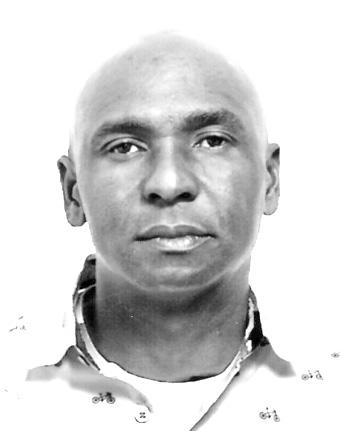
NOTICE is hereby given that I BARRINGTON DAVE BROWN of Sir. Lynden Pindling Estates, New Providence, Bahamas, applying to the Minister responsible for Nationality and Citizenship, for Registration Naturalization as a citizen of The Bahamas, and that any person who knows any reason why registration/naturalization should not be granted, should send a written and signed statement of the facts within twenty-eight days from the 9th day of July, 2026 to the Minister responsible for nationality and Citizenship, P.O. Box N-7147, Nassau, New Providence, The Bahamas.
NOTICE
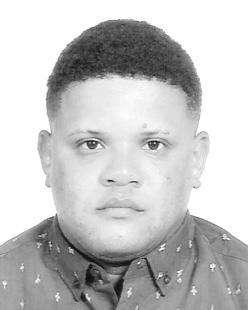
NOTICE is hereby given that I, MORVENS ULYSSE of Coconut Grove, New Providence, Bahamas is applying to the Minister responsible for Nationality and Citizenship, for registration/ naturalization as a citizen of The Bahamas, and that any person who knows any reason why registration/naturalization should not be granted, should send a written and signed statement of the facts within twenty-eight days from the 3rd day of July, 2026 to the Minister responsible for nationality and Citizenship, P.O. Box N-7147, Nassau, Bahamas.
NOTICE

NOTICE is hereby given that I, ADDLEY PRUDENT of Windsor Lane, New Providence, Bahamas is applying to the Minister responsible for Nationality and Citizenship, for registration/ naturalization as a citizen of The Bahamas, and that any person who knows any reason why registration/naturalization should not be granted, should send a written and signed statement of the facts within twenty-eight days from the 2nd day of July, 2026 to the Minister responsible for nationality and Citizenship, P.O. Box N-7147, Nassau, Bahamas.
ability to openly sell crude oil on the world market, some advised the shipping industry to reconsider whether it was safe to send crewed ships through the Strait of Hormuz — and the wider Middle East.
International Maritime Organization
Secretary-General Arsenio Dominguez condemned attacks on ships in the strait.
“As long as the safety and security of crews cannot be assured, I urge flag states, shipowners, operators and all relevant authorities to avoid exposing seafarers to unnecessary danger by transiting the strait,” Dominguez said Wednesday. “The situation in the region remains volatile.”
Some traffic traversed the strait on Tuesday, according to data and analytics company Kpler, which verified 41 crossings compared to 36 on Monday. It was unclear

if the crossings happened before or after the strikes. Some vessels also are going “dark” to pass through the strait and not broadcasting their locations, further complicating a complete count. With the central route through the strait uncrossable due to mines, ships have been using two other routes, the smaller northern route, which goes through Iranian waters, and the southern route, which goes through Omani waters. The three ships struck Tuesday appeared to be using the Omani route.
An economist at advisory firm Oxford Economics said the ceasefire probably would continue to
PUBLIC NOTICE
INTENT TO CHANGE NAME BY DEED POLL
The public is hereby advised that I, SHAMIKA
KIRKLYN ADDERLEY of Carmichael Road, Nassau, Bahamas intend to change my name to RICE KIRKLYN POITIER. If there are any objections to challenge the name by deed poll, you may write such objections to the Chief Passport Officer, P.O. Box N-742, Nassau, The Bahamas no later than thirty (30) days after the date of the publication of this notice.
be on-and-off and Washington and Tehran could still deescalate the latest tensions instead of returning to war.
“The question is whether the latest developments merely represent a bump in the road or if we’re emerging from the ‘eye of the storm,’” Ben May, the firm’s director of global macroeconomic research, wrote in a research note. “While Trump said negotiations with Iran were a ‘waste of time’, he maintained an offramp by noting that U.S. negotiators would continue talks with Iran, suggesting the truce hasn’t been irrevocably broken.”
The new doubts about the Strait of Hormuz came after two of the biggest shipping companies, Maersk and Hapag-Lloyd, announced Monday that their Gemini Corporation joint partnership would gradually resume service in the Suez Canal, which was paused due to attacks in the Red Sea by Yemen’s Houthis.
Recent stability in the Middle East created the conditions for the companies’ decision, but “the recent deterioration could put this resumption in jeopardy once again,” said Judah Levine, head of research at freight booking platform Freightos. “The said.
PUBLIC NOTICE
INTENT TO CHANGE NAME BY DEED POLL
The public is hereby advised that I, ORRIEN DEANGELO SYMONETTE of P.O. Box N-4054, #25 Rosedale Street, Nassau, Bahamas intend to change my name to ORRIEN DEANGIO KNOWLES. If there are any objections to challenge the name by deed poll, you may write such objections to the Chief Passport Officer, P.O. Box N-742, Nassau, The Bahamas no later than thirty (30) days after the date of the publication of this notice.
GAS pumps are seen at a gas station in Buffalo Grove, Thursday, June 25, 2026.
Photo:Nam Y. Huh/AP
Oil prices rise, and stocks drop worldwide after Trump says ceasefire with Iran is ‘over’
By STAN CHOE AP Business Writer
OIL prices rose, and stock markets dropped in shaky trading worldwide Wednesday after President Donald Trump raised doubts about the temporary truce in the war with Iran.
The S&P 500 fell as much as 1.1% after Trump said the ceasefire agreement was “over,” but the index then trimmed its loss to 0.3% after Trump said recent fighting did not mean a return to full-scale war. They’re his latest mixed messages on what will happen with the war, which threatens to worsen inflation for the world.
The Dow Jones Industrial Average dropped 576 points, or 1.1%, while the Nasdaq composite rose 0.2% after erasing an early loss.
The action was stronger in the oil market, where the price for a barrel of Brent crude climbed 5.2% to $78.02 and briefly topped $80.
That’s still below its peak from earlier in the war, when the price for the most actively traded contract reached nearly $120. But the jump is unsettling because oil prices had just dropped back to where they were before the war.

The worry is that a continuation of the war will block the Strait of Hormuz and prevent the delivery of crude from the Persian Gulf to customers worldwide. That could worsen inflation, which economists expected would ease with oil prices, and in turn force the Federal Reserve and other central banks to raise interest rates.
Higher rates can keep a lid on inflation, but they also slow the economy and
hurt prices for all kinds of investments.
On Wall Street, stocks of companies in the housing industry helped lead the way lower. They were hurt by worries that rising Treasury yields in the bond market will mean higher rates for mortgages and chill the industry.
Builders FirstSource, which sells countertops, windows and other building supplies, fell 5.4%.
Homebuilders PulteGroup
fell 5.4%, and D.R. Horton sank 4.6%.
Companies with big fuel bills also sank. American Airlines lost 4%, and cruise operator Carnival fell 3.9%.
Helping to offset those losses was a steadying for some influential stocks in the artificial-intelligence industry. They’ve been under pressure in recent weeks on worries that their prices shot too high and that AI may not produce enough productivity and profits to make all the
investments in chips and data centers worth it.
Their swings carry a lot of weight on Wall Street because AI stocks have grown into some of the U.S. market’s biggest, giving their movements more effect on the S&P 500 than other stocks.
Nvidia rose 3.7%, for example, and was the strongest force pushing upward on the S&P 500 because it’s the largest stock on Wall Street.
Close behind was Broadcom, which climbed 4.8% after Apple announced a multiyear commitment where Broadcom will design and produce custom components for its products. Apple said the agreement’s value could top $30 billion.
All told, the S&P 500 fell 21.14 points to 7,482.71. The Dow Jones Industrial Average dropped 576.76 to 52,348.39, and the Nasdaq composite rose 51.96 to 25,870.65.
In the bond market, Treasury yields rose with the price of oil. The yield on the 10-year Treasury briefly got near 4.60% before pulling back to 4.57%. That’s up from 4.55% late Tuesday and from just 3.97% before the war with Iran began.
In stock markets abroad, European markets turned sharply lower after Trump said, “For me, I think it’s over” about the status of the ceasefire. He added that U.S. representatives can continue negotiations, “but I think they’re wasting their time.” Germany’s DAX lost 2.2%, and France’s CAC 40 sank 2.2%.
In Asia, South Korea’s Kospi dropped 5.3% and continued its sharp swings amid seesawing worries and euphoria about the AI stocks that dominate its market.
Hong Kong’s Hang Seng index was an outlier and rose 3%. Shares that trade there of Chinese AI startup Zhipu, known also as Z.ai and traded as Knowledge Atlas Technology, jumped 13.4%.
A six-month lock-up period for “cornerstone” investors following its January trading debut in Hong Kong expires this week. China National Radio reported late Tuesday that nearly 70% of Zhipu’s cornerstone investors are committed to stay on, despite previous worries that the lock-up period expiration could trigger a sell-off.
By PAUL WISEMAN AP Economics Writer
THE International Monetary Fund on Wednesday modestly downgraded its outlook for the world economy this year, citing the energy shock caused by the Iran war. But the fallout from the conflict is being partially offset by booming investment in artificial intelligence and other technologies.
The IMF now expects the global economy to expand by a sluggish 3% in 2026, down from 3.5% last year and from the 3.1% it had forecast for this year back in April. The fund expects worldwide growth to rebound to 3.4% next year.
Iran responded to U.S. and Israeli attacks Feb. 28 by shutting down the Strait of Hormuz, through which a fifth of the world’s crude oil and natural gas passes. Energy prices soared, squeezing businesses and consumers. The IMF now expects oil prices to be up nearly 32% this year and for global consumer prices overall to increase 4.7% in 2026. That would be up from 4.1% in 2025 and would mean that two years of progress against inflation has stalled.
The IMF forecasts assume that the Strait of Hormuz reopens later this month — even though U.S. strikes on Iran resumed and President Donald Trump
declared Wednesday that a ceasefire with Iran was over. They also assume that commerce through the strait returns to normal by next March.
“The world economy has weathered the shock from the war better than feared,”
Petya Koeva Brooks, deputy director of the
IMF’s research department, told reporters Wednesday. The economic damage from the energy shock has been limited partly because countries could draw on existing oil stockpiles and because oil-exporting countries outside the Persian Gulf stepped up production. Countries that produce and export their own energy and that benefit from AI investment are insulated from the war’s economic damage. Among them is the United States. The IMF expects the U.S. economy — the world’s largest — to
grow a solid 2.3% this year, up from 2.1% in 2025 and unchanged from the April forecast. President Donald Trump’s 2025 tax cuts, big gains in productivity and a strong stock market are also giving the American economy a lift. The 21 European countries that share the euro currency, hit hard by higher energy prices, are collectively forecast to grow just 0.9% this year, down from 1.4% in 2025. China, the world’s No. 2 economy, is expected to expand 4.6% this year,
down from 5% in 2026 but a bit faster than the IMF had expected in April. Weighed down by higher energy prices and a property market collapse, the Chinese economy is getting offsetting help from public works spending, a surge in high-tech manufacturing and booming exports. India is once again forecast to be the world’s fastest-growing major economy, advancing at a 6.4% clip (down from a sizzling 7.7% last year) on strong consumer spending.
CROSSWORD PUZZLE
CARROLTON INVESTMENTS LIMITED In Voluntary Liquidation
Notice is hereby given that in accordance with Section 138(4) of the International Business Companies Act. 2000, CARROLTON INVESTMENTS LIMITED is in dissolution as of June 30, 2026
International Liquidator Services Ltd. situated at 3rd Floor Whitfield Tower, 4792 Coney Drive, Belize City, Belize is the Liquidator.
L I Q U I D A T O R
Incorporated under the International Business Companies Act, 2000 of the Commonwealth of The Bahamas. Registration number 210758 B (In Voluntary Liquidation)
Notice is hereby given that the above-named Company is in dissolution, commencing on the 8th day of July A.D. 2026.
Articles of Dissolution have been duly registered by the Registrar. The Liquidator is Mrs. Maria Emilia de Paiva Castro whose address is Rua Francisco Laranjeiras, 00225, Ed Atlantida, APT 1102, Pont Verde, CEP: 57035-090, Maceio, AL, Brazil. Any Persons having a Claim against the above-named Company are required on or before the 7th day of August, 2026 to send their names, addresses and particulars of their debts or claims to the Liquidator of the Company, or in default thereof they may be excluded from the benefit of any distribution made before such claim is proved.
Dated this 8th day of July A.D. 2026. [NAME OF LIQUIDATOR] LIQUIDATOR NOTICE

OPTIONS traders Serge Marinovich, left, and Phil Phil Fracassini work on the floor of the New York Stock Exchange, Friday, June 26, 2026.
Photo:Richard Drew/AP
Fed minutes: Officials deeply divided over future path of US inflation
By CHRISTOPHER RUGABER AP Economics Writer
THE Federal Reserve’s rate-setting committee is split over whether inflation is likely to stay elevated or whether it will cool once the Iran war winds down, according to minutes released Wednesday.
In the first set of minutes released under new chair Kevin Warsh, “many” of the Fed’s 19 officials said its key rate would be unchanged from or slightly below its current level of 3.6% by the end of this year. But “many” also said that it would likely be higher by year-end.
Forecasts released after the meeting ended June 17 showed that half of the 18 policymakers who
submitted projections supported lifting rates by the end of this year, while the other half supported keeping them unchanged or reducing them. Warsh did not submit a forecast, reflecting his view that doing so can lock policymakers into a specific approach that is harder to change if the economy shifts direction.
Half support a hike by end of year, half don’t The minutes underscored the deep divisions among Fed officials, particularly over the future path of inflation. The policymakers generally expected inflation would decline as gas prices cooled and the effect of tariffs faded. Yet many officials also worried that
massive investment in the artificial intelligence buildout would keep inflation elevated by lifting prices for semiconductors and other technology goods.
The minutes, released three weeks after the June 16-17 meeting, also said that a few officials believed there was “a case for raising” the Fed’s rate at that meeting, but they agreed to keep it unchanged, a decision that was approved by a unanimous vote. The minutes don’t disclose the identities of which officials supported which outcomes.
Warsh was appointed by President Donald Trump earlier this year to replace Jerome Powell, whose term ended in May. Trump had repeatedly criticized Powell for not reducing borrowing
costs quickly enough, but for now there’s little sign Warsh is moving to cut rates. Powell, meanwhile, is still on the Fed’s policymaking committee, serving a term as a Fed governor that lasts until January 2028.
During a news conference June 17, Warsh emphasized that the Fed will return inflation to its 2% target, which it has missed for more than five years. His comments were interpreted by economists and Wall Street investors as evidence that the Fed may hike rates later this year.
AI likely to be an inflation driver, minutes say A key concern for many Fed officials is the potential for the AI buildout to contribute to higher inflation by pushing up prices for
semiconductors, computer equipment, and electricity. Data centers require significant power to operate.
“Many participants noted that ongoing strong demand for AI infrastructure would likely sustain upward pressure on prices for technology products and electricity,” the minutes said.
Last month, Apple said it would increase the price of laptops and iPads because of more expensive memory chips.
Consumers are worried inflation will stay high
Inflation has worsened since the United States and Israel attacked Iran in late February, reaching a threeyear high of 4.2% in May. As the conflict has eased, gas prices have fallen back and inflation is likely to cool when June’s figures are reported next week.
But another concern for the Fed is whether Americans are increasingly expecting prices to
stay high. If consumers and businesses assume inflation will remain elevated, such an outcome can become self-fulfilling. Businesses then are more likely to raise prices in anticipation of higher costs and more workers are likely seek higher pay to offset rising costs.
The Federal Reserve Bank of New York said Tuesday that its measure of consumer expectations for inflation one year from now rose to 3.7%, the highest in nearly three years. Expectations for inflation in three years rose to 3.3%, a fouryear high.
Most Fed officials, including Warsh, say they closely monitor expectations, though many put more weight on financial market measures. Those measures have been lower and more stable than those based on consumer surveys.