WOMAN & HEALTH






‘Sebas’ discounted pop-up may make us look like the bad guys’
By NEIL HARTNELL Tribune Business Editor nhartnell@tribunemedia.net
FOOD stores yesterday voiced fears they will be viewed as “the bad guys taking advantage of people” if Sebas Bastian’s pop-up grocery store concept is not handled properly, with one asserting: “We just hope it won’t interfere with the regular business flow.”
Debra Symonette, Super Value’s president, told Tribune Business that the Fort Charlotte MP’s bid to ease cost of living pressures for his constituents by Saturday’s offering of up to 40 percent discounts on key food items needs to be perceived as a “charitable organisation” rather than a new food store entering into competition with established rivals such as her 13-store chain.
DRIVER CHARGED WITH CAUSING FIVE DEATHS GRANTED $30K BAIL
By PAVEL BAILEY Tribune Staff Reporter pbailey@tribunemedia.net
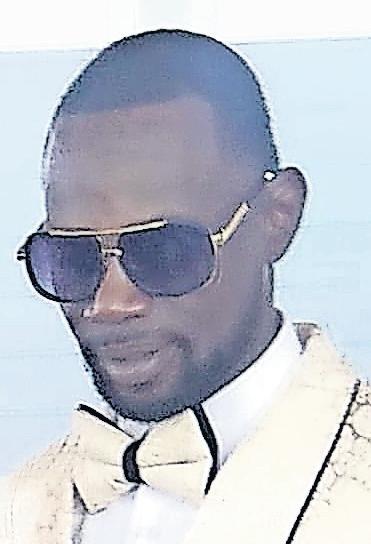
A 19-YEAR-OLD man accused of causing the deaths of five teenagers in the Shirley Street road crash was granted $30,000 bail yesterday as he awaits trial on vehicular manslaughter charges. Prosecutors allege

Marcus Thacker Jr was driving dangerously in a Mazda sedan when he crashed into a tree outside a business on Shirley Street at 1.48am on June 28, killing Keno Gordon Jr, 19, Diamond Stubbs, 17, Bertrica Brown, 18, Evalena “Lilly” Johnson, 19, and Shantia Webb, 19. Reports indicate that

By EARYEL BOWLEG Tribune Staff Reporter ebowleg@tribunemedia.net
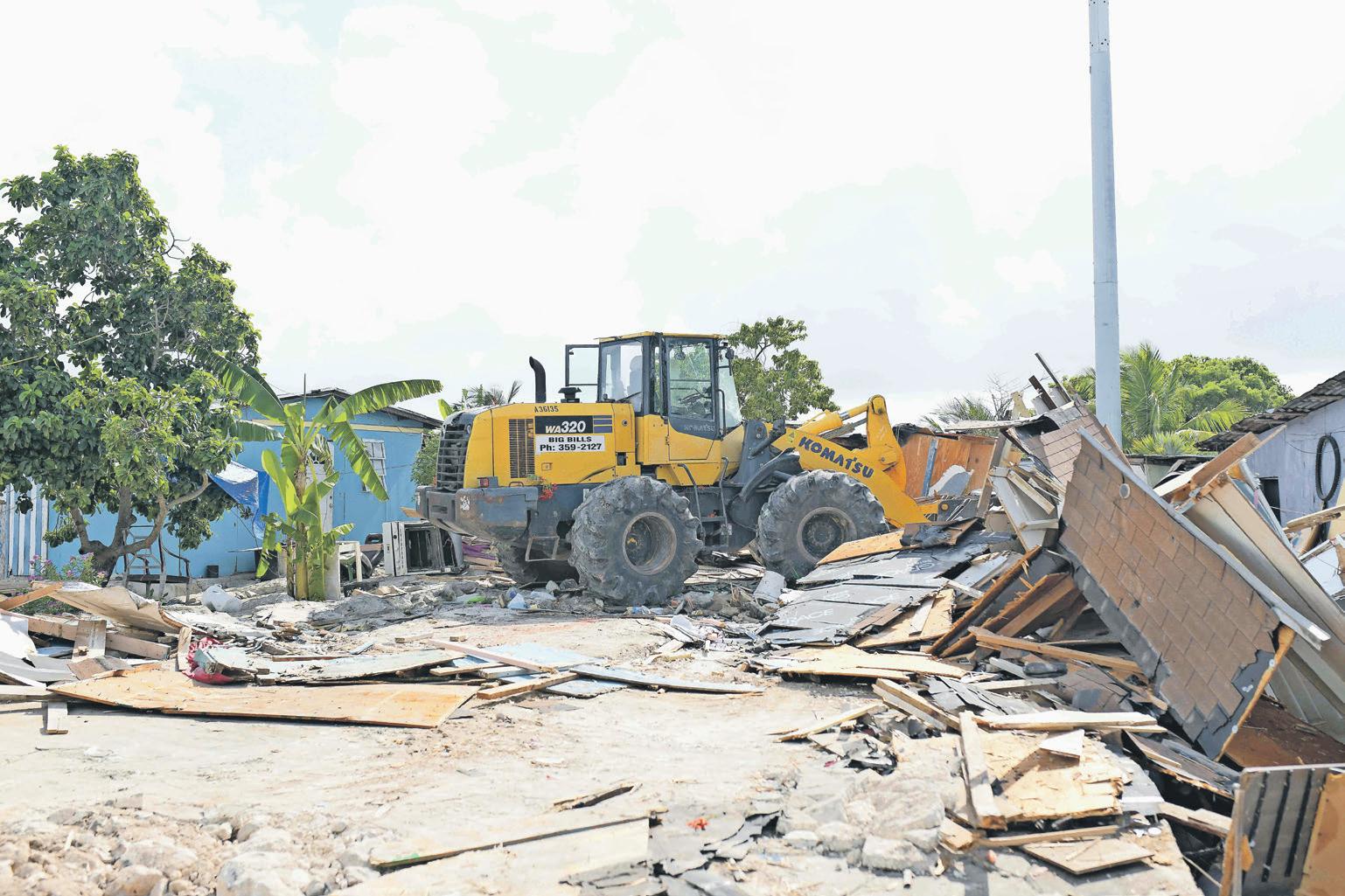
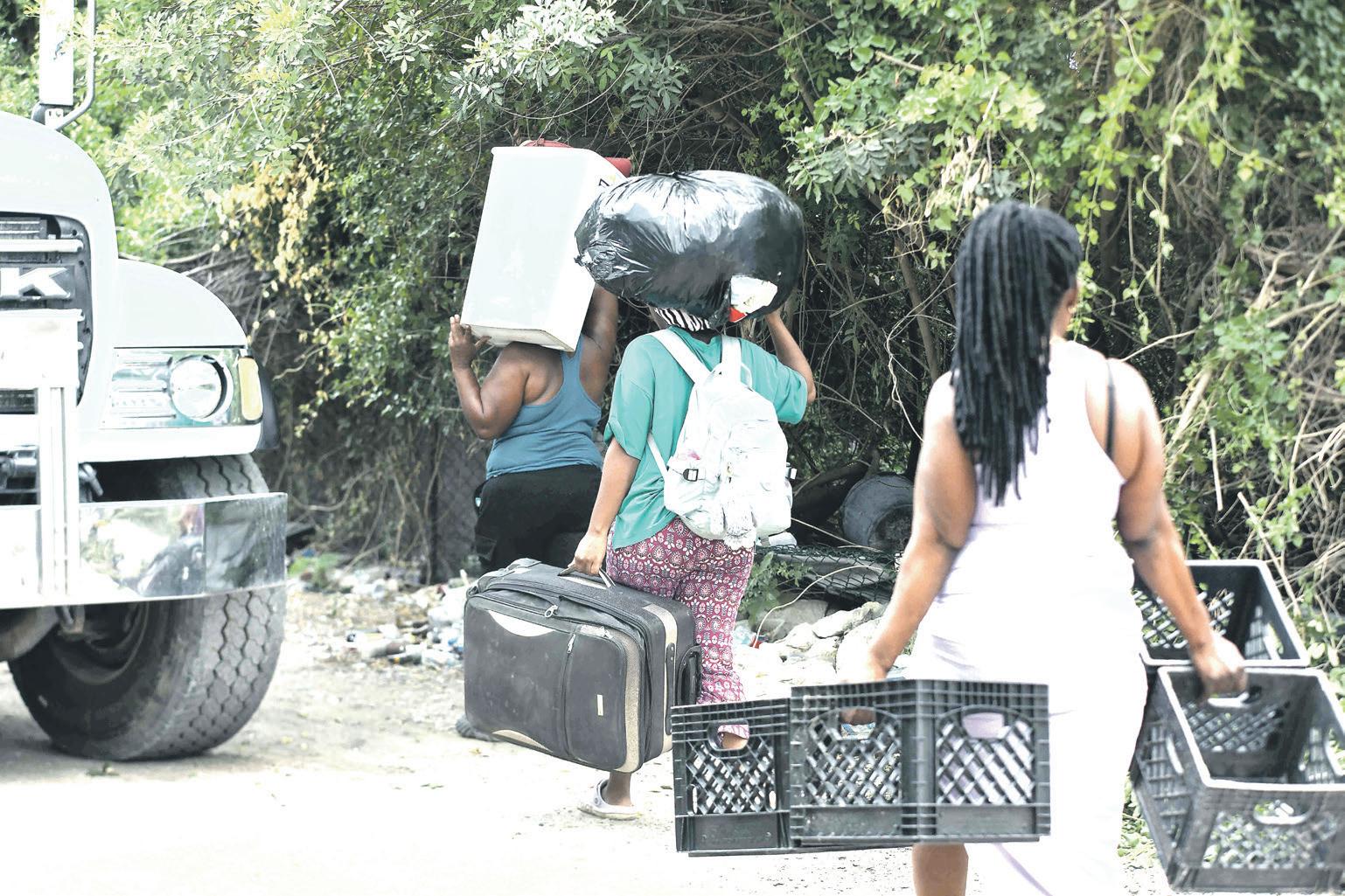
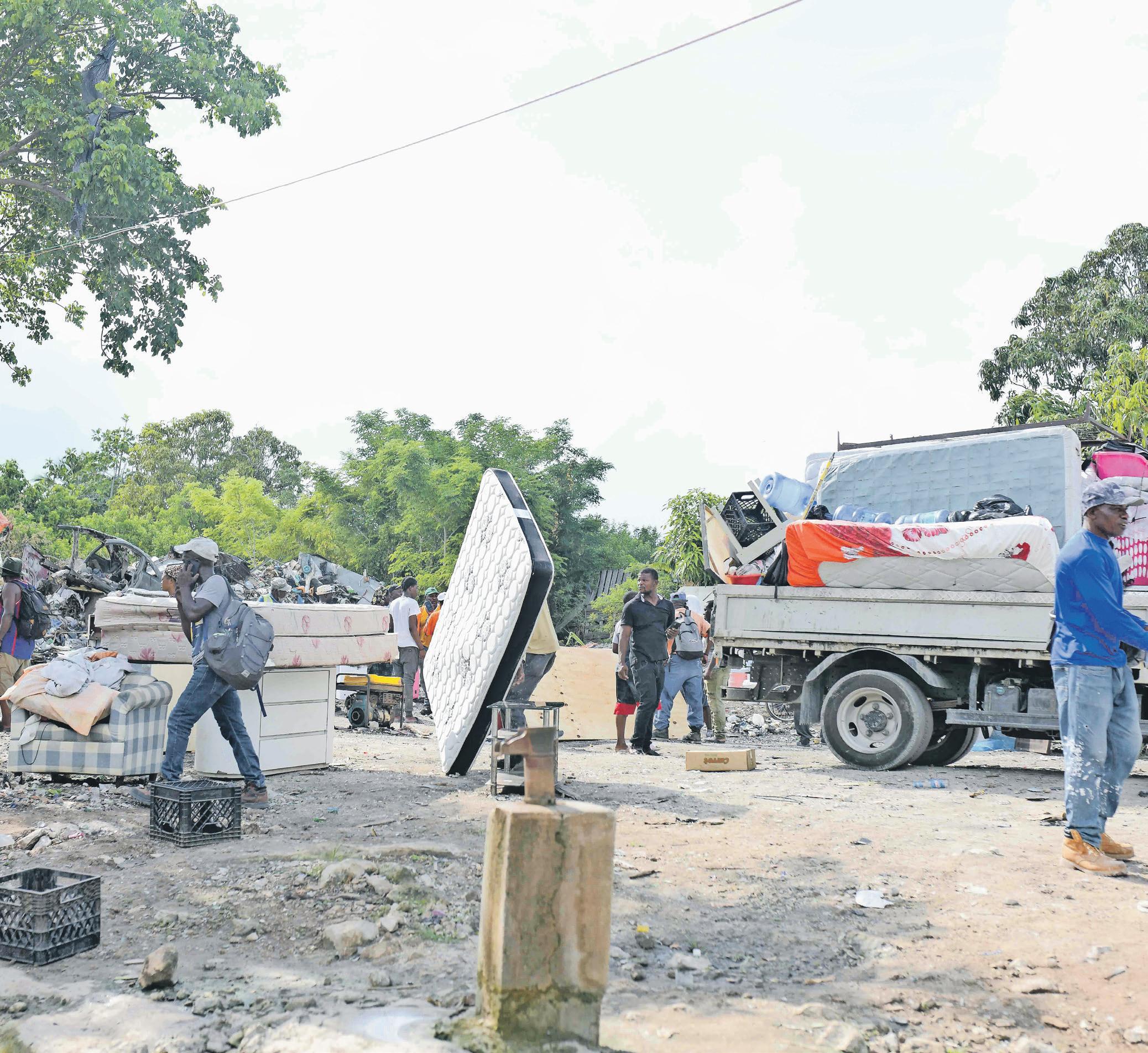
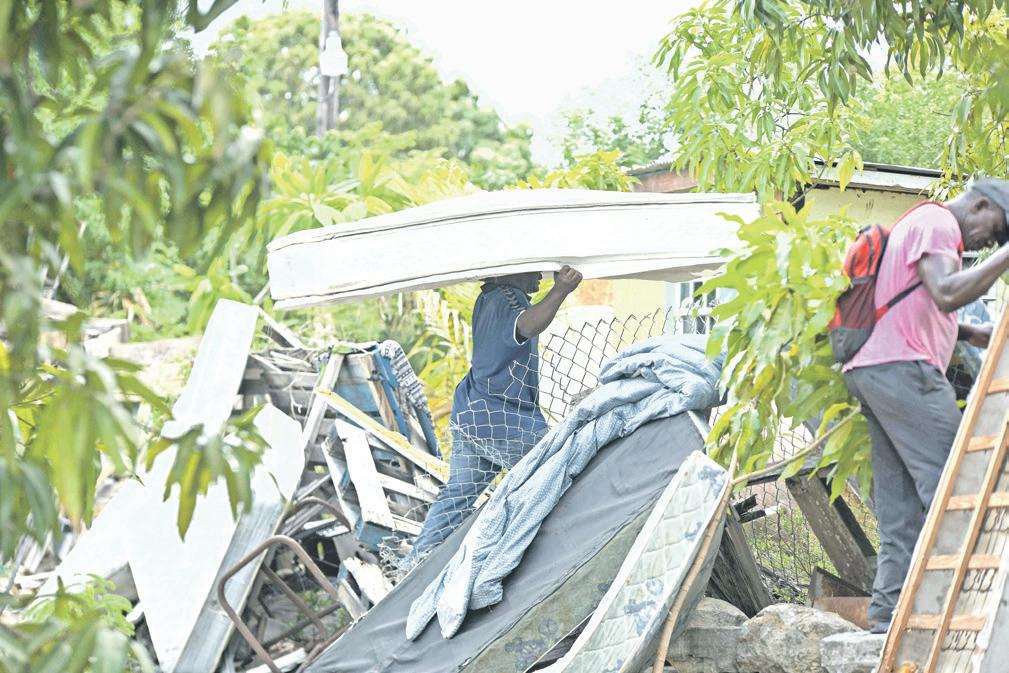
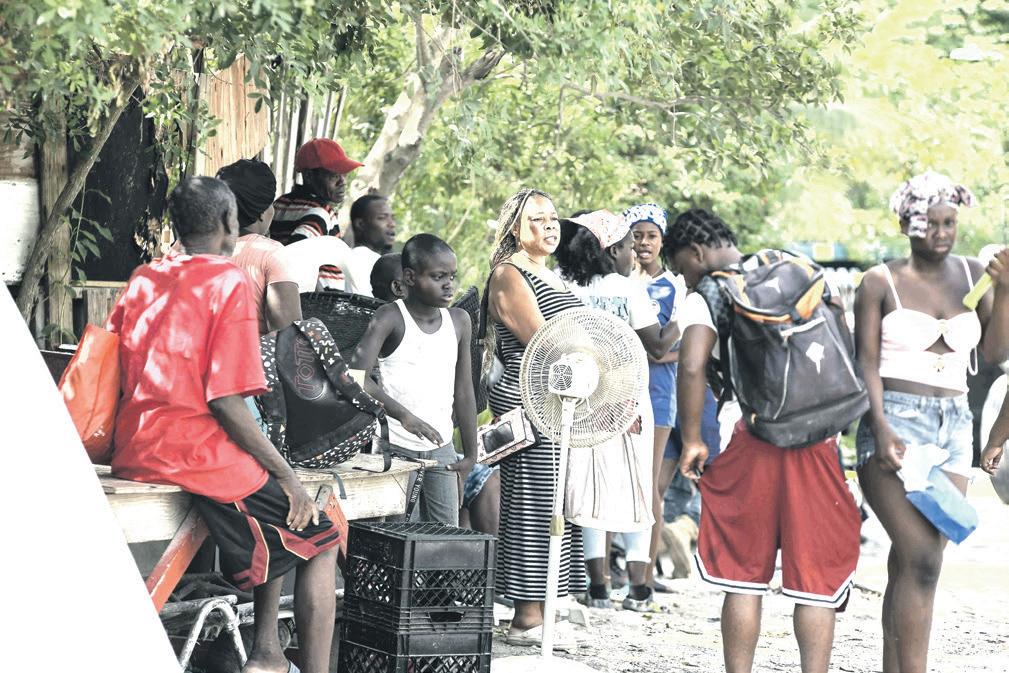
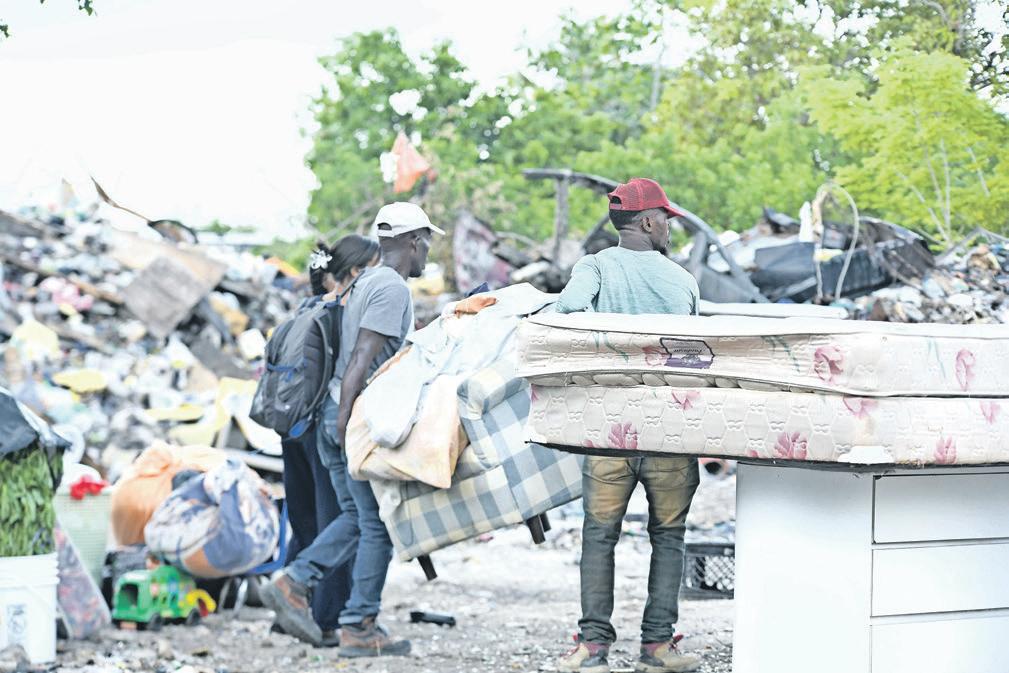
GOVERNMENT crews tore into the Montgomery shanty town off Cowpen Road yesterday, demolishing 64 of 67 structures as residents stacked furniture along the roadside, scrambled to salvage their belongings and questioned where they would sleep next.
One resident even assaulted Superintendent Stephen Carey, the chairman of the Unregulated Communities Action Task Force, leaving him needing three stitches. The demolition marked the latest phase of the Davis administration’s crackdown on unregulated communities, coming nearly a year after officials said about 200 residents in the area were served eviction notices and given
28 days to vacate the area. Mr Carey said a resident tripped him and struggled with him during the demolition exercise, with the confrontation beginning after the resident allegedly threatened a Defence Force officer at the site. The man was arrested on suspicion of threats of harm and disorderly behaviour and was being
DEMOLITION - SEE PAGE TWO
By JADE RUSSELL Tribune Staff Reporter jrussell@tribunemedia.net
A FATHER of two died after a boat carrying him and six other men to a construction job in Spanish Cay exploded Saturday morning, forcing the group into the water and leaving survivors fighting to stay afloat.
Jamal Cornish, 37, had been trying to repair the vessel after it developed mechanical problems when the explosion occurred, according to police. He later told the others he could no longer hold on before releasing his grip and sinking beneath the water.
She said the family is still struggling to accept his death.
“I wasn't on the island, I had just reached Grand Bahama, and then I got
His sister, Jasmine Curry, said Cornish, a fisherman, had been working at the construction site for several months because lobster season is closed.

unregulated communities, they will be demolished.
escorted to a bus when he allegedly attacked Carey.
The resident was taken to a police station and is expected to face charges at a later date.
After the incident, officials moved residents farther away from the demolition area to secure the site.
Earlier, Mr Carey said residents had been repeatedly warned that the demolition would proceed after notices were served in February last year.
“We’ve been making several checks in the area, giving the persons in the area warnings to move, and yesterday was the final day of warning,” he said. “This morning we’re here doing our due diligence.”
Mr Carey said three structures remain under investigation because they have permits. He said the demolition is expected to take less than a week.
“Everybody has been calm and peaceful,” he said. “Everybody is now moving their items. Up to 7pm yesterday, we had a team inside here and we were asking them, begging, and pleading with them to move. We told them that as of 7am this morning, they will not be permitted back on the premises. They continued to think that we were joking, so now they see that we are serious.”
He warned residents in other unregulated communities to leave before enforcement teams arrive.
“As you can see, we are going to continue doing our due diligence,” he said. “The shanty towns or
Starting next week, again, we have another area that we are going into. Once those 28-day notices expire, we will be demolishing those structures.”
“Start evacuating now, because once we reach there, there’s going to be no extension and no extra time given.”
Mr Carey confirmed that one person was apprehended in connection with dangerous drugs. For residents, the demolition meant more than the destruction of wooden and concrete structures. Some said it stripped them of stability after years of living in the community.
Tanisla Mitus, who said he has lived in The Bahamas for 28 years, said he has struggled to find affordable housing.
Asked whether high rental costs were the main challenge, he said: “Expensive, all about I looking for can’t find no money, pay it.”
“What happens now? People don’t know where to go.”
Mr Mitus said the demolition overwhelmed him.
“That’s bad,” he said. “I feelin bad. My heart can’t take it because I don’t go nowhere. When I come to The Bahamas, I’m living there.”
Doxene Cepoudy, speaking through a translator, claimed families faced a double hardship yesterday morning because immigration officers also carried out operations in the area.
Ms Cepoudy alleged many residents were distressed because some relatives were taken into custody while families were
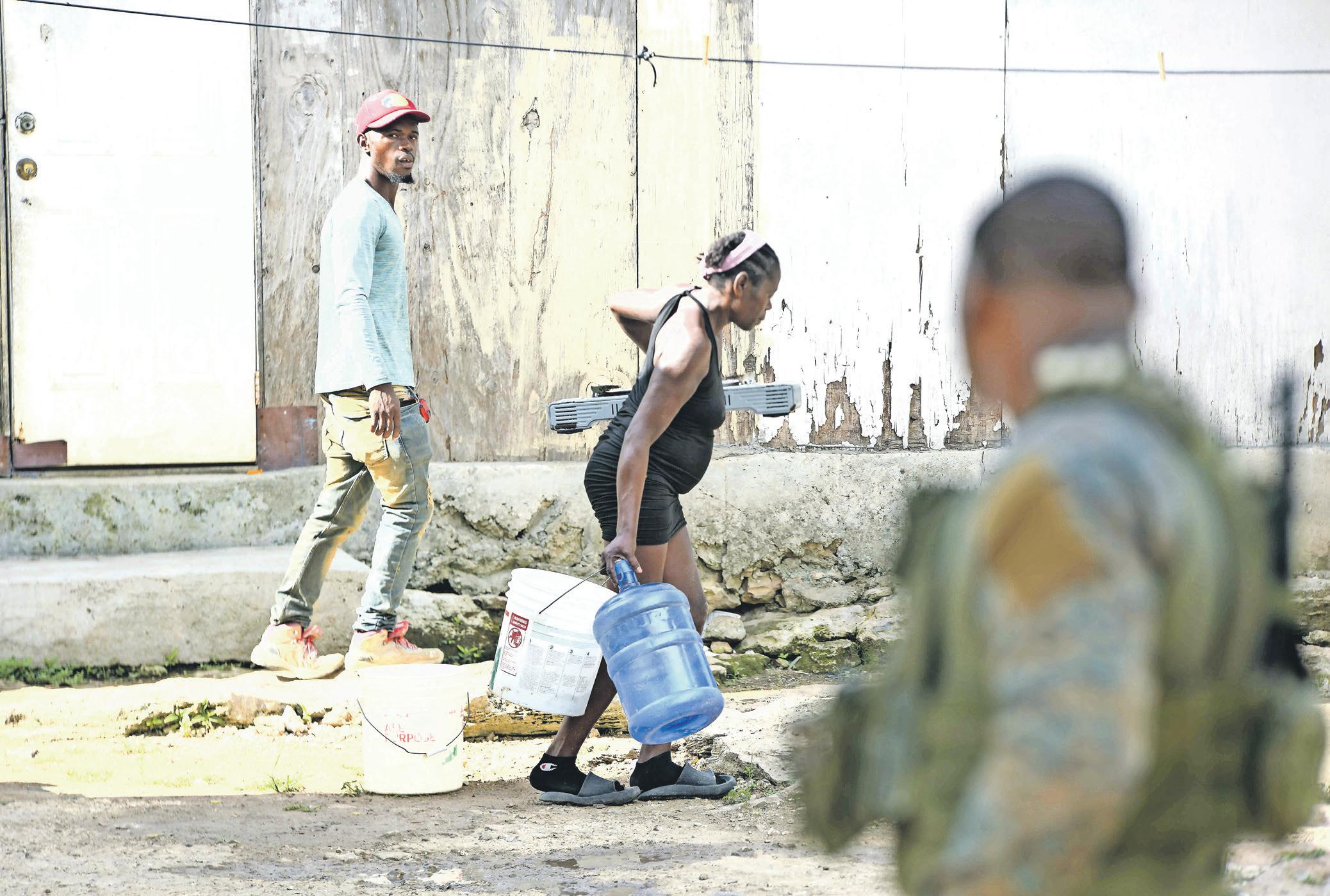
RESIDENTS of Montgomery Street shanty town move their belonging as bulldozers arrive to demolish the structures.
Photos: Shawn Hanna
trying to remove belongings before demolition crews moved in. However, Mr Carey told The Tribune there was only one apprehension.
Nearby, a mother of one who has lived in the community for ten years said she was uncertain about the future. She said her child’s father was taken into custody and she did not know where to go. Another woman, who has lived in The Bahamas for 13 years and in the
Montgomery community since 2016, said she and her two children are now homeless.
Speaking through a translator, she said she does not feel right about the demolition because she has nowhere to stay.
She acknowledged that residents had been given ample notice, but said the woman had searched unsuccessfully for housing.
She said the language barrier made the search harder because the woman could not speak English fluently or read housing advertisements.
As excavators continued their work, residents packed up furniture,
clothing and personal items.
Some loaded possessions into vehicles while others stood by and watched homes disappear piece by piece.
The demolition followed a claim in Parliament last week by Long Island MP
Dr Andre Rollins that a scheduled shanty town demolition off Cowpen Road had been cancelled.
The reason he gave for the alleged cancellation was struck from the House record after protests from government members. He
did not name the shanty town.
Works Minister Clay Sweeting, a member of the Unregulated Communities Action Task Force, did not rise in the House of Assembly to dispute the claim that the demolition had been cancelled.
Mr Carey denied yesterday that any Cabinet minister intervened to stop the demolition, saying the process had been delayed while officials verified who lived in the area and who had received assistance.
causing an explosion.
the call, so I came back to Abaco,” she said. “When the search was going on, it just seemed like unreal.
Then when we got the news that they found his body it still didn’t seem real.”
Cornish leaves behind a wife and two children. He was remembered as humble, kind, loving and devoted to his family.
According to police, seven men, including the captain, were travelling to Spanish Cay aboard a teal-and-white 23-foot Angler vessel shortly after 6am to work on a construction project when the vessel reportedly developed mechanical problems.
All seven men entered the water after the blast and worked together to stay afloat.
Six of the men were rescued by nearby private citizens. Cornish’s body was later recovered by family members, and he was pronounced dead by a local doctor at the Marsh Harbour Health Centre.
Mrs Curry said she has not spoken to the survivors. She said she understands the boat was owned by an individual, not the construction company.
Asked whether she wanted anyone held accountable, she said she believes the ordeal was an accident.
Police said one of the occupants discovered water leaking from the bilge pump. While trying to address the problem, he allegedly placed a wire on the engine’s battery,
helping bring the six other passengers to safety.
“Marine travel remains an essential part of daily life throughout The Bahamas,” the statement read. “Thousands of residents, workers, fishermen, contractors, and visitors depend on our waters every day. Incidents such as this are a stark reminder that safety at sea cannot be taken for granted, whether a voyage is routine, or a vessel is travelling a familiar route.”
The ministry said authorities are continuing to gather information about the circumstances surrounding the incident.
“Authorities continue to gather information regarding the circumstances surrounding the incident. Until that process is complete, the Ministry and Port Department encourage the public to avoid speculation and allow investigators to determine the facts.” BOAT from page one
In a statement, the Ministry of Transport and the Port Department extended condolences to Cornish’s family and acknowledged the private citizens who responded to reports of the emergency,

By LYNAIRE MUNNINGS Tribune Staff Reporter lmunnings@tribunemedia.net
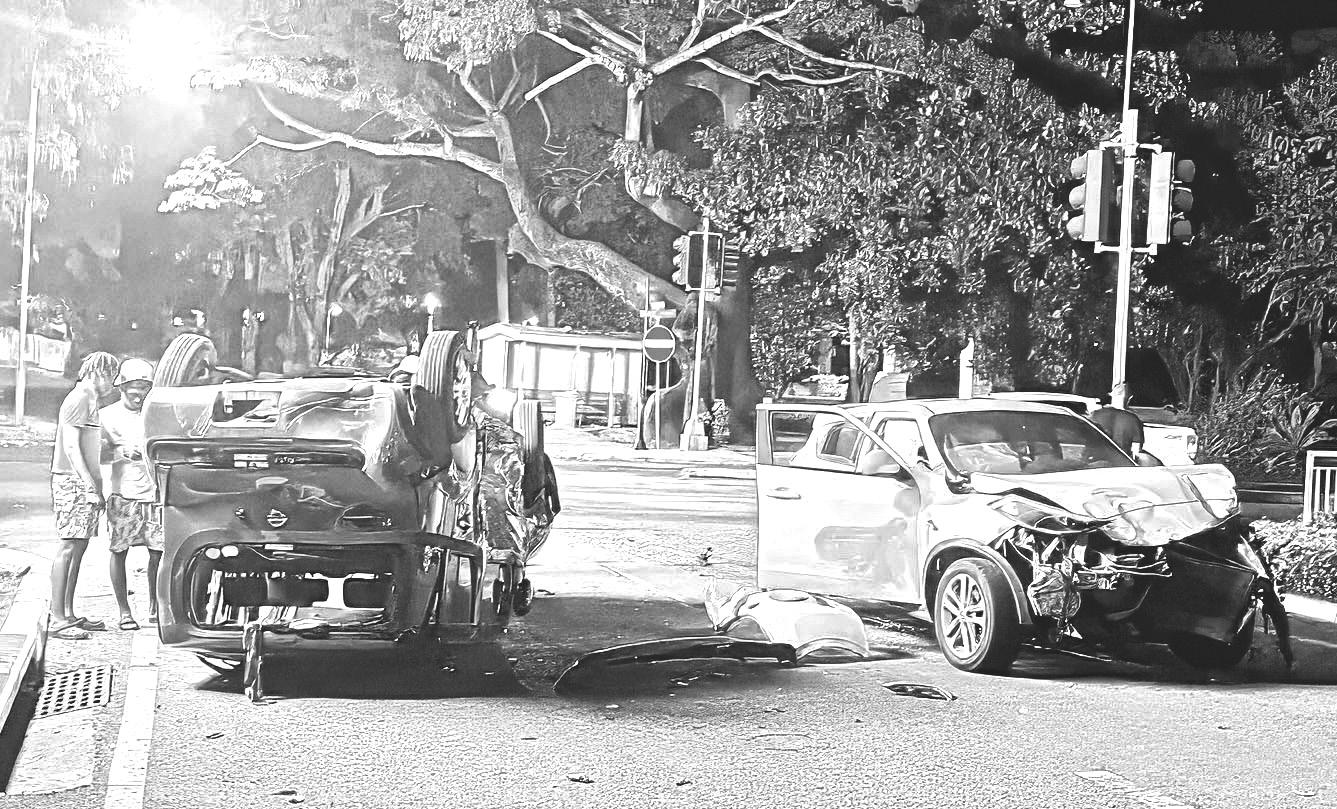
THE Shirley Street crash that killed five teenagers is the deadliest traffic accident in The Bahamas in at least 20 years, according to The Tribune’s review of traffic deaths.
The June 28 collision at the intersection of Shirley Street and Church Street surpassed even the 2018 Labour Day tragedy, when a truck ploughed into marchers and killed four women in one of the country’s most shocking road disasters.
The review shows a grim hierarchy of mass-fatality crashes: Shirley Street ranks first with five deaths; the Labour Day Parade crash ranks second with four; and several other catastrophic collisions over the last 20 years rank next, each killing three people.
Keno Gordon Jr, 19, died in the Intensive Care Unit on Saturday, raising the Shirley Street toll to five. Diamond Stubbs, 17, Betrica Brown, 18, Evalena “Lilly” Johnson, 19, and Stania Webb, 19, four young women who grew up together in Cat Island, also died after the Mazda sedan they were in crashed into a tree.
The driver, 19-year-old Marcus Thacker Jr, was taken into custody after the crash and later charged with five counts of vehicular manslaughter. He was granted $30,000 bail and is expected to face further court proceedings.
The second-deadliest crash found in the review occurred on June 1, 2018, when Labour Day celebrations turned into a national tragedy after a truck mowed through participants in the Sir Randol Fawkes Labour Day Parade. Four women were killed: Tabitha Haye, Tami Gibson, Dianne Ferguson and Kathleen Fernander. The crash also injured more than 20 people and forced Princess Margaret Hospital into mass casualty mode.
The crash stunned the country because it happened during one of the labour movement’s most visible annual events. It was described at the time as the first tragedy of its kind in the Labour Day march’s 56-year history.
The driver of the truck was later taken into custody. In 2022, he pleaded guilty to his role in the tragedy.
After Shirley Street and
Labour Day, the deadliest crashes identified in The Tribune’s review killed three people each.
One of the most recent happened on July 14, 2025, at Baillou Hill Road and Kim Crescent, where two women and a 33-year-old man died.
The crash happened shortly after 4am when two vehicles collided at the junction. Police said one vehicle carried four people, while the second had one occupant.
One woman was found unresponsive at the scene and pronounced dead. The remaining occupants were taken to the hospital, where a second woman later died from injuries sustained in the crash. The 33-year-old man also died, bringing the toll to three.
Another three-person tragedy occurred on September 2, 2024, when three brothers were killed in a crash on Sir Milo Butler Highway.
Philip McCarron Christie, 24, Philip D’Caprio Christie, 23, and D’Angelo Christie, 20, died shortly after 2am when their metallic grey Honda Passport crashed into a tree while travelling north on the highway.
The driver and front-seat passenger were trapped inside the vehicle and pronounced dead at the scene. Their younger brother was taken to the hospital with serious injuries but later died.
Their deaths prompted widespread mourning, with tributes from political leaders, colleagues and institutions connected to the brothers, including Bahamas Power and Light, the Bahamas Telecommunications Company and the Bahamas Agriculture and Marine Science Institute, where they studied and worked.
Hundreds attended their funeral in Andros as relatives and friends mourned
three brothers from the same family.
The inquest into the deaths was suspended after only three days when evidence presented to Coroner Kara Turnquest Deveaux revealed that the police traffic file was incomplete. The coroner ruled that proceedings could not continue until investigators submitted missing material, including witness statements and forensic evidence.
In January 2022, three young men were killed in Long Island after a vehicle carrying cousins Mandie Constantakis Jr, 20, and Manoli Constantakis, 18, and their friend, Trevon Roxbury, crashed into a home in Mangrove Bush.
The crash happened around 9pm on a Friday when the black Nissan Infiniti left the roadway and collided with the residence. The vehicle flipped and came to rest on its side by the time residents and police arrived. Mandie Constantakis Jr and Roxbury died at the scene. Manoli Constantakis was taken to New Providence for medical treatment but died in hospital the next day.
The tragedy devastated families and the wider Long Island community, with relatives describing the three young men as deeply loved and respected.
Christina Constantakis, the mother of Mandie Constantakis Jr and aunt of Manoli Constantakis, spoke of the pain of losing two members of her family in the same crash. The crash also highlighted longstanding concerns about emergency medical services in the Family Islands.
The deaths drew condolences from political leaders, including Prime Minister Philip “Brave” Davis and Long Island MP Adrian Gibson, who described the loss as an
unprecedented tragedy for the community.
In July 2020, three people died in a two-vehicle crash in Grand Bahama’s West End area about 30 minutes before the COVID-19 curfew.
The victims, later identified by loved ones as Marciano Morley, Roderick Pinder and Shenelle Curtis, were 23, 29 and 39. All were residents of Grand Bahama.
The crash happened shortly after 9pm at the junction of Queen’s Highway and Windsor Drive in Bootle Bay.
Police said a black 2007 Mazda SUV and a champagne 2006 Chevrolet Cavalier were involved. Both vehicles were extensively damaged. The front section of one vehicle was ripped apart, while the other overturned and landed on its roof.
Superintendent Jeremy Henfield, then officerin-charge of the Traffic Division, said preliminary investigations showed that excessive speed contributed to the crash.
The accident intensified concerns about fatal collisions in Grand Bahama, where authorities had repeatedly warned motorists about speeding.
In August 2017, three people died after a crash in Grand Bahama at the intersection of East Sunrise Highway and Gedney Drive.
The collision involved a 2006 GMC Sierra and a silver Nissan Tiida shortly after 1pm. The occupants of the Nissan were injured, but a 76-year-old female passenger died at the scene.
The remaining injured passengers were taken to Rand Memorial Hospital, where two more victims later died from their injuries.
The lone male driver of the GMC Sierra suffered minor injuries and was taken to hospital in a private vehicle.
In November 2015, three people died after a serious crash at Coral Road and Explorers Way in Freeport, Grand Bahama.
Police were called to the scene around 9.15pm after a two-car collision. Two victims — a man and a woman — died at the scene, while a third person was taken to Rand Memorial Hospital and died around 2am the following morning.
The crash brought the number of traffic deaths in Grand Bahama that year to 14.
DRIVER from page one
eight people, including the driver, were inside the vehicle when it crashed.
The incident devastated families from Canada to Cat Island.
Thacker appeared timid but calm during his arraignment. His right arm was in a cast and sling, and he wore a light-coloured, short-sleeved, floral button-up shirt with long khaki pants.
He was not required to enter a plea to five counts of vehicular manslaughter when he appeared before acting Chief Magistrate Ancella Evans. He was told that the matter would proceed to the Supreme Court through a voluntary bill of indictment.
Inspector Deon Barr, the prosecutor, did not object to bail but asked that conditions be imposed for the defendant’s safety. Magistrate Evans asked Thacker whether he was employed or in school. He
shook his head no.
The defence asked that he not be fitted with a monitoring device, noting that he has upcoming surgery for a wrist injury.
Thacker’s bail was set at $30,000 with one to three sureties. Under the terms of his bail, he must sign in at the Carmichael Road Police Station every Monday by 9pm. He must also surrender his travel documents and obey a 10pm to 6am curfew. He will be released once his bail is signed.
Thacker was told that his VBI is set for service on October 22. After the arraignment, he was allowed a moment with a handful of relatives in court, including his parents, grandmother and uncle.
Maria Butler, the accused’s mother, broke down in tears as she embraced her son. No relatives of the deceased were present for Thacker’s arraignment. Kristina Saunders and Christina Galanis represented the accused.

By JADE RUSSELL Tribune Staff Reporter jrussell@tribunemedia.net
FOR more than a decade, the PLP and FNM have shifted their principles on MPs’ pay depending on where they sit, defending higher compensation as fair or overdue while in government and condemning the timing as insensitive when in opposition.
The debate resurfaced after The Nassau Guardian reported on a draft amendment to the Parliamentarians Salaries and Allowances Act that would give MPs $32,000 annually and senators $16,000 annually in duty allowances, in addition to their salaries.
MPs currently earn $28,000 a year, while senators receive $12,500.
The latest proposal has revived a familiar political pattern: successive administrations from both major parties have considered increasing compensation for parliamentarians, while opposition parties have warned that the timing was wrong and the economy too fragile.
In May 2014, the Christie administration established a parliamentary select committee that recommended increasing the salaries of MPs and the Deputy Speaker.
The committee said the Deputy Speaker’s salary should be adjusted to reflect the duties of the office and the need to give up normal professional work.
The recommendation was widely criticised and was ultimately abandoned.
Then National Security Minister Dr Bernard Nottage noted at the time that MPs had not received a salary increase since 1988. He said the committee also spent considerable time discussing constituency office allowances and recommended increasing the monthly allowance from $1,500 to $2,500.
The FNM, then in opposition, opposed the push.
Free National Movement Deputy Chairman Dr Duane Sands argued that the Bahamian economy was too fragile to prioritise higher pay for MPs. He said an increase would show “a disconnect from reality” while ordinary Bahamians were struggling.
Then Deputy Prime Minister Philip “Brave” Davis defended higher pay, arguing that better compensation would reduce the temptation for parliamentarians to act improperly.
Mr Davis told a reporter that: “(it would) remove the temptation for politicians to do things that are not right. Because if they (MPs) are earning a living by doing this, then there would be no need for them to do anything else, I think that’s what the Bahamian public has to understand.
“The feelings of our public is probably more rooted in their scepticism about us as politicians
and their mistrust of all of us as politicians.”
By 2017, after the FNM formed the government, its position shifted.
In November 2017, then Prime Minister Dr Hubert Minnis said his administration would raise MPs’ salaries in the next fiscal year.
That position marked a reversal from 2014, when he responded to the Christie administration’s proposal by saying:
“As long as I am leader of this country, the FNM would not support any

pay increase with all the pain and suffering that is going on in this country.”
Dr Minnis later described the proposed increase as sensible, particularly given the substantial salaries paid to some contract workers during the Christie administration's final five years in office. He also said he would establish an independent committee to review MPs’ salaries, although that committee was ever created.
In 2017, Mr Davis briefly
appeared to support the principle of higher pay after Dr Hubert Minnis announced that his administration would raise MPs’ salaries in the next fiscal year. Mr Davis told The Tribune that a salary increase for MPs was “overdue” and said Dr Minnis should consider recommendations made under the former Christie administration rather than establish a new committee.
Then PLP deputy leader Chester Cooper also said he “categorically” does not support increasing parliamentarians’ pay.
Last week, Mr Davis faced renewed scrutiny after he said a review of parliamentarians’ salaries and allowances was long overdue and questioned whether it was “right” for politicians in The Bahamas to be paid what they are compared with their regional counterparts.
Mr Davis said he would make a decision on the issue after the House of Assembly’s summer recess.
FNM leader Michael Pintard, meanwhile, has said now is not the time to implement higher compensation.
But Mr Davis soon hardened the PLP’s opposition to Dr Minnis’ proposal, arguing that the “personal needs of welloff politicians” should not come before poor Bahamians. In a statement, he said that if Dr Minnis believed parliamentarians could not live on their salaries, “he should place himself in the shoes of the thousands of Bahamians who live from hand to mouth, including those fired by his government.” Mr Davis also accused Dr Minnis of acting out of envy, telling The Nassau Guardian that the prime minister “appears to be envious of what is being earned by others and is motivated now to increase MPs’ salaries because he doesn’t think others should be making that much more than that.”
By KEILE CAMPBELL Tribune Staff Reporter kcampbell@tribunemedia.net
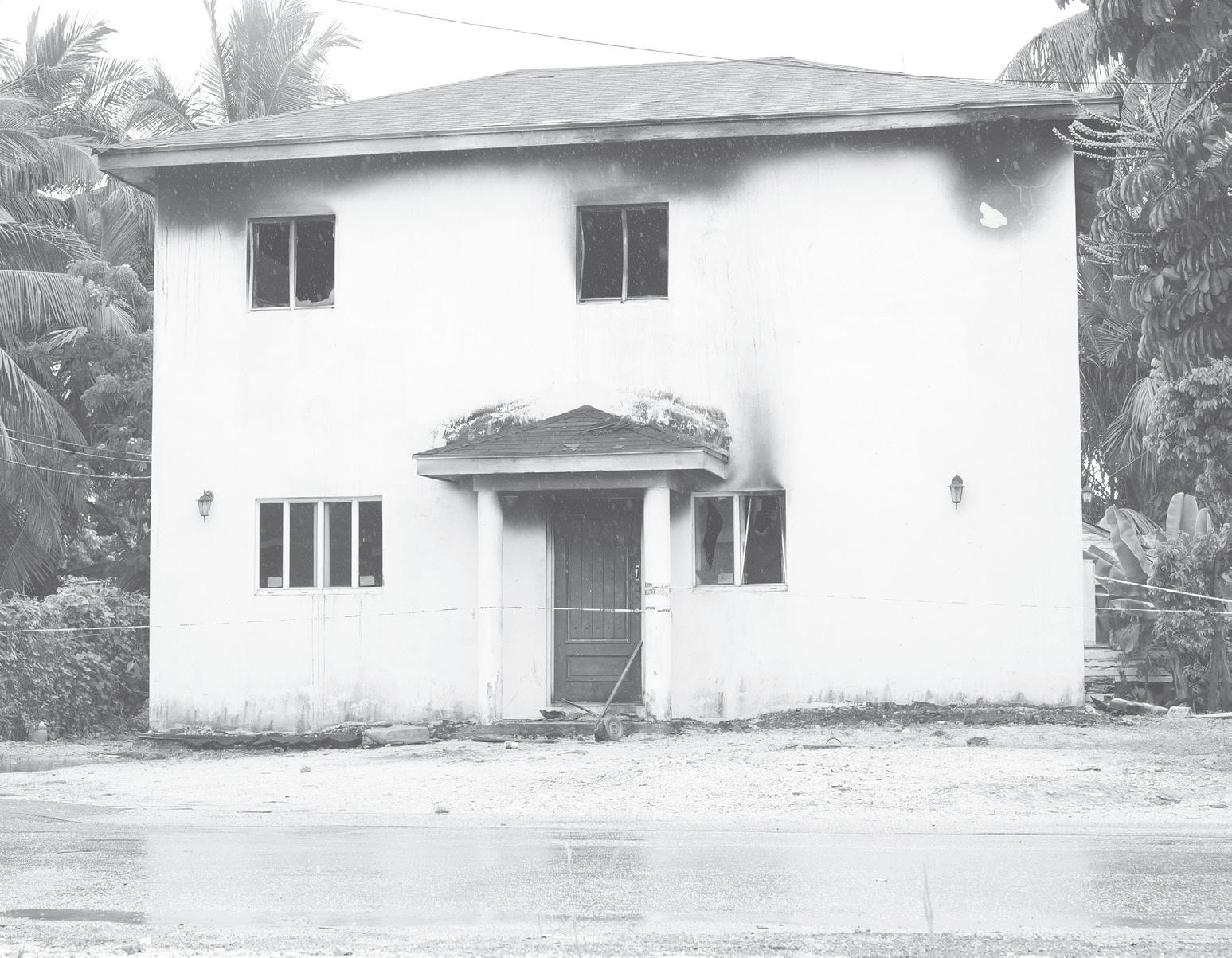
RESIDENTS battled with buckets, hoses and a fire extinguisher to save a Palmetto Street man trapped inside a burning two-storey home on Friday morning, but the blaze gutted the house and claimed the life of the elderly man they identified as Johnny Pratt.
Police had not officially confirmed the victim’s identity up to press time.
Neighbours said Pratt’s wife escaped the burning home, but residents were unable to rescue him as flames tore through the building.
One neighbour, who spoke on condition of anonymity, said residents rushed to help after someone outside warned that the house was on fire. He said another neighbour had already contacted fire services by
the time he began throwing buckets of water on the blaze.
He said another neighbour tried to help Pratt’s wife, who appeared desperate to return to the house.
“You gotta remember this a woman who been with this man for years,” he said. “I had to tell her come from the door – she looked like she was ready to go back in the house for her husband”
The neighbour said Pratt had limited mobility and could not move independently.
He criticised what he saw as a slow fire services response and complained that the area lacked a water pump.
“In that time frame I had already thrown on buckets, and I felt like the response could've been quicker,” the neighbour said.
Another neighbour said he was asleep before he noticed the blaze and saw a neighbour trying to help by carrying buckets of water to the house.
Lavita Thurston, 54, remembered the man she called Mr Pratt as a quiet and decent neighbour. She described him and his wife as private people who kept to themselves.
She said Pratt once offered to take her children to church, with the children promising to visit one day.
She was in Andros helping with her church when she received a call about the fire.
She said the tragedy should push Bahamians to look out more closely for elderly and vulnerable neighbours.
He said emotions ran high at the scene, causing friction between bystanders and firefighters. He said a man he understood to be Pratt’s grandson later arrived at the scene, visibly devastated.
NULLIUS ADDICTUS JURARE IN VERBA MAGISTRI
“Being Bound to Swear to The Dogmas of No Master”
LEON E. H. DUPUCH,
Publisher/Editor 1903-1914
SIR ETIENNE DUPUCH, Kt., O.B.E., K.M., K.C.S.G., (Hon.) LL.D., D.Litt .
Publisher/Editor 1919-1972
Contributing Editor 1972-1991
RT HON EILEEN DUPUCH CARRON, C.M.G., M.S., B.A., LL.B.
Publisher/Editor 1972-
Published daily Monday to Friday Shirley & Deveaux Streets, Nassau, Bahamas N3207
News & General Information
TELEPHONES
(242) 502-2350
Advertising Manager (242) 502-2394
Circulation Department (242) 502-2386
Nassau fax (242) 328-2398
Freeport, Grand Bahama (242)-352-6608
Freeport fax (242) 352-9348
WEBSITE, TWITTER & FACEBOOK
EDITOR, The Tribune. THANK you for allowing me to occupy this space for what I believe is a defining moment in the evolution of healthcare in The Bahamas. There are pivotal moments in the life of a nation - moments that test our values, challenge our resolve and shape the future for generations to come. One such moment was July 10th, 1973, becoming an independent nation. The creation of the National Insurance Board was another. Today, the future of National Health Insurance (NHI) stands among them.
Bahamas, then the conversation must be honest about the shared responsibility required to do so.
That honesty also extends to the role NHI has played in supporting the provider community.

www.tribune242.com @tribune242

A POLITICAL to and fro over pay for Members of Parliament has exposed once again a familiar story – the often changing views of politicians when they are in office in contrast to when they are in opposition.
First thing first, the issue of increasing MPs’ pay is not new – nor is the frustrated reaction of the public who point to a laundry list of other things that could perhaps be treated as priorities instead.
The truth is there will always be other things that will be regarded as a greater priority than the pay of MPs – crime, education, poverty, healthcare, the list goes on. Hot on the heels of an election where candidates declared their assets and a long string of millionaires or near-millionaires lined up in hopes of taking office, the suggestion that some of those pockets need topping up seems even less of an urgency.
MPs earn $28,000 a year, and senators earn less than half that, just $12,500. It is noteworthy that people are being paid entry level wages in order to run the country.
In 2014, the then Perry Christie administration set up a committee that recommended increasing the salary, but the backlash saw that come to nothing. At the time, National Security Minister Dr Bernard Nottage said there had not been an increase since 1988, while FNM deputy chairman Dr Duane Sands opposed the move, saying the economy was too fragile and that ordinary Bahamians were struggling.
At the time, much attention centred around comments from then Deputy Prime Minister Philip Davis – now the nation’s leader – who said then that increasing pay would “remove the temptation for politicians to do things that are not right”. That generated its own backlash with people noting that those minded to be corrupt are seldom discouraged by more money. But when the FNM was in office, suddenly things flipped. Prime Minister Dr Hubert Minnis said in 2017 that MP salaries would go up, despite saying in opposition that as long as he was leader, “the FNM would not support any pay increase”. Meanwhile, Mr Davis showed some initial support, then said instead that the “personal needs of well-off politicians” should not come before poor Bahamians. Chester Cooper, meanwhile, said he “categorically” does not support increasing parliamentarians’ pay. So it goes. Back and forth.
In the wake of the election, we spoke to several young voters. The low turnout of the election prompted the question of what frustrations young people had with the political system – and one of the answers was that there was anger at how politicians might say one thing in power, and another thing when hoping to be in power. That inconsistency damages trust – and makes some voters wonder why they should bother at all.
That too is nothing new. In this column in 2014, we wrote about promises by Perry Christie to stiffen bail laws and speaking out about expressing concern about the number of people charged with serious crimes while out on bail. Before he became prime minister, the PLP condemned the FNM for those same proposals.
In 2021, then Opposition leader Mr Davis was talking about being determined to use the powers of the Public Accounts Committee. In office, there seems to be less urgency about the government being held to account by the PAC.
In 2016, then PLP chairman criticised FNM leader Dr Hubert Minnis for “flip-flopping” in his support for the Constitutional Referendum, while seeming let slip the PLP voting in 2002 in the House of Assembly to support the same issue sponsored by the then FNM government, only to have a change of heart and announce the withdrawal of that support at a town meeting on constitutional reform.
The song goes on. Every year, parliamentarians are required to file financial disclosures. In opposition, Dr Hubert Minnis criticised Perry Christie for not holding officials who failed to make disclosures accountable – and called for people to be arrested if they did not file. In office, Dr Minnis had the power to ensure such filings were gazetted and released – but they were not.
Even Ann Marie Davis, despite not being in an elected position found herself criticising the Office of the Spouse when it was occupied by Patricia Minnis, before taking up those same surroundings when Mr Davis became Prime Minister.
It does not take too much digging to find other, similar examples. That is part of what exasperates some voters – who want candidates to say what they mean and mean what they say.
Groucho Marx once quipped: “Those are my principles, and if you don’t like them... well, I have others.”
He meant it as satire, but it is too often reality.
The bigger problem with all of this is when it comes to long-term national development. If we set goals that are meant to be a guiding light for ten, 15, 20 years, then we need to be consistent, not weaving between one political position or another based on the convenience of office.
If we declare that we need a new hospital, or laws that bring greater transparency, or investment to raise educational standards, those are long-term pledges that need to be supported – not opposed because your party is no longer in office.
It is one of the reasons it is important to report the pledges of politicians – only that way can you hold them to account, whoever they are, and whatever their party.
EDITOR, The Tribune. THE announcement today that URCA has agreed with BTC and Cable Bahamas that STARLINK should be licensed through them is amazing. It is reminiscent of Bahamas Water and Sewerage years ago, claiming that All Water Wells in the Bahamas should be licensed by it. And BPL wanting to license all backup generators. And what License means is that You Pay A Fee. I guess URCA is unfamiliar with the term “Black Market”, but that is exactly what they will create if they allow this jingoistic playbook to grow legs. Bahamians are struggling to make ends meet and these guys want to force their entertainment and news media costs up from $58.00 a month for a Starlink Subscription to $158.00 more or less for theirs. They don’t just want to be the local liaison for Starlink; they want to be the licensor. What a joke! MONKEEDOO Nassau, July 6, 2026.
Implementing a NHI programme has been a 40-year journey. Its initial push to cover only the cost of catastrophic services met with great resistance. Wisely, the government policies adopted the World Health Organisation’s clarion call of Primary Healthcare for All – “a whole-of-society approach to health that aims at ensuring the highest possible level of health and well-being and their equitable distribution”. Primary Healthcare seeks “as early as possible along the continuum from health promotion and disease prevention to treatment, rehabilitation and palliative care, and as close as feasible to people’s everyday environment.” The NHI launched the Primary Healthcare Programme in April 2017.
Having served as practicing physician in the government’s health services for more than 40 years and having had the privilege of serving as both Chairman and Deputy Chairman of the National Health Insurance Authority (NHIA), I have seen firsthand both the promise and the pressures of healthcare reform in this country. I have seen also the cost and the tragedy of getting it wrong.
For decades, Bahamians have called for a healthcare system that is more accessible, more accountable and more responsive. Over the past nine years, NHI has worked to answer that call by expanding access to quality primary care, strengthening standards, modernising healthcare delivery and improving access to care for more than 160,000 registered beneficiaries across the archipelago. We emerge as a leader in healthcare reform in the region. That progress matters. It deserves to be part of the national conversation, especially now. Much of the recent public
discussion around NHI has centered on provider payments. Some of that discussion has raised legitimate questions. Some of it has reflected real frustration. But too much of it has also told only part of the story. That matters because when public confidence in our healthcare system is shaped by incomplete information, it is not NHIA that bears the greatest risk. It is the Bahamian people who depend on the Programme every day.
Let me be clear: NHIA is experiencing financial pressures. We acknowledge that reality. It is an issue of timely payment, not a lack of payment. We own it; NHI will not default on its payments. We are working to address it and to advocate for sustainable solutions. But acknowledging a challenge should never be mistaken for admitting failure, nor should operational pressures be used to create the impression that NHI is collapsing or that beneficiaries should question whether care remains available to them. That conclusion is simply not supported by the facts. The Programme remains operational. Beneficiaries continue to receive care. Providers continue to deliver services. The Authority continues to work to strengthen the Programme while addressing the financial and operational issues before it.
It is also important to say plainly that the current conversation cannot be reduced to payment delays alone. National Health Insurance exists within a broader healthcare system that has long struggled with inefficiency, inconsistent accountability, under utilised resources and the growing burden of chronic disease. Injecting more money into the system, without confronting those underlying issues, will not solve them.
Accountability for healthcare outcomes cannot rest solely with NHIA. Appointment availability is largely determined by providers. Utilisation patterns are influenced by providers. Referral pathways depend on provider participation. Quality standards are delivered by providers. If we are serious about improving healthcare in The
Over the years, the Programme has helped strengthen primary care as a viable area of practice, supported the growth of medical practices, introduced new standards and systems, and created opportunities for providers to modernise and expand. Many physicians have embraced that work with professionalism and commitment. They deserve recognition and appreciation. But partnership must be a two-way street. The question before us cannot be only what NHI owes providers. It must also be what all of us - institutions, physicians and policymakers alike - owe the Bahamian people.
More than 160,000 beneficiaries rely on this Programme. They deserve quality. They deserve accessibility. Most importantly, they deserve healthcare that prioritises them. Public confidence in healthcare is a public health issue. When statements made in the public domain leave patients uncertain about whether they can continue receiving care, we have moved beyond debate and into something more damaging.
That is why correcting the public record matters. This is not about silencing criticism. Scrutiny, accountability and honest discussion are essential to the future of healthcare in this country. But those discussions must reflect the full picture. They must acknowledge both the challenges and the progress. They must recognise that National Health Insurance was never intended to be defined by a single news cycle or a single operational pressure point. It was created to improve healthcare access, advance quality care and equity for all Bahamians. That mission remains unchanged.
As long as the Bahamian flag flies, the aspiration of universal health coverage must endure. National Health Insurance belongs to the people of this country. Its future should not be shaped by fear, half-truths or narrow self-interest, but by a shared commitment to better healthcare for every Bahamian.
DR ROBIN ROBERTS Deputy Chairman, National Health Insurance Authority. Nassau, July 4, 2026.
EDITOR, The Tribune. ON the night of the May 12 General Election in Central and South Abaco, something almost miraculous happened. The PLP’s Bradley Fox stunned the nation by defeating the FNM candidate Jeremy Sweeting. An exuberant PLP on the Eyewitness News social media page said that Fox was on the verge of making history hours before the final tally. PLPs appreciate the significance of what Fox had accomplished. Or did he? I am cynical about the Fox win. I am suspicious. I am not convinced that the contest for the Central and South Abaco seat was fair and square, because it is beginning to look like the PLP bolstered Fox’s campaign chances by handing out hundreds of thousands of dollars’ worth of building material vouchers to Abaco voters as inducements to
either support Fox or to stay home. Either way, Sweeting was placed at a disadvantage, having to battle against a candidate funded by the Treasury that has hundreds of millions. It has been alleged in the media that Fox’s name was on many of the vouchers handed out. This has not been denied by Fox or by this PLP government. The Treasury is not only funded by PLPs. It is funded by FNMs as well. The implications of this are that FNMs helped to fund Fox’s campaign against their own candidate. Days before May 12, the PLP handed out $663,436 in vouchers. A significant portion of these vouchers are alleged to have been given to the people of Abaco. Sweeting had no chance. If this allegation is true, the entire electoral process in Central and South Abaco can be legitimately scrutinised by the courts, as it
was flawed. And Fox can legitimately be considered an illegitimate MP. If the PLP was so confident that it could have beaten the FNM and Jeremy Sweeting, why then did party operatives see the need to splurge on government money in Abaco, assuming that these allegations are true?
And why was Eric ‘’Player” Gardner in Abaco on Election Day?
So many unanswered questions that we will never get straightforward answers to from Fox, Finance Ministry Michael Halkitis and PM Philip Davis. They all take Bahamians for conchs. Shame on those Abaco voters who sold their souls for a couple hundred-dollar voucher. Now Fox owes you diddly squat because he, if the allegations are true, paid you already.
THE WHISTLEBLOWER 2.0 Nassau, July 1, 2026.
By PAVEL BAILEY Tribune Staff Reporter pbailey@tribunemedia.net
A 25-YEAR-OLD man accused of a murder on Melvern Road last month was remanded to prison yesterday.
Prosecutors allege Deontee Dean caused the death of Eddie Carroll on the night of June 25. Police reports indicate that Carroll was seen getting into an altercation
with a man who was accompanied by a woman before the murder. His body was discovered around 8am the following day on a service road. He was dressed in blue shorts and had visible injuries to the upper body. A pair of tennis shoes was found nearby. Dean was not required to enter a plea to murder when he appeared before acting Chief Magistrate Ancella Evans.
He was told that the matter would proceed to the Supreme Court through a voluntary bill of indictment. Dean was also informed of his right to apply for bail in the Supreme Court. He was remanded to the Bahamas Department of Correctional Services until service of his VBI on October 22. Inspector Deon Barr prosecuted the case.
A ROYAL Bahamas
Defence Force officer was among five people arrested after police seized an unlicensed firearm, ammunition and more than three pounds of suspected marijuana from a Trinidad Avenue residence on Sunday.
According to police, officers from the Mobile Division executed a search warrant at the home shortly before 10am.
When officers arrived, they showed the warrant to a 38-year-old man who was wanted in connection with
a grievous harm investigation. He was arrested and cautioned. During the search, another man identified himself as the homeowner and a serving member of the Royal Bahamas Defence Force. Police said he directed officers to a room on the northern side of the residence and claimed ownership of an unlicensed firearm and ammunition found inside a closet. As officers continued searching the home, they allegedly found a black and
green camouflage bag containing 12 sealed packages of suspected marijuana.
Police arrested the 37-year-old RBDF officer in connection with the firearm, ammunition and suspected drugs.
Two other men, ages 35 and 38, and a 43-year-old woman were also arrested in connection with the investigation.
Police said the suspected marijuana weighed 3.2 pounds and had an estimated street value of $3,225.
A 63-YEAR-OLD American man died after he was found unresponsive in a swimming pool at a business establishment in Abaco on Sunday. According to police, officers were alerted shortly after 7pm that an unresponsive man had been found in the pool and that assistance was needed.
Officers and Emergency
Medical Services personnel responded to the scene, where they found two women performing CPR on the man, who was lying on his back on the pool deck wearing black swim trunks. EMS personnel assessed him and found no signs of life. A local doctor later examined him and pronounced him dead shortly after 9pm.
Police said preliminary investigations revealed that the man was swimming in the pool when he became motionless. His fiancée reportedly called out to him but received no response. She then entered the pool and, with help from others, removed him from the water. An autopsy will be performed to determine the exact cause of death.


By PAVEL BAILEY Tribune Staff Reporter pbailey@tribunemedia.net
THE defence called its only witness yesterday before closing its case in the rape trial of Kennedy Ingraham.
Trecko Scavella, the owner of the car in which Ingraham allegedly sexually assaulted a woman after giving her a ride in western New Providence in 2023, testified before Justice Jeannine Weech-Gomez.
His testimony began after Ingraham elected to remain silent.
Prosecutors allege Ingraham raped a 36-year-old woman, whose name is being withheld, after giving her a ride in western New Providence around 9am on March 20, 2023.
The defendant allegedly
took the woman to a residence in Coral Harbour, where the assault allegedly occurred in his car. He then allegedly drove the woman to her job at a grocery store.
The defence has claimed the sex was consensual and transactional. It further claimed the complainant fabricated the allegation after Ingraham failed to pay her the $250 they had allegedly agreed on beforehand.
Scavella said he owned the burgundy 2012 Mazda hatchback allegedly used in the incident. He claimed that on the day of the alleged assault, he had left the car in Ingraham’s care while he was out of the country.
Scavella said that once the smart key is outside the vehicle, the car automatically locks. He claimed that if the car is being driven, it
will not lock. Under cross-examination, Scavella told prosecutors he was not with Ingraham when the incident allegedly occurred. He could not say whether the locking system was working that day.
Scavella told defence attorney Sonia Timothy Knowles that there was no way for a passenger to simply open the door and jump out if the car was locked.
He claimed he still owns the vehicle and drove it to court.
The defence and prosecution are expected to make closing addresses later this week.
Indiana Fitzgerald and Crystal Stuart also represented the accused.
Shaneka Carey and Betty Wilson prosecuted the case.
By PAVEL BAILEY Tribune Staff Reporter pbailey@tribunemedia.net
A 29-YEAR-OLD man accused of kidnapping and assaulting his ex-girlfriend on Carmichael Road last week was remanded to prison yesterday.
Prosecutors allege Tevin Newbold, 29, forcibly entered the 27-year-old woman’s car, pushed her into the passenger seat, and kidnapped her in her own vehicle before speeding away from a shopping plaza on Carmichael Road on the afternoon of June 29. The complainant had
earlier agreed to meet the accused at that location.
She allegedly tried to alert people to her distress by honking the horn, but no one came to her aid.
Prosecutors allege Newbold punched the woman multiple times during the drive. He allegedly drove to Marshall Road, where the confrontation continued until they reached a dock ramp and a Good Samaritan helped the complainant, prompting the defendant to flee. Newbold was arrested later that day. He was not required to enter a plea to kidnapping and assault when he
appeared before acting Chief Magistrate Ancella Evans. He was told that the matter would proceed to the Supreme Court through a voluntary bill of indictment. Newbold was also informed of his right to apply for bail in the Supreme Court. He was remanded to the Bahamas Department of Correctional Services until service of his VBI on October 22.
Inspector Deon Barr prosecuted the case. Alphonso Lewis and Gary Russell represented the accused.
THERE is a dangerous disease spreading through Bahamian society, and it’s not one that can be cured with medicine. It’s the growing belief that laws are optional, accountability is negotiable, and influence matters more than justice.
Too many people now behave as though the law applies only to those without connections.
There’s a widespread perception that if someone is well connected, knows the right person, or can make the right telephone call, consequences disappear. Whether every story is true is almost beside the point. The public believes it happens often enough to undermine confidence in the very institutions meant to protect us. Nothing erodes respect for the law faster than the belief that justice is for sale or available only to those with influence.
That perception has become one of the greatest threats to our democracy.
The result is a culture where people increasingly believe they can do as they please because someone will "fix it." That mindset spreads like a virus. One person escapes accountability, another observes it, and soon an entire generation begins to believe that rules are merely suggestions.
Lawlessness is holding us hostage.
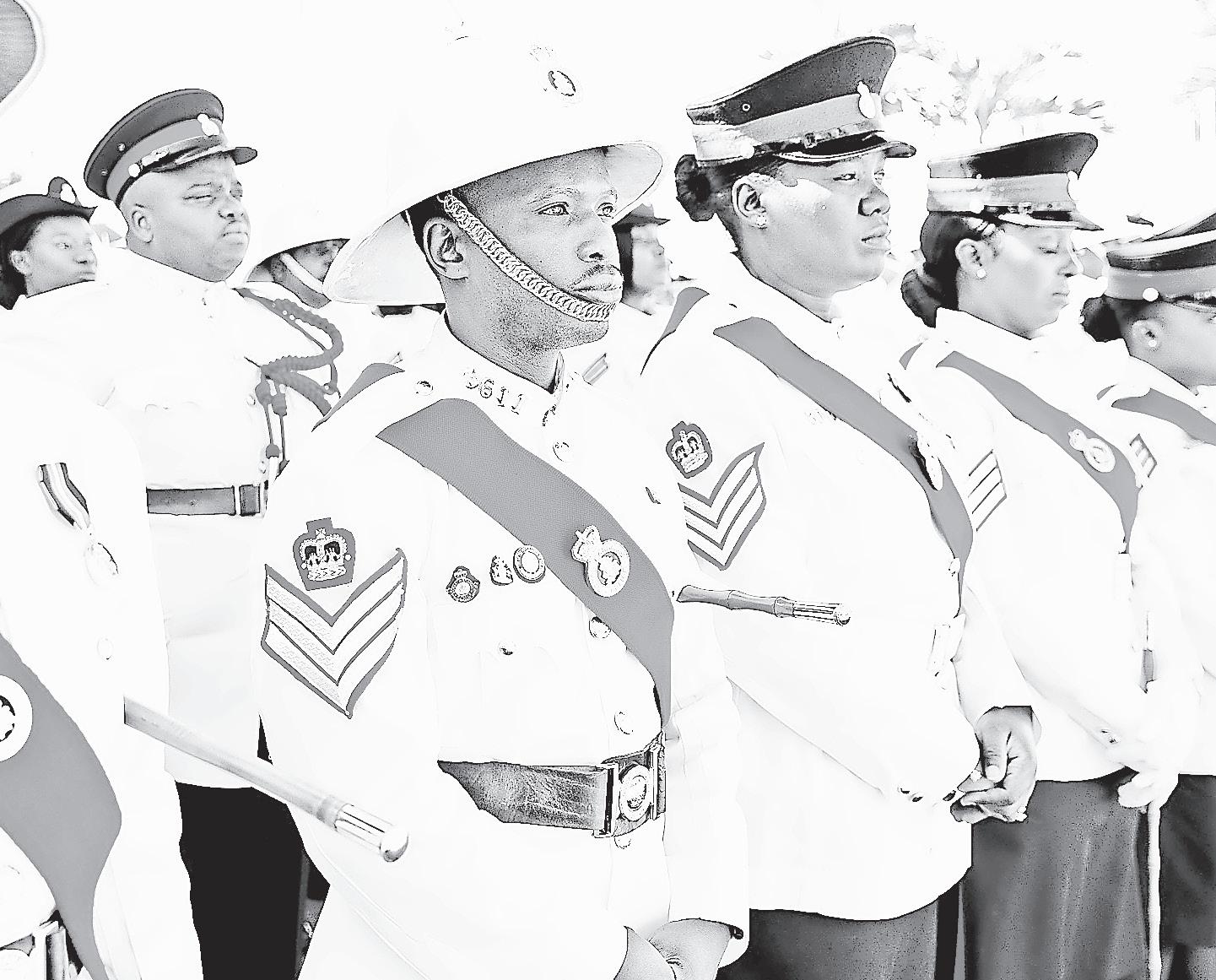
Perhaps the saddest part is that we behave like the proverbial ostrich, pretending the problem is not there. We discuss crime only after someone has been killed. We condemn recklessness after tragedy strikes. We express outrage for a few days before returning to business as usual. Meanwhile, the small acts of lawlessness continue every hour of every day. They accumulate, normalize disorder, and weaken our society. The police occupy one of the most difficult jobs in the country. Thousands of officers perform their duties with professionalism, courage, and integrity. They deserve recognition for protecting communities under increasingly difficult circumstances.
Yet it would be dishonest to ignore the concerns many Bahamians express. Public confidence in policing has weakened.
Many citizens complain that visible enforcement has declined, especially during the evening and overnight hours when criminal activity often increases. Whether due to staffing shortages, limited resources, or operational challenges, the public notices when there are fewer officers on the streets.
More troubling is the perception that some officers overlook obvious violations while aggressively pursuing minor infractions. Fair or unfair, that perception shapes public trust. Respect for the police cannot be demanded solely because of the uniform. It must also be earned through consistency, professionalism, impartiality, and visible enforcement.
At the same time, respect for law enforcement should never depend on whether an individual personally admires every officer. The rule of law exists precisely because societies cannot function if every citizen decides which laws deserve obedience.
Even if someone believes the police have fallen short, that does not excuse breaking the law. Obeying the law is a civic responsibility. That principle should never change.
One of the clearest examples of normalized lawlessness
is evident on our roads. Every Bahamian has witnessed it.
Jitney drivers weave through traffic as though traffic laws do not exist. Creating lanes where none exist. Using turning lanes to bypass long lines of traffic before forcing their way back into the correct lane. Stopping wherever they choose. Blocking intersections. Driving aggressively despite carrying dozens of passengers whose lives
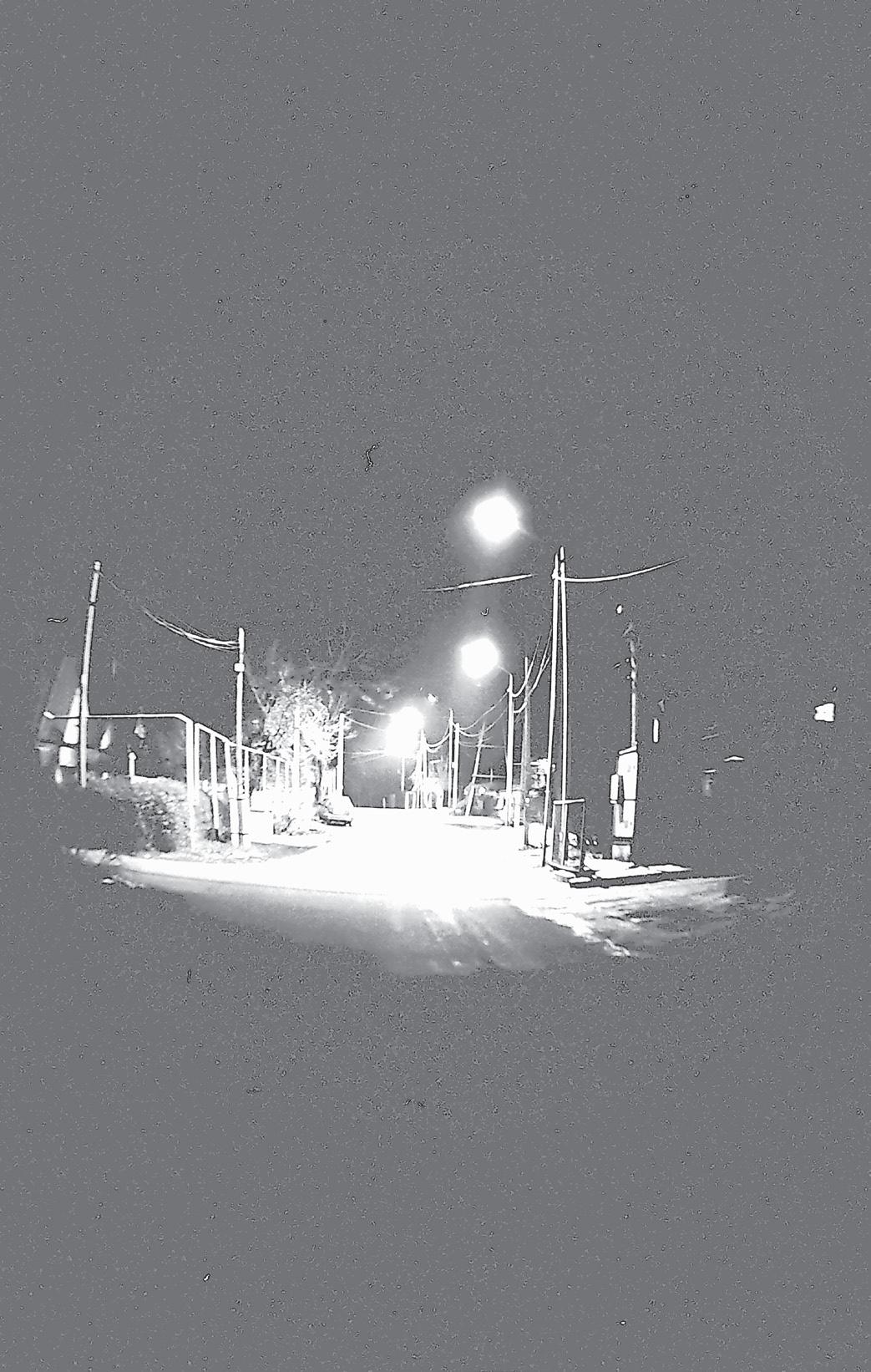
depend entirely on their judgment. These behaviours are not isolated incidents. They have become routine. Perhaps even more discouraging is seeing such conduct occur in full view of law enforcement with little visible intervention. That inevitably raises the question ordinary citizens ask: if these infractions occur openly without consequence, what message does that send?
The answer is obvious. Rules become optional. The same concerns extend beyond public buses. Taxi drivers provide many visitors with their first personal impression of The Bahamas. The overwhelming majority work hard and represent our country with pride. Yet when some conduct themselves aggressively, intimidate visitors, ignore traffic laws, or behave discourteously without meaningful consequences, the damage extends far beyond a single encounter. Tourism depends upon reputation. One unpleasant experience travels across social media far faster than a thousand positive ones. Protecting the reputation of our tourism product should be considered a national responsibility. Professional standards should be enforced consistently, and where serious misconduct occurs, meaningful disciplinary measures—including suspension or revocation of licences, where appropriate—should be available and applied transparently.
Then there is the ongoing issue of unregulated or unsafe jet-ski operations. Year after year, concerns are raised follow-


ing serious incidents. Yet many Bahamians continue to observe practices that appear inherently dangerous. Multiple jet skis are being towed behind trucks. Equipment with inadequate lighting. Operations that place visitors and residents at unnecessary risk.
We shouldn’t wait for another fatal accident before asking whether existing regulations are sufficient or properly enforced. Prevention has always been less costly than tragedy.
Simple measures—reasonable limits on the number of jet skis that may be towed, proper lighting requirements for trailers, routine inspections, and meaningful penalties for repeated violations—could significantly improve public safety.
These are not radical ideas. They are common-sense safeguards.
The disregard for public order extends into our neighbourhoods.
Cars parked across sidewalks meant for pedestrians. Vehicles blocking driveways. Double parking. Parking on hills where visibility is already compromised. Ignoring pedestrian crossings. These are violations everyone sees. Children, elderly residents, and people living with disabilities are often forced into traffic because sidewalks have become parking spaces.
What message does that send?
It tells the public that convenience matters more than consideration.
It tells citizens that laws exist on paper but not necessarily in practice.
Lawlessness is rarely dramatic in its beginnings. It grows quietly through thousands of small acts that society gradually accepts. Eventually, disorder becomes normal.
We should also confront another uncomfortable reality: Young people increasingly appear less intimidated by the criminal justice system than previous generations. Some openly boast that they can "do time" and return to the streets with little concern for the consequences.
Whether this reflects conditions within correctional institutions, broader social failures, limited opportunities, broken families, or declining respect for authority, the result is deeply troubling.
If imprisonment no longer serves as a meaningful deterrent for many offenders, then policymakers must ask difficult questions about rehabilitation, sentencing, education, employment opportunities, and community support. Punishment alone cannot solve every social problem. Neither can permissiveness. The goal should always be accountability accompanied by rehabilitation wherever possible.
Alcohol presents another challenge we too often minimise. It’s woven into countless social events. Holding a drink has become synonymous with celebration. Yet alcohol abuse continues to devastate families through impaired driving, domestic violence, poor health, workplace accidents, and countless preventable tragedies.
No amount of advertising or clever public relations changes that reality. The social cost is enormous.
Questions must continue to be asked about enforcement against underage
inspire public confidence by dealing transparently with misconduct while protecting officers who perform their duties honourably.
Fourth, licensing authorities should consistently enforce professional standards across public transportation, commercial tourism operations, and other regulated industries.
Fifth, schools, churches, families, civic organisations, and community leaders must recommit themselves to teaching personal responsibility, discipline, honesty, and respect for lawful authority. No police force can substitute for strong homes. No legislation can replace good parenting. No government programme can manufacture personal integrity. Ultimately, the responsibility belongs to all of us. It’s easy to criticise the government. It’s easy to criticise the police. It’s easy to criticise politicians.
But a civil society requires citizens who are willing to obey the law even when no

drinking, sales to minors, impaired driving, and irresponsible alcohol consumption. The law should intervene before lives are lost—not only afterwards. We have become reactive instead of proactive. We mobilise after funerals. We introduce reforms after headlines. We hold press conferences after outrage. Why must tragedy always be the catalyst for action?
One of the most corrosive perceptions in Bahamian society is that justice depends upon who you are rather than what you have done. Many ordinary citizens believe that those without money, influence, or famous surnames experience the full force of the law, while those possessing social or political connections often receive more favourable treatment. Whether individual cases justify those beliefs or not, the perception itself is profoundly damaging.
Justice must not merely be done. It must be seen to be done.
Confidence in policing, the courts, and public institutions depends upon visible fairness. The law should neither favour the wealthy nor unfairly burden the poor. It should treat every citizen equally. No exceptions, special telephone calls, influential interventions, preferential treatment. Only equal justice.
What, then, can be done?
First, laws must be enforced consistently regardless of status, occupation, surname, political affiliation, or financial standing.
Second, police visibility must increase in communities, particularly in the evenings and on weekends, when enforcement is most needed.
Third, disciplinary systems within law enforcement must
one is watching. Respect begins with ourselves. It begins by refusing to park illegally. Refusing to drink and drive. Refusing to use influence to escape accountability. Refusing to excuse wrongdoing simply because the offender is a friend, relative, political ally, or prominent citizen.
The Bahamas deserves better than selective justice. Our children deserve to grow up believing that honesty matters, that rules matter, and that character matters more than connections.
No nation survives when citizens lose confidence that fairness exists. No democracy flourishes when people conclude that influence outranks integrity. No community prospers when lawlessness becomes ordinary. If we truly love this country, then we must reject the dangerous idea that anyone is above the law.
We should expect more from those entrusted to enforce it. We should demand more from those elected to uphold it. And we should require more from ourselves.
Perhaps the most important question is not whether the police, politicians, or judges will change. The real question is whether we, as Bahamians, are prepared to change.
As many of us enter the afternoon of our lives, we should ask ourselves a simple but profound question: What kind of country do we wish to leave behind?
The answer will not be found in speeches or slogans. It will be found in whether we choose principle over privilege, discipline over disorder, and equal justice over selective enforcement.
Only then will the law no longer hold us hostage.
Only then will freedom truly belong to everyone.
Hemingway's masterpiece on Spain's bull runs turns 100 years old with its allure intact
By JOSEPH WILSON Associated Press
PAMPLONA, Spain (AP) — Bill Hillmann has been gored three times while running with the bulls in Spain, but he wouldn't miss this year's San Fermin festival for anything. It marks the 100th anniversary of the publication of Ernest Hemingway 's book "The Sun Also Rises" that launched the future Nobel Laureate to literary fame and put Pamplona on the map for millions of people around the world. On Monday, the festival kicked off with a firework blast over a jam-packed plaza. The first of eight bull runs is on Tuesday. Hemingway's 1926 novel captivated generations of readers with its sexy Jazz Age tale of American and British bohemians trying to fill some inner void with the distractions of exotic travel, vast quantities of alcohol and the anguishing pursuit of impossible love. Its success established "The Sun Also Rises" as a cornerstone of the American literary canon, right up there with F. Scott Fitzgerald's "The Great Gatsby." It also popularized the term "lost generation" to describe
the tight-knit group of early 20th-century writers expatriated in Paris. Hemingway's terse style forever changed American literature. In Spanish, its title is translated as "Fiesta." Hillmann, who hails from Chicago, was 19 when Hemingway's vivid depiction of the bull running festival first enthralled him, especially descriptions of average Spaniards risking their lives sprinting through the streets to guide the bulls to the bull ring during the nine-day festival.
"I sat there for about six hours, well past midnight, reading the book," Hillmann told The Associated Press in Pamplona as he looked down on the pen where the bulls are held before being set free on the cobblestoned route. "And by the time I was done with that book, I was going to be a writer and I was going to be a bull runner."
Since that literary encounter, the 44-yearold Hillmann has run with the bulls in Spain hundreds of times, counting both his trips to Pamplona and his participation in dozens more bull runs in other Spanish towns. His infatuation with Hemingway and Pamplona has never waned, even though he nearly died one time that he was gored by a bull horn.
Hillmann's appreciation led him to earn a doctorate in English, and now it is his turn to teach "The Sun Also Rises" at East-West University in Chicago, and write about bull running.
Americans are the biggest group of foreign bull runners Hillmann is just one of many Americans inspired to travel to Spain to see the festival firsthand. While running with bulls is a cherished local custom for Spanish daredevils, Americans are still the leading group of foreigners who run at the San Fermin festival. In 2022, 16% of the bull runners were Americans, the largest percentage among foreigners and four times more than those from neighboring France, according to Pamplona's City Hall. Dallas-based tour operator Bruce Anderson, whose company "Running Of The Bulls" has helped thousands of Americans attend San Fermin over the years, says that Hemingway's work made the festival a bucket-list destination. This year, his company is bringing 1,400 people to the festival, with over two-thirds from the United States.
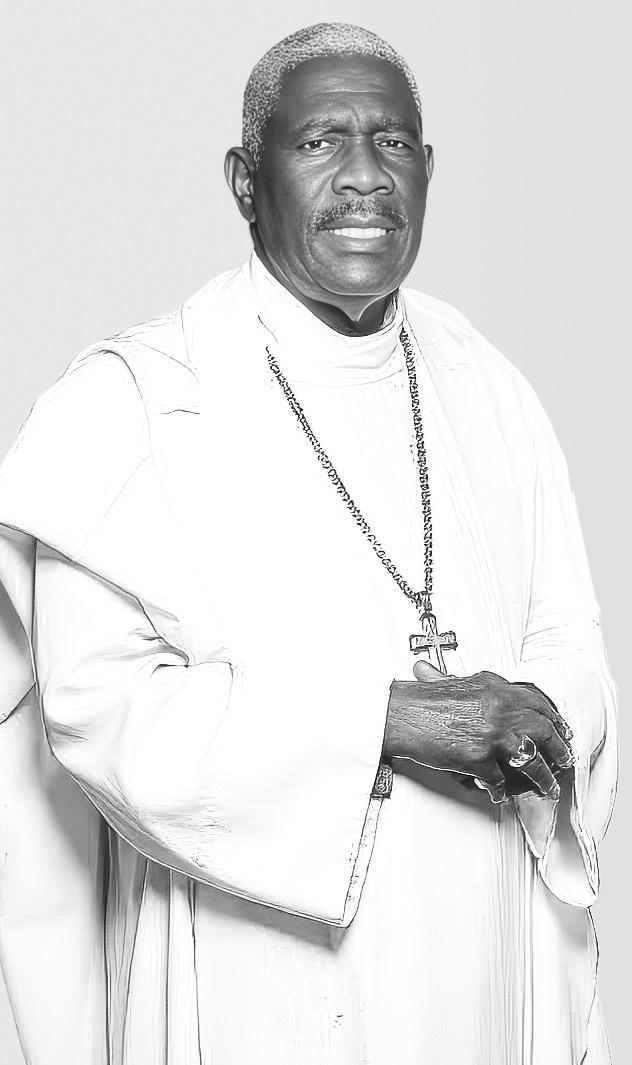
Bishop Simeon B Hall
THE growing social, educational, moral, and even physical crises confronting many of our nation's young people compel us to revisit an idea whose time may well have come again—a compulsory two-year National Service Programme for all eligible Bahamians.
As we approach another chapter in our national development, it is evident that many of the noble aspirations envisioned by the architects of our Independence have yet to be fully realised. In many respects, The Right Honourable Sir Lynden Pindling was ahead of his time when he advocated the concept of National Service. Had we embraced that vision decades ago, many of the complex social challenges that now burden our nation might not be as pervasive as they are today.
This is, therefore, a sincere call for a mature and meaningful national dialogue on the establishment of a well-structured, compulsory two-year National Service Programme. Such a discussion must transcend political loyalties, racial divisions, and ideological posturing. The future of our nation is too precious to become another casualty of partisan debate.
A carefully designed
programme—professionally administered and fairly compensated— would do far more than provide employment. It would cultivate discipline, responsibility, resilience, patriotism, and a renewed sense of personal dignity and self-worth. It would nurture young men and women who understand that citizenship carries not only privileges but also responsibilities.
National Service should expose participants to meaningful work in education, healthcare, agriculture, environmental stewardship, disaster preparedness, community development, national security, and other areas essential to nation-building. In serving the nation, our young people would
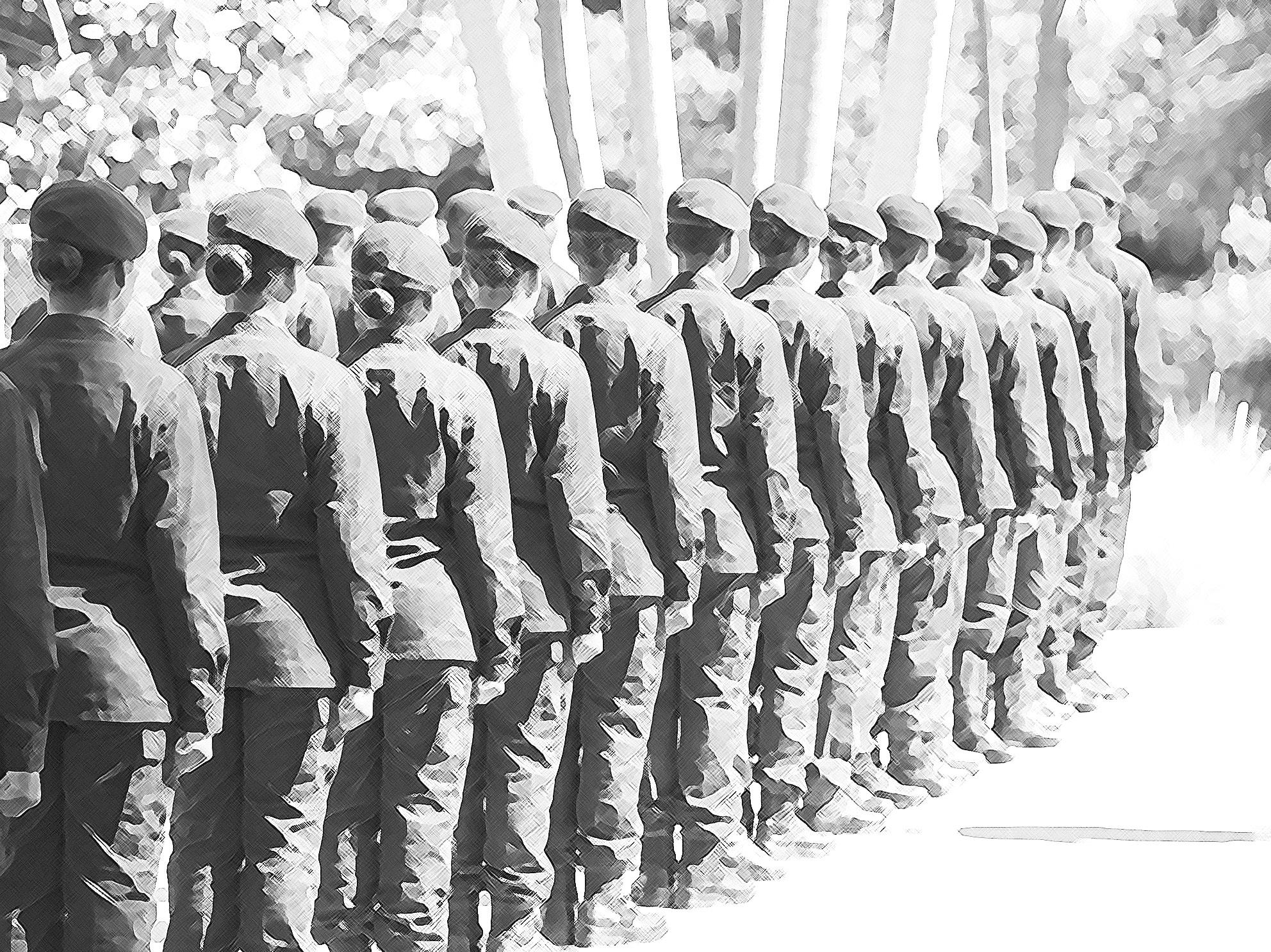
discover purpose, develop practical skills, strengthen character, and acquire a deeper appreciation for the blessings and responsibilities of citizenship. History teaches us that great nations are built not merely upon economic prosperity, but upon disciplined, principled, and
service-oriented citizens. A generation taught to serve will inevitably become a generation prepared to lead.
Our love for country is surpassed only by our love for Almighty God. It is that love for God which inspires faithful service to our fellow citizens and
By FERNANDA PESCE and ISABEL DEBRE Associated Press
WHEN the high-rise where Noel Márquez lived with his family crashed to the ground and burst into flames in Venezuela’s twin earthquakes, Márquez, who happened to be at his girlfriend’s apartment, raced home and called out for his mother, grandparents and siblings. Only his 17-year-old brother, his legs pinned under columns that required heavy machinery to lift, responded.
Márquez and his father, who also survived, spoke through layers of concrete, hearing Leonel suffer, shout for help and inhale suffocating smoke as he waited for a crane to remove the columns crushing him. But it never came. After several hours, Leonel’s cries gave way to silence, Márquez said.
But even that, terrible as it was, was not what disturbed him the most. The worst, Márquez said, was trying to recover his families’ tangled remains with little more than his bare hands and a saw. He sliced off limbs to free the corpses of Leonel and his mother but was forced to abandon his sister, who was eight-months’ pregnant, grandmother and other relatives beneath the ruins — and with their bodies, the hope that if he couldn’t save them, he could at least give them proper burials.
“It’s unfair. It’s inhumane, everything that is happening,” 26-year-old Márquez said from the overflowing makeshift morgue at La Guaira port. “We couldn’t get my brother out because we didn’t get a response from the state ... and after 11 days, we are still requesting a crane.”
Márquez is one of countless Venezuelans who, after days of torment, has been left alone to search, if not for signs of life, then for loved ones’ remains — and for some semblance of closure.
International rescue teams, quietly acknowledging the possibility that no more victims would be found alive after 12 days under the rubble, are preparing to depart. Local authorities are turning their focus to finding shelter for thousands of displaced people. But the recovery of the dead has become a pressing, and horrifying, duty for Venezuelans still missing their loved ones.
“I found her hand, but her torso is crushed,” said Norely Rodríguez, trying to get her 5-year-old daughter out of the ruins in the hardest-hit state of La Guaira. “I want to see if I can get her out whole.”
Residents say they are alone in the search for their dead
Many say that just as they were left without government help to rescue survivors in the immediate aftermath of the quakes, so too are they now under-equipped to unearth their dead nearly two weeks later.
The more time passes, the more gruesome the recovery process becomes, said William Gomez, a firefighter in La Guaira. “It has been difficult because the bodies are already in an advanced state of decomposition, decomposed to such an extent that many times when we try to remove them, they fall apart.” Authorities announced that the death toll rose on Monday to 3,535, with another 16,740 people injured. Beyond that is an untold toll: those whose bodies have yet to be found. There are no official statistics on how many people are buried under the rubble, but more than 30,000 reports of missing people have been sent to a website set up by the Venezuelan opposition.
Over the weekend in La Guaira, no government civil defence crews or security forces could be seen helping families dig. The vast majority of those working their way through the wreckage were civilians using their bare hands or rudimentary tools like pickaxes and shovels, occasionally accompanied by firefighters and Mexican rescuers who remain in the country. There are 1.2 million tons of debris in the most affected parts of La Guaira, according to the United Nations Development Program.
“We are the ones helping ourselves: our family. Nobody else helps us except for a few volunteers,” said Yeikhary Urbina, who found the bodies of her mother and brother on Saturday suspended under piles of concrete, seemingly locked in an embrace.
In several WhatsApp chats on Monday, neighbours who could no longer wait for authorities to help them recover their dead discussed pooling their own money to
rent a crane — for the price of $11,500, in one case.
Search teams from Italy, Argentina, Spain and other countries have already returned home. The Venezuelan government has not yet called off the search for survivors. But officials have pivoted from promoting heroic rescue stories on social media to announcing reconstruction plans under a program called Venezuela Reborn.
“Venezuela is entering a process of infrastructure recovery, of housing recovery,” acting President Delcy Rodríguez told state TV on Saturday. She has fiercely rejected widespread criticism that her government reacted too slowly to the disaster and accused media outlets of spreading misinformation.
Anger over recovery effort mounts
Families with missing loved ones face fresh horrors as they scour the rubble. Some have searched for days to find corpses of loved ones so decomposed, they cannot tell them apart.
Others have dug and dug only to find nothing at all.
“She kept asking, ‘Why did God play this trick on me?’”
Geraldine Perdomo said of her sister, who was feverishly clawing at the ruins of her home for anything that would confirm the death of her two daughters.
And some, like Márquez, have agonized for days to extract their loved ones’ bodies only to lose them again in the chaos of the impromptu morgue beneath grain silos at the La Guaira port, where a near-constant stream of bodies has been arriving since the June 24 quakes.
Márquez said that on Sunday, a week after delivering their corpses, he heard authorities had located his mother and grandfather. But Leonel, he said, “is still missing because of the negligence here.”
He and many other residents of the country’s public housing blocks — built years ago for low-income families by former socialist leader Hugo Chávez — say their complaints of negligence long predate this disaster.
High-rise buildings housing hundreds of apartments pancaked in the earthquakes, reviving questions about substandard construction.
Alexander, a 42-yearold police officer who lived in one of the towers, was trembling with fury at the government on Sunday — for not addressing what he said were long-running resident concerns that his concrete housing complex was shoddily constructed, for not sending rescue teams in time to save
faithful stewardship of the nation He has entrusted to us. Perhaps the time has come for The Bahamas to reconsider this noble vision—not as a political proposal, but as a national imperative. The challenges before us are too great to ignore, and the opportunities before us are too significant to postpone.
A nation that trains its young people to serve is preparing them not merely to inherit the future, but to shape it. The conversation should begin now.
his wife and three daughters, and now, for not delivering heavy machinery to help him recover their bodies.
“Not a single person from the government was here,” he said, requesting to be identified only by his first name because, as a government employee, he feared retaliation for criticizing authorities.
After 11 days of searching, he reached the last missing member of his family — his 12-year-old daughter, her corpse decomposed but intact.
“She was waiting for me to pull her out,” he said, cradling the black plastic body bag in his arms.