By BARBARA WALKIN barbara@barefootmarketing.net
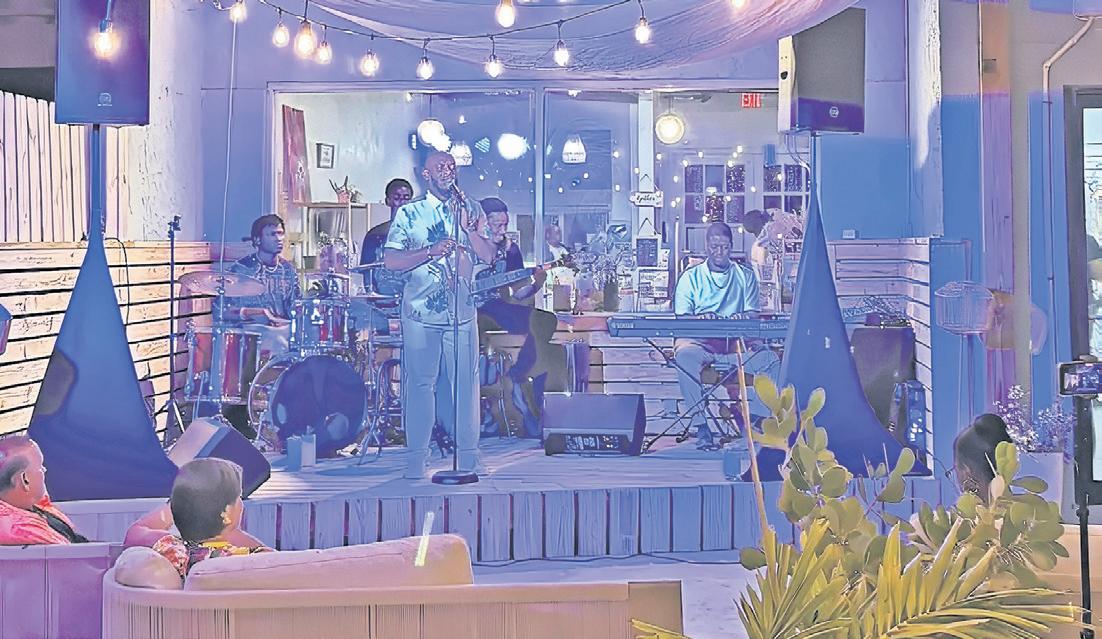
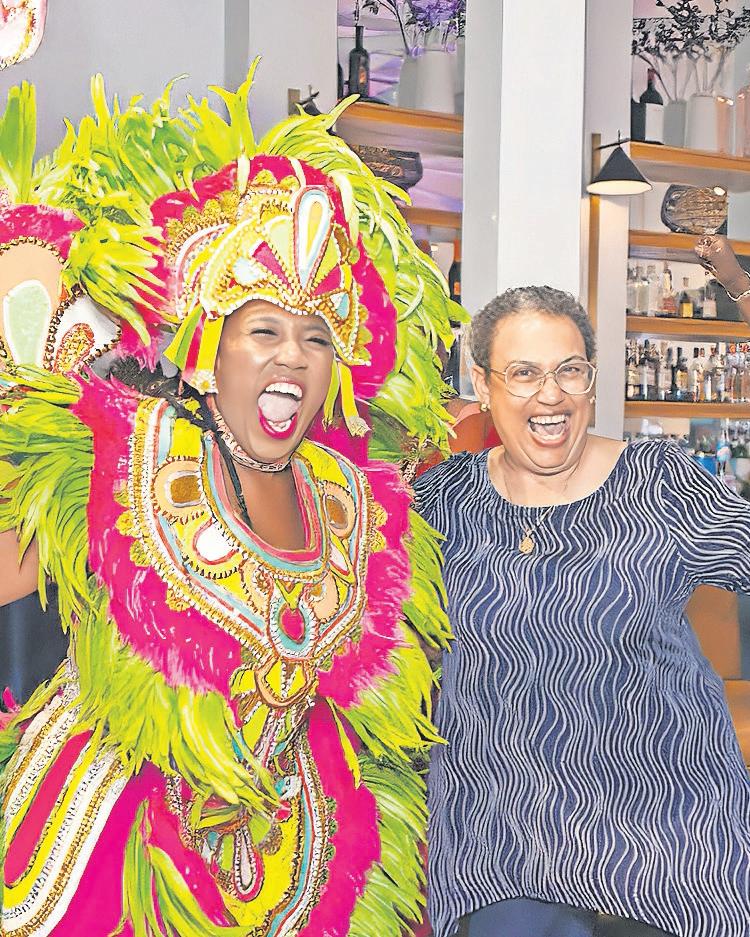
ON the frst Friday of every month, the waterfront deckat Suite 8, 1 King’s Road, Lucaya comes alive at Lignum Vitae Market, where the sounds of live jazz create an inviting atmosphere for patrons of every genre.
Jazzy Friday, one of the market’s signature events, has become a popular gathering that blends live entertainment, local shopping, and community in a uniquely Bahamian setting.
From approximately 8-10:30pm, guests enjoy performances by talented local musicians, with the Legit Ensemble serves as the regular headline act. Led by vocalist Tony Lowe, the four-piece group also features Peyton on bass and RJ on drums, performing an engaging mix of jazz, R&B, pop, and Bahamian rake-and-scrape infuences.
Admission is $30, which includes a light bite and one signature drink.
The evening also features an open bar and a rotating selection of local vendors ofering handcrafted candles, clothing, sweet treats, artisan products, and other Bahamian-made goods, creating an experience that extends well beyond the music.
Retail Associate Trezsa Wallace told Around da Islands that Jazzy Friday is about celebrating local talent and creating meaningful connections within the community.
“It’s more than just music,” Ms Wallace explains. “We
JAZZY FRIDAY, one of the market’s signature events, has become a popular gathering that blends live entertainment, local shopping, and community in a uniquely Bahamian setting.
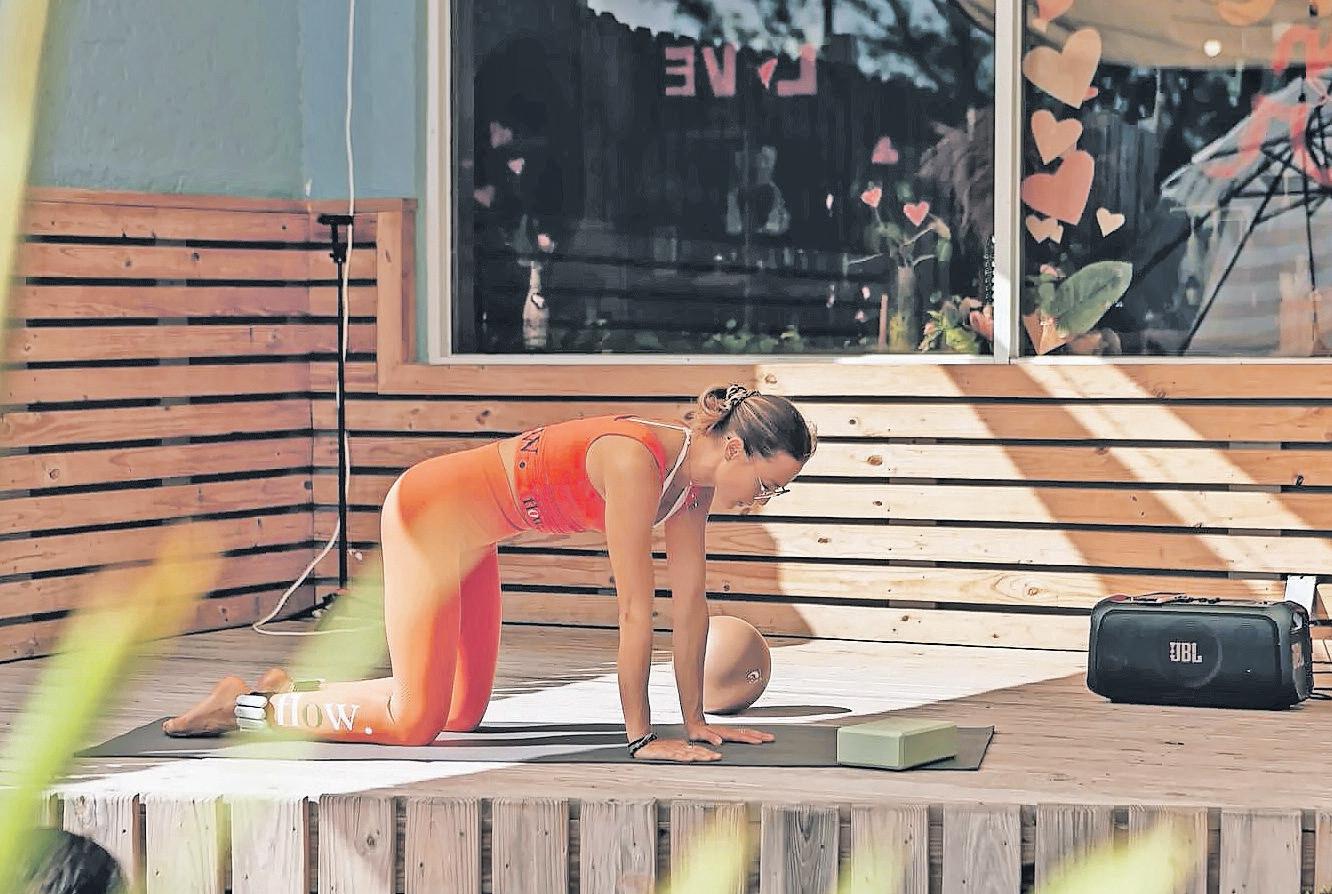
BEYOND JAZZY FRIDAY, Lignum Vitae offers a full calendar of wellness and creative events throughout the week.
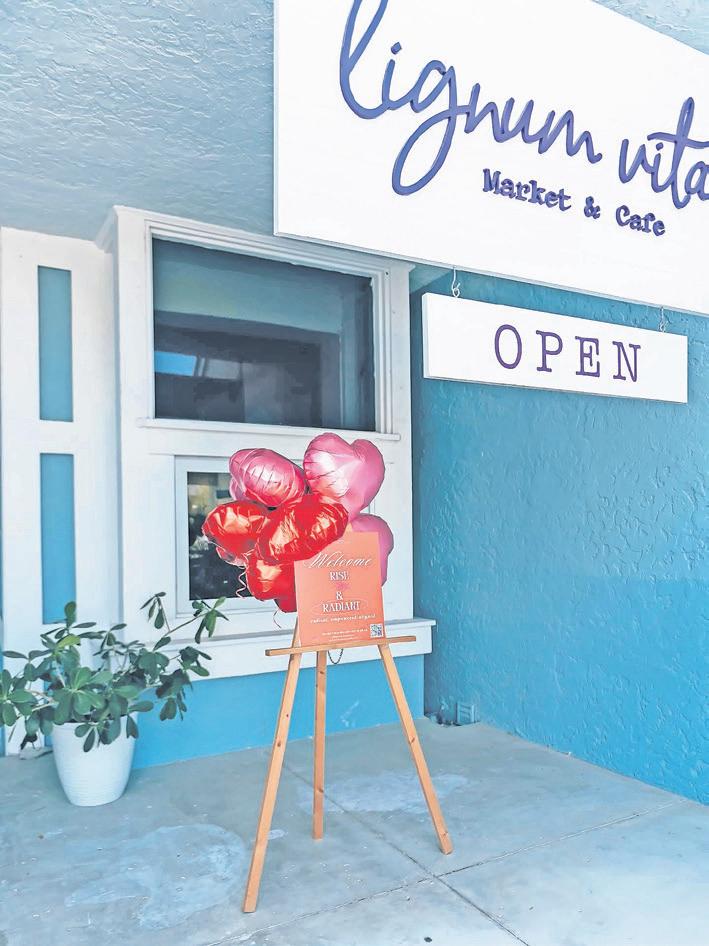
LIGNUM Vitae Market and Cafe, the waterfront deck at Suite 8, 1 King’s Road, Lucaya, is a community-centred marketplace founded by sisters Ariel Jasmin Ferree and Jade Barnett [also known as Jade Moya], whose goal was to create a space where wellness, sustainability, local entrepreneurship and the arts could flourish together.
and spending time together in a relaxed setting.”
Since its launch in 2024, Jazzy Friday has welcomed a variety of performers, including jazz fusion bands, solo vocalists, and contemporary artists. While Legit Ensemble performs regularly, the event continues to introduce audiences to new musical talent throughout the year.
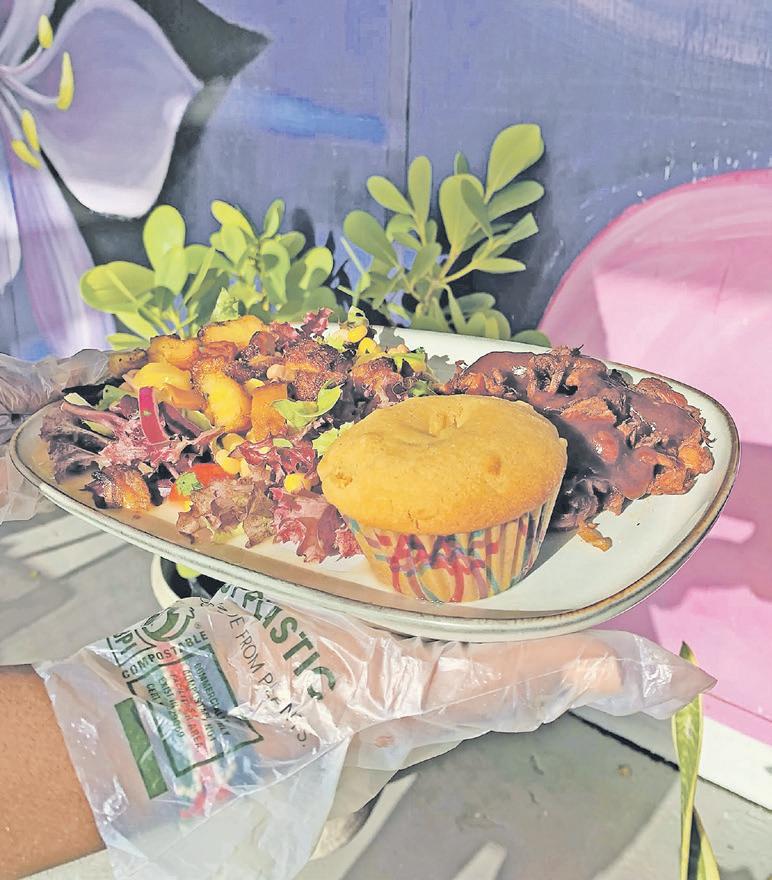
THE MARKET combines a vegan café with a retail space featuring products made primarily by Bahamian artisans and small businesses.
The idea for Jazzy Friday refects the broader vision of Lignum Vitae Market, a community-centred marketplace founded by sisters, Ariel Jasmin Ferree and Jade Barnett (also known as Jade Moya]), whose goal was to create a space where wellness, sustainability, local entrepreneurship and the arts could fourish together. Named after the lignum vitae tree, one of the hardest woods in the world and the national tree of
teas, Bahamian-roasted cofee, handmade crochet pieces, eco-friendly products, original artwork, clothing, gifts, and other items that celebrate local craftsmanship.
Beyond Jazzy Friday, Lignum Vitae ofers a full calendar of wellness and creative events throughout the week.
Weekly classes include:
• Yin Yoga on Tuesdays, 6:30 p.m. to 7:30 p.m., a relaxing practice designed to help participants unwind after the day.
• Mat Pilates on Wednesdays, 6:30 p.m. to 7:30 p.m., focusing on strength, stability, and foundational movement, and
Vinyasa Yoga on Thursdays and Sundays, 10:00 a.m. to 11:00 a.m., ofering a gentle fow to reset both body and mind.
All experience levels are welcome, and participants are encouraged to RSVP as class sizes are intentionally kept small to provide a more personalized experience.
Photos: LIGNUM VITAE MARKET & CAFE
focus on showcasing local artists and bands, each bringing their own style and personality. Guests can enjoy the performances while exploring local businesses, meeting artisans,
The Bahamas, the market embodies resilience, heritage, and a deep commitment to supporting Bahamian creators.
The market combines a vegan café with a retail space featuring products made primarily by Bahamian artisans and small businesses. Shoppers will fnd locally blended
The market also hosts a Poetry Night on the third Thursday of each month, featuring a guest artist alongside an open mic where poets, singers, dancers, and other performers are invited to share their work. Paintand-sip sessions and other community events are held throughout the year, further expanding the market's role as a creative hub.
Whether visitors come for live jazz, a yoga class, handcrafted Bahamian products, or simply a quiet evening by the water, Ms Wallace said, Lignum Vitae Market continues to ofer an experience that celebrates local culture, wellness, and community in the heart of Lucaya.
…to Around da Islands, our weekly supplement, free with Friday’s Tribune.
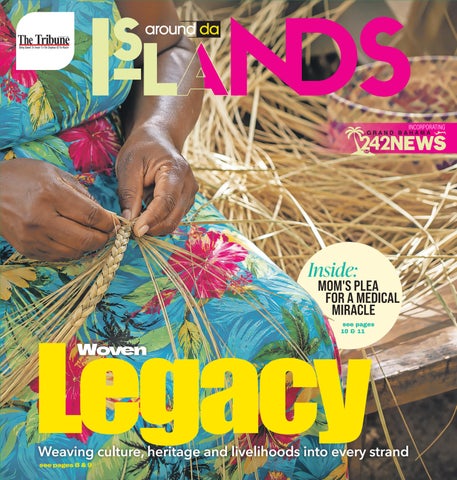
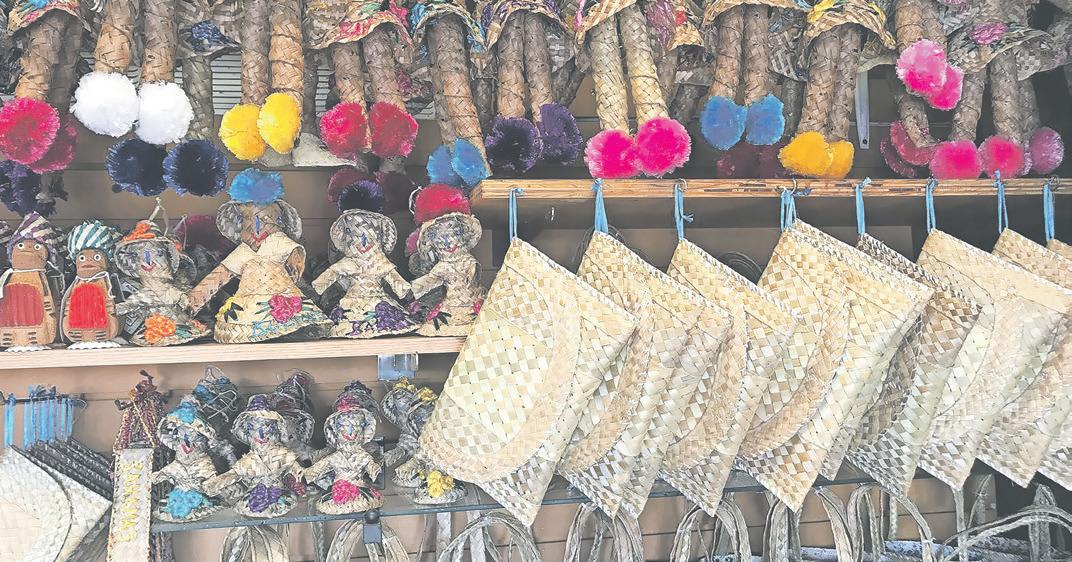
This week we take a look at the handcraft ofErica Ferguson, a descendent of Cat Island straw plaiters. Straw plaiting is the traditional craft of weaving and braiding natural plant !bres into long, exible strips that can later be sewn or stitched into branded marketable goods.
Long before imported goods !lled store shelves, Bahamians relied on the art of straw plaiting to create practical items for everyday life, from hats and baskets to mats and handbags. We love your work Erica!
We also focus on the story of brave Megan Higgs, with mom Kendith revealing her daughter’s 20-year battle through surgeries, therapies, countless hospital visits, and unimaginable uncertainty. Today, that !ght has reached another critical crossroads.
Megan, who was born with Dandy-Walker Syndrome with Hydrocephalus, urgently requires life-saving brain surgery in the United States after doctors discovered dangerous pressure caused by uid building up in her brain. The surgery is urgently needed and estimated to cost $106,000. If you are able to help, please do – every penny counts.
Every week, Around da Islands, having partnered with Grand Bahama 242, highlights news, features and developments from Grand Bahama and the Family Islands, o ering a broader national perspective beyond Nassau.
And don’t forget, this is your supplement too! Send us your story ideas, features and tips – we can’t run then them all, but we’re committed to strong, fair representation from across the islands.
So come along for the ride! From all of us here at The Tribune – The People’s Paper.
This WEEK in Around da IslandsBahamian News, Features & Culture
GRAND BAHAMA NEWS
Pg 4 — Development of Freeport Health Campus is on track, says Health Minister Darville
Pg 5 — Early sargassum arrival on GM beaches – but no danger
Pg 6 — Park and playing eld named a er Archbishop Drexel Gomez
NEW PROVIDENCE NEWS
Pg 7 — Culture, cowbell, connectivity and conservation: e four pillars that inspire the Kalik brand
GRAND BAHAMA FEATURES
Pgs 8 & 9 — Keeping alive the art and tradition of straw plaiting
Pgs 10 & 11 — A mother’s plea... for a medical miracle
Pg 12 — Island Brainwaves
EXUMA NEWS
Pg 13 — Exuma Christian Academy opens new educational space
CAT ISLAND FEATURES
Pgs 14 & 15 — Accordion is giving an old sound a new heartbeat
By BARBARA WALKIN barbara@barefootmarketing.net
THE government says the completion of the Freeport Health Campus is on track and will ‘fundamentally reshape healthcare delivery on the island.’
After reaching out to Minister of Health and Wellness Dr Michael Darville for an update, Around da Island was referred to his contribution to the 2026/2027 Budget Debate.
In his presentation on June 10, Dr Darville confrmed that Phases 1A and 1B are on track for completion by April 2027, while ‘the multi-storey hospital tower currently under construction is expected to be completed later this year’
The Freeport Health Campus, being developed on a 50-acre site near the Western Atlantic Medical School, is designed to replace and expand the services currently provided at Rand Memorial Hospital. The medical complex will serve
as Grand Bahama’s principal healthcare facility, ofering expanded clinical services, modern infrastructure and increased capacity to meet the island’s healthcare needs.
The Minister explained that once operational, many of the services now ofered at Rand Memorial Hospital will be relocated and the Rand will be utilised for specialised services.
“Many of the services that currently exist at the Rand Memorial Hospital will be transferred to that facility as we make way for converting the Rand Memorial Hospital into a geriatric and psychiatric facility,” he said.
He also disclosed that the government secured an additional 20,000 to 30,000 square feet of basement space within the development and said the expanded area will support disaster response operations, medical training and other critical support services.
Preparation of the healthcare workforce for the transition is already underway, he said. Clinical nurses in Grand Bahama are receiving specialised training, while new nursing programmes at the University of The Bahamas will complement the institution's existing midwifery programme.

“The ministry is also expanding emergency
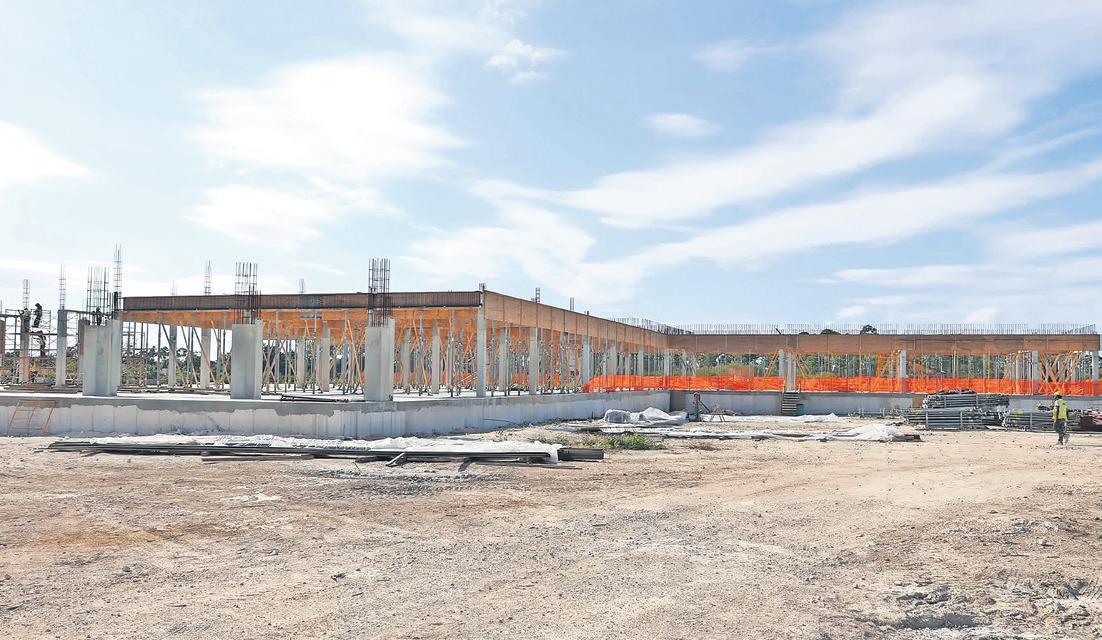
The Freeport Health Campus, being developed on a 50-acre site near the Western Atlantic Medical School, is designed to replace and expand the services currently provided at Rand Memorial Hospital.
Photos: BARBARA WALKIN
care training, strengthening the Public Hospitals Authority Academy and forging partnerships with regional and international institutions to provide specialised healthcare education free of charge to Bahamians,” he added.
Dr Darville said the completion of the Freeport Health Campus will improve healthcare delivery in the northern Bahamas, expand specialised
medical services, strengthen the training of healthcare professionals and position the country to broaden its medical footprint throughout the Caribbean.
While outlining progress on the new campus, the minister also told the House that improvements will be made soon at Rand Memorial Hospital.
He said essential renovations to the hospital’s Accident and Emergency Department will begin within the next few weeks, while work to complete the morgue facility and pathology services is moving ahead.
“We are moving expeditiously to complete the morgue facility and the services for our pathology department at the Rand Memorial Hospital,” he said.
While acknowledging concerns about long wait times, staf shortages and quality of service at the Rand, Dr Darville said an independent Health Task Force will be launched in July. “Their mandate is to look closely at our public hospitals operations and service delivery system. Critical assessments will be made inclusive of the budgetary allocations for both the Rand Memorial and Princess Margaret Hospitals,” he said.
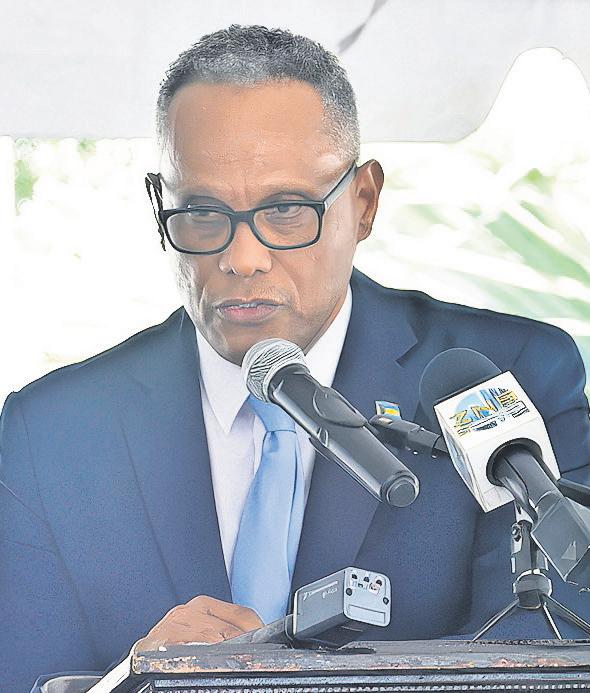
Minister of Health and Wellness Dr Michael Darville assured that the Freeport Health Campus project remains on schedule and will fundamentally reshape healthcare delivery on the island.

By BARBARA WALKIN barbara@ barefootmarketing.net
RESIDENTS in parts of Grand Bahama are noticing an unusually large amount of sargassum on beaches
and waterways in recent weeks, the algae that most people think of as foating seaweed.
Environmental ofcials say the infux has been particularly noticeable along the island's southern coastline, including Williams/Russell Town, Smith's Point and beaches further east
including Barbary and Airplane beach.
According to environmentalist Joseph Darville, the early arrival of sargassum appears to be linked to warmer ocean conditions and winds pushing the algae toward shore.
“Warming of the ocean, and winds driving
them into shorelines usually in June or July … I've seen it, but not in this month of May,” he said. “That's a little bit extraordinary.”
Around da Islands reached out to Mr Darville after a concerned resident sent a report with a satellite photo marking the impacted shorelines of the Florida coast and the south-western end of Grand Bahama.
Mr Darville noted that unlike seagrass, which grows rooted on the ocean foor and plays an important role in storing carbon, sargassum foats freely on the ocean’s surface.
He said reports from residents and his own observations indicate signifcant accumulations.
The environmentalist said he frst noticed the increase during the third week of May and recently observed another substantial wave of seaweed arriving along the Williams Town shoreline.
While the volume may appear concerning, Mr Darville stressed that the
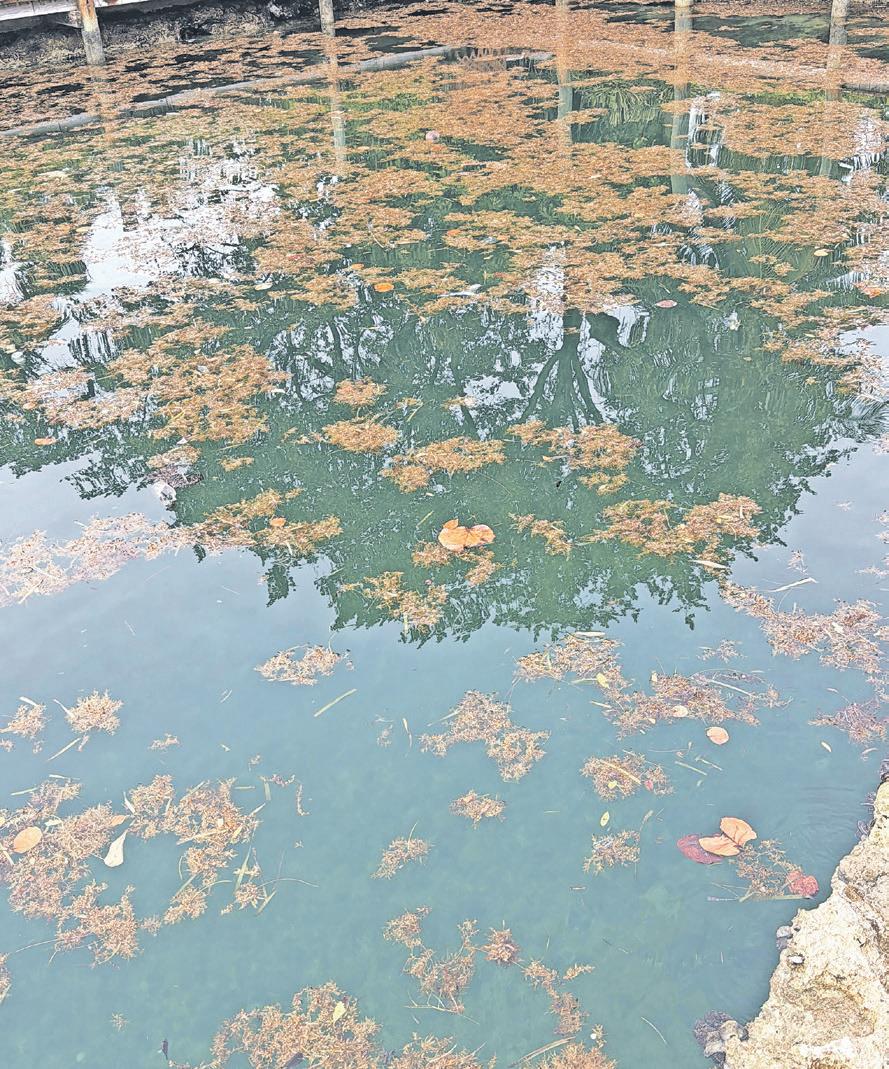
phenomenon is not considered unusual or dangerous. The sargassum does carry microscopic creatures such as sea lice however, which can cause a rash.
“It’s nothing alarming, just a phenomenon that happens every now and then,” he said. “It’s a natural phenomenon from time to time, and I think because we had an early kind of warming period, I think that might be associated with the actual abundance of it coming in this early in the summer.”
Keith Cooper of West End Ecology Tours also confrmed sightings of sargassum in some parts of West End waters.
“Yes, each year we have tremendous amounts around West End, making troll fshing impossible.”
The appearance of sargassum on Grand Bahama comes as communities across the wider Caribbean and Florida are also reporting signifcant accumulations. Meteorologists on Florida television stations, including CBS 12 News, have reported sargassum piling up along portions of Florida's coastline as a massive bloom continues to spread across the region.
Scientists at Florida’s Harbor Branch Oceanographic Institute have said the seaweed originates of the coast of Africa and is transported across the Atlantic Ocean by currents before reaching Caribbean islands and Florida beaches.

By DENISE MAYCOCK Tribune Freeport Reporter
dmaycock@ tribunemedia.net
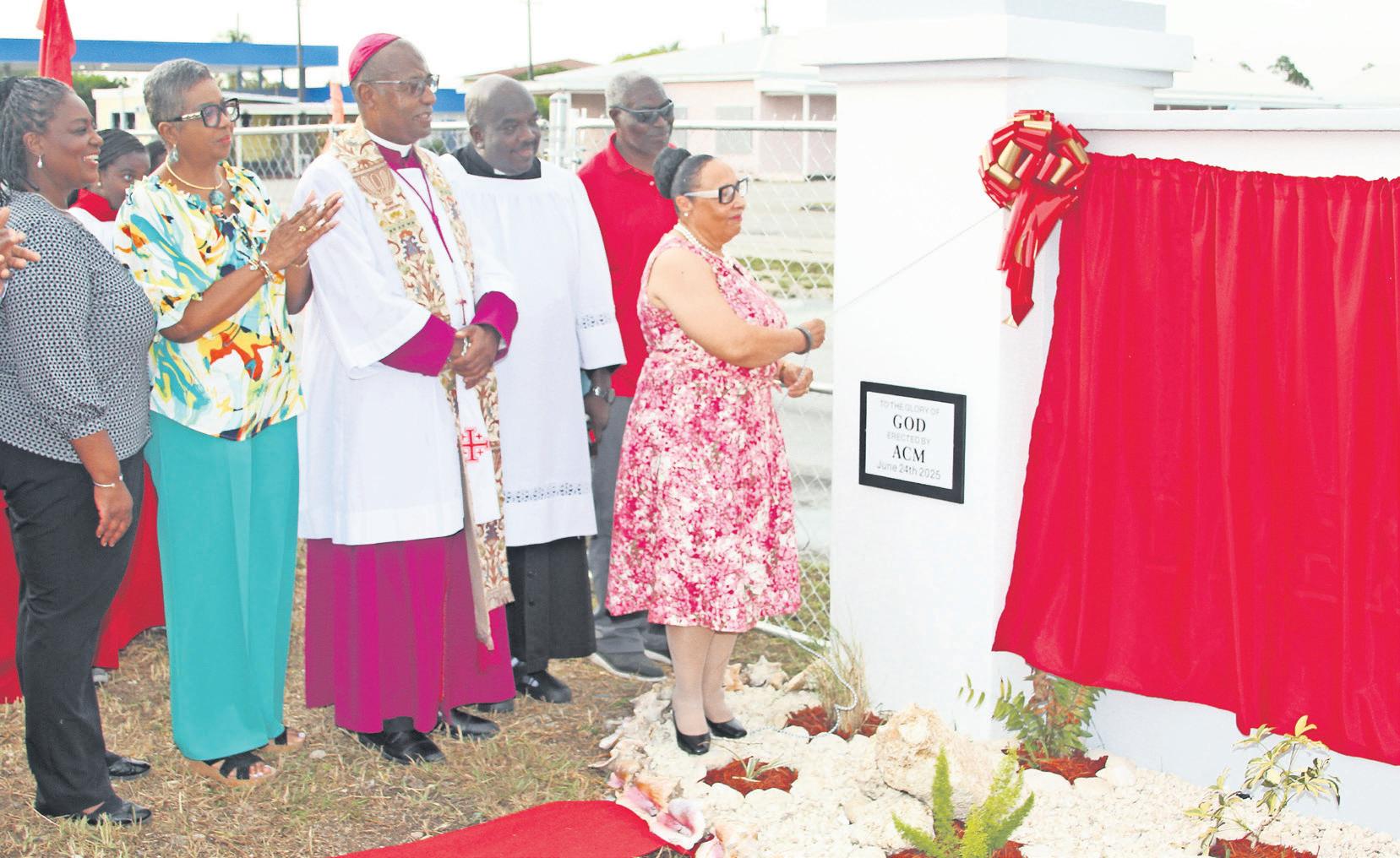
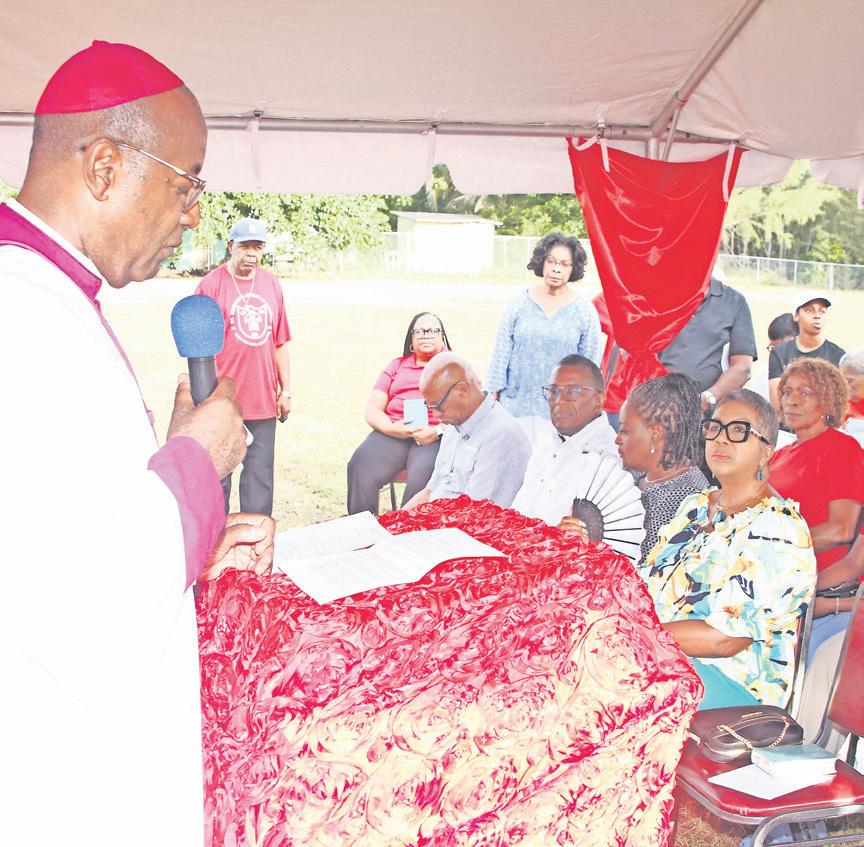
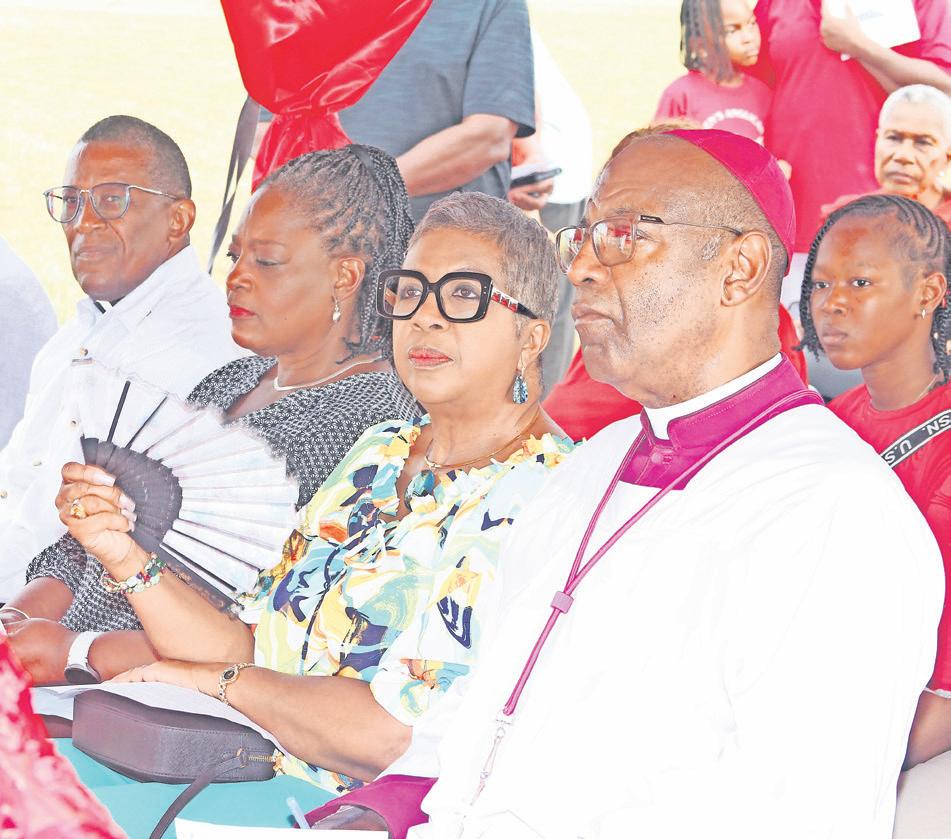
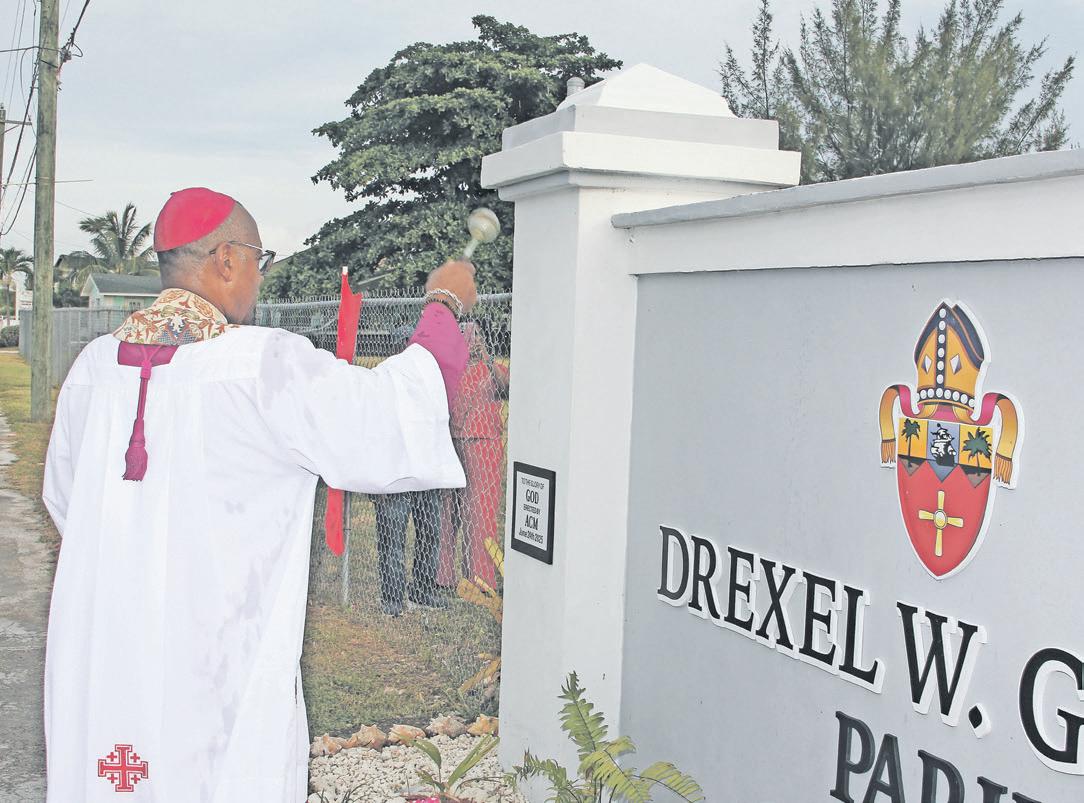
THE St. Stephen’s Anglican Church playing
feld and park in Eight Mile Rock has now been ofcially named the Drexel Wellington Gomez Park, paying tribute to one of the Anglican Church’s most distinguished leader.
The dedication ceremony was held on the Feast of the Nativity of St. John the Baptist, the patronal festival of the Anglican Diocese of The Bahamas and the Turks and Caicos Islands. The date also marked the anniversary
of Archbishop Drexel Gomez’s consecration as Bishop of Barbados in 1972, making the occasion especially signifcant.
Addressing the gathering, Bishop of The Bahamas and The Turks and Caicos Islands, The Rt Rev Laish Boyd, praised St Stephen’s Rector Fr Chester

Burton and parish members for ofcially memorialising the late archbishop.
Rev Boyd described Gomez as a son of the Bahamian church whose ministry spanned more than fve decades. Born and raised in McAleer’s Corner, Gomez discerned his calling to the priesthood while worshipping at St. Agnes Anglican Church. After serving as a curate at St Barnabas Church, teaching at St John’s College and ministering at St Stephen’s and St Patrick’s, he became diocesan secretary, where he introduced administrative systems
that continue to beneft the church.
In 1972, Gomez was elected Bishop of Barbados, serving there for 20 years before returning home to lead the Diocese of The Bahamas and the Turks and
Caicos Islands. He later became Archbishop of the Province of the West Indies, serving from 1996 to 2009.
Rev Boyd recognised Gomez’s unwavering commitment to theological education, clergy development and community building. Beyond the region, he represented the Anglican Communion on the international stage, serving on the Anglican Consultative Council,attending four Lambeth Conferences and contributing to major theological initiatives, including the Windsor Report and Anglican-Roman Catholic dialogue. Speaking on behalf of the Gomez family, niece Dorothea Gomez said the dedication was a ftting tribute to her uncle whose life was defned by faithful service. Quoting the hymn O Jesus, I Have Promised, she said it best refected his lifelong commitment to God. Though modest in stature, she described him as "a giant of a man" whose wisdom and leadership earned respect throughout the worldwide Anglican Communion. She also remembered his sense of humour, devotion to family and the lasting connection between his name and St Stephen’s, where his ministry in the 1960s left an enduring legacy. The park will stand as a lasting reminder of his faith, leadership and service.
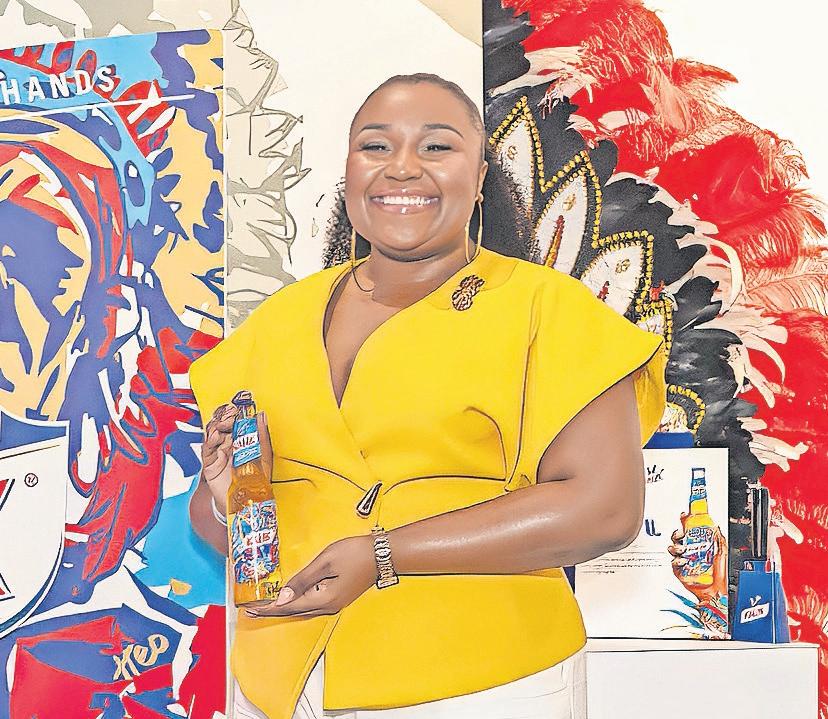
COMMONWEALTH Brewery Ltd. (CBL) has unveiled the latest chapter of Kalik's ‘In Our Hands’ campaign, reafrming the brand's enduring commitment to celebrating the people, traditions and shared experiences that continue to defne The Bahamas.
First introduced in 2024 with a cam-
every bottle into a celebration of Bahamian identity, creativity and pride.
More than a campaign, ‘In Our Hands’ refects Kalik's ongoing role as The Beer of The Bahamas, a brand that has proudly celebrated Bahamian culture for generations. Through authentic storytelling, creative collaboration and continued investment in local talent, Kalik remains committed to carrying Bahamian culture forward and creating meaningful connections with consumers across the islands.
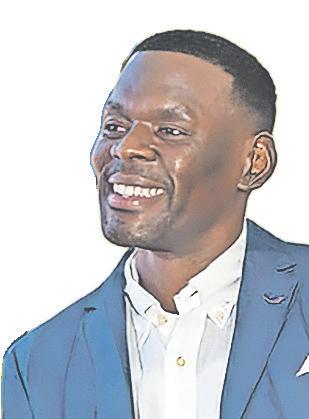
"Our role has always extended beyond brewing beer," said Timothy White, Senior Portfolio Manager at Commonwealth Brewery Ltd.
"As The Beer of The Bahamas, Kalik has a responsibility to celebrate the people, creativity and traditions that make our country so special. 'In Our Hands' refects our belief that our culture is something to be celebrated, protected and shared.”
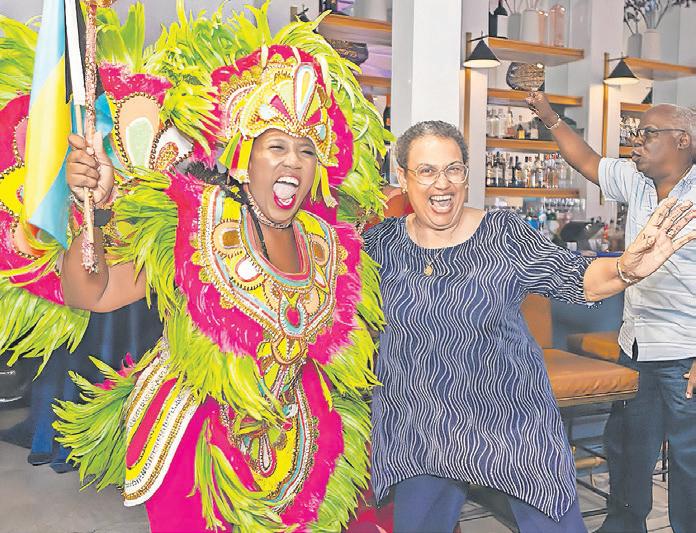
paign
inspired by Junkanoo, ‘In Our Hands’ was created to celebrate the cultural expressions that make The Bahamas unique. This latest chapter expands that vision by exploring four pillars that have long inspired the Kalik brand: Culture, Cowbell, Connectivity and Conservation.
The campaign premiered during an exclusive launch event attended by government ofcials, media, industry partners, infuencers and invited guests, who were among the frst to experience the new commercial and preview Kalik's latest collection of limited-edition bottles. Featuring original artwork by acclaimed Bahamian artist Theo McClain, each design represents one of the campaign's four pillars, transforming
The latest commercial was directed by renowned Bahamian flmmaker Lavado Stubbs, whose creative vision brings the campaign's themes to life through powerful storytelling rooted in local experiences. Together with Theo McClain's limited edition label designs, the campaign showcases the depth of Bahamian creative talent while inviting consumers to celebrate the culture that connects us all.
Through brands like Kalik, Commonwealth Brewery Ltd. remains committed to investing in the stories, people and partnerships that celebrate the very best of The Bahamas. As the next chapter of ‘In Our Hands’ rolls out across television, digital and social media, consumers are invited to experience the campaign for themselves and collect the limited-edition Kalik bottles, available for a limited time at their nearest 700 Wines & Spirits location. Each bottle serves as a lasting tribute to the four pillars of Culture, Cowbell, Connectivity and Conservation, continuing Kalik's legacy as The Beer of The Bahamas and a proud catalyst for celebrating Bahamian culture.
TIMOTHY WHITE, Senior Portfolio Manager at Commonwealth Brewery Ltd.
By BARBARA WALKIN barbara@barefootmarketing.net
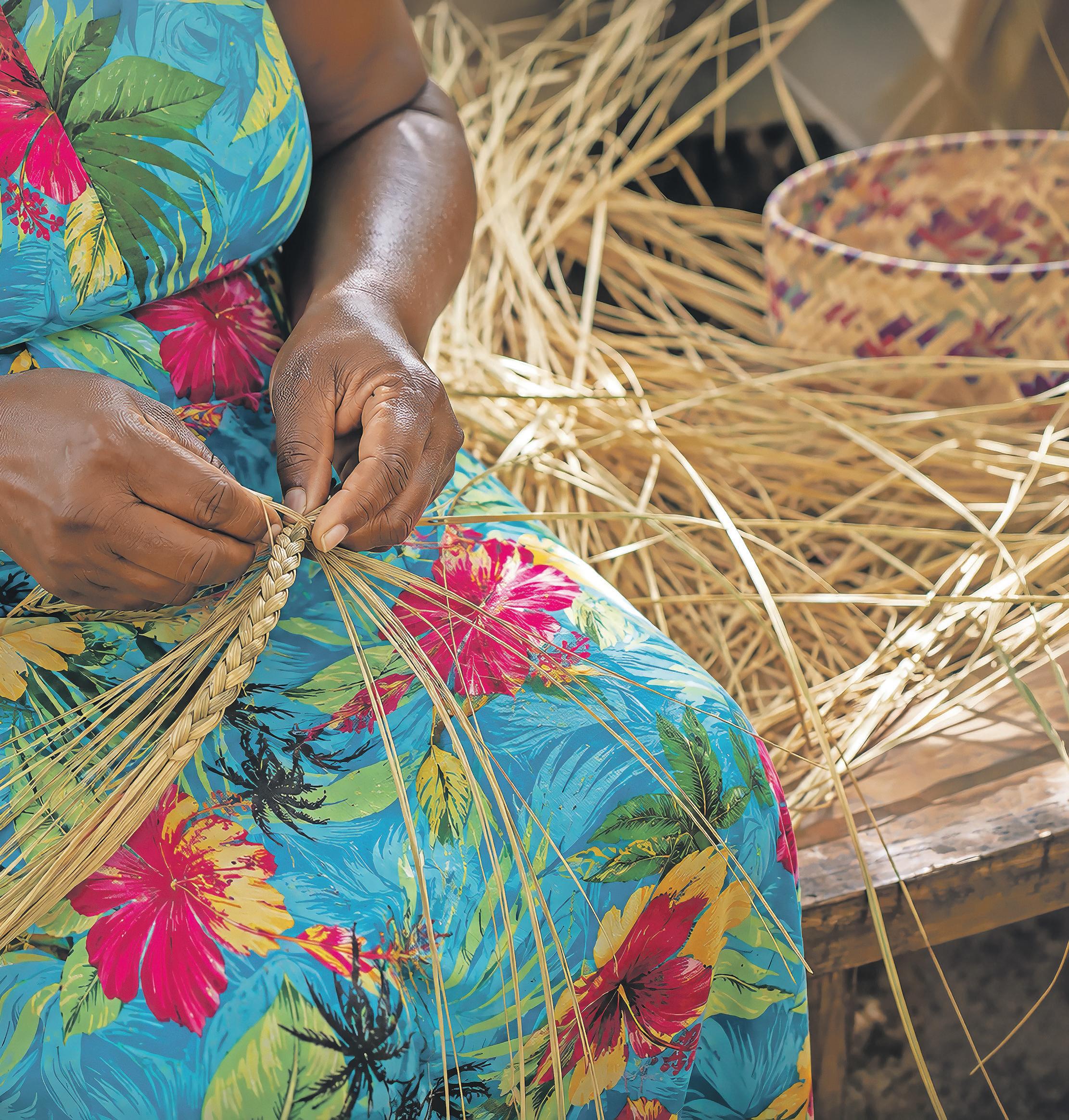
For generations, the rhythmic movement of young and notso-young fngers weaving palm fronds into intricate patterns has been a familiar sight throughout The Bahamas. Long before imported goods flled store shelves, Bahamians relied on the art of straw plaiting to create practical items for everyday life, from hats and baskets to mats and handbags.
Straw plaiting is the traditional craft of weaving and braiding natural plant fbres into long, fexible strips that can later be sewn or stitched into branded marketable goods.
Erica Ferguson, a descendent of straw plaiters in Cat Island, told Around da Islands that good preparation is essential to the success of the fnal product and it starts with what is called ‘damping,’ the soaking of dried straw or other plant fbres in water that can be warm or hot, fresh or salt, to make the fbres pliable enough to weave without snapping.
Unlike traditional straw crafts found elsewhere in the world that use grain stalks such as wheat or rye, Bahamian straw work relies primarily on locally available plant materials such as Silver Top Palm, Pond Top, coconut palm and sisal.
“Bow top, sisal and silver top are the main materials we use,” she explained, “Bow top is not that strong, but Silver Top is the strongest.”
“You can fnd straw on almost all the islands. Even along the Grand Bahama Highway you can fnd Silver Top. Most of it is found in bushy areas.”
Some materials require additional preparation. “With the sisal, you have to cut it and soak it for a few days before working with it,” Ms Ferguson noted.
“Coconut straw is usually hard and brittle. You can dip it in salt water to soften it before plaiting.”
The weaving itself is a skill that demands patience and precision.
Techniques range from simple threestrand braids to more complex methods such as the traditional seven-strand plait. In some weaving traditions, the seven-strand
“Dunstable Plait” is taught through the memorable rhyme: “Over one, under two, pull it tight and that will do.”
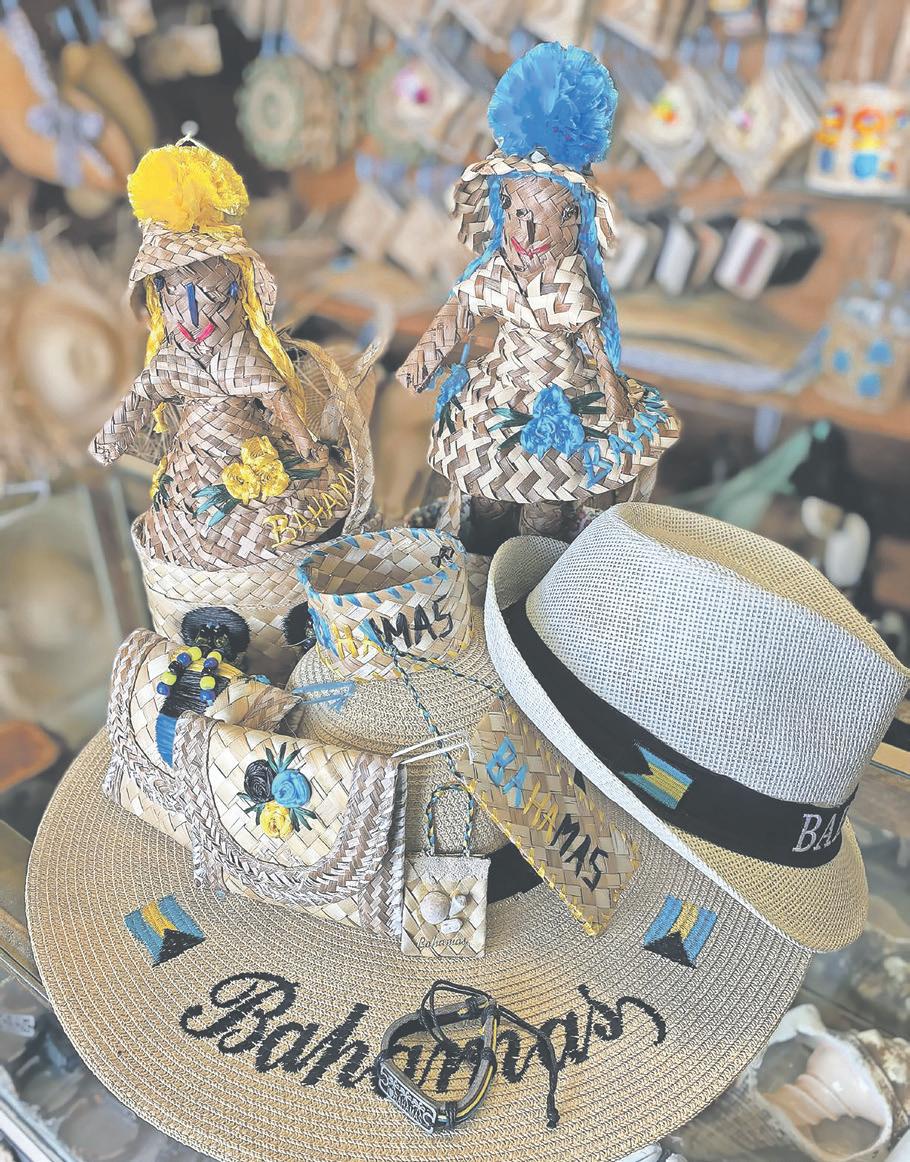
Bahamian artisans have also developed distinctive patterns that refect local creativity and identity including Jacob’s Ladder, Bahama Mama, Four String, Cow Teeth, Hole in the Wall, Mixed Fish Gill and Peas ‘n’ Rice.
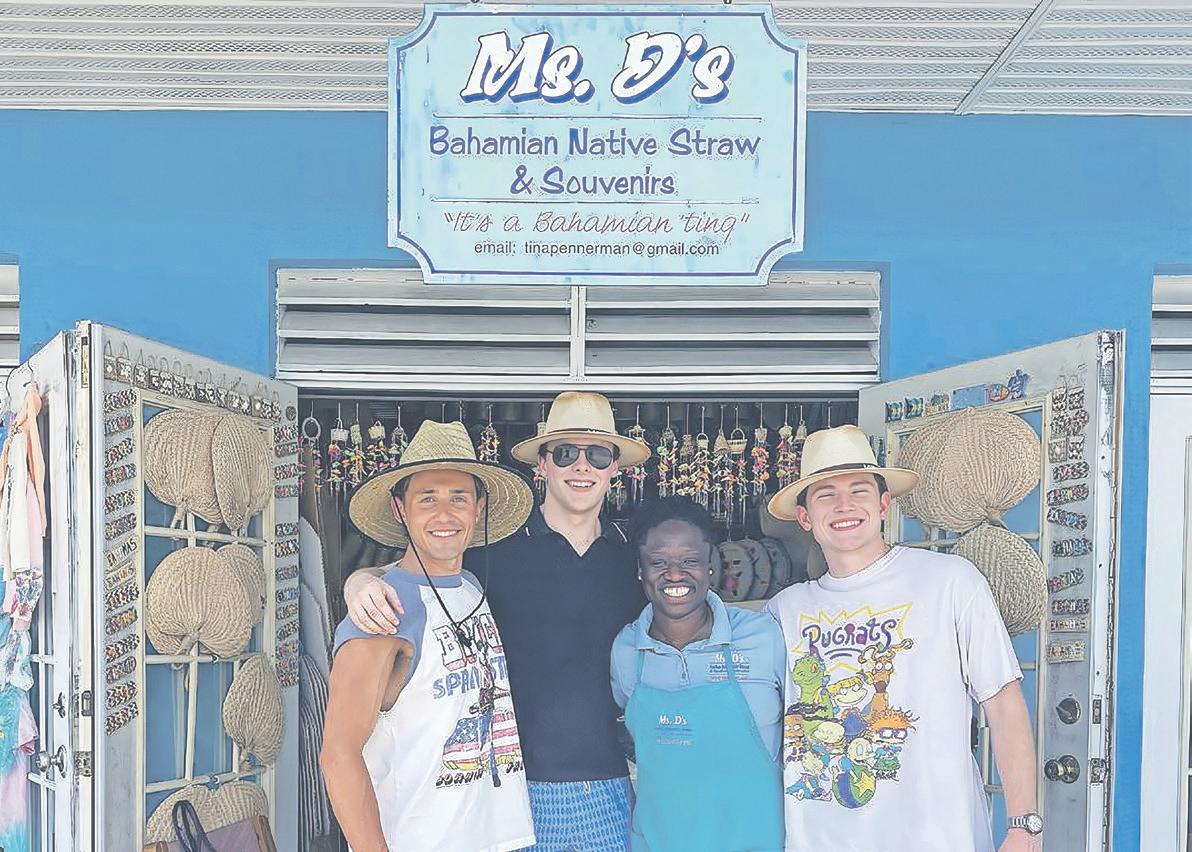
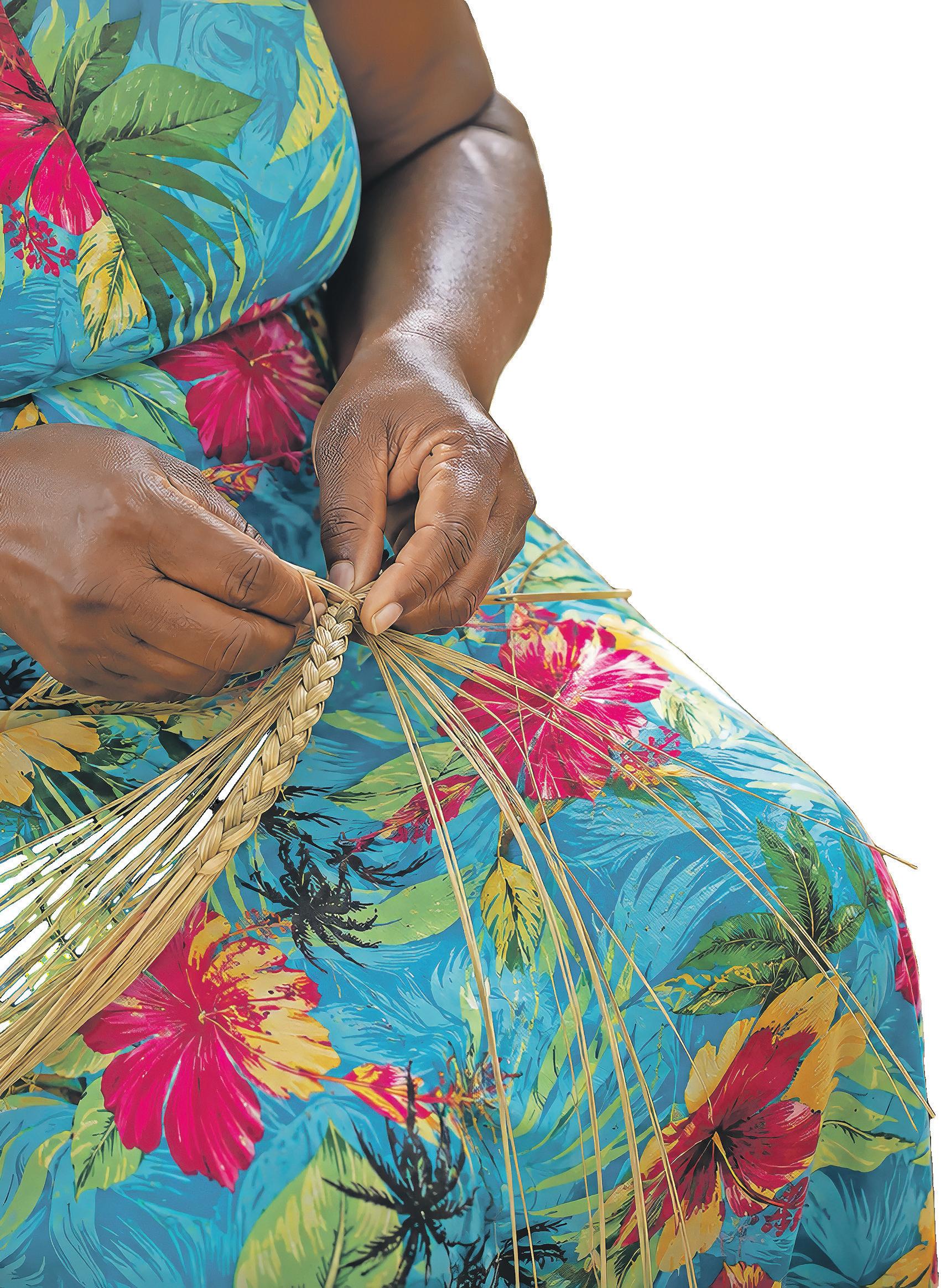
WEAVING palm fronds into intricate patterns has been a familiar sight throughout The Bahamas for generations, not only as a tradition but as a means to feed families.
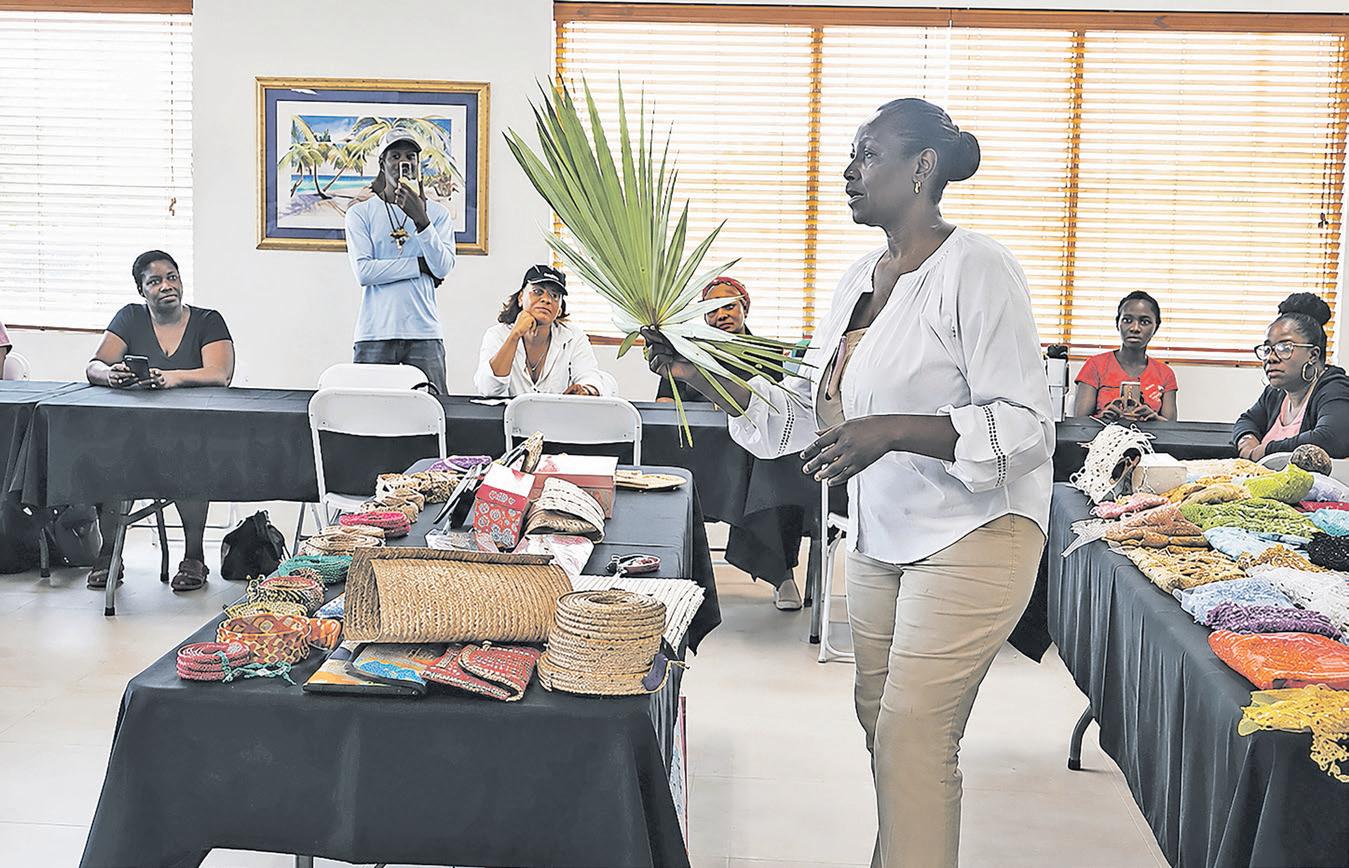
Photo: TIA BECKFORD
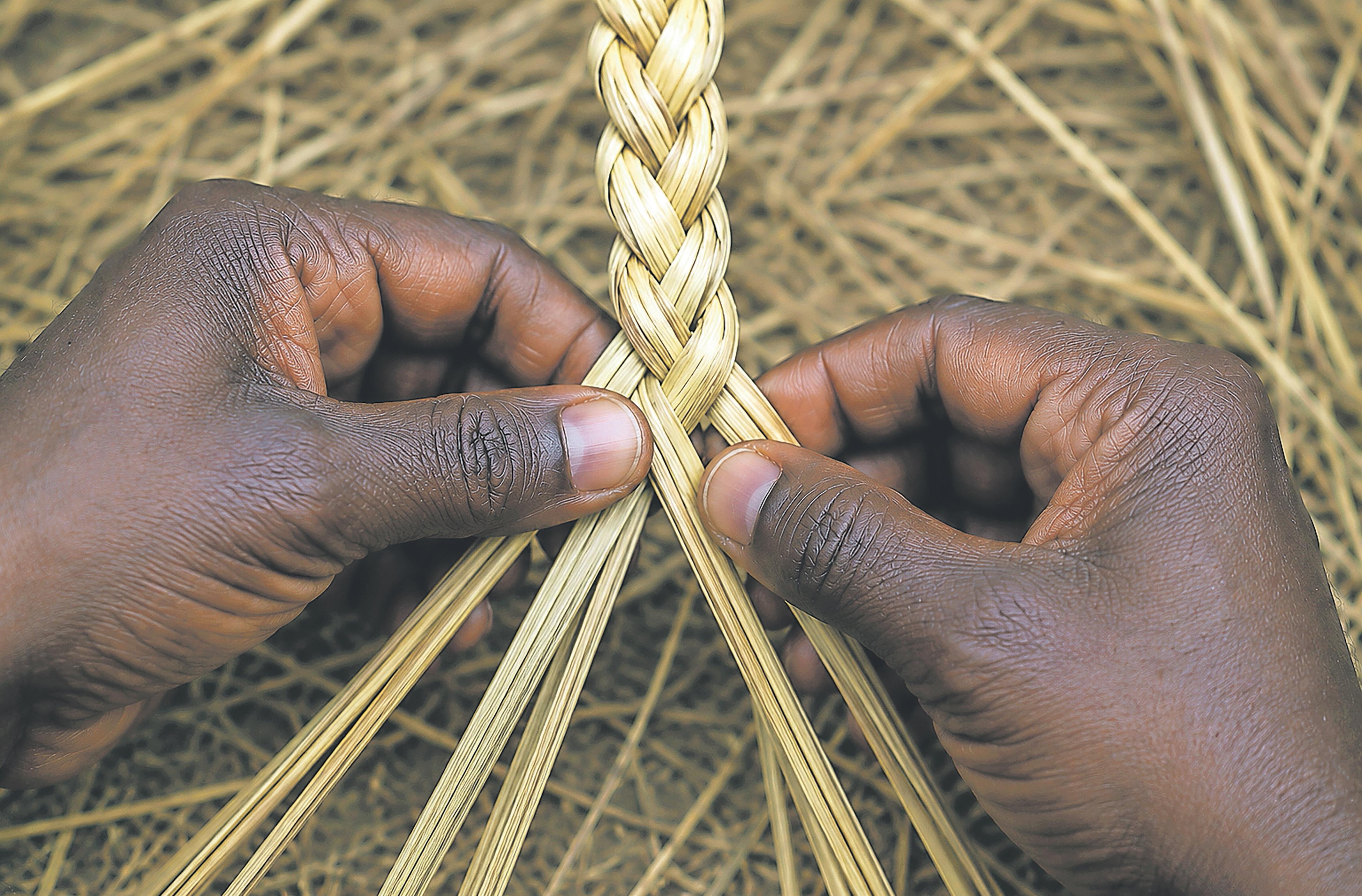
Once a length of plait is completed, sometimes extending as much as 20 yards, the ends are secured and the fnished strip is rolled into what artisans call a ‘hank,’ ready to be transformed into a fnished product.
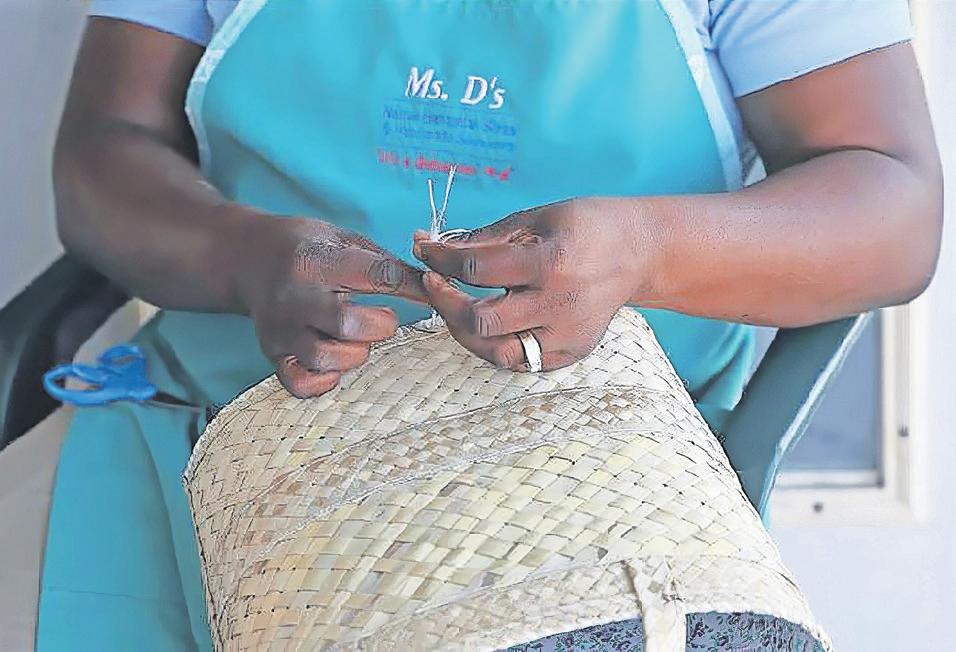
Across the islands, skilled straw workers continue to keep these traditions alive. In Eight Mile Rock, veteran plaiter ‘Miss Ella’ remains actively involved in the craft, serving as a living link to generations of Bahamian artisans who came before her while Tia Beckford, who inherited a straw shop in Port Lucaya, Grand Bahama, from her mother. For her, straw work is more than a livelihood; it is a family tradition that has shaped her entire life.
“The straw part of it has always been a part of my life. This is what we grew up every day learning how to do,” she said. “It's always been in my genes. It's always been in my DNA.”
Though she left Grand Bahama to pursue higher education and earn a degree, she found herself drawn back to the family business.
While some may question why a university graduate would choose to remain in the straw industry, Mrs. Beckford said her decision was driven by both practicality and passion.
“I have a love for it. It's actually a tradition in my family,” she said. “Because I love what I do, this doesn't feel like work. I come to work, quote unquote, and I sit and make baskets. I'm actually working and creating pieces, but because I love what I do, it doesn't feel like work.”
Eforts to preserve the craft have also found support through education. Courses ofered through The Bahamas Technical and Vocational Institute (BTVI) help introduce new generations to the techniques and cultural signifcance of straw work.
That session began the frst week of June. BTVI ofcials believe that craft is not only one that should be passed from generation to generation, but that as it did in years pass, it continues to be an avenue for business and income.
By BARBARA WALKIN barbara@barefootmarketing.net
FOR 20 years, Kendith Higgs has fought alongside her daughter Megan through surgeries, therapies, countless hospital visits, and unimaginable uncertainty. Today, that fght has reached another critical crossroads.
Megan, who was born with Dandy-Walker Syndrome with Hydrocephalus, now urgently requires life-saving brain surgery in the United States after doctors discovered dangerous pressure caused by fuid building up in her brain. The surgery, estimated to cost $106,000, must be performed as soon as possible.
“It’s hard to even know where to start because it’s such a long story,” Mrs Higgs, from Grand Bahama, told Around da Islands, refecting quietly on two decades of medical challenges.
Megan’s condition, a congenital condition afecting the development of the brain, particularly the cerebellum and the fuid-flled spaces around it, has been managed since infancy with shunts, small tubes surgically implanted to drain excess fuid from the brain.
She recently underwent surgery at Nicklaus Children’s Hospital in Florida, where doctors implanted a ventriculoatrial (VA) shunt, a procedure not available in The Bahamas.
Now, doctors have discovered that Megan requires an additional shunt after identifying an enlarged brain ventricle measuring 8.4 centimetres.
“She has one shunt now, but she needs another one,” Mrs Higgs explained. “Without medical intervention, we could lose her.”
The pressure on Megan’s brain has become increasingly severe, leaving her with debilitating headaches, seizures, episodes of disorientation, and could eventually afect her speech. Doctors have warned that without prompt treatment, her condition could worsen rapidly, even leading to a coma.
“Every day counts,” her mother said. “The clock is ticking.”
Against all odds, Megan has defed medical expectations throughout her life.
“They didn’t expect her to live past two years old,” Mrs Higgs said.
Despite years of surgeries, therapies and seizures, Megan remained determined to experience life as normally as possible.
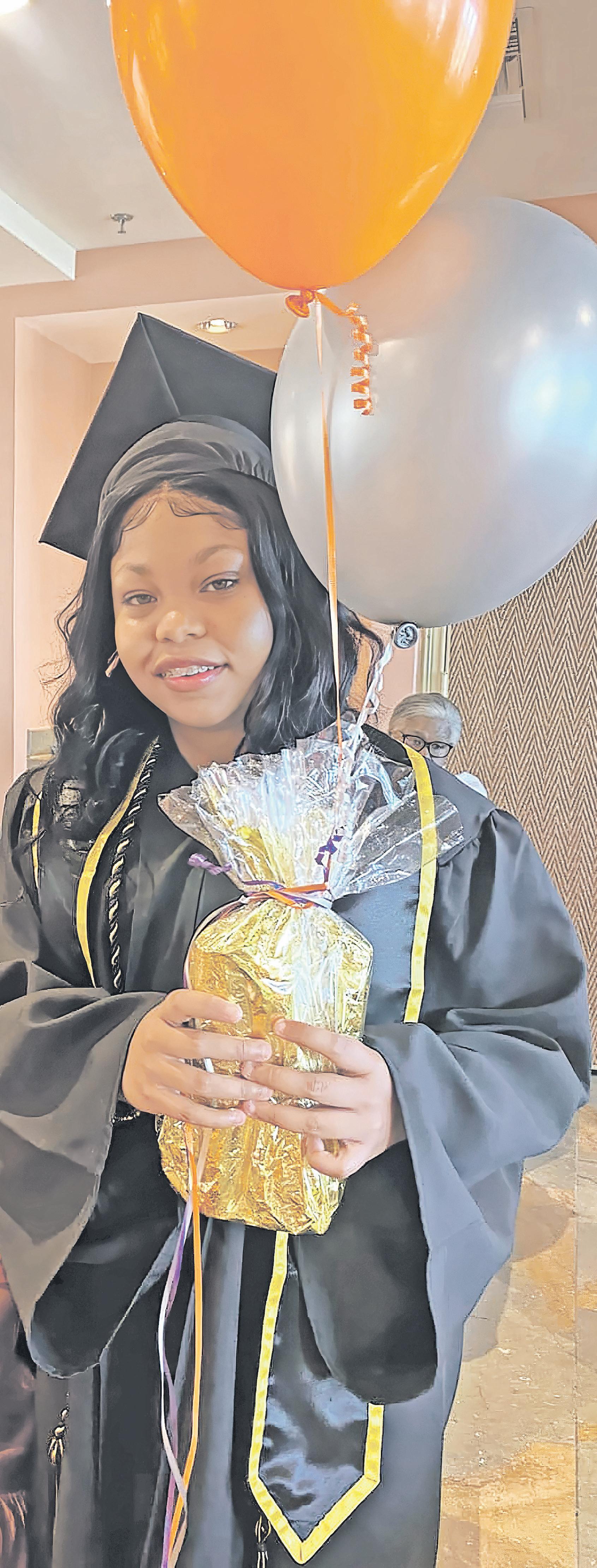
She graduated from high school despite the medical challenges but unable to work because of her permanent disability, Megan depends entirely on her family for her daily care and medical needs.
Over the past year alone, Megan has undergone multiple surgeries. Last July, she was airlifted from Grand Bahama to Nicklaus Children’s Hospital, where she remained hospitalised for nearly a month after requiring emergency surgical intervention.
“This past year has been very, very bad for Megan,” Mrs Higgs said.
For two decades, insurance helped cover the overwhelming cost of Megan’s ongoing medical care. But after years of treatments, surgeries and specialist visits, those benefts have now been exhausted.
“We had insurance from birth,” Mrs Higgs explained. “Her condition isn’t something that’s cured. It’s ongoing. Now she’s 20, and the insurance has run out.”
While Megan continues taking medication to manage severe pain and seizures, the family is holding tightly to hope.
“We’re still keeping the faith,” Mrs Higgs said.
Amid her own struggle, Mrs Higgs says she understands the difcult fnancial reality facing many Bahamian families.
“Don’t take me wrong, but we’re struggling in The Bahamas,” she said. “When people go to work and draw their pay cheque, sometimes they only leave fve dollars in the bank so the account doesn’t close. People don’t have it.”
Rather than expressing frustration, Mrs Higgs speaks with empathy.
“People mean well,” she said. “Their prayers are what’s going to pull Megan through. We don’t expect much because everybody is sufering right now. It’s not that people don’t want to help, they simply don’t have it.”
She admits that realisation has changed how she views other families who publicly seek medical assistance.
“I used to see people come on television crying because they needed surgery,” she said. “Some didn’t make the money, and they died. It wasn’t because people didn’t care. People just didn’t have it.”
That understanding is why Mrs Higgs is now appealing not only to Bahamians but also to the international community. Her greatest challenge, she says, has been getting Megan’s story beyond the country’s borders.
“My issue is getting Megan’s GoFundMe to reach international donors who actually help families like ours,” she explained. “That’s where we’re stuck.”
The family has received meaningful support from local donors, Social Services and compassionate members of the public. Those contributions helped pay for MRI scans, airline tickets for medical travel and pain infusion treatments costing approximately $1,400.
“As small as the donations were, they made a big, big diference,” Mrs Higgs said. “Every little bit helped.”
The family has also reached out to the Ministry of Health, but was advised that funding is currently unavailable while budgets are under review.
Determined not to give up, Mrs Higgs has begun writing letters to civic organisations and charitable foundations including Rotary, Pilot Club, LIONS Club and others, asking them to help share Mega’s fundraising campaign with international networks.
“I’m trying,” she said.
Despite her ongoing pain, Megan continues to inspire those around her.
Wherever she goes out, people recognize her. “They hug her. They kiss her. They encourage her and tell her everything is going to be okay,” Mrs Higgs said. “That’s enough for Megan because she doesn’t understand about the money.”
What Megan does understand is the constant pain.
“It’s very difcult living with a massive headache every day,” her mother said. “Then you’re having seizures on top of that. It's not good.”
Today, the Higgs family is making one fnal appeal not only for fnancial assistance, but for people willing to share Megan’s story across the world in hopes it reaches those able to help save a young woman's life.
To assist the family, donations can be made to: Royal Bank of Canada
Account Name: Corey & Kendith Higgs
Account Number: 7255292
Commonwealth Bank
Account Number: 7055058436
Donations can also be made through the family's GoFundMe campaign: "Insurance Ran Out – Need Brain Surgical Intervention"Organiser: K. Higgs
“Everyday counts.”
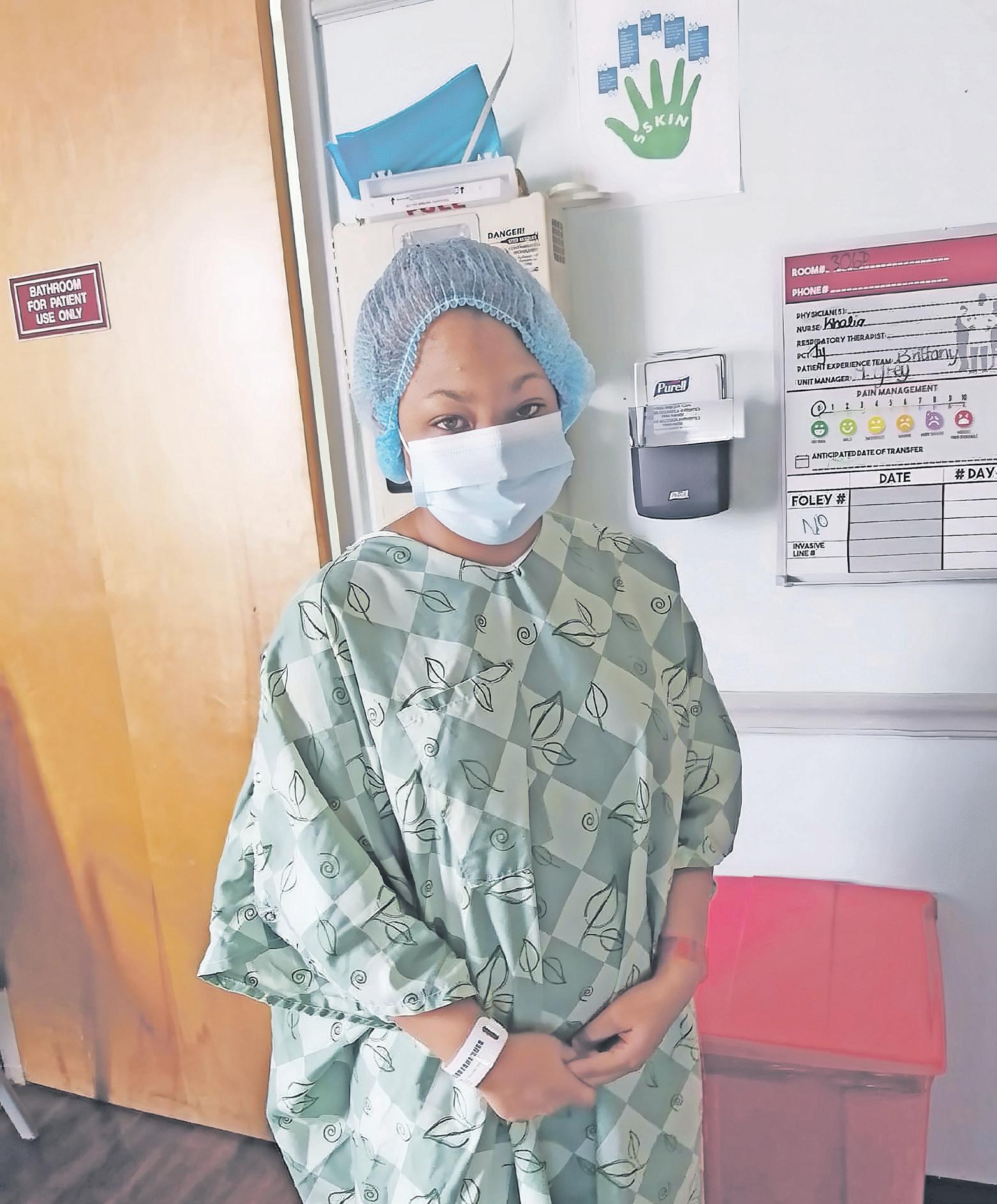
FOR two decades, insurance helped cover the overwhelming cost of Megan’s ongoing medical care, but now those benefits have been exhausted, and the family is reaching out for assistance for Megan.
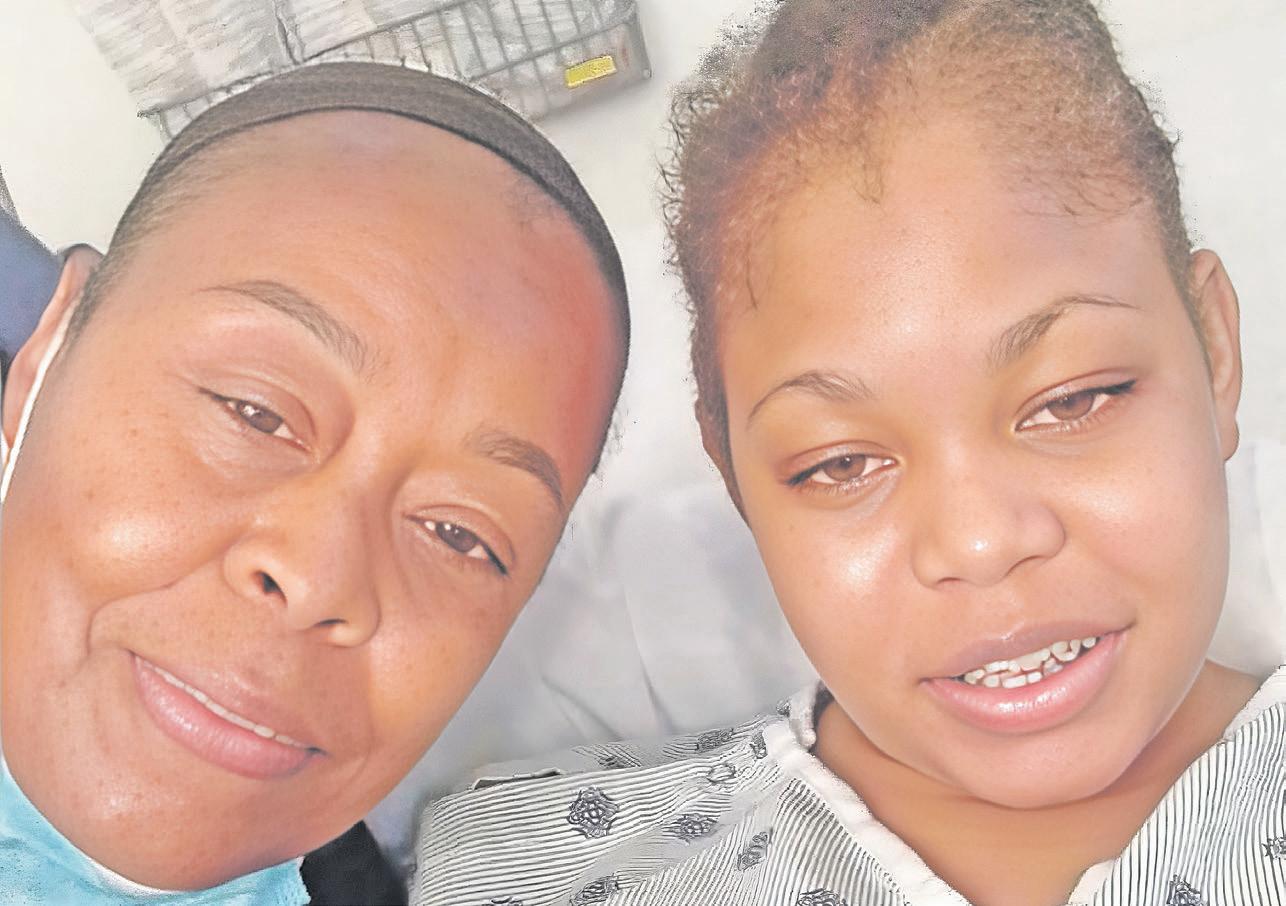
Higgs is making an urgent plea for help to assist her daughter, Megan, with getting life-saving treatment estimated to cost $106,000.
Photos: KENDITH HIGGS and FAMILY
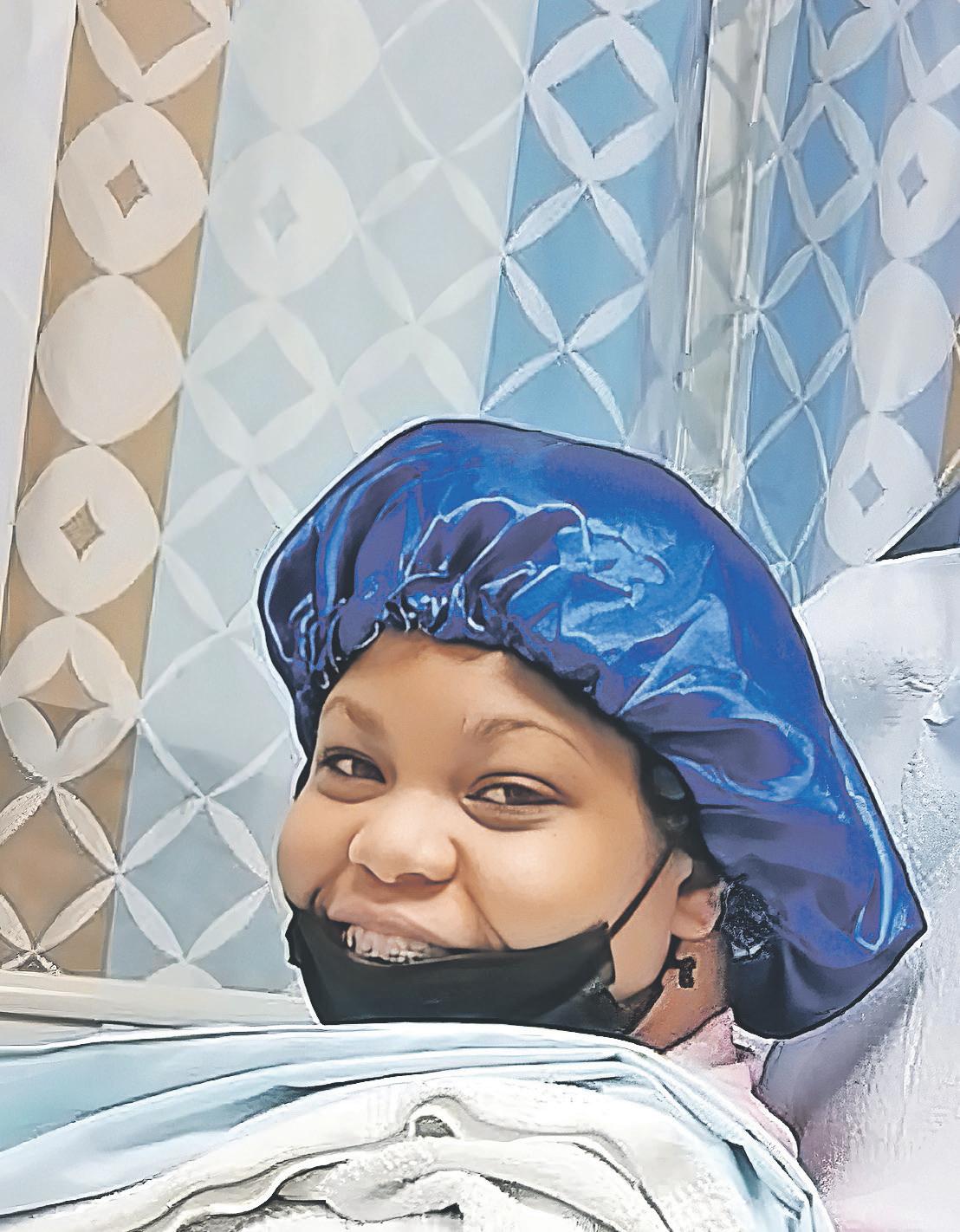
OVER the past year alone, Megan has undergone multiple surgeries. Last July, she was airlifted from Grand Bahama to Nicklaus Children’s Hospital, where she remained hospitalized for nearly a month after requiring emergency surgical intervention
A X Y D L B A A X R is L O N G F E L L O W
One letter stands for another. In this example, A is used for the three L’s, X for the 2 O’s, etc. Single letters, apostrophes, the length and formation of words are all hints. Each day the code letters are different.
Sudoku is a number-placing puzzle based on a 9x9 grid with several given numbers. The object is to place the numbers 1 to 9 in the empty squares so the each row, each column and each 3x3 box contains the same number only once. The difficulty level of the Sudoku increases from Monday to Sunday
Yesterday’s Answers
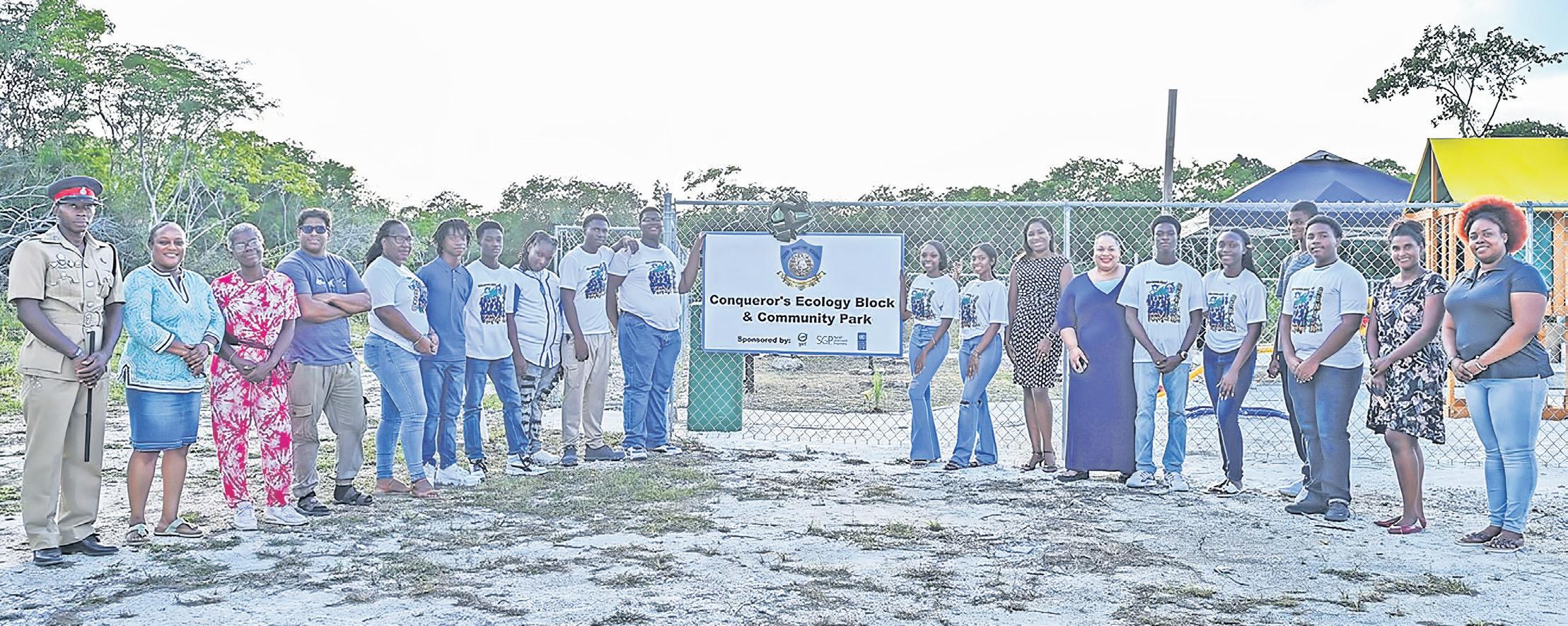
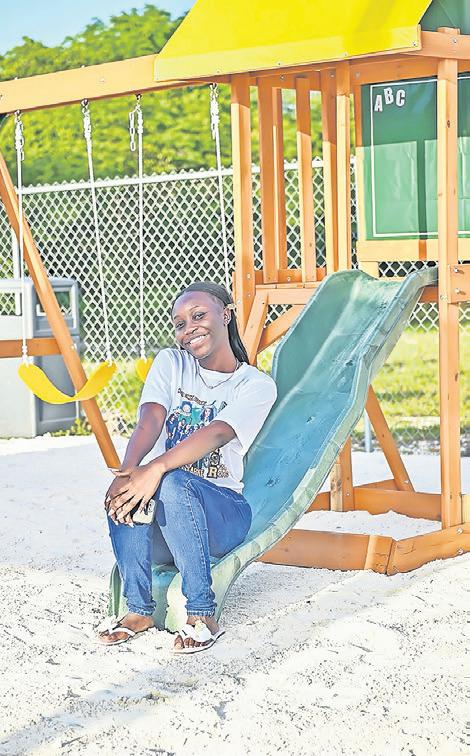
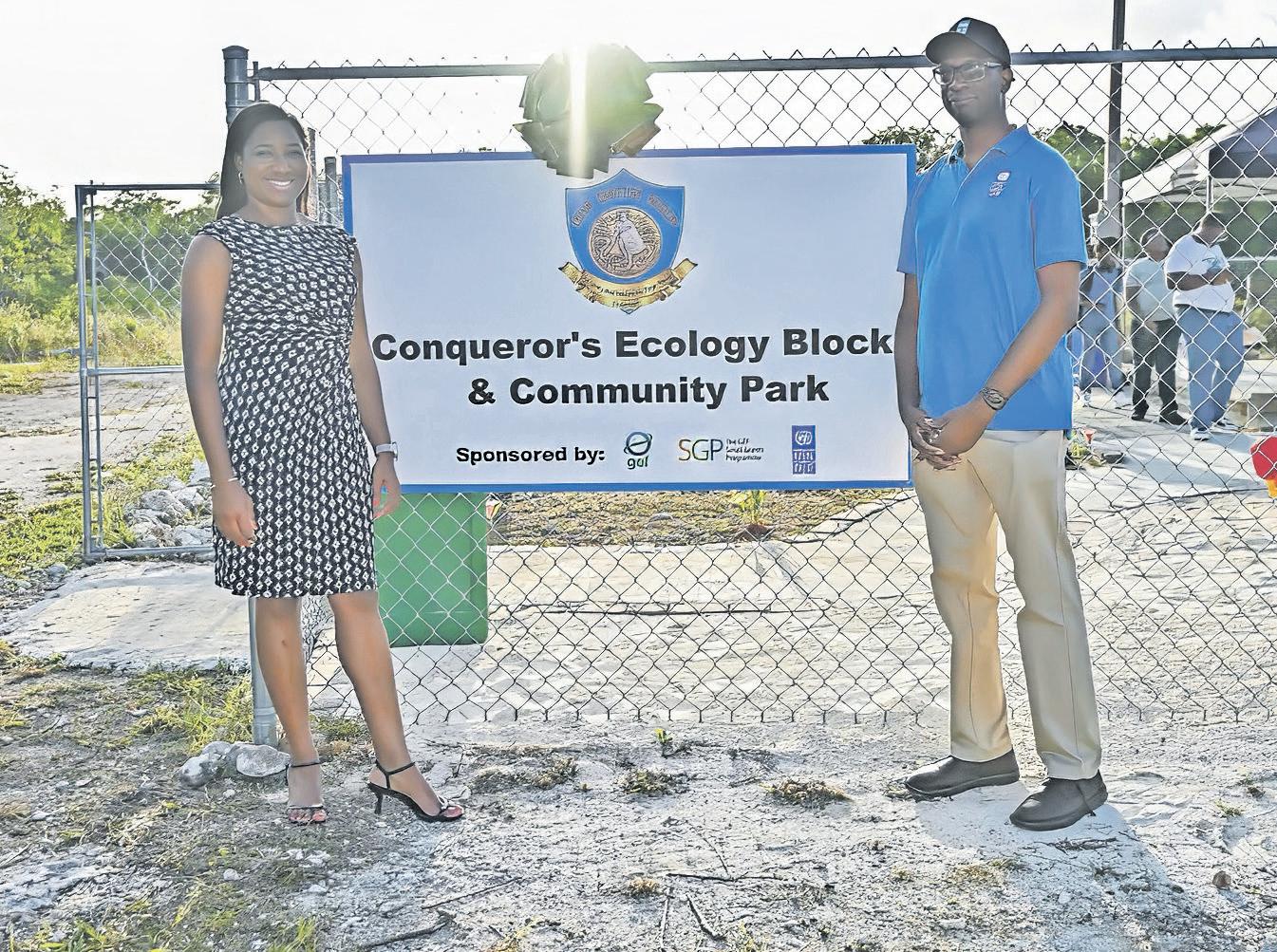
THE Exuma Christian Academy has ofcially opened an Ecology Block and Community Park.
The project, developed through the use of a portion of the school's property in Hooper’s Bay, George Town, Exuma, aims to create an engaging environmental and educational space for the wider community.
The initiative was designed to educate the public about
local, indigenous, and introduced plant species through labelled displays, while providing a beautiful green space for recreation, exercise, relaxation, and bird-watching.
The park promotes environmental stewardship, conservation, and recycling through the prominent use of recycling stations and sustainability initiatives.
It serves as a living classroom that encourages youth involvement in environmental preservation and community
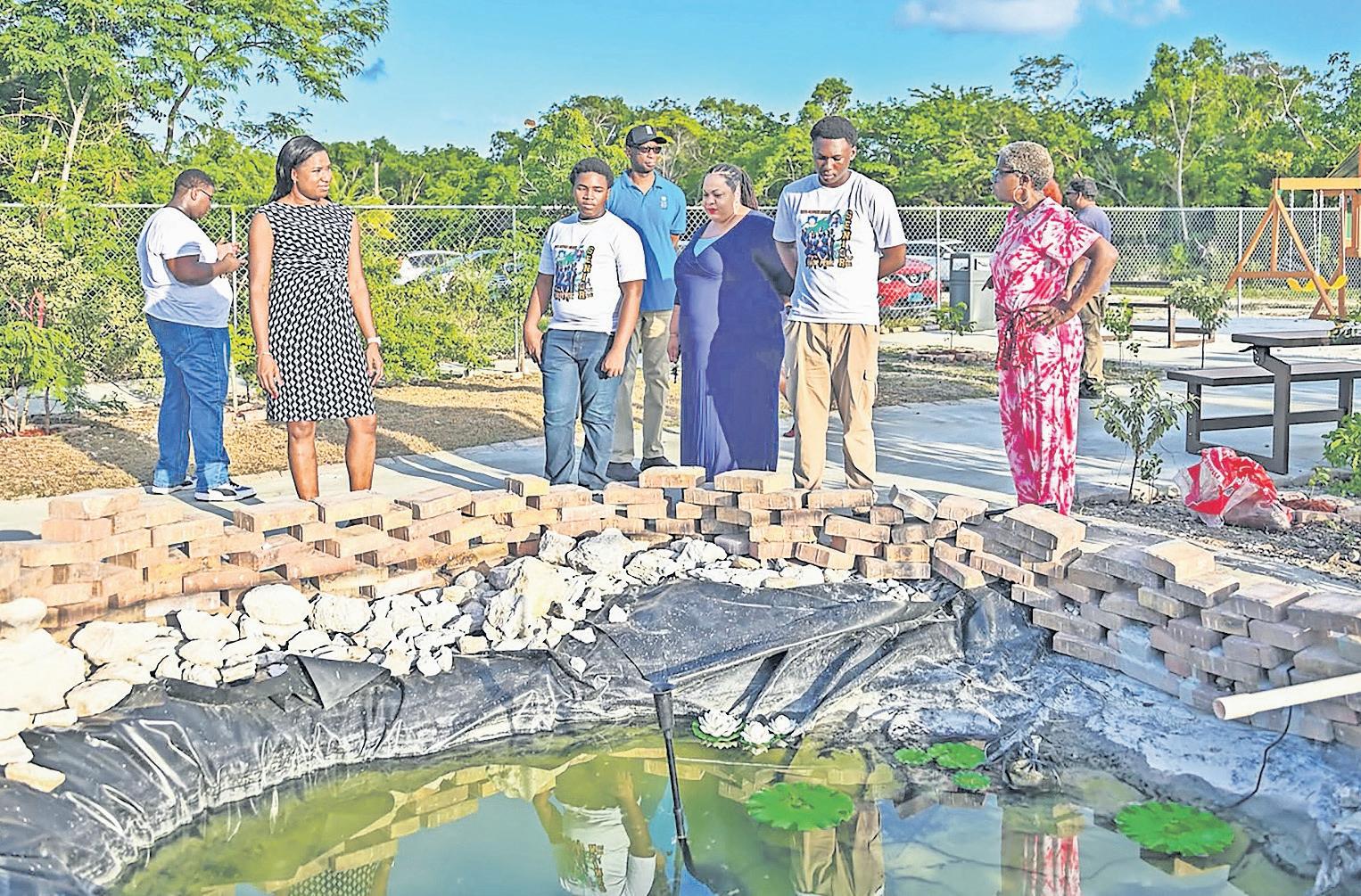
their names, uses, and significance within the Bahamian ecosystem.
The project was made possible through the generous support of the GEP Small Grants Programme implemented by UNDP. Students and team members of Exuma Christian Academy have taken the lead in the development of this park since December 2024 and were proud to ofcially unveil the completed project on June 18, 2026.
development while fostering partnerships with conservation organisations and stakeholders.
Designed to beneft students, residents, visitors, and members of the scientifc
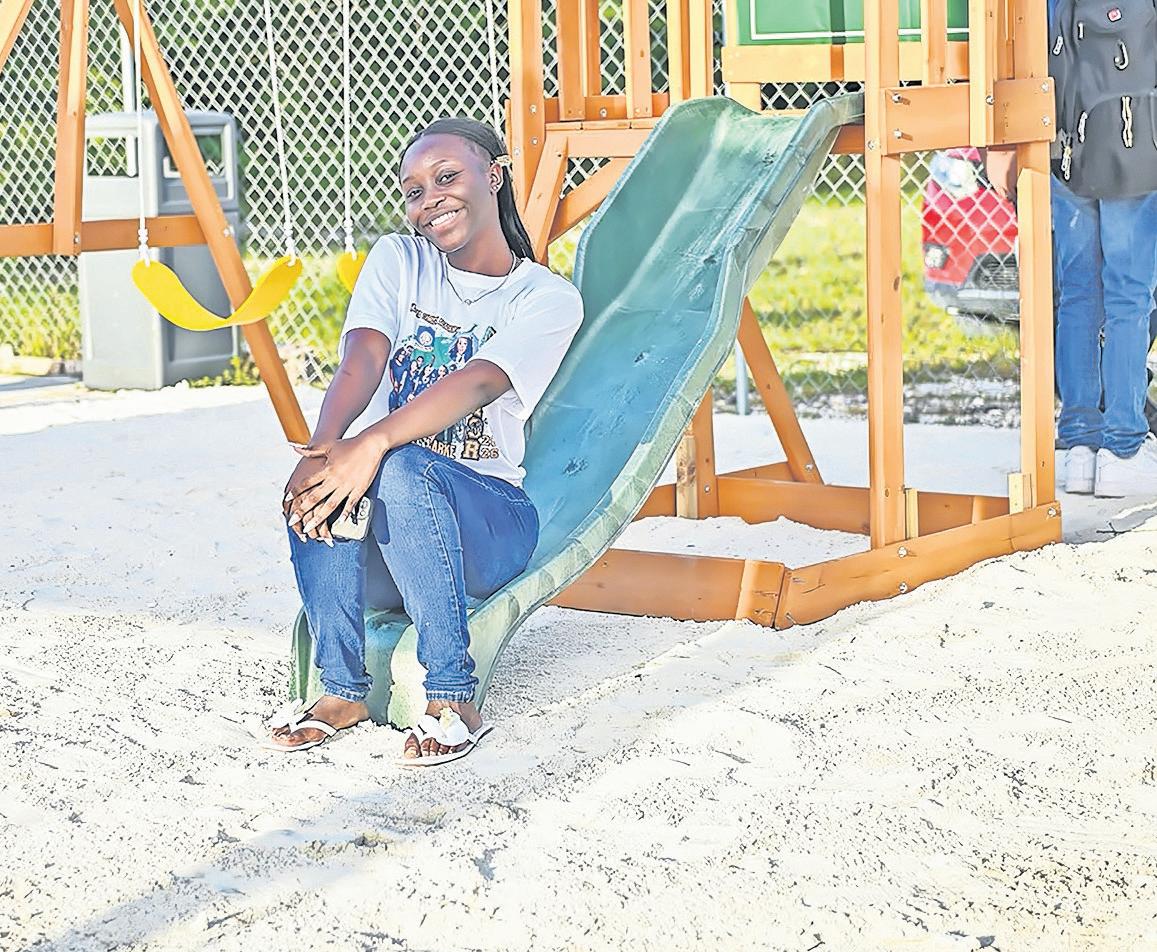
community alike, the site features picnic benches, a playground, a pond, a bird bath, and a diverse collection of native and introduced plants accompanied by educational labels describing
Keniqua Burrows, Project Coordinator and Director of Exuma Christian Academy, said: "As a school, we are passionate about nurturing not only academic excellence, but also responsible citizens who understand their role in protecting the natural beauty and biodiversity of The Bahamas. It has been inspiring to watch our students and members of the community take ownership of this vision since December 2024, contributing their time, energy, and creativity to bring this project to life.
“We extend our sincere gratitude to the GEP Small Grants Programme implemented by the United Nations Development Programme for their invaluable support and partnership. Together, we have created a lasting resource that will beneft students, families, residents, visitors, and future generations of Exumians. We hope that every person who visits this space will leave with a greater appreciation for our environment and a renewed commitment to preserving it for years to come.”
Keniqua added that the Ecology Community Park stands as a testament to the power of education, environmental responsibility, and community partnership in creating a greener and more sustainable future for Exuma.
Amd the GEF SGP continues to support community initiatives that embody local action that results in global impact.
For more information about this project, please contact: Keniqua Burrows info@ecabahamas.org 1-242-824-3006
By CARA HUNT Tribune Features Writer cbrennen@tribunemedia.net
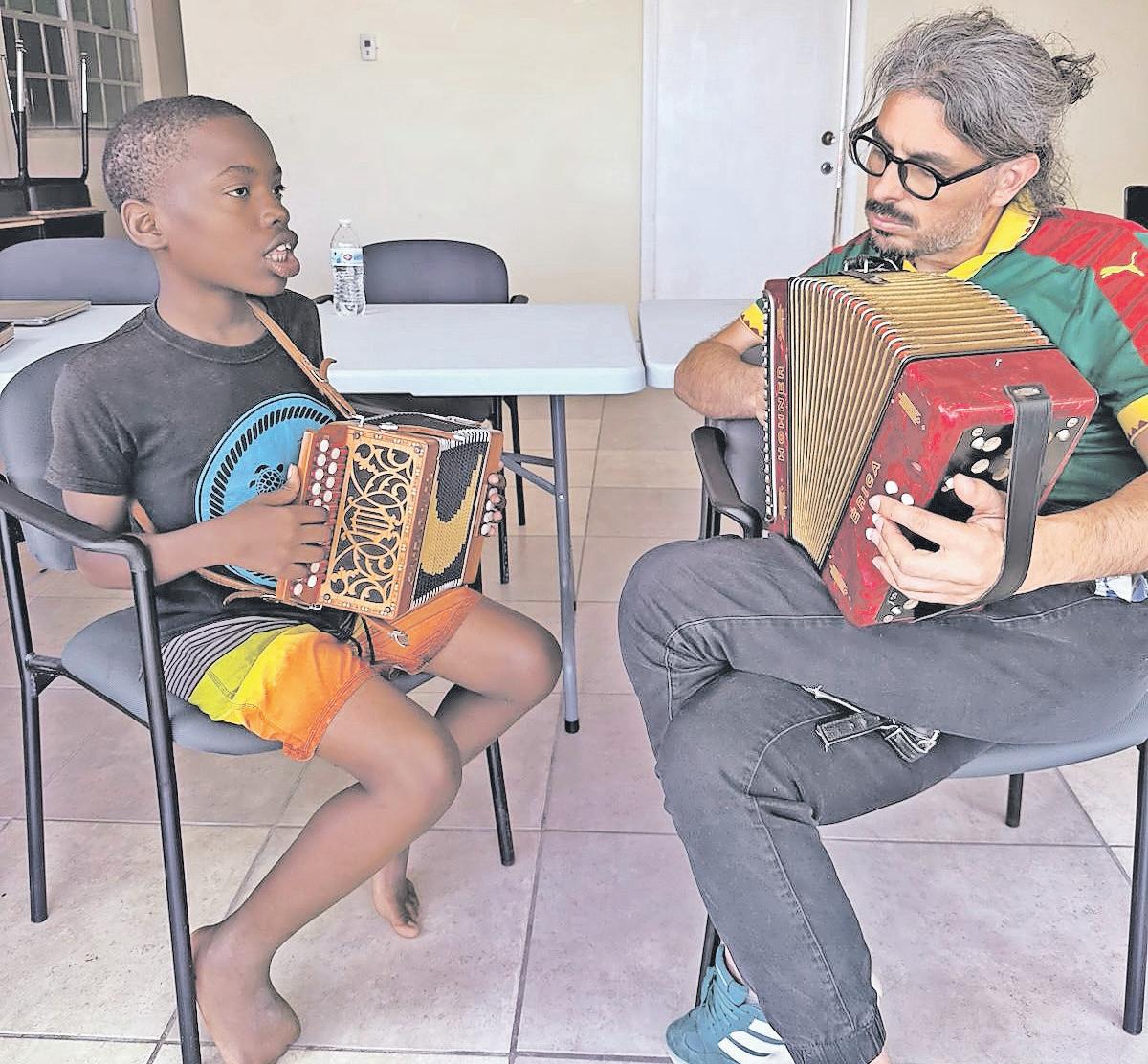
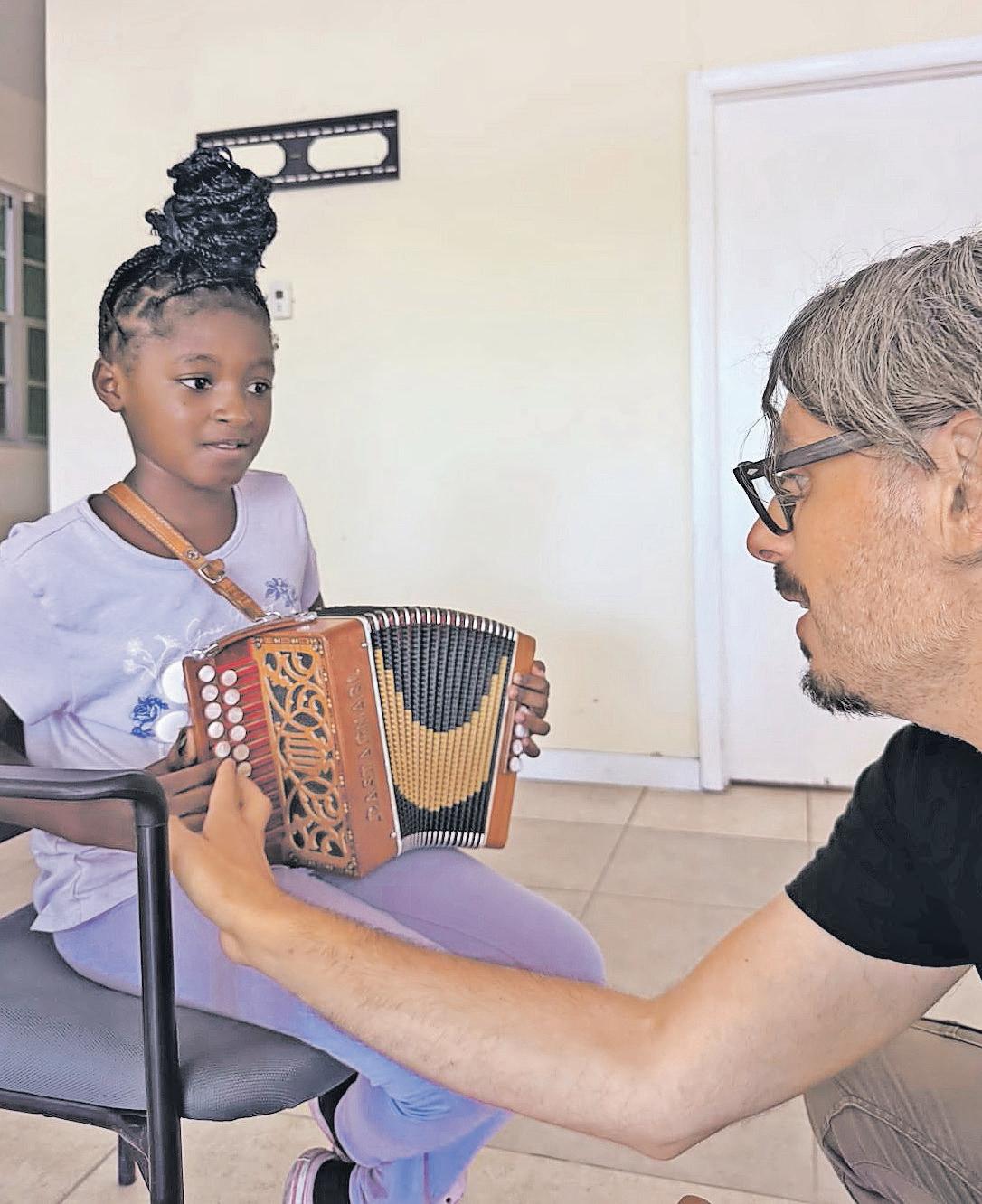
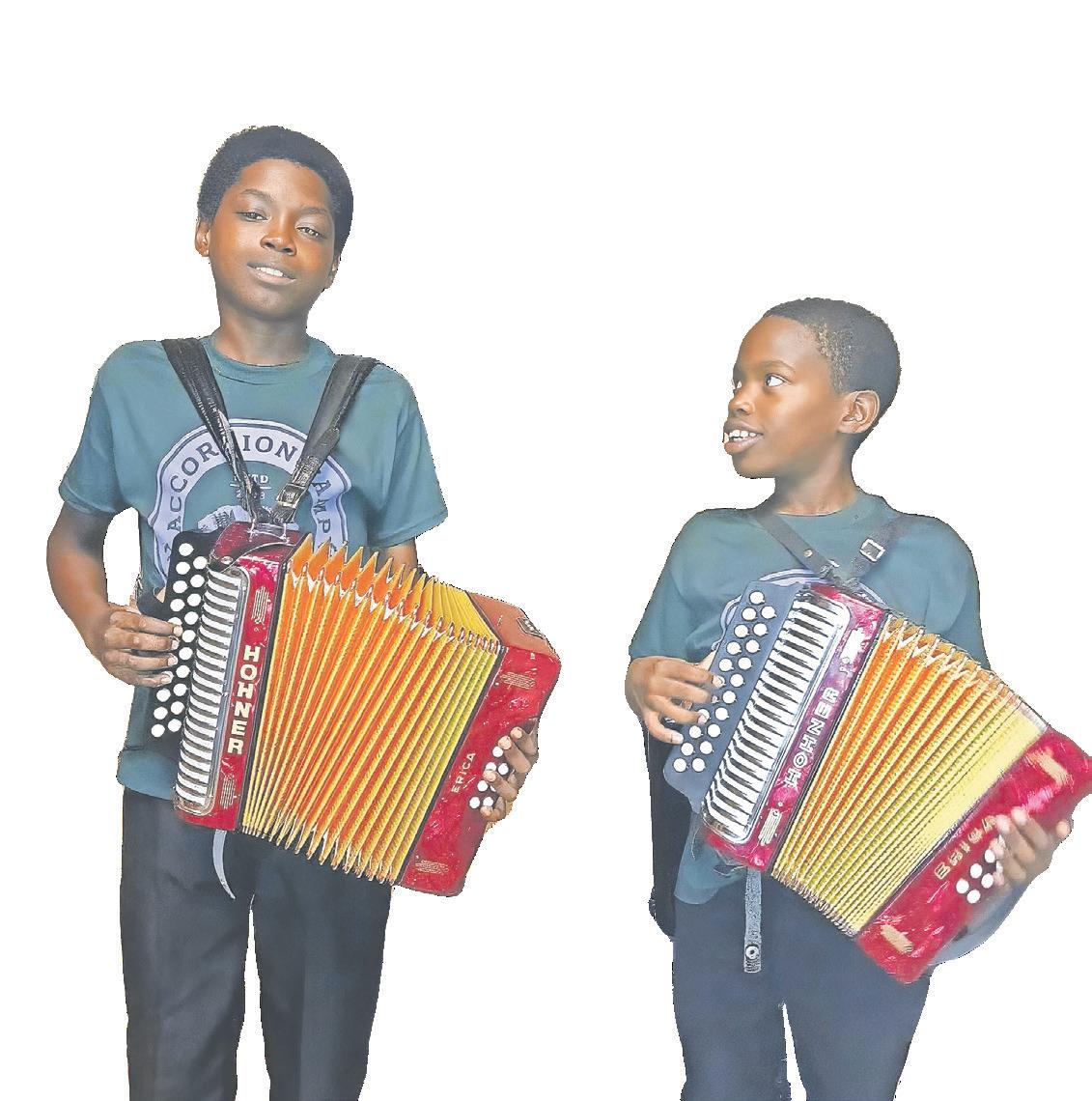
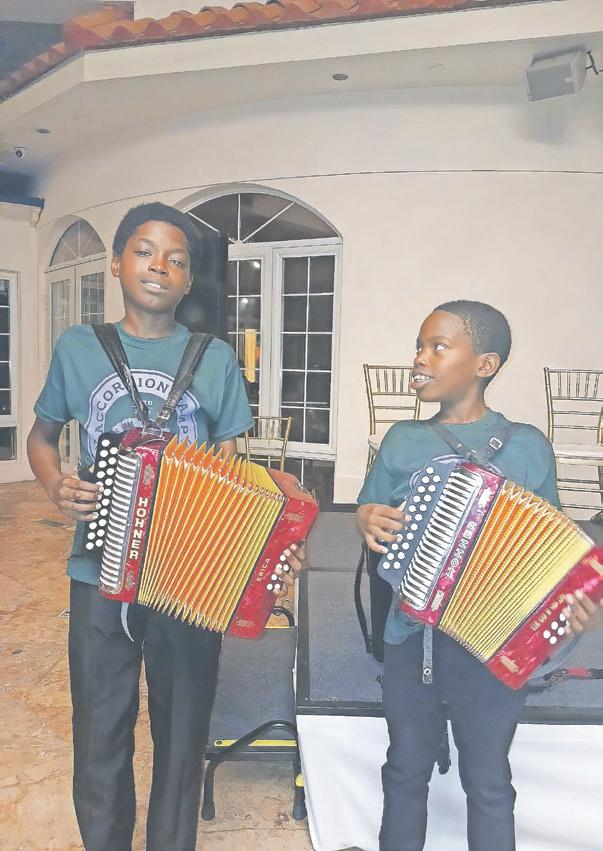
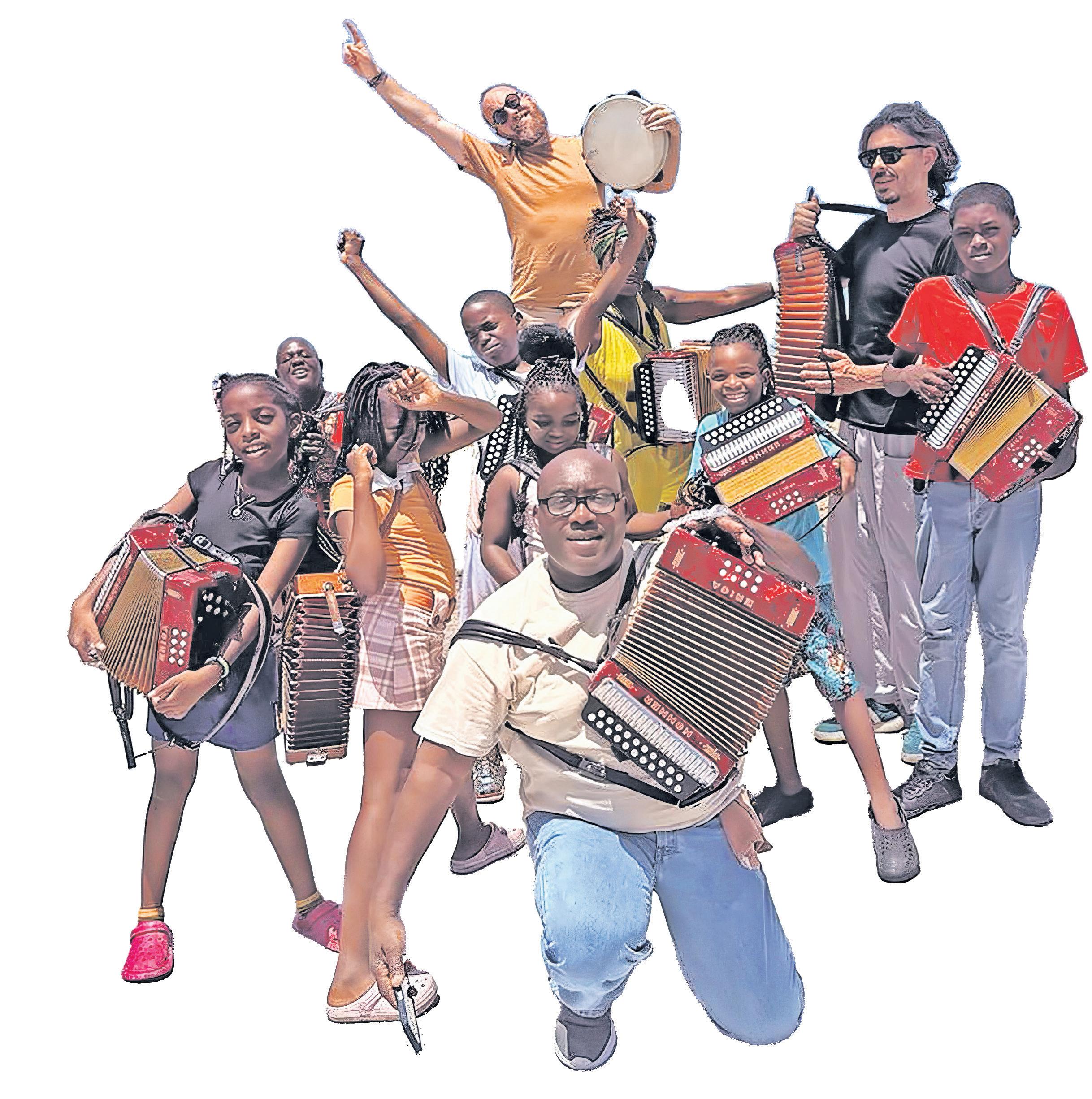
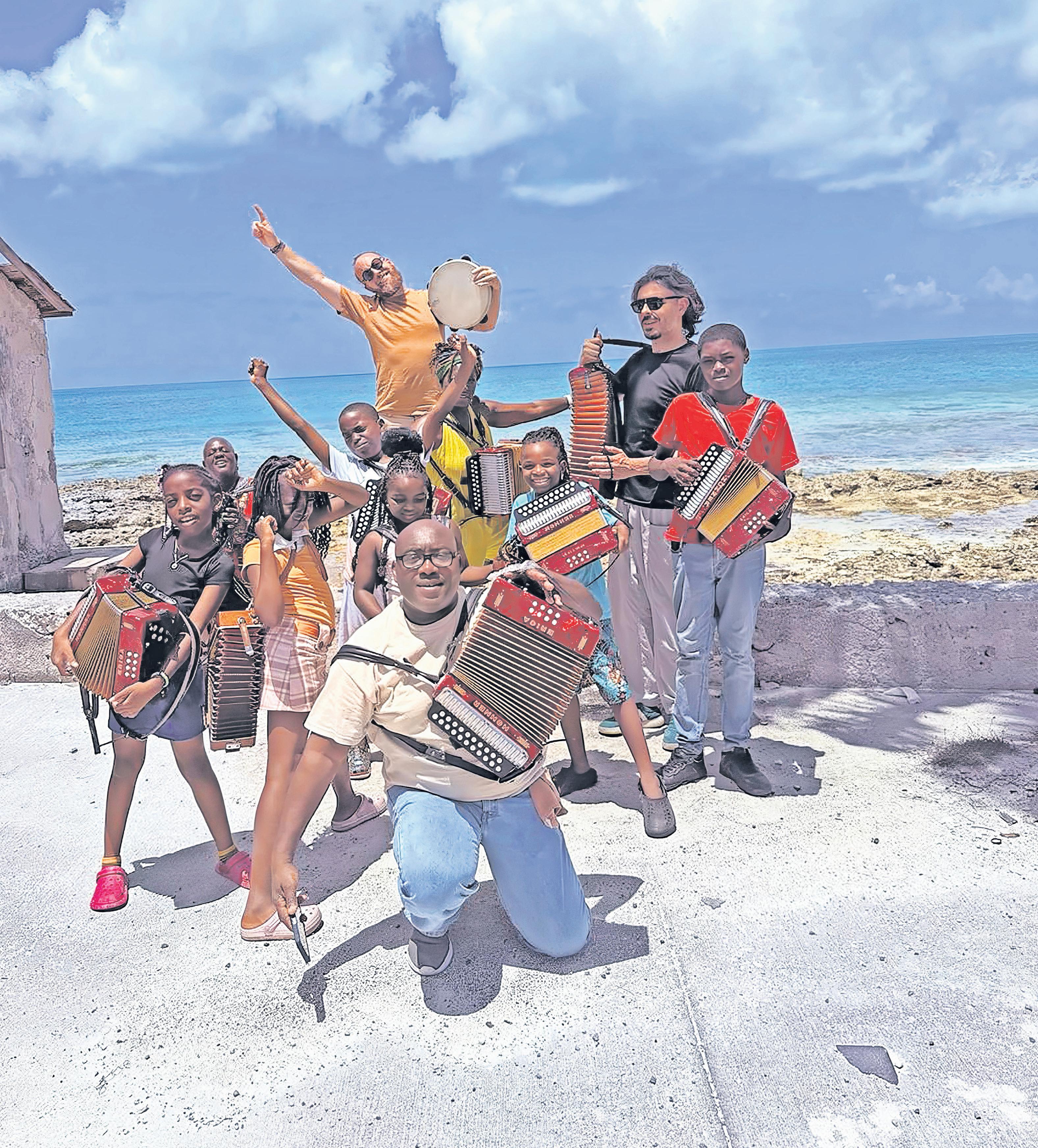
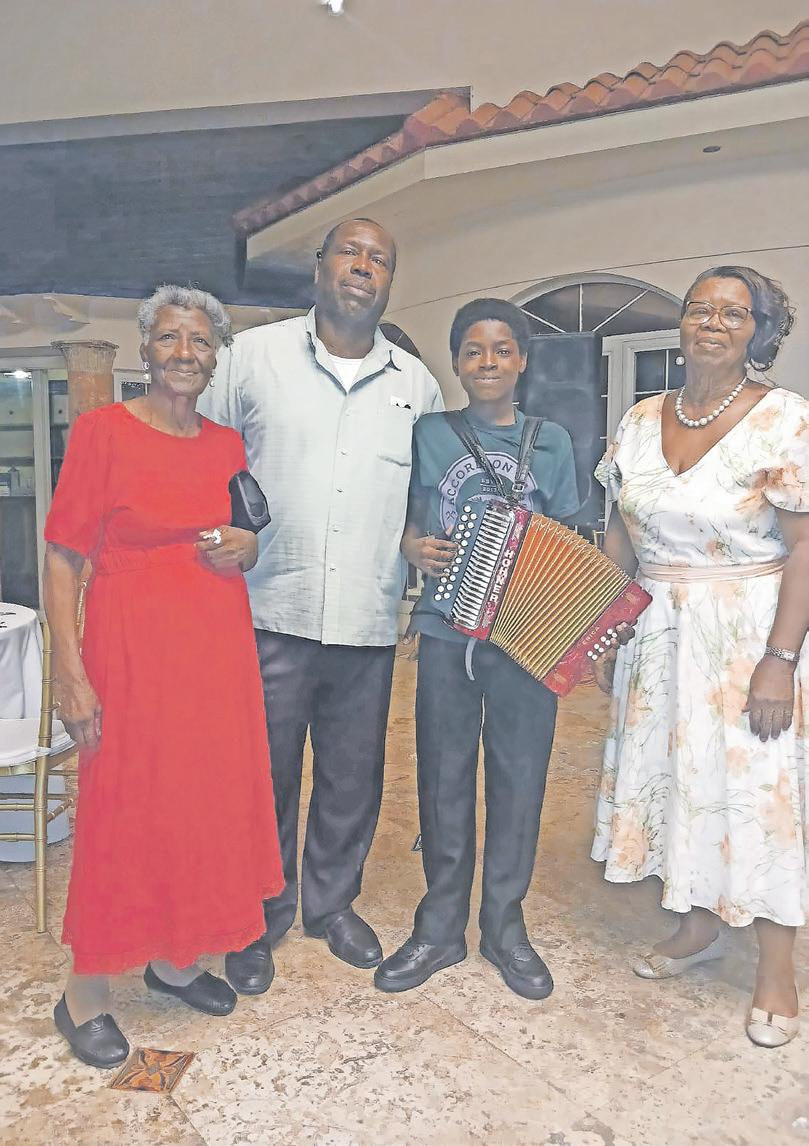
THE accordion has always been at the heart of Bahamian music and now a group of young Cat Island students are giving this
has a passion for seeing a resurgence in the instrument.
The accordion has always played a major role in Bahamian rake and scrape, providing the base layer for the saw and the drum.
Diana explained that the accordion became popular during slavery time, primarily because its size made it easy to cart around and it provided a full orchestra sound.
“The instrument was a perfect marriage between African and European musical traditions,” she said.
European dances like the waltz, the round dance or heel-and-toe Polka were eagerly borrowed and Africanised with additions like ‘mash-the-roach’.
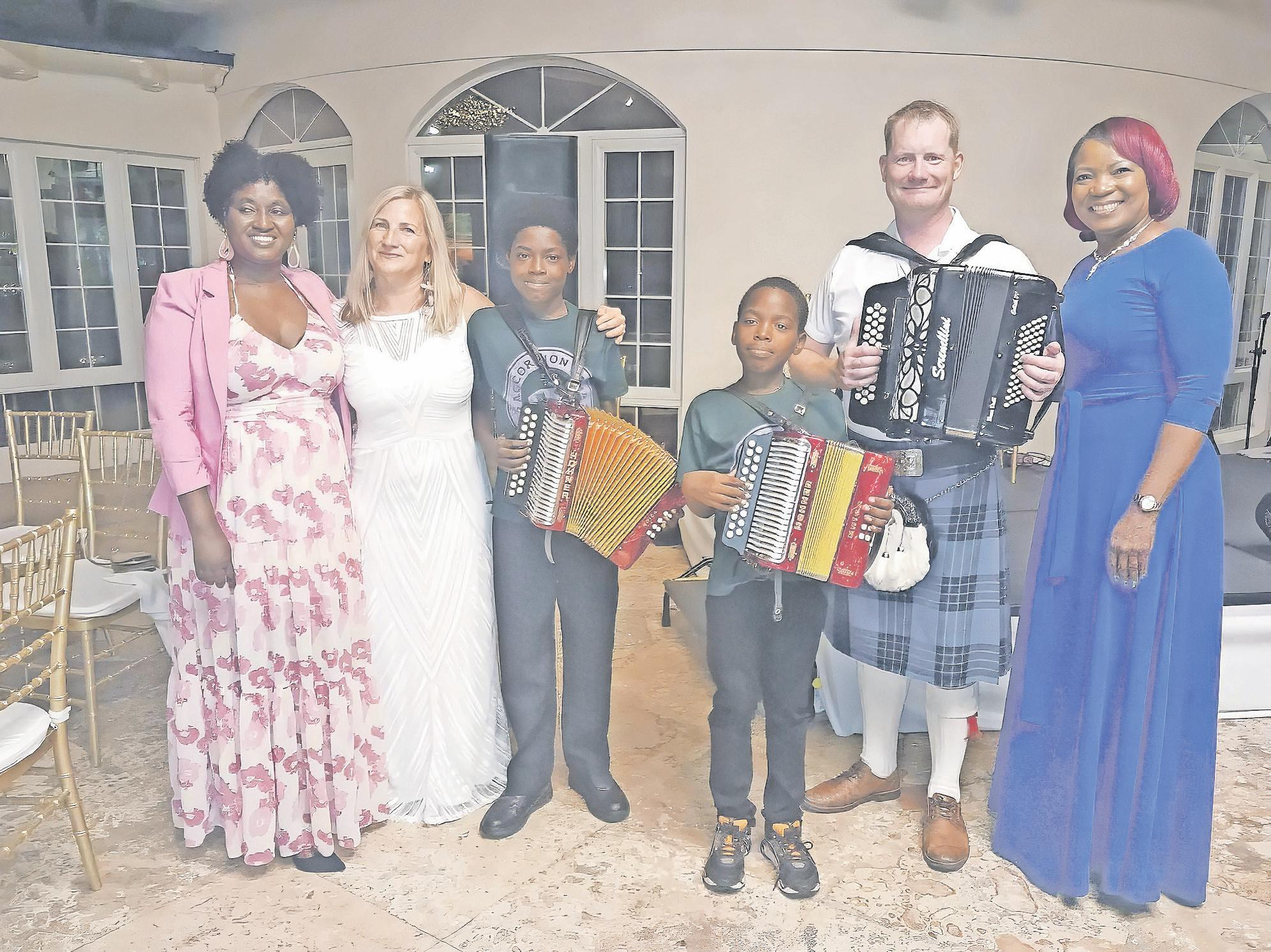
The accordion was played by renowned groups all over the Bahamas such as Thomas Cartwright and the Boys from Long Island, and Edmund Moxey from Ragged Island. But it was on Cat Island that the music really took of, producing famous accordionists like Ophie Webb, Frank Williams and Pompey ‘Bo Hog’. This year Diana secured Italian musician and organetto player Giuliano Gabriele and percussionist Eduardo Vessella to teach the students at the free camp.
Diana told Around da Islands that in the past most Bahamian accordion players only had a basic knowledge of the instrument.
“There was not a lot of formal education just what was passed on, but this year our instructor was able to show the students more advanced skills, and so he was able to teach them how to really bring this instrument to life,” she said.
Diana explained that the camp’s mission is twofold.
“We want to share the techniques of traditional Southern Italian frame drums and organetto, bringing the untold melodies of the Italian South to these shores and to weave them into a creative exchange with local Bahamian sounds,” she said.
The fascinating cross cultural experience ends this Saturday with the Grand Finale- The Last Dance, a powerful musical performance that transcends geographic boundaries to turn tradition into a universal language.
Giuliano Gabriele, will introduce audiences to the Tarantella — a lively traditional dance that continues to be practiced and celebrated in Southern Italy today.
Guilano is an Italian French artist recognised for his work in experimentation and the renewal of contemporary Southern Italian folk music.
Winner of the 2015 Andrea Parodi award, he has collaborated with numerous musicians and artists including the legendary Leslie Kemp.
HIS latest solo album Basta was listed among the best world music works of 2024 by the prestigious newspaper La Monde, the leading world music magazine Songlines (UK) and the Swiss daily Le Temps.
Known for its infectious rhythms, spinning movements, and joyful spirit, the Tarantella remains an important part of community life and cultural identity in many Italian villages and festivals.
The evening will also celebrate the Bahamian Quadrille, one of the country’s treasured social dance traditions, accompanied by the Flour Cake Boyz, whose music keeps the spirit of Goombay and Rake ’n Scrape alive.
Diana said that the Last Dance represents the next stage in the revival of the Bahamian accordion tradition.
“There is no point in reviving the accordion without reviving the Quadrille,” she said. “Our ancestors transformed the European accordion and French court dances into something deeply their own — infused with African rhythm, movement, memory, and spirit. Through Goombay and Rake ’n Scrape, they created a living cultural expression that brought communities together.”
By bringing the Bahamian Quadrille into dialogue with the Italian Tarantella, The Last Dance celebrates the power of traditional music and dance to preserve identity, strengthen community, and connect cultures across generation.
The Last Dance takes place on Saturday June 3 at the Sapodilla Estate at 7pm- with a dress code of Island Elegance. For tickets and information call (242) 812-8768.