AROUND DA ISLANDS





US judge says, “weight of evidence against the defendant is very strong”
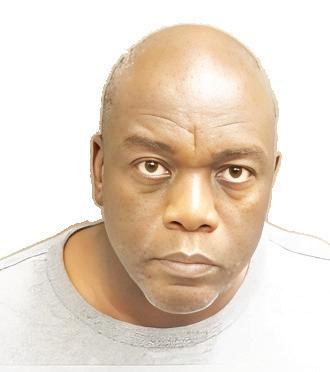
A US judge has denied convicted drug smuggler Jonathan Gardiner bail after branding him a “substantial danger to the community" and fnding that the "weight of the evidence against the defendant is very strong."
Gardiner, a court heard yesterday, had “extensive political connections in The Bahamas,” including with Politician-1, and an “extensive’” criminal history. Prosecutors said he also had a “strong connection with Bahamian ofcials.”
Branding him a “fight
risk” with “ample reason to fee the US,” District Judge Gregory Woods said there were “no conditions” under which Gardiner could be expected to return to court for future appearances given the seriousness of the allegations against him.
Gardiner, 58, who walked into the federal court in Manhattan with his legs shackled and his arms handcufed behind him, faces a mandatory minimum 15 years in prison if found guilty of trafcking drugs
GARDINER - SEE PAGE FIVE
A 91- YEAR-OLD woman was allegedly sexually assaulted by a family member early Wednesday morning, according to police.
Police said shortly after 10am, the victim reported to police that she had been sexually assaulted by a family member at approximately 5am that same day.
Officers from the Criminal Investigation Department subsequently assisted the victim in obtaining medical attention.
Investigators from the Sexual Offences Unit have begun investigations into the matter and are working to locate and arrest the suspect.

By PAVEL BAILEY Tribune Staff Reporter pbailey@tribunemedia.net
THE Court of Appeal has rejected a bid by Adrian Gibson and four co-accused to derail their ongoing criminal trial, ruling that their constitutional motion was an improper attempt to challenge the trial before it
Dr Denotrah Archer-Cartwright, a representative of National Health Insurance Providers Association (NHIPA).
has ended.
The court dismissed the appeal by Gibson, Joan Knowles, Jerome Missick, Peaches Farquharson and Elwood Donaldson, who had challenged the trial judge’s refusal to declare a mistrial, discharge the jury and recuse herself.
The appellants claimed their constitutional right to a fair trial had been breached because of alleged irregularities in the jury’s empanelment, alleged non-disclosure of the approved jury list, alleged bias involving a juror and a prosecutor’s ofce, and alleged apparent bias by the trial judge.
GIBSON - SEE PAGE THREE
By NEIL HARTNELL Tribune Business Editor nhartnell@tribunemedia.net
THE National Health Insurance (NHI) scheme has subtly warned doctors and other medical providers they will continue to sufer delayed payments during the upcoming fscal year as three-quarters of
the $24.5m budget increase relates to taking on the National Drug Plan.
The NHI Authority, in a June 24, 2026, memorandum to all physician, laboratory and other service providers, revealed that just $6.5m of the scheme’s 2026-2027 funding increase will be used to cover existing obligations and responsibilities plus “prioritise arrears from previous fscal periods”.
The memo, which has been obtained by Tribune Business, used guarded, coded language to warn that Bahamian doctors and other medical professionals will likely still endure delayed compensation with
SEE BUSINESS FOR STORY

By DENISE MAYCOCK Tribune Freeport Reporter dmaycock@tribunemedia.net
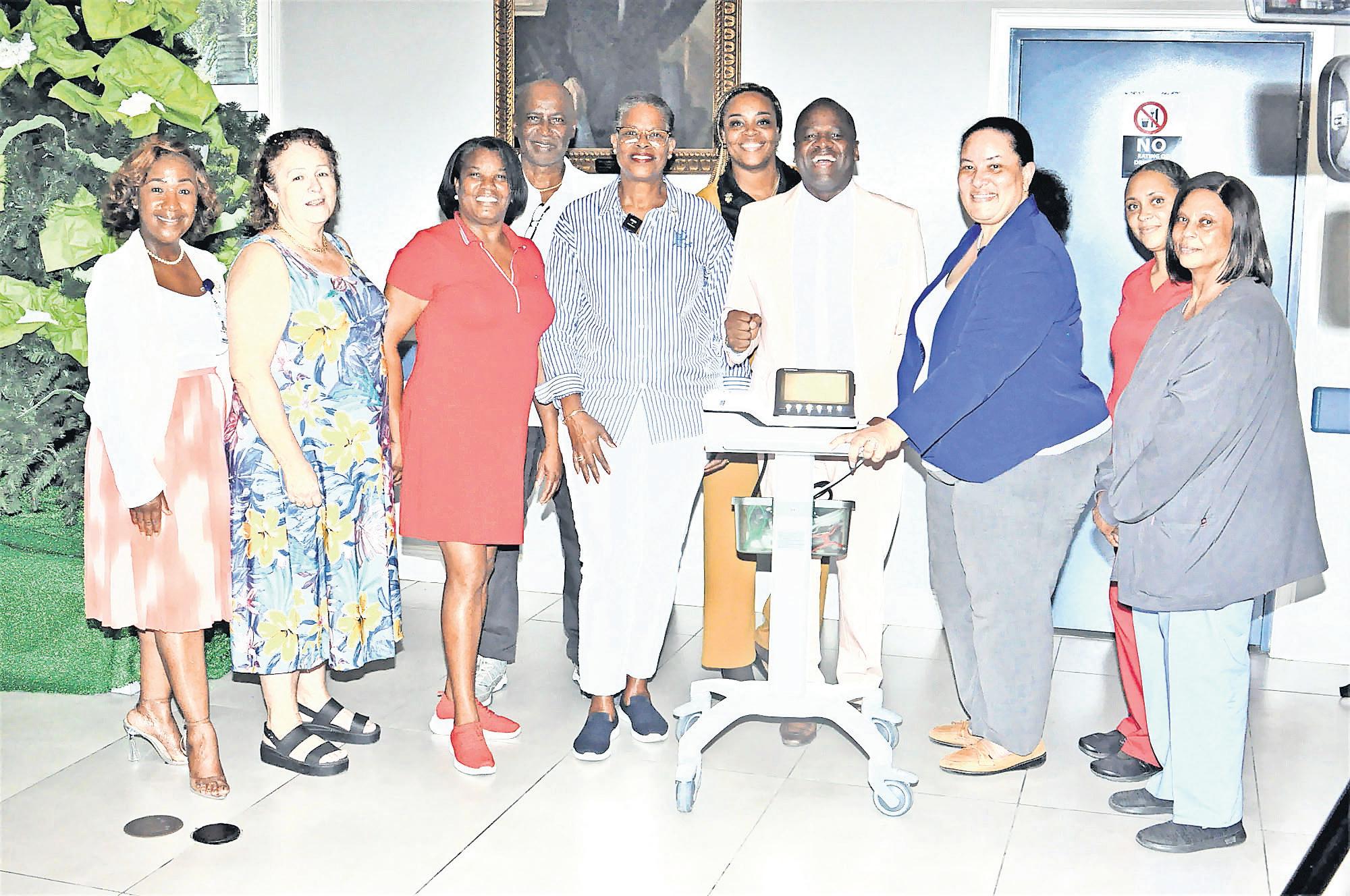
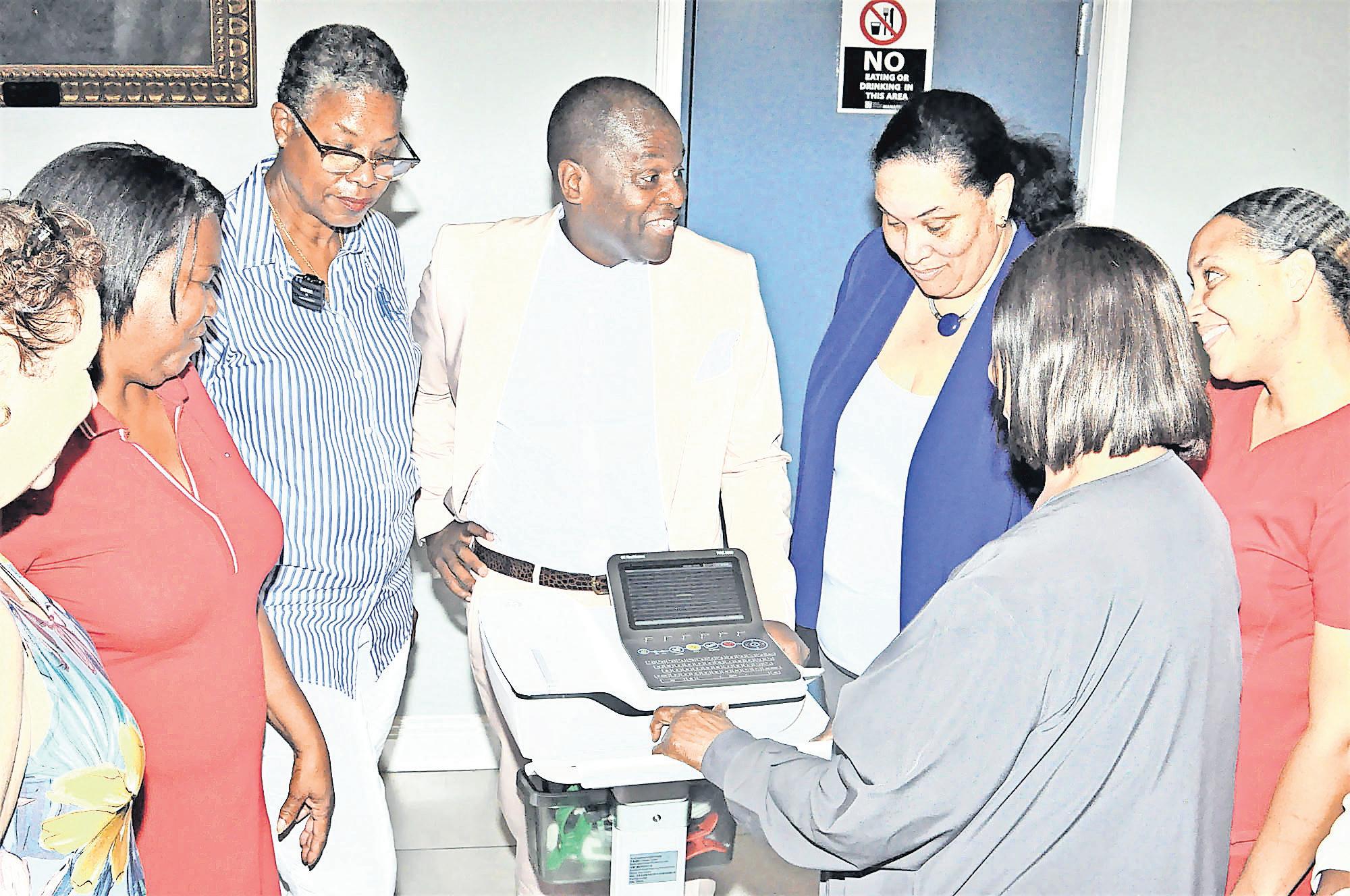
THE Rotary Club of Grand Bahama and Coakley International donated a new electrocardiogram machine to Rand Memorial Hospital on Thursday, allowing the hospital to resume a key diagnostic service after its machine stopped working several weeks ago.
The $7,000 EKG machine was purchased jointly by the Rotary Club and Coakley International. Hospital ofcials said the equipment will improve care for patients with chest pain and other cardiac-related symptoms.
Adelecia Campbell, senior assistant hospital administrator, said she asked Rotary for help after the hospital’s machine stopped functioning.
“We are proud to
receive this EKG machine, which has been kindly donated by the Rotary Club of Grand Bahama in collaboration with Coakley International,” she said. “This new piece of equipment is a tremendous improvement to our services.
“While we do have an EKG machine, like any equipment, it experiences wear and tear over time. This new machine is more advanced and will help us better serve the public.”
Ms Campbell said the machine is vital to the hospital’s daily operations.
“The EKG machine is vital to our day-to-day operations,” she said. “When patients come in with chest pain or discomfort in the chest area, physicians rely on this equipment as part of the diagnostic process. It helps determine the next steps in treatment and
whether patients need to be referred to a specialist for further care.”
She thanked the Rotary Club for its longstanding support, particularly after Hurricane Dorian.
“The Rotary Club of Grand Bahama has been with us every step of the way, especially after Hurricane Dorian,” she said. “We are always indebted to them and appreciative of their eforts.”
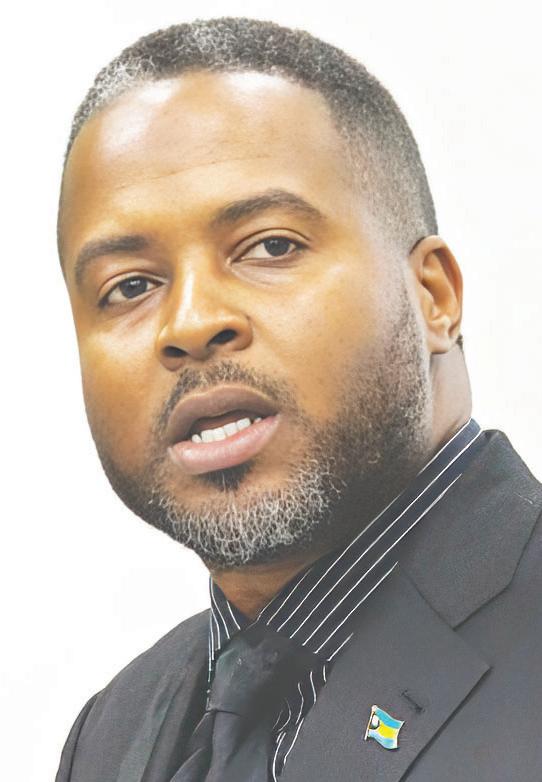
The presentation was held in the foyer of Rand Memorial Hospital. Rotarians attended along with Shane Coakley, chief executive ofcer of Coakley International, a private Bahamian real estate investor in the process of acquiring the old Ginn properties in West End.
Mr Coakley said the company was pleased to help address a healthcare need.
“The Rotary Club
reached out to us and said the hospital needed this machine,” he said. “As a Bahamian company, we believe we have a responsibility to do as much as we can for the community.”
He said community support will remain part of the company’s mission.
“Everything Coakley International does includes giving back,” he said. “Each year we are setting aside funds to support
the community, nonprofits, children and hospitals. This donation is just the beginning of what Coakley International plans to do in Grand Bahama.”
Christine Van der Linde, a founding member and past president of the Rotary Club of Grand Bahama, said the donation followed a request from hospital ofcials. She said Rotary frst approached another
potential donor, but when that efort failed, the organisation turned to Coakley International, a company it had previously partnered with. She said the company quickly agreed to help.
Ms Van der Linde said Bahamas Medical and Surgical Supplies helped secure a discounted price, while the Mail
the

GIBSON from page one
However, Justices Evans, Charles and Kokaram held that the complaints did not justify constitutional intervention while the criminal trial remains underway.
The court said the motion was an “impermissible collateral challenge to ongoing criminal proceedings” and that the issues raised could be dealt with in the trial process or on appeal if necessary.
“The alleged complaints are not about a dispute as to whether a constitutional right exists,” Justice Kokaram wrote. “Rather, they are complaints about the trial process which raises no exceptional features warranting constitutional interrogation or protection.”
The court said any alleged
jury irregularity could be reviewed in an appeal if the accused are convicted. It also noted that no allegation had been made that the jurors selected were unqualifed or otherwise tainted.
The appellants argued that seven of the nine jurors were not on the approved 2023 jury list. The court accepted that the jurors did not come from the 2023 list, but said the issue did not require the trial to be stopped.
It said the trial judge was entitled to refuse the request to discharge the jury, and any challenge to the composition of the jury could be addressed through the ordinary criminal appeal process.
The court also rejected the complaint that a juror’s alleged connection to someone in the Ofce of the
Director of Public Prosecutions gave rise to apparent bias, saying no formal application had been made before the trial judge.
The judges were equally unmoved by the allegation that the trial judge had a closed mind or should have recused herself.
“We are not satisfed that this allegation was properly made out,” the court said, adding that the issue could be handled on appeal at the end of the trial if necessary.
The court was blunt about the complaint that the DPP failed to disclose the jury list, calling it “a non-starter.” It said the approved list was publicly available and that no request had been made to the DPP to provide it.
The court also said the Attorney General, not the DPP, was the proper party to answer constitutional
By EARYEL BOWLEG Tribune Staff Reporter
ebowleg@tribunemedia.net
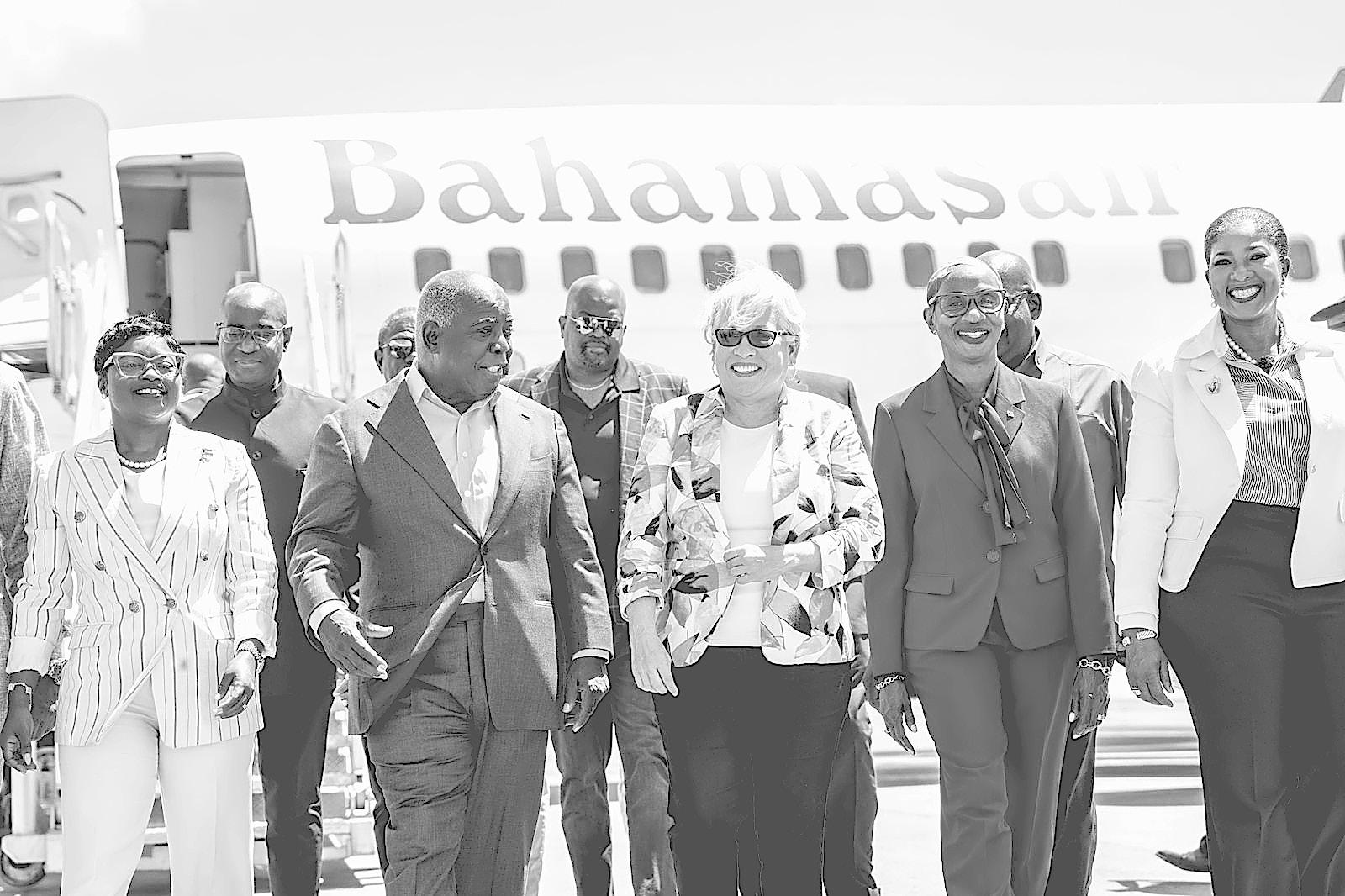
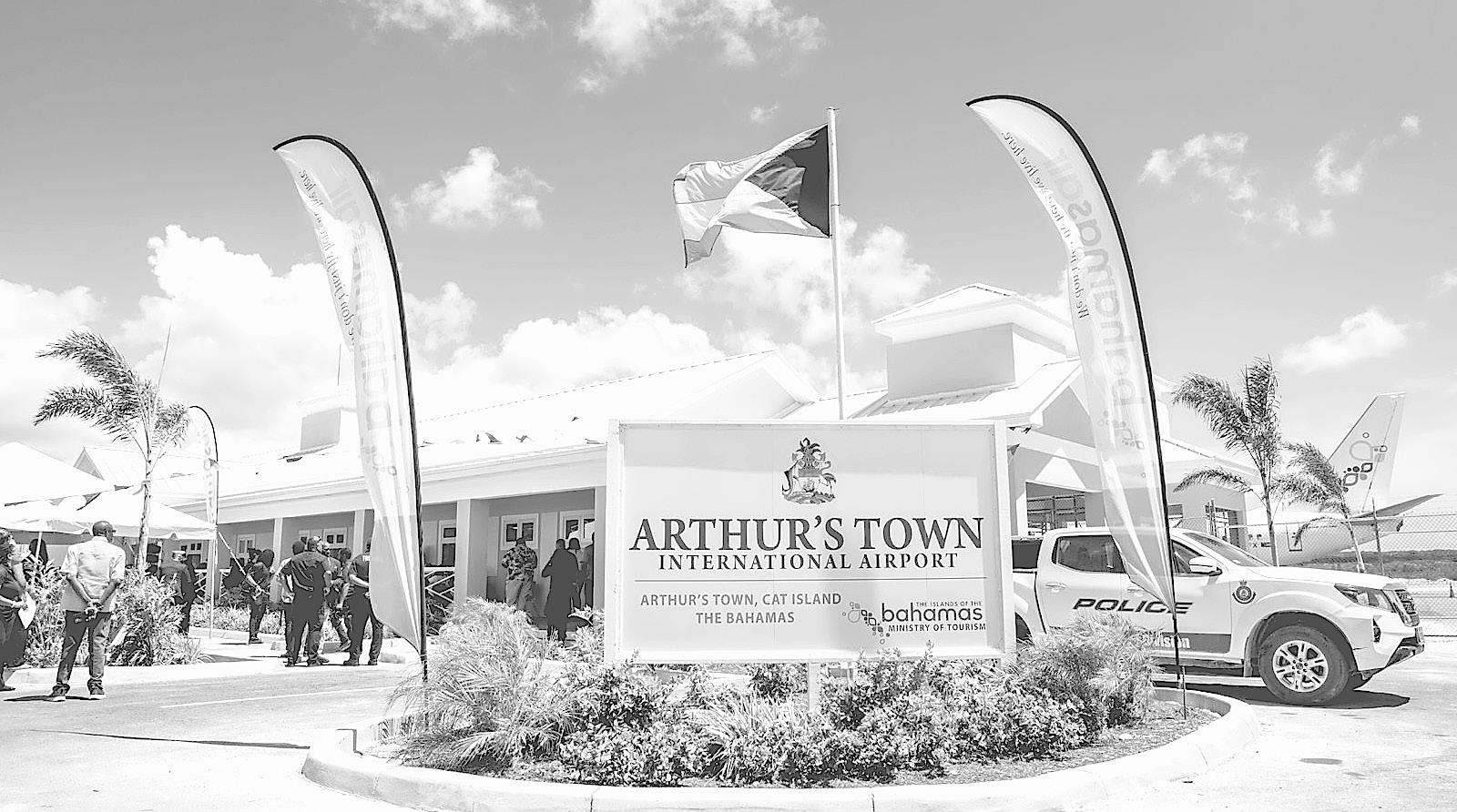
BAHAMASAIR has resumed scheduled service to Cat Island for the frst time in more than 20 years, with twice-weekly fights between New Providence and the island on Thursdays and Sundays.
Prime Minister Philip “Brave” Davis said the route, which began yesterday, marks a signifcant step for Cat Island residents and businesses.
“Today, we celebrate the reopening of this route that brings people closer together,” he said. “It makes it easier for residents to travel for business, healthcare, and family. It provides greater convenience and strengthens the connections that bind our islands together. It opens new possibilities for economic growth.”
Mr Davis said Cat Island’s history and natural beauty ofer visitors a unique Bahamian experience, and that improved airlift will help expose more people to the island.
“Greater access will also support small businesses. Hotels, restaurants, taxi drivers, and entrepreneurs
throughout this island stand to beneft from increased visitor activity,” he said.
Mr Davis said the restored route refects his administration’s commitment to ensuring every island shares in national development. He said the government continues to invest in increased airlift capacity, modern airports and transportation infrastructure throughout the archipelago.
He said the government is building or renovating 19 airports under the Renaissance Airport Project, with more airport upgrades planned.
Mr Davis also pointed to increased construction activity in Cat Island.
“Over the last several months, the administrator and his town planning team would have been sifting through and approving an average of 20 new homes building here in Cat Island.”
Aviation Minister Jobeth Coleby-Davis said the restored route is more than another fight, saying aviation is essential to national development in an archipelago.
She said restoring scheduled service to Cat Island would improve connectivity and help unlock the
economic potential of Arthur’s Town and northern Cat Island.
“You cannot have a robust economy if your people cannot move. You cannot have thriving tourism if the world cannot reach you,” she said.
Tourism Minister Glenys Hanna-Martin said a cruise passenger spends $100 on average, while a stopover visitor spends $2,700 on average.
She said the latest stopover numbers show The Bahamas recorded 908,397 stopover visitors by month in 2026, a 3.2 percent increase over last year and a 2.8 percent increase over 2019.
Mrs Hanna-Martin said Cat Island recorded a 68 percent increase in air stopover arrivals for the frst four months of 2026 compared to 2019 and a nine percent increase compared to 2025.
She said those fgures gave Cat Island the largest percentage growth in foreign air stopover arrivals in the country.
Mrs Hanna-Martin said the government remains committed to upgrading infrastructure and promoting Cat Island as a tourism destination.
claims involving alleged acts of the state.
The ruling criticised the long procedural history of the case, saying the trial had been slowed by several rounds of applications and appeals.
“The appeal has been productive of nothing other than to further delay a trial that has been ongoing since 2023,” the court said, quoting an earlier warning in the same litigation.
The judges said constitutional motions should not be used to interrupt criminal trials unless exceptional circumstances exist.
“There has been no alleged constitutional breach that is so signifcant that will justify a departure from the well-worn investigation by an appellate court of any alleged miscarriage of justice,” the court said.

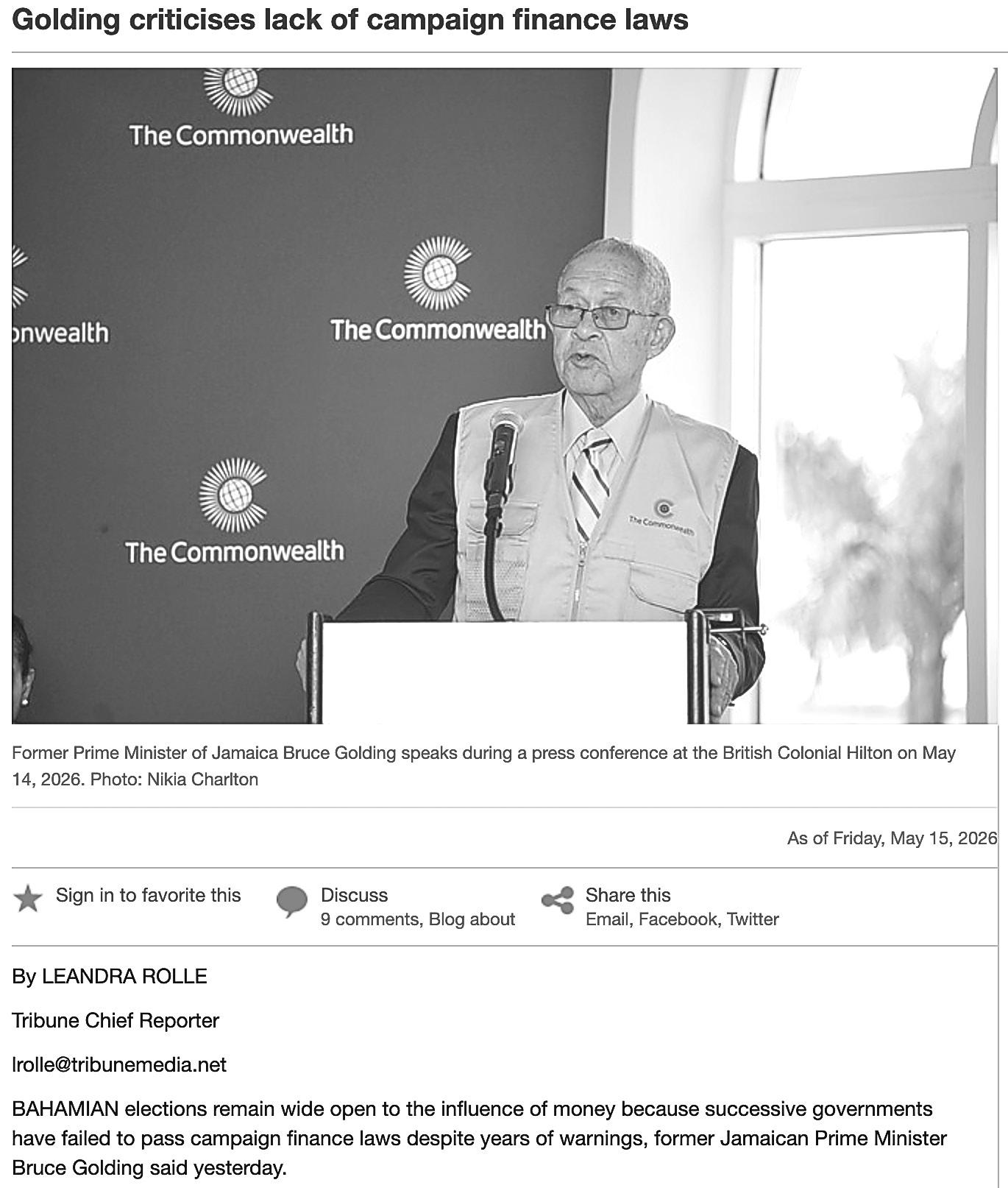
IN revealing that The Bahamas ‘does not maintain a comprehensive campaign-fnance regulatory structure comparable to that found in the US,’ Jonathan Gardiner’s lawyer Susie Ribero-Ayala entered as evidence a story from The Tribune in which former Jamaican Prime Minister Bruce Golding states that The Bahamas remains wide open to the infuence of money because successive governments have failed to pass campaign fnance laws.
In the story, named Exhibit D, Mr Golding, chair of the Commonwealth Observer Group, was critical at the lack of progress in such matters in The Bahamas.
He said the issue had been ‘repeatedly fagged by observer missions, but reform had not followed.’
He recalled jokingly telling the Secretary General that ‘international bodies could spend another century sending observers to The Bahamas to make
the same recommendations, only to have them ignored.’
“The people of The Bahamas need to make this their business,” said Mr Golding.
“It is their democracy. It is their future. Politicians, you know, can aford not to listen the Commonwealth Secretariat, but they are not refusing to listen to the people, and therefore much of the hope has to depend on the level of activism that the people in The Bahamas display.”
The story also states that ‘in 2024, Prime Minister Philp ‘Brave’ Davis said campaign fnance reform proposals was not in his administration’s priorities, despite earlier promises to advance it.’
Mr Golding said small countries, like The Bahamas, where constituencies have relatively few voters, are ‘especially vulnerable to the infuence of money and potential vote buying.’
He warned that wealthy candidates or parties could calculate how many votes they need to win and use fnancial
secure support.
By EARYEL BOWLEG Tribune Staff Reporter
PRIME Minister Philip
“Brave” Davis yesterday refused to address a US court filing that describes $30,000 found on convicted drug trafficker
Jonathan Eric Gardiner after the Election Day plane crash as campaign-related cash.
Asked if he would address claims that the cash found aboard the plane involved campaign funds, Mr Davis said: “No.”
He then walked away avoiding other questions.
The Bahamas has no campaign finance legislation requiring political parties to disclose donors, report the sources of campaign money, limit cash contributions or reveal whether controversial figures have funded election activity. That gap has
Looking to ll the following positions:
Crane Operator
Responsible for li ing, moving, and positioning heavy materials and equipment in accordance with project requirements. Follow established safety guidelines and company policies to prevent accidents and maintain a secure work environment.
Tugboat Captain
Responsibilities include vessel navigation, towing operations, ensuring safety compliance, maintaining clear communication, and handling emergency responses. To qualify, you must hold a valid Captain’s license and necessary certi cations, have proven experience in a similar maritime role.
Foreman
To Lead and supervise construction crews on civil projects. Coordinate tasks, equipment, and personnel e ciently. Ensure strict adherence to safety protocols and regulations. Maintain high standards of workmanship and project quality.
Health Safety & Environment Manager
Develop and enforce safety protocols across projects, integrate safety measures into operations, coordinate with teams for e ective safety procedures, monitor and ensure compliance, and provide regular safety reports to management.
Quality Control Coordinator
Ensures adherence to quality standards through procedure development, inspections, and testing coordination. Able to manage documentation, supplier quality, and training, driving continuous improvement. Develop, implement, and monitor quality control procedures. Coordinate testing, inspections, and analysis. Bachelor’s degree in related eld is required
Pile Driver
Operate pile driving equipment to install structural foundations in construction projects. Drive pilings into the ground using various methods, such as hydraulic hammers or vibratory drivers. Follow project schedules and deadlines to complete pile driving tasks within speci ed timeframes.
Diesel Mechanic
Perform diesel engine maintenance and repairs. Diagnose mechanical issues e ciently. Conduct routine inspections and maintenance tasks. Adhere to strict safety protocols. Proven diesel mechanic experience and certi cation or vocational training preferred.
Superintendent
Oversee daily site operations, ensuring construction activities are executed safely, e ciently, and in compliance with project plans and regulations. Supervise and coordinate the work of contractors, subcontractors, and site personnel to meet quality and schedule requirements.
Electrical Specialist
An Electrical Specialist is responsible for installing, inspecting, troubleshooting, and maintaining electrical systems and equipment to ensure safe, e cient, and code-compliant operation. e role includes diagnosing faults, performing repairs, supporting projects, and ensuring adherence to electrical standards and safety regulations.
Project Manager
Able to Plans, coordinates, and oversees marine construction projects such as docks, marinas, and coastal structures from start to completion. Manages budgets, schedules, subcontractors, and resources while ensuring compliance with safety and environmental regulations.
Welding Specialist
Able to inspects, fabricate, and repairs metal components using various welding techniques and equipment. Interprets technical drawings and ensures welds meet industry standards, speci cations, and safety requirements.
Maintenance Man
Able to perform routine maintenance and repairs on buildings, equipment, and facilities to ensure smooth operations. Handles tasks such as plumbing, electrical work, carpentry, and general upkeep as needed. Identi es issues, troubleshoots problems, and completes repairs e ciently and safely.
To Apply:
Interested candidates should submit your resume
30th, 2026
continuously drawn criticism. The OAS has other organisations have repeatedly recommended that The Bahamas introduce campaign finance regulations. The US government has also warned that campaign financing in The Bahamas remains open to abuse, exposing the country’s governance to “corruption and foreign influence”. Gardiner’s defence has now pushed that weakness into the heart of his criminal case.
In a recent filing, his lawyer, Susie Ribero-Ayala, argued that the $30,000 found after the Election Day plane crash was “campaign-related cash being transported on the day of a national election.”
The filing said about $20,000 in Bahamian currency was withdrawn from Gardiner’s company account on May 11. Ms Ribero-Ayala argued that only $5,000 was allegedly intended for the unnamed “Politician 1.”
She also pointed to the absence of strict campaign finance rules in The Bahamas, noting that political donations can be made in cash and that the presence of the money could be viewed more than one way.
“Consequently, the existence of Bahamian currency associated with political activity on election day is susceptible to explanations wholly unrelated to narcotics trafficking,” her filing
states. During the budget debate, Mr Davis said allegations in a US federal affidavit were “far too serious” to be reduced to political spectacle and accused the opposition of trying to destroy people’s character.
Foreign Affairs Minister and PLP chairman Fred Mitchell previously dismissed claims linking the party to Gardiner’s arrest, saying any speculation beyond known facts was premature. He said it was irresponsible to suggest “there’s something nefarious going on with the Progressive Liberal Party or any of our politicians” and said: “I assure you that is not the case.”

to the US with the help of a high-ranking Bahamian politician.
Defence filings claim the $30,000 he was carrying when the Election Day plane crashed off the US coast was “campaign related cash being transported on the day of a national election.”
They also revealed approximately $20,000 in Bahamian dollars was withdrawn from Gardiner’s business bank account, in the name of Top Notch Builders, a day earlier, May 11. The withdrawal notice was submitted as evidence.
Gardiner’s lawyer
Susie Ribero-Ayala said that only $5,000 was meant for the as-yet-unnamed ‘Politician 1.’
Ribero-Ayala pointed out that there are few restrictions on political donations in the Bahamas, which can be paid in cash and that you could view the presence of the money “either way”.
“Consequently, the existence of Bahamian currency associated with political activity on election day is susceptible to explanations wholly unrelated to narcotics trafficking,” her filing states.
Gardiner, who was also referred to as “Player” in court documents, has denied cocaine importation conspiracy and firearms-related charges.
Yesterday, he waved at Leroy Major, the New York consul general of the Bahamas, as he entered court.
Gardiner was wearing a tan coloured top and trousers issued by the prison he is being held in.
Ribero-Ayala said that her client had not yet recovered from the ‘traumatic’ events that led to his arrest.
But she added: “He is ready to fight this case.”
Calling the case “extraordinary,” she said that Gardiner was on a plane with ten other voters or campaign workers when it went down in international waters.
While everyone else was allowed to leavethe Bahamian consulate sent a plane to take them away - Gardiner was placed in custody.
Ribero-Ayala said that there was a “reasonable explanation” for the $30,000 in Bahamian currency found on Gardiner in the plane.
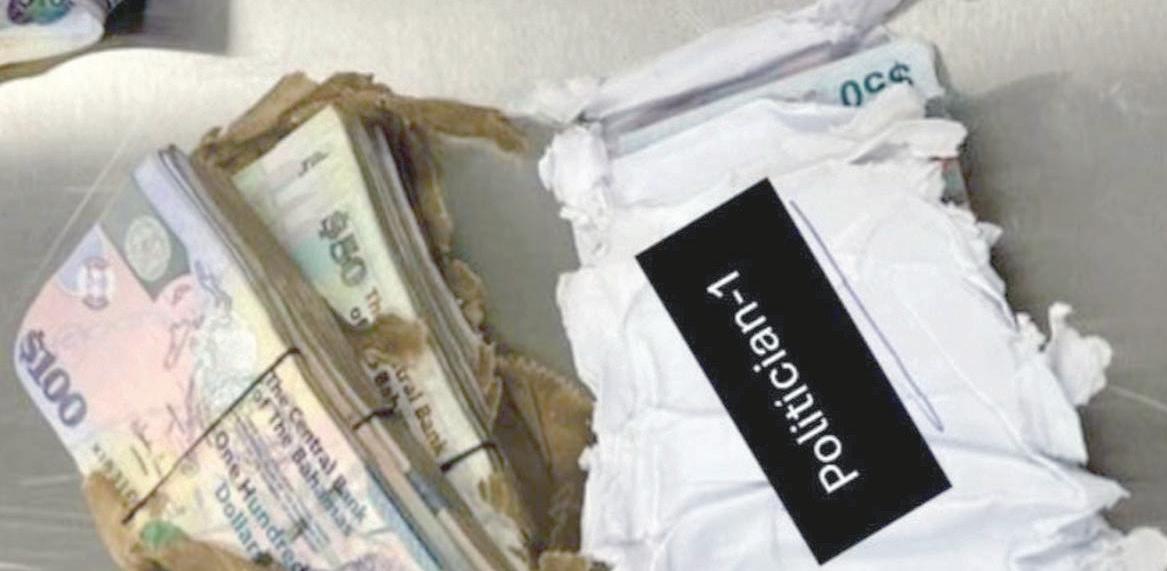
Prosecutors have said that the money was bundled in a manner that was consistent with narcotics trafficking and that had the name of the Bahamian politician on it.
Gardiner is said to be a key figure in a sprawling plot which involved a high-ranking Bahamian
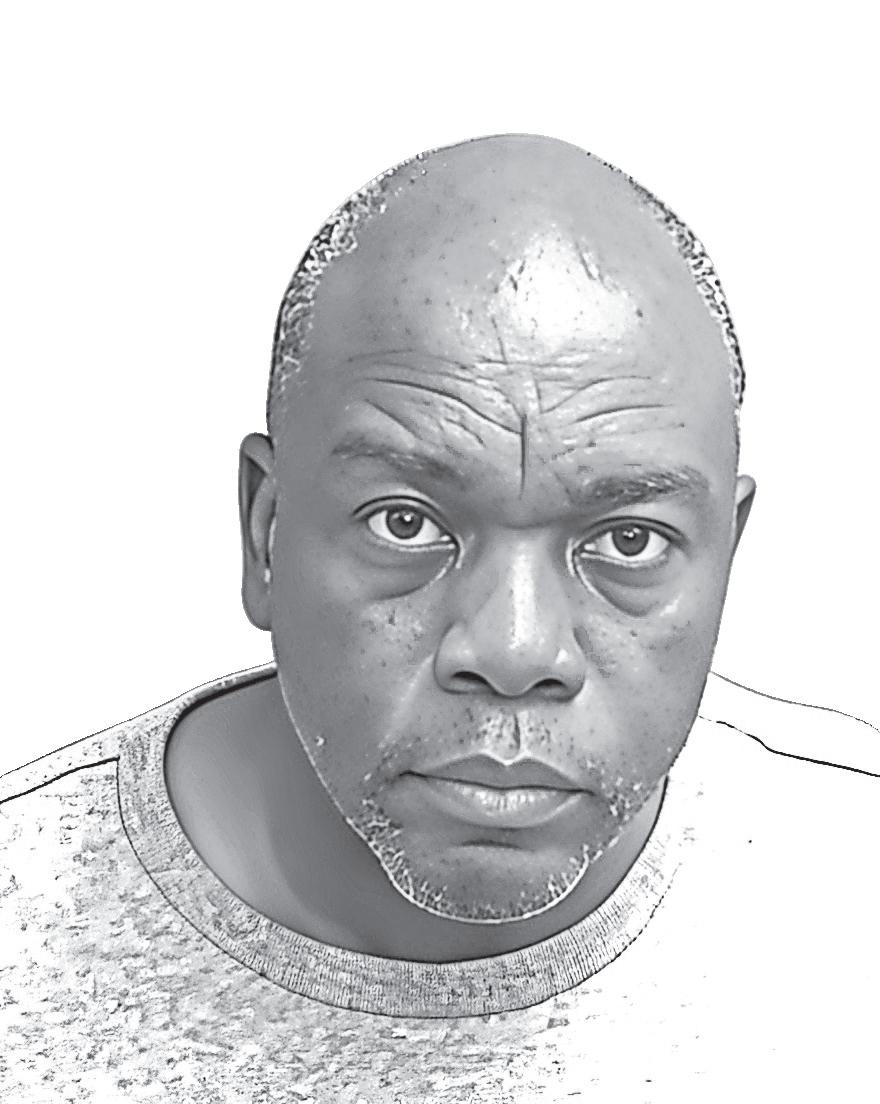
scale,” Murray said
The prosecutors said that the pre-sentence report, a court-ordered assessment of Gardiner, had “substantially undervalued” Gardiner’s assets.
She cast doubt on the claim by Gardiner’s lawyers that the $30,000 in Bahamian currency he was arrested with was “almost the entire value of his net worth.”
Murray said that despite Gardiner’s efforts to “distance” himself from Top Notch Builders, his construction company in the Bahamas, he was still affiliated with it.
The company got a $34 million contract with the Bahamian government in 2017 and another $20 million loan since then, Murray said.
“Mr Gardiner has profited substantially from these government contracts”, she said, adding this explained the prosecution’s “deep concerns” about how much Gardiner was really worth.
Murray added that the Bahamian politician whose name was on the bag of moneya figure that has been called ‘Politician-1’ in court documents - was the same person who also met with a DEA source in the Bahamian Parliament.
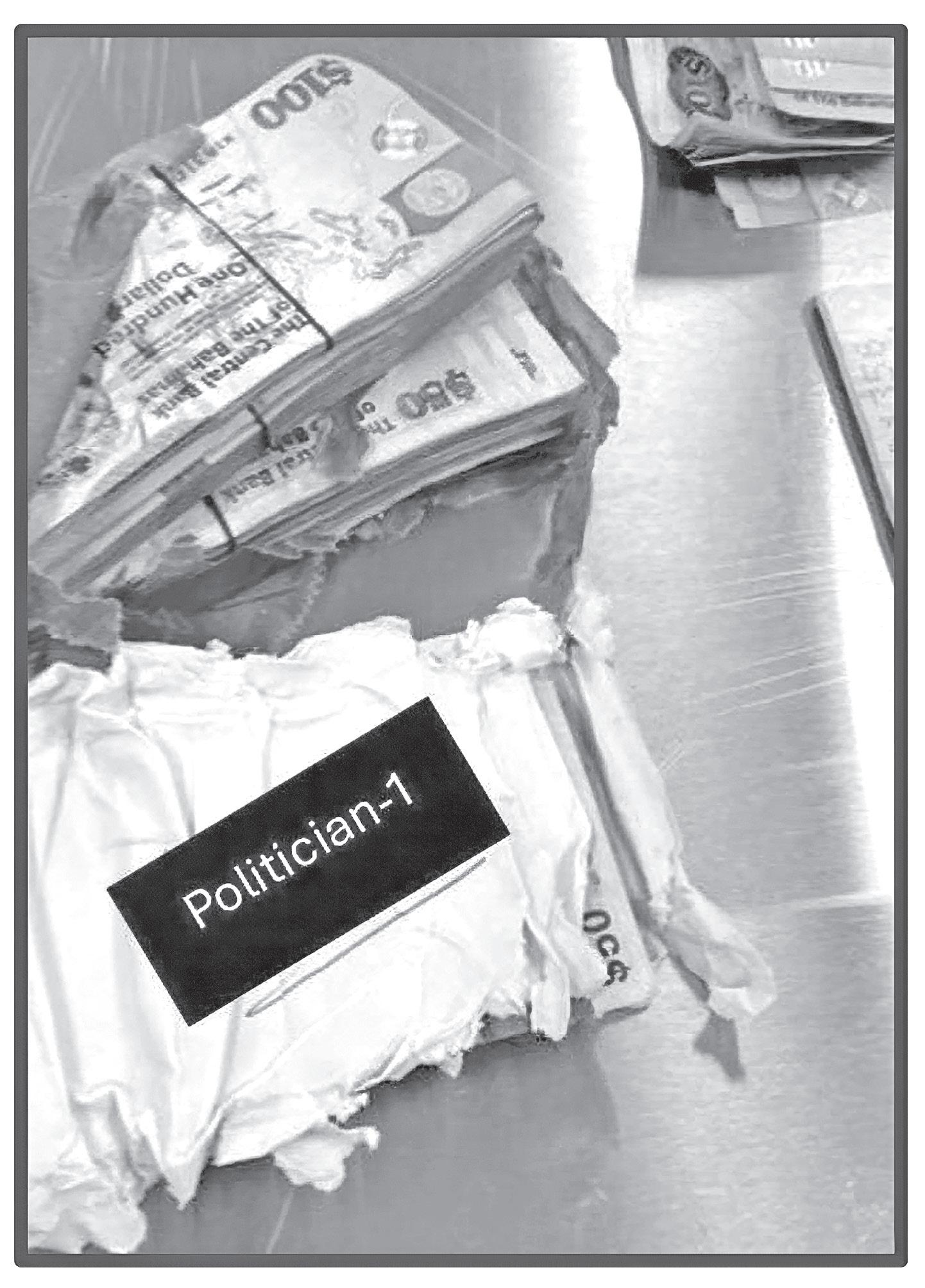
$30,000 Bahamian cash and an envelope marked ‘Politician-1’ were confiscated from Gardiner after the plane he was on crashed in American waters off the coast of Florida on May 12.
“continue to pose a danger to the community” because he would carry on.
smuggling through major airports including Lynden Pindling International Airport.
politician and am undercover DEA source discussing a $30 million cocaine shipment inside the Bahamas Parliament building.
He was arrested on Election Day last month after the aircraft he was travelling in from Marsh Harbour, Abaco, to Grand Bahama crashed off the Florida coast. He and the other survivors were picked up by the U.S. military in international waters, and flown to Florida, where Gardiner was arrested.
Most of the passengers, according to an image posted on social media, included Progressive Liberal Party (PLP) supporters wearing party shirts.
Turning to the evidence against Gardiner, Ribero-Ayala dismissed it as a ‘lot of talk’ and shifting allegations from two indictments, the first in Florida and the second in New York.
There was “nothing that’s directly tied to Mr Gardiner except an iCloud account we aren’t even aware of who it belongs to,” she said.
The court heard that Gardiner was offering a $50,000 bond to secure his release along with the home of a family
member in Florida and GPS monitoring. Gardiner would remain at a house in New York while he awaited trial and only come out to buy groceries or go to church, Ribero-Ayala said.
Her filing said he had “demonstrated a willingness to comply with strict supervision and agrees to conditions including GPS monitoring, surrender of travel documents, and any additional measures the court deems appropriate.”
But Assistant US Attorney Juliana Murray painted a very different picture of Gardiner.
She brought up his previous US drug trafficking conviction from 2006 for which he served half of his 220-month sentence before being deported to the Bahamas. It is not known why he was released early or whether he served any time on his return to The Bahamas.
Despite the conviction, Gardiner “has not been deterred from participating in the same type of activity on a massive
Alleged participants in the drug trafficking operation were told that the politician was “someone who could help with the drug trafficking activities,” Murray said.
As Judge Woods read out his decision to deny bail, Gardiner put his fingers to his brow and massaged his forehead.
“The danger to the community and other persons posed by the defendant’s release is substantial”, the judge said.
Given that Gardiner is charged with coordinating the trafficking, releasing him would
Another reason to keep Gardiner in jail was that he was a “substantial risk of flight,” the judge said, adding there was “ample reason (for Gardiner) to flee the US.”
The next date for Gardiner to appear before the court is September 23.
Ribero-Ayala initially said she wanted an earlier trial date than March 1, 2027, when other defendants are due to go on trial, but she changed her mind and agreed to a status conference in September instead.
Others charged in the alleged plot include Elvis Nathaniel Curtis, 51, a former chief superintendent with the Royal Bahamas Police Force, who is alleged to have facilitated drug
So far only one defendant has admitted his role in the plot, Darrin Alexander Roker, 51, a former naval officer with the Bahamas Defence Force today.
In January Roker, who was facing 20 years in jail, was given four years in prison after the court was told he is terminally ill with prostate cancer. Prince Albert Symonette, 52, a former RBPF sergeant, ‘closely worked’ with Curtis as part of the scheme, it is claimed.
Both Curtis and Symonette are accused of taking a $10,000 cash bribe in 2023 as downpayment for helping get a future 600kg cocaine shipment through Nassau airport to the US.
NULLIUS ADDICTUS JURARE IN VERBA MAGISTRI
“Being Bound to Swear to The Dogmas of No Master”
LEON E. H. DUPUCH,
Publisher/Editor 1903-1914
SIR ETIENNE DUPUCH, Kt., O.B.E., K.M., K.C.S.G., (Hon.) LL.D., D.Litt .
Publisher/Editor 1919-1972
Contributing Editor 1972-1991
RT HON EILEEN DUPUCH CARRON, C.M.G., M.S., B.A., LL.B.
Publisher/Editor 1972-
Published daily Monday to Friday Shirley & Deveaux Streets, Nassau, Bahamas N3207
TELEPHONES
News & General Information (242) 502-2350
Advertising Manager (242) 502-2394
Circulation Department (242) 502-2386
Nassau fax (242) 328-2398
Freeport, Grand Bahama (242)-352-6608
Freeport fax (242) 352-9348
WEBSITE, TWITTER & FACEBOOK
www.tribune242.com


TO say there is unsettled business over National Health Insurance (NHI) payments would be an understatement. The considerable delays that NHI service providers have faced in receiving payments look like they will be continuing.
In a recent correspondence from the NHI, the Authority suggests that delayed payments will go on into the future. That memo was sent to the doctors and laboratories and other providers who are at the sharp end of delivering the service, only to fnd themselves left to wait for payment. This has been an ongoing issue.
Back in February, it even got to the point where doctors said Prime Minister Philip Davis was throwing their reputation “under the bus” with claims about some purported billing “irregularities” playing a part in the delays. While doctors can have billing irregularities (either by entering the wrong medical codes or asking patients for supplemental charges over what is covered) in the case of NHI they receive a simple fee based on the number of patients. The payment is the same whether the patient comes in or not –so it should balance out.
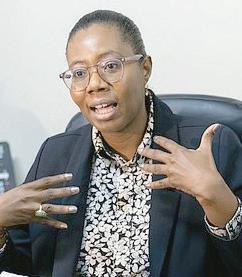
Dr Dentorah Archer-Cartwright, a family physician with over 10 years of experience, claims any billing issues “have to be something NHI is doing or allowing to happen”, not something caused by doctors themselves. She said: “They have the power. They tell us who is on the patient list, they tell us what they are going to pay us and when they are going to pay us. We don’t even know when now. We haven’t heard anything on when they are going to pay us something. We’ve gone from a guaranteed payment to nothing.”
If it had been down to irregularities, one would have hoped it would have been smoothed out by now. Not so.
Instead, the NHI which has landed a $24.5m budget increase, says only $6.5m of that increase will go towards paying existing obligations and to “prioritise arrears from previous fscal periods”. The memo admitted that the lack of funding may impact the fnancial
As
EDITOR, The Tribune.
THE Bahamas does not need another statement on homelessness, its housing affordability crisis, or another housing announcement; it needs a housing system. More specifically, it requires a Homes First National Strategy, and Grand Bahama should serve as the national incubator where this strategy is tested, measured, refined, and scaled.
For too long, housing in The Bahamas has been treated as a political event rather than a national development initiative. Another statement about the crisis, a subdivision is announced, a few keys are handed over, and a press release is issued. Then the country returns to the same structural crisis: high rents, high construction costs, soaring energy bills, limited mortgage access, stagnant wages, insufficient supply, and a generation of Bahamians who work tirelessly yet still cannot envision a realistic path to homeownership.
bridge from renting to ownership, rather than just a rhetorical flourish.
Grand Bahama can facilitate all of this in real time.
Michael C Pintard, in his leadership of the Free National Movement, has already placed an aggressive housing strategy that incorporated these housing models on the national agenda during the last general election period. However, the next step must be stronger, broader, and more statesmanlike.
costs and stagnant wages. It is not enough to claim that the economy is growing when numerous households cannot afford rent, struggle to qualify for a mortgage, find it difficult to pay electricity bills, and fail to accumulate savings.
Growth that does not benefit households is inadequate.
status, but said that these are “realities” that have to be managed.
So if money is coming in, and fscal projections are positive, then why are the debts still piling up ? And why do the providers have to carry the weight of that?
Dr Archer-Cartwright also took issue with the budget increase, saying it is moving money around rather than increasing it.
“It’s not a budget increase; it’s a reallocation of funds,” she said. “That money used to be under the NIB programme. That money is now being reallocated to NHI. That’s not an increase to the NHI system. They have taken on more, which is how they have managed NHI. Now they have taken on the Prescription Drug Plan, they have reallocated funds and money that they clearly were going to spend.”
“NHI is absolutely a worthwhile endeavour,” she added. “It extends healthcare to those who might not otherwise have it, and lifts the burden of expensive treatment from those able to partake”.
That burden, however, should not be carried by the shoulders of doctors and businesses involved in the scheme.
Each of those has its own costs. They cannot tell nurses they have to wait for their pay. They cannot tell drug manufacturers that the cheque is in the mail. They cannot tell the patient to go away and come back when the government has paid its bill.
Back in June last year, Minister of Health & Wellness, Dr Michael Darville said he was “on top of” late provider payments for NHI. If the country has the money, as we keep on hearing, then where is the cash?
Providers should not have to come cap in hand to the government over and over again for payment for services that have already been agreed, and already been provided. Whatever the issue is, let’s fx it.
One full year on, there’s clearly a lot of work that still needs to be done.
oil prices drop when will cost drop at pump?
EDITOR, The Tribune.
I WAS horrifed when a service station owner told me that many of his customers were panicking due to gasoline prices hitting over $7.12 per gallon. That’s an increase of 22 cents from $6.90 it was dormant at for weeks on Grand Bahama. On the international market, a barrel of crude oil was priced at $72 on June 24. Days prior to this, it was approximately $83. Oil prices are beginning to plummet with the reopening of the Strait of Hormiz waterway in the Middle East after US President Donald Trump’s agreement with Iran to end their confict. No doubt the government of The Bahamas has reaped the benefts of infated oil prices due to VAT and duty taxes -- both of which fuctuate with either the increase or decrease in prices. The government has silently pocketed bonanza profts without announcing any short-term plans about
extending some form of relief to motorists. I think the government should take the bull by the horns by holding a press conference to allay the fears of the motoring public. The government should also announce a timeline as to when it expects the price of oil to drop in The Bahamas. VAT should also be capped. If the government is collecting, say, 60 cents in VAT for a gallon of gas at $6, then it should consider not raising VAT to 70 cents if petroleum is priced at $7 per gallon. The US war with Iran could have a devastating impact on the oil industry in The Bahamas, as many Bahamians might opt to purchase EVs. This will in turn hurt the government that relies heavily on the oil industry to raise taxes to fund its initiatives, such as servicing the National Debt, funding education and healthcare and paying its massive staf numbering 25 thousand on a monthly basis.
By encouraging Bahamians to purchase EVs, the government is pretty much putting a noose around its own neck. Without oil to tax, the government might be forced to raise taxes on the tourism industry, which could price The Bahamas out of this vitally important market as Cuba looks set to open once the Marxist regime fnally falls before Trump leaves ofce. An infux of EVs will also place added stress on the electric grid on New Providence that is already proven that it cannot meet the demands of its nearly 300 thousand residents with the persistent blackouts in this sweltering heat. This is a crisis in case you’re unaware and it is time someone in this administration say something. Silence is not an option.
KEVIN EVANS
Freeport, Grand Bahama June 24, 2026.
This is not a housing policy; it is sound-bite governance. Grand Bahama is the ideal place to break this cycle.
If The Bahamas is serious about housing, Grand Bahama should not be an afterthought; it should be the proving ground. It has land, infrastructure capacity, a deep-rooted construction culture, an under utilised economy, communities in need of renewal, and young families seeking a pathway to ownership. It also has workers in need of affordable and attainable homes and the space to test modern construction methods, rent-to-own models, workforce housing, social housing, supportive housing, energy-efficient communities, and mixed-income developments at a scale that New Providence cannot easily accommodate.
Grand Bahama should become the Homes First Incubator for The Bahamas.
Homes First must represent more than just putting roofs over heads; it must mean real homes, stable families, affordable communities, pathways to ownership, construction jobs, energy efficiency, dignity, and national development. It should unify supportive housing, social housing, low-cost housing, affordable housing, attainable housing, workforce housing, rentto-own programs, and community development into a coordinated framework.
Supportive housing should prioritize stable housing first, then provide wrap around services.
Social housing must cater to lower-income households that cannot reasonably access the private market.
Low-cost housing should minimise construction costs without compromising quality, safety, resilience, or dignity.
Affordable housing must be based on what people can genuinely afford, not on what politicians arbitrarily label as “affordable.”
Attainable housing should serve working Bahamians who are not poor enough for social housing but are also not wealthy enough to purchase at current market prices.
Workforce housing should accommodate teachers, nurses, police officers, civil servants, hotel workers, construction workers, young professionals, and essential employees who keep the country functioning.
Rent-to-own options must become a viable
Pintard and his policy advisors should now move to challenge the Government of The Bahamas to engage collaboratively in embracing, refining, and adopting the strongest elements of his proposed Housing First Framework. This framework directly addresses the needs of this moment: supportive housing units, social housing units, lowcost homes, affordable homes, attainable homes, workforce housing, rent-to-own pathways, and first-time buyer opportunities.
These were not abstract policy concepts; they represent real people, real families, workers, renters, young professionals, first-time buyers, and communities in need of a credible path forward.
The FNM should insist that Grand Bahama be the first location for the Housing First Incubator in The Bahamas. This initiative would allow the Opposition and the Government to co-lead a national response that transcends political boundaries and surpasses partisanship. Grand Bahama can become the proving ground where a detailed housing framework is presented, evaluated, challenged, improved, implemented, and eventually scaled throughout the country.
This is a crucial national policy moment that requires less political performance and more genuine collaboration. The housing crisis is too serious for sound bites and too urgent for another round of fragmented announcements. If there is a framework that can help Bahamians access stable homes, affordable communities, and real ownership pathways, the country should not reject it due to political branding. Instead, it should test it, strengthen it, and implement it.
A serious Homes First Incubator in Grand Bahama should start with clear targets: how many homes will be built, where they will be located, what they will cost, who they will serve, how they will be financed, what infrastructure is needed, what energy systems will support them, which contractors will participate, what approvals must be expedited, and how success will be measured.
The public should be informed about the number of supportive housing units, social housing units, low-cost homes, affordable homes, attainable homes, workforce homes, rent-to-own homes, and first-time buyer opportunities that are being planned. They should also know the price ranges, income brackets, construction timelines, land strategy, and financing models. Anything less is not a genuine policy; it should be viewed as merely more public relations.
The current Government of The Bahamas must also meet this challenge. It is insufficient to discuss housing while many citizens remain caught between rising
Housing must be linked to energy and economic development. An affordable home that is expensive to power is not truly affordable. A neighborhood without jobs, transportation, schools, clinics, small business opportunities, and reliable utilities cannot be considered community development. A mortgage without wage growth becomes a trap.
This is why Grand Bahama’s Homes First Incubator must include three interconnected frameworks: housing, energy, and economic growth.
1. The housing framework must focus on building the units.
2. The energy framework must aim to reduce the cost of living within those units.
3. The economic growth framework must create the income and ownership opportunities that allow families to maintain those units.
This distinction is vital; it is the difference between merely building houses and truly building a country.
Grand Bahama has spent too many years waiting for a rescue. It does not need another promise of revival; it needs a structured development platform. Homes First can become that platform if the policy is treated seriously.
Imagine Grand Bahama as the national laboratory for modern Bahamian housing: factory-assisted construction, resilient designs, solarready homes, community microgrids, rent-to-own pathways, first-time buyer preparation, contractor training, transparent cost benchmarks, public-private financing, tokenized infrastructure participation where applicable, and mixed-income communities that avoid the old mistake of clustering people by income.
This approach would not only address housing but would also create jobs, strengthen the construction sector, build local capacity, attract investment, stabilize families, support small businesses, expand ownership, and give young Bahamians hope for a future that includes them. The Bahamas cannot continue to govern with slogans while families struggle with reality.
The question is no longer whether we have a housing crisis; we do. The question is whether we have the discipline to establish a system that adequately addresses the crisis.
Grand Bahama should be where that system begins. Let’s make Grand Bahama the Homes First Incubator.
Publish the framework. Set the targets. Show the financing. Identify the land.
Name the agencies involved. Measure the results. Report the progress. Scale what works. The Bahamas does not need more discussion about housing; it needs homes, ownership, affordability, dignity, and development.
Let’s start on Grand Bahama and prove it there.
Then, we can build the nation from the foundation up
C ALLEN JOHNSON Freeport, Grand Bahama June 25, 2026.
By KEILE CAMPBELL Tribune Staff Reporter kcampbell@tribunemedia.net
THE Bahamas has begun its frst national assessment of the management of its 70 marine protected areas, a key step in a 15-year debt conversion project expected to direct $124m into marine conservation, coastal protection and blue economy programmes.
The fve-day workshop, held at the Ofce of the Prime Minister, forms part of the Bahamas Debt Conversion Project for Marine Conservation, which runs from 2024 to 2039. Project material says the government repurchased $300m in external bonds, with savings from the restructured loan to be invested in conservation and related programmes over the life of the initiative.
Jacklyn
Chisholm-Lightbourne, monitoring and evaluation specialist for the project, described the Management Efectiveness Tracking Tool assessment as a signifcant exercise.
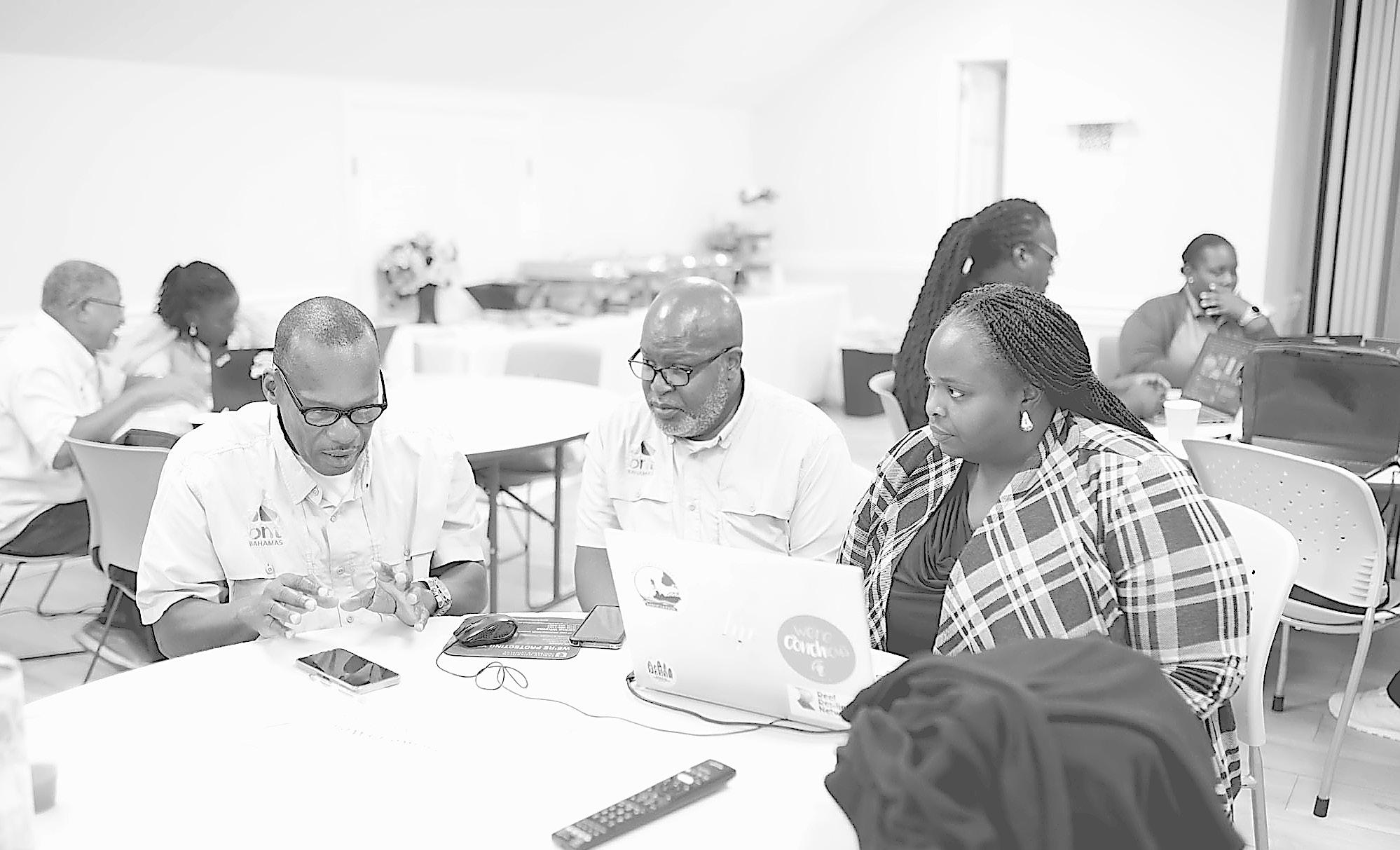
"We're assessing the weaknesses and all the successes of our 70 marine protected areas," she said. She said the workshop is one of three planned under the project and one of its major milestones. By the fourth day, ofcials had completed assessments of 26 protected areas.
"We've done the identifying of the attributes, all the threats, and now we're doing the full scoring of the management efectiveness of these protected areas," Mrs Chisholm-Lightbourne said. Representatives from the Bahamas National Trust, the Ministry of the Environment and Natural
Resources Forestry Unit, the Bahamas Protected Areas Fund, the Department of Marine Resources and the Department of Environmental Planning and Protection participated in the exercise.
Mrs Chisholm-Lightbourne said the process will give the country a clearer view of the management status of each protected area and identify what resources are needed to improve them. She said the assessment will also train local experts to continue the work beyond the workshop.
She said the workshop builds on existing environmental legislation and is intended to help ensure conservation resources are used sustainably.
"We can learn of the things that we're doing wrong, and then we can learn of the successes on how we can move forward


to endure that they are there for the future," she said.
Rich Wilson, founder and executive director of Seatone Consulting, attended the workshop to guide participants through the assessment process.
He said protected areas worldwide face development pressure, and the process helps officials identify threats, evaluate how they are being managed and determine what must improve.
"What can we learn from that process, and what does it show us in terms of the ways that we can improve management over time, all the development pressures and other threats that coral reefs, coastal mangroves, coppice forest, the animals that Ive in these areas, the

IN 1909, the New York Herald wrote that Bahamian lighthouses were considered more reliable than those of our southern neighbors.
“The great trouble seems to be the eccentricity of the lighthouse keepers on those islands where the lighthouse keepers on those islands where the British and American governments have no concerns,” shipmasters wrote. “The mariners say they have confdence in [Bahamian lighthouses], because the know what it will do.”
A few years later, we learn of a tragedy that befell the keeper of Elbow Reef Light, in Hope Town Abaco. Early in November of 1913, a stonemason named Percy Taylor died while working for the lighthouse department at Elbow Cay, presumably while working on the high tower. The following June worse took place there, when Mrs. Sarah Farrington, wife to assistant keeper John H. Farrington, “died suddenly on Sunday morning, leaving four children, the youngest of whom is three months old.” The staff at Nassau Tribune sent condolences to the new widower.
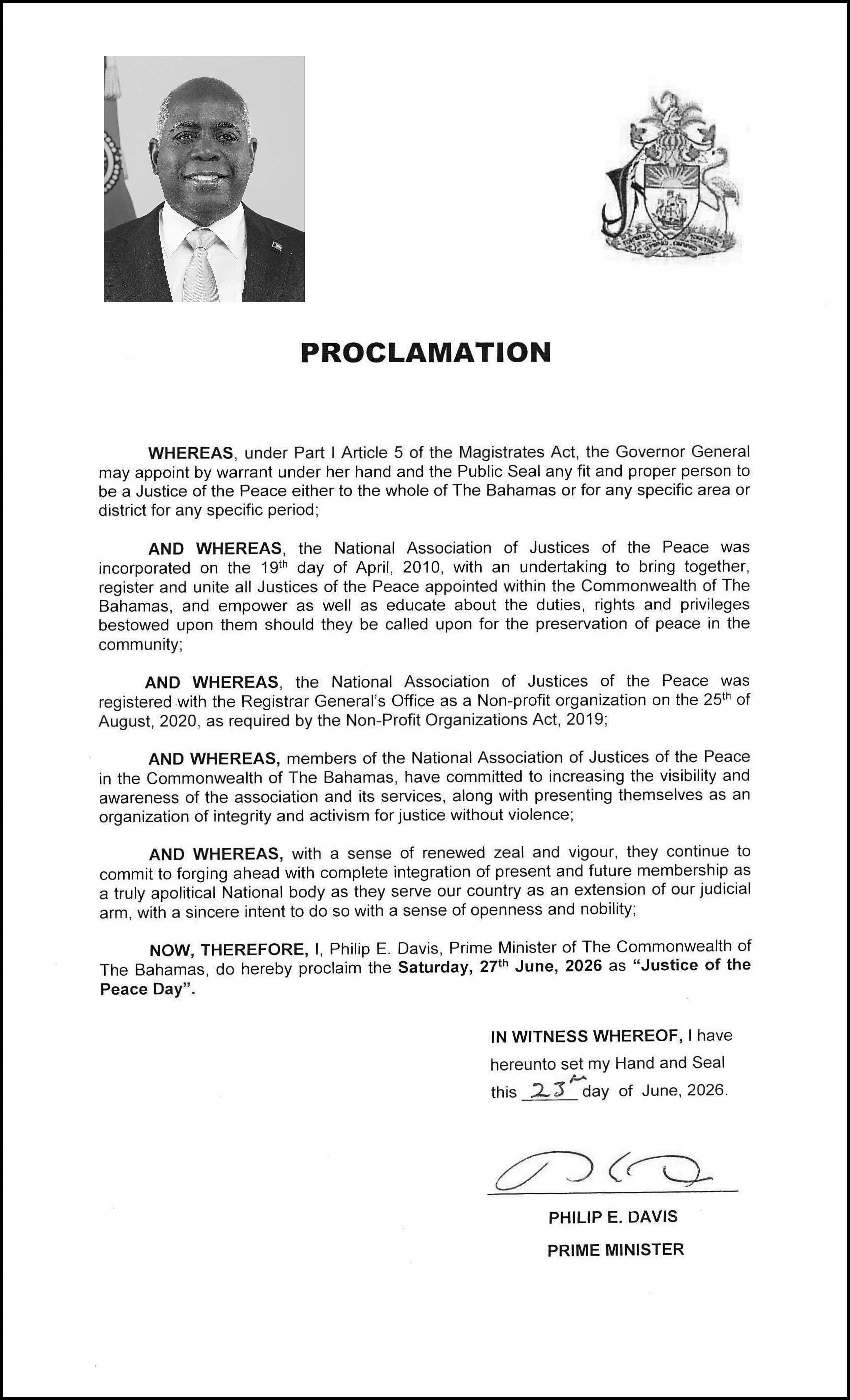
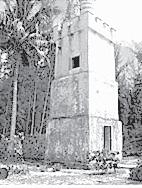
We look at some of the smaller lighthouses in the northern Bahamas – Abaco, Eleuthera, Andros, and Grand Bahama, and cays, and any stories therefrom. Palmetto Point Lighthouse in central Eleuthera is a functional navigational aid marked on charts. It can also be rented as a “a spacious, well-appointed residence with a living area, dining area, and three bedrooms.” Its height of focal plane is 3 feet, with a fxed white light, and more intense fash every fve seconds. It may be seen for 18 nautical miles. Established in 1992, it’s open to the public.
Pinders Point Lighthouse on Grand Bahama was built in the late 1700s and alerted sailing craft of “craggy coastlines and treacherous shoals.” We learn that every sundown a Mr. Samuel Pinder, “a descendant of Pinders Point, lights the torch, and at daybreak extinguishes it.” It is located where it is because the creek inlet just west of
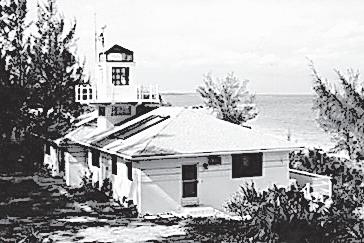
the settlement of Pinders Point and east of Hepburn Town, was a point of entry to the island of Grand Bahama. So mailboats and other small-to-midsize vessels anchored there. “What was once a rugged architectural structure, built from lye and limestone, it became a modern-day cinderblock lighthouse in the mid-1900s. The building was restored in 2009, including repainting, repair of the stairs, replacement and reactivation of the light.”
In July, 1963 an Orlando paper reported how the cabin cruiser named Hot Spur sent a mayday from Pinders Point, and their progress was monitored by the
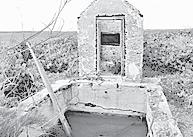
Coast Guard helicopter until it reached West End. After all, Freeport is the busiest harbor behind Nassau. Cupid Cay Lighthouse in Governor’s Harbor Eleuthera is 39 feet above sea level, and fashes a white light every four seconds. Located between northwest Eleuthera (Current) and Rose Island leading to Nassau New Providence, Six Shilling Cay is a shallow islet less than a mile long, including off-lying rocks, just 50 feet wide. Fleeming Channel is a mile wide and connects deep water with the bight of Eleuthera, leading to the Exumas. Late on the night of December 11, 1944, while chasing a German
submarine, a US Navy sub chaser snagged herself in the reefs of Six Shilling Cay. Her commander, Charles Tobin, and crew fought to save their ship and ultimately succeeded.
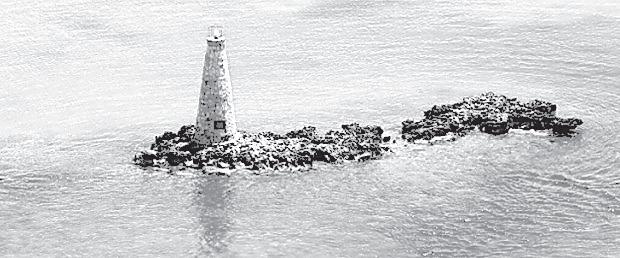
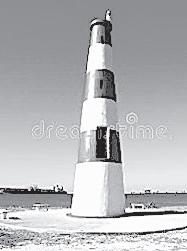
Known as The Old Lighthouse of Little Harbour, southeastern Great Abaco, this light was seen by Randolph Johnston in 1952 when he arrived with his family on a wooden schooner. It was established in 1889 and the frst lighthouse keeper and his wife were the area’s only residents. A small tower was destroyed by Hurricane Floyd in 1999 and then automated. The new steel framework tower itself was blown over by Hurricane Sandy in 2012. Nowadays these ruins are for the curious to wander through north of Little Harbour, Cherokee Sound, and Hole-in-the-Wall.
Egg Island Light, off Spanish Wells, was built in 1891, with a concrete base and metal skeletal tower 59 feet high. It features a 112-foot-high white square pyramidal tower, solar powered and visible 14 miles with white fashes every three seconds.
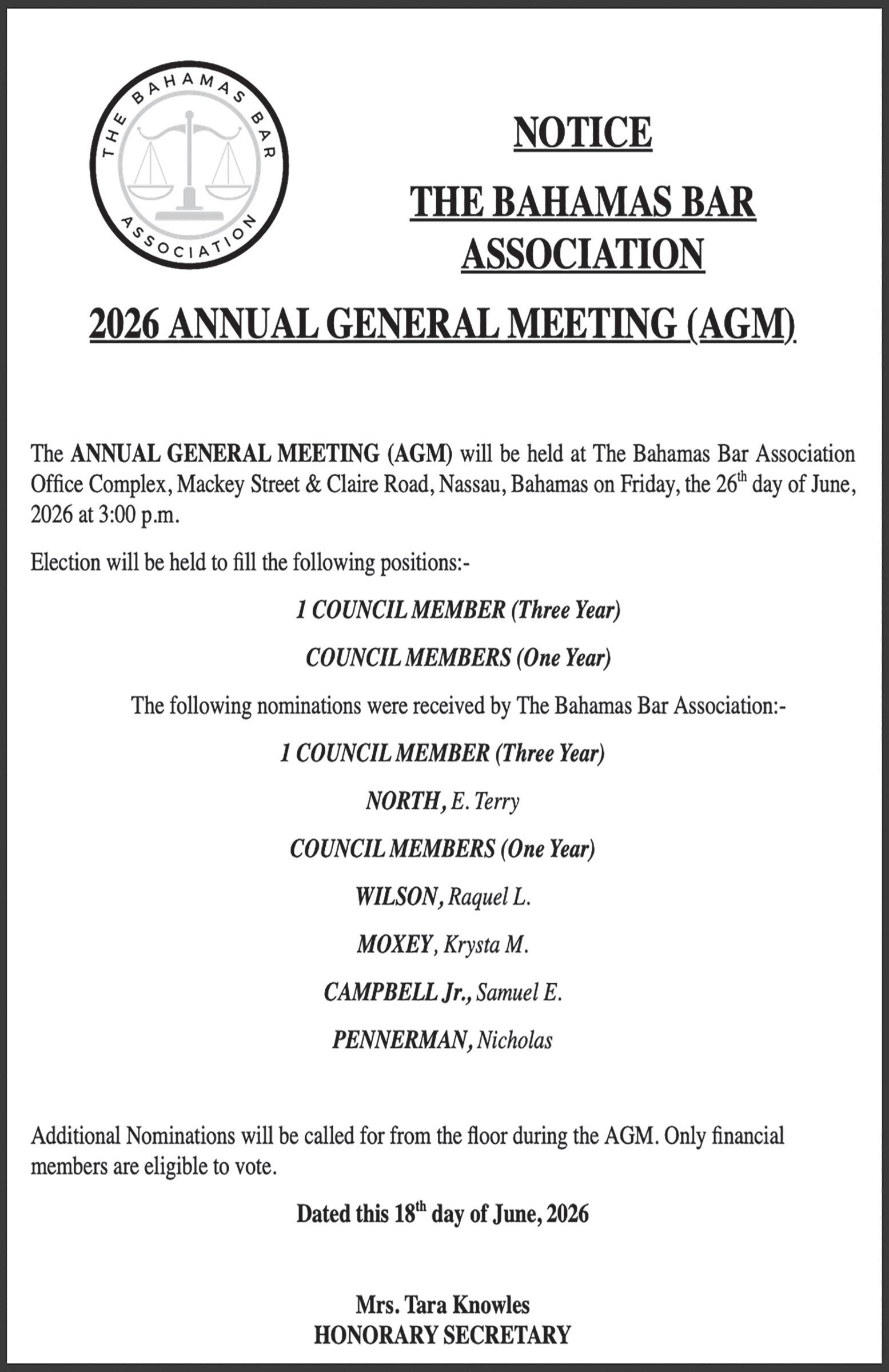
A prominent, squareshaped tower was built in the 1800s to guide shipping into Fresh Creek Andros. This structure gave the name to The Lighthouse Club, formed in the 1950s by Swedish industrialist and investor Dr. Axel Wenner-Gren. He hired a designer named Volk to develop and plan the club and Andros Town at Fresh Creek. Starting in 1952, he used local coral rock and sand with cement to create the concrete. He employed residents of Cokely Town, as well as the neighboring islands, to work on the project. In 1954, Andros Town opened and included a hotel and several private residences. The club operated until the early 1960s.
In 1916, the Lighthouse tender Carnarvon was tracked moving between Havana and Bahamian lighthouses, from Cay Say to Inagua and all the lights

barque named Rhea Sylva was also wrecked at Macaras Reef, southern Bahamas, having about a third of her cargo soaked. A Bahamian schooner named Bethel took the remaining dry cargo to Havana.
The New York Daily Herald of 1876 spoke of the brigantine Navasota under Captain Hooper being wrecked at Powels Cay Reef in Great Abaco in end May, with only a ffth of her cargo being saved. The brig Anna M. Knight, under Captain Drinkwater, was also wrecked not far away, at Cherokee Sound, with some cargo saved. The same paper detailed some wrecks in Bahamas for May 1866, including a schooner that grounded and was freed from Bimini Bank.
The schooner, Margaret Evans, under Captain Eliakim Studley Jr, went ashore at Manjack Cay, Abaco, but limped to Green Turtle Cay for repairs. A steamer named Bolivian under Captain Couch went ashore near Hole in the Wall and got free by throwing cargo overboard. Wreckers salvaged that cargo and sold at auction.
which needed them. After all, they even supplied St. Kitts and Sombrero
Light in the Caribbean. The Tribune reported in the fall of 1922 how visitors from a boat “bravely climbed
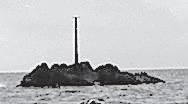
the winding stairs to the top” of a lighthouse, where “the Light Keeper showed
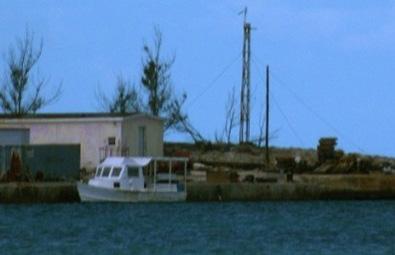
Man Island sits north of Harbour Island and astride the southern limit of Devil’s Backbone reef. There is a light there 59-feet high on a concrete base, shaped like a square pyramid. It’s white, solar powered, fashes a white light three times every 15 seconds, and it’s little known. The New York Daily Herald in September 1872 speaks of passengers of the sidewheel steamer Bienville rowing for three days in a lifeboat to James Cistern, Eleuthera, to escape a burning ship. Overall, fve boats made it to shore, with one of the boats overturned at night with nine persons drowned. Captain Maury and the American consul in Nassau sent messages along Eleuthera requesting that beacon fres - temporary lighthouses – be erected along the shore to help the missing lifeboats. Another boat landed in
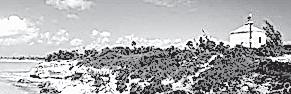
the huge oil tanks, burners, chimneys, and yards of wick.”
The Boston Globe of July 1872 reported that a ship named Adelaide Baker under Captain McLelland carried 2,477 bales of cotton when it grounded in Grand Bahama, freed itself, and made it to Nassau, where salvors were paid out the same day. A
ERIC Wiberg doesn’t remember exactly when his fascination with downed planes or doomed ships began, but he remembers the moment he made a promise to a friend to fnd the oldest plane crash in Bahamian history.
And he has been chasing that promise ever since.
If Wiberg’s name is familiar, so should his face and prose be – his column often appears opposite this one in The Tribune. He has written more words than can ft into a slim version of the dictionary. He’s authored more than 45 non-fction books on boats, planes and U-2 submarines.
Every crash, every sinking is fodder for his mind and material for his keyboard. Wiberg grew up in Nassau, son of the former Swedish Ambassador to The Bahamas Anders Wiberg. His restless spirit has taken him round the world on 10,000-mile treks. Even his education was extraordinary – fve universities followed by a stint in the corporate world and then discovering
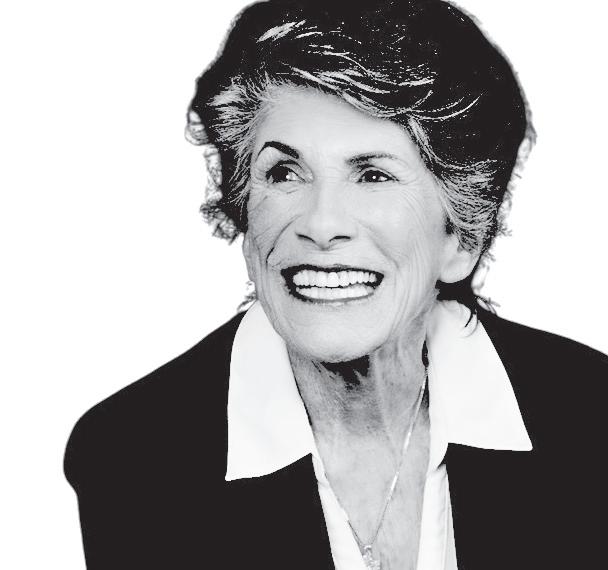

his true passion, researching the causes and calamities of voyages by air or sea that had to be explained by someone with a passion for closure.
But for all the triumphs and tragedies that he has covered and uncovered the roots and causes of, none has compared to the mission he has been on for his friend, and another historian he (and this columnist) truly admires – Paul Aranha.
It is the 1930 crash of PILOT RADIO.
“When Paul Aranha said ‘I am entrusting you to fnd this’, I knew I had to do it,” says Wiberg. If Wiberg documents the history of aviation, Aranha is the history – the man known as Island Airman, founder of Trans Islands Airways, an historian and author. For decades, Aranha has been the pilots’ pilot who helped shape the modern Bahamas by making travel by air accessible to and through the islands of The Bahamas.
So when the honorary statesman of aviation asked Wiberg, the researcher with a pendant for mysterious ends, to locate the historic plane that was believed to have crashed somewhere in the bushes of the Exumas, Wiberg took a deep breath, said yes, and hasn’t exhaled yet. Aranha’s fascination with PILOT RADIO triggered Wiberg’s commitment to a man who is a national icon and hero.
He began the search high on hope and short on cash. He needed sponsors, in kind or in funds. He found several. They funded trip after
Wiberg “was struck by the odd shape of a metal frame found in metal debris in a creek usually under water….”
It matched the hollow steel tubing, windows, panels and doorways of the missing plane. To ensure that they are not parts from something else – abandoned vehicles, construction materials, the pieces and parts have been sent to museums and experts in separate locations elsewhere for scientifc confrmation.
“What we believe we have is a corner of the window and about eight pieces of pipe, metal reservoir or engine part, small bits of metal,” said Wiberg.
“The engine was said to have been seen in about 2016 on its side in mangroves partly visible. In the meantime, we can thank backers and say with confdence that we have found the PILOT RADIO in 2026, 96 years after it became the oldest plane crash in Bahamian history.”
He needs to make one more expedition to explore


trip. There have been nearly 10 since the quest started. So what, I asked him, makes the search for PILOT RADIO so important? The Bahamas has seen its fair share of plane crashes. There are two or three silhouettes of planes visible from the surface of Lake Killarney right now, others near LPIA and at least one not far from almost every runway in the Family Islands, not to mention the famed wrecks of Norman’s Cay, Exuma or Spanish Wells, North Eleuthera.
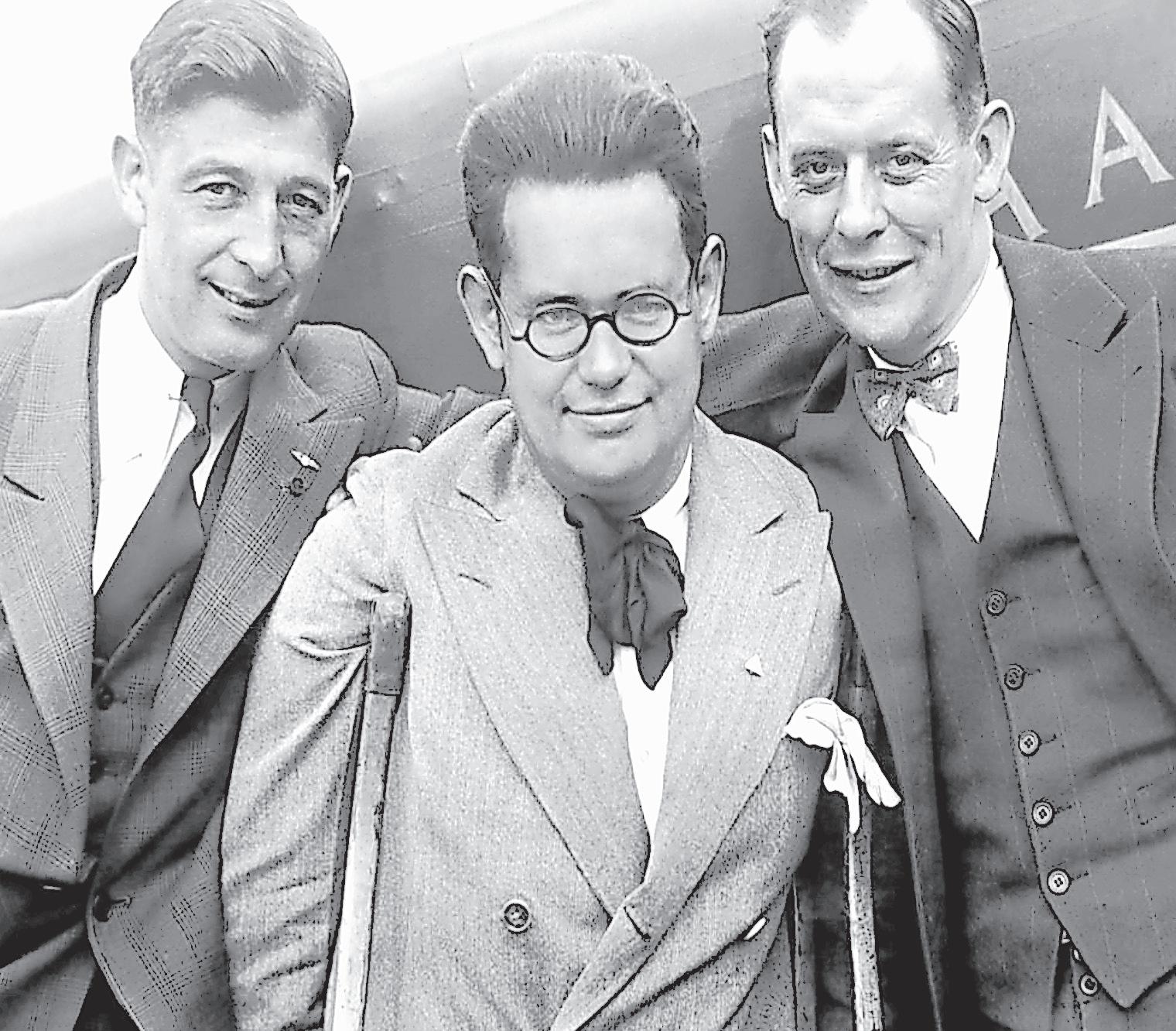
Here is the back story as told by Wiberg. PILOT RADIO was a company ahead of its time, launched by two men who created the frst radio designed specifcally for pilots to communicate with ships and with the ground. To promote the product,
they grabbed a third man, a cripple who was partly paralyzed, and few it across the globe.
“It was an extraordinary feat, an advertising campaign that took them 19,000 miles around the world,” says Wiberg. This was 1930, remember, almost 100 years ago. The plane had a Wright Bros. engine.
They were on the last leg of that journey.
“This was the victory lap. All they had to do was get a couple hundred miles to Miami. She left Puerto Rico and was fying on her way to Miami. They few over the Dominican Republic and Cuba and then passed over Ragged Island.”
That’s when they heard it – the sound of metal clanging. It was a metal strut. The banging got louder, the
plane started to shake. The plane was literally falling apart.
“The navigator tells the pilot what to do. He is on the radio now, communicating with a ship in the Exumas, shouting, ‘We are screwed. We have to land.’ Then you hear the ship to plane transmission: ’God bless you. May the spirits be with you.’”
It is 3:50 pm. They know if they overshoot Rolleville, they are truly, as the ship said, ‘screwed.’
They search frantically for a place to put the plane down and they fnd it in the bushes between the mangroves and sand west of Great Exuma at the boundary between Telfair & Clarke land.
Several weeks ago, on the most recent expedition
the muck and waters around his latest fnding searching for what he calls the Holy Grail, either a sparkplug from the engine or the engine itself.
“One day we will fnd the Wright Brothers engine,” he predicts.
These days he travels with his teenage son, Felix, and a very small troupe. They all but live in the bush, no frills. He is a man on a mission and he is nearly there, ready to deliver on a promise.
As for those three men aboard at the time of the crash, they ditched the plane, walked away disheartened and battered, but alive, only to return to New York where they spent the rest of their lives drinking themselves to death and suing one another.
By KEILE CAMPBELL Tribune Staff Reporter kcampbell@tribunemedia.net
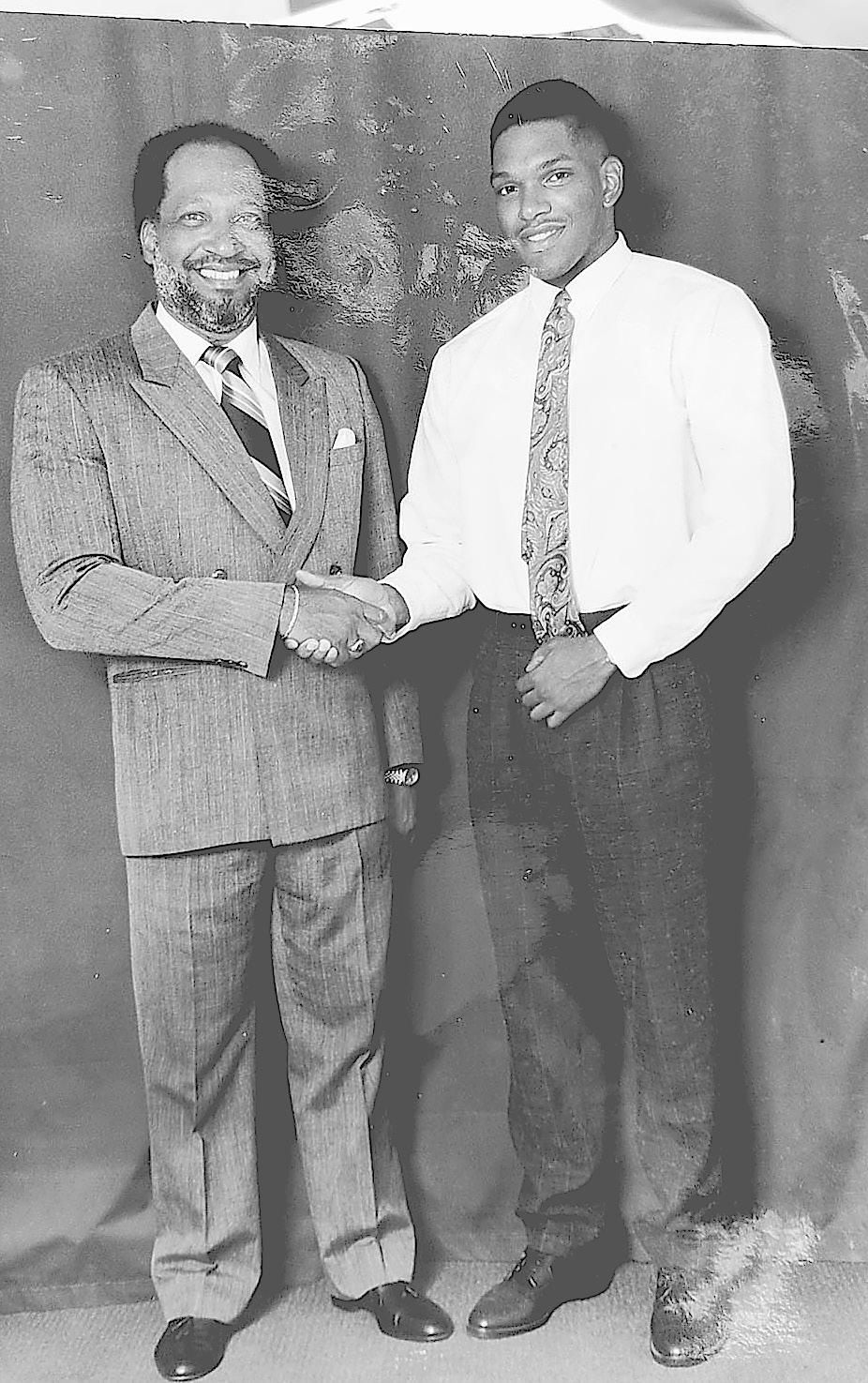
TALK show host and community advocate
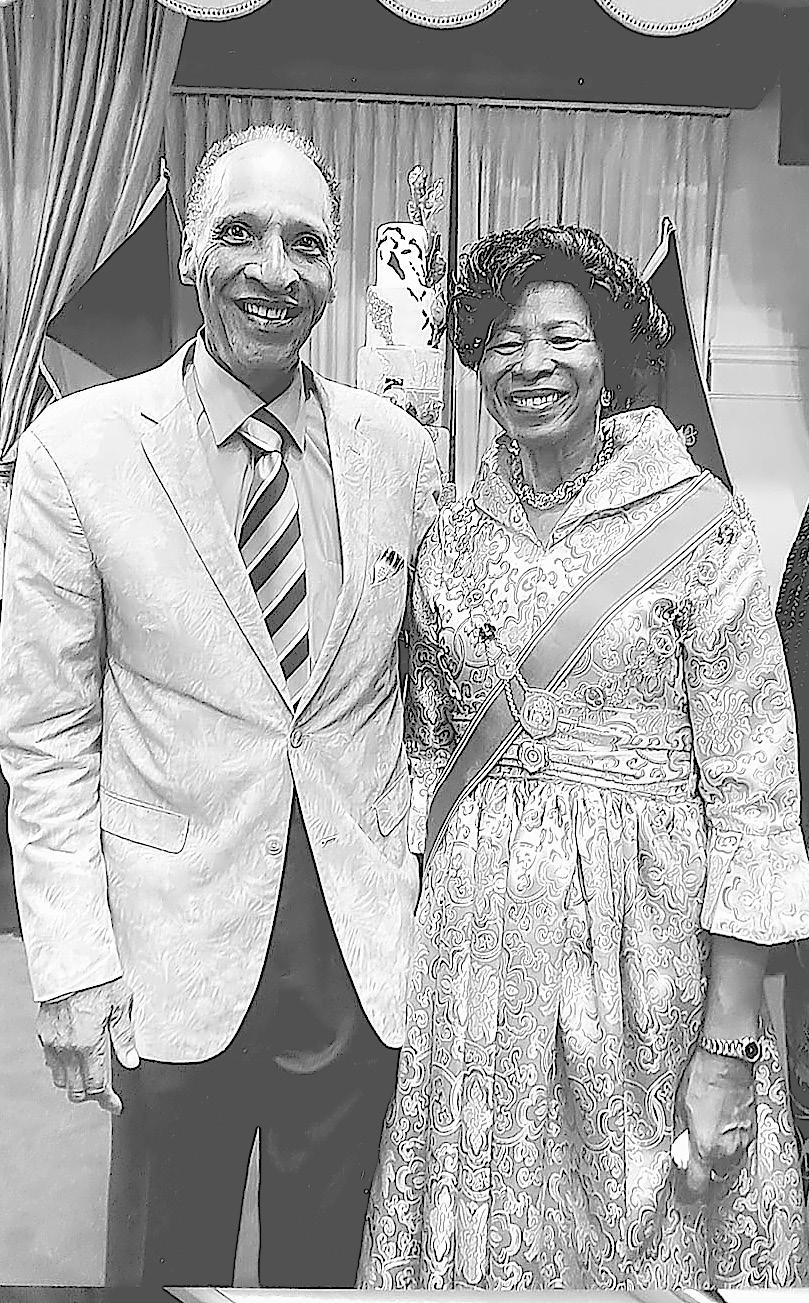
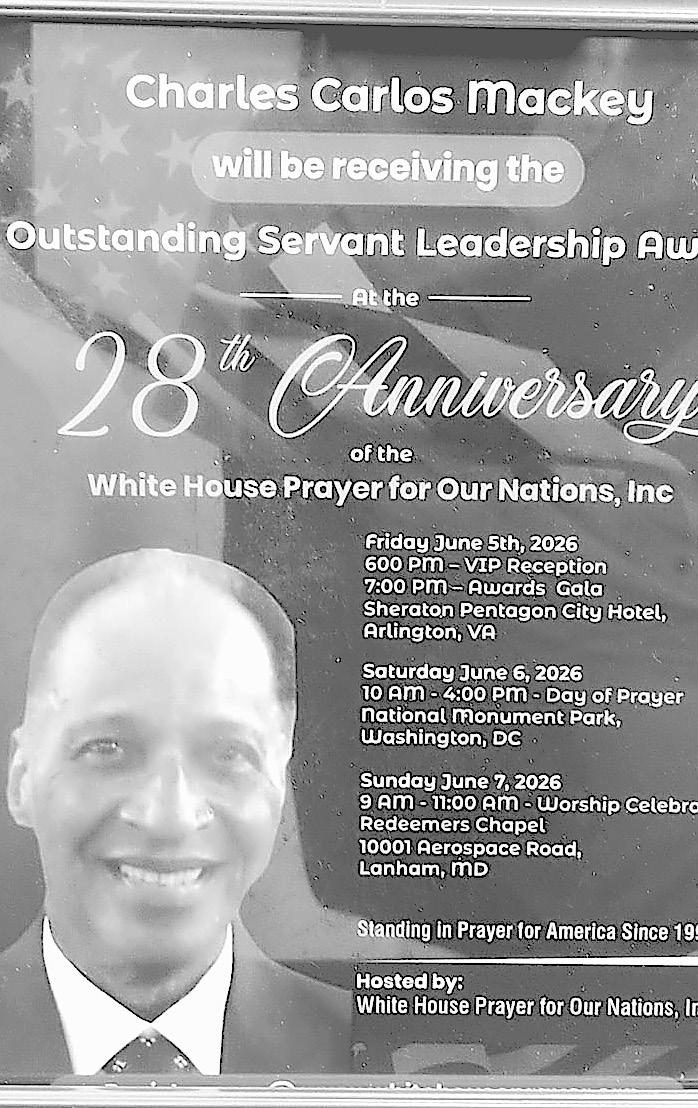
Charles Carlos Mackey has received the Outstanding Servant Leadership Award from White House Prayer for Our Nations, a private organisation, after decades of work in Bahamian sports, culture and youth development.
Mr Mackey received the award earlier this month in Arlington, Virginia, during the organisation’s 28th anniversary ceremony.
The longtime host of The Best of Sports World on ZNS told The Tribune that faith has guided his life, from his childhood in segregated Daytona Beach, Florida, to his decision to move to The Bahamas in 1984.
"I said to myself 'GOD, this is a grand slam. All the things I've done, I know that this one is the one you chose to do. It’s
this one I'm going out with you in frst class," Mr Mackey said. "I'm just following your footsteps, because you will always be there for me."
Mr Mackey, whose father was Bahamian and mother was from Georgia, said racism in the American South shaped him early. He recalled white men surrounding members of his church, shouting racial slurs and blocking them from leaving before a police lieutenant who knew his father escorted the group away.
"Big dogs that you see on TV with Dr King? I've been through that at six years old," Mr Mackey said.
Mr Mackey later attended Florida A&M University, where he played baseball and earned a bachelor’s degree in Physical Education and Health. He also played baseball in the Dominican Republic, Puerto Rico, Caracas and Venezuela
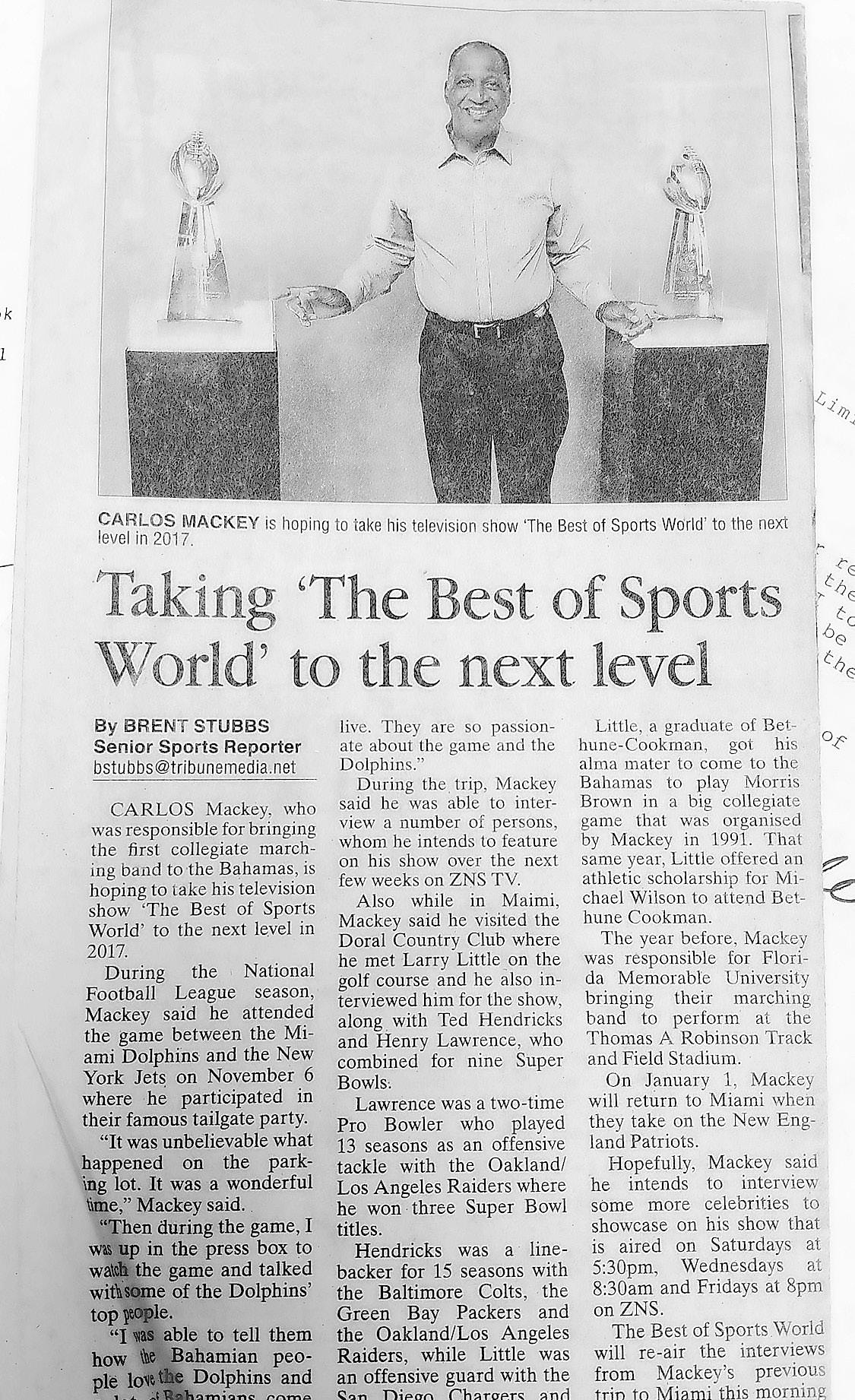
before earning a master’s degree in guidance counselling and education from Bowie State College.
After working in rehabilitation and counselling in the United States, Mr Mackey moved to New Providence in 1984, saying he felt called to serve young Bahamians.
Soon after arriving, he helped establish the Dean Granger Centre as a halfway house for men during the country’s drug crisis, drawing on his rehabilitation experience in the United States.
He later helped bring the FAMU Marching 100 to New Providence in 1990, an initiative he said led to three Bahamian students receiving full scholarships to the university. He also supported football clinics with historically black colleges and universities, track and feld initiatives and cultural exchange programmes. In 2010, he led a group

that approached then Youth, Sports and Culture Minister Charles Maynard with the idea for a united band, an efort that led to the Bahamas
All Star Band and helped Bahamian students secure music scholarships in the United States. Mr Mackey said his work has never centred on recognition. "If I cannot take The Bahamas to the world," he said. "I'm gonna bring the world to The Bahamas."
By PAVEL BAILEY Tribune Staff Reporter pbailey@tribunemedia.net
A MEDICAL report read into evidence yesterday indicated that a 14-year-old girl was admitted to the hospital after she was allegedly sexually assaulted by a bus driver in 2024. The Princess Margaret Hospital report was entered into evidence before Justice Jeannine Weech-Gomez in the trial of Tremiko Dean, 27, and Shaveney Taylor, 20. Dean faces two counts of unlawful sexual intercourse,
while Taylor faces one count of unlawful sexual intercourse.
Dean, a bus driver, is accused of having unlawful sexual intercourse with a 14-year-old girl twice between January 2, 2024, and March 10, 2024, in New Providence. Taylor is accused of having unlawful sexual intercourse with a 13-yearold girl on March 10, 2024.
One of the alleged assaults took place at one of the defendants’ residences, while another allegedly occurred in a bus parked at a gas station.
The report said the 14-year-old complainant was admitted to the hospital on March 11, 2024, and treated with antiretrovirals.
The complainant’s mother previously testifed that her daughter remained in the hospital for three months.
The mother also claimed that, to her knowledge, the child had a vaginal infection.
Shaneka Carey and Betty Wilson are prosecuting the case. Moses Bain and Keith Seymour represent the accused.
By PAVEL BAILEY Tribune Staff Reporter pbailey@tribunemedia.net
TWO men were convicted yesterday of the armed carjacking of a woman on Carmichael Road in 2022.
Andre Lightbourne, 31, and Luther Delancy, 22, were unanimously found guilty of armed robbery by a nine-person jury after nearly two hours of deliberation.
The men remained silent as Justice Neil Braithwaite told them they had been convicted of the ofence.
The pair, while armed with a frearm, robbed Sherika Gibson of a brown Nissan Cube and $48 in cash near Go Postal on Carmichael Road on July 15, 2022.
The stolen Nissan Cube belonged to Ms Gibson’s boyfriend.
The convicts pulled up beside Ms Gibson in a dark-coloured Mazda before the carjacking.
They later sold the vehicle to Michael McCartney, who identifed Lightbourne as the person who sold him the stolen
car. The defence requested probation reports for the convicts.
The men were allowed a moment with relatives in court before their remand to the Bahamas Department of Correctional Services.
The convicts return for their sentencing hearing on September 30. Miranda Adderley and Philip Hilton represented the accused. Cashena Thompson and Rashied Edgecombe appeared for the prosecution.
By PAVEL BAILEY Tribune Staff Reporter pbailey@tribunemedia.net
TWO men connected to a robbery in New Providence last week were placed on probation yesterday.
Paul Vilneus, 21, admitted robbing Rinardo Collie of $500 in cash and a black iPhone 12 on June 20.
Vilneus pleaded guilty to robbery and Clarke pleaded guilty to receiving before Senior Magistrate Algernon Allen Jr.
Both men accepted responsibility for their actions and asked the court for leniency. They were granted conditional discharges.
Shanton Clarke, 23, was found with the stolen phone later that day.
Vilneus was placed on probation for 24 months. If he breaches the terms, he faces 12 months in prison. Clarke was placed on probation for six months. If he breaches the terms, he faces six months in prison. Clarke returns to court for a report on January 19, 2027.
Sergeant 3004 Forbes prosecuted the case.
By PAVEL BAILEY Tribune Staff Reporter pbailey@tribunemedia.net
A MAN accused of stealing from an Eastern Road home and damaging its security system was granted bail yesterday. Prosecutors allege Gerrard Davis, 28, unlawfully entered David Peebles’ residence on Eastern Road at 3.45am on June 19 and stole his lawn mower and weed whacker. During the same incident, Davis allegedly damaged fve surveillance cameras, a WiFi antenna and three solar panels. The estimated damage was $730. Davis pleaded not guilty to unlawful entry, damage and stealing before Senior Magistrate Kendra Kelly Burrows. His bail was set at $3,500
with one or two sureties. Under the terms of his bail, Davis must be ftted with a monitoring device and sign in at the Wulf Road Police Station every Friday by 6pm. He was warned not to interfere with witnesses or risk having his bail revoked. Davis returns for trial on September 9. Sergeant Vernon Pyfrom prosecuted the case.
.
E. . never fails to surprise me!
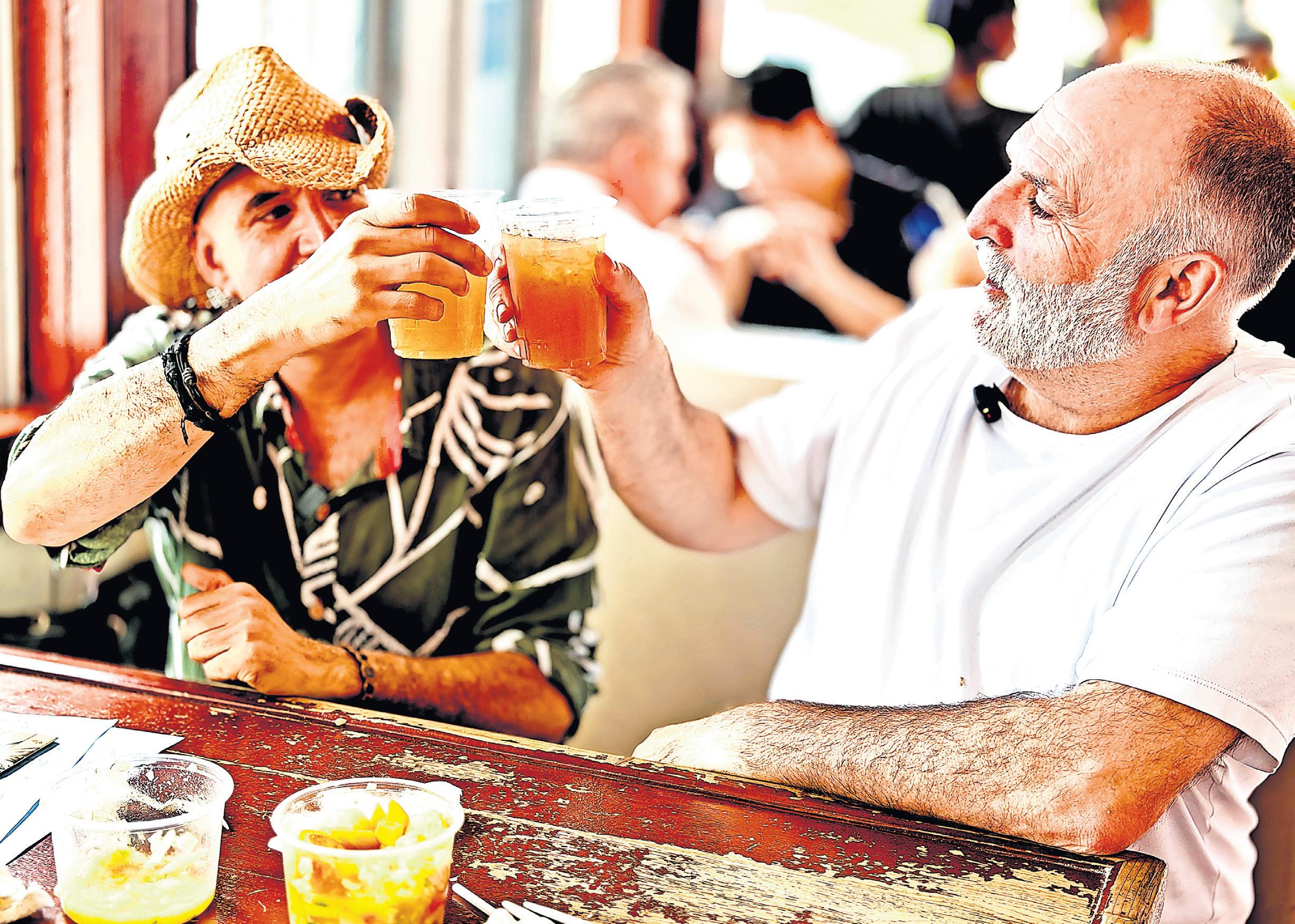
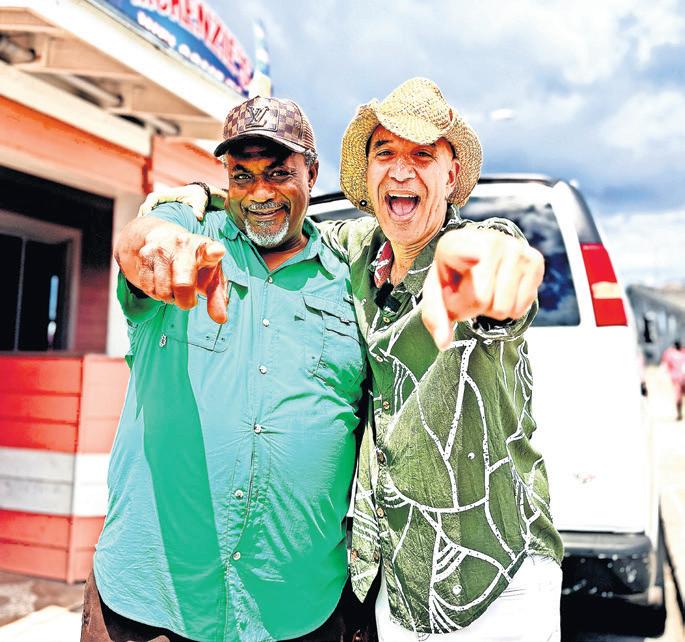
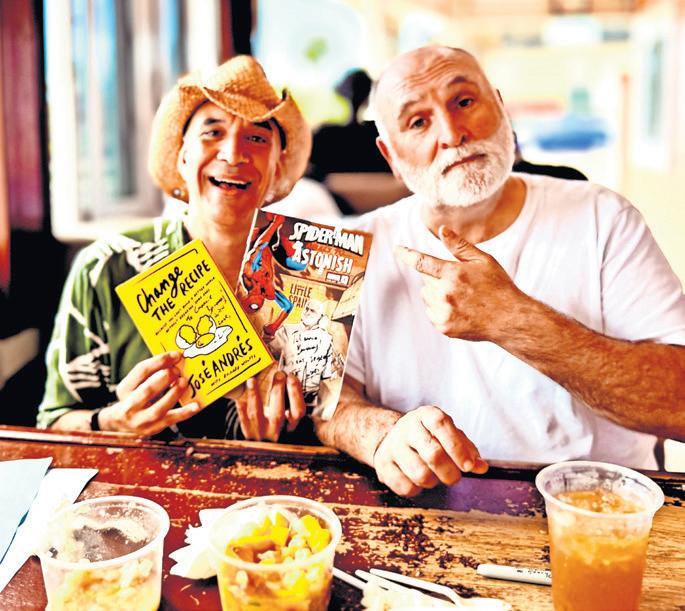
VERY year for the past three years during the Nassau Paradise Island Wine & Food Festival (NPIWFF), I get to hang with my favorite
As we devoured the various conch dishes,
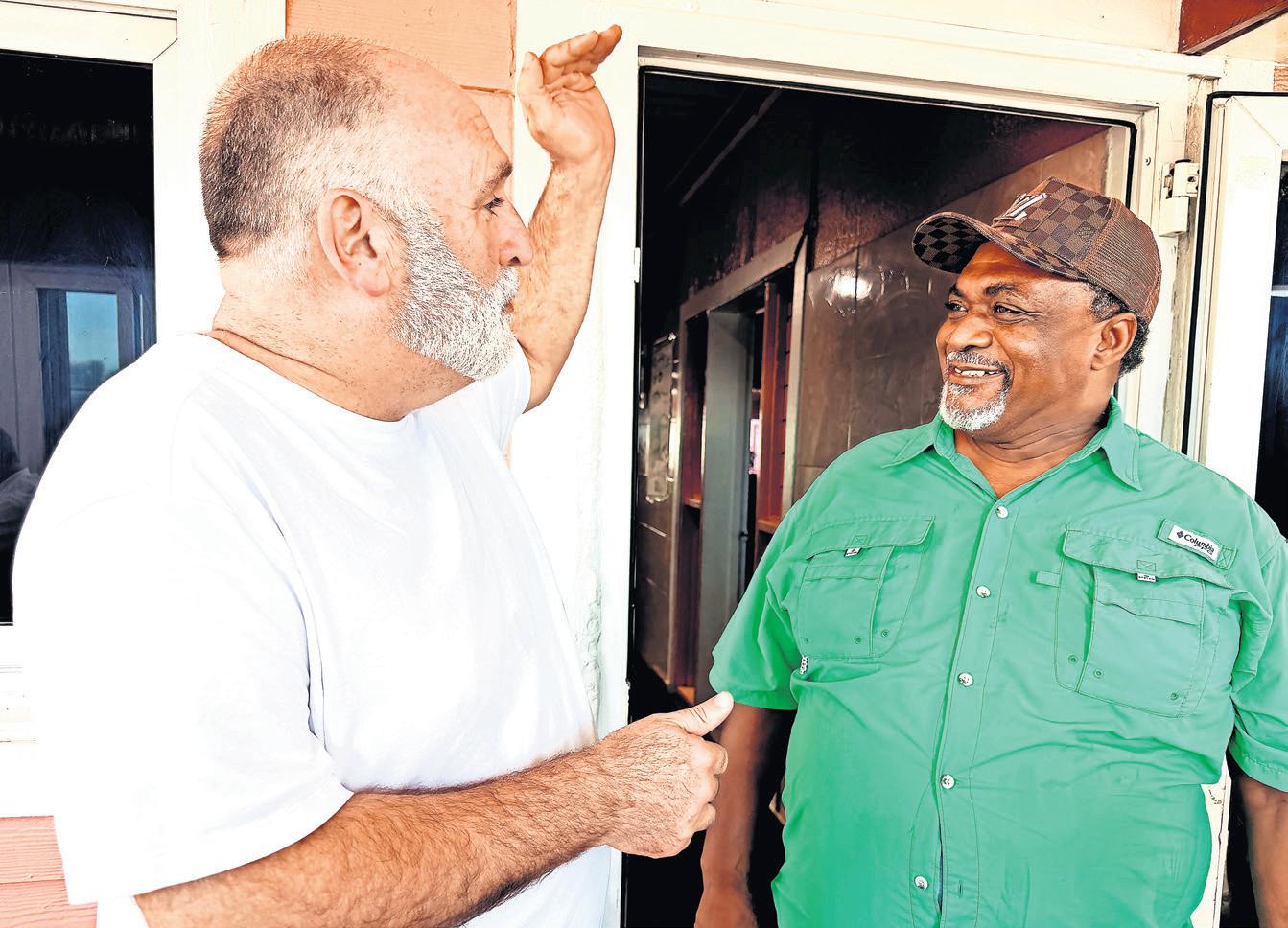
chef, José Andrés.
Not only is he a fantastic chef with a huge heart and an endless desire to help feed people in need around the world, but he never fails to surprise me with his wit and humor. I’m usually the funny one in an interview, but somehow he always ends up making me laugh.
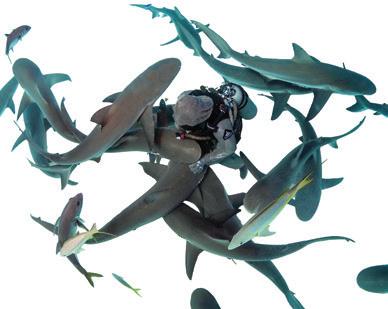
NPIWFF is a fve-day marathon of food, drinks, entertainment, and fun, billed as “the largest culinary extravaganza in Bahamian history.” Proceeds from the festival beneft the Atlantis Blue Project Foundation, which is dedicated to the preservation and conservation of coral reefs, sea turtles, sharks, manatees, cetaceans, and their Bahamian ecosystems. So while you’re fllin’ yer belly, you’re helping a worthy cause.
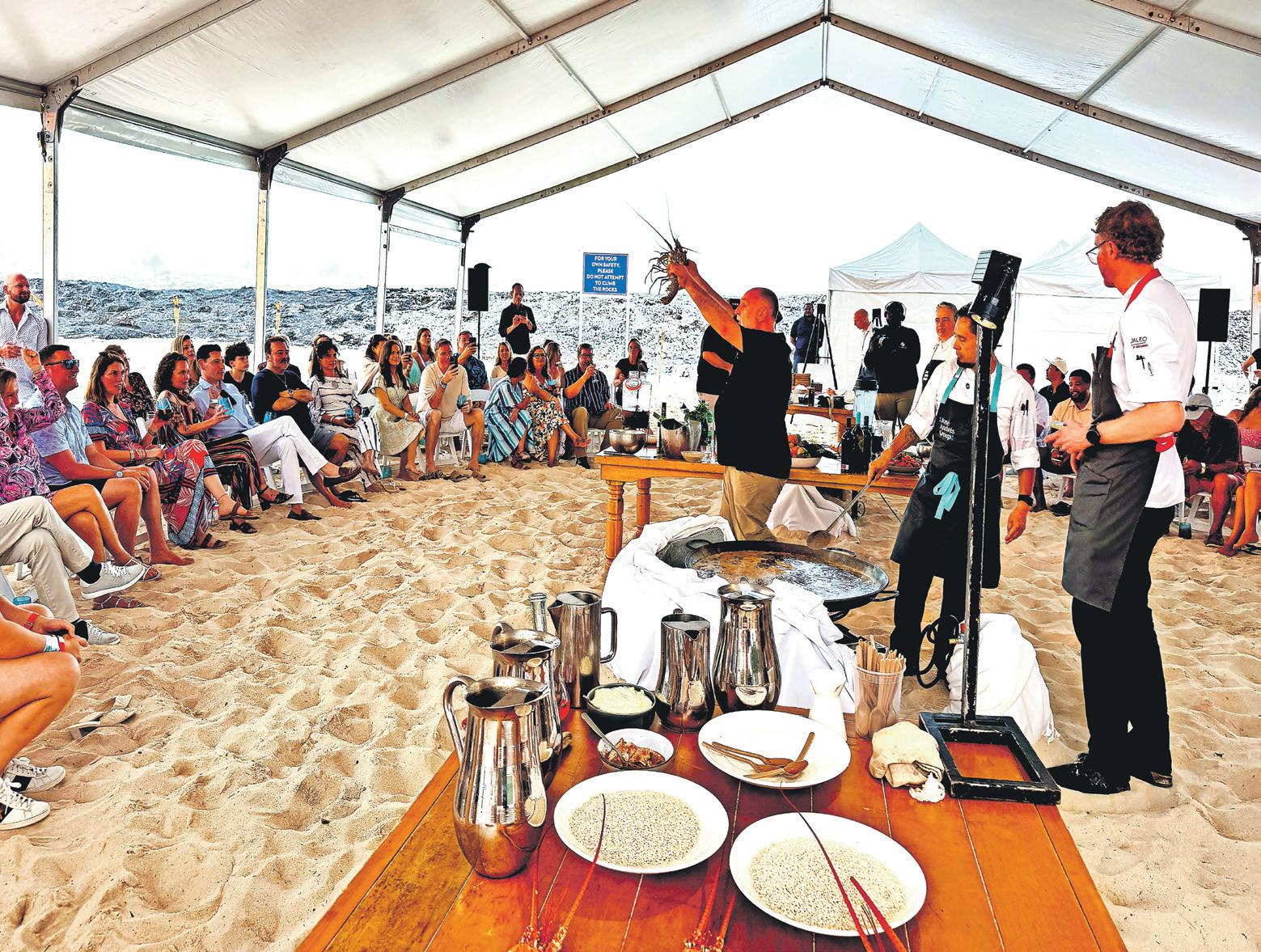
Earlier this year, when Chef Andrés landed in Nassau for the festival, he told me to meet him for lunch at McKenzie's Conch Shack under the bridge at Potters Cay Dock. When I asked why his frst stop had to be there, his answer was simple: “Because the food is always amazing, and I know it’s good because I always see locals here.”
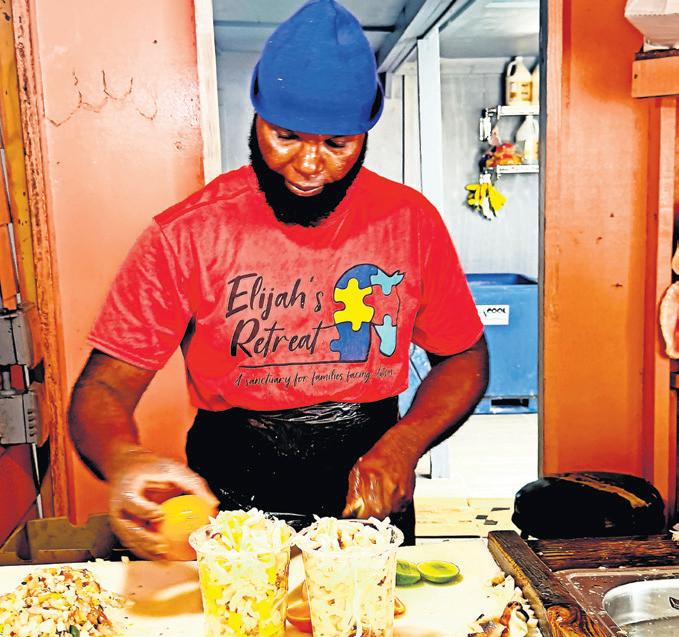
Naturally, he ordered a little bit of everything—conch fritters, traditional conch salad, tropical conch salad, cracked conch, cracked lobster, and even conch fried rice topped with fresh conch salad. He’s always creating something different, like the famous “liquid” conch fritters served at his restaurant, Fish by José Andrés, at Atlantis. Bahamians certainly let me have it when I featured them on my TV show, but I swear they’re amazing. Different from traditional conch fritters, yes—but delicious. And that’s what you get with Chef José Andrés: different and delicious.
Chef Andrés began tell ing me about his latest effort to help preserve the very conch he loves to eat.
“I feel guilty eating so much conch,” he told me, “but if everyone does what they need to do to have conch living and thriving freely in the wild, and we do it sustainably, then tourists like me and locals can enjoy it.”
That pas
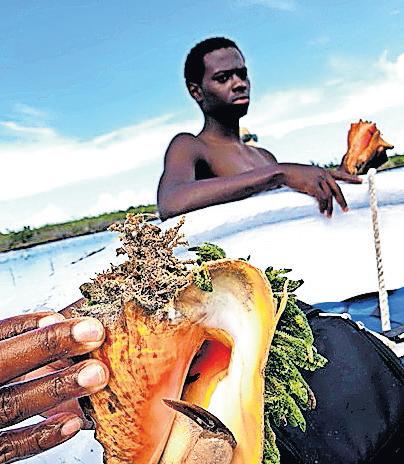
Chef Andrés is beloved throughout The Bahamas because of the selfess work of his nonproft organization, World Central Kitchen, which provides meals in the wake of natural disasters. When Grand Bahama and Abaco were devastated by Hurricane Dorian in 2019, Chef Andrés and his team were among the frst to arrive and provide meals to those in desperate need. Together, they served more than 1.5 million meals to residents affected by the storm.
will also engage approximately 10,000 Eleuthera residents with workforce training and education on sustainable fshing practices.
Chef José Andrés never ceases to amaze me. One minute we’re enjoying our usual playful banter as he quizzes me about which Bahama Islands I’ve visited—eventually fnding one I’ve never even heard of—and the next minute he has me thinking deeply about the future of one of our most iconic marine species.
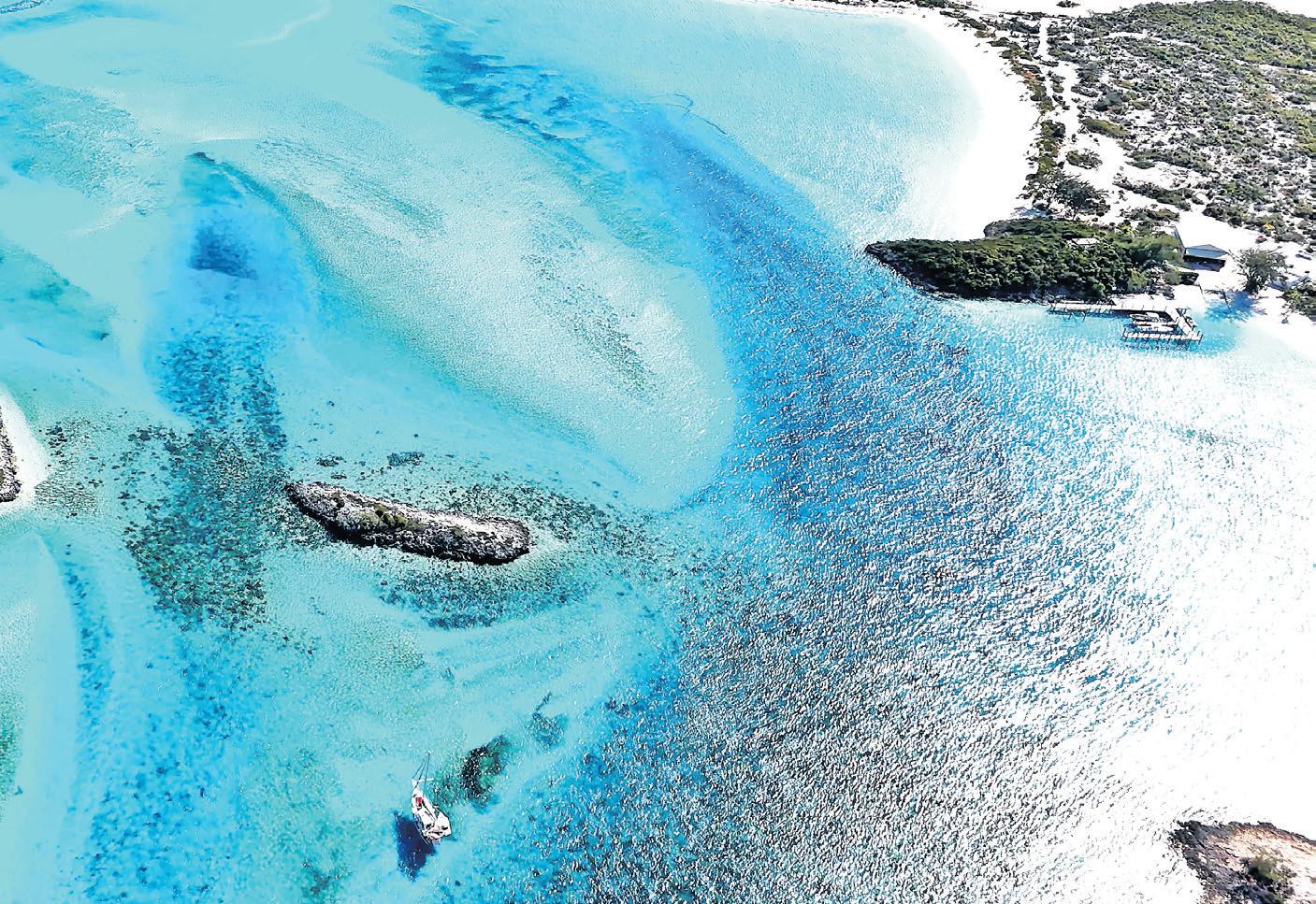
After learning more about the Queen Conch initiative, my mind immediately drifted to one of my favorite places in The Bahamas: the Sampson Cay Cut near Staniel Cay in Exuma. The seagrass there is pristine, and the drift diving and snorkeling are magical. Corals, conch, tropical fsh, nurse sharks, and even grouper thrive in its crystal-clear waters. It’s the kind of place that should never be overdeveloped, which is why organizations like the Save Exuma Alliance (SEA) are working hard to protect it for future generations.
sion is what inspired the Longer Tables Fund to award a grant to the Florida Atlantic University Harbor Branch Oceanographic Institute to develop a community-based aquaculture facility focused on conservation and restoration of the queen conch on Eleuthera.
Through a strategic partnership with The Island School and its Cape Eleuthera Institute, the Queen Conch Conservancy: A Community-Based Aquaculture Restoration Project aims to help ensure the long-term survival of the species.
The initiative will establish a Queen Conch Mobile Lab capable of raising up to 2,000 juvenile queen conch annually for conservation and restoration efforts. The program will also provide training and educational opportunities for staff and the more than 1,000 students who attend the school
My new mission is to get Chef Andrés and a Queen Conch Lab down there on Big Sampson Cay. In fact, I’d love to see one on every Bahamian Out Island. But that dream will have to wait for another day because, Chef Andrés suddenly starts dancing, and singing: “Junkanoo!”
And just like that, he surprises me once again.
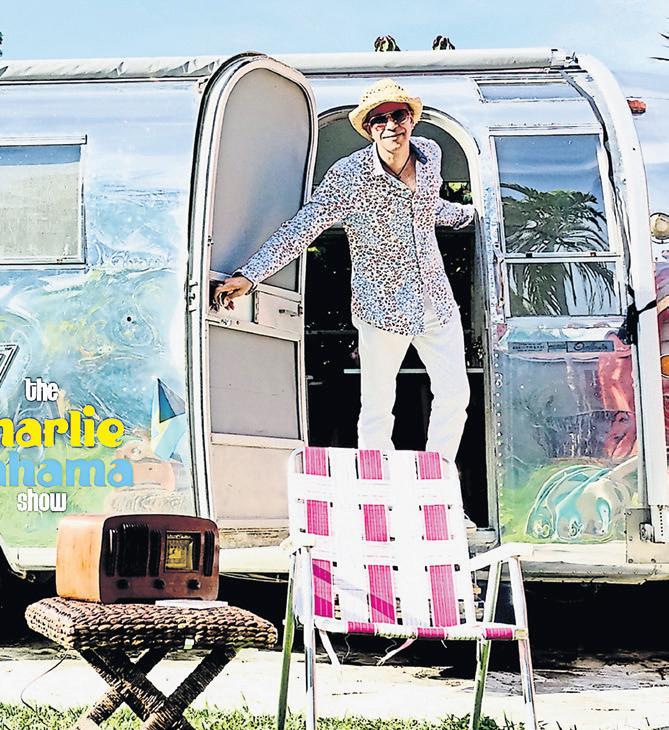
You can catch ‘The Charlie Bahama Show’ every week on Cable Bahamas, or subscribe to the Charlie Bahama YouTube Channel, and all social media platforms.