Thursday, June 25, 2026
Exempt e Bahamas’ sheries from
Trump urged
BY NEIL HARTNELL Tribune Business Editor nhartnell@tribunemedia.net
US seafood importers are urging the Trump administration to exempt Bahamian lobster and stone crab from punitive 12.5 percent tarifs that threaten to place up to $70m of this nation’s exports at “an economic disadvantage” against rivals with “weaker labour protections”.
Joshua Johnson, president and owner of West Palm Beach-based Johnson Seafood Company, yesterday warned the US Trade Representative’s Ofce that imposing trade taxes on Bahamian fsheries exports to the US will achieve the “exact opposite” of what its intended crackdown on forced labour practices is intended to achieve.
Describing the Bahamian fsheries industry as the very model of “sustainability and ethical labour practices” that the Trump administration is pushing
BY ANNELIA NIXON Tribune Business Reporter anixon@tribunemedia.net
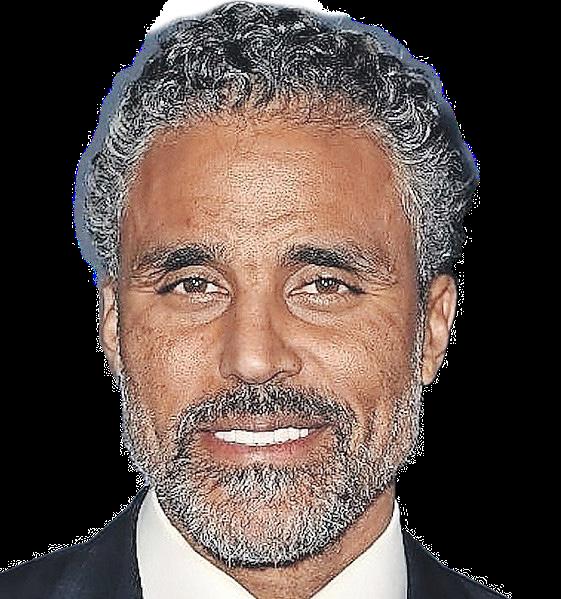
AN OPPOSITION senator, yesterday argued that the Government should formally recognise its largest fnancial burden by establishing a “Ministry of Debt”, adding that the 20262027 Budget prioritises balancing the books over delivering efective results that improve Bahamian lives.
Rick Fox, speaking during the Senate’s 20262027 Budget debate, described the Davis administration’s plan as “a disciplined budget” that projects a primary surplus of around $633m and an overall surplus of $223m, while placing the national debt on a declining trajectory.
However, he said: “Balancing the books is not the same as building a nation.” Mr Fox said the Budget succeeds as an accounting exercise but falls short as a blueprint for national
US importer hails this nation’s seafood sector as model for ‘ethical labour practices’
Levies on Bahamian lobster, stone crab not ‘legitimate’ in combating forced labour
Letter exposes ‘direct harm’ for multiple Bahamas sheries MSMEs, $70m exports
others to adopt, he wrote in a June 23, 2026, letter that “direct fnancial and economic harm” will be inficted on both coun tries if it makes good on its threatened tarif implementation.
Revealing that Johnson Seafood Company imports around 180,000 pounds of Bahamian fsheries products per season, Mr Johnson added that levying tarifs - a form of taxes imposed at the border on imports - will disrupt “mutually
benefcial long-term commercial relationships” that it has built with this nation’s suppliers including Boardwalk Seafood Distributors; Hook, Line and Sinker; G & L Seafood; Lightbourne Seafood. and Hurricane Seafood.

And, asserting that the US Trade Representative’s Ofce’s proposed policy “serves no legitimate forced labour enforcement purpose in the case of Bahamian seafood”, the fsheries importer sought to strengthen his argument by pointing out that US consumers will be harmed by higher-priced lobster and stone crab for which there are no domestic substitutes.
Mr Johnson’s letter confrms The Bahamas has American friends and partners who will advocate on its behalf to eliminate a major threat to this nation’s multi-million dollar goods
transformation, arguing that government spending remains focused on inputs rather than outcomes.
“This Budget gets the accounting right, but the ambition all wrong,” he said. “It is built to decline gracefully. It is not built to win.” Mr Fox repeatedly returned to what he described as an “excellence gap”, criticising the Budget for detailing how much government intends to spend while failing to specify what measurable improvements those expenditures are expected to produce.
BY NEIL HARTNELL Tribune Business Editor nhartnell@tribunemedia.net
THE Government’s fscal surplus for the key month of March 2026 shrank by 26.4 percent year-over-year, it was revealed yesterday, as revenues remained relatively fat while total spending jumped by $52.1m
compared to 2025 during the run-up to the May 12 general election.
The Ministry of Finance’s report for March, which together with April typically generates the fscal year’s biggest monthly surplus as it coincides with economic activity related to the peak winter tourism

Bahamian fund manager pledges Cayman wind-up ‘full co-operation’
BY NEIL HARTNELL Tribune Business Editor nhartnell@tribunemedia.net
A BAHAMIAN investment manager says its core business and longterm operations will not be impacted by court-supervised liquidation of its Cayman fund portfolio as it pledged “full-co-operation” to ensure an “orderly conclusion” to the winding-up.
Holdun Family Ofce, which is located at the Albany Financial Centre, told Tribune Business via a series of written replies to this newspaper’s questions that it had elected to place the Holt Funds into liquidation, which is being handled by the KPMG accounting frm, in a bid to give investors the beneft of “an independent, regulated, transparent process” for returning investor monies now overseen by
Holdun Family O$ce says it drove liquidation process ‘Strongest framework to protect’ Holt Funds investors Funds hit by ‘market dislocation’ at time of FTX’s failure
the Grand Court of the Cayman Islands. The winding-up, which emerged when the KPMG liquidators sought Chapter 15 recognition in the US from the Delaware Bankruptcy Court, was said to have been sparked by fallout from the COVID-19 pandemic that resulted in “market dislocation” that occurred in late 2022 and
National Trust faces $150m funding gap
BY FAY SIMMONS Tribune Business Reporter jsimmons@tribunemedia.net
THE Bahamas National Trust (BNT) faces an annual $150m funding gap over what is needed to fully manage this nation’s marine protected areas (MPAs) and national parks, it was revealed yesterday.
Lakeisha Anderson-Rolle, the Bahamas National Trust’s executive director, said this nation requires approximately $200m annually to properly manage these assets
but existing funding sources remain insufcient despite new conservation fnancing initiatives such as the $125m forecast to be generated by the Bahamas Debt Conversion Project "If you look at the protected area system holistically, it would cost about $200m to manage, and this is not inclusive of only the Bahamas National Trust sites under our portfolio but the entire network," she said. The Bahamas National Trust manages 33 national


DONALD TRUMP

An empowered workforce will attract the best
There is a lot of talk about the unique challenges today’s corporate leaders face. This involves, for example, how to provide professional leadership to remote teams; how to use technology to keep stafd engaged; how to cope with the sudden loss of good employees due to their resignation, and so many more.
In addition to the above, one leadership challenge that has been around for decades - and which continues to be relevant - is creating a culture of empowerment in a company.
This challenge can be difcult and complex to implement, but the benefts are enormous. Most successful companies have found that an empowered workforce generates positive results. Nevertheless, while most employees genuinely desire to be actively involved in their jobs, people are still drawn to companies that embody an empowerment culture.
Misunderstandings about Empowerment
When making the shift to empowerment, corporate executives often battle against misconceptions surrounding how this can be efectively implemented. This applies especially to

managers, who fear they may have to relinquish all control and authority. But it is a refreshing perspective to remember that a culture of empowerment requires greater responsiveness, especially from optimistic leaders.
The three keys to workplace empowerment
Shared information: Ofering employees obligatory information
A culture of empowerment requires greater accountability from a traditional hierarchical


Disease strikes 80% of Bahamian reefs
BY FAY SIMMONS Tribune Business Reporter jsimmons@tribunemedia.net
SCIENTISTS yesterday estimated that at least 80 percent of Bahamian reefs have been afected by stony coral tissue loss disease, with some sites experiencing mortality rates exceeding 90 percent.
Craig Dahlgren, executive director of the Perry Institute for Marine Science (PIMS), said the disease has spread throughout much of the archipelago since it was frst identifed in Bahamian waters.
"We're estimating that at least 80 percent, if not more, of Bahamian reefs have been afected by stony coral tissue loss disease," he said. "It's spread almost throughout the entire Bahamas." While a small number of reefs have not yet been impacted, Mr Dahlgren said those locations are becoming increasingly rare. "There are some reefs where it hasn't quite reached yet, but those are becoming fewer and farther between with every day,” he added. Mr Dahlgren said the disease is particularly devastating because it afects many of the coral species responsible for building
and maintaining reef structures. "It afects so many of the reef-building species, spreads so fast, kills so rapidly and so completely," he said.
Researchers have documented severe losses at some monitored sites.
“We went from 100 colonies alive to 11 colonies alive in 13 months," said Mr Dahlgren. "Over 90 percent mortality rates in that time." He warned that some species may face serious long-term survival challenges.
"We might be seeing an extinction event with some of these corals,” Mr Dahlgren said, pointing
Record healthcare spend must tackle system gaps
BY ANNELIA NIXON Tribune Business Reporter
anixon@tribunemedia.net
THE Government’s record $469m healthcare spending in the upcoming 2026-2027 fscal year will only translate into better patient care and outcomes if the funding addresses staf shortages, infrastructure gaps and access to care, a leading doctor is warning.
Dr Gemma Rolle, owner of Bahamas Digestive Health and Wellness, and former president of the Medical Association of the Bahamas (MAB), said the increased healthcare budget creates signifcant opportunities for system-wide improvements but warned
that the real measure of success will be how the funds are spent. “Having $469m allocated, a record allocation for healthcare, it sounds exciting. It sounds promising,”
Dr Rolle said. “As a physician, what we will be paying attention to is how these funds are allocated.” She said key questions remain over the balance between preventive and hospital-based care, funding for the National Health Insurance (NHI) programme, physician reimbursement, infrastructure upgrades, operational costs medication supplies and medical equipment.
“How will this translate to how we will deliver healthcare? How are the
Environmental chief: Reefs key to Bahamas’ way of
BY FAY SIMMONS Tribune Business Reporter
jsimmons@tribunemedia.net
THE Department of Environmental Planning and Protection (DEPP)) director yesterday said reefs remain central to The Bahamas’ environmental and economic well-being.
"Corals in The Bahamas support biodiversity, coastal protection, fsheries, tourism and cultural heritage," Dr Rhianna Neely-Murphy told a Miami workshop staged by the MSC Foundation. "They underpin our economy and our way of life." She added that coral reefs play an important role in supporting the country's tourism product, including areas frequented by cruise passengers and stopover visitors.
Mrs Neely-Murphy said DEPP's role is to ensure economic development and environmental protection move forward together.
"The Department's primary role is to ensure developments are not only economically viable but
life
environmentally sustainable," she said.
The agency reviews development proposals, monitors environmental compliance and works with developers to mitigate impacts on sensitive ecosystems, including coral reefs and other marine habitats.
Mrs Neely-Murphy said the Department has adopted a policy objective of ensuring there is "no net loss" of critical species in The Bahamas. "We have taken the mandate that there is to be no net loss of critical species in the country," she saddedaid.
Matthew McKinnon, chairman of the MSC Foundation advisory board, said the workshop was convened because of the growing threat posed by stony coral tissue loss disease in Bahamian waters.
"Florida is ground zero for stony coral tissue loss disease, but The Bahamas is very much the fall-out zone," he said. "There has been an incredible spread of this disease across The Bahamas with really significant impact."
funds being allocated?” Dr Rolle asked. The healthcare allocation became one of the largest spending priorities in thBudget, with Simon Wilson, the Ministry of Finance’s fnancial secretary, revealing that the Government’s projected $223m fscal surplus would have been signifcantly larger had it not chosen to increase investment in healthcare.
Mr Wilson said the Government expects to record a surplus of approximately $120m for the 2025-2026 fscal year ending next week, rising to a projected $330m in the upcoming fscal year and increasing further thereafter.
Dr Rolle said the spending should be viewed as an
Mr McKinnon said the event was intended to strengthen co-operation between scientists, government agencies and conservation organisations working on the issue.
"We pulled this workshop together to try and look at the interplay between Florida and The Bahamas, to really zero in on the situation in The Bahamas, which is really quite serious," he said.
Participants discussed coral rescue eforts, treatment programmes, reef monitoring and restoration initiatives currently underway throughout The Bahamas.
David Smith, chief scientifc adviser to the MSC Foundation, said organisations such as the global shipping giant play an important role in helping mobilise resources and expertise needed to address complex environmental challenges.
"Foundations play an absolute pivotal role in bringing the resources and expertise required to answer such complex questions," he said. Mr Smith described coral reef decline as an urgent global issue,and said collaboration between governments, scientists, conservation organisations and funding partners would be essential to protecting reefs for future generations.

specifcally to pillar coral, which has sufered signifcant losses across The Bahamas.
"I personally marked about 250 colonies throughout The Bahamas before the disease came, and now I go back and only about 15 of those are alive,” he added.
Despite the scale of the outbreak, researchers continue to pursue treatment programmes, coral rescue eforts and restoration initiatives designed to preserve genetic diversity and support future recovery.
Mr Dahlgren said Bahamian citizens can also play a role in protecting reefs
investment rather than a cost. “We have to remember and hold fast to the fact that the health of the nation is the wealth of the nation,” she said. “So maintaining our people’s health, we would have economic stability and increase the workforce and maintain a workforce. So it is an investment that the country is making.”
Dr Rolle pointed to fndings from the recent Bahamas National Health Strategy consultation process, which identifed shorter waiting times, and improved access to specialists, emergency care, medications, surgeries and diagnostic imaging among the public’s top priorities.
“If utilising the surplus would answer all of those concerns, then I think it’s a great thing to utilise that surplus and focus on investing in the health of the nation,” she added.
Dr Rolle said achieving the Budget’s revenue and economic projections
Experts from The Bahamas, Florida and across the region convened at MSC Foundation headquarters in Miami to discuss the spread of stony coral tissue loss disease and the importance
by supporting conservation eforts and practicing responsible behaviour in marine environments.
Lakeisha Anderson-Rolle, the Bahamas National Trust executive director, said public awareness and community involvement remain important components of reef conservation. She added that coral reefs provide benefts that extend well beyond the marine environment, supporting fsheries, tourism and coastal communities throughout The Bahamas.
Ms Anderson-Rolle said individuals can contribute by supporting conservation
could help address several long-standing healthcare challenges, including infrastructure upgrades and workforce retention.
“If the opportunities are met, it’s great. We can improve on our infrastructure, we can recruit and maintain or retain healthcare professionals, physicians, nurses, allied healthcare workers, particularly in the public space,” Dr Rolle said. “We can ensure that perhaps NHI is sustainable if we meet them.”
However, she warned that falling short of those projections could place pressure on critical services and capital projects. “If we miss these marks, are we still going to meet our goals for improvements in the infrastructure to ensure that we have enough medications to give to patients in the hospitals and not have to ration?” Dr Rolle challenged.
“Will we be able to provide life-sustaining measures for patients,
of protecting reefs that support tourism, fsheries and coastal communities.
The MSC Foundation's ‘Partnering for resilient reefs’ workshop brought together government
initiatives, following responsible boating and diving practices, and helping reduce additional pressures on already-stressed reef systems.
While scientists acknowledge the challenges ahead, both Mr Dahlgren and Ms Anderson-Rolle stressed the importance of continued conservation eforts, warning that the consequences of reef loss could be felt for years to come. "The problems being created by the disease now, we might not realise their full impact for another fve to 10 years," Mr Dahlgren said.
provide procedures and essential life-sustaining surgical interventions?” Her comments came as the Government advances several major healthcare projects, including the $268m New Providence hospital project, the expansion of healthcare facilities in Freeport and the acquisition of Harbourside Hospital.
While acknowledging the potential benefts of modern facilities, Dr Rolle questioned whether the healthcare system currently has sufcient personnel and resources to fully utilise them.
“In theory it sounds and seems really great where we’re having a state-of-theart facility constructed, the advancement in Freeport, the Harbourside hospital,” she said. “The concern amongst many physicians is how will this be flled with staf with our staf shortages that we have at the
CARE - See Page B9
ofcials, researchers, conservation organisations and private sector partners to discuss the disease's impact on Bahamian reefs and identify opportunities for greater collaboration.

Tourism industry chiefs meet minister, o
cials
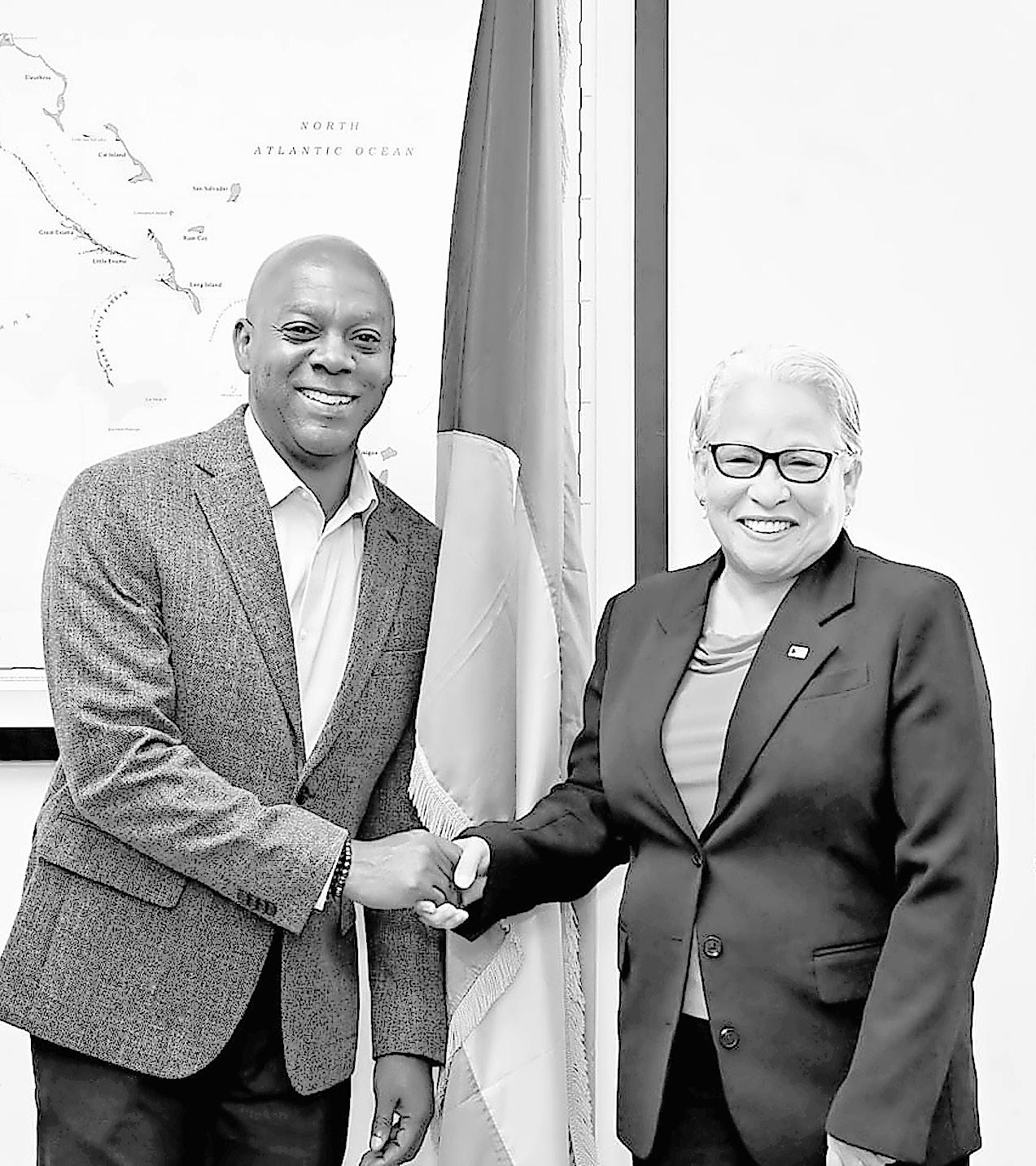
THE BAHAMAS Hotel and Tourism Association (BHTA), headed by Jackson Weech, its president, and his executive team met with Glenys Hanna Martin, minister of tourism, and officials including Randy Rolle, parliamentary secretar; Latia Duncombe, the ministry’s director-general; and Dr Keneth Romer, deputy director general and director of aviation. Photos:Kemuel Stubbs/BIS
Fiscal upgrades drive investor con dence
BY ANNELIA NIXON Tribune Business Reporter anixon@tribunemedia.net
THE Bahamas’ improving fscal position, declining debt burden and growing revenue base are strengthening investor confdence and creating new opportunities for longterm investment, fnancial executives and government ofcials are both asserting.
David Slatter, vice-president and group head of investments at RF Group of Companies, told the Financial Voice seminar on the 2026-2027 Budget that investors are paying close attention to The Bahamas’ progress since the COVID19 pandemic.
“If you look at the progress made from a fscal standpoint since COVID, with the debt-to-GDP ratio coming down from just under 100 percent to the

low 70 percents, that’s a very good sign,” Mr Slatter said.
“The private sector, the investment community is paying close attention to the continued progress from a fscal standpoint, and we appreciate the eforts of the Government.”
Mr Slatter argued that continued fscal discipline could pave the way for additional sovereign credit rating upgrades and lower fnancing costs, encouraging greater levels of private investment.
“It builds confdence,” he said. “It doesn’t mean we’re there yet, but it does mean that the private sector expects perhaps further credit upgrades from the rating agencies and, hopefully, a lower expected internal rate of return on investment,” he said.
Kriston Moore, portfolio manager at CG Atlantic Pensions, said long-term investors are less focused on a single year’s surplus and more interested in the broader fscal trajectory.
“What stands out to me is really the overall direction we’re heading in,” Mr Moore said. “We had a rough few years coming out of the pandemic and following Hurricane Dorian. I think the trajectory since then has been very positive.
“It’s one thing to have a surplus in one year, but can we maintain that over the long term? Can we get to the point where our credit profle improves and is sustainable?”
Both investment executives highlighted the importance of building fscal bufers in a country highly exposed to hurricanes and external economic shocks. Mr Moore said stronger government fnances improve not only economic resilience but also investor sentiment.
“We already acknowledge that we’re in a very high-risk zone,” he said. “We think about the potential hurricanes and external shocks that we’re exposed to, so building some level of fscal space and ability to absorb those shocks does a lot - not just for the economy, but for investor confdence.”
Mr Moore added that government debt has become signifcantly more attractive to investors compared to the pandemic period. “In today’s world, as an investor, you’re much more willing to extend out into the long-term,” he said.
A key factor driving that confdence is the
Government’s evolving debt management strategy. Mr Moore argued that while public discussion often centres on the size of government debt, investors are increasingly focused on how that debt is structured.
“They’ve been able to refnance at lower rates,” he said. “They’ve switched over to sourcing more of their borrowing from the domestic side as opposed to international. They’ve been able to extend maturities.
Things like that we have to pay attention to outside of just looking at the debt number going up.”
Mr Slatter echoed that view, saying markets have already begun recognising The Bahamas’ fscal improvements. “I think investors look at what’s happening as defnitely moving in the right direction; not quite there yet, but making steady progress,” he said.
The RF Group of Companies investment chief suggested that Bahamian sovereign debt continues to ofer attractive yields relative to regional peers, and that narrowing risk premiums could create investment opportunities.
The Government’s eforts to generate sustained surpluses are also being supported by stronger revenue performance, particularly from tourism and the newly-introduced Domestic Minimum Top-Up Tax that imposes a 15 percent corporate income tax on qualifying entities.
Simon Wilson, the Ministry of Finance’s fnancial secretary, described the DMTT, which applies to large foreign-owned multinational companies operating in The Bahamas which are part of groups with an annual turnover exceeding 750m euros, as an important contributor to future revenue growth.
“We expect around $120 million” from the tax in the current fscal year, Mr Wilson said. “Next fscal year, we’re projecting $330m, and going forward it will continue to grow.”
However, he stressed that tourism will remain the dominant driver of revenue growth and the country’s path toward investment-grade status. “The most signifcant driver is going to be tourism and tourism activity,” Mr Wilson said. “We believe tourism is going to drive us towards investment grade.”
Mr Wilson voiced confdence that revenue
projections are achievable, citing rapid growth in cruise tourism and increasing visitor spending.
“You look at cruise arrivals, double-digit growth, 20 percent yearover-year and growing at a very rapid pace,” he said.
Highlighting recent tourism performance, Mr Wilson noted that Nassau Cruise Port recently recorded its busiest day ever, welcoming more than 33,000 visitors. Mr Moore said investors are paying close attention not only to revenue growth but also to the quality of those revenues.
“We’re also looking at the quality of the revenues,” he said. “The quality of revenues contributes to the overall fscal stability, and I think investors look at that.” While acknowledging that tourism remains the country’s primary economic engine, it was argued that diversifcation remains essential for long-term stability.
“Tourism is not going anywhere,” Mr Moore said. “We will always be an economy that’s probably primarily driven by tourism. That’s the primary growth engine.”
However, he pointed to opportunities in energy reform, fnancial services, infrastructure development and geographic expansion of tourism activity throughout the Family Islands. “I think overall the diversifcation is important, but I think we can fnd diferent growth engines even within tourism for foreign direct investment,” Mr Moore said.
Mr Slatter identifed fnancial services, renewable energy, infrastructure projects and digital economy initiatives as sectors with strong growth potential. He also highlighted opportunities in solar energy development, public-private partnerships and government modernisation initiatives.
The discussion also turned to ensuring Bahamians beneft more directly from foreign investment. Mr Wilson said the Government intends to review and strengthen the National Investment Policy to increase opportunities for Bahamian businesses, workers and investors.
“We have to be stronger in reserving sectors for Bahamians and encouraging foreign direct investors to utilise Bahamian products, Bahamian labour, Bahamian expertise and also Bahamian capital,” he said.
Mr Wilson argued that institutional investors should have greater opportunities to participate in major developments alongside foreign investors. “Bahamian capital should be able to be utilised to make that investment,” he said. “Give local investors more opportunities; give institutional investors more opportunities.”

Top nancial o cial labels a ordable home woe ‘crisis’
BY ANNELIA NIXON Tribune Business Reporter anixon@tribunemedia.net
THE Government’s latest home ownership incentives may improve access to mortgages and reduce transaction costs for frst-time buyers, but there is a consensus that The Bahamas’ afordability woes cannot be solved without a signifcant increase in housing supply.
During the Financial Voice forum on the 20262027 Budget, panellists welcomed expanded VAT relief and concessions for frst-time homeowners but warned that tax incentives alone will not address the structural factors driving housing costs higher.
Kriston Moore, portfolio manager at CG Atlantic Pensions, said the Government’s expanded exemptions will provide some assistance but afordability challenges wil still be present.
“I think there are few things in the Budget that defnitely help the housing issue that we have,” Mr Moore said. “But in terms of overall housing afordability, there’s two sides to it. There’s the access to the capital… and then also there’s an issue of supply and demand here. I believe the demand for afordable housing exceeds the supply.”
Mr Moore argued that The Bahamas’ dependence on imported building materials leaves construction costs vulnerable to global infationary pressures, while many Bahamians remain heavily borrowed, limiting their ability to qualify for mortgages.
He suggested policymakers may need to embrace higher-density residential development as land constraints become more of a reality.
“At some point I think we have to accept that
Crane Operator
everyone may not end up in a single-family home as we would have historically been used to,” he said. “I think multi-family living is going to be probably more prominent going forward.”
Mr Moore also warned that housing afordability extends beyond purchase prices, pointing to rising insurance costs linked to hurricane risks and increasing reinsurance expenses.
“Not only might you be priced out of a home just at the sticker price, but maintaining the home and making sure that you’re guarding it with home insurance becomes a lot more challenging,” he said.
David Slatter, vice-president and head of investments at RF Group, said market forces continue to steer investment capital towards higher-return residential developments rather than afordable housing projects.
“I guess it’s a function of return on capital,” Mr Slatter said. “There’s still some demand for mid-level and upper-level multi-family properties. So you can see many condo projects going on. There’s still a lot of demand for capital to go into these higher-yielding investment opportunities.”
To improve afordability, Mr Slatter suggested The Bahamas should explore alternative construction methods and technologies that could reduce building costs and improve the economics of developing workforce housing.
“Maybe we need to look at new building techniques, new building technologies that are less expensive,” he said. “How can we bring down the cost of construction in The Bahamas?”
Despite those concerns, Mr Slatter said the Budget’s expansion of VAT relief for frst-time home buyers should stimulate activity across the broader economy.
“The idea of VAT relief for frst-time homeowners and extending that to not just single-person locations, but it could be multi-unit locations, that’s obviously stimulative,” he said. “That will allow more people to aford a home, and that should also boost mortgage lending, which feeds into the banking sector.”
The Government, meanwhile, acknowledges that housing afordability has become a complex national challenge shaped by foreign investment, second home ownership and the growth

Looking to ll the following positions:
Responsible for li ing, moving, and positioning heavy materials and equipment in accordance with project requirements. Follow established safety guidelines and company policies to prevent accidents and maintain a secure work environment.
Tugboat Captain Responsibilities include vessel navigation, towing operations, ensuring safety compliance, maintaining clear communication, and handling emergency responses. To qualify, you must hold a valid Captain’s license and necessary certi cations, have proven experience in a similar maritime role.
Foreman
To Lead and supervise construction crews on civil projects. Coordinate tasks, equipment, and personnel e ciently. Ensure strict adherence to safety protocols and regulations. Maintain high standards of workmanship and project quality.
Health Safety & Environment Manager
Develop and enforce safety protocols across projects, integrate safety measures into operations, coordinate with teams for e ective safety procedures, monitor and ensure compliance, and provide regular safety reports to management.
Quality Control Coordinator
Ensures adherence to quality standards through procedure development, inspections, and testing coordination. Able to manage documentation, supplier quality, and training, driving continuous improvement. Develop, implement, and monitor quality control procedures. Coordinate testing, inspections, and analysis. Bachelor’s degree in related eld is required
Pile Driver
Operate pile driving equipment to install structural foundations in construction projects. Drive pilings into the ground using various methods, such as hydraulic hammers or vibratory drivers. Follow project schedules and deadlines to complete pile driving tasks within speci ed timeframes.
Diesel Mechanic
Perform diesel engine maintenance and repairs. Diagnose mechanical issues e ciently. Conduct routine inspections and maintenance tasks. Adhere to strict safety protocols. Proven diesel mechanic experience and certi cation or vocational training preferred.
Superintendent
Oversee daily site operations, ensuring construction activities are executed safely, e ciently, and in compliance with project plans and regulations. Supervise and coordinate the work of contractors, subcontractors, and site personnel to meet quality and schedule requirements.
Electrical Specialist
An Electrical Specialist is responsible for installing, inspecting, troubleshooting, and maintaining electrical systems and equipment to ensure safe, e cient, and code-compliant operation. e role includes diagnosing faults, performing repairs, supporting projects, and ensuring adherence to electrical standards and safety regulations.
Project Manager
Able to Plans, coordinates, and oversees marine construction projects such as docks, marinas, and coastal structures from start to completion. Manages budgets, schedules, subcontractors, and resources while ensuring compliance with safety and environmental regulations.
Welding Specialist
Able to inspects, fabricate, and repairs metal components using various welding techniques and equipment. Interprets technical drawings and ensures welds meet industry standards, speci cations, and safety requirements.
Maintenance Man
Able to perform routine maintenance and repairs on buildings, equipment, and facilities to ensure smooth operations. Handles tasks such as plumbing, electrical work, carpentry, and general upkeep as needed. Identi es issues, troubleshoots problems, and completes repairs e ciently and safely.
To Apply:
Interested candidates should submit your resume to
June 30th, 2026
of the short-term vacation rental market.
Simon Wilson, the Ministry of Finance’s fnancial secretary, described the issue as a consequence, in part, of The Bahamas’ success in attracting foreign direct investment.
“To some extent we are a victim of our own success,” he said. Mr Wilson argued that demand from foreign buyers, vacation home owners and investors targeting short-term rentals has increased competition for housing stock that would otherwise serve middle income Bahamians.
To ease those pressures, Mr Wilson highlighted the Government’s decision to expand permanent residency pathways beyond real estate investment through the introduction of zero-coupon bond investments. He also called for a signifcant expansion of public housing initiatives across both New Providence and the Family Islands.
“We need a signifcant investment in public housing,” Mr Wilson said. “Not

just in New Providence, but also the Family Islands.”
He argued that another challenge is insufcient supply rather than pricing regulations.
“We have to create supply,” he said. “More supply would bring down the price of homes and make it more afordable.”
Mr Wilson also pointed to the Government’s own housing-related costs, noting that the public sector spends around $20m annually renting accommodations for employees such as teachers, police ofcers, doctors and nurses, particularly in the Family Islands where rental costs can exceed $2,000 per month for a one-bedroom unit.
Beyond increasing supply, Mr Wilson said greater engagement with commercial banks will be necessary to rebuild confdence in mortgage lending following the fnancial crisis and housing market downturns of previous decades.
“All the exemptions, frsthome exemptions, we go up to four units now, all those things that we do, which have great value, will still not move the needle,” he said. “We have to move the needle. Whether it be with an aggressive strategy, a multi-faceted strategy, but it has to be an aggressive strategy because it’s a crisis right now. To be frank, it’s a crisis.”
SIMON WILSON
‘Mutually bene cial’ US trade with Bahamas under threat
exports. This arose after it was named among 54 countries deemed by the US Trade Representative’s Ofce (USTR) to have neither enacted, nor enforced, a legal and regulatory regime that bans the entry of imported goods made with forced labour into this country.
The USTR, which promotes and enforces the US federal government’s trade policies, said in a June 2, 2026, report: “USTR found that The Bahamas has failed to impose, and efectively enforce, a prohibition on the importation of goods produced with forced labour. We found that the failure to impose and efectively enforce a forced labour import prohibition is unreasonable.
“We found that the failure to impose, and efectively enforce a prohibition on the importation of goods produced with forced labour, burdens or restricts US commerce. For the foregoing reasons, the results of this investigation indicate that the acts, policies and practices of The Bahamas related to the failure to impose and efectively enforce a forced labour import prohibition are unreasonable and burden or restrict US commerce.”
The Davis administration, in legislation accompanying the 2026-2027 Budget, introduced reforms to the Customs Management Act that will allow the agency, which is responsible for policing this nation’s borders, to ban or prohibit the importation of goods into The Bahamas that were made with forced labour. However, it is unclear whether passing legislation by itself will be enough to defuse the tarif threat, as the US Trade Representative has made clear it also
wants to see enforcement action.
However, Mr Johnson, whose company imports around 150,000 pounds of Bahamian spiny lobster tails, and 25,000-30,000 pounds of stone crab, per season asserted that his suppliers’ transparency, sustainable fshing practices and absence of forced labour is precisely why he does business with this nation.
“We respectfully urge the Ofce of the US Trade Representative (USTR) to grant an exemption for these specifc products from the proposed Section 301 tarifs arising from the forced labour investigation against The Bahamas,” he wrote.
“We do not oppose the administration’s stated policy goal of combating forced labour in global supply chains. However, the application of these tarifs to Bahamian spiny lobster and stone crab is misaligned with that objective, causes direct and disproportionate harm to US importers, and creates an unintended competitive advantage for foreign suppliers operating in far less regulated labour environments.”
Mr Johnson told the US trade promotion body that the Bahamian seafood industry presents no forced labour concerns for Washington D.C. “The Bahamas maintains a small-scale, artisanal and heavily regulated domestic fshery governed by the Bahamas Fisheries Act and international sustainability standards,” he argued.
“Bahamian fshermen are independent operators or members of licensed fshing co-operatives, not a captive labour force subject to coercion, debt bondage or exploitative conditions. USTR’s stated rationale for the investigation plainly does not apply to this fshery. Subjecting Bahamian
seafood to punitive tarifs under a forced labour framework - where no forced labour exists - undermines the credibility and precision of this enforcement mechanism.”
Mr Johnson warned, in efect, that the US will shoot itself in the foot if it suppresses demand for Bahamian crawfsh and stone crabs by imposing tarifs that make them too expensive for consumers as there are no domestic substitutes or alternative products. Florida lobsters and stone crabs, he added, are simply not available at the volume, price and supply consistency that he and other wholesalers desire.
“These tarifs create a perverse competitive disadvantage for US importers,” Mr Johnson warned the Trump administration. “US buyers of Bahamian seafood will face a direct and immediate cost increase under the proposed tarifs. This does not reduce demand for imported seafood; it redirects that demand toward suppliers in countries with demonstrably harsher and less regulated labour environments.
“Competing seafood-producing nations with poor labour rights records may not face equivalent tarif burdens, or their tarif rates may be lower, placing Bahamian product at an economic disadvantage relative to suppliers whose practices are more closely aligned with the forced labour concerns motivating this investigation.
“As a US distributor, we have made deliberate sourcing decisions to partner with the Bahamian fshery precisely because of its transparency, sustainability credentials and ethical labour practices. These tarifs punish responsible sourcing decisions and may push US buyers


toward lower-cost suppliers in countries where labour protections are weaker - the exact opposite of the policy’s intended outcome.”
Mr Johnson’s letter also exposed the potential harm that the Trump administration’s proposed tarifs threaten for Bahamian small and medium-sized fsheries businesses. He cited numerous companies, and their owners, from whom he sources product - including Boardwalk Seafood Distributors and its proprietor, Kirt Neely Jnr; Hook, Line and Sinker and Aaron Long; and Hurricane Seafood and Shawn Turnquest.
“The cumulative stress placed on every link of this supply chain - from the importer to the wholesaler, the retailer to the restaurant, the market to the hotel kitchen to the hospitality operator - is a direct and foreseeable consequence of a tarif policy that serves no legitimate forced labour enforcement purpose in the case of Bahamian seafood,” Mr Johnson said.
“Furthermore, tarif-driven price increases risk disrupting long-term commercial relationships that US distributors have built with Bahamian fshing co-operatives and operators. Our supplier relationships — with Boardwalk Seafood Distributors, Hook, Line & Sinker, G & L Seafood, Lightbourne Seafood, Jacob Cornish and Hurricane Seafood (Shawn Turnquest) - have been cultivated over years and are grounded in mutual trust, transparency and sustainable harvesting practices.
“These relationships support sustainable fsheries management and beneft both US businesses and Bahamian fshing communities. The tarifs impose economic harm on both sides of a mutually benefcial trade relationship that exemplifes exactly the kind of ethical sourcing the administration should be encouraging, not penalising.”
As a result, besides arguing that Bahamian crawfsh and stone crab imports should be exempt from the planned 12.5 percent levies, Mr Johnson also urged the Trump administration to “recognise that the Bahamian fshery presents no forced labour concerns, and that applying these tarifs would contradict the stated policy rationale”.
Based on feedback submitted by Ryan Pinder KC,
The Bahamas’ former attorney general, in March to the frst round of USTR consultation, up to $985m worth of Bahamian exports to the US could be hit by the proposed 12.5 percent tarif based on 2024 data. This nation’s major export was refned petroleum, valued at $610m, while other categories included documents of title ($95.2m), styrene polymers ($55.7m) and pearl products ($39m).
Adrian LaRoda, the Bahamas Commercial Fishers Alliance (BCFA) president, yesterday told Tribune Business that crawfsh, or spiny lobster tail, shipments to the US are worth between $50m-$70m annually out of an export industry that typically generates around $120m in annual foreign currency earnings for this nation. “It is signifcant. It is signifcant,” he said of this sum, “particularly for such a sector. It’s a lot of money for a sector that employs less than 10,000 people.”
The Bahamas is in good company because the likes of Canada, Australia, the UK, the European Union (EU), Israel, New Zealand, Saudi Arabia, the United Arab Emirates and Singapore are among the other jurisdictions also set to be hit with tarifs.
Those that have enacted prohibitions on forced labour goods, or made commitments to do so, will face a lower 10 percent tarif rate, but those who have neither laws nor enforcement - such as The Bahamas - face being subjected to the higher 12.5 percent rate. The proposed Customs Management Act reforms, which are set to be passed into law come July 1, may result in this nation’s exports being subject to the lower 10 percent rate.
Time is now running out for The Bahamas and other nations to head-of, and prevent, the Trump administration turning its threatened tarif imposition into action. The planned measures must now undergo a further round of consultation in Washington D.C., with the deadline for written submissions to the USTR set as July 6, 2026, and public hearings set to begin one day later.
The Customs Management (Amendment) Bill 2026 introduces a new section 208A which stipulates: “The Minister may, by Order, prohibit the importation of any goods, wholly or partially produced or

manufactured, from any supplier, country or territory if there are reasonable grounds to believe that the goods are a result of forced labour.”
The Bill’s ‘objects and reasons’ section reafrmed that the change is geared towards “prohibiting goods from suppliers, places or countries that produce forced (child) labour from entering The Bahamas”. What is unknown is whether this will be sufcient to satisfy the Trump administration, given that the USTR seems to be demanding enforcement evidence as well as the enactment of the necessary laws and regulations.
Mr Johnson, meanwhile, warned that the impact of tarifs on Bahamian seafood exports to the US will be felt at every level of the supply and value chain.
“Margins in the wholesale seafood distribution business are thin, and the additional duty burden cannot be fully absorbed,” he warned.
“The economic damage caused by these tarifs does not stop at the importer’s dock - it travels the entire length of the US seafood supply chain, compounding at every step and ultimately falling hardest on the American businesses and consumers this administration seeks to protect.
“When tarif costs are imposed at the import level, a small business like Johnson Seafood Company faces an impossible choice: Aabsorb the increased cost and threaten the viability of the business, or pass it on to customers.” This, Mr Johnson added, will have a “cascading” efect that translates into increased prices for seafood markets, restaurants and hotels, with small importers such as his business set to be squeezed the most and their very survival threatened.
The USTR investigation also appears to be a thinly-veiled attempt to crack down on the volume of Chinese goods imported by some of Washington D.C’s major trading partners. China has long faced accusations that it subjects ethnic minorities, particularly the Uighurs in Xinjiang province, as well as political prisoners and dissidents to forced or slave labour where they are forced to manufacture goods against their will and for no compensation.
Media commentators have also suggested that the ‘forced labour’ investigation may be a backdoor attempt by the Trump administration to implement last year’s so-called ‘Liberation Day’ tarifs that have been ruled unlawful by both the US Supreme Court and trade court. Those verdicts are now under appeal.

No core business or long-term impacts for Bahamian provider
carried through into 2023. Liquidity pressures arose after investments failed or did not deliver the forecast returns, which resulted in Holt Funds suspending redemptions - requests by investors for return of their funds.
Holdun Family Ofce, whose core business is the provision of wealth management, advisory and family ofce services to private clients, said liquidation emerged as “the strongest framework for protecting” Holt Funds investors after restructuring eforts - which spanned three years lasting into 2025 - ultimately proved unsuccessful in resolving the liquidity concerns and sums owed by counterparties the portfolio had invested in.
Asserting that it has fully co-operated with the liquidators, and provided all necessary documents and requested information, Holdun Family Ofce, whose chief executive is Brendan Holt Dunn, declined to provide dollar fgures for both the amount of investor money presently tied-up in the Holt Funds or the value and number of redemption requests received prior to voluntary liquidation - referring this newspaper to KPMG.
And it also confrmed that the Holt Funds wind-up is separate from, and not connected to, the Bahamas-based liquidation of its $113m Holdun Innovation and Technology Fund, which was placed under the Supreme Court’s oversight last year.
John Henry and Timothy Womack, the two KPMG Cayman liquidators, in papers fled with the Delaware Bankruptcy Court on May 21, 2026, revealed that Holt Funds were originally
created and domiciled in The Bahamas as the Holdun Income Fund. The latter was registered with the Securities Commission of The Bahamas as a special mandate alternative regulator test fund or SMART fund. The duo added that Holdun Family Ofce informed them it ultimately decided to relocate the Holdun Income Fund to the Cayman Islands “to enhance jurisdictional credibility, support future capital raising eforts and operate within a more robust regulatory and governance framework”. The original fund became part of a wider ‘family of funds’ structure, where it was just one of several funds ofering various strategies to suit diferent investors’ appetites.
Holt Funds was thus created as a segregated accounts company or SACa structure often employed by the fnancial services industry to ensure that liabilities, or problems, with one particular fund do not infect or impact any others. Holdun Income Fund was used “to migrate investor interests” from The Bahamas to the Cayman Islands “through a redemption process”, thereafter focusing on “risk-adjusted rates of return” from commercial real estate and fxed income securities investments.
Other investment funds in the Holt Funds structure were focused on US commercial real estate investments for non-Americans, especially in “properties zoned and built out for use in the medical drug detoxifcation and rehabilitation sector”, plus achieving “long-term capital growth by monetising trading and arbitrage opportunities in digital currencies and related instruments, markets and derivatives
through the deployment of multiple trading strategies”.
The KPMG liquidators revealed that two of the four Holt Funds’ sub-funds were placed into a court-supervised restructuring process in the Cayman Islands in December 2023, with FTI Consulting appointed to lead the process.
“The restructuring occurred due to signifcant liquidity pressures arising from COVID-19 and the resulting volatility in interest rates,” the liquidators said. “Rising interest rates suppressed liquidity and valuation levels associated with the segregated portfolios’ downstream assets, primarily commercial real estate.
“During this time, investors increased their withdrawal requests while the debtor sufered from consistent restrictions on liquidity. Ultimately, redemptions were suspended. Despite the eforts of the restructuring ofcers expended for most of 2024, a viable restructuring proposal never materialised, and the Cayman Court dismissed the restructuring ofcers. The debtor contacted KPMG in early 2025 regarding a potential winding up, and eventually retained KPMG in October 2025.”
The Holt Funds’ directors passed a written resolution to place the structure into voluntary liquidation, and appoint KPMG to oversee the wind-up, on January 30, 2026. Court supervised liquidation followed on March 6 this year, then the Chapter 15 recognition application in the US.
Explaining why they are seeking US recognition, the KPMG duo revealed: “Since their appointment as joint voluntary liquidators earlier this year, the joint ofcial liquidators have taken various
Trust unable to ‘fully manage all of marine protected areas’
CONSERVE - from page B1
parks and protected areas, including 22 marine protected areas that contain extensive coral reef systems. Speaking during the MSC Foundation’s stony coral tissue loss disease ‘Partnering for resilient reefs’ workshop in Miami, Ms Anderson-Rolle said the BNT operates with an annual budget of about $50m.
“We receive about 20 percent of our income from the Government’s subvention, and the remaining 20 percent we are seeking through grant funding, donations, user fees,” she said. While acknowledging new sources of conservation fnancing, Ms Anderson-Rolle said current initiatives are not enough to close the funding gap.
“We are working with the Bahamas Debt Conversion
project for marine conservation that brings more than $125m in funding for marine conservation,” she said. “We also have the Bahamas Protected Areas Fund that also would bring access to funding to support the work of protected areas. The truth of the matter is projects that are currently on stream are not sufcient to cover those gaps.”
Ms Anderson-Rolle acknowledged that fnancial

steps to obtain books and records, and have contacted numerous stakeholders and service providers to acquire a comprehensive understanding of the debtor’s structure, assets and liabilities.
“However, in some circumstances, responses to the joint ofcial liquidators’ inquiries have to-date been slow, and limited documentation and information have been provided, including from entities and individuals in the US who are responsible for the investments of the debtor’s segregated portfolios.”
Holdun Family Ofce, a ffth-generation family ofce that traces its roots back to the late Sir Herbert Samuel Holt, a Canadian industrialist and fnancier who, in 1908, became the Royal Bank of Canada’s (RBC) president and chief executive, told Tribune Business that the reference to “slow responses” did not involve itself but, rather, the counterparties with whom the Holt Funds had invested monies and other entities that had assisted this process.
“Holdun Family Ofce has co-operated fully with the joint ofcial liquidators from day one - producing documents on request, responding to information requests, attending meetings and making people available,” it told Tribune Business. “We have provided the joint ofcial liquidators with the books, records and historic net asset value (NAV) data they have requested and continue to do so.
“Any commentary by the joint ofcial liquidators about information-gathering challenges relates to the wider universe of third-party counterparties the joint ofcial liquidators must engage with in a liquidation of this kind:
constraints are already afecting management eforts. “I would be honest to say that we are not fully managing all of our protected areas because of the fnancial issues,” she added.
The BNT executive director said conservation agencies are facing growing demands as they respond to threats such as stony coral tissue loss disease while operating with limited resources. “This is not just a coral reef crisis. It is a capacity challenge. It is a fnancial challenge and, increasingly, a national resilience challenge,” Ms Anderson-Rolle said.
Sub-managers, custodians, brokers, underlying investee entities and other external parties across multiple jurisdictions.”
Explaining what led to the Cayman liquidation, the Bahamian fund manager said: “The portfolios were afected by the broader market dislocation of late 2022 and 2023. For one portfolio, exposure to a digital-asset counterparty that failed in November 2022 was the principal driver, and led to the formal suspension of that portfolio on December 16, 2022.” That November 2022 date coincides with when Sam Bankman-Fried’s FTX crypto exchange collapsed, but Holdun Family Ofce did not identify whether it or another entity afected by those events was the “counterparty”.
“For another portfolio, illiquidity in certain underlying credit positions resulted in a redemption gate in early January 2023 and a formal suspension on February 9, 2023,” it added.
“Following the 2022–2023 suspensions, the directors and the investment manager worked through 2023, 2024 and into 2025 to pursue orderly realisations and restructuring.”
This involved “side-pocketing illiquid positions, working with underlying counterparties on repayment plans, and exploring continuation routes that would preserve value for shareholders”. However, these eforts ultimately proved fruitless.
“When it became clear that the strongest framework for protecting investors going forward was independent, court-supervised oversight, the Holt Funds directors took the proactive decision to place the SPC (segregated portfolio company) into voluntary liquidation and to propose
The BNT relies heavily on external partners to assist with monitoring and restoration eforts. Ms Anderson-Rolle said the organisation currently depends on a small team of science ofcers and trained divers to help oversee marine protected areas throughout The Bahamas.
KPMG as joint ofcial liquidators,” Holdun Family Ofce said. “That decision was taken for the beneft of investors - to give them an independent, regulated, transparent process rather than a private workout….
“The Holt Funds directors are the ones who proposed KPMG’s appointment as joint ofcial liquidators precisely because we believed an independent, well-resourced and court-supervised process was the right path forward for investors.
“Since their appointment, Holdun has provided documentation requested, responded to information requests, attended scheduled meetings, fled proofs of debt where appropriate, and made personnel available to the joint ofcial liquidators. We have a constructive working relationship with the KPMG team and intend to continue on that basis until the liquidation concludes.”
Holdun Family Ofce also sought to reassure that the Holt Funds’ liquidation will have no impact on its future prospects or core business.
“Holdun Family Ofce is a long-established multi-family ofce serving private clients across multiple jurisdictions,” it said.
“The voluntary liquidation of Holt Funds SPC, a vehicle for which Holdun was previously investment manager, does not change the family ofce’s core business of providing wealth management, advisory and administrative services to its client families.
“Holdun continues to operate, continues to serve its clients and remains focused on the long-term. We are committed to seeing the Holt Funds liquidation through to an orderly conclusion alongside the joint ofcial liquidators.”
Asked what role businesses could play, she said private sector support would be critical. “The easy one - private sector, bring the funding, bring the technical expertise,” Ms Anderson-Rolle said, adding that foundations and industry partners will be needed to help fll funding gaps and strengthen longterm conservation eforts.

Surplus narrows on $52m spend rise before election
season, Business Licence fees and the bulk of real property tax payments, and commercial vehicle licensing, revealed a $48.1m decline compared to the 2025 fgures.
The data disclosed that the Government’s March surplus, which measures by how much its revenue income exceeds total spending for the month, fell from $182.2m during the same month in 2025 to $134m this time around. The lower surplus was largely driven by a $52.1m surge in total spending to $303.4m, as opposed to $251.2m in March 2025, although the Ministry of Finance gave no indication of whether the increase related to pre-election spending.
March 2026’s yearover-year revenues stood relatively fat, only growing by $4m to $437.4m. The $134m surplus reduced the total fscal defcit for the frst nine months, or three-quarters, of the Government’s 2025-2026 fscal year to $157.3m at end-March 2026 which leaves it with some work to do during the fnal quarter - which ends next
Tuesday - to hit its forecast $75.5m yearly surplus. The Davis administration, in unveiling the 2025-2026 Budget last May, invested signifcant political capital in touting the projection that it will achieve The Bahamas’ frst-ever surplus post-Independence. However, it now requires a fnal quarter surplus of $232.8m to hit that target dead-on, although Michael Halkitis, minister of fnance, voiced optimism that this target would be met in unveiling the 2026-2027 Budget. While April, too, is normally a strong surplus month due to it also coinciding with peak Easter tourism and economic activity, May and June have traditionally incurred defcits. The latter month, in particular, is known for government spending exceeding revenues as ministries, departments and agencies rush to submit bills for payment that the Ministry of Finance often know nothing about prior to the fscal year. However, the frst Davis administration confounded these historical trends last year by generating monthly surpluses of $29.2m and $25.4m, respectively, for May and June 2025. This enabled the Government
to come within less than $10m of its full-year defcit target, fnishing at $78.9m as opposed to the $69.8m goal, which sparked Opposition suspicions that it had merely kicked multi-million accounts payables over into the subsequent 2025-2026 fscal year.
Under the Government’s system of modifed cashbased accounting, there is nothing to prevent the Government from doing this, although the Free National Movement (FNM) alleged it used the payables to contrive an outcome where it came sufciently close to target to avoid triggering the Public Finance Management Act’s fscal responsibility levers that require a corrective plan to be presented to Parliament if the defcit target is missed by a sum equal to 0.5 percent of gross domestic product (GDP).
“Preliminary data on the fscal outturn for March 2026 show an estimated surplus of $134m, approximately $48.1m (26.4 percent) below the surplus recorded in March 2025,” the Ministry of Finance said. “This outcome refected a comparative modest rise in revenue receipts of $4m (0.9 percent) to $437.4m alongside a $52.2m (20.8 percent)
increase in expenditure to $303.4m.”
The March 2026 fscal report also further signalled that the Government is struggling to meet many of its revenue targets for the 2025-2026 fscal year, with collections for many taxes below 75 percent of the fullyear goal with three-quarters of the period gone.
VAT, the Government’s major revenue earner, was largely on track with 73.1 percent of the $1.525bn full-year target collected at $1.114bn. Also ahead were taxes on the use of, and permission to use, goods which had achieved 81.3 percent of the full year’s $336.4m target to stand at $273.6m. Other revenue lines, though, had not fared so impressively.
Total revenues, which hit $2.552bn at end-March 2026, were less than two-thirds or 65.5 percent of the $3.896bn full-year target. Tax revenues stood at a similar end-March 2026 threshold of 66.7 percent, with $2.92bn of the full year’s $3.439bn goal achieved.
Real property tax revenues had reached 62.9 percent of the full-year goal, having hit $160.1m at end-March compared to the $254.6m Budget target, while taxes on international trade
and transactions (Customs duties) stood at 63.8 percent of target at $620m compared to $972m. The Government, though, has contained the defcit by sticking largely to its expenditure targets - the side of the Budget it has more control over.
“Tax revenue expanded year-over-year by $7.7m (2 percent) to $394.7m,” the Ministry of Finance said of the March 2026 fscal performance. “Taxes on use and permission to use goods strengthened by $53.2m (56.9 percent) due to an increase in Business Licence fee payments.
“Taxes on international trade and transactions declined by $15.3m (16.3 percent), attributed to lower collections of excise duty taxes. VAT receipts contracted by $28.4m (22.5 percent), explained by a reduction in the realty-related component. Non-tax revenue decreased by $3.6m (7.8 percent) relative to the prior year to $42.7m amid lower payments of administrative service fees.”
As for the Government’s spending, the Ministry of Finance said: “Recurrent expenditure grew by $35.9m (15.4 percent) over the review period.Personal emoluments rose by $7.4m
(10.5 percent), and were broadly-based across government ministries and departments.
“Social beneft payments increased by $5.9m (26.8 percent), refecting disbursement under the national drug plan. Spending on goods and services was higher by $6.4m (11.9 percent) amid increased operating expenses. Other payments grew by $11.7m (44.2 percent), mainly due to outlays for insurance premiums.
“Capital expenditure rose by $16.2m to $33.7m. Approximately 97.6 percent was expended for the acquisition of non-fnancial assets, and the remaining 2.4 percent represented capital transfers.”
The central government’s net debt also increased by $64.2m during March 2026. “The $94.3m in proceeds from borrowings was derived almost entirely from the issuance of domestic government securities,” the Ministry of Finance report said. “Aggregate debt repayment of $30.1m was allocated between domestic (82.5 percent) and foreign (17.5 percent) currency obligations.”
Princess Margaret Hospital currently.”
Dr Rolle also raised concerns about funding for equipment, pharmaceuticals and medical supplies. “Medical devices, supplies, pharmaceuticals, what budget is allocated for that as patients are sufering, as patients are dying?” she said. “How will we fll these hospitals to provide patients with what they require?”
Dr Rolle argued that while new facilities could help reduce bed shortages and waiting times, improvements in primary care, preventative medicine and healthcare access throughout the Family Islands may ultimately have a greater impact on national health outcomes.
“Focusing on primary care, preventative medicine, focusing on health equity for all patients throughout the archipelago, that is what would truly speak to improvement in healthcare, I believe, in the country,” she said.
Mr Wilson acknowledged many of the concerns raised by healthcare professionals, and argued that the Government’s healthcare reforms are aimed at strengthening the sector’s long-term fnancing model rather than simply increasing spending.
“I think what she’s saying is quite correct,” the Mr Wilson said. He highlighted the Government’s decision to introduce employer-sponsored health insurance for public sector workers as a key reform designed to inject additional resources into the healthcare system.
“The Government is the largest employer in the economy and we didn’t ofer universal healthcare to our employees,” Mr Wilson said.
“So our employees were, in essence, utilising the system without compensating the system.”
The reform will also extend insurance access to public sector pensioners, including retired police ofcers, defence force personnel and corrections ofcers, many of whom retire relatively young and often lose employer-sponsored coverage.
“The key for us for the healthcare sector is we have to get more resources into the sector,” Mr Wilson said. “I think the insurance is an important step.” He also signalled broader reforms aimed at ensuring public healthcare providers receive reimbursement from private insurers when insured patients access public facilities.
Under provisions contained in the National Health Insurance Authority legislation, which are expected to come into force this fall, insured patients using public healthcare services will be required to use their coverage, allowing funds to fow back into the system.
“The insurance will actually provide funds back into the system,” Mr Wilson said. He argued that while insurance reforms alone will not solve the sector’s challenges, they represent a necessary step toward creating a more sustainable healthcare fnancing model while improving efciency in resource allocation.
“We accept the fact tha, as a government, we may not be the most efcient in terms of how we allocate resources in the sector,” Mr Wilson said. “And we are discussing with our partners in the economy how we could do that.” Top nance o cial forecasts $120m surplus for 2025-2026

Fox: Outcome focus failure creates an
BENCHMARK - from page B1
“What does this Bbudget actually buy for the Bahamian people?” he asked. “Is it a plan for excellence or a plan for survival? It tells you to the dollar what we are buying. It never once tells you what we expect to get for it.”
Mr Fox added that while some ministries, including agriculture, labour, environment and disaster management, reported measurable achievements and targets during Budget debates, this approach was not consistently applied across government.
“If some ministries can stand and report numbers, then every ministry should be required to report outcomes,” Mr Fox said. “We are spending like a serious country and measuring like an indiferent one. That is the excellence gap in a single sentence.”
Mr Fox’s sharpest criticism centred on The Bahamas’ debt burden, which he said deserves greater public attention given the scale of annual debt-servicing cost that are forecast to hit $711m in 2026-2027.
“The Prime Minister has built a ministry for nearly everything,” he said. “But there is one ministry the numbers are screaming for, and it has no door, no sign and no minister. I call that
‘excellence gap’
ministry the Ministry of Debt.
“The Ministry of Debt gets paid frst,” Mr Fox said. “It builds no school, it fxes no dock, it opens no clinic, it lowers no light bill, it trains no young Bahamian. But every year, before the future gets its turn, the Ministry of Debt gets paid.”
He argued that every dollar dedicated to servicing debt is a dollar unavailable for investments in infrastructure, education, healthcare and economic development. “Debt must serve the future,” he said. “It must not become the future.”
Among his recommendations, Mr Fox called for a shift to outcome-based budgeting, with ministries required to publish three to fve measurable performance targets tied directly to spending allocations. He suggested targets such as grade-level reading profciency, emergency room waiting times, business-startup timelines and power reliability metrics should accompany Budget allocations so taxpayers can assess whether government spending is delivering results.
“A Budget that tells you what it spends, but never what it intends to change is not a plan,” he said. “It is a receipt.” Mr Fox also advocated for performance-based funding for state-owned enterprises, noting that government
subsidies exceed $500m annually.
“Turn subventions into milestone funding, money released against results, not against habit,” he said, estimating that linking even 10 percent of those transfers to performance targets could free approximately $65m for measurable outcomes.
While supporting substantial investments in education and healthcare, Mr Fox said those expenditures should be linked to improvements in student achievement, workforce readiness and health outcomes.
“Big budgets, no scoreboard,” he said, pointing to more than $384m in education spending and over $400m allocated to healthcare and related subsidies.
Beyond fscal policy, Mr Fox warned that The
Bahamas faces not only a fnancial debt challenge but also what he described as a “reputation debt”.
“Reputation is an economic asset,” he said. “When the national brand is damaged, it does not merely embarrass politicians. It raises the cost of trust for every single Bahamian trying to do business.”
Mr Fox framed The Bahamas’ long-term challenge as achieving economic independence through greater Bahamian ownership of assets and enterprises. “Too often we celebrate employment when we should also be pursuing ownership,” he said. “Too often we celebrate participation when we should be building wealth.”
While emphasising the importance of foreign direct investment, he argued that economic success ultimately requires more Bahamians becoming partners, shareholders and owners rather than solely employees.
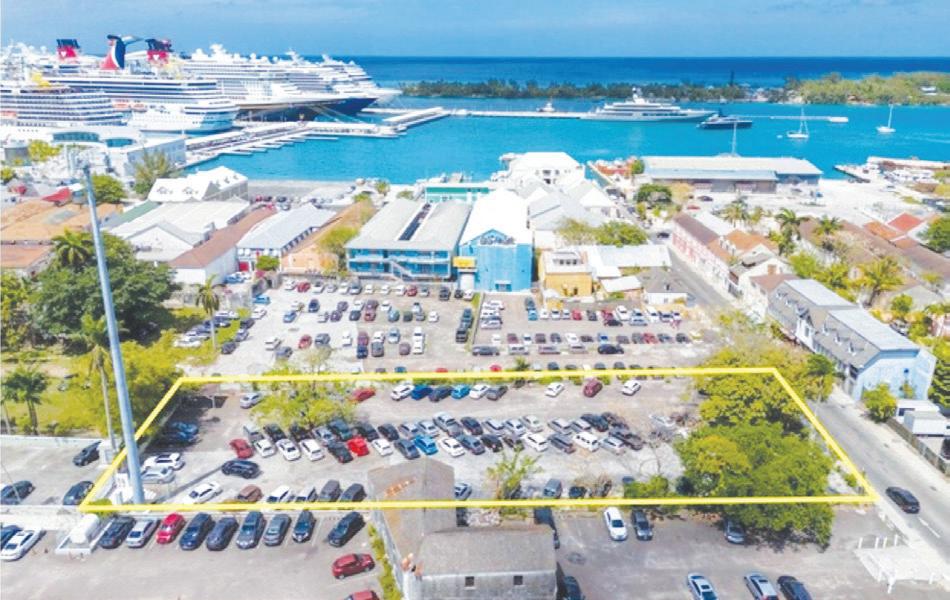
inquiries please email njohnsonandassociates@gmail.com or mariazancolla@ gmail.com LOT FOR SALE
Single-Family Property measuring 6,400 sq. . situated Serenity Subdivision, Western District, New Providence, e Bahamas
$170,000 ONO Serious inquiries please email njohnsonandassociates@ gmail.com or mariazancolla@gmail.co
Establishing empowerment mindset requires hard work
culture. Providing the necessary tools and strategies enables employees to not only make good business decisions but also communicates a sense of trust and involvement in the company’s mission.
When employees can better understand the big picture, they appreciate how their contribution and behaviour impacts other aspects of the company.
Create autonomy through boundaries
I think this phrase says it all: “People without accurate information cannot act responsibly. People with accurate information feel compelled to act responsibly.”
When hearing this line, it is easy to become confused. How can someone be autonomous if they have boundaries? The answer is simple. Picture a river winding through the countryside. The river fows easily even though there are banks on both sides. The banks are
there to guide the river to its ultimate destination: The sea or the ocean. Without boundaries, that river would be a big puddle. Empowerment works similarly. Boundaries remind people they can be autonomous while also responsible based on their skill level.
Culture shift takes time
South African civil groups warn of dire impact as US phases out HIV program funding
By MOGOMOTSI
MAGOME Associated Press
CIVIL society organizations in South Africa said Wednesday that adolescent girls and women are among the frst vulnerable groups to feel the pinch of U.S. foreign aid cuts as the Trump administration phases out its more than $400 million support annually for the country’s HIV programs.
The U.S. State Department has said that it would “begin a phased drawdown” of the President’s Emergency Plan for AIDS Relief, or PEPFAR, a program that has supported South Africa’s battle against HIV and AIDS for the last 20 years and is widely credited with saving more than 20 million lives over that period.
The phasing out of most programs is expected to be completed by the end of September, with critical
personnel support continuing through March next year, according to the U.S. State Department.
South Africa has the highest number of people living with HIV, with approximately 8 million people, or about 12.7 % of its 63 million population.
The country was singled out for the halting of fnancial aid in addition to broader foreign aid cuts announced by U.S. President Donald Trump in an
executive order issued in January 2025.
Trump announced a halt to all fnancial aid to the country the following month, citing political issues which included South Africa’s Black Economic Empowerment policies and widely disputed allegations of a genocide against the white minority Afrikaner community in the country. He also cited South Africa’s land expropriation laws as targeting white

The journey to empowerment requires direct and intentional conversations on how companies should operate, inclusive of mastering new skills and empowerment for employees at all levels. Until we meet again, live life for memories rather than regrets. Enjoy life and stay on top of your game.
Afrikaners and condemned the country’s actions against Israel at the International Court of Justice, where it has accused Israel of committing a genocide in Gaza. Israel vehemently denies the allegation and has said that the attack by Hamasled militants on southern Israel on Oct. 7, 2023, which killed around 1,200 people, was itself a genocidal act.
A U.S. State Department spokesperson told The Associated Press this week that the South African government had been informed that PEPFAR would be withdrawn if these issues weren’t addressed, which included a requirement for senior government ofcials to “unequivocally condemn all race-based incitement to violence, including the ‘Kill the Boer’ song, more frequently.”
The anti-apartheid liberation song has been interpreted by some as calling for violence against Afrikaners.
According to the South African government, the PEPFAR funding for South Africa was equivalent to about 17% of its budget
• NB: Columnist welcomes feedback at deedee21bastian@gmail. com
About columnist: Deidre M. Bastian is a brand marketing analyst, graphic designer, international award-winning author and certifed life coach.
for HIV programs, but this didn’t include the purchase of antiretroviral drugs, since 90% of this was self-funded and the other 10% funded by the Global Fund.
However, other HIV related programs in 27 districts around the country had been adversely afected, with some support facilities shutting down and front-line workers and volunteers losing their jobs.
“The department has long been working on a self-reliance plan to minimize the impact of funding withdrawal since the initial freeze on foreign assistance and a cancellation of USAID grants in January 2025,” South Africa health department spokesperson Foster Mohale said.
Last year, the country announced a $45 million emergency fund to address some of the gaps created by the withdrawal of PEPFAR.
According to civil society group Section27, which has assessed the impact of the funding withdrawals in three districts that have high HIV prevalence in South Africa, prevention services were hardly hit.

PUBLIC NOTICE
INTENT TO CHANGE NAME BY DEED POLL
The public is hereby advised that I, MYLES ALEXANDER GODET of P.O. Box# N-4022 Paradise Drive, New Providence, Bahamas, intend to change my name to MYLES ALEXANDER SANDOVAL GODET. If there are any objections to challenge the name by deed poll, you may write such objections to the Chief Passport Offcer, P.O. Box N-742, Nassau, The Bahamas no later than thirty (30) days after the date of the publication of this notice.
PUBLIC NOTICE
INTENT TO CHANGE NAME BY DEED POLL
The Public is hereby advised that I, PATRICIA EMMERITA FERGUSON of Hanna Road, New Providence, Bahamas, legal guardian of KAYLA LEE RUSSELL intend to change her name to KAYLA LEE BROWN. If there are any objections to this change of name by deed poll, you may write such objection to the Chief Passport Offcer, P O o , assau, he ahamas or at deedpoll@bahamas.gov.bs no ater than thirty ays after the date of the publication of this notice.

WOMEN walk past a closed clinic run by WITS Reproductive Health Institute (RHI) as a sign on the gate reads “USAID has served the WITS RHI Key Populations Programme a notice to pause programme implementation. As of Tuesday, 28 January, we are unable to provide services until further notice.” in Hillbrow, Johannesburg, South Africa, Feb. 27, 2025.
Photo:Themba Hadebe/AP
Colombia’s vote may reshape the Amazon’s future as political winds shift across Latin America
By STEVEN GRATTAN Associated Press
THE rise of Abelardo de la Espriella, a businessman and lawyer set to be Colombia’s next president, is raising questions about whether political shifts underway across Latin America could reshape the future of the Amazon rainforest.
The Colombia election result comes as Peru appears poised to elect Keiko Fujimori as president following a closely contested vote. Meanwhile, Brazil is preparing for a presidential election that could push the country back to the right if Flávio Bolsonaro, son of former President Jair Bolsonaro, defeats President Luiz Inácio Lula da Silva.
The elections raise the possibility that countries with the largest shares of the Amazon could move toward policies that place greater emphasis on economic growth, extractive industries and eforts to combat organized crime and reassert state control in remote regions.
“There’s an interesting alignment, particularly across the Andes region and the broader Amazon basin,” said Elizabeth Dickinson, deputy director for Latin America at the International Crisis Group, referring to a growing belief
among some governments that economic development and conservation can be pursued simultaneously.
Colombia’s election results showed that de la Espriella, who was endorsed by U.S. President Donald Trump, defeated Iván Cepeda, a lawmaker who was endorsed by outgoing President Gustavo Petro, by 1 percentage point, or nearly 251,000 votes. Cepeda conceded on Wednesday.
The Amazon rainforest spans much of northern South America and helps slow climate change by absorbing large amounts of carbon dioxide, a greenhouse gas that warms the planet. Scientists have for years warned that continued forest loss could push parts of the Amazon toward a tipping point beyond which large areas may no longer be able to regenerate as rainforest.
Around 40% of Colombian territory sits within the Amazon basin. Under Petro, it emerged as one of the world’s most prominent advocates for rainforest protection and a transition away from fossil fuels.
Economic development and the Amazon
During his election campaign, de la Espriella — whose nickname is “The Tiger” — pledged to revive


Colombia’s oil sector, supported fracking, which is a method of extracting oil and gas from underground rock formations, and argued that the country should make greater use of its natural resources to spur economic growth. Environmental advocates warn that expanding oil and gas production could undermine eforts to reduce emissions and increase pressure on environmentally sensitive areas.
De la Espriella represents a sharp contrast with Petro, who opposed new fossil fuel exploration contracts and sought to position Colombia as a leading voice internationally on climate issues.
Peru, which contains the second-largest share of the Amazon rainforest after Brazil, appears close to electing Fujimori. Like de la Espriella, Fujimori has signaled support for expanding mining and other industries as a driver of economic growth, while environmental groups have raised concerns about the potential implications for forests and Indigenous communities.

“ ere’s an interesting alignment, particularly across the Andes region and the broader Amazon basin.”
Brazil, which is home to roughly 60% of the Amazon, is preparing for a presidential race that could have major implications for forest protection. The election comes after the country experienced sharply rising deforestation under Bolsonaro, followed by declines under President Luiz Inácio Lula da Silva, as environmental enforcement was strengthened.
Elizabeth Dickinson
Brazil’s experience shows that government priorities can have a measurable impact on the Amazon, said Cristiane Mazzetti, zero deforestation lead at Greenpeace Brazil.
Trump’s endorsement of Colombia’s de la Espriella came as the U.S. president has rolled back climate policies, promoted expanded oil and gas production and withdrawn the U.S. from the 2015 Paris Agreement, the international pact aimed at limiting global warming.
Sergio Guzmán, director of Colombia Risk Analysis, said environmental concerns may increasingly compete with demands for investment, energy production and economic growth.
“The elected administration sets budgetary priorities, flls government positions and shapes regulations to either facilitate or hinder predatory exploitation and environmental crimes,” she said. “The result of this is measurable, as evidenced by the rate of deforestation in the Brazilian Amazon.”

AN ILLEGAL mining camp is visible from a Brazil Environmental Agency helicopter during an operation to try to contain illegal mining in Yanomami Indigenous territory, Roraima state, Brazil, Feb. 11, 2023.
Photo:Edmar Barros/AP
Trump refuses to sign bipartisan housing bill into law. What does that mean for homebuyers, renters?
By ALEX VEIGA AP Business Writer
A SPRAWLING leg-
islative package aimed at lowering the cost of housing and spurring more home construction won bipartisan approval from Congress this week, but it’s hit a major roadblock in becoming law: President Donald Trump.
The White House supported the 21st Century ROAD to Housing Act, but on Wednesday Trump canceled the signing ceremony for the bill, saying he would not sign the measure until Congress passes legislation that would require proof of citizenship for all voters.
Here’s what to know.
How signifcant is this housing legislation?
The measure is the culmination of months of negotiations by lawmakers who combined dozens of bills meant to address how housing afordability for both renters and aspiring homeowners in the U.S. has grown increasingly out of reach for many Americans.
The bill would reduce federal regulations, streamline environmental reviews, speed up the construction process and curb the infuence of corporate landlords by limiting their ability to purchase single-family homes.
Still, it’s not a silver bullet for all the factors that contribute to reduced housing afordability, including lack of construction labor, rising insurance costs and years of subdued wage growth relative to sharply rising rents and home prices.
Even so, the bill has drawn broad support from

the real estate industry, including organizations representing homebuilders and apartment complex owners, as well as housing advocates.
“We need more homes built, and legislation that removes construction barriers is exactly what the market needs right now,” said Daryl Fairweather, chief economist at Redfn. “Homebuyers who were hoping for relief may have to wait even longer, and in a market already starved for inventory, that’s a tough pill to swallow.”
What led lawmakers to pass the frst major housing legislation in decades?
Housing has grown into a hot-button issue among voters in recent years as homeownership and rents in many areas have become
All 32 of the nation’s biggest banks clear the Fed’s annual ‘stress test’
By KEN SWEET AP Business Writer
ALL 32 of the nation’s biggest banks passed the Federal Reserve’s annual “stress test” of the fnancial system, the central bank
said Wednesday, a sign that the banking system would remain healthy even if a major economic contraction occurred.
The annual stress test measures whether a bank’s
NOTICE

NOTICE is hereby given that I SASHANEE TONEYANN NEVERS of Mckinney Drive, Nassau, Bahamas, applying to the Minister responsible for Nationality and Citizenship, for Registration Naturalization as a citizen of The Bahamas, and that any person who knows any reason why registration/naturalization should not be granted, should send a written and signed statement of the facts within twenty-eight days from the 25th day of June, 2026 to the Minister responsible for nationality and Citizenship, P.O. Box N-7147, Nassau, New Providence, The Bahamas
NOTICE

NOTICE is hereby given that I MARCK NORALUS of Village Alley, New Providence, Bahamas, applying to the Minister responsible for Nationality and Citizenship, for Registration Naturalization as a citizen of The Bahamas, and that any person who knows any reason why registration/ naturalization should not be granted, should send a written and signed statement of the facts within twentyeight days from the 25th day of June, 2026 to the Minister responsible for nationality and Citizenship, P.O. Box N-7147, Nassau, New Providence, The Bahamas
NOTICE

NOTICE is hereby given that I YOBIN LUTIS of Carmichael Road, New Providence, Bahamas, applying to the Minister responsible for Nationality and Citizenship, for Registration Naturalization as a citizen of The Bahamas, and that any person who knows any reason why registration/naturalization should not be granted, should send a written and signed statement of the facts within twenty-eight days from the 18th day of June, 2026 to the Minister responsible for nationality and Citizenship, P.O. Box N-7147, Nassau, New Providence, The Bahamas.
less afordable for many Americans.
The U.S. housing market has been in a slump since 2022, when mortgage rates began to climb from pandemic-era lows. Sales of previously occupied U.S. homes were essentially fat last year, stuck at a 30-year low. While sales accelerated in May to their fastest pace since December, they continue to hover close to a 4 million annual pace, far short of the historic norm that is closer to 5.2 million, limited partly by elevated mortgage rates.
Years of soaring home prices, especially in the early part of this decade when rock-bottom mortgage rates fueled a buying frenzy, have left many would-be homebuyers frozen out of the market. And a chronic shortage
capital, a fnancial cushion it uses to absorb losses, would remain at healthy levels even after hundreds of billions of dollars in projected losses. The tests are required under the DoddFrank Act, the law passed after the 2008 fnancial crisis that nearly brought down the global fnancial system.
The 2026 scenario that the Fed used is similar to the one they used last year.
of homes for sale nationally, due partly to years of below-average new home construction, has helped prop up home prices even in a multiyear sales slump.
Home prices have increased 54% nationwide since 2020, and last year the median existing single-family sales price was nearly fve times the median household income, according to researchers at Harvard’s Joint Center for Housing Studies.
Renters, meanwhile, have seen little improvement in afordability. While the median U.S. monthly rent has been declining for nearly three years, it was still 17.2% higher in May than before the pandemic, according to data from Realtor.com.
In the Fed’s scenario, unemployment would rise from 5.5% to 10% and the U.S. economy would contract 4.6%. Housing prices would fall 30% from their current levels and the stock market would plunge 58%.
The scenario would result in the nation’s 32 biggest banks facing $708 billion in loan losses, but the overall capital ratio of these banks would fall only 1.6 percentage points, from 12.8% to
NOTICE

NOTICE is hereby given that WATHLEY ADOLPHE of 124 Beaconsfeld Avenue, Grand Bahama, The Bahamas is applying to the Minister responsible for Nationality and Citizenship, for registration/ naturalization as a citizen of The Bahamas, and that any person who knows any reason why registration/ naturalization should not be granted, should send a written and signed statement of the facts within twenty-eight days from the 25th day of June, 2026 to the Minister responsible for nationality and Citizenship, P.O. Box N-7147, Nassau, Bahamas.
NOTICE

NOTICE is hereby given that I ARIANA MCCARTNEY of Cable Beach, Nassau, Bahamas, applying to the Minister responsible for Nationality and Citizenship, for Registration Naturalization as a citizen of The Bahamas, and that any person who knows any reason why registration/naturalization should not be granted, should send a written and signed statement of the facts within twenty-eight days from the 25th day of June, 2026 to the Minister responsible for nationality and Citizenship, P.O. Box N-7147, Nassau, New Providence, The Bahamas
NOTICE
NOTICE is hereby given that I WILFRID PASTERIN of Second Street, The Grove, New Providence, Bahamas, applying to the Minister responsible for Nationality and Citizenship, for Registration Naturalization as a citizen of The Bahamas, and that any person who knows any reason why registration/ naturalization should not be granted, should send a written and signed statement of the facts within twenty-eight days from the 18th day of June, 2026 to the Minister responsible for nationality and Citizenship, P.O. Box N-7147, Nassau, New Providence, The Bahamas.
with Republican senators, at the Capitol in Washington, Wednesday, June 24, 2026.
What if the bill doesn’t become law?
One of the biggest hurdles to homeownership has been an imbalance between supply and demand in many parts of the country.
When there are fewer homes on the market, that helps prop up home prices even during a slowdown. Conversely, during times when mortgage rates are low, buyers end up competing for fewer homes, which drives up prices.
The housing bill would help increase the supply of housing, particularly when it comes to smaller, more afordable starter homes.
It amends existing regulations to boost construction of manufactured homes, which tend to be more afordable than other types of newly built homes, and expand access to government-backed loans to include construction of standalone dwellings a homeowner can rent out.
The bill also provides new dollars for communities to turn abandoned infrastructure into housing, and provides guidelines for communities that want to reform outdated zoning regulations, which often limit larger housing developments.
“It won’t make housing more afordable overnight, but in the coming years we will see more construction of town homes, multifamily housing, and ADUs,” notes
11.2%. By law and regulation, these large banks’ common equity Tier 1 capital ratio must remain above 4.5%, plus additional bufers that vary by bank.
The stress test applied only to the nation’s most systematically important banks, those whose failures would bring signifcant turmoil to the fnancial system.
A bank that performed poorly on the stress test could face higher capital requirements, which could
Fairweather, saying the additional supply “will relieve the pressure on home prices, and make it easier for homebuyers to break into the market.”
What about renters?
The legislation includes a broad set of provisions, including an expansion of government rental assistance and afordable housing construction programs , and measures aimed at encouraging state and local governments to make it easier to build new homes and apartments, including federal funding to places exceeding the median rate of homebuilding.
In addition, the bill would raise limits on the number of public housing units that can receive fnancing for renovations and codify a recovery program to help expedite funds to communities rebuilding after disaster.
It also requires new renter protections.
“Families are struggling under the heavy weight of housing costs that have climbed for decades,” said San Diego Mayor Todd Gloria, who is president of the U.S. Conference of Mayors. “There’s no time to waste. Without federal action, America’s housing shortfall will continue to grow, falling another 2 million units behind in the next fve years.”
limit its ability to pay dividends or buy back stock. Banks typically announce their plans for dividends and share repurchases after the Fed releases the stresstest results. Shortly after the Fed’s announcement, JPMorgan Chase said it would increase its quarterly dividend to $1.65 a share from $1.50 a share, and intends to buy back an additional $50 billion in stock.

NOTICE

NOTICE is hereby given that I ANDY JONATHAN JACOBO CORDERO of Mangrove Street, Sir Lynden Pindling Estates #23, Nassau, Bahamas, applying to the Minister responsible for Nationality and Citizenship, for Registration Naturalization as a citizen of The Bahamas, and that any person who knows any reason why registration/naturalization should not be granted, should send a written and signed statement of the facts within twenty-eight days from the 25th day of June, 2026 to the Minister responsible for nationality and Citizenship, P.O. Box N-7147, Nassau, New
NOTICE

NOTICE is hereby given that I MARC HENRY JEAN of 6 Pioneer’s Way, Grand Bahama, Bahamas, applying to the Minister responsible for Nationality and Citizenship, for Registration Naturalization as a citizen of The Bahamas, and that any person who knows any reason why registration/naturalization should not be granted, should send a written and signed statement of the facts within twenty-eight days from the 18th day of June, 2026 to the Minister responsible for nationality and Citizenship, P.O. Box N-7147, Nassau, New Providence, The Bahamas.
PRESIDENT DONALD TRUMP, joined from left by Sen. Rick Scott, R-Fla., Sen. John Barrasso, R-Wyo., and Senate Majority Leader John Thune, R-S.D., speaks to reporters as he finishes his lunch meeting
Photo:J. Scott Applewhite/AP
THE WILLIAM McChesney Martin Jr. building, which houses the Board of Governors of the Federal Reserve System, is seen on April 7, 2025, in Washington. Photo:Jacquelyn Martin/AP
US stocks end mixed, weighed down by more losses for tech giants
By DAMIAN J. TROISE AP Business writer
STOCKS wavered to a mixed close on Wall Street Wednesday as technology stocks once again weighed down the market.
Declines for several infuential tech heavyweights, including Microsoft, pulled the broader market lower even though most stocks in the S&P 500 gained ground. That was also the case on Tuesday, when tech stocks pulled the market lower despite broader gains elsewhere.
The S&P 500 fell 7.24 points, or 0.1%, to 7,358.22, despite nearly 2 out of every 3 stocks gaining ground. The Dow Jones Industrial Average, which is less weighted with tech stocks, rose 182.06 points, or 0.4%, to 51,848.90.
The tech-heavy Nasdaq composite fell 110.40 points, or 0.4%, to 25,476.64.
A 2.3% drop in Microsoft was the heaviest weight on the market. Oracle slumped 4.6%.
Many large tech companies have been behind
Wall Street’s record-setting run throughout the year, but analysts have warned their valuations may have become stretched.
“The next phase of the AI investment cycle is beginning to collide with market discipline,” said Jason Vaillancourt, chief portfolio strategist at Columbia Threadneedle, in a research note.
Google’s parent company Alphabet slipped 0.2%. The company is replacing Verizon in the Dow on Monday. The company’s inclusion in the S&P 500 means more to investors, however, because 401(k) accounts are much more likely to include an S&P 500 index fund than anything tied to the Dow.
Alphabet will become the ffth Magnifcent 7 company to join the Dow. The others are Apple, Amazon, Microsoft and Nvidia.
Oil prices continued slipping as the U.S. and Iran negotiate a possible end to their war. Brent crude, the international standard, fell 3.8% to $73.87 a barrel. It has been trading below $80

to 4.40% from 4.50% late Tuesday. The yield on the 2-year Treasury eased to 4.15% from 4.16%.
Treasury yields are still elevated from earlier in the year, especially the 2-year Treasury, which more closely tracks anticipated action from the Federal Reserve. The central bank has signaled that it is considering raising its benchmark interest rate by the end of the year. Wall Street is forecasting at least one hike to interest rates by December, according to data from CME Group.
released. Economists expect the Personal Consumption Expenditures price index, or PCE, to show that prices rose 4.1% in May. That would be the highest level in three years.
“Thursday’s PCE is set to take on greater importance for markets, especially since Federal Reserve Chair (Kevin) Warsh was emphatic in last week’s meeting about the central bank’s desire to achieve price stability,” wrote Rick Gardner, chief investment ofcer at RGA Investments, in a research note.
ANDERS OPEDAL, President and CEO of Norway’s Equinor, left, meets with specialist Patrick King on the floor of the New York Stock Exchange, after he rang the closing bell, Tuesday, June 16, 2026.
in recent days but is still above the roughly $70 per barrel it was trading at in late February before the war began. U.S. crude prices fell 3.9% to $70.34 a barrel. Oil companies had some of the biggest losses. Exxon Mobil fell 2% and Chevron lost 2.6%.
Lawmakers demand answers as turmoil over Re ecting Pool repair continues
By MATTHEW DALY Associated Press
CONGRESSIONAL
Democrats called for inves-
tigations Wednesday into renovations at the Lincoln Memorial Refecting Pool, as the ongoing drama over the president’s problem-plagued, $16 million rehabilitation project continued to roil the capital.
Lawmakers in the House and Senate demanded answers about the saga that’s been highlighted in the news cycle for weeks, even as the White House has repeatedly blamed — without evidence — unidentifed vandals for peeling paint and other problems. Six people have been arrested, President Donald Trump said, without providing details, and
a local wildlife nonproft conducted necropsies on dead ducks found near the Refecting Pool. The president has said the pool may need to be drained once again for additional repairs.
Connecticut Sen. Richard Blumenthal, the top Democrat on the Senate Permanent Subcommittee on Investigations, challenged the Trump administration over no-bid
Richard Drew/AP
Some of the bigger winners on Wall Street included homebuilders following approval of legislation benefcial to the industry. KB Home surged 16.7% and D.R. Horton jumped 6.7%. Treasury yields mostly fell, removing some pressure from stocks. The yield on the 10-year Treasury fell
contracts for work on the Refecting Pool, saying they were awarded to vendors with previous relationships to Trump.
National Park Service projects undertaken at Trump’s behest in the Washington area “have been marked by blatant corruption, a shocking lack of transparency, disregard for legal requirements and apparent incompetence,” Blumenthal wrote Wednesday in a letter to Interior Secretary Doug Burgum and Jessica Bowron, the acting Park Service director.
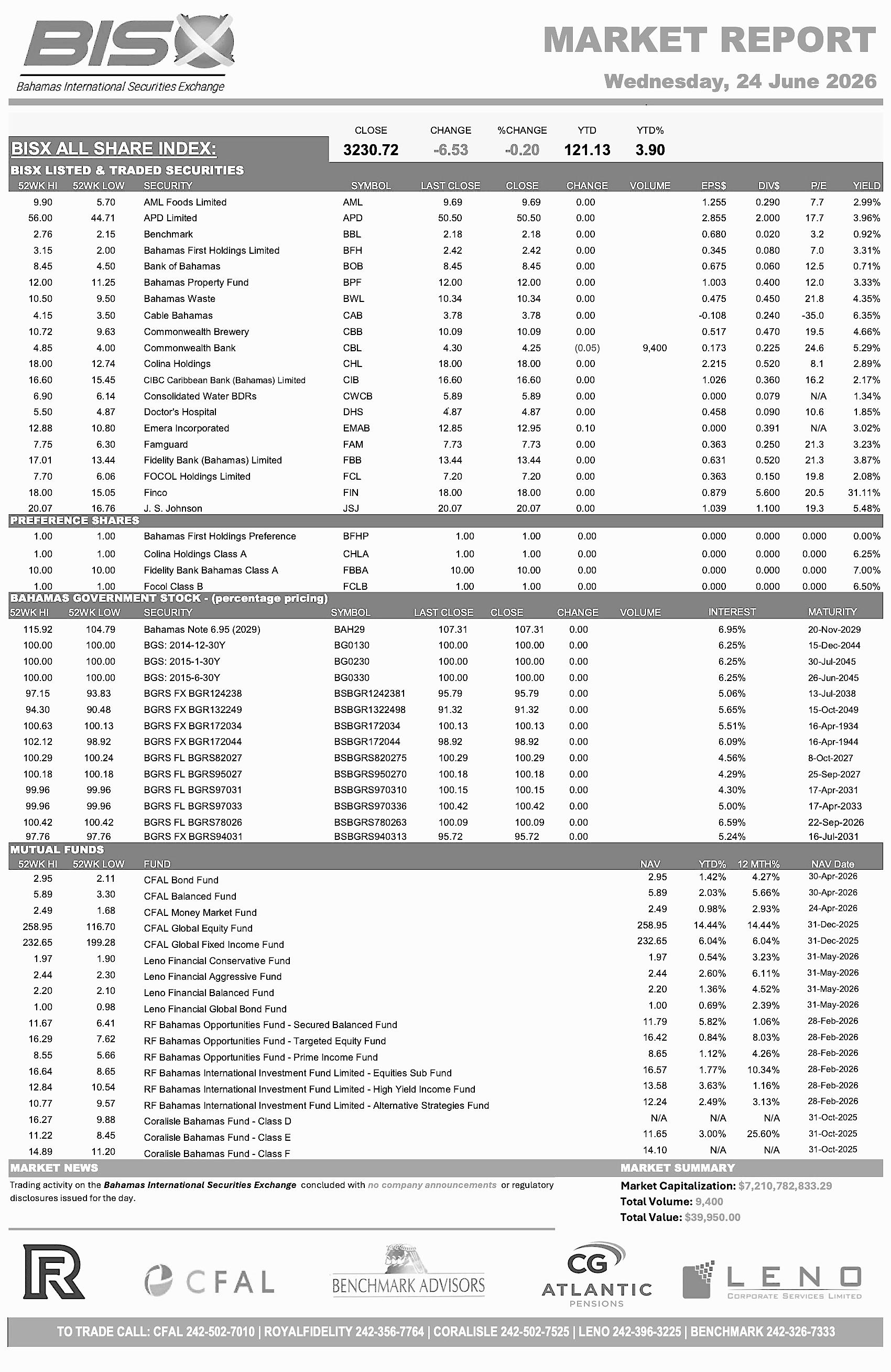
The Fed is worried about stubborn infation, which had been rising throughout the year as tarifs raised the costs for a wide range of goods. A shock to energy prices because of the U.S. war with Iran worsened infation. Gasoline prices surged and shipping costs rose. The impact is expected to linger even as oil and gasoline prices fall.
The central bank will get an update on infation Thursday, when its preferred measure for prices is
“Rushed no-bid contracts given to unqualifed vendors with previous relationships to the president resulted in a refecting pool more covered with algae than before, with freshly painted chunks of paint peeling from the bottom to foat on the pool’s surface,” Blumenthal said.
The nation’s capital “will now celebrate America’s 250th birthday with an empty refecting pool, a testament to incompetence and corruption,” he added.
Two contracts for Refecting Pool repairs
Ohio-based Green Water Solutions was given a $1.7 million contract to install a water-purifcation system in the Refecting Pool, while Virginia-based Atlantic Industrial Coatings was awarded $14.7 million to repaint and waterproof the pool’s concrete foor.
Gold prices fell 3.4% to settle at $4,008.80 an ounce. Earlier in the day, gold briefy traded below $4,000, and hasn’t settled below that level since November. Gold was above $5,000 an ounce earlier in the year. The precious metal is often seen as a barometer of the appetite for risk among investors, with more buying at times of increased anxiety and more selling as anxiety eases. Markets were mixed in Europe.
deadline to complete the renovation before July 4th. Trump also has said the federal government would release images to substantiate his claim. None were made public as of Wednesday.
Trump said Wednesday that “sick people” had used razors and box cutters to slice portions of the lining. He wasn’t sure if the pool draining would come before or after the July 4 holiday, during which tens of thousands of people will be at the National Mall.
“Donald Trump’s disastrous renovation of our national refecting pool is his latest failed vanity project,” Garcia said, calling the projects a waste of taxpayer money. The owner of Green Water Solutions, John Cafaro, is a Trump donor who lives near Mar-a-Lago, the president’s private club
“Rushed no-bid contracts given to unquali ed vendors with previous relationships to the president resulted in a re ecting pool more covered with algae than before, with freshly painted chunks of paint peeling from the bottom to oat on the pool’s surface.”
Sen. Richard Blumenthal
Both contractors have ties to Trump entities, said California Rep. Robert Garcia, the top Democrat on the Committee on Oversight and Government Reform.
Trump pledged to beautify the century-old Refecting Pool ahead of the nation’s 250th birthday celebrations, draining its water and directing the bottom to be painted a color he dubbed “American fag blue.” But since the site was restored, its water has been plagued by an algae bloom and pieces of the new coating have appeared to be peeling of the bottom.
The White House and Interior Department did not respond to requests for comment on the Democrats’ claims. Without evidence, Trump has repeatedly blamed the peeling paint on vandalism, including a “350-foot gash” in the liner, as the administration faces a self-imposed
in Florida. Atlantic Industrial Coatings is owned by Curtis “Eddie” Wood. The company said this week it has identifed some areas in the Refecting Pool that require repairs, adding that the work will done once the pool is drained. It was unclear when that will happen.
What’s next for Refecting Pool remains murky Amid the calls for investigations, Democratic Sen. John Hickenlooper of Colorado called for Trump to personally reimburse American taxpayers for the pool renovations, which he called “a national embarrassment.” Americans expect their tax dollars “to fx roads, support schools and protect our public lands,” Hickenlooper wrote in a letter to Trump. “They do not expect to bankroll failed presidential vanity projects.

Photo:
VISITORS take a selfie at the Lincoln Memorial Reflecting Pool, Wednesday, June 24, 2026, in Washington. Photo:Rahmat Gul/AP
AI is helping gas stations collude to raise California fuel prices, lawsuit says
By R.J. RICO Associated Press
AI-powered software has allowed gas station operators across California to illegally collude and drive up prices at the pump, according to a federal lawsuit.
The proposed class action lawsuit, fled Monday, accuses gas station giants including Marathon and Circle K of violating California’s antitrust law through Kalibrate, a fuel-pricing software system used across the world. The plaintifs describe Kalibrate as the “central nervous system for a conspiracy to extinguish retail price competition among gas stations.”
According to the lawsuit, Kalibrate helps “coordinate high prices” and even discourages its users from pricing their gas lower than competitors, saying that doing so would trigger a “downward spiral.”
“Kalibrate promises that if gas stations surrender their pricing decisions and competitively sensitive cost and volume data to Kalibrate Fuel Pricing, the software will enable them to avoid competing with other area stations and to charge higher prices to consumers,” the lawsuit said.
Californians already pay some of the highest gas prices in the nation, and prices have surged across the globe since the start of the Iran war.
The lawsuit is the latest to accuse software companies of driving up the cost of living for millions in the U.S.
Other examples include the Department of Justice’s lawsuit against RealPage, which has been accused of helping landlords drive up rent prices, and the DOJ’s lawsuit against Agri
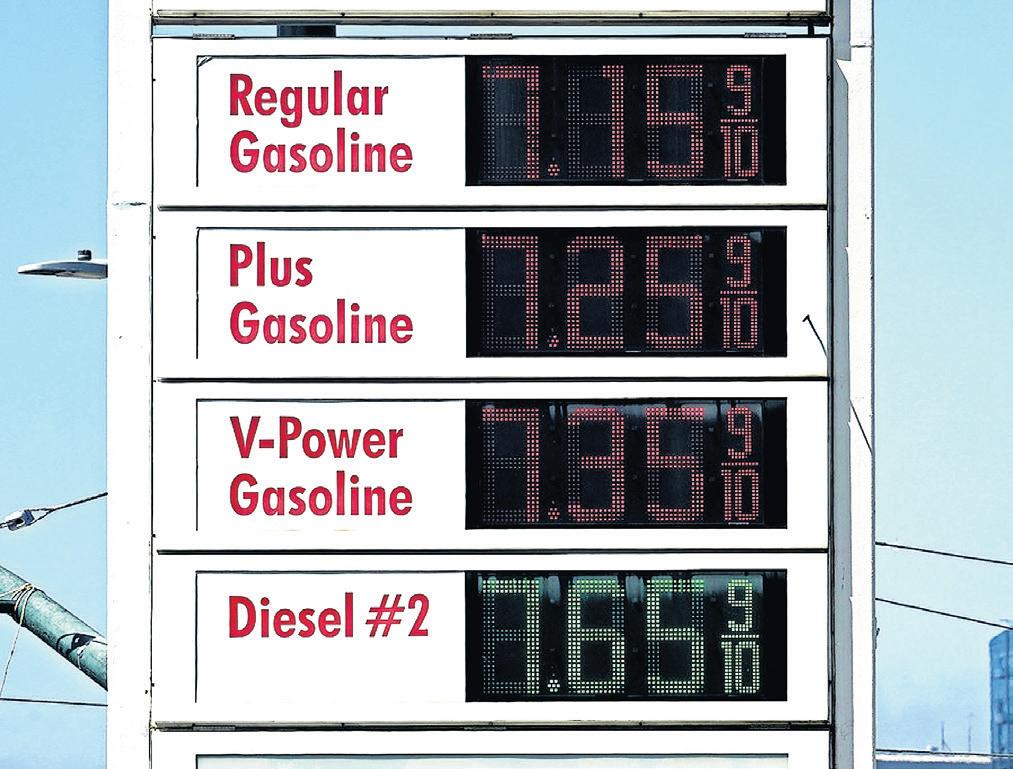
Stats, a data-sharing company accused of helping the meatpacking industry infate grocery prices. The DOJ has settled both of those lawsuits in the past year, though various state attorneys general are still pursuing lawsuits against RealPage and numerous property management companies.
Concern over algorithmic pricing prompted Democratic California Gov. Gavin Newsom last year to sign a bill saying that state antitrust law applies to pricing algorithms, helping to pave the way for this week’s lawsuit.
Kalibrate is headquartered in Manchester, England, and operates in more than 70 countries. It did not respond to a request for comment Wednesday.
The lawsuit accuses Kalibrate of facilitating cartel-like collusion. Only this time, instead of competitors making a secret deal “over cigars in a smoky back room,” the price-fxing is done through AI, according to the lawsuit.
“As technology has advanced, so too have the mechanisms available to
competitors to fx prices without the cigars, the smoke, or even the room,” the lawsuit says.
Among the examples the lawsuit lists is a “restoration” tool that helps “nearly all gas stations in an area raise their prices contemporaneously and by a large amount.”
According to the lawsuit, research into algorithmic fuel-pricing software found average price increases of about 6 cents per gallon, rising to as much as 30 cents per gallon in markets where many stations use the technology.
“Because of the volume of fuel sold across California, a single cent increase at the pump will drain a whopping $134 million from California drivers’ wallets every year across the state,” the lawsuit says. The defendants in the lawsuit — which also include BP, Speedway, EG America, Walmart and Albertsons — collectively operate more than 1,700 gas stations in California, according to the lawsuit. None of them immediately responded to a request for comment.


PRICES are displayed on a digital gas station sign in San Francisco, April 29, 2026.
Photo:Jeff Chiu/AP