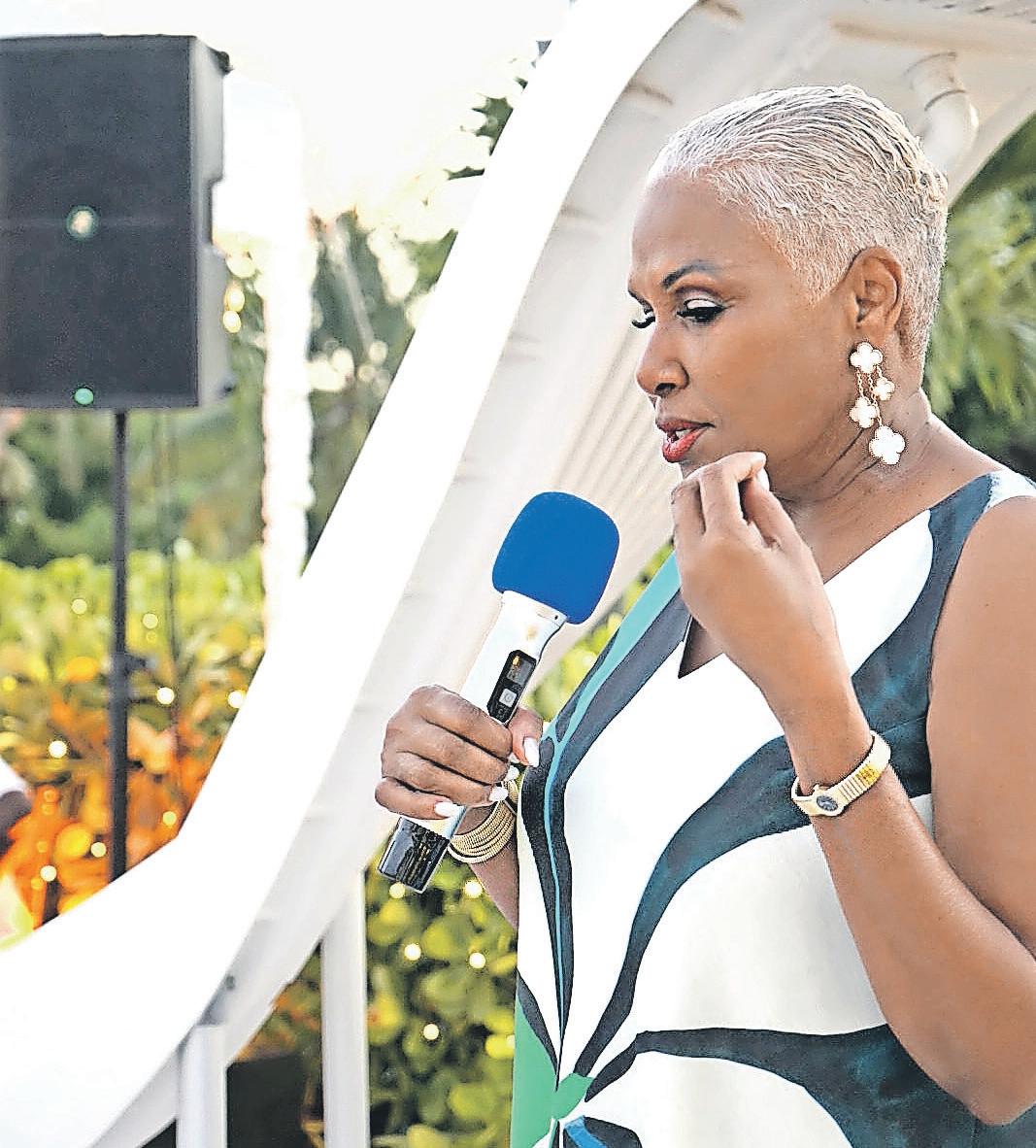
ANNIE B RALSTON TRIBUTE





By LYNAIRE MUNNINGS Tribune Staff Reporter
lmunnings@tribunemedia.net
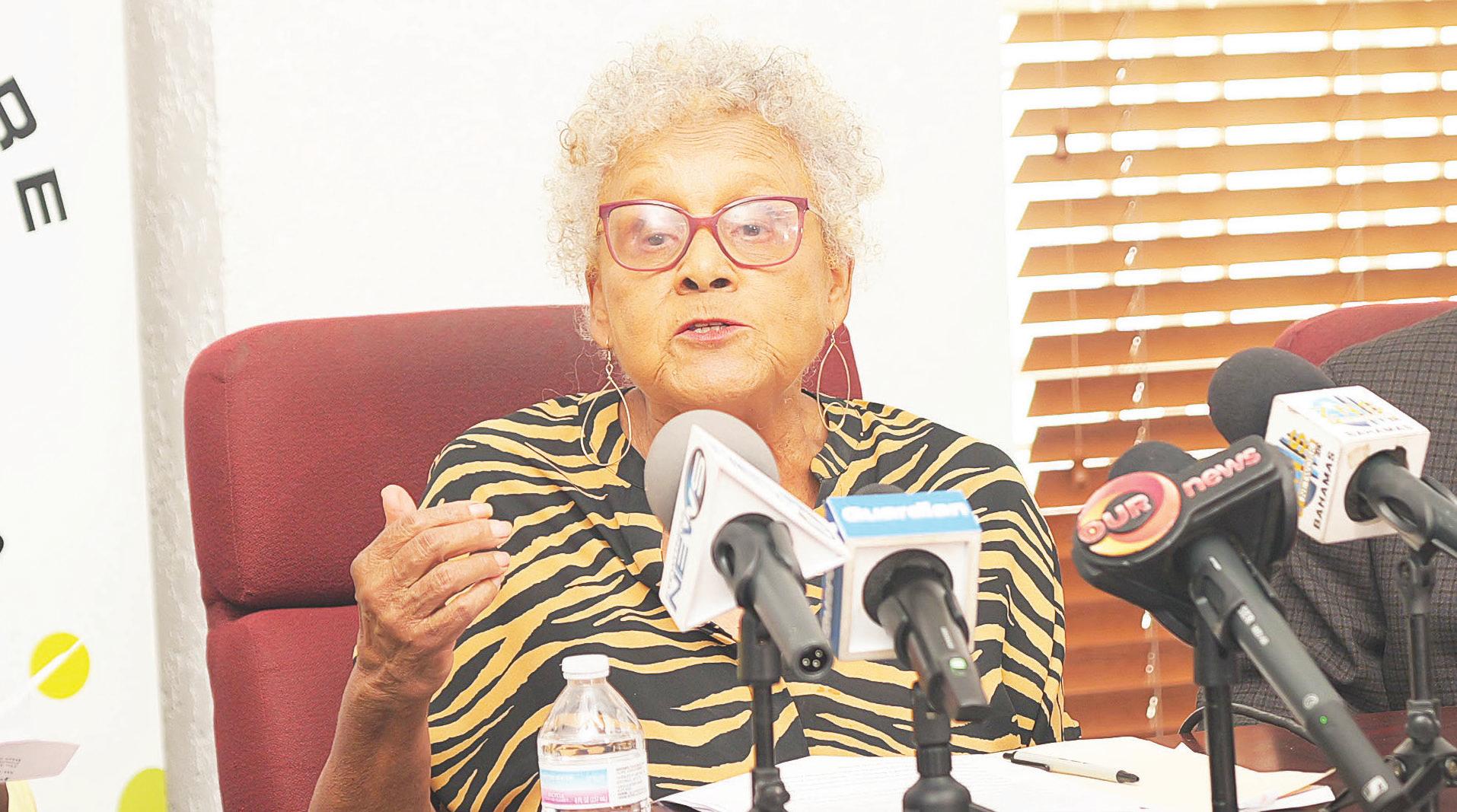
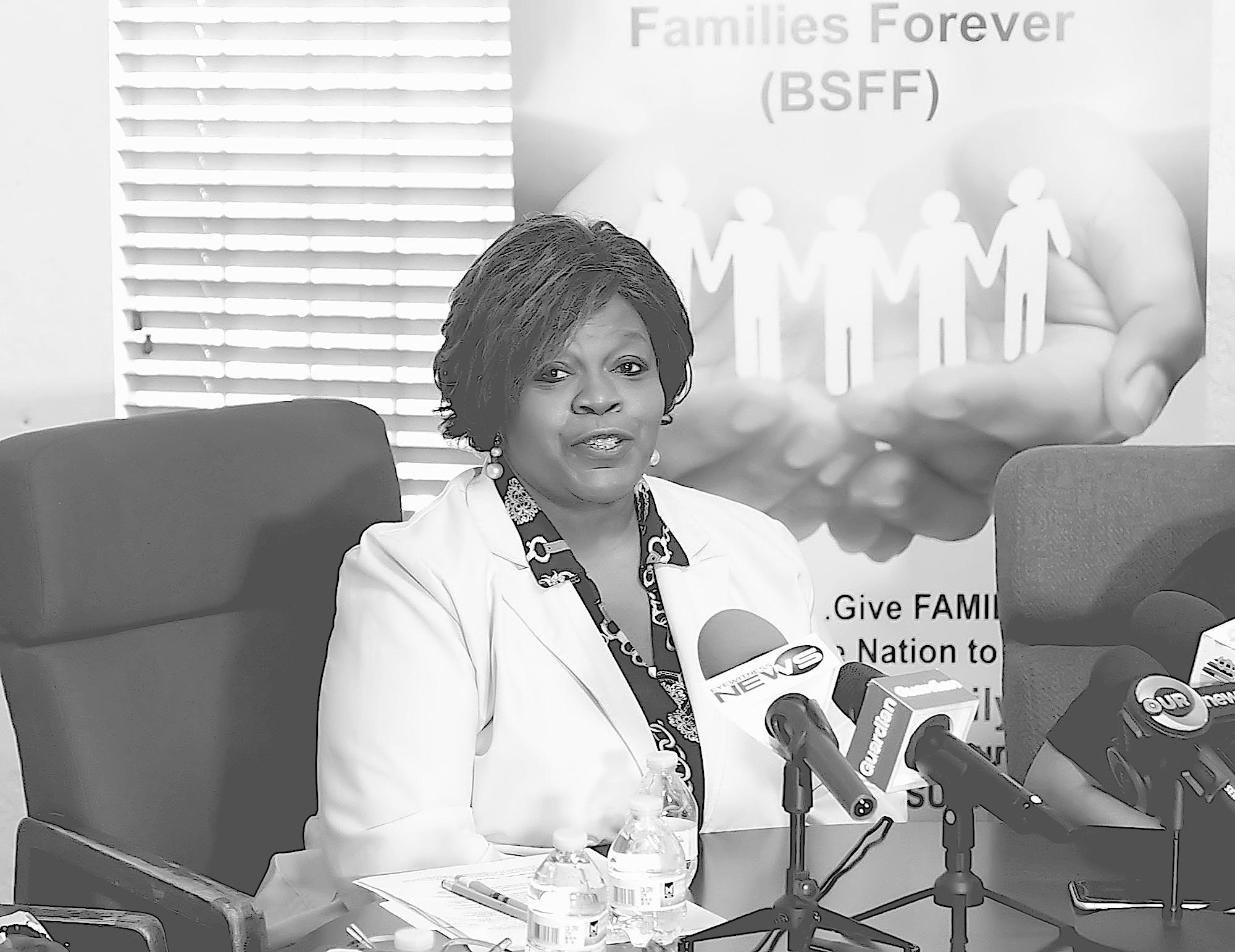
CRISIS Centre director Sandra Dean-Patterson has warned against opening the Sexual Ofenders Register to the public, saying giving access in a small country like The Bahamas could fuel vigilantism, weaken monitoring eforts and fail to make children safer.
Ms Dean-Patterson said the Crisis Centre supports the register and had long pushed for its creation because of growing concern
over the sexual abuse and exploitation of children. However, she said access should be restricted to agencies responsible for child protection and ofender supervision, including the police, social services and the prison system. Her comments follow a recent Eyewitness News report in which a mother said she believed a convicted paedophile was targeting her ten-year-old child. The mother said she reported the matter
REGISTRY - SEE PAGE FIVE
By LYNAIRE MUNNINGS Tribune Staff Reporter
lmunnings@tribunemedia.net
BAHAMAS Crisis
Centre director Sandra Dean-Patterson said child sexual abuse referrals to the organisation have not declined, months after she revealed that more than
200 children sought help in 2025, as advocates warned that poverty, online predators and strained family structures are deepening the crisis facing children.
Speaking at a press conference yesterday to announce a parenting forum scheduled for Friday as part of the inaugural National

Day of Parents observance, Ms Dean-Patterson said children under 16 who have been sexually assaulted continue to be referred to the Crisis Centre by police and the Child Health and Child Development Information System.
ABUSE - SEE PAGE FIVE
By LEANDRA ROLLE Tribune Chief Reporter lrolle@tribunemedia.net
A BAHAMIAN murder accused who fed to the United States the day before his trial was due to begin is facing up to 15 years in prison after pleading guilty to illegally
possessing a frearm while living unlawfully in Florida.
Shelton Thompson, 38, pleaded guilty on Friday to possession of a frearm by an illegal alien after US Border Patrol agents arrested him in Pompano Beach, Florida, on February 12. According to court
documents, border patrol agents were acting on information when they saw Thompson leave a warehouse and drive away in a white van.
Agents stopped the vehicle and conducted an immigration
JAILED - SEE PAGE THREE

INSPECTOR TOMAS MCINTOSH
By PAVEL BAILEY Tribune Staff Reporter pbailey@tribunemedia.net
A 39-YEAR-OLD man was acquitted yesterday of vehicular manslaughter in the death of Inspector Tomas McIntosh, the police ofcer whose organs were donated after he sufered catastrophic injuries while on duty on Sir Milo Butler Highway in 2024. Raymond Rolle appeared
relieved after he was found not guilty in a 7-1 jury verdict before Justice Renae McKay, who said he was free to go.
Prosecutors had alleged that Rolle struck Inspector McIntosh with his garbage truck while the ofcer was efecting a trafc stop on January 31, 2024. Inspector McIntosh, 33, was seriously injured after a
ACQUITTED - SEE PAGE THREE

born without an arm praised for his work ethic on social media
By JADE RUSSELL Tribune Staff Reporter jrussell@tribunemedia.net
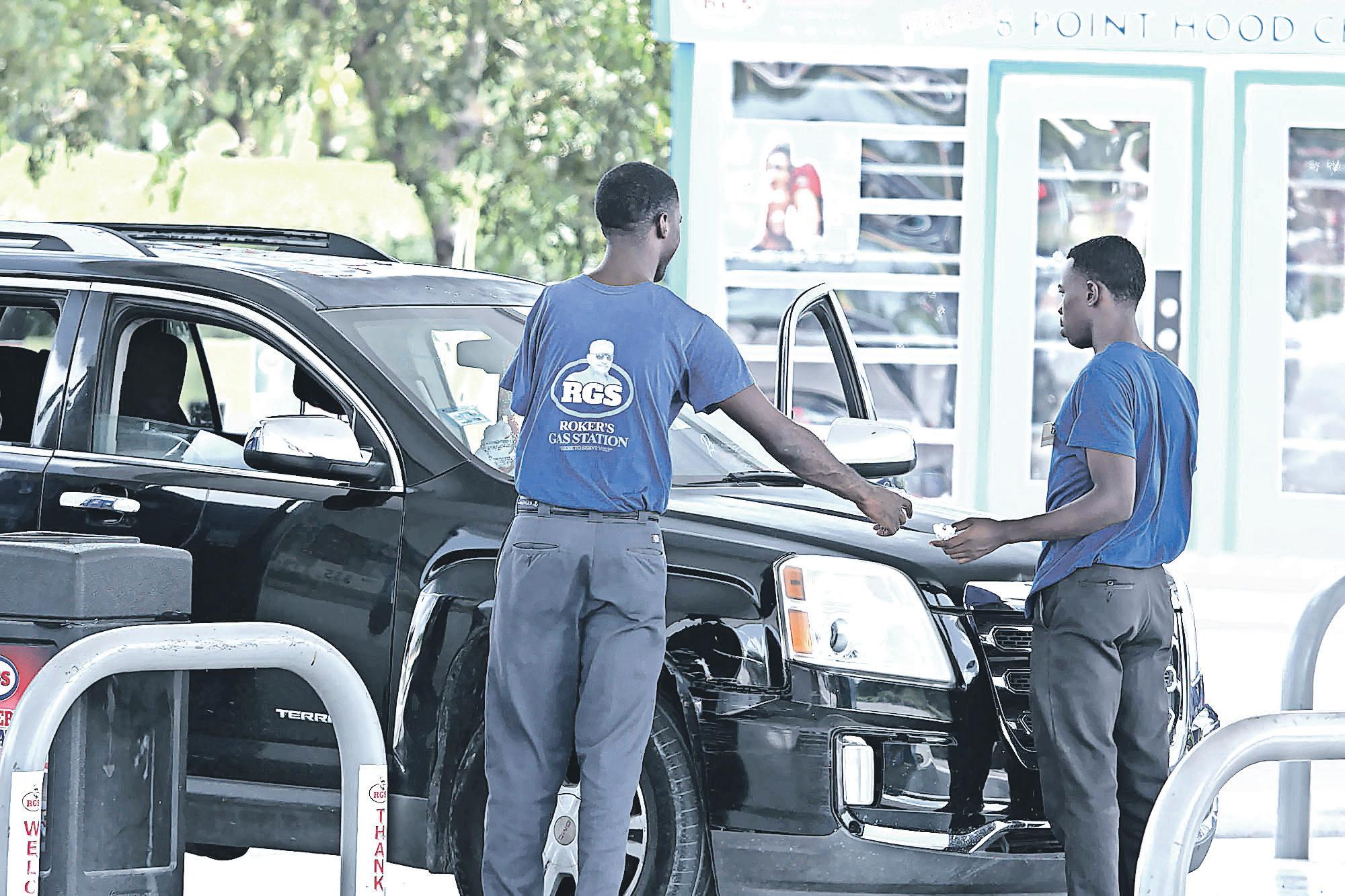
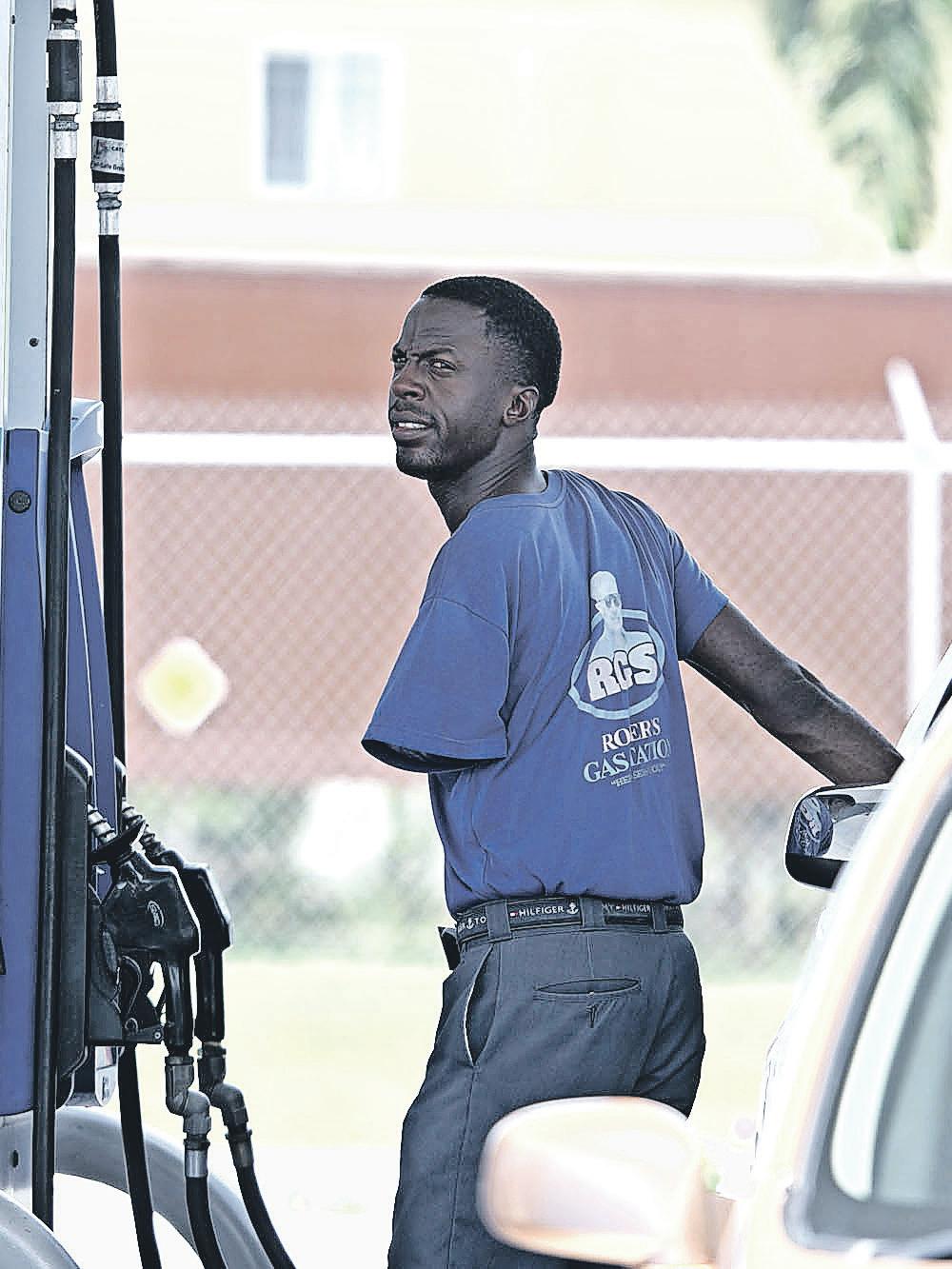
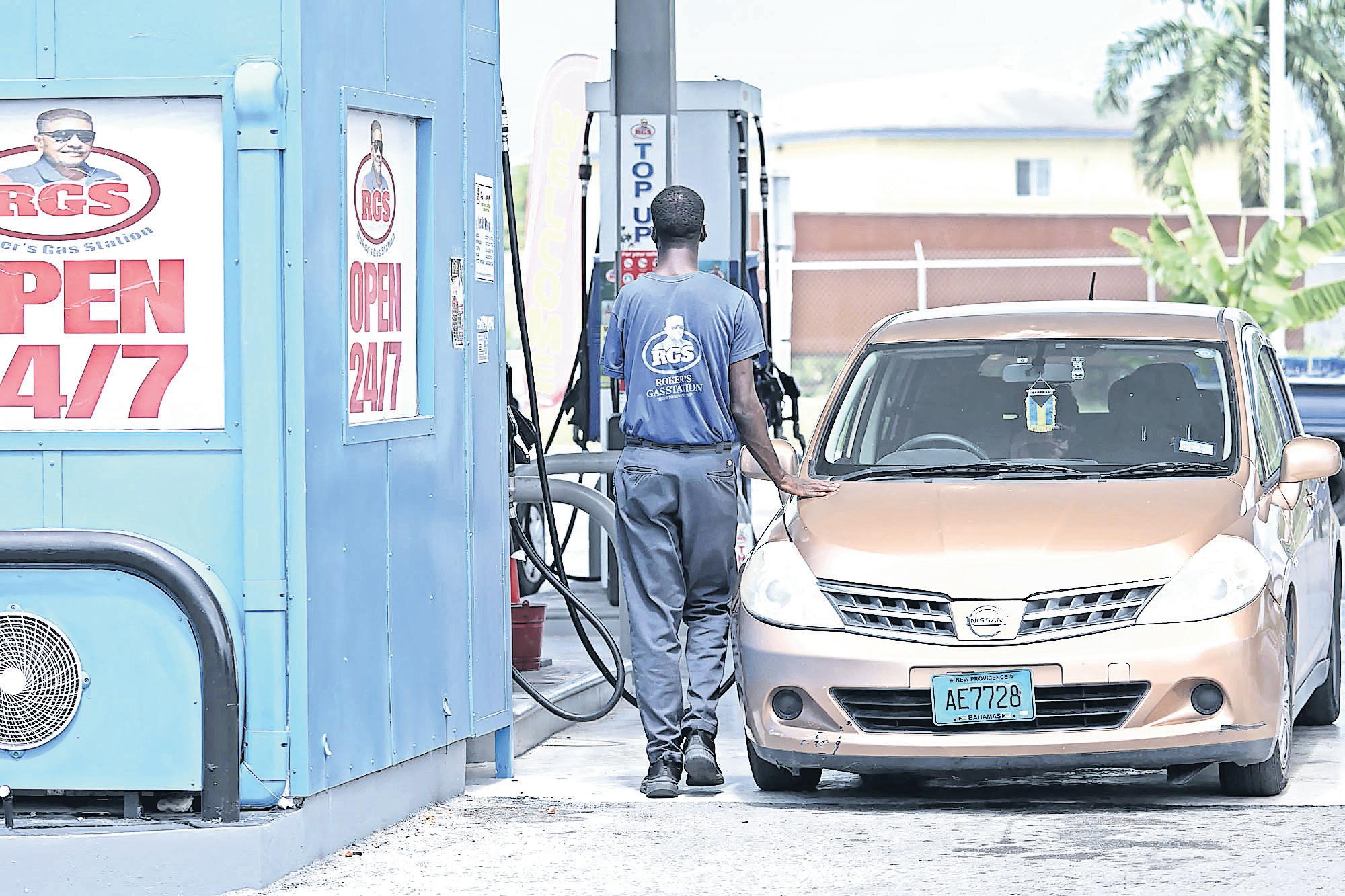
BORN without one arm, 29-year-old Francent Yoth has spent his life forcing opportunity open, moving from job to job since high school and now working as a pump attendant at Roker’s Gas Station on Faith Avenue.
A photo of Mr Yoth at work went viral last week, drawing praise from social media users who commended his resilience, customer service and work ethic.
When The Tribune visited the gas station yesterday, Mr Yoth dashed between pumps and
served customers with a smile. At first glance, he looked like any other working man. But as he turned, the empty sleeve hanging from his shoulder revealed the challenge he has spent a lifetime overcoming.
Mr Yoth has lived his entire life without a second arm. He said growing up with a disability made some everyday tasks more difficult, but did not stop him from trying.
“Some tasks require two hands, and if I can’t do that, I would often ask someone to help me. If I can’t find anyone, I would try to do it as best as I could,” he said. Mr Yoth was born in
Haiti and moved to The Bahamas when he was about eight years old.
While many children worry about making friends when they enter school, Mr Yoth had to navigate life while looking physically different from what society considered normal.
A graduate of C C Sweeting Senior High School, he said his school years brought highs and lows.
“Like every school we have persons who are kind,” he said, adding that others were less considerate of his condition.
He credited friends, teachers and others who defended him against

bullies.
Since leaving high school, Mr Yoth has worked several jobs, including at a retail business that sold car parts. He said young people should strive to become independent through respectable employment.
Asked whether employers had ever turned him down because of his disability, he said yes, but declined to criticise them.
“I’ve had persons that give me the job due to my determination and their compassion of seeing me trying to persevere,” he said.
“They were kind enough to give me a chance to do better for myself.”
Mr Yoth said he applied for his current job after a
friend sent him an email about the vacancy. He has worked at Roker’s Gas Station since December 2025.
He said one of the best parts of the job is interacting with customers, many of whom have encouraged him.
Last week’s social media attention became one of the highlights of his week.
“It’s a positive thing to see yourself out there, not putting yourself out there - but someone saw you and they were compassionate and thoughtful to write something positive,” he said.
“I didn't know the person but thank God that they saw me doing my job, and they wrote it about me. The thing about
social media, it can make or break you.”
Asked what he would say to other people with disabilities who are struggling to find work, Mr Yoth said every job comes with challenges. He urged them to stay encouraged and said there is light at the end of the tunnel.
“There’s beauty in diversity, so in some ways, it helped me to persevere more because of my disability,” he said.
“Some days I feel like, what if I had been born with two hands. But I can't change it, that's the way God intended for it to be done. So, I have to get through life.”
He also thanked Roker’s Gas Station for giving him a chance at a better life.

ACQUITTED from page one
passing vehicle struck him. Doctors later declared him brain dead, and his family made the difficult decision to donate his organs.
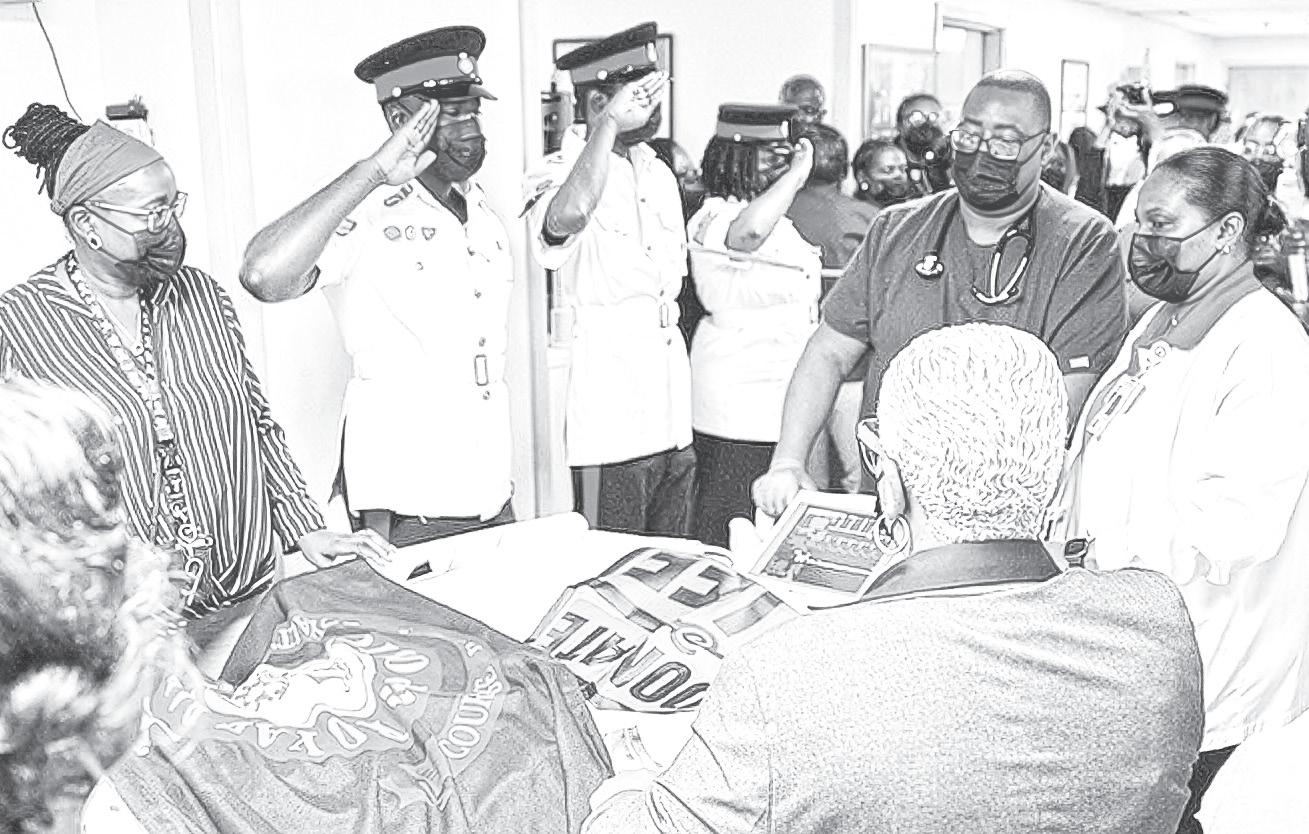
His death prompted an emotional Hero’s Walk at Doctor’s Hospital, where grieving relatives, colleagues and medical staff gathered as he was taken to the operating room for the organ procurement procedure.
Relatives cried, police officers saluted him and others sang “The Wind Beneath My Wings” as his body left the hospital’s hallway.
Deputy Police Commissioner Leamond Deleveaux said at the time that the donation was what Inspector McIntosh would have wanted.
“He’s always been a caring person who always looked out for others,” he said. “He went beyond
the call of duty of looking out for his colleagues and anyone he came into contact with so he would not have any issue.”
Doctors said the donation would save multiple lives and described the procedure as a significant moment for organ donation in The Bahamas.
Dr Sheena Antonio-Collie, the hospital’s chief medical officer, encouraged families facing similar situations to consider organ donation, saying it could help patients and reduce the burden on costly treatments such as dialysis.
Dr Rhea Thurston-Carrroll, a kidney transplant physician, said the goal was to help develop a programme that included both living and deceased donors.
Rolle was represented by Tai Pinder and Lilnique Murphy-Grant.
Kalnan Kelly and Erica Duncombe prosecuted the case.
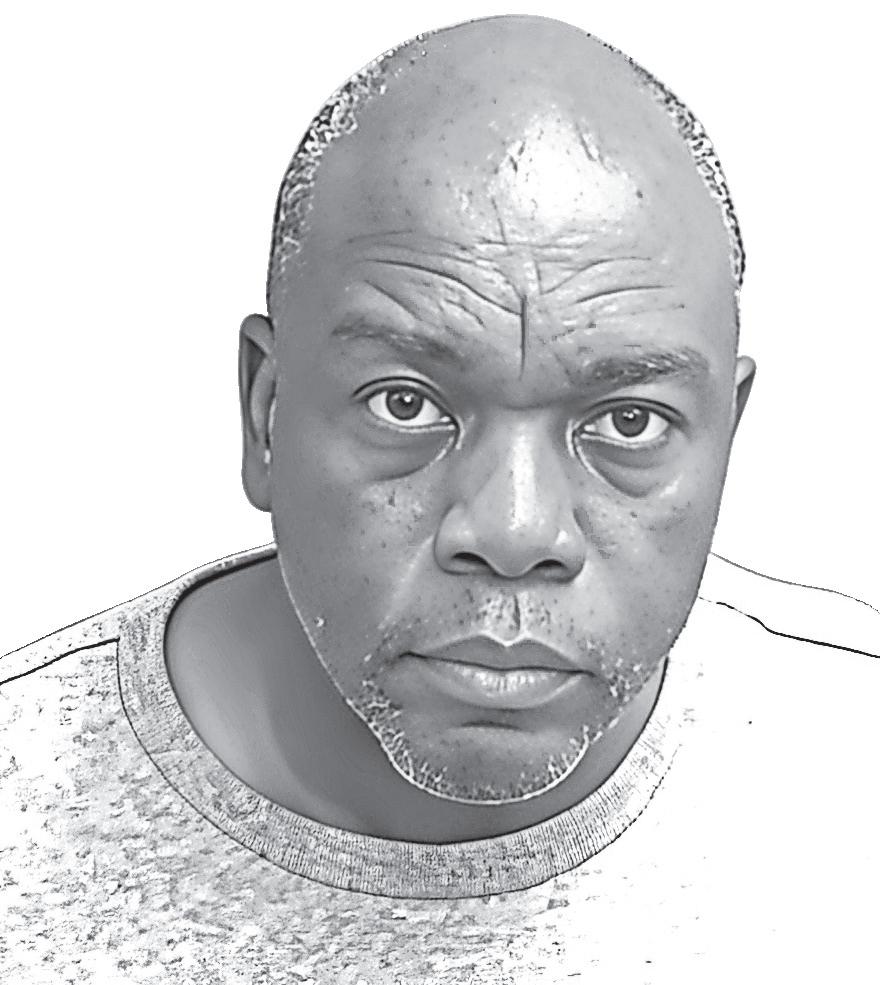
THE US judge overseeing the case of Bahamian drug trafficker Jonathan Eric Gardiner has granted prosecutor’s request for a one day delay for a pretrial conference.
This means Gardiner will now appear in court tomorrow instead of today.
Assistant US Attorney Jonathan Bodansky made the request to allow pretrial services an extra day to interview Gardiner in the presence of defense counsel.
JAILED from page one
inspection, during which Thompson identified himself and admitted he was living illegally in the United States.
Records checks confirmed his immigration status. During processing, Thompson also admitted that he had a firearm at his Miami residence.
He agreed to accompany law enforcement officers to the home and directed them to the weapon.
Agents recovered a loaded Glock 27 .40-calibre pistol that had been manufactured outside Florida and transported into the state.
Thompson initially denied the charge but later changed his plea. His arrest came more than two years after he fled to the United States a day before his murder trial in The Bahamas was scheduled to begin. Thompson, who had been free on $15,000 bail, is accused of fatally stabbing 19-year-old Richard Bremmer after a traffic accident in April 2009.
A jury had already been empanelled to hear the case, but was dismissed in February 2024 after Thompson failed to appear in court.
After his disappearance, two of Thompson’s cousins were ordered to forfeit his $15,000 bail bond. US Attorney Jason A Reding Quiñones, of the Southern District of Florida, said the case showed why immigration and firearm laws must be enforced in the region.
“South Florida’s proximity to international borders makes vigorous enforcement of immigration and firearms laws essential to public safety,” the attorney said. “Individuals who enter or remain in this country unlawfully and illegally possess firearms will be investigated and prosecuted. We will continue to use every lawful tool available to protect our communities from dangerous offenders.”
In an order filed yesterday, US District Judge Gregory Woods said: “The Court finds that the ends of justice served by granting a continuance outweigh the best interests of the public and the defendant in a speedy trial because failure to grant the continuance would deny the reasonable time necessary for effective preparation.”
Gardiner was charged in New York last week
Mr Bodansky said the delay would also allow the preparation of a “potential bail application.”
with cocaine importation conspiracy and firearms-related charges after prosecutors alleged that he was a key figure in a drug trafficking plot. However, he has denied the allegations.
The charges stem from his arrest last month following a plane crash on Election Day. He was among 11 Bahamians rescued by US authorities after an aircraft travelling from Marsh Harbour, Abaco, to Grand Bahama crashed off the Florida coast.


By LEANDRA ROLLE Tribune Chief Reporter lrolle@tribunemedia.net
THE family of a missing Abaco man is appealing to the public for help as they desperately search for answers on his whereabouts.
Jean Honoret, a truck driver said to be in his early 60s, was last seen around June 9 after reporting to work but failing to return home, according to his relatives.
Wilfred Toussaint, a cousin who considers Honoret like a brother, said they spoke the day before his disappeared, but nothing appeared suspicious during their conversation.
The two spoke everyday, sometimes multiple times daily.
“We live like brothers,”
Mr Toussaint said.
“Our conversation every morning is how you doing, cuz. What's going on? You know what I mean. We cracking couple of jokes..
but by 5.30 he always calling me or I call him and see if everything is going well with him.”
He said he became alarmed when he didn’t hear from him the next day.
“I don’t if he’s still alive or if somebody get him. I really don’t know,” he said, adding that the family is still holding out hope.
Some residents have also posted on social media seeking information about Honoret’s whereabouts.
Mr Toussaint said he was later told that a woman to whom Mr Honoret allegedly owed money had also gone to his home looking for him.
Mr Toussaint said he lives in New Providence but plans to travel to the island soon for answers.
Chief Superintendent Michael Thurston, ofcer in charge of Abaco, told The Tribune yesterday that the family had not made an ofcial missing person’s report.

By KEILE CAMPBELL Tribune Staff Reporter
kcampbell@tribunemedia.net
SOCIAL Services Min-
ister Barbara Cartwright said $42,900 has been allocated to the Protection Against Violence Commission, rejecting concerns from a women’s advocacy group that the body would be left unable to carry out its mandate without dedicated funding.
Speaking during yesterday’s evening session of the Senate, Ms Cartwright said additional funds for the commission would be sourced from
the Ministry of Social Services’ 2026/2027 budget. Her comments came after Women United president Lisa Bostwick-Dean questioned the funding set aside for the commission, warning that chair Marisa Mason-Smith could be severely hampered without financial support.

In a press release, Women United said the commission is expected to develop a national strategic plan, coordinate support for victims, ensure adequate shelter provisions and certify funding for community projects. Ms Bostwick-Dean called on the government to identify the funding allocated to the commission.
Ms Cartwright acknowledged the concerns and assured Bahamians that funds are “indeed available”.
She also revealed that the commission will be housed in the newly renovated VB Munnings building on Pit Road.
Ms Cartwright said the passage of the Protection Against Violence Act means the commission’s work will focus on fully implementing the legislation.
She said Mrs Mason-Smith and the commission’s vice chair, Pastor Dave Burrows, have been “meeting consistently with their members”.
Ms Cartwright also said her ministry is renovating two properties to serve as safe houses, thanking her predecessor, National Security Minister Myles LaRoda, for initiating the project.

She said the facilities are expected to be completed “within the next two to three months” and will be able to accommodate up to 24 people in distress.
Ms Cartwright said the
ministry also intends to expand capacity within the Department of Gender and Family Affairs, including by sourcing additional staff “to ensure that the department is equipped to meet its mandate”.

to police but was told there was little authorities could do because she had not caught the suspected ofender in the act.
“We were alarmed at the increasing number of children that were being violated and exploited in the country, and we thought it was important for us to get a handle on it, be aware of what the problem is, and make sure that we’re addressing it,”
Ms Dean-Patterson said yesterday.
Although the register is now in place, she said the Crisis Centre does not support public access.
“I know the public would like to know who these sex ofenders are, but we are not the United States, the United Kingdom, or a size where you can identify these sex ofenders and have them somewhere where they’re not going to hurt children,” she said.
She said the information should be held by ofcials with a direct duty to protect children and monitor ofenders after their release.
“What we have advocated is that the persons, the persons who need to know, who are obligated, who are directed to protect children, are the ones who have access to this register and who are responsible for
the sex ofenders who are released, that is, the police, social services, the prison,” she said.
“Those are the key people who should have this information and could deal with the information in a way that protects children, but also doesn’t enable vigilantism, which has been the experience in other countries where the sex ofender register was public.”
Ms Dean-Patterson pointed to the United States, where residency restrictions have produced unintended consequences.
“In Miami, for example, where there’s a public sex ofenders register, there are parks where the sex ofenders have to live away from schools and parks and public places, so you’d have to do all of those things to make sure,” she said.
“What we’re doing now is we’re putting the onus on the prison, on the police and on social workers to be aware of when these predators are released and put whatever safety measures in place.”
She acknowledged that any restricted-access system depends on public confdence in the agencies responsible for enforcing it.

“It is a discussion that has to be ongoing, and we need to put all sides to it, but we have to be alarmed and vociferous about our refusal to accept or to tolerate the violation of our children.”
The register was established under the Sexual
“It calls for the public to have confdence in the system, and I don’t know that the public is as confdent or comfortable with the system protecting our children as it should be,” she said.
Ofenders Amendment Act, passed in 2014 and brought into force in July 2019. In 2022, the government began digitising the system with the unveiling of a kiosk at Wulf Road Police Station.
Then National Security Minister Wayne Munroe said at the time that a dedicated unit within the Bahamas Department of Correctional Services had been fully stafed since July 2021 to manage the registry. Mr Munroe said ofenders sentenced after July 24, 2019, were required to register and report their place of residence within 72 hours of release. They are also required to notify authorities if they move or travel for more than seven days. He also warned that information about released ofenders should not be used for retaliation, saying experiences in other jurisdictions showed such actions could lead courts to remove ofenders from registries, weakening authorities’ ability to monitor them.
She could not say whether cases have increased since April, when she said more than 200 children between the ages of three and 17 sought help from the Crisis Centre in 2025 after experiencing sexual abuse.
“It is a horrendous problem for us to deal with,” she said.
In April, Ms
Dean-Patterson said many victims had been abused by people known to them. She also criticised shortcomings in the justice system, noting that rape kits are still sent overseas for DNA analysis.
Yesterday, she warned that children face danger not only from strangers, but from trusted adults and online predators who groom them.
“Initially, we used to
be very worried about stranger danger and strangers,” she said. “Now we have to be worried about persons who children trust, and we also have to be worried about children talking on the internet to persons who they think are nice people, and they end up grooming them, getting them to trust them, and then the children end up meeting them and get sexually
assaulted.”
She urged parents to speak openly with children about body safety, saying many families still treat sex as a taboo subject.
The press conference focused on Friday’s parenting forum, which is being organised by the Crisis Centre, the Department of Social Services and the Marriage Children Family Alliance Movement as part of the National Day of Parents observance from June 26 to 28.
Ms Dean-Patterson said rising violence, road rage and conflict in schools reflect deeper problems within families. She said violence is learned behaviour.
She also warned that children are increasingly exposed to harmful online content.
“We, as parents, bring
the enemy into the house,” she said, adding that electronic devices are often used to distract children without recognising the possible harm.
Marriage Children Family Alliance Movement founder and president Cheryl Walkine said the National Day of Parents observance is intended to honour parents while encouraging greater support for families. She said parenting should be viewed as a shared responsibility and argued that many of the challenges families face are linked to poverty.
She encouraged parents to intentionally spend time with their children during the June 26 to 28 observance and said churches and community groups would also help promote stronger families.
Assistant Director of Social Services Regieta Minnis said the department supports the initiative because social workers regularly see families at their most vulnerable.
“Social Services is in the position to see community at its worst, unfortunately, and we do recognise the need to put greater emphasis on supporting parents, both single mothers and fathers generally, and to build up the family in order that our children will have a stronger foundation for the world that they’re going to face,” Ms Minnis said.
She said the department looked forward to continuing its partnership with the Crisis Centre and other organisations “for the betterment of The Bahamas and our children in particular.”

NULLIUS ADDICTUS JURARE IN VERBA MAGISTRI
“Being Bound to Swear to The Dogmas of No Master”
LEON E. H. DUPUCH,
Publisher/Editor 1903-1914
SIR ETIENNE DUPUCH, Kt., O.B.E., K.M., K.C.S.G., (Hon.) LL.D., D.Litt .
Publisher/Editor 1919-1972
Contributing Editor 1972-1991
RT HON EILEEN DUPUCH CARRON, C.M.G., M.S., B.A., LL.B.
Publisher/Editor 1972-
Published daily Monday to Friday Shirley & Deveaux Streets, Nassau, Bahamas N3207
TELEPHONES
News & General Information (242) 502-2350
Advertising Manager (242) 502-2394
Circulation Department (242) 502-2386
Nassau fax (242) 328-2398
Freeport, Grand Bahama (242)-352-6608
Freeport fax (242) 352-9348
WEBSITE, TWITTER & FACEBOOK
www.tribune242.com


EARLIER this year, we wrote in this column of the horrifc child abuse statistics afecting our nation. It seems little has changed.
The frst two months of this year saw 26 children referred to the Bahamas Crisis Centre in cases of abuse – as young as eight years old. There was outrage, of course. How could our nation’s people be abusing children in this way? Hands were thrown up in horror. But what actually got done to try to break the cycle?
At the time, Cleopatra Christie, the centre’s administrator, talked of “women who are living in their cars with their children while the ministry (of Social Services) is seeking to do its best”. She talked of women needing help on a daily basis and asked bluntly: “How do we resolve the homelessness for victims of violence?”
Since then, the minister has been promoted to national security and a newcomer MP is in the ministerial post instead, with a daunting task to face that isn’t going away anytime soon.
In March, we talked of how there is a marked diference between words and action. We pointed to the then imminent International Women’s Day and said to watch for every politician who talks of the importance of our women and ask them what they are going to do to protect them. If they have no proposals, we said, then they could keep their platitudes.
And so we fnd ourselves here again, with Bahamas Crisis Centre director Sandra Dean-Patterson noting that the child sexual abuse referrals to the organisation having not declined. We are still where we are.
Ms Dean-Patterson has long been fghting for the protection of women and children from abuse. In April, she noted that more than 200 children sought help last year after experiencing sexual abuse. She called it a “horrendous problem”, and gave a warning, one that we already know of course, that it is not just danger from strangers that children face, but too often from adults that they know, that they ought to be able to trust – as well as from people grooming them after talking to them on the internet.
It takes great bravery for a child to speak up in such situations – especially if they have been abused by someone they know. It is important that children should feel they can talk to people around them if they feel they have been touched in the wrong way – a conversation with a friend or an adult who listens
could save them from being abused again, and save others who might also become victims of that same abuser.
Ms Dean-Patterson also warned yesterday of the dangers of making a sex ofender register public – as it could fuel vigilantism and weaken monitoring eforts. She is right, and we should learn that lesson from other countries.
Infamously, in the UK, amid a wave of vigilante behaviour directed towards child abusers, the home of a doctor was attacked because the word paediatrician was mistaken for the word paedophile. The mob seldom stops to check the facts.
Crucially, she also noted that such measures would fail to make children safer anyway. The people who do know the contents of the register are in a position to do something about protecting children anyway – the police, social services, prison staf. If all those authorities know the danger and do not do enough to prevent it, that is the matter of concern.
That some of us might feel protection is best taken into our own hands shows how little we expect the authorities to keep the vulnerable members of our society safe.
Which brings us full circle to there being little change since we last talked of this subject. We would like to think the new Social Services Minister will be determined to bring her infuence in her new role. We would like to think the government would seek to fnd ways to prevent such abuses taking place. We would like to think the vulnerable will be supported and protected, and there will be a wave of action and investment to make sure that is the case.
Instead, will we be doing the same thing in a few more months, talking of nothing having changed and the numbers of those seeking help continuing just the same, or even worse?
There is a disconnect between the outrage that is expressed in such moments and the actions that are taken, or more commonly not taken, afterwards.
We would encourage church leaders to be strong advocates in this matter, to press for the measures that will help to protect our children.
After all, if as a country we cannot even be determined to protect our children, can we even claim to be a Christian nation?
The simple truth is this: We are not doing enough. What, then, shall we do to remedy that?
EDITOR, The Tribune.
ON yesterday, I was stopped whilst enroute to the public ofce and asked to write this query to the newspaper about the caption, reluctantly I accepted, because it was something that he is well able to write, but here it is.
Refecting on my frst travel to the Miami area, but before disembarking the aircraft, I wanted to use the restroom while walking in the tunnel of all places, but wasn’t sure where to fnd it, and as I got into the general area there was no shortage of restrooms up and down the concourse.
Writer, what are you talking about? As I fgured, the airport creators wanted to welcome travelers to Miami, and what they did, they made it convenient
absolutely so. Now, what I am attempting to do is to show the disparity between what they have and the enormous lack of these vital human conveniences?
What is interesting is that from my time at the local ofce which is located in the area of Bank Lane, and garden remembrance, I have grown acquainted with these visitors to our country having a need to use the library’s restroom but always they would be turned away. It aches my heart that the distance they would be asked to travel just to seek out a facility, is it fair?
The person whose article this is, has suggested that the abandoned building (the former magistrates court one and fve), just to the east of the Nassau Public Library, Bank Lane,
EDITOR, The Tribune.
I WRITE not to complain, but to lament. My lament is the sound my soul makes when it still cares enough to name what is dying. And what is dying in our beloved Bahamas, slowly but with gathering speed, is the interior architecture of personhood and community.
We are raising a generation whose attention span has collapsed, unable to sit with anything deep or difficult. The interest in learning that impacts their lives is missing. General knowledge of life itself—how to navigate struggle, how to build, how to relate—is vanishing. Respect for self, for elders, and for others has eroded.
The capacity for critical thought, the ability to question what is presented and discern truth from manipulation, has been hollowed out. Young people drift without plans for the future, trapped in a hit-and-miss survival that offers no horizon. Empathy has been replaced by apathy, and our public square has become a brutal arena of survival of the fittest.
I do not see these as separate problems. They are symptoms of a single systemic decay. Allow me to offer an image: we are living in a zoo that has forgotten it is a zoo. A zoo is a place where living beings are kept, fed, exhibited, but no longer live in their natural habitat. Their wildness—their purpose, dignity, and deep-rooted belonging—is contained. The keepers are entrusted with their care. But what happens when the keepers stop caring, when they grow less knowledgeable, more arbitrary? The zoo deteriorates. The animals grow restless, then numb, then turn on each other for scraps.
This is our condition. The leadership—the keepers— have overseen a steady degradation of the enclosures where citizens live, while constantly upgrading the visitors’ area. Tourist zones and expatriate enclaves gleam, but the infrastructure for ordinary Bahamians crumbles. Resources flow to where the money looks, not to where life happens.
The inhabitants, meanwhile, have been conditioned by a propaganda of despair. When a door cracks open, they refuse to escape. They fear the unknown more than the cage. They have even learned to accept suffering because they see others being treated worse and
are simply relieved it is not them. They take the time to complain bitterly when new animals—immigrants—are added to the cage, clawing at those who are also suffering, rather than questioning why the cage itself was never expanded. The keepers smile at this because horizontal hostility is cheaper than rebellion. I know this zoo intimately because I escaped it once and then, in love, I returned. I came back to help others find the door. What I discovered was worse than before. The inhabitants had not only multiplied; their captivity had calcified into identity. Many had become militant in protecting the very keepers who neglect them, because the keepers granted them slight privileges they now fear to lose. They ensure the zoo never improves, because improvement might level the uneven ground on which their small, borrowed status rests. The oppressed became the enforcers of their own confinement.
Faced with this, I made a covenant. I am teaching my children to learn the zoo thoroughly—to understand its layout, its keeper’s tricks, its hidden doors. I urge them to become strong enough to rise, not to rule the cage, but to walk out when the door opens. Escape. Go to open grounds abroad. Build resources. Build a life so solid that they become an example for others to mimic.
But I tell them something I did not know at their age: think twice before returning. The door you walk back through may be guarded by those you love, who now see liberation as a threat. Return, if you must, as a keeper with purpose and passion, not as a creature seeking the old, comfortable corner.
As for me, I will stay. That is my sacrifice and my strategy. I will nurture the siblings who remain. I will fight the keepers for change, even when change seems impossible. I will stay so that my children, from the free world, can say: “We escaped, but we left behind the most important thing—our parents—still fighting for justice.”
But I do not fight naively. I have learned that what justice looks like in private must be the same as
what love looks like publicly. I cannot rage against oppression in the streets if I practice domination in my home. I have resolved that I do not need to agree with the choices, decisions, or actions of the afflicted to fight against the injustices they cannot see. Their blindness is part of their wound; it does not disqualify them from my solidarity. I have also concluded that we must abandon the shallow battle for mere equality and take up the harder, truer fight for equity. Equality says give everyone the same portion, the same cage. But we are not born with equal endowed strengths. Centuries of malnourishment, historical injury, and present neglect mean that equal treatment only deepens the gap. Equity asks what each person needs to actually thrive, to be restored to wholeness. That question is the heartbeat of any liberation worth the name. What sustains me in this long vigil? Memory. The faces of my children. The example of my own parents, who first taught me the zoo was not the whole world. And an inexplicable stubbornness that refuses to let the keepers write the final chapter. Even in a zoo that has become a sanitarium, sanity persists in tiny, protected enclosures. I tend mine like a hidden garden. I plant seeds of attention, knowledge, respect, empathy, and critical thought. I water them with conversation and guard them with silence. Occasionally, I meet another hidden gardener, and we look across the concrete and nod. We are still here. I do not know if the inhabitants will open the door. I do not know if the keepers will ever be replaced by those with purpose and passion. But I will not stop naming the bars for what they are. I will not stop equipping our young to fly. I will not stop believing that one day the door will be torn from its hinges—not by outside force, but by the accumulated pressure of all those who remembered their wildness and refused to forget.
Until then, I am here. In the zoo. Loving. Fighting. And writing this lament so that someone, somewhere, might recognise their own cage, their own hidden garden, their own open door waiting in the dark. One who escaped and returned.
B AZZAN JOHNSON Freeport, Grand Bahama June 21, 2026.
EDITOR, The Tribune.
FALLING short of the mark (failure) should and must be seen as a time to regroup and correct rather than make excuses for failure
Be converted restrooms, just saying!
In conclusion, just take a leisurely walk with me along Bay Street, apart from the Nassau Straw Market, and or Pompey Square, the only remaining other restrooms belonged to restaurants, who might have a problem with non-paying tourists’ access to their facilities, so powers that be, just factoring into the fray the hundreds of walking travelers to the downtown shopping mecca, is unacceptable, after all we have asked them to come, but this is no way to welcome visitors who like the old people would say, were used to good things, and knows when something is flthy?
FRANK GILBERT Nassau, June 23, 2026.
Very early in my life when I was in high school, I failed my fnal examinations (the authentic Bahamas Junior Certifcate Examinations). Naturally, I was upset and I felt that my world was falling in on me. The BJC, at that time, determined that I had completed that raise of my education. Instead of blaming my teachers, as young as I was (16 years old) I recall taking an introspective look at myself and took the blame for my failure.
I took the examination again, and God and fate would have it…and here I am today with four degrees a Teachers’ Certifcate and many awards under my proverbial belt because I did not focus on my failure but on how I could push on and succeed.
It is truly insightful to refect on the stark contrast between how we approach success and failure. It is a profound truth: while falling short can always be accompanied by a litany of explanations, genuine achievement stands
on its own, needing no justifcation. Success is not about avoiding missteps; it is about the relentless pursuit of goals, fueled by a deep sense of ownership and responsibility for one’s actions. Excuses, conversely, are often a convenient detour, allowing us to sidestep the difcult work of self-assessment and improvement. To transcend the trap of excuses and consistently move towards impactful results, consider integrating these powerful approaches into your journey:
(1) Cultivate a Resilient Growth Mindset: View every challenge, setback, or mistake not as a dead end, but as invaluable feedback. True growth comes from embracing the ‘yet’ – the idea that you have not mastered something *yet*, but you can and will learn from the experience. Industry leaders and psychologists consistently highlight that failure is not a permanent state but a temporary event that provides critical data for your next attempt. This perspective fosters adaptability and an unshakeable determination.
(2) Deconstruct Goals into Attainable Increments: The sheer scale of a large objective can often feel
paralysing, making excuses an easy escape. The antidote is to meticulously break down your grand vision into the smallest, most manageable steps possible. By focusing on these ‘micro-wins,’ you build unstoppable momentum, maintain motivation, and gain confdence with each completed task. This strategy transforms daunting aspirations into a series of achievable actions, making progress feel continuous and inevitable.
(3) Practice Unfinching Self-Assessment: The most potent defense against excuses is radical honesty. It requires a courageous look inward, identifying what is truly within your control and what is not. Instead of externalising blame or seeking scapegoats, commit to understanding your own role in any outcome. This deep self-awareness allows you to pinpoint genuine obstacles, develop authentic solutions, and take proactive steps forward, laying a solid foundation for consistent progress and genuine self-improvement.
DR DONALD M McCARTNEY Freeport, Grand Bahama June 17, 2026.
By KEILE CAMPBELL Tribune Staff Reporter kcampbell@tribunemedia.net
A 34-YEAR-OLD man who admitted having unlawful sexual intercourse with a 14-year-old girl has been sentenced to 12 years in prison, with a Supreme Court judge fnding that he exploited the child’s vulnerability and abused the trust he had gained through his relationship with her family.
Cashard Smith was sentenced by Justice Renae McKay on each of four counts of unlawful sexual intercourse, with the sentences to run concurrently.
According to court dockets, Smith and the 14-year-old girl engaged in unlawful sexual intercourse between October 2023 and March 2024.
Smith claimed he and the girl were in a romantic relationship and that he believed she was of age. He said that had he known she was underage, he would not have pursued a relationship with her.
Justice McKay found that the seriousness of the ofences outweighed the mitigating factors in Smith’s favour, including his age,
lack of previous convictions, positive character accounts and clean disciplinary record while incarcerated. She noted that Smith was a friend of the child’s mother and stepfather and had stayed in their home, where some of the sexual encounters occurred.
The judge also found that concerns about the relationship had been raised by third parties, but Smith continued communicating with the complainant and maintained the relationship after she moved to live with her father and stepmother.
Justice McKay said a signifcant aggravating factor was that the encounters happened at the homes of the complainant’s parents and stepparents when no adults were present. Those circumstances, she found, increased the child’s vulnerability and allowed Smith to take advantage of her while she was outside the protection and supervision of responsible adults.
She said Smith exploited the complainant’s vulnerability for his own sexual gratifcation and abused the trust and access he enjoyed through his relationship with the child’s family.
Justice McKay also highlighted the potential emotional and psychological harm caused by sexual ofences against children and said the efects on the complainant were likely to be long-lasting.
The court heard that the child’s father said, in a probation report prepared by Tabitha Hanna of the Department of Rehabilitation and Welfare Services, that the complainant had become quieter and reluctant to speak about the sexual encounters with Smith.
He also said she had not exhibited behavioural issues at home or school and that her grades had not declined.
Smith had worked as a forklift operator before his conviction. His supervisor, Sherman Johnson, said that before the case, he would have described Smith as a good worker who was “pleasant, helpful, respectful and well-groomed”.
Smith’s parents described him as quiet and industrious. His mother described him as kindhearted and industrious, while his father said he was “not problematic and
did not associate with bad company”.
Smith’s lawyer, Tamika Roberts, argued that he should receive credit for pleading guilty shortly after the trial began. She also asked the court to individualise the sentence based on the circumstances of the case.
Ms Roberts argued that the case was less egregious than the authorities cited by the prosecution and pointed to Smith’s previous good character, lack of prior convictions and prospects of rehabilitation.
She proposed a hybrid sentence of fve years, consisting of three years in prison and two years’ probation.
Prosecutor Janessa Murray acknowledged mitigating factors, including Smith’s age, guilty plea and lack of previous convictions, but argued that they were outweighed by the seriousness of the ofences and aggravating features of the case.
She pointed to the victim’s young age, the impact of the ofences and the prevalence of sexual ofences in the country.
Ms Murray also argued
that the manner in which the ofences were carried out, including one encounter in a wash house in the child’s backyard, the secrecy surrounding the relationship and the fact that the ofences occurred in the context of a relationship, showed a lack of remorse. She said Smith had continued trying to minimise his responsibility despite pleading guilty.
Ms Murray submitted that the ofences should be treated as rape for sentencing purposes because a child cannot legally consent to sexual activity. She cited several cases in which the court stressed the seriousness of such ofences and the need to protect children.
She also pointed to previous unlawful sexual intercourse cases involving children in which ofenders received sentences ranging from 12 to 30 years’ imprisonment, arguing that such a penalty was necessary to send a message that sexual ofences against minors will not be tolerated.
The prosecution asked the court to impose a sentence of 12 to 20 years.
Justice McKay said sentencing must be proportionate to the seriousness of the ofence and noted that courts consider punishment, deterrence, prevention and rehabilitation. She acknowledged the prevalence of sexual ofences against children and said children deserve the fullest protection of the law.
Justice McKay said Parliament’s decision to make unlawful sexual intercourse with a child punishable by life imprisonment demonstrated the seriousness with which such ofences are viewed and underscored the need for punishment, deterrence and public protection.
Having weighed the mitigating and aggravating factors, Justice McKay concluded that only a custodial sentence was appropriate. She sentenced Smith to 12 years’ imprisonment on each of the four counts, with the terms to run concurrently.
Justice McKay also recommended that Smith receive training in carpentry and auto mechanics while incarcerated.
By PAVEL BAILEY Tribune Staff Reporter pbailey@tribunemedia.net
A MOTHER testifed yesterday that her 14-yearold daughter was diagnosed with a vaginal infection and kept in hospital for three months after an alleged sexual assault in 2024.
The woman, whose name is being withheld to protect the complainant’s identity, testifed before Justice Jeannine Weech-Gomez in
the trial of Tremiko Dean, 27, and Shaveney Taylor, 20. Dean faces two counts of unlawful sexual intercourse, while Taylor faces one count of unlawful sexual intercourse. Prosecutors allege Dean had unlawful sexual intercourse with a 14-year-old girl twice between January 2, 2024, and March 10, 2024, in New Providence. Taylor is accused of having unlawful sexual intercourse with a
13-year-old girl on March 10, 2024.
One of the alleged assaults took place at one of the defendants’ residences, while another allegedly occurred in a bus parked at a gas station.
The 14-year-old complainant’s mother told the jury that on the night of the alleged assault, she had gone home to Lily of the Valley Corner with her brother and other children. She said that earlier that
By PAVEL BAILEY Tribune Staff Reporter pbailey@tribunemedia.net
A MAN awaiting trial for a 2023 fatal drive-by shooting in Nassau Village was sentenced to one year in prison yesterday for breaching his bail conditions for 58 days.
night, she received a call from the 13-year-old complainant and told the child she needed to go home. She said she asked a friend to give the girl a ride. While at home, the woman received a call from her daughter, who had also been out that night.
She told the court that her daughter returned home at 5am the following morning. A police ofcer called her afterwards.
The woman said she
called Dean and told him to bring the 13-yearold girl. She said the girl arrived about 15 minutes later. She said she took both girls to the Criminal Investigation Department, where they were questioned. The mother said she accompanied her daughter to the hospital, where a rape kit was performed. She said she understood that her daughter had a
vaginal infection.
The 14-year-old girl was later placed in the care of social services and spent three months in hospital.
The woman told the jury she did not tell anyone her daughter was in the hospital and that she didn’t question her daughter. Shaneka Carey and Betty Wilson were the prosecutors. Moses Bain and Keith Seymour represented the accused.
Two women accused of $1,000 phishing scam granted $5k bail
Prosecutors allege Ellis and an accomplice drove up to Derren Bastian, 24, in a grey Japanese vehicle as he stood outside a takeout window on Jackson Street on May 21, 2023. The defendant allegedly gunned down Bastian before driving away from the scene. At the time of his
Ringo Ellis, 28, failed to sign in at his local police station between December 24, 2025, and June 17 while on Supreme Court bail for murder.
death, Bastian was on release for a pending armed robbery charge. Ellis pleaded guilty to violating his bail conditions before Magistrate Abigail Farrington. He was sentenced to 12 months at the Bahamas Department of Correctional Services. Assistant Superintendent of Police Kendrick Bauld prosecuted the case.

By PAVEL BAILEY Tribune Staff Reporter pbailey@tribunemedia.net
TWO women were granted bail yesterday after they were accused of attempting to steal more than $1,000 in a phishing scam last week. Prosecutors alleged Brittany Saunders, 31, and an accomplice attempted to steal $1,160 from Daryle Isaacs’ Bank of
The Bahamas account on June 15.
Nkeina Haughton, 20, allegedly attempted to steal $1,150 from Mr Isaacs’ Bank of The Bahamas account that same day.
Both defendants pleaded not guilty to attempted stealing and money laundering (acquisition) before acting Chief Magistrate Ancella Evans.
Bail was set at $5,000 with one or two sureties each. Saunders must sign in at the Nassau Street Police Station every Monday by 9pm, while Haughton must sign in at the Elizabeth Estates Police Station every Monday by 9pm. The trial will begin on August 13 before Senior Magistrate Kendra Kelly Burrows. Inspector Deon Barr prosecuted the case.
IT’S offcially summer. For us, in The Bahamas, it’s almost meaningless, since we experience varying degrees of summer all year long. It’s a fact, however, that the summer months come with an intense heat unlike the weather we experience in other seasons. Here are some tips for surviving the summer heat:
Monitor the weather. Pay attention to the temperature, even if it’s not your usual practice. You need to know when the temperature is increasing. And the humidity index is important. Being aware of the weather makes it possible for you to make better plans for yourself and your loved ones. Babies, children, and elderly people need to be specifcally considered as we move through the summer months and the risk of heat stroke and heat exhaustion increases.
Stay hydrated. Carry a reusable water bottle with you, drink from
a diuretic and contributes to dehydration.
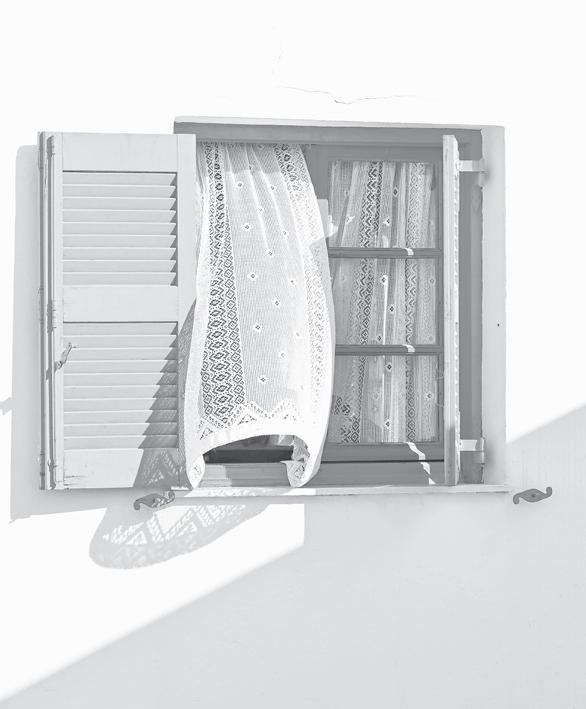

Create a cool environment. Overnight and during the cooler parts the day, encourage airfow by opening windows on opposite sides of the building. This brings in cooler air while giving warm air an exit. While it may seem like a good idea to open all of the windows, keeping windows (as well as blinds and curtains) that face the sun closed can help to cool a room. In multistory homes, try to spend more time on the lower foor(s) as hot air tends to rise. Use fans in effcient ways. Place them in front of windows to encourage the circulation of fresh air. A bowl of ice in front of a fan can also help to cool the air. If using an air conditioner, be sure to check the flters and change them as needed. Use energy-effcient lightbulbs, as they emit less heat. Unplugging electrical appliances can also help as they can emit heat even when they’re not in use. Add indoor plants to your space. For long-term planning, create shade. Roof overhangs, awnings, and shady trees can help to block sunlight from interior
Make schedule adjustments. It has become a norm to do errands
during lunch breaks, but that’s usually the hottest part of the day. Try to be indoors during the most uncomfortably hot times of day. Limit outdoor activities to the early morning and late evening as much as possible.
Wet your skin. We do not always have the time to get into the ocean, especially considering the cleanup required. When this is the case, we can fnd other ways to cool down. A spray bottle with water can be a very effective tool in the summer heat, especially if kept refrigerated when not in use. For an even more relaxing spray, mix two tablespoons of water, two tablespoons of witch hazel (available in pharmacies), four drops of peppermint oil, and four drops of lavender oil in a spray bottle. This mix can be sprayed on the neck, chest, and soles of the feet for a cooling effect, but should not be sprayed on the face.
Get in the water. We are surrounded by water considered to be among the most beautiful in the world. A soak, or even a dip, into the ocean is a wonderful way to
Wear breathable fabric. Natural fbers are the way to go. Cotton and linen clothing are the best ways you can dress yourself for the rising heat. Opt for lightweight, loose-ftting pieces, and reach for the lighter colors, as they will refect the heat rather than absorbing and bringing it closer to your body. People in bigger bodies may opt for undergar ments that prevent the rubbing of the thighs. Clothing items for this purpose can include boy shorts, briefs, biker shorts, and chafing shorts, which are specifcally designed to prevent thigh chafng.

cool down.
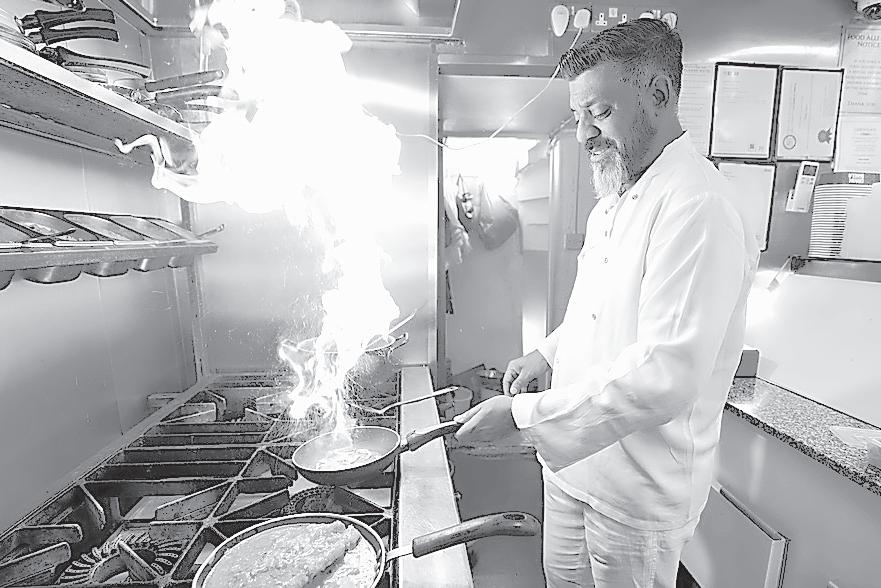
Prepare cooler meals. This is not the best time of year for baking macaroni or cooking peas and rice with barbecue chicken. It’s time for salads, fruit, shakes, and smoothies. Opt for foods with high water content. Try not to add heat to the house with cooking and baking. When necessary, cook and bake in the coolest parts of the day.
Britain's economic woes fuel discontent with Brexit a decade after historic vote to leave EU
By DANICA KIRKA Associated Press
LONDON (AP) — Simon Boyd’s frm makes prefabricated steel structures on the south coast of England and ships them to customers as far away as Ghana and Barbados. Mike Hawes represents Britain’s carmakers as the head of the Society of Motor Manufacturers and Traders. The business leaders were on different sides of the debate when Britain voted to leave the European Union in 2016. But 10 years later they are both frustrated by Brexit.
A decade ago, backers promised that Brexit
decision to support Brexit, but blames lackluster results on politicians who weren’t committed to delivering. Britain has also experienced unexpected challenges over the past 10 years, from the COVID-19 pandemic to the wars in Ukraine and the Middle East, Boyd said.
Economists see fundamental issues
The Brexit vote quickly increased costs for businesses as they prepared for an uncertain future during years of negotiation over the U.K.’s new relationship with the EU. Then, when Britain fnally left the bloc on Jan. 31, 2020, new rules governing trade in goods and services made it more expensive and time-consuming to do business with European partners.

would be the key to a bright new future where, freed from the edicts of EU bureaucrats, Britain would regain control of its laws and its borders and the economy would boom. But the reality failed to live up to the hype as Britain struggled to adjust to life without unfettered access to the 27-nation free trade bloc and its market of 450 million people.
Economic growth is anemic, taxes are high, public services are creaking and successive governments have been unable to stem the fow of migrants who wash up on the English Channel coast in infatable boats. As a result, it's not exactly a happy anniversary.
“No, it’s not delivered everything that was said it would deliver on the tin, but it is delivering,” Boyd told The Associated Press. “It’s very sluggish. You only need to look at the statistics to see that.” Boyd, the managing director of REIDSteel, which employs about 130 people at a plant in Christchurch, England, still stands behind his
Creon Butler, who leads the global economy and fnance program at Chatham House, a London-based think tank, said there were long-term consequences to leaving the European single market.
“Whatever was promised, whatever one hoped for, (you have) to accept that it has been a major loss of wealth and prosperity for us through the choice we made to leave,” he said.
“That’s a decision the British public have made, and they’re entitled to make it, but it does make us poorer,” he added.
By most measures, the British economy today is weaker than it would have been without Brexit, according to a recent report published by the National Bureau of Economic Research in Cambridge, Massachusetts. The report, compiled by researchers in Britain, Germany and the U.S., compares the performance of the U.K. economy to 33 other countries, including its European neighbors, the U.S., Canada and Japan. Brexit has reduced Britain’s gross domestic product, a broad measure of economic output, by 6% to 8%, investment by 12% to 13% and productivity by 3% to 4%, the researchers concluded.
Carmakers had many challenges Britain’s carmakers were early and outspoken opponents of Brexit, arguing that increased red tape surrounding shipments of parts and fnished vehicles would damage an industry built on a network of interlinked factories in multiple European countries. Those concerns reduced investment in the U.K. auto industry because international carmakers were less likely to see Britain as an
Go to cooler spaces. Now may be a good time to make more appearances in the offce if you usually work from home. Instead of turning your own air conditioner on, go enjoy the cooler temperatures of the workplace, helping both your pocket and the planet. Visit the many art galleries and museums that are happy to welcome you and for a tour. Walk around the mall.
Combat respectability politics. Colonialism has certainly done a number on us, and this is clear when we see people dressed in full suits, wearing pantyhose, and sporting closed shoes, all in the name of professionalism. More important than what anyone wears is their skill and delivery in the workplace. There’s no need to be physically uncomfortable at work or while doing errands. Dress for comfort. It’s too hot for black jackets. It’s too hot, in fact, for any jackets. It’s not necessary to wear makeup if
you would rather not. There’s no need to cover your shoulders to receive services that must be provided by the government. There’s no dress code for citizens, and General Orders do not apply to us the way they do to civil servants. Wear your sundress. Wear your shorts. Wear your sandals. Your attire does not determine the level of service you receive, and it’s your right to challenge anyone attempting to bar your access to public services.
Recommendations
1. The Very Secret Society of Irregular Witches by Sangu Mandanna. Feminist Book Club, hosted by Equality Bahamas and Poinciana Paper Press, has selected a lighter-than-usual read for the month of July. The protagonist, Mika Moon, knows she has to hide her magic, but she posts videos “pretending” to be a witch, not expecting to be taken seriously. Then, she is asked to go to a remote island to teach young witches. The New York Times called The Very Secret Society of Irregular Witches “an effervescent stunner.” The Washington Post said, “It’s an enchanting story that brings to life the wonders of fnally fnding your people and letting love fnd you.” Join Feminist Book Club in reading this book and attend the in-person meeting at Poinciana Paper Press, 12 Parkgate Road, on Wednesday, July 15 at 6pm. Register to receive Feminist Book Club updates: tiny.cc/fbc2026.
2. Eve on NPR Tiny Desk. This one is for the millennials that remember when Eve became the “Ruff Ryders’ First Lady.” Let There Be Eve was an album that reminded us that women in rap were not an anomaly and were, in fact, necessary. From “Gotta Man” which was fun and upbeat to “Love is Blind” which delivered commentary on intimate partner violence, Eve captured the attention of many. In her NPR Tiny Desk concert, she performed some of our favorites.
attractive way into the European market. As a result, the industry is hoping that international trade deals will help boost demand for its products.
“We have been able to move with the times, so to speak, but undoubtedly it’s putting us at more cost into the industry, more pressure,” Hawes said.
Brexit supporters trumpeted the freedom to negotiate its own trade agreements as one of the primary benefts of leaving the EU, and Britain has since signed dozens of deals with countries ranging from Australia to India to the United States.
But EU countries still account for 41% of Britain’s exports and half its imports, according to the latest government fgures.
During more than 50 years as a member of the EU and its predecessors, many British businesses also came to rely on Europe as a source of cheap labor, especially after the bloc’s eastward expansion in 2004.
That pipeline dried up after Brexit ended the free movement of labor, one of the bloc’s founding principals.
The owners of Britain’s curry restaurants, an integral part of communities from Aberdeen in Scotland to Aberystwyth in Wales, have been especially hard hit by the loss of Eastern European workers who went home rather than deal with burdensome new visa requirements. And they’re furious because the industry backed Brexit after assurances it would lead to more visas for South Asian cooks, something that hasn’t happened.
“We feel betrayed,″ said Oli Khan, president of the Bangladesh Caterers Association UK, who serves up tandoori lamb chops, vegetable biryani and chili paneer at his restaurant in Stevenage, north of London.
In an effort to mitigate some of the problems caused by Brexit, Prime Minister Keir Starmer has begun talks with the EU about rebuilding a closer relationship as he seeks to energize the country’s stagnant economy.
Starmer won't fnish them, however. On Monday, he said he is stepping down.
Polls suggest frustration with Brexit is growing Starmer’s move comes as a survey by the Ipsos polling frm, the Policy Institute at King’s College London and the think tank UK in a Changing Europe suggests that frustration with Brexit is growing.
The survey of 2,245 Britons aged 18 and older carried out in May, found that 48% said Brexit was going worse than they expected, up from 28% in March 2021. Some 9% said it was going better than expected and about one in three said it was going as expected.
But Boyd said the most important survey is still the one that took place on June 23, 2016, when 51.9% of those who cast ballots — or 17.4 million people — voted to leave EU. He continues to believe that Britain has a brighter future outside the EU.
Brexit hasn’t delivered on its promise because politicians, large corporations and other entrenched interests worked to thwart the will of the people, Boyd said. This resulted in a Brexit deal that kept Britain too closely tied to the EU and unable to realize its potential as an entrepreneurial nation flled with creative, hardworking people, he said.
And there's no going back, he said.
“Imagine if we were to rejoin ... today. The conditions upon which we would be allowed back in would be akin to us re-boarding the Titanic on the condition that we surrender our life vests frst,″ he said. “Need I say any more?”
LONDON (AP) — Britain says it will ban people under 16 from using a range of social media apps, including Snapchat, TikTok and YouTube, a decision intended to protect young people from harmful content and excessive screen time.
The U.K. joins a global movement to enforce age-based restrictions or requirements for access to social media. Some parents and child advocacy groups have welcomed them, but critics say they are ineffective and come with privacy concerns.
Here's what some other countries are doing:
Australia
The ban there was described as a global frst when it was introduced in December. It bars under-16s from holding accounts on Facebook, Instagram, Kick, Reddit, Snapchat, Threads, TikTok, X, YouTube and Twitch. Technology frms can be fned up to 49.5 million Australian dollars ($35 million) if they fail to take reasonable steps to remove the accounts. No fnes have been handed out. The government says companies have shut down almost 5 million accounts identifed as belonging to children.
Indonesia

A 12-year-old boy plays with his personal phone outside school in Barcelona, Spain, Monday, June 17, 2024.
AP Photo/Emilio Morenatti, File
that could expose them to addiction, pornography, online scams and cyberbullying, including YouTube, TikTok, Facebook, Instagram, Threads, X, Bigo Live and gaming platform Roblox.
Malaysia
The government announced in March that under-16s will not be allowed to have accounts on platforms
Social media platforms with at least 8 million users in Malaysia, including Facebook, Instagram, TikTok and YouTube, must implement age-verifcation systems and block users under 16 from creating accounts. Companies that fail to comply can face penalties of
up to 10 million ringgit ($2.5 million).
Brazil
A law that took effect in March stops short of a full ban but requires people under 16 to link their social media accounts to a legal guardian to ensure supervision. The legislation also prohibits platforms from using addictive features such as infnite scroll and the automatic playing of videos. Digital services are also obliged to implement an age verifcation mechanism that goes beyond self-declaration that the user is over 18 to protect them from accessing inappropriate or prohibited material.
Canada
The government introduced legislation this month to create a regulator, the Digital Safety Commission of Canada, which could ban children younger than 16 from having social media accounts unless the companies show they can remove harmful content including nonconsensual intimate images and material that induces children to harm themselves, incites violence or foments hatred.
Others
Other countries, including France, Spain, Denmark, Greece, Thailand and South Korea, are considering or in the process of introducing measures to restrict minors' access to social media.
Man who died in Texas plane crash was a key figure in seeding Austin's tech boom
By ED WHITE Associated Press
THE man who died when a small jet crashed on a Texas highway was an entrepreneur well-known in the state for being at the center of Austin’s turbocharged evolution as a technology hub.
Joshua Baer, 50, described himself as an “Austinpreneur,” a reference to the state capital and his enthusiasm for getting people into business. He founded Capital Factory, which has grown into an important Austin-based venture capital frm supporting a range of technology startup companies, from robots to autonomous ships.
Baer’s LinkedIn page shows him wearing a black T-shirt and pointing at the message: “I help people quit jobs.” His email had a similar handle. Capital Factory's downtown headquarters is among the offces of tech giants like Google.
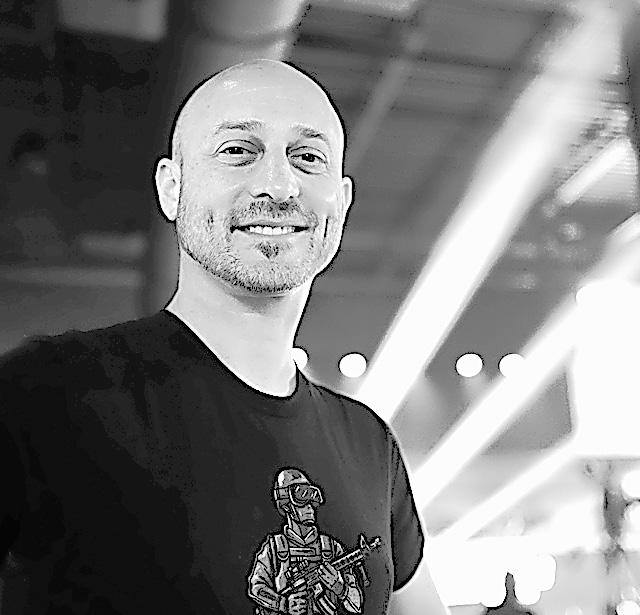
Capital Factory, said his business partner was a “true super connector.”
developer at Trilogy Inc. He started Capital Factory in 2009 and regularly held business chats with people at a coffee shop.

French president urges US to share cutting-edge AI and democracies to cooperate on regulation
By JOHN LEICESTER and KELVIN CHAN Associated Press

EVIAN-LESBAINS, France (AP) — French President Emmanuel Macron on Wednesday urged the world's wealthy democracies to work together on regulating advanced artifcial intelligence systems, speaking at a
high-level meeting that included top AI executives.
OpenAI CEO Sam Altman issued a similar plea at the Group of Seven summit of major industrialized nations in France, saying an "international forum" is needed for countries to draw up AI guardrails. He said the task of AI safety should not be left to tech companies.
Overshadowing the discussion on AI was President Donald Trump's administration's directive last week, preventing foreign nationals from using Anthropic’s newest and most powerful artifcial intelligence models.
Macron said it was a “good thing” that US offcials recognize that so-called frontier AI models could be dangerous, but he also criticized it as a “strictly nationalist” reaction.
A city's push for facial recognition on public buses ignites debate over security and privacy
By JEFF McMURRAY Associated Press
Offcials in Kansas City, Missouri, are preparing to equip cameras on some public buses with facial recognition software capable of identifying passengers who appear on a list of banned riders or missing persons.
Supporters and opponents alike view the effort as a major litmus test for tapping the AI-powered software on a U.S. public transportation system, positioning Kansas City as the latest epicenter of a ferce debate over whether the safety benefts of artifcial intelligence are worth the privacy costs.
“The idea of running face recognition on a camera that is pointed on live spaces in public is a line that until recently has never really been crossed in the last 25 years,” said Jay Stanley, senior policy analyst for the Project on Speech, Privacy and Technology at the American Civil Liberties Union. The state of Missouri declined to help fund the project as expected due to concerns with the facial recognition component. Still, the city is pushing ahead with local and federal money, said Tyler Means, chief mobility and strategy offcer at the Kansas City Transportation Authority. AI chatbots hit the dating scene, becoming the lovelorn's modern-day Cyrano
Baer listed his life strategy as, “Plant lots of seeds. Water everyone's. Repeat.” And people noticed: The Austin mayor in 2023 gave him a key to the city, a symbol of civic honor.
Bryan Chambers, co-founder and president of
“Whether you’re in technology or not, there’s a hole in the heart of Austin today,” Thom Singer, CEO of the Austin Technology Council, which promotes the local tech industry, said of Baer’s death.
Baer was aboard a business jet that crashed Tuesday on a highway in Laredo, Texas, after the pilots reported mechanical problems andrequested to make an emergency landing at an airport. His LinkedIn profle said he had a wife and three children. It wasn't known whether three young people who survived the crash were family members.
After graduating from Carnegie Mellon University in Pittsburgh, where he created an email marketing business, Baer moved to Austin in 1996 to work as a software
“My hobby is startups,” Baer told the Austin American-Statesman in 2012. “I don’t watch sports or anything like that. So this is what I do. ... I want to be an investor in every great tech company that comes out of Austin. That’s probably unrealistic, but I’m going to try anyway.”
Baer often spoke to high school students and had the title of “entrepreneur in residence” at the University of Texas.
“He was passionate that technology could change the world and make people's lives effcient and better,” Singer said. “And if entrepreneurs did it right, they could make money and help their communities. He believed in those two things.”
Texas U.S. Sens. Ted Cruz and John Cornyn said they were saddened by Baer’s death. Cornyn wrote on X that Baer was an “innovative & creative leader in Austin’s entrepreneurial culture.”
By KAITLYN HUAMANI AP Technology Writer

Marie Lansley recently started a new job in a new city while searching for a new partner. In her dating pursuits, the freshly minted San Franciscan said she’s been “trying everything”— including some help from artifcial intelligence.
AI chatbots have become — for her and many others — de facto dating coaches and relationship experts.
Lansley, 36, consults AI chatbots for help in starting conversations, something she said she fnds diffcult on dating apps despite being comfortable doing so in person. Although she’s optimistic about the possibilities, she acknowledges the incongruency between the art of romance and the precision of technology.
AI adopters have been using the tech in varied ways to fnd romance. Some patronize AI matchmaking services. Others use AI tools to help build their dating profles. But the most common way is enlisting chatbots to draft messages to potential matches and interpret messages they receive.




By JILL LAWLESS Associated Press
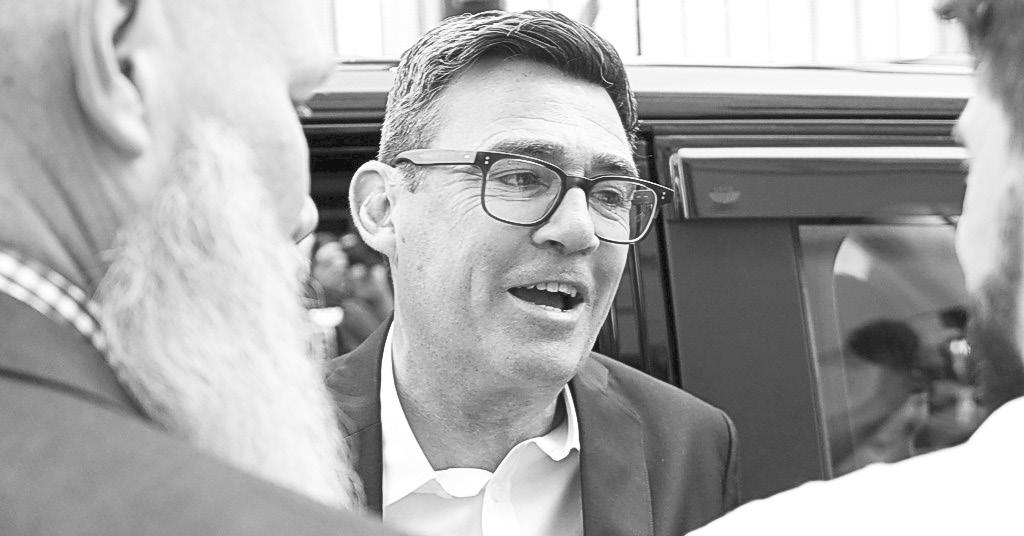
NEWLY elected British lawmaker Andy Burnham met the man he hopes to replace, Prime Minister Keir Starmer, on Tuesday as he prepares for a leadership contest in which he may be the only contender.
Burnham is the strong front-runner to succeed Starmer, who announced Monday that he would step down within weeks after two years in ofce marred by missteps and judgment errors that eroded his standing with his party and the public.
Burnham, a former Cabinet minister who served since 2017 as mayor of Greater Manchester, won a special election last week for a seat in Parliament with the express aim of challenging Starmer for leadership of the Labour Party and the country.
Burnham’s chances got a big boost on Monday when former Health Secretary Wes Streeting, who was considered his main rival, announced his support.
Starmer and Burnham met Tuesday for the frst time since last week’s special election. Neither side released details of what was discussed. Burnham was also meeting Labour lawmakers as he seeks to build momentum for his bid.
The UK parliamentary system allows governing parties to change leaders — and thus prime ministers — without the need for a national election. The next general election doesn’t have to be held until 2029.
Nominations for the Labour leadership will open on July 9 and close a week later. If Burnham is the only contender, he could be prime minister by July 17. If there is a contest, the winner should be in place by the time Parliament returns from its summer break on Sept. 1.
Starmer told the weekly meeting of his Cabinet on Tuesday that he will try to make the transition to his successor as easy as possible. He told ministers that he
wants an “orderly transition” and for whoever replaces him to succeed, his ofce said.
He is also keeping up a busy schedule, trying not to look like a lame duck during his fnal days in ofce. But while Starmer wants to carry on with business as usual, he’s not allowed to make new major policy announcements or spending commitments during what remains of his time in ofce.
The European Union says a key UK-EU summit scheduled for July 22 will be postponed because of the uncertainty in Britain.
The British government is still expected to publish a long-awaited defence investment plan — which sparked the resignation of Defence Secretary John Healey on June 11 — before a NATO summit in Turkey on July 7 and 8 that Starmer is likely to attend.
Burnham was a popular mayor of Greater Manchester, overseeing a period of rapid regeneration for the city in northern England where the Industrial Revolution was forged. He has pledged to repeat his signature brand of “Manchesterism” on a national scale.
Many Labour members hope Burnham’s people skills and charisma can connect with the public more than the stolid, managerial Starmer could ever do.
But Burnham’s policies in many areas are unknown and untested. Some Labour lawmakers want to see a party election contest where he would face public debate and scrutiny.
Burnham is expected to make a speech next week outlining some of his economic plans.
Former Armed Forces Minister Al Carns, who quit this month to protest what he saw as inadequate defence spending, said that “we need to have a clear and concise discussion about what this country wants to be.”
He has suggested that he might run for the leadership, but told broadcaster ITV
that “I’m not ready to make a decision on this in any way, shape or form.”
Others have suggested Darren Jones, a senior Cabinet minister and Starmer ally, should run, though he has yet to comment.
Potential candidates need the support of at least 81 Labour lawmakers, a ffth of the parliamentary party, to run. Many argue that a leadership contest will only focus attention on the party’s internal divisions and extend a period of political uncertainty.
Starmer resigned on Monday after a weekend considering his future, acknowledging that the Labour Party no longer thinks “I am best placed to lead us into the next general election.”
He was the sixth prime minister in a decade to stand outside No. 10 Downing St. and announce a departure. It comes as Britain marks the 10th anniversary of its vote to leave the European Union, a decision that still roils the country’s economy and politics.
After weeks of insisting that he would fght to keep his job, Starmer conceded to growing pressure to hand over to a new leader who can try and revive the government’s fagging fortunes. He led Labour to a landslide election victory in July 2024, but his popularity and that of the party have plummeted since then.
Starmer has struggled to deliver promised economic growth, repair tattered public services and ease the cost of living. He has been hamstrung by repeated missteps, including his decision to appoint Peter Mandelson, a scandal-tarnished friend of Jefrey Epstein, as UK ambassador to the United States.
Labour is losing liberal voters to the growing Green Party and facing a rising Reform UK, the Nigel Farage-led anti-immigration party that consistently leads in nationwide opinion polls.
By MARK SHERMAN Associated Press
THE Supreme Court on Tuesday barred a former Louisiana inmate from suing prison ofcials who cut of his dreadlocks in violation of his Rastafari religious beliefs.
The justices condemned what happened to the former inmate, Damon Landor. But they ruled that a federal law designed to protect the religious rights of inmates does not permit lawsuits for money damages against individuals even when rights are violated.
The high court, in a 6-3 decision, agreed with lower courts that without exception had ruled that the law, the Religious Land Use and Institutionalized Persons Act, can’t be used to hold those who violate inmates’ rights fnancially responsible.
The justices refused to apply the rationale from their decision in 2020 that allowed Muslim men to sue over their inclusion on the FBI’s no-fy list under a sister statute, the Religious Freedom Restoration Act.
The Justice Department, which argued against the plaintifs in the no-fy list case in President Donald
Trump’s frst Republican administration, had sided with Landor. Nothing in the law dealing with prisoners’ religious rights authorizes lawsuits against individual ofcers, Justice Neil Gorsuch wrote for the court. In a dissent, Justice Ketanji Brown Jackson wrote that state prison ofcials will have little incentive to abide by federal law. “It is not often that a real-life incident so clearly illustrates Congress’s reasons for adopting legislation, or the Constitution’s wisdom in enabling it,” Jackson wrote in an opinion that was joined by her two liberal colleagues. No one defended what happened to Landor during his fve-month prison term in 2020. When he entered the prison system, he carried a copy of an appeals court ruling in another inmate’s case holding that cutting religious prisoners’ dreadlocks violated the federal law. At his frst two stops, ofcials respected his beliefs. But things changed when he got to the Raymond Laborde Correctional Center in Cottonport, about 80 miles (130 kilometres) northwest of Baton Rouge,
for the fnal three weeks of his term.
A prison guard took the copy of the ruling Landor carried and tossed it in the trash, according to court records. Then the warden ordered guards to cut his dreadlocks. While two guards restrained him, a third shaved his head to the scalp, the records show. Landor sued after his release, but lower courts dismissed the case. The 5th U.S. Circuit Court of Appeals lamented Landor’s treatment but said the law doesn’t allow him to hold prison ofcials liable for damages.
Louisiana wrote that “the state has amended its prison grooming policy to ensure that nothing like petitioner’s alleged experience can occur.” The Rastafari faith is rooted in 1930s Jamaica, growing as a response by Black people to white colonial oppression. Its beliefs are a melding of Old Testament teachings and a desire to return to Africa. Its message was spread across the world in the 1970s by Jamaican music icons Bob Marley and Peter Tosh, two of the faith’s most famous exponents.
THE Board of the Ranfurly Home for Children is pleased to announce that a charity event held earlier this month in honour of the late Annie B. Ralston raised over $25,000 through ticket sales and a silent auction.
With the kind support of Sir Franklyn and Lady Sharon Wilson, who graciously hosted the evening at their private residence, the event brought together an extraordinary gathering of individuals committed to uplifting vulnerable children in The Bahamas.
Organised by Annie B’s daughter, Kyla Ralston, the evening served as a heartfelt tribute to her mother’s enduring spirit of generosity and community service.
Annie B’s presence was felt throughout the night in the warmth of the stories shared, the laughter exchanged, and the remarkable generosity shown by all in attendance.
Mrs Joey Premock, President of the Ranfurly Home for Children, attended and assisted in organising the evening, ensuring the Home was meaningfully represented from the outset. Her presence underscored the importance of the event’s mission and the continued work of the Ranfurly Home in supporting children across the nation.
The silent auction featured exceptional donations from local business owners, artists, and friends, including unique pieces from personal collections. Special works by artists John Cox and Ambassador Wendall Jones helped raise significant funds, each item reflecting the deep respect so many held for Annie B.
Distinguished guests included H.E. Mr. Smita Rossetti, British High Commissioner to The Bahamas, her husband Mr Matteo Rossetti, CEO of Kings
College, and Sir Gerry DeVeaux, songwriter, record producer, creative director, and stylist. Their presence underscored the strong bond between The Bahamas and the United Kingdom, a bond Annie B helped nurture since moving to The Bahamas in 1973 through her relationships, her work, and her unwavering belief in community.
Throughout the evening, guests were moved by heartfelt remarks from several close friends and long-standing supporters of Annie B.
Lady Sharon Wilson, Patricia Mortimer, Michelle Neville, and Michelle White-Crawley each spoke sincerely about their personal relationships with Annie and the values she instilled in those around her.
Their refections highlighted Annie B’s gift for bringing people together and the importance of community unity, not only in support of meaningful causes like the Ranfurly Home, but in everyday life. Andrew Knowles, who hosted the program, also shared touching messages from far-fung friends from across the globe who could not attend but wished to honour Annie’s memory. Collectively, their words underscored a legacy carried forward by Kyla and embraced by many.
Throughout the evening, guests spoke of Annie B’s remarkable ability to bring people together. Donations were not given solely because of personal connection, but because Annie B surrounded herself with individuals who shared her values of kindness, generosity, and service. Her legacy continues through her daughter Kyla, who embodies the same light, love, and civic spirit that defned Annie’s life.