SPORTS

THE Bahamas Baseball
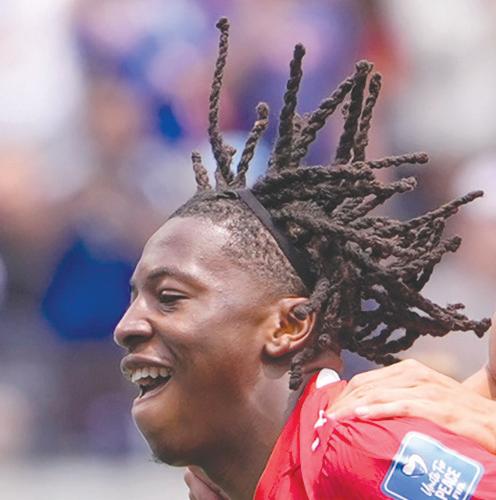
Association’s 2026 Andre Rodgers Baseball Championships is now swinging into high gear at both the Andre Rodgers Baseball Stadium and the Baillou Hills Sporting Complex.
One of the match-ups on day one of the championships yesterday was played at the Andre Rodgers Baseball Stadium in the under-16 division where the Legacy Baseball League shutout the Long Island Baseball 9-0.
Legacy had a chance to close the door in the bottom of the third, but they couldn't get the extra run
needed with a runner on third with two out. They went to the top of the fourth and got Long Island out 1-2-3 as time expired.
It was the second game of the day for Legacy as they rebounded from a loss to Freedom Farm. Long Island played their frst game of the day.
"It's a great experience, especially for the kids. Every year we come out here and we play hard," said Legacy's coach David Hoyte. "The kids love to compete against the diferent islands."
Hoyte said they are right where they want to be after the frst day at 1-1. If they can win their next game today in an island showdown against the Grand
CHICAGO (AP) —
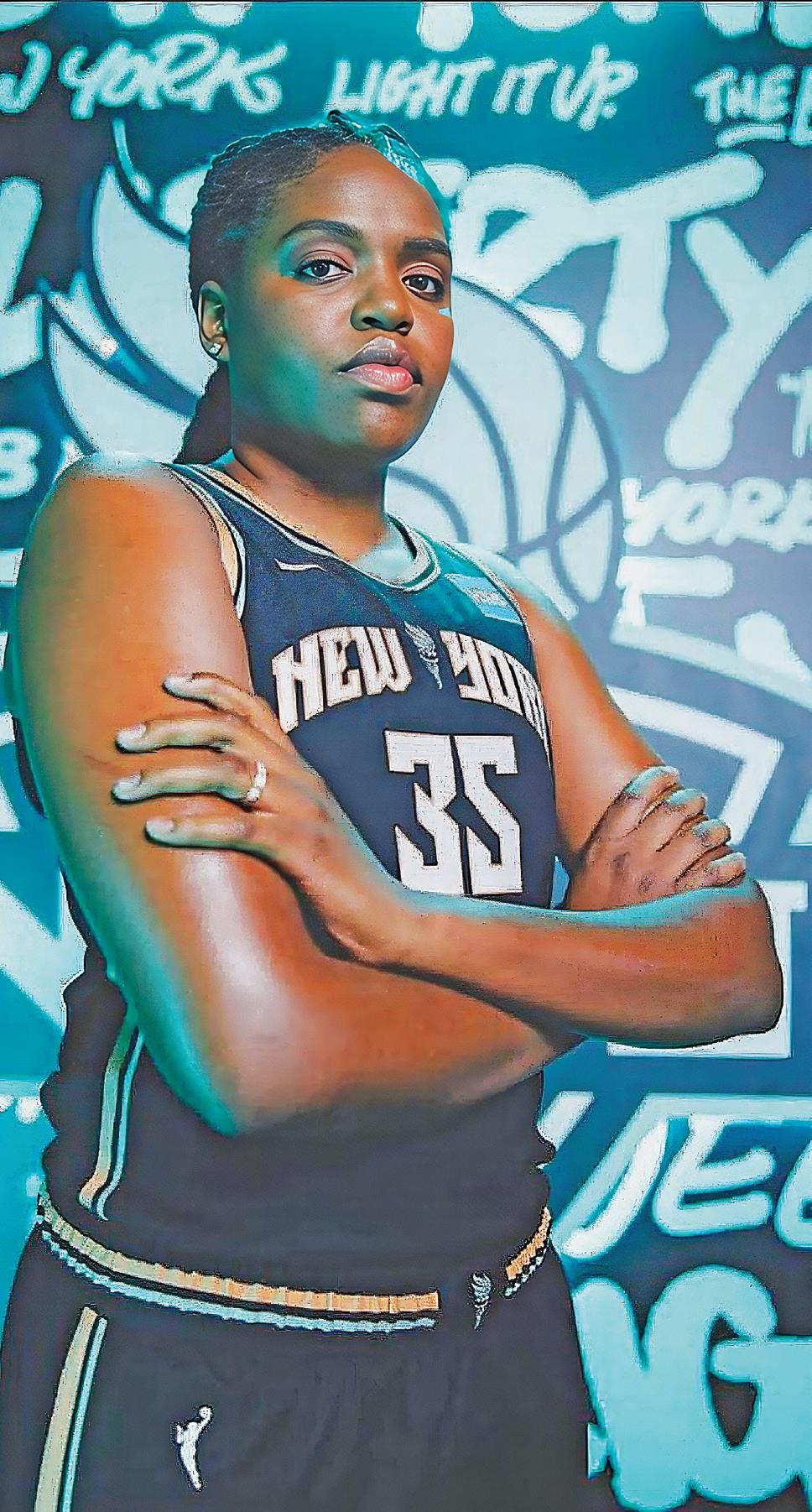
Sabrina Ionescu hit the winning layup with 10 seconds remaining, Jonquel Jones scored 19 points and the New York Liberty beat the Chicago Sky 96-95 on Wednesday night in Commissioner’s Cup play.
Jones, who also contributed three assists, a block and steal, hauled in eight rebounds and fnished 6 for 9 from the feld. Breanna Stewart and Satou Sabally each scored 17 points, and Rebekah Gardner added 10 of the bench.
Ionescu subbed back onto the foor with 15.6 seconds remaining, caught the ball and drove to the basket before fnishing with her
left hand to seal the Liberty's eighth-straight win. She fnished the night with 10 points.
Rookie Sydney Taylor scored 24 points in her frst career start, hitting 57% from downtown, for the Sky. Olivia Miles is the only rookie with more 20-point games this season. Gabriela Jaquez, also a rookie, added a season-high 22 points for Chicago. The Liberty clinched a perfect Commissioner’s Cup record versus the East with the win.
Up next The Liberty host the Washington Mystics today. The Sky visit the Dallas Wings on Saturday.
Bahama Little League, he is confdent that they will have a good chance to get into the medal round.
For Long Island, Jeiter Miller, coach of Long Island, said some of their players are playing for the frst time, so they just have to overcome the jitterbugs.
"The guys can only compete at their level, so once they give it their all, that is all we are looking for," Miller said. "We just have to come out tomorrow and play some more baseball."
The four-day championships, sponsored by the Brice-Newball Foundation, will continue today with a series of games in all seven divisions. The ofcial opening ceremonies will take place at 7pm today. The
championships will be played all day on Saturday and will conclude on Father's Day on Sunday with the champions being crowned.
• Here's a look at some of the other scores from games played yesterday:
20U Division JBLN knocked of the Abaco Youth Baseball League 13-3. Both teams scored a run in the frst before Abaco went up 3-1 in the second, only to watch as JBLN responded with fve in the bottom to double the score.
After getting shut out in the top of the third, Abaco was helpless as JBLN paraded for seven runs to complete the game via the 10-run rule.

14U Division Freedom Farm blanked the Community Baseball League 14-0, scoring six runs in the frst, fve in the second and three in the third in their abbreviated three-inning afair via the mercy rule.
JBLN routed the Abaco Youth Baseball 17-0 with three runs on the scoreboard in the bottom of the frst and 14 more in the third for their abbreviated three-inning massacre, topped by the mercy rule as well. JBLN didn't have my mercy, stopping the Abaco Youth Baseball League 17-0 in three innings. After scoring three in the frst, they marched to home plate 14 times in the second. Legacy Baseball League held of
Long Island Baseball 8-2, producing four runs in the bottom of the frst, one in the second and three in the third. Long Island came up with one run in both the top of the frst and third.
10U Division Freedom Farm and Legacy from Grand Bahama played to a 1-1 tie. The score was scoreless for the frst three innings before both teams got a run on the scoreboard in the fourth.
8U Division Grand Bahama Little League doubled up its island rivals Legacy Baseball League 16-6. While Legacy struck frst with six runs in the top of the frst, GBLL responded with their 16 runs in the bottom for the abbreviation.
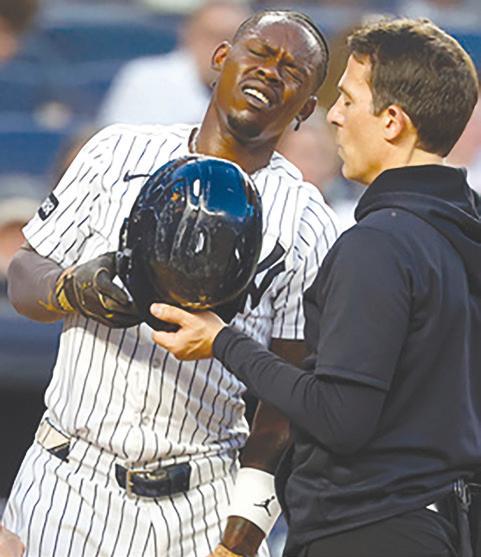
‘Jazz’ as he fouls a pitch off area near his groin
NEW YORK (AP) — Andrew Benintendi launched a pinch-hit grand slam of Camilo Doval in the eighth inning last night and the Chicago White Sox ended a nine-game losing streak at Yankee Stadium with a 5-1 victory over New York.
New York lost Jasrado “Jazz” Chisholm Jr in the fourth when the second baseman fouled a pitch of the area near his groin.
Benintendi batted for Randal Grichuk and was Chicago’s third pinch hitter of the inning. He snapped a 1-all tie by driving Doval’s frst pitch, a 100 mph sinker, into the right-centre seats. It was the fourth career slam for Benintendi, who played 33 games for the Yankees in 2022, and his second pinch-hit homer.
BAHAMIAN junior
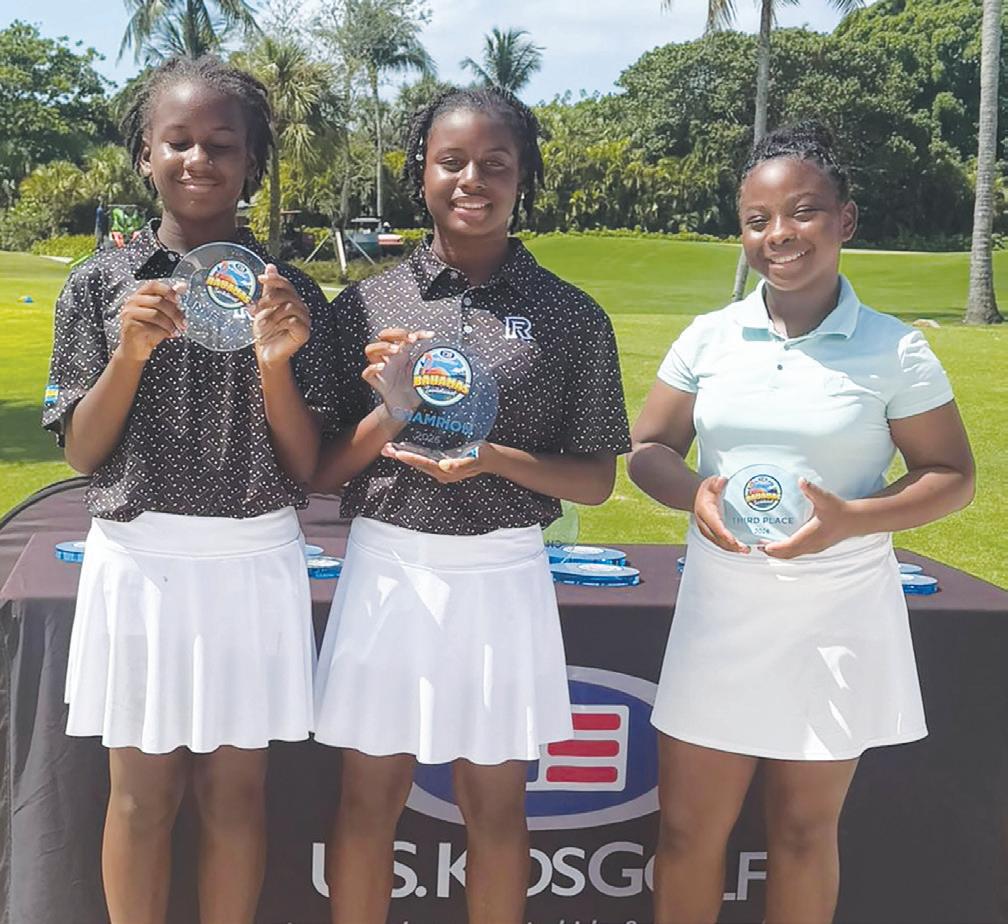
golfers showcased the strength and depth of the nation’s development programmes by capturing eight of 12 division titles at the inaugural US Kids Bahamas Invitational, held June 15-16 at the prestigious Lyford Cay Golf Club.
The historic championship welcomed competitors from across The Bahamas and the United States and served as an ofcial US Kids Golf International Invitational, awarding valuable priority status points toward qualifcation for major international championships, including the US Kids World Championship in Pinehurst, North Carolina.
The tournament produced impressive per
formances throughout the age divisions, highlighted by multiple champions from The Bahamas and strong showings from local players across the leaderboard. Leading the way was the Poitier family, which
Benintendi went deep after
an out.
EVERY athlete understands that training is necessary for improvement. Muscles must be challenged, tendons must be loaded, lungs must be stressed, and the nervous system must be pushed beyond its comfort zone. This is the basic principle of adaptation. The body improves when it is exposed to stress and then given enough time and resources to recover from that stress.
The problem begins when the stress of training and competition exceeds the body’s ability to adapt. At that point, the same process that was supposed to build performance begins to break the athlete down.
In sports medicine, this is often referred to as tissue overload. It is not simply “training too hard.”
It is a mismatch between load and capacity. Load includes everything placed on the athlete: sprinting, jumping, lifting, throwing, competition, travel, poor sleep, emotional stress, and even inadequate nutrition. Capacity refers to what the athlete’s muscles, tendons, bones, joints, and nervous system can tolerate at that moment. Injury risk increases when load rises faster than capacity can adapt. This is why athletes often break down during periods of sudden change. A sprinter moves from general conditioning into intense speed work. A basketball player goes from of-season training into tournament play. A pitcher suddenly increases throwing volume. A young athlete adds school practice, club practice, private coaching, and weekend competition. Each individual session may appear reasonable, but the total accumulated load becomes excessive. The
tissue does not fail because of one workout. It fails because the recovery debt becomes too large. At the cellular level, training creates microscopic disruption. Muscle fbers experience structural stress, especially at the level of the sarcomere, where force is generated. Eccentric contractions, such as decelerating during sprinting or lowering a weight under control, create particularly high mechanical strain. When properly dosed, this damage stimulates repair, remodeling, and increased strength. When repeated too frequently without recovery, the repair process cannot keep up. The result is persistent soreness, reduced force production, altered mechanics, and eventually injury.
Tendons respond diferently from muscle. Tendon tissue adapts more slowly because of its lower blood supply and slower metabolic turnover. This is one reason tendon injuries often develop gradually and are difcult to resolve quickly. Repeated loading stimulates collagen remodelling, but excessive or poorly timed loading can disrupt collagen organisation and lead to tendinopathy.
The athlete may initially feel only mild stifness or discomfort early in training, but over time the tendon loses its ability to tolerate load. This is commonly seen in Achilles tendinopathy, patellar tendinopathy, rotator cuf tendinopathy, and chronic hamstring origin pain.
The nervous system is also deeply involved in overload. Muscle performance is not determined only by muscle size or strength. It depends on how efectively the nervous system recruits motor units, regulates fring rate, coordinates movement, and processes sensory feedback.
During fatigue, motor unit fring patterns change. The nervous system may reduce fring frequency, alter recruitment strategies, or increase reliance on compensatory muscles. This can reduce force output and make movement less efcient.
Golgi tendon organs also play a role in this protective system. These sensory receptors are located at the junction between muscle and tendon and help monitor tension. When tension becomes excessive, they contribute to inhibitory feedback that can reduce muscle contraction and protect tissues from damage. In a fatigued or overloaded athlete, this protective feedback, along with altered muscle spindle activity and reduced neuromuscular control, can change movement quality. The athlete may still be trying to perform at full intensity, but the system is no longer producing clean, coordinated force.
This is one of the reasons injuries often occur late in games, late in races, or near the end of heavy training blocks. The athlete may still have the motivation to perform, but the tissues and nervous system no longer have the same capacity. When fatigue changes timing, force absorption, joint position, or muscle activation, tissues are exposed to stress in a less controlled way. A hamstring strain, ankle sprain, ACL injury, or tendon fare-up may appear sudden, but the underlying vulnerability may have been building for days or weeks. Energy management is central to this equation. The body cannot adapt to training without adequate fuel. High-intensity work depends heavily on carbohydrate availability, while recovery requires sufcient total energy, protein,
hydration, and micronutrient support. When athletes underfuel, the body has fewer resources available for tissue repair, immune function, hormone regulation, and muscle protein synthesis. Low energy availability is especially concerning in youth athletes and endurance athletes, where high training volumes may not be matched by adequate intake. In these cases, poor nutrition does not simply reduce performance; it increases injury risk.
This is why load management cannot be separated from recovery. Sleep, nutrition, hydration, and planned lower-intensity days are not luxuries. They are the biological conditions that allow adaptation to occur. Without them, training stress accumulates without sufcient repair. The athlete may continue to work hard, but instead of becoming stronger, faster, or more resilient, they gradually become slower, weaker, more irritable, and more injury-prone.
The concept of training cycles helps explain how this should be managed. A macrocycle refers to the larger training plan, often built around a full season or year. Within that are mesocycles, which are shorter training blocks focused on specifc goals such as strength, speed, endurance, power, or competition preparation. Microcycles are the smaller weekly or daily structures that determine how hard the athlete trains, when they recover, and how diferent stressors are distributed.
Good programming does not simply increase training endlessly. It alternates stress and recovery in a structured way. A well-designed program may intentionally overload the athlete for a period,but that overload must be followed by
recovery and adaptation. This is the principle behind periodization. The goal is not to avoid hard training. The goal is to expose the body to enough stress to improve while avoiding the sudden spikes in workload that exceed tissue capacity.
Sports science literature has increasingly emphasized this relationship between workload and injury. Tim Gabbett’s work on the training-injury prevention paradox highlights an important concept: athletes need enough training load to become robust, but sudden excessive increases in load raise injury risk.
Similarly, the International Olympic Committee consensus statements on load in sport emphasize that injuries often occur when training, competition, psychological stress, and recovery are poorly balanced.
The issue is not simply whether an athlete is training hard. The issue is whether the athlete is prepared for the load being imposed.
This has major implications for coaches, parents, and athletes. More training is not always better.
Better-managed training is better. A young athlete who practices with a school team, trains privately, competes on weekends, and lifts without coordinated planning may appear dedicated, but may also be living in a constant state of accumulated fatigue. Without monitoring, that athlete can move from adaptation into overload without anyone recognizing it until pain appears.
At Empire Sports Medicine & Performance, this is one of the reasons we assess more than the painful area. When an athlete presents with recurrent pain, we look at strength, range of motion, movement quality, asymmetry, recovery habits, training

history, and competition load. Where appropriate, objective measures such as force output, limb symmetry, mobility testing, and performance markers help identify whether the athlete is adapting appropriately or compensating under fatigue.
The goal is to understand the system. A sore knee may refect poor hip control, excessive jump volume, inadequate recovery, or a rapid change in training load.
A hamstring strain may refect sprint exposure that progressed too quickly, poor eccentric strength, fatigue-related mechanics, or insufcient carbohydrate availability. A shoulder injury in a thrower may refect volume spikes, loss of internal rotation, weak scapular control, or poor recovery between sessions. The injury is often the fnal expression of a load-management problem that began earlier. For athletes, the lesson is clear. Training hard is important, but training intelligently is what allows performance to last. The body is remarkably adaptable, but it adapts best when stress is progressive, recovery is respected, and energy needs are met. Overload is not the enemy. Unmanaged overload is.
The strongest athletes are not simply those who can tolerate the most pain or complete the most sessions. They are the ones whose training, recovery, nutrition, and competition schedules are organized in a way that allows tissues to adapt. In sport, progress comes from applying stress and then allowing the body to rebuild stronger. If the stress keeps coming without recovery, the cycle breaks. That is when training stops building the athlete and starts breaking the athlete down.
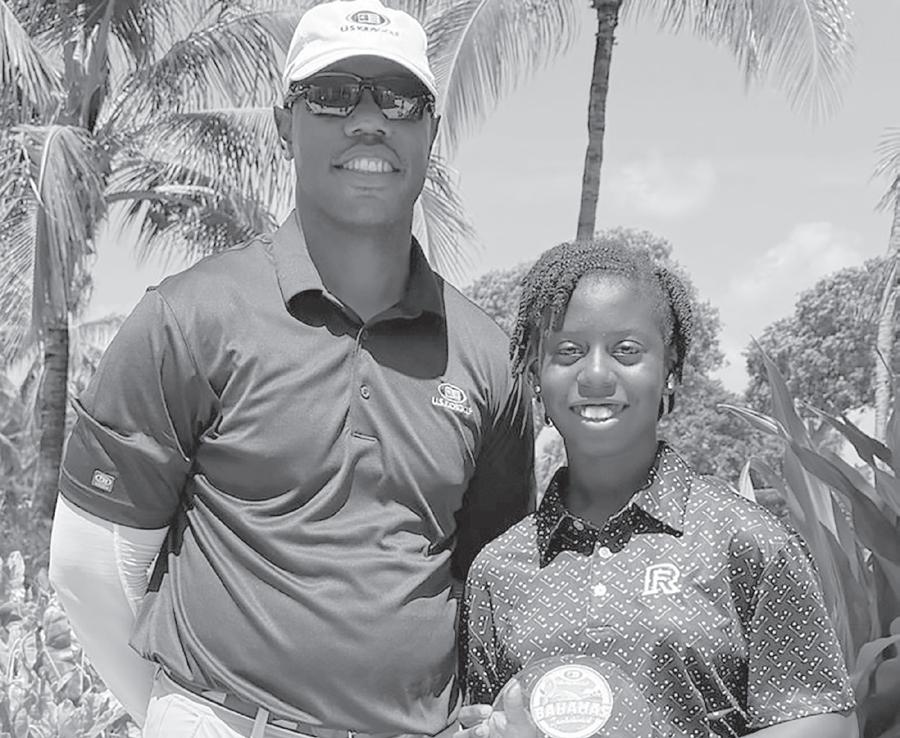
In the boys’ 13-14 division, Deandrey Poitier rallied with a fnal-round 81 to win by a single stroke. His 166 total narrowly edged William Mahelis (167) and William West (168) in one of the tournament’s most competitive fnishes.
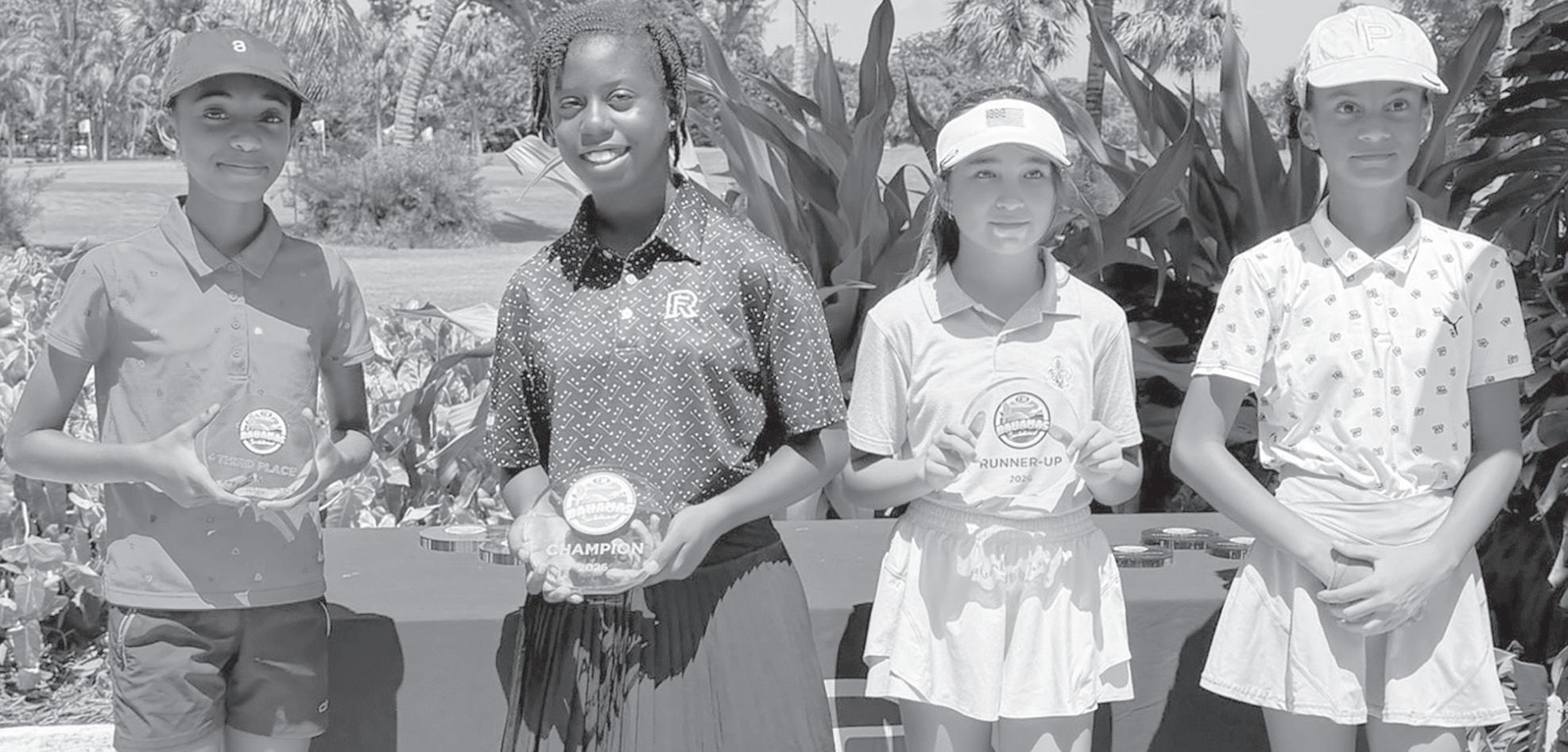
The girls’ divisions featured several of the country’s top junior players. Haley Hall claimed the girls’ 13-14 title with rounds of 80 and 75 for a winning total of 155.
In the premier girls’ 15-18 division, Anissa Robinson produced a strong closing round of 75 to overtake frst-round leader Maddison Carroll and secure the championship at 156. Carroll fnished second at 158, while fellow national standout Chemari Pratt placed third at 161, completing an all-Bahamian podium.
The boys’ 15-18 division also belonged to the home team as Luke Grimes earned the championship with rounds of 76 and 78 for a total of 154. Maximilian Landry fnished just one stroke behind at 155, while Lance Sonnen Valdez claimed third at 156.
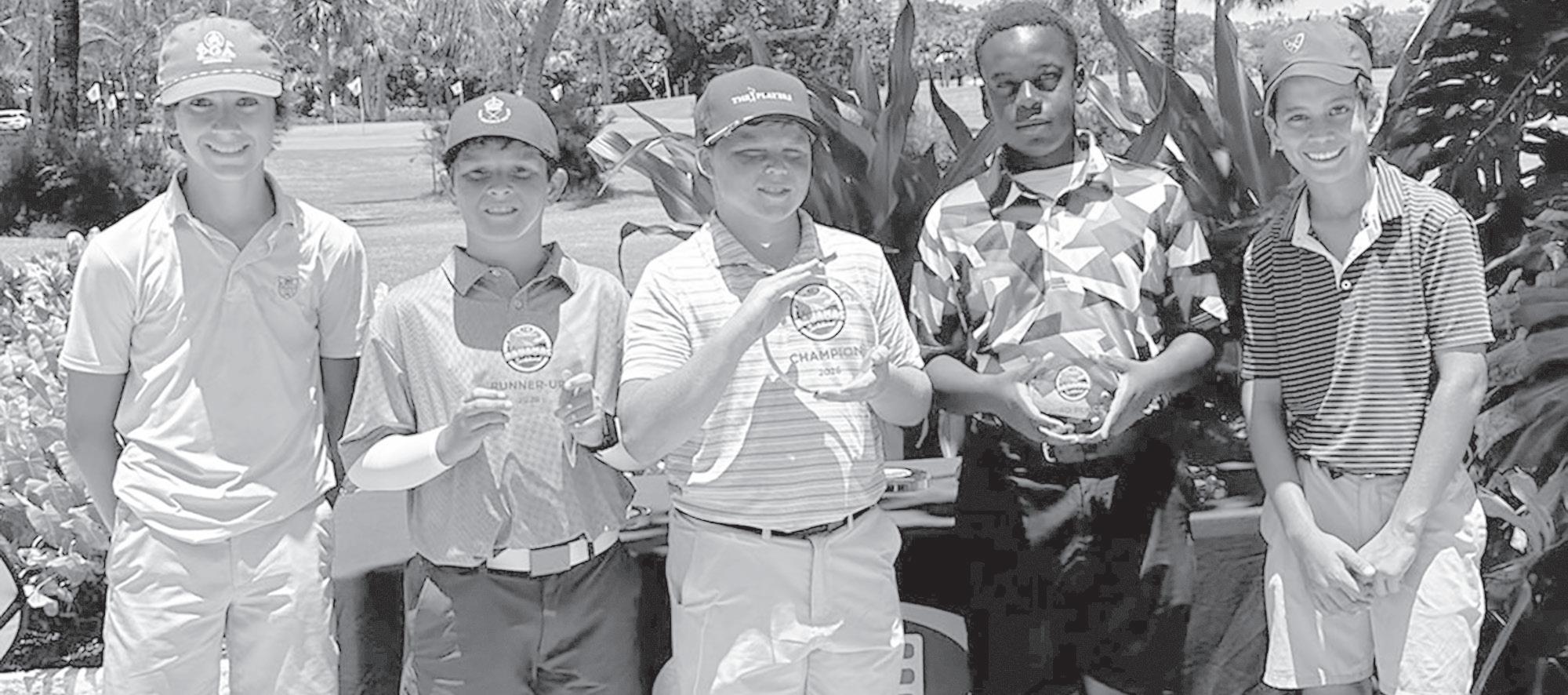
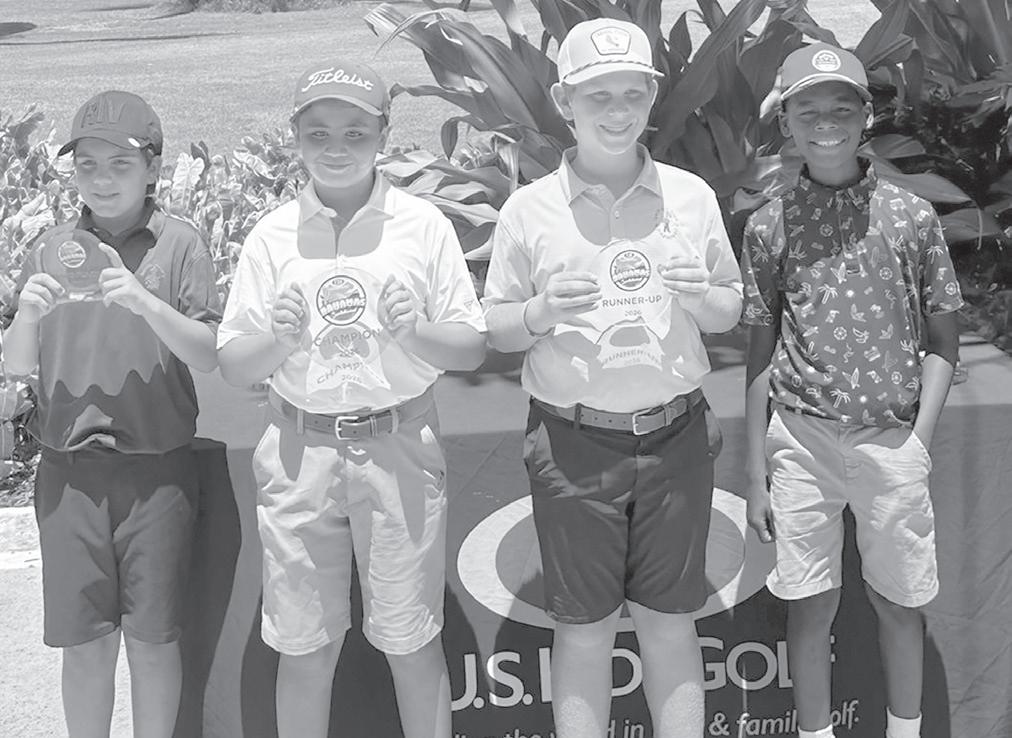
Additional Bahamian champions included Sarah Saulnier in girls’ 8 & under. American visitors captured four division titles, with Dawson Becker winning boys’ 7, Leo Vavra claiming boys’ 8, Benjamin Han taking boys’ 9, and Samuel Dolderer winning boys’ 10. Corbin Conner of Florida earned the boys’ 12 championship. Beyond the champions, Bahamian players recorded
numerous runner-up fnishes.
Enok Saulnier placed second in boys’ 8, Sam Saulnier was runner-up in boys’ 9, Connor Stevenson fnished second in boys’ 12, and several other local competitors recorded topthree fnishes. Tournament organisers praised the quality of play and the sportsmanship displayed throughout the event. The championship also highlighted the growth of junior golf in The Bahamas, where increased
participation, coaching programmes, and tournament opportunities continue to produce nationally and internationally competitive players. With strong local participation, visiting international competitors, and championship-calibre scoring, the inaugural US Kids Bahamas Invitational established itself as one of the Caribbean’s premier junior golf events and a valuable addition to the international US Kids Golf schedule.
2026 Bahamas Invitational Champions
Boys 7 - Dawson Becker (USA) – 103
Boys 8 - Leo Vavra (USA) – 93
Boys 9 - Benjamin Han (USA) – 168
Boys 10 - Samuel Dolderer (USA) – 150
Boys 12 - Corbin Conner (USA) – 172
Boys 13-14 - Deandrey Poitier (Bahamas) – 166
Boys 15-18 - Luke Grimes (Bahamas) – 154
Girls 8 & Under - Sarah Saulnier (Bahamas) – 142
Girls 9-10 - Zion Poitier (Bahamas) – 81
Girls 11-12 - Zaire Poitier (Bahamas) – 159
Girls 13-14 - Haley Hall (Bahamas) – 155
Girls 15-18 - Anissa Robinson (Bahamas) – 156 Bahamian Division Champions (8)
• Deandrey Poitier
• Luke Grimes • Sarah Saulnier
• Zion Poitier
• Zaire Poitier
• Haley Hall • Anissa Robinson
• Girls and boys’ divisions produced eight Bahamian titles overall Notable Runner-Up Finishes
• Zeden Poitier (Girls 9-10)
• Enok Saulnier (Boys 8)
• Sam Saulnier (Boys 9)
• Connor Stevenson (Boys 12)
• William Mahelis (Boys 13-14)
• Maximilian Landry (Boys 15-18)
• Maddison Carroll (Girls 15-18)
THE United States is back in action today at the World Cup against Australia, exactly one week after a stellar performance in its opener that sent expectations for the squad soaring.
Meanwhile, Brazil gets a second chance to look like one of the favourites against Haiti. It remains to be seen how much help the Americans will get from star forward Christian Pulisic in front of what's expected to be an electric crowd in Seattle. Pulisic has a sore left calf and has been working out separately from the team.
Brazil will try to improve following a lackluster 1-1 draw against Morocco last week. The Brazilians are fve-time World Cup champions, but haven't won a title since 2002. Also today, Scotland faces Morocco and Turkey takes on Paraguay.
What to watch on June 19
— United States vs Australia, 3pm EDT in Seattle (Fox/Telemundo/Peacock)
— Scotland vs Morocco, 6pm EDT in Foxborough, Massachusetts (Fox/ Telemundo/Peacock)
— Brazil vs Haiti, 8:30pm EDT in Philadelphia (Fox/ Telemundo/Peacock)
— Turkey vs Paraguay, 11pm EDT in Santa Clara, California (FS1/Telemundo/ Peacock)
US tries for encore performance against talented Australia
The Americans are looking for a suitable encore after one of the country's best performances on a World Cup stage. Folarin Balogun scored two goals while Gio Reyna added another in a 4-1 win over Paraguay that exceeded most fans' expectations.
Pulisic was often the catalyst while the US scored three goals in the frst half, but he came of at halftime after feeling stifness from a calf injury incurred in training. The Milan winger joined his US teammates for a pre-warmup huddle yesterday while wearing a compression sleeve on his calf, then went inside to do individual work in the gym.
Midfelder Weston McKennie said he did not know much about Pulisic’s recovery, but that he hopes he will be able to play.
“I know he really wants to be in, and he’s doing everything that he can, and the staf is doing everything that they can as well,” McKennie said. “But, that’s also another question that’s better to ask him than me.”
Australia also has momentum after its impressive 2-0 win over Turkey.
Nestory Irankunda and Connor Metcalfe scored for the Socceroos, who are playing in their sixth straight World Cup and seventh overall.
Morocco favoured against Scotland
Morocco has been an ascending soccer power, particularly after a run to the semifnals in the 2022 World Cup. The team has improved so much that its 1-1 draw against powerhouse Brazil was a slight disappointment.
“We didn’t come to the US to just play against Brazil,” Morocco midfelder Azzedine Ounahi said. “We
came in to go even farther than we did in Qatar in 2022.”
Scotland has put itself in good position to advance to the knockout round for the frst time after a 1-0 win over Haiti in its opener, but Morocco should be a considerably tougher opponent.
“Against difcult opponents we have to be very good," Scotland coach Steve Clarke said. "We’re a little more comfortable as underdogs. ... Sometimes Scotland prefers it that way.”
Brazil works to rebound vs Haiti
The Brazilians were outplayed early before Vinícius Júnior’s 32nd-minute goal helped them rally for a draw against Morocco.
Coach Carlo Ancelotti said through an interpreter that the team was “a bit anxious at the beginning. Nerves were all over the place.”
Brazil should have a big talent advantage over Haiti, even with star Neymar ruled out because of a calf injury. The Brazilians will be under pressure to secure a lopsided win after the
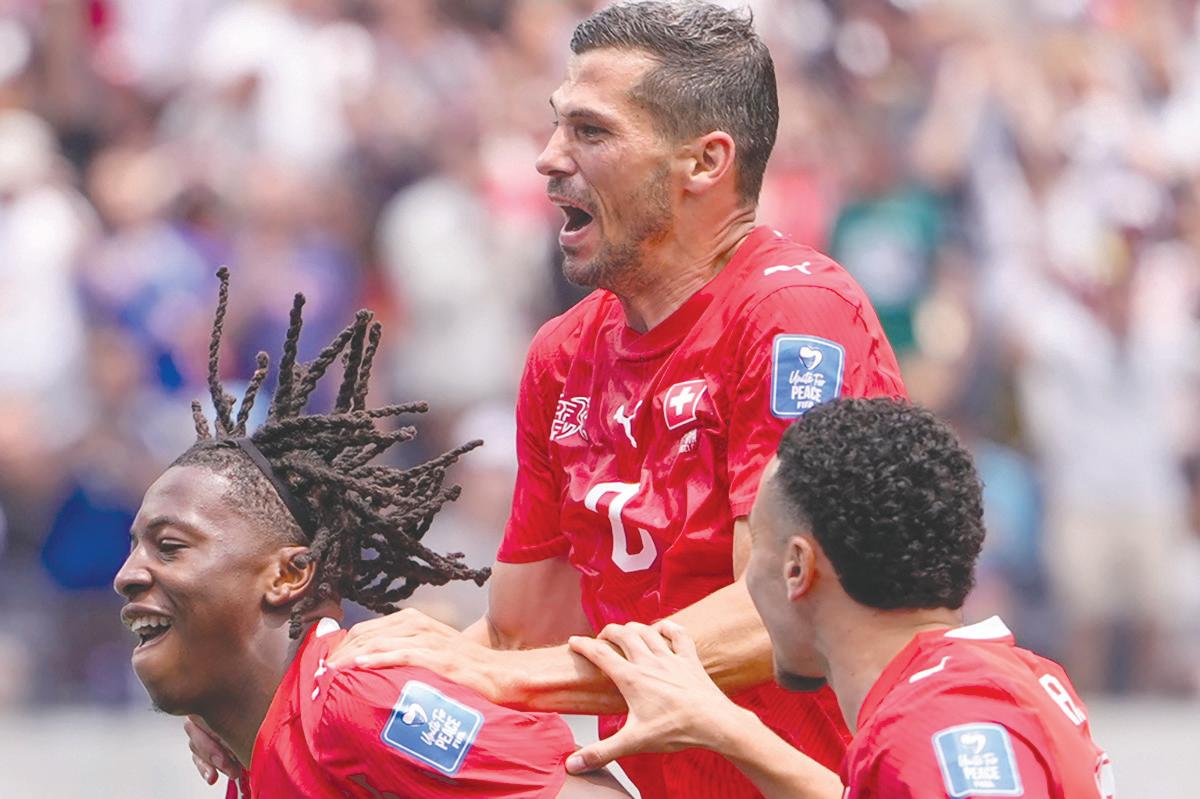
uninspiring performance against Morocco.
For many Haitian fans, there were mixed emotions in a country that has long had a soft spot for Brazil's soccer team.
Turkey, Paraguay both need wins
Turkey and Paraguay are both in need of a win as they try to escape the Group D basement. Not surprisingly, Paraguay's fans weren't happy
with the team's lopsided loss to the United States. Mauricio scored Paraguay's lone goal against the Americans and the team hopes he'll be able to deliver again.
Turkey is in the World Cup for the frst time in 24 years. The team maintained 72% of possession against Australia and outshot the Socceroos 30-9, but couldn’t manage to score.