AROUND DA ISLANDS







Bahamians face record public worker wage bill for upcoming year
By NEIL HARTNELL Tribune Business Editor nhartnell@tribunemedia.net
TOTAL compensation paid to the Bahamian civil service will breach the $1bn mark for the frst time in the upcoming 2026-2027 fscal period, it has been revealed, with its ranks having expanded by 2,342 persons over the past four years.
Budget documents show that the total bill for central
government employees is forecast to hit $1.013bn during the 12 months to end-June 2027, all of which will be funded by Bahamian taxpayers. The just-disclosed Fiscal Strategy Report 2026 breaks this fgure down into $868.2m in wages and salaries; an additional $96.9m in allowances; and some $47.9m in National Insurance Board (NIB) contributions.
A ROYAL Bahamas Defence Force marine accused with two police ofcers in an alleged 400kilo cocaine trafcking conspiracy is being discharged from the Royal Bahamas Defence Force, the agency said yesterday.
The RBDF said Marine Raemon Russell, who was arrested and charged before the courts on June 17, had previously requested to leave the force and was on leave exhausting his outstanding leave. He later applied to rescind his discharge request, but the RBDF said it has initiated the process for his discharge, subject to

By LYNAIRE MUNNINGS Tribune Staff Reporter lmunnings@tribunemedia.net
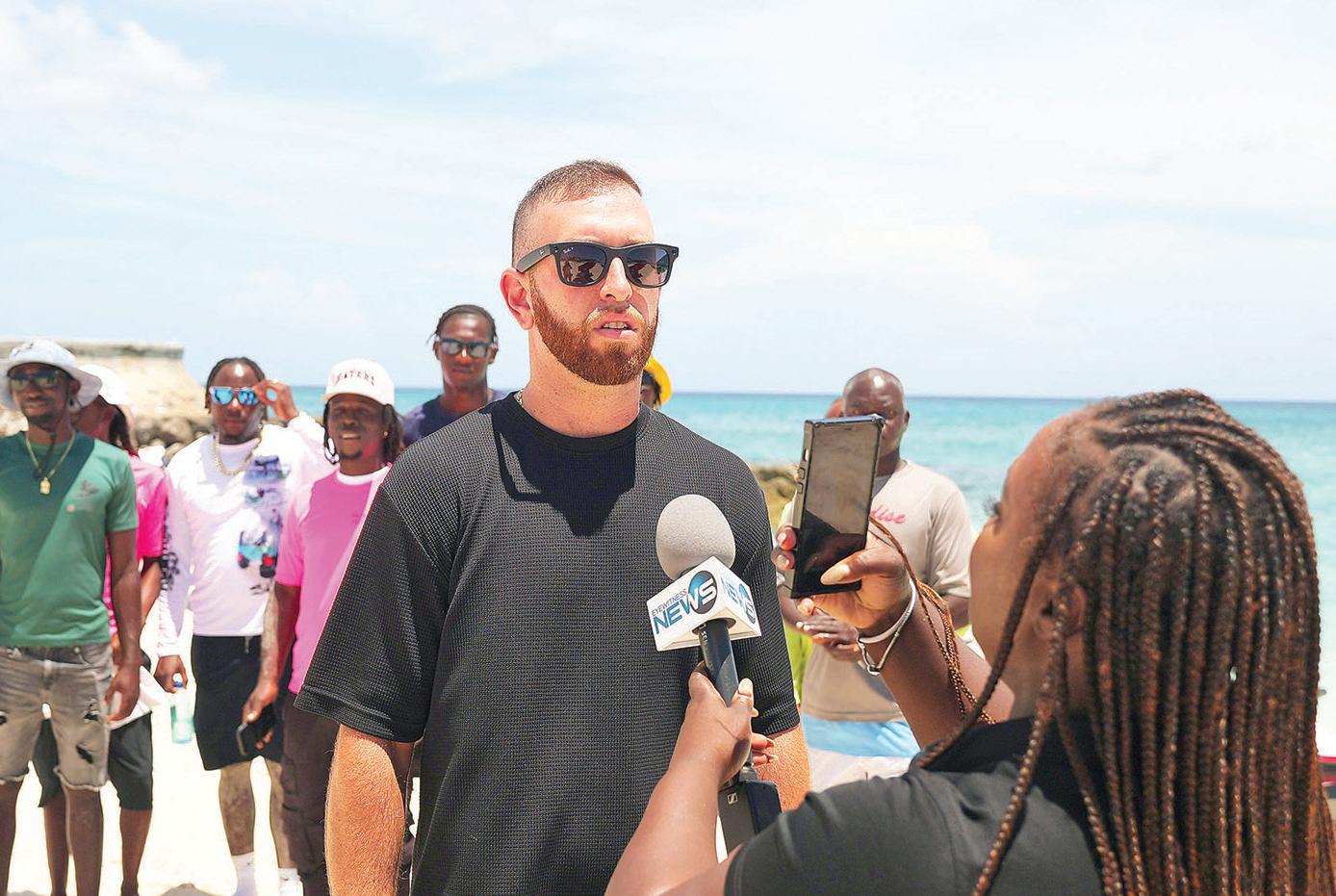
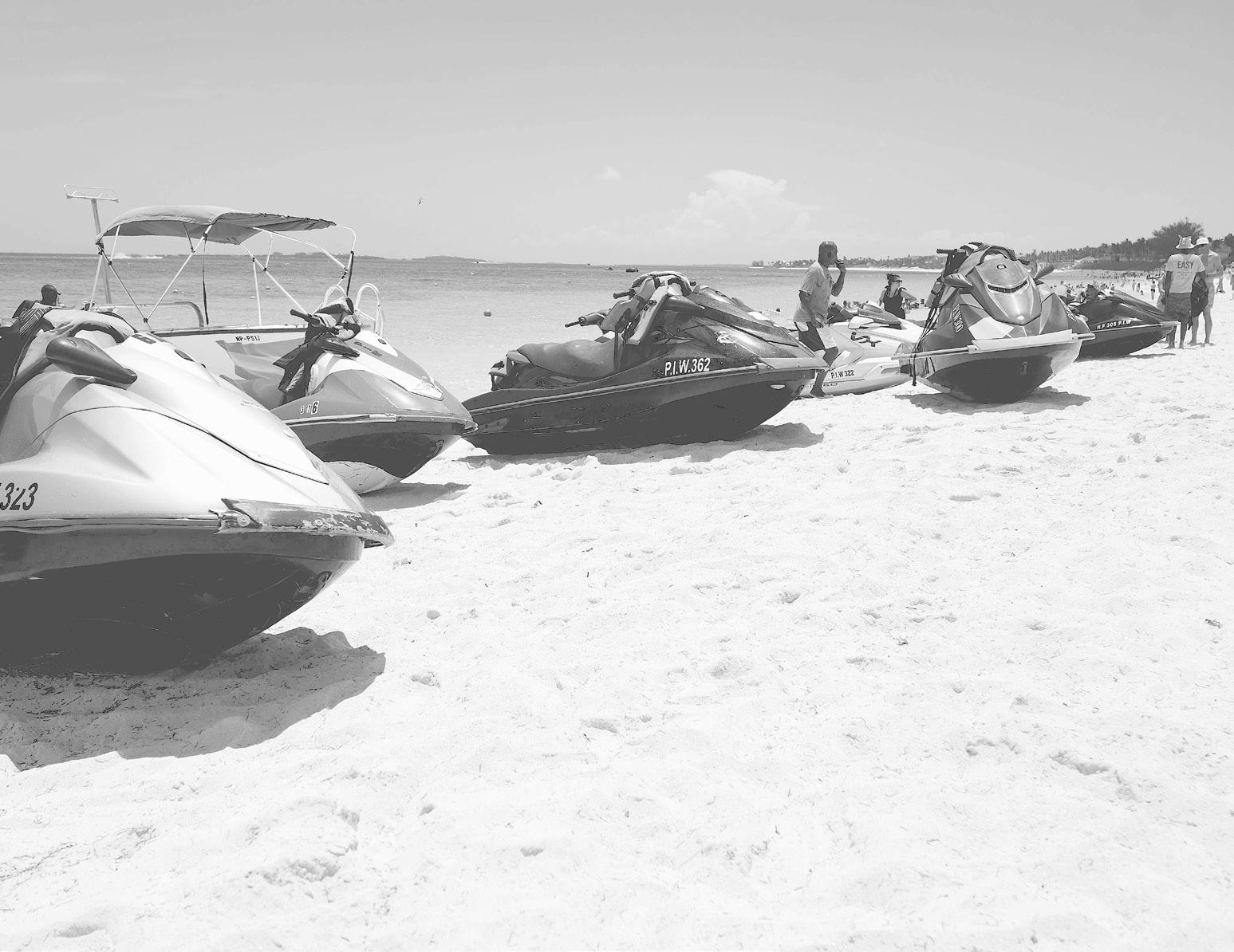
A FLORIDA jet ski operator has defended The Bahamas’ watercraft industry after the latest US Embassy warning, arguing that the alert exaggerates the danger of rentals and risks damaging the livelihoods of
Bahamians who depend on tourism.
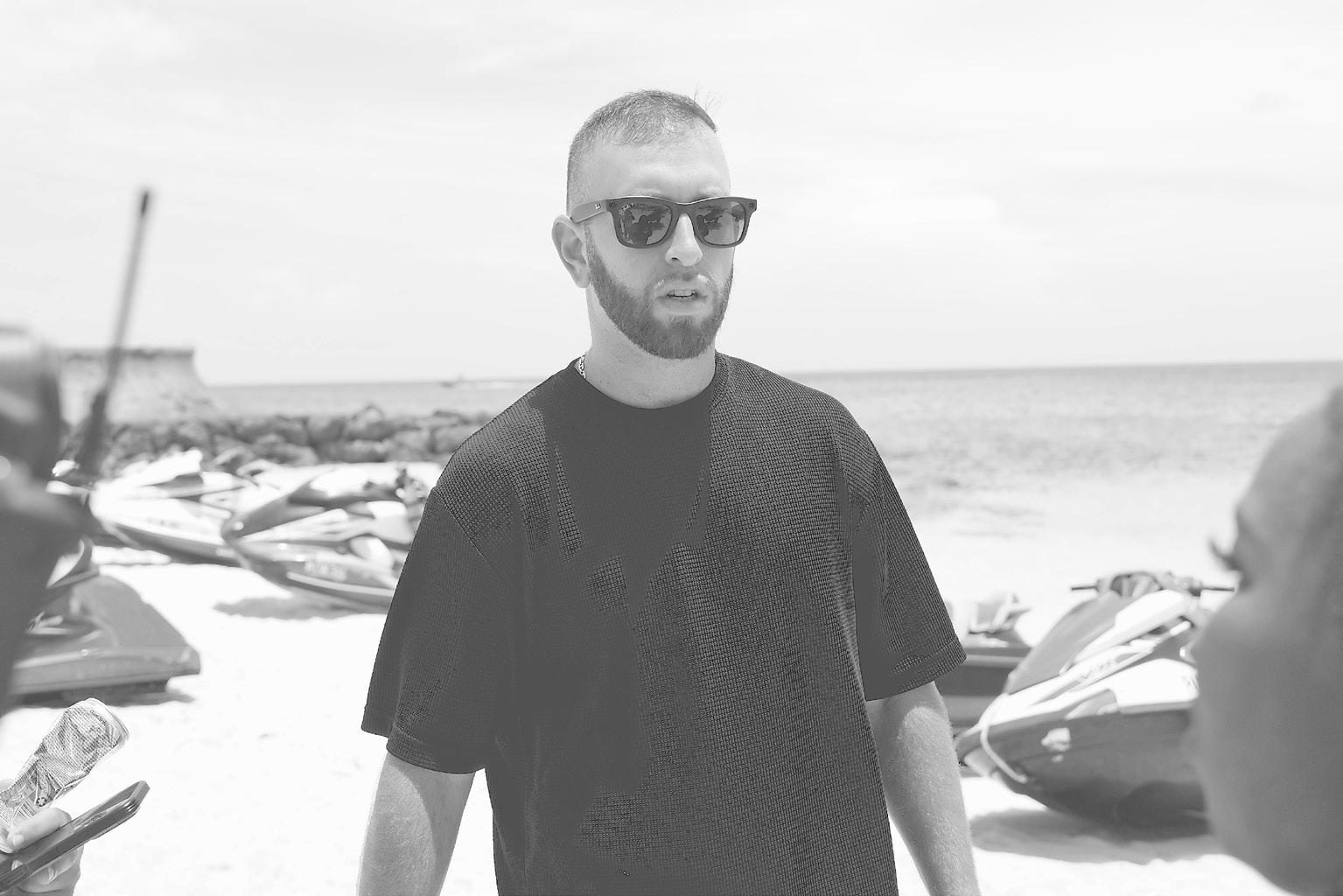
John Rosen, owner of Jet Ski Fort Lauderdale, spoke at Cabbage Beach near Atlantis yesterday after the embassy warned Americans about “serious and ongoing” dangers linked to jet ski rentals in The Bahamas.
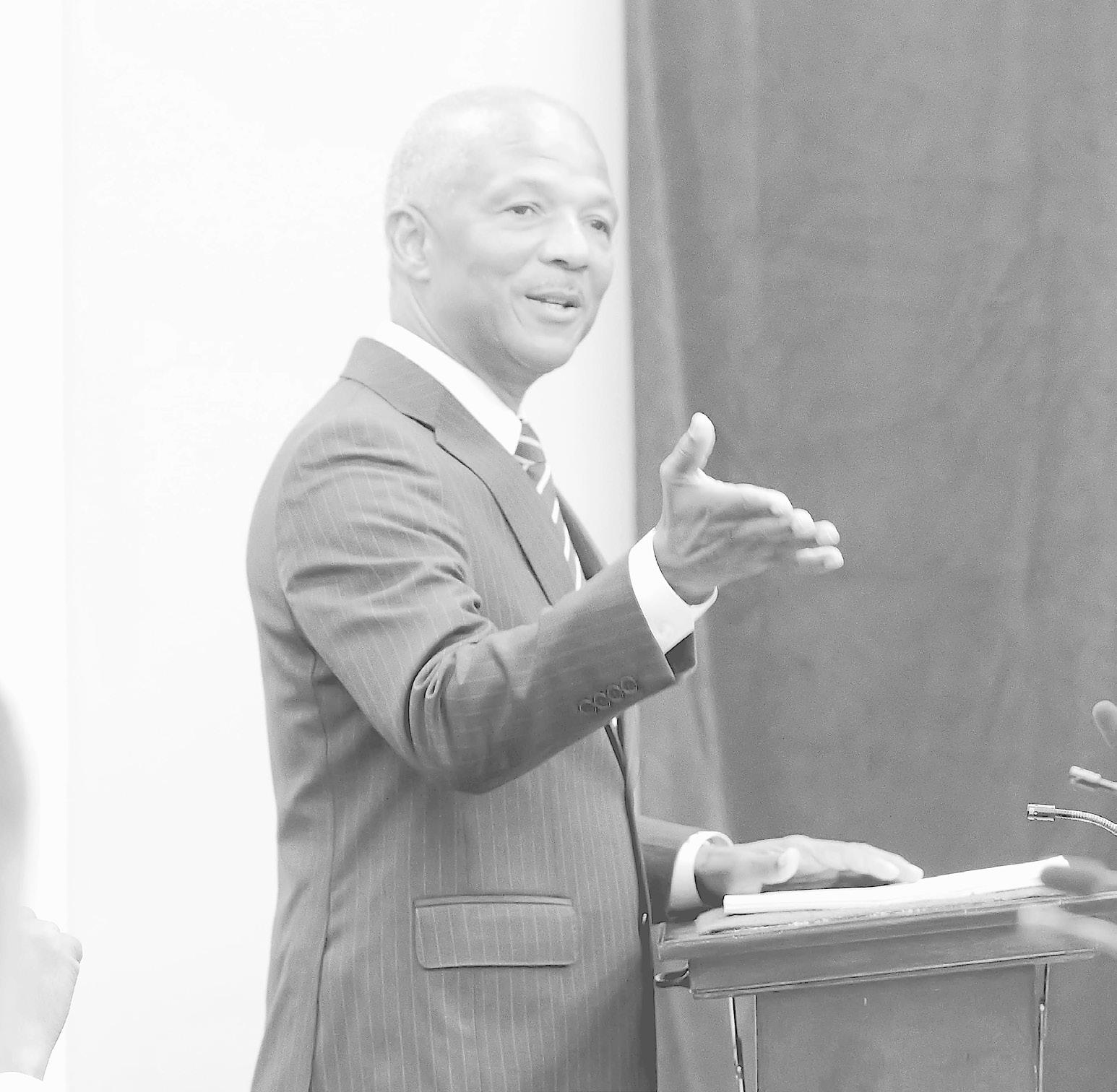
In a video message on Monday, US Ambassador Herschel Walker
said Americans had died, visitors had been hospitalised and US citizens had been sexually assaulted by jet ski operators who took victims to isolated islands.
The embassy said six US citizens have been hospitalised in jet ski accidents since August 2024, with three
By KEILE CAMPBELL Tribune Staff Reporter kcampbell@tribunemedia.net
THE Crown closed its case yesterday in the criminal trial of former Water and Sewerage Corporation executive chairman Adrian Gibson and others, ending more than two and a half years of prosecution evidence in one of
the country’s most closely watched public corruption cases.
Director of Public Prosecutions Cordell Frazier announced the move before Senior Justice Cheryl Grant-Thompson after prosecutors completed their examination of Alexandria Mackey, Gibson’s



By JADE RUSSELL Tribune Staff Reporter jrussell@tribunemedia.net
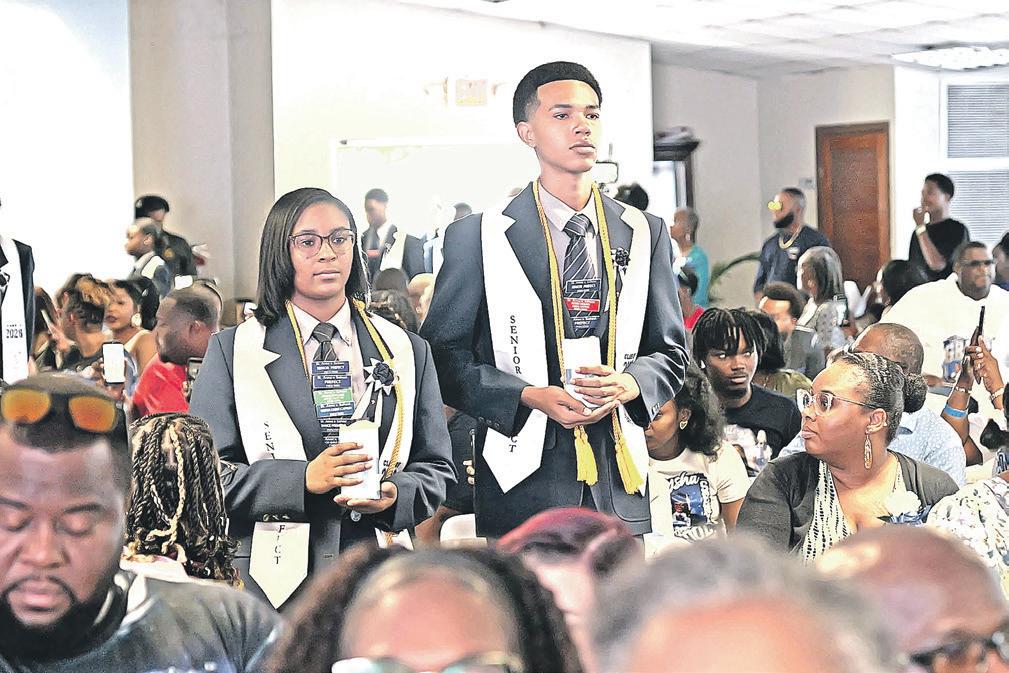
Eleven-year-old Ameko
Lamm has interviewed NBA player Buddy Hield, handed out motivational wristbands to primary school students and is preparing to distribute 200 hygiene kits this weekend — all while getting ready to enter grade six as head boy.
The Faith Way Christian Academy student has used his YouTube channel, Kidversations with Lil Meko, to spotlight Bahamian personalities, community leaders and high-achieving students while encouraging other children to serve their communities.
He launched the channel after watching his favourite YouTubers and deciding he wanted to create a platform that would encourage young people to make a difference and showcase their talents.
Since then, he has interviewed people including Mr Hield and content creator Vocab Bahamas.
A basketball fan, Ameko said interviewing Mr Hield was a highlight. He said his father saw the NBA player at a restaurant and asked whether his son could interview him.
“He gave my daddy his number,” he told The Tribune. “We went and I interviewed him. We talked about what team line up he would use, and what he would do if he wasn't a basketball player.”
Ameko said he tries to create content that is engaging, wholesome and motivating. But the channel has also forced him to confront his nerves.
“I've won a few speech and poetry competitions,” he said. “However, I'm a little nervous when it comes to speaking to others. So, my YouTube channel is all about interviews, so that helped me overcome myself.”
His work has also moved beyond interviews.
Ameko recently distributed 100 motivational wristbands to students at CW Sawyer Primary School.
On Saturday, he plans to distribute 200 hygiene kits

LAMM

“I don’t just give back because I can, I do it to see the smiles on other people’s faces.”

Emerald Gardens Park at noon. He said giving back is not about attention, but impact.
“I don't just give back because I can, I do it to see the smiles on other people's faces,” he said.
“In the Bible it says be kind to our neighbours. I give back because I know there are less fortunate who may not have as much as others do.”
Asked what superpower he would want to help with his initiatives, he said courage, because that is all it takes to make someone’s day.
Balancing school, extracurricular activities and his YouTube channel has been difcult, but Ameko said his parents’ support has helped him continue even when he fails.
He also said his younger brother motivates him.
“I also have a little brother who's like my mini-manager, so there's someone so small looking up to me,” he said.
“There's no way I cannot succeed.”
He hopes to become a meteorologist when he grows up.
His message to other children is to keep pursuing their dreams and remember that God is watching over them.
“You are your biggest motivation, and only you can limit yourself where you want to go,” he said.







connection with contracts awarded during his tenure at the corporation.
connected to the purchase of lots eight and nine in the Farrington Road area.
former fancée and one of the Crown’s key witnesses.
The decision pushed the long-running case closer to the defence phase after a trial that has stretched across years, following Mr Gibson’s 2022 not guilty plea and the selection of jurors in May 2023 to hear evidence from dozens of witnesses.
Gibson has been on trial since November 2023 alongside former Water and Sewerage Corporation general manager Elwood Donaldson Jr, Joan Knowles, Peaches Farquharson and Jerome Missick in
Gibson and his co-accused have denied wrongdoing. The case centres on allegations that contracts awarded during Gibson’s tenure benefted companies linked to him and his associates.
Ms Mackey returned to the witness stand yesterday as prosecutors used bank records, company documents and email correspondence to challenge defence claims that her allegations were unsupported by evidence. The court heard evidence concerning payments
Prosecutors presented bank records and receipts that they said traced the source of funds used to acquire the property to companies allegedly linked to Gibson.
Ms Mackey testifed that she and Gibson had discussed purchasing property in the area before they had an argument and separated.
Gibson’s attorney, Damian Gomez, KC, objected to parts of the testimony, arguing that Ms Mackey was speculating about the purpose of the transactions.
Prosecutors countered
that her evidence was based on her personal knowledge and the fnancial records presented in court.
Senior Justice Grant-Thompson agreed, ruling that Ms Mackey’s answers were based on her knowledge of the matter and documents she had reviewed.
Prosecutors also questioned Ms Mackey about WSC contracts awarded to companies allegedly linked to Gibson and the subcontracting of portions of that work.
The Crown took her through records relating to water tank refurbishment projects. Ms Mackey
not guilty. Bail was set at $50,000 each, and the matter was adjourned to October 20 for trial.
agreed that, based on the documents shown to her, the corporation sufered a loss.
The questioning later turned to subcontracting arrangements involving Top Notch, a company previously identifed during the trial as having been engaged to perform work connected to water tank projects.
The Tribune understands the defence submitted a letter concerning Top Notch that outlined concerns over delays and alleged breaches of a subcontract agreement related to the water tank works.
The document detailed a dispute between Elite
Intelligence and Internal Afairs Unit was assigned to coordinate with police and assist the investigation.
Maintenance and Top Notch and alleged that the subcontractor failed to start work, provide a completion schedule and furnish required insurance documents, resulting in the termination of the agreement.
The correspondence was introduced as the parties continued to dispute the nature of subcontracting arrangements linked to the water tank contracts.
After Ms Mackey completed her evidence, she was released as a witness and told she was free to leave the jurisdiction.
Ms Frazier then informed the court that the prosecution was closing its case.
from page one
ministerial approval.
Russell was arraigned with Sergeant Alcott Forbes and Corporal Brendan Dean before acting Chief Magistrate
Ancella Evans on charges of conspiracy to import cocaine into The Bahamas, conspiracy to export cocaine from The Bahamas and conspiracy to possess cocaine with intent to supply.
Prosecutors allege the
three law enforcement ofcers conspired with others in connection with 400 kilos of cocaine.
The ofences allegedly occurred between November 1, 2021 and March 31, 2022. All three men pleaded

The RBDF said Russell was charged in connection with conspiracy to import, export and possess dangerous drugs, alleging he acted with others between November 1, 2021 and December 31, 2022.
The RBDF said that after receiving initial information from police, its
The agency said the move to discharge Russell is consistent with its handling of members charged with serious criminal ofences.
“This action is consistent with the RBDF’s approach to matters involving members who are charged with serious criminal ofences,
where decisive and swift action is taken,” the RBDF said. “Under the command of Commodore Floyd P Moxey, the Royal Bahamas Defence Force remains committed to transparency, accountability, discipline, and ensuring appropriate action in all such matters.”
Jerone Roberts and Dr K Melvin Munroe appeared for the accused. Inspector Deon Barr prosecuted the matter.


By EARYEL BOWLEG Tribune Staff Reporter ebowleg@tribunemedia.net
FOREIGN Afairs
Minister Fred Mitchell refused yesterday to discuss the compensation and benefts package of a young male Ministry of Foreign Afairs employee posted in London, whose reported benefts worth more than $200k a year have drawn intermittent scrutiny since the PLP won ofce in 2021.
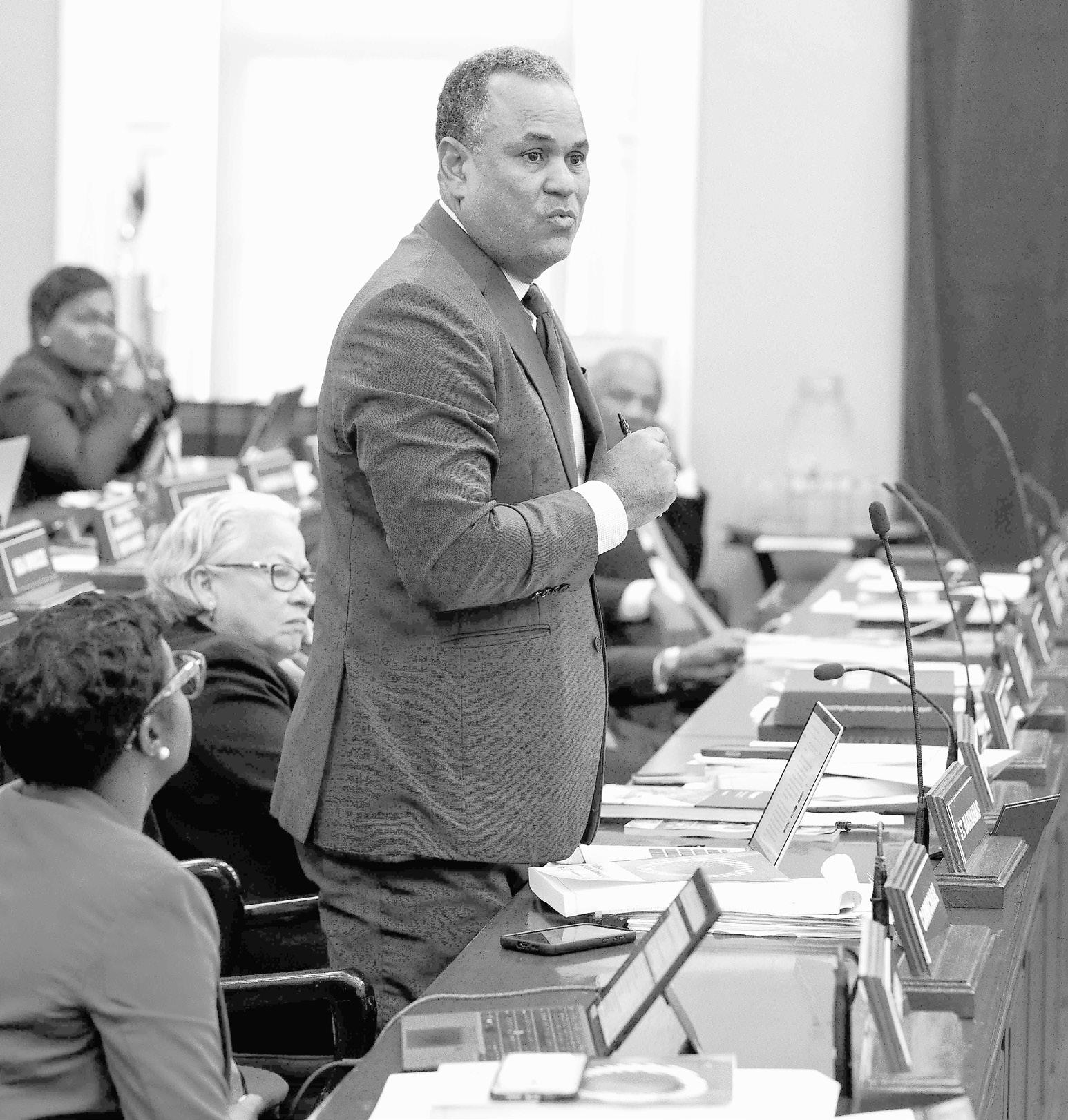
The issue resurfaced during the House of Assembly’s budget debate when Long Island MP Dr Andre Rollins asked whether a ministry employee in London was receiving a salary, rental allowance and educational expenses under a specifc budget line item.
Mr Mitchell declined to address the matter, insisting overseas postings are governed by contracts with the government and
established policies.
“Ofcers of these ministries work for The Bahamas government,” he said. “This is not a matter to be discussed in this forum. Every ofcer who serves overseas has a contract. It's a contract with The Bahamas government and it has specifc terms and conditions.”
He said allowances for ofcers serving abroad are set out in foreign service orders.
“Allowances are also in the public's, in the foreign service orders, and whenever someone serves overseas, he or she gets those allowances, and no one has any, as far as I'm aware, has any extraordinary terms that would be outside either the law or policy,” he said.
The exchange followed concerns raised in April by former Foreign Afairs Minister Darron Henfeld, who questioned
whether a young male employee posted to London by the Davis administration was costing taxpayers more than $200,000 a year.
Mr Henfeld also questioned whether future administrations should be bound to maintain such contracts under proposed foreign service reforms.
“Is Mitchell suggesting,” he said, “that we keep a young man in London who's there now, currently, supposedly working at the mission in London, and costing the Bahamian people over $200,000 per annum?” he said. “Is he suggesting that that is what he's trying to protect?”
Mr Henfeld was responding to Mr Mitchell’s position that new Foreign Service orders under the Foreign Service Act 2025 will make most contract ofcers permanent and pensionable while protecting non-political staf from dismissal.

By LEANDRA ROLLE Tribune Chief Reporter lrolle@tribunemedia.net
FINANCE Minister
Michael Halkitis insisted yesterday that a $140,000 allocation is enough for the Freedom of Information Act office to operate as opposition MPs challenged the Davis administration over limited funding for key accountability and anti-corruption agencies.
Mr Halkitis told Parliament the FOIA budget covers operational expenses, but not salaries. His comments came as opposition members pressed the government for details on allocations to agencies created to strengthen transparency, investigate complaints against public bodies and scrutinise law enforcement.
Budget allocations for the FOIA have been set at $140,000 in recent years, an amount officials have previously said falls far short of the estimated $1m needed to fully implement the law.
Asked whether the government believed the amount was adequate to achieve the office’s
objective, Mr Halkitis said: “Yes, we do.”
Opposition members also questioned funding for the Office of the Ombudsman, whose budget increased by only $110 from the previous fiscal year, when it received $39,890.
The Office of the Ombudsman is intended to independently investigate complaints against government agencies, address maladministration and protect citizens’ rights.
FNM leader Michael Pintard questioned why funding for the office remains largely unchanged despite the government’s commitment to make it fully operational.
He asked what the projected cost of operationalising the office would be and why those funds had not been allocated.
He also raised concerns about the potential cost of investigations, legal counsel and travel, and asked what the office’s original budget had been.
Prime Minister Philip “Brave” Davis said no overall budget has been determined, but said the government plans to staff
the office with existing public servants rather than new hires.
“That exercise is now being undertaken by Attorney General to identify instead of having to have new hires or otherwise increase a budget for it, but in the event more is required, then more will be provided,” he said.
Mr Davis said he would get more details from the Attorney General.
Asked when the FOIA and the Independent Commission of Investigations would be fully functional, Mr Davis gave no timeline.
“The implementation and the full operation is within the knowledge of the Office of the Attorney General who has carriage and conduct of it,” he said.
The Independent Commission of Investigations, which is intended to investigate serious complaints involving law enforcement, received $100,000, up from $30,000 in the 2025/2026 budget cycle.
Advocates have long warned that prolonged delays in anti-corruption reform amount to avoiding oversight.

By LYNAIRE MUNNINGS Tribune Staff Reporter lmunnings@tribunemedia.net
FOREIGN Afairs Minister Fred Mitchell again refused to say yesterday whether former senior immigration ofcer Norman Bastian is receiving retirement benefts, as Long Island MP Dr Andre Rollins questioned whether taxpayers will be forced to pay both damages to Claudia Edwards Bethel’s estate and a pension to the man who raped and unlawfully detained her.
The clash came during the House of Assembly’s budget debate, where Dr Rollins highlighted that the government spent $7.9m on legal settlements and judgments in the 2024/2025 fscal year while allocating $4.4m for such payments in the current budget.
Dr Rollins raised the issue days after the Privy Council ruled that the state is vicariously liable for Edwards Bethel’s unlawful detention and rape by Bastian.
Damages have not yet been assessed, but Dr Rollins said they are expected to be signifcant.
He questioned whether Bahamian taxpayers would efectively pay twice, once through damages awarded against the government and again through retirement benefts paid to Bastian.
Prime Minister Philip “Brave” Davis said the government is legally responsible for the conduct of its employees and must
satisfy court judgments. He said the allocation covers a range of liabilities, including legal settlements and disputes over matters such as land acquisitions.
Dr Rollins said he accepted that principle, but argued that it did not answer whether Bastian was being allowed to enjoy the same retirement benefts as public ofcers in good standing despite committing “heinous acts” against a woman who did not deserve such treatment.
Mr Mitchell objected to the questioning, saying there are procedures for making allegations against people and suggested Dr Rollins examine the timeline surrounding Bastian’s retirement and the relevant law.
“If you're going to make imputations against some ofcer, there's a procedure for doing that,” he said.
“Had this procedure been followed, we would have come armed with all of this ammunition that you want us to use against this individuall.”
He added that Dr Rollins should “check the timelines, check the law”.
Dr Rollins pressed the issue again.
“Did this individual, who was retired in the public interest, was he retired with full benefts?” he said.
Mr Mitchell again declined to answer directly.
“I'm saying I'm not doing your homework for you, I'm not doing it,” he said. “The law says what it is, and once you understand the law, it'll
follow from that what the facts are.”
Mr Mitchell also declined to answer similar questions earlier this week when he issued an “unreserved” apology to Edwards Bethel’s family and estate after the Judicial Committee of the Privy Council ruled against the government. The case will return to a lower court for damages to be assessed.
At the time, Mr Mitchell said the government did not support or condone Bastian’s conduct. He also disclosed that Bastian had been retired from the public service in the public interest. Edwards Bethel, a Jamaican woman who had been married to a Bahamian citizen since 2010, was arrested during a police raid at the Twilight Bar on December 13, 2014, along with several other Jamaican women. According to court fndings, Bastian deceived his superiors into releasing Edwards Bethel into his custody by falsely saying that a female immigration ofcer would accompany them.
Instead, he drove her around New Providence before taking her to his home, where he raped her, unlawfully detained her overnight, sexually assaulted her and raped her again the following morning.
Edwards Bethel died at Princess Margaret Hospital in May 2021, one day after giving birth to her fourth child, Emmanuel. She was 35.
By LEANDRA ROLLE Tribune Chief Reporter lrolle@tribunemedia.net
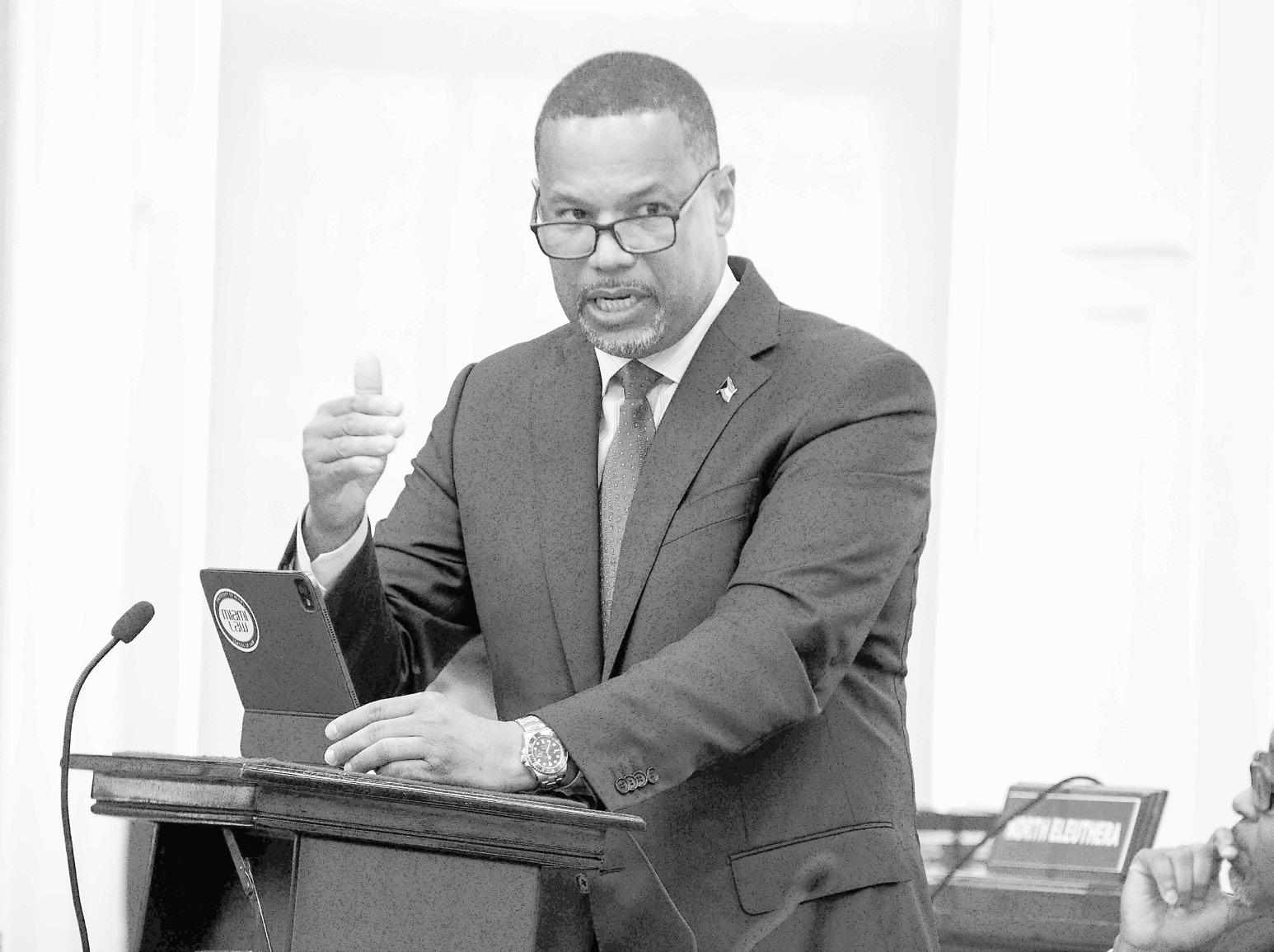
LONG Island MP Dr Andre Rollins pressed Prime Minister Philip Davis in Parliament yesterday to say whether public funds or money tied to government members are paying legal fees for convicted drug trafficker Jonathan Eric Gardiner.
Dr Rollins raised the issue while questioning a consultancy services allocation, asking whether the line item included payments to private attorneys providing legal services to the government.
After Mr Davis confirmed that it did, Dr Rollins asked whether the government was directly or indirectly paying for Gardiner’s legal team.
Mr Davis rejected the premise and declined to be drawn further.
“I'm not going to go down the rabbit hole that
this young man wants us to go,” he said. “I indicated that that line item is set up for the payment of legal services provided to the government of The Bahamas, not any individuals.”
Dr Rollins said the response was insufficient and pushed the prime minister for a direct answer. Mr Davis declined to respond and remained seated.
The clash came after Gardiner’s arrest in the United States last month after an aircraft travelling from Marsh Harbour, Abaco, to Grand Bahama crashed off the Florida coast on Election Day.
He was charged on Wednesday with cocaine and firearms conspiracy offences stemming from what US federal prosecutors allege was a long-running conspiracy to move large quantities of cocaine into the United States by plane. Gardiner has denied the allegations.
US authorities previously reported that when Gardiner was rescued, he had three mobile phones
and $30,000 in Bahamian currency packed in a manner consistent with narcotics proceeds.
The money was allegedly found in an envelope labelled with the handwritten name of
a Bahamian politician, whose name was redacted in the US filing. That is the same politician US authorities allege met with an undercover DEA source inside Parliament to discuss a cocaine shipment allegedly worth $30m.
The indictment controversy has dominated parts of this year’s budget debate, with opposition members repeatedly demanding answers from the Davis administration.
Mr Davis told Parliament on Wednesday that the “serious allegations” would be subjected to a full and independent investigation.
“Allegations of this gravity are far too serious to be cheapened into a cycle of accusation, speculation, and spectacle,” he said. “The only facts we know are the ones already in the public sphere. Up until now, the American courts provided no further information.”
requiring emergency medical evacuation. It also said two US women reported sexual assaults by jet ski operators in 2025 and that two more sexual assaults have already been reported this year.
The warning criticised what it described as sporadic oversight of rental areas and said rogue operators continue to solicit tourists on Nassau’s busiest beaches.
Operators at Cabbage Beach said the industry needs tighter regulation and better enforcement, not broad condemnation. They argued that a small number of rogue operators should not damage long-established businesses that follow the rules.
Mr Rosen, who said he travelled to The Bahamas because he was concerned about how the industry was being portrayed, said jet ski rentals remain one of the country’s major tourist attractions.
“I just wanted to help the public really understand the statistics and what jet ski rentals bring to the industry here in The Bahamas, and anywhere around the world in general, you know, the dangers but also all the great things that come with it,” he said.
He said about 12 million people visit The Bahamas each year and estimated that roughly 250,000 rent jet skis.
“Jet skis are a huge thing for tourists to do on vacation in The Bahamas, and roughly 12 million people come here every year to enjoy their time with their families,” he said. “Out of those people, roughly
a quarter of a million are estimated to rent jet skis. So, over the last three years, there’s been a couple of incidents. Apparently, there have been six accidents that caused hospitalisations, one fatality, which was actually caused by a non-licensed boat operator.”
Mr Rosen compared the number of jet ski incidents to bicycle accidents in South Florida.
“When you’re going to compare that to injuries and accidents, maybe with other activities, such as where I live, you have bikes that are constantly in the news for accidents and casualties,” he said. “Just in 2024 alone, where I live, there were almost 10,000 bicycle accidents that led to hospitalisations and over 200 deaths. You know, so if they want to tell people to stop renting jet skis in The Bahamas, they better start telling people to stop riding
bikes in South Florida.”
He urged visitors to use reputable, insured and licensed companies.
He said he is prepared to share safety practices used in Fort Lauderdale. He also pointed to reforms and criminal charges after reports of sexual assault in The Bahamas.
“I wanted to come here and really understand one of the other issues was that there were some claims of sexual abuse over the last few years, and since then the government had made at least one arrest and charge, and there was a new law enacted that the operators cannot ride with the renters on the same jet ski, just to prevent these things from happening again,” he said. “So clearly they’re taking action to make sure these things don’t happen, and anywhere you go around the world, there’s always a risk
of some bad thing happening, but we don’t want to
take away what’s so great and respected about the Bahamas, it’s jet skis, it’s what people want to do. Do not discourage people from renting and riding jet skis; it’s something that we all need to enjoy with our families.”
Mr Rosen said the industry should be fxed rather than shut down and questioned whether the US warning could hurt Bahamian operators.
“I don’t think they understand the implications of their message and how it’s going to afect the people that come here, because they really are scaring people, when in reality they don’t have a reason to be scared,” he said. “You just have to look at the statistics, and the numbers speak for themselves, honestly.”
The latest warning comes amid renewed scrutiny of
the government’s jet ski task force, established in March 2024 to improve regulation and enforcement in the sector. Authorities have conducted confscations, issued fnes and revoked licences, but industry ofcials have acknowledged that enforcement has been uneven and that more work is needed to strengthen safety and compliance.
Devane Ferguson, a Cabbage Beach operator who said he has worked in the industry for 20 years, said established operators need support.
Mr Ferguson said serious incidents involve a small fraction of operators and argued that newer operators, not long-standing ones, have damaged the industry. He acknowledged that the US warnings have slowed business, but said tourists continue to support Bahamian operators.
NULLIUS ADDICTUS JURARE IN VERBA MAGISTRI
“Being Bound to Swear to The Dogmas of No Master”
LEON E. H. DUPUCH,
Publisher/Editor 1903-1914
SIR ETIENNE DUPUCH, Kt., O.B.E., K.M., K.C.S.G., (Hon.) LL.D., D.Litt .
Publisher/Editor 1919-1972
Contributing Editor 1972-1991
RT HON EILEEN DUPUCH CARRON, C.M.G., M.S., B.A., LL.B.
Publisher/Editor 1972-
Published daily Monday to Friday Shirley & Deveaux Streets, Nassau, Bahamas N3207
TELEPHONES
News & General Information (242) 502-2350
Advertising Manager (242) 502-2394
Circulation Department (242) 502-2386
Nassau fax (242) 328-2398
Freeport, Grand Bahama (242)-352-6608
Freeport fax (242) 352-9348
WEBSITE, TWITTER & FACEBOOK
www.tribune242.com


IT is a billion dollar landmark. The total amount of money paid to members of the Bahamas civil service is breaking through the $1bn barrier in the year ahead, according to the Budget.
The total amount being paid to government employees is forecast to reach $1.013bn, according to Budget documents. That breaks down as $868.2m in wages and salaries, an extra $96.9m in allowances, and $47.9m in National Insurance Board contributions.
That is up by 7.7 percent on the previous Budget period, and the amount of workers is up from 21,082 to 23,424 in the past four years.
The billion dollar question, then, is whether the Bahamian public is receiving a better service for the increased money they are spending.
It can be hard to say, sometimes, especially when we see the day-to-day hurdles such as long-lingering potholes, dirty streets, unfnished projects and so on. Certainly, the cost of all of that falls squarely on the shoulders of you, me and all of us. The taxpayer carries the weight.
That weight is expected to get bigger too – forecast to rise to $1.3bn in spending by 2035/6, up more than a quarter over ten years.
Like most businesses, the government salary bill is the largest line item in its budget. More than $1 in every $4 spent by government goes towards staf costs.
All that is fne if the citizens of the nation are receiving value for money –but are they?
People still have to jump through hoops to secure paperwork from government, including essential documents such as police records, business licences, approvals and clearances.
There have been grumblings over such things as yacht permit fee payments which have proven awkward over the past two years.
There are concerns over prolonged waiting periods as government departments take their time over various applications.
So the numbers over costs might be clear to see from the Budget, but where are the numbers on improving the work of government itself?
If we are to be paying out such ever-increasing sums for the running of our society, we ought to be able to see the outcomes.
SPEAKING of seeing outcomes, several members of the government seem to have taken vows of silence in recent times.
The Health and Wellness Minister, Dr Michael Darville, was asked what percentage of applicants to the Catastrophic Healthcare Fund have received help. He could not say! Heaven forbid that a minister who has held the post for the entire previous administration’s term should have such information to share at his fngertips.
Prime Minister Philip Davis was asked whether public funds or money tied to members of the government were paying legal fees for Jonathan Eric Gardiner as he faces prosecution in the US for drugs smuggling ofences. Mr Davis didn’t quite make the answer clear – though he did say that a line item for private attorneys was only for legal services provided to the government, not for individuals. “No” would have been quicker to say, though.
Meanwhile, Minister of Foreign Afairs Minister Fred Mitchell declined to discuss the pay and benefts of a young male ministry employee in London, whose benefts package is reportedly more than $200,000 a year. That would, of course, be taxpayer money.
Whether there are good reasons not to be more forthcoming or not, it has not been a terribly good look of late for a government that has spoken in the past about the need for transparency. Some questions might have a reason where answers should not be revealed – for privacy reasons or legal reasons, for example. But Dr Darville is not helping matters by failing to provide simple answers about matters under his authority.
Clarity should always be the guide whenever possible – or else it looks like questions are being ducked.
EDITOR, The Tribune.
IT was about a month now, that we had the General Elections. Certainly, it is early days in this new cycle.
I must say that last week was good for the FNM in the House of Assembly, especially, Andre Rollins but also Michael Pintard, Leader, and Kwasi Thompson. However, when we examine, the public activities of the Party, apart from the House of Assembly, over the past month or so, it does not look quite as good.
The Party participated in the annual Labor Day Parade, which was a very good idea, as the Party has been doing so for decades, consistently. What was not good nor impressive, based on reports, is that less than
40 persons joined the Party Leader, in a show of support of our workers. It is understood too, that Michael Pintard, had a town hall meeting in Freeport to discuss the Budget with constituents and it appears fewer people attended that event, than those at the Labor Parade, which was the evening before the Labour Parade. On the Monday following the Labor Day Parade, the Party had a demonstration in Rawson Square, calling for the resignation of the Hon Michael Halkitis, having regard to his alleged involvement with Eric “Player” Gardiner and his company, Top Notch. Again, good decision to publicly demonstrate calling for Mr Halkitis’s resignation. However, the big question is, where were
EDITOR, The Tribune.
INTELLIGENCE is the fuid ability to navigate uncertainty, synthesise abstract concepts, and intentionally reshape behavior to meet evolving challenges. Intelligence is an optimisation process. Intelligence is a result of experience and data. Human beings frequently act contrary to their deeply held beliefs, a phenomenon driven by psychological conficts, social pressures, and biological impulses. Unlike AI, which always executes its mathematical programming, human behavior is not dictated by a single code. People often experience a massive disconnect between what they believe is right and what they actually do. The debate over whether AI enhances human happiness or strips life of meaning is one of the most critical questions of our time. It can free humans from drudgery to pursue meaningful lives, but it also risks automating the very experiences that give us a sense of purpose.
AI handles repetitive, dangerous, or mundane tasks. This frees up human time for leisure, creative arts, and deep relationships. AI tools can act as tailored mentors, therapists, and health coaches. They help individuals achieve personal goals, optimise physical health, and learn new skills. By accelerating breakthroughs in medicine, clean energy, and poverty reduction, AI can remove massive systemic causes of human sufering. The danger arises because AI is optimised purely for efciency and output, whereas human fulfllment is derived from struggle and experience. Human pride comes from overcoming difculty (e.g., learning an instrument, writing an essay, or building a business). If AI instantly delivers the perfect end product, the satisfaction of the human “process” is lost. As AI companions and caretakers become more realistic, humans may substitute difcult, messy human relationships for easy, friction-free digital ones. This can lead to profound isolation.
the FNMs? Only a handful of FNMs, if that, joined the Leader and Chairman, Duane Sands in the demonstration.
Let’s be clear; all of the 12 Parliamentarians (eight MPs and four Senators) were not present. In fact, it appears that less than 50% of them were. What happened to the rest of the Party? It might be wise, if the Leadership determines to have a public political event in the future, they should ensure beforehand, that there is broad-based support and committed buy-in, for the political strategy, by the Party and its organs, less it will likely have another poor public showing.
COMMITTED FNM Nassau, June 18, 2026.
If AI can outperform humans in creative, analytical, and physical domains, people may experience a crisis of identity, feeling that they have no unique value to ofer the world. AI operates on an algorithmic framework where only the optimisation metric (the result) matters. Humans operate on an existential framework where the struggle is the point. If humans surrender their hobbies, writing, thinking, and connecting to AI simply because the AI does it faster or better, we sacrifce our well-being for efciency. AI is a Tool, Not a Destiny. AI itself does not care about results or experiences because it has no consciousness. Therefore, the impact on human happiness depends entirely on how we draw the boundaries: If we use AI to handle the mundane so we can spend more time painting, hugging our families, and exploring nature, human quality of life will skyrocket. If we let AI do the painting, writing, and thinking while humans merely consume the output, life risks becoming passive and meaningless. In the Caribbean, culture is deeply rooted in the “process” of living—the sensory, relational, and spontaneous experience of joy—which stands in direct opposition to AI’s rigid focus on optimisation and output. For a Caribbean person, liming, partying, and carnival are not just idle pastimes. They are essential cultural pillars. This creates a fascinating friction when introducing a technology that values pure functionality over human experience. In the Caribbean, “liming” (hanging out with no strict agenda) is a masterclass in living in the moment. The value is entirely in the
unproductive time spent together. AI is designed to destroy “unproductive” time. An AI assistant looking at a Caribbean schedule might see a four-hour lime as an ineffciency to be optimized, missing the reality that the inefciency is the mental health beneft. 2. The Danger of Automating the “Vibe”. Caribbean culture relies heavily on a shared human “vibe”—an intangible emotional resonance between people, whether at a street party or a family cookout. AI struggles with nuance that cannot be quantifed. If AI takes over event planning, music curation, or hospitality, it will optimise for logistics (crowd fow, beverage sales, precise scheduling). In doing so, it risks sanitising the raw, chaotic energy that makes a Caribbean fete successful. If Caribbean youth begin to look at life through the lens of AI efciency, there is a risk of cultural erosion. Why spend months practicing the steel pan or sewing a Carnival costume when an AI can generate a perfect digital steel pan track or a 3D costume design in seconds? The answer is that the sweat, community bonding, and late-night rehearsals are where the actual happiness and cultural identity are born. Let AI optimise hotel bookings, manage agricultural supply chains, or automate government paperwork. By using AI to radically shorten the time spent on boring, functional tasks, Caribbean people can win back more time for what they actually value: community, music, and celebration. I noticed that June is almost fnished but a mango tree in the school yard I teach is still full. The students do not climb the tree, they stone or use a stick which is ineffcient. They do not play hopscotch or shot lizard and birds with a sling shoot. Climbing a mango tree requires physical efort, calculated risk, scrapes, and bruises. In the past, the “process” of getting the mango—the strategising, the physical climb, the shared triumph with friends—was just as rewarding as eating the fruit. Using sticks or throwing stones is an attempt to get the result (the mango) with minimal investment in the process (the climb). It is inefcient, lazy, and detached. It mirrors how algorithms train us to want instant rewards without the physical or mental journey required to get them. Hopscotch, shooting lizards with slingshots, and climbing trees are not just games; they are foundational blocks of Caribbean childhood and resilience. Shooting a slingshot requires making the tool, tracking a target, and navigating the outdoors. Hopscotch requires physical coordination and social negotiation. These games are active and unpredictable. Video games and social media are designed by data scientists using advanced behavioral algorithms to keep young brains hooked. Every scroll, “like,” or video game level provides a synthetic dopamine hit. The algorithm eliminates the need for imagination because it feeds the child a constant stream of pre-packaged entertainment. Caribbean culture is historically tactile, sensory, and communal. It is built on outside spaces— the yard, the street, the savannah, the beach. When students sit under a fruit-bearing tree but remain glued to a screen, they become tourists in their own environment. They lose their connection to the land, the seasons, and local traditions. Social media ofers a world without physical friction. If a child gets bored, they swipe. But real Caribbean life—and real fun—is full
of friction. It’s hot, sweaty, loud, and requires negotiating with real people. By retreating into screens, the younger generation is losing the social muscles needed to create the very “vibe” that defnes Caribbean society. As an educator, I am witnessing a shift from a culture that values “doing and being” to one that values “watching and consuming.” The algorithm is winning because it is easier than climbing the tree. Realworld play requires kids to resolve arguments, read body language, share, and handle rejection face-to-face. Because social media and video games allow youth to simply log of or swipe away when a confict arises, they do not develop confict-resolution skills. This leads to higher rates of social anxiety, a fragile sense of self, and difculty reading emotional cues in person. Climbing a tree or building a slingshot involves failure. You fall, you miss the target, or the stick breaks. You get scraped, but you try again. Algorithms are designed to remove frustration. If a video game is too hard, it adjusts. If a video is boring, the algorithm serves a better one. When youth are shielded from physical and mental frustration by instant digital gratifcation, their tolerance for boredom and difculty drops. They develop lower levels of resilience (grit). When faced with a challenging school assignment or a real-life setback, they are quicker to give up because their brains are trained to expect instant results. Judging the strength of a tree branch, calculating the trajectory of a stone, and balancing on rough terrain build spatial awareness, hand-eye coordination, and gross motor skills.
Spending critical developmental years sitting down, moving only their thumbs, causes physical underdevelopment. Educators globally are noting drops in fne motor skills (like holding a pen) and spatial intelligence, alongside rising rates of childhood obesity and poor physical stamina. The human brain adapts to its environment. A child’s brain growing up today is being physically wired by short-form video algorithms (like TikTok or Reels). These platforms provide intense, novel stimulation every few seconds. Nature, by comparison, moves slowly. A mango takes time to grow; a game of hopscotch takes time to set up. This constant high-speed stimulation short-circuits the brain’s ability to sustain voluntary attention. Students struggle to read long texts, follow multi-step instructions, or sit through a lesson without craving a digital hit. Their minds are conditioned to reject anything that requires patience. Developmentally, children learn who they are through their environment. If a Caribbean youth’s environment is defned by an American video game or a global social media algorithm, their identity detaches from their heritage. They stop developing into resourceful, community-minded Caribbean adults and instead become passive, anxious consumers of global digital culture. As an educator on the front lines of this change, I noticed this shift impacting their academic performance (like writing and reading comprehension), I see it in their classroom behavior and how they interact during recess. They exhibit low resilience and a pronounced aversion to cognitive or physical challenges. Intelligence drives income, but discipline and opportunity drive longterm prosperity. AI does not develop discipline.
BRIAN ELLIS PLUMMER Nassau, June 14, 2026.
By JADE RUSSELL Tribune Staff Reporter jrussell@tribunemedia.net
HEALTH and Wellness Minister Dr Michael Darville could not say yesterday what percentage of applicants to the government’s Catastrophic Healthcare Fund have received help, renewing concerns about transparency around a programme that will receive $12m in public funding this budget cycle.
The fund, launched by the Davis administration in 2024, is designed to help Bahamians who cannot aford expensive, life-saving medical procedures. However, the government has released little information about how many people have received assistance, how applications are assessed or how much money has been disbursed.
The issue resurfaced during the House of Assembly’s budget debate when Long Island MP Dr Andre Rollins asked Dr
Darville what percentage of applicants had received assistance and what share of the country’s needs the allocation meets.
Dr Rollins highlighted the case of Grand Bahama resident Kenneth Higgs, a single mother struggling to care for her 20-year-old daughter, who sufers from a serious medical condition involving fuid on the brain.
He said Ms Higgs has exhausted about $2m in healthcare and insurance coverage while seeking treatment for her daughter and must now turn to the government for assistance.
Dr Darville said his team has helped Bahamians who need life-saving procedures, but acknowledged he could not provide a percentage. He said some cases may not have reached him and encouraged people in need to seek assistance through their doctor or Member of Parliament.
“I can only tell you that since this line item was
put in place, we've helped hundreds of Bahamians who would have not had means to survive or even have access to this type of expensive care,” Dr Darville said.
“I'm unable to give you an exact percentage, because in our public health care system, a lot of life-saving and life-threatening procedures are done through the public system. But there are some times when certain things in the public system are not available, and you need care from private facilities or facilities abroad, and this is what this line item does. We come to their rescue to the best of our ability.”
In April, Dr Darville said the programme had helped hundreds of Bahamians with serious conditions, including cardiovascular disease, cancer and orthopaedic issues, but did not provide a specifc fgure.
He has also said the fund is self-limiting, meaning

assistance ends once the allocation is exhausted.
Funding for the programme has increased from $10m to $12m in the current budget cycle.
Former Health Minister Dr Duane Sands has also
raised concerns about the programme’s transparency.
In April 2024, Dr Sands said he supported the initiative and believed it could be a game changer, but said key details remained unclear. He
questioned who qualifes for help, how eligibility decisions are made and how the fund’s money is being spent, calling for greater transparency and regular reporting on expenditures.
By EARYEL BOWLEG Tribune Staff Reporter ebowleg@tribunemedia.net
PRIME Minister Philip “Brave” Davis pledged yesterday to examine a long-running dispute over police gratuities and speak with the judiciary about speeding up any pending court cases, after MPs said retired ofcers have spent up to two decades fghting for payments they claim they are owed.
The issue resurfaced during the House of Assembly’s budget debate when MICAL MP James Ferguson, a retired police ofcer, asked whether the government had made provisions to address gratuity claims that have remained unresolved for 15 to 20 years.
Finance Minister Michael Halkitis said he would have to get an update on the matter. He said the issue appeared to involve police ofcers who served but did not reach the rank of inspector or another gazetted post, and whether they were entitled to gratuity.
National Security
By DENISE MAYCOCK
Tribune Staff Reporter
dmaycock@tribunemedia.net
A BROKEN air conditioning system has forced vaccines and medication out of the High Rock Clinic, leaving East Grand Bahama residents without pharmacy and vaccination services at the facility and requiring patients to travel to Freeport for care. The modular clinic, a retrofitted trailer that serves residents in several East End settlements, has become hot and stifling inside, raising concerns about patient care and working conditions.
During a visit on Thursday, The Tribune found fans running inside the facility, but the interior remained uncomfortably hot. Some lights had been turned off to help reduce the temperature.
The heat has disrupted core services at the clinic. For several months, no pharmacist has been stationed at the High Rock Clinic. Medication has now been removed from the facility because of heat exposure concerns, preventing patients from filling prescriptions there. Patients must travel to Freeport to get prescribed medicines. Vaccinations have also
been paused because vaccines were removed from the clinic due to heat risks and concerns about a faulty generator.
Parents and families who need immunisations must travel about 30 miles to Freeport to have children vaccinated.
The loss of medication and vaccination services has created hardship for residents of High Rock and surrounding communities, particularly elderly patients and families with young children.
Residents and staff want health officials to urgently restore the air conditioning, ensure reliable backup power and

return medication and vaccine services to the clinic.
The Tribune contacted Public Hospitals Authority managing director Aubynette Rolle and the hospital administrator at Grand Bahama Health Services for comment, but calls were not returned up to press time.
Minister Myles Laroda said he believed the issue was before the courts and noted reported cases in which some ofcers received gratuity while others did not.
Mr Laroda said that in “another life” he had made representations for a group of police ofcers. He said the dispute dates back to the tenure of former National Security Minister BJ Nottage. Opposition Leader Michael Pintard said several former Cabinet ministers had represented afected ofcers and argued that the head of the judiciary could help bring related court matters forward on the calendar.
He noted that many afected ofcers have died.
Mr Davis said the issue had not previously been brought to his attention. He suggested that if the matter is before the courts, there may be a genuine dispute requiring a judicial ruling. He said if particulars are provided to him, he would review the matter and seek representation to the head of the judiciary to determine how quickly it could be
resolved.
Mr Laroda later disclosed that he is scheduled to meet with the Police Staf Association.
In 2023, Mr Pintard renewed calls for the government to compensate hundreds of retired police ofcers who said they had been wrongfully denied millions in gratuity. At the time, he said about 450 retired ofcers were still waiting to receive overdue payments after pursuing them for more than a decade.
Several retired ofcers also spoke publicly about the dispute.
Then National Security Minister Wayne Munroe said Supreme Court Justice Ruth Bowe-Darville had dismissed litigation brought by ofcers on procedural grounds.
Mr Munroe said the Ofce of the Attorney General had already issued an opinion on the matter and advised lawyers for the retired ofcers to properly pursue the case through the courts, adding that the government would abide by the court’s ruling.


THE Imperial Light Service (ILS) built their fnal Bahamian lighthouse on Dixon’s Hill, San Salvador and lit it on April 1, 1887. The island is really just a 12 x 5-mile mountain top that plummets to 15,000 feet down into the ocean around it. The light is 160 feet above water and the tower is 113 feet tall, with a green fash twice every 10 seconds, visible 19 miles to sea. The light is protected from the waves, being set well inland on the east side of the island where navigator Christopher Columbus is thought to have landed in 1492. The plantation owners who are buried there--a couple named Dixon--are incorporated into the footprint.
A master mariner published a letter in the New York Times in the 1890s regarding the essential aspect of lighthouses to safe transit in the Bahamas, in which he pointed out recent wrecks of the Prinz Joachim at Atwood Cay, because of a 35-mile navigational error that resulted in the ship not being able to fnd the lighthouse at Watling Island (San Salvador). Then there was the Antillian, a steamer that successfully picked up the Watling Light, despite its captain noting that “its power should be considerably increased.” He then pontifcated about how mariners must navigate “the most dangerous waters in the Atlantic. … the low lying coral islands of the Bahamas, where outlying reefs show half-submerged remains of what was once a splendid argosy of the sea – now an ugly, rusty mass of rotting steel.”
He speaks of how bad weather made it impossible for captains to obtain navigational sextant sights and locate their ships. Further, to combat the variable currents is the hard fact that with high speed and lights revolving every 90 seconds, a “15-knot steamer would make 2,280 feet between periods of revolution of this light.”
The British steamship Chancellor was wrecked on Hinchinbroke Rocks (called “conspicuous, isolated rocky masses”) on July 24, 1889. Two weeks later, a formal inquiry held into its total loss was held in Nassau for three days to decide the fate of Captain William Lynas. A Stipendiary and Circuit Magistrate named James Maclure Rae and Nautical Assessor Edward Scobell Clapp, Staff-Commander in the Royal Navy presided.
The Nassau Tribune of October, 1914 wrote of the British vessel Foxton Hall--carrying nitrate of sod-that blew up and caused the ship to sink in just 20 minutes near San Salvador. The Liverpool ship had recently fagged to the US for American Steel and loaded in Chile. When the skipper saw smoke coming from the cargo holds he and 23 other mariners boarded lifeboats and fed with nothing but the clothes they had on. A seaman and the chief engineer were lost and never found.
Six
-
women in his boat to volunteer their skirts for use as sails,
shipwrecked sailors were Germans and wanted to kill
rounded Long Island and made for Crooked Island,

taging the ship and arrested. The rest went to Nassau then Miami on the ship Frances E. Late in 1918, the US-fagged steamer Yenrut of Philadelphia sank when its cargo of salt shifted and she rolled over.
The survivors were adrift in open boats, half naked, for 62 hours without food or water.
Captain H. Feser helped a dozen other survivors to land at San Salvador, where they were helped by locals. The men landed “two miles from the Watling Island lighthouse and were taken in charge, and transferred to the schooner Water Bird, which took them to Nassau and the US Consul Dowdy.”
The vessel was owned by Robert Nelson Musgrove of Nassau and was a schooner built in 1892, with a 20-tons burden. Once in Nassau, the men from the Yenrut became charity cases. Apparently the Yenrut had been carrying volatile war powders for the US Government between Cuba and Panama until switching to salt.
The August 1872 fre and sinking of the large passenger sidewheel steamer Bienville under Captain Maury happened mostly far out to sea – 70 miles from San Salvador. One headline read “Quelled Mutiny at Gun Point as Passenger Ship Blew Up.” The ship had 132 persons aboard, with a young quartermaster named Arthur Howland of New Bedford, when it blew up. Two lifeboats reached land. The ship caught fre after 4am between New York and Panama carrying kersosene and bullets. When boats were ordered lowered, the coal shovellers stormed over the women and children passengers and Howland had to draw his pistol and fre it to restore order.
Once afoat, he asked
and the frst night two ships passed them without stopping. When they fnally found a beach at San Salvador to land on, passengers panicked again and leapt out of the boat, causing nine more deaths by drowning. Despite not having footwear, they trudged to the lighthouse. Howland rolled under the keeper’s table and slept for 23 hours, having not slept for 45 hours while in command of the boat. A Captain A. Strahan led the payment of charitable funds for the survivors in Nassau, where they were “overwhelmed by hospitality.”
Other boats had managed to make it to James Cistern in Eleuthera and were met with “spontaneous humanity” and housed in huts.
In total fve boats made it to shore in the Bahamas, while one was lost.
In 1891, a ship was spotted “bottom up” and drifting off San Salvador light by a passing British steamer named Nyassa under Captain Lormond. In July of 1914 the fruit steamer Limon arrived in Boston with a report of having seen the unidentifed wreck of a ship just 20 miles northeast of San Salvador. From it projected a mast, extending 30 feet from the sea, suggesting it was a large schooner that had recently been overturned.
The same happened in 1926, when Captain Scott of La Perla said a derelict a three masted schooner “bottom up” was seen 200 miles north of San Salvador. The mariners could see 200 feet of the bottom of the ship, but they could not identify it – a hurricane had recently preceded this, and was expected to be the culprit.
In 1919, shortly after the war with Germany had ended, we learn that residents of San Salvador “thought
Broken speaker? Finicky zipper? Repair Cafes urge you to fix it instead of pitch it
By MICHAEL WEISSENSTEIN Associated Press
NEW PALTZ, N.Y. (AP) — On a drizzly Saturday morning late last month, the basement of the New Paltz United Methodist Church flled with old lamps, blunt knives, malfunctioning sound mixers and balky zippers. About a dozen volunteers welcomed the broken goods and their owners to a worldwide movement that's evangelizing new relationships between people and their things.
Repair Cafes — free events where volunteers with technical know-how help neighbors fx myriad household items — are part of a new brand of anticonsumerism that's trying to ofer an alternative to the mass-produced disposable goods that have dominated the global economy for the last half-century. Helping fuel that move to repairing, not buying, are U.S. consumer prices, which climbed sharply again last month as the war with Iran delivered higher gasoline prices and more pain for Americans.
After starting in the Netherlands with a single event in 2009, Repair Cafe has

Standard-Times followed Walter Wellman as he traced Columbus’ route. Of San Salvador, Wellman wrote that there are “no foors in their huts, save the ground; no windows, excepting shutters; no wagons or carriages; not a store or place of business; neither doctors nor lawyers, and few wear shoes.” All observe Sabbath, he noted, and roughly a dozen are literate.
grown into a global nonproft with more than 59,000 members, some 4,000 cafes and close to 850,000 items fxed a year.
"We need to change our mindset. We need to change the economy," Repair Cafe founder Martine Postma said. "Even if Repair Cafes can't solve the problem alone, then still they are a very clear sign that change is needed on a much higher level."
Repair Cafes are both a way to fx things and to form community
In New Paltz, a Hudson Valley college town about two hours from New York, 50 people brought about 85 items to the Repair Cafe: an antique fan that required rewiring, shirts, pants, jackets, stufed animals. There were old family photos that needed restoring and jewelry awaiting work like restringing beads or replacing clasps.
Repair experts waited behind long cafeteria tables to teach alternatives, giving people chances to learn that fawed goods aren't automatically junk.
"Maybe their initial reason for coming is monetary or sentimental," organizer Holly Shader said.
More than that, she added, "it gives people a chance to work together and
them.” That’s apparently due to nobody telling islanders that the war was over until three months after it ended.
Captain Beryn Bradford of the ill-fated schooner Nettie Shipman claimed that as he and fve other shipwreck survivors tried to make their way ashore they were prevented from doing so by armed San Salvadorians who “thought they were Germans.”
When their lumber cargo from Jacksonville broke free and destroyed the vessel, the men grabbed what food they could and made for the boats, in which they languished for fve or more days. Apparently on being told they were not German and that the war was over, all of them celebrated by opening tins of fruit. They joined a trading schooner named William B. Palmer and made their way to Nassau and New York.
In July of 1926, a British freighter named Port Kembla was on its way to New Zealand from the UK and Virginia when it ran aground on a reef ledge off San Salvador. Captain C. Vandenberg and 68 sailors made it ashore, where he enlisted the help of residents of the island to remove and salvage cargo, which included a substantial number of cases of champagne. During a complex salvage, assisted by a tug named Killeryig, the 11,600-ton ship (worth $4 million) was lost. There were cars, chemises, and much more in the cargo, destined for the fne shops of New Zealand. During the excitement, folks could be seen playing a piano on the beach and wearing lingerie type garment and holding Teddy bears from the eclectic cargo. Eventually SS Maravi, took the survivors to New York.
In 1934, the British steamer named Seven Seas Trader
when it had to be abandoned by its crew. A steamer named Ozda raced to the scene. In 1969, solo sailor Captain Bill Verity of Fort Lauderdale, managed to use a makeshift rudder as an emergency tiller for three miles during an Atlantic Ocean crossing in a sailboat only 20 feet long. The voyage from Ireland to San Salvador Bahamas took 115 days, after which he planned to proceed to Nassau and then Florida. Ripley’s Believe it or Not found it noteworthy that the San Salvador light was still hand operated and lit by kerosene in 1978. Jocelyn Hanna was the nation’s only female keeper, and she wound the mechanism every two hours. In an interview, she noted that visitors take fve minutes to climb the tower’s 83 steps. In the summer of 1992, a group of boats, one called Global Warning and skippered by Roger Porter, sailed in the Atlantic 500 rally from Spain to San Salvador, 500 years after the Columbus landing. In July of 1891, the


extend the life of something. People form relationships."
The experts on hand fxed 71 of the items, found that four needed more work and deemed 10 beyond repair. They said they volunteer for the low-pressure joy of fxing things, with networking as a side beneft.
"I get to come and actually do the work and meet the nice people and show them how to put something together," contractor Patrick L. Murphy said.
Networks touting this new brand of anticonsumerism are growing The Buy Nothing Project, "right to repair" legislation, and a growing number
As for local government, Wellman said that “consists of one man, Local Magistrate Nairn.” He is “monarch of all he surveys, inasmuch as he holds all the offces in the island,” Wellman said. His will was law, and for 30 years he reigned there. The Cunard Line investigated the grounding of their passenger liner of 22,600 tons, Carmania in the Bahamas in January, 1969. The ship hit a sandbar-topped reef near San Salvador, and the crew had to pump water from the bow and order a tug from Bermuda. Even though other inquiries had found that the Admiralty chart was inaccurate and showed over 120’ to 600’ of water there, the Cunard inquiry found “there was some error of judgement on the part of the acting master, Staff Captain Mortimer Hehir,” and he was demoted. They found his actions prior to and after the accident exemplary, however. All crew and 470 passengers were taken off by the liner Flavia after fve days and taken to Miami, with Carmania freed from the reef and towed to Norfolk for repairs.
of tool libraries also are dedicated to repairing, trading, and giving instead of buying and selling.
Starting in Washington state in 2013, the Buy Nothing Project maintains an app and social media presence that links people giving things away with people nearby who want them — a worldwide network of gift economies, as described on its Facebook page.
Founder Liesl Clark said the network has expanded to at least 12.5 million people on Facebook, showing a growth rate with the ability to infuence corporate and state behavior.
"What was a social movement has really become a safety net for millions of people," she said. "People are seeing that you don't have to go to the Amazons of the world to get what you might need, there is a robust material culture in your community.
"We want to change the way that the world consumes." The movement "started as a social and economic and environmental experiment," she noted.
"There's going to be a conversation that you have, when you and someone else are fxing something together," she said. "We're fnding that we're crossing a lot of barriers."
I ALWAYS wondered what happened to those singers, dancers, magicians, performers on America’s Got Talent who rise and fall in a heartbeat, the hopefuls who get standing ovations one week only to be summarily dismissed the next. What happens after the rush of adrenaline, the lights, the accolades and the news that someone else made it, but you’re going home. Do they wallow in ‘what ifs?’ What if I had played that last note better, or chosen a different song, or had worn a sexier dress, or smiled or danced or practiced more?
What if?
I can’t help but watch without wondering about the aftermath of contestants. And then I met one.
His name is Alex Saidel though for the show, he called himself Alex Rivers, the Rivers borrowed from his favourite comedian, Joan Rivers. He’s a violinist. He had his moment. Season 17. He had auditioned a few seasons earlier, a terrible experience that dragged on for nearly 12 hours, he said, as contestants waited without food or comfort. But this time was different. With COVID protocols, the audition was virtual. Instead of leaving and waiting for the promised call that never came, he was told he made it--the last audition, the last day, the last hour and he was the last one--but he was in. He would appear in 2022. Heidi Klum called him her “little love bug”. Howie said he talked a lot. Simon wanted to know if he was okay with their relationship because he criticized his choice of music but had heard enough to tell him to play something else. Saidel got four yeses. The judges stood up, a standing ovation, though he honestly does not remember if all four stood. Today he’s a street performer in Seattle. He’s okay with that. It’s what he did before he almost got discovered by the world and it’s what he does again four years later, after the fame he hoped would lead to more.
I was in Seattle on my way to a cruise donated by Royal Caribbean to the Bahamas Feeding Network. I bought a raffe ticket during last year’s fund-raising golf tourney at BahaMar and got the call that evening. “Are you sitting down?” the voice at the other end of the cell phone said. “You won! You won a 7-day cruise to Alaska on Royal.”
Six months later, I was booked and on my way, stopping to spend two nights in Seattle, a city I had never visited and may never have the chance to again. On a scale of 1 to 10, Seattle is an 11, though the homelessness was shocking.
So there I was, doing the usual tourist thing, Space Needle – a phenomenal work of engineering, the Chihuly Gallery & Gardens – blown
glass art so stunning it takes your breath away. Then I hear the sound. A haunting, violin, compelling, begging to be listened to at closer range. There’s a message in it, intense. I know street performers are common, they
I am occupying time when he is not earning money. It was midday and not, apparently, a very good one so far. Only a few one dollar bills and a single fve in the box by his feet. I drop in $10.
“How long will it take?” he
was destroyed. I had given it everything I had.”
Recovering his self-esteem took time, but he put the experience behind him and went back to being a street musician. Nearly three years later, he was performing
curtain as if you were going to walk out on stage, you are facing a brick wall. They tell you to act scared or nervous. You have to act afraid, but being a seasoned street performer in Vegas, I wasn’t. They tell you to clap when

are one of the attractions that make large cities tolerable. They help defne the local culture. But there is something special about this one. I make my way closer, drawn to the sound of the violin like others are drawn to the souvenir stalls. He comes into view. A youngish-looking man with a swatch of purple hair like a cap on top of an otherwise ordinary head of dark brown hair. His boyish, almost naïve looks don’t match the sound coming from his violin, a plea of some sort, an aching, a melody of anguish, heartbreak that gives way to a softer, gentler forgiveness. I sit on a low stone wall across from him, transfxed for moments that I do not want to end. And when I look up again and catch his eye, I see the standing poster next to him, Alex Saidel, AGT Season 17.
Finally, a jolt back to reality. My chance to ask those questions: What was it like?
Was it the highlight of a lifetime – appearing before Simon Cowell and whatever judges were there that season? Did you get four yeses, experience validation, let down?
Was it an emotional tsunami?
A roller coaster that takes you to the highest high and drops you at the lowest low, waiting for you to make your way back on frm ground.
I always wondered, and here was the chance to fnd out -- if only the violinist would speak with me. I listened a little longer, then walked away, but something drew me back.
“Can we talk?” I asked him.
“I would love to interview you.” I told him that I write a column for a paper in The Bahamas but that thousands read it online. I appreciate that if I interrupt his playing,
asks.
“Maybe 10 minutes,” I say.
“Okay,” he replies, “so long as it is not longer than that.”
“Tell me your story,” I say. And he did.
Early days
“I was quite a bad child. My mother didn’t know what to do with me. She was afraid my life would go nowhere.” His parents were divorced, Dad a relatively distant fgure. But Mom was not willing to give up on fnding something for her only child who failed to ft any mold.
“She always said I was like a bird that wanted to walk instead of fy.”
What she found was a violin.
From the moment he picked it up and cradled it under his teenage chin, he found his purpose. “It moved everything. I was disciplined, my grades improved. I was in the school orchestra. I was in the back, the worst player, but I gave it my all. I was committed. I didn’t know it, but I had needed something. And that was it.”
That was in 2009. And the violin has been his life ever since. In 2019, he decided to try out for America’s Got Talent.
First try-outs for America’s Got Talent
“You only see fve percent of what goes on,” he said. “The experience that time was awful,” he says. Hopefuls, hundreds of them, maybe thousands, piled into a large casino. “They scout millions and, in the end, there are only a handful. We waited for 12 hours, no food. When it was my turn, I gave it my all. They seemed like they liked it. They said they would call, but they never did. I went through a lot of depression. My ego
By ADITHI RAMAKRISHNAN and AYA DIAB Associated Press
AS travelers prepare to set of on summer trips, scorching temperatures lie in wait.
Above-average temperatures could be on the books this summer, according to forecasters, and a developing El Nino event could spell out warmer weather later in the year or next summer. Sizzling temperatures are more than an inconvenience: They can cause heat exhaustion and life-threatening heat stroke. Travelers can take precautions to have fun with heat preparedness in mind. "The same way that we prepare for more extreme travel in the cold, we should start to consider those tips to keep us safe in the summer months,"
said Dr. Alexander Azan with NYU Langone Health, who co-directs the Project HEATWAVE initiative. Check the forecast and survey your travel companions Before taking of, check the air temperatures for both day and night as well as the heat index, which takes humidity into account, Azan said.
If temperatures look scorching, stay fexible. Relocate to cooler regions along the coast or at higher elevations. Plan more strenuous outdoor activities like hiking or long walks during early morning or late evening hours, outside of peak heat windows. A midday movie, museum visit or cofee shop break may be more suitable. Check whether your lodging will have reliable conditioning and whether the region has had recent
power blackouts or brownouts. You can also search for public facilities like cooling centers, and note key phone numbers to report medical emergencies.
In addition to what you're bringing, think about who you're bringing. People with certain medical conditions or medications may be more vulnerable to heat while traveling. "A lot of the prescription drugs that we take for common conditions like high blood pressure, anxiety, depression, they actually interrupt our body's ability to thermoregulate," said Ashley Ward, director of the Heat Policy Innovation Hub at Duke University.
on the Vegas strip when he looked up and saw a sign that AGT was holding auditions for Season 17.
“I took the sign that was just above my head as a sign and I decided I would try again. This time COVID protocols were in place.”
The Second time at AGT
“Auditions were a zoom call,” says Saidel. “I was in my living room, playing for a camera and two men. Once I started playing, they said ‘We are keeping you.’ It was so different from the frst time. There were people auditioning in their houses holding babies, holding dogs. Then they had me perform a second time, this time for just one man and they sent a contract. They few me to Pasadena, California. They put us up at The Hyatt. I had never been in such a fancy hotel. It was awesome, especially the free breakfast. Everywhere it was glitz and glam. You got in the elevator and everyone knew who you were, that you were with AGT and they’d exclaim and swoon, ‘Oh, you’re going to AGT!’ All the glamour and lights and you feel so special.”
Behind the scenes was far from glitz and glam.
“In reality, where we were going was nothing like it looks on TV. It was like a big empty warehouse, like Home Depot with nothing in it. You see all the lights, the stage, the curtains, but each one is just a booth with curtains, little rooms that transform into what looks like a stage on TV. It’s just a curtained booth. I thought I was prepared for anything, but everything came as a shock. They tell you the curtain is going to open and you are supposed to peek out from behind like you see on TV. But when you open the
Photo: Diane Phillips
you hear the horn. It was staged. They had me look at a piece of sheet music. I memorized what I was playing and I did not need sheet music, but they wanted me to look like I was nervous and needed it. They even wrote marks on it, like the chords. Everything you see on TV is nothing but individual booths that transform into a wonderland.”
If the making of the show is an unedited series of shots of audience applause, contestants’ nerves, and booths that will come together to look like a set sometime later, Saidel said the one element of authenticity was host Terry Crews.
“He was the real thing,” says Saidel. “He always made sure I felt comfortable. He was great. He made everyone feel comfortable.”
Finally, after all the shots of pretend nervousness, curtain peeking, pre-recorded applause and reaction that-once edite--will make up what we see on TV, it’s Saidel’s turn to perform.
“The judges sit like 50 feet away or more. They are way down low and we are on the foor up high that’s supposed to look like the stage. They look tiny. I go on stage and suddenly I felt like I was going to black out. There’s Simon Cowell right there, 50 feet or more away, below you,” he says, pointing, as if I could follow his fnger and see TV’s number one sealer of fate myself. “Sitting right there, looking so tiny because they are down so low. You see it on TV and then suddenly it’s real and you are there. And then he’s talking to you, asking you, ‘What’s your name?’
‘Hi, I’m Alex. I’m a street performer.’ Simon said, ‘You’re a street
performer? What’s that like?’
“I tell him. I tell him I saw the billboard and took it as a sign. Howie said I talked a lot and I should be a storyteller. I started playing and Simon stopped everything. ‘I like Alex, but I hate the song. I’m sorry, but I just don’t like it.’
“I left the stage confused.”
Saidel felt lost. He had no idea what to make of the response. He knew one thing – he was getting on a plane back to Vegas. But the door to the competition was still his to walk through. Two weeks later, AGT few him back to Pasadena. With a new song he had practiced repeatedly and a self-confdence that was not eroded by artifcial stage and sound effects.
He cracked jokes. Then he began to play.
The boy whose mother got him a violin to keep him off the streets got a standing ovation.
“I came back and hit a home run,” he says.
Heidi Klum called him her “little love bug.”
Sofa Vergara said he was very, very good. Howie Mandell said he talked a lot and should be a storyteller.
Four thousand ‘Yeses’ This time Simon was not critical of the song choice. He spoke few words
“Four thousand Yeses,” Simon said.
“I felt ecstatic,” says Saidel. “It was the validation I had been chasing. It fnally happened.”
Saidel had his days of pure joy until “they chopped half of us out,” consoling him with the promise that he would be frst up if someone became ill or could not perform and they needed a replacement.
“I thought with a standing ovation and all four yeses, I was going to go on and I wanted to go all the way to the end. But I crashed to the bottom. And the ones who got through, that’s what got me. Like the man who beat me was the man who sang, ‘More Parmesan.’ That’s when I realized this was not a talent show. It was a reality show, made for entertainment, not a search for talent. The producers are good at what they do--very good--but what they do is not about talent so much as it is about entertainment, creating a reality show that includes talent.”
Saidel is not bitter anymore, nor would he have been if he had lost out to someone other than the man who made it to the next round with a plea for grated cheese.
Being a street performer is a good life, he says. “I’m not tied to an offce. I get to meet a lot of people. I can play when I want and go home when I want. I eke out a living. Besides, I like attention.”
I drop a $20 in the box. I kept him longer than the 10 minutes I promised. He smiles, insists on giving me a CD and, as I walk away, he picks up the violin and starts to play. The haunting sound flls the space and my heart.

Older adults, those who may be pregnant, young children and infants are also especially susceptible — so adjust plans accordingly. Carrying a baby against your body can transfer additional heat, for example. Pack a reusable water bottle and bring lightcolored, breathable clothing that will keep you cool. Don't forget sunscreen, sunglasses, a wide-brimmed hat and a cooling towel. A portable fan can be useful too, but avoid using it during particularly high temperatures since it'll just blow hot air back at you.
Keep car safety in mind during road trips
If you're planning a road trip, get your vehicle inspected a few weeks before to make sure everything is in good condition, especially the engine cooling system and the car battery. If you'll be driving abroad, ask whether the rental car will have air conditioning. Pack water and snacks to keep passengers and pets energized during the drive and take breaks to hydrate and stretch — but don't leave young children, pets or older adults alone in the car even for a few minutes.
By KEILE CAMPBELL Tribune Staff Reporter kcampbell@tribunemedia.net
TWO people were fned in separate Magistrate’s Court matters after being convicted of possession of dangerous drugs with intent to supply.
Devon Brennen, 30, of Bimini Bay, was convicted after admitting to possessing Indian hemp with intent to supply.
Prosecutors alleged that on June 13, Brennen was found with 2.5 ounces of Indian hemp in North Bimini with intent to supply it to another person.
He was fned $800 or, in default of payment, sentenced to two months at
the Bahamas Department of Correctional Services. He was also placed on six months’ probation. In a separate matter, Rodricka Tamika Minnis, 33, of Trinidad Avenue, Elizabeth Estates, was convicted of possession of dangerous drugs with intent to supply.
Senior Magistrate Raquel Whyms heard that on June 16, Minnis was found with 20 grams of Indian hemp in New Providence with intent to supply it to another person. She was fned $300 or, in default of payment, sentenced to one month at the Bahamas Department of Correctional Services.
By KEILE CAMPBELL Tribune Staff Reporter
kcampbell@tribunemedia.net
AN Eleuthera man was granted bail yesterday after being arraigned in Magistrate’s Court on a vehicular manslaughter charge stemming from a crash that killed longtime public servant and community leader Ricardo Bell last year.
Walkino Sands, 36, of Gregory Town, Eleuthera, is accused of causing Mr Bell’s death while driving along Queen’s Highway.
Prosecutors alleged that around 8.25pm on April 4, 2025, Sands drove vehicle licence plate number EU5414 south along Queen’s Highway in a manner dangerous to the public, causing Mr Bell’s death.
The charge stems from a
trafc accident near Gregory Town in which Mr Bell was fatally injured while trying to tow a derelict vehicle into his yard.
Mr Bell, 62, had recently been promoted to Senior Superintendent in the Ministry of Works after 44 years of service at the time of his death.
He also served as a North Eleuthera District councillor and church deacon and was widely known in the community for his public service.
Acting Chief Magistrate Ancella Evans granted Sands $9,000 bail with one or two sureties.
As part of his bail conditions, Sands must sign in at the Harbour Island Police Station twice weekly.
He is scheduled to return to court on September 7.
By KEILE CAMPBELL Tribune Staff Reporter kcampbell@tribunemedia.net
A 26-year-old man was granted bail yesterday after appearing in Magistrate’s Court on drug, possession and weapons-related charges.
Kaygwan Dorsette, of Sunshine Park, was charged with possession of dangerous drugs with intent to supply, unlawful possession and unlawfully carrying a dangerous instrument.
Prosecutors alleged that on June 16, Dorsette was found with two-and-threequarter ounces of Indian hemp with intent to supply it to another person.
They further alleged that on the same date, while in the area of Sweet Loaves on Baillou Hill Road South, he was found with a Bahamian
passport bearing the serial number AA95156 in the name of Shadel Knowles. Authorities alleged the passport was reasonably suspected of having been stolen or unlawfully obtained and that Dorsette could not give a satisfactory account of how he came into possession of it.
Dorsette was also accused of carrying an eight-inch knife without lawful cause while in the same area. He was granted $3,500 bail with one or two sureties on the unlawful possession and carrying charges. He received the same bail conditions on the drug charge.
As part of his bail conditions, Dorsette must sign in at the Carmichael Road Police Station every Tuesday before 6pm.
He is scheduled to return to court on July 6.

By MICHELLE CHAPMAN and WYATTE GRANTHAM-PHILIPS AP Business Writers
THE average US price for a gallon of gas fell below $4 on Thursday, hitting a level not seen since the frst full month of the war with Iran and providing a bit of relief to consumers squeezed by soaring costs.
Although the tentative peace deal between the US and Iran and the resumption of oil shipments through the Strait of Hormuz are pushing energy prices downward, the cost of gas is still much higher than before the war began on Feb. 28.
According to motor club AAA, a gallon of regular gasoline averaged $3.999 on Thursday. It was the frst time since late March that prices were that low. And the drop aligns with easing crude oil costs overall, with markets expressing optimism in recent weeks about the prospect of a peace deal.
Even with prices dropping, American drivers are collectively paying about $1 more per gallon than they were before the war, and gas is 25% more expensive than it was this time last year. That has caused many households to tighten their budgets and rethink how they want to spend their money.
More expensive bills beyond gas
Research has shown that short-term swings in the cost of gas leads consumers to adjust their driving and wider spending, with some even pulling back on core necessities such as groceries when gas prices get high, said Dylan Brewer, an assistant professor in Georgia Tech’s School of Economics. If costs continue to fall in the coming weeks, he said, more people may be able to “loosen their belts a little bit.” Businesses that rely on gas and diesel to transport their goods will also beneft, but it could take a few months for that to trickle through the supply chain, Brewer added.
Gas isn’t the only thing that’s gotten more expensive during the war.

Groceries, airline tickets and even condoms and shoes cost more amid global supply chain disruptions. Even if oil and other core necessities such as fertilizer begin fowing from the Middle East again, experts warn that the high costs will likely persist long after the fghting ends.
“Product prices across the United States are projected to keep climbing for the rest of 2026,” Pat Penfeld, a professor of supply chain practice at Syracuse University, said Thursday.
Penfeld pointed to depleted inventories and supply chain problems caused by the war, noting that farmers, for example, had to pay more for fertilizer and other supplies this spring, which will “ripple through to increased food prices by autumn.” At the gas pump, meanwhile, limited refnery capacity in the US “remains a signifcant bottleneck” toward bringing down prices further, he said.
What prices at the pump look like nationwide
Steep fuel costs have already pushed US infation to its highest level in three years. And many consumers are still paying much more than $4 per gallon to fll their tanks.
That price is a national average, with costs varying
between states due to factors like proximity to supply and difering tax rates. In California on Thursday, the average price for regular gas was about $5.64, according to AAA. Next costliest was Hawaii, at $5.57. Meanwhile, prices in Indiana and Texas sat at about $3.40 and $3.49 a gallon, respectively.
Recent relief for fuel prices arrived with a drop in costs for crude oil, the main ingredient in gasoline.
Brent crude, the international standard, sat under $80 per barrel Thursday. And US benchmark crude tumbled to below $76 per barrel. That’s still a little higher than the roughly $70 price tag before the war, but far below the $100-plus price from just a few weeks ago.
Why oil costs are falling
Prices fell overnight Wednesday into Thursday after President Donald Trump signed the tentative agreement with Iran. It calls for Tehran to dilute its stockpile of highly enriched uranium and, in a signifcant concession from Washington, waives US-backed sanctions on the country, immediately allowing Iran to sell its oil freely.
Major ship owners have also begun moving vessels through the Strait of Hormuz since the memorandum of
understanding was signed Wednesday, according to maritime data from Lloyd’s List Intelligence, although some reported that only more limited side routes were open. And US Vice President JD Vance said Thursday that the US Navy has lifted its own blockade to allow some transit to and from Iranian ports. Still, it could take weeks or months for trafc to return to prewar levels. Before the war, the strait carried a ffth of the world’s crude oil. And Gulf oil producers that throttled back production will need time to get the oil moving again.
Some ship captains may take their time to determine if the passage is safe.
The agreement between the US and Iran calls for a permanent end to hostilities and starts a 60-day negotiating clock to reach a fnal deal on the future of Iran’s nuclear program, though Trump left the door open to resume attacks. Refneries a lso typically pay for crude oil a month or more in advance, so even after oil prices drop, they won’t immediately be processing cheaper products. Energy shocks have been even starker in places that rely more heavily on imports from the Middle East — notably countries across Asia and Africa.
Stranded ships have begun transiting the Strait of Hormuz, maritime data company says

By MAE ANDERSON Associated Press
MAJOR shipowners have begun moving vessels through the Strait of Hormuz since the US and Iran signed an interim agreement to end their war, maritime data company Lloyd’s List Intelligence said Thursday. In a media briefng, Richard Meade, editor in chief of Lloyd’s List, said for the frst time in 110 days, ships owned by major companies were crossing the strait after efectively being marooned there since February.
The strait is a critical passageway for the world’s oil and natural gas. Before the war, the waterway of Iran’s coast carried a ffth of the world’s crude oil. Its closure
during the war has created a historic energy crisis.
Lloyd’s List did not say how many ships were transiting through or had passed through the strait as of Thursday. It said tankers controlled by major ship owners Grimaldi Group, Cosco, Knutsen and NYK had passed through the strait. Two Iran-fagged, National Iranian Tanker Company-owned, sanctioned crude oil tankers entered the strait, according to Lloyd’s List.
Meanwhile, US Vice President JD Vance said Thursday that the US Navy lifted its blockade of the strait to allow some ships through Iranian ports.
Italian Foreign Minister Antonio Tajani wrote on X that an Italian merchant
ship owned by the Grimaldi Group was among the frst vessels to transit the strait after the agreement’s signing. Maritime data and tracking company Kpler said it observed six verifed ship crossings on Wednesday and another 11 on Thursday.
Phillip Belcher, marine director of Intertanko, a trade group for global independent tanker owners, said the main central route of the Strait of Hormuz was still closed and has an estimated 80 mines that need to be cleared. But ships have been passing through the smaller northern route, which goes through Iranian waters, and the southern route, which goes through Omani waters.
“Those two routes now
seem to be fully open,” Belcher said.
However, it will take weeks or months to fully reopen the strait, and the two alternative routes don’t have as much capacity as the central passage in the Strait of Hormuz.
“This is like a highway where the road in the middle is closed and you’re using that hard shoulder,” Belcher said.
“That’s now being used as the main route. We need to get back to having the highway open.”
Lloyd’s List estimated that 550 merchant ships will need to prepare to exit the
THIS is the story of how I was supposed to meet up with a friend — Bahamian jazz trumpet phenom Giveton Gelin, who has a new album coming out on July 10th — but instead ended up joining Jon Batiste and Bill Murray during a legendary Montreux jam session.
This year’s Montreux Jazz Festival Miami started with such great expectations. I was not only going to link up with Giveton and Jon Batiste (who I met through Giveton), but also legendary music producer Nile Rodgers.
Unfortunately, Giveton — who is now in high demand not only in The Bahamas but around the world — had a gig in New York City and told me he wouldn’t be able to make it to Montreux this year.
Without that Bahamian connection, I thought I might skip the festival altogether, but as fate would have it, I was invited to Nile’s performance.
Just about everyone knows Nile Rodgers from Chic hits like “Good Times,” which was famously sampled by The Sugarhill Gang for the iconic “Rapper’s Delight.”
What many people don’t realise, however, is that Nile is also behind some of the biggest songs in music history. From Diana Ross’s “I’m Coming Out,” Madonna’s “Like a Virgin,” Daft Punk’s “Get Lucky,” Sister Sledge’s “We Are Family,” Duran Duran’s “Notorious,” and David Bowie’s “Let’s Dance,” to Beyoncé’s “Cuf It,” his fngerprints are on hits spanning nearly every genre and decade.
As it is every year at Jon Batiste’s Montreux Jam Session, the jam is exactly that — a jam. Jon not only becomes part of the musical chaos with his instinctive improvisation, but he also genuinely seems to admire the musicians around him, constantly pushing others into the spotlight, including Giveton.
For those who have seen Jon perform at

his Jazz Club at Baha Mar, you know the vibe I’m talking about — complete with the New Orleans-style march through the crowd.
This is also where you can catch Giveton Gelin when he’s in The Bahamas, performing alongside another Bahamian jazz staple, Adrian D’Aguilar on bass, joined by a talented cadre of musicians known as “The Jazz Cats.” Which brings me back to Giveton.
Giveton is a Juilliard-trained trumpeter mentored by accomplished musicians such as Wynton Marsalis, Wyclef Jean, and Jon Batiste himself. His new album, ‘Island Dreamer’, drops July 10th and features nine songs with bonus tracks released in three parts. The frst single, “Blue Hole,” has already been released.
Giveton says that song “was inspired by the vast underwater sinkholes of The Bahamas. The frst cymbal splash is symbolic of the deep dive that happens in blue holes, particularly Dean’s Blue Hole in Long Island. My goal is to encourage listeners to feel those emotions, but not to


live in them.”
A documentary is also out now, capturing the story behind the music and Giveton’s journey to this point in his career.
An 'Island Dreamer' exhibition is currently on display at the Central Bank of The Bahamas with a ‘One of One’ made Trumpet and vinyl copy of the ‘Island Dreamer’ album, both in a specially crafted case.



Together, these projects create a larger artistic experience while also helping Giveton give back in a meaningful and generous way. For the past three years, Giveton has used his work to help send fve to seven young Bahamian musicians each year to both Juilliard and the Manhattan School of Music. He says that sending these young students to New York City and exposing them to a higher level of musical education gives him goosebumps.
“It reminds me of when Adrian D’Aguilar took me to the Manhattan School of Music years ago,” he says. Since then, Giveton’s horizons have exploded, allowing him to perform at some of the world’s most respected music venues.
Now, he wants to help nurture the next global phenomenon from The Bahamas. Now back to how I ended up on stage jamming on tambourine with Bill Murray during Jon’s legendary jam session.
As I said before, the jam session is exactly that — a jam where almost anyone feeling the spirit can hop on stage, hit a cowbell, or shake a tambourine alongside the wave of incredible musicians Jon assembles each year. I had spoken to Bill Murray backstage earlier because he was wearing a hat that rivalled mine.
Later, when I noticed him banging away on a cowbell and tambourine on stage, I felt the spirit myself. So naturally,

I grabbed a tambourine and added my many years of “drumming experience” to the performance. I think Jon noticed because he pointed over and smiled. Or maybe it was a pained laugh. I’m choosing to believe it was a smile.
Pick up a physical copy of Giveton Gelin’s new album, *Island Dreamer*, on July 10th to help keep that “Island Dream” alive, and catch Giveton and The Jazz Cats live at Jon Batiste’s Jazz Club at Baha Mar.