





By
LYNAIRE MUNNINGS Tribune Staff Reporter lmunnings@tribunemedia.net
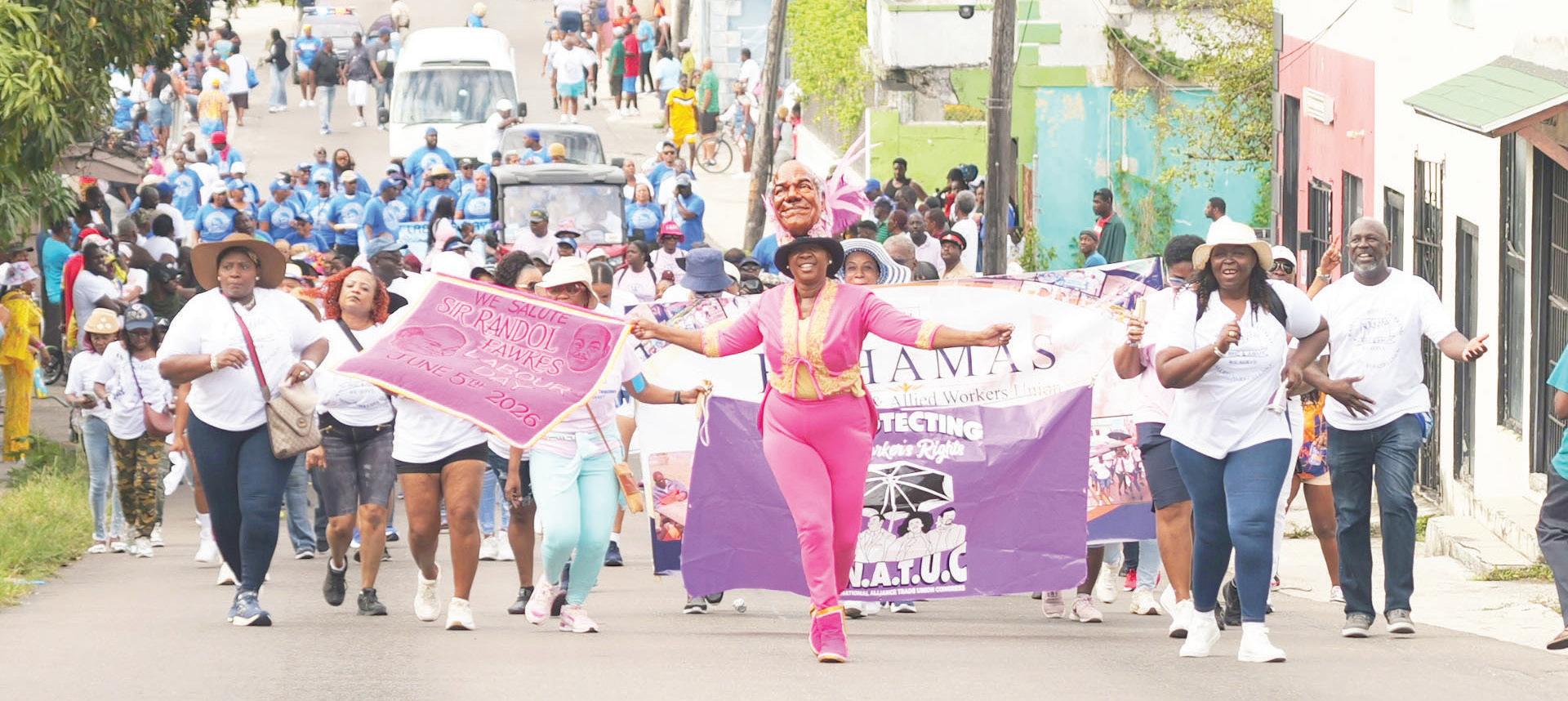
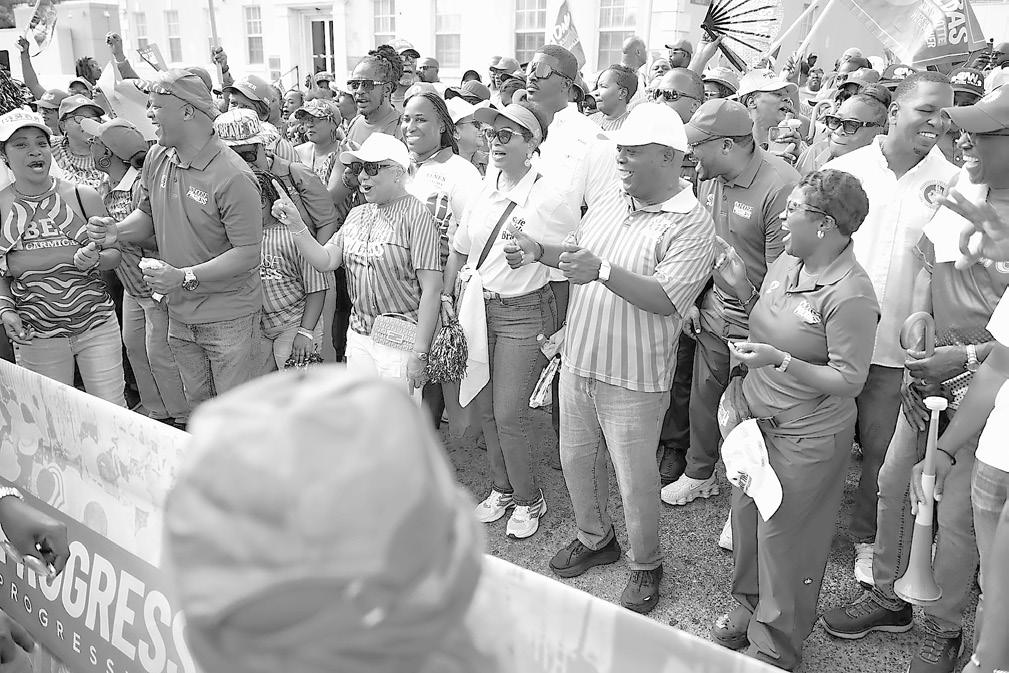
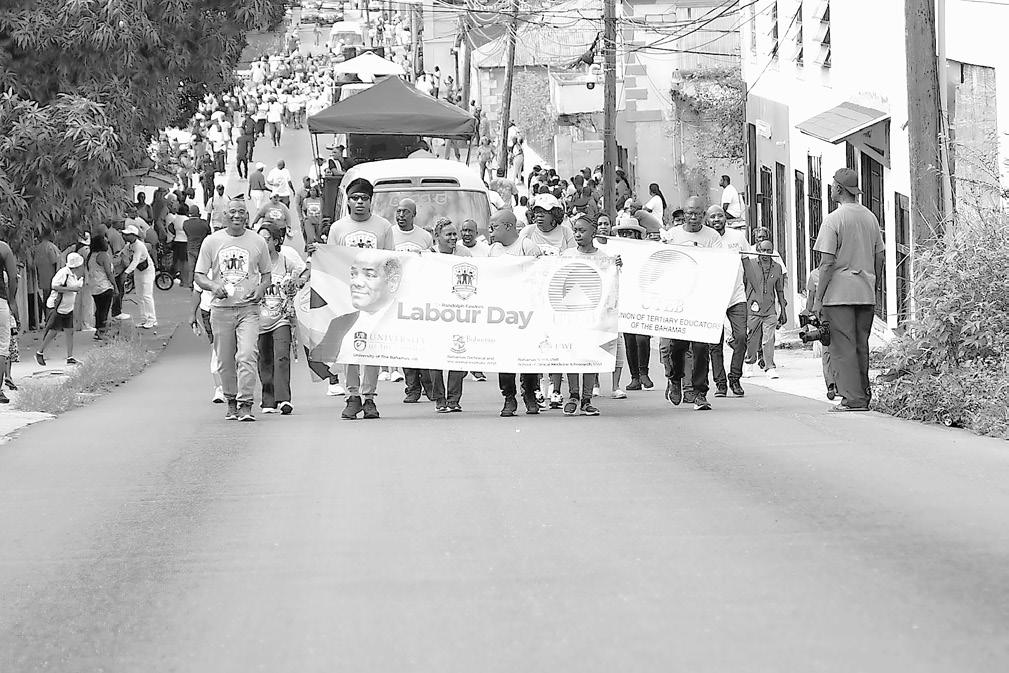
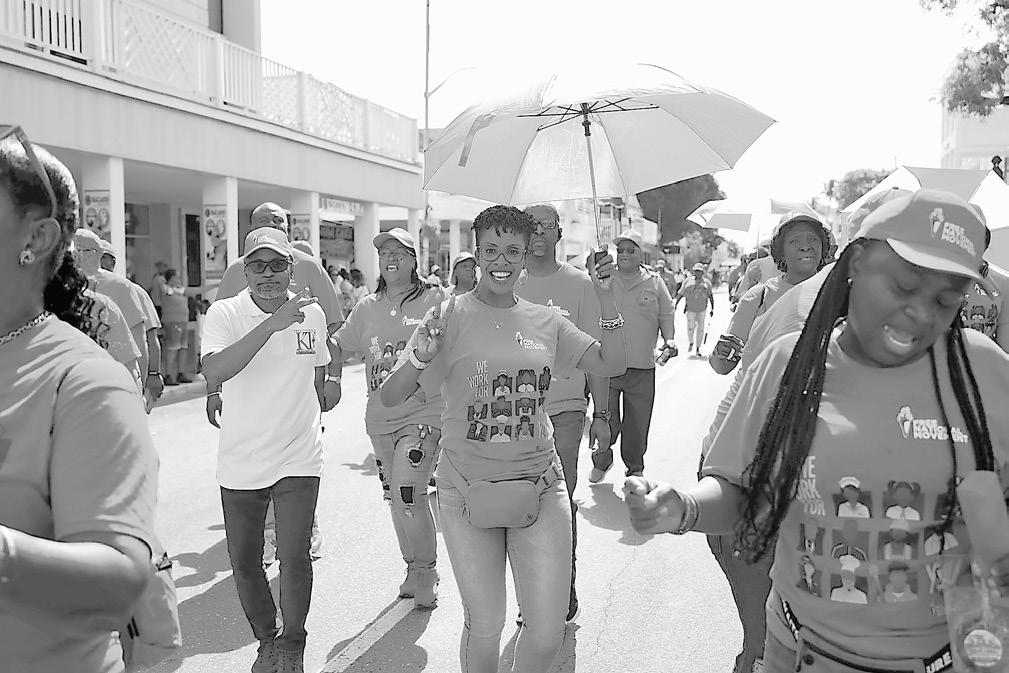
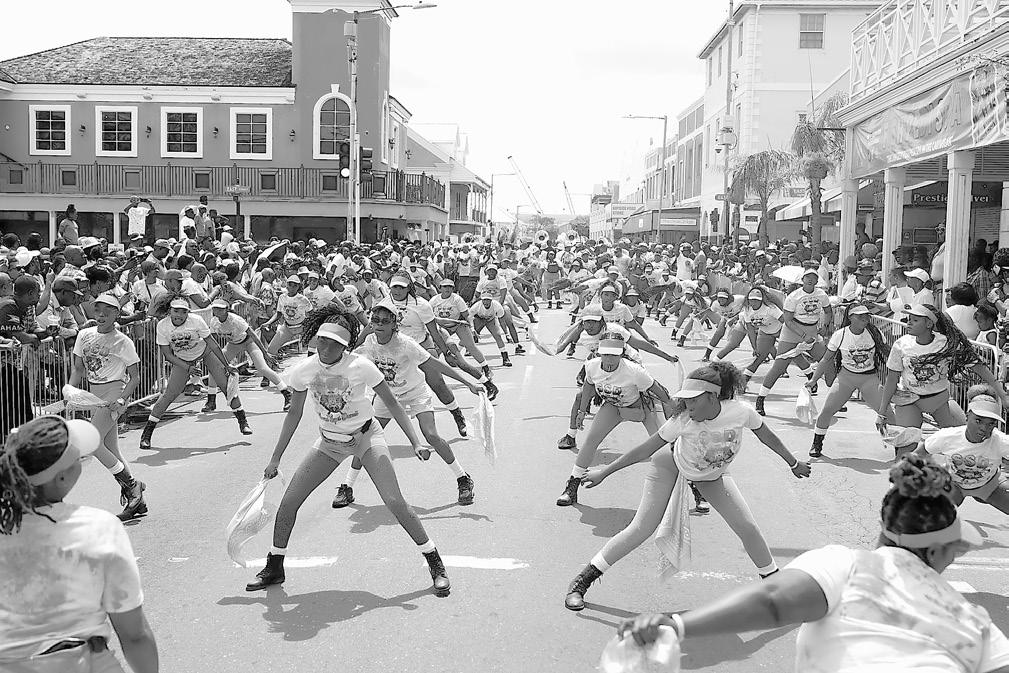
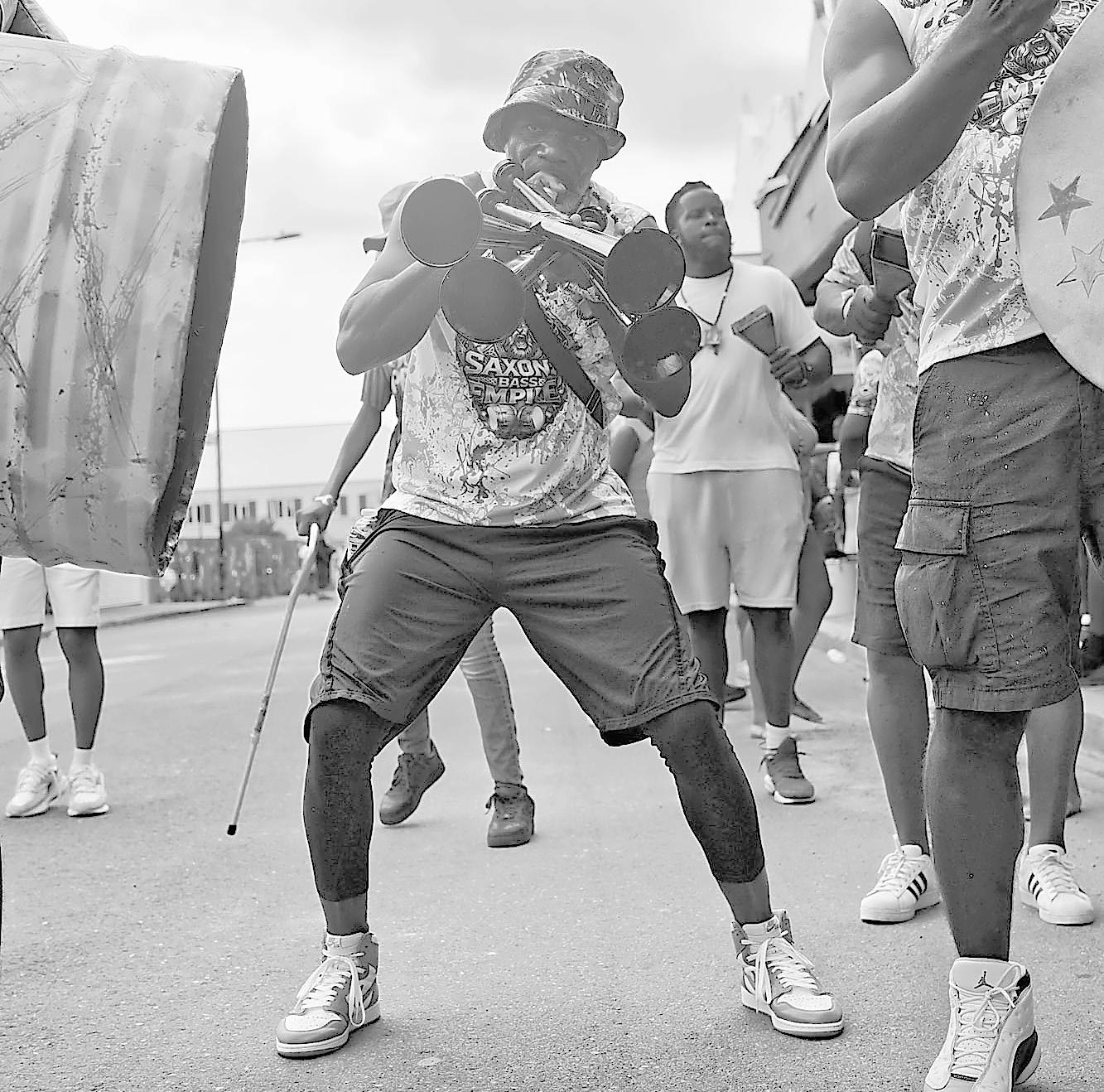
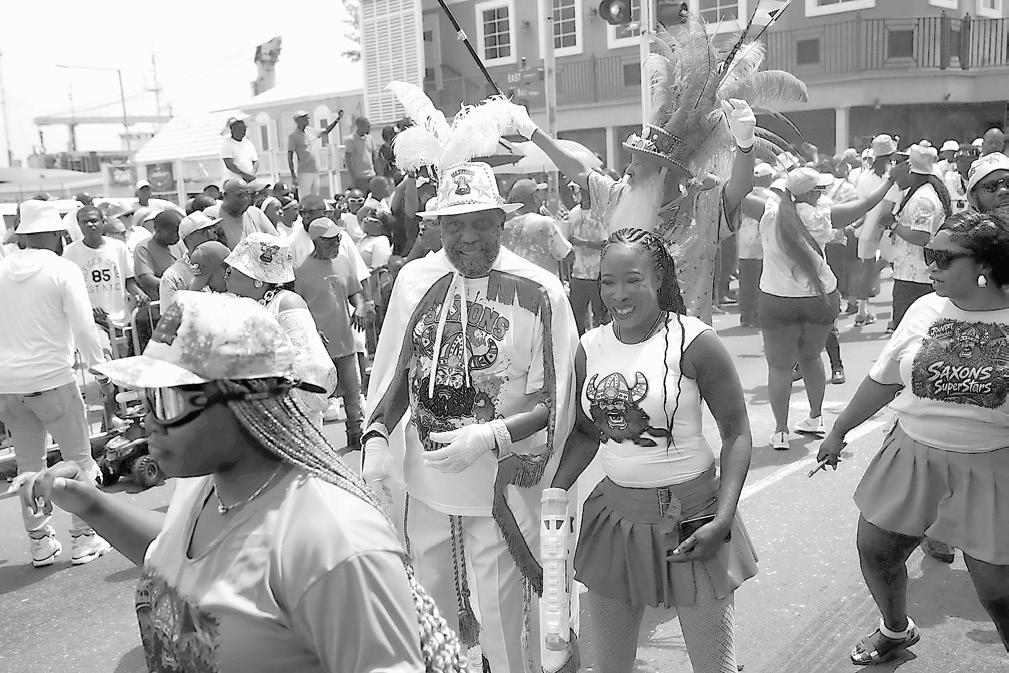
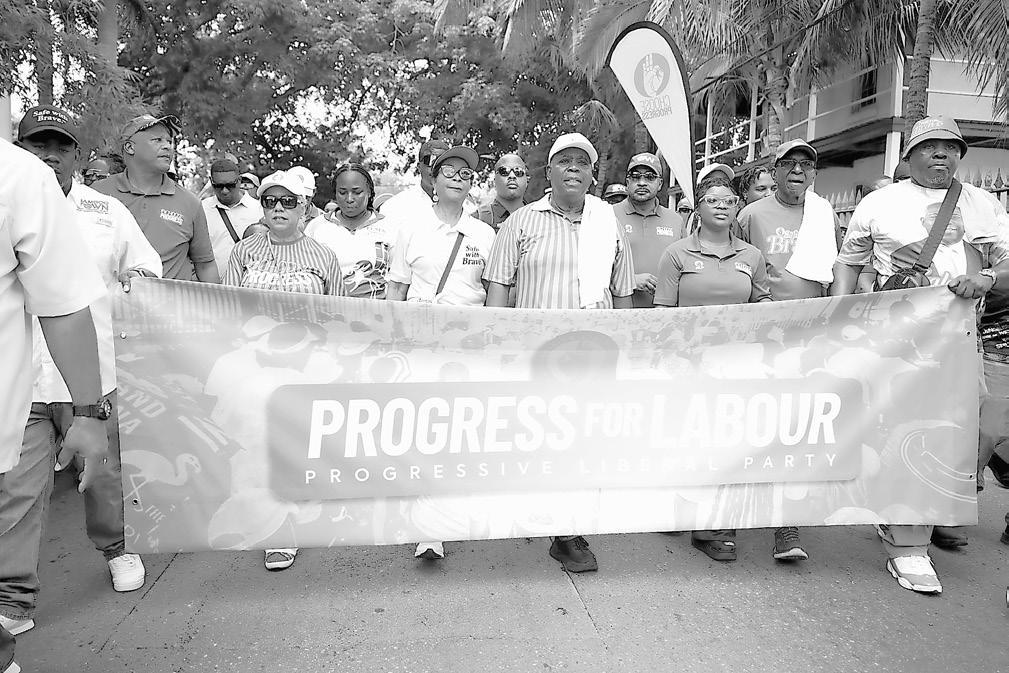
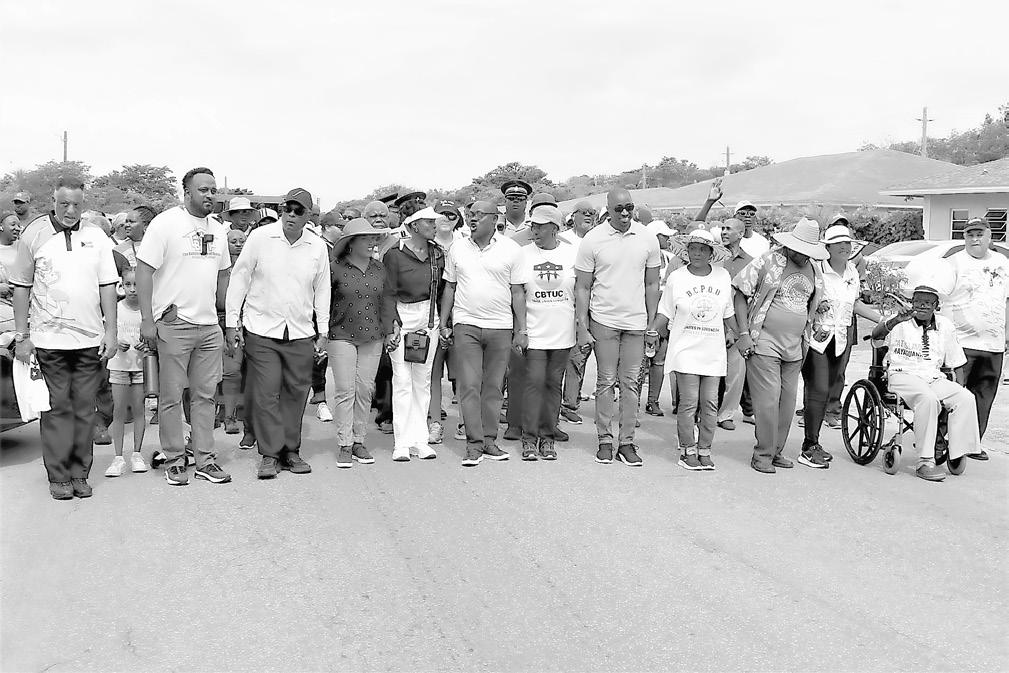
LABOUR Day unfolded with two competing marches in New Providence on Friday, with union leaders divided over the holiday’s direction and political party colours again fuelling complaints that the workers’ celebration has been overtaken by partisan display. The traditional parade assembled at Windsor Park and moved
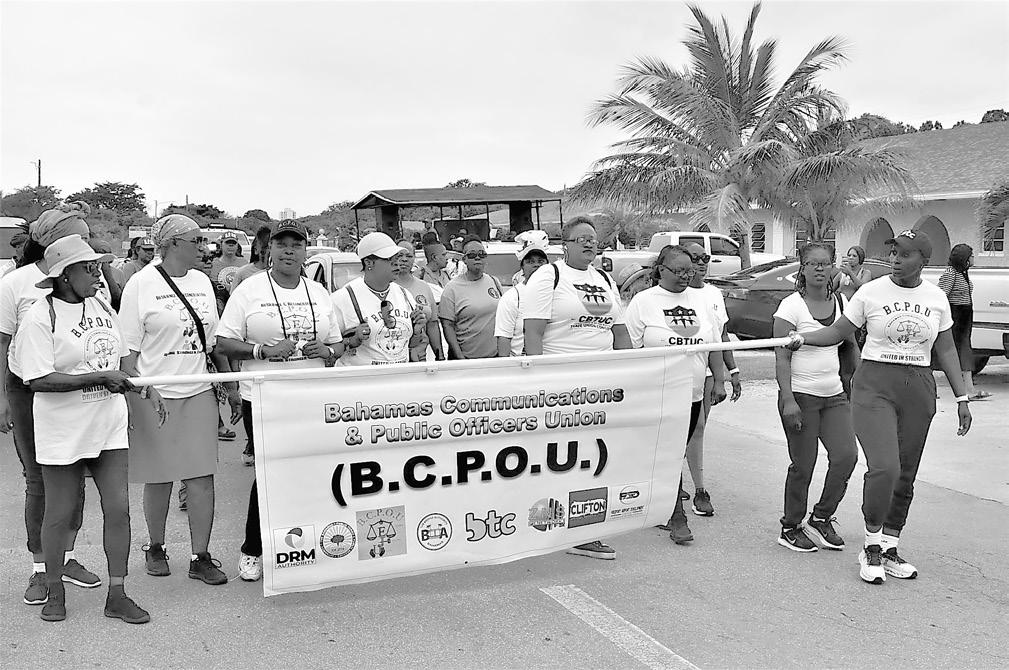
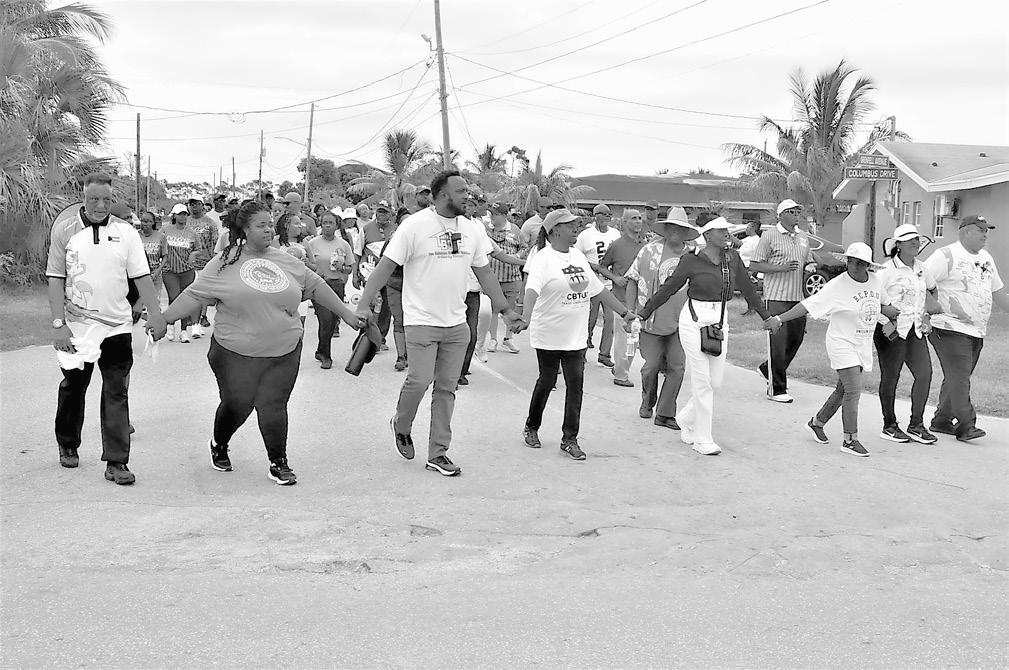
through East Street into downtown Nassau, drawing union members, music, public supporters and visible contingents of Progressive Liberal Party supporters in yellow and Free National Movement supporters in red. At the same time, the Trades Union Congress and several affiliated unions held a separate march from the House of Labour on Wulff Road, travelling west

By DENISE MAYCOCK and EARYEL BOWLEG Tribune Staff Reporters
A FATHER of four was among three people killed in a bloody Labour Day weekend that left families grieving in New Providence and Grand Bahama.
Stafford Ferguson, 44, of Caravel Beach, Freeport, was shot shortly before 9pm on Friday near a business in the Hunters area. He was taken to hospital, but died around 11.35pm. His brother, Khambrel Ferguson, said the killing has shattered a family struggling to understand why a man he described as humble, helpful and peaceful was gunned down.
"We just looking for justice," he told The Tribune yesterday. "Stafford was a nice person. He was helpful to people," he said. "He was
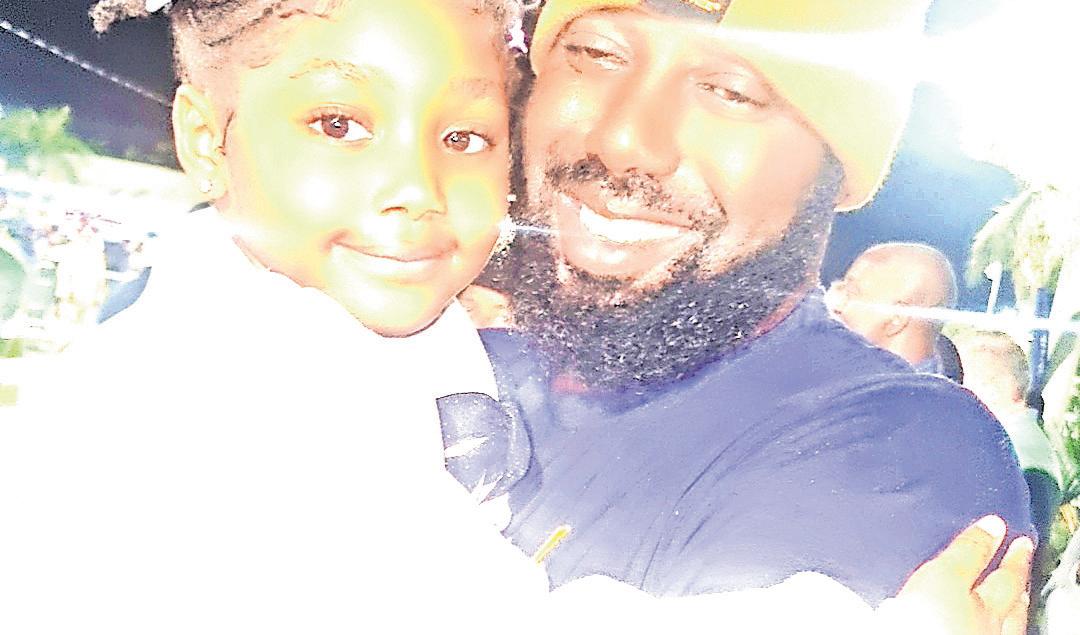
FATHER of four children, 44-year-old Stafford Ferguson of Caravel Beach, Freeport was shot on Friday night, and later succumbed to his wounds in hospital.

By Fay Simmons Tribune Business Reporter jsimmons@tribunemedia.net
AN island-wide blackout that struck Cat Island during the Labour Day weekend left vendors counting losses and disrupted one of the island’s most important annual economic events, with one business owner describing the outage as a “tragic moment” for those who depend on the Rake and Scrape Festival to earn income. Vince McDonald, owner of Curly’s Beach Resort, said his business was able to weather the outage thanks to emergency lighting and an established customer



By EARYEL BOWLEG Tribune Staff Reporter ebowleg@tribunemedia.net
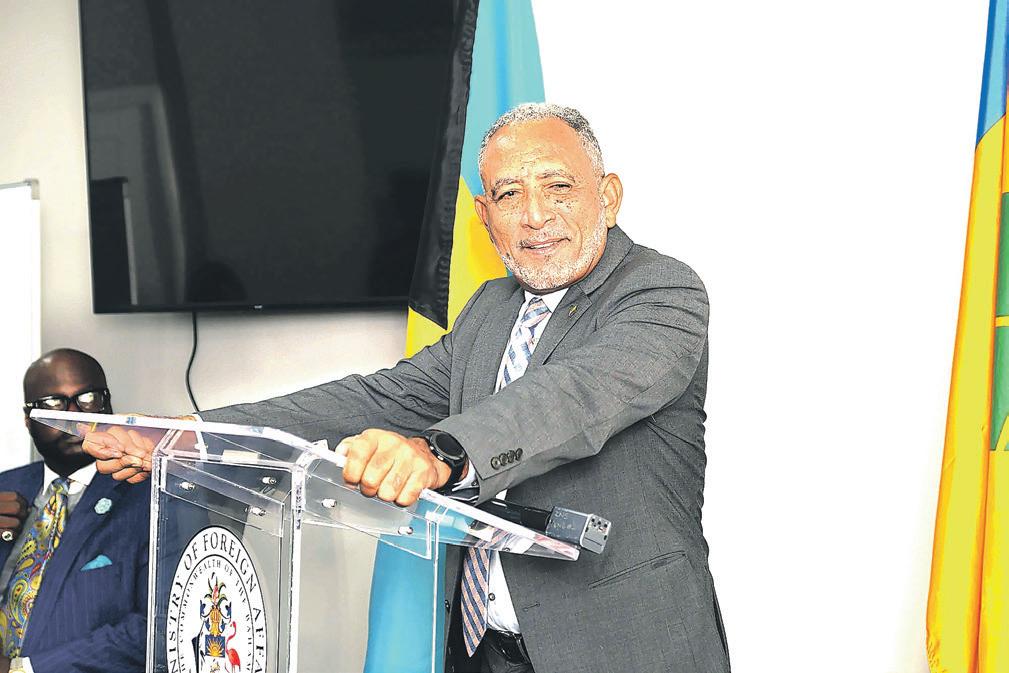
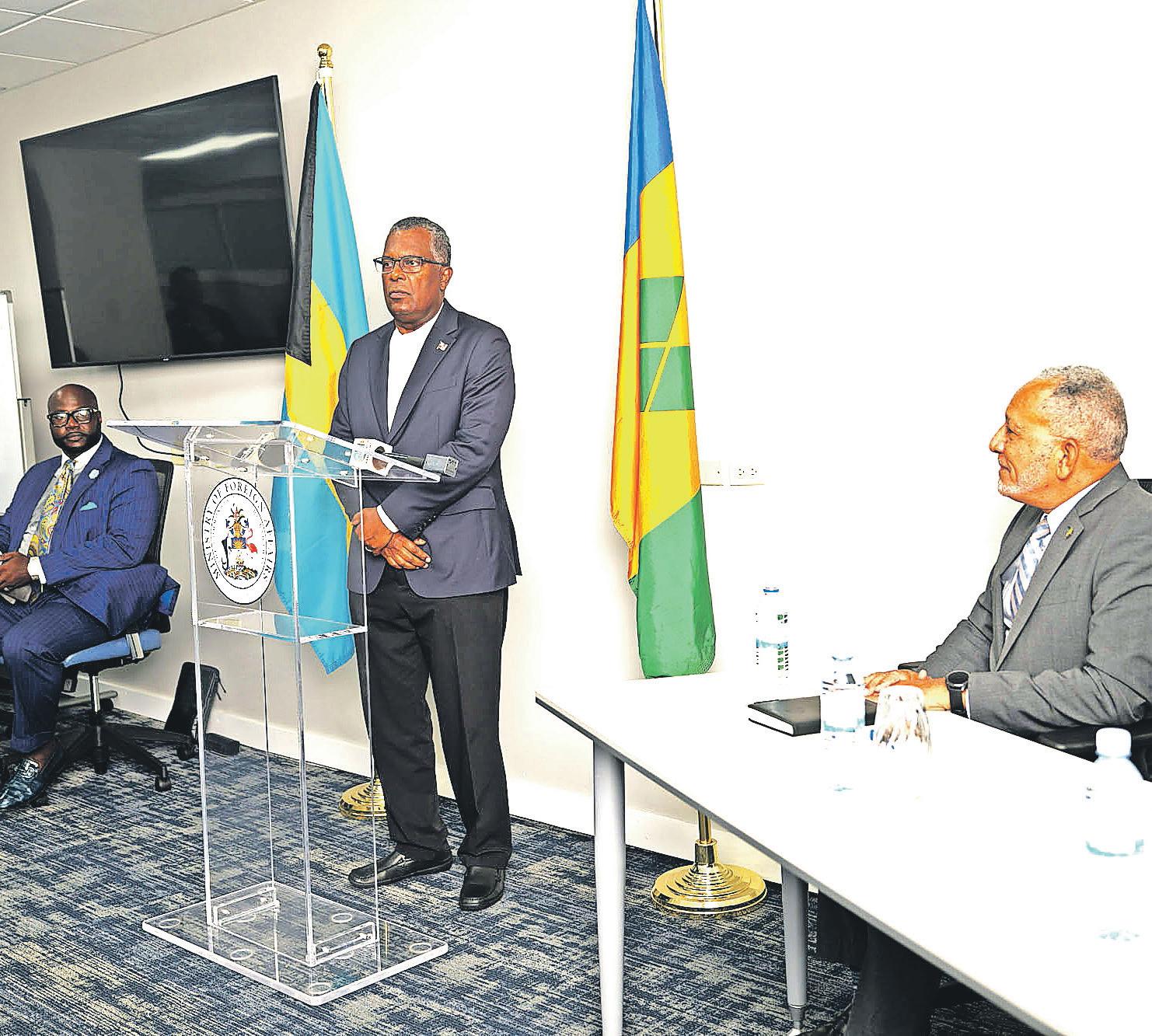
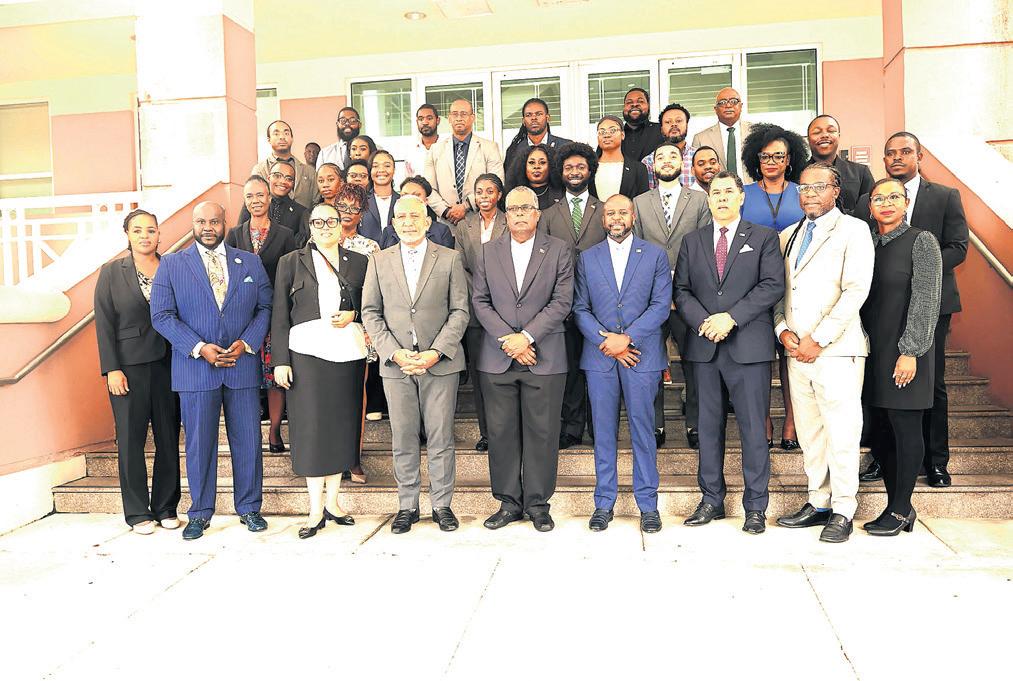
ST Vincent and the Grenadines Prime Minister Dr Godwin Friday used a diplomatic visit to the Ministry of Foreign Affairs on Thursday to urge countries to confront global problems collectively, warning that small island states cannot afford to ignore threats beyond their borders.
Dr Friday visited the ministry while in The Bahamas for Caribbean Development Bank discussions. He addressed officials on the growing importance of international cooperation and climate action.
He said today’s interconnected world requires countries, regardless of size, to pay close attention to developments elsewhere.
“The fact that we are small, the fact that we are open and vulnerable economies, are the very reasons why we have to speak
more loudly,” he said. “We are disproportionately affected by the consequences of climate change, and we have a very small carbon footprint, but every year we have to prepare for the hurricane season.”
Dr Friday said Caribbean leaders have been pushing for rapid-response mechanisms within the international community so countries can access assistance quickly after climate-related disasters. He said the effort has faced challenges over the years but is gradually gaining greater international support.
Dr Friday also reflected on his connection to The Bahamas, recalling that he visited the country in the early 1980s as a final-year undergraduate student conducting research. Officials noted that his master’s thesis focused on the external affairs policies of the Bahamian government.

MURDER from page one
a humble person and never used to bother anyone. To see this situation happen is just shocking because somebody murdered him.”
Police said officers found Ferguson lying beside a burgundy 2009 Chevrolet Impala with multiple gunshot wounds to the left abdomen and left arm.
According to police, Ferguson had been walking toward his vehicle when a lone gunman dressed in dark clothing approached him and opened fire before fleeing on foot and escaping in a waiting vehicle.
Two men, both 34, are in police custody, assisting police with their investigations.
Ferguson was the son of businessman Max Quant,
“He was a humble person and never used to bother anyone. To see this situation happen is just shocking because somebody murdered him.”
- Khambrel Ferguson victim’s brother
of Noula Investment Ltd.
He worked as a body repairman and had four children — two boys and two girls — ranging in age from 21 to four.
Khambrel said the family has heard many


rumours about the circumstances surrounding the shooting, but is pleased with the police response so far.
He described his brother as hardworking, energetic and peaceful, saying Stafford tried to settle disputes rather than fuel them.
“If it was any altercation, he would do his best to resolve it,” he said.
“He would be there doing his best to resolve the situation.”
Khambrel said his mother has been overwhelmed by grief since
learning of her son’s death.
The Labour Day weekend violence also claimed two lives in New Providence.
The most recent killing happened around 1.45pm yesterday, when police received reports of a shooting on Constitution Drive.
Police found a man believed to be in his early 30s with gunshot injuries. He was pronounced dead at the scene. Two other adult men were shot in their lower extremities.
Police said the three men were in a makeshift garage next to their residences
when two armed men approached the gate with high-powered weapons and opened fire.
On Friday night, a 23-year-old man was shot and killed on Eneas Street off Meadow Street. Police said one person is in custody in connection with the matter.
According to preliminary reports, police were alerted to gunfire in the area shortly before 11pm through ShotSpotter Technology. Moments later, an anonymous caller reported that a man had been shot and was lying unresponsive in the roadway.
Officers from the Southern Division responded and found the victim, dressed in a white shirt and jeans, lying in the street with multiple gunshot wounds.
Emergency Medical Services personnel examined him and found no signs of life.
Initial investigations indicate that the victim had entered Eneas Street through a track road when an unidentified man dressed in black approached him, produced a firearm and opened fire.
Police said the victim tried to run south along Eneas Street, but collapsed a short distance away and died. The suspect fled in an unknown direction.
Christopher Gilbert, a friend of the victim, said the young man had recently returned to New Providence after working on several Family Islands and mainly earned a living in construction, including on projects on Paradise Island.
Mr Gilbert said the victim had dropped off his two-year-old daughter with her mother shortly before the shooting. He said the killing was a “shock” and that the family was taking it hard, particularly after losing
the victim’s grandmother last year.
In a social media post, a woman identified as the victim’s sister rejected any suggestion that her brother was involved in gangs or the streets, describing him as a quiet, hardworking young man devoted to his family and young daughter.
“Our grandmother passed last July, and our sister and I did our best to make sure he did not fall victim to the streets and gangs,” she said. “They took his life carelessly. He had his baby in his arms when he was shot. He begged for his life. They could have stopped at one when he fell and it jammed.”
“Instead, they continued to unjam and load on my baby brother. He was working on the cay and just came a couple of days prior to visit family, see his girl and his baby. God protected my niece. She is a toddler. How can you kill so senselessly. My God do people not have a heart anymore?!”
“Again, my brother was not a thug or a gangster and was NOT a part of any gang or the streets, that’s why it hurts so much. He was killed out of envy.”
Another woman, who identified herself as the victim’s godmother, went live on Facebook for about an hour, pleading with people to turn in loved ones who may have been responsible for the killing.
“You feel it harder because he was doing something,” she said. “He has a baby. You feel it harder because he is somebody’s child. His mother might be deceased, but he still has his older sister. He has his sisters, he has a brother, he has auntie, has uncle, and he have a crazy godmother.”

A SCREENCAPTURE from a viral video showing a man in Abaco being repeatedly slapped while others watched and filmed the incident.
By EARYEL BOWLEG Tribune Staff Reporter ebowleg@tribunemedia.net
A VIRAL video showing a man being slapped at least 19 times while others watch or laugh hysterically has prompted a police complaint and investigation.
Police press liason Sheria King confirmed yesterday that the incident happened in Abaco.
The victim, who appeared to be in his 50s, did not fight back or resist during the attack. The video shows one man
holding the victim by his shirt while repeatedly slapping him across the head. Another man also struck the victim, slapping him and punching him once in the stomach.
At least ten men appeared to be gathered in the area. One man tried to stop the assault, but the two attackers continued.
The man who appeared to be recording the video laughed hysterically throughout the clip. Other bystanders could also be heard laughing. The video sparked
outrage on social media, with commenters condemning the attackers and the person who recorded the assault while laughing.
One commenter wrote: “Public embarrassment is not a laughing matter!!!!!!!!! You slapping up big man” Another called the attackers “big cowards ganging up on that man.”
Another criticised the person filming the incident, saying: “Nothing about this video is funny, they are cowards and none of them looks tough”.


By RASHAD ROLLE Tribune News Editor rrolle@tribunemedia.net
STATE Minister for Immigration Darron Pickstock has rejected claims that a proposed amendment to the Bahamas Nationality Act would create a new immigration category, a loophole or an alternative route to citizenship, insisting the bill only updates an existing administrative process and raises the related fee.
The response came after Free National Movement MP Dr Andre Rollins accused the Davis administration of trying to push a major immigration change through Parliament during the budget debate, warning that the amendment could create a “dangerous loophole for exploitation”.
The Bahamas Nationality (Amendment) Bill, 2026 would allow the minister of immigration to grant permanent residency to people whose citizenship applications are refused, once they pay a $500 fee.
Mr Pickstock said the amendment does not alter the requirements for permanent residency.
“Contrary to some public assertions, the amendment does not establish a new immigration category, create a loophole within the immigration system, or provide an alternative route to citizenship,” Mr Pickstock said in a statement. “Rather, it modernises an existing administrative provision and reflects an increase to the associated processing fee.”
He said people who qualify under the existing constitutional framework may apply to be registered as Bahamian citizens. Those applications are reviewed by the Immigration Board of the Immigration Department and ultimately determined by the executive branch.
Mr Pickstock said that when citizenship is not approved, the executive branch may consider the applicant’s circumstances and connection to The Bahamas and determine
that permanent residency is a more appropriate status.
He said applicants currently pay $50 under the existing arrangement, but the amendment would raise the processing fee to $500.
“The Department wishes to strongly emphasise that the eligibility criteria for Permanent Residency remain unchanged,” the statement said. “All applications will continue to undergo rigorous review, enhanced due diligence, and careful adjudication in accordance with all applicable laws and established procedures.”
Dr Rollins, the Long Island MP and opposition shadow minister of foreign affairs and immigration, had criticised the bill as an attempt to bury a significant immigration change inside the budget debate.
“We strongly advise the government against seeking to bury something as significant as the conferral of permanent residency at a cost even cheaper than that of an annual work permit - and its attendant
consequences within a budget debate,” the statement read.
Dr Rollins said Opposition Leader Michael Pintard had previously urged the government to establish a select committee on immigration to address concerns about the immigration system transparently.
“Despite this recommendation, the government is attempting to use the upcoming budget debate exercise as an opportunity to introduce by stealth a significant amendment to our nation’s immigration laws, which potentially will create a dangerous loophole for future exploitation,” Dr Rollins said.
The proposed amendment would create a new section 7A in the Bahamas Nationality Act, stating:
“If the minister refuses an application under section 7, the minister may, upon payment by the applicant of the fee of $500, grant the applicant a certificate of permanent residence subject to such terms and
conditions as the minister thinks fit.”
Section seven of the Act deals with people who are not entitled to Bahamian citizenship at birth but may apply to become citizens.
Those categories include women married to Bahamian citizens, people born in The Bahamas to non-Bahamian parents, and people born outside The Bahamas to Bahamian women married to non-Bahamian men.
The issue touches one of the country’s most sensitive and long-running citizenship debates.
Under current law, children born outside The Bahamas to Bahamian women married to non-Bahamian men are not entitled to Bahamian citizenship at birth. They may apply for citizenship after turning 18, but must do so before turning 21.
People born in The Bahamas to non-Bahamian parents are also not automatically entitled to citizenship at birth. They may apply after turning 18, but have only a 12-month
window to do so, a restriction that has long raised concerns about the risk of statelessness.
The issue was put to voters in failed referendums in 2002 and 2016, both of which sought to address citizenship equality for married Bahamian women with non-Bahamian spouses.
The existing law allows the minister to refuse citizenship applications on several grounds, including if an applicant was convicted in the previous five years and sentenced to death or more than one year in prison, is not of good behaviour, has engaged in conduct that could threaten public safety or law and order, was declared bankrupt, or lacks the means to support themselves and is likely to become a public charge. It also allows refusal if, for reasons of public policy, the minister is satisfied that granting citizenship would not be conducive to the public good.
By EARYEL BOWLEG Tribune Staff Reporter
ebowleg@tribunemedia.net
THE Utilities Regulation and Competition Authority will review Bahamas Power and Light’s fuel tariff in 2026, a move that could determine whether consumers have been fairly charged for fuel costs that make up a major part of their electricity bills. URCA officials said the review and audit will examine whether BPL’s fuel cost recovery system complies with the law and whether the costs passed on to customers reflect efficient procurement and operations.
The review matters because fuel costs are passed directly to electricity consumers. If those costs reflect inefficient purchasing or weak operations, customers could be left to absorb charges that should not have been included in their bills.
During a press conference last week, officials
said BPL’s fuel tariff has been a major issue in recent years amid concerns over electricity rates and the utility’s efforts to recover costs after keeping rates stable during the COVID-19 pandemic and the years immediately before it.
Following a consultancy launched in 2024, URCA said it decided to examine electricity tariffs through a more comprehensive approach in line with the Electricity Act.
Under the Electricity Act, which came into force in 2024, the Minister of Energy was granted authority to set electricity tariff rates until June 2027, including social relief and other tariff categories. The minister later exercised that authority, meaning BPL’s current electricity rates are now set by the government.
However, URCA said that before the minister’s authority expires, public electricity suppliers, including BPL, Grand Bahama Power Company, RAV Bahamas and Bakers
Bay Utilities, must submit tariff plans to the regulator for review.
“The Act mandates that before the minister’s power sunsets, at least six months before, the public electricity suppliers would have to submit to us a tariff plan that we would review,” officials said.
URCA said it has already completed its review of BPL’s tariff structure and expects to release its findings in the coming months.
On the telecommunications side, URCA said reliability remains a major concern, particularly in the Family Islands. Work conducted in 2025 will help shape a broader review of its quality-of-service framework, with additional findings expected to be published later this year.
The authority also completed a nationwide assessment of universal service obligations, which will form the basis of a public consultation later this year and help guide future decisions on
implementation and funding mechanisms.
URCA said it is also advancing its long-running initiative to improve information and communications technology accessibility for persons with disabilities.
Officials said the project was restarted in 2025 and that additional surveys and public consultations are planned to gather feedback from the differently-abled community and electronic communications providers. The regulator also expects to continue overseeing the implementation of remedies arising from its review of fixed-line telecommunications and pay television markets.
Meanwhile, URCA reported total income of $10.49m for 2025, about $500,000 below budget.
Actual operating expenses totalled $8.34m, nearly $2.7m under budget, largely reflecting lower-than-budgeted spending on professional services, premises costs, office services, consumer education and doubtful accounts.

By LYNAIRE MUNNINGS Tribune Staff Reporter lmunnings@tribunemedia.net
THE Bahamas Union of Teachers president Belinda Wilson has urged the newly appointed Education Minister Chester Cooper to tackle chronic teacher shortages, school infrastructure problems and communication failures within the Ministry of Education, warning that many of the issues have persisted despite decades of recommendations from educators.
Speaking on Morning Blend on Guardian Radio, Mrs Wilson revealed that some newly qualified teachers who should have been placed in classrooms at the beginning of the academic year were only assigned to schools weeks before the school year ended, highlighting what she described
as longstanding inefficiencies in the ministry's recruitment process.
Her comments come as teachers continue to raise concerns over staffing shortages, deteriorating school facilities and unresolved industrial matters.
Ms Wilson, who recently met with the education minister and his team, described the discussions as productive and covered a wide range of issues affecting education, including teacher shortages, recruitment, curriculum matters, the status of Cuban teachers, school repairs, new school construction and communication within the ministry.
She said she gave the minister a 20-page submission outlining the strengths and weaknesses of the current education system and offered recommendations for improvement.
She painted a troubling picture of staffing shortages throughout the public school system, which serves students across 164 schools on 24 islands and cays.
She said although substitute teachers were intended to provide temporary coverage when teachers were absent or on extended leave, many retired teachers now serve as supply teachers on a full-time basis because vacancies remain unfilled.
A major concern, she said, is the length of time it takes to appoint newly qualified teachers after graduation.
She said many students at the University of The Bahamas receive government grants or scholarships and should already be known to the ministry before completing their studies. She said instead, graduates often wait
months for appointment letters while officials gather transcripts, police records and other documentation.
"So, let's say, in total, it's 100 of them," she said. "They'll be invited to an orientation in August, and when the orientation ceremony ends, you may have 20 or 30 of them that have appointment letters."
She said many others remain in limbo while paperwork is processed.
"Oh, we waiting for the public service. Oh, we waiting for the police to vet them. Oh we waiting for her to bring a diploma. Oh, we waiting for her transcript, so that alone is a turn off."
She said those delays discourage young teachers who are eager to enter classrooms after completing four years of study.
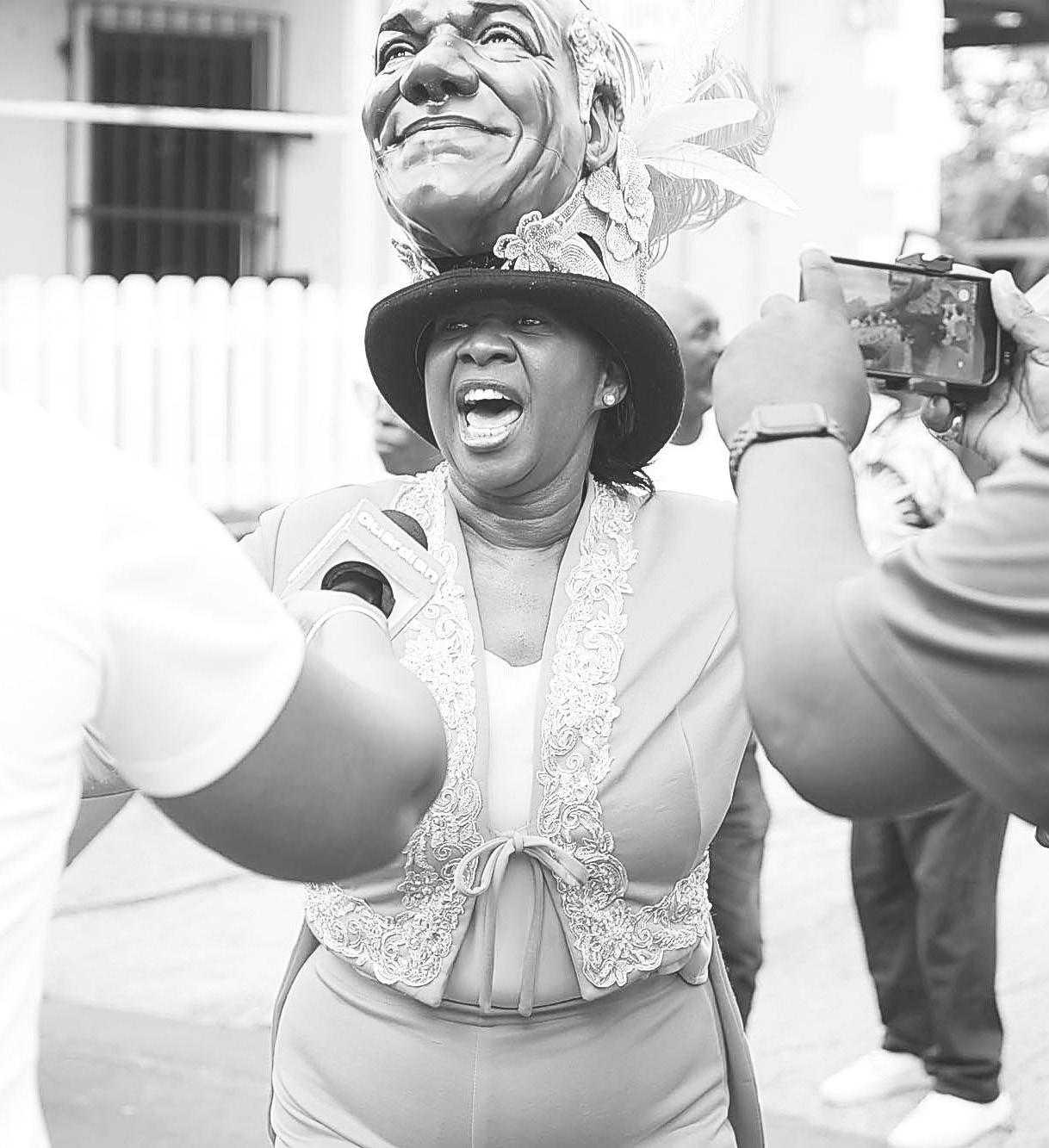
A PRIVATE jet apparently landed on a taxiway instead of a runway at Leonard Thompson International Airport in Marsh Harbour, Abaco, on Tuesday, prompting an investigation by the Aircraft Accident Investigation Authority.
AAIA chief investigator Kendall Dorsett confirmed yesterday that the authority is investigating an incident “where an aircraft apparently landed on the taxiway instead of the runway.”
He said the Airport Authority and the Civil Aviation Authority Bahamas are supporting the investigation. No injuries were reported.
Workers doing maintenance on radar equipment at the airport reportedly witnessed the incident, according to Bahamas Aviation Climate and Severe Weather Network Vice President of Infrastructure Adam Darville.
He said a smaller aircraft was on the taxiway when a larger white jet landed on the same taxiway, forcing the smaller plane onto the grass shoulder to avoid a collision.
The incident comes months after two close calls involving American Airlines flights at Family Island airports in February.
On February 12, an American Airlines flight approaching Exuma was forced to take evasive action to avoid a departing aircraft. Two flight attendants were injured.
On February 24, another incident occurred at North Eleuthera when an aircraft passed overhead while an American Airlines plane
was still on the runway preparing for takeoff.
Michael Strachan, chief operating officer of the Bahamas Aviation, Climate & Severe Weather Net-


AAIA investigates after a plane landed on taxiway in Marsh Harbour forcing another plane onto the taxiway shoulder to avoid a collision.
work, previously said those near-miss incidents highlighted longstanding safety concerns tied to limited data and infrastructure at uncontrolled Family Island airfields.
Mr Strachan said many Family Island airports operate without air traffic control or other infrastructure common at larger airports.
“Working along with the local counterparts to make sure that we have a firm and robust plan in place to improve the safety around these airports, especially the Family Islands, which
A 61-YEAR-OLD woman was admitted to hospital’s trauma unit after she was allegedly stabbed in the throat by two men in the Lake Cunningham area on Thursday morning, police said. According to initial reports, police were told shortly after 10am that a woman was at a business on Wulff Road suffering from an apparent stab wound. Officers went to the business and met the injured
woman, who reported that two men attacked her in the Lake Cunningham area.
Police said the woman alleged that the suspects were people to whom her boyfriend reportedly owed money.
Emergency Medical Services personnel assessed the woman at the scene before taking her to hospital for further treatment. Police said her injuries are serious.
TWO people were hospitalised after a Jet Ski crashed into rocks near West Bay Street on Friday night, police said. According to preliminary reports, police received a call shortly after 7pm from an anonymous caller requesting emergency medical assistance west of Arawak Cay.
most of them operate in uncontrolled manner without air traffic control
and other infrastructure that would happen,” he said.
He described the incidents as unfortunate but said they reinforced
when
was signed.
Officers found a 33-yearold man and a 43-year-old woman with injuries to their legs and back.
Emergency Medical Services personnel treated them at the scene before taking them to hospital. Their conditions were unknown up to press time.
The caller reported that two people riding a Jet Ski had collided with rocks along the shoreline and suffered serious injuries.
NULLIUS ADDICTUS JURARE IN VERBA MAGISTRI
“Being Bound to Swear to The Dogmas of No Master”
LEON E. H. DUPUCH,
Publisher/Editor 1903-1914
SIR ETIENNE DUPUCH, Kt., O.B.E., K.M., K.C.S.G., (Hon.) LL.D., D.Litt .
Publisher/Editor 1919-1972
Contributing Editor 1972-1991
RT HON EILEEN DUPUCH CARRON, C.M.G., M.S., B.A., LL.B.
Publisher/Editor 1972-
Published daily Monday to Friday
Shirley & Deveaux Streets, Nassau, Bahamas N3207
TELEPHONES
News & General Information (242) 502-2350
Advertising Manager (242) 502-2394
Circulation Department (242) 502-2386
Nassau fax (242) 328-2398
Freeport, Grand Bahama (242)-352-6608
Freeport fax (242) 352-9348
WEBSITE, TWITTER & FACEBOOK
www.tribune242.com

@tribune242

“IN my day, I did not allow the Progressive Liberal Party to dictate to The Bahamas Federation of Labour.”
Interesting words from another time – spoken by no less a person than Sir Randol Fawkes himself.
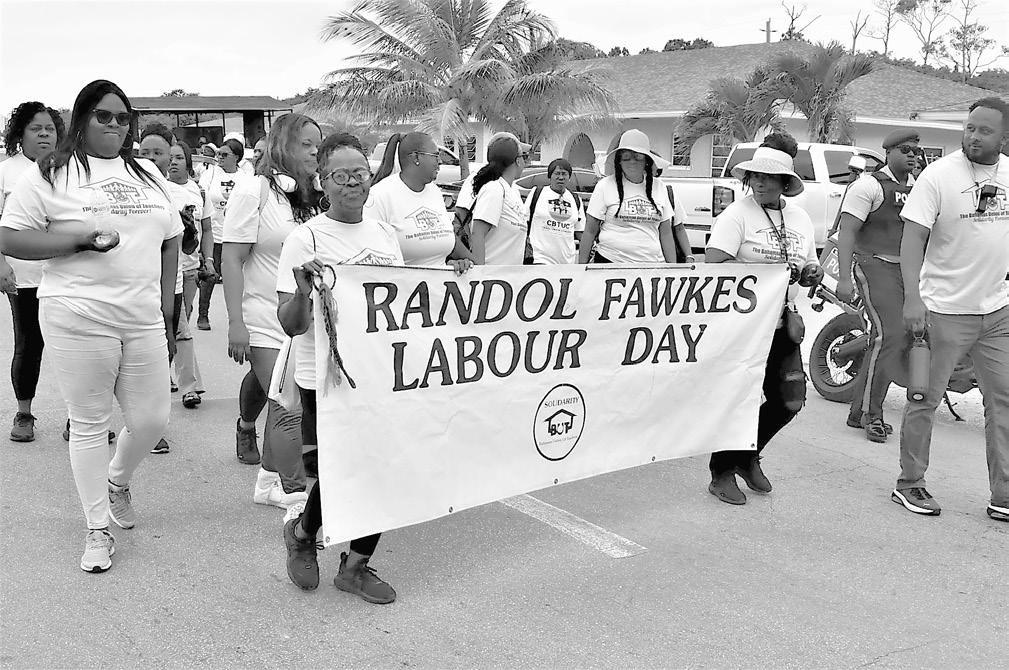
On Friday, the celebrations of Labour Day again saw two separate events take place – the traditional Labour Day march, and the Trade Union Congress event that began last year as a gathering. This year, there was little doubt that was a separate march.
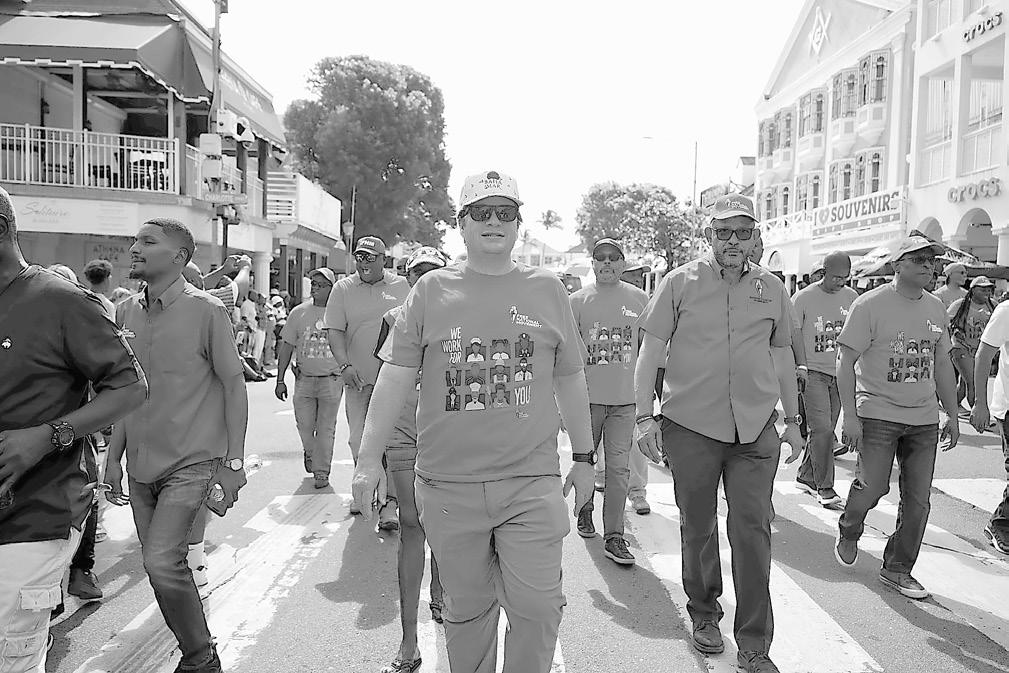
The traditional parade met up at Windor Park before setting off – with politicians among its numbers, the PLP in yellow, the FNM in red.
The TUC march, with several affiliated unions, set off from the House of Labour and ended at the Southern Recreation Grounds.
There has been much talk about the parades becoming too politicised, though the real word that should be used there is partisan.
Unionisation is political by its nature. Labour rights are political. Worker conditions are political. Fundamentally, almost every aspect of our daily life is political in nature – because it is allowed, forbidden or governed by political decisions. Such is our world.
What the real concern is whether the workers truly are the focus now or whether the Labour movement has been subsumed by political leadership trying to take the spotlight.
The debate also took place last year – when the very idea was rejected even as Prime Minister Philip Davis and supporters joined the parade wearing “Ride the Wave With Brave” T-shirts. This year, the shirts said “Choose Progress” as party supporters made the most of those election T-shirts that otherwise would be gathering dust in the wardrobe.
Across at the FNM section of the parade, they too were out in party shirts, having previously declined to wear party colours. The explanation from party leader Michael Pintard was essentially that if the PLP were going to keep wearing party colours, the FNM might as well too. If you can’t beat them... although perhaps that’s the wrong saying to use given the recent eletion.
Bahamas Public Services Union president Kimsley Ferguson said: “There’s no problem with political parties coming on to the parade, but come and support the workers, wear neutral colours, don’t bring party colours to a parade that’s supposed to be celebrating the workers of the country.”
TUC president Obie Ferguson KC encouraged participants to wear black trousers and white Labour Day shirts rather than political colours.
Yet despite such pleas, out came the colours.
Labour Minister Pia Glover-Rolle said she felt the parade was not politicised – because the parties are at the back of the parade, not mixing in, saying “I don’t think it’s politised in any way” and that there’s a “clear separation”.
Both parties also took to social media to post their participation in the parades. Neither used their platforms on that day to amplify the voices of the unions themselves, to state the battles that workers are presently facing, or to directly explain what changes our country’s workforce deserves.
The parade will have included a number of workers still presently in dispute with the government over a range of issues, of course. It can sometimes be hard to process such thoughts as people say how they are on your side while not yet having agreed to what you are asking for – and that is the case down the years, no matter who is in power.
Back to that quote from Sir Randol Fawkes, ,who said he would not let the PLP dictate. At the time, he added that was “for the simple reason that whenever there was a dispute, they wanted to know if I was negotiating as The Bahamas Federation of Labour or was the PLP coming into the picture. I said, ‘No, this is entirely an industrial dispute; this is not a political dispute. This is a dispute about bread and butter.’ And I made myself very clear about that. The PLP didn’t like that because whenever I made a move they wanted a ride – a free ride but I would not mix my negotiations in that fashion.”
He continued – and this is perhaps the most prescient of his quotes relating to today’s issue; “Today both political parties are trying to ride the bandwagons of the TUC and others. As a result, they (the Labour Movement) are not as effective as they can be for the poor people. I hope there will be another Bahamas Federation of Labour but it takes a long time to build a man.”
Further, when asked about divisions in the labour movement at the time, he replied: “You said they are not united and asked me for advice for them; well, they should unite and stay clear of these political parties. Because no matter what they do, the political parties want to get on the bandwagon. And in getting on the bandwagon, they adulterate the aspirations of the Labour Movement. And eventually they will destroy it.”
It would be interesting indeed to hear Sir Randol Fawkes speak on today’s conundrum – but in honouring a day that bears his name, our political parties and our unions would do well to dwell on what he has said in the past.
EDITOR, The Tribune.
THE COI gained 17,095 votes on May 12. There have been subsequent claims that this is the best general election performance by a third political party. This is incorrect. In 1977 the Bahamian Democratic Party, led by the late John Henry Bostwick, gained 17,252 votes -- 157 more than the COI. And not only that, but while the COI failed to win one seat in the House of Assembly, the BDP won six seats in 1977. Another point worth mentioning is that The Bahamas had a record breaking 209 thousand plus registered voters in 2026. In 1977, it was just 71,295. This underscores just how impressive the BDP performed in that election, despite being in existence for less than a year.
KEVIN EVANS Freeport, Grand Bahama Nassau, May 31, 2026.
EDITOR, The Tribune.
ONE of the quickest ways for a political party to lose its connection with reality is to convince itself that the next leader has already been chosen.
The recent effort by some to present Deputy Prime Minister Chester Cooper as the natural and inevitable successor to Prime Minister Philip Davis should concern every serious PLP.
Chester Cooper is no prince in waiting.
The Progressive Liberal Party has never been a movement built around entitlement. Its leaders have had to earn their place through political struggle, persuasion, 9, and the confidence of party members. Nobody is owed the leadership. Nobody is entitled to it. Nobody should be protected from scrutiny.
There will be no coronation.
The leadership of the PLP is not a crown to be passed from one head to another. It is a responsibility that must be earned.
letters@tribunemedia.net
The party owes its members a contest of ideas, not a pre-arranged succession. It owes the country a serious examination of who is best equipped to lead, not a process driven by assumptions or political convenience.
The question is not whether Chester Cooper is ambitious. Most politicians are.
The question is whether he is the strongest person available to lead the PLP into the next decade.
That question deserves an honest answer, not a manufactured consensus.
The party’s responsibility is to select the person best positioned to win elections, unite the organisation, inspire confidence among Bahamians, and build on the work of the Davis administration.
A healthy political movement welcomes
competition. Weak movements fear it. If Chester Cooper wants to lead, he should make his case before the party. Others should be free to do the same. Delegates should decide. Members should debate. The strongest candidate should emerge. What the PLP cannot afford is the belief that leadership automatically belongs to whoever occupies the office of deputy leader or deputy prime minister. Political history, both here and abroad, is filled with deputies who assumed their time would come, only to discover that parties and voters had a different view. The future of the PLP is too important to be settled by assumption. There will be no coronation.
There should be a contest. And when that day comes, every candidate should have to earn it.
VERNITA CORNISH Nassau, June 7, 2026.
EDITOR, The Tribune.
I LISTENED with great interest to a lady with impressive credentials talking to Jerome Sawyer on his show about some of the things this government presented in the budget.
I think the lady’s name is Ms Turner- Jones and she is an expert in economics and finance. She identified many flaws in the items the government presented in the budget. They tried to present a facade or a smokescreen to the Bahamian people by making it seem like the financial decisions they are making are in the best interest of Bahamians but they are not. This lady dissected parts of the budget and made it clear that many of them areas money will be spent in are not profitable or beneficial to the Bahamian people. She also pointed out that the government has not revealed the total debt the country owes. This was done to give Bahamians a false sense of comfort when our country has too much debt and is spending money in the budget in the wrong areas.
Another thing that shows that this government is not for Bahamians is the fact that they are lowering immigration fees. Why are they doing that? Do they want to make it easier for foreigners to come to this country? This is ridiculous and it is a betrayal to our country. Leave the fees as they are and start deporting illegal families of all nationalities. Children of illegals regardless of their age should not be able to apply for citizenship. They, along with their parents, should be sent back to their country.
The government can also allow illegals to go to Canada to seek residency because they seem to want more people to come to their country.
Many Bahamians are saying that since the election Haitians have become bolder. They are saying that no one can do anything to them and that there are more of them here than Bahamians . What is happening in this country?
Bahamians from all walks of life and from all political parties should be alarmed but very few are saying anything. Were Haitians used to vote and win this election? Why have so many fake passports and voters’ cards been found in their hands? It seems like this election is not valid in my opinion. There are too many questions and too many illegal things have taken place. Why has the demolition of Shanty towns stopped? It must continue until ALL islands are free of Shanty towns. Were they just putting on a show before the election?
Bahamians need to gather prayer warriors to pray every night at midnight against the enemy’s plan for this nation.
Foolish Bahamians often say that Bahamians go abroad to work as well so why are we concerned about Haitians?
We are concerned about them because they are trying to make it seem like this is their country. They make it seem like they can do as they please here and that they can keep coming and coming and coming and they will all be given citizenship. Bahamians are fools if they cannot see that they need to stand up and fight for our country. We should not be accepting any applications for citizenship from Haitians. We need to start deporting them and giving them the option of going hone or going elsewhere. They are trying to make this country Haiti. Why are they having Haitian flag day here? Why don’t they fly home and have it in Haiti?
We cannot sell our citizenship for money to anyone. I pray God’s people wakes up and fight for this country because this government wants to destroy it. If the Prime Minister is a Haitian, he should go to Haiti along with other Haitians and try to improve it. Our country is not for sale.
Our nation is in need of many important things but the Prime Minister has assembled one of the largest cabinets in Bahamian history. Why would he do that if he cares about Bahamians and the fate of our country. It seems to me that he sees the treasury as a big piggy bank that serves him and his ministers. He did not hesitate to overburden the public purse for his cabinet yet he hesitates to give nurses and teachers a decent raise.
The lady who appeared on Jerome Sawyer’s show should be made Minister of Finance. She would ensure that the money is spent with wisdom and in ways that benefit Bahamians and the country. Right now, they seem to be playing a game. This government is playing games with the lives of real Bahamians. They are trying to sell Our country out but this will never be Haiti. We must bring order to this country now. Let God arise and scatter every enemy of this nation. May He expose and destroy every hidden scheme to overtake this land. May He root out and pluck up all who are involved in selling our passports and our nation to foreigners. May He arise and fight for us as a mighty and a terrible one. May all see how great is our God. Amen
SAVE THE BAHAMAS Nassau, June 1, 2026.
We also have too many Chinese here. They need to close down all of the rum stores they have and prosecute them for killing our animals and using them in their food.
EDITOR, The Tribune. WITH several tragedies in our community in just over a week, silence is no longer an option. Periodically, we each have to be the one to say something, even if it’s embarrassing, to prevent something more uncomfortable or even catastrophic. We tell stories and hear of families and friends facing adverse situations. We see the warning signs. We talk about it with others, but do nothing with the excuse, “That’s not my business.” Yet in the end, we regret that we didn’t speak to the one on the edge. We visit them in hospitals. Worse, we cry at their funerals. We saw
that it was about to happen, but we did nothing. It’s always easier to do nothing in a difficult time, but that is not why we are here. It’s our duty as human beings to look out for each other. God looks for people who will take the initiative to speak truth in hard places, say the painful “ouch” that needs to be said, and cut tragedy off. Families suffer casualties, mental and physical sickness, business loss, and jobs. It’s not easy to see your loved one who was the life of the party now being laid to rest, or to be told your job is now redundant, or to watch life savings disappear. These life-changing
scenarios can drive a person to desperate places. We see the signs. We hear the plea for help, yet we do nothing. But tomorrow we say to ourselves, “I should have said something. I could have subverted that incident and saved a life, but I did nothing.” And then we cry, uncontrollably. May God give us courage. May God forgive us for our silence.
God bless The Bahamas.
ANTHONY PRATT Nassau, June 3, 2026. If you or someone you know is struggling, please call the Bahamas Suicide Hotline at 322-2763 or 242-328-0444
By LYNAIRE MUNNINGS
Staff Reporter
A SUPREME Court judge has ordered the release of remand inmate Carlos Butler, ruling that his continued detention at the Bahamas Department of Correctional Services (BDOCS) while suffering from severe spinal injuries and disabilities would amount to inhuman or degrading treatment under the Constitution.
Justice Loren Klein granted interim
constitutional relief to Butler, a 33-year-old remand prisoner who was left wheelchair-bound after being shot multiple times by an off-duty police officer during an alleged armed robbery on April 24.
The judge found that Butler, who cannot move one leg and has lost bowel and bladder control, requires specialised medical care and facilities that BDOCS is currently unable to provide.
Butler was hospitalised at Princess Margaret Hospital from April 24 to May
By JADE RUSSELL Tribune Staff Reporter jrussell@tribunemedia.net
A SUBCONTRACT
introduced in the criminal trial of Adrian Gibson and others claims that Elite Maintenance hired Top Notch Builders to paint Blue Hills water tanks for $45,000.
Assistant Superintendent of Police Kelson Colebrooke, of the police financial intelligence unit, testified for the prosecution in the Supreme Court on Thursday during the ongoing trial over Water and Sewerage Corporation contracts awarded while Gibson led the corporation.
Director of Public Prosecutions Cordell Frazier asked ASP Colebrooke whether he was familiar with the name Top Notch and whether he had received documents related to the company during the investigation.
ASP Colebrooke said yes.
DPP Frazier then presented several documents for ASP Colebrooke to read aloud to jurors. Among them was a subcontract agreement dated June 24, 2020, between Elite Maintenance Limited and Top Notch Builders.
The agreement showed that Top Notch Builders was subcontracted to paint Blue Hills water tanks 1 and 2 for $45,000. The scope of work included sandblasting, priming, intermediate painting and painting.
Gibson’s alleged connection to Elite Maintenance has been raised by key witnesses in the trial.
Alexandria Mackey, Gibson’s former fiancée, previously testified that no shares were issued to Gibson, that he never appeared on the company’s register of directors and that he held no corporate position within Elite Maintenance. However, she said this arrangement was intentional and maintained that Gibson was the company’s beneficial owner despite not being formally listed.
In June 2024, Rashae Gibson, Gibson’s cousin,
testified that the former Long Island MP owned Elite Maintenance Incorporated. ASP Colebrooke read the payment schedule, which provided for Top Notch Builders to receive 40 percent for each of the two tanks and a final 20 percent payment upon completion.
He testified that Tanya Dermitte was listed as the contractor on the agreement and Jonathan Gardiner as the subcontractor.
Gardiner was one of 11 people rescued in waters off Florida after their plane crashed on election day – May 12, 2026. He was later arrested by US law enforcement authorities in connection with a federal drug investigation.
Dermitte accepted a plea deal in the criminal case in 2024. She previously claimed she never signed maintenance contracts awarded to Elite Maintenance, although she was listed as a shareholder of the company and her signature appeared on corporate documents.
Dermitte allegedly became a director and shareholder of Elite Maintenance in 2019 after being asked to join by Gibson’s then fiancée, Mackey, whom she met through Mackey’s mother.
In February 2024, Dermitte told jurors that Mackey handled the company’s day-to-day operations, including the execution of contracts, while Dermitte primarily inspected sites where landscaping and maintenance work was being carried out by Elite Maintenance. She also took photographs of sites where work remained incomplete.
Gibson has been on trial since November 2023 alongside former WSC general manager Elwood Donaldson Jr, Joann Knowles, Peaches Farquharson and Jerome Missick over contracts awarded during his tenure at the corporation.
Senior Justice Cheryl Grant-Thompson is presiding.
8 before being charged with armed robbery and firearm offences. He was remanded to BDOCS on May 11 and is scheduled to return to court on August 13. In his constitutional claim, Butler argued that his detention conditions violated his rights under Articles 15 and 17 of the Constitution, which protect the right to life and prohibit inhuman or degrading treatment.
Court documents said Butler is entirely dependent on others for mobility and personal hygiene. He is housed in a cell shared with other inmates that lacks bathroom facilities, running water and proper bedding.
Justice Klein described Butler's condition as a "complication of atrocities", noting that his severe medical challenges were compounded by unsuitable living conditions.
The judge said Article 17 imposes a positive obligation on the state to ensure that prisoners are treated with dignity and provided with necessary medical care.
Citing local and international legal authorities, Justice Klein said there was a strong argument that Butler's continued detention breached constitutional protections.
The court heard evidence that Butler faces serious health risks, including pressure sores, infection, pneumonia and other potentially life-threatening complications.
In his affidavit, Butler said: "I am not making this application in order to evade accountability for any wrongdoing that may properly be established against me in fair and lawful proceedings. I am making this application because I am a human being, because I am seriously injured and medically vulnerable and because I genuinely fear that detention at BDOCS in my present condition would place my life and health at serious and foreseeable risk."
The Attorney General's Office opposed the application primarily on procedural grounds, arguing that Butler had alternative remedies available, including bail. However, Justice Klein rejected that argument, finding that bail was not an adequate remedy for an alleged breach of constitutional rights.
The judge also noted that government lawyers did not dispute that Butler's case raised serious issues for trial. During the hearing, attorney Donard
Brown, representing the respondents, accepted that the balance of convenience favoured Butler because he faced the greater risk of suffering irreversible harm.
A letter from BDOCS Medical Officer Dr Hasting Johnson, submitted during the hearing, confirmed that Butler is "confined to a wheelchair" and "severely handicapped" as a result of his injuries. Dr Johnson recommended major structural upgrades for disabled inmates, including wider doors, accessible showers, grab bars, specialised mattresses and adapted sleeping facilities. Justice Klein concluded that the prison's own medical evidence supported Butler's claim that BDOCS lacked adequate facilities for someone with his condition.
The judge granted an interim declaration, saying: "The court declares, on an interim basis, that the continued detention of the applicant at the Bahamas Department of Correctional Services (BDOCS) at Fox Hill, as a person suffering from severe spinal and neurological injuries, significant mobility impairment, wheelchair dependence, and loss of bladder and
bowel control, in circumstances where the prison cannot provide the medical facilities and treatment reasonable required by his condition, constitutes and/ or would constitute inhuman or degrading treatment contrary to Article 17 of the Constitution."
To give effect to that declaration, Justice Klein ordered Butler's immediate release so that he can obtain proper medical treatment as an outpatient. The court directed the Attorney General, Director of Public Prosecutions and Commissioner of BDOCS to take all necessary steps to secure his release.
Although the judge declined to characterise the order as bail, he imposed conditions similar to those attached to bail. Butler must enter into a $5,000 bond secured by one or more sureties, report weekly to East Street South Police Station and provide his home address to the Criminal Registry.
Justice Klein stressed that the order was a specially crafted constitutional remedy rather than a grant of bail. The substantive constitutional claim will be heard on July 2 and costs were reserved to the outcome of the case.
Police and EMS personnel went to the apartment complex. Police said the woman approached responders when they arrived, but suddenly collapsed.
She was assisted and taken to the Marsh Harbour Health Centre for further treatment. Her condition was unknown up to press time.
A 30-YEAR-OLD woman reportedly ingested medication in an apparent attempt to harm herself at an apartment complex in Murphy Town, Abaco, on Thursday morning, police said. According to preliminary reports, the woman contacted the Marsh Harbour Police Station shortly before 10am and told officers she had taken medication and needed help from police and Emergency Medical Services.




LABOUR from page one
before turning north along Baillou Hill Road and ending at the Southern Recreation Grounds.
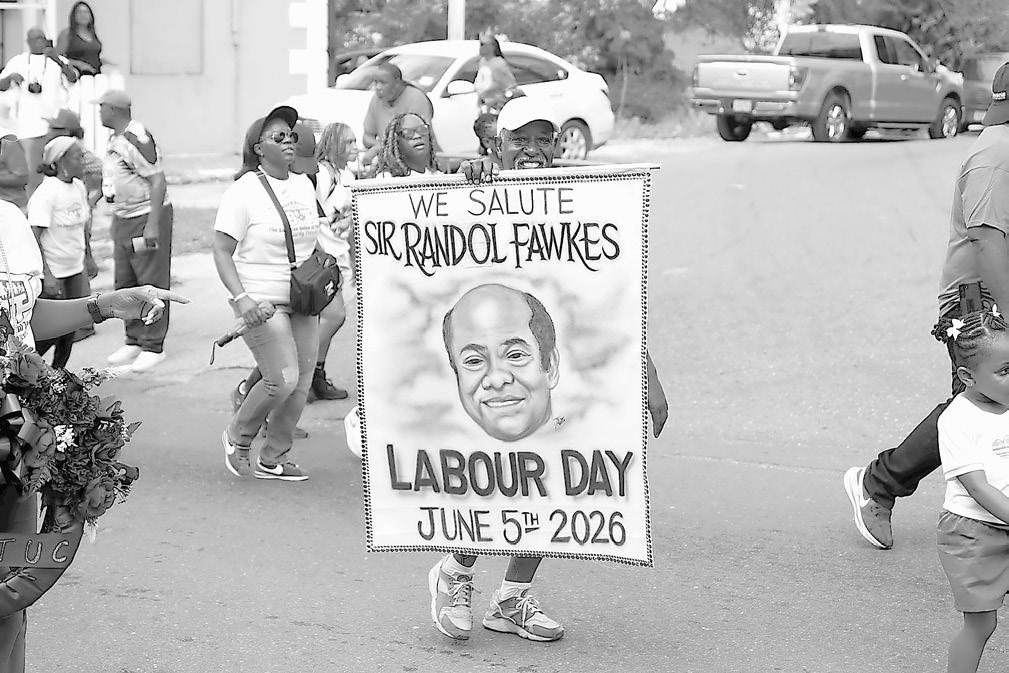
The TUC said its separate route was intended to honour labour pioneer Sir Randol Fawkes and preserve the historical meaning of Labour Day. It was the second consecutive year the TUC opted out of the traditional march route.
TUC president Obie Ferguson, KC, has said the growing presence of political parties has distracted from the event’s original purpose. He encouraged participants in the TUC march to wear black trousers and white Labour Day shirts rather than political colours.
Outgoing Bahamas Public Services Union president Kimsley Ferguson, who said this was his final Labour Day parade as union leader, also criticised the political display.
“Labour Day is supposed to be for the workers of the country and not a show of political might or strength,” he said.
“There’s no problem with political parties coming on to the parade, but come and support the workers, wear neutral colors, don’t bring party colors to a parade that’s supposed to be celebrating the workers of the country.”
Mr Ferguson said his nine-year tenure as BPSU president will end in September when the union holds elections. He said he is leaving union leadership to pursue Christian ministry full-time.
“It’s a new chapter that I’m going to embrace, because God has now called me to go into ministry full time,” he said. “I’m currently a pastor at a church, and so this is my last and final Labour Day parade as the President of Bahamas Public Service Union.”
On the broader labour divide, he said: “I would say that the word union suggests one. If there’s a day and a time that we ought to unite, it would be today.”
Labour Minister Pia Glover-Rolle rejected claims that the parade had been politicised, saying unions remained at the front of the procession while political parties stayed to the rear.
“The parade, in my opinion, has not been politicised, because if you look at the way the route is composed, you’ll see the unions out front, and then I see the political parties in the rear, they’re not mixing in, they’re only at the back supporting, and that’s what it’s about, political parties are supporting the workers, and the supporters of political parties are workers themselves,
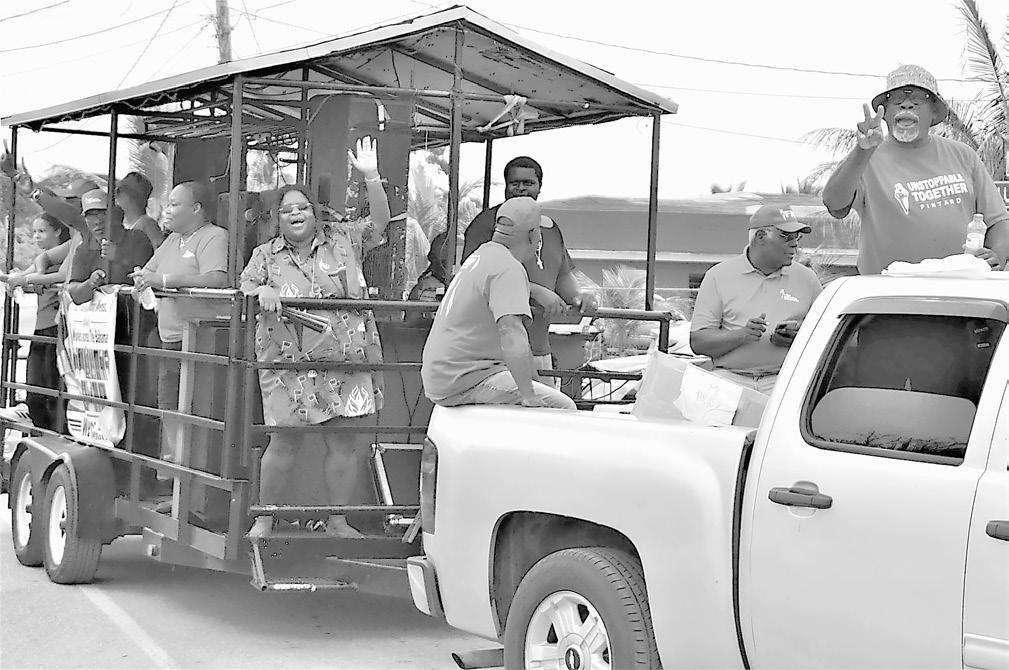
so I don’t think it’s politicised in any way,” she said.
“There’s a clear separation of the political parties and the trade unions. Every year it’s intentional that the political bodies stay closer to the rear and unions make their way through the parade, but it is a show of support. I don’t see anything wrong with political parties supporting the workers of our country.
Bahamas Hotel Catering and Allied Workers Union president Darron Woods said his union was not distracted by the political debate surrounding the parade.
“That has become a tradition now, so it really doesn’t faze us anymore,” he said.
Opposition Leader Michael Pintard defended the FNM’s decision to wear party colours this year, saying the party had previously avoided doing so.
“On multiple Labour Days, we have not worn party colors. We again complied with what was requested by Randol Fawkes family. This year, it’s clear to us that the PLP has violated that agreement,” he said on Friday.
“It has been of no effect, and so we want to stand to let the public know we are still here. We didn’t want to just melt in the crowd to let them know we’re still here and still standing.”
The traditional parade briefly stopped at Zion Baptist Church, near the site of the 2018 Labour Day accident, to remember Dianne Gray-Ferguson, Tami Williams-Gibson, Kathleen Rodgers-Fernander and Tabitha Bethel-Haye. The four women died after a truck participating in the Labour Day parade struck them.
Wreaths were laid and prayers offered before the procession resumed its journey downtown.
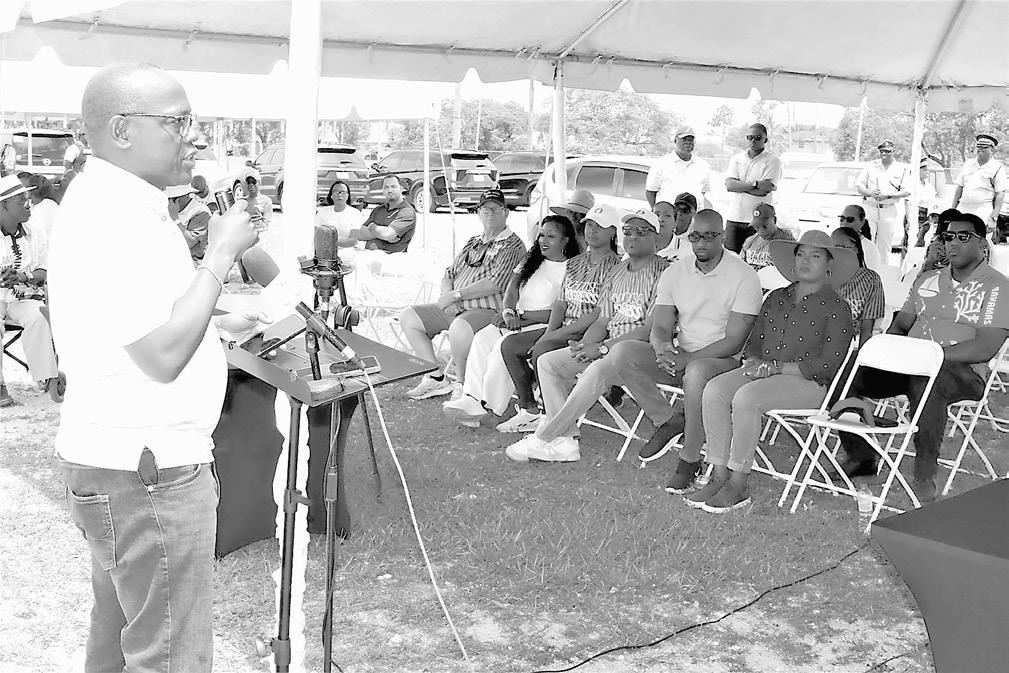
Prime Minister Philip “Brave” Davis, speaking at the memorial stop, said Labour Day represents workers’ dignity, sacrifice and solidarity.
“We must remember that they were participating in what I call a seminal event, where workers come together to mark their solidarity for the dignity of work and to ensure that the rights of workers are continually upheld,” he said.
“Labour Day is a recognition of that. Those struggles that workers have had, workers in this country struggled for centuries until the riot of 1948 to the strike of 56 which gave birth to the marking of this day as a Labour Day.”
“Without workers, you have no economy, and let’s continue to respect them, uphold their dignity, and ensure their rights are always protected.”



AS JONATHAN Gar-
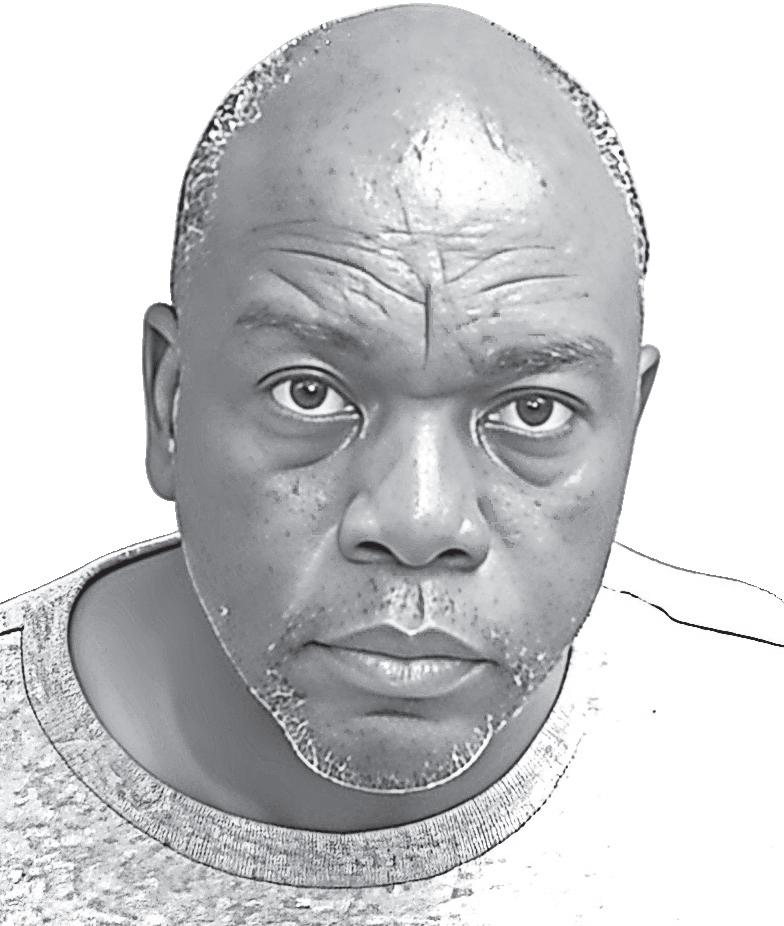
diner sits in his New York jail cell contemplating his future, there appear to be a limited number of options open for the already convicted cocaine trafficker widely known as ‘Player.’ Gardiner, of course, is innocent until proven guilty. But with a sentence of 18 years for drug smuggling and money laundering already on his record, another conviction for similar offences could well lead to the 58-yearold spending much of the remainder of his life behind bars.
The conspiracy to import cocaine charge outlined in the new complaint carries a minimum sentence of ten years in US federal jail and a maximum sentence of life imprisonment. If the government ultimately proceeds under what’s known as the ‘five-kilogramme cocaine threshold,’ a guilty verdict triggers some of the harshest mandatory minimum sentences.
His previous conviction, although historic, could significantly increase the sentence. The more serious the prior offence, the more significant its impact can be. In Gardiner’s case, a judge would almost certainly take note that he had previously served a lengthy sentence for serious narcotics offences.
According to US authorities, Gardiner was carrying $30,000 in Bahamian currency when he was rescued with 11 others from the election day plane crash off the Florida coast after both engines mysteriously failed on a short flight from Abaco to Grand Bahama on May 12.
It is unclear when federal investigators became aware that the crash survivor was the same Jonathan Gardiner named in the DEA investigation, but it was only the following day that he was arrested shortly before he was due to fly back to The Bahamas with other survivors.
On May 15, three days after being picked up by the crew of a US military helicopter, he was charged and appeared before a court in Orlando, Florida. No plea was asked for or entered because it was an initial appearance not an arraignment.
Since then, he has been transferred to the Southern District of New York (SDNY), where federal prosecutors are handling the case. No other court appearances have been scheduled. The SDNY has long been regarded as one of the most powerful federal districts in the US. It’s nicknamed the ‘Sovereign District’ because of its aggressive pursuit of complex financial crime, organised crime and international narcotics cases.
Gardiner is being represented by a Miami-based Cuban American criminal defence attorney, Carlos Fleites, whose website claims he has secured ‘not guilty’ verdicts in cases including murder and drug trafficking.
It is also known that Gardiner met Bahamian consular officials – at his request - in New York on May 26. No details of the meeting have been released due to ‘privacy concerns,’ the Ministry of Foreign Affairs said in a statement.
It is believed that The Bahamas government is deeply unhappy at having had no knowledge into the investigation, on Bahamian soil, into Gardiner and the Georgia Drug Trafficking Organisation (DTO) with which he is allegedly connected – especially as a politician, known only as
‘Politician-1,’ has been implicated.
The Davis administration said on May 19 it would again ask the US government for information about the allegations linking the unnamed politician to an international drug trafficking probe. The statement from the Office of the Prime Minister followed The Tribune’s exclusive report on details contained in a DEA affidavit tied to the arrest of Gardiner. It also made clear the
DEA had kept the government and local law enforcement completely in the dark regarding a major three-year narcotics investigation, much of it with undercover ‘confidential sources’ (CSs) working in The Bahamas. That indicates that the DEA will have tightly restricted dissemination of intelligence to reduce the risk of leaks.
So, what now for Gardiner, who in 2014 was deported from the US, and told never to return, eight years into an 18-year

federal prison sentence for drug trafficking and money laundering?
There are three realistic options open to him:
1 - Fight the case at trial.
Plead not guilty and challenge the government’s evidence before a jury. However, trials in major conspiracy cases are a risky business, and conviction rates in federal court are high. It’s for that reason that most major federal narcotics cases end in guilty pleas rather than full trials.
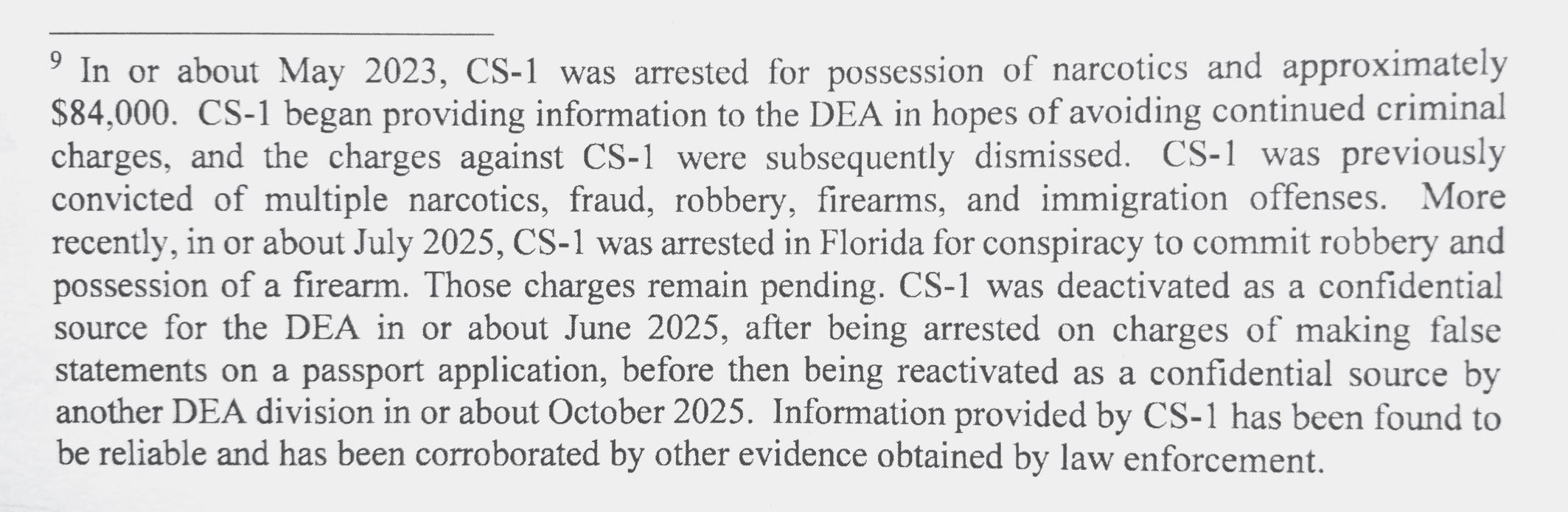
such confidential sources (CSs) is one area where defence lawyers may attack the prosecution’s case. In DEA Special Agent Michael Coleman’s affidavit supporting the charges against Gardiner, he admits to at least three CSs being used on the ground in The Bahamas in the undercover operation – without the knowledge of the Bahamian government, police or defence force. Like many CSs, or co-operating witnesses (CWs), as the FBI call them, they are often people who have been arrested on serious charges and have opted to
CS named, CS-3, also had a prior history of narcotics trafficking. The DEA states that ‘Information from CS-2 and CS-3 has been deemed reliable and corroborated by other evidence,’ including the recorded communications included in the special agent’s affidavit.
The legality of searches or wiretaps is another area the defence would bring into question. According to the DEA special agent’s affidavit supporting charges against Gardiner, multiple wiretaps were used in building the case. Many involved
at trial. Federal defendants often weigh what lawyers call the ‘trial penalty’ – the realisation that sentences after a trial conviction can be substantially higher than those imposed after a guilty plea and cooperation.
3 - Cooperate with authorities.
This is one of the most consequential options in federal narcotics cases. A defendant may become a DEA ‘cooperating source (CS),’ or, what the FBI call a cooperating witness (CW), and provide

Prosecutors often use the threat of mandatory minimum sentence – ‘play ball or go down for 20 years,’ kind of threat - plus stacked conspiracy counts and additional money laundering charges to pressure defendants into co-operating or pleading guilty.
If Gardiner does plead not guilty, defence lawyers can use a number of tactics. It is significant that the investigating authority in Gardiner’s case is the US Drugs Enforcement Agency. Some critics of the agency argue that the DEA has historically relied heavily on criminal informants and aggressive undercover tactics. As one former FBI agent told The Tribune: “There’s a lot of great guys over there at the DEA, but it’s just one of those organisations where they run as fast and loose and hard as they can. They always have. They’ve got guys who’ve committed murder, guys who’ve worked for the New York Mob…you wouldn’t believe some of the guys they work with.”
If Gardiner’s case goes to trial, the reliability of
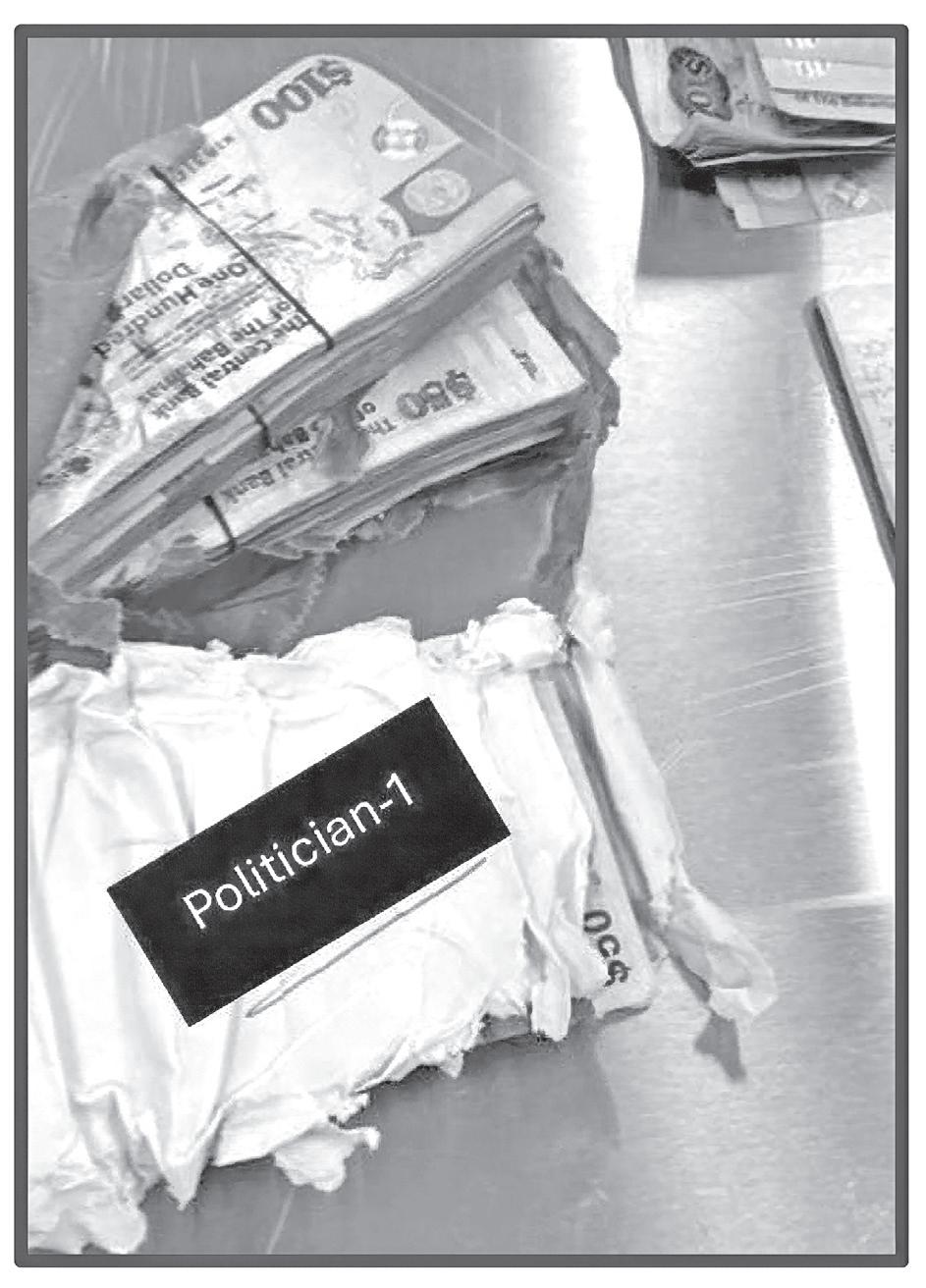
ABOVE - $30,000 said to have been found in an envelope with the name of a politician. Prosecutors redacted the name and replaced it with ‘Politician-1.’
LEFT - DEA evidence about confidential sources in court papers supporting new charges against Gardiner
co-op- erate, to put it in simple terms, in order to save their skins.
One of the DEA’s confidential sources in The Bahamas (CS-1) was arrested on narcotics charges and agreed to cooperate in the hope of avoiding prosecution. Court documents show the source had previous convictions involving narcotics, fraud, robbery, firearms and immigration offence. Agreeing to co-operate appeared to have worked and the new charges were dismissed. But in July 2025, the source was again arrested in Florida for conspiracy to commit robbery and possession of a firearms and ‘deactivated’ as a CS. But just a few months later the person was reactivated by a different DEA division. Defence lawyers would almost certainly challenge the credibility of such a witness if the case proceeds to trial.
Another CS used in the Gardiner investigation, CS-2, had no prior criminal history. They appeared to be in it, according to the DEA, purely ‘for financial compensation.’ The last
members of Charles ‘Silk’ Dunn’s alleged Georgia Drug Trafficking Organisation (DTO), which is alleged to have conspired with Gardiner to traffic cocaine into the US through The Bahamas.
But prosecutors are likely to argue that the case against Gardiner does not rest of confidential sources alone. According to the DEA affidavit, investigations also rely heavily on court-authorised wiretaps, recorded conversations, travel records, financial information and surveillance.
2 – Enter plea negotiations.
Many defendants seek a plea agreement with the US Department of Justice (DOJ). In exchange for pleading guilty, prosecutors often reduce the number of charges, dismissing some counts, recommending a lighter sentence and agreeing not to pursue certain sentencing enhancements. This can significantly reduce sentencing exposure compared with losing
information on suppliers or associates’ access to phones or encrypted accounts, recorded calls or meetings, testimony before a grand jury or at trial.
Federal prosecutors can then file motions for sentence reductions if the cooperation is deemed ‘substantial assistance.’ In the federal system, this can dramatically reduce prison time — sometimes from decades to only a few years.
The process often begins with what’s known as a ‘proffer session,’ or, colloquially, a ‘Queen for a Day’ agreement. A suspect, or defendant, agrees to meet with federal prosecutors and investigators and provide information about criminal activity. In return, the DOJ agrees to certain limits on how the person’s statements can be used against them, while using the information to pursue new leads.
Confidential sources are ‘bread and butter’ resources for agencies like the DEA and the FBI. Without them, the retired FBI officer explained, ‘there is often no case and no conviction.’
Language is infrastructure
The FBI almost always use them to build their case, part of what’s known as the Enterprise Theory of Investigation.
The concept is simple, but powerful: show that crimes aren’t just isolated incidents, but part of a broader criminal enterprise. It is the FBI’s go-to strategy for dismantling major criminal organisations.
Once agents are convinced an enterprise exists, the next step is determining the scope of its illicit activities, trace the dirty money that kept it alive, and then use that framework to hold every member accountable. Instead of asking, ‘who committed this one offence?’ they ask, ‘How does the entire organisation function, profit, communicate, protect itself, and continue operating?’The theory became especially important in organised crime, drug cartel, gang, public corruption, terrorism and racketeering investigations. The idea is to dismantle the whole criminal system, not merely arrest a few lowlevel participants.
Sources are expected to gather credible information and, whenever possible, record phone calls with suspects and be secretly wired for meetings with suspected criminals and assist with the ongoing investigation;
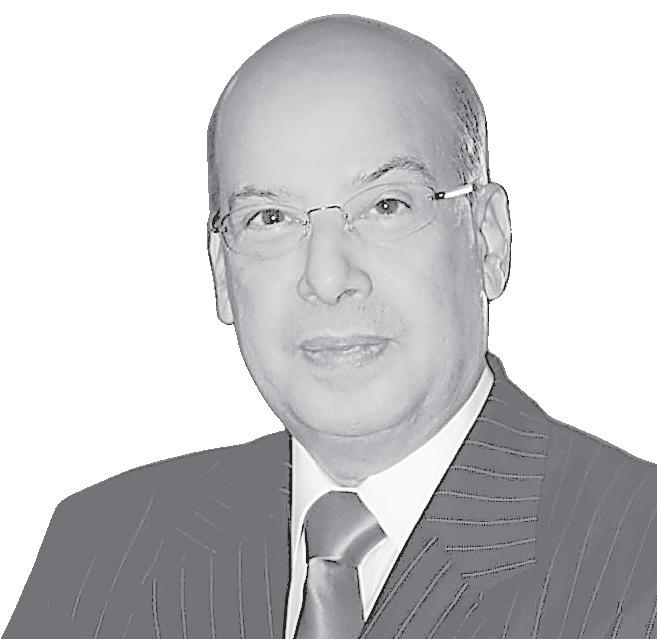
Why Antigua and Barbuda’s adoption of Spanish as a second official language matters World View • Sir Ronald Sanders
Antigua and Barbuda is one of the smaller countries of the Caribbean. Yet small states have often advanced ideas that have significance beyond their size. The decision by the Government of Antigua and Barbuda, led by Prime Minister Gaston Browne, to make Spanish the country's second official language may prove to be one of those ideas.
When I announced this decision at the Permanent Council of the Organization of American States on 3 June, the response from Latin American delegations was immediate and enthusiastic. Their reaction was a clear indication that they regarded the decision as a serious signal of Antigua and Barbuda's readiness to develop deeper and more meaningful relations with them. The decision reflects both a present reality and future opportunities. Over many years, Antigua and Barbuda has become home to a substantial Spanish-speaking community, particularly from the Dominican Republic. Many have worked, invested, raised families, and become part of the country's social and economic life. Their children and grandchildren are citizens by birth, while others seek citizenship after years of lawful residence and contribution to national development.
Recognising Spanish as a second official language is therefore an important step in integrating these communities more fully into national life. But it is much more than that.
The countries of Latin America are the Caribbean's closest neighbours. We share the same hemisphere, many common interests, and significant opportunities for cooperation. Yet language has often limited the depth of engagement between the English-speaking Caribbean and Latin America in trade, tourism, education, culture, security, and diplomacy. By making Spanish a permanent part of national life and requiring its teaching throughout the education system, Antigua and Barbuda is seeking to equip future generations with a skill that can broaden economic opportunity and strengthen regional relationships. Tourism is one area where the benefits could be significant. Latin America represents a nearby and growing source of travellers that has not yet been fully tapped. Opportunities exist in countries such as the Dominican Republic, Colombia, Panama, Mexico, Peru, and Chile. If tourism professionals can communicate comfortably in Spanish, if marketing is undertaken in Spanish, and if hospitality services become more responsive to Latin
American visitors, Antigua and Barbuda will be better positioned to compete for this market. Language alone will not create new airline routes. But greater engagement with Latin America can help create the commercial conditions that make stronger air links viable. Particularly promising are closer connections with the Dominican Republic, where important social and economic ties already exist, and Panama, whose aviation hub connects virtually every major city in Latin America. Trade and supply diversification present another opportunity. The disruptions of recent years have reminded small states of the risks of dependence on a narrow range of suppliers. Antigua and Barbuda should therefore actively explore stronger commercial relationships with Mexico and Central America while expanding links with South American economies such as Colombia, Brazil, Peru, and Chile. These countries can become important sources of food products, pharmaceuticals, medical technologies, and manufactured goods. Mexico, in particular, has developed into one of the world's leading manufacturing economies and a major exporter of medical devices and industrial products.
This is not about replacing traditional suppliers. It is about broadening options,
improving resilience, and strengthening supply security.
Antigua and Barbuda is well positioned to pursue such opportunities. It already possesses a modern international airport and a redeveloped deep-water port, both of which continue to be enhanced as gateways to the Eastern Caribbean. The challenge is to use these assets more effectively to position Antigua and Barbuda as a practical bridge between the English-speaking Caribbean and the wider Americas.
There are cultural benefits as well. Closer engagement with Latin America can encourage exchanges in music, theatre, visual arts, sports, and education. Antigua and Barbuda's ambitions in football and basketball, for example, could benefit from greater exposure to coaching and development programmes elsewhere in the region.
The initiative also has implications for security. The Caribbean continues to confront serious threats from transnational organised crime, including drug trafficking, the illicit movement of firearms, and cybercrime. Many criminal networks affecting Caribbean countries have links to Central and South America. Effective responses require close cooperation among law enforcement agencies, customs authorities, coast
a direct source of information on the suspects’ criminal activities. Their role is to collect evidence that will help secure a conviction.
Agents build timelines and ‘link charts’ showing relationships, communications and overt acts across months or years.This lets prosecutors present the jury with a picture of an entire “drug trafficking organisation” (DTO) or criminal network.
The DEA also uses a very similar organisation-focused approach in cartel and narcotics investigations, although people often more specifically associate the term ‘enterprise theory’ with FBI-style organised crime investigations.
For now, Gardiner remains in federal custody awaiting the next stage of a case that has raised uncomfortable questions about how a multi-year DEA investigation could unfold on Bahamian soil without the knowledge of local authorities. Whether he chooses to fight, negotiate or co-operate may ultimately determine not only his future, but how much more the public learns about the alleged conspiracy itself.
Gardiner’s attorney has so far declined to comment.
guards, prosecutors, and judicial institutions throughout the hemisphere.
Officials who can communicate directly with their counterparts in Spanish-speaking countries are better positioned to exchange intelligence, coordinate investigations, and build the relationships upon which successful cooperation depends. In this sense, language becomes another instrument of public safety. The diplomatic advantages are equally important.
In most international organisations, Antigua and Barbuda belongs to the Latin American and Caribbean group. Whether at the United Nations, the Organization of American States, or other regional institutions, success often depends upon building support from Latin American countries.
Diplomats who can communicate effectively in Spanish are better able to negotiate, develop relationships, and participate fully in the informal consultations where many important decisions are shaped. Spanish fluency also enhances the competitiveness of Antiguans and Barbudans seeking positions in regional and international organisations where Spanish is a working language.
Prime Minister Browne's initiative is a practical policy with implications for development, tourism, trade, education, security, diplomacy, and
regional cooperation. Language is an economic and strategic asset. It influences how countries trade, how tourists are welcomed, how governments cooperate against crime, how communities integrate, and how diplomats build partnerships. Implementing the policy presents real challenges for the education system, not least the need for qualified Spanish teachers. External partnerships will be needed for teacher training, curriculum development, resource planning, and potentially the establishment of a Spanish language institute. But the first step has been taken. Once fully implemented, this policy could become an example of how a small state can use language to expand tourism, strengthen trade, improve security cooperation, deepen diplomatic engagement, and build closer ties with neighbouring countries.
Prime Minister Browne deserves credit for recognising that in the twenty-first century, language itself is infrastructure for opportunity. And, like all infrastructure, the benefits grow over time for those willing to invest in it.
• (The Author is the Ambassador of Antigua and Barbuda to the United States and the Organization of American States. He is also Chancellor of the University of Guyana. The views expressed are his own)
IN the February 2026 regulatory environment, the Student and Exchange Visitor Information System (SEVIS) is no longer a passive database—it is an active enforcement tool. Under the "Rubio Directive" and recent DHS policy shifts, SEVIS is now programmed to "red flag" inconsistencies in real-time. For F-1 and M-1 students, particularly those in the Caribbean corridor travelling through high-scrutiny ports like Lynden Pindling International Airport in Nassau, understanding these flags—and knowing when to call a lawyer—is the difference between finishing a degree and a lifetime ban from the United States.
1) The Digital Tripwires: What Triggers a SEVIS Red Flag?
In 2026, the most common "red flags" that trigger an automatic "Terminated" or "Out of Status" alert include:
• The 20-Hour Breach: Automated cross-referencing between university payroll systems and SEVIS.
• Unauthorised "Gig" Work: Social media vetting that uncovers monetised content or "freelance" advertising.
• Failure to Report Address Changes: Under 8 C.F.R. § 214.2(f)(10), you must
report a change of address within 10 days. In 2026, if your "physical presence" data (from mobile pings or bank transactions) doesn't match your SEVIS address, it flags a "failure to maintain status."
• The Credit Hour Drop: Falling below a full course of study without a prior "Reduced Course Load" (RCL) authorisation from your DSO.
2) The DSO Window: The 10-Day Rule
Your Designated School Official (DSO) is your first line of defence, but they are also a mandatory
reporter. If you have a clerical error—such as a typo in your employment start date or a minor address mistake—you have a 10-day window to have the DSO perform a "Data Fix." When to Reach Out to the DSO:
• You realise your I-20 has the wrong major or end date.
• You need to take a medical leave (requires documentation before you drop classes).
• You are transferring to a new school and need a "Release Date."
Crucial Warning: If you have engaged in unauthorized employment, your DSO cannot "fix" it. Under federal law, if a DSO becomes aware of unauthorised work, they are legally required to terminate your SEVIS record immediately. This is the moment where the DSO is no longer your advocate, and you must seek legal counsel.
3) Statutory Corrections: The Reinstatement Process
If your status is terminated, you are "out of status." There are two primary ways to fix this, governed by specific statutory provisions.
F-1 Reinstatement (8 C.F.R. § 214.2(f)(16))
To be eligible for reinstatement, an F-1 student must prove to USCIS that:
• The violation resulted from circumstances beyond the student's control (e.g., serious injury, natural disaster in the Caribbean, or a clerical error by the DSO).
• The student is currently pursuing, or intends to pursue, a full course of study.
• The student has not engaged in unauthorised employment.
• The student has not been out of status for more than 5 months (unless they can show exceptional circumstances).
M-1 Reinstatement (8 C.F.R. § 214.2(m)(16))
M-1 vocational students face a much higher bar. Because M-1 programmes are shorter and more specific, USCIS rarely grants reinstatements unless the "circumstances beyond control" are extreme. Unlike F-1s, M-1 students are almost never allowed to change their educational objective during a reinstatement.
4) The "Travel and Re-entry" Trap (The Rubio Factor)
In years past, many DSOs would suggest that a student "just leave the U.S. and come back with a new I-20" to reset their status. In 2026, this is extremely risky.
Under the Rubio Directive, Customs and Border Protection (CBP) officers at Preclearance locations like LPIA in Nassau are now performing "Compliance Reviews" on every re-entering student. If you are entering with a "Initial Attendance" I-20 but you previously had a "Terminated" record for



unauthorised work, you are likely to be found inadmissible for misrepresentation or failure to maintain status. This can lead to an expedited removal and a 5-year bar.
5) When to Seek Legal Counsel
You should bypass the DSO and contact an immigration attorney immediately if: You worked without an EAD or CPT: Even one hour of "gig" work or a trial project is a status violation. A lawyer can help evaluate if a "Reasonable Mistake" defence or a specific waiver applies. Your I-94 has expired: You are now accruing "Unlawful Presence."
Under the 2026 "Day After" rule, you don't get a warning letter—the clock started the day after your status ended. You are accused of "Fraud" or "Misrepresentation": If an officer at LPIA or a USCIS adjudicator suggests your school is a "diploma mill" or your funding is not bona fide.
The DSO denies your Reinstatement Support: If your school refuses to issue a "Support Letter" for your reinstatement, you need a legal strategy to either transfer or change status before the 5-month cliff.
6) The 5-Month Cliff and the "3 and 10" Year Bar
If you remain in the U.S. more than 5 months after a SEVIS termination
without filing for reinstatement, your chances of success drop to near zero. Furthermore, if you stay 180 days past your "Fixed Period of Admission" (the date on your I-94), you trigger the 3-year bar. If you stay 365 days, you trigger the 10-year bar. Operational Summary for Caribbean Students: Check your I-94 monthly: Ensure it doesn't have a "hard" expiration date you aren't aware of. Document everything: If a storm in the Caribbean or a banking collapse in your home country prevents you from paying tuition, get the bank letters and news reports immediately. This is your "Beyond Control" evidence for reinstatement. Don't "Self-Help": Do not try to fly back through LPIA with a terminated record without a legal consultation.
The 2026 F-1 and M-1 compliance landscape is unforgiving. A SEVIS red flag is not just a technicality; it is a legal crisis. Donnette Russell-Love, LLC specialises in high-stakes immigration compliance and reinstatement strategy for international students. If your SEVIS record is at risk, timing is your most valuable asset. Contact our office to schedule a legal consultation:
Call or WhatsApp: 954-828-2429 or email: legalassistant@drusselllove.com