Housing grows ‘1.5 times slower’ over vacancy and disrepair woes
BY NEIL HARTNELL Tribune Business Editor nhartnell@tribunemedia.net
THE Bahamas’ housing inventory grew “1.5 times slower” over the 12 years to 2022 when compared to the previous decade, it has been revealed, with the decline blamed on a reduced pace of new-builds as well as more properties falling into disrepair and tenant-weary landlords.
The Inter-American Development Bank (IDB), in a just-released March 2026 study on home affordability and ownership in The Bahamas, disclosed that growth in this nation’s affordable housing stock fell by 8,571 units during the period between 2010 to 2022 when compared to the decade from 2000 to 2010.
It asserted that there are numerous factors behind the slowdown in the growth of available housing, including a fall-off in new construction but also an increasing number of properties falling into disrepair as more than 40 percent
of The Bahamas’ existing housing inventory was built before 1990 more than 35 years ago. Compounding the effect of an aging housing inventory, residential mortgage commitments for repairs and additions to existing homes plunged by 14 percent over the decade to 2024.
And the IDB report also disclosed that “stubborn levels” of vacant properties are worsening The Bahamas’ housing availability and affordability woes. While there were more than 20,000 vacant properties in this nation in 2022, the multilateral lender sounded a mild positive by suggesting the issue is “not getting worse”, and attributed this problem to a combination of bank foreclosures, growth in Airbnb vacation rental-style homes, and fed-up landlords frustrated with delinquent tenants and reluctant to re-let.
The study also said much new construction data is not captured by the Central Bank’s building completion
Carmichael Village owners told: Your homes are safe
BY NEIL HARTNELL Tribune Business Editor
nhartnell@tribunemedia.net
THE Ministry of Housing has moved to reassure Carmichael Village purchasers that their homes and investments are safe while asserting it knew nothing of the connections linking the project’s contractor to the general election day plane crash drug accused.
The ministry, in a statement e-mailed by Keith Bell, minister of housing and land reform, to Tribune Business, said existing residents - as well as prospective purchasers of homes in one of the Government’s flagship affordable housing subdivisions - “are not affected” by the fallout from this newspaper’s revelation that Complete Construction is almost 100 percent owned by Top Notch Builders.
Just 16% of Gov’t entities met Budget plan mandate
BY NEIL HARTNELL
Business Editor
nhartnell@tribunemedia.net
JUST 16 percent of the Government’s ministries, departments, agencies and business entities (GBEs) heeded the Ministry of Finance’s call to submit annual and business plans as part of the 2026-2027 Budget preparations, it has been revealed, sparking pledges of a compliance crackdown.
The Fiscal Strategy Report 2026, released alongside last week’s Budget for the upcoming fiscal year, promised that the Ministry of Finance will “strengthen its approach” to reporting compliance by all government entities
statistics, as these reflected just 7,208 residential completions over the 12-year period from 2010 to 2022a number representing just 41 percent of of what was recorded in the Bahamas National Statistical Institute’s (BNSI) 2022 housing. It suggested that there is “a high degree of regulatory avoidance”, with persons adding units and other spaces on to their existing homes without obtaining building permits and/or in violation of zoning regulations. Bahamians are increasingly converting parts of their homes and residential properties into rental units, such as efficiencies, and using tenant lease payments to cover the mortgage and other daily living costs.
Housing affordability and availability were two central issues during the general election campaign with both major political parties pledging to make increased use of private sector developers and capital to build more homes. Keith Bell, minister of
housing and land reform, said in 2024 that The Bahamas was suffering from a shortage of some 12,000 housing units.
“The housing stock grew much more slowly in the last decade compared to the previous one,” the IDB study asserted. “Nationally, the number of dwellings increased by 17,705 units or an average of 1.2 percent per year between 2010 and 2022, while the population increased by an average of 1.1 percent per year.
“This contrasts to the 2000-2010 period when, with a higher population growth of 1.6 percent per year, the housing stock grew more than twice as fast at 2.6 percent per year, representing an additional 26,276 dwelling units. When controlling for the slower population growth in the last decade, housing stock growth was still 1.5 times slower than in the previous one.
“While the recent slowing in the growth of the
Taxpayers owed $500m by lossmaking SOEs
Nine key entities in ‘negative equity’ as debts exceed assets
BY NEIL HARTNELL Tribune Business Editor nhartnell@tribunemedia.net
BAHAMIAN taxpayers are owed half-a-billion dollars in outstanding loans by loss-making state-owned enterprises (SOEs), it has been revealed, with nine key government entities collectively plunging into “negative equity” with debt liabilities exceeding their assets. The Government’s just-published Fiscal Strategy Report 2026, which accompanies the Budget, again highlighted the fiscal risks and drag posed by SOEs after a so-called “health check” on nine of the most prominent ones revealed they had suffered “a sharp deterioration in” their combined solvency during the 2023-2024 period.
The combined debt-toasset ratio for the nine, who are Bahamas Power & Light (BPL), Bahamasair, the Water & Sewerage Corporation, the National
Insurance Board (NIB), Airport Authority, Bahamas Development Bank, National Health Insurance Authority (NHIA), Bahamas Maritime Authority (BMA) and National Art Gallery of The Bahamas (NAGB), rose from 46-49 percent between 2020 to 2022 to more than 100 percent in 2023 to 2024.
This signalled that, collectively, their combined debts were greater than their total assets, which financial analysts universally agree is a warning of potential imminent insolvency. And the same tipping point was reached on the nine’s combined debt-to-equity ratio, which turned negative in 2023 and 2024, thus indicating that liabilities exceed assets - a sure sign of financial distress and challenges in meeting debt service obligations. The Davis administration, which has signalled it intends to place increasing
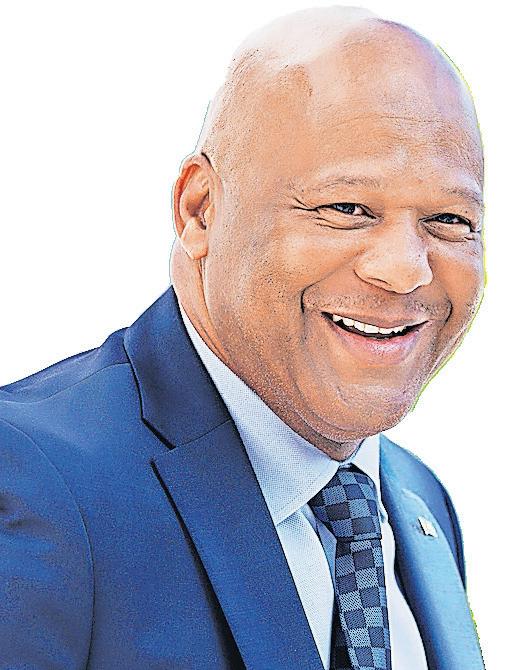
KEITH BELL
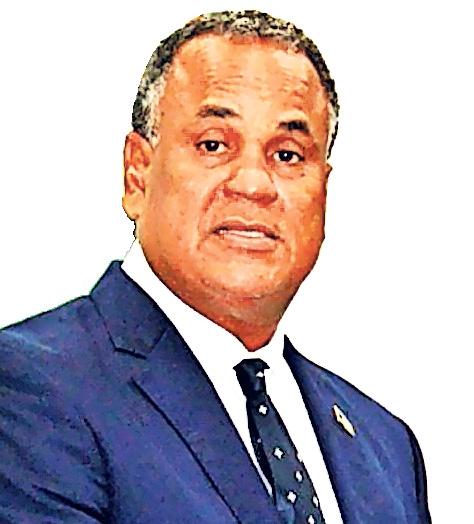
MICHAEL HALKITIS
$43m in PPP financing now ‘crystallises’ as Gov’t liability
BY NEIL HARTNELL Tribune Business Editor nhartnell@tribunemedia.net
MORE than 30 percent of $140m in public-private partnership (PPP) funding has now “crystallised” on the Government’s books as a debt that has to be repaid by Bahamian taxpayers, the Fiscal Strategy Report 2026 has revealed.
The document, released alongside the 2026-2027 Budget that was unveiled last week, reveals that some $43.1m of the $140m PPP funding that the Africa Export-Import Bank has provided for road infrastructure upgrades on Eleuthera and Cat Island has now become a liability that the Government has to repay from the Public Treasury.
“The Government faces a potential contingent liability of $140m arising from financing arrangements with the African Export-Import Bank in respect of public-private partnership transactions with Bahamas Striping and Cat Island Infrastructure Company. At the time of preparation of this report, approximately $43.1m of this liability has crystallised in respect of these arrangements,” the Fiscal Strategy Report said. The disclosure is likely to reignite the debate over many of the Government’s PPP deals with the Opposition having repeatedly charged that most are, in reality, ‘off the books’ loans designed to keep borrowings from adding to the annual deficit and national debt by ensuring they are
kept off the balance sheet of the Bahamian public finances.
Budget documents released last week showed that some $417m worth of such deals as either active or proposed. Apart from Bahamas Striping’s roadworks projects on Eleuthera and Exuma, valued at $180m and $62m, respectively, these also include Cat Island Development Company’s $124m road upgrade and pipeline works on Cat Island, plus similar $52m and $19m works on San Salvador and Mangrove Cay, Andros.
The the African Export-Import Bank is financing both the Eleuthera and Cat Island road upgrades. Bahamas Striping previously announced that its arrangement was structured as an
“accounts factoring” deal, which typically involves a company selling receivables or monies/debts owed to it to a third-party. This has the benefit of freeing up cash flow and liquidity, while the third-party now has the job of collecting payment.
In the case of Bahamas Striping, this implies that Africa Export-Import Bank is providing the necessary financing to complete the Eleuthera improvements and has stepped into the company’s shoes when it comes to receiving payment from the Government. This suggests that Africa Export-Import Bank, rather than Bahamas Striping, will be collecting the loan repayments from the Government.
The 2026-2027 Budget shows that the Bahamian Government is already
making interest payments to Africa Export-Import Bank. Some $316,751 worth of interest was paid to the African lender during the 2024-2025 fiscal year, with a further $308,137 expended during the first nine months of the present 2025-2026 fiscal year despite no provision having been made for the latter when the previous Budget was passed in June 2025.
Moving forward, the Government is shown as making six-figure interest payments to the Africa Export-Import Bank for the next three years, with some $532,362 due in the upcoming 2026-2027 fiscal year. And, starting this year and continuing for each of the subsequent two Budget years, the Government will be repaying the African
Gov’ts net worth valued from accounting switch
BY NEIL HARTNELL Tribune Business Editor nhartnell@tribunemedia.net
THE Government’s long-promised switch to an accrual-based accounting system is forecast to “near completion within the next two years” and, for the first time-ever, enable an accurate valuation of what Bahamian citizens actually own.
The Fiscal Strategy Report 2026, tabled alongside the Budget, reaffirms that the Ministry of Finance is “actively advancing” the transition away from the public sector’s modified cash basis of accounting to a method that will enable the Government to determine its “net worth” and by how much its assets exceed liabilities.
“As the Government continues to operate under a modified cash basis of accounting in accordance with IPSAS (International Public Sector Accounting Standards), the reliable production of net worth estimates is not presently feasible,” the report acknowledged.
“Pursuant to the requirements of the Public Finance Management Act, secondschedule 9(k), these estimates - expressed both in nominal terms and as a share of GDP - will be incorporated in future reports once they can be determined with sufficient reliability.”
“The Government is actively advancing the transition to an accrual-based accounting system,” the Fiscal Strategy Report
added, “a reform that necessitates capacity development across the public sector, the implementation of new information systems and technology platforms, and the enactment of supportive legislative reforms.
“Integral to this transformation is the development of a comprehensive public sector balance sheet, which will provide authoritative visibility into the Government’s financial position, encompassing its asset base, inventory and acquisition values, and facilitate more accurate accounting of long-term obligations, including pension liabilities, which are not currently reflected under the modified cash approach.
“This transformation is expected to near completion within the next two years, and is anticipated to materially enhance fiscal transparency, decision-making and long-term sustainability.” Accountants and others have long urged the Government to move towards accrual-based accounting within the public sector as a means to provide a more accurate real-time picture of the state of the public finances and The Bahamas’ fiscal health.
Under the Government’s current accounting system, which is “a modified cash basis of accounting” that is guided by IPSAS, “revenue is recognised when received and not when earned”, and “expenditure is recorded in the period in which it is paid” but not when such commitments or obligations are incurred.
This form of accounting does not recognise spending commitments made, or bills that are owing such as those due to the Government’s vendors. Accrual-based accounting would record, and expose, such commitments and payables, but under the present system these do not show up in the revenue and expenditure figures.
In addition, the annual Budget only deals with the Government’s income statement, meaning its revenues and spending and whether it generates an annual profit (Budget surplus) or loss (deficit). It does not address the Government’s balance sheet, which would show the value of all assets that it owns and receivables (taxes and other payments) due to it, as well as liabillties such as debts and payments owed by itself.
Once this is calculated, as accrual-based accounting can provide for, the Government’s net worth - meaning assets minus liabilities - can be calculated.
The Government owns significant assets, such as its Crown Land holdings, other real estate, public infrastructure such as roads, docks and airports, plus what belongs to stateowned enterprises (SOEs) - although the latter also carry major liabilities.
However, the move to accrual-based accounting within the Government has been talked about for more than a decade but never seen through to execution or implementation. The switch was foreshadowed
as far back by then-Prime Minister Perry Christie in his 2014-2015 Budget communication.
Speaking to the advantages of making the change, the Fiscal Strategy Report 2026 added: “The rationalisation of payment arrears management constitutes a pressing reform objective of the Government.
“The implementation of accrual accounting will directly address the gap in current financial reporting by enabling systematic identification, classification and monitoring of outstanding obligations, thereby supporting a transparent and structured approach to arrears resolution.”
As for existing payment arrears, the Fiscal Strategy Report said: “Unpaid invoices or arrears to ministries, departments and
agencies and SOEs can accumulate due to timing mismatches between expenditure commitments and cash availability, represent both a fiscal risk and a governance concern.
“Rising or persistent arrears can signal underlying fiscal stress, weaking the Government’s creditworthiness, erode supplier confidence and increase the cost of goods and services. At end‐December 2023, total government arrears stood at $165.9m, declining to $122.4m by end‐December 2024.
“This trend reversed in 2025, with arrears rising to $241.8m by end‐December. To reduce this fiscal risk posed by accumulated arrears and promote stronger financial discipline, the Government has focused increased attention
lender some $1.67m in prin-
cipal as well. The only loan where the Government has obtained Parliamentary approval to borrow from the Africa Export-Import Bank is the $1.9m associated with the Afro-Caribbean Marketplace project targeted for the International Bazaar site in Freeport. Several sources, speaking on condition of anonymity, are questioning how the repayments can now be appearing on the Government’s books given both the nature of a typical PPP deal and that Parliament has seemingly not authorised the necessary borrowing resolution. “PPPs are assessed as having a moderate potential fiscal impact and a possible likelihood of realisation, reflecting their current scale within the public sector and their concentration in infrastructure-related projects. While the overall exposure remains contained, the long-term nature of PPP commitments and their sensitivity to external conditions warrant
on the following complementary measures.”
These include improved payment scheduling “to ensure timely settlement of obligations and reduce incidence of new arrears”, plus tougher “commitment controls” that involve “improved cash forecasting to align obligations more closely with available resources, while prioritising structured arrears reduction within the fiscal consolidation framework”.
The Fiscal Strategy Report also called for “eliminating intra-governmental payment backlogs through streamlined internal financial processes and optimised resource allocations”, plus “improvement of reporting and monitoring of arrears through the proposed transition to an accrual-based system”.
Power outages frustrate west
New Providence communities
BY ANNELIA NIXON Tribune Business Reporter anixon@tribunemedia.net
RESIDENTS in Love
Beach and several upscale western New Providence communities say prolonged and recurring power outages have left them exposed to heightened security risks, spoiled food, disrupted work schedules and mounting repair costs.
Many are questioning whether Bahamas Power & Light (BPL) is being transparent about the cause of the recurring disruptions, with the concerns erupting after multiple outages hit Love Beach, Old Fort Bay and other nearby communities - including one that residents said lasted around 24 hours and another that stretched across two nights and a day.
Several residents, who requested anonymity, told Tribune Business the extended outages have gone far beyond the short periods of load shedding they have become accustomed to.
“This ain’t the usual load shedding where power’s off for one or two hours,” one resident said. “We’re the kings of that. Last year we got hit all the time. But
what’s going on now, this is something else.”
The resident described the situation as “total chaos”, and said the prolonged outages had left communities vulnerable to crime and property damage. “Our gates are kept open. We got people checking our cars at night in our parking lot,” he said. “All kinds of stuff bust loose.”
The resident alleged that three men broke into a condominium unit at Columbus Cove during one outage, and argued that the loss of power contributed to weakened security.
“People broke in last night. People broke into a condo at Columbus Cove,” he said. “Was it related to the power? I think so. I don’t care what anybody says. It was definitely related.”
He added that another community gate failed during the outage and was struck by a taxi, creating additional repair expenses.
Residents said the outages have also resulted in significant financial losses through spoiled food and disrupted routines.
“Nobody’s getting any sleep. No AC, all the stuff in the fridge is ruined,” the resident said. He said he delayed opening his refrigerator in an effort
to preserve food but ultimately lost those items anyway.
“I’ve got food that needs refrigerating, still sitting on the floor from yesterday, because I didn’t want to open the fridge and let the cold air out,” he said. “Twenty-four hours later, that stuff spoiled.”
Another resident and community representative for one of the affected developments said at least three residential communities along the Love Beach corridor were impacted by the outages.
“I don’t think BPL is really being open with us about what the issue really is,” she said. “It is painful, and it’s 24 hours.” Beyond the inconvenience, she said residents have been forced to absorb additional costs from damaged security infrastructure as gates lost power and back-up systems became exhausted.
“Last night we had someone just try to bump the gate open,” she said. “The gate is now broken, and our security now is compromised. There’s a cost to put it back.”
The outages have proven especially difficult for elderly residents and those requiring specialised care. The resident cited the
challenges faced by her 98 year-old mother, explaining that she was unable to use electrical appliances needed to prepare meals for her.
“I have to blend my mother’s food,” she said. “She’s 98 and so I couldn’t do that. I couldn’t leave to go and get her food. So I managed to get somebody to get her some soup.”
Residents also said the outages have increasingly affected remote workers, with Internet services and back-up systems failing long before power is restored.
“People who work from home are challenged because the Internet runs out during an outage,” she said. “The backup for Internet doesn’t last as long as the outage, so you lose Internet connectivity and have to find somewhere else to continue working.”
While acknowledging that short outages are a reality for the communities, residents argued that the duration and frequency of recent disruptions are raising broader concerns about the reliability of western New Providence’s electricity infrastructure.
“The problem is the extended nature, and I’m going to say the frequency, because twice in one
Potter’s Cay vendors still waiting for BPL electricity
BY ANNELIA NIXON Tribune Business
POTTER’S Cay vendors say they are still waiting for Bahamas Power & Light (BPL) electricity supply to reach their stalls despite a previous government pledge that at least 25 would be connected by the 2026 first quarter.
While underground infrastructure is being installed and work remains active, electricity has yet to reach any stalls, according to Ormanique Bowe, president of the Potter’s Cay Dock Fish, Fruit and Vegetable Vendors Association.
“There’s a lot of work still being done,” Ms Bowe told Tribune Business. “They’ve already put down the underground cables, and
so what they’re doing now is they’re trying to cover them up with an extension sidewalk. So no stalls have electricity as yet, but we’re getting there.” The delay comes amid a long-awaited modernisation drive that vendors say is critical to improving operations, reducing expenses and lowering fire risks for Potter’s Cay vendors.
month,” the resident said. “What is going on?”
Another resident echoed those concerns, saying he had lived in The Bahamas for decades and could not recall outages of similar duration becoming so common.
“There’s something bad going on here,” he said. “I’ve been around since the Pindling days, and not even the Pindling days were this bad.”
Residents also expressed frustration over what they described as limited communication regarding the root cause of outages and realistic restoration timelines.
“We don’t get any, ‘This generator broke down’,” one resident said. “We’re not getting anything. No contact. Just, ‘This is going to be out. Sorry, we can’t tell you what time it’ll be back on’.”
When contacted for a response to residents’ concerns, BPL referred Tribune Business to its Whats App communications channel.
Updates posted there showed that a major outage affecting western New Providence on April 17 was linked to a suspected blown circuit breaker and busbar damage, which resulted in widespread power losses across communities
JoBeth Coleby-Davis, minister of energy and transport, earlier this year announced that Potter’s Cay would experience electricity in the 2026 first quarter, describing the initiative as transformational.
“This project means transformation in a sector that is so important to our culture in The Bahamas,” Mrs Coleby-Davis said in a social media video earlier this year. “Potter’s Cay is known to every family, and the tradition of coming out on the weekends to
celebrate with the vendors here is important. And so this is expansion and growth for Potter’s Cay because now they’re going to have access to reliable power.”
With the 2026 first quarter timeline missed, some Bahamians have questioned whether the area will still get electricity. Ms Bowe, however, clarified crews continue working overnight to avoid disrupting business operations and traffic flow. “[Work] is ongoing,” she said. “They come out after 12 at night when the stalls are closed. So when patrons are out there during the day
including West Winds, Gambier, Sandyport, Sea Beach, Turnberry, Tropical Gardens and surrounding areas.
BPL later advised that an operational fault at the Windsor Field substation had contributed to the extended outage and restoration efforts were being led by Bahamas Grid Company (BGC).
The utility initially projected restoration by 3.30am on April 18, but subsequently acknowledged that the target had not been met and that repairs were continuing into the morning.
On May 28, BPL reported another outage affecting West Winds, Tropical Gardens, Old Fort Bay, Jacaranda and surrounding areas. The utility said technicians were investigating the cause but did not provide an estimated restoration timeline. On May 29, BPL advised that power had been fully restored to all consumers in western New Providence.
For residents along the Love Beach corridor, however, restoration alone is not enough. They say the latest outages have highlighted the financial and security costs associated with prolonged power interruptions and underscored the need for greater transparency on the state of the island’s electricity network.
“Everybody can get through two hours and four hours and roll through that,” one resident said. “But this is severe.”
or evening, it would look like the work has stopped, but we cannot work with persons in that area and cars. So they start like 1am and they leave like 7.30 in the morning.”
Ms Bowe said substantial groundwork has already been completed, fueling optimism that electricity is still on track to reach the majority of vendors. “It looks like most of the stalls will get it, because all of the infrastructure is already in and positioned to all of the stalls,” she said. She was
STALLS - See Page B10
Sherwin-Williams opens Marsh Harbour location
SHERWIN-Williams
Bahamas has opened its latest retail outlet on Marsh Harbour’s Bay Street inside the former Sand Dollar shop.
The retailer, in a statement, said the location offers a full range of paints, stains, coatings, primers, spray equipment, pressure washing equipment and professional painting supplies for Abaco home owners, contractors,
builders, designers, property managers, artists and marine professionals.
The store, which will be open from Monday through Saturday from 8am to 5pm, features Sherwin-Williams’ architectural coatings, including interior and exterior paints, specialty finishes, cabinet and trim coatings, wood stains and sealers, epoxy floor coating systems and protective industrial coatings. A
delivery service for larger orders will be provided, together with shipping to the nearby Abaco cays.
“This opening represents more than just a new store… it's an investment in Abaco, its people, and its future,” said a Sherwin-Williams Bahamas spokesperson.
“We know the importance of quality products, reliable service and, most importantly, having access to the
right materials and choices
locally.
“Whether someone is repainting a bedroom, restoring a boat or managing a major commercial development, we want them to know they now have a trusted partner right here in Abaco.”
Shamsi Cartwright, store manager for the new Marsh Harbour location, added:
“Opening this new Sherwin-Williams store in Marsh Harbour creates new job opportunities, healthy competition and offers top quality products at better pricing.
“Our local customers have already commented on the clean, modern look and organisation of the
store, the affordable prices, and expressed excitement over a new name in town that comes with a good reputation attached in Sherwin-Williams.”
Sherwin-Williams Bahamas said it also offers a digital colour history system, allowing customer paint colours and purchase records to be securely stored for future reference.
This makes it easier for homeowners, contractors and businesses to match previous colours, reorder products and maintain consistency across projects without needing to keep physical records themselves.
To celebrate the soft opening, the retailer added that contractors continue to
receive 25 percent off their first purchase. The Marsh Harbour location also plans to expand its offerings to include artist paints and art supplies, plus introduce Proline Paints Marine Coatings in Abaco. Sherwin-Williams said the opening of the new Marsh Harbour location comes as Abaco continues to grow, rebuild and develop. By expanding access to professional-grade products, equipment and expertise, it added that it aims to help empower homeowners, contractors, developers, artists and businesses across the islands.
Minister meets with aviation overseers
BAHAMIAN aviation executives met Jobeth Coleby-Davis, minister of energy, utilities and aviation, at Margaritaville Beach Resort last Tuesday. Mrs Coleby-Davis affirmed her support for the aviation industry and their implementation of the Government's mandate for the sector.
Dr Kenneth Romer, director of aviation, voiced optimism that the aviation industry will continue to grow.
Stakeholders represented at the meeting were the Department of Aviation, the Airport Authority, Bahamas Air Navigation Services Authority, Civil Aviation Authority Bahamas, Freeport Airport Development Company, Nassau Airport Development Company, Nassau Flight Services, Bimini Airport Development Partners, Islands Airport Development Partners and the Air Operators Committee.
AVIATION Minister JoBeth Coleby-Davis, centre, and aviation professionals.
DIRECTOR OF AVIATION, DR. KENNETH ROMER
AVIATION MINISTER JOBETH COLEBY-DAVIS
VERNICE WALKINE
Photos:Anthon Thompson/BIS
BPL/BEC and Bahamasair ‘Category Five’ fiscal risks
focus and emphasis on dealing with the potential threat posed by loss-making SOE to the public finances, singled out Bahamasair and the Airport Authority, in particular, as two entities facing particular cash flow and liquidity challenges because their liquid assets - such as cash on hand and bank deposits - are dwarfed by near-term liabilities set to become due for payment.
The Fiscal Strategy Report also highlighted that the Bahamas Electricity Corporation (BEC), BPL’s parent or holding company, faces a similar - albeit less pronounced - predicament with liquid assets of around $300m exceeded by current liabilities slightly in excess of that figure.
For these reasons, the report ranks BPL/BEC and Bahamasair as the two ‘Category Five’ entities out of the nine as they represent the “highest risk” to the stability of this country’s public finances. The Airport Authority and Bahamas Development Bank were ranked one notch below, at ‘Category Four’, on a five-tier risk scale, with all others rated as ‘Category Two’ apart from the NHI Authority, which was ranked as posing the least potential threat in ‘Category One’.
Noting that The Bahamas has 32 SOEs in total, the Fiscal Strategy Report 2026 conceded that they are “a key driver” of unpaid invoices and arrears, accounting for $181.4m or 75 percent (three-quarters) of the total $241.8m in due
bills and payment arrears listed in the recent 20252026 mid-year Budget. And short-term loans extended to these 32 entities by the Government totalled almost $500m at end-March 2026 to further expose their dependence on Bahamian taxpayers.
The Ministry of Finance said it had used tools developed by the International Monetary Fund (IMF) to assess the financial health and performance of BPL/ BEC and the other nine entities, employing their audited and management accounts to determine key indicators such as net profit margin, return on assets and cost recovery mechanisms.
Focusing on the nine’s collective debt-to-asset and debt-to-equity ratios, the Fiscal Strategy Report said: “In years 2020–2022, the
ratios were relatively stable - debt-to-assets at 46–49 percent, and debt-to- equity at 0.85–0.96.
“In 2023–2024, debtto-assets rose above 100 percent and debt-to-equity turned negative, implying liabilities exceeded assets (negative equity) and signalling a sharp deterioration in the portfolio’s solvency position.” This appears to have coincided with when the Government started providing significant financial support to BPL in a bid to cover the $110m unpaid fuel bill owed to Shell after the latter’s hedging structure put in place by the Minnis administration was allowed to unravel.
Turning to comparisons between the nine SOEs’ liquid assets and liabilities, the report added: “The results suggest that both Bahamasair and the Airport Authority have relatively high liabilities compared with liquid assets, indicating heightened short-term liquidity pressure.”
Explaining the ‘risk rating scale’, with ‘Category One’ suggesting a lower financial risk threat and ‘Category Five’ posing the greatest risk based on a combination of profitability, liquidity and solvency ratios, the Fiscal Strategy Report 2026 said: “The results suggest that larger SOEs, particularly BEC and the Airport Authority, tend to have higher risk ratings.
“BEC (BPL) is a clear outlier with the largest liabilities among the entities reviewed, increasing its fiscal risk profile. NHI Authority records one of the lowest risk ratings, but this should be interpreted with caution, as sustained growth in health service demand could increase its liabilities and risk exposure.
“The Bahamas Development Bank also records a high-risk rating, likely reflecting its funding structure and operations similar to that of a public corporation. The rating should be interpreted considering the SOE health check tool’s limitations for public financial corporations, although BDB also functions as a government policy instrument.”
Turning to the overall 32-strong SOE portfolio, the Fiscal Strategy Report added that the group is a major contributor to both unpaid invoices and government payments that are in arrears, while also requiring strong and consistent support from Bahamian taxpayers and the Public Treasury to remain viable.
“In the broader context, obligations to SOEs represent 2.6 percent of the total expenditure budget in fiscal year 2025-2026 and are a key driver of unpaid invoices totalling $181.4m according to the mid-year Budget report,” the report added.
“In addition, most of these selected entities also rely on short-term loans from the Government, with outstanding balances at end-March 2026 amounting to $499.9m, an increase of $6.65m (1.3 percent) from end-June 2025, further underscoring their dependence on public financial support.” Unlike subsidies, which are allocated to SOEs in the Budget, these loans represent obligations that should be paid back to the Government and, by extension, Bahamian taxpayers.
The Opposition, though, has previously voiced concern that many of these debts are unlikely to be repaid because the recipient SOEs have never previously generated a profit - the likes of the Bahamas Public Parks and Beaches Authority; Education Loan Authority; Bahamas Agricultural and Industrial Corporation (BAIC); Broadcasting Corporation of The Bahamas; and Bahamas National Sports Authority.
It has instead argued that, by using loans instead of subsidies, the Government is able to treat the financial support as an investment or financial asset and keep it from adding to the deficit and national debt.
The Fiscal Strategy Report, meanwhile, acknowledged the critical importance of improving SOE governance and the timeliness and accuracy of their financial reporting, together with enhanced Ministry of Finance oversight.
“Given this high level of obligations and exposure, timely, complete and audited annual financial statements from SOEs are essential for credible fiscal risk analysis and effective oversight,” the report said.
“They enable the Government to assess profitability, liquidity and solvency trends, detect emerging pressures such as arrears and debt service constraints, and better anticipate potential calls on subsidies, capital injections and guarantees.
“When annual financial statements are delayed or incomplete, risks can accumulate unnoticed by the Ministry. Consequently,
budget decisions may be made without a clear view of SOE financing needs. Regular submission of audited accounts strengthens transparency, improves accountability and supports earlier, better-targeted corrective action,” the Fiscal Strategy Report.
“Given the importance of financial statements to risk identification and assessment, the Government is currently working toward enforcing submissions of financial statements from the various SOEs in compliance with the Public Financial Management Act to improve oversight of the various public entities.”
Expanding further on the risk posed by SOEs, the Fiscal Strategy Report 2026 added: “Public corporations represent a significant source of fiscal risk, given their role in delivering essential services and their financial linkages to the central government.
“These entities may generate fiscal pressures where operational inefficiencies, revenue shortfalls or high debt burdens necessitate transfers, subsidies or other forms of Government support. In some cases, liabilities associated with public corporations may also give rise to contingent obligations for the Government.
“Public corporations are assessed as having a high potential fiscal impact and a possible likelihood of realisation, reflecting the scale of their operations and their close integration with the central government. This assessment also reflects the sensitivity of these entities to broader macroeconomic conditions, including fluctuations in demand, input costs and financing conditions.
“The Government continues to strengthen oversight and risk management through enhanced financial monitoring and reporting. Ongoing efforts include the regular review of financial performance indicators, improved data collection and transparency, and the application of policy frameworks aimed at strengthening governance and financial discipline across public corporations. These measures support early identification of fiscal risks and promote more sustainable operational outcomes.”
Ministry unaware of contractor’s link to plane crash drug accused
The latter is the Adelaide Road-based contractor that listed Jonathan Eric Gardiner, who is now in custody after being charged with involvement in a long-running conspiracy to smuggle cocaine into the US, as its president and a director in 2017. However, the Ministry of Housing and Land Reform signalled it was unaware of this “when the project arrangements were made” and it had primarily focused on securing contractors deemed to have the capability and expertise to perform the work required.
“The ministry reassures homeowners and purchasers that their homes, investments and interests are not affected by these matters,” the Ministry of Housing and Land Reform said in its statement.
“The project arrangements were made with companies assessed as capable of carrying out the required works. When the project arrangements were made, the matters now being discussed were not before the ministry and appear to have formed part of foreign proceedings that remained sealed until recently.”
The Ministry of Housing and Land Reform’s statement, though, raises more questions - particularly over the level of due diligence that itself and other public entities, including the Carmichael Village Project Development Company special purpose vehicle (SPV) that oversees the project on the Government’s behalf - conducted on Complete Construction and its beneficial owners before awarding them the multi-million dollar construction contract.
Tribune Business has submitted a number of follow-up questions to Mr Bell following receipt of the Ministry of Housing and Land Reform’s release, including whether the Renaissance at Carmichael Village construction contract was ever put out to public tender via the Go Bonfire portal or any of the Government’s other public procurement platforms, and if there was any competitive bidding.
The Ministry of Housing and Land Reform, meanwhile, in its statement
rejected allegations by Michael Pintard, the Opposition’s leader, that around $40m has been paid out “to any contractor or company” as part of the Carmichael Village project. Mr Pintard previously questioned how much of the Carmichael Village project’s multi-million dollar financing went to Complete Construction and its owner, Top Notch Builders. He asserted that a total $40.2m has been invested in the development to-date, including the $20m initial injection from Jamaican financing sources, and $20.2m in taxpayer monies shown as being paid into Carmichael Village Project Development Company.
However, Tribune Business wrote at the time that the Government will likely dispute the $40.2m figure as Mr Bell previously said the $20.2m provided to Carmichael Village Project Development Company was intended to repay the original loan, with almost half that sum - some $10m - generated by the proceeds of real estate sales.
And so it has proved, with the Ministry of Housing and Land Reform asserting: “The project involved financing from a lender, payments for construction works and, later, repayment of that financing. Treating the financing and the repayment of the same financing as separate payments to a contractor is plainly incorrect.”
The ministry also said the Carmichael Village project is achieving the Government’s objectives of providing affordable, quality housing for Bahamians who would otherwise have been priced out of the market.
“Renaissance at Carmichael Village is a housing development built to deliver urgently -needed homes for Bahamian families at prices below many comparable private communities,” it added.
“The Ministry is satisfied that the project was structured on fixed-price terms at competitive market rates. Those terms helped deliver homes for Bahamian families at materially lower prices. The Ministry remains committed to the continued delivery of affordable homes for Bahamian families.”
Documents filed with the Companies Registry,
which is maintained by the Registrar General’s Department, reveal that 4,999 of Complete Construction’s 5,000 shares are held by Top Notch Builders.
The paperwork, which has been obtained by Tribune Business following a database search conducted on its behalf, also discloses that Complete Construction’s officers and directors are virtually the same as Top Notch’s. Samson Hield, the former’s president, held the post of vice-president at Top Notch when the latter signed the separate ‘public-private partnership’ deal with the Government for the Eight Mile Rock administrative complex.
Other Complete Construction directors are listed as Marc Robinson, a financial consultant and its treasurer; Alecia Bowe, an attorney and its secretary; and Michael Cooper, an insurance executive who is named as its vice-president. The trio are also all named as directors and officers of Top Notch in the latter’s corporate filings, suggesting that Complete Construction is an alias or front created by the former as a special purpose vehicle (SPV) specifically to perform the Carmichael Village project.
There is no suggestion that any of Top Notch or Complete Construction’s officers and directors have done anything wrong, and there is nothing linking them to Mr Gardiner’s alleged activities or the charges against him. However, Mr Gardiner confirmed in a sworn affidavit that he was Top Notch’s president and director on February 13, 2017, although he denied owning shares, or having any beneficial interest, in the company.
The document appears to be an attempt to distance himself from ownership of Top Notch Builders by denying he has any beneficial interest in the company. Mr Gardiner testifies under oath that Top Notch Builders is instead owned 100 percent by Paradise Productions Inc Company, an entity fully-owned by Samson Hield, and subsequent corporate records appear to show this.
Yet multiple sources, speaking on condition of anonymity, have described Top Notch Builders as “his company” - meaning Mr
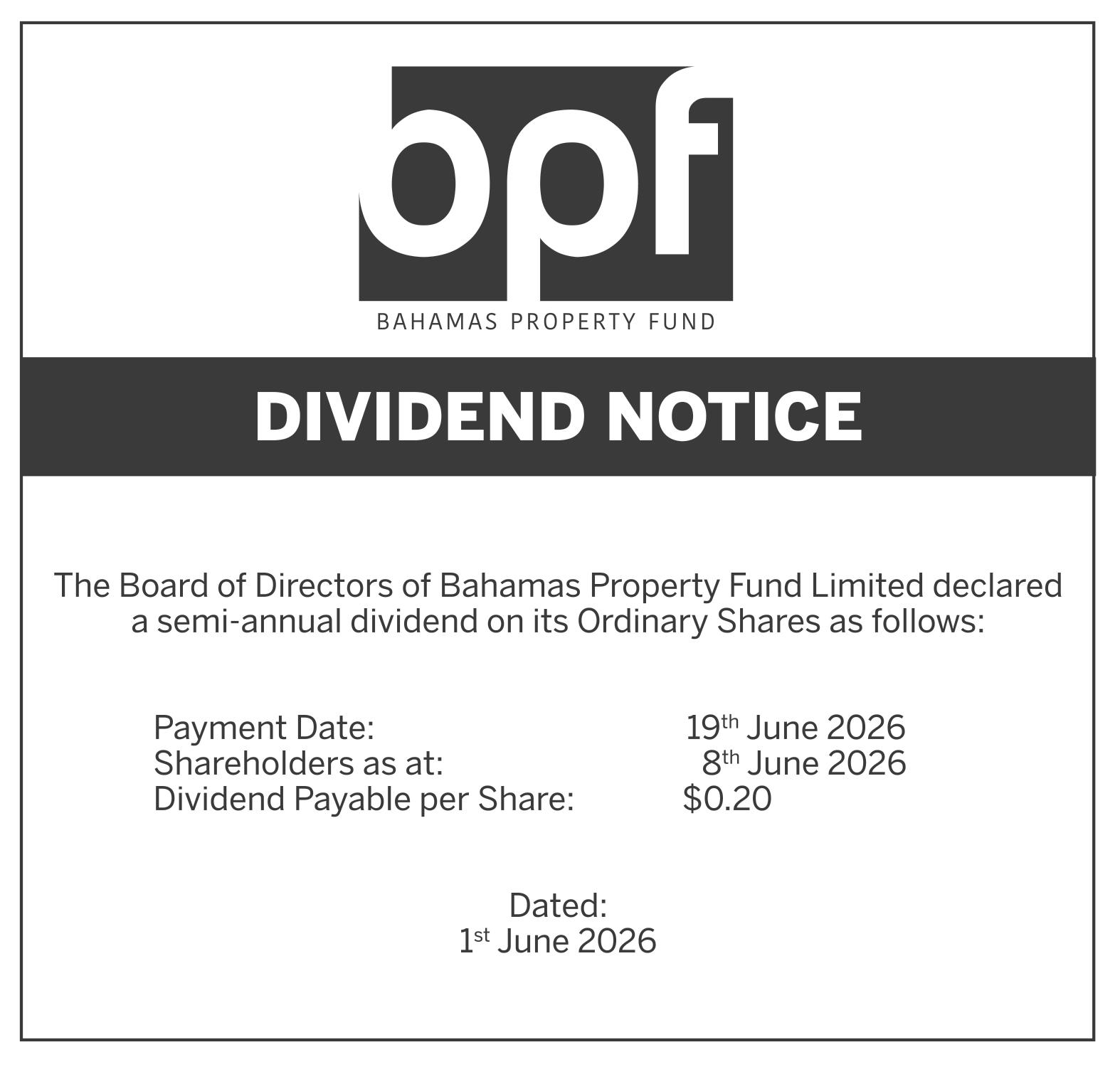
Notice is hereby given that the Bahamas Property Fund Limited (BPF) has requested and received an extension to publish its 2025 Audited Annual Financial Statements by the Bahamas International Securities Exchange (BISX).
Gardiner’s - although the extent of his involvement post-2017 is not reflected in the company’s corporate records filed with the Registrar General’s Department. As a result, there are likely to be questions over whether Mr Hield is fronting for Mr Gardiner.
Michael Coleman, the US Drug Enforcement Administration (DEA) special agent who swore the affidavit detailing the US government’s case against Mr Gardiner, alleged that the latter’s co-conspirators as recently as September 2024 said he “was currently building government buildings” and “reportedly trying to keep his involvement below the radar of law enforcement”.
“Based on my participation in this investigation, I understand that comment to be a reference to Gardiner’s company, which has bid on and secured Bahamian government-issued construction projects,” Mr Coleman claimed. “Gardiner owns a business that Gardiner uses to, among other things, bid on Bahamian government-issued construction contracts and launder his narcotics trafficking proceeds.”
Michael Halkitis, minister of finance, last week became embroiled in the Top Notch Builders controversy after he confirmed he was hired by the company “to provide consulting and directorship services” between 2019 and 2021 when he was neither holding ministerial office nor sitting as an elected MP. However, Top Notch’s corporate documents clearly list him as its president and a director - the same role held by Mr Gardiner just two years earlier. There is nothing to suggest Mr Halkitis has done anything wrong in relation to Top Notch or Mr Gardiner, and he has denied holding the post of president, stating: “Never a president of the company, and I think he (Eric Gardiner) was the president of the company or someone else was the president of the company. I was never employed by the company.”
Mr Halkitis’s status, as a former Cabinet minister and ex-minister of state for finance, would have been especially valuable to Top Notch and given it a credibility boost just at the time
it was seeking financing to complete the Eight Mile Rock administrative complex in Grand Bahama after Leno Corporate Services was able to raise just $8.1m - less than one-third - of the $25m bond issued to fund the public-private partnership (PPP) deal.
The finance minister was also the former MP for Golden Isles - the constituency where Top Notch Builders is based. And he was also a sitting Cabinet minister, and minister of state for finance, when the Government signed the Eight Mile Rock PPP deal with the contractor and its fully-owned affiliate, PPP Investments & Construction Company, on May 9, 2107, just one day before that year’s general election.
The contract was signed, on behalf of the Ministry of Finance and the Government, by Simon Wilson, the financial secretary. In effect, between 2019 and 2021 prior to being appointed to the Senate and Cabinet, Mr Halkitis switched sides and joined the private sector half of the PPP, although there is no law or regulation to prevent this and no suggestion of wrongdoing on his part.
The Eight Mile Rock PPP contract, based on documents in Tribune Business’s possession, was drawn up by the Karam & Missick law firm that was representing PPP Investments & Construction Company and Top Notch, not the Government and the Attorney General’s Office. Karam & Missick subsequently changed its name to Bowe Partners, the law firm headed by Alecia Bowe as its managing partner. Documents obtained from the Companies Registry show that Mrs Bowe’s law firm incorporated the Government’s Carmichael Village Project Development Company and Complete Construction Investment & Development Company within five months of each other on March 18, 2022, and August 8, 2022, respectively at a time when Jobeth Coleby-Davis - not Mr Bell - was minister of housing. Mrs Bowe is also a director of both Top Notch and Complete Construction, thus meaning that the private partner being contracted by the Government to build
Carmichael Village was also structuring the deal and forming the SPV rather than the Davis administration. Complete Construction’s registered office is given as Bowe Partners’ Caves Village address, while that of Carmichael Village Project Development Company is listed as Don Mackay Boulevard in Abaco. And the initial subscribers for both entities are named as Adia Benita Roberts and Kenya Armbrister, whose address is also listed as Bowe Partners and who appear to be employees of the law firm.
Tribune Business records show that, in summer 2022, some $20m was secured from Jamaican finance house, Proven Wealth Ltd, to finance the 365-lot Renaissance at Carmichael subdivision with the transactions arranged through Bahamas-based alternative financing provider, Simplified Lending. The sum involved is the same as what the Government later provided to Carmichael Village Project Development Company. However, the financing was dogged by controversy more than three years ago, after then-housing minister, Mrs Coleby-Davis, told the House of Assembly “there is no agreement with Simplified Lending and Proven Wealth Management” from the Government’s perspective. This was just weeks after the deal was hailed with great fanfare at a press conference featuring both the Prime Minister and Mrs Coleby-Davis, who said it will set “a new standard” for housing public-private partnerships (PPPs).
At the time, Mrs Coleby-Davis said in written House of Assembly answers that the $20m loan proceeds had yet to be received and disbursed, with the monies set to finance the development and build-out of a 70-acre site set to feature 200 homes in its first phase at Renaissance at Carmichael. The reliance on Jamaican financing is another similarity between the Carmichael Village and Eight Mile Rock administrative complex.
Aviation minister in call for stronger traveller safeguards
BY FAY SIMMONS Tribune Business Reporter jsimmons@tribunemedia.net
A CABINET minister has signalled the Government’s support for stronger passenger protections, arguing that airlines should have clearer obligations to assist travellers and address complaints when disruptions occur for reasons within their control.
Speaking at the closing ceremony of the International Civil Aviation Organisation’s (ICAO) Legal Advisers Forum,
Jobeth Coleby-Davis, minister of energy, utilities and aviation, said passenger rights deservd greater attention as governments and aviation stakeholders work to modernise the industry's legal and regulatory framework.
“I believe there is a need for stronger and clearly-defined regulations to ensure airlines consistently uphold transparency, provide assistance and address passenger grievances effectively,” she said. Mrs Coleby-Davis, while acknowledging that airlines
Delinquent tenants add to 20,000 vacant properties
BUILD - from page B1
housing stock is likely largely explained by reduced formal production, attrition is also likely part of the explanation, with some dwellings which were part of the stock in 2010 falling into such disrepair that they were no longer habitable and were probably demolished.”
The report, entitled ‘Unpacking housing affordability in The Bahamas, added: “Attrition is associated with dwelling condition, for which dwelling age can be used as a proxy. The median dwelling age in 2022 was more than 35 years, and the distribution is skewed… with over 40 percent of the stock having been built before 1990.
“In the absence of substantial maintenance and repair activity, this latter category is likely to account for a significant part of the attrition. If new production continues to decline, then the stock age distribution will increasingly skew older with a higher propensity for attrition.” Just 25-30 percent of The Bahamas’ existing housing inventory was built this century, the report added, drawing on BNSI data to help support its conclusion.
It added that the use of less-resilient construction material has also contributed to older properties increasingly falling into disrepair, and said: “Using construction materials as another proxy of dwelling condition, in 2013 approximately 30 percent of dwellings, 32,000 homes, had outer walls made of less durable materials than concrete blocks/ slabs - the most durable option. These are another likely source of the attrition in dwellings between 2010 and 2022.
“One mechanism for extending the life of the existing housing stock is through repairs and rehabilitation investments. However, residential mortgage commitments for rehabilitation and additions declined steadily between the highs of 2016-2017 and 2022. Even after a notable rebound since 2022, the decline was 14 percent between 2015 and 2024.
“While absolute numbers of such loans were low, if this decline is indicative of a broader decline in such lending from other non-mortgage sources from a wider range of financial intermediaries, including co-operatives, then its impact on the housing stock quality would have been significant.”
The IDB study said the overhang of vacant or empty residential housing units, including properties that have been repossessed or foreclosed on by lenders, represents another affordable housing supply bottleneck even though their numbers grew at a slower pace than overall
should not be blamed for every disruption, said carriers nevertheless have a responsibility to care for passengers when problems arise from circumstances they can control.
“While it is unfair to hold airlines accountable for delays related to air traffic control or poor weather that may cause flight disruptions and cancellations, the right to care where circumstances are within an airline's control must be given greater focus and attention,” said Mrs Coleby-Davis.
inventories. “In addition to diminishing production and stock attrition, housing supply is also constrained by stubborn levels of stock vacancy,” the report added.
“Vacant units stood at over 20,000 in 2022. However, the vacancy problem is not getting worse. It grew by 6 percent between 2010 and 2022, whereas the overall stock grew by 14 percent. The most rapid growth was during the 2000- 2010 period, coinciding with the financial crisis.
“Vacant stock is likely a combination of foreclosed homes held by banks after the financial crisis, vacation homes and reluctant landlords weary of the difficulty of recovering their rental units from a delinquent tenant.”
The report also conceded that home construction and related-activity was also likely under-estimated as persons added rental units as a “a counter to otherwise unaffordable formal housing solutions”.
“Similar trends were recently observed in a study of Trinidad and Tobago and Barbados, where it was found that during a decade of relatively slow economic and population growth, 2014-2023, both countries experienced significant dynamism in their housing stock that was mostly not attributable to formal production by state actors or private sector developer firms,” the IDB said.
“That study also found marked discrepancies between the volume and location of housing stock changes and the volume and location of applications for planning permission, implying a high degree of regulatory avoidance with potentially adverse implications for housing stock resilience.
“The prominence of owner-driven production without full regulatory oversight could therefore also be a contributing factor to the earlier noted stock attrition and associated shorter life spans of homes in the existing stock.” Multi-family households in The Bahamas are growing in number, the IDB said, suggesting that this is driven at least in part by housing affordability issues and represents “a coping mechanism”.
“In 2022, there were 4,029 more households with five or more persons compared to 2010 - 27,628 versus 23,599 - although the share of such larger households remained constant around 23 percent,” the report said.
“The household size brackets that increased the most during this period were nine and eight, which grew by 84 percent and 53 percent, respectively. Meanwhile, the number of three and four-person households decreased, and the number of two-person households increased.
“The decline of mid-sized households and the growth
Her comments come as passenger rights and airline accountability have become increasingly prominent issues globally, with regulators in several jurisdictions strengthening rules governing compensation, customer communication and assistance during flight delays and cancellations.
Mrs Coleby-Davis’s remarks were made during a wider address focused on the future of international civil aviation and the role of legal and regulatory systems in maintaining public confidence in the sector.
She argued that the aviation industry must continue evolving to address emerging challenges ranging from cyber security threats to environmental concerns and rapidly-advancing technologies.
“One message has remained consistent. The future of aviation cannot be built on outdated systems or fragmented approaches. It must be built on modern legal frameworks, resilient institutions and meaningful
in large-sized households could reflect a pattern of house-sharing as a coping mechanism for housing affordability. The decline of mid-sized households and the growth in small-sized households could also be related to lower fertility, second home ownership and Airbnbs.”
Such housing trends have come to the Government’s attention. Noting that many Bahamian home owners are leasing part of their properties to tenants so as to derive rental income to finance mortgage payments, Michael Halkitis, minister of finance, in last week’s 2026-2027 Budget unveiled the expansion of the first-time home buyer VAT exemption - which eliminates the tax paid by the purchaser on the acquisition - to multi-unit complexes.
“We are therefore extending VAT relief for first-time homeowners
by expanding zero-rated treatment to include multi-unit properties such as fourplexes, triplexes and duplexes, particularly where at least one unit is owner-occupied. To clarify, this VAT relief will be on the entire building rather than just the proportion where the first-time homeowner resides,” Mr Halkitis said.
“This reform reduces the upfront cost of home ownership, supports smallscale investment and rental income, and reflects how Bahamians are increasingly entering the housing market today. This measure takes immediate effect, helping more Bahamians to own property, build equity and generate income.”
The IDB report, detailing the current obstacles to Bahamian home ownership, described these as “less stock to choose from because production is declining, existing stock is subject to attrition, and
collaboration among states and stakeholders,” said Mrs Coleby-Davis. She stressed that aviation remains particularly important to The Bahamas because of the country's geography and dependence on air connectivity.
“As an archipelagic nation, aviation is essential to our economic development, our tourism industry, our emergency response capability and the daily connection of our island people. Aviation is not optional for us; it is fundamental,” she said.
Mrs Coleby-Davis also sought to reassure industry stakeholders that the Government views strong regulation as essential to long-term growth rather than an obstacle to expansion.
“I want the aviation community, both here in The Bahamas and internationally, to know that this government recognises the critical importance of a safe, secure, sustainable and well-regulated aviation
vacant units are not meaningfully making their way back into the active stock”.
It added: “Longer commutes are now a feature because development is becoming more dispersed in New Providence. And access to mortgage financing is becoming harder because of fewer mortgages, higher deposits and greater selectivity by banks.
“In response, it appears that there is now a greater likelihood of households trying to solve the problem on their own by either doubling up at their parents’ home or building on their own, neither adequately supported by regulation. These findings suggest that policy and public programming changes are needed to augment housing production, stem stock attrition and improve affordability.
“Reforming the legal framework to better facilitate mixed-use development, multi-family
system. We understand that strong oversight is not a barrier to growth; it is the foundation of public confidence and long-term success,” the minister said. She added that international co-operation will be increasingly important as aviation regulators confront issues that transcend national borders.
“In today's environment, collaboration is no longer simply beneficial; it is necessary. No state can address modern aviation challenges alone. Cyber security threats do not respect borders. Environmental concerns affect all nations. Emerging technologies are advancing faster than many legal systems can adapt,” Mrs Coleby-Davis said.
She said conferences such as the ICAO Legal Advisers Forum help countries build relationships, share expertise and develop common solutions to challenges facing the global aviation industry.
housing and urban regeneration could encourage well-planned densification of existing built-up areas through in-fill development, harnessing the capacity of existing infrastructure and the concentration of economic activity in Nassau,” the IDB paper continued.
“Expanding the availability of concessional financing for home maintenance and repair would likely lead to investments that would prolong the life of the existing stock, especially if it is targeted to lower income households who otherwise could not afford to make those investments. At scale, and alongside ongoing efforts to reform Rent Control provisions, these could have a price moderating effect by reducing the gap between the demand for new home solutions and supply.”
unable, however, to provide a timeline for completion.
“I cannot say right now when,” Ms Bowe said. “Like I say, if you go out there, you’ll see an extended sidewalk that is covering the pipes. There’s still an infancy stage. Probably [in] the next few weeks I would be able to give that information.”
Previous delays were attributed to multiple factors, including vendors lacking compliant meter boxes, contractor changes and co-ordination challenges between government agencies.
Ms Bowe previously said the Ministry of Works, BPL and Water and Sewerage Corporation all needed to align infrastructure efforts because underground utility systems intersect throughout Potter’s Cay.
The long-awaited electricity roll-out carries significant economic implications for vendors, according to Ms Bowe. She previously estimated that operators spend roughly $60 daily on generator fuel and another $60 on ice. Access to electricity could reduce operating costs while allowing businesses to invest in freezers, ice makers and electric appliances.
Vendors have also argued electrification could strengthen their ability to obtain insurance coverage by making Potter’s Cay business seem more like formal food establishments rather than simply structures. Safety remains another major concern as Potter’s Cay has experienced multiple fires in recent years. Vendors have expressed hope that transitioning from gas-powered equipment to electric appliances could help reduce fire hazards.
As the Pentagon pushes for battlefield AI, some military leaders urge caution
By KONSTANTIN TOROPIN Associated Press
THE TRUMP administration is pushing to unleash the power of artificial intelligence for the U.S. military while facing calls to put up guardrails around the rapidly developing technology from some companies — and even notes of caution from top leaders in uniform.
Adm. Frank Bradley, head of U.S. Special Operations Command, told attendees of a recent annual special forces conference in Tampa, Florida, that troops “have to be very careful about how we come to (AI’s) employment and its inspiration into the delivery of lethality.”
Bradley said he can see a future where AI determines what targets to hit but that “we, as humans, have to have the confidence that ... it’s going to deliver violence
only where we intend it to be delivered.”
The remarks from Bradley, who oversees the units that handle the military’s most difficult and dangerous operations, about the need to ensure safeguards come as his boss, Defense Secretary Pete Hegseth, is pushing to rapidly evolve the military through AI. It is a push that has led to clashes with some tech companies worried about safety measures.
Hegseth has insisted that the Pentagon be allowed to use the technology any legal way it sees fit. He told an audience of SpaceX employees in January he would reject any AI models “that won’t allow you to fight wars” and that his vision for the technology was systems that operate “without ideological constraints that limit lawful military applications.”
AI’s use in the military is part of the Republican administration’s larger push to grow the capability
THE WEATHER REPORT
it sees as a unique American advantage even as it faces pressure to ensure responsible safeguards.
President Donald Trump abruptly called off plans to sign a new AI executive order hours before an expected White House ceremony over concerns the measure could dull America’s edge on AI technology. “We’re leading China, we’re leading everybody, and I don’t want to do anything that’s going to get in the way of that lead,” Trump told reporters.
Two differing AI worlds within the military When asked about Bradley’s remarks, a Pentagon official said efforts are focused on using AI to create “functional battlefield tools” that can help troops come up with and identify targets more quickly and, as a result, speed up strikes on those targets. The official spoke on condition of anonymity to offer more candid remarks.
Shown is today’s weather. Temperatures are today’s highs and tonight’s lows.
Finance pledges compliance crackdown on ministries
- something that is legally mandated by the Public Finance Management Act 2023 - through what was described as “clearer escalation mechanisms” and “reinforced accountability” for failing to submit.
The warning comes after just seven of the Government’s 51 ministries and departments, and eight of its 42 agencies and GBEs, responded to the Ministry of Finance’s request to provide annual plans, business plans and statements of corporate intent to support planning and organisation structure, as part of preparations for the 2026-2027 Budget. This is the first time they will have had to fulfill this task, as the Act is understood to have given all public entities a two-year period in which to prepare for this.
“Across agencies and GBEs, reporting requests were successfully issued to 42 entities, representing full coverage at the initial stage. Of these, 14 entities (approximately 19 percent) provided formal written acknowledgement, indicating partial engagement with
the reporting process,” the Fiscal Strategy Report said.
“However, eight submitted a completed annual plan, business plan or statement of corporate intent by time of this report, highlighting a significant drop-off between acknowledgement and delivery. A similar pattern is observed among ministries and departments. While all 51 entities received the reporting request, only 19 entities (37.3 percent) provided formal written acknowledgement and seven (13.7 percent) submitted reports.”
A further breakdown showed that, of 51 government ministries and departments, only six were fully compliant with the other 45 deemed non-compliant with the law as set out by the Public Finance Management Act 2023. Just four of the Government’s 22 agencies met the requirements, with 18 found to be non-compliant, while - of the 20 GBEs - five submitted a statement of corporate intent, and just eight a business plan for the upcoming fiscal year.
The Fiscal Strategy Report 2026 warned that the relatively low level of
PPPs need monitoring on potential fiscal effect
SHEET - from page B3
continued monitoring,” the Fiscal Strategy Report 2026 conceded.
“PPPs introduce fiscal exposures through contractual obligations and contingent liabilities associated with the delivery of infrastructure and public services. While PPPs can support investment and efficiency gains, they may also generate fiscal risks where project performance deviates from expectations or where contractual obligations require government intervention.”
These risks, the Fiscal Strategy Report added, revolve around “long-term payment commitments, including availability payments or service fees”, which “may create sustained expenditure pressures over the life of a project”. And the potential issuance of “guarantees, minimum revenue arrangements or termination provisions may give rise to fiscal costs if project risks materialise”.
”Delays, cost overruns or operational challenges may necessitate renegotiation or additional government support,” the Fiscal Strategy report said, adding that “infrastructure projects, particularly those located in vulnerable areas, may be affected by climate-related events or changes in economic conditions, with potential fiscal implications”.
The Fiscal Strategy Report concluded: “The Government continues to strengthen the PPP framework through formalised project appraisal, risk assessment and approval processes. Existing policies emphasise value for money, appropriate risk allocation and fiscal affordability. In addition, ongoing efforts to improve data consolidation, contract monitoring, and institutional co-ordination are expected to enhance the management of PPP-related fiscal risks over time.” Michael Halkitis, minister of finance, defended the Government’s PPP structures post-Budget and asserted that the Davis administration has “nothing to hide”. He added: “Private-public partnerships
responsiveness and compliance, albeit at an early stage, undermines both transparency and accountability when it comes to the health of The Bahamas’ public finances.
“Strengthening the timeliness and completeness of reporting by ministries, departments, agencies (MDAs) and GBEs remains a central priority in advancing fiscal transparency, and aligns with the requirements of the Public Finance Management, as well as international assessment frameworks like the Public Expenditure and Financial Accountability (PEFA) framework,” the report said.
“For fiscal year 20262027 Budget preparation, the Ministry of Finance implemented a structured reporting process, issuing requirements to MDAs and GBEs via official circulars and letters. Emphasis was placed on compliance with MDA annual plans and GBE business plans and statements of corporate intent to support proper planning and organisational structure.”
Outlining how the Government intends to react, the Fiscal Strategy Report
allow government to invest in infrastructure without paying all of the money upfront.
“They get a partner that can put forward the money, and the Government, there’s a payment schedule, and so you’re able to accelerate your infrastructure without having the money upfront. There’s nothing wrong with that. It’s an established procedure that many countries use.”
Mr Halkitis said some critics incorrectly define PPPs as only legitimate when the underlying infrastructure directly generates revenue, such as toll roads or bridges.
“Some people think that unless money is being generated from the infrastructure project, like if it’s a toll road or a toll bridge, then it’s not a so-called true PPP because it does not generate income. But we don’t take that view,” he said.
“The idea is we are a country that needs infrastructure, and once it’s transparent and above board, properly structured, it enables us to do things like accelerate our airport infrastructure and improvement of infrastructure in the Family Islands.”
PPPs are typically designed to reduce the financial stress on cashstrapped governments by contracting the private sector to provide the funding, development and expertise to construct much-needed infrastructure or run public services.
The Government’s cash flow pressures are eased by requiring the private sector to finance the up-front capital costs, with the latter earning a return on investment - and paying back any lender - from the revenue streams generated by infrastructure assets they develop or services provided.
The Opposition has previously argued, though, that several projects touted by the Davis administration as PPPs do not fit this model or meet this criteria.
Mr Halkitis said the Government’s position, though, is that PPPs need not be income generating for the private sector partner.
said: “In response, the Ministry of Finance is strengthening its approach to reporting compliance through enhanced follow-up protocols and clearer escalation mechanisms.
“Greater emphasis is being placed on reinforcing accountability for non-submission, while continuing to support entities through technical guidance and capacity-building initiatives. The Ministry will continue compliance measures for other Public Finance Management Act mandated reports.”
The need for improved response and compliance was highlighted by Michael Halkitis, minister of finance, in his 2026-2027 Budget presentation in the House of Assembly. He said: “During the 2026-2027 Budget preparation cycle, the Ministry of Finance sent formal, written communication to all public entities requesting their compliance with the preparation, submission and publication of the reports required under the Act.
“Each entity was also asked to return a signed copy of the letter from the relevant
permanent secretary, chief executive and chairperson of the Board, as applicable. This was done to support a clear and accountable notification process.
“As guided by the Act, contents of the annual plan outline the key priorities, objectives, programmes, performance measures and service delivery standards for the period. It also addresses statutory requirements and operational priorities across core areas such as revenue management, expenditure control, debt sustainability, procurement oversight and capacity building,” the minister added.
“To support this initiative at the ministry, department and agency level, an annual plan template for fiscal year 2026-2027 was developed, circulated and revised. A workshop was also held to assist entities in meeting their statutory obligations. These efforts are intended to help public entities operate with clearer priorities, measurable targets, stronger financial oversight and greater accountability to the Bahamian people.
“Annual plans for ministries, departments and
agencies, which have been completed, will be tabled during the second reading [of the Budget]. The business plans and statements of corporate intent for government business enterprises will be tabled during the presentations of their responsible ministers. The documents are expected to be published on the respective entity’s websites after tabling,” Mr Halkitis continued.
“Looking ahead, we will continue modernising the public financial management framework through stronger compliance monitoring, improved reporting standards and better co-ordination across the public sector. We will also continue to build capacity for formal planning and support ministries in providing the monthly and quarterly financial reports mandated by law.
“These efforts form part of the Government’s broader commitment to a stronger, more responsive and more accountable system of governance, while maintaining the fiscal discipline necessary to support long-term national development and continued economic progress.”