

By BARBARA WALKIN barbara@barefootmarketing.net
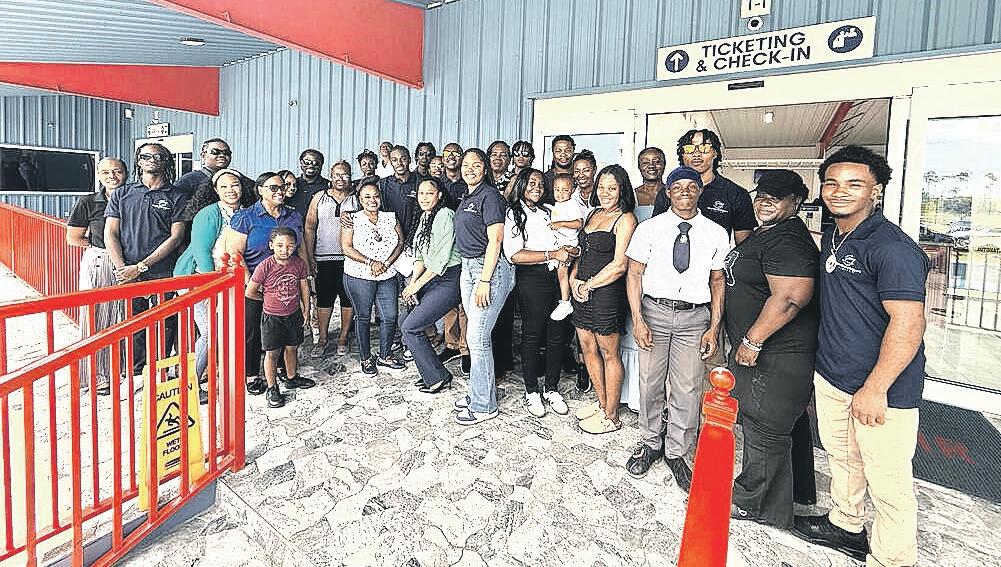
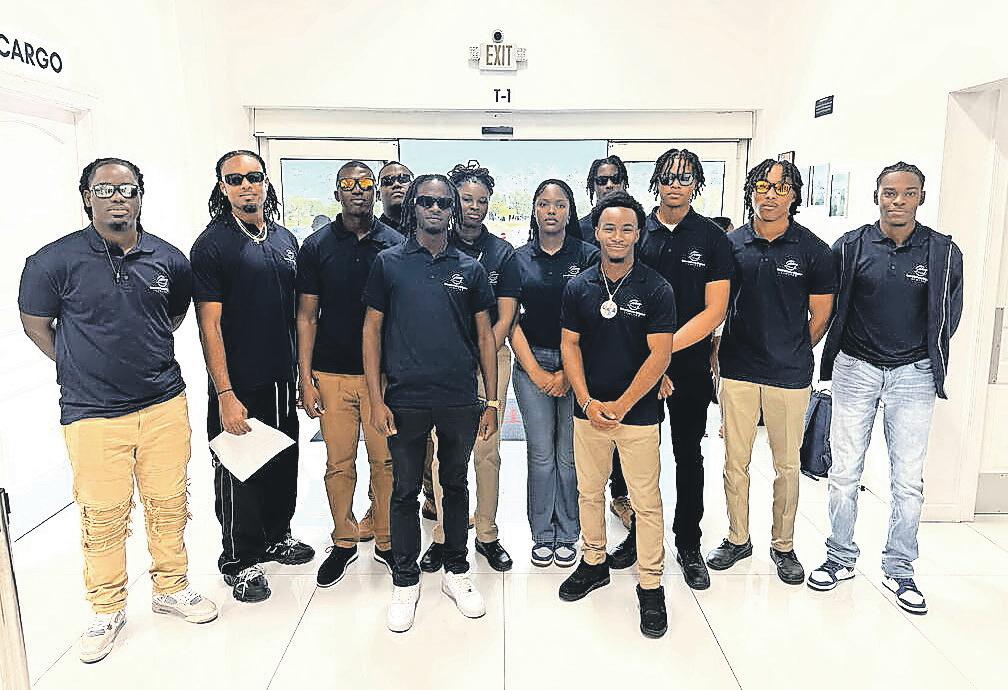
FOR the frst time in its internationally certifed apprenticeship programme, the Grand Bahama Shipyard is sending two female apprentices abroad for advanced training, marking a historic milestone for both the company and the wider maritime industry in The Bahamas.
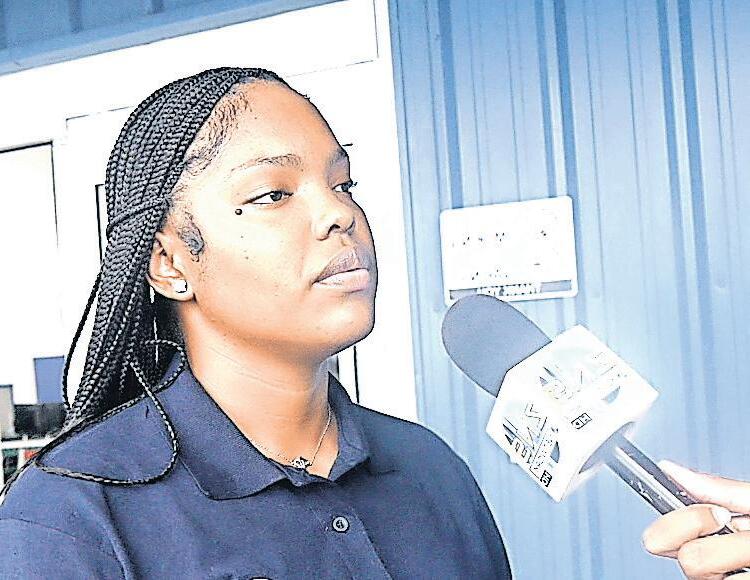
Asia Ambrister and Raeque Russell are among a 12-member cohort of young
Grand Bahamians, aged 18 to 22, who are on their way to Liverpool, where they will spend four months specialising in their respective trades at The Engineering College. Their selection marks a step forward in expanding opportunities for women in skilled trades.
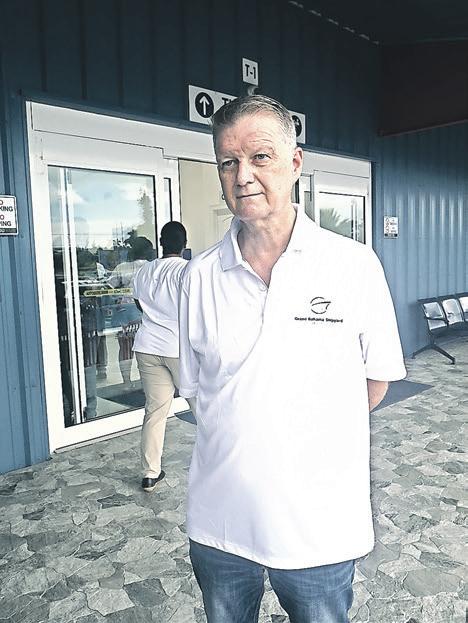
According to Gary Bentinck, Vice President of Human Resources at the Grand Bahama Shipyard, the programme is a long-term investment in talent development.
“We have 12 apprentices this year going to Liverpool,”
Mr Bentinck explained. “They spend the frst four months at the Bahamas Technical and Vocational Institute getting a foundation in shipyard practice, and then they concentrate on their individual trades over the next four months in Liverpool.”
After completing their overseas training,
“We’re very proud that we’ve got these two ladies with us,” Mr Bentinck noted.
“Companies that have a more diverse workforce are stronger companies, and it’s also good for the local economy and community development.”
Both Asia and Raeque recognised the broader signifcance of the moment, not just as personal growth but as paving the way for future generations of women in trades.
“I feel a little ner
Andrew Miller, Hakim Moxey, B’Jorne Gardiner, Dunrell Pinder, Garnet Welsh and
apprentices return home to continue hands-on development at the shipyard for three years, ultimately qualifying as competent tradespeople.
The structured four-year programme leads to inter nationally recognised trade certifcations, an essential requirement for advancement into supervisory and management roles.
Around da Islands. “I’m planning to improve myself and make sure I succeed.”
“This is our investment in behavioural talent,” Mr Bentinck told Around da Islands. “These young people will grow through the company into trade positions, then foreman roles, and hopefully into management positions thereafter.”
While women have participated in the shipyard’s apprenticeship initiatives in the past, this is the frst time female apprentices have been included in the internationally certifed overseas programme.
“I am very excited and happy to be a part of this group. Being involved has been a great experience for me because I’ve learned new skills, met supportive people and had opportunities to grow both personally and professionally,” said Raeque. “It feels good to be included in something positive and I’m proud to represent the group and be a part of all the activities and experiences we share together.”
The full apprenticeship cohort includes Rotario Tate, Emmanuel Burrows, Brandon Jones Jr., Ty’Meq McPhee,
Currently, the shipyard has 46 apprentices across four trades and plans to expand to as many as 80 apprentices at any given time. Each year, new cohorts will be recruited, ensuring a steady pipeline of skilled workers as the company transitions back to a three-dock operation, with the addition of the Lucayan Dock expected to signifcantly increase capacity.
The $650m investment in new infrastructure, combined with workforce development initiatives like the apprenticeship programme, refects strong confdence in the future of the industry and the potential of Bahamian talent.
…to Around da Islands, our weekly supplement, free with Friday’s Tribune.
This week we reveal how the Peterson Cay Underwater Sculpture Garden in Grand Bahama came a step closer to becoming a reality with the unveiling at Coral Vita’s Conservation Cove of the frst four sculptures to be installed at the garden, marking the beginning of a transformative marine attraction for GB.
Leading the artistic vision is Bahamian sculptor Andret John, who described the project as a fusion of history and culture rooted deeply in Bahamian identity.
We also look at the waterways and canals that wind through Freeport and Lucaya that are part of one of the most creative engineering projects undertaken in The Bahamas. Often referred to as the “Venice of The Bahamas,” or the “Venice of the Caribbean,” these canals have become one of Grand Bahama’s most recognisable features, bringing together infrastructure and lifestyle in a way few islands can match.
And Charlie Bahama gives us his take on the ‘Taste of Exuma’ festival. After four days and nights, Charlie returned to his Nassau base feeling that ‘Taste of Exuma’ was exactly what the Out Islands needed: a top-notch culinary experience delivered in the smaller, boutique-style atmosphere that the Family Islands are known and celebrated for.
Every week, Around da Islands, having partnered with Grand Bahama 242, highlights news, features and developments from Grand Bahama and the Family Islands, ofering a broader national perspective beyond Nassau. And don’t forget, this is your supplement too! Send us your story ideas, features and tips – we can’t run then them all, but we’re committed to strong, fair representation from across the islands. So come along for the ride!
From all of us here at The Tribune – The People’s Paper.
6
This WEEK in Around da IslandsBahamian News, Features & Culture
GRAND BAHAMA NEWS
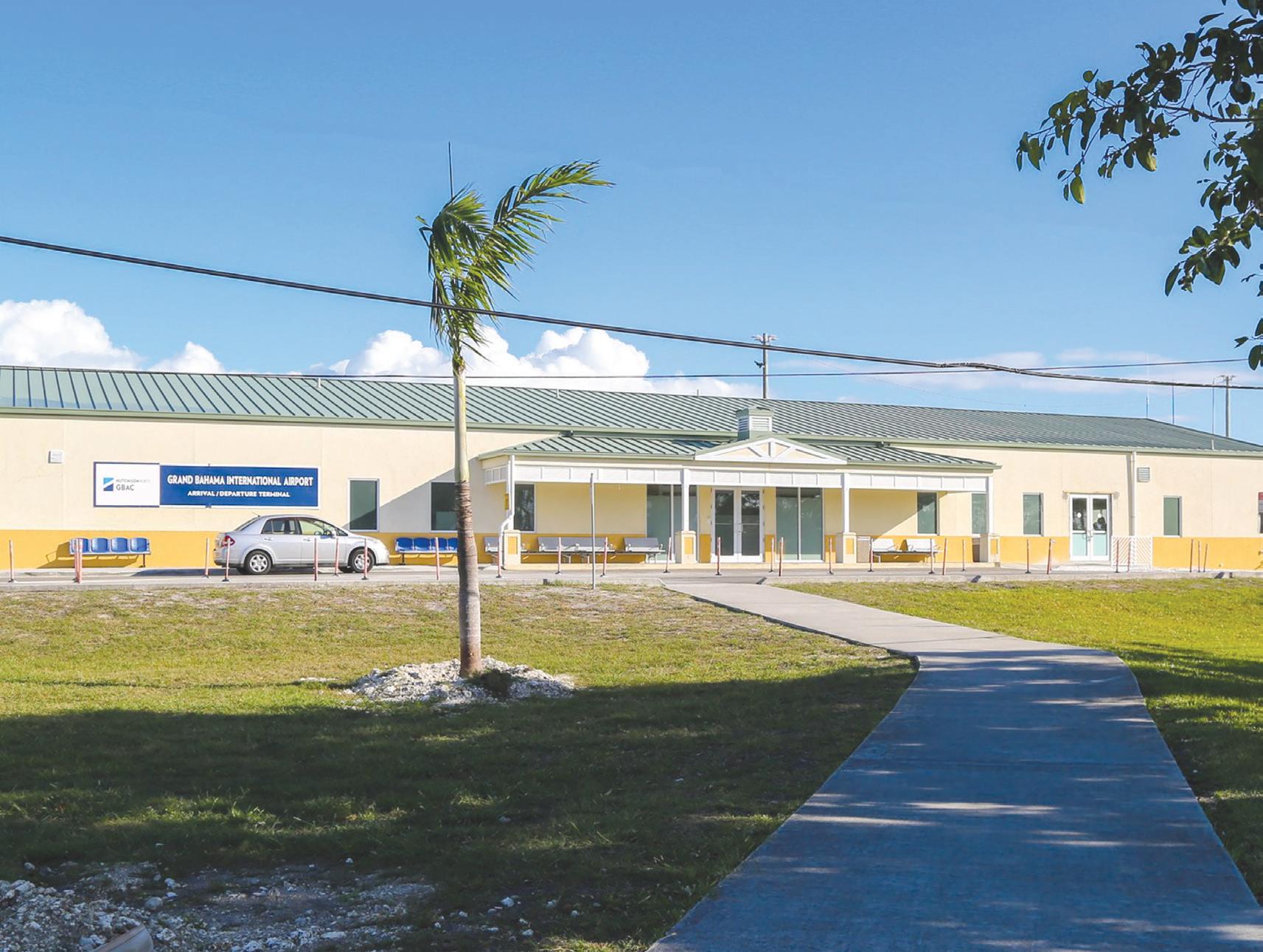
Pg 4 — GB still waiting for word on airport developments
GRAND BAHAMA FEATURES
Pg 5 — Alpha Kappa Alpha sorority awards their signature "Twenty Pearls - A Salute to Excellence" awards
Pg 6 — !e "Venice of the Caribbean" remains attractive to boaters
5 8
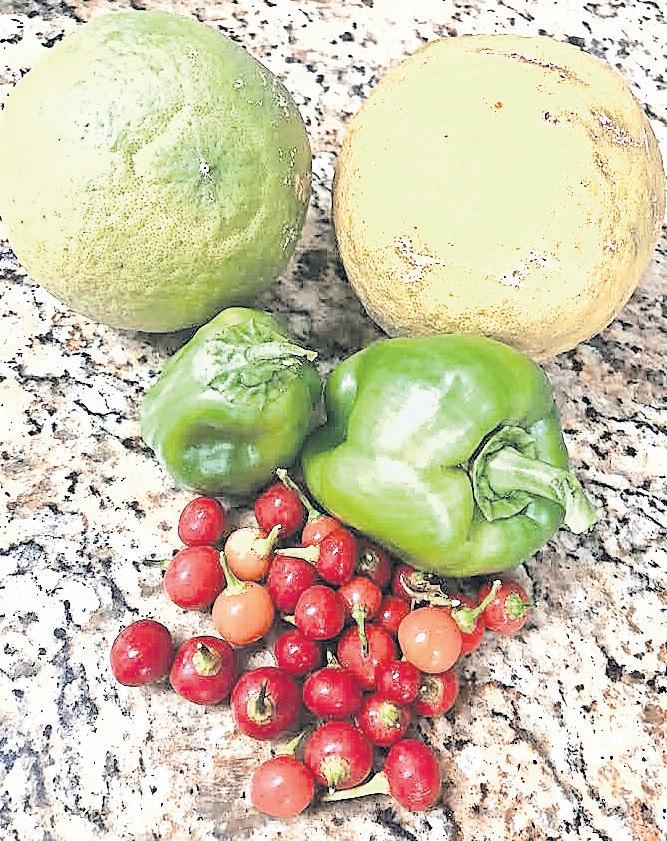
Pg 8-9 — !e story of Juju's Garden
AROUND DA ISLANDS FEATURES
Pg 7 —Legendary singer/song writer Eddie Minnis releases Greatest Hits song book
Pg 12 — Island Brainwaves
EXUMA FEATURES
Pg 14-15 — Charlie Bahamas discovers that Nassau doesn't own the Food Festival scene a"erall! contents For
Send story and feature suggestions to:
By BARBARA WALKIN barbara@barefootmarekting.net
With Prime Minister Philip "Brave" Davis and his Progressive Liberal Party returning to power after securing a historic second consecutive term, Grand Bahama residents were looking forward to the Grand Bahama International Airport [GBIA] being at the top of the government’s agenda.
But as Governor General Cynthia Pratt delivered the Speech from the Throne when Parliament reopened on May 20, residents who listened closely for any specifc word on the GBIA’s future came away with more questions than answers.
The address made sweeping promises for the island. “My government will continue to promote fundamental transformation in Grand Bahama through enhanced investments and economic development, reorganisation of arrangements with the Grand Bahama Port Authority, and strengthening of opportunities with key stakeholders," Governor General Pratt read on behalf of the Prime Minister.
"Grand Bahama will become the gateway to the Caribbean for trade, tourism, and investment with the development of the Afro-Caribbean Marketplace and Logistics Centre, MSC Cruise Port, Xanadu Beach Project and other major developments."
Not a single word, however, about the airport.
Grand Bahamians who now have lived through years of delays, broken timelines, and stalled machinery at the airport site told Around da Islands, they want more than statistics, they want ground broken and walls rising.
“Grand Bahama needs its airport, and we needed it yesterday,” said Freeport business owner Andre Major. "Every time there is an election, every
time there is a new government or a new minister, we hear the same words. ‘Imminent.’ ‘Progress.’ ‘Soon.’ Our island cannot aford another four years of ‘soon.’”
He noted that the Throne Speech, while silent on the GBIA specifcally, did frame Grand Bahama in expansive, ambitious terms as the future gateway to the Caribbean and added, “If these projects the Governor General listed of in the Speech from the Throne take place, then the airport in critical to the success.”
Virginia Brown, long-time Freeport resident echoed: “When I travel to Nassau or Miami, I see what a real airport looks like. When I come home, I see what we have been left with since Dorian. The gap between what we deserve and what we have is embarrassing. We voted for change. Now we want to see it.”
Taxi driver Austin Farrington put it bluntly: “Tourism cannot grow the way they say it is growing if we are working out of a facility that was never meant to be permanent. Investors and cruise visitors come here, they see that airport, and it sends a message, and not the message Grand Bahama wants to send.”
Around da Islands reached out to a tourism ofcial who wished to remain anonymous but said that meetings are set to be held in the coming days. However, he also acknowledged that it is not yet certain which ministerial portfolio the airport will fall under in the new government.
The uncertainty stems from a change at the Cabinet level. During the frst Davis term, the airport fell under the Ministry of Tourism, Aviation and Investments, headed by Deputy Prime Minister Chester Cooper. That combined portfolio, however, is no longer structured in its previous form.

It appears the airport redevelopment would now fall under the remit of the Ministry of Energy, Utility and Aviation which is the portfolio of Minister Jobeth Coleby-Davis. For Grand Bahamians, the institutional reshuffing is one more chapter in a “drama” they have watched unfold regarding GBIA.
By DENISE MAYCOCK Tribune Freeport Reporter dmaycock@tribunemedia.net
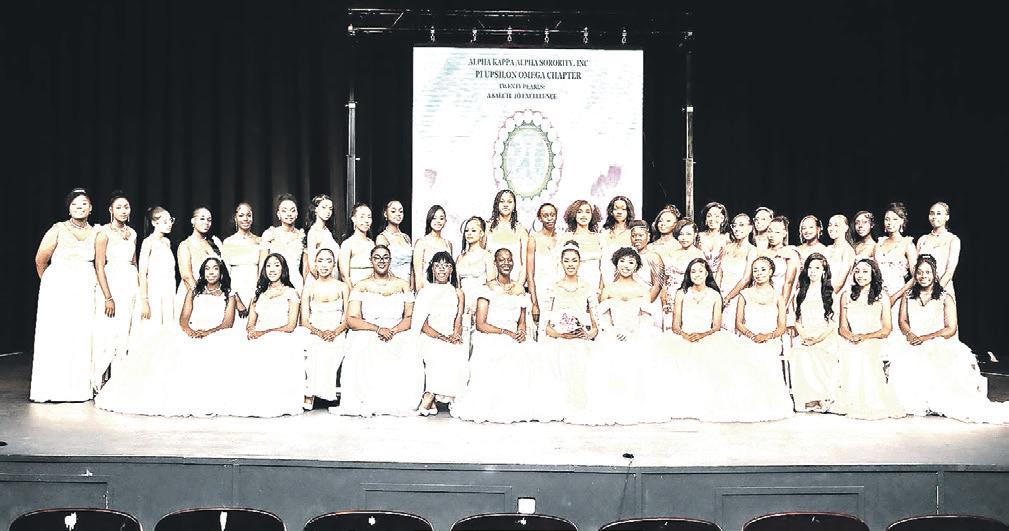
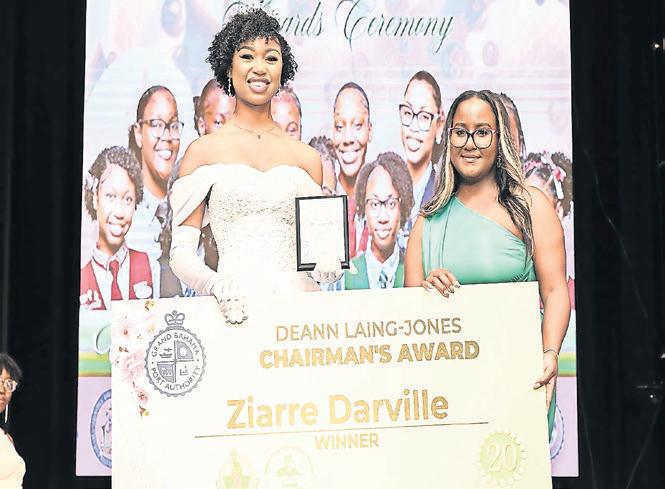
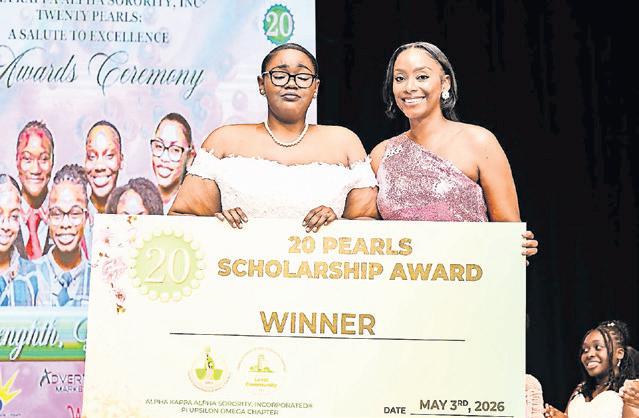
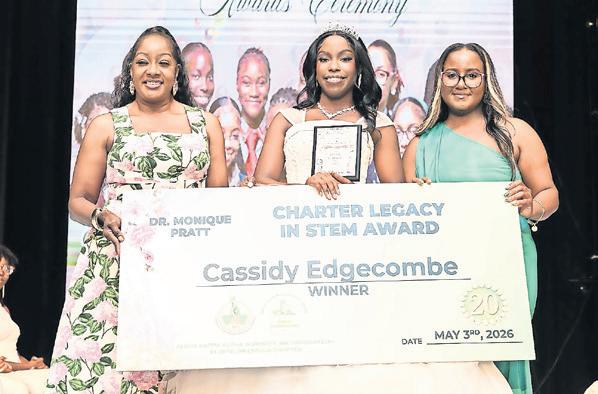
The Alpha Kappa Alpha Sorority, Incorporated, Pi Upsilon Omega Chapter held its annual Twenty Pearls – “A Salute to Excellence” Awards Ceremony on May 3, awarding $15,000 in scholarship funds and book donations as well as securing college scholarships for outstanding senior Pearls in the programme, with a combined value of over $250,000. Held at the Regency Theatre under the theme, “United in Strength, Rooted in Excellence,” the ceremony marked the 38th year of the chapter’s prestigious signature mentorship programme for high school girls in Grand Bahama.
Chaired by Alisa Arthur and co-chaired by Jemonique Barnabie, the event celebrated the academic achievements, leadership development, and community involvement of the 41 young women enrolled in the programme.
Chapter president Rashema Ingraham delivered remarks during the ceremony, highlighting the continued impact and legacy of the programme throughout the community.
“This year’s Awards ceremony is a culmination of many sessions and a powerful refection of what is possible when young women are supported, encouraged, and given meaningful opportunities to grow. For 38 years, the Twenty Pearls Program has remained a proud part of Pi Upsilon Omega Chapter’s commitment to service, scholarship, and sisterhood, helping to guide and uplift young women in Grand Bahama.
Delivering the keynote address was Toni Cartwright-Pratt, chief executive ofcer a Bahamas Power & Light, who encouraged the young ladies to remain committed to excellence, leadership, and service as they pursue their future goals.
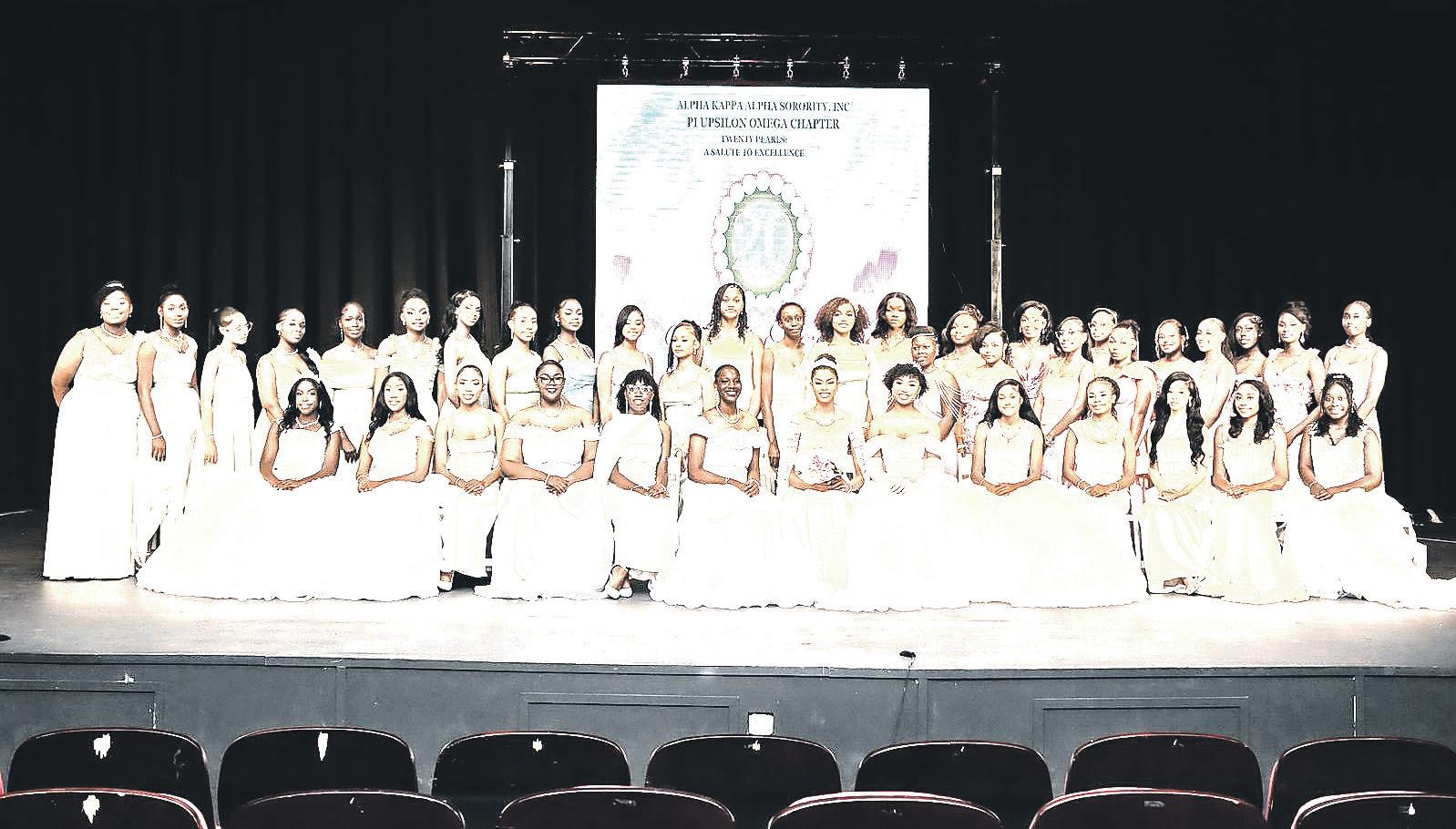
The Twenty Pearls program is designed to empower young ladies in grades nine through 12 through leadership training, academic enrichment, and civic engagement. Over the years, the program has awarded more than $100,000 in local scholarships to outstanding participants.
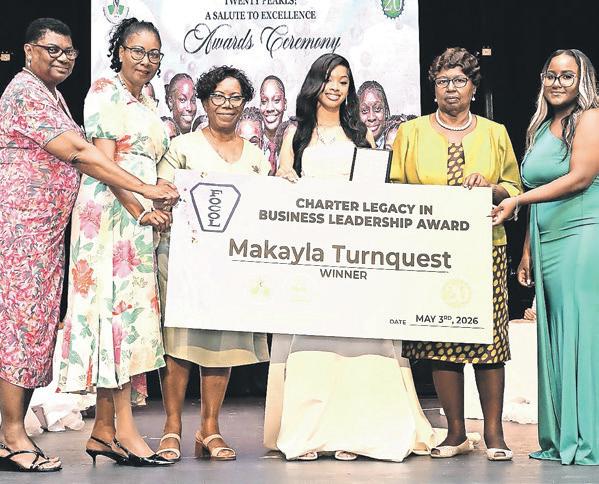
During this year’s ceremony, the sorority distributed 95 awards to participants. Awards presented included Charter Legacy Awards honouring the chapter’s charter members, Spirit and Platinum Awards, Perfect Attendance, Most Improved, Most Poised Pearl, Chairman’s Award, Executive Award, Speech, Essay and Pitch Competition Awards, Logo Competition Awards, Outstanding GPA, and Highest GPA recognitions.
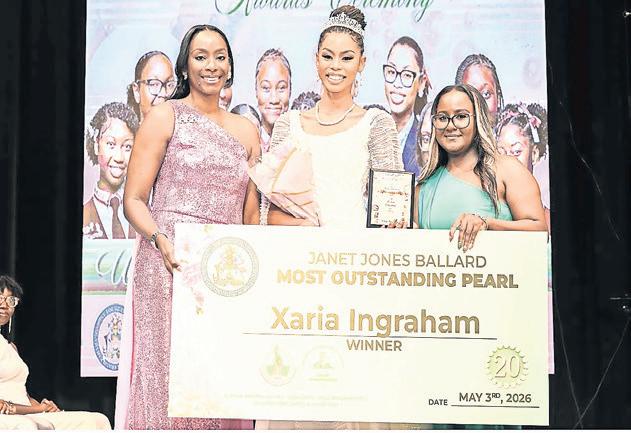
The highest honour, Most Outstanding Pearl, was awarded to Xaria Ingraham, the 2025/2026 president of the Pearl programme.
In addition to the chapter awards and scholarships, three graduating senior Pearls received major international scholarships to two Historically Black Colleges and Universities (HBCUs) in the Unitewd States, secured by the Pi Upsilon Omega Chapter.
Janiya Butler and Natanya Ellis were awarded full-ride, four-year scholarships to Philander Smith University in Little Rock, Arkansas, through the Thomas Mason scholarship, while Makayla Turnquest received a four-year scholarship valued at $15,000 per year to LeMoyne-Owen College in Memphis, Tennessee, through the Global Leadership Fellows scholarship. All with the support from The Memorial Foundation.
Ms Arthur said the continued success of the programme refects the sorority’s longstanding commitment to developing future leaders and creating opportunities for young women

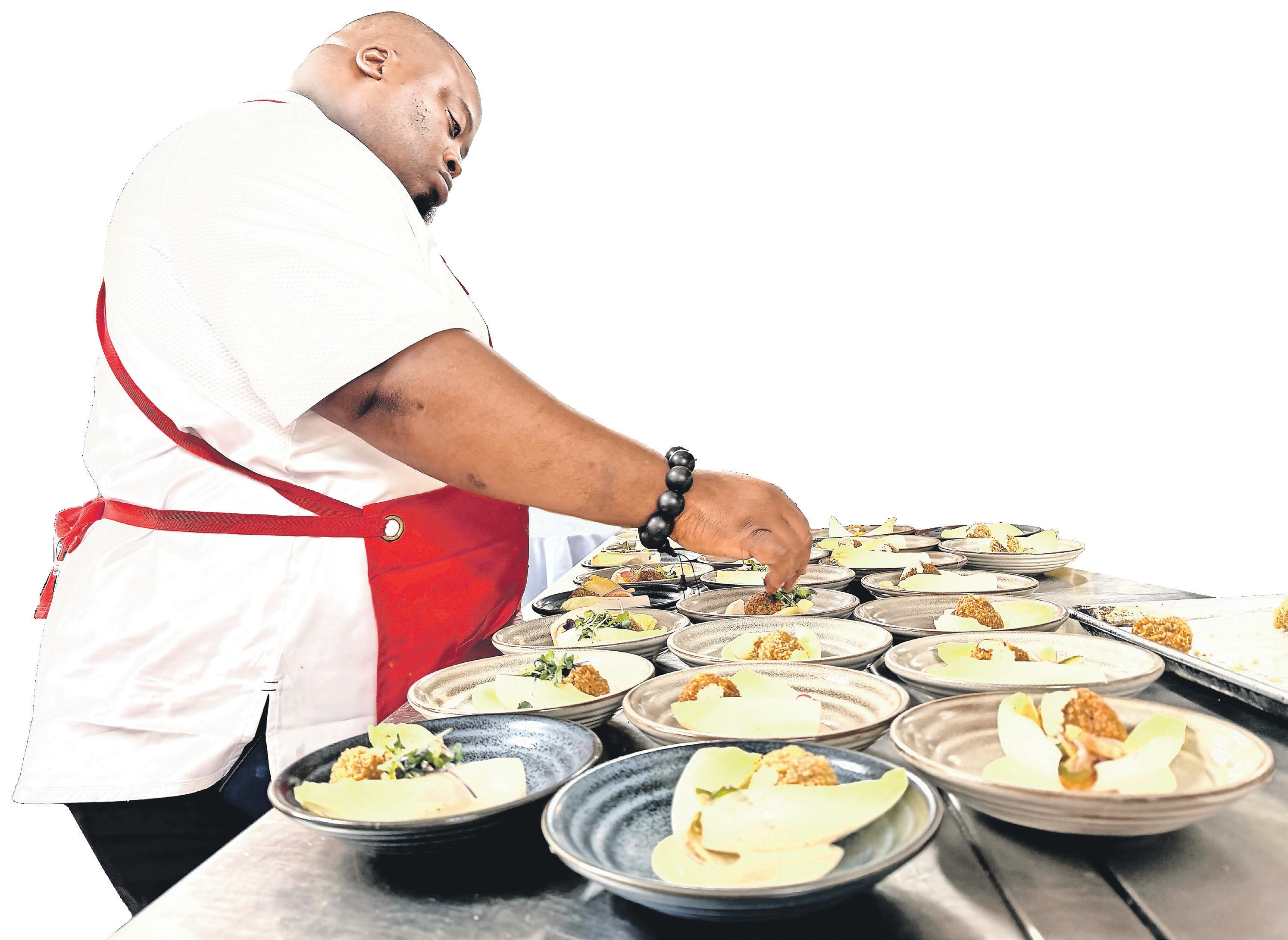
EVERY year, either at the Nassau Paradise Island Wine & Food Festival or Baha Mar’s Culinary & Arts Festival, people come together to celebrate, enjoy, and eat their way through creations from some of the biggest names in the culinary world — not only from The Bahamas, but from around the globe. Both resorts are known for their variety of international cuisine and restaurants, while many people still assume the Out Islands are only known for small-island Bahamian food or poor attempts at international dishes.
Well, after four delicious days and nights at Grand Isle Resort’s frst annual “Taste of Exuma” on Great Exuma, I’m here to tell you that myth has ofcially been blown away.
In fact, I found quite the opposite with some of the most creative and whimsical twists on Bahamian classics, as well as inventive takes on international favourites — like Chef Antonio’s fun spin on Bahamian Tuna & Grits. But more on the dishes in a minute.
First, let me introduce you to the three chefs who brought all this goodness to life — and onto our plates.
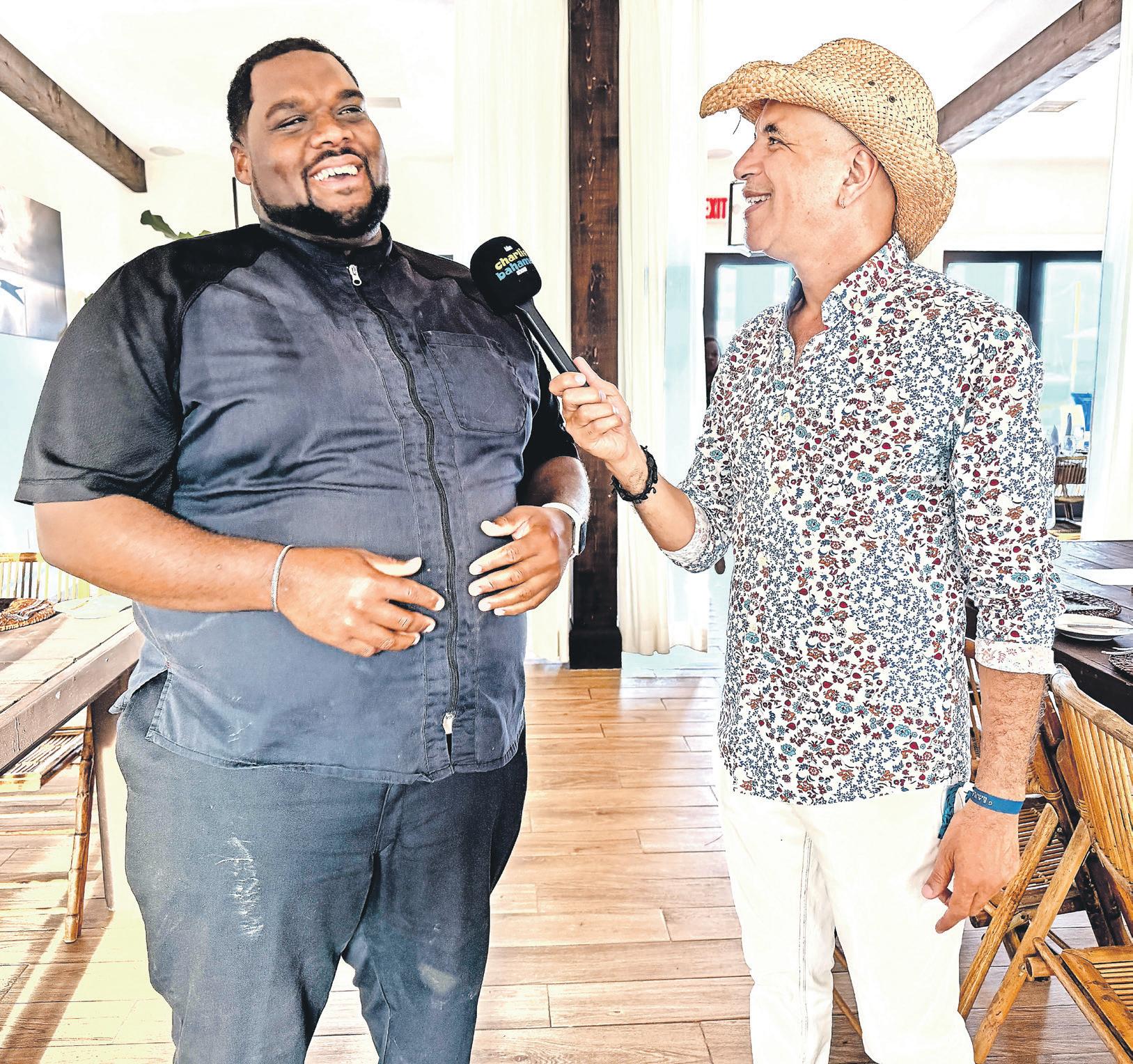
First up was Grand Isle’s’ own head chef, Chef Nigelle Thompson (pronounced like Miguel with an “N”). I’m happy to say Chef Nigelle was born and raised in Farmers Hill, just across the bay from Grand Isle. This is something I truly hope catches on throughout all the Family Islands where local chefs are celebrated and elevated to head chef positions at the top restaurants and hotels on the very islands they come from.
Chef Nigelle says, “We have to break this stigma that has
fallen on Exuma where people think we can’t cook.”
Next was Executive Sous Chef at the British Colonial Hotel, Chef Antonio Williams, whom I’ve featured before on The Charlie Bahama Show.
Finally, there was Michelin-starred Chef Alyn Williams (no relation to Chef Antonio Williams), coming all the way from the celebrated Magistracy Dining Room in Hong Kong. Originally from London, England, Chef Alyn has been visiting Exuma for nearly 20 years, and it was during one of those many trips that the idea for “Taste of Exuma” was born.
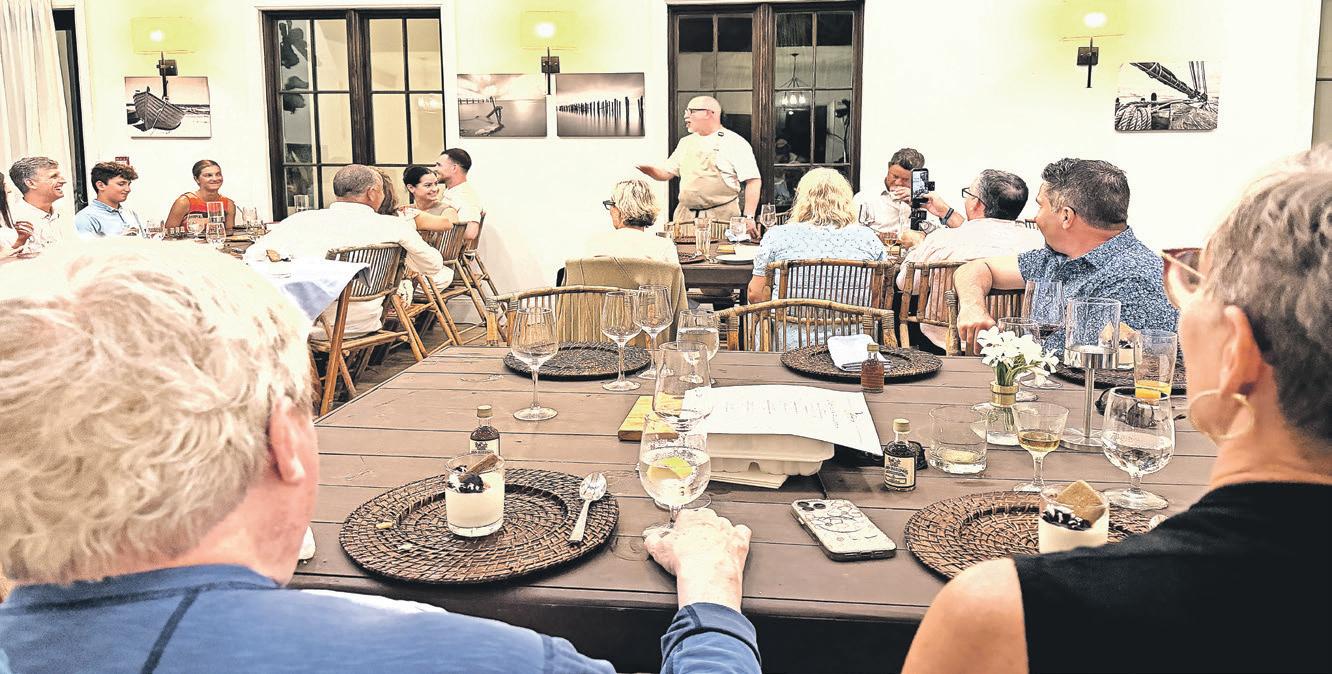
What was especially heartwarming was the way these three chefs — all stars in their own right — came together to support one another during each chef’s headline night.
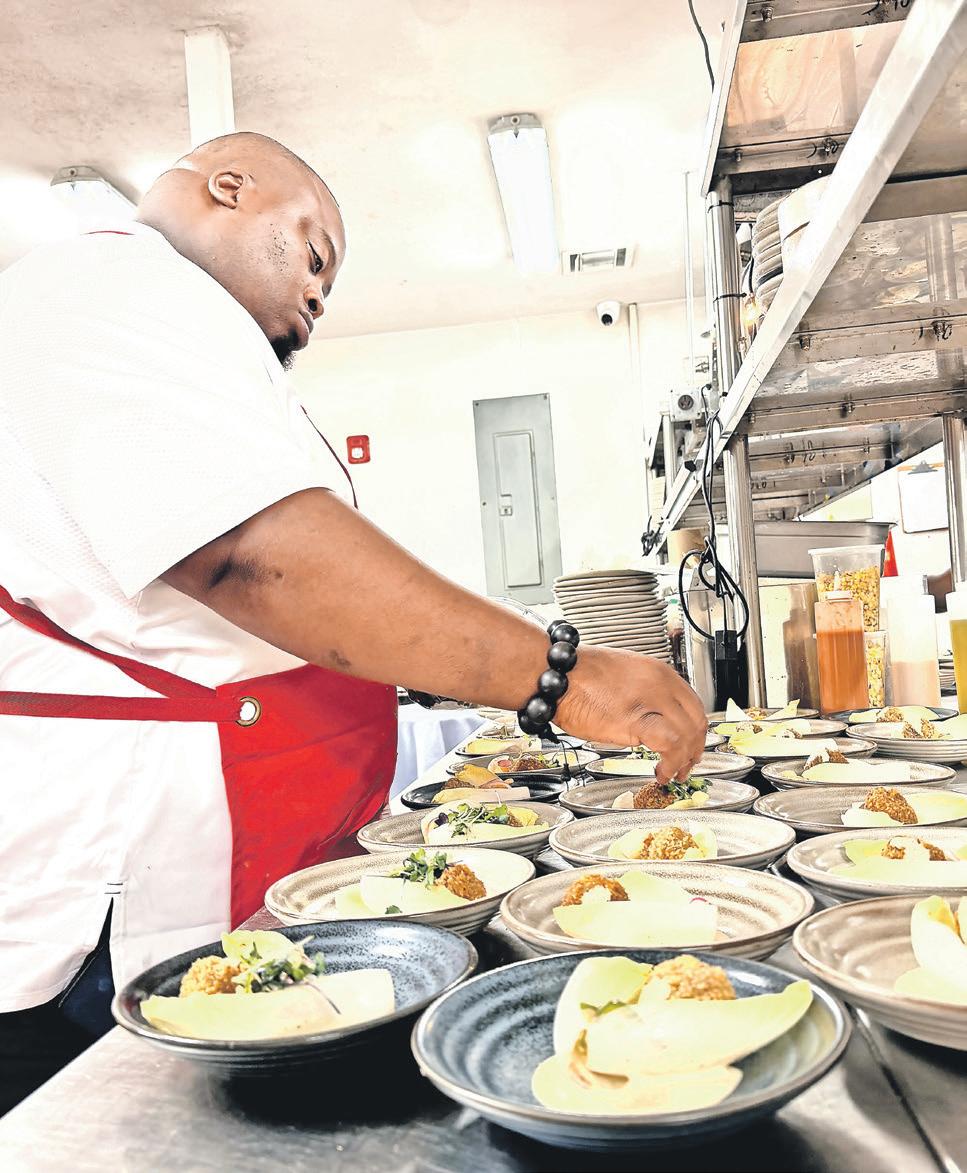
Chef Nigelle’s Crispy Grouper Roulade was fresh and tender with a sweet crunch that made it unforgettable. But his Grilled Beef Tenderloin with red wine demi-glacé was the standout dish of the evening for me.
The following night, Chef Antonio surprised us all with his rendition of Tuna & Grits. As someone who regularly enjoys tuna and grits from the many roadside food trucks around Nassau, I was genuinely impressed by his inventive pairing of perfectly seared fresh tuna, creamy island-style yellow grits molded into a crispy ball, and topped with house-pickled mango. I also don’t think I’ve ever had a more tender Bahamian spiny lobster in my life. I didn’t even need a knife to cut through it. It was paired with a creative peas-and-rice risotto — Bahamian cuisine meets Italy.
And speaking of tender, the same could be said for Chef Alyn’s Grilled Beef
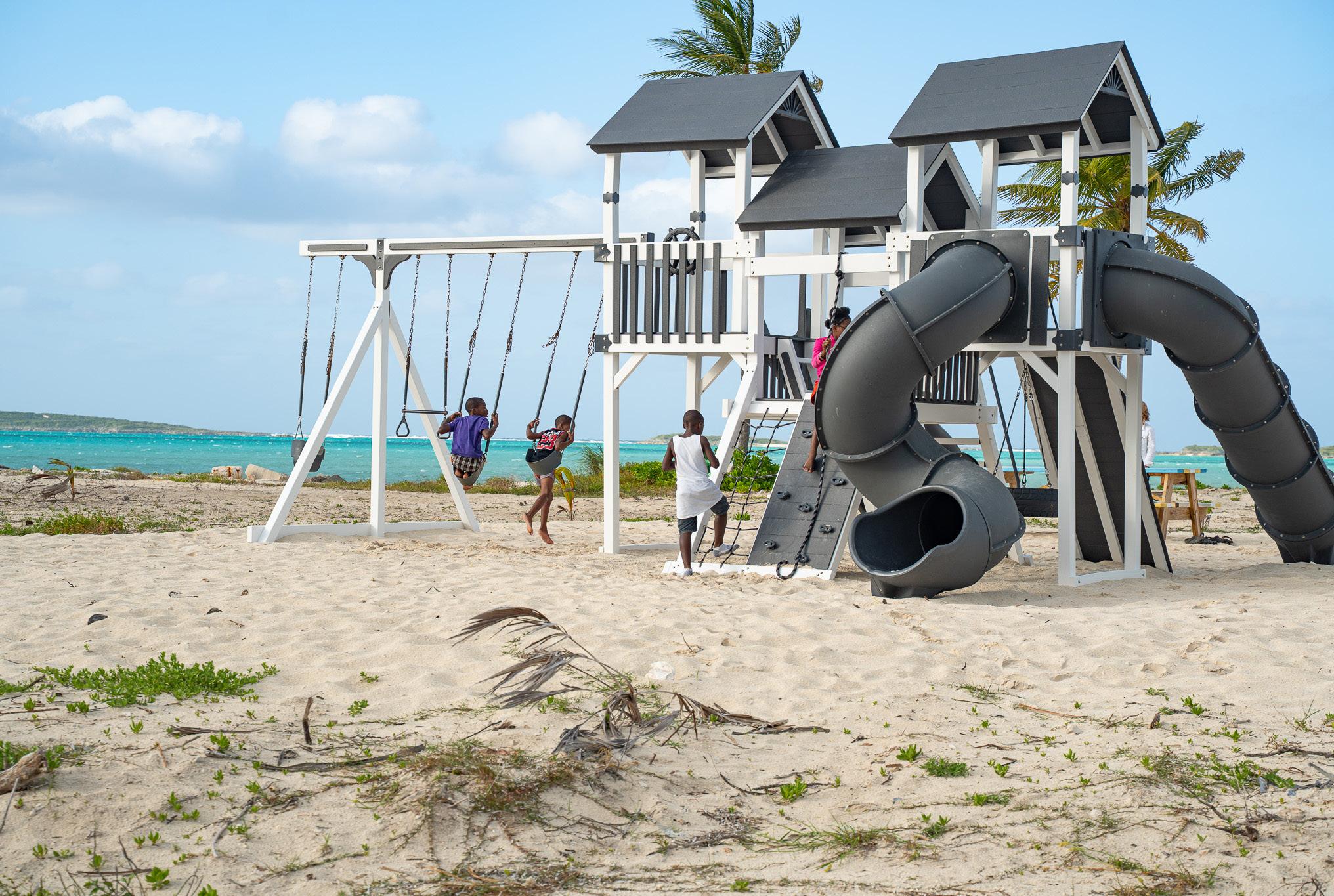
COMMUNITY, legacy and opportunity are on full display in historic Rolleville with the unveiling of plans for the Maud Anderson Park playground and the continued development of the Rolleville Library and Learning Center — two initiatives led by community members and supported by Friends of Rolleville and Exuma residents Bob and Jeanne Coughlin.
The projects refect a shared commitment to creating safe, enriching spaces for children and families while expanding access to education, sports and lifelong learning.
Located on the waterfront, the Maud Anderson Park playground ofers a welcoming space for recreation and connection. A new play structure and picnic tables were installed in December, with plans underway for pickleball, basketball and volleyball courts, as well as a walking/running track and multipurpose sports area. The park honours the legacy of Ms Anderson, known for her commitment to giving back.
Nearby, the Rolleville Library and Learning Center will serve as a hub for growth, providing resources, programming and a gathering place for residents of all ages to learn and build skills for the future.
The vision for the Learning Center was inspired by Rev Margaret Woodside, a lifelong educator whose advocacy helped bring the project to life.
“This Learning Center is about dignity and possibility,” said Rev Margaret Woodside. “We have always known the strength within this community. Now we are creating a space that nurtures it — where children can dream bigger, and adults can continue to grow, learn and lead. This is not just a building; it is a commitment. A commitment to our young people that they are seen, valued and worthy of every opportunity we can create.”
Mark Haines, who has led Friends of Rolleville’s eforts, underscored the collaborative nature of the work.
“These projects are the result of deep partnership, rooted in listening to the community and working together to meet real needs. Rolleville has always had extraordinary people. Our goal is to support them with the spaces and resources they deserve.”
The Coughlins, whose contribution helped bring both projects to fruition, said they were pleased to support Rolleville’s strong sense of community.
“We have been deeply moved by the strength and warmth of communities like Rolleville,” said Bob Coughlin.
“Supporting these eforts is not about giving to a place — it’s about standing alongside people who are building something meaningful for future generations. We are honoured to play a part in that.”
Together, the Maud Anderson Park playground and the Rolleville Learning Center represent a meaningful investment in community wellbeing, blending recreation, education and local leadership to support a stronger future.
As one Rollevillian put it: “When you invest in a place like Rolleville, you are investing in families, in culture, and in a future that is stronger and more connected. This center belongs to the community, and it will shape lives for years to come.”

By BARBARA WALKIN barbara@barefootmarketing.net
THE Peterson Cay Underwater
Sculpture Garden
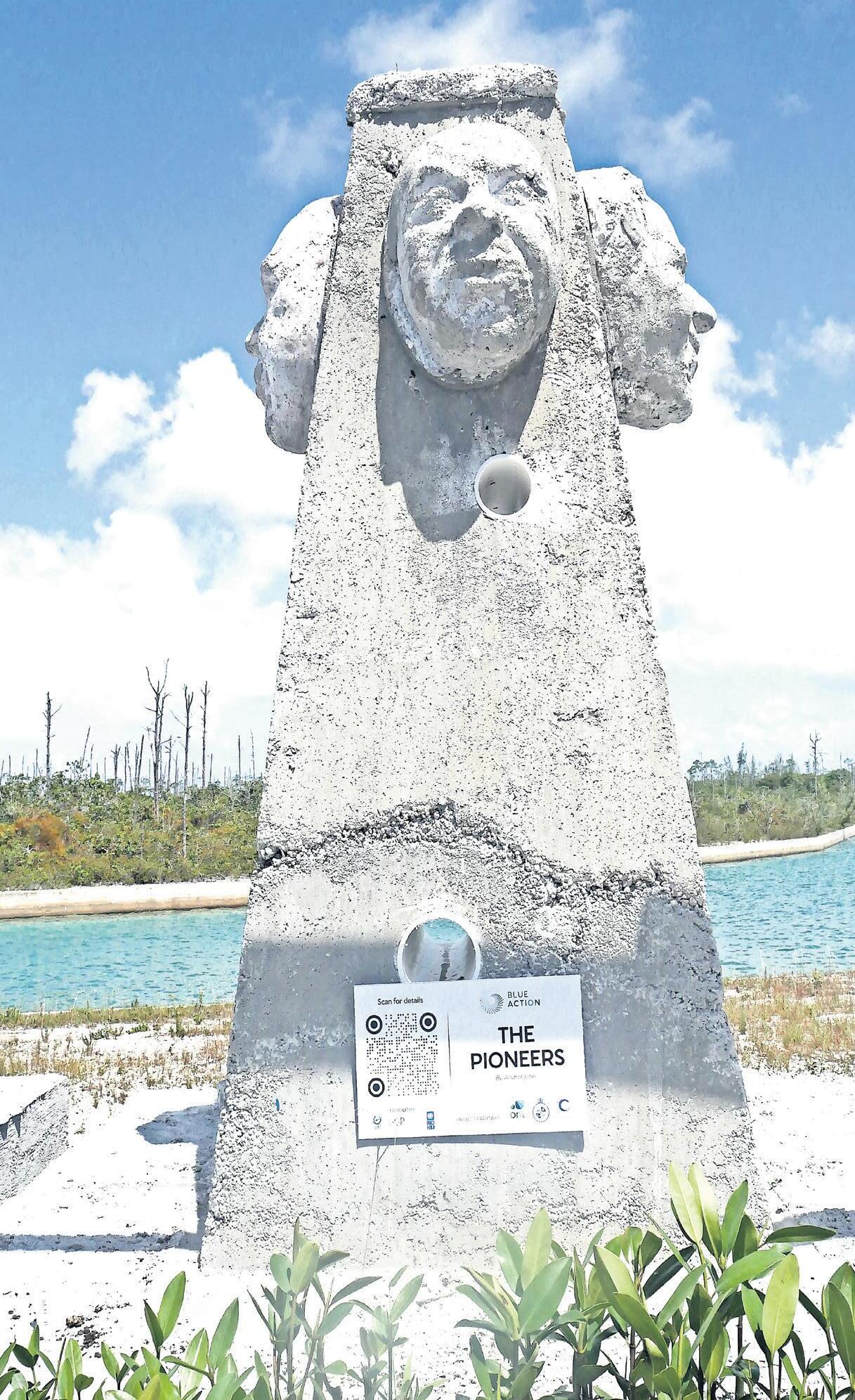
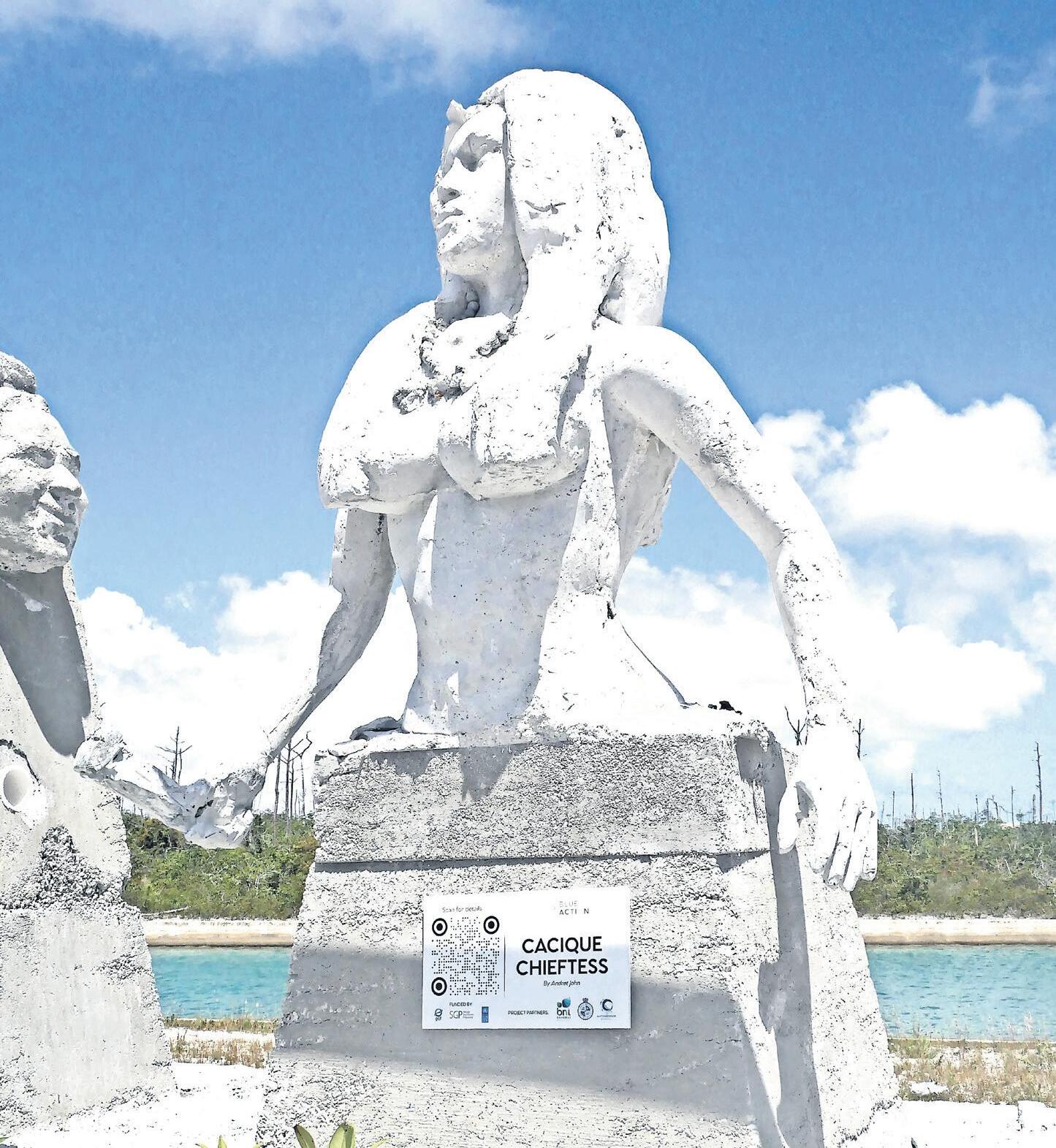
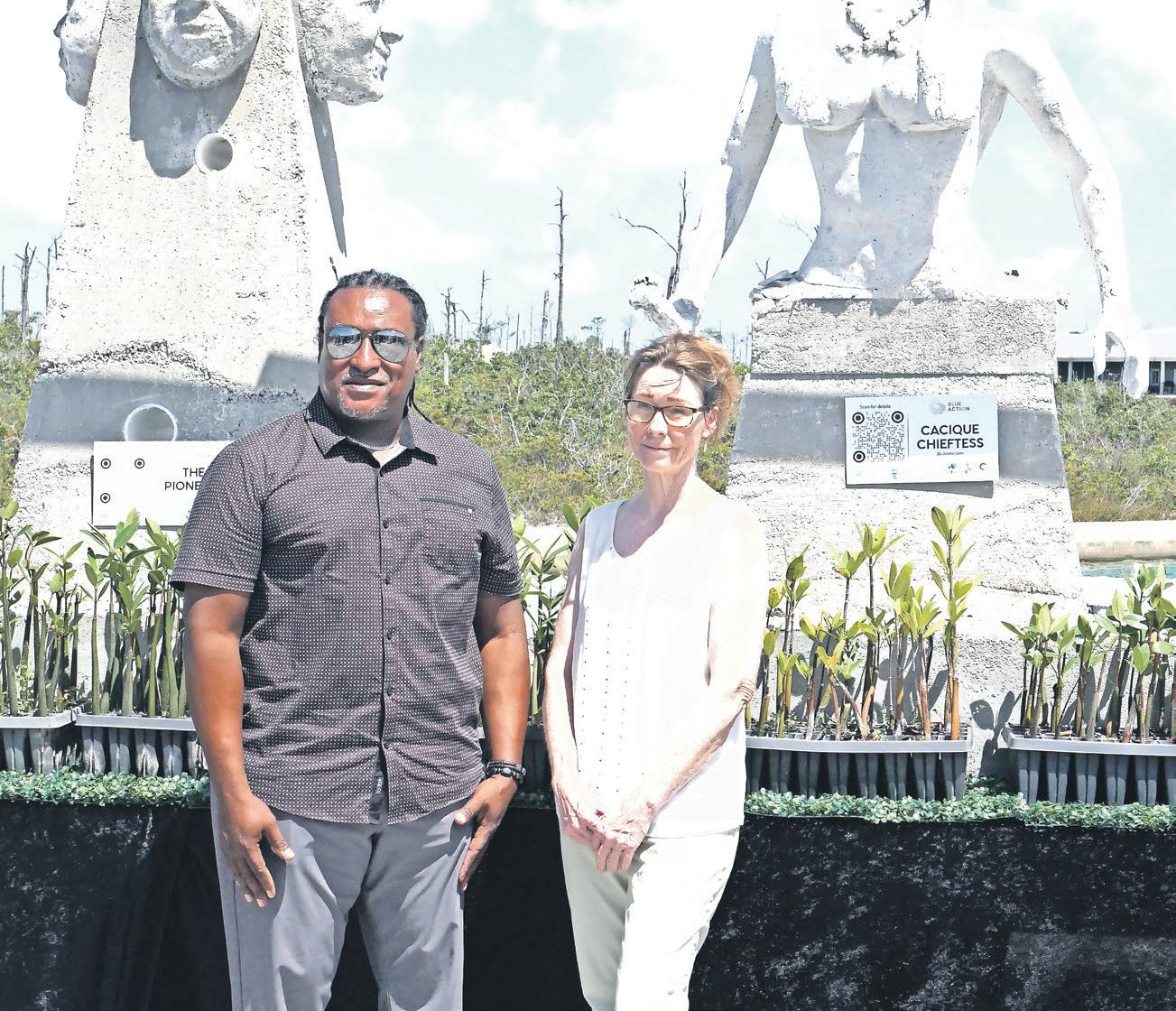
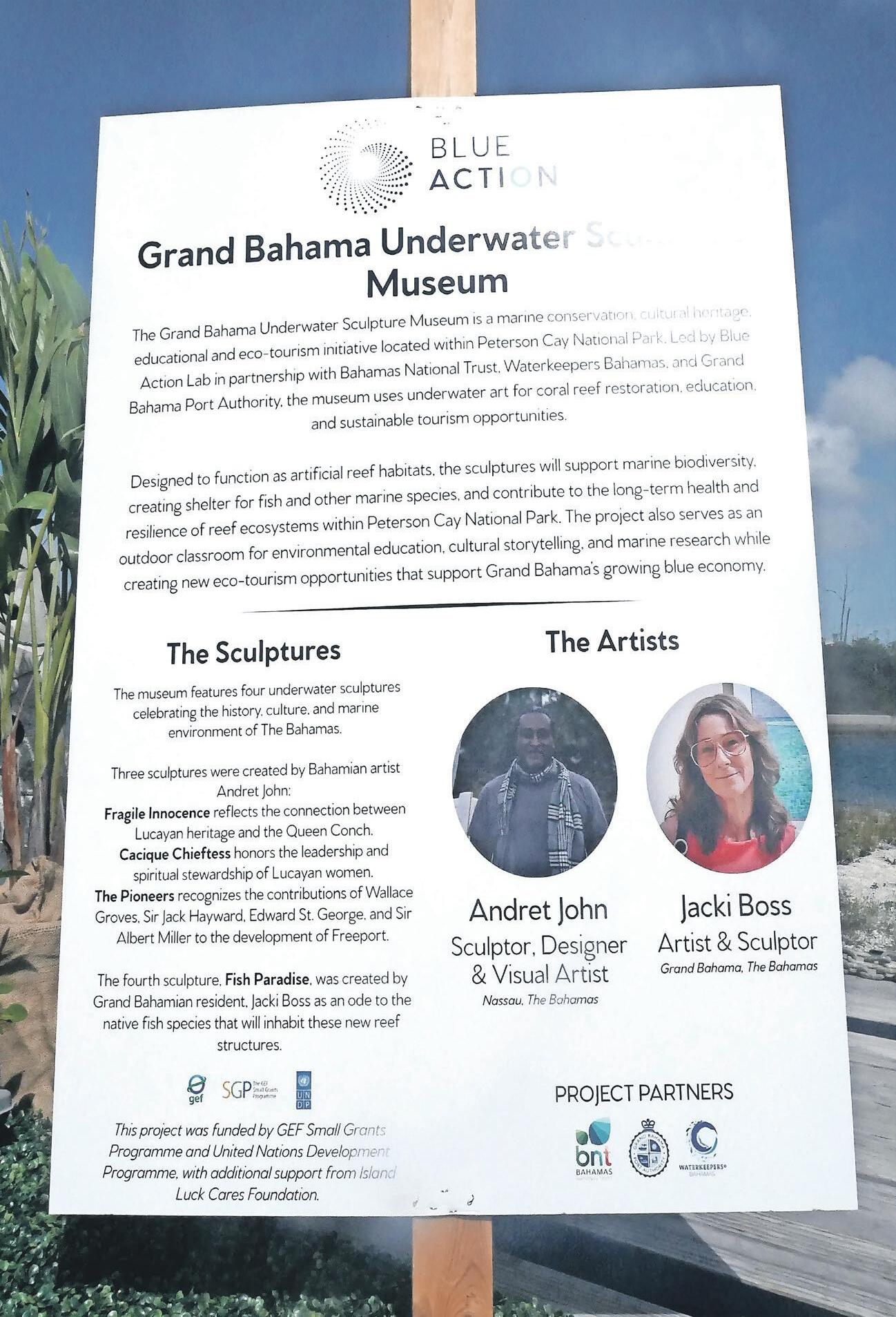
is a step closer to becoming a reality with the unveiling on Thursday (May 21) at Coral Vita’s Conservation Cove of the frst four sculptures to be installed at the garden, marking the beginning of a transformative marine attraction for Grand Bahama.
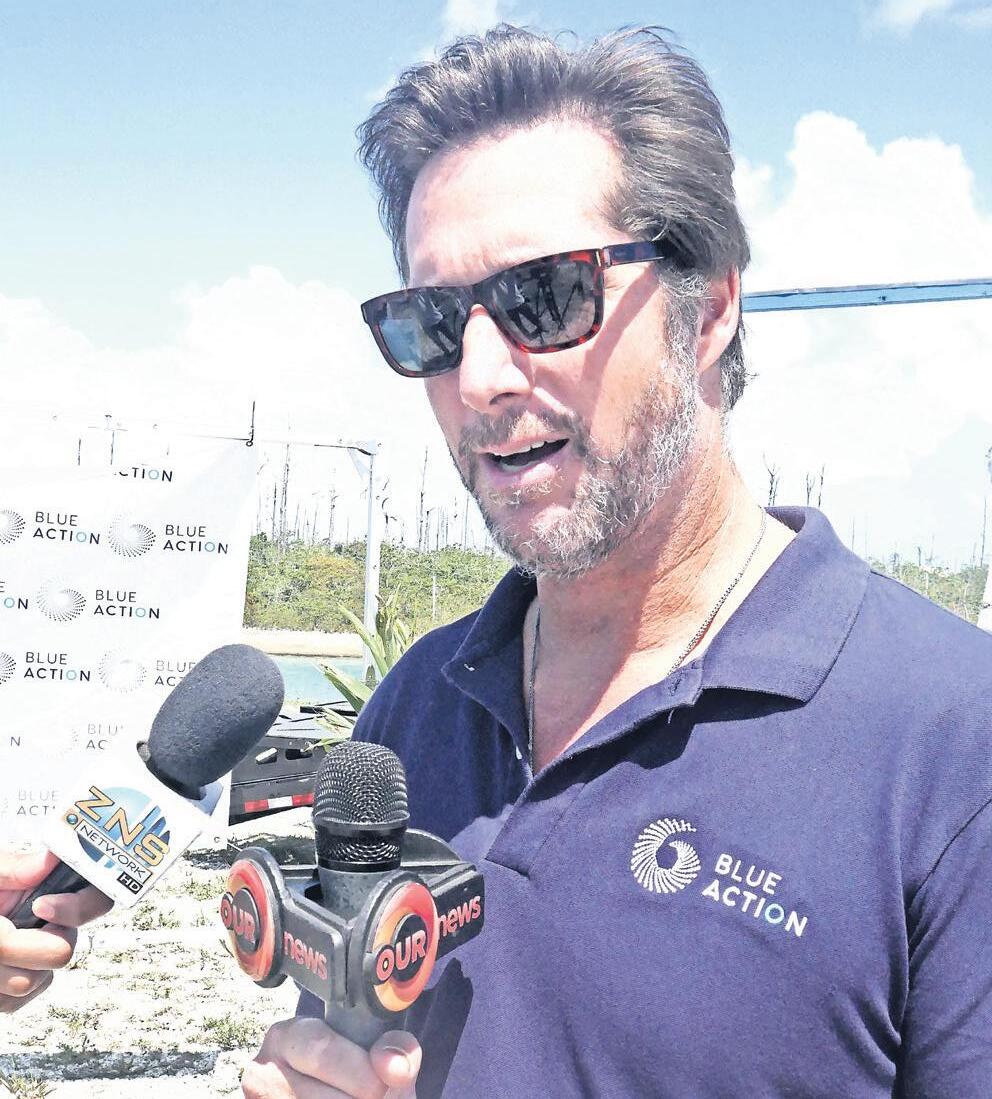
Leading the artistic vision is Bahamian sculptor Andret John, who described the project as a fusion of history and culture rooted deeply in Bahamian identity.
“I wanted to involve some historical nuance and marry that with culture. So, there’s kind of a Junkanoo infuence as well,” Mr John told Around da Islands.
He noted that even the structural design refects that inspiration. “If you look at the bases of them, they kind of represent skirts, so there’s that undertone of Junkanoo and just Bahamian culture on the whole.”
Among the unveiled pieces is Fragile Innocence, a striking depiction of a Lucayan Taíno boy holding a conch shell, an image intended to spark refection on environmental stewardship.
“If you notice, his face is kind of disgruntled,” Mr John said. “I want to bring awareness to the conch. It’s important to who we are as a people, and we must not overfsh. We have to put mechanisms in place so future generations can beneft from this important part of our culture.”
Designed not only as art but as living infrastructure, the sculptures will serve as artifcial reefs, encouraging coral growth and providing habitat for marine life. John emphasized that sustainability was integral to the process.
“Just marrying design with how the corals are going to eventually grow, creating habitat for fsh, those infuences dictated what the designs would be,” he said, noting his
of work come together, “Mr John added. “It’s the culmination of all that efort, all of the teamwork.”
From a development perspective, the project is
training in underwater sculpture techniques helped guide the process.
The unveiling represents the culmination of nearly two years of planning and collaboration.
“This is my favourite part, actually seeing all of the hours
expected to deliver wide-ranging benefts.
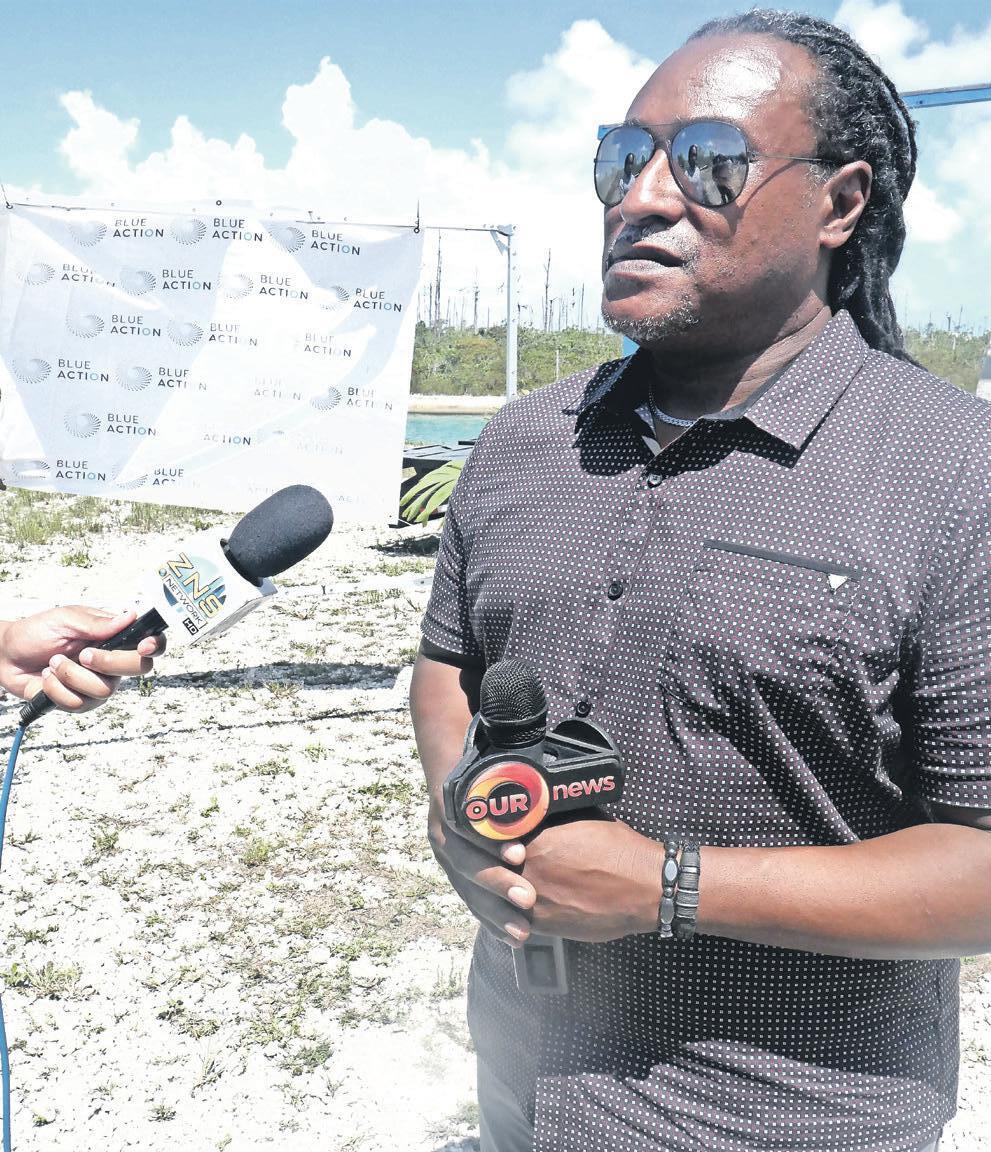
Nakira Wilchcombe, Vice President of Building and Development Services at the Grand Bahama Port Authority, highlighted both its environmental and economic potential.
“Funding was the main instrument that we needed to actually execute,” she said.
“But if you look around the world, underwater sculptures are growing in popularity, and the draw that they bring is amazing.”
She stressed that the initiative goes beyond tourism.
“Firstly, the environment; these become artifcial habitats that attract coral and marine life. We’re excited to see the transformation once
See Sculpture, page 14
By BARBARA WALKIN
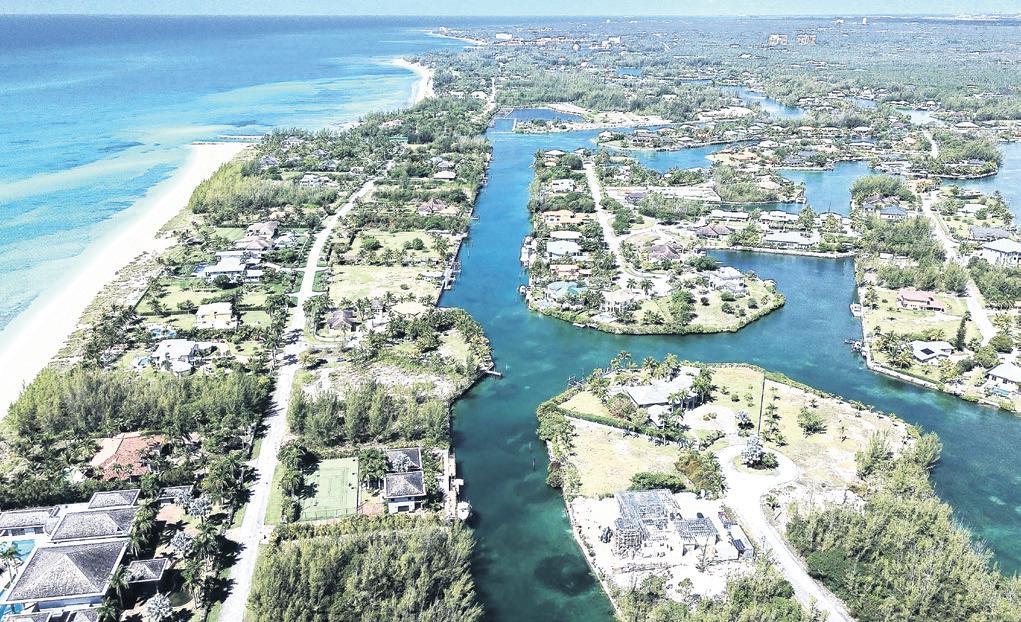
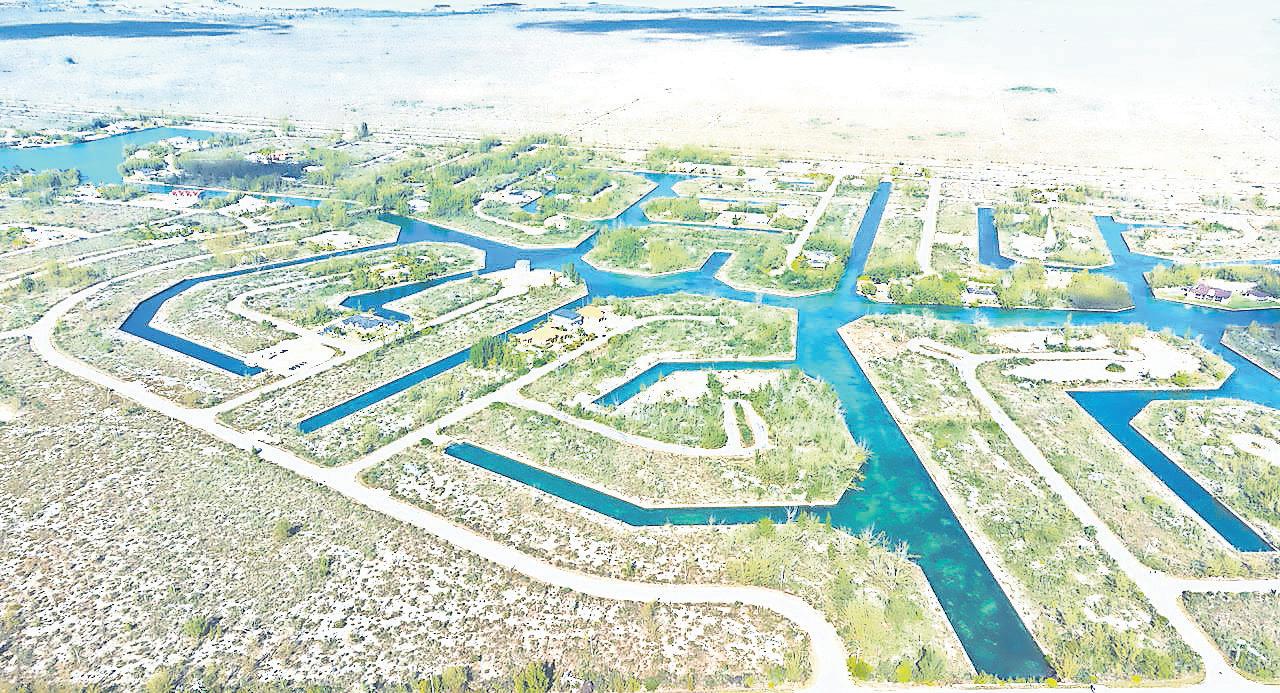
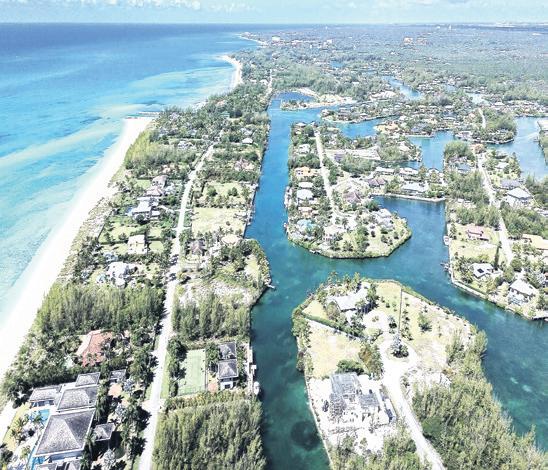
THE waterways and canals that wind through Freeport and Lucaya are more than scenic backdrops for luxury homes and marinas, they are part of one of the most creative engineering projects undertaken in The Bahamas.
Often referred to as the “Venice of The Bahamas,” or the “Venice of the Caribbean,” these canals have become one of Grand Bahama’s most recognisable features, bringing together infrastructure and lifestyle in a way few islands can match.
Carved into the limestone terrain during the rapid development of Grand Bahama in the 1960s and 1970s, the canal system transformed what was once pine forewst and shrubland into a masterfully planned city, designed around boating, tourism and waterfront living.
Today, the canals remain central to life and commerce on Grand Bahama, serving fshermen, yacht owners, waterfront
residents and the island’s tourism industry.
The vision began when American fnancier Wallace Groves signed the historic Hawksbill Creek Agreement with the Bahamian government in 1955, paving the way for the creation of Freeport and the establishment of the Grand Bahama Port Authority (GBPA).
As tourism expanded in Lucaya during the 1960s, developers sought to create a waterfront lifestyle similar to South Florida. Massive dredging created neighbourhoods bordering seawater canals, giving thousands of homes waterfront views and direct access to the ocean.
The canal neighbourhoods including Fortune Bay, Bell Channel, Bahamia, Spanish Main and others, became some of the island’s most desirable residential communities. Deep-water canals allowed sportfshing boats and yachts to dock directly behind homes while the daily tidal cleansing meant the water remained clean and attractive for homeowners to enjoy water sports like swimming, paddleboarding and kayaking.

Veteran fsherman Michael Rolle has fshed the waters around Grand Bahama for
more than 30 years.
“Back then, the dream was to create ‘dockage at your doorstep,’ he told Around da Islands.
“The canals changed everything for local fshermen because you could keep your boat close to home and head out quickly when the weather was right. A lot of families made a living from the sea because access became easier.”
The waterways then and continue today to support, marine businesses ranging from boat repair yards and marinas to charter operations and waterfront restaurants.
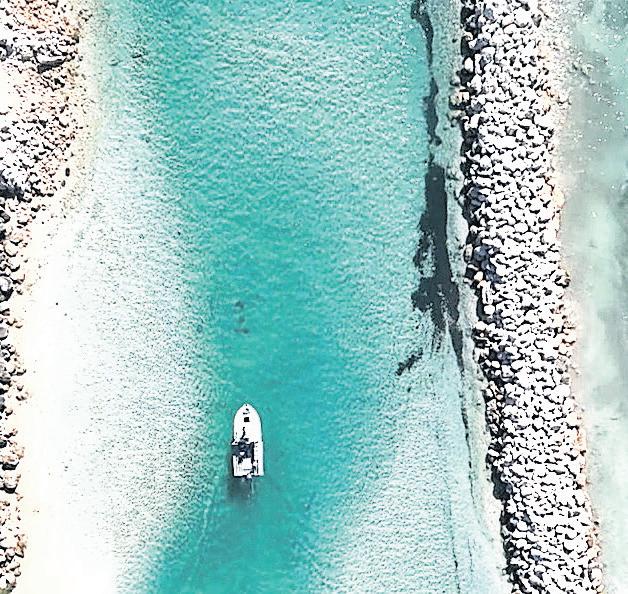
A major part of the vision was the Grand Lucayan Waterway, a north-to-south canal system developed between 1967 and 1978. Efectively cutting though the island, the waterway created more than 35 miles of navigable canals and opened thousands of acres for waterfront development while for boaters it created a valuable shortcut, allowing vessels to avoid the long trip around the eastern or western ends of the island.
A Florida-based yachtsman giving his name as Daniel, regularly travels by boat to Grand Bahama, described the Grand Lucayan Waterway is both practical and unforgettable.
“It’s one of the most unique passages in the region. You can cross through the island instead of running around it, and the canal communities give Freeport a character you don’t fnd elsewhere in The Bahamas.”
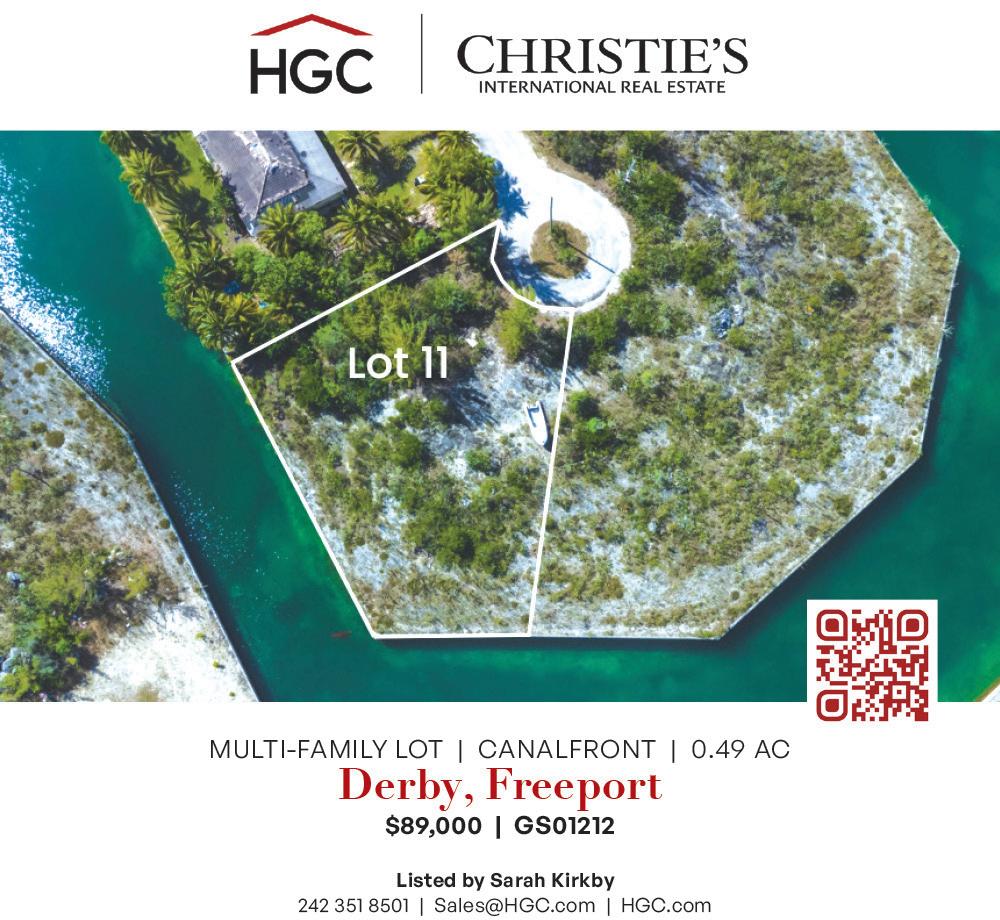
A character that is attracting renewed interest from home buyers, according to HG Christie Real Estate Agent Sarah Kirkby.
“The Lucayan Waterway is one of Freeport’s greatest
assets, especially for boaters,” she told Around da Islands. "What we’re seeing now is a growing number of buyers coming in from Florida, many of whom are fnding it increasingly difcult to secure afordable dockage back home. Here, they’re able to purchase waterfront properties with private docks, which ofers far more value and fexibility. What really sets the Lucayan Waterway apart is its ease, safety, and overall scale. It’s wider, cleaner, and far less congested than the U.S. Intracoastal, making it incredibly appealing for both seasoned and recreational boaters. It’s a major draw, and we’re seeing that translate directly into
increased interest and investment in Grand Bahama.”
Still, the system has it challenges, maintenance being an ongoing issue for the Lucaya Services Company (LUSCO) Limited, which has stepped up with corrective dredging to combat buildup and maintain safe navigation for boaters. Environmental concerns have also emerged as development expanded around mangroves and coastal ecosystems, especially in the wake of Hurricane Dorian in 2019.
Nearly seven decades after Freeport’s creation, the waterways still tell the story of a city built not only beside the sea, but on it.

By CARA HUNT
Tribune Features Writer cbrennen@tribunemedia.net
What happens when you combine the songs and art of one of the most talented Bahamian artists in the country into one project - a songbook that defnes the soundtrack of a generation.
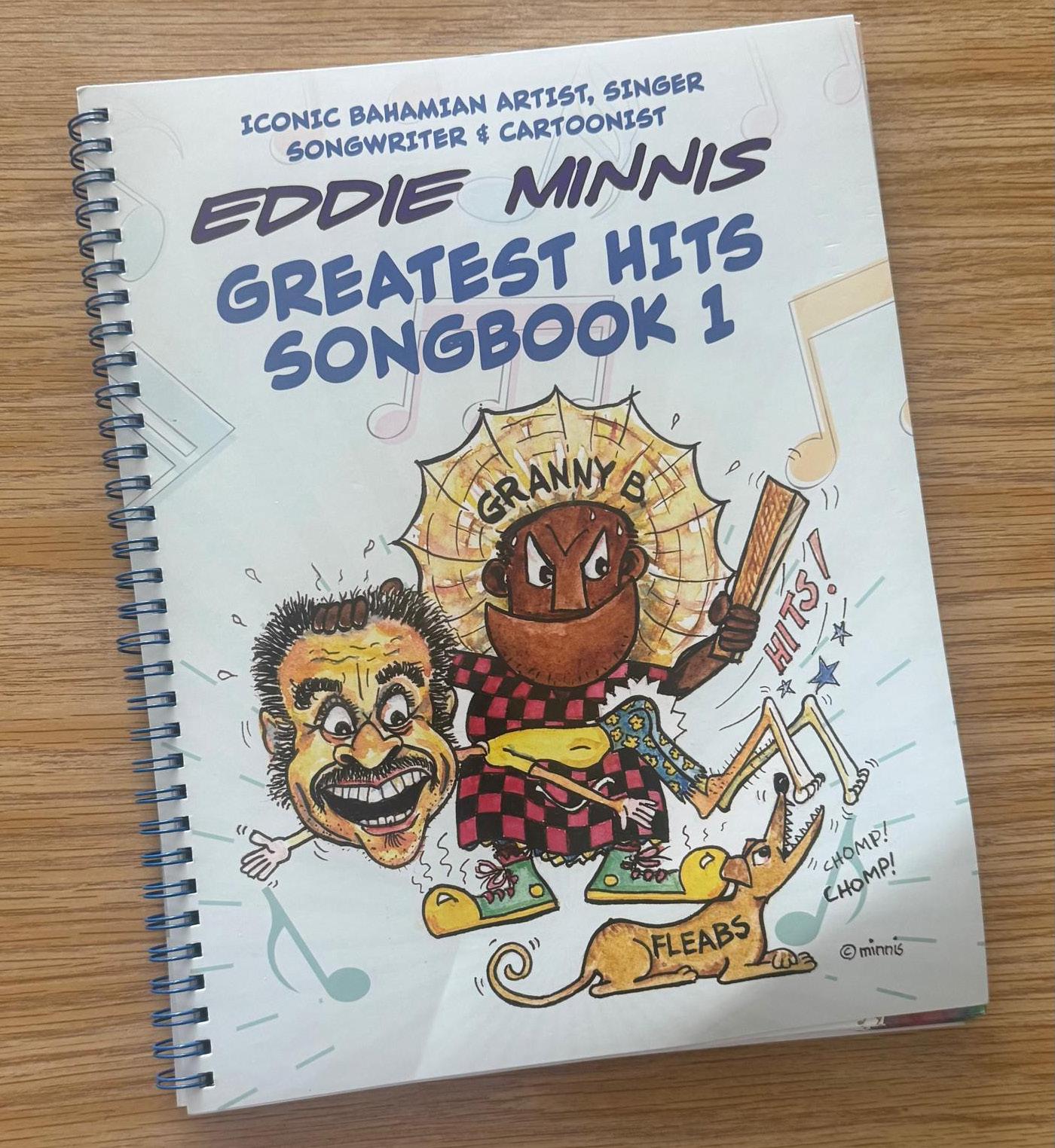
Eddie Minnis’ new book, Greatest Hits Songbook 1, is more than just a musical anthology: it is a detailed look of Bahamian life and insight into the inspiration behind 30 of his most popular songs. It is also the frst volume of a planned three-book series.
Eddie’s song-writing career began while he was a student at McGill University in Canada, where he studied architecture. An English teacher introduced him to poetry and he found it a great way to express himself in a similar way to his art.
Eventually he put those songs into words because as he said: “ I didn’t read poetry so I thought that no one would likely read mine, but if I put into songs my messages could be played on the radio.
brief synopsis of the song, the lyrics and sheet music and a drawing he created especially for the book.
Eddie is of course also a hugely talent and renowned artist, best known for his amazing landscapes featuring seascapes quaint Bahamian villages and his signature Poincianas in bloom art.
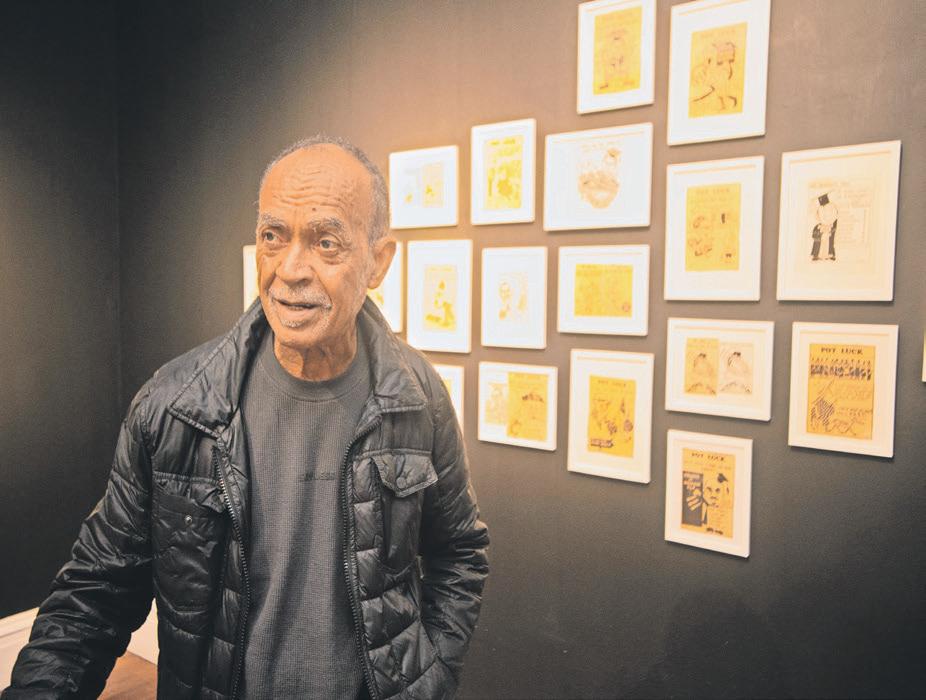
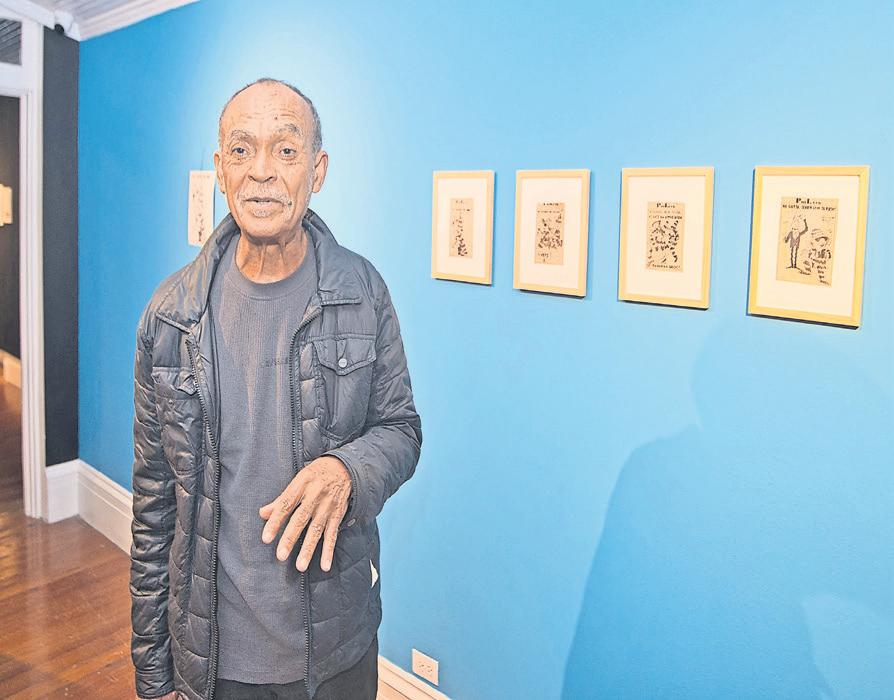
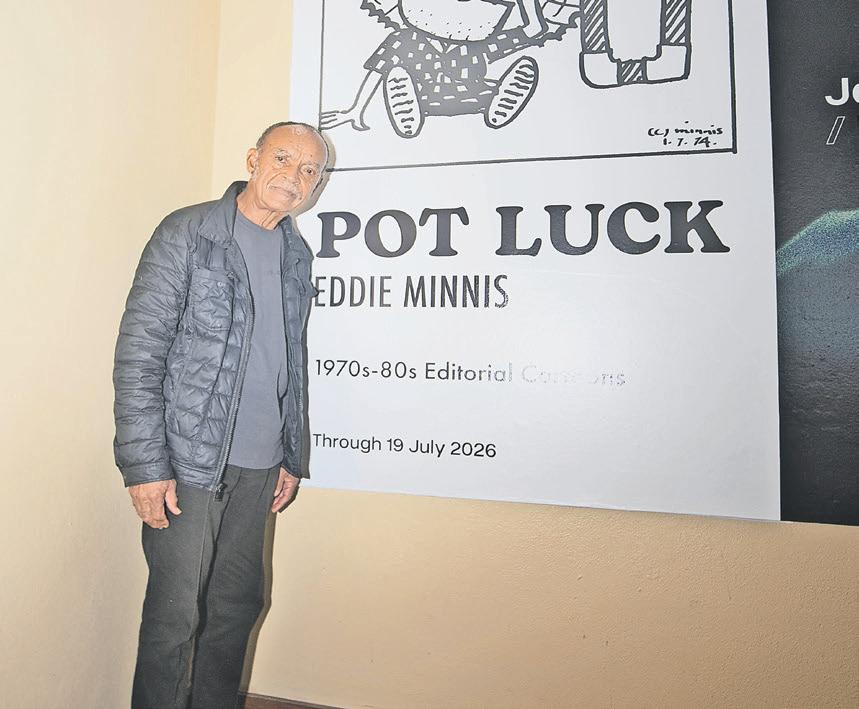
He is also the man behind the editorial cartoon Pot Luck which captured the pulse of Bahamian life during the 1970s and 1980. A sample of the cartoons were recently on display at the National Art Gallery.
Eddie says that he began working on this project two years ago, but has already done about 90 per cent of the illustrations for the remaining books in the series.
Eddie is thrilled to be able to share his music to those persons who have followed and been impacted by his
“I have been writing and producing Bahamian songs since 1971. I have recorded over 100 songs and each of my albums would have ten songs on it, but only one or two of the songs would make it to the radio. So I felt that I needed to put my music into a song book in order to preserve my music for the future,” he said when asked his vision behind the project.
Volume 1 includes Eddie Minis classics such as Naughty Johnny, Nassau People, The Bufet and Never Satisfed. For each song, Eddie includes a
career through the years. His music as often been referred to as the Bahamian soundtrack to a generation.
He is also excited to introduce to a new generation of Bahamian musicians.
He explained that is rare to be able to fnd the chords and sheet music and
lyrics written down in this manner in Bahamian music.
“Someone told me that they had been singing the wrong words to one of my songs for years until they actual saw the lyrics.”
With the sheet music, Eddie hopes that his music will now be played in
music classes around the country.
In fact, he is in conversations to have the books be a part of the national syllabus.
Eddie will host a book launch and signing at the National Art Gallery on Saturday afternoon.
By LEIGH LIGHTBOURN
The frst thing visitors notice at Juju’s Garden is that there are no glossy rows of imported plants lined up like a supermarket display. Instead, there are fruit trees stretching toward the Grand Bahama sun, herbs spilling from containers, pepper plants tucked into corners and, in true island ingenuity, vegetables growing from discarded bathtubs.
Then there is Chef Bernard Dawkins, smiling as he points toward plants near the roadsideå and joking that you should not put too many good things too close to the street because “people know when to walk in the yard and take your things from you.”
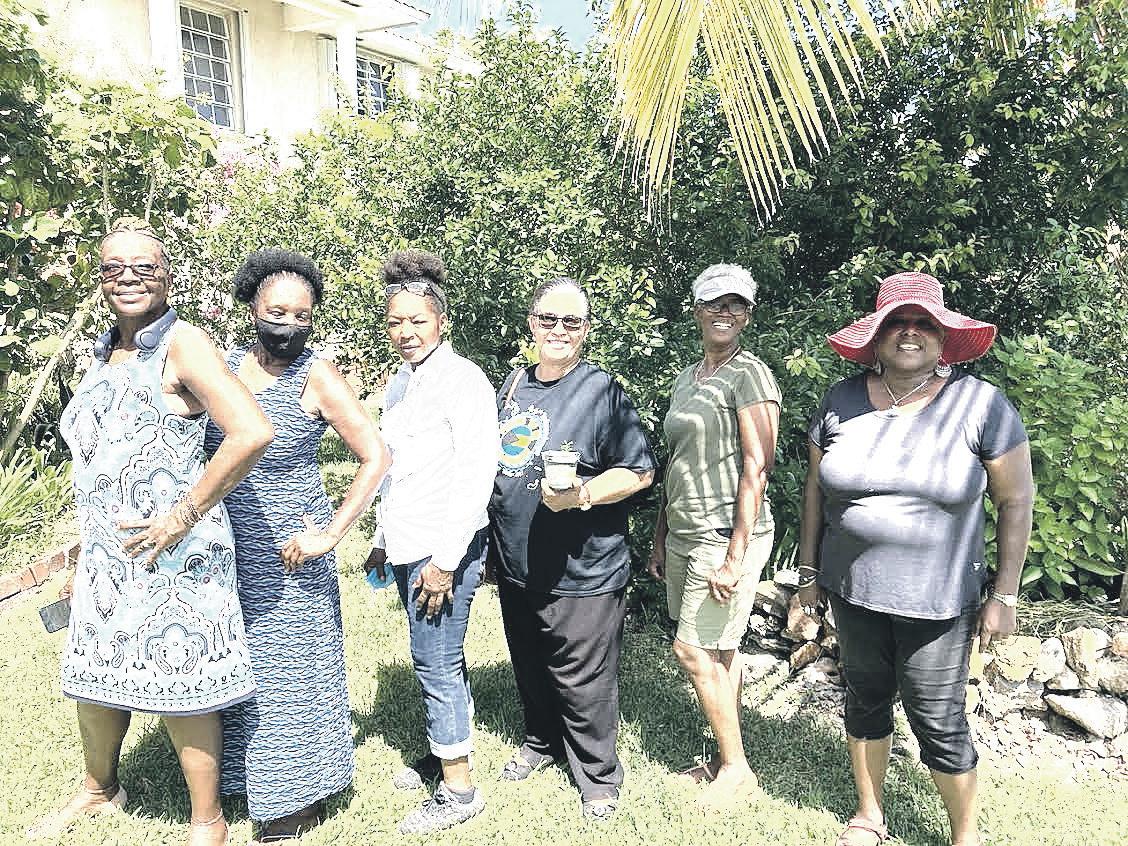
That laughter and easy warmth are what have made Bernard and Judith “Juju” Daw kins such familiar and beloved fgures in Grand Bahama for decades. Chef Dawkins built a reputation promoting Bahamian cui sine both locally and to visitors through culinary events and tasting tours, while Judith spent many years at ZNS in advertising sales and also became well known through theatre, community activities and birdwatching circles.
Now retired, the couple has turned a lifelong backyard passion into their main focus and livelihood.
“This is really about getting people interested in growing things again,” Chef Dawkins told Around da Islands.
“I grew up with my grandmother part-time in Nassau,” he recalled. “She was the one who got me interested in planting cassava, sweet potato and fruit trees.”
That early connection stayed with him and when the couple settled into their South Bahamian home, they began planting fruit trees, then herbs and spice plants, then vegetables, fowering plants and eventually it grew into a small business that refected both their personalities.
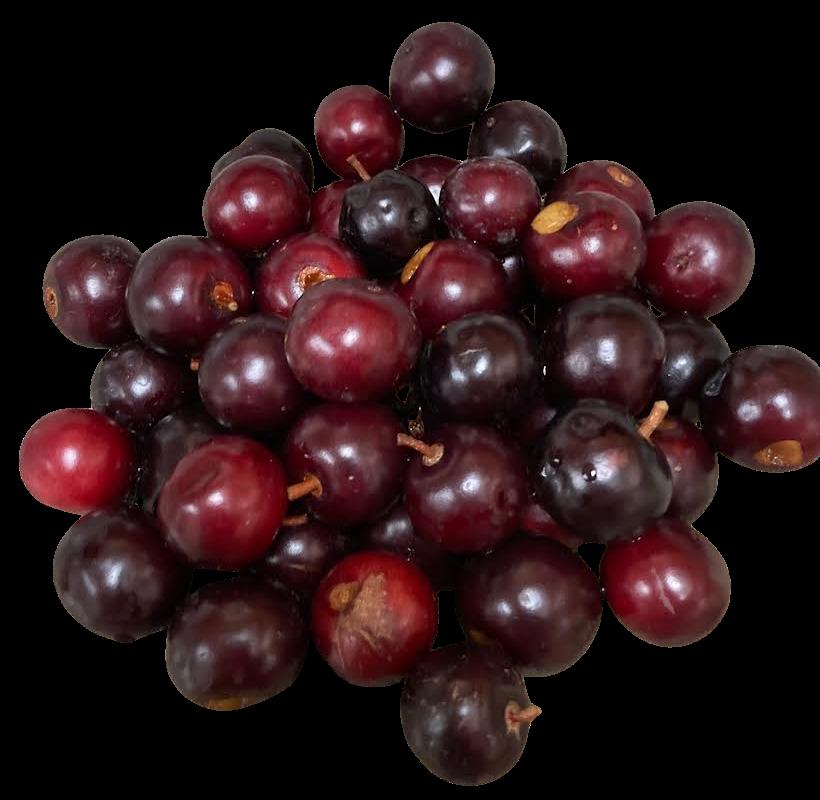
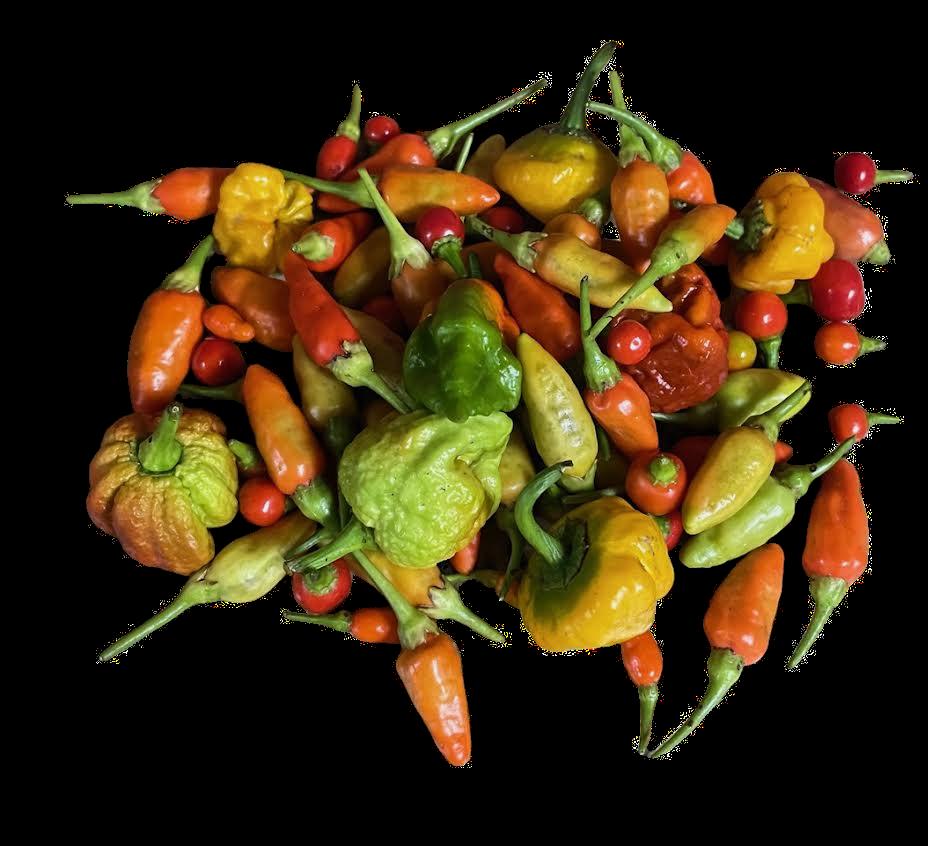
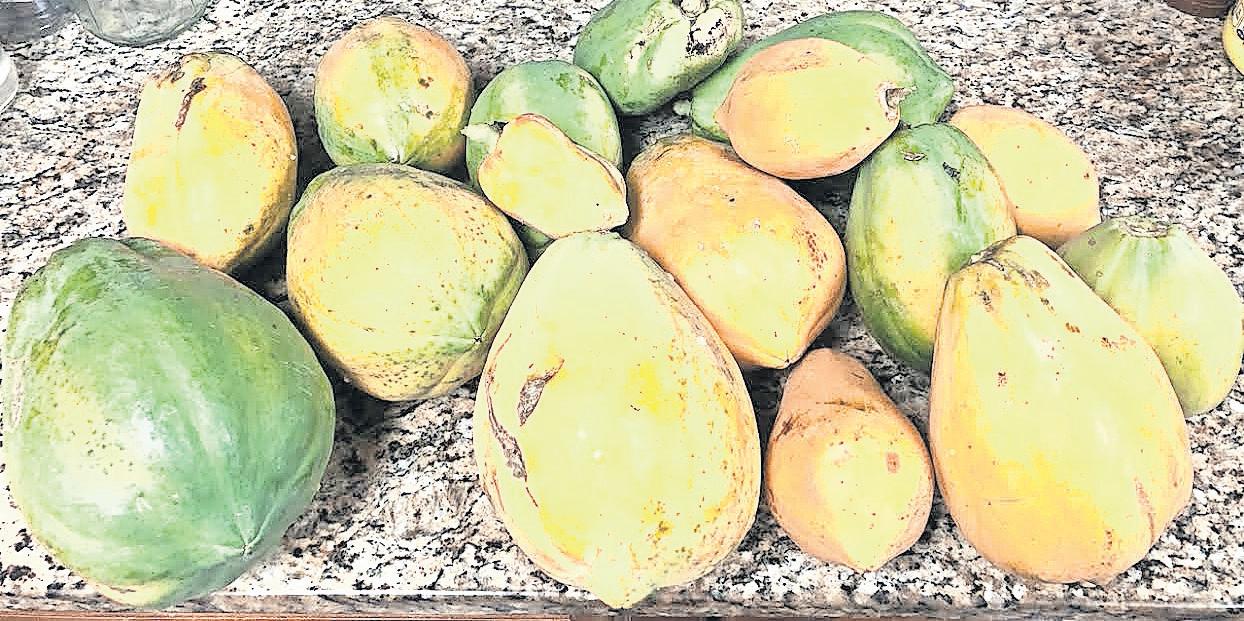
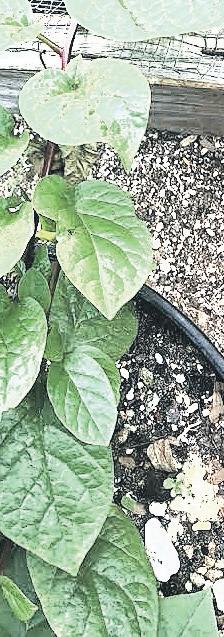
Today, Juju’s Garden ofers a little bit of everything Bahamians love to eat. Customers can fnd soursop, June plum, breadfruit, governor’s plum, coconut, papaya, Barbados cherry, native guava, mango and sapodilla trees alongside herbs like peppermint, basil, rosemary and Guyanese thyme. There are also fnger peppers, bird peppers and other hot varieties that Bahamians proudly add to almost everything.
Some residents stop by specifcally looking for fruit trees they remember from childhood. Others simply come for advice which the Dawkins gladly provide.
“We want people to see what can be done even with a small yard,” Chef Dawkins said.
With informal tours of the property, the couple demonstrates how to grow in containers, how to avoid overcrowding plants and even how to work around common backyard problems.
“Instead of raised beds now, I use discarded bathtubs,”
Chef Dawkins explained. “They work better for me because feeder roots from nearby trees don’t get in and steal the nutrients.”
He also advises gardeners to work with nature instead of against it.
“Collect rainwater whenever you can,” he said. “Plants love rainwater.”
Judith Dawkins said her own gardening journey deepened when she joined the Horticultural Society and became interested in propagating plants and trees.
“While I worked, I was doing that,” she said. “And after retirement we just turned the hobby into a business.”
Still, this is not a business built around aggressive expansion or large-scale farming. Their monthly plant sales and appearances at local markets have developed a loyal following largely through word of mouth and social media and prices remain intentionally afordable because, according to Judith, the goal is not simply proft.
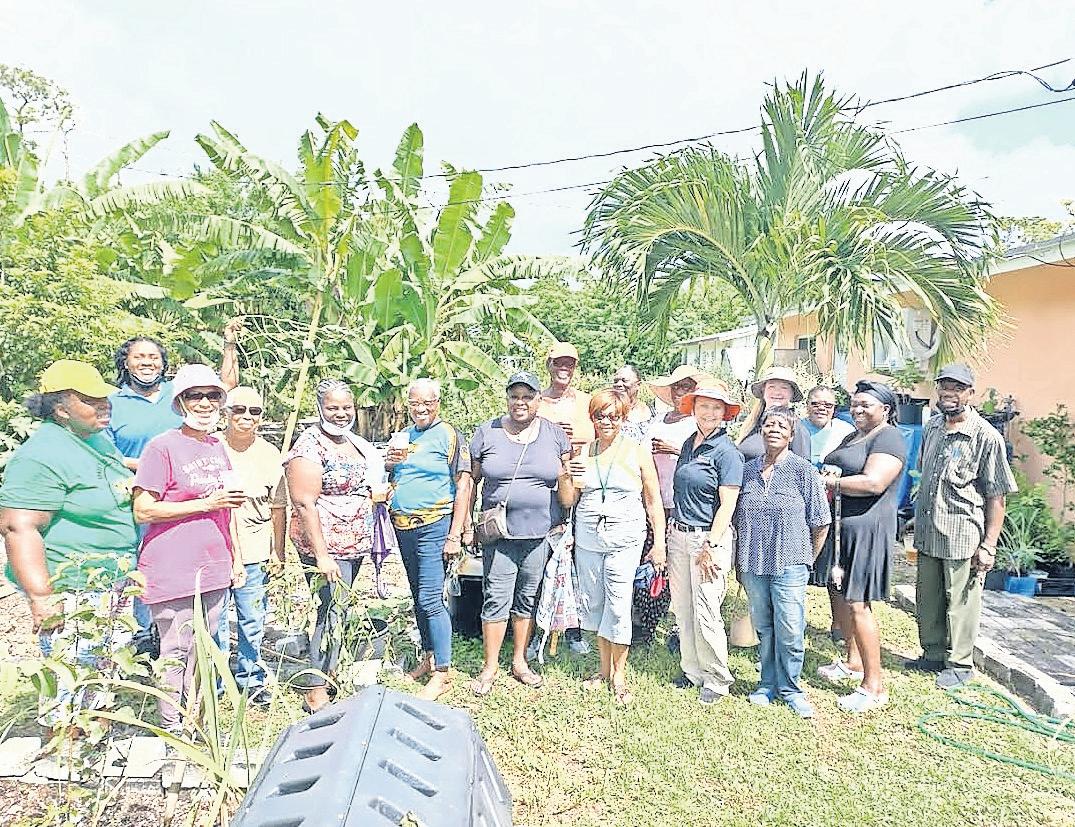
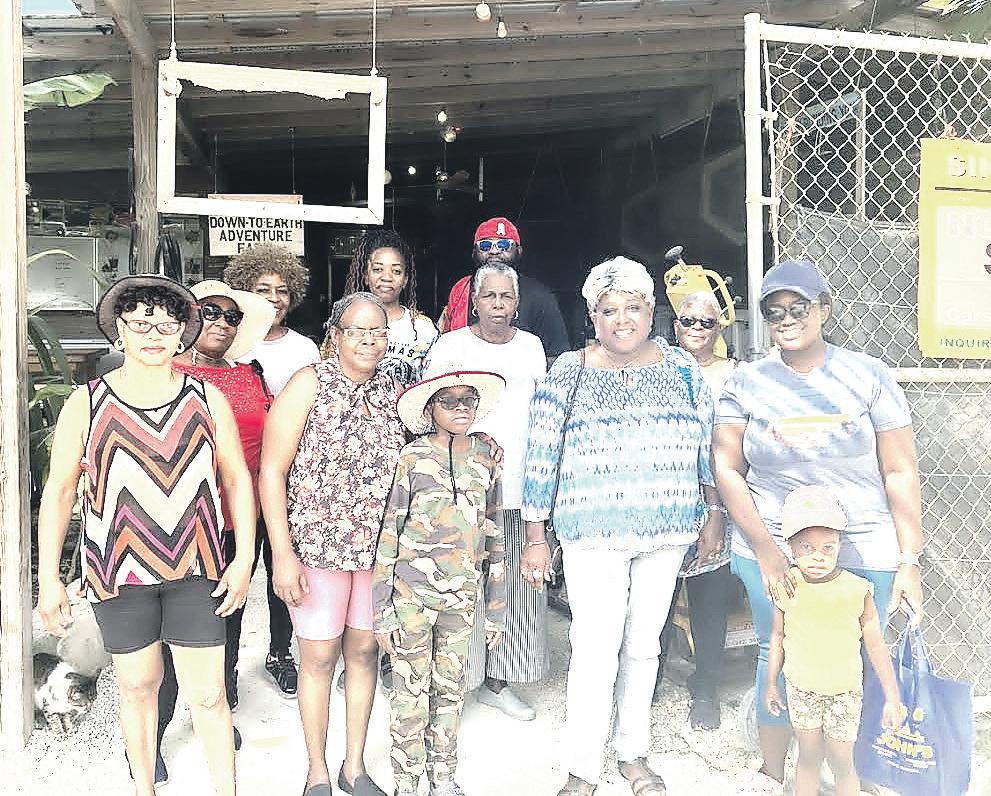
“We just want everybody to have a garden,” she said.
That philosophy refects something deeper than backyard farming. For the Dawkins, gardening is tied closely to Bahamian identity, memory and self-sufciency.
Many of the trees they encourage people to plant are the same ones that once flled older Bahamian yards. According to Chef Dawkins, some of the easiest plants to start with include bananas, guinep, sugar
apple, soursop and mango trees, along with herbs like mint, Spanish thyme and lemongrass which today are less common in newer developments and smaller landscaped properties.
The couple hopes to help change that trend one yard at a time.
“It’s such a wonderful joy when you can go in your backyard and pick something to eat,” Judith said. “Pick a mango, pick a guava, pick a dilly. Every few months, you always have something growing.”
these are underwater for a certain period. That’s going to be even more remarkable.”
Peterson Cay, a protected national park, was chosen strategically to safeguard the installations while encouraging exploration of an often-overlooked treasure.
“We fnd a lot of people don’t know and have not explored Peterson Cay,” she noted. “This is an opportunity to draw people there. It’s a win-win.”
There are also ambitions to expand the project.
“If we can establish little villages or pockets of these sculptures along the south shore, that would be wonderful,” she said, adding that additional funding is being sought through international grants and private investment.
Rupert Hayward, founder and chairman of Blue Action and co-chairman of the Grand Bahama Port Authority, described the initiative as a model for sustainable development.
“This project is the best of The Bahamas in many ways,” Mr Hayward said. “We’ve got Bahamian artists, civic institutions, NGOs and government all coming together to deliver something that supports education around conservation and tourism.”
He added that the installation represents a broader opportunity for the region.
“What we need to do is fnd ways to create models for economic, social and environmental development that don’t negatively impact our marine ecosystems, but actually enhance them while generating economic activity,” he said. “This is a great example of how that works.”
The sculptures themselves pay homage to Grand Bahama’s past and present, featuring depictions of the Lucayan people, early settlements and infuential fgures such as Edward St. George and Sir Jack Hayward, alongside other notable Bahamians.
Partially funded through the United Nations Development Programme’s Global Environment Facility Small Grants Programme, with support from local and international partners, the project represents a collaborative efort to redefne how cultural heritage and conservation intersect.
As the sculptures are eventually submerged of Peterson Cay, ofcials anticipate they will not only enrich marine ecosystems but also establish Grand Bahama as a premier destination for eco-conscious travellers—where history, art and nature converge beneath the surface.
Tenderloin. Again, no knife needed. Surprisingly though, it was his smoked and glazed carrot that stole the show. He explained that he uses carrot juice to glaze the carrots and, combined with the smoked fnish, it creates a rich, silky, deeply layered carrot favor. That dish was the hit of the night, proving that yes — we all happily ate our vegetables.
The four-course dinners all began with a cocktail hour featuring special drinks created
by Bahamas Botanicals using freshly picked Bahamian delicacies like Coco Plums and each night was expertly paired with hand-selected wines, or John Watlings signature drinks like the ‘Skylarkin’, ‘Cascarilla Sunrise’or a Hand-Shaken Daiquirí, but the organizers certainly didn’t treat the daytime events as an afterthought.
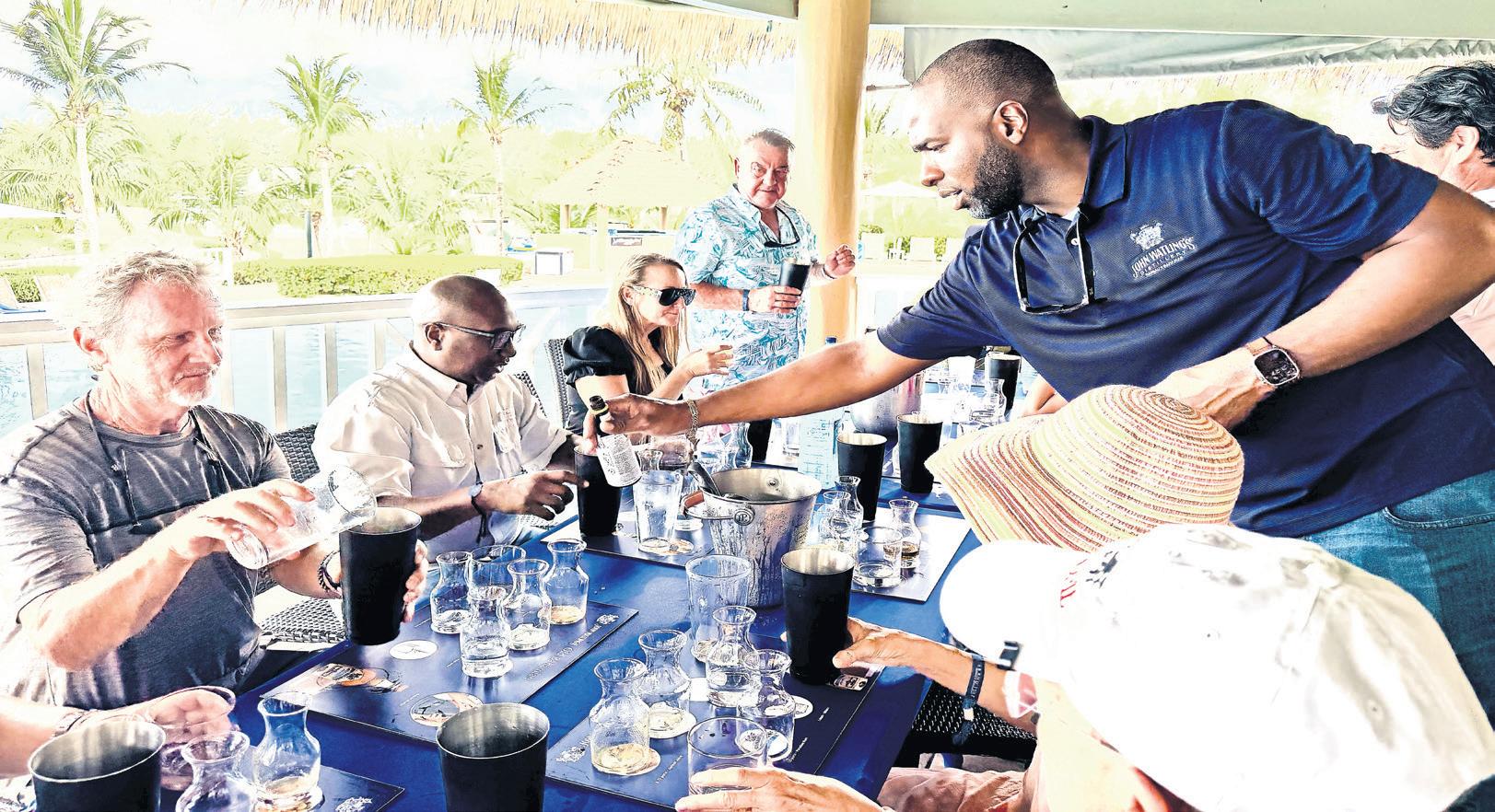
Guests enjoyed fun mixology sessions and rum tastings from John Watling’s Distillery,
which brought not only their fne selection of John Watling’s rums and Red Turtle Vodka, but also an extra-special treat — the limited-edition 10-year-old Bullion Rum. Pepin Argamasilla, co-founder of John Watling’s, never lets me have more than a tiny sip of that exclusive rare treasure, but luckily Shawn, his mixologist, was there to sneak me an extra sip… or two.
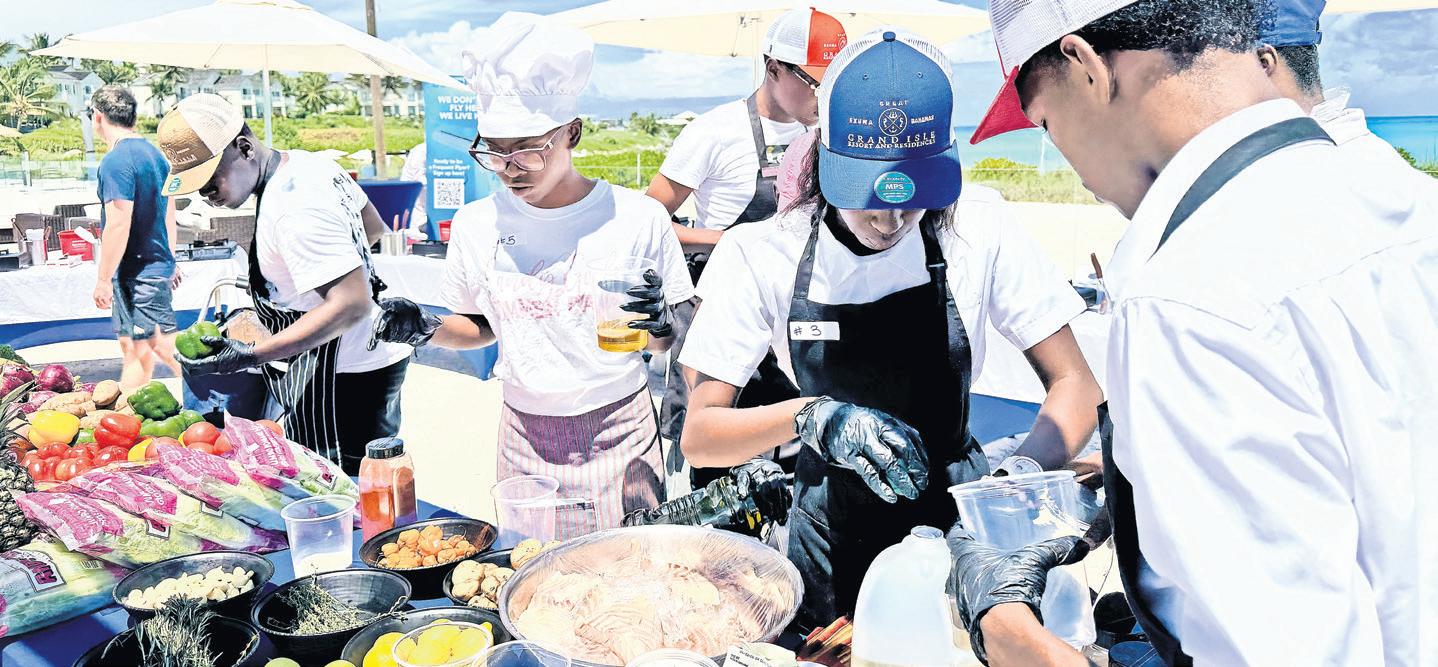
Another daytime event I really enjoyed was the Junior Chefs Cook-Of led by Chef Nigelle. The young Bahamian chefs were put through an “Iron
Chef”-style competition with Chef Nigelle throwing in a few surprise challenges along the way. He said he wanted them to experience what really happens in a professional kitchen and learn how to handle “the heat in the kitchen.”
And they absolutely delivered - producing creative, delicious, and expertly crafted dishes. The future of food in The Bahamas is bright, and I truly believe Bahamian hotels and restaurants will soon have an incredible variety of talented local chefs to choose from.
At the Marketplace,
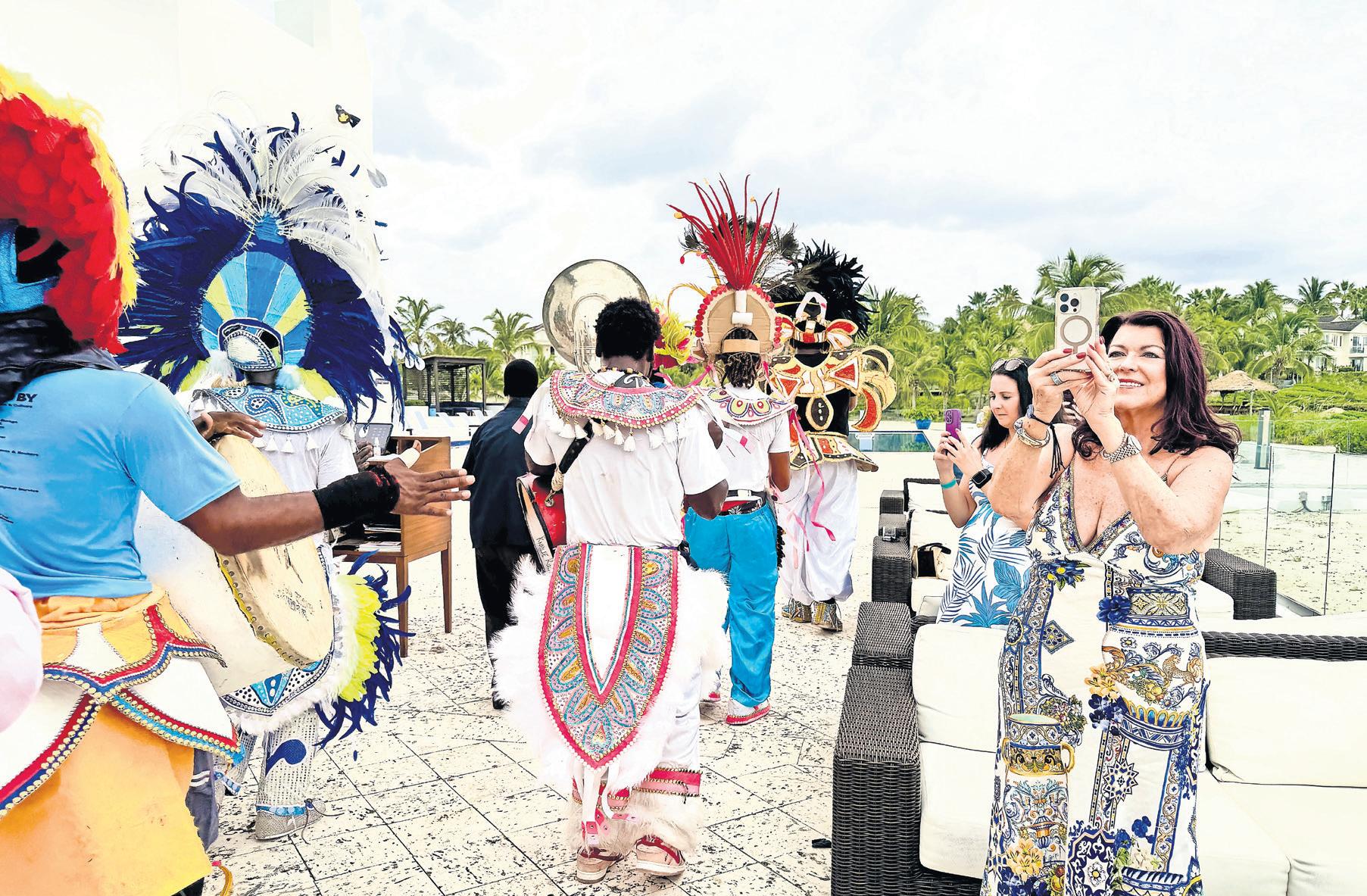
visitors enjoyed a wide variety of Exuma specialty fare and pop-up vendors featuring food, drinks, straw crafts, skincare products, and original artwork from local artisans. It rained a little, but that didn’t even stop people from attending — which is especially surprising because Bahamians usually don’t come out if they even ‘smell’ rain in the air.
“Taste of Exuma” was exactly what the Out Islands needed: a top-notch culinary experience delivered in the smaller, boutique-style atmosphere that the
Family Islands are known and celebrated for.
The Baha Mar and Atlantis food festivals are wonderful for Nassau and bring in hundreds of visitors, but Grand Isle’s’ annual “Taste of Exuma” feels perfectly suited for Exuma.
Nassau no longer has a monopoly on food festivals.
You can catch this episode of The Charlie Bahama Show from “Taste of Exuma” this Saturday at 7 p.m. on Cable Bahamas, or anytime on the Charlie Bahama YouTube Channel.
A X Y D L B A A X R is L O N G F E L L O W
One letter stands for another. In this example, A is used for the three L’s, X for the 2 O’s, etc. Single letters, apostrophes, the length and formation of words are all hints. Each day the code letters are different.
Sudoku is a number-placing puzzle based on a 9x9 grid with several given numbers. The object is to place the numbers 1 to 9 in the empty squares so the each row, each column and each 3x3 box contains the same number only once. The difficulty level of the Sudoku increases from Monday to Sunday

Yesterday’s Answers