BY NEIL HARTNELL Tribune Business Editor nhartnell@tribunemedia.net
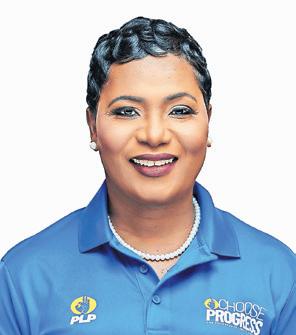
SUPER Value’s president is warning of potential food price increases, and a barrier to pay rises for hundreds of staff, due to the supermarket chain having to absorb “over $1m” in extra annual costs from the Government’s VAT exempt treatment of uncooked foods.
Debra Symonette told Tribune Business that the food distribution industry’s new inability to reclaim, or ‘net off’, the tax they pay on input expenses linked to uncooked foods is “a big deal” for all operators as the resulting increase in their costs impacts the business model by eating into bottom-line profits.
While anxious to reassure Bahamian consumers that the 13-store chain has not increased prices yet, she reiterated that it “could happen in the future” depending on the impact that the VAT exempt tax treatment has on earnings. Ms Symonette, conceding that this is “the last thing people need with the already high cost of living”, explained that Super Value cannot afford for its profits to be “eroded too much” as it needs to stay in business and cover its bills.
Large food stores, such as Super Value and BISX-listed AML Foods, while have filed their first VAT returns and payments under the new VAT exempt regime by May 14 last week. Those payments would have represented May’s collections, and Ms Symonette said food retailers and wholesalers continue to hope the Ministry of Finance delivers on
Sports Centre ‘flea market’ targets up to 200 vendors
BY ANNELIA NIXON Tribune Business Reporter anixon@tribunemedia.net
A ‘FLEA market’ sttyle initiative aimed at boosting small Bahamian businesses and drawing more tourists ‘Over the Hill’ is being planned at the Sports Centre with organisers hoping to attract as many as 200 vendors.
Kareme Damallie, a spokesperson for the project, said the proposed flea market would operate on Saturdays from 9am to 2am and serve as a hub for Bahamian culture, products and entrepreneurship.
Mr Damallie said discussions have already taken place with the Bahamas Sports Authority regarding use of the venue. “I already sit down and spoke with the Sports Authority,” he said. “They say I could be there all day.”
According to Mr Damallie, the market is expected to feature Bahamian music, live bands and a range of services beyond traditional retail stalls. “There will be Bahamian music,” he said. “There will be live bands, numerous stuff. I might even have a barber shop if people want to come get a shape up.”
He believes the project could provide relief for small entrepreneurs struggling with high rental costs throughout New Providence. “It will lower costs for entrepreneurs when
Chain renews food cost warning from ‘exempt’ treatment
Adds that it may have to ‘think really hard’ on salary rises
a promised compromise that would “balance” the Government’s revenue and fiscal needs with private sector’s desire for tax simplicity and earnings preservation.
“It has not been resolved as yet,” she told this newspaper of discussions between the Government and food distribution industry that began before the May 12 general election.
“We spoke to them recently, and they say they are going to present something in the near future.
“We are having to spend quite a bit. It’s going to be like over $1m per year in [extra] expense if we continue to do it the way we have to do it now. We would have to expense VAT rather than take a credit. That could result in us having to increase prices, and certain things we would have to really think hard about, like increases in salaries; that kind of stuff. That’s for sure.
“It’s a big deal because every expense added takes away from your bottom line. We have to control our expenses carefully and ensure that the profits are not eroded too much. Being a big retailer we would feel it more. We’re hoping they [the Ministry of Finance] will come up with a good solution to this, and we won’t have to absorb as much as we are doing now.”
VAT method switch on uncooked food to cost $1.6m yearly
Rupert Roberts, Super Value’s owner, recently told Tribune Business via a series of What’s App messages that the changed VAT treatment of uncooked foods - which accompanied the April 1 elimination of tax paid by consumers - is set to cost the supermarket chain an extra $1.6m per year if no further adjustments are made by the Government.
“The VAT change is costing us $1.6m a year,” he wrote. “New tax. Merchants will have to raise prices to take government out of the revolving door. Government gave consumers 5 percent off [uncooked food] and charged it to merchants. Millions of dollars.” Mr Roberts also confirmed it will likely impact the ability of Super Value and other food store owners to give staff pay and benefits increases.
The food distribution industry’s concerns stem from the Government’s decision to treat the uncooked food VAT elimination as ‘exempt’ rather than ‘zero rated’. While the latter treatment would have eradicated VAT at all stages of the supply chain, using the ‘exempt’ approach means only the consumer, or end purchaser, is not charged this tax.
VAT will still apply at all levels in the supply chain, and ‘exempt’ treatment means businesses such as
‘Zero political interference’ call on fishery enforcement
BY NEIL HARTNELL Tribune Business Editor nhartnell@tribunemedia.net
BAHAMIAN fishermen yesterday challenged the accuracy of data employed by researchers to determine that 11 of this nation’s 12 key fisheries species are “overfished” while demanding “zero political interference” in cracking down on poaching and other illegal practices.
Paul Maillis, the National Fisheries Association’s (NFA) secretary, told Tribune Business that - while he is “taking nothing away” from the report by Perry Institute of Marine Science (PIMS) researchers and other scientists - much of the information on the industry is “inaccurate” because commercial fishermen, as well as their recreational and “unlicensed” counterparts, fail to properly record catch details when they are landed.
Voicing surprise at the report’s conclusion that the sustainability of economically-vital species, such as the spiny lobster and Queen conch, could face long-term danger, he asserted: “I don’t think that’s accurate. I know
the PIMS can only report on what information is available, but as a commercial fisherman I am fully aware that the vast amount of catch landed in this country is not recorded properly.
“There are endless quantities of seafood sold by licensed and unlicensed fishermen that do not make it anywhere near the dock officials, which makes it much less accessible to records and government officials. I’m not taking away from what they concluded, but I don’t believe commercial fish landings are properly recorded, and those recording catches do not properly record them either.
“We have these issues in the fisheries sector with accurate data. If it’s bad in 2026, imagine how bad it was back in the day. It’s a continuous stream of inaccuracy that begets inaccuracy, and can lead to inaccurate conclusions.”
The published by Frontiers in Marine Science, and co-authored by Perry Institute for Marine Science (PIMS) scientists Dr Krista Sherman and Dr Craig Dahlgren, found that the likes of wahoo, grouper, snappers and hogfish now lack the population
Tourists, sports anglers behind 46% of Bahamas fish catches
BY NEIL HARTNELL Tribune Business Editor nhartnell@tribunemedia.net
ELEVEN of 12 leading Bahamian fisheries species have been “overfished”, researchers revealed yesterday, with recreational fishermen - tourists and sports anglers - said to be “strikingly” responsible for 46 percent of all product caught over the 73-year period to 2022. A report published by Frontiers in Marine Science, and co-authored by
Perry Institute for Marine Science (PIMS) scientists Dr Krista Sherman and Dr Craig Dahlgren, found that - based on “reconstructed” annual catches since 1950 - the health and sustainability of The Bahamas’ most economically-vital fisheries products, such as spiny lobster an Queen Conch, could face long-term danger.
The study found that these species, as well as the likes of wahoo, grouper, snappers and hogfish, now lack the
Opposition chair urges probe into $34m PPP deal’s ‘drug suspect’ link
Sands calls for ‘proceeds of crime’ investigation
Demands halt to all Eight Mile Rock payments
‘Chips to fall where they may’; not ‘swept under rug’
BY NEIL HARTNELL Tribune Business Editor nhartnell@tribunemedia.net
THE Opposition’s chairman yesterday called for an “immediate” probe into the $34m Eight Mile Rock administration complex deal after it was revealed the contractor appeared to have ties to a drug-accused air crash victim when the contract was signed in 2017.
Dr Duane Sands told Tribune Business that a “proceeds of crime” investigation should be launched into the contract the last Christie administration signed just one day before the May 10, 2017, general election after it emerged that Jonathan Eric Gardiner swore under oath he was the “president and a director” of the Government’s public-private partnership (PPP) partner, Top Notch Builders.
Speaking after Mr Gardiner was last week detained by US authorities, and formally charged with involvement in a long-running cocaine smuggling
conspiracy after being rescued from the general election-day plane crash, the Free National Movement (FNM) chairman argued that the Eight Mile Rock complex should be placed in the equivalent of “protective custody” or “escrow” until an investigation was concluded.
And Dr Sands also told this newspaper that the Government should halt all lease payments due to Top Notch and its wholly-owned subsidiary, PPP Investments and Construction, plus the loan repayments that suddenly appeared in the Government’s 2025-2026 Budget without warning. The deal appeared under the ‘public debt servicinginterest and other charges’ heading, noting a $33.93m, ten-year loan due to PPP Investments & Construction Company even though this debt was supposed to have been serviced by rental payments. The PPP had initially been billed as a lease-to-own structure where the Government
DR DUANE SANDS
Gov’t unveils free energy audits for small business
THE Government yesterday launched an initiative to give Bahamian micro, small and medium-sized (MSME) businesses a free energy audit in a bid to lower their power-related expenses and boost operating efficiency.
The initiative, which has been made possible by funding from the Green Climate Fund (GCF), is also designed to strengthen
long-term sustainability and resilience in the Bahamian MSME sector. Larissa Cartwright, emissions registrar in the National Emissions Registry (NER), said: “The initiative is an opportunity for MSMEs to understand their energy use to identify opportunities for energy reductions and savings. This impacts the cost of doing business,
PM: Climate change is no ‘distant risk’ for Bahamas
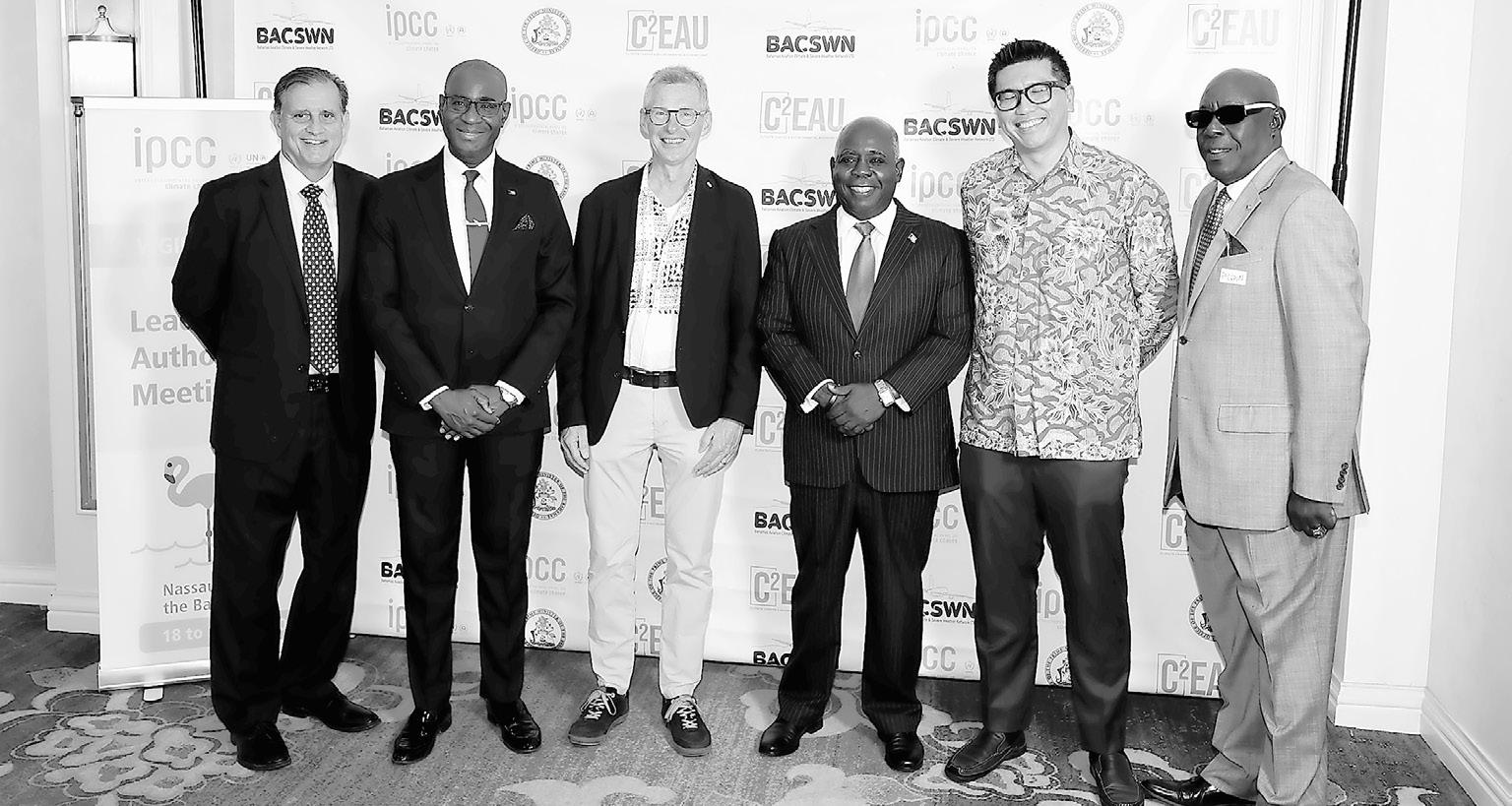
THE Bahamas has welcomed more than 250 delegates from over 100 countries to Nassau for a week-long conference on climate change.
The Bahamian capital is hosting the Intergovernmental Panel on Climate Change (IPCC) Working Group II second lead author meeting for the seventh assessment report at the British Colonial Nassau hotel from May 17-22. Held under the theme “Advancing the global scientific assessment on climate change impacts, adaptation and vulnerability from the front lines of the climate crisis’, the meeting brings together some of the world’s leading climate
scientists, researchers and experts.
The event is the first time an IPCC author meeting is being hosted in a small island developing state (SIDS) in the Caribbean.
Prime Minister Philip Davis KC welcomed delegates during yesterday’s opening ceremony, emphasising the importance of science-driven climate action and the realities faced by vulnerable island nations.
“For us, climate change is not an abstract concept. It is not a distant risk to be modelled for a future generation. It is here. It is present. It is personal,” the Prime Minister said.
employment figures and the availability of critical funding that flows throughout our communities.
“As the Government continues to foster partnerships with MSMEs to promote energy efficiency and energy savings, businesses need to take advantage of government-driven opportunities that assist the country in transitioning towards greater
sustainability and reliability.”
The free energy audit initiative is being implemented in collaboration with the Caribbean Community Climate Change Centre (CCCCC), the Climate Change and Environmental Advisory Unit (CCEAU), and the National Emissions Registry (NER).
The first phase of the programme will focus on
MSMEs operating within the commercial, manufacturing, industrial, hospitality, agribusiness and related indistries that are located in Abaco, Eleuthera and New Providence.
The Government, in a statement, said each participating MSME will receive a comprehensive energy audit - at an estimated value of approximately $2,500 - at no cost. The assessments will be conducted by qualified energy professionals and provide analysis of energy consumption performance; recommendations for reducing utility costs; identify efficiency improvement opportunities; give guidance on renewable
energy and sustainability measures; and identify voltage irregularities and electrical issues that may impact equipment lifespan and reliability. The initiative forms part of broader national efforts to promote energy efficiency, reduce emissions and support sustainable economic development throughout The Bahamas. Interested businesses are encouraged to apply using the QR code provided on the official programme flyer or via the registration link: https://forms.oKice.com/r/ q6wANLFkpr
He added that The Bahamas continues to experience the impact of rising sea levels, stronger storms, coastal erosion and coral reef degradation, while reaffirming the country’s commitment to resilience, renewable energy expansion and innovative climate financing mechanisms.
Researchers say 11 of Bahamas’ 12 key species now ‘overfished’
STUDY - from page B1
population critical mass to support harvest volumes that allow them to regenerate and “maximum sustainable yield”. As a result, the long-lasting sustainability for these species - and the economic, social and cultural benefits they confer on The Bahamas, especially in Family Island communities - could be endangered.
PIMS, in a statement hailing what it described as the first-ever fisheries stock and inventory assessment ever-conducted in The Bahamas, asserted that the findings “confirm what Bahamian fishers have been saying for a generation: Most of the country’s signature seafood stocks are being pulled harder than the sea can replace”. (See other article on Page 1B).
The Institute added:
“Of the 12 species evaluated, eleven are overfished to some degree. Nassau grouper and yellowfin grouper are classified as ‘grossly overfished’. Queen conch, Caribbean spiny lobster, hogfish, black grouper,
rock hind and wahoo are ‘overfished’. Lane snapper, mutton snapper and gray snapper are ‘slightly overfished’. Only the dolphinfish, the mahi mahi of beach hotel menus and offshore recreational trips, is classified as healthy….
“The 73-year reconstruction estimates that The Bahamas has taken roughly 1.3m tonnes of seafood out of its waters between 1950 and 2022, at an annual average of around 17,500 tonnes.
Strikingly, the recreational sector - tourism-driven charter boats, sportfishing and visiting anglers - is responsible for 46 percent of the total reconstructed catch over that period.
“The industrial sector, dominated by the export-oriented spiny lobster fishery, accounts for 26 percent; artisanal fisheries for 23 percent; and subsistence fishing for 5 percent. Caribbean spiny lobster alone is 33 percent of the country’s total reconstructed catch, roughly 425,000 tonnes. Queen conch is another 21 percent. Together, these two invertebrates represent more than half the
Organisers seek to attract tourists to ‘Over the Hill’
SALE - from page B1
it comes to paying rent,” Mr Damallie said.
“Rent is too high right now. For entrepreneurs with beautiful products and services, the cost is too high, and economically the business won’t be viable just because of paying rent.”
Under the proposed model, vendors would pay relatively low fees to participate. Mr Damallie said
they would be allowed to bring their own tents and tables, with costs ranging from $10 for set-up fees to between $20 and $50 per Saturday.
“Anybody can come set up and pay a small fee of $10,” he said. “You could bring in your tent and tables and set up whatever. Then [I’ll charge] between $20 and $50 a Saturday.” Mr Damallie added that organisers plan to heavily promote the flea market to
seafood The Bahamas has taken out of its waters over the past seven decades. Both are now classified as overfished.”
The Institute said spiny lobster (crawfish), traditionally The Bahamas’ most valuable export that generates around $80m in annual foreign currency export earnings from markets such as the US, France and Europe, was found to have just 61 percent of the population necessary to “support maximum sustainable yield”. And Queen conch was slightly lower with just 59 percent of the required population to underpin a sustainable harvest.
“The reef groupers and snappers tell the hardest story,” the Institute added. “Yellowfin grouper is at just 40 percent of the biomass that would support a sustainable harvest, the worst-off species in the paper. Nassau grouper, listed as critically endangered since 2015, sits at 49 percent. Catches of Nassau grouper remained above the maximum sustainable yield for nearly 40 years before collapsing from their mid-1990s peak, and have
the tourism industry, targeting hotels, taxi drivers, resorts and rental car operators in an effort to direct visitors to the event.
“We’ll try and target especially the hotels and tourist taxis, airports, resorts,” he said. “We’ll target those also to try get many taxi people and rental cars to direct tourists where they can get themselves involved or interact with Bahamian culture and products and services.”
He said the concept is designed to give tourists access to authentic local experiences and services during their stay. “If tourists
The Prime Minister also highlighted the significance of holding the meeting in The Bahamas, noting that participants would gain first-hand insight into the realities confronting frontline climate-vulnerable nations.
biodiversity and human communities, while also evaluating adaptation options and vulnerabilities across regions and sectors.
The findings developed during this process will contribute to the IPCC’s seventh assessment report, which helps inform international climate negotiations and policymaking worldwide.
The conference recognised Bahamian climate scientist, Dr Adelle Thomas, for her continued leadership and contributions within the IPCC process.
“You are seeing first-hand the landscapes, communities and ecosystems that are most directly affected by the issues you study.”
The
IPCC Working Group II assesses the impacts of climate change on ecosystems,
“By convening in a small island developing state, you are grounding your work in lived experience,” he said.
shown no sign of recovery since.
“These species are the backbone of The Bahamas’ domestic seafood supply, supporting commercial and subsistence fishers across the islands and anchoring local food security. Their overfished status means fewer fish in local markets and on local plates unless management action is taken.
“Among the large pelagic species, wahoo is overfished at 78 percent of the healthy reference, and dolphinfish is healthy at 101 percent. The paper cautions that both are shared stocks in the Western Central Atlantic, and neither has a conclusive population-level assessment for Bahamian waters alone.”
The Institute collaborated with Quantitative Aquatics and Sea Around Us to produce the newly-released report. Dr Maria Lourdes D. Palomares, lead author of the paper and manager of the Sea Around Us initiative, said: “What this work does is stop The Bahamas from flying blind on 12 of its most commercially important species at once. It is a starting point that the previous decade of good intentions and partial surveys could not provide on its own.”
need their haircut and they come on a seven, eightday cruise, they’re going to need a quick haircut, shave and all those stuff, too,” Mr Damallie said.
The project is expected to require more than $20,000 in start-up investment, according to Mr Damallie. “Thousands of dollarsmarketing, tents, chairs, audio system, advertising, flyers, got to pay the Sports Authority for the venue,” Mr Damallie said. “To set that up will cost over $20,000.”
Dr. Daniel Pauly, who founded the Sea Around Us initiative at the University of British Columbia in 1999, and is the senior co-author of the paper, said the Bahamian findings were characteristic of the wider Caribbean.
“The pattern we see in The Bahamas - a handful of species still productive, most severely depleted, and a gap between what managers can observe and what they can act on - is characteristic of reef fisheries across the tropics,” said Dr Pauly.
“What makes a difference in this case is the willingness of scientists, led by Dr Sherman and Dr Dahlgren at the Perry Institute, to use a rigorous, globally comparable assessment rather than wait for ideal data that may never come. The results should concern anyone who eats Bahamian seafood, and they should motivate the management reforms the country’s own scientists have been advocating for.”
The five-day meeting is being hosted via a collaboration between the Government of The Bahamas, the Climate Change Unit, the Bahamas Aviation, Climate and Severe Weather Network (BACSWN), the IPCC secretariat, and the World Meteorological Organisation.
It added that it will share the research paper’s findings with the Department of Marine Resources and other fisheries management groups in a bid to “reignite efforts to finalise changes to fisheries regulations and ensure the assessment results are incorporated into species management plans.
“Nassau grouper, in particular, will be revisited with the Ministry,” the Institute pledged. “The grossly-overfished finding reinforces the case for stronger spawning-aggregation protection, tighter enforcement of the existing closed season and improved size-based regulations. The overfished status of most key fishery species highlights the need for amendments to Bahamian fisheries law.
“As the paper’s authors put it in their conclusion: ‘There are currently no species-specific management strategies in place for these species. Implementing targeted, species-specific regulations could help accelerate their recovery. Note that revisions to national fishery regulations are currently underway in The Bahamas’.”
The Institute (PIMS), which is working on the Bahamian sustainable domestic seafood project with the Government’s Department of Marine Resources, said this initiative is examining the feasibility of creating a Bahamian national seafood labelling programme that would improve sustainable fisheries management for this country’s most valuable species.
Marketing efforts are expected to rely heavily on media promotion, flyers and outreach to businesses looking to sell discounted inventory quickly. Mr Damallie also argued the flea market could benefit consumers by expanding access to products that may
not typically be available in supermarkets.
“We’ll have other products, produce Bahamians can’t get at the supermarkets,” he said.
The Tribune wants to hear from people who are making news in their neighbourhoods. Perhaps you are raising funds for a good cause, campaigning for improvements in the area or have won an award. If so, call us on 322-1986 and share your story.
Photos:Patrick Hanna/BIS
Governance reformers await full anti-corruption laws execution
BY FAY SIMMONS Tribune Business Reporter jsimmons@tribunemedia.net
GOVERNANCE
reformers yesterday voiced hope that the Davis administration will provide sufficient funding to fully implement the Freedom of Information Act (FOIA) and other anti-corruption initiatives in the upcoming 2026-2027 Budget that will be unveiled next Wednesday.
Matt Aubry, the Organisation for Responsible Governance’s (ORG) executive director, said the Government has repeatedly failed to allocate sufficient resources to properly enact several accountability and transparency measures despite their potential impact on the economy and ease of doing business.
Speaking to Tribune Business, Mr Aubry argued that enacting these measures is critical to economic confidence, business growth and citizen trust. “What we know is that over the last number of years there was just $140,000 allocated in
each of the last two years’ budgets, and that obviously is not enough to advance or put a priority on freedom of information,” he said. Mr Aubry added that the Information Commissioner and his team previously estimated approximately $1m would be needed to properly execute the FOIA legislation, including public education, government training and technology infrastructure. “The hope is that you see the full expansion of funds to be able to make that happen,” he said. Mr Aubry’s comments come after Prime Minister Philip Davis KC last year defended the Government’s decision to maintain a $140,000 FOIA allocation, arguing his administration was prioritising reducing the cost of living and addressing crime over what he described as more “esoteric” transparency matters. However, Mr Aubry argued that transparency and accountability reforms have a direct impact on Bahamians’ daily lives and economic opportunities. “Often the distinction is made to say, well, transparency or freedom of
Tourism optimistic on new minister’s arrival
BY ANNELIA NIXON Tribune Business Reporter
VALENTINE’S Resort and Marina’s managing director yesterday said he is optimistic but cautiously watching the transition in the Ministry of Tourism’s leadership following the appointment of Glenys Hanna-Martin as minister.
Speaking on the switch from Chester Cooper, Lee Prosenjak said the deputy prime minister had done “a really great job with a lot of things”, particularly in keeping tourism issues at the forefront. However, he acknowledged that concerns surrounding increased boating fees created tension within parts of the industry.
“I hope it’s going to be a good thing,” Mr Prosenjak said. “I don’t know this new minister personally yet. I’m sure that we will get to
know each other and work together, and I hope it’ll be overall a positive thing for everybody.”
Mr Prosenjak added that he looks forward to working alongside Mrs Hanna-Martin and seeing how her leadership style develops over the coming years.
He also pointed to her involvement in expanding the Exceptional Education Outreach Programme (EEO) throughout the Family Islands as an encouraging sign. The programme, he said, has expanded into several other islands as well.
“We are strong supporters of EEO,” Mr Prosenjak said, noting that Mrs Hanna-Martin played a significant role in helping secure government funding for the initiative’s expansion. “I think that was a really good thing.”
Looking ahead, Mr Prosenjak said he hopes
information doesn’t have a direct impact on people’s day-to-day lives, but it couldn’t be more different,” he said. “In truth, that transparency means people believe in the systems that are around them. They believe that good work can generate fair opportunities.”
Mr Aubry acknowledged that some cost of living pressures are outside the Government’s control because of The Bahamas’ dependence on imports for energy, food and building supplies, particularly amid geopolitical tensions and rising energy costs.
“Cost of living is, to some degree, out of our hands,” he said. “What happens in spaces where we’re so dependent upon imports for our energy, for our food, for our building supplies, for all those things that have a direct impact on how people can live and afford to do things here in The Bahamas - if another conflict arises, or what we're seeing with what's going on in the Middle East affecting energy costs - all of those things affect us.”
the second Davis administration places stronger emphasis on Family Island development through infrastructure investment, tourism programming and more targeted marketing initiatives.
“I hope we see a focus on the Family Islands,” he said. “In Harbour Island, we want to see an increase in the profitable seasons that we have, and that translates into more job growth and just more revenue for everybody.”
Still, Mr Aubry argued that greater transparency and scrutiny over public spending can improve economic participation and strengthen communities.
“If you create an environment that is more transparent; where there’s more scrutiny on how monies are being spent in the interests of people, that creates greater dialogue that shows that levels of citizen and business participation are about investing in our communities or about growing our local business,” said Mr Aubry.
“In truth, that's going to affect people’s day-to-day lives.” He said ORG also wants to see full enactment and funding for the Office of the Ombudsman, the Independent Commission of Investigations and the Protected Disclosures Act, also known as the ‘whistleblower’ legislation.
“But we've seen no advancement on any of those pieces of legislation towards full enactment,” said Mr Aubry.
“They're not signed into full enactment by the Gazette, but we also don't see any distinct
Mr Prosenjak argued that tourism strategies designed for Nassau do not always translate effectively to the Family Islands, where the product and visitor experience differ significantly.
“It’s a very different product to market,” he said. “Not everybody wants to come to Eleuthera. So we want to make sure that we can advertise and get the right people excited about coming here.”
Meanwhile, Nathaniel Adderley, owner and operator of Nathan’s Lodge,
budgeting that happened to move those forward.”
He argued that the Independent Commission of Investigations is especially important given repeated allegations raised before, during and after the last general election.
“All the allegations that came up prior to and during the election, and the ones that have come up recently - having a space where you can independently bring something forward would be essential,” Mr Aubry said. He added that whistleblower protections are necessary to ensure individuals can safely and anonymously report wrongdoing.
Mr Aubry also tied transparency reforms directly to business and investment confidence, arguing they can help entrepreneurs and smaller firms feel they have fair opportunities to grow without political connections. “I think, on a local standpoint, we see that transparency builds trust, and trust builds confidence,” he said.
MATT AUBRY
BY FAY SIMMONS Tribune Business Reporter
jsimmons@tribunemedia.net
PRIME Minister Philip Davis KC yesterday argued that climate adaptation is not only an environmental necessity for The Bahamas but essential to protecting the country’s economy.
Speaking at the opening of the Intergovernmental Panel on Climate Change (IPCC) lead author meeting for working group II, Mr Davis said the country remains highly vulnerable to climate-related impacts because of its geography and dependence on coastal infrastructure and tourism.
He warned that stronger storms, rising seas and climate-related shocks directly threaten infrastructure, investment confidence and long-term growth prospects while requiring greater investment in resilient infrastructure, renewable energy and nature-based solutions.
“For us, climate change is not an abstract concept,” said Mr Davis. “It is not a distant risk to be modelled for a future generation. It is here. It is present. It is personal.”
Mr Davis said Hurricane Dorian demonstrated the scale of destruction climate-fuelled extreme weather can inflict on small island economies, adding that recovery efforts remain ongoing nearly seven years later. However, he argued that climate vulnerability has strengthened the country’s focus on resilience, adaptation and long-term sustainability.
PHILIP DAVIS KC
“Our approach to climate change is grounded in resilience, innovation and partnership,” said Mr Davis. He pointed to the Government’s investments in climate-resilient infrastructure, including efforts to strengthen homes, schools, hospitals and critical public systems against stronger hurricanes and rising sea levels.
“We are advancing a national strategy that prioritises climate-resilient infrastructure, ensuring that our homes, schools, hospitals and critical systems can withstand stronger storms and rising seas,” he said. Mr Davis also linked climate adaptation efforts directly to energy reform and economic sustainability. “We are also moving decisively toward cleaner energy,” he said.
“Through targeted policy reforms and investment frameworks, we are reducing our reliance on imported fossil fuels and expanding renewable energy across our islands. This is not only an PM: Climate adaptation key to safeguarding economy
- See Page B5
CORE FUNCTIONS
said improved airlift and upgrades to tourism sites remain critical issues for Andros. “We still need airlift,” Mr Adderley said, stressing the importance of transportation access for sustained tourism growth on the island. Mr Adderley also raised concerns about the condition of some eco-tourism attractions, particularly the island’s Blue Holes. “I feel that some of the sites, let’s say the blue holes, really need to clean up,” he said.
“So that you can go and
JOIN OUR TEAM
FINANCIAL MARKET INFRASTRUCTURE DEPARTMENT
Manager
Mr Aubry argued that greater transparency also strengthens The Bahamas’ international reputation and attraction for foreign direct investment. “A transparent environment means that foreign direct investment that comes here is going to be best in class,” he said.
“The folks that want to bring their great brand here and do business in The Bahamas, because they know that if you do it right, this is where you're going to be successful. All the grey lists and blacklists that we've struggled with historically are all about making sure that information is clear and that things are not hidden behind the veil.”
“So if you're a local business and you feel like you have every opportunity, outside of this being politically affiliated or having to pay to play, that your good work can make you invest in your small business and make it into a large-sized business, then great.”
take a fella on a tour and don’t feel scared that he might slip and fall.” He added that road access leading to the sites also requires improvement. While Mr Adderley questioned whether Mrs Hanna-Martin possesses the same energy as Mr Cooper, he said he believes she is capable of handling the role. “I don’t know if she has all the energy that Chester has, but I think she could get the job done,” he said.
Direct the operations of the Financial Market Infrastructure (FMI) Department to promote the efficient functioning of systemically important payment and settlement systems, including the real-time gross settlement system (RTGS), the central securities depository (CSD) for Bahamas Government securities, the Central Bank’s digital currency (CBDC) platform, and all underlying services to support the infrastructure
Develop and deliver on policy outcomes to support broad objectives under the Central Bank’s Payment System Modernization Initiative (PSMI), and oversee the continuous assessment of domestic market maturity and integrity against the global Principles for Financial Market
Infrastructures (PFMI)
Guide the collection of data, and the development and maintenance of statistical models, required for management decision-making, analysis, and planning Risk and governance frameworks for the department are to promote data-driven outcomes
Contribute to the Central Bank’s governance, risk, and compliance functions, through measured contributions to strategic activities as part of the Management Committee, supported by department-specific actions and reporting
Develop and execute staff training and development plans to promote operational bench strength and contribute to the Central Bank’s wider succession planning initiatives
EDUCATION & EXPERIENCE REQUIREMENTS
Master’s degree in a quantitative branch of economics, finance, production & operations management, operations research, statistics, quantitative methods, or a related quantitative discipline
Expert knowledge of payment and settlement systems and the Principles of Financial Markets Infrastructures (PFMI)
Sound knowledge of SWIFT architecture, accounting standards, statistical and optimization techniques, wholesale and retail payment flows, and securities pricing, auction, and settlement practices
A general understanding of IT applications and their lifecycles
Sound knowledge of spreadsheet applications, statistical software packages, network analysis software packages, and data visualization software
Proficient in Python syntax and fundamental language features, including, inter alia, functions, data structures, control flows, and variables, particularly in the application of statistical and optimization techniques
Five years related or transferrable experience at the management level, with a proven track record of supervising a team of professionals in a quantitative operational environment
Deadline: Wednesday, 22 May 2026
at www.centralbankbahamas.com/careers Only shortlisted applicants will be contacted.
FNM chair asserts US claims ‘very depressing’ for Bahamas
would pay back the company and its lenders via rental payments, but Dr Sands called for a halt on all and any payments until an investigation provides the all-clear.
Calling for “the chips to fall where they may”, he urged the Government not to “sweep it under the rug” as the circumstances of Mr Gardiner’s arrest by US authorities - and the subsequent charges and allegations made against him - “cast a serious shadow over the reputation of this country”.
Michael Coleman, the Drug Enforcement Administration (DEA) special agent supplying evidence for the US authorities’ charges and complaint against Mr Gardiner, also known as ‘Player’, alleged he had been informed that “Gardiner owns a business that Gardiner uses to, among other things, bid on Bahamian government-issued construction contracts and launder his narcotics trafficking proceeds”.
Tribune Business revealed that documents from The Bahamas’ registry of records show a ‘Jonathan Gardiner’ swearing under oath that - despite being “the president and a director” of Top Notch Builders - he owned not a single share in the company, which is based on Adelaide Road in south-west New Providence.
Sworn on February 13, 2017, less than three months before the PPP deal for what is now the Obadiah H. Wilchcombe government complex, named after the late MP and minister of tourism, was sealed on May 9, 2017, the document
- signed by Jonathan Gardiner - appears to be an attempt to distance himself from ownership of Top Notch Builders by denying he has any beneficial interest in the company.
He testifies under oath that Top Notch Builders is instead owned 100 percent by Paradise Productions Inc Company, an entity fully-owned by Samson Hield, who has been listed in previous Tribune Business reports as the “lead contractor” for the Eight Mile Rock PPP deal. However, multiple sources, speaking on condition of anonymity, described Top Notch Builders as “his company”meaning Mr Gardiner’s. As a result, Dr Sands said it was imperative that The Bahamas launch its own investigation - and not wait on the US or othersinto the Eight Mile Rock administrative complex PPP deal as well as determine if any other Government-related construction contracts were awarded to Top Notch Builders or entities linked to Mr Gardiner.
“I believe that, given the nexus of the Government of The Bahamas and now a significant alleged narco trafficker, we ought to determine, based on our existing laws, whether this building [the Eight Mile Rock complex] has anything to do with the proceeds of crime,” the Opposition’s chairman told Tribune Business. “We ought to initiate our own investigation; we don’t need to wait.
“They should, and do so immediately. Announce it this week. As a matter of fact, I think our laws are robust enough that we can move forward with an investigation. The building ought to be placed under the equivalent of escrow
Super Value enjoys election run-up 10% sales increase
ACCOUNTING - from page B1
grocery retailers and wholesalers are unable to recover the tax paid on their input expenses associated with purchasing uncooked foods.
For example, if uncooked foods account for 60 percent of a merchant’s sales, it is unable to reclaim or recover 60 percent of the VAT paid on its light bill, store rents and maintenance expenses. As a result, operating costs will rise, and retailers have warned they may have to increase prices to offset the impact, thereby negating
the impact of the uncooked food VAT elimination.
“I wouldn’t want to give the impression we have already increased prices, but that could happen in the future,” Ms Symonette told Tribune Business. “That’s the last thing people need with the already-high cost of living…. I would saw we will watch it and see how much of an effect it has on the bottom line. As the expenses go up, we’d have to find a way to offset them.”
The Super Value president also agreed that the ‘exempt’ treatment is effectively turning the VAT
NOTICE
TKP Corporation
Incorporated under the International Business Companies Act, 2000 of the Commonwealth of The Bahamas. Registration number 212425 B (In Voluntary Liquidation)
Notice is hereby given that the above-named Company is in dissolution, commencing on the 15th day of May A.D. 2026.
Articles of Dissolution have been duly registered by the Registrar. The Liquidator is Mr. Marcelo Jose Piccoli, whose address is R Dos Tambaquis, 254 – QD 12 LT17, Alphaville Graciosa, CEP: 83327-109, Pinhais, PR, Brazil. Any Persons having a Claim against the abovenamed Company are required on or before the 14th day of June A.D. 2026 to send their names, addresses and particulars of their debts or claims to the Liquidator of the Company, or in default thereof they may be excluded from the benefit of any distribution made before such claim is proved.
Dated this 15th day of May A.D. 2026.
MARCELO JOSE PICCOLI LIQUIDATOR
or protective custody, and let the chips fall where they may. These questions, though they have not yet been validated in court, cast a serious shadow over the reputation of this country.
“As opposed to sweeping it under the rug, let us launch a proper investigation to determine if there was any complicity, if there was any suspicion at the time the contract was entered into and concluded, and go forward from there. The Government should signal a willingness to be very open to this process…. An investigation into that contract and all matters arising from it should be looked into.”
Dr Sands also urged that the lease and/or loan payments due to Top Notch Builders and its affiliate, PPP Investments & Construction Company, under the Eight Mile Rock PPP deal - which involved construction of the Obadiah H. Wilchcombe government complex, named after the late MP and minister of tourism - not be paid but instead placed into escrow until a probe is completed.
“This is a very depressing day for our country,” he said. “Whether you are partisan, hyper-partisan or not, you have to be disappointed at the level of international scrutiny that this country is receiving. It is nothing short of an absolute disgrace… Is this country going to do right by its citizens or will this government close ranks? Only time will tell. My suspicion is the welfare and interests of the country will come second.”
Mr Gardiner’s arrest, and the nature of the US authorities’ allegations against him, could scarcely have come at a worse time for the Davis administration
concept on its head - converting it from a tax paid by the consumer, or end-user, to one that is now starting to increasingly be paid by Bahamian businesses. A further example is the reform, introduced with the 20252026 Budget, that prevents companies from reclaiming or ‘netting off’ VAT paid on construction materials and other inputs related to building projects worth $1m or more.
“Yes, that’s it exactly,” Ms Symonette said, “because everything now is being passed on to us as businesses. We cannot claim what we used to claim. We have no choice but to expense it. They’ve [the Government] got to find some way to keep the revenues kind of steady. If they cannot get it from the consumers, they have to get it from us.”
Merchants have also warned that introducing VAT ‘exempt’ treatment will make the tax much more complex to administer, increasing costs and time involved with this, and raising concerns they may miss filing deadlines and provide inaccurate
as it begins its second term in office. The controversy threatens to overshadow its May 12 general election success and this week’s opening of Parliament.
Tribune Business revealed recently that the Eight Mile Rock PPP has become embroiled in a furious legal battle over accusations that the Government’s failure to make due rental payments has caused the deal to default on a $25m bond.
The bust-up emerged due to Leno Corporate Services, the Bahamian financial services provider that structured and issued the bond, launching Supreme Court legal action against both PPP Investments & Construction Company, the private sector partner that built the Grand Bahama property, and the Ministry of Finance following the former’s failure to meet its repayment obligations.
PPP Investments & Construction Company, which has “admitted to the majority” of Leno’s accusations and is only disputing the amount owed, has now joined the financial services provider in blaming the bond default on “the Ministry of Finance’s failure to pay” it the rent due on the administrative complex.
The financial mess is detailed in an April 10, 2026, Supreme Court ruling by Adrienne Bellot, its acting assistant registrar, who rejected the arguments by the Government for the Ministry of Finance and Attorney General’s Office to be removed as defendants to Leno’s action. She ruled that the financial services provider’s claim must move forward to be heard by a judge. Besides the $25m bond, the balance of the $34m Eight Mile Rock complex’s
return submissions. This was because they now have to correctly categorise products into those that are VAT ‘exempt’, ‘zero rated’, or taxed at 5 percent or 10 percent - in effect, having to account for new VAT-related categories.
Ms Symonette, confirming that Super Value has already submitted and filed its April VAT returns, said the process had been more complex than previous filings. She added, though, that the industry remains optimistic that the Government and Ministry of Finance will come up with a compromise tax treatment acceptable to all parties.
“There was an adjustment and it was something new,” the Super Value president said of the April VAT filings. “We had to make certain changes in the system, and get used to putting them in the correct categories. It’s a bit difficult but, as we go along, it will become easier.” She, though, conceded that the private sector has “no idea” what proposal the Government is likely to come up with.
“We strive to give some suggestions, but we are not
NOTICE is hereby given that WESNEY JAMES SAINTIL of Sampson Street, Nassau Village, New Providence, Bahamas is applying to the Minister responsible for Nationality and Citizenship, for registration/ naturalization as a citizen of The Bahamas, and that any person who knows any reason why registration/naturalization should not be granted, should send a written and signed statement of the facts within twenty-eight days from the 19th day of May, 2026 to the Minister responsible for nationality and Citizenship, P.O.
NOTICE
funding - some $9m - was obtained from Sygnus Capital, the Jamaican investment and alternative financing house. However, it has now appeared in the Government’s books as a “loan” that has to be repaid by Bahamian taxpayers. Some $2.308m is due to be paid in 2025-2026, with payments of $2.094m and $1.874m due in 2026-2027 and 2027-2028, respectively.
The $25m bond default will likely have caused Leno difficulties with the investors who bought into the debt security, which is effectively an ‘IOU’ committing the borrower to make scheduled interest and principal payments to them on time. The bond offering documents asserted that the Government will pay a fixed quarterly rent of $852,224, or $3.409m per year, to PPP Investments & Construction Company throughout the duration of the initial 10-year ‘rent-to-own’ lease.
Once the debt is fully paid off, the two buildings comprising the Eight Mile Rock complex were to be conveyed to the Government for $100. The latter was to pay PPP Investments & Construction Company a $535,000 ‘handover fee’ once construction of the complex was completed. It opened in 2023.
The first building was to be 33,000 square feet, and feature three floors to be used as a Government administrative building to house NIB (National Insurance Board) and other local government-related offices. Building ‘B’ was to be 13,000 square feet with two floors to be used as a court house, a police station and a fire station. Among the prospective tenants were the Ministry of Finance, Passport
sure what they are going to do,” Ms Symonette said. “It has to be a balance between us and them. We’re remaining very hopeful. I don’t know what’s going to happen. I cannot say anything for sure. All we can do is hope: Hope for the best and we hope it’s coming soon. It may take a while, but hopefully not too long.”
She agreed that the VAT ‘exempt’ treatment’s new cost pressures, as well as increases in freight and transportation costs from the global fuel/oil price spikes produced by the Middle East conflict, could wipe out the savings Bahamian consumers were expecting to enjoy from the elimination of tax on uncooked foods.
“Even though they had the decrease in VAT, if the prices go up they won’t even feel the relief any more,” Ms Symonette said. She added that the impact from increased freight and transportation costs has been “happening slowly”, and said: “We haven’t seen too much as yet, but the longer this thing [the Middle East conflict] lasts we can rest assured there will be an
Office, Department of Environmental Health, Urban Renewal, the Registrar General’s Office and the Grand Bahama island administrator. This newspaper’s archives show that the Minnis administration allowed the Eight Mile Rock project to proceed despite clear misgivings over the last-minute deal it had inherited from its Christie predecessor. Desmond Bannister, former deputy prime minister and minister of works, had described a $4.4m ‘advance interest payment’ to PPP Investments & Construction for ‘initial funding construction’ as “inconceivable”. PPPs are typically designed to reduce the financial stress on cashstrapped governments by contracting the private sector to provide the funding, development and expertise to construct muchneeded infrastructure or run public services.
The Government’s cash flow pressures are eased by requiring the private sector to finance the up-front capital costs, with the latter earning a return on investment - and paying back any lender - from the revenue streams generated by infrastructure assets they develop or services provided.
The Free National Movement (FNM) has previously argued, though, that several projects touted by the Davis administration as PPPs do not fit this model or meet this criteria and, in reality, are off-the-books loans designed to keep debt off the Government’s balance sheet and prevent it from adding to the annual deficit and $12bn-plus national debt.
impact. The longer it lasts, the more of an impact it will have. It could be significant.
“The more the oil prices go up, the more it’s going to affect shipping and the different expenses that our vendors have to incur. If their prices go up, they will automatically increase the prices they charge us. There’s definitely going to be an affect.”
The Super Value president also revealed that the supermarket chain enjoyed a temporary 10 percent sales boost in the weeks and months leading up to the May 12 general election as the major political parties spent to keep their campaign workers fed and watered.
“When we looked at it, certain departments were up a lot and then other departments were not so high; they didn’t have such high increases,” Ms Symonette said. “When it’s averaged out it’s not more than 10 percent. That was in the weeks leading up to, and then it died back down. I wouldn’t say it was an explosion, but 10 percent is pretty good.”
NOTICE is hereby given that I ALCENE ALCENAT of, Harbour Island, Eleuthera, Bahamas, applying to the Minister responsible for Nationality and Citizenship, for Registration Naturalization as a citizen of The Bahamas, and that any person who knows any reason why registration/naturalization should not be granted, should send a written and signed statement of the facts within twenty-eight days from the 19th day of May, 2026 to the Minister responsible for nationality and Citizenship, P.O. Box N-7147, Nassau, New Providence, The Bahamas.
Dorian awakened Bahamas to climate change dangers
WEATHER - from page B3
environmental imperative; it is an economic one.”
The Bahamas has long faced high electricity and fuel costs because of its dependence on imported oil products, leaving businesses and consumers vulnerable to global energy price shocks.
Mr Davis also highlighted nature-based solutions such as mangrove and seagrass
protection, arguing these systems play an important role in both climate resilience and carbon reduction.
“We are investing in naturebased solutions, protecting our mangroves and seagrass beds, which serve as both natural buffers and powerful carbon sinks,” he said.
Mr Davis further highlighted the importance of climate financing for small island developing states, noting that The Bahamas continues exploring
mechanisms such as debtfor-nature swaps and climate resilience funds to help finance adaptation projects.
“From debt-for-nature swaps to climate resilience funds, we are working to unlock the capital needed for adaptation at scale,” he said. “Because for small island states, adaptation is not optional. It is essential.”
Mr Davis also highlighted the role of local partnerships in hosting the
Fishermen surprised at study’s ‘overfish’ finding for 11 species
DATA - from page B1
critical mass to support harvest volumes that allow them to regenerate and “maximum sustainable yield”.
As a result, the long-lasting sustainability for these species - and the economic, social and cultural benefits they confer on The Bahamas, especially in Family Island communities - could be endangered.
PIMS, in a statement hailing what it described as the first-ever fisheries stock and inventory assessment ever-conducted in The Bahamas, asserted that the findings “confirm what Bahamian fishers have been saying for a generation: Most of the country’s signature seafood stocks are being pulled harder than the sea can replace”.
The Institute added: “Of the 12 species evaluated, eleven are overfished to some degree. Nassau grouper and yellowfin grouper are classified as ‘grossly overfished’. Queen conch, Caribbean spiny lobster, hogfish, black grouper, rock hind and wahoo are ‘overfished’. Lane snapper, mutton snapper and gray snapper are ‘slightly overfished’. Only the dolphinfish, the mahi mahi of beach hotel menus and offshore recreational trips, is classified as healthy….” Mr Maillis’ view was echoed by Keith Carroll, the Association’s president, who suggested that the researchers had relied on landing certificates provided by the fisheries processing houses to compile the data on which they had based their report. “The fishermen are not
Federal court rejects Elon Musk’s claims against OpenAI, saying he filed his lawsuit too late
By BARBARA ORTUTAY Associated Press
A FEDERAL court on Monday dismissed claims filed against OpenAI and its top executives by Elon Musk, who accused them of betraying a shared vision for it to remain a nonprofit dedicated to guiding artificial intelligence’s development for the good of humanity.
The nine-person jury found Musk waited too long to file his lawsuit and missed a statutory deadline. After a three-week trial, the jury deliberated less than two hours.
Musk, the world’s richest man, was a co-founder of OpenAI, which launched in 2015 and went on to create ChatGPT. After investing $38 million in its first years, Musk accused OpenAI CEO Sam Altman and his top deputy of shifting into a moneymaking mode behind his back. The jury served in an advisory role, but Judge Yvonne Gonzalez Rogers accepted the verdict Monday as the court’s own and dismissed Musk’s claims.
Musk posted on his social media platform X that he would file an appeal. He said the judge and jury never weighed in on the merits of the case, just “a calendar technicality.”
“There is no question to anyone following the case in detail that Altman & Brockman did in fact enrich themselves by stealing a charity. The only question is WHEN they did it!” he wrote.
Musk’s lawyer, Steven Molo, said Musk’s feud with OpenAI was far from resolved. He compared Monday’s verdict to moments in U.S. history like
the Siege of Charleston and the Battle of Bunker Hill which were “major losses for Americans, but who won the war?”
OpenAI argued it came down to a business rivalry
The trial in Oakland, California shed light on the bitter falling-out between the two Silicon Valley titans and the beginnings of OpenAI, now a company valued at $852 billion and moving toward potentially one of the largest initial public offerings in history.
Altman and OpenAI claimed there was never a promise to keep OpenAI a nonprofit forever. In fact, they argued, Musk knew this and filed his lawsuit because he couldn’t have unilateral control over the fast-growing AI developer.
OpenAI argued the lawsuit aimed to undercut the company’s rapid growth and bolster Musk’s xAI, which he launched in 2023 as a competitor.
Outside court Monday, OpenAI lawyer William Savitt told reporters that jurors determined the lawsuit was an “after-the-fact contrivance” that amounted to Musk trying to sabotage a competitor and “to overcome a long history of very bad predictions about what OpenAI has been and will become.” Microsoft, an OpenAI investor and a co-defendant in Musk’s lawsuit, said it welcomed the decision and remains “committed to our work with OpenAI to advance and scale AI for people and organizations around the world.”
Musk was seeking damages to be paid to the altruistic efforts of OpenAI’s charitable arm as well as Altman’s ouster from OpenAI’s board. Musk’s
giving fisheries the information they need,” he said. “Our grouper stocks are at the best they’ve ever been for a long time, and we’ve had a closed grouper season for years. The grouper stock is increasing.
“I don’t see where there’s a shortage of grouper because you cannot sell them right now. There’s so much. The lobster, the same thing. If you go and check with the fisheries houses, we are catching more lobster. It isn’t like the lobster is declining. I don’t know where they got the information from. It’s the first time I heard of it. Nobody has asked me any questions and I don’t think anyone has asked commercial fishermen any questions.
“I don’t know where their information is coming from. Anyone can come in and write something. Nobody
decision to stop funding the company contributed to the rift between the former allies. Musk says he was responding to deceptive conduct that OpenAI’s board picked up on when it fired Altman as CEO in 2023 before he got his job back days later. The trial
five-day meeting, noting that the Climate Change Unit worked alongside the Bahamas Aviation, Climate & Severe Weather Network (BACSWN) as well as the IPCC secretariat and the World Meteorological Organisation.
“We are also proud of our private sector partnerships as the Climate Change Unit – in partnership with the Bahamas Aviation, Climate & Severe Weather Network – have worked
has got any information from me. Nobody has interviewed me. Eight months of the year, the majority of fishermen in The Bahamas concentrate on lobster. The next four months, you cannot use the compressors, and most fishermen don’t fish,” Mr Carroll added.
“Years ago, in the summer, fishermen would go out and fish. They [the authorities] don’t take the use of compressors as seriously as they do now. They are starting to lock people up, so most fishermen don’t go out.”
Mr Maillis, meanwhile, recalled that research by fellow scientist, Dr Kathleen Sullivan-Seeley, had reached “a similar conclusion but she also concluded that significant historical unknown damage was caused over time by illegal fishing” such as poaching of Bahamian stocks from sources such as the Dominican Republic as well as the US.
“We’ve known for a long time that, if it’s not
with the IPCC secretariat and the World Meteorological Organiaation to host this five-day meeting of global climate scientists,” he added.
Mr Davis said climate science remains critical to informing policy decisions, investment planning and national development strategies, particularly for countries facing increasing climate risks. He also noted that hosting the IPCC meeting in
ineptitude, corruption persists even at the Government level,” he added.
“They are still not doing nearly enough in terms of having Defence Force vessels ready to deploy at a moment’s notice; adequate boats, adequate maintenance to ensure the Defence Force gets out in a timely manner, and there needs to be zero political interference with enforcement of our maritime fisheries laws.”
PIMS and its fellow researchers, in their report, said: “Fisheries provide critical economic, cultural and ecological benefits to developing coastal countries such as The Bahamas. However, effective management remains challenging, particularly for traditional species such as spiny lobster, queen conch and Nassau grouper.
“Despite existing regulations, overfishing and habitat degradation from both commercial and recreational sectors continue to threaten these populations,
saw testimony from Musk, Altman and his top lieutenant Greg Brockman, along with Microsoft CEO Satya Nadella and a slew of others in the tech titans’ orbit. Musk told jurors on his first of three days on the stand that, fundamentally, “I think they’re going to try to make this lawsuit ... very complicated, but it’s actually very simple,” Musk said. “Which is that it’s not OK to steal a charity.” Musk’s lawsuit claimed that, in addition to “breach of charitable trust,” Altman and Brockman unjustly enriched themselves
The Bahamas places global climate scientists directly in a country experiencing the realities of climate change first-hand.
“You are engaging with a country that sits at the frontlines of climate impact and increasingly, at the forefront of climate solutions,” said Mr Davis. “The science is clear. The impacts are accelerating. The window for effective action is narrowing, but it has not yet closed.”
while limited data on stock size and total catch constrain assessment efforts….
“Twelve species were evaluated, including two invertebrates (queen conch and Caribbean spiny lobster), two large pelagic fishes (wahoo and dolphinfish), and eight demersal species (groupers, snappers, and hogfish), using a combination of fishery-dependent and fishery-independent data on historical exploitation and relative abundance,” the report added.
“The resulting biomass trajectories indicate strong stock depletions for most of these species. These findings highlight an urgent need for improved management and provide a scientific basis for targeted conservation strategies for the resilience, and long-term sustainabillity, of Bahamian fisheries under increasing environmental and anthropogenic pressures.”
from the windfall as the ChatGPT maker soared in valuation. Brockman revealed during the trial that his stake in OpenAI is worth about $30 billion. Altman and Musk both vied to be OpenAI’s CEO in its early years.
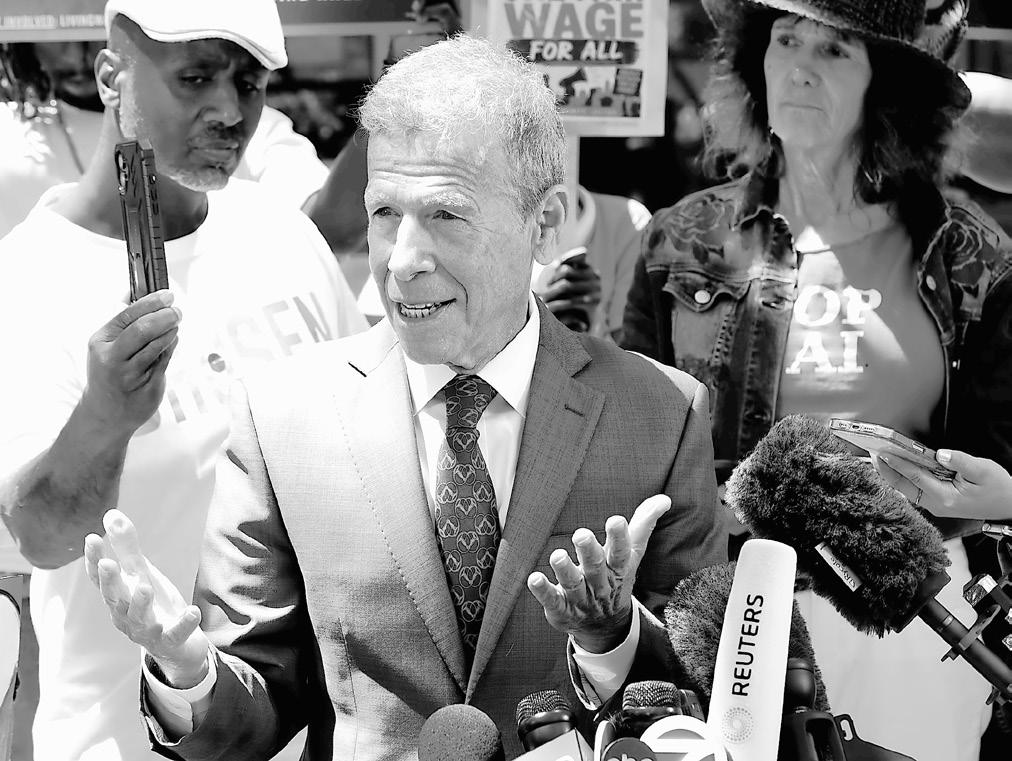
MARC TOBEROFF, attorney for Elon Musk, speaks to reporters outside the U.S. District Court, Monday, May 18, 2026, in Oakland, Calif. Photo:Nathan Weyland/AP
Breaking the silence across the islands
By Alesha Cadet Tribune Features Reporter acadet@tribunemedia.net
FOR many girls growing up in The Bahamas, conversations about periods, reproductive health and feminine hygiene have long been treated as uncomfortable subjects, often discussed quietly, if at all.
Through its annual My Period, My Pride seminar and a growing network of distribution centres stretching beyond New Providence, The Dignified Girl Project is working to shift that reality, one community at a time.
Founded by Phillipa Dean, the organisation is preparing to host its eighth annual My Period, My Pride seminar on May 20 at the Fox Hill Community Centre. While the event centres on menstrual health education, its wider mission also speaks to confidence, access and dignity for young girls navigating puberty and adolescence.
Phillipa explained that the seminar’s structure has remained intentionally consistent over the years, with organisers focusing on practical topics that directly affect girls’ everyday lives.
“We do not have annual themes. The
topics are generally fixed with specific focuses on understanding puberty, managing the period through product knowledge, reproductive health concerns, pain management, and how the period impacts mental health, financial literacy,” said Phillipa.
She noted that the organisation sees menstrual health education and financial literacy as closely connected, particularly for girls facing economic hardship.
“We believe that if a girl is fully educated about managing her menstrual health as well as gaining financial literacy, she can empower to rise above period poverty, which can lead to health issues as well as abuse,” said Phillipa.
Over the past eight years, the founder has watched public attitudes surrounding menstrual health begin to evolve.
Conversations that were once considered taboo are now gaining wider support from civic groups, businesses and national leaders.
Phillipa said public engagement has increased through awareness campaigns, sponsorship efforts and open discussions in the media.
She added: “People are ‘putting their money where their mouth is.’ Our government has even made efforts to removal VAT form feminine hygiene items.”
Beyond the educational presentations themselves, the seminar is also designed to create a welcoming environment where girls feel seen, heard and supported. Organisers believe that safe spaces remain essential, especially for adolescents who may not otherwise feel comfortable speaking openly about menstrual health concerns.
Phillipa said the initiative reminds young girls that their experiences matter and deserve attention.
“So that they will know women and girl's issues matter, to give women and girl's issues a voice and platform. It is important because it helps to create healthier girls and women,” she said.
The founder further explained that many attendees benefit from knowing they are not alone in their experiences.
“So that adolescent girls don’t have to feel alone or suffer in silence, so that they can participate in a community where one of their basic biological needs is being given
Addressing healthcare access for elder and immobile Bahamians
By Jeffarah Gibson Tribune Features Writer jgibson@tribunemedia.net
ACCESS to healthcare remains a growing concern for elderly and immobile patients, many of whom face significant barriers simply getting to appointments.
For Vashti Saunders, a registered nurse with 14 years of experience, those challenges became increasingly clear through her work in both hospital and outpatient settings, ultimately shaping her focus on wound and foot care.
Nurse Saunders, 34, began her nursing career in a medical surgical unit, where she spent four years building a strong clinical foundation. While she had an early interest in wound care, it was not until she transitioned into a dedicated wound care department that she discovered her true passion. Over time, her expertise expanded to include foot care, particularly for patients requiring close monitoring and preventative treatment.
“I began my career in a medical surgical unit, where I worked for four years and developed a strong foundation in patient care. Although I had an early interest in wound care, it was not until later in my career, when I transitioned into a dedicated wound care department, that I truly found my passion. Working in wound care allowed me to deepen my knowledge and skills, particularly in managing complex wounds and focusing on prevention and healing,” she said.
Her work has since extended beyond traditional clinical settings through her mobile service, The Healing Oasis, which provides wound care, medical pedicures and manual lymphatic drainage in patients’ homes. While the service offers convenience, it also highlights a deeper issue within the healthcare system, particularly for those who are unable to travel.
“From my experience, elderly or immobile patients face several significant challenges when
trying to access healthcare services. One of the biggest barriers is mobility and transportation. Many patients have difficulty traveling to appointments due to physical limitations, lack of assistance, or unreliable transport options. This often creates delays in receiving the care they need and can worsen existing conditions,” she explained.
According to Nurse Saunders, missed appointments and delayed care are not uncommon. During her time in outpatient settings, she witnessed firsthand how frequently patients were unable to attend scheduled visits due to transportation issues or lack of support.
attention, a community that supports them and can answer questions and concerns that they may have in accurate ways,” said Phillipa. In addition to discussions and workshops, attendees also leave with practical resources to assist them at home and at school.
“Beyond the education this seminar also offers tangible resources such as heating pads, washable pads, disposable pads, and period proof underwear that the attendees can walk away with to manage their periods at home or at school,” she said.
While the annual seminar remains a major part of the organisation’s outreach, The Dignified Girl Project has also steadily expanded its footprint throughout the islands. The group now operates 22 distribution centres across New Providence, Eleuthera and Andros, with recent expansion efforts also reaching Grand Bahama.
Phillipa shared that one of the organisation’s latest partnerships has been established at Eight Mile Rock High School in Grand Bahama.
For the founder, extending the initiative beyond Nassau was never optional. She pointed to
the unique challenges Family Island communities face when it comes to access, affordability and recovery after national disasters.
“It is important to expand our reach because girls living on the Family Islands are not exempt for experiencing period poverty which can be caused by high cost of living, strained financial times or unemployment, natural disasters like hurricanes which our family islands know oh too well,” said Phillipa.
She explained that those hardships can directly affect a girl’s participation in school life and overall well-being.
“These causes have the potential to limit girls’ participation in school and extracurricular activities, and their mental health,” she said.
The country’s geography also creates another layer of difficulty for residents outside the capital.
“It is also important to expand our reach to the Family Islands because our very geography/ archipelago often limits family islanders’ access to resources,” said Phillipa.
According to the founder, girls and young women in the Family Islands frequently encounter limited product
availability and higher prices, while conversations surrounding menstrual health are still sometimes overshadowed by stigma or competing responsibilities within communities.
“Limited brands and product options, and certainly higher cost,” said Phillipa.
She continued: “Families, school, churches and civic groups not prioritising menstrual health management due to stigma, busyness of schedules.”
Phillipa also noted that educational opportunities focusing specifically on menstrual health are still not consistently available throughout the islands.
“Also, seminars of this magnitude or focus are not held across the board so family islanders may be subject to basic information taught in the school’s curriculum,” she said.
As the organisation looks ahead, Phillipa said one of its upcoming priorities will involve studying the long-term impact of its sanitary napkin dispenser programme throughout the Family Islands. Plans are also underway to host the first My Period, My Pride seminar on Eleuthera, one of the islands currently benefiting from the initiative’s outreach efforts.
“I’ve seen this countless times when I worked in the outpatient clinic setting. It is quite common for patients, especially the elderly or those with limited mobility, to delay or miss care due to transportation challenges. Many patients rely on family members, caregivers, the ambulance or public transportation, which may not always be available or reliable. This makes it difficult for them to maintain consistent treatment,” she said.
The consequences of delayed care can be severe, particularly for patients living with chronic conditions such as diabetes. Nurse Saunders noted that even minor issues can quickly escalate if not addressed early.
“One of the primary risks is infection. Even a small wound can quickly become infected if not properly managed, and in diabetic patients, infections can spread rapidly due to reduced immune response. Additionally, many patients with diabetes experience neuropathy, or loss of sensation in the feet. This means injuries may go unnoticed and untreated for extended periods, allowing them to progress into more severe conditions,” she said.
Beyond individual cases, Nurse Saunders believes these challenges point to broader gaps within the healthcare system. In particular, she identified a lack of structured, specialised in home services as a major concern for patients who require ongoing care.
“One of the gaps that I have come across is the lack of specialised in home services. While wound care requires consistent monitoring, dressing changes and patient education, not all healthcare systems provide structured mobile or home based wound care programmes. This leaves
caregivers overwhelmed and patients at higher risk for complications. By bringing care directly to patients, services like mine help eliminate transportation barriers and support early intervention,” she said.
For families caring for elderly or immobile loved ones, Nurse Saunders emphasised the importance of vigilance and early action. She noted that caregiving often extends beyond basic support and requires a proactive approach to health management.
“One of the most important things I would like the public to understand is that caring for elderly or immobile loved ones goes far beyond basic assistance. It requires consistent attention, early intervention and a proactive approach to health. Many people do not realise how quickly a small issue, like a minor wound or pressure area, can become a serious complication if it’s not addressed early. Regular skin checks, proper repositioning and attentive foot care are essential in preventing infections, pressure injuries and hospitalisations,” she said.
She also encouraged caregivers to seek support rather than attempting to manage complex care needs on their own, noting that access to professional guidance can significantly improve outcomes for both patients and their families.
Hannah Foster-Middleton
The Injury You Walk Away From
Why Seatbelt Trauma Can Leave Hidden Fascial Damage
We’ve all heard it after a car accident: “Thankfully, I was wearing my seatbelt.”
And that statement is absolutely true. Seatbelts save lives every single day. They prevent people from being ejected, reduce serious head injuries, and dramatically improve survival rates in collisions.
But here’s the part many people don’t realise: while a seatbelt can save your life, it can also leave behind injuries that don’t always show up immediately—and some of the most overlooked are fascial injuries.
From a physiotherapy perspective, these hidden injuries are incredibly common, often misunderstood, and thankfully very treatable.
What Is a Seatbelt Injury?
A seatbelt injury doesn’t always mean broken bones or obvious bruising. Sometimes it does—but often it looks far less dramatic.
After a sudden stop or collision, the seatbelt restrains the body while momentum continues forward. This creates a powerful force across the shoulder, chest, ribs, abdomen, neck, and pelvis. Even at lower speeds, tissues can be strained, compressed, twisted, or pulled.
You may walk away thinking you’re “fine,” only to wake up two days later barely able to turn your neck, lift your arm, take a deep breath, or sit comfortably.
That delayed reaction is extremely common.
The Hidden Player: Fascia Fascia is the body’s connective tissue web. Think of it as a three-dimensional wrapping system that surrounds muscles, nerves, organs, blood vessels, and joints. It helps everything glide, coordinate, and move efficiently.
When fascia is healthy, movement feels smooth and free.
When fascia is injured— through sudden force, compression, or trauma—it can become tight, sticky, inflamed, and painful. Unlike a fracture, fascial
· Rib pain when coughing or twisting
· Mid-back tension
· Lower abdominal pulling sensations
· Hip or pelvic discomfort
Then, once the dust settles, inflammation rises, muscles guard, fascia stiffens, and compensation patterns begin. Suddenly, day three feels worse than
dysfunction won’t show on an X-ray. Even MRIs may miss the subtle restrictions causing symptoms. That’s why so many people hear, “Everything looks normal,” while still feeling anything but normal.
Common Hidden Symptoms After Seatbelt Trauma From a physiotherapy standpoint, seatbelt-related fascial injuries often present as: · Neck stiffness or whiplash symptoms · Shoulder pain where the belt crossed the body · Chest tightness or discomfort with breathing
· Numbness or tingling into the arm
· Headaches
· Feeling “crooked” or off-balance
Sometimes people describe it best by saying, “I just haven’t felt right since the accident.” That matters.
Why Symptoms Can Appear Days Later Immediately after an accident, adrenaline is in charge. The nervous system floods the body with chemicals designed to help you survive. Pain signals can be muted.
Insurance Commission of The Bahamas supports Lupus 242
The Insurance Commission of The Bahamas (ICB) marked Lupus Awareness Month with a donation to the Lupus Foundation of The Bahamas (Lupus 242), supporting its ongoing efforts to raise awareness and assist those affected by lupus.
Observed annually in May, Lupus Awareness Month helps to educate the public about lupus, a chronic autoimmune disease that affects thousands of individuals worldwide, including many within The Bahamas.
The Insurance Commission recognises the importance of supporting organisations that work tirelessly to raise awareness, provide resources, and advocate for those living with the condition.
day one.
This delay causes many people to dismiss the injury or assume they slept wrong. In reality, the body is revealing trauma once survival mode ends.
How Physiotherapy
Helps
This is where proper assessment becomes valuable. A physiotherapist doesn’t just look for where it hurts—we look for why it hurts.
Seatbelt trauma often creates chain reactions. For example:
· A restriction across the chest can limit shoulder motion
· Rib stiffness can cause neck tension
· Pelvic guarding can create low back pain
· Fascial pulling through the abdomen can alter posture and breathing mechanics
Treatment may include:
Manual Therapy
Hands-on techniques help restore tissue glide, reduce fascial restriction, improve circulation, and calm protective muscle guarding.
Myofascial Release
Gentle sustained pressure and movement techniques can help free tissues that became restricted after trauma. One highly effective option is suction cupping massage, which can both reveal and treat hidden fascial injuries. As the cups glide across the skin, areas of restriction often become obvious through increased tenderness, dragging, discoloration, or a tingling sensation compared with healthier tissue. This gives valuable clues about where the fascia has become stuck or inflamed following seatbelt trauma. At the same time, the decompression created by the cups helps lift and separate layers of tissue, improve circulation, rereduce guarding, and restore glide between muscles and fascia. Many patients feel an immediate sense of looseness, easier movement, and reduced pain after treatment, especially through the chest, shoulder, neck, and rib areas commonly affected by seatbelt injuries.
Mobility Restoration Specific exercises restore neck, thoracic spine, rib, shoulder, and hip movement.
Breathing Retraining
Many people unconsciously start shallow breathing after chest or rib discomfort. Relearning diaphragmatic breathing helps pain, posture, and nervous system regulation.
Nervous System
Recovery
Accidents are stressful events. The body may remain in a guarded state long after the crash. Physiotherapy can help reset movement confidence and reduce fear-based tension.
Why Early Treatment Matters
Too many people wait months hoping it will disappear.
When untreated, the body adapts around restrictions. That adaptation may lead to chronic neck pain, recurring headaches, frozen shoulder patterns, back pain, jaw tension, or persistent anxiety while driving. Early treatment can shorten recovery time and reduce the chance of long-term compensation patterns becoming the new normal.
But What If the Acciddent Was Minor?
Minor crash does not always equal minor injury. Even low-speed collisions can create significant tissue strain depending on body position, angle of impact, prior injuries, muscle tension, and preparedness. If your head was turned, arm extended, or foot braced, forces can travel unpredictably. Never judge injury only by vehicle damage.
A Final Word
Seatbelts save lives. Wear them every single time.
But if you’ve been in an accident and something feels off—tight chest, stiff neck, sore ribs, headaches, strange pulling sensations— don’t ignore it simply because scans were “clear.” Hidden fascial injuries are real, common, and often highly responsive to physiotherapy. Sometimes the biggest injury is the one no one can see. Fortunately, it can still be treated.
“This cause is especially meaningful to us, as lupus has impacted a former member of our ICB family. We continue to support those affected and remain committed to investing in the well-being of our people. We are proud to support Lupus 242 and stand with them in driving awareness, encouraging early detection, and fostering a supportive environment for those affected by lupus.”
As Lupus Awareness Month continues, the Insurance Commission of The Bahamas encourages members of the public to learn more about lupus and support ongoing efforts to bring greater visibility to this important health issue.
“The Insurance Commission of The Bahamas understands the vital role that advocacy organisations play in strengthening our communities,” said Rodney D Bain Jr, Deputy Superintendent of Insurance.
What to know about the Bundibugyo virus, a species of Ebola causing an outbreak in Congo
By DEVI SHASTRI AP Health Writer
THE species of Ebola virus causing an outbreak in Congo that has killed nearly 120 people is less common than other Ebola viruses, which is complicating the response because there are no specific treatments or vaccines.
"There's nothing even close to ready for clinical trials," said Dr. Celine Gounder, an infectious disease specialist and epidemiologist who treated patients in West Africa during the 20142016 Ebola epidemic. "And so that means responders, healthcare workers and other aid workers are really back to the basics."
Here's what to know about Bundibugyo virus, the rare species behind the outbreak of what public health officials call Ebola virus disease.
Bundibugyo virus has caused two other outbreaks
Bundibugyo has caused two other outbreaks, all in the same region of the Congo River basin, said Dr. Tom Ksiazek, a University of Texas Medical Branch virologist and veterinarian. He directed the U.S. Centers for
Disease Control and Prevention's Special Pathogens Branch, which first identified the virus in 2007.
How Bundibugyo virus is spread
The virus is spread the same way as other Ebola viruses: through close contact with sick or deceased patients' bodily fluids, such as sweat, blood, feces or vomit. Healthcare workers and family members caring for sick patients face the highest risk, experts said.
"So very often we see doctors and nurses among the first to be infected and to die," said Gounder, editor-at-large for public health at KFF Health News.
Bundibugyo may be less lethal than other Ebola species but it is still extremely dangerous
From the few outbreaks
health experts have seen, Bundibugyo might be slightly less deadly than what is often called Zaire virus, the most common species.
"I think a 30%-plus mortality rate is still quite scary, but it's hard to say with a lot of precision because we don't have a lot of experience," Gounder said.
How people with Bundibugyo are cared for if there are no treatments or vaccines In the other two Bundibugyo outbreaks, initial cases were identified early, Ksiazek said, allowing for a quick public health response: getting healthcare workers proper protective equipment, finding and isolating people who were exposed and offering supportive medical care to patients. Proper medical care "reduces mortality significantly," he said.
That includes giving patients lots of IV or oral fluids, Gounder said.
How public health workers are trying to contain the outbreak
Health workers are now working to find and isolate cases, trace their contacts and educate people about how to avoid the virus. In the West African epidemic, ensuring safe methods of burial was key to stopping the spread, said Gounder, because people were getting sick from preparing their loved ones' bodies for funeral rites. Making sure health workers have proper protective equipment is also critical, experts said.
"Of course, it's problematic because vaccines are some of our best tools for combating infectious diseases," said Lina Moses, an epidemiologist and disease ecologist at Tulane University. But other public health tools — public education, contact tracing, quick testing — still work, she said.
Shown
AP Photo/ Hajarah Nalwadda
Joan Evans chronicles family battle with in new memoir dementia
Jeffarah Gibson Tribune Features Writer jgibson@tribunemedia.net
FOR years, Bahamian author Joan Evans has written across multiple genres, from mystery novels and devotionals, to biographies and children’s books. But her latest release may be her most vulnerable yet.
In her new memoir “The Long Nightmare: My Family’s Journey with Dementia”, Evans takes readers inside her family’s painful and deeply personal battle with dementia, sharing not only the realities of the disease itself, but also the emotional toll it takes on caregivers and loved ones trying to hold everything together.
The book was born during a particularly difficult chapter in her life: dementia had once again found its way into her family after years of dealing with the disease through her mother’s Alzheimer’s diagnosis. At the time, Evans was writing an article on dementia. But what she didn’t expect was how emotional the process would become.
“The idea for the book came after I wrote an article on dementia for a writing competition sponsored by the Ajuda Foundation. The article talked about the presence of the disease in my family, and I shared a little about how dealing with it affected me personally. At the time I wrote the article, I was feeling overwhelmed. We were living with dementia again. Our mother had Alzheimer’s and suffered with it for many years, and it was a difficult experience for me and my siblings,” Evans said.
What made things even heavier was that the disease had returned in multiple ways within the family.
“Almost two decades had passed since my mother died, and then it was back double-fold in a brother and a sister. My brother had died the year before, but my sister was still alive and I, and another sister, were looking after her. Not only that, we had two cousins who were suffering with it also. I felt
as if we were being sucked into a vacuum of the disease and I felt helpless and depressed,” she said.
Rather than bury those feelings, Evans wrote through them. She said something unexpected began happening as she worked on the article. The writing process itself became therapeutic, forcing years of grief, stress and suppressed emotions to finally surface.
“As I wrote I began to feel more in control of my emotions. It was hard to write, yes--all the pain that I was feeling, all that I had suppressed from the past, all came to the surface-but instead of overwhelming me, I felt a beginning of freedom from the pain. It was then that I thought, if writing an article on my family’s struggle with the disease could be so freeing, then writing the entire story may be a way to help me totally heal,” she said. That moment ultimately became the turning point that inspired the memoir. The book offers readers an intimate look at what dementia can do to a family emotionally, mentally, and spiritually. Evans said one of the reasons she felt compelled to write it was because so many people observe dementia from the outside without truly understanding what families are navigating behind the scenes.
She also wanted younger generations within her own family to understand the history of the disease and how deeply it had affected those around them.
“I decided that writing the book would be for all the younger generation in my family, for them to know the history, and to be aware. I also wanted to share our story to let others know what it is like on the inside of the situation, because many look but do not understand. The book is also for those who are dealing with dementia, to be a source of encouragement to them, for them to
How Bahamian women helped shape the political landscape
Cara Hunt Tribune Features Writer cbrennen@ tribunemedia.net
WOMEN have always taken a strong interest in the advancement of The Bahamas, advocating for the right to vote, and then holding key positions in government. And this election proved no different with more than 50 females on ballots throughout the country, Below is a timeline of the female presence in the Bahamian political landscape.
1961- Bahamian women were first given the right to vote with effect from June 30,1962.The Women's Suffrage movement was led by key figures including: Mary Ingraham, (President of the Suffrage Movement in 1957), Georgiana Symonette (Vice-president), Eugenia Lockhart (Treasurer) and Doris Johnson.
1962- Ruby Ann Darling made history when she became the first female to both register and vote in the Bahamas.
1962- Bahamian women were first
know that they are not alone,” she said.
Throughout the memoir, Evans leans heavily on themes of faith, family and community support, all things she credits with helping her family survive some of their hardest years. More than anything, though, she hopes caregivers walk away from the book feeling seen. Many people caring for loved ones with dementia silently battle exhaustion, frustration and guilt, emotions Evans said
“I want those who are walking the road of caring for a loved one with dementia to know that you are not alone. Many times, when I was caring for my mother, I felt alone. I was a young woman, and I felt that I was the only young woman going through this and that life was passing me by. I also want them to feel encouraged to know
they will get through it and to not think that they are doing something wrong when emotions rise up, if they feel tired, frustrated and angry. These are real feelings, they do not make you a bad person,” she said. The book is now available on Amazon in ebook and paperback formats.
allowed to stand for election. Dame Doris Johnson, became the first female to offer as a candidate. Although she did not win a seat she was appointed as the first female Senator and would later go on to became the first female senate president.
1982- Janet Bostwick, the FNM candidate for Yamacraw became the first Bahamian woman elected to parliament. Mrs Bostwick also became the first female Attorney General and the first female acting Prime Minster
1997- Rome Italia Johnson became the first female Speaker of the House .Assembly.
2002- Cynthia ‘Mother’ Pratt became the first female Deputy Prime Minister 2019-Arinthia Komolafe became the first female to head a political party when she took the helm of the the Democratic National Alliance (DNA)
2021- The House of Assembly had its strongest female presence, with seven women being elected. Prime Minister Philip Brave Davis
invited five of them to join his cabinet, Englerston MP Glenys Hanna-Martin as Minister of Education, Technology and Vocational Training; Elizabeth MP JoBeth Coleby-Davis as Minister of Transport and Housing; Pineridge MP Ginger Moxey as Minister of Grand Bahama; Golden Gates MP Pia Glover-Rolle as Minister of State for Public Service, and Marathon MP Lisa Rahming as Minister of State for Social Services and Urban Development. (These positions would eventually change when Mr Davis shuffled his cabinet later on in his administration.)
The two remaining female parliamentarians were also given roles. Bamboo Town MP Patricia Deveaux was named House Speaker, and Seabreeze MP Leslia Miller-Brice was named the country’s ambassador to Caricom.
May 2026 – More than 50 women appeared on ballots around around the country. Nine women were elected to the House of Assemblythe seven incumbent female PLP parliamentarians were re-elected and are now joined by
Michela Barnett-Ellis and Frazette Gibson of the FNM
May 2026 - Philip Davis named 7 females to his new cabinet. (With 29 members it is the largest in history)
Glenys Hanna-Martin -Minister of Tourism ( she becomes the first female to hold that post)
Jobeth Coleby-Davis -Minister of Energy, Utilities and Aviation Pia Glover-RolleMinister of Labour, Public Service and National Insurance, Ginger Moxey -Minister for Grand Bahama, Lisa Rahming- Minister of Urban Renewal and Community Development.
Leslia Miller-Bricereceived her first cabinet post as minister of the newly formed Ministry of Culture, Arts and Heritage. Barbara Cartwright - received her first cabinet post as Minister of Social Services and was also named a senator. The remaining female senators include: President Julie Lashel Adderley, Robyn Lynes, Jan Ann Major, D’Ashantte Beneby Small, and Arinthia Komolafe.