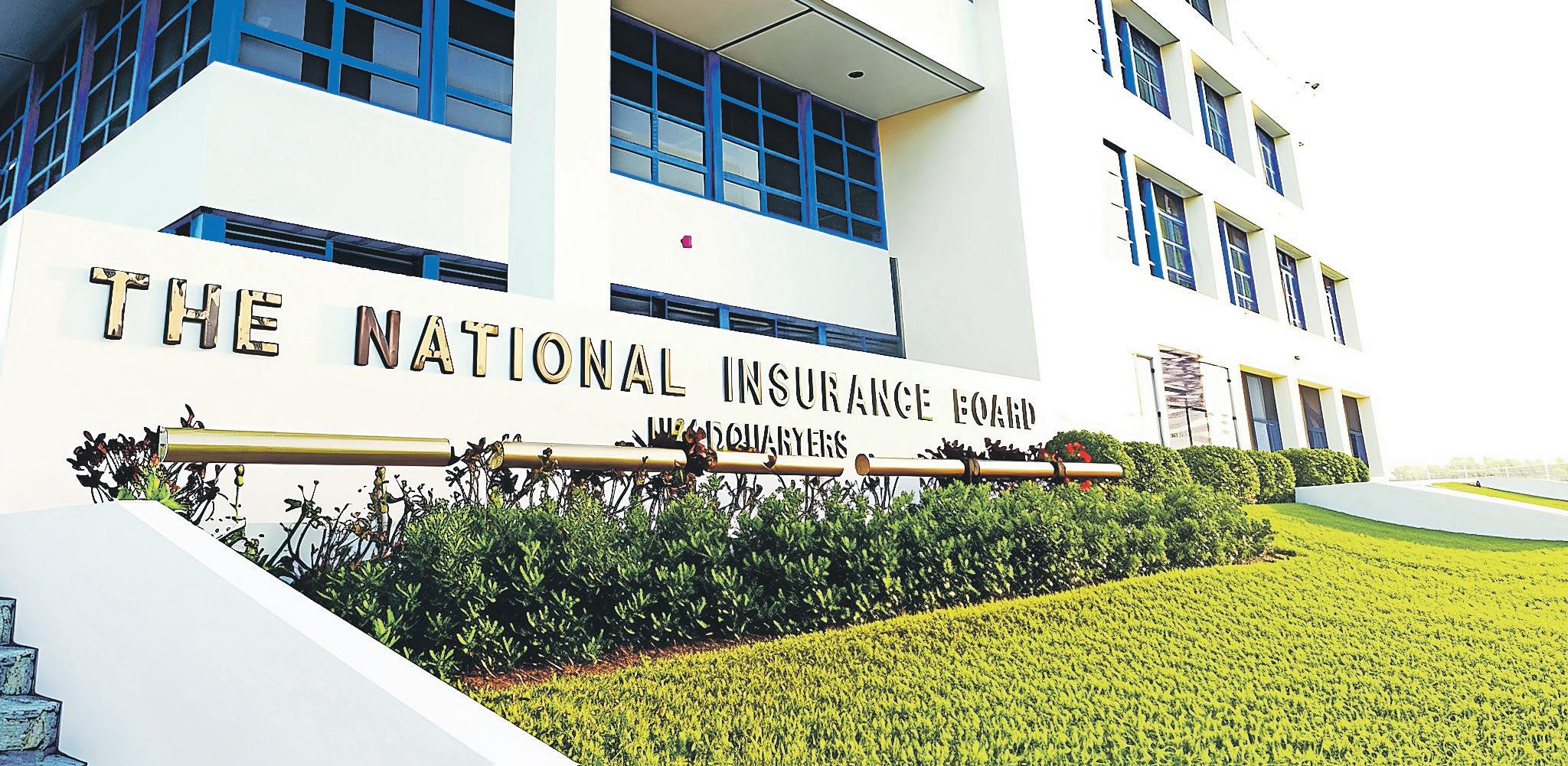
Alarm over NIB ‘near term solvency crisis’
BY NEIL HARTNELL Tribune Business Editor
THE National Insurance Board (NIB) “faces a near-term solvency crisis even under optimistic assumptions”, the Inter-American Development Board (IDB) is warning, with the survival of social protections for thousands of Bahamians not featuring as a key general election issue.
The multilateral lender, in a just-released assessment of social security systems in The Bahamas and wider Caribbean, sounded the alert that “deeper structural reforms” are needed immediately to prevent NIB’s failure with adjustments involving the capping of administrative expenses, boosting compliance and raising investment returns only prolonging the inevitable and offering modest breathing space.
IDB warns of crunch even under ‘optimistic assumptions’
Major parties silent on survival of safety net for thousands
Reform must be in ‘top five priorities’: ‘We can’t let it die’
Election contenders urged to back total oil drill prohibition
BY NEIL HARTNELL Tribune Business Editor nhartnell@tribunemedia.net
ENVIRONMENTAL
activists have called on all political candidates to publicly disclose whether they support a ban on oil drilling in The Bahamas ahead of today’s general election as the last explorer’s successor continues to mull whether to launch legal action against the Government.
Casuarina McKinney-Lambert, executive director of The Bahamas Reef Environment Educational Foundation (BREEF), told Tribune Business that the Our Islands, Our Future (OIOF) coalition of which her group is part has written to all PLP, FNM and Coaliton of Independents (COI) candidates asking them to reveal their stance on such a ban given that imposing one would be “for the well-being of all Bahamians”.
Activists: ‘We need ban to eliminate future threat’
Explorer says still mulling whether to sue Gov’t
Permitting activity will undermine carbon credits
The report, ‘Long-term social insurance in the Caribbean’, said that restricting NIB’s administrative expenses to 1 percent of insurable wages and increasing investment returns by two percentage points per year will only delay the complete depletion of the Bahamian social security system’s $1.44bn reserve fund “to the early 2030s” - just a few years beyond their presently-forecast 2028 exhaustion.
revenue pace lags prior year’s besides VAT
BY NEIL HARTNELL Tribune Business Editor nhartnell@tribunemedia.net
THE Government slashed its year-to-date deficit by 13.4 percent during February 2026, it has been disclosed, although its revenue collection pace remains behind the prior year’s first eight months except in its key VAT revenue stream.
The Ministry of Finance, unveiling the Government’s February fiscal performance, revealed that it generated a $45.3m surplus for the month, meaning that total revenue income exceeded collective spending. However, that represented a $13.3m or 22.8 percent decline on the $58.8m surplus that the Davis administration produced in February 2025.
This leaves the Government needing to produce a $368.4m positive swing during the final four months of the 2025-2026 fiscal year if it is to hit its $75.5m Budget surplus target for the 12 months, albeit this coincides with the revenue-rich months of March and April when taxes and other income streams are boosted by peak winter tourism and economic activity, Business Licence fee payments, the bulk of real property tax collections and commercial vehicle licensing month.
The end-February deficit, covering the 2025-2026 fiscal year’s first eight months, stood at $292.3m to signal that the Government has some work to do to reach the projected surplus. And, as the Fiscal Responsibility Council’s recent mid-year Budget report made clear, it may have to achieve its $75.5m target without the benefit of $130m in projected corporate income tax revenues as the mechanism to collect this levy has not yet been implemented.
The Ministry of Finance’s February report also revealed that the pace of revenue collection for the first eight months, as a percentage of the 2025-2026 full-year target, is lagging behind 2024-2025’s except in the most important revenue stream - VAT. VAT revenues, standing at $1.017bn at end-February, represented 66.7 percent or
The threat posed to the sustainability of Bahamian retirement pensions, as well as multiple shortterm benefits such as unemployment,
Family Guardian seeks ‘growth’ with 20% Bahamas First stake
BY NEIL HARTNELL Tribune Business Editor nhartnell@tribunemedia.net
FAMILY Guardian’s
acquisition of a 20 percent ownership interest in Bahamas First is occurring amid a lack of “growth options” for the industry, a fellow insurer asserted yesterday, as the latter company confirmed the
BY NEIL HARTNELL Tribune Business Editor nhartnell@tribunemedia.net
CARD and cheque fraud incidents in The Bahamas increased by 48.5 percent to 17,342 last year, the Central Bank has revealed, although the collective sum involved in such suspected crime was cut by two-thirds to $6.2m.
deal revealed by Tribune Business last week. Sir Franklyn Wilson, chairman of RoyalStar Assurance, one of Bahamas First’s main property and casualty underwriting rivals, told Tribune Business that Family Guardian’s Board and management had likely determined making the investment would generate more value, and higher returns, for shareholders than
Urging voters to cast their ballots “based on policy actions” of the major parties and their candidates, she argued that prohibiting further exploration activities - both on land in Bahamian territorial waters - will safeguard this nation’s critical tourism and fisheries industries, as well as support the country’s
simply returning capital to them via dividends.
While the BISX-listed life and health insurer is acquiring the largest equity interest in Bahamas First, it is well short of giving it majority control, but Sir Franklyn said it will still be sufficient to give Family Guardian Board seats and a “voice of influence and meaning” in the carrier’s future direction. There may also be potential synergies that can be exploited between Bahamas First and Family Guardian’s general insurance agency and brokerage, which places property and casualty business.
Sir Franklyn spoke after Bahamas First, following this newspaper’s exclusive
The banking regulator, in its 2025 annual report, confirmed that some 96.7 percent of these reported fraud attempts occurred on New Providence. “Disaggregated by type, debit card fraud comprised 83.7 percent of all the cases, while the corresponding value represented 45.1 percent of the overall value,” it said.
“The volume of credit card fraud constituted 15.8 percent of all cases and 22.1 percent of the attendant value. With the sustained reduction in cheque usage, reported fraud was less than 1 percent (0.5 percent) of total
efforts to secure a leadership position in the fight against climate change and preserve “carbon sinks” such as seagrass meadows. Ms McKinney told this newspaper that an oil exploration ban is needed to eliminate the potential environmental threats posed by such activities even though Sintana Energy, the successor to Challenger Energy Group, which drilled the last exploratory well in Bahamian waters in 2020-2021, signalled in its recently-release annual results it is unlikely to seek permission for further research in this nation,
revelation of the deal, confirmed that Family Guardian is acquiring 19.71 percent of its shares from the Canadian insurer, Definity, and its predecessor, The Economical Insurance Group (TEIG).
“The Board of Directors of Bahamas First Holdings has been advised by its 19.71 percent shareholder, TEIG Holding Company (Barbados), that it has entered into an agreement to sell its 19.71 percent interest in Bahamas First Holdings to Family Guardian Insurance Company. There is no impact on the operations of Bahamas First Holdings or any of its subsidiaries as a


LARRY GIBSON
Arawak Cay blames tourist decline on PI Beach Club
BY FAY SIMMONS Tribune Business Reporter jsimmons@tribunemedia.net
large-scale cruise line developments may have on independent Bahamian businesses that traditionally benefit from visitor spending outside of controlled port environments.
we didn’t want it to be too close to the election,” she said.
Lilian Laramore-Smith, president of the Arawak Cay Fish, Conch, Vegetables and Food Vendors Association, said vendors have seen a noticeable reduction in foot traffic over the past year.
Speaking to Tribune Business, Mrs Laramore-Smith said that although a steady flow of locals still frequent
ARAWAK Cay vendors yestrerday revealed business has slowed significantly since the opening of Royal Caribbean’s Paradise Island Beach Club, with operators reporting fewer tourists and declining revenues as more passengers choose its private destination.
the popular restaurant strip there has been a decline in visitors, especially cruise passengers, since the Beach Club opened last December.
“We try to maintain some level of control to ensure Bahamians remain here, but the influx of guests has diminished significantly since the Beach Club opened,” she said
Union: ‘Patience running out’ on promotions
BY FAY SIMMONS Tribune Business Reporter jsimmons@tribunemedia.net
A TRADE union yesterday warned that “the membership’s patience has run out” amid complaints over unpaid overtime, delayed promotions and allegedly improper hiring practices.
Deron Brooks, the Bahamas Customs, Immigration and Allied Workers Union president, said there is growing frustration among members with the union having repeatedly raised concerns with senior government officials, including the ministries of Finance, Public Service and immigration, yet many long-standing issues remain unresolved.
Among the concerns raised by the union are issues affecting a group of officers originally hired
and overtime
in the 1980s and 1990s as guards who were later transitioned into officer ranks.
Mr Brooks argued that the move negatively affected their salaries and future pension benefits.
“Had they stayed in the guard rank, their salary and pension position would have been better,” said Mr Brooks. “Because they transitioned from the guard rank to officer rank, many of them stagnated in terms of upward mobility and salary advantage, and now their pensions will also be lower.”
Mr Brooks said the union has asked the Ministry of Public Service to consider “grandfathering” affected officers into the next rank before retirement in order to improve their financial position. The union is also raising concerns over outstanding overtime and transportation payments
owed to workers in both the Customs and Immigration departments.
“And that’s just the promotion issue. There’s also outstanding overtime and transportation payments,” said Mr Brooks. He said delayed promotions remain one of the biggest sources of frustration among union members. According to the union, only around 60 Customs promotions were recently released despite the department’s size.
“We are of the view that the Customs promotion list should have been in excess of 400 persons,” he said. “So far to-date they’ve only released 60.”
Mr Brooks also claimed more than 100 Immigration Department employees were left off the 2025 promotion exercise, while some officers excluded from both the 2021 and 2025 exercises
“A lot of those beach passengers who would normally come across to Arawak Cay are now being diverted elsewhere, and that has reduced the traffic coming here. As a result, our income has been declining.”
Mrs Laramore-Smith’s comments come amid broader concerns raised by tourism operators and vendors over the impact
were never told why they were bypassed.
“There were persons in the 2021 exercise and the 2025 exercise who were excluded, and they were never told why,” he said.
The union additionally questioned hiring practices involving recent recruitment exercises, alleging that established public service procedures were bypassed during the hiring process.
“There’s a procedure you are supposed to follow in the public service, and that procedure was circumvented,” said Mr Brooks.
He claimed the issue has affected more than 150 workers from previous recruitment groups who may now face difficulties obtaining confirmation letters required for promotions and other employment-related matters.
“We already have a list of over 150 persons who, because the process was not followed properly, are going to have difficulty getting confirmed, and without confirmation they will never get promoted,” Mr Brooks said.
In an effort to attract more visitors and stimulate activity, the Association is preparing to host its upcoming Grits Festival later this month. Mrs Laramore-Smith said the event, which has been rescheduled for June 27, is expected to feature food competitions, cultural activities and entertainment centred around Bahamian cuisine.
“We’re excited about the Grits Festival. We changed the date to June 27 because
He said some workers later discovered they cannot obtain letters needed for loans or overseas travel because their employment process was not properly completed.
“These young people are happy to have jobs, but later on they find out they cannot get promoted, cannot get a letter to travel to the US, and cannot get a job letter to secure a loan,” he said.
Mr Brooks also criticised a recent counter-proposal received from the Government regarding industrial agreement negotiations, arguing that several changes differed from what had previously been discussed.
“We have corn grinding mills, the grits weight contest, lots of prizes and surprises, and all kinds of dishes — conch and grits, crab and grits, peas and grits, beans and grits — anything to do with grits. The competition is on.”
Mrs Laramore-Smith said vendors are hopeful the festival will help draw both residents and visitors back to Arawak Cay and provide a much-needed boost for businesses that have been struggling with lower tourist numbers.
“We understand the nature of negotiations, that it’s give and take and there will be back and forth, but we were not satisfied with the counter-proposal given to us,” he said. Despite repeated meetings and correspondence with government officials, Mr Brooks said workers remain frustrated by delays and uncertainty surrounding their concerns.
“If the recommendations are there, then process them. Why keep these people in limbo?” he said. “We were very patient, but now the membership’s patience has run out.”
Bahamian provider teams with DHL for expansion in Freeport
A BAHAMIAN maritime and logistics provider has teamed with DHL Global Forwarding to unveil their Freeport expansion via a new facility on Queen’s Highway.
FOWLCO Maritime & Project Services, in a statement, said the official opening will take place on May 15, 2026, at 11am, as it bids to further the expansion and modernisation of logistics services in the northern Bahamas.
Executives from DHL will be present alongside FOWLCO president, Glennett Fowler, as they integrate the former’s global logistics network with the Bahamian firm’s maritime operations, project logistics, brokerage,
warehousing, trucking and specialised support services.
“This partnership reflects a shared vision for operational excellence and long-term growth,” said Terryck Torres, logistics operations manager at FOWLCO Maritime & Project Services.
“By bringing DHL’s global logistics capabilities into our Freeport operations, we are strengthening the standard of logistics services available in Grand Bahama and reinforcing the island’s position as a regional logistics powerhouse.” The move involves the relocation of DHL operations to the FOWLCO complex on Queen’s Highway.
Fidelity helps pioneer new Visa technology
VISA yesterday said it has partnered with Fidelity Bank (Bahamas) to launch new digital technology that will enable customers to prove their identities.
The card provider, in a statement, said its firstever deployment of ‘Tap to Confirm’ and ‘Tap to Activate’ technology for issuing banks has been launched in collaboration with its fintech partner, Keyno, and Fidelity Bank (Bahamas).
It added that the innovation will turn the physical Visa card into a trusted identity credential that works with a simple tap inside the banking app they already use. Instead of relying on one-time passcodes, call centre verification or other complex authentication processes, cardholders can now confirm their identity or activate a new card simply by tapping their Visa card to their mobile device — providing EMV-level security while delivering a seamless user experience.
"Identity verification has become one of the defining challenges of digital
commerce, and one of the biggest points of friction for consumers and issuers alike. With tap authentication, Visa is transforming the card in your wallet into a secure, intuitive identity credential, delivering an experience that is easier for consumers and more secure for issuers. This is what Visa's payments expertise and global infrastructure make possible,” said Mike Romero, head of digital solutions, Visa Latin America and the Caribbean.
“Identity is the key to safe commerce. Now, your Visa card is the key to secure online identity verification. Keyno and Visa are leading the way, making digital banking safer, simpler and more trusted with just a tap,” said Robert J Steinman, Keyno chief executive. Following the successful Fidelity pilot, Visa said it is positioning ‘Tap to Confirm’ as a premium security and authentication solution with global expansion planned throughout the year.
NOTICE is hereby given that I LAVENT DUROSIER of Faith Avenue North, Carmichael Road, New Providence, Bahamas, applying to the Minister responsible for Nationality and Citizenship, for Registration Naturalization as a citizen of The Bahamas, and that any person who knows any reason why registration/naturalization should not be granted, should send a written and signed statement of the facts within twentyeight days from the 12th day of May, 2026 to the Minister responsible for nationality and Citizenship, P.O. Box N-7147, Nassau, New Providence, The Bahamas.
Gas station dealer pledging jitney and truck driver relief
BY ANNELIA NIXON Tribune Business Reporter anixon@tribunemedia.net
A BAHAMIAN petroleum retailer yesterday pledged to provide relief to struggling jitney and truck drivers hit by rising fuel costs as diesel prices climb above $7 per gallon and pressure mounts on the transportation system.
Bernard “Porky” Dorsett, operator of Porky’s Rubis Service Station, said he is working on a diesel discount programme targeted at jitney operators and truck drivers, describing the effort as both a business strategy and a response to growing economic hardship in the transportation sector.
“That’s my main objective,” Mr Dorsett said.
“Knowing what it is, I will try my best. The minute it
went over $7, I said there got to be a way.” He added that the initiative’s structure is still being developed, but he hopes increased diesel sales volumes will offset the reduced margins. “I’m working on doing something for the bus drivers and the big truck drivers,” he said. “I’m working on putting something together for diesel. They diesel vehicles, most of them… But I got to do something crazy on diesel. If I could drop it and sell another 5,000 gallons a month, it’ll cover me. I’ll be alright. That’s exactly what I’m working on right now,” Mr Dorsett explained. The proposal comes as bus operators across New Providence warn they may be forced into industrial action over stagnant fares, soaring operating expenses and fuel prices
that many say have become unsustainable. The Bahamas Unified Bus Drivers Union (BUDU) recently warned that drivers are nearing a breaking point, with diesel costs now exceeding $7 per gallon and some operators spending up to $150 daily on fuel alone. Drivers have argued that the 25-cent fare increase approved in 2024, bringing adult fares to $1.50, has failed to keep pace with inflation and rising maintenance costs.
The union has pushed for fares to rise to at least $2, while others have called on the Government to remove VAT from fuel purchased by licensed bus operators. And, during a recent press conference, they questioned why the Government has not worked out an arrangement with gas stations for some relief as they are the
most relied upon means of public transportation for Bahamians and consistently run from early morning into the evenings. Mr Dorsett said he understands the position bus drivers are in because fuel retailers have long been advocating for their own margin increases, or a margin based on a percentageas opposed to the current fixed system. Gas station operators spent years lobbying for higher profit margins before the Davis administration approved increases in 2024 - the first adjustment since 2011. The Government raised gasoline dealer margins from 54 cents to 79 cents per gallon and diesel margins to 50 cents per gallon.
Still, retailers continue to advocate for a shift away from fixed margins towards a percentage-based system
Fly fishing chief urges: Protect Morgan’s Bluff
BY ANNELIA NIXON Tribune Business
THE Bahamas Fly Fish-
ing Industry Association’s (BFFIA) president yesterday argued that Morgan’s Bluff Port in Andros can be used to break purported port monopolies and drive further economic independence.
In a message released ahead of today’s general election, Prescott Smith argued that whoever controls the country’s ports controls its economy. “He who controls your port controls your economy,” Mr Smith said, calling Morgan’s Bluff one of the most important assets in The Bahamas.
He argued that powerful economic interests have spent years trying to gain control of Morgan’s Bluff, whic is located on Andros roughly 41 miles from Arawak Cay. Mr Smith said the port could create new economic opportunities for Bahamians and help break what he called a monopoly over shipping and trade centred around Arawak Cay.
“Morgan’s Bluff is the geographical location that can break those monopolies and create new opportunities for Bahamians,” he said.
Mr Smith praised Dr Hubert Minnis, along with current Prime Minister Philip Davis KC, for resisting what he described as efforts to hand over control of Morgan’s Bluff. “The Bahamas is 85 percent marine environment,” Mr Smith said. “Most of the wealth in the country is in that space.” He also tied the issue to the future of Bahamian ownership in industries such as fly fishing and tourism. “Are Bahamians just supposed to be the workers or are we supposed to be the owners?” he said. He argued that Andros’ environmental and economic significance makes the issue larger than politics, and urged Bahamians to think about future generations when voting.
“Any leader of this country who turns over that port and takes it away from the true ownership of Bahamian citizens will be committing treason against unborn generations,” Mr Smith said. He called for Morgan’s Bluff to remain under Bahamian ownership and control.
“It is my desire to see Morgan’s Bluff port transferred to full ownership by Bahamians, where it can never be taken away from the citizens - unlike what has happened with the
cruise port or at Arawak Cay,” he said.
“I am not talking about token ownership or common shares, but true ownership that ensures generations yet unborn will know that the port, located on the island with the most land, the richest farmland, the largest mangrove nursery system in the country, and the greatest pine forest, will be protected.
“This protection is vital so that Bahamians five, ten generations from now will look back and know that we had leaders with integrity; leaders who were willing to stand firm, just as Clarence A. Bain, Doris Johnson and Jeffrey Thompson once did for us. And so we must do our part today to make it better for generations to come.”
Mr Smith acknowledged persons who have made a mark on the fly fishing industry. He added: “I
would like to thank former minister Pierre Dupuch because he did us an incredible thing. And former minister Alfred Gray, one who laid the foundation for Bahamian ownership. And Alfred Gray was the minister who fought for the historic legislation to pass in 2016.
“It’s important to give credit to them because, you see, it's not partisan. Minister Pierre Dupuch was the FNM cabinet minister in 1994. If he didn't stand in the room, we would not have anything left for Alfred Gray to build on. You're talking about the port with Hubert Minnis and Brave Davis, but when it come to the fly fishing industry, we want to say a special thank you to Pierre Dupuch and Alfred Gray, who was the minister who fought for the legislation to pass.”
that would fluctuate alongside global oil prices and inflation. “That’s our ultimate goal,” Mr Dorsett said. “When the Government say VAT is 10 percent, 10 percent is 10 percent of whatever it is.”
He currently discounts gasoline prices at his station. When gasoline prices climbed to $6.65 per gallon, he cut his retail price to $6.49 in an effort to drive higher sales volume.
“I’m just playing it by ear,” Mr Dorsett said. “I just dropped the price of my gas so I could try to sell some gas. So I’m trying to sell volume now, and it’s catching on because my numbers have gone up.”
According to Mr Dorsett, the strategy appears to be working. He said monthly
sales volumes increased from roughly 3,400 gallons to about 4,400 gallons after the price reduction.
“The money that I would have lost, I’m now making a couple more cents because I needed to sell about another 600 gallons to cover the 15 cents, 16 cents that I took off,” he said. “I’m now selling around 1,000, 1,200.” Still, Mr Dorsett does not expect relief from global oil markets any time soon.
“Well, I think it’ll go up before it’ll come back down,” he said.
Peter Roker, proprietor of Roker’s Gas Station, in an effort to support jitneys and large trucks offers 20 cents off of gasoline overnight, and 12 cents off diesel round-the-clock.


NIB structural reform must ‘be front and centre on table’
medical care, and industrial/ injury coverage, has not registered as a campaign issue ahead of today’s general election. None of the major political parties has publicly laid out their strategy for rescuing NIB despite the potential negative impact for thousands of Bahamians from a danger that has not gone away.
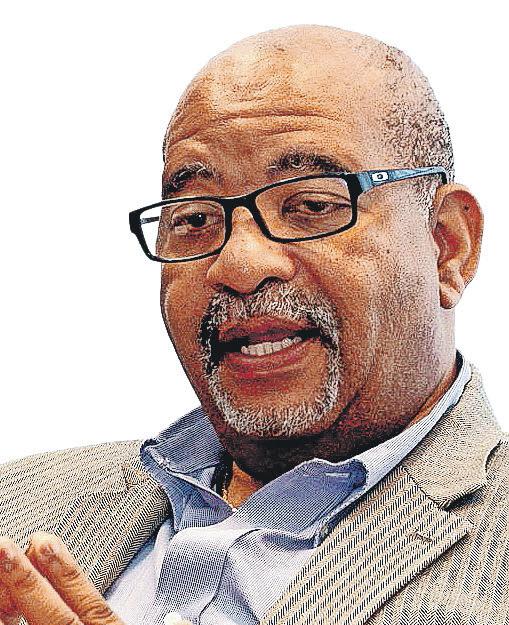
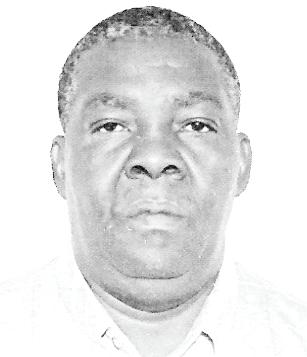
Larry Gibson, the now-retired former chief operating officer for CG Atlantic Pensions, who has long advocated for comprehensive pension and social security reform in The Bahamas, told Tribune Business yesterday that saving NIB should be “up there in the top five priorities” for the incoming administration as he warned: “We cannot let it die.”
Asserting that “NIB is all they have” for many retired Bahamians, who lack private pensions and savings to sustain their lifestyle once they stop working, Mr Gibson acknowledged that “everybody is silent and nobody is talking about it” during the general election campaign. “They are just like putting it under the table when it should be on the table front and centre,” he told this newspaper.
“There has to be fundamental change and structural change. There’s absolutely no doubt about it. The problem is not going away.” Dr Tami Francis, NIB’s director, told the Bahamas Business Outlook conference in January this year that an increase in the insurable wage ceiling - with changes currently implemented on a two-year cycle - will come into effect on July 1, 2026.
The last rise took the ceiling, or cap, from $740 to $810 but, under questioning from an Outlook attendee, she said the upcoming increase will take it to “$830 a week at least” and “you can’t expect it to be lower than that”. However, Dr Francis made no mention of upcoming NIB contribution rate increase, with the last all-in 1.5 percent rise - split equally between employer
and employee - taking the total rate from 9.8 percent to 11.3 percent on July 1, 2024.
NIB’s last actuarial study, which assesses the social security system’s financial health, and ability to pay benefits, called for a 2 percent contribution rate rise to be implemented every two years between 2022 and 2036 to “restore the short and medium-term financial sustainability of the scheme”.
Sticking to this schedule would mean another rise this year and, together with the insurable wage increase, is likely to be one factor behind the Davis administration’s decision to go for a May general election.
The IDB study, written by Manuel Garcia Huitron, Carolina Gonzalez-Villosa and Juan Miguel Villa, sought to determine “how improvements in administration and investment policy could extend the solvency runway of reserves before a cash flow shortfall occurs” for The Bahamas’ NIB, as well as similar social security schemes in Trinidad & Tobago as well as Saint Vincent & the Grenadines.
Asking “how much time can such measures buy”, the report suggested that - in The Bahamas’ casethe answer was ‘not much’, although it projected that they would extend the lifespan of the two other Caribbean territories’ social security systems much longer.
“The Bahamas exhibits the most acute trajectory,” the IDB report found. “Under the status quo, reserves decline sharply and deplete around 2028. The scenario where administrative expenses are capped at 1 percent of insurable wages, and that where investment returns are raised by two percentage points, each provide modest extensions beyond 2028.
“The combined improved performance scenario, which caps administrative costs, strengthens compliance and raises expected returns, delays reserve depletion to the early 2030s. Single operational levers thus offer only short relief.
NOTICE
NOTICE is hereby given that ROSE-GUERLINE BAPTISTE of Fellow Centre Road, New Providence, Bahamas is applying to the Minister responsible for Nationality and Citizenship, for registration/ naturalization as a citizen of The Bahamas, and that any person who knows any reason why registration/naturalization should not be granted, should send a written and signed statement of the facts within twenty-eight days from the 5th day of May, 2026 to the Minister responsible for nationality and Citizenship, P.O. Box N-7147, Nassau, Bahamas.
Meaningful gains occur when cost control, compliance and investment governance are pursued together. Even then, however, insolvency is still imminent within a decade, highlighting the need for deeper parametric and structural reforms.”
The IDB study said that The Bahamas’ ageing population presents a further challenge for NIB reforms to address. “A one-year increase in life expectancy at age 65 materially raises lifetime pension outlays and can accelerate the crossing of prudential reserve thresholds,” it added, warning that this nation cannot afford to delay reform.
“The Bahamas faces a near-term solvency crisis even under optimistic assumptions,” the report asserted, noting that capping administrative costs, boosting compliance and enforcement, and increasing investment returns will only buy time and “lengthen solvency runways”.
“Crucially, then, the simulations demonstrate that such operational improvements are not substitutes for deeper change,” the IDB said. “Indeed, in a country like The Bahamas, maximum efficiency only delays depletion by a few years.
“They can, however, give governments and social partners a necessary fiscal ‘window’ to implement comprehensive pension reforms. Operational changes must thus be viewed strictly as means of buying political time to implement the necessary structural reforms, rather than as alternatives to them.”
Mr Gibson, speaking to Tribune Business, yesterday urged a “multi-faceted approach” to resolving NIB’s woes, adding: “There’s a series of things we can do.”
The first, he suggested, is to increase the retirement age beyond 65, noting that “a bunch” of government agencies set this threshold
even lower at 60 years-old.
Raising this, the veteran financial adviser added, would “buy you a lot of time” and reduce the pressure created by more and more persons qualifying for an NIB pension.
Mr Gibson said other options, as part of a much wider rescue plan, would be to further raise the insurable wage ceiling, presently set at $3,510 per month although due to increase from July 1 this year; increase contribution rates; raise the eligibility threshold at which Bahamians qualify for an NIB pension above the present 500 weeks worth of contributions; and reduce benefits “which isn’t going to be a popular thing”.
The Bahamas’ population demographics have also moved against NIB, with the increase in retired and elderly persons outstripping the workforce’s growth. As a result, there are fewer working Bahamians generating contribution income to support the expanded pension and other benefits payouts, resulting in NIB incurring deficits in the seven successive years up until 2022 - the last period for which audited financial statements are available.
“Your contributions are under pressure,” Mr Gibson told Tribune Business. “You will have to have a radical overhaul of NIB. It’s absolutely essential. You cannot let it die, but what’s going to happen? This is something people for years have been trying to warn the country about. For most people, NIB is all they get. They don’t have a pension, they don’t have savings.
“It’s the safety net. The can is against the brick wall. You cannot kick it down the road any more. This has got to be up there in the top ten… top five priorities I would say. What we are doing is building up a liability that we wouldn’t be able to get out of at all.” However, NIB reform has not figured as a central issue in
any major political party’s campaign - largely because any changes are likely to be unpopular with at lease some segments of voters.
“Everybody is silent on it,” Mr Gibson told this newspaper. “Nobody is talking about it. They’re just like putting it under the table when it should be on the table front and centre. Is it a key factor? Is it a major factor? Is it an important factor? Absolutely yes to all of those. It doesn’t go away. There has to be fundamental change and structural change. There’s absolutely no doubt about it. The problem is not going away.”
The IDB study revealed that NIB’s administrative costs, as a percentage of total contribution income, were the highest of all Caribbean social security systems in 2022, standing at 20.9 percent. This has always been explained away by successive administrations as a function of The Bahamas’ archipelagic geography, and having to duplicate the same systems on multiple islands, while other Caribbean nations consist of either one or two islands.
However, Mr Gibson said of NIB’s administrative costs: “Nobody wants to admit it, but it’s outrageously high. That makes it highly unsustainable.” He added that successive administrations have used NIB as “a slush fund” to invest in government buildings and securities rather than diversifying its investment portfolio and seeking higher returns. NIB was also shown by the IDB report as the Caribbean social security system whose reserves are likely to be exhausted first, come 2028, while its reserve-to-expenditure ratio was forecast to fall below 2.0 as of last year - meaning the Bahamian social security system’s liquid assets “cover less than two years’ of benefits”.
The Bahamas was shown to have the second best “replacement rate” in the
Bahamas First confirms its fellow BISX insurer buying largest bloc
PURCHASE - from page B1
result of this change in shareholding,” Bahamas First said in a notice to shareholders and the Bahamian capital markets.
Sir Franklyn, speaking subsequently to Tribune Business, said Family Guardian and Bahamas First share something of a history given that a merger between the two was planned and proposed more than a decade ago through the creation of a holding company, but the deal was never ultimately sealed.
“The fact Family Guardian is going back, and as this shows to their credit, obviously Family Guardian doesn’t have too many growth options,” he added. “They have capital, so their choices are either to invest in something or give it back to the shareholders in dividends.
“This is obviously an investment. Twenty percent is not going to give you control of matters, but it’s enough for your voice to have influence and some meaning, but it’s not control. It isn’t like there are natural synergies to be extracted, even though there are some
as Family Guardian has a general insurance agency licence, so it may provide them with an opportunity to do some more business.
“There’s nothing here that’s going to change Bahamas First,” Sir Franklyn continued. “They can possibly use their relationship and influence to help strengthen management… All of this provides growing evidence of the increasing sophistication of the local capital markets. It’s more and more a sign of the local capital markets becoming increasingly sophisticated, and that’s a good thing.”
Family Guardian, which is also a publicly-traded company listed on BISX, alluded to the Bahamas First deal at the bottom of its just-released 2025 audited financial statements although it was as vague as possible as to the identity of its target.
“On February 27, 2026, the group’s insurance subsidiary [Family Guardian Insurance Company] entered into a definitive agreement to acquire a 20 percent equity stake in another entity,” the ‘subsequent events’ section of its financials, signed-off on April 30, said.
NOTICE
MB Company Limited
Pursuant to the Provisions of Section 138 (8) of the International Business Companies Act 2000 notice is hereby given that the above-named Company has been dissolved and struck off the Register pursuant to a Certificate of Dissolution issued by the Registrar General on the 3rd day of April 2026
Caribbean behind Suriname, with NIB pensions on average covering 58 percent of a person’s pre-retirement income. Yet half this amount, or 29 percent, comes from what the IDB report labelled “implicit subsidies” - the difference between actual payouts and what persons should be due based on their contribution payments.
The report also disclosed that The Bahamas has a “premium gap” of more than 4 percent, which represents the difference between the rate required to fund NIB’s long-term benefit payouts and the contribution rates actually paid. NIB contribution income, as a percentage of Bahamian GDP, was ranked third lowest in the Caribbean at 2.28 percent, but revenues generated by sanctions, fines and penalties were the region’s highest at 0.8 percent of GDP.
NIB itself, in its last annual report in 2022, warned that reform cannot be delayed. “The longterm sustainability of the Fund is in jeopardy of being depleted by the year 2028, just one year earlier than predicted in previous reports,” it wrote.
“Initial discussions have commenced with NIB strongly considering recommendations offered by the International Labour Organisation (ILO) for a gradual phased-in rate of 1.5 percent every two years to ease the burden on employers and employees, while also allowing consideration for future socio-economic conditions within The Bahamas.
“With these considerations in mind, action can no longer be delayed if we are to protect the social safety net which generations of Bahamians have come to depend on. The time to act is now.” NIB in 2022 paid out 29,837 in total claims worth a collective $353.5m.
sufficient financial firepower to complete the deal following a year in which profits rose by 37.8 percent or more than $2.6m to $9.74m compared to $7.066m in 2024.
“As at the date of authorisation of these consolidated financial statements, all applicable regulatory approvals have been obtained. However, the transaction has not yet been completed, and the financial impact has not been recognised in the accompanying consolidated financial statements.”
Insurance and financial industry sources, though, confirmed this was indeed referring to Definity’s 20 percent equity interest in Bahamas First, although the latter’s own 2025 financials made no mention of it.
Based on its 20 percent interest, Definity holds some 7.302m shares in Bahamas First given that the latter has some 36.512m outstanding common shares issued. And, given that Bahamas First shares closed at $2.70 per share on BISX yesterday, Family Guardian will have to pay $19.175m for the Definity bloc if the deal is at prevailing market price.
Family Guardian’s healthy 2025 year-end balance sheet, which showed cash on hand of almost $20m and $81.916m in retained earnings, suggest that has
Tribune Business records show that Definity has been seeking to offload its Bahamas First 20 percent ownership interest, and exit The Bahamas, for some time. This newspaper reported in 2023 that the Canadian insurer said it was in negotiations with an unnamed purchaser to sell its equity interest in the Bahamian property and casualty underwriter. That deal never seemingly materialised, thus opening the way for Family Guardian. At the time in 2023, Bahamas First’s shares were trading at $2 om BISX meaning, Definity’s stake is now worth more than the $14.605m valuation attached then due to the increase in its share price.
Definity, and before it The Economical Insurance Group, likely holds its Bahamas First stake via a Barbados holding company so it can exploit the double taxation treaty that Caribbean state has with Canada. This would ensure dividends paid by Bahamas First were taxed only at the lower Canadian rate.
Glenda Fasolin Lisboa Liquidator Of MB
Company Limited
‘Bahamas well positioned for strong anti-oil drilling stance’
DRILLING - from page B1
Sintana, noting that the Government has not responded to its application for four licence renewals that was submitted more than five years ago, said it is still assessing whether to launch legal action as it considers the available options for recovering the $100mplus investment made by Challenger and its predecessor, Bahamas Petroleum Company (BPC), in oil exploration in this nation.
Describing these investments as “legacy assets” and “non-core operations”, Sintana hinted it has no desire to resume exploration in The Bahamas having found more attractive prospects offshore of Uruguay in Latin America and Nambia and Angola off south-west Africa. It is also restructuring by winding-up three Bahamas-domiciled companies - Island Offshore Petroleum, Sagrasso Petoleum and Columbus Oil & Gas.
“A subsidiary company of Challenger entered into
licence agreements with the Government of the Commonwealth of the Bahamas on April 26, 2007, for each of the Bain, Cooper, Donaldson and Aneas licence areas, offshore in The Bahamas,” Sintana said.
“Extensive technical work was undertaken on the licence areas between 2008 and 2020, including 3D seismic acquisition in 2012, and in late 2020 the Perseverance One well was drilled in the licence areas. In March 2021, consistent with the terms of the licences, application was made to the Government of The Bahamas to renew the licences for a third exploration period.
“However, the Government of The Bahamas has not yet responded to this application and, given the length of time that has passed since the application was made, the company is presently exploring alternative means of monetising the value of its historic investment in The Bahamas, including considering legal remedies
available against the Government of The Bahamas. As such, the licence interests are considered to be legacy assets and Sintana has no active operations in The Bahamas.”
Ms McKinney, though, is arguing that The Bahamas cannot afford to take chances despite Sintana’s seeming exit from this nation. “We’re really at a point where we need a ban on oil drilling going forward,” she told Tribune Business. “We’ve seen what happens around the world when countries are caught in oil turmoil. We don’t want to be part of that. Now is not the time to enter into a new industry with oil drilling.
“Our Islands, Our Future wrote to all the candidates asking them to state their position on oil drilling and whether they would support a ban. It has asked candidates to state their support for a ban on oil drilling. Whether you are PLP, FNM or COI, state your position on this. We are really encouraging people to
expanded to 706 from 45 in 2024, with the corresponding value notably higher at $2.8m in 2025 from $21,000 the previous year.
mark their votes based on policy actions. A big part of it is accountability and follow-through afterwards.”
Ms McKinney added: “We do feel The Bahamas is well-positioned to take a strong stance against oil drilling, and take a leadership position as a country that has rejected oil drilling and its impact. That certainly supports our tourism industry and fisheries industry, and supports families across the archipelago. From a tourism perspective, it will look really good for our country if we take a stand against oil drilling.
“The Bahamas has signalled we are serious about protecting our natural resources and our carbon sinks, and permitting oil drilling would undermine that for sure. Again, we’re one of the countries most vulnerable to climate change given that we are a low-lying archipelago in a hurricane prone area. We need to take this seriously.”
The BREEF chief also voiced opposition to plans, previously mulled
As for card payments, the Central Bank said 2025 saw greater use of both the debit and credit variety.
by Challenger, to monetise or recover the investment in its Bahamas exploration licences through the issuance of carbon credits generated by - and valued against - any oil deposits that are actually discovered under this nation’s seabed. Any oil found would not be recovered, but this would require exploratory drilling in The Bahamas again.
“Any carbon credits should go into protecting carbon sink assets in The Bahamas rather than to a foreign company that had exploration rights in The Bahamas,” Ms McKinney asserted. “We still need a ban. We need to make sure this is not a threat in the future.
“I think we need to be clear that those permits are not pending renewal. They have been expired for three years. Expired would be a more accurate statement than just pending. I think this is something we hope candidates would come out in support ofa ban on oil drilling. It’s
for the well-being of all Bahamians.” Joe Darville, the Save the Bays executive chairman, backed Ms McKinney by telling Tribune Business:
“We cannot run any risk that’s detrimental to our marine environment, which includes the sea grass and the coral reefs. We cannot run the risk. It would be foolhardy in the extreme for anyone to dream of giving permission for that to happen in our territorial waters.
“We have very little land space, and are losing that by a foot every year to sea level rise, so we have to depend on our oceans. We’d be absolutely foolish to do anything that threatens to damage the beauty of our oceans.” Mr Darville added that, should any legal claim be brought against the Government by Sintana, it “has to be sorted out in the courts” with the main objective being to prevent anything damaging Bahamian waters and the marine environment.
incidents. However, these cases represented 32.8 percent of the overall amounts, reflective of the typical higher average value of such transactions.”
The Central Bank described trends in digital payments by retail, or individual, customers and which were facilitated by electronic money services providers, as “mixed” compared to the prior year despite “increased account usage”. While the integration of the Sand Dollar digital currency with the banking system’s Automated Clearing House (ACH) enabled more efficient electronic funds transfers, there was
less activity involving government and business payments to persons via this mechanism.
“The number of active wallet providers declined by seven to six, following the downgrade of one licensee to inactive status,” the Central Bank said. “The number of agents also decreased by 20.7 percent to 111 in 2025, compared to 2024.
“As for payments, which encompass Sand Dollar activity, the volume of person-to-business transactions grew by 24.3 percent along with the attendant value by 18.7 percent to $60m during 2025. Concerning business-to-business transactions, the number also


NOTICE is hereby given that I COLLETTE CHARLOW of, #2 Kalmia Close, Kool Acres Fox Hill, New Providence, Bahamas, applying to the Minister responsible for Nationality and Citizenship, for Registration Naturalization as a citizen of The Bahamas, and that any person who knows any reason why registration/naturalization should not be granted, should send a written and signed statement of the facts within twentyeight days from the 12th day of May, 2026 to the Minister responsible for nationality and Citizenship, P.O. Box N-7147, Nassau, New Providence, The Bahamas.
NOTICE
NOTICE is hereby given that I JEAN CLAUDE PIERRE of Village Road, Nassau, The Bahamas, is applying to the Minister responsible for Nationality and Citizenship, for registration/ naturalization as a citizen of The Bahamas, and that any person who knows any reason why registration/ naturalization should not be granted, should send a written and signed statement of the facts within twenty-eight days from the 4th day of MAY, 2026 to the Minister responsible for nationality and Citizenship, P.O. Box N-7147, Nassau, Bahamas.
“Conversely, the volume of person-to-person transactions reduced by 19.8 percent, and the value was lower by 16.5 percent at $3.9m. With the discounting of non-active wallet providers, the total number of active e-money users decreased by 18.7 percent (27,392) to 118,701, while business accounts fell by 2.7 percent or 57 to 2,074.
Among firms that remained active during both 2024 and 2025, the number of active accounts increased by 5.9 percent, although active business accounts remained unchanged.”
“The number of debit card transactions rose by 19.7 percent to 34.3m. However, the value decreased by 13.4 percent to $3.6bn,” it explained. “While the trends signified growing consumer confidence in card usage, they also underscored increased adoptions for smaller value payments alongside greater access to credit cards and electronic funds transfers for some retail payments.
“In 2025, the number of credit cards issued or renewed by commercial banks expanded by 5.6 percent to 116,701, and the associated value of debt owed rose by 7.1 percent to
$272.4m. Disaggregated by access amount, the number of cards wirh a credit limit under $5,000 grew by 4.9 percent to 78,777, while the outstanding balances increased by 6 percent to $85.9m.
“Meanwhile, cards issued with a limit between $5,000 and $10,000 rose by 6.4 percent to $22,585, and the corresponding debts by 6.6 percent to $77.5m. Furthermore, the number of accounts with credit limits above $10,000 grew by 8 percent to 15,139, and the outstanding value by 8.7 percent to $109m.”
As for larger payment transactions, which were settled through The Bahamas’ real time gross settlement system (RTGS), these increased in volume
by 9.4 percent to 299,213 in 2025, with their cumulative value rising more narrowly by 1.2 percent to $31.3bn.
The ACH, which handles smaller payments, saw transactions increase yearover-year by 10.1 percent to 6.5m in 2025, while their collective value jumped by 9.9 percent to $11.4bn. The Central Bank said this growth occurred at “tempered speed” compared to 2024’s 14.5 percent expansion, but it added that the prior year was boosted by greater cheque use.
“The number of instruments cleared fell by 13.7 percent to 710,000, with a fall-off in corresponding value by 5.4 percent to $3.6bn,” the banking regulator added.
February’s $45.3m surplus 23% below prior year mark
two-thirds of the full-year target of $1.525bn, with the percentage ahead of February 2025’s 60.6 percent mark. However, Customs duties (taxes on international trade and transactions) stood at $541.2m or 55.7 percent of the full-year mark, with the latter lower than the prior year’s 64.2 percent. Total revenue was also behind 2024-2025’s pace, standing at 54.1 percent of the total Budget target at $2.109bn compared to 57.5 percent at end-February 2025. Total tax revenues were in a similar position, having reached 55.1 percent of the full-year goal or
Oil prices rise
By STAN CHOE AP Business Writer
OIL prices rose Monday as the war with Iran threatens to drag on for longer, but the U.S. stock market nevertheless inched toward more records.
The price for a barrel of Brent crude oil climbed 2.9% to settle at $104.21 after President Donald Trump said the U.S.-Iran ceasefire was on “life support” after
$1.894bn as opposed to 57.6 percent at the same point in the prior year. Real property tax collections for the first eight months of the 2025-2026 fiscal year were also behind on pace, standing at 39.6 percent of target compared to 48.9 percent.
“Preliminary data on the fiscal outturn for February 2026 shows an estimated surplus of $45.3m, which was $13.3m (22.8 percent) lower than the surplus recorded in February 2025,” the Ministry of Finance said.
“This outcome reflected a decline in revenue receipts of $12.1m (4.1 percent) to $280.8m alongside a modest $1.2m (0.5 percent) increase in expenditure to $235.6m. Tax revenue expanded
by $17.6m (7.3 percent) to $258.7m.
“Taxes on international trade and transactions strengthened by $34m (66.3 percent), as buoyant visitor activity supported higher receipts from the tourism sustainability levy and departure taxes. VAT collections rose by $2.6m (2.5 percent) amid steady gains in domestic consumption,” the Ministry of Finance added.
“Taxes on the use and permission to use goods fell by $9.4, (20.6 percent), largely due to lower collections of Business Licence and International Business Company (IBC) fees. Property tax receipts declined by $4.5m (18.9 percent), primarily attributable to
reduced yields from commercial property taxes.
“Non‐tax revenue aggregated $31.5m, representing an $8.2m (35.4 percent) year‐over‐year increase. The outcome reflected higher receipts of general registration fees and dividends.”
Turning to spending, the Ministry of Finance’s February 2026 report said: “Recurrent expenditure declined by $2m (0.9 percent) over the period, reflecting offsetting movements among major spending categories.
“Personal emoluments rose by $5.7m (7.9 percent), reflecting broad‐based gains in payroll costs across government ministries and departments. Social
benefit payments increased by $5.3m (29.1 percent), primarily on account of higher spending under the food assistance and primary school breakfast programmes.
“Payments for the use of goods and services declined by $8.2m (14.4 percent), due mainly to reduced outlays for utilities and communications expenses. Other payments declined by $6.7m (37.5 percent), attributed to a combination of categories, including insurance premiums,” the Ministry of Finance added.
“Capital expenditure rose by $3.3m to $16.7m. Approximately 74.1 percent was expended for the acquisition of non‐financial assets, and the remaining
25.9 percent represented capital transfers.”
As for the Government’s February 2026 borrowing and debt activities, the Ministry of Finance said:
“During the review month, central government’s outstanding debt increased by an estimated $25m. “The $119.9m in proceeds from borrowings was derived entirely from Central Bank advances and government bonds. Aggregate debt repayment of $94.8m was allocated between domestic (74.2 percent) and foreign (25.8 percent) currency obligations.”
as the Iran war drags on, but US stocks inch to more records
he rejected Iran’s latest proposal to end their war. The rejection raises the stakes for Trump’s trip this week to China, where he could urge President Xi Jinping to pressure Iran into making concessions. Xi has influence because China is the biggest buyer of Iran’s sanctioned crude oil. The war has already sent the price for a barrel of Brent up from roughly $70 and delivered
a blast of painful inflation through the global economy. That’s because it has shut the Strait of Hormuz and kept oil tankers stuck in the Persian Gulf instead of delivering crude to customers worldwide. Still, the U.S. stock market has set a run of records on hopes that the war will not keep oil prices high for very long. Companies are meanwhile producing bigger profits
than analysts expected, while signals suggest the U.S. economy is holding up even though households are feeling discouraged by expensive gasoline and tariffs. On Wall Street, the S&P 500 rose 0.2% from its prior all-time high set on Friday. The Dow Jones Industrial Average gained 95 points, or 0.2%, and the Nasdaq composite added 0.1% to reach its own all-time high.
The majority of stocks within the S&P 500 fell, even though the overall index rose. Among them was Mosaic, which reported much weaker results for the latest quarter than analysts expected. The fertilizer company is benefiting from higher prices for its products, but it’s also contending with much higher prices for sulfur and other raw materials because of logistics snarls
created by the war with Iran. Mosaic’s stock fell 1.8%. Stocks






































































MARINE FORECAST













Young environmental advocates get first hand look at sustainability in action
By ALESHA CADET Tribune Features Reporter acadet@tribunemedia.net
FOR a group of young Bahamians passionate about conservation and sustainability, this year’s Earth Day observance extended far beyond classroom discussions and speech presentations.
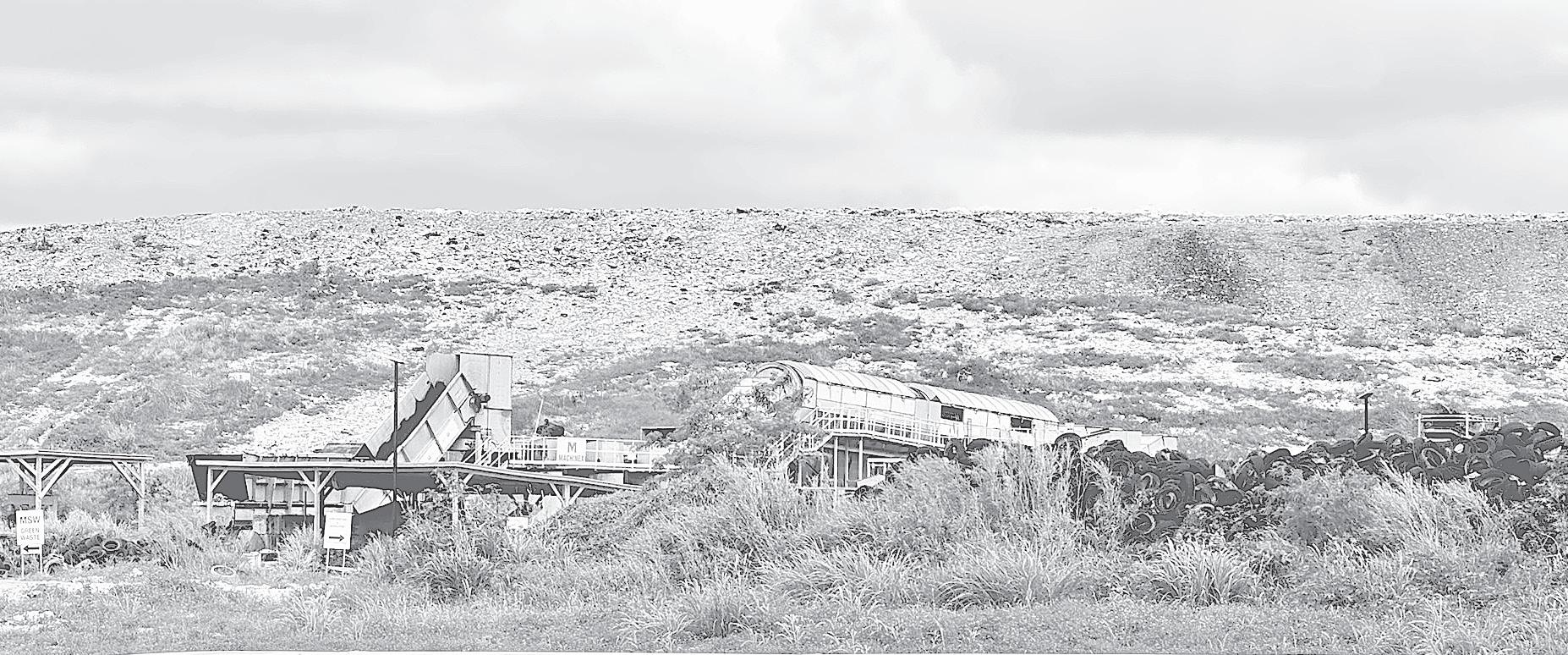
Finalists in the Ethan S Bain Environmental Health Foundation’s speech competition recently traded theory for experience during an educational tour of the New Providence Ecology Park, where they explored the inner workings of modern waste management and environmental sustainability practices in The Bahamas.
The initiative formed part of the Foundation’s continued efforts to encourage environmental awareness among young people while exposing students to possible career pathways connected to conservation, sustainability, and public health.
Jacqueline Bain, founder of the Ethan S Bain Environmental Health Foundation, said the tour was designed as a continuation of the students’ participation in the organisation’s November 2025 speech competition, which centred on the theme: “It’s Our Environment: Conservation and Sustainability Are Our Responsibilities.”
“To continue this focus, we wanted to expose them to real-world environmental management and sustainability practices. The Ecology Park (NPEP) provided the ideal setting,” said Jacqueline.
Set across a 300-acre site, organisers noted that the New Providence Ecology Park has undergone significant operational changes

in recent years, becoming a key example of modernised waste management practices in the country.
During the visit, students observed how household, industrial, and hazardous waste are processed and managed while also learning about upcycling initiatives aimed at reducing environmental impact.
Jacqueline said the experience introduced students to practical systems that many had never encountered before.
“Students observed the standards established for waste management in The Bahamas and learned how the site’s operational transformation supports sustainability. Demonstrations of composting, tire shredding, construction material repurposing, and electronic component disassembly highlighted how waste upcycling contributes to sustainable practices and material-use efficiency,” she said.
The tour also gave students an opportunity to engage with the science and engineering behind
landfill operations. According to Jacqueline, many participants were especially intrigued by the technical side of waste recovery and land management.
Among the facts shared during the visit was that sorting waste before compaction, including separating wood, tyres, appliances, construction debris, and compostable materials, can reduce landfill volume by approximately 60 to 90 percent. Students also learned that trash compaction can reduce mixed municipal solid waste land use by 50
Hannah Foster-Middleton
to 75 percent while helping to lower fire risks.
Other aspects of the tour highlighted how compacted waste is covered with tyres and soil to minimise odours before eventually becoming grass-covered hills. Students were also introduced to the process of repurposing construction debris into low-cost road paving and building materials.
One of the more memorable stops for many participants was the electronic waste facility, where discarded electronics are dismantled and sorted for reuse or resale.
“At the e-waste facility, electronics were disassembled: circuit boards, processor chips, batteries, and screens separated for reuse or resale. This process supports upcycling and reduces fire risks in landfill zone,” Jacqueline explained.
She added that students particularly enjoyed examining the internal structure of everyday appliances and attempting to reassemble salvaged components, an activity that offered exposure to electrical engineering concepts in a hands-on setting. Apart from the Earth Day observances, Jacqueline said
The body’s hidden cleanup crew: Top 5 benefits
Every week, we see sanitation trucks making their rounds through our neighbourhoods. They collect waste, clear debris, and help keep the streets clean and functioning. Without them, things would pile up quickly and create all sorts of problems. Believe it or not, your body has its own version of a cleanup crew — and it works around the clock.
It’s called the lymphatic system, and while many people have heard of it, few truly understand how important it is. This quiet but powerful network helps remove waste, excess fluid, toxins, and unwanted materials from your tissues. It also plays a major role in your immune system, helping your body defend itself against illness and infection.
When the lymphatic system becomes sluggish or overwhelmed, the body can start to feel it. Swelling, fatigue, brain fog, poor healing, congestion, and general discomfort can all be signs that your internal cleanup crew needs support.
That’s where Manual Lymphatic Drainage (MLD) comes in.
What Is Manual Lymphatic Drainage? Manual Lymphatic Drainage is a gentle hands-on
of manual lymphatic drainage
treatment designed to stimulate the movement of lymph fluid throughout the body.
Developed in Europe by Dr Emil Vodder and Estrid Vodder, it uses light, rhythmic movements to encourage the natural drainage of the lymphatic system. This is not a deep tissue massage. In fact, it’s the opposite.
MLD is soft, calming, and precise. Because lymph vessels sit just under the skin, heavy pressure is not needed. The treatment is relaxing, soothing, and often leaves people feeling lighter, clearer, and more energised. So why should anyone consider it? Here are five major benefits.
1. Faster Recovery After Surgery
One of the most common and effective uses of Manual Lymphatic Drainage is after surgery. Procedures such as liposuction, tummy tucks, cosmetic surgery, joint replacements, or cancer-related surgeries often create swelling and fluid buildup. This is a normal part of healing, but excessive swelling can slow recovery and increase discomfort.
MLD helps move that trapped fluid, reduce puffiness, and support tissue healing. Many patients report
less tightness, improved mobility, and quicker comfort after treatment. It can also be beneficial before surgery, as a healthier lymphatic system may help the body prepare for the healing process ahead.
2. Relief for Painful Muscles and Joints
When people think of physiotherapy, they often think of sore backs, bad knees, or sports injuries — and yes, lymphatic drainage can help there too. Sprains, strains, tendonitis, rheumatoid arthritis, and inflamed tissues often come with swelling. That swelling can increase pressure, reduce movement, and prolong pain. By improving fluid movement and reducing congestion in the tissues, MLD can help ease discomfort and improve mobility. Many people are surprised to learn that not all pain needs aggressive treatment. Sometimes, calming the system and reducing inflammation can be just as powerful.
3. Support for Everyday Health Conditions
Manual Lymphatic Drainage isn’t just for surgery or injury recovery. It can also support people dealing with common ongoing health concerns.
Some conditions where people may benefit include:
· Sinus congestion or sinusitis
· Fibromyalgia
· IBS and digestive sluggishness
· Acne or skin congestion
· Headaches linked to tension or fluid pressure
· General bloating
Because the lymphatic system is tied to circulation, immunity, and tissue health, improving its function can have a ripple effect throughout the body.
Many people simply say, “I feel better overall.”
4. Better Energy, Sleep, and Stress Relief
Modern life can leave people feeling drained. Poor sleep, chronic stress, low energy, and mental fatigue are common complaints. While there is rarely one magic answer, helping the body regulate itself can make a real difference.
MLD activates the parasympathetic nervous system — often called the “rest and restore” state. This can help the body shift out of fight-orflight mode and into healing mode.
People often leave sessions feeling deeply relaxed, lighter, and mentally clearer. Some even report sleeping better that night. When the body is less burdened by inflammation,
the Foundation remains focused on nurturing future environmental leaders through education, communication skills development, and community engagement opportunities.
“The foundation seeks to provide educational resources for students who are interested in pursuing environmental health careers. It offers opportunities to build oratory skills, and build networking connections with environmental outreach opportunities and local conservation and sustainability efforts.
We hope to inspire the next generation to actively pursue environmental protection and conservation of our natural environment,” said Jacqueline. As environmental concerns continue to shape conversations globally and locally, the Foundation hopes experiences like the Ecology Park tour will encourage young Bahamians to see sustainability not as an abstract concept, but as a shared responsibility rooted in everyday decisions.

fluid retention, and nervous system overload, energy levels often improve naturally.
5. Improved Healing and Scar Recovery After Trauma
Whether from surgery, accidents, falls, or injuries, trauma can leave lasting effects in the tissues. Scar tissue, swelling, bruising, and delayed healing are common concerns after trauma. Manual Lymphatic Drainage can help improve circulation to the area, reduce fluid buildup, and encourage better tissue repair. This may help soften scars over time, reduce stiffness, and shorten recovery periods. It’s one of the reasons many physiotherapy clinics now include lymphatic techniques as part of comprehensive rehabilitation.
More Than a Trend Lymphatic drainage has become popular on social media for reducing puffiness and helping people look refreshed. While those cosmetic benefits can happen, this treatment is far more than a beauty trend. It is a science-based therapy that supports one of the body’s most important systems.
Your lymphatic system doesn’t have a pump like the heart. It relies on movement, breathing, muscle contractions, hydration, and manual stimulation to keep things flowing. That means sedentary lifestyles, stress, illness, surgery, and injury can all slow it down.
Is It Right for You?
If you struggle with swelling, fatigue, slow healing, congestion, or simply feel like your body needs a reset, Manual Lymphatic Drainage may be worth exploring. It should always be performed by a properly trained healthcare professional or therapist who understands the lymphatic system and any medical conditions you may have.
Sometimes the body doesn’t need something harsh or dramatic. Sometimes it simply needs help clearing the pathways so it can do what it was designed to do.
And when your internal cleanup crew is running smoothly, everything tends to feel a little better.
• For questions and comments, call Hannah Foster-Middleton at 356 4806, e-mail genesisphysiotherapy@gmail.com, or visit www.physiotherapybahamas.com.
New Providence Ecology Park
Young environmental advocates at Ecology Park



The ‘polls’ popcorn and peace of mind
By ALESHA CADET Tribune Features Reporter acadet@tribunemedia.net
WHILE ballots, party colours and political speeches dominate Election Day coverage, many Bahamians experience the day through their own personal traditions and routines. For many women, the day also comes with personal traditions; some serious, some sentimental, and some simply centred around getting through the noise with their peace intact.
And while political tensions often dominate headlines during election season, several Bahamian women shared that their own Election Day routines have become less about heated debate and more about comfort, nostalgia, curiosity and quiet observation.
For Keisha, the excitement begins once the polls close and the numbers start rolling in.
The single professional said Election Day night is complete with snacks, wine and tally sheets spread across the living room.
“I collect the tally sheets before Election Day because I like following the numbers myself," said Keisha. Once she’s at home, Keisha said she settles in, pour a glass of wine, makes her popcorn and get comfortable for the night. “It honestly feels like watching an episode of Scandal or something, just Bahamian style,” she said.
The Bahamian woman admitted that while she enjoys the suspense and drama of election coverage, she also appreciates the shared national experience that comes with everyone watching the same thing unfold at once.
For another woman, however, Election Day is less entertaining and more about avoiding unnecessary tension.
Marsha said over the years she has intentionally stepped away from political discussions with friends and relatives, especially on voting day itself.
“I just try to keep the peace and avoid election talk altogether. Everybody says people can have different opinions, but plenty people still get in their feelings when their party lose or when somebody disagree with them. I rather wait until everybody calms down,” said Marsha.
She added that muting certain group chats and steering conversations in other directions has become part of her personal Election Day survival strategy.
Meanwhile, Nicole approaches the day with far less emotional investment than many around her.
Although she still plans to cast her vote, she has never been someone who becomes consumed by the frenzy surrounding Bahamian elections.
“For me, it’s really just about exercising my right to vote and moving on with my day,” said Nicole. “People get caught up in all the chaos and the silly season of politics, but life still has to continue after Election Day on May 13. The country still needs a government and people still have to wake up and go to work the next morning,” said Nicole. Her perspective reflects a quieter side of the electorate; voters who participate in the democratic process without allowing it to completely overtake their daily lives.
Then there are women like Tanya, who treat Election Day almost like a carefully timed mission.
Tanya said her goal every election is to beat the crowds by arriving at the polls as early as possible.
“I trying to get there early before the rush starts, wearing unrelated colours. My favourite colour is black, and I can’t even wear that without people being in my business on Tuesday,” said Tanya. For fun though, Tanya added: “Once I vote, I might take my little finger picture with the ink and then continue with the rest of my day until the numbers start coming in later that night.”
Still, she admitted that part of what she misses most about election coverage is the colourful personalities who once made vote counting feel like must-see television.
“I will really miss watching people like Darold Miller and Rodney Moncur calling the numbers. They made election night entertaining. Even if you wasn’t deeply into politics, you still wanted to tune in because of the energy they brought to it,” said Tanya.
Whether it is tally sheets and wine, avoiding group chat arguments, quietly casting a ballot or reminiscing about the golden days of election broadcasts, Bahamian women are clearly experiencing Election Day in many different ways today, each shaped by personality, routine and perspective. And once the polls close and the final numbers come in, many agree on at least one thing; life in The Bahamas moves forward the very next morning.



FAMILY
12 May 2026
Nassau, The Bahamas – Family Guardian Insurance Company, a premier provider of life and health insurance, today announced the acquisition of 7 2 million shares, representing a 19 71% equity stake in Bahamas First Holdings Limited, from TEIG Holding Company (Barbados) Ltd , for a total consideration of $14 4 million This strategic investment marks a significant milestone in the Company’s growth trajectory
The transaction is aligned with the Company’s long-term strategic objectives to strengthen its market position, enhance shareholder growth, and expand its product offerings The acquisition reflects a disciplined and measured approach to growth, consistent with the Company’s governance framework and capital management strategy
Glen Ritchie, President, Family Guardian Insurance Company, stated: “This acquisition represents a carefully considered step in our strategic expansion As a locally rooted institution, this investment enables us to maintain our commitment to prudent risk management, regulatory compliance, and customer service excellence We are confident that this transaction will enhance long-term value for our shareholders ”
About Family Guardian Insurance Company Family Guardian Insurance Company, a locally established insurance provider with over 60 years of service, offers comprehensive insurance solutions to individuals and businesses With a strong commitment to sound governance, regulatory compliance, and customer-focused service, the Company continues to pursue sustainable growth opportunities that enhance shareholder value and market stability
About FamGuard Corporation Ltd
Established in 1983, FamGuard Corporation is the holding company for its wholly owned subsidiaries Family Guardian Insurance Company BahamaHealth, and FG Insurance Agents & Brokers FamGuard is a publicly traded corporation listed on the Bahamas International Securities Exchange (BISX), with a focus on sustainable growth, strong corporate governance, and long-term value creation for its shareholders and clients
By JEFFARAH GIBSON
Tribune Features Writer jgibson@tribunemedia.net
AS Bahamians head to the polls today, many women voters say this election is deeply tied to issues affecting their everyday lives, from the rising cost of living to workplace fairness, entrepreneurship and personal safety.
Across New Providence and the Family Islands, women say they are looking beyond political slogans and focusing instead on which leaders appear most prepared to improve quality of life for ordinary Bahamians.
For many women, one of the biggest concerns remains affordability.
Bahamian women voters say affordability, opportunity and workplace equity have shaped their decisions female candidates
“The cost of living is honestly exhausting people,” said Crystal, a 39 year old Nassau mother and administrative worker. “Groceries are high, electricity is high, rent is high and for many women, especially mothers, we are the ones trying to make everything stretch. Women want relief because right now people are surviving, not necessarily living comfortably.”
Women in business say they are also paying close attention to policies surrounding entrepreneurship and economic opportunity. Many female entrepreneurs believe women-owned businesses still face significant barriers when it comes to scaling, securing funding
and sustaining long term growth.
“Starting a business is already hard, but scaling it in The Bahamas can feel even harder,” said Patrice, a 35 year old small business owner. “Women are creative and innovative, but many of us need better access to financing, mentorship and opportunities to grow beyond survival mode. A lot of women are building businesses while juggling children, homes and full time jobs.”
Several women also highlighted workplace concerns, including equity, pay gaps, professional advancement and treatment within corporate environments.
“There are still workplaces where women feel overlooked,” said Alicia, a
The FNM’s 14 female candidates
42 year old banking professional. “Women want to know they can work hard, qualify for positions and still be given equal opportunities to advance. Sometimes women are expected to work twice as hard to prove themselves and people are tired of that.”
For younger women voters, career opportunities and economic stability are major concerns heading into Election Day.
Twenty seven year old first time voter Naomi said many young women are anxious about their future.
“A lot of young women are educated and ambitious, but still worried about whether they can
travel, start families and build businesses someday without constantly feeling financially overwhelmed.”
Healthcare and support systems for women and families also emerged as recurring concerns among voters interviewed.
Some women said access to affordable healthcare, childcare support and stronger protections for vulnerable families should receive more national attention.
“Women carry a lot emotionally and financially,” said Marsha, a teacher and mother of three. “Many women are caregivers not just for children, but for elderly parents and extended family too. When
women usually end up carrying the pressure.”
Crime and public safety were also repeatedly mentioned, particularly among mothers and working women.
Danielle, a 31 year old retail supervisor said:
“Safety matters a lot to women because it affects how we move every day. Women think about getting home safely, protecting their children and feeling secure in their communities. People want stronger action on crime because stress and fear are becoming too normal.”
Others said they hope the election moves the country toward more mature and solutions-based politics.
“I think many women are looking for leadership that listens and governs with empathy,” said Renee, a human resources manager. “People are tired of confusion, division and empty promises. Women want to hear realistic plans and see accountability because these issues affect our homes and families directly.”
Nationally, the election conversation has largely centred on affordability, economic growth, healthcare, housing and public



The
11 female candidates