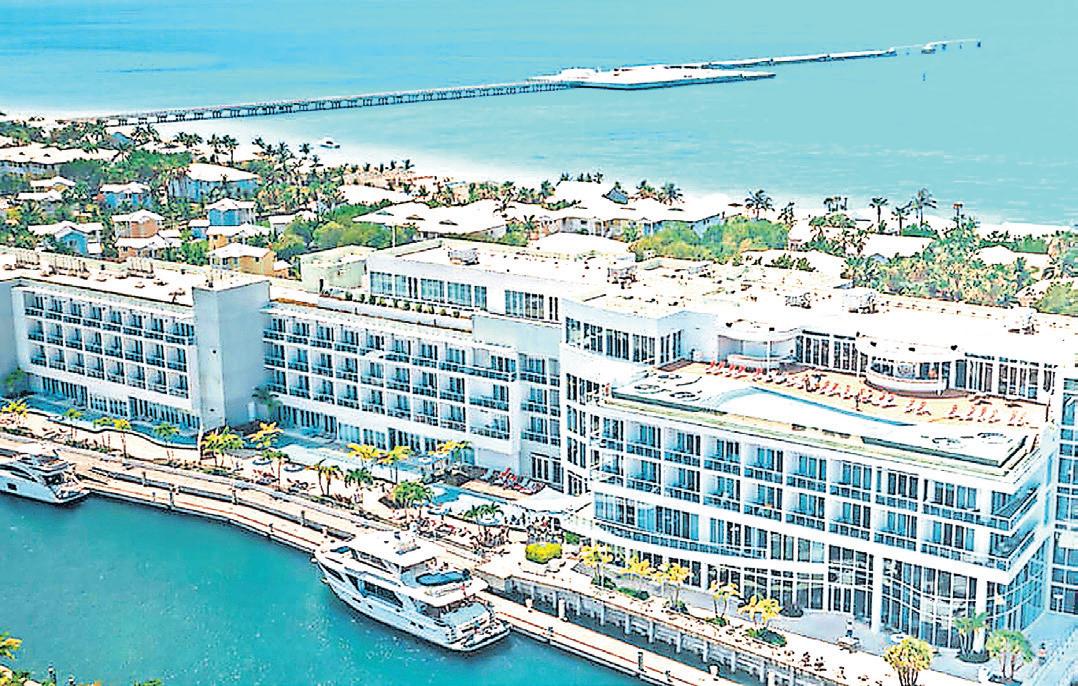
‘Beggars belief’: Resorts World pays off 0.1% of $600m liability
BY NEIL HARTNELL Tribune Business Editor nhartnell@tribunemedia.net
RESORTS World Bimini’s
majority owner says it “beggars belief” that its minority partner can accuse it of treating the resort as a “financial wasteland” for hundreds of millions in liabilities incurred elsewhere in its global empire when it stands to be most harmed by such conduct.
Genting Americas, in its latest bid to kill-off the $600m-plus damages demanded by Gerardo Capo and his family, asserted that its 22 percent minority partner has never injected any cash into supporting the 310room Bahamian resort and casino to leave it and its affiliates to provide some $600m in loans and accrued interest - only 0.1 percent of which have been repaid.
Genting: We’d be hurt most if Capo claims true
Bimini hotel
‘worst performer’ and cost $432m
Says partner wants ‘scapegoat’; put in no cash
The Malaysian resort and gaming conglomerate, in urging the south Florida federal court not to give Mr Capo’s family and their RAV Bahamas vehicle “a third bite at the cherry” by dismissing their latest revised lawsuit, reiterated that Resorts World Bimini - of which it owns 78 percent - is “a financial failure” and its “poorest performing” property. It added that the property was “too
expensive” to construct, costing $432m, and has been unable to attract sufficient guests to make it financially viable.
This, according to Genting Americas, has forced itself and its affiliates to prop up Bimini’s ‘anchor property’, and the hundreds of Bahamian jobs it supports, via loans, subsidies and other financing injections which, at year-end 2022, left $890m in unpaid liabilities on the balance sheet of its immediate parent company, Bahamas-domiciled BB Entertainment. And, while Mr Capo and RAV Bahamas have
‘All hands on deck’: Morton union to meet after PM talks
BY NEIL HARTNELL Tribune Business Editor nhartnell@tribunemedia.net
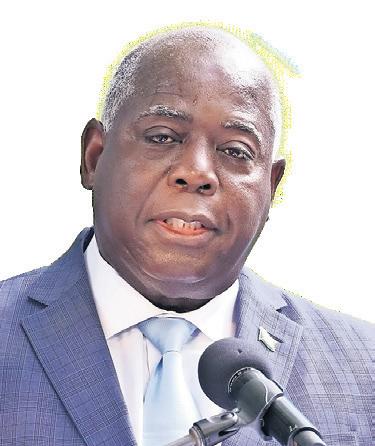
UNION leaders representing Morton Salt line staff are set to return to Inagua today to present members with the outcome of two meetings with Prime Minister Philip Davis KC as they battle to prevent the company terminating 75 percent of the workforce by June 5. Richard Ingraham, the Bahamas Industrial, Manufacturing and Allied Workers Union (BIMAWU) president, declined to discuss what had been agreed between the union and the Government
on the way forward for preserving both Bahamian jobs and the Inagua operation’s future as he first wanted to “gather everyone together” and present it to his members. However, Obie Ferguson KC, president of the Trades Union Congress (TUC), of which the BIMAWU is a member, told this newspaper that “I have to assume” the outcome of talks with the Government was positive given that Mr Ingraham and his executives/officers plan to present this to the workers for their feedback and approval.
“I understand that they had various meetings with the Prime Minister over two days,
Jitney drivers warn over post-election fare action
BY ANNELIA NIXON
Tribune Business Reporter
anixon@tribunemedia.net
BUS drivers yesterday renewed hints of possible strike action if they do not receive relief from mounting fuel prices and rising maintenance costs through further fare increases that keep pace with inflation and living costs.
Samuel Taylor, the Bahamas Unified Bus Drivers Union’s (BUDU) vice-president, declined to confirm whether industrial action is imminent but indicated that it could follow the upcoming May 12 general election.
“At this point, I would not say yes and I would not say no,” he said. “But I'll
advise you to monitor the situation. May 12 is election. May 13, we give you a grace period. You should be sworn in by the end of May or in the middle of May. After that, we give you seven good days.” The BUDU has been fighting for increased bus fares, which must be approved by the Government, for some years. In 2024, drivers received just a 25 cent increase, bringing bus fares for adults to $1.50. It had previously hinted at strike related action in an April 1, 2026, notice, saying: “We don't want to inconvenience the public, our most loyal customers. However, if the prices
Smaller food stores feeling overlooked by Golden Yolk
BY ANNELIA NIXON
SMALLER food stores yesterday said they they feel overlooked by the Government with eggs from its Golden Yolk initiative seemingly only distributed to their larger rivals.
Grocers added that they are willing and interested in selling eggs produced by the Golden Yolk Programme, but said they have not received any direct communication from the Ministry
of Agriculture and Marine Resources about doing so.
“I haven’t seen or heard from anybody. I only see it on the news or in the newspaper. No one has contacted me or reached out to me about it,” Horace Miller-Major, proprietor of Centreville Food Market, said.
He added that he would welcome the opportunity to carry the product, saying: “It’s Bahamian produced, and so therefore we try to support where we can, but it’s up to them to get out,
Tuesday and Wednesday,” he added. “The officers of the union went to him and there was an agreement reached. I don’t have a copy of it. He [Mr Ingraham] indicated to
me something was agreed, but he wanted to discuss it with his members before making a public statement.
“Apparently there’s some agreement reached between them [union and the Government]. If he’s taking it back to his members I have to assume it must be something positive that he and the executives accept. The thing now is to bring it to their members, and the members can make an informed decision. I assume they are satisfied. I can only assume that.
“I haven’t seen the specifics, but if he’s going back to
Nation still in ‘junk’ despite one-notch improvement
Banker: Bahamas Grid, corporate tax issues to solve Rating agency cites 4% primary surpluses in action
By NEIL HARTNELL Tribune Business Editor nhartnell@tribunemedia.net
A SENIOR banker yesterday warned against “over celebrating or exaggerating” the impact from Moody’s providing the Government with a timely pre-election boost by upgrading The Bahamas’ sovereign creditworthiness one notch to ‘Ba3’.
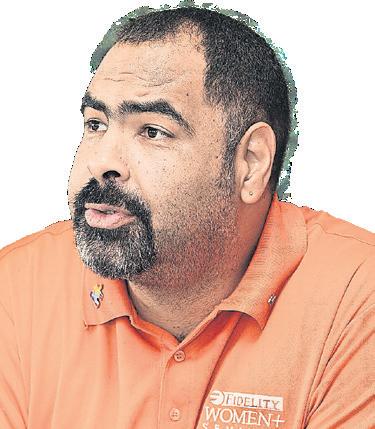
Gowon Bowe, Fidelity Bank (Bahamas) chief executive, told Tribune Business that - while “not trying to be a wet blanket” - the international credit rating agency’s action was merely following and affirming the similar moves by its two counterparts, Standard & Poor’s (S&P) and Fitch, while still leaving The Bahamas in so-called ‘junk’ status some three levels below reclaiming ‘investment’ grade standing.
He spoke out after Moody’s yesterday upgraded The Bahamas’ long-term issuer and senior unsecured ratings by one notch from ‘B1’ to ‘Ba3’ - a move that takes this nation’s debt from being viewed as “speculative and a high credit risk” to where it is perceived as having only “speculative elements and a significant credit risk”. In other words, investing in and holding Bahamian government debt
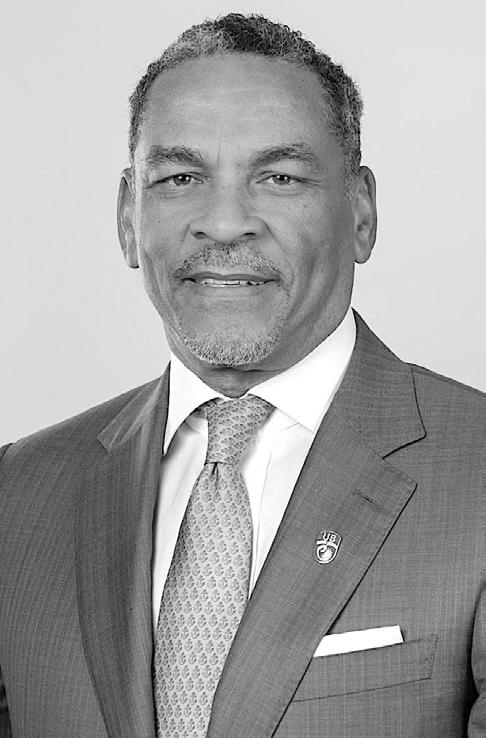
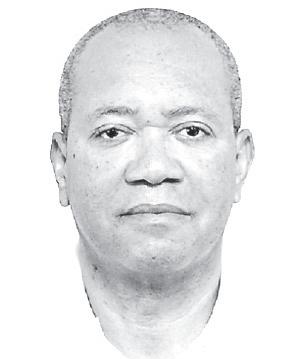
OBIE FERGUSON KC
Bahamian MSMEs require greater innovative support
Micro, small and medium-sized enterprises (MSMEs) remain the backbone of the Bahamian economy, driving entrepreneurship, innovation and job creation across multiple industries. Over the years, agencies such as the Tourism Development Corporation, Small Business Development Centre (SBDC), the Bahamas Entrepreneurial Venture Fund, the Bahamas Agricultural and Industrial Corporation (BAIC) and Bahamas Development Bank (BDB) have played a critical role in supporting entrepreneurs through business plan development, grant funding,
training support, marketing assistance, insurance guidance and financial documentation. However, the rapidly-changing global business environment now demands a broader and more innovative support framework for Bahamian MSMEs. One of the most important emerging needs is access to equity capital. Many small businesses struggle under the burden of traditional loan repayments and high interest rates. Dedicated growth funds that provide nondebt financing could allow entrepreneurs to scale operations, hire staff and invest in expansion without immediate repayment pressure.
CIBC opens
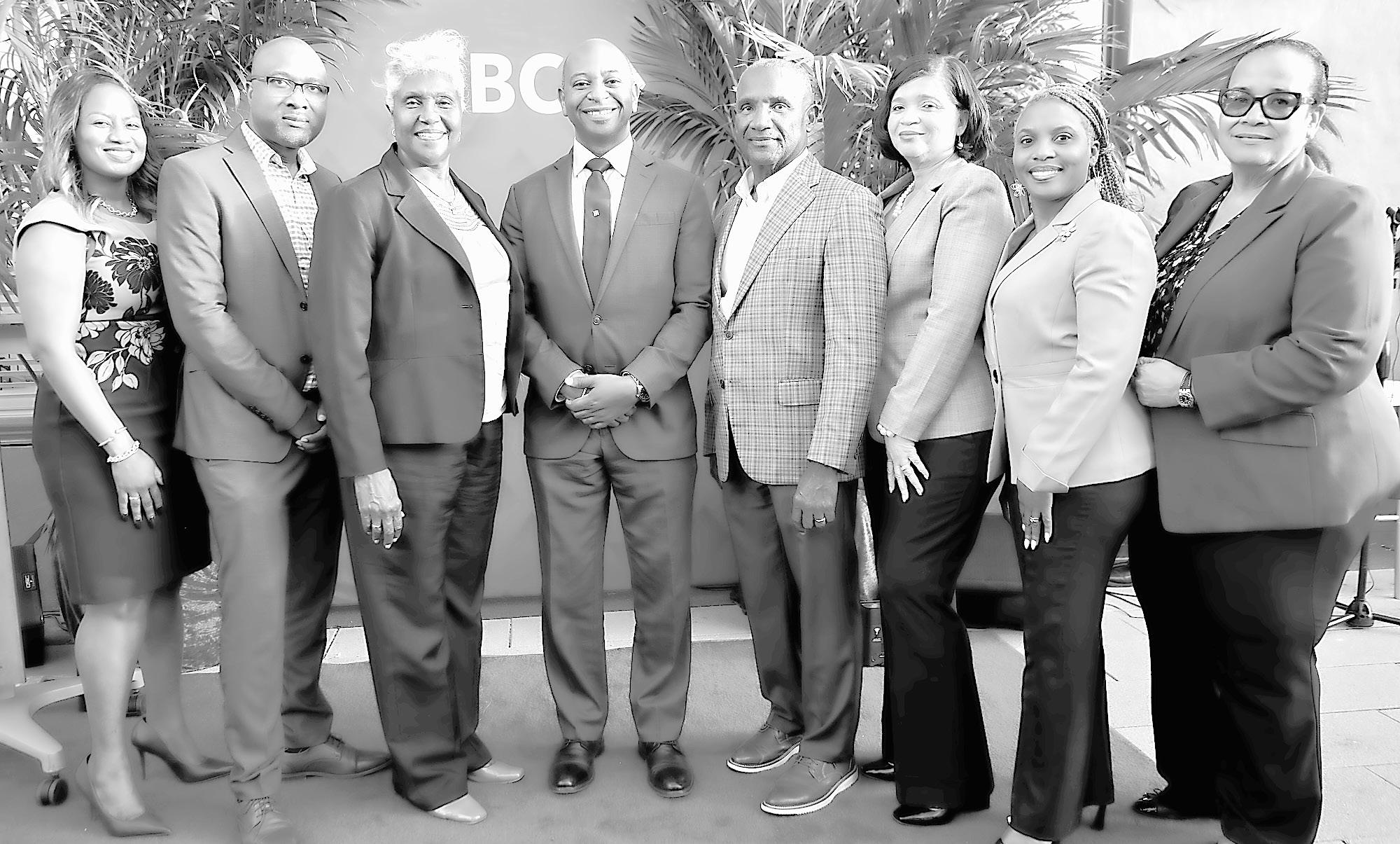
CIBC Caribbean says it has opened a western New Providence hub to provide personalised private banking services and financial guidance.
The BISX-listed bank, in a statement, said it has launched its Private Wealth Advisory Centre at Venetian Village. It added that the newly-unveiled location was designed with “people and purpose in mind” to make private banking more accessible and client-focused.
Technology adoption must also become a national priority. MSMEs need support to modernise through digital tools, automation, artificial intelligence (AI) and advanced production systems. Technology upgrade grants and subsidies could significantly improve the competitiveness of Bahamian manufacturers, creatives and service providers in regional and international markets.
Another area requiring urgent attention is export promotion and logistics support. Bahamian entrepreneurs often face high shipping costs and limited export systems. Streamlined export procedures, courier
export incentives and international market entry support could open new revenue streams for local businesses.
Additionally, entrepreneurship development should move beyond traditional workshops towards specialised capacity building in digital marketing, financial literacy, leadership and innovation management. Modern business owners require practical skills that prepare them to compete in an increasingly digital global economy.
The establishment of Common Facility Centres could also be transformative. Shared workspaces
equipped with advanced machinery, testing equipment and prototyping tools would allow small businesses to access expensive technology on a pay-per-use basis without major capital investment. Government agencies should also focus on simplifying regulatory systems and tax compliance procedures for small businesses.
Reducing administrative burdens and encouraging formal registration would help bring more entrepreneurs into the formal economy where they can benefit from financing, grants and government programmes.
The future success of Bahamian MSMEs will depend not only on access to funding, but on the creation of a modern entrepreneurial ecosystem that encourages innovation, collaboration and sustainable growth.
• NB: Ian R Ferguson is a talent management and organisational development consultant, having completed graduate studies with regional and international universities. He has served organisations, both locally and globally, providing relevant solutions to their business growth and development issues. He may be contacted at tcconsultants@coralwave.com.
private wealth location at Venetian Village
Terrance Gibson, CIBC Caribbean’s acting country head for The Bahamas, said: “The facility will serve as a hub for private wealth and international corporate banking services. Relationship managers and financial coaches will be based at the centre to provide tailored support across investment planning, business growth and long-term financial goals.”
CIBC Caribbean said it is committed to continuing to invest in digital and emerging technologies, such as online and mobile platforms, while also integrating the likes of artificial intelligence (AI) and automation to improve efficiency and service delivery.
Pim van der Burg, the bank’s chief commercial officer, added: “This new Advisory Centre reflects CIBC Caribbean’s commitment to delivering superior banking services to our clients. It provides a space for one-on-one personalised guidance supported by modern amenities and technology.”
Marcelo Suarez Castillo, CIBC Caribbean’s director of private wealth management, said: “This modern facility is the epicentre of service excellence. It allows us to deliver dedicated, personalised service to our clients in a space built specifically for their needs, supported by a team they know and trust.”
Freeport welcomes Margaritaville cruise vessel
THE Ministry of Tourism, Investments and Aviation welcomed the Margaritaville at Sea Islander as it made its first-ever call on Freeport Harbour on April 27, 2026. The occasion was recognised with a traditional plaque exchange between the ministry, Freeport Harbour Company and the Margaritaville at Sea Islander officers.
Karenda Rolle, senior manager of guest services and training at the Ministry of Tourism, Investments and Aviation, said there was a strong turnout of passengers taking advantage of the food, goods and services offered by Bahamian artisans, craft vendors, taxi drivers and tour operators during the vessel’s inaugural call.
“This looks like something that will be
phenomenal for Grand Bahama,” she said. Theodore Mitropoulos, fleet captain for Margaritaville at Sea, described the partnership as a mutually beneficial opportunity for both the cruise line and Grand Bahama.
“It’s a great deal for us. Every new port marks a new beginning, and we are pleased to be here with you and to do business with you. This partnership will bring prosperity to your people and to our company as well. We take seriously the opportunity to call at your port,” he added.
The Margaritaville at Sea Islander, which has a passenger capacity of 2,680, arrived with around 2,100 passengers on board, providing a welcome boost for Grand Bahama’s tourism sector.
HG Christie agent appears on top real estate summit’s panel
AN HG Christie agent recently appeared as a panellist at the 2026 Luxury Real Estate Spring Retreat that was held for the first ever time in The Bahamas.
The invitation-only event, held from April 20 to 22 at Baha Mar, attracted real estate professionals, industry leaders and innovators from around the world for a series of discussions, networking opportunities and market insights focused on the high-end property sector.
Elbert Thompson, an HG Christie broker and senior appraiser with more than two decades of experience, was selected to participate in a panel discussion under the theme, ‘Social media strategies: Separate yourself from the noise and win the business’. The session explored how real estate agents can effectively leverage digital platforms to connect with high net worth clients, strengthen their
brand presence and remain competitive in an increasingly digital marketplace. During the discussion, Mr Thompson emphasised the importance of authenticity and story-telling in building trust and long-term client relationships. “Social media is not just a marketing tool; it’s a vital connection point for luxury real estate professionals,” he said. “By showcasing unique properties and personal stories, we can create meaningful connections that resonate with our audience.” Mr Thompson said the experience underscored the importance of representing The Bahamas within an international context, while also building relationships that can benefit both clients and the broader market. His involvement also highlighted the role of Bahamian professionals in shaping conversations at the highest levels of the real estate industry.
John Christie, HG Christie’s president and managing broker, praised Mr Thompson’s participation and the significance of his role at the event.
“We are proud to see Elbert representing HG Christie on an international platform of this calibre,” said Mr Christie. “His participation highlights not only his individual expertise, but also reinforces that The Bahamas remains at the forefront of the luxury real estate market. It speaks to the confidence placed in our agents and the strength of our brand globally.”
Mr Christie also voiced confidence in the firm’s team and its ability to continue building meaningful connections through international engagement.
“We have a highly skilled group of professionals who understand both the local market and the global landscape,” he added. “Opportunities like this allow our agents to connect with the right audiences, build relationships and, ultimately, deliver successful outcomes for our clients.”
The Ministry of Tourism, Investments and Aviation and Freeport Harbour Company officials greeted the Margaritaville by Sea Islander at Freeport Harbour during its first-ever call on April 27, 2026.
Bahamian investor hestitation misses out on best return gains
BY FAY SIMMONS Tribune Business Reporter jsimmons@tribunemedia.net
BAHAMIAN investors are consistently missing out on the most lucrative investment returns by hesitating to commit capital to private deals early, only moving in after projects have been de-risked and the bulk of gains already realised, a prominent financial analyst is arguing.
Speaking at the Bahamas Financial Services Board’s (BFSB) Global Wealth Summit, Anthony Ferguson, president of CFAL, said the Bahamian investment environment is characterised by a clear disconnect between the appetite for higher-yielding opportunities and the willingness to participate at a stage where those returns are actually generated.
“As much as the market demands these opportunities, when private deals come up, many investors still shy away from participating,” he said, describing a pattern of delayed engagement that ultimately reduces the upside available to institutional capital.
Using the Nassau Cruise Port’s $330m redevelopment as an example, Mr Ferguson explained how this hesitation plays out in practice, with investors avoiding early-stage exposure despite the long-term potential of the project.
“When we brought the cruise port deal to market, we could not get a single bank or institution to invest at that stage,” he said, adding that concerns around risk outweighed interest in potential returns. He said that once the project moved beyond its riskiest phase and began
generating stable cash flows, however, investor sentiment shifted significantly.
“After the development was de-risked and became cash flow positive, there was significant interest in how to get involved,” Mr Ferguson said, illustrating how capital often enters only after the most attractive return profile has passed. By that point, early Nassau Cruise Port investors had already captured substantial gains.
“In that case, equity investors have already received approximately 125 percent of every dollar they invested,” he said. Mr Ferguson added that similar dynamics are evident in other sectors, including energy, where investment hesitation during early stages has limited broader participation in high-potential projects.
At the same time, Mr Ferguson emphasised that
Bahamian exporters not using duty-free UK access
BY FAY SIMMONS Tribune Business Reporter
jsimmons@tribunemedia.net
BAHAMIAN exporters are leaving money on the table by failing to take advantage of duty-free access to the UK market, a senior British trade official warned yesterday.
Speaking a trade workshop hosted by the Bahamas Chamber of Commerce and Employer’s Confederation (BCCEC), Lorcan O’Brien, Caribbean regional trade for development advisor at the UK’s Foreign, Commonwealth & Development Office, said
many businesses are not exploiting benefits available under the Economic Partnership Agreement (EPA) between the UK and CARIFORUM.
Mr O’Brien said Bahamian firms are unnecessarily paying taxes on exports that could enter the UK duty-free, highlighting a major gap in awareness of existing trade benefits “One of the core benefits of this agreement is that Bahamian exporters do not need to pay tariffs,” said Mr O’Brien. “Yet the data shows that some exporters are leaving that benefit on the table and paying tax unnecessarily.
Trade chief: Bahamas redefining export model
By FAY SIMMONS Tribune Business Reporter jsimmons@tribunemedia.net
THE Bahamas Trade Commission’s executive chairman yesterday said this nation is moving to redefine its export model by shifting away from traditional goods and positioning services, talent and digital industries at the centre of its strategy.
Speaking at a trade workshop hosted by the Bahamas Chamber of Commerce and Employers Confederation (BCCEC), Barry Griffin said this nation is deliberately expanding its focus to sectors where Bahamians already demonstrate strong capabilities and international demand is growing.
“For The Bahamas, we are looking beyond traditional exports,” said Mr Griffin. “We are positioning ourselves to export professional, digital and creative services”, describing the shift as both necessary and aligned with global economic trends.
“These are areas where Bahamians are already excelling, and where the UK market offers real demand,” he added, noting that services exports have the potential to scale more rapidly than goods in a small, open economy.
Mr Griffin said this strategy is being supported by an increasingly active partnership with the UK. “We have developed a strong and productive relationship with the UK High Commission, grounded in action,” said Mr Griffin. “Together, we are shaping a new era of modern bilateral partnership where Bahamian businesses are positioned to compete globally.”
Central to that effort is the Economic Partnership Agreement (EPA) between the UK and CARIFORUM, which includes The Bahamas, and which he described as a critical enabler of market access.
“This agreement provides unprecedented access to the UK market; preferential terms that many countries simply do not have,” said
Mr Griffin. He added that the region must move more aggressively to capitalise on those advantages.
“The UK is already taking full advantage of this agreement, and we in The Bahamas must do the same,” said Mr Griffin. He warned that failing to use available trade frameworks risks leaving growth opportunities untapped.
Mr Griffin said strengthening exports must go hand-in-hand with attracting investment that supports economic expansion.
“We welcome deeper UK investment into infrastructure, logistics, innovation and new industries,” he added, pointing to the role foreign capital can play in building out the capacity needed to support export growth.
Mr Griffin said one of The Bahamas’ most valuable export assets is its human capital, highlighting opportunities for professionals in areas such as finance, compliance and consulting.
“Bahamians must begin to see their talent and expertise not as something that has to remain local, but as something that is exportable,” said Mr Griffin. He pointed to financial services as evidence of that potential.
“The Bahamas consistently ranks among the top three jurisdictions exporting financial services to the UK, highlighting the strength and potential of
this behaviour is shaped not only by risk aversion, but also by the structural realities of the Bahamian capital market, which constrain how investors can allocate funds.
The domestic public market, he explained, lacks depth and liquidity, making it difficult for portfolio managers to rely on it as a source of readily accessible capital. As a result, investment strategies must account for the possibility that assets cannot be quickly sold to meet cash needs.
“There is a broader structural issue, however, because the public market is highly illiquid. As a portfolio manager, you have to balance that illiquidity with the illiquidity of private markets, while maintaining sufficient flexibility to meet investor demand and
redemptions,” Mr Ferguson said. He added that while private equity has gained popularity globally, the current environment presents additional risks that investors must carefully consider.
“Private equity may be the ‘flavour of the month’, but internationally many of those investments are becoming locked in,” said Mr Ferguson He also warned that elevated valuations are increasing vulnerability to market corrections. Valuations, the CFAL chief said, are currently extremely high - essentially priced to perfection - but, in reality, markets are never perfect.
“At some point, that imbalance is likely to correct,” said Mr Ferguson. “This is why maintaining liquidity remains a critical component of portfolio management,
particularly in uncertain market conditions.”
In that context, he stressed that liquidity remains a central consideration in portfolio construction, particularly in a small and relatively illiquid market such as The Bahamas, where flexibility can be just as important as return.
Maintaining that balance, he indicated, is critical to ensuring that investors can participate in opportunities without over-exposing themselves to risk in an increasingly uncertain global environment.
“Exports reaching UK shores are not taking advantage of the tariff-free treatment available… That suggests low awareness of the EPA and poor utilisation of its advantages.”
Mr O’Brien said addressing this gap is critical to unlocking greater export growth, especially as the world’s economy is facing increasing pressures due to geopolitical tensions.
“This also couldn’t come at a better time. We are seeing an increasingly volatile and unpredictable global trading landscape, especially in the area of tariffs,” he added.
our professionals - lawyers, bankers, accountants and consultants,” said Mr Griffin.
“We believe there is even more demand to be unlocked. Our compliance professionals, human resources specialists and others can expand into the UK and beyond.” Mr Griffin said the broader shift in trade policy reflects a fundamental change in how trade is defined.
“Trade today is no longer just about goods; it is about services, technology, talent and partnerships,” said Mr Griffin.
“In a shifting global landscape, it is more important than ever that countries like ours work together through frameworks like the Commonwealth and the UK-Bahamas Economic Partnership Agreement to remain competitive, resilient and connected.”
He urged businesses to move beyond simply understanding these opportunities and instead take concrete steps to act on them. “Do not leave with knowledge alon; leave with intent, with strategy, and ready to act,” Mr Griffin said, framing the agreement not as a theoretical advantage but as a practical pathway to expansion.
“The pathway is there… this agreement is the pathway, and the responsibility now is on us to use it to enter new markets, grow our businesses and extend the Bahamian footprint internationally.”
NOTICE is hereby given that I ROBENSKY MISCACIN of Henry Street Montel Hieghts, New Providence Bahamas is applying to the Minister responsible for Nationality and Citizenship, for registration/ naturalization as a citizen of The Bahamas, and that any person who knows any reason why registration/naturalization should not be granted, should send a written and signed statement of the facts within twenty-eight days from the 1ST day of MAY, 2026 to the Minister responsible for nationality and Citizenship, P.O. Box N-7147, Nassau, Bahamas.
“In that context, the UK stands firm and committed to upholding the terms of our legally-binding trade agreement. So you have that certainty as businesses to make investments, and to see the UK as a reliable partner. We know how important exports are, not only for growth, but also for diversification.”
Mr O’Brien said latest figures show total trade between The Bahamas and the UK stands at £439m, or roughly $600m.
“The vast majority of this is in the services sector, particularly tourism and, to some extent, financial services. There has been a slight upward trajectory since around 2020, but it is inconsistent,” said Mr O’Brien.
“Goods exports, in particular, are highly inconsistent. Sometimes volumes are very low, and sometimes
they involve re-exportsproducts from elsewhere passing through The Bahamas without that value being captured by Bahamian producers.”
He added that the vast majority of this trade is in the services sector with tourism and financial services dominating. Mr O’Brien said the EPA offers a significant competitive advantage for Bahamian exporters including zero percent tariffs.
“The EPA, in particular, is by far the most comprehensive and generous agreement of its kind anywhere. Not only that, but it is tilted heavily in favour of The Bahamas in terms of its advantages,” said Mr O’Brien.
“When considering export markets, the UK offers zero percent tariffs. By comparison, exporters to the US may face tariffs
of around 10 percent. So the UK provides a firm, reliable and guaranteed offer of duty-free access. You have a significant leg up… as not all countries have this access.”
Beyond goods, Mr O’Brien stressed the importance of services, which form the backbone of the Bahamian economy as well as legal safeguards for exporters within the agreement.
“Over 90 percent of service sectors are liberalised, meaning easier, more predictable and less costly access to the UK market,” said Mr O’Brien “In many cases, Bahamian firms can compete on equal terms with UK businesses, establish operations and form partnerships, all within a stable and legally guaranteed framework that supports long-term investment decisions.”
ANTHONY FERGUSON
Standards specialists convene in Bahamas
THE Bahamas Bureau of Standards and Quality (BBSQ) welcomed international specialists when it opened COPANT Week 2026 on April 28 at Atlantis.
Regional and international specialists in standards and quality infrastructure were present in The Bahamas for a week of collaboration and strategic dialogue. COPANT (Comisión Panamericana de Normas Técnicas) is the Pan American Standards Commission, a regional organisation that promotes the development of technical standards in the Americas.
Held under the theme ‘Resilience, sustainability, quality – together’, the opening ceremony signalled the start of a series of highlevel discussions focused on strengthening co-operation across the Americas and advancing frameworks that support trade, consumer protection and innovation.
Delegates, including national standards bodies, government representatives and international partners, met to address key priorities in shaping the future of quality infrastructure and sustainable development.
Dr Renae Ferguson-Bufford, the BBSQ’s executive director, underscored the role standards play in
Genting asserts ‘backstopped’ resort amid its ‘financial failure’
accused its majority partner of perpetrating “a massive and co-ordinated fraud” by dumping liabilities on BB Entertainment that were incurred elsewhere in its global resort and casino empire, Genting Americas - in its latest April 28, 2026, legal filing demanding that the south Florida court dismiss the case - sought to portray them as seeking a “scapegoat” for what it asserts are nothing more than bad investment and business decisions.
Noting that Mr Capo and RAV Bahamas were the original developers of then then-Bimini Bay Resort, which was renamed Resorts World Bimini when they formed their partnership with the Malaysian conglomerate more than a decade ago in 2013-2014, Genting Americas asserted that all they contributed for a 22 percent minority interest in BB Entertainment is the land upon which the development now sits.
“There is no dispute that BB Entertainment has been a financial failure. It is the Genting Group’s poorest performing resort
investment. It was expensive to construct and furnish, and it has failed to attract sufficient patrons,” Genting Americas admitted in legal filings obtained by Tribune Business.
“Throughout, the Genting Group has backstopped and propped up BB Entertainment with the aim of turning it around. This has included well over $300m from the Genting Group to pay for construction, provide working capital, and cover the resort’s operating losses. RAV’s sole contribution was $22.5m worth of land in exchange for 22 percent of the shares of BB Entertainment.
“The notion that the Genting Group would purposefully make BB Entertainment a ‘financial wasteland’ and a failed resort casino project, despite having the vast majority of the economic interest (and debt) in the success of the business, just because RAV as a 22 percent shareholder wouldn’t shoulder its share of the costs, beggars belief,” Genting Americas added.
“Against this backdrop, RAV fails to support any of its claims with facts despite incorporating nearly 80
exhibits and, apart from an unsupported statement purportedly made by Edward Farrell [ex-Genting Americas president] in March 2020 regarding $150m of liabilities, RAV makes no other particularised allegations that anyone at Genting Americas thought the allocations of expenses and other charges to BB Entertainment’s financial statements were improper.
“Despite working with expert forensic accountants since at least December 2024, RAV fails to plead specifically how BB Entertainment’s accounting is false, what the numbers should be, or what accounting rules have allegedly been violated. In sum, RAV’s allegations are not plausible, not pleaded with particularity, and its [complaint] should be dismissed…”
Genting Americas argued that “at bottom, RAV is just dissatisfied with routine business judgments” as it has failed to support its fraud and conspiracy-related case despite legal recovery having gone through more than 100,000 documents.
However, in the latest version of their complaint, Mr Capo, his family and their corporate vehicle are arguing: “Only an outright fraud can explain how a small island-resort that averaged $22m in revenue per year for ten years can accumulate almost a billion dollars of debt in that same span - an average of $89.907m in debt per year.
“No commercially reasonable actor would incur
$89m of costs and interest per year to operate a small hotel that generates $22m in revenue per year. As of December 31, 2022, Genting Americas had managed to drown BB Entertainment with a staggering $885.176m of liabilities or debt.
“To put Genting Americas’ plundering in perspective, as of December 31, 2022, Genting Malaysia - which has over 150 subsidiaries, including BB Entertainment - had a total of approximately $3.5bn in liabilities. Stated differently, as of December 31, 2022, BB Entertainment’s liabilities accounted for 23 percent of the combined liabilities of Genting Malaysia and its approximately 150 subsidiaries.”
Genting Americas, though, is countering that RAV Bahamas has failed to prove or show how any of these liabilities were incurred by fraud. “RAV’s sole contribution occurred in 2013 and 2014 and consisted of land alone,” it asserted. “To this day, RAV has never contributed any cash to BB Entertainment.
“Instead, all the cash necessary to construct and develop the resort was borrowed by BB Entertainment from various Genting Group companies, as shown in the audited financial statements and as conceded by RAV. RAV acknowledges that BB Entertainment spent $310m on construction, all of which BB Entertainment had to borrow from BB Investment Holdings [the entity that holds the majority 78 percent stake] or other Genting Group companies.
“BB Entertainment had no other sources of funding. In fact, BB Entertainment spent more than the $310m on construction of the
resort and casino. The financial statements attached, including the 2022 year-end financials, plainly show that BB Entertainment incurred over $432m in costs when the furnishings and equipment for the hotel and casino are included. All of those expenditures were paid by BB Entertainment using cash it borrowed,” Genting Americas added.
“RAV’s feigned confusion over the magnitude of these costs is surprising given that OPAC Bahamas, an entity that it recognises as an affiliate of RAV,was the construction manager for Resorts World Bimini, and accordingly, was responsible for ‘manag[ing] and perform[ing] all construction-related activities’.
“Moreover, as a participant on the BB Entertainment board, RAV was regularly informed of the loans that BB Entertainment received from entities in the Genting Group, and it regularly received information about BB Entertainment’s liabilities. Indeed, since 2013, the financial statements revealed the full extent to which its annual expenses exceeded its revenue and, as a result, by October 2020, RAV knew that BB Entertainment had reported liabilities of $608m.” Resorts World Bimini’s dire financial position, as revealed by the south Florida federal court legal filings, again show the flaws in the Family Island mega resort ‘anchor property’ strategy and the challenges such developments face in generating sustained profits given just how expensive they are to construct.
Genting Americas’ latest legal filings reveal that its parent entity has provided BB Entertainment with “a deed of financial
everyday life and economic development. “Standards are the foundation of trust, ensuring that the products we use are safe, that businesses can compete globally, and that economies can grow sustainably,” she said.
Mauricio Céspedes, president of the Pan American Standards Commission, added: “Our work as a region is strengthened when we align around shared standards, enabling resilience, supporting sustainability and driving quality across borders.”
The BBSQ said that hosting COPANT Week 2026 reinforces The Bahamas’ role as a hub for regional collaboration, and demonstrates its continued commitment to strengthening quality infrastructure in support of economic growth and consumer protection. COPANT 2026 delegates focused on expanding standards development and sustainability frameworks, and enhancing regional co-operation.
support” confirming it will provide the necessary funding to prop up Resorts World Bimini for as long as it remains the majority shareholder.
“RAV alleges that, in 2020, Genting Americas came up with a ‘plan’ to redirect future allocations from Bimini SuperFast Operations (BSO) to BB Investment Holdings and then to BB Entertainment, but again, this was a loan of $201.300m whose purpose was to support BB Entertainment,” Genting Americas alleged. “Various Genting Group entities regularly loaned money to BB Entertainment for operations, given that BB Entertainment lost money every year, as RAV concedes.
“RAV also admits that loans from other Genting Group entities have not been repaid and continue to accrue interest. Thus, a significant portion of BB Entertainment’s total expenses today consist of accrued interest expenses on an annual basis, and BB Entertainment has paid back very little of the $600m of these liabilities, largely because it has no net profits from which to do so.
“To-date, BB Entertainment has only paid off 0.1 percent of its $600m in liabilities. Notably, RAV does not allege that Genting Americas has ever withdrawn cash from BB Entertainment for improper purposes like paying itself a dividend, as is often the allegation in fraud cases where defendants are alleged to have siphoned funds to insiders or for their own benefit. Loaning money to a failing joint venture may be, at most, poor business judgment, but it is insufficient to show fraud violation.”
THE BAHAMAS Bureau of Standards and Quality (BBSQ) held COPANT Week 2026 at Atlantis, welcoming regional and international leaders in standards and quality infrastructure for a week of collaboration and strategic dialogue.
his members that’s the proper thing to do. It’s very sensitive and a major decision to make, particularly given the way they went about it, the company went about it. I don’t think it was proper, and don’t think it was in keeping with the law governing redundancies.
Tribune Business previously revealed Morton Salt’s move to drastically downsize the workforce and cut costs is directly linked to the Chicago-headquartered company’s planned deal to sell the Inagua operation to Lusca Group and its subsidiary, Grand Bahama Salt Company - entities linked to the Liwathon Group, which has acquired and restarted operations at Grand Bahama’s former South Riding Point oil storage terminal.
The deal, which was agreed around seven months ago, has yet to close because of a significant difference between the Government and Morton Salt over how much “transfer tax” - VAT and other levies charged on the assets of the business being sold, such as land - is payable to the Public Treasury on the transaction. This is likely to be a muchneeded multi-million dollar sum from the Government’s perspective, but Morton Salt feels the delay - and ongoing losses - have left it with no option but to cut costs.
The downsizing’s timing also coincides with the May 12 general election, which further serves to increase the pressure on the Government to reach a favourable settlement with Morton Salt and allow the sale to proceed.
The terminations were one of two options presented to Morton Salt workers.
The first involved making 75 percent of workers redundant with effect from Friday, June 5, following a 45-day notice period. Only persons involved in the powerhouse, pump house, fuelling and maintenance would be retained, with production and general store staff all laid-off. The second involves retaining all staff but cutting everybody’s work week by 50 percent to 20 hours, with all benefits retained. The general store’s operations would be cut to two to three days per week under both options.
Mr Ingraham previously said that neither option was a route that the union and its members want to take. However, he explained that if forced to choose, he would take the ‘75 percent redundant’ option because the 45-day period provides extra time to galvanise both the Government and Morton Salt to a resolution of their dispute protects all jobs and the survival of the Inagua business. The ‘50 percent work week’ cut option would take effect much earlier from Friday, May 1.
Meanwhile, Mr Ferguson told Tribune Business of the threat to Morton Salt jobs and the plant’s future viability: “The matter must be resolved because it will have a devastating effect on the economy of Inagua. Morton Salt is the lifeblood of the community. Their salaries are paid by Morton Salt, their insurance is paid by Morton Salt and their pensions are paid by Morton Salt, so their whole way of life is inextricably connected
VAT cooked food relief leads to greater accounting work
SALE - from page B1
to reach out to the smaller stores also. We do exist.”
Ivan Carey, general manager of Kenneth’s Food Store, echoed similar concerns, noting that his knowledge of the programme is limited to media reports. “As far as I know the only one is Super Value. We’ve had zero information, zero contact. The only thing I know about it is what I’ve seen in the news,” Mr Carey said.
The Ministry of Agriculture, in a recent social media post, informed the public that eggs from its Golden Yolk programme are now available across numerous Super Value stores. This led both Mr Miller-Major and Mr Carey to argue that the Government prioritises larger retail chains.
“I mean that is obvious right now, because they’ve gone straight to the largest chain in the island and just basically totally ignored the small stores,” Mr Carey said.
He added that, in his view, the Government often only engages the biggest players. “It seems like in their eyes, only Super Value and Solomon’s exists. It’s not only with the Golden Yolk programme. That’s with other things, too. Even when it comes to consultation, they go straight to Super Value,” Mr Carey said. Despite their frustrations, both said they would be open to selling Golden Yolk eggs if given the chance. “Well, we definitely wouldn’t have a problem with it, because once the product is good and the price is right, that’s all we asking for,” Mr Carey said.
“And that’s all that our customers are asking fora good product and good price.” He added that Bahamian egg production would reduce reliance on imports, but accessibility and pricing would be key factors.
“As long as the inventory is available and easy, accessible, and the price point is a good price point,” Mr Carey said. “I think it’s a good thing, because bear in mind we used to produce eggs locally in the past, and it was much more convenient just purchasing the eggs right here locally than having to source them from overseas.
Mr Miller-Major suggested smaller stores may eventually benefit indirectly from the programme but
and intertwined with Morton Salt as an economic entity.
“It is a big deal. It is not only the plant and company that has to be protected; it’s the workers that have to be protected. We need all hands on deck, and we need to be fair and balanced in making a determination. That’s the reason why, I think, the union has done the right thing in going back to their members, explain it to the members and get their ratification. We’ll see what the membership says and what they conclude.”
Lusca Group, in announcing the potential Morton Bahamas acquisition in September 2025, gave few specifics on its plans and did not disclose the purchase price. In confirming that its Grand Bahama Salt Company had signed an agreement to acquire 100 percent of Morton Bahamas’ shares, it said: “The facility, the second-largest solar salt operation in North America, positions The Bahamas as a leading source of high-quality solar salt for international markets.
“Lusca Group will also enter into a long-term supply agreement with Morton Salt USA, securing Morton’s role as an anchor client and ensuring continu ity of production and export from Inagua. Following com pletion, Lusca Group plans to invest substantially in the facility’s operations, improve efficiency and expand pro duction capacity. This will include investments in upgrading salt quality on the island, as well as targeted investments into other on-is land businesses and the local community.”
only after larger chains are supplied. “Super Value is the creme de la creme of the industry. So they normally get first preference on everything. So, we may get a trickle down effect,” he said. Beyond the Golden Yolk roll-out, both retailers pointed to broader challenges facing the sector, including the rising cost of living despite recent tax relief measures. Mr Miller-Major said the removal of VAT on unprepared food items has added administrative complexity for smaller operators.
“It just creates more work for our accountant and costs us more for the accountant to bring that up to speed,” he said. Mr Carey, meanwhile, said the full benefit of the VAT exemption has yet to be felt by consumers due to external pressures.
“It’s unfortunate that, even though you get the price break with the VAT, the cost of living is still going up because of external influences right now,” he said. “All the other stuff that’s happening in the
world is still driving prices up. Freight has gone up, so I don’t know how much the customers have really enjoyed as far as the tax relief because we’re still dealing with with price increases.”
Mr Carey added: “The process, it’s going smoothly. We don’t have any hiccups. We haven’t had to deal with the revenue returns as yet, dealing with the Depart ment of [Inland] Revenue as yet. So that part is still up in the air. But as far as the sales and putting the pricing on the products and that kind of stuff, all the rest of it from the point of sale standpoint and in-store, everything is going pretty smooth.
Both men also ques tioned the practical impact of digital tools such as the Government’s price com parison app, Price Pal, noting that many consumers may not use it consistently. “People’s lives are very consuming and busy these days. So unless you’re price conscious, you’re not going to sit down to check an app,” Mr Miller-Major said, adding that fuel costs can outweigh any potential sav ings from bargain-hunting across multiple stores.
NOTICE
NOTICE is here by given that I, MIVENTZ SAINTSURIN of The Grove, Nassau, The Bahamas, is applying to the Minister responsible for Nationality and Citizenship, for Registration Naturalization as a citizen of The Bahamas, and that any person who knows any reason why registration/naturalization should not be granted, should send a written and signed statement of the facts within twenty-eight days from the 24th day of April, 2026 to the Minister responsible for nationality and Citizenship, P.O. Box N-7147, Nassau, New Providence, The Bahamas
NOTICE
NOTICE is hereby given that JOCELYN VIXAMAR of #12 Pear Tree Street, Sir Lynden Pindling Estates, New Providence, Bahamas is applying to the Minister responsible for Nationality and Citizenship, for registration/ naturalization as a citizen of The Bahamas, and that any person who knows any reason why registration/naturalization should not be granted, should send a written and signed statement of the facts within twenty-eight days from the 24th day of April, 2026 to the Minister responsible for nationality and Citizenship, P.O. Box N-7147, Nassau, Bahamas.
PM’s Office hails ‘strong momentum’ given by Moody’s pre-election boost
is now perceived by Moody’s as involving slightly less risk.
While not dismissing the “positive elements” to Moody’s action, Mr Bowe said they need to be placed in “context” given that the rating agency had previously signalled an upgrade was likely when it placed a ‘positive’ outlook on The Bahamas some 12 months ago in April 2025. That has now been reduced to ‘stable’, indicating that Moody’s does not foresee itself making any further moves on this nation’s sovereign creditworthiness - up or down - over the coming year. However, the Davis administration is likely to seize on the Moody’s action as an international vote of confidence in its economic management and fiscal consolidation efforts to boost its prospects at the polls with a general election now less than two weeks away. Moody’s said the upgrade was heavily based on the Government’s progress in cutting annual fiscal deficits and The Bahamas’ debt-toGDP ratio, with annual 4 percent primary surpluses “among the strongest” of similarly-rated nations.
Primary surpluses strip out interest payments (debt servicing costs) in measuring by how much the Government’s annual revenues exceed all other spending. Moody’s hailed the Davis administration’s efforts that have placed government debt “on a firm downward trajectory and materially reduced liquidity risk”, although its prediction that The Bahamas will achieve a debt-to-GDP ratio of 60 percent by decade-end signals it believes the Government will not hit its 50 percent target for 2030-2031.
Forecasting that the May 12 general election’s outcome is “unlikely to materially alter the fiscal policy direction”, with Moody’s also placing weight on the Government’s ongoing energy reforms and the 15 percent corporate income tax levied on qualifying companies as contributing elements to the upgrade. However, Mr Bowe said questions linger over both these initiatives, particularly the unexplained abrupt departure of Island Grid and whether the “framework” to collect the new tax exists.
Nevertheless, Moody’s said: “The upgrade to ‘Ba3’ reflects a sustained strengthening in fiscal performance that has placed government debt on a firm downward trajectory and materially reduced liquidity risk. The Government has established a credible track record of large primary surpluses, supported by stronger revenue collection, policy measures that broaden the tax base, and continued expenditure restraint.
“In our baseline scenario, primary surpluses remain robust at around 4 percent of GDP (gross domestic product) throughout the next few years, among the strongest outcomes for similarly-rated sovereigns, and supporting a decline in government debt to around 68 percent of GDP by the end of the fiscal year ending June 30, 2027, and just above 60 percent by the end of the decade.
“At the same time, lower net borrowing requirements, increased reliance on longer-term multilateral financing and active liability management have reduced refinancing pressures and improved the quality of the Government’s funding profile.”
The Bahamas will benefit from Moody’s sovereign creditworthiness upgrade through potentially lower borrowing costs, or reduced interest rates, on existing floating-rate foreign currency debt plus future issues. This could moderately ease the debt servicing pressures on Bahamian taxpayers, while the upgrade - which joins that announced by S&P in September 2025 - also signals to overseas investors that this nation is a more attractive destination to invest and do business in.
Explaining the rationale for its move, Moody’s added: “The Bahamas has established a meaningful track record of fiscal consolidation over recent years, underpinned by robust tourism activity, tighter tax enforcement and contained expenditure growth.
“In our central scenario, primary surpluses average approximately 4% percent of GDP between fiscal 2026 and fiscal 2028, a level that ranks among the strongest of all ‘B1-’ and ‘Ba3’-rated sovereigns and represents a marked shift from the large deficits recorded during the pandemic.
Revenue performance has become more durable, extending beyond the cyclical support from tourism. We project revenue will rise from approximately 21 percent of GDP in fiscal 2025 to around 22.5 percent in fiscal 2026–2027, supported by the Qualified Domestic Minimum Top-Up Tax (QDMTT), sustained tourism-related activity and incremental gains in tax administration, while expenditure remains broadly contained.”
And Moody’s continued: “We expect the stronger fiscal position to translate into a continued reduction in debt ratios and a gradual improvement in debt affordability. Government debt is projected to decline to about 68 percent of GDP by the end of fiscal 2027, and just above 60 percent by 2030, from 72.5 percent in fiscal 2025, while interest payments are projected to fall to about 17 percent of revenue in fiscal 2027 from nearly 20 percent in fiscal 2025.
“The energy sector reform is expected to reduce contingent liabilities from the state-owned enterprises (SOEs), as the operational and financial burden on the Government diminishes. Over a longer horizon, we expect fiscal policy to remain guided by the Financial Responsibility Act, which sets a 50 percent debt-to-GDP target by fiscal 2031 and caps fiscal deficits at 0.5 percent of GDP.”
Justifying the ‘stable’ outlook, Moody’s said The Bahamas’ “credit profile is balanced”. It added: “Improving fiscal strength and lower liquidity risk are weighed against still-weak debt affordability, a narrow economic base centred on tourism and significant exposure to climate-related shocks.
“Continued fiscal discipline, anchored by the Financial Responsibility Act and medium-term fiscal targets, could support further improvements over time. However, the sovereign remains vulnerable to adverse tourism developments or severe weather events that could interrupt the downward debt trajectory….
“The current account deficit has narrowed, but remains large, while international reserves have remained stable at around $2.8bn. We also expect growth to moderate to 2.1 percent in 2026 as the economy returns toward potential after strong growth of 2.8 percent in 2025.”
The Prime Minister’s Office, in a statement last night, hailed the Moody’s upgrade as the product of “strong momentum in The Bahamas’ credit trajectory, building upon S&P’s upgrade to ‘BB-‘ from ‘B+’ in September 2025 and Fitch’s ‘BB- / Stable’ inaugural credit rating affirmed in April 2026. “It further demonstrates the authorities’ commitment to fiscal consolidation, and the continuous improvement in credit perception following the successful return to international capital markets in June 2025 [via the $1.067bn bond issue[, despite global market volatility driven by geopolitical developments,” it added.
But Mr Bowe, while emphasising that he does not wish to be a killjoy, told Tribune Business that “there are going to be a number of things the Government needs to be conscious of subsequent to this rating”. He said: “To be honest, I would just see that
[the Moody’s upgrade] as confirmation of previously announced ratings by other parties.
“That doesn’t need to be celebrated. Moody’s is just the last one to perform its assessment when the other two were two to four months ahead of them. I wouldn’t call it peer pressure, but it’s a little bit saying that if you have two counterparts getting to that position, and you already have a ‘positive’ outlook, this is just affirmation.”
Mr Bowe signalled that the Moody’s upgrade had been anticipated, revealing that Fidelity Bank (Bahamas) recent calculations of expected credit losses - which are influenced to some extent by credit rating assessments of the Government’s sovereign creditworthiness - had been based on the agency falling into line wih S&P and Fitch. “It would be more of a surprise if Moody’s didn’t come up,” he added.
“The Bahamas moved up be one notch. When we had the downgrades we had previously, we went down by more than one notch. While movement upwards is positive, I don’t want it to be over-celebrated or exaggerated. By that I mean if we were talking about a one notch move to investment grade, that would be a celebration.
“This is not to diminish it as not having any positive elements. It’s putting it in context. This should be one where the Government, Ministry of Finance and domestic economy should be saying ‘we believe this was something already justified. It’s just Moody’s catching up with positive developments’.”
Mr Bowe cited “the Bahamas Grid Company situation” and the current absence of any framework for reporting, paying and
certifying the collection of 15 percent corporate income tax under the Qualified Domestic Minimum Top-Up Tax (QDMTT) are two issues that must be addressed lest they impact this nation’s sovereign creditworthiness given the emphasis placed on them by the rating agencies.
In the case of the former, the Fidelity Bank (Bahamas) chief contrasted the explanation, or lack thereof, for Island Grid and Eric Pike’s departures as Bahamas Grid Company’s management partners with the level of disclosure that Securities & Exchange Commission (SEC) registered companies would be mandated to provide in the US should they suffer a similar event.
He described the information released by the Government and Bahamas Grid Company as “what I call the nonchalant response, ‘nothing here to look at, not inconsistent with planning’. That’s not true. We should not seek to downplay this if the company was caught out of the blue and it was something unexpected”.
“You need to say what action is being taken,” Mr Bowe added. “Energy reform is a major part of the upgrade in the rating actions by S&P and Moody’s. We need to be mindful that it’s not just the political season. It’s critically important that the public disclosure read by all multilateral and international agencies is sufficiently comprehensive so that any person looking at it is satisfied there is a plan of action ready to be executed” such as the hiring of a new management partner.
As for the QDMTT, which was implemented to enable The Bahamas to comply with the G-20/ OECD 15 percent minimum global corporate tax drive, Mr Bowe said this was also a key element in Moody’s decision. “The question is, and I think I
know the answer because the work is not completed, is the QDMTT going to make it into this fiscal year,” he told Tribune Business.
“I may be wrong. There may be bilateral discussions and agreements, but there needs to be a very clear framework for reporting, paying and confirmation of having done so to be set out for all those affected. We only have two months, and we are losing May because of the election and efforts to get the Budget completed.
“From that perspective, how are we making up the stagger? The deficit at the end of December 2025 was around $343m. How are we progressing now that we are in April. We should have an understanding, now the most profitable month has gone, of where we are. We need consistent information showing that the progress we made is consistently taking place,” he added.
“Things like Bahamas Grid Company and the QDMTT may be a tempest in a tea cup, but we cannot be making PR speeches that we have this under control. We have to demonstrate that we have them under control.”
Mr Bowe also called on the Ministry of Finance to continue to release information on the Government’s fiscal performance as scheduled, noting that it is not “an election agent”. He added: “We need to demonstrate that regardless of the election outcome, regardless of politics, the fiscal position will continue.
“What we must demonstrate is the calling of an election has no bearing on the fiscal circumstances of the country.”
When it comes to The Bahamas’ financing and rollover risks, Moody’s said yesterday: “Stronger fiscal outcomes and active liability management have reduced borrowing needs and rollover risk. The return to sustained primary surpluses has lowered net financing needs to refinancing of maturing
obligations only, reducing gross financing needs from pandemic-era peaks.
“Although gross financing needs remain elevated at around 15 percent of GDP, reflecting the still significant share of short-dated domestic debt, the composition and quality of financing has improved materially…. The Government’s financing strategy has shifted toward longer-tenor, more concessional sources. That said, multilateral debt accounts for only around 25 percent of total external debt, while commercial debt represents more than half of external debt.
“The financing profile therefore remains weighted toward higher-cost commercial debt, which is likely to limit a significant reduction in external borrowing costs. In line with its Medium-Term Debt Strategy, we expect the Government to fund itself primarily in the domestic market and to diversify external financing toward lower-cost multilateral and semi-concessional channels,” Moody’s added.
“Domestic refinancing needs, while still the largest share of gross financing needs, remain manageable. The domestic investor base is stable and largely captive, with banks modestly increasing their capacity to absorb longer-tenor bonds as credit fundamentals have improved. The domestic market remains somewhat shallow and skewed toward shorter maturities, and further development of longer-dated domestic issuance capacity would reduce refinancing risk over time.
“Nonetheless, the combination of reduced net borrowing needs, greater multilateral financing and a stabilised domestic investor base represents a meaningful improvement in the sovereign’s liquidity risk profile relative to a year ago.”
Drivers voice infrastructure and regulation concerns
continue to escalate, operations and hardship shall become a matter of making decisions.”
Mr Taylor yesterday added that basic maintenance costs have nearly doubled in some cases, noting that brake parts have risen from $30 to as much as $70, while tyres that once cost $110 are now $200. At the same time, drivers are spending more than $100 on fuel per day after covering vehicle owners’ fees.
He said union leaders have repeatedly met with JoBeth Coleby-Davis, minister of transport and energy, and previously met with Prime Minister Philip Davis KC and \Michael Halkitis, minister of economic affairs, in August 2023 when they were promised a fare increase.
“[We were promised] by the Prime Minister himself a 50 cent increase within that quarter of that same year,” Mr Taylor said. “It hasn’t happened. And a promise is a comfort to a fool.”
Bus drivers said the financial pressures are relentless. Lanardo Ferguson said he
spends as much as $150 per day on fuel, with buses operating from as early as 4am to as late as 7pm.
He added that frequent use means parts wear out quickly, with brake components sometimes replaced up to six times per year.
John Hepburn echoed those concerns, pointing to strict inspection requirements that add to maintenance costs.
“Most people don’t know we have an inspection every six months,” Mr Hepburn said, adding that drivers often must pay for upholstery and other repairs to meet standards. “These are extra monies you spend to keep these buses at a standard.”
Mr Hepburn also highlighted rising diesel prices, which he said have exceeded $7 per gallon for weeks — a reality often overlooked compared to gasoline prices.Beyond operating costs, the drivers said that some passengers underpay fares with Mr Hepburn noting that up to 20 or 30 persons could “short” him in a day. However, they continue to provide service, he added. Despite those challenges, Mr Ferguson emphasised
Trump gives go-ahead
to major new CanadaUS oil pipeline
By MEAD GRUVER and MATTHEW BROWN Associated Press
PRESIDENT Donald Trump granted a key approval Thursday for a major new oil pipeline that would carry oil from Canada into the U.S. where it would be exported and refined.
The three-foot-wide (1 meter) Bridger Pipeline Expansion would carry up to 550,000 barrels (87,400 cubic meters) of oil a day from the Canadian border with Montana down through eastern Montana and Wyoming, where it would link with another pipeline.
The project would require additional state and federal environmental approvals before construction, which company officials expect to start next year. Environmentalists hope to stop the project over worries that the pipeline could break and spill.
At peak volume, the 650-mile (1,050-kilometer) pipeline would move two-thirds as much oil as the better-known Keystone XL pipeline that got partially built before President Joe Biden, citing climate-change concerns, canceled its permit on the day he took office in 2021.
“Slightly different from the last administration.
They wouldn’t sign a pipeline deal. And we have pipelines going up,” Trump said after signing the Bridger Pipeline Expansion cross-border approval.
Trump in his first term approved the Keystone XL project in 2020 over the concern of Native American tribes about possible spills and environmental groups about fossil fuels’ contribution to climate change.
Biden’s Keystone XL permit cancellation the following year frustrated Canadian officials, including Prime Minster Justin Trudeau, after Alberta invested more than $1 billion in the project.
Sometimes called “Keystone Light,” the Bridger Pipeline Expansion would
the essential role jitneys play in the country’s economy. “Children depend on buses to go to school to get an education,” he said. “Our nurses at the hospital, any sector, hotel employees. We have people from every sector that depend on buses every day to get to their jobs, to give the country service.
“We’re not talking about our service only. We all have to survive and keep up with the cost of living. We’re not asking for a profit margin really. We only want to keep up with the cost of living right now.”
Corvell Colebrooke, the BUDU’s general secretary, said fare increases have lagged far behind inflation and rising costs. He noted that fares moved from $1.25 in 2008 to $1.50 in 2024, with no further adjustments since. He suggested fares should already be at least $2 and called for government intervention on fuel costs, including removing VAT on fuel for bus operators.
“The simplest thing… is to take the VAT off of the system,” he said. “The fact of the matter is the Government is taxing fuels too heavy.” Mr Taylor suggested a fare of $2.50 could provide
relief for drivers without requiring further increases for the next two years.
Mr Colebrooke also criticised the timing of the election amid global instability affecting fuel prices, pointing to the impact of conflict in the Middle East.
“This is very dangerous and very - for a lack of a better word - suspicious of the Government,” he said. “How could you call a general election knowing that a war has started in the Middle East? The Strait of Hormuz has closed back and forth. We know that that ain’t opening any time soon.
“Fuel jumped from $4.89 to $5.45, to $6.66, now over $7. We’re not talking gas. Gas is still in the $7. Diesel is over $7. How you could call a general election and dissolve Parliament, and you did not take care of that problem? This is a major problem. This is transportation. This is how your people get back and forth.”
In addition to financial concerns, drivers raised issues with infrastructure.
“What is the Government doing with the tax dollars they’re getting out of the jitney service,” Mr Colebrooke demanded. “Where
is the money going. They’re getting VAT. Millions of dollars government is getting from the jitney service.
“Why is there no infrastructure for the jitney service? If you go in the back here, the taxis , they give them seating, they give them bathrooms and everything. To the airport, seating, bathroom and everything. But for the jitney service, nothing: No bathroom, no seating, nothing.”
Driver Desmond Fox added that the absence of clearly-designated bus stops has led to fines from police.
“The Gvernment does not put no bus stop up for us and therefore here it is,” he said. “When you stop on the side of the road, you’re getting a ticket by the police saying we’re not stopping at a designated bus stop.
““But nobody knows where the bus stop is... So therefore, we have to fight tickets from the police, and we have no bus stop, no rest stop on downtown as well. That need to be corrected and dealt with.”
Drivers also called for more regulation of the industry, welcoming stronger enforcement to improve standards. “Any
bus driver who has to properly conduct themselves in the business, we have no problem with enforcement of the laws,” Mr Hepburn said. “If it has to be a daily thing to keep drivers at a certain standard, it makes the system safer, reliable and better for all of us.
“So any driver who comes out here, to be productive and obey the rules, has no problem with Road Traffic [Department], or the police daily coming on here and doing what is supposed to be done. I have no problem with that. And I can attest that our leaders, our [union] president or our secretary-general, has no problem with that, because we need that to keep the system running smoothly.
“So we invite them. There are times that drivers go to Road Traffic and ask them to come out and be more vigilant to keep the operations running well, because it serves all of us.
Mr Colebrooke added:
“And I always say that the bussing system has never failed the Bahamian people. You guarantee that if somebody walk out their house after 4am in the morning, a bus is there.”
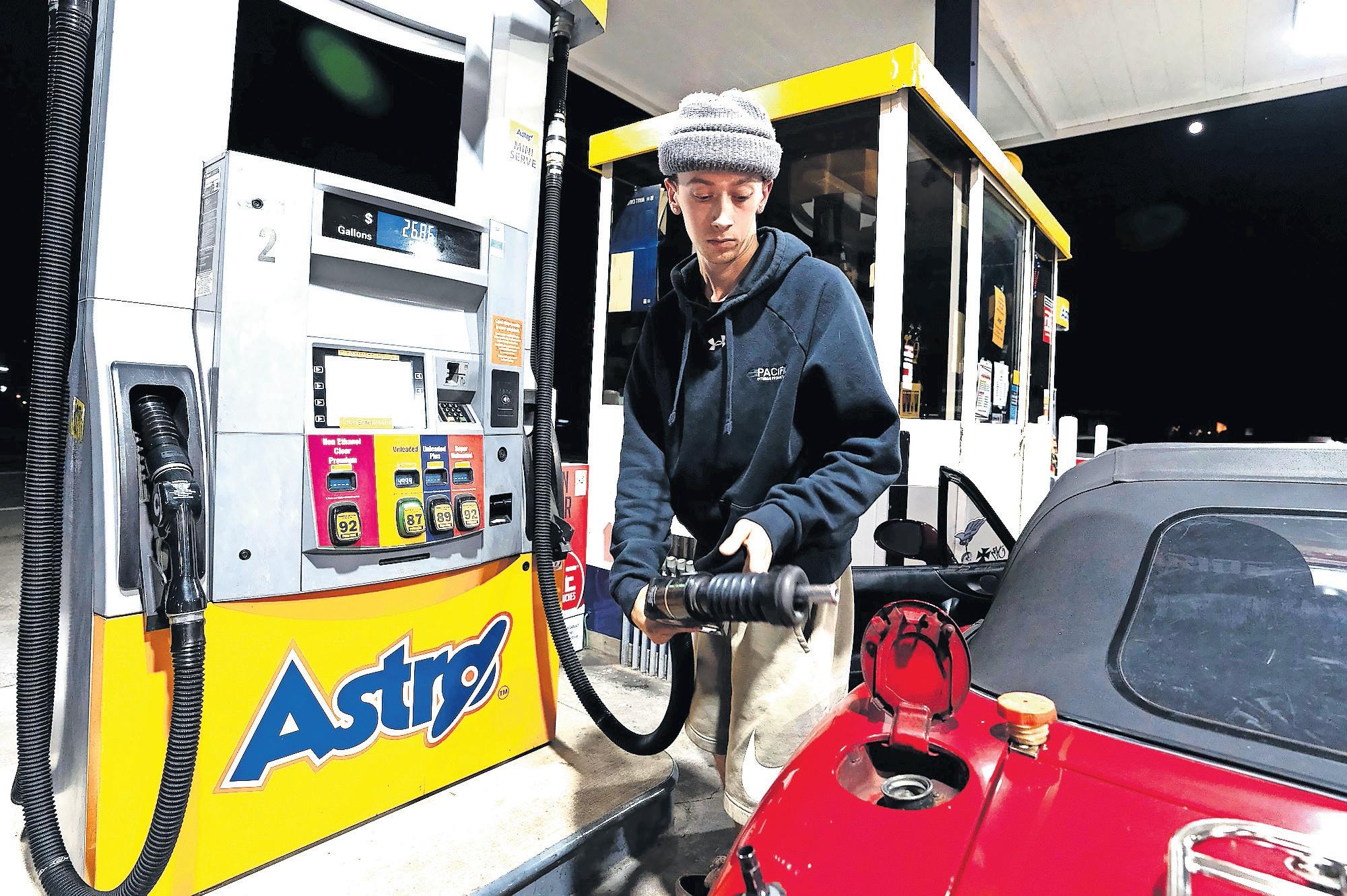
High oil prices due to the Iran war weigh on everything from the gas pump to consumer
goods
not cross any Native American reservations. More than 70% would be built within existing pipeline corridors and 80% on private land, Bridger Pipeline LLC said in a statement.
The Casper, Wyoming-based company operates more than 3,700 miles (5,950 kilometers) of gathering and transmission oil pipelines in the Williston Basin of North Dakota and Montana and the Powder River Basin of Wyoming. A subsidiary of True Companies, Bridger Pipeline could avoid a reversal by a future administration if it’s able to complete its project before Trump leaves office. It hopes to start construction in the fall of 2027 and finish it by late 2028 or early 2029, Bridger spokesperson Bill Salvin said.
Trump’s term ends Jan. 20, 2029.
True Company subsidiaries have been responsible for several major pipeline accidents including more than 50,000 gallons (240,000 liters) of crude that spilled into the Yellowstone River and fouled a Montana city’s drinking water supply in 2015, a 45,000-gallon diesel spill in Wyoming in 2022 and a 2016 spill that released more than 600,000 gallons (2.7 million liters) of crude in North Dakota, contaminating the Little Missouri River and a tributary.
Subsidiaries of True agreed to pay a $12.5 million civil penalty to settle a government lawsuit over the North Dakota and Montana spills. Salvin said the company has developed an AI-driven leak detection system that allows it to be notified more quickly when there are problems. It also plans to bore 30 to 40 feet (9 to 12 meters) beneath major rivers including the Yellowstone and Missouri to reduce the chances of an accident. The 2015 accident occurred on a line that was constructed in a shallow trench at the bottom of the river.
“We designed the pipeline with integrity and safety in mind. We have
By MAE ANDERSON and WYATTE GRANTHAM-PHILIPS AP Business Writers
PAIN at the pump.
Higher postal prices. Flights canceled, costlier airplane tickets and baggage fees. Everyday items such as soap and toothpaste getting more expensive.
Consumers are paying for the Iran war ‘s disruption of global energy production as the conflict enters its third month. Steeper gasoline, diesel and jet fuel prices are making driving and air travel more expensive.
Many companies warn there’s more to come: the cost of fuel and of materials derived from petroleum could drive up prices for food and for household items.
Iran has closed the Strait of Hormuz to oil tankers, keeping them pent up in the Persian Gulf and away from customers worldwide, while a U.S. Navy blockade is preventing Iran from selling its own oil. Prices surged overnight on worries that the war will affect the flow of crude for a long time.
Here’s how the growing cost of oil and gas is impacting consumers.
Gas surges to highest level since 2022
As the cost of crude climbs, so do the prices of gasoline and other fuel that keep equipment, cars, buses, delivery trucks and airplanes running.
Across the U.S., gas prices are at their highest level since 2022. The national average hit $4.30 a gallon on Thursday, compared with $2.98 before the war started, according to AAA. That’s a 44% increase since the U.S. and Israel attacked Iran on Feb. 28.
Diesel prices are making shipping cost more
Steep diesel prices are making it more expensive to haul everyday goods.
Diesel is now at an average of nearly $5.50 a gallon, up from $3.76 before the war, AAA says.
Shippers have started adding surcharges to cover the cost. The U.S. Postal Service implemented a temporary 8% charge on some of its services, including Priority Mail, to help blunt the impact of rising transportation costs. Amazon added a 3.5% fuel and logistics surcharge on third-party sellers using its platform to offset fuel prices as well.
Shoppers may see more sticker shock for clothing, cosmetics, furniture and other goods.
“Diesel’s the one that you want to watch out for for prices of consumer
goods,” said Peter Zaleski, professor of economics at Villanova University.
Plane tickets are getting pricier
After jumping to $209 a barrel in early April, the global price of jet fuel eased last week to around $179, still well above the roughly $99 at the end of February.
Fuel is one of the largest expenses for airlines. Its prices are pushing up airfares, baggage fees and add-on charges.
Major U.S. carriers including Delta, United, American and Southwest have raised checked baggage fees. United is expanding its “pay for what you want” model from economy to premium cabins, charging separately for options like seat selection. American is adding fees for seat assignments in basic economy, even for its elite-tier loyalty members.
Outside the U.S., carriers in Asia and Europe have added or raised fuel surcharges, in some cases tacking on hundreds of dollars to long-haul tickets.
Many airlines also have trimmed flight schedules, cut less profitable routes or reduced seat capacity. The Lufthansa Group has said it plans to cancel about 20,000 flights across its network over the next six months.
Consumer goods makers may raise prices
Procter & Gamble, the maker of such household products as Crest toothpaste, Tide detergent and Charmin toilet paper, estimated last week the war could cause a $1 billion hit to profits during its next fiscal year if Brent crude were to stay around $100 per barrel. Many of P&G’s products and packaging are made of resin or other
petroleum-based material, Andre Schulten, P&G’s chief financial officer, told reporters on April 24. He said the company may have to pass on some of the costs to shoppers.
London-based Unilever, which makes everything from Dove soap to Hellmann’s mayonnaise, plans to raise prices around 2% to 3% in “small doses,” CFO Srinivas Phatak said in an earnings call on Thursday.
Groceries could be next
Grocery prices have yet to be affected, according to government figures. But they are expected to rise with tightening supplies of fuel and fertilizer.
Fuel accounts for roughly 15% to 30% of the total cost of food, according to the Independent Grocers Alliance, a grouping of 7,500 global supermarkets. Fertilizer is also essential to farmers, and about 30% of the world’s fertilizer shipments typically pass through the Strait of Hormuz.
Ken Foster, a professor of agricultural economics at Purdue University, said
there is typically a 3- to 6-month lag between an energy price shock and an increase in retail food prices. The lag can be up to a year for packaged foods with a longer shelf life.
Increased hunger in Asia and Africa is possible
The U.N. World Food Program estimates that 45 million additional people — the majority of whom live in Asia and Africa — could tip into hunger if the war doesn’t ease by the middle of this year. That would bring the global total of people facing food insecurity to 363 million, the highest level on record.
“Delays and higher transport costs push up food prices, and families who spend 50% to 70% of their income on food are the first to go without,” Corinne Fleischer, the program’s supply chain director, said in a statement.
LUCIANO V. replaces the fuel nozzel after filling the tank of their 1999 Mazda Miata at an Astro gas station on Wednesday, April 29, 2026, in Portland, Ore.
Photo:Jenny Kane/AP
PRESIDENT Donald Trump speaks in the Oval Office of the White House, Thursday, April 30, 2026, in Washington. Photo:Alex Brandon/AP