

550-room Hilton centrepiece of $700m Lucayan ‘tourist mecca’
BY NEIL HARTNELL Tribune Business Editor nhartnell@tribunemedia.net
A 550-room Hilton branded resort will form the core of the Grand Lucayan resort’s $700m redevelopment, it was revealed yesterday, amid assertions the project will transform Freeport into a “tourist mecca” to complement “the mega cruise port of the Caribbean”.
Dupuch & Turnquest, the Bahamian law firm that represents Concord Wilshire, the Grand Bahama resort’s purchaser, in a note to clients seen by Tribune Business pledged that - unlike other private destinations reserved exclusively for cruise passengers - the 20-acre beach club to be developed by Mediterranean Shipping Company’s (MSC) cruise arm, as well as the planned resort, will be open to Bahamians and
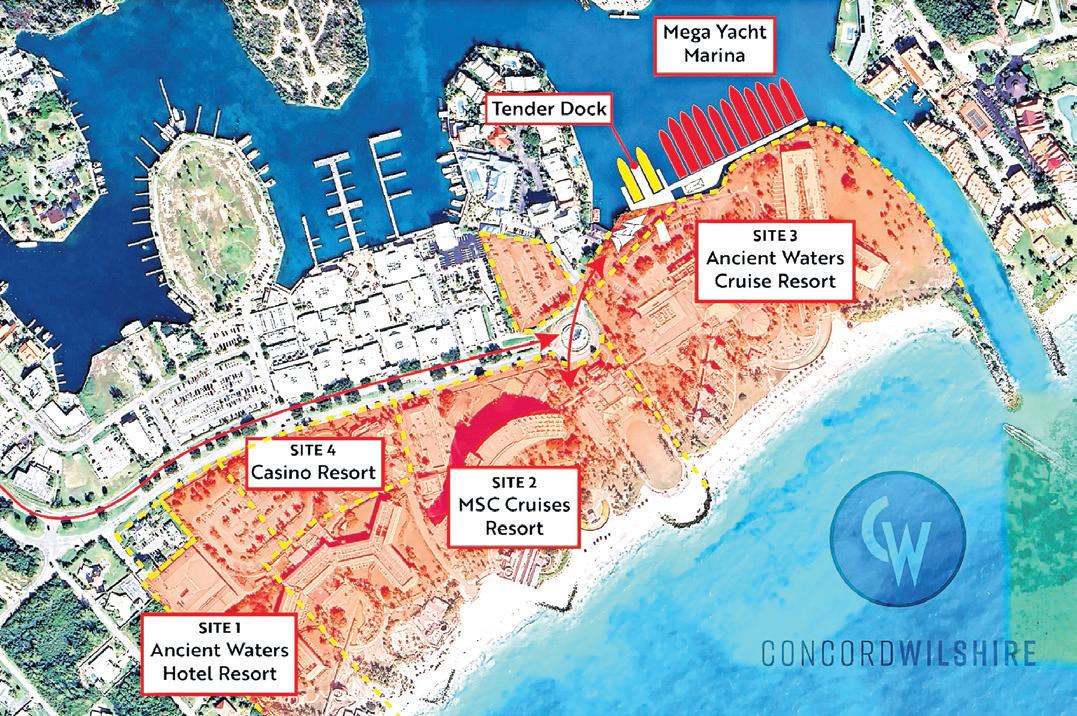
residents as well as other stopover visitors. This, it added, will “reintroduce Freeport as a new visitor destination”, with MSC possibly retaining the Grand Lucayan’s Breaker’s Cay property and rebuilding it as a 600-room resort separate
from the Hilton-branded property that Concord Wilshire will develop itself. While Breaker’s Cay and the Manor House are not included in the initial demolition, the former Reef/Memories property will be torn down.
Project to match Freeport’s ‘mega cruise port of Caribbean’
MSC’s 20-acre
Beach Club open to residents, other visitors
$40m deal to sell
Xanadu, 28 acres to Royal Caribbean
Dupuch & Turnquest sig-
nalled that much of the Grand Lucayan’s redevelopment is planned to occur over the next two years, as this will “parallel” the Grand Bahama International Airport’s
Bank ‘builds in’ $4m regulatory cost jump
BY NEIL HARTNELL Tribune Business Editor
nhartnell@tribunemedia.net
COMMONWEALTH Bank yesterday revealed 2025 profits would have increased by around 5 percent compared to 2024 if the prior year’s loan loss provision reversals were stripped out as it adjusts to a $4m annual jump in regulatory costs.
Tangela Albury, the BISXlisted lender’s chief financial officer, in a series of written replies to Tribune Business questions said last year would have represented an improvement - and not the 22.9 percent total comprehensive
income drop shown on its audited income statementhad 2024’s $25.5m worth of credit impairment reversals not been included in comparative figures. She added, though, that 2025’s $67.109m in total profit, and $66.019m in total comprehensive income, represented the third successive year when Commonwealth Bank has exceeded a $65m bottom line from its “core earning engine. Ms Albury also confirmed that, despite “challenges”, the bank was able to contain growth in its general and administrative expenses to just under $1.5m, or 1.5 percent, year-over-year to
‘Sharpen’ visitor interest into bookings, hotels told
BY NEIL HARTNELL Tribune Business Editor
nhartnell@tribunemedia.net
FAMILY Island resorts must “sharpen how we convert strong interest into bookings”, a leading hotelier is urging, while warning that cost pressures cannot be used “as excuses” given that value-driven visitors will offer “no sympathy”.
Emanuel Alexiou, the Bahama Out Island Promotion Board's president, in address to member properties and others, said that despite the 2026 first quarter double-digit room nights sold and room revenue declines “demand is not gone” as shown by the level of traffic to its website and the customer leads provided to resorts.
“The room nights sold and room revenue data from 2025 and the first quarter of 2026 is telling us something important. Demand is not gone,” he asserted. “Interest in the Out Islands, especially from our core Miami/Fort Lauderdale market, remains strong.
“And while much of our declines can be attributed to the loss of airline seats when Silver Airways ceased their operation in June last year, our conversion is inconsistent. That gap between interest and bookings is where we need to focus….
“Our January to March advertising results, and what we’re seeing heading into
Bahamas bracing for ‘more rigorous’ financial crime test
BY FAY SIMMONS Tribune Business Reporter jsimmons@tribunemedia.net
THE Bahamas is bracing for a “more rigorous” examination of its anti-financial crime defences by international assessors who will now focus on whether these are operating effectively in practice.
Niekia Horton, the Bahamas Financial Services Board’s (BFSB) chief executive, yesterday said both the Government and financial services industry are intensifying preparations for the upcoming Financial Action Task Force (FATF) mutual evaluation, which will involve a visit to this nation by the body’s Caribbean affiliate. She said both regulators and industry stakeholders are working to ensure The Bahamas’ anti-money laundering and counter-terror financing compliance framework stands up to heightened scrutiny, adding that significant work is already underway to prepare for the assessment.

$97.941m. This, she added, was achieved despite having to “build in” an average $4m annual increase in regulatory costs to its business model, which has impacted
the amount of capital it can deploy for longer-term growth and planning initiatives.
Speaking after Commonwealth Bank released its audited annual financials for 2025, Ms Albury said: “If we focused on absolute organic growth, without the impact of the one-time benefit to net profit in the prior year because of changes to loan loss estimates, it is a net profit growth of approximately 5 percent year-over-year.
“We are pleased that, against historical results and with normalising operations, the bank’s core
Banks ‘won’t be an invisible arm’ over regulation of construction
Bank chief says industry won’t be part of ‘force tactic’
To meet with contractors next week on ‘exclusivity’ plan
Bad workmanship one part of home own ‘jigsaw puzzle’
BY NEIL HARTNELL Tribune Business Editor nhartnell@ tribunemedia.net
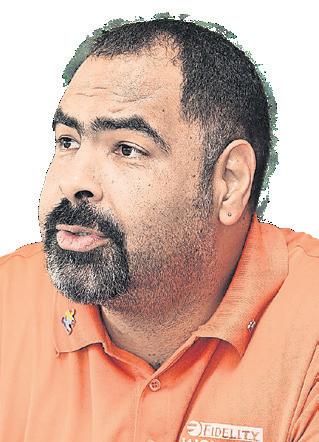
BAHAMIAN commercial banks will “not become an invisible arm to force” the Government to implement long-awaited construction industry regulation, a senior banker is warning, with the sector due to meet contractors next week over the latter’s “exclusivity” proposal.
Gowon Bowe, Fidelity Bank (Bahamas) chief executive, told Tribune Business that - while the Bahamian Contractors Association’s (BCA) proposal that only licensed, qualified tradesmen be permitted to work on bank-financed construction “makes sense”the industry cannot become involved in an initiative “to impose their own laws” and rules outside of the parliamentary process.
Speaking after Leonard Sands, the BCA’s president, earlier this week revealed that the Association was seeking to negotiate an “exclusivity” deal where only its certified members would build projects financed by Clearing Banks Association (CBA) members, Mr Bowe said that while the banks support full implementation of construction industry regulation they will not be part of any “force tactics” to achieve this goal.
Mr Sands had told this newspaper that the BCA and its members have run out of patience after a fruitless ten-year wait for two different administrations to give effect to the Construction Contractors Act by appointing a Board to oversee the law’s licensing and regulatory regime. Frustrated by the Government’s inaction, he added that the BCA has decided

TANGELA ALBURY
GOWON BOWE

Gaining the competitive edge by not standing still
A
competitive market is a forum (online or offline) where many businesses are selling similar things, but neither control the price nor make all the rules. They therefore have to compete for customers by offering better value, service, quality or expertise. In short, when you hear the term

“competitive market”, think of a busy space where companies are all trying to win customer attention and their dollars. The market is ultimately shaped by choices - buyers choosing who to buy from, and sellers competing for their attention.
Imagine three sandwich shops on the same block.


Airline expands service into Cat Island airports
BY ANNELIA NIXON Tribune Business Reporter anixon@tribunemedia.net
MAKERS Air will expand its service to Cat Island with twice-weekly flights into Arthur’s Town starting from May 12 as the island prepares for New Bight’s closure for renovations as part of the Government’s airport improvement drive.
The carrier said it will “initially” have flights to Cat Island weekly on Tuesday and Thursday, keeping the flow even when New Bight closes. It confirmed it will begin servicing both airports from May 12 as part of its expanded schedule.
“We’re servicing both [airports] beginning on May 12,” Sarah Swainson, director of business development
at Makers Air, told Tribune Business. “So the reality is that we’re starting Arthur’s Town two days a week.
“We’re servicing New Bight until New Bight closes, at which point we will service all flights through Arthur’s Town until New Bight reopens. And then we will be going to New Bight daily [and] Arthur’s Town twice a day, or as demand dictates.”
In a statement, Makers Air announced that Arthur’s Town will become its 12th scheduled destination. The carrier said the new route will improve accessibility to the northern region of Cat Island, reducing travel time and enhancing logistics for passengers and freight.
“The introduction of Arthur’s Town as a
scheduled port of entry offers significant benefits for travellers, businesses and homeowners located in the northern region of Cat Island, reducing ground transfer times while improving efficiency for both passenger travel and freight logistics,” Makers Air said.
“Makers Air’s longterm vision for Cat Island includes servicing both Arthur’s Town and New Bight Airport, ensuring consistent access across the island. During periods when New Bight airport may be temporarily closed, operations will seamlessly transition to Arthur’s Town, maintaining uninterrupted service for passengers and freight.”
David Hocher, Makers Air’s president, added that
the knowledge needed to better engage with financial institutions.
the airline is building on a strong partnership with Cat Island, creating new opportunities for residents and visitors while strengthening connectivity to the destination.
The expansion is expected to support tourism growth and economic activity on Cat Island, while offering travellers improved access to one of The Bahamas’ more remote and less developed islands.
Dr Kenneth Romer, deputy director-general of tourism and director of aviation, explained that both Arthur’s Town and New Bight airports will operate simultaneously during a transition period as the latter prepares to close - possibly in June.
Dr Romer said the phased development of airport
and benefiting from, the industry.”
infrastructure on the island is designed to minimise disruption while increasing access for travellers and businesses.
“New Bight remains opened, and we issued a NOTAM (notice) of closure, possibly by June 30, but it’s subject again to review,” Dr Romer said.
“So they will remain open simultaneously. So there will be airlift into both New Bight and Arthur’s Town for the peak season. And then when we are doing more… works on the airside, then we’ll close it. So we’re trying to avoid disruption to the travelling and the business community.”
The newly-constructed Arthur’s Town airport is scheduled to officially open on Friday, marking another milestone in the
Government’s broader push to modernise Family Island infrastructure.
“The commissioning of the new Arthur’s Town airport reflects The Bahamas government’s commitment to the renaissance of our Family Islands through the unprecedented development of over 19 airports across our archipelago and the resultant expansion of new airlift to traditionally underserved communities,” Chester Cooper, deputy prime minister and minister of tourism, investments and aviation, said.
Additional domestic airlift is expected following the Arthur’s Town Airport commissioning. Meanwhile, New Bight airport is projected to reopen later this year following upgrades.
BY FAY SIMMONS Tribune Business Reporter jsimmons@tribunemedia.net
THE Bahamas Financial Services Board’s (BFSB) chief executive yesterday said she is pushing to make the industry more accessible to Bahamians, arguing that it should benefit citizens as much as international clients.
Speaking to Tribune Business, Niekia Horton said the sector, which represents the country’s second economic pillar, must not be viewed as exclusive or reserved for high net worth individuals.
“The financial services industry is not reserved for the international market alone. This is very important to me. It’s the second pillar of our economy, and it should benefit Bahamians,” said Ms Horton.
“It shouldn’t be seen as something only for offshore or for the wealthy. You have
to start somewhere, and if we understand our own toolkit of wealth options, we can begin to build wealth for ourselves.”
Ms Horton said the BFSB is focused on increasing public awareness and equipping individuals with
“The Bahamas Financial Services Board is focused on educating the community so people can become more aware. My role is to equip people to ask the right questions when they go into banks or meet financial advisors,” said Ms Horton. “I want to see more Bahamians engaging with,

She added that a key part of that effort is encouraging greater participation and confidence when interacting with financial professionals.
“I really would like for us as a people to engage more with this industry and to benefit from it,” Ms Horton said.
She pointed to the success of Financial Services Day as a key example of this outreach, with plans
already underway to host the event again in July alongside broader efforts to expand financial literacy programmes.
“Financial Services Day was a tremendous success last year. We hosted it at the Mall at Marathon to engage directly with the community, educate the public and support back-to-school initiatives,” Ms Horton said.
“We’re also strengthening our education platforms locally, including
expanding financial literacy programmes in schools and at the University of The Bahamas, to ensure greater continuity and impact.”
Ms Horton added that these initiatives are aimed at ensuring more Bahamians can directly benefit from one of the country’s most important industries, while building long-term financial awareness and participation across the population.
The Tribune wants to hear from people who are making news in their neighbourhoods. Perhaps you are raising funds for a good cause, campaigning for improvements in the area or have won an award. If so, call us on 322-1986 and share your story.
Small Business Centre helps GB entrepreneurs to ‘connect’



another has the best price, and the third uses organic ingredients. If one of them suddenly raises prices or delivers poor service, customers may switch to their rivals. That is the power of competition, so businesses must keep improving to stay relevant. Here are the main forces at play:
Prices stay fair: Because there are many sellers, businesses cannot raise prices just because they want to. They should justify that price by offering something extra, like better quality, faster delivery or superior customer service.
Buyers have real power: In a competitive market, the customer truly is in
control. They read reviews, compare prices and explore different brands. This level of access and transparency means businesses must earn your trust. Can companies still make a profit in competitive markets? Yes, but this calls for working smarter. Instead of relying on high prices, they succeed by being efficient, building customer loyalty and offering real value. It is about finding your edge, whether that is great service, a better product or a strong brand identity. The big picture? A competitive market works like a healthy ecosystem where everyone has a role to play. Customers bring expectations and feedback while businesses bring creativity,


service and solutions. For businesses, it is a challenge but also a huge opportunity. Meanwhile, companies that understand the dynamics of competition and learn how to stand out are the ones that succeed long-term. They are not just reacting to the market; they are shaping it. In today’s world, customers have access to more information than ever before. From online reviews and price comparison tools to YouTube demonstrations and social media comments, customers can - and willmake informed decisions. By the same token, when companies compete, they are constantly trying to do better, offer more value, create better products and improve customer service that benefits everyone. Moreover, when companies understand that they are not the only option, they
cannot afford to stay the same, which leads to better results.
If a business becomes comfortable and stops transforming, a competitor will jump in and offer something better. That is why competition drives ongoing improvement. Does this mean the cheapest company always wins? Not necessarily. In competitive markets, consumers still care about quality, experience and customer service.
While price is a big factor, it is not the only one. A business that charges a little more, but offers better support or longer-lasting products, can still do well. Therefore, understanding your competitive market helps you see where you stand among rival companies, identifies what makes you different and discovers opportunities your competitors may have missed.

THE SMALL Business Development Centre (SBDC) hosted its ‘SBDC Connect’ event at Out Da Sea Bar and Grill in Grand Bahama on April 29, 2026, bringing together entrepreneurs to connect, share experiences and learn more about the resources available to help start or expand their businesses.
Photos:Andrew Miller/BIS
Businesses that succeed in competitive markets are the ones that listen to their customers, stay flexible and focus on delivering consistent value. Their goal is not to be the cheapest or flashiest, but to focus on being reliable, unique and customer-centred. In reality, competition is a good thing. Not just for consumers, but for businesses as well. Until we meet again, live life for memories rather than

THE Small Business Development
Centre (SBDC) has hosted its ‘SBDC Connect’ event at Grand Bahama’s Out Da Sea Bar and Grill, bringing together entrepreneurs who have sought its help within the last 18 months.
The initiative recognised 37 entrepreneurs who have successfully received grant funding through various SBDC initiatives, while giving aspiring business owners a chance to learn about the Centre’s process and resources available to help them start or expand their ventures. Jeffrey Pinder, outreach co-ordinator for the Small Business Development Centre in Grand Bahama, explained that the event was designed to create a more relaxed environment where entrepreneurs could connect, share experiences and learn from one another.
“If you’re in business or thinking about coming into business, it’s important to start the right way,” Mr Pinder said.
He explained that the SBDC guides entrepreneurs through a process designed to turn ideas into successful businesses, aligning with the Government’s objective of ensuring business owners have access to both funding and the right tools to grow.
The SBDC plans to host similar networking engagements throughout Grand Bahama, including West End, Eight Mile Rock and East Grand Bahama.
regrets, enjoy life and stay on top of your game.
• NB: Columnist welcomes feedback at deedee21bastian@gmail. com
ABOUT COLUMNIST:
Deidre M. Bastian is a graphic designer/brand marketing analyst, international award-winning author and certified life coach.


Farmer questions if Golden Yolk will hurt egg producers
BY ANNELIA NIXON Tribune Business Reporter anixon@tribunemedia.net
AN Abaco farmer yesterday questioned whether the Government’s push to expand domestic egg production could harm Bahamians not involved in the Golden Yolk project.
Daphne DeGregory-Miaoulis, former Abaco Chamber of Commerce president and owner of Abaco Neem Farm, said she is not part of the Government programme that locally produces eggs in an attempt to boost food security in The Bahamas. However, she challenged the initiative’s impact on small-scale producers across the islands.
“I’m wondering how it’s impacting all of the small producers that they have
promoted throughout the islands,” she said. “And if their price point is putting the smaller producers out of the market.”
Mrs DeGregory-Miaoulis raised concerns about the pricing of the Golden Yolk eggs, questioning if it is sustainable - not only for the initiative itself, but for independent farmers trying to compete.
“I’m sure everybody wants to save $1, but there’s two sides of the coin,” Mrs DeGregory-Miaoulis said.
“Are they making any profit off of it? Is it sustainable, the price that they’re selling it at? Can that sustain the programme and the repurchasing of feed, chickens, etc, or are they just putting it at a break-even cost price, which will negatively impact the competitors in the market who are also Bahamian producers?”
She argued that, if private farmers are unable to match those prices, the programme could distort the local market. “So if I can't produce an egg on my farm, not me particularly, but another farm, if they can’t produce it for that price and sell it at that price for a profit, even a small profit, then I think they are negatively impacting the market generally,”
Mrs DeGregory-Miaoulis said.
“And it's unfair, because the Government can import and produce at probably less overhead cost, less cost of production than the average farmer. So they are actually putting the Bahamian farmer out of business by undercutting them due to their advantage. So it's not a level playing field.”
Mrs DeGregory-Miaoulis emphasised that any national effort to improve
Bahamas targeting Nigeria, Africa on financial services
BY FAY SIMMONS Tribune Business Reporter
jsimmons@tribunemedia.net
THE Bahamas is positioning itself as a stable hub for global wealth as geopolitical tensions and economic fragmentation reshape international markets, a senior financial services executive said yesterday
Speaking to Tribune Business at its Global Wealth
Summit, Niekia Horton, the Bahamas Financial Services Board’s (BFSB) chief executive, said the country’s long-standing stability continues to set it apart even as global conditions become more volatile.
“Our core values are around stability. Even though we’re going into elections, we’ve been consistently stable in terms of our offering over the years,” said Ms Horton. “In an environment that’s fraught
Tourists have no ‘sympathy’ for cost pressures excuses
TRAVEL - from page B1
April and May, still indicate strong interest. Website traffic is significantly up. Leads provided to your hotels from myoutislands.com are significantly up. People want what we offer: Space, authenticity, natural beauty and a sense of escape that is increasingly rare,” Mr Alexiou added.
“But interest alone is not enough. we need to sharpen how we convert that interest into bookings. Our planned Spring/summer advertising initiatives are working. But campaigns only work if the product behind them is aligned. That means availability, competitive ‘complementary’ offers, special seasonal events and
clear messaging across all properties.”
Mr Alexiou added that Family Island resorts must also “ask ourselves some uncomfortable but necessary questions”, including whether they are losing bookings and visitors to second home vacation rentals and cruise lines because they offer more flexibility and better value, in the case of the former, or simpler and more all-inclusive products with the latter. He also challenged whether resorts were pricing themselves correctly and if there is sufficient airlift to get to the Out Islands.
“The data is clear: Airlift remains one of the biggest constraints on our growth. Not just availability, but reliability, frequency and cost. If a traveller has to work
with uncertainty, whether in the Middle East, the war between Russia and Ukraine, or broader global fragmentation, we believe The Bahamas is highly relevant.”
“We offer continuity that people can rely on, irrespective of the Government in place. The Bahamas is a safe place to do business.” Ms Horton added that the jurisdiction’s ability to adapt quickly to global market
too hard to reach paradise, they will choose a different version of paradise,” the Promotion Board president warned.
“This is why an airlift development plan is not a ‘nice to have’. It is essential… We have to address how we can help our domestic airline partners access affordable capital to improve their fleets in order to make same-day connections via Nassau easier and more affordable.”
As for the tourism industry’s support, Mr Alexiou added: “Regarding energy and infrastructure, we cannot ignore the internal friction. Our commitment to growth is being choked by energy costs and an aging infrastructure that struggles to keep pace with the high-yield travellers we claim to attract.
“You cannot market a ‘luxury off-grid experience’ if the ‘off-grid’ part is due to a power failure rather than
food security must strike a balance between affordability for consumers and viability for producers.
“So the Government should be looking at both sides of the coin, helping the consumer but also helping to grow the agricultural industry and allowing individual private farmers to have an ability to sell their product at a reasonable price,” she added.
The National Layering Programme, which is led by the Bahamas Agricultural and Industrial Corporation (BAIC) and the Bahamas Agriculture & Marine Science Institute (BAMSI), engages Bahamian farmers and promotes training students and agricultural entrepreneurs in poultry farming. However, Mrs DeGregory-Miaoulis questioned the long-term
shifts also enhances its competitiveness.
“One of the things the financial services industry in The Bahamas does very well is innovate. When you see legislation being brought to Parliament, it’s because we’re adapting with the times and keeping pace,” said Ms Horton.
She said this combination of stability and responsiveness positions The Bahamas to attract greater international interest, as the BFSB also expands its outreach into new markets.
“We continue to expand internationally. We’ll be visiting Nigeria, Brazil and Singapore as we explore new markets and
a guest’s choice. We need to continue our advocacy and lobbying efforts to correct this.
“And regarding boating fees, pending National Insurance increases, labour legislation – these are not abstract policy discussions. They directly impact our cost structure, our competitiveness and ultimately our pricing. We cannot ignore these pressures, but we also cannot use them as excuses because the market is not going to give us sympathy. The market will simply compare us to alternatives and decide.”
As for value, Mr Alexiou reiterated that this “is not about being cheap” but, instead, aligning visitor experience with price.
“If a guest pays a premium, they expect clarity, consistency, and quality from the moment they book to the moment they leave,” he warned.

MIAOULIS
logic of encouraging people to enter the industry if market conditions make it difficult to survive.
“If you're teaching people how to grow eggs, but you're putting them out of business, what's the point?” she said.
“Why develop an industry that you're going to compete with and not allow even a level playing field on the retail end.
“Now, I am not saying that that is what is happening, but at the price that they're selling it, I am assuming, as I import feed for my chickens, I don't sell them on the open market, but I know that its
partnerships beyond traditional ones.”
Ms Horton added that the BFSB is particularly encouraged by emerging opportunities in Africa, which it began exploring following last year’s summit. She said yesterday’s event is designed to bring international investors and stakeholders directly to the jurisdiction, allowing them to experience firsthand what the country has to offer.
“The Summit was birthed from a place where I wanted to bring together the domestic and international markets in The Bahamas. In my role, I travel a lot, but I realised the real value is getting the audience to come to
“That includes how easy it is to find your property online; how quickly you respond to inquiries; how seamless the arrival experience is; and whether the experience matches what was promised.”
And the Promotion Board chief added: “The days of ‘every hotel for itself’ are over. When the Out Islands lose market share to Aruba or the Turks & Caicos, we all lose. We need a unified front on airlift, on supply chain sourcing and on talent development. We are competing as a destination, not as individual properties.
“Consumers are no longer just searching – they are asking. When someone asks, ‘plan me a trip to Cat Island’, or ‘where should i stay in Andros?’, what answer are they getting?
If we are not actively managing our digital presence, our content, our imagery and our data, we are letting
cost of production is higher than what I'm assuming…” While noting she is not directly involved in selling eggs herself, Mrs DeGregory-Miaoulis said her experience importing feed gives her insight into production costs, which she believes are higher than the programme’s apparent retail price.
“I’m not saying that that is exactly what is happening,” she added, “but based on the cost of production, I don’t see how it aligns with the price they’re selling at.”
Her comments followed a recent social media post by the Ministry of Agriculture and Marine Resources that announced the first batch of eggs from the Golden Yolk initiative had made it to Super Value’s shelves.
“Today, the first cartons from the Golden Yolk project officially hit shelves at Super Value Top-of-the-Hill, Mackey Street, tomorrow morning at Cable Beach & Golden Gates locations; a historic milestone in our mission to strengthen national food security and reduce imports,” the post read.
us, so they can experience The Bahamas, because it adds a different touch,” Ms Horton explained.
She said this year’s theme,
‘Wealth preservation strategies in a recalibrating world’, reflects the shifting global environment and increasing uncertainty.
“We’ve convened the Summit this year under the theme ‘Wealth preservation strategies in a recalibrating world’, and we chose that because of what we’re seeing in the geopolitical environment today. It’s very timely, particularly because The Bahamas offers a lot of advantages in this environment,” Ms Horton added.
someone else define our story. That is a mistake we cannot afford.
“So here is the bottom line. We are not in a declining market; we are in a more competitive one. We are not lacking demand; we are facing higher expectations. And we are not without opportunity, but that opportunity will not wait for us to get comfortable,” Mr Alexiou said.
“The Out Islands have everything the modern traveller is looking for, but having it is not enough. We have to deliver it consistently, clearly and competitively. This year will challenge us, but it will also reward those who adapt quickly, collaborate effectively and stay focused on what actually drives bookings. Let’s be honest about where we are. Let’s be disciplined about where we need to go, and let’s move with urgency.”

DAPHNE DEGREGORY-
Examiners to determine if systems working as stated
ASSESS - from page B1
Speaking to Tribune Business, Ms Horton said:
“There’s a lot of preparation going into the upcoming mutual evaluation. The Government and regulators are actively working on it, and recently held briefings to raise awareness.
“We’re in our fifth year of this process, so we’re not new to it, but this round is more rigorous. It’s about ensuring the systems we’ve put in place are working as intended.”
Ms Horton explained that while The Bahamas has already established the necessary legislative and regulatory framework, the focus has now shifted to demonstrating effectiveness.
“We know we have the legislation and everything in place, but they’re coming in to check that it’s doing what we say it’s doing,” she added. Ms Horton said maintaining trust through strong compliance with international standards remains critical to The Bahamas’ competitiveness as a financial centre. “Being ahead of regulatory requirements and international standards is critical. With automatic exchange of information and evolving global frameworks, people want to do business in jurisdictions they can trust. The Bahamas does that very well,” she added, noting that this nation’s ability to innovate through legislation
also supports its standing internationally. “One of the things the financial services industry in The Bahamas does very well is innovate. When you see legislation being brought to Parliament, it’s because we’re adapting with the times and keeping pace.” Ms Horton pointed to the recently-introduced Usufruct Interest Bill as an example of how The Bahamas continues to evolve its legislative framework.
Explaining the concept, she described a usufruct as closely related to a trust structure. “It’s the trust’s cousin. That’s how I see it. Some other persons may see it differently, but I see it as the trust’s cousin,” Ms Horton added.
“In The Bahamas, we have a strong framework
with trusts; it’s a very well-known common law construct. In civil law societies like Brazil and Switzerland, where we may want to enter those markets, they’re more familiar with a usufruct concept versus the trust concept, and the core principles are very similar.”
She explained that while a traditional trust involves three parties - a settlor, trustee and beneficiary - a usufruct structure typically involves two. “In a trust, you have someone who puts assets into the trust, the trustee who oversees it, and the beneficiary. In a usufruct, you don’t necessarily have three persons, but you have two; you have the economic owner, who retains ownership of the asset, and the person who benefits from it,” Ms Horton said.
2025. Generally, the bank has, for a long time, introduced energy-conscious facilities management.
She illustrated how the structure works in practice.
“Let me make it very practical. If my mother owns a property with apartments, she can retain ownership of the land and the building, but allow me, as her daughter, to benefit from it. I can collect the rent, manage the property and receive the economic value, but I don’t have control to sell the land,” Ms Horton said.
“I can rent it, I can build a business on it, but ownership remains with her. That’s what a usufruct is.”
She said this distinction makes the structure particularly attractive to clients in civil law jurisdictions. “The client base it opens up for us is definitely in civil law environments, because they understand that concept. They tend to be
more reserved with trusts, because you give up control to the trustee, whereas here the owner retains control,” the BFSB chief added.
Ms Horton said this type of legislative flexibility helps position The Bahamas to expand into new markets while maintaining strong regulatory standards. “That kind of innovation keeps us relevant and ahead of the curve, and it’s what makes us very unique as an industry,” she added. She said this combination of regulatory strength and legislative responsiveness is key to ensuring The Bahamas remains competitive while meeting increasingly stringent global standards.
earning engine has generated in excess of $65m net profit per year, in each of the previous three years…. The bank’s performance was very strong and broadly in line with management’s expectations, ahead of our initial budget for disciplined, sustainable earnings growth.
“Net profit of approximately $67.1m reflects the continued strengthening of the Bank’s core earnings engine, particularly given that the prior year included a one-off benefit from changes to loan loss assumptions that did not recur in 2025. The financial performance of 2025 reflects the normalisation of our business, showing loan growth ahead of industry, stable margins, net interest and fee income growth supported by disciplined expense management.”
Commonwealth Bank suffered a more than$27.73m reversal on loan loss provisions in 2025, taking $1.154m worth of these during the 12 months to end-December 2025, as opposed to the $25.578m worth of write-backs that it enjoyed in 2024. This was the sole factor that drove Commonwealth Bank’s near-$28m, or 37 percent increase, in total non-interest expenses to 103.175m for 2025 as opposed to $75.186m in the prior. The latter figure was produced by that $25.578m reversal of loan loss provisions from the 2024 expenses . As a result, the BISXlisted lender’s total profit dropped by almost $18.8m or 21.9 percent year-overyear, falling from $85.902m in 2024 to $67.109m, while total comprehensive income declined by 22.9 percent from $85.602m to $66.019 - a reduction of more than $19.5m. However,
Commonwealth Bank did largely limit the general and administrative expense rises that had increased by higher amounts in prior years.
“Containing general and administrative expenses is challenging,” Ms Albury told Tribune Business.
“While we have now built-in the additional new regulatory costs placed on the bank in the past three years, these have effectively added an average of about $4m in costs annually.
“The opportunity cost of this is tied to our capital allocation for longer-term strategic planning initiatives. We have had to be very nimble because, in addition, inflation does not go away. Therefore, we have focused on cost discipline, and spending strategically in the areas of technology and innovation, which underpin our long-term success.
“Energy costs were not a stand-out cost driver in

While we have decided to place a hold on the bank’s solar project, this helps us while the local energy reforms are being developed. We believe the cost and efficiency of renewable energy options will go down, and this will serve the bank’s interest once the supporting energy infrastructure nationwide is in place.”
Ms Albury told Tribune Business that Commonwealth Bank’s 2026 first quarter unaudited financials were positive compared to the prior year, but its near-term prospects continue to be impacted by the inflationary impacts and geopolitical uncertainties caused by the Middle East conflict and resulting oil price spikes. However, she added that the personal lending specialist expects the 2026 full-year profit performance to match up well with 2025’s.
“Our preliminary results for the 2026 first quarter are certainly encouraging against the prior year, [but] our positive outlook
remains constrained by the ongoing geopolitical conflicts and the near-term impacts to the local economy,” she added.
“The recent IMF World Economic Report for April 2026 showed some mild negative movements for key macroeconomic indicators related to unemployment levels and inflation. These require monitoring, but not alarm. Overall, the bank expects full-year 2026 performance to compare favourably with 2025, while maintaining a disciplined and sustainable approach to growth.”
Elsewhere, Commonwealth Bank’s core lending business expanded by just over $50m on a net basis in 2025, with its overall portfolio increasing by 5.7 percent year-over-year from $875.211m at year-end 2024 to $925.241m. “We have seen consistent growth in our loan portfolio, yearon-year, for the past three years. However, growth is only valuable to our long-term success if it is sustainable,” Ms Albury said.
“So just as we are focused on credit production, we remain targeted in our approach to credit
quality and delinquency management. The bank is a personal lender, and the market, in recent times, has reflected a strong demand for auto loan financing and debt consolidation. We have met this demand with efficient credit approvals and disbursement of loan proceeds, leveraging the automation of key internal processes in our operational workflows.”
And looking ahead to the remainder of the year, Ms Albury said: “In 2026, the bank remains focused on disciplined loan growth, expansion of fee-based services and continued investment in digital banking capabilities. In particular, piloting efforts on the island of Andros to build a business model for other Family Islands. These focus points are not just considering near-term success, but positioning the bank’s core operations for long-term, sustainable growth.
“We cannot ignore, and must remain mindful of external risks, including geopolitical developments and rising energy prices, which may impact inflation, consumer spending and overall economic activity, in particular, tied to the tourism sector. While these factors require ongoing monitoring, the bank’s strong capital position, liquidity and risk management framework provide a solid foundation to navigate these uncertainties.”
Banks endure ‘poor workmanship’ from attorneys over title sign-offs
to move regulation forward itself by developing its own standards.
A key element, according to Mr Sands, is securing an “exclusivity” deal with Bahamian commercial banks that would see only BCA-certified contractors handle construction projects financed by CBA members. However, Mr Bowe subsequently signalled to Tribune Business that talks on such an agreement are not as far advanced as the BCA president indicated although the banks are willing “to lend our voice to advocate” for construction to be regulated via the Act passed in 2016.
And, while acknowledging that the banks and Bahamian mortgage borrowers constructing their own homes would benefit from greater regulatory protection against “shoddy workmanship”, the Fidelity Bank (Bahamas) said this will not solve the greatest obstacle to home ownership which remains the lack of borrowers able to qualify for home loans.
Describing quality construction as part of “the jigsaw puzzle” that forms Bahamian middle and lower class home ownership, Mr Bowe warned against “looking at a silver bullet” to magically solve this nation’s affordable housing shortages - a problem, he added, that is not unique to this nation.
Total mortgage lending by banks, insurance companies and the Bahamas Mortgage Corporation, increased by $48m, or 51.8 percent, to $145.3m for the 2024 full-year - the last 12-month period for which data was available. This followed 2023’s $15.3m growth, highlighting the sector’s economic importance and showing why licensed, regulated construction would provide a further boost, with residential mortgages accounting for 71.6 percent of the total to hit $104.1m growth in 2024.
“Leonard has reached out, and we are scheduled to meet next week more formally to go through that exercise to see what they are asking,” Mr Bowe said of the BCA’s request. “The practical realities are that the banks cannot be the enforcer of the regulations that the Association [BCA] wants to get in place.
“Certainly, the arguments they are presenting are plausible in saying that, if the banks are effectively extending funds,
particularly for higher dollar projects, we want to ensure the contractors engaged are appropriately qualified to do so. From that perspective, it makes sense. The reality is that the Association wants to see those regulations brought into force. We have to be careful in terms of doing that.
“What I mean by that is, if we don’t have the actual rule of law to enforce, the banks have to be careful not to impose their own law or rules as they will have not come to pass through the appropriate channels, meaning the Government,” Mr Bowe added. “The underlying Act was passed; it’s some of the components and regulations that are awaited.
“It’s more a situation where the banks can certainly be part of the advocacy group with the BCA, saying we’ve had a stall in our business. But a large part of that is not shoddy construction workmanship. A large part of it is qualified borrowers or the lack thereof. We are not an invisible hand, or will not be used as an invisible hand, to force the Government.”
The Construction Contractors Act, while passed by Parliament in 2016, has never come into effect because successive PLP and FNM administrations have failed to appoint the Board to oversee it, which is the final step in licensing and regulating all Bahamian construction firms. Currently, consumers have little means for recourse or redress for contractor negligence or shoddy workmanship beyond regular contract law - as do banks and other financiers.
“The action they [the BCA] are proposing, to safeguard bank funds, particularly in large dollar
projects, would be to only extend financing to those appropriately qualified to work,” Mr Bowe told Tribune Business. “There’s a general agreement that what is being proposed makes sense, but the end does not justify the means if you will.
“By that, we have to be careful that it’s a collaborative effort and not a force tactic. The banks wouldn’t endorse that. In that regard, the banks would certainly lend oir voice to advocate for national progress, particularly in construction projects…. I certainly wouldn’t leave any impression that the banks have agreed with what Leonard Sands is suggesting. We are looking, and seeing, how best we can support them but not being an invisible arm to force political action.”
The Fidelity Bank (Bahamas) chief said properties valued between $250,000 and $750,000 are the ones that traditionally rely most on mortgage financing to build or construct homes, and he acknowledged owners would benefit from enhanced construction regulation as consumers in this price bracket “probably don’t have the wherewithal to do the verification or qualifications check”.
He added that growth in this market segment had “stalled by and large, and if we want to get things re-energised and enforce what’s been passed, we certainly support that”. Mr Bowe, though, said quality construction is just one part of a much wider Bahamian home ownership and housing market puzzle.
In particular, he pointed to problems with clean title to land and propertysomething the switch to a system of registered land,

and creation of a land registry, could solve in the upcoming decades. “We’ve had, as an industry, quite a significant number of situations where the title is not good title, and have had poor workmanship on the part of the legal fraternity,” Mr Bowe said.
And he also pointed to the challenges encountered by mortgage borrowers in having to hire new contractors to complete, or rectify, work done on their home by the original builder who has likely abandoned the project. Often-times, Mr Bowe conceded, the home owners have to find “additional funds to complete, and funds for two contractors”, highlighting the extra financial cost that shoddy, incomplete and unregulated construction has on many Bahamians.
He added that mortgage borrowers who find themselves in such situations often blame the banks, arguing that the latter has “a fiduciary responsibility from setting the terms and conditions for how money is released”. However, Mr Bowe asserted that there is “a distinction” between the release of contractor stage payments and monitoring the quality of workmanship,
with the latter responsibility remaining with the home owner and their advisers, such as architects and engineers.
“I wouldn’t call it a victimless crime,” the Fidelity Bank (Bahamas) chief said, “and the underlying culprit is the contractor. The underlying laws and regulations that the Construction Contractors Act will bring into effect will help because it will have standards that are embedded in it, qualifications have to be disclosed, and the ability to de-register those who have done work that is not up to standard.
“Those regulations go hand in hand with addressing some of the pitfalls that happen, but I wouldn’t suggest that any slowing is due to shoddy workmanship. The slowdown is principally based on the quality of borrowers and the creditworthiness of borrowers.
But it’s a jigsaw puzzle.
There’s no point saying these pieces don’t go together…
“One of the most complex issues being faced globally is the affordability of housing. It’s not something that’s unique to The Bahamas. We just need to be mindful that it’s not to look for a silver bullet.
There are multiple pieces working together to solve it. Some of it comes from the Government, and there is private sector financing and education of people buying and selling homes.”
The construction industry is the last major profession in The Bahamas yet to be brought under self-regulation. The Construction Contractors Act, and the Board’s appointment, were designed to provide such redress while also establishing a licensing regime certifying contractors according to the work they can perform. Penalties and sanctions would be imposed on those found guilty of misconduct and defective work.
The regulatory regime envisioned by the Act would also enable Bahamian contractors to better compete with foreign rivals for work on major foreign direct investment (FDI) projects by licensing and registering Bahamian contractors and construction trades persons according to their abilities and the scale of projects and work they are able to perform - thus giving developers a better idea of what they are capable of.
































KPMG (Bahamas) Ltd.
PO Box N-123
Marina Hall
Sandyport Olde Towne
Seasky Lane
Nassau, Bahamas
INDEPENDENT AUDITORS’ REPORT
To the Shareholders of Isles of Knight Trust Company Ltd. Report on the Audit of the Financial Statements
Opinion
We have audited the financial statements of Isles of Knight Trust Company Ltd. (the “Company”), which comprise the statement of financial position as at December 31, 2025, the statements of comprehensive income, changes in equity and cash flows for the year then ended, and notes, comprising material accounting policies and other explanatory information
In our opinion, the accompanying financial statements present fairly, in all material respects, the financial position of the Company as at December 31, 2025, and its financial performance and its cash flows for the year then ended in accordance with IFRS Accounting Standards as issued by the International Accounting Standards Board (IFRS Accounting Standards) Basis for Opinion
We conducted our audit in accordance with International Standards on Auditing (ISAs). Our responsibilities under those standards are further described in the Auditors’ Responsibilities for the Audit of the Financial Statements section of our report. We are independent of the Company in accordance with the International Ethics Standards Board for Accountants’ International Code of Ethics for Professional Accountants (including International Independence Standards) (“IESBA Code”), and we have fulfilled our other ethical responsibilities in accordance with these requirements. We believe that the audit evidence we have obtained is sufficient and appropriate to provide a basis for our opinion.
Responsibilities of Management and Those Charged with Governance for the Financial Statements Management is responsible for the preparation and fair presentation of the financial statements in accordance with IFRS Accounting Standards, and for such internal control as management determines is necessary to enable the preparation of financial statements that are free from material misstatement, whether due to fraud or error.
In preparing the financial statements, management is responsible for assessing the Company’s ability to continue as a going concern, disclosing, as applicable, matters related to going concern and using the going concern basis of accounting unless management either intends to liquidate the Company or to cease operations, or has no realistic alternative but to do so. Those charged with governance are responsible for overseeing the Company’s financial reporting process.
Auditors’ Responsibilities for the Audit of the Financial Statements
KPMG
Our objectives are to obtain reasonable assurance about whether the financial statements as a whole are free from material misstatement, whether due to fraud or error, and to issue an auditors’ report that includes our opinion.
Reasonable assurance is a high level of assurance but is not a guarantee that an audit conducted in accordance with ISAs will always detect a material misstatement when it exists. Misstatements can arise from fraud or error and are considered material if, individually or in the aggregate, they could reasonably be expected to influence the economic decisions of users taken on the basis of these financial statements.
As part of an audit in accordance with ISAs, we exercise professional judgment and maintain professional skepticism throughout the audit. We also:
• Identify and assess the risks of material misstatement of the financial statements, whether due to fraud or error, design and perform audit procedures responsive to those risks, and obtain audit evidence that is sufficient and appropriate to provide a basis for our opinion. The risk of not detecting a material misstatement resulting from fraud is higher than for one resulting from error, as fraud may involve collusion, forgery, intentional omissions, misrepresentations, or the override of internal control.
• Obtain an understanding of internal control relevant to the audit in order to design audit procedures that are appropriate in the circumstances, but not for the purpose of expressing an opinion on the effectiveness of the Company’s internal control.
• Evaluate the appropriateness of accounting policies used and the reasonableness of accounting estimates and related disclosures made by management.
• Conclude on the appropriateness of management’s use of the going concern basis of accounting and, based on the audit evidence obtained, whether a material uncertainty exists related to events or conditions that may cast significant doubt on the Company’s ability to continue as a going concern. If we conclude that a material uncertainty exists, we are required to draw attention in our auditors’ report to the related disclosures in the financial statements or, if such disclosures are inadequate, to modify our opinion. Our conclusions are based on the audit evidence obtained up to the date of our auditors’ report. However, future events or conditions may cause the Company to cease to continue as a going concern.
• Evaluate the overall presentation, structure and content of the financial statements, including the disclosures, and whether the financial statements represent the underlying transactions and events in a manner that achieves fair presentation.
We communicate with those charged with governance regarding, among other matters, the planned scope and timing of the audit and significant audit findings, including any significant deficiencies in internal control that we identify during our audit.


ISLES OF KNIGHT TRUST COMPANY LTD.
Notes to Financial Statements
Year ended December 31, 2025 (Expressed in United States dollars)
1. General information Isles of Knight Trust Company Ltd. (“the Company”) was incorporated on March 8th, 2018 under the laws of The Commonwealth of The Bahamas and obtained its license effective May 1st 2019 under The Banks and Trust Companies Regulation Act, 2000 to carry on trust business from within The Commonwealth of The Bahamas. The Company commenced operations in September 2019. The Company acts as Trustee for trust structures and Registered Representative of private trust companies as appointed by the Central Bank of The Bahamas. The Company’s registered office and principal place of business is located at CUB Financial Center, Lyford Cay, Nassau, Bahamas. The Company is 99% owned by Blue Isles Knight Ltd., a Bahamian IBC.
2. Basis of preparation and material accounting policies
(a) Basis of preparation
The Company’s directors and management have made an assessment of the Company’s ability to continue as a going concern and are satisfied that the Company has the resources to continue in business for the foreseeable future. Therefore, the financial statements continue to be on the going concern basis of accounting.
(b) Statement of compliance
The financial statements have been prepared in accordance with IFRS Accounting Standards as issued by the International Accounting Standards Board (IFRS Accounting Standards). The accounting policies set out below have been applied consistently to all periods presented in these financial statements, unless otherwise noted.
(c) Basis of measurement
The financial statements have been prepared on a historical cost basis of accounting.
(d) Functional and presentation currency
These financial statements are presented in United States dollars (“$” or “US$”), which is the Company’s functional and presentation currency. Financial information presented in United States dollars has been rounded to the nearest dollar.
(e) Use of Estimates and Judgements
In preparing these financial statements management has made judgments, estimates and assumptions that affect the application of accounting policies and reported amounts of assets and liabilities and disclosure of contingent assets and liabilities at the date of the financial statements and the reported amounts of revenue and expenses during the year. Actual results could differ from these estimates. Estimates and underlying assumptions are reviewed on an ongoing basis. Revisions to accounting estimates are recognized prospectively.
(f) Cash and cash equivalents Cash and cash equivalents consist of current accounts and deposits with banks with original maturities of three months or less from the date of acquisition.
2. Basis of preparation and material accounting policies (continued) (g) Financial instruments
The Company recognizes a financial asset or a financial liability in the statement of financial position when it becomes a party to the contractual provisions of the instrument.
Financial Assets
Initial Recognition, Classification and Measurement
On initial recognition, a financial asset is classified as measured at amortized cost, fair value through other comprehensive income (FVOCI) or fair value through profit or loss (FVTPL). The classification of financial assets at initial recognition depends on the financial asset’s contractual cash flow characteristics and the Company’s business model for managing them. The Company initially measures a financial asset (other than trade receivables) at its fair value plus, in the case of a financial asset not at FVTPL, transaction costs that are directly attributable to its acquisition or issue. Trade receivables are measured initially at the transaction price. In order for a financial asset to be classified and measured at amortized cost or FVOCI, it needs to give rise to cash flows that are ‘solely payments of principal and interest (SPPI)’ on the principal amount outstanding.
This assessment is referred to as the SPPI test and is performed at an instrument level.
The Company’s business model for managing financial assets refers to how it manages its financial assets in order to generate cash flows. The business model determines whether cash flows will result from collecting contractual cash flows, selling the financial assets, or both.
Subsequent Measurement
For purposes of subsequent measurement, financial assets are classified into four categories:
Financial assets at amortized cost (debt instruments).
FVOCI with recycling of cumulative gains and losses (debt instruments).
ISLES OF KNIGHT TRUST COMPANY LTD.
FVOCI with no recycling of cumulative gains and losses upon derecognition (equity instruments).
FVTPL.
Notes to Financial Statements, Continued Year ended December 31, 2025 (Expressed in United States dollars)
Financial assets at amortized cost
This category is the most relevant to the Company. The Company measures financial assets at amortized cost if both of the following conditions are met:
2. Basis of preparation and material accounting policies (continued) (g) Financial instruments (continued)
The financial asset is held within a business model with the objective to hold financial assets in order to collect contractual cash flows; and
The contractual terms of the financial asset give rise on specified dates to cash flows that are solely payments of principal and interest on the principal amount outstanding.
Financial assets at amortized cost (continued)
Financial assets at amortized cost are subsequently measured using the effective interest method and are subject to impairment. Gains and losses are recognized in profit or loss when the asset is derecognized, modified or impaired.
As of December 31, 2025 and 2024, the Company’s financial assets at amortized cost include cash and cash equivalents and accounts receivable.
The Company does not have financial assets at FVOCI or at FVTPL.
Financial instruments include financial assets and financial liabilities.
Financial Liabilities
Initial Recognition, Classification and Measurement
Financial liabilities are classified, at initial recognition, as financial liabilities at fair value through profit or loss at amortized cost. All financial liabilities are recognized initially at fair value and, in the case of loans and borrowings and payables, net of directly attributable transaction costs. Financial liabilities include accounts payable, accrued expenses, due to related party and deferred revenue.
Subsequent Measurement
The measurement of financial liabilities depends on their classification, as described below:
Financial liabilities at fair value through profit or loss
Financial liabilities at fair value through profit or loss include financial liabilities held for trading and financial liabilities designated upon initial recognition as at fair value through profit or loss. Financial liabilities are classified as held for trading if they are incurred for the purpose of repurchasing in the near term. Financial liabilities can also be designated upon initial recognition at fair value through profit or loss are designated at the initial date of recognition, and only if the criteria in IFRS 9 is satisfied. The Company has no financial liabilities held for trading and has not designated any financial liability as at fair value through profit or loss.
Financial liabilities at amortized cost
ISLES OF KNIGHT TRUST COMPANY LTD.
Notes to Financial Statements, Continued
After initial recognition, other financial liabilities are subsequently measured at amortized cost using the effective interest method. The Company’s financial liabilities are measured at amortized cost
Year ended December 31, 2025 (Expressed in United States dollars)
Derecognition
2. Basis of preparation and material accounting policies (continued) (g) Financial instruments (continued)
The Company derecognizes a financial asset when the contractual rights for cash flows from the financial asset expire or it transfers the right to receive the contractual cash flows on the financial asset in a transaction in which substantially all the risks and rewards of ownership of the financial assets are transferred.
The Company derecognizes a financial liability when the obligation specified in the contract is discharged, cancelled or expired.
Fair value measurement principles
‘Fair value’ is the price that would be received to sell an asset or paid to transfer a liability in an orderly transaction between market participants at the measurement date in the principal or, in its absence, the most advantageous market to which the Company has access at that date. The fair value of a liability reflects its non-performance risk. (h) Impairment
Financial assets
The Company’s financial assets are measured at amortized cost and are required to be assessed for any expected credit losses (“ECLs”) under IFRS 9. The ECL are estimated via three components:
– Exposure at Default (“EAD”): Depends on the IFRS 9 asset classification. The EAD for cash and accounts receivable is the carrying amount in the statement of financial position;
– Probability of Default (“PD”): The estimated lifetime PD is based on credit risk ratings published by external credit rating agencies such as S&P’s;
Loss Given Default (“LGD”): For Stage 1 and Stage 2 assets, LGD for sovereigns and corporate debt are aligned with default studies published by external rating agencies. In the case of Stage 3 assets, LGD value is determined on an individual basis for sovereign, bank and corporate exposure.
ISLES OF KNIGHT TRUST COMPANY LTD.
Notes to Financial Statements, Continued
Year ended December 31, 2025 (Expressed in United States dollars)
2. Basis of preparation and material accounting policies (continued) (h) Impairment (continued)
ECLs are usually recognized in three stages For credit exposures for which there has not been a significant increase in credit risk since initial recognition, ECLs are provided for credit losses that result from default events that are possible within the next 12-months (a 12-month ECL) (Stage 1). For those credit exposures for which there has been a significant increase in credit risk since initial recognition, a loss allowance is required for credit losses expected over the remaining life of the exposure, irrespective of the timing of the default (a lifetime ECL) (Stage 2). The credit exposures for which there is objective evidence of credit-impairment at the reporting date and for which lifetime ECL is recognized, interest revenue is calculated on the amortized cost of the asset (Stage 3). A financial asset is considered credit-impaired when one or more events that have a detrimental impact on the estimated cash flows of the financial asset have occurred. The Company’s assessment of significant increases in credit risk is based on factors such as the delinquency status that is greater than 30 days. As such, the instrument is moved from Stage 1 to Stage 2 and when delinquency status is over 90 days, the instrument is moved to Stage 3
Receivables are deemed fully impaired when a relationship with the client is terminated and all reasonable attempts to collect the balances have been exhausted.
As of December 31, 2025, ECLs identified were minimal in respect of cash at bank balances and accounts receivables as these financial assets are considered to be in stage 1 Write off
The Company writes off accounts receivable, in whole or in part, when it has exhausted practical recovery efforts and has concluded there is no reasonable expectation of recovery.
Non-financial assets
The carrying amounts of the Company’s non-financial assets are reviewed at each reporting date to determine whether there is any indication of impairment. If any such indication exists, the asset’s recoverable amount is estimated.
An impairment loss is recognised if the carrying amount of the asset exceeds
comprehensive income. Impairment losses recognised in prior periods are assessed at each reporting date for any indication that the loss has decreased or no longer exists. An impairment loss is reversed if there has been a change in the estimates used to determine the recoverable amount. An impairment loss is reversed only to the extent that the asset’s carrying amount does not exceed the carrying amount that would have been determined net of depreciation, if no impairment loss had been recognised.
(i) Property and equipment
ISLES OF KNIGHT TRUST COMPANY LTD.
Notes to Financial Statements, Continued
The Company’s property and equipment represent computer hardware, which are measured at cost less accumulated depreciation and impairment losses, if any. The costs comprise the purchase price, import duties and non-refundable purchase taxes, in addition to any other cost which is directly attributable to bringing the asset to the location and condition necessary for it to operate in its intended use. Property and equipment are depreciated using the straight-line method over their estimated useful lives of five years.
(j) Intangible asset
Year ended December 31, 2025 (Expressed in United States dollars)
2.Basis of preparation and material accounting policies (continued)
(j) Intangible asset (continued)
Intangible assets include software application acquired by the Company and is measured at cost less accumulated amortization and any accumulated impairment losses. Subsequent expenditure is capitalised only when it increases the future economic benefits embodied in the specific asset to which it relates. All other expenditure is expensed as incurred.
Amortization is calculated to write off the cost of intangible assets less their estimated residual values using the straight-line method over their estimated useful lives and is recognized in the statement of comprehensive income. The estimated useful life of the application solution for the current period is five years. Amortization methods, useful lives, residual values and any indicators for possible impairment are reviewed at each reporting date and adjusted if appropriate.
(k) Accounts payable, accrued expenses, and other liabilities
Liabilities classified as accounts payable and accrued expenses, which are normally settled on 30-60 day terms, are carried at the original invoice amount, which is the fair value of the consideration to be paid in the future for services received, whether or not billed to the Company. Other liabilities are carried at cost.
(l) Related parties
A related party is a person or entity that is related to the entity that is preparing its financial statements (“reporting entity”).
A person or a close member of that person’s family is related to a reporting entity if that person: has control or joint control over the reporting entity; has significant influence over the reporting entity; or is a member of the key management personnel of the reporting entity or of a parent of the reporting entity.
An entity is related to a reporting entity if any of the following conditions applies:
• The entity and the reporting entity are members of the same group (which means that each parent, subsidiary and fellow subsidiary is related to the others).
One entity is an associate or joint venture of the other entity (or an associate or joint venture of a member of a group of which the other entity is a member).
Both entities are joint ventures of the same third party.
One entity is a joint venture of a third entity and the other entity is an associate of the third entity.
• The entity is a post-employment benefit plan for the benefit of employees of either the reporting entity or an entity related to the reporting entity.
The entity is controlled, or jointly controlled by a person as defined above A person as defined above has significant influence over the entity or is a member of the key management personnel of the entity (or of a parent of the entity).
ISLES OF KNIGHT TRUST COMPANY LTD.
Notes to Financial Statements, Continued
A related party transaction is a transfer of resources, services or obligations between the reporting entity and a related party, regardless of whether a price is charged
Year ended December 31, 2025
(m) Registered representative & trustee fees
(Expressed in United States dollars)
Registered representative and trustee fee income arises on trust and related services provided by the Company and is recognized over time when the corresponding service is provided and recorded on a quarterly basis.
2. Basis of preparation and material accounting policies (continued)
(n) Trust acceptance fees
Trust acceptance fee income arises on the onboarding client, is non-refundable, and is recognized at a point in time when the onboarding process is completed.
(o) Trust termination Fees
Trust termination fee income arises when the Company or client revokes the trust or end the contractual agreement. The fee is non-refundable and is recognized at a point in time when the authorization of the deed of receipt, release and indemnity
(p) Administrative Fees
Administrative fee income arises on administrative related services provided by the Company and is recognized over time when the corresponding service is provided and recorded on a quarterly basis
(q) Assets under administration
No account is taken in these financial statements of fiduciary accounts or assets and liabilities of clients administered by the Company, as they are not assets or liabilities of the Company.
(r) New standards, interpretations and amendments to published standards
Standards and interpretations effective
At the date of authorization of these financial statements there were certain new standards, amendments and interpretations to existing standards which were effective for annual reporting periods beginning on or after January 1, 2025. The adoption of these standards, amendments and interpretations have not led to any material impact in the Company’s accounting policies, operations or financial statements.
• Amendments to IAS 21 - Lack of exchangeability
New and revised standards issued but not yet effective
Certain new standards, amendments and interpretations to existing standards have been published but are not yet effective and have not been adopted early by the Company. The more relevant standards are listed below:
• IFRS 18 – Presentation and Disclosure of Financial Statements issued
ISLES OF KNIGHT TRUST COMPANY LTD.
• Amendments to IFRS 9 and IFRS 7 – Classification and Measurement of Financial Instruments
Notes to Financial Statements, Continued Year ended December 31, 2025 (Expressed in United States dollars)
• Annual Improvements to IFRS Accounting Standards – Volume 11
At this time, management has not yet performed a comprehensive assessment but does not anticipate that the relevant adoption of these standards and interpretations in the future periods will have a material impact on the Company’s financial statements.
3. Cash and cash equivalents Cash and cash equivalents
OF
related to
TRUST COMPANY LTD.
functions. This amount is
and human
to Financial Statements, Continued Year ended December 31, 2025 (Expressed in United States dollars)
and receivable on demand. During the
$522,416 (2024: $472,468) was expensed in reference to this agreement and is included in administrative fees and payroll expenses in the Statement of Comprehensive Income Additionally, the Company also offsets against this balance a payment of $309,000 (2024: $202,600) made to the Parent on behalf of Isles of Knight Ltd.
6. Business introducer fees
The Company has an agreement with third-party business introducers who generated a lead for a new customer. Under this agreement, the Company pays a commission as follows:
a) Where the value of trust assets is less than USD 62.5 million:
The introducers are entitled to receive a commission equal to the excess amount above a minimum fee of USD 125,000.
b) Where the value of trust assets exceeds USD 62.5 million: The total fee derived from the trust assets is shared equally between the Company (50%) and the introducers (50%). For the year ended December 31, 2025 the Company recognized $156,353 (2024: $144,682) in commission expense related to this introducer agreement
7. Balances and transactions with
The cash at bank, which is denominated in US$, is held with Capital Union Bank Ltd. & CIBC Caribbean Bank (Bahamas) Limited
The Company has minimal credit risk associated with its receivables related to registered representative & trustee fees; and administrative fees as these are governed by agreements with the clients, are billed in advance and are deducted from trust assets which are under the control of the Trustee
ISLES OF KNIGHT TRUST COMPANY LTD.
All other fees are billed point in time when related services are performed, are nonrefundable and are deducted from trust assets.
Notes to Financial Statements, Continued
Year ended December 31, 2025 (Expressed in United States dollars)
12. Financial risk management (continued)
Accounts receivable due from clients are considered to be fully recoverable at year-end and expected credit losses are considered to be minimal When assessing whether a receivable is recoverable, management takes into consideration any circumstances of which we are aware regarding a client’s inability to meet its financial obligations, the prevailing economic conditions and their potential impact on the client
The tables below represent the Company’s maximum exposure to credit risk at December 31, 2025, and 2024 without taking account of any collateral held or other credit enhancements attached:
a) Interest rate risk
Exposure to interest rate risk is the risk that arises when there is an imbalance between rate and non-rate-sensitive assets and liabilities. The Company does not experience any exposure to this risk, as there are no interest-bearing financial assets or liabilities held by the Company at December 31, 2025, and 2024
b) Liquidity risk
Liquidity risk is the risk that the Company will encounter difficulty in realizing assets or otherwise raising funds to meet commitments. The Company monitors expected cash outflow on a daily basis. Its policy throughout the year has been to ensure liquidity by maintaining at all times sufficient high-quality liquid assets to cover expected net cash outflows. The statement of financial position reflects the expected recovery or settlement of assets and liabilities (within 12 months from the reporting date). Maturity analysis of financial assets and liabilities:
Fair Value of Financial Instruments and Market Risk
The Company’s financial instruments are either short-term in nature or have interest rates that approximate market rates. Accordingly, the estimated fair value is not significantly different from the carrying value for each major category of the Company’s financial assets and liabilities. When measuring the fair value of an asset or a liability, the Company uses market observable data as far as possible. Fair values are categorized into different levels in a fair value hierarchy based on the inputs used in the valuation techniques as follows:
18
Level 1: Quoted market prices (unadjusted) in an active market for an identical instrument.
Level 2: Inputs other than quoted prices included in Level 1 that are observable for the asset or liability, either directly (i.e. as prices) or indirectly (i.e. derived from prices).
Level 3: Inputs for the asset or liability that are not based on observable market data (unobservable inputs).
If the inputs used to measure the fair value of an asset or liability might be categorized in different levels of the fair value hierarchy, then the fair value measurement is categorized in its entirety in the same level of the fair value hierarchy as the lowest level input that is significant to the entire measurement.
ISLES OF KNIGHT TRUST COMPANY LTD.
Notes to Financial Statements, Continued
Year ended December 31, 2025 (Expressed in United States dollars)
13. Capital management
On March 8, 2018, the Company issued 500,000 shares with par value of $1 each and recognized a receivable of $500,000 from shareholders. These shares were fully paid up by the shareholders on April 14, 2019.
The Company’s objectives when managing capital are:
(a) To comply with the capital requirements set by the Central Bank of The Bahamas (the “Central Bank”);
(b) To safeguard the Company’s ability to continue as a going concern so that it can continue to provide returns for its shareholders and benefits for other stakeholders; and
(c) To maintain a strong capital base to support the development of its business.
Capital adequacy and the use of regulatory capital are monitored by the Company’s management, employing techniques designed to ensure compliance with guidelines established by the Central Bank. The required information is filed with the Central Bank on a quarterly basis. The Central Bank requires each trust company with a public license to maintain regulatory capital of at least $500,000 and indemnity insurance coverage to match or exceed the greater of three (3) times relevant fees and commissions or $3,000,000. The Company has complied with all of the externally imposed capital requirements to which it is subject.
14. Subsequent events
The were no significant events occurring after the reporting period that require adjustments to or disclosure in the financial statements.


Grand Lucayan rebuild to pace with two-year GB airport plan
transformation to enable the facility to handle the expected uptick in stopover visitors once all the resort’s accommodation options and amenities come on stream.
And, in a message that accompanied the client note, the Bahamian law firm also disclosed that Freeport’s former Xanadu resort property and surrounding land is presently in the process of being sold to another major cruise line for $40m. No timeline was provided for the deal’s closing, but Tribune Business previously reported that the purchaser is Royal Caribbean.
As for the Grand Lucayan, Dupuch & Turnquest’s client note confirmed the forthcoming construction by Concord Wilshire “of a new 550room Hilton Hotel and new casino on site one and site four” - two of the development zones that the Grand
Lucayan has been divided into. And a second, smaller casino will also be developed at the second ‘cruise resort’ location, known as site three, which is not the site that MSC will use.
“More hotel rooms and other suitable family accommodations are being planned,” the law firm added. “MSC has become the owner of the 20-acre parcel (site two) upon which they will build a new beach experience to accommodate one million cruise visitors a year. MSC may keep the hotel presently built on site two (Breakers Cay), which they will rebuild as a new 600-room hotel product, but the old Reef/Memories Resort will be demolished.
“There will be a mega yacht marina constructed to provide berths for 20 such yachts. The difference with the MSC beach experience at Grand Lucayan is that it, together with the casinos and the hotel(s), will be open to the general public and island visitors alike, and
the hotel(s) will attract overnight offshore visitors re-introducing Freeport as a new visitor destination area.
“The total resort is expected to represent an investment of over $700m.
The new Grand Bahama International Airport (expected within two years) will parallel the major expansion of the Grand Bahama Shipyard and the establishment of the hotel products.”
Dupuch & Turnquest said the Grand Lucayan’s redevelopment will complement the multiple cruise industry investments in Freeport, which apart from Royal Caribbean’s $40m Xanadu purchase and Carnival’s $600m Celebration Key development, now also include MSC’s further $450m investment in a new cruise port in Freeport Harbour at Billy Cay.
“This will have a salutary effect on the real estate development and investment market in Freeport. There will be international shopping and
at least 20 new restaurants,” the law firm added of the vision for a redeveloped Grand Lucayan.
“Thus, Freeport will take its place as the leading visitor destination and tourist mecca it should be: It is already becoming the leading mega cruise port of the Caribbean.”
Many Grand Bahama businesses and residents, struggling with Grand Lucayan deal fatigue, will likely only believe in these plans when they come to fruition, see tangible construction and demolition activity taking place, and can actually touch and feel what is happening. The Dupuch & Turnquest note did not provide details on the number of construction and full-time jobs that will be created, and the expected economic impact, with previous inquiries to the developer failing to obtain this.
Well-placed sources, speaking on condition of anonymity, previously told Tribune Business that MSC’s involvement should generate confidence that Grand Bahama’s redevelopment is for real this time because it typically carries out whatever it says it is going to do.
The two “cruise resorts” will provide the redeveloped Grand Lucayan with instant critical mass and the guest volume necessary to sustain the property financially until the island stopover tourism market is rebuilt. They added that the deal between MSC and Concord Wilshire will intensify pressure to ensure Grand Bahama International Airport’s redevelopment matches the resort’s pace.
Concord Wilshire had earlier unveiled a
masterplan showing that the Grand Lucayan is being divided into four different development zones. One of those zones, known as ‘site two’, is reserved for the MSC Beach Club, while another - ‘site three’ - has been allocated for the second “cruise resort” under the strategy created by Concord Wilshire’s subsidiary, Ancient Waters Bahamas.
Tribune Business, which exclusively revealed the MSC Cruises deal, had previously been informed that the Grand Lucayan’s second cruise-related amenity would be branded by Disney Cruise Line, although possibly operated by a third party on its behalf. Well-placed sources, speaking on condition of anonymity, yesterday said Disney’s involvement is not certain but Concord Wilshire pledged the asset will be operated by a Bahamian firm.
The Miami-based developer, in a statement, said demolition and construction activities for the two cruise line-related properties are set to begin at the same time with both resorts targeted for completion “on a co-ordinated timeline”. And work on the mega yacht marina and casino resort will start “in parallel” with the two “cruise resort” properties.
It added that plans for two other components, the beach resort that will be developed by Ancient Waters Bahamas and the Reef golf course’s redevelopment under the Greg Norman brand, will be released shortly.
As for Royal Caribbean’s pending acquisition of the Xanadau and 28 surrounding acres that includes beachfront, the Central Bank of The Bahamas said
last year in its presentation on 2025 first quarter economic developments that the cruise line and its high-end Celebrity Cruises affiliate have received the Government’s permission to proceed with the acquisition of a total 40-acre site that they intend to transform into “recreational and entertainment facilities”.
“Royal Caribbean Cruise Lines - Celebrity Cruises Incorporated obtained approval for the acquisition of 40 acres of privately-owned land for the development of recreational and entertainment facilities. The investment is valued at $348m,” the Central Bank confirmed.
Built in 1968 by US shipping tycoon, D. K. Ludwig, the Xanadu established itself as a venue for the so-called “Rat Pack” - the likes of Frank Sinatra, Sammy Davis Jnr, Cary Grant and Dean Martin - as well as accommodating reclusive billionaire Howard Hughes, who once lived in its 13th storey penthouse.
The 184-room property was acquired by the late Mario Donato in 1987, but it ultimately closed in 2011. The Xanadu was in late 2023 listed for a $25m asking price on Bahama Islands Properties’ website, which says: “The 184 rooms have it all.
“Set on a world class beach, it also boasts a 75-slip marina with incredible potential, and in addition more than 20-plus acres strategically located near downtown and the airport. It is perfect for aggressive rooms and amenities expansion or adding condominiums.” Another realtor, James Sarles Realty, had the resort listed for $35m.
Democrats investigate as Trump OKs almost $2 billion in taxpayer money to end offshore wind projects
By JENNIFER McDERMOTT Associated Press
THE Trump administration is spending nearly $2 billion to get energy companies to walk away from U.S. offshore wind projects. Democrats in Congress are investigating.
The Republican administration adopted this strategy after federal courts thwarted President Donald Trump’s efforts to stop offshore wind development through executive action. Three agreements have been announced.
U.S. Reps. Jared Huffman of California, the top Democrat on the House Natural Resources Committee, and Jamie Raskin, the ranking Democrat on the House Judiciary Committee, are demanding information about the first and largest of the three. Under a
deal made public in March, French company TotalEnergies is getting $1 billion — essentially a refund of its leases for offshore wind projects off North Carolina and New York— if it invests the money in fossil fuel projects instead.
Huffman said that is a “scam” and the administration is going to “light a lot of federal taxpayer money on fire if we let them.”
In a letter sent Wednesday to TotalEnergies and provided to The Associated Press, Huffman and Raskin are letting the company know that Democrats have begun an investigation, are demanding documents and communications and are advising the CEO not to take the money. The letter outlines the ways they think the deal appears to be illegal.
“You can’t come into the United States and do a backroom deal like this, that just essentially treats the treasury as a slush fund, and walk away with a billion dollars,” Huffman said.
Asked for comment, TotalEnergies pointed to its news release when the payout was announced.
CEO Patrick Pouyanné said at the time that TotalEnergies renounced U.S. offshore wind development in exchange for the reimbursement of the lease fees,
“considering that the development of offshore wind projects is not in the country’s interest.”
In the latest deals announced Monday, the administration said Bluepoint Wind and Golden State Wind agreed to end their leases in exchange for reimbursements totaling nearly $900 million, provided they invest equally in fossil fuels. Trump has gone all in on fossil fuels for generating electricity, which he says will lower costs for families, increase reliability and help the U.S. maintain global leadership in artificial intelligence.
Both Bluepoint and Golden State are co-owned by Ocean Winds, a joint venture of EDP Renewables and French energy giant Engie. Michael Brown, CEO of Ocean Winds North America, said that when market conditions change, “we must adapt.” Opponents of offshore wind projects praised the administration for being creative.
“This is the latest strategy and we think it’s a winner,” Robin Shaffer, president of Protect Our Coast New Jersey, said Wednesday. Shaffer said the administration “is well within their rights to do this and private businesses can’t be forced to build anything.”
LEGAL NOTICE
ALYTH LIMITED (In Voluntary Liquidation)
NOTICE is hereby given in pursuance of Section 222(2) of the Companies (Winding Up Amendment) Act, 2011, that all Contributories of the above-named Company are requested to attend an Extraordinary General Meeting of the Members of the above-named company on Tuesday the 2nd day of June 2026 at 11:00 o’clock in the forenoon in the Offices of Ronald Atkinson & Co., Chartered Accountants, Marron House, Virginia and Augusta Streets, Nassau, Bahamas, for the purpose of having an account laid before the Members showing the manner in which the winding-up has been conducted, the property of the Company disposed of, hearing any explanations that may be given by the Liquidator and determining, by Extraordinary Resolution, the manner in which the books, accounts and documents of both the Company and the Liquidator shall be disposed of.
Dated the 28th day of April 2026.
Bennet R. Atkinson Liquidator
What to know about The Onion’s new effort to take over Alex Jones’ Infowars
By JIM VERTUNO and DAVE COLLINS Associated Press
THE Onion is taking another stab at getting control of Alex Jones’ Infowars platforms and turning them into comedy sites spoofing the conspiracy theorist.
A Texas judge is set to consider Thursday whether to approve the satirical news outlet’s proposed takeover, though Jones has filed last-minute appeals in state and federal courts to try to stop the hearing. It comes amid legal fights over more than $1 billion Jones owes to relatives of victims of the Sandy Hook Elementary School shooting for falsely saying the 2012 massacre in Connecticut was a hoax.
The Onion has pursued the Infowars platform before and is gearing up in case it is successful this time. It is already selling Infowars merchandise on its own website, including T-shirts and tote bags with an Infowars logo that replaces the “o” with its trademark Onion image. Jones has vowed to fight an Onion takeover. If it happens, he would continue broadcasting on his personal social media accounts, new websites and dozens of radio stations that air his program. He also plans to keep selling merchandise, including dietary supplements and clothing that bring in millions of dollars a year.
Independent auditors’ report
To the Shareholder of Bank of Nassau 1982 Limited Report on the audit of the financial information
What to know about Alex Jones, Infowars and the Onion:
Several relatives of the 20 first graders and six educators killed at Sandy Hook sued Jones and his company in Connecticut and Texas for defamation and inflicting emotional distress for saying the shooting was staged by “crisis actors” to win more gun control.
Victims’ relatives testified that followers of Jones subjected them to death and rape threats, in-person harassment and abusive comments on social media.
Jones argued there was no proof that linked him to the others’ actions. He did concede under oath that the shooting did happen.
The Connecticut case produced a judgment
Our opinion In our opinion, the financial information of Bank of Nassau 1982 Limited (the
2025 is prepared, in all material respects, in accordance with the accounting policies
the financial information.
What we have audited
The Bank’s financial information comprises: • the statement of financial position of the
the note to the financial information, comprising material accounting policy information and
explanatory information
Basis for opinion
We conducted our audit in accordance with International Standards on Auditing (ISAs). Our responsibilities under those standards are further described in the Auditors’ responsibilities for the audit of the financial information section of our report.
We believe that the audit evidence we have obtained is sufficient and appropriate to provide a basis for our opinion.
Independence
We are independent of the Bank in accordance with the International Code of Ethics for Professional Accountants (including International Independence Standards) issued by the International Ethics Standards Board for Accountants (IESBA Code). We have also fulfilled our other ethical res ponsibilities in accordance with the IESBA Code.
Emphasis of matter - Basis of preparation
We draw attention to Note 1 to the financial information, which describes the basis of preparation of the financial information. We also draw attention to the fact that the financial information does not comprise a full set of financial statements prepared in accordance with IFRS Accounting Standards. Our opinion is not modified in respect of this matter.
Our report is intended solely for Shareholder and the Bank’s regulator and should not be distributed to, or used by, parties other than Shareholder and the Bank’s regulator
Responsibilities of management and those charged with governance for the financial information
Management is responsible for the preparation of the financial information in accordance with the accounting policies described in Note 1 to the financial information and for such internal control as management determines is necessary to enable the preparation of financial information that is free from material misstatement, whether due to fraud or error.
In preparing the financial information, management is responsible for assessing the Bank’s ability to continue as a going concern, disclosing, as applicable, matters related to going concern and using the going concern basis of accounting unless management either intends to liquidate the Bank’s or to cease operations, or has no realistic alternative but to do so.
Those charged with governance are responsible for overseeing the Bank’s financial reporting process.
Auditors’ responsibilities for the audit of the financial information
Our objectives are to obtain reasonable assurance about whether the financial information as a whole is free from material misstatement, whether due to fraud or error, and to issue an auditors’ report that includes our opinion. Reasonable assurance is a high level of assurance, but is not a guarantee that an audit conducted in accordance with ISAs will always detect a material misstatement when it exists. Misstatements can arise from fraud or error and are considered material if, individually or in the aggr egate, they could reasonably be expected to influence the economic decisions of users taken on the basis of this financial information.
As part of an audit in accordance with ISAs, we exercise professional judgement and maintain professional scepticism throughout the audit. We also:
Identify and assess the risks of material misstatement of the financial information, whether due to fraud or error, design and perform audit procedures responsive to those risks, and obtain audit evidence that is sufficient and appropriate to provide a basis for our opinion. The risk of not detecting a material misstatement resulting from fraud is higher than for one resulting from error, as fraud may involve collusion, forgery, intentional omissions, misrepresentations, or the override of internal control.
Obtain an understanding of internal control relevant to the audit in order to design audit procedures that are appropriate in the circumstances, but not for the purpose of expressing an opinion on the effectiveness of the Bank’s internal control.
Evaluate the appropriateness of accounting policies used and the reasonableness of accounting estimates, if any, and related disclosures made by management.
Conclude on the appropriateness of management’s use of the going concern basis of accounting and, based on the audit evidence obtained, whether a material uncertainty exists related to events or conditions that may cast significant doubt on the Bank’s ability to continue as a going concern. If we conclude that a material uncertainty exists, we are required to draw attention in our auditors’ report to the related disclosures in the financial information or, if such disclosures are inadequate, to modify our opinion. Our conclusions are based on the audit evidence obtained up to the date of our auditors’ report. However, future events or conditions may cause the Bank to cease to continue as a going concern.
against Jones of more than $1.4 billion in damages, which was reduced by about $150 million during appeals. In Texas, Jones was hit with nearly $50 million in damages. His Texas appeal remains pending.
Jones filed for bankruptcy in late 2022. Jones pushed many conspiracy theories over the last three decades, including that the U.S. government was behind or failed to stop the 1995 Oklahoma City bombing and the 9/11 attacks.
As the outlandish nature of his false claims grew, so did his presence across radio stations, his Infowars website and social media.
After getting fired from an Austin radio station in the mid-1990s, he began broadcasting from home
on his Infowars website. He bought the domain name for $9. In 2004, he had two employees and a tiny office. By 2010, Jones had over 60 employees. By 2024, he had four studios in Austin and a warehouse for the products he sells. Jones says he has a new Austin studio ready if he loses Infowars.
Jones’ bankruptcy case included a 2024 auction to liquidate Infowars’ assets to help pay off the judgments, and the The Onion was named the winning bidder.
But the bankruptcy judge tossed that plan, citing problems with The Onion’s bid and the bidding process.
The bankruptcy judge then allowed the Sandy Hook families to pursue liquidation in state court. Jones has appealed that ruling.
The Onion’s new plan would be a six-month licensing deal with a right to renew as the court-appointed receiver works to
eventually sell the assets of Infowars’ parent company, Free Speech Systems. Proceeds from the liquidation would go to the Sandy Hook families.
The Onion would pay $81,000 a month to cover the rent for the building housing Infowars’ studios, utilities and other costs.
The Onion recently announced that it had hired people to run the revamped Infowars platforms, including Tim Heidecker, one half of the comedy duo Tim and Eric, known for their work on the Cartoon Network’s “Adult Swim” shows. Besides parody, plans include showcasing other forms of comedy.
Based in Chicago, The Onion was founded in the 1980s and for decades has skewered politics and pop culture, including making Jones a frequent target of mocking articles. It carries the banner of “America’s Finest News Source” on its masthead.
We communicate with those charged with governance regarding, among other matters, the planned scope and timing of the audit and significant audit findings, including any significant deficiencies in internal control that we identify during our audit.
Other matters
Audited financial statements
The Bank has prepared a separate set of financial statements for the year ended 31 December 2025 in accordance with IFRS Accounting Standards, on which we issued a separate auditors’ report to the Shareholder of Bank of Nassau 1982 Limited dated 28 April 2026
Prior auditors
The financial information of the Bank for the year ended 31 December 2024 were audited by another firm of auditors whose report, dated 29 April 2025, expressed an unmodified opinion on those financial information
Use of this report
This report, including the opinion, has been prepared for and only for the Shareholder, in accordance


Powell plans to remain on Fed board, cites legal actions by Trump administration
By CHRISTOPHER RUGABER AP Economics Writer
JEROME Powell said Wednesday he plans to remain on the board of the Federal Reserve after his term as chair ends next month “for a period of time, to be determined,” saying the “unprecedented” legal attacks by the Trump administration have put the independence of the nation’s central bank at risk.
“I worry these attacks are battering this institution and putting at risk the things that really matter to the public,” Powell said in remarks at a press conference after the Fed announced its decision to keep its benchmark interest rate unchanged.
Powell’s decision to stay — the first time a Fed chair will remain on the board as a governor since 1948 — denies President Donald Trump a chance to fill a seat on the central bank’s seven-member governing board with his own appointee. The Senate Banking Committee earlier approved Powell’s successor as chair, Trump appointee Kevin Warsh, on a party-line vote. Powell will continue as a Fed governor, possibly until January 2028. Warsh, if confirmed, will take a seat currently held by
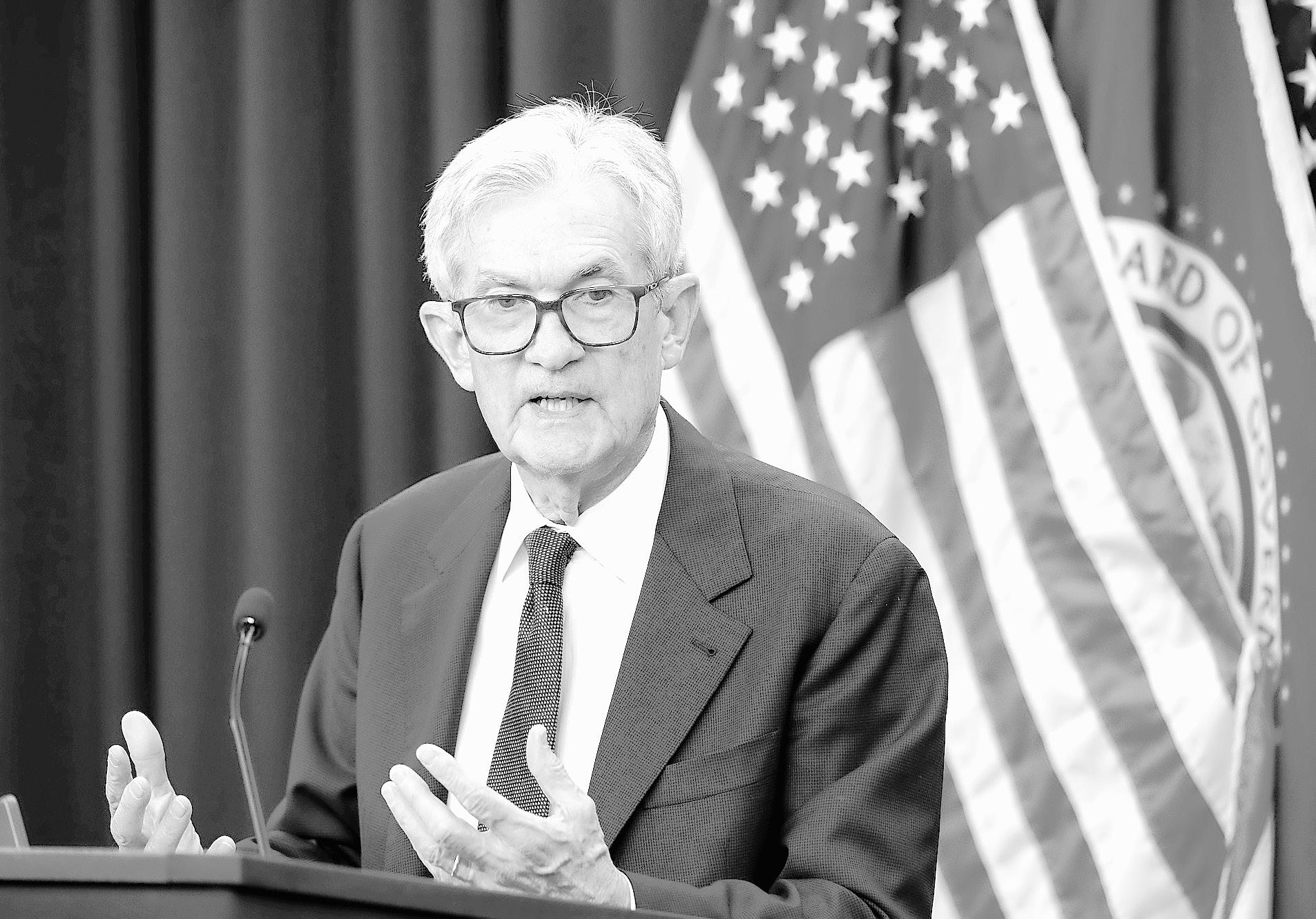
Stephen Miran, a previous Trump appointee, whose term ended in January.
Powell’s move could make it a bit harder for Warsh to engineer the rate cuts that Trump has demanded, and Warsh advocated for last year, economists say.
“It probably means it will take Warsh a little bit longer to build the consensus he is trying to build,” said David Seif, chief economist for developed markets at Nomura, an investment bank. U.S. Attorney for the
District of Columbia Jeanine Pirro said on X Friday that her office was ending its probe into the Fed’s extensive building renovations because the Fed’s inspector general would scrutinize them instead. But she added that her office could reopen the investigation if “the facts warrant doing so.” And Pirro had said previously that she would appeal a court ruling that threw out subpoenas her office had issued.
Powell said Wednesday he had been assured by the
Elon Musk tells his side of OpenAI’s beginnings in trial pitting him against CEO Sam Altman
By BARBARA ORTUTAY
AP Technology Writer
ELON Musk took the stand for the second day Wednesday in the landmark trial that pits the world’s richest person against Sam Altman, a fellow OpenAI co-founder he accuses of betraying promises to keep the company as a nonprofit dedicated to humanity’s benefit.
The trial centers on the 2015 birth of the ChatGPT maker as a nonprofit startup primarily funded by Musk before evolving into a capitalistic venture now valued at $852 billion.
Musk, who invested about $38 million in OpenAI from December 2015 through May 2017, gave his account of OpenAI’s early years, recounting how he lost confidence that Altman would keep it a nonprofit. Questioned by his lawyer Steven Molo, Musk said by late 2022 he was concerned
Altman was trying to “steal the charity.”
“It turned out to be true,” Musk said on the witness stand, wearing his usual courtroom attire of a black suit and tie. Altman, OpenAI’s CEO, was in attendance at the federal courthouse in Oakland, California, although he was not scheduled to testify on Wednesday. The trial started Monday and is expected to last about four weeks.
Lawyers for OpenAI have rejected the allegations brought in Musk’s civil lawsuit and said there were never promises that the company would remain a nonprofit forever.
The company has argued Musk’s legal challenge is aimed at undercutting OpenAI’s rapid growth and bolstering Musk’s xAI, which he launched in 2023 as a competitor.
During cross-examination, Musk repeatedly pushed back on questions.
OpenAI lawyer William Savitt was asking about emails Musk wrote before OpenAI’s founding in 2015 on whether it would be better to make it a standard for-profit company and about tax deductions from his donations to the nonprofit.
“Your questions are not simple,” Musk said. “They are designed to trick me essentially.” Any simple answer, he said, would be misleading the jury.
Judge Yvonne Gonzalez Rogers stepped in, asking Musk to answer whether it’s true or false that OpenAI was formed as a nonprofit in December 2015. Musk said in that case, the answer was yes, but added that it is not always simple, comparing it to asking “have you stopped beating your wife?”
“We are not going to go there,” the judge replied, to laughs in the courtroom.
Despite moments of levity, the stakes are high
The Fed Wednesday left its benchmark interest rate unchanged for the third straight meeting but signaled it could still cut rates in the coming months, moves that attracted the most dissents since October 1992. Three officials dissented in favor of removing the reference to a future cut, while a fourth, Miran, dissented in favor of an immediate rate cut.
The dissents underscore the level of division on the Fed’s 12-member rate-setting committee ahead of the end of Powell’s term as chair on May 15.
Justice Department that the appeal wouldn’t result in a reopening of the probe unless a separate investigation by the Fed’s inspector general finds evidence of criminal activity.
Apparently, that didn’t bring Powell the closure he felt is needed.
“I’m waiting for the investigation to be well and truly over with finality and transparency,” he said. “I’m waiting for that and I will leave when I think it appropriate to do so.”
at the trial, which could sway the balance of power in artificial intelligence. Musk’s lawsuit seeks Altman’s ouster from OpenAI’s board. If Musk wins, it could derail OpenAI’s plans for an initial public offering of its shares.
Musk’s decision to stop funding the company contributed to a bitter falling out between the former allies that’s been evident throughout the trial. On Wednesday, Musk said his
“Developments in the Middle East are contributing to a high level of uncertainty about the economic outlook,” the Fed said in a statement after its two-day meeting. “Inflation is elevated, in part reflecting the recent increase in global energy prices.”
Trump responded to Powell’s decision late Wednesday on his social media website: “Jerome ‘Too Late’ Powell wants to stay at the Fed because he can’t get a job anywhere else — Nobody wants him,”
views on Altman and his OpenAI cofounders had three phases — from initial excitement to losing confidence to a period in late 2022 when he thought “wait a second, these guys are betraying their promise.”
Lawyers for OpenAI have said Musk sought to control the company for himself.
Musk repeatedly testified that while he initially sought a majority stake in OpenAI and control of four
Trump posted, using his nickname for the Fed chair. Warsh has promised “regime change” at the central bank and may make sweeping changes to its economic models, communications strategies, and balance sheet. He has argued in favor of rate cuts, as Trump has demanded, but he will likely find it harder to implement them with inflation topping 3%, above the Fed’s target of 2%.
When asked if he believed Warsh would stand up to political pressure from Trump, Powell answered, “He testified very strongly at his hearing, and I take him at his word.”
The three officials who dissented against hinting that the Fed may reduce borrowing costs were Beth Hammack, president of the Federal Reserve Bank of Cleveland; Neel Kashkari, president of the Minneapolis Fed; and Lorie Logan, president of the Dallas Fed. The regional Fed bank presidents have historically been more likely to dissent, while the Washington-based governors more often support the chair.
out of seven board seats, this would eventually be diluted when OpenAI grew and gained more shareholders. He compared it to his stake in Tesla, which he said is now around 15% after he initially had a majority stake when the electric car maker was founded over two decades ago. OpenAI, however, claims there were no assurances that he would eventually relinquish his board majority.

FEDERAL Reserve Chairman Jerome Powell speaks at a news conference at the Federal Reserve, following the Federal Open Market Committee meeting, in Washington, Wednesday, April 29, 2026.
Photo:Cliff Owen/AP
Oil prices keep spurting higher, but US stocks hold near their records
By STAN CHOE AP Business Writer
MORE jumps for oil prices sent tremors through the U.S. bond market on Wednesday, along with hints that some Federal Reserve officials don’t want to cut interest rates any time soon. But fat profit reports from Starbucks and other big companies helped the U.S. stock market remain resilient despite that.
The S&P 500 finished nearly unchanged and edged down by less than 0.1%, a day after slipping from its latest all-time high.
The Dow Jones Industrial Average dropped 280 points, or 0.6%, while the Nasdaq composite inched up by less than 0.1%.
The action was more dramatic in the oil market, where the price for a barrel of Brent crude to be delivered in July jumped 5.8% to settle at $110.44 per barrel. That’s where most of the trading is happening in the Brent market, and it got as high as $111.84 later in the afternoon.

The highest price since the war with Iran began is $119.50 for the most actively traded Brent contract, reached last month. On Wednesday, the price for a barrel of Brent crude for delivery in June, which
NOTICE

NOTICE is here by given that I, NOUNOUCHE VOLCY of Carmicheal Road, Nassau, The Bahamas, is applying to the Minister responsible for Nationality and Citizenship, for Registration Naturalization as a citizen of The Bahamas, and that any person who knows any reason why registration/ naturalization should not be granted, should send a written and signed statement of the facts within twenty-eight days from the 23rd day of April, 2026 to the Minister responsible for nationality and Citizenship, P.O. Box N-7147, Nassau, New Providence, The Bahamas
is getting less trading action than July’s contract, briefly breached that mark and got above $120.
Oil prices have jumped this week as President Donald Trump appears willing to maintain the
U.S. blockade of Iranian ships, which is preventing the country from making money by selling oil. Iran, in turn, is keeping the Strait of Hormuz closed to other oil tankers hoping to carry crude to customers
NOTICE

NOTICE is here by given that I, ZSUZSANNA SUVOLTOS of 225 Austinpaul Drive, Newmarket, on Canada, is applying to the Minister responsible for Nationality and Citizenship, for Registration Naturalization as a citizen of The Bahamas, and that any person who knows any reason why registration/ naturalization should not be granted, should send a written and signed statement of the facts within twenty-eight days from the 23rd day of April, 2026 to the Minister responsible for nationality and Citizenship, P.O. Box N-7147, Nassau, New Providence, The Bahamas.
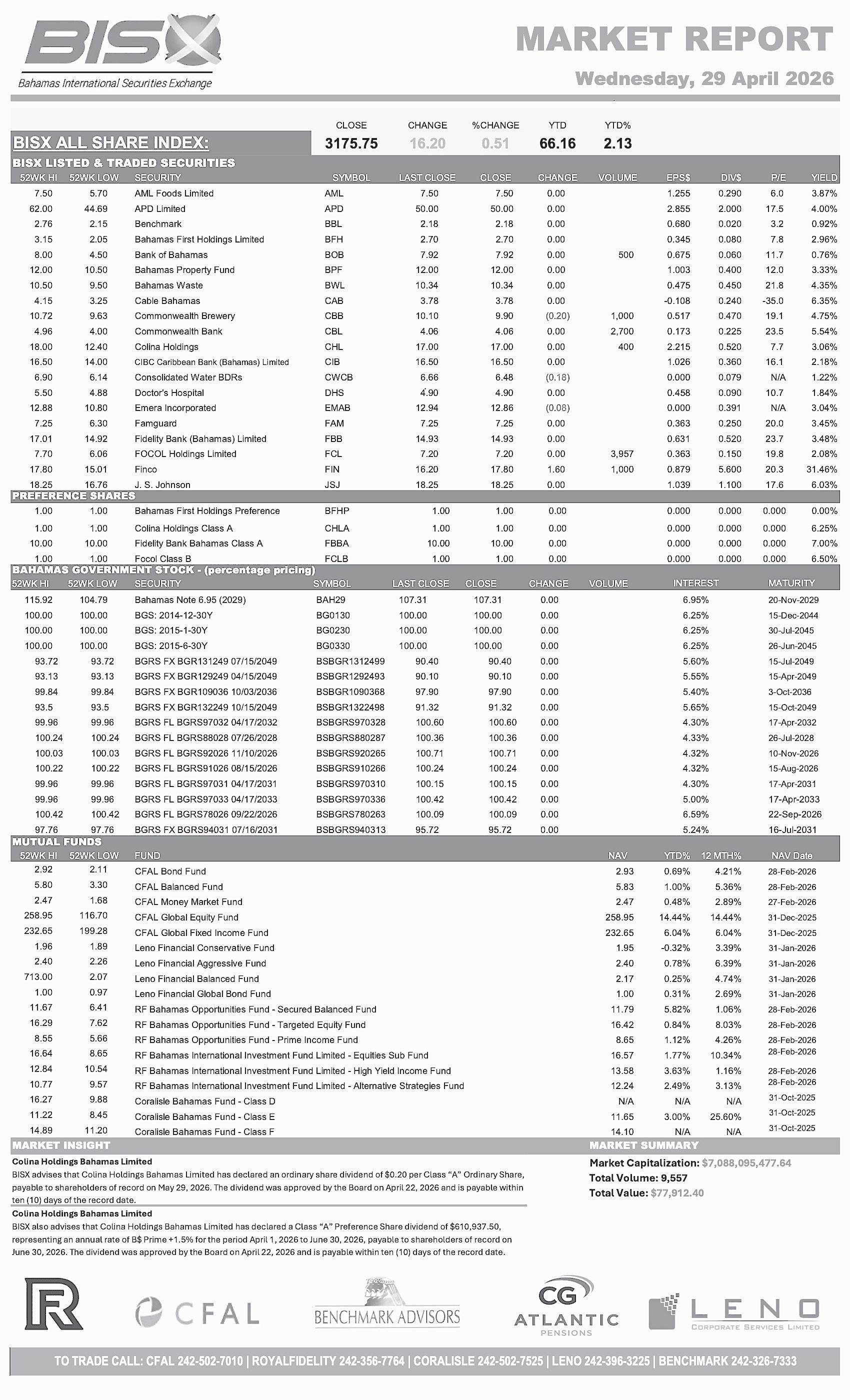
A TRAIN arrives at a Wall Street subway station in New York’s Financial District on Nov. 5, 2024.
worldwide as long as the blockade continues.
High oil prices helped push the Federal Reserve to announce Wednesday that it’s continuing to hold off on cuts to interest rates.
While lower rates could give the economy a boost, they simultaneously risk worsening inflation.
Three Fed officials said they did not want to include anything suggesting more cuts may be coming in the central bank’s statement announcing the decision.
Treasury yields climbed in the bond market immediately afterward, adding to gains from earlier in the day due to rising oil prices. The yield on the 10-year Treasury rose to 4.41% from 4.36% late Tuesday.
The two-year Treasury yield, which more closely tracks expectations for Fed action, climbed more. It jumped to 3.93% from 3.84%, which is a notable move for the bond market.
Traders still largely expect the Fed to hold the federal funds rate steady through the end of this year, according to data from CME Group. But they eliminated nearly all their bets for a cut to rates in 2026 in favor of a small chance for a hike.
Still, the U.S. stock market held near its records as more companies joined the procession reporting stronger profit growth for the start of 2026 than analysts expected. Visa jumped 8.3% after delivering stronger results than analysts expected,
and CEO Ryan McInerney said consumer spending remained resilient in the quarter.
Starbucks climbed 8.4% after likewise reporting better results than expected, while saying customers spent more at each visit, particularly at its North American stores.
But those not meeting expectations have gotten punished. GE Healthcare Technologies dropped 13.2% after falling short of analysts’ forecasts. Robinhood Markets sank 13.2% after reporting growth in profit that was not as strong as analysts expected.
Booking Holdings swung between losses and gains and finished with a gain of 0.3% after the online travel company reported better results than analysts expected. It said the war with Iran is affecting its results and kept some potential customers from booking rooms during the quarter.
The company behind Booking.com, Priceline and other brands said it expects the conflict to continue affecting its business through the end of June. It could affect travel not only in the Middle East but also in major transit corridors, such as between Europe and Asia.
All told, the S&P 500 slipped 2.85 points to 7,135.95. The Dow Jones Industrial Average dropped 280.12 to 48,861.81, and the Nasdaq composite added 9.44 to 24,673.24.
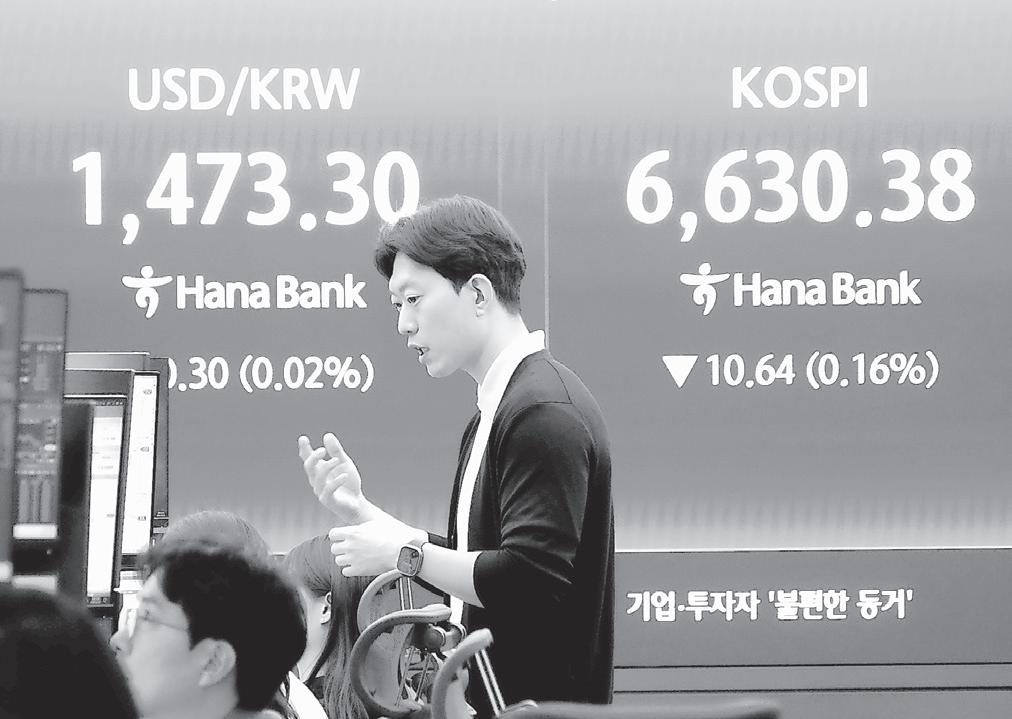
A CURRENCY
reacts near a
Price
(KOSPI),
showing the
and
rate between U.S. dollar and South Korean won at the foreign exchange dealing room of the Hana Bank headquarters in Seoul, South Korea, Wednesday, April 29, 2026.
PUBLIC NOTICE
INTENT TO CHANGE NAME BY DEED POLL
The public is hereby advised that I, KEVIN GREENSLADE of #78 Gamble Heights P.O.Box N458, New Providence, Bahamas, father of KEVINGTON ELIE, intend to change my child’s name to KEVINGTON GREENSLADE If there are any objections to challenge the name by deed poll, you may write such objections to the Chief Passport Officer, P.O. Box N-742, Nassau, The Bahamas no later than thirty (30) days after the date of the publication of this notice.
NOTICE

NOTICE is hereby given that I LINA DUPA of Sommerville Drive #25S Freeport, Bahamas is applying to the Minister responsible for Nationality and Citizenship, for registration/ naturalization as a citizen of The Bahamas, and that any person who knows any reason why registration/naturalization should not be granted, should send a written and signed statement of the facts within twenty-eight days from the 30th day of April, 2026 to the Minister responsible for nationality and Citizenship, P.O. Box N-7147, Nassau, Bahamas.
NOTICE

NOTICE is hereby given that I ONES DUPA of Sommerville Drive #25S Freeport, Bahamas is applying to the Minister responsible for Nationality and Citizenship, for registration/ naturalization as a citizen of The Bahamas, and that any person who knows any reason why registration/naturalization should not be granted, should send a written and signed statement of the facts within twenty-eight days from the 30th day of April, 2026 to the Minister responsible for nationality and Citizenship, P.O. Box N-7147, Nassau, Bahamas.
Photo:Peter Morgan/AP
trader
screen
Korea Composite Stock
Index
right,
the foreign exchange
Photo:Ahn Young-joon/AP
Alphabet’s first-quarter profit soars as Google’s big AI bets help push stock to new highs
By MICHAEL LIEDTKE AP Technology Writer
GOOGLE'S transition into the era of artificial intelligence continued to pay off for its corporate parent, Alphabet Inc., which on Wednesday announced another quarter of the stellar growth that helped to more than double its already lofty market value during the past year.
Alphabet earned $62.6 billion, or $5.11 per share, during the January-March period, an 81% increase from the same time last year. Revenue climbed 22% from last year to $109.9 billion. Both numbers easily surpassed the analyst projections that steer investors.
Alphabet's stock price rose more than 6% in extended trading after the numbers came out, setting up the shares to hit a new high during Thursday's regular session. The company's market value currently stands at $4.2 trillion, up from $1.9 trillion just a year ago. If the stock trades in a similar trajectory Thursday, Alphabet's market value could approach $4.5 trillion while creating more than $250 billion in additional shareholder wealth in a single day.
The stock market gains that Alphabet is producing are not being matched by other big AI spenders such as Microsoft and Facebook parent Meta Platforms, whose stock price plunged by about 6% in extended trading after disclosing an investment strategy being second guessed by investors. Meanwhile, Microsoft's shares also dipped, despite posting quarterly results that topped analyst forecasts.
Alphabet's performance in the past quarter CEO Sundar Pichai to celebrate the huge bets that the

company has been placing on AI technology during the past three years. Those investments, Pichai said, "are lighting up every part of the business." As usual, digital ads fueled by Google's dominant search engine propelled the growth as revenue from those operations shot up 16% from last year's first quarter. It marked the fourth straight quarter that Google's ad sales increased by more than 10% from the previous year.
Google's fastest growing division remains its Cloud division, which has been riding the AI boom to sell more products and services to corporate customers and government agencies such as the deal that it just struck with the U.S. military. Google Cloud's revenue surged 63% from last year to $20 billion.
That growth is a sign that Alphabet's spending spree on AI is producing dividends so far, although investors continue to worry that the Mountain View, California, company and its Big Tech peers are pouring too much money into a
still-nascent and unproven technology.
Alphabet, though, is betting that it's better to overspend on AI than being too stingy and risk behind left behind.
In a previous quarterly update released in February, Alphabet disclosed that it's earmarking $175 billion to $185 billion for capital expenditures this year that will largely be devoted to building AI data centers and other tools tied to the technology.
In a reflection of management's confidence in its strategy, Alphabet's top finance executive Anat Ashkenazi told analysts on a conference call that this year's capital expenditures may climb as high as $190 billion. And even if the spending runs that high, Askkenazi said it will "significantly increase" again next year.
All of that would be on top of $91 billion in capital expenditures during 2025.
"The key message is that Alphabet is no longer asking investors to underwrite AI spending on faith," said Investing.com analyst Thomas Monteiro.


JOB VACANCY
Registration Officer (London/Nassau)
An exciting opportunity to work with a well-established ship registry in the capacity of Registration Officer within the global Registration team.
Working within the Registration Team, the key client delivery team of the flag state. The team is vocal point in client delivery and ensure compliance to flag state legal framework and international maritime regulations upon registration of vessels. There is an exciting opportunity to join a global ship registry in the supporting the London Registration Team as a Registration Officer.
The Registration Team is key to provide efficient and clientfocused services to our stakeholders and customers. With clients across the global maritime industry, the team is the vocal point in client delivery and ensures compliance of flag state legal framework and international maritime regulations upon registration of vessels.
The successful candidate will play a key role in the management of the end-to-end registration process and ensure all transactions comply with national and international maritime regulations.
Nature of the role:
A detail-oriented and proactive person to provide delivery of our Ship Registration Department. The successful candidate will be responsible for providing experienced support and guidance to clients to ensure the smooth processing of vessel registrations, certifications, and compliance documentation in accordance with international maritime regulations and registry policies.
Key responsibilities:
1. Provide quality service to clients registering their vessels and registration transactions with the flag administration.
2. Prepare and compile appropriate vessels’ documents to perform the completion of registration transactions, such as delivery of vessels, change of ownerships, court sales, mortgages etc.
3. Advise clients on the registration procedures for each registration transaction, inclusive of relevant legal and statutory requirements.
4. Ensure that relevant office procedures are followed, and during the registration of vessel transactions and information is put into the database.
5. Manage provisional extension whenever the need arises.
6. Issue various ship documents as ensure delivery of service.
7. Document the change of ownership, change in vessel name and other registration transactions.
8. Provide guidance to junior team members and necessary training of team members were required.
Qualifications required:
• Essential:
o Undergraduate Degree-level with law being preferable.
o Previous experience working as supervisory level in a registry (flag or aviation administration) or registration team at shipping company.
o Up to five (5) years or more experience working in a client-based industry; working directly with lawyers would be useful.
o Ability to read and understand mortgages instruments
o Understanding of IMO and other international maritime conventions
o Experience using vessel registration database.
• Desirable:
· Knowledge of Document Management System
· Knowledge business or insurance sector
Personal qualities required:
Attention to detail is essential
Fluent in both written and spoken English
Highly developed written and oral presentation skills in a professional manner
Good critical thinking and analysis skills
Good inter-personal and cross-culture skills
Good team-working skills
Self-motivated and able to work without supervision
Good organisational skills and capable of logical prioritisation of activities
Computer competency is essential
Benefits: Competitive salary
Annual Leave: 22 days per annum (pro-rated first year) & Bahamas public holidays
Private Medical Insurance

Closing date for applications: 8th May 2026
A WOMAN walks by a giant screen displaying the Google logo at an event at the Paris Google Lab on the sidelines of the AI Action Summit in Paris, Feb. 9, 2025. Photo:Thibault Camus/AP