02 NEWS & POLITICS
EDITOR | ETHAN CHAN NEWS@THESTRAND.CA
Cutthroat conversations with the University—Rosedale candidates On September 24, the nave of the College Street United Church was filled with passionate followers of municipal politics and community members with pressing concerns. Posters on streetlamps had invited the residents of University—Rosedale to gather for a debate between the Ward 11 city councillor candidates in anticipation of the upcoming municipal election. All of the University—Rosedale city councillor candidates as of that day were in attendance: Keenan Courtis, Terri Hawkes, Mike Layton, Karina Lemke, Alice Li, Gian Pireli, Paul Viret, and Diana Yoon. Each of the candidates gave an opening statement before the floor was opened to the community for questions. There were four questions moderated by community member Rory Gus Sinclair, and answered in full by the panel; these related to Bathurst parking restrictions, Palmerston Bike lanes, community housing, and the Bickford community centre. The third question can be summarized as follows: Community member: How would you improve the state of Toronto community housing? Lemke: “It needs an overhaul.” Li: “We need more funding. I am able to audit here, and I will find the money to make capital.” Pireli: “I’m going to be there to actually make those changes happen.” Viret: “I don’t know much about community housing, but I would like to talk afterwards.” Yoon: “I am working in affordable housing. I work at the national co-op housing federation. I’m at the table with the CEO when we are talking about reviewing the national housing strategy, because we need more funding.” Courtis: “Keeping a public option is the only way that we’re going to solve the broader housing problems in the city. We have to get on top of this problem.”
MIKHALA ENNS ASSOCIATE NEWS & POLITICS EDITOR
A city council debate
Hawkes: “We need to bring all stakeholders into the conversation [and] figure out a solution that honours human dignity, gives people a safe place to live, and allows us to work together, to make this situation better.” Layton: “We need either revenue sources from the city to fix public housing, or we need support from other levels of government, and we need accountability from [the Toronto Community Housing Corporation].” In the remaining question periods, the most consistently addressed topics by the panel were the removal of the Bloor bike lanes and safe injection sites. Courtis referenced how the provincial government had interfered with the Bloor bike lanes: “we need a council that sees the MPPs as a counter-party, not a future career path.” Former councillor Layton highlighted his experience with the two issues: “as the councillor who was responsible for putting in those three aforementioned bike lines, I would fight with everything I can to keep them. I support safe consumption sites.” Lemke had a different perspective than the rest of the panel. He stated that “not every road deserves a bike lane or can facilitate a bike lane properly,” and that he believed safe injection sites “are giving out the tools for drug use, not the treatment.” The 2026 Toronto municipal election for mayor and city councillors will occur on October 26. Any students living in Toronto for the school year are eligible to vote in the election if they are Canadian citizens. To find out how and where to vote and which candidates support your vision for Toronto, visit https://www.toronto. ca/city-government/elections/. This transcript has been lightly edited for readability and length while preserving the speaker’s original intent and tone.
Blood money at UofT? An interview with Climate Justice UofT With this summer’s devastating forest fires in recent memory, the climate crisis is top of mind for many young people. It is troubling that UofT has connections to the fossil fuel, mining, and arms manufacturing industries, but there are UofT students who are fighting to hold the university accountable. I sat down with Lila and Jamie, two lead organizers of Climate Justice UofT (CJUofT), to discuss the organization, past campaigns, and goals for the future. The Strand: Thank you for sitting down with me to chat today. Can you start by telling me about Climate Justice UofT? Lila: Climate Justice UofT is a grassroots, student-led organization pushing for a fossil-free future and the liberation of all life on this planet. Our main objective is getting UofT to divest from fossil fuels, arms manufacturing, and the mining industry. The Strand: What has CJUofT focused on? Lila: One campaign is DivestUPP, which focused on getting the federated colleges to divest from fossil fuels, and is now focused on divestment of the university pension plan. The second campaign is Fossil Free Research; we are pushing the School of the Environment to stop taking donations from fossil fuel companies, because that produces very biased research. Our third campaign is Banks Off Campus, which has been very successful. We successfully pushed the University of Toronto Student Union to stop leasing space in the Student Commons to RBC. The Strand: Your most memorable action took place at Victoria College. What happened here in 2023? Lila: Members of CJUofT successfully pushed for UofT to divest from fossil fuels; in 2021 UofT committed to divesting its $4 billion
ROWAN CROCKER | CO-SENIOR COPY EDITOR
endowment in fossil fuels by 2030. But the federated colleges—Victoria, Trinity, St. Mike’s—have their own pension plans and investment networks. We pushed Vic to divest, but they wouldn’t meet with us. [ … ] So, CJUofT and several other organizations came together and staged an 18-day occupation of Old Vic [in April 2023]. That action led Victoria College to agree to divest by 2030. Trinity and St. Mike’s were scared, so they also voted to divest. As of 2025, Trinity College and St. Mike’s announced [separately] that they had fully divested from fossil fuels. If UofT and Vic don’t hit their targets, we will be ready to take action again. The Strand: You recently launched a new campaign: mining justice. Can you tell me about that? Lila: Mainly, we are looking into the connections between mining and the Earth Sciences department, the Faculty of Applied Science and Engineering, and the Munk School. [ … ] The founding donor [of the Munk School], Peter Munk, was the founder and president of Barrick Gold, which is a mining company that is involved in human rights violations, resource extraction, and environmental degradation across the world. [ … ] Every community that is involved in mining is facing the brunt of the pollution, health effects, and climate change. [ … ] Our goal is to organize with students, make connections with faculty and unions, and put pressure on these institutions to break their connections with mining. The Strand: What has the response been so far to your new campaign? Jamie: We have many connections with professors who [ … ] continue to be supportive of our mining justice campaign. [ … ] At our orientation event, it was really great to see so many fresh faces come out and be so interested in mining justice. A lot of people care about these issues
@STRANDPAPER THE STRAND | ISSUE 3
NEWS & POLITICS 03
but don’t always have a clear avenue to put their care and effort—when we organize here, people really rally together. [ … ] It’s been great to see people invigorated and ready to take action. The Strand: I know the mining justice campaign is still in the early stages, but what are some potential end goals of this campaign? Lila: Speaking for myself, I would want to see the university highlighting more opportunities for engineering students and geo science students to go into ethical fields. Creating opportunities for them to use their degrees to do good instead of [careers] that extract from and destroy the environment. For the Munk School, [ … ] I hope that they can at least use the money they have for good, and stop using the money they have—which is essentially blood money—for furthering Zionist, extractionist, and colonial causes. I hope that they can implement contemporary, more radical teaching in their school. I hope that one day they will be able to address the wrongdoing [of Peter Munk] and reconcile that in any way they can. Maybe that will look like teaching more about exploitation in the Global South and Canada’s connection to that. Something has to change. The Strand: What motivated you to get involved with CJUofT or climate activism more generally? Jamie: Student activism has always been a driver of liberation historically. [ … ] To have a space like this, where I could put my first efforts at climate organizing, has provided such a great community space for all of us to come together, find a group, and a safe space where we can make direct change on campus. The Strand: How can students learn more about your campaigns and get involved? Jamie: They can come to our meetings, Thursdays from 6-8pm every week! We also have actions that we organize. Information about us is on Instagram and in our LinkTree, where we have op-eds and open letters that you can read to see our work. You can always reach out to us on Instagram (@ climatejusticeuoft) or by email (climatejusticeuoft@gmail.com). We’re always looking for new people and any help is welcome! rowan crocker | photograph - climate justice uoft orientation event Lila: If you feel nervous about organizing and want to know if you can help in smaller ways, you can ask us; we’re very open! Our club is nonhierarchical, so everyone is an equal member and everyone’s voices are weighed equally. […] When the world feels big and scary, it’s nice to sit with your friends who care about similar important things and do your best to make a change. The Strand: Thank you so much for your time! Given how successful Climate Justice UofT has been in pushing UofT to reduce its investments in the fossil fuel industry, I look forward to seeing your mining justice campaign unfold.
Draining Cornell’s reputation
ETHAN CHAN NEWS & POLITICS EDITOR
The Cornell 7 case highlights the important influence of the media Recently, there has been much discourse amongst college students, journalists, and commentators alike on the horrific events that seem to drain Cornell University’s reputation by the day. On September 16, 2026, a former Cornell student, identified under the pseudonym of Jane Doe by US courts and media, filed a 101-page civil lawsuit to the New York State Supreme Court against both the university and a group of individuals and organizations. The complaint names seven members of the Xi chapter of the Chi Phi fraternity in Cornell, the national Chi Phi fraternity, the Tri Delta sorority, the Ithaca bar, and other defendants. The seven individuals have been accused of sexual assault and battery on the night of October 19, 2024, while Cornell and other parties are specifically accused of “negligent, wilful or intentional failure” to protect her from the assaults and breach of contract. This initial suit by Jane Doe does not seek the criminal prosecution of the seven listed individuals or the other defendants; rather, as a civil case, the complaint is requesting a jury trial to determine the damages inflicted on Jane Doe. On September 18, 2026, after an article by The Cornell Daily Sun reported the suit, the case began to garner both national and international attention. Across social media, people rallied around slogans condemning the university for their inaction and the attorney’s office for their failure to charge the accused individuals. The extensive coverage prompted Tompkins County District Attorney Matthew Van Houten to release a statement on September 28 announcing the reopening of the investigation two years after the alleged incident. On October 1, 2026, Governor Kathy Hochul appointed Attorney General Letitia James as a special prosecutor, citing her loss of faith in Van Houten’s ability to handle the case fairly. To justify his previous decision to not pursue criminal charges, Van Houten said he had only received a shorter statement from the Cornell University Police, which left out key details and implied that Jane Doe had consented to all of the sexual activity. Jane Doe’s statement, found in the longer transcript, says “I can say with 100% confidence I was raped.” Doe’s attorney, Thomas Giuffra, argues that Doe was incapable of consent due to both her intoxication upon arrival and the continued pressure by the fraternity members to take additional alcohol and ketamine, and he maintains that the DA failed to properly handle the case. Evidence acquired by The New York Times also claims that the district attorney’s office declined to investigate additional evidence besides the original 2024 statement taken by the Cornell police. Currently, the lawyers of at least three accused deny the criminal wrongdoing. Social media and student voices have the power to enact change. In the Cornell 7 case, this materialized into action, beginning with the initial article written by the student journalists at The Cornell Daily Sun. The explosive outrage sparked by the case’s social media popularity was also instrumental in the much-needed district attorney’s reinvestigation. However, it is crucial to stay informed on the most recent information available. Thus far, online discourse has already put Jane Doe’s safety at risk through misinformation on her identity, a variety of threats, and doxxing attempts since the filing of the complaint. In a similar vein, it is easy to get lost in exaggerated headlines from various sources. It was widely reported in the mainstream media and social media that two of the men had to write essays while another two were expelled, however, there were additional punishments. Specifically, while two students were expelled, another two faced suspension and disciplinary probation across several semesters alongside disciplinary probation. Diego Sarabia was issued a “persona non grata” order, restricting him from the campus for three years, but by this time he had already graduated. The last two were required to write reflection papers, were not permitted to contact Jane Doe, and were required to study sexual harassment and social media use modules. Scott Kretzshmar was previously found not to be responsible by the university for sexual assault but rather for attempted sexual erika wong | illustration exploitation. These were a range of disciplinary actions, not just essays and expulsions, but the listed punishments still don’t seem appropriate. They are more like a slap on the wrist, given how Jane Doe’s life has been completely upended by the assault. She says she “carr[ies] the weight of its impact every day and night.” Survivors like Jane Doe must be supported and believed. If you have been affected by sexual violence or sexual harassment, you can receive support from the Sexual Violence Prevention & Support Centre at the University of Toronto. They can be contacted at 416-978-2266, svpscentre@ utoronto.ca, or https://svpscentre.utoronto.ca/.
04 EDITORIAL
EDITOR | AMY YANG EDITORS@THESTRAND.CA
Transfero, transferre, transtuli, translatum
AMY X. YANG EDITOR-IN-CHIEF V O L U M E
The blood of the ancient lives on in us I must admit, I was about to write this editorial on Varney the Vampire: Or, the Feast of Blood, a tantalizing tale that turned young damsels uncouth in 1845. However, after the announcement of Anne Carson’s Nobel Prize, my heart is swelling and I cannot bring myself to divert my attention to a morally-depraved Penny Dreadful from Victorian England. If you’ve ever wondered what serial fiction from 200 years ago looks like, please check it out. There are 237 installments. 2026 is the year for translators. Emily Wilson’s name, already infamous among classicists, rose to the forefront of pop culture after Nolan’s adaptation of The Odyssey. And now, UofT’s own alumna Anne Carson has won the Nobel Prize in Literature. I woke up to a short email from the Department of Classics informing students of the news. It was only a couple of succinct sentences, but packed with pride, hope, and community. It showed that in this turbulent, robotic world, classics still matter. Translation is not a lost art. People like to say Latin and Ancient Greek are dead languages, but they are well and truly alive in the corpus of the modern world. When I first read Carson’s book of Sappho fragments in CLA170, I was mesmerized by her bold way of displaying the fragmentary nature of Sappho’s surviving pieces. She didn’t try to form a whole where none could be seen or spin a fragment into her own interpretive poetics; she let the disjointed words and phrases skip down the page, allowing blank space to occupy moments where the reader could comprehend all that had been lost in time—left in antiquity. UofT’s Classical Studies and Medieval Studies departments are housed in the Lillian Massey Building, which was originally built for the Department of Household Science, a four-year program for university women to learn the science behind household management. This building once symbolized both the domestic expectations for women and their surging role in the academic world; it was a space built specifically for the inclusion of women while simultaneously showcasing their exclusion from male-dominated departments. Interestingly, the Department of Household Science was absorbed into the Department of Nutritional Sciences in the 1970s, the same decade Anne Carson graduated from UofT with her BA and MA in Classics. Just as the sign outside Lillian Massey changed from Department of Household Science to Department of Classics, the field of classics has changed, emerging from irrelevance to relevance again with the help of women who could not bear for the ancient world to be forgotten. The word ‘translation’ comes from Latin. It’s made up of the preposition trans, meaning ‘across,’ and the verb fero (which also takes the form latum), meaning ‘to endure,’ ‘to carry,’ ‘to bring,’ ‘to suffer,’ ‘to say,’ ‘to report,’ and a wealth of other interpretations. A translator embodies the entirety of the word fero. They speak archaic voices through themselves. They carry a life and consciousness from thousands of years ago into our own. They suffer the weight of a dying field, for the sake of even fragments of someone’s bygone art, and insist that the art endures, brought across the River Lethe into the muddy and polluted waters of current times. Wilson, Carson, and Sappho do have something in common. One is stuck in the ancient world, but two are still alive. And wondrously, amazingly, through their own works, they have ensured the mutual survival of each other.
illustration - “love and pain” | edvard munch
6 9
editor-in-chief
amy yang
managing editor
yaocheng xia
business manager
william ignasiak
web manager
maryam al-qaisy
news & politics
ethan chan
opinions
yasha haider
features
julia mccarthy
science
shivantika shegar
arts & culture
sofia terese glantz
editors@thestrand.ca editors@thestrand.ca business@thestrand.ca web@thestrand.ca news@thestrand.ca opinions@thestrand.ca features@thestrand.ca science@thestrand.ca culture@thestrand.ca stranded
stranded@thestrand.ca
victoria zalewski and elizabeth scheibe
poetry
reina van leeuwen
copyediting
rowan crocker and dinah oldfield
design
design@thestrand.ca
sophie ivanovic and ellis kim
photo
rose kinoshita
illustration
jessie yang and sophie wong
social media
ashleigh brooks, chenchen wang and erin asaba
poetry@thestrand.ca copy@thestrand.ca
visuals@thestrand.ca visuals@thestrand.ca @strandpaper
editorial assistants associate editors features norah ruch
opinions jodi sy
arts & culture victoria dubrovsky
science vacant
news & politics mikhala enns
poetry sofie kagan
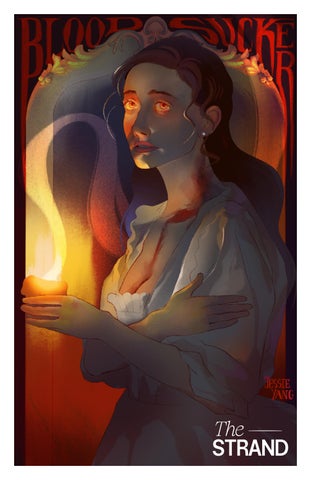
copy editors SELIN WANG, VICTORIA COURT, NESSA WOOLF, PRISHA SAVE, PARMIS BABAKHANI, CHENDAFEI LI, VICTORIA ZALEWSKI, TERRY EGGENBERGER, SUU MISHRA, TARA PAI, MADISON BOKMA, HELENA CARDOSO FREDERICO, ACE EDWARDS, TASNEEM GHORASHI, ANYA NANSI, LINZY ZHENG, ROYA ALISULTANOVA, NAUSICAA BELLENFANT-BAZIN, EMMA MANESIS, MARIA SEGURA, AVA ABHAR, MINJI PARK design sophie ivanovic cover illustration jessie yang
The Strand has been the newspaper of record for Victoria University since 1953. It is published 8 times a year with a circulation of 800 and is distributed in Victoria University buildings and across the University of Toronto’s St. George campus. The Strand enjoys its editorial autonomy and is committed to acting as an agent of constructive social change. As such, we will not publish material deemed to exhibit racism, sexism, homophobia, transphobia, ableism, or other oppressive language.
@STRANDPAPER WWW.THESTRAND.CA
OPINIONS 05
@STRANDPAPER THE STRAND | ISSUE 3
Work is sucking up my soul The future I dread is being a dead-eyed employee, pale from all my life being sucked out by a company SUU MISHRA COPY EDITOR
I have this recurring nightmare where I’m sitting in a corner office in a high-end corporate job. I make a ton of money, I know important people, and I’m doing great. More than great; one could say I’m on the fast-track to immense success. However, I’m actively selling my soul as I do it. It’s as if I’m the Sustainability Head at Anthropic or Palantir. Money is money though, right? I always wonder, “oh god, is that really going to be me?” Eyes of a dead fish, lips stretching into a fake smile, toothy and bloodless, and high heels sharp enough to puncture skin and draw blood. Money runs the world, and yet, the last thing I want is to be making a lot of money in a world further
kortney chow | illustration
away from my passions and my morals. I feel it slipping in, though, every now and then. The thought of a jobless future is one I dread entertaining. It creates a pit in my stomach, hollow enough to make me retch and fall sick. But if I’m poor, who knows if I’d be able to afford the expenses, both mental and physical? Who knows if I’ll get to wear the clothes I like, wastefully indulge in lavish desserts, and hoard books that I’ll never read? Who knows if I’ll get to
do what I want or live how I like? Most of all, what will my parents think of me? How will I live with myself? The crux of it is, I’m not sure if all of this is worth it. I’m balancing a job, academics, work-study, internship, and extracurriculars all at once. All these elements are different from each other and are rewarding. I haven’t ever been someone who gets involved in community, but I thought it was time to take action, and it has been surprisingly enjoyable. When I organize events and newsletters for my work-study or check out operationalizations and deadline deliverables for my clubs or my job, I get this sense of childish giddiness. Here I am, leveraging my connections, racing from one side of the campus to another to get to meetings, living like an adult. I am who I thought a college student would always be, and it is everything. I know people and people know me. Well, some version of me who is harried, yet bright and determined. And yet, I still do not feel truly fulfilled. Once I finish my tasks, the satisfaction only lasts for so long. Chasing that momentary high, I keep applying for more and more positions. My resume keeps growing, like stocks in a gambler’s hands, and I bet my time every time, throwing more and more so that the buzz of business and creativity is so loud my eyes grow blind with to-do lists. In fact, my time is stretched so thin that it has begun to press against my skin; blood vessels staining my nose as I burn the midnight oil to write more and more emails and essays, the hours growing longer and longer by the day. The nightmare creeps around the shadows of my room, monstrous, yet all too real. At some point, I have to stop and wonder whether this is what I’ll do forever. Is this it? I am so busy I can barely breathe, but give my mind just a single moment of rest, and it starts spiralling. A life this filled should feel fun, but surely there’s more? Surely I’ll do something eventually that will satiate my appetite and quench the thirst in my soul. Maybe I’m hungry for more, or maybe I’m just 22. Maybe I’ll itch at my skin until I feel something real, or maybe I
need time to breathe. Life is long, and I forget that sometimes. Work is work is work. Whether it’s academics, after-school clubs, or a job, I have enough on my plate as is. But if I hate it, at some point the itch will be strong enough that I’ll just rip my face off, and do whatever I want to do. At some point, my face will creep back in, epidermal layer by layer, and maybe this time it’ll be facing something I’m more satisfied with. Work. The sleep I sacrifice has to be worth a finer reward than just more money, right?
1. Drain You | Nirvana 2. Blood | My Chemical Romance 3. Lesbian Vampyres from Outer Space | Scary bitches 4. Seven Devils | Florence and the Machine
photo | emily wong
5. Nightcrawlers | Widowspeak 6. gravedigger | Josie Edwards 7. Cold Ethyl | Alice Cooper 8. Halloween | Siouxsie and the Banshees 9. XO | Fall Out Boy 10. Cemetery Drive | My Chemical romance 11. My Lady Love | Ink & Dagger 12. Blood of the Fang | Clippers 13. Sappy | Nirvana 14. Scentless Apprentice | Nirvana 15. Eat You Alive | Limp Bizkit 16. Dead Bodies Everywhere | Korn 17. Bodies | Drowning Pool 18. Keep Their Heads Ringin | Dr. Dre 19. Diamond Dogs | David Bowie
OPINIONS 06 FEATURES
IANNARILLI YASHA HAIDER EDITOR | LIA FEATURES@THESTRAND.CA OPINIONS@THESTRAND.CA
The culture vulture: flying with the flock at your convenience YASHA HAIDER | OPINIONS EDITOR
When I was a kid, I came across a magazine with a cover photo of Pharrell Williams in a Native American headdress on a grocery store rack. I knew there was something off about it, but a term that could encapsulate everything wrong with both the cover and how I felt about it escaped me until some years later, when a YouTube video appeared in my feed titled “Culture’s Biggest Fraud.” It was then I first heard the term ‘culture vulture,’ the harsh, biting succinctness of which would linger in my brain. The video was talking about Drake. He makes radio hits that do what they say on the tin, and songs like “Best I Ever Had” and “Fancy” cemented his soapy lyrics and dance-friendly melodies. So when I saw music videos where he wore six-inch Timbs and oversized chains that would make Fat Joe or Blueprint-era Jay-Z bat an eye, while surrounding himself with other Black men in the projects and using their kids as trophies to boost his street cred; or when I heard a song about being “Too hard for the fuckin’ radio”—slighting DJ Mustard and his collaborators while suing Universal Music Group for paying radio stations to boost Kendrick Lamar during their beef—I had to wonder: why does he bother? Machine Gun Kelly got embarrassed by Eminem and pivoted from rap to rock, targeted Slipknot frontman Corey Taylor for calling it out, and got dragged at the Louder Than Life music festival to the point of physical altercation— ultimately failing to cultivate his new persona after striking out at being a hardened gangster in hip-hop. That’s all it is at the end of the day, right? Not immersion or interaction with a community as much as a one-sided transaction between people who want accreditation without understanding why communities form around a genre, art form, or movement. The people directly embedded in a community wear the fashion, blast the music, and make connections because they want to find others like them, while vultures aestheticize themselves in their image because they aren’t getting congratulated for being themselves. The conversation around culture commodification has been loud and busy since Hot Topic took DVDs off the shelves and leaned into commercializing
Two birds of the same feather, except one wants sparrow cred without sparrow wings
the counterculture of the 80s and 90s. The proliferation of black leggings, chokers, and skull tank tops at a major retailer is antithetical to the ethos of goth fashion, which is known for its scrappy, do-it-yourself spontaneity Public Domain Image and self-expression—particularly in the Toronto scene, where participants regarded each other as “freaks” because they (and their British brethren who originated goth and punk movements in the 70s) existed in the periphery of the city’s wider fashion and music scene. This commodified ‘mall goth’ aesthetic is pre-packaged and shipped to a demographic who want to extract the goth visual without immersing themselves in the music, the clubs, or the art. Such an audience is given ‘access’ to the culture through massproduction and superficially-designed ‘fast fashion’ over the concentrated and intentional look of clothes cobbled together from the thrift and the theatrical. Some popular culture depictions of goth fashion or music, including The Crow, The Vampire Chronicles, and Tim Burton films, can at least take credit for exposing broader swaths of people to an underground subculture or community, but ‘mall goth’ lacks this motivation. The purpose of ‘mall goth’ is purely rooted in the cultivation of cold, corporate cash. However, these things can get complicated. Last year, author Thomas King revealed that despite his illustrious career in Indigenous-focused literature, his estranged father was not actually part-Cherokee, nullifying his claims to Cherokee heritage. Canada has a history of ‘pretendians’ who claim Indigeneity for the cultural cache and monetary benefits, such as Carrie Bourassa, Buffy Sainte-Marie, and Karima Manji. Cree journalist Michelle Cyca made excellent points about this case: King could have researched his ancestry and the fact that he only intended to return his 2003 National Aboriginal Achievement award, one among the numerous grants and accolades he received by tying himself to this identity, spoke to his character. Does that undo his entire body of work? Texts such as Coyote Columbus and The Truth About Stories were acclaimed for their ability to deconstruct the white imagination of Indigenous communities while promoting the power of cultural reclamation. For some, art holds merit separate from the artist,
but the King reveal was enough to cancel a stage adaptation of Indians on Vacation, and for Nisga’a author and English professor Jordan Abel to remove the author’s texts from his syllabi at the University of Alberta. It recontextualizes his interpretations for a touchstone of Canadian identity regardless of their effectiveness. I don’t think King’s intent was exploitation. He wrote these texts convinced of his own heritage and was praised for his subversions of Indigenous stereotypes. However, in a digital age where sites such as Ancestry and MyHeritage provide instant answers to those who desire, King is irresponsible for not fact-checking himself before launching an entire career off such a bold proclamation. He can’t pivot to LitRPGs from here and pass this off as an ‘oopsie.’ What it means to prey on or exploit the imagery, narratives, or movements pertaining to a community can have a range of different interpretations and responses. For every Vanilla Ice—who is pre-packaged, sanitized, and sold to the world as ‘hip-hop’ and who is attractive compared to those ugly Beastie Boys—there can be cases where the intent to raise awareness around certain cultural and social groups is sincere. But being predicated on misinformation can cause the wrong kind of ripples in the water. Just don’t be a culture vulture. Be a culture hummingbird or a culture grebe. Grebes are funny.
kortney chow | illustration
FEATURES 07 SCIENCE
@STRANDPAPER @STRANDPAPER THE 3 THESTRAND STRAND| |ISSUE 21 AUGUST 2025
All about bloodsucking leeches Nature’s very own vampires
MEADOW MACDONALD | SCIENCE COLUMNIST photo | wikimedia commons
Lurking just beneath the surface of many water bodies is a creature that perfected the art of bloodsucking millions of years before Dracula even entered our consciousness—that is, the common leech. When people think of leeches, they often think of vampire-esque worms swimming through the water, waiting for the right person to jump in to attack and hook on to. However, bloodsucking leeches make up the minority of leech species within the class Hirudinea, characterizing only approximately 10 percent of identified leeches. Most bloodsucking leeches are found in freshwater habitats, such as stagnant water or slow-moving streams. Feeding through blood sucking (a form of parasitism), leeches latch onto a host with their oral suckers, cut the skin with tiny teeth, and drink blood using special numbing and thinning anticoagulants found in their saliva. Leeches sense movement in the water using specialized mechanoreceptors to detect vibrations, shadows, and water body temperature changes in the aquatic environment, allowing them to quickly latch onto a host. These worms feed on more than just humans, attaching to hosts such as deer, fish, frogs, salamanders, turtles, and waterfowls. Between blood feedings, leeches can go an astounding 6 to 18 months before finding a new host. However, leeches may not always have been blood suckers. Some research suggests that blood-sucking leeches evolved from freshwater worm ancestors (which are also ancestors to modern-day earthworms), and may not have fed on vertebrate blood. According to recent fossil evidence, these predecessors likely hunted small marine mammals. Outside of this ecological wonder, leeches have inspired much of vampiric folklore. Leeches were once widespread in medical practice, having been used for bloodletting practices since approximately 3500 years ago. Vampirism, or blood sucking, is a trait that has evolved more than twenty separate times across different animal lineages, allowing animals to exploit larger vertebrates and create a nutrient-rich diet. While vampires may not be real, blood-sucking parasitism certainly is and appears to have many benefits within the animal kingdom as a well-exploited functional trait.
TICK, TICK, TICK: The bloodsuckers that just won’t die How does a tick feed? What allows it to use hosts MACKENZIE FLOYD | CONTRIBUTOR photo | wikimedia commons
Ticks are everywhere. We see them on every walk through High Park and neighbourhood trails. Waiting in tall blades of grass for unsuspecting victims, they feed on mammal blood indiscriminately while striking fear into pet owners and parents alike. But how does a tick actually feed, and why are they so hard to kill? How did they become so widespread? This article explores one of our fastest-growing blood-sucking pests and what actually works when dealing with ticks. Unlike other pests like the mosquito or the even more infamous bed bug, ticks intentionally stay on your body for long periods of time, usually by piercing and burrowing into the skin. The first of these torture mechanisms
as endless blood supplies? Most importantly, how do you kill a tick?
are the chelicerae, which live on the tick’s “false face.” They work almost like a saw to open up the unlucky mammal’s skin. Then, the hypostome—a sort of needle in the tick’s mouth—acts like barbed wire, sliding through the opening the chelicerae created, and latching the tick onto its unsuspecting host. Pedipalps are sensory feelers that guide the mouthparts, tracking the host’s skin and helping the tick adjust its position. This is how the tick’s finely evolved mouth allows it to remain on its victims for long periods of time—until it becomes so engorged with blood that it drops off the body. Talk about a greedy tick! Why is everyone talking about ticks? Though these vicious little bloodsuckers are not fun to interact with, there might be more myth than truth to the idea that every tick is carrying a deadly disease. One thing many people get confused about is whether ticks in Ontario can transfer Lyme disease. Though some blacklegged ticks do have the potential to be carriers, they are just one of the many tick species found in Ontario, and most other species do not transfer Lyme disease. Furthermore, a
tick generally needs to be attached for more than 24 to 48 hours before Lyme disease can be transmitted. If you catch and remove it before then, the likelihood of infection is very low. So yes, ticks can transmit disease, but they are not as scary as you might think. Finally, let’s clear up any confusion about what to do if you find a tick on yourself or your pet. First, never crush or squish it with your fingers: a disturbed tick can regurgitate gut fluids into the wound. Go home and grab a pair of fine-tipped tweezers. Grip the tick as close to your skin as possible and pull it straight out, without twisting. If the tick’s head breaks off and stays behind, don’t panic; wash the area with soap and water and watch for a rash. Most importantly, after it’s removed, flush the tick down the toilet or, if you’re not near one, put it in a plastic bag and crush it. Tick season might frighten you, but it’s mostly a trick. Don’t be fooled by the noise these minuscule torture bugs have caused. Though some ticks can be dangerous to our pets and (occasionally) to us, a little knowledge and a good pair of tweezers can go a long way.
08 FEATURES PARMIS BABAKHANI COPY EDITOR The vampire, the concept and the character, has existed for millennia. Camazotz inhabited the caves of Mesoamerica, the Vetala dwelled in Indian cemeteries, and the Pālīs haunted the Persian desert; nearly every culture has produced its own sanguinary monster. In the popular imagination, the vampire has long fangs, pale skin, and red eyes. Or, in its more recent incarnation, skin that sparkles in sunlight. In Western culture, the most popular vampire, Dracula, is associated with immortality, blood as sustenance, shapeshifting, garlic, crosses, and stakes. These traits did not appear all at once. Instead, the concept of Dracula developed gradually from Roman folklore, Romanian cultural transmission, Serbian terminology, and Gothic literary adaptation. The story begins in two main periods: Classical Rome and medieval Romania. The earliest known record of the strix, the ancient Roman vampire, appears in Plautus’ comedy Pseudolus, written in 191 B.C.E. Originally, the strix was conceived of as an owl with bat-like qualities; it was nocturnal, a harbinger of evil, and associated with a bat’s long hibernation and shrill sounds. It was considered, as one source puts it, “obviously, a bat at rest.” Over time, the strix shifted from a bird to a witch-like woman. No single reason for this shift is clear, but it may be mainly attributed to poetic interpretation, since an evil creature that could also change shape offered richer material for literature. The legend then traveled eastward. In 106 C.E., Dacia, which covered parts of modern-day Romania, became a Roman
EDITOR | JULIA MCCARTHY FEATURES@THESTRAND.CA
Creation of Dracula colony, and Roman culture was layered onto the existing one. The Roman pagan pantheon became the dominant religion, and the Dacians adopted Vulgar (Colloquial) Latin. With religion came folklore, and the Dacians absorbed these tales. The strigoi emerged from there: undead creatures that rose from their graves to drain the life force of the living. Centuries later, a historical figure from the same region would lend his name to the best-known vampire of all. Vlad III, also known as Vlad Dracula or Vlad the Impaler, was a Wallachian military leader in the mid1400s who fought against the advancing Ottoman Empire. He was notorious for his use of brutal torture, and when he retreated from a battle in 1462, he left behind a field of thousands of impaled victims as a deterrent to pursuing Ottoman forces. He was killed in battle in 1476, having successfully, if temporarily, defended Wallachia from the Ottomans. According to one source, “recent analysis of his correspondence suggests [ … ] that a letter from 1475 was covered in retinal proteins, indicating that he may have wept tears partially composed of blood.” Although Vlad III had no meaningful influence on the folklore surrounding the strigoi or vampires, some historians nonetheless believe his name inspired the title character of the most popular vampire novel in existence, Bram Stoker’s Dracula. No conclusive evidence ties Vlad the Impaler’s actions to the fictional count, but the name may be a nod to the Wallachian ruler. Stoker drew specifically on Romanian folklore about the strigoi, yet he used the Serbian-derived term for the creature: vampir.
That choice of word points to a distinction in language rather than in legend. The etymology of “strigoi” is clearly different from that of “vampire,” which derives from the Serbian vampir or upir. Both cultures had similar undead figures, yet it was largely language that set them apart. After reports reached central Europe in the eighteenth century of creatures returning from the dead, the term “vampire” entered the Western vocabulary. During the Gothic craze of the late 1700s and early 1800s, the vampire’s popularity grew rapidly, evolving into the legend we know today. The traits that define the modern Dracula, an immortal being who is repelled by garlic, stakes, and crosses, have equally traceable roots. Garlic was likely linked to vampires because many ancient cultures associated strong, pungent smells with warding off evil. The stake and the cross also have cultural explanations. Between the ninth and fourteenth centuries, Romania was Christianized and cultural transmission continued alongside it. The strigoi came to be seen as demonic, and the cross, a symbol of holiness and goodness in the Christian faith, was believed sufficient to repel such evil creatures. Stakes, meanwhile, were used to pin a corpse to the earth so that it could not rise again. The modern vampire is therefore the product of a long cultural process: Roman folklore, its transmission into Dacia, Romanian Christianization, Serbian terminology, and Gothic literary appropriation. In this way, Dracula is much like Frankenstein’s monster: a patchwork of many cultures which has formed the iconic figure known today.
A note from the editor
wallachian crest | wikimedia
JULIA MCCARTHY FEATURES EDITOR
A few weeks ago, my roommates and I sat together, buried under blankets, pillows, and an eerie quiet. A few moments prior, we had spoken for the first time about the events that had unfolded at Cornell University in 2024. We spoke about the case against the seven young men belonging to the Chi Phi chapter, about the event that had every woman’s stomach in knots for days, and about the horrific things that Jane Doe experienced at the hands of these seven men. Universities owe their female students more; female students demand more. It is undisputedly shameful and disturbing that young women’s bodies, education, and futures are at the mercy of systems and councils that can so easily tarnish and strip away our right to a future. Universities are places where collaboration, discourse, belonging, diversity, and higher intellect are meant to flourish. Places where empathy and reason can converse, where respect and debate intersect. Women’s safety and prevention of sexual violence should not only be a conversation within these institutions, but a top priority: beacons to help young students navigate and weather these brutal storms. All who consider themselves intellectuals should treat these cases with the utmost seriousness; all who have mothers, wives, sisters, or girlfriends in their lives should think of them, because they are Jane Doe. As I sat there, grappling with what to make of this situation, how women’s autonomy seems to backslide with every passing year, I felt a set of warm arms wrap around me from behind as one of my roommates hugged me tightly. The other slept peacefully with her head in my lap. We are all Jane Doe.
FEATURES 09
@STRANDPAPER THE STRAND | ISSUE 3
Around the world at TIFF
Crossing continents between Osgoode and St. Andrew SOFIA TERÈSE GLANTZ ARTS & CULTURE EDITOR
There are a lot of reasons that someone might call TIFF magical. Maybe they saw a movie that changed their life or met their favorite actor on the street. The collective artistic power of thousands of filmmakers, artists, and actors gathering in Toronto — transforming two blocks of downtown — has filled our streets with cultural and cinematic fluorescence for decades. But one of the most magical parts of TIFF is its ability to transport you across the world and into lived experiences foreign to your own. This is why, with the powers of my press pass, I decided to travel around the world at TIFF: to Java, Argentina, New Zealand, the United Kingdom, Palestine, and back to Canada. Indonesia: Four Seasons in Java Director: Kamila Andini The world premiere of Four Seasons in Java was the highlight of the festival for me. The movie centers around Pertiwi, a woman returning to her small hometown in Java after spending twenty years in prison for murdering her rapist in self-defense. The film traces her village’s generational sexual violence and the stigma around survivors in Indonesia. Pertiwi must find a way to protect her chosen family while (very literally) confronting her trauma. Immersive flashbacks and horrifying imagery intertwine with tearjerking folklore and a beautiful tribute to women’s rage to complete the film’s emotional world. I have not been able to escape the visual impact of this movie. By far one of the most underrated films of TIFF, Four Seasons in Java was extraordinarily moving, enlightening, and haunting. 4/5 stars. Argentina: Double Freedom (La Libertad Doble) Director: Lisandro Alonso Double Freedom, or La Libertad Doble, is Alonso’s spiritual successor to 2001’s La Libertad. The film transports us high into the peaks of the beautiful Las Pampas in Argentina to follow the simplistic daily rituals of Misael, a lumberjack. His minimalist lifestyle is disrupted when the local asylum is closed down and he must begin caring for his mentally-ill sister, Micaela. The film is somber and loving; the characters are no larger than
they need to be. However, the long, silent and repetitive shots lacked a level of intimacy that I yearned for in this film. When the central issue—the siblings’ illiteracy—comes to the forefront, it is so subtly introduced that the implications for the quality of care available to Micaela and the social commentary on rural access to education were far from my mind. While a visually beautiful film, the emotional heart was just out of reach. 3/5 Stars. United Kingdom: Elsinore Director: Simon Stone Elsinore hit TIFF like a cyclone, and it makes you feel like you survived one, too. This heartbreaking, incredible performance from Andrew Scott (100% worthy of its Oscar calls) follows the real-life story of actor Ian Charleson as he battles AIDS and completes his seminal performance as Hamlet at the National Theatre. As a D1 Hamlet lover and Andrew Scott worshipper, this film was my perfect storm. However, it was the respect for the represented community that drove the film’s emotional core. From glimpses into queer infighting to a beautiful and anthemic dance scene, Elsinore celebrates life and art in a climate in need of a reminder about why we create. 5/5 stars. New Zealand: God Bless You, Mr Kopu Director: Alex Liu God Bless You, Mr Kopu takes us to 1990s New Zealand to follow the efforts of Tongan immigrant Mafu Kopu in finding employment, love, and belonging in his new home. Trapped into a multi-level marketing scheme, Mafu starts bringing in big money with American salesman Marco Cass. As the film unfolds, we learn that Mafu is running from something back home (though we cannot tell what), that he harbours resentment toward his Tongan ethnicity, and that Alex Liu was not considering his Bechdel test score while making this film. Liu could have delivered an adequate commentary on the corruption of capitalism and the pressure on immigrants to assimilate to Western cultures; instead, he chose to employ a meta mind-control plot twist that turned any morsel of meaning into a nonsense, eye-rolling cliché. 2/5 stars. Palestine: Thirteen in Gaza Director: Hosam Abu Dan This feature debut is both the winner of the 2026 Network for the Promotion of Asian Cinema Award, and the first movie filmed in Gaza since the beginning of the
genocide in 2023. Filmed in close quarters over 12 days to ensure the safety of the cast and crew, Thirteen in Gaza answers the question of what it is like to grow up under falling bombs. While the spectre of war and violence is never far, the film itself follows 13-year-old Raghad as she grows up in a refugee camp. The film hits every beat of a regular comingof-age movie: first periods, friend drama, religious milestones, and love. The film expertly prevents the audience from celebrating these milestones through their oppressive and heartbreaking surroundings. Without the teenage rights to privacy, hormones, or moodiness, Raghad must learn to cope with the loss of her home and the girl she knew herself to be. 5/5 stars. Canada: All That She Wants Directors: Scarlett Bermingham & Andrew Rhymer Remember when Victoria College’s campus was turned into a winter wonderland in the middle of September last year? That film hit the big screens at TIFF, and was a delightfully Canadian ending to the festival. Featuring an eerily-accurate Burwash dorm room and a bastardized UofT logo, Annie Murphy played an introspective yet hilarious lead in this (mild) age-gap romance between a late-career dancer and a graduate student. Confronting the topics of career changes, parenthood, and starting over in your thirties, this film stays relevant without losing its charm, and maintains its feel-good energy without a Hallmark movie cliché. While it is mildly uncomfortable to watch a famous actor fornicate in a mock-up of your friend’s first year dorm, this film is worth the watch. 4/5 stars.
zhenmei wong-ward | illustration
10 SCIENCE
EDITOR | SHIVANTIKA SHEGAR SCIENCE@THESTRAND.CA
Vampire disease
ZIAD NASHED AND ZACHARY XERRI SCIENCE COLUMNISTS
How porphyria became linked to some of the most recognizable features of vampires Long before Edward Cullen sparkled in the sun, vampires were creatures of the dark. Pale skin, an aversion to sunlight, strange changes in appearance, and an appetite for blood were among the staples of the vampire myth. Centuries after these legends emerged, however, medicine offered an intriguing explanation for some of these characteristics: a rare group of disorders known as porphyrias. Porphyria is not one disease, but a collection of disorders affecting the production of heme, an essential component of hemoglobin and many other proteins in the body. When part of this production process does not work properly, chemicals called porphyrins or their precursors can accumulate in the body. Depending on the type of porphyria, this buildup can primarily affect the nervous system or the skin. Porphyrias are generally separated into two broad categories: acute and cutaneous. Acute porphyrias can cause sudden attacks involving severe abdominal pain, muscle weakness, confusion, hallucinations, and seizures. Cutaneous porphyrias mainly affect the skin, where exposure to sunlight may cause burning pain, redness, blistering, fragile skin, and scarring. The parallels between porphyria and the vampire myth are not difficult to recognize. One of the clearest similarities is their shared association with sunlight. Someone whose skin reacted severely to sunlight would have good reason to avoid it. Acute porphyria adds another possible point of comparison as the associated neurological attacks can include confusion, hallucinations, and other behavioural changes that may have seemed frightening before modern medicine. Certain rare forms of porphyria can also produce lasting skin and tissue damage following repeated sun exposure. Some forms can even cause reddish-brown discolouration of the teeth. Put these traits beside the image of a nocturnal figure with an unusual appearance and reddish teeth, and the comparison practically writes itself. Despite these parallels, the connection between porphyria and vampirism begins to blur into fiction. The idea that porphyria contributed to the shaping of the vampire legends was first publicized during the twentieth century.
MADELEINE LEE | CONTRIBUTOR
It fit surprisingly well with the vampire that modern audiences had come to recognize: a nocturnal figure associated with sunlight avoidance, unusual physical appearance, and blood. Historical vampire folklore, however, was considerably messier. Beliefs about vampires across Europe were shaped by attempts to explain death, decomposition, disease, burial, and the supernatural, rather than by one particular illness. In some communities, vampire panics appeared alongside outbreaks of disease. Without a modern understanding of infection, illness could seem mysterious and frightening, and supernatural explanations sometimes filled that knowledge gap. In parts of Eastern Europe, unexplained deaths and outbreaks of illness were sometimes blamed on the recently deceased, whose bodies could even be exhumed as suspected vampires. These traditions suggest that vampire folklore developed from broader fears surrounding death and disease rather than from any single medical condition. Some of the most famous porphyria-vampire connections become shakier under closer inspection. An aversion to garlic is a classic feature of vampire fiction, but it is not recognized as a defining symptom of porphyria. Then there is the questionable idea of drinking blood. Popular retellings have sometimes suggested that people with porphyria drank blood to compensate for problems producing heme. There is no established medical basis for this claim, and drinking blood would not correct the underlying problem in the heme-production pathway. Public Domain Image So was porphyria really the “vampire disease?” Probably not. What the comparison reveals instead is how easily unfamiliar illness can become entangled with folklore. Before genetics, biochemistry, or a clear understanding of infectious disease, unusual symptoms demanded explanations. Photosensitivity, visible skin damage, changes in appearance, or neurological symptoms could seem mysterious without the medical framework we have today. Porphyria did not create the vampire. But once medicine encountered the myth, the resemblance was irresistible.
Caring for Count Dracula
The psychological toll of caregiving and the complicated relationship between familial duty, cultural expectations, and mental health My grandmother has a heart condition. She cannot drive. My mother takes her to every appointment. She waits, sometimes for hours, and then calls afterward about the results. She schedules the next appointment, and the one after that. The visits themselves can take only minutes, but the responsibility continues long after she leaves the hospital. My grandparents did not know how to answer their phone. When it rang, they would let it stop and call the person back. I spent a week teaching them how to pick up. The larger problems were never mine. Taxes, paperwork, the printer, a renovation, anything that breaks—if a form is confusing, they call my mother. If they do not know what to do, they call her. A couple weeks ago, the consequences were more serious. My grandfather tried to climb a ladder to the roof. My mother was underneath him when he fell, landing on her and severely bruising her shoulder. There is a difference now between what my aging grandparents want to do and what they are safely capable of doing on their own. No one calls this caregiving. There is no bedside, no crisis, no moment when the family admits that something has shifted. There are only the small responsibilities that accumulate on someone’s shoulders, often without negotiation. Researchers have described this kind of work as “invisible [ … ] health work.” It was found that family caregiving can include administrative
SCIENCE 11
@STRANDPAPER THE STRAND | ISSUE 3
work, property maintenance, renovations, and managing access to health services and equipment. The work is easy to overlook precisely because, when it is done successfully, nothing appears to have gone wrong. There is also the work of remembering. Research on “invisible family load” describes managerial, cognitive, and emotional dimensions of family responsibilities. Care is not only the appointment itself: it is remembering that it exists, arranging what is needed, following up afterward, and keeping track of what happens next. A meta-analysis of 55 studies involving 9847 carers of older relatives found a large association between subjective caregiver burden and depressive symptoms. Although the finding does not establish causation, it suggests that caregivers’ subjective experience of burden is closely linked to depressive symptoms. My mother is in the middle of a master’s degree. She also has a child who is still moving through school and parents whose needs do not arrive on a schedule. A call can break her concentration. An errand can cancel an afternoon. Taken one by one, none of these moments seem extraordinary. Together, they have made her the person everyone turns to. In some East Asian families and communities, caregiving is shaped by filial piety: the expectation that adult children respect, support, and care for their parents. Among Chinese-Canadian caregivers, filial piety can influence how they appraise their responsibilities and may buffer some negative effects of caregiving stress. But this does not mean filial piety is unambiguously protective. A systematic review of East Asian caregivers found that filial culture could be associated with lower caregiver burden while also creating constraints for caregivers. Filial piety can give responsibility meaning. It can also make responsibility harder to negotiate. Research on filial obligation has found an association between stronger perceived obligation and depressive symptoms, although the evidence was limited and does not establish causation. A 2026 integrative review similarly identified filial piety as one of several cultural values that can deter East Asian caregivers from seeking support. I wonder if that is part of what makes setting a boundary so difficult for my mother. Saying no is not only about time or energy. When caregiving is understood as a responsibility owed to one’s parents, stepping back can feel like something more than refusing a task. It is also worth noting that caregiving is not distributed evenly. A systematic review of family caregivers of people with dementia found that most included studies reported higher caregiving burden among female caregivers, although the evidence had important limitations. I did not notice the weight of my mother’s role for a long time. Two children in university, a teenager at home, graduate school, aging parents—it is a list that never quite ends. She did not complain in the language of burnout. She simply kept answering. Only recently did I hear her say something I had rarely, if ever, heard before: “I can’t, Dad.” For my mother, I wonder whether that sentence was difficult precisely because duty had become so intertwined with love, family, and responsibility. The research can tell us about burden, depression, gender, and the complicated effects of filial obligation. But it cannot capture the sound of a woman who has answered for years that illustration | zeynep sirin sen she can finally saying she cannot.
ARTS & CULTURE
Taking a Gander at Come From Away A review of the Engineering Drama Society’s Come From Away VICTORIA DUBROVSKY | ASSOCIATE ARTS & CULTURE EDITOR
Running from September 24-26, the Engineering Drama Society’s production of Come From Away brings the smalltown Canadian hospitality of Gander, Newfoundland during the week of 9/11 to the Hart House stage in a moving and well-crafted show. The show captures a perilous moment in history, when 38 airplanes diverted away from the US and landed at the Gander International Airport, swelling the local population to nearly twice its size. Residents invited the stranded “come from aways” into their homes, creating a temporary yet strong sense of community across cultural and national boundaries. Co-directors, Mitchell Park and Andrew Evanynshyn, are veterans of Skule Nite, the Faculty of Engineering’s annual variety show. Having encountered Evanynshyn’s fantastic performances in VCDS’ Chess, and SMC Troubadours’ Footloose, I was excited to see how his experience would translate to the role of director. The most striking technical element was the rotating stage in the centre, which was most effectively used in scenes of daunting momentum. It signified when a pause was needed, yet impossible, with the inevitable rotation of the earth as time passes, and the inability to either prevent impending destruction or prolong the moments of connection. One scene features worldwide air traffic control responding to the attacks in darkness, with screens providing the only illumination on the actors’ faces. The rotating stage turns into a spiral, sinisterly complimenting the rapid-fire dialogue and tense, percussion-heavy score. In the more joyful number “Stop the World,” Diane (Sabryn Di Paola) and Nick (Daniel Kim) portray a Texan and British couple who fall in love amid the unlikely circumstances and wish to “stop the world from spinning ‘round” whilst standing on opposite ends of the stage and, later, the Atlantic ocean, as they continue their relationship long-distance and eventually marry. With 12 cast members playing 40 characters, costumes are more functional than stylistic. The different roles were identified with a variety of jackets and sweaters, which were at times held by the actors due to the speed at which roles are changed. The performances are strong enough and distinct from one another outside of just costumes so the different roles are rarely confusing. Bianca Hopkins plays a spirited news reporter on her first assignment while Joshua Chang plays a charismatic mayor. Isla Parekh plays Beverly Bass, the first female captain of an American Airlines commercial plane, giving a standout vocal performance on “Me and the Sky.” Parekh’s voice does Bass’s
12 ARTS & CULTURE
EDITOR | SOFIA TERESE GLANTZ CULTURE@THESTRAND.CA
inspiring story of breaking boundaries in the aviation industry justice. The number that most encapsulates the border-defying and unifying message of the show is “Screech-In,” where the come-from-aways participate in the local ritual of drinking the rum screech and kissing a cod to “become a Newfoundlander.” Members of the band join the stage in a festive outpour of optimism. Come From Away is a heartfelt show which the cast and crew brought to life fantastically.
Behind-the-scenes of TIFF red carpets
Beyond the Barricade
Camera flashes. Overachieving journalists. Designer gowns. Elite afterparties. Someone shouting, “what are you wearing?” This is the glamour that I was expecting when I asked our Editor-in-Chief if I could apply for TIFF red carpet access. “Go ahead!” I was told, “I don’t know what you would do there, though.” Oh Amy, neither did I! Every year, over one hundred movies have their world premiere at the Toronto International Film Festival. For most of these premieres, the festival hosts a red carpet at one of its venues across the city. Onlookers can gather around the barricades to see their favourite celebrities, but only those with a coveted red lanyard can pass the gate for face-to-face access. I was one of the few brave journalists to cross this divide between the plebian public and the bodyguarded elite. I attended three red carpets over the course of the festival: a Midnight Madness premiere for River at the Royal Alexandra Theatre, the Elsinore premiere at the Princess of Wales Theatre, and the red carpet screenings of the first episodes of Peacock’s Crystal Lake inside the TIFF Lightbox. Journalists gain access to the red carpets through one of two venues: photo pit or press line. The photo pit is the classic red carpet experience. But the press line is where Instagram reels are born (as well as this article). TIFF forwards all approved news outlets a list of carpets,
SOFIA TERÈSE GLANTZ| ARTS & CULTURE EDITOR
with the “talent” that will be present, two days in advance. Then, the journalists submit bids through an encoded website. The following evening, TIFF lets everyone know where they have been placed. By showing up for your bookings and properly cancelling the rest, your chances of carpet approval increase over the course of the festival. TIFF lets you know that you should wear all black and come fifteen minutes before the media call time. At the carpet, each outlet is assigned a number based on their circulation and influence. I am proud to say that /The Strand/’s placement ranged from #7 to #39. The rest of the carpet is a waiting game. Down at the end, it’s a gamble whether or not the talent will even talk to you. But the journalists around you will. I met college radio delegates, independent reviewers, international freelancers, and horror devotees. Everyone I met made me, a 19-year-old red carpet virgin, feel so much more comfortable in my own skin. At my last red carpet, I interviewed my childhood icon, Linda Cardellini. I asked her about her work, told her that she was the actor I would want to play me in a movie, and then told her how much Lindsay Weir means to me. She held my hand and told me that Freaks and Geeks helped her feel less alone, too. Despite having seen the mundanity behind-the-scenes, despite Andrew Scott running away from me, I left that carpet feeling the magic of Hollywood that we all yearn for. It’s real, and it’s out there for us.
Look Back TIFF review
What does it mean to create?
ELIZABETH SCHEIBE | CO-STRANDED EDITOR
Hirokazu Kore-eda is a director best known for his humanistic approach to story-telling, exploring the immense emotional weight found in even our quietest moments. His 2026 film Look Back is certainly no exception to this legacy. Adapted from the 2021 manga of the same name, the film follows overconfident middle-schooler Fujino (Natsuki Deguchi) who is famous among her classmates for drawing the school’s weekly manga strip. When fellow grade-schooler and local shut-in Kyomoto (Aju Makita) begins submitting her own drawings, Fujino feels threatened by the intricate linework and backgrounds—though her strips lack the comedic punch of Fujino’s own work. Driven by an imagined rivalry, Fujino puts all her effort into surpassing Kyomoto’s skills; however, once the two finally meet, she finds that Kyomoto has been a long-time fan of Fujino’s strips, which originally inspired her to submit her own work. The pair combine their unique strengths and begin collaborating, developing a deep bond as they grow into adulthood together. Taking place over nearly a decade and filmed over ten months, Look Back is filled with stunning shots of rural Tohoku, inviting the viewer to fully immerse themselves in the nostalgia of small-town adolescence. The film has a dream-like quality to it with vivid colours and rich backgrounds, complemented by a fantastical five-minute animated sequence near the end of its runtime. Adults are seemingly nonexistent in this world; Fujino’s mother only exists to serve the pair with an endless supply of rice cakes. Consequently, the viewer is left entirely engrossed in Fujino and Kyomoto’s childlike ambition and naivety. While beautiful, the first hour of Look Back seems to break a fundamental rule of film theory: there is essentially no conflict. The onesided rivalry between the two middle schoolers is resolved within the first 15 minutes, leaving the viewer waiting for a new major development to propel the movie forward. Instead, Kore-eda chooses to linger in this quiet in-between, focusing intensely on the emotional interplay between his two main characters. Finally, in the film’s last 30 minutes, there is an unexpected turn of events when a vengeful ex-student attacks Kyomoto’s art school. At first, this dark change seems unearned. The film hasn’t done anything to show why a shift like this is justified, especially this late into the story. However, this question is quickly answered as Kore-eda dives straight into the underlying themes this twist seems to break open. Taking on a new tone, the film hits emotional beat after beat, exploring the ways in which we engage with art and how it shapes both our own lives as well as the lives of those around us. Look Back is fundamentally a story about why we create. As Fujino and Kyomoto grow up, their reasons for pursuing art change drastically. Whether driven by ego, competition, companionship, or success, they each find themselves compelled to continue drawing, forming their own identities along the way. Kore-eda shows us that to be human is to create; our art stands as a living testament to the identities we craft and the connections that define us.
ARTS & CULTURE 13
@STRANDPAPER THE STRAND | ISSUE 3
Sinking our fangs into vampire literature How Dracula continues to slake our thirst for terror Although scholarly interpretations of Dracula see the novel as a fearful embodiment of some pressing threat in the Victorian consciousness, in some ways—be it sexual, economic, colonial, or gendered—Count Dracula represents danger for contemporary readers. Nearly 130 years since Dracula was first published, the count and his many iterations continue to sink their teeth into the popular imagination. Nina Auerbach’s seminal work, Our Vampires, Ourselves, puts forth the idea that the vampire’s cultural longevity is owed to their malleability; new stories which address the illustration | hilary cheung concerns of the times and continue the feeling of freshness. As she puts it, “[vampires] matter because when properly understood, they make us see that our lives are implicated in theirs and our times are inescapable.” Vampires morph to fit current sensibilities, and each generation’s fears are materialized in vampires to create stories that manifest those emotions. Dracula, perhaps the most analyzed vampire story, is argued to represent a myriad of topics. The count embodied fears about the people of Eastern colonies migrating to a Victorian England terrified of foreign invasion. His wives and the women of the novel represented dangerous eroticism and gender inversion, while Dracula’s mannerisms represented capitalism rising against British hegemony. He terrified Victorian readers, as his incursion represented dangers in their real lives. Yet modern stories are scarcely separate from these Victorian contexts. Hammer Studios’ Dracula cemented a vampire’s vulnerability
MATTHEW BAIN CONTRIBUTOR
to sunlight, an idea that emerged in 1922’s Nosferatu, embracing the pulpy horror of the 1960s. The 1970s depicted the elderly as monsters and left the youth as the only people ready to fight back. Disillusionment left the 2000s thirsty for a moral mask on their monsters, spawning the Twilight franchise. Older works do not always fall out of favour when cultural tastes shift; the most powerful continue to have a strong foothold in the popular imagination. Vampires are uniquely talented at remaining relevant because the themes and questions that their works frequently examine are alive and unanswered today. As queerness, the pursuit of immortality, othering, and monstrosity still plague our imaginations, the monsters who inherently exist within these ephemeral questions are equally as horrific and arousing as they’ve ever been (depending on who is telling the story). Even today, vampires occupy nearly every corner of modern media. The Castlevania anime places them firmly in the actionadventure genre, while The Blood of Dawnwalker makes them the center of a Gothic video game. Sinners used vampirism to explore questions around culture, Blackness, and appropriation, while Nosferatu twisted terror with eroticism. Even Dracula can now be a silly cereal mascot or a Halloween costume for young children. With such range, the vampire’s malleability in content, theming and identity allows them both to fit the current times and remain relevant across generations, satiating the thirst of all who yearn for a brush with the undead.
Blood red curtains ESP Free Jazz nights at Water to Wine MIKHALA ENNS | ASSOCIATE NEWS & POLITICS EDITOR
At the corner of Triller Avenue and Queen Street West, people stop to peer through the deep red curtains covering Water to Wine’s windows. Beyond this temporary barrier, lifetime bassist and musician Brent Tanemura plays “free jazz” with an evolving, weekly band. Every Thursday, Tanemura collaborates with a group of musicians to improvise two long sets of never-before-heard music at Water to Wine, a neighbourhood bar that opened this year in Parkdale. The show is never planned before the first few notes are heard by the audience. The dim lighting and checkered floors of Water to Wine act as a temporary home for the band’s sets; the length of one musician’s breaks in playing can be attributed to the distance of their beer from their instrument; the clear acoustics are nurtured by owner Dan Losier’s adjustments. A number of staff and students of the UofT Faculty of Music have played at ESP Free Jazz Thursdays, such as Brodie West, Tania Gill, Nick Fraser, Jake Burke-Kleinman, Aidan Miller, and Lauchlin Wood. Some, like West and Gill, have known Tanemura for decades. Otherwise, Tanemura recruits musicians that he has never met before, some of whom he finds on the internet. He intentionally aims to have “at least one person up there…who I have never met or who is unfamiliar with somebody” in the band. “We can exist in the future by a millisecond:” Tanemura on musical experimentation While patrons of Water to Wine play pool and talk about how Friday is soon to come, it’s hard to know what exactly is going through the minds of the band while they seem to seamlessly meld their styles together. For Tanemura, the point of playing music is not “to necessarily perform for other people, or catapult myself as some musical, imaginary lateral. I’m going up there for an experience.” In playing, whether it’s alone on his regular strip of grass at the edge of King Street or in front of an audience,
Tanemura aims to “create this environment [that] opens up a window” where “we can exist in the future by a millisecond.” Tanemura grew up in Salmon Arm, BC, and started playing the piano at a young age, but it was during his time living in Nanaimo in the 1990s that he remembers transitioning from garage bands and jazz standards into a more experimental way of playing. He wanted to play like “walking or talking, in free flowing phrases or movements.” It was here that he met musicians like pianist and composer Tania Gill, saxophonist Brodie West, bassist Michael Herring, and recording artist David French. Gradually, many of these musicians made their way to Toronto, where Gill, West and Tanemura would continue to play together. Tanemura recalls the first time that they played a more experimental show together at the Tranzac. He began the set by playing polyrhythms, claiming
photograph | mikhala enns
14 POETRY
EDITOR | REINA VAN LEEUWEN POETRY@THESTRAND.CA
that West can be heard saying “fuck” on the recording while trying to determine the counts. West, who has known Tanemura for over thirty years, describes Tanemura as consistently “conjuring up exploration, and pushing into different things” when it comes to playing music. Tanemura would later meet Dan Losier, now owner of Water to Wine, while working at Europe Bound—what was once an outdoor gear and bike store in Toronto. The two bonded over a shared interest in playing music, and Losier highlights that Tanemura expanded his taste for jazz and experimental music. It was years until a chance encounter last spring brought the two back together; they bumped into one another and Losier mentioned that he had just opened a bar and was seeking to hire more live musicians. Tanemura has since run the Thursday night ESP Free Jazz program every week. The shapes and colours of live improvisation Though the weekly Water to Wine show is called “ESP Free Jazz,” Tanemura and West describe how this name isn’t totally encompassing. For one, the show is improvised, so each week is completely different, with new instruments, artists, and ways of working together that don’t necessarily align with the genre of jazz. Tanemura also acknowledges that they are “just scratching the tip of the iceberg” in terms of experimental and improvisational music, citing some inspiring pioneers of free jazz like Cecil Taylor and Albert Ayler.
The Thursday shows are named after ESP-Disk: an independent record label from New York City that began in the 1960s and recorded free jazz artists like Pharoah Sanders and Sun Ra. ESP-Disk is named after Esperanto, a universal language meant to transcend barriers to communication, an ability that music also possesses. For Brodie West, playing at Water to Wine is “very open and specific at the same time. It’s a chance to improvise and play with old friends and meet new people.” He says when improvising “everyone has their own ways of playing within that format; within that there’s colours and shapes, then everyone is kind of invited to bring their own thing or to just be themselves.” Aidan Miller, a student of the UofT Performance Jazz program, describes Water to Wine as “a very welcoming space for people to just come hang and listen to very experimental music.” Miller highlights that “jazz and lots of Black American music, traditionally, was party music and not to be treated like European classical music, where you attend to seat yourself silently.” Losier, in collaboration with his business partner Spencer Hendry, had planned for Water to Wine to be a relaxed spot for people to hang out and for artists to express themselves; this vision has truly come to life. Though audio recordings of ESP Free Jazz Thursdays can be found at Brent Tanemura’s Bandcamp page, when you sit in a repurposed pew at 1662 Queen Street West, the music becomes a religious experience.
POETRY
A tender act
Mother
MARNIE SCOTT | CONTRIBUTOR
Waiting in the shadows to seize her quarry, Lips prepared to puncture and drain the marrow, Lifeless eyes aglow with the hollow hunger That gnaws within her.
JIAXIN SHI | CONTRIBUTOR
Mother i am your daughter from our hunched shoulders to our furrowed brows i am your daughter from our reproachful eyes to our sharp tongues i am your daughter from our broken backs to our calloused hands i am your daughter
Once she meets a match for her fatal beauty, Fierce appetite will drive her to strike the living— Drinking deep the burning red currents, Bound by her trance. Through the stone halls wander her ghostlike footsteps, Past the cold bones of women once cherished, She cries in agony over the lives she shattered, but still, Night brings desire.
Mother do you remember me do you regret me do you look at me and lament what you have created
How deeply she adores them, her little creatures, Trinkets left behind upon the dresser; Fur and bone arranged upon a silent altar, Tokens of triumph.
but i am your flesh and blood i am your kin and your spawn i am your wretched doing so do you remember Mother how you have made me i am your finest creation i will take from you how you took from me I will have what I am owed I will have my debts repaid what you have carved from my soul I will take in flesh and blood
Glossy phials hidden in empty cages, Drawn with careful craft, at the height of ecstacy— Each one holds the rapture. She cannot keep from Drinking again.
photo | wikimedia commons
Sated now, having glutted on the crimson Tide of flesh, filleted warm and tender, Softly, she wipes the darkness from her mouth, and Weeps for her fury.
STRANDED 15
@STRANDPAPER THE STRAND | ISSUE 3
I was waiting for you You find me on the steps, knees bent, all my promises having shattered on my tongue. Bless me, Father, for I have sinned. Only a lifetime has passed since my last confession. The thief cometh not, but for to steal, and to kill, and to destroy, they said, and washed me in their rivers, and smudged over me the incense and ashes of their dead gods, and strangled me with beaded necklaces, and thrust at me their glass and wood and silver. Ideas of salvation, begging for providence. Waiting up for death. Imperfect contrition. Whispering the only prayer I know: to be made clean, only without repentance. I remember a time when I would kneel and pray to paintings. My teeth were wine-stained, and I grinned in every passing mirror. I lit candles, wrapped bodies in silk and dirt, and ate only the flesh that could fit in my palm. I took what I was offered—nothing more.
Joan Harker’s journal
4 October. – Let me be calm. Let me set down the facts and allow no fevered imagination to corrupt them. 1. She does not sleep. For three nights now I have heard her pacing the halls at ungodly hours. 2. When I suggested we walk to H Mart before sunset, she violently drew the curtains and said, “Not the time.” 3. She has begun consuming, in great quantities, a substance called Red Bull. Red. Bull. I had always understood the vampire to prefer human blood. I see now the danger of relying upon popular accounts. There is no reason, biologically speaking, why the blood of cattle should not suffice. 6 October. – I fear the worst. This morning I found her standing before the bathroom mirror with her eyes cast downward. “I can’t even look at myself right now,” she said. What confession could be plainer? Her appearance, meanwhile, becomes more ghastly. Her hair
But it’s been a long time now in the ether, and I’ve seen no more fire and brimstone than what they strike for their own torches and pyres. I’ve never known omniscience or abstraction. Infinity is immutable. I received no mercy until I gave it myself. Nothing for certain, now, except want. Your life in my veins. Let me drink from your cup. I’ll make myself small enough to fit into your roughed-up palms. I don’t want transformation. Only ascension. My mothers returned for their rings, and they repeated refrains to their bridegrooms, in white lace and rhyme: “I am come—I am come!” Now to you I say: Indeed, I am come that they might have life, and that they might have it more abundantly. Only this, nothing more.
Does it continue? Greed caught between my lips, shame trapped in my throat. But please, if you can hear me: Let me know a softer world. I have never believed in resurrection. Only return.
1 October. Toronto. – Left Burwash at 7:35 pm, on 1st October, arriving at home one hour later; should have arrived at 8:15, but subway was late. When, at last, I emerged from the subterranean depths, the weather had turned. A hard rain swept through the streets, driven sideways by a bitter wind. By the time I arrived home, all was dark save one window on the Public Domain Image second floor, from which there shone a pale, unnatural light. It came from my roommate’s room. I found her hunched over her desk amid a wilderness of textbooks, papers, and highlighters. Her laptop cast a sickly glow across her face. Empty cans were strewn across her desk. She was frightfully pale. I write this now at 2:17 am. Her light is still burning.
SOFIE KAGAN | ASSOCIATE POETRY EDITOR & REINA VAN LEEUWEN | POETRY EDITOR
sophia gu | illustration
(Kept in shorthand)
STRANDED MADELYN BARDELL CONTRIBUTOR
is a tangled mess of knots. Her eyes possess a terrible brightness. At intervals she mutters fragments of some incantation: “Why is it negative?” “That can’t be the answer.” “I literally knew this yesterday.” I have examined the papers upon which she works. They are covered in symbols. I have tried to copy them here: Σ λ ∂ What unholy curses must she be casting? I’ve retreated to my room and turned the lock. Here I sit, in darkness, clutching a clove of garlic, while her strange rites continue to drift over from across the hall. This house is a veritable prison, and I am a prisoner! 8 October. – Despair has its own calms. I think I have passed beyond fear now. She leaves only after sundown. I see her creep back from Robarts in the smallest hours of the morning. Tonight, unable to bear ignorance any longer, I followed. The concrete peacock fortress opened its doors, and from within poured a procession of the living dead. Pale faces…hollow eyes… coffee clutched in trembling hands. Some spoke to themselves. Some stared straight ahead with that dreadful vacancy I have come to know so well. I fled, though I knew it was futile. I can already feel the transformation within myself. Midterms are fast approaching. God save me. maya kew-layton | illustration
16 STRANDED
EDITORS | VICTORIA ZALEWSKI - ELIZABETH SCHEIBE STRANDED@THESTRAND.CA
Cute twink looking 4 hunk 2 suck
PIPPI LUCID CONTRIBUTOR
Are you looking for the best night of your life? The best suck of your life? So good you’ll have more than une petite mort? Then drop me a line! Me: a cute twink with an old soul and a voracious appetite. You: young and hung and full of fluid (MUST be clean though, with blood test results in hand!!). I don’t host, so invite me to yours! Or we could perhaps go see a picture first, or grab drinks (of course, only if you wanted to). If you were looking for more than a quick suck, I suppose I could be convinced, but, again, only if that’s what you were looking for. I guess I’m old enough for more than casual (don’t worry, I still look very young—my skin’s so bright and supple it almost sparkles)! I’ve been told in conversation I can be enthralling. I should say I’m not normally so vain as to boast like this (I don’t even own a mirror), but I thought I’d let you know in case you were interested. I’m a night owl who loves history, Golden Age Hollywood, and Barbra Streisand. Anyways, if you want someone to suck you dry, a suck so good you’ll go limp (or if you did actually want to get to know me and maybe go from there), give me a call at 416-265-1897!
New blood needed!
JIAXIN SHI | CONTRIBUTOR
The University of Toronto’s Hematology Department is looking for new blood donors. Donors with type O blood are particularly needed. Qualifications: - No best friends or immediate family in the city - Does not know taekwondo, kung fu, or any other martial arts - No heart problems or blood disorders, such as anemia, leukemia, white blood cell disorders, etc. Those interested should make their way to the basement of the Lillian Massey building. Directions: Enter the door under the stairs. Go straight to the end of the hallway and through a narrow arch. If the room appears dark and abandoned, you’ve come to the right place. Please arrive in thin and easy-to-tear clothing. No turtlenecks, hoodies, or sweaters. Do not wear necklaces, especially chokers. We look forward to eating meeting you! Down 1. Trinity College alum and father of Transylvannian blood sommelier 2. Gothic horror featuring one of the first sapphic vampires 4. This classic monster sometimes visits SpongeBob during the night shift 5. Find these helpful creatures in the kit of the average nineteenth century doctor 8. This company shares the name of the forest it’s indirectly destroying (but at least there’s free shipping!) 9. Good for vitamin D, bad for vitamin V (when V is for Vampire) 10. Wearing shorts around the campfire makes you a perfect late-night snack for these pests 12. This 2025 hit featured K-pop legend Jennie 14. Family name of brothers born in the 1800s, but forever 17 and 25 15. Hold the mojito: these guys will give you a different kind of lime ELIZABETH SCHEIBE & 17. Natural habitat: a friend’s couch they were VICTORIA ZALEWSKI “only staying a few weeks on” CO-STRANDED EDITORS 20. Once you know you have this, it’s already too
Crossword Puzzle: You can really sink your teeth into Bloodsucker this one
late 22. Study of blood 25. Rockstar who really kills on stage 26. Guerrero Jr. of the Blue Jays, familiarly 30. Bottom of the food chain 31. Renowned gothic author or key ingredient in risotto 32. Dissecting this flying mammal’s arms might look a little familiar 33. Universal donor, for short 34. Action done with a drink Across
24. When this gal’s on the move she can be a real
3. “It was me,” says this bizarre villain
heartstopper
6. Season three of American Horror Story
27. This movie features everyone’s favourite pair of
7. Music genre with a sharp smell
sexy floating glasses
11. Former Disney child actor of who wrote 29-across
28. A cardiac surgeon might be fired if they nick this
13. Makes you very… veryy… sleeeeeeepppyyyy…
29. This pop-rock ballad won Song of the Year at the
16. Bloody cocktail
2024 People’s Choice Awards
18. Psychedelic pop artist who produced 12-down
32. Vampire’s neckwear
19. Has the skin of a killer, Bella
35. Running low on this can cause pale skin, cold
21. Where a hickey or bite mark might be left
hands, but not an aversion to garlic
23. Where your blood might be stolen from you
36. AB, for one
Answers to Issue 2: Illusion Crossword Puzzle: