












By Ram Superable, Joel Zurbano, and Maricel Cruz
THE Senate on Wednesday reorganized its leadership and committee structure after breaking a two-day deadlock that had prevented the chamber from convening, but lawmakers remained unable to elect a new Senate president amid an ongoing standoff between rival blocs ahead of Vice President Sara Duterte’s impeachment trial.
By Charles Dantes, Ram Superable, Joel Zurbano, and Pot Chavez
PRESIDENT Ferdinand Marcos Jr. on Wednesday urged senators to end a boycott that has paralyzed the Senate for two days, warning that legislative inaction could delay critical measures needed to help Filipinos cope with rising fuel prices and economic uncertainty.
“The legislature is now in disarray,” Marcos told reporters. “Get back to work because it’s important. We have so many things to do. We have to pass a lot of laws.” The President issued the appeal yesterday morning, as a bitter power struggle in the Senate intensified ahead of the July 6 impeachment trial of Vice President Sara Duterte.
In the afternoon, a quorum of 12 senators reorganized the chamber, selecting Sen. Sherwin Gatchalian as Senate President Pro Tempore and declaring the Senate presidency -- held by Sen. Alan Peter Cayetano -- vacant along with all committee chairmanships and offices (see related story on A1 – Editors)
Next page
By Rex Espiritu and VIto Barcelo
THE Department of Public Works and Highways (DPWH) is set to file another complaint before the Office of the Ombudsman against several personalities, including a so-called “big fish,” in connection with the flood control controversy.
Public Works Secretary Vince Dizon refused to name the respondents, but said the case would be filed on Thursday in Bulacan.
“There are more cases coming up. In fact, tomorrow, another one will be filed in Bulacan,” he said in an interview during the inspection of the Matalahib creek pumping station in Quezon City. “Just wait to see who the big fish is. Just wait for tomorrow.” During the inspection on Wednesday, Dizon said the

By Charles Dantes
PRESIDENT Ferdinand Marcos Jr. on Wednesday said the government aims to help more than 200,000 students complete their education through a nationwide scholarship
program funded directly by barangays, citing concerns over rising college dropout rates.
Speaking before student beneficiaries in Manila, Mr. Marcos said the initiative forms part of the administration’s broader effort to channel
By Rex Espiritu
SENATE President Allan Peter Cayetano, Senator Robinhood Padilla and suspended Senate sergeant-atarms Mao Aplasca face complaint before the Office of the Ombudsman for alleged obstruction of justice in connection with the escape of Senator Ronald “Bato” dela Rosa from the premises of the Upper Chamber to avoid arrest on orders of the International Criminal Court (ICC). The complaint was filed by individuals representing Tindig Pilipinas led by convenors Francis
Joseph Aquino Dee and Sylvia Estrada Claudio, together with Cielo Magno, Fr. Flavie Villanueva, Randy delos Santos, and other groups. Delos Santos is uncle of deceased teenager Kian delos Santos who was among the high-profile victims of the bloody drug campaign during the Duterte administration. According to the complainants, concerns have emerged over reports that public officials and security personnel may have facilitated or enabled Dela Rosa’s alleged evasion of arrest in connection with crimes
national government funds directly to local governments to speed up the delivery of assistance.
“I have been telling our presidential scholars that I hope you will make good use of this fund, this P20,000, and do your best in your
The breakthrough came after Sen. Francis “Chiz” Escudero, previously aligned with the pro-Duterte bloc, attended the session and joined 11 senators already present in the plenary hall, allowing the chamber to declare a quorum and proceed with Senate business.
By Ram Superable
studies,” the President said.
The program allocates P200,000 to every barangay nationwide through the government’s Socio-Civic Development Program.
Half of the amount is designated Next page





By Rex Espiritu
DEFENSE Secretary Gilberto Teodoro Jr. on Wednesday
brushed aside reports that he and his family had allegedly been barred from entering China and could face asset restrictions.
Presiding over Wednesday’s proceedings, Sen. Sherwin “Win” Gatchalian was elected Senate president pro tempore, replacing Sen. Loren Legarda, and assumed the role of acting Senate president.
The reorganization was immediately challenged by Senate President Alan Peter Cayetano, who insisted he remained the chamber’s leader and described the proceedings as unconstitutional.
“I am still the legitimate legal, moral Senate President. They did not oust me. There is no ground to have an acting president. This is an illegal coup d’état that violates the Constitution,” Cayetano said in a Facebook Live broadcast.
He also questioned the legitimacy of the leadership changes, asking: “Has Philippine democracy died again? Has the Philippine Constitution been thrown out?”
The new majority bloc countered that all positions, including the Senate presidency, had been declared vacant and that the quorum was validly established based on 22 senators “within the Senate’s coercive jurisdiction.”
“However, what is clear and important now is this: all positions are vacant, the previous leadership is finished, and the work of the Senate must continue for the people,” the bloc said in a statement.
The Senate is expected to convene as an impeachment court for Duterte beginning July 6. The Vice President needs at least nine votes from senatorjudges to avoid conviction.
Supreme Court precedent
“We are compelled to call the session to order today. After the Senate adjourned on May 26, session was scheduled to resume on Monday and on Tuesday, but the former Senate
From A1
against humanity allegations linked to the Duterte administration’s anti-drug campaign.
Dee said the complaint aims to uphold the principle that no public official is above the law.
“The rule of law requires accountability. Public office must never be used as a shield against justice. When officials use their positions to frustrate lawful processes and protect their allies from accountability, they betray the public trust and undermine our democratic institutions,” Dee said in a statement.
The complainants stressed that the issue extends beyond a single individual and involves the integrity of public institutions and accountability mechanisms.
They also rejected claims that ICC proceedings constitute an attack on Philippine sovereignty, arguing that pursuing justice for grave crimes is consistent with the country’s commitment to the rule of law and human rights.
Dee added that the filing forms part of broader efforts to challenge impunity and support victims of the anti-drug campaign and their families.
The group called on the Office of the Ombudsman to conduct an impartial investigation on the case.
rehabilitation and flood management works at the creek were based on the drainage master plan submitted by the Quezon City government.
He said residents in the area reported improvements after months of continuous flood mitigation work.
“I have no assets in China and I have no plans to go there,” Teodoro told reporters in Cagayan de Oro City on Wednesday.
“Even if I wanted to visit because the food is good and the people are kind, that is overshadowed by the kind of government they have,” he added. According to an ABS-CBN report, an unnamed source familiar with the matter claimed that the defense chief and his family had allegedly been barred from entering China following a law
president failed to appear in both instances,” Gatchalian said.
“The Constitution provides that neither House shall, during sessions of Congress, adjourn for more than three days without the consent of the other House.”
Gatchalian also defended the chamber’s declaration of a quorum, citing the Supreme Court’s ruling in Avelino v. Cuenco.
“The quorum of 12 is based on a majority of 22 senators, over whom jurisdiction can be obtained by the Senate. This is in full accord with the ruling of the Court in Avelino v. Cuenco, that an absolute majority of 12 out of the 23 members can constitute a constitutional majority of the Senate for quorum purposes,” he said.
This quorum was invoked following the arrest of Sen. Jinggoy Estrada on Monday over his plunder case and the return to hiding of Sen. Ronald Dela Rosa, who is wanted by the International Criminal Court.
But Cayetano argued that the Senate’s quorum should be based on its full 24-member composition.
“The majority of 24 is 13. The number is 13,” he said. “I repeat, if they have 13 members in their bloc, I will administer the oath to the new Senate president myself. They do not have 13.”
Gatchalian cited as precedent the May 5, 2015 session where “the quorum was based on 17 available senators”.
“In 2017, three senators were in jail and five were on vacation, and 12 senators still constituted a quorum,”
Sen. Erwin Tulfo later said.
Gatchalian added that the Senate had been “adjourned and unable to resume session for the past two days, placing us on the brink of constitutional violation had we not convened today.”
Tulfo added: “The reason why we have to do this is that it’s already a violation of the Constitution. For three straight days, they (pro-Duterte bloc)
Mr. Marcos said legislative action was urgently needed as the administration studies possible measures to cushion the impact of rising oil prices and the economic effects of the ongoing conflict in the Middle East.
“We are trying to achieve some form of stability so that people can get on with their lives, so that people can plan ahead for their future, so that people can count on the assistance of the government during this time of an emergency,” he said.
“We cannot do that if the legislature decides to stay at home and have a vacation.”
The President said discussions within the administration’s UPLIFT Committee highlighted the possible need for new legislation, amendments to existing laws and additional funding measures to help consumers cope with rising fuel costs.
Palace reviewed options to intervene
Asked whether Malacañang could intervene in the Senate, Mr. Marcos said his administration was reviewing its legal and constitutional options but acknowledged the limits of presidential authority over a coequal branch of government.
However, he stressed that any resolution ultimately depends on senators themselves.
“The Executive is coequal only to the Legislature. We cannot tell them what
“What they noticed was that (the flood) was not very high compared to before and it was going down quickly. But that doesn’t mean there won’t be flooding. There will still be flooding but our first objective is, hopefully it won’t be that high,” he added.
“We won’t stop, the President said we’ll just keep going (with rehabilitation efforts),” he said.
enforcement operation at Philippine Sanjia Steel Corp. in Tagoloan, Misamis Oriental.
The May 15 raid was carried out by personnel from the Presidential Anti-Organized Crime Commission, the Armed Forces of the Philippines, and the National Bureau of Investigation.
The same source reportedly claimed that Chinese authorities were looking into possible assets owned by Teodoro and his family in China, with the intention of freezing or restricting them should any be found, ABS-CBN said.
blatantly disregarded the rule of law and the Constitution.”
The lawmakers present subsequently voted to declare all leadership and committee positions vacant and proceeded to elect new officers and committee chairpersons.
Sen. Panfilo Lacson, who blasted Cayetano for his leadership of the chamber over the past three weeks, later confirmed: “(Cayetano) is no longer Senate President. With 12 senators present, a quorum was declared out of the base number of 22 since Sens. de la Rosa and Estrada are outside the ‘coercive power’ of the Senate.”
“Hence, we voted to declare all positions vacant, although we could not yet elect a new SP because we lacked the 13 votes required under the Constitution,” Lacson added.
Following the appointments, the Senate adjourned sine die, formally marking the end of its first regular session under the 20th Congress.
According to the Senate calendar, the chamber has until Friday, June 5, to hold its session. It then adjourns from June 6 to July 26, but senators are expected to reconvene before that to form the impeachment court that will hear the cases against VP Duterte.
Escudero: Situation ‘untenable, unacceptable’
Applause greeted Escudero as he entered the session hall. In a statement, he said the Senate impasse had become “untenable and unacceptable.”
“When political divisions become too extreme and obstruct our mandate, we must all have the courage to pause, gain perspective, reflect, consider and realize that we should put the Senate, as the institution that we serve, above ourselves,” said the former Senate President.
Escudero stressed that his decision was not about political loyalties.
“My allegiance is not to any faction, personality, group or alliance. This is not about loyalty, betrayal, or choosing
to do, we cannot punish them for what they are doing. They have to regulate themselves,” Mr. Marcos said. “And they haven’t been doing much of a good job right now.”
The President also questioned the decision of the Senate leadership under Cayetano to suspend sessions despite controversies involving some lawmakers.
“I don’t think escorting a senator to wherever he’s going is enough reason to cancel a session,” Mr. Marcos said –which Cayetano had done for the arrested Sen. Jinggoy Estrada on Tuesday.
Drawing on his experience as a former congressman and senator, Mr. Marcos said he could not understand why Senate sessions had repeatedly been canceled.
“The Executive continues to work. The Judiciary continues to work. Why does the Legislature decide to stop working? I don’t understand that,” he said.
“The country is in need of assistance. People are in need of assistance. How can we provide that assistance without the proper legislation to back it up?”
Senate spending P25 million a day
Before the deadlock was broken, Gatchalian warned that taxpayers were footing the bill for an inactive Senate.
“Every day, the Senate spends P25 million on electricity, utilities and salaries, but no session has taken place. No law has been approved. No resolution has been approved. Even the confirmation of our military personnel cannot proceed. The people’s money is being wasted on us,” Gatchalian said.
Sen. Paolo Benigno Aquino IV also
scholarships, with each barangay selecting five students who are nearing graduation but face financial difficulties. Each scholar will receive P20,000 in assistance.
President Marcos said the program was designed partly in response to findings from the Second Congressional Commission on Education (EDCOM II), which showed that nearly 29
The steel manufacturing plant is located within the Philippine Veterans Investment Development Corp. Industrial Estate, a semiautonomous government-owned and controlled corporation supervised by the Department of National Defense.
The incident drew criticism from the Embassy of the People’s Republic of China in the Philippines, which questioned the legality of the operation and raised concerns over the treatment of the Chinese nationals involved.
one group over the other—this is about duty,” he said. He added: “This is not a political issue. I am not joining or leaving any group, bloc, or faction. I am not saying that anyone is right or wrong, or that anyone has fallen short or gone too far. But we cannot remain in this situation. What is being affected now is the Senate’s very ability to perform its duty to the nation.”
House welcomes changes Outside the chamber, Deputy Speaker Janette Garin welcomed the Senate’s return to work, saying the move demonstrated a commitment to constitutional duty.
“What Sen. Chiz Escudero did was an act of statesmanship and institutional responsibility,” Garin said.
“At a critical moment, he chose a path that helped the Senate move forward and continue serving the public.”
She also praised Gatchalian for helping restore continuity and stability in the institution.
“The Filipino people deserve a Senate that is present, functioning, and focused on its responsibilities,” Garin said. “Today’s developments are a welcome reminder that public service must always come first.”
The Senate confrontation traces its roots to last month’s power shift, when senators allied with Duterte took control of the chamber hours before the House of Representatives voted to impeach the Vice President.
Four days later, Dela Rosa went into hiding following the issuance of an ICC arrest warrant, while Estrada was arrested Monday over allegations that he received more than P573 million in kickbacks from floodcontrol projects.
Cayetano has defended the boycott, saying the Senate was being “held by the throat” and that members of the majority were being systematically removed. With AFP
appealed for lawmakers to return to work.
“There is only one day left before the session ends. All of us senators were elected, and all of us are expected by our countrymen to fight for their rights and future,” Aquino said.
“We need to return to the Senate Session Hall and work for the people.”
Sen. Panfilo Lacson likewise urged members of the majority bloc to attend sessions.
“We’re not appealing to the Senate President (Cayetano) anymore since his situation has become untenable, as he discourages other senators from attending the session,” he said. Cayetano defends boycott Cayetano defended the two-day boycott, arguing that recent developments had altered the voting balance in the chamber.
“The recent arrest of Senator Jinggoy Estrada and the continuing absence of Senator Ronald ‘Bato’ dela Rosa have created an unusual situation in which the balance of votes inside the Senate has shifted,” the majority bloc under Cayetano said in a statement.
“While these developments do not provide sufficient numbers to change the Senate leadership, they may allow changes in committee leadership through the votes of senators present during session,” he acknowledged.
Cayetano later maintained that the boycott was a legitimate parliamentary tactic aimed at protecting ongoing investigations, particularly Senate inquiries into alleged anomalies in flood control projects. With AFP
percent of college students dropped out in 2025.
With more than 42,000 barangays across the country, the initiative could benefit over 200,000 students, whom Mr. Marcos referred to as “presidential scholars.”
“So, if you multiply 42,000 by five, more than 200,000 students will become presidential scholars,” he said.
The President urged beneficiaries to complete their studies, describing education as a lasting asset that can improve not only individual lives but also families, communities, and the nation.
By Ram Superable
WITH the change in Senate leadership, the committees were also revamped.
Senator Erwin Tulfo was elected chairperson of the Senate Committee on Accountability of Public Officers and Investigations, commonly known as the Blue Ribbon Committee, replacing Senator Pia Cayetano. Senator Juan Miguel “Migz” Zubiri was selected to lead both the Committee on Rules and the Committee on Foreign Relations. Senator JV Ejercito now heads Finance and Senator Vicente Sotto III for National Defense. Sen. Panfilo Lacson was chosen to head the Committee on Public Order, while Senator Raffy Tulfo took over the Committee on Public Services. The Committee on Basic Education went to Senator Bam Aquino, while Senator Francis Pangilinan was named head of the Committee on Agriculture.
Senator Risa Hontiveros was appointed to lead the Committee on Health, Senator Lito Lapid took over Games and Amusement, and Escudero was designated chair of the Committee on Housing.
The revamp extended to administrative positions with Rey Bantug returning as Senate secretary to replace Jose Luis Montales, the former administrator of Taguig appointed by Cayetano. Retired Police Brigadier General Alfredo Sotto Corpus was elected as the new Senate sergeant-at-arms.
From A1
Wednesday’s session broke the Senate impasse caused by the majority’s boycott of the plenary session, allowing the election of Senate President Pro Tempore Sherwin Gatchalian and new committee heads.
Tulfo replaces Sen. Pia Cayetano, who had earlier scheduled the revived Blue Ribbon hearing today to be presided over by a subcommittee on the flood control scandal headed by Sen. Rodante Marcoleta.
Pertaining to those invited resource persons, ‘di po ako sang-ayon because we have to review these people. May sasabihin po ba talaga? Meron po ba talagang idi-disclose? We have to review these,” Tulfo said.
He stressed that invitations should first be discussed among committee members before being made public.
According to Tulfo, senators should be given the opportunity to recommend additional witnesses or object to certain invitations before notices are formally issued.
“You have to give me time until Monday next week,” he said. Among those Cayetano invited were former House Speaker Martin Romualdez and the Baligod 19. Earlier, Senate President Alan Peter Cayetano took to social media to warn the public about continuous efforts being made to block the Blue Ribbon Committee hearing on the flood control scandal scheduled for tomorrow.
He said graduates are more likely to secure employment and eventually assume leadership roles in society.
“The day will come when we who are leaders today will finish our terms. You will be the leaders then,” President Marcos told the students. He also used the event to defend his administration’s strategy of giving local governments a larger role in implementing social programs.
Under the arrangement, barangays receive the funds directly and determine how to use the remaining P100,000 after scholarship allocations.
By Maricel V. Cruz
THE House of Representatives yesterday approved on third and final reading a long-delayed measure seeking to ban political dynasties, marking one of the most consequential electoral reform bills the chamber has advanced in recent years.
Voting 271 against 16 with seven abstentions, lawmakers passed House Bill (HB) 8389, or the proposed AntiPolitical Dynasty Act, which prohib -
By Charles Dantes
PRESIDENT Ferdinand “Bongbong” Marcos Jr. joined the LGBTQIA+ community in celebrating Pride Month, reassuring the government’s commitment to equality, inclusion and respect for all Filipinos regardless of sexual orientation, gender identity or expression.
In a message released by Malacañang on Wednesday, Mr. Marcos said Pride Month honors the struggles and sacrifices of those who
its spouses and relatives within the second degree of consanguinity or affinity from simultaneously holding or seeking elective posts within the same political jurisdiction.
The bill was principally authored by Speaker Faustino Dy III and House Majority Leader Ferdinand Alexander Marcos, and carried the support of 159 co-authors.
Marcos said the House approval of the measure showed Congress was finally prepared to confront one of the country’s most deeply entrenched political issues.
“This measure recognizes a reality in Philippine politics while also responding to a constitutional mandate that has remained pending for decades. The objective is to promote
fought against exclusion and discrimination, emphasizing that the rights and recognition enjoyed today were achieved through years of advocacy and perseverance.
“This observance honors the courage of those who refused to be excluded or denied their rightful place in society,” President Marcos said.
“It reminds us that the freedoms and recognition enjoyed today were not freely given, they were won through struggle, sacrifice, and the belief that every person deserves dig-
broader political participation and strengthen public trust in our democratic institutions,” the House Majority Leader said.
“We want to encourage a political environment where leadership is determined not only by familiarity or family ties, but also by merit, competence and the confidence of the Filipino people,” he added.
The proposed measure seeks to implement Section 26, Article II of the 1987 Constitution, which mandates the State to guarantee equal access to opportunities for public service and prohibit political dynasties “as may be defined by law.”
Under the bill, prohibited dynastic arrangements would cover national and local elective positions, includ-
nity,” he added.
The president stressed that every Filipino is entitled to equal protection, equal opportunity and equal respect under the law, adding that inclusion must extend beyond rhetoric and be reflected in government policies, institutions and everyday actions.
“The LGBTQIA+ Community has long helped shape our country’s progress through its talent, service, and leadership. To overlook these contributions is to deny an essential part of the Filipino story,” President
ing the presidency, vice presidency, Senate, House of Representatives, provincial governments, cities and municipalities. Candidates would also be required to submit sworn declarations to the Commission on Elections stating that their candidacy would not result in a prohibited political dynasty relationship.
Marcos said the measure was aimed at restoring public confidence in elections and governance by opening the political system to more Filipinos.
“A stronger democracy requires broader participation. We want more Filipinos, especially young and capable leaders from ordinary backgrounds, to believe they have a real chance to serve their communities and their country,” he said.
Marcos said.
“To overlook these contributions is to deny an essential part of the Filipino story,” he added.
The president underscored the importance of ensuring that no Filipino is made to feel invisible or compelled to conceal their identity to gain acceptance.
“For the true measure of a just and progressive nation lies in how fully it allows every person to live with security, purpose, and belonging,” he said.
By Rio N. Araja
A LOW-PRESSURE area (LPA) is expected to enter the Philippine Area of Responsibility (PAR) between Thursday and Friday as the southwest monsoon, or “habagat,” continues to affect large parts of the country.
The Philippine Atmospheric, Geophysical and Astronomical Services Administration (PAGASA) said Wednesday that as of 8 a.m., the LPA was estimated at 495 kilometers northwest of Pag-asa Island in Kalayaan, Palawan.
Weather specialist Aldczar Aurelio said the weather disturbance is expected to move near the western portion of the northern tip of Luzon once it enters PAR.
“Based on our data, the LPA may enter PAR by Thursday or Friday. During those days, it will move west of Extreme Northern Luzon,” Aurelio said.
PAGASA said the LPA could develop into a tropical depression, although not within the next 24 hours.
If it intensifies into a tropical cyclone, it will be given the local name “Ester.”
Meanwhile, cloudy skies with scattered rain showers and thunderstorms are expected to persist over several parts of Luzon, including Metro Manila, Pangasinan, Tarlac, Pampanga, Bataan, Zambales, Bulacan, Batangas, Cavite, Occidental Mindoro and Palawan due to the prevailing southwest monsoon.

THURSDAY, JUNE 4, 2026 mst.daydesk@gmail.com
By Butch Gunio
Ameasure seeking to strengthen tobacco and vape control policies has been filed in the House of Representatives through House Bill 9603, or the proposed Smoke-Free and VapeFree Environment Act.
The bill was formally filed to coincide with the observance of World No Tobacco Day and National No Smoking Month.
Pusong Pinoy Party-list Rep. Jett
Bagatsing set to lead Manila’s reclamation
MANILA Mayor Francisco Moreno Domagoso on Wednesday announced the appointment of former 5th District Rep. Amado
Bagatsing as chairperson of the city government’s Committee on Reclamation. Domagoso signed Executive Order No. 27, Series of 2026, establishing the committee to oversee the implementation of the city’s reclamation projects. The committee will also ensure compliance with regulatory requirements, environmental rules, and regulations.
Operating under the Office of the City Mayor, the committee is mandated to serve as the primary body for all reclamationrelated concerns and developments in the capital city.
It will also coordinate with private developers and joint-venture partners, and liaise with the Philippine Reclamation Authority (PRA) and the Department of Environment and Natural Resources (DENR).
Bagatsing is a veteran lawmaker and seasoned housing official who previously served as vice chairman of the Housing and Urban Development Coordinating Council (HUDCC) and as general manager of the National Housing Authority (NHA).MIMAROPA police strike drug suspects in Mindoro and Palawan. Pot Chavez
Authorities arrest two drug suspects in Calapan
TWO suspected High-Value Individuals (HVIs) were arrested and suspected shabu valued at approximately P374,000 was confiscated during a joint anti-illegal drug operation conducted by the Philippine Drug Enforcement Agency (PDEA) and the Philippine National Police (PNP) in Barangay Sta. Isabel, Calapan City, on June 2. The operation was led by the PDEA Oriental Mindoro Provincial Office, with support from the Calapan City Police Station and PNP Drug Enforcement Group SOU4B. Arrested were a 32-year-old conductor and a 41-year-old van driver from Bansud, Oriental Mindoro, both identified as suspected HVIs. Authorities said a PDEA operative acting as a poseur-buyer purchased about five grams of suspected shabu for P6,000. Two additional sachets weighing about 55 grams were later recovered, bringing the estimated value of the confiscated drugs to P374,000. The suspects and evidence were brought to the PDEA Regional Office in Calapan City for documentation and legal proceedings. Vince Lopez
QC boosts response plan vs. extreme heat
THE Quezon City government is strengthening its response to extreme heat through the creation of a dedicated team and the designation of chief heat action officers to address the growing impact of rising temperatures on residents.
Mayor Joy Belmonte said the city recognizes extreme heat as a critical public health and safety concern, particularly for vulnerable sectors. She said the initiative aims to strengthen cooling programs and develop a comprehensive and inclusive Quezon City Heat Action Plan. As part of its climate-responsive governance efforts, the city government has established the Quezon City Heat Action Team (QC-HAT) to help mitigate the effects of extreme heat and strengthen the city’s resilience to climate change. Quezon City recorded heat indices ranging from 42 to 44 degrees Celsius in 2024 and 2025, with temperatures expected to continue rising. Rio N. Araja
Nisay, a co-author of the measure, said the proposed legislation aims to strengthen the nationwide prohibition on smoking and vaping in public places.
He said the bill also seeks to tighten regulations governing designated smoking areas, particularly in indoor spaces where exposure to secondhand smoke continues to pose significant health risks.
The measure would empower local government units by enhancing their capacity to implement and enforce smoke-free and vape-free policies in communities, barangays, municipalities, cities and provinces.
The bill was principally authored by Albay 1st District Rep. Krisel
Lagman and co-authored by Nisay, Laguna 1st District Rep. Ann Matibag, Bataan 3rd District Rep. Gila Garcia, and Bataan 1st District Rep. Tony Roman. Nisay said the proposal has gained support from several health advocacy groups, including the Philippine Smoke-Free Movement, the Philippine Legislators’ Committee on Population and Development and HealthJustice Philippines. Officials from local government units, including Baguio City and Pasig City, as well as public health
advocates, have also expressed support for the measure.
A longtime advocate of tobacco control and health promotion since his tenure as a Balanga City councilor, Nisay called on the public and fellow lawmakers to support policies that would help build a safer and healthier Philippines. He said the measure, if enacted into law, would strengthen nationwide anti-smoking and anti-vaping efforts while promoting healthier environments for present and future generations.
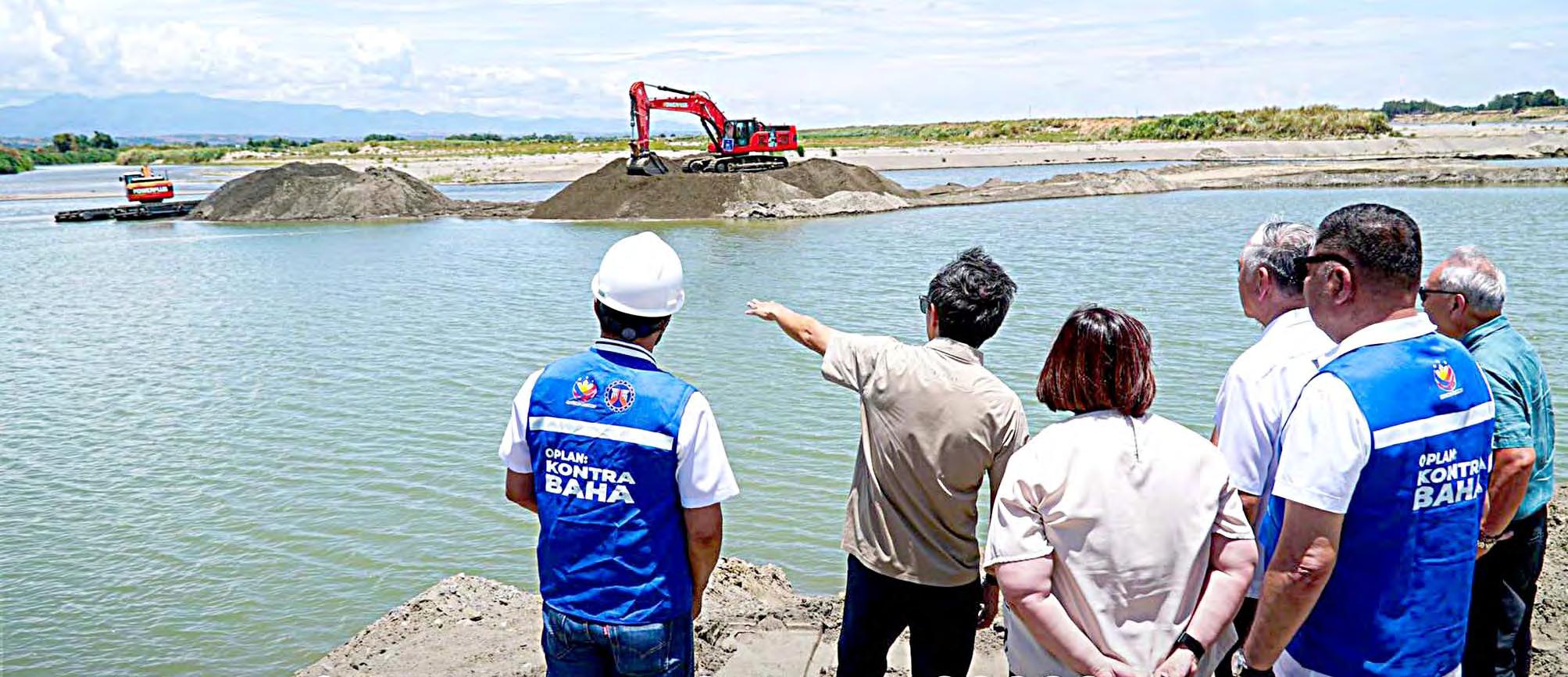
By Jessica M. Bacud
TUGUEGARAO CITY, Cagayan — Public Works Secretary Vince Dizon personally inspected Oplan Kontra Baha operations in this city on June 2, 2026, following President Ferdinand Marcos Jr.’s directive to fasttrack flood mitigation in flood-prone and low-lying areas nationwide as the rainy season sets in. Accompanied by Cagayan Governor Edgar “Egay” Aglipay and Tuguegarao City Mayor Maila Rosario Ting-Que, Dizon visited the dredging site at the Pinacanauan-Cagayan River confluence in Barangay Centro 9. The work aims to deepen the river channel and address the perennial waist-deep flooding that hits the city
during heavy rains. The project also covers Annafunan West Creek, Balzain-Caritan Creek, and Centro 11 Drainage, where desilting and clearing operations are ongoing to restore water flow capacity. Implementation began on Feb. 27, and dredging is targeted for completion by July 2026.
“Flooding in Tuguegarao has been a huge problem. We’re solving this now so students aren’t stranded when the rains come, especially with classes opening next week,” Dizon said, citing the President’s directive to accelerate dredging and clearing operations before heavy rains begin.
Governor Aglipay thanked President Marcos for the swift national response to Cagayan’s long-standing flood problem, saying the project
would protect residents’ livelihoods and safety.
Mayor Ting-Que welcomed the inspection and project.
“We welcome Secretary Vince Dizon’s inspection and the government’s proactive steps. Oplan Kontra Baha is a much-needed relief for our residents, especially with the upcoming rainy season. We thank President Marcos Jr. and the DPWH for their support, and we look forward to a safer, more resilient Tuguegarao,” she said. With dredging underway at key river confluences and creeks, Oplan Kontra Baha is expected to be completed by July 2026. The project aims to protect Tuguegarao from future flooding and provide residents peace of mind as the city prepares for the rainy season and the opening of classes.

By Rex Espiritu
THE Department of National Defense (DND) and the Association of General and Flag Officers (AGFO) on Wednesday underscored the need for the strict enforcement of environmental, safety, and national security regulations following the discov-
The organization described the operation as a demonstration of the government’s commitment to ensuring that both local and foreign entities comply with Philippine laws and regulations. During the meeting, Teodoro and AGFO officials emphasized the importance of a whole-of-government approach in addressing threats to national security, public safety, and community welfare. Both sides also stressed the need for a thorough and transparent investigation, noting that the reported presence of hazardous materials could pose risks to workers and nearby communities.
By Maricel V. Cruz
Committee on Ethics and Privileges report that found his controversial remarks involving actress Anne Curtis-Smith violated the House Code of Conduct and the standards expected of public officials. In adopting Committee Report 299, the House voted 263-8, with seven abstentions, affirming the findings of the Ethics Committee that Suntay committed disorderly behavior and conduct unbecoming of a member of Congress when he made remarks about Curtis during a March 3, 2026 hearing of the House Committee on Justice.
“After deliberation on the cases, the Committee found Quezon City 4th District Rep. Jesus ‘Bong’ C. Suntay guilty of disorderly behavior for uttering inappropriate or improper statements during the March 3, 2026 hearing of the House Committee on Justice, as well as for related statements made on social media that the Committee said reflected negatively on the dignity, integrity, and reputation of the House of Representatives as an institution,” according to the committee report prepared by the panel chaired by 4PS Party-list Rep. JC M. Abalos.
“The Committee recommended that Suntay be subjected to disciplinary action in the form of a reprimand under Section 52(b)(2), Rule IX of the Committee Rules,” the report said.
“It also recommended that he render voluntary community service, undergo a gender sensitivity seminar organized by the House Committee on Women and Gender Equality, and issue a public apology to Ms. Anne Curtis-Smith and all women in a statement to be read before television or broadcast media.” The controversy stemmed from statements made by Suntay during impeachment proceedings against Vice President Sara Duterte. According to the report, Suntay stated during the hearing:
“Lastly, you know, once I was at Shangri-La and I saw Anne Curtis. She was so beautiful. There was a desire inside me that became intense, and I imagined what could happen. But of course, it remained only in my imagination, and I do not think I can be sued for something I merely imagined.”

the Philippines.

IN A recent Bloomberg interview, President Ferdinand R. Marcos II said that he was worried about the possibility that Vice-President Sara Duterte would undo his policies if she succeeds him.
Pardon me, Mr. President, irreverent as this may be: What policies might these be?
He admits that his decision to run with Inday Sara in 2022 was the right decision.
“We had the same idea of what needed to be done in the government.” he said. Again, Sir, what same idea?
Other than the promise of “unity” that has turned to be a mirage, an empty promise, what common ideas did you share?
Your hermana mayor and a former lady president looked at the numbers in pre-campaign surveys and determined that you and Mayor Inday had to conjoin, or you lose and she, or somebody else wins. That was the long and short of it. It was not a “Uniteam” forged out of principle. It was the anvil that forged victory.
“We are trying to reform the bureaucracy. These things don’t get done instantly … it’s continuity that we aspire for, that we dream of, that we work for,” said El Presidente to Bloomberg. Reform the bureaucracy was one of his promises in his first SONA. Meanwhile, to mention just one department, Agriculture, which now has 17 undersecretaries and as many asecs. It used to be four Usecs in the time of PNoy, plus one for “special concerns.”
Did agriculture prosper as a result of its top heavy bureaucracy? Have we even approached food security, or has that become an impossible dream? Far from it? Why, the President even took leadership of the agency right after winning, stressing its importance to his “vision,” which included 20-peso rice that defies the laws of economics. Vision soon turned into a mirage, and we are all suffering from it. We used to import 2.25 million tons of rice under PGMA. Under PNoy, we trimmed it down by almost a half. Under Duterte, it went up to 3 million tons during the Covid years. In 2024, it was 4.68 million tons. That’s almost 94 million bags of 50kilo rice, or 4.7 billion kilos!
And this year, USDA foresees us importing more than 6 million tons of our food staple. We will import more pork from Spain and the Netherlands, beef from Australia, India and Pakistan, fish from China, vegetables and aromatics from China and Taiwan, and our sugar planters are up in arms because the price of cane sugar is not even enough to cover costs of production.
Farming is bound for extinction, as young people shun the sector.
In 2023, 2024 and 2025, your NEP, called “the president’s budget,” was mangled beyond recognition by Zaldy Co, Stella Quimbo et al. in the House,
and by Sonny Angara and Grace Poe in the Senate, yet you allowed these. By all measures of comprehension, whether by accountants or “istambays,” these budgets will go down in history as the “most corrupt” ever and forever. These are your reforms, Mr. President?
Let me quote further: “Everyone is saying there’s elections in a couple of years… it is not entirely accurate to describe that (as a contest between) warring families. The response is really to leave politics aside. Because the work of national development is a million times more important.”
Your successor to the presidency will be very careful not to repeat the same flood control projects or be thrown out of office sooner
People still recall that in late 2024 and early 2025, you kept saying that you were against impeaching your vice president. Vividly you said that “impeachment will not improve the life of a single Filipino.”
Yet days later, she was impeached in your HoR by 215 members led by signatory Numero Uno, su querido heredero, Sandro Araneta Marcos. And now, minus your first cousin Martin who resigned as speaker, 257 signatories impeached your “Uniteam” VP in a repeat performance, executed through pesos and promises.
So what policies, pray tell, should the president who will succeed you need to continue?
Your foreign policy pushed us further into vassalage to America’s Deep State, and deprived our economy of investments and tourists from our richer neighbor to the west, while making us collateral damage should war erupt in the Taiwan and Luzon Straits.
Your Build Better More (BBM), is a supposed follow-through of your predecessor’s Build, Build, Build, which has absolutely no sloganeering resemblance to RRD?
It will be remembered for delayed projects, humongous commitment fees from foreign creditors because of the budgetary legerdemain that transferred foreign-assisted projects into unprogrammed appropriations to fund the insatiable greed of a few..
If it is any consolation, your successor to the presidency will be very careful not to repeat the same flood control projects or be thrown out of office sooner.
That successor and the people will thank you and your Cabinet as well as your coterie of pets in Congress, for ensuring no leader will heretofore want to continue that legacy.

WITH the presidential election still about two years away, the polling outfits are already quite busy with their surveys.
Many political analysts are likewise also making their rounds with the TV stations sharing their political predictions on who will eventually contest the two top positions of the land come May 2028. This is notwithstanding the fact that VP Sara Duterte will soon be facing an impeachment trial which might turn the entire political landscape upside down if she is convicted.
But it is very likely that the outcome has been factored by all these people and come to the conclusion that VP Duterte will not be convicted.
Given the current division of the Senate, I am bound to agree that a conviction will be a long shot. There is simply not enough votes for a conviction. And with the country’s present trajectory getting bleaker by the day, it is not really too early for the public to be thinking of the kind of leader we should be electing as our president in 2028 to lead us thru these trying times.
Since the lifting of Martial Law in 1986, we have elected seven presidents to include the current one.
They all came from different backgrounds and if we analyze all the seven administrations, we will find out that some were clearly better than others. There were also some good ones while others are better forgotten. We therefore
We need an incorruptible leader
have a pretty good idea of the kind of leader needed to lead us to the Promised Land. We had for instance a noted public administrator with a lot of government experience including spending all his life in the military in the person of the late Fidel V Ramos.
He introduced the concept of completed staff work in the bureaucracy and was the first to initiate mission objectives.
We also had the icon of democracy Corazon C Aquino who was responsible for our current 1987 Constitution. Her administration was beset by several military coup attempts but survived them all
THE issuance by the Sandiganbayan of an arrest warrant against Sen. Jinggoy Estrada on June 1 for a non-bailable plunder charge reinforces a core principle of Constitutional democracy: no public official, regardless of rank, family name, or political influence, can stand above the law.
The fact that this is Estrada’s third plunder case in 25 years makes it even more consequential.
It shows that allegations of largescale corruption do not simply disappear because an accused official has been acquitted in previous cases, returned to office, or retained political power.
The legal system must continue to wield its authority to investigate and prosecute when it believes there is sufficient evidence to establish probable cause.
The arrest order is a timely reminder that the State should not tolerate impunity, or immunity from punishment or recrimination. Impunity thrives when political elites start to believe that prosecution is either impossible or merely symbolic.
The issuance of an arrest warrant against a sitting senator suggests that anti-corruption mechanisms such as the Office of the Ombudsman and the Sandiganbayan are exercising their mandates even against highly placed officials.
The court did not merely accept the filing of charges; it determined that the allegations and supporting evidence justified the issuance of an arrest war-
rant despite legal motions seeking to prevent it.
Equally important is the nature of the accusation itself. The case involves alleged kickbacks amounting to approximately P573 million connected to flood-control projects intended to protect communities from disasters and improve public infrastructure.
The arrest order is a timely reminder that the State should not tolerate impunity, or immunity from punishment or recrimination
If proven, such allegations would represent not only financial corruption but also a betrayal of public trust involving resources that directly affect public safety and welfare. However, the significance of the arrest order should not be overstated.
Pope to mark centenary of death of
BARCELONA – Pope Leo XIV will celebrate mass next week at Barcelona’s Sagrada Familia, the unfinished basilica designed by famed architect Antoni Gaudi, a fervent Catholic whose cause for sainthood is advancing in the Vatican.
Last year, nearly five million people visited the Sagrada Familia -- known for its soaring towers and symbolismrich modernist architecture -- making it Spain’s most visited paid monument.
Other Gaudi landmarks, including the brightly colored Casa Batllo in the center of Barcelona, also continue to attract large crowds.
“He was a genius,” Casa Batllo director Xavier Villanueva told AFP.
“He knew how to reach people at their deepest level.”
Gaudi died June 10, 1926, at age 73, days after he was hit by a tram in Barcelona while on his way to pray at a church.
The pope, who is set to visit Spain from June 6 to 12, will celebrate an evening mass at the Sagrada Familia on June 10 to mark the 100th anniversary of the architect’s death.
The mass comes after the Vatican last year declared Gaudi, once called “God’s architect” for his work on the Sagrada Familia, to be “venerable”, a move toward sainthood.
Born in 1852 into a devout Catholic family, Gaudi quickly became one of Barcelona’s most prominent architects.
Leading members of the city’s bourgeoisie and business community entrusted major projects to the young architect, known for his strong temperament and his deep appreciation of nature.
‘Man of God’
Gaudi’s life changed after a series of deaths among close relatives, which
to be able to turn over the government peacefully to her successor.
We also had Joseph “Erap” Estrada whose term was unfortunately cut short by another people power revolt. His short term as we know was characterized by an aborted impeachment trial and allegations of corruption due to the illegal numbers game jueteng.
This was followed by the nine-year term of Gloria Macapagal Arroyo who took over the government due to the resignation of FPJEE.
She was followed by Cory’s son, Noynoy Aquino, to the presidency who initiated the now famous 2016 Hague Arbitral ruling dismissing China’s 9-dash line and claim over our exclusive economic zone in the WPS.
He was followed by Rodrigo Roa Duterte who is now unfortunately detained by the ICC in The Hague to face trial for
An arrest warrant is not a conviction. Under the rule of law, Estrada remains presumed innocent until proven guilty.
The true test is not whether a powerful official can be arrested, but whether the judicial process can proceed fairly and efficiently toward a credible verdict based on evidence rather than politics.
Rule of law requires accountability, but it also requires due process. This case also underscores a recurring phenomenon in Philippine governance.
While high-profile arrests heighten public expectations that impunity is finally ending, past experience shows that corruption cases often take years to resolve and sometimes end in acquittals, as in Estrada’s case. Public confidence will therefore depend less on the dramatic issuance of warrants and more on whether the courts can deliver a legally sound resolution.
The Sandiganbayan’s recent arrest order should serve as a timely reminder that democratic institutions should make entrenched political power accountable for wrongdoing.
Whether it becomes a milestone in the fight against impunity or merely another chapter in the country’s long cycle of corruption scandals will depend on what will happen next: the integrity of the prosecution, the independence of the judiciary, and the willingness of the entire political system to let the law to take its course without undue interference.
‘God’s architect’ Antoni Gaudi
led him to undertake an extreme fast in 1894. For the architect, already recognized for his work and his defense of Catalan identity, it marked the beginning of a new phase defined by a deep religious faith.
“It was really at that moment that he began to place himself after God,” said Armand Puig Tarrech, a priest and theologian who helped prepare a 1,700page dossier submitted to the Vatican seeking Gaudi’s beatification, the next step on the path to sainthood.
Gaudi died June 10, 1926, at age 73, days after he was hit by a tram in Barcelona while on his way to pray at a church
Before, Gaudi “remained internally attached to very human things such as vanity or ambition”, he added.
After this formative existential crisis, Gaudi adopted an austere, almost mystical lifestyle, leading some of his most fervent admirers to view him as a potential saint.
“If you look at his life, you see a man of God,” said Jose Manuel Almuzara, one of the co-founders in 1992 of the Association for the Beatification of Antoni Gaudi.
Before Gaudi can be beatified -- the final step before sainthood in the Catholic Church -- a miracle attributed to his intercession must be verified.
crimes against humanity due to his war against illegal drugs.
Of all the presidents, he was perhaps the most unorthodox and unconventional leader we ever had. His language was, to say the least, coming from a foul mouth. That despite, he has remained popular with the public even to this day. We now of course have BBM as our current president. We do not know how his presidency will be viewed after his term but he is now grappling with a major economic problem brought about by the current Middle East war.
The country was hit with a monumental oil crisis that increased gas pump prices and disrupted the supply chain making life miserable for ordinary Filipinos.
Inflation has sky rocketed and corruption continues to be a huge problem exacerbated by a senate that cannot function the way it should because some of them
The association has collected testimonies of favours believed to have been granted by his intercession, and the Vatican’s medical commission is currently studying a possible miracle.
‘Something of a miracle’ Gaudi, who was known for his quick temper, remained single throughout his life, disliked having admirers and even refused to be photographed, according to his biographers.
Today, millions of people visit his works, which have become a lucrative symbol of mass tourism in Barcelona despite the architect’s apparent discomfort with fame.
“When a brand grows, there are always official uses and others that seek to capitalize on it,” said Galdric Santana, an architecture professor at the Polytechnic University of Catalonia and coordinator of a series of events commemorating the centenary of Gaudi’s death.
The Sagrada Familia will be the focus of global attention again on June 10 when the pope blesses the basilica’s Jesus Christ tower, the soaring central piece, which was completed in February. The tower brought the basilica to its maximum height, 172.5 metres (566 feet), making the Sagrada Familia the world’s tallest church.
Full completion of the Sagrada Familia is expected in about a decade.
“The most obvious miracle, to me, is that he created a work that everyone wants to see,” said Gijs van Hensbergen, author of a biography of the Catalan architect.
“Atheists, Buddhists and people from all over the world come to Barcelona to see this building, which is itself something of a miracle.” AFP
are in hiding, detained or about to be arrested. We are truly in a big mess.
Since we are now talking about presidential elections, we should adopt a different criteria in selecting our next president.
Since unbridled corruption is the biggest problem, we should do away with the traditional benchmarks like executive ability, brilliance, charisma and popularity and look for someone with a proven track record of honesty and integrity. In other words, we need an incorruptible leader.
And for the sake of our country which is being bypassed by almost every country in the region, there has got to be someone out there who is upright, moral and the character that we can vote for to be our president. Otherwise, it will be perdition for the country.
THURSDAY, JUNE 4 , 2026 mst.daydesk@gmail.com
North Korea slams US general’s remarks
SEOUL – North Korea slammed on Wednesday remarks by the top American military official in South Korea comparing his host nation to “the dagger in the heart of Asia,” saying it reflected Washington’s strategy to contain China.
General Xavier Brunson made the comments in an interview as speculation builds that Washington may seek to expand the US Forces Korea role in countering China’s regional influence.
About 28,500 US troops are stationed in South Korea to help guard against the nuclear-armed North.
The state-run Korean Central News Agency published commentary by analyst Kim Myong Chol who said Brunson’s remarks showed the US as “the chieftain of harassing peace and the world’s worst war empire”. The comments reflected how Washington intended to use South Korea “as an important geopolitical instrument to realise its regional strategy aimed at containing China,” said Kim, who is based in Japan and considered an unofficial overseas spokesman for North Korea. AFP
California counts votes in gubernatorial primary
LOS ANGELES – Votes were being counted in California’s gubernatorial primary Tuesday, with three men locked in a tight race for two run-off spots, as officials in Los Angeles began tallying ballots for mayor of the second biggest city in the United States.
The state’s so-called “jungle primary” pits all comers in one mega-poll. The top two vote-getters -- regardless of party -advance to the November general election to replace term-limited Democratic Governor Gavin Newsom. Xavier Becerra, a career politician who served as former president Joe Biden’s health secretary, was in the box seat as the early numbers rolled in.
Duking it out for second place are Democrat Tom Steyer and Steve Hilton, a Republican backed by President Donald Trump. AFP
Trump-backed Colombia bet vows closer ties
BOGOTA – Colombia’s hard-right presidential frontrunner on Tuesday (Wednesday, Manila time) promised much closer ties with the United States after receiving the backing of President Donald Trump. Abelardo de la Espriella, a millionaire lawyer campaigning as a tough-on-crime outsider, said relations with Washington would be “like never before” if he defeats leftist senator Ivan Cepeda in a June 21 runoff.
De la Espriella was the surprise winner of the first round of the presidential election on Sunday, held against the backdrop of a surge in drug-related guerrilla violence.
He garnered over 43 percent -- compared to 41 percent for Cepeda -- with the law and order platform that has propelled right-wingers to power across Latin America.
The third-placed candidate Paloma Valencia, a conservative, has thrown her support behind the right-wing showman, putting him in pole position to become the next president of one of Washington’s closest South American allies. AFP
KUWAIT CITY – A drone strike on a passenger terminal in Kuwait’s international airport wounded several people Wednesday and forced air traffic to be suspended, as Iranian and US forces traded attacks in the Gulf.
The attacks marked one of the more severe tests yet of a fragile April 8 ceasefire, that has largely held despite sporadic strikes after more than a month of war sparked by the US and Israeli attack on Iran.
Kuwaiti officials blamed the attack on the airport on Iran, whose Revolutionary Guards accused US forces of triggering the night’s sequence of attacks by targeting a communications tower on the coun-
try’s Qeshm Island, forcing it to respond.
But, with Bahrein also complaining of an overnight drone attacks from Iran, the United Arab Emirates attempted to rally its Gulf neighbors in opposition to Tehran.
“In light of Iran’s repeated aggression against the sisterly states of Kuwait and Bahrain, a firm, unified, and cohesive Gulf stance is imperative,” UAE presidential advisor Anwar Gargash posted on social media.
“This aggression does not just target one country, it targets us all.”
Kuwait’s ministry of defense spokesman Brigadier General Saud Abdulaziz Al-Atwan described the airport strikes as “criminal Iranian aggression which resulted in significant material damage to the building and injuries.”
Al-Atwan did not say how many people were hurt but said those wounded had received medical care.
Kuwait’s state news agency Kuna said the civil aviation authority had suspended air traffic and transferred arriving flights to alternative airports after “Terminal One came under Iranian attacks causing casualties and damage”.
Iran’s Revolutionary Guards did not confirm they had targeted the airport.

BRUSSELS – The EU was scheduled to set out Wednesday (Wednesday evening, Manila time) how the 27-country bloc hopes to slash its dependence on American and Asian technology, and favor European digital alternatives.
The plans risk further angering the United States, which has pushed back hard at the European Union’s fines and rules in recent years against American tech companies.
The bloc has in the past year ramped up its efforts to boost domestic manufacturing across different sectors, and catch
up with rival companies in the United States and China.
EU tech tsar Henna Virkkunen will unveil the new “technological sovereignty” package in Brussels, including new rules on chips, cloud computing and AI.
The goal: to build digital ecosystems that ensure Europe retains control over services and data, and resists foreign interference.
Brussels worries its soft underbelly has been exposed after crises over chips and rare earths with China last year, coupled with fears an angry President Don-
HAMBURG – Claudia Wuttke had no idea she may be a rape victim until police showed her a series of screenshots taken from the laptop of her former husband.
of Gisele Pelicot, the Frenchwoman who became a feminist hero during a mass rape trial two years ago.
ald Trump could one day pull the plug on US cloud computing via a “kill switch”.
In a draft strategy document seen by AFP, the EU said it is reliant on foreign providers for “over 80 percent of its digital products, services, infrastructure and intellectual property”, based on an official 2023 report.
The EU, however, insists the push is aimed not at shutting out foreign providers, but at strengthening European industry and keeping itself in the AI race.
Based on the text seen by AFP, the package will include: AFP
But a statement said that, in response to a US attack “their air base and helicopters located in one of the countries in the region, as well as the headquarters of the US Fifth Fleet, were attacked by missiles and drones from the IRGC Aerospace Force”. Kuwait’s international airport was targeted several times during the war, and had only fully resumed operations on June 1.
The oil-rich Gulf nation, a US ally, has been on the receiving end of Iranian attacks after the US and Israel
Meanwhile, in St. Petersburg, Russia, in a dark exhibition space in Saint Petersburg, visitors stare at giant paintings of Russian battles down the centuries, including World War II, Afghanistan -- and Z-marked fighters in Ukraine.
In four years of Moscow’s full-scale offensive against Ukraine, war has become omnipresent in Russia -- even if the battlefield seems distant.
Hundreds of thousands of men have been at the front and Kyiv’s retaliatory strikes regularly hit Russian cities. Scenes of national suffering are sensitive
New Delhi hotel fire kills at least 21 in deadly blaze NATO chief Rutte arrives in Kyiv unannounced
NEW DELHI
– At least 21 people were killed when a fire ripped through a hotel in New Delhi on Wednesday, police said, in one of the deadliest blazes in the Indian capital in recent years.
Building fires are common in India due to a lack of firefighting equipment and routine disregard for safety regulations.
The fire broke out in the morning at Flourish Stay, a bed-and-breakfast in a congested neighbourhood in the south of the city, Delhi Police said in a statement.
“It is with profound sorrow that 21 persons have been declared dead in this tragic incident,” the force said.
It said rescue and search operations were continuing, with more than 40 people taken to nearby hospitals for treatment. Several of those killed were visitors from African countries who had come to the city for medical treatment, the Indian Express and other local media reported. The blaze was eventually brought under control with the help of eight fire engines, police said.
“All concerned agencies remain deployed at the spot to ensure every possible assistance to those affected,” the force added.
Prime Minister Narendra Modi called the incident “tragic.”
“My condolences to those who have lost their loved ones,” his office said in a statement on X. The cause of the fire was not immediately clear. Electrical short circuits, often caused by poorly maintained wiring, remain the leading cause of fire incidents in India.
In March, a fire at a government-run hospital in eastern India killed at least 10 critically
The 59-year-old author from the northern German city of Hamburg still recalls the horror she felt on seeing the images last year of a “completely dazed woman in various rape scenarios”.
“That woman was me,” she told AFP about the images from videos taken over a period of 16 years.
Wuttke, who now believes her ex-husband repeatedly drugged and raped her and filmed the sex crimes, first told her story to Der Spiegel magazine in May.
Compounding her shock, she learned that 65 of the 67 alleged offences could not be investigated because of a five-year statute of limitations -- news that she said felt like “a second earthquake”.
Wuttke’s ordeal has shocked Germany and drawn parallels with the case
According to Der Spiegel, German police searching a laptop discovered videos of Wuttke being subjected to vaginal, oral and anal penetration, and in one especially shocking case having a baseball bat inserted anally. The abuse allegedly took place both during the couple’s marriage and after their divorce, when they were still in contact.
However, now Wuttke fears most of the cases may never go to court because of legal reforms introduced in Germany under former chancellor Angela Merkel in 2016.
Under the legal changes, which broadly aimed to toughen penalties, some sexual assault offences can expire after five years unless there are certain aggravating criteria. AFP


Trump signs AI order giving gov’t access to powerful platform models
WASHINGTON, DC – US President Donald Trump on Tuesday (Wednesday, Manila time) signed an executive order creating a voluntary framework under which AI developers will share advanced models with the government before public release. The central provision allows companies such as OpenAI, Google or Anthropic to give the government access to their most powerful models for up to 30 days before planned release.
The order was triggered by concerns over Anthropic’s Mythos model, which the AI startup has held back from the public due to its ability to expose vulnerabilities in computer systems, including those of banks, governments and hospitals. The 30-day window represents a compromise. The original draft called for up
to 90 days of pre-release government access, while tech companies had pushed to cut that figure to just 14 days.
For OpenAI chief Sam Altman, the executive order “gets the balance right.”
“The US should lead on AI by continuing to develop the very best models, making sure they’re safe, and getting cyber tools into the hands of trusted defenders,” Altman said.
Kent Walker, Google’s head of public affairs, called the order an “important step forward” that will ensure “defenders have the AI tools they need to keep America secure.”
And Anthropic, which has repeatedly clashed with the Trump administration, called the order “an important step in strengthening America’s leadership in AI.” AFP
A MEMBER of the House minority bloc on Wednesday urged the Philippine Amusement and Gaming Corporation (PAGCOR) on Tuesday to conduct a comprehensive review of out-of-home (OOH) advertisements promoting online gambling, citing the increasing presence of gambling billboards across Metro Manila despite existing ban on gaming advertisements.
Bukidnon Third District Rep. Aubrey Zubiri, during a House committee hearing, questioned the continued approval of online gambling advertisements by PAGCOR and the Ad Standards Council (ASC), particularly those carrying what she described as subliminal messages that normalize and encourage gambling even without implementing rules and guidelines.
“I think we have to review this regularly because clearly these billboards pose a mockery to our discussions here and the commitment made by PAGCOR last time. We’re not just playing cute here at our committee hearings,” Zubiri said.
The lawmaker challenged regulators over the approval process for these advertisements, noting the contradiction between acknowledging the risks associated with online gambling and allowing its widespread promotion.
“All of these ads we see (along) EDSA have gone through the PAGCOR and ASC. How come none of your board members got the message you were trying to convey? You yourself admitted that online gambling is problematic, you even gave them a platform),” she said.
Zubiri underscored the government’s responsibility to protect the public, particularly younger generations, from the harmful effects of unregulated online gambling and its pervasive advertising.

By Maricel V. Cruz
TBy Rex Espiritu
THE Philippine Space Agency (PhilSA) said it will continue pursuing industry partnerships and expanding space cooperation with the Japan Aerospace Exploration Agency (JAXA).
The two agencies signed on May 27 a Joint Declaration of Interest on Space Cooperation during President Ferdinand Marcos Jr.’s state visit to Japan.
“The Philippines looks forward to continuing its partnership with JAXA, particularly in the application of Japanese satellite data for environmental monitoring and disaster management,” PhilSA said.
The agency said the agreement reflects the growing collaboration between the Philippines and Japan in the field of space science and technology.
According to PhilSA, the two countries have maintained a strong history of cooperation in space-related activities.
PhilSA also noted that 2026 marks the 20th anniversary of Sentinel Asia, an international cooperation project led by JAXA and the Asian Disaster Reduction Center that supports disaster management efforts across the Asia-Pacific region.
HE House of Representatives on Tuesday night approved on third and final reading a Legislative-Executive Development Advisory Council (LEDAC) priority measure that seeks to strengthen the country’s fight against online child sexual abuse and exploitation, including emerging threats posed by artificial intelligencegenerated content and other digital technologies.
In an overwhelming 284 affirmative votes, the chamber approved
House Bill (HB) 9461, or the proposed “Child Online Safety and Protection Act of 2026,” under the leadership of Speaker Faustino Dy III and House Majority Leader Ferdinand Alexander Marcos.
The measure seeks to strengthen and expand Republic Act 11930, or the Anti-Online Sexual Abuse or Exploitation of Children (OSAEC) and Anti-Child Sexual Abuse or Exploitation Materials (CSAEM) Act, by introducing stronger safeguards, broader enforcement powers and a more coordinated national framework to protect children in the digital age.
Marcos said the bill responds to the rapidly evolving nature of online child exploitation and the growing use of technology by criminal networks to target children.
“Technology has created new opportunities for learning, communication and development, but it has also opened new avenues for predators to exploit children. Our laws must evolve just as quickly to confront
these threats and ensure that Filipino children remain protected,” Marcos said. The bill expands the definition of child sexual abuse or exploitation materials to include artificial intelligence-generated, synthetic and digitally manipulated exploitative content, including deepfakes involving children. It also criminalizes a wider range of online offenses, including sexual extortion, grooming, luring, image-based sexual abuse and livestreamed child exploitation. Under the measure, those convicted of producing, distributing, livestreaming or facilitating child sexual abuse materials may face life imprisonment and fines of at least P2 million. Persons found guilty of possessing child sexual abuse materials may face up to 20 years in prison and fines of up to P500,000, while those convicted of knowingly accessing such materials may face up to 12 years in prison and fines of up to P300,000.

By Vince Lopez
NINETEEN people, including seven children, were rescued on Tuesday from a van that plunged into a ravine along the Marilaque Highway in Barangay Laurel, Sta. Maria, Laguna.
The coordinated rescue operation was carried out following emergency calls through the Unified 911Emergency Hotline, according to the Department of the Interior and Local Government (DILG). Responders from the Sta. Maria Municipal Police Station, the Municipal Disaster Risk Reduction and Management Office (MDRRMO), and other emergency personnel immediately proceeded to the scene.
According to an initial police investigation, the van was negotiating a curve on the highway when the driver
reportedly lost control of the vehicle, causing it to veer off the road and fall into the ravine. Despite the severity of the accident, all 19 occupants were rescued. Eighteen passengers sustained no visible injuries, while one suffered minor injuries. All were taken to General Cailles Memorial Hospital for medical evaluation.
The DILG said the incident highlighted the importance of a reliable emergency response system capable of quickly connecting people in distress with emergency responders. President Ferdinand Marcos Jr. has identified the Unified 911 Emergency Hotline, launched nationwide in 2025, as a key component of the administration’s public safety agenda aimed at providing faster access to emergency assistance across the country.
Makati spends P741m for medical services
THE Makati City government has paid a total of P741.47 million to the Makati Life Medical Center for medical services provided to beneficiaries of the Makati Health Plus Program, also called Yellow Card, since July 2025, Mayor Nancy Binay disclosed Tuesday. As Makati marks its 356th founding anniversary this month, Binay reaffirmed the city government’s commitment to providing accessible and quality healthcare to residents. “I would like to assure Makati residents that the city government remains firmly committed to providing premium healthcare through continuous access to the comprehensive benefits of the Yellow Card,” Binay said. According to the mayor, succeeding billings related to Yellow Card services will also be processed for payment. “Under my administration, the city has never wavered in its commitment to the health and well-being of every Makati resident and stakeholder,” Binay said. Joel E. Zurbano House panel okays UP climate resilience bill
A GROUP of lawmakers on Wednesday welcomed the committee approval of the proposed University of the Philippines National Climate Resilience Institute Act. Rep. Jude Acidre of Tingog Party-list, one of the bill’s authors, said the approval of House Bill 9029 at the committee level is a necessary step toward strengthening the country’s capacity to prepare for disasters through science, research, and evidence-based planning.
The bill passed during the joint meeting of the House Committee on Higher and Technical Education and the House Committee on Climate Change, seeks to convert the existing University of the Philippines Research Institute into the UP National Climate Resilience Institute, a permanent national institution dedicated to climate resilience, disaster preparedness, policy innovation, foresight, knowledge integration, and capacity building. Maricel V. Cruz
THE Bureau of Customs (BOC) was recognized by the Anti-Red Tape Authority (ARTA) for its adoption and implementation of the 10 Philippine Good Regulatory Principles during the Philippine Good Regulatory Principles Recognition and Awards Program (PGRP-RAP) on May 25, 2026.
The award was presented during the Ease of Doing Business Month celebration, which had the theme, “Achieving Results through Transparency and Accountability: Towards a More Productive Bagong Pilipinas.”
The BOC was among the government agencies conferred the award in recognition of its efforts to promote transparency, accountability, and evidence-based policymaking. Customs Commissioner Ariel Nepomuceno said the recognition affirms the Bureau’s ongoing reforms and commitment to public service through its Integrity, Accountability, and Modernization (IAM) Movement. Vito Barcelo
THURSDAY, JUNE 4, 2026
RIERA U. MALLARI, Editor
RANDY M. CALUAG, Asst. Editor
TYRONNE Caro dispatched Alejandro Duque with minimal effort, cruising to a flawless 6-0, 6-0 victory to roll into the quarterfinals of the Dr. Pablo Olivarez Juniors Age-Group Tennis Championships in Sucat on Monday.
After drawing a first-round bye in the boys’ 14-and-under singles, the rising star from San Pablo City imposed his will early, scoring almost at will with a superb baseline game and precise return winners and never giving his rival a chance to get on the scoreboard.
However, a tougher challenge awaits Caro in the Last 8 against Joaquin de Guzman, who topped Jose Coronel 6-0, 6-1 in the opening round before advancing via a walkover.
To accommodate the massive turnout of participants for the week-long event, organizers have tapped two venues – the Olivarez Sports Center and Parañaque Tennis Center – for the Group 2 tournament, which aims to provide the country’s youth with consistent competitive exposure while encouraging them to reduce screen time.
In the premier 18-and-U division, Gabriel Mabanta advanced via a walkover after top seed Miguel Lagac III opted to skip the tournament following an early exit at the recent Palawan Open 2026, leaving second seed Julio Naredo as the player to beat.
Lagac’s absence also reshaped the 16-and-U division, allowing Casimir Briggs to advance and set up a secondround duel with Yuan Torrente. Elsewhere in the bracket, Don Bermejo drubbed Jemuel Gonzales, 6-4, 6-1, to book a clash with Kenji Kue, who blanked Gabriel Mabanta, 6-0, 6-0. Action was equally fierce in the 12-and-U division as No. 2 seed Noel Zoleta trounced Lucas Montero, 6-2, 6-2, arranging a second-round meeting with Khaled Rescober, who dominated Carlos Lorenzana, 6-2, 6-0. Meanwhile, Leonardo Manio III booted out Matteo Alcantara, 6-3, 6-2, to set up a showdown with Braeden Dee, a 6-3, 6-2 winner over Zion Andugo. Fresh faces are poised to emerge on the girls’ side. Frances Ilagan, Cristina Reyes, Ava Banson and Jasmine Sardona are set to battle for the 18-andU crown, with Banson and Sardona securing the top two seeds in the 16-and-U category. Leanne Barrido, Lois Bermas, Jaynelle Castro and Jasmine Solis headline the 14-and-U field, while Castro also leads the 12-and-U cast alongside Audrey Abacan, Misty Principe and Abrielle Asistio.
THE search for future Grandmasters continues as the National Chess Federation of the Philippines holds the National Age Group Championships, unfurling today until Sunday at Olongapo Civic Center.
The four-day event will have several divisions in the open and girls’ Under-8, U10, U12, U14, U16, U18 and U20 in standard, rapid and blitz events with the opening round scheduled at 10 a.m. today.
The champions of the U14 to U20 open and girls section will represent the country in the 24thy ASEAN+ Age Group Chess Championships slated from Aug. 7 to 17 in Singapore.
NCFP chief executive officer
Grandmaster Jayson Gonzales said the Olongapo tilt is an integral part of the country’s grassroots development program.
“We’re not stopping until we produce more masters, possibly Grandmasters, and future national team players,” he said. There will be three rounds today in standard chess, another three today and the last three tomorrow. Rapid and blitz are scheduled Sunday.
Gonzales said free billeting will be provided by the host city on a first-come, first-served basis.
MEXICO, Pampanga—Jakob Taruc and Kendra Garingalao turned the final round of the ICTSI Beverly Place Junior PGT Championship into a personal coronation walk on Wednesday, braving an early morning downpour before scorching the course to claim dominant double-digit victories in the premier division.
While Taruc merely put the finishing touches on an already massive 11-stroke cushion to roll to an 18-stroke rout over Nathan Belandres after a 75, Garingalao turned a tense three-shot lead into a front-nine blowout. Despite a birdie-less 77 at the Beverly Place Golf Club, Garingalao secured an eight-stroke victory over Rafa Anciano.
The day started under omi- nous skies as a heavy downpour triggered an hour-long rain delay. When play finally com- menced under a “lift, clean and place” format, players battled a soft, drizzling golf course. However, the damp conditions were short-lived. By mid-morning, the clouds cleared, the wind died down to a bare whisper, and the venue transformed into a blistering, humid pressure cooker.
The shifting weather did little to slow down Taruc, who ignited his round

with a birdie on the opening hole. Although he stumbled with three bogeys over the next four holes as the heat intensified, and later suffered a doublebogey on the par-3 15th, play was soon halted due to lightning threats.
However, the two-hour-long delay only postponed the inevitable. Taruc coasted to a 18-shot tri- umph over Belandres, closing with a fourover par for a 54-hole total of 224. Belandres rallied with a 76 to snatch runner-up honors at 242, while Jacob Bayron charged back with a 79 to tie for third at 243 with Francis Slavin and Bryce Co, who posted 82 and 83, respectively.
“Winning for the first time feels good. I know that I have my game back,” said the 16-year-old Taruc, reflecting on his breakthrough circuit victory. “I just had a good week. I had some bad holes, but overall, it was a good week.”
He also credited a shift in his strategic approach for the turnaround.
“It’s a change in mentality toward the game,” he added. “I used to play aggressively, going right after the pins. Now, I’m focusing more on how to make pars instead of birdies. The more I look for pars, the more chances I actually get for birdies.”
Jacob Taruc rolls to an 18-stroke rout over Nathan Belandres in the final round of the ICTSI Beverly Place Junior PGT Championship. Manny Marcelo
By Randy M. Caluag
FILIPINO para swimmer Angel Mae Otom delivered a standout performance at the World Para Swimming Series 2026 in Fuji-Shizuoka, Japan, capturing gold in the women’s S5 50-meter backstroke and adding a bronze medal in the women’s 50m butterfly.
The 22-year-old from Olongapo City clocked 47.89 seconds in the backstroke A final to secure the gold medal.
Otom’s victory came after she earlier claimed bronze in the 50m butterfly with a time of 46.52 seconds, giving her a two-medal haul in the presti-


gious meet. Spain’s Teresa Perales finished second in the backstroke event with a time of 1:13.51, while Thailand’s Plaifa
Thongrueang took bronze in 1:27.55. Otom’s latest achievement mirrored her performance in last year’s FujiShizuoka Series, where she also won
gold and bronze in the same events. Meanwhile, fellow Filipino para swimmer Raemond Adefuin secured a bronze medal in the men’s 50m butterfly after clocking 34.31 seconds. He later placed seventh in the men’s 100m breaststroke A youth final with a time of 1:38.81.
In the same event, Hong Kong swimmers dominated the podium, with Chi Keung Choi winning gold in 1:11.75, Wing Long Hung taking silver in 1:12.05, and Wang Pok Mak earning bronze in 1:16.22. Filipino Paralympians Ernie Gawilan and Gary Bejino also saw action, finishing fourth and fifth, respectively, in the men’s 400m freestyle B final with times of 5:08.73 and 5:34.88.
The Philippine contingent, composed of 21 delegates — including 16 athletes and five officials — is using the competition as part of its buildup for the Aichi-Nagoya 2026 Asian Para Games and the Los Angeles 2028 Paralympic Games.
FRESH off dominating performances in Davao, national team standouts Bea Quiambao and Irienold Reig, Jr. are primed to spearhead a fierce battle of grit and strategy as they headline the milestone 10th staging of the Century IRONMAN 70.3 Subic Bay this Sunday (June 7).
The country’s premier triathlon capital is set to transform into a high-stakes battleground where local icons and international contenders must not only out-pace each other but also survive the weather condition that promises to turn the 1.9km swim, 90km bike and 21km run into a true test of human resilience.
Quiambao enters the race with a massive target on her back. Having clinched the overall women’s championship and the Filipino Elite
title in Davao City – alongside her historic win at the inaugural 5150 Camiguin – she is indisputably the racer to beat.
Reig, meanwhile, looks to ride the momentum of his breakthrough men’s victory, aiming to prove that his rise to the top of the half-triathlon world is here to stay.
Standing in their way is a deep, ultracompetitive field. The Philippine Sports Commission continues its vital backing of the Filipino Elite Category, ensuring a premier, home-soil stage for current national athletes, former mainstays and rising homegrown stars.
Among those ready to ignite the course are multi-titled national athlete Erika Burgos, 2022 IRONMAN 70.3 Cebu champion August Benedicto, and Jethro Ramos, the
BACOLOD—Intense tropical heat and a daunting tight layout couldn’t cool down the fire in Stephen Clementer and Soleil Molde as they braved tough conditions to seize control of their respective divisions at the start of the ICTSI Bacolod Junior PGT Championship here on Wednesday. With spots in the North vs South Grand Finals on the line, the short but tricky par-70 Binitin course tested the young golfers’ poise, turning the opening round of this penultimate stop of the six-leg regional series into a virtual survival of the fittest. Brimming with confidence following a recent playoff victory that snapped Ethan Lago’s three-leg winning streak at Pueblo de Oro, Clem-
enter picked up right where he left off. Despite battling the heat and a cold putter, he ground out a gritty 80. A double-bogey on the challenging par-3 18th did little to dampen his position as he walked off with a commanding three-stroke cushion over Thomas Ngo, who shot an 83 with Ashton Araw-araw turning in a 93.
The opening round tested not only the skills of the young competitors but also their adaptability, as the weather shifted dramatically from a scorching, humid morning to a gloomy, overcast afternoon swept by unpredictable gusts of wind.
While Clementer sits comfortably at No. 3 in the Finals race, the stakes are high for his chasing pack. With
Darren Ong (No. 4) and Marlou Langamin (No. 5) skipping this week’s action, the door is wide open for Ngo (No. 6, 14 pts) and Araw-araw (joint No. 7, 12 pts) to mount a critical, lateseason charge into the coveted topfour qualifying spots.
“My game was good. I practiced hard yesterday, and making sure I got enough rest afterward definitely paid off,” said Clementer in Filipino.
“Moving into the final 18 holes, my goal is to push myself even further to secure the back-to-back victory.”
The girls’ youngest division produced the day’s most electric highlights. Molde surged into the lead with a 73, punctuated by a sensational pitch-in eagle on the par-4 13th.
first Igorot to qualify for the IRONMAN World Championships in 2024. Adding a dash of mainstream star power to the grueling weekend are fitness influencer sisters Aira and Alou Lopez.
The stakes are equally high across the age groups, spanning from the hungry 18-24 division to the inspiring 75-79 category, all vying for prestige in this landmark edition of the race organized by Sunrise Events, Inc.
For those seeking the ultimate test of staying power, the weekend also highlights the fifth anniversary of the fulldistance Century Tuna IRONMAN Philippines. Bidders from 45 countries will push their bodies to the absolute limit across a lung-busting 3.8km swim, 180km bike, and 42km run.

Clementer
is hotly
Ana
a 74,
MILL

By Othel V. Campos
THE Department of Trade and Industry proposed a new regulation that will require all solar energy systems sold in the country to comply with national standards as households and businesses turn to renewable energy to cut electricity costs.
orders
PH to halt operations over P271.94-m debt
By Darwin G. Amojelar
THE Civil Aviation Authority of the Philippines (CAAP) ordered AirAsia Philippines to suspend all commercial flights and business activities if it fails to settle P271.94 million in unpaid financial obligations.
The aviation regulator issued a cease-and-desist order dated June 2, 2026 after the budget airline failed to clear its overdue accounts.
CAAP originally sent a formal demand letter on May 11, 2026 requiring full settlement, but officials said the carrier refused to pay and has not offered an acceptable settlement proposal or arrangement to defer enforcement measures.
The outstanding balance of P271.94 million was current as of May 20 and excludes additional surcharges, penalties and accruing interest from delayed remittances.
The suspension mandate takes effect three days after receipt, at which point AirAsia Philippines should halt the use of all airport facilities under CAAP jurisdiction.
The regulator said it will not extend any operational accommodations or airport privileges to the airline without explicit written authorization from CAAP leadership.
AirAsia Philippines said it is still flying and working to resolve the issue.
“AirAsia Philippines assures the traveling public that it remains fully operational, with flights and services continuing as scheduled across its network,” the budget airline said in a statement, noting that flights remain subject only to standard factors like weather.
The draft framework aims to ensure only safe, reliable and durable solar products enter the local market, addressing concerns over substandard equipment that may fail prematurely or pose safety risks.
The agency also seeks to prevent the country from becoming a dumping ground for low-quality solar products rejected by other nations.
DTI officials said the measure will strengthen consumer protection and boost confidence in solar investments by ensuring systems are properly tested, compliant with standards and capable of delivering long-term performance and savings.
The agency clarified that the pro-


posed regulation will recognize test reports issued by accredited and internationally recognized testing laboratories. Officials also said that the policy coverage will not extend to the installation or mounting of solar energy systems.
Manila Electric Co. (Meralco) earlier cautioned the public that improper setups pose significant fire and safety risks.
Meralco spokesperson Joe Zaldarriaga said the utility supports the shift through its net metering program, which lets customers export excess power back to the grid for credit. However, he warned that failure to comply with government regulations can lead to disasters.
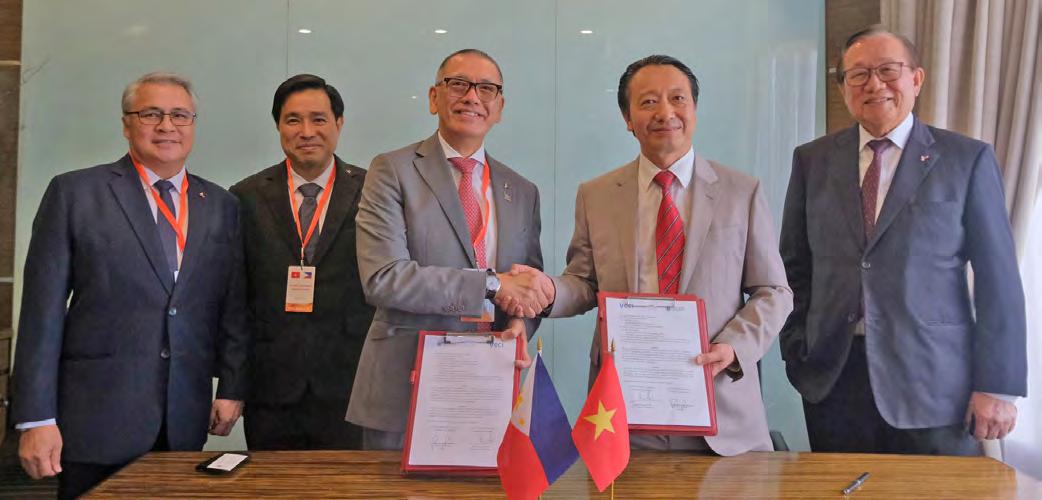

PHILIPPINE business and governance organizations are pressing the government for stronger transparency and accountability measures, saying that a recent flood control scandal and progress on a proposed right to information law present a critical opportunity for institutional reform.
By Jenniffer B. Austria
A DIRECTOR of the Securities and Exchange Commission (SEC) was arrested in an entrapment operation over alleged extortion activities involving a private corporation, the regulator said Wednesday.
The National Bureau of Investigation (NBI) carried out the operation in coordination with the SEC, according to an agency statement.
The SEC did not identify the official or disclose details of the alleged

extortion scheme. Informed sources said the director is based in one of the regional offices of the regulatory body.
Following the arrest, the SEC placed the director under preventive suspension while an investigation is ongoing.
SEC chairman Francis Lim said the agency would not tolerate misconduct within its ranks. He stressed that the regulator will fully cooperate with authorities and the aggrieved party.
Lim said it would be more prudent not to provide further details “to pre-
VIETJET Air plans to launch direct flights between Ho Chi Minh City and Cebu in the fourth quarter of 2026, expanding air travel options between two of the fastest-growing commercial hubs in Southeast Asia.
The Vietnam budget airline announced its expansion plan at a business forum during the state visit of Vietnamese President To Lam, who met with Philippine President Ferdinand Marcos Jr. to discuss economic cooperation and regional infrastructure links.
Mactan-Cebu International Airport, which Aboitiz InfraCapital Cebu Airport Corp. operates, will serve as the Philippine hub for the new route.
serve the integrity of the proceedings and to respect the rights of the individual concerned and his family.”
“We want to emphasize that the SEC coordinated with the NBI in the operation, has initiated administrative proceedings, and will continue to do what is necessary under the circumstances, including full cooperation with other government agencies and the aggrieved party,” Lim said.
The incident reflects agency efforts to strengthen accountability within the institution, Lim said.
Airport managers spent months sharing trade data and flight projections with Vietnamese carriers to secure the market expansion.
Aboitiz InfraCapital president and chief executive Cosette Canilao said the new air service answers a clear surge in passenger interest from both countries.
“This development reflects the growing demand for travel between Cebu and Vietnam and highlights the strength of the relationship between our two countries. Direct connectivity plays a vital role in stimulating tourism, facilitating commerce and creating opportunities that benefit our communities and economies,” Canilao said.
The Institute of Corporate Directors, Institute for Solidarity in Asia, Justice Reform Initiative and the Management Association of the Philippines said in a joint statement the filing of plunder charges linked to alleged irregularities in flood control projects should mark the beginning of broader governance reforms.
The groups welcomed the charges filed by the Office of the Ombudsman and the rollout of transparency measures under the New Government Procurement Act. However, they said accountability remains incomplete because some individuals identified in ongoing investigations have yet to face Philippine courts, and key anti-corruption reforms remain unfinished.
While the organizations noted meaningful progress in beneficial ownership disclosure through Securities and Exchange Commission rules and the HARBOR registry to help expose hidden interests behind government contractors, they said that gaps remain. Full project-life-cycle transparency, rapid-response mechanisms for procurement red flags, and public monitoring systems for major infrastructure projects have yet to be fully implemented, they said.
The groups urged the government to expedite flood control investigations, integrate beneficial ownership data with anti-money laundering systems, establish real-time monitoring of infrastructure projects, and strengthen coordination among oversight agencies. Othel V. Campos
By Jenniffer B. Austria
PROPERTY giant SM Prime Holdings Inc. has deferred its planned offering of up to P18 billion in fixed-rate bonds amid prevailing market conditions.
In a disclosure to the Philippine Stock Exchange, SM Prime said it decided to postpone the fourth tranche of its bond program “until further notice.”
The planned offering consisted of up to P12 billion in fixed-rate bonds with an oversubscription option of up to P6 billion. The bonds were supposed to include 5.75-year Series AE bonds due in 2032 and 10-year Series AF bonds due in 2036.
The bonds will be issued from SM Prime’s P100 billion bond shelf registration program approved by the Securities and Exchange Commission in June 2024.
The decision to defer the offering comes amid volatile market conditions and elevated interest rates, which have affected fundraising activities in the local debt capital market. Net proceeds from the fundraising would be used to partially fund the company’s programmed capital expenditures, refinancing and other general corporate requirements.
Prior to the war in the Middle East, the company reported plans
to spend P100 billion in capital expenditures for the year. However, given current geopolitical tensions, the property firm is reviewing its spending plan with the goal of reducing capital expenditures due to volatility brought on by the US-Iran war.
Despite economic headwinds and rising construction costs, SM Prime said it will continue developing its 360-hectare reclamation project in Pasay City. The P150 billion development will serve as the flagship integrated property for SM Prime. The master plan includes residential areas, hospitals, schools, universities and a museum.
In the first quarter of the year, SM Prime recorded a net income of P11.66 billion, largely stable compared to P11.65 billion a year earlier, as costs and expenses outpaced revenue growth. Total revenues rose 2 percent year-over-year from P32.8 billion to P33.3 billion on higher rental income and other revenues, which helped cushion weaker revenue from real estate sales.
PHILIPPINE stocks rose again Wednesday as investors continued bargain hunting, pushing the benchmark index closer to the 6,000 mark.
The Philippine Stock Exchange index (PSEi) climbed 40.48 points, or 0.69 percent, to close at 5,953.17, while the broader all shares index added 0.22 percent to finish at 3,339.32.
AB Capital Securities said the market’s rally was led by International Container Terminal Services Inc., which rose to an all-time high of P875 per share. The stock accounted for one-third of market turnover and the bulk of the index’s advance.
The PSEi, however, has remained below the key 6,000 resistance level as traders continued to assess corporate earnings prospects and global geopolitical tensions.
Trading was mixed across sectors as gains in the services sector were offset by declines in financials, industrials, holding firms, mining and oil, and property counters.
The services sector posted the biggest gain, surging 3.74 percent. Conversely, holding firms fell 1.15 percent, industrials dropped 1.18 percent, and financials slipped 0.36 percent. Mining and oil declined 0.69 percent,
while property shed 0.41 percent. Value turnover improved to P7.39 billion, and foreign investors remained net buyers with inflows at P42 million. Market sentiment remained cautiously optimistic as investors hunted for undervalued stocks after recent market weakness while monitoring global economic developments and interest rate signals.
While the market awaits May inflation data, analysts said the recent decline in oil prices is boosting hopes that inflation will ease and borrowing costs will decrease later this year.
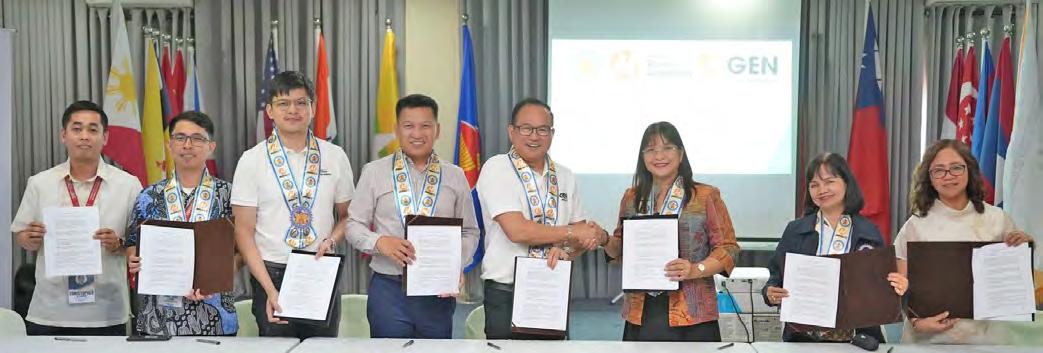
By Darwin G. Amojelar
Terminal has installed four new Kalmar hybrid automatic container carriers as part of an expansion program at its fully automated operations at the Port of Melbourne.
The terminal is a subsidiary of International Container Terminal Services Inc.
The new container carriers are aimed at increasing annual capacity to more than 1.6 million twentyfoot equivalent units, or TEUs, while supporting more efficient and
sustainable terminal operations.
“These new ACCs strengthen our landside capabilities while supporting our long-term sustainability goals,” said Bruno Porchietto, chief executive of the Melbourne terminal.
“This investment reflects our commitment to expanding terminal capacity, improving efficiency and adopting technologies that lessen the environmental impact of our operations.”
Porchietto added that the partnership with Kalmar has enabled the terminal to set a high standard for port operations in Australia.

Karri Keskinen, Kalmar
“The new ACCs will help to increase productivity and support the terminal to meet their customers’ needs in a reliable way,”
The automated carriers were designed to increase productivity by minimizing loading times. The terminal operator and Kalmar worked together on several custom upgrades targeting improved levels of efficiency.
…with lots of investment opportunities here, we can again expect to see their fingerprints all over the archipelago.
JAPANESE companies have operated in the Philippines for several decades and there are no indications that they are slackening.
They were here early to lead car manufacturing operations and build power plants.
They remain bullish on the Philippines and with lots of investment opportunities here, we can again expect to see their fingerprints all over the archipelago.
The recent state visit of President Ferdinand Marcos Jr. in Japan confirms the unwavering interest of Japanese investors in the Philippines.
The Philippines just secured P56.3 billion in investment expansion commitments from four major Japanese companies on the sidelines of President Marcos’ state visit. The projects are expected to generate about 10,300 direct and indirect jobs for Filipinos.
They are repeat customers, so to speak. Furukawa Electric Co. Ltd., Sumitomo Electric Co. Ltd., MinebeaMitsumi Inc. and Tsuneishi Group Corp. committed to further expand their investments for high-value manufacturing and industrial activity.
These expansion projects are a reaffirmation of their confidence on the Philippine economy.
MinebeaMitsumi Inc. is scaling up its semiconductor and advanced electronics operations in the Philippines. The expansion includes the production of battery-related components for data centers and optical image stabilization technologies used in electronic devices.
Furukawa Electric is spending P17 billion to expand its operations in Laguna Technopark. The company will produce advanced heat sink modules and thermal management products for data centers and high-performance computing systems, driven by rising demand linked to artificial intelligence and digital infrastructure.
Sumitomo Electric is investing P4.3 billion to establish a new manufacturing facility in Cabuyao, Laguna. It plans to produce flexible printed circuits and surface-mount technology products used in smartphones, automotive electronics, telecommunications equipment and other advanced devices.
The Tsuneishi Group, meanwhile, is expanding its shipbuilding operations in Balamban, Cebu. The project includes the construction of a dry dock, production buildings and related facilities to support next-generation and more environmentally sustainable shipbuilding.
Japan remains one of the top sources of foreign direct investments in the Philippines, with annual inflows exceeding $800 million in 2022 and 2023.
New Clark City, a 9,450-hectare master-planned metropolis in Capas and Bamban, Tarlac, is also drawing interest from the Japanese.
Designed to be the Philippines’ first smart, green and disasterresilient city, New Clark City is being positioned as an economic and innovation hub, featuring world-class sports facilities, government administration centers and a US-backed artificial intelligence and advanced manufacturing zone.
The Japanese would certainly want a part of New Clark City. The Bases Conversion and Development Authority (BCDA) signed strategic partnerships with several Japanese firms to advance infrastructure, energy and transport developments in New Clark City, a major boost to the Luzon Economic Corridor initiative.
BCDA president and chief executive Joshua Bingcang led the signing of the agreements with Sustech, Index Strategy Inc., Yachiyo Engineering Co. and Marubeni Corp. on May 29, 2026 in Tokyo.
The partnerships cover the development of smart energy systems, integrated transport infrastructure, and utility-ready ecosystems intended to attract high-value, technology-driven industries to New Clark City.
The initiatives align with the broader Luzon Economic Corridor, a trilateral framework involving the Philippines, the United States and Japan that seeks to improve connectivity and accelerate investments across Subic, Clark, Metro Manila and Batangas.
The partnership with Index Strategy and Yachiyo Engineering Co. will support a joint study on the proposed Clark Integrated Transport System, which is expected to enhance regional mobility, improve logistics efficiency, and position the city as a multimodal transport hub.
A separate agreement with Marubeni aims to explore potential collaboration in power, water and utility infrastructure to support large-scale developments in the emerging city.
The Japanese involvement in the development of New Clark City is expected to be a long-term affair. It will not end even if the final phase of the new metropolis is done.
E-mail: rayenano@yahoo.com or extrastory2000@gmail.com

By Othel V. Campos
THE Department of Agriculture reiterated the necessity of increasing the minimum access volume for pork imports under Executive Order 116, citing renewed risks from African swine fever and persistent inflationary pressures driven by global developments, including tensions in the Middle East.
Agriculture Secretary Francisco Tiu Laurel Jr. defended the policy amid questions raised during a congressional hearing by AGAP Party-list Rep. Nicanor Briones, who questioned the timing of the measure and suggested it may have been issued without the agriculture chief’s knowledge.
Tiu Laurel rejected the allegation, saying the proposal was originally submitted last year when pork prices spiked and domestic supply remained constrained due to losses related to African swine fever, or ASF.
“Executive Order 116 was crafted to help stabilize pork prices and ensure consumers have access to more affordable food. While the proposal was initiated last year, the conditions that justified it remain, and may even be more pronounced today,” Tiu Laurel said. He said inflationary pressures continue to be driven by elevated global oil prices. At the same time, the onset of the southwest monsoon raises the risk of renewed ASF outbreaks that could disrupt hog production and tighten supply.
By Alena Mae S. Flores
THE Department
of
Energy
has acknowledged that the Visayas region requires additional baseload power plants to ensure grid stability as yellow alerts continue to plague the area.
The Visayas grid was placed on a yellow alert again from 4 p.m. to 9 p.m. Wednesday due to forced outages and the derating of power plants amid high system demand. A yellow alert is issued when the operating margin is insufficient to meet the transmission grid’s contingency requirement. Available capacity was at 2,552 megawatts compared to a peak demand of 2,392 MW. The grid is struggling because 10 plants went
New investment plan to boost APECO’s strategy
THE Aurora Pacific Economic Zone and Freeport Authority said the signing of the 2026 Strategic Investment Priority Plan by President Ferdinand Marcos Jr. reinforces its long-term development strategy for Aurora province and the Eastern Seaboard.
The authority said the updated priority framework strengthens its vision of positioning the ecozone as the country’s national defense hub, fishing capital of the Pacific, and clean energy hub, in line with government goals on national security, food security and energy security.
The agency noted that many of its target industries fall under the government’s newly identified priority investment areas.
Under Tier I of the 2026 plan, these include agriculture, fishery and forestry development; processing and manufacturing of agricultural and fishery products; aircraft maintenance, repair and overhaul; telecommunications infrastructure and services; ports and terminals; transport services across air, land and water; industrial zones; logistics and fulfillment centers; training and learning facilities; housing; and power generation and energy storage projects.
The authority said Tier II further strengthens alignment, covering defense-related services, renewable energy and food security investments.
It added that these sectors are integral to its positioning as the Philippines works to strengthen its defense capabilities, secure food supply chains and accelerate the transition to cleaner energy through public-private partnerships.
Othel V. Campos
on forced outage this month, while nine have been offline since May and one since March. Additionally, three have been offline since last year, two since 2024, two since 2023 and one since 2021. Another nine plants are running on derated capacities, leaving a total of 985.5 MW unavailable to the grid.
Energy Secretary Sharon Garin said the Visayas needs more steady and dependable generation capacity to address recurring power supply concerns, despite being one of the country’s leading regions for renewable energy development.
“What Visayas needs is steady baseload,” Garin said, even as the department continues to pursue an aggressive renewable energy agenda under the Philippine Energy Plan.
The department aims to increase the share of renewable energy in the country’s power generation mix to 35 percent by 2030 and 50 percent by 2040.
The statement came days after a May 26 congressional hearing where lawmakers
examined the causes of recurring yellow and red alerts in the country’s major power grids. Data presented during the hearing showed that 96.7 percent of the 245 red alerts recorded from 2016 through 2025 were caused by generation-related issues. Of those red alerts, 237 stemmed from generation deficiencies, while only a small number involved transmission-related issues or a combination of both factors.
Data further showed that 69.5 percent of generating units in Luzon experienced unplanned outages, compared to 85 percent in the Visayas and 69.6 percent in Mindanao.
Garin noted that the Visayas is among the regions with substantial green energy capacity, which sits at around 45 percent. However, she emphasized that baseload generation remains necessary to support the region’s power requirements and maintain grid stability. She added that several generation projects intended to strengthen the Visayas power supply have encountered delays because of a lack of coordination.

CONTAINER CARRIERS. Victoria International Container Terminal (VICT) CEO Bruno Porchietto, fourth from left, and Kalmar CEO Sami Niiranen, fifth from left, stand with team members during the official handover of new automatic container carriers. VICT, the fully automated terminal operator owned by International Container Terminal Services Inc. at the Port of Melbourne in Australia, deployed four new Kalmar hybrid automatic container carriers following their operational integration.

“Historically, ASF infections tend to increase during the rainy season. If supply is affected again, pork prices could rise as they did before. This measure provides an added layer of protection for consumers and serves as a precautionary food security measure,” Tiu Laurel said.
He also clarified that the executive order is not yet in force, as its implementing rules and regulations are still being drafted by the department following instructions from the president.
“The order is not self-executing,” he said. “The implementing rules will ensure that the interests of consumers, hog raisers, importers and other stakeholders are properly balanced.”
Executive Order 116 increases the minimum access volume for pork imports as part of government efforts to cushion the market from supply shocks, stabilize prices, and help contain inflation in the event of ASF resurgences and sustained external cost pressures.































THURSDAY, JUNE 4, 2026 extrastory2000@gmail.com
RODERICK T. DELA CRUZ, Editor
MAE S. FLORES, Asst. Editor

By Alena Mae S. Flores
DAVAO Light and Power Company
Inc. asked the public to disregard misleading information about its operations, while confirming that the Supreme Court upheld its expanded franchise under Republic Act 12144. The ruling extends the utility’s franchise coverage to the provinces of Davao del Norte and Davao de Oro, it said. Following the high court’s ruling, local courts granted the company legal possession of key areas to manage and operate regional electric distribution services.
The Regional Trial Court of Tagum City, Branch 2 issued a writ of possession covering Tagum City and the municipalities of Asuncion, Kapalong, New Corella, San Isidro and Talaingod.
The Regional Trial Court of Panabo City, Branch 4 also issued a writ of possession covering the Island Garden City of Samal.
“With these legal bases, Davao Light is now responsible for the full operation of the electric distribution system within its franchise area, including maintenance, customer service, billing and collection,” the
EDC to invest P25b in geothermal expansion
ENERGY Development Corp plans to invest P25 billion to expand and deploy new technologies at its Southern Negros Geothermal Project in Valencia, Negros Oriental, the company said in a regulatory submission.
The renewable energy company applied for an amendment to its environmental compliance certificate from the Department of Environment and Natural Resources to accommodate the expansions and technology upgrades, which aim to generate clean geothermal power for the Visayas grid.
The modifications will expand the project operational footprint to 400 hectares from 151.5 hectares to accommodate additional well pads, while adjusting the overall project boundary to 4,028 hectares. The steamfield currently operates at 241.8 megawatts out of its allowable 282.5-megawatt capacity, supplying geothermal steam to the Palinpinon I, Palinpinon II and Nasulo power plants.
EDC will introduce emerging technologies to maximize efficiency and minimize the surface footprint. These include a 30-megawatt-hour battery energy storage system to support grid stability, a trickle injection system to relieve superheated zones and downbore heat exchanger pilot testing. The downbore heat exchanger harnesses subsurface heat through a closedloop system without large mass extraction, reducing the risks of scaling and reservoir decline. Alena Mae S. Flores
DOE transfers regional regulation to BARMM
THE Department of Energy and the Bangsamoro region’s environment ministry signed a transition agreement to transfer electric power regulation and development functions to the regional government, officials said Wednesday. The agreement marks a significant shift toward energy self-governance for the Bangsamoro Autonomous Region in Muslim Mindanao (BARMM). Under the pact, the Department of Energy will progressively transfer its powers, functions and responsibilities regarding the supervision, regulation and development of the electric
power industry within the region to the Ministry of Environment, Natural Resources and Energy. Department of Energy Secretary Sharon Garin and Ministry of Environment, Natural Resources and Energy Minister Akmad Brahim signed the transition agreement for power and electrification along with a memorandum of cooperation on energy efficiency and conservation.
The agreement tasks the MENRE with leading the preparation and implementation of the Bangsamoro Power Development Plan. The regional ministry will also oversee power sector initiatives, support rural and missionary electrification programs, coordinate transmission development efforts and represent the region in national energy bodies. Alena Mae S. Flores
Puregold, GCash team up to digitize sari-sari stores
PUREGOLD Price Club Inc. has signed a strategic partnership with GCash for Business to accelerate the digitalization of sarisari stores and expand access to financial solutions among micro merchants.
The collaboration aims to provide previously underserved nano, micro, small and medium enterprises with the tools necessary to accept digital payments, streamline cash flow management and scale operations.
It integrates GCash for Business solutions into Puregold retail operations to support in-store transactions, disbursements and broader operational processes, creating a connected ecosystem between suppliers and the mom-and-pop stores they serve.
Puregold president Vincent Co said the partnership equips Tindahan ni Aling Puring members with digital tools to strengthen day-to-day operations, support growth and better serve customers in a digital economy.
Mobile wallet operator G-Xchange Inc president and chief executive Ren-Ren Reyes said the initiative addresses a shared vision for grassroots communities.
“Our partnership with Puregold Price Club reflects a shared vision of empowering communities on the ground, by making digital payments and business solutions more inclusive, practical, and within reach,” Reyes said. Darwin G. Amojelar

company said in a statement.
The utility warned that any unauthorized individual or group conducting operations, billing, collection or disconnection activities acts illegally and faces potential legal action.
“We encourage customers and communities to remain vigilant and cautious when dealing with individuals claiming to represent an electric utility,” the company said.
Davao Light advised customers to verify proper identification and authorization, engage only with official company personnel and report suspicious activities immediately through its official channels.
By Othel V. Campos and Alena Mae S. Flores
SAUDI energy giant ACWA Power Co. will invest at least $200 million to build a large-scale solar and battery energy storage facility in Tarlac province, marking its first major land agreement in the country.
The company’s local subsidiary, ACWA Power Philippines, secured a 500-hectare site inside the New Clark City special economic zone after signing a contract of lease with the Bases Conversion and Development Authority (BCDA).
The integrated solar photovoltaic and battery energy storage system project represents an initial investment of at least $400,000 per megawatt. It will have a maximum capacity of 500 megawatts upon full build-out, subject to final design and regulatory approvals.
The facility will serve as the anchor power provider for New Clark City, supplying round-the-clock electricity to energy-intensive industries.
BCDA is actively positioning the economic zone as a hub for artificial intelligence, data centers, and advanced manufacturing.
The investment supports the government’s target to increase the share of renewable energy

LUXURY REAL ESTATE. Keen & Worth Property Developers Inc. cements its position within the Philippine luxury real estate industry following its official induction into the Chamber of Real Estate & Builders’ Associations Inc. (CREBA), the country’s largest umbrella organization representing the housing, construction, and real estate industries. Keen & Worth chief operating officer Kimberly Klaire Wong says real estate goes beyond building structures, as it is also about creating safer spaces that carry long-term value, strong community identity and enduring relevance. The company’s flagship development, Ongpin Tower in Binondo, Manila, reflects the company’s vision of creating legacy-driven areas within communities rich in history and intergenerational identity.
PH bank assets increased 12% to P30t in April on deposit growth
By Thony Rose Lesaca
THE Philippine banking system’s total assets climbed nearly 12 percent to P30.12 trillion in April 2026 from P26.89 trillion a year ago on the back of robust loan growth and increased depositor confidence.
Universal and commercial banks accounted for the bulk of these assets at P28.09 trillion, representing an 11.69 percent increase from P25.15 trillion in the same month last year, according to data from the Bangko Sentral ng Pilipinas (BSP).
Thrift banks expanded their assets by 23.75 percent to P1.39 trillion from P1.12 trillion in April 2025.
Digital banks also posted sharp gains as assets reached P187.26 billion, up 49.05 percent from P125.63 billion.
Rural and cooperative banks saw their assets decline by 8.33 percent to P458.01 billion as of end-March from
THE Philippine Chamber of Commerce and Industry (PCCI) asked the government to carefully assess a proposal to impose a P240 immigration fee on international travelers, warning that additional charges could weigh on businesses and consumers amid persistent economic challenges.
The country’s largest business organization said in a statement it supports efforts to modernize the Bureau of Immigration (BI) and strengthen border security but stressed that any new fee should be evaluated in light of its potential impact on tourism, trade, and economic recovery.
“We recognize the importance of modernizing our immigration sys-
P499.64 billion.
Rizal Commercial Banking Corp. chief economist Michael Ricafort said hedging activities ahead of a war-driven price surge in the Middle East boosted loan growth by more than 10 percent year-on-year, lifting overall bank assets.
Ricafort also pointed to a recent policy change that doubled the statebacked deposit safety net as a primary driver for expansion.
“[This could also be attributed to] the continued growth in bank deposits amid improved confidence due to higher PDIC insurance coverage to P1 million per deposit per bank [against] the previous P500,000,” Ricafort said.
Higher borrowing costs could slow down this momentum. Ricafort warned that further BSP interest rate hikes aimed at managing inflation could pose headwinds for both loan demand and asset quality.
tems to ensure safe and efficient travel. At the same time, we encourage government agencies to weigh the economic realities faced by businesses and consumers, including the energy crisis and inflationary pressures,” PCCI president Perry Ferrer said.
The chamber said the Philippines would be the only member of the Association of Southeast Asian Nations (ASEAN) to impose a dedicated immigration modernization fee on all international travelers if the government adopts the proposal.
Neighboring countries generally finance immigration modernization through government appropriations,
in the national power mix to 35 percent by 2030. President Ferdinand Marcos Jr. previously secured this project as a key investment commitment to support sustainable economic growth and national energy security.
ACWA Power chief executive
Samir Serhan said New Clark City offers the integrated, future-ready development sought by global energy investors, noting that the project will support industrial expansion while helping lower energy costs through reliable renewable power.
“Working alongside BCDA gives this initiative both strategic clarity and long-term momentum,” Serhan said.
ACWA Power Philippines country general-manager Salman Baray said the project’s scale allows the company to build a fully integrated energy platform and create long-term value for both investors and host communities.
By Othel V. Campos
STEELASIA Manufacturing Corp. is not keen on pursuing an initial public offering in the near term as it prioritizes an aggressive expansion program to reduce Philippine dependence on imported steel, the company’s chairman said.
SteelAsia Chairman Benjamin Yao said in an interview that the company’s current strategy focuses firmly on import substitution, with all ongoing projects designed to displace imports rather than expand export markets.
“We’re investing in import substitutes,” Yao said, adding that earlier overseas shipments, including to Canada, were limited in scale and not part of the company’s long-term direction.
Yao said SteelAsia no longer relies on foreign markets for growth, citing trade uncertainties that previously affected shipments.
The company has exported more than 100,000 tons in the past but has since shifted its focus to serving domestic demand.
All expansion projects remain on track with no delays reported across ongoing developments, Yao said. The Lemery Works facility in Batangas is now expected to begin initial production by October or November 2026, ahead of its original April 2026 timeline.
Yao said the expansion program will contribute significantly to import substitution over the next four years, reducing reliance on imported steel amid a persistent trade deficit in the sector.
A large portion of steel used in the country continues to be imported, particularly for lowergrade applications in provincial construction markets, Yao estimated.
visa-related charges, or partnership arrangements rather than direct levies on passengers, he said.
PCCI said the BI should first maximize its existing funding sources before imposing the proposed P240 modernization fee on travelers. These sources include government appropriations and revenues from visa processing, alien registration, and emigration clearance fees. The group said that immigration modernization should support tourism and trade recovery, protect MSMEs that rely on international travel and ensure transparency and accountability in the use of public funds. Othel V. Campos


By Rolando Estabillo
COMMUNITY journalism has always been essential to Philippine society. The gap that it fills in the dissemination of information can determine the fate of communities, which may remain unentangled or empowered. While national news organizations zero in on major political and economic developments, community journalism gets the news close to home. It records the daily happenings of small towns, provinces and neighborhoods generally ignored by the typical media at large.
In a country as geographically and culturally diverse as ours, community journalism is an important bridge between citizens, local governments, and indeed the whole nation. It empowers ordinary people, strengthens democracy, preserves a sense of local identity, and contributes significantly to nation-building.
Community journalism in the country took shape in the waning years of the Spanish colonial period, specifically with the emergence of regional papers such as El Ilocano in 1889. During the American colonial times, local newspapers rapidly spread to many provinces. They were used to talk about politics, education, agriculture, and governance.
After World War II, community journalism flourished, due in large part to provincial newspapers and radio stations that became sources of information for rural populations. Under Martial Law, there was censorship and many were intimidated. Community journalists who went the extra mile continued reporting abuses and social problems. When democracy was restored in 1986, local media recovered
and posted growth with print, radio, and later television.
Digital technology further accelerated the development of community journalism. Today, many community news organizations have been built around online venues, social media pages, podcasts, and livestreamed programs. Citizen journalism is taking up more share-ability, with people seeing or hearing local stories happening in real time.
This development of community journalism underlines the crucial role it plays in nation-building by supporting the democratic participation of citizens. If they are not informed and do not share a local government structure, then democracy fails and hardly functions. When community journalists report on, say, the town budgets, programs, elections and services, they support the citizenry in holding their officials accountable. When corruption, abuse of power, or inefficiency takes place at the community level, local journalists are often the first to expose it.
Community journalism becomes even more essential in times of needs




or emergencies. It serves as an information hub during bad weather situations, public health concerns, and other calamities. Local radio stations and community reporters often act as lifelines for affected residents. Their proximity to communities allows them to relay information in a timely fashion, which national media could miss during this critical period.
Community journalism also empowers people by providing a platform for underrepresented sectors to be heard. Farmers, fisherfolk, indigenous peoples, and workers are some of those with lesser voice in government dialogue. Community media allow these groups to share their pains, achievements, and goals. Local communities get seen and heard through storytelling. This empowerment promotes civic participation and unified action.
Working in a milieu of multiple languages, traditions, and cultures, community journalism helps keep them alive. Newspapers and radio programs in regional languages reinforce cultural pride and bonds among communities. They contribute to the preservation of local identity amid globalization by amplifying local festivals, history, and arts.
Community journalism has a similar role of combating misinformation and disinformation in the Digital Age just like with the other journalism forms. The public is vulnerable to fabrication, political propaganda, and manipulated data because fake news spreads faster than wildfire across social media platforms. Community journalists can help fight against these by reporting truthfully and contextually. Closer to their communities, they have more trust among people in the field.
With modern technology, community journalism now has the ability to expand
File photo shows PPI members who attended the First Regional Media Roundtable for Publishers, Editors and Ombudsmen hosted by the Zamboanga Press Club in 1990.

beyond its traditional reach with ease and efficiency. That makes for a bigger arena to project local issues and concerns to the national level, even global, and draw needed attention and solutions to them. Coverage becomes diverse as digital tools allow local journalists access to various sources for stories. Reporting gets enhanced with data-driven and in-depth content to give local communities greater insight into the issues currently impacting them.
Digital transformation does offer opportunities, but it also poses challenges, the most critical of which is financial stability. Before digitalization began to take over the newsroom, much of the local papers and radio stations had to deal with low ad receipts and high overhead expenses. This situation has hardly improved and is now exacerbated by the changes in how people, especially the younger set, consume news with the use of social media as opposed to
legacy media.
This seismic shift in the consumption of news has altered the revenue stream and made it more challenging for small community media to survive. Some of them have had to stop operations due to lack of funding, while others have stuck around with scant resources and few staff. Indeed, all this highlights the great disruption to the process and flow of information similar to the impact of the invention of the printing press, and perhaps more importantly the crucial decision that this has made between how we survive or wilt in the heat of the Digital Age. That said, the future of the country’s community journalism is still hopeful if it adapts to changing times, to the realization that the country is home to over 97 million internet users and growing, and that media is a critical way for the citizens to remain informed, connected and engaged in Philippine society.


Free rides, rice, uniforms, and cash aid keep residents afloat
PARAÑAQUE CITY – The global energy and fuel crisis has sent shockwaves through every Filipino household. From skyrocketing jeepney fares to the rising cost of rice and medicine, no one has been spared.
While other local governments scramble for solutions, Parañaque City—under the leadership of Mayor Edwin L. Olivarez—has rolled out one of the most comprehensive social protection packages in Metro Manila.
Instead of waiting for relief from the national government, Parañaque moved early. The strategy was simple but effective: protect the poor, the elderly, and the students first.
Libreng Sakay (Free rides) for all When fuel prices hit record highs, public commuters felt the pain immediately. Parañaque responded on April 13, 2026 with the Libreng Sakay (Free Ride) program along key city routes, ensuring that workers and students could still get to their destinations without bleeding their daily wages on fares. The program absorbed the cost of fuel, not the passenger, benefitting 132,2888 commuters and 339 drivers, who were also part of the program, as of May 22, 2026 Free rice for vulnerable families Hunger does not wait for policy debates. Through the Libreng Bigas program, the city distributed rice to qualified low-income households,



directly addressing the spike in food prices triggered by the fuel crisis. It was a simple intervention with an immediate impact: one less worry on the dining table.
Social pension for indigent seniors: P1,000 a month
The elderly, especially those without regular income, are among the hardest hit during economic shocks. Under Parañaque’s Social Pension for Indigent Senior Citizens, qualified beneficiaries receive P1,000 per month.
As a non-automatic dole-out, applicants must first pass a stringent set of criteria and be verified by the City Social Welfare and Development Department (CSWDD) to ensure that only the truly indigent benefit from the program.
As of the latest CSWD report, 10,282 indigent seniors have been identified as beneficiaries. Of this number, 93% have already received their payout—a strong indicator
that the system is working efficiently despite the scale of the crisis.
Free school uniforms and shoes: 103,000 pupils served Education cannot wait, and neither can a child’s need for proper attire.
Parañaque City provided two full sets of school uniforms (upper and lower) plus one pair of shoes to over 103,000 public elementary school pupils. For parents already struggling with fuel and food costs, this single intervention saved families thousands of pesos at the start of the school year.
All public elementary and high school students of Paranaque also received a monthly allowance of Php 500.
TEFAP: Scholarships for college students
The fuel crisis should not derail a student’s future. Through the Tertiary Educational and Financial Assistance Program (TEFAP), Parañaque offers college scholarships based on academic performance and need –
an investment in the city’s next generation of professionals. Scholars receive P5,000 per semester, while other qualified beneficiaries receive between P10,000 and P12,000 per semester, depending on their grades. PSAP: Medical and financial aid when it matters most Illness does not pause for a fuel crisis.
The Parañaque Special Amelioration Program (PSAP) provides medical and financial assistance to qualified beneficiaries. Depending on the gravity of the need, the city typically grants P10,000 per case—enough to cover urgent medicines, laboratory tests, or partial hospitalization.
For a family living on the edge, P10,000 can mean the difference between life and debt.
A city that delivers
What makes Parañaque’s response different is not just the number of programs, but the speed and targeting of delivery.
From free rides to rice, from school shoes to senior pensions, the city government has proven that even during a historic fuel crisis, good local governance is possible.
Mayor Olivarez has been clear that the crisis will eventually pass, but the safety net must remain. With more than 10,000 seniors already receiving monthly pensions, 103,000 children in new uniforms plus monthly allowance, and hundreds of college scholars funded per semester, Parañaque City is showing that the best defense against any crisis is a government that actually shows up.

By Atty. Ruevivar Markines Reyes
FOR more than six decades, the story of the Philippine Press Institute has been closely linked with the story of the Filipino nation.

As the country’s oldest professional media organization and the national association of newspapers, the PPI has acted as a beacon protecting press freedom while promoting journalistic ethics.
From the typewriter era of the mid20th century to the algorithmic complexities of the artificial intelligence (AI) age, the institute has constantly evolved, holding fast to its mission to defend our people’s civil liberties and elevate the journalistic craft.
Birth and Rebirth
The PPI was founded in 1964, a period often remembered as the vibrant
and independent post-World War II era of Philippine journalism.
Established to foster the development of journalism across the archipelago, the institute brought together national newspaper broadsheets, tabloids, and provincial publications throughout the country under a unified banner. It was built on the belief that a free press is not only a witness to history, but also an active partner in the country’s progress.
However, this golden era of the independent press faced a sudden disruption, and its flame nearly snuffed out.
During the Martial Law period, many
independent media institutions closed, many idealistic journalists became silent, some newsrooms were controlled, and the PPI was thus forced into a state of hibernation.
For nearly fifteen years, the premier press organization of the Philippines remained moribund under the shadow of state censorship and control.
Then came a ray of light – the historic 1986 EDSA People Power Revolution restored democracy throughout the country. With the freedom of the press unshackled, the reconstituted Board of Governors met on July 3, 1986, for the


By Alexander Birle
(Resident Representative, Hanns Seidel Foundation Philippines)
FREE and independent media are among the fundamental pillars of democratic societies. They inform citizens, facilitate public debate, promote transparency, and help hold those in power accountable. Where media can operate freely, democratic participation, the rule of law, and good governance are strengthened.
For this reason, Germany supports democratic governance, civic participation, and media freedom through its international development cooperation efforts. Through the Hanns Seidel Foundation (HSF), Germany partners with local stakeholders in the Philippines to strengthen media literacy, press freedom, and community journalism—recognizing that strong local media are essential for vibrant and resilient democracies.
Since 2018, the HSF has worked closely with the Philippine Press Institute (PPI) to strengthen community journalism across the Philippines. Together, we have supported local journalists and media organizations in enhancing professional standards, embracing digital transformation, and strengthening resilience against disinformation and information manipulation.
The importance of this mission becomes particularly evident when looking at the work of community journalists across the Philippines. As the PPI
concerns to public attention, amplify the voices of their communities, and ensure that developments beyond the country’s political and economic centers are not overlooked.
Community journalism is the form of journalism closest to the people. While national media often focus on major political and economic developments, community journalists cover the issues that matter most at the local level: government performance, public services, education, environmental concerns, elections, and the challenges facing individual communities. This is precisely why community journalism is so important for democratic governance. It is at the local level that citizens experience whether

celebrates its 62nd anniversary, it is also celebrating the many community journalists who serve cities, municipalities, and provinces across the country.













nity journalists promote transparency, encourage public dialogue, strengthen accountability, and help ensure that citizens remain connected to democratic processes at the local level. They are not only observers, but also trusted intermediaries between citizens, institutions, and the wider public. Despite its democratic importance, community journalism faces significant challenges. The importance of strong local media is not unique to the Philippines. In Germany, local newspapers and regional media have long played a crucial role in informing citizens and strengthening democratic participation. Yet in both countries, local journalism faces growing pressures. Economic challenges, changing media consumption habits, and competition from digital platforms have made it increasingly difficult for local news organizations to sustain their work.
institutions function effectively, whether public resources are used responsibly, and whether their concerns are heard by decision-makers. Commu-
At the same time, the information environment has undergone profound transformation. Social media have expanded access to information and created new opportunities for public participation. However, they have also accelerated the spread of misinformation and disinformation. Information can now reach millions of people within seconds, regardless of its accuracy. This makes professional community journalism more important—not less. Journalism’s defining characteristic is not simply the ability to publish information, but the responsibility to verify facts, provide context, and uphold ethical standards. Community journalists perform an essential public service by helping citizens distinguish reliable information from manipulation and falsehood. Emerging technologies are likely to accelerate these trends even further. ArNext page



























first time officially setting the stage for the revival of the institute and ensuring a revitalized free press.
Building Better Communities
While national dailies based in Metro Manila often command the biggest headlines, the PPI recognized early on that the heartbeat of the Philippines also flows in the provinces.
Under its mantra, “Building Better Communities,” the institute pivoted heavily toward empowering the local press as well. A cornerstone of this commitment is the annual Community Press Awards.
As the longest-running awards program for community newspapers in the country, it honors excellence in regional journalism, recognizing local dailies and weeklies for outstanding reporting in areas like business, photojournalism, migration, the environment, and editorial writing. By celebrating the grit of community journalists who often operate with fractions of the budget of national papers and under far greater personal safety risks, the PPI has elevated regional reporting from peripheral notes to crucial national discourse.
Beyond recognition, the PPI became the country’s premier training hub for working journalists. Through decades of regular seminars, workshops, and forums, the institute has trained thousands of practitioners in investigative reporting, disaster coverage, ethics, and civic engagement.
Navigating the Digital Wave and the AI Era
The survival of any institution depends on its willingness to adapt, and the 21st century brought a seismic shift to the media landscape that forced many national and community newspapers to close. The rise of social media, shrinking print revenues, and a rampant infodemic of misinformation threatened the viability of traditional journalism.
However, rather than resisting change, the PPI chose to lead its members through the digital migration. Recently, the institute pioneered a landmark digital transformation program called the PPI News Commons, alongside supporting the creation of PPI members news websites.
This initiative is specifically designed to recalibrate the operational frameworks of community newspapers, strengthening their digital posture and expanding the Community Press Awards to include dedicated categories for regional news websites.
This forward-thinking approach took center stage during the institute’s landmark 60th diamond anniversary. Addressing the theme, “The Future of Newsrooms: The Viability of Print in an AI Era” the PPI brought the country’s leading editors and publishers together to tackle

the double-edged sword of artificial intelligence in the newsroom. Today, the institute actively promotes global standards like the Journalism Trust Initiative (JTI), ensuring that even as newsrooms adopt automated efficiencies, human oversight, fact-checking and ethical compliance remain non-negotiable.
A Brighter Future Ahead
Today, the media landscape is almost unrecognizable from the one that existed when the founders of the PPI first gathered in 1964. Yet, whether printed on newsprint or read on a smartphone screen, the fundamental value of verified and ethical journalism remains necessary and unchanged.
As the Philippine Press Institute continues its journey into the late 2020s, it stands not as a relic of journalism’s past, but as a continuing vanguard for its future.
By bridging the gap between journalistic ethics and modern technology, the PPI ensures that the Filipino press remains what it has always been at its best, critical, courageous and deeply rooted in the service of the Filipino people.
Mabuhay ang mga mamamahayag na Filipino!
UHow
From D2
tificial intelligence, in particular, offers valuable opportunities for research, translation, data analysis, and content production. At the same time, deepfakes and AI-generated content create new risks for public trust and information integrity. As technology evolves, the core principles of journalism—accuracy, fairness, independence, and accountability—remain indispensable.
Responding to these challenges is one of the central objectives of the partnership between the Hanns Seidel Foundation and the Philippine Press Institute. Together, we are committed to contributing to the strengthening and future resilience of community journalism in the Philippines. Our partnership is based on a shared conviction: strong communities require strong local media, and sustainable democratic development depends on citizens having access to reliable, independent, and locally relevant information.
At the heart of our cooperation is the development of community journalism. Through training programs, dialogue initiatives, and capacity-building activities, the HSF supports the PPI in helping local media adapt to the digital age while maintaining high professional standards and editorial integrity
One important achievement of this partnership is the PPI News Commons, a shared digital platform that today connects more than 50 local media organizations across the Philippines. The platform enables participating newsrooms to exchange content, share experiences, and benefit from collective resources, particularly helping smaller media organizations enhance their digital presence and work toward long-term sustainability
Beyond strengthening the digital capacities of local media, the partnership has also focused on building trust between journalists and the communities they serve. To this end, it has supported activities that initiated the development of Media-Citizen Councils— community-based mechanisms envisioned to promote media selfregulation, encourage dialogue between journalists and citizens, and provide alternatives to costly libel disputes through mediation and conflict resolution.
Because challenges such as disinformation, digital manipulation, and the responsible use of artificial intelligence transcend national borders, the HSF and the PPI also facilitate international exchanges among media professionals. These exchanges enable journalists to learn from one another, share experiences, and develop common responses to emerging challenges facing community journalism worldwide.
Ultimately, all of these efforts aim to support a common purpose: helping community journalism remain strong, independent, and capable of serving the public interest.
The Hanns Seidel Foundation is grateful for the strong and trusted partnership it continues to share with the Philippine Press Institute over the years. Together, we look forward to continuing our joint efforts to strengthen independent, professional, and sustainable community journalism in the Philippines, and to help ensure that local voices can inform, engage, and empower communities across the country.
NDER Mayor Francisco “Isko” Moreno Domagoso, the City of Manila has reoriented its governance around a simple but powerful principle: before anything else, every Manileño deserves access to the basic necessities of life.
This commitment, enshrined in the administration’s Minimum Basic Needs (MBN) program, has become the cornerstone of how the city delivers services, allocates resources, and measures its own success.
The Minimum Basic Needs framework recognizes that good governance begins not with grand projects, but with the fundamentals: food on the table, a roof overhead, access to healthcare, quality education for children, and the dignity of a life free from poverty.
For a city as densely populated and historically underserved as Manila, this reorientation represents a profound shift in priorities.
At the heart of the MBN program is an aggressive push for universal healthcare access. Through the expansion of Ospital ng Maynila and its network of health centers, the city has worked to ensure that no Manileño is turned away from medical care due to inability to pay.
Under Mayor Domagoso, Ospital ng Maynila has undergone significant upgrades that have transformed it into a far more capable public hospital, among the most notable is the establishment of a cardiac catheterization laboratory, enabling the city’s poorest residents to undergo life-saving procedures such as angioplasty and angiograms that were once accessible only to those who could afford private hospital rates.
Alongside this, the Domagoso administration has pushed forward with the construction of a new hospital in Baseco, bringing modern medical facilities directly to one of Manila’s most underserved communities, where
is changing lives in the nation’s


Mayor Francisco ‘Isko’ Moreno Domagoso confers with physicians at the Ospital ng Maynila as the city continues to expand and upgrade its flagship public hospital to deliver world-class medical care to every Manileño, free of charge.
access to healthcare has long been a persistent challenge. Free medicines, consultations, and laboratory services have been made available across the city’s districts, bringing quality healthcare closer to communities that once had to travel far or spend money they did not have.
Food security is another pillar of the program. The city has implemented initiatives to ensure that vulnerable families—the elderly, persons with disabilities, indigent households—have reliable access to nutritious meals.
These efforts, delivered through barangay-level distribution and coordinated city programs, reflect the administration’s belief that hunger is
not inevitable, and that the government has a direct obligation to address it.
Housing and shelter assistance have likewise been central to the MBN agenda. Mayor Domagoso’s administration has moved to address the city’s challenge of informal settlements by pursuing humane and sustainable approaches—prioritizing the welfare and dignity of residents.
Under the vertical housing program, the city has developed projects including Tondominium 1 and 2, Binondominium 1, San Lazaro Residences, San Sebastian Residences, Pedro Gil Residences, providing decent, stable living conditions for
families who previously had none. The goal is not simply to relocate people, but to provide them with decent, stable living conditions they can call their own. Education has been a consistent priority from the beginning. The city has poured resources into the improvement and modernization of public school facilities and the strengthening of the local government-operated universities such as the Pamantasan ng Lungsod ng Maynila (PLM) and the Universidad de Manila (UdM) as institutions that give deserving young Manileños access to quality higher education at minimal cost.
For Mayor Domagoso—him -
self a product of Manila’s public schools—investing in education is deeply personal.
Livelihood and economic empowerment form another dimension of the Minimum Basic Needs approach. Recognizing that sustainable relief goes beyond ayuda, the city has developed programs that equip Manileños with skills, tools, and opportunities to earn a living with dignity. From market vendors to displaced workers, the administration has sought to build pathways out of poverty rather than simply manage it.
The MBN program also addresses peace, order, and public safety as a basic need in itself. A family cannot thrive in a community gripped by crime and fear.
Under Mayor Domagoso, the city has invested in its law enforcement capacity, expanded its CCTV network, and worked to make Manila’s streets safer for residents, commuters, and children walking to school. What distinguishes the Minimum Basic Needs or MBN program from ordinary social services is its integrated, whole-of-government character.
Rather than treating health, education, housing, and livelihood as separate silos, the Domagoso administration has pursued them as interconnected components of a single, coherent vision—one in which every city department plays a role in improving the quality of life of ordinary Manileños.
As Manila continues its rise, the Minimum Basic Needs program stands as a declaration of values: that a city’s worth is not measured by its skyline, but by how well it cares for its most vulnerable.
The “Bilis-Kilos” Mayor has staked his administration on that belief, and the people of Manila are living proof that when the government chooses to serve, real and lasting change is possible.


By Francis Allan L. Angelo
ON JANUARY 22, 2026,
a roomful of people who do not usually sit together — a press club president, police officers, soldiers, lawyers, academics, and business representatives — gathered in Cagayan de Oro City for an orientation workshop that lasted most of a working day. They were there to talk about journalism. Specifically, about what happens when journalism goes wrong, and who gets to say so.
The Philippine Press Institute was convening what would become one of two new Media-Citizen Councils launched that week in Northern Mindanao. Then PPI Executive Director Ariel Sebellino explained the concept simply: “The beauty of the council is that it comes from the stakeholders. It’s not media-centric.” Police Major Joann Navarro, representing the Police Regional Office–Northern Mindanao, said the force was “honored to be part of the council.” That a police spokesperson would use the word honored in this context — in a city where relations between the press and law enforcement have their own complicated history — says something about how much the framing matters.
Two days later, on January 24, the same exercise took place in Bukidnon. Two councils in one week, in adjacent provinces — PPI moving with a deliberateness that signals a project entering
a different phase of its ambition.
Two months after that, on March 25, the template arrived in northern Luzon. At the Ilagan City Hotel and Convention Center in Isabela, PPI convened another multi-sectoral gathering to establish the Cagayan Valley Media-Citizen Council — journalists from print, radio, online, and television alongside representatives from the Commission on Human Rights, legal institutions, academe, business, religious groups, youth organizations, LGUs, NGOs, military, and police. The most recently formed council in the network, it covers a region with its own distinct press culture and its own record of journalist vulnerability. ***
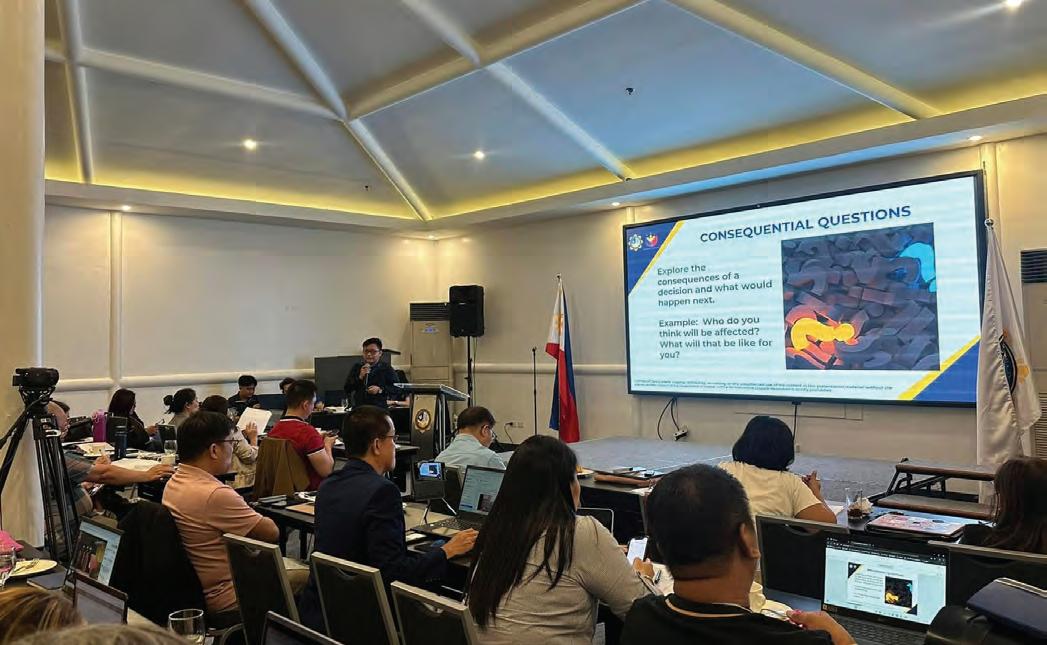

What PPI is building, council by council and city by city, is a co-regulatory infrastructure for Philippine media — one that operates outside the courts, outside the state, and outside the adver-
sarial logic that has made the existing mechanisms for press accountability
either toothless or dangerous.
The landscape these councils are entering is not forgiving. Criminal libel has been on the books for decades; cyber-libel, added by the Cybercrime Prevention Act of 2012, extended exposure to online speech with heavier penalties and a longer prescriptive period that Philippine courts have allowed to stand. Red-tagging of journalists — labeling reporters as communist sympathizers or terrorist enablers — has become a documented hazard in several regions.
The Ampatuan Massacre of November 2009, the single deadliest attack on journalists in recorded history, killed 32 media workers alongside dozens of others in Maguindanao. Sixteen years later, impunity for crimes against journalists in the Philippines remains the norm rather than the exception.

MONEY has long been at the heart of Filipino storytelling. From family dramas to OFW narratives and rags-to-riches arcs, Philippine cinema and television have consistently mirrored how Filipinos earn, spend, sacrifice, and define success. In the second episode of Moneygurado docuseries, Metrobank turns to one of the country’s most acclaimed filmmakers to look at how Filipino culture and media shape the way people think about debt, sacrifice, and success.
Titled “Utang sa Pelikula: Self-Worth and Borrowing in the Filipino Context ,” the episode features Direk Joey Reyes, who unpacks how decades of Filipino storytelling have influenced emotional attitudes toward borrowing and financial struggle.
Known for his films such as Pahiram ng Isang Umaga Batang PX , and Kasal, Kasali, Kasalo , Direk Joey reflects on how local films often portray debt as suffering, sacrifice, or shame, particularly through stories centered on breadwinners, struggling families, and overseas Filipino workers.
“Films are not just new stories. They are reflective of specific moments in the political, cultural, and spiritual history of the country,” Reyes shared.
The episode discusses how these portrayals, while rooted in real Filipino experiences, may also unintentionally reinforce unhealthy financial mindsets, such as equating self-worth with wealth, glorifying self-sacrifice at the expense of personal stability, or viewing debt purely as a burden instead of something that can be managed responsibly.
One of the key themes raised in the episode is how many Filipinos were exposed to narratives where utang is associated only with hardship, embarrassment, or survival. Reyes notes that local films rarely portray debt as a financial tool that, when understood and managed properly, can help individuals build businesses, improve stability, or achieve long-term goals.
“The problem is the lack of education in seeing loans as tools. We are often afraid of them instead of understanding how they can help build financial capability. Can we possibly change the whole concept of utang as a trap into utang as a tool? Yes, we can. But it requires education,” Reyes emphasized.
While acknowledging the real dangers of predatory lending, Reyes points out that responsible borrowing, when understood and approached with intention, can serve as a legitimate instrument for growth, particularly for entrepreneurs and individuals building their financial capability.
He also calls on institutions to close the education gap. “I wish the banking system could create more materials that help people understand the value, flexibility, and proper use of loans,” he says—a challenge that Metrobank’s Moneygurado initiative directly takes up through its Earnest platform and accompanying digital learning resources.
The episode also underscores how cultural narratives quietly govern everyday money behavior— from aspiration and spending habits to shame, discipline, and long-term planning. Reyes says the shift

Direk Joey Reyes on how Filipino storytelling shapes the way we view utang, sacrifice, and success.
he believes is necessary: “Hindi yung halaga ng inutang ang importante. Mas mahalaga kung ano yung dahilan kung bakit ka umutang at higit sa lahat, kung paano mo binayaran ang iyong utang. Doon mo nabibigyan ng kahalagahan yung proseso ng pag-uutang.”
That reframing, Reyes argues, is the cultural shift Filipino storytelling has yet to fully embrace.
Metrobank said the episode forms part of its broader Moneygurado advocacy, which aims to help Filipinos become more intentional, informed, and emotionally aware in managing their finances. Rather than focusing purely on technical financial advice, the docuseries explores the cultural beliefs, social pressures, and personal experiences that often shape money decisions.
“Financial behavior is deeply personal and cultural. Through Moneygurado, we want to create conversations that help Filipinos better understand not just how they handle money, but why they make certain financial decisions in the first place,” said Digs Dimagiba, Metrobank Chief Marketing Officer.
The first episode of the series, “ Kapit Lang: The Filipino Way of Surviving ,” explored resilience and rebuilding through the story of OnlyPans Taqueria founder Audrey Cruz following the pandemic and a devastating fire incident.
Future Moneygurado episodes will continue to tackle Filipino behaviors and mindsets surrounding money through conversations with cultural personalities, educators, and experts.
Watch Episode 2 of Moneygurado featuring Direk Joey Reyes here: https://earnest.metrobank.com.ph/moneygurado
To support the advocacy, Metrobank’s Earnest platform provides free learning materials and financial education resources.



By Joenald Medina Rayos (Chairman, PPI News Commons)
WHEN Chairman Rolando Estabillo assumed leadership of the Philippine Press Institute (PPI), he set a clear direction for the organization: move swiftly, act with passion, and help member-publications become sustainable and resilient amid the rapidly changing media landscape.
Guided by this vision, PPI, in partnership with various stakeholders and its training team, launched its initial digital transformation program in Baguio City. The training equipped pioneering memberpublications with the knowledge and skills needed to establish their own news websites—an important first step toward embracing the digital age.
At least ten member-publications courageously took on the challenge. With the support of the Hanns Seidel Foundation (HSF), the first batch successfully launched their respective news websites, laying the foundation for a new era in community journalism. Then came the COVID-19 pandemic, which intensified the need for newspapers to accelerate their digitalization efforts. The soaring costs of printing and post-press operations placed tremendous pressure on the industry. Both daily and weekly newspapers were forced to reduce their page counts as subscriptions declined and print advertising revenues continued to shrink. Publishing houses printed fewer copies, and some newspapers eventually ceased operations altogether.
Yet many community newspapers chose not to surrender to these challenges. Faced with unprecedented difficulties, they embraced innovation and recalibrated their operations. More importantly, they strengthened their role as catalysts for change and providers of credible informa-
tion in their respective communities.
The objective was never merely survival or establishing an online presence. PPI recognized the need to develop new revenue streams and help member-publications identify sustainable sources of income. This vision led to the creation of PPI News Commons.
PPINewsCommons.net is a news-sharing platform that brings together a growing network of credible news websites operated by PPI member-publications. What began as a small group of digital news sites has evolved into a pioneering initiative that is transforming community newspapers into a dynamic digital news network—one capable of competing with larger media organizations while establishing a new model for the Philippine media industry.
Distinct from a conventional media network, PPI News Commons serves as a collaborative platform where regional voices are amplified, verified news is shared, and independent journalism thrives. It fosters cooperation among community publications while preserving their editorial independence, allowing local stories to reach wider audiences and gain greater national relevance.
The platform’s growth has also translated into tangible benefits for its members. During the PPI General Assembly held on June 26, 2025, at least 28 member-publications received their share of revenue from the

Citizen Council model is an attempt to fill that gap from the ground up.
Meanwhile, the media landscape has fractured in ways that formal regulation was never designed to handle. Alongside legacy broadcast and print outlets — themselves concentrated in fewer and fewer ownership groups — thousands of Facebook-based news pages and vlog channels now operate at the barangay and municipal level, publishing incident reports, opinion, and community content to audiences that often exceed those of established local outlets. These creators have no editorial structures, no professional standards training, and no membership in any press organization. They are not subject to broadcast regulators. And they reach people extensively.
The combination — structural intimidation at one end, editorial vacuum at the other — has left Philippine media in a credibility crisis that no single institution has been able to address. Court cases take years. Press organizations represent members, not the public. State regulators carry their own political liabilities. The Media-
PPI began this push in August 2022 with the simultaneous virtual launch of three councils — in Batangas, Iloilo, and Davao — funded through a partnership that now includes the European Union in the Philippines, the Ministry of Foreign Affairs of Denmark through Danida, and International Media Support (IMS), under the banner of the “Media Impact Philippines” project. Earlier support came from the Hanns Seidel Foundation, the Kingdom of the Netherlands, and the Asian Center for Journalism Fellowship.
The institutional backbone is PPI’s partnership with the Office for Alternative Dispute Resolution (OADR), through which council leaders and members are trained in mediation and ADR — the practical skill that makes a council more than a discussion group.
The network has expanded steadily since. The Central Luzon council has completed SEC registration and BIR accreditation. Bicol established its first council on November 7, 2025, in Legazpi City, Albay, drawing journalists from Radyo Veritas, Bombo Radyo,
information from communities across the Philippines and around the world.

the Philippine Daily Inquirer Luzon Bureau, Rappler, and Manila Times alongside multi-sectoral representatives, with BicoldotPH editor-in-chief Aireen Perol-Jaymalin named founding chairperson. Then came the January 2026 sprint — Cagayan de Oro on the 22nd, Bukidnon on the 24th — followed by the Cagayan Valley council in Ilagan, Isabela in March 2026.
The Mindanao councils established earlier are the furthest along institutionally. Davao holds both SEC registration and a City Council resolution granting LGU accreditation. Surigao del Norte is SEC-registered and accredited with the
City Anti-Drug Abuse Council. Agusan del Sur has completed SEC registration and maintains active partnerships with local chambers and LGUs. Cotabato City’s council — the first within the Bangsamoro Autonomous Region in Muslim Mindanao — held its Deepening Workshop on November 21, 2025, working through structure, complaints mechanisms, and sustainability pathways in a context where media relations with government carry particular sensitivity. Its existence in BARMM is, by itself, an institutional statement. These registrations matter for a simple reason: they convert a council
from a well-intentioned gathering into a body with legal standing to operate, receive funds, and enter formal agreements. Without them, a council is just a group of people in a room. Several of the Mindanao councils have cleared that threshold. Several newer ones are still working toward it.
The Media-Citizen Council project has moved well past the pilot stage. Imperfect, underfunded in places, bureaucratically still catching up in others. Functional, growing, and — most importantly — wanted. In the current Philippine media environment, that combination is rarer than it should be.
network for the first time—an important milestone in demonstrating the viability of collaborative digital journalism.
Today, PPI News Commons consists of 48 affiliate news websites that continuously share content and deliver timely
The network’s growing influence is reflected in its impressive collective reach: 59 million annual website visits, 545 million annual collective impressions, and 29 million combined Facebook followers across its affiliate publications (as of January 1, 2025 to April 30, 2026). These figures underscore the
strength of the network and demonstrate its capacity to deliver meaningful engagement and measurable impact for communities, institutions, development partners, and advertisers alike.
As the media industry continues to evolve, PPI News Commons remains steadfast in its commitment to empowering community newspapers through innovation, collaboration, and sustain-
ability. By harnessing the power of digital technology and collective storytelling, the network is helping shape the future of Philippine community journalism—ensuring that local voices continue to inform, inspire, and connect communities across the nation and beyond.
From a bold vision to a thriving nationwide network, the story of PPI News Commons is a testament to what can be
achieved when community publications work together toward a common purpose.
As it celebrates this milestone, PPI News Commons looks ahead with renewed determination to strengthen independent journalism, expand opportunities for its affiliates, and serve as a beacon of innovation for the Philippine media industry. PPI News Commons: Sharing Network. Connecting Communities.


By Gary Mariano
AFTER
hovering in the bottom quartile in the Press Freedom Index for almost 20 years, the Philippines has made modest, but noticeable, progress in the past two years. From No. 134 out of 180 countries in 2024, we were 116th last year and are 114th this year. Our worst year was 2010, following the tragic Maguindanao massacre, at 156th, while our best, at No. 90, was in 2002, when Reporters Without Borders began publishing the Index.
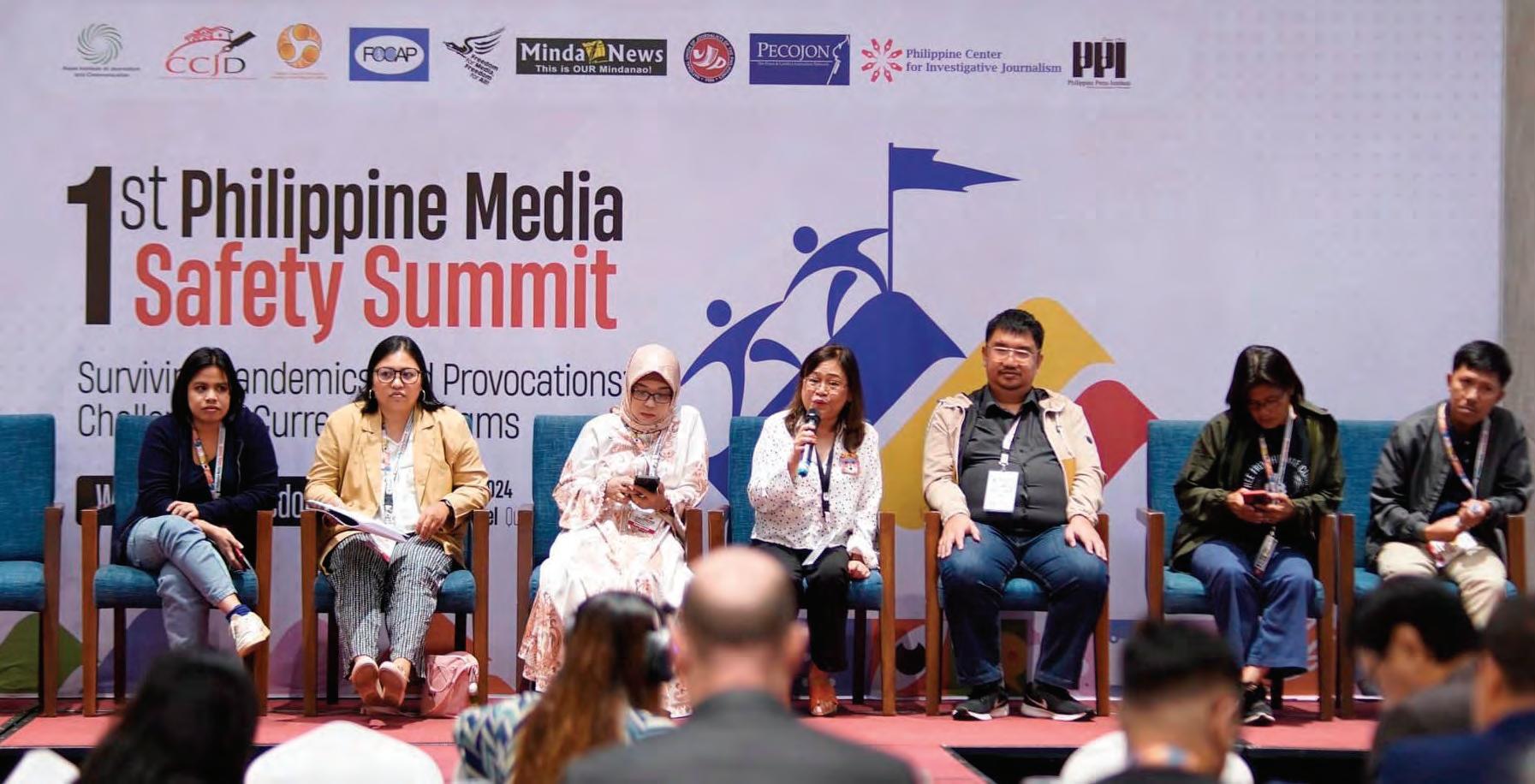
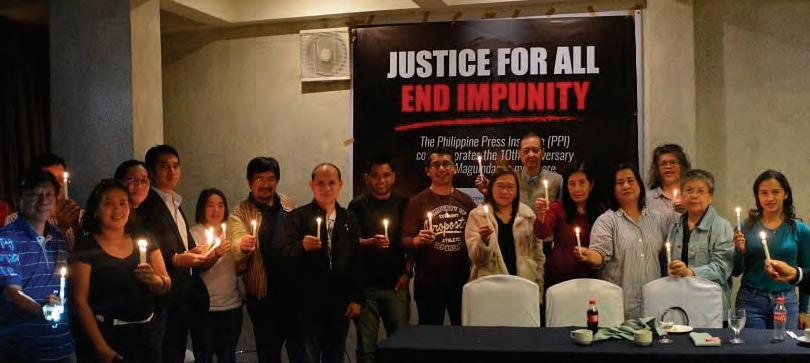

Mindanao Terminal Cluster Wins at Shell Asset of the Year Awards 2025 Recognized for excellence in safety, sustainability, and operational performance
highest recognitions for operational excellence across its global network.
The award recognizes the cluster’s outstanding performance in safety, environmental stewardship, asset management, and cost efficiency. It reflects the team’s commitment to delivering safe, reliable, and high-quality operations while continuously driving improvement and innovation.
A key factor in the recognition was the cluster's strong safety record, achieving zero major incidents during the evaluation period. The team also demonstrated a disciplined and proactive approach to asset management, maintaing high levels of reliability and operational integrity across its facilities. Consistent compliance with environmental standards further underscored its commitment to responsible and sustainable operations.
"This recognition reflects the dedication and discipline of our Mindanao team," said Vice President for Supply and Distribution Kit Bermudez. "Beyond celebrating this achievement, it provides an opportunity for us to capture and share the lessons behind their success. By learning from what has worked well in Mindanao, we can continue strengthening capabilities and fostering a culture of excellence across our terminal network in the Philippines"
The achievement highlights the team's strong culture of ownership, accountability, and care for one another – values that continue to drive exceptional performance across the cluster. The Mindanao Terminal Cluster also acknowledged the importance of leadership support and collaboration with stakeholders, which have been critical in helping the team achieve this milestone.
The award was presented by Andrew Wiper, Vice President for Asset Management (Integrated Gas & Upstream), SEAM, Shell Group, and accepted by Clarice Calag on behalf of Walter Raagas, Mindanao Facilities Manager, and the entire Mindanao Cluster team.
This recognition reinforces the Mindanao Terminal Cluster's commitment to advancing safe, efficient, and sustainable operations while continuing to set benchmarks for excellence across the industry.
We can attribute the recent improvement to a decrease in the number of legal and extralegal attacks on the press. But even our current standing shows that our situation is only better than less than a third of the countries accounted for. So much for what we once liked to call Asia’s freest press. That distinction is now held by Taiwan (No. 28), Timor Leste (30th), Korea (47th) and Japan (62nd).
We might be better off than most of our neighbors in ASEAN, but we are behind Papua New Guinea (73rd), Thailand (92nd) and Malaysia (95th).
Our 2026 scores were the average of political, economic, legal, social and security indicators. We did best in the social category and worst in the economic department.
Why should we bother with figures collected and analyzed by the French (you know, RSF as in Reporters sans frontières)? Because the scores somehow correlate with what you, publishers and journalists, are actually experiencing on the ground. They are an independent validation of what the press goes through.
With a poor press-freedom environment, there is less incentive to engage in this business and more obstacles to you doing your part for your conscience, for society and the human race.
I am certain that our press-freedom scores will leapfrog for the better with the passage of legislation to decriminalize libel and to mandate Freedom of Information. There are three bills each in the Senate (SB Nos. 250, 476 and 810) and in the House of Representatives (HB No. 441, 1188 and 6187) seeking to defang libel and cyberlibel of the stain of a crime and the threat of imprisonment. Last month, the Senate also approved the FOI bill.
Those of you with a personal and intimate experience as a defendant in a libel case you know much better of the side effects of being sued for “a public and malicious imputation of a crime.”
But let us go through some of the harmful side-effects of a libel suit, even if a vast majority of cases are withdrawn after preliminary investigation or are dismissed after trial. A final conviction for libel in this country is rare, but the scars can be real, painful and enduring.
First is time. Criminal cases are never over in a day. A reporter from Central Luzon endured 17 “grueling” years before his case was finally dismissed. Second is finances. Good legal representation costs money. Public attorneys are free but they have their downside. Our friend from Region III said his newspaper did not provide him with a lawyer. “So I shelled out thousands of pesos for my defense… Sarili kong gastos,” he said.
Third is damage to one’s career and image. The accused is presumed innocent until proved otherwise. But we
can’t control what people will think about a journalist accused of defamation especially in a profession where credibility is the ultimate currency. Fourth is mental anguish. Some veterans may laugh off that libel cases as “a bad cold,” that they come with the practice. Tell that to a young reporter who has never spent a day in jail, and is facing a prison time of as long as four years for what appears to be a well-researched, -vetted and -written story.
Fifth is deprivation of liberty. Libel and cyberlibel are bailable. But what if you are unable to post bail? In case of conviction, libel is punishable by prisión correccional and cyberlibel by the more severe prisión mayor, notwithstanding a 2008 Supreme Court memorandum to all courts and judges of “an emergent rule of preference for the imposition of fine only rather than imprisonment in libel cases under the circumstances therein specified.”
Finally, there is the specter of selfcensorship. The fear of not offending anybody may result in avoiding tough issues or being “safe,” whether for a person reporting the facts or expressing an opinion. Nothing is more frightening than a frightened journalist.
The Universal Declaration of Human Rights of 1949 and the International Covenant on Civil and Political Rights of 1966, which the Philippines has signed and ratified, put a premium on the freedom of opinion and expression. In 2008, the ICCPR’s human rights committee urged States parties to “consider the decriminalization of defamation and, in any case, the application of the criminal law should only be countenanced in the most serious of cases and imprisonment is never an appropriate penalty.”
Ironically, however, defamation remains a crime in all but two — Estonia and Ireland — among the RSF’s top 10 freest presses.
On another front, the House of Representatives has roughly two years to pass a counterpart bill to Senate Bill No. 1432, “The People’s Freedom of Information Act,” approved unanimously last month by their colleagues in the Senate. There are 30 FOI bills pending in the House, the latest of which — HB 8691 and 8744 — were filed just last month. While we have had an executivelevel FOI since 2016, we saw last year why our country badly and urgently needs an across-the-board right-to-information. A genuine FOI policy will be very important in ensuring government accountability, greater trust in public institutions. From there we can imagine a cornucopia of social and economic goods flowing out, among them transparency and accountability. If and when it becomes law, and we become the 120th country with an FOI mandate, a nearly 40-year-old promise in the Constitution will finally be honored



By Celeste Anna Formoso
PALAWAN News marked its 11th anniversary recently by stressing the need for local news organizations to keep pace with rapid changes in the media industry while remaining committed to independent community journalism.
Speaking during the publication’s anniversary celebration on May 9, Palawan News editor-in-chief and publisher Redempto Anda said the growth of digital platforms, new technologies, and shifts in how people consume news have transformed the media landscape since the publication was established in 2015.
“The media landscape has changed tremendously since Palawan News started and they came fast,” Anda said. This push is pronounced as well in other community newsrooms. To refuse to pivot is to delay the inevitable.
Anda noted that audiences now access information through a variety of platforms, including websites, social media, mobile devices, and videobased content, requiring community newsrooms to rethink how they deliver information to readers.
According to Anda, local news organizations face increasing pressure to evolve as audience habits continue to change.
For Palawan News, he said, responding to these changes is necessary to ensure that the publication remains relevant, sustainable, and accessible to its readers.
“Modern journalism demands that news organizations embrace new tools and storytelling formats, but also to maintain professional standards and public trust,” Anda said.
He added that technological advances are changing how journalism is produced and distributed, but the profession’s core mission remains the same. Anda said local news organizations continue to play an important role in providing accurate information, docu-
menting issues affecting communities, and holding institutions accountable through responsible reporting.
He said the challenge for community newsrooms today is not only producing news but also ensuring that reliable information reaches audiences across multiple platforms.
The publisher cited emerging technologies, including artificial intelligence and digital publishing tools, as developments that are reshaping the industry and requiring news organizations to continuously adapt.
Despite these changes, Anda said credibility, accuracy, and public trust remain central to journalism.
This year’s anniversary carried the theme “11 Years of Palawan News: Stories that Matter, Standards that Lead.”
The celebration also served as an opportunity to reflect on the publication’s journey over the past decade, including one of the most difficult periods in its history during the COVID-19 pandemic.
Anda recalled how the economic effects of the pandemic severely affected media organizations across the country as businesses cut advertising spending amid lockdowns and uncertainty.
“At some point during those months, management sat down and honestly confronted a question we never imagined asking: do we close?” he said.
“It was not a dramatic conversation. It was a quiet, difficult one.”
Advertising revenues declined sharply during the pandemic, placing financial pressure on many independent news organizations.
Anda said Palawan News ultimate -
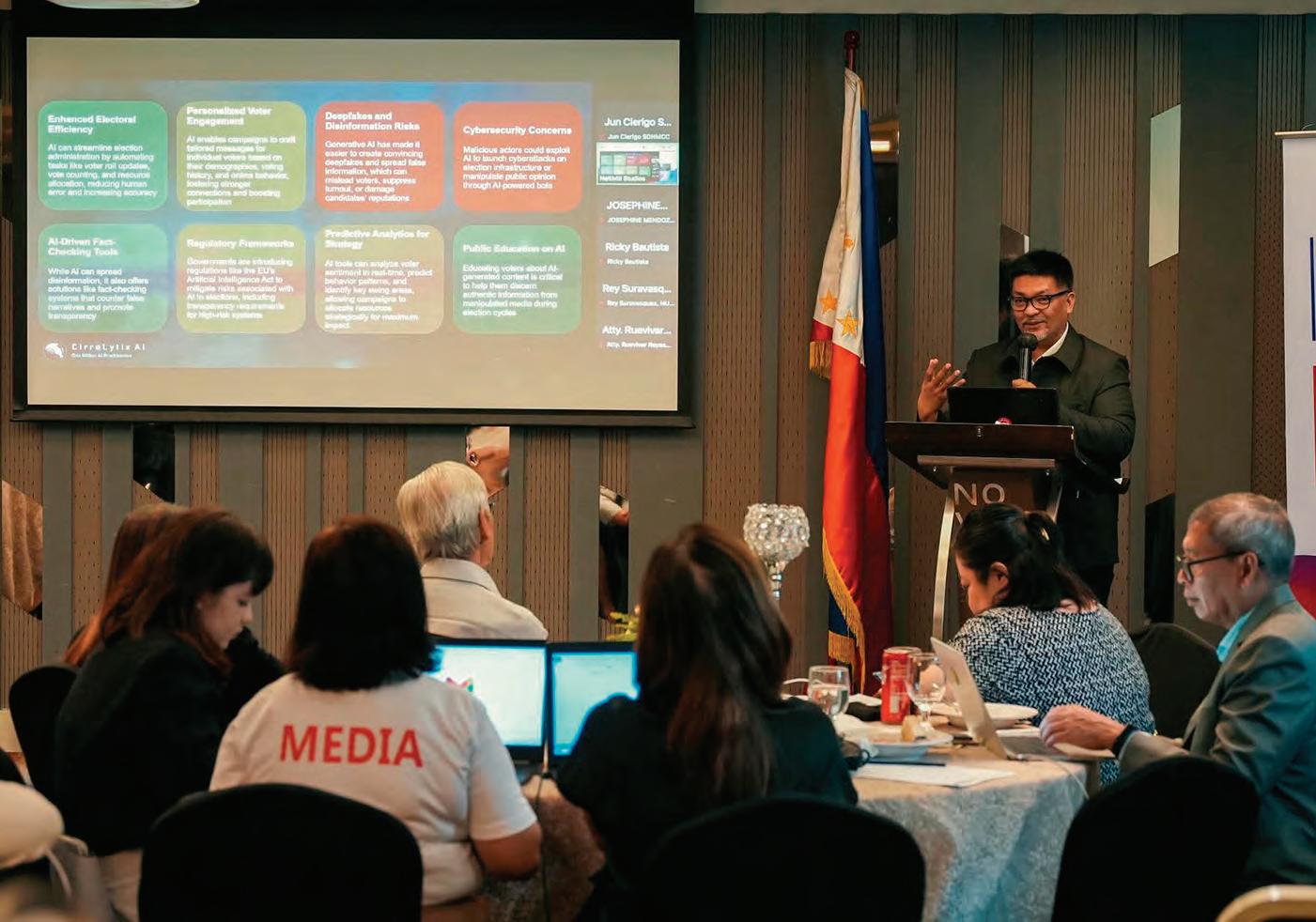


ly chose to continue operating despite the uncertainty.
“Closing would have been the easier path. We did not take it. And because we didn’t, we are here tonight,” he said.
He described the experience as a reminder of the importance of resilience and adaptability in sustaining independent journalism.
The publisher also reflected on how the role of community journalism has changed over the years.
When Palawan News was founded, print newspapers remained a primary source of information for many readers. Over the following decade, however, the growth of smartphones and social media platforms significantly changed how audiences access and share news.
Today, many readers encounter news first through social media feeds, online videos, websites, and mobile applications.
These developments have led many news organizations to expand beyond traditional print operations and invest in digital platforms and multimedia content.
Palawan News has undergone a similar transition.
The publication has expanded into a multimedia news organization with print, online, and social media platforms serving audiences in Palawan, the MIMAROPA region, the nation, and even abroad.
Anda said technological change has created both opportunities and challenges for the industry.
While digital tools allow news organizations to reach wider audiences and publish information more quickly, they have also increased competition for public attention and created new concerns about misinformation and the spread of unverified content.
As a result, he said, the need for trusted journalism remains as important as ever. According to Anda, local journalism
continues to provide value because it focuses on issues that directly affect communities, including local governance, public services, health, education, the environment, and public safety.
He said these are topics that may not always receive sustained attention from larger national media organizations but remain important to local residents.
“We are still building the newsroom this community deserves,” Anda said.
“And we are doing it in a moment when the stakes for journalism, and for Palawan, have never been higher.”
Palawan News is entering its second decade amid continued changes in the media industry.
The publisher said it intends to continue responding to developments in technology and audience behavior while maintaining its focus on community journalism and public service.
For Anda, the future of local journalism will depend not only on a newsroom’s ability to use new technologies, but also on its ability to preserve the trust of the communities it serves.
Achieving that goal, he said, requires more than technology and innovation. He credited the staff and management for helping sustain Palawan News through periods of uncertainty and change, including the challenges brought by the pandemic.
He also pointed to the role of organizations such as the Philippine Press Institute, which has long provided training and support to community newspapers across the country.
Anda said these efforts have helped local news organizations improve their reporting and keep up with changes in the media industry.
He also called on readers, advertisers, partners, and other stakeholders to continue supporting independent community journalism to help ensure its long-term sustainability.

ON ITS 62nd year, the Philippine Press Institute – the national association of newspapers and online publications – celebrates its milestone of trailblazing initiatives that benefit not just its members but the very communities they serve.
As digital innovations present both challenges and opportunities in terms of how news is produced and consumed, PPI tackles this transformative shift with twin goals –maintaining credibility amid a wave of disinformation and misinformation, and achieving sustainability through expanded revenue streams.
From June 4 to 6 at the Lucky Chinatown Hotel in Manila, PPI will hold its General Membership Meeting, Community Press Awards, National Press Forum, and PPI Media-Citizen Councils Roundtable Discussion.
The Community Press Awards, supported by PPI’s long-time institutional partner Nickel Asia Corporation (NAC), will be graced by Manila Mayor Francisco ‘Isko’ Moreno Domagoso. It will be followed by a fellowship dinner hosted by Megaworld Corporation, led by Mr. Harold Geronimo, First Vice President of Corporate Communications and Media Affairs. It will recognize journalism excellence of community media for the following categories: Best News Website, Best in Photojournalism, Best in Environmental Reporting, Best in Business and Economic Reporting, Best Editorial Page, and Best Edited Community Newspaper.
Finalists for the Weekly Category include Baguio Chronicle, Herald Express, MetroPost, Mindanao Cross, Mindanao Observer, and Pahayagang Balikas; while the Daily Category finalists include Daily Guardian, Panay News, Sunstar Daily Cebu, Sunstar Daily Davao, and Sunstar Daily Pampanga.
Finalists for the Best News Website category are Baguio Chronicle, Herald Express and Palawan News for Luzon; Sunstar Cebu, The Freeman and The Visayan
Daily Star for Visayas; and Mindanews and Sunstar Davao for Mindanao.
The National Press Forum will focus on the new challenges and opportunities in the ever-evolving media landscape. Mr. Jose Bayani D. Baylon, NAC Senior Vice President - Sustainability, Risk Management and Corporate Affairs; Chief Sustainability Officer; and Chief Risk Officer will deliver the keynote address.
Media advisor Jaemark Tordecilla, who has worked with dozens of newsrooms around the world on AI systems and newsroom innovation, will lead the lecture and hands-on workshop on AI use for community newsrooms.
The PPI Media-Citizen Councils Roundtable Discussion will gather heads from the 14 MCCs across the country to discuss pressing issues within their respective communities.
The PPI’s 62nd anniversary is also being supported by the Philippine Charity Sweepstakes Office, SM Prime, SM Investments, Ayala Corporation, Metro Pacific Investment Corporation, Shell Pilipinas Corporation, Japan Tobacco International, Meralco, Veterans Bank, Mondelez International Inc., and Neitiviti Studios.
A special supplement marking this milestone event to be published in Manila Standard is also supported City of Parañaque, City of Manila, Presidential Communications Office, PCSO, Prime Infra, Toyota Motor Philippines, Cebu Pacific, Pharmaceutical and Healthcare Association of the Philippines, Shell Pilipinas Corporation, Apex Mining, Camella Homes, PagIBIG, Maynilad, Metrobank, Techwatch Philippines Inc. and BrandIt.

PPI tackles this transformative shift with twin goals –maintaining credibility amid a wave of disinformation and misinformation, and achieving sustainability through expanded revenue streams “


TECHWATCH Philippines Inc. has announced that veteran technology journalist and digital transformation advocate Art Samaniego has assumed the role of Chief Executive Officer (CEO).
we believe his leadership will help advance responsible, forward-looking, and communitydriven reporting that empowers Filipinos in the digital age,” he added.
Samaniego is one of the country’s most respected technology journalists, with more than three decades of experience covering information technology, telecommunications, cybersecurity, innovation, and digital transformation. He is widely recognized for helping bring technology issues closer to ordinary Filipinos through credible, accessible, and independent journalism.
Prior to assuming the CEO post, Samaniego served as editor of the Technology Section of Manila Bulletin, where he helped build one of the country’s most recognized technology news platforms. He currently heads the Manila Bulletin IT Department and serves as Editor-in-Tech of TechWatch PH, leading the platform’s editorial direction and coverage of technology, cybersecurity, digital transformation, innovation, and emerging trends. Throughout his career, he has been a strong advocate for digital literacy, cybersecurity awareness, and responsible technology adoption.
Samaniego said he remains committed to strengthening independent technology journalism and helping more Filipinos navigate an increasingly digital world.
“Technology now touches nearly every aspect of our lives, from education and business to cybersecurity and government services.

Through TechWatch PH, we want to help make technology more understandable, accessible, and relevant to every Filipino,” Samaniego said.
“We will continue promoting credible, responsible, and forwardlooking journalism that supports digital awareness, innovation, and informed public discourse,” he added.
THURSDAY, JUNE 4, 2026 advertise@manilastandard.net

He is also a co-founder of Scam Watch Pilipinas, a citizen-led advocacy movement focused on combating online scams, cybercrime, and digital fraud through public education, behavioral change campaigns, and cross-sector collaboration.
TechWatch Philippines Inc. Chairman and ePublisher Jocel de Guzman said Samaniego’s assumption of the CEO role comes at a crucial time as technology continues to reshape industries, governance, and everyday life.
“Art has long been a respected and trusted voice in Philippine technology journalism. His experience, credibility, and commitment to making technology understandable to Filipinos perfectly align with the mission of TechWatch Philippines,” de Guzman said.
“As we continue to expand our reach and strengthen our role in technology journalism,
TechWatch Philippines Inc. is part of the Truth360 Group, which also includes Truth360 Inc., a strategic communications and reputation management firm, and Scam Watch Pilipinas, one of the country’s leading citizen-powered anti-scam advocacy movements. Together, the organizations promote responsible communication, digital literacy, cybersecurity awareness, technology education, and public empowerment in the digital age.
Founded as an independent technology media platform, TechWatch PH focuses on technology, cybersecurity, digital defense, innovation, emerging technologies, and the rapidly evolving digital landscape shaping the Philippines.
The platform aims to bridge the gap between technology experts and the public by delivering relevant news, insights, and analysis that help Filipinos better understand the opportunities and challenges of the digital era.
Under Samaniego’s leadership, TechWatch Philippines Inc. said it will continue its mission of democratizing technology knowledge while supporting the country’s ongoing digital transformation through credible and impactful journalism.













OVER the past decade, the digital landscape has evolved at an unprecedented pace, shifting from social media acting as the primary brand battleground to a broader era where AI-driven content creation and automation are now an integral part of the mix.
Yet, amid all this transformation, one fundamental truth has remained unchanged: brands still need a compelling, human story to truly connect and resonate. It is this enduring need that continues to anchor meaningful marketing in an increasingly automated world.
In this shifting environment, BrandIt Consultancy Inc. positions itself at the intersection of evolution and authenticity, helping brands navigate change without losing their voice.
Building Trust in an Industry That Always Changes
For nearly a decade, BrandIt Consultancy has helped brands navigate change through an integrated approach. Combining brand strategy, PR, digital, content, and design, the agency ensures every brand effort works toward a single, cohesive story.
At the heart of this approach is The BrandIt Way, the agency’s guiding philosophy built on thought leadership and a solutions-based mindset. It begins with identifying the right insights, challenges, and opportunities before translating them into strategies that drive meaningful business outcomes.
Across BrandIt Consultancy, this means building insight-led brand and digital strategies; within BrandIt Studios, it means creating impactful, brand-led creative solutions; and through BrandIt PR, it means crafting narratives, partnerships, and experiences that prioritize relevance, influence, and measurable results.
Together, these disciplines work as one integrated system, ensuring every strategy, story, and solution is purposeful, connected, and aligned with a brand’s long-term growth.
Embracing the Rise of AI in Modern Marketing
Rather than seeing AI as a disruption, BrandIt Consultancy views it as a tool for improving how teams think and work. The agency uses AI and digital technologies to support ideation, streamline workflows, and analyze data more efficiently, giving teams more time to focus on strategy and creativity.
Across its integrated system, AI helps improve speed, scalability, and performance. However, technology remains a support tool—not the driving force behind the work. By keeping human insight and brand purpose at the center, BrandIt ensures every story remains meaningful, intentional, and relevant.
A Founder’s View on the Future of Marketing and PR

“At BrandIt, we’ve always believed that brands are built around consumers first,” Ronquillo expressed. “The way people discover, consume, and engage with content continues to evolve, and AI is reshaping that shift. While the tools and platforms may change, the need to understand what motivates the target market and how brands can genuinely connect with them remains constant.”
He added, “AI can make us faster and more efficient, but it can’t replace human judgment, empathy, or intuition. Those are still the things that turn a message into something meaningful.”

Dong Ronquillo
Leading BrandIt Consultancy is Dong Ronquillo, a branding visionary, marketing expert, and digital PR pioneer with over two decades of experience across corporate, media, and entrepreneurial leadership. His career includes leadership roles at Unilever across Manila, Bangkok, and Tokyo. He later served as Vice President for Globe Tattoo Broadband, helping propel the business to the top spot in the local market, before establishing BrandIt Consultancy.
That perspective continues to shape how BrandIt approaches its work today. While the agency embraces new technologies and evolving platforms, it remains grounded in a simple belief: the most effective marketing isn’t just about reaching audiences. It’s about understanding them. For BrandIt, innovation works best when it’s paired with human insight, creative thinking, and genuine connection.
The Future Belongs to Brands That Stay Human BrandIt approaches every client partnership as a shared commitment to success. While AI and algorithms can improve performance, they do not understand ambition, identity, or cultural timing—the elements that ultimately determine whether a brand truly resonates.
The future of marketing will increasingly belong to organizations that can strike a balance between technological capability and authentic storytelling. As tools evolve and content creation becomes more automated, brands that remain rooted in human-centered thinking will continue to stand out in meaningful ways.
BrandIt Consultancy remains committed to growing businesses through this transformation by helping them embrace innovation without compromising identity. Looking ahead, the agency continues to build partnerships defined by trust, creativity, and forward-thinking growth in an everchanging digital landscape.




















By Julie Ann Lope
THE Culture Center of the Taipei Economic and Cultural Office (TECO) in the Philippines hosted a cultural education workshop on May 30, 2026 to introduce Taiwanese Dragon Boat Festival traditions to local language educators.
Supported by Taiwan’s Overseas Community Affairs Council (OCAC), the “Dragon Boat Festival: Tradition Through Hands-On Experience” workshop drew nearly 30 language teachers from schools across the Philippines.
The session focused on the history of the festival while highlighting cultural values that resonate with Filipino communities.
Hope Christian High School teacher Mei-Chuan Huang led the workshop, using videos and discussions to share the festival’s history, legends and customs.
Following the lecture, participants attended a hands-on session to learn how to wrap zongzi, the traditional sticky rice dumplings that serve as a primary symbol of the festival. Attendees compared zongzi to local Filipino rice delicacies like suman and biko, noting the structural similarities between the dishes.
Culture Center director Eric Pochih Chuang emphasized the value of linking cultural festivals directly to language instruction. He noted strong parallels between Taiwanese festival customs and Filipino celebrations that center on remembrance, gratitude and community.
By Michael Wong Ho
Air China Manila Branch and UOS Travel jointly organized an eight-day Silk Road tour from May 16 to 23, bringing 20 Philippine tourism professionals to northwest China to boost travel and media cooperation between the two nations.
The delegation departed from Manila and visited historical sites and natural scenery in Lanzhou in Gansu Province and Xining in Qinghai Province along the ancient Silk Road.
“The personal visit allowed participants to experience the region’s rich tourism
and

By Michael Wong Ho
A Filipino-Chinese foundation and Chinese Embassy officials distributed 2,200 sacks of rice to more than 2,000 families displaced by a massive fire that destroyed an estimated 1,266 structures in Binondo, Manila.
The Filipino and Tsino Magkaibigan Foundation mobilized the relief operations at the request of Manila Third District councilor Jeffrey Lau
following the May 23 blaze at Gate 46, Parola Compound, San Nicolas.
Foundation members, Chinese Embassy officials and leaders of the Federation of Filipino-Chinese Chambers of Commerce and Industry Inc. (FFCCCII) distributed the 5-kilogram rice sacks on May 30, 2026 at the Delpan Complex and Evacuation Center.
FFCCCII president Victor Lim, Chinese Ambassador Jing Quan,
Chinese Consul General Wang Wei, Chinese Consul Shi Weijian, Chinese Consul Sun Qian and Chinese Secretary Liu Lucheng led the distribution.
Ambassador Jing Quan recalled the long history of friendly exchanges between the Philippines and China. He called for mutual respect and cooperation during difficult times, urging both peoples to help one another and work together to overcome hardship.


president Jerry See said. He said the trip will benefit further tourism and media cooperation between the Philippines and China.
manager Tom Wang and sales supervisor Ron Axl Lacandazo outlined the carrier’s operations in the Philippines, highlighting existing services between Manila and Beijing, Chengdu and Chongqing.
As of December 2025, Air China operated a fleet of 964 aircraft and ran 131 international and regional routes covering 71 countries and regions, Wang and Lacandazo said. The airline serves more than 1,100 destinations across more than 190 countries and territories. It also offers services such as accommodation and airport transfers in Beijing. Air China will continue to develop the Philippine market by expanding cooperation with local travel agencies and media partners, optimizing route offerings and improving service quality, Wang and Lacandazo said.
By Julie Ann Lope
THE Binondo Salesmen Club Inc. (BSCI) marked its 70th anniversary and inducted its 69th to 70th officers on May 24 at the Century Seafood Restaurant in Manila.
The association elected Willy Zapata as its new president. Assuming the role during the milestone year, Zapata vowed that his leadership would strengthen modern training, forge strong institutional partnerships, boost business matching and lead the club into its next phase of success.
“I assume this role with humility,” Zapata said.
Federation of Filipino Chinese Chambers of Commerce and Industry Inc. (FFCCCII) vice president William Gosiaco served as the induction officer and witnessed the handover of the official seal.
Gosiaco described sales as a demanding yet admirable profession, praising salespeople for their ability to quickly adjust their mindset and build resilience in the face of repeated rejection.
Outgoing BSCI president Ramon Uy presided over the assembly and delivered a farewell address, noting that the club has survived 7 decades because members stayed united and dedicated.
Uy urged members to meet current challenges with integrity and innovation amid volatile global conditions and economic pressures, expressing confidence that the association will thrive under the leadership of Zapata.


By Julie Ann Lope
THE Philippine Consulate General in Guangzhou and Filipino
International Cultural Trade Product Export Platform also signed an agreement with cultural organizations including FilEstilo to support cultural exchange and cooperation in the creative industries. The Philippine booth promoted destinations such as Coron and Bicol to Chinese and international stakeholders. Philippine Consulate General Consul General Iric Cruz Arribas emphasized the country’s accessibility to Chinese visitors, noting the 14-day visa-free policy and the short, roughly 2-hour flight from Guangzhou as
and Philippine Asia Landmark Tours and Travel Inc. signed a strategic cooperation agreement to promote tourism exchanges and travel cooperation. The China National Base for
THURSDAY, JUNE 4, 2026
lifeandshow.manilastandard@gmail.com
NICKIE WANG, Editor
ANGELICA VILLANUEVA, Writer
JASPER VALDEZ, Writer
Kuh Ledesma leads the lineup of veteran and younger performers revisiting George Canseco’s music for a one-night tribute concert

By Angelica Villanueva


gayon at Kailanman,” “Gaano Kadalas ang Minsan,” “Kailangan Kita,” and “Ako ay Pilipino” are songs that have long lived in the background of Filipino life, the kind of music that drifts through Sunday afternoons, family gatherings, radio programs, and karaoke sessions, passed from one generation to another almost by instinct.
More than two decades after the death of songwriter George Canseco, many of his most enduring compositions are set to return to the stage in Ngayon at Kailanman: The Music of George Canseco, a onenight tribute concert happening June 13 at the Newport Performing Arts Theater. The concert will bring together longtime Canseco interpreters alongside younger performers
discovering his catalog in a new way.
Among those joining the lineup are OPM icons Kuh Ledesma, Basil Valdez, Jona, Rita Daniela, and Mark Bautista
Asked why Canseco’s music continues to resonate across generations, Kuh pointed to the emotional honesty of Original Pilipino Music and the shared sensibilities of Filipino listeners.

“I think the reason it still resonates up to now is because
of Original Pilipino Music. If we are sincere in making a song, especially since we are Filipinos, our sentiments are also Filipino. We are romantics. We like to fall in love. So George’s songs really hit us deeply,” Kuh told Manila Standard Entertainment She added that Canseco’s songs capture familiar emotional experiences, from romantic longing to everyday humor embedded in love songs.
joins the

“Just like ‘Ngayon at Kailanman,’ that is how we feel when we fall in love. [This kind of song has] deeper meanings. So that’s one of these unique songs,” she added.
For Jona, the continued relevance of Canseco’s music lies in how it can be reshaped for younger listeners without losing its core identity.
The singer explained that earlier arrangements leaned heavily on orchestral instrumentation, while newer versions incorporate contemporary production techniques.
“Back then, orchestral music was very popular. People really used string sections and classic grand piano sounds. Now, we use pads and synthesizers, but in a tasteful way. The beat is also different,” she continued.
Beyond production, she noted that
vocal interpretation also plays a role in bridging generations.
“Through musical arrangements and the style of the singer as well. Young people today like to add new flavors, like riffs and runs. I think those are some of the factors in how we can transcend classic music to younger audiences,” Jona explained. She also pointed to social media trends, noting that younger listeners have started rediscovering classic songs through TikTok and online content.
“Young people also use classic music more now. As long as the lyrics still fit what they are doing, it connects with them,” she said.
Meanwhile, Mark suggested that documentaries about OPM legends could help younger Filipinos understand how composers like Canseco helped shape the local music industry.
ATTORNEYS for US actress Blake
Lively were back in front of a New York judge on Monday to demand legal fees and damages from It Ends with Us costar Justin Baldoni after a settlement was reached last month in their years-long legal battle.
The 38-year-old actress’s legal team argued that the defamation lawsuit brought against her by Baldoni and his production company, Wayfarer Studios, was a retaliatory move prohibited by California law.
Lawyers for Baldoni rejected the claim.
AFP was not immediately able to obtain details regarding the sum being

CALIFORNIA , USA — On May 17, The Outstanding Pilipinos, or TOP Awards, was held at the DoubleTree by Hilton in the City of Whittier in California. Some of the brightest Filipino-American personalities in public service and business were on hand, led by Consul General Adelio Angelito Cruz and Cerritos Mayor Lynda Johnson
The former is a beloved diplomat whose second posting at the Philippine Consulate General in Los Angeles began in late December 2024. He held the same position from July 2016 to January 2021.
Championing some of the best in the FilAm community who, through hard work and perseverance, are living the American Dream, he said, stressing good service: “People need to know that service matters. And they need to feel that our heritage is not something to leave behind but something to carry proudly wherever life takes them.” Mayor Johnson, a resident of Cerritos since 1971, became the city’s first Filipina American mayor after she was sworn into office last April. She previously worked in Los Angeles County government for almost 40 years. I was in the venue to witness a beloved couple, Alan and Amabel De Leon , receive their Outstanding Achievement recognition as Healthcare Heroes. I nominated them because I am convinced that they truly deserve to be cited for their accomplishments in the field of home health services. Their

sought by Lively. Lively filed her first complaint against Baldoni in December 2024 alleging the actor—who also directed the film—had spoken inappropriately about his sex life and sought to alter the film to include sex scenes that were not in the script.
The actress, who came to fame on the television series Gossip Girl , said Baldoni orchestrated a PR and social media campaign to ruin Lively’s reputation. Baldoni and his studio Wayfarer had countersued Lively and her husband Ryan Reynolds with claims of extortion and defamation—but a judge dismissed those

The success of their venture, which led to the opening of more home health sites and other health care-related companies, will be highlighted at a big event on Oct. 17 at Bridges Auditorium in Claremont, California, with balladeer David Pomeranz as a special guest performer.
In accepting their trophy, Alan noted: “I’d like to thank God for giving us this opportunity to develop Vanura Homehealth Services. Also, the people who gave us the opportunity to be who we are now. Without them, we would not have this ability to provide services to our community.”
Being the last awardee given the floor to speak, he rallied the pool of achievers gathered that evening: “Let’s make the Philippines
claims last year.
Wayfarer previously insisted that neither the studio, its executives, nor its PR team did anything to retaliate against Lively.
The federal judge handling the case, Lewis Liman , also dismissed some of Lively’s claims but upheld her allegations of retaliation.
The full terms of the out-of-court settlement reached between the two parties have not been publicly disclosed.
Based on a best-selling novel by the US writer Colleen Hoover, It Ends with Us made more than $350 million at the box office in 2024, making it one of the biggest hits of the year. AFP
proud for the things that we do and continue to do. Mabuhay ang Pilipino!”
I first met Amabel by chance on the same day I met Paco Arespacochaga of Introvoys fame. That was in September 2023. She was on her way out after coming from Paco’s Place podcast interview. I was coming in to visit the man who sang the radio hit “Line to Heaven” for her parents. From that day on, I have been aware of this couple, both healthcare professionals who now own more than 10 companies and employ hundreds. Blessed with three well-mannered sons, they are also celebrating their 25th wedding anniversary this year.
During the well-attended and VIP-heavy TOP Awards, I got to share a quick moment with Mutch Carino, founder of Maxx Promos, which produces TOP as well as Woman of Worth and Spotlight Awards.
On the reputation of TOP Awards being a legitimate recognition event that gathers some of the brightest achievers of Filipino roots, he said: “It’s partly about your relationship with the awardees. Your kind of awardees help build that reputation.”
As I expected, I saw a couple of my mates in FAPCCA (Filipino American Press Club of California), including co-founder Andy Edralin. I also met awardee Dan Nino of Philippine Global Media Group. Dan and I discussed ways to professionalize the Filipino American media industry further. I bumped into Ellen Rodriguez-Swing as well. She is an accountant by profession and highly active in organizing the Pinoy food festival UbeFest, and the Filipino American Chamber of Commerce of Cerritos.
Another woman of note that night was Elaine Alberto, founder of Gravitas Medspa.


IT was early Saturday morning, and even before sunrise, the Quirino Grandstand was already filled with energy as thousands of runners gathered at the starting line of the summer event Sparkle Run 2026.

Fans held up their phones for selfies while celebrities jogged beside ordinary participants in a rare scene where television stars and supporters shared the same course, pace, and humid morning air. Some stopped to cheer for their favorite stars, while others stayed focused on the race. The event drew massive crowds throughout the day as participants tackled the 3K, 5K, 6.6K, 10K, and 16K categories. The race quickly spilled onto social media, with #SparkleRun2026 reaching the No. 1 trending spot as
clips of celebrity runners, finish-line celebrations, and crowd moments flooded timelines. Among the biggest names spotted on the course were Alden Richards, Barbie Forteza, David Licauco, Gabbi Garcia, Ai Ai Delas Alas, Pokwang, Max Collins, and Dingdong Dantes. Former Pinoy Big Brother: Celebrity Collab Edition housemates Mika Salamanca, Will Ashley, Dustin Yu, AZ Martinez, Vince Maristela, Josh Ford, and Charlie Fleming also joined hundreds of Kapuso artists who laced


up for the event.
One of the race’s most talked-about highlights came during the recognition of the top celebrity finishers in each category. Clifford topped the 3K division, while Royce Cabrera ruled the 5K category. Ashley Rivera emerged as the top finisher in the 6.6K race, David Licauco led the celebrity pack in the 10K run, and Martin Javier finished strongest in the 16K category. Away from the race route, the event maintained a carnival-like atmosphere at the race village. Garrett Bolden and Accento Band, Paul Salas, Dollipop, Vianna Ricafranca, and Cloud 7 delivered live performances as runners moved between sponsor booths, games, and raffle stations.
Loot bags became another crowd favorite, while raffle prizes included Xiaomi gadgets, a Dyson Wash G1, a Smartboard Lite 55-inch display, hotel stays, and a 13-inch MacBook Air.

Telecom and Disney have teamed up to bring a “The Mandalorian” themed experience to Filipino students, with block screenings and campus activities aimed at promoting connection, empowerment, and community-
Students from Cabanatuan City, Quezon City, Cagayan de Oro, and Davao were invited by their schools and student organizations to free screenings of The Mandalorian and Grogu , giving them a chance to engage with the Star Wars universe while participating in onsite activities with fellow student leaders.
The initiative is part of a broader collaboration between Globe and Disney, which have long partnered in the Philippines.
TURKEY on Tuesday expressed concern over a weekend Kanye West concert in Istanbul attended by nearly 120,000 people, saying it included elements that offended its spiritual sensitivities.
In a post on X, President Recep Tayyip Erdogan’s chief adviser, Oktay Saral, said the performance featured “rhetoric and symbols that run counter to our faith and civilizational values,” citing chants of “I am a God,” a reference to West’s 2013 song. Saral also said the event went beyond “a mere music event,” pointing to the involvement of French designer Michele Lamy and alleging links to “occultism and dark symbols.” West has faced international backlash in recent years over antisemitic remarks and praise of Nazi leader Adolf Hitler, which he has attributed to bipolar disorder. He has had shows canceled or blocked in Britain, France, Poland, and Italy over the past year. He is scheduled to perform in the Netherlands in June and in Tirana and Prague in July. AFP
The program also featured raffles for exclusive merchandise and promoted student-focused perks, including access to Globe Rewards and offers such as beep™ card load, snacks, drinks, free Timezone credits, and Disney+ plans.
Disney+ is available through Globe in several packages, including a basic 30-day plan for P265 or 12 months for P2,185,
Hosts Martin Javier, Hannah
kept the
engaged throughout the day, with Sparkle first vice president Joy
also attending the
Sparkle Run 2026 was spearheaded by Sparkle GMA
with RunRio Inc. and the City of Manila’s Department of Tourism, Culture and Arts. The race was powered by category title sponsors BlockTec for the 16K, IAM Worldwide for the 10K, Shopee for the 6.6K, Breeze for the 5K, and Luxe Skin for the 3K category. For one day, Manila’s waterfront turned into a giant running track where celebrities traded studio lights for race bibs, and fans found themselves sprinting beside the faces they usually only watch on screen.



THURSDAY, JUNE 4, 2026
lifeandshow.manilastandard@gmail.com
NICKIE WANG, Editor
ANGELICA VILLANUEVA, Writer
JASPER VALDEZ, Writer
FILIPINO fathers are increasingly taking on more active roles in family life while still juggling long work hours and the pressure of providing for their households, a shift that has drawn attention to their health and well-being.
Traditionally seen as steady providers, many fathers today are more present in daily caregiving and family routines. Behind this involvement are demanding schedules, long commutes or extended work hours, and limited time for self-care.
Recent discussions on modern Filipino fatherhood note that while many dads have become more emotionally and recreationally engaged with their children, employment demands continue to shape how much time and energy they can devote at home, according to a long-term study on Filipino fatherhood.
Over time, this balance can affect physical health, including energy levels, vitality, and liver wellness, which is often addressed only once symptoms appear.
This Father’s Day, LAC Philippines encourages Filipinos to look beyond one-day celebrations and recognize that caring for dads can also mean supporting their health every day.
“Many fathers grow up believing that being strong means always pushing through, staying dependable, and carrying the weight of responsibility for their families without complaint,” said Annalyn Lazaga , RPH, country manager of LAC Philippines. “This Father’s Day, we hope to remind Filipinos that supporting dads can go beyond celebration. Small, consistent acts of care can help fathers stay strong, active, and present for the people they love.”
The company said it offers supplements aimed at supporting men’s daily wellness needs.
LAC Men’s Mega Maca, now in sachet form, is positioned to help support energy, stamina, and male wellness. It contains Maca, L-Arginine, Siberian Ginseng, Zinc, Pumpkin Seed Powder, and Stinging Nettle.
LAC Men’s Mega Multi Active is a multivitamin with more than 40 vitamins, minerals, and nutrients intended to support energy production, immunity, metabolism, muscle recovery, and cognitive performance.
LAC Activated Liver Protector is formulated with Traditional Chinese Medicine herbs, including Sanchi, Hawthorn Fruit, Lotus Leaf, and Turmeric, and is marketed to support liver health, detoxification, and fat metabolism.
As Father’s Day nears, the brand hopes families will view wellness as a daily form of care for fathers and father figures.


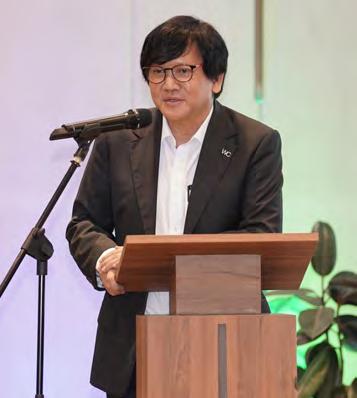
By Nickie Wang
AT the InstaMedico Grand Launch held May 29 at Seda BGC, a model of healthcare delivery built around immediate access, integrated care, and nationwide connectivity was presented. The event positioned digital consultation as a practical response to long-standing system gaps.

Daniel Ceballos, CEO and founder of InstaMedico Corporation, opened the event with a statistic that underscored the urgency of the discussion.
“I did a little research myself and found out that in the Philippines, the ratio is one doctor per 23,000 people,” Ceballos told a crowd mostly from the medical field. “One doctor for every 23,000 people, that is not a health statistic. That is a healthcare crisis.”
The statement ushered in a platform presentation centered on system realities and patient needs.

WHILE vaccinations are often linked to babies and children, adults need them just as much, especially seniors whose immune systems naturally weaken over time. Vaccines help strengthen defenses against illnesses that can lead to hospitalization, disability, or death.
“Vaccines were created to help you build resistance against illnesses that could land you in the hospital, render you disabled, or threaten your life,” says Ryan Raymond Y. Bautista , MD of Makati Medical Center. “As we grow older, our immune system weakens, whether due to age or diseases like cancer, autoimmune disorders, and HIV. Vaccinations not only protect us; they protect others too by preventing the spread of contagious viral and bacterial infections.”
MakatiMed recommends five key vaccines for adults aged 50 and above.
Flu vaccine . Adults are advised to get an annual influenza shot, ideally between February and June in the Philippines, ahead of the June to November flu season. Constant viral mutations and declining immunity in older adults make yearly vaccination essential.
Flu spreads through respiratory droplets or contaminated surfaces and presents with fever, chills, sore throat, body aches, and runny nose.
“Though you can expect to get better in about a week, the flu can progress to pneumonia, bronchitis, and the worsening of pre-existing conditions like asthma and heart disease,” Dr. Bautista notes.
Among the speakers were Dr. Margie Holmes, Rep. Winnie Castelo, and Dr. Imee Rajagukguk, who each tackled challenges in mental health access, specialist availability, and continuity of care.
Ceballos presented InstaMedico as an intelligent teleconsultation platform built for speed, reach, and continuity of care.
A patient in the Philippines can open the app, connect with a licensed physician within minutes, and begin a consultation immediately. Care becomes accessible from home, work, or any location across the country.
This model replaces traditional barriers to consultation with immediate digital access that provides real-time medical support when it is needed.
“This is what accessibility looks like,” he said.
The platform connects patients with a wide range of specialists, including dermatologists, psychiatrists, occupational health physicians, and general practitioners, within one integrated system. Medical records move with the patient, creating continuity across consultations.
An AI-assisted triage system supports patient matching, guiding users to the appropriate specialist and helping streamline the consultation process across the platform.
Ceballos also connected the platform to the Filipino value of bayanihan, pointing to a shared cultural commitment to care, support, and community.
Rep. Castelo described InstaMedico as “unprecedented” and “revolutionary” in remarks delivered during the launch, noting its role in reshaping healthcare delivery in the country.

RSV vaccine . Respiratory syncytial virus (RSV) can resemble the common cold but is marked by difficulty breathing and wheezing. It may lead to pneumonia, asthma flare-ups, and ear infections.
“The RSV vaccine is available locally through hospitals and private clinics,” Dr. Bautista says. “Because it’s not considered
Teleconsultations make healthcare more accessible and efficient, empowering patients with convenience while helping doctors streamline workflows and deliver care anytime, anywhere
Mental health access formed a central part of the discussion, with Dr. Holmes discussing how teleconsultation opens pathways for private, timely, and accessible support for patients across the archipelago.
Dermatology care was also featured prominently by Dr. Rajagukguk, with emphasis on expanded access to board-certified specialists through digital consultations, prescriptions, and followup care delivered through the platform.
The system brings together patients, licensed physicians, and partner pharmacies in a unified network powered by AI-assisted tools designed to support faster consultation flow, coordinated care, and efficient prescription fulfillment.

and
an annual vaccine, at-risk adults aged 50-74 years old and the elderly aged 75 and up can do with a single dose.”
Pneumococcal vaccine. Streptococcus pneumoniae can cause pneumonia, meningitis, and sepsis. Protection involves pneumococcal conjugate vaccines (PCV13, PCV15, PCV20) and pneumococcal polysaccharide vaccine (PPSV23), which covers 23 strains.
“The pneumococcal vaccine is recommended for adults aged 50 years old and above,” says Dr. Bautista. “I advise those who are immunocompromised to receive shots for these vaccines, and those aged 65 and up who are in relatively good health to get one dose of PCV20, or one dose of PCV15 followed by one dose of PPSV23.”
Shingles vaccine. Risk increases with age, and prior infection does not guarantee immunity. A second episode is possible.
“Given in two doses, the shingles vaccine protects you from the varicella-zoster virus by nearly 100 percent, and by about 85 percent four years after your shots,” Dr. Bautista explains. “In case you get shingles again despite the vaccines, expect to experience less severe symptoms.”
Tdap vaccine . Tdap protects against tetanus, diphtheria, and pertussis (whooping cough) and is given as a booster every 10 years.
Tetanus affects the nervous system and is caused by bacteria in soil and animal waste. Diphtheria can obstruct breathing and damage vital organs, while pertussis causes severe coughing that can be especially dangerous for older adults.
“The Tdap vaccine can protect you against tetanus and diphtheria by 95 percent, and pertussis by 70 percent,” says Dr. Bautista. “Best of all, it is convenient. You do not need to have the shot annually, just every decade after one shot.”