

Meet the new editor-inchief on pg. 9! Get involved on campus with help from pg. 24!
Tips for sustainable living on pg. 34!








Meet the new editor-inchief on pg. 9! Get involved on campus with help from pg. 24!
Tips for sustainable living on pg. 34!
















Elections guide on pg. 48!









CUSA Year 2 preview on pg. 52!



Editors and team leaders
Jayden Pettus
former editor-in-chief
Ella Conklin
editor-in-chief
Ava Gorton campus activities editor
Maddux Radosevic sports editor
Alyssa Roney
arts and culture editor
Aden Zuccarini
Springfield news team leader
Jorja Lageschulte campus admin team leader
Reporters and visual artists
Brooke Benne reporter
Makanaka Bgoni reporter
W. Paul Bohlen sportsreporter
Ariah Cooper sports reporter
KC Culbertson sports reporter
Madelynn Darst photographer
Elizabeth Dedert sports reporter
Ruby Knight reporter
Hailey Lampley photographer
Hunter Meacheam reporter
Olamide Ogunmolawa reporter
Ayricka Pointer reporter
Rylie Robinson reporter
Jamie Santner sports reporter
Abby Sommer reporter
Elizabeth Thompson reporter
Kaylee Vaughan photographer
Copy Editors
Audrey Blancett copy editor
Lucy Chipman copy editor
Dani Cook copy editor
Krista Curtis copy editor
Candice Dalton copy editor
Isabel Gamble copy editor
Madalyn Levine copy editor
Selah Meyers copy editor
Hanna Nickels copy editor
Tatiyana Trader copy editor
Layla Ward copy editor
Advertising staff
Ellie Mallett
advertising designer
McKenna Miller
advertising sales assistant
Professional staff
Jack Dimond faculty adviser
The Standard 901 S. National Avenue • Springfield, MO 65897 • 417-836-5272
Standard@MissouriState.edu the-standard.org
On the cover
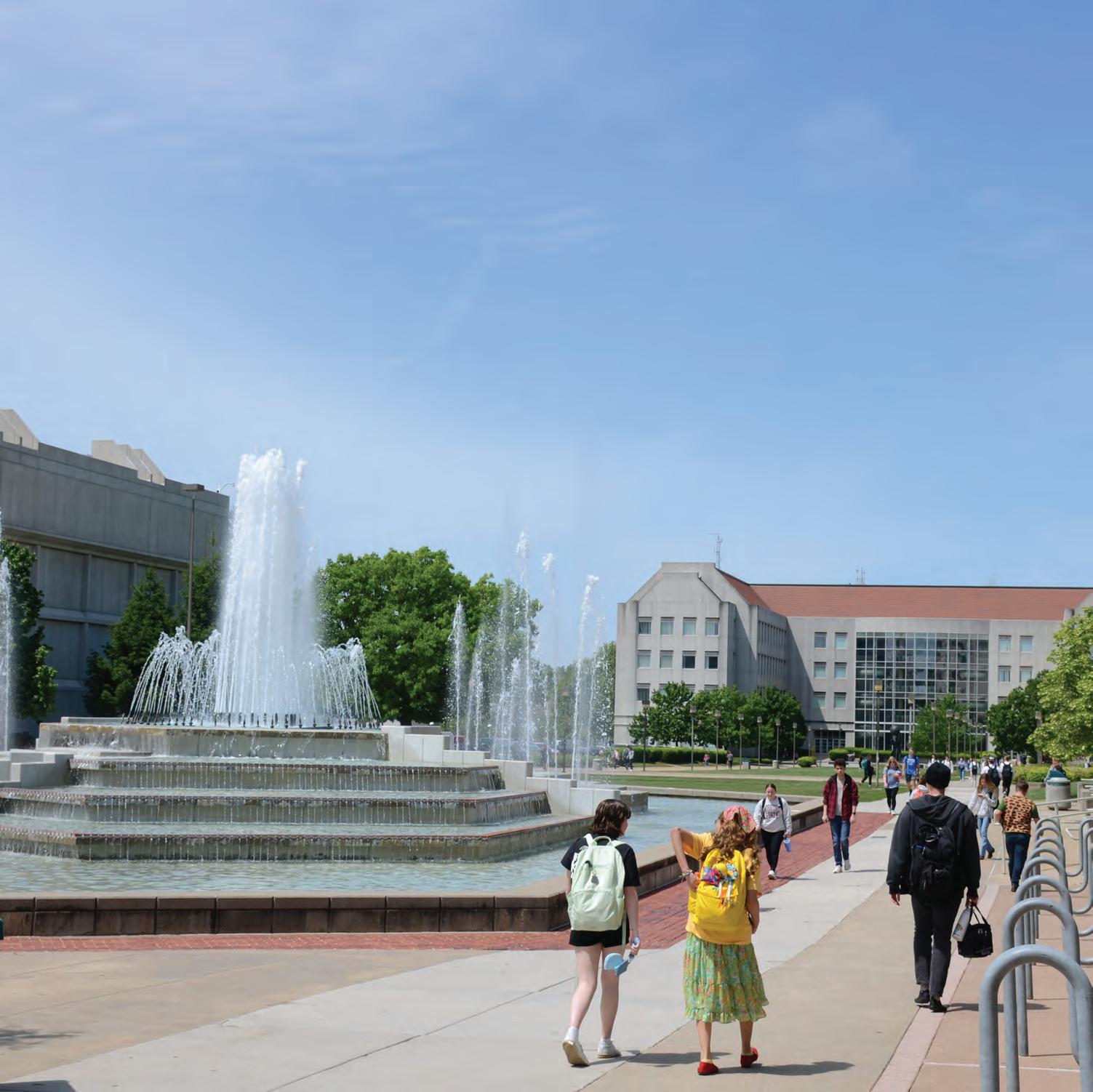
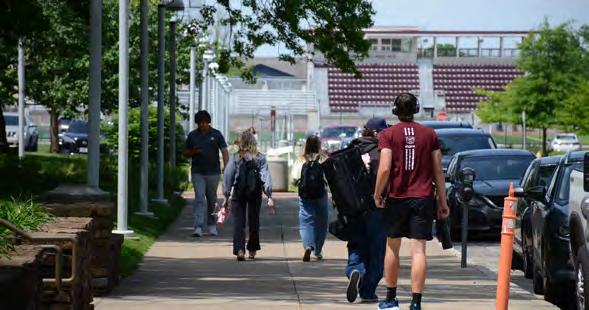
Students make their way through the plaza on a sunny spring day, April 30, 2026.
Cover design and photo by Jayden Pettus
is published by The Standard, Missouri State University’s student-produced newspaper. The university has not approved and is not responsible for its content, which is produced and edited by the students on The Standard staff.


















New this year - Virtual Parking Permits!
Please scan the QR code or visit our online parking portal and enter all the vehicle information. No need for a physical permit this year as a virtual permit will now be attached to your MyMissouriState Account.



Academic year permits (FALL/SPRING) good August 1, 2026–May 31, 2027
Annual permits good August 1, 2026–July 31, 2027
All permit fees charged to university accounts or payroll deduction. Please read over the parking regulations as permits are good in specific lots only.
Office Hours:
Monday-Friday 7:30 am - 4:00 pm
Contact Information: 417-836-4825 parking@missouristate.edu

JAYDEN PETTUS Former Editor-in-Chief Dpettusjayden
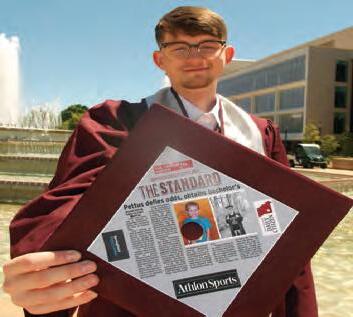
Wow. We’ve already reached the end of our time together, Bears. Five years passes in the blink of an eye on a bustling campus like Missouri State.
I will forever be honored to have served as editor-in-chief of The Standard for two school years. It seems like just a couple weeks ago, I changed my major to journalism and found my love for this industry, yet here we are three years later and I’ve already completed my studies.
Please remember to cherish every moment you spend at the Missouri State campus. The people you meet, the connections you make and the networking you do in your respective career field will make all the difference as you transition from a college student to a professional.
Also, don’t forget to get off campus and check out the city surrounding you. Springfield offers all kinds of things to do if you’re looking to get your mind off of schoolwork for a little bit.
Enough about me, though.
Inside this issue, you will find almost everything you need to know about Missouri State and what it offers. From study spots, to ame-
nities, the fantastic staff at The Standard has written every article in this guide for YOU! We want to make your transition to college life — or your return to campus — as easy and smooth as possible. With this issue, you will be in great shape when you get to Springfield in August.
For those with a creative touch, The Standard is always looking for more writers, editors, photographers, designers, illustrators, podcasters and more. This is a great opportunity to have your work published while building a resume and portfolio for the future. If you’re interested in joining, reach out to us at Standard@MissouriState.edu.
Even if you’re not interested in being a member of our team, it is extremely important to support student journalism. Aside from The Standard at Missouri State, there are multiple student-media outlets like Sartorial Magazine, KSMU, Ozarks News Brief and more. These mediums are a great way to stay up to date with everything happening on campus, as well as improve their media literacy skills.
Find our content on the-standard.org and on news racks and kiosks all over campus. Keep up with The Standard on our socials @thestandard_msu on Instagram and X. Thank you so much for taking the time to read this issue and best of luck as the school year gets underway!
ELLA CONKLIN Editor-in-Chief Q_ellaconklin
Hey bears! My name is Ella Conklin, and I am the editor-in-chief this school year for The Standard! I am a senior, studying political science and journalism.
I have been with The Standard for a little over a year now, working as a reporter and the campus administration and SGA editor! I deeply enjoy writing a good feature or a story about university or local decisions. It is important to me to keep our Bears informed on happenings that directly affect their time at MSU!
Last year, The Standard made great strides under the leadership of Jayden Pettus! Our beatstyle reporting groups helped us deliver consistent coverage to our readers across many
aspects of campus and community life. Stepping into this new role, I am determined to keep the momentum going and bring the Bears useful, interesting and diverse content all year long!
Outside of being a journalist, I enjoy reading long and complicated fantasy books, being outside any chance I get and finding a good dinner spot! I have just spent a semester abroad, studying in Brno, Czech Republic! Please ask me about it, because I would love to tell anyone who will listen! I spent the semester studying alongside students from all over the world while traveling to seven different countries!
Now back in the states, I am so excited to pour myself into The Standard and MSU during my final year in Springy! The Standard has great things planned for this year, and we can’t wait to show what we have been working on! As always, Go Bears!


Guest Writer
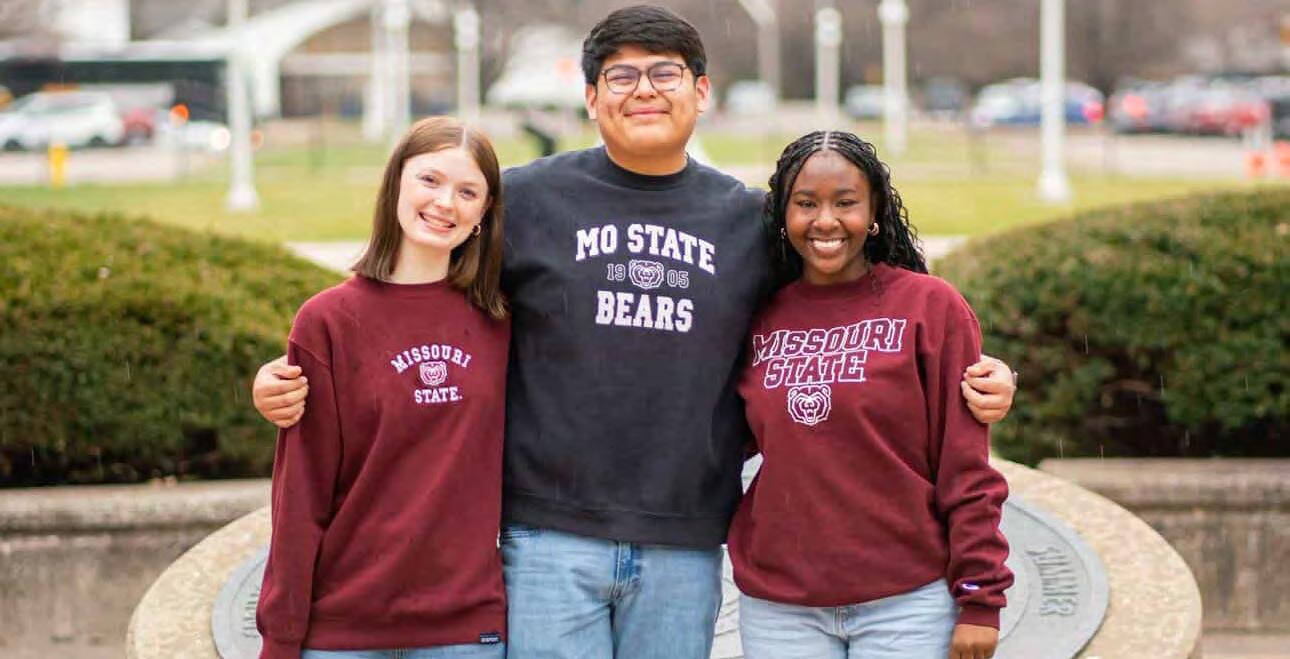
What’s up, Bears! My name is Walter Reyes, and I am honored to serve as your Student Body President for the 2026 to 2027 school year!
Missouri State University is stepping into such an exciting moment. We are entering a new chapter with Conference USA, growing in visibility, expanding opportunities for students, and continuing to show what makes Bear Nation so special. This is a big year to be a Bear, and I could not be more excited to help lead during this time!
I’m a senior Finance major with a Marketing minor. If you see me around campus, I’ve probably got my headphones on. Music is a huge part of my life, whether I’m playing it or just hunting for a new playlist, so if you have any song recommendations, please send them my way! I’m always looking for something new to listen to.
This year in SGA, I am joined by an amazing leadership team:
• Jada Smith, Student Body Vice President
• Karlie Roberts, Chief of Staff
• Addie Kimmerle, Senior Class President
These three are passionate, hardworking, and ready to serve students. Together, we are excited to serve with a smile and make SGA more visible, more helpful, and more connected to the student body.
Our platform is built on three pillars: Connection, Community, and Clarity.
Connection
This is about making sure every student feels seen, heard, and valued. Missouri State is a big place, and it’s easy to feel like just another face in the crowd. We want to bridge that gap by being present where you already are, creating spaces where you want
to hang out, and making sure you know that your voice has a direct line to the administration.
· Hosting SGA-sponsored socials for students from all different backgrounds to help build a more inclusive campus culture.
· Visiting more student organization meetings so we can hear your concerns and ideas directly, rather than waiting for you to come to us.
· Reinforcing our partnerships with essential campus resources like the Bear CAVE and Bear Pantry to ensure no student goes without support.
· Highlighting student organizations and campus events on our SGA social media to give your hard work the platform it deserves.
Community
Springfield shouldn’t just be the
place where you go to school for four years; it should feel like a place where you belong. We want to strengthen the bond between MSU and the city, so you feel empowered to work, serve, and explore everything Springfield has to offer. Whether you’re looking for a job or just a good place for a cheap dinner, we want to be your guide.
· Creating a “Springfield Spotlight Series” to highlight local businesses, hidden gems, and the best free things to do in the city.
· Promoting student-friendly jobs, internships, and volunteer opportunities to help you build your resume while you’re here.
· Working to find more college student discounts around Springfield so your Bear ID saves you money.
· Building stronger connections with neighboring universities and
community leaders to make Springfield a true “college town.”
Let’s be real: university policies can be a headache. You shouldn’t have to dig through five different websites or talk to ten different people just to understand something that goes on at your university. We’re focused on transparency, breaking down the “jargon” so you know exactly what’s happening behind the scenes.
· Creating graphics that clearly explain where your student fees go, because you deserve to see the value in your tuition.
· Expanding budget breakdowns of SGA funds like Wyrick, Sustainability, and the Student Initiative Fund, so you can see how your ideas get funded.
· Introducing “Policy in Plain Language” to explain university decisions in a way that makes sense for the average student.
· Helping you better understand AI policies, My Missouri State updates, and other resources that impact your day-to-day academic life.
As I said, it is a big year for Missouri State University. If you want to be a part of the change or just see how things work, come hang out with us! We meet every Tuesday at 5:30 p.m. in the PSU Parliamentary Room (PSU 313).
Welcome back to campus, Bears. Show up to games, join a club, meet new people, use your voice, and make the most of your time here! I am so excited for everything we are going to accomplish together!
Go Bears!

















Accounting (Comprehensive) (BS)
Adult Development and Aging (Non-Comprehensive) (BS)
Agricultural Business (Comprehensive) (BS)
Agricultural Communications (Comprehensive) (BS)
Agriculture Education (BSEd)
Animal Science (Comprehensive) (BS)
Anthropology (NonComprehensive) (BA)
Anthropology (NonComprehensive) (BS)
Art (BFA)
Art Education (BSEd)
Biology (Comprehensive) (BS)
Biology (Non-Comprehensive) (BA)
Biology (Non-Comprehensive) (BS)
Biomedical Sciences (Comprehensive) (BS)
Business Education (BSEd)
Career and Technical Education (BSEd)
Chemistry (Comprehensive) (BS)
Chemistry (Non-Comprehensive) (BS)
Child and Family Development (Comprehensive) (BS)
Clinical Laboratory SciencesMedical Technology (Comprehensive) (BS)
Communication Sciences and Disorders (Comprehensive) (BS)
Communication Studies (Comprehensive) (BS)
Community and Regional Planning (Comprehensive) (BS)
Computer Science (NonComprehensive) (BS)
Construction Management (Comprehensive) (BS)
Criminology and Criminal Justice (Comprehensive) (BA)
Criminology and Criminal Justice (Comprehensive) (BS)
Culture, Literature, and Media (Non-Comprehensive) (BA)
Culture, Literature, and Media (Non-Comprehensive) (BS)
Dance (Non-Comprehensive) (BS)
Data Analytics (Comprehensive) (BS)
Data Science (Non-Comprehensive) (BS)
Design (BFA)
Digital Film and Television
Production (Comprehensive) (BS)
Early Childhood Education (BSEd)
Economics (Comprehensive) (BS)
Economics (Non-Comprehensive) (BA)
Electronic Arts (Comprehensive) (BS)
Elementary Education (BSEd)
English (BSEd)
English (Non-Comprehensive) (BA)
English (Non-Comprehensive) (BS)
Entertainment Management (Comprehensive) (BS)
Entrepreneurship (Comprehensive) (BS)
Environmental Plant Science (Comprehensive) (BS)
Equine Science (Comprehensive) (BS)
Esports Studies (NonComprehensive) (BS)
Exercise Science (Comprehensive) (BS)
Fashion Design, Merchandising, and Branding (Comprehensive) (BS)
Finance (Comprehensive) (BS)
General Agriculture (BAS)
General Agriculture (Comprehensive) (BS)
General Business (Comprehensive) (BS)
General Studies, Bachelor of (BGS)
Geography and Sustainability (Comprehensive) (BS)
Geography and Sustainability (Non-Comprehensive) (BA)
Geography and Sustainability (Non-Comprehensive) (BS)
Geology (Comprehensive) (BS)
Geology (Non-Comprehensive) (BS)
Geospatial Sciences (Comprehensive) (BS)
Global Studies (Comprehensive) (BA)
Health Services (Comprehensive) (BS)
History (BSEd)
History (Non-Comprehensive) (BA)
History (Non-Comprehensive) (BS)
Hospitality Leadership (BAS)
Hospitality Leadership (Comprehensive) (BS)
Human Resource Management (Comprehensive) (BS)
Individualized Major (BAS)
Individualized Major (Comprehensive) (BA)
Individualized Major
(Comprehensive) (BS)
Information Technology (Comprehensive) (BS)
Interior Design (Comprehensive) (BS)
International Business (Comprehensive) (BS)
Journalism (Non-Comprehensive) (BS)
Management and Leadership (Comprehensive) (BS)
Marketing (Comprehensive) (BS)
Mathematics (BSEd)
Mathematics (Comprehensive) (BS)
Mathematics (Non-Comprehensive) (BA)
Mathematics (Non-Comprehensive) (BS)
Mechanical Engineering
Technology (Comprehensive) (BS)
Middle School Education (BSEd)
Modern Language (Comprehensive) (BS)
Modern Language (NonComprehensive) (BS)
Music (BMus)
Music (Non-Comprehensive) (BA)
Music (Non-Comprehensive) (BS)
Music-Instrumental (BME)
Music-Vocal/Choral (BME)
Musical Theatre (BFA)
Natural Resources (Comprehensive) (BS)
Nursing (completion program for registered nurses) (BSN)
Nursing (Pre-licensure, 4-year program) (BSN)
Nutrition and Dietetics (Comprehensive) (BS)
Philosophy (Non-Comprehensive) (BA)
Philosophy (Non-Comprehensive) (BS)
Physical Education (BSEd)
Physics (Comprehensive) (BS)
Political Science (NonComprehensive) (BA)
Political Science (NonComprehensive) (BS)
Professional Writing (BA)
Professional Writing (BS)
Psychology (Non-Comprehensive) (BA)
Psychology (Non-Comprehensive) (BS)
Radiography (Comprehensive) (BS)
Religious Studies (NonComprehensive) (BA)
Religious Studies (NonComprehensive) (BS)
Respiratory Therapy (Comprehensive) (BS)
Risk Management and Insurance (Comprehensive) (BS)
Screenwriting and Film Studies (Non-Comprehensive) (BA)
Screenwriting and Film Studies (Non-Comprehensive) (BS)
Social Work (BSW)
Socio-Political Communication (Comprehensive) (BS)
Sociology (Non-Comprehensive) (BA)
Sociology (Non-Comprehensive) (BS)
Special Education (BSEd)
Speech and Theatre Education (BSEd)
Sport and Recreation Administration (Comprehensive) (BS)
Sports Medicine (Comprehensive) (BS)
Strategic Communication (Non-Comprehensive) (BS)
Supply Chain, Logistics and Operations Management (Comprehensive) (BS)
Theatre (Non-Comprehensive) (BA)
Theatre (Non-Comprehensive) (BS)
Theatre and Dance (BFA)
Tourism Management
(Comprehensive) (BS)
Tourism Management (NonComprehensive) (BS)
Visual Art and Culture (NonComprehensive) (BA)
Wildlife Conservation and Management (Comprehensive) (BS)
Editor’s note: This list of undergraduate majors reflects the 2026-2027 university catalog as of April 2026. Programs may be added or deleted as university officials finalize curricular changes throughout the summer.
August
• 17: Full semester and first block classes begin
• 21: Last day to request full semester and first block change of schedule
• 28: Deadline to request a FERPA hold September
• 7: Labor Day Holiday, no classes
• 23: Last day to drop, or declare pass/not-pass or audit for first block October
• 6: First block classes end
• 7: First block final exams
• 8-11: Fall Break, no classes
• 12: Second block classes begin
• 15: Midterm grades available
• 16: Last day to change second block schedule
• 31: Deadline to have name listed in Fall 2026 Commencement program November
• 6: Last day to drop or declare pass/not-pass or audit for full semester classes
• 16: Last day to drop, or declare pass/not-pass or audit for second block classes
• 21-29: Thanksgiving Holiday, no classes December
• 3: Full semester and second block classes end
• 4: Study Day, no classes
• 5-10: Final Exam Period
• 11: Fall 2026 Commencement
• 15: Final grades available
January
• 18: Martin Luther King Jr. Day, no classes
• 19: Full semester and first block classes begin
• 25: Last day to request full semester and first block change of schedule
• 29 Deadline to request FERPA hold February
• 15: Presidents’ Day Holiday, no classes March
• 11: First block classes end
• 12: First block final exams
• 13-21: Spring Break, no classes
• 22: Second block classes begin
• 25: Midterm grades available
• 26-28: Spring Holiday, no classes
• 29: Last day to change second block schedule
• 31: Deadline to have name listed in Spring 2027 Commencement program April
May
• 6: Full semester and second block classes end
• 7: Study Day, no classes
• 8-13: Final Exam Period
• 14: Spring 2027 Commencement
• 18: Final grades available








Having trouble finding where to go on campus? You’ve come to the right place.
Here is a categorized list of buildings and their functions. Each listing includes the building’s name, address, and relevant functions.
Recreation
• Betty & Bobby Allison North Stadium
730 E Cherry St, Springfield, MO 65897
• Betty & Bobby Allison Recreation Field (Taco Bell Fields) 1140-1198 E Harrison St, Springfield, MO 65807
• Betty & Bobby Allison South Stadium East 65897, 830 Bear Blvd., Springfield, MO 65807
• Foster Recreation Center
945 E Madison St, Springfield, MO 65807
Parking Garages
• Bear Park North
725 E Cherry St, Springfield, MO 65806
• Bear Park South
920 S Holland Ave, Springfield, MO 65897
Residence Life
• Blair-Shannon House, BlairShannon Dining Hall
1001 E Madison St, Springfield, MO 65807
• Freudenberger House
1000 E Madison St, Springfield, MO 65807
• Garst Dining Center 1014 E Cherry St, Springfield, MO 65897
• Hammons House
1001 E Harrison St, Springfield, MO 65807
• Heitz House, Heitz Dining Center
811 S Holland Ave, Springfield, MO 65806
• Hutchens House
1021 E Harrison St, Springfield, MO 65807
• Kentwood Hall
700 E St Louis St, Springfield, MO 65806
• Monroe Apartments
1141 East Bear Blvd., Springfield, MO 65807
• Scholars House
1116 E Cherry St, Springfield, MO 65807
• Sunvilla Tower
833 E Elm St, Springfield, MO 65806
• Wells House 1132 E Madison St, Springfield, MO 65807
• Woods House
1115 Bear Blvd., Springfield, MO 65807
Athletics
• Forsythe Athletics Center
827 S Kings Ave Springfield, MO 65897
Coach offices
Training facilities
• Great Southern Bank Arena
685 S John Q Hammons Parkway, Springfield, MO 65807
Events
• John Q. Hammons Student Center
731 Bear Blvd, Springfield, MO 65897
Offices
Events
• Robert W. Plaster Stadium
1015 Grand St, Springfield, MO 65897
Events
• Wehr Band Hall
625 S Clay Ave, Springfield, MO 65897
Pride bands
Student Services
• Missouri State University Bookstore
717 S Florence Ave, Springfield, MO 65807
Textbooks & other supplies
BearWear
• Carrington Hall
901 S National Ave, Springfield, MO 65897
Office of Financial Aid
Administration offices
• Clay Hall
744 E Cherry St, Springfield, MO 65807
Adult Student Services
• Magers Health & Wellness
Between the Bookstore and Woods House Clinic
Pharmacy Lab
Women’s Health Clinic
Counseling Center
• McDonald Hall & Arena
850 S Kings Ave Springfield, MO 65897
Esports
Exercise science
Physical education
Sport and recreation administration
• Meyer Library
850 S John Q Hammons Parkway, Springfield, MO 65897
Classrooms
Study spaces
Computer labs
• Plaster Student Union
1110 E Madison St, Springfield, MO 65897
Retail
Food court
Study spaces
Student Government Association office
Administrative offices
• University Hall
1141 E Madison St, Springfield, MO 65807
• Davis-Harrington Welcome Center
705 S National Ave, Springfield, MO 65804
McQueary College of Health and Human Services
• Ann Kampeter Health Sciences Hall
609 E Cherry St, Springfield, MO 65806
Biomedical Sciences Department
Communication Sciences and Disorders Department
Department of Public Health and Sports Medicine
School of Nursing
• Hill Hall
905 S National Ave, Springfield, MO 65897
Psychology Department
McDonald Hall & Arena
850 S Kings Ave Springfield, MO 65897
Department of Kinesiology
• McQueary Family Health Sciences Hall
606 E Cherry St, Springfield, MO 65897
Department of Physical Therapy
• O’Reilly Clinical Health Sciences Center
640 E Cherry St, Springfield, MO 65897
Department of Occupational Therapy
Physician Assistant Studies Department
School of Anesthesia
• Pummill Hall
930 South Carrington Ave., Springfield, MO 65897
School of Social Work
Darr College of Agriculture
• Karls Hall
950 South Carrington Ave., Springfield, MO 65897
Agribusiness, Agricultural Education and Communications Department
Animal Science Department
Environmental Plant Science and Natural Resources Department
• Pummill Hall
930 South Carrington Ave., Springfield, MO 65897
Department of Hospitality Leadership
• Darr Agricultural Center
2401 S Kansas Expressway, Springfield, MO 65807
Reynolds College of Arts, Social Sciences and Humanities
• Brick City
Brick City 1: 215 W Mill St, Springfield, MO 65897
Art and Design Department
• Craig Hall
1147 Grand St, Springfield, MO 65897
Department of Communication, Media, Journalism and Film
If you’re not feeling like walking across campus, turn to page 16 to find a Bear Line route that will take you where you want to go.
Department of Theatre and Dance
• Ellis Hall
907 S National Ave Springfield, MO 65897
Department of Music
• John Goodman Amphitheatre
In front of Craig Hall; part of the Judith Enyeart Reynolds Arts Park
Tent Theatre
• Juanita K. Hammons Hall
525 S John Q Hammons Parkway, Springfield, MO 65806
Events
• McDonald Hall & Arena
850 S Kings Ave Springfield, MO 65897
Theatre and dance studios
• Siceluff Hall
827 S National Ave, Springfield, MO 65897
Department of English Languages, Cultures, and Religions
Department
• Strong Hall
900 S Holland Ave, Springfield, MO 65897
History Department
Political Science and Philosophy Department
School of Criminology and Criminal Justice
Sociology, Anthropology, and Gerontology Department
• Wehr Band Hall
625 S Clay Ave, Springfield, MO 65897
Department of Music spaces
College of Business
• Glass Hall
851 S John Q Hammons Parkway, Springfield, MO 65897
Department of Finance, Economics, and Risk Management
Department of Information Technology and Cybersecurity Department of Management
School of Construction, Design and
Project Management Marketing Department
School of Accountancy
College of Education
• Child Development Center
609 E Cherry St, Springfield, MO 65806 practicums
• Greenwood Laboratory School
1024 E Harrison St, Springfield, MO 65897
Practicums
• Hill Hall
905 S National Ave, Springfield, MO 65897
Department of Childhood Education and Family Studies
Department of Reading, Foundations and Technology
Department of Secondary Education
College of Natural and Applied Sciences
• Roy Blunt Hall
910 S John Q Hammons Parkway, Springfield, MO 65897
Department of Biology
Department of Chemistry and Biochemistry
Geography, Geology and Planning
• Cheek Hall
825 S National Ave, Springfield, MO 65897
Computer Science Department
Department of Mathematics
• Kemper Hall
921 S John Q Hammons Parkway, Springfield, MO 65897
Department of Physics, Astronomy and Material Science
• Kings St. Annex
801 S Kings Ave Springfield, MO 65897
Classrooms
• Plaster Free Enterprise Center
405 N Jefferson Ave, Springfield, MO 65897
RUBY KNIGHT Reporter Qrubyrknight
With Missouri State University’s campus sprawling several blocks and regions of Springfield, finding the way around can be hard on students, especially those stepping foot on campus for the first time.
Not to fret! The University’s Bear Line shuttle system, provided through Transportation Services during the fall and spring semesters, is free for all students and a great way to move about campus with ease. The trick is knowing how the Bear Line works and how to utilize it effectively.
Download the Passio GO app
The Passio GO app is the quickest and easiest way to begin riding the Bear Line. This platform provides a map of all routes and stops, allowing you to search for specific stops, as well.
When users select a stop, they can see which routes pick up passengers there and if any vehicles are running those routes.
Learn the Types of Stops
The next important thing to know is that the Bear Line uses three types of stops, per the Missouri State website:
1. HARD STOPS - the Bear Line will stop for a brief period before proceeding.
2. SOFT STOPS - the Bear Line will only stop if someone is there waiting to board or requests to be dropped off.
3. REQUEST & GO STOPS - the Bear Line will only go to that stop if someone at the stop has requested through the Request & Go section of the Passio GO app to be picked up or someone on the Bear Line asks the driver to drop them off at the stop. The Request & Go stops do not show a shuttle route going to them.
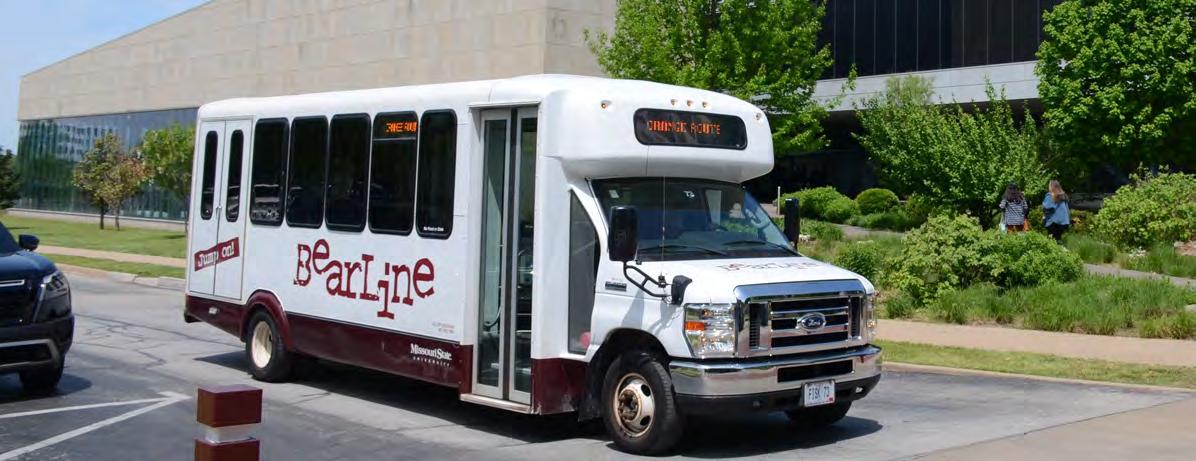
Photo by Jayden Pettus, Qjpettus_media
The Bear Line is Missouri State’s free shuttle service. Students pay each year through their tuition to have unlimited access to the shuttle.
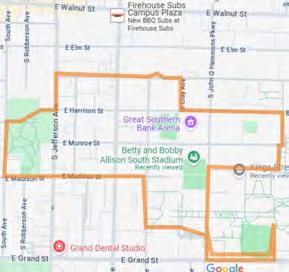
ORANGE ROUTE (7 a.m. - 6 p.m.)
• Residence Halls: Heitz House
• Parking Lots: Bear Park North, Bear Park South
The Orange Route is the longest of the weekday routes with 12 stops, so riders should plan accordingly. However, this track covers much of the southern reaches of campus, with stops like Carrington Hall, Meyer Library, the PSU and Wehr Band Hall, making it a popular ride. Various streetbased stops are also included in the lineup.
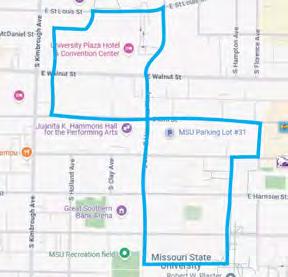
BLUE ROUTE (7 a.m. - 6 p.m.)
• Residence Halls: Sunvilla, Kentwood, Scholars
• Parking Lots: Lot 44, Bear Park South Residents of northernmost halls looking for transport to classes could make great use of this route. The Blue Route also includes three stops on Elm Street (Greek Row), as well as stops at the Meyer Library and the Plaster Student Union (PSU).
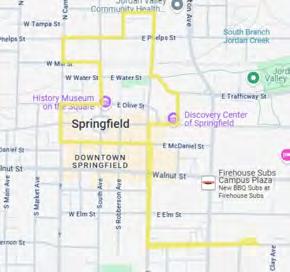
GOLD ROUTE (7:30 a.m. - 5:30 p.m.)
• Residence Halls: N/A
• Parking Lots: Bear Park North, Lot 56, Lot 48 This route is primarily used for transport to MSU facilities in downtown Springfield. Primary users of this route are art and design students on their way to classes in Brick City. Notably, this route also stops at The 505, a student housing complex.
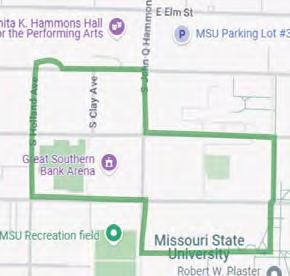
GREEN ROUTE (7 a.m. - 6 p.m.)
• Residence Halls: Woods, Hammons and Hutchens
• Parking Lots: Bear Park North
• This circuit traverses the central parts of campus, with other notable stops including the Hammons Student Center, Foster Recreation Center (FRC), and PSU.

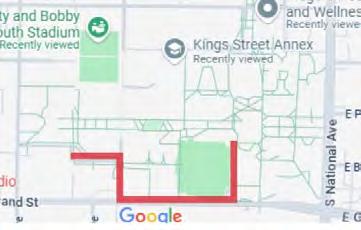
RED ROUTE (7:30 a.m. - 5:30 p.m.)
• Residence Halls: N/A
• Parking Lots: Bear Park South
The Red Route has just three stops: Carrington Hall, Bear Park South, and the currently-under-construction Art Annex, although it does take scheduled trips to Darr Agricultural Center (DARR). Per the Missouri State website, the schedule is as follows:
Monday
• Pick-up at Carrington - 9 a.m., 12 p.m., 1 p.m., 3 p.m., 4 p.m.
• Arrive at DARR - 9:20 a.m., 12:20 p.m., 3:20 p.m.
• Tuesday through Thursday
• Pick-up at Carrington - 9 a.m., 11 a.m., 12:15 p.m., 1:30 p.m., 3 p.m., 4:15 p.m.
• Arrive at DARR - 9:20 a.m., 11:20 a.m., 12:35 p.m., 3:20 p.m.
Friday
• Pick-up at Carrington - 9 a.m., 11 a.m., 3 p.m.
• Arrive at DARR - 9:20 a.m., 11:20 a.m., 3:20 p.m.
*All times listed are an approximation as traffic and other variables may influence arrival times.
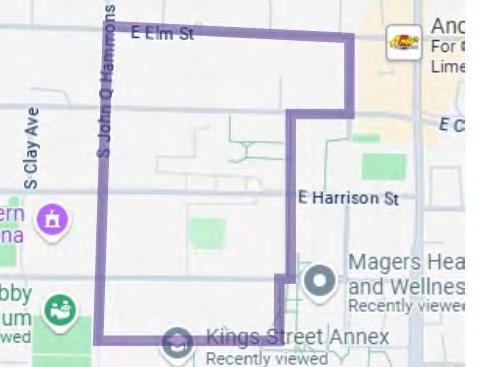
(8 a.m. - 5 p.m.)
• Residence Halls: Scholars House, Sunvilla
• Parking Lots: N/A
While covering much of the same territory as the Blue Route, this one is slightly shorter at only seven stops. Useful stops include the PSU and FRC, as well as four streetbased stops.
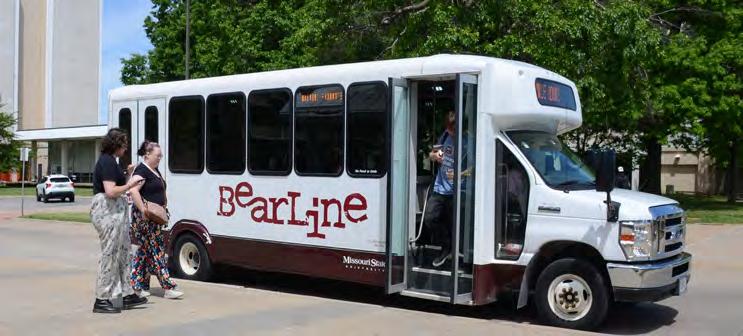
While some routes remain the same throughout the day, there are also certain routes that students can request if they need a ride elsewhere.
MAROON ROUTE (6 p.m. - 10 p.m.)
• Residence Halls: Heitz, Woods, Hammons and Hutchens
• Parking Lots: Bear Park North, Bear Park South
This evening route is a sprawling traverse of the entire MSU campus, including 11 stops and 11 Request & Go stops. Students would most likely want to make use of regular stops
at Meyer Library, the PSU and the residence halls and parking garages listed above. Important Request & Go stops to note include Brick City, Lot 56, Lot 48, Carrington Hall and The 505.
To view all this information condensed in a user-friendly platform, be sure to download the Passio GO app and become familiar with its features and functions!
RYLIE ROBINSON Reporter Qrylie04.robs
A common difficulty of being a college student is unpredictable health care access; whether that be from transportation, availability or insurance. At Missouri State University, the access to health care was expanded with the Magers Center.
Magers is located at 715 S. Florence, Springfield, Mo. 65897, next to the MSU University Bookstore. The clinic is open Monday through Friday, 8 a.m. to 6 p.m. during the fall and spring semesters. All other times the hours are 8 a.m. to 5 p.m.
“We provide accessible, high-quality healthcare services, health education, and wellness resources in a confidential environment,” the Magers website said. “Through compassionate care and holistic support, we promote a healthy campus culture that values well-being as a foundation for success.”
The Magers center offers primary care with preventative methods, clinical care for onset
illnesses and injuries, a laboratory for diagnostic testing, specialists, a pharmacy to fill prescriptions, as well as access to psychiatry and mental health clinics. (The clinic does not provide emergency medicine practices, those should be directed to your nearest hospital).
Within the website, you may schedule an appointment, find phone numbers for cancellations as well as information on things to bring to appointments. There is also a myhealth portal where patients may access their visit records, past vaccinations, and contact information for providers and staff.
In the realm of affordable care, the Magers Center accepts access for all Missouri State Students, their spouses, and their household members, as stated on the website.
The prepaid student health fee covers basic costs. Any beyond costs (such as x-rays, lab tests, specialists, etc.) are then charged. The center charges below community rates and only charges the cost of the clinic.
Whether you’re dealing with a common cold or a severe illness, Magers is there for you. Your health matters.
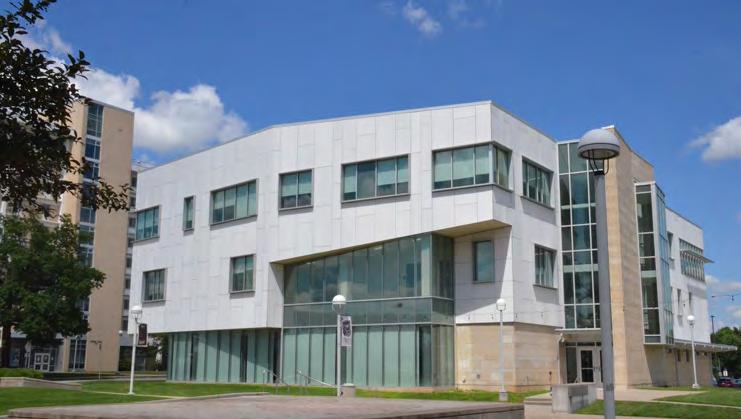
Located north of the bookstore, Magers Health and Wellness Center offers primary care to students and features a laboratory and pharmacy.




Masterof OccupationalTherapy
7 semesters long Prepares you to enter the workforce!

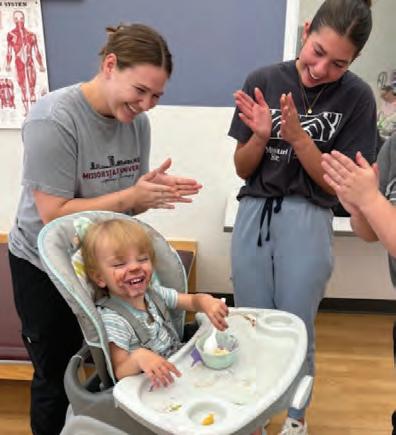


Entry-LevelDoctorof OccupationalTherapy
9semesterslong Preparesyoutoentertheworkforce withadditionaltraininginteaching, researchandmanagement!







Post-ProfessionalDoctorof OccupationalTherapy
For licensedoccupational therapists lookingtoadvancetheir careers
100%onlinewithfull-timeandparttimeoptions

All-you-can-eat buffets, dining dollars, daily coffee runs, on-campus restaurants… What do college meal plans really mean for your dining experience? This guide breaks down everything you need to know about dining on campus at Missouri State University.
What are the dining halls?
Missouri State has three dining halls: Blair-Shannon, Heitz House, and Garst (located between Hammons House and Hutchens House). Blair-Shannon and Heitz are buffet style, with a wide variety of options including a salad bar, grill, pizza & pasta station, dessert bar, as well as a section that has a new meal every day. Both dining halls have an allergen-friendly section, and Heitz has a Mongolian grill. Rather than a buffet-style dining hall, Garst has a handful of different restaurants to choose from (fried chicken, Mexican, barbecue, etc.). Students can use their meal swipe and get any one meal that they would like.
What is a meal swipe/ plan?
Any time you go to one of the three dining halls, you will use a meal swipe (using your Bear Pass). Depending on which meal plan purchased, you could have 10,14, 19, or an unlimited number of meal
swipes each week. Meal swipes reset every Monday morning.
Meal plans can be increased at any point, but can only be decreased through the third week of each semester. Meal plans are required for students living on campus.
What are the on-campus restaurants?
There are a handful of restaurants on campus. In the Plaster Student Union (PSU), there is Chick-fil-A, Freddy’s, Subway, Sushi Do, Panda Express, and Starbucks. In Glass Hall there is Einstein Bros., and in Heitz House there is Market Cafe 1905 - a coffee shop and convenience store. Meal swipes do not work at these places; instead, you can pay like you would off campus or use dining dollars.
Dining dollars act as debit cards connected to your university accounting using your Bear Pass. Dining dollars can be beneficial because the bigger the package you purchase, the more bonus dollars you get - free money! Packages range from $210 - $340. Dining dollars from the fall semester roll into the spring semester, and you can add more money at any point. All dining dollars not spent during the school year will expire on the last day of the semester. Having a dining dollar package is required for all students living on campus.
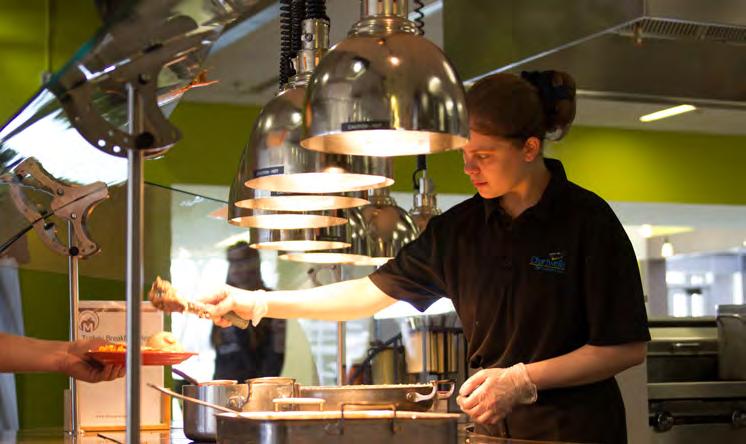
The dining halls on campus have an allergen-friendly section called “Delicious Without,” where the meals served are without the top nine allergen. In addition, the chefs in the dining halls are here to help you and love helping students face-to-face.
While commuter students are not required to purchase a meal plan or a dining dollar package, there are packages designed for them. Dining dollar packages ranging from $210 to $687 per academic year and meal plans ranging from 22 to 136 total swipes per semester, giving commuter students ample options.
There is also an area in the PSU called the “Commuter Corner,” created with commuters in mind. There is a microwave, study spots, printers, tables, etc.
Having one app with all dining hall information is very convenient. The app “Dine On Campus” is strongly recommended. The app has daily menus for all dining options, location hours, upcoming events, options to add dining dollars, purchase commuter meal plans, and more. Students living on campus will purchase meal plans with their housing contract.
File photo/The Standard Missouri State offers three on-campus dining halls: Blair-Shannon, Garst and Heitz. Students can purchase 10, 14, 19 or unlimited meals per week.
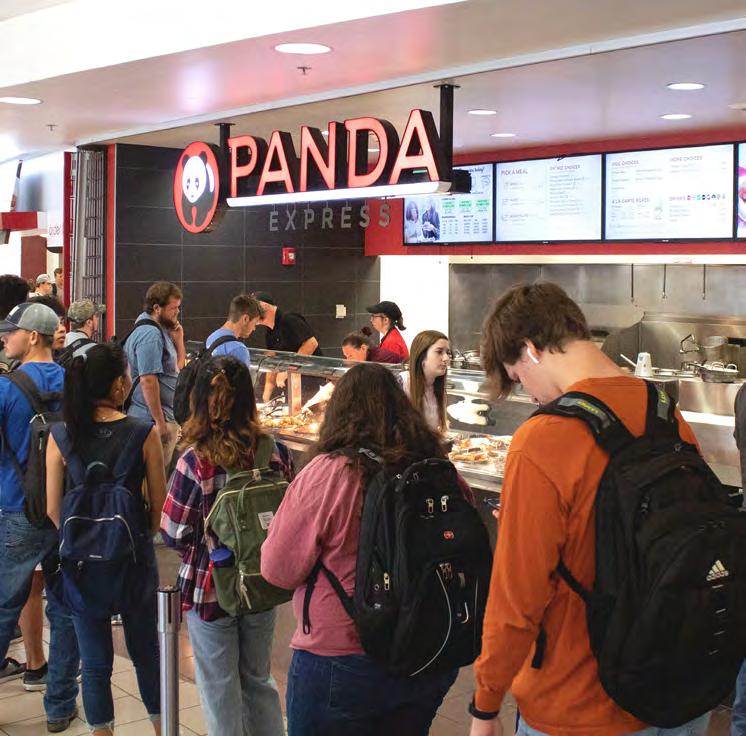
Outside of MSU’s three dining halls, a number of restaurants are available for students to choose from inside the Plaster Student Union. Students can use dining dollars, credit cards or debit cards to purchase food from these establishments.










Welcome to campus, Bears! Discover a purpose-driven path that maps the future, protects the planet, and guarantees a high-demand career. NOT SURE OF YOUR MAJOR YET?
Stop trying to t into a generic major. The School of Earth, Environment and Sustainability (SEES) combines cutting-edge computer data science, active outdoor exploration, and global problem-solving.
•Geospatial Sciences (GIS): Master the advanced location intelligence and mapping software used by global tech giants, logistics networks, and emergency services.
•Geography & Sustainability: Drive climate action, protect natural resources, and design sustainable energy frameworks for communities.
•Geology: Investigate earth dynamics, mitigate natural hazards, and solve modern engineering and clean-water challenges.
•Community & Regional Planning: Design smart cities, green spaces, and resilient public transportation infrastructure.
Whether you want to declare a full major today or simply add a powerful, high-demand Minor or Certi cate in Sustainability or GIS to your current schedule—CNAS advisors will handle the paperwork for you.

We know you want to graduate with a clear, stable career path. A degree from SEES balances rigorous academic science with massive, proven employer demand.
•Explosive Career Growth: The global green economy and spatial data analytics industries are expanding rapidly, outpacing standard job sectors.
•You’ll have opportunities for research. Bears Join faculty lab groups, present, and go to conferences. You will get to use state of the art equipment and software.
•The Accelerated Path: Save a full year of time and tuition. Eligible students can nish a Bachelor’s and a Master’s degree simultaneously via our Accelerated Graduate Program.

SCAN THE CODE TO EXPLORE OUR UNDERGRADUATE DEGREES Visit Us on Campus: Blunt Hall, Room 310
Email An Advisor Today: SEES@MissouriState.edu
Explore Online: geosciences.missouristate.edu
College is known to bring fresh opportunity and a newfound sense of independence to students, but for many, it also comes with financial stress and uncertainty, leading some to struggle financially. Located in the center of campus, Missouri State’s Bear Pantry is open four days a week providing students with open and free access to food and other essential supplies students need to ease the transition into college life.
Within room 140 of the Plaster Student Union, the Bear Pantry offers completely free food and hygiene products to all Missouri State students, faculty and staff. The pantry serves campus as a resource aimed at addressing food insecurity and ensuring no student goes hungry.
“The Bear Pantry is Missouri State University’s on-campus food pantry, here to support anyone in our campus community who may be experiencing food insecurity,’ said Alex Johnson, Director of Center for Engagement. “The pantry offers free groceries and basic essentials in a welcoming environment, helping remove barriers so individuals can stay focused on their academic and personal success.”
A study conducted in 2020 by the U.S. Department of Education National Postsecondary Student Aid Study found that 3.8 million, or 23% of undergraduate students experience food insecurity. 2.2 Million self-reported they often skip meals due to financial constraints. Campus food pantries like the Bear Pantry are working to remove these barriers that block student success by providing access to the resources they need to succeed.
“College life comes with many adjustments, and a lot of students are managing their own budgets and routines for the first time,” Johnson said. “The Bear Pantry can help take some of that pressure off, whether that’s actually picking up groceries or just knowing there’s a place on campus that’s there for you.”
Beyond providing food, the pantry also works to curate a sense of sta-
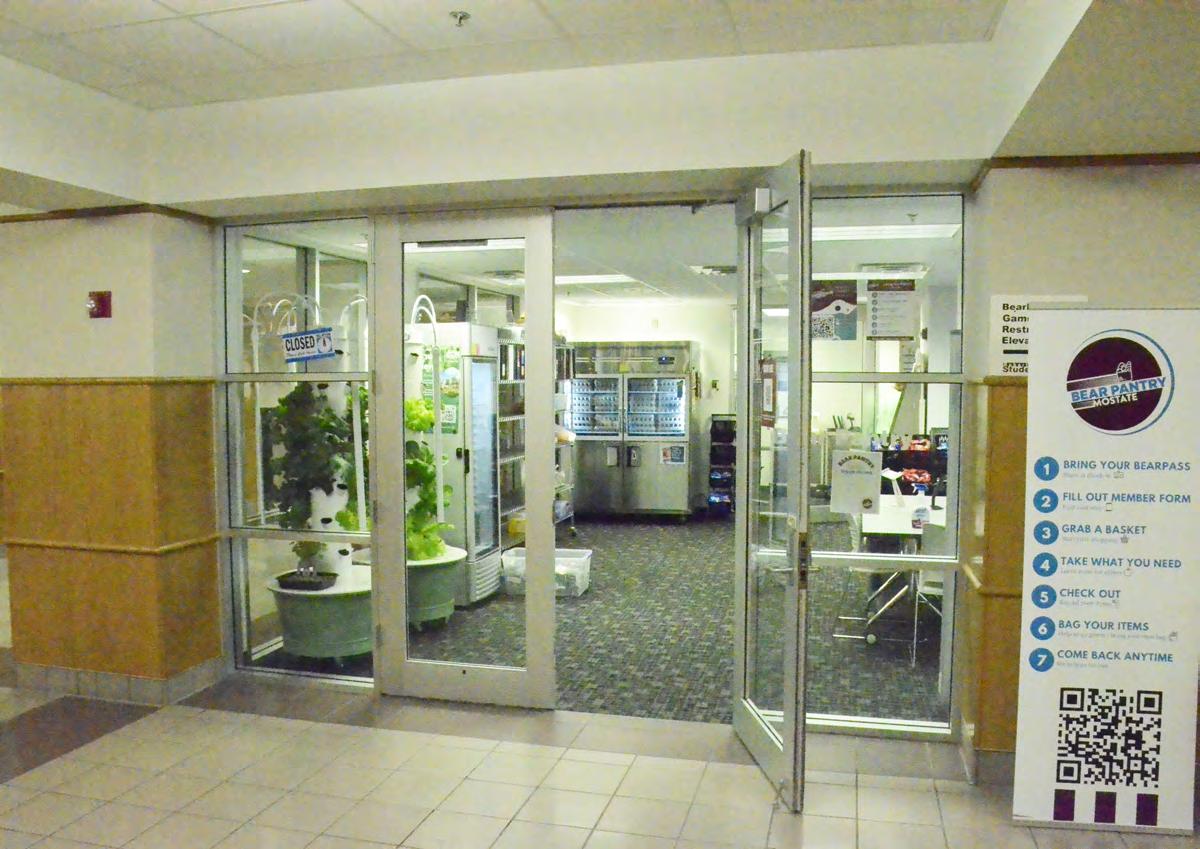
Photo by Jayden Pettus, Qjpettus_media
Located in the bottom floor of the Plaster Student Union, the Bear Pantry is open four days a week.
bility for all students who may feel overwhelmed during their transition into college life. Having easy and free access to necessary resources can make a meaningful difference in how students adjust both academically and personally.
Students who visit can expect to find a variety of items, including nonperishable foods, pasta, rice and occasionally fresh foods depending on donations.
For students adjusting to campus life, the pantry can serve as a significant safety net regardless of your
personal circumstances. The pantry provides all members of the Missouri State Community with access to food without financial strain.
Monday 2 p.m. - 7 p.m.
Tuesday 10 a.m. - 5 p.m.
Wednesday 10 a.m. - 5 p.m.
Thursday 10 a.m. - 5 p.m.
Beyond providing food, Johnson says the Bear Pantry offers students multiple ways to get involved by vol-
unteering time and aiding in gaining awareness.
“We love getting students involved,” Johnson added. “There are a lot of ways to help out: you can volunteer by stocking shelves, organizing inventory or just helping during opening hours.”
Student organizations also have the opportunity to host food drives to support the pantry. These drives bring in crucial supplies that not only keep the pantry stocked, but also encourage a stronger Missouri State community.
The Bear Pantry continues to serve MO State as an essential resource, addressing a crucial and growing need among college students. By offering support in a welcoming environment, the pantry ensures no student ever has to choose between their education or food. Students can learn more by visiting MissouriState.edu/ Bear Pantry where they can find information about hours, services and ways to get involved.
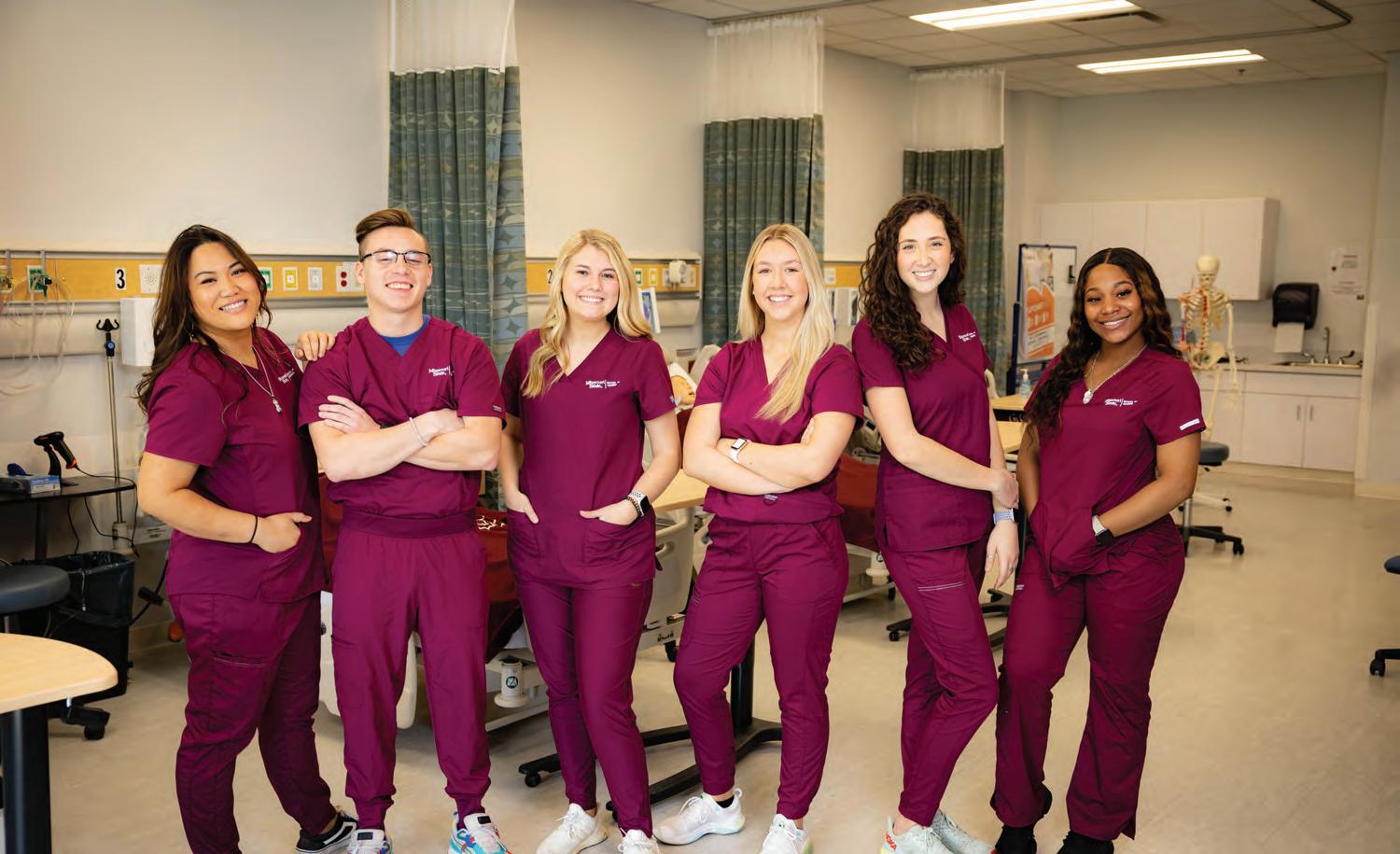
Bachelor of Science in Nursing (BSN)
Bachelor of Science in Nursing
Advance your Nursing Career- Graduate Programs Available! Take the next step in your nursing journey with our graduate programs! Options include Family Nurse Practitioner, Adult Gerontology Acute Care Nurse Practitioner, Psychiatric-Mental Health Nurse Practitioner, Nurse Educator, and Practice Leadership.
Accelerated Scheduling Option (post-baccalaureate BSN)
Bachelor of Science in Nursing Completion (RN-BSN)
VISIT US AT
MissouriState.edu/Nursing
JAMIE SANTNER
Reporter
You have enrolled, moved into your dorm and begun your college journey. Now what? Here at Missouri State University, there are a ton of clubs and organizations, both academically and recreationally, that can help elevate the college experience.
With over 320 student organizations, Missouri State offers a wide variety of opportunities to get involved. These range from spiritual and political groups to clubs that share a particular hobby or interest, ranging from sports and recreation, to film and fashion.
Whatever you are interested in, there’s probably a club for it.
There are endless opportunities involved with joining an organization. You can learn leadership skills, improve your resume and meet other like-minded individuals. Campus involvement can also help students gain confidence, promote mental and physical health and gain more experience in their college years. Students can earn scholarships and even find internships through these organizations.
Desmond Dunklin, director of the Office of Student Engagement (OSE), discussed how students can get involved, what clubs they can join and how they can form new student organizations, while outlining why it’s essential for MSU students.
“There are a variety of ways that students can get involved, from Fraternity and Sorority Life (FSL) to joining a student organization,” he
said. “I think the most important thing is for students to find out where their passions lie.”
Dunklin says that students can attend an involvement consultation if they’re unsure which student organizations they want to join. The consultation is in the OSE, Room 127 in the Plaster Student Union (PSU). There, students can meet with an involvement ambassador, who oversees the different student organizations and helps students find one that best suits their interests.
The 320 student organizations on campus are divided into 13 subcategories. These include academic, religious, social action/politics and education groups. Many of these organizations can be found across different departments or areas around campus.
“We have clubs and organizations that fall into different majors,” says Dunklin. “If you’re an education major, we have clubs for that, and if you are a political science major, we have clubs and organizations that coincide with that. We have a wide variety of clubs and organizations that can fit into different majors.”
Some of the professional and academic groups and organizations include Women in STEM, the Skydiving Club, the Student African American Brotherhood (SAAB), the Wildlife Society, the Anthropology Club, the Cheese Club, and a wide variety of club sports teams such as Men’s Hockey and Lacrosse, which often have tryouts and added fees for participation.
Students can also join various

other student organizations unrelated to academics. There’s Bearpawcalypse, which is the official sports student section of MSU. They attend sporting events such as football, baseball, basketball, etc. The Traditions Council (TC) and the Student Activities Council (SAC) help form various events throughout the semester, such as movie watch parties, game nights and festivals like Fountain Day and Rave in the Cave. There’s also Paws to the Polls, which helps educate students on how to vote in the city of Springfield.
Many of these clubs and organizations can be found through Bear Link, a digital platform MSU uses to manage all student organizations on campus.
“Students can go in there, find the president of the club and find more information about the student organization,” said Dunklin. “If that interest piques them, typically there’s a running list that shows you all those clubs and some of the events and things that they’re having.”
Most clubs and organizations get their funding through the Student Organization Funding Allocation Council (SOFAC), so students don’t need to pay to join. However, according to Dunklin, some organizations may include membership fees for any initiative, such as if they need extra funding.
Students can also form their clubs or organizations if they can’t find one that fits their interests. According to Dunklin, creating a new student organization is simple but involves following rules and regulations.
“Students can sign up to create new clubs starting in September and going on until October,” Dunklin said. “To start a new student organization, they need at least five to eight members, a constitution, and a faculty staff advisor.”
Once satisfied, they must meet with the OSE and undergo New Student Organization training to discuss the club’s foundation and organization. Then, they will need to build out the constitution. Once complete, the group will email OSE to review it and send it to SGA, who will either approve or deny it. If the club has

With more than 320 student organizations, the Office of Student Engagement offers something for everyone.
been approved, they can start finding new members.
“A lot of times, students get hung up on the process when it’s the back and forth between our office and them with the edits to the constitution or even getting the eight members,” said Dunklin. “We used to ask for at least five members, but the problem was that some clubs would lose a few of those members, and so they’re only stuck with two students, which can affect recruitment and can lead to harder sustainability of a student organization, which is why we recommend having eight members.”
Dunklin has said that getting involved on campus is essential for many reasons. It can help students form life skills, find more opportunities and make new friends. It can also help them focus more on their classes, improve their physical and mental health and feel proud to be an MSU student.
“Getting involved is about shaping your college experience,” said Dunklin. “When you look back 10 years
from now, or you come back for Homecoming, or you go to those traditional events, you’re meeting lifelong friends, you’re gaining lifelong leadership skills and opportunities and you are creating that space where you feel connected to your campus. You take pride in being a bear or being a student on campus, because you see the impact that you make when you get involved.”
Dunklin says that getting involved can help students gain more resources and many opportunities that can help them grow and thrive, and have a fun and successful college experience.
Dunklin also says it can help students build a sense of community with their pupils, form long-lasting friendships and build support systems. Getting involved can also decrease burnout.
“The more that you get involved, the more you meet people that are going to help you be the person that you’re striving to be,” said Dunklin.
ELLA CONKLIN, ABBY SOMMER Editor-in-Chief, Reporter
Q_ellaconklin
Qabbys2025
While Missouri State University’s campus offers an abundance of study spots from the Meyer Library to the Plaster Student Union to desks tucked away in nearly every building, sometimes these spots can become boring. If you have ever felt stuck in the matrix going from class to your campus study spots over and over again, here are some study friendly off-campus spots to mix up your learning:
Located roughly five minutes from MSU in Downtown Springfield, The Coffee Ethic offers caffeine, snacks and ambiance. The coffee shop sells all the classic coffee drinks alongside teas, smoothies, and rotating specials. If studying makes you hungry, The Coffee Ethic has pastries and breakfast sandwiches to keep you sustained! The shop has decent seating, although can fill up on busy weekend mornings so it may be worth it to get there early. The Coffee Ethic has tall windows, offering loads of natural light to create a bright and motivating atmosphere! If you want to slip away from campus to lock in but not drive too far, The Coffee Ethic is saving a seat for you!
Looking to distance yourself a bit more from campus and settle in at a coffee shop? Look no further than Kingdom Coffee. The coffee shop is about a 15 minute drive from campus right off of Battlefield Road on Lone Pine Avenue. Kingdom Coffee offers traditional espresso and coffee drinks, teas and smoothies. Sustenances wise, the shop has fresh pastries and breakfast burritos to keep you going! Kingdom Coffee has lots of big windows, similar to The Coffee Ethic, letting in the sun and scenery of a nature trail the shop is situated by. You can sit outside as well, on a covered patio or on a picnic table a little closer to nature! The paved trail offers a nice study break if you find yourself studying for a while! Kingdom Coffee will whip your favorite caffeinated drink so you can get to work!
For 21-plus studiers looking for something to sip while completing assignments, make a trip to Mudlounge. In Downtown, Mudlounge prides itself on being a laid back bar, perfect for conversation or even studying. Featuring couches and tables, no loud music or dance floor, Mudlounge is perfect for students to set up shop for an evening of studying. The bar is fully stocked with all the classics, wines, cocktails and even specialty coffee drinks! You can also nibble on various appetizers, paninis, fondue plates, and desserts. The bar is cozy and warm, making it the perfect location for a night out, study edition!
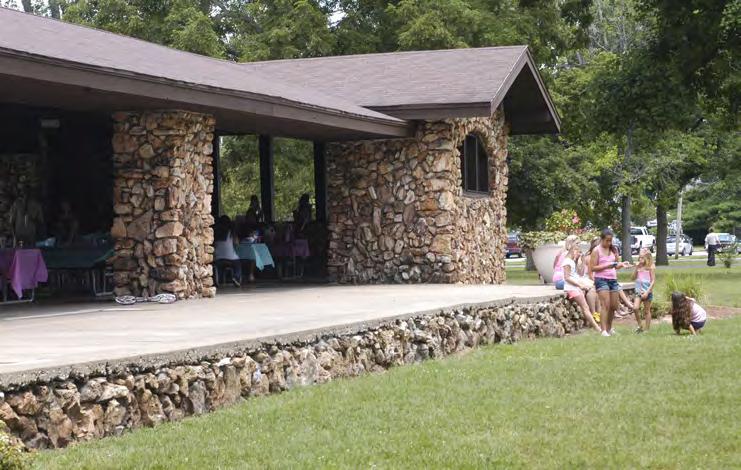
File photo/The Standard Phelps Grove Park, located just south of campus between Kimbrough and National Avenues, offers lots of shade trees and pavilions to take a rest under while studying for tests or assignments.
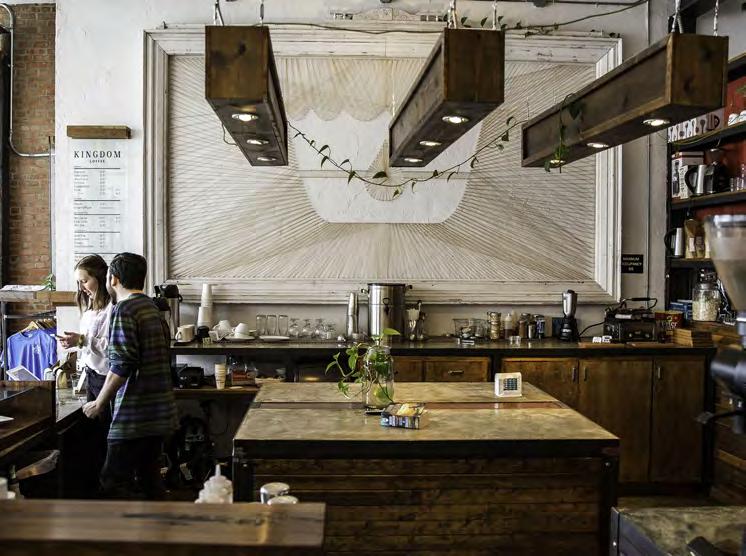
File photo/The Standard Kingdom Coffee, about 15 minutes from campus, is another great option for those looking to explore Springfield outside of campus. The shop offers traditional coffee drinks, teas and smoothies.
Want a study spot off campus where you don’t have to buy anything? The Springfield Public Library system offers many branches around town to get away from campus without breaking the bank! Park Central Branch Library is the closest to MSU, located inside the downtown square. However, Springfield’s public library system has locations all around town. Public libraries offer a change of scenery without having to sacrifice a guaranteed quiet and free study space. If you are wanting to get off campus without dealing with buying a coffee or having noisy table neighbors, the library would love to have you!
Wanting to get outside for your next study session? Phelps Grove Park is close to campus and offers many ways to study! Phelps Grove Park is less than five minutes from campus right by the Springfield Art Museum. The park is beautiful with massive trees, a luscious lawn and a stream running parallel to the park. You can set up the perfect study space under the pavilion, on a picnic table or park bench or lay out your favorite picnic blanket and lounge under a shady tree. You can even string up a hammock and knock out some assigned reading! Phelps Grove Park has plenty of parking and space to offer peace of mind and quiet while studying. There is even a paved trail around the perimeter of the park if you find yourself in need of study break! So pack your lunch and school essentials the next the weather calls for outside time and head over to Phelps Grove Park!
If you’re craving a sweet treat while you’re studying, Hurts Donut is a classic. Open 24/7, with a variety of delicious donuts and unique flavors, you can stop in anytime to grab a snack and study.
A student favorite, The Potter’s House is the perfect place for some late-night caffeine while you study. Right next to campus, it has many comfy seating options and a great atmosphere for studying. It is open until 10 p.m. from Monday to Friday.
If you’re hungry while studying, a sandwich from Pickleman’s Gourmet Cafe is sure to hit the spot. Open until midnight (and 2 a.m. on Fridays!), this cafe is the jackpot for late-night snackers, offering tasty sandwiches, mac ’n’ cheese, pizza and more.
Another great pick for some pick-me-up caffeine during study time, The Magic Bean is a hidden gem. Open from 5 p.m. to midnight every day except Sunday, The Magic Bean offers a cozy vibe and freshly brewed coffee, also promoting local art.

Join our team and gain valuable experience in financial management. At Great Southern, you'll learn essential skills that will serve you for a lifetime. With over 100 years of excellence since our founding in 1923, we're committed to your professional growth.
Enjoy flexible scheduling and a supportive work environment that helps you balance work and life. Together, we can build something greater. Apply today.
ADEN ZUCCARINI
Former Springfield News Team Leader
Ever since Missouri State University was established, there has been a need to house students on or near it.
From Wells House and Freudenberger House to the newest residence hall, Heitz House, there are 117 years of history linking student living from start to present.
When Missouri State was first constructed in 1909, there was very little accommodation for its students. So much so, that it fell primarily onto the Springfield community to house the students.
Many homes in the area were built with additional spaces to house and board students to compensate for the lack of campus housing.
Many buildings in the area were built with the express purpose of housing students, a few of these apartments exist to this day, still housing students 100 years later.
A faculty organization aided in fundraising to purchase two prefabricated wooden buildings that became the first, temporary, dormitories at MSU.
The residence halls opened in 1910 and were remodeled in June 1925 yet could not be brought up to code as they were not fireproof, nor fully insulated. These two dorms closed in 1932, with an uncredited reporter from The Standard investigating the building and seeing it in disrepair.
“Edgar Allen Poe could have found material for at least one spooky story in the now deserted dormitory,” the unknown author wrote in a January 1932 issue of The Standard.
The Missouri Legislature never provided funding during this period to construct housing on campus, which caused an unofficial agreement with the community to house the students.
Between 1932 and 1946, there were no on-campus living facilities. When, in 1946, the Federal Government began
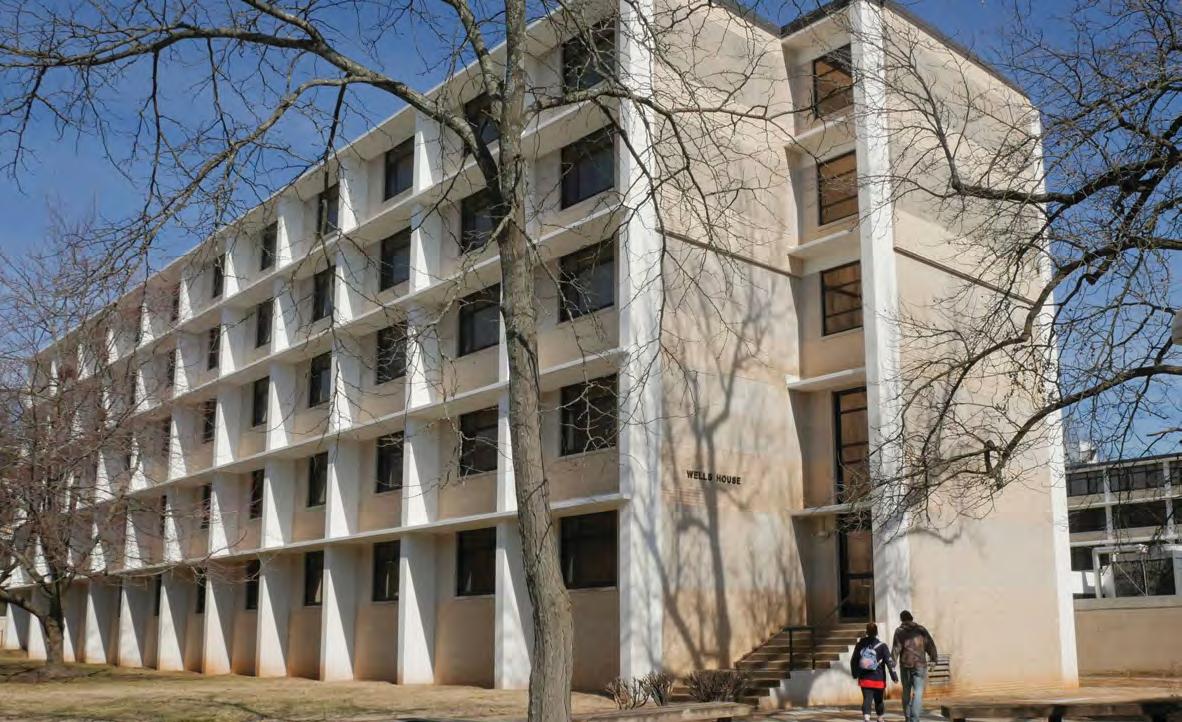
Wells House was the first “brick and mortar” residence hall constructed solely for housing students. The hall was named after former Dean of Women Nancy Bertha Wells.
selling its assets from World War II, an opportunity presented itself.
Eight barracks complexes were moved on campus first to where Freudenberger House is today, surrounding McDonald Arena’s outdoor Olympic-size swimming pool, which opened in 1942.
Six of these buildings were converted to apartments and two were reserved for single male students.
Former Missouri State University President Roy Ellis later reminisced about these living facilities in his book Shrine of the Ozarks.
“There is nothing more in the academic scene more permanent than temporary housing,” he wrote.
Those same buildings remained until Freudenberger House was built, then moved to the southwestern most corner of campus. The Reserve Officers Training Corp (ROTC) maintained their use for on-campus Cadets until they were demolished in the late 1960s.
Wells House was the first brick and mortar dormitory on the Missouri State campus. The Missouri General Assembly allocated funds to assist in the building project in 1947. With that, Wells house opened in 1950 as the “Dormitory for Women.”
In 1959, major additions to the
dormitories went underway with Wells House being expanded and given the size it has today.
Soon after, Blair-Shannon House made its entrance as the “High-Rise Dormitory” – construction began June 18, 1965. Originally, each tower of the residence halls were gender separated, with the now-Blair Tower being the women’s side and Shannon Tower being the men’s side. Blair-Shannon opened soon after Freudenberger House. Through 1967, Freudenberger Hall was constructed as a split dormitory, with men living on the west side and women on the east. It has the distinction of being the first res-
idence hall named after a faculty member.
Throughout the 60s, fraternities and sororities were buying houses in the nearby neighborhoods. Thus, beginning the Greek traditions at Missouri State.
Woods House was added due to lack of housing, opening in 1971 as a women’s dormitory.
The university had added five student residence halls in 20 years. MSU went from not having any on-campus living facilities to housing 2,500 students in 25 years, an annual increase of 100 students per year.



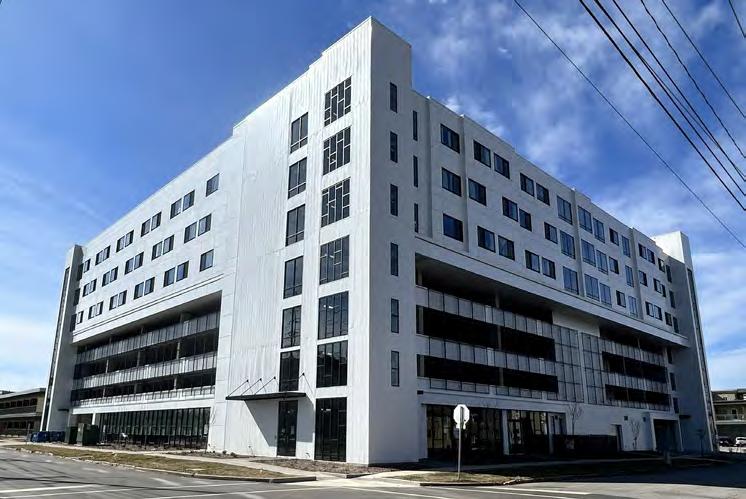
File photo/The Standard
Heitz House, the university’s newest residence hall, was completed in 2022 and opened to students in the fall of the same year. The building features its own dining hall, convenience store and parking garage.
In November 1975, a report was delivered to the Board of Regents that residence hall occupancy had reached 98 percent. The university was planning to build again, when it was discovered that Sunvilla Apartments, just down the road, were for sale.
Donald Landon, author of “Daring to Excel,” described the situation as a “dream solution” to aid Missouri State. The university purchased Sunvilla Tower in 1976 for $1.7 million.
All existing leases were honored by the school, meaning for the year, students and non-students lived in the same building.
In the mid-1980s, the school maintained its search for housing solutions and was determined to find a private entity to construct the new residence, so that it could be paid for by residence hall fees.
In 1983, John Q. Hammons, of real estate developing fame, sold Kentwood Arms Hotel to MSU. Built in 1926, it was originally a hotel that held many notable individuals. Bob Hope and Groucho Marx are included in that list of people who stayed at Kentwood Arms.
According to the Springfield News-Leader, Richard Nixon, then-presidential candidate, held a campaign event at Kentwood in 1960.
Nixon gave an ultimatum to the hotel, that if Black reporters were not allowed to stay there, he would simply not make the stop in Springfield. This led many local businesses and the Kentwood Arms Hotel to desegregate for a period.
For two years, most businesses around Springfield accepted customers of every kind
before slipping back into a segregated environment around 1962.
The Kentwood Arms Hotel was converted into Kentwood Hall once purchased by MSU, then opened to students in 1984.
Soon after the sale of Kentwood Arms, Hammons accepted the offer to develop and constructed a hall to the north of campus. At the time of its construction, it was intuitive in scope, offering kitchens and maintained facilities that were uncommon at the time.
Missouri State purchased the building from Hammons using tax-free bonds and named it “Hammons House” after its developer. The building opened while still under construction in the fall of 1986.
Hammons House received a major update in 1991 with the addition of a second tower that later became its own stand-alone dormitory. Named after the Hutchens family of Springfield, Hammons’ twin, Hutchens House, was born.
With the latest student surge at Missouri State, Heitz House made its entrance in Spring 2022. It was named after real estate developer John A. Heitz in July 2022.
Heitz House has been the most recent development of on-campus housing in decades. With self-contained parking and dining, it marks itself as a campus of its own.
From year to year, campus housing seems like a constant of life at Missouri State. Just to think about a day and age where student housing was a private, community endeavor reflects how far the school has come since 1905.
MSU’s six-wheeled deliver-bots can do for you
Starship Technologies officially expanded its robot food delivery service to Missouri State University in 2022, making MSU the first college in the state to use the food delivery system. Since then, the robots have remained a campus mainstay. Here’s your guide to MSU’s Starship robots:
Starship robots come equipped with a surprising bonus that sets them apart from other food delivery services like Uber Eats and DoorDash — they have zero carbon emissions, with one trip equating to boiling water for a cup of coffee, according to the Starship website. While food delivery giants like DoorDash are emphasizing bike deliveries to limit emissions, sprawling cities like Springfield, where restaurants may not be close to residential areas, limit the ability for expanded bike delivery systems.
If you have a hankering for one of MSU’s many campus food stops (Einstein Bros., Chickfil-A, Subway, Panda Express, etc.), the process of ordering robot-delivered food as a student is simple. All you have to do is download the Starship app, set the location to MSU’s campus, select the store you want to order from and, if the store is open, select your order. Then drop a pin at the delivery location. From here, you can pay using a personal card or dining dollars.
Like other aforementioned food delivery systems, Starship comes with additional delivery fees for both Starship and MSU. Each robot has the storage space for three grocery bags and traverses campus terrains using machine learning, sensors and artificial intelligence alongside a bogie system on its wheels, according to previous reporting from The Standard. The robots are largely autonomous and are meant to be charged on-site.
For students entering focus mode while studying for a major assignment, the robots provide a meaningful alternative to time-consuming trips to the Plaster Student Union, especially for out-of-the-way residence halls and on-campus apartments like Kentwood, Sunvilla or Heitz.
One such student, senior Zoe Stevens, said she uses Starship for food deliveries about once a month when unable to physically drop by the
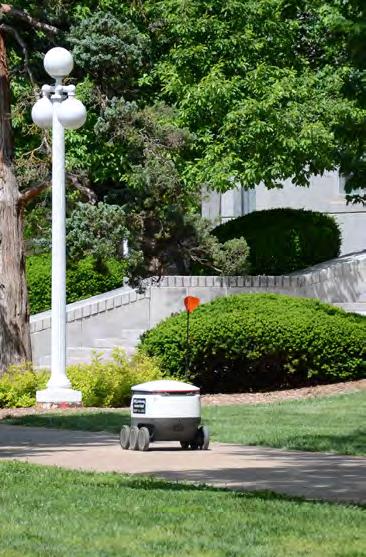
Photo by Jayden Pettus
Students can purchase food for delivery with a debit or credit card, as well as dining dollars.
PSU.
“They come in handy when I need something for dinner but don’t have time to cook or groceries,” she said.
She added that sometimes, though, their speed of service is not up to par.
“Sometimes the robots take 45 minutes to arrive to the destination, so it kind of makes the wait not worth it,” Stevens said.
Starship currently serves over 60 campuses in the United States, contributing to the over 9 million deliveries Starship has undertaken so far. Starship’s earliest test drives took place in 2015 in European cities, according to the Starship website. It was launched in 2014 by Skype co-founders Ahti Heinla and Janus Friis. Heinla’s original inspiration came from entering a NASA competition to build a robot for Mars missions. Since then, other robot-driven food delivery systems have surfaced, including Serve Robots and Coco.























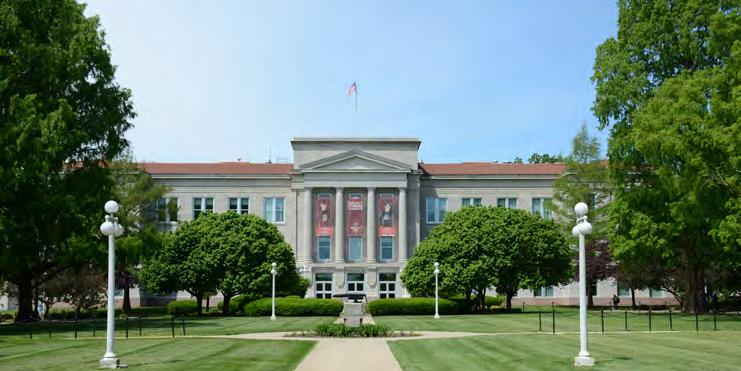
Photos by Jayden Pettus, Qjpettus_media
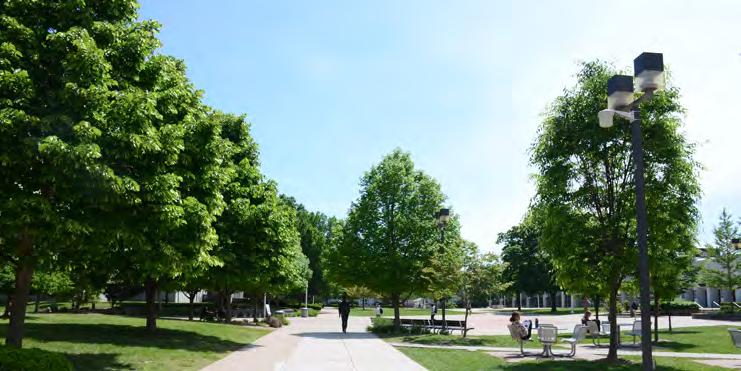
Missouri State’s Historic Quadrangle was once the extent of the campus’ stretch in central Springfield. Since 1925, its reach has stretched many blocks. The expanse directly west from Carrington Hall formed the Marshall Gordon Plaza, which reaches Strong Hall.
Springfield News Team Leader DAden_Zuccarini
Missouri State University has a unique campus layout, with its open spaces and John Q. Hammons Fountain. There have been decades of development behind the design and we’re taking a look into its formation and history.
The Missouri State plaza, the patch of greenery that extends from the backside of Carrington Hall to the front doors of Strong Hall, is not the first plaza that Missouri State has utilized. The first was the Historic Quadrangle, or the boxed in front lawn surrounded by Carrington, Hill and Siceluff Halls.
Roy Ellis, the university’s third president, who graduated Missouri State in 1911, recounted in “Shrine of the Ozarks,” “The campus as I saw it in December, 1908, looked a bit bleak compared with later years. The original building, then known as Academic Hall, looked lonely in the center of campus.”
In the summer of 1908, Carrington Hall — then-Academic Hall — was opened for its first semester of use. The words on the front of the building say “Administration Building,” this change occurred in 1945 when the concrete above the entrance was replaced for reasons of safety.
Hill Hall, once Education Hall as it is still adorned, had its cornerstone laid on July 27, 1922. It was around this time that plans for the quadrangle took shape, with the original three buildings boxing in the plaza.
Education Hall held the honor of being designed by Clyde M. Hill, Missouri State’s second president. The names around the top of the building came when the college’s senior class graduated, they voted on who they thought led “noteworthy advances into an educational endeavor”.
Within Hill Hall were teaching facilities that served the K-12 grades. This was a training school for Missouri State in its teacher’s college years. A gymnasium was furnished in the basement that held early games and physical education classes.
Siceluff Hall, then the Science Building, came into existence when there was little idea of where the labs and chemistry equipment should be permanently placed. Its construction broke ground in May 1925.
The construction firm that was building Siceluff Hall sued the school in late 1927 because of “damages due to delays” which was lost in the U.S. district court in Springfield.
Plaster Stadium has had many interactions over the years. The stadium came to fruition in 1930, when it was simply a field with grandstands around the edges. Previously, the football games had been held in “The Grove,” where Freudenberger House now sits.
During this time, the area was called Briggs Field, named after the first winning coach in school history, Arthur Briggs.
In 1941, with help from the Works Progress Administration (WPA), Briggs Stadium took shape with construction that leveled the land and added a concourse with seating. Briggs
Stadium seating is still visible today. When entering on the general admission side, the concrete boxes and seating from sections A to L is original to Briggs Stadium.
McDonald Arena, first called the Health and Recreation Building, was constructed in 1940. It was half funded by WPA and Public Works Administration (PWA) grants, and had its cornerstone laid on Feb. 6, 1939, The arena opened its doors in late 1940.
McDonald was constructed with 3,200 opera-style chairs around the perimeter and, with additional metal seating, could hypothetically reach a 5,000-person audience.
The east and west sides of the arena contained the women’s gymnasium and men’s gymnasium. The Olympic pool — once behind McDonald Arena — took seven years to complete and opened in 1942. President Ellis blamed WWII as the reason the pool took so long to construct.
Campus’ current Roy Blunt Hall began — many seniors may recall — as A.P. Temple Hall. It opened its doors in 1970 and was the second science facility constructed. It was named after the first head of the science department, Allen P. Temple.
Temple was the first instructor at Missouri State University to implement film and radio into the curriculum. Many of Missouri State’s earliest films of sporting events were taken using Temple’s personal film equipment.
Duane G. Meyer Library was completed in 1980, and was the second library on the MSU campus. Cheek Hall, once named Memorial Library, was the first library on campus.
The fountains seen between Meyer Library
and Roy Blunt Hall, officially John Q. Hammons Fountains were dedicated on Aug. 18, 1980. At that point, Blunt Hall and Meyer Library were as far as the plaza extended.
Glass Hall, holding the Missouri State College of Business, began construction in the late 1980s. David D. Glass, then-CEO of Wal-Mart and MSU alum, gifted the school with funds that were to aid in construction.
The O’Reilly Auto Parts Grand Atrium and Robert Gourley Student Success Center in Glass Hall was added in 2017. Adding the glass exterior to the building and numerous open spaces for students, finally making it a “glass hall.”
In 1998, the largest classroom building on campus up to that point had been completed. Strong Hall, acting as the end-cap to the Marshall Gordon Plaza, was built for $20.3 million.
Strong Hall began as the Public Affairs Building, until a donation from the Tom Strong family in the early 2000s led to it being renamed in 2002.
Other areas of campus have seen the steady growth of the university, as well. The southeast corner saw the additions of Craig Hall and Karls Hall in the 1970s.
The original Art Annex was added in the early 1950s, but since has been replaced by the construction of the Judith Enyeart Reynolds Performing Art Complex, set to be complete by fall 2026.
Downtown has seen Brick City 1, 2, 3 and 4 were renovated and have been used for the arts as the city seemingly becomes one with MSU.







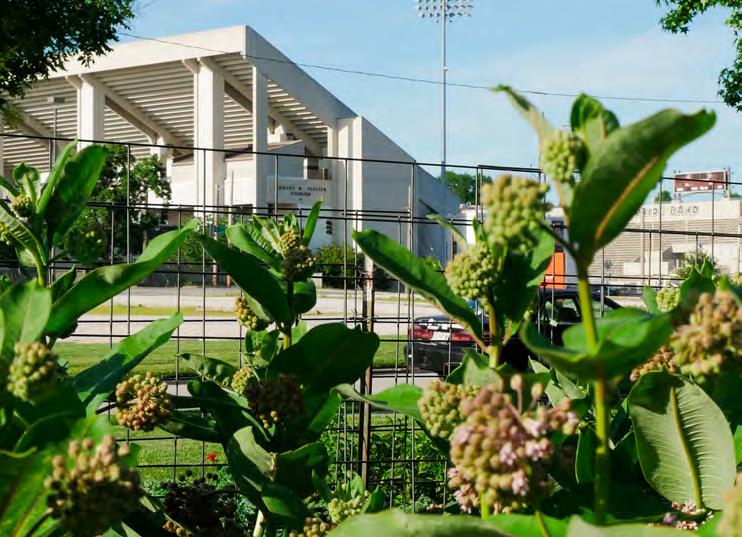
File photo/The Standard MSU’s Campus Garden gives students a chance to learn about gardening and sustainable food systems.
There are many ways students at Missouri State can help the planet by living a more sustainable life. From campus events to student groups and special events, Missouri State makes taking care of the planet a part of student life.
One big help for students is the Student Sustainability Fund. The fund gives more than $150,000 — and is even growing to more than $250,000 — to help students with their sustainability projects. Students can propose ideas and get money to make them happen, which helps create real change on the campus of Missouri State.
A key group that is leading these efforts is the SGA Sustainability Commission. The commission helps give students the opportunity to go green for the Earth, campus and the economy. They look at proposals, give money to projects and have events to teach students about sustainability, like this semester’s Sustainability Panel with Hidden Gem and SAC. Joining the SGA Sustainability Commission is a way to get involved and make a difference at Missouri State.
Students can also get their hands dirty at the MSU Campus Garden. The MSU Campus Garden is a garden that students run, growing or-
ganic food for Missouri State’s campus and the local community, including the Bear Pantry. It also gives students a chance to learn about gardening, working together and sustainable food systems at Missouri State.
For a fun and social way to help, students can join The Hidden Gem, which helps people thrift clothes instead of buying new ones, which reduces waste and gives students a cheaper option to shop for clothing.
Missouri State also helps the planet through water fountains that double as water bottle refill stations on the campus of Missouri State. These have saved over 3 million plastic bottles from going to the landfill, and there are recycling bins throughout campus to help reduce waste at Missouri State.
With many chances to volunteer, there are many ways to get involved with helping the planet at Missouri State, whether it is joining a group, going to an event or making changes in everyday actions.
At Missouri State, students have the tools, resources and support from the community and university to build a sustainable future for the planet. Earth Week may come once a year, but at Missouri State, caring for the planet is a mindset that should shape our choices every single day.
AVA GORTON Former Campus Activities Team Leader Qavaggorton
Missouri State University’s Fraternity and Sorority Life (FSL) is alive, thriving and excited to welcome new members when the fall semester begins. With over 28 Greek letter chapters on campus, incoming students and returning students can find their home away from home within FSL.
FSL at Missouri State has three different councils: Panhellenic Association (PHA), Interfraternity Council (IFC), and National Pan-Hellenic Council (NPHC).
At the beginning of the semester there are several opportunities to meet the different chapters on campus, including events throughout campus’s welcome week such as Grab a Scoop with FSL and Greek Street.
Panhellenic Association (PHA)
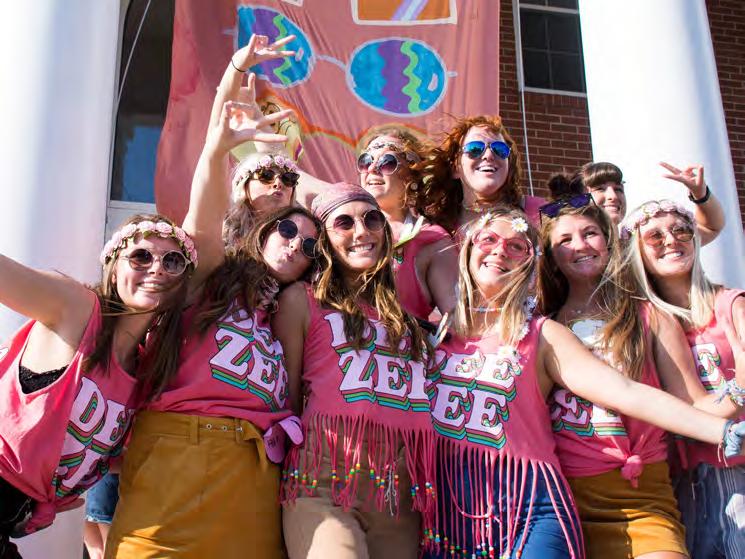
PHA formal recruitment begins the first week of the school year. Each girl’s recruitment schedule is made so they won’t miss any classes. During the formal recruitment process, girls
will have the chance to visit all the houses on campus and get to know the girls in the chapters.
Interfraternity Council (IFC)
IFC recruitment lasts several weeks throughout the beginning of the semester. Each chapter will host events such as sports watch parties, house tours, piano smash, philanthropic events, and more. Throughout this recruitment period, guys will get to meet men from the various chapters on campus and learn more about each chapter they can earn bids from.
National Pan-Hellenic Council (NPHC)
NPHC is Missouri State’s historically African American council of fraternities and sororities. The NPHC chapters are smaller but very tightly knit, with a more discrete recruitment process. Recruitment can happen year round.
Looking Ahead
FSL has a fun-filled fall semester and highly encourages students to get involved. For more information on recruitment or anything FSL, check out their socials: @mostatefsl @mostatepanhellenic @mostateifc @mostatenphc
File photo/The Standard
PHA formal recruitment starts during the first week of school. Girls who want to join a sorority will have the chance to visit all the houses on campus while getting to know the members.
EXPLORE YOUR OPPORTUNITIES 2024
Are you ready to hit the fast lane toward your future? The O’Reilly Auto Parts Internship Program is your roadmap to real-world experience, networking, and professional development.


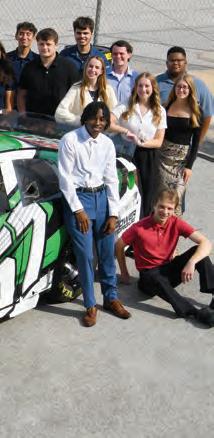
Don’t idle in uncertainty - hit the accelerator and apply today!

Missouri State is planning a music festival-inspired homecoming experience with this year’s “Bear-Chella” theme.
The theme was selected after the Missouri State Homecoming Committee let students vote in early April on Instagram. The other two options were “Boomers Arcade Arena” (video/arcade games) and “The Bear Games” (Olympic-style competitions).
While this year’s theme draws inspiration from Coachella, there will be no live performances. However, the homecoming committee intends to infuse music and a festival atmosphere into all their events.
“When this theme was selected, we were excited to see what everyone would do with it,” Homecoming cochair Luci Siler said. “We feel like
there are so many routes each team can go with their artist they pick, and we think it gives them a lot of creative freedom to do different things.”
Homecoming-themed musical events and activities will run from Nov. 8 through the football game against New Mexico State on Saturday, Nov. 14. A variety of celebrations are planned, including the annual kickoff event, where students can enjoy chalk art and window painting, followed by a block party featuring local businesses and organizations tabling their services for the Missouri State community.
The week will also feature returning favorites like the Rockstar singing competition and Mo State Live, where groups can compete in performances or skits that incorporate the Bear-Chella theme. The homecoming parade will also return, adding to the festive atmosphere.
Throughout the week, the Homecoming Committee will host a donation drive, with each day dedicated to supporting a different organization. Teams will provide lists of requested items to ensure each organization receives what it needs.
“Based on what I am hearing in all our planning meetings, I am excited to see everything come together for everyone to enjoy,” Siler said.
Season tickets for the 2026 football season are now available. Visit MissouriStateBears.com/tickets or call (417) 836-7678 during box office hours for more information.
Interested in working on Homecoming? Contact the Alumni Association.
Want to stay updated on Homecoming events? Follow @mostatehoco on Instagram.

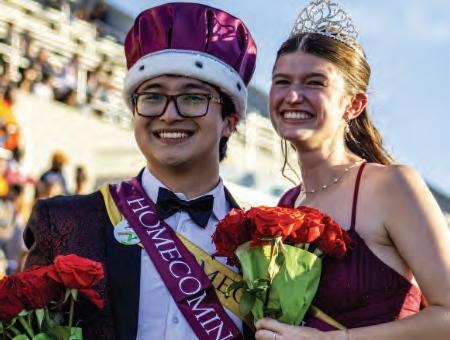
Homecoming’s theme for 2026 will be “Bear-Chella.”







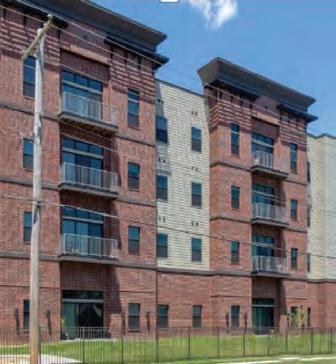







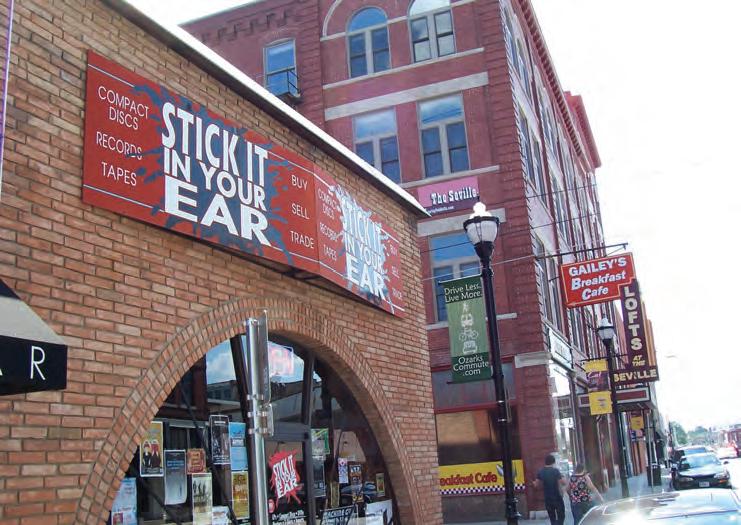
















































ELLA CONKLIN Editor-in-Chief Q_ellaconklin
For many young adults, college comes with an unprecedented amount of independence. While this independence allows many to grow and discover who they are, it can also be a source of stress. A typical stressor for students is creating a budget to manage varying sources of funds, incomes and expenses. Here are some quick tips to help students budget while studying at Missouri State University.
Students need to be aware of their finances. Students should know how much money they are receiving in financial aid, loans, scholarships, income and other areas. In addition, students need to know their expenses. How much does a semester at MSU cost? How much does room & board cost? What other expenses might a student have?
Once a student has established sources of income and expenses they can start to build a budget. Federal Student Aid (FAFSA) recommends splitting all expenses into wants or needs in a budget.
For example, tuition, rent, groceries and car payments are all expenses that would fall into the need category. While, concerts, vacations and shopping hauls would all most likely fall into the want category. Once done labeling expenses, students are able to prioritize where their money is going.
Once students have a good idea of where their money is coming from and where it is going, they can create a budget. Whether students track their finances weekly or monthly, students should set up a budget through a spreadsheet, an app or a website to help track and guide their finances. Students can download free budgeting templates or utilize free budgeting apps. Let fixed expenses like rent or tuition guide where your income goes first. Once fixed expenses have been accounted for and paid, variable expenses can be dealt with. Variable expenses can be split into two categories, discretionary and non-discre-

Illustration by Ella Conklin
As a full-time student, it can be hard to manage your money, especially with the economic uncertainty many Americans are experiencing today. Budgeting can help to relieve money-related stress by setting clear boundaries around what you should or shouldn’t spend your income on.
tionary. Non-discretionary are the variable expenses students have to pay for like groceries or gas. Discretionary are expenses up to the student like eating out or catching a movie. Variable expenses vary over the course of a week or month and allocating proper space in a budget for them is important. FAFSA suggests that students overestimate their expenses and underestimate their income to allow for wiggle room in a budget. Once labeling expenses as
needs and wants, fixed and variable, and discretionary and non-discretionary, students can begin actually allocating funds.
Allocating funds is assigning each dollar a place, be it rent, tuition, grocery or savings and allows students to see where their money is going and manage it better. Giving each dollar a place, even if it’s for a sweet treat every now and again, can help relieve stress around managing money, as students see where their money is
going and are able to mitigate waste. A proper budget can allow students to be independent with peace of mind.
FAFSA also recommends setting financial goals. Maybe a student wants to graduate debt free, save for study abroad, buy a new car or start investing in the stock market. Whatever it is, having saving goals can help students be more money conscious in their day-to-day, establishing smart money habits and showing students they can forgo the tempting
material items to save for something more meaningful.
As a student, there are a lot of resources available to save money and allow more room in the budget. Many retailers offer student discounts with a valid student ID. North Face, Apple, Sam’s Club and many more all have various discounts available for students. Many subscriptions also have student plans that offer a lower rate. Spotify, Hulu, Amazon and even DoorDash are services that offer discounted student subscriptions.
While retailers and other companies may offer discounts, it is important that students remain mindful of their budget and finance goals, so they don’t fall victim to flashy sales and small discounts. Distinguishing between wants and needs — no matter the price — will help students keep a successful budget.
In addition, Missouri State offers many resources to help students who may be tight on cash. For example the Bear Pantry, MSU’s food pantry, offers food and hygiene products to students in need. The Bear Pantry has no income stipulations. Fill out the membership form at www.missouristate.edu/CCE/bear-pantry.htm.
The Center for Community Engagement page on the MSU website can also connect students to various food, housing, clothing and health resources on and off campus. Resident Life on campus can house students in emergency situations. Off campus, Care to Learn is a Springfield-based organization dedicated to helping students meet basic needs, clothing, hygiene and food to assist them reaching their educational goals.
The Office of Student Financial Aid can also help students manage a budget and find resources to support them financially. MSU students can schedule a meeting with a financial aid counselor about scholarships, federal eligibility, federal aid and loans. For more information www. missouristate.edu/FinancialAid.
Finally, Boomer Bear, MSU’s chat bot, can answer basic financial questions based on information from the MSU website. Students can simply text Boomer at 844-608-1048 to start asking questions.
In a modern era where students are more digitally connected than ever, many are struggling with loneliness, forcing universities across the U.S. to rethink what connection actually means.
College is marketed as one of the most social and memorable periods in a young adult’s life, yet national research suggests loneliness among college students is not only widespread, but also rising. The American College Health Association’s research shows a significant number of students self-reported feeling “very lonely” within the last year.
As college students across the U.S. watch the notifications pile up while connected to thousands online, many say they have never felt more alone.
Just three years ago, the U.S. Surgeon General’s Office issued a national advisory formally declaring loneliness as a public health concern due to
the mental and physical health risks. While loneliness is nothing new to college campuses, mental health experts claim modern technology has reshaped its form.
For many of today’s students enrolled in college, connection is constant and always has been. To students in this age range, even things like group projects have always been completed over online shared documents. Friendships are maintained over Snapchat streaks, and social validation comes in the form of little red pixel hearts. Through all of this digital interaction, how much of it actually translates into meaningful connection?
A large number of college students self report spending hours on social media while struggling to form deeper in-person connections. Experts claim that while technology makes communication easier, it has also created barriers that block authentic, raw social interaction college students need to thrive.
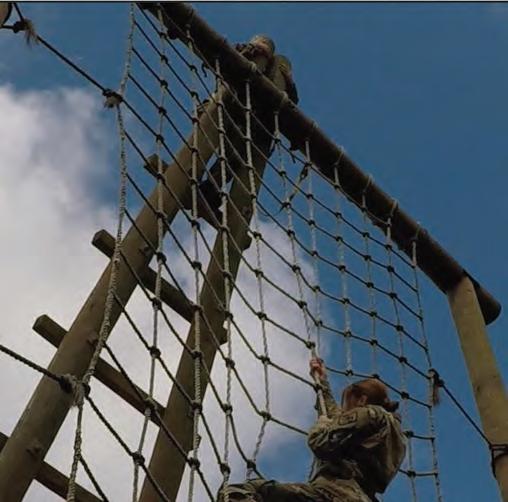


“Social media gives the impression that everyone else is constantly socializing and living their best life,” said Amarri Morrison, a third-year student who has received aid from the Missouri State Counseling Center. “That perception can really intensify feelings of loneliness and exclusion.”
While technology has reshaped how students communicate, it has not entirely eliminated that fundamental human need for connection. For many students, the real challenge is learning how to balance digital interaction with real relationships that go beyond the screen.
As universities continue adapting to our evolving digital age, remember to get involved physically, because even in a hyperlinked world filled with notifications and networks, real connection is something that cannot be replaced.

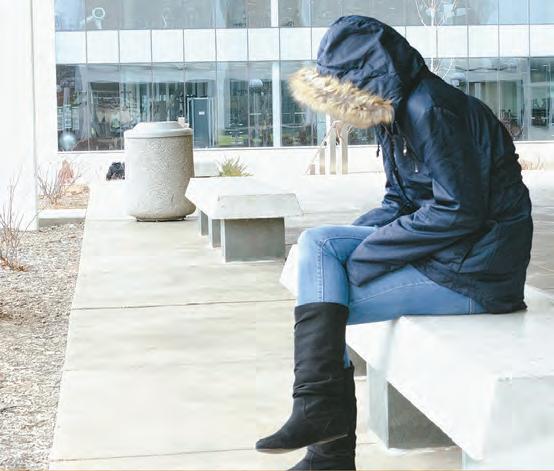
File photo/The Standard
The best way to break out of a funk where you’re feeling lonely is finding your people through in-person involvement on campus.






MAKANAKA BGONI, ELIZABETH THOMPSON Reporters
Qmakanakabgoni
Qelizabeth.thompson20
2026 is more than halfway over, but the pop culture releases aren’t slowing down in the slightest. If anything, excitement builds as multiple highly-anticipated projects near their release dates. Between the new “Hunger Games” movie, “Avengers: Doomsday,” and the long-awaited “Grand Theft Auto VI,” 2026 is going out with a pop-culture bang! Here is a (non-comprehensive, of course) list of projects to be on the lookout for before the year ends:
Movies
“Resident Evil” (2026)
• Releases Sept. 18
• Horror, Sci-Fi, Action
“Verity”
• Releases Oct. 2
• Psychological Thriller, Mystery, and Drama
“The Legend of Aang: The Last Airbender”
• Releases Oct. 9
• Animated, Action-Adventure, Fantasy
“Godzilla Minus Zero”
• Releases Nov. 6
• Sci-Fi, Action, Drama
“The Hunger Games: Sunrise on the Reaping”
• Releases Nov. 20
• Dystopian, Action, Sci-Fi
“Avengers: Doomsday”
• Releases Dec. 18
• Superhero, Action-Adventure, Sci-Fi
“Dune: Messiah”
• Releases Dec. 18
• Sci-Fi, Space Opera
“Jumanji 3”
• Releases Dec. 25
• Action-Adventure, Comedy
Books
“The Unknown” by Rylie Sager
• Releases Aug. 4
• Suspense, Horror, Psychological Thriller
“Falling Into You” by Emma Harrison
• Releases Aug. 4
• Young Adult, Romance
“The Women in White” by Sarah Pekkanen
• Releases Aug. 4
• Thriller, Paranormal, Historical Fiction
“Death Card” by Jasmine Smith
• Releases Aug. 11
• Young Adult, Fantasy
“The Pirate Queen” by Ariel Lawhon
• Releases Sept. 8
• Historical Fiction, Adventure
“The Occidental Book of the Dead” by T. Geronimo Johnson
• Releases Sept. 15
• Literary Fiction, Political Fiction
“Marvel Tokon: Fighting Souls”
• Releases Aug. 6
• Tag-Team Fighting, Action
“Halloween: The Game”
• Releases Sept. 8
• Survival Horror
“Phantom Blade Zero”
• Releases Sept. 8
• Action Adventure, Role-Play Game
“Marvel’s Wolverine”
• Releases Sept. 15
• Action-Adventure, Combat
“Grand Theft Auto VI”
• Releases Nov. 19
• Open-World Shooter, Action-Adventure
















The Missouri State University Theatre and Dance Department is excited to present a thrilling line-up of shows this semester. The season includes the play “Back Story”, the classic musical “Company”, the Fall Dance Concert and Molière’s “Tartuffe”.
“I’m just excited for all of them,” said Kathleen Hains, who is in charge of stage management and production management. “They all bring such a unique story arc. We’re doing ‘Back Story,’ which is set in modern times; ‘Company’ we’ve set in the 1970s, so the costumes are just going to be fantastic; and then we have ‘Tartuffe,’ and that’s classical, but yet we’re gonna pull it into contemporary times as well.”
“Back
The first production “Back Story”, written by multiple playwrights, will be directed by Professor Kurt Heinlein. He will creatively take two characters and have them portrayed by multiple actors, creating a unique joint effort and highlighting more artistic talent.
The show is broken up into multiple scenes and monologues, following the lives of siblings Ainsley and Ethan Belcher. Ethan’s birth during a blizzard creates a special bond between the two of them. The play goes through the ups and downs of their relationship, coming back to their special sibling love and loyalty.
“‘Back Story’ is a non-traditional play, in that it focuses on the relatable journey between brother and sister, but with each scene written by a different notable playwright,” said Heinlein. “The shared backstory offers audiences a relatable, heartfelt experience in a format that also expands perspectives and never loses the capability to welcome us into a uniform human experience.”
“Back Story” will be at the Balcony Theatre in Craig Hall, Sept. 24 through Sept. 28 at 7:30 p.m., with a 2 p.m. matinee on Sept. 27.
“Company”
Steven Sondheim’s “Company” will be performed at Credo Arts Center from Oct. 22 to Oct. 26 at 7:30 p.m., as well as 2 p.m. on Oct.
24 and 25. Director Sarah Wiggin and Musical Director Heather Luellen will be teaming up to bring this show to life.
The Tony Award-winning musical is centered around Robert, a 35-year-old man who ponders his life as a bachelor on his birthday. Through different interactions with his friends, he explores the idea of relationships and marriage.
“Company” features the popular songs “Being Alive,” “Getting Married Today,” and “Another Hundred People.”
The Fall Dance Concert will follow on Nov. 5 through 9 at 7:30 p.m. It will be supervised by Jessica Madden, the theatre department’s new dance area coordinator. It will be choreographed and performed by MO State dance students, creating a collaborative performance.
“The fall dance is always fun,” said Hains. “It’s great to see because that’s all student-choreographed, so it’s really cool to see where our students have progressed each year.”
The season will finish out with “Tartuffe,” a classic French satirical comedy set in the 17th century.
Directed by Professor Nichole Ferry, it will tell the story of Tartuffe, a scam artist who uses religion to take advantage of a wealthy man and his family. Explore the themes of deception and religious hypocrisy in this once controversial play.
It will be performed at 7:30 p.m., Nov. 12 through 16 in the Balcony Theatre. Nov. 15 will also have a matinee at 2:00 p.m.
The students of the theatre and dance department work hard throughout the semester to prepare spectacular shows for the Springfield community. Whether it be through acting, costume design, or assisting the director, they have a hand in it all. Come support the arts and receive a magical theatrical experience this fall.
Tickets can be purchased online at mpv. tickets.com with a surcharge fee, or in person at the box office. Students can receive a discount when purchasing tickets. For more information check out theatreanddance.missouristate.edu.

Oct. 22 - 26 7:30 p.m. Oct. 24 & 25 2 p.m.

Sept. 24 - 28 7:30 p.m. Sept. 27 2 p.m.

Nov. 12 - 16 7:30 p.m. Nov. 15 2 p.m.

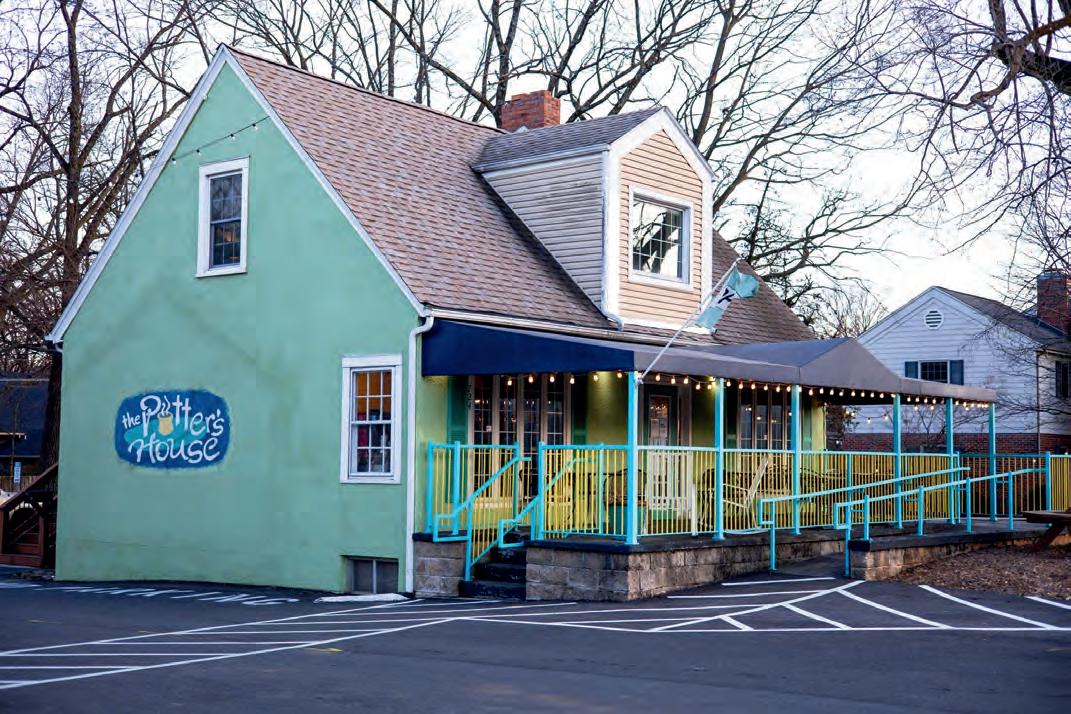


Summer Hours: 7am - 8pm: Tues-Fri 7am - 6pm: Saturday




Y O U R H O M E A W

Come get a cup of coffee and hangout at this home away from home that’s just for you!
We’re the coffee house across from MSU, 724 S National Avenue!
Open late during school year
Voted best place to hangout and #1 coffeehouse by MSU students!
Bring this flier in and receive $1 off any drink!


Expires Dec 31 2026 st Fall Hours: 6am - 10pm: Mon-Fri 6am - 6pm: Saturday

File photo/The Standard The Mizumoto Japanese Stroll Garden, located at 2400 S. Scenic Ave., requires a $6 admission fee.

File photo/The Standard Phelps Grove Park in central Springfield offers a walking path, pavilions and lots of shade for those who love to spend time outdoors.
ABBY SOMMER Reporter
As the weather gets cooler and the days get shorter, don’t run out of time to get outside. Why not go on an adventure with friends? Or find a quiet place to study in nature? Here are some ways you can explore the outdoors this fall:
1401 W. Norton Road, Springfield Nov. - Feb.: 9 a.m. - 4 p.m.; March - Oct.: 9 a.m. - 5 p.m.
If you’re an animal lover, this spectacular zoo is a must-see. With a mission to protect wildlife, Dickerson Park Zoo cares for and rehabilitates animals from around the world. Admission is $19 for adults and teens, and $14 for military members. .
2400 S. Scenic Ave., Springfield Nov. - March: Closed; AprilSept.: 10 a.m. - 7 p.m.; Oct.: 10 a.m. - 6 p.m.
Featuring gorgeous traditional Japanese landscaping, this garden is perfect for getting lost in this spring. With seven acres of magnificent scenery, including pristine lakes and luscious pink cherry trees, Mizumoto Japanese Stroll Garden is a haven for flower lovers this spring. Admission is $6 for adults and teens.
Fantastic Caverns
4872 N. Farm Road 125, Springfield
Seasonal hours are found at missouricave.com.
Take a ride through underground caverns and explore with friends!
Fantastic Caverns is the only cave in North America to offer a completely ride-through tour, using their iconic red jeeps. Discover a world of unique rock formations and rich history in these iconic caves. Admission is $36 for adults and teens.
Phelps Grove Park
950 E. Bennett St., Springfield
With picturesque scenery and easy walking paths, Phelps Grove Park is a perfect shaded spring hangout spot. The park also has many picnic tables and pavilions, great for studying or picnics with friends, and only about a mile and a half from campus.
Sequiota Park
3500 S. Lone Pine Ave., Springfield
Home to Sequiota Cave, this park is perfect for adventures with friends. Sequoia Park has many unique features to check out, including seasonal guided boat tours of the caves that host a colony of endangered gray bats, elegant scenery, walking paths and more.
Wilson’s Creek National Battlefield
5242 S. State Highway ZZ, Republic
Commemorating the second major battle of the Civil War, Wilson’s Creek National Battlefield is a hidden gem. You will be immersed in history as you walk the grounds of the battle site or ride along the bike trails. They also offer a visitor center and museum with even more to learn about the history of the battlefield. Although a half-hour drive, this harrowing yet beautiful landscape is worth the trek.
File photo/The Standard Zoo-goers can visit “Bear Country” at Dickerson Park Zoo, which is sponsored by Missouri State.

File photo/The Standard Sequiota Park, home to the Sequiota Cave, hosts seasonal guided boat tours, walking paths and elegant scenery.

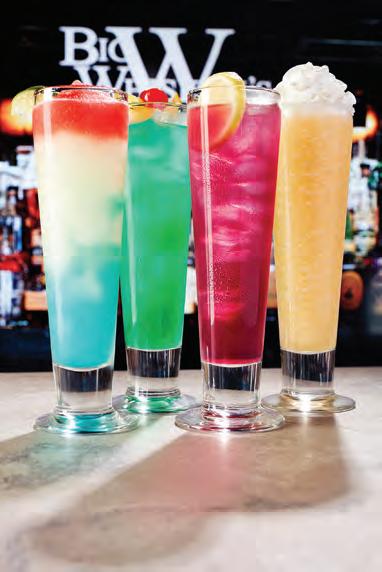


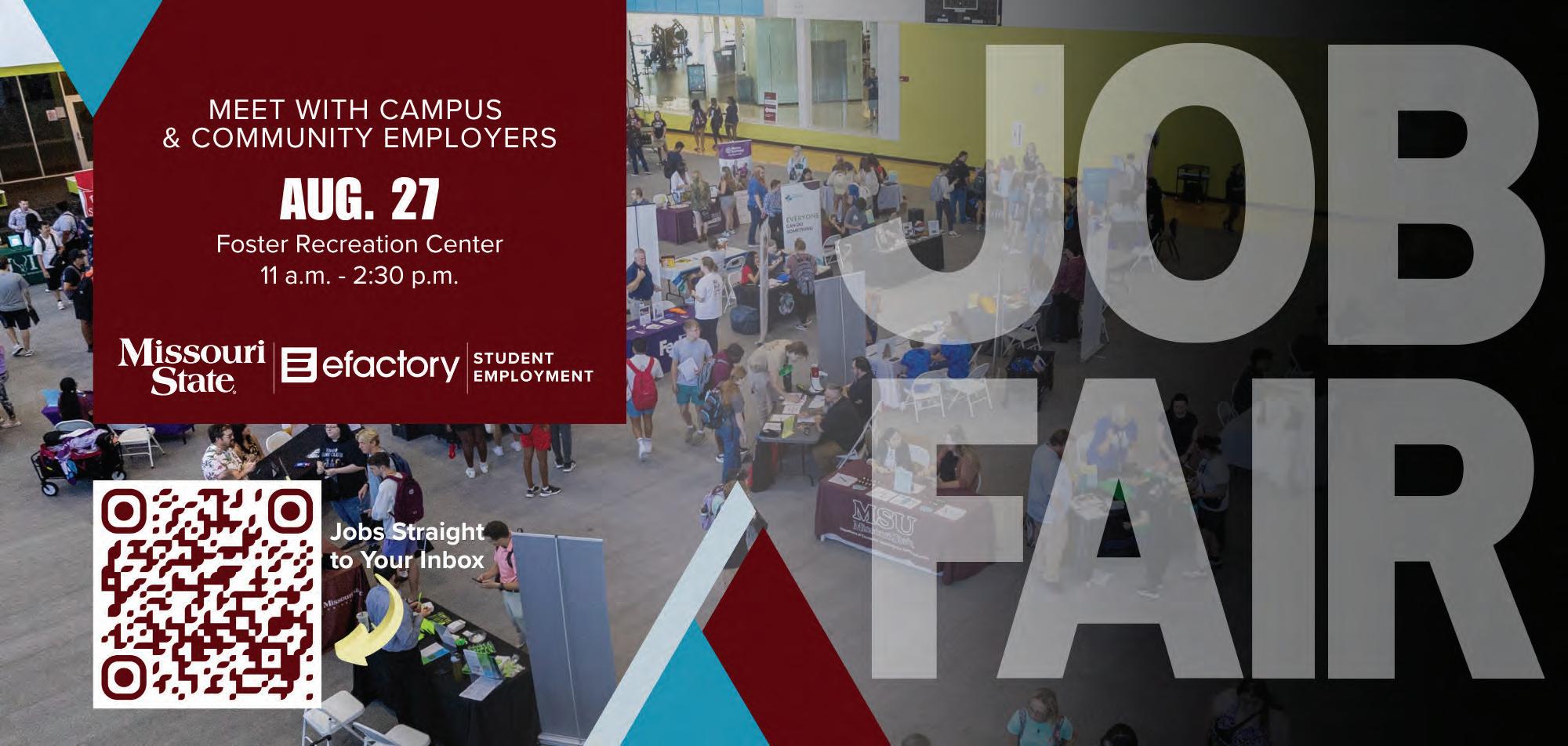
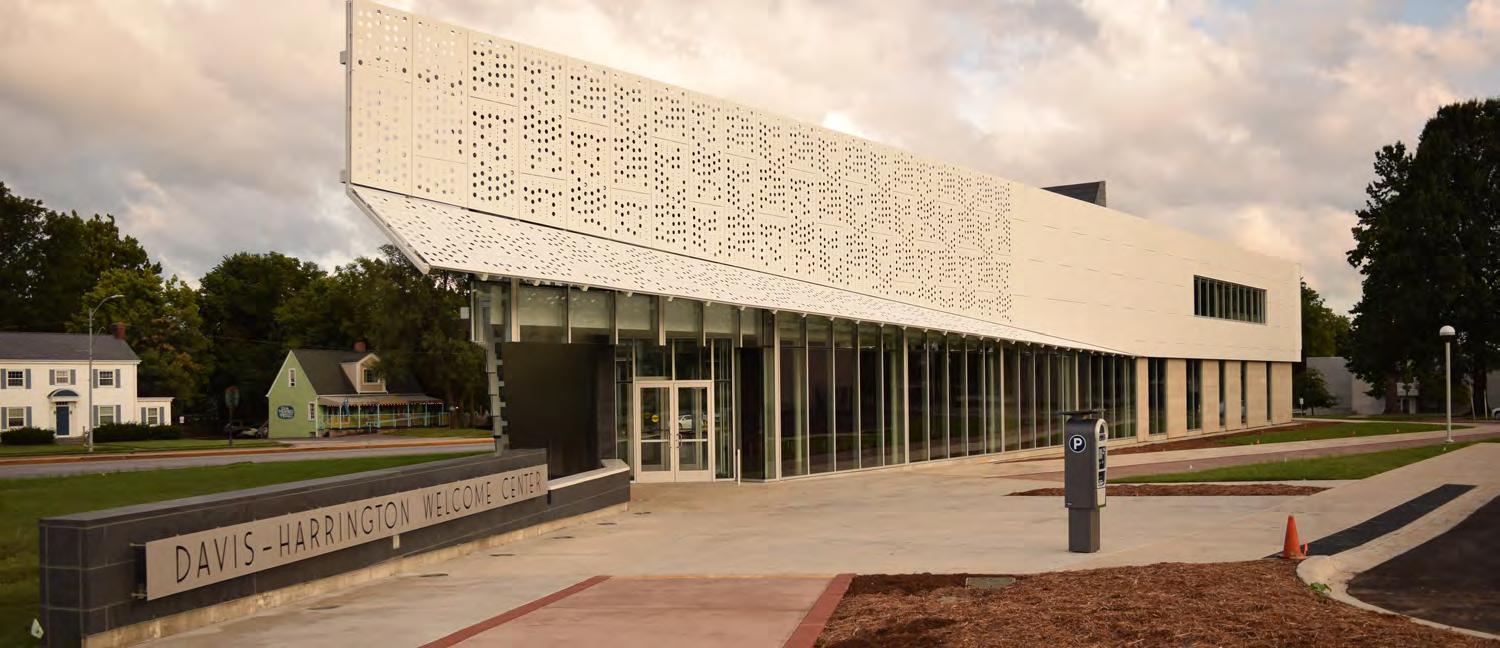
File photo/The Standard
The Davis-Harrington Welcome Center is one of three polling locations on or near campus that students can vote at. Check your voter ID card to see which polling place you should go to.
As a new or returning Missouri State student, one important consideration is voting – should or shouldn’t you become registered to vote in Springfield?
One of the biggest upsides to registration in Springfield is, of course, convenience, as there is no need to coordinate mail-in ballots or Election Day travel. With mid-terms coming up on Nov. 3, here is everything you need to know about what’s on the Springfield (campus) ballot, where to vote and how to register.
This November’s ballot is full of important issues and candidates for national and statewide seats. If you are registered to vote at an on-campus location, here is what we know at the time of publication about what you’ll see on the ballot:
There will be five statewide ballot measures to vote on, regardless of where in Missouri you are registered. These are Missouri Amendments 1–5, and the Missouri Income Tax Elimination
and Sales Tax Changes Amendment.
Amendment 1 covers a sales tax for parks and conservation, with a “yes” vote supporting the renewal of the 0.1% sales and use tax for 10 years to fund state parks and soil and water conservation programs.
Amendment 2 covers the election of the Jackson County Assessor, with a “yes” vote supporting the decision to make the Jackson County Assessor an elected position, instead of an appointed one.
Amendment 3 covers amending the Missouri constitution regarding abortion and gender-affirming care for minors. A “yes” vote supports a variety of amendments, which include repealing the recently ratified right to reproductive freedom; prohibiting abortions except in the cases of medical emergency or fetal anomaly, as well as rape and incest within the first trimester of pregnancy; and prohibiting gender transition surgeries for minors, “cross-sex hormones” puberty blockers and more.
Amendment 4 covers Missouri congressional approval for certain political activities. A “yes” vote supports the decision to amend the Missouri Constitution to require voter approv-
al of citizen-initiated constitutional amendments (such as petitions) at a congressional district, rather than statewide, level; adding language to prohibit foreign nationals and adversaries from spending on ballot measures, including penalties for violators; and adding language regarding penalties for ballot initiative signature petition fraud and other charges.
Amendment 5, the final amendment, covers income and sales tax changes. A “yes” vote supports amending the constitution to reduce the state individual income tax, based on revenue growth, until the tax is eliminated; reducing personal property and other taxes when local revenues increase, while prohibiting reductions in funding for public schools; prohibiting future state individual income taxes; and limiting expansions of sales and use taxes, unless they are used to reduce income tax.
Springfield falls within Missouri’s 7th Congressional District. This U.S. House seat, which currently belongs to Republican Eric Burlison, will be voted upon.
At the state level, the Missouri Court of Appeals Southern District will have two expiring seats, which currently belong to Matt Hamner and Bryan Nickell.
The position of state auditor will be vacant, as will a state supreme court seat, which is currently occupied by Paul C. Wilson. Springfield’s campus housing falls within the 30th State Senate District and 136th State House District. Spots for both state house and senate representatives will be voted upon, with the 136th’s house district spot currently filled by Democrat Stephanie Hein.
The Kenneth E. Meyer Alumni Center, located at 300 S. Jefferson Ave., along with the Davis-Harrington Welcome Center at 705 S. National Ave. are two Springfield polling locations for on-campus students. Additionally, the university typically offers voting at Great Southern Bank Arena. Check your voter ID to see where this location is for you.
The last day to register for the November election is Oct. 7. To check your voter registration or to register, visit the Missouri secretary of state’s website. For updates on resources and issues leading up the election, visit Missouri State’s Paws to the Polls website.










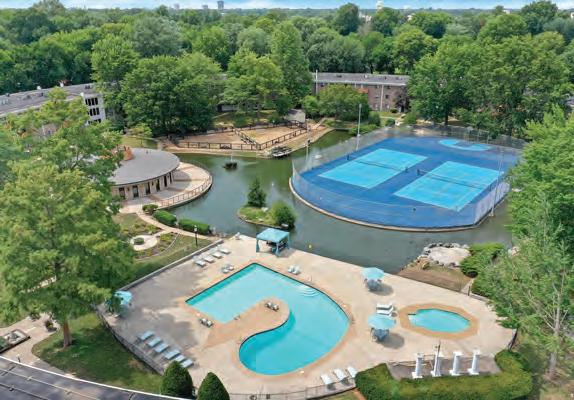








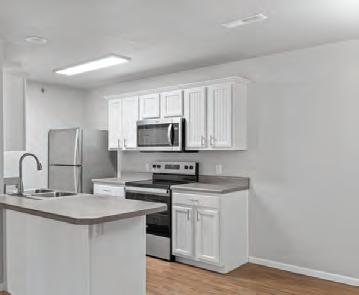






























Recreational activities play a big role in student life at Missouri State, giving students a chance to unwind, stay healthy, and build friendships with others on campus. With the spring semester approaching, students may be looking for club sports or intramural teams to join.
The Bill R. Foster and Family Recreation Center serves as the go-to spot for anyone looking to get involved. From club teams to intramural leagues, Missouri State offers students two major pathways to stay active, meet new people, and make the campus feel more like home.
Missouri State offers a wide range of club sports, including ice hockey, soccer, volleyball, lacrosse, handball, ultimate Frisbee, and more.
Club sports are student-run organizations that compete against teams from other schools. Most clubs hold regular practices and travel for competitions; some clubs require tryouts. Members typically pay dues for equipment, travel, and other club fees.
Club sports are a great fit for students who want a competitive and team-oriented experience, offering the chance to improve skills and build strong team bonds.
Megan Simpson, captain of the women’s ultimate Frisbee team, said she first joined Bearly Lethal to stay active, try something new, and meet people who shared her love for sports.
“Being on the team has boosted my confidence, taught me the value of teamwork, and pushed me to challenge myself,” Simpson said. “Most importantly, I’ll forever cherish the lifelong friendships it has brought me. It’s been such a meaningful part of my college experience.”
Students interested in joining a club sport can browse the full list of organizations on BearLink, accessible through Missouri State’s website, or through the Involve app. Both platforms show each club’s practice times, expectations, and contact information.
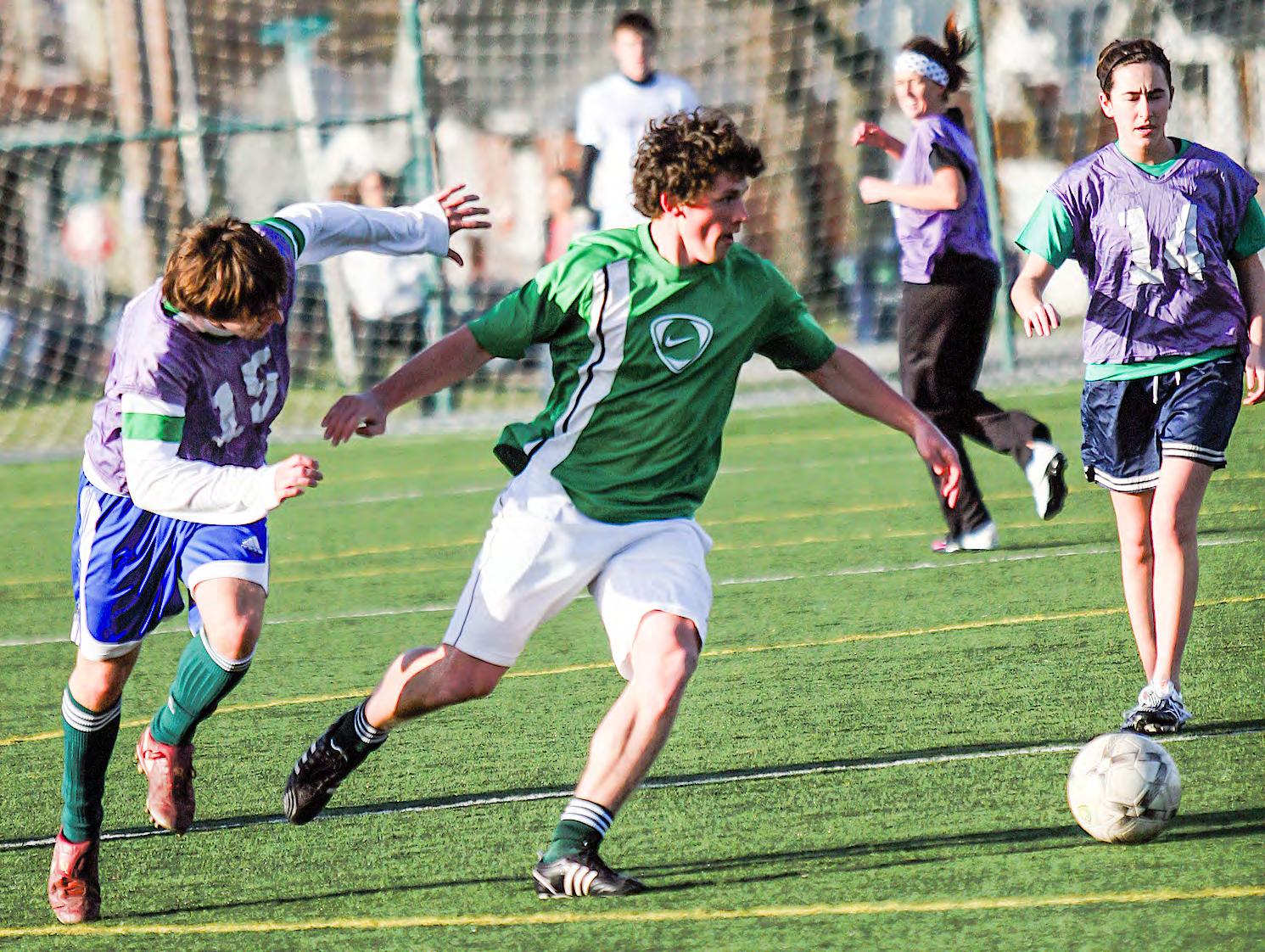
File photo/The Standard
Intramural sports vary each semester. In spring 2026, Missouri State offered indoor and sand volleyball, basketball, outdoor and indoor soccer, flag football and softball.
Intramural sports vary each semester, but commonly include basketball, pickleball, sand volleyball, indoor volleyball, and flag football. Intramural sports allow students to compete against other students on campus in a chill, low-pressure environment. Intramural leagues have weekly games and a shorter season. Students can form their own team or
join an existing one.
Sophomore Megan Mueller said intramural pickleball became one of her favorite campus activities. “It was a lot of fun,” Mueller said. “I got to play with my friends, and I also met a lot of new people. The teams we played against were enjoyable, and we never felt like it was high-stakes competition. A loss was just a loss; it didn’t matter because it was all for
fun.”
To participate, players must first complete the FRC waiver on their My Missouri State account and purchase a $25 Rec Sports PlayPass, which is available online or at the Rec Center. Once registered, students can download the Fusion Play app, sign in with their university email, and begin joining or creating teams for the sports they’re interested in.
Whether students are looking for competitive play or a casual way to stay active, Missouri State’s recreation programs offer something for everyone. For more information, students can visit the Missouri State Campus Recreation website or stop by the Rec Center’s front desk.































25+ AMENITIES FULLYFURNISHED PRIVATEBEDROOMS&























JAMIE SANTNER Sports Reporter Qjamiesantner
Missouri State University has finished up its first year in Conference USA (CUSA) after spending 35 years in the Missouri Valley Conference.
Through each sport, the Bears had remarkable highs and lows throughout the year. Here’s a look at what a few of the Missouri State programs achieved throughout the year, some high and low moments and what to expect from each team in this upcoming school year:
The Missouri State Football Bears had a terrific season. Not only was this their first year competing in CUSA, but it was also their first season competing in the Football Bowl Subdivision (FBS), after spending many years in the Football Championship Subdivision (FCS).
They achieved great success this past season, going 7-6 and competing in their first bowl game in program history — the inaugural Xbox Bowl in Frisco, Texas — against the Arkansas State Red Wolves. The Bears had many other remarkable feats throughout the season, including beating Marshall in their first victory as an FBS team, hosting SMU at Robert W. Plaster Stadium, and, at one point, being in contention for the regular-season conference championship.
MO State also saw former quarterback Jacob Clark break multiple school records, including the program record for passing touchdowns. Clark was signed by the Las Vegas Raiders as an Undrafted Free Agent (UDFA) following the NFL Draft.
Running back Shomari Lawrence also accompanied Clark to the Raiders, getting invited to a rookie minicamp, while cornerback Jordan Dunbar was signed to the Buffalo Bills as an UDFA.
MSU unfortunately saw their head coach, Ryan Beard, head east to Coastal Carolina, along with half of the team’s players and staff. With Beard’s departure, though, comes a new era: the Casey Woods Era. Missouri State is looking to gear up and
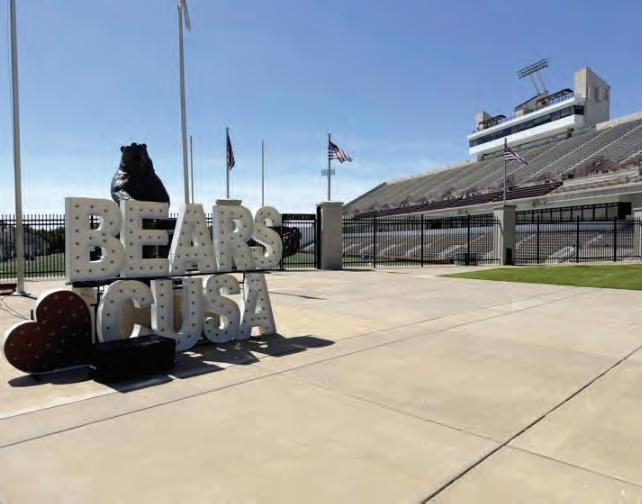
Photo by Jayden Pettus, Qjpettus_media
Prior to kicking off the Bears’ inaugural CUSA season, the university held a celebration called “Party in the CUSA,” which featured remarks from Bears’ head coaches and community and media members.
continue its success from this past season.
The Missouri State men’s basketball program improved from 202425’s historically low 9-23 record, but couldn’t get out from under .500 in the second season of Cuonzo Martin’s comeback tour.
MO State finished with an overall record of 16-18 and a conference record of 8-12. The team had a decent first half of the season, with the Bears sitting second in the conference standings at one point.
MSU couldn’t pull out any wins in February, though, and, in the final nine games, the Bears won only one game.
Missouri State was seeded ninth in the CUSA Men’s Basketball Tournament and had some big wins throughout, upsetting both the eighth-seeded FIU Panthers and the league’s No. 1 seeded-Liberty Flames.
The Bears became the first ninth-seed since 2018 to upset a number-one seed in the league tournament. MO State couldn’t secure one more win
to get a spot in the championship game, falling to the Louisiana Tech Bulldogs 69-66.
Senior forwards Keith Palek III and Michael Osei-Bonsu were fan-favorites throughout the season, and each had big milestones fulfilled during their time as a Bear. Palek was the first MSU player to get 500 points, 200 rebounds and 100 assists in a
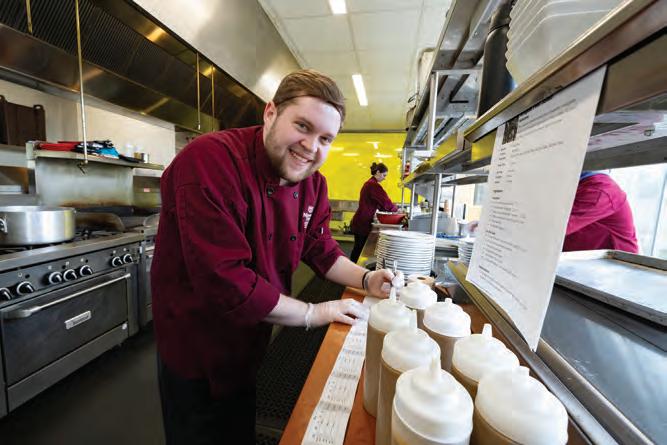





season, while Osei-Bonsu scored 768 total points in two seasons in the Queen City, which is the 17th best career total for any two-year player in program history. Both players were seniors and have graduated, with Osei-Bonsu transferring out to pursue a career in college football.
The Missouri State Lady Bears had a fantastic season, not only winning the CUSA Women’s Tournament in their first season as a member, but also making an appearance in the 2026 NCAA National Women’s Tournament.
MO State finished with an overall record of 23-13 and a conference record of 11-7. The Lady Bears had a dominant start to the season, going 8-2 before falling to Kansas, Arkansas and Gonzaga. They later dominated most of the teams in the conference, including winning four in a row down the final stretch of the regular season. The run gave them the No. 6 seed in the league tournament.
MSU faced Middle Tennessee, FIU and LA Tech in the tournament. They were the three, two and one seeds in that order. The Lady Bears
dominated in their games against MTSU and FIU, and played a close game against LA Tech, winning 43-38 to secure the conference championship.
The championship landed the team a spot in the Women’s March Madness tournament, where they had to play in the First Four match against Stephen F. Austin. Missouri State secured a victory 85-75 before moving on to face the No. 1 seed Texas Longhorns in the first round. The Lady Bears could not secure the upset, falling 45-87.
This season marked many feats for the program. Besides winning the conference tournament in their first season, they also recorded their 18th NCAA tournament appearance and their 12th conference tournament crown. Head Coach Beth Cunningham achieved 92 victories, while several players, such as Kaemyn Bekemeier, Lainie Douglas and Maiesha Washington, were honored in the CUSA first, second and freshman team honors.
The Missouri State baseball team has had a remarkable season that, at the time of publication, has not yet
concluded. With big upset wins and a historic home-winning streak, the Bears are looking to continue their success from last season and make a run towards a trip to Omaha for the College World Series.
MO State had a dominant season, in which they ranked as high as second in CUSA while sitting in the nation’s top 10 for home run total among other offensive categories. The team was excellent at Route 66 Stadium (formerly Hammons Field), finishing their home slate with a 21-3 record. The .875 winning percentage was the team’s best at home since 1982.
The Bears had many memorable feats throughout this season, including upsetting the then 17th-ranked Arkansas Razorbacks at home on March 31st. The ball game went into extra innings, with junior outfielder Caden Bogenpohl hitting the first pitch way out of the ballpark to secure a 15-14 victory.
Missouri State looks to compete for a CUSA Championship, as well as making a run for the College World Series.
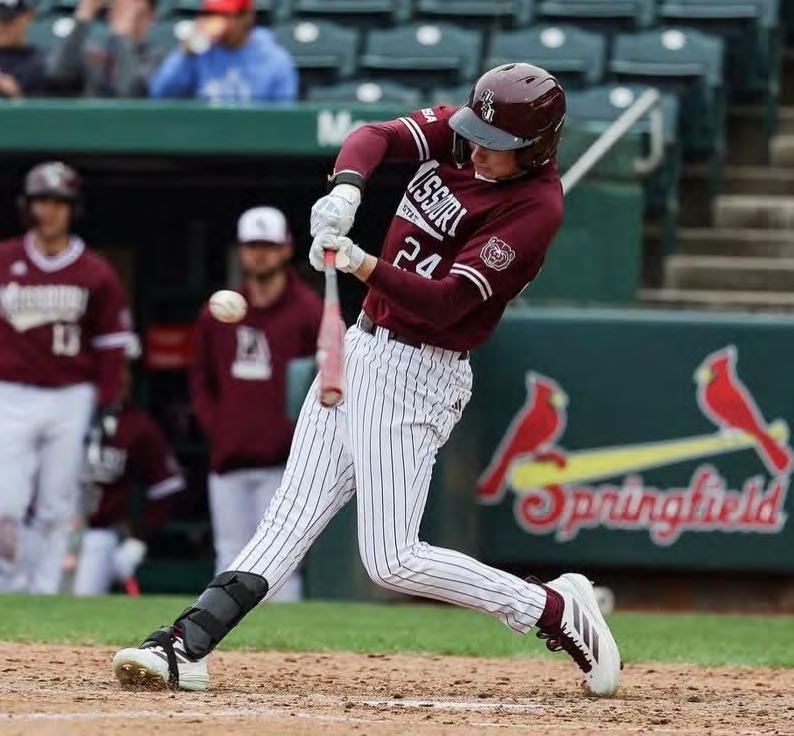
Between baseball’s best home record since 1982 and the Lady Bears’ run to the NCAA Tournament, it’s safe to say Missouri State’s first year in CUSA was one to remember.
W, 92-67
W, 88-70
W, 106-57
L, 86-85
L, 67-49
W, 74-67
L, 75-61
W, 92-71
L, 98-74
L, 75-57
Oct. 28
Nov. 3
Nov. 7
Nov. 11
Nov. 15
Nov. 18
Nov. 22
Nov. 28
Nov. 30
Dec. 4
Oral Roberts
Lindenwood
Delaware
UTEP
NMSU
Kennesaw FIU WKU MTSU NMSU UTEP
Sam Houston
Jax State Liberty LA Tech
Delaware
Kennesaw
FIU
LA Tech
Sam Houston WKU
MTSU
FIU (8)
Liberty (1) LA Tech (4)
W, 63-62
W, 70-65
W, 61-43
W, 79-55
W, 89-82
L, 90-80
W, 79-71
L, 87-72
2OTL, 90-87
W, 84-74
W, 62-57
L, 80-71
W, 74-67
L, 79-76
2OTL, 79-78
L, 76-67
L, 91-87
L, 70-67
L, 72-70
L, 86-81
W, 87-74
L, 75-63
W, 75-72
W, 77-69
L, 69-66
Dec. 7
Dec. 13
Dec. 19
Dec. 22
Jan. 4
Jan. 8
Jan. 10
Jan. 15
Jan. 17
Jan. 22
Jan. 30
Feb. 1
UT-Arlington
W, 75-57
W, 70-66
W, 69-53
W, 67-57
W, 66-57
W, 69-58
L, 73-57
L, 85-75
W, 77-56
W, 72-66
Arkansas Gonzaga UCA
FIU
Kennesaw
Jax State
UTEP
NMSU
LA Tech
Delaware
Liberty
MTSU
WKU
Sam Houston
LA Tech
Liberty
Delaware
Sam Houston FIU
WKU
MTSU
MTSU (3)
FIU (2)
LA Tech (1)
SFA (16) Texas (1)
OTL, 73-70 L, 73-58
L, 68-49 W, 65-61 W, 80-69 W, 67-61 W, 63-47 W, 71-64
L, 63-56 L, 60-51 W, 79-54 L, 60-52 W, 60-54 W, 75-52 L, 74-67 L, 68-67 L, 55-43 W, 83-57 W, 60-55 W, 69-38 W, 65-38 L, 86-75 W, 69-66 W, 74-69
43-38
85-75

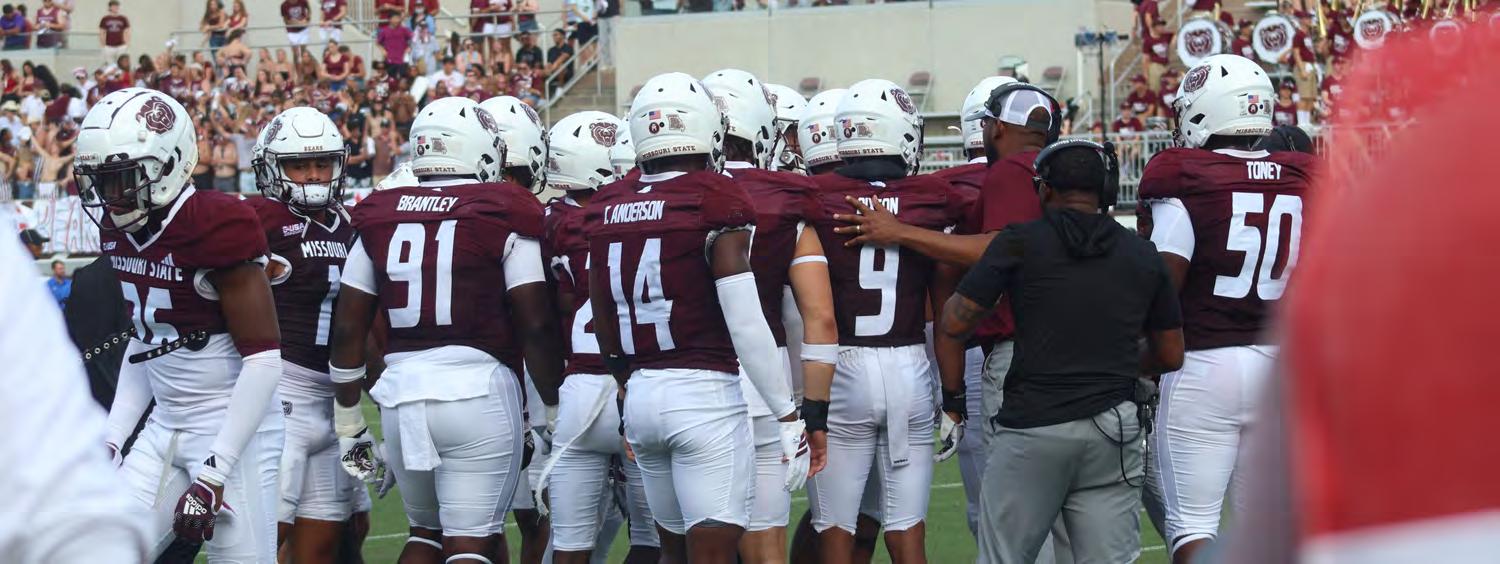
Following a successful first year, in which the Bears reached the inaugural Xbox Bowl, the team is ready to go again with a new coach.
W. PAUL BOHLEN,
ELIZABETH DEDERT, ARIAH COOPER
Former Senior Sports Reporter, Sports Reporters
Dwpbohlen, Qelizabethdedert
With the hurdle of their first season in the Football Bowl Subdivision and Conference USA (CUSA) behind them, the Missouri State University football team looks ahead with a new coach and new optimism for Football Bowl Subdivision (FBS) success.
In case you managed to miss it, perhaps the most exciting season in MO State Football history had plenty of ups and downs, moments of glory and moments of humiliation, but, in the end, it was a net success.
The Bears finished with a winning record, had one of the best defenses in the conference for several weeks, had arguably the best quarterback in the conference and even qualified for a bowl game while all the odds were against them.
The season began with a historic defeat in the LA Memorial Coliseum to the USC Trojans, 73-13. Things looked bleak for the Bears against the dominant Big Ten team, but they turned it around in the next week.
Off to West Virginia went the Bears, and home they came with their first FBS win in 35 years. The Marshall Thundering Herd couldn’t
surpass the Bears with a marked improvement on defense and 359 passing yards from quarterback Jacob Clark. MO State inched them out, 21-20.
Back in Springfield, Bears Football split the rest of their non-conference games, falling to SMU and beating UT-Martin to head into CUSA play 2-2.
Beginning conference play with a loss to Western Kentucky University at home wasn’t the best feeling for the Bears, but October brought some of the highest highs of the season.
“Weekday CUSA,” as it was dubbed, every game the Bears played in October was one of only a couple on Wednesdays, meaning the team garnered a lot more national attention.
They won every single game they played in October, rising to 5-3.
Splitting November, they defeated Liberty University in a major fourth-quarter comeback and got their sixth win, ensuring that if not enough teams qualified, they would play in a bowl game – despite their ineligibility. The next week, they took down the UTEP in Springfield to get their seventh win.
Missouri State finished the regular season with two losses to Kennesaw State University and Louisiana Tech University, but hours after their last game of the season, found themselves qualifying for a bowl game.
That game was the inaugural Xbox Bowl, where they’d face the Sun Belt’s Arkansas State Red Wolves.
However, a week before the game in Frisco,
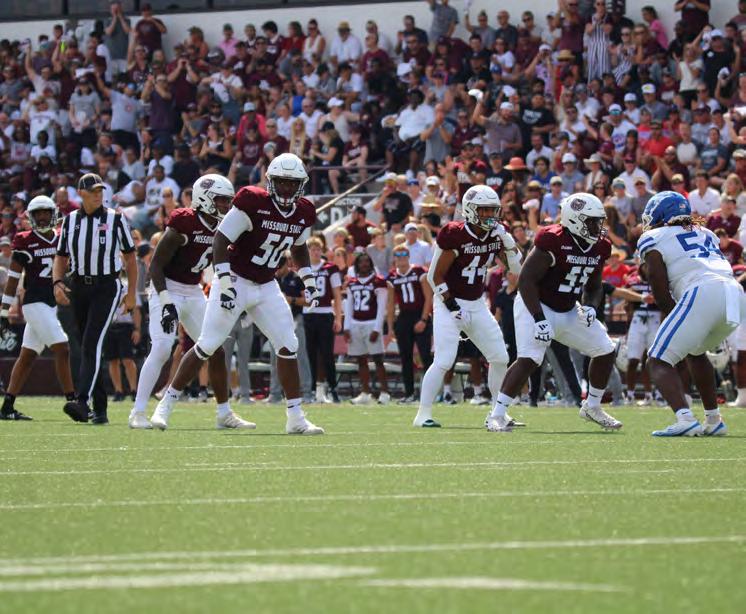
The Bears are returning around 60 members of the inaugural CUSA team, but lost some key pieces to graduation.
WE OFFER:
Tutoring • Writing Consultations
Peer Assisted Study Sessions
Group Study Sessions • Presentation Center
Walk–in & appointment–based options available! Online tutoring by request
Discover how we can help you!
Come see us in the Meyer Library or Discover Student Success Resources on your My Missouri State Portal

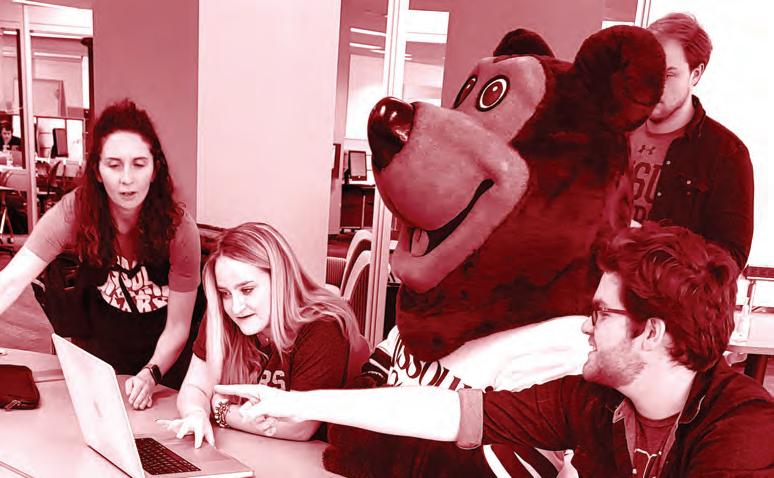


Texas was set to kickoff, head coach Ryan Beard announced his departure for Coastal Carolina University, leaving offensive coordinator Nick Petrino in charge for the game. He’d later join his brother-in-law at Coastal Carolina.
Petrino coached a decent defense, but the offense struggled to pull it together until the very end – and it cost them the game. But nevertheless, MO State finished with a winning 7-6 record and appeared in a bowl game when most had them finishing along the lines of 2-10.
The day after their loss in Frisco, MO State announced the hiring of SMU’s offensive coordinator, Casey Woods, as the next head coach of Missouri State Football.
Missouri State University has officially named Casey Woods as the 23rd head coach in program history, marking a new chapter for the Bears football program as the program continues its transition to the FBS level. The announcement was made Dec 19, 2025.
Woods arrived in Springfield after spending the past four seasons at SMU, where he served as an offensive coordinator and chief of staff under head coach Rhett Lashlee. During his tenure, Woods played a key role in the Mustangs’ success, contributing to 37 wins and helping build one of the nation’s more efficient offenses.
Although this will be Woods’ first opportunity as a head coach, his resume reflects nearly two decades of experience across major college football programs. He has contributed to five conference championship teams spanning CUSA, the SEC, the Sun Belt, and the American Athletic Conference. He was part of two national championship game appearances, including the title-winning team at Auburn University in 2010.
“It was an honor of my lifetime to have an opportunity to be the head coach of the Missouri State Bears,” Woods said in a statement. “We are eager to get to work pouring into our team, staff, university, and the Springfield community. It takes all of us to win, recruit, and create an environment where players feel at home.”
Missouri State Director of Athletics Patrick Ransdell emphasized Woods’ track record of success and player development.
“(Woods) is an absolute winner,” Ransdell said. “His ability to develop offensive talent and recruit at a high level makes him an ideal fit for Mis-
souri State. We’re excited for the Bear Nation to get to know (Woods) and his family.”
University President Richard B. Williams also expressed confidence in the hire, citing Woods’ leadership qualities are critical during a pivotal time for the program.
“As Missouri State continues its transition and growth at the FBS level, it was essential to find a leader who understands the demand of this moment,” Williams said. “Coach Woods brings energy, experience, and commitment to excellence that will position our program for sustained success.”
Now, Woods turns his focus to building a winning culture at Missouri State. With the Bears aiming to elevate their program on the national stage, his leadership will be central to shaping the team’s future.
On April 18th, football met for an open spring practice where they were joined by 61 recommits from the past season, as well as 22 mid-year transfers. Offense, defense, special teams and quarterbacks all split up to run their own respective drills, and later joined together to run multiple small scrimmages.
For the offense, a few returning players have all eyes on them; most notably wide receiver Jmariyae Robinson, who played 12 games with seven starts last season. Robinson has had all eyes on him from last season, with his total of seven touchdowns, which tied for the 5th most touchdowns in Bears football all-time season list.
“I think we’ve got a tough football team. I think we’ve got a physical football team,” Woods said. “We’ve done a really nice job of getting good evaluations. There’s not one player on our team that has less than 100 team reps over the course of spring, which is remarkable.”
After their successful first year, the team doesn’t plan on stopping anytime soon.
For defense, there is a familiar name coming back home to the Springfield area. Defensive end Kellen Lindstrom is transferring from Tennessee to Missouri State. Lindstrom was a part of four consecutive state playoff runs while playing for Glendale High.
Woods noted how much it means for Lindstrom to be playing for his hometown team.
“I think the most valuable thing
about Kellen Lindstrom is that it showed really good football players in this part of the state that this is a good place to come play football,” Woods said. “That was a big deal for our team. That was a big deal for this community. That was a big deal for southwest Missouri.”
Making sure that this community rallies around Missouri State athletics is an important factor for Woods, so bringing homegrown talent to play for him is the first step of that.
CUSA’s sixth-best kicker, Yousef Obeid, will be returning as a kicker this season. Obeid has become an integral part of this team going into his Junior year at Missouri State. Having a valuable kicker on the team you can rely on helps set you apart from other teams in the conference.
The biggest question for Bears football is who the team’s starting quarterback will be once the season kicks off.
With starter Jacob Clark graduating and Deuce Bailey transferring to Coastal Carolina, the starting quarterback position is up in the air.
Two of the top contenders that were gained from the spring preview were Henry Belin IV, a transfer from Duke, and Skyler Locklear, a transfer from UTEP. Locklear racked up 1,418 passing yards for the Miners last season, while Belin totaled 540 passing yards with the Blue Devils.
“I’ve been pleased with both (Belin) and (Locklear),” Woods said. “You could tell that they’ve both been at places where they’ve won. You can tell that they’ve both been in places where they’ve played.”
More practices are to be held where each player can show what they are truly made of, to earn the starting QB position.
The Bears will kick off their 2026 season at Kyle Field in College Station, Texas against the Texas A&M Aggies on Saturday, Sept. 5.
Each game will be broadcast on the Missouri State Radio Network, and TV broadcast locations will be announced as the season comes closer.
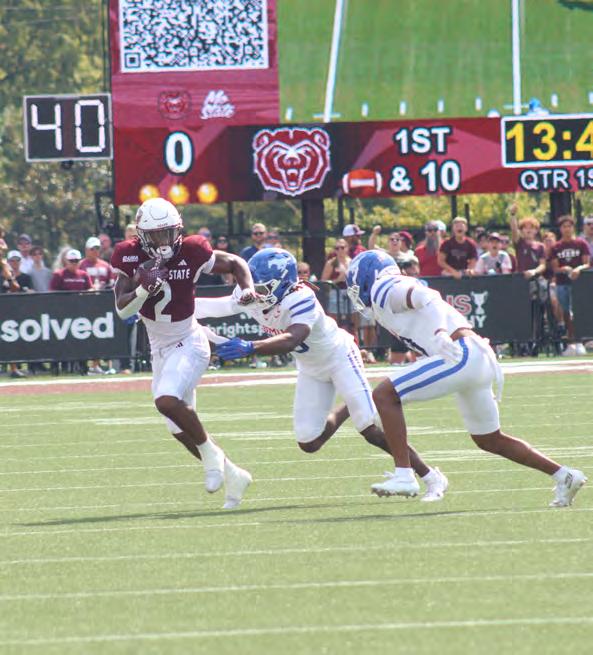
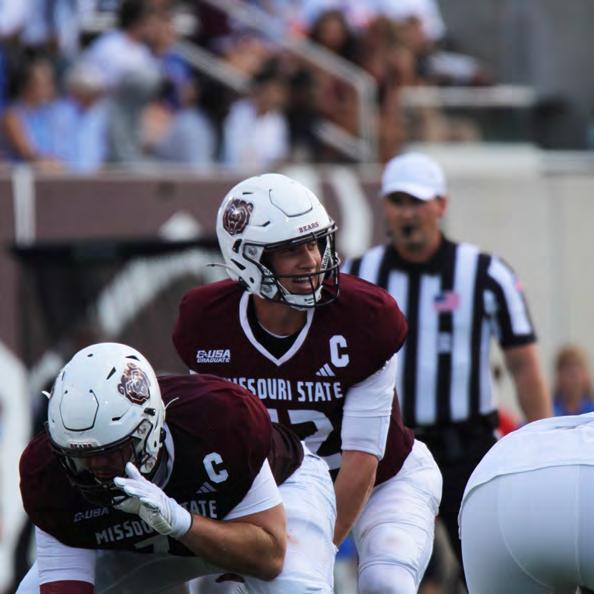
With Louisiana Tech’s move to the Sun Belt Conference — courtesy of an exit fee over $8 million — Conference USA released a brand new schedule for its 2026 football season.
Talks of LA Tech’s potential move had spurred on for quite some time, but, in a conflicting process, the Bulldogs initially received two conference schedules for the upcoming campaign; one for CUSA and one for the Sun Belt.
This oddity made more than a few people question whether or not the first round of conference schedules that came out for CUSA would be the final schedules.
“I kind of knew in the back of my mind that it could change,” Patrick Ransdell, director of athletics at MSU, said.
Even though Missouri State’s athletic department wasn’t completely blindsided by the release of the new schedule, plenty of challenges still arose.
“We were kind of behind the eight ball in terms of just like booking everything out,” Ransdell said.
Part of the issue has been the timing.
“Normally, this stuff gets kind of booked out in March, so, you know, you kind of feel like we’re two to three months a little bit behind
schedule from an operational standpoint,” Ransdell said.
Another problem has been the cost.
“As demand shrinks, price increases,” Ransdell said.
Regardless of the roadblocks, the Bears have pressed on. The most notable changes from the first schedule to the second one include the conference home opener opponent shifting from Delaware to Kennesaw State and the addition of Liberty to the slate for the last home game.
Additionally, the Bears will now travel to FIU instead of hosting the Panthers as originally scheduled.
Missouri State also announced its Homecoming game for Saturday, Nov. 14, against New Mexico State. Meanwhile, first-year head coach Casey Woods looks forward to his first year in CUSA.
“It’s a great slate. It’s a good opportunity for Springfield and our student body to be a part of exceptional crowds,” Woods said.
“We’re going to be a fun, fast-paced, fun-towatch offense. If you know nothing about football, you’re going to come out there and you’re going to see a great game day.”
Ransdell feels similarly about the outcome.
“All in all, I think it’s a pretty decent schedule, and we’re looking forward to hopefully a pretty cool September with back-to-back home games against Lindenwood and Marshall,” Ransdell said.
Aug. 13
Aug. 22
Aug. 28
Aug. 29
Aug. 30
Sept. 3
Sept. 4
Sept. 5
Sept. 10
Sept. 11
Sept. 12
Sept. 17
Sept. 18
Sept. 19
Sept. 25
Sept. 26
Oct. 2
Oct. 3
Oct. 9
Oct. 10
Oct. 16
Oct. 17
Oct. 23
Oct. 24
Oct. 30
Oct. 31
Nov. 6
Nov. 7
Nov. 13
Nov. 14
Nov. 20-22
Sept. 5 Sept. 12 Sept. 19 Sept. 26 Oct. 8 Oct. 14
20 Oct. 27 Nov. 7
14
21
Family and football.
For new Missouri State University head football coach Casey Woods, these two words don’t just relate to one another; they are intertwined.
As the son of long-time coach Sparky Woods, Casey followed in his father’s footsteps with his career choice as a leader on the sidelines of the gridiron. Now, the 42-year-old brings his wife, Lauren, and his five children (Waverly, Sawyer, Adaline, Amelia and Savannah) to Springfield, Missouri, to unite his family to the Bears’ football family.
Before his rise through the coaching ranks, Casey made his presence felt on the field as a wide receiver at the University of Tennessee, where he stayed from 2003 through 2007. Woods then transformed his playing career and connections with the Volunteers into a graduate assistant position at the big-time Southeastern Conference school. It was here where he got his first experience coaching.
But, truthfully, his coaching training began long before that stop.
Before Casey was even born, his father laid the foundation for a consistent collegiate coaching tradition in the Woods family. Sparky Woods parlayed a job as the offensive coordinator at Appalachian State University into a head coaching position at that same school. At the time, Casey (born May 15, 1983) was just a little tyke.
As Casey grew up, his father bounced around to work with a number of different teams, including a head coaching job at the University of South Carolina and a one-year stint as an offensive assistant with the New York Jets in 1994. Needless to say, during his childhood, Casey spent a lot of time around an experienced
coach in his father.
Athletics Director Patrick Ransdell highlighted the importance of this point.
“When you’re around it for your entire life, that matters,” Ransdell said at the introductory news conference at Great Southern Bank Arena on Monday, Jan. 5.
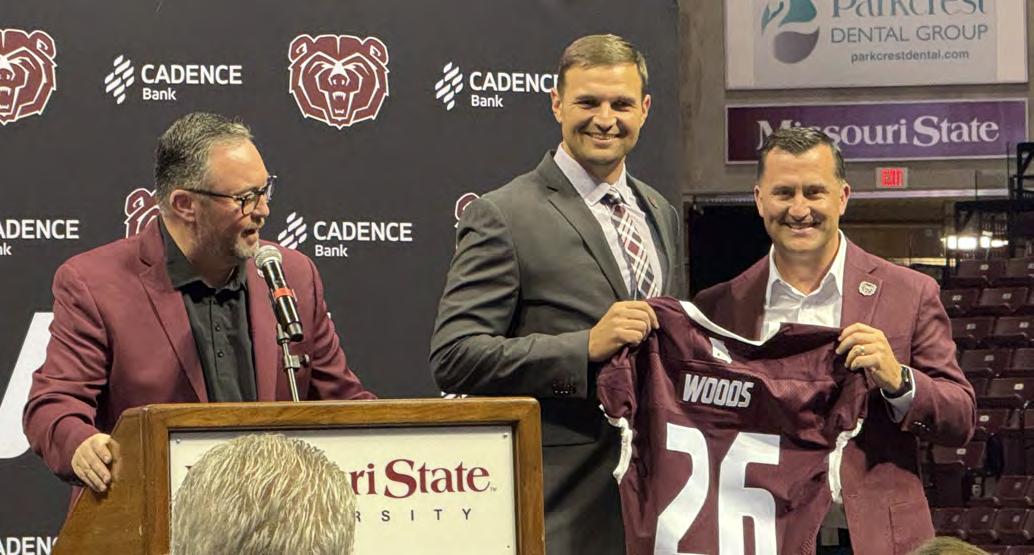
Photo by Jayden Pettus, Qjpettus_media
Casey Woods is welcomed to Missouri State by Athletics Director Patrick Ransdell and Corey Riggs, the voice of the Bears, at Great Southern Bank Arena on Jan. 5, 2026.
When Woods went to Tennessee, his father served as the running backs coach at the University of Alabama for the Crimson Tide from 20032006. It was during this time that Casey observed what he now calls the most admirable quality his dad had that he strives to implement into his own coaching style: “his love of the players.”
When one of Sparky’s pupil running backs got a concussion while Casey was home visiting his family during Tennessee’s bye week, Sparky invited the injured Crimson Tide ballcarrier to stay at the Woods’ house. In the moment, Casey did not seem to appreciate this gesture from his dad.
“At the time, I was kinda like, ‘Hey, this is my one weekend home, dad,’” Casey said.
But, as time passed by, he understood.
“That kid was 800 miles from home. Had nobody to be there with him,” he said.
Moments like this one revealed to Woods how much his father cared for his players.
“He treated them like family,” he said.
Now, it should not be a surprise that Woods wants to treat his players like family.
“Casey’s gonna run a program
that’s centered around family,” Ransdell said at Woods’ introductory news conference.
Family wasn’t the only thing that made Woods an attractive option for Ransdell, though. In his speech to everyone present at “The Vault” on Jan. 5, Ransdell listed out five intangibles that made him want to pay the big bucks for Woods.
Those five qualities include someone who is a winner, has an identity, recruits at the highest level, really wants the job and fits Springfield. In Ransdell’s mind, Woods checks all these boxes.
“There has never been a better time to get behind this program to make sure that we put ourselves in a position to put Missouri State at the forefront of the national landscape of higher education,” Ransdell said.
President Dr. Richard “Biff” Williams also recognized the importance of the occasion.
“Today is more than just introducing a new football coach. This hire is significant not only for our football program but for our entire university,” Williams said.
It is not difficult to see why.
Before landing his first head coaching position, Woods served as the offensive quality control coach at Auburn from 2009-2011; the wide receivers coach and recruiting coordinator at Arkansas State in 2012; the
director of player personnel at Auburn from 2013-2015; the tight ends coach, running game coordinator and recruiting coordinator at UAB from 20172019; the tight ends coach and recruiting coordinator at the University of Missouri from 20202021; and, most recently, the offensive coordinator and tight ends coach at SMU from 2022-2025.
During that time, Woods worked with prominent head coaches Eliah Drinkwitz and Rhett Lashlee as well as offensive coordinator Gus Malzahn. He also won five conference titles across four different conferences, including Conference USA, and appeared in two national title games with one being the 2010 BCS championship that he won while he was at Auburn.
So, how did Woods come upon Missouri State?
It all began with his first visit to the school on Sept. 13 of last year for the Bears’ home opener against Woods and the SMU Mustangs. The two teams played the contest in front of a roaring crowd of 15,027 fans –the largest attendance at Robert W. Plaster Stadium since Sept. 12, 2015.
Woods took notice.
“That was my first impression of this place, and I was dazzled,” he said.
Months after the 28-10 Mustangs victory over the Bears, Woods explained that the atmosphere of that
day positively impacted his decision to pick up the phone when Missouri State came calling for him in December.
“It was an impressive game day, right?” he said. “You could see the energy and the effort. You could see people that want to win games here.”
Now, Woods looks to replicate the environment from the SMU game every time the Bears get the opportunity to play in front of the home crowd.
“It’s gotta be that every Saturday,” he said.
He also explained how he plans to will this turnout to come about for Weekday CUSA games the Bears will host on Wednesday nights too.
“If I gotta ask Dr. Williams to, you know, postpone class till 10:00 a.m. or whatever, then I’ll do that,” Woods said.
Woods’ certainly made his intentions clear when it came to protecting the home turf.
“I want to make Plaster Stadium one of the toughest environments in Conference USA,” he said in his introductory news conference.
That wasn’t the only goal Woods shared with the Missouri State faithful that day though. Far from it. Woods aims to win.
“We’re gonna win Conference USA,” he said.
He also aims to imprint his name





in the Missouri State Football history books.
“We’re gonna win the school’s first-ever bowl game,” he said.
With an emphasis on transforming the culture through top-notch recruiting and his five core values of salvation, loyalty, toughness, hard work and impact, Woods projected confidence in his operation.
“It was a mess-up letting me know what can be done here cause now we’re gonna get it there and past,” he
said. And, why are his aspirations so high?
“We’re big dreamers because I think big dreams honor God,” he said.
Just as Ransdell alluded to earlier, Woods also seeks to honor his family.
“My first job is to be your husband and your dad, and, then, we’ll transition that over to football,” Woods said to his wife and children from the podium on Jan. 5.
For the Woods family, southwest Missouri is now home. As Woods pointed out in his news conference, he, his wife and his children know the area well from his time in the nearby locations of Columbia, Missouri and Jonesboro, Arkansas. He expressed a great enjoyment for experiencing Table Rock Lake, the Lake of the Ozarks and the spacious outdoors of the area, and he is ready to immerse his family into the Springfield culture. He even bought his
children some fishing poles for the adventures that await them.
Furthermore, he gets to lead the Bears with his father by his side as the team’s senior assistant – a hire Casey expressed great enthusiasm for.
“I think one of the coolest things that I’ve ever gotten to do in this profession is hire my dad,” Woods said.
Whether it’s his dad, his other staff members, his players, the athletic department, the university, the fans, the community or anyone else con-
nected with the team, Woods has made one thing crystal clear: everyone’s job possesses importance.
“Your job in this matters. Your role in this matters,” he said to the crowd at Great Southern Bank Arena on Jan. 5.
“It is gonna take all of us to win. Everybody in here.”
W. PAUL BOHLEN
Senior Sports Reporter
They were picked to finish fourth. Talk of a championship was scarce. An NCAA Tournament bid was unlikely.
The Missouri State University women’s basketball team ended the regular season slate of its inaugural Conference USA (CUSA) season in a four-way tie for third place. The Lady Bears won the conference tourney as the lowest-seeded champions in CUSA history since 2013 at sixth. They went 1-1 in the national tournament, falling only to the No. 1 seeded University of Texas.
“I told the team after the game (with Texas) there’s very few teams that really get to finish how they want to finish; that’s the reality,” head coach Beth Cunningham said. “Obviously today stings, and we would have liked the outcome to be different, and you want another game on your schedule. But it certainly doesn’t take away from what this team accomplished this year.”
It’s been a long time coming for the Lady Bears.
Cunningham’s tenure at Missouri State has been marked by good performances in the regular season and heartbreaker losses in the conference tournament. The Lady Bears have had post-season play beyond the conference tournament in all four seasons under her, but this year was the first in the Big Dance.
In the 2022-23 season, it was a 73-70 free-throw shootout in which
a missed MO State attempt and two made shots by the Drake University Bulldogs kicked the Lady Bears out of the Missouri Valley Conference Tournament in the quarterfinals.
The next year was the gut-wrenching Drake buzzer-beater that wrecked the Lady Bears’ attempted comeback in a 76-75 loss in the Valley championship game.
With their MVC exit in sight, the 2024-25 season ended with a bit of a whimper in a 76-67 loss to Belmont University in the semifinals, where the Lady Bears held the lead for only the first 22 seconds of the second half.
While the Lady Bears didn’t take the regular season title, finishing at sixth, they—along with Cunningham—finally have their next championship.
That alone makes for a successful season, regardless of how far they went in the NCAA Tournament. Couple that with their immense defense in the CUSA Tournament, their win over Stephen F. Austin State University in the First Four, their performance against the No. 1 seed Texas, especially in the third quarter, and the fact they only got better as the season progressed, shows how much they’ve grown as a team.
It’s safe to say the Lady Bears played their strongest basketball in the final weeks of the 2025-26 season, something Cunningham said was the goal all along.
“As a coach, one thing you strive to do is accelerate the learning curve,” Cunningham said. “In today’s landscape, you’re kind of reconstructing
your team every year, so you’re trying to accelerate the learning curve as much as possible … I think our growth was tremendous. Individually, our kids got better, collectively, we got better, and as a coach, your goal is to be playing your best basketball of the season at the end of the year.”
MO State women’s Hoops has had its fair share of trials this season.
A successful 6-2 run through November to start the season showed a dynamic base that the Lady Bears built on all season.
They showed their ability to revive their energy and complete comebacks in the critical moment with their first match of the season, their home opener with Saint Louis University, in which they went over nine minutes of the final quarter without a field goal.
Only a few sparse field goals kept the Billikens from taking a double-digit lead. The final minute was decisive, however. MO State put together the right moves—a well-placed bucket, a steal, and some drawn fouls—to retrieve the points they’d lost and won the game 70-66.
In an away match with Southeast Missouri State University, the duo that would define the season, junior guard, Kaemyn Bekemeier, and sophomore forward, Lainie Douglas, two of the first ones off the bench last season, showed just what they were capable of doing together.
Bekemeier recorded her first double-double of the season, scoring 22 points and grabbing 10 boards, while
Douglas followed not far behind with 17 points and eight rebounds. Together, they drew a combined 12 fouls and committed only five themselves in the march towards a 67-57 win.
Even in their first loss of the season to then-undefeated University of Tulsa, Bekemeier still racked up 19 points, while senior guard Cady Pauley managed 11.
Their next game and loss, to Florida State University, was even more of a success in the face of defeat. The Lady Bears took the Atlantic Coast Conference squad to the wire, tying the Seminoles three times in the middle of the final quarter.
They were unable to get the edge, but the tight match showed their ability to tussle with the big dogs.
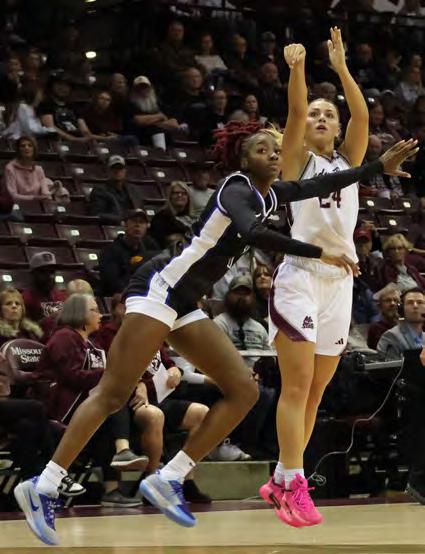
by Kaylee Vaughan, Qphotoby.kay Kaemyn Bekemeier was instrumental in the Lady Bears’ successful first CUSA season, being named to the CSC Academic All-District team, CUSA First Team and winning the CUSA Tournament MVP award.
Four Lady Bears scored in double digits in the 85-75 loss. Bekemeier, Douglas, senior guard Maycee James, and freshman forward Maiesha Washington, scored 11, 16, 14 and 10 points, respectively.
Their next game was a 21-point win over Coppin State University, in which Pauley put up a season-high




















In2025,ourcustomershelped keep144,098itemsoutofthe landfill.Helpuskeepitgoing byshoppingandselling gentlyusedclothes,shoes, andaccessoriesatPlato’s ClosetSpringfield.Savebig, stayontrend,andkeep clothesoutoflandfills.
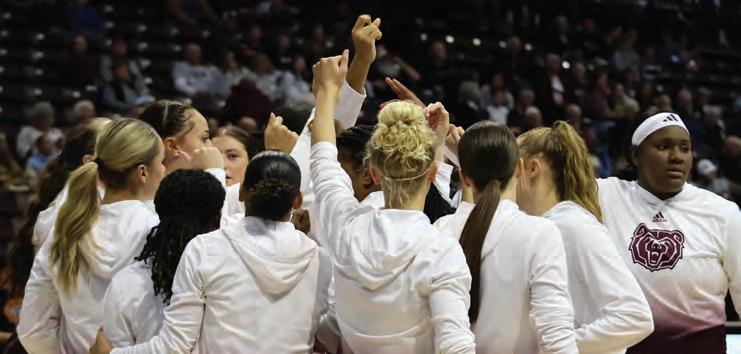
The Lady Bears finished with a 23-13 record, winning the CUSA Championship and making it to the NCAA Tournament.
23 points, shooting 8-11 from the field and dropping five 3-pointers.
Over winter break, they struggled with a set of three home losses in their biggest challenge to that point, with endurance tests from the University of Kansas, the University of Arkansas and Gonzaga University.
Their best performance of that stretch was the Kansas game, in which the Lady Bears took the Jayhawks into overtime in a 73-70 loss. Though it added three games to the “L” column, MO State took those games just before conference play began as an opportunity to hone their grit before the games that mattered most.
The Lady Bears started conference play with four straight wins before succumbing to New Mexico State University and Louisiana Tech University, the latter at home.
More adversity was still in store for MO State.
Approaching the final month of the season, at the start of February, Pauley had her season reduced significantly, with the starting guard missing five entire weeks following a fractured ankle in the Lady Bears’ match with Middle Tennessee State University.
Pauley’s absence partially contributed to the lull in the middle of February, which saw three consecutive losses, including the team’s second to LA Tech, a formidable foe this season. The first game of the squad’s final, four-game homestand, a 55-43 loss to Liberty University, was the only dark sport on the homestand.
Three home wins followed, capped off with a 31-point win over Florida International University where the dynamic duo of Bekemeier and Douglas kept together. The second team members also got more and more comfortable taking charge as Bekemeier, the franchise player, recovered from a midseason slump.
The Lady Bears followed that victory up with a 27-point win over Western Kentucky University for their last win of the regular season. In that game, both Douglas and Bekemeier scored 20+ points, with 22 and 20 points, respectively, while Washington had 12 points. Both Bekemeier and Washington had dou-

ble-doubles in the match with the Lady Toppers.
A four-way tie saw the Lady Bears go from a win away from second place in Conference USA to sixth at the end of the season. In spite of that, they went on to be the lowest-seeded team to win the CUSA championship since 2013 on a run that began with a triumph over MTSU in a very close 69-66 game that wasn’t over until the final buzzer.
The final minute of their game with FIU in the semifinals seemed to be well in the bag until the final minute, where the Panthers came as close as one point before MO State regained control and finished 74-69.
Defense was the name of the game against the conference leader LA Tech, the aforementioned formidable foe who had already defeated MO State twice and was decided as the victor of the regular season well before the tournament.
The Lady Bears held the score low, not allowing the Lady Techsters to get any opportunities, but they were met with impeccable defense from LA Tech as well. The game ended 43-38 in the Maroon and White’s favor, but not until they’d gone almost the entire fourth quarter with no scoring from either team.
MO State’s season ended with a severe, 42-point loss to Texas, but in spite of that defeat, it was all smiles in the postgame press conference.
Between relief that they finally got the squad back to the Big Dance and excitement for the future, the Lady Bears certainly weren’t letting the Texas loss get them down.
And they certainly shouldn’t — Texas was a No. 1 seed and later took down the University of Oregon, the University of Kentucky and the University of Michigan, making it all the way to the Final Four.
Indeed, the Lady Bears have a lot to look forward to, but, when they look back on the 2025-26 season, they should see nothing but exceeded expectations and a lot to smile about.
“We’re not going to be able to get over this for a while,” Bekemeier said at the conclusion of the season.
























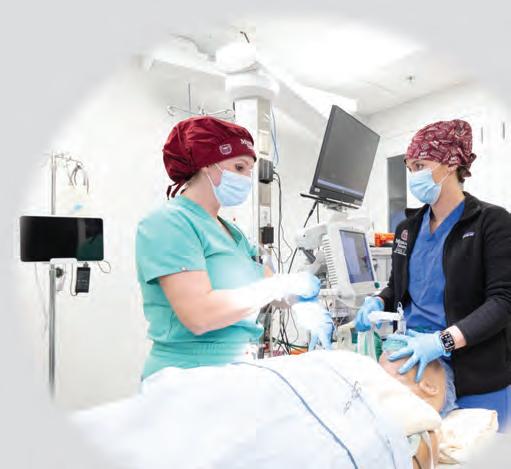



W. PAUL BOHLEN
Former Senior Sports Reporter Dwpbohlen
In the wake of a basketball season, Missouri State University’s teams were polar opposites. Yet another lukewarm season for men’s basketball closed out while the women’s basketball team ended up Conference USA Champions and advanced to the First Round of the NCAA Tournament.
With those two teams’ seasons now long past, here’s a look at who is transferring out, who’s transferring in and what they’re bringing to the roster:
Junior guard Kobi Williams was one of the few bright spots of the team’s otherwise subpar season, starting 35 games. He averaged 14.4 points per game, with 476 points in total.
A frequent shooter — although a little less than average in terms of accuracy — Williams went 136-338 (40.2%) from the field, 87-234 (37.2%) from behind the arc and 117139 (84.2%) from the charity stripe. Williams played in almost every minute of most games he appeared in for the Maroon and White, adding up to 1,171 minutes in the only season he played at Missouri State.
Williams entered the transfer portal almost immediately after the conclusion of the season, committing to the American Conference’s University of Tulsa.
Sophomore guard Tyrique Brooks came to MO State from Missouri Southern State University, seeming like one of the young players with the most potential for growth, but he didn’t end up playing the minutes or fitting into the main rotation.
Brooks added up 181 minutes in 25 games played, with no starts. He scored 44 points while shooting 13-36 (36.1%) from the field, 4-16 (25%) of his 3-point shots and 14-22 (63.6%) from the free-throw line.
After entering the transfer portal,
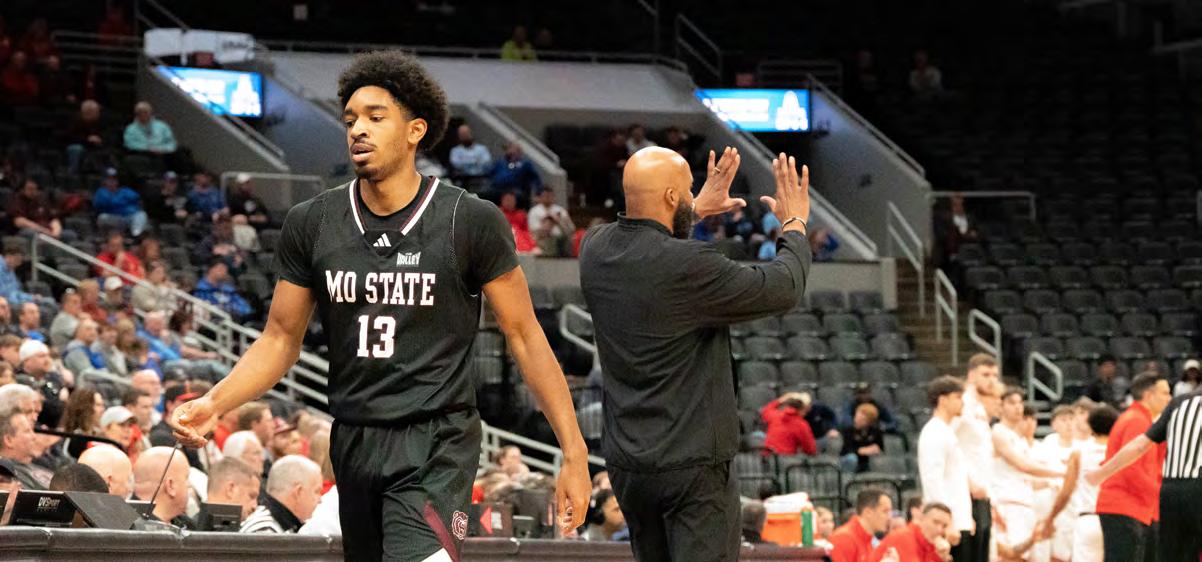
After spending two seasons with the Bears, Zaxton King entered the transfer portal, signing with Illinois State on April 23.
Brooks announced on April 22 that he would be recommitting to Missouri Southern via his Instagram.
Freshman forward Collin Clark, a former Greenwood Laboratory School standout, didn’t see any action for MO State in the 2025-26 season, opting to redshirt and maintain his four years of eligibility.
Clark entered the transfer portal on April 1, and committed to Pittsburg State University 19 days later.
Sophomore guard Zaxton King played two strong seasons for the Bears, participating in both their final Missouri Valley Conference season and their first Conference USA season. King added up 52 starts in 68 games, totaling 1,960 minutes of play.
King racked up 545 points in those two seasons, shooting 41.1% from the field and 34.7% from beyond the arc. He committed to former MO State foe Illinois State University in
the MVC on April 23.
Amar Kuljuhovic
Playing in only two games in November, senior guard/forward Amar Kuljuhovic entered the transfer portal on March 25, and has yet to commit to a new school.
Darrion Sutton
Hailed as one of the top transfers for the Bears, sophomore forward Darrion Sutton played in all 36 games, but saw no starts. He played 486 minutes and added up 164 points, 19 steals, 23 blocks, 27 assists and 157 rebounds.
Sutton shot 69-128 (53.9%) from the field, 4-13 (30.8%) from behind the arc and 22-36 (61.1%) from the free-throw line.
After his one MO State season, he transferred across the state to Southeast Missouri State University to play in the Ohio Valley Conference.
Ryder Cheesman
Freshman guard Ryder Cheesman
was set to be another young prospect to build up. An Australian standout, Cheesman only played in three games for the Bears in the 2025-26 season.
Cheesman has yet to commit to a new institution.
Perhaps the most notable transfer from the Bears is senior forward Michael Osei-Bonsu. The 6-foot-4-inch post player dubbed “Big Mike” who quickly became a fan favorite last season announced soon after the conclusion of the season that he would be transferring. To football.
Osei-Bonsu, now with no more basketball eligibility, is trying out the gridiron at either tight end or defensive lineman, per the Springfield Daily Citizen. He has visited schools like the University of Florida, University of Illinois, Tulsa, and even the turf at MO State.
Osei-Bonsu has yet to make a decision on where he plans to continue his athletic career.
At the time of publication, only two transfers to MO State have been announced.
A pair of redshirt freshmen, one from DePaul University and the other from Indiana University, who together have a combined games played of zero.
Forward Isaiah Medina stands at seven feet tall and was a four-star, top-75 prospect when he signed with the Blue Demons. Medina was a teammate there with former Missouri State standout NJ Benson during the 2025-26 season.
Center Andrej Acimovic averaged 17.5 points and 7.5 rebounds per game when he played for the U19 ABA League in the Balkans, but did not play any minutes in his freshman season with the Hoosiers.


We offer advising for Undeclared, Individualized, and Bachelor of General Studies Programs
Connect transfer students with the appropriate resources/advisors to ease their transition
Change your major, minor, and/or certificates Scan the QR code to begin!
UNIVERSITY HALL 109
Near the Bookstore and Wells House ADVISE@MISSOURISTATE.EDU 417.836.5258

@MOSTATEADVISING

Unlike their male counterparts, the Lady Bears have only two non-seniors not returning to their roster in the 2026-27 season.
Zoe Canfield
Sophomore guard Zoe Canfield played in 10 games with the Lady Bears after transferring from the University of Kansas before an injury cut her season short near the beginning of the 2026 calendar year.
With MO State, she played limited minutes in the games she did play, and had a small impact on scoring, adding only 95 minutes of play and nine points on the season.
Canfield returns to the Big 12 Conference, signing with the Oklahoma State University Cowgirls.
Tyra Robinson
Also not listed on the 202627 roster is junior forward Tyra Robinson.
Robinson also made limited appearances for the Lady Bears, playing 70 minutes in 22 games over two seasons. She scored 36 points for MO State, with 31 of those coming from her first year with the team.
No transfer information is available yet, so whether she is transferring to a new institution or simply not continuing with basketball is not known as of now.
Macie Mays
Macie Mays has spent the last three years at Pittsburg State, but was sidelined in the 2024-25 postseason following an injury and opted to redshirt the 2025-26 season.
Her time with the Gorillas gives her a connection to Missouri State, as well. Mays was a teammate of Lady Bears standout senior guard Maycee James, who started all 36 of MO State’s games last season.
With the Gorillas, Mays played a key role in both seasons she played, including the 2024-25 season where the squad advanced to the Division
II Elite Eight. Though she wasn’t able to participate in much postseason play, her efforts helped set the Gorillas up for their run.
The team went 33-4 that season.
In the 2023-24 season, Mays played 31 games, starting 21 and adding up a total of 850 minutes of play. She averaged 11.2 points per game, with 101 rebounds, 37 assists and 25 steals. From the field, she went 134-251 (53.4%).
Her next season, she played 33 games and started all but one of them, playing 912 minutes. She averaged 13.7 points per game, made 126 boards, 32 assists and 32 steals. She shot 180-351 (51.3%) from the field, totaling 799 points in her two seasons of play.
Mays’ father, Jarrod, played baseball at Missouri State University in the mid-1990s under then-head coach Keith Guttin.
Hannah Linthacum
Also joining the Lady Bears is an athlete with a familiar name. Forward Hannah Linthacum is the second Linthacum that Missouri State has drawn from the University of Missouri. Hannah’s sister Sarah was a standout forward for the Lady Bears in the 2024-25 season.
Up north in Columbia, Linthacum played two seasons and redshirted last season, as well, nursing an injury of her own. In the 2023-24 and 2024-25 seasons, she played a total of 62 games and started 19 in her freshman year.
Linthacum played 385 minutes in her freshman season, scoring 95 points and making 72 rebounds, 12 assists, six blocks and six steals. Linthacum shot 34-59 (57.6%) in 2023-24.
Though she moved to a backup position in her second season, Linthacum proved to be an essential sixth-player.
During the 2024-25 season, she played 376 minutes and scored 62 points, 69 boards, nine assists, nine blocks and 13 steals. In the meantime, she went 20-50 (40%) from the field.
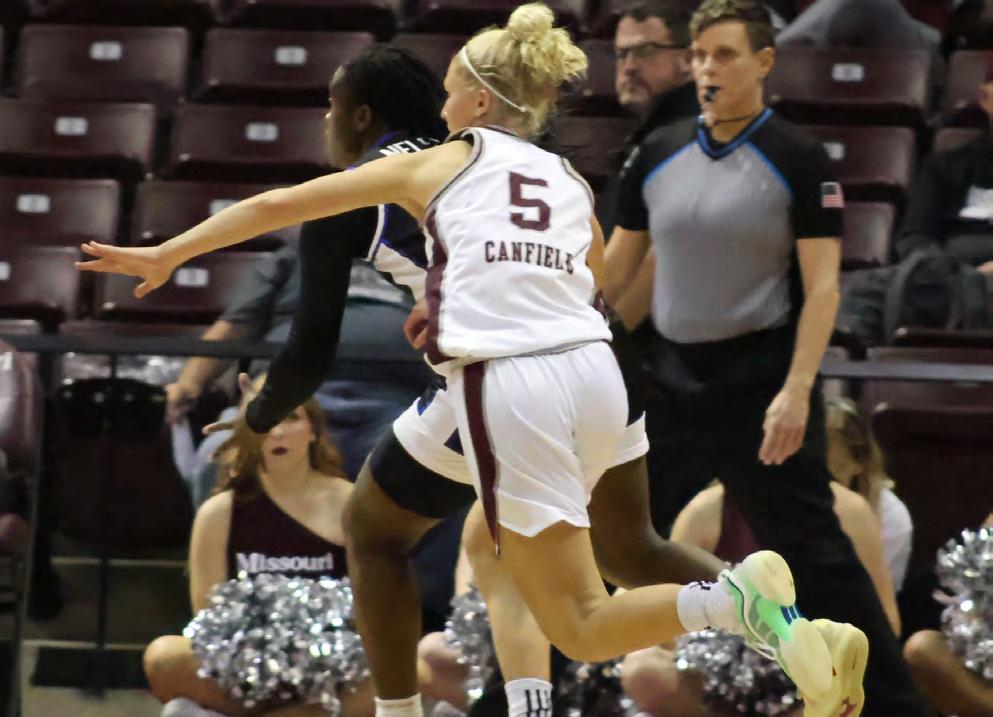
Rounding out the incoming transfer class for the Lady Bears is senior guard Landon Forbes.
Forbes began her college career playing in 10 games for Fort Hays State University before becoming a standout at Hutchinson Community College. There, she started all 34 games of the 2024-25 season and averaged 8.9 points, 2.8 rebounds and 4.0 assists per game. She also shot 39.8% from the field, 35.6% from behind the arc and 88% from the free throw line.
Most recently, Forbes played 29 games, starting five, for Morehead State University in the Ohio Valley Conference. With the Eagles, she played 798 minutes and scored 204 points. Forbes shot 41.6% from the field, 37.5% from three and 85.1% from the charity stripe. She also clocked 57 steals and 115 boards.
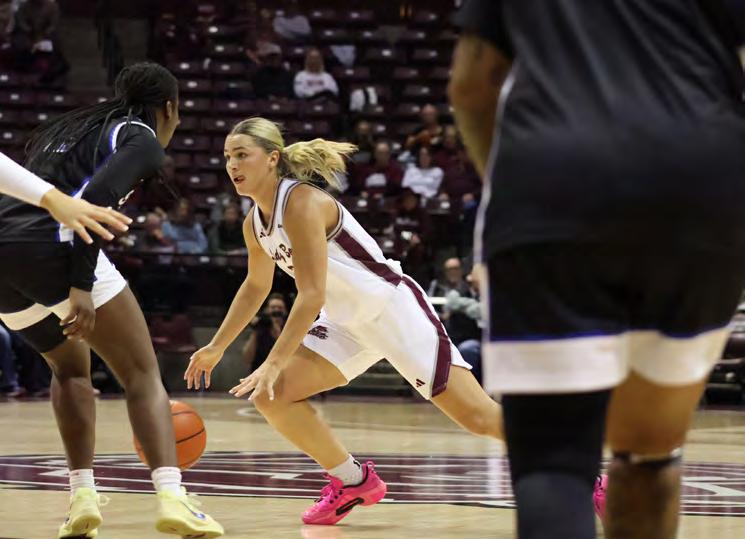










Mon-Thu: 6:00am to 10:00pm
Fri: 6:00am to 7:00pm
Sat-Sun: 11:00am to 7:00pm

FITNESS CENTER with cardio and weight equipment
Studios for dance and FITNESS CLASSES
Basketball and volleyball courts
RECREATIONAL POOL with warm water
lap lanes and water-current channel
Indoor jogging TRACK
INDOOR ROCK-CLIMBING and bouldering walls





Photo by Kaylee Vaughan, Qphotoby.kay
Qelizabethdedert
As the summer rolls around, men’s and women’s soccer are just starting to ramp up. Both rosters are filled with high expectations, new roster changes and a ton of opportunities. After both teams completed highly-competitive 2025 campaigns, each team will enter the fall with returning experience, incoming transfers and recruiting classes that can play and live up to major roles to help the Bears compete for conference success.
For Missouri State men’s soccer, the 2025 season marked an important transition year as the Bears competed
in their first season in the American Conference. The team finished with a 6-4-4 overall record while facing several nationally-recognized programs throughout the season. The Bears picked up numerous key victories against Penn State, who they will face again this season. Drake and Memphis, while remaining competitive throughout conference play, as well.
Although their season featured its own challenges, the team showed major improvement and consistency as the year progressed.
One of the biggest strengths for men’s soccer heading into the 2026 season is the number of returning players with a high level of experience at the collegiate level. Defenders such as Harris O’Connor and Hugo
Jinkinson are expected to return as upperclassmen.
Midfielders Adrián Esteban and Daniel Souza will also be returning, hoping to continue to control possession and create offensive opportunities like they did throughout the 2025 season. The experience from returning players will help them to further improve in the American Conference this season.
“We had a great spring with really good team chemistry and a really cool culture,” head coach Michael Seabolt said. “(I’m) super proud of the guys and what they have done this spring. It’s been great leadership and great mentorship from the team.”
Along with the long list of returning talent, Missouri State has added several new players during the off-
season through both recruiting and the transfer portal. Seabolt brought in multiple additions during the spring signing period, including Marc Ballart, Will Clift, Ben Furlong, Thomas Way, and Marco Rosati.
This incoming group adds fresh faces to the roster — plus depth in multiple positions — while also increasing competition across the team. Missouri State has continued to emphasize international recruiting and experienced transfers as the coaching staff works to add high-steaks players who are capable of competing near the top of the conference standings.
During the spring, the Bears played several exhibition matches to evaluate lineups and continue developing chemistry before the regular season begins. The team faced oppo-
nents such as Kansas City, Rockhurst, Lincoln University, Central Arkansas and SIUE during the March and April months. The exhibition matches allowed the coaching staff to test out different lineup combinations while also allowing the younger players certain opportunities to gain experience with the team.
The team’s upcoming fall schedule is expected to once again feature a difficult mix of conference and non-conference opponents. This program continues to build within the foundation they have already formed under the leadership of Seabolt. With returning leaders, added depth and another offseason of continued development, Missouri State enters its season with the hopes of establishing itself as another consistent contender.
Oct.
Oct.
Oct.
Oct.
Oct.
Nov.
Nov.
at Oral Roberts (Exh.) vs Iowa Lakes Community College (Exh.) vs Omaha (Exh.) vs Seatlle at Kansas City vs Tampa (Exh.) at Penn State vs Central Arkansas vs Temple at Saint Louis (7) at Florida International at UAB vs Florida Atlantic vs Creighton at South Florida vs Drake vsatMemphis Tulsa vs Charlotte Florida International (4)
Aug. 2
Aug. 9
Aug. 14
Aug. 17
Aug. 21
Aug. 24
Aug. 28
Aug. 31
Sept. 4
Sept. 7
Sept. 11
Sept. 19
Sept. 25
Sept. 28
Oct. 5
Oct. 12
Oct. 16
Oct. 19
Oct. 26
Nov. 2
Nov. 4
Nov. 7
On the women’s side of things, Missouri State enters the 2026 season looking to build off recent success. The Bears made a run to the Conference USA Championship, gaining the “underdog” nickname during the 2025 season. Missouri State’s strong defensive play and its balanced offensive attack helped the team remain competitive throughout the season while also riding on the momentum heading into the upcoming 2026 season.
The Bears also have several returning experienced players who have played important roles during last year’s successful season. The returning core players provide a sense of leadership and continuity for a team that already has the experience of competing in high-pressure conference matches. After the Bears fell short in the conference championship match against Liberty, the team enters a new season with added motivation and expectations to once again compete near the top of the conference.
Head coach Nick Nelson said the team is eager to push far into postseason play.
“#MTT, make the tournament,” he said. “We just need to get ourselves into the conference tournament. I kept telling the team, ‘Let’s just get into the tournament, and let’s just qualify.’”
Women’s soccer also added an-
vs Kansas at Lindenwood at Kansas at Nebraska vs Kansas City at SIUE at SEMO vs Missouri at Saint Louis vs Iowa at Central Arkansas at Liberty at Jacksonville State at Kennesaw State vs Delaware vs Western Kentucky vs LA Tech vs Sam Houston at Florida International Western Kentucky (1) Middle Tennessee (4) Liberty (2)
other strong recruiting class during the offseason. The team signed six freshmen to their fall roster, including Marleigh Allen, Ariya Barton, Tassia Curtis, Thea Dimitroff, Mayah Robinson, and Brenna West. This class includes players from several different positions on the pitch and allows Missouri State to use this additional depth wherever they please. Some of the incoming freshmen may see the starting roster with multiple seniors graduating.
1-1
1-0
4-2
3-0
2-0
2-1
5-0
1-0
0-0
1-0
3-1
1-1
4-3
1-0
1-0 T, 1-1
2-0
2-1
3-0
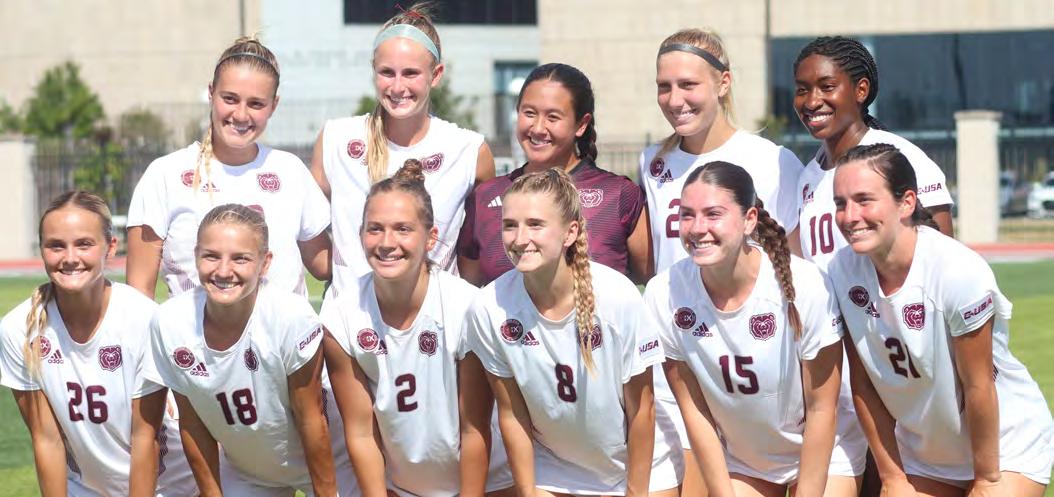
The women’s team made a push for the CUSA Championship but fell short in the final match.
Like the men’s team, the women’s program used the spring seasons to continue to develop chemistry in preparation for the fall set of games. Spring practices and exhibition games allowed the returning players and the transfer athletes to begin building chemistry while also helping coaches evaluate possible starting lineups.
Chemistry, Nelson said, is his
main factor when recruiting and seeing who he not only wants on his roster but also on his coaching staff, “One of the first things we tried to dive into was ‘Will the person fit into our culture?’” he said. “Each year we have a philosophy, no matter what class they are, they had better be ready to come in and contribute.”
Not only is women’s soccer adding new players, but also adding a
new face to the coaching staff. Adam Nerios joined the team in late May as an assistant coach, coming from Idaho State University, where he held the same role. Nerios has experience on the field and sidelines that will bring a new perspective to the staff.
Looking ahead to the 2026 season, both men’s and women’s soccer programs appear to be moving in positive directions. The men’s team continues
to build its experience and depth, adjusting to conference competition, while the women’s team enters the season looking to build off of a conference championship appearance. With both returning talent, new faces, and a competitive schedule ahead, both programs will look to make their own strong push towards postseason success this fall.
When the Missouri State University volleyball team took the floor against Conference USA’s top-seeded UTEP Miners in last year’s conference tournament, few expected the underdog Bears to win.
Even fewer expected them to sweep the team ranked 15th in NCAA’s Rating Percentage Index. But, that’s exactly what the Bears did.
Now, largely because of the huge upset from a season ago, the team possesses a newfound confidence heading into the 2026 campaign.
“Beating UTEP (in the) first round was such a breakthrough moment for our program,” senior defensive specialist Brooke Eslinger said.
For a team that barely made the conference tournament for the third year in a row, the Bears faced many challenges before they experienced this pivotal moment. One of the toughest struggles the team encountered presented itself during the very first match of the season.
In the season opener against the University of Central Arkansas, Eslinger injured her Achilles. Despite the setback, the then third-year Bear from Cleveland, Tennessee, maintained a positive disposition about the situation.
“I think it was just a great opportunity to show leadership, just in a different way and still have a good attitude about it,” she said.
The opportunity for the Bears’ 2025 digs leader to emerge as a new kind of leader came in a year when the team needed one.
Shortly after Eslinger’s return, the Bears persevered through two five-match losing streaks with a five-match winning streak sandwiched in between. Eslinger’s positivity reflected head coach Steven McRoberts’ core beliefs for the team.
“Our foundation is gonna be that we’re gonna be positive; we’re gonna keep working no matter the situation,” McRoberts said.
This foundation was put to the test when Rilynn Finley went down with an injury during conference play.
When Finley came back for the conference tournament and the Bears had a chance to avenge their defeat against the Miners, they were ready.
“We prepared as if we were going in to win,” McRoberts said.
However, he and his staff knew victory was unlikely.
“I’ll speak for our coaches: we knew it was gonna be a long shot for us to be able to win that match,” the then sixth-year head coach said.
Even though he realized winning was improbable, he did not think it was impossible.
Once the Bears rebounded to win the first set after being down 10-4, the belief in winning came to life.
“When we came back and won that first set and I saw the look on some of the UTEP players, and especially one of their big guns, I thought, ‘We might just be able to do something today,’” he said.
McRoberts was right. The Bears didn’t just do something that day; they did pretty much everything.
“It was just a game where everyone was just on the same page and everyone played great, and it’s hard to beat a team when everyone is playing great,” Eslinger said.
The team’s unforeseen play led Missouri State to a sweep over UTEP. McRoberts knew this was a special win.
“We hadn’t done something like that,” he said.
Moments like this one made the 2025 Bears
Photo by Hailey Lampley
The volleyball Bears will begin the 2026 season with a home exhibition match against Kansas State.
“one of the funnest teams” McRoberts has ever been a part of. Now heading into his 30th year of being a college volleyball head coach, he and the team have high expectations for this year.
“One of the first things we did in the spring was write, ‘Win a conference championship’ on the board,” Eslinger said.
This increased confidence mostly stems from the landmark triumph over UTEP.
“What we were capable of in one game has bled into our spring season and when we will come back for summer and preseason,” Eslinger said.
In order for the Bears to continue to build off the success from that match, consistency remains paramount.
“I feel like one thing we’ve struggled with in the program is creating consistency and playing at a high level at the level we know we can play at all the time,” Eslinger said.
In spite of recent struggles though, the 2025 Bears Choice Awards volleyball team MVP likes what this year’s team has to offer.
“We have all the pieces. We have the chemistry. We have the level of play. We have the buy-in. And now, it’s just like we just have to execute,” she said.
And, she believes.
“We just have a lot of things that are so good, and I think, if we maximize that to a level that we haven’t gotten to reach, we will win a conference championship,” she said.