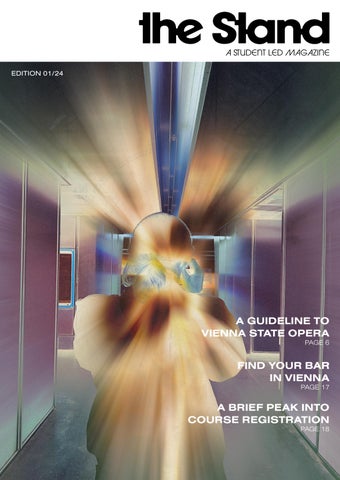
EDITION 01/24 A STUDENT LED MAGAZINE FIND YOUR BAR IN VIENNA PAGE 17 A GUIDELINE TO VIENNA STATE OPERA PAGE 6 A BRIEF PEAK INTO COURSE REGISTRATION PAGE 18
Dear Readers,
Welcome to the newly revived student-led newspaper, The Stand. It is a special occasion to present to you the first exciting issue. The ink is still fresh, ideas are vibrant, and, most importantly, brought in by CEU students. As we navigate the corridors of academia, we find ourselves at the intersection of curiosity and creativity, which hopefully can be well represented in The Stand’s editions.
The Stand strives to offer you, readers, the fusion of academic and creative written works from the pen of our talented students together with visuals and photography painted by the eyes of their creative minds.
In an information-saturated world, we hope The Stand serves as a beacon of authenticity and enjoyment. In each edition, you will find stories and topics important to us - students. Beyond that, The Stand strives to encapsulate the spirit of our academic journey with a glimpse into our individual lives. As a canvas for expression, The Stand offers a vibrant tapestry of ideas that emerge when students from different walks of life come together to share their thoughts and perspectives.
As editors, we believe our role is not only to curate the content of this magazine but also to encourage a culture of open discourse that demonstrates intellectual curiosity.
We extend our gratitude to the talented and wellrounded contributors who helped us breathe life back into this unique project and, that way, reflect the brilliance of our student community.
We hope many of you, our fellow students, will join us in shaping this project by participating in the regular open calls.
Lastly, dear Readers, dive into the pages of this new edition and engage with the ideas and passion that have emanated. Thank you for being part of this journey with us.
Wishing you pleasant reading,
 Alexandra Pavlovičová & Sarah Hinteregger Editors in Chief
ON THE IMPORTANCE OF FILM FESTIVALS: THE VIENNALE GLYNNA NATHAN
A GUIDELINE TO THE VIENNA STATE OPERA VARVARA GOSTEEVA
BEYOND
SOIL THORNTONS CHOOSING SUITOR LILI KATAI
FILM
FIND
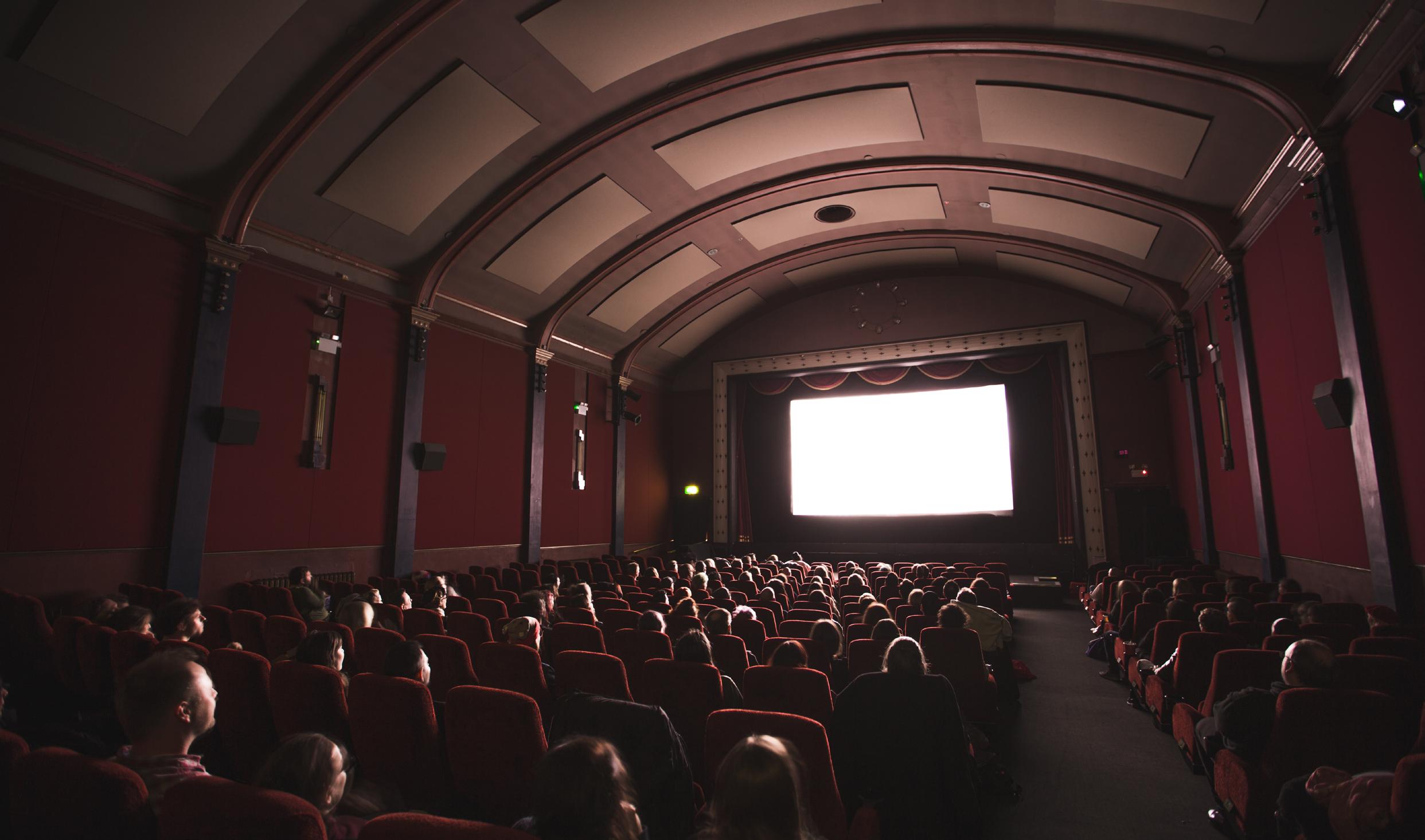
Vienna hosts a smorgasbord of film festivals, with the majority and most widely loved taking place in the Fall and Winter. Kicking off the season, SLASH Film Festival showed mainly indie horror, science fiction, and fantasy in early October. Vienna also hosted the Austrian Independent Film Festival, Queertactics, VIFA, this human world, among others. Chiefly, the Viennale (the Vienna International Film Festival) took place across Viennese cinemas for its 61st season from October 19th to 31st, 2023. The Viennale is Austria‘s most internationally renowned film festival and one of the most significant in Europe. For an exaggeration, it‘s the Venezia Biennale of Central Europe. The Viennale is a themed festival (2023’s theme was „Light“) for films of all genres and ended with the awarding of four prizes. The winners were Signs of War (2022), Hokage (2023), Savvusanna Sõsarad (Smoke Sauna Sisterhood (2023), Die Ängstliche Verkehrsteilnehmerin (2023), and Rickerl (2023). The final two films were both awarded the Erste Bank Film Award as a draw of the jury votes. Unlike exclusive film festivals such as Cannes, the Viennale is open to the public, and the hosting cinemas saw 75,300 visitors and screened around 350 films this past season. Viewers and filmmakers had access to gala events, special screenings, premieres, filmmaker interviews, audience discussions, and more. On the penultimate night of the festival, Gartenbaukino hosted a gala for the 100th birthday of the Viennale President Eric Pleskow where the current the Viennale Director Eva Sangiori was presented with the Oscar Pleskow won for Amadeus in 1985. Amadeus was also shown at the festival. What‘s special
about catching a movie at the Viennale rather than a regular program is that some of these screenings are international premieres--neverbefore-seen independently made films you can access without having to Google if seeing a new release counts as crossing the picket line or not (it doesn‘t).
In my experience, I saw two films at this past year’s Viennale–the first being Imagen Latente (1987) at the Filmmuseum. The festival hosted a series of ticket giveaways for free attendance of lesserknown films, one of which I won and saw my first Viennale screening with. The Filmmuseum was sparsely populated for the matinee showing, but the introduction speaker and host of the screening provided valuable context for the film’s making and history. The second screening I saw was The Territory (1981) at the Filmmuseum, which was part of the Viennale/Filmmuseum joint Raúl Ruiz retrospective. The theater was packed on Halloween for the philosophical horror film and Paul Getty Jr. cameo, and I was lucky to have remembered to reserve seats. I also planned to see Angst (1983)--the newly restored version that hadn’t been shown in cinemas since the year it was released–but it was completely sold out by the time I got to the Filmarchiv, despite me arriving an hour before showing.
You might be wondering why the Viennale is worth attending, and what makes a film festival distinct from seeing a regular movie at a theater. Film festivals like the Viennale allow smaller and independent filmmakers to reach audiences and potentially reach industry connections, too, to jumpstart their careers. Quentin Tarantino, Wes Anderson, Paul Thomas Anderson, and so many other successful directors got their starts showing
short films or first movies at film festivals. Industry professionals looking for new talent can scope it out at an event like the Viennale. Recognition through awards, critic reviews, and interviews is also significant exposure for filmmakers at the beginning of their careers. At the Viennale, for example, there was a segment for film criticism in the form of a workshop, called the Young Critics‘ Circle. Four student or recently graduated film critics had their own opportunities for recognition and networking by writing reviews and publishing them under the guidance of renowned film critic Patrick Holzapfel. Not only is this an amazing deal for the film critics fighting to keep their field alive, but it‘s also a great chance for independent filmmakers wanting to get their names into review magazines and circles.
Film festivals also allow for more freedom in creative risk, which distributors would have to take into account when choosing what to invest in. Especially at relatively smaller festivals on the world scale like the Viennale, open submission to all creators allows for more creatively innovative films to have a chance at being shown, even if it means the film would be catering to a much more niche audience. Festivals can afford to cater to niche audiences, and in the case of something like the SLASH Film Festival, it‘s part of the draw. Indie film keeps art innovative, and screening indie films keeps independent voices alive. The
Viennale, like many other smaller festivals, has open submissions, which means you don‘t need a personal invite to submit your film for review. This is especially helpful for new filmmakers looking to present their first projects.
Supporting film festivals is a great way to directly support independent arts and the filmmaker‘s ecosystem. Film festivals--and film in general--require an audience and are partially financially supported by the ticket sale revenue. In the case of the Viennale, funding came from ticket sales, public sponsors, and private sponsors–including the Stadt Wien Kulturabteilung, Erste Bank, Campari, and more. Of course, these are huge names that individual audience members cannot hope to match financially with their 10,50 EUR donation per viewing. However, without people to come and see the movies, especially at film festivals that are open to the public, there would be no incentive for a brand like Campari to sponsor the Viennale in the first place. Although Viennale is over until this coming October’s festival, we can spend our time by checking out Vienna’s Spring film festival opportunities. In March, Vienna is hosting TRICKY WOMEN/ TRICKY REALITIES, focusing on animated films created by women and genderqueer artists. In May, we are looking forward to Vienna’s beloved Vienna Shorts Festival, celebrating short-form films.
Dear CEU Community,
„If you weren‘t in opera – you weren‘t in Vienna.“
The very essence of this enchanting city lies in its symphonies, and we‘re thrilled that many of you share an interest in experiencing the cultural magic of the Vienna State Opera.
With great care and enthusiasm, we present to you a meticulously crafted guideline. Whether you‘re a seasoned opera aficionado or taking your first step into this world of elegance, this guide is designed to be your trusted companion in getting you into the mesmerizing halls of the Vienna State Opera.
Please, enjoy your time in Vienna at its fullest. Immerse yourself in the timeless melodies, embrace the rich cultural tapestry, and let the Vienna State Opera be a highlight of your experience in this extraordinary city.
Wishing you an enchanting and harmonious time in Vienna!
The Stand.
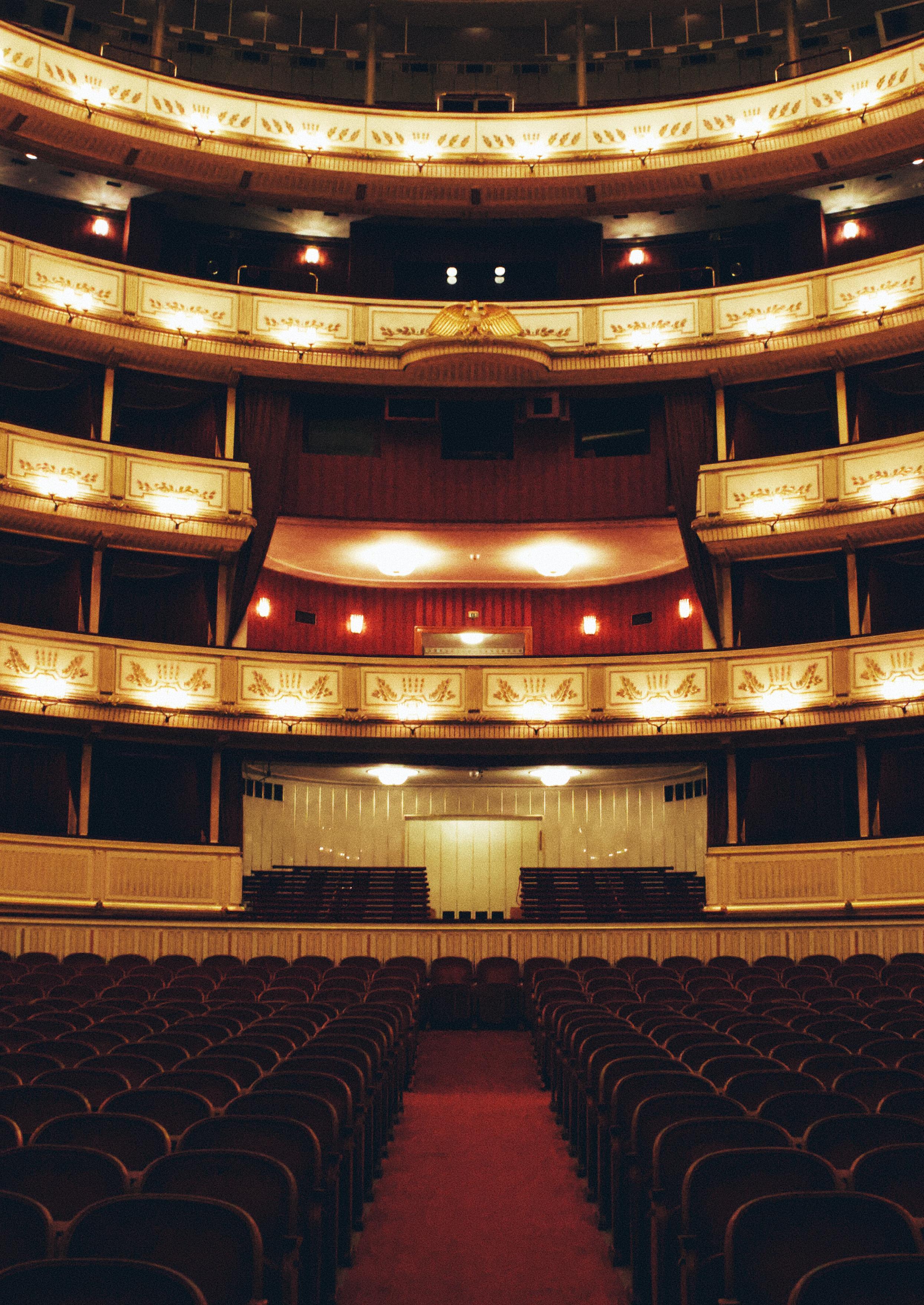
Contrary to the common belief that opera tickets are prohibitively expensive, Vienna offers an incredible opportunity for people under 27 years old through the „U27“ program. This initiative aims to make cultural experiences, including theater and opera, accessible to young individuals with limited budgets.
The most convenient and recommended way to secure your seats at the Vienna State Opera is through the official online ticket store. This method not only offers a seamless booking experience but also allows you to specify that you are under 27 years old, potentially making you eligible for special youth discounts.
Website
For those who prefer the convenience of mobile applications, consider using the Gretchen ticket application. It provides a user-friendly interface and often features upcoming performances at the Vienna State Opera.
Download Gretchen App for IOS
Download Grettchen App for Android
PRO TIP: While the most sought-after performances in November and December might already be sold out, this presents an excellent opportunity to plan ahead. Be proactive and secure your tickets for performances in the upcoming months of the rest of the season - as soon as the booking window opens. Don't miss the booking date to ensure you get the best selection of available seats!
PRO TIP: Consider the expert's insights while choosing performances. COSÌ FAN TUTTE on 26 June, in particular, is recommended as a highlight of the season, staged by Barie Kovsky*. Ensure to book your tickets early for these recommended performances to secure the best seats.
*Barie Kovsky holds a prominent position in the world of opera, renowned for their exceptional talent in staging and directing. Kovsky's contribution to the arts goes beyond traditional interpretations, bringing a fresh and contemporary perspective to classical masterpieces.
Option 1: Ticket Gretchen Website
Visit the official Ticket Gretchen website to register for the U27 program.
U27 Ticket Discounts
Option 2: Vienna State Opera Website
Alternatively, you can register directly on the Vienna State Opera website. Explore the detailed registration plan available on the website for a step-by-step guide.
Vienna State Opera
Upon successful registration for the U27 program, individuals can enjoy opera tickets at a significantly reduced cost of approximately 20 euros, making this cultural experience not only enriching but also budget-friendly.
It‘s worth noting that the U27 program often extends its benefits to other cultural events, including theater performances. Be sure to explore the various opportunities available through the program.
While it's an option, purchasing tickets at the box office is a riskier endeavor. Popular performances are frequently sold out, particularly if you decide to wait until half an hour before the start of the show. We advise against relying solely on this method to ensure you secure a seat for your desired performance. Note: It's highly recommended to book your tickets in advance, especially for popular shows, to guarantee availability and avoid disappointment.
To secure your seats for the Vienna State Opera, it's crucial to be aware of the booking timeline. The booking process commences two months prior to the month of the desired performance. For instance, if you aim to attend a performance in December, ticket availability begins on the 1st of October at 10:00. It's essential to mark this date in your calendar, as the popularity of certain performances may lead to rapid sell-outs.
January
1
DIE FLEDERMAUS (Johann Strauss II)
17 // DON GIOVANNI (Wolfgang Amadeus Mozart) >>> Barie Kovsky
1 // CARMEN (Georges Bizet)
25
23
5
18
4
26
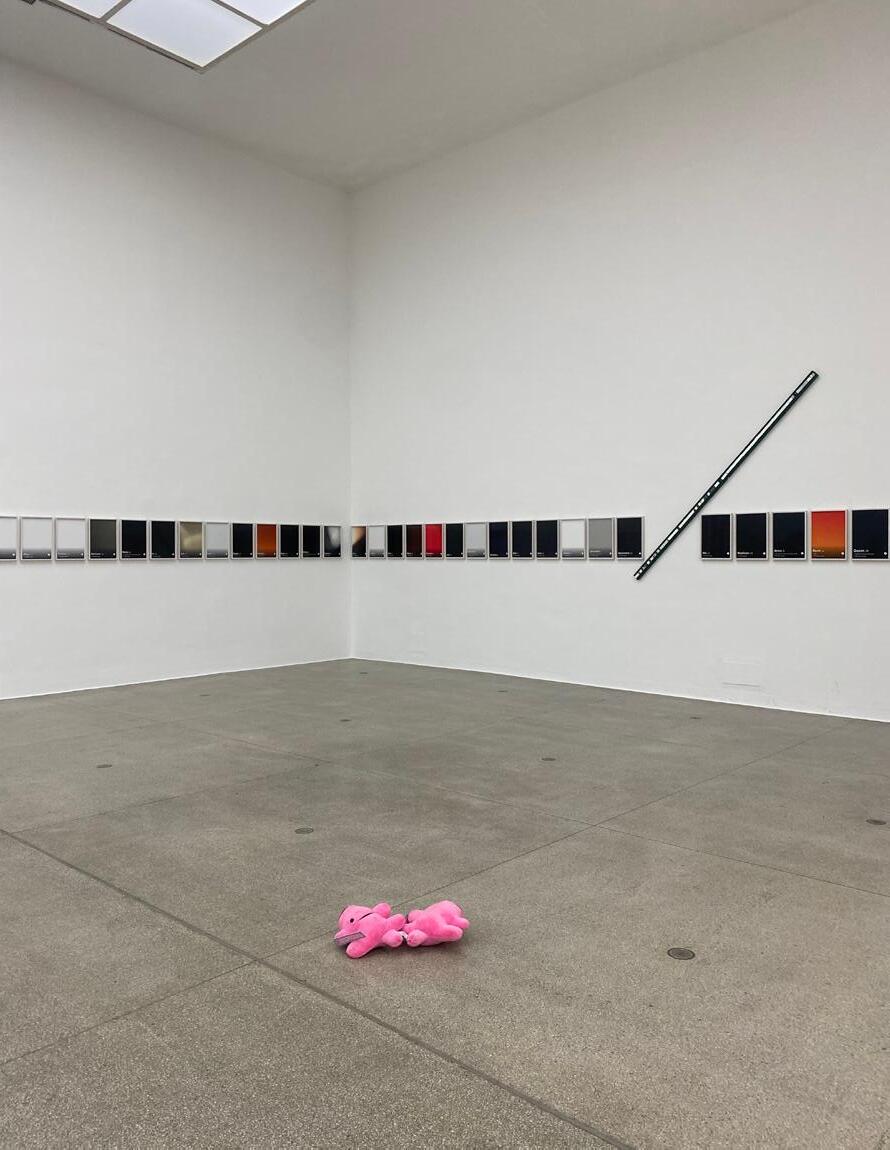
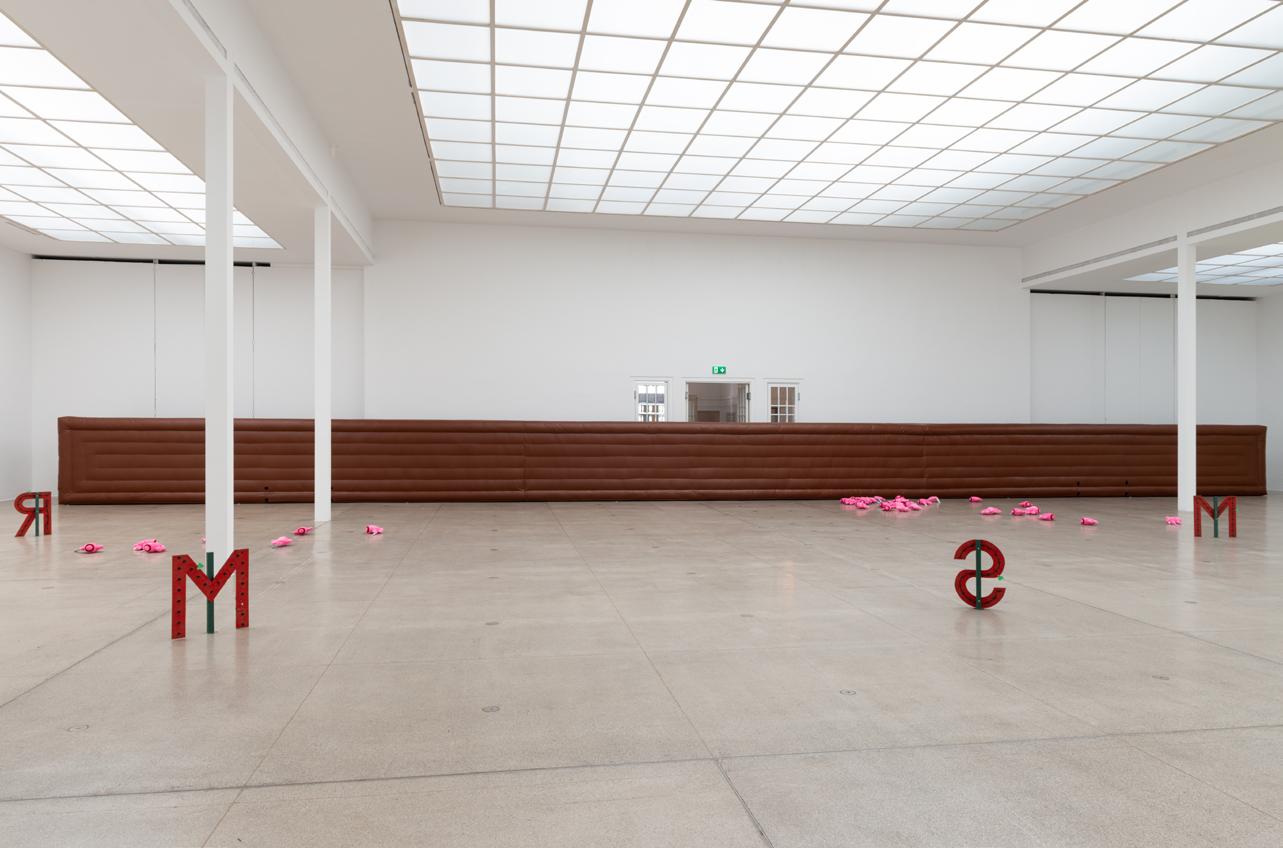
Upon entering the Secession in Vienna, for SoiL Thornton‘s exhibition this autumn, Choosing Suitor, we are confronted with an unexpected sight—an inflatable brown barrier blocking the main entrance. Trying to navigate around the building, we finally access the show through the museum‘s rear entrance. The exhibit‘s placement sparks curiosity, inducing a sense of disorientation, suggesting a private world visible only to those daring enough to abandon conventional ways of seeing. With these first impressions, we step into the space of the exhibit.
The inflatable wall, ‘Husband Chair’, almost embraces the entirety of the space, and with it, all its multimedia artworks, ranging from photo series to paintings and installations, opening them up for reflection. It prompts contemplation on accessibility, probing the interfaces of institutional and public dialogue and delving into the exploration of identity within a societal landscape that commodifies the very core of the subject. Resembling a bouncy castle, its playfulness is interrupted by its inversion in a way that prevents interaction. These child-like elements coexist with adult-like seriousness, emphasized by scattered pink plush toys. They give the impression of being abandoned after play, and this playfulness is contrasted with the embroidered names on them, merging genders, critiquing the binary nature of the institution of names.
This thematic exploration seamlessly converges with SoiL’s ‘Name that Grisaille’, series of paper sheets embellished with names in nail polish, painted in Chroma Key Green, extending across one of the walls of the space. This distinctive green colour is often used in film production as a technique that allows subjects to be placed in environments that would otherwise be impossible for
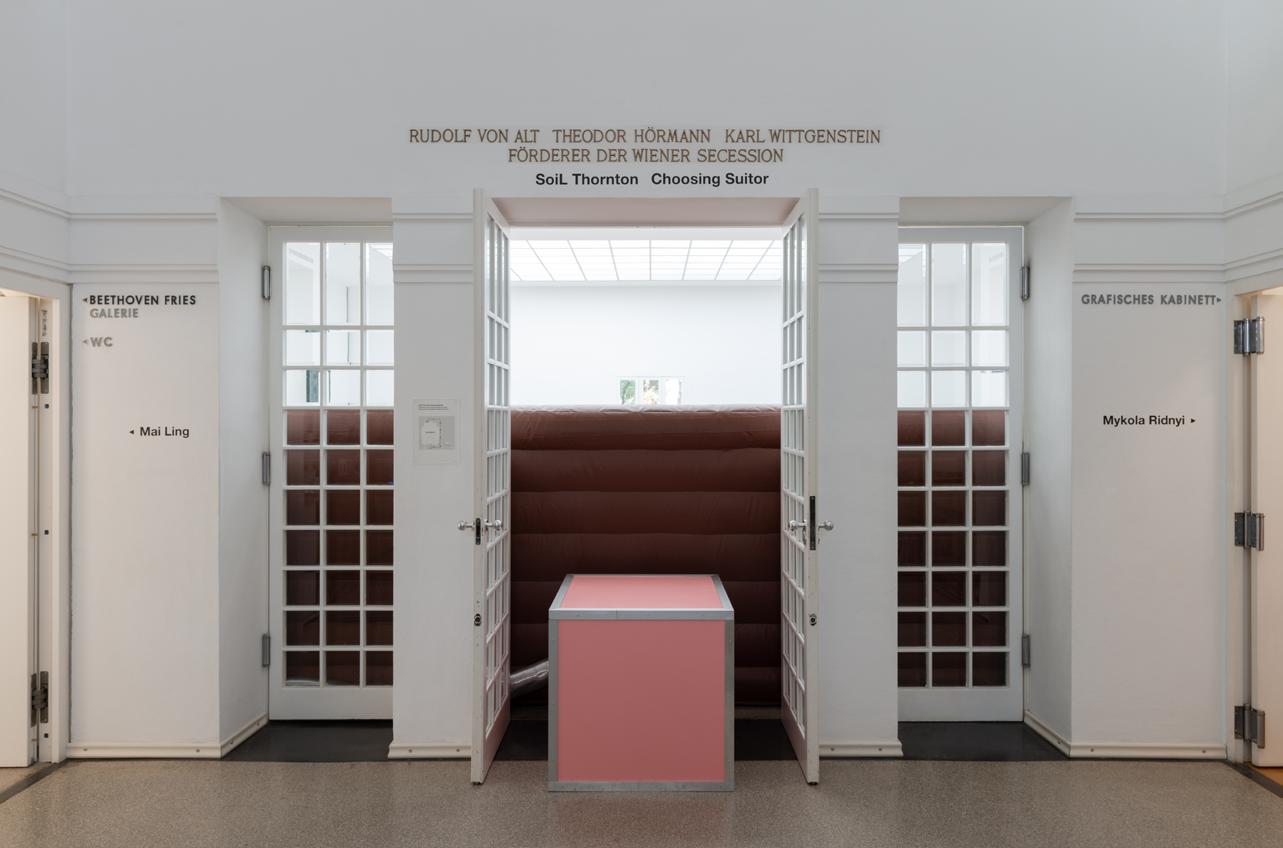
the eye to see, allowing the viewer to let go of everyday conventions of vision. SoiL‘s use of this colour, therefore, raises the recurring question: can names truly capture the essence of individuals, or are they arbitrary constructs that need to be rethought? Can this color illuminate the countless layers and dimensions inherent in each individual that lies beyond the surface?
The work, ‘My Pet Tinder’s Blank Stare’, a series of pigment prints on the left wall, sheds light on labels and their role in self-commodification. Displaying Tinder profiles with limited information, the artist critiques contemporary dating culture, linking one‘s worth to customary details while obscuring the very core of the self. A tilted mirror disrupts this series, and its fragmented tiles distort our image, distancing and alienating us from it, revealing the inscrutable and relative nature of self-image within a system governed by conventional norms, eluding the possibility of critical reflection. SoiL’s exhibition stands as an antithesis to this approach.
In Slaughterhouse 5, Kurt Vonnegut’s anti-war sci-fi novel about the fire-bombing of Dresden, the protagonist Billy Pilgrim explains how his capture by the alien ‘Tralfamadorians’ has altered his perception of time. For the Tralfamadorians time is not experienced in a linear sequence, one moment is not simply followed by the next, but instead past, present, and future are always happening, all at once: ‘when any Tralfamadorian sees a corpse, all he thinks is that the dead person is in a bad condition in that particular moment, but that the same person is just fine in plenty of other moments’. Time is therefore like a long stretch of mountain range which, when viewed from afar, can be examined in its entirety.
Vonnegut’s Tralfamadorians are a clear influence on Arrival, Canadian filmmaker Denis Villeneuve’s delicate and moving 2016 drama about first encounters with mysterious extra-terrestrials. The screenplay is by Eric Heisserer and based on an adaptation of Ted Chiang’s 1998 short story, ‘Story of Your Life’, which explores similar themes of free-will, determinism, and language as cognition.
We follow Louise Banks (Amy Adams), a university lecturer still, it would seem, mourning the tragic death of her daughter to an incurable disease. Louise’s reputation as a distinguished linguist means that she, along with wise-cracking physicist Ian Donnelly (Jeremy Renner), are called upon to assist in the US government response when twelve alien structures land suddenly in random sites spotted across the globe.
After being transported to Montana, where one of the ships – huge, dark, and egg-like –hovers ominously a few feet above the ground,
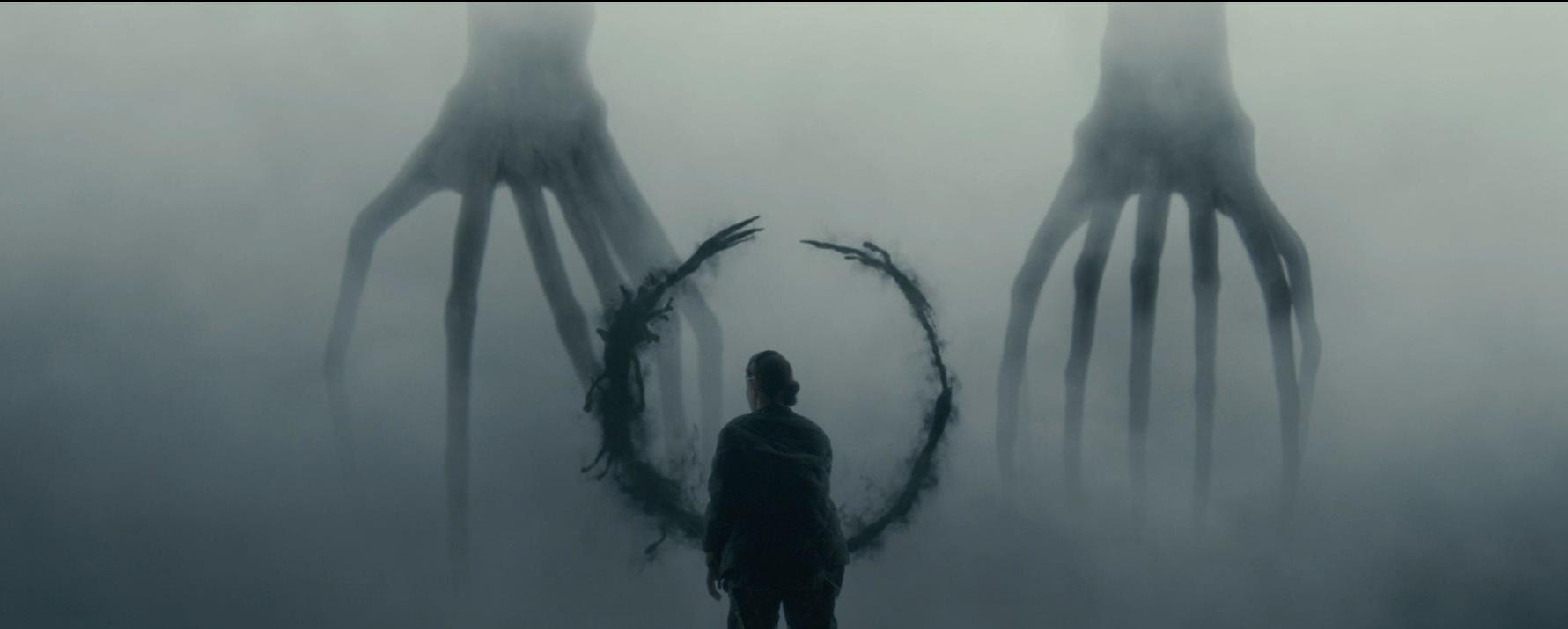
we are introduced for the first time to the ‘Heptapods’. These murky, floating octopal creatures communicate by releasing dark plumes of gas to project intricate shapes on the white canvas that separates them from the scientists. It is the job of Louise to try and decipher the meaning of this alien language, as international tensions rise about how to deal with these unprecedented visitors.
The reason for the Heptapod presence is unclear and as fears grow of a military confrontation the echoes of colonial first encounters become starker. Banks is reminded of the genocide of indigenous peoples in Australia and later, when a Heptapod message is misinterpreted, a CIA agent worries that the creatures are trying to divide human groups against one another, ‘like the British in India and Germans in Rwanda’. Indeed, the American efforts to try and extend the English language beyond the confines of the actual planet represent, in many ways, a final late victory for British imperialism.
The core question of the film is how language structures not just our communication, but also our thought. As Louise begins to understand the semasiographic language of the Heptapods – meaning a form of writing which is not based on speech or intended to represent sounds – she begins to realise that the Heptapods have no conception of language, or time, as being directional. The more Louise understands the Heptapods the more she begins, also, to experience time as they do. This set-up allows for the film’s final twist, an emotional punch that is very well executed.
The pace of Arrival is perhaps a little uneven, and there are occasional indulgences of some genre tropes – the grizzled, no-nonsense
US Colonel GT Weber being the most derivative element in a movie that mostly steers clear of science fiction cliché. But these are minor complaints. Villeneuve’s film is impressive for its engagement with some interesting, complicated ideas without ever becoming lost in admiration for itself, though there are legitimate ethical questions to be asked of the suggestion that language is the primary determinant of our thought and action. Regardless, Arrival remains an extremely worthwhile and enjoyable watch, packed with genuine emotional heft and intellectual curiosity.
The Nationalism studies film club hosts screenings every other Thursday at 19.30. The film is followed by a semi-moderated discussion and snacks! For more info check-out the Nationalism studies Instagram page and join our WhatsApp group on CEU communities.
Why do people live so quickly
Feeble souls,
Barely see what happens.
“One Coffee could I get?”
Asks a man and helps himself to a chocolate from a jar. Abruptly, coffee’s on the bar
It's taken, other’s on the go.
It's the dangerous coffee flow; Enjoying a coffee for a minute Ends in a sip that lasts a second. We’re committing a time crime By speeding up the lifetime.
First hitting subscriber’s inboxes in 2014,What Happened Last Week is a free weekly newsletter distributing curated news from the Global South; current events that the public may have missed due to the Eurocentric media landscape. Sham Jaff, a Kurdish German woman living in Berlin, spends the week gathering and selecting the news, before it is sent out every Monday.
The idea for the newsletter stemmed from Jaff’s desire to push the consumption of news beyond mass media headlines and paint a more nuanced and complete picture of the world’s latest affairs. For anyone looking to shift their political engagement towards a more authentic conception of global affairs, this newsletter provides an accessible start to becoming more engaged with the stories that escape mass media attention.
The absence of my phone has turned out to be an omission of great intensity. Seven days post-theft at the CEU Halloween party, my observations are as follows:
I feel it is unnecessary to waste words elaborating on just how addicted to our phones we all are, that much is clear. Having taken the time to analyze what this means, I hope my observations entice you to do the same.
While phones have successfully done their duty in connecting people to one another, are they not simultaneously distancing us from ourselves? This gravitational pull to stay connected- in the loop- does us a disservice, as we neglect to take time to fulfill our needs.
Let us briefly recap the daily routine the majority of us subscribe to…
(one) Wake up – exit the unconscious dream world.
(two) Enter the real-life world (let’s maybe not get into the philosophical aspects of what the ‘real world’ is for now).
(three)Reach for the phone, enter virtual world, allowing real-life world to take the back burner.
*Intermission*
I would like to clarify that yes, the ‘real-life world’ and the virtual world do overlap, however, for the point I would like to make, please allow me the liberty to regard them as separate entities.
(four) Let the phone rest and rejoin real-life world.
(five) Notification beckons and return to virtual world.
(six) Go about day, floating between virtual and real-life world (and occasionally unconscious dream world, when the lecture gets that boring).
(seven) Return home safely into solitude.
(eight) Plot-twist: notification, catapulted back in the virtual world
Humans have always been unique in their ability to transcend the physical world, or real life world, as it was, and find curiosity in the beyond, usually in the context of religion and spirituality. The characteristic to consciously exist in the world in such a way separates us from the rest of the animal kingdom, is something I have always been interested in. And, thankfully received, we have been granted yet another world, the virtual. The vast virtual realm to which we devote much of our hours offers an oasis for creativity, communication, freedom, and the infinite ability to learn and spread information. However, it also never grants us a break. The consistent interdependence within this manufactured universe is a bubble that is slowly suffocating us, dangerously, without raising alarm. In this trance we are never truly left alone with our thoughts, unable to bring ourselves to connect to the self. Can we then truly claim to be connecting with other people at all?
The phone itself is no longer an object, it has mutated into an extension of ourselves, of our identity. It has surpassed its initial intention as a means of communication and evolved into a material manifestation of who we are. It stores our memories for us, it realizes our interests and hobbies and it regulates what we like and dislike. These are the things that make us who we are, but this ability to physically hold our essence captures a rather new concept and I’m not sure we’ve fully grasped what it means. In the first 12 hours without my phone, this all became very apparent to me. I realized that I could not listen to music throughout my day (as I normally do), I could not take photos or videos (as I normally do), I could not go on a walk, without Google Maps, (as I normally do). My entire life was thrown out of whack.
On the bright side, I found myself able to appreciate my interests on a deeper level, because I no longer experienced them passively. As I listen to music I am more invested, when I feel the urge to take a picture or video I remind myself to buy a camera ;) and when I’m desperately in need of a mental health walk, I must pay attention to the street signs. I have been forced to become more present and with that, I have invited mindfulness. This habit is crucial and often neglected to enable a fastpaced, productive life, syncing our heartbeat to that of capitalisms. A week later I have officially acquired a Flip Phone and am curious as to where this journey will take me.
I would like to conclude by saying that while I am hoping to succeed in living with a phone for the next two months, I would like to emphasize how such a life is not a long-term possibility. This is the age that we live in. We cannot properly or fully live in this world without interacting with all its facets. To live is to participate and in this generation that is to enjoy and use this virtual world to our aid, but try not to be consumed by it.
With all of that being said, if anyone finds a blue iPhone 13- please let me know :)
ANONYMOUS HELP COLOUMN
Dear reader,
It is I, Dr. Strangelove, with arms open to attempt to answer all your questions, solve all your di/tri/polylemmas, and assuage your heartbreak and heartache.
Is your roommate a filthy corrupted philistine who hates postmodernism? Are you starting to doubt whether you can study without Ritalin? Do you wander the halls of the Panopticon aimlessly in the desperate pursuit of a forking fork? Do people keep asking you if you know The Smiths and for you to name five songs? Or is there a pretentious second year you would like to have expelled on account of putting pen to paper?
If so or otherwise, write to thestand@gmail.com.
“If music be the sound of love, play on.”
Dr. Strangelove
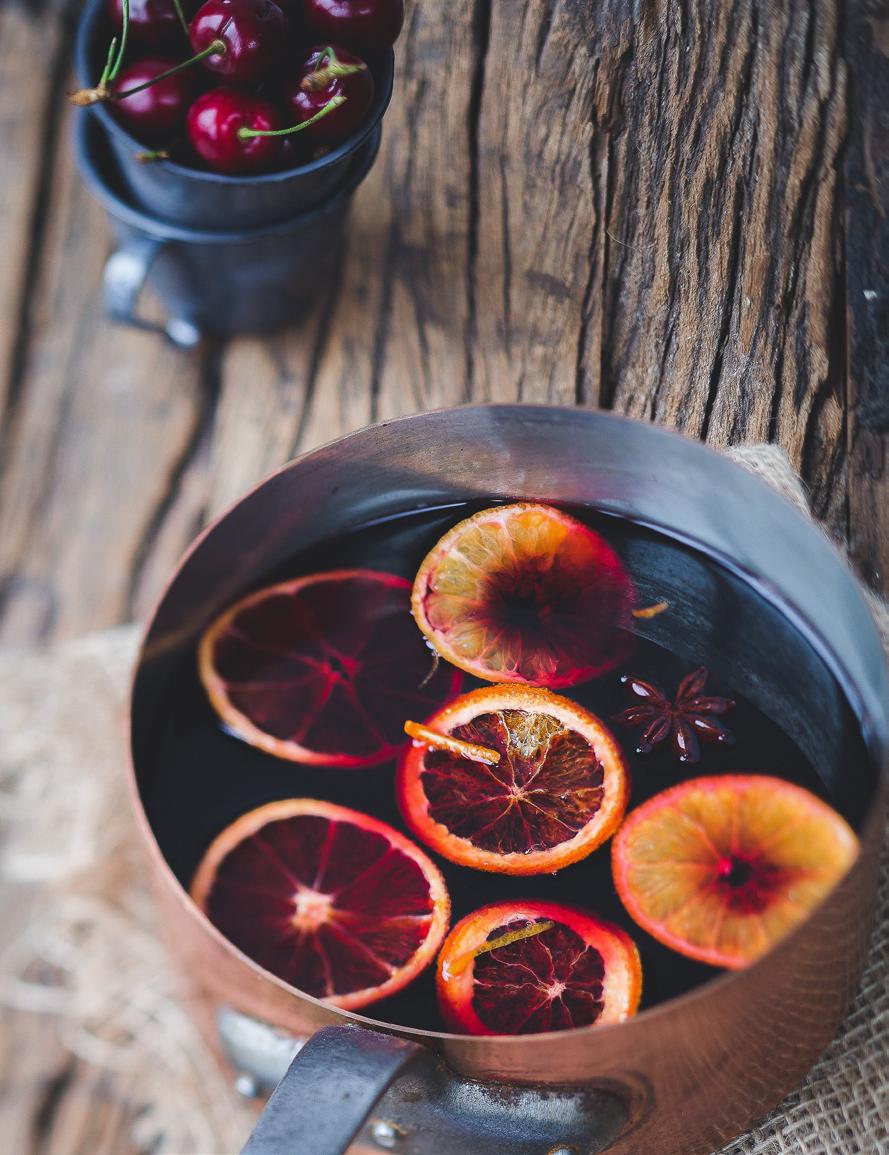
The season for excessive consumption of Glühwein (you may also call it ‘mulled wine’) has finally come.
The earliest forms of Glühwein were consumed in the Western Roman and Byzantine Empires. ‘Conditum Paradoxum’ is a spiced wine which includes dates, saffron, honey and pepper, primarily added for preservation. This delicacy was generally only consumed by the wealthy and recipes for it vary.
In the Middle Ages, spiced wine was consumed for medical reasons. The spices were said to release valuable essential oils and the wine was generally consumed cold. The recipe for Glühwein, in the form we roughly consume it as now, was allegedly first recorded in Saxony, Germany in 1843. Only in 1956 a man called Rudolf Kunzmann from Augsburg started producing and distributing Glühwein industrially. At that time, however, the wine laws forbade sugar as an ingredient, which prompted heavy fines.
Since then, many Swedes have come forth to contest this. Apparently, around the same time, the Swedish royalty started consuming hot, spiced wine as well, a beverage they dubbed Glögg. Interestingly, Swedish Queen Katharina von Sachsen-Lauenburg held close ties to the Saxon aristocracy…
In case you are fancying a delicious Glühwein now, but can’t bring it over yourself to pay 5€ for a cup that gets you absolutely nowhere and the supermarket prices for pre-made Glühwein provoke fits of rage in you, you can relax now. Look no further, as here comes the ultimate Glühwein recipe:
Ingredients:
• Red wine (preferably dry)
• Sugar (really doesn‘t matter what kind, don‘t let anyone tell you vanilla sugar is indispensable)
• Cinnamon stick
• Anise
• Clove
• Cardamom
Optional ingredients:
• Apple slices
• Orange slices
• Rum
Instructions:
1. Heat up the wine and the spices in a pot, but DON’T let it boil
2. Wait until it’s all more or less mixed and there are no clumps of spice left (you would add the optional ingredients now)
3. Add as much sugar as you please and let it dissolve
4. Pour yourself a cup(s) and start drinking
*Alternatively there exists something called “Glühwein Gewürz”, which is definitely a safe option

Course registration started in a way I imagine most of us experienced: absolute mania, franticness, and a level of sleep deprivation that, when paired with stress, resulted in a palette of delusion rarely seen in nature but often seen in the student.
For those who glided through the registration, this is not an article for you unless you wish to feel better about your organizational skills or you are a little disturbed by how it usually goes for us. It all started in the franticness of the night right before the deadline. “How do credits even work?
What are these requirements?” I wondered trying to make sense of the printed emails laid in a diagram. I felt the urge to tie red strings to all the information I received as if this crime scene arrangement would help me decipher the mysterious underbelly of the CEU registration process.
After many panicked calls and a couple of incriminating messages to the group chat, I finally mustered a list that seemingly encompassed the requirements to pass the semester. And so when I woke up the next morning at 7:45 on the dot, I was almost hopeful about how it was going to go. With a laptop open on my lap, I had been waiting for 8:00 to press my choices only to be blown away in the end as all were sent to the waitlist. Now, this technically had nothing wrong with it. I was on time (a brief altercation with a spider made me only a small 9 minutes late), and we had been warned that we would only be let out of the waitlist when they would comb through it all. Throughout the rest of the day, two classes freed up, while others stayed stubbornly unavailable. Suddenly, it was Sunday, and I had no idea where to go the next morning for my class. And more alarming, I was not the only one.
The silence of the administration echoed the strongest when put next to the uproar of stress, frustration, and at times, face-value plots of uprising. A chain of concerningly confusing emails tumbled into Outlook, starting with Student Union confirming that the silence of our organizers
was not personal, but in a rather more upsetting reveal, generalized to the very group they were supposed to view as our representatives within their government. An interesting practical example of a crackdown on democracy.
Not far after, on September 19, a brilliant week and a half after our registration, a coordinator was brought into the scene, one that had apparently taken over the job not earlier than September 1st. It seems fair to question why the late introduction, and why the previous lack of coordination. It is almost (isn’t so glorious the word almost? I will use it as I would use allegedly in this line of questioning) as if this coordinator (and we must acknowledge the great pity this position begs) was hired only on the week of rather than the 1st of September. Throughout the whole endeavor, it was easy to lose sight of who to email, where to go, when to show up.
Now, you may be thinking, but where is the objectivity of our wannabe journal? I have two answers to that: first, I am not objective. I would even venture to say that my personal frustration with this entire process has rather inflamed my will to write a much more upsetting article, but professionalism is to be exercised, like a misused muscle (in my case, positively atrophied). Second of all: I present to you a perspective from the other side of the waitlist. While we signed up, Ms Manners was experiencing what I can only imagine to be an incredibly stressful inpour of emails from panicked students for a problem, it is important to preface, she did not create. Here is an excerpt from our exchange:
The Stand: What did the distribution of tasks look like?
Ms Manners: During the year, the Academic Advisors and Program Coordinators have a distinct distribution of tasks. I oversee the team and work very closely with the Dean of Undergraduate Studies and the Program Directors on larger projects in the background. During busy times, we all pitch in and some
tasks become a cooperative endeavor, which is why I took a bigger part in registration this year, especially as it was the first year we’ve had all four years of students and we had a much larger amount of incoming exchange students than we did last year.
TS: Could you outline the role you played during the registration process?
MM: During the registration process this year, I worked closely with the Academic Advisors to ensure students' registration needs were met and that students were on track to meet their requirements for the year.
TS: How was the process for you?
MM: I won’t lie: it was a challenging process this year! The biggest issue was having 50 incoming exchange students who were all mostly interested in political science. On top of this, the year 2 specializations for PPE were not very wellbalanced between the tracks with almost every single Year 2 student choosing to specialize in Politics and Economics, which was not the case in the previous two cohorts! We were suddenly faced with a lot more students wanting to take politics than expected and there were also some changes to the curriculum that had some unforeseen effects that we did not fully anticipate. It was tricky trying to meet everyone’s needs in the most efficient manner, especially with a technical system that often runs slowly. As students know, we chose to close the office for a few hours every day as we found we were able to work a lot more efficiently when we could look at all the requests in writing and balance everything out. While we of course love speaking to students, sometimes the in-person questions could take a lot longer to deal with than taking care of a request in an email.
TS: How was the waitlist process?
MM: The waitlist process was a complicated but also methodological process involving spreadsheets and a lot of hours on SITS! We made sure to look at everyone’s specializations and needs. There were some courses that were
more popular than others and we wanted to make sure that every exchange student was able to take at least one of these. For the popular politics classes, we made sure the Year 2 PPE students with a politics specialization were able to get at least two of these.
TS: What was the most common issue being found?
MM: That everyone wanted to be in the exact same five politics classes! However, the entire team knows from their own experiences at university that there are always some classes more popular than others that not everyone can get into. Nevertheless, it still is always a bit disappointing having to tell someone they can't get into every single class they want even if we've all been through this experience ourselves.
A recounting that sounds as harrowing as our own experience, perhaps minus the panicked memes exchanged on the group chat, though I wouldn’t exclude the option.
Finally, unlike the members of our faculty (allegedly), we here at The Stand have no obligation in our contracts to speak no ill of CEU. Not that I would consider this ill. Maybe more of a sickly pleading for a better registration next term, because a degree would be really nice at the end of it all.
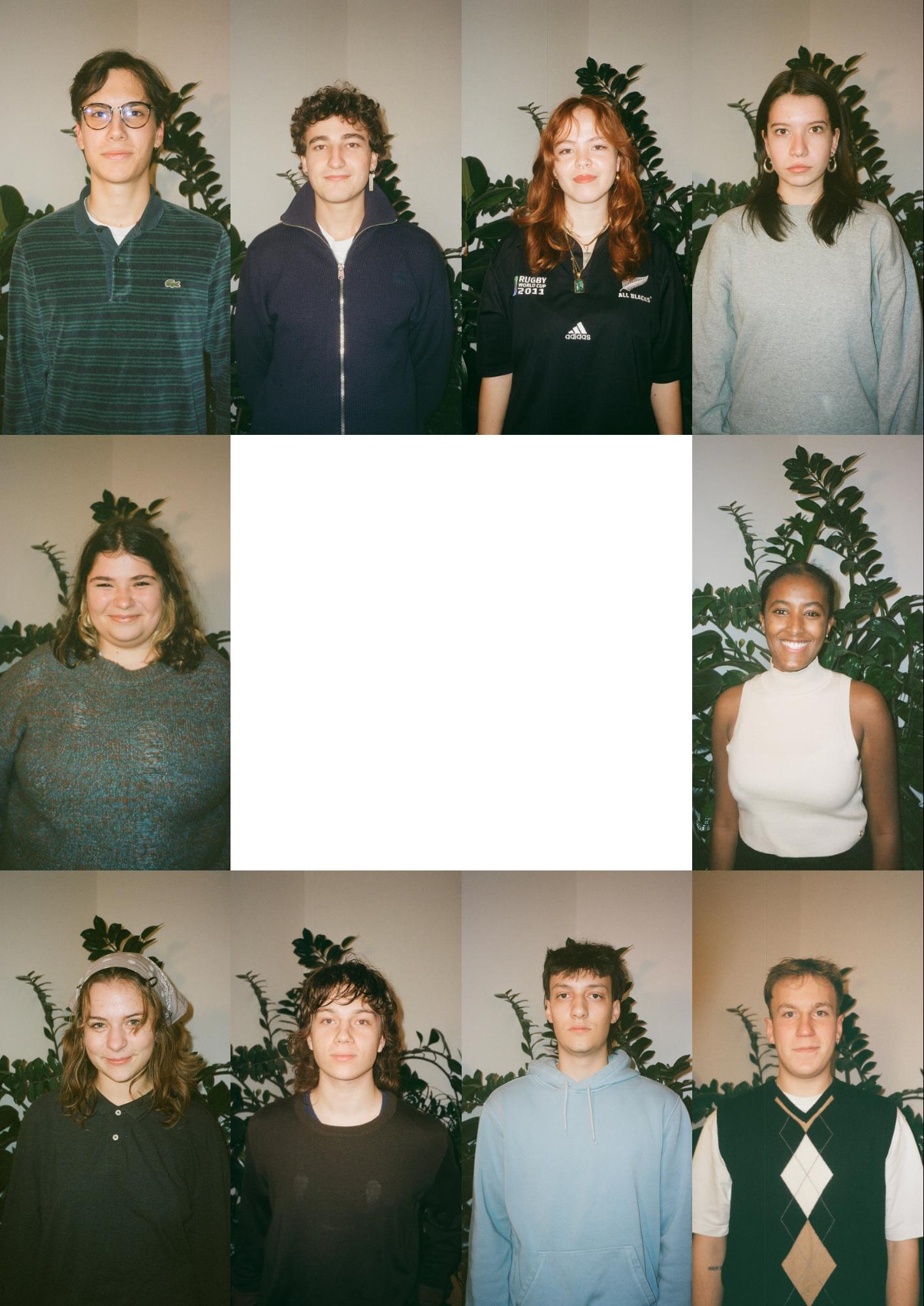
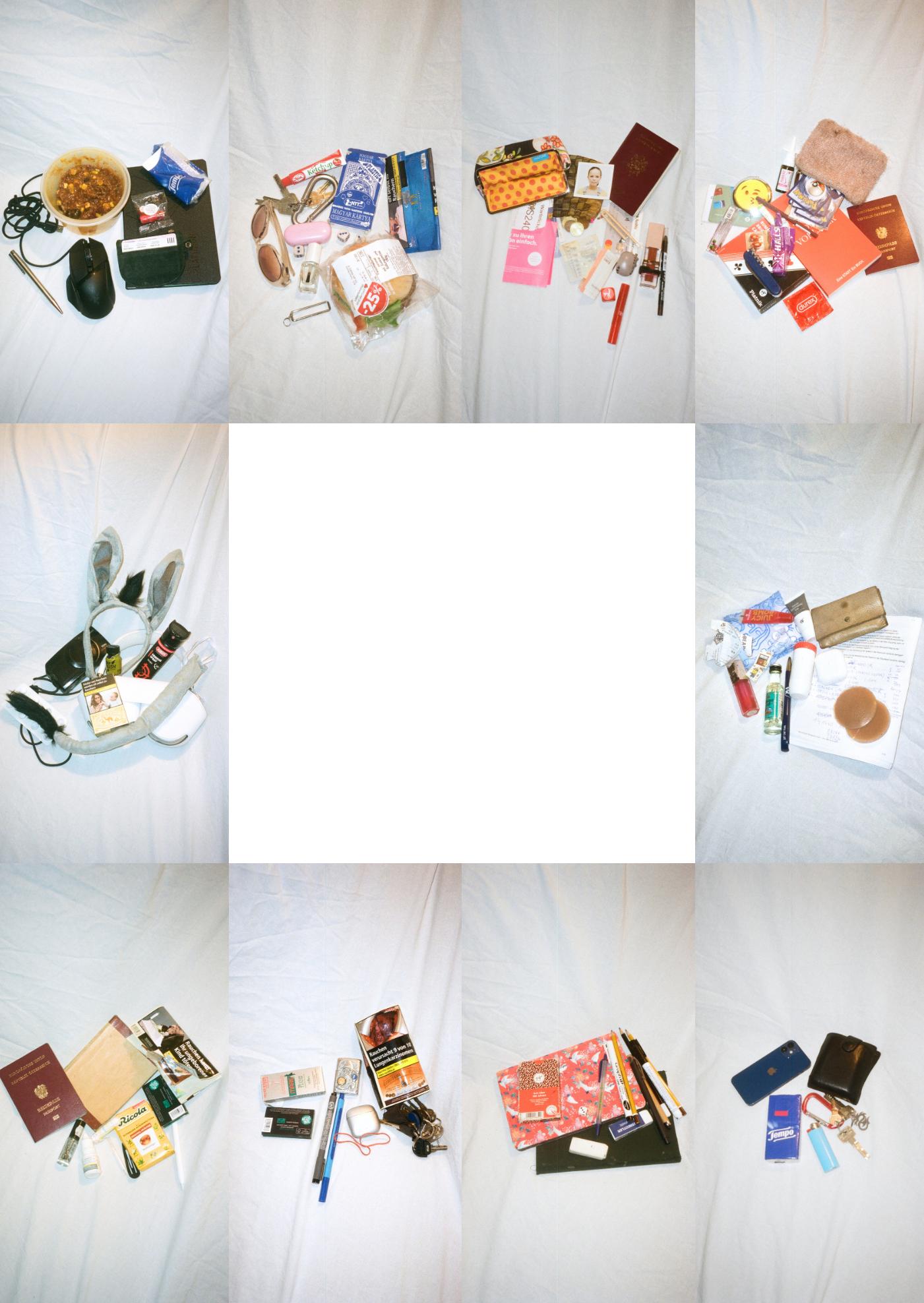
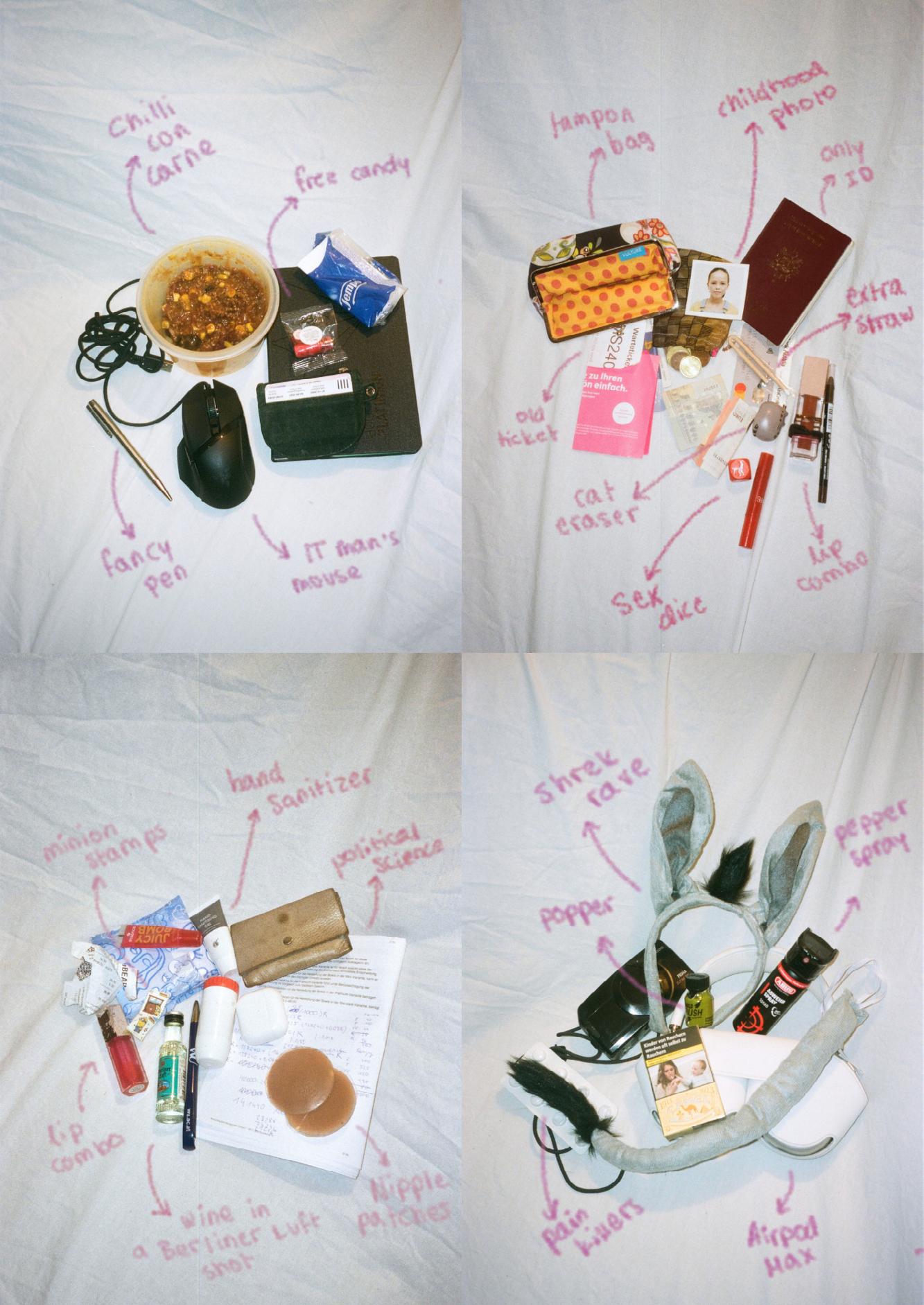
My goal was to document the detail of the everyday. Details that contribute the characterization of the people around us. Specifically, in the form of the objects they carry around with them on a daily basis. By asking friends to help me with a photography project I invited them over, catching them off guard by portraying not just them but the contents of their bags. In the process I learned about the variations and speciality in their exposed belongings. It was a joy to explore these commonly overlooked features that
so powerfully characterize my friends‘ habits, choices and personalities. From party leftovers from the weekend to their study or work material to small keepsakes they always carry to the essentials and how they vary. I encourage you to look at the smaller objects in the busy pictures or find them in your own surroundings.
 Graphic Design by Charlotte Sophie Pasewald.
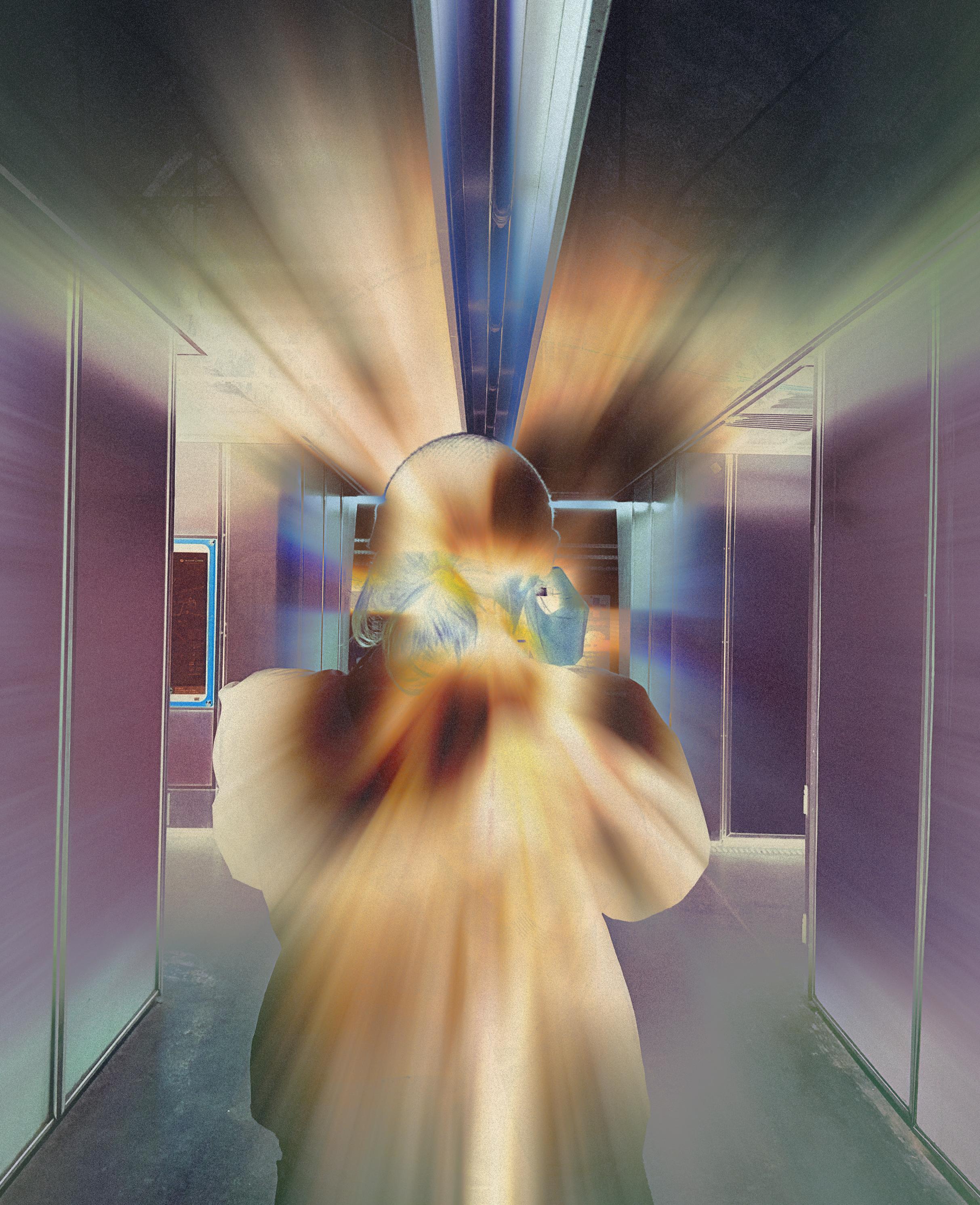
Front and back cover by Charlotte Sophie Pasewald.
Graphic Design by Charlotte Sophie Pasewald.
Front and back cover by Charlotte Sophie Pasewald.