The Southern Accent
The Student Voice Since 1929
Spotlight, page 4
Nursing students awarded for participation in Storm Safety Day
Spotlight, page 4
Nursing students awarded for participation in Storm Safety Day
Chloe Smith News Editor
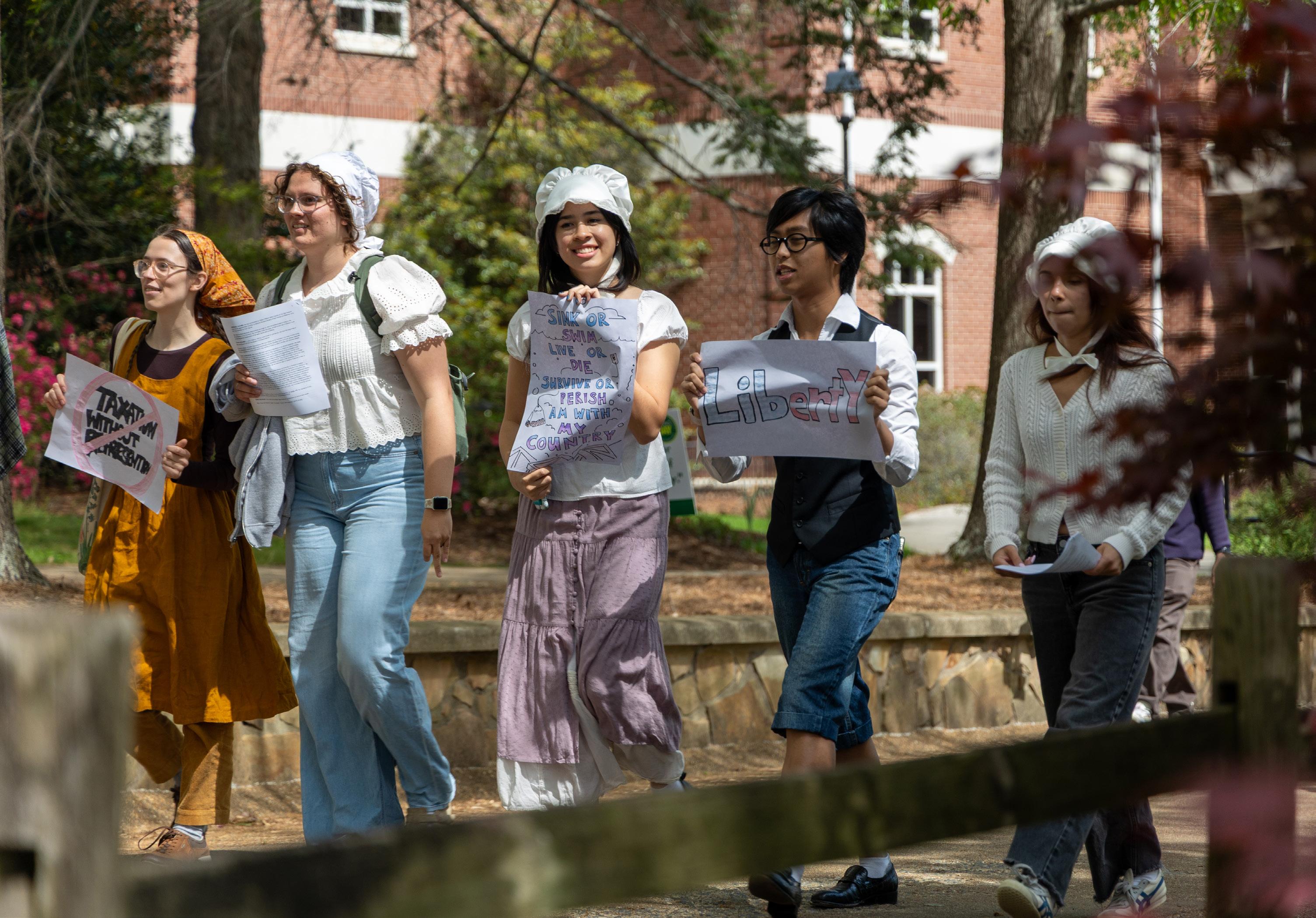
Students stepped out of the classroom and back in history on April 8 as they gathered for a campus march and public reading of the Declaration of Independence. The event began at noon in Brock Hall and moved across the promenade, with the group stopping near Wright Hall to call attention to the nation’s founding document.
Michel Sun Lee, assistant professor in the History and Political Studies Department and organizer of the event, said the idea came from an upcoming milestone in American history.
“It’s going to be the 250th year anniversary of the Declaration of Independence in July,” Lee said. “The declaration was first orated on July 8, 1776 in Philadelphia, but we’re not going to be in school for that anniversary, so I thought that it would be cool if we did something before school gets out.”
Originally ratified on July 4, 1776, the Declaration outlined the American colonies’ grievances against King George III and formally asserted their independence from Britain, according to the National Archives and Records Administration. Almost 250 years later, the campus event aimed to highlight the document’s relevance today.
Many of the participants who were assigned historical characters embraced the chance to dress in costume for the reenactment. According to Lee, the event helped students connect more deeply with history.
“Reenacting an oration like this helps students to really understand what it felt like to be a patriot or a loyalist in the
18th century,” Lee said. “I think students enjoyed being part of the event.”
The event started out as an extra credit opportunity for Lee’s students, but later grew to include a larger group of students.
“I decided that I would advertise it a little bit more widely for students who are maybe majoring in history or English and are just interested in historical reenactments,” Lee said.
Heidi Burke, a junior history secondary education major, said that the event highlighted the principles of the nation’s founding, both past and present.
“I think it is a beautiful celebration of the United States of America,” Burke said. “With the 250th anniversary coming up very soon, it’s a reminder that history is always alive and still prevalent among us.”
For other participants, the event was a fun way to engage with American history. Curtis Ballew, a freshman graphic design major, said that he initially joined for the extra credit but found the experience to be enjoyable.
“I thought it would be fun to remind people how important it is that we got independence,” Ballew said. “It’s the 250th anniversary, and history could have played out a lot differently.”
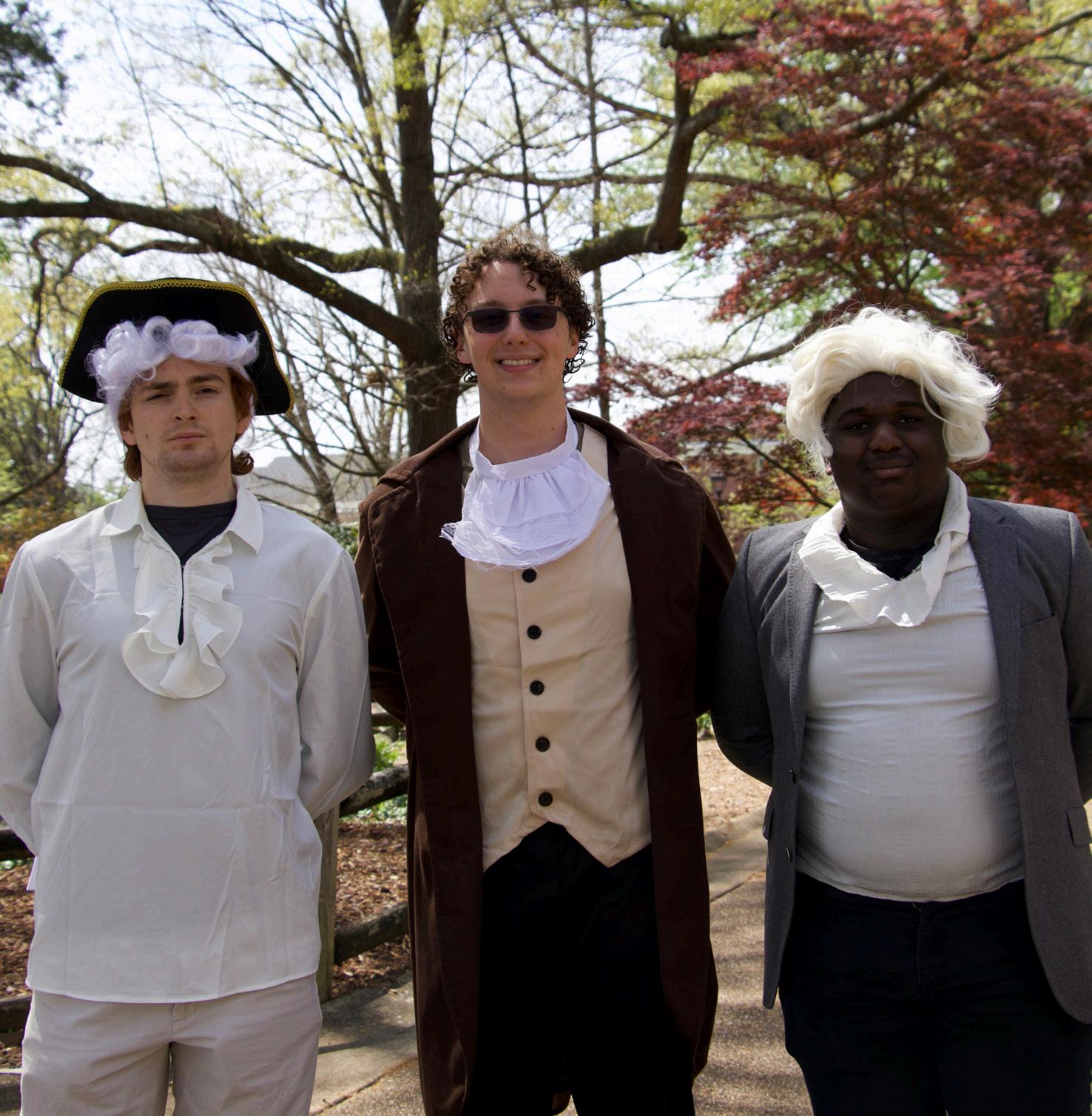
Ballew also took the opportunity to dress the part, sporting a white wig, ruffled collar and suit jacket.
“I enjoy getting to dress up,” he said. “I make this wig look good.”
Though some joined for the credit, Marshall Beaven, a junior political science major, said he took part in the event purely out of enthusiasm for the experience.
“I’m pretty much just in it for the
love of the game,” Beaven said. “I was asked if I wanted to be part of it, and I thought, ‘You know what? Yes, I actually do want to participate and celebrate the anniversary.’”
Beaven said one of his favorite parts was the reading itself.
“I definitely enjoyed getting to read out the Declaration of Independence and dressing up,” he said. “There’s kind
of a mutual embarrassment, but it’s fun. I think I would do well in the 18th century.”
Zachary Bradley, a senior history major who dressed as Thomas Jefferson, fully embraced the reenactment and emphasized the significance of the march.
“It’s really fun to get to reenact stuff,
“I enjoy getting to dress up. I make this wig look good." - Curtis Ballew
Anaya Miller Reporter
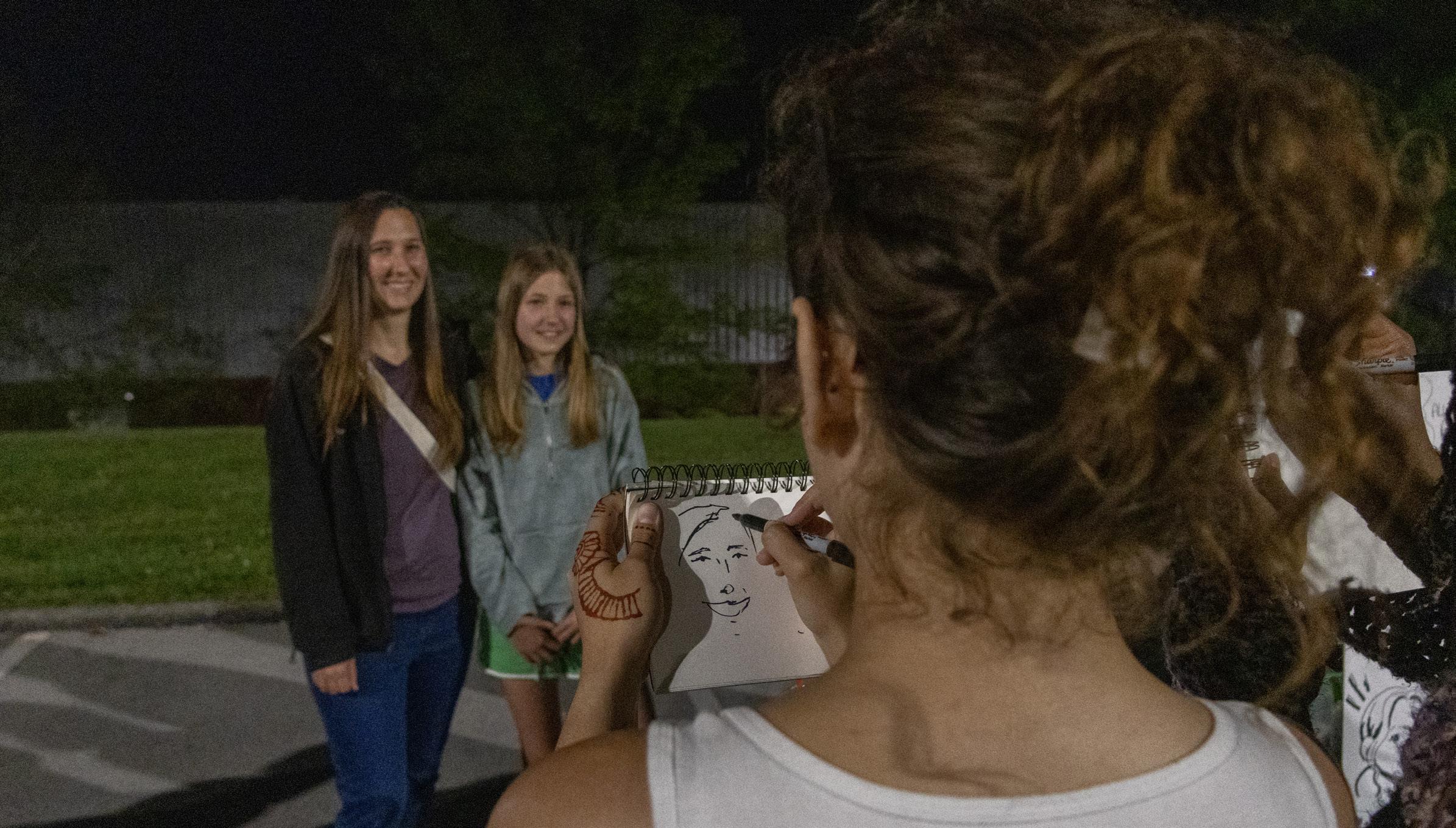
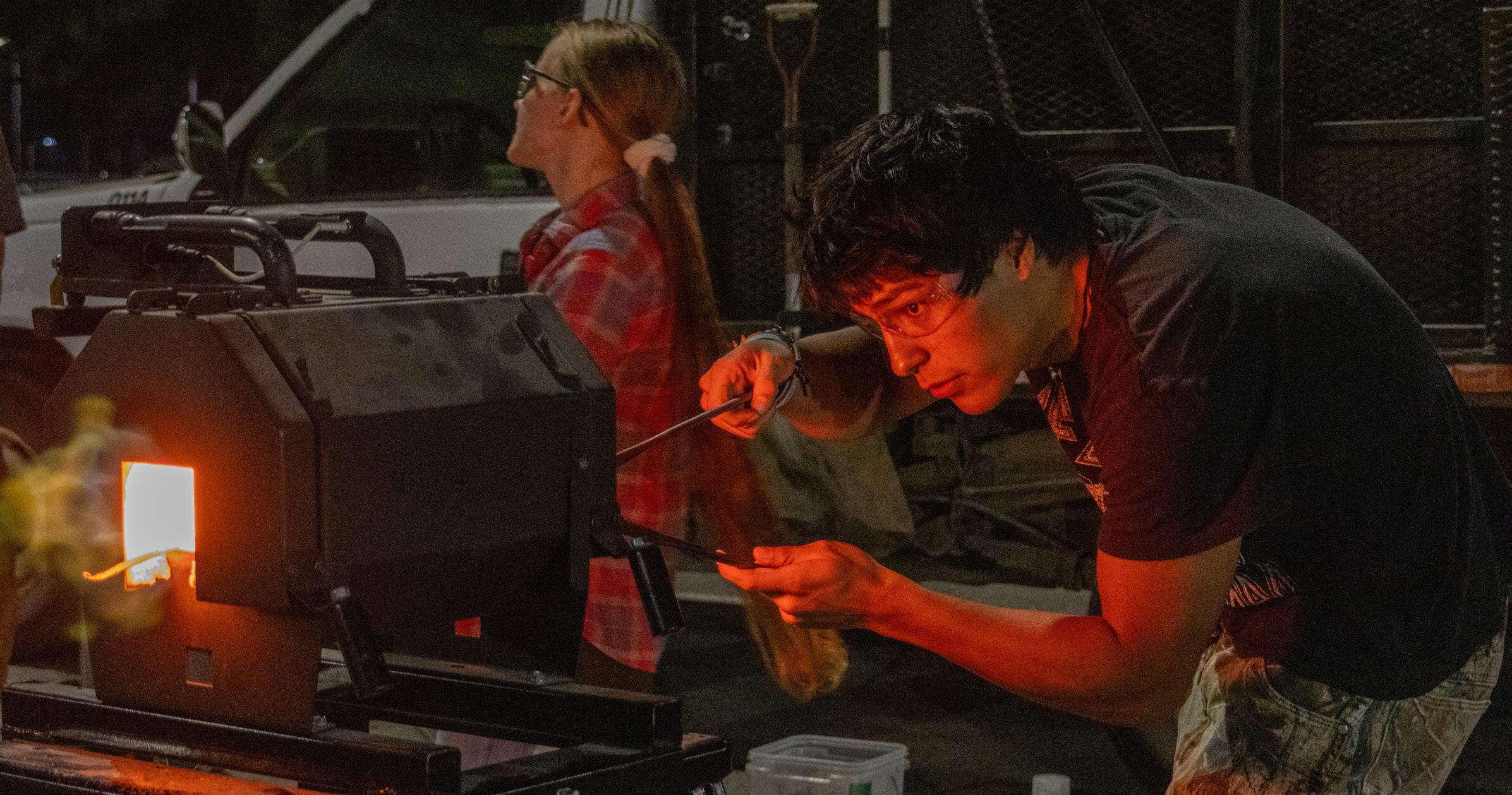
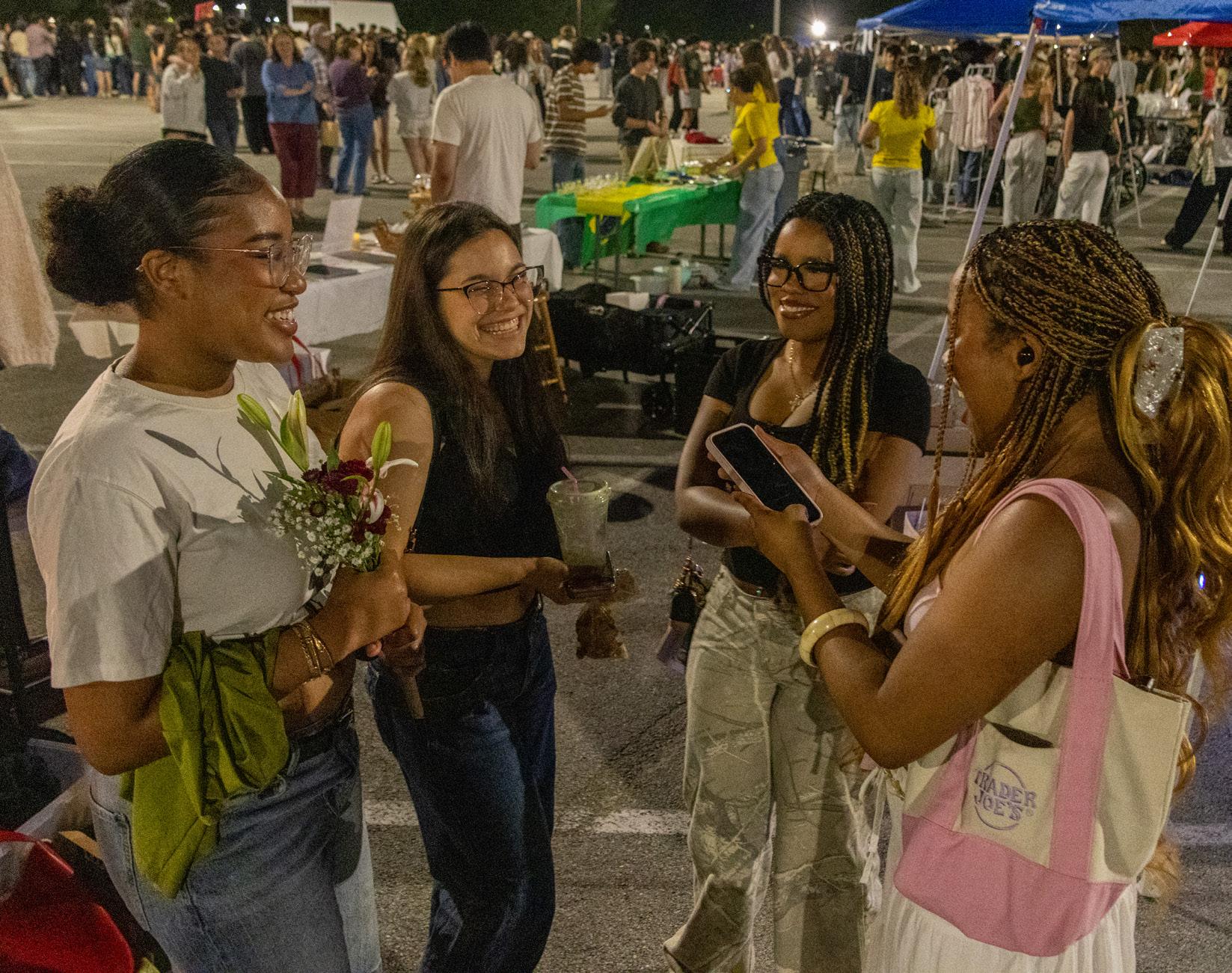
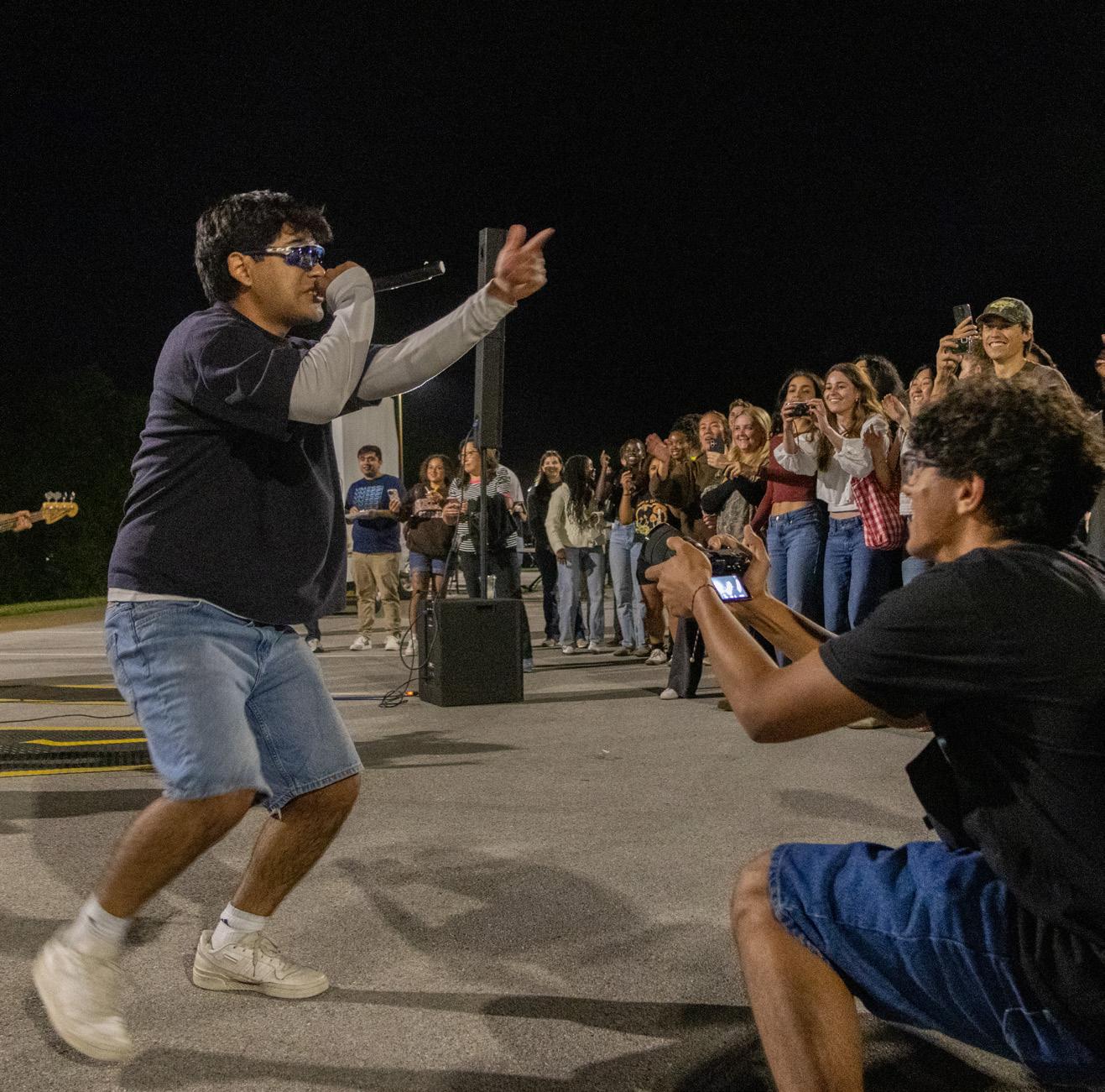
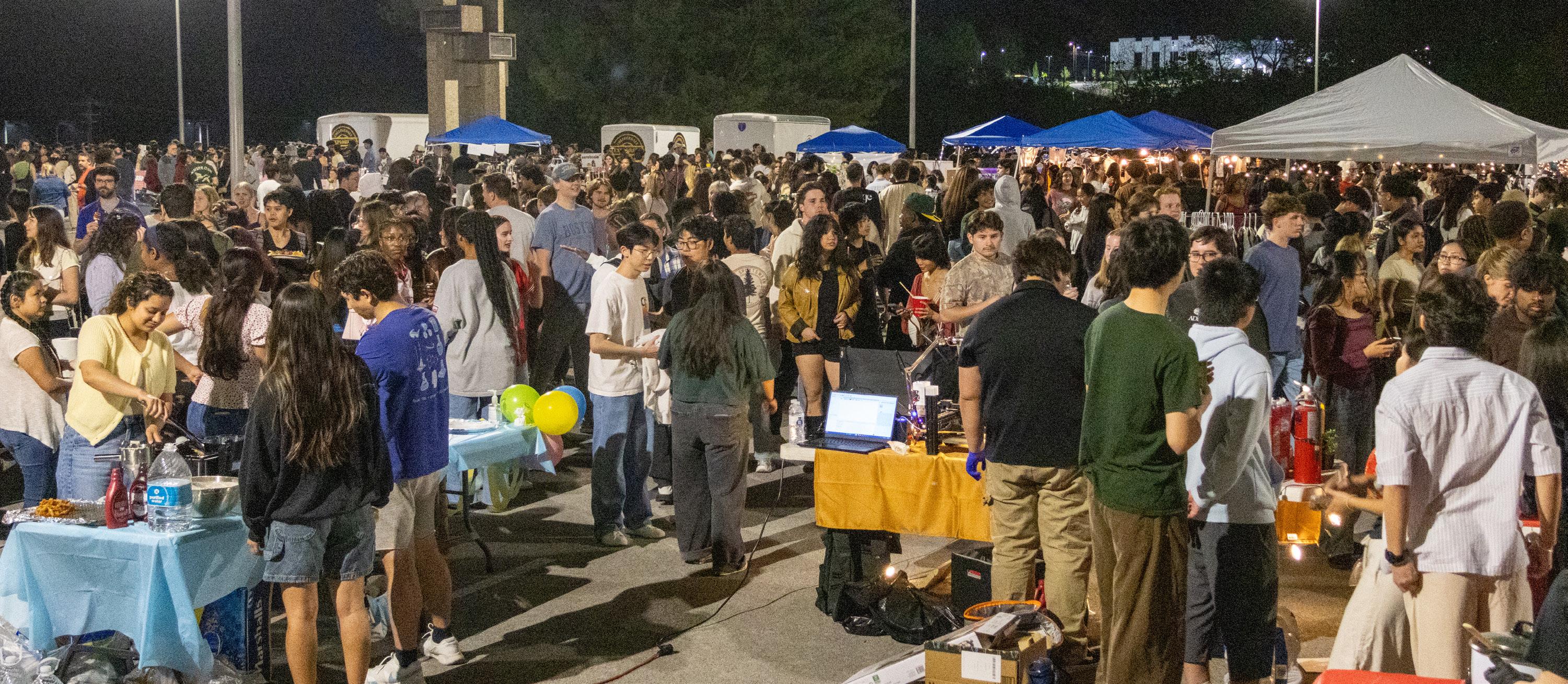
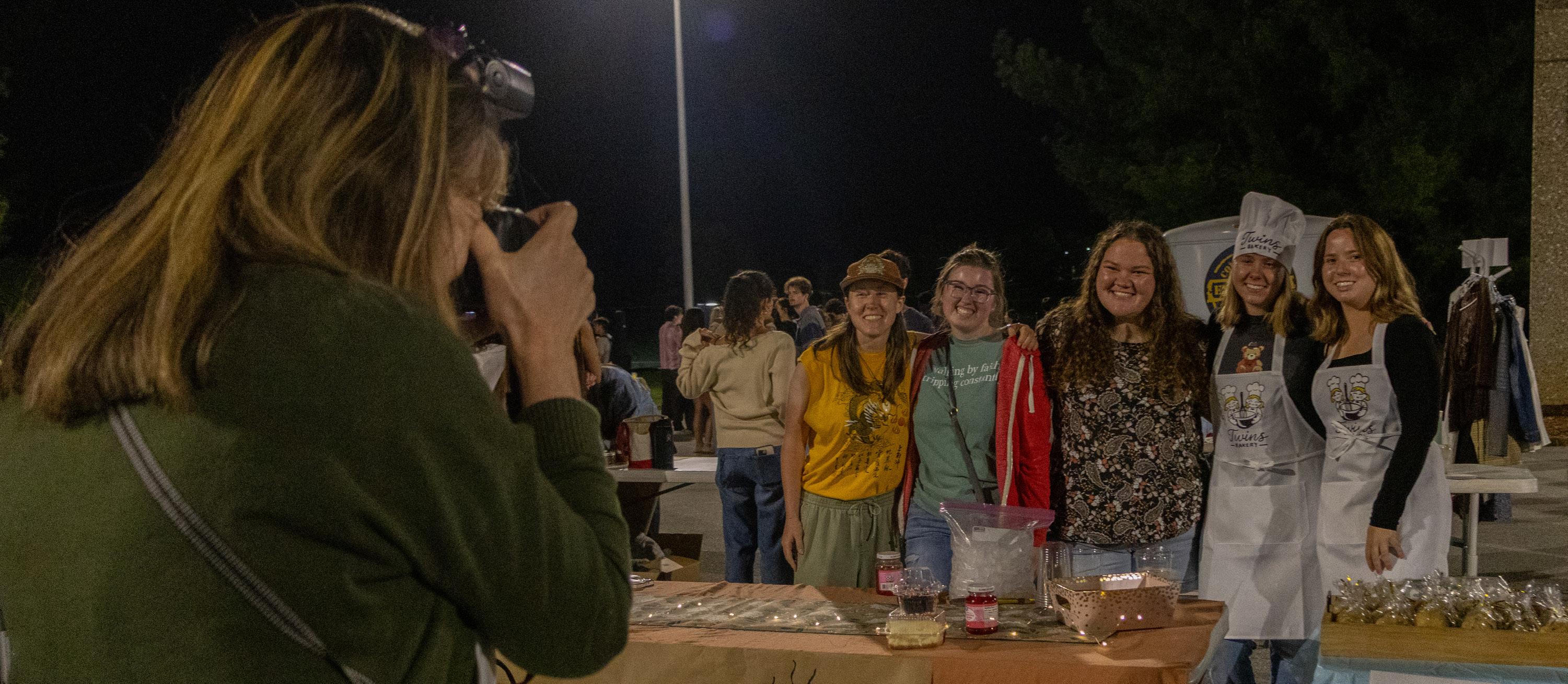
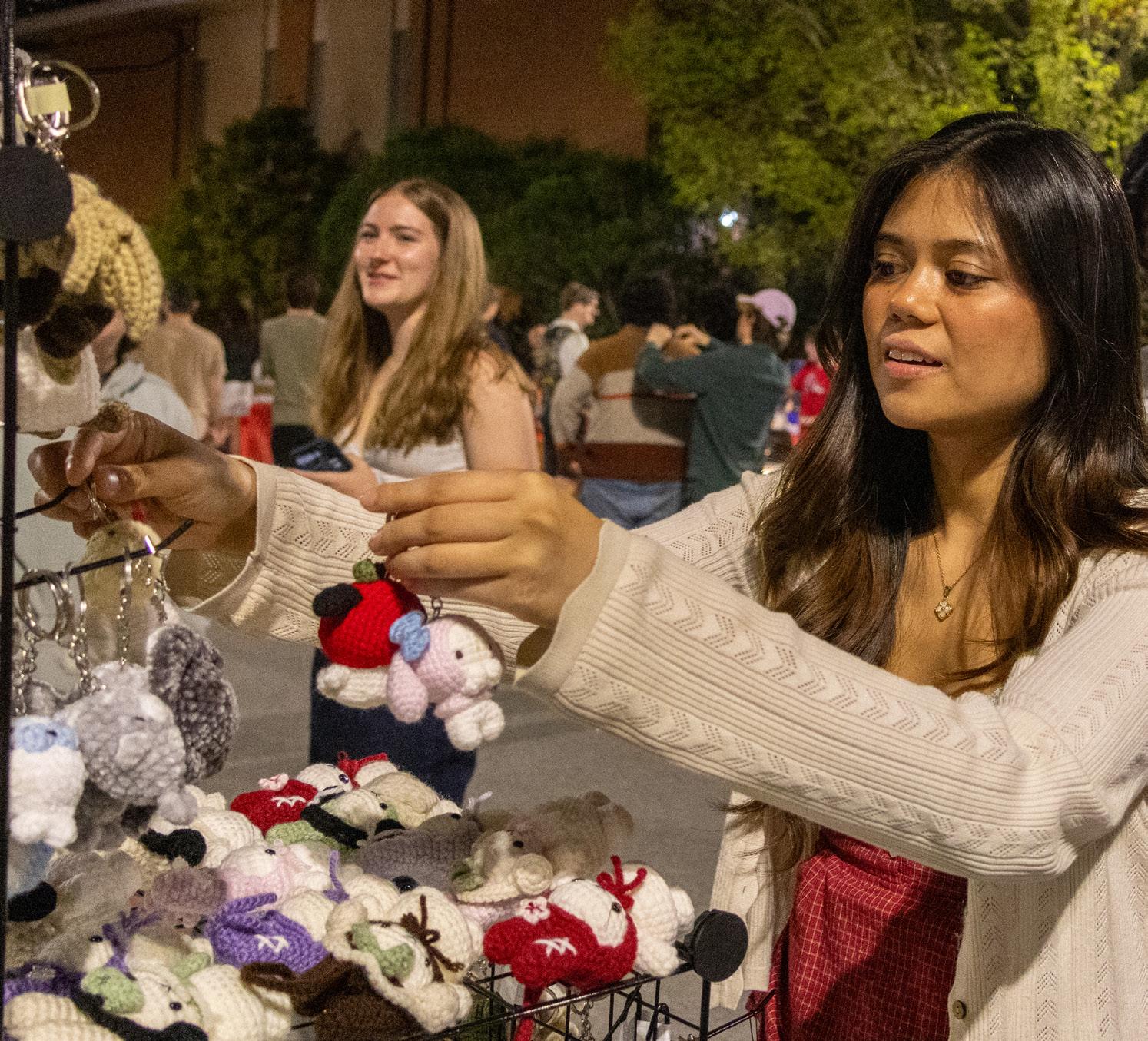
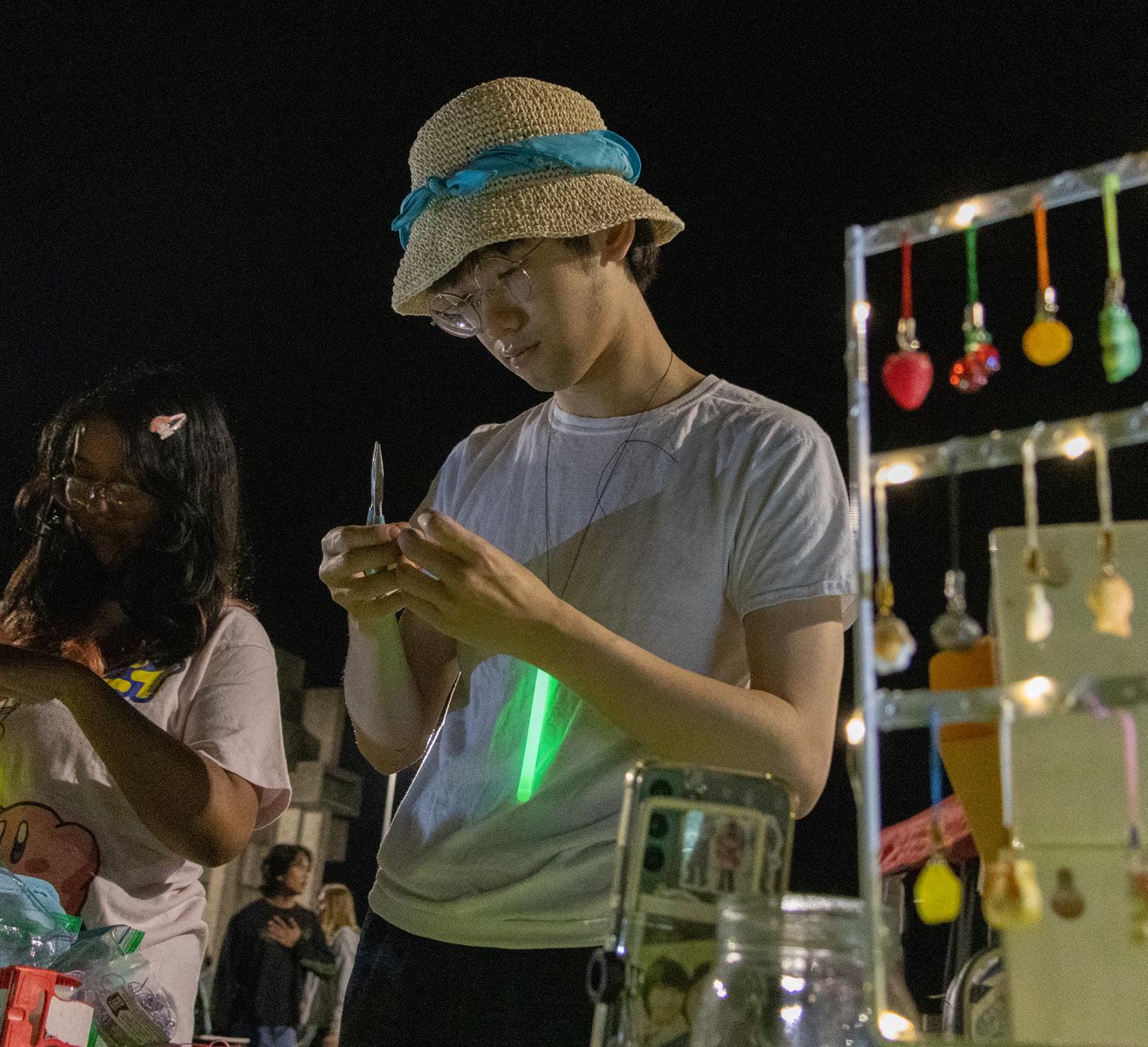
Students, faculty and community members flooded the Collegedale Seventh-day Adventist Church parking lot last Saturday night for Student Association’s (SA) annual 423 Night Market. Vendors set up tables around the area, selling clothes, food and artwork.
SA began the planning process in February, according to Jeaneva Bautista, SA president. In an email to the Accent, Bautista explained how the SA team spent two months meeting with the Service Department, the church and Plant Services to prepare for the event.
“We had to coordinate two aspects of the event: vendors and band,” Bautista stated. “What I looked forward to [at] the event is seeing everyone enjoying the night as they navigated through the booths and listened to our bands. I really wanted to showcase our entrepreneurs and the talents that our students have to offer, and having this event as their platform can really help out a lot in sharing to the public.”
Vendor reactions
According to Bautista, about 90 vendors participated in this year’s market, several of whom were participating for the first time.
Laura Ringstaff, a senior management entrepreneurship major, sold handmade tops under her brand name, LR Atelier. Ringstaff talked about the preparation required for what was her first time participating in the event as a vendor.
“The easiest part was probably just making the decision,” Ringstaff said. “It’s kind of something I wanted to do for a while. I’m going into fashion; I want to start my own business and sell clothes, so I thought it would be kind of fun to get my foot in the door. But the hardest part was definitely the sewing. I’ve spent hours on [sewing] so far. It was a lot of work, but it’s been worth it.” Ringstaff also praised the atmosphere of the event.
“I just love the liveliness of [the event] too,” she said. “Everyone’s so friendly walking by.”
Tamar Hamilton, a freshman business/strategic communication major, and Jeannette Mahoro, a freshman nursing major, sold homemade cookies for Hamilton’s business, Sugar Spun Bliss.
“The hardest part about planning for this event was definitely baking the actual cookies,” Hamilton said. “Baking, and then packaging ... and labeling, it’s a lot of work. The easiest part was setting up. [The SA team] made it very easy; a very kind gentleman carried my table over here for me.”
Hamilton went on to talk about next year’s event.
“I’m definitely thinking of participating next year, for sure. I would say that my favorite part of the event is just interacting
with people. I enjoy sales, so this is fun for me.”
Other vendors, including Sarina Young, a senior graphic design major, have participated in the past. This was Young’s third year as a vendor, and she sold handmade pins, mini magazines and posters with the help of Jyle Frias, ’25.
“The easiest part was doing the posters,” Young said. “I really loved illustrating them; it was really fun. I think the hardest part was logistics and figuring out how much I’d need and, frankly, the anticipation of waiting for people to show up at my booth.”
Frank Lizardo, senior nursing major, joined the Caribbean Heritage Club at their booth, selling cassava balls and morir soñando, a creamsicle-like drink made of orange juice, evaporated milk, sugar and ice.
“It’s a great time out here,” he said. “The hardest part of this is selling all the supply we have. Since we’re a club, they don’t let us do Cash App. We all have to do cash, but it’s a lot of fun out here. We’re very blessed to do this, and God’s got us.”
Editor-in-Chief
Hayden Kobza
The Accent encourages readers to write articles and voice their opinions. However, not all topics and views are endorsed by Southern Adventist University or the Seventh-day Adventist Church.
For any questions, comments and article submission information, email the editor at haydenjkobza@southern.edu.
For all advertising inquiries, email alvajohnson@southern.edu.
Managing Editor
Eliana Morales
News Editor Chloe Smith
Photo Editor
Katie McConnell
Social
Media Management
Emma Boughman
Lizardo was running the booth with Kristina Bermudez, senior psychology major. At her suggestion, Lizardo elaborated on the fund-collecting system.
“There needs to be a Cash App dedicated for all these clubs, so it makes it easier for us to sell things,” he said. “Because, like 25% of the people that have come here are like, ‘Oh, sorry I can’t, because I don’t have cash.’ It would make it a lot easier [and] it would encourage us to do more events like this.”
Isabella Dixon, a junior English major, helped run the English Club’s booth, where they sold tote bags and T-shirts, allowing customers to decorate the items.
“Honestly, preparing for this event was pretty easy,” she said. “This is a pretty laid back event. We function independently from Student Association for this one, so we don’t have to worry about ... tickets and all the stuff we do for SA events.”
Dixon also spoke about the cash situation.
“If [clubs] are functioning independently, there’s no reason
Lifestyle Editor
Rhett Seitz
Religion Editor Nina Bueno
Sports Editor Matthew Taylor
Staff Sponsor
Alva James-Johnson
Opinion Editor Maddie Schmidt
why we shouldn’t be allowed to accept our own Cash App,” she said, “because it really limits business when you don’t do that. I don’t think they’re doing us any favors by doing that.”
Student and community reactions
According to Bautista, about 1,000 students and community members explored the booths. Many had containers of food and bags of newly purchased items in hand. Diego Gonzalez, a senior psychology major, said he was happy with the Formula 1 items he found.
“My favorite part of the event so far was a jacket I got,” Gonzalez said. “It’s Ferrari, and I love Formula 1. What I hope to see at next year’s event [is] potentially more Formula 1 theme clothes.”
Michael Blood, a senior marketing major, attended 423 Night for the first time.
“My favorite part of the event so far [is that there are] so many cool stores,” he said, “It’s been great to just meet a bunch of people, some of them I haven’t seen in a long time.”
Heidi Arms, a community
Web Management
Eri Jorge
Jaziel Gomez
Reporters
Nyah Jackson
Jehiely Balabarca
Kyla Wetmore
Asher LeVos
Anaya Miller
Yoly Viera
Ava Schmidt
Lillian Lelko
member, attended 423 Night with her husband, Brock, and their daughter Gabrielle. Arms said she enjoyed the event and would like to return next year.
“I just like that there’s so many young people who are being creative about little businesses, and a lot of people actually making things,” she said. “It is so nice to see people still handmaking crafts and so on.”
Behind-the-scenes
In an email to the Accent, Bautista said she viewed 423 Night as a success. However, there were a few stressful parts in the planning process.
“We were definitely working within a time crunch,” she said, “especially since we wanted everything set up before the event began while also having to wait for the sun to officially set before starting. Despite that challenge, I’m grateful that everything went smoothly. By God’s grace, we only encountered minor issues ... that we were able to address quickly.”
Copy Editors
Gabrielle Young
Yoly Viera Southern Accent
Julie Herter
Gianelli Banuchi
Circulation Manager
Norelie Cabrera
Sienna Escobar
Lillian Lelko
Kyla Wetmore
Photographers
Sam Tooley
Christian Bass
Layout Designers
Nyah Jackson
Lindsey Hazen
Office Manager
Collegedale Reporter
Leif Bromme
March
continued from page 1
but it’s also good to remember where we come from,” Bradley said.
Bradley also added that studying the past is crucial to understanding the future.
“A lot of things in the Declara-
tion still apply to us today,” he said. “Thinking about the past is very pertinent to the events of today, which will play into the events of the future.”
Caleb Simpson, a senior history major who learned of the event through discussions with classmates, said he believed it could have been more widely promoted.
“I feel like it was a good idea,
but there should have been more advertising,” Simpson said.
The event was originally announced on March 11 through an email sent by Lee to the History Department Southern Scholars. The email was later sent to all Southern Scholars and the History Department.
“It’s not often that our campus sees a march—but it’s
coming,” the email read. “[The Declaration] is foundational to the American identity and has guided us through some 250 years as a republic. So let’s remind the campus of its weight and continued relevance.”
According to Lee, the event was not just a reenactment but also a reminder of the lasting significance of the past. When asked what she would say to students, she emphasized the importance of staying educated on American history.
“Study history,” Lee said. “The Declaration of Independence is a sacred document, and its principles are still relevant to us today.”
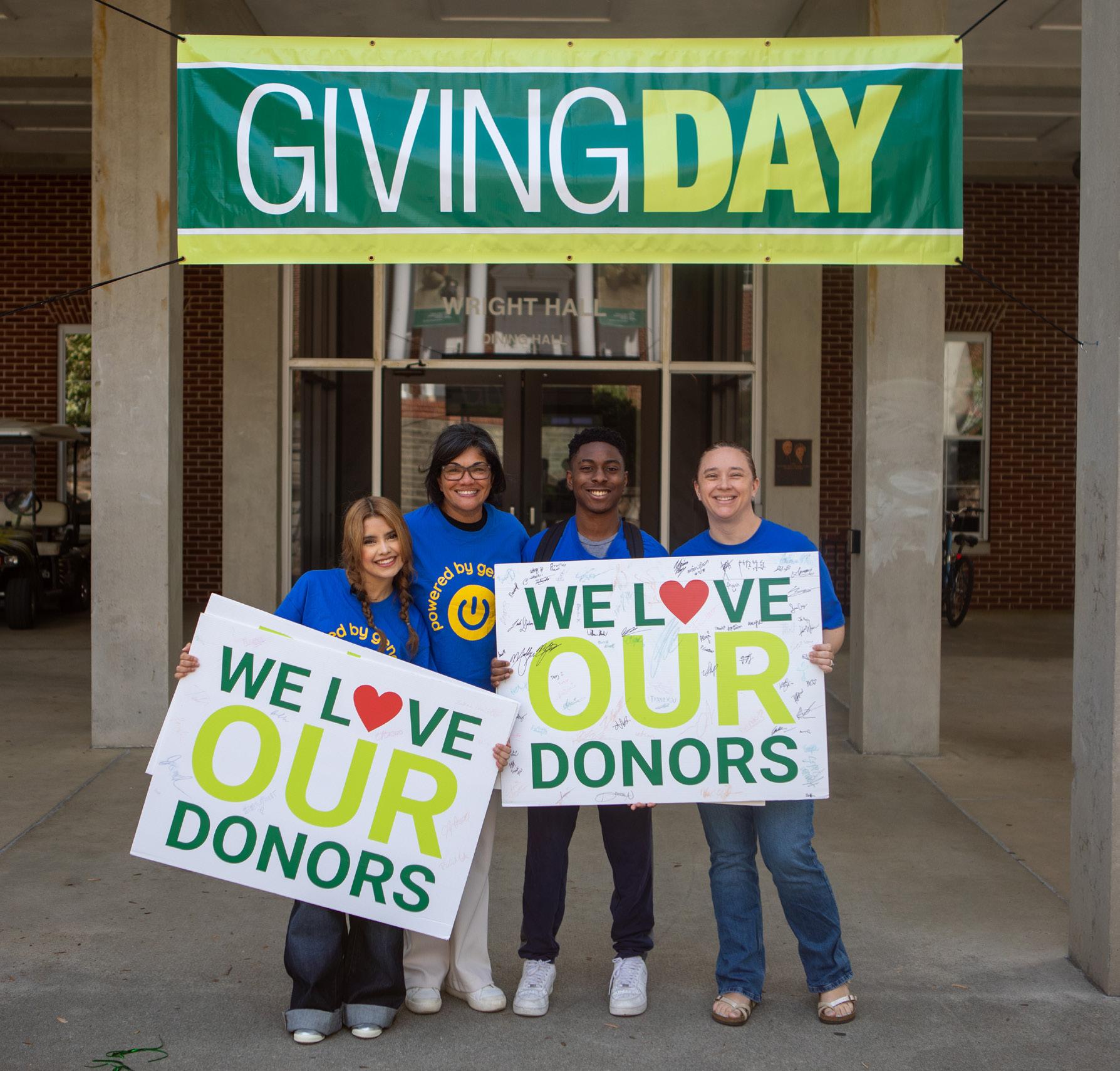
Southern celebrated its annual Giving Day last week with competitions, challenges and festivities, raising $401,169 so far, according to the Southern website.
Sandra Araujo-Delgado,
Southern’s associate director of annual giving, said she started planning for Giving Day in August.
“There was a lot of communication with the departments about encouraging them to come up with a project they want to fundraise for... and what’s on their wish lists for their students,” Araujo-Delgado said.
According to Southern’s website, “Giving Day is an opportunity for the Southern community—alumni, parents, employees, students, and friends—to come together and make a difference in students’ lives.”
This year’s Giving Day had a new emphasis, according to Heaven Robles, a junior biology research major and student association (SA) secretary.
“This year they had an emphasis on trying to make students feel more involved,” Robles said.
“We did convocation in a new way. ...We were very intentional, making it not just student-focused, but student-led,” Araujo-Delgado said. “We want students to be a part of it.”
During the convocation, eight different departments that hoped to find funding each pitched a project. The first place prize was $3,000, the
second prize was $2,000 and the third was $1,000, according to Araujo-Delgado.
“The main purpose for [the convocation] was to help students see how these projects will impact them,” Araujo-Delgado said.
To encourage student participation, students were allotted $5 from a collection of donations during the Giving Day carnival and asked to choose which department it went to, according to Robles.
Priscille Mikala, a music performance major and the vice president of SA, worked with senate to coordinate Giving Day.
“[This year] was better organized, since the senators knew what to expect...so everything flowed really nicely,” Mikala said.
Mikala believes the student focus this year brought more student participation.
“More people were there [on the promenade] to just interact with students,” Mikala said. “This year they were coming out to us,” she continued.
Student opinion Robles said she learned more about Giving Day through organizing it this year.
“I was able to see a different view, not just ‘they’re trying to take my money.’ I see where it is going,” Robles said.
Joshua Jenkins, a senior biology-research major, shared a positive opinion of Giving Day.
“I see it as a fantastic program for smaller departments to let students learn how to raise funds. Learning to fundraise is even more important than the funds.”
Amara Mendoza, a junior nursing major, shared her appreciation for the funds raised.
“I am happy the music department got more funds this year,” she said.
Araujo-Delgado said she sees Giving Day as an opportunity for students to get involved with Southern.
“I know students care deeply about each other,” she said. “I want them to see that Southern
getting involved in Giving Day [is] not ‘Southern’s coming for your wallet’... it’s about showing your love and care about the things that make a difference for you.”
Araujo-Delgado expressed her desire for students to know more about what Giving Day really is.
“I know there are mixed feelings on campus from the students about Giving Day, that
some students feel like it’s offensive,” Araujo-Delgado said. “I would love for somebody to sit here and tell me why they feel this way. ... I think it’s mostly because students don’t understand fully. The administration is not benefiting from this, the faculty are not benefiting from this; the beneficiaries are the students,” Araujo-Delgado said.
Eliana Morales Managing Editor
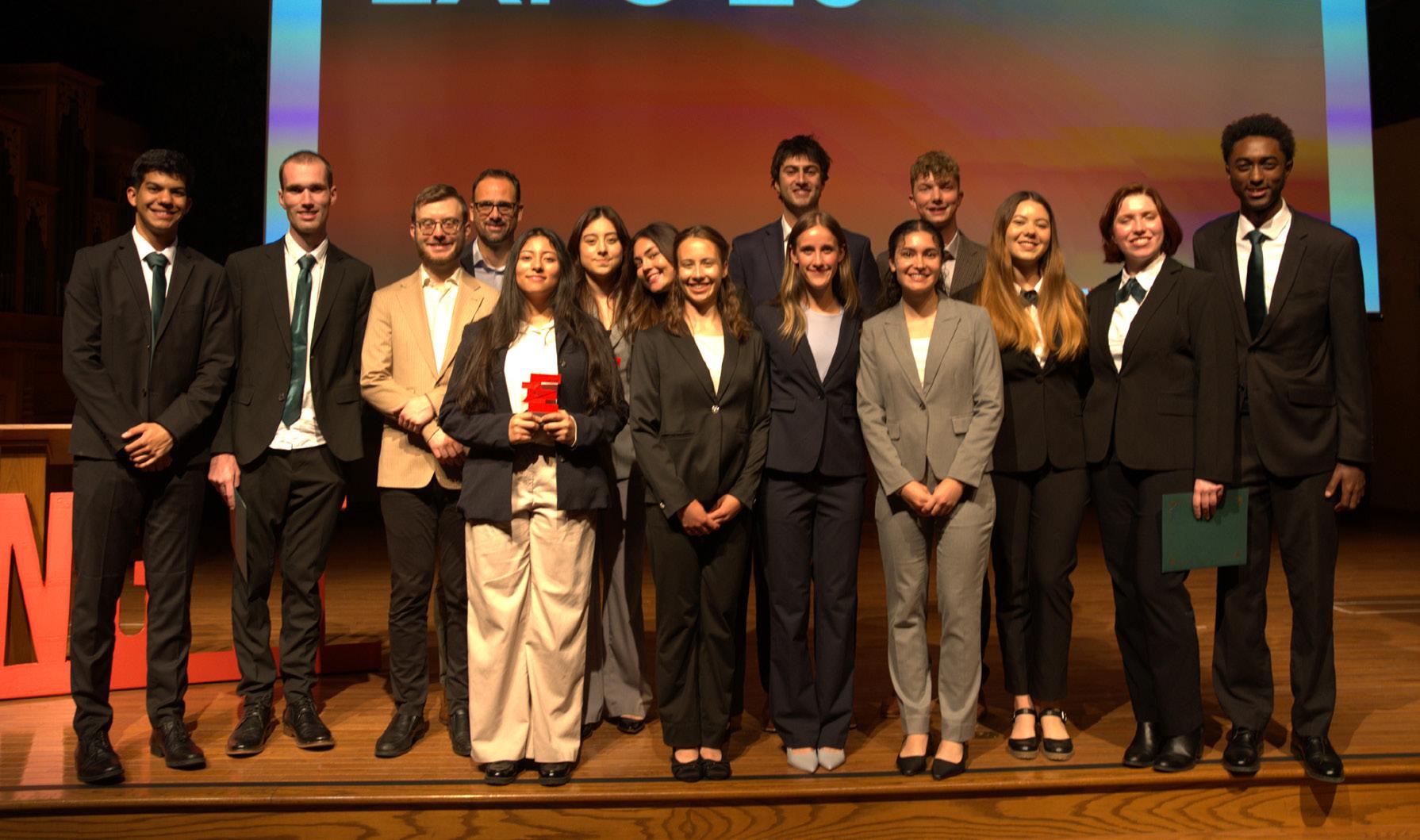
Six groups presented their business ventures at Bring It EXPO on April 9. According to Sergio Bellino, associate professor in the School of Business and advisor for Enactus, “Bring It is a campus-wide showcase organized by the Southern Adventist University School of Business. [It is] open to every student, every major, every idea.”
While the Bring It Studio event at the end of the fall semester offers students an opportunity to give a 90-second pitch of their business idea, the Bring It EXPO in the Winter semester gives six ventures a chance to present their work. Bellino emphasized that anyone can participate, not just business students. “That is not a formality,” he said. “It is the point.”
Bring It EXPO is not a competition. Instead, qualifying projects receive a certain amount of seed money, depending on what stage of the development process they have reached. According to Bellino, the money comes from donors who believe in giving students “a real shot.” It is not a prize, but an investment, he said.
This year featured three student ventures and three community-owned ventures.
Melanie Gonzales-Jimenez, a freshman accounting major, presented the first student venture, Sorora, a safety app designed to quickly connect
students with Campus Safety. Andrew Pellandini, a sophomore construction management major, presented his venture, Hunters Hangout, a social media app for hunters.
Senior finance major Glenn Grakov and senior accounting major Sharon Duque presented MyCareExperts, a business that helps people find a trusted assisted living facility.
After the presentations, students joined a Q&A session with two panelists, John Boskind and Christopher Beason. Boskind is a general surgeon and entrepreneur, while Beason is the president of Network 7 Media Center, an international production house.
The panelists questioned each group about its strategy and pointed out possible issues. They asked Pellandini about how he would provide capital funding for the site without advertisers and pressed Gonzales-Jimenez on how much testing had been done with her app.
The last three ventures were community-owned, created by the students for a specific community to operate.
Senior business administration major Lauren Keller and junior business administration major Ava Neimeyer presented ElevateHer, a sewing cooperative in Kenya. The ElevateHer project aims to aid women who lack income by teaching them to sew reusable feminine pads and fashionable bags.
The next venture was Bayiri, presented by freshman business
administration major Miracle Guduno, senior business administration major Kareena Hansen and sophomore accounting major Isabella Fernandes-Hidalgo. Bayiri seeks to improve the nutritional quality of porridge in Burkina Faso, a country in West Africa.
Finally, senior cyber security major Chase Slikkers, junior construction management major Caleb Teron and sophomore human capital management major Gabriela Goncalves presented Thrive Uganda, or THRU, a financial literacy program in rural Uganda.
The community-owned ventures participated in a Q&A session with the panelists before the recognition ceremony.
After all the presentations and panels, Hunters Hangout
received $500 for completing the design phase, Sorora received $1,000 for completing the development phase and MyCareExperts received $1,500 for completing the execute phase. Then, students involved in the community-owned ventures received a project management certificate from the School of Business. Bellino explained that these ventures did not receive funds because the money is supposed to be sourced through partners, the community or fundraising.
The Bring It EXPO gave some students practice for Enactus United States Expo 2026, taking place April 16-18 in Denver, Colorado.
“It’s good to be in a high-pressure environment, like we’re going to be for our
expo next week,” said Slikkers. Boskind, one of the panelists, said he thought the ventures represented a lot of hard work, long hours and, most importantly, teamwork. When asked in what area the students need the most guidance, he said the challenge is always real-world experience.
“The world throws challenges at you that you don’t necessarily feel or experience in the classroom,” Boskind said.
Arabella Block, a junior health science major, attended as an audience member.
“I thought they did a really good job,” Block said. “All of [the groups] had a product that had a very niche market. Especially the projects in Africa seemed to have a really good strategy.”
Editor's Note: The Southern Accent has produced a one page Collegedale News section this issue as part of a national initiative to enhance community news coverage. The local effort, led by Southern's School of Journalism and Communication in conjunction with the Center for Community News (CCN) at the University of Vermont, places student journalists at the forefront of addressing the news desert crisis, a phenomenon caused by the decline of newspapers in local communities. The Accent believes local news is vital to a thriving democracy, and we remain committed to reporting about important issues, novel occurrences and interesting people in the greater Collegedale area. We will publish this special section in five issues of the newspaper this semester. To submit tips or press releases, go to https://southern-accent.org.
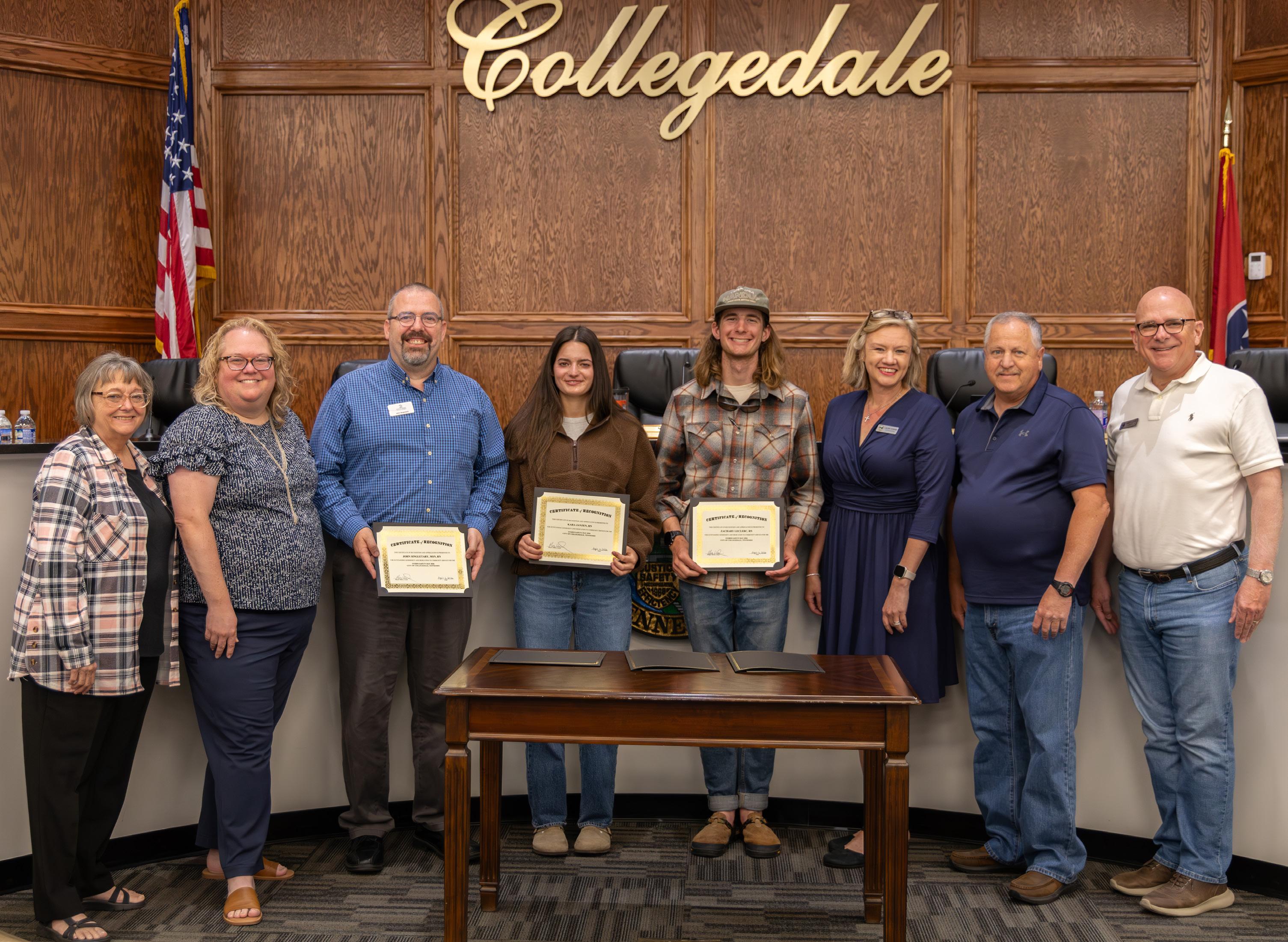
On April 6, the Collegedale City Commission honored the work of both the Ooltewah High School Junior Reserve Officer Training Corps (JROTC) members and Southern nursing students who helped with Collegedale’s second annual Storm Safety Day.
During a special segment of the City Commission meeting, senior nursing majors Zachary LeClerc, Macy Chant and Kara Janzen received certificates signed by Mayor Morty Lloyd, although Chant was unable to attend the event. Five members of the JROTC were also honored for their help in setting up the event.
A previous Accent article covering Storm Safety Day, held on Feb. 26, described booths operated by the Collegedale Police Department, the Tri-Community Fire Department, the JROTC and representatives from
Southern Adventist University’s nursing program. Attendees learned best practices for performance before, during and after storms as well as how to operate and program weather radios.
According to Janzen, their involvement began with a meeting with City Commissioner Laura Howse.
“We first made sure that we were able to get the knowledge of the event out to the public,” said Janzen. “So we talked about getting in contact with local homes—making sure that they knew, because they’re really at risk for storm safety issues.”
Before the event, the group worked to prepare their booth and create promotional videos for the fire department.
“We also helped advertise the event by distributing flyers in mobile home communities,” said Chant. “The three of us nursing students who planned and advertised for the event
were primarily stationed at the nursing club booths where we helped with health screening. We also walked around the event to talk with the community members and booth participants.”
Chant also spearheaded the design of a scavenger hunt to help engage children at the event, many of whom stopped by Storm Safety Day with their parents after school. During the hunt, students searched for letters that spelled out “fire safety” hidden throughout a firetruck on site.
According to Chant, the event was an important clinical opportunity that also connected her more closely to the Collegedale community.
“It was very generous of the city to recognize our involvement,” she said. “The whole experience felt very rewarding.”
LeClerc explained that the collaboration first came about as an idea for a clinical assignment in a Population and Com-
munity Health course. Storm Safety Day allowed students an opportunity to claim class credit while also helping in their community.
“It was a fun learning experience getting to engage with the community and learn about how municipalities invest in educating the public,” said LeClerc. “I think the next group of students that participate will enjoy the experience.”
Though students are often involved in community events, those who participate are not always recognized. According to Janzen, acknowledging participation can make students feel more at home and familiar with their local government.
“A lot of people at Southern aren’t necessarily living here in the area,” she said. “So it feels nice to still be recognized as [a community member]. Even if you’re away from home, you can still feel part of the community here in Collegedale.”
Commissioner Howse also
emphasized the importance of involvement, regardless of occupation or state of origin.
“Storm Safety Day is about being prepared,” Howse said. “Students will continue to be at the heart of it as volunteers and leaders. With strong community support, we can make it bigger, more engaging and even more effective each year. In the future, I’d like to see us expand access and attendance, adding more demonstrations and resources, making sure everyone feels included.”
As the event grows and student participation increases, more students have the opportunity to be recognized and grow more connected to the city where they live.
“When we take a moment to recognize and honor community service,” said Howse, “we are encouraging more of it. That makes the community stronger and safer.”
Are questions keeping you up at night? Too scared to go to vespers because you don’t have the guts to ask out your crush? Is the CIA stalking you?
Scan the QR code to let us know!

Abby Dizon Contributor
Of all the courses that I took at Southern Adventist University, I personally found that Communications and Public Speaking posed the most significant challenge. It was not that the class demanded a lot of homework; it was because I feared public speaking. The idea of speaking in front of others and wondering what they were thinking of me terrified me.
If you can relate to this experience, here are some strategies to not only ace your public speaking class but to overcome your fear of presenting in the future.
When anxious feelings overwhelm you, envision your success. You will be able to overcome your fear of public speaking better not only by picturing a successful presentation but by imagining that life moves on after your presentation.
When I felt overwhelming anxiety and negativity during my speeches, I visualized life post-presentation. I thought about how it would be done before I knew it and that life would carry on seamlessly.
Furthermore, visualizing a successful presentation boosts your confidence and aligns your actions with your mindset. Practice consistently. No one will hold it against you for rehearsing your complete presentation several times. Valuable practice involves presenting to various audiences, even amongst those with whom you are less comfortable. This allows you to ask for feedback and see opportunities
for improvement.
In addition to practicing, keep notecards handy. Over my years of presenting, I have learned that I am unable to work without notecards. They aid my memory and provide a safety net whenever I freeze.
Notecards, like practicing repeatedly, help you feel more at ease and guarantee more success. Just remember to oc-
casionally look up to make eye contact and engage with your audience.
Finally, a tip that I utilize to overcome stage fright is to keep the audience in mind. If you’re haunted by the nagging thought that “everyone will judge you,” challenge that toxic mindset by recognizing the audience’s capacity to empathize. You are likely in the midst
of people who understand your anxiety and the challenge of presenting or who are otherwise preoccupied with their own thoughts. Adopting the mindset that the audience cares about you and only wants you to succeed can greatly ease your nerves.
Having to present with stage fright may seem like the end of the world. Your heart is beating
rapidly, your hands are clammy and you feel like you are about to walk out of the classroom. But remember, your feelings and this situation are temporary. With practice and a fixed mindset, you are capable of turning stage fright into a stepping stone toward a confident and successful presentation.

Matthew Taylor Sports Editor
On Tuesday, April 14, Erlanger Park officially debuted as the new home stadium for the Chattanooga Lookouts in a matchup against the Montgomery Biscuits. Opening Day had been officially sold out since March, showcasing the excitement from local fans eager to be a part of this huge change for the community.
The Lookouts certainly brought the momentum home with them. They started their season on April 3 on the road against the Columbus Clingstones, sweeping all three of their matchups.
Before returning to Chattanooga for their home debut, they played five out of their six-game series against the Birmingham Barons. They entered their new stadium starting out with a staggering record of 8-1. As reported last fall by the Accent, when the massive construction project was in its earlier stages, the facility promised a major upgrade for the city. Now fully realized as Erlanger Park, the venue marks a fond farewell to the beloved charm of AT&T Field on Hawk Hill, trading it for modern amenities and year-round access.
The new stadium officially boasts a capacity of 8,032 fans—nearly 2,000 more than AT&T Field could previously accommodate. Perhaps the biggest draw for college students and social groups is the wrap-around concourse, giving fans the opportunity to walk the full 360-degree perimeter to find different viewing angles
and hang out with friends, rather than staying tethered to a single seat for nine innings.
Two of the original buildings on the new land, the Powerhouse and the Pattern Shop, were preserved and incorporated into the new structure.
The Powerhouse, located near the corner of the right field, is the oldest building on the site. The structure has been remodeled into a premium group outing location, featuring two levels of large, covered patios, as well as space for all-you-can-eat buffets.
The Pattern Shop can be recognized by its steam beam roof structure, exposed brick and large historic windows.
This 40,000-square-foot climate-controlled event venue was designed to host not only fans for the games, but also year-round weddings, banquets and concerts.
This new venue also has upgrades for luxury seating and suites, as compared to AT&T Field.
The UNUM Suite Level features 16 luxury suites, with 14 al-
ready being leased long-term.
It includes both an indoor air-conditioned space and an outside setting that opens completely to the field. The HHM Party Decks are located on either end of the suite levels, and they feature outdoor table seating above the main concourse below.
The concourse suites, designed for smaller groups of up to 30 people, are situated right on the 360-degree perimeter to keep the fans close to the action. The suite level also
features a club area spreading over 7,000 square feet with a social space exclusive to ticket holders for the suite level.
Whether you’re looking for a casual weekend activity with friends or a unique venue for a residence hall outing, Erlanger Park is a highly accessible new escape just a short drive from campus.
The Lookouts have plenty of home stands left to catch, and tickets for the rest of the inaugural 2026 season are currently on sale.

Maddie Schmidt Opinion Editor
While on TikTok, you can scroll past a war update, a natural disaster and a political scandal all in the span of five minutes. By the time you’re done reading one breaking news alert, three more have already replaced it. Sometimes, it feels as though the news is following us instead of our following the news.
The 24/7 news cycle we experience keeps crises in a constant loop, and social media platforms such as TikTok and X funnel these crises into fast-moving trends that everyone feels the need to comment on.
This causes information overload and emotional burnout, also known as crisis fatigue.
Crisis fatigue isn’t simply caused by too many crises; it’s driven by how news sources and social media constantly deliver, amplify and recycle them.
It seems as though every time we turn around, we are met with “breaking news.” Since we are constantly fed a stream of news stories and events, it is difficult to actually process the crises we hear or read about before the next one hits.
This information overload makes every event feel equally important and equally impossible to do anything about. In turn, people often begin tuning out the news in an effort to avoid becoming overwhelmed.
Social media also tends to amplify news stories and put pressure on society to respond to every single crisis. Our algorithms push emotional, dramatic
content, often emphasizing a narrative that encourages many people to respond online, which inevitably blows the story up even more.
Often, crises become trends that rise and fall, just like everything else on social media. People feel pressured to join in and react instantly, giving their own takes and offering either encouragement or criticism.
It’s not bad to be informed about what’s going on in the world around us or to engage with others online about the different things that are happening. However, a constant loop of crisis after crisis can cause people to feel swamped by everything going on around them.
I think part of the reason why the constant stream of crises is so exhausting is due to the shift in how America as a society responds to such events.
I recently read an article written by Thomas Beamish, a professor of sociology at the University of California. In his article titled “Americans used to unite over tragic events – and now are divided by them,” he sought to understand society’s response to different trauma events and why public tragedies contribute to political polarization.
Beamish found that the American public’s understanding of tragic events has changed. Until about the 2000s, crises used to be understood as a result of fate, bad luck or an act of God. In turn, people often blamed either individuals or chalked it up to a simple accident when a tragedy occurred.
Beamish stated that people’s primary focus nowadays is on assigning blame to societal institutions such as the government, civil society and even American culture instead of on individuals.
When some part of society is blamed, political conflict rises in response. This could be a contributing factor toward crisis fatigue, because political polarization can be exhausting and demoralizing to engage with at times.
According to Beamish, recent polls show that a lot of Americans are experiencing fear in response to incidences that are out of their control. This consequently develops an eerie sense of vulnerability, leaving Americans in a constant state of unrest and anxiety.
It helps whenever we can actively respond to crises and tragic events in real life and can successfully be a part of the solution. When a natural disaster occurs, it feels rewarding to go clean up the wreckage and help the people affected if we live close enough to do so.
However, much of the news we read, watch and listen to describe situations that we have little to no control over. The average American can’t do anything about the war that’s going on right now. The average American has no control over the economic instability that is rising to the surface. That lack of control and sense of helplessness can be suffocating if we are not given the space to breathe.
We need to find a way to step away from the crises
that have overtaken our lives. We need to learn how to set boundaries with how we consume news and social media content. We should not ignore the news, and we should still find value in spreading awareness about crises that need solutions, but we should not live our lives focused on everything that’s going wrong in the world. That leads to a life filled with anxiety. Putting down our phones and shutting off our TVs to intentionally focus on the things we can control in our day-to-day lives is important, and finding ways to appreciate the good things in life is crucial to balancing our mental load.
Even a small pause from the constant influx of news can help us refocus our priorities and have a better grasp on what issues we should be spending our time worrying about.
Learning to take breaks from the news and from discourse online is important in maintaining our mental health. Breaks help us to be able to regulate, avoiding the possibility of becoming overwhelmed and turning numb to the tragedies we see happening around us.
Crisis fatigue does not mean we don’t care about the struggles of others; it means that our ability to care is being exhausted.

Nina Bueno Religion Editor
A question has recently come to mind as I have been learning in many of my classes about the purpose of the Seventh-day Adventist (SDA) Church and the reasons it exists. In Church History, we have learned how the SDA Church developed from the Millerites and what made it different from other Sabbatarians and Adventists at the time. In World Missions, we have been studying the remnant church’s core purpose to spread the three angels’ messages to the world. Overall, I’ve felt impressed that the identity of SDAs is a special one: We have been called to spread the Gospel to the world in fulfillment of the Great Commission.
But I have also wondered: Is this why people in our church are SDA? What is our focus as a church now? And do we need to return to God’s original purpose for His disciples and remnant people?
As this was percolating in my mind, I decided to ask some of my friends from different cultures and backgrounds why they are SDA. These are the responses I got:
• “Because I was raised as one, I did my own research, and I believe what I have been taught.”
• “It’s the closest thing to the Bible.”
• “Looking at other religions, I haven’t found another one that genuinely follows the Bible precisely.”
• “It gives me hope because it shows there is a solution for sin and there will be an end to all this pain and suffering.”
• “Haystacks!” “I love Jesus!”
“God saved me. [It has] biblical truth [and is] sola scriptura.”
• “I was led to it. I went to SDA college without knowing it was Christian, and it was the first form of Christianity I actively engaged in.”
“Because honestly, this was the faith I was born into and the more I learn about [it], the more I’m like ‘this is right.’ This is where God chose to put me, and this is where I will stay.”
• “Because I think it’s the closest to biblical accuracy that a denomination has ever gotten.”
“Cause if I believe in the Sabbath and the state of the dead, where else am I going to go?”
“Because the Adventist church as a whole has a desire to follow Jesus and the Bible, and this is represented by [their] doctrine. [It has a] focus on missions [and sharing the] saving gospel with other people, which we are called to do. [Also, I was] born SDA.”
Many of the respondents were born into an SDA family. But for some, the faith is newer, not one they grew up with. And yet, in both cases, they stayed. While people are rejecting the faith from both outside and inside the church, there are still so many that have accepted the faith and have chosen to stay. But why?
Is it because their parents told them to? Is it because they saw a Revelation presentation on some beasts and were scared into it? Is it really because our haystacks and
potlucks are so good?
Why are they SDA? Why am I? Why are you?
Looking through my friends’ responses, I saw an overwhelming trend, one that truly made me proud and my heart full. Stated in one way or another, the majority declared that the reason they are SDA is because this church proclaims Bible truth.
Whether they grew up in the faith and then did their own research or discovered and accepted it later in life, the focus and reasoning was the same: Because the Adventist Church focuses on following Jesus and the Bible and that is reflected in their doctrine.
This lines up perfectly with the official mission statement of the Seventh-day Adventist Church: “Make disciples of Jesus Christ who live as His loving witnesses and proclaim to all people the everlasting gospel of the Three Angels’ Messages in preparation for His soon return (Matt 28:18-20, Acts 1:8,
Rev 14:6-12).”
It also says: “Seventh-day Adventists affirm the Bible as God’s infallible revelation of His will, accepting its authority in the life of the Church and of each believer, and its foundational role for faith and doctrine.”
The friends I talked to are SDA because they have a desire to follow Jesus and His Bible truth and commands. And this church has the same desire.
We desire to spread the message of the gospel, the message of Jesus, with the world— to be missionaries following Christ’s Great Commission. And so, the question remains as the message continues to spread. Why should others become SDA? Because of a desire to follow Christ and the Bible as closely as possible with a community, a fellowship, a church of believers. All of the doctrines and the beliefs come simply to this focus: a relationship with Christ.
Why am I SDA? Because I
desire to follow Christ to the fullest and to grow as deep in my relationship with Him as possible. And I desire to share Him with others so they may grow in those same ways.
Do you have the same desires? Think about it, truly. Why are you SDA? And if you’re not, but you have these same desires, perhaps this is a step you would like to take. We have chaplains on this campus who would love to assist you in that next step!
“Then Jesus came to them and said, ‘All authority in heaven and on earth has been given to me. Therefore go and make disciples of all nations, baptizing them in the name of the Father and of the Son and of the Holy Spirit, and teaching them to obey everything I have commanded you. And surely I am with you always, to the very end of the age’” (Matthew 28:18-20 NIV).
Rhett Seitz Lifestyle Editor
Have you ever felt out of place, awkward or socially weird? When I was younger, I was always desperate to fit in. I wanted to be one of “the cool kids.” I always felt like I was on the outside looking in. I wanted validation.
No matter how hard I tried, I always had this gut feeling that I was not fitting in. I thought, “What am I doing wrong? I am trying to be like them, and they are not accepting me.”
We live in a culture of both spoken and unspoken social norms that puts a high value on “looking cool.”
An example of this is the unspoken rule that whoever does not take charge first, wins. We don’t want to text first because it might make us look desperate. We don’t want to raise our hand in class because we might look like a try-hard or we are afraid of being wrong and looking incompetent. We don’t want to strike up a conversation with the person standing next to us in line because it might be “awkward” or “cringe.”
I’m here to burst the bubble: being yourself, as different as you might be, is not cringe. Being like others to fit in and playing it safe doesn’t make you cool; it just makes you miss out on life. Specifically, YOUR life.
The people you are worried will judge you will not care about how you act or look a year from now. Society tells us we must act a certain way to be accepted by others. As a result, we don’t risk rejection, and in
doing so, we don’t risk anything at all.
However, being different and unique—in other words, being yourself—is the ultimate superpower.
I was not always like this, nor did I always have this mindset. So, what changed? I realized that my strategy of trying to be like others, paradoxically, was keeping me isolated. The reason I wasn’t making the connections I wanted wasn’t that I didn’t fit in; it was because I was hiding my true personality behind a mask of normalcy. I did not want to be made fun of or have weird faces made at me.
I realized that if I wanted a genuine connection, I had to stop worrying about looking cool and start risking rejection.
I experienced this breakthrough during my high school homecoming week. I wanted to participate in the ridiculous theme days, but I was terrified people would think I was weird. I decided to take a risk. To my surprise, instead of making fun of me, people loved it. It was my first glimpse at the fact that playing it safe doesn’t make you cool.
You fit in more when you are bold enough to speak up first and be the outlier. Most people will not reject you for making the first move and being yourself. In fact, most people are silently hoping a unique new friend will pop into their lives to spice things up. If they do reject you, plenty of other people are out there willing to accept you.
People like you more when you are brave enough to be yourself. After all, the more unique you are, the more likely
people will remember you. I realized the reason why the popular group was not accepting me was that I was trying too hard to be like them, and that group already had enough people like them.
In short, people may come to like you because of your quirks and the unique qualities you bring to the table.
The reality is that most people, including “the cool kids,” are just as terrified of rejection as you are. They aren’t looking for someone who fits their mold; they are looking for someone brave enough to be different.
When you bring change to a friend group or the normal social order, you aren’t being cringe—you are being a leader. You are more worthy in other people’s eyes than you realize. The awkwardness, which everyone feels, is just a mirage created by apathetic social norms.
When you try to be yourself, even if it means being weird, you break down barriers and allow more people to appreciate you than if you tried to act like the cool kid.
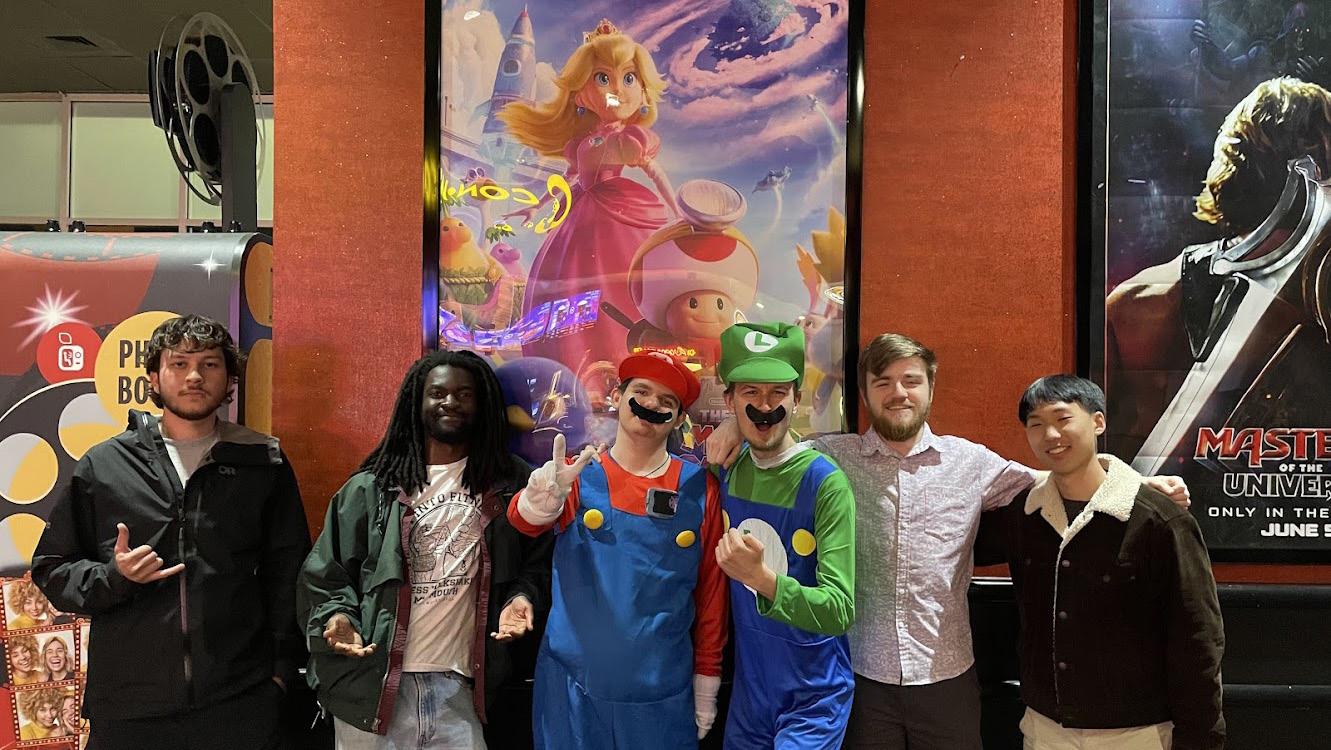
Just recently, I put this to the test by going to the movie theater dressed head-to-toe as Luigi to see the Super Mario Galaxy Movie with some friends. Despite the weird, long hat and taped-on mustache that likely would have made others hesitant to wear it, I got mostly high-fives, sparked hilarious conversations with both the young and the old, and ended up having an unforgettable time with my friends.
If I had let the fear of being cringe control me, I would have
just been another guy in a plain T-shirt blending into the background. Instead, I embraced what I love, and it was a blast that turned into a memory I will never forget.
Long before society created these artificial rules, Psalm 139:14 reminded us that we are “fearfully and wonderfully made.” God didn’t create you to fit into an apathetic social mold; He designed your quirks and unique traits on purpose.
Be yourself! Don’t be afraid to look foolish just because
you are different! If people judge you for being different, let them. You will be too busy enjoying the rich, connected life you are building to even notice. You’ll be so much happier being yourself than living up to some social norm that won’t matter five years from now. You’ll be amazed at how many doors will open by just being you—even if it goes against the artificial social norms our world has created.


Created by Nyah Jackson

• Symphony Orchestra Tour (April 16 - 18)
• Campus Research Day
• 11:00 am Convocation: Matthew Bronson @ Collegedale Church of Seventh-day Adventists
• 12:00 pm Dean’s Luncheon @ Wright Hall Robert Merchant Room

• 7:30 pm Vespers: Lawn Concert, Manny Gomez @ Goliath Wall
8:15 pm Sunset

Soccer
6:00 pm (Women’s)
- wiz khafifa vs Dribble or drown
- Grass Kickers vs shin destroyers
- sarang stealers vs ken shawties
7:00 pm (Men’s B)
- Cleats & beats vs Slightly illegal
- Bearly Atletico FC vs Zero Ball Knowledge
- clankers fc vs KOALA FC
8:00 pm (Men’s B)
- Lionel Ronaldo vs kyle lowry
- Bardrid vs Always Offside
- Bodo/Glimt vs The Oceans Eleven
• 9:30 am SOAP: Ocoee Rafting ($10) @ Wright Hall
2:00 pm Gym-Master Matinee Show @ Iles P.E. Center
3:00 pm Recital: Soli Deo Gloria, Samuel Vargas Senior Composition @ Ackerman Auditorium
8:30 pm AfterGlow @ Collegedale Church of Seventh-day Adventists South Atrium Student Appreciation Day 6:00 pm Tornado Siren Test
• 7:30 pm Evensong: Organ Students @ Collegedale Church of Seventh-day Adventists
• 9:00 pm Gym-Master Home Show @ Iles P.E. Center

5:00 pm Senior Recognition Banquet @ Wright Hall Dining Hall
Online Registration For F26 Opens For New/Transfer Students 7:30 pm Concert: Southern Steel @ Ackerman Auditorium
9:00 pm (Men’s B)
- Suiiii vs Memo Horchata FC
- Yawa FC vs The Grass stains
- Monarcas FC vs The Dribbling Idiots
Playoffs (Racket Sports)
5:00 pm (Badminton Men’s Singles)
- A Lumowa vs Z kwon
- B Kang vs G Mantiri
- J Song vs Z Cai
5:00 pm (Pickleball Mixed Doubles B)
- C Cabezas vs S Montes de Oca IV
- J Rader vs I moody
- C No vs S Gibbs
- J Cirigliano vs M Mambo
6:00 pm
- A Asok vs G King (Tennis Men’s A Singles)
- B Beaman vs M Cifuentes (Tennis Men’s A Singles)
- C Lee vs J Chang (Badminton Men’s Singles)
- E Woy vs J Wu (Badminton Men’s Singles)
Become an advanced practice nurse and earn a doctor of nursing practice at the same time.
The BSN to DNP program mentors bachelor’s degree-level graduates as they gain necessary RN experience through an advanced nursing practice emphasis of their choice.
Options include: • DNP/MBA
• Lifestyle Medicine
• Nurse Educator
• Nurse Practitioner (emphases include Acute Care–Adult/Gerontology, Primary Care–Adult/Gerontology, Family, and Psychiatric Mental Health)
Call or visit online to find out how to get started.