The Southern Accent
Update of the Week, page 3
SMARRT Fund exceeded $1 million last semester
The Student Voice Since 1929
Pressing Issue, page 4
Little Debbie decides to remove food coloring from their products
Update of the Week, page 3
SMARRT Fund exceeded $1 million last semester
Pressing Issue, page 4
Little Debbie decides to remove food coloring from their products
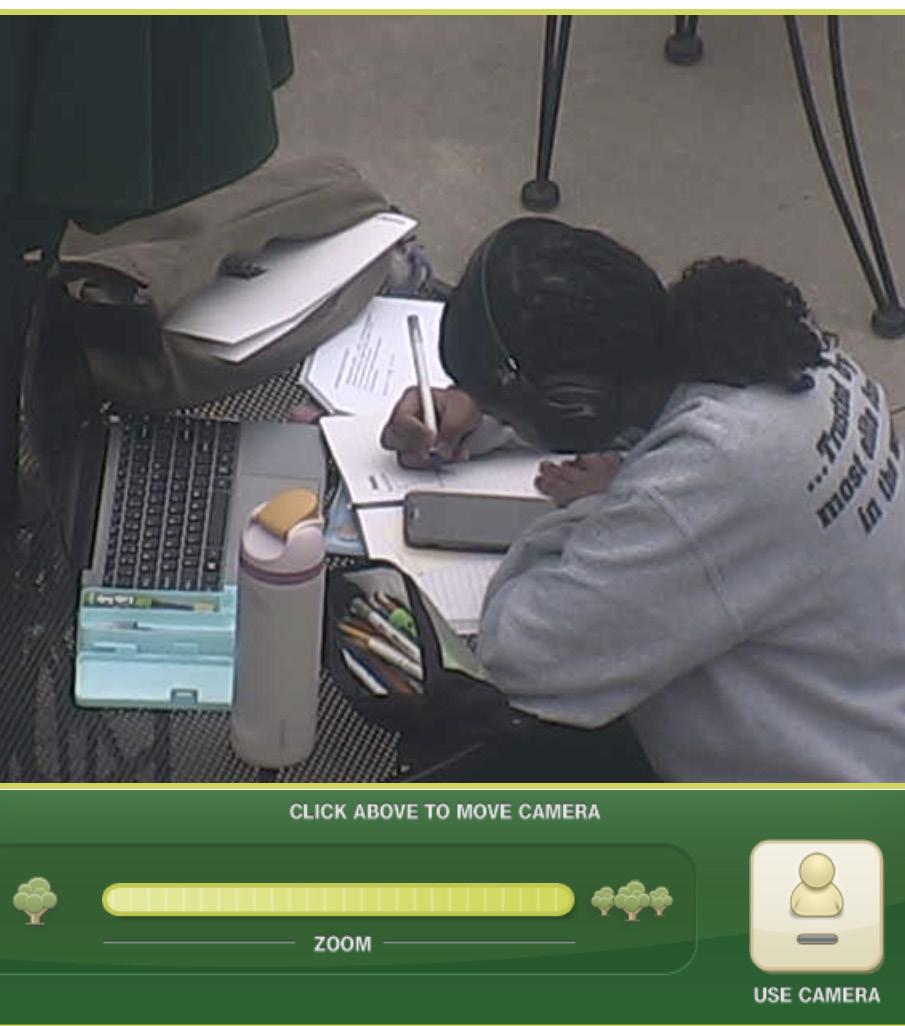
As spring thaws out Southern’s campus, many students studying or hanging out with friends at the outdoor patio between the Bietz Center for Student Life and McKee Library are unaware that anyone with an internet connection could be quietly watching.
This view of campus life is publicly available on the Campus Webcams page of Southern’s website. It features live webcams at two sites on campus: a blurry view at the center of campus and a clearer view showing the side of Bietz, including its patio, parking lots and part of the Thatcher dormitory.
The webcams can be controlled by one online user at a time, who can pan, tilt and zoom in and out. During an interview with the Accent, one student experimented with the cameras and found that they could zoom in close enough to see the person she was talking to on FaceTime on her phone.
Janell Hullquist, director of Marketing and University Relations (MUR), stat-
ed in an email to the Accent that the webcams have been available for many years, with the current system replacing older cameras in 2016. The camera facing Bietz used to face the Promenade but was shifted to view the Bietz’ construction, according to Hullquist.
She explained that the university placed the webcams with the goal of providing a live view of campus life and intentionally positioned them to show public areas instead of private spaces.
“They offer prospective students and families, alumni and friends of the university an authentic sense of our campus environment, seasonal conditions and daily atmosphere—especially for those who are unable to visit in person,” Hullquist stated, adding later that she is unaware of any reference to the cameras in the campus policies or student handbook.
Hullquist further explained that the webcams are among several visual engagement tools, such as campus tours, photography and videography, and can help people check current weather and campus conditions. The pan, tilt and
zoom capabilities were an intentional feature to encourage engagement.
According to Hullquist, MUR has not received any notable feedback about the cameras since their installation.
Nationally, Southern is not the only university to feature public livestreams of its campus for alumni, parents and prospective students.
According to a 2014 article by College Today, the news site for the College of Charleston in South Carolina, the campus featured eight webcams, which were first installed in 2007. Today, the school only features two live YouTube videos of the campus skylines.
Another article published in 2007 by the Reveille, Louisiana State University’s student media outlet, critically described four cameras that captured students on campus. It stated that screenshots of women visiting the library were posted on a message board, which reinforced the author’s privacy concerns. Now, its only live public camera shows the university’s live tiger mascot on the LiveBeaches.com website.
According to an article by the Cam-
pus Times, the student paper for the University of Rochester, the campus webcams trend of the 1990s and early 2000s is fading. While the popularity of these webcams may be one reason for their demise, some students have also spoken out against the cameras due to safety and privacy concerns.
In November 2022, students from Indiana University of Pennsylvania spoke out against a livestreaming camera on their campus, citing the potential misuse of the cameras in stalking scenarios, according to the Penn, the university’s student newspaper. While many of the students involved in its Student Governance Alliance had never heard of the camera, the livestream gained 56,000 views. Because of the public nature of the livestream, students felt that the cameras should be removed. Today, the Indiana University of Pennsylvania does not provide a publicly available webcam on its website.
The Accent sent an email about the webcams to Shawn Haas, associate
“The ability to zoom in and change directions seems like [it brings] the unwanted potential for misuse.” - Shawn Haas
Nyah Jackson Reporter
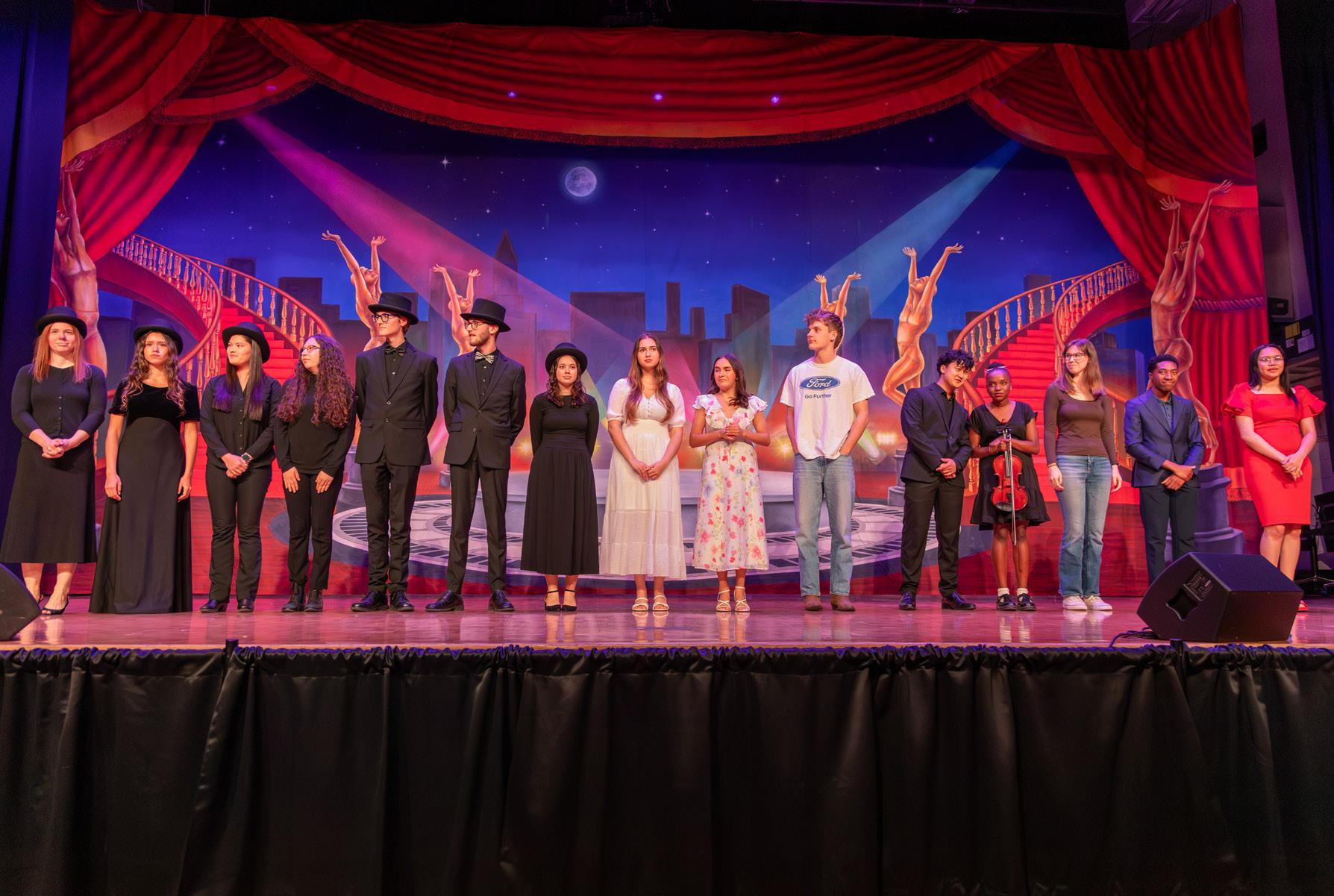
Southern’s Student Association (SA) hosted the annual Talent Show in Iles P.E. Center last Saturday at 9 p.m. SA Executive Social Vice President Jordan Collazo, who coordinated the event, opened the evening alongside his assistant, Giann Pinilla.
The curtains opened on a comedic sketch by SA officers, in which Priscille Mikala, SA executive vice president, played a classical piece on the piano, only to be dramatically interrupted by an announcement from Hayden Kobza, editor-in-chief of The Southern Accent, that Mikala would have a senior recital the next day at 7:30 pm.
Starting out the student performances, Anaya Parker, a senior religious studies major, read an original poem about the journey of navigating senior year. Next, Julia Tioseco, a freshman nursing major, sang the emotional melody “As If We Never Said Goodbye,” from the Broadway musical Sunset Boulevard.
For the halftime show, the Apison Pike music collective, led by Jaziel Soto, SA vice president of Finance, Kobza and Otodo, sang “Sunshine/ Moonlight.”
Following was Tapo Tsikirai, a junior biology major, who performed “The Prayer.” She sang one part and performed the other part by playing her violin. While watching Tsikirai
perform, audience member Qwentin Bland, a sophomore computer science major, said, “This is what a talent show is all about.”
In the final act of the talent show, the Southern Ringtones handbell players from the School of Music played a piece, originally written for handbells, with each of the seven musicians using one hand to play the same piano. After their performance, they explained to the judges that they came up with this idea while practicing their handbell piece and thought that it was something they could keep doing.
Ephram Otodo, a junior public relations major, served as a judge along with Arianne Milosavljevic, a senior nursing major, Naomi Ann Martinez, SA president-elect and Isabella Fernandes-Hidalgo, a sophomore accounting major.
While the four judges deliberated on the performances, members of SA competed against members of Senate in a game of Family Feud. With the Southern Adventist University experience as their topic, SA took the win.
The SA team consisted of President Jeaneva Bautista, Marketing Director Braden Larson, Communications Director Sarina Young, and Parlimentarian Vincent Yang. The Senate team consisted of Derek Renck, junior biophysics major; Tata Tsikirai, senior chemistry major; Joshua Lohr, senior physics major; and Lauren Pritchett, sophomore graphic design
major.
In third place was an act by Caleb Ogunjobi, who performed a piano arrangement of five different songs: “Great Is Thy Faithfulness,” “A Whole New World,” “I See the Light,” “The Prayer” and “When You Wish Upon a Star.” According to Ogunjobi, he mentally created this medley and practiced it for a month in preparation for the performance.
“My intention was to just make people happy with what I have and to share my talents with everyone,” Ogunjobi told the Accent in an interview. “I just wanted to do that; it made me feel happy, too.”
The second-place winners were vocalist Itzayana Gonzalez, a sophomore business administration major, and Sofia Pereira, a sophomore graphic design major who performed “The Winner Takes It All” on piano. This performance captured the emotions of the judges, who described it with words such as “capturing” and “phenomenal.”
When asked about how she felt about winning second place, Gonzalez said, “I joined because I wanted to meet more people and just have fun singing and making music, which is my favorite thing to do.”
Jeremie Collier, a sophomore
marketing major, won first place and a $500 prize for singing and playing the guitar to an original song. When asked how he felt afterwartd, Collier said, “I’m kind of shocked. I love music. I love doing this stuff. I didn’t know if I was going to win. I didn’t know how this was all going to go. I was super nervous going into it, but yeah, it’s kind of a movie ending.”
The judges chose their winners based on a point system. Ogunjobi finished in third place with 72 points, Gonzalez and Pereira took second place with 76 points, and Collier won first place with 77 points.
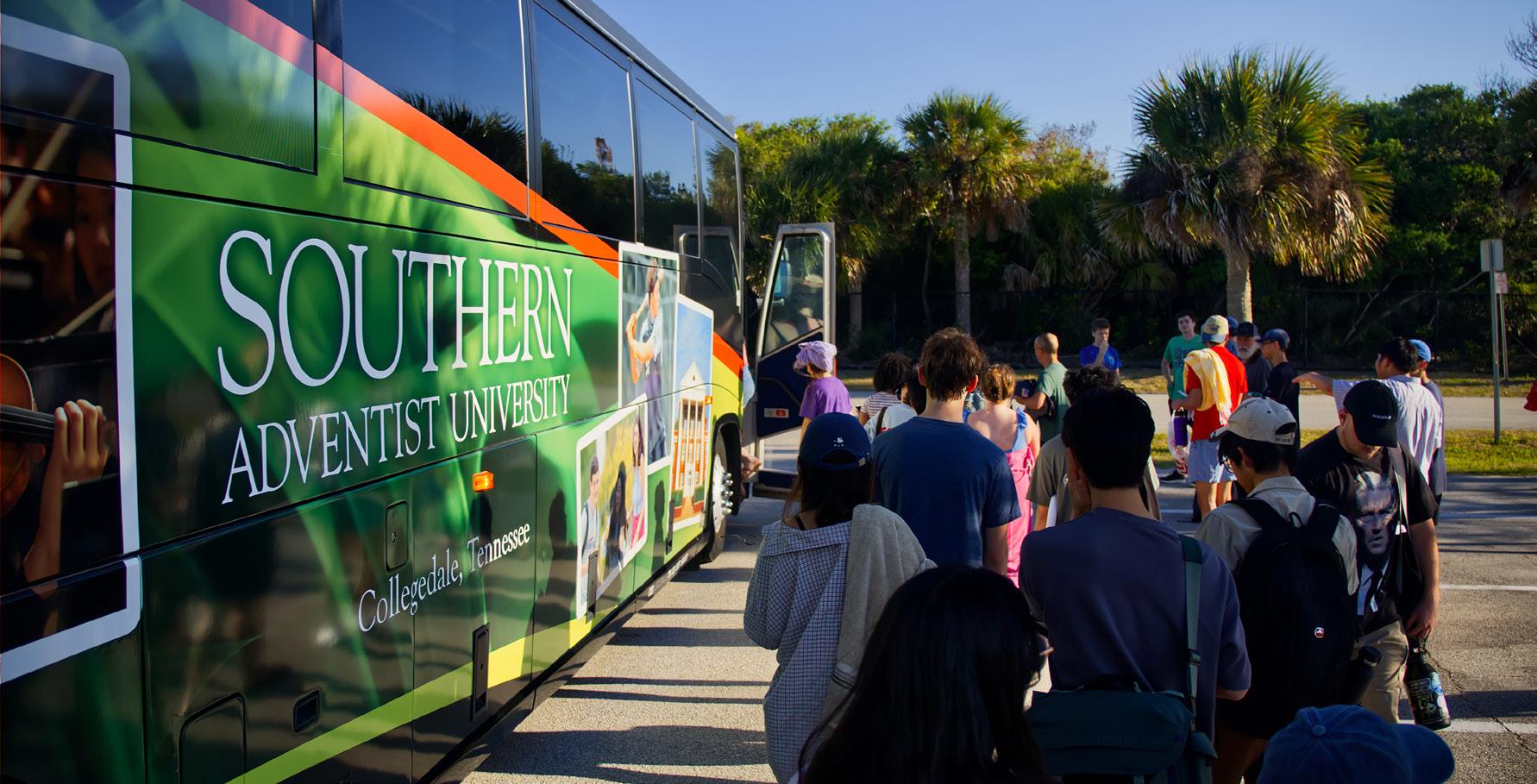
On Wednesday, March 25, the Wind Symphony headed to central Florida for its Winter semester tour. While in the Sunshine State, the ensemble performed under the direction of Ken Parsons, an associate professor in the School of Music, who is retiring at the end of this school year.
To celebrate his 42 years of teaching, Parsons chose central Florida as the destination for his last tour, since most of his early teaching took place there.
The Wind Symphony performed at Walker Memorial Academy in Avon Park, Forest Lake Academy in Apopka and Spring Meadows Seventh-day Adventist Church in Sanford.
“It was special to return there,” Parsons stated, “to revisit significant places and reconnect with old friends and former students.”
Concert tours give members of the Wind Symphony time to bond while also representing Southern and the School of Music to potential university students.
At a church in Sanford, students also had the opportunity to “provide a meaningful spiritual experience through music during the Sabbath worship service,” Parsons stated.
In an email to the Accent, Parsons said that the Wind Symphony was “at the top of their game musically.” He also enjoyed the presence of Southern alumni who were able to perform with the ensemble.
“Everyone worked together seamlessly. The manager of the hotel in which we stayed in Apopka was very impressed with the caliber of our students,” Parsons stated. “Five recent alumni were able to join us for performances, and it was special to have them with us again. The only thing that would have improved [the tour] is if one member who was sick had been able to go. We missed him and would’ve loved to have him be part of the experience.”
Michael White, junior film production major, and Rafferty Bradford, junior music education major, enjoyed touring with the Wind Symphony.
“There’s plenty of memories to be made, and often some shenanigans end up happening,” White stated. “Mr. Parsons gives a lot of free time on his tours, which means that the students can explore other areas instead of being stuck in all-day rehearsals but in different locations. We visited the beach and a freshwater spring, which was a lot of fun.”
“We had a lot of fun,” Brad-
ford stated. “The hotel groups were great — I love how Mr. Parsons keeps everything organized and still lets us choose our groups.”
White and Emma Clark, senior mathematics major, spoke about Parsons’ upcoming retirement.
“His last concert is called '(A Few of) My Favorite Things,' and it’s all pieces that were either bucket-list items for him or ones he conducted before and really enjoyed,” White said.
“Mr. Parsons has chosen to go out with a bang, and I think rightfully so. He’s been a good mentor, director, friend and comedian for everyone who has
come through Wind Symphony.
“It’s a really bittersweet thought that Mr. Parsons is retiring,” Clark said, “especially in the same year I’m graduating. I’ll always be thankful for Mr. Parsons [and] his never-ending joy in music and his enthusiasm to teach it. He’s the reason I play bassoon at all. I wish Mr. Parsons the happiest of days in his retirement and [hope] that he can look back on his conducting days with the assurance that he’s changed many students’ lives, including mine.” Parsons spoke about his hopes for the Wind Symphony after he retires. The School of Music is still interviewing can-
didates, but Parsons believes that the life, mission and future of the ensemble will continue to be vibrant and meaningful under the direction of a new conductor.
“The future is very bright,” he stated. “Current members keep the fire burning. You’ve done incredible things this year that some of you thought were impossible, and you will be the foundation of the ensemble’s next incarnation. Those who chose not to participate this year [can] talk to someone who did and catch the excitement that keeps them coming back! It’d be wonderful to see you in the ensemble next year!”
The Accent encourages readers to write articles and voice their opinions. However, not all topics and views are endorsed by Southern Adventist University or the Seventh-day Adventist Church.
For any questions, comments and article submission information, email the editor at haydenjkobza@southern.edu.
For all advertising inquiries, email alvajohnson@southern.edu.
Sports
Staff
Opinion
Circulation
Kyla
Asher
Anaya
Yoly
Ava
Lillian
Kyla
Photographers
Christian
Layout
Office
director of Campus Safety, who said that the livestreams raised questions about safety. Haas stated in a later email that he would make a recommendation to Southern’s administration for the webcams to be evaluated and either taken down, adjusted or relocated as appropriate.
He also made a distinction between the safety of the Bietz webcam and the center campus webcam.
“One key concern is the difference between camera positioning and capability,” Haas stated in an email to the Accent. “For example, the center pole camera is farther away and captures only a general area, which is not comparable to the Student Center camera when discussing safety concerns. The camera facing the Student Center is much closer and can be zoomed in sufficiently to clearly show individuals and make them easily identifiable.”
Haas said he had been in favor of using webcams to give viewers the ability to see the construction process before the student center opened in 2021. However, he questioned their usefulness now.
“I would just say for [the Bietz webcam] that I don’t see a purpose,” Haas said. “The ability to zoom in and change directions seems like [it brings] the unwanted potential for misuse. We have no proof or anything, no report. But why leave that potential out there?”
Student Reactions Students had mixed reactions to finding out about the webcams. Some appreciated the webcams’ availability, although they were unfamiliar with the cameras before speaking to the Accent. Fran Cordero Arias, a freshman business administration major, expressed positivity towards the webcams.
“I feel like it's a good thing so that students can see a little bit of what the campus looks like,” Cordero Arias said.
Freshman nursing major
Sophie Cirigliano sat at a table on the patio as she studied for a nutrition exam and commented on the usefulness of the cameras.
“I feel like it could be helpful in certain situations,” Cirigliano said. “Maybe if you lost something or left something at the table, [you could see] where it is. I feel like it could be beneficial.”
Other students shared their discomfort with the cameras.
Tristan Kirstein, a freshman business administration major, and Pablo Balboa, freshman biology major, worked at their laptops on the patio. Both students did not know that they could be watched online as they studied.
At first, they said the cameras were cool, but after further reflection, they felt uncomfortable with the availability of the cameras to the public.
“It’s kind of weird that anyone in the whole planet, could just look up 'campus webcams at Southern Adventist University' on their at-home computer and just, I don’t know, look at whoever,” Kirstein said. “It’s
kind of just a little creepy.”
Arianne Milosavljevic, a senior nursing major, was shocked to find out that the webcams were available and sees the cameras as a violation of privacy.
“If you’re going to [have publicly available cameras], have students know,” Milosavljevic said. “I’m sure there’s some terms and conditions, things that we signed that we didn’t know about, that were in there and we didn’t read about it.
Still, that’s a bit unnerving.”
Nicole Mann, a sophomore allied health major, was unaware of the webcams and feels that they are a major safety concern.
“I feel like if anyone wanted to stalk you, they could easily do that,” Mann said. “I thought those cameras were for campus safety, you know, keeping our campus safe, but if people have internet access to you from anywhere, that doesn’t feel like it’s doing the job.”
Haas said Campus Safety offers many services if students have a stalking or harassment
concern.
He also said that while the campus is fairly safe statistically, students who feel uncomfortable can call Campus Safety to request a safety escort, which can be as simple as a campus safety car and officer being in the parking lot while a student walks to their car at night.
Students can also report any safety concerns to Campus Safety. Haas said the department’s goal is to help students get the support they need, whether that involves the police or not.
“Campus Safety is here to help and assist, and we want students to feel like that’s the case,” he said. “And I know it can be kind of stressful and intimidating to report these things, so we train our officers to try to be able to take these reports in the best way possible and really to just focus on assisting.”
Hayden Kobza Editor-in-Chief
Asher LeVos Reporter
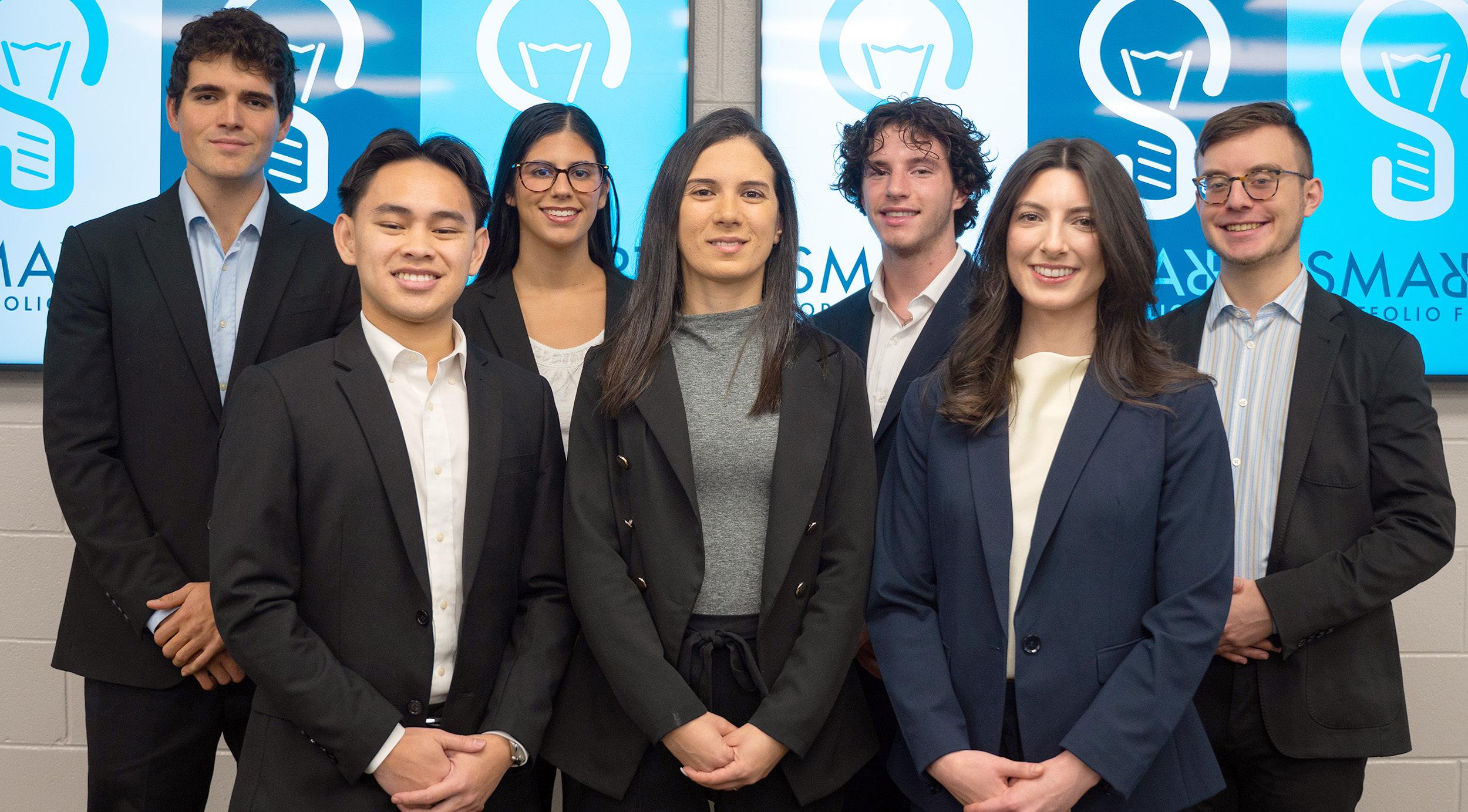
On Oct. 31, 2025, Southern Adventist University’s Student Managed Asset Risk and Return Training (SMARRT) Fund exceeded $1 million in investments, according to a fourth-quarter, 2025 SMARRT Fund report.
The portfolio, which is run by business students, was created in 2019 from $500,000 from Southern’s main endowment, according to a press release from Marketing and University Relations (MUR). The earnings are put towards scholarships and campus projects at Southern, the release stated.
“One word to describe how I feel about this monumental milestone is ‘blessed,’” Jonathan Amarandei, former president of the SMARRT Fund team, said in the press release. “I’m beyond blessed to have had the privilege of being a part of such a talented group of individuals.”
The Accent reached out to Amarandei but did not receive a response.
According to former Chief Investment Officer (CIO) Glenn Grakov, a senior finance major at Southern, the SMARRT Fund exists to help business students gain practical experience in financial investment by managing and investing real money.
“I got to spearhead discussions with our sponsor, [and] with the rest of our team on the
portfolio management committee, to decide where we’re going,” said Grakov. “I would analyze and try to determine when the right time is to sell a stock, when the right time is to enter a stock and so forth.”
Grakov said that students select investments and strategies based on their own research as well as guidance from the SMARRT Fund sponsor, who is also a School of Business professor.
“Our sponsor, Dr. Joelle Akiki, has been absolutely fabulous [to work with],” said Grakov. “She’s on our portfolio management team and guides us through the process of selecting what investments we make.”
The Accent contacted Akiki but did not receive a response.
Ellen Hostetler, vice president for Advancement at Southern, stated in an email to the Accent that programs similar to SMAART are usually only for graduate programs and students who work at the fund have a special arrangement.
“The SMARRT fund has been a stellar financial performer,” Hostetler stated. “The outcomes are reported at each meeting of Southern’s Endowment Board, and its members are very pleased with the performance of the students and their leadership.”
Strategy and Structure
A Southern Adventist University press release outlined the strategy employed by the SMARRT Fund team. According to the press release, last school
year, the team “switched from investing in exchange-traded funds to single-equity stocks.” With this strategy, SMARRT experienced a return rate close to double that of the S&P 500 and outperformed several major hedge funds, according to a September and October 2025 report provided by SMARRT.
Speaking regarding investment approaches and accomplishments, Grakov pointed out the recent returns from investments.
“When I became chief investment officer, the portfolio was around $740,000, and we were able to grow it to a million dollars within a year,” said Grakov. According to Grakov, there are two categories within SMARRT. Six executives manage money as members of the portfolio management committee while student analysts work under them. SMARRT Fund analysists learn skills through a training class, which is offered at the beginning of every semester, and obtain Bloomberg certifications.
The New York Institute of Technology website states that Bloomberg certifications serve as an introduction to financial markets and practices. The program takes approximately eight hours to complete and covers economics, currencies, and fixed market equities. Students who complete the certification are more likely to stand out when applying for entry-level financial service positions.
Senior finance major Alicia Garver, who served as the for-
mer vice-president of secretary of duties and is the current vice-president of development, offered her perspective on Bloomberg certifications.
“A Bloomberg certification opens so many doors,” said Garver in an interview with the Accent. “It was one of the number one things interviewers wanted to talk to me about, which opened the doors to talk about how we were part of managing actual funds. Not a lot of other college students can say they have had actual experience and proven growth of their funds.”
Eventually, the top performing analysts have the opportunity to join the portfolio management committee. Grakov said that these positions offer students experience, helping them discover the career path they wish to pursue.
Garver shared how her experience with SMARRT shaped her skill sets.
“Not only has it helped me in finding a job, but it’s made me a more polished individual in terms of being able to connect with people in our community [and] to be able to connect with people in similar fields to me,” said Garver “It has taught me to learn from people in a way I didn’t know was possible before.”
Garver said she initially joined SMARRT for the class credit, because three semesters of SMARRT substitute for an upper-division finance class. Additionally, Garver believed it would benefit her to under-
stand how to multiply her money outside of the classroom. Garver emphasized that her experience at SMARRT benefited her personal investments.
“I have learned the fundamentals of investing and how to invest with my faith, which was a big part of SMARRT for me,” said Garver. “So, in my personal portfolio, I’ve seen greater returns since joining SMARRT.”
Sarah Chobotar, a sophomore accounting major, shared her perspective on SMARRT as a student analyst.
“You’re put in a group [of student analysts] with an executive, so if you have questions, you can ask for help, and you work together as a group to do different projects,” said Chobotar. “We did one where we picked a company and did an evaluation of their stock. We got to pitch to the group what company in a certain industry we should invest in.”
Current student President of the SMARRT Fund, Ethan Demaree, a Finance major, told the Accent in an interview that when the new Ruth McKee building opens, the focus of the project will be to grow the portfolio’s presence on campus. According to Demaree, the project will strive to develop “Christ-centered equity analysts.”
“Our goal is to make every student’s time here [at SMARRT Fund] impactful so they are fully prepared to excel in their future careers,” Demaree said.
Editor's Note: The Southern Accent has produced a two page Collegedale News section this issue as part of a national initiative to enhance community news coverage. The local effort, led by Southern's School of Journalism and Communication in conjunction with the Center for Community News (CCN) at the University of Vermont, places student journalists at the forefront of addressing the news desert crisis, a phenomenon caused by the decline of newspapers in local communities. The Accent believes local news is vital to a thriving democracy, and we remain committed to reporting about important issues, novel occurrences and interesting people in the greater Collegedale area. We will publish this special section in five issues of the newspaper this semester. To submit tips or press releases, go to https://southern-accent.org.
McKee Foods, the parent company of Little Debbie, has pledged to remove artificial colorings from its product line.
The timing of the phase-out aligns with a new initiative first put forward by the U.S. Food and Drug Administration (FDA) on April 22, 2025, encouraging the food industry to embrace natural alternatives.
According to the FDA website, McKee Foods has plans to remove all artificial food
colorings over the next year and a half.
Petroleum-derived dyes used in the United States, such as Red No. 40 (Allura Red), Yellow No. 5 (Tartrazine) and Blue No. 1 (Brilliant Blue), are on the list to be removed.
According to official ingredients lists, some Little Debbie products, such as Cosmic Brownies, feature a wide array of these dyes. Others, such as Swiss Rolls, include fewer additives yet still list Red No. 40 on the ingredient label.
The FDA recently announced
a specific ban on the use of Red No. 3 (Erythrosine). Food companies are required to remove the dye from their products before Jan. 15, 2027.
A pledge-tracker provided by the FDA shows that McKee Foods has joined companies such as Walmart, Kraft, Hershey's and Target in a movement encouraged by Health and Human Services (HHS)
Secretary Robert F. Kennedy Jr.
“For too long, some food producers have been feeding Americans petroleum-based chemicals without their knowl-
edge or consent,” Kennedy said. “These poisonous compounds offer no nutritional benefit and pose real, measurable dangers to our children’s health and development.”
Although the FDA has previously considered petroleum-based safe for consumption, researchers from Temple University stated in an article that some studies link such dyes, especially Red No. 3, to increased cancer risk.
An FDA press release describing its industry-focused campaign addressed these
concerns, while also pointing to natural alternatives such as beetroot red and spirulina blue. While natural dyes tend to provide less vibrant colors, embracing other options aligns U.S. law with similar policies in Europe and Australia.
Student perspectives
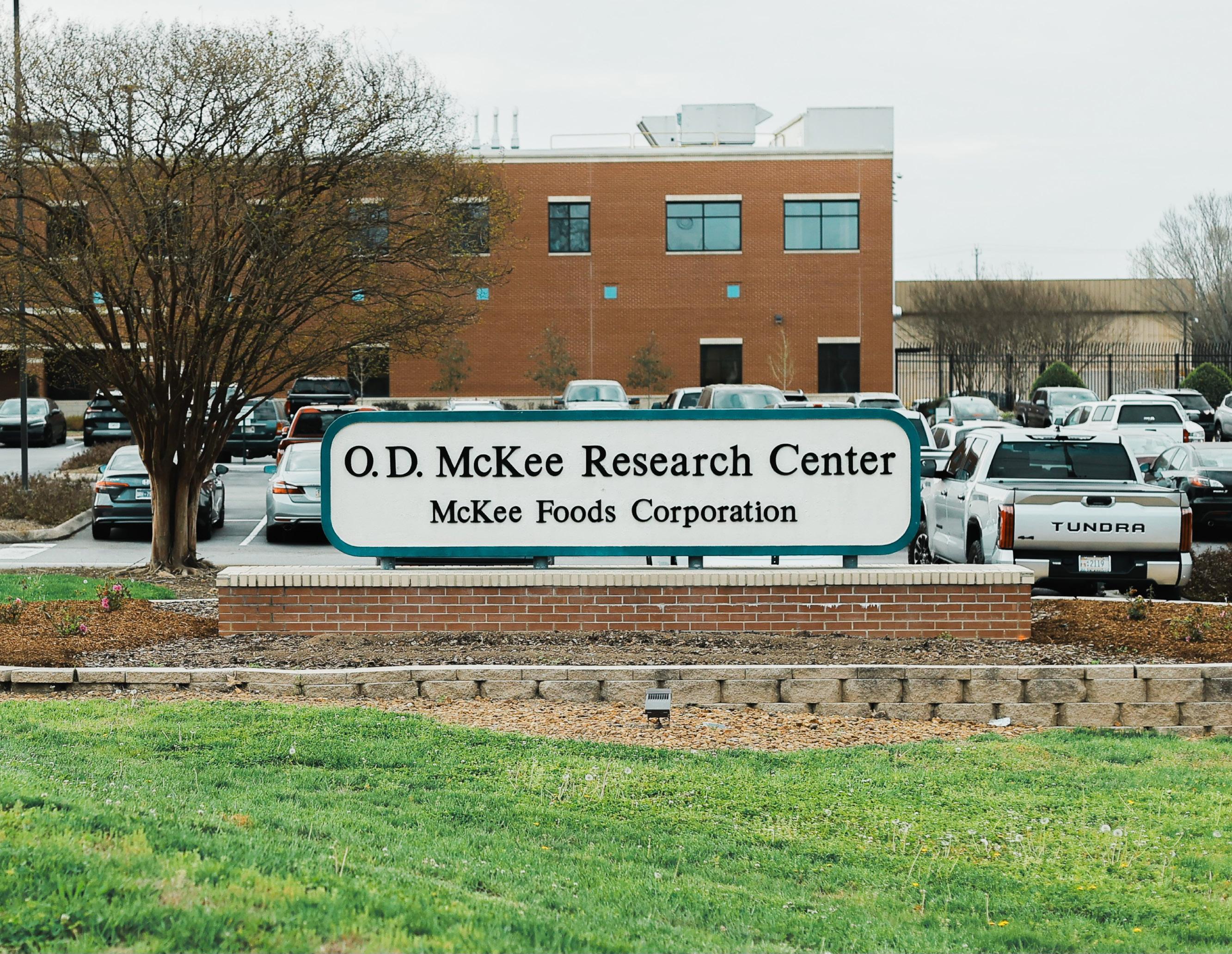
The McKee Foods Corportation Plant 2 and the O.D, McKee Research Center, which is named after the company’s founder, Oather Dorris McKee, are just a short walk from Southern’s campus. Southern Adventist University students shared their perspectives on the company’s decision to remove artificial dyes.
Freshman chemistry major Micah Rose was unaware of the change but does enjoy Little Debbie products.
“I mainly eat honey buns,” he joked, “which I don’t think have much dye in them. But good for them! I don’t know much about artificial dyes, but I’ve heard people say they’re bad for you.”
Junior English major Noah Warner offered a similar sentiment.
"This seems like a step in the right direction,” Warner said. Ella Emde, a sophomore clinical psychology major, hopes that the change will mark a more health-conscious direction for the company.
“I think it brings Little Debbie one step closer to creating a healthier product that Adventists can be more proud of,” said Emde. “I hope they will continue to work on ways to make their products reflect the SDA [Seventh-day Adventist] health message in the future.”
The Accent tried to contact McKee Foods but did not immediately get a response.


Sienna Escobar Reporter
For the last seven years, members of Native American cultures from across the nation have gathered to share dances, showcase their cultures and see old friends at the yearly Yellowhorse Powwow Celebration in Collegedale, Tennessee. This year, the event will be held for its last time at The Commons on April 4 and 5.
Visitors at the celebration can watch ceremonial dances performed by nearly 100 Native American dancers from many regions, including Tennessee-based representatives of the Aztec culture in Mexico.
According to Tammera Hicks, president and founder of Native American Services of Tennessee (NAST) and organizer of the event, dances will include a ceremonial stomp dance, called a gatio, and powwow drummers. Visitors will be encouraged to participate in some intertribal dances and a candy dance for younger kids.
Across The Commons, approximately 25 Native American vendors will be displaying their handcrafts for sale, alongside food trucks offering food such as “Indian Tacos,” made from traditional fry bread. Alix Parks, a licensed animal rehabilitator who runs HapiNest Raptor Rescue in the Chattanooga area, told the Accent that her organization’s ambassador red-tailed hawk, Zena, will be present at one of the vendor booths. According to Hicks, visitors can also see an award-winning traditional Lakota teepee lodge.
Performers and vendors include representatives of Cherokee, Creek, Lakota, Chickasaw, Blackfoot, Haoma and other Native American cultures, from Tennessee and the surrounding area as well as states as far away as Arizona, Illinois, Florida and New York.
Hicks said that the powwow celebration focuses on educating the public about the history and culture of different Native American communities. The
event is named after Hicks’ late husband, Jimmy Yellowhorse Webster, a Native American woodcarver, recording artist and flute player known as a “songkeeper.”
Hicks said she founded NAST in 2001 to help fill the need for preservation of Native American culture and history in the region. The organization works to provide resources for Native American communities as well as offer educational opportunities at schools. The Yellowhorse Powwow Celebration began in Chattanooga a few years after the organization started and moved to Collegedale 7 years ago. Hicks said that the event
serves as a gathering place for Native American performers and craftspeople from across the country.
“They come because it means a lot to them,” Hicks said, “because they see friends that we’ve been knowing for years and years. … It’s like a homecoming.”
According to Hicks, anywhere from 3,000-4,000 people have attended the event in the past. The public can interact with vendors and dancers to learn about their traditions and handiwork. Hicks explained how cultural outfits carry specific religious and cultural significance, such as using feathers only from birds native
to their regions. Hicks said this year will be the last year of the Yellowhorse Powwow Celebration, due to the difficulty of organizing and putting together the event. She added that it seemed fitting that the event this year fell on Easter weekend, a holiday her husband loved, and hopes that as many people as possible will attend.
“I want everyone to go home feeling like they enjoyed themselves, met new people, got to see maybe some people they already knew and learned something they never knew about,” Hicks said.
Hicks explained the power
of public powwows to educate people on Native American culture and change stereotypes.
“If we can teach someone one thing, or dispel one myth concerning Native people, we have met our purpose,” Hicks said.
The powwow celebration will be open from 10 a.m. to 8 p.m. on Saturday, April 4, and 10 a.m. to 5 p.m. on Sunday, April 5. Visitors can purchase full-day tickets to the events for $10 per adult, while children under 5 years old can enter for free. Tickets are available at www. naservices.org and a schedule of performances is available on NAST’s Facebook page.





Johanne Mendoza Contributor
The comparison game is hard to avoid on social media. We are bombarded with instant gratification and posts that set unrealistic expectations.
Extravagant lifestyles or perfect bodies are often pushed onto our pages, but such posts show only the good that people want others to see. They lack vulnerability, opting for a filtered lifestyle. I, too, sometimes choose only the best angles or most aesthetically pleasing pictures to post online.
“The grass is always green-
er on the other side” idiom expresses the common misconception that everyone else’s situation is better than yours. In many Western cultures, it reflects a society in which people get jealous of others’ accomplishments and are not satisfied with the cards they are dealt. This mindset makes you look at everyone else’s life as a blueprint, and you can’t help but feel sorry for yourself if you can’t meet such expectations. Although social media can be fun for expressing yourself and inspiring others, there is a thin line between inspiration and comparison. In this digital age, it’s easy to be weighed
down by what everyone else is doing, causing us never to be satisfied. In a capitalistic society that constantly urges us to purchase the newest items for happiness, we could benefit from looking inward for self-gratification.
Most of the time, social hangouts are documented digitally but lack actual connections through meaningful conversations. Although we are all connected digitally and socially, the connections usually remain at the surface level. Taking pictures and capturing videos is okay, but we need to prioritize meaningful interactions.
I must remind myself that
only some things I see online are a recipe for success; most pictures are edited, and people usually post only a curated slideshow of what they want you to see. This is something I struggle with daily, especially since this is my senior year; I can’t help but feel that I fell behind compared to university students I see online. They go on luxurious trips, have a grad school lined up or splurge on big purchases. This causes me to doom scroll, mostly ending with feeling less satisfied and empty.
I noticed that being in constant comparison with
others takes away from my achievements and lowers my self-confidence. Reflecting on my strengths and appreciating the sources of beauty in my life allow me to see my actual value.
Being aware of reality can help you gently shift your focus from comparison while scrolling through Instagram stories or seeing curated posts to appreciation for the here and now. This outlook helped me see that my grass was green enough, and I hope this article reminds you that your grass is green enough, too.

Matthew Taylor Sports Editor
As the 2026 March Madness Basketball tournament nears its completion, longtime fans might notice that the dynamic feels a little different from the previous years. Historically, the magic of these tournaments always followed a “Cinderella Story” of a “mid-major” smaller, less-funded school pulling off a miracle upset against one of the wealthier elite schools such as Kentucky or Kansas. But in 2026, a series of landmark court cases have shifted college sports to be more “professional,” cementing the league of students into a high-stakes business.
The first major change involves the Transfer Portal, where players can request to change schools to play for another team. Recent NCAA policy changes and legal pressures have reduced the time period of this portal from 30 days to only 15 starting the day after the March Madness championship—April 6 for Women, and April 7 for Men.
In a bigger change, the “year-in-residence” rule was struck down by the courts, no longer forcing players to sit out for a year if they were transferred. Now, players can change teams each year and play immediately. The transfer portal window now functions much more like it does in professional sports organizations such as the NBA and NFL, although it is more volatile due to lack of multi-year contracts, causing a chaotic “sprint.”
In an even more transformative shift, the House v. NCAA settlement ended the prohibition of schools paying their athletes. In previous years, college athletes managed
to make money through NIL (Name, Image, and Likeness) through deals with brands or “collectives.”
In the 2026 season, their payments have evolved into a form of Direct Revenue Sharing, with schools being able to distribute up to $20.5 million to their athletes across all sports each year. This value is a cap and not a grant, meaning that schools are able to choose to pay a total anywhere up to that value, providing a clear advantage to wealthier schools. These elite “Power Four” schools have allocated $4.2 million of these funds to their men’s basketball rosters, and $1.5 million to the women’s.
However, the NIL and collectives have not disappeared. They now serve as a “top-off” system to lure elite players to sign deals for even more money than their salary from their school. The best example comes in the form of BYU star AJ Dybantsa, who managed to reach a total value of $4.2 million through combinations of school revenue and marketing deals. For reference, that is equal to the total funds allocated to men’s basketball rosters in the “Power Four”.
This tournament showcases the pivot point in college basketball and the future of March Madness. While this is a major win for labor laws of college athletes, it forces fans (and coaches) to wonder… has the soul of the sport been sold in the process?
The 2026 regular season has seen a historic decrease in upsets, with 58% less small-conference teams winning against power conferences since the 2021-22 season. The Women’s Final Four featured No. 1 and No. 2 seeds exclusively, proving their top-tier revenue sharing made the elite teams even
more powerful. The SEC conference entered the tournament with nine teams, and analysts attribute this monumental success as a result of the highest average payouts in the country.
Even the upsets are being put into question. St. John’s, a No. 5 seed, managed to knock off No.4 Kansas in the second round, but their success didn’t come as a surprise once critics observed their high-spending program that evolved from the new rules. The Cinderella Story of No. 9 Iowa knocking out the defending champions, No. 1 Florida, this win can still be
attributed to the roster value of $8-10 million.
After losing in the Sweet 16 to UConn, Michigan State head coach Tom Izzo used his press conference to speak out against the changes.
“I love my job, but I don’t respect my profession anymore,” Izzo said. “It’s become a screwed-up, transactional world. A good deal used to be a good deal for you and a good deal for me—that’s what relationships are. Now, it’s just: ‘How much can I get today?” Izzo went on to defend the players, but placed the blame
on the “adults” and the lack of rules regarding tampering. He emphasized that despite the pressure of the new era, he remains dedicated to building a program with integrity.
As the Final Four of both tournaments head to Indianapolis, no teams seeded lower than third remain. The mid-major programs already knocked out of the bracket are forced to wonder if the ‘magic’ of March has been permanently priced out of reach, making “Madness” an even more appropriate name for this annual event.

Maddie Schmidt Opinion Editor
The last time I heard a political opinion that I strongly disagreed with, my first reaction wasn’t curiosity; it was irritation. Frustration is common when listening to someone or something that we think is wrong, but it should not be the first response.
In a polarized political climate, choosing to actively listen to opposing viewpoints isn’t simply a courtesy. It’s essential for critical thinking, better understanding, stronger arguments and a healthier society.
Actively listening to opposing views strengthens our reasoning skills and prevents us from living in echo-chambers of our own making. I have caught myself in the habit of only consuming media from one side of the political aisle, choosing to ignore the other.
It might feel as if listening to the content that we agree with is expanding our knowledge and making us deeper thinkers, but we are not really thinking deeply at all if we are not contending with opinions that we disagree with. The only way to know what our own opinions are is to disagree, to set them apart.
When interacting with people or content that we disagree with, it’s easy to assume the worst. People often take on a superiority complex when contending with something or someone that they believe is in the wrong, which stunts our ability to find common ground and understanding. Choosing to actively listen to those with
whom we disagree humanizes them, and we learn to have a greater sense of humility through those experiences. We can learn that our own opinions, although we may hold fast to them, are not the only reasonable ones. Everyone has their own reasons for their worldview, and taking the time to understand where others are coming from gives us a better outlook on our own stance. It helps us to think critically about why we believe the things we do. Not only does listening to viewpoints that we disagree with give us a better sense of our own opinions, but it strengthens our ability to have conversations with others. We can sympathize and ask open-hearted questions more effectively when we better understand the counter argument. We also can get our own point of view across in a way that might not have been possible before.
Furthermore, being curious about other people’s opinions makes conversations with them more enjoyable. If we have already shown someone respect and acceptance despite a point of disagreement, we are less likely to get frustrated when talking about the same issue with someone else. Most of the time, a conversation with someone who has a completely different outlook than we do is more fruitful and stimulating than with someone who agrees with us on everything.
I’m not trying to say that this is all easy. It’s difficult to try to understand something that we don’t already agree with.
It’s frustrating to walk a mile in someone else’s shoes when we
feel that the answer to a problem should be obvious.
Sometimes it’s upsetting to talk to someone whose views are radically different than our own, especially if that person is also clearly frustrated by the difference in opinion. However, this gets easier with practice. Staying calm and remaining curious instead of becoming defensive in the face of disagreement is a skill that we must hone, not one that we can expect to receive without effort, like a birthday present.
Some people might argue that we should ignore harmful or extreme views in order to keep them from spreading or gaining legitimacy. To me, however, turning a blind eye seems more dangerous than helpful. If we think a particular viewpoint is harmful, why not interact with someone who holds it and try to understand both it and them better? Then, we can become more knowledgeable in how to counterract those ideas and improve as a society.
We must remember that listening to extraordinary ideas does not automatically mean that we agree with them or that people who hold them are our enemies. Giving these ideas the time of day does not mean that they go unchallenged. We should exercise discernment, not blind openness.
Tethering ourselves to one side or the other when it comes to the media we consume or the people with whom we interact is damaging to ourselves and to society as a whole. We stunt our own growth as an active citizen when we only interact with
opinions we agree with. I think it’s a common misconception that we must choose one side or the other when deciding which stances to agree or disagree with. I don’t see a problem with cherry-picking from both, as long as we remain steadfast in our search for truth and reason.
This “cherry-picking” will look vastly different from person to person, but no matter what our
opinions are, we should strive to strengthen them by grappling with the ideas that make us uncomfortable. We might be a less divided society if more people practiced the skill of disagreement. Listening to the other side of the argument won’t always change our minds, but it might change how we think. That is the first step toward real progress.
Lily Sakata Contributor
Who’s Baba Yetu? If you don’t know what Baba Yetu means, don’t feel bad. I don’t believe I knew until recently. “Baba Yetu” translates from the Swahili language to “Our Father.”
If this hasn’t rung any bells for you, perhaps you’ll recognize it with some guided imagery—colorful flags, dazzling clothes from around the world, smiling faces, the feeling of joy and excitement while sitting beside hundreds of other Southern students in the Collegedale church?
Yes, that’s right. “Baba Yetu” is the opening line and the name of the absolute masterpiece of a song that plays at student missions vespers at least twice a school year. If you’re anything like me, you too experienced some epic mixture of fascination, enthusiasm and a glimmer of purpose during this iconic vespers service. While such a fabulous introduction to student missions left me with divine butterflies in my stomach, I wondered if my curiosity was founded on a spectacular emotional high or if this intrinsic calling truly held a deeper purpose.
As “Baba Yetu” naturally faded off into the outskirts of my brain, the feeling—or, rather, the invitation—remained.
That’s the difference. An invitation from God will find a way into your spiritual mailbox LONG after you’ve opened the letter and even thrown it to the bottom of the drawer. The packaging may look different, but He never fails to deliver.
Feeling ignited after a conversation with a friend who’s returned from being a student missionary? Invitation.
Catching yourself thinking at random points in the day about
how God could use you as a student missionary? Invitation. Did an opportunity arise for you to use your gifts in a way that could absolutely be replicated in the mission field? Invitation.
Needless to say, Jesus knew EXACTLY how to reach you. While more conversations definitely need to be had before making the decision to become a student missionary—with yourself, with Jesus, with wise friends and mentors—rest assured that God does not make mistakes.
I understand that not everyone’s invitation looks the same and that the pathway to making or even following through with this decision is not always a smooth process. I also realize that regardless of how excited you may be, the road leading up to becoming a student missionary includes a decent amount of anxiety, fear and a heaping pile of “what ifs.”
Although I was surrounded by an immeasurable amount of support and encouragement from my friends and family, nothing could completely eradicate the human instinct to explore these “what ifs.”
What if I choose the wrong location?
What if my help isn’t really needed?
What if I don’t have a community to lean on?
What if I walk away with more regret than purpose?
Let me shed some light on just how different my situation is now compared to the point in time where my mind was invaded by the “what ifs”:
I’ve been serving in Daugård, Denmark, at Vejlefjordskolen for almost six months now, and I don’t think I could ever describe how captivating my time here has been. Just when I thought God’s love couldn’t expand any
further in my life, I have been overwhelmed with gratitude while watching Him reveal His character on a blank canvas, in a new context—amidst new surroundings, new friendships and even new challenges. I like to think of it as the Artist taking me by the hand and unraveling entirely new shades of eternity.
Even though I find myself in an extremely secular culture, among 110 high-school-aged kids who are not religious and have never actively explored a relationship with Jesus, I deeply believe that although they may not be able to understand His love, that in no way disqualifies them from being able to experience it.
When did my lack of understanding ever disqualify me from experiencing Jesus?
Getting to love WITH Jesus on the other side of the world is quite possibly one of the greatest adventures I’ve ever known.
I’m reminded every day that “Baba Yetu” didn’t just inspire me; it tipped the row of dominos that eventually led me right into a place where I absolutely belong.
I couldn’t be more grateful that Jesus gave me the courage to accept His invitation to the adventure of a lifetime—one where I can almost hear Him constantly whispering, “I’m so glad you decided to come. You were created for this!”
I equate the initial process of wanting to become a student missionary to standing on the edge of a cliff.
Gazing off into an alluring unknown, you feel a combination of unquenchable excitement while simultaneously experiencing an ambush of legitimate questions, doubts and, of course—the “what ifs.” Yet, I believe the Holy Spirit challenges you to reframe those nagging questions as curious
ponderings:
What if God sends you exactly where you need to go?
What if you were sent to help for such a time as this?
What if you fall into a community that embraces you with contagious love?
What if you walk with your Creator in a way that you will cherish for the rest of your life?
I’m here, as a fellow voyager of the unknown, to confirm that the feeling of standing on the edge of this “cliff” cannot even begin to compare to watching God unravel His purpose for you as you serve alongside Him. What you’re feeling now is not comparable to the wonders God will reveal to you when you step out in faith (Romans 8:18).
I believe that you’re standing near the edge, looking off into the horizon for a reason. Maybe that looks like being a missionary halfway across the world, or even across the street or down the hall from your
dorm room. Jesus caught your attention, and now He’s inviting you to believe in the possibilities of an adventure He’s called you to. Only you know what that is. This is between you and Him.
So yes, “Baba Yetu” is an incredible song that holds a special place in many people’s hearts. Consequently, just because it’s a song does not mean that the impression it left on me was meaningless. None of God’s invitations are accidents, and they’re FAR from being a coincidence or just an emotional high. They come with clarity, purpose and reassurance.
Speaking of reassurance, during one of my first car rides here in Denmark, l sat in the backseat and looked out the window, admiring the luscious landscapes and views, feeling encouraged by my dearest Friend.
I’ll let you guess what song began to play in the car.

Rhett Seitz Lifestyle Editor
Everyone has a defining object from their childhood: something that instantly transports them back to a simpler time. For my generation, and likely most of Southern’s current student population, one of the most universal touchstones was a little white box called the Nintendo Wii, a staple of that era. Almost everyone I knew either had or knew of the console.
While growing up, I had a wide variety of interests, from writing comics to going outside. I was first introduced to one of my hobbies when my father handed me a copy of Super Mario Galaxy.
I had never played a video game before, but the moment the cinematic title screen booted up and Mario screamed “SUPER MARIOOOO GALAXXYYY!” I was instantly hooked.
The premise was that Mario, a character nearly as universally recognizable as Mickey Mouse, was on another adventure to rescue Princess Peach from Bowser. The twist? This time it was all in outer space!
The game turned out to be a massive success upon release, with critical acclaim from gamers, critics and everyday people alike. Super Mario Galaxy turned out to be not just one of the best games on the Wii, but one of the best games of all time. It was so good that they even made a sequel with Super Mario Galaxy 2 in 2010, a
rarity for 3D Mario Games. On April 1, Illumination Studios and Nintendo are bringing that exact adventure to the big screen with The Super Mario Galaxy Movie.
Gamers and non-gamers alike are projecting it to be the first massive blockbuster of 2026, following the billion-dollar success of the first Super Mario Bros. Movie, with this new movie likely to surpass the success of its 2023 predecessor.
I never thought that a movie would be based on one of my favorite video games, especially since the video game movie industry is still fairly young in Hollywood. It was as if my childhood and the late 2000s were resurrected again.
But the fact that the studio specifically chose to adopt Galaxy next in the movie series speaks volumes not only about how impactful the game was, but also about the world we live in today. Our culture has a profound obsession with nostalgia.
We live in an era that is fueled by looking backward. Whether it be Marvel or Star Wars, we constantly crave reboots, remakes and throwbacks to escape the complexities of modern life. Some of the biggest moneymakers at the box offices are not new original films, but sentimental machines from years past.
But the fond memories surrounding Super Mario Galaxy are different. We aren’t yearning just for the intuitive Wii remote controls or the fun platforming. We are nostalgic
for the profound emotions the game made us feel before we were even old enough to fully understand them.
What made Galaxy a masterpiece was not its gameplay, but its soul. Unlike any Mario game before or since, it had a distinctly beautiful, almost melancholic atmosphere. The soundtrack was fully orchestrated, replacing the typical synthesized beeps of previous Mario entries with soaring violins and lonely pianos that made the vacuum of space feel incredibly vast, empty—and alone.
Then, hidden within this colorful kids game was a quietly devastating, deeply emotional backstory about a cosmic princess dealing with grief, the loss of her mother and the journey to build a new family out in the stars. Rosalina’s Storybook introduced a generation of kids to themes of existentialism and the bittersweet passage of time, all disguised behind a cartoon Italian plumber screaming, “Wahoo!”
When I entered high school, I put gaming aside to focus on my classes and my future. Mario Galaxy became a distant memory. It wasn’t until I was deep into my college years that I found myself looking back at the game again.
I realized that my love for it wasn’t just about wanting to be a kid again. It was an appreciation for a piece of art that treated its young audience with emotional respect. Nostalgia had taken hold of me.
Perhaps because it can
sometimes be a trap that keeps us stuck in the past, nostalgia can prevent us from moving forward. It can distort reality, painting a rosy-eyed picture of a past that never actually existed, causing people to hate their present or dread the future.
The grass is not always greener on the other side—or in this case, the other planet.
Entertainment is a great gift, but it becomes dangerous when it is used solely as an escape from our present realities. At its best, nostalgia is a reminder of the things that originally shaped our capacity for wonder. It takes us back to a time when things were slower and life was not as confusing.
Thankfully, as good as Galaxy is as a game, we don’t have to rely on the drug of nostalgia to find hope. We can look beyond the digital stars of Mario Galaxy to the One who created the actual galaxies in the first place. Psalm 147:4 reminds us, “He determines the number of the stars and calls them each by name.”
Mario, Bowser and Rosalina’s cosmic adventures are fun to watch and play, but they pale in comparison to the Almighty God who anchors our present reality. We don’t have to keep escaping to the past when we can look forward to today and the future!
Whether you are a hardcore gamer who has collected all 121 Power Stars or someone who has never touched a controller in your life, The Super Mario Galaxy Movie is worth your time. Go see it for the stunning animation and the laughs, but pay attention to the emotional core underneath. You might just find yourself transported back to a time when the universe felt a little more magical.


Created by Nyah Jackson


• 11:00 am Convocation: Departmental @ Various Locations • 3:30 pm Academic Administration Council @ Wright Hall Robert Merchant Room
• 11:59 pm Campus Research Day: Program Changes Deadline and Departmental Research Recognition
Names Due
• 8:30 am SonRise
• 10:00 am - 11:15 am French Sabbath School @ Lynn Wood Hall Room 3050
• 9:00

Kickball (Co-Ed)
6:00 pm
- matthew kickson vs Ryan’s 19
- Balls to the Wall vs Team Villarruel
- kick em while theyre down vs Team Moore
7:00 pm
- The Bunt Cakes vs kicks and giggles
- bal yagu vs New kicks on the block
- Ball-Stars vs Light Work
8:00 pm
- k-ickers vs Incrediballs
- Lights, Camera, Action vs Ihoppity
- FireBallz vs Canon Balls
9:00 pm
- One Kick Wonders vs kick rocks
- Kickin’ It vs chalibu
Soccer
6:00 pm (Women’s B)
- Dribble or drown vs Goals just wanna have fun
- Goal Diggers vs Oozma kappa
- shin destroyers vs sarang stealers
7:00 pm (Men’s B)
- Yawa FC vs Cleats & beats
- Bardrid vs The Dribbling Idiots
- The Grass stains vs Perfectly Aged
8:00 pm (Men’s B)
- Suiiii vs Bearly Atletico FC
3:30
- Monarcas FC vs Lionel Ronaldo
- Memo Horchata FC vs Andrew Murphy
9:00 pm (Men’s B)
- The Oceans Eleven vs kyle lowry
- Always Offside vs Slightly illegal
Become an advanced practice nurse and earn a doctor of nursing practice at the same time.
The BSN to DNP program mentors bachelor’s degree-level graduates as they gain necessary RN experience through an advanced nursing practice emphasis of their choice.
Options include: • DNP/MBA • Lifestyle Medicine • Nurse Educator