The Southern Accent
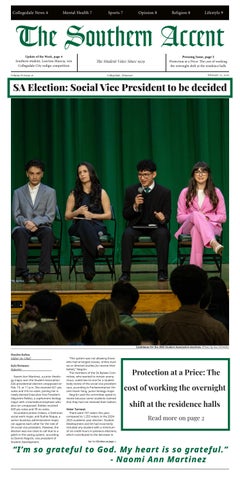
Update of the Week, page 4
Southern student, Laurissa Mancia, win Collegedale City redign competition
The Student Voice Since 1929
Pressing Issue, page 2
Update of the Week, page 4
Southern student, Laurissa Mancia, win Collegedale City redign competition
The Student Voice Since 1929
Pressing Issue, page 2
“The system was not allowing those who had arranged classes, online studies or directed studies [to receive their ballot],” Negrón.
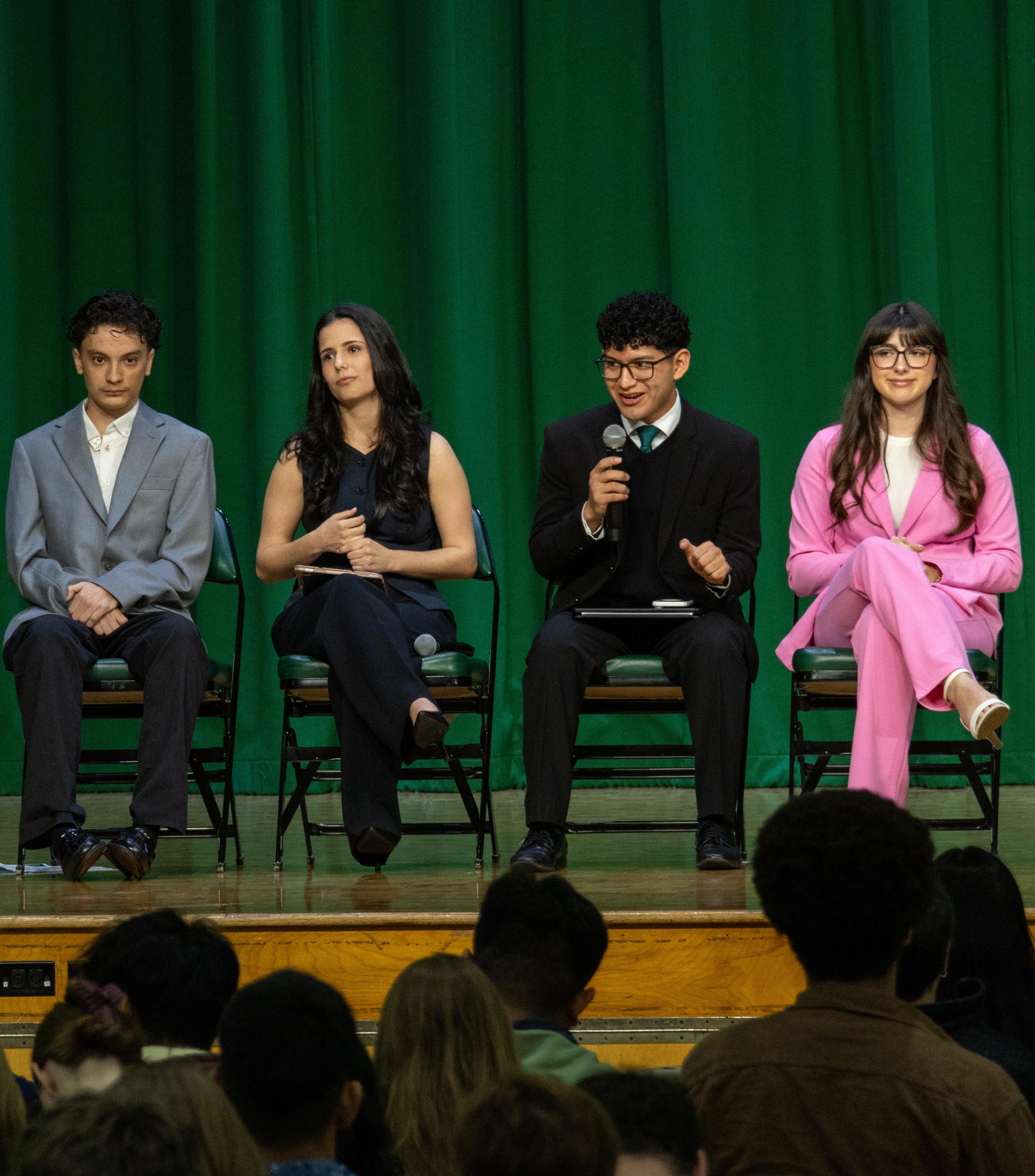
Naomi Ann Martinez, a junior theology major, won the Student Association (SA) presidential election unopposed on Feb. 19, at 11 p.m. She received 421 yes votes and 316 no votes. Joining her is newly elected Executive Vice President Alejandro Robles, a sophomore biology major with a biomedical emphasis who also ran unopposed. Robles received 659 yes votes and 78 no votes.
Incumbent Jordan Collazo, a freshman social work major, and Ruthie Roque, a senior business administration major, ran against each other for the role of SA social vice president. However, the election was too close to call due to a glitch in the voting system, according to Dennis Negrón, vice president of Student Development.
“I’m
The members of the SA Bylaws Committee, who wanted to remain anonymous, voted two-to-one for a student body revote of the social vice president race, according to Parliamentarian Vincent Havin Yang, junior biology major.
Negrón said the committee opted to revote because some students claimed that they had not received their ballots.
Voter Turnout
There were 737 voters this year, compared to 1,255 voters in the 20242025 academic year election. Student Development and SA had incorrectly included any student with a minimum of six credit hours in previous elections, which contributed to the decrease in
See SA Election on page 3
Anaya Miller Reporter
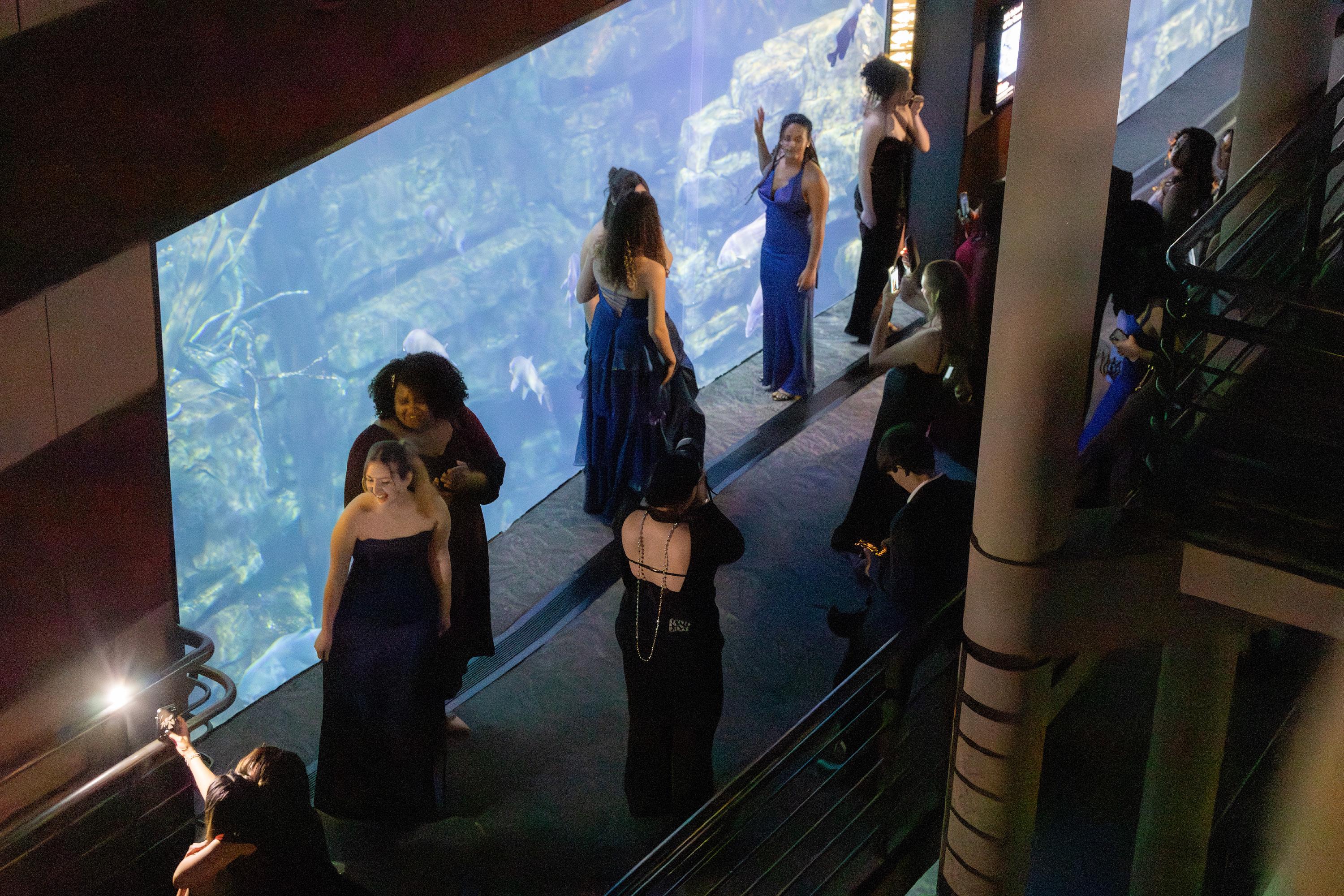
Over 220 guests flooded into the Chattanooga Aquarium for the 2026 Student Association (SA) banquet on Feb. 22.
According, to Alexis Grentz, director of Student Life and Activities, tickets for the 2026 banquet sold out faster than in past years. She chalked it up to the attractive venue.
“It’s not surprising, because we were at the aquarium,” Grentz said.
Jordan Collazo, social vice president, agreed that the venue sparked interest in the event, but did not expect to see the tickets disappear so quickly.
“It was a big surprise for all of us,” Collazo said. “We sold so fast, and I felt bad because a lot of people missed out on an opportunity to buy a ticket.”
The venue was located in
the River Journey building of the Tennessee Aquarium in a downstairs private banquet room adjacent to the freshwater exhibits. The tables were decorated with seashells, starfish and nets, with gold accents.
Student reactions
Bryson Baird, a senior construction management major, expressed his enjoyment of the event.
“[The banquet] was amazing,” he said. “The food was really good; the music was really good. Everyone was really friendly.”
Jyle Frias, an alumnus from the class of 2025, also admired how the event was put together.
“It was lovely,” he said. “Everything was really organized as well. I had a great time with it, and it was so much fun.”
Sarina Young, a senior graphic design major and SA’s communications director, designed the banquet tickets and assisted with advertising. She said the tickets were some of her favorite items she has designed for SA.
A group of student musicians from Southern played live for the event.
“It was even cooler than I expected,” said Jeremie Collier-Freed, a sophomore marketing major and musician in the band. “The setting, the people and the planning all came together to create such a cool atmosphere to perform in.”
While many students enjoyed the banquet, there were some who found it lacking in certain regards. Due to the number of attendees, a delay between entering the banquet and dismissing tables for food created
a wait time of over 45 minutes for those dismissed last. After dinner, attendants were sent up the escalator to tour the aquarium. Students walked in groups, taking pictures of the fish and their friends. The tour down the ramps took about an hour.
Behind-the-scenes
According to the SA team, it takes many hours to pull together an event of this magnitude. Collazo explained that, usually, the social vice president would select the banquet venue. However, due to the transition between social vice presidents, the task fell to Student Development. Because some of the planning was done before he stepped into the role, Collazo said that many people are not aware of the work he has put into the event.
“I think there’s a misconcep-
tion about me, that I’m taking credit from the last social vice,” Collazo said, “but I want to say that that’s not true of me and the social vice. We’re really good friends and I was really sad when she left. I just kind of want to prove to others that I’m not taking credit from anyone, I really do put a lot of work into this.”
Heaven Robles, a junior biology major and executive secretary of SA, said Collazo would update the team on plans and delegate positions during cabinet meetings. Robles oversaw registration and welcoming people. She said the team began setting up at 1:30 p.m. on the day of the banquet.
“I think [the banquet] was a great success: very creative, very one-of-a-kind,” Robles said. “I think in my years here at Southern, this one’s pretty
Chloe Smith News Editor
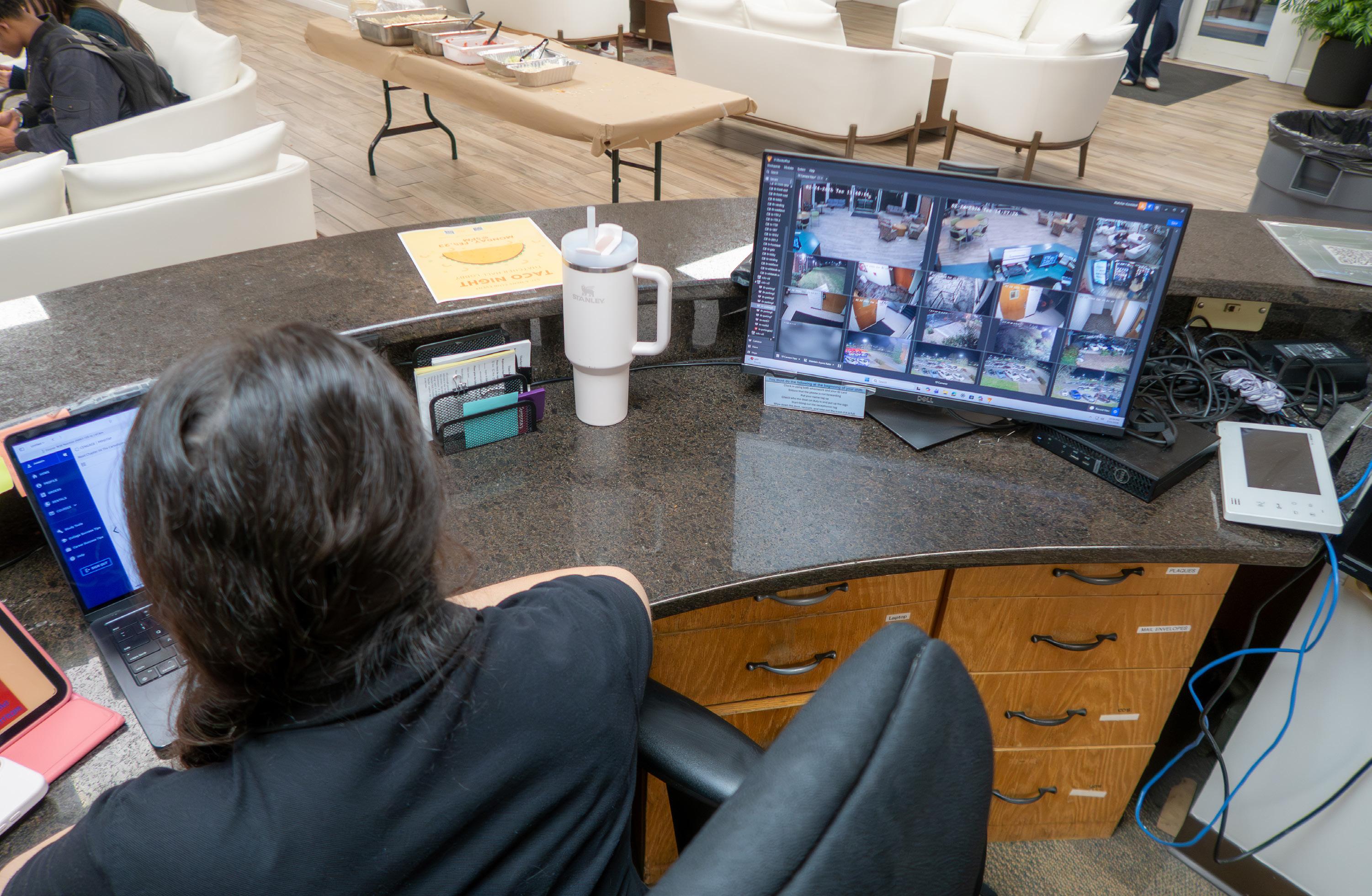
While the students of Southern sleep through the night, a small, often overlooked group remains awake at the front desks of Thatcher and Talge residence halls. From midnight to sunrise, these student workers serve as the first point of contact for residents, visitors and emergencies.
Mary Neri, associate dean
of
Southern Accent
women, oversees Thatcher and Thatcher South desk workers.
She said that having students at the front desk is critical for the residence hall environments.
“Having students at the front desk creates a more welcoming and peer-centered environment,” she stated in an email to the Accent. “Residents often feel more comfortable approaching another student, which strengthens community. It also adds an extra layer of ac-
Editor-in-Chief
Hayden Kobza
The Accent encourages readers to write articles and voice their opinions. However, not all topics and views are endorsed by Southern Adventist University or the Seventh-day Adventist Church.
For any questions, comments and article submission information, email the editor at haydenjkobza@southern.edu.
For all advertising inquiries, email alvajohnson@southern.edu.
Managing Editor
Eliana Morales
News Editor Chloe Smith
Photo Editor Katie McConnell
Social Media Management
Emma Boughman
Julie Herter
Gianelli Banuchi
countability and gives student workers valuable leadership and professional experience.”
Steve Rogers, associate dean of men, compared his student employees to the hub of a bicycle wheel.
“They’re a central point that can connect residents and visitors with the people or resources they need in that moment,” Rogers stated. “After hours doesn’t stop issues from arising or people from needing assis-
Lifestyle Editor
Rhett Seitz
Religion Editor Nina Bueno
Sports Editor Matthew Taylor
Staff Sponsor
Alva James-Johnson
Opinion Editor
Maddie Schmidt
Circulation Manager
Norelie Cabrera
tance. Because fewer offices are open at night, the desk role can be even more important as a consistent point of contact.”
Safety
Both deans emphasized safety as one of the major reasons to have a worker present at all times.
“Locked doors and policies help, but there’s no substitute for a trained person who can identify concerns early and quickly communicate them to the right campus resources,” Rogers stated. “Along with Campus Safety, the residence hall front desk is one of the few places on campus that operates 24/7.”
Web Management
Eri Jorge
Jaziel Gomez
Reporters
Nyah Jackson
Jehiely Balabarca
Kyla Wetmore
Asher LeVos
Anaya Miller
Yoly Viera
Ava Schmidt
Lillian Lelko
Collegedale Reporter
Leif Bromme
According to Neri, the overnight shift does come with risks.
“There is always some level of risk in an overnight role, but we have clear protocols in
Copy Editors
Gabrielle Young
Sienna Escobar
Lillian Lelko
Kyla Wetmore
Photographers
Sam Tooley
Christian Bass
Layout Designers
Nyah Jackson
Lindsey Hazen
Office Manager
Yoly Viera
continued from page 1
registered votes this school year, according to data provided by Negrón.
SA’s governing documents state that a student must be enrolled in 12 or more credits to be eligible to vote. Because of the credit discrepancy, eligible voters dropped from 2,346 last academic year to approximately 1,700 eligible voters this year, according to election data provided by Negrón.
Even after accounting for
Night Shift
continued from page 2
place,” Neri stated. “Students are trained in de-escalation, have access to the dean on duty and campus safety and are never expected to physically intervene. Safety systems and escalation procedures are clearly outlined.”
Campus Safety expressed support for this system. According to Shawn Haas, associate director of the department, Campus Safety works closely with the residence halls at all hours.
“Campus Safety protocol does not change depending on the time of day,” he stated in an email to the Accent. “If an incident or safety concern is reported to us, we will respond. …Campus Safety works to support the residence halls and is available to respond as needed, in addition to use of cameras and visual patrols on campus to deter crime.”
Scheduling Shifts
According to Neri, overnight shifts are often chosen by students themselves.
“Students primarily choose their shifts based on their availability and preferences,” she stated. “Night shifts are usually chosen by students whose schedules align with later hours. If needed, we make minor adjustments to ensure coverage in collaboration with the students.”
Rogers echoed a similar sentiment.
“When students apply to work at the front desk, they indicate which shifts they prefer,” he stated. “When we have overnight openings, we prioritize applicants who specifically request those shifts. Weekend night shifts in Talge operate on a rotation among male desk workers, but most students only have one or two
changes in eligibility this election season, voter turnout was 10% lower than last year. Only 43% of students who received a ballot voted this year, compared with 53% in the previous election.
Reactions
While the election results are unclear for the social vice president race, Martinez and Robles are celebrating.
Martinez is looking forward to serving the student population.
“I’m so grateful to God,” she said. “My heart is so grateful.”
of those shifts each semester. If someone has a conflict, they’re encouraged to drop the shift so another interested worker can pick it up—and so far, that system has worked smoothly.”
Though some students may choose night shifts, both deans said overnight work can be challenging.
“It can be [difficult], mainly because night shifts impact sleep schedules [and] work life balance,” Neri stated. “However, since students choose their shifts, those who select nights typically do so intentionally. Some even prefer them because they tend to be quieter.”
According to Rogers, fewer students are interested in working the overnight shift.
“Overnight shifts are naturally harder to fill because they take place when most people are going to bed, so fewer students apply for them,” he stated. “That said, we’ve been fortunate that it hasn’t been a major struggle to fill the needed coverage.”
Student Perspectives
Not all student desk workers have the same experiences with overnight shifts. One Thatcher Hall worker, remaining anonymous, shared her thoughts on the matter.
“Most students who are stuck with the 12 to 4 a.m. [shift] are either upset or oblivious and end up begging people to take [the shift] after a few weeks,” she said. “You're not allowed to 'not' work if you can't find someone to replace you. The deans won't cover for you.”
She also expressed concern for students’ lack of sleep when taking this position.
“I think there can be people who are able to work the desk at this time without a large amount of harm done,” she said. “However, the consistent, scheduled lack of sleep during the hours of 12 to almost 8 a.m. is really harmful for someone’s
Robles said he is excited to connect with students and help address their problems and concerns.
“I am feeling absolutely incredible,” he said. “I’m so happy to be able to serve my student body for next year. It is an absolute honor and absolute privilege, and I cannot wait to stand before them for the entire next school year.”
This Thursday, from 7 a.m. to 11 p.m., eligible students will receive a ballot to vote for Roque or Collazo from their student email, according to SA.
health. If the deans aren't even in the office during those times, why should the awareness and 'safety' of an entire dorm be rested on a random students’ shoulders? I find it difficult to rationalize that.”
When asked how the system should change, she offered an alternative.
“I think a campus safety officer should be put in place of the student between the hours of 12 to 4 a.m.," she said. "The dorm has the check-in scanner for cards and time stamps regarding coming in [and] there are cameras."
Caley Rae Smith, a freshman pre-nursing major who currently works at the Thatcher front desk from 12 to 4 a.m., shared her experience.
“It can be [difficult], but when you build a routine, you get used to it for sure,” Smith said. “When I work, I study as much as possible, finish homework and answer emails. What helps is if you sleep before your shift. I kind of have to become nocturnal.”
When asked if the role is necessary, Smith emphasized the safety element.
“I believe [working this shift] is for the safety of everyone,” she said. “My job is to alert the dean on duty if there is any suspicious activity going on outside of the door or if a resident is in dire need of assistance. My sole job during that shift is to stay alert and protect. I think it's definitely necessary.”
Smith said that she does not have any concerns about her safety.
“I do feel safe during my shift,” Smith said. “The precautions I was taught during my training are good enough, I believe. I don't feel in danger or scared when I’m doing this shift.”
Seth Job, a freshman business administration major, worked as a substitute desk worker last semester, filling in
shifts as needed. As he was not a primary worker, Job often had to cover night shifts.
“Last semester I was a sub, so I was kind of forced to [work night shifts] because there were not a lot of other shifts I could take during the day,” Job said. “The only [shifts] were available at night, and I needed to work.”
Job explained that late nights were not an uncommon experience for him.
“Sleep-wise, it kind of sucked, but I’m used to not getting a lot of sleep,” he said.
When asked about the concerns of overnight shifts, Job did not see any major issue.
“From my experience, a lot of people work night shifts because they volunteered for it or it's the only time they can work,” Job said.
Katy Bayer, a freshman elementary education major and former night shift worker, raised concerns about the job’s impact on students’ mental health.
“I personally do think that it is unethical for students to be working this time because of the dorm setting,” Bayer said. “It's already hard to go to bed early with how loud everyone is and having to live with others. Not only that, but [the shift] overtime made me not only physically drained but emotionally drained. When having to focus on my studies, it made it hard because you lose all motivation not being able to have good rest.”
Bayer suggested how the overnight shift could operate.
“I think they should change [the policy] because I feel like we have deans for a reason,” she said. “I believe that the deans should stay in a room where if a student knocks, they can hear it, rather than having students who have full loads of classes having to sacrifice their sleep when their main job should be college."
Concerns addressed
Despite student concern, both deans maintain that overnight shifts are reasonable if they are voluntary and supported.
“Since students choose their shifts and receive training, supervision and backup, it becomes both an ethical and developmental opportunity,” Neri stated. “The key is ensuring their safety and well-being remain the priority.”
When asked if the overnight shift is to much for students, Haas also shared his thoughts.
“I do not see an ethical issue to have adults who are in college working at the desk overnight,” he stated.
Rogers explained that students are aware of what comes with the job before starting.
“We are very clear during the hiring process about the nature of the job, the shifts and the expectations so applicants can make an informed decision about what’s in their best interest,” Rogers stated.
There are procedures that can be taken if students are not able to work their shift, according to Rogers.
“If a student came to me and said an overnight shift was becoming a major struggle and they needed to step down, I would not stand in the way,” he stated. “We may not always have an alternative shift to offer, but at the very least they would have our blessing, and we would often keep them on our roster as a substitute worker.”
Both deans emphasized their commitment to student's well-being.
“Our goal is to support students in a role that serves the residence hall without undermining their academics or well-being,” Rogers stated.
Editor's Note: The Southern Accent has produced a two page Collegedale News section this issue as part of a national initiative to enhance community news coverage. The local effort, led by Southern's School of Journalism and Communication in conjunction with the Center for Community News (CCN) at the University of Vermont, places student journalists at the forefront of addressing the news desert crisis, a phenomenon caused by the decline of newspapers in local communities. The Accent believes local news is vital to a thriving democracy, and we remain committed to reporting about important issues, novel occurrences and interesting people in the greater Collegedale area. We will publish this special section in five issues of the newspaper this semester. To submit tips or press releases, go to https://southern-accent.org.
Lillian Lelko Reporter
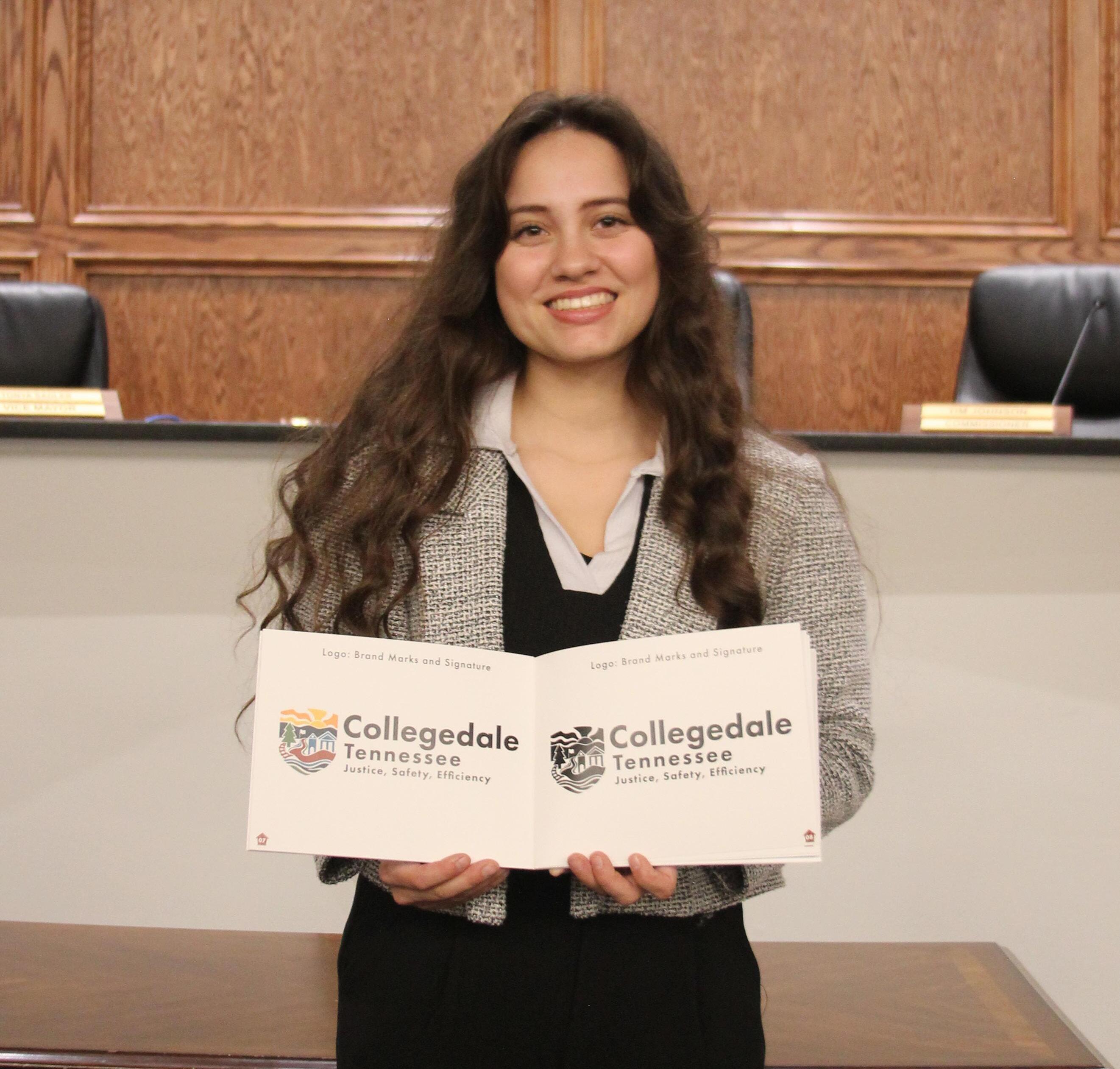
Laurissa Mancia, junior graphic design major, won first place in a competition to redesign the Collegedale city logo.
The new logo was chosen by Collegedale city commissioners at a meeting on Tuesday, Feb. 17, at City Hall.
Vice Mayor, Tonya Sadler, said in the commission meeting that the city would enter into an agreement to work with the winner and contact them for any changes that might need to be made to the logo.
The commissioners voted on a winner from a group of three finalists in a competition that was open to all Collegedale residents and Southern students. The finalists presented their logos and the stories behind them, and the board voted on a winner.
The three finalists were Joe La Com, associate professor in Southern’s School of Visual Art and Design; Larnell Samuel, senior graphic design major at Southern; and Mancia.
Mancia said in an interview with the Accent that she started her design process by learning
about Collegedale’s history.
“It’s always good to know the background before you start designing,” she said.
She gained inspiration by taking walks around Collegedale.
“I probably walked about a marathon across Collegedale trying to get different views of things,” Mancia said.
“Overall, I sat down at my table drawing for hours," Mancia said. "I spent probably weeks trying to figure out something that wasn’t just traditional [or] something that someone would expect.”
Jason Allin, Collegedale planning manager, said in an interview with the Accent that the commission wanted to get a new city logo and a branding identity which.
Allin said his favorite part of the project was witnessing the participants from across the city come together to compete.
“We’re super excited and grateful... for everyone who applied. It was super difficult to pick,” Allin said. “I was glad I wasn’t the commission having to pick because I liked all three of them.”
Kyla Wetmore Reporter
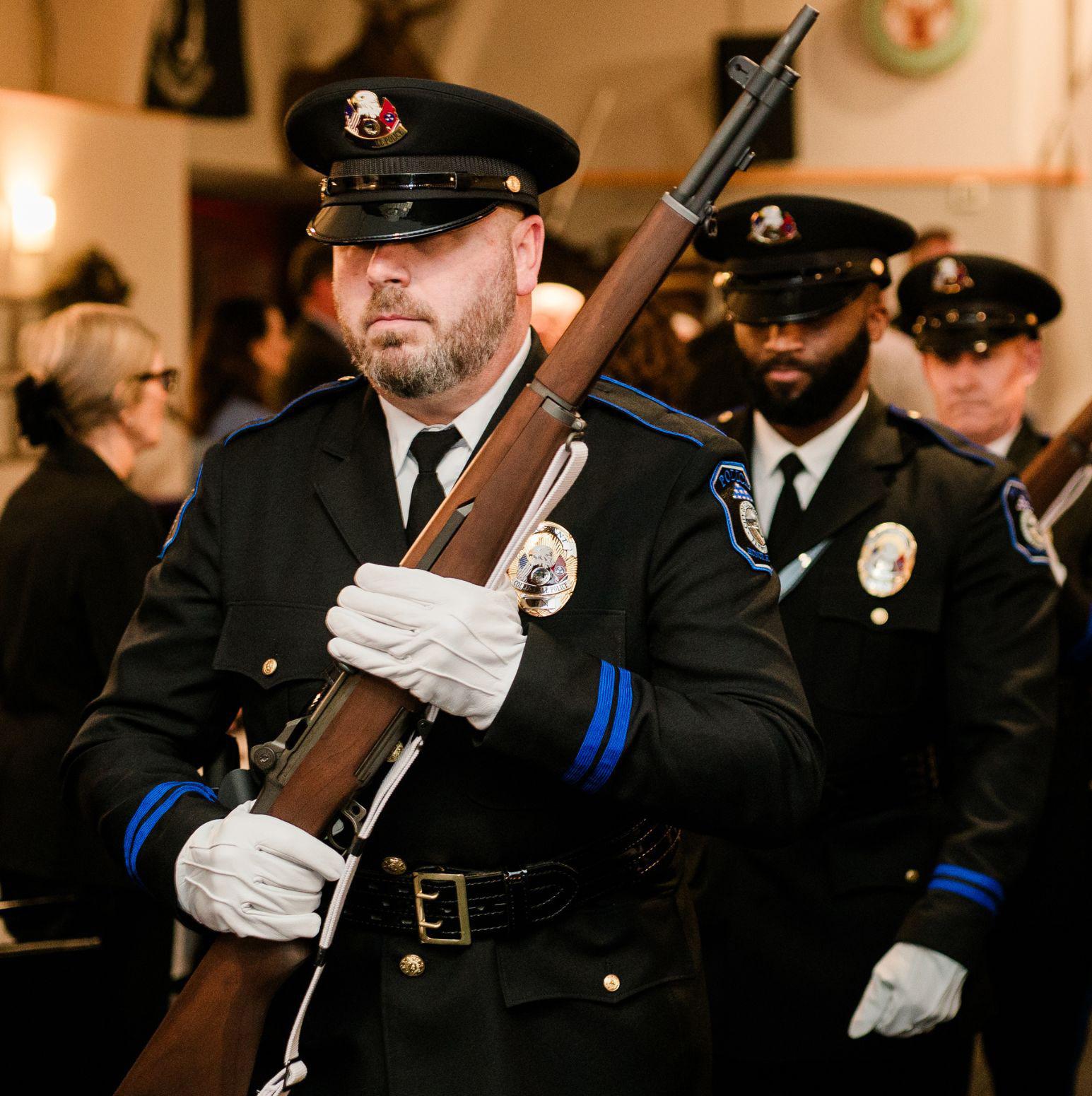
Last Thursday, the Collegedale Police Department (CPD) honored officers for their work in the city at its sixth annual awards banquet. The program opened with remarks from Chief Jack Sapp.
“Tonight, we honor officers, whose actions exemplify the very best of this profession, individuals who have gone above and beyond, who have demonstrated bravery, initiative, leadership and compassion,” Sapp said. “Their achievements reflect not only personal action, but the collective strength of our department and the support system that stands beside them.”
Trooper Sammy Previlus played the national anthem on the saxophone. Officer Leland Kelly led a remembrance for law enforcement who could not be present, bringing attendees’
focus to an empty table, symbolizing law enforcement who have fallen in the line of duty.
Awards given during the banquet highlighted officers for their service to the community, as well as some of their more outstanding and unusual moments on the job. These awards fell into categories including: longevity, American Police Hall of Fame and from administration.
Three of the awards honored officers for incidents that took place in May 2025 and represented the diverse range of duties carried out by law enforcement officers.
On May 14, Detective Edwin Rojas used security camera footage to track down and recover a stolen high-end baby stroller. Rojas interrogated and secured a confession from the suspect, resulting in the return of stolen property valued at $1,600.
Six days later, officers Nathan Smartt and Evan Martin arrested a man at a Chik-fil-A for soliciting sex acts from a
Rookie of the Year – Officer Leland Kelly
DUI Officer of the Year – Officer Evan Martin
Field Training Officer of the Year – Officer Thomas Craine
Supervisor of the Year – Sergeant Cory McNeal Officer of the Year – Officer Thomas Craine Chief’s Award – Sergeant Cory McNeal
17-year-old.
Also in May, Detective Chase Watson responded to a report of a child rape and coordinated with the Department of Children’s Service to develop evidence and make an arrest.
In recognition of their work, all three officers received awards at the banquet, along with other officers who responded to various incidents throughout the rest of the year,
including drug use, vandalism, identity fraud and even locating a wanted fugitive.
Lieutenant Robert Hirko and Sergeant Josh Booth were also awarded the prestigious J. Edgar Hoover award, which has previously only been awarded to seven officers from the state of Tennessee. This national award recognized the officers’ pursuit of education and professional advancement.
Sapp thanked all of the officers again as the ceremony ended.
“Thank you for your unwavering professionalism, your courage and your dedication to service,” Sapp said. “You represent the very best of this profession every day. You answer the call with integrity and commitment, living out our motto of service before self.”
Are questions keeping you up at night? Too scared to go to vespers because you don’t have the guts to ask out your crush? Is the CIA stalking you? Scan the QR code to let us know!

Abby Dizon Contributor
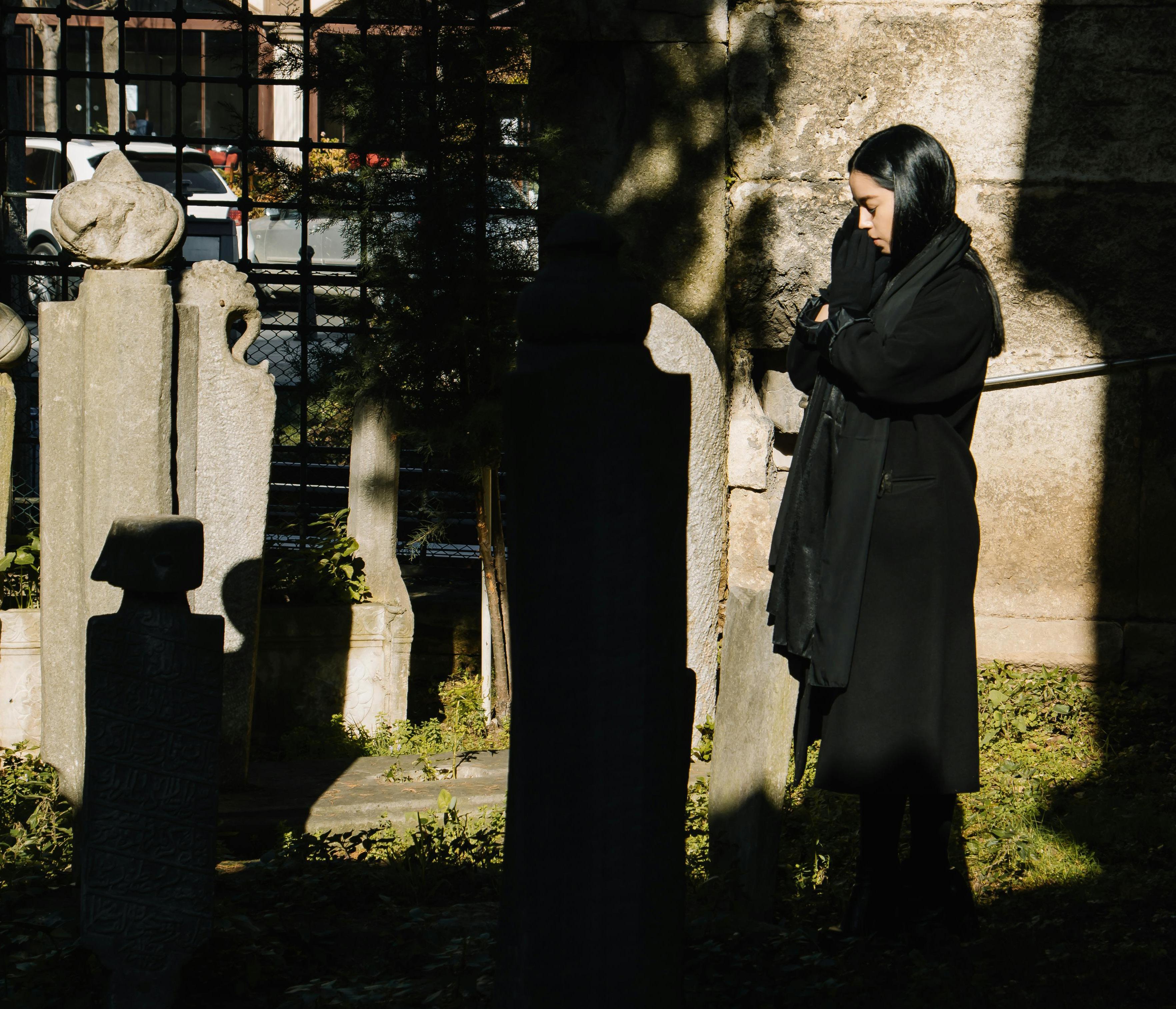
When someone you love and trust hurts you, it is easy to hold a grudge; however, 100% of the time, the grudges we hold hurt us more than they will ever hurt the other person.
Letting go of grudges is freeing and empowering, but it does require patience and a lot of self-reflection. The first step in letting go is to acknowledge and understand that holding onto resentment only weighs you down and impacts your mental and emotional well-being.
The second step is to have empathy for the person that wronged you. While that is easier said than done, seeing things from a different point of view can help humanize the other person and help you move towards forgiveness. Remember, forgiveness does not mean that you accept and allow their hurtful actions, but rather that you release the negative emotions attached to them.
The third change to make is with your mindset. Train your mind to lean more toward compassion and forgiveness. Choose your peace of mind and emotional health over clinging to resentment.
According to a popular 2022 Mayo Clinic article on forgiveness, letting go of grudges can lead to healthier relationships, improved mental health, less anxiety and stress, stronger immune system, improved self-esteem and fewer symptoms of depression
Lastly, communicate your feelings constructively to the
person who hurt you, if possible. Be honest and compassionate and aim for understanding as opposed to confrontation. However, if reconciliation is not possible, set boundaries to protect yourself from more harm in the future. Remember
that you do not always need to speak to the other party to receive closure; sometimes, you can find resolution within yourself or by talking to a counselor at the Counseling Center in Bietz. Letting go of grudges is an
uphill battle, but the view from the top is worth it. Be patient and kind to yourself as you navigate through the journey of forgiveness. By learning to release the grudges you hold close to your heart, you create space for healing and
growth.
Embrace the liberty that comes with letting go, and know that by choosing to forgive, you are reflecting the character of Jesus and empowering yourself to live a life with more love and compassion.
Matthew Taylor Sports Editor
The 232 Olympians of Team USA return home from the 2026 Milano-Cortina Winter Games in Italy victorious after setting the United States’ record for gold medals earned during the Winter Olympics.
Team USA brought home 33 medals in total: 12 gold, 12 silver and 9 bronze. They were second only to the historically dominant Norway, which broke records for 41 total podium finishes as well as 18 gold medals.
A historic highlight moment for fans of Team USA was the men’s hockey team’s 2-1 overtime victory over Canada, winning gold in the event for the first time since the “Miracle on Ice” exactly 46 years prior.
Jack Hughes scored the winning goal at 1:41 into the 3-on-3 overtime period. Hughes suffered an injury during the third period that cost him several teeth, yet he played through to finish the game with what has been nicknamed the “Golden Goal.”
Credit for the victory also belongs to goaltender Connor Hellebuyck, who in a stellar performance, set the U.S. Olympic record with 41 saves.
In a parallel matchup between Teams USA and Canada, the women’s hockey final game was determined in another 2-1 overtime thriller.
At the end of the third period, captain Hilary Knight tied the game, narrowly avoiding the silver medal by forcing an extra frame.
Defenseman Megan Keller scored the winning goal 4:07 into overtime, capping off an undefeated Olympic season for the team as they brought home their third gold medal in the event. On the individual stage, 21-year-old speedskater Jordan Stolz was the most successful
standalone Olympian of Team USA this year, coming home with three total medals: two gold and one silver.
Stolz’s gold medals came from winning both the 500-meter and 1000-meter races—the first man to do so since Eric Heiden in 1980. Stolz also set the record for the 500-meter event, finishing in only 33.77 seconds.
After coming in first place in the Slalom event, Mikaela Shiffrin became the first American Alpine skier to win three career Olympic gold medals. She ended the race 1.50 seconds ahead of her closest competitor, the largest margin since 1998.
Alysa Liu, a 20-year-old skater dubbed the “Golden Girl,” earned two gold medals through her historic comeback, becoming the first American
woman to win the women’s individual gold in 24 years.
She also led Team USA to gold in the Figure Skating Team Event. Beyond her athleticism, she has been transformed into a global icon as audiences connected with her signature smile and alternative, personal style that breaks from the traditional skating aesthetics.
Her popularity exploded since her victory, with her Instagram follower count increasing from 200,000 to over 4.4 million in only a matter of days.
Team USA brought home three gold medals in freestyle skiing. Kaila Kuhn, Connor Curran and Chris Lillis defended their 2022 title in the Mixed Team Aerials. Alex Ferreira earned gold in the Men’s Freeski Halfpipe, and 19-year-old Elizabeth Lemley took home
gold in Women’s Moguls. Adding to Team USA’s success were Elana Meyers Taylor, winning her first Olympic gold in the monobob event at 41 years old, and Ben Ogden, who became the first American man to win an individual Olympic medal in cross-country skiing in 50 years, taking silver in the sprint.
Breezy Johnson was the first to bring gold to Team USA in the Women’s Downhill, the second American woman to ever win the title.
Our previous coverage of the Olympics mentioned the return of 41-year-old Lindsey Vonn in her journey to participate as a skier on Team USA. However, just 13 seconds into the Women’s Downhill final, Vonn clipped a gate and suffered a high-speed crash. She was
airlifted to a hospital for the second time in a month. Vonn was released from the hospital on Feb. 23, revealing that her accident caused a tibia fracture and a life-threatening case of compartment syndrome.
She credited Team USA for saving her leg from amputation. She is expected to use a wheelchair through her yearlong recovery period.
The 2026 Winter Olympics in Milano-Cortina provided a stage for Team USA to showcase their evolution. From the “Golden Goal” to the “Golden Girl,” the American athletes bring pride to their country, with eyes set to return and dominate once more in the French Alps in 2030.

Maddie Schmidt Opinion Editor
Around this time last year, I was blessed with the opportunity to go on a mission trip to Perú. I was nervous about going on a trip that was all about connecting with others while not being able to speak their language. I have taken a few Spanish classes, but I am nowhere near fluent and do not have the ability to hold any sort of conversation.
However, this trip taught me that verbal communication is not necessary to reach out to people. Language is the most common tool for connecting with others, but it is not by any means the foundation of connection.
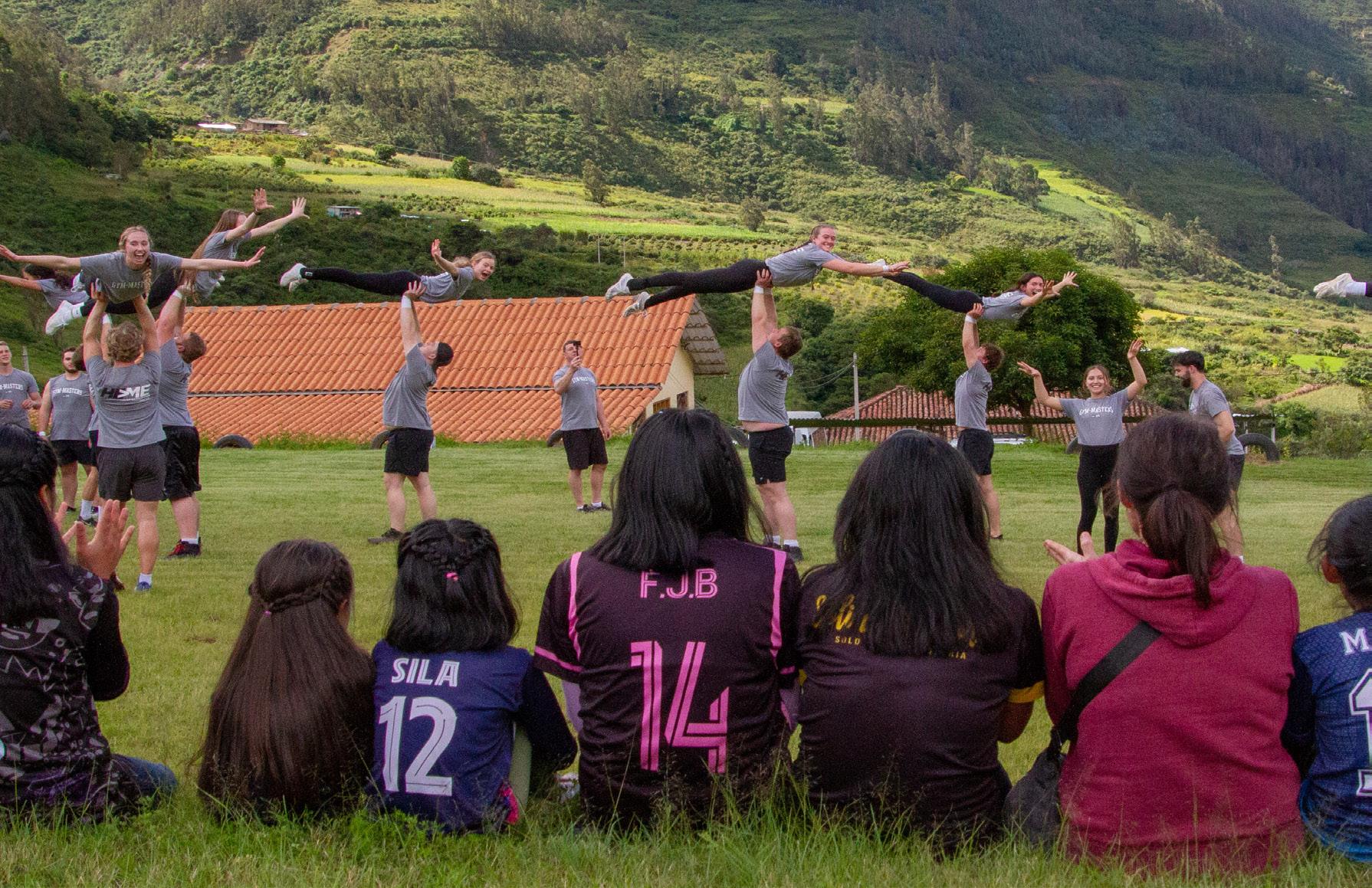
I went on this trip with the Gym-Masters team, and our mission was to use our athletic ability to point people toward Christ. It might seem as if ministry has nothing to do with gymnastics, but I have found it to be one of the most fulfilling ways to share God’s love with others.
Anytime we perform well, we point the credit back to God. When we interact with people at our shows or teach students different skills, demonstrating kindness and interest in what they want to communicate to us shows them a sliver of Jesus’s character. Simply being enthusiastic about helping them learn allows them to feel a little bit of the love that Christ offers. I know this because when I was young and learning gymnastics, I got to be on the other side of those interactions.
I had been a part of many Gym-Master shows and clinics,
but until I went to Perú, I had never been in a situation where I would need to build those same connections without verbal communication. There were only a few of us that could speak Spanish, so I really had no idea what to expect.
On our first day in Perú, we went to an orphanage to perform and give a short clinic. I could feel that we were all nervous during the drive there, hoping that it would go well.
When we pulled up to the orphanage, we saw a crowd of small children out in the yard, waving balloons at us in greeting. It was the most adorable sight. We scrambled out of the vans and hurried over to the kids to say hi. They all met us with hugs and shy smiles, and we introduced ourselves the best we could.
After exchanging hugs, we crossed the yard to set our packs down and begin warming up for our small show. During our stretches and conditioning, we noticed that the children began to mimic us from across the yard. They seemed very intrigued with everything we did. When the show began, the children all lit up with each skill we showed them, clapping their hands and yelling when they saw something they particularly liked.
After our show was over, we took about 20 minutes to teach them some basic gymnastics skills. It was difficult to instruct them in a way they could understand, but somehow it worked despite the chaos. We were able to show them what to do, and they were able to copy our demonstrations. They laughed when they made
mistakes, and they beamed when they got something right. The joy on their faces was unmistakable; no words were needed.
Afterward, we went inside with them for vespers. Our mission host translated for us. After the worship talk, we split up into two groups. One group stayed inside to color with the kids who wanted to do arts and crafts, and the other group went outside with the kids who wanted to play soccer.
Since mostly girls stayed inside, the arts and crafts group soon turned into a hairdressing activity. One girl began to braid my hair, and I sat still until she was satisfied with the results. We exchanged a few words here and there, but we mostly communicated using hand motions.
When she was finished with my hair, she got so excited
and wanted someone to take a picture of it for me so I could see the results. I did my best to convey my awe at her hair-braiding skills, and I gave her a big hug and smile to show my gratitude.
I heard later from the others who went outside to play soccer that it was an enthusiastic game. No one needed to speak the same language; they all shared the knowledge of how to play the sport. When it was time for us to leave, we were ambushed with hugs. It was hard to say goodbye, because everyone was having so much fun. As we piled into the vans and began to drive away, the kids waved frantically, smiles plastered to their faces.
We had been so nervous that we wouldn’t be able to talk to them, but the interactions that made the biggest impact had
nothing to do with conversation. We did not have to talk with the children to show that we cared about them. We formed connections through laughing with them, being patient with them and showing interest in what they seemed to think was important.
This trip taught me that to be cared for is all that people want. Being cared for tells them that they are seen, that they matter and that they are not alone.
It’s a common assumption that difference equals incompatibility. But underneath everything, everyone wants belonging. There are ways outside of language to show belonging and value. A smile, a laugh or a reassuring highfive often speaks louder than words. Showing kindness and care through action will trump fluency every time.
Nina Bueno Religion Editor
Once upon a time in a land far away there lived a man, happily settled with his family. But one day, out of the blue, the call came. And without an outward show of hesitation, he and his family packed their bags and left.
The adventure of a lifetime faced them. It was to be filled with terror and triumph, failure and faith, and riddled with jealousy and deception. But the end (spoiler alert) is reclaimed by a beautiful, redemptive arc, without which a story would seem threadbare and hopeless.
Growing up, I wanted to live my life as an adventure story. I wanted excitement and triumph, the momentary despair before the sudden shift to hope. I desired the mystery and intrigue, the drama and courage. I alternated between wishing I was the princess who was saved to wanting to be the daring detective, from the Narnian queen going into battle to the prairie schoolteacher.
Perhaps you have felt this same way. Our culture is pretty much built on stories. We hear stories of our family and cultural history, we read books of many different genres, and we see content on social media that portrays miniature stories. We’re constantly scrolling from one video to the next, flipping the pages from one chapter to the next, and shifting from one family member to the next, hungry for another story.
But oftentimes this desire for story and adventure is sadly contrasted by the mundane life we live each day. Nearly every day, we wake up, go to class, study, eat, attend more classes, go back home and sleep.
This obvious and palpable contrast can lead people to simply give up and accept their mundane life or cause them to search for excitement. Sometimes people are prompted to cause drama “for the sake of the plot,” so to speak. Other times, they are tempted to indulge in entertainment and pleasure in an effort to escape the monotony of life, causing a seemingly harmless addiction.
I know that I can relate to aspects of each of these things. But reality is blatant, and it isn’t in the books that I read, the movies I watch, the pleasure I indulge in, or the aesthetic that I paste onto a certain task or job within my day. Reality is in the real person that God created me to be, the real people and community that He has put in my life, and the real call that He has given to me.
We have been so blinded by the stories of this world, by the pleasures we think we should have and by the adventures we wish were ours. The world has given each of us a pair of alternate reality glasses with which to view our lives. They allow us to see not what is truly there, but what we wish could be there. And when circumstances cause us to take them off, we are met with the reality we wish we didn’t have to see—or live.
When Abraham was living with his family in the glorious city of Ur, he had a life filled with worldly adventure. But no matter how exciting his life was there, it suddenly paled in comparison to the plan God had for him. Out of the blue, God called Abraham out of the worldly pleasures and “harmless” addictions that Ur probably had to offer. Abraham and his family were called into a real life— a
beautiful grand adventure called Life with God.
Instead of taking off his alternate reality glasses and seeing a boring life, Abraham took a glimpse of something better.
He saw a path so beautiful and real, so adventurous and special that he decided to follow.
He decided to embark upon this adventure and chose a life with God. And boy, it was an adventure! From wars to triumph, from Egypt to Canaan,
from deception to redemption and from nothing to plenty, God was the one who was with Abraham every step of the way.
He fulfilled Abraham’s desires, led him on many adventures, made a special covenant with him and blessed him. There is a desire inside of everyone to be a part of something big and special. And many times, we turn to broken cisterns that hold no water. We think we can fulfill our desire
in pleasure, stories, media and drama. But it does nothing except leave us empty.
But God calls us to real cisterns overflowing with the water of life! He invites us to a life of adventure, redemption and reconciliation, rescue, salvation, and triumph! He bids us enter into us a life that will never end with a final chapter but continue on into an adventurous eternity with Him! Will you answer this call? Will you live a life of

Rhett Seitz Lifestyle Editor
When I was younger, I noticed a framed plaque hanging in my grandfather’s room. It looked incredibly official, styled exactly like a university diploma.
I leaned in to read the elegant lettering (that looked very real, by the way), which proudly proclaimed that a degree had been “Awarded to [Rhett’s grandfather] by the School of Hard Knocks.”
As a kid with a limited vocabulary, I was thoroughly confused. Was this a real university? Did they have a football team? It would not take long for me to grow up and learn exactly what type of education it described.
Even if you have never heard of the term, I can almost guarantee that you have already been enrolled as a student. The “School of Hard Knocks” is simply the practical education we receive when life gets difficult. Every college student knows this curriculum well. It shows up in the form of a painful breakup, a surprisingly low exam score, a stern reprimand from a parent or boss or something as simple as a downpour of rain when you are trying to go to work or class. It is any situation where you are forced to navigate discomfort and disappointment. Starting to sound familiar?
I can assure you from personal experience that I have spent plenty of time as a student at this school.
I have faced my fair share of setbacks. Some of them were entirely my own doing, while others were beyond my control.
For a long time, I hated being enrolled. When difficult things happened to me, even if the situation was my fault, I used to look at my circumstances and ask, “Why did this have to happen to me?” I allowed the frustration to consume my focus, even though most of those problems were temporary and eventually faded away.
However, over time, my perspective began to shift. After taking the time to actually reflect on these experiences and perhaps watching a motivational YouTube video or two, I realized something profound. Trials are secretly blessings in disguise. When I look back at my life, I have learned infinitely more from my failures and hardships than I ever learned during the seasons when every-
thing went perfectly.
This does not mean that going through trials is fun. Pain is still pain. But we often make the mistake of equating a pain-free life with a successful life. Just because we feel comfortable does not mean we are growing, and going through a difficult season does not diminish our self-worth.
Scripture points directly to the value of this kind of difficult education. James 1:2-4 (NIV) says, “Consider it pure joy, my brothers and sisters, whenever you face trials of many kinds, because you know that the testing of your faith produces perseverance. Let perseverance finish its work so that you may be mature and complete, not lacking anything.”
The goal of the School of Hard Knocks is not to break us.
It is to make us complete. If you are currently sitting in the middle of a difficult semester or a challenging season of life, here are a few tips for appreciating the curriculum:
1. Change the question. When a curveball hits, our natural instinct is to ask, “Why is this happening to me?” That question keeps you stuck in a victim mindset. Instead, ask, “What is this trying to teach me? What can I learn from this?”
That simple mindset shift can help you overcome any rough season.
2. Separate your worth from your circumstances. Failing a test or going through a rejection does not make you a failure. It makes you a human who is learning. Do not let a
temporary setback dictate your permanent identity.
3. Embrace the discomfort. Growth happens outside of your comfort zone. If you are frustrated, stressed or feeling stretched thin, recognize that you are currently building resilience. You are building muscles you will need for the rest of your life.
None of us willingly signs up for the School of Hard Knocks. The tuition is high, and the lessons are exhausting. But if you are willing to pay attention and learn from the trials in front of you, you will walk away with a degree in resilience that no traditional classroom could ever provide.

Across
2. ___ and roll; music genre that is rooted in a blending of black musical genres
4. Hairstyle created by combing out natural growth of textured hair
6. A protective hairstyle where hair is wrapped into knots
Down
1. Butter used for moisturizing
2. Music originated in the early 1970s within African-American and Afro-Caribbean communities in New York City
3. Worn to protect hair while sleeping
5. Music genre that originated in the African-American communities of New Orleans

Created by Nyah Jackson


7:30
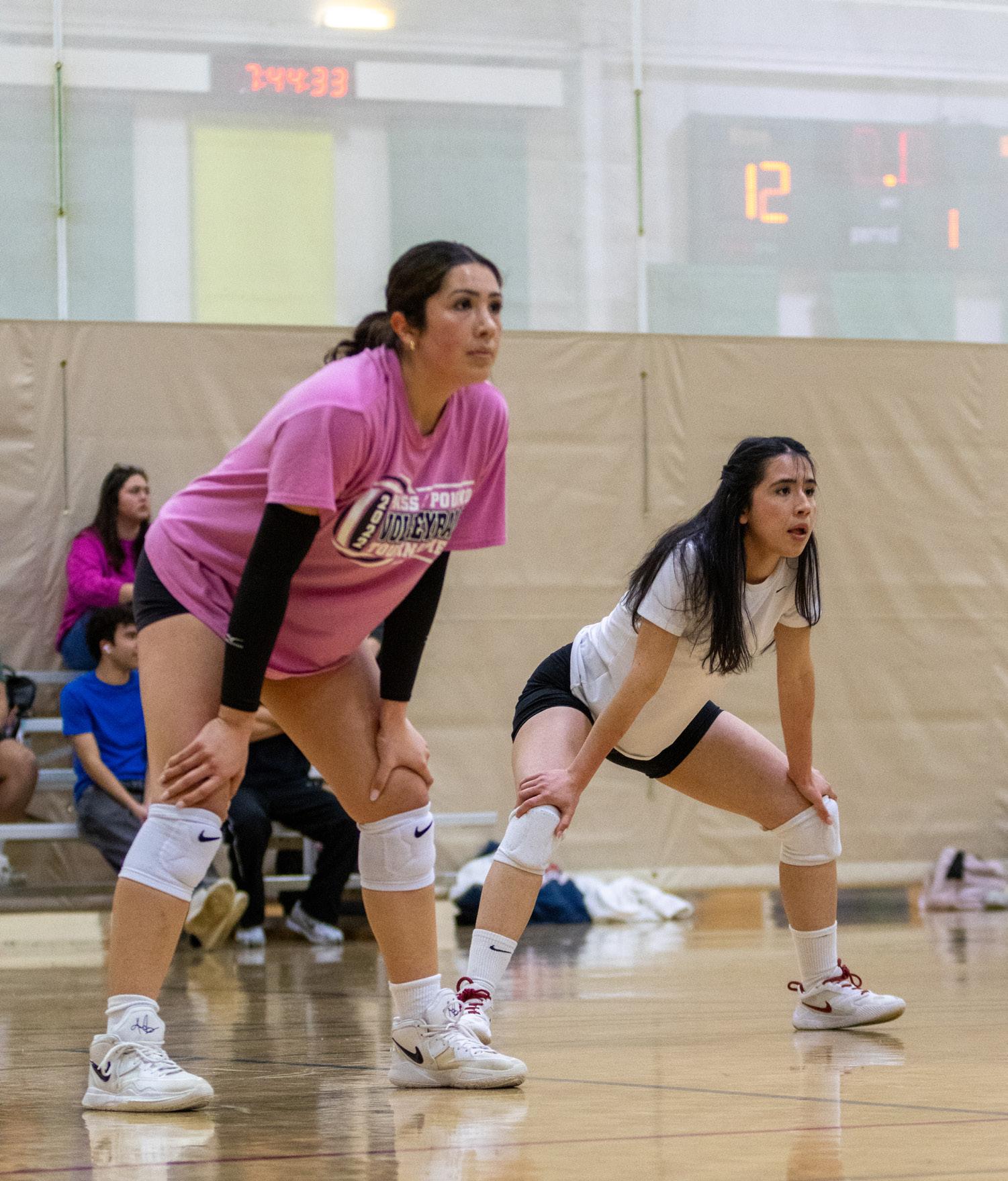
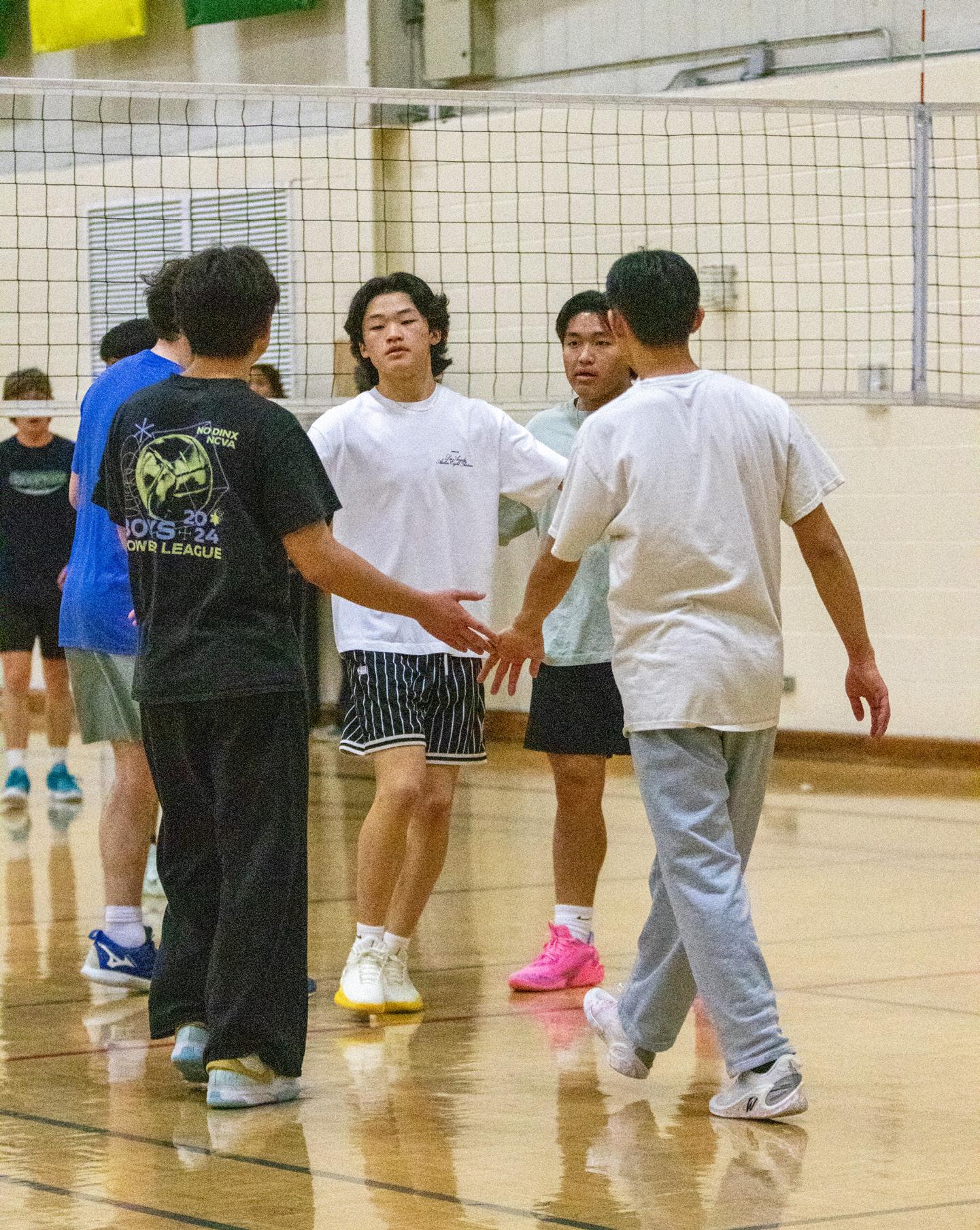
AfterGlow @ Collegedale Church of Seventh-day Adventists South Atrium 8:30 pm Vespers: Joseph Khabbaz @ Collegedale Church of Seventh-day Adventists

Wednesday
6:00 pm
- Monkeyzandfriendz vs Pleeuse (Men’s A)
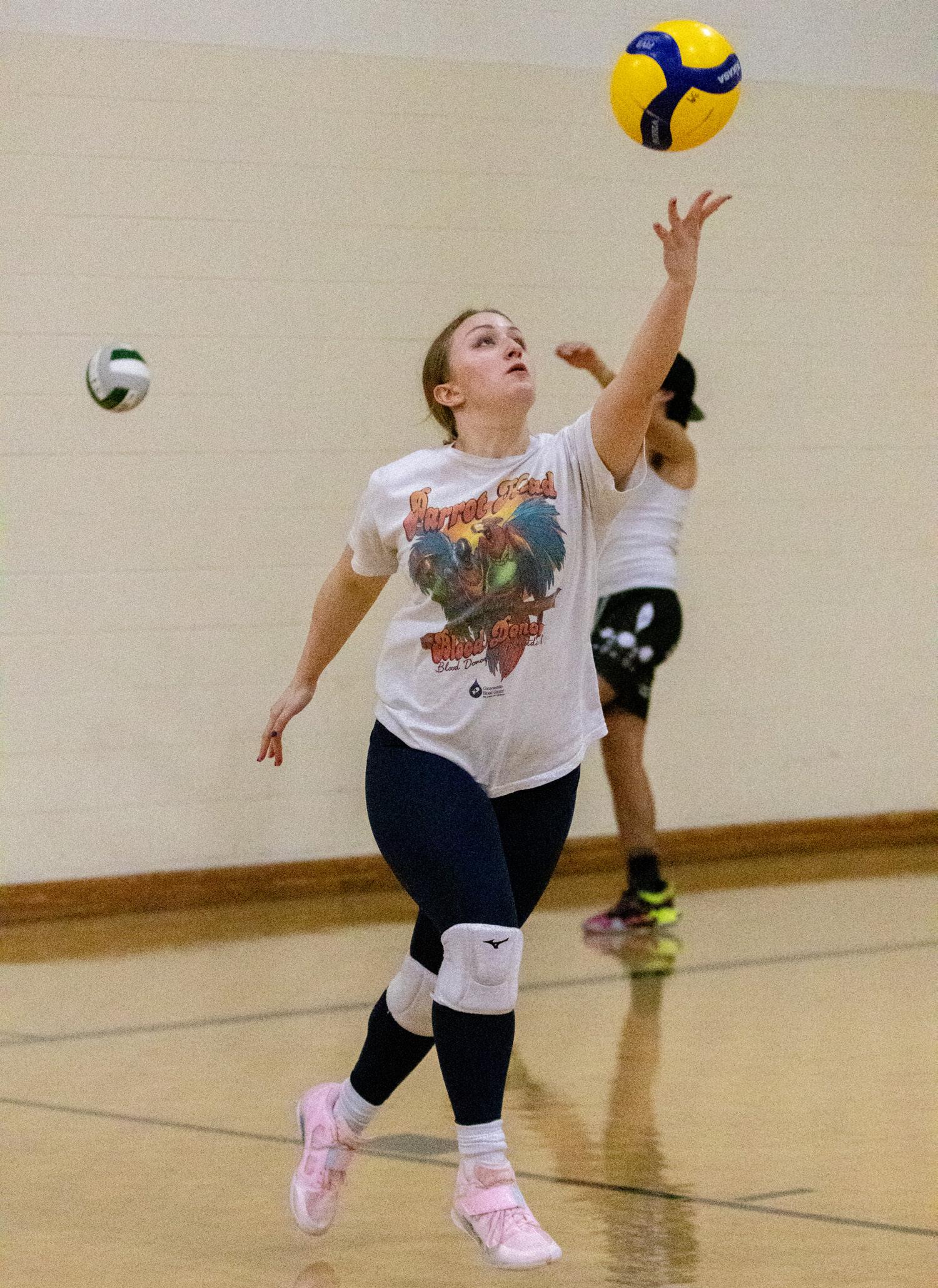
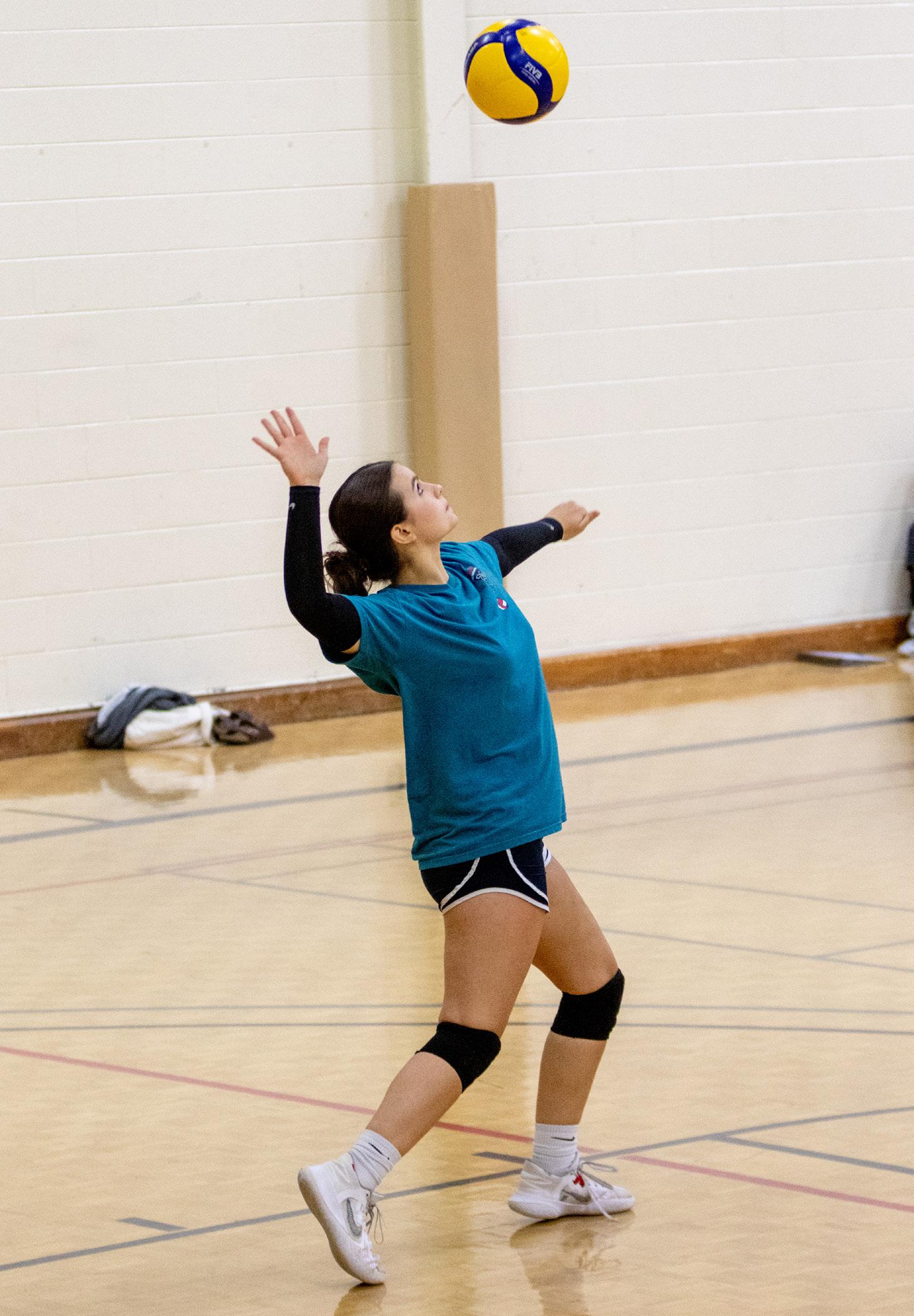
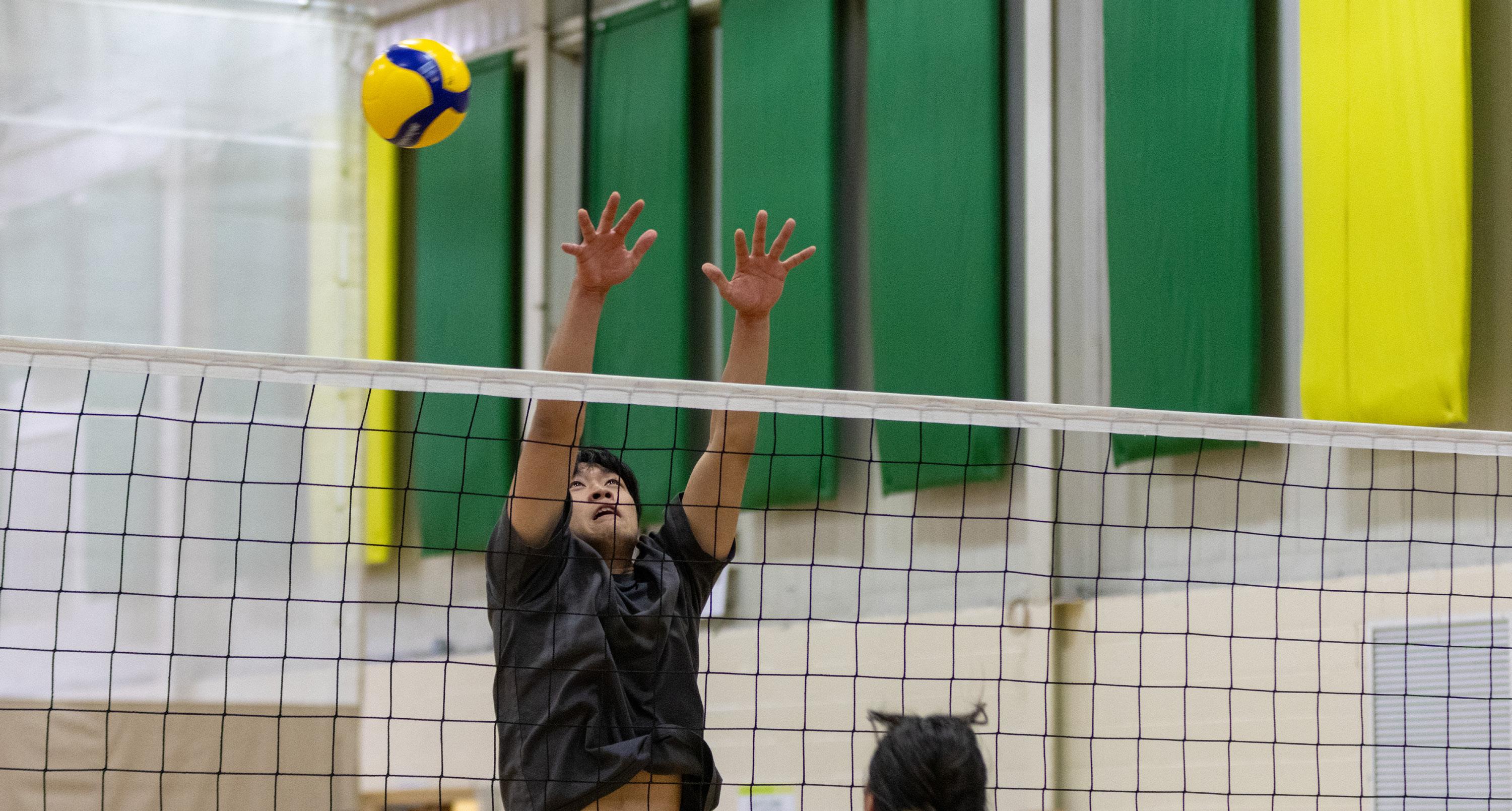
- volleyball vs LPC (Women’s B)
- volleyball vs We Know Ball (Co-Ed A)
- The Empire Spikes Back vs Notorious D.I.G (Men’s B)
6:45 pm
- Hitmen vs 67 OVR (Men’s A)
- bouncy gorls vs blocked, full contact (Women’s B)
- LA Fitness Runs vs Spike Tyson (Co-Ed A)
- No Diggity vs kill shot (Women’s B)
7:30 pm
- san sans minions vs balling (Co-Ed A)
- Phantom Blockers vs tiktokloverboys (Men’s B)
- Monkeyjumpers vs Ballers (Co-Ed A)
- Bone Blossom vs 5NightsAtFredHuta’s (Men’s B)
8:15 pm
- serves you right vs That’s Chlo and ‘em? (Co-Ed A)
- Old school vs Block It Like It’s Hot (Men’s B)
- Bing Bongs vs Sky force (Co-Ed A)
- best of both sets vs Lana passes gas (Women’s B)
9:00 pm
- One hit wonders vs aegyo attack (Women’s B)
- volleyball team vs Block Party (Men’s B)
- Free Gaza vs Jehovah’s Hitness (Men’s B)
- she-ball vs Bumpkins (Women’s B)
9:45 pm

- C-League Destroyers vs just girls! (Women’s B)
- step bros vs aj loves cheese pizza (Men’s B)
- clankers vs hitters (Men’s B)
- Sarang stealers vs soft serve (Women’s B)