SEPTEMBER 2026 FREE PUBLICATION
POSITIVE AGING embrace life. age well.
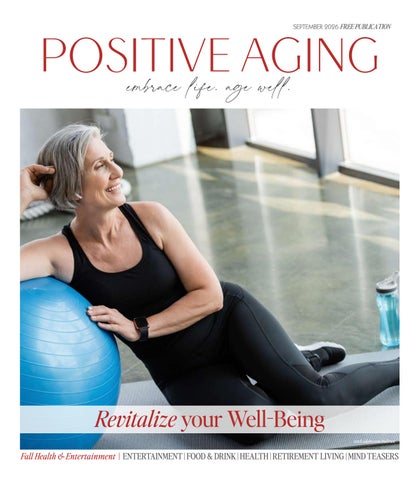
Revitalize your Well-Being stock.adobe.com/bullrun
Fall Health & Entertainment | ENTERTAINMENT | FOOD & DRINK | HEALTH | RETIREMENT LIVING | MIND TEASERS
ON A POSITIVE NOTE.. A Season for What’s Next
0$,17(1$1&( )5(( /,9,1* )25 $'8/76 83
9 LOODV
$7 7+( 67$7,21
6 :22' &5((. '5,9( 2$. &5((.
&DOO 1RZ
6HFXUHG /REE\ (OHYDWRU &RPPXQLW\ 5RRP 8QGHUJURXQG 3DUNLQJ /DXQGU\ RQ (DFK )ORRU 2Q 6LWH 0DQDJPHQW
%/.6 :(67 2) +2:(// $9( 2)) 38(7= 52$'
%('5220 )/225 3/$16 12 ,1&20( /,0,76
ZZZ UHQWZLWKJDWHZD\ FRP YLOODV VWDWLRQ#JPDLO FRP
Steeple View 414-525-5500 An Independent Senior Community Embracing Christian Values
-Amanda Editor-in-chief
Make this YOUR YEAR for Maintenance-Free, Luxury, Senior Living! Enjoy secure, worry-free, independent living for active seniors in a caring, Christian atmosphere. Relax with the comforts of home without the burden of home ownership! (Above) Judy and Bryon and Daryl and Bonnie (below) enjoy their life at Steeple View.
Our spacious 1, 2 and 3 bedroom deluxe apartment homes start at $927 per month with a 85% refundable entrance fee required.
Call to schedule your personal tour of STEEPLE VIEW!
414-525-5500 12455 West Janesville Road, Muskego 414-525-5500 | steepleview.org | info@steepleview.org POSITIVE AGING September 2026
There’s something about fall that naturally invites us to look forward. The air gets a little cooler, routines return, and the changing landscape reminds us that every season brings something new. The same can be said about aging. Positive aging isn’t about trying to hold on to who we were—it’s about continuing to discover who we can become. Staying curious, taking care of ourselves, nurturing friendships, trying something different, and finding new reasons to look forward to tomorrow all matter at every age. In this issue, we celebrate that idea with information and inspiration for living well—physically, mentally and socially. Sometimes the smallest changes can make the biggest difference: a new activity, a healthier habit, more time with people we enjoy, or simply making room for something that brings us happiness. As the leaves begin to turn and another season arrives, it’s a good reminder that change can be beautiful. Fall also gives us an opportunity to reconnect. Whether it’s gathering with family, taking a walk on a crisp afternoon, visiting a favorite local spot or simply enjoying a cup of coffee with a friend, these everyday moments are an important part of living well. Staying connected to the people and communities around us can bring purpose, energy and joy to every stage of life. And while the year may be moving toward its final months, there is still plenty of time for new beginnings. Maybe it’s finally taking that class, planning a trip, volunteering, starting a new fitness routine or simply making more time for yourself. Positive aging is really about continuing to participate in life—and remembering that there is always something new to experience, enjoy and look forward to. Fall also gives us an opportunity to reconnect—with family, friends, our communities and ourselves. Here’s to a healthy, colorful and fulfilling fall.
Revitalize Your Wellness Please like and follow us Positive Aging www.facebook.com/positiveagingnews
POSITIVE AGING EMBRACE LIFE. AGE WELL. KEEP READING.
Contact For information on advertising or to submit articles call, 262-343-5163, or Email: positiveaging@wi.rr.com. Disclaimer POSITIVE AGING is published on the first of each month . The articles in this publication are in no way intended to replace the knowledge or diagnosis of your doctor. We advise seeing a physician whenever a health problem arises requiring an expert’s care.
Images - istock.com Special Thanks -To all the local professionals that provide us with articles containing new information and keeping all our readers informed of the latest in positive living. And to all our advertisers, and you the readers! MyPositiveAging.com Positive Aging is distributed throughout the Milwaukee, Waukesha, Ozauakee and Washington county.
OASIS COMMUNITY CENTER 2414 W. Mitchell Street, Milwaukee, WI 53204 ACTIVE OLDER ADULTS PROGRAM Enrich your life at the OASIS Community Center! Designed for adults fifty years and older, we offer a wide range of engaging programs including arts and crafts, cooking, fitness, health and wellness, yoga, dance, language skills, outdoor education, sports and recreation, and special events. Join our friendly, supportive community and find endless opportunities to learn, stay active, and connect.
COFFEE BAR
Open Monday through Friday 8:00AM-11:00AM
COMPUTER LAB
Open Monday through Friday
Coffee and assorted teas, occasional bakery items.
8:00AM - 3:00PM
STAY ACTIVE AND BECOME OASIS FITNESS MEMBER! Become an OASIS Fitness Center Member for $15 for City of Milwaukee Residents and $25 for Non-Residents. Membership fee is valid for one year from purchase date. Fitness Center equipment includes compressed air resistance machines, treadmills, ellipticals, exercise bicycles, rowing machines, and free weights. Open Monday through Friday, 8:00AM-3:00PM.
Register for a membership in-person at the OASIS Community Center (2414 W. Mitchell Street)
Questions? Contact: MEGAN FREY, SUPERVISOR — ACTIVE OLDER ADULTS megan@mkerec.net | 414.647.6057
embrace life YOGA
ibility, build strength, and support heart health. Even light stretching routines can help maintain mobility, making everyday tasks feel easier and more comfortable. Beyond the physical benefits, yoga encourages a deeper awareness of your body. Moving mindfully through poses allows you to tune in to how you feel, helping prevent injury and promoting a sense of calm. One of yoga’s greatest strengths is its adaptability. There’s no competition or pressure—just a focus on what feels right for you. Whether you’re new to exercise or returning after a break, yoga meets you where you are. You can modify poses, take breaks, and gradually build confidence over time. Incorporating yoga into your routine can also support weight management. More importantly, it fosters mindfulness, encouraging thoughtful choices around eating and daily habits. This awareness often leads to healthier decisions that benefit both body and mind. For those dealing with joint discomfort, especially conditions like arthritis, staying active is essential. Gentle yoga movements can help reduce stiffness, ease pain, and improve range of motion. Instead of avoiding movement, engaging in slow, controlled stretches can actually bring relief and restore comfort. Autumn is a season of transition, making it an ideal time to establish habits that support long-term health and well-being. By incorporating yoga into your daily life, you can strengthen your body, improve balance, and cultivate a sense of peace, all while moving at your own pace. Embrace the changing season and let each stretch bring you closer to feeling energized, balanced, and well. Gentle yoga is especially beneficial for beginners and older adults, as it focuses on slow, controlled movements and deep breathing. These types of practices help improve circulation, reduce tension, and promote relaxation without putting unnecessary strain on the body. Gina Ensslin, a certified yoga teacher, will be teaching gentle yoga at the Menomonee Falls Community Center starting in September. Visit www.fallsrec.org. Photo Credit: iStock.com/SeventyFour
, 2025
Gina Ensslin
A
Awakening Your Body This Autumn
s the days grow shorter and the air turns cooler, autumn offers the perfect opportunity to reconnect with your body and refresh your health. Staying active becomes increasingly important as we age, not just for physical strength but for mental clarity and overall well-being. One gentle yet powerful way to keep your body moving as the seasons change is through yoga. Yoga provides a simple, low-impact way to keep your muscles and joints active as cooler weather arrives. With consistent practice, it can improve flex-
September 2026 POSITIVE AGING
embrace life REAL ESTATE
´6HQLRU /LYLQJ 7KH :D\ ,W :DV 0HDQW 7R %Hµ
stock.adobe.com/Meow Creations
>K d /E d, , Zd K& 'Z &dKE
`PaoXoXPn Ä $a§/XoP /PmuXLPn
0 ůů ĂƉƉůŝĂŶĐĞƐ ŝŶĐůƵĚĞĚ 0 /ŶͲhŶŝƚ tĂƐŚĞƌͬ ƌLJĞƌ 0 'ĞŶĞƌŽƵƐ ĐůŽƐĞƚ ƐƉĂĐĞ 0 WĂƟŽ Žƌ ďĂůĐŽŶLJ 0 hŶĚĞƌŐƌŽƵŶĚ ŚĞĂƚĞĚ ƉĂƌŬŝŶŐ
When Home Is More Than a House: Are You Really Ready for Your Next Move?
0 ^ĐŚĞĚƵůĞĚ ĂĐƟǀŝƟĞƐ 0 ĞĂƵƚLJ ^ĂůŽŶͬ ĂƌďĞƌ ƐŚŽƉ 0 &ŝƚŶĞƐƐ ƌŽŽŵ 0 WƌŝǀĂƚĞ ĐŚĞĨ ƐĞƌǀŝĐĞ 0 >ŝďƌĂƌLJ 0 ŽŵŵƵŶŝƚLJ 'ĂƌĚĞŶ
P ³ ³ / ¼ | 5¿ w ³ : S¡ ¼· ¿³³ ¡¼ Ï Èl lw ä Kx |¿ P P¦ P¦¿³ :¿³ ¿Î Ü |³¦¦ å Ü ¿ l¼ S¡ ¼·ä
E /E W E Ed Z d/Z D Ed KDDhE/dz t/d, ^K Dh , dK K&& Z͊
>> hd/>/d/ ^ Z /E >h /E d, >Kt DKEd,>z Z Ed t/d, ϵϬй Z &hE > EdZ E & ͊
0$ / 1 =$1. ,. 6 0 0$1. ϴϭϱ tĂƐŚŝŶŐƚŽŶ ^ƚ͘ 'ƌĂŌŽŶ t/ ϱϯϬϮϰ ǁǁǁ͘ƚŚĞƉƌŽǀŝĚĞŶĐĞƉůĂĐĞ͘ŽƌŐ
POSITIVE AGING September 2026
(48$/ +286,1* 23325781,7<
F
or many people, the decision to leave a home they have lived in for 20 or 30 years is not really a real estate decision. It is an emotional decision disguised as a financial one. On paper, the numbers may make sense. The house may have significant equity. The mortgage may be paid off or nearly paid off. The property may require more maintenance than it once did. A smaller, more manageable home may even make financial sense. And yet, when the possibility of moving becomes real, something happens. The numbers suddenly aren’t enough. Because after two or three decades, a house becomes much more than an asset. It becomes the place where children grew up, holidays were celebrated, careers were built, marriages changed, losses were experienced and memories accumulated. Every room has a history. Every improvement represents an investment of money, time and effort. So when someone says, “I can’t sell my house,” they may not really mean they can’t. They may mean they aren’t ready. The Great Desire to Stay. The desire to remain at home as we age is remarkably strong. Research has found that 92% of adults ages 65 to 74 and 95% of those 75 and older have expressed a desire to remain in their own homes. More recently, AARP reported that 75% of adults age 50 and older want to remain in their homes for as long as possible. (ScienceDirect) The challenge is that the home we love isn’t necessarily the home that will serve us well as our needs change. According to the U.S. Census Bureau, only about 10% of U.S. homes meet the basic criteria researchers use to describe an “aging-ready” home. (Census.gov) That creates an important question: Are we preparing to age in place, or simply hoping we can? A home with multiple levels, steep stairs, a difficultto-access bathtub, extensive maintenance requirements or a large yard may work beautifully today. But what happens five, ten or fifteen years from now? The answer isn’t necessarily to move. The answer is to start asking the question early enough that you have choices. Financial Readiness Is Only Half the Equation. Most conversations about downsizing begin with money. What is the home worth? How much equity do I have? What would I net after selling? What would a smaller home cost? What would property taxes, maintenance and utilities look like? These are important questions. In fact, financial clarity can provide enormous peace of mind. But there is another balance sheet that is rarely discussed: the emotional balance sheet. What would you gain by moving? What would you give up? What are you afraid of losing? What would you miss? MOVE continued on page 8
embrace life ENTERTAINMENT
Wisconsin Fall Escapes
W
hen fall in Wisconsin turns the landscape from vibrant green to an explosion of reds, oranges and yellows, it’s time to start hiking. Here’s our roundup of prime fall locations — from the tops of bluffs to remote lakeshores — that are well worth the trek. Each has perfect trails to explore with family and friends, filled with memories to be made. The reward at the end is a stunning view, but the journey there is just as memorable. Interstate Park: The Grandfather of Wisconsin Parks Head to the town of St. Croix Falls, where Interstate State Park surrounds both sides of the St. Croix National Scenic Riverway. The park exists in both Wisconsin and Minnesota, but our side’s better. (Ok, maybe we’re a bit biased.) As Wisconsin’s oldest state park, people have been visiting since 1900 — and for good reason. Hike the Pothole, Summit Rock or River Bluff trails for the best views of the Dalles of the St. Croix. This steep-sided gorge was created after melted water from the Ice Age sculpted the riverside into uniquely carved bluffs. At the observation deck from Pothole or Summit Rock trails,
POSITIVE AGING September 2026
the view displays colorful trees, rock formations and shimmering water. And say “hi” to The Old Man of the Dalles for us — a naturally-formed rock formation carved in the bluffs in the shape of an old man’s face. It’s Wisconsin’s natural version of Mount Rushmore! Timm’s Hill: Where Hill is an Understatement What’s the best way to view a sweeping, colorful fall landscape? From the highest vantage point possible, of course. Timm’s Hill in Ogema is Wisconsin’s highest geographical point, making it a perfect destination for a fall family hike. Sitting at 1,951.5 feet above sea level, you’ll see endless autumn splendor from the peak. It’s 88 steps to the top of an observation tower that sits on the hill. And the climb’s worth it. You’ll take in more than just the fall colors; you’ll see 30 miles of the surrounding glacial hills, Timm’s Lake to the north and Placid Bass Lake and High Point Village Resort to the south. Set the camera to panorama mode — the view is worth sharing and remembering. Door County Coastal Highway: The Long and Winding Road In this case, the destination is worth the drive rather than hike, but there are plenty of pull-over worthy hiking spots along the way. Cruise along the Door County Peninsula near Gill’s Rock on Highway 42. This National Scenic Byway is filled with twists, turns and curves — offering views of brilliant fall leaves along the way. Photographers love this spot, especially in the fall because the road is exploding with a mixture of northern hardwood, aspen and oak trees, with a few pine trees sprinkled in for a touch of green. Rib Mountain: Pre-Ski Views Granite Peak in Rib Mountain State Park is Wisconsin’s largest downhill ski hill. But while Granite Peak is primarily known for its skiing and other winter activities, you can take a ride on the ski lift before the snow falls to see an unforgettable display of fall colors at their peak. That means amazing views and far less coats, hats, gloves, snow pants and gear. The Granite Peak Fall Color Sky Comet Ride gives visitors a chance to sit back and enjoy the views of Wausau from the comfort of your own 700-foot elevated chair. When you get to the top, hop off and take a hike around the park. And no need to worry — your round-trip ticket takes you back down.
Parnell Observation Tower: A Real Vantage Point The Kettle Moraine State Forest, both north and south units, are popular for fall hiking and scenic drives. In the Northern Unit, a hike to the Parnell observation tower satisfies all the fall color cravings. Take the 3.5-mile Parnell tower trail loop to the highest point in the forest where a 60-foot observation tower awaits. At the top of the tower, you’ll be surrounded by a panoramic view of rolling hills, glaciated terrain, farmland and vibrant forest. For more grounded fun, pick up some bait and cast a line off one of the Northern Unit’s three wheelchair accessible fishing piers. Perrot State Park: Tall Bluffs Meets Fall Vistas For one of the most stunning views on the Mississippi River, head to Perrot State Park. The park marks the meeting point for the Mississippi River and Trempealeau River and is known for its 500-foot bluffs and views of the surrounding wetlands and riverbank area. But no one said a trip for the best view was easy; there’s climbing involved here. The park offers a variety of trails that will take you to different lookout points. We recommend the views from Brady’s Bluff East and West. Both are under a mile long and when you get to the top, your hard work is rewarded with a stunning view. This is a picture-perfect spot for your next holiday card. Holy Hill Basilica: A View That’s Just Divine Standing atop the observation deck at Holy Hill Basilica in Hubertus has an almost spiritual feeling. Maybe it’s the view – at 192 feet tall, you’ll see a stunning view of the Kettle Moraine Southern Unit. Or maybe it’s the history of the location. Holy Hill Basilica was declared a Shrine of Mary in 1903 and in 2006 became a Minor Basilica. History and divinity aside, there’s something to be said about the climb to the top. With 178 steps to the observation tower (the highest point in southeastern Wisconsin), it feels like a miracle when you make it to the top. Look to the east and make out the Milwaukee skyline 30-some miles away. Catch a glimpse of the fall colors spreading across the Kettle Moraine State Forest. While you’re at Holy Hill visit the shrine and chapel and walk the grounds to soak in the entire experience. If
you’re feeling up to more hiking, check out the Ice Age Trail. Devil’s Lake State Park: Hanging Cliffside It’s the most popular (and largest) state park in Wisconsin for a reason. Drive into Devil’s Lake State Park this season and you’ll be blown away by fall color. It starts at the main entrance road with a welcome tunnel of bright gold maple leaves. Just the entrance is a favorite photo-op spot, but that’s not all. Take either the East Bluff or West Bluff trails for amazing views of the park and the 500-foot-tall quartzite bluffs. These oddly shaped rock bluffs are Devil’s Lake’s signature feature, attracting photographers from all over to capture their unique beauty. And don’t be alarmed if you see someone hanging from the side of a cliff. Rock climbers enjoy the fall color too and climbers from across the state and beyond enjoy scaling this mountain hidden in the heart of the Midwest. Geneva Lake Shore Path: A Path with Million Dollar Views For a more leisurely stroll with million-dollar views, leash up your furry friend and amble along the Geneva Lake Shore Path. The footpath, which stretches for 21 miles around Geneva Lake, offers beautiful views of glassy water and fall colors. We also love this path because it gives us the perfect opportunity to admire the gorgeous mansions that line the water. Whether it’s the Lake Geneva Estates, Stone Manor or the Wrigley Estates, these mansions, with their perfectly groomed lawns and fall color trees, are a sight that makes anyone’s jaw drop. Mountain Fire Lookout Tower: A Radiant History of Restoration For a 360-degree view that puts you at the very center of autumn in Wisconsin, dare to ascend the 100-foot-tall Mountain Fire Lookout Tower. The recently restored structure with a cab at the top looks over the seemingly boundless Chequamegon-Nicolet National Forest that makes up 1.5 million acres of the state’s Northwoods. The view wasn’t always this abundant, however. After decades of heavy logging and fires in this area, in the 1930s the Civilian Conservation Corps was formed and began restoring the forest to its former natural glory.
Keep Learning. Keep Growing. Keep Connected. Sign-up has begun for our Fall Courses!
LEARNING IN RETIREMENT Of WAUKESHA COUNTY, INC.
You can sign up anytime before courses start! Courses are $20 or less To register for classes: visit our website at : www.lirwc.org CALL: 262-409-9815 | lirwc215@gmail.com
September 2026 POSITIVE AGING
embrace life ENTERTAINMENT
Fall Into The Arts
M
usic, theater, dance and creativity offer plenty of reasons to get out and enjoy the season. There is something about fall that makes the arts especially inviting. As the days grow shorter and the pace of summer begins to settle, an afternoon performance, an evening at the theater or a few hours spent creating something new can be a wonderful way to reconnect with the world around us. And you don’t have to travel far to find it. Southeastern Wisconsin’s arts organizations are filling their calendars with live music, theater, dance, exhibitions and hands-on experiences. Whether you prefer a daytime outing, an evening performance or the opportunity to create something yourself, fall is a particularly good time to explore the arts close to home. Make an Afternoon of It Enjoying the performing arts doesn’t always have to mean a late night out. Daytime performances can be an especially appealing option for anyone who
10 POSITIVE AGING September 2026
prefers to be home before dark. The Sharon Lynne Wilson Center for the Arts in Brookfield offers a Matinee Series throughout its 2026–27 season. This fall’s performances include Sincerely, Sondheim on October 7 and the Hermitage Piano Trio’s America’s 250th on November 11. The matinee series continues throughout the winter and spring, making it easy to turn an occasional afternoon at the theater into something to look forward to all year. Tickets: Purchase online at wilson-center.com or call the Wilson Center Box Office at 262-781-9520. A Fall Night at the Theater Autumn evenings and live entertainment are a natural combination, and the Wilson Center’s fall calendar offers an eclectic mix. Music lovers can choose from Live From Laurel Canyon: Crosby, Stills, Nash and Young on October 3, John Scofield’s Electrospective on October 17, Simply Three on October 30 and Béla Fleck’s My Bluegrass Heart on November 6. Halloween even gets an unusual theatrical twist. On October 31, Cracking the Serial Killer Code: A Chilling Evening with Dr. Katherine Ramsland offers something decidedly different for those who prefer their Halloween entertainment on the mysterious side. Dance lovers can look forward to Swan Lake on November 10, followed later in the season by Ballet of Lights on December 12 and the holiday favorite The Nutcracker on December 13. Tickets: Visit wilson-center.com or call 262-781-9520. Don’t Just Watch — Create One of the best things about the arts is that there is no age at which you have to stop being a beginner. The Wilson Center’s Art Dabble Day was created especially with retirees and older adults in mind. Held twice a month throughout the year, these ARTS continued on page 12
ARTS from page 10 relaxed, social sessions invite participants to enjoy coffee or tea while trying a different creative activity. Supplies are included and no previous art experience is necessary. The Center also offers a variety of daytime art classes for different experience levels — a particularly nice option for people who prefer getting out during daylight hours. For those interested in combining creativity with community, Art for a Cause offers another opportunity. The free daytime workshop series, presented in partnership with the Waukesha County Department of Health and Human Services, guides participants through meaningful art projects that are ultimately given to families affected by substance use and substance-related loss as expressions of remembrance, hope and support. Classes and information: Visit wilson-center.com and select Classes. Take Time to Visit a Gallery Experiencing art can be as simple as slowing down long enough to really look. This fall, the Wilson Center’s Ploch Art Gallery presents Marian J.A. Vieux’s Eco-Portraits of Forests and Wetlands. An October 8 reception begins at 6 p.m., followed by an artist talk at 6:30 p.m.Later in the season, the Lynn Chappy Arts Education Wing will celebrate the work of adult students in The Pencil Case. A November 12 reception will showcase drawings and coloredpencil artwork, including work by artists exhibiting for the first time. There is something particularly inspiring about seeing someone share newly discovered creative talent. It is also a nice reminder that creativity doesn’t come with an expiration date. Fall Takes Center Stage in Oconomowoc The Oconomowoc Arts Center brings another full season of music, theater and dance to Lake Country, offering plenty of reasons to make the arts part of your fall. September gets the season moving with an entertaining mix of music. Tribute to Celine Dion comes to the stage September 12, followed by The Im-
aginaries on September 19. On September 27, JOE 2.0 Rockestra combines an electrified string quartet, drums and vocals to put a symphonic spin on rock and pop favorites. October brings something especially fitting for the Halloween season. Dracula The Ballet comes to the Oconomowoc Arts Center October 9–11. Presented by BrayBallet Co. in collaboration with MainStage Academy of Dance | School of Classical Ballet, the production transforms Bram Stoker’s legendary story through dance, dramatic storytelling and music. Then it’s time to travel back to the 1950s. Grease – The Musical arrives in November, bringing the familiar music, characters and energy of the classic musical to the Oconomowoc stage. And there’s more to come as the holidays approach. On December 13, the Wisconsin Philharmonic presents An Old World Christmas, featuring seasonal classics along with area high school choirs. Whether your tastes lean toward rock, musical theater, ballet or orchestral music, the Oconomowoc Arts Center makes it easy to find something worth putting on the calendar. Tickets: Purchase online at TheOAC.net or call the Oconomowoc Arts Center Box Office at 262-560-3172. Rediscover a Favorite Sound Fall is also a wonderful time to reconnect with music that brings back memories — and the South Milwaukee Performing Arts Center offers another destination for live entertainment. Its 2026–27 season spans musical styles and generations, giving audiences opportunities to discover something new as well as revisit familiar favorites. Looking a little farther ahead, Jay and the Americans bring their Only in America Tour to the theater on February 27. With songs including “This Magic Moment,” “Cara Mia” and “Come a Little Bit Closer,” the evening promises plenty of familiar music alongside stories from the group’s long
AFTERNOONS TO REMEMBER Delight in the shared joy of live afternoon concerts celebrating Broadway favorites, classical masterworks, holiday music, and timeless hits. Enjoy six engaging afternoons filled with music, memories, and connection. Matinee performances take place in the Harris Theater at 2:00pm. Sincerely, Sondheim – October 7, 2026 Hermitage Piano Trio, America’s 250th – November 11, 2026 Sons of Serendip, Christmas Beyond the Lights - December 18, 2026 The Four C Notes, The Music of Frankie Valli and the Four Seasons – February 3, 2027 Spencer Day, Broadway by Day – March 10, 2027 Donna Woodall, Songs From My Mother – May 4, 2027 Join us for an afternoon of music, connection, and inspiration. Tickets range $37-$32 (Discounts for groups of 10+) Scan the QR code for details or visit our website at www.wilson-center.com or call 262-781-9520 3270 Mitchell Park Drive, Brookfield Box Office is open Tuesday-Friday 11am to 6pm. Box Office: 262-781-9520 Free and accessible parking and accessible theater seating. 12 POSITIVE AGING September 2026
ARTS continued on page 39
With New Residence Coming In Phase 2 It’s Perfect Timing To Plan Ahead
NOW LEASING PHASE 2 55 NEW APARTMENTS
Independent and Assisted Living Experience maintenance-free living in a vibrant community design for connection comfort and convenience.
CURRENT AMENITIES
Located beside the 9th hole at Paganica Golf Course, EVIN offers beautiful views, engaging amenities and a welcoming lifestyle.
COMING IN PHASE 2
Activity Center Bistro Theatre Fitness Area Clubroom Outdoor Patio
Tea Room Clubroom
Pickleball Court Golf Simulator Covered Outdoor Patio
Contact Alli To Schedule Your Private Tour Today
(262) 320-3846
EVINSENIOR.COM | 1101 SILVER LAKE STREET, OCONOMOWOC, WI 53066
age well CAREGIVING
istock.com/ Seamni
stock.adobe.com/Gabriel
+RQRULQJ WKH ERQG WKDW ZLOO QHYHU EH IRUJRWWHQ 2Q VLWH 6HUYLFHV &UHPDWLRQ 3HWV 1HYHU /HDYH 2XU &DUH 3ULYDWH *URXS &UHPDWLRQ 3DFNDJHV 8QLTXH 8UQV $QG .HHSVDNHV ,Q +RPH 9HWHULQDU\ 3LFN XS 6HUYLFHV istock.com/meteo021
(DJOH /DNH $YHQXH 0XNZRQDJR WUHDVXUHGWDLOVPXNZRQDJR FRP
14 POSITIVE AGING September 2026
Finding Inner Calm: How Relaxation Exercise Benefits Individuals with Dementia Shawn Deane nyone who has added yoga or tai chi into their daily routine will tell you how beneficial it is to their overall mental and physical wellbeing. As we age, engaging in relaxing, meditative exercises can become even more advantageous in relieving stress, while improving flexibility, strength, and balance. That is why it won’t be a surprise to you that it also benefits individuals living with dementia. Relaxation exercises for individuals living with dementia are known to decrease agitation, anxiety, and restlessness while enhancing overall emotional comfort. The most effective techniques are simple, repetitive, and calming, with clear guidance and gentle pacing. Yoga (and Chair Yoga) Yoga is a centuries-old practice that began in India and focuses on connecting the body and mind through gentle movement, controlled breathing, and meditation. By combining gentle physical poses with relaxation and mindful breathing, yoga supports physical health, flexibility, and strength while also encouraging calmness and mental clarity. Its overall goal is to create a sense of balance and well-being throughout the body and mind. Yoga can significantly improve the quality of life for both individuals living with dementia and their caregivers. It can be performed on a mat or, for those with balance or mobility challenges, from the security of a chair. Research cited by Johns Hopkins Medicine notes nine primary benefits of yoga, summarized below: Improves strength, balance, and flexibility. Helps relieve back pain. Can ease arthritis symptoms. Benefits heart health. Improves quality of sleep. Can increase energy and improve mood. Helps manage stress. Connects an individual to those around them. Promotes improved self-care. Tai Chi and Qigong These are mind–body intervention techniques that share the core features of Chinese martial arts and meditative movements through smooth and continuous body movements and breathing. There are many similarities between Tai Chi and Qigong in how they focus on the body (posture and movement), breath, and mind (meditation and mindfulness). The National Institutes of Health (NIH) cites studies noting several health
A
benefits for individuals with dementia, summarized below: Fosters improvements in cognition. Can help slow the progression of dementia. Builds greater flexibility, balance, and strength. Boosts overall mental health wellbeing. And you’ll discover the added value in the slow, rhythmic breathing. In addition to improving balance, strength, and flexibility the slow, controlled breathing involved in these activities activates the body’s natural relaxation response and reduces physical tension. Family caregivers can guide their loved one to sit in a comfortable position, inhale slowly through the nose, and allow the abdomen to gently expand. A slow, steady exhale through the mouth should follow. Repeating this pattern several times can promote a sense of calm and stability. If you are just beginning these relaxation exercises, it is important to consider your loved one’s abilities, preferences, and safety needs. Activities should be flexible, reassuring, and adapted to provide comfort, enjoyment, and a sense of success. How to get started? There are a variety of ways to begin enjoying the benefits of relaxation exercises. Check your community website for more information on classes and other resources. There are also plenty of online video yoga and tai chi/qigong tutorials and yoga sessions conducted by professionals. And you can enjoy them in the comfort of your own home. Either way, the time to get started is now! When a loved one develops dementia, it deeply affects not only the individual, but the entire family. As cognitive changes unfold, families often find themselves taking on new and unfamiliar roles, which can bring about complex emotional and relational challenges. It is not uncommon for family members to experience a range of emotions—anticipatory grief, guilt, frustration, or confusion—as they adjust to the evolving needs of their loved one. These feelings are valid and natural but are often kept buried inside, giving the impression to outsiders that eve-
rything is fine and the family is coping well when in reality they are not. And when these challenges are left unaddressed, they can strain relationships and create emotional distance. Primary caregivers, in particular, may carry a heavy emotional and physical burden. The demands of caregiving can lead to exhaustion and a sense of isolation, making it even harder to maintain balance within the family. Recognizing and addressing these challenges is an important step toward supporting not only the individual living with dementia, but also the well-being of those who love and care for them. Here are some key touchpoints to help families gain a greater understanding of what they are feeling and how it impacts their family dynamics and wellbeing. Role reversal. This is a common consequence of dementia progression. Adult children may find themselves making critical decisions for a parent, while spouses often assume dual roles as primary caregiver and emotional support. These shifts can be emotionally and logistically overwhelming. Sibling dynamics. Relationships may also be affected, particularly among siblings when there are differing perspectives on care plans, varying levels of engagement, or conflicting interpretations of the loved one’s wishes. Such disparities can lead to tension, miscommunication, or emotional distancing. “Invisible” stress. The psychological toll of witnessing a loved one’s cognitive decline often results in “invisible” stress. Family members may experience emotional withdrawal, even as they remain physically present and involved in caregiving. So, they may appear to be handling the situation, while they keep hidden their deepest concerns and emotions. Changes in family dynamics can be deeply challenging. However, with intentional communication, empathy, and mutual support, families can begin to adapt, often discovering new, meaningful ways to connect and care for one another. The following strategies can help families navigate these transitions, promote healing, and foster resilience. Reframe the experience as a collective journey.
Care That Knows the Person, Not Just the Diagnosis.
I am more an my memory.
Because individuals with dementia deserve a safe, engaged, and purpose-filled life, and our mission is to provide just that.
9201 West Drexel Ave | Franklin, WI 53132 414.377.9536
www.anthemmemorycare.com
Schedule A Tour 414.377.9536 September 2026 POSITIVE AGING 15
embrace life LIFESTYLES
Great Features of an Active Senior Community
adobe.stock.com/moodboard
R
etirement is a time to enjoy the many pleasures of life, including travel, dining, shopping, and other fulfilling activities. In addition, many seniors in their retirement years want to minimize homeowner responsibilities, such as mowing the lawn, fixing the roof and other household tasks. Moving to an active retirement community offers residents a low-maintenance lifestyle and access to a wide range of amenities, activities, and events. If you want to live in an environment that promotes an active and pampered lifestyle, a retirement community may be an excellent option for you to consider.
Let’s take a close look at 5 great features that active retirement communities offer seniors. Key Features Of Active Retirement Communities Access to Many Social Activities Retirement is a special time, when you can spend your days as you wish. Many retirees take up new hobbies or pursue something that has always interested them, such as gardening or art. Many retirement properties have a wide variety of activities and events in which residents can participate to stay active and keep their mind sharp. Because many retirees today come from the same generation, these activities often foster new friendships with like-minded individuals. Low Maintenance Lifestyle Another attractive feature of active retirement communities is that residents no longer have to maintain their property by cutting the grass, shoveling, gardening, etc. These properties are typically designed to have a resort kind of feel, with employees and other support staff taking care of many day to day tasks for their residents. A person wearing gloves plants young onion sprouts in soil. A group of seniors exercises in a bright room; the woman in front smiles with a towel around her neck, with others blurred in the background. On-site services Retirement communities often have many on-site services for the ultimate convenience of their residents. Some include salons, transportation, and other exceptional services. In these types of environments, residents have everything they need right at their fingertips. Find a Community Cedar Community is woven into the prairies, waterways, and forests of Wisconsin’s Kettle Moraine—just 40 minutes north of Milwaukee and 10 minutes COMMUNITY continued on page 21
,Q +RPH +HDULQJ $LG 6HUYLFH :H SURYLGH )5(( WHVWV :H UHSDLU DOO PDNHV :H FXVWRP ILW DOO HDU PROGV
352037 ()),&,(17 &2857(286 6(59,&( )RUZDUG +HDOWK $FFHSWHG 81,7(' +($/7+ &$5( +($5,1* 3529,'(5
6DWLVIDFWLRQ *XDUDQWHHG RU 0RQH\ %DFN +RPH +HDULQJ $LG 6HUYLFHV 16 POSITIVE AGING Swptember 2026
y t i n u comm
DISCOVER AN ACTIVE, ENGAGING
where adventure, nature, and wellness meet. We offer independent living, assisted living, memory care, and everything you want in a retirement community. With nearby dining, shopping, cultural events, and entertainment, you’ll have everything you need to enjoy your next chapter. Join our vibrant community today: • State-of-the-art woodwork shop • Art studio for stained glass, painting, photography, and pottery • Indoor pool and whirlpool for relaxation • Casual and fine dining for every taste • Outdoor adventures like boating, kayaking, and fishing on Big Cedar Lake
Visit us today and explore all we have to offer! CONTACT: Abby Jonasson 262.338.4617 Julie Schickert 262.365.5200 VISIT US AT: cedarcommunity.org
EQUAL HOUSING OPPORTUNITY
Ǣss ǼÌs EsǣǼ ɴŸȖ O Ř ǣss ɠÌsŘ ɴŸȖ ǣss ɟÞǣOŸŘǣÞŘ˅ǣ Ķs _sNjǣ ÞŘ ŸƼÌǼÌ ĶŎŸĶŸ¶ɴʳ ǻNjȖǣǼs_ Eɴ ŸɚsNj ˡ˟˟ʰ˟˟˟ _ŸOǼŸNjǣ ˓ Ƽ ǼÞsŘǼǣʳ ɳŸȖNj ɚÞǣÞŸŘ Þǣ ÞŘɚ ĶȖ EĶsʳ ɟÌsǼÌsNj ÞǼ˅ǣ NjŸȖǼÞŘs sɴs sɮ Ŏ ŸNj ȖNj¶sŘǼ ǼNjs ǼŎsŘǼ ¯ŸNj NjsǼÞŘ Ķ Ǽs Njʰ ɴŸȖ _sǣsNjɚs sɮƼsNjǼ O Njs ¯NjŸŎ Ǽs Ŏ ɴŸȖ O Ř ǼNjȖǣǼʳ ŷȖNj EŸ Nj_˚OsNjǼÞʩs_ ǣƼsOÞ ĶÞǣǼǣ OŸĶĶ EŸNj Ǽs ǼŸ ƼNjŸɚÞ_s OŸŎƼNjsÌsŘǣÞɚsʰ ˡˣˀ˦ OŸɚsNj ¶s ȖǣÞض ǼÌs Ķ ǼsǣǼ istock.com/Valerii Apetroaiei ǼsOÌŘŸĶŸ¶ɴ Ř_ _ɚ ŘOs_ ǼsOÌŘÞLJȖsǣʳ ɟs ǼNjs Ǽ sɚsNjɴ Ƽ ǼÞsŘǼ ǣ Ř ÞŘ_ÞɚÞ_Ȗ Ķʰ NjsOŸŎŎsŘ_Þض ŸŘĶɴ ɠÌ Ǽ˅ǣ EsǣǼ ¯ŸNj ǼÌsÞNj ȖŘÞLJȖs Řss_ǣ Ř_ OÞNjOȖŎǣǼ ŘOsǣʳ ǣ ƼNjŸȖ_ ŎsŎEsNjǣ Ÿ¯ ǼÌÞǣ OŸŎŎȖŘÞǼɴʰ ɠs ĶǣŸ ÞŘɚsǣǼ ÝŘ ĶŸO Ķ Ìs ĶǼÌO Njs˜Ÿ¯¯sNjÞض OŸŘǼÞŘȖÞض s_ȖO ǼÞŸŘ ¯ŸNj Ŏs_ÞO Ķ Ř_ ǣsŘÞŸNj O Njs ƼNjŸɚÞ_sNjǣ Ř_ _ÞǣǼNjÞEȖǼÞض ŎŸNjs ǼÌ Ř ŸŘs ŎÞĶĶÞŸŘ ¯Njss s_ȖO ǼÞŸŘ Ķ Ŏ ǼsNjÞ Ķǣʳ ÝǼ˅ǣ ǼÌÞǣ _s_ÞO ǼÞŸŘ Ř_ sɮƼsNjǼÞǣs ǼÌ Ǽ s NjŘs_ Ȗǣ NjsOŸ¶ŘÞǼÞŸŘ ǣ ˆǻŸƼ ^ŸOǼŸNjǣˇ Eɴ ōÞĶɠ ȖĨss Ř_ ōħr ĵÞ¯sǣǼɴĶs ō ¶ ʊÞŘsǣʳ
ɠɠɠʳsɴsO NjsǣƼsOÞ ĶÞǣǼǣʳŘsǼ
ŽĐƚŽƌ ƉƌŽĮůĞƐ Θ ŝŶͲĚĞƉƚŚ ŝŶĨŽƌŵĂƟŽŶ ĂďŽƵƚ ĐŽŵŵŽŶ ĞLJĞ ĐŽŶĚŝƟŽŶƐ
¨x²²ƝC txũƝ1 Ɲ1 p dx ƝCdp ² ũƝ1 Ɲ d¾ tƝGp x t²ũƝ7 d x Ɲ x¨ ¶¬ ũƝ1 Ɲ d x Ɲ@d¬ ¿ ²ÆũƝ1 ũƝ@ ũƝ ¶¬² Ɲ!¨ od¨ũƝ7
ōs_ÞO Ķʰ ǢȖNj¶ÞO Ķ ˓ ĵ ǣsNj ǢsNjɚÞOsǣ ¯ŸNj rɚsNjɴ ŗss_ʳ µĶ ȖOŸŎ ʰ ^Þ EsǼsǣ ˓ ō OȖĶ Nj ^s¶sŘsNj ǼÞŸŘ ʹ ō^ʺ N Njs
NŸŎƼNjsÌsŘǣÞɚs rɴs rɮ Ŏǣˀ^Þ ¶ŘŸǣǼÞO ĵ ǣsNj ǢO Řǣ
ɠÞǼÌ _ɚ ŘOs_ Ŏs_ÞO ǼÞŸŘ ÞŘĠsOǼÞŸŘ ˓ Ķ ǣsNj ǼNjs ǼŎsŘǼǣ
^Njɴ rɴs ^Þǣs ǣsʰ ÝŘ¯sOǼÞŸŘǣ ˓ ®ĶŸ ǼsNjǣ ǻNjs ǼŎsŘǼ
ŗŸǢǼÞǼOÌʰ ŗŸǢÌŸǼ ȕĶǼNj ǣŸŘÞO N Ǽ Nj OǼ ǢȖNj¶sNjɴ ˜ɠÞǼÌ ǼŸNjÞOʰ
rɴsĶÞ_ ǻNjs ǼŎsŘǼ ʹÞŘʪ ŎŎ ǼÞŸŘʺ ˓ ǢȖNj¶sNjɴ ʹ_NjŸŸƼÞضʺ
ŎŸŘŸ¯ŸO Ķʰ ŎȖĶǼÞ¯ŸO Ķ ˓ ĵÞ¶ÌǼ _ĠȖǣǼ EĶs ĵsŘǣ ʹĵ ĵʺ ÞŎƼĶ ŘǼǣ
OOsƼǼ ōs_ÞO Njs ˓ ōŸǣǼ ō ĠŸNj ÝŘǣȖNj ŘOsǣ
NŸNjŘs Ķʰ ŗsȖNjŸŷƼÌǼÌ ĶŎŸĶŸ¶ɴ ˓ NJsǼÞŘ Ķ N ǣsǣ
Yx¬²Ɲ ¬Ɲ ĜĠĚěƝGŮƝěĚĜ tƝG²Ɲ ĞěĞƆĝĜěƆġğĜĚƝƝ
1 ¿d¶ xxƝ ĠĝĝƝYŮƝY ¬p ¬ Ɲ ¾xŮ ĞěĞƆĜģĢƆĚĚģģ
Yd¶¿d² ¬d ĜĝĜĝƝ2ŮƝ1dÁ d ¨ƝCtŮ ĞěĞƆĜğĢƆĞğğĚƝ
age well VISION
istock.com/ insta_photos
MDs Offer Tips to Protect Your Vision at Every Age By Carolyn Vescio & Cheryl Dejewski id you know that a human embryo’s eyes begin to develop at week seven? By week 28, a baby’s eyelids are formed and partially open. And, as soon as he or she is welcomed into the world, they will begin taking in vast amounts of visual information. While much of what happens to a person’s eyes over the course of a lifetime is dictated by genetics, there are many steps that can be taken to protect your vision as you age. Childhood At birth, an infant’s eyes are checked as part of a comprehensive newborn exam. A baby’s eyes should also be evaluated by his or her pediatrician at six
D
months of age and between the ages of three and four. The doctor will confirm proper development and alignment of the eyes to rule out strabismus (commonly called “crossed eyes,” a condition where the eyes look in different directions) and amblyopia (also known as “lazy eye,” a condition in which vision develops properly in one eye but not the other). Any unusual findings should prompt an immediate referral to an ophthalmologist or optometrist. Since up to 80 percent of learning occurs visually, parents should schedule an eye exam for their child prior to entering kindergarten. The most common eye problem found during these exams is myopia (or, “nearsightedness”)— the inability to see letters or objects at a distance. As children become more active in sports and other activities, injury prevention becomes increasingly important. Be sure to buy toys that are age appropriate and avoid those that fly or shoot. And, be certain to enforce (and model yourself) the use of proper eye protection, such as safety glasses, swim goggles, sunglasses and hats. Finding and removing hazards from a child’s environment and providing proper supervision can go a long way in protecting his or her vision. Be sure to keep sharp objects out of reach, lock up poisonous chemicals (like cleaning solutions), and make sure play areas are safe from hard sharp edges. If your child does sustain an eye injury, seek immediate medical attention. In Your 20s People in their 20s need to be mindful of many of the common sense things they were told to do as children, such as using proper sun protection. “Ultraviolet (UV) rays can burn your cornea, which is the clear outer layer of your eye,” notes Brett Rhode, MD, senior partner at Eye Care Specialists, one of the state’s leading ophthalmology practices. “UV rays can also lead to the development of cataracts (a clouding of the natural lens inside the eye), and age-related macular degeneration or AMD, (an eye condition in which the specialized area of the retina responsible for sharp central vision and color discrimination is damaged). Make sure to wear lenses that are rated to block out 99%-100% of UVA and UVB light. A dark lens does not automatically VISION continued on page 30
September 2026 POSITIVE AGING 19
G PG P c:S 5 // ":4
LQ D SDUN OLNH VHWWLQJ
ǯ Ǩ ¨¶ : } ¶ }Ä Áº çã ³ ĺ ơ
*5((1%522. 7(55$&( ͙͙͘͝ ȁ Ƥ ǡ ͙͖͖͔͗
͕͘͘Ǧ͖͖͜Ǧ͙͔͘͘ (48$/ +286,1* 23325781,7<
Ǥ Ǥ ǣ ̻ Ǥ
$ 0(025< &$5( &20081,7< 2XU $XEHUJH &RPPXQLWLHV VXSSRUW HQJDJH DQG HQFRXUDJH WKH ZKROH LQGLYLGXDO SURYLGLQJ UHVLGHQWV ZLWK D KRPHOLNH HQYLURQPHQW DQG LPSURYHG TXDOLW\ RI OLIH
:H $UH $Q $VVLVWHG /LYLQJ &RPPXQLW\ 6SHFLDOL]LQJ ,Q 'HPHQWLD &DUH 7KDW 3URYLGHV +RXU 1XUVLQJ 3XUSRVH 'ULYHQ /LIH (QULFKLQJ 3URJUDPV 63$5. SURJUDPLQJ EDVHG RQ 0RQWHVVRUL VW\OH HQJDJHPHQW 5HVWDXUDQW 6W\OH 4XDOLW\ 'LQLQJ 3HW )ULHQGO\ (QYLURQPHQW 5HVSLWH 6WD\V $YDLODEOH
7KH $XEHUJH DW 2DN 9LOODJH
7KH $XEHUJH DW %URRNILHOG
: 1 1RUWKILHOG 'U 0HQRQRPHH )DOOV :, _ DXEHUJHRDNYLOODJH FRP
'DYLGVRQ 5G %URRNILHOG _ DXEHUJHEURRNILHOG FRP
20 POSITIVE AGING September 2026
age well NUTRITION
WANT TO AGE WELL
This May Be the Most Important Habit to Stick With
H
it a certain age and the phrase “youth is wasted on the young” has a whole new meaning. And if there really were a fountain of youth — well, let’s just say some of us would be lining up faster than you could say “age before beauty.” Truth is, it’s OK that immortality is just for fairy tales, because health and vitality is something you can foster through your lifestyle habits. There are six lifestyle components for healthy aging, says David Katz, MD, MPH, CEO of Diet ID, Inc., author and founder and former director of Yale University’s Yale-Griffin Prevention Research Center. “There’s massive global consensus among public health and preventive medicine experts about the importance of sleep, physical activity, managing stress, avoiding toxins, building social connections and diet,” Dr. Katz tells LIVESTRONG.com. And the scientific literature backs this up: Studies that look at so-called “all-cause mortality” (death, in other words) show that exercise, sleep, stress, socialization (or lack thereof), what you put into your body and what you don’t all play a role in how long we might live. Put another way, being active, not isolating socially, reducing stress, and eating and sleeping well all may add years to your life. And they make those extra years good years. “But they’re not siloed,” Dr. Katz says. In other words, they act collectively rather than independently. With that said, does one habit trump the others? Maybe. Dr. Katz explains it like this: If you sleep well, you have more energy. If you have more energy, you exercise. If you sleep well and exercise, you have better self-esteem and you care about what you put into your body. When you’re feeling good about yourself, eating and sleeping well and exercising, you’re much more interested in socializing. Dr. Katz explains it like this: If you sleep well, you have more energy. If you have more energy, you exercise. If you sleep well and exercise, you have better self-esteem and you care about what you put into your body. When you’re feeling good about yourself, eating and sleeping well and exercising, you’re much more interested in socializing. Still, as a nation, even though we know sleep is important, we don’t exactly do it well: Over the past few decades, research suggests that more and more people are sleeping seven or fewer hours a night, per a September 2017 study in the Journal of the American Heart Association. “Sleep is typically the habit we’re most dismissive of,” Dr. Katz says. Maybe it’s because sleep feels like downtime, or time where we can’t do anything productive. Yet sleep is so monumentally important. As Dr. Katz explains, sleep is when we restore ourselves and a lot of body
repair happens. Indeed, the microbiome is reconstituted when we sleep, and cells all around the body replenish themselves. “So much of what the body needs to do for the next day happens when we sleep,” Dr. Katz says. We’ve all had nights when we slept well and nights when we slept poorly. The difference is stunning. When you’ve had a good night’s sleep, you confront the stresses of the day with a lot more strength and resilience, Dr. Katz says. “If you sleep well, you do a better job of choosing the right foods and you have better self-restraint,” he says. Conversely, after a lousy night’s sleep, daily stresses feel overwhelming and there’s a snowball effect that’s set in motion. Sleep is the proverbial snowball at the top of the hill. So, if you’re concerned about aging well, make it your first goal to get seven to nine hours of good quality shut-eye every night. Then tackle the rest of the longevity habits. The Benefits of Hiking Thinking about adding more physical activity to your day? Walking can be a great way to get more active. Hiking is the most popular physical activity among adults, and it’s easy to see why. It requires no special clothes or equipment, and it’s free. Regular hiking can have many health benefits. It may lower your risk of high blood pressure, heart disease, and diabetes. It can strengthen your bones and muscles. It may help you maintain a healthy weight. It might also help lift your mood. Make this fun by going to places you enjoy, like a local parks. Bring along someone to chat with, or listen to some of your favorite music (but keep the volume low enough to hear the sounds around you). Experts recommend adults get at least 150 minutes (two and a half hours) of moderate physical activity a week. That means doing activities that get your heart beating faster. If you do more intense exercise like running, aim for at least 75 minutes a week. Adults should also do activities that strengthen their muscles twice a week.
But only about 20% of Americans meet these physical activity goals. The good news is that any physical activity is better than none. And getting active has both immediate and long-term benefits. Physical activity can help you feel and function better. It can improve your sleep, energy level, and focus. It can help you stay at a healthy weight. It also helps prevent many diseases, including heart and blood vessel disease, cancer, type 2 diabetes, and depression. Regular physical activity also helps those already diagnosed with these conditions. It can work immediately to reduce anxiety and lower blood pressure.
COMMUNITY from page 16
from downtown West Bend—the natural beauty surrounding Cedar Community makes their campuses unique. Over its 70+ year history, Cedar Community has grown to include three campuses on over 535 total acres, with more than 900 residents, nearly 400 employees, and over 300 volunteers. Residents enjoy miles of wooded trails and paths as well as access to the shores of Big Cedar Lake on Cedar Community’s 245-acre Cedar Lake Campus. This private, serene setting affords many opportunities for unique senior living and life-enriching activities, including pontoon boat and golf cart rides to explore the lake and nature. Cedar Community offers a variety of benefits that enhance wellbeing from physical and spiritual wellness to improved mental health, socialization, and lifelong learning opportunities. As people age, their social circles often shrink— friends pass away or move, access to activities becomes more challenging, and making friends becomes less of a priority. However, living in a senior community provides a built-in network of people in similar life stages, which can lead to new connections through shared interests and life experiences. This supportive environment helps residents build meaningful relationships. To learn more, visit their website at cedarcommunity.org or call Abby to schedule a tour, 262.338.4617.
SPECIALIZING IN
HEALTH INSURANCE FOR SENIORS
CALL YOUR LOCAL AGENT NICHOLAS BLAWAT
414-545-7878 | 1-800-924-4061
Allied Senior Services Insurance LTD September 2026 POSITIVE AGING 21
embrace life COMMUNITY LIFESTYLE
The Missing Piece of Retirement Planning: Why Your Health May Be Your Greatest Financial Asset
stock.adobe/ChayTee
J
ennifer Scherer and Jeff Smith are helping Americans rethink retirement by treating good health as one of life’s most valuable financial assets. According to the Pew Research Center, only around 26% of US adults feel very confident that they will have enough income and assets to last throughout their retirement years. People are used to getting a lot of infor-
:
22 POSITIVE AGING September 2026
mation about retirement planning that focuses on the numbers, but rarely about what an incredible asset good health can be. Co-founders of the Fitness & Finance Podcast are putting this crucial, often overlooked asset in the spotlight. “Good health is such a powerful asset in retirement, and people usually don’t connect the dots,” said Jeff Smith, co-founder of Fitness & Finance Radio podcast, financial planning expert, personal trainer, master-level Pilates instructor and owner of founder of The Retirement Smith. “We want to help ensure everyone connects those dots and gets the most out of their retirement planning. The goal isn’t simply to live longer, but to live better.” With all eyes and plans on the finance side of things, health as an asset is often overlooked or put on a back burner. But making it a high priority can lead to more wealth during retirement years, especially when one looks at the numbers associated with it. In July 2026, Fidelity Investments released their 25th annual Retiree Health Care Cost Estimate report, explaining that a 65-year old retiring in 2026 can expect to spend an average of over $185,000 over the course of their retirement. This can be even higher for those who have chronic conditions. Maintaining good health may not be able to completely eliminate all health care costs during retirement, but it can certainly make a sizeable difference. Research published in the American Journal of Lifestyle Medicine reports that adopting a healthy lifestyle as early as possible would increase the likelihood that today’s workers will enjoy financial security in retirement. They also report that the most influential resources related to retirement outcomes are financial resources, health, and in some cases, social networks. It is imperative that people make health a top priority when planning for retirement. Good health habits can help people maintain their independence and allow them to enjoy retirement more. A few important things to keep in mind include: •Health matters. There’s more to retirement planning than the finances.
It’s wise to start thinking of one’s health like an investment portfolio, as it can lead to lower health care costs. •Train for retirement. Many people simply save for retirement, which is not enough. Focus on training for it by making such things a priority as balance, strength, flexibility, cardiovascular health, etc. •Eat for longevity. The food consumed is part of financial planning, because a nutritious diet can help reduce risks of costly chronic diseases. It can also help reduce medical expenses. •Manage stress. There’s a real toll that chronic stress can take on one’s health and decision making. Do things to help keep stress from taking over. •Get checkups. It’s a good idea to do a retirement planning checkup at least twice per year. This gives everyone a chance to review the efforts they are making when it comes to finances and their health. •Keep costs down. Getting healthier and fitter doesn’t have to be expensive. There are plenty of low cost and free things to do to improve and maintain good health. These include eating healthier, getting enough sleep, being socially connected, walking, and doing strength training. •Focus on small changes. Don’t be overwhelmed by making a lot of big changes all at once. Focus on making small consistent changes. Over time, they add up and will have a lasting impact. Health is the missing piece for most people when it comes to financial planning for retirement. Health and finances go hand-in-hand, influencing one another About Fitness & Finance Radio Fitness & Finance Radio is a podcast produced by the married couple Jeff Smith and Jennifer Scherer. Smith is a financial planning expert and founder of The Retirement Smith, located in Fredericksburg, Va. Scherer is a registered dietitian, fitness expert, and founder of Fredericksburg Fitness Studio. To get more information and listen to the podcast, visit the site at: https://fitnessfinancepro.com/index.html or watch on YouTube.
Tudor Oaks Senior Living Community
now offers
Home Care Services! Tudor Oaks Senior Living Community, a trusted name in the Muskego area for over 40 years, is now offering Home Care Services to area residents! Tudor Oaks Home Care Services provide a variety of supportive options to assist seniors who wish to remain in their own home.
• Companion Care Social Engagement
• Personal Care
Nutrition & Meal Prep Housekeeping!
• Advanced/Specialized Care Memory Care support
• Post-Operative Support Assistance while you Rehab
Call for your FREE In-Home Care Consultation today! Tudor Oaks Home Care
S77 W12929 McShane Dr, Suite 100, Muskego, WI 53150
414-295-0745
TudorOaksHomeCare.com
HOME CARE
Tudor Oaks Home Care is owned and operated by American Baptist Homes of the Midwest, a not-for-profit provider of senior housing and healthcare since 1930.
September 2026 POSITIVE AGING 23
Caring for you, Completely. Caring for you, Completely.
Complete Care specializes in short term Completeto Care short term rehabilitation getspecializes you backinhome rehabilitation to get you back home safely,safely, and long term care. Be at peace and long term care. Be at peace knowing your your loved oneone is receiving knowing loved is receiving outstanding carecare withwith thethe amenities outstanding amenities of home in a serene setting. of home in a serene setting. Find a Complete Care center near you
Find ato Complete center near learn moreCare and schedule a tour!you to learn more and schedule a tour! GLENDALE AND REHAB CENTER HALES CORNERS CARECARE CENTER 6263 N Green Bay Avenue, Glendale, WI 53209 9449 W Forest414.351.0543 Home Ave, Hales Corners, WI 53130 | glendalecrc.com GLENDALE| CARE AND REHAB CENTER 414.529-6888 halescornerscarecenter.com GRANDE PRAIRIE CARE AND REHAB CENTER 6263 N Green Bay Avenue, Glendale, WI 53209 10330 Ridge Blvd, Pleasant Prairie, WI 53158 414.351.0543 |Prairie glendalecrc.com GLENDALE CARE AND REHAB 262.612.2800 | grandeprairiecrc.com 6263 N Green Bay Avenue, Glendale WI 53209 GRANDEKENSINGTON PRAIRIE CARE AND CENTER 414.351-0543 | glendalecrc.com CARE ANDREHAB REHAB CENTER 10330 Prairie Ridge Blvd, Pleasant Prairie, WI 53158 1810 Kensington Drive, Waukesha, WI 53188 262.548.1400 | kensingtoncareandrehab.com 262.612.2800 | grandeprairiecrc.com GRANDE PRAIRIE CARE AND REHABE CENTER 10330 Prairie Ridge Blvd. Pleasant Prairie, WI 53158 KENSINGTON CARE AND REHAB CENTER 262.612.2800 | grandeprairiecrc.com 1810 Kensington Drive, Waukesha, WI 53188 262.548.1400 kensingtoncareandrehab.com KENSINGTON CARE| AND REHAB 1810 Kensington Drive, Waukesha, WI 53188 262-548-1400 | kensingtoncareandrehab.com
OUR CARE SERVICES
OUR CARE SERVICES • • • • • • •
• Inpatient Dialysis Inpatient Dialysis •Physical, Physical, Occupational, Occupational, and Speech Therapy and Speech Therapy CareCare •Wound Wound Health •Behavioral Behavioral Health Respite Care •VA Respite Care Contracting •AndVA Contracting Much More • And Much More
RIDGEWOOD CARE CENTER CARE-AGE OF BROOKFIELD 3205 Wood Road, Racine, WI 53406 1755 N. Barker Rd| ridgewoodcarecenter.com Brookfield, WI 53045 262.554.6440 RIDGEWOOD CARE CENTER 262.821.3939 | care-age.com SOUTHPOINTE CARE AND REHAB 3205 Wood Road, Racine, WICENTER 53406 4500 West CARE LoomisCENTER Green�ield, WI 53220 262.554.6440 |Road, ridgewoodcarecenter.com RIDGEWOOD 414.325.5300 | southpointecrc.com 3205 Wood Road, Racine, WI 53406 SOUTHPOINTE CARE AND CENTER 262.554.6440 | ridgewoodcarecenter.com VIRGINIA HIGHLANDS CARE ANDREHAB REHAB CENTER 4500 West Bernie’s LoomisWay, Road, Green�ield, WI 53220 W173 N 10915 Germantown, WI 53022 262.509.3300 | virginiahighlandscrc.com 414.325.5300 | southpointecrc.com SOUTHPOINTE CARE AND REHAB CENTER 4500 West Loomis Road, Greenfield WI 53220 VIRGINIA |HIGHLANDS CARE AND REHAB CENTER 414.325.5300 southpointecrc.com W173 N 10915 Bernie’s Way, Germantown, WI 53022 262.509.3300 | virginiahighlandscrc.com VIRGINIA HIGHLANDS CARE AND REHAB W173 N 10915 Berniew’s Way, Germantown, WI 53022 Scan to 262.509.3300 | virginiahighlandscrc.com
Learn More
Scan to Learn More
embrace life LIFESTYLE
Time Management for Older Adults
W
e lead busy lifestyles even when were older. More and more seniors are adding activities to their schedules. While volunteer opportunities, events or other activities are excellent ways to add an interesting layer to our lives, we often let start letting our schedules control our lives rather than the inverse. Time management plans can be necessary even for older adults. Here are some tips for seniors and their caregivers to consider in developing a good time management plan: •Make a list of all activities: Try not to leave anything out. Include exercise and rest, because both make us more efficient. If you have trouble coming up with everything all at once, spend a few days putting this list together, jotting down each activity as you prepare for it. Also make note of whether the activity is a regularly scheduled one or whether it occurs only occasionally. •Prioritize the list: Determine which items on the list are the most important to you. If you’re unsure, come back to this later after you’ve taken time to consider the next item. •Understand your personal goals: Knowing what you want to accomplish during this stage of your life is just as important as it’s always been. Goals keep you focused and on track and will give you a sense of accomplishment. Knowing this will make prioritizing your to do list so much easier. •Put your schedule in writing: When you put it in writing it’s more difficult to waver from. You’re more likely to follow through and accomplish those things that are most important to you and your goals in life. You can use a planner, a wall calendar or even an online calendar. The point is to write down what you’re doing and when. As each new opportunity presents itself, glance at your calendar to see if there’s time to include it. If necessary, take time to think how the activity fits into your personal goals. If you don’t have time for it and it doesn’t advance or enrich your goals, consider passing. •Be flexible: The days of living by a rigid, inflexible schedule are over! Never be afraid to change plans when the mood or meaningful opportunity strikes.
2QdZc 5Mh 4R]cRa
With more than 100 years of experience, Milwaukee Catholic Home has now been recognized as a top Life Plan Community for both Short-Term Rehabilitation and Long-Term Care. To learn more or to schedule a tour, call 414-220-3216 or visit us at milwaukeecatholichome.org!
2462 North Prospect Avenue, Milwaukee, WI 53211 · milwaukeecatholichome.org
Experience a unique senior living lifestyle of well-being, connectedness and convenience in a vibrant intergenerational setting.
Tour Today! Call us at 414-625-9909. ;S h^da Z^eRQ ^]R ]RRQb QMhcW\R PMaR͜ fRͭaR VRaR c^ _a^eWQR Wc fWcV Z^eR M]Q P^\_MbbW^]͙
5MhcW\R 4MaR
E^PWMZWjMcW^]
BRab^]MZWjRQ 4MaR
2 V^\R MfMh Sa^\ V^\R
Ada U^MZ Wb c^ R]VM]PR cVR W]QR_R]QR]PR ^S ^ZQRa MQdZcb cVa^dUV MPcWeR ZWeW]U cVMcͭb _Rab^]MZWjRQ S^a ReRah^]Rͭb ]RRQb͙ 4MZZ c^QMh S^a M c^da͟ @͙ cV Ec͜ ?WZfMdYRR ͛ M͙\͙ ͛ _͙\͙
:RMZcV ̿ IRZZ]Rbb
6]aWPVW]U 2PcWeWcWRb
͙ ͙
MXM]Y^fbYW̓PP\YR͙^aU
44?=6͙AD8
9525 W. Burleigh Street, Milwaukee, WI 53222 trinitywoods.com · alifeengaged.org · 414-625-9905 September 2026 POSITIVE AGING 25
embrace life FRIENDSHIP
The Quiet Power of a Standing Get-Together
W
hy a weekly meet-up with a friend can become one of the best things on your calendar. AT A GLANCE Why a Standing Get-Together Beats a “We Should Catch Up Sometime” The Wellness Boost Hiding in a Weekly Meet-Up Choosing an Activity That Fits Your Friendship Making Conversation Easy When You Have Hearing Loss Staying Connected Between Visits Keeping the Habit Going Over Time
Inviting Someone New Into the Rhythm Having a standing get together with family or friends can be great for your mental health There is something deeply comforting about knowing that every Tuesday morning, someone is saving you a seat. A standing get-together (that reliable, recurring meet-up with a friend) has a quiet power that sneaks up on you. It is not flashy or complicated. It is simply a promise you both keep, week after week, and over time it can become one of the most steady things on your calendar. If you have found that scheduling time with friends keeps slipping through the cracks, a standing date might be exactly what you need. Let us explore why this simple habit works so well, and how you can make yours feel effortless and joyful. istock.com/it:brizmaker Why a Standing Get-Together Beats a “We Should Catch Up Sometime” We have all said it: “We should get together sometime.” And we have all watched that vague good intention fade away without ever landing on the calendar. A standing get-together removes the guesswork. When the time and place are already decided, there is no back-and-forth texting, no coordinating busy schedules, and no pressure to plan something impressive. Instead of wondering when you will see your friend next, you already know. It lowers the mental load of planning, and it turns friendship into a gentle rhythm rather than a task on your to-do list. The Wellness Boost Hiding in a Weekly Meet-Up Regular social connection is one of the most underrated ingredients for healthy aging, and AARP counts strong friendships among the simplest things you can do for your long-term wellness. Seeing a friend on a consistent basis can lift your mood, sharpen your mind, and give you something to look forward to during quieter stretches of the week. It is a form of self-care that happens to come with laughter and good company. Pairing your get-together with a little movement can double the benefits. Consider meeting for a stroll around the park or the neighborhood. A walkand-talk gives your body and your friendship a boost at the same time. Choosing an Activity That Fits Your Friendship
Can’t Hear on the Phone? Get a NO-COST CapTel Captioned Telephone! The CapTel® Captioned Telephone shows word-for-word captions of everything a caller says, letting you read anything you cannot hear over the phone. CapTel is a NO-COST, federally funded technology available under the Americans with Disabilities Act. To qualify, users need: • Hearing loss • Internet connection • Landline telephone service
Several phones to choose from for landlines, Internet phone, or mobile
800-233-9130 CapTel.com FEDERAL LAW PROHIBITS ANYONE BUT REGISTERED USERS WITH HEARING LOSS FROM USING INTERNET PROTOCOL (IP) CAPTIONED TELEPHONES WITH THE CAPTIONS TURNED ON. Advanced speech recognition software is used to process calls, and, in certain circumstances, a live communications assistant may be included on the call. There is a cost for each minute of captions generated, paid from a federally administered fund. No cost is passed on to the CapTel user for using the service. CapTel captioning service is intended exclusively for individuals with hearing loss. CapTel® is a registered trademark of Ultratec, Inc. The Bluetooth® word mark and logos are registered trademarks owned by Bluetooth SIG, Inc. and any use of such marks by Ultratec, Inc. is under license. (v1.7 01-23)
26 POSITIVE AGING September 2026
The beauty of a standing date is that it can be almost anything. Some friends meet for coffee and pastries. Others share a puzzle, tackle a craft project, or trade paperbacks. The activity matters far less than the consistency, so choose something that feels genuinely relaxing for both of you. If you want a little variety, you can rotate themes. One week you cook together, the next you watch a favorite show, and the week after you try a new local cafe. The goal is not to impress anyone; it is to create a comfortable space where you can simply be yourselves. Making Conversation Easy When You Have Hearing Loss A great get-together is built on good conversation, and that can feel tricky if you are managing hearing loss, especially in a busy restaurant or a noisy coffee shop. A few small choices make a big difference. Pick a quiet corner, choose a spot with soft furnishings that absorb sound, and sit facing your friend so you can catch facial expressions and lip movement. Do not be shy about naming what helps you. Letting your friend know that a calmer setting works best is a simple, empowering request, and the right environment lets you focus on the conversation instead of straining to hear it. Staying Connected Between Visits Part of the charm of a standing get-together is that the connection does not have to end when you say goodbye. A quick phone call midweek to confirm plans or share a funny story keeps the warmth going. If phone conversations have become harder to hear, a captioned telephone lets you read every word as your friend speaks, so you never miss a beat. Keeping the Habit Going Over Time Every standing date hits the occasional bump. Someone gets a cold, a family visit comes up, or the weather refuses to cooperate. The key is to protect the habit without being rigid about it. If you have to skip a week, simply confirm the next one rather than letting the whole rhythm slip away. It also helps to keep the bar low. A get-together does not need to be an event. Sometimes it is just tea and a chat on the porch. When you release the pressure to make it special, it becomes something even better: dependable, easy, and quietly wonderful.
Inviting Someone New Into the Rhythm If you do not yet have a standing get-together, you can start one this week. Think of someone whose company you enjoy, then suggest a simple, recurring plan: “Want to grab coffee every Thursday?” Most people are delighted to be asked, because they crave that steady connection too. You might also invite a small group, or bring together friends who share a hobby. However you shape it, remember that the invitation itself is a kind gift. You are offering someone a regular place to feel seen, heard, and valued, and that is a powerful thing to give. A standing get-together proves that the smallest habits often carry the biggest rewards. One reliable meet-up, week after week, can become the gentle anchor that keeps your friendships (and your spirits) strong. Start yours this week, and see how quickly it becomes a highlight you look forward to. There is also something reassuring about having a familiar routine as life changes. Retirement, children moving away, changes in work schedules, or simply getting older can alter the social patterns we once took for granted. A weekly get-together creates a little structure and gives the week a dependable point of connection. Even when everything else feels busy or unpredictable, there is comfort in knowing that time together is already on the calendar. These regular visits can also strengthen friendships in ways that occasional gatherings sometimes cannot. When you see someone often, you do not have to squeeze months of life into a single conversation. You can talk about the little things — what you made for dinner, a book you are reading, something funny that happened that morning. Over time, those ordinary conversations create a deeper sense of closeness and make it easier to notice when a friend might need a little extra encouragement or support. And perhaps one of the nicest things about a standing get-together is anticipation. Looking forward to something can be almost as enjoyable as the activity itself. Knowing that Wednesday means coffee with a friend or Saturday morning means a walk together gives the week another bright spot. It does not have to be expensive, elaborate, or even particularly exciting. Sometimes simply having someone to laugh with, talk with, and count on is more than enough.
AWARD WINNING SENIOR LIVING
Call for Move-in Rent Special! You'� feel Right at Home.... Beautirully Renovated Free Laundry Free Shopping Bus Free Underground Parking Great Amenities On-Site Pet Friendly/Smoke Free Income Limits May Apply Activities & Entertainment Caring Staff
2BD Immediate Occupancy - Both Locations! WAUKESHA
2451 Silvernail Rd. 262.896.2100 62 Plus OAK CREEK
400 E. Centennial Dr. 414.762.7762 55 Plus
WimmerCommunities.com
2016/2017/2021 AOMA Property Excellence Award < 100 units
September 2026 POSITIVE AGING 27
age well RELATIONSHIPS
How Grandparent-Grandchild Relationships Boost Health & Well-Being
S
trong relationships between grandparents and grandchildren are more than just heartwarming. They have been shown to contribute to better health, sharper minds, and deeper emotional connections across generations. “At Right at Home, we’ve seen firsthand how relationships in grandfamilies (also called kinship families) improve the quality of life for both older adults and younger family members,” says Jon Bain, Owner/General Manager, Right at Home - West Allis-Waukesha. “As an in-home caregiving agency, we not only support day-to-day care but also champion the kind of intergenerational connections that lead to healthier, happier lives.” The Health Benefits Go Both Ways For grandparents: Spending meaningful time with grandchildren can reduce the risk of depression, cognitive decline, and even chronic illness. Studies show that older adults who engage regularly with younger generations report lower levels of loneliness and higher life satisfaction. Conversations and shared activities also help keep the mind active. Wheth-
er helping with homework, discussing current events, or sharing stories from the past, these interactions stimulate memory, language, and problem-solving skills—all critical for healthy aging. For grandchildren: The benefits aren’t one-sided, says Bain “Grandchildren who have strong relationships with their grandparents often show greater emotional intelligence, resilience, and a stronger sense of identity.” Grandparents offer a unique kind of support—less authoritative than a parent, but still deeply rooted in love and life experience. In families where grandparents help with caregiving—either regularly or as needed—children can experience more stability, better behavior, and improved academic outcomes. And even as teens or adults, grandchildren often gain valuable perspective from a grandparent’s lived experience. Mind the (Communication) Gap Of course, every generation speaks its own “language.” Misunderstandings between grandparents and grandchildren can happen, especially in today’s fast-moving digital culture. But these gaps can be bridged with a bit of patience and intention. In-home caregiving often highlights how much grandparents and grandchildren lean on one another. “Grands”—both generations—have been caring for each other more and more in recent years. Adult grandchildren may step into caregiving roles, providing companionship, managing medications, or helping coordinate care. On the flip side, grandparents often remain active caregivers in their own right—babysitting, offering financial support, or simply being a trusted presence. These roles can be deeply rewarding, but also emotionally complex for both parties. About Right at Home of Waukesha-Milwaukee. The West Allis-Waukesha office of Right at Home provides a range of in-home care options for seniors and adults with disabilities. These include assistance with hygiene and bathing, companionship, socialization, activities, light housekeeping, transportation, meal preparation and so much more to keep seniors happy and healthy at home. Right at Home’s dedicated caregivers will help you or your loved one navigate life. For more information, contact Right at Home at 262.347.3005. Visit us at www.carerah.com. Or, email us at info@carerah.com.
September 2026 POSITIVE AGING 29
VISION from page 19
Memory Care at Tudor Oaks
O
ur specially trained staff will ensure your loved one is treated with dignity and care, AND as a family member you can look forward to your visits because of all the fun things you can do together right here on our campus!
• Individual Care Plans • Medication Management • Wellness Program • Beautiful Campus Setting
Take an online
Video Tour
at TudorOaks.net Call for your personal tour today! Tudor Oaks Senior Living Community S77 W12929 McShane Drive, Muskego, WI 53150
414-529-0100 www.TudorOaks.net Tudor Oaks Senior Living Community is owned and operated by American Baptist Homes of the Midwest, a not-for-profit provider of senior housing and healthcare since 1930.
30 POSITIVE AGING September 2026
color discrimination is damaged). Make sure to wear lenses that are rated to block out 99%-100% of UVA and UVB light. A dark lens does not automatically mean you are getting proper UV protection.” Most of us are still lucky enough to have healthy eyes when we reach our 30s, however, the strains of everyday life can take a toll on how our eyes feel. If you are on a computer much of the day, you may notice eye fatigue, difficulty focusing and discomfort. “Computer monitors don’t actually damage vision, but they might cause eye strain,” says Daniel Ferguson, MD, an eye care specialist who sees patients from all walks of life at several locations in the Milwaukee area. “Rearranging your work-station, frequently staring away from the screen, blinking more often, and/or getting proper glasses can often relieve these symptoms. Selecting a high-resolution, anti-glare computer screen and adjusting the text size, contrast, and brightness settings can also improve readability and visual comfort.” For women, hormonal fluctuations can affect vision. While this is usually temporary and nothing to worry about, you should discuss any changes with your eye care specialist. Pregnant women may experience dry eyes, puffy eyeistock.com/Jacob Wackerhausen lids, and migraine headaches that cause light sensitivity. Menopause, birth control pills, and hormone replacement therapy can also affect the moisture and comfort of your eyes. As described later, there are treatment options for dry eye problems. With family, career and other obligations, it can be challenging to get the rest you need. A good night’s sleep is not only good for your overall health; it can also give you a refreshed “outlook” on the day. In Your 40s As you approach your mid-forties, you may develop “presbyopia”—an agerelated decreased ability to focus on near objects that is typically corrected with the use of reading glasses or bifocal lenses. If you haven’t already, it is a good idea to have a baseline dilated eye exam performed now and every 1-2 years thereafter to examine the overall health of your eyes and check for any developing problems such as glaucoma (a sight-threatening condition typically related to abnormally high fluid pressure inside the eye) and the previously mentioned AMD. A visit to the eye doctor is essential if you have diabetes to check for signs of diabetic retinopathy, a complication of high blood sugar levels that damages the blood vessels in the retina and can cause blurring of vision and permanent visual impairment. Keeping blood sugar under control and scheduling regular eye exams with an eye care specialist are two of the best means of protection. “When treatment is necessary, we have been very pleased with the success of medications (like Avastin, Eylea and Lucentis) that can be painlessly injected directly into the eye to decrease leakage from blood vessels and decrease the growth of new abnormal vessels—thus staving off progression of the disease,” states Daniel Paskowitz, MD a skilled ophthalmologist with credentials from both Harvard and Johns Hopkins. “We have seen some amazing results, including not only stabilization of vision, but in some cases, improvement in sight.” In Your 50s and beyond In addition to glaucoma, diabetic eye disease and AMD, it is important to be monitored for signs of cataract development. “A cataract is a gradual, painless clouding of the eye’s natural lens located behind the pupil,” explains eye care specialist and continuing education lecturer Michael Raciti, MD. “As the clouding advances, it can blur and glare vision to the point of interfering with day-to-day functioning. This clouding may take years or just months to progress.” Six out of 10 people over age 60, and almost everyone over age 80 has or has had a cataract. For FREE handouts on the eye conditions mentioned in this article (amblyopia, strabismus, cataracts, dry eyes, AMD, glaucoma, diabetic eye disease, vitamins for your eyes, or eye safety) call Eye Care Specialists Community Education hotline at 414-321-7520. Since 1985, this leading ophthalmology practice has provided medical, surgical and laser care for virtually every eye condition to more than 200,000 Wisconsinites at offices on 7th & Wisconsin Ave., 102nd & National Ave., and Mayfair Rd. across from the mall. More information is also available at www.eyecarespecialists. net.
age well COMMUNITY LIFESTYLE
Introducing a Change For The Better
H
elping a loved one make a change — even for the better — can be difficult. Sometimes, just starting the conversation can lead to misplaced emotions, misunderstood intentions, and misstatements. Regardless, sooner is better than later when it comes to talking to your aging parents about their future plans for care and housing. With the luxury of time, families can better understand one another’s intent and move on their terms vs. having to make a sudden move necessitated by health needs. The Desire to Remain in the Driver’s Seat Many older adults initiate the discussion themselves and prefer to remain in the driver’s seat throughout the process. Be respectful of that desire and realize that, whoever initiates the discussion, the following guidelines will help make the conversation as smooth and productive as possible for all.
Don’t Wait for a Crisis Instead of reacting to a situation, be proactive and begin the dialogue before an immediate need or crisis exists. While your parents are healthy and active, ask them what kind of lifestyle they’d like to enjoy as they age and what their goals are for living and aging well. As a family, you may want to set some agreed-upon benchmarks for when the time is right to make a move that is in alignment with your parents’ goals and wishes. Proceed Slowly and Gently The unnatural role reversal from “dad knows best” to “daughter knows best” can be awkward and uncomfortable. Remember that most of us relish our independence. At the same time, most aging parents don’t want to be a burden to their adult children and families. Keep this in mind as you work together to find the best and most fulfilling living situation. Make the Conversation Goal-Oriented By involving your parents early in the process, they are more likely to be receptive to the idea of moving to senior living. Ask them to identify their goals for aging well and then help provide ways for them to achieve them. Get your parents talking by asking questions, such as: What do you want your days to look like? What type of people do you like to be around? What types of things do you want to do? Listen carefully to their answers to help you understand their goals. For example, if mom says that she’d like to see more people, then ask how she’ll do that while living at home alone? Or, if Dad wants to be independent, explain that he may have more independence living in a community that offers transportation than he does living at home without a car. These might be difficult truths, but they will help your parents understand how to better align their choices based on their personal goals and desires. Hickory Park provides older adults with the freedom, support and care needed to be as independent as possible while enjoying life to the fullest. For more information visit www.hickoryparkcares.com or call 414-327-2800.
REST ASSURED
you’ll love it! Hickory Park provides older adults with the freedom, support and care needed to be as independent as possible while enjoying life to the fullest.
Staying active and engaged with others here is easy with exercise classes, gardening in season and regularly scheduled activities and trips.
An Independent and Assisted Living Senior Community
3933 S. Prairie Hill Ln. | Greenfield, WI 53228 | 414-327-2800 September 2026 POSITIVE AGING 31
SENIOR LIVING
INDEPENDENT LIVING ASSISTED LIVING M E M O RY C A R E
DISCOVER A LIFESTYLE THAT YOU’LL
Love
!
INDEPENDENT LIVING C O T TA G E S INDEPENDENT LIVING ASSISTED LIVING M E M O RY C A R E
In the Heart of Drexel Town Square 262-320-3017 8000 South Market St. Oak Creek, WI 53154
Ready to see for yourself?
Nestled On a Lush 22-Acre Campus 262-333-1872 W239N2540 Dahlia Blvd. Waukesha, WI 53188
To learn about our saving specials & schedule a tour,
SCAN OUR QR CODE
age well COMMUNITY LIFESTYLE
stock.adobe.com/wess/peopleimages.com
stock.adobe.com/ milan
What Happens Emotionally After a Major Life Transition in Retirement
U
nderstanding what happens emotionally after a major life transition begins with recognizing that retirement changes more than a person’s schedule. It can affect identity, independence, relationships, home life, and expectations for the future. Retirement transitions may include leaving work, moving to a senior living community, accepting assistance, or adjusting to changing health needs. They can bring grief and uncertainty. They can also create relief, freedom, stronger social connections, and new possibilities. This guide is for retirees and family members navigating these changes. It explores the emotions involved and explains how the right support can help someone approach retirement with greater confidence. Why Common Life Transitions Continue During Retirement Retirement is sometimes viewed as one single transition. In reality, it often introduces several common life transitions over time.
Someone may stop working, downsize, relocate, or begin receiving help with daily responsibilities. A serious illness may affect independence, while supporting aging parents can influence earlier retirement decisions. Bereavement and relationship changes can also reshape daily life. Past experiences may influence how someone responds. Changing careers, beginning a new job, becoming a parent, or experiencing relationship breakups can all affect confidence around change. Every transition carries its own meaning. Retirement does not remove change from life. It creates new circumstances that may require different forms of emotional adjustment. Leaving Work Can Change More Than a Daily Routine Retirement can feel liberating after years of schedules and constant productivity. It can also leave an unexpected gap in daily life. Work may have provided structure, responsibility, recognition, and regular interaction. Once those elements disappear, some retirees experience self doubt or question how to use their time meaningfully. This reaction makes sense. A familiar role has ended, and a new beginning has not yet taken shape. The nervous system and mind need time to adjust to a slower pace. A new routine can help restore direction. Hobbies, volunteering, exercise, rest, and social activities can gradually create a fulfilling rhythm. Retirement becomes an opportunity to choose how time is spent. The Emotions Behind Moving to a Senior Living Community Moving to a new home during retirement can produce several emotions at once. A person may feel excited about easier living while grieving the home connected to meaningful memories. The move may also affect a person’s sense of identity. Familiar rooms, neighbors, and old patterns often represent stability. Leaving them can begin a grieving process, even when the decision feels right. Moving to a new community can offer welcome possibilities. Residents may gain convenient amenities, engaging programs, supportive neighbors, and fewer household demands. Someone moving to a new city may also disRETIRE continued on page 34
September 2026 POSITIVE AGING 33
age well FOOT HEALTH
The Specialized Realtors You Need. As Certified Senior Real Estate Specialists, we are dedicated to providing the best possible customer experience, whether you are buying or selling a home!(or both). With a combined 35+ years of experience in the real estate industry, we understand that this is more than a transaction it’s personal. If you are contemplating if the time is right to make a move, give us a call and lets have a conversation. Recipients of the 2024 Realtor Service Award
Chris Ott
REALTOR© SRES, ABR 414-405-5200 chrisottrealtor@gmail.com chrisottrealtor.com
Older Feet Need Special Care THE AMERICAN GERIATRICS SOCIETY SAYS ONE-THIRD OF PEOPLE OLDER THAN 65 HAVE PROBLEMS WITH THEIR FEET.
Jean Boothby
34 POSITIVE AGING September 2026
REALTOR© GRI, ABR, SRES, Green Ambassador 262-894-0142 jboothby@firstweber.com jeanboothby.firstweber.com
A
n engineering team hardly could have come up with a structure more complicated than the human foot. Our bodies have 206 bones—and 52 of those bones are in our feet! The job our feet do is complicated, as well. They support our body weight, which adds up to tons of pressure every day as we move around. They push us forward, act as shock absorbers, and even provide our brains with information about the position of our bodies, which is so necessary for good balance. “With all this complexity, it’s no surprise that things can go wrong,” says Jon Bain, Owner of Right at Home Milwaukee - Waukesha. “Under normal circumstances, we pay little attention to our feet. But when something’s amiss, our feet often will protest, and even the smallest blister can slow us down. Foot problems raise the risk of weight gain, heart problems and disability. They make it hard to exercise and even to drive.” The American Geriatrics Society says one-third of people older than 65 have problems with their feet. Podiatrists see more older patients than any other age group. Normal changes of aging are partly to blame: the fatty cushion of padding in our feet thins; the arches flatten; joints grow stiffer; the skin is drier; and toenails become more brittle. Our feet even change shape, growing flatter and longer. We might go up a shoe size or two. “Common health conditions also affect our feet,” says Bain. “These include osteoporosis, obesity, arthritis, circulation problems and most notably, diabetes.” Here are common foot problems seniors might experience: A bunion is a deformity at the big toe joint. It occurs when the toe slants outward at an angle and becomes swollen or tender. About one-third of older adults will have a bunion. Bunions are treated with special shoe inserts and sometimes surgery. Hammertoes happen when shortened tendons pull the toe into an upsidedown V shape, affecting walking and balance. Wearing the right shoes helps, and surgery may be recommended. Corns and calluses are thick layers of dead skin caused by friction and rubbing from shoes. Our body creates them to protect delicate skin, but the pressure on sensitive nerves can be painful. Well-fitted shoes can help. “It’s best to consult a doctor before using over-the-counter remedies,” says Bain. Athlete’s foot, toenail fungus and other infections can flourish within the warm, moist environment of our shoes. The doctor may recommend medications, medical procedures, and improved hygiene. Ingrown toenails happen when nails are cut incorrectly, allowing the corners or sides to dig painfully into the skin. Correct nail care can prevent them. Several types of arthritis can limit motion in the feet, as well as cause discomfort. One type, gout, can be extremely painful. Treatment might include medications and diet changes. Other common foot problems include warts and other growths, cracked heels, injuries such as sprains and broken bones, and heel pain from bone spurs or an inflamed ligament called plantar fasciitis.
age well NUTRITION
Nourishing the Golden Years: Mindful Eating For Seniors By Kim Lima s we age, the way we approach health and well-being changes significantly. The focus often shifts from growth and fitness to maintaining vitality, strength, and a positive quality of life. Mindful eating is a powerful yet often overlooked practice that can support these goals. Adopting mindful eating habits can be a game-changer for seniors, offering numerous physical, mental, and emotional benefits. In this article, we’ll explore the concept of
A
mindful eating, how it can positively impact the health of older adults, and practical steps seniors can take to integrate mindful eating into their daily lives. What is Mindful Eating? Mindful eating is more than just a trendy wellness concept; it’s a mindful approach to nourishing your body. At its core, mindful eating involves slowing down, paying attention to the sensory experiences of eating, and truly enjoying the process of nourishing oneself. This practice encourages focusing on food’s colors, smells, textures, and flavors and recognizing feelings of hunger and fullness. Unlike traditional dieting that revolves around restrictions, mindful eating centers on being aware of the body’s needs and responding to them thoughtfully. This approach is especially beneficial for seniors who may struggle with changing appetites, digestive issues, or medical conditions affecting their food relationships. The Health Benefits of Mindful Eating for Seniors Improved Digestion and Nutrient Absorption Digestion naturally slows with age, which can lead to issues like bloating, indigestion, and constipation. Seniors can help their digestive systems work more efficiently by eating slowly and chewing food thoroughly. When food is well-chewed and digested, the body can better absorb essential nutrients like vitamins, minerals, and antioxidants, which are crucial for maintaining energy levels and supporting the immune system. Better Weight Management Weight management can become a challenge for seniors due to factors like a slowing metabolism, reduced physical activity, or medications that affect weight. Mindful eating helps seniors recognize their body’s natural hunger and fullness cues, reducing the likelihood of overeating or undereating. This awareness can help maintain a healthy weight, which is essential for reducing the risk of diabetes, heart disease, and joint issues.
CALL TO SCHEDULE A TOUR TODAY! (262) 896-8888
LIFESTYLE & WELLNESS YOUR HOME • Safe & Secured Community • 24 Hours Emergency Response System • Cable TV and Wifi Available 36 POSITIVE AGING September 2026
• Spacious Apartments • 3 Chef-Inspired Nutritious Meals Daily • Housekeeping and Laundry Services
• Onsite Beauty Shop • Inviting Common Areas • Social and Recreational Activities
embrace life COMMUNIY LIFESTYLE
A Relaxed Retirement
I
t’s a good time to make your next move. Now that the weather has become warmer it makes it easier to get around searching for your next residence. It’s a challenge to make the move to a new place after all the years you’ve spent creating and taking care of your current home. If you own your home and plan to sell you might want talk to your realtor about a Competitive Market Analysis so you can estimate a selling price. If you are renting and you need some advice on your move you can always find a moving coordinator to help you make the transition. Of course, many people simply choose to rely on family and trusted friends to help them make a move. You’ve spent your life helping them out, now it’s their turn to help you. We’ve put together some moving tips that should make your move easier. Seems pretty simple, but consider many things. Would you like to be close to family, friends, shopping centers, healthcare facilities? Will you need to use transportation other than your car? Will you have access to recreational activities? Do you want to climb flights of stairs? Do you want maintenancefree living? Is it secure and safe? Do you need assistance with daily activi-
Maintenance-free Apartments
OPEN HOUSE
ties? Can you keep your pet? Research new home alternatives long before you make your move. Spend time in the area where you plan to move and get answers to all your questions. Whether you are moving to a smaller home, apartment, or senior residence you need to downsize your possessions. Sort through your belongings and keep what you absolutely need. Go to the least used rooms and areas first. Sort only a few hours at a time to avoid being overwhelmed. At this time you should create a floor plan of your new living space showing each room and the placement of each piece of furniture. Take measurements of each room. Make a note of doors, windows, outlets. Take measurements of your furniture. Give the remaining items to family and/or friends. Think about having an estate sale, a tag sale or donating belongings to charities (many charities will pick up the items at your home). Keep in mind space limitations. Let family members know what you plan on taking with you. Make a schedule of the times when you expect to have family members, friends, or charities pick up the items. Clearly label all items, use colored stickers to mark what will or will not go to your new home. This will help you remember what goes where when you begin packing. If you plan on selling your home it’s time to make minor repairs and note major repairs which you should report to your realtor. Small repairs make the home look well cared for and usually cost little time and money. These details make a difference in how the buyer views the home. Itemize cosmetic changes such as fresh paint or new carpets. The home looks ready to move into. Be sure to keep up the exterior maintenance of your home. Remove interior clutter. All of these tips create a favorable impression on a buyer. Renters make sure your apartment is clean and contact your apartment manager to discuss what time your apartment will be shown. Contact your utility companies and let them know what day you plan to move. Fill out change of address forms for the post office seven to ten days before moving day. Make sure you have phone service at your current home and new home on moving day. Have the name of the contact of your new apartment or senior residence ahead of time. Photo credit istock.com/ Courtney Haas/peopleimages. com
Enjoy Summer in your new home.
April 15th 1:00-3:00pm Call today to register! (414) 607-4322 vmpcares.com
3023 S. 84th St., West Allis September 2026 POSITIVE AGING 37
MHL
modernhealthandliving.com
38 POSITIVE AGING September 2026
MOVE from page 7
enjoy the journey
What would you no longer have to maintain? What would become possible if you had less house? These questions can be much harder to answer. The Emotional Cost of Staying. Sometimes the emotional attachment to a home is so powerful that homeowners focus only on the reasons to stay. “I love my neighborhood.” “My children grew up here.” “I know everyone.” “I’ve put so much into this house.” “I don’t want to start over.” “I’ll never find another house like this.” All of those statements can be true. But there is another possibility worth considering. You can love your home and still decide that it no longer fits the life you want to live. That is an important distinction. Moving doesn’t erase the memories created in a home. It doesn’t diminish the life that happened there. And it doesn’t mean that someone is “giving up” or admitting that they are old. Sometimes moving is simply an acknowledgment that life has changed and the home should change with it. The Hidden Question: What Is Your Home Costing You? The financial cost of a home is relatively easy to calculate. The emotional and physical cost is harder. Consider the homeowner who spends every spring worrying about the yard, every winter worrying about snow and ice, and every few years facing another expensive repair. Consider the person whose bedroom is upstairs but who has started avoiding the stairs. Or the homeowner who has a beautiful four-bedroom house but spends most of their time in three rooms. The question isn’t simply, “Can I afford to stay?” It is also: “What is staying costing me in time, energy, freedom and peace of mind?” And conversely: “What would moving make possible?” That second question can change the entire conversation. Readiness Is Not a Yes-or-No Decision. One of the biggest mistakes homeowners can make is thinking they have only two choices: Stay or sell. In reality, there are many steps between those two decisions. You can evaluate your home’s current condition. You can understand its market value. You can determine what repairs are truly necessary and which ones aren’t worth the investment. You can explore what a different lifestyle might look like. You can investigate neighborhoods and housing options without committing to anything. You can begin sorting possessions without putting your house on the market. And perhaps most importantly, you can determine whether you are actually ready. Because readiness isn’t simply about whether you can move. It’s about whether your financial, physical, practical and emotional circumstances are aligned with the decision. A Different Way to Think About the Next Move. I created a proprietary Home Readiness Assessment to help homeowners look at this decision more objectively. Rather than beginning with the question, “Should I sell?”, the assessment encourages homeowners to step back and evaluate where they are today. Are you financially prepared? Is your home still working for your lifestyle? How much maintenance are you willing and able to handle? What changes might be ahead? Have you thought about where you would go? And perhaps most importantly: How emotionally ready are you to leave the home you have known for decades? There is no right score. A low level of readiness doesn’t mean you should stay. It may simply mean that you have some thinking to do. A high level of readiness doesn’t mean you have to put a sign in the yard tomorrow. It may simply mean that you have reached a point where exploring your options could bring clarity. The Goal Isn’t to Convince You to Move. The goal is to make sure that when the time comes, you have choices. The best time to think about downsizing isn’t necessarily when you can no longer manage the stairs, the yard or the maintenance, it’s while you are still healthy enough, financially secure enough and emotionally capable of making the decision on your own terms. That may mean modifying the home so you can comfortably remain there. It may mean moving to a smaller home. It may mean moving closer to family. It may mean finding a community with amenities that allow you to spend MOVE continued on page 39
MOVE from page 38 less time maintaining a property and more time enjoying your life. Or it may mean staying exactly where you are, but doing so intentionally rather than simply because moving feels overwhelming. After 20 or 30 years, leaving a home is never just about real estate. It is about identity, memories, independence, security and the life you envision for the years ahead. So before asking, “Should I sell my house?” Perhaps the better question is: “Is my home still supporting the life I want to live?” And if you don’t know the answer yet, that’s okay. You don’t have to be ready to move. You just need to be ready to start thinking about it. Take this free assessment to see where you are at: https://tally.so/r/2EdaEA. Written by Wena Roeloffze, Lifestyle Consultant and Downsizing Expert. RETIRE from page 33 cover local experiences that make retirement feel fresh. Processing emotions allows excitement and sadness to exist together. Emotional sensitivity during this period is a natural part of settling into unfamiliar surroundings. How Major Life Changes Can Create Greater Freedom What could retirement feel like without home repairs, yardwork, seasonal upkeep, or a growing list of household tasks? Moving into a senior living community can release older adults from responsibilities that consume time and energy. These major life changes can create opportunities to rest, revisit hobbies, attend activities, and develop friendships. Spending time on meaningful interests can strengthen emotional well-being and restore energy. Quiet mornings can become something to enjoy without unfinished household work waiting nearby. The transition may take time to feel familiar. Gradually, greater freedom can support emotional balance, personal choice, and overall well-being.
3HDFH RI 0LQG 6HUYLFHV K ° ³ l¼ ¦¡ ēàãßäÚÚ ÷ Îx ¿| ¡ ³ l¼ ¦¡ D ³ ¼ Ċ ø
P³l| ¼ ¦¡l ¿¡ ³l · ēÛåããßäÚÚ
l¼ Ϧ¿³ ¿³x ¦³ ¼ ³Ï l° ¦ Ϧ¿³ x ¦ x
P³l| ¼ ¦¡l ¿¡ ³l · l¼ ¼ ¿¡ ³l "¦ ēÜÞãßäÚÚ l ¦³ ¦³ | ¼l ·
ÞÛÞäÞßÝäÛßàÜ
K G\#5 // : ]#K :5K#5
ARTS from page 12 career. Sometimes hearing a song live again after decades can transport us right back to another place and time. Tickets: Visit the South Milwaukee Performing Arts Center website and follow the ticket link for individual performances. Make the Arts Part of Your Fall The arts give us more than entertainment. They give us reasons to gather, opportunities to keep learning and experiences we can share with friends and family. This fall, consider choosing one thing you wouldn’t normally do. Attend an artist talk. Take a drawing class. See a ballet. Invite a friend to a matinee. Listen to jazz. Walk through a gallery without rushing. Or simply buy tickets to a performance that catches your eye and put something special on the calendar. You don’t have to be an artist to make the arts part of your life. Sometimes all it takes is showing up — and seeing where the experience takes you. PLAN YOUR VISIT Sharon Lynne Wilson Center for the Arts Brookfield wilson-center.com | 262-781-9520 Oconomowoc Arts Cente Oconomowoc TheOAC.net | 262-560-3172 South Milwaukee Performing Arts Center South Milwaukee Visit the theater’s website for its complete season and online ticket purchasing. Performance dates and schedules are subject to change. Check with each venue for current performance and ticket information before making plans.
For 75 years, TOPS Club has helped people take off, and keep off, the weight. September 2026 POSITIVE AGING 39
Find ÚZWUTXJ find ÚFæ NTS Freedom to Live Well find PHS
®
Find joy and peace of mind with Presbyterian Homes & Services, one of the largest and most experienced nonprofit, faith-based providers of senior housing and services in the nation.
Now Expanding
Engaging programming for an active lifestyle | Access to a spectrum of care options
Avalon Square
Dickson Hollow
S67W14765 Janesville Road Muskego, WI
222 Park Place Waukesha, WI
W156N4881Pilgrim Road Menomonee Falls, WI
414-367-2400 StairCrest.org
262-446-9300 AvalonSquare.org
262-599-8300 DicksonHollow.org
Fairway Knoll
Kirkland Crossings*
Towner Crest
N112W17500 Mequon Road Germantown, WI
700 Quinlan Drive Pewaukee, WI
1205 East Lisbon Road Oconomowoc, WI
262-735-7900 FairwayKnoll.org
262-695-5800 KirklandCrossings.org
262-468-2300 TownerCrest.org
Now Expanding
Stair Crest
Contact Us for a Tour! PresHomes.org Townhomes* | Senior Apartments | Assisted Living Apartments | Memory/Specialty Care Residence Equal housing opportunity. All faiths welcome. © 2025 Presbyterian Homes & Services 8/25