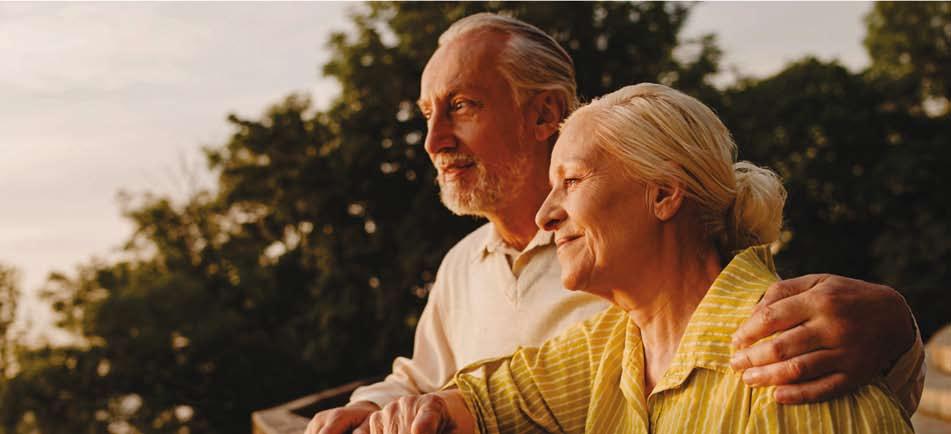
Spring has a way of reminding us that growth doesn’t have an expiration date. Each year, no matter how long or harsh the winter, the world finds its way back to color, warmth, and life. In many ways, healthy aging follows that same quiet rhythm—less about resisting change, and more about embracing renewal in new forms. Aging positively isn’t about holding onto youth; it’s about redefining what vitality looks like. It’s in the morning walk that feels a little slower but more intentional, the conversations that carry more depth, the choices that come from experience rather than urgency. With time, we gain something far more valuable than speed—we gain perspective.
Like spring, healthy aging invites us to nurture what matters. It’s a season of tending: caring for our bodies with movement and rest, feeding our minds with curiosity, and strengthening connections that give life meaning. The small, consistent acts—stretching, laughing, learning, showing up—become the roots that support continued growth.
There’s also a quiet confidence that comes with age. The need to rush fades. The pressure to prove softens. In its place, there’s a steadier sense of self—an understanding that wellness isn’t perfection, but balance. Not doing everything, but doing what sustains you.
Spring doesn’t try to be summer. It arrives in its own time, in its own way, and that is where its beauty lies. Healthy aging is much the same. It’s not about comparison or reclaiming the past, but about living fully in the present—with strength, with grace, and with an openness to whatever is still yet to grow.
I’m excited to announce that I’m working on the Pink Energy Run/ Walk at German Fest in Milwaukee!
I’d love to invite you all to join us at WBCS for a Cure as we come together to run or walk in support of breast cancer and prostate cancer research. ���� You can sign up at PinkEnergyRun.com, and feel free to start your own team or join Modern Health and Living, our sister publication. Let’s make a difference together—hope to see you there!
-Amanda Editor-in-chief
POSITIVE AGING
EMBRACE LIFE. AGE WELL. KEEP READING.
Contact
For information on advertising or to submit articles call, 262-343-5163, or Email: positiveaging@wi.rr.com.
Disclaimer
POSITIVE AGING is published on the first of each month . The articles in this publication are in no way intended to replace the knowledge or diagnosis of your doctor. We advise seeing a physician whenever a health problem arises requiring an expert’s care.
Images - istock.com
Special Thanks -To all the local professionals that provide us with articles containing new information and keeping all our readers informed of the latest in positive living. And to all our advertisers, and you the readers!
MyPositiveAging.com
Positive Aging is distributed throughout the Milwaukee, Waukesha, Ozauakee and Washington county.
Things You May Not Have Known About Wisconsin
How well do you know Wisconsin? You may be surprised by these fascinating facts. Read on to test your knowledge and find suggestions for where to learn more about the unique state.
1. The first-ever kindergarten classes in the U.S. were held in Watertown in 1856 at the home of a German couple. Plan your visit to this unique building and step back in time.
2. The first-ever ice cream sundae was served in Two Rivers, Wisconsin in 1881. Stop in at the birthplace of this sweet treat at the Historic Washington House & Two Rivers Historical Museum.
3. During the summer, the population of Door County reaches ten times the number of year-round residents (28,000 vs. 250,000). Visit yourself to enjoy the ocean-like views of Lake Michigan, sample your way through win
eries with friends and enjoy gorgeous cherry blossoms in bloom.
4. The first Wisconsin cheesehead was actually worn at a Milwaukee Brewers game! What started as a couch cushion with holes burned in the foam and painted yellow quickly became the iconic symbol known today. Learn more and find an (official) cheesehead of your own at the Green Bay Packers Hall of Fame.
5. With its hilly terrain left over from the ice age, Wisconsin ranks third for the most ski hills in the whole country! Visit popular spots like Granite Peak, Cascade Mountain and Christie Mountain to enjoy the snowy season with friends and family.
6. Marathon County produces nearly all of the ginseng grown in the U.S. and about 10 percent of the world’s supply. Take a tour of Hsu’s Ginseng Enterprises in Wausau to learn more about the herb’s impressive history.
7. Barbie hails from the fictional town of Willows, Wisconsin. For the collector and doll aficionado, a day at the Fennimore Doll & Toy Museum may be in order.
8. Soviet satellite Sputnik IV fell out of orbit in 1962, and while most of it burned up on re-entry, a 20-pound piece of debris crashed to the ground in the city of Manitowoc. The original piece of Sputnik was returned to the Soviets, but the Rahr-West Art Museum has a replica on display, and Manitowoc celebrates the anniversary with Sputnikfest each September.
9. Although the town of Warrens only has 400 residents, it draws 100,000
Body, Mind, and Spirit
Our caring team walks with you through life’s challenges with faith-based, evidence-driven care In-person and online counseling available Germantown · Hartford · Muskego Watertown · Waukesha · Telehealth
Awakening Your Body This Spring
As the days grow longer and the air turns warmer, spring offers the perfect opportunity to reconnect with your body and refresh your health. Staying active becomes increasingly important as we age, not just for physical strength but for mental clarity and overall well-being. One gentle yet powerful way to ease back into movement is through yoga.
Yoga provides a simple, low-impact way to wake up your muscles and joints after a long winter. With consistent practice, it can improve flexibility, build
strength, and support heart health. Even light stretching routines can help maintain mobility, making everyday tasks feel easier and more comfortable.
Beyond the physical benefits, yoga encourages a deeper awareness of your body. Moving mindfully through poses allows you to tune in to how you feel, helping prevent injury and promoting a sense of calm.
One of yoga’s greatest strengths is its adaptability. There’s no competition or pressure—just a focus on what feels right for you. Whether you’re new to exercise or returning after a break, yoga meets you where you are. You can modify poses, take breaks, and gradually build confidence over time.
Incorporating yoga into your routine can also support weight management. More importantly, it fosters mindfulness, encouraging thoughtful choices around eating and daily habits. This awareness often leads to healthier decisions that benefit both body and mind.
, 2025
For those dealing with joint discomfort, especially conditions like arthritis, staying active is essential. Gentle yoga movements can help reduce stiffness, ease pain, and improve range of motion. Instead of avoiding movement, engaging in slow, controlled stretches can actually bring relief and restore comfort.
Spring is a season of renewal, making it the ideal time to embrace habits that support long-term health. By incorporating yoga into your daily life, you can strengthen your body, improve balance, and cultivate a sense of peace, all while moving at your own pace. Awaken your body this season and let each stretch bring you closer to feeling energized, balanced, and well.
Gentle yoga is especially beneficial for beginners and older adults, as it focuses on slow, controlled movements and deep breathing. These types of practices help improve circulation, reduce tension, and promote relaxation without putting strain on the body. By incorporating gentle yoga into your daily routine, you can safely build strength, increase flexibility, and support long-term health while enjoying a calming and restorative experience.
Gina Ensslin a certified yoga teacher will be teaching gentle yoga at the Menonomee Falls Community Center starting in March. Visit www.fallsrec. org. Photo Credit: istock.com/ SeventyFour.
Gina Ensslin
SELF MASSAGE AND STRETCHING TIPS
Photo credit: stock.adobe.com/ Vasyl
Keeping your joints and muscles loose can feel great; we’ve gathered some ideas on self-massage and stretching that can keep you feeling flexible.
Self-massage and stretching can help your muscles relax and help you feel loose and flexible.
Whether you’re starting your morning, winding down after a walk, or just looking for a way to ease everyday stiffness, self-massage and stretching can make a noticeable difference in how your body feels. These simple practices can help improve flexibility, reduce tension, and support your overall comfort throughout the day.
The best part is that you don’t need any special equipment or training to get started. With a few easy techniques, you can work self-massage and stretching into your daily routine at home and at your own pace. Here are some ideas to help you get moving and feeling your best. Be sure to consult your doctor before starting a new exercise routine.
Why Self-Massage and Stretching Matter
As we age, our muscles and joints can become tighter and less flexible, which may lead to discomfort or a reduced range of motion. Regular stretching helps keep muscles long and limber, while self-massage can ease soreness, improve circulation, and release built-up tension. Together, these practices can support your body’s ability to move freely and comfortably, whether you’re reaching for something on a shelf, going for a daily walk, or enjoying an afternoon of gardening.
You don’t need to commit to a long session, either. Even a few minutes of gentle stretching or massage each day can add up over time. The key is to listen to your body and focus on the areas that feel the most tight or sore.
Simple Stretches to Try at Home
Stretching does not need to be complicated to be effective. Here are a few gentle stretches that target common areas of tightness and can be done from the comfort of your living room or bedroom.
Neck rolls: Slowly lower your chin toward your chest, then gently roll your head to one side, bringing your ear toward your shoulder. Continue rolling your head in a slow circle, then switch directions. This can help relieve tension from sitting or reading for long periods.
Shoulder shrugs and rolls: Raise both shoulders up toward your ears, hold for a few seconds, then release. Follow this with slow shoulder rolls forward and backward. This stretch is especially helpful if you carry tension in your upper back and shoulders.
STRETCH continued on page 8
For 75 years, TOPS Club has helped people take off, and keep off, the weight.
Seated hamstring stretch: While sitting on the edge of a sturdy chair, extend one leg straight out in front of you with your heel on the floor. Keeping your back straight, gently lean forward until you feel a stretch along the back of your leg. Hold for 15 to 30 seconds, then switch sides. This is a great stretch to do when muscles are already warm, like after a walk or bike ride. You can also use a foam roller to slowly stretch your hamstrings or sides of your thighs.
Wrist and finger stretches: Extend one arm in front of you with your palm facing up. Use your other hand to gently pull your fingers back toward your body until you feel a stretch in your wrist and forearm. Hold for a few seconds, then repeat on the other side. You can also spread your fingers wide and make gentle fists to keep your hands feeling loose.
Ankle circles: While seated, lift one foot slightly off the floor and rotate your ankle in slow circles. Switch directions after a few rotations, then repeat with the other foot. This is a great way to improve ankle mobility.
Self-Massage Techniques for Common Sore Spots
Self-massage is a wonderful way to target specific areas of discomfort without needing to visit a professional. Using your hands or a few simple tools, you can work out tension and give your muscles some relief right at home.
TAKING A FEW MINUTES EACH DAY TO CARE FOR YOUR MUSCLES AND JOINTS
Hands and fingers: Use the thumb of one hand to press and knead the palm of the other in small circular motions. Work your way across the entire palm, then gently squeeze and roll each finger from base to tip. This can feel especially soothing if your hands are stiff from writing, crafting, or other fine motor activities.
Neck and shoulders: Place your fingertips at the base of your skull where your neck meets your head. Apply gentle pressure and make small circular motions, working your way down the sides of your neck to your shoulders. If you find a particularly tight spot, hold gentle pressure there for a few seconds before moving on. Be sure to never cause pain or discomfort; it’s better to work out tension slowly and gently.
Feet: Sit in a comfortable chair and place a tennis ball under one foot. Roll the ball back and forth from your toes to your heel, applying as much or as little pressure as feels good. You can also use your thumbs to press into the arch of your foot and massage in small circles.
Temples and jaw: Place your fingertips on your temples and gently massage in slow circles. Then move your fingers to your jaw, just below the ears, and apply gentle circular pressure. Many people hold tension in their jaw without realizing it, and a quick massage here can bring surprising relief.
Taking a few minutes each day to care for your muscles and joints is a simple act of self-care that can improve your comfort and quality of life. Whether you start with a morning stretch, an evening foot massage, or a quick neck roll between activities, every little bit helps. For more tips on staying active and feeling your best, visit captel.com.
Stretching is a simple yet powerful habit that supports both physical health and overall well-being. By gently lengthening muscles and increasing joint mobility, stretching helps improve flexibility, reduce stiffness, and lower the risk of injury during everyday activities or exercise. It also promotes better posture by relieving tension in areas like the neck, shoulders, and lower back, which often tighten from prolonged sitting.
Beyond the physical benefits, stretching can be calming and meditative, encouraging mindful breathing and helping to reduce stress. When done consistently—whether as part of a warm-up, cool-down, or daily routine— stretching enhances circulation, supports muscle recovery, and contributes to a greater sense of balance and relaxation in the body.
Over time, regular stretching can also improve body awareness, helping you move more efficiently and comfortably in everything you do. STRETCH from page 6
The Growing Need For Connection
There is a nonprofit that is addressing a health epidemic in our country and at the same time transforming the lives of retirees and older adults in the greater Waukesha County area.
With the our population experience loneliness at a higher rate and a health crisis that seems to be cutting across all ages, the activities provided by this organization are even more important.
The organization is Learning In Retirement of Waukesha County (LIRWC) and the epidemic is one of loneliness- as cited by a recent CDC study.
Learning in Retirement of Waukesha County (LIRWC) provides engaging
educational programs, social opportunities, and enriching experiences for individuals who are eager to continue learning beyond their working years. These activities have become crucial in the ongoing battle against Alzheimer’s Disease and Dementia, and the fight against loneliness.
The National Council on Aging states on their website that there are four steps for Seniors to combat loneliness:
1. Make communication a priority
2. Encourage and facilitate social activities through local organizations
3. Explore hobbies and other areas of interest
4. Identify opportunities to combat loneliness at any time
With a wide variety of courses and activities—ranging from history and technology to art and wellness—LIRWC fosters intellectual growth, personal enrichment, and a strong sense of community among its members.
Our mission has become more important as the latest CDC report shows that in 2024, loneliness and depression are prevalent among older adults in the United States, and are linked to a variety of health conditions. In addition, 29% of older adults reported feeling isolated some or all of the time. The groups with the highest rates of loneliness were:
Those who said their mental health was fair or poor (75%)
Those who said their physical health was fair or poor (53%)
Those who were not working or received disability income (52%)
With an aging population and a growing interest in active retirement lifestyles, this story would resonate with your audience and highlight how education doesn’t stop at retirement—it simply takes on new meaning.
LIRWC provides intellectual, cultural, educational and social opportunities to foster life-long learning for adults. Courses include a wide range of topics designed to appeal to adults. Individuals are welcome from all communities! Attend special event trips and tours offering recreation, entertainment, social, and educational experiences with LIRWC. For more information visit lirwc.org or call 262-409-9815.
istock.com/Jacob Wackerhausen
SLOW LIVING IN YOUR OWN BACKYARD & PUBLIC PARK
Photo credit: stock.adobe.com/ PaulShlykov
The “slow living” movement – a shift away from digital burnout and toward intentional, present-moment living – is more accessible than many realize. According to the TurfMutt Foundation, which advocates for the care and use of backyards, public parks, school yards and other green spaces, the most effective “analog lifestyle” retreat available is your own family yard and neighborhood park.
“Our yards and parks are more than just patches of green. They have purpose, and sometimes that means to just help us slow down a little,” says Kris
Kiser, President & CEO of the TurfMutt Foundation. “In a world that demands 24/7 connectivity, these green spaces are the secret ingredient to less stressful life.”
The Science Behind Green Time
The shift toward slow living is backed by a growing body of data highlighting the physical and mental benefits of our community and family landscapes. For instance, research shows that spending just 20 minutes in a park or backyard can significantly lower stress and improve overall well-being. Additionally, green space exposure is linked to a decreased risk of psychiatric disorders and improved cognitive functioning.
Plus, the public demands it. Recent TurfMutt research conducted by The Harris Poll found that 89 percent of Americans consider a high-quality public park system a top community priority for health and well-being.
Ideas for Backyard & Park Slow Living
To help people embrace this trend, the TurfMutt Foundation offers these ideas:
• Design for Stillness: Create quiet zones in your backyard. This can be as simple as tucking a chair under a shade tree or adding a fire pit for family share time. The key is creating a space to be outside without a “to-do” list.
• Ditch Devices: Take a digital detox by declaring your backyard or neighborhood park a device-free zone so you can experience the serenity of swapping scrolling for green scenery.
• Observe Wildlife: Nature’s TV is always playing in our green spaces, it’s just a matter of tuning in. Add pollinator-friendly and native plants to makes your yard even more inviting to “wild” neighbors.
• Go Old-School: Revive retro recreation with activities like croquet, corn hole or bocce ball. For a quieter pace, you can enjoy solo activities like sketching in the park, reading or playing a game of cards on your patio or in the park pavilion.
• Embrace Shared Backyarding: Treat your local park as a shared backyard. Whether it’s a place to sit and get lost in a book, get some fresh air or stretch
your legs on the trails, public green spaces can offer the same benefits as a private lawn.
“We all need a place where we can actually unplug and hear ourselves think,” says Kiser. “The good news is you don’t have to go any further than your backyard or neighborhood park.”
This Earth Day—and throughout April’s Lawn and Garden Month—the TurfMutt Foundation is spotlighting the vital role green spaces play in creating a healthier planet.
“Every day is Earth Day in communities that invest in parks, schoolyards, and backyards,” says Kris Kiser, President & CEO of the TurfMutt Foundation, which has advocated for the care and use of green spaces around us for over 15 years. “These landscapes are environmental powerhouses, helping to cool our neighborhoods, support biodiversity, and improve air quality. We encourage everyone to plant something, step outside, and embrace the nature just beyond their doorstep.”
8 ways managed landscapes help save the planet:
Cool Down Our Communities – Parks, yards, natural turf sports fields, and green schoolyards help reduce the urban heat island effect.
Boost Oxygen Production – Trees, lawns, and greenery act as natural oxygen generators.
Capture Carbon – Turfgrass is an efficient carbon sink, absorbing up to seven times more carbon than is released through maintenance.
Support Wildlife & Pollinators – Living landscapes provide essential food and shelter for birds, bees, butterflies, and other wildlife.
Improve Air Quality – Vegetation acts as nature’s air filter, trapping dust and pollutants to keep our air clean.
Reduce Noise Pollution – Plants and trees serve as natural sound barriers, helping to create quieter environments.
Manage Water Runoff – Landscaping, especially turfgrass, absorbs and filters rainwater, helping to replenish ground water supplies.
Prevent Soil Erosion – Plant roots help stabilize the soil, reducing erosion and protecting land from degradation.
Beyond the personal and environmental benefits, embracing slow living through green spaces also strengthens community connections. Neighborhood parks and shared outdoor areas naturally bring people together, fostering casual interactions, stronger relationships, and a sense of belonging. Whether it’s families gathering for picnics, neighbors chatting on walking trails, or children playing together, these everyday moments help build healthier, more connected communities.
SENIOR HEALTH & WELLNESS DAY
A FREE community event for adults 55+.
WEDNESDAY, MAY 27, 2026
Join the YMCA of Greater Waukesha County for a day focused on healthy aging, connection, and community. Stop by to learn more about programs and resources that support active, healthy living.
Visit or call your nearest YMCA of Greater Waukesha County branch for event details.
Senior Health and Wellness Day
By Kristen Deal, Association Director of FOREVERWELL®
Each year, communities across the country recognize Senior Health and Wellness Day as an opportunity to highlight the importance of healthy aging and provide older adults with resources that support their physical, mental, and social well-being. This year, the YMCA of Greater Waukesha County will host Senior Health and Wellness Day on May 27. The event is open to the community, welcoming seniors of all backgrounds to participate, learn, and connect. As the population of adults over age 55 continues to grow, events like this play an important role in encouraging individuals to remain active, informed, and engaged in their communities.
Senior Health and Wellness Day is more than a celebration. It is an opportunity to educate, inspire, and empower older adults to take charge of their health. The day includes health screenings, educational presentations, fitness demonstrations, and opportunities to connect with local health and wellness providers. These activities help seniors better understand their health, dis-
cover new ways to stay active, and explore programs in their community that support healthy living.
A key focus of the day is regular physical activity. Staying active helps maintain strength, balance, flexibility, and cardiovascular health while reducing the risk of chronic conditions. Another focus is preventive health and education. Seniors can learn about fall prevention, managing chronic conditions, maintaining mobility, and supporting cognitive health. Educational sessions and wellness resources provide practical strategies that can be applied in daily life to promote long-term wellness.
The final aspect of the day is social connection, which plays an important role in overall health. Social isolation is linked to reduced longevity by up to 10 years and can increase risk of premature death by about 32 percent. Meaningful relationships and community engagement have a profound impact on mental, emotional, and physical well-being. Senior Health and Wellness Day creates opportunities for older adults to interact, share experiences, and build friendships.
Promoting healthy aging is central to the YMCA’s mission to strengthen community through spirit, mind, and body. At the YMCA, commitment extends beyond a single day through social gatherings, specialized fitness classes, group programs, games, workshops, and other events that help seniors stay engaged year-round. The YMCA offers a range of fitness options tailored to older adults, including low-impact classes, aquatic fitness that is easy on the joints, balance and mobility training to prevent falls, and strength building programs that support muscle and bone health.
Senior Health and Wellness Day is a reminder that healthy aging is achievable when individuals have access to the right resources, encouragement, and community support. By offering programs that promote movement, education, and connection, the YMCA of Greater Waukesha County helps older adults live healthier, more vibrant lives. Community members are encouraged to attend Senior Health and Wellness Day on May 27 at their local YMCA of Greater Waukesha County branch to learn more about programs and resources that support healthy aging. Photo: stock.adboe.com/ DavidsPrime
Events from page 4
Houdini (visit The History Museum at the Castle to learn more), architect Frank Lloyd Wright, actor Chris Farley, artist Georgia O’Keeffe, actor Orson Welles, author Laura Ingalls Wilder (there’s a museum devoted to her life here!), performer Liberace, actor Mark Ruffalo and guitarist Les Paul.
12. Wisconsin banned the sale and use of margarine from 1895 to 1967, and while the ban was lifted, some restrictions on margarine remain today. It’s still illegal for a restaurant to serve margarine as a butter substitute unless the customer specifically requests it. Swing by Nordic Creamery in Westby to pick up some handcrafted butter flavored with local ingredients like maple syrup and basil.
13. Wisconsin’s name comes from the Wisconsin River, which was called Meskousing by Algonquian-speaking Tribes. The name was recorded in 1673 by French explorer Jacques Marquette. Over time, the word was Anglicized into Ouisconsin, Wiskonsan and finally into its current spelling and pronunciation.
14. The Onion, arguably the most famous news satire organization, was started by two University of Wisconsin-Madison students, Tim Keck and Christopher Johnson, in 1988.
15. Thirty percent of the state’s population lives in the five-county metropolitan area around Milwaukee. Visit the city to explore awe-inspiring art museums, scenic lakeshore paths and unique restaurants perfect for nights out with friends.
16. The most snowfall ever recorded in one season in Wisconsin happened between 1996 and 1997, when the town of Hurley received over 295 inches— almost 25 feet! No wonder the Northwoods are so ideal for snowmobiling.
17. The largest woolly mammoth ever excavated was found in Kenosha County, and you can see its skeleton at the Milwaukee Public Museum!
18. Freshwater surfers know Sheboygan as the “Malibu of the Midwest”, and travelers come from all around the world to try their hand at the sport and to watch the pros in action. Visit during peak surf season between September and March to see the amazing athletes hang ten for yourself.
19. The first-ever Flag Day was celebrated in Ozaukee County. Visit the area to explore attractions like the Cedarburg Art Museum and Harrington Beach State Park.
20. “On, Wisconsin,” the fight song of the Wisconsin Badgers, was first said by Arthur MacArthur, Jr. in the Battle of Chattanooga at Missionary Ridge during the Civil War. Learn more about this time period and Wisconsin’s role in it at the Civil War Museum in Kenosha.
The
The Relationship Between Heart Health And Brain Health
For the heart to adequately supply blood and nutrients throughout the body, its arteries must be healthy and strong. When they become blocked, every organ of the body quickly becomes impacted. This includes the brain, which requires a steady flow of oxygen-rich blood to function properly. If that blood flow is reduced or temporarily blocked a stroke can occur. When this happens, it can lead to a type of dementia called vascular dementia in which thinking skills are often suddenly impacted after damage to the blood vessels occurs.
The same factors that impact heart health are linked to brain health. Research cited in a recent Harvard Health article indicates that many of the same risk factors that can lead to heart issues also can lead to dementia.
These factors include obesity, high blood pressure, high cholesterol, and diabetes.
And while vascular dementia is most often associated with insufficient oxygen to the brain, newer findings point to heart issues potentially leading to other dementias, including Alzheimer’s.
What can you do to optimize both your heart and brain health?
Get plenty of exercise. Regular exercise strengthens your heart muscle. Before engaging in any exercise regimen, however, it is important to get advice from a physician who can take physical condition and any existing health issues into consideration. Even chair exercises or walking around the backyard can get the muscles working and keep oxygen flowing to the heart and brain.
Eat a healthy diet. Foods that are rich in Omega-3 fatty acids, such as fish and avocados, are hearty healthy. Green vegetables, high fiber grains, and low fat meats, such as chicken, provide protein, while keeping cholesterol levels low.
Quit smoking. Smoking is linked to a wide range of health conditions, including heart disease. It is never too late to quit smoking. Ask your physician for advice and resources to help your loved stay committed to stopping this hazardous habit.
Maintain a healthy weight. Exercise and a healthy low fat diet can help here. Your loved one’s physician can help devise a healthy regimen to reduce weight in a healthy way. Taking off excess pounds puts less stress on the heart. It can also help improve energy, mobility, and balance.
Reduce stress. There is a reason so many people feel better after a yoga or meditation session. It helps reduce stress which, in turn, can lower blood pressure and heart rate. Yoga and meditation are also good stress relievers for caregivers! You might also consider booking some sessions with a licensed therapist who specializes in dementia. They can give your loved one tools to help reduce anxiety. Call Franklin Place at414.409.5623 for more information. Photo credit: stock.adobe/ Lumos sp
DIG INTO THE BENEFITS OF GARDENING
Gardening is more than a relaxing hobby – it’s a gateway to better health (Mayo Clinic), happiness and community connection. For seniors, the benefits of gardening extend beyond the satisfaction of growing beautiful flowers or fresh vegetables.
Gardening activities provide a unique blend of physical exercise, mental stimulation and emotional well-being, making it an ideal pastime for older adults. Whether you’re looking to stay active, relieve stress or connect with others, gardening can be a rewarding and enriching experience. Let’s explore the many benefits of gardening for older people and how you can get started.
Physical Benefits of Gardening for Older Adults
Exercise & Strength Building
Gardening is a fantastic light exercise that promotes flexibility, strength and endurance. Digging, planting, weeding and watering all contribute to increased mobility and coordination. This kind of activity helps maintain muscle tone and can even aid in preventing osteoporosis by improving bone density through weight-bearing movements. Engaging in regular gardening can enhance overall strength, making daily activities easier and helping seniors maintain their independence.
Sun Exposure for Vitamin D
Spending time outdoors while gardening exposes seniors to sunlight, which is essential for vitamin D production. Vitamin D plays a crucial role in bone health, reducing the risk of osteoporosis and fractures. However, it’s important to practice safe sun exposure by wearing a hat, applying sunscreen and gardening during cooler hours to avoid excessive heat.
Lower Blood Pressure
Physical activity that doubles as a relaxing experience can lower blood pressure (National Library of Medicine) as well, contributing to improved physical and mental health.
Mental & Emotional Benefits for Seniors
Stress Relief & Mental Health
Gardening has been shown to significantly reduce stress levels and promote relaxation. The rhythmic nature of planting and tending to a garden fosters a sense of peace, while the accomplishment of watching plants grow instills a deep sense of satisfaction. Being outdoors and surrounded by nature can improve mood, lower anxiety and create a sense of purpose, making gardening an excellent way for seniors to nurture their emotional well-being.
Cognitive Benefits
Garden continued on page 31
istock.com/ AnnaStills
istock.com/Valerii
Tips For Seeing Clearly During Allergy Season
By Cheryl L. Dejewski Photo credit:stock.adobe.com/
aLListar/peopleimages.com
Spring is finally here. And, as winter loosens its grip upon us, it’s time to get out and enjoy the simple joys of Wisconsin’s muchtoo-short outdoor activities season. For many people, however, a stroll through the park or an afternoon in the garden brings tears to their eyes. Why the unhappiness? Allergy sufferers often face a host of problems that affect their vision. This overview may help to explain and alleviate some of the problems caused by eye allergies. What are the symptoms of eye allergies?
“Symptoms typically include watery or itchy eyes, mucous build-up, difficulty focusing, discomfort wearing contact lenses, as well as other setbacks. Fortunately, these symptoms are usually easy to treat,” says David Scheidt, OD, past president of the Milwaukee Optometric Society.
How do eye allergies occur?
“For some people, certain particles in the air (like pollen, animal hairs, dust, or molds) can cause specific eye cells to release allergy activators such as histamine. These activators then create symptoms of irritation. Many people with eye allergies have a history of hay fever or other allergic problems. An allergist can test to find the cause of your allergies,” says eye surgeon and ophthalmologist Michael Raciti, MD. His partner at Eye Care Specialists, Daniel Paskowitz, MD, PhD, adds, “Often, you can find the cause yourself with a little detective work. For example, if you get red, itchy eyes every spring, it’s probably due to pollen. Or, perhaps you notice a connection to coming into contact with dust, mold or pets.”
What is contact dermatitis?
“Contact dermatitis is an inflammation that occurs when a substance that is an irritant or causes an allergic reaction comes in contact with the skin. The inflammation can occur in one area and spread to others. Common causes of contact dermatitis from irritants are soaps, detergents, bleach, solvents, waxes, polishes, hand cleaners and medications. Common causes of contact dermatitis from allergic reactions are cosmetics, hair dyes, jewelry, fingernail polish and deodorants. Other known causes are rubber, nickel and poison ivy,” says Daniel Ferguson, MD, an ophthalmologist who also performs corneal procedures. Brett Rhode, MD, an eye surgeon who also treats infections and allergic reactions, explains, “Contact dermatitis that affects the eyes causes itching, redness and skin scales around the eyes. The most common cause of ocular (eye) contact dermatitis is a reaction to contact lens solutions and eye drops. Discontinuing the drops and applying cold compresses usually results
Vision continued on page 20
in prompt improvement.”
How are eye allergies & contact dermatitis treated?
The right treatment or combination of treatments depends on the severity of your symptoms. Eye Care Specialists’ doctors offer the following options for treatment:
• If you discover what’s causing your allergy, the best treatment is to avoid it, if possible.
• When working in the yard, wear gardening gloves and keep your hands away from your eyes.
• If you are allergic to animals, keep your hands away from your eyes after petting them or, better yet, avoid any contact if at all possible.
• Buy hypoallergenic cosmetics—especially when selecting mascara and eye shadow.
• Wear rubber gloves when washing dishes or working with solvents and chemicals.
• Applying icepacks or cold compresses may reduce itching and puffiness.
• Using antihistamine eyedrops may provide fast, effective relief once allergies initiate themselves. Mild antihistamine eyedrops can be purchased without a prescription and, depending on the directions, may be able to be used up to four times a day. Some of the more common brands are Vasocon-A or Naphcon. More potent medicines are available by prescription. But don’t overuse these products, or your eyes could develop a dependency and turn even redder when you stop using the medications. This is called rebound redness.
• Recent advances have also been made with eyedrops that block allergy activators from being released. These drops can be used to prevent the development of symptoms in people with seasonal allergies and are usually safe for long-term use.
• Other prescription eyedrops can also be effective. Cortisone-like medicines called steroids can help reduce allergic symptoms. New eyedrops made from aspirin-like compounds can also provide excellent relief. To prevent side effects, you should only use these medicines under a doctor’s supervision. if eye allergies are hampering your activities and interests, make an appointment with an eye care specialist. He or she will be happy to evaluate your condition and prescribe the fastest way to get you outside enjoying activities with clear eyes. If you don’t have a specialist or are in need of a second opinion, the doctors quoted in this article have offices in downtown Milwaukee, West Allis, and the Mayfair mall area. They can be reached at 414-321-7520 ext. 235 or by visiting www.eyecarespecialists.net.
Women in their 40s should visit an eye doctor regularly because vision changes like presbyopia (difficulty focusing up close) often begin at this age. Routine eye exams can also help detect early signs of conditions such as glaucoma or macular degeneration before they become serious.
Can Spring Produce Help with Improved Mood and Focus
By Stephen Shaul Photo Credit: stock.adobe.com/ sonyakamoz
April hath put a spirit of youth in everything.” – William Shakespeare There’s a reason we talk about having a “spring in my step.” Spring is not only a mechanism of propulsion but also the season when the warmer weather fills us with new-found energy.
Is there more to this? Does the seasonal food available in spring contribute to our feelings of well-being and ability to focus? Can including more of these foods in our diet magnify these feelings and abilities, transforming our mind to match the season and all it means for our environment?
Let’s first look at the association between spring weather and serotonin
levels. We will take the next step to show how serotonin levels affect mood. And finally, we will explore the links between Spring, serotonin and the foods that Spring adds to our dietary options.
Spring weather, increased sunshine and warmth have long been anecdotally associated with improved mood. There is science to reinforce this. Serotonin levels have long been proven to affect human mood. A 1997 all male, controlled observational study done at the Institute of Psychiatry in London confirmed the fact low serotonin levels are a significant factor in depression and noted correlation between higher levels of serotonin among all study participants in spring as opposed to fall.
Subsequently, a 2002 study of males that was published in The Lancet found that sunlight is a major contributor to serotonin levels
A larger, all gender 2011 epidemiological analysis showed a higher correlation of serotonin uptake in the spring quarter versus the fall quarter, with correlation far greater in men than women.
What are the human consequences when this Spring serotonin hits?
Tryptophan, mood, sleep, and food
A 2016, Jenkins et al Literature review (Nutrients) reports that the link between serotonin and mood is not well understood but points out that the association between a lack of serotonin and depression is well researched and established. In fact, however, it is not serotonin itself that’s found in food, it’s tryptophan, an essential amino acid that is the precursor of serotonin. Therefore, the study points out, foods that are high in Tryptophan (egg whites, meats, poultry, legumes, dairy, nuts, and seeds) can play a role in mood regulation and also helps to improve REM sleep, which leads to increased alertness as well as better reasoning and memory functions. Because tryptophan is metabolized to create serotonin, the gut microbiome is the largest source of serotonin in the human body.
The “axis bold as love”: Tryptophan, serotonin and the Brain-Gut Axis
SPRING continued on page 22
HEALTH
Tudor Oaks Senior Living Community
Home Care Services!
Tudor Oaks Senior Living Community, a trusted name in the Muskego area for over 40 years, is now offering Home Care Services to area residents!
Tudor Oaks Home Care Services provide a variety of supportive options to assist seniors who wish to remain in their own home.
SPRING from page 22
The same 2016 study shows that serotonin is a key element in brain gut axis., a bi-directional communication system between This axis is the key bidirectional system between the two dominant human nerve centres. A 2014 study by EA Mayer et al published in The Journal of Neuroscience found that alterations in the gut microbiome may play a role in human brain diseases, including autism, anxiety, depression, and even chronic pain.
How do spring foods aid the gut microbiome, and serotonin levels?
According to multiple studies, including a 2019 study by RD Hills et al that was published in Nutrients, have shown that diet plays an important role in determining the composition of our gut microbiome and links dietary choices to obesity, bowel, heart, and mental health disorders. And, in the same year, a study by William Zhao et al found a link between a healthy gut microbiome and improved food allergy responses.
So, are spring foods unique in their ability to generate a healthy microbiome? Luckily for us, the answer is no, they’re not! In fact, a 2019 literature review by Holly Willis et al, found that “There was limited effect on microbial diversity across studies and modest microbial changes were noted in 10 of 15 studies. More research is needed before specific plant foods can be recommended to improve gut microbiota and ultimately health. And Ping Zhang’s 2022 comprehensive review suggests that fibre rich foods play a role in the maintenance of a gut microbiome that helps to balance the negative side effects of antibiotics, which are most often prescribed in winter (Suda, 2014).
Finally, a 2020 study by Leah Stiemsma et al showed that early research indicates a positive link between fermented foods, which are available yearround, and gut health.
Conclusion
Based on the scientific evidence, a high fibre diet, teamed with gut microbiome feeding pulses and fermented foods will keep your “second brain,” which is the main serotonin producer, in great shape year-round. As Spring hits, you will also feel a boost as the sunny days grow longer. Together, diet and sunshine combine to put that spring in our step, reduce food allergies, and combat conditions as wide ranging as cardiovascular illness, bowel disease, and mental health.
I was recently listening to one of my fave wellness podcasts and one of the dieticians pointed out that, “No amount of snacks will satisfy a mealtime hunger.” A truth bomb so simply stated. And it got me thinking about how if we pause to really reflect on the type of hunger we’re experiencing at a certain moment, it may radically shift the food changes we make. This reflection is fully in alignment with a lesson included in my mindful eating certification course that explains the seven types of hunger. What are they? And how do we know which kind we’re having?
In the book “Mindful Eating: A Guide to Rediscovering a Healthy and Joyful Relationship with Food,” Dr. Jan Chozen-Bays explains how each hunger directly connects to different parts of our anatomy…the eyes, nose, mouth, stomach, cellular, mind and heart.
The following physical and mental cues can help you better tap into the why behind hunger—or hangry feelings—when it sets in:
Eye Hunger: The appearance of the food is appetizing, oftentimes due to color combinations, how it’s plated or looks on the packaging.
Nose Hunger: Aromas lure you in while walking by a restaurant, strolling by the deli counter or socializing during a backyard barbeque.
Mouth Hunger: This kicks in when texture tantalizes your palate. For example, if you really enjoy the sensation of biting into crunchy nibbles, it shouldn’t be surprising it can be challenging at times to only have a single serving of chips or pretzels.
Stomach Hunger: The exact stimulant of feelings centered in our tummies can be tricky to decipher. Some hunger “pains” stem from nervousness or discomfort, rather than signifying it’s time to eat. Cellular Hunger: When our nutrient intake is imbalanced, we may overeat rying to compensate for a perceived lack of nourishment. When in reality, we need to adjust the macro (carbs, protein and fat) ratio of our meals instead of simply consuming more calories.
stock.adobe/ChayTee
Complete Care specializes in short term rehabilitation to get you back home safely, and long term care. Be at peace knowing your loved one is receiving outstanding care with the amenities of home in a serene setting.
OUR CARE SERVICES
Complete Care specializes in short term rehabilitation to get you back home safely, and long term care. Be at peace knowing your loved one is receiving outstanding care with the amenities of home in a serene setting.
Find a Complete Care center near you to learn more and schedule a tour!
Find a Complete Care center near you to learn more and schedule a tour!
OUR CARE SERVICES
• Inpatient Dialysis
• Inpatient Dialysis
• Physical, Occupational, and Speech Therapy
• Physical, Occupational, and Speech Therapy
• Wound Care
• Wound Care
• Behavioral Health
• Behavioral Health
• Respite Care
• VA Contracting
• Respite Care
GLENDALE CARE AND REHAB CENTER
HALES CORNERS CARE CENTER
6263 N Green Bay Avenue, Glendale, WI 53209
9449 W Forest Home Ave, Hales Corners, WI 53130
414.351.0543 | glendalecrc.com
414.529-6888 | halescornerscarecenter.com
GLENDALE CARE AND REHAB CENTER
6263 N Green Bay Avenue, Glendale, WI 53209
GRANDE PRAIRIE CARE AND REHAB CENTER
GLENDALE CARE AND REHAB
414.351.0543 | glendalecrc.com
10330 Prairie Ridge Blvd, Pleasant Prairie, WI 53158
262.612.2800 | grandeprairiecrc.com
6263 N Green Bay Avenue, Glendale WI 53209
414.351-0543 | glendalecrc.com
GRANDE PRAIRIE CARE AND REHAB CENTER
KENSINGTON CARE AND REHAB CENTER
10330 Prairie Ridge Blvd, Pleasant Prairie, WI 53158
1810 Kensington Drive, Waukesha, WI 53188
GRANDE PRAIRIE CARE AND REHABE CENTER
262.612.2800 | grandeprairiecrc.com
262.548.1400 | kensingtoncareandrehab.com
10330 Prairie Ridge Blvd. Pleasant Prairie, WI 53158
262.612.2800 | grandeprairiecrc.com
KENSINGTON CARE AND REHAB CENTER
1810 Kensington Drive, Waukesha, WI 53188
KENSINGTON CARE AND REHAB
262.548.1400 | kensingtoncareandrehab.com
1810 Kensington Drive, Waukesha, WI 53188
262-548-1400 | kensingtoncareandrehab.com
• VA Contracting
• And Much More
CARE-AGE OF BROOKFIELD
RIDGEWOOD CARE CENTER
3205 Wood Road, Racine, WI 53406
1755 N. Barker Rd Brookfield, WI 53045
262.554.6440 | ridgewoodcarecenter.com
262.821.3939 | care-age.com
RIDGEWOOD CARE CENTER
3205 Wood Road, Racine, WI 53406
RIDGEWOOD CARE CENTER
SOUTHPOINTE CARE AND REHAB CENTER
4500 West Loomis Road, Green�ield, WI 53220
414.325.5300 | southpointecrc.com
3205 Wood Road, Racine, WI 53406
262.554.6440 | ridgewoodcarecenter.com
262.554.6440 | ridgewoodcarecenter.com
SOUTHPOINTE CARE AND REHAB CENTER
VIRGINIA HIGHLANDS CARE AND REHAB CENTER
W173 N 10915 Bernie’s Way, Germantown, WI 53022
4500 West Loomis Road, Green�ield, WI 53220
262.509.3300 | virginiahighlandscrc.com
414.325.5300 | southpointecrc.com
SOUTHPOINTE CARE AND REHAB CENTER
4500 West Loomis Road, Greenfield WI 53220
414.325.5300 | southpointecrc.com
VIRGINIA HIGHLANDS CARE AND REHAB CENTER
W173 N 10915 Bernie’s Way, Germantown, WI 53022
VIRGINIA HIGHLANDS CARE AND REHAB
262.509.3300 | virginiahighlandscrc.com
W173 N 10915 Berniew’s Way, Germantown, WI 53022
262.509.3300 | virginiahighlandscrc.com
• And Much More Scan to Learn More
Scan to Learn More
Wisconsin Flower Gardens for Stunning Blooms
Photo Credit: stock.adobe.com/ Susan Vineyard
Wisconsin is known for its natural beauty—rolling hills, sparkling lakes, lush forests, and abundant wildlife. But beyond its landscapes, the state is also home to an impressive collection of public gardens. These spaces offer peaceful strolls, vibrant seasonal displays, and picture-perfect scenery. Here are some of the best places in Wisconsin to enjoy breathtaking floral beauty.
Olbrich Botanical Gardens & Bolz Conservatory in Madison is one of Wisconsin’s most beloved gardens. It spans 16 acres and features a variety of themed spaces, including a sunken English garden, a serene birch walk, and the striking Royal Thai Pavilion. During colder months, the Bolz Conservatory provides a tropical escape filled with orchids, waterfalls, and free-flying birds.
Boerner Botanical Gardens in Milwaukee is a formal garden and arboretum showcasing over 500 types of roses alongside many other plant varieties. Visitors can explore themed areas, sculptures, and a Trial Garden featuring new plant species suited for the Great Lakes region. Kids especially enjoy the whimsical Margie’s Garden.
Green Bay Botanical Garden in Green Bay spans 47 acres with over 65,000 plants and offers year-round attractions, from spring blooms and summer events to magical winter light displays.
Rotary Botanical Gardens in Janesville features 25 distinct garden styles, including rare fern and moss gardens, along with Japanese and French formal designs. Highlights include the Cherry Blossom Walk and a family-friendly StoryWalk.
The Paine Art Center and Gardens in Oshkosh blends art and horticulture. Surrounding a 1920s mansion museum are four acres of beautifully designed gardens, including a moon garden and a historic tulip tree linked to Mount Vernon.
Allen Centennial Gardens in Madison, operated by the University of Wisconsin, is a living laboratory featuring 22 unique garden spaces. It regularly hosts workshops, events, and showcases innovative plant varieties.
The Garden Door in Sturgeon Bay, Door County’s only free public garden, offers a charming mix of features including a fairy garden, cactus garden, and tranquil pond, making it a perfect spot for a relaxing picni
Scheig Center Gardens in Appleton is known for its butterfly and fragrance gardens, along with both formal and native rose gardens. The Learning Center building was designed by a protégé of Frank Lloyd Wright
Warren J Taylor Sunken Flower Garden in Kenosha, located in Lincoln Park, is a hidden gem featuring vibrant rows of annual flowers arranged for GARDEN continued on page 30
JOINT-FRIENDLY HOME WORKOUTS
Photo credit: stock.adobe.com/ Loginova
Keeping your joints active and moving without increasing wear or strain may feel like a balancing act, but there are plenty of activities and exercises available that are joint-friendly. We’ve gathered some of our favorite home workout ideas that are joint-friendly, so you can give them a try and pick some favorites. Be sure to consult with your doctor before starting a new workout routine.
Resistance Bands
Using resistance bands for a workout is a great way to have minimal equipment for maximum results. Resistance bands also come in various weights or sizes, meaning you can tailor your workout to fit your fitness level and preferences. Resistance bands can be incorporated in a variety of ways, like bicep
curls, leg stretches, and more. Using lighter bands can give a relaxed workout, and using heavier bands can help build muscle.Resistance band training can also help build flexibility and stability, meaning your body and joints may be more equipped to handle other activities. You can even perform resistance band exercises while seated, further reducing strain on your joints.
Tai Chi or Yoga
Both Tai Chi and yoga are praised for their gentle stretches, slow movement, and low strain on joints. Whether you’re a complete novice or a pro with poses, these slow exercises may help you improve balance, build muscle, and improve mental clarity. Try following along to a virtual class or recording for a home workout, or pick a few of your favorite poses or stretches and create your own flow. This is a great home workout that requires little to no equipment, making it accessible and practical for most homes.
Dance
Dancing is a low-impact, high-cardio workout that can be really fun to do in your own home. Try playing some of your favorite music and dancing around your kitchen, living room, or any other space you have. It’s a good idea to make sure your floor is clear of tripping hazards before starting. Dancing is a good way to work in some steps in a joint-friendly way, as you can pace yourself and move in ways that are comfortable for you. Try incorporating different styles of music and dance moves for a balanced, interesting home workout.
Walking
Taking a walk around your neighborhood is a low-impact activity that will help build muscle and cardio while not creating stress or strain on your joints. Be sure to choose cushioned, well-fitting shoes for maximum comfort and support.
Core Exercises
Working your core is beneficial to other parts of your body, and doesn’t require joint strain or stress. Try crunches or slow sit-ups on a padded yoga mat to build strength and muscle. Building your core can help improve balance, stability, and help with general body movements. You can try side leans for core building and muscle stretching, too.
The CapTel® Captioned Telephone shows word-for-word captions of everything a caller says, letting you read anything you cannot hear over the phone. CapTel is a NO-COST, federally funded technology available under the Americans with Disabilities Act To qualify, users need: • Hearing loss
• Internet connection
• Landline telephone service
MHow To Maintain Healthy Habits and Live Well
any people make assumptions about aging, what it is like to grow “old”, and how older age will affect them. But as we are getting older, it is important to understand the positive aspects of aging. Research has shown that you can help preserve your health and mobility as you age by adopting or continuing healthy habits and lifestyle choices. Read on to learn about 10 common misconceptions related to aging and older adults.
1. Depression and loneliness are normal in older adults.
As people age, some may find themselves feeling isolated and alone. This can lead to feelings of depression, anxiety, and sadness. However, these feelings are not a normal part of aging as growing older can have many emotional benefits, such as long-lasting relationships with friends and family and a lifetime of memories to share with loved ones. In fact, studies show that older adults are less likely to experience depression than young adults. So, when
should you be concerned? It’s important to remember that older adults with depression may have less obvious symptoms or be less likely to discuss their feelings. Depression is a common and potentially serious mood disorder, but there are treatments that are effective for most people.
2. The older I get, the less sleep I need.
As people age, they may find themselves having a harder time falling and staying asleep. A common misconception is that a person’s sleep needs decline with age. Older adults need the same amount of sleep as all adults — 7 to 9 hours each night. Getting enough sleep keeps you healthy and alert. Adequate sleep can also help reduce your risk of falls, improve your overall mental well-being, and have many other benefits.
3. Older adults can’t learn new things.
Not true! Older adults still have the ability to learn new things, create new memories, and improve their performance in a variety of skills. While aging does often come with changes in thinking, many cognitive changes are positive, such as having more knowledge and insight from a lifetime of experiences. older woman playing the pianoTrying and learning new skills may even improve cognitive abilities. For example, one study found that older adults who learned quilting or digital photography had improved memory. Seeking out new social connections with others and engaging in social activities, such as a dance class or book club, can keep your brain active and may also boost your cognitive health.
4. It is inevitable that older people will get dementia
Dementia is not a normal part of aging. Although the risk of dementia grows as people get older, it is not inevitable, and many people live into their 90s and beyond without the significant declines in thinking and behavior that characterize dementia. Occasionally forgetting an appointment or losing your keys are typical signs of mild forgetfulness, which is very common in normal aging. Nevertheless, you should talk with a doctor if you have serious
HEALTHY continued on page 33
Rightsizing with Purpose: A Joyful Guide to Downsizing
One of the biggest delays seniors face when considering a move is the overwhelming task of downsizing and decluttering. After 30 years of working with seniors, I can recognize the look on a client’s face the moment they open the door for a consultation, usually being tired, stressed, and unsure where to begin.
The comments are often the same:
“It’s too stressful.”
“My kids don’t want anything.
“I just don’t know where to start.”
“What if I need it later?”
It’s completely normal to feel this way. But here’s the truth: Rightsizing is not a sprint—it’s a marathon. And it can be a beautiful one. This process is more than just sorting through things, it’s a chance to share stories, relive memories, and make thoughtful decisions about what comes next.
Spring is the perfect time to refresh your space and your life. Here’s how to begin:
• Gather supplies: Boxes, packing paper, tape, markers, and labels
• Create a checklist of all areas to downsize and check each off as completed once you are done. Don’t forget often-overlooked spaces like the garage, attic, or the basement
• Make a plan of action: Set aside one or two consistent days a week to stay on track
• Tackle one room at a time and start with an easier space to build momentum
• Set up clear containers (preferably see-through plastic bins) for keep, family, sale, donate, and trash
• Create a memory box for things like record stories, notes, or photos that bring joy
• Involve loved ones in the sorting process when possible; it can be a mean-
RIGHTSIZE continued on page 30
Memory Care at Tudor Oaks
ur specially trained staff will ensure your loved one is treated with dignity and care, AND as a family member you can look forward to your visits because of all the fun things you can do together right here on our campus!
PARK from page 25
maximum visual impact, making it perfect for photos
Villa Terrace Decorative Arts Museum in Milwaukee overlooks Lake Michigan and combines art with garden design. Its formal garden is inspired by 16th-century Italian plantings and is unique in the state.
Riverside International Friendship Gardens in La Crosse, situated in Riverside Park, celebrates international connections with themed sections representing countries such as France, China, and Germany, each featuring culturally inspired plantings.
RIGHTSIZE continued on page 30
ingful and nostalgic experience for everyone
• Begin to work on your floor plan: Note the major furniture pieces you plan to take to visualize how they’ll fit in your new home
• Hire a senior move manager to guide and support you through the process
• Reward yourself after completing each room—you deserve it!
A Fresh Start with Confidence
If you’re moving due to medical reasons, becoming an empty nester, or simply because maintaining a large home is too much, you’re not alone. Many of us face this chapter as we move toward retirement and reflect on how we want to spend the rest of our lives and how we wish to be remembered.Take your time.
This is your story, and you get to write it your way. And remember: Less is more and joy is the goal.
Do your homework on the companies and professionals you partner with during this transition. When done right, rightsizing isn’t just a move. It’s a gift to your future self. For more information call (262) 257-0250.
Downsizing tips for older adults:
Start early. Beginning well before a move reduces stress and prevents rushed decisions.
Go room by room. Working in small sections makes the process more manageable and less overwhelming.
Use four categories: keep, donate, sell, and discard. This helps you stay organized and make clear decisions.
Start with large items first. Removing bulky furniture and unused appliances creates space and quick progress.
Measure the new space before deciding what to keep so everything fits and functions properly.
Keep sentimental items selectively. Save a few meaningful pieces and consider digitizing photos and documents.
Choose multifunctional furniture to make better use of a smaller space.
Ask for help if needed. Family, friends, or professionals can make the process easier.
Focus on the benefits such as less maintenance, simpler living, and more free time.
kind of flowers can you find on your
5. I am a place where kids splish, splash, and play, and I make rain boots a very important part of the day. What am I?
Gardening engages the mind, keeping it active and sharp. Studies suggest that gardening can help reduce symptoms of dementia by stimulating cognitive functions such as memory, problem-solving and sensory awareness. Additionally, participating in gardening clubs and community gardens fosters social engagement, further enhancing mental well-being.
Connection to Nature
For many seniors, connecting with nature brings a sense of peace and grounding. The fresh air, the smell of flowers and the hands-on experience of working with soil create a calming environment that nurtures mental clarity and emotional balance. Gardening allows older adults to engage with the outdoors in a meaningful and therapeutic way.
Choosing the Right Garden
Getting started with gardening doesn’t require a large yard or extensive knowledge. Seniors can begin with small container gardens, raised garden beds or even indoor herb gardens. These options provide accessibility and ease of maintenance while still delivering the joys of gardening. Choosing easy-to-care-for plants, such as tomatoes, lettuce and herbs, ensures a successful and enjoyable gardening experience.
Safety While Gardening
While gardening is beneficial, it’s essential to take precautions to avoid overexertion and dehydration. Seniors should:
Take regular breaks and avoid gardening during peak sun hours
Stay hydrated by drinking plenty of water
Wear protective gear like gloves, a wide-brimmed hat and sunscreen
Use ergonomic tools designed to reduce strain on joints and muscles By following these safety measures, gardening remains a safe and enjoyable activity.
Gardening as a Source of Fresh Food
Growing Your Own Food
One of the most rewarding aspects of gardening is harvesting homegrown fruits and vegetables. Growing fresh produce not only provides a nutritious food source but also instills a deep sense of accomplishment. Seniors can enjoy the satisfaction of preparing meals with ingredients they’ve cultivated themselves.
Improving Diet and Health
Eating freshly grown vegetables and herbs enhances a senior’s diet, providing essential vitamins and minerals that support overall well-being. A diet rich in homegrown produce contributes to better digestion, increased energy levels and a stronger immune system, making gardening a natural way to promote long-term health.
Social Opportunities Through Gardening
Gardening Groups & Community Events
Gardening is not just a solitary activity – it’s a wonderful way to build friendships and connect with others. Many senior living communities, including Charter Senior Living, offer gardening clubs and group activities that bring people together over a shared love for plants. These social interactions help combat loneliness and create a sense of belonging.
Kick-start spring with a fresh plant and a pot you’ll personally decorate for your home, patio or garden. We’ll provide the supplies; you supply the inspiration.
For more information visit Charter West Bend at hwww.charterofwestbend.com or call 262.468.9743, Charter Hasmer Lake www.charterofhasmerlake.com or call 262.854.0396, Charter Mequon /www.charterofmequon.com or call 262.324.6670
The moment you step foot inside our community, you’ll understand why residents and their loved ones instantly become part of the greater family.
concerns about your memory and thinking, or notice changes in your behavior and personality. These problems can have a range of different causes, some of which are treatable or reversible. Finding the cause is important for determining best next steps.
5. Older adults should take it easy and avoid exercise so they don’t get injured.
As you age, you may think exercise could do more harm than good, especially if you have a chronic condition. However, studies show that you have a lot more to gain by being active — and a lot to lose by sitting too much. Often, inactivity is more to blame than age when older people lose the ability to do things on their own.
Almost anyone, at any age and with most health conditions, can participate in some type of physical activity. In fact, physical activity may help manage some chronic conditions. Exercise and physical activity are not only great for your mental and physical health, but can help keep you independent as you age. Tai Chi and similar mind and body movement practices have been shown to improve balance and stability in older adults and this can help maintain independence and prevent future falls.
6. If a family member has Alzheimer’s disease, I will have it, too.
A person’s chance of having Alzheimer’s disease may be higher if he or she has a family history of dementia because there are some genes that we know increase risk. However, having a parent with Alzheimer’s does not necessarily mean that someone will develop the disease. Learn about your family health history and talk with your doctor about your concerns.
Environmental and lifestyle factors, such as exercise, diet, exposure to pollutants, and smoking also may affect a person’s risk for Alzheimer’s. While you cannot control the genes you inherited, you can take steps to stay healthy as you age, such as getting regular exercise, controlling high blood pressure, and not smoking.
7. Now that I am older, I will have to give up driving.
As the U.S. population ages, the number of licensed older adults on the
road will continue to increase. The Federal Highway Administration (FHWA) recorded a record-high 221.7 million licensed drivers in the U.S. in 2016, including 41.7 million — or almost one in five — who are 65 years or older. Older woman in her car backing out of a parking spotNatural changes can occur with age that may affect a person’s ability to drive, like having slower response speed, diminished vision or hearing, and reduced strength or mobility. The question of when it is time to limit or stop driving should not be about age, rather, it should be about one’s ability to drive safely. These questions may help you determine if you or a loved one needs to limit or stop driving. Talk with your doctor if you have any concerns about your health and driving.
8. Only women need to worry about osteoporosis.
Although osteoporosis is more common in women, this disease still affects many men and could be underdiagnosed. While men may not be as likely to have osteoporosis because they start with more bone density than women, one in five men over the age of 50 will have an osteoporosis-related fracture. By age 65 or 70, men and women lose bone mass at the same rate.Many of the things that put men at risk are the same as those for women, including family history, not enough calcium or vitamin D, and too little exercise. Low levels of testosterone, too much alcohol, taking certain drugs, and smoking are other risk factors.
9. I’m “too old” to quit smoking.
It doesn’t matter how old you are or how long you have been smoking, quitting at any time improves your health. Smokers who quit have fewer illnesses such as colds and the flu, lower rates of bronchitis and pneumonia, and an overall better feeling of well-being.
The benefits of quitting are almost immediate. Within a few hours, the carbon monoxide level in your blood begins to decline and, in a few weeks, your circulation improves, and your lung function increases. Smoking causes an immediate and long term rise in your heart rate and blood pressure, but quitting can lead to a lowering of heart rate and blood pressure over time. Quitting smoking will also lower your risk of cancer, heart attack, stroke, and lung disease.
EYE CARE SPECIALISTS, S.C.
West Allis 10150 W. National Ave. West Allis 414-321-7520
Mayfair 2323 N. Mayfair Rd. Wauwatosa 414-258-4550
Downtown 735 W. Wisconsin Ave. Milwaukee 414-298-0099
Eye Care Specialists has been a leader in the art of medical, surgical and laser eye care since 1985. More than 130,000 doctors and patients have trusted their team for world-class treatment of virtually every eye concern. They are pacesetters in ultrasonic, no-stitch, and laserassisted cataract removal methods and advanced technology lens implantation. They are also forerunners in OCT laser scan technology to detect glaucoma and retinal disorders and medication injection therapy to treat macular degeneration and diabetic eye disease. Drs. Mark Freedman, Brett Rhode, Daniel Ferguson, Daniel Paskowitz, Michael Raciti and David Scheidt conduct one of the country’s largest educational programs for both patients and health professionals and are sought-after sources for local media stories.
PRESBYTERIAN HOMES & SERVICES
Avalon Square 222 Park Place Waukesha WI 53186 262-446-9300
avalonSquare.org
Dickson Hollow
W156N4881 Pilgrim Road Menomonee Falls, WI 53051 262-599-8300
dicksonhollow.org
Fairway Knoll N112W17500 Mequon Road Germantown, WI 53022 262-735-7900
FairwayKnoll.org
Kirkland Crossings 700 Quinlan Dr Pewaukee, WI 53072 262-695-5800
KirklandCrossing.org
Stair Crest
S67W14765 Janesville Road Muskego, WI 53150 262-599-8375
StairCrest.org
Towner Crest 1205 East Lisbon Road Ocnomowoc, WI 262-468-2300
TownerCrest.org
Independent Living, Assisted Living, Memory Care. Presbyterian Homes & Services offers a range of senior living and care options designed to help you maximize your quality of life. Options vary by community.
THE WESTERLY
409 Swan Rd, Pewaukee, WI 53072
www.livingwesterly.com
New Lake Country
Senior Living Coming 2025 Living options to meet you where you are in your life.
Independent Living, Assisted Living and Memory Care.
A vibrant and enriching lifestyle for seniors who wish to maintain their independence while enjoying the benefits of a supportive community.
MILWAUKEE CATHOLIC HOME
2462 North Prospect Avenue
Milwaukee, Wisconsin 53211
414-224-9700
www.milwaukeecatholichome.org
Caring, respect and a dedication to excellence are at the heart of everything that occurs at Milwaukee Catholic Home, a CARF-CCAC accredited retirement community in operation since 1913. The organization prides itself on the commitment to providing older adults with exceptional service and care at all levels, including independent and assisted living, skilled nursing and intergenerational adult day programming.
FAIRCREST APARTMENTS
1920 E Tripoli Avenue
St. Francis, WI 53235
414-489-9570
faircrestapartmentliving.com
FairCrest Apartments is a community for independent individuals age 55+. When you call FairCrest Apartments home, you’ll find yourself surrounded in a beautiful, lush, park-like environment. Our spacious, luxurious, one or two bedroom, one bath apartment homes include a variety of great amenities. The professional, on-site management staff.
EASTCASTLE PLACE
2505 E Bradford Ave Milwaukee, WI 53211 414-939-7619
eastcastleplace.com
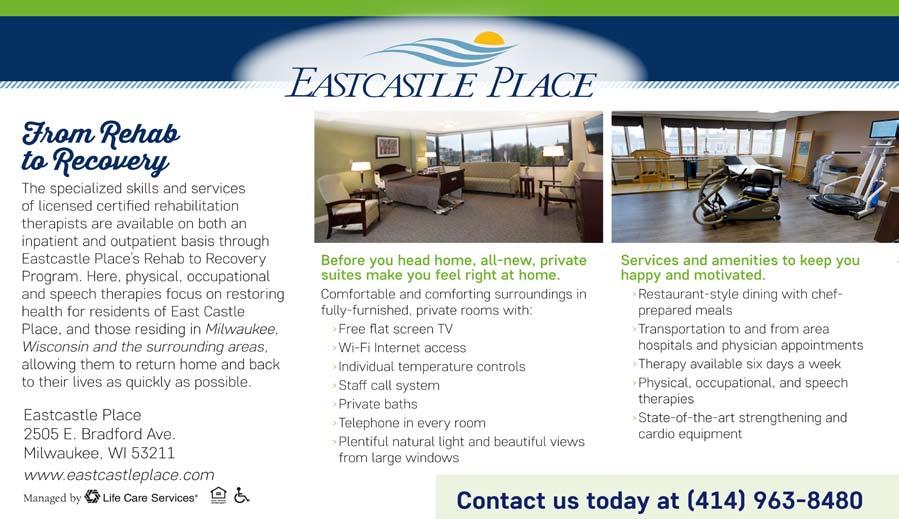
At our 5-Star-rated Health & Rehabilitation Center, we work with Milwaukee’s finest hospitals and physicians to offer a full spectrum of senior rehabilitation services and specialized medical treatment for chronic conditions. Under the direction of our medical director, our interdisciplinary team of devoted skilled nurses and therapists are here to help individuals meet any care goals through memory care, rehabilitation or skilled nursing. Our Health Center has achieved a Deficiency Free Health Survey for three consecutive years.
CHAPEL GARDEN APARTMENTS
1495 S Layton Drive
Milwaukee, WI 53215
414-708-8819
This property has one and two bedroom SENIOR units FOR 55+ and three bedroom family townhomes with NO age restrictions. All apartment homes will include new appliances, in-unit laundry, storage space, hi-speed internet and all utilities EXCEPT electric.
PROVIDENCE PLACE
815 Washington St, Grafton, WI 53024
262-377-9900
theprovidenceplace.org
Our residents enjoy their independence with a wide array of modern amenities both in their individual apartment homes and within The Providence Place community.
The Providence Place is a non-profit independent Christian Senior Community.We’ve worked hard to design a quality living environment that promotes fellowship, wellness and independence in a Christian atmosphere; and we’re excited about the opportunity to serve your residential needs. We invite you to call for a personal tour today! We always say, “You’re going to love it here.”
JUNIPER
COURT
3209 S. Lake Drive, St. Francis, WI 53235 canticlejunipercourts.org 414-744-5878
Spacious Efficiency and Numerous Multi-Style One-Bedroom Apartments. Independent apartments for applicants 55+ years.
THE AUBERGE AT BROOKFIELD 1105 Davidson Rd. Brookfield, WI 53045
262-641-9020
aubergebrookfield.com
THE AUBERGE AT OAK VILLAGE W128N6900 Northfield Dr. Menomonee Falls, WI 53051 262-532-0800
aubergeoakvillage.com
A specially designed neighborhood to serve the special needs of individuals living with Alzheimer’s disease, dementia and other forms of memory loss. Every day we make it a goal to go above and beyond to enrich the lives of our residents. With our SPARK Lifestyle program, a Montessori-inspired philosophy for care, we create a specialized, life-enriching environment that affords each individual maximum self-expression. The staff is committed to delivering a quality of care that meets the resident’s physical, social, spiritual and emotional needs.
Our talented team of dedicated and caring staff are there when you need them. It can be different…let us show you how.
THE SILVERNAIL
2451 Silvernail Rd.
Pewaukee, WI 53072
262- 896-2100
F: 262-896-8952
wimmercommunities.com/ senior-living
Spacious one and two bedroom units! Rent includes underground parking, free laundry and transportation grocery shopping.
Great Location! On-site wellness nurse, caring staff, salon, banking services, fitness room, chapel, store, resident computer, library, weekly activities/entertainment and many convenient senior services available on site. We are a mixed property offering Section 42, Section 8 affordableunits and market rate units
FRANKLIN PLACE
9201 West Drexel Ave Franklin, WI 53132 anthemmemorycare.com
414.409.5623
Memory loss affects everyone differently. As part of our mission at Franklin Place Memory Care, we are committed to understanding how each individual’s experience with dementia affects their quality of life. By striving to provide the highest standards of care, along with comfort and support to our residents and their families.
400 E. Centennial Dr. Oak Creek, WI 53154
414-762-7762
wimmercommunities.com/
senior-living
Spacious one and two bedroom units! Rent includes underground parking, free laundry and transportation grocery shopping. Great location! Caring staff, salon, fitness/game room, chapel, store, resident computer, libraries, outdoor pool, weekly activities/ entertainment and many convenient senior services available on site. We are a mixed property offering Section 42 affordable units and market rate units.
THE WESTERLY
409 Swan Rd, Pewaukee, WI 53072
www.livingwesterly.com
New Lake Country
Senior Living Coming 2025
Living options to meet you where you are in your life.
Independent Living, Assisted Living and Memory Care.
A vibrant and enriching lifestyle for seniors who wish to maintain their independence while enjoying the benefits of a supportive community.
TUDOR OAKS RETIREMENT
COMMUNITY
S77 W12929 Mc Shane Drive
Muskego, WI 53150
414-525-6500
abhomes.net
At Tudor Oaks we offer a senior lifestyle that reflects what’s important to you and customized to meet your idea of senior living at every life stage. From our beautiful apartment homes to assisted living and healthcare, Tudor Oaks offers the best in amenities, service and care. Join us for lunch and a tour to experience what we call, Classic Senior Style!
HIGHLANDS COMMUNITIES
highlandscommunities.com
Highlands Communities represent the very best that apartment and townhome communities designed for those 55 and better have to offer. Our communities are located in highly desirable areas throughout Wisconsin and have become recognized for having exceptional accommodations that are designed to suit every taste and style.At the Highlands Communities, we have created a cohesive culture within our organization and have developed a model of innovation, excellence in customer service, and hospitality that’s second-to-none.
STEEPLE VIEW
12455 W Janesville Road
Muskego, WI 53150
414-525-5500
steepleview.org
Steeple View is an active 55 and better Christian community. Its mission is to promote, maintain and preserve a safe, life enhancing, Christian based independent adult living community.
Steeple View’s Christian community cares for one another, while offering residents independence, security and a carefree, maintenance-free lifestyleing a home.
CHARTER SENIOR LIVING
Charter Senior Living of Mequon
10803 North Port Washington RD Mequon, WI 53092
262-324-6670
charterofmequon.com
At The Waters of Oak Creek, we promise to honor, see and hear you as a unique individual. By genuinely knowing and appreciating you, we’re able to deliver personalized hospitality, care, programming and accommodations for your overall wellbeing. We call this authentic connection The Waters Way—the basis of our distinctive style of gracious living.
VMP MANOR PARK
3023 S. 84 St.
Milwaukee, WI 53227
414-607-4322
vmpcares.com
VMP Senior Care community that provides a full continuum of care, including independent living apartments, assisted care, nursing care, short-term rehabilitation services, physician clinics, and ventilator care. VMP’s full continuum of care provides benefits to residents and family members because they never need to do another search for a community when their health conditions change, and they can get medical care right on campus.Monthly rental options are also available. VMP’s Senior Community Club is open to residents and community, offering in-house events, classes, and off-campus trips.
MISSION CREEK
3217 Fiddlers Creek Dr. Waukesha, WI 53188
262-832-1020
missioncreekseniorliving.com
Mission Creek is an industry leading assisted living community in the heart of Waukesha. Our campus allows each resident to enjoy life to the fullest with the peace of mind that our care team is always there to support them when needed.
REHABILITATION HOSPITAL OF WISCONSIN
1625 Coldwater Creek Drive, Waukesha, WI 53188
262-521-8800
www.rehabhospitalwi.com
The Rehabilitation Hospital of Wisconsin is a state-of-the-art, 40-bed hospital that is the result of a partnership between ProHealth Care and Lifepoint Rehabilitation to meet the growing rehabilitation needs of the region. We provide therapy services to individuals who have experienced a loss of function due to an injury or illness.
Our rehabilitation programs provide ongoing care and specialized treatment to patients throughout their recovery journey. We offer customized, intense rehabilitation tailored to the individual needs of those recovering from stroke, brain injury, neurological conditions, trauma, spinal cord injury, amputation, and orthopedic injury.
CLEMENT MANOR
3939 South 92nd Street Greenfield, WI 53228
414-321-1800
clementmanor.com
Clement Manor is a faith-based continuing care retirement community located in Greenfield, a suburb of Milwaukee, Wisconsin.
Our caregivers were picked not just for their abilities and education, but also for their ability to create caring and trusted relationships with their clients. Among the various services offered by our caregivers, a comprehensive selection of homemaking and personal care services are available to enable your loved ones to enjoy living at home without having to worry about the things they can no longer do for themselves.
Our Interactive Caregiving™ senior care service is designed to give exactly the right amount of care and help while also allowing our clients to engage in their own care to the best of their abilities. At the same time, our care plans are totally customizable, allowing us to collaborate with you to design the ideal care plan for your loved one
MILWAUKEE YOGA CENTER
3948 N Maryland Ave, Milwaukee, WI 53211 414-332-3551
www.mycmke.com
the Yoga Center is convenently located on the east side of Milwaukee
10243
414-604-2200
hearwi.org
Hear Wisconsin is a nonprofit that helps infants, children, and adults with hearing loss by eliminating communication and language barriers through personalized services, technology, and education.
Because there is no one right way for every person or family to cope with the challenges of hearing loss, HEAR Wisconsin provides services across the spectrum of communication and technology options. At HEAR Wisconsin, clients have the opportunity to make decisions and select a treatment plan that best meets their needs and goals.
Our diverse team of professionals includes Speech-Language Pathologists, Audiologists, Sign Language Interpreters and Wisconsin’s only Certified Auditory-Verbal Therapist, as well as other specialists in Deaf education and assistive technology.
R.E.A.C.H.
6310 N Port Washington RD www.reachclinic.org 414-961-1600
Mental Health Clinic
ALLIED SENIOR SERVICES
7421 W. Becher Street
414-545-7878
www.allied-senior-svcs.com
Contact: AnnaMarie
Allied Senior Services has been doing business since 1989. We have been endorsed by many large groups and their leaders. Allied Senior Services is a full service insurance agency handling many types of insurance from several companies. We meet your individual needs by shopping for the best product and the best price. Independent representatives, located in various areas of the state, provide excellent, convenient service for you.
GWAAR
gwaar.org
The Greater Wisconsin Agency on Aging Resources, Inc., is a nonprofit agency committed to supporting the successful delivery of aging programs and services in 70 counties and 11 tribes in Wisconsin. We provide aging lead agencies in our service area with training, technical assistance, and advocacy to ensure the availability and quality of programs and services to meet the changing needs of older people in Wisconsin.
PEACE OF MIND FUNERAL & CREMATION SERVICES
5325 West Greenfield Avenue, Milwaukee Wisconsin 53214 414-453-1562
peaceofmindfuneralhome.com
Peace of Mind was created to assist families in giving them an affordable option when making arrangements for funerals or cremations. By eliminating the high cost of operating a large funeral home, we are able to pass along substantial savings to the families we serve.
As a representative of American Republic Insurance Services, it’s my job to help you understand the risks and options you face with regards to your life and health insurance needs. After all, the decisions you make today will have a tremendous impact on your lifestyle and the retirement dollars you have worked so hard to save
CAPTEL
Captioned Telephone captel.com
800-233-9130
Ideal for people with some degree of hearing loss, the Captioned Telephone, or CapTel, works like any other telephone with one important addition: It displays every word the caller says throughout the conversation. CapTel phone users can listen to the caller, and can also read the written captions in the CapTel’s bright display window.
As a representative of American Republic Insurance Services, it’s my job to help you understand the risks and options you face with regards to your life and health insurance needs. After all, the decisions you make today will have a tremendous impact on your lifestyle and the retirement dollars you have worked so hard to save
HOME HEARING AID SERVICES
(262) 253-2151
Specialties:Hearing Aids / Devices, Hearing Professional Providing Free Test
Free repair on all makes Free custom ear molds
Make an appointment at Home Hearing Aid Services Inc, mobile clinic based from Hubertus, Wisconsin 53033.
LEARNING
IN RETIREMENT OF WAUKESHA COUNTY INC.
327 E Broadway Computer Lab, Waukesha, WI 53186 262) 695-3473
lirwc.org
LIRWC provides intellectual, cultural, educational and social opportunities to foster life-long learning for adults. Courses include a wide range of topics designed to appeal to adults. Individuals are welcome from all communities Members can take advantage of special events and trips to regional places of interest, special interest groups (SIGs) where like-minded individuals share a common interest, and courses in a variety of subjects and much more
Stair Crest
S67W14765 Janesville Road Muskego, WI
414-367-2400
StairCrest.org
Fairway Knoll
N112W17500 Mequon Road Germantown, WI
262-735-7900
FairwayKnoll.org
Avalon Square
222 Park Place Waukesha, WI
262-446-9300
AvalonSquare.org
Kirkland Crossings*
700 Quinlan Drive Pewaukee, WI
262-695-5800
KirklandCrossings.org
Dickson Hollow W156N4881Pilgrim Road Menomonee Falls, WI