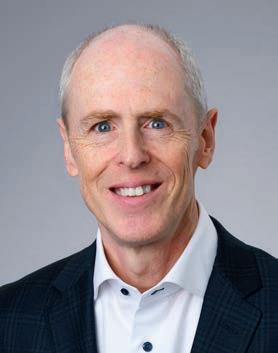
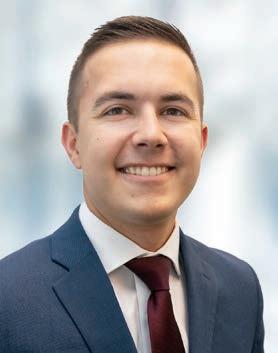
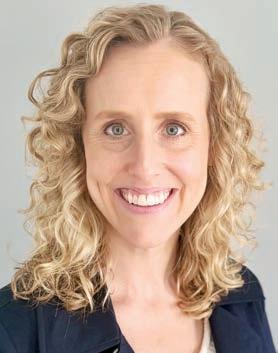
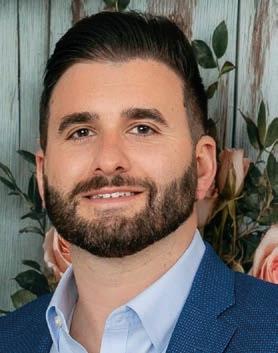
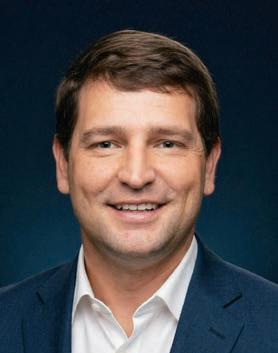
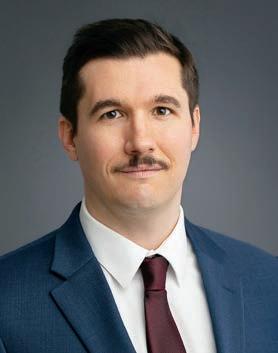
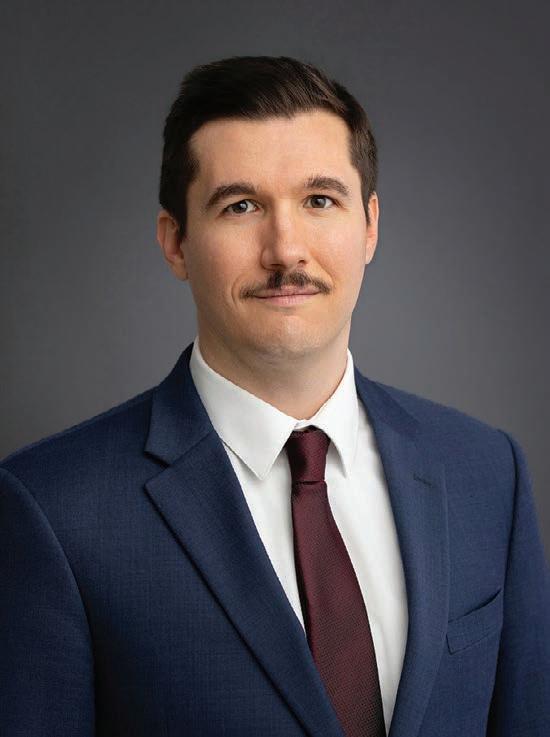
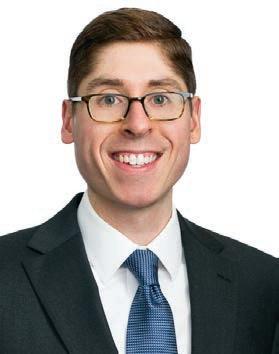
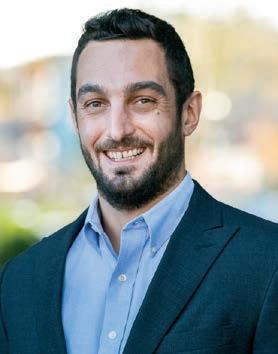
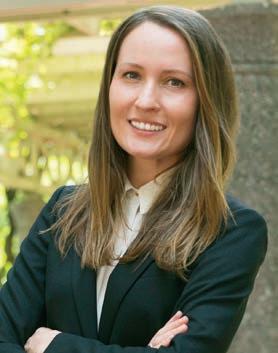
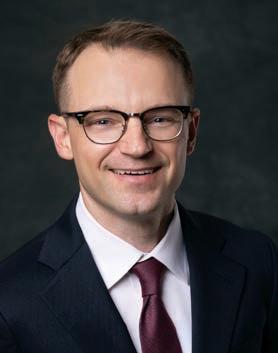
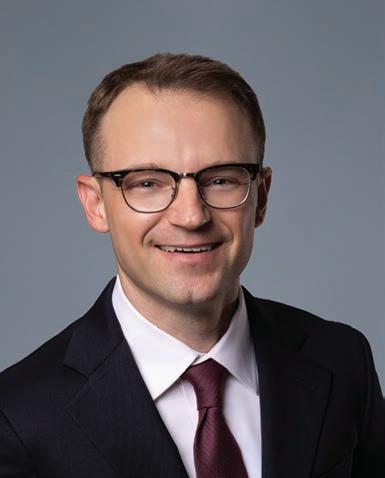
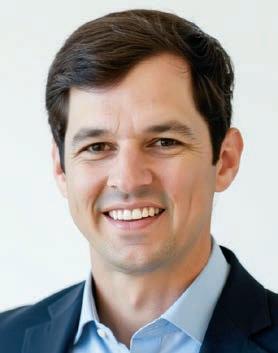
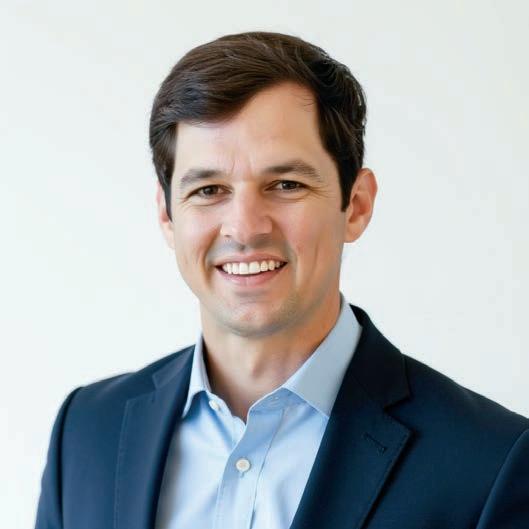
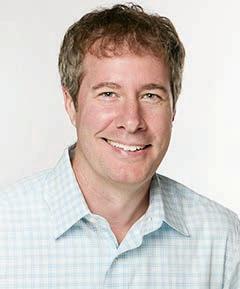
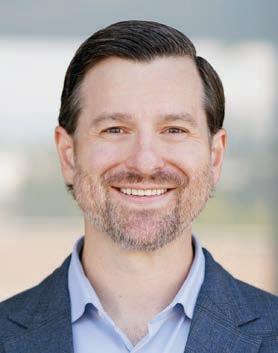
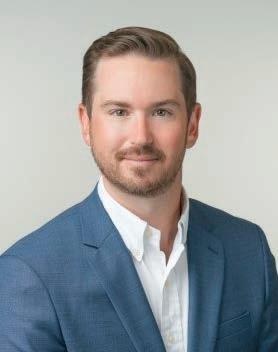
Congratulations to the 2026 recipients of SFNet’s 40 Under 40 Awards
We celebrate their contributions to the secured finance industry!
Parker Hudson, dedicated to advancement of the secured finance industry, is a U.S. law firm with an integrated collection of boutique practices dedicated to helping our clients excel.
TABLE OF CONTENTS. JUNE 2026 VOL. 82 ISSUE 3
COVER STORY
SFNET 40 UNDER 40 AWARDS PROFILES P8
SFNET 40 UNDER 40 AWARDS PROFILES
Meet the future leaders of your industry. In this issue, we highlight the recipients of SFNet’s 40 Under 40 Awards. 8
FEATURE STORIES
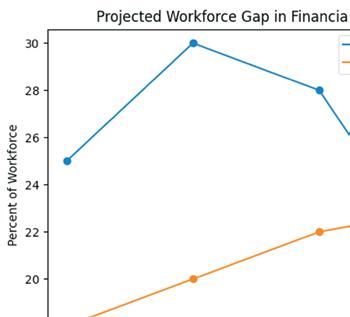
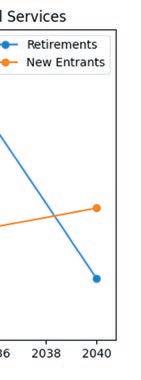
The Aging Cliff in Financial Services
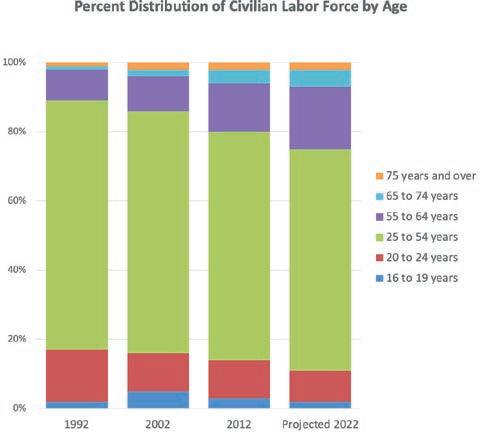
A quiet demographic shift is reshaping ¬financial services. As seasoned professionals retire and fewer graduates enter the sector, firms face a widening replacement gap that threatens leadership continuity and hard-won institutional knowledge. Drawing on workforce data and industry trends, this article explains what’s driving the “aging cliff” and outlines practical ways to bridge it—starting with mentoring and smarter talent development. 86 BRIAN RESUTEK
FEATURED STORY
THE AGING CLIFF IN FINANCIAL SERVICES P.86
TRENDS IN CYBER
Protecting Collateral Liquidity Through Cyber Operational Resilience
In asset-based lending, collateral is only as liquid as the systems that track it, move it, and turn it into cash. A single cyber incident can freeze shipping, invoicing, and borrowing-base reporting—shrinking availability before financials ever flash red. This article explains why cyber risk is now a core ABL liquidity risk, and how resilience-focused field exams protect capital. 90 BY
ALEXANDER N.M. NIEJELOW AND DOUG JUNG
Where Are They Now?
As we celebrate the ten-year anniversary of the inaugural SFNet 40 Under 40 Awards, we look at previous SFNet 40 Under 40 Award winners and what has changed in their careers — and in the industry — since they won. 92
BY EILEEN WUBBE
Articles
SFNET COMMITTEE SPOTLIGHT Women in Secured Finance Committee
This column highlights the hard work and dedication of SFNet’s Committee volunteers. Here we speak with Guelay Mese, managing director and head of Asset Based Lending, BNP Paribas and chair of SFNet’s Women in Secured Finance Committee. 97
BY EILEEN WUBBE
SFNET MEMBER PROFILE
Pasadena
Private Lending: Built by Entrepreneurs for Entrepreneurs
Pasadena Private Lending is a division of Pasadena Private Financial Group, a boutique multifamily office that manages wealth for about 200 families. 101 BY EILEEN WUBBE
TSL PULSE
The Secured Lender’s Industry Pulse
In this column, we ask industry executives about a hot topic. In this issue, we are asking: As the ABL industry goes through a generational turnover, and AI becomes more embedded, how can
organizations ensure institutional knowledge is passed down to newer entrants in the industry? 103
BY EILEEN WUBBE
Departments
NETWORK NOTES 4
TOUCHING BASE 9
The Secured Finance Network is the trade group for the asset-based lending arms of domestic and foreign commercial banks, small and large independent finance companies, floor plan financing organizations, factoring organizations and financing subsidiaries of major industrial corporations.
The objectives of the Association are to provide, through discussion and publication, a forum for the consideration of inter- and intra-industry ideas and opportunities; to make available current information on legislation and court decisions relating to asset-based financial services; to improve legal and operational procedures employed by the industry; to furnish to the general public information on the function and significance of the industry in the credit structure of the country; to encourage the Association’s members, and their personnel, in the performance of their social and community responsibilities; and to promote, through education, the sound development of asset-based financial services.
The opinions and views expressed by The Secured Lender’s contributing editors and authors are their own and do not necessarily express the magazine’s viewpoint or position. Reprinting of any material is prohibited without the express written permission of The Secured Lender
The Secured Lender, magazine of the asset-based financial services industry (ISSN 0888-255X), is published 6 times per year (Jan/Feb, March, June, July/Aug, Sept and Nov) $65 per year non-member rate, and $105 for two years non-member rate. SFNet members are complimentary.
Secured Finance Network 875 6th Ave., Suite 1802, New York, NY 10001 (212) 792 -9390 Email: tsl@sfnet.com www.SFNet.com
Periodicals postage paid at New York, NY, and at additional mailing offices. Postmaster, send address changes to The Secured Lender, c/o Secured Finance Network, 875 6th Ave., Suite 1802, New York, NY 10001
Editorial Staff
Michele Ocejo
Editor-in-Chief and SFNet Communications Director mocejo@sfnet.com
Eileen Wubbe Senior Editor ewubbe@sfnet.com
Aydan Savaser
Art Director asavaser@sfnet.com
Advertising Contact: James Kravitz
Chief Business Development Officer
T: 646-839-6080 jkravitz@sfnet.com
AIO Logic Announces Lydia Taylor as Executive Lead for Business Development
AIO Logic announced the appointment of Lydia Taylor as executive lead for Business Development. Based in Florida, Taylor will be responsible for driving nationwide business development efforts, building strategic relationships, and accelerating market penetration across banks, asset managers, and the specialty finance space.
Michael Goletz Joins Archway as Managing Director
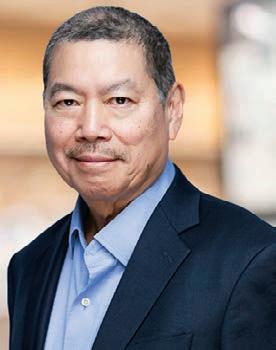
Based in Indianapolis, Michael Goletz will lead Archway’s efforts to expand its presence across the Midwest, sourcing and structuring customized financing solutions for middle-market companies. Goletz brings more than 20 years of experience in asset-based lending and middle-market finance, with a strong track record of originating, structuring, and executing complex transactions across both bank and non-bank platforms.
Blank Rome Welcomes Leading Corporate Partners Sean P. Coyle and Vijay S. Choksi in West Palm Beach
Blank Rome LLP is pleased to announce that Sean P. Coyle and Vijay S. Choksi have joined the firm as partners in the Corporate, M&A, and Securities group and the Cannabis industry team in its West Palm Beach office.
Debbie Sill Joins Bridgeport Capital as Senior Vice President of Business Development
Debbie Sill will be opening a regional sales office in Dallas and will report to Max Toledo. Sill brings many years of experience in the financial services industry and is extremely knowledgeable on factoring and all aspects of assetbased lending.
Buchalter Welcomes Richard Petretti as Partner in Los Angeles and San Diego
Richard Petretti has joined the firm as a partner in its Los Angeles and
San Diego offices and is a member of the Commercial Finance practice group. Petretti advises banks, financial institutions, and corporate clients on a wide range of sophisticated financing transactions, including syndicated loans, leveraged acquisition financings, recapitalizations, debtor in possession financings, exit financings, and other capital markets products.
Shane McDonald Joins Cahill Gordon & Reindel LLP’s London Office as Leveraged Finance Partner
Shane McDonald will be a member of the firm’s growing European Finance Practice, which saw the recent addition of marketleading finance partners, Jeremy Duffy and Lisa Seifman. McDonald’s extensive experience in debt finance includes regularly advising leading financial institutions, private credit funds and other institutional lenders on complex domestic and cross-border leveraged acquisition and refinancing transactions.
eCapital Appoints Richard Tong as Chief Legal Officer
Richard Tong will join eCapital’s senior leadership group, reporting directly to Marius Silvasan, CEO, and will oversee the company’s global legal operations.
Patrick Brangle Joins First Business Bank as Senior Vice President - AssetBased Lending
Based in St. Louis, Missouri, Patrick Brangle brings over 25 years of commercial financing experience to middle-market companies.
FGI Finance Grows East Coast Presence with the Addition of Michael Weissenburger
Based in Boston, Michael Weissenburger will focus on originating new business opportunities along the East Coast for FGI Finance, FGI’s asset-based lending division
First Bank Appoints Will Aiken to Lead Specialty Businesses
First Bank has appointed Will Aiken as managing director, Specialty Businesses, reinforcing its commitment to expanding and strengthening key areas of the Bank’s business.
First Horizon Bank Welcomes Meghan Donelon as Commercial Banking Group Manager in New Orleans
First Horizon Bank is pleased to announce that Meghan Donelon has rejoined its New Orleans Commercial Banking team as a Commercial Banking Group manager, bringing extensive leadership experience and strong community connections to the organization.
Great Rock Capital Names New Chief Risk Officer
Great Rock Capital announced that Andy Brown has joined the firm as chief risk officer, succeeding Kathy Auda upon her retirement. In this role, Brown will oversee both the underwriting and portfolio management functions and will report to Stuart Armstrong, CEO.
Hilco Global Launches Expanded Asset-Based Lending Platform Through its Hilco Global Asset Management Practice
Hilco Global announced the launch of its expanded asset-based lending platform through its Hilco Global Asset Management practice, a solutionsoriented investment manager making asset-based loans across a wide range of industries and capital needs.
Holland & Knight Continues Growth of Financial Services Section with TwoPartner Team in New York
Holland & Knight has bolstered its national Financial Services Section with the addition of experienced finance partners Kevin Eisenberg and Jeffrey Fried in New York.
Huntington Bank Expands Commercial Banking into Austin
Huntington National Bank continues to expand its commercial banking segment, known as Huntington Commercial Bank, across the U.S. by bringing its middlemarket and corporate banking capabilities to Austin and central Texas.
Huntington has hired veteran commercial banker Claire Harrison as senior managing director to oversee its commercial banking efforts in the market.
JPalmer Collective (JPC) Expands Team with Jonathan Joubran in Business Development Officer Role
JPalmer Collective (JPC) announced the appointment of Jonathan Joubran as business development officer. Joubran will be instrumental in connecting growthstage brands with tailored financing solutions and strengthening client partnerships.
JPalmer Collective (JPC) Brings on Ellie Jester as Chief of Staff
Ellie Jester joins JPC at a time of continued growth, as the firm builds out its team and deepens its focus on delivering relationship-driven capital to its partners. Jester brings a strong background in strategic planning, executive communication, cross-functional leadership, and project management.
M&T Bank Names Denise Viola Monahan as Regional President for Philadelphia and Southern New Jersey
Denise Viola Monahan brings to this crucial role over 40 years of financial services experience, deep regional knowledge, leadership acumen and a passion for community engagement, reinforcing M&T’s commitment to delivering exceptional service to its customers.
Moritt Hock & Hamroff Continues Florida Expansion
Moritt Hock & Hamroff, a New York headquartered commercial law firm, announced that it has doubled the size of its Plantation office, marking a step
further in the firm’s continued growth in the Florida market. The firm also announced the addition of two attorneys, demonstrating the firm’s continued commitment to growing its South Florida team. David A. Blansky joins the firm’s Litigation and Creditors’ Rights, Restructuring & Bankruptcy Practice Groups as Counsel, and Justin Beardsley joins the firm’s Secured Lending and Finance Group as an Associate.
nFusion Capital Promotes Melanie Guzman, CAEF, to Executive Vice President of Factoring
nFusion Capital announced the promotion of Melanie Guzman, CAEF, to executive vice president of Factoring. In her new role, Guzman will spearhead the firm’s nationwide factoring growth strategy and oversee its international portfolio management team.
Norton Rose Fulbright Names Kessar Nashat as US Co-Head of Business Practice Group
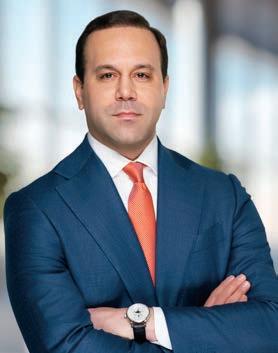
Global law firm Norton Rose Fulbright announced that New York partner Kessar Nashat has been appointed US co-head of its Business Practice Group, effective April 1, 2026. Kessar will serve alongside Sheldon Nussbaum, who has led the group for the past five years, ensuring a seamless leadership transition after Sheldon ceases in the role at year end.
Provident Bank Expands ABL Team with the Addition of Bruce Gibson as First Vice President, Senior Relationship Manager
Provident Bank announced that Bruce Gibson has joined the company as first vice president, senior relationship manager, on the Asset-Based Lending (ABL) team. In this role, Gibson will be responsible for originating, structuring, and managing complex asset-based lending relationships, while driving new business development and supporting clients across the ABL portfolio throughout the Northeast.
Regions Bank Names Veteran Banker
Amy Barrentine as Head of Regions
Business Capital
Regions Bank announced Amy Barrentine has been elevated to serve as head of Regions Business Capital, a specialty finance team within the bank’s Corporate Banking Group. An important competitive differentiator for Regions Bank, Regions Business Capital develops tailored services for companies at all stages of their life cycles.
Robert Meyers Named Chief Executive Officer of Republic Business Credit
Robert Meyers, who has served as the company’s president and chief commercial officer for the past decade, was named CEO and succeeds co-founder Stewart Chesters, who will assume the role of president and serve as interim chief credit officer. Republic started with one office in New Orleans, five employees and one client.
Republic Business Credit Adds Jerry Friedrichs as Senior Vice President to Strengthen Underwriting Excellence
In this role, Jerry Friedrichs will be responsible for credit analysis of prospective and existing clients, transaction structuring, leading due diligence efforts, and collaborating with senior Republic leaders to move deals to approval. He will be based in the New Orleans headquarters and report to Brian Daray, senior vice president, underwriting manager.
Republic Business Credit Welcomes Three Account Executives to Support Strategic Growth
Republic Business Credit announced the hiring of Eddie Miranda, Kenny Singh and Jack Wallis as account executives. Singh will serve as vice president, account executive, and support asset-based lending clients under the leadership of senior vice president Bruce Sarver. Miranda and Wallis will both serve as assistant vice president, account executive, and support recourse factoring clients under the leadership of senior vice president Danika Louis.
Sue Duckett Joins Republic Business Credit as Executive Vice President, Head of Factoring
Republic Business Credit announced that industry veteran Sue Duckett has joined the company as executive vice president, head of Factoring. As a key member of the executive leadership team, Duckett will oversee the recourse factoring portfolio and drive strategic factoring acquisitions, a role that is pivotal to Republic’s accelerated growth trajectory.
Helen Ye Joins Rockland Trust as Senior Vice President, Franchise Finance Team Lead Rockland Trust is pleased to announce that Helen Ye has joined the Bank as senior vice president and Franchise Finance Team Lead. She will specialize within the Corporate Banking Franchise Finance team, supporting the continued expansion of the Bank’s franchise banking growth initiatives nationwide.
Luke Joyner Joins Rosenthal Capital Group as a Senior Business Development Officer Based in Charlotte Rosenthal Capital Group (RCG), the leading private commercial finance firm in the United States, announced that Luke Joyner has joined as a senior business development officer based in Charlotte.
SG Credit Announces Hiring of Bill Drmacich as Managing Director, Originations
SG Credit Partners is pleased to announce the addition of Bill Drmacich as a managing director in its Commercial Finance team. Drmacich is tasked with driving the strategic direction of the group, expanding nationwide coverage footprint and building a sponsor coverage practice.
SG Credit Announces Hiring of Claire McNamara as Director Underwriting
SG Credit Partners’ Consumer Products Division announced the hiring of Claire McNamara as director of Underwriting and Portfolio Management.
Siena Lending Group LLC Appoints Jim Doyle as Managing DirectorOriginations
In his new role, Jim Doyle will be responsible for originating, structuring, and funding asset-based financing solutions with commitment amounts ranging from $20 to $250 million for companies in the Midwestern United States.
Vonetta Greene Joins SLR Business Credit
Vonetta Greene recently joined SLR Business Credit as vice president, field examiner. Greene, with over 20 years of field examination experience, has held field examiner roles at Presidential Financial, PNC Bank, Bibby Financial Services, CBIZ and Silicon Valley Bank and holds a Master of Accounting from Kennesaw University.
Tiger Group Adds Stu Kessler to Board of Advisors
Tiger Group announced that Stuart Kessler has joined its Board of Advisors, bringing 50 years of experience as a consultant, senior executive and creative problem-solver.
Tiger Group Promotes Chad Farrell to Senior Managing Director
Tiger Group announced the promotion of Chad Farrell to senior managing director of its Commercial & Industrial (C&I) asset-disposition platform. In leading C&I, Farrell structures and executes complex, multi-asset transactions across a broad range of industrial verticals.
CELEBRATING THE CHANGE-MAKERS
10 Years of SFNet’s 40 Under 40 Awards
As SFNet marks the 10th anniversary of our 40 Under 40 Awards, this year’s program is both a celebration and a milestone. Over the past decade, these honorees have come to symbolize what makes secured finance so dynamic and resilient: talented, principled leaders who step forward in times of uncertainty and help move the industry with them.
When SFNet launched the 40 Under 40 Awards in 2016, the goal was simple, but ambitious: to shine a spotlight on the rising stars who would shape the future of our community. Ten years later, that vision has become a reality. Alumni of this program are now leading and founding businesses, building teams, driving innovation, and mentoring the professionals who follow in their footsteps. Many have played integral roles in SFNet.
Each year, our 40 Under 40 celebration in New York City brings that story to life. It creates a rare moment where established leaders and emerging talent share the same room, the same stage, and the same sense of purpose about where the industry is headed next. This year’s gathering carries added meaning as we look back on a decade of honorees while welcoming a new class into this growing community.
The 2026 40 Under 40 class represents the best of what comes next for our industry. These professionals are not just high performers; they are problem-solvers, collaborators, and change agents who have earned the trust of their colleagues and clients. Their stories underscore how much can happen when opportunity, preparation, and commitment converge.
Importantly, many of this year’s honorees are also giving back—to SFNet, to their firms, and to their communities. They serve on committees and chapter boards, contribute as speakers and thought leaders, and dedicate time to mentoring and volunteer efforts. That kind of engagement strengthens the fabric of our industry as well as our communities.
Selecting just 40 honorees from an outstanding field of nominees is never easy. I am deeply grateful to this year’s judges, Jennifer Wallace (Chair), Wells Fargo Capital Finance; Kristine Darroch, eCapital; Doug Jung, Hilco Global; Jordan Klein, Winston Taylor; David Kurzweil, Greenberg Traurig; and Randy Mitzman, SLR Digital Finance.
Be sure to turn to page 92, where senior editor Eileen Wubbe spotlights several past 40 Under 40 recipients including a few from the inaugural 2016 class.
As seasoned professionals retire, firms face a widening replacement gap that threatens leadership continuity and
hard-won institutional knowledge. On page 86, drawing on workforce data and industry trends, Brian Resuek of Republic Business Credit explains what’s driving the “aging cliff” and outlines practical ways to bridge it—starting with mentoring and smarter talent development.
On page 90, in Protecting Collateral Liquidity Through Cyber Operational Resilience , Doug Jung and Alexander Niejelow of Hilco Global explain why cyber risk is now a core ABL liquidity risk, and how resilience-focused field exams protect capital.
RICHARD D. GUMBRECHT SFNet Chief Executive Officer
In the Industry Pulse column, we ask industry executives about a hot topic. In this issue, we are asking: As the ABL industry goes through a generational turnover, and AI becomes more embedded, how can organizations ensure institutional knowledge is passed down to newer entrants in the industry?
To the 2026 40 Under 40 class: Congratulations! As we celebrate ten years of this program, you join a group of peers who have helped define what leadership in secured finance looks like. The industry’s future is in very capable hands, and I look forward to seeing where you take it.
Senior Manager, Turnaround and Restructuring Services
BDO
Consulting Group, LLC
Anthony Del Piano is a senior manager, Turnaround & Restructuring Services at BDO Consulting Group, LLC based in New York. Anthony has experience representing clients in various stages of the restructuring process including bankruptcy reorganizations and out of court workouts for debtors, lenders and unsecured creditors. Recently, he has been involved in engagements within the agriculture, retail, and manufacturing industries, delivering comprehensive financial and operational assessments, developing three-statement financial models, constructing cash flow forecasts to improve liquidity and assisting with various reporting requirements throughout the bankruptcy process.
Additional contributions to the BDO Turnaround & Restructuring team include participating in the firm’s Rising Leaders program and being selected to the Future Leaders Growth Cohort. He also plays an active role in mentoring and coaching staff-level associates on various restructuring topics and assists with the firm’s internship program to support recruiting and hiring efforts.
Anthony holds a Bachelor of Business Administration, concentration in finance, from Loyola University Maryland.
What did you do differently that helped you stand out early in your career?
At the outset of my career, I made it a priority to embrace every opportunity that presented itself, even when it required taking on unfamiliar responsibilities. This open mindset allowed me to gain a wide range of experience and expand my skill set, which has proven invaluable both professionally and personally. By being receptive to new challenges, I developed a strong foundation of knowledge that continues to grow as I advance in my career. As a turnaround and restructuring advisor, having a diverse background enables me to deliver tailored guidance to clients across different roles and industries. Being flexible and willing to learn has helped me become a valuable resource and contributed to the growth of my firm.
Additionally, I focused on being proactive and taking initiative early in my career. Anticipating potential challenges and looking for ways to contribute beyond my immediate responsibilities demonstrated my commitment to my team. This forward-thinking approach not only helped me address issues quickly but also showed my dedication to adding value wherever possible.
What advice would you give to other young professionals looking to build a successful career in secured finance?
For young professionals seeking to establish a successful career in secured finance, I offer the following advice:
Embrace Mentorship: Mentorship provides invaluable insights and perspectives from seasoned colleagues within the industry. Being receptive to guidance is essential to professional advancement and maintaining intellectual curiosity while posing thoughtful questions will further accelerate your development.
Pursue Continuous Learning: Remain proactive in developing your knowledge and skills. Regularly familiarize yourself with industry trends, regulatory updates, and the evolving landscape of secured finance.
Understand Complex Relationships: Develop a holistic understanding of company-lender relationships and the strategic needs of all stakeholders to effectively navigate challenging situations. It is essential to comprehend the various dynamics involved when interacting with secured lenders. Adapt to Technological Advancements: Stay informed about innovations, such as artificial intelligence tools. Learn how to leverage these technologies to enhance your firm’s performance, stakeholder outcomes, and your own professional development.
By implementing these recommendations, you can effectively position yourself for a distinguished and rewarding career in secured finance.
What’s a skill you’ve developed that doesn’t show up on your resume, but is applicable to this industry?
Adaptability is a skill I have honed throughout my career, especially in environments where change is constant and unpredictable. In the turnaround and restructuring industry, projects can shift rapidly in scope, objectives, and priorities. I’ve learned to adjust my approach on the fly, whether it means quickly absorbing new information, responding to shifting client needs, or collaborating with different teams across multiple projects. I’ve developed the ability to maintain a clear focus on big picture objectives and strategic goals, even when confronted with unforeseen obstacles or pressured by looming deadlines. Being able to adapt not only helps me deliver effective results but also fosters stronger relationships with both junior and senior colleagues as well as clients who rely on my ability to navigate uncertainty with confidence.
Congratulations
Anthony Del Piano
People who know Business Restructuring and Turnarounds, know BDO.
Anthony is a Senior Manager with BDO Consulting Group and is based in New York. Having spent more than 9 years helping businesses in distress, Anthony advises clients on operational and financial turnarounds with a focus on the consumer products, agriculture, and energy industries. He brings knowledge and leadership skills to every project and exemplifies BDO’s core purpose of helping people thrive every day.
ANTHONY DEL PIANO, Senior Manager BDO Consulting Group, LLC adelpiano@bdo-ba.com
SFNET’S 40 UNDER 40 PROFILES
BUSINESS CONSULTING/TURNAROUND
JACOB GRALL Partner Novo Advisors
As a partner at Novo Advisors, Jacob Grall specializes in turnaround management and restructuring. He joined Chicago-based Novo Advisors in 2015 as the firm’s first analyst. A decade later, he was promoted to partner in part for his technical precision and steady leadership in high-pressure situations. Over that time, Jacob has led or supported engagements across a range of industries, advising clients through in- and out-ofcourt restructurings, operational turnarounds, refinancings, and sale transactions. He has also held interim executive and financial leadership roles during periods of transition. In 2024, Jacob’s leadership contributed to two engagements that earned his firm two notable industry accolades, the TMA’s Turnaround of the Year Award and the SFNet’s Transaction of the Year Award.
Jacob holds a degree in accounting from the University of Illinois and is a Certified Public Accountant in Illinois. Outside of work, Jacob is an avid DIYer and is often working on projects around his home. He and his wife, Viola, and their dog, Pepper, share their time between Chicago and California.
What did you do differently that helped you stand out early in your career?
I raised my hand for as many things possible, both on clients and within Novo. I also made a point to understand the engagements my colleagues were leading, how they approached challenges, and what I could learn from them. Novo’s culture encourages people to take responsibility, stay connected across teams, and share experiences. Being in that environment, and leaning into that early on, was a meaningful part of what helped me stand out.
I also studied a lot. Coming from public accounting into restructuring, everything was new to me. During my formative years, I spent a lot of time studying my clients’ business, financial and operating reports, and my own models and analyses looking for ways to improve them and communicate them effectively.
How are you keeping up with rapidly changing technology (e.g., AI) in secured finance today? What do you think its role will look like in the future of the industry?
With the rapid pace of AI, one of the challenges has been distinguishing between what will have lasting value and what is just new. I’ve led efforts at Novo to evaluate that in practice and understand where these tools can meaningfully contribute to our workflows.
I don’t see AI replacing the role of an advisor. The judgment required, the variability across clients and circumstances, and the skills to navigate complex interpersonal dynamics remain inherently human. Where we have seen value is in improving efficiency in organizing information, accelerating analyses, and supporting recurring deliverables, so teams can spend more time on decision-making and execution.
As regulatory and security frameworks evolve, I expect the role of AI in our industry to center on controlled, enterprise-level adoption. Firms that build tools integrated into their workflows and informed by their data and processes, while maintaining their professional judgment, will have a clear advantage.
What’s a skill you’ve developed that doesn’t show up on your resume, but is applicable to this industry?
Navigating the personal side of an engagement.
In restructuring, we are often brought into situations that are high stress, emotional, and fast-moving. People need answers quickly, and how you show up in those moments really matters. Success depends not just on analysis, but on teamwork, support, and calm leadership –factors that can determine whether a situation stabilizes or deteriorates.
A key part of my role is listening and gathering perspectives across an organization. Those conversations are essential to forming a grounded plan and aligning an organization around it, even when the path forward is difficult. This approach builds confidence among stakeholders, allowing everyone to move forward, knowing the plan is achievable and the risks and opportunities have been carefully considered.
What are you most passionate about outside of your professional life, and how do those passions influence your work?
I really enjoy do-it-yourself home renovation. I got this trait from my father, who is an engineer. From a young age, I shadowed him as he worked on projects around our house, from small fixes like changing a light fixture to large ones like wiring an unfinished basement.
Years later, when I bought my first home, I took several rooms down to the studs and set off on rebuilding them from the ground up.
These projects demand precision and careful planning. You have to look beyond what’s in front of you, envision what it could become, and then figure out how to get there. That mindset closely mirrors how I approach my work, especially when helping businesses in distress. Renovation and restructuring feel like a natural match.
CONGRATULATIONS
Jacob Grall
PARTNER, NOVO ADVISORS
HONORING ALL SFNET’S 40 UNDER 40 AWARD
WINNERS
Novo Advisors specializes in business turnaround and performance improvement for middle-market companies. When businesses reach critical inflection points, Novo brings the financial expertise, operational experience, and fresh perspective needed to navigate complex challenges.
The Novo Voice Hear directly from our leadership team.
SFNET’S 40 UNDER 40 PROFILES
BUSINESS CONSULTING/TURNAROUND
BRITTANY MORRISSEY
Director
Riveron
Brittany Morrissey is a director in Riveron’s Lender Services practice. She is responsible for sourcing new clients, managing existing relationships with lenders and borrowers, and overseeing the execution of asset-based lending and cash flow diligence engagements. Brittany leverages her ABL experience to help clients evaluate collateral, free cash flow, and industry fundamentals to mitigate credit risk and identify opportunities within debt structures. She effectively partners with clients to deliver the full breadth of Riveron’s capabilities throughout the transaction lifecycle. Brittany currently co-chairs the Entertainment Committee for the SFNet Midwest Chapter.
Prior to joining Riveron, Brittany was a director in BMO’s Asset-Based Lending group where she managed a $1-billion loan portfolio and led a team responsible for underwriting and executing ABL facilities. She also established and led a team dedicated to ABL origination for capital markets transactions supporting acquisitions and recapitalizations.
Brittany received her Bachelor of Business Administration from the University of Wisconsin-Madison and began her commercial banking career at First Midwest Bank. She lives in Frankfort, IL, with her husband, Mike, and their daughter, Madeline.
What advice would you give to other young professionals looking to build a successful career in secured finance?
Build your network before you need it. The secured finance industry is a surprisingly small world, and many of your early relationships become your most valuable sources of business, mentorship, and career opportunities in the future. Early in my career, I made it a priority to spend time with colleagues both inside and outside the office. Make the effort to jump on the extra call with your team, grab lunch with coworkers, or show up to the industry event after work.
Your network will naturally expand with every transaction you work on. Get to know the individuals involved and the role they play — both external partners and internal departments. I found that picking up the phone, staying responsive, and acknowledging the value of every role were the most effective ways to build meaningful connections. Over time, developing these relationships will create efficiencies, strengthen collaboration, and build a team that wants to work with you again. Building relationships around transactions is just as important as the deal itself.
In your opinion, what’s the most underrated skill in secured finance?
I believe adaptability is the most underrated skill in secured finance. Our industry moves faster than ever as credit cycles shift, borrower expectations evolve, and competition intensifies. Adaptability means responding to changing client needs, embracing new tools, and rethinking deal structures. I experienced this firsthand in 2020 when risk appetites shifted overnight, PPP lending reshaped priorities, and remote work transformed team dynamics. Embracing change and maintaining a forward-thinking mindset are true competitive advantages.
How do you see the secured finance landscape evolving over the next 5 to 10 years? What trends should professionals be paying attention to?
Over the next decade, I expect secured finance to undergo a meaningful generational shift that will redefine how our industry leads, collaborates, and innovates. A new group of professionals is stepping into leadership roles and offering fresh perspectives, a strong appetite for modernization,
and a willingness to improve long-standing processes. This generation has already adapted quickly to major shifts in the industry — from managing remote teams to competing with an expanding private credit market to integrating emerging AI technologies. That experience will position them to lead the industry through the next wave of change.
Technology is the top trend to watch, as AI will shift from being a helpful add-on to a foundational part of how the industry operates. Companies are already using AI to streamline data extraction, accelerate analysis, and improve monitoring. As these technologies mature, I expect automation to further replace manual work, provide stronger insights for decision-making, and significantly increase speed to market.
This generational shift will matter even more as AI becomes central to how the industry leads and operates. The most successful leaders will be those who adopt new tools early and integrate them thoughtfully into their processes and teams. I am excited by the opportunity to learn from the next generation and to combine their comfort with AI with my own industry expertise to shape more modern, efficient ways of working.
What are you most passionate about outside of your professional life, and how do those passions influence your work?
I am passionate about spending time and making memories with my family and friends. Outside of Chicagoland, my family enjoys our time most in Wisconsin, Michigan, and Florida. My husband and I recently welcomed our daughter, and it has been so fun introducing her to all our people and favorite places. I am a big believer in living in the moment and being present.
This mentality carries over into my work life as I genuinely enjoy the people I work with each day. I have been fortunate to have remarkable colleagues and teams that challenge me, support me, and make the work more meaningful. Finding a strong cultural fit within an organization is incredibly important, and it is something that continues to motivate me.
SFNET’S 40 UNDER 40 PROFILES BUSINESS DEVELOPMENT
JEFFREY THOMAS MANGIAFICO
Senior Vice President, Originations
Assembled Brands Capital, LLC
Jeffrey Mangiafico began his career in 2014 at a boutique commercial bank, driven by a passion for helping entrepreneurs secure the working capital needed to scale their businesses. After gaining foundational experience as an Underwriter and AVP, and later serving as a VP of Sales for a private ABL lender, Jeffrey joined Assembled Brands in 2021. Since then, he has personally led over 30 strategic credit facilities for high-growth omni-channel brands, deploying over $100 million in growth capital.
Promoted to senior vice president in 2025, Jeffrey is recognized for his ability to craft outside-the-box solutions for complex collateral and risk structures, a necessity in the modern asset-based lending space. Beyond his deal-making success, he is deeply committed to mentoring junior originators on his team. Jeffrey remains dedicated to the core principle that drew him to the industry: providing creative financing solutions that fuel emerging consumer brands and drive the broader economy.
What did you do differently that helped you stand out early in your career?
Early in my career, I operated on a simple but disciplined framework: show up, work hard, and ask the right questions. However, the most critical differentiator for me was learning how to truly listen. In fast-paced sales environments, many people tend to listen just to find an opening to respond, but it is so important to listen with the goal of understanding Whether I was sitting with a senior colleague, a coworker, or a prospect, I realized that the most valuable insights weren’t in the manuals, but in the way experienced professionals processed information and solved problems in real-time.
I was never content just staying at my own desk. I took a proactive approach to learning by asking senior staff if I could sit with them to observe their calls or shadow their meetings. I wanted to hear the cadence of their negotiations and understand the “why” behind their decision-making. By being present and engaging in those conversations, I was able to absorb the nuances of the industry that you can only get through direct exposure. That commitment to being a student of the game, prioritizing observation over speaking, is what allowed me to build the foundation I needed to get to where I am today. It’s a habit I still carry with me as I lead my own team now.
What are you most passionate about outside of your professional life, and how do those passions influence your work?
Outside of my professional life, I am an avid golfer. I’ve always found that the game is a perfect metaphor for both life and a career in secured finance. There’s an old quote that says, “You sometimes get good breaks from bad shots, and bad breaks from good shots.” Golf is a mentally tough game that demands you remain objective under pressure; you have to calculate risks
and anticipate outcomes several steps ahead. It has taught me that even when a deal becomes complex or a ‘shot’ doesn’t go as planned, success depends on your ability to stay composed, recalibrate your strategy, and focus entirely on the next move. That resilience is essential when navigating the shifting landscape of modern credit markets.
Beyond the golf course, I am deeply committed to my family, our dog, and giving back to the community. My family and I are passionate about animal welfare and look for every opportunity to support animals in need. However, one of my most personal passions is supporting our nation’s veterans. In addition to our monthly support for the USO and the Tunnel to Towers Foundation, I’ve started a tradition every Memorial Day and Veterans Day where I place 500 American flags on the graves of veterans at cemeteries throughout Morris and Essex County, New Jersey.
These passions outside of the office are what fuel my performance inside of it. Placing those flags is a grounding reminder to respect those who have come before you and the sacrifices they made. Whether I’m on the course or volunteering, these experiences instill a never-give-up attitude and a drive to work hard with integrity. They remind me that success isn’t just about the numbers on a scorecard or a balance sheet; it is about the grit you show when things get tough and the respect you show to the people around you.
SFNET’S 40 UNDER 40 PROFILES BUSINESS DEVELOPMENT
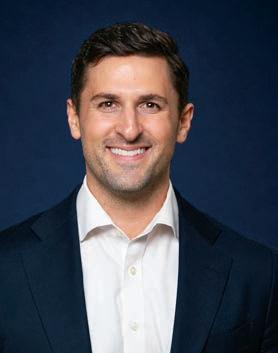
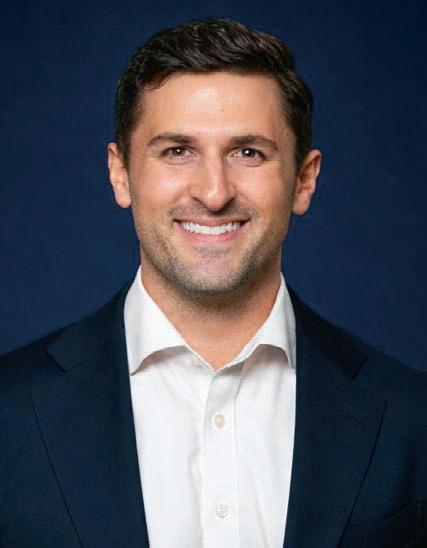
JAKE GOLDBERG
Managing Director, Originations
Great Rock Capital
Jake joined Great Rock Capital in 2025 and is responsible for originating new investment opportunities across the Northeast, with a focus on private equity groups.
Jake has over a decade of experience in middle market lending and capital markets. Prior to joining Great Rock, he was an executive director in the Asset Based Lending group at J.P. Morgan, where he led origination and capital markets efforts for middle market clients across North America. Over his 12-year tenure at J.P. Morgan, he specialized in structuring and syndicating asset-based financings for public, private, and sponsor-owned businesses, including leveraged buyouts and restructuring transactions. Earlier in his career, Jake was an investment banking credit analyst in J.P. Morgan’s Specialty Finance group, where he supported a national portfolio of non-bank financial institutions across mortgage origination, commercial finance, fintech, and other financial services sectors.
Jake earned a BA in economics from New York University and an MBA from Yale University.
What advice would you give to young professionals looking to build a successful career in secured finance?
Maximize your deal reps early. Get involved in as many transactions as possible across different industries, even if that means elbowing your way into opportunities that don’t perfectly align with your job description. Reps compound, and there is no substitute for watching how deals actually come together.
As your experience builds, keep your own record of what you and your colleagues work on. Track structures, economics, and the investors in each deal. Don’t just study how deals are put together. Think hard about why they’re structured that way. Pay attention to what works, what doesn’t, and how obstacles get cleared.
Every ABL deal is different, but they often rhyme. Patterns emerge when you observe transactions with discipline and purpose. That perspective becomes invaluable as it builds your conviction in critical moments. The people who stand out are the ones who connect the dots, bring context to each new opportunity, and show up with a point of view.
What’s the most underrated skill in secured finance?
Adjusting your frame of reference and your language to your audience. In this industry, you interact with a wide range of stakeholders: sponsors, CEOs, CFOs, advisors, lawyers, appraisers, and risk managers, each with different priorities and pressures. It’s easy for secured finance professionals to default to technical ABL language. Technical skills matter, but failing to read your audience can quietly spoil a good opportunity.
Many of the stakeholders across the table in a secured finance transaction aren’t focused on advance rates, dilution thresholds, or EBITDA add backs. Senior stakeholders care about outcomes: Can they hit their investors’ growth targets? Can they close the acquisition they’ve been chasing? Can they walk away from the table feeling heard and understood?
The real skill is genuinely understanding what matters most to the person in front of you and engaging on their terms. Talk less. Listen more. Ask the right questions for that audience, and translate your intentions into their priorities. Done consistently, that builds trust and I think makes one more effective.
How do you see the secured finance landscape evolving over the next five to ten years?
AI has dominated the headlines for years, with most of the conversation focused on software and its impact on private credit. What gets less attention is what the AI evolution means for the types of businesses that secured lenders finance.
For years, asset-rich businesses were considered more exposed to disruption than asset-light ones. That view has shifted. AI is making asset-light businesses easier to replicate and compete with, lowering barriers in ways that weren’t possible before. Physical businesses, by contrast, still benefit from real infrastructure, embedded supply chains, and operational complexity that are much harder to displace. Asset-rich industries aren’t immune to change, but disruption tends to play out differently and over a longer horizon.
Private equity is beginning to adjust to this shift. Sponsors with flexibility across sectors are leaning further into asset-rich businesses, where barriers to entry are clearer and downside protection is stronger. That shift plays directly into the core strengths of secured finance and should be a meaningful opportunity for the industry in the years ahead.
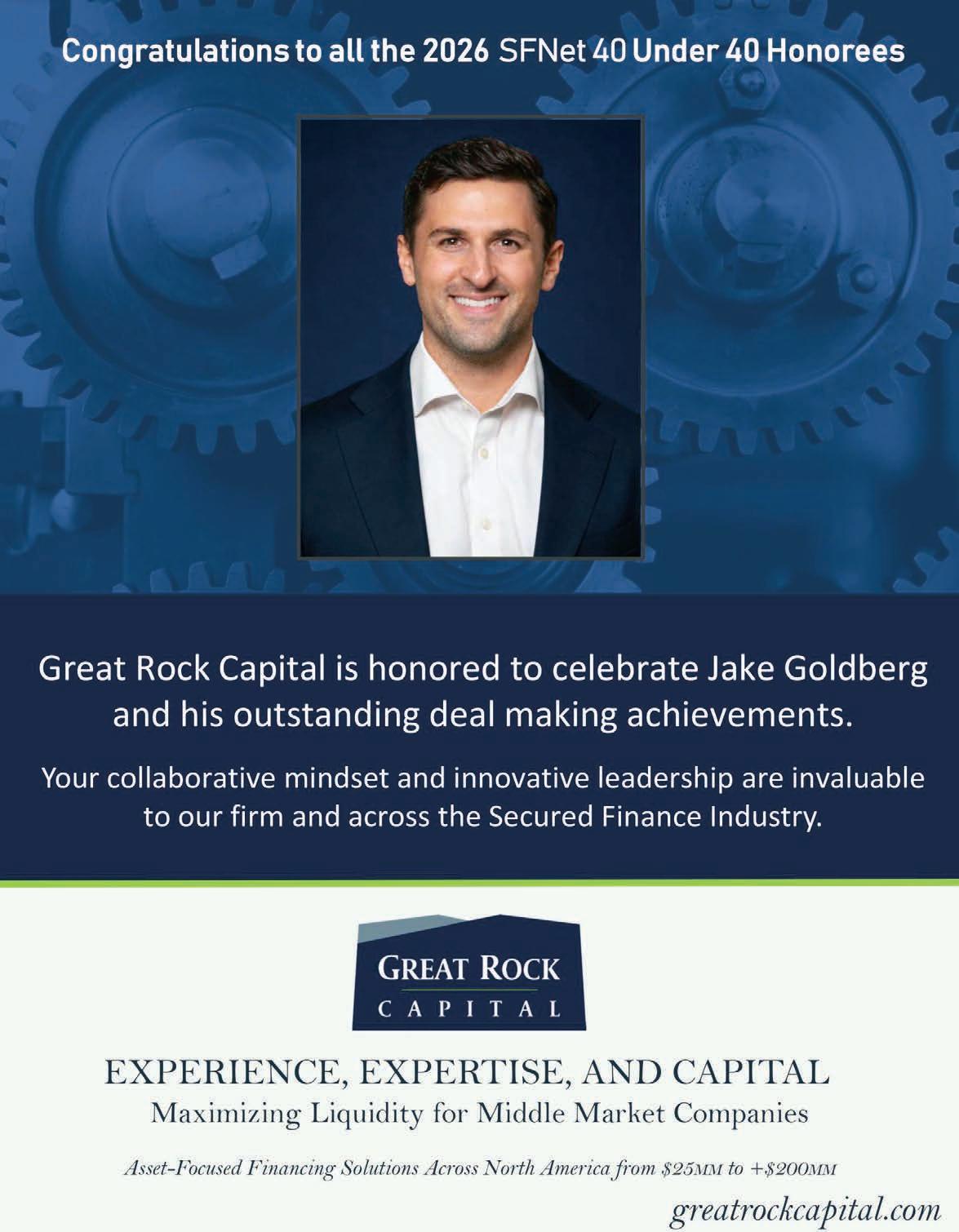
Great Rock Capital is honored to celebrate Jake Goldberg and his outstanding deal making achievements. Your collaborative mindset and innovative leadership are invaluable to our firm and across the Secured Finance Industry.
SFNET’S 40 UNDER 40 PROFILES BUSINESS DEVELOPMENT
ERIC DORNER Senior Vice President, Business Development Republic Business Credit
Eric brings over 15 years of experience in factoring and asset-based lending to his role as the midwest regional representative for Republic. He is actively involved in several industry organizations, serving on the sponsorship committee for the Turnaround Management Association (Midwest) and sitting on the board of directors for the Secured Finance Network Midwest Chapter. Eric was recognized as an “Emerging Leader” by the TMA Midwest in 2020, and has also served as president of the SFNet Midwest Chapter in 2023
A proud alumnus of Bradley University in Peoria, Illinois (Go Braves!), Eric resides in the Chicago suburbs with his wife and two children.
What advice would you give to young professionals looking to build a successful career in secured finance?
I would network often. This can mean the formal events hosted by your local SFNet chapter or a coffee with someone industry-adjacent. Showing up and staying top of mind will set you apart from your counterparts as the human brain can normally remember less than ten names in a short-term capacity. This can translate to whether you see a deal or not.
Additionally, understanding your network and its capabilities will help you with generating referrals for others. If you approach networking with a “giving” mindset, more times than not you will see referrals in return. A referral doesn’t always mean a deal you can close directly; sometimes it means passing a lead to another source to strengthen that relationship. They will likely reciprocate when they have a prospect that fits your specific product profile. Networking will help you to find a group of like-minded individuals who respond well to your product, personality and how you approach work. From here, you can likely find a dedicated referral network and even find a personal “board of directors” of sorts to help with personal development as well as general advice. This “board” can provide unbiased feedback on major career decisions and offers accountability for meeting personal development goals. You would be surprised how many industry veterans are passionate about mentorship - so don’t be shy!
Outside of networking, I would also suggest that you get outside of your comfort zone and be comfortable with being uncomfortable. Taking the lead on a proposal negotiation, public speaking, etc. can be incredibly scary, but the only way to get rid of those nerves is with experience. The only way to get experience is to try. You will make mistakes; do not expect perfection. However, prepare appropriately, try your best and be sure to reflect afterward to see how you can adjust in the future.
In your opinion, what’s the most underrated skill in secured finance?
Being genuine and managing relationships. I do believe that despite the increased productivity by way of artificial intelligence, people will want to work with people they know, like and trust. There is absolutely value in AI and we should all implement it in some capacity, but I have a strong intuition that there will be more value with face-to-face conversation. Within these meetings, soft skills are put to the test: bonding and rapport, mirroring, as well as setting clear expectations on your capabilities, timelines, and responsibilities. While these things can certainly be done over a Microsoft Teams call, I believe individuals will become more defensive and uncertain, mostly due to the increase in fraudulent activity. It is also considerably easier to be insincere. At the end of the day, we are all doing this to support ourselves and our families. If you can do it by being yourself and by being thoughtful of others, you may find more success, meaning and joy behind it!
What are you most passionate about outside of your professional life, and how do those passions influence your work?
Being a father of two toddlers has been the most rewarding and challenging experience of my life. When I believe I have seen it all, they reset my expectations and provide me with even more patience. Somehow, I am also able to have a rock-solid relationship with my wife and maintain a closeknit relationship with friends to boot. This juggling act influences my work daily and in the best way. I can better navigate what is important versus urgent, better empathize with others and support others despite having a full plate. That patience gained from fatherhood is directly applicable when navigating complex or emotionally charged client situations. It also helps me to slow down and focus, despite background noise, to make the right decisions.
CONGRATULATIONS to ERIC DORNER SVP, Business Development
FACTORING I ASSET-BASED LENDING I E-COMMERCE and all of SFNet's 40 Under 40 Award recipients for your work to inspire colleagues, foster collaboration, and bring new energy to the markets we serve.
SFNET’S 40 UNDER 40 PROFILES BUSINESS DEVELOPMENT
GEORGE KEKEJIAN Vice President
SLR Business Credit
George Kekejian is a vice president at SLR Business Credit, where he originates asset-based lending and factoring transactions across both traditional C&I and digital media verticals. In 2018, fresh out of UC Berkeley with a degree in economics, George applied to FastPay, a digital media factoring firm, with little understanding of the industry. He didn’t get the job he applied for, but Danielle Baldaro, now SVP of portfolio management, recognized his talent and ambition and created a role for him within her group. That opportunity became a career. FastPay was acquired by SLR Business Credit in 2021, the same year George earned his MBA from Pepperdine University. He has since held roles in portfolio management, operations, and business development, giving him a comprehensive view of the credit lifecycle. Today, he sources deals across manufacturing, aerospace, staffing, transportation, ad tech, media, and more, working alongside many of the same colleagues he started with eight years ago.
How are you keeping up with rapidly changing technology (e.g., AI) in secured finance today? What do you think its role will look like in the future of the industry?
On my own time, I have taught myself how to use AI tools to design and build fully functional software applications. I have no coding background, but I have learned how to take a problem, think through the logic, and use AI to turn it into a working product. That process has changed how I evaluate workflows in lending. I look at a manual process and immediately start thinking about what could be automated, where errors are likely to creep in, and how technology could free a team to focus on judgment calls instead of data entry. AI can flag financial reporting inconsistencies in seconds, surface early warning signs in borrowing base data, and help originators find the right deals faster. But the technology works best when it amplifies human judgment, not when it replaces it. A model can tell you a concentration is building or that an aging bucket looks unusual, but an experienced lender still has to understand why. Over the next five to ten years, the firms that integrate AI into their workflows early will have a meaningful advantage in speed, accuracy, and portfolio performance.
What advice would you give to other young professionals looking to build a successful career in secured finance?
Learn every part of the business, not just the part you were hired for. I started as an analyst in digital media factoring, moved into portfolio management, handled operational workflows, and eventually transitioned into origination. Each role gave me context that makes me better at the next one. However, as unconventional as this many sound, the single biggest asset in my career has been humor. Being someone who can make people laugh and feel comfortable has opened more doors than any technical skill. Laughter builds trust. It turns a cold call into a real conversation and a client meeting into a relationship. I have had borrowers
share information they might not have volunteered to someone they did not feel at ease with, and referral sources send me deals because they genuinely enjoy working with me. The support I have received from my work family, people I have laughed with through long days and tough deals, has been the most rewarding part of this career. Happiness is an underrated strategy.
What’s a skill you’ve developed that doesn’t show up on your resume, but is applicable to this industry?
My entire career up until a few years ago was built on credit, portfolio management, and legal negotiation. I knew how to structure a deal, monitor a borrowing base, and work through amendments and defaults. Moving into business development was a completely different skill set. I had no formal sales background and no playbook to follow. Randy Mitzman, our managing director, was crucial in opening the opportunity to join his team in business development. Jeff Goldrich, our CEO, Dan Tortoriello, our COO, Betty Hernandez, our chief credit officer, and Danielle Baldaro, our SVP of portfolio management, have all been incredibly supportive in backing that transition and giving me the room to explore a new career path. On top of that pivot, I went from working exclusively in digital media and ad tech to evaluating businesses in manufacturing, aerospace, staffing, and other industries. Every new industry is its own education. You learn how revenue cycles work, where the collateral risk lives, and what keeps a CFO up at night. That learning curve has made me a better originator because I can walk into almost any conversation and find common ground quickly.
GEORGE KEKEJIAN
SLR ABL is proud our colleague has been selected as an SFNet 40 Under 40 Award winner.
George Kekejian
SFNET’S 40 UNDER 40 PROFILES BUSINESS DEVELOPMENT
JACOB LADNER CEO Thirdmark Capital
Jacob Ladner serves as chief executive officer of Thirdmark Capital, a Decatur, Alabama-based specialty finance company providing participations to factoring and asset-based lenders across North America. Since co-founding Thirdmark in 2021, Jacob has led the company to deploy over $150 million in participations, building a growing portfolio now exceeding $80 million.
Prior to Thirdmark, Jacob spent more than a decade at Interstate Billing Service, rising to vice president of sales and client experience, where he helped grow the company’s client base across 44 states and Canada. That experience gave him a deep appreciation for how specialty finance creates powerful solutions for businesses of all sizes.
A graduate of the University of North Alabama, Jacob is deeply rooted in his community. He has served as City Council President in Decatur and sits on numerous boards, including the University of North Alabama Foundation, the Cook Museum of Natural Science, and Renasant Bank’s Central Region Board. He and his wife have three children.
What advice would you give to other young professionals looking to build a successful career in secured finance?
The best advice I can give is simple: dive in. This industry rewards those who are genuinely curious and willing to put in the work to understand it from the ground up. Read everything you can get your hands on. Ask questions. Sit in on calls, shadow experienced lenders, and absorb as much as possible from the people around you who have been doing this for decades. Take every opportunity to learn as much as you can.
Beyond the technical knowledge, networking is everything in secured finance. This is a relationship-driven industry, and the connections you build early in your career will pay dividends for years to come. Show up to SFNet events. Introduce yourself to your peers and cultivate relationships. The community of professionals in this space is more accessible and generous with their time than you might expect. Find a mentor that is willing to invest in your development, challenge your thinking, and give you honest feedback. Having that kind of guidance early on can significantly accelerate your growth and help you navigate the learning curve. Most importantly, be willing to do whatever it takes to help your organization, your boss, your team, and your clients succeed. No task is beneath you. The young professionals who stand out are not always the ones with the best credentials. They are the ones who show up with energy, humility, and a relentless commitment to adding value. If you bring that attitude every day, the success will follow.
What do you think are the biggest challenges currently facing secured finance professionals, and how can they be mitigated?
The biggest challenge I see right now is the pressure to grow at the expense of discipline. Whether it is capital raised through funds, institutional mandates, or investor expectations, there is
an enormous amount of pressure in today’s market to simply put money out the door. That pressure is real, and it is not going away.
However, experienced ABL and factoring professionals know that sustainable success in this business comes down to the basics. For the football fans out there, it is like blocking and tackling. The fundamentals for us have not changed. Rigorous underwriting, thorough due diligence, consistent monitoring, and knowing your borrowers are non-negotiables. When you start cutting corners on those basics because someone is pushing you to close more deals or deploy more capital, you are setting yourself up for problems that will eventually surface in your portfolio. Disciplined, patient growth will shield you from mistakes that could be disastrous. Maintaining that discipline, especially in competitive markets, is what ultimately separates strong platforms from those that do not make it.
We must stay disciplined and trust the fundamentals. Build a credit culture within your organization that does not bend to short-term growth pressure. Surround yourself with experienced operators who have lived through credit cycles and understand what happens when fundamentals are ignored. At Thirdmark, we are fortunate to have partners with deep roots in this industry who have seen what happens when lenders chase volume over quality. That perspective keeps us disciplined.
The professionals who will thrive long-term in secured finance are those who can balance the pressure to grow with the discipline to do it right. Growth is great, but only when it is built on a foundation of sound credit principles and strong client relationships.
Congratulations Jacob Ladner
SFN et 2026 40/40
SFNET’S 40 UNDER 40 PROFILES EXTERNAL FIELD EXAM
SCOTT CARLSON Managing Director Hilco Global
Scott Carlson is a managing director in the Professional Services division at Hilco Global, specializing in field examinations and asset-based lending diligence across U.S. and cross-border transactions. With more than 15 years of experience spanning field exam, audit, and M&A diligence, he has worked across a wide range of industries and in over 19 different countries. Scott advises lenders, private equity sponsors, restructuring professionals, and borrowers on collateral analysis, facility structuring, and borrowing base matters. He is a Certified Public Accountant, a member of the AICPA and SFNet Midwest Chapter, and the founder of Hilco Pride. He holds an MS and BS in Accounting from Northern Illinois University. A lifelong Cubs fan, Scott lives near Wrigley Field and cycles to work whenever Chicago weather allows.
What did you do differently that helped you stand out early in your career?
I always gravitated toward the harder assignments. Early on, that meant volunteering for complex audit clients that required constant travel, or jumping on ABL field exams with 40-plus legal entities spanning ten or more countries. The more complicated the accounting treatment or unusual the collateral, the more interested I became. Some of the most formative work involved raw diamond importers in Antwerp, metal conglomerates in Germany, and agricultural companies in Australia — situations where there was no template, and you had to earn trust quickly.
One thing I learned early: don’t be the loudest person in the room. Arrive with questions, listen carefully, and push for more information without being pushy. Approach clients and borrowers like a very curious friend. That combination, leaning into complexity and genuinely listening, built credibility faster than anything else.
What advice would you give to other young professionals looking to build a successful career in secured finance?
Direct your own career and don’t wait for someone else to do it for you. If you want to travel, fight for it. If you want exposure to a specific industry or a more complex deal, raise your hand and prove you can handle it. The people around you are busy — they’ll advocate for you when they can, but you can’t always count on it. Be your own loudest champion.
And take your time off. This work is meaningful — companies and lenders depend on what we do — but accumulating unused vacation is not a badge of honor. Burnout is real, and it sneaks up on high performers, especially. Time with family and friends recharges you in ways that grinding through another weekend never will. You’ll come back sharper. Manage yourself as carefully as you manage your work.
What’s a skill you’ve developed that doesn’t show up on your resume, but is applicable to this industry?
Cycling has taught me more about this job than I expected. Every morning, I make a list of things I need to accomplish. In field exam and advisory work, that list grows throughout the day — unexpected client requests, new information that changes the picture, questions that open into more questions. Some days I check off everything, but a lot of days I don’t. What matters is staying focused and continuing to chip away.
When you’re cycling through a city, you have to keep your eyes on the road. You can’t afford to get distracted by everything happening on either side of you. That kind of focus – filtering out noise, staying on task, making steady progress despite obstacles — is exactly what this work demands. It sounds simple, but it’s genuinely hard to maintain, especially early in your career when everything feels urgent.
SFNET’S 40 UNDER 40 PROFILES INTERNAL FIELD EXAM
JOSHUA DWYER Vice President, Senior Field Examiner
PNC Business Credit
Joshua Dwyer joined PNC Business Credit in 2018 and serves as a senior field examiner, leading some of the Bank’s largest and most complex asset based lending engagements. In his role, Joshua mentors team members, supports training initiatives, and collaborates on the integration of emerging technologies within the field exam process. He began his career as a field examiner at M&T Bank, where he developed a strong foundation in the field, and earned a CPA designation in 2019 after completing a Bachelor of Science in Accounting from Indiana University of Pennsylvania.
What did you do differently that helped you stand out early in your career?
Early in my career, I focused on flexibility, ownership, and continuous learning. I spent additional time studying asset based lending materials and proactively sought out educational resources, which ultimately led me to pursue my CPA designation. That foundation strengthened my technical skills and confidence when analyzing complex collateral structures. I also made a point of seeking another opportunity whenever I felt a field exam could have gone better, asking to lead the same engagement in its next recurring cycle to refine execution, communication, and judgment.
What’s a skill you’ve developed that doesn’t show up on your resume, but is applicable to this industry?
One skill I have developed that does not formally appear on my resume is the ability to communicate difficult findings calmly, clearly, and constructively. Field examinations often require delivering material collateral ineligibles or operational concerns that directly affect borrowing availability, and I have learned that how those messages are communicated can significantly influence outcomes. By emphasizing transparency, professionalism, and preparation, I ensure borrowers and relationship managers understand both the findings and the underlying rationale. Maintaining composure and attention to detail helps facilitate effective closing discussions with borrowers.
What advice would you give to other young professionals looking to build a successful career in secured finance?
My advice to young professionals is to be patient with yourself, stay curious, and recognize that growth takes time. Secured finance is built on judgment developed through experience, rather than having all the answers early in your career. Regardless of
experience level, learning never stops, and asking thoughtful questions is critical, as managers and senior colleagues want to help and share their perspective. Mistakes are part of the learning process at every stage, and how you respond to them matters more than avoiding them altogether. Maintaining humility, avoiding assumptions, and leaning on mentors are essential, as experience cannot be replaced by theory alone.
What are you most passionate about outside of your professional life, and how do those passions influence your work?
Outside of work, I am passionate about self improvement, staying active, and spending time with family. I stay active through Krav Maga and pickleball. Krav Maga, in particular, reinforces the importance of remaining composed under stress and working through adversity rather than avoiding it, which closely mirrors the challenges encountered during complex field exams. I am also fortunate to be surrounded by strong family support and positive spiritual influences that keep me grounded and focused on continuous improvement. Together, these pursuits help me maintain perspective, balance, and consistency in how I approach my work, relationships, and leadership responsibilities within secured finance.
Josh
Dwyer Vice President
pnc.com/donedeal
Shining a spotlight on brilliance. At PNC Business Credit, we think being pragmatic, steady and dependable is key to making a positive impact for our customers and communities. That’s why we’re proud to congratulate Josh Dwyer on being recognized in SFNet’s 40 Under 40 Awards. Thank you for helping drive exciting results.
SFNET’S 40 UNDER 40 PROFILES LEGAL SERVICES
JOHN W. MASLAND Partner Blank Rome LLP
John Masland is a partner in Blank Rome’s Finance, Restructuring, and Bankruptcy practice group. He represents banks and other financial institutions in a broad range of commercial lending and corporate finance transactions, including asset based and cash flow financings. His experience includes unitranche and syndicated credit facilities, cross border transactions, acquisition financings, and complex restructurings and workouts. In addition to his practice, John provides pro bono legal services to incarcerated individuals. He received his J.D. from Boston University School of Law and his A.B. from Bowdoin College. John lives in Los Angeles with his wife and children.
What advice would you give to other young professionals looking to build a successful career in secured finance?
Be a problem solver and take real ownership of every assignment. When I had questions early in my career, I put in the effort to solve them—I did the research, dug into precedent—and then proposed answers to colleagues. That investment of time pays off. You develop stronger judgment, deepen your understanding of the deal, and build a reputation as someone who gets things done.
Equally important, don’t limit yourself to what is formally assigned to you. If you see something you can handle, raise your hand and take responsibility for it. The fastest way to grow in secured finance is to keep taking on more complex pieces of the transaction until you’re running the deal.
How are you keeping up with rapidly changing technology (e.g., AI) in secured finance today? What do you think its role will look like in the future of the industry?
My answer to this question would have been different even a few months ago, which reflects how quickly AI is evolving in secured finance. At Blank Rome, we focus on using AI to deliver greater value to clients— streamlining routine work, analyzing information more efficiently, and identifying issues earlier in the deal process. This allows our lawyers to spend more time on judgment driven work, such as structuring, risk assessment, and strategic advice.
In your opinion, what is the most underrated skill in secured finance?
One of the most underrated skills in secured finance is actually an emotional one: level-headedness. When negotiations become tense or in a distressed situation, progress often depends on the ability to steady the conversation and focus on what truly matters. Being practical— separating core risks from noise and prioritizing key issues—helps move deals forward.
While protecting our clients’ interests is essential, so is maintaining momentum. The professionals who add the most value are those who can stay calm under pressure and consistently act as deal makers rather than deal breakers.
What are you most passionate about outside of your professional life, and how do those passions influence your work?
Outside of work, I’m most passionate about spending time with my family and staying active outdoors. Raising kids keeps everything in perspective and reinforces the importance of patience, balance, and being fully present. These qualities directly carry over into how I work with clients and teams.
I also enjoy skiing, hiking, mountain biking, gardening, and keeping chickens. Those activities allow me to recharge. They help me think more clearly and maintain the energy required for a demanding practice. Ultimately, staying grounded outside the office allows me to bring a calmer, more focused, and more practical approach to my work.
What did you do differently that helped you stand out early in your career?
Early on, I realized you can start mentoring and networking much sooner than many people think. Even just a few years into a career in secured finance, you know far more than someone new to the field. I made a conscious effort to take responsibility for mentoring junior colleagues early. Teaching others reinforces your own skills, builds a strong and loyal team, and it does not go unnoticed within an organization.
I took the same approach to networking. Instead of waiting to be “senior” enough, I focused on getting to know my peers and being genuinely helpful. Those peers grow with you, and early relationships compound over time. I connected them with one of our bank clients. From the start I looked for simple ways to help and connect others. You do not need a title or permission to start doing it.
John
SFNET’S 40 UNDER 40 PROFILES LEGAL SERVICES
NICOLETTE COHEN Attorney Buchalter LLP
Nicolette Cohen is an attorney at Buchalter LLP, where she practices in the firm’s Commercial Finance and Leveraged ESOP Finance Practice Groups in the Los Angeles office. She represents financial institutions, private equity sponsors, and private companies in the negotiation, structuring, and documentation of a broad range of financing transactions, including senior secured, asset based, syndicated, cash flow, acquisition, and cross border financings, as well as transactions secured by real property.
In addition to her transactional practice, she is actively involved in professional and firm leadership initiatives. Nicolette serves on the board of the Financial Lawyers Conference, is a member of Buchalter’s AI Subcommittee and Technology Committee, and participates in the Young Professionals Committee of the Secured Finance Network.
What did you do differently that helped you stand out early in your career?
Early in my career, I focused on creating value beyond the formal scope of my role. Rather than limiting myself to assigned tasks, I looked for opportunities to contribute to the firm’s thought leadership, client relationships, and broader visibility, even when those efforts were outside of my job description. This approach helped me build credibility early and show long-term commitment to the firm.
One of the most meaningful ways I differentiated myself was through thought leadership. I wrote articles on emerging legal and industry topics relevant to clients and prospective clients. Writing forced me to develop a deep understanding of complex subject matter and communicate it in a clear, practical way. Publishing early allowed me to establish a professional voice, refine my analytical and writing skills, and support the firm’s market presence.
I also pursued opportunities to speak and present. I gave presentations to internal and external audiences and appeared on webinars alongside senior professionals. These experiences strengthened my ability to explain nuanced issues, respond to questions in real time, and tailor messaging to different audiences. They also expanded my professional network.
In addition, I took a proactive approach to client outreach. I consistently reached out to clients and contacts to share relevant updates, articles, and insights, even when outreach was not expected at my level. I viewed relationship building as a core skill rather than a senior-only responsibility. This consistency helped reinforce trust and demonstrated that I understood client priorities and business needs.
I also helped spearhead and support client events, taking on responsibilities related to planning, coordination, and execution. These efforts required collaboration across practice groups and teams and gave me valuable exposure to firm leadership and key clients. Taking
ownership of these initiatives helped me develop organizational and leadership skills early in my career.
Overall, what helped me stand out was my willingness to raise my hand, take initiative, and think beyond immediate assignments. By writing articles, giving presentations, appearing on webinars, engaging in client outreach, and supporting client events, I accelerated my development and demonstrated a broader commitment to the firm’s success.
In your opinion, what’s the most underrated skill in secured finance?
I believe the most underrated skill in secured finance is disciplined accuracy, particularly under time pressure. While transactions often move quickly and efficiency is important, prioritizing accuracy is what ultimately protects clients.
Early on, I learned that small oversights (e.g., missing deliverables, incorrect definitions, or incomplete closing items) can create significant downstream issues. To prevent this, I prioritized accuracy over speed and developed detailed checklists for transactions and closings. These checklists helped ensure that all critical documents and action items were accounted for prior to closing, even in fast paced matters. This approach reduced preventable errors, minimized rework, and contributed to smoother closings.
Because accuracy tends to be invisible when done well, it is often undervalued. However, consistency and reliability build trust, particularly in secured finance where documents are highly interconnected. Being methodical and detail oriented allowed me to better support deal teams and develop a reputation for dependability when precision truly mattered.
SFNET’S 40 UNDER 40 PROFILES LEGAL SERVICES
MARK LOFTUS Partner
Cahill Gordon & Reindel LLP
Mark E. Loftus is a partner in the New York office of Cahill Gordon & Reindel LLP where he focuses his practice on Corporate matters with an emphasis on matters relating to Capital Markets & Lending.
Mark represents leading investment banks, institutional investors and commercial banks in connection with public and private capital markets and lending transactions, including high yield bond offerings, equity offerings, syndicated institutional loans, asset backed loans, tender offers and consent solicitations in connection with acquisition financings, leveraged buyouts, goingprivate transactions, recapitalizations, bridge lending and loan commitments and other financing transactions.
Mark currently serves as Co-Chair of Cahill’s Summer Associate Program. Mark received his B.A. from the University of Pennsylvania in 2009 and graduated cum laude from Duke University School of Law in 2014.
What advice would you give to other young professionals looking to build a successful career in secured finance?
Find a great mentor, or better yet, a few of them. We’re very lucky at Cahill to have such a strong mentorship culture. In a field like asset-based lending, mentorship is a primary channel for handing down not just the critical knowledge to do the job, but all the related skills as well — how to engage clients, how to manage associate teams, how to approach and close negotiations, and, importantly, how to become a great mentor yourself. I’ve been fortunate to have strong mentors, and I think it shows in my practice.
It’s important to find mentors who practice in a way that you could see yourself practicing – find people whose approach and style you admire and can see yourself emulating. That allows mentors to serve as role models as well as provide guidance.
How do you see the secured finance landscape evolving over the next 5 to 10 years? What trends should professionals be paying attention to?
First, we’re seeing continued growth in cross-border ABL, driven by global business expansion and M&A activity. This is an area where I have focused a significant portion of my practice. Lending against assets across multiple jurisdictions requires navigating differing regimes for security interests, lien perfection, and enforcement, making cross-border coordination increasingly important.
Second, ABL is expanding into non-traditional collateral, including intellectual property, recurring software revenue, royalties, and commoditylinked assets. As lenders become more comfortable underwriting these asset classes, I expect ABL to continue expanding into sectors like technology and healthcare services that were historically underserved by asset-based structures.
What do you think are the biggest challenges currently facing secured finance professionals, and how can they be mitigated?
We are witnessing the convergence of private credit and traditional asset-
based lending. Private credit funds are entering the ABL space in force — launching dedicated ABL strategies, acquiring loan portfolios from banks, and partnering with traditional lenders to originate deals.
This is a significant structural shift for the ABL market, and the industry needs to evolve its approach to documentation and deal structuring to keep pace.
The practitioners and firms that invest in mastering the unique structures developed by these funds — and the firms that institutionalize that knowledge so it can be shared with clients and counterparties in real time — will be best positioned to serve the next generation of borrowers and lenders. At Cahill, we’ve been deliberate about building that institutional knowledge base, ensuring our clients have a clear, data-driven view of what’s market across both traditional and hybrid ABL structures. That intelligence, gathered and refined with each new deal, is critical to structuring transactions that work for all parties.
In your opinion, what is the most underrated skill in secured finance?
Keeping your composure. When a deal hits an unexpected turn or a negotiation reaches a difficult point, the best thing you can do is slow down, step back, and think clearly before reacting. That measured approach creates space for better decision-making and stronger outcomes for your client. I strive to be solutions-oriented while remaining calm, commercial, and focused on the best outcome — and I find that clients and counterparties alike respond well to that kind of steadiness.
What are you most passionate about outside of your professional life, and how do those passions influence your work?
My two sons, ages five and two, are my greatest passion. Fatherhood has given me perspective and helped me find better balance in my life. It has made me more efficient, more intentional with my time, and more empathetic — qualities that make me a better lawyer and colleague.
Cahill proudly congratulates partner Mark Loftus and all of this year’s SFNet 40 Under 40 Awards honorees.
Cahill Gordon & Reindel LLP is widely recognized as a leading law firm in leveraged finance, private credit, and asset-based lending transactions.
SFNET’S 40 UNDER 40 PROFILES LEGAL SERVICES
JENNA WARD Principal Goldberg Kohn Ltd.
Jenna Ward is a principal in Goldberg Kohn Ltd.’s Commercial Finance Group. Her practice focuses on the representation of financial institutions in complex commercial finance transactions. She has extensive experience in both asset-based and cash flow financing transactions, including split-lien/priority transactions, working capital facilities, leveraged buyouts, and restructurings, across a broad range of industries. She is particularly adept at working collaboratively with lenders to address complex legal and commercial issues and to develop practical, creative solutions that lead to successful outcomes. Jenna’s accomplishments have been consistently recognized by the legal community. She has been named a Best Lawyers in America “One to Watch” in Banking and Finance Law each year from 2021 through 2025, and she has been recognized annually by Leading Lawyers as an Emerging Lawyer in Banking & Financial Institutions Law since 2021.
Jenna received her law degree from the University of Illinois College of Law and her undergraduate degree from Miami University. She lives in Chicago with her husband and daughter.
What advice would you give to other young professionals looking to build a successful career in secured finance?
My advice is to invest early in building relationships, even when there’s no immediate payoff. I learned this early on. During my undergraduate studies, I was paired with a partner at my current firm as part of a mentorship program. I spent a week shadowing him during winter break of my junior year, at a time when I was uncertain whether I would even go to law school. We stayed in touch, and after two years at a large firm in New York, I reached out to explore a move. That relationship ultimately led me to my current role, where I have practiced now for over a decade.
While this advice isn’t unique to secured finance, it is especially important in such a relationship-driven industry. The same borrowers, lenders and counsel frequently reappear across transactions, often years later and in different roles. The people you work with early in your career will often become decision makers later on, and the relationships you build can meaningfully influence future opportunities.
What did you do differently that helped you stand out early in your career?
One of the things I did early in my career that helped me stand out— both within my firm and with clients—was adopting a strong sense of ownership over everything I worked on. As a junior lawyer, it’s easy to see yourself as simply executing discrete tasks on a deal led by others. I instead approached each matter as if I were personally responsible for its successful conclusion.
That mindset naturally led to a higher level of attention to detail in my drafting, greater urgency in responding to clients, and a deeper level of engagement on my deals including thinking critically about issues. I think that sense of ownership also led to greater responsibility early on in my career and ultimately
accelerated my development. Now as a partner, I try to instill that same mindset in the associates that work on my transactions— encouraging them to take initiative and to view themselves as leading a transaction, not just supporting it.
What do you think are the biggest challenges currently facing secured finance professionals, and how can they be mitigated?
One of the biggest challenges I’ve experienced as a secured finance attorney is navigating increasingly complex transactions while deal timelines continue to compress. Clients and sponsors expect faster execution, but the deals themselves are not getting any simpler—lien and priority structures are more layered and intercreditor arrangements are more heavily negotiated, as an example.
In regards to compressed timeframes, what I have found is that there’s a necessary tension between speed and precision. When only allotted limited time—and the time needed for “precision” is not possible—you must be very intentional about where you focus during the time you have. Understanding where the real risks are and what your client actually cares about, that must be the exercise. Knowing what not to spend time on can be just as important as knowing where to dig in; that is something that really develops with experience.
At the same time, market competition has pushed toward more borrower-favorable and increasingly creative deal terms. That creativity can make transactions feel a lot “hairier,” requiring more judgment and a deeper understanding of how the pieces fit together in practice. You are often balancing aggressive structures your client is seeking to fund into with the need to still appropriately protect your client’s interests.
SFNET’S 40 UNDER 40 PROFILES LEGAL SERVICES
BRITTINY SLICKER
Associate Greenberg Traurig, LLP
Brittiny Slicker is an associate in the Corporate practice at Greenberg Traurig, LLP’s Atlanta office, where she represents banks and non-bank financial institutions in structuring, negotiating, and documenting a broad range of commercial finance transactions — including asset-based transactions, loan syndications and participations, revolving and term loan facilities, acquisition financings, and other complex deals. Her work spans diverse industries and deal sizes, encompassing both domestic and cross-border transactions. Since joining the firm in August 2020, Brittiny has also served as one of the chairs of the firm’s Community & Civic Involvement associate subcommittee. She earned her J.D., magna cum laude, from Georgia State University College of Law, and her undergraduate degree, summa cum laude, in accounting and finance from Kennesaw State University.
What advice would you give to other young professionals looking to build a successful career in secured finance?
To start, do not underestimate the power of building a broad professional network — one that extends well beyond the secured lending space. Many transactions touch on areas like real property law, employment law, or other disciplines, and having trusted contacts across those fields makes you more valuable to clients and better equipped to serve them. Beyond legal connections, relationships with appraisers, valuation specialists, and other deal professionals deepen your knowledge base and strengthen your practice in ways that purely legal training cannot. The lawyers who stand out early are often the ones who invested in those relationships before they needed them.
Further, remember that our job is primarily to deliver excellent service to our clients. For most young professionals, producing high quality work product is a given, however, providing quality client service extends beyond just the work product to encompass items such as anticipating client needs and remaining responsive and attentive to their matters. By treating yourself as a member of the deal team and providing genuine care to the matter, this helps foster relationships and allows for a deeper level of trust with clients and with other professionals in the firm.
How are you keeping up with rapidly changing technology (e.g., AI) in secured finance today? What do you think its role will look like in the future of the industry?
AI adoption is already underway at many firms, and that trajectory will only accelerate. The attorneys best positioned for what’s ahead are those who treat AI the way they treat any sophisticated technological tool — they understand both its capabilities and its failure points. That means going beyond passive exposure: attending trainings, studying how other practitioners have successfully (or unsuccessfully) integrated AI, becoming familiar with ethical obligations around the
use of such technology, and developing a genuine fluency with the platforms your firm uses. In the secured finance context specifically, I see AI playing a meaningful role in document drafting and review — providing first drafts, flagging inconsistencies, or serving as a secondpass check. That won’t replace attorney judgment, but it will sharpen it. The attorneys who thrive will be those who know how to use these tools to serve clients better, not those who fear them.
In your opinion, what’s the most underrated skill in secured finance?
Business and accounting literacy — and most associates dramatically underestimate how much it matters. Legal knowledge is table stakes in this field, but the associates who differentiate themselves are the ones who can read a borrower’s financial statements, understand what the financial covenants are measuring and the purpose behind those covenants, and actually internalize what drives that particular business. That foundation changes everything: it shapes how you review documentation, how you identify risk, and — critically — how you negotiate. When you understand the business deeply, you can distinguish the issues that genuinely matter from the ones that are unlikely to ever be relevant. That’s not just good lawyering. That’s the kind of insight clients remember.
TRAILBLAZERS
SFNET’S 40 UNDER 40 PROFILES LEGAL SERVICES
ERIC SCHLICHTE Partner
Holland & Knight LLP
Eric Schlichte is a partner in the Financial Services Section of Holland & Knight LLP. Eric mainly focuses on advising banks, other financial institutions and private capital clients in connection with the structuring, negotiating and documenting of debt financings, with a particular emphasis on asset-based lending, acquisition financing and term loans, both U.S. and cross-border. Encompassing a variety of industries, his transactions range from the middle market to larger, syndicated credit facilities.
Outside of his professional efforts, Eric serves on the Board of Directors and several subcommittees for South Cove Manor at Quincy Point, a highly-rated nursing home and care community. He earned his law degree from the Boston University School of Law and lives north of Boston with his wife, Jess, and two young children, Scarlett, 4, and Adrian, 1.
What did you do differently that helped you stand out early in your career?
Early in my career, colleagues recognized my ability to work through junior-level details while also demonstrating a commitment to learning core lending concepts associated more so with the level of responsibility of senior attorneys. Right when starting out professionally, being immersed in a transaction can certainly feel intimidating. There may be a tendency to want to engage primarily with the discrete tasks that are handed down, but it’s critical to remain engaged as much as possible in higher-level discussions. Doing so will demonstrate a willingness to learn quickly (and the ability to accelerate your growth) while still balancing the completion of your day-to-day work product as a junior attorney. I believe that consistency and reliability in these respects went a long way to gaining the trust of my colleagues and clients in my earliest years as an attorney.
What advice would you give to other young professionals looking to build a successful career in secured finance?
Developing a robust understanding of lending fundamentals should be first. It’s also key that from the outset, you are asking senior associates and partners the questions you need to ask to ensure that you are internalizing knowledge and understanding any points of discussion related to any given transaction. Using the experience of your mentors to your advantage here is vital, as is relying on your mentors in general, as needed. At the same time, you must understand that ultimately, you’re the one responsible for your own development.
After your early years is when you should then be striving to think like your client. This will allow you to become more involved in the business side of operations, including some of the most important points of the transaction that your client is working through (all
while you continue to evaluate the legal risk related to these matters). This type of client-focused knowledge is one area that should naturally develop as your experience and exposure increase with time.
These approaches will help you to build relationships—with colleagues and clients—and will result in elevated levels of faith in your judgment and decision-making abilities as a whole as your career progresses.
How are you keeping up with rapidly changing technology (e.g., AI) in secured finance today? What do you think its role will look like in the future of the industry?
It’s no secret that AI is greatly impacting the legal industry. It’s a real point of emphasis at Holland & Knight that we learn and implement it in our practices, and when used responsibly, it is a useful tool to aggregate and survey information and achieve overall greater efficiency in our transactions. Using AI frees up more time to allow us to tackle higher level, nuanced positions, and that to me is its biggest advantage now and moving forward.
In your opinion, what’s the most underrated skill in secured finance?
An underrated—or under the radar—skill is determining what information or lender protections may be missing from a certain circumstance, particularly in the case of riskier credits. Creative thinking is necessary to envision what’s not there, or at least what’s not readily apparent. Some of our most important work as attorneys is to identify potential issues down the road that may not be seen by others at the outset during underwriting or the approval process. Once identified, the ability to formulate and advocate for a solution (ideally one that is attractive to all parties) rounds out resolving the issue in full.
Eric Schlichte
SFNET’S 40 UNDER 40 PROFILES
LEGAL SERVICES
RAVI AMIN Partner Mayer Brown International LLP
Ravi Amin is a partner in Mayer Brown’s Global ABL and Trade Finance practice. Ravi advises key clients on matters including asset-based lending, borrowing base lending, receivables financings, and trade receivables securitisations, with a particular focus on complex crossborder asset-based lending transactions. He represents a roster of leading domestic and international lender clients, including banks and other financial institutions, and has quickly become a trusted advisor for a number of key clients.
Ravi graduated from the London School of Economics with an LLB in 2011. Outside of work, he is an avid football and cricket fan (with a particular passion for Liverpool FC), a committed father of two young children, and an enthusiastic reader. He also coaches his son’s football team.
What did you do differently that helped you stand out early in your career?
One thing that I did a lot of early in my career is ask questions, and I wasn’t embarrassed to do so! The best way of learning is to be genuinely inquisitive and learn from the experience of others. Junior professionals are often worried that their questions might be too simple or not important enough to bother seniors with, but in my case, I was fortunate enough to work with colleagues who were patient, supportive, and open to alternative ideas when I challenged them or the status quo. Over time, not only did this develop my technical knowledge, but it helped furnish a reputation as someone who was willing to think creatively to find solutions to problems.
What advice would you give to other young professionals looking to build a successful career in secured finance?
Everyone’s journey is different, but from my perspective, I have two key pieces of advice. First, it is never too early for business development. Your peers at other institutions are the future leaders and, therefore, building that contact base early is crucial. The best relationships in my experience are those that have developed over a period of time, where you learn from each other, help each other when problems arise, and gain each other’s trust. I would always encourage people to take the time to attend that lunch meeting, coffee or drinks event, even if it is often difficult due to busy work commitments.
Second, I would always encourage young professionals to find a mentor. Having someone more senior that you can seek advice from formally and informally, and who you know will support your progression, is invaluable.
What do you think are the biggest challenges currently facing secured finance professionals, and how can they be mitigated?
In my view, the biggest challenges currently facing secured finance professionals are a combination of economic uncertainty caused by world events, increased regulatory hurdles in Europe through the introduction of CRD VI, and the likely disruption caused by AI development and use cases.
Those challenges can, of course, also be opportunities for market participants. Economic uncertainty may impact certain markets, but secured finance is a product line that can still thrive in any downside cycle and open corporates to the benefits of a different avenue of working capital financing.
Similarly, whilst non-EU banks seek to negotiate the new regulatory environment in Europe, the gap in the market opportunity will be plugged by those banks that already have well-established, or flexible, European lending operations, together with private credit funds that are increasingly looking to asset-based lending as a growth and focus area.
Finally, AI will continue to disrupt, and benefit, industries as it is incorporated more and more into the day-to-day use. While this may present a challenge to the typical learning cycle for junior professionals in secured finance, it will also materially reduce some of the administrative time that was previously unavoidable. We can also expect it to reduce the asset reporting burden on corporates as automation develops, which should hopefully open up market opportunities as well as provide lenders with better and more current data.
SFNet’s Reimagined: AI & Automation in Secured Finance
JUNE 2, 2026 NEW
SFNET’S 40 UNDER 40 PROFILES LEGAL SERVICES SFN et 2026 40/40
ALEX RICCHETTI Partner McMillan LLP
Alex Ricchetti is a partner in the Financial Services Group at McMillan LLP, a leading Canadian law firm. His practice focuses on commercial debt financing, with an emphasis on domestic and cross-border lending transactions, including syndicated credit facilities, asset-based and cash flow lending, and acquisition financing. He also advises clients on project financing and securitization matters.
Alex has extensive experience structuring, negotiating, and documenting complex debt financing transactions and intercreditor arrangements, advising clients from initial commitment through to closing across a wide range of transaction types and structures. He regularly acts for major Canadian and US banks, private lenders and corporate and private equitybacked borrowers on commercial debt financings across a broad range of industries, including manufacturing, retail, mining, energy, technology, infrastructure, and financial services. With over a decade of experience at McMillan LLP, he has built a reputation as a trusted advisor known for being practical, efficient, and highly responsive to his clients. Alex is also the recipient of multiple recognitions from Best Lawyers in Canada.
What did you do differently that helped you stand out early in your career?
Two things come to mind. First, I pushed myself outside of my comfort zone whenever the opportunity arose. Early on, it can be tempting to stick to the areas you know you are good at, but the more varied your experience, the more flexible and adaptable you become. The ability to think on your feet and approach new problems from multiple angles is something you can only build by putting yourself in unfamiliar situations early and often. Second, as a deal lawyer working on fast-paced transactions, I made a point early on in my career to develop my own personal organizational systems and habits. Being organized, responsive, and reliable is one of the most effective ways to instill confidence in clients and colleagues alike. Those systems have certainly evolved over the years, but building those habits early helped me adapt to new roles and responsibilities as my career developed, including the shift to managing multiple teams of legal professionals.
What advice would you give to other young professionals looking to build a successful career in secured finance?
Master the fundamentals and develop your technical skills, but invest in building relationships just as seriously. Networking can feel intimidating early in your career, particularly when you find yourself surrounded by veterans who have been working in the industry for 10, 15, or 20 years. But relationship-building is a skill like any other – the more you do it, the better you get. The key is to start early, be consistent, and don’t expect immediate returns. The relationships that will matter most to your career are built on a genuine connection and consistency over time.
How are you keeping up with rapidly changing technology (e.g., AI) in secured finance today? What do you think its role will look like in the future of the industry?
The most important thing is to stay open and proactive. It is easy to assume that new tools and technologies will naturally integrate themselves into your practice over time, but that rarely happens on its own. You have to take the initiative, set aside time to learn, and actively put new tools to work for you. Otherwise, you risk falling behind. As for where AI and other technologies are taking the industry, what is already clear is that these tools are dramatically increasing the amount of information we can process and analyze. That has obvious benefits from an efficiency and productivity standpoint, but more importantly, it allows us to identify more issues, consider a broader range of variables, and ultimately make more informed decisions. There is no doubt that these trends will continue, and I expect they will fundamentally reshape how we approach and structure transactions, assess risk, and develop strategies for our clients.
What’s a skill you’ve developed that doesn’t show up on your resume, but is applicable to this industry?
Listening — genuinely listening — and taking the time to understand what matters most to each client. It is easy to fall into the trap of approaching a problem the same way you or others have done so before. But each client is different. They have their own priorities and concerns, and factoring all of that into your analysis is just as important as understanding the legal or technical piece of the problem. The best advice I can give is to resist the instinct to pattern-match too quickly, and instead ask the questions that help you truly understand what you are solving for.
SFNet’s 40 Under 40 Awards Class of 2026
Join us in congratulating
Alex Ricchetti Partner, Financial Services
A trusted financing advisor, innovative dealmaker and strategic problem-solver, Alex Ricchetti is recognized for taking the time to truly understand his clients’ needs and for excelling in complex domestic and cross-border lending transactions.
By attracting top-tier talent and fostering excellence, we deliver innovative legal solutions and exceptional client service.
SFNET’S 40 UNDER 40 PROFILES LEGAL SERVICES
SAMMY ZAND Senior Associate Morgan Lewis & Bockius LLP
Sammy Zand is a senior associate in the Transactional Finance practice group of Morgan Lewis & Bockius LLP and is based in New York City where she focuses her practice on structuring, negotiating and documenting commercial financings. Sammy represents financial institutions and borrowers in loan transactions with an emphasis on asset-based lending for retail companies. She advises clients on a wide range of commercial lending transactions, including acquisition financings, revolving and term loan credit facilities, and multijurisdictional facilities. She also advises agents on syndicated loan transactions and negotiates and documents various intercreditor relationships. She has been recognized as an associate leader at her firm’s New York City office, and has been recognized for her mentorship to junior associates and for providing pro bono legal services to asylum seekers. Sammy is also a board member of the non-profit organization, Girl Be Heard. Sammy earned her J.D. from Boston College Law School and her B.A. in political science, French, and art history from Rutgers University New Brunswick.
What did you do differently that helped you stand out early in your career?
I think I stood out early in my career by taking ownership over client service even as a junior associate. I aimed for excellence in every aspect of my work and approached each deal with a proactive mindset, anticipating client needs and staying deeply engaged through every stage of the transaction. Just as importantly, I made a conscious effort to bring optimism and positivity to even the most complex or contentious situations - whether that was guiding clients through challenges or working across the table through a sticky point with opposing counsel. We often work alongside repeat clients and opposing counsel, and I have found that maintaining a constructive, solutions-oriented attitude has helped build trust, strengthen relationships, and keep deals moving forward efficiently.
What advice would you give to other young professionals looking to build a successful career in secured finance?
Lean in early and often! Take initiative, stay curious, and don’t be afraid to ask questions. The best way to learn is by engaging fully. Surround yourself with strong mentors who are willing to invest in your growth, and be intentional about learning from them. I wouldn’t be where I am today if it wasn’t for my amazing mentors, particularly the female role models in my life. Building a successful career in this space is as much about developing technical and substantive skills as it is about cultivating good judgment, relationships, and a reputation for being thoughtful, reliable, and pleasant to work with.
How are you keeping up with rapidly changing technology (e.g., AI) in secured finance today? What do you think its role will look like in the future of the industry?
We can’t run from it. Technology, including AI, is already shaping the way we work. While it’s important to understand both the
benefits and the limitations, the reality is that it’s here to stay and will progress even more, so it’s better to get ahead of it than resist it. Morgan Lewis was an early adopter of AI tools and training programs, so I made a point to stay engaged by attending workshops the firm offers to learn how to use these tools effectively and responsibly. Looking ahead, I think AI will continue to streamline certain aspects of secured finance, but it will complement, not replace, the judgment, relationship-building, and strategic thinking that are central to the practice.
In your opinion, what’s the most underrated skill in secured finance?
One of the most underrated skills in secured finance is being a “people person” with strong interpersonal skills. It’s a relationshipdriven industry, and over time you realize how small the community really is… counterparties, clients, and counsel all often cross paths again and again. I have come to see that being approachable, collaborative, and easy to work with makes a meaningful difference in not only how smoothly deals progress, but also how much stronger and lasting those professional relationships become.
What’s a skill you’ve developed that doesn’t show up on your resume, but is applicable to this industry?
A skill that doesn’t show up on my resume but has been incredibly valuable comes from my interests outside of work. Pilates and yoga have taught me patience, discipline, and perseverance, which are qualities that are essential when navigating complex, fast-moving transactions. I also love art and studied it in college, which helped me develop an appreciation for different perspectives and the importance of balance. Together, these experiences have shaped how I approach problem-solving, stay grounded under pressure, and thoughtfully navigate competing priorities.
SFNET’S 40 UNDER 40 PROFILES LEGAL SERVICES
TIMOTHY R. O’BRIEN Of Counsel Otterbourg P.C.
Timothy R. O’Brien is an of counsel in the Banking and Finance Department, where he advises banks, private equity funds, commercial finance companies, factors, and other institutional lenders on the structuring and documentation of financing transactions. His practice includes asset-based lending, cash flow and structured finance transactions, as well as portfolio acquisitions and dispositions. He has experience handling syndicated and single-lender deals, including multicurrency and cross-border transactions.
Timothy has represented agents and lenders in a range of financings, recently including a $145 million credit facility for an olive oil processor and a $77.5 million facility for a multinational infrastructure services company. This year, he was made a member of Summer Associate Program Committee where he will act as a face of Otterbourg in interviewing and hiring new summer associates. He is admitted to the New York State Bar and holds a B.A. from Stony Brook University and a J.D. from Fordham University School of Law.
What did you do differently that helped you stand out early in your career?
Early on, I focused on being someone people could rely on. I made an effort to understand the fundamentals, but also the bigger picture behind each deal. Instead of just checking off assignments, I tried my best to think about the perspective of the other parties involved —my senior partners, our clients, the borrowers and borrower’s counsel. I also made responsiveness and consistency a priority, which helped build trust with other members of the firm.
What advice would you give to other young professionals looking to build a successful career in secured finance?
Focus on building a strong foundation. Take the time to understand how credit agreements work, how deals are structured, and why things are done a certain way. Don’t be afraid to ask questions— that’s how you learn. It’s also helpful to get exposure to as many different types of deals and industries as you can early on. And just as important, find people you can learn from. Having good mentors and being open to feedback can really accelerate your development.
How do you see the secured finance landscape evolving over the next 5 to 10 years? What trends should professionals be paying attention to?
I think we’ll continue to see deals get more complex and more global. Private credit is already playing a bigger role and will likely keep growing. Cross-border transactions and more customized structures are becoming a normal part of our practice. Technology will also have a bigger impact, especially in how deals are documented and monitored.
What do you think are the biggest challenges currently facing secured finance professionals, and how can they be mitigated?
One of the biggest challenges is balancing complexity with efficiency. Deals are more tailored now, which is great for clients but can increase the risk of mistakes. Having strong internal processes and clear communication across deal teams really helps. There’s a constant pressure to move quickly, so figuring out how to be both thorough and efficient is key. A lot of that comes down to organization, teamwork, and knowing where to focus your attention.
How are you keeping up with rapidly changing technology (e.g., AI) in secured finance today? What do you think its role will look like in the future of the industry?
I try to stay generally up to speed on what’s out there and think about how it could actually be useful in practice. Tools driven by AI are already helping with things like document review and due diligence. I don’t see it replacing the core work anytime soon, but it can definitely make things more efficient. Over time, I think it will become a standard part of the workflow and free up more time for higher-level thinking and client-facing work.
In your opinion, what’s the most underrated skill in secured finance?
Communication, without a doubt. Being able to break down complex concepts in a clear and practical way is important for helping clients understand legal issues. You also need to know how to communicate with an opposing counsel to find an agreement that can work for everyone. It helps keep deals moving, avoids confusion, and builds stronger relationships with clients and counterparties. It’s one of the skills that doesn’t always get emphasized, but it makes a big difference.
SFNET’S 40 UNDER 40 PROFILES LEGAL SERVICES
NAHAL N. BAHRI Of Counsel, Global Finance Paul Hastings LLP
Nahal N. Bahri is of counsel in Paul Hastings LLP’s Global Finance practice. Her practice focuses on the representation of banks and lenders in a variety of complex financing transactions. She also has extensive experience representing private equity sponsors, public and private companies and hedge funds in leveraged buyouts, cross-border transactions, senior and mezzanine financings, refinancings, restructurings, debtor-in-possession and exit financings, and other special situation transactions. Nahal has negotiated and completed transactions in a wide variety of industries, including software, healthcare, education, oil and gas, food service, and retail.
What’s a skill you’ve developed that doesn’t show up on your resume, but is applicable to this industry?
Connecting with people as human beings rather than simply finance professionals is extremely important, not just to my career, but to my life in its entirety. While on its face it seems simple and obvious, most people forget that they’re operating in an industry with other human beings who have so much going on in their lives. Recognizing everyone’s humanity is critical to establishing meaningful bonds and connections with colleagues, clients, opposing counsels and everyone else that we can hope to interact with in our professional lives. It’s critical to remember that being personable and compassionate is intrinsically good, but also serves a valuable purpose in a professional setting. My ability to quickly connect with people became foundational in my professional life and it has added a richness and depth to my day-to-day experience that gives me great meaning and purpose. It has also allowed me to generate goodwill with clients, which has served me well and I’m really grateful for that!
What advice would you give to other young professionals looking to build a successful career in secured finance?
This is a challenging industry, but remember that your mind, body and spirit are what allow you to exist and flourish. You will face challenges, but you are capable of overcoming any obstacle. In fact, when you find yourself in the midst of a challenge, try your best to remember that you are capable, relentless, intelligent and everything is going to work out. Period. Your mind is extraordinarily powerful, so use it and elevate yourself.
What are you most passionate about outside of your professional life, and how do those passions influence your work?
I absolutely love to read fantasy novels and explore extraordinary worlds that can only be conjured in the far recesses of one’s mind. Given the rigorous work that we do in law and finance, I have found that reading about fantastical worlds helps to balance and recharge my mind and it serves as a much-needed creative outlet. Reading fiction sharpens my focus and allows me to develop my ability to see the bigger picture (i.e., the entire story) and that’s a critical skill for managing deals and pushing them forward.
In your opinion, what’s the most underrated skill in secured finance?
Being creative. Some may find it difficult to imagine how creativity can be important in the world of finance, but finance professionals are constantly solving problems for clients and tackling challenges within their own organizations. Some problems are of the “vanilla/ cookie cutter” variety – advisors can handily solve such problems by utilizing off-the-shelf strategies and solutions from a time-tested playbook. However, in this rapidly evolving industry and world at large, the challenges that clients face have grown far more complex, particularly with respect to capital needs, and complex problems require creative solutions. It behooves advisors to think critically and creatively, drawing on a broad swath of experience to craft effective solutions to bespoke problems.
SFNET’S 40 UNDER 40 PROFILES LEGAL SERVICES
PETER C. BROCKMEYER Partner
Stradley Ronon Stevens & Young, LLP
Peter Brockmeyer represents both bank and non-bank lenders in a wide range of loan transactions, including assetbased lending (ABL), acquisition financing and real estate lending. Peter has developed a reputation for providing practical, results-oriented counsel in the areas of loan structuring, documentation and risk management by delivering clear, concise and actionable legal guidance.
Peter regularly advises clients on the negotiation and drafting of credit agreements, security agreements, intercreditor agreements and other related documents, ensuring that deals are executed efficiently and in alignment with clients’ business objectives. Additionally, Peter represents clients in distressed debt matters, including workouts, restructurings and enforcement actions.
Peter has significant experience with both traditional and alternative lenders, including commercial banks, private equity firms, hedge funds and asset-based lenders. He understands the unique needs and goals of each type of lender and is skilled at structuring deals that balance risk and return while ensuring compliance with applicable laws and regulations.
What did you do differently that helped you stand out early in your career?
Early on, I was very intentional about approaching my practice from the perspective of a businessperson. Going to business school before law school shaped that mindset, and I leaned into it deliberately. Rather than defaulting directly to solely the legal analysis, I focused on the economic and financial considerations of each transaction. As a result, partners and clients quickly realized they didn’t have to translate between finance and law with me, and I was brought into more substantive discussions earlier and more often.
What advice would you give to other young professionals looking to build a successful career in secured finance?
If I had to distill it down to one theme, it would be this: how you show up matters as much as what you know. What can distinguish you as a junior lawyer is not just identifying the problems, but thinking through solutions. Even if your suggestion isn’t ultimately adopted, demonstrating that mindset builds trust and credibility quickly.
Early in my career, I learned that even correct answers can be dismissed if they aren’t communicated in a way clients can easily understand and act on. Clients and deal teams are making fast, high stakes decisions, and they need clarity and confidence. That doesn’t mean overreaching or pretending to know what you don’t. It means practicing speaking succinctly, avoiding qualifiers, and getting comfortable saying, “The issue is X, the risk is Y, and I’d recommend Z.” Confidence grows naturally as your technical skills improve, but presentation and finding your voice take as much work as gaining technical skills.
In your opinion, what’s the most underrated skill in secured finance? In my view, the most underrated skill in secured finance is the ability to think beyond your seat at the table. Those who excel are able to
anticipate and articulate the other side’s perspective and take the time to consider the broader implications of decisions. While it’s easy, especially early on, to narrow in on your documents, your tasks or your checklist, real strength lies in stepping back and considering how a response will be received. Deals move faster and smoother when you understand how your position lands across the table and how today’s decision affects enforcement mechanics, amendments, restructurings or future financings down the road. That kind of perspective leads to better judgment.
Ultimately, this practice isn’t just about protecting your client on paper. It’s about understanding the full ecosystem of incentives, risks and future consequences. Lawyers who internalize that early are able to offer more strategic advice, build deeper trust, and become indispensable far sooner than those who remain narrowly focused on their piece of the puzzle.
How do you see the secured finance landscape evolving over the next 5 to 10 years? What trends should professionals be paying attention to?
Over the next five to 10 years, I expect a mix of consolidation but heightened competition in this industry. The market may see fewer lenders overall as scale and balance sheet strength take on greater importance, but those that remain will likely be more aggressive and flexible, and more open to a broader range of deals as they look to deploy capital.
We should all be watching how underwriting standards evolve, how alternative lenders continue to compete with banks, and how firms differentiate themselves in a more crowded, but concentrated, market.
SFNET’S 40 UNDER 40 PROFILES LEGAL SERVICES
LINDSEY KELL Partner Winston Taylor LLP
Lindsey Kell is a partner at Winston Taylor LLP. Lindsey focuses her practice on debt financing transactions and other corporate finance transactions, with an emphasis on cash flow and asset-based lending. Lindsey advises private credit funds, banks and publicly and privately held companies on financings involving acquisitions, recapitalizations, out of court restructurings, foreign collateral and split lien, first/ second lien and mezzanine structures. Her practice covers a broad range of deal sizes, from bi-lateral domestic financings for middle-market companies to broadly syndicated credit facilities for publicly traded companies. Lindsey received her J.D. from Duke University School of Law and earned her B.A. in political science and public policy from The University of Chicago.
What did you do differently that helped you stand out early in your career?
There are the more obvious answers, like staying organized and being responsive and detail oriented, but I think one of the qualities that isn’t discussed as much and can make a huge difference for a deal team and the client is being proactive. Being someone who doesn’t have to be told to do tasks and manages workstreams with minimal oversight makes the deal run smoother and helps everyone else on the deal team because they can focus on managing their own workstreams and not have to worry about others’ workstreams. Clients also appreciate when we are proactive and are the ones moving the ball forward and making sure every “ask” is being addressed in a timely and efficient manner.
What advice would you give to other young professionals looking to build a successful career in secured finance?
It is extremely important to have mentors who will help you build a successful career. Mentors can provide an immense amount of support and guidance as you progress through your career. It’s also important to have mentors in your corner who will champion you within your organization and outside of your organization. Being able to lean on my mentors who have succeeded in this field and go to them for practical advice has made a big difference in my career trajectory.
How are you keeping up with rapidly changing technology (e.g., AI) in secured finance today? What do you think its role will look like in the future of the industry?
Our firm gives us access to Harvey, and I’ve started using it more and more in my everyday practice. It takes some time to learn how to properly prompt it, but once you do it can generate good work
product in a portion of the time it would take a person to prepare the work product. I’ve found it to be most helpful when I ask it to review and summarize documents. Harvey can’t be relied on for 100% accuracy, so everything it prepares needs to be reviewed, but it’s a great starting place and helps reduce the amount of time it takes to complete certain tasks. One thing it struggles with is market comparisons, but I think over time, it will eventually be able to opine on that as well. Over time, AI is going to eventually decrease the amount of time it takes to generate work product for everyone in our industry.
Tell us about a mistake you made in your career and what you learned from it.
Earlier on in my career, I used to say yes to everything – every time someone asked me to work on a new deal or put something extra on my plate outside of deal work, I would say yes. Over time, I have learned that it is better for everyone if I don’t say yes to everything. We all get very busy at times, but saying yes when you are already spread thin is not helping anyone. You are better off saying no and devoting the time and attention you do have to what is already on your plate. It leads to better work product and helps ensure that you don’t miss any deadlines.
Winston Taylor congratulates Lindsey Kell on being named a recipient of SFNet’s 40 Under 40 Awards Class of 2026. We would also like to applaud the other recipients and celebrate their achievements in the secured finance industry.
SFNET’S 40 UNDER 40 PROFILES LIQUIDATION/APPRAISAL/AUCTIONEER SFN et 2026 40/40
CHRISTOPHER MUISE Senior Director, Global Valuations
Gordon Brothers
Christopher Muise is a senior director, Global Valuations at Gordon Brothers, where he specializes in industrial valuations. He leads a Boston-based team that provides valuation services and advisory expertise to lenders, private equity firms, and other investors.
Christopher brings nearly 15 years of experience in inventory valuation, market research, and liquidation strategy development. Over the course of his career, he has supported hundreds of client engagements across a broad range of commercial and industrial sectors, including aerospace and defense, construction, and food and beverage.
He began his career as an analyst at AccuVal LiquiTec and later served as an appraiser prior to Gordon Brothers’ acquisition of the firm in 2015. Christopher holds a Bachelor of Science in Finance, as well as a Master of Business Administration, from Providence College.
What did you do differently that helped you stand out early in your career?
Early in my career, I focused on making sure that I clearly understood what needed to be accomplished and proactively developed a plan to achieve what was asked. I pushed myself to consistently go the extra mile to ensure deadlines and milestones were met and projects were completed at a high standard. I also took on new and challenging assignments to broaden my experience. And just as important as getting that wide variety of experience, I wasn’t afraid to ask for help when needed. Taking the opportunity to learn from others accelerated both my development and the quality of my work.
What advice would you give to other young professionals looking to build a successful career in secured finance?
Having mentors and trusted colleagues who can help guide you as you make career decisions is invaluable. They can help you build your confidence and accelerate your professional growth. I had a mentor who championed my involvement in the aerospace and defense industry and gave me direction as I started to learn what the industry entails. So, try to surround yourself with people you can learn from every day. There are so many knowledgeable people in this field; be deliberate about learning from their experiences and understanding their perspective. You can learn so much from those who have spent years navigating the industry and can offer you a different point of view.
What do you think are the biggest challenges currently facing secured finance professionals, and how can they be mitigated?
Maintaining accurate, timely visibility into collateral value in rapidly changing market conditions is a big hurdle. Supply chain disruptions, technological change, and shifting demand dynamics
can quickly alter asset liquidity and recovery prospects. We need more than just static reporting to help counter all of these risks. Continuous market intelligence and frequent collateral monitoring will help us understand not only where value stands today, but what’s driving that value—and what could impact it tomorrow. This includes tracking secondary market activity, buyer behavior, and broader economic signals. Leveraging data, market expertise, and independent valuation insight helps lenders and investors make more informed decisions early, protect downside exposure, and respond quickly when conditions shift.
How do you see the secured finance landscape evolving over the next 5 to 10 years? What trends should professionals be paying attention to?
Secured finance is already very much data-driven, but I expect that over the next five to 10 years it will increase, particularly with artificial intelligence and analytics playing a larger role in asset valuation, monitoring, and forecasting. Leaning more into AI use will enhance our understanding of analytics, but it can’t replace human judgement. Using all the tools we have at our disposal will allow us to better interpret market trends, anticipate disruption, and respond proactively. The private credit market will continue to evolve, too. Periodic stress in the market reinforces the importance of asset quality, transparency, and execution certainty. Through these cycles, professionals in this field will need to focus on the fundamentals: understanding liquidity, protecting downside risk, and executing solutions efficiently. Those who can combine technology with deep asset expertise and real-world market insight will be best positioned to succeed in this evolving environment.
SFNET’S 40 UNDER 40 PROFILES
LIQUIDATION/APPRAISAL/AUCTIONEER
ABEL ORTEGA Account Manager Rouse Services
A
bel Ortega is an account manager in Valuation and Advisory at Rouse Services, an RB Global company. He specializes in machinery and equipment valuations, due diligence, and advisory services for lenders, private equity firms, and other institutional investors. He supports clients across asset-based lending, restructuring, and transaction-related engagements, delivering insights that help stakeholders assess collateral, navigate changing market conditions, and make sound decisions in complex situations.
With a background spanning valuation and business development, Abel brings a disciplined analytical approach paired with strong relationship management. He began his career in equity research before transitioning into appraisal and advisory work, where he developed experience across a broad range of equipment types and valuation assignments. This foundation allows him to bridge detailed market and asset analysis with practical execution, helping clients navigate complex, high-stakes decisions with confidence.
Abel holds a master’s in finance degree from the University of California, Irvine, and a bachelor’s degree from Pitzer College, a member of the Claremont Colleges.
What did you do differently that helped you stand out early in your career?
Early in my career, I was very intentional about not being passive with my growth. I sought out environments where I could learn quickly, build meaningful relationships, and develop both the analytical and interpersonal sides of the business.
SFNet played a meaningful role in that journey through its business development courses, mentorship program, and fun, engaging networking events that made it easier to build genuine connections with peers and industry leaders. I also focused on becoming someone who could not only produce strong analytical work, but also communicate it clearly, thoughtfully, and in a way that built trust with clients. That combination helped me stand out early. In this industry, technical skills are important, but the ability to connect analysis to real client needs and communicate it effectively is what ultimately creates value.
What’s a skill you’ve developed that doesn’t show up on your resume, but is applicable to this industry?
One of the most important skills I’ve developed is the ability to read the room, see the field, and adapt quickly. In this industry, you’re often navigating conversations with multiple stakeholders who may be looking at the same situation through very different lenses. A lender, investor, advisor, and operator might all need the same answer, but how that answer is delivered can make all the difference. Learning to identify what matters most to each audience and tailor communication with clarity and intention has been incredibly valuable. While this skill doesn’t always appear on a resume, it plays a significant role in building trust, strengthening relationships, and helping people feel confident in the decisions they make.
What are you most passionate about outside of your professional life, and how do those passions influence your work?
Outside of my professional life, I’m most passionate about community involvement and helping people build confidence around personal finance. I care deeply about sharing practical knowledge with family, friends, and the broader community, especially in areas that can feel overwhelming or intimidating at first. I’ve always found meaning in making financial concepts more accessible and actionable, and that passion naturally carries into my work. I want the people I work with to walk away from conversations feeling more informed, empowered, and confident in their decisions. That focus on education, relationships, and service has reinforced the importance of empathy, consistency, and trust, and those values strongly influence how I show up professionally and personally.
Congratulations!!! Abel “Dozer”
Ortega Account Manager, Valuations and Appraisal Services
Your leadership, market insight, and commitment to clients reflects the next generation of excellence In the secured finance industry.
From all of us at Rouse Appraisals, congratulations on this well-deserved recognition.
About Rouse Appraisals
For decades, Rouse Services has served lenders and the heavy equipment industry with deep expertise, precise market data, and a strong commitment to customer service. That legacy powers Rouse Appraisals today, delivering timely, dependable valuations across North America and beyond.
Rouse is trusted by asset-based lenders seeking rigorous asset valuations. The company evaluates more than 72,000 equipment models each month and supports a market footprint of roughly $16 billion in annual asset transactions.
Rouse also works with rental companies, dealers, and contractors on asset management and rental benchmarking services.
Lenders, rental companies, dealers, and contractors
LIQUIDATION/APPRAISAL/AUCTIONEER
ANASTASIA ZABURUNOVA Director of Business Analytics Tiger Group
Anastasia Zaburunova works with Tiger Group’s executive team leading analytical work that supports a broad array of restructuring and consulting projects. She develops and embeds analytics into valuation and disposition workflows, transforming datasets into decision-ready intelligence that drives faster execution, sharper risk visibility and more informed outcomes. Her analyses empower healthy, in-transition, and distressed operators to improve sales trends, optimize assets, and streamline operations. Anastasia played a key role in developing TigerInsights™, a proprietary analytics platform that leverages tens of millions of data points to deliver accurate and actionable recovery values. Anastasia joined Tiger’s appraisal division in 2013 as an analyst, transitioned to retail restructuring, advisory and disposition services, and now leads Business Analytics. She previously worked as a mutual fund pricing specialist at State Street Bank in Boston. A CFA charterholder, she graduated summa cum laude from the University of Massachusetts Boston with a Bachelor degree in accounting. She enjoys spending time outdoors and lives with her family in southern Maine.
What did you do differently that helped you stand out early in your career?
Early on, I learned that a number or KPI is not an insight. Most risky decisions are caused by poor conclusions drawn from good data. The real differentiator is the ability to take a data point and turn it into contextualized, decision ready advice. That’s especially important in environments where speed matters. At Tiger, we’re often brought in when dispositions, valuations and restructurings need to move fast, but the goal is always to support decisions that remain durable under pressure.
What advice would you give to other young professionals looking to build a successful career in secured finance?
Learn to say complex things simply. It doesn’t mean withholding the nuances, it means doing the hard work upfront to cut through noise, understand the underlying drivers, and connect the “what” to the “why.” In an increasingly data rich environment, strong professionals are measured not just by how much they know, but by how clearly they can communicate it and how effectively they can guide action. Teams often don’t need more information, but clarity they can act on.
How are you keeping up with rapidly changing technology (e.g., AI) in secured finance today? What do you think its role will look like in the future of the industry?
The biggest impact right now is using technology to increase the frequency and quality of monitoring. We are moving from periodic, point in time reviews to earlier, more continuous signals around asset performance and risk. That shift allows teams to identify issues sooner and respond with intention, rather than reacting after problems surface in traditional
reporting cycles. That only works if it’s paired with strong data governance, security, and auditability. Looking ahead, AI will replace many processes as we know them. But its most important impact will be to clarify risk and bring it into the spotlight sooner. It will fundamentally change how execution happens, whether in lending, restructuring, or asset disposition. Firms that succeed will be those that adapt their workflows to incorporate early risk signals, while keeping human judgment firmly at the center. I expect the next decade to reward two speed operators: teams that automate monitoring and workflows aggressively, while keeping final judgments anchored in verifiable knowledge and disciplined underwriting.
What’s a skill you’ve developed that doesn’t show up on your resume, but is applicable to this industry?
The ability to facilitate alignment across stakeholders using data. In distressed or complex transactions, analytics often sits at the intersection of competing interests and cross-functional teams such as borrowers, lenders, operators, and advisors. My role frequently becomes translating analysis into a shared factual baseline that allows conversations to move forward. I try to help everyone operate from the same reality, because that’s when better collective decisions actually get made.
Print Advertising with The Secured Lender
TSL print
The industry’s most trusted resource for credible news published for over 30 years, with over 6000 readers per issue, SFNet’s The Secured Lender has an audience that is engaged, refers to the magazine often and 47% of respondents to a recent survey have taken action as a result of reading advertisements in the publication. The power of buzz is still alive in print
7 out of 10 B2B readers say they spend more time with industry related print publications than with mainstream business or consumer print magazines, according to the Association of Business Information & Media Companies.
SFNET’S 40 UNDER 40 PROFILES OPERATIONS
EMILY NEUHERZ Senior Associate Capital Foundry
Emily Neuherz began her career at Capital Foundry ten years ago as an analyst and currently holds the title of senior associate. Emily manages a team responsible for preparing weekly borrowing bases, portfolio management, and daily loan repayments and disbursements across the Capital Foundry loan portfolio. Emily provides financial analysis, underwriting support, and collateral analysis for the Capital Foundry Credit Committee.
Emily is a 2016 graduate of Allegheny College where she earned a degree in Economics with a minor in French. Emily is a Pittsburgh native and is active in several local organizations including the Junior League of Pittsburgh, the Crossroads Foundation, and the Chelsea McKita Memorial Foundation.
What did you do differently that helped you stand out early in your career?
I asked a lot of questions and learned everything I possibly could. I was fortunate enough to join Capital Foundry when it was a startup. I wore many hats and this established my foundation for due diligence, underwriting, loan documentation, portfolio management, and everything in between. This also taught me to hustle and to have an entrepreneurial mindset. I still rely on these skills a decade later. To stand out in secured finance, ask as many questions as possible and learn everything you possibly can.
What advice would you give to other young professionals looking to build a successful career in secured finance?
You need a mentor! A good mentor is worth their weight in gold. A mentor is able to support you and provide valuable feedback and perspectives that you otherwise may have not considered. A mentor at your company can advocate for you and guide you, while an external mentor can be a great person to bounce ideas off of.
Success and mentorship go hand-in-hand. A great place to find your first mentor is through the SFNet’s fantastic mentoring program. I’ve worked with many incredible SFNet mentors including Terry Keating and Matt Begley and I am grateful for their guidance and support. And, when you’re able to, pay it forward by being a mentor to somebody else.
In your opinion, what’s the most underrated skill in secured finance?
The most underrated skill in secured finance is being a good listener. To thrive in secured finance, you need to be able to build relationships with industry peers, colleagues, and clients. In my experience, being a good listener and remembering what someone tells me sets me apart. Everyone wants to feel heard and noticed
and I have built many relationships over time by just asking follow up questions about what we discussed last time. At a time when there is a lot of uncertainty about the future of work as AI shapes our industry, I am confident that relationship building will always be important.
Tell us about a mistake you made in your career and what you learned from it.
The biggest mistake I made in my career was believing that there was somebody smarter, better, more hardworking, and more deserving than me. I subconsciously held myself back from asking for opportunities because I assumed that someone else was more qualified. Fortunately, with the help of mentor Terry Keating, I was able to squash this mindset. The opportunities are there and they are yours for the taking. But nobody is going to do the work for you. Your career is your responsibility. My favorite quote is “the dream is free; the hustle is sold separately.” You are entirely up to you, and you can achieve anything you set your mind to. Never sell yourself short.
What are you most passionate about outside of your professional life, and how do those passions influence your work?
I am passionate about rose gardening. I grow over 45 rose bushes at my house in Pittsburgh. This hobby has taught me patience and tenacity, and humbles me every day. My professional career is much like gardening: it requires patience when dealing with borrowers and prospects, and the portfolio must be regularly tended to with attention and care. My rose gardening hobby has also reminded me that my two hands are capable of creating something special. After 10 years of building at Capital Foundry, I know I’ve played a part in creating something amazing.
SFNET’S 40 UNDER 40 PROFILES OPERATIONS
GABRIEL WERKHAIZER Vice President of Operations FundThrough
G
abriel Werkhaizer is vice president of Operations at FundThrough, where he leads Funding Operations, Cash Applications, Collections, and Operational Excellence. He brings nearly two decades of international experience across Canada, Brazil, and Europe, specializing in scaling operations, driving digital transformation, and improving financial performance through data-driven and technology-enabled decision-making.
At FundThrough, Gabriel has led cross-functional initiatives to enhance scalability, strengthen client experience, and reinforce disciplined risk management across the funding lifecycle, improving efficiency and enabling more resilient operations.
Prior to FundThrough, Gabriel held leadership roles at CI Global Asset Management and CIBC, focusing on digital strategy and customer experience. Earlier in his career, he gained experience in risk management at Scotiabank and co-founded a factoring business in Brazil, scaling operations to serve over 90 clients. He also co-founded EQOOBE, an import-export company, in Italy.
Gabriel holds an MBA in Finance from McGill University and a Master of Science in Management from SDA Bocconi in Italy. He has supported economic empowerment through the CIBC Latin Network and food security initiatives through Common Table.
What did you do differently that helped you stand out early in your career?
Early in my career, I sought ownership beyond my formal responsibilities. Instead of focusing only on execution, I worked to understand how decisions were made, how value was created, and where inefficiencies existed. This allowed me to proactively identify opportunities, propose solutions, and influence stakeholders even without formal authority.
I also leaned into ambiguity. Working across countries and industries, I was often in unfamiliar environments. Rather than waiting for clarity, I focused on learning quickly, adapting, and delivering results in fast-changing environments.
Finally, I prioritized building cross-functional relationships. By establishing trust across teams like Operations, Risk, Product, and Engineering, I was able to bridge gaps between strategy and execution. This ability to align perspectives became a key driver of impact early on and remains central to my leadership approach.
How do you see the secured finance landscape evolving over the next 5 to 10 years? What trends should professionals be paying attention to?
The secured finance industry is undergoing a significant transformation driven by data, automation, and rising client expectations. Over the next 5 to 10 years, I expect a shift from manual processes toward highly automated, data-driven ecosystems, where real-time decision-making becomes a key competitive advantage.
Artificial intelligence will play a growing role in risk assessment, fraud detection, and operational efficiency. The real opportunity, however, lies in embedding these capabilities into end-to-end workflows to improve accuracy, scalability, and speed.
Operating leverage will also become increasingly important. As margins compress, firms will need to scale efficiently through standardized processes, automation, and clear performance visibility. Finally, closer collaboration between Operations, Risk, and Product will be critical. Organizations that align these functions around shared data and goals will be best positioned to deliver seamless client experiences and sustain growth.
What advice would you give to other young professionals looking to build a successful career in secured finance?
Focus on understanding the full lifecycle of the business—how decisions are made, how value is created, and how different functions connect—rather than specializing too early. The greatest impact comes from connecting risk, operations, and client outcomes. Be comfortable operating in ambiguity and take ownership beyond your role; this is where real learning happens. Finally, build strong cross-functional relationships and learn to translate complexity into clear, actionable insights. In a fast-evolving industry, those who combine technical expertise with adaptability and clarity will stand out.
et 2026 40/40
SFNET’S 40 UNDER 40 PROFILES OPERATIONS
CELINA
RAMBARAN
Chief Operating Officer
JPalmer Collective LLC
Celina Rambaran is the chief operating officer at JPalmer Collective LLC. (JPC), where she leads operational strategy and execution for the fast-growing asset-based lending firm. Celina was one of the JPC’s first employees and has been instrumental in building the company’s operational infrastructure, scaling processes, and supporting its rapid growth.
A graduate of Baruch College, Celina began her career in secured finance in 2008 at Gerber Finance. Over the course of more than a decade, she developed deep expertise in collateral analysis, risk management, and underwriting before advancing into operations leadership. Known for her strong technical acumen and hands-on approach, she has successfully trained and mentored teams while overseeing complex day-to-day portfolio operations.
At JPC, Celina works across underwriting, accounting, and partner management and is known for her deep and successful relations with clients and vendors. She is recognized for her ability to bring structure to high-growth environments, her attention to detail, and her commitment to building scalable, efficient operations. Celina remains passionate about the secured finance industry and its impact on supporting businesses.
What did you do differently that helped you stand out early in your career?
Early in my career, I made a conscious decision not to take shortcuts. In secured finance, missing details can have real consequences, so I focused on understanding the “why” behind the numbers and ensuring everything tied together.
I remember working on an accounts receivable aging report early on that wouldn’t reconcile. Instead of moving on or making assumptions, I stayed late and worked through it line by line, rolling it forward until I found the discrepancy. Before I knew it, it was 8 p.m., but I was determined to solve it, and I did.
That experience reinforced the importance of persistence, attention to detail, and accountability. That mindset became the foundation of my approach to every deal and helped me build trust early with both my team and leadership.
What advice would you give to other young professionals looking to build a successful career in secured finance?
Be curious and don’t rush the learning process. Secured finance has a steep learning curve, and those early years are critical. Take the time to truly understand collateral, structures, and risk, not just at a surface level, but in a way that allows you to clearly explain it to others.
It’s also important to build relationships across all parts of the business. Operations, underwriting, and business development are closely connected, and understanding each perspective will make you more effective.
Don’t be afraid to ask questions, speak up, and take ownership of your work. And above all, be reliable; consistency and attention to detail go a long way in building credibility and opening doors.
How are you keeping up with rapidly changing technology (e.g., AI) in secured finance today? What do you think its role will look like in
the future of the industry?
I’ve been actively exploring how technology, particularly AI, can improve operational efficiency in secured finance. There’s strong potential in areas like automating data reconciliation, enhancing reporting, and improving analysis, allowing teams to spend more time on risk assessment and decision-making.
That said, adoption needs to be thoughtful. In an industry where data accuracy and confidentiality are critical, implementation must be controlled and well understood. I’ve focused on identifying tools that integrate with existing systems while maintaining data integrity.
Looking ahead, I see AI playing a meaningful role in streamlining workflows, identifying trends, and supporting underwriting decisions. However, it will complement, not replace, the human judgment that remains essential in this business.
Tell us about a mistake you made in your career and what you learned from it.
Early in my career, I overlooked an ineligibility while reviewing a borrowing base, resulting in the client being over-advanced. It took the borrower time to correct the position, and I remember being extremely disappointed in myself.
That experience became a turning point. Instead of just correcting the error, I asked myself what processes I could put in place to prevent it from happening again. I became more disciplined in my reviews, building in checks, slowing down when needed, and focusing on the full picture rather than just completing the task.
As I moved into leadership, I carried that mindset with me. I’m open about mistakes and encourage my team to be as well, so we can learn collectively and continuously improve.
It taught me that while mistakes are inevitable, accountability and process improvement are what truly matter. That lesson continues to shape how I lead today.
CELINA RAMBARAN
Congratulations Celina, the Chief Operating Officer at JPalmer Collective, for being honored in the Secured Finance Network’s 40 Under 40 Awards.
Thank you for your continued commitment to your clients, colleagues, and the community. We’re so proud to have you at JPalmer Collective.
SFNET’S 40 UNDER 40 PROFILES OPERATIONS
MICHAEL TREGLIA Assistant Controller Siena Lending Group
Michael is an assistant controller at Siena Lending Group, based in Stamford, Connecticut. In his role, he supports Siena’s financial operations, including portfolio and corporate accounting. Since joining Siena in August 2022 as an accounting manager, he has taken on increasing responsibility, leading to his recent promotion to assistant controller.
Michael began his career at EY as an auditor within the Wealth and Asset Management practice, where he built a strong foundation in accounting and financial reporting. He later joined Basepoint Capital, gaining additional experience in secured finance. He holds a Bachelor of Science in accounting and an MBA with a concentration in finance. A former Division II baseball player, Michael values teamwork, consistency, and continuous improvement. Outside of work, he enjoys playing on a men’s baseball team, traveling, and spending time with his wife, Katy, and their dogs.
What did you do differently that helped you stand out early in your career?
Early on, I focused on picking things up quickly and hitting the ground running. You come out of school with the fundamentals, but the real test is how fast you can apply them when the stakes are real. There were plenty of situations where I didn’t have all the answers and had to learn fast, adjust, and get the job done.
Sometimes you get guidance, sometimes you get thrown into it and figure it out as you go. I got comfortable in both situations. If I was shown something once, I made sure I didn’t need to be shown again. That kind of approach earns trust and keeps things moving.
Finally, I’ve always placed an emphasis on maintaining a strong work ethic. Growing up playing sports, I learned the importance of consistency, accountability, and putting in the effort regardless of recognition. I’ve carried that mindset into my professional career, and it has helped me steadily grow and contribute wherever I can.
What advice would you give to other young professionals looking to build a successful career in secured finance?
From my experience, one of the most important things is to learn how all parts of the business operate, not just your own area. It’s easy to get stuck in your department and focus only on what’s in front of you, but that can limit your understanding of how your work fits into the bigger picture over time.
In a place like Siena, finance touches just about every part of the business. The more you understand how different teams function, the better you understand where the numbers are coming from and how to interpret them accurately and confidently. It gives you a clearer view of how your work impacts the rest of the organization.
When you have that broader perspective, you can start to anticipate what other teams need from you before they even ask. That’s something people notice over time. It makes you more effective, more
reliable, and ultimately helps you stand out.
What are you most passionate about outside of your professional life, and how do those passions influence your work?
Baseball has always been a big part of my life. I started in T-ball, played through college at Division II level, and I still play competitively today. It’s something that has shaped how I approach both my personal and professional life.
It’s a game that teaches you quickly that results come from the work you put in. There are no shortcuts. If you don’t show up and put in the effort consistently, it shows. That’s a mindset I carry into my career. I take pride in being consistent, putting in the work, and doing what’s needed to move things forward.
It also reinforces a team-first mentality. You’re not going to succeed on your own. There are times you need to step up, and times you need to rely on the people around you. Being dependable, understanding your role, and backing your team are just as important as individual performance.
At the end of the day, whether it’s on the field or at work, it comes down to showing up, doing your job, and being someone others can count on.
SFNET’S 40 UNDER 40 PROFILES
PORTFOLIO RISK MANAGEMENT
RYAN GRAY Director BMO Bank N.A.
Ryan Gray is a Director in BMO’s Asset-Based Lending group in Chicago, with 16 years of experience spanning commercial banking, restructuring, and public accounting. He manages and advises middle market, corporate, and sponsor-backed borrowers across complex ABL facilities, with a focus on liquidity optimization, working capital strategy, and risk management.
Ryan has spent the last seven years with BMO ABL, with experience spanning underwriting and portfolio management, as well as hands on execution in challenged situations across diverse collateral types. This includes leading borrowers through distressed credit restructurings, collateral liquidations, bankruptcies, UCC Article 9 sales and Receiverships.
Prior to BMO, Ryan was a Director at KPMG, performing global advisory, lender due diligence and audit engagements. In addition to being a registered CPA, Ryan earned a BComm from McMaster University and an MSA from the University of Notre Dame. He and his wife, Maggie, reside in the Chicago area with their two boys William (6) and Colin (4).
What did you do differently that helped you stand out early in your career?
I leaned into breadth and discomfort rather than a narrowly defined role, raising my hand for complex, cross functional work that forced me to understand how finance, legal, risk, and operations intersect in real life.
I also invested in developing a strong accounting foundation allowing me to speak the same language as CFOs and other stakeholders, which built credibility before titles or seniority.
What advice would you give to other young professionals looking to build a successful career in secured finance?
Master the fundamentals in areas such as financial analysis and seek exposure to difficult credits and challenged situations, even when not glamorous. These experiences accelerate learning and create the foundation to understand how businesses operate and why numbers move. Secured finance is a relationship business and seek opportunities to expand your network to build relationships which will last for your entire career.
How do you see the secured finance landscape evolving over the next 5–10 years?
It is moving towards better data, faster visibility, and technology enabled monitoring. Borrowers expect quicker answers and tailored solutions, while lenders need stronger systems to track collateral and performance in real time. One thing I don’t see changing is the fundamentals, including asset quality, documentation, and structure, which will be critical during increasing cycles of volatility. Professionals who combine strong technical skills with flexibility and judgment stand to gain the most.
What are the biggest challenges currently facing secured finance professionals, and how can they be mitigated?
The challenge is balancing speed, competition, and risk discipline.
Clients expect faster execution, while markets remain volatile and asset values can change quickly. Mitigation comes from maintaining strong underwriting standards, investing in data visibility, and open communication between front line teams and risk functions. When these items are aligned early and often, outcomes tend to be better for everyone.
How are you keeping up with rapidly changing technology (e.g., AI), and what role will it play?
I focus on learning how technology can enhance, not replace judgment. AI is becoming a core part of portfolio monitoring and when used in the right way, it can be a powerful addition to the tool kit. Pushing tasks to AI allows professionals to spend more time on structuring, advising clients, and navigating complex situations. Those who learn how to work with these tools will have a meaningful advantage.
What’s the most underrated skill in secured finance?
Clear communication. The ability to translate complexity into concise, actionable insights separates good professionals from great ones.
What’s a skill you’ve developed that doesn’t show up on your resume?
Staying composed under pressure. Working through distressed situations has taught me how to stay calm, align stakeholders, and make decisions with incomplete information.
What are you most passionate about outside of work, and how does it influence your work?
My passions outside of work are family and golf. Family helps me keep perspective and balance, which makes me a better teammate, leader, and decision maker. While I enjoy golf, it also comes with lessons about preparation, patience, and staying calm when things don’t go perfectly. Those lessons come into play all the time in both work and life.
SFNET’S 40 UNDER 40 PROFILES
PORTFOLIO RISK MANAGEMENT
STEPHANIE VLAMIS Managing Director
CIBC Bank USA
Stephanie Vlamis is a managing director and Senior Relationship Manager for CIBC Bank USA’s Asset Based Lending (ABL) Group based in Chicago, IL. With 10 years of experience in underwriting, negotiation, and portfolio management, Stephanie manages a diverse and complex loan portfolio of companies nationwide. In addition to managing client relationships, she oversees an associate relationship manager, providing strategic guidance on their portfolio. Stephanie also leads the training and development of credit analysts during their ABL rotations, including creating rotation curriculum, managing pipelines, and teaching them ABL concepts.
Stephanie began her career at CIBC through the bank’s Commercial Banking Training program. After gaining experience with multiple teams, she joined the ABL group as a credit analyst in 2018, quickly advancing to relationship manager, and most recently, to her current role.
Stephanie earned a bachelor’s degree from the University of Illinois at Urbana-Champaign. She is an active member of SFNet and TMA and currently co-chairs the SFNet Midwest’s Women’s Committee.
What did you do differently that helped you stand out early in your career?
I was never afraid to ask questions others might hesitate to ask or to share my opinions, even when I wasn’t fully confident or didn’t completely understand the situation. I’ve always been naturally curious and am very thankful to have had excellent mentors who invested time explaining anything I wanted to learn more about. At the same time, I focused on thinking critically about every situation and developed my own perspective before escalating issues to my manager. As a junior team member, it’s easy to sit back and wait for direction, but I found that proactively sharing my thoughts, even when imperfect, accelerated my growth. My suggestions weren’t always right, but my managers appreciated my initiative, and this led to deeper discussions that strengthened my understanding of credit. Over time, this helped me quickly grasp ABL concepts and prepared me for a relationship manager role early on in my career. As my experience grew, my judgment improved, and my managers could spend less time reviewing my deals. This approach showed I was engaged and eager to grow, which helped me stay top of mind when various opportunities arose.
In your opinion, what’s the most underrated skill in secured finance?
One of the most underrated skills in secured finance is the ability to make decisions quickly. This is a quality I value in managers and strive to demonstrate myself. Particularly in ABL, it is easy to become overwhelmed by information and fall into analysis paralysis. While attention to detail and thorough analysis are essential, I’ve found that the most effective leaders are those who can quickly synthesize information, see the big picture, and confidently move forward with a decision. In secured lending, there are often multiple approaches to a situation, so choosing a direction and acting decisively is critical. This not only protects the bank in challenging situations but also enables quicker responses to client requests and helps build stronger
relationships. I have found that leaders who make timely decisions and provide clear direction empower their teams to be more productive and confident.
How are you keeping up with rapidly changing technology (e.g., AI) in secured finance today? What do you think its role will look like in the future of the industry?
One of the best ways for me to keep up with AI professionally is to actively use it in my personal life. Experimenting with AI tools over the past few years made it easier for me to adapt when CIBC introduced a generative AI platform for internal use. Currently, I try to use it as a personal assistant to summarize and compare information and prepare for client meetings. These small efficiencies add up and free up time for higher-value work. Eventually, AI will likely reduce much of the data entry and preparation involved with credit approval presentations, allowing us to spend more time meeting with clients and building relationships. This industry is built on trust, and I don’t think AI will ever replace human judgment or empathy. While AI can streamline processes and increase productivity, clients will always value personal connections, especially when navigating complex or challenging situations. The human element is not going anywhere, but the professionals who embrace these tools will have more time to deliver it.
CIBC proudly congratulates
Vlamis on being selected as one of SFNet’s 2026 40 Under 40 Award winners
SFNET’S 40 UNDER 40 PROFILES PORTFOLIO
RISK MANAGEMENT
DAVID HUBER Vice President, Portfolio and Operations Manager
The Hedaya Capital Group
David Huber serves as vice president, portfolio and operations manager at The Hedaya Capital Group. In this role, he leads the portfolio management, operations management, business development, and marketing functions for the Company. He manages and oversees the factoring client portfolio, leads the account executive and operations teams, and fosters a collaborative and high-performance team culture. Additionally, David sources new client opportunities and executes strategic growth initiatives for the Company. He brings deep industry experience and a proven track record in relationship management and customer success. Prior to joining Hedaya, David served as the national sales director for Raistone Capital LLC, where he sourced and managed over $1 billion of supply chain finance, receivables financing, and trade finance volume annually. Previously, he served as vice president of White Oak Commercial Finance and began his career as a regional field organizer for the Human Rights Campaign. He is a member of the Future Leader Committee for the New York Institute of Credit and founder and board member of The Dream Factory of Brooklyn Inc., an all-volunteer wishgranting nonprofit. He earned his BBA at CUNY Brooklyn College and his MBA at Mercy College.
What are you most passionate about outside of your professional life, and how do those passions influence your work?
Outside my professional life, my greatest passions are my family, staying active, and continually pushing myself beyond my comfort zone. Whether it is hiking, fishing in unconventional spots, offroading, or even stepping onto a dance floor in front of a crowd of my kids’ classmates and their parents, I enjoy embracing challenges that stretch me.
I am also deeply committed to causes that matter to me. I am extremely passionate about the American Foundation for Suicide Prevention (AFSP) and have participated in their overnight walks to raise funds for the past five years. I also proudly support The Dream Factory of Brooklyn, a wish-granting organization for children facing critical or chronic illnesses.
These experiences have had a meaningful impact on my professional life, enabling me to develop resilience, adaptability, and an ability to connect with a wide range of personalities and situations. They have also reinforced the importance of patience, respect, and perspective—qualities I strive to bring into my work every day. At the same time, these experiences have taught me to be mindful of where I invest my energy, ensuring professional relationships are directed toward productive, positive opportunities.
Finally, my passions have instilled in me a strong sense of optimism and hope that anglers can relate to. Like fishing, success often requires persistence, patience, and belief that the effort will ultimately pay off, an outlook that continues to guide me both personally and professionally.
What advice would you give to other young professionals looking to build a successful career in secured finance?
My most important advice would be don’t say “no.” Valuable insights and continual learning come by saying “yes” early and often. Take on new opportunities, even if they push you outside your comfort zone. Secured finance is a field where experience compounds quickly, so the more exposure you gain, the better positioned you will be.
Be intentional about learning. Enroll in courses, attend webinars (even if you have to catch the recordings later) and stay curious about all facets of the industry. Just as importantly, show up. Attend as many industry events as you are invited to. This is where you build relationships and look for ways to thoughtfully combine your professional and social networks.
Challenge yourself to grow. The more people you meet and the broader your experiences, the more you expand your network, perspective, visibility, and opportunities. I often think of it as planting seeds in as diverse an environment as possible. Over time, some will take root and develop into meaningful relationships, future opportunities, or career-defining moments.
Lastly, be proactive and put yourself out there. Or, as we anglers say, throw as many casts as possible, you never know if the next nibble will be your next big opportunity for both new business and for professional endeavors. Do not hesitate to reach out to people you respect, even at the highest levels, and tell them you admire them. You will be surprised how often that initiative is noticed and rewarded, and the doors it will open.
DAVID HUBER Vice President, Portfolio and Operations Manager
SFNET’S 40 UNDER 40 PROFILES
PORTFOLIO RISK MANAGEMENT
DENI VOLKOFF
Relationship Manager, Vice President
Huntington National Bank
Deni Volkoff is an ABL relationship manager with Huntington National Bank working in the Los Angeles market providing coverage for the Southwest. Prior to joining Huntington National Bank, Deni worked with Banc of California in the Asset Based Lending group in downtown Los Angeles and has worked in Commercial Lending since 2015. Deni currently sits on the board of directors for the Secured Finance Network of the Los Angeles chapter and holds the Membership Chair position. He is also active in his local community and has held board positions for several non-profit organizations that focus on providing educational and community support for college students and working young professionals. Deni holds a bachelor’s degree in finance from the California State University of Long Beach and has served in the United States Navy with the 31st Seabee Readiness Group from 2006 to 2008 and aboard the USS Kidd (DDG-100) from 2009 to 2011.
What advice would you give to other young professionals looking to build a successful career in secured finance?
Two pieces of advice stand out the most. First, grow where you are planted. I love this idiom, and it might have been my favorite when I was in the military. More often than we like, we have limited control over events in our life. In the military, you are given orders to a new place and a new job and are told to show up, irrespective of how you felt about that assignment. Those who excelled understood that no matter the assignment, they showed up with curiosity and an eagerness to learn. Regardless of where you are in your career, growing, learning, and gaining experience where you are planted will catapult you forward and give you the edge needed for success.
The second piece of advice I’d share is to do what others aren’t willing to do. Take on stretch assignments. They increase your visibility, expand your exposure and help you build strong relationships. If you want to grow your network, don’t just attend events. Volunteer, meet the people running those events and ask to take them out to lunch. Join the associations or the networks and make that group part of your life. Embrace the culture and offer up your time to help grow the community around you.
In your opinion, what’s the most underrated skill in secured finance?
The ability to navigate a workout immediately comes to mind. There is a delicate balance between achieving a payoff without taking a loss, while also ensuring that your actions as a lender are not putting that payoff at jeopardy. Acting too aggressively can immediately harm the relationship with a borrower, whereas acting too slowly or failing to set the right parameters can easily lead to a problem that could have been avoided if small, simple steps were taken earlier on.
The plan put forward should be calculated and objective, while being considerate of and mindful of the relationship with the borrower. This is where “trust but verify” becomes paramount. Refreshing field exams and inventory appraisals, increasing reporting frequencies, or ensuring the dominion springs in a timely manner all help verify the repayment sources are in place.
Both the relationship aspect of the workout and the ability to ensure the sources of repayment are sound will help a lender navigate the delicate balance of meeting Credit’s expectations for a payoff, while also working with the borrower to either find alternative financing or work through the collateral to pay down the line.
What are you most passionate about outside of your professional life, and how do those passions influence your work?
My love and passion for woodworking! Over the last few years, I have been taking night classes at a local community college in my spare time to learn how to create custom furniture. Everything from side tables and coffee tables to small decorative boxes and chairs, all made from high-end walnut, cherry, and sapele. I’ve been wanting to learn how to “professionally” make furniture since high school and finally having access to the hobby brings a lot of happiness and joy to my life. Having a way to exercise my creative side helps as an outlet for stress, all while getting to enjoy the process of making something with my hands.
WHEN YOUR ACTIONS ARE GUIDED BY PURPOSE, PEOPLE NOTICE.
Huntington Business Credit is proud to congratulate our very own Deni Volkoff and all of this year’s SFNet 40 Under 40 Awards honorees. Your leadership inspires teams, drives industry-wide progress and proves that purposeful leadership makes an impact.
Deni Volkoff
Vice President, Huntington Business Credit
SFNET’S
40
UNDER 40 PROFILES PORTFOLIO RISK MANAGEMENT
WILL DECAMPS Director, Portfolio Manager
Regions Business Capital
Will DeCamps is a director and portfolio manager with Regions Business Capital, based in Atlanta, Georgia. He currently manages a portfolio of asset-based lending relationships across middle market and large corporate clients in variety of industries and sizes. His transaction experience includes M&A, sponsor-backed transactions, recaps and refinancings, often with complex capital structures. In this role, Will serves as the client contact, leading legal negotiations and documentation, monitoring portfolio performance, and coordinating closely with internal credit, risk, and product partners
Will has spent 10+ years with Regions, spanning relationship and portfolio management, and underwriting. He previously worked at First Republic Bank and Deutsche Bank Securities.
Will holds an MBA from Emory University’s Goizueta Business School and a BBA in Finance and Economics from The College of William & Mary. He lives in Atlanta with his wife and three children and, outside of work, enjoys spending time with his family, running, rooting for the Braves, and, less occasionally, golf.
What did you do differently that helped you stand out early in your career?
Two things come to mind. First is consistency and persistence. Early in my career, traction and growth were not immediately obvious. It was all about diving in and continuous learning, which still rings true today, and eventually, there was a foundation to build upon and grow my career. I found that I could take the next step based on the skills and experiences I had accumulated earlier in my career, without necessarily realizing it at the time, by being willing to engage and learn the task at hand in that moment. The second was to leverage the experiences of others around me. I am fortunate to work in an environment of extremely knowledgeable and experienced professionals. If I don’t have the answer, I have found my colleagues have been generous with their time and insights in helping work through issues and challenges with me based on their experience, particularly if you’re willing to be humble and ask for help.
In your opinion, what’s the most underrated skill in secured finance?
Treasury management. As a portfolio manager, you are asked to be well versed in relationship management, financial and collateral analysis, legal considerations, and treasury management, among other disciplines. At its core, treasury management is about how and where clients move cash. And understanding the mechanisms and tools of how they do that opens the door to understanding how a company truly operates. It allows you to understand the Company’s funding needs, who they pay, and from whom they collect on a recurring basis and gives a level of insight and monitoring that you do not get through general financial reporting, especially if that treasury management is housed at your own institution. Depending on the complexity of their org structure, this can be hugely beneficial and often a
leading indicator of performance if you are able to track it in real time at some level. At the same time, it can also be difficult to access and track depending on your role, as often this function is housed in a separate group and requires effective crossfunctional collaboration and relationship-building internally. So, working cross-functionally and fostering those relationships can be considered equally underrated in the subset of skills needed to truly understand how clients fund and operate their businesses.
What are you most passionate about outside of your professional life, and how do those passions influence your work?
I have been an avid distance runner since high school. It has taken a backseat more recently to work and family obligations, but I still find that getting out several days a week offers the balance to function well in other areas. For me, it gives a sense of community and broadens my relationships and perspectives beyond the people I interact with in my day-to-day routine. And more basically, it’s an important outlet for managing my health and better sleep, which again benefits all other areas of my life. Lastly, I would add that the conversations I have with others when running in group settings are frequently the most candid and transparent conversations I have. Often times, when you are 8-10 miles into a long run, people don’t have the energy (or breath) for anything other than thoughtful candor.
Will DeCamps Director Regions Business
SFNET’S 40 UNDER 40 PROFILES PORTFOLIO RISK MANAGEMENT
CANDICE PETERS Vice President, Senior Credit Risk Manager Valley National Business Capital
Candice Peters is a member of Valley Bank’s asset-based lending team in NYC, as a vice president – senior credit risk manager. She works primarily in portfolio management and underwriting, on deals from $15 million to $70 million in commitment size. She is entering her tenth year in the secured finance industry.
Candice began her career as a collateral analyst at Columbia Bank in Tacoma, WA. She then worked as an implementation manager for Cync Software, before joining Valley Bank (via the Bank Leumi USA acquisition) in 2021.
Candice holds a B.S. in environmental toxicology from the University of California – Davis, and an MBA, with emphases in finance and strategy, from NYU Stern.
What advice would you give to other young professionals looking to build a successful career in secured finance?
There are two main pieces of advice I would give to young professionals. First: find your people. In terms of both peers and mentors. One of my favorite things about building my career in NYC has been the diversity of backgrounds and experiences of the people I have met in the industry. And the openness in which people are willing to share. Going out and making these connections can feel extremely overwhelming, especially when you’re new, young, don’t know what you can offer when everyone around you already knows each other: at least this is what it felt like to me. However, no matter how far along in our careers we are, each person has unique experiences and perspectives to share. And once you feel comfortable doing so, you will find the people you gravitate towards and genuinely connect with, and these people will help build you up personally and professionally.
Along those lines, my second piece of advice would be to bring your whole self to work. When I started in my career, I tried to present a perfectly polished and boring version of myself in professional spaces. And while I do still have a bit of a professional persona, I have worked on bringing as much of my personality into the workplace as possible. Technical skills can be learned, but you need to be happy with how you are showing up every day.
What’s a skill you’ve developed that doesn’t show up on your resume, but is applicable to this industry?
Versatility. I’ve had the good fortune to hold a number of roles within ABL at Valley, on the analyst team, new business team, and in my current home with credit. Having visibility into these different functions has shaped how I think about deals holistically, from origination through execution and ongoing management.
Because of that breadth of experience, I like to think I’ve
become a resource for my team, someone colleagues know they can come to with questions, context, or a different perspective. That adaptability has been one of the most valuable skills I’ve developed, even if it doesn’t neatly fit into a bullet point on a resume.
What are you most passionate about outside of your professional life, and how do those passions influence your work?
I, like many people, consider my family to be the most important part of my life. One of my favorite types of clients are family-owned businesses. It can be first generation, and I am working with founders who built everything they have from the ground up, or fourth generation where their company is their legacy. Sometimes lending can feel a little abstract in terms of how we are directly helping people out there in the world. But when I can assist in providing funding that keeps their business growing, supports their families, and their employees’ families, that is when I am the most fulfilled.
My own family is also growing this year, my husband and I are expecting a baby girl this summer. I have always been passionate about heightening women’s voices in professional spaces, and knowing that I will have a daughter soon has only deepened that commitment. It motivates me to continue advocating for women in finance, stepping into the role of mentor once I reach that level, and helping contribute to an environment where everyone feels heard, respected, and supported.
I’m also passionate about good food, which means I want to host as many closing dinners as possible.
SFNET’S 40
UNDER 40 PROFILES
PORTFOLIO RISK MANAGEMENT
ZACK BUCHANAN Executive Director/ Senior Manager
Wells Fargo Capital Finance
ack Buchanan serves as executive director and senior manager at Wells Fargo Capital Finance. He leads a team of experienced professionals who monitor and manage credit risk associated with traditional asset-based lending facilities to companies across a wide range of industries in the U.S., U.K., and Canada. He collaborates with underwriting, business development, and credit to structure, onboard, and monitor lending relationships that consistently meet internal risk-tolerance metrics and drive profitable, disciplined growth. He is recognized as a leading subject matter expert in addressing high-priority risk and control initiatives affecting portfolio management. Over the past 15 years, he has held various portfolio and relationship management roles and completed the Financial Analyst Program after several years in public accounting. He earned both M.S. and B.S. degrees in accountancy from the College of Charleston and lives in Atlanta, GA, with his wife and two children.
What did you do differently that helped you stand out early in your career?
I focused heavily on the fundamentals—being responsive, dependable, and prepared. I was quick to reply, took on stretch assignments where it made sense, and made myself readily available to internal and external partners. It sounds cliche as I write it, but just get the simple stuff right. Show up on time. Ask thoughtful, well-prepared questions. Stay curious and be authentic. Those behaviors separate you quickly, especially early in your career. Trust is built through follow-through, and reputations are formed faster than most people realize. Senior leaders take notice of consistency, reliability, and willingness to step up long before they notice titles.
What advice would you give to other young professionals looking to build a successful career in secured finance?
Don’t think too far ahead on the career path. Go to work at a place where you respect the people, and the company has a culture you connect with. Don’t compare yourself or your path to others. Another challenge is remembering that, while much of our job centers on financial analysis and collateral management, we lend money to people. People make the business decisions that affect loan repayment. Understanding the management team, leadership quality, incentives, and behavior patterns is just as critical as evaluating the numbers. Finally, do not underestimate the value of professional judgment, which can only be built with time and experience. Models, structures, and data are vital to making good decisions, but the ability to synthesize the information and make a balanced decision when you don’t have all the answers is essential in this industry.
In your opinion, what’s the most underrated skill in secured finance?
Soft skills. Specifically, the ability to build real relationships. Too often, we hide behind emails, Teams, messaging platforms, etc., but strong partnerships are built by picking up the phone and meeting face-to-face. Relationships formed in good times matter when difficult times come around. When the deal comes up for renewal and every lender is knocking on the door, management teams and decision makers remember who partnered with them, who listened, and who treated them fairly during tough periods.
As we know, every lender provides the same green dollar — the difference is the people and the partnerships behind it.
What do you think are the biggest challenges currently facing secured finance professionals, and how can they be mitigated?
As the industry evolves with AI, adapting to new technology and shifting market dynamics becomes increasingly important. We must remain proactive, continuously expanding our skill sets, and staying informed about emerging trends that can enhance productivity and risk management. Technology will drive faster reporting, more transparency, and high expectations around data quality. We would all benefit from seeking out ongoing education opportunities, staying close to the tools we’re adopting, and cultivating strong networks that will help us navigate future uncertainties and support a competitive edge in the market.
Leadership that inspires confidence and drives action
Wells Fargo is proud to recognize Zack Buchanan, Executive Director and ABL portfolio Manager, as a Secured Finance Network 40 Under 40 Award recipient.
Andy Polancic is a senior vice president and senior underwriter with Bank of America Business Capital, based in Newport Beach, CA. He serves as a key credit leader responsible for underwriting and executing complex, agented asset based lending transactions, supporting opportunities across the Western region as well as nationally and internationally. Andy brings an end to end perspective to secured finance, shaped by experience spanning portfolio management, underwriting, and business development. This breadth enables him to lead transactions holistically, anticipate stakeholder considerations across the credit lifecycle, and exercise sound judgment in complex and evolving deal situations. His work spans sponsor backed transactions, multinational borrowers, syndicated structures, and turnaround situations. In addition to transaction execution, Andy is committed to developing junior talent. He regularly mentors underwriters and analysts, providing hands on guidance through complex credit analysis, structuring, and documentation. Andy has been an active SFNet member for more than a decade across both the Southern and Northern California chapters. Andy remains focused on delivering thoughtful credit leadership, supporting clients through complex capital structures, and contributing to the long term strength of the secured finance industry.
What did you do differently that helped you stand out early in your career?
Early in my career, I said yes to new opportunities to build experience across a variety of roles. I was less focused on following a linear path and more focused on understanding how the entire credit relationship worked. Gaining exposure across business development, underwriting, and portfolio management gave me a more holistic view of how decisions impact stakeholders over the life of a transaction. It also shaped how I approach my role today—thinking beyond the immediate deal and considering how credit decisions play out over time. That perspective helped me build credibility with deal teams and clients because I understood transactions beyond my individual role.
What advice would you give to other young professionals looking to build a successful career in secured finance?
Take ownership of your work and your thinking and show up prepared to discuss solutions and trade-offs even if you don’t have every answer. In this industry, collaboration and accountability are critical—people need to know that when you weigh in, you’re committed to doing the right thing. Finding mentors who challenged—not just validated—my thinking helped reinforce that mindset and gave me the confidence to stay open-minded and admit mistakes early. Being willing to course-correct and follow through consistently builds trust over time. From my experience, that trust doesn’t just create credibility; it creates advocacy. When people trust your judgment, they’re more likely to bring you into opportunities, stand behind your recommendations, and look for ways to work with you—which can meaningfully propel your career.
How are you keeping up with rapidly changing technology (e.g., AI) in secured finance today? What do you think its role will look like in the future of the industry?
I try to embrace new tools that enhance expertise rather than replace it. Technology and AI can significantly improve efficiency, analysis,
and access to information, particularly in underwriting and portfolio monitoring. That said, credit decisions still require judgment, context, and experience. Going forward, I see technology playing a powerful supporting role—helping professionals ask better questions and focus more time on analysis and decision-making—while human judgment remains central to evaluating risk and building trusted relationships.
In your opinion, what’s the most underrated skill in secured finance?
Asking the right questions. In asset-based lending, it’s easy to get deep into technical details, but the right questions help surface what truly matters and build trust with clients. Staying intellectually curious is a big part of that—taking the time to understand a business, challenge assumptions, and explore the why behind the facts often leads to richer conversations and better outcomes. While AI tools are increasingly powerful and helpful in synthesizing information, they can miss nuance or context. Because this is ultimately a people-centric business, curiosity and thoughtful engagement remain critical to exercising sound judgment and maintaining productive relationships.
What’s a skill you’ve developed that doesn’t show up on your resume, but is applicable to this industry?
Service. I think of technical skills as the what we do as lenders, while service is how we do it. Trust is built through consistent service across the full client lifecycle—from business development conversations, through underwriting and execution, and into ongoing relationship and portfolio management. Showing up, being responsive, and remaining accountable—especially when situations become complex—earns confidence over time. Understanding client needs, following through consistently, and supporting deal teams during challenging moments are critical to driving long-term success and can’t be captured on a resume line.
SFNET’S 40 UNDER 40 PROFILES UNDERWRITING
BLAKE VOYLES VP, Head of Business Development & Underwriting eCapital Corp.
Blake Voyles serves as head of new business for the asset-based lending division of eCapital Corp., a technology-enabled leader in specialty finance for small and medium-sized businesses across North America and the U.K. In this role, Blake provides strategic leadership over ABL loan origination efforts, directing a team of business development officers and underwriters to source, structure, and execute lower-middle-market ABL transactions with facilities ranging up to $50 million.
With more than 15 years of experience spanning ABL and factoring, Blake brings a diverse skill set that includes business development, portfolio management, underwriting, and field examination. He began his career at Wells Fargo Capital Finance, where he supported the firm’s ABL and factoring business units in field exam and operations roles—an experience that gave him a ground-level understanding of collateral analysis and risk management that continues to inform his approach today. He went on to serve as an ABL account executive at Renasant Bank, managing a portfolio of asset-based accounts, and has also held a senior leadership position at White Oak Commercial Finance, where he led a team of underwriters structuring lower-middle-market ABL and factoring facilities. Blake joined eCapital in 2017 and has been instrumental in growing the firm’s ABL platform.
A proud graduate of the University of Mississippi, Blake holds dual bachelor’s degrees in accounting and finance.
What do you think are the biggest challenges currently facing secured finance professionals, and how can they be mitigated?
One of the biggest challenges is the macroeconomic uncertainty that has become the norm rather than the exception. Between shifting trade policies, persistent inflationary pressures, and the ongoing recalibration of interest rates, borrowers and lenders alike are operating in an environment where the rules seem to change quarter by quarter. For ABL professionals specifically, this means collateral values can be more volatile, borrower financial performance can shift quickly, and the margin for error in underwriting is thinner. The best way to mitigate that is through disciplined risk management, staying close to your borrowers, and ensuring your monitoring cadence matches the pace of change in the market.
The other challenge I would highlight is talent retention. As I mentioned, our industry faces a generational leadership gap, and firms that fail to invest in professional development, mentorship, and a compelling career path will lose their best young people to competing industries. At eCapital, we address this by empowering our team with cutting-edge technology and fostering a culture where driven professionals can take ownership, grow quickly, and see the direct impact of their contributions. Building that kind of environment is critical for any firm that wants to remain competitive.
What’s a skill you’ve developed that doesn’t show up on your resume, but is applicable to this industry?
Patience—specifically, the patience required to manage complex transactions where multiple stakeholders have competing interests and timelines. ABL deals rarely move in a straight line. You might have a borrower who needs funding urgently, an outgoing lender dragging their feet on payoff details, attorneys negotiating document language, and an appraiser who needs another week. Keeping all of those
parties moving in the same direction without losing the deal or your composure is a skill that comes only through experience, and it’s not something you can put on a resume. It’s closely related to emotional intelligence—knowing when to push, when to listen, and when to simply let the process breathe.
What are you most passionate about outside of your professional life, and how do those passions influence your work?
My family is, without question, my greatest passion. Being a present and engaged father to Lena, Davis, and Tripp—and a supportive partner to my wife, Melissa—is something I take very seriously. Coaching my kids in their sports, helping with homework, and just being there for the everyday moments keeps me grounded and gives me a sense of purpose that extends well beyond any deal or career milestone. Those priorities absolutely influence how I work. Being a parent has made me more efficient and more intentional with my time. When you know you need to be at cheer practice by 5:30, you learn very quickly how to prioritize, delegate, and avoid wasting time on things that don’t move the needle. It has also reinforced the importance of building a team you can trust—because you can’t do everything yourself, in the office or at home. Beyond family, I am a passionate Ole Miss Rebels fan, and if there’s a professional parallel to draw, it’s that loyalty matters. Whether it’s to your school, your team, your firm, or your clients, the people around you notice when you show up consistently and with conviction.
Celebrating Blake Voyles
As eCapital continues building the next generation of specialty finance, leaders like Blake help drive that vision forward every day.
Through his work guiding complex transactions, strengthening client relationships, and leading high-performing teams, this recognition reflects both individual achievement and the collaborative, forward-looking culture helping shape our growth.
We’re proud to see Blake recognized among specialty finance’s rising professionals.
Blake Voyles VP, Head of Business Development & Underwriting
SFNET’S 40 UNDER 40 PROFILES UNDERWRITING
ALEX EHRLICH Managing Director FGI Finance
Alex Ehrlich serves as managing director of Underwriting, FGI Finance. In this capacity, he leads a worldwide team of underwriters and deal teams, guiding complex transactions and supporting the firm’s growth through disciplined risk management and strong leadership. During his nearly 15 years with the firm, Alex has played a critical role in shaping and strengthening FGI’s underwriting standards, while building and fostering many of FGI’s most important third-party relationships with collateral auditors, appraisers, and tax experts around the world.
Alex received an M.S. in Financial Risk Engineering from NYU Tandon School of Engineering and a BBA in accounting and finance from Hofstra University Honors College. He serves on the Secured Finance Network’s Education Committee.
What did you do differently that helped you stand out early in your career?
My educational background is not typical for a career in assetbased lending. Just after earning my master’s degree in financial engineering, I was given an opportunity at FGI as an underwriter. Given my background, I naturally turned my focus to learn about pricing/scoring models, financial spreading tools, and especially the borrowing base, to understand how they were being used in the industry. Leveraging my unique perspective and knowledge base, I saw what was possible with these tools and decided to build and develop them to increase their functionality. Others took notice and asked me if I could build these tools out even further. Coming into the secured finance industry with a different point of view afforded me the ability to recognize opportunities to put my drive for efficiency and innovation into action. I was able to stand out and provide a value add, improving and building systems that made a difference during my early years in the industry.
What’s a skill you developed that doesn’t show up on your resume, but is applicable to this industry?
Building confident, capable teams is a skill that, though perhaps not clearly identifiable on my resume, has been the most impactful in my career so far. I take pride in onboarding, training, developing and coaching talented individuals to become part of our Underwriting team. Learning and growth are accelerated when we push ourselves beyond what is comfortable, and teams do better when trust and confidence in their abilities is clear. I encourage my team to embrace discomfort and safely test boundaries to innovate and problem solve, earning the confidence of me and their colleagues. Placing responsibilities early on team members and trusting them to achieve, knowing they have my confidence and my support, allows them to grow and contribute faster. A trusted, capable team member can make a large impact
on a team’s productivity, which impacts the success of a firm and ultimately the success of the industry. A great team is the start of it all, and I have been fortunate to work on, with, and lead the very best teams in our industry.
How are you keeping up with rapidly changing technology in secured finance today? What do you think this role will look like in the future of the industry?
AI isn’t just changing how we work, it’s redefining what the job actually is.
The professionals who will win in this industry aren’t the ones who simply use AI as a tool. They’re the ones who can orchestrate it at scale, designing intelligent workflows, training models on proprietary data, interpreting complex outputs, and knowing precisely when to override the machine with human judgment.
In the near future, a large portion of what we currently spend our time on, data aggregation, initial risk scoring, collateral monitoring, and even parts of underwriting, will be handled by AI agents. What will remain, and become far more valuable, is the ability to ask the right strategic questions, exercise nuanced judgment on edge cases, navigate complex borrower relationships, and make high-stakes decisions where the cost of being wrong is significant.
The real competitive advantage won’t come from having access to AI. It will come from building the rare skill of human + AI symbiosis, where the human provides the nuanced judgment, context, and strategic framing that AI still lacks, while directing AI to execute at a scale and speed humans cannot match.
Companies that master this balance, treating AI not as a productivity hack, but as a core capability, will define the next era of secured finance. Those that don’t will be left behind.
Knowledge Is Power
THE INDUSTRY CHANGES FAST. THE TSL EXPRESS SECURED FINANCE DEAL TABLE HELPS YOU KEEP PACE
The Secured Finance Deal Table offers:
Comprehensive, interactive information that is fully sortable and downloadable
Detailed ABL, factoring and other senior secured transaction data on over 3400 deals, updated daily
Specifics including deal terms, structure, borrowers, industry, interest rates, contact information, and more
Join the ranks of industry leaders who trust the TSL Express Secured Finance Deal Table to navigate the complexities of secured finance.
The Aging Cliff in Financial Services
BY BRIAN RESUTEK
A quiet demographic shift is reshaping financial services. As seasoned professionals retire and fewer graduates enter the sector, firms face a widening replacement gap that threatens leadership continuity and hard-won institutional knowledge. Drawing on workforce data and industry trends, this article explains what’s driving the “aging cliff” and outlines practical ways to bridge it—starting with mentoring and smarter talent development.
The financial services industry is approaching a structural inflection point. Over the past two decades, a growing imbalance has emerged between experienced professionals exiting the workforce and the next generation prepared to replace them. This gap, commonly referred to as the replacement gap, is a frequent topic of conversation, but largely ignored by companies until ultimately pressed. The author looked at the data and cause behind this gap and how companies and our industry should approach from a management perspective. Spoiler Alert: The talent is there.
Where are We? How Did We Get Here?
According to the Bureau of Labor Statistics, workers aged 55 and older represented roughly 10% of the workforce in the mid-1990s, but now account for approximately 24% of this age group. Call it a gap or a cliff, the figures present a concern and one the financial sector should address.
Source: U.S. Bureau of Labor Statistics
For decades, the financial sector leaned on two reliable tools to backfill and grow leadership positions: 1) A continuing funnel of candidates through the university structure and; 2) a strong retention of talent within the financial sector relative to other industries. A Harvard report noted that dating back to the 1960s, those entering the finance sector grew nicely from 5-7% of graduates to a peak of 28% in 2007, allowing for plenty of capacity to fill and train positions throughout the workplace hierarchy. Post the 2008 market crash, the flow from universities to the financial sector was cut in half to around 15% and largely remained at this level. While still a very respectable percentage, other industries such as technology, healthcare and other newly emerging industries have taken this share of employees that typically went the financial route. Additionally, around the same period, large and regional institutions pulled back or eliminated management training programs that commonly helped channel and identify potential future talent. While exact figures are loosely available,
certain programs that averaged from 100-500 in a training program, now are more likely to be a cohort of 30 individuals in a specialized sector, if an institution has a program. This same trend has been seen in the internship programs across the financial sector.
A new entrant affecting the leadership bridge across all industries is the growth of the “portfolio career”, where workers choose more project- and trend-base work over a single, employer-based tenure, questioning the value of staying at one firm or industry for an entire career. In a Deloitte 2026 article on workplace disruption, Deloitte acknowledges that a future look of work could contain, “Workers choosing missions instead of jobs. Fractional work and portfolio careers become the engines of creativity.” The combination of more autonomy coupled with the ability to adapt to industry changes is driving this trend.
What Does Today’s Data Show? Is it Time to Panic?
There is no immediate need to panic, but as an industry, there needs to be full awareness of the existing and coming gap. On the positive, while senior leadership makes up a larger percentage of the financial services work force, there is dramatically less attrition in this segment and more individuals are happy and productive working well past traditional retirement age, helping to buy some time. Additionally, close to 50% of the current financial services workforce is between the ages of 35-54, and likely ready to take on these roles to fill the coming leadership gaps. But the movement and replacement need attention as replacement is not keeping up as shown in the chart, potentially upsetting the existing balance between leadership, mid-level and entry-level hierarchy.
BRIAN RESUTEK Republic Business Credit
This could lead to staffing shortages or talent gaps from entry to mid-level positions resulting in challenges in the industry. While not as severe as industries such as agriculture and utilities, which both hover in the 35-40% of workers over 55 years old (BLS), skill sets in the financial services are developed over years of knowledge and industry cycles that cannot be replaced overnight, highlighting the importance of tenure, which averages just over four years on average for those in the 35-54 subset, a very short window when considering senior leadership levels.
How do we slow or ultimately bridge the gap?
In fairness, financial services have evolved rapidly in the past 30 years, and certain skill sets and candidates entering the field have benefitted from a faster learning curve with access to information and overall education. Additionally, movement into the financial services from other industries will occur as part of the portfolio career movement, even in the leadership ranks, which is not necessarily a negative for the leadership replacement. Industry mentoring provides a strong opportunity not only for retention needs, but also entry into the field where all levels should be taking an active interest.
Mentoring is everywhere, but is it effective?
With formal training of the past helping serve as de facto mentoring programs, individuals and companies alike need to be cognizant of this diminished advantage of the past. Company mentoring programs exist across larger firms at high percentages, but significantly drop and are less formalized down industry where many of the employees are working. A MentorcliQ study noted that 84% of Fortune 500 companies and 100% of Fortune 50 companies have visible mentoring programs for their employees; however, Forbes cited that 63% of the workforce population does not have a mentor, illustrating the drop-off. Perhaps, more importantly, the same Forbes study noted that over 80% of individuals want a mentor in their professional career. If you want to identify a gap, this is a massive one.
Formal mentoring on the job is increasingly difficult in today’s environment with flatter organizations, decreased tenure and overall expense management. As a result, the future is outside of the workplace, which might be for the better for all parties. CEOs of the largest companies often cite not one, but multiple mentors that assisted them in the journey. The most common challenge is where to start as the burden typically falls on the mentee, including the difficult, formal ask, which has the highest success rate, but with only 14% of mentor relationships starting at this phase. Women present the greatest benefit with mentoring as 63% of women report never having a formal mentor, yet comprise 57% of the workforce.
Some Models to follow for the Financial Industry
As earlier stated, two of the industries that have taken some of the share from financials services are healthcare and technology. Healthcare has mentoring embedded into their DNA with multi-year training requirements that create longer and more natural mentoring experiences. The technology field forms a more open playing field as
SFNet’s Role
Through its Mentoring Program and expanding education offerings, SFNet is actively helping to narrow the secured finance talent gap by developing the next generation of leaders from within the community. The virtual Mentoring Program, presented by the Secured Finance Foundation, pairs rising professionals with seasoned industry executives for a structured mix of group sessions and one-on-one meetings that accelerate skills development, broaden networks, and provide candid career guidance many firms can no longer offer inhouse. Complementing this, SFNet’s professional development courses, leadership programs, and certification initiatives give employers scalable training solutions while equipping emerging practitioners with the technical and leadership tools they need to advance, ensuring a stronger, more diverse pipeline of talent for the industry.
In addition, SFNet chapters hold Guest Lecture Programs at colleges and universities around the country and The Secured Lender distributes a Great Places to Work issue to business and law schools. For further information visit www.sfnet.com.
obsolescence is common in this industry, requiring continuous learning at all levels and may provide a useful model for the financial sector. Often cited are formal and informal mentoring type settings in group and individual sets that lead into formal mentor/mentee relationships and, not surprising, multiple mentor situations.
While the leadership gap in the financial services is facing a challenge with a workforce nearing retirement, there is not a lack of talent to fill this space. Managers should be forward thinking and have conversations on leadership retention as part of everyday corporate growth. Additionally, leadership should become aware of talent that currently exists outside of the financial services bubble that can layer into the financial services. Firms that proactively invest in mentoring, development, and broader talent integration will not only close this gap, but gain a competitive advantage in leadership continuity. Those who do not, risk confronting the issue only when it becomes unavoidable.
Brian Resutek is the Southeast regional manager at Republic Business Credit, based in Atlanta, GA. With close to twenty years of secured finance and commercial banking experience, Brian leads business development efforts for Republic’s southeastern market. He can be reached at bresutek@ republicbc.com.
State Disclosure Laws: What You Need to Know
SFNet is pleased to offer what we believe are the most comprehensive guides to complying with the Disclosure Regulations for Commercial Finance Transactions for both New York, California and Florida/Georgia.
With these guides, we hope to provide greater clarity on how to comply with the new legislation and regulations.
We provide these guides to our members at no cost. Non-Members may purchase the guides on our website.
Visit Industry Data & Media on www.SFNet.com to learn about our continuing advocacy initiatives.
TRENDS IN CYBER
Protecting Collateral Liquidity Through Cyber Operational Resilience
BY ALEXANDER N.M. NIEJELOW AND DOUG JUNG
Asset-based lending (ABL) is built on the premise that if a borrower is unable to repay its loan, the cash conversion of the collateral is there. But in a cyber incident, collateral may remain “there” but visibility to the lender’s collateral and its quality disappears. If a borrower can’t ship, can’t invoice, or can’t produce a trustworthy borrowing base for even a few days, collateral proceeds and AR/ inventory mix will change significantly, with the resultant impact on the borrowing base leaving the Lender in the dark as to their collateral vis-à-vis their loan exposure
As a result, cybersecurity incidents are no longer peripheral technology problems, they are increasingly the fastest path to major operational issues, losing visibility to collateral details, impairment and liquidity stress.
Axiomatic to ABL is the lender’s collateral. And possession or unfettered access to collateral is 9/10th of the law. The field exam, or collateral diligence has traditionally been the cornerstone of ABL underwriting and portfolio management, designed to diligence a variety of areas, including:
Determine that the borrower’s working capital management is commercially reasonable
Assess whether bookkeeping and accounting for the collateral and items affecting collateral are accurate and reasonably reflect economic reality
Identify practical issues to successful cash conversion, substance over form
Ensure that the borrowing base reflects the lender’s collateral with all the agreed upon calculations for ineligibles, reserves and advance rates. And importantly that no other ineligibles or reserves should be in place.
What has changed, however, is the operating environment that underpins that collateral. Today’s borrowing base is increasingly digitally dependent, relying significantly on a variety of technologies to manage a business e.g., manufacturing, customer fulfillment activities, inbound and outbound logistics, electronic invoicing, cash application tools, key reporting inputs such as AR agings and inventory perpetuals,
third-party service providers that sit between the borrower and its customers.
While many of the risks field exams evaluate remain the same, those risks now coexist with a new category of exposure that can rapidly disrupt collateral integrity: operational interruption driven by cyber events. For lenders, this shift has important implications: a cyber risk assessment performed in conjunction with the field exam should no longer be an optional enhancement; it is an essential evolution of collateral due diligence.
Why Cyber Risk Is Fundamentally an ABL Liquidity Risk
ABL structures, and borrowing bases, in particular, are designed to flex with working capital. But they also assume that the working capital cycle, with competent and proper management, can continue to function, even under pressure. Ransomware, destructive malware, credential compromise, IP theft, and third party outages do not have to permanently destroy data to substantially impact collateral. A few days of disruption during a peak shipping cycle can stall invoicing, increase disputes, delay collections, and materially weaken the borrowing base often before financial statements show any deterioration. Cyber incidents break that assumption in predictable ways:
Inventory exists, but can’t move: Production shutdowns, warehouse system failures, or logistics outages can cause fast turn inventory to stock out and slow-moving inventory to further age out. From a lender’s perspective, inventory that cannot be processed or shipped cannot be converted into AR and ultimately, cash.
Invoicing and receivables formation slow down: If systems required to pick customer orders and ship goods or generate invoices are unavailable, or if data integrity is in doubt borrowing base integrity collapses, eligible receivables simply stop forming, even if demand remains strong. Service levels drop, increased mis-picks and mis-ships with the resultant customer dissatisfaction or worse permanent or long-term loss of customers-- affecting AR dilution, cash collection timing/levels and sales lasting well beyond the remediation of the
ALEXANDER NIEJELOW
Hilco Global
DOUG JUNG
Hilco Diligence Services
cyber issue.
Emergency spending accelerates: Incident response costs, expedited freight, system rebuilds, legal and regulatory expenses, often create immediate and unplanned cash drains. And customer remediation efforts will increase both dilution and past dues thereby deteriorating collateral quality.
Operational Resilience: The Missing Link Between Cyber and Credit Cybersecurity discussions often focus on prevention: firewalls, endpoint protection, training, and patching. Those controls matter, but for lenders, operational resilience matters more. Resilience is the borrower’s demonstrated ability to continue or rapidly restore critical operations during disruption.
In ABL terms, operational resilience answers practical questions lenders care about:
How quickly can the borrower resume shipping and invoicing?
Can the borrower produce reliable AR Agings and inventory perpetuals and related reports during an outage, even manually?
Are backups tested and prioritized for critical functions?
What third party dependencies exist?
Has the borrower’s transactional accounting and finance team been meaningfully involved in incident response planning?
A borrower with strong cyber hygiene but weak recovery capabilities may still experience a prolonged liquidity event. Conversely, a borrower with well tested recovery processes and clear operational fallbacks may sustain collateral performance even through a significant incident. The difference is resilience, and it is measurable!
A Competitive Advantage for ABL Lenders
ABL has long delivered strong loss performance because of its discipline: constant collateral monitoring including field exams, early warning signals, and rapid intervention when metrics deviate. In a market where operational disruption is increasingly the catalyst for financial distress, lenders that can evaluate and price collateral resilience, not just collateral value, will make better credit decisions, intervene earlier, and preserve capital more effectively.
Conclusion
Cyber risk has become a first order driver of borrowing base reliability because it directly threatens the systems and processes that create, operationalize, and monetize collateral.
Conducting a cyber risk assessment in conjunction with the field exam, focused on operational resilience and collateral to cash continuity, allows lenders to see liquidity risk before it materializes—and to structure accordingly. In today’s environment, that is not merely prudent. It is the next standard of care for sophisticated ABL platforms.
Alexander Niejelow is executive director of Cyber Security in the Professional Services division at Hilco Global, where he advises clients on cybersecurity risk, fintech, and digital policy. He previously served as Deputy Superintendent for
Examples of Cyber Incidents Relevant to the ABL Space.
The Clorox Company (August 2023): Manufacturing and distribution operations crippled for nearly a month with $380M in total losses.
Marks & Spencer (April 2025): Cyberattack shutdown online orders and Click & Collect services across 1,000+ stores. Significant financial losses estimated at $360 million and substantial inventory disruption.
65% of manufacturing organizations were hit by ransomware in 2024 , with mean recovery costs of $1.67M per incident and that’s before accounting for borrowing base impairment, covenant stress, or lender notification obligations. Global ransomware attacks on critical sectors surged 34% in 2025, with manufacturing seeing the sharpest growth at 61% year-over-year.
Innovation Policy at the New York Department of Financial Services, leading initiatives on artificial intelligence and emerging financial technologies.
Alex has also held senior leadership roles at Mastercard, including senior vice president for Cybersecurity Coordination and Advocacy, and served in multiple federal government positions, including on the White House National Security Council. He began his career at Paul, Weiss, Rifkind, Wharton & Garrison LLP. Alex holds a JD from the University of Pennsylvania and a BA from Duke University.
Doug Jung is the CEO and senior managing director of Hilco Diligence Services, a division of Hilco Global. With over 35 years of experience in asset-based lending, Doug is a seasoned financial professional with deep expertise in diligence, field exams, audit, credit, advisory, and forensic investigations. Doug founded and built the Diligence Services team at Hilco, which now includes professionals in both the U.S. and the UK. His team performs ABL field exams, fraud and forensic reviews, and deal-specific diligence for lenders, private equity firms, and advisors. He is widely recognized for his leadership in the field and was inducted into the Secured Finance Network’s Hall of Fame in 2022.
Where Are They Now?
BY EILEEN WUBBE
As we celebrate the ten-year anniversary of the inaugural SFNet 40 Under 40 Awards, we take a look at previous SFNet 40 Under 40 Award winners and what has changed in their careers — and in the industry — since they won.
How the Award Recognition Shaped Careers and the Opportunities That Followed
Looking back, how do you think the 2016 40 Under 40 recognition came at a pivotal moment in your career—and how did it shape the opportunities that followed?
Klein: In 2016, I was a 35-year-old banking and finance partner who was really just starting to cultivate meaningful relationships in our industry. I was quite fortunate to win the award at that time because it exposed me to a lot of fantastic people – some of whom became friends, some of whom became clients, and some of whom became (and remain) both. Just a few short months after winning, I moved to Winston Taylor LLP, where I’ve been the last nine years. As a result of winning and my exposure to so many great people in the industry, I’ve been lucky to become even more involved with SFNet in various other capacities. I’m not sure I would have done so if I didn’t win the award in 2016.
Nneoma, you were named an SFNet 40 Under 40 Award winner in 2017 while building your reputation as a rising leader in secured finance law. When you reflect on that recognition today, how do you see it fitting into your broader career journey?
Maduike: Being recognized as an SFNet 40 Under 40 honoree helped accelerate my career in a way that’s difficult to replicate through day-to-day work alone. At the time, I was an associate singularly focused on sharpening my technical skills and establishing myself within the secured finance industry. The recognition opened doors, or perhaps pushed them open even wider, both internally within my firm and externally across the market. It allowed colleagues, as well as existing and prospective clients, to see me not only as a strong executor, but also as someone with authority and a strategic point of view.
At that stage in my career, I was already investing heavily in relationship building, but the recognition significantly expanded my access to a broader network of peers and mentors. It reaffirmed the idea that networking is a long-term asset and not just a professional obligation. Perhaps most importantly, the exposure and opportunities that followed the recognition allowed me to be more intentional about the kind of practice I wanted to build. As my platform grew, I became more focused on cultivating a client base aligned with my strengths, values, and interests. Essentially, I wanted clients with whom I could build enduring relationships as a trusted, commercial partner, rather than simply serving as a technical advisor. In that sense, the recognition was more than a milestone; it was a great stepping point that helped me shape a more deliberate and thoughtful career, defined not only by the work I do, but also by the relationships I build and the practice I continue to grow.
Tabitha, you were recognized as an SFNet 40 Under 40 Award winner in 2020. What has changed most in your career since? Was there a moment where you felt your responsibilities or
TABITHA HUMPHRIES Benesch Law
NNEOMA MADUIKE Holland & Knight LLP
JORDAN KLEIN Winston Taylor LLP
ROBERT MEYERS Republic Business Credit
MITCH RUBIN Tiger Group
visibility shift in a meaningful way?
Humphries: What a question for the Class of 2020! I was on maternity leave during the pandemic (and when I won an SFNet 40 Under 40 Award) and of course everything was different when I came back to work. I’d like to say it was mostly just learning how to use Webex, but in all seriousness, becoming a working mother was not an easy transition for me. I was accustomed to measuring my success by my timesheet and my list of deal closings. I remember having a call with our Diversity and Inclusion manager and being very upset that I could no longer easily bill 12-15 hours a day – lo and behold, there were suddenly other demands on my time! She emphasized to me that I was allowed to have this season in my life, which is something that I still have to tell myself periodically.
Rob, when you received an SFNet’s 40 Under 40 Award in 2016, you were already involved in the SFNet community. Looking back, how do you think that recognition influenced your professional trajectory as a leader early on?
Meyers: Easy to say that the award boosted my trajectory. It was a highprofile moment that I didn’t fully appreciate until I was in the room surrounded by the best and brightest young leaders of our industry! So many in that room have been promoted or spoken on SFNet panels. I believe it created opportunity and it was up to each of us to build on that moment.
Succeeding in New Roles
Jordan, your role at Winston Taylor LLP has continued to expand, including leading key practice areas. What experiences since receiving the 40 Under 40 Award in 2016 have most influenced your approach to leadership within the firm?
Klein: I’ve observed several great leaders during the last ten years, and I’ve had a chance to witness folks lead in a “less effective” way, shall we say. Law firms often ask lawyers who have made meaningful individual contributions to their firm to step into leadership roles, with varying degrees of success. Leading a practice now in our Dallas office means that I’ve been doing a few things right along the way – but to think that I don’t still have much to learn about leadership and how to grow into that role while still practicing law would be foolish. The best leaders I know are ones that are authentic, empathetic, and smart enough to know how little they know, so they continually learn and develop. That’s who I want to be.
The most notable shift has
been the increased participation
of
private
credit in what was traditionally a bank-dominated ABL market. Private credit providers are often more flexible on structure, more aggressive on execution timelines, and, in some cases, more willing to stretch on advance rates or eligibility to win deals.
Mitch, how did the SFNet 40 Under 40 Award recognition in 2023 influence your professional visibility, network, or confidence as you navigated the next phase of your career?
Rubin: I’ve always been a big proponent of the SFNet community, and the 40 Under 40 recognition was a fantastic honor that I will always be proud of. Being able to meet and learn more about my fellow honorees provided a significant boost to my network and I hope this year’s class finds the same benefits.
Mitch, what has motivated you when making career transitions?
Rubin: My decision to make a change is never made lightly. I spent 18 years across three large financial institutions and truly cherish all that I learned and the incredible people I worked with. When the opportunity to join Tiger Group presented itself, it felt like the right moment to make the change, and it has been nothing short of incredible so far.
How has your day-to-day role at Tiger differed from your past roles? What skills or lessons have proven most valuable in your current role?
The biggest change has been going from being a deal originator at a bank to being a service provider across the industry, including servicing the banks I worked at. The shift has allowed for increased flexibility entrepreneurial spirit and having a direct line to the top of the house. The ability to take an opportunity from cradle to grave is an invaluable skill and includes sourcing, structuring and pricing
through portfolio management and credit committee preparations. Having worked on both the portfolio and new business side gives me a unique skill set for my current role, as we get a significant number of inbound calls seeking NOLV or industry-related guidance.
Tabitha, what has motivated your career transitions?
Humphries: I wanted more control over my career, and I wanted to develop more meaningful relationships with clients, particularly in the Chicago market. Benesch’s track record of hiring and retaining top talent, along with its disruptive rate structure, felt like a nobrainer as I leaned more into business development. At Benesch, there is an entrepreneurial spirit and a growth-mindset that informs everything we do. It’s been an exciting and energizing year.
How has your role evolved as you’ve grown more senior? I still enjoy taking the pen on a credit agreement, but as you can tell, I’m much more focused on people these days. In addition to client service, I view my internal role more as a manager and a mentor. I’m happy to have a great team at Benesch and I feel responsible for their development as attorneys.
Rob, having grown alongside Republic Business Credit—through expansion, industry shifts, and new responsibilities, most recently being promoted to CEO—what lessons from the last several years have most shaped how you lead teams and make strategic decisions today?
Meyers: Perspective! The reality that today’s frustration or success needs to be put into the appropriate context for your individual journey. I am far calmer and steadier than I was 10 years ago, I enjoy less of the highs, however, I better understand the lows. Ten years ago, I would have been ecstatic with today’s challenges of growth or recruitment. Don’t rush people or strategy decisions, there is always more time than it might feel even in a fast-paced world. I remember an early mentor that shared “Remember people on the way up, as you will see them on the way back down.” Never forget that independent finance companies often fight for survival or relevance in their early years, but patience and persistence with the right team can achieve a tremendous amount of success.
How has your leadership mindset evolved from when you were first recognized as a 40 Under 40 winner to now leading Republic Business Credit at the highest level?
Meyers: The more I learn, the less I know. You can’t be an expert in everything, but it’s your responsibility to hire, listen and empower the experts that will take your business forward. I believe the quietest person in the room tends to have the best ideas and contribution, but it’s my responsibility to create an environment for everyone to be successful.
The Changing Landscape of the Secured Finance Industry
The secured finance landscape has changed significantly over the last decade—both legally and structurally. Jordan, from your vantage point as counsel to lenders, what shifts have had the greatest impact on your clients and your practice?
Klein: I think that as time has gone by, and new lending products have become more commonplace (e.g., unitranche, enterprise ABL, the rise of private credit, etc.), I feel like I’ve become incredibly valuable to clients by becoming an expert in a broader range of transactions. The traditional ABL deals have always been and continue to be there, and are a large part of my practice, but as the market’s need for more complex and sophisticated debt products has evolved, innovation has risen to meet it. As Aristotle once said, “Nature abhors a vacuum,” so the rise of these products to fill the market’s needs requires me to be an expert on a larger spectrum of deals than at the beginning of my career. More granularly, since 2016, COVID and tariffs were the two “shifts” that I’ve seen that have the greatest impact on my clients.
Nneoma, what aspects of secured finance law have changed the most, and what has remained surprisingly consistent?
Maduike: The most notable shift has been the increased participation of private credit in what was traditionally a bankdominated ABL market. Private credit providers are often more flexible on structure, more aggressive on execution timelines, and, in some cases, more willing to stretch on advance rates or eligibility to win deals. This has driven traditional lenders to become more competitive and creative.
We have also seen more variability, including more dynamic fee structures, competitive pricing, and lenders that are more open to “covenant-lite” structures. Personally, I think the biggest change has been the incremental borrower friendly shifts in competitive environments, particularly in stronger credits or sponsor-backed deals. For example, we see borrowers more frequently negotiating and often winning greater flexibility around baskets, more permissive investment and restricted payment capacity, and softer financial covenant triggers.
Mitch, what are the biggest shifts you’re seeing in asset-based lending and private credit today?
Rubin: Competition remains fierce, and what used to be considered a stretch on advance rates or eligible collateral buckets is now commonplace for most deals. Another big shift we’ve seen is the flow of deals going from traditional banks over to the private credit space.
SFNet Involvement and Words of Wisdom
Jordan, you’ve remained actively involved with SFNet over the years, from serving on committees, panels and now as a 40 Under 40 Awards judge. What has kept you engaged with SFNet as your career has evolved? How do you find the time?
Klein: 1) The people, and 2) The SFNet mission. Okay, and 3) because folks within the organization have asked really nicely. We make time for the things we find to be important. This organization is a fantastic one – turning down opportunities to remain engaged and involved would leave me less connected to our industry and its people. That’s the opposite of what I’m looking for.
Rob, you’ve stayed engaged as well, taking on leadership roles at both the chapter and national level, including serving as president of SFNet. What motivated that continued involvement, and what do you think makes SFNet unique as a professional community?
Meyers: Learning, curiosity and enjoyment of connection. Each year I meet incredible people across our community, which drives my desire to understand, improve and expand my perspective. Whether it’s mentorship, speaking or leading, SFNet provides opportunities for people to develop and improve outside of their company.
For today’s rising professionals who may be early in their SFNet involvement or aspiring to one day be a 40 Under 40 honoree, what advice would you give about building a meaningful, long-term career in secured finance? Initiative, learn and surround yourself with the best people. Take an active role in your future, and others will invest in you along the way. While the 40 Under 40 was a boost, there were so many people that boosted me along the way through large gestures, simple cups of coffee or texts. Our community is strong, but it’s all of our jobs to invest in each other and the next generation of leaders.
working with the same practice group and colleagues, developing strong relationships and a deep sense of familiarity. That continuity can be incredibly valuable, but it can also prompt you to reflect on whether you are continuing to grow and challenge yourself.
Timing matters as well. For me, it became clear when an opportunity aligned with both my professional goals and my clients’ needs. I wanted the right environment to continue building a practice with greater breadth and impact, and at that point, the move felt like a natural next step.
Learning, curiosity and enjoyment of connection. Each year I meet incredible people across our community, which drives my desire to understand, improve and expand my perspective. Whether it’s mentorship, speaking or leading, SFNet provides opportunities for people to develop and improve outside of their company.
For younger professionals considering a move, my advice is to be honest about your long term goals—whether on a five or ten year horizon—and assess whether your current platform positions you to achieve them. Before making a move, I created a clear “ideal” list of what I needed to support those goals, which helps keep my decision-making grounded and intentional. Leaving a familiar team or environment can feel like a risk, but it is also an opportunity to expand your perspective and redefine your trajectory. The key is ensuring that any move aligns with your long-term vision and allows you to continue developing both technically and professionally.
What advice would you give to the current SFNet 40 Under 40 class (or young professionals) about building a career with momentum?
Humphries: Network and Chill (about AI). I don’t know what changes are coming with AI any more than anyone else does, but what I do know is that the one thing it cannot replace is human connection. Keep learning your craft, don’t outsource your brain to AI, and go talk to people!
Eileen Wubbe is senior editor of The Secured Lender.
Nneoma, for professionals in secured finance who may be weighing whether and when to make a career transition, what considerations should guide that decision, and how do those factors shape your own approach?
Maduike: Making a career transition is not an easy decision, especially when you have spent a significant portion of your career
SFNet Committee Spotlight: Women in Secured Finance Committee
BY EILEEN WUBBE
This column highlights the hard work and dedication of SFNet’s Committee volunteers. Here we speak with Guelay Mese, managing director and head of Asset Based Lending, BNP Paribas and chair of SFNet’s Women in Secured Finance Committee.
GUELAY MESE BNP Paribas
Please provide our readers with background on your career. How did you get started in this industry?
I started banking fresh out of high school in Germany, with a 2.5-year apprenticeship program at Deutsche Bank (DB) during which I rotated through various business units across the whole bank, gaining a solid foundation of banking before earning my bachelor’s degree while on the job. Shortly after, I was accepted into a coveted multi-year rising talent program where I discovered my interest for corporate finance, and relocated offices, followed by an invitation to join the bank’s 12-month “International Staff Exchange” program to gain professional and cultural experience abroad. I was intent on taking full advantage of the bank’s global footprint, recognizing this was a once in a lifetime opportunity, and moved to New York. I remember telling my family this was only for a short period of time and I’d be back home in no time. How wrong I was.
The experience made me realize the value of taking risks, pushing boundaries, and taking advantage of opportunities when they present themselves. A one-year program led to another two years at which point I joined the bank’s asset based lending (ABL) team in New York. That’s where I gained the building blocks for the ABL business, learning from colleagues who took their time to train me and pushed me to excel. The team became my ABL family, literally and figuratively. During that time, I was selected to attend the Executive MBA program at Columbia Business School and before I knew
it, I decided to permanently move to the U.S.
While at DB, I originated, structured, underwrote, and syndicated ABL loans in North America and Europe, and helped pioneer ABL as a capital markets solution for private equity clients. In 2011, I joined BNP Paribas to help build the bank’s ABL business and took over to lead it a year later. I am responsible for developing and executing the ABL business strategy and, in close partnership with client coverage and product partners, provide holistic financing solutions across the capital structure while delivering BNP Paribas’ global network to private equity and corporate clients across a breadth of industries, both domestically and cross-border. It was a great opportunity and a very rewarding experience, successfully managing the platform’s growth and improving BNP Paribas’ market positioning.
How and why did you decide to get involved in SFNet’s Women in Secured Finance Committee?
My involvement with SFNet and Women in Secured Finance started over a decade ago. I remember attending my first SFNet conference, the Asset Based Capital Conference (ABCC) in Las Vegas, with my then manager Mark Funk. He used to introduce me as his ‘secret weapon’ – a little joke between us I didn’t read much into. Finance felt much more of a ‘boys club’ back then, which I told myself wasn’t a big deal. I thought it was an advantage to be a woman in a male-dominated industry. However, I increasingly noticed the lack of female leaders and wondered how far I could truly make it in the industry.
I stumbled onto WISF by accident when I overheard someone mentioning the committee during a conference. It might have been around the early days when WISF started to gain momentum. I knew this would be a great opportunity to meet and mingle with other female professionals in the industry and joined the committee right then and there. I very much enjoyed the experience, learning a lot, making great connections, forming friendships, and sharing a common desire to impart expertise, knowledge, and guidance to advance the WISF agenda and affecting change in the industry. Fast forward, after volunteering on SFNet’s Inclusiveness Committee, I was asked to serve as WISF vice chair in 2021 alongside my predecessor Laura Glass and as chair in 2024. This year, we’re celebrating WISF for the 11th year. I’m happy to see how things have changed since my early days in the industry, the increasing number of women occupying leadership positions and leaving their marks. However, there’s a lot more to do, and I think women-focused organizations like this make a difference.
For someone considering joining the WISF Committee, what can they expect? How often does it meet and how can they get the most out of it?
The committee’s primary focus is the planning of our annual conference, though we recently started to create additional opportunities for peer networking and learning outside of the WISF conference. We kick off our planning season about six months
Phuong N. Nguyen, Bank of America Business Capital
Bethani R. Oppenheimer, Greenberg Traurig, LLP
Leila Pahlavan, SLR Healthcare ABL
Greta Pedraza, Resilience Insurance Analytics
Kimberly Ptak, Huntington Business Credit
Nikki Rangra, FGI
Elena Reynolds, First Citizens Bank / CIT
Alexandra S. Scoggin, nFusion Capital Finance
Fran Skoller, Thompson Coburn LLP
Lena Surilov, Otterbourg P.C.
Victoria Thompson, Mayer Brown International LLP
Nicole H. Williams, Regions Business Capital
Penny Zacharias, McGuireWoods LLP
leading up to it, typically meeting twice a month. The committee provides thought leadership and helps generate and explore ideas for timely topics of interest, both from a professional perspective and related to personal development.
Joining the committee allows you to collaborate with female professionals across businesses, geography, and seniority level, some of whom you’d probably wouldn’t interact with otherwise, and get to know them professionally and personally outside of your typical business environment.
To get the most out of the committee and have the biggest impact, volunteers should let their voice be heard and be fully engaged to help collectively set the tone and agenda for our committee and conference. We always look for new ideas, explore different perspectives, elevate each other’s strength, and leverage our network when selecting speakers and panelists. The more diversified the committee members, the better the content we can offer to our audience.
There is a sense of pride and satisfaction seeing how the whole conference comes together, from the initial planning session, setting tone and direction, to the actual event, and relief setting in when everything goes smoothly and you get to enjoy the work that went into it with your fellow committee members and network with attendees.
As the Committee’s chair, what are your goals for the Committee in 2026?
we need more opportunities for learning and peer networking throughout the year, to help foster and carry forward the connections that are made during the conference. This year, we created sub-committees to help organize added touch points such as planning small/intimate dine-arounds, webinars, book clubs, as well as helping create content for The Secured Lender magazine. This has been a nice change, allowing committee members to be engaged and have an impact beyond conference planning. We also intend to be more proactive in organizing activities around other SFNet events such as the Annual Convention or the ABCC to bring female professionals together and connect.
Much of the service SFNet provides to its member firms is reliant on volunteers dedicating their time and offering their resources across various committees and points of interest. However, credit is also due to the SFNet staff who ensure all activities come together as intended.
I am honored to serve as chair of WISF, alongside my co-vice chairs, Bobbi Acord Noland and Nneoma Maduike, two incredibly talented and impressive women. The mission of the WISF Committee is to promote the advancement of women in the secured finance industry by providing a forum for peer networking, professional and personal development, and education. We are committed to raising the profiles of successful women across the industry who left their mark and paved the way for many to follow.
Much of the committee’s time and attention in the past has revolved around planning the annual WISF conference. However,
Regional chapters are an important part of SFNet and broaden the reach of the organization. In 2024, SFNet Europe launched its inaugural WISF committee, co-led by Paula Langridge and Alex Dunn out of London, which was exciting news. We started to collaborate cross-border and I look forward to the positive reception and success WISF had in the US replicated in Europe. Overall, I want to see greater attention to WISF, increasing dialogue and collaboration across the secured finance landscape and beyond just women, and intentional investments in women who make up a significant part of the workforce in our industry to help further equity and equality.
What have you liked about planning the Women in Secured Finance Conference in June?
My involvement with WISF for such a long time and learning from previous chairs helped me a lot in planning. Past conference feedback is always front and center as we brainstorm ideas, trying to build on what has worked well and improve what might not have resonated with attendees. The past couple of years, our focus has been to create well-balanced content for the conference that offers timely and practical topics of interest for both professional and personal growth.
What I enjoy most, however, is the opportunity to connect and collaborate with a diverse group of professionals, sharing insights and bouncing around ideas. I’m interested in exploring different points of view and what might be of interest to our
constituents. It’s a creative process, collectively setting the tone for the conference, deciding on the agenda and generating content that will hopefully appeal to the audience. We already have a few good ideas for next year’s conference that just didn’t fit into this year’s agenda. You get to know your committee members, not only professionally, but also on a personal level, and naturally, friendships form. Bobbi and Nneoma have been my co-vice chairs for the past couple years, and I have found their insights and opinions immensely valuable.
Much of the service SFNet provides to its member firms is reliant on volunteers dedicating their time and offering their resources across various committees and points of interest. However, credit is also due to the SFNet staff who ensure all activities come together as intended. SFNet’s director of events, Hilary Scherer, and WISF liaison, Michele Ojeco, alongside other SFNet staff have been instrumental in keeping us organized and getting the conference off the ground.
When you are not busy at BNP Paribas or volunteering with SFNet what can you be found doing?
I’m a big family person, having grown up with five siblings in a busy and loud household. We have three girls now, with our oldest attending college this fall. It can get quite busy to say the least and personal time often takes the back seat. However, I very much enjoy traveling and exploring new worlds, watching movies, or reading my daughter’s latest book recommendation, which allows me to disconnect a bit from an otherwise fast-paced life.
I am a very artistic and creative person, and if it wasn’t for my interest in finance, I’d probably be far removed from this industry. My escape from stress is creating special occasion cakes and sweets for family and friends or a good cause, a passion that started with a Hello Kitty-themed birthday cake I made for our first daughter’s second birthday. My creations have grown in ambition using unusual and mixed media which is a lot of fun. I am selftaught, learning from plenty of trial and error, and most enjoy the design and creative process where I can easily get lost in my art. Seeing a design idea come to life and giving joy to others is very fulfilling. Friends have dubbed me ‘banker by day, baker by night’ as most of the creative process happens after work hours. Our girls would love to see me go on a baking show or open my own bakery, but that would take the fun out of a hobby.
Eileen Wubbe is senior editor of The Secured Lender.
Q&A with Women in Secured Finance Committee members
Denise Albanese, owner, Cost Reduction Solutions
Why did you get involved with the WISF Committee and what do you enjoy most about being on the Committee?
I volunteered for this committee as far back as 2019. I joined with the goal of raising broader awareness for WISF, as well as promoting inclusivity and expanding outreach to more women in the industry. I truly enjoy meeting and collaborating with women
from across the country who serve in a variety of roles within our shared professional community.
How is the WISF Committee important to the industry and is your involvement also a benefit to you in your career?
Increased awareness to women in the industry is paramount! The involvement is beneficial both professionally and personally to my career and to my company.
Why did you get involved with the WISF Committee and what do you enjoy most about being on the Committee?
I became involved in the Committee because I was very interested in helping develop initiatives for SFNet that focused on the advancement of women in the secured finance industry. It is amazing to see the growth of the Women in Secured Finance Conference in particular and the excitement that it continues to generate each year. Between the substantive presentations, excellent speakers and networking, it is one of my favorite events of the year. I was so impressed when I attended the first Women in Secured Finance Conference and saw the number of emerging women leaders and key female decision-makers in one room who all were focused on fostering an environment of growth, networking and thought-provoking initiatives. Each year the Conference has continued to expand and attract new attendees and focus on current issues important to the membership of SFNet.
What do you enjoy about being on the Committee?
I enjoy the Committee because I have gotten to know and work with so many women across our industry. There are women on the Committee whom I had not met before, and I have enjoyed developing relationships with them and working in a collaborative way to expand the outreach by SFNet to women in our secured finance community.
SFNET MEMBER PROFILE
Pasadena Private Lending:
Built by Entrepreneurs for Entrepreneurs
BY EILEEN WUBBE
Pasadena Private Lending is a division of Pasadena Private Financial Group, a boutique multifamily office that manages wealth for about 200 families.
IAIN WHYTE
Pasadena Private Lending
Pasadena Private Lending (“PPL”) was born out of co-founder Iain Whyte’s 30-plus years of experience in investment banking, commercial lending, wealth management and real estate investing. After experiencing years of silos among various banking divisions that made credit processes and approvals challenging, coupled with a health scare in 2016, Whyte founded PPL in 2019.
“At PPL, we look not only at the businesses being financed, but also, and foremost, at the successful family behind it. While a business itself might not qualify for a $5 million loan, based on what the family has behind it, we’re often willing to provide said loan,” explains Whyte.
PPL’s loans are typically $2-$25 million to companies with EBIDTA of $1 to $5 million and owned by ultra-high net worth families (defined as families with a net worth of at least $25 million) willing to personally guarantee the loan.
“We are in essence a creative cash-flow lender to the lower middle-market. There are about 300,000 companies in the U.S. who have EBIDTA of $1 MM+, and about 15 to 20 percent of those companies are controlled by ultra-high net worth families, so we estimate our universe of businesses we can lend to is about 45,000 companies,” Whyte added.
Helping Businesses Grow with Integrity
As a family office that lends to businesses controlled by wealthy families, PPL prides itself in its ability to not be pigeonholed. While banks have tighter underwriting and credit guidelines, PPL is able to examine the big picture and problem solve for a borrower’s specific issues while taking into account their track record, reputation and integrity. Some of PPL’s deals, for example, do
not require full collateral coverage, complete cashflow coverage or historical profits. Prospective borrowers can get a yes or no within 48 hours and if PPL can’t help, they will make introductions to those who may be able to help or partner with.
“What I like to tell colleagues and competitors of ours is when they feel in their bones that a potential loan should be approved because of a great business, a great family, multiple sources of repayment and it gets declined by their credit committee — those are the deals we like to do. We can make quite a few exceptions to other people’s credit policies,” Whyte noted.
“In helping business owners accomplish important strategic goals, whether it’s acquiring a business, buying out a minority shareholder or providing working capital for hyper-growth, we build a long-term relationship with both the business side and the family behind it. When we help them get to the next level, they become more inclined to use the broader Pasadena Private Financial Group to support their goals, including reinvesting some of their newly gained wealth into the PPL ecosystem to help the next generation of entrepreneurs.”
Further Inspiration Behind PPL’s Beginnings
Breaking down lending silos wasn’t the only motivation behind starting Pasadena Private Lending. Whyte, who had always been active and played sports, started noticing changes in his health, not being able to jump as high and tripping more often while walking. An eventual trip to the ER resulted in an initial diagnosis of GuillainBarre syndrome.
“I spent three months in the hospital going from a healthy athlete to someone bed-ridden who couldn’t use his hands with paralyzed legs,” Whyte said. “I was in really bad shape. My physical therapist, who encouraged me to get a second opinion, saved my life. He had treated people with Guillain-Barre syndrome and noticed I wasn’t reacting the way people typically do.”
A month later, Whyte was transferred to another hospital for the second opinion. There, they insisted it was an accelerated form of Guillain-Barre syndrome, and he was told he might only have a few more months left to live.
“As you can imagine, this was not fun to hear with three kids and a wife, but a couple weeks later a neurologist came in and gave me a proper diagnosis. When he was a resident in his 20s, he had studied a case of a Japanese man who had a similar disease to mine. It happens to be a better-known disease in Japan. He did more research to confirm, and I found out I had POEMS (Polyneuropathy, Organomegaly, Endocrinopathy, Monoclonal protein, and Skin changes), a rare, multi-system blood disorder caused by abnormal plasma cells, affecting nerves, organs, and skin. The good news is if it’s treated properly, it’s not fatal.”
Whyte spent a year in a wheelchair, a couple of years after with a walker, and can now walk with a cane. There are only about 5,000 POEMS cases in the world and mysteriously 3,000 of them are in Japan. It is an orphan disease that Whyte wants to bring attention to.
“Once I got out of the wheelchair, I said, ‘Okay, I’m ready.’ It was always my dream to start a business, but I was so comfortable at
Merrill Lynch and actually having fun. When you face death, you ask yourself what was on your bucket list. I ended up starting Pasadena Private Financial Group two years after almost not making it.”
Current Industry Observations
Whyte says the industry is beginning to see stress in the lower middle market, with most borrowers not set up to have the cost of capital remain so high for so long since interest rates increased in 2022.
“We are seeing more companies drift toward the watch list than we historically used to have as a percentage of total loans, but luckily we are protected by UHNW families who have seen their stock portfolios increase in value.”
Whyte also pointed out that some traditional banks are pulling back from providing smaller cash flow loans, leaving borrowers in the hands of MCA (Merchant Cash Advance) providers, an emerging class of last-resort lenders who typically charge embedded rates of 40-50%.
“Once borrowers start using MCAs other than for a very short bridge period, the compounding cost of capital puts them on the doorstep of bankruptcy. They are led to believe it’s cheap money, because MCAs are poorly regulated and can avoid strong disclosures. So many lower middle-market business companies take on MCAs and get into trouble. Those fortunate enough to have a UHNW backing them, can turn to PPL, but many just go out of business. Out of our last 20 borrower inquiries, about 30 percent of them were trying to extricate themselves from MCAs. I think there needs to be regulation to protect entrepreneurs, not just consumers. Not all MCAs are bad actors, but the predatory MCAs are starting to become the scourge of the financial industry.”
Future Priorities
Pasadena Private’s next goal is to do the first-ever securitization of lower middle-market corporate loans. Pasadena Private’s current portfolio is almost 50 percent in California, and, to access the securitization market, it will seek to diversify and lower that concentration with plans to expand nationally, opening offices in the Midwest and on the East Coast while partnering with local capital market providers.
“One of the bigger issues is being able to issue a CLO without real ratings,” Whyte explained. “We have an internal rating system that has a 20-year history, tested against the S&P ratings and is highly correlated. So, we think we’ll have good luck accessing the securitization markets because of our portfolio performance and rating correlations; that’s the next stage in our growth. This will probably be a smaller securitization, probably $150 to $200 million for our first go around. That is what we’re spending a lot of management time on at the moment. It will be a very exciting day when we’re able to come to market with that.”
Eileen Wubbe is senior editor of The Secured Lender.
The Secured Lender’s Industry Pulse
BY EILEEN WUBBE
In this column, we ask industry executives about a hot topic. In this issue, we are asking: As the ABL industry goes through a generational turnover, and AI becomes more embedded, how can organizations ensure institutional knowledge is passed down to newer entrants in the industry?
JENNIFER SHEASGREEN
SixCap Healthcare Finance
DEBBIE SILL
Bridgeport Capital
Jennifer Sheasgreen, CEO Asset-Based Lending, SixCap Healthcare Finance
ABL firms that combine the experience of senior lenders with the analytical capabilities of AI - while integrating newer team members into the full decision-making process - will be best positioned for the future. AI is data-driven, but ABL will always be a relationship business and, in my experience, ABL transactions rarely come down to data alone. The next generation has a huge advantage embracing the efficiencies of AI, but the institutional knowledge that exists with senior lenders is what teaches the judgment and the importance of relationships that ultimately drive successful lending.
Having built ABL platforms over the years, I have experienced firsthand that the most valuable lessons in lending often come from mentorship and involving others in the conversations that occur when discussing transactions both internally and with borrowers. ABL transactions rarely come with complete information. It takes experience to craft a strong underwriting and clear judgment to structure appropriately. Involving newer entrants to observe credit committee rationale, post-mortem on deals, and lessons from defaults or restructurings, will benefit the entire organization. Being included throughout the process allows them to learn these fundamentals firsthand, creating a foundation that strengthens risk management, propels growth, and survives through economic cycles - and that, combined with AI, is a powerful combination for the future of ABL.
Debbie Sill, senior vice president, Business Development, Bridgeport Capital
The employee that will be leaving is your best source for mentoring, if they are the source you are trying to preserve. Other guidance should be provided by the lender manager and other staff. Experience, relationships, networking and knowledge are not generic, but specific to an individual.
Relationships are the driving force in ABL. The existing employee that has advised you of their exit plans and is comfortable mentoring the new candidate can provide knowledge through introductions, networking together and opportunity reviews. Lending houses can come across as commodities while the BDO in the field speaks with a common message for the lender and themselves. They build a foundation of respect, momentum and generate leads. AI has not achieved this yet. Mentoring is a safer bet than training as each individual response is different.
AI can be used in a variety of ways and is expanding in the market. However, today, it does not
provide the personal touch that our industry seems to require. A BDO with the ability and desire to communicate and provide personal customer service while delivering on the intended product is still essential in today’s factoring and ABL lending space.
Josh Sirchio, Head of Revenue, Aurous Financial Services
In the last few months, I came across a photo from IBM’s 1979 Training Manual, stating: “A computer can never be held accountable, therefore a computer must never make a management decision.” I think about it often.
AI does not displace the need for human expertise; when AI makes a poor choice, the same human teams are left to clean up the mess. It is our duty as humans to remain in the loop in these decisions, trusting, but verifying, AI output.
The more that we lean into automation of any kind, the more we must understand the underlying jobs that need to be done. The most future-proof companies will have cross-trained teams that are equipped to ask the right questions, interpret signals properly, and work proactively in service of the collective interest.
Encourage teams to figure out the formal and informal rhythms of traditions like office hours and mentorshipand do not discount the importance of documenting process.
Tom Siska, Coral Capital Solutions
The best way to pass down organizational knowledge down from veteran lenders to newer entrants is to make sure these two groups formally interact. From a lender’s perspective, this would mean re-introducing training programs for new employees. From an industry perspective, this can be accomplished via mentoring opportunities.
Training programs are, unfortunately, mostly a thing of the past. Not only did these vital programs expose new employees to experienced leaders early on, but they also ensured that these trainees were exposed to every aspect of the business, from field exam to underwriting, account management and beyond. It gave these individuals a complete perspective as to how each discipline affected the other and how they all had to work together to protect the investments of the ABL.
The SFNet has been making a big push to establish and grow a mentoring program, allowing the YoPro membership a chance to regularly interact with experienced lenders. This effort is critical to the industry given the dearth of formal training programs at the company level. Hopefully, this program will continue to grow and thrive.
To that end, AI tools can actually be enabling; tools like Scribe and Trainual make it extremely easy to create process documentation; step-bystep video recordings automatically become transcribed playbooks. With a minimal lift, AI can create an intuitive encyclopedia for all team members to align on best practices. But the goal ought remain to reduce tribal knowledge and create opportunities for newer entrants to comfortably engage veterans with thoughtful questions about the work that needs to be done.
To that end, AI tools can actually be enabling; tools like Scribe and Trainual make it extremely easy to create process documentation; step-bystep video recordings automatically become transcribed playbooks. With a minimal lift, AI can create an intuitive encyclopedia for all team members to align on best practices.
Eileen
Wubbe is senior editor of The Secured Lender.
When you contribute to the Secured Finance Foundation, you help fund important initiatives bene tting secured lenders worldwide.
Professional Development through online and on-demand education and leadership programs
Industry Resources such as annual data studies, market sizing reports and the Compendium of Secured Finance Law
NextGen support via mentoring, guest lectures and our 40 Under 40 Awards