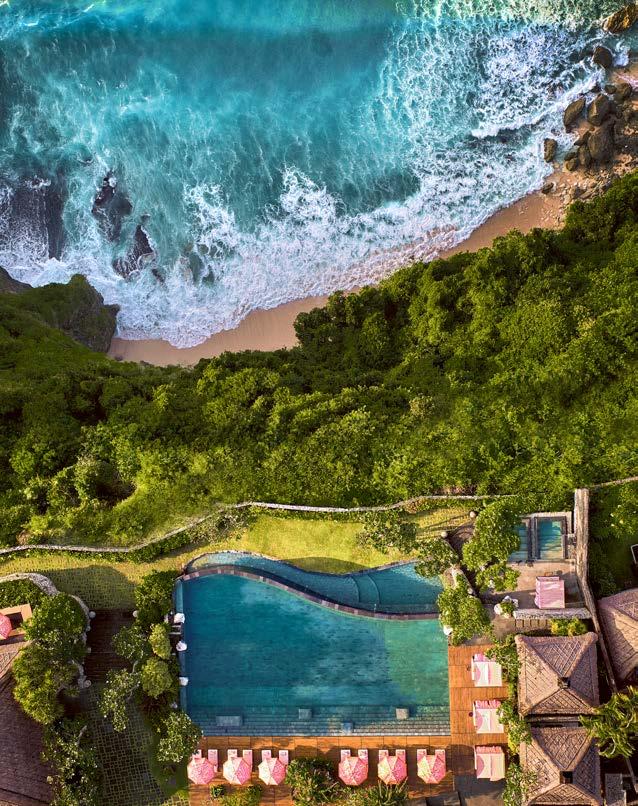
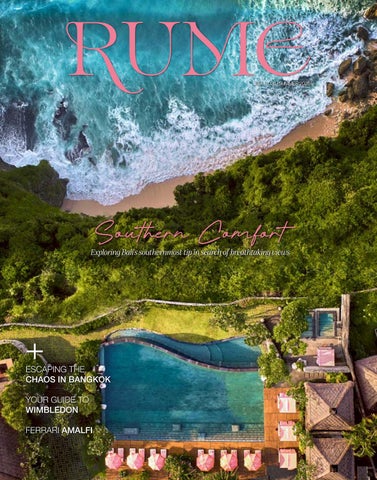
Southern Comfort
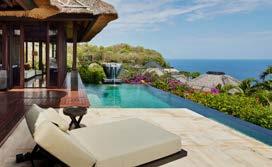
Exploring Bali's southernmost tip in search of breathtaking views
ESCAPING THE CHAOS IN BANGKOK
YOUR GUIDE TO WIMBLEDON
FERRARI AMALFI
Exploring Bali's southernmost tip in search of breathtaking views
ESCAPING THE CHAOS IN BANGKOK
YOUR GUIDE TO WIMBLEDON
FERRARI AMALFI




ROUTE THROUGH THE PLACES WORTH YOUR TIME IN SOUTH KOREA'S CAPITAL
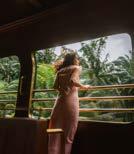
While you can’t control the curveballs life (or politicians) throws at you, you can control how you deal with them. For me, that meant pulling off a travel-180 in the most spectacular fashion, re-routing to Asia without so much as a plan or timeline in mind. What transpired, as those brave enough to travel with no itinerary will tell you, was a beautifully executed adventure, more magical than I ever could’ve plotted out on a spreadsheet. Arriving in Bangkok, we were greeted with warmth both in the weather and the culture and embraced a thriving hotel scene that boasts many of the World’s 50 Best Hotels, and for good reason. I soon found myself in Singapore, a city I’ve long been drawn to, only this time I exited as quickly as I’d arrived, aboard the mesmerising Belmond Eastern & Oriental Express, stepping back in time to travel through Malaysia’s lush rainforest by rail. Our final Asia tour stop found us in my beloved Bali, learning what truly makes its southern tip so special (discover for yourself on page 54). Two weeks turned into two months and as Dubai’s resilience proved unshakeable, it was soon time to get back to business, reigniting our initial plan for Europe, albeit a little later than intended. Had we not made the decision to temporarily reposition our home base, I would’ve missed the chance to experience extraordinary places, grow as a person, and make incredible new memories. So, when lemons are thrown, reach for the ice. You won’t regret it.

EDITOR-IN-CHIEF
ELISE KERR elise@the-rume.com
PAULO EDUARDO COSTA paulo@the-rume.com
DOROTHY CASTILLO
FELICITY CARTER MAX GERSTEIN
TAMARA WRIGHT

HEAD OFFICE
Media One Tower, Dubai Media City, PO Box 2331, Dubai, UAE. Tel: (+971) 4 4273000 Fax: (+971) 4 4282261
E-mail: motivate@motivate.ae
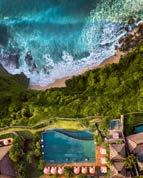
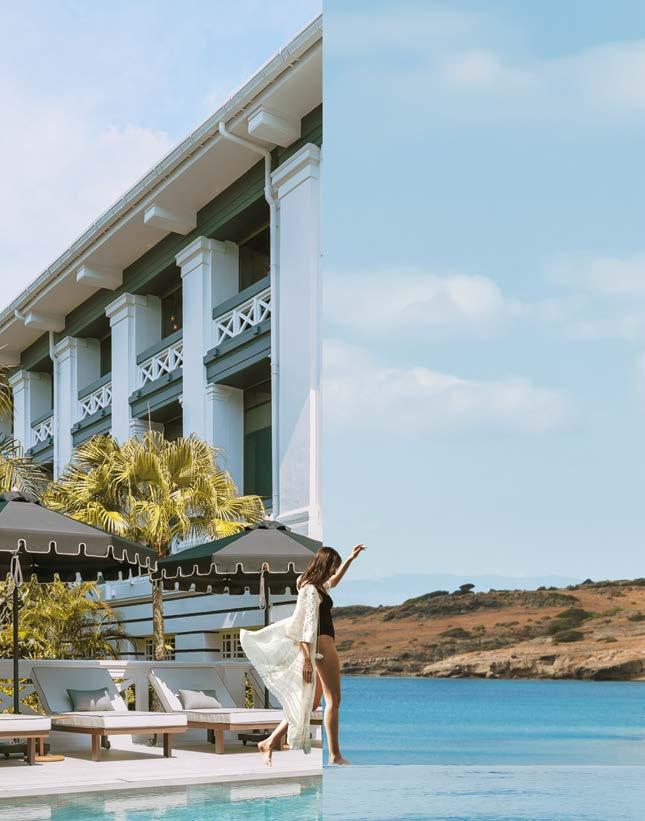
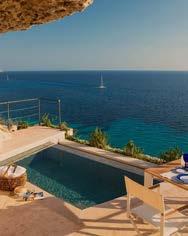
From rugged cliffs to gentle shores, it's no secret that Spain offers a refined coastal escape. Mornings begin with ocean air, while evenings boast vibrant golden hues.
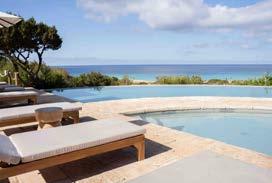
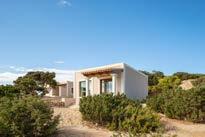
The smallest of the Balearics rewards anyone willing to take the short boat hop from Ibiza, and Dunas de Formentera makes a strong case for staying put once you arrive. The hotel sits among the dunes behind Migjorn beach, with 45 rooms and suites spread across low bungalows and duplexes finished in sun-faded tones, raffia and linen. The look is pared back rather than plush, and the sea is never too far from view.
Sustainability runs through the operation, from refillable
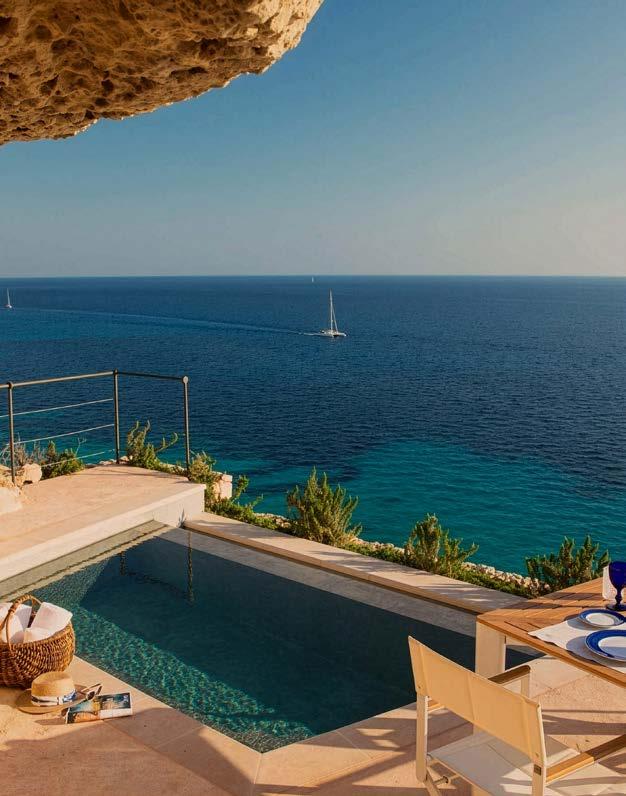
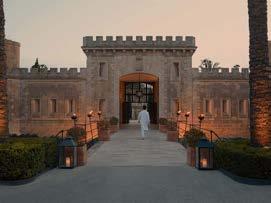
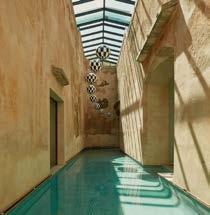
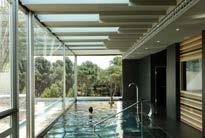
A 19th-century fortress built to guard the Bay of Palma is not the obvious starting point for a hideaway, yet that history is exactly what gives Cap Rocat its character. The former garrison at Cap Enderrocat has been turned into a 30-room hotel where bunkers and rampart walls now hold the bedrooms, and a working drawbridge still marks the entrance. The result feels far removed from the world, though central Palma sits only 15 minutes away. Rooms run from the cosier doubles set within the soldiers’
quarters to the cliffside Sentinel suites, several with private plunge pools cut into the sandstone. There are two restaurants, the main dining room in one of the central buildings and Sea Club down on the waterfront at Cala de la Reina, where dishes come from a wood-fired oven and grill. Most impressive is an underground spa that burrows 12 metres into the rock, and a wall-top infinity pool looks out across the bay. Mornings begin with breakfast delivered to the terrace, a quiet ritual that sets the pace.
toiletries to a small sand timer in each shower that marks five minutes of water. The saltwater infinity pool faces the sea, while the kitchen at Caliu cooks over a woodfired grill, turning out grilled octopus, ceviche and pizzas built around produce from the island’s farmers and fishermen. Wellness treatments can be arranged on request, and breakfast is served to the table rather than laid out as a buffet. For travellers after a barefoot rhythm and clear water a minute’s walk away, this is Formentera at its most relaxed.
Betweengoldendunes andserenesea
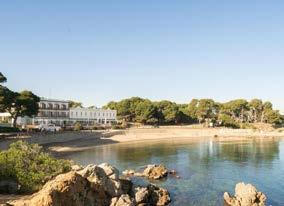
History sits close to the surface on this stretch of the Costa Brava. The oldest part of Hostal Empúries dates to 1907, when it housed the archaeologists working at the neighbouring Greco-Roman ruins of Empúries, and the hotel still looks out over Portitxol beach in the fishing town of l’Escala. The building has been restored with sustainability at its heart, and it was the first hotel in Europe to earn LEED Gold certification.
Rooms are calm and understated, many with terraces facing the sea or the gardens, where fruit and vegetables are grown for the kitchen. There are two
restaurants, one serving Mediterranean cooking built on local produce and another with a more relaxed menu, while the spa adds a pool, saunas, a gym and a sensory shower circuit. Bicycles and electric scooters can be hired from reception for exploring the coast.
The setting helps. The medieval village of Sant Martí d’Empúries is a short walk along the promenade, and the ruins themselves are only a few minutes away, making this a base for slow days that mix swimming, walking and a little ancient history.
Entre horizontes infinitos y días sin prisas.
Anaturalseasideescape withcalmwaves
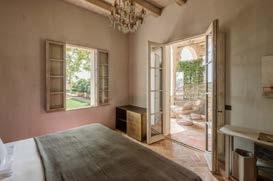
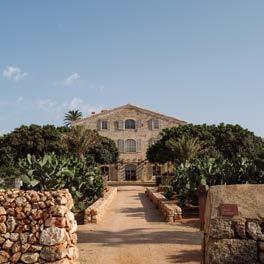
Menorca tends to reward those who head inland as well as to the coast, and Vestige Son Vell does both. The hotel occupies an 18th-century manor house on a 180-hectare working farm on the island’s south-west side, around 20 minutes from Ciutadella. Abandoned for years, the honeycoloured estate was brought back over a careful three-year restoration that kept the original sandstone walls, beams and proportions while adding a light contemporary touch. There are 34 rooms and suites across the main house, the old barns and a handful of garden buildings, many with terracotta floors and shuttered windows
over the fields. Two outdoor pools, one restored from the estate’s original, sit among gardens planted with citrus, olives and an organic kitchen garden. Dining splits between Sa Clarisa for lunch and Vermell for dinner, both following a farm-to-table approach rooted in Menorcan cooking. The estate runs down to the coast, where the rocky cove of Cala Son Vell is a short walk or cycle away. From there the Camí de Cavalls, the old bridleway that circles the whole island, opens up miles of quiet shoreline. Menorca’s status as a UNESCO biosphere reserve feels earned out here.
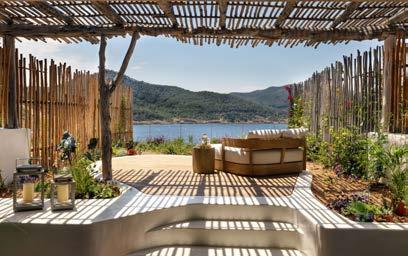
Ibiza’s northern tip keeps a slower, more bohemian spirit than the island’s clubdriven south, and Six Senses Ibiza leans into it. The resort wraps around Xarraca bay near Portinatx, its 137 rooms, suites, beachfront caves and townhouses built in a finca style from local materials. It opened in 2021 as the first BREEAMcertified resort in the Balearics, and sustainability shapes much of what happens here. The wellness offering is the main draw. A spa of around 1,200 square metres spreads over three floors, with a hammam, sauna, cryotherapy
and the RoseBar longevity clinic, alongside a gym, a rooftop yoga deck and an outdoor boxing ring. A weekly programme of yoga, meditation, sound healing and hiking comes without charge.
Food leans towards the organic and seasonal across four restaurants, among them The Farmers’ Market, The Orchard and chef Eyal Shani’s HaSalon Ibiza, much of it supplied by The Farm, a 400-year-old olive press and agricultural estate inland at Santa Gertrudis, while an infinity pool looks over the bay, making for the most picturesque sunset swims.
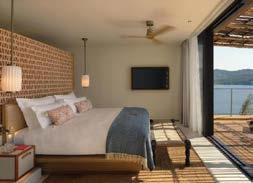
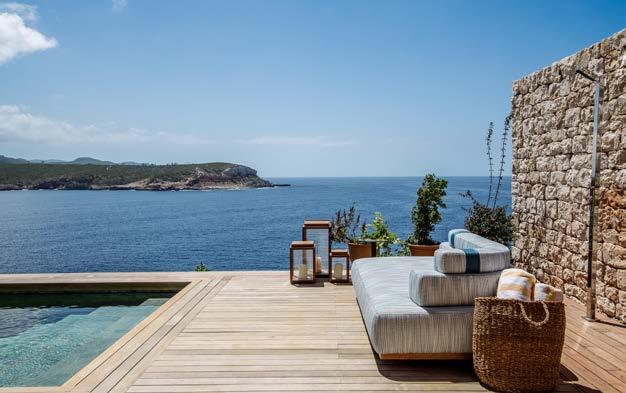
Few resorts on the Costa del Sol carry the reputation of Finca Cortesín, which sits inland above the coast near the village of Casares, between Marbella and Sotogrande. The whitewashed buildings, courtyards and palmfilled gardens look as though they have been here for generations, though the hotel opened in 2008. There are 67 suites in all, generously sized and many with terraces or private pools.
Golf is a large part of the appeal. The 18-hole championship course is among Spain’s best regarded and hosted the Solheim Cup in 2023, while a golf academy, tennis and padel courts round
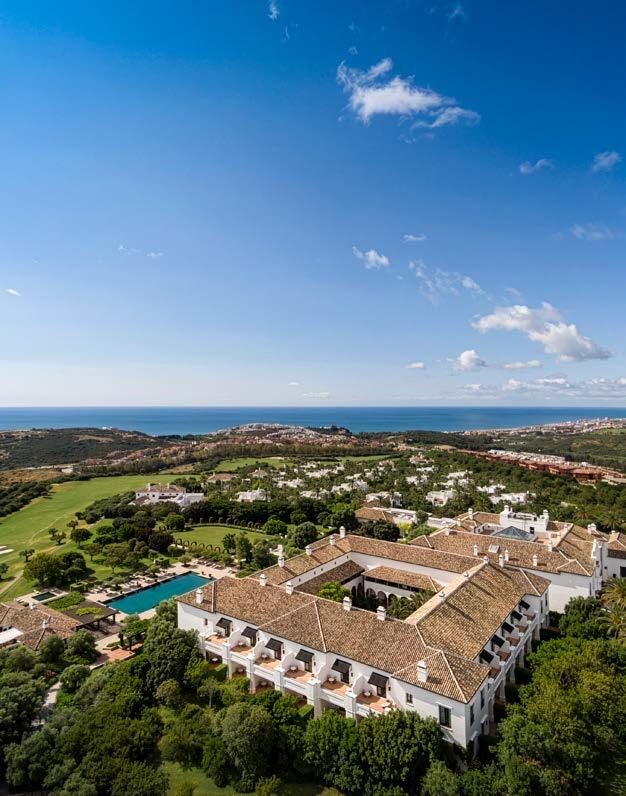
out the sports offering. Three outdoor pools include a 35-metre stretch, and the spa runs to more than 2,200 square metres with a snow cave, Turkish bath and indoor pool.
Dining spans several restaurants, from the signature REI to the Italian kitchen at Don Giovanni and lighter poolside menus. The seasonal beach club at Bahía de Casares, a short drive away, brings an infinity pool and Mediterranean cooking down to the shore. It is a polished, countryestate kind of luxury, more about space and quiet than show.
Paisajes que invitan a vivir más despacio.
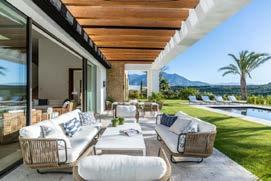
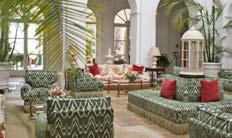
Un escape costero pensado para la tranquilidad.
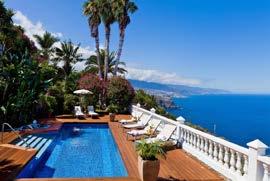
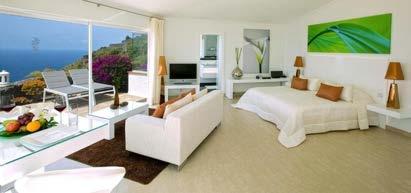
For something smaller and more private, Jardín de la Paz offers a different side of Spain entirely. The boutique hotel sits on a hillside above Tenerife’s quieter northern coast, near the village of La Matanza and about 12 kilometres from Puerto de la Cruz. Its name translates as 'garden of peace', and the setting earns it, with views that take in the Atlantic, the Orotava valley and the towering volcanic bulk of Mount Teide. Accommodation comes in the
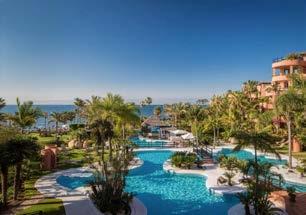
Over on the mainland, the Costa del Sol’s New Golden Mile is home to Hacienda del Mar, a beachfront hotel that joined the Meliá Collection and reopened after a full refurbishment for summer 2026. It sits directly on the sand and pebble shore between Estepona and Marbella, with terracotta-toned architecture, tiled courtyards and subtropical gardens running down to the water. Rooms and suites are bright and contemporary, most with furnished terraces facing the sea or the gardens, and the larger suites add private terraces with outdoor jacuzzis. Three outdoor pools are set among the planting, alongside
a spa and fitness area for slower days.
The kitchen keeps things Mediterranean and Andalusian, with a tapas restaurant at El Burladero, a beach club for relaxed lunches and a buffet breakfast to start the morning. Puerto Banús is roughly 15 minutes away and Marbella around 20, putting marinas, golf courses and the old towns of Andalusia within easy reach.
form of around a dozen villas and apartments spread through a large subtropical garden, each with its own character and a strong sense of seclusion. Two swimming pools, one of them heated, sit among the greenery. There is no large resort machinery here, which is rather the point. Most guests settle into the loungers, read, and let the views do the work. A hire car helps for exploring the north of the island, from La Laguna down to the coast.
Asunlitretreatwherethe seameetsAndalusiansoul
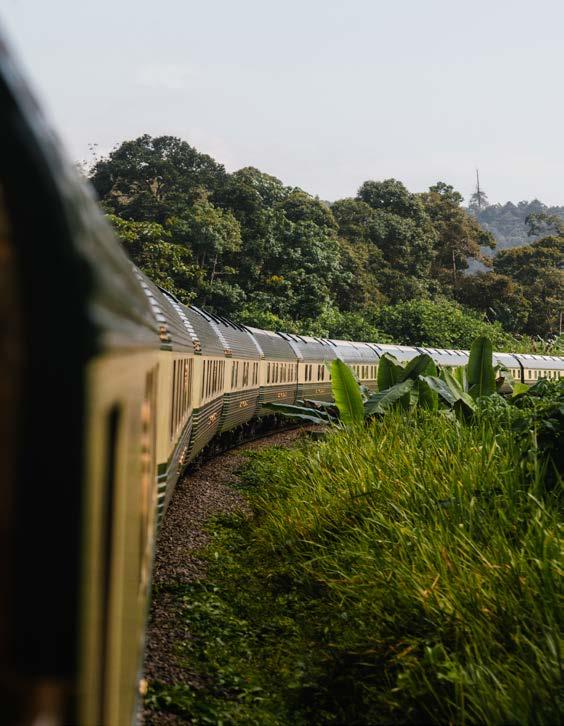
Belmond’s revived sleeper train, the Eastern & Oriental Express, trades speed for ceremony, and a three-night run between Singapore, the jungle and Penang makes the case that the journey can matter more than the destination.
The rhythm is deliberately gentle, which turns out to be the entire point.
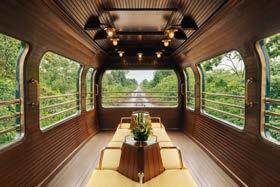
In a world where everything happens in an instant, the Eastern & Oriental Express makes a quiet argument for slow travel. The slowest route between two points, it suggests, can be the most rewarding. Belmond’s green and cream sleeper train spends three nights looping out of Singapore and into peninsular Malaysia, and the pull lies less in the destinations than in the unhurried theatre of reaching them. Connectivity is scarce, the days are long and the rhythm is deliberately gentle, which turns out to be the entire point. The experience starts before the train does. Belmond arranges private transfers at both ends, and a WhatsApp line opens the day before with collection times and reminders to complete the Singapore and Malaysian arrival cards ahead of travel. By the time guests reach the platform the crew have taken charge of the luggage, leaving only a passport to carry through a border crossing that takes minutes rather than hours.
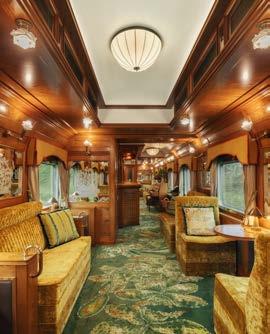
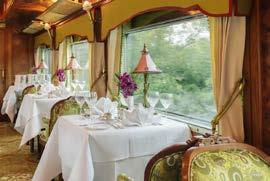
Boarding is an event in itself. Champagne is poured before the wheels turn, and it flows freely, alongside house wines, spirits and local beer, for the length of the trip. The carriages are a study in polished wood, marquetry and lamplight, built to evoke the golden age of rail rather than imitate it, and the effect lands the moment the doors close.

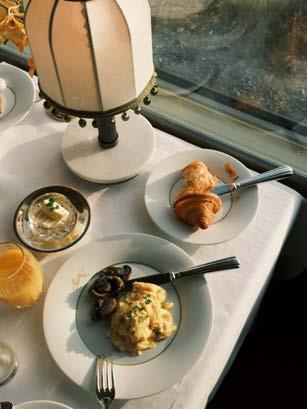
The pace of eating and drinking takes some adjusting to. Champagne on arrival gives way to afternoon tea of finger sandwiches and small cakes, then cocktails, then a multi-course dinner, with barely a gap in between. Coffee is poured from early morning, which matters to anyone who takes it seriously, and the standard rivals a proper café rather than the afterthought found at some hotels.
What catches people off guard is how social the Eastern & Oriental Express turns out to be. Strangers fall into conversation within the first hour, trading stories over cocktails in the bar, and by the final night many have struck up the easy friendships that come from sharing a small space and a slow clock with fellow travellers. Most guests are marking something, a milestone birthday, an anniversary or a long-held
which carry a maximum of 64 guests. The Pullman is the entry point, snug at around 6 square metres, with a sofa that a steward converts into upper and lower berths after dark. Two people can sleep in these luxury sleeper cabins, but additional space is offered at a premium.
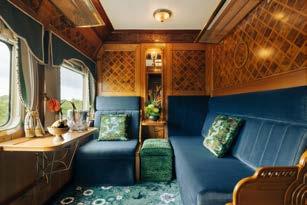
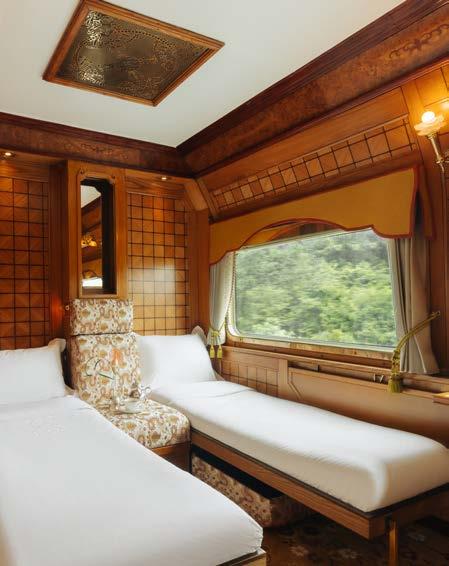
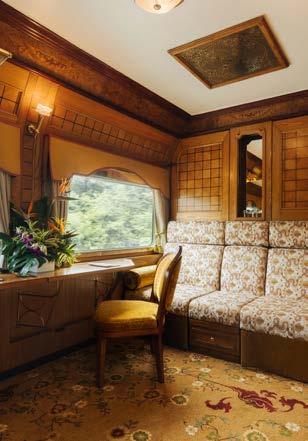
The State cabin is the middle tier and the sweet spot for most. Dressed in deep peacock blues and dark timber, it has a sofa and a seat that fold into two single beds, a small desk at the window for morning coffee or afternoon tea and enough room to move around. It strikes the balance between the snugness of the Pullman and the expense of the suites above it.
A look inside the Presidential Cabin, of which there are only two, shows what the extra outlay buys. It claims half a carriage, with a wall of mirrors opposite
ambition, and that shared sense of occasion gives the whole journey a charge. People plan these milestone celebrations a year out, and it shows in the mood on board. The dress code follows suit without turning rigid, smart by day and dressier for the gala on the final night, though a casual hoodie at dinner goes thankfully unremarked.
Accommodation runs across three tiers within the 15 carriages of the Eastern & Oriental Express,
the window that tricks the eye into more space, a proper walk-in bathroom and a small spirits bar for mixing a nightcap. Even here, though, the bed remains a twin. Belmond also gets the small touches right. A robe and slippers appear on the first night, and each evening’s turndown service leaves a different gift, among them a tote bag made by a Malaysian social enterprise and water bottles timed to the next day’s excursion. Reading lights sit
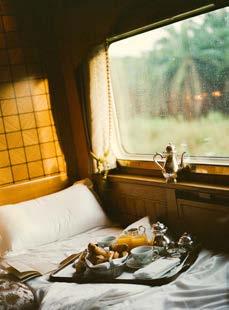
Most guests are marking something and that shared sense of occasion gives the whole journey a charge.
within easy reach of each bed, a detail that matters more than it sounds after a night in the bar. The trade-offs are real and worth knowing before booking. Compact bathrooms are the norm, the shower amounts to a powerful box with a temperamental temperature dial and there is no double bed in any category, the Presidential Cabin included. Every cabin has an en-suite, a Dyson hairdryer and a steward on call around the clock, but a hotel room on rails this is not. Food is where the Eastern & Oriental Express makes its strongest case. Lunch, afternoon tea and dinner are served in the dining cars, the contemporary Adisorn and the traditional Malaya, from menus curated by chef André Chiang, whose former Singapore restaurant held two Michelin stars. Breakfast is the one meal taken either in the cabin or in the dining car, and arrives with a Bloody Mary trolley for the willing, part of the train’s fun dining rhythm. The cooking leans East meets West and rarely misjudges it.
The first night's 16-hour braised beef cheek with classic pomme purée proved the standout of the trip, while a crispy tofu Mikado spring roll and a shrimp and clam miso bisque set an early high bar. Across the days came sea bass meunière, Chinese braised pork
belly and a cod with miso good enough to warrant a second portion, all of it adding up to confident cooking.
The midday menus keep pace with the evenings. One standout lunch opened with a rich vegetable soup sharpened by sauerkraut, moved on to a soy-glazed beef meatball wrapped around a poached egg, and finished with a pistachio gelato pooled in good olive oil. A kimchi niçoise and an egg mousse served in its shell turned up elsewhere, each plated with the care of a restaurant kitchen, albeit probably a tenth of the size of one.
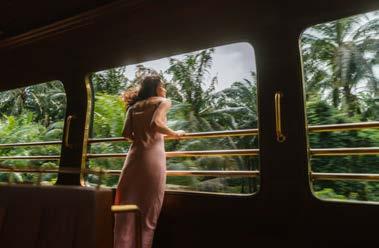
Not every plate lands. A coconut blancmange with Nyonya chendol arrived as a busy tangle of lemongrass, jelly and shaved ice that split the table, and a seafood laksa fried rice runs hot for anyone wary of chilli. The wine selection is a daily pleasure, with a new red and white wheeled out on a trolley at each service and Champagne never too far away. The final-night gala is the kitchen’s set piece, a six-course menu that runs longer than the rest and is finished tableside by the executive chef, who emerges to greet each table. It is the one evening most guests dress for, and the room takes on the feel of a celebration, helped along by a singer in the Piano Bar. The gala dinner is also when the kitchen’s reach feels most impressive. A willingness to bend is the detail that truly stayed with us. We requested a cocktail that needed basil, and a bartender gladly headed for the galley to find some. When we mentioned on the last night that the first night's beef cheek had been the best thing we ate all trip, the kitchen recreated it and poured the same wine to match – a kind of attentive service that comes from a galley the size of a cupboard. The open-air Observation Car at the rear is the heart of the Eastern & Oriental Express. With no glass to seal out the heat, it is
the place to feel the warm air and watch the jungle close in behind the train, and the bar alongside it becomes the natural meeting point from morning to night. A barista works the back of the train, turning that early coffee on the observation deck into a ritual.
Evenings gravitate to the Piano Bar Car, where a resident pianist and the occasional singer keep things running well past midnight. Requests are welcome, Malaysian classics sit beside the odd pop number and the room grows livelier as the trip goes on, the kind of live music that keeps people up. We shared one lunch with the train manager, who filled us in on the history of the train and the wider Belmond fleet.
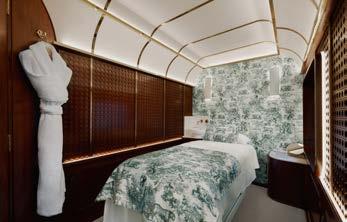
There is a Dior Spa on board, along with a Dior boutique car that doubles as a quiet corner for board games and an afternoon colouring table. The boutique stocks the house’s candles and beauty pieces, and the car makes a calm counterpoint to the social pull of the bar a few doors down. One of the trip’s small thrills comes near midnight on the final night. As the train slips past Kuala Lumpur, the crew tip guests off to gather at the rear, where the lights of the country’s tallest tower can be caught
The open-air Observation Car at the rear is the heart of the Eastern & Oriental Express
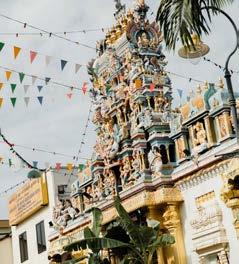
with seconds to spare before they go dark. Moments like this, unscripted and easily missed, are what linger.
Days break up the on-board indulgence with off-board excursions. The train pauses at Merapoh, gateway to Taman Negara, one of the world’s oldest tropical rainforests at roughly 130 million years. Guests pick from four outings, among them a tiger conservation trek tied to a long-running protection effort, an e-bike ride to ancient caves, a wellness session of yoga and forest bathing or a nature photography walk.
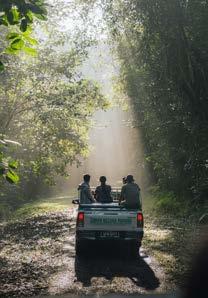
The arrival sets the tone, with local performers greeting the train at the platform before guests transfer to open-sided 4x4s for the run into the park. The jungle drive is half the experience, passengers ducking the odd low branch as the canopy thickens and the light drops, the sun barely reaching the forest floor through trees this tall and this old.
The photography route climbs through the treetops on a network of high walkways, with a naturalist picking out fungi and centuries-old giant trees while gibbons call from somewhere out of sight. Sightings are never guaranteed on the canopy walkway, and that is the honest reality here. One road, dense forest and a true living ecosystem mean wildlife appears only by luck, so anyone hoping for a safari experience are likely
to leave a little disappointed. Penang is the third day's stop, reached by a short ferry across to the island. George Town, Penang, a UNESCO-protected blend of Chinese and colonial heritage, lays on a cookery class, a guided old-town tour or a self-directed trishaw ride with a driver and a map. A loop past the street art and a coffee at the colonial Eastern & Oriental Hotel, on the waterfront since 1885 and unrelated to the train (despite the name), makes for an easy morning exploring.
Sleep is the one thing the Eastern & Oriental Express cannot promise. The older track on the way to Taman Negara and the quicker overnight run back to Singapore make for a rocking, rattling night, and between the late bar sessions and the freeflowing wine, nobody steps off rested. As with most sleeper train journeys, this is not a trip designed for recharging in the usual sense. What it offers instead is harder to find. The thin connectivity forces a proper disconnect, the food holds its own at every sitting and the mostly Malaysian crew turn service into something more personal. For couples and travellers who care more about the journey than the bed, and who treat the trip itself as the occasion, the Eastern & Oriental Express ranks among the most rewarding luxury travel experiences in Asia, and one we were sorry to step off.
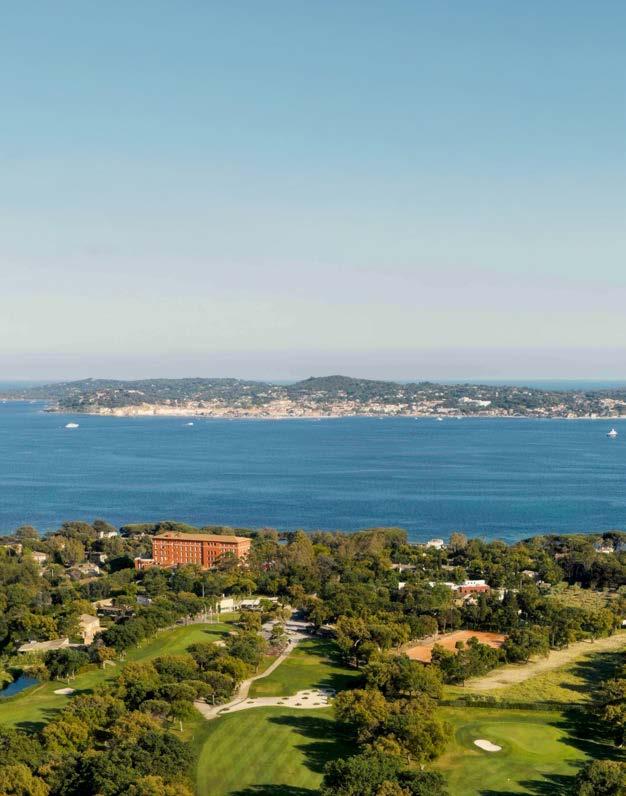
Set along the French Riviera with sweeping views of the Gulf of Saint-Tropez, this restored Belle Époque retreat blends historic elegance with contemporary coastal luxury.
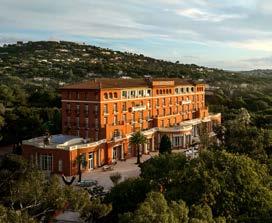
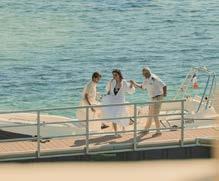
COMO Le Beauvallon does not announce itself the way a grand hotel usually does. The entrance features only a simple desk, a red tasselled key ring, and then, a few steps in, the first of the artworks that fill this Belle Époque palace on the Gulf of Saint-Tropez. Guests can opt to arrive by car, helicopter or boat, gliding across the bay before the coral-pink facade comes into view, raised just enough above the shoreline to be the tallest thing in sight. The building opened its doors in 1914 and has lived several lives since. Its latest, under hotel brand COMO, is among its most intriguing.
The story behind COMO Le Beauvallon stretches back more than a century. It first opened in 1914 as Le Golf Hôtel, a 100-room palace built in classic Belle Époque style above the bay. During both World Wars the French government requisitioned it as a military hospital, and on each occasion, it was fully restored to its former purpose once peace returned. In the decades that followed it became a Riviera fixture for writers, aristocrats and Hollywood names. Colette and F. Scott Fitzgerald stayed here, as did Winston Churchill, and in the 1960s the property appeared on screen in Two for the Road with Audrey Hepburn. After nearly two decades spent as a private events venue, it has reopened to hotel
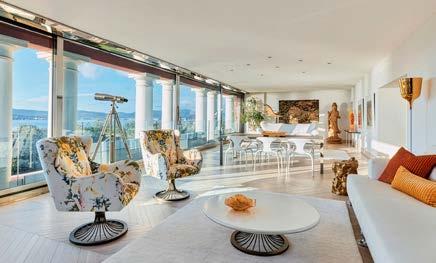
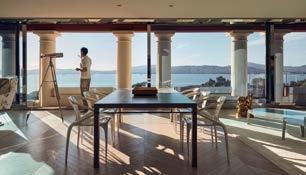
A set of original French doors opens onto a private terrace with views across the bay.
guests, and the feeling of a much-loved house rather than a corporate hotel still runs through everything. COMO, hailing from Singapore, has taken the project on with a light hand.
More than 300 art installations are scattered across COMO Le Beauvallon, inside and out, and they are the single most distinctive thing about a stay here. They run from a vast driftwood sculpture that climbs around the columns of one salon to bold abstract canvases lining the corridors, the relocated 2002 Serpentine Pavilion by Toyo Ito out in the grounds, and a silver, dripping sculpture inspired by a French poem in the main foyer, where a grand piano and a small stage complete with a harp set the scene. One salon pairs white
wing chairs with a chequerboard marble floor and a curved artwork shaped like a ping-pong table, the sort of piece that rewards a second look.
Rather than hand guests a printed factsheet, the hotel offers a dedicated app that explains each piece, so a wander through the public rooms doubles as a selfguided gallery visit. It is a clever idea, and it turns idle curiosity into something more rewarding. The overall effect feels like you're staying inside a private museum rather than a hotel, full of unique pieces that take years, not budgets, to assemble.
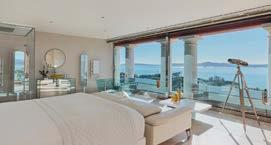
The suite continues the conversation between old and new. A set of original French doors opens onto a private terrace with views across the bay, while inside the mood turns sleek and contemporary. The bed is a generous cream leather affair with side panels for drinks and a remote control that raises the head and feet, a little like a chic and comfortable hospital bed. The bathroom is the real talking point, built almost entirely from transparent materials, with a glass bathtub, an acrylic dressing table and an open shower box fitted with twin heads and a
The
large central rainfall fixture. The pressure is excellent, one setting even sends the water dancing in rhythm overhead, and despite all that glass the room manages to stay dry. A walk-in wardrobe is tucked discreetly behind, keeping suitcases and clothes out of sight. One quirk divides opinion. In keeping with the feel of a private home, rooms at COMO Le Beauvallon come without a minibar or coffee machine. Instead, a shared pantry sits on each floor, close to the rooms and stocked for guests to help themselves. It adds to the communal mood and keeps the rooms uncluttered, though
story stretches back more than a century, when it became a Riviera fixture for writers, aristocrats and Hollywood names.
anyone hoping to chill a bottle of wine will miss having a fridge to hand. A small in-room cool box would not go amiss.
Dining at COMO Le Beauvallon centres on two very different rooms. The Winter Garden is the all-day restaurant, set in a sunlit conservatory with a wall of books, a patterned tiled floor and doors opening to a pergola that the team is slowly training vines across. Breakfast is a relaxed spread of cold cuts, yoghurts, fruit and pastries laid out on communal tables, with eggs, waffles and French toast cooked to order. The ingredients are a cut above, especially the fresh passionfruit and local honey. The one weak spot is the coffee, which never quite reaches proper cappuccino territory, a frustration sadly common in most French hotels rather than a fault of this one alone.
Dinner here is comforting and
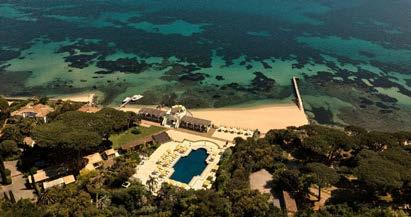
umbrella pines, with a broad lawn rolling down from the main terrace. Reaching the beach club at COMO Le Beauvallon involves one of the more memorable touches here. Rather than crossing the coast road, guests pass through a century-old private tunnel built beneath it, emerging on the other side at the sand. The beach club shares the sunny yellow scheme of the restaurant, with striking sunbeds and a handful of unusually high daybeds topped with proper mattresses, a welcome change from the usual low loungers.
The 25-metre pool sits right beside
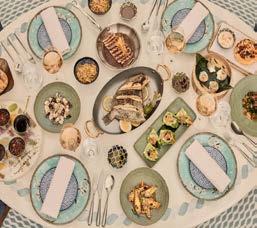
well sourced. A tuna spread served with thin, crisp flatbread is a particularly good way to start, and a chilled gazpacho and a tuna tartare with parmesan and pine nuts follow nicely. The warm bread and olive oil are excellent, and a rich beef in red wine sauce with olives and mashed potato is the standout. A lobster pasta arrives a shade past al dente on one evening, though the flavour itself is faultless. Down by the water, Beauvallon Sur Mer by Yannick Alléno is the headline restaurant at COMO Le Beauvallon and the first beach club concept from the most decorated chef in the Michelin Guide. The surprise is the menu. Rather than the classical French cooking Alléno is known for, it leans into Asia, with sushi,
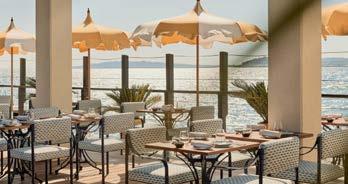
and noodles sitting alongside Mediterranean plates, all built for sharing. A yellow and azure palette, a resident DJ and rows of parasols give the place an easy, sociable energy that builds as lunch slides into the evening.
Tuna and salmon maki are fresh and clean, beef skewers with black garlic are excellent, and the seasoned fries are hard to stop eating. A black cod miso is the only real miss, arriving a touch underdone and without the buttery flake the dish wants. The restaurant is open to nonguests too, and at lunch it draws a steady local crowd, which only adds to the atmosphere.
The grounds run to 10 acres of terraces and gardens shaded by tall

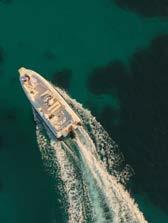
the beach. It is unheated, so early in the season it is bracing, though it should come into its own through summer. The standout, and a genuine point of difference, is the complimentary speedboat. An eight-minute crossing carries guests straight to the port of Saint-Tropez, sparing them the long drive around the gulf and the traffic that comes with it. On the way back, the property’s coralhued facade stands out clearly against the hillside. Over in Saint-Tropez, the old town, the market and some of the clearest water on this stretch of coast are all within easy reach.
COMO Le Beauvallon will suit travellers who want SaintTropez within easy reach but would rather not be in the middle of it. The setting is private and green, the service is warm and quick to help with bookings beyond the hotel, and there is a real sense of settling into a home rather than checking into a property. It is also a natural choice for weddings and events, given the scale of the public rooms and the gardens. The art is what lingers longest, the kind of personal, hard-won collection a chain hotel could never put together. There are a few things to weigh up. The lack of an inroom fridge or coffee machine takes adjusting to, the breakfast coffee could be better, and the pool is one for high summer rather than the shoulder season. None of it detracts much. For couples, art-lovers and anyone after the best of Saint-Tropez without the crush, COMO Le Beauvallon makes a strong case.
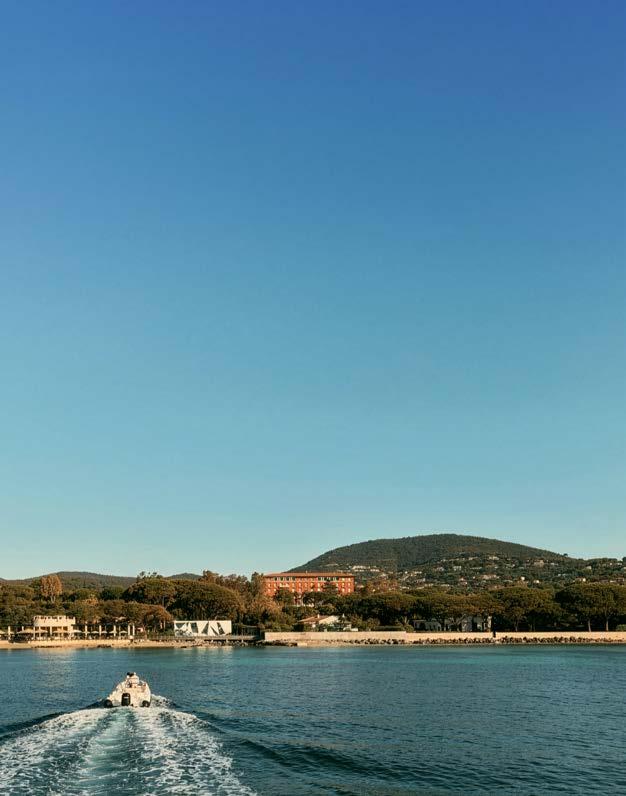
An eight-minute crossing carries guests straight to the port of Saint-Tropez.
a structural redefinition of what it means to travel well, driven by a generation that doesn’t just spend differently but thinks differently about the very notion of value. And alongside that shift, a technological revolution is unfolding that will reshape not only how journeys are booked but how they are felt. The data is unequivocal.
amount of thread count can manufacture. Private villas over branded suites. Slow safaris over circuit tours. A chef who knows your palate, not just your room number. The properties succeeding in this landscape are those that have stopped trying to impress and started trying to

Twas a time when luxury travel announced itself. Marble lobbies, goldleaf ceilings, a concierge who remembered your surname but little else. The formula was dependable and, for decades, it worked. But sometime between the pandemic and the present, the contract between luxury hospitality and its most discerning guests was quietly rewritten, and not everyone has read the new terms. What we are witnessing now is not a trend cycle. It is
while Virtuoso’s annual Luxe Report reveals that 67 per cent of advisors foresee rising demand, but for a fundamentally different kind of experience. Travellers no longer want luxury for its own sake. They want journeys that feel restorative, intentional, and deeply personal. The ostentation is fading. In its place: space, silence, and a sense of being understood.
This is what the industry has taken to calling “quiet luxury,” though the label risks reducing something genuinely profound to a marketing phrase. What affluent travellers are articulating, through their bookings, their loyalty, their willingness to pay more for less visible comforts, is a desire for authenticity that no
of extravagance. And new entrants, like The Malkai in Oman, which will thread three distinct landscapes together via private Land Rover, are designing experiences that resist the idea of a standard product. If the redefinition of luxury is the “what,” the generational shift is the “who,” and the “who” has changed dramatically. Millennials and Gen Z now dominate travel demand in the United States, according to Deloitte, and they are approaching luxury with a vocabulary the industry has been slow to learn. An $84 trillion intergenerational wealth
transfer is underway, and the beneficiaries are not interested in marble. What they want is harder to deliver. Millennial luxury travellers associate premium experiences with on-property dining, culinary immersion, and family-centric design. Gen Z prioritises wellness, sustainability credentials, and digital fluency. Both generations favour
cultural depth over surface spectacle. They want to learn something, contribute something, feel something, and they are willing to pay significantly more for it, provided the experience is actually genuine. This shift has massive implications for how hotels and destinations position themselves. Multigenerational travel is surging, with families seeking private villas, dedicated children’s programming, and flexible
known destinations growing 15 per cent faster than in established tourism capitals. Valencia is emerging as a credible alternative to Barcelona. Lyon rivals Paris for gastronomy without the queues. Greenland, Mongolia, and Bhutan are all preparing for a new kind of visitor, one who values remoteness as a feature, not a limitation. And then there is the question no one in luxury hospitality can afford to ignore: artificial intelligence. Generative AI usage in trip planning tripled between 2022 and 2025, according to Deloitte, with millennials leading adoption and, crucially, reporting less reliance on all other research sources as a result. Amadeus data shows that 64 per cent
of travellers are now willing to use AI assistants for both planning and in-trip support. For the luxury sector, this presents both an extraordinary opportunity and an existential risk. The opportunity lies in hyperpersonalisation: hotels that use predictive intelligence to anticipate guest preferences before arrival, concierge systems that learn from past stays, and itinerary tools that can assemble a bespoke journey in moments rather than weeks. Oracle Hospitality’s report suggests 2026 is set to mark a decisive shift from reactive service to anticipatory intelligence. The risk, however, is equally
curtains drawn a certain way. If AI is deployed as a costcutting exercise rather than a service-enhancing one, it will erode the very thing that makes luxury travel worth paying for. The technology must remain invisible, a silent partner to the human touch rather than a replacement for it.
The most compelling properties of the next decade will be those that hold all three of these threads simultaneously: a redefined luxury that prizes meaning over material, a fluency with the values of a new generation, and a sophisticated but restrained use of technology. The bar is no longer set by how much a hotel can offer but by how deeply it understands what
configurations that allow a three-year-old and a seventyyear-old to coexist in comfort. Heritage travel is being reimagined through a luxury lens, with travellers hiring historians and genealogists to trace family roots across continents. The emotional dimension of travel, long treated as incidental, is becoming its core offering. Meanwhile, the destinations themselves are shifting. Secondary cities are outpacing traditional hubs, with accommodation searches in Asia’s lesser-
real. Luxury has always been defined by human connection: the sommelier who reads the room, the guide who adjusts the pace, the housekeeper who notices you prefer the
its guests actually need, often before they really know it themselves.
The luxury traveller has changed. The only question that remains is whether the industry is willing to change with them.
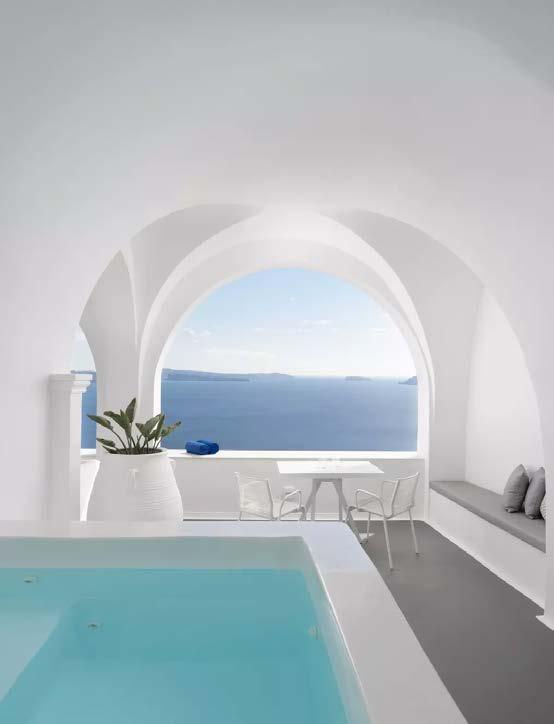
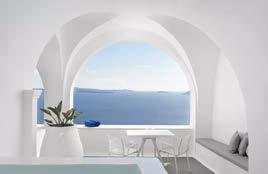
Suspended between sea and sky, Santorini unfolds in quiet luxury. A curated journey through cliffside stays, golden-hour tables, and moments that linger.

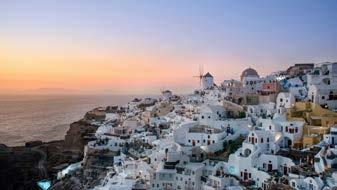
Greece's most photographed island needs little introduction. The whitewashed cubes, the cobalt domes and the caldera falling away to a flooded volcanic crater have launched a thousand screensavers. Yet Santorini rewards those who look past the obvious. Beyond the sunset scrum at Oia castle and the cruiseship crowds of Fira lies an island of ancient vineyards, working tavernas and a sea that turns from turquoise to ink as the light fades. This is a place built on cataclysm. The eruption that shaped the caldera around 3,600 years ago left behind black sand, mineral-rich soil and cliffs that fall several hundred metres to the water. That same volcanic ground gives the island its singular wines and its tiny, intensely flavoured produce, from sweet cherry tomatoes to the prized white aubergine.
The drama is the draw, but the real pleasures here are slower than the postcards suggest. A glass of Assyrtiko poured at the vine. A boat easing toward the hot springs. A long lunch in a room that has served the island for generations. This is Santorini at its most considered, from where to sleep to where to linger over dinner.
Most of the island's finest hotels cling to the western cliffs of Oia and Imerovigli, where caldera views and sunsets command a premium. Katikies sits at the heart of Oia. It spreads across two houses, one in the thick of the village and one on its quieter edge, linked by a maze of bridges, whitewashed cottages and narrow steps.
Three infinity pools cascade down the rock on different levels, one of them heated and set beside a Champagne bar, the others kept calm and quiet. The mood is adults-only and unashamedly romantic, and dinner runs to a Michelin-starred kitchen carved into the cliff. Be prepared for the stairs, which are part of the character but ask something of the knees. A short walk along the cliff path, Perivolas takes a
Beyond the sunset lies an island of ancient vineyards.
Days here move slowly. A wellness centre offers a steam bath, sauna and open-air hot tub, while the restaurant, set in a restored wine cellar, cooks Mediterranean and Greek dishes around local produce. Breakfast is unhurried and the airport transfer comes as standard, small touches that reinforce the feeling of a private cliffside retreat rather than a hotel.

Also in Oia, Canaves Oia Suites belongs to Small Luxury Hotels of the World and to a family that helped shape the village's luxury look from the 1980s. Each suite carries a private heated plunge pool, and the larger ones add open-air dining and private infinity pools. The clifftop Petra restaurant ranks among the better sunset tables in the village.
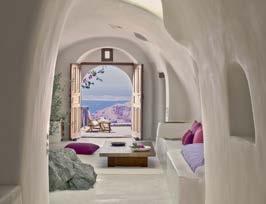
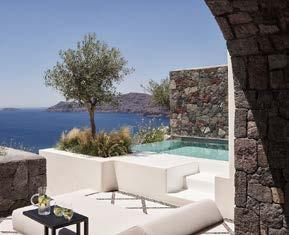
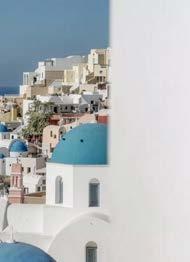
quieter, more pared-back approach. Its 20 suites occupy cave houses that once sheltered the island's fishermen and farmers, restored by the same family since the 1960s. There are no televisions, the better to focus on the cliff-edge infinity pool that appears to pour straight into the Aegean, still one of the most photographed in Greece.
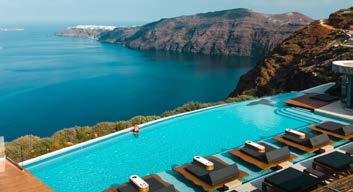
The spa is among the more characterful on the island, occupying a converted 17thcentury wine cave where treatments include therapies built around freshly prepared mineral muds. Champagne breakfasts arrive on private terraces, and a single panorama table, laid for one party each evening, is held back for those wanting the caldera entirely to themselves. For a change of scene, Cavo Tagoo trades Oia for the black volcanic cliffs of Imerovigli, a calmer perch on the Fira-to-Oia trail. The all-suite property leans contemporary, with private plunge pools, a heated infinity pool and uninterrupted views across to Skaros Rock and the two volcanic islets at the caldera's centre. Its sister hotel on Mykonos set the template, and the Santorini outpost shares the same polish.
All four close over winter and reopen in spring, and all reward booking well ahead for the high summer weeks, when the best suites are spoken for months in advance.
Each holds a slightly different mood, from the social buzz of Katikies to the near-silent calm of Perivolas, so the choice comes down to how much of the island's energy you want at your door. Oia delivers the headline sunset but draws the crowds with it, its lanes filling from late afternoon and thinning only after dark, while Imerovigli, where Cavo Tagoo sits, trades a little of that drama for calm, the same caldera laid out across the bay and the cliff path on hand whenever you want the spectacle.
Santorini's volcanic soil produces some of Greece's most distinctive wines, and the island's signature white, Assyrtiko, is bracingly dry and mineral. Estate Argyros, founded in 1903 and now in its fourth generation, is the largest private vineyard owner on the island. Its vines are trained low to the ground in woven baskets, a centuriesold defence against the wind, and some parcels are more than 200 years old. The vines are unusual in almost every respect. With next to no rainfall, they draw moisture from the night-time sea mist, and the low basket training shields the fruit from the relentless meltemi wind.
The result is a wine of high acidity and salinity that has earned the island a devoted global following, and Argyros sits among the names that travel furthest.
The estate lies near the village of Episkopi Gonia, well away from the caldera crowds, in a modern winery ringed by its own vines. Tastings pair Assyrtiko with the prized Vinsanto, a sweet wine made from sun-dried grapes, alongside the deep red Mavrotragano and platters of local cheese and cured meat. Sessions run from a brisk 45 minutes to a more leisurely 90, with the tasting room looking out across the vineyard toward the sea. The caldera itself is best understood from the water. Spiridakos Sailing Cruises,
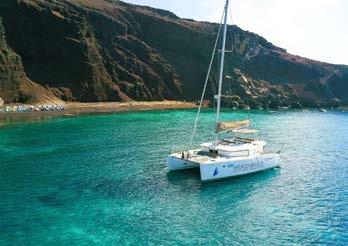
a family operation running since 1986, sends a fleet of catamarans and a motor yacht out from Ammoudi and Vlychada for halfday and sunset trips. The crews know the coastline intimately, and the boats stay small enough to feel personal rather than packed.
A typical route takes in the red and white beaches of the southern coast, best reached by sea, before anchoring at the volcanic hot springs off Palea Kameni for a warm sulphur swim. Lunch is cooked on board and washed down with island wine as the boat drifts back toward Oia for sunset. The more energetic can climb the bare crater of Nea Kameni, the youngest land in the eastern Mediterranean. Those same waters lap Therasia, the small inhabited island that split from Santorini in the great eruption and now offers a glimpse of the place before tourism arrived. On land, the excavated Bronze Age town at Akrotiri rewards an hour or two, its streets, drains and frescoes preserved under volcanic ash like a Cycladic Pompeii. Walkers should not miss the cliff-top trail from Fira to Oia, around three hours of shifting caldera views that threads through
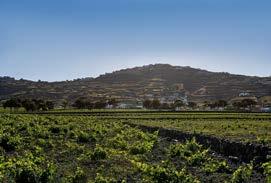
Firostefani and Imerovigli on the way. Everyone else saves their energy for the evening ritual, when the crowds gather at Oia's ruined castle to watch the sun drop behind the volcano, a cold drink in hand.
Santorini's dining runs from cliff-edge spectacle to honest village taverna, and the most rewarding trips take in both. Few places carry as much history as Selene, which opened in the 1980s as the first restaurant to build its menus around the island's own ingredients rather than imported ones. It now occupies a former 18th-century Catholic monastery in Fira.
The excavated Bronze Age town at Akrotiri rewards an hour or two.
Under a Michelin-starred chef, the kitchen turns Santorini fava, white aubergine, capers and the island's tiny tomatoes into refined tasting menus that still taste of the place they come from. The wine list, overseen by a Master of Wine, leans heavily on local Assyrtiko. For a lighter take on the same philosophy, the adjoining meze and wine room serves traditional dishes throughout the day.
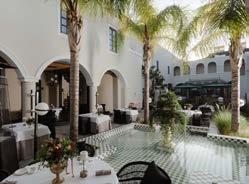
The set menus shift with the seasons and are named for the phases of the moon, building from a shorter tasting to a longer one as the evening unfolds. For anyone wanting to take a little of the island home, Selene also runs cooking classes, walking guests through the local produce and the techniques behind
dishes that have defined its kitchen for over four decades.
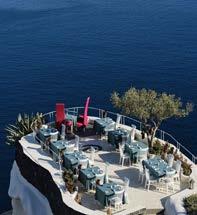
For the view that defines Santorini, Lycabettus at Andronis Luxury Suites in Oia is hard to beat. Its terrace is carved into the caldera wall, with the most sought-after tables set on a narrow rock point jutting out over the water. The kitchen sends out a Greek tasting menu built on local and seasonal produce, and the cellar runs well past a thousand labels, among the largest in the country.
Tables turn over just once a night and book out weeks ahead in summer, so plan early and dress smartly. Children under 13 are not accommodated, in keeping with the grown-up, special-occasion mood. Time a reservation for the hour before sunset, when the long descent down the cliffside staircase to your table becomes part of the theatre. For something more contemporary, ROKA brings the Azumi group's robatayaki cooking to the terrace at Cavo Tagoo in Imerovigli. The kitchen works around an open charcoal grill and a sushi counter, sending out plates meant for sharing, while an infinity pool with floating sunbeds frames the sunset. It is a slicker, more international counterpoint to Oia's traditional tavernas, and dinner runs nightly through the season. At the other end of the scale, walk down the steps below Oia to Ammoudi, the small fishing harbour where the cliffs meet the sea. The tavernas here line the water's edge, octopus dries in the sun, and the catch is chosen at the table before it reaches the grill. You eat with your feet almost in the water as the rock turns pink overhead.
Ammoudi is reached by roughly 300 steps down from the village, or a short taxi ride if the climb back holds no appeal. Arrive before the light goes, order more than seems sensible, and watch the braver swimmers leap from the flat rock near the water's edge. It is the island at its most unbuttoned, a useful counterweight to the polish higher up the cliff.
Across all of them, a handful of island staples are worth seeking out. Fava, a smooth split-pea puree with a protected name, turns up almost everywhere, as do tomatokeftedes, the fried fritters made from Santorini's intense little tomatoes. White aubergine, capers
and the local fresh fish round out a short but distinctive list that the island's best kitchens treat with real care.
It helps to know that the island's best tables are spread across more than one village. Oia draws the sunset crowds and the headline views, while Fira mixes the everyday with the refined. The quieter inland settlements of Pyrgos and Megalochori reward anyone willing to drive out for dinner, none of them more than a short taxi ride from the next.
Before dinner, the island runs on a wine list as much as a cocktail one. The calderafacing bars in Oia and Fira pour Assyrtiko by the glass as the sun drops, and a handful of dedicated wine spots open bottles from across Santorini and the wider Cyclades. An hour spent this way, watching the light change with something local in hand, is its own small event.
Arrive before the light goes, order more than seems sensible, and watch swimmers leap from the flat rock near the water's edge.
Save room for the sweet course. Many kitchens finish with a glass of Vinsanto, the amber dessert wine made from sun-dried grapes that gives the island's tastings their final flourish. It pairs well with the local cheeses and with simple plates of Greek yoghurt, walnuts and thyme honey. For something more traditional, look for melitinia, the small sweet cheese pastries the island has baked for generations, or loukoumades drizzled with honey and cinnamon.
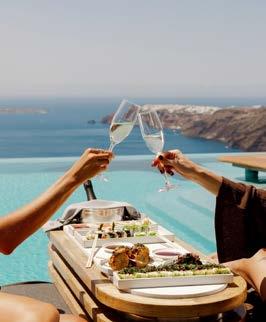
Wherever you end up, the rhythm is the same. Book the caldera-facing seats days in advance, time the meal for the light, and let a cold glass of Assyrtiko carry the evening. The smart approach is to play both ends of the island's table: one or two cliffside dinners for the view and the occasion, balanced against the livelier, far cheaper tavernas of Ammoudi and the inland villages. On Santorini, dinner is rarely just dinner. It is the part of the day the whole island seems to plan itself around.
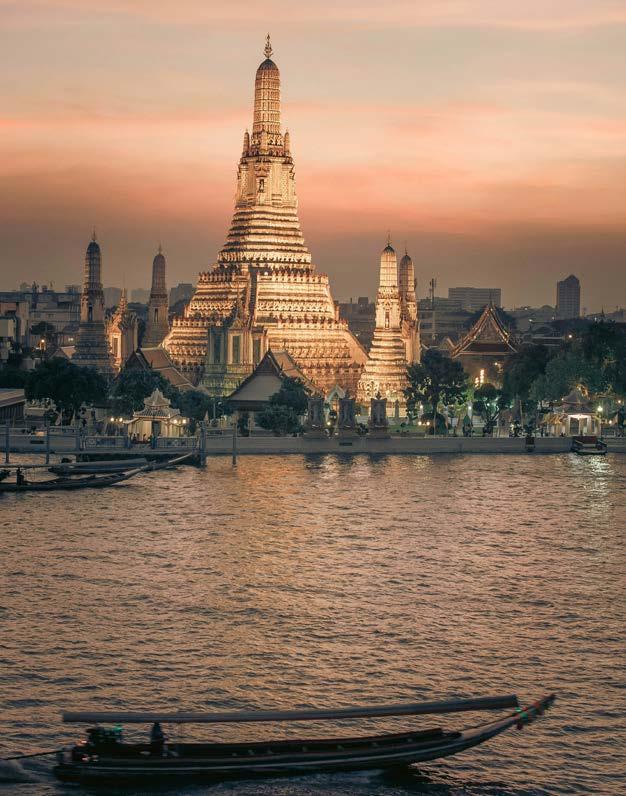
ONE NIGHT IN
IF YOU ONLY HAVE SPEND IT WISELY
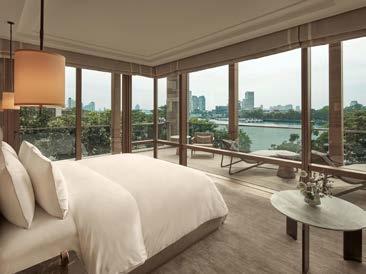
Capella Bangkok is the kind of hotel that makes you forget you are in one. Set on Charoenkrung Road, the city’s oldest paved road, on the banks of the Chao Phraya River, the 101-room property was named the World’s Best Hotel by The World’s 50 Best in 2024, and it is easy to understand why. It manages to feel genuinely calm and personal in a city that is anything but.
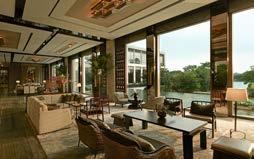
Check-in at Capella Bangkok sets the tone immediately, and it does so by dispensing with the idea of a reception desk entirely. Guests are guided to a sofa in The Living Room, the hotel’s central lounge, where a drinks menu appears on the table before any formalities begin. Champagne is an easy yes, and from that point on, The Living Room stays complimentary for the duration of the stay, offering coffee, fresh juices, sparkling wine, soft drinks, and jars of snacks to pick through at any point during the day. We spent far longer there than planned on both mornings, which says something about how well the space works. It has the feel of a private members’ club – unhurried and generous, and it becomes the kind of anchor point that makes leaving the hotel feel slightly less appealing than it should.
Central to the experience are the Capella Culturists, the hotel’s version of a personal concierge, who operate out in the open rather than behind a desk. They remember names, pick up conversations from the day before, and share recommendations with the kind of genuine enthusiasm that is hard to
manufacture. The attentiveness here stands out even by the standards of Bangkok’s best hotels, and it shapes the entire rhythm of a stay in ways that are difficult to articulate but immediately felt.
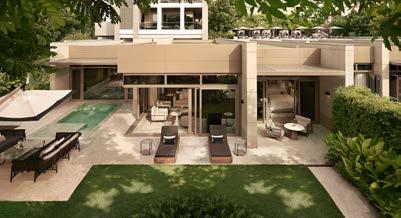
Every room and villa at Capella Bangkok faces the Chao Phraya, and the design makes full use of that position, with floor-to-ceiling windows running the width of the space so that the river is the first thing you see on waking. The rooms are tasteful and wellconsidered, with a separate seating area that makes even the entry-level category feel generous, and a desk that is actually comfortable to work at, a detail that gets overlooked far more often than it should. Our room was quiet in the way that good hotels manage and bad ones rarely do, the kind of
quiet that makes sleep come quickly and last properly.
The bathroom deserves its own mention. A large freestanding tub sits at its centre, surrounded by warm-toned stone and flooded with natural light from wide windows that face out over the balcony. The shower is powerful, the bath fills quickly and retains heat well, and the whole space feels considered rather than just well-appointed. Back in the room, the minibar is stocked with complimentary soft drinks, still and sparkling water, and coffee and tea, with alcoholic options also on hand. Small details throughout, crystal Champagne flutes, wine glasses, Scotch tumblers, add up to a sense of care that feels genuinely thought through rather than ticked off a checklist.
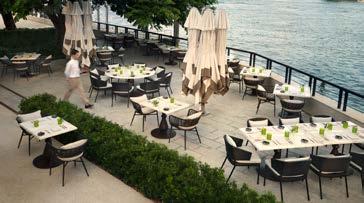
Capella Bangkok is designed around the river in a way that goes well beyond the views from the rooms. The property’s tiered gardens and low-rise architecture step down towards the water, with manicured lawns, a lily pond, and mature trees creating a sense of greenery that feels rare for a city hotel. The outdoor pool sits within this landscape, smaller and more private than those at comparable properties, and stays notably quiet throughout the day. Guests are brought ice water and watermelon on arrival without needing to ask, and the whole area has a calmness to it that makes it easy to lose track of time.
Throughout the hotel’s interior, an impressive
The Living Room has the feel of a private members’ club – unhurried and generous
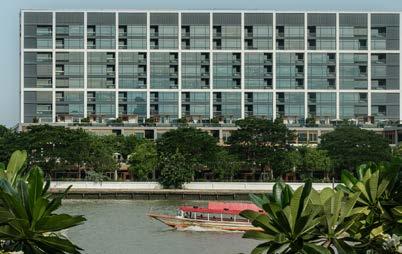
art collection is woven into the architecture rather than placed as an afterthought. Largescale works by notable artists hang in the corridors and communal spaces, many of them connected to the cultural history of the Chao Phraya and the neighbourhood of Charoenkrung. The pieces are well-chosen and thoughtfully presented, and the hotel offers a guided art tour for guests who want to understand the collection properly. One of the things that most distinguishes a stay at Capella Bangkok is the Capella Moments programme, a series of curated in-hotel experiences included in the room rate and organised by the Culturist team. On the first evening, we were invited to a wine tasting at Cote by Mauro Colagreco, the hotel’s two Michelin-starred Riviera-inspired restaurant, led by the sommelier in a format that felt relaxed and exploratory rather than instructional. Guests are given tasting notes to work through at their own pace, and the standout pour is a Thai red wine that most visitors will not have encountered before, an unexpected and genuinely interesting discovery that made for one of the more memorable moments of the stay.
A second Capella Moment the following day takes the form of a guided tour through the hotel’s art collection, which includes several large-scale works by notable artists, many of them tied in subject to the cultural history of Charoenkrung Road and the life of the Chao Phraya. Having someone walk you through the context shifts the experience considerably, and it is the kind of thing that quietly deepens the sense of connection to the place you are staying in. Phra Nakhon, the hotel’s Thai restaurant, sits directly on the river’s edge and shifts in character depending on when you visit. At dinner, with the light dropping over the water and long-tail boats moving through the frame, the atmosphere is hard to beat. The menu, led by chef Kannika Jitsangworn, is rooted in regional recipes from across Thailand, drawing on ingredients from local farmers and the hotel’s own kitchen greenhouse, and the cooking is precise without being overly refined. A pad Thai with river prawns is fresh and properly made, and a minced pork stirfry on jasmine rice with a fried egg carries just enough heat to be interesting without
overwhelming. The wine list by the glass is well thought through, and we appreciated having genuinely good options without needing to commit to a bottle.
Worth noting that karaoke boats drifting past on the river make for an unexpectedly cheerful soundtrack during the earlier part of the evening, before noise regulations bring things to a comfortable hush around
10.30pm. Breakfast here the following morning is an entirely different proposition, relaxed and almost European in feel under the flowering trees, with a concise but well-stocked buffet and fresh coconut water served in the shell that made us forget about ordering coffee altogether.
The Auriga Spa is genuinely good – calm and well-designed, with a warm pool, steam and sauna facilities, and a treatment menu that ranges from 60-minute relaxation massages through to more extensive two-hour programmes. A 60-minute massage here is thorough and precise, with techniques that feel tailored rather than routine, and it ends with a warm compress on the shoulders and a bowl of seasonal fruit in chilled syrup that extends the sense of care well beyond the treatment room. Thailand is rightly known for its massage culture, and the Auriga team holds that standard with ease.
Each evening, The Living Room hosts Cin Cin Hour, a complimentary drinks event
that has a natural, unforced quality that is easy to appreciate. The Culturists circulate, sharing city tips and drawing guests into conversation, and the hour has the feel of something genuinely social rather than an organised activity. It is also the moment to try the hotel’s local herbal spirit, a strong and aromatic pour that is not for everyone but is absolutely worth attempting.
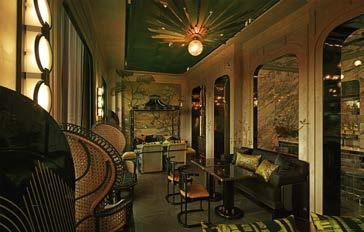
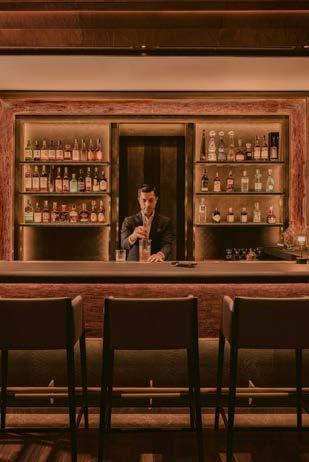
Stella, the hotel’s cocktail bar, is a destination in its own right and one of the most visually striking spaces we visited in Bangkok.
White marble walls, hand-painted frescoes depicting oriental motifs, vintage peacock wicker chairs, a chandelier shaped like the Milky Way, and a taxidermy white peacock presiding from the centre of the room, it makes an impression from the moment you
walk in. The current cocktail menu, Journey into the New Siam, maps each creation to a Bangkok neighbourhood, and the Bangkok Noir, a bittersweet and aromatic blend of Michter’s bourbon, black orchid, Campari, and two vermouths, is a strong reason to stay for a second round. The food at Stella is better than a cocktail bar’s food tends to be, with salmon on crispy rice, beef skewers, mushroom croquettes, and a kurobuta pork sando with fries that holds its own as a latenight meal.
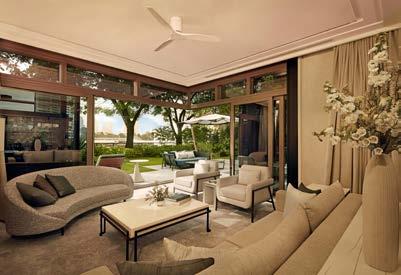
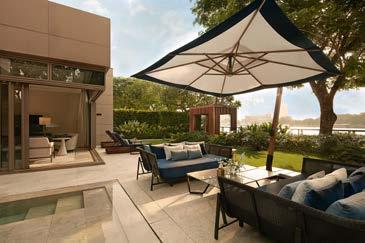
A complimentary shuttle boat runs from the hotel’s private jetty until 10pm, connecting guests to IconSiam and the Taksin BTS Skytrain station, shared with the adjacent Four Seasons and running to a reliable schedule. Taking it at dusk, with the river lit up and the city shifting into evening mode around you, is one of the more memorable parts of a stay here, and it also happens to be the most practical way to get into the city. By checkout, with a final coffee in The Living Room while the luggage was sorted, what we kept coming back to was not any single standout moment but the consistency of the whole experience. The staff remember you, the details are right, the drinks are always there, and the river is always there. Capella Bangkok is an easy place to want to return to.
Few cities make choosing where to stay quite so hard. Bangkok closed 2025 as the most visited city in the world, with around 30.3 million international arrivals according to Euromonitor's annual index, ahead of both Hong Kong and London. Behind that headline figure sits a hotel scene that has grown faster, and reached higher, than anywhere else in Asia. The recognition has followed the numbers. Three hotels in the city reached the top 10 of the World's 50 Best Hotels 2025, with Four Seasons Hotel Bangkok at Chao Phraya River in second place, Capella Bangkok in third and the Mandarin Oriental, open since 1876, in seventh. Across the city, 18 hotels now hold Michelin Keys, eight of them with two. Part of the answer is geography. The city is one of Asia's busiest aviation hubs, served by Suvarnabhumi and Don Mueang airports and stitched together by the elevated BTS network and a fleet of boats along the Chao Phraya. For long-haul travellers it works as both a destination in its own right and a gateway to the rest of Thailand and the wider region, which keeps occupancy high and rewards new investment.
The other part is appetite. Bangkok was named Asia's leading restaurant city for a second year running at the 2026 edition of Asia's 50 Best Restaurants, and it holds one of the highest concentrations
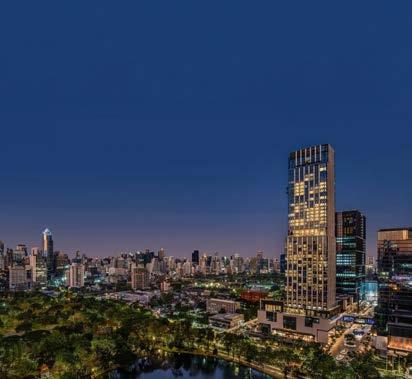
Why does Bangkok have so many top hotels? The Thai capital draws more visitors than any other city on earth, and its best hotels have risen to meet them
of Michelin-listed hotels on the continent. Thai service culture, warm and quietly precise, does the rest. When this many strong properties sit within a few stops of one another, standards rise across the board.
Then there is sheer range. The same city offers century-old riverside grandes dames, designled towers in the business core and intimate boutiques down residential lanes, often at prices that undercut Europe or the Gulf for comparable rooms. A guest can move from a teak villa to a
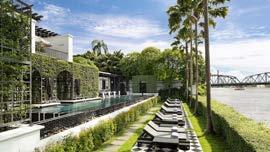
40th-floor suite within a single trip, which gives Bangkok a depth that few rivals can claim. The current wave owes something to timing too. The city's recovery after the pandemic was quicker than most, helped by relaxed visa rules and a fresh surge of interest in Thailand on screen and online. Tourism boards now talk less about volume and more about highvalue travellers, the kind who book suites, eat well and linger, and the hotels have been built and refitted with exactly that guest in mind.
The Chao Phraya remains the historic heart of the city's hospitality. The Mandarin Oriental has welcomed guests on these banks since 1876 and still ranks among the world's finest, while The Peninsula, the Four Seasons and Capella have gathered along the same water, each with its own ferry and a view of the longtail boats and rice barges that have worked the
river for generations. Some of the river's quietest addresses make the strongest case of all. The Siam, in the royal Dusit district, has held just 39 suites and pool villas across three acres of riverfront since 2012, reached by the hotel's own shuttle boat from Saphan Taksin pier. It feels closer to a private estate than a city hotel.
Owned by the Sukosol family, who carry deep roots in Thai music and hospitality, The Siam trades the city's glass-and-steel mood for monochrome Art Deco and a vast collection of antiques. Every room comes with a personal butler, and the grounds hold an Opium Spa, a Muay Thai ring and a soaring central atrium modelled on the Musée d'Orsay. Its most memorable corner is Connie's Cottage, a centuryold teak house once owned by the antiques dealer Connie Mangskau, whose guests over the years included Jacqueline Kennedy. That kind of lived-in
history is something the newer towers cannot manufacture, and it explains why the river still anchors Bangkok's reputation even as much of the action moves elsewhere.
If the river holds the city's past, its newer landmarks have gone vertical, clustering around Wireless Road and Ploenchit on the eastern edge of Lumpini Park. The two streets form Bangkok's diplomatic and commercial spine, calmer than the bar-lined sois of Sukhumvit yet minutes from the same shopping and nightlife, with the expansive verdant park as a shared front garden.
Park Hyatt Bangkok, open since 2017, occupies the upper floors of the Central Embassy complex, with direct access to the mall and the Ploenchit Skytrain station below. Its 222 rooms and suites
are hung with more than 600 works commissioned from Thai artists, and its social life runs from the Living Room, a lobby lounge known for afternoon tea, up to the Penthouse Bar and Grill on the 34th floor.
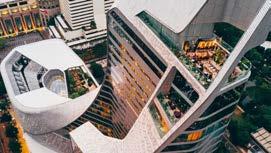
A short walk away, Rosewood Bangkok took a different path when it opened in 2019, its 30-storey tower leaning and folding in a silhouette drawn from the wai, the traditional Thai greeting. Behind the sloping mirrored glass sit 159 rooms, suites and private houses with plunge pools, a European brasserie called Lakorn and Lennon's, a vinyl-and-whisky bar on the 30th floor that has become one of the city's most talkedabout rooms. The newest name on this stretch is also the most ambitious. The
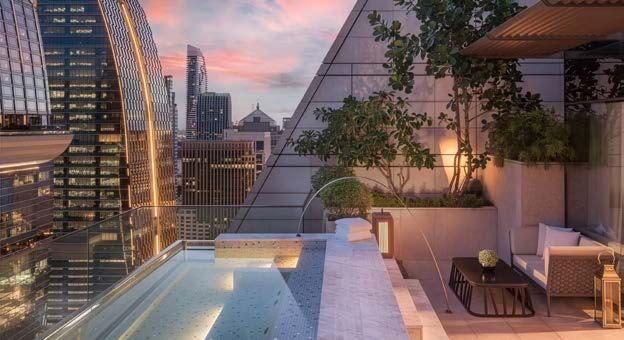
Ritz-Carlton, Bangkok opened in December 2024 inside One Bangkok, the largest integrated district the city has yet built, marking the brand's first urban hotel in Thailand. A 216-metre tower holds 260 rooms and suites, an ESPA spa and a terrace infinity pool, all turned towards the picturesque lawns and lakes of Lumpini Park.
Dining there runs from Lily's, an all-day room with a contemporary menu, to Duet by David Toutain, a modern French restaurant from the Paris chef of the same name, with the lounge Caleō built for tea by day and cocktails after dark. It is a confident debut, and a reminder that even the biggest names now have to work to stand out here. These towers also reflect a change in what a city hotel is for. One Bangkok and Central Embassy are destinations in their own right, folding shopping, dining and art into the same address, so that guests rarely need to step outside to fill a day. The hotel becomes one floor of a small world rather than a building standing alone. These four are only a sample
of a much deeper field. The Sukhothai, the St Regis and the Okura Prestige hold Michelin Keys of their own, and Aman, the most private of the global names, chose the city for one of its rare urban openings with Aman Nai Lert Bangkok in 2025. The point is never any single address but the depth of the field.
Dining has become the clearest battleground. With the city's standalone restaurants ranked among Asia's finest, a grand dining room is no longer enough on its own. The strongest hotels now run several distinct kitchens and bars, a Michelin-starred name often among them, giving guests a reason to stay in rather than head out into the night. None of this guarantees a flawless stay, and the busiest months from November to March can test even the best teams. But the breadth of choice means a traveller can match a hotel to a mood, a riverside retreat one trip and a high-rise base the next, without ever leaving the city. We would struggle to name another capital in Asia where the choice runs this deep, or stays this consistently good.
WHERE TO STAY
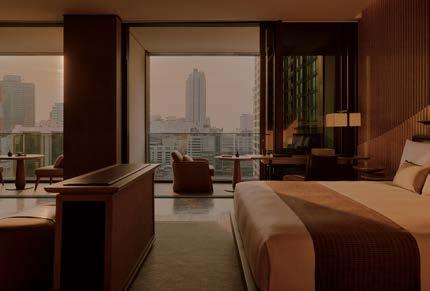
There are hotels that impress on arrival and fade with familiarity, and there are those that continue to reveal themselves the longer you stay. Aman Nai Lert Bangkok, the brand's third urban property after New York and Tokyo, falls firmly into the second category. Set within the seven-acre Nai Lert Park on Wireless Road in the Lumpini district, the JeanMichel Gathy-designed building occupies the ninth to 19th floors of a 36-storey tower, yet the atmosphere inside is anything but corporate.
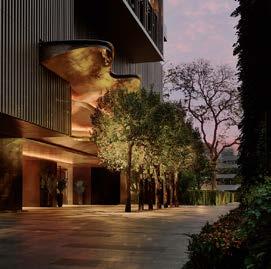
The approach alone signals a different kind of arrival. Guests cross a small canal and pass beneath a distinctive copper canopy before reaching the entrance, which reads as deliberately unhurried. Luggage is taken immediately, and from there everything moves upward: a lift to the ninth-floor lobby, where check-in is completed over a seat, a cool towel, and a coconut and pineapple mocktail. Passports are handled discreetly, and guests are taken directly to their suites before the formalities are done.
Aman Nai Lert Bangkok takes its name from Nai Lert, a pioneering
Thai entrepreneur whose family has owned this land since 1915. He introduced modern transport to Thailand, brought refrigeration to a country that had no access to it, and is considered one of the architects of modern Bangkok. His original home sits adjacent to the hotel, now preserved as the Nai Lert Park Heritage Home, and guided tours are available to guests throughout their stay. This history is woven throughout the property with a level of craft that goes well beyond decorative gesture. The hotel worked with Nai Lert's greatgranddaughter, Naphaporn “Lek”
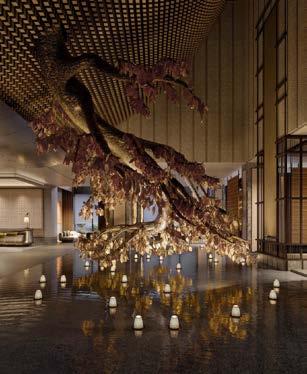
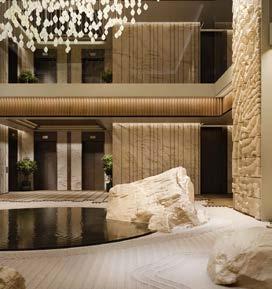
Bodiratnangkura, during the design process, and the results are everywhere, if you know to look. His circular logo with a cross appears subtly embedded in artworks, sometimes only visible when stepping back or looking through a camera lens. One piece incorporates a leopard motif, a nod to his famous pet. Every item of furniture was custom-designed with a specific reference in mind, and Aman Nai Lert Bangkok is the only hotel in the brand's portfolio named after a person. The atrium installations across each guest floor take this storytelling further. Every two floors, a different art feature occupies the shared courtyard space: on one level, a zen garden raked daily by housekeeping, its sand and rocks arranged with care each morning; on another, a still water feature with white stones and glass tulips rising from the surface; on another, tall bamboo shoots frame a pool of dark water. The walls carry deep impressions of a family member's fingerprint. Each of these features
is largely private to guests on those floors, reinforcing a sense of quiet, earned exclusivity that runs through the whole property. All 52 rooms at Aman Nai Lert Bangkok are suites, with entrylevel premier suites beginning from 94 square metres. The layout is considered: a generously sized walk-in wardrobe greets guests first, with full-length storage and a large dressing station, before pivot doors made to look like a continuation of the wood-panelled walls swing open to reveal either the bedroom or the bathroom.
The bathroom is a centrepiece in itself. Dark marble finishes, double sinks, and a large freestanding circular tub occupy
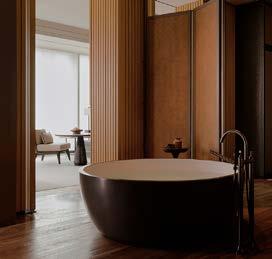
one side, while a vast shower stretches along the other. The rooms are stocked without prompting: a Dyson hairdryer in place, toiletries fully set out, a minibar stocked with Nikka whisky from the barrel, premium waters in two varieties, beers and soft drinks. Every charging cable left on the desk is neatly coiled and organised on turndown. Nightly gifts appear on the bed. Across a two-night stay, the room was refreshed by housekeeping at least four times each day.
Suites on the park-facing side look down across the green expanse of Nai Lert Park, with Bangkok's skyline visible beyond the tree canopy. A window-seat sofa running the full length of the glazed wall is, by all accounts, difficult to leave. On arrival, guests were welcomed with a bottle of Bollinger Champagne on ice, strawberries, and a plate of traditional Thai fruit, accompanied by a handwritten note.
Aman Nai Lert Bangkok's
History is woven throughout the property at a level that goes well beyond decorative gesture.
dining spans seven venues across two floors. On the ninth, Arva (Italian) and 1872 (all-day dining with a terrace) welcome both hotel guests and outside reservations, while The Pool serves drinks and light bites beneath the park canopy. The 19th floor houses the Aman Club: Hiori for teppanyaki, Sesui for omakase, the Aman Lounge for cocktails and live entertainment, and the Cigar Bar for those who want to round out the evening. Arva across lunch and dinner produced several strong dishes: a pumpkin ravioli topped with truffle and finished in a buttery sauce, a clean burrata with prosciutto to open, and a beef carpaccio with frozen hazelnut cream that arrived with more complexity than expected. A whole wagyu T-bone was carved tableside at dinner, accompanied by roasted garlic, cauliflower cheese and roast potatoes. The lobster pasta was considered the table's highlight: a rich, wellreduced sauce with perfectly cooked lobster throughout. Breakfast at Arva operates fully
à la carte with a wide selection, from coconut yogurt and seasonal fruit to a full cheese and charcuterie board, granola and made-to-order egg dishes. The discovery of the stay was Hiori. The Hiori Journey tasting menu, priced at 8,900 THB per person, moves through eight courses at an unhurried pace: hand-pulled king crab with Hokkaido sea urchin and tobiko jelly; a wagyu consommé with black truffle and dry-aged Tamakai grouper; seared Hokkaido scallop with Champagne sauce; a misocured Nagano salmon trout; a daikon salad with wasabina leaves and ginger plum dressing. For the main course, guests choose between Hitachi wagyu sirloin, wagyu ribeye sukiyaki with seasonal mushrooms, or Canadian lobster. Garlic rice and the in-season grain accompaniment rounded out the savoury courses before a Japanese strawberry shortcake brought the evening to a close. The brioche toast served alongside the king crab is worth a
mention of its own. It was turned repeatedly on a low heat for a full seven minutes, each side and corner toasted with the same level of attention. In a teppanyaki setting, the cooking is visible, which means the level of care behind each preparation is also visible. What Hiori makes clear is that this is the standard, rather than the exception.
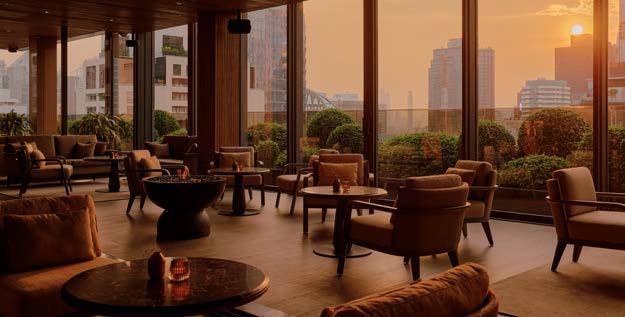
The Aman Lounge on the 19th floor offered cocktails, city views, and a live jazz band on both evenings of the stay. The black sesame old-fashioned arrived with gold leaf; a custom watermelon and cocktail was built to order from the welcome drink served on arrival, alongside olives and nuts.
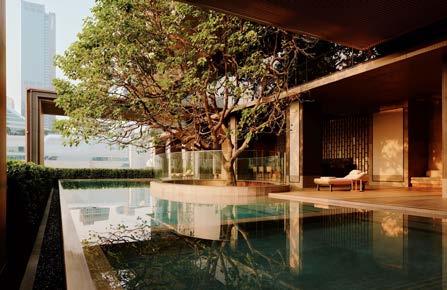
The outdoor pool on the ninth floor is long and calm. At one end, a warmer pool with jets and in-water sun loungers that keep guests at ankle depth; at the other, the cooler main pool for swimming. At the centre of the pool deck stands a tree of over 100 years, one of the first planted by Nai Lert when he established the park. Rather than remove it during construction, the design built the pool around it, leaving
an oval void where the trunk rises through the water. It is among the more quietly unusual things in Bangkok's current hotel offer. At 7am on both mornings of the stay, a member of staff was already at poolside with chilled water, welcoming drinks and fresh towels on hangers.
Guests who book a tour of the Nai Lert Park Heritage Home next door gain access to a 45-minute guided walk through the preserved family estate, with an English-speaking guide wellversed in both Thai history and the details of the property. It is a worthwhile 45 minutes, and understanding the story behind the park deepens the experience of the hotel considerably.
The 1,500-square-metre Aman Spa & Wellness centre includes the Banya Spa House, individual treatment rooms each with an en-suite changing room and shower, and a relaxation area with business-class-style private pods. A 90-minute treatment incorporating sticky rice compresses, a centuriesold Thai healing ritual in which heated rice is bound in muslin and applied across the body in
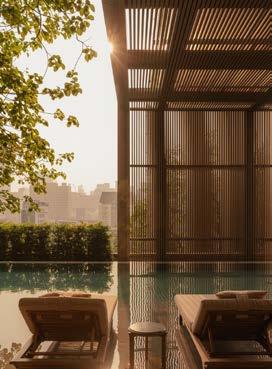
At the centre of the pool deck stands a tree of over 100 years, one of the first planted by Nai Lert when he established the park.
different sizes, was a highlight of the stay. Group and individual fitness classes, including Pilates, are offered on a scheduled basis. The gym includes a body composition machine available to guests at no additional charge. Several members of the team at Aman Nai Lert Bangkok came from other established luxury properties in the city. The hotel is only a year old at the time of writing, but the staff operate with ease and without visible effort. They walk guests all the way to their room doors to continue a conversation; they escort them in the lift and pick up the thread of whatever was being discussed. The housekeeping team coils
charging cables, places books back in alignment and refreshes the room as many as four or five times in a single day. The effect is cumulative: taken individually, none of these gestures are exceptional; together, they build an environment in which almost nothing is left for the guest to think about.
There was no sense of pretension in any of it. The atmosphere throughout Aman Nai Lert Bangkok was warmer than the brand's reputation sometimes suggests, with staff engaged, curious and genuinely easy to talk to. For a hotel that had every reason to feel self-conscious about its debut, it does not.
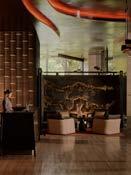
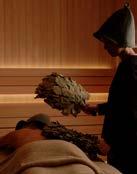
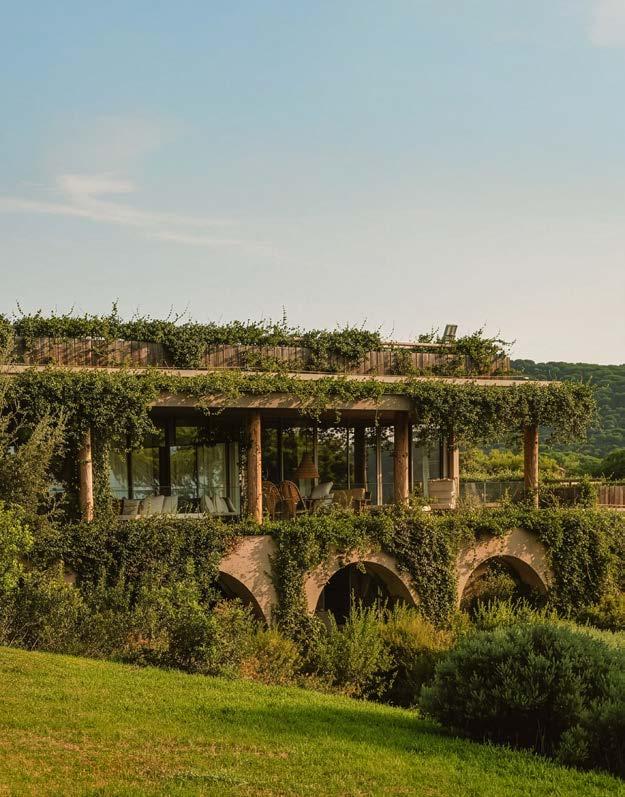
You soon will be, or so every brochure insists. Whether a stay can leave you measurably better than you arrived, and not just rested, is wellness travel's most common promise and its least proven. These are the properties that put real method behind it.
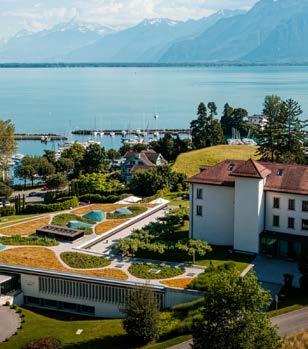
Theoriginal longevity clinic, running since 1931 on the principle that ageing can be slowed by science rather than pampering. The signature Revitalisation programme, built around a patented cellular treatment, sits alongside physician-led diagnostics, genomic testing and preventive medicine across a week-long stay that starts from around CHF 31,800. Cell therapy made the name here long before the word longevity entered the wellness vocabulary. Clients are referred as much as they book, and most arrive with a specific health question rather than a holiday in mind. The Lake Geneva views are a footnote to why anyone comes.
Paul Niehans, the Swiss physician who pioneered cell therapy, founded the place in 1931, and his patented extract still
underpins Revitalisation. Around it sits a four-pillar method of medical care, nutrition, wellbeing and movement, with more than 50 doctors on site. A stay opens with diagnostics, genomic testing and an epigenetic stress assessment, and treatment follows the results rather than a template.
Beyond Revitalisation come Master Detox, Life Reset, Brain Potential and Healthy Weight, each a structured week aimed at prevention. The five-star rooms and guest-only restaurant are comfortable, but this is a clinic that happens to be beautiful, not a hotel with a doctor attached.
Anyone after a relaxing week will find it clinical. Those who want measurable answers about their health, and can meet the cost, will struggle to find more rigour anywhere else.
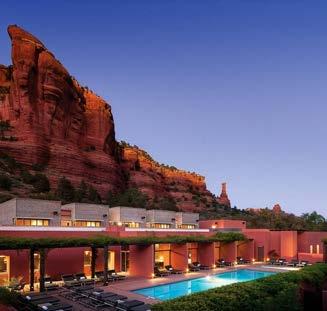
Set inside Boynton Canyon, a horseshoe of red rock held sacred by the Yavapai, this is the most spiritually minded property here. The name means 'one's path' in the Yuman language, and the model follows suit. Guests arrive for an all-inclusive Journey of three, four, seven or 10 nights, shaped with a personal guide around a stated intention rather than a fixed schedule. The guide books treatments, plans hikes and adjusts the days as the stay unfolds. At the centre of it all is the crystal
grotto, a circular, earth-floored chamber lit through an opening in the domed ceiling, where each day opens with meditation and where, once a year on the summer solstice, a single beam of light strikes the quartz at its heart. Around this anchor runs the programming, Native American healing traditions, energy clearing and bodywork alongside a wider menu of massage, facials, sound therapy and hypnosis, all booked through the guide rather than picked from a list. Days fill out with lectures, fitness classes and workshops, leaving as much or as little structure as a guest wants.
A two-year, $40 million rebuild reopened the resort in 2023 and enlarged it by around 40 per cent. There are now 23 adults-only casitas, all with fireplaces, private outdoor space and heated bathroom floors, set around a quiet courtyard. The work added a two-storey fitness studio, a consultation wing, a reflexology path and a signature restaurant, Hummingbird, which leans on produce from a nearby garden. The pool keeps its long views across the canyon.
It sits beside the family-friendly Enchantment Resort and shares some of its amenities, though the Journeys keep their own rhythm. The all-inclusive rate folds in three meals a day, a daily treatment, classes and activities, and it is not cheap, with day rates well into four figures. This is a destination spa rather than a flexible base for exploring Sedona, and the adults-only policy and fixedlength stays make that plain. It rewards guests who want to switch off completely rather than tick off attractions. It counts guided vortex hikes to the canyon's energy sites as part of the programme, not an extra. The setting does much of the work, and can't be replicated.
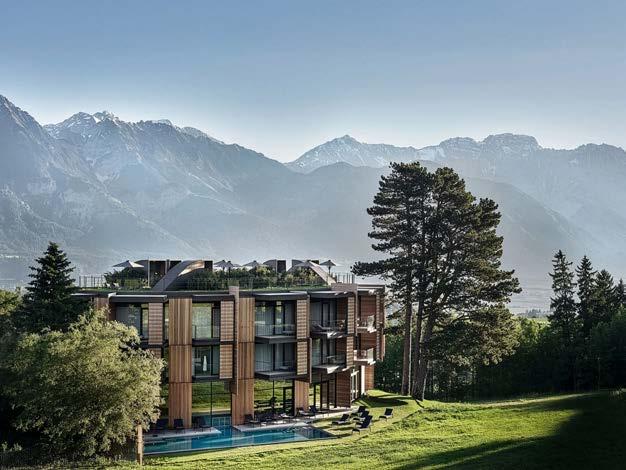
Ofall Aman properties, this is the one built around water. Thermal onsen springs feed a 2,000-square-metre spa and a private bath in every suite, drawn from the mineral-rich waters of Mie Prefecture. The wellness Immersions lean on what the region already offers, forest bathing in the hills of Ise-Shima, Shinto shrine visits along old pilgrim routes and Kampo herbal medicine in the treatment rooms. Cuisine follows the same logic, built on Matsusaka beef, local seafood and seasonal kaiseki. The spa pairs its onsen pavilions with a watsu pool and aquatic bodywork, and a 33-metre pool looks out over Ago Bay, the pearlfarming inlet below.
The LANS Med Concept is a clinical protocol first and a spa second, combining gut microbiome analysis, metabolic testing and sleep medicine under medical supervision. The Classic Cure runs over seven, 10, 14 or 21 nights. Underneath sits Modern Mayr medicine, gut-led detox, an individualised diet plan and daily physician check-ups, rather than anything resembling pampering. The pale, low-slung building above Lake Tegernsee is worth the journey alone, but the medicine is the point.
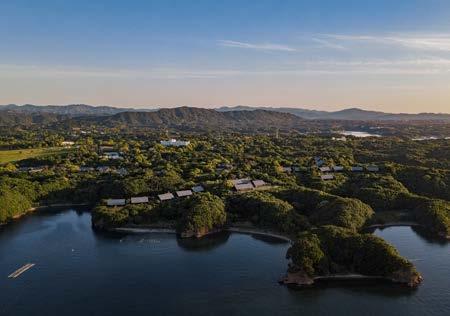
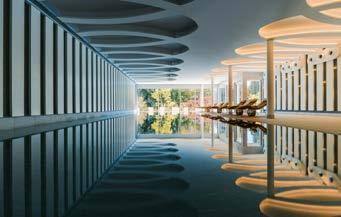
This is not the Six Senses most people picture. On a stretch of the south Aegean coast near Bodrum, the resort runs a 10,000-square-metre wellness centre with a resident team of physicians, nutritionists and exercise physiologists. Programmes of three, five or seven days start with screening and diagnostics, then blend Eastern therapies with Western preventive medicine across detox, sleep, fitness and longevity tracks. Hydrothermal floors, hammams and a watsu pool fill out the facilities. It is the most medically serious property in the group, and still largely off the wider luxury radar.
Biontology is Henri Chenot’s own system, developed across five decades and built on the idea that targeted detoxification can reset the body’s physiology. The flagship of the Chenot group sits on Lake Lucerne in a 5,000-square-metre medical spa, opened in 2020. Three structured seven-day programmes are on offer, led by the signature Advanced Detox, and the protocol is deliberately rigid. Days run to an 850-calorie plant-based diet, no coffee and a bathrobe dress code, supported by mRNA gene testing and a clinical team monitoring progress throughout. It is demanding rather than indulgent, which is precisely why guests keep coming back.
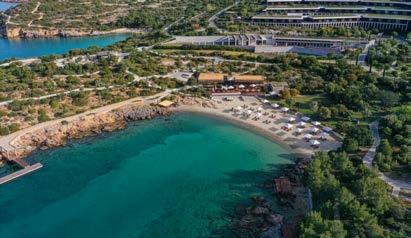
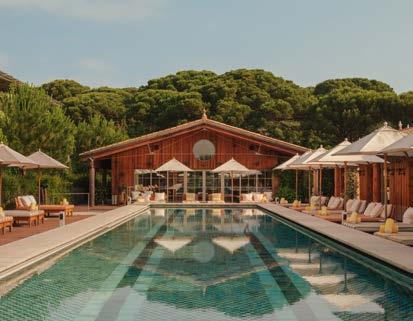
Themost credible wellness address on this stretch of coast, and the one where setting counts as much as the programme. Above Gigaro Beach at La Croix-Valmer, about 20 minutes from Saint-Tropez, the hotel runs a method built with clinical nutritionist Jacques Fricker around three pillars, weight-loss cuisine, sport and treatments. Tailored programmes run from a few days to several weeks, covering detox, better ageing, sports performance and stress. The hilltop hotel is set in protected reserve above the fivekilometre sweep of Gigaro Beach, its restaurants built on local, organic produce. This is the Riviera doing wellness without the noise of Saint-Tropez.
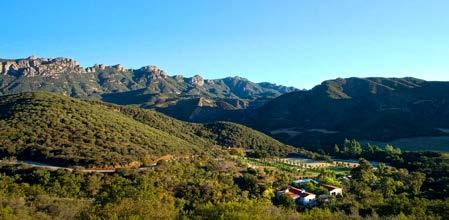
ModernMayr medicine, updated for the diagnostics era. Formerly VIVAMAYR Altaussee, the resort builds every stay on gut health, pairing F.X. Mayr principles with microbiome analysis, food-intolerance testing and a 100 per cent personalised nutrition plan. Physicians lead the process, with daily consultations and a research tie to Karl Landsteiner University behind the science. Roughly 10 programmes cover detox, weight, stress, anti-inflammation and healthy ageing, most over a week or longer. The setting helps, a low building of glass and timber on the shore of Lake Altaussee in the Salzkammergut. Known for its roster of returning clientele, it's wise to book well ahead.
Nooptions, no negotiation. The signature seven-day programme at The Ranch Malibu runs to a fixed routine of long morning hikes, often four hours, with afternoon strength and yoga, a plant-based menu of around 1,400 calories and no alcohol or caffeine. Numbers are capped, phones go quiet. On 200 acres above Malibu, results are physical and measurable. No other property here will reshape your body in a week, and none of the others is trying to.
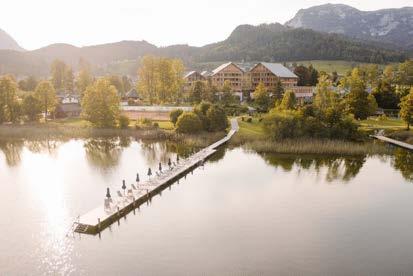
Bangkok, Thailand
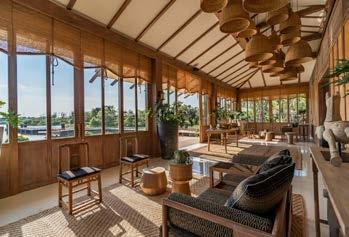
Fewproperties this new feel this established. RAKxa opened at the end of 2020 on Bang Krachao, the jungle-clad peninsula in a bend of the Chao Phraya that Bangkok calls its green lung, and it arrived fully formed. The model is built on three centres working together. The VitalLife Scientific Wellness Clinic, a subsidiary of Bumrungrad International Hospital, handles diagnostics, genomic testing, IV protocols and functional medicine under qualified doctors. RAKxa Jai delivers traditional Thai, Chinese and Ayurvedic medicine through credentialled practitioners. A medical gym covers movement and physiotherapy. Every stay opens with lab testing and consultations, then runs as a programme around longevity, detox, sleep, gut health or stress, set among 60 villas and thousands of newly planted trees. For pairing hospital-grade medicine with traditional practice, it is the most serious integrative model in Asia.
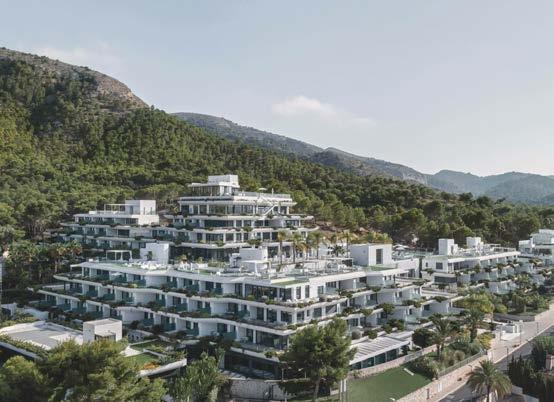
Tucson, Arizona, USA
Macrobiotic nutrition meets Western diagnostic medicine through the SHA Integrative Method. Purpose-built above the Mediterranean near Alicante, the clinic pairs preventive and functional medicine with longevity diagnostics and an antiinflammatory kitchen.
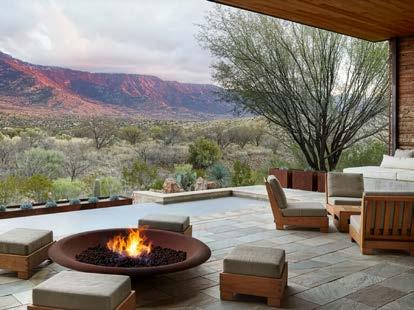
Thisis where the Miraval brand began, and where it is still strongest. A converted dude ranch that opened in 1995, Miraval Arizona has spent three decades refining mindfulnessled wellness across 400 acres of Sonoran Desert at the foot of the Santa Catalina Mountains. The depth shows in the programming. The Equine Experience, in which horses become a tool for self-awareness, sits alongside meditation, somatic bodywork, sound healing and challenge exercises that push guests past their comfort zone. Stays are allinclusive, with most workshops and activities folded in. Newer Miraval outposts have opened in Austin, the Berkshires and now Saudi Arabia, but the original still carries the most substance, and the strongest sense of place.
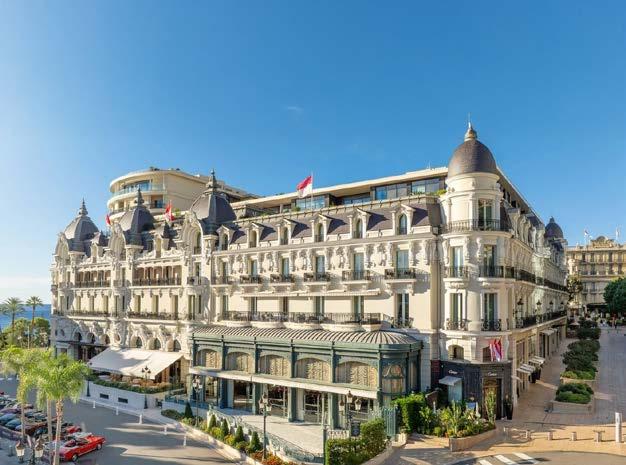
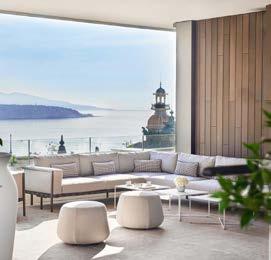
Few hotels are as bound up with their city as the Hôtel de Paris Monte-Carlo. It sits directly on Place du Casino, opposite the Casino de Monte-Carlo, in a principality wedged between mountains and sea where supercars idle at every kerb and superyachts fill the port below. Monaco is tiny and unusually concentrated, and almost everything of note sits within a short walk or a five-minute drive, which makes a central base like this one count for a great deal. Opened in 1864, the hotel has shaped Monaco's social life for more than 160 years, a major renovation brought it up to date without unpicking its character. Arrival keeps to the old codes. Doormen in traditional dress
handle the luggage, and checkin is brisk rather than drawn out, the kind of quietly efficient welcome that comes from long practice rather than show. The lobby works as the principality in miniature. Marble floors, gilded detail and a glassdomed ceiling painted with sea nymphs nod to Monaco's maritime story, while the bronze equestrian statue of Louis XIV holds the centre of the room. Guests rub the horse's right knee for luck before heading to the tables, and the metal is worn bright from generations of the same gesture. The entire aura from the valet to the lobby is busy and theatrical, and unmistakably part of the city. Rooms at the Hôtel de Paris
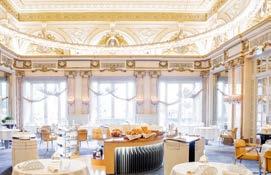
Monte-Carlo favour heritage over trend. The sea-view suite is finished in soft whites with gold-framed panelling, a look that carries out into the corridors. A long sofa in a deep red anchors the sitting area, a Fornasetti table lamp adds a note of wit, and the marble bathroom is large, bright and well proportioned. Floor-toceiling windows and a balcony face the famous marina’s rows of luxury yachts.
The thinking shows in small ways. A semi walk-in wardrobe offers the drawers and hanging space most suites lack, with a hook for the evening's outfit and a plug socket beside it for steaming, a practical touch frequent travellers rarely find. The balcony is short, in keeping with a building this old, but it
holds a small table for a drink with the view. The freestanding bath, set into a corner, feels surplus to a bathroom that works without it.
One detail rewards the rooms that face the square. Where the sea-view suites use red, casinoview rooms are furnished with green sofas and curtains, the colour of luck, a quiet nod to what many guests cross the road to do. Small flourishes like this explain why the hotel still trades so confidently on tradition rather than on anything new.
Evenings at the Hôtel de Paris Monte-Carlo tend to begin at Le Bar Américain, just off the lobby. With its panelled walls, live jazz and low lighting, it has the air of a room that has changed little in decades. A barman builds a
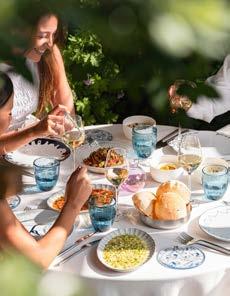
gin and tonic with real precision, a few olives and nuts arrive unprompted, and a couple of glasses of Champagne pass an easy hour before dinner. The effect is closer to the 1970s than to now, in the best way.
Le Grill sits on the eighth floor beneath a roof that slides back in warm weather, and it holds one Michelin star. The panoramic terrace is the real draw, and the view over the principality and the sea at dusk is worth stepping outside for between courses.
Tables inside are handsome, but it is the open-air vantage that guests tend to remember. The meal leans classic and unhurried. A Champagne trolley wheeled tableside is a highlight, the sommelier talking diners through small, lesser-known houses with the ease of someone who clearly knows the list. A fresh, dry Champagne opens proceedings, followed by a few light starters and a fillet cooked precisely to order. It is the kind of service, attentive without hovering, that does as much for the evening as the food. Breakfast is served at Em Sherif Monte-Carlo, the LebaneseMediterranean restaurant on the ground floor of Hôtel de Paris Monte-Carlo, with a terrace that opens onto the planted courtyard
when the weather allows. An elegant buffet runs alongside an à la carte menu of omelettes and breakfast classics, but the detail that lingers is the fruit. The strawberries and raspberries are close to flawless, and taken simply with a little fresh cream they make the case for keeping breakfast light.
Pastry now sits in serious hands. Cédric Grolet, named the world's best pastry chef by the 50 Best list in 2018, opened a tea room and boutique in the atrium of Hôtel de Paris Monte-Carlo in 2025 and oversees its desserts and breakfast pastries. His viral sculpted, fruit-shaped creations and croissants draw queues in Paris and London, and an afternoon coffee among the greenery is one of the calmer ways to try them.
The wellness facilities are another
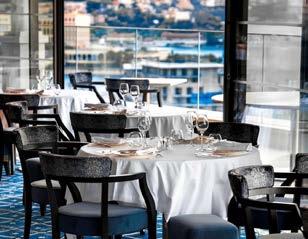
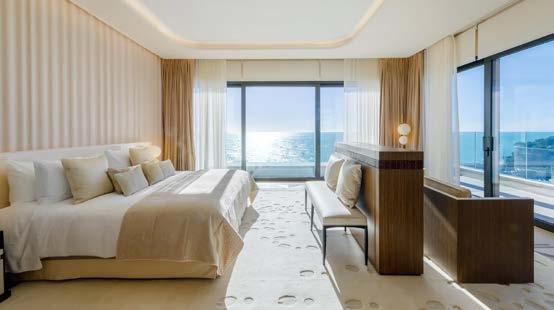
detail worth noting, especially in a stay where the schedule can quickly become built around long lunches and late dinners.
Guests have access to two fitness spaces, including an upperlevel gym with views across the principality. It is a small but useful distinction, and a quick run with Monaco spread out beyond the windows adds a different kind of rhythm to the stay. In a hotel so closely associated with dressing up, dining well and being seen, it is a practical counterpoint.
The Wellness Sky Club sits on the top floor of the hotel, giving guests another perspective over Monte-Carlo beyond the bedroom balcony and restaurant terraces. Its heated outdoor pool, sunbeds, cabanas, sauna, hammam and fitness room make it feel like a private pause above the principality rather than a standard hotel facility.
Guests staying at Hôtel de Paris Monte-Carlo can access the private Monte-Carlo Beach Club in season, a separate property a short drive along the coast and
part of the same Monte-Carlo Société des Bains de Mer group.
The beach club has drawn the Riviera set since 1928 and still feels relaxed rather than formal. Lunch at Le Deck is the surprise of the trip, with plates of burrata, strawberries and tomato dressed in very good olive oil, and a lemon gnocchi stuffed with ricotta that ranks among the best food of the stay. A crisp veal Milanese and spaghetti alle vongole keep the rest of the table light and Italian, and the kitchen sends out colourful, generous plates that match the bright, busy room. It is unshowy
cooking done very well, which is often harder to find at this level than something decidedly elaborate. Juxtaposed with the decadence of the Hôtel de Paris, the beach club feels brighter, looser and more overtly Riviera, with colour, striped cabanas, sea air and a pace that invites guests to stay longer than planned. The Olympic pool is reason enough to linger. It is a 50-metre seawater pool heated to 28 degrees, tiled in blue glass mosaic and fitted with two diving boards, which keeps it comfortable even on a cooler, breezy day. Loungers, striped
cabanas and a simple poolside menu make for an easy afternoon by the water, with the sea a few steps beyond. Swimming there, with Monaco rising behind it, gives the beach club its own identity within the wider stay. The nearby boutiques, including Jacquemus, add to the sense of the place as a polished summer enclave rather than simply a pool attached to a hotel. A light poolside order keeps the afternoon easy, balancing the more polished meals back in Monte-Carlo.
Back across the principality, Amazónico Monte-Carlo, the
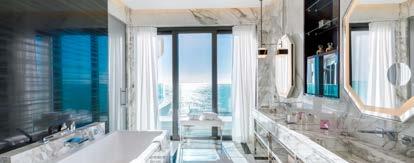
Latin American restaurant overlooking the square, brings a louder and more contemporary energy, strong on its pão de queijo, sashimi and grilled meats. Anyone who knows the Dubai outpost may notice the picanha arrives without the cacao butter served there, a small gap in an otherwise polished, consistent experience.
Café de Paris Monte-Carlo, the grand brasserie directly on the square, is the place for something simpler. It is less about discovering somewhere hidden and more about accepting the obvious pleasure of sitting in the middle of the square. The terrace is busy, the room is large and polished, and the crowd changes constantly as hotel guests, locals, day visitors and cruise passengers pass through. For a final dinner, simple pasta, dessert and a last glass of Champagne feel right. The food matters, but the real attraction is the theatre of the square. It has been a fixture here for generations, and its appeal is as much the opportunity for excellent people-watching as the plates of pappardelle.
Few addresses put guests closer to motorsport. The Circuit de Monaco runs through Place du Casino directly in front of the Hôtel de Paris Monte-Carlo, and in the weeks before a race the principality visibly changes gear as grandstands and barriers rise across the streets. The hotel sits on the circuit near the start, which makes its front-facing rooms among the most sought-
after vantage points of the year. The calendar now holds two street races on the same layout. The Monaco Grand Prix has run since 1929 and returns each spring, while the Monaco E-Prix has brought Formula E to the same streets since 2015, racing the full Grand Prix circuit in recent years. Both events turn the city into a single roaring weekend, and rooms over the track are reserved far in advance for either, so early planning is essential for race fans.
Beyond the restaurants and the square, the hotel also places guests within the wider rhythm of Monte-Carlo. One Monte-Carlo sits moments away, bringing together luxury boutiques, shaded walkways and polished public spaces that extend the experience beyond the hotel lobby.
The Jewellers’ Courtyard adds
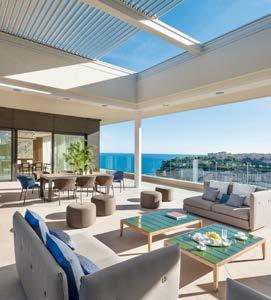
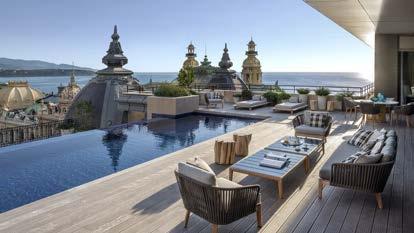
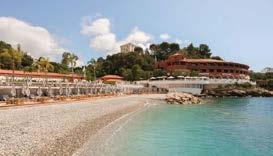
another layer of discreet luxury, while the Opéra Garnier and Casino de Monte-Carlo keep the cultural and social landmarks of the principality within reach. The appeal of the Hôtel de Paris Monte-Carlo is continuity rather than reinvention. The service is traditional and the location puts you at the centre of everything. It will suit travellers who want history and a central address over a sleek, contemporary stay,
and couples happy to make the hotel and its sister property's beach club the heart of a trip. The doormen, the lobby, the lucky horse, the panelled bar, the casino across the road all work together. It is not a hotel that could easily be lifted into another city. For a first visit to Monaco or a fiftieth, the Hôtel de Paris Monte-Carlo holds its place as one of the principality’s most defining addresses.
Most of Bali arrives in the imagination as a single image. Emerald rice terraces stepping down a hillside, temple gates wrapped in morning mist, the quiet choreography of offerings set out on a doorstep at dawn. The far south refuses that picture almost entirely. Beyond the airport, where the island thins to a strip of land barely wider than the runway beside it, the green falls away and something harder takes its place.
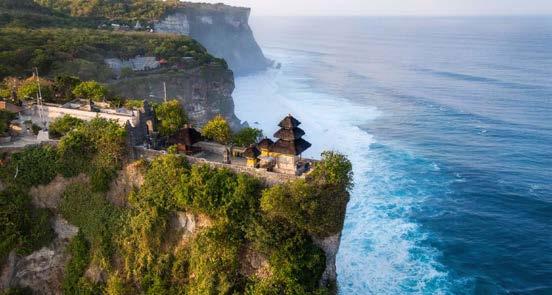
Where limestone cliffs, a thousand-year- old sea temple and some of the most famous waves on earth gather.
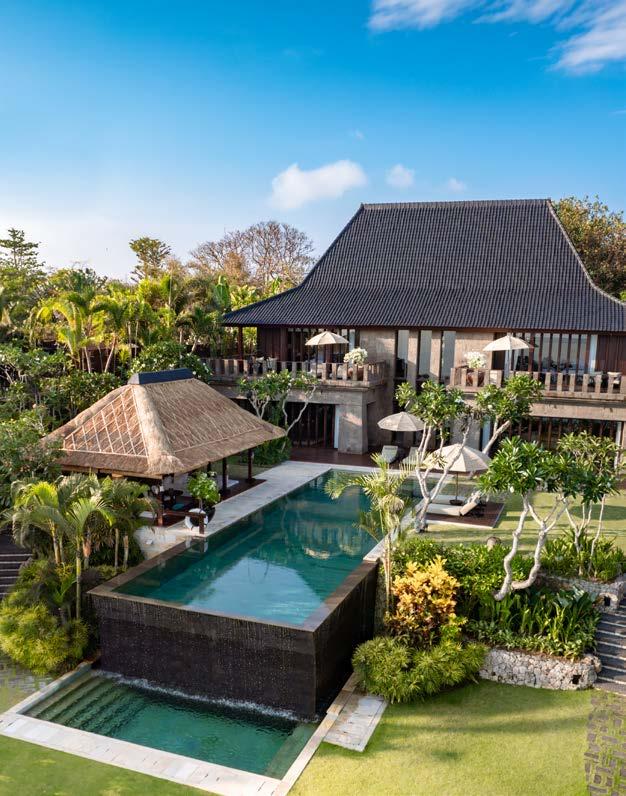
A serene and atmospheric clifftop retreat above one of Bali's most spiritual coasts, where Italian craft and Balinese ritual hold equal weight.
Arguably the best located resort on the island, Bvlgari Resort Bali rarely needs to convince a guest of its setting. The southern Bukit clifftop, with its dramatic edge and the great Uluwatu sea temple shaping the surrounding coast, carries a stillness and spiritual weight travellers tend to feel from the first visit. The resort has built its character around it. Italian heritage and Balinese craft inhabit the same space without one performing over the other, and a stay quietly reveals just how thoroughly the property belongs to its place. The approach prepares the senses before any signage appears. A drive through dense tropical planting opens onto an arrival pavilion built from massive blocks of handcut volcanic stone, closer in proportion to a Balinese temple than to a hotel lobby. Beyond it, the Indian Ocean appears on the horizon, and the property's elevation, 160 metres above the water, registers immediately. It is an opening movement that sets the tone for everything a stay in Uluwatu involves.
The first stop after check-in is
The Bvlgari Bar, where guests are walked through to a welcome drink beneath a traditional alang-alang thatched roof. Small generosities surface from the outset, a tray of nuts, olives and Balinese spiced sambal arrives unprompted, a butler comes by to make introductions. These little gestures repeat across a stay, never quite duplicated, and the cumulative effect at Bvlgari Resort Bali is one of unfussed, observant care.
What sets Bvlgari Resort Bali apart, more than any single feature, is the conviction with which its two cultures inhabit the same space. Contemporary Italian lines run through the resort, but the materials belong to the place, hand-cut volcanic lava stone, indigenous timber and alang-alang thatch carried consistently from the public pavilions down to the smallest details of the villas. Furniture and finishes are chosen with unusual care, and the standard extends, less commonly in resorts of this scale, to every outdoor surface. The 59 villas and mansions of Bvlgari Resort Bali spread
Few properties on this side of Bali earn returning guests as steadily.
across 8.4 hectares of clifftop gardens, each tucked behind its own hand-hewn stone wall. Inside a one-bedroom villa, a triangular timber and bamboo ceiling echoes the architecture of the main pavilion, while carved Balinese detailing above the bed shifts subtly from villa to villa, so no two stays look quite alike. The bathroom matches the living area for scale, with a huge central tub and a tucked-away outdoor waterfall shower carrying the indoor-outdoor logic through. What stays in the memory, though, is the outdoor living room. Sheltered by thatch, cooled by a steady cross-breeze and furnished with the same care as anything indoors, it is the rare hotel outdoor space a guest actively wants to inhabit for hours. A private pool with an infinity edge runs along the terrace just beyond, and a complimentary minibar of Pellegrino and soft drinks rounds out a villa designed for long,
slow days. The outdoor living area quickly becomes the natural living space of our stay.
Il Ristorante - Niko Romito anchors the dining at Bvlgari, the Bali outpost of the chef whose flagship Reale, in Abruzzo, holds three Michelin stars. Executive chef Alessandro Mazzali runs the kitchen here, with a degustazione menu for parties of two or more and an à la carte selection broad enough to build a complete meal. The cooking is precise without being austere, beef carpaccio with anchovy sauce and capers, smoked ricotta tortelli with zucchini, mint and parmesan, handmade cannelloni with a slow-cooked pork ribs ragù, and a traditional tiramisu to close. Service across Bvlgari Resort Bali is as carefully judged as the kitchen. A passing remark about our curiosity for Uluwatu's surf breaks came back later as a handwritten list of schools and beaches compiled by the same member of waiting staff. The
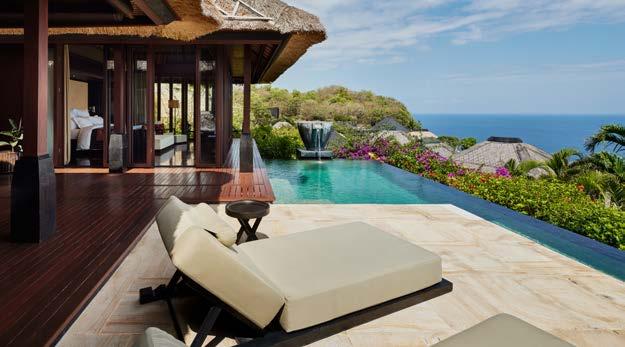
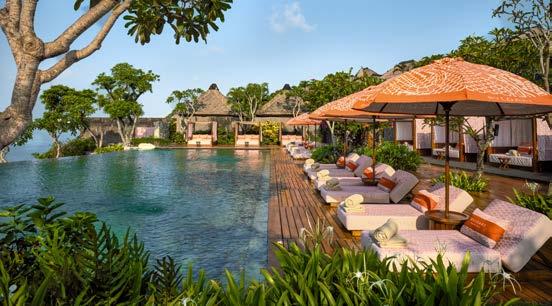
Bvlgari Bar holds its own loyal share of evenings, particularly for the small plates that arrive with drinks, cheese, arancini and skewered bites that rotate from one visit to the next. In-villa dining keeps a pared-back menu of pizza and pasta that more than holds its own, and is part of what makes a long lunch on the terrace so easy to slip into.
Among Bvlgari Resort Bali's complimentary experiences, the melukat ceremony is the one most worth carving out time for. Held in the property's onsite temple, the setting is part of the draw, an open-air shrine framed by tropical planting and watched over by a carved stone figure, with a woven mat laid out beneath decorative parasols. A member of the resort team explains the structure of the ritual before it begins, and the tone throughout is one of welcome rather than performance. The ceremony itself is led by an exuberant local priest and unfolds gently. We changed into a traditional cloth wrap, then moved through a sequence of steps, the face washed with fresh coconut water, flowers placed in turn, prayers chanted in Balinese over each gesture. It closes
with a woven thread bracelet in symbolic red, black and white, tied around the wrist. Long after a stay at Bvlgari Resort Bali ends, our bracelet proudly remains, a quiet thread back to a place that holds its rituals lightly and seriously at once.
Breakfast at Bvlgari Resort Bali is served at Sangkar, the all-day restaurant set on the highest point of the resort. The dining room takes its name from the sculptural Balinese rooster cages hung overhead as light fixtures, while the terrace, with monkeys gathering occasionally in the treeline, is where most guests settle. What distinguishes the meal, though, is the freedom of timing. Sangkar runs to a 24/7 schedule, and a late riser need not lose the morning to a missed window. It is one of the small permissions that resets the rhythm of a stay.
The main pool, beautifully reimagined as the Serpenti Pool Club around the maison's signature serpent motif, carries the social weight of the resort yet rarely feels crowded. It's genuinely gorgeous and a defining feature of the hotel. Stone detail along the water's edge ties it back into the
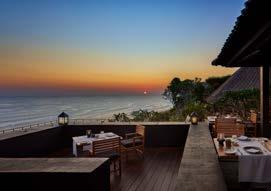
landscape, and with 59 villas spread across a generous footprint, space is in steady supply. A pair of warm jacuzzis tucked beneath the cabanas, easy to miss without exploring the lower terraces, gives the property quiet corners for evening swims.
Bvlgari Resort Bali rewards travellers who want a property to fall into rather than a base for exploring widely. Uluwatu's southern position keeps the resort at some distance from Bali's busier scenes, so guests planning to range across the island will lean on transfers. For those happy to stay close to home, that distance is precisely the appeal,
the means by which the resort keeps hold of its sense of place across the length of a stay on Bali's southern tip.
What lingers most is consistency. The architecture, the cooking and the service, including our wonderful butler named Oni, whose help proved faultless, all pull in the same direction.
Bvlgari Resort Bali is not an inexpensive stay, but it more than justifies the price for travellers who are happy to spend a holiday largely, and contentedly, within the resort's lush grounds, and for whom spending time on the southern tip of the island is the whole appeal.
The Bukit Peninsula occupies the southernmost reach of Bali, a tableland of limestone covering roughly 140 square kilometres and shaped, on the map, a little like a lemon hanging from a stem. That stem is the narrow isthmus just south of Ngurah Rai International Airport, a sliver of land so slight that the peninsula comes close to being an island in its own right. Cross it and the change is immediate. The geology underfoot is entirely different from the volcanic soils that give the rest of Bali its terraced abundance.
At the southwestern tip of the peninsula, on a promontory of rock around 70 metres above the water, sits Pura Luhur Uluwatu, the spiritual heart of the south and one of the most revered temples in Bali. Its name describes its position with great economy. Ulu means the head or the edge, watu means rock, and the temple is exactly that, a sanctuary built at the edge of the rock, facing the sea. Uluwatu is one of the sad kahyangan, the six principal temples that the Balinese regard as the island’s spiritual pillars, each positioned to protect Bali from malevolent forces and to keep the cosmos in balance.
The south is where the island confronts the sea most directly, and Uluwatu is the point at which that confrontation is given form and meaning. Long before the surfers and the resorts arrived, this was already a place of pilgrimage, and it remains so. The crowds that gather for the sunset performance are, in their
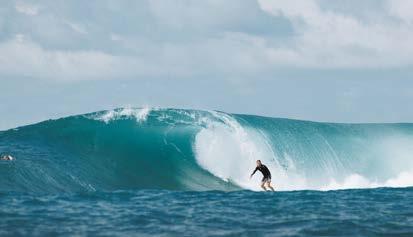
way, only the most recent in a very long line of visitors drawn to the edge.
For all its spiritual weight, the south of Bali became famous to the wider world for an entirely different reason, and a surprisingly recent one. Until the early 1970s the Bukit’s surf was effectively unknown beyond the island. Bali had no surfing
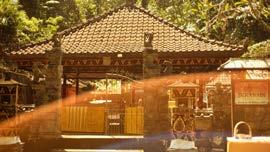
tradition of its own. Children had always played in the white water on rough wooden boards, but the great reef waves that broke beneath the cliffs went unridden, regarded by most Balinese as part of a coastline best left alone. That changed in 1971, when the Australian filmmaker Alby Falzon arrived to shoot footage for what would become the surf film MorningoftheEarth . The original plan was to capture the waves around Kuta, the long beach break on the island’s west coast that the first travelling surfers had already found. After a few days, Falzon’s group made their way out to the Bukit. There, beneath the cliffs of Uluwatu, they came upon a long, peeling left-hand wave breaking over coral, and it was perfect. A 15-year-old Australian, Stephen
Cooney, paddled out and rode the first documented wave at Uluwatu, the moment caught on film alongside the more experienced Rusty Miller. When MorningoftheEarth was released in 1972, it changed the south forever. The film is still regarded as one of the finest surf films ever made, and the sequence at Uluwatu became its most enduring image. Within a few years, surfers from across the world were making the pilgrimage to Bali to find the wave they had seen on screen. At the time there was no road down to the beach. To reach the surf, you climbed down past the temple and emerged through a cave at the base of the cliff, carrying everything you needed, since there was nothing waiting at the bottom but the ocean.
What followed was the slow growth of a surf culture that would come to define the area. By the mid-1970s a first generation of Balinese surfers had taken to the water alongside the foreign visitors, and figures such as Gerry Lopez, already a giant of the sport, became fixtures in the Uluwatu line-up. Around the surf grew a scattering of warungs, simple homestays and board repair shacks clinging to the clifftop, a low-key, sunbleached world that ran on cheap meals, long sessions in the water and the easy rhythm of swell and tide. For decades this was the Bukit’s identity, a place known almost exclusively to surfers and more adventurous travellers. Uluwatu was only the beginning. The same reefs that produce its famous left run the length of the peninsula, and over the years each break developed its own reputation. A short distance up the coast lies Padang Padang, often called the Balinese Pipeline for its likeness to the celebrated Hawaiian wave. It is a fast, hollow, beautifully formed barrel
that throws over a very shallow reef, and when it is working it is among the most photographed waves anywhere. Just along the same beach, a gentler sandbottomed wave known as Baby Padang offers beginners a far more welcoming introduction. Nearby Bingin is a connoisseur’s wave, a short, intense, fastbreaking left that reels along a shallow reef and rewards a clean barrel ride above almost anything else. Impossibles offers long, fast walls that, on the right day, link section after section for hundreds of metres. Balangan provides a long left-hand reef break that holds its form for much of the dry season, while Dreamland, named by the Australian surfers who first frequented it, sits beneath the cliffs further round the coast. Taken together, this concentration of exceptional reef breaks within a few kilometres of one another is almost unmatched, and it is the single greatest reason that surfers regard the Bukit as something close to hallowed ground. The surf did more than draw
visitors. It shaped the image of Bali itself. The picture of the island that took hold in the global imagination through the 1970s and 1980s, of freedom and warmth and an unhurried life lived close to nature, was forged in no small part on these reefs. The barefoot surfer chasing the perfect wave under a tropical sky became one of Bali’s defining myths, and southern Bali was where that myth was made. Long before the island became a byword for wellness retreats and honeymoon villas, it was the surf of the Bukit that gave Bali its reputation as a place of escape, where the modern world
could be set aside for something simpler and wilder. That reputation persists, even as the surrounding world has changed almost beyond recognition. The reefs are far more crowded than they once were, and the goat tracks and bamboo warungs have given way to paved roads and polished cafes. Yet the waves themselves are unchanged. For the surfers who still rise before dawn to be first into the water, the south remains what it has always been, a stretch of coast where the ocean sets the terms and everything else arranges itself around them.
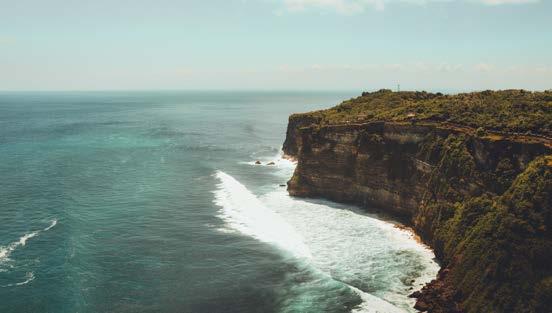
The first sign that Alila Villas Uluwatu sits lightly on its surroundings arrives before check-in, when a troop of monkeys gathers near the entrance, settled in as though they belong there. They turn up again the next morning in the same spot, eyeing the bikes that roll past on their way out of the resort. It is a fitting welcome to a property that hands a great deal of room back to nature.
Alila Villas Uluwatu spreads across a large clifftop plot on the Bukit Peninsula, its low bungalow-style villas, tall slim palms and cool, pared-back aesthetic bringing Palm Springs to mind more readily than tropical Bali. In the lobby, a sculptural mass of stacked bamboo-like forms sets the tone, a motif that recurs across the resort from the chandelier overhead to the small charm on the room key. The design works quietly in practical ways too. Villas are arranged around a central courtyard threaded with ankle-deep pools and lava rock, the same
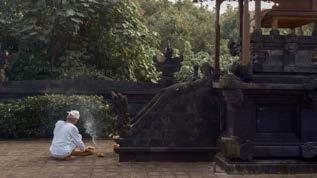
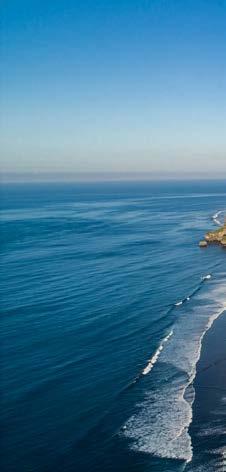
White walls, bamboo and lava rock lend Alila Villas Uluwatu an almost Cycladic calm, an unexpected note on a Balinese clifftop high above the Indian Ocean.
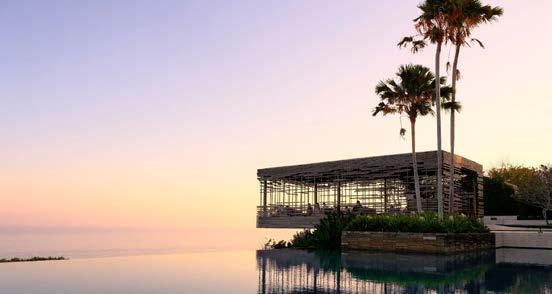
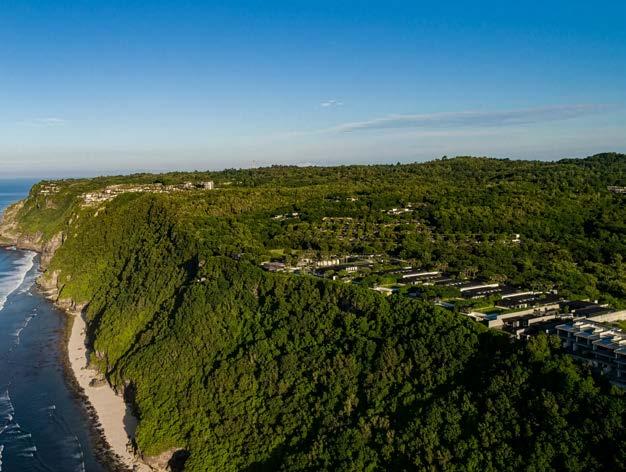
volcanic stone laid across the villa roofs to keep interiors cool. Water trickles along the staircases and pathways, a soft and constant soundtrack, and the layout that first reads like a maze soon reveals its logic. As Indonesia’s first resort to reach the top tier of EarthCheck certification, the eco thinking at Alila Villas Uluwatu is built into the fabric rather than bolted on.
Step into the lobby and the cliffside infinity pool sits almost flat against the horizon, drawing sea and sky into a single clean line. White walls, long corridors and doorways that open onto sudden flashes of blue lend the public spaces an almost Cycladic feel, an unexpected note on a Balinese cliff. The greenery softens all of it, and the sense of arrival lands immediately.
If one thing defines Alila Villas Uluwatu, it is generosity of space. The entry-level onebedroom villa runs to 290 square metres,
more than 200 of them outdoors, taking in a private pool, a terrace and a cabana large enough to seat six or eight in shaded comfort. For a couple, the scale borders on indulgent, and it makes the resort an easy choice for longer stays or for hosting friends.
Inside, the layout is unusual and clever. A round dining table anchors the middle of the room, the bed sits to one side facing the pool through full-height sliding windows, and doors pivot both ways to open up or close off space as needed. The outdoor shower is the quiet star, generously sized, planted with greenery and fed by strong, steady water, while a deep bathtub fills fast for an unhurried soak. Thoughtful extras, from a Dyson hair dryer to plentiful charging points, point to a property paying attention.
Evenings reward staying put. Each villa cabana comes set with a small table, ready for wine and cheese by the private pool as
the light drops, and the indoor-outdoor flow makes the whole space feel larger still. It is the kind of room that suits a slow week rather than a quick night.
But not everything lands perfectly. The hillside villas climb the slope in tiers, and the mix of mature trees and stepped levels means many of them see little of the sea from the room itself, though the ocean reappears the moment guests reach the main areas.
The cliff-edge villas, along with a handful of larger residences, are the ones to book for uninterrupted water views, with further direct-view villas said to be planned.
The three-bedroom villas tell a different story again, laid out almost like private homes with their own parking, a kitchen for in-villa chefs and vast pools. They sit close to Savaya, the well-known Uluwatu beach club by the same owner, which makes them a natural base for groups planning a pre or post-party
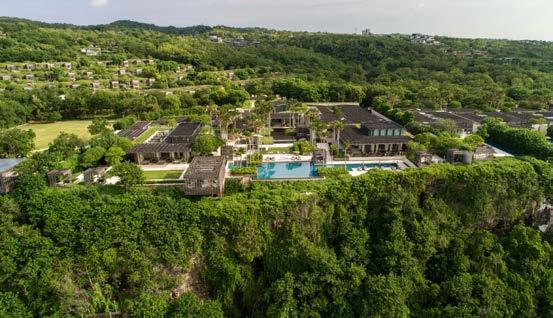
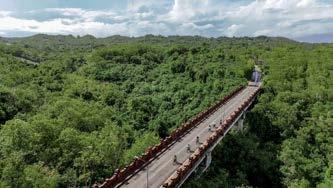
in comfort. Music carries up from the club on some evenings, though it winds down by 10pm. One of the better surprises at Alila Villas Uluwatu is how walkable it is. A landscaped cut-through links the villas to reception on foot, sparing guests the usual buggy calls and waits that come with sprawling cliffside resorts. The same instinct for movement extends to the complimentary bikes, ideal for exploring the lanes beyond the gate, resident monkeys included. From the clifftop, a well-built stone path descends to a small beach below, a walk of roughly 15 minutes down and a little
more on the way back up. The steps are clearly marked and lit for the return, easy enough even in flip-flops. The cove can be rough and wind-blown, with dramatic surf rolling in, less a swimming spot on a blustery day than a reminder of the wild coastline the resort perches above. A garden lawn nearby, set among the trees with its own sea view, hosts weddings and events. Spa Alila occupies the upper reaches of the resort, but the treatment to book is the Cliff Edge Spa Cabana, reached by a flight of steps down through dense vegetation to a wooden pavilion on the edge of the cliff.
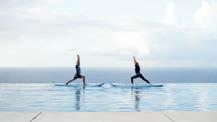
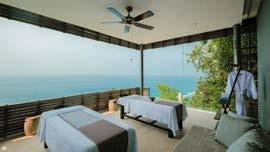
The ritual unfolds to the sound of waves and birdsong, the sea breeze occasionally tugging at the sheets
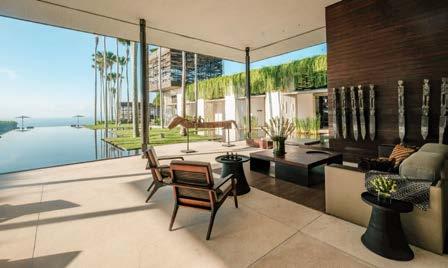
The two-hour ritual unfolds to the sound of waves and birdsong rather than piped music, the sea breeze occasionally tugging at the sheets. Mornings, meanwhile, begin with yoga on the pavilion for those inclined. The attention to detail carries through to the smaller things. The spa slippers are well made and quietly stylish, and the woven beach bags are sturdy enough that guests will want to keep them. Even the hand fans and sun hats waiting in the villas feel considered rather than tacked on, the kind of comforts that justify the chargeable rates. Dinner across the stay centred on The Warung, the Indonesian and Balinese restaurant at Alila Villas Uluwatu, where a communal table runs in front of an open kitchen led by chef Eling Payana. Meals begin with a long tray of rice crackers and dips, from sweet pineapple and mango to a graded line-up of sambals that build to a fiercely hot finish best approached with caution. It is a lively, generous way to start. The prawn tempura, which we ordered on both nights, is the clear highlight, crisp and light with a cool dipping sauce alongside. Raw tuna and soft,
crunchy corn fritters arrive in portions substantial enough to stand as courses in themselves. From the grill, the wagyu sirloin lands tender and full of flavour beside garlicky local greens, while the river prawns, though large, trade a little density for their size.
Dessert leans into Bali’s love of coconut, with pandan pancakes folded around sweet shredded coconut and yet more coconut served alongside. The wine list rewards exploring, from a first taste of Balinese white to a crisp Gavi and a Pinot for the mains. Beyond The Warung, the resort runs CIRE for Pan-Asian and Mediterranean plates and the Sunset Cabana Bar for cocktails over the cliff edge. Breakfast is à la carte and wide-ranging, running from omelettes and pastries to smoothie bowls and a thick coconut yoghurt with berries and honey. The housemade coconut jam is a particular find, and only the decision to charge extra for fresh coconut feels a touch unjust given the setting. Breakfast can also be taken privately in the villa, a chargeable extra but for most guests a worthwhile one, with the kitchen delivering cappuccinos
Alila Villas Uluwatu rewards guests who come to decompress rather than dash between sights. The villas are among the most spacious on this stretch of coast, the design is quietly confident, and the cliff-edge spa and 50-metre infinity pool make a strong case on their own.
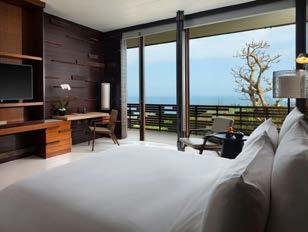
that reach the door impressively hot and still frothy.
Alila Villas Uluwatu rewards guests who come to decompress rather than dash between sights. The villas are among the most spacious on this stretch of coast, the design is quietly confident, and the cliff-edge spa and 50-metre infinity pool make a strong case on their own. Service is warm and capable, with team members easy to build a rapport with over a few days. It does not set out to compete with Uluwatu’s most rarefied
addresses, and it does not need to. For the location, the space and the natural setting, Alila Villas Uluwatu offers strong value, and three to four nights feels about right, particularly for couples after privacy or groups drawn by Savaya next door. A final breakfast laid out on the villa terrace, served as a brief tropical downpour passed and umbrellas appeared at the door, made for a difficult goodbye. Alila Villas Uluwatu proves itself to be the kind of place worth coming back to.
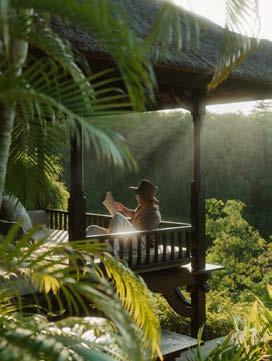
Jimbaran’s character is rooted in fishing. Long before tourism arrived it was a working village, and in many ways it still is. Each morning the boats come back to the Kedonganan market with the night’s catch of snapper, grouper, prawns, crab and lobster, and the rhythms of the fishing community continue alongside the resorts that now line the shore.
Developers recognised Jimbaran’s appeal early, moving in during the 1980s, and the bay is now home to a number of the island’s most established luxury hotels, set along the beach and on the hillsides above it. Yet the village has kept more of its original texture than many parts of the south. The fish market still runs, the boats still go out, and the seafood grills still fill each evening. For visitors, the contrast is much of the appeal. Jimbaran offers the comfort and polish of a luxury coast with the working life
If Uluwatu and its reefs represent the wild face of the south, Jimbaran is its softer counterpoint. It sits at the very neck of the peninsula, on the bay that marks where the Bukit joins the rest of Bali, and in almost every respect it is the opposite of the cliffs to the south. Where the Bukit’s coast is sheer rock and heavy surf, Jimbaran Bay is a wide, gentle arc of soft white sand. A reef lying offshore takes the force out of the waves and leaves a calm, shallow lagoon of clear turquoise water, safe for swimming and well suited to families, a rarity on this exposed coast.
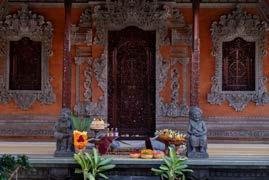
of a fishing village carrying on, unhurried, just along the sand. It is the seafood that has carried Jimbaran's name furthest. Along the bay, particularly the stretch known as Pantai Muaya, a line of beachfront cafes sets out tables on the sand each afternoon and grills the day's catch over coconut-husk charcoal, the smoke drifting along the shore. Diners choose their fish by weight before it goes to the fire, dressed in the garlic, chilli and lime sambal that has become the area's signature. As the sun drops the candles are lit, and dinner is taken barefoot in the sand with the water only a few steps away. Out on the bay, the lanterns of the fishing boats and the lights of the airport flicker on the far side of the water. The same catch can be traced to its source a little earlier in the day at the Kedonganan fish market, where the morning belongs to the fishermen rather

than the visitors. Ice, scales and the steady haggle of buyers fill the hall as the boats unload, and the best of the produce is gone within a couple of hours. It is an unglamorous and entirely authentic corner of the south, and one of the few places where Jimbaran's working life is on full display rather than tucked away behind the resorts.
For all the polish that has grown up around it, the bay keeps a quieter spiritual rhythm of its own. The Hindu fishing families
who have always worked these waters still make their offerings to Baruna, the Balinese god of the sea, in thanks for safe passage and a good catch, small ceremonies that pass largely unnoticed by the diners a short way along the sand. It is this layering, of working village, sacred ritual and easy beachfront luxury, that gives Jimbaran its particular character, and the reason so many travellers choose to return to the same curve of bay year after year.
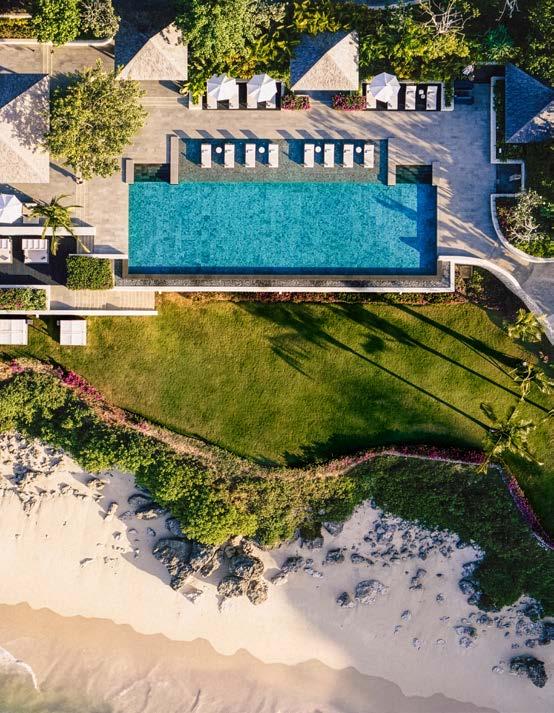
Few resorts on Bali’s southern peninsula commit quite as fully to privacy as Raffles Bali. Spread across 23 hectares of hillside that cascade down towards Jimbaran Bay, the 32-villa property opened in 2021 and has carved out a quiet, almost residential corner of the island.
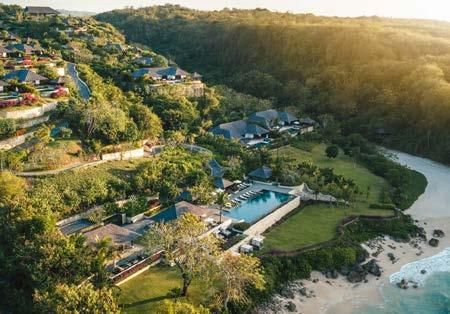
Arrival at Raffles Bali comes with a small ritual at the open-air lobby. A traditional blessing is offered before check-in, with a single grain of rice pressed to the forehead in the local custom. The team arranges everything from a low table on the bay-facing terrace, with a dedicated butler introduced almost immediately. The lobby sits at the highest point of the property, with the rest of the resort cascading down through tropical gardens to the modest beach.
Each Raffles Bali villa is, in effect, a small private estate. Reached through a tall wooden door set into a stone wall, the villa opens onto a private garden before the main building reveals itself.
Vaulted thatched roofs, dark timber beams and woven rattan ceiling panels lend the interior a moody, almost ceremonial feel, softened by a centrepiece fan and Indonesian textile detailing. Lighting stays deliberately low through both day and evening, a choice that suits the architecture and deep wood palette throughout, although guests who favour a lighter, airier feel may find the overall tone a little dark. The pool is one of the villa’s
strongest features. At roughly 1.2 metres deep and generously long, it is far larger than the plunge pools typical of villa resorts at this level, set within a paved deck with a thatched bale for shade. Floor-to-ceiling glass and a separate garden door open directly onto the pool, so the indoor and outdoor spaces flow into one another without friction. Bay views stretch uninterrupted across the deck, taking in Jimbaran Bay and, on clearer mornings, the silhouettes of Bali's volcanic peaks on the horizon. Indoor and outdoor showers connect through a sliding door, a small but thoughtful detail. Inside the spacious walk-in wardrobe, a compact wet bar with glassware and basic equipment for cocktailmaking sits inside the villa, alongside a well-stocked minibar. Mornings at Raffles Bali begin at Rumari, the signature restaurant under chef Gaetan Biesuz, where breakfast is served à la carte through full-length glass that catches the bay. Around 80 per cent of the produce arrives from Indonesian farms, with many herbs and vegetables grown in the resort’s own Farm Terrace garden. The coconut yoghurt, which carries the texture of
Greek yoghurt with a clean tropical edge, became a daily order, and the bar team will prepare coffee to specification on request.
Dinner on the second night was the highlight of the stay. Predinner cocktails at The Writers Bar, where the Bali Sling nods to the Singapore Long Bar legacy, set the tone before the main event. An omakase dining room sits beside Rumari, seating around eight to ten guests at a chef’s table where chef Gaetan Biesuz cooks and explains each course in real time. Billed loosely as five mains, the experience runs closer to ten plates once amuse-bouches, bread courses and desserts are accounted for. Ingredients are introduced
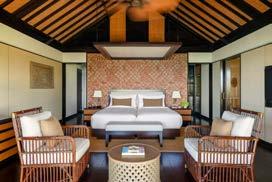
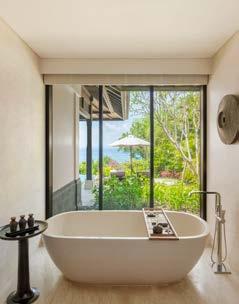
upfront on a single platter that includes lobster, caviar, a whole reef fish, Indonesian wagyu and heirloom tomatoes. The ravioli emerged as the standout, while the wagyu carried an almost dryaged depth to the taste, despite the chef clarifying it was not. The kitchen team adjusts willingly for spice tolerance, even making a light joke of it, and the pacing felt unhurried throughout. Bread arrives on a chilled marble plate alongside lightly seasoned butter, a small touch that runs through service across Raffles Bali. In-villa barbecues are a worthwhile experience, set up poolside before sunset with grills working through both surf and
turf. However, for those who prefer the vibrant energy of a restaurant, the chef’s table is the stronger choice.
The beach itself is not Raffles Bali’s strongest feature. The narrow strip of sand all but disappears at high tide, and a rocky entry to the water makes swimming impractical for much of the day. The trade-off is the serene 25-metre infinity pool that sits just above it, where service runs all day and coconuts and lighter dishes arrive from a poolside menu.
The spa sits on the upper floors of the main building, with treatment rooms looking out over the bay. The couples treatment
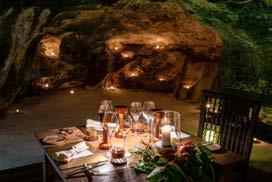
was well judged, with therapists adjusting pressure throughout. Two tennis courts and a pickleball court sit at one edge of the property, well maintained and available throughout the day. Bicycles are available across the resort, and a flat network of paths makes Raffles Bali easy to navigate on foot or by bike rather than by buggy transfer. The sense of privacy carries the stay at Raffles Bali. Even at near-full occupancy, guests rarely cross paths beyond the breakfast room, and the villas are spacious enough that much of the day can pass without leaving them. The walled gardens and tall doors give each villa the feel of a separate residence rather than a hotel room. Botanical detail runs across the grounds, with over 100 plant and tree species, including the curious pong-pong tree in our villa garden, which was actually flagged as toxic to deter guests from tasting the dangerous fruit. Service proved the defining strength of the stay. The butler assigned to our villa was warm and quick with the day-to-day,
and when a request fell outside his remit he found someone who could solve it rather than simply closing it down. Our push for a later checkout was the test. The villa was wanted by 2pm and that, at first, was that, until Fernando, who had looked after us at the bar the night before, remembered we had a tennis match booked and would want to clean up afterwards. Rather than send us off damp, he set aside a spa room from five until half past seven, so we could play, take a last few lengths in the pool and shower in our own time before the drive out. It was a small piece of lateral thinking, offered without being chased, and it is precisely what separates a good hotel from a genuinely thoughtful one. The resorts that stay in the memory tend to be the ones that let you settle and lose track of the day, and that is exactly what this one invites you to do. For travellers who want a villa to disappear into, a slow rhythm and a base close to the airport, Raffles Bali is a resort that makes staying put feel like the whole point.
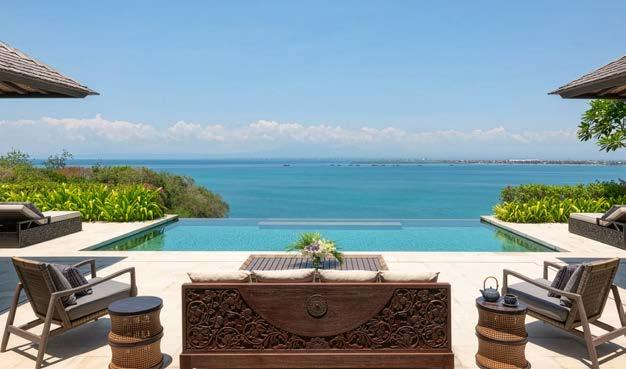
Where the sea stretches endlessly towards the horizon and every day unfolds at a gentler pace.
South Korea’s capital blends centuries-old heritage with cuttingedge modern culture. With its mix of royal history, stylish neighbourhoods and vibrant street food culture, Seoul is a city that reveals something new around every corner. In just 48 hours, travellers can explore iconic landmarks like Gyeongbokgung Palace, wander the traditional lanes of Bukchon Hanok Village, and experience the energy of local markets and modern districts across the city.
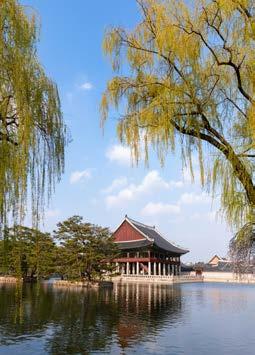
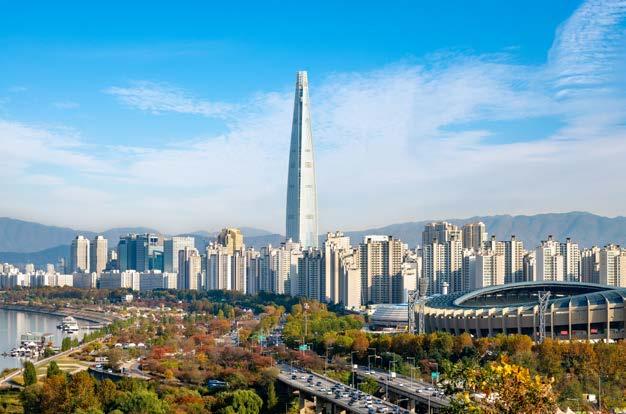
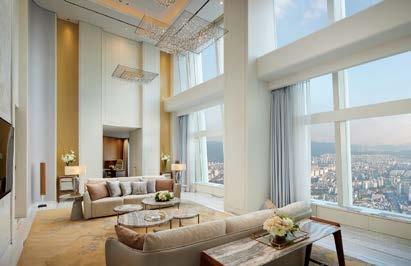
Signiel occupies the upper floors of Lotte World Tower, which makes it, comfortably, the highest place to sleep in Seoul. Even its lowest rooms sit above the top of the city's next-tallest building, and the floor-to-ceiling windows turn the skyline and the Han River into the main event, by day and after dark. The 235 rooms and suites are contemporary and deliberately restrained, done in soft, neutral tones with a few quiet Korean touches, marble bathrooms and deep, welldressed beds. The effect is calm and uncluttered, a counterpoint to the drama on the other side of the glass, and the in-room technology is as thorough as you'd expect at this level.
Dining is the genuine draw. STAY, the hotel's modern French room, is overseen by Yannick Alléno, whose Paris flagship holds three Michelin stars, while Bicena
Floor-to-ceiling windows overlook the Seoul skyline and the Han River, while interiors feature soft neutral tones, modern furnishings and refined Korean touches. Thoughtful details such as luxurious marble bathrooms, plush bedding and advanced in-room technology create a calm and sophisticated retreat above the city.
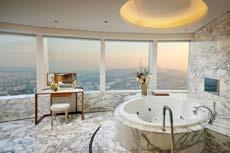
turns out contemporary Korean cooking with a Michelin star of its own. Both come with the same long views over the city, which is no small part of the pleasure, and Bar 81 keeps what's said to be the largest champagne list in the country for the hours either side of dinner. There's also a guest lounge styled like a European library, for slower afternoons with a coffee and the skyline.
Elsewhere there's a spa built around Korean wellness traditions and an indoor pool and
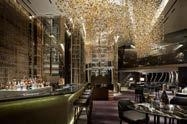
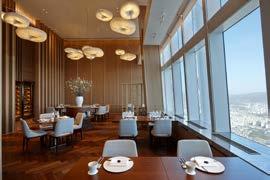
gym set high in the tower, both with the city laid out below. A lift ride away are the Lotte World Mall and the Seoul Sky observation deck, one of the highest in the world. Worth being clear: this is the south of the river rather than the old palace quarter, so the historic core is a subway ride away. What you trade in proximity you get back in height and polish, in serious dining and in a skyline view that does half the sightseeing for you.
Head north to the Joseon dynasty's great 14thcentury palace. Aim to arrive just before 10am for the Changing of the Royal Guard ceremony at the main gate, it's free to watch without a ticket. If you're up for it, rent a hanbok at the gate: entry to the palace is free and the photographs are quite something against those lacquered halls.
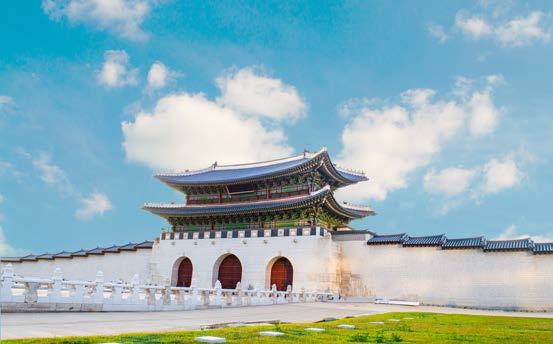
A 10-minute walk from the palace brings you into Bukchon, a 600-year-old hillside neighbourhood of tileroofed hanok homes that locals still live in. Walk up to Bukchon-ro 11-gil for the most iconic view in Seoul: a lane of curved rooftops cascading down toward N Seoul Tower. A walk south leads into a completely different register, traditional hanok architecture reinvented as independent coffee shops, design studios and tiny concept stores. This is where Seoul's creative class actually spends its afternoons. Stop for a pour-over, browse a shop or two, absorb the atmosphere.
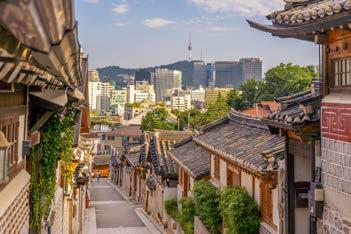
Korea’s oldest covered market and one of the best places to try yukhoe, Korean beef tartare seasoned with sesame oil, slivered pear and topped with a rich egg yolk. This iconic dish is one of Seoul’s great raw beef traditions, known for its delicate balance of savoury, nutty and subtly sweet flavours. Stopping here offers a perfect introduction to the city’s vibrant food culture and makes an ideal preview of the evening ahead.
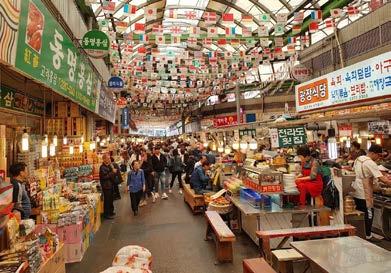
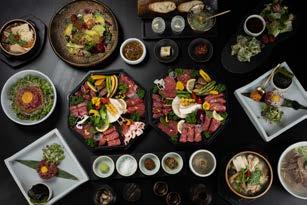
Seoul's finest cocktail destination, tucked inside the Four Seasons as a kind of laboratorymeets-speakeasy. The drinks are built around hyper-local Korean ingredients processed with lab-grade equipment. The menu is organised around places around the world, with each cocktail a kind of distilled sense of somewhere.
Hanwoo Spot is a private dining room experience in Gangnam that has a near-perfect rating and obsessive following. You're seated in your own room, and the team cooks every cut of 1++ grade Korean beef perfectly at your table. The tenderloin and sirloin are the two cuts to anchor your order around. They also offer a complimentary taxi home at the end of the meal, a genuinely lovely touch.
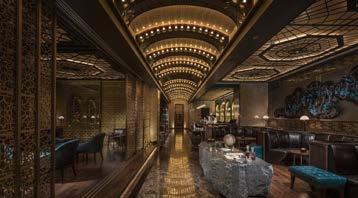
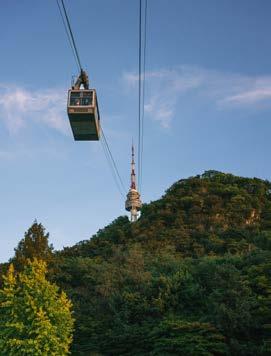
Ride the cable car up to N Seoul Tower as the afternoon light drops. The panorama over the Han River and Seoul's sprawling cityscape at golden hour is one of the defining views of the city. Worth going up just for that.
Alternative route: The nearby Namsan Mountain Trail offers a scenic 30-40 minute walk through forested paths leading up the mountain, making it a peaceful escape with beautiful viewpoints along the way.
One of Asia's great private museums, and one of Seoul's best-kept secrets from visitors. The Samsung family's collection spans ancient Korean celadon and bronze to Calder, Warhol, Serra and Lee Bul, housed in a complex that is itself a masterwork, its three linked buildings designed one apiece by Mario Botta, Jean Nouvel and Rem Koolhaas. Budget 90 minutes at least. Buy tickets online and pick up the GPS audio guide at the desk, it's excellent.
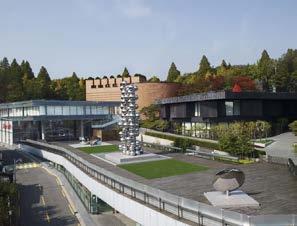
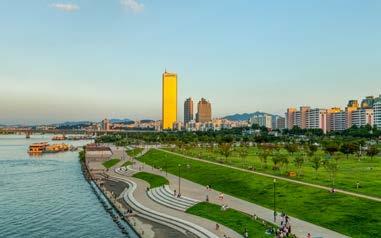
Head to the Han River for the most authentically Seoul ritual there is: grab something from a convenience store, sit on the grass by the water as the city lights up across the river. Locals do this religiously, regardless of the season. It's unpretentious, atmospheric and a perfect exhale before dinner.
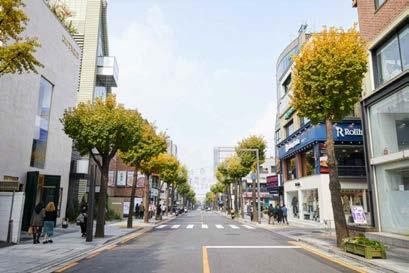
Seoul's most elegant treelined street with independent boutiques, concept stores, gallery spaces and excellent café terraces. The ginkgo trees make it especially beautiful in autumn. This is a proper slow afternoon walk; there's no agenda beyond absorbing the neighbourhood's particular energy.
A refined charcoal-grilled hanwoo lunch in private rooms offering sirloin and tenderloin over traditional charcoal, abalone with soy butter, stone pot rice with seasonal vegetables. The quality-to-price ratio is remarkable for what's on the plate. It's closed Mondays and Sundays, so be sure to plan accordingly.
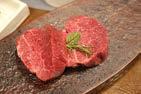
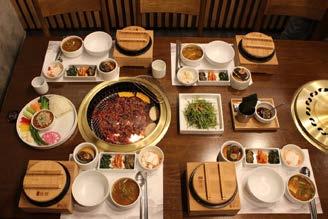
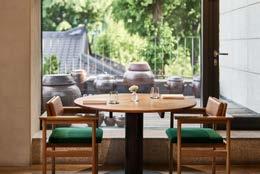
The only three Michelin-starred restaurant in Korea is known for its beautifully crafted tasting menus that highlight seasonal Korean ingredients with modern techniques. Each dish balances tradition and innovation, presenting familiar flavours in elegant and unexpected ways. With its minimalist interior, thoughtful service and artfully plated dishes, Mingles delivers a sophisticated dining experience that reflects the evolving identity of modern Korean gastronomy.
What started as a fine dining Greek restaurant in Dubai has since reached London, Monaco, and Miami, but does the original outpost still set the standard?
Since opening in Dubai in 2018, Gaia has expanded to MonteCarlo, Doha, London, Marbella and Miami, with seasonal summer openings in Saint-Tropez and Bodrum this year. That kind of growth, over that kind of timeframe, requires a product that holds up under scrutiny. And here, it does. There is a version of expansion that dilutes, that spreads a concept too thin and loses the original in the process. Gaia does not appear to be that story. The DIFC restaurant still feels like the real thing: specific, considered and in command of what it's doing.
The room itself sets expectations high. White linen, warm lighting, ceramic vessels and a sense of quiet formality that never tips into stuffiness. The interiors have a timeless quality that suits the cooking well, and the powder room alone, all aged mirror and burnished gold, makes a case for the level of care that has gone into every corner of the space. This is a restaurant that takes its own identity seriously, and it really shows.
The meal opens before the menu is even consulted. Bread arrives immediately, and it is the kind that sets the tone for everything that follows: fresh, chewy, feather-light and warm. Alongside it, a small complimentary plate carries a few carefully chosen components, olives, cherry tomatoes, a smooth whipped
cheese, and mild peppers. None of it is fussy. All of it is good. The quality of the ingredients throughout a meal at Gaia is arguably its defining trait, and it announces itself here, right at the start. It is a small gesture, but one that signals the kitchen's confidence in its own produce. From there, the seabream carpaccio arrives. This is the dish that has made the rounds on social media countless times, and seeing it in person explains why: a whole seabream, opened and thinly sliced to fan out across an elongated plate, accompanied by a spoon of salt and three small chilled jars of dressing, truffle, mandarin and lemon. The presentation alone is theatrical without being overwrought. The fish speaks for itself; the flesh is clean and delicate, tasting of very little beyond its own freshness. Those who prefer their fish cooked will not find this their favourite moment of the meal, but there is no faulting the product itself. The truffle dressing, used sparingly, adds just enough depth without obscuring the fish. The hot starters are where Gaia moves into more compelling territory. The meatballs arrive
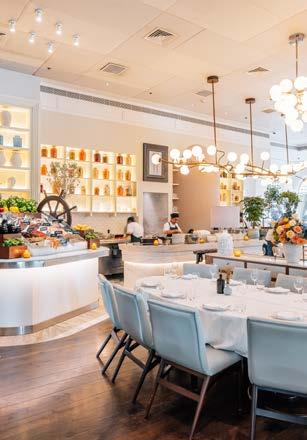
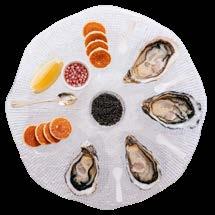
in a shallow pan, small and tightly formed, in a rich tomato sauce scattered with pine nuts, fresh mint and basil. They are dense with flavour, softer than expected and genuinely satisfying, the kind of dish that disappears quickly and prompts the thought that one portion was not enough. The tomato sauce is well-reduced and carries a
brightness that lifts the whole dish without making it sharp.
The moussaka, however, is the standout of the starters. A half aubergine is roasted, then built up with minced meat and a vegetable sauce, topped with béchamel and a generous grating of cheese. The result is indulgent in flavour without being weighty: there is no thick layer of potato to slow things down before the main course, and the balance is carefully judged. It is a dish worth ordering before anything else on the menu, and one that rewards the kind of slow, deliberate eating that a long lunch invites.
For the main course, a ribeye, shared between two, arrives cooked to medium rare. The crust is the highlight: properly caramelised, deeply savoury and
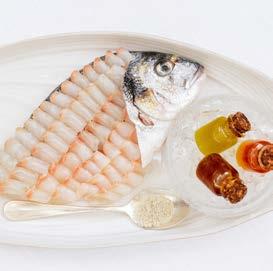
carrying most of the flavour of the dish. The meat itself is wellmarbled and juicy, served simply without sides, which allows the quality of the beef to hold the plate on its own. It does. There is a restraint to this kind of cooking that takes confidence: no garnish, no sauce, no distraction. Just the steak and the unwavering trust that it is enough. By this point, the pace of the meal has been brisk enough that a pause is needed before dessert. The kitchen here does not drag its heels, and the courses arrive with a consistency that leaves little time for the table to clear. The staff, to their credit, respond without hesitation when asked to slow the pace: attentive without being intrusive, present without hovering. It is the sort of service that only registers when you consider how rarely you notice it. When the loukoumades finally come, they are worth the wait. A substantial pile of Greek fried dough, drizzled with good Greek honey and scattered with walnuts, served alongside Greek frozen yoghurt. The honey is the kind that carries its own distinct flavour rather than simply sweetness, and the yoghurt provides a clean counterpoint
to the richness of the dough. It is generous, warm and straightforwardly enjoyable in the way that the best desserts tend to be. There is no cleverness here, no special techniques on display. Just a very good version of a very good thing. What holds the meal together is consistency rather than spectacle. The sea bream draws the cameras, but it is the moussaka, the meatballs and the unadorned ribeye that make the stronger case, each resting on produce good enough to need little done to it. Eight years and several cities on from the Dubai original, the DIFC room still reads as the genuine article, with none of the usual thinning that so often follows a concept this widely travelled.
The lunch extension, which now runs through to 4:30pm from Monday to Friday, makes it a more practical choice than it has been in the past, opening the restaurant to a different rhythm of visit: longer, less hurried, better suited to the kind of meal Gaia does best. For those still looking for a reliable answer to the question of where to eat in DIFC, this stalwart spot remains one of the clearest.
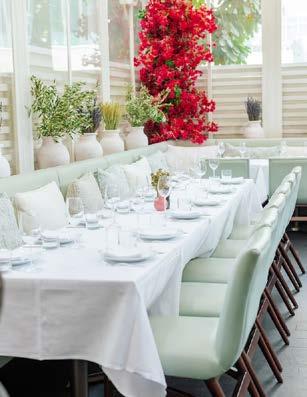
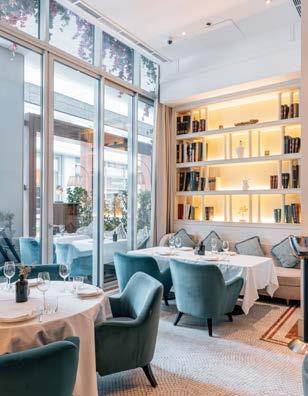
Ferrari introduces a new era of open top performance and refined power. The Amalfi Spider blends exhilarating speed with effortless elegance under the open sky.
Some cars introduce themselves through numbers. The Amalfi Spider is better understood through a feeling, the particular release of dropping the roof on an empty coast road as the afternoon softens, when the V8 behind you stops being a statistic and becomes part of the air you are moving through. This is Ferrari's newest grand tourer, the opentop sibling to the Amalfi coupé and the successor to the well-loved Roma Spider, built around exactly that sensation. The unhurried romance the Italians call la dolce vita is what Ferrari has chased with its grand tourers for years, naming them after corners of Italy close to its heart, from the glamour of Portofino to its own home in Maranello. The Amalfi carries the idea to the coastline that lends it its name, all switchback roads and glittering water, the kind of place that rewards a car you can drive with the top down and nowhere particular to be. It helps to know what a car like this is for. A grand tourer is built to cover long distances quickly and in comfort, the sort of machine you point at the horizon
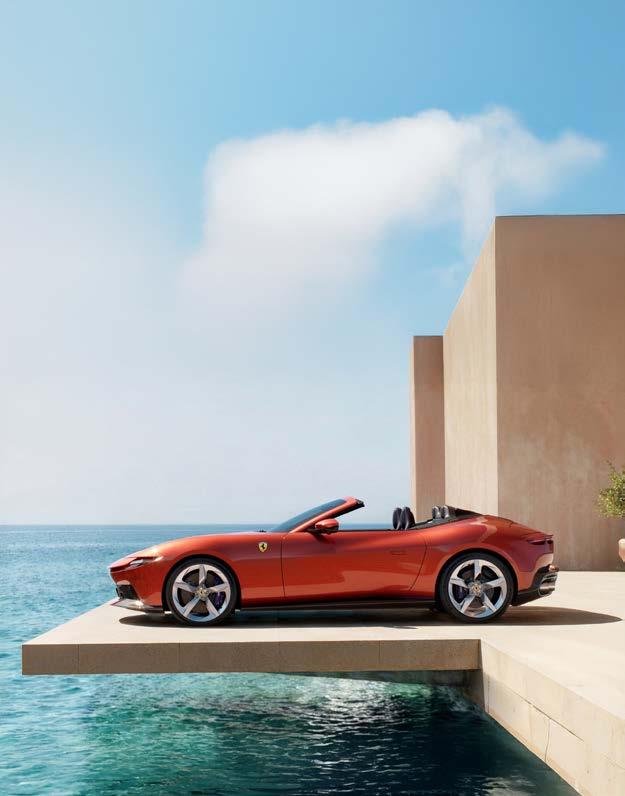
on a Sunday rather than a circuit on a Saturday. Within Ferrari's range the Amalfi sits below the racier hybrids and the big 12-cylinder cars, the gentlest way into the marque, and that shapes its whole character. It is made to be driven often and enjoyed easily, not saved for special occasions. That roof is the whole point. A five-layer fabric top folds away in 13.5 seconds and can be lowered while the car is still moving, so the urge to open it up never has to wait for a lay-by. Stowed, it shrinks to a slim package that keeps the lines clean, and raised, it seals the cabin tightly enough to shut out heat and noise almost like a solid roof. Open or closed, the Spider keeps the elegant proportions of the coupé rather than looking like a car that has lost its lid.
Beneath the long bonnet sits a twin-turbo V8, and the figures, when you reach for them, are vivid enough. It reaches 100km/h from rest in 3.3 seconds and tops out at 320km/h, the sort of
pace that turns a straight stretch of coast into a blur. The more telling thing is how lightly the car carries all of it. It is set up as a touring car first, content to amble, and bares its teeth only when asked. The open-top body loses none of the pace of the coupé, despite the extra strengthening it takes to build a car without a fixed roof. With the roof down, the engine's voice is no longer filtered through glass and steel. It rises and falls with the road, turning an ordinary drive into something you feel as much as hear, which is the reason a car like this exists at all. A wind deflector lifts at the touch of a button to keep the buffeting in check, so the openair romance need not come at the cost of conversation.
Ferrari has thought about how the Spider looks in the light as
carefully as how it drives. The styling is understated by supercar standards, closer to a sharply tailored coupé than a wing-laden track car, riding on 20in wheels with a low, flowing stance. There are no theatrics for their own sake. It is a shape made to look as natural parked outside a harbourfront restaurant as it does in motion.

Inside, Ferrari has quietly answered the few complaints aimed at the previous generation. The fiddly touch controls have given way to proper physical buttons on the steering wheel, including a red start button that asks to be pressed. The cabin is built for two, in truth. The small rear seats are best thought of as somewhere to stow a weekend bag rather than a pair of adults, though for the journeys this car invites, two travellers and their luggage is the honest brief. Then there is colour, which Ferrari treats as part of the design rather than an afterthought. The launch cars wear two shades made for the setting. Rosso Tramonto is a deep

red named for the way the Amalfi coast glows at dusk, while Verde Costiera is a soft coastal green that seems to belong against the sea. The soft top comes in six finishes of its own, with optional contrast stitching to carry a chosen colour into the cabin.
All of this sits at the more attainable end of the Ferrari range, the car most likely to

tempt someone into the marque for the first time, though attainable is a generous word for it. In Europe the Spider starts at around €270,000, a premium of roughly €30,000 over the coupé, with the first cars due in 2027. It is easy to picture closer to home, too. The Gulf's cooler months and long, open coastal roads suit a car like this, the kind of season when the roof can stay down from late afternoon well into the evening. Ferrari named the Spider after one stretch of coastline, but the experience it is selling travels comfortably. The appeal of an open car on an empty road needs no translation. What lingers afterwards is not the specification but the promise of the thing, a fast, beautiful car that would sooner seduce you than impress you. For anyone with an open road, a clear sky and somewhere worth driving to slowly, the Amalfi Spider makes the case for the top-down life about as well as a car can.
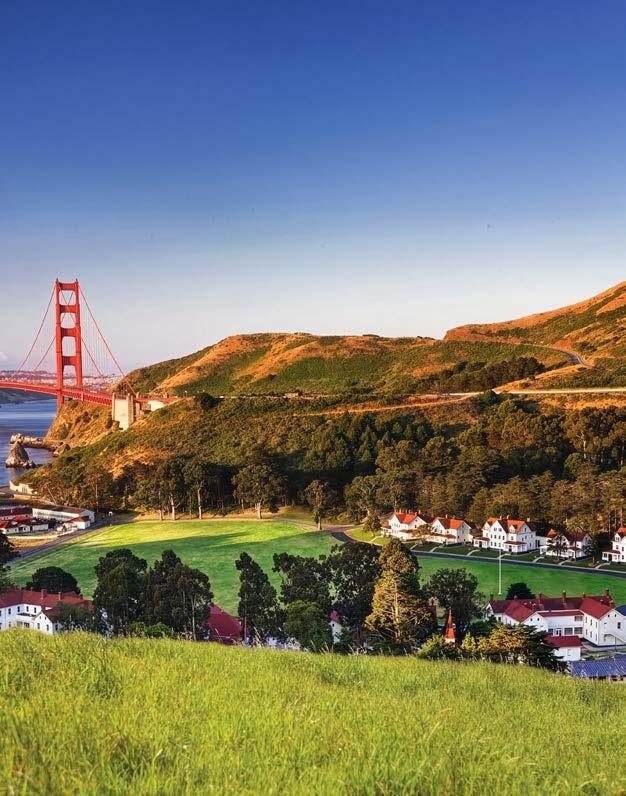
The 2026 FIFA World Cup will be the largest and most expansive in history, with 48 teams competing across 16 host cities in three nations. This unprecedented tournament offers not just football, but an opportunity to experience some of North America's most compelling destinations. This guide focuses on the cities that offer the most rewarding experiences beyond the matches – destinations where culture, gastronomy, and genuine character make the journey as memorable as the football itself. From the cosmopolitan depths of Mexico City to the natural splendour of Vancouver, each city presents its own distinct personality and rewards.
Mexico City Stadium: Estadio Azteca Capacity: 83,000
Key Matches: Opening Match (Mexico vs South Africa), Colombia vs Uzbekistan, Round of 32
Mexico City stands as one of the world's great cultural capitals, a sprawling metropolis where ancient civilisations, colonial grandeur, and contemporary creativity exist in compelling dialogue. The city has undergone a remarkable transformation over the past decade, emerging as a global destination for art, design, and gastronomy while retaining the warmth and authenticity that has always defined it. The Estadio Azteca is hallowed ground for football enthusiasts – one of only two stadiums to have hosted multiple World Cup Finals, where Pelé lifted his third trophy and Maradona scored the 'Hand of God' and 'Goal of the Century' in the same match. Hosting the opening match of the 2026 tournament adds another chapter to its legendary status.
Cultural Institutions: The National Museum of Anthropology is one of the world's finest museums, housing extraordinary Aztec, Mayan, and Olmec collections in a stunning modernist building by Pedro Ramírez Vázquez. The Palacio de Bellas Artes, with its Art Nouveau exterior and Art Deco interior, hosts the country's finest murals by Diego Rivera, David Alfaro Siqueiros, and José Clemente Orozco. For contemporary art, the Museo Jumex and Museo
Soumaya in Polanco offer worldclass collections in striking architectural settings.
Neighbourhood Exploration: The neighbourhoods of Roma and Condesa offer tree-lined streets, Art Deco and Art Nouveau architecture, excellent cafés, and a relaxed bohemian atmosphere. Coyoacán, further south, feels almost like a village, centred on charming plazas and home to Frida Kahlo's Casa Azul. Polanco provides the city's most refined shopping and dining, while the Centro Histórico reveals layers of colonial and preColumbian history around the magnificent Zócalo.
Architecture: Luis Barragán's Casa Estudio and Casa Gilardi are pilgrimage sites for architecture enthusiasts. The UNAM campus is a UNESCO World Heritage Site featuring murals by O'Gorman and Siqueiros integrated into modernist buildings.
Gastronomy: Mexico City's dining scene operates at every level. Pujol and Quintonil consistently rank among the world's best restaurants, offering contemporary interpretations of Mexican cuisine. But the real magic often lies in contrast – the same city that produces innovative tasting menus also offers transcendent street tacos, extraordinary markets like Mercado San Juan, and neighbourhood fondas serving regional specialities.
Teotihuacán: The ancient city's Pyramids of the Sun and Moon, about an hour from the city, remain one of the most powerful archaeological experiences in the Americas. Visit early morning to avoid crowds and heat.
Xochimilco: The floating gardens and colourful trajineras offer a glimpse into the city's preHispanic lake system. Beyond the
Four Seasons Hotel Mexico City: The default choice for those seeking flawless service in an elegant setting. The hotel is built around a beautiful courtyard garden that provides a tranquil oasis from the urban bustle. Set on Paseo de la Reforma, directly opposite Chapultepec Park and its museums, with the shopping and dining of Polanco
tourist boats, serious gardeners can visit the chinampas where vegetables are still grown using ancient techniques.
Puebla and Cholula: Two hours east, the colonial city of Puebla offers exceptional architecture, distinctive cuisine (including mole poblano), and the remarkable Biblioteca Palafoxiana. Cholula's Great Pyramid, topped by a Spanish church, is larger by volume than Giza.
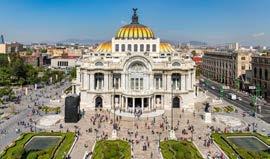
a short ride away. The service is multilingual and anticipatory without being intrusive.
Las Alcobas Mexico City: A boutique alternative in Polanco that offers a more intimate experience. Part of the Luxury Collection, it features 35 rooms with contemporary design, a rooftop terrace, and the acclaimed restaurant Dulce Patria by chef Martha Ortiz. Perfect for those who prefer design-forward spaces and personalised attention.
The St. Regis Mexico City: Rising in curvy steel and glass along Paseo de la Reforma, this 189-room hotel offers contemporary luxury with spectacular city views. The signature St. Regis butler service, full spa facilities, and proximity to Chapultepec Park make it excellent for both business and leisure, while the higher floors provide dramatic perspectives over the city.
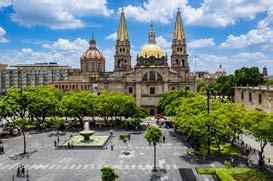
Guadalajara
Stadium: Estadio Akron
Capacity: 49,000
Key Matches: Mexico vs South Korea, Spain vs Uruguay, Colombia matches, Round of 32
Guadalajara represents the soul of Mexico in ways that the capital cannot. This is where mariachi was born, where tequila is produced, and where traditional Mexican culture flourishes with authentic pride rather than tourist performance. The second-largest city in Mexico feels more manageable than the capital while still offering genuine cultural depth.
The Colonia Lafayette neighbourhood has emerged as one of the most compelling in all of Mexico – a mosaic of architectural history featuring well-preserved 20th-century mansions in styles ranging from Art Deco to regional eclecticism. The restaurant and bar scene rivals anywhere in the country, with serious chefs working alongside traditional establishments.
Centro Histórico: The historic centre offers a cohesive architectural experience – the
Cathedral, the Hospicio Cabañas (a UNESCO World Heritage Site housing stunning murals by José Clemente Orozco), and the elegant Plaza de Armas create an ensemble that's walkable and human-scaled. The Degollado Theatre is one of Mexico's finest. Tlaquepaque: This arts and crafts village, now absorbed into greater Guadalajara, maintains genuine artisan traditions in ceramics, blown glass, and textiles. Wandering its cobblestone streets reveals workshops where traditional techniques persist, alongside galleries and excellent restaurants.
Colonia Lafayette and Americana: These neighbourhoods form the epicentre of Guadalajara's contemporary culture. Tree-lined streets connect architectural gems to some of Mexico's most exciting restaurants, from the bonedecorated interior of Hueso to the regional focus of Alcalde.
Stadium: Estadio BBVA
Capacity: 53,500
Key Matches: Tunisia vs Japan, South Africa vs South Korea, Round of 32
Monterrey offers something the other Mexican host cities cannot – a dramatic natural setting where modern Mexico meets the Sierra Madre Oriental mountains. Mexico's wealthiest city by per
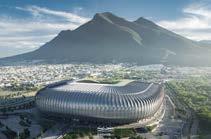
Local Gastronomy: Birria (slow-cooked meat stew), tortas ahogadas (drowned sandwiches), and tejuino (fermented corn drink) are local specialities done better here than anywhere else.
Tequila: The town that gave the spirit its name lies about an hour west, surrounded by blue agave fields that stretch to the horizon – a landscape unlike any other. Tour historic distilleries like La Rojeña (José Cuervo) or seek out smaller artisanal producers.
The Tequila Express train makes a memorable day trip, though driving allows more flexibility.
Lake Chapala: Mexico's largest lake lies 45 minutes south, surrounded by villages with significant expatriate communities. Ajijic offers galleries, restaurants, and a relaxed pace.
capita income has invested heavily in contemporary culture while maintaining the traditions of northern Mexican cuisine and hospitality.
The Estadio BBVA is one of the tournament's most architecturally striking venues. Its angular roof frames views of the iconic Cerro de la Silla (Saddle Mountain) behind, creating a backdrop unlike any other World Cup stadium. Watching a match here at sunset, with that mountain silhouette against the sky, will be genuinely special regardless of which teams are playing.
The Barrio Antiguo district has been revitalised with restaurants, bars, and galleries while maintaining its colonial architecture.
Cabrito (roasted kid goat) is the signature dish, cooked over open flames in a tradition dating back centuries. Carne asada, machaca (dried beef), and flour tortillas are prepared with an attention to quality that reflects the region's prosperity.
Vancouver Stadium: BC Place Capacity: 54,000
Key Matches: Canada vs Switzerland Australia vs Türkiye, Belgium vs New Zealand, Egypt vs Iran, Round of 32
Vancouver is one of the most beautiful settings of any of the host cities, where mountains meet ocean in a metropolitan area that consistently ranks among the world's most liveable. The combination of natural splendour, cultural sophistication, and exceptional dining –particularly Asian cuisines –creates a destination that rewards extended exploration.
BC Place's retractable roof ensures matches proceed regardless of the Pacific Northwest's famously variable weather. The stadium hosted the 2010 Winter Olympics opening and closing ceremonies and sits within walking distance of downtown Vancouver.
Stanley Park and the Seawall: The 400-hectare park offers forest, gardens, beaches, and the

famous seawall – a 28-kilometre waterfront path perfect for walking, running, or cycling. The Vancouver Aquarium and totem poles at Brockton Point add cultural dimension.
Granville Island: The public market is one of North America's best, with local produce, artisan foods, and prepared dishes. The surrounding area includes galleries, studios, breweries, and theatres in cool, converted industrial buildings.
Neighbourhoods: Gastown's Victorian architecture and cobblestones house restaurants, bars, and boutiques. Yaletown offers converted warehouse dining. Kitsilano provides beach access and a relaxed coastal vibe. The West End combines walkability with proximity to Stanley Park.
Dining: Vancouver's Asian food rivals cities in Asia, reflecting demographic reality rather than trendy appropriation. The Japanese dining – from sushi to ramen to izakaya – is exceptional. Chinese options range from Cantonese dim sum to regional specialities. Indigenous cuisine is emerging with restaurants like Salmon n' Bannock. The farmto-table movement thrives here, thanks to British Columbia's agricultural bounty.
Toronto Stadium: BMO Field Capacity: 45,500 (expanded)
Key Matches: Canada vs Bosnia & Herzegovina, Germany vs Ivory Coast, Senegal vs Iraq, Round of 16
Toronto, known to be one of the world's most multicultural cities, offers an exceptional and diverse food scene. Canada's largest city feels like a liveable, sophisticated place rather than an overwhelming metropolis, with distinct neighbourhoods, strong cultural institutions, and a sense of civic pride.
BMO Field has been significantly expanded for the tournament and will host Canada's opening match. The stadium's waterfront location makes it one of the more accessible venues.
Niagara Falls and Wine Country:
An hour and a half south, the falls remain genuinely impressive. The surrounding Niagara Peninsula has emerged as a serious wine region, particularly for ice wine and cool-climate varieties. Niagara-on-the-Lake offers charming small-town vibes in Ontario.
Muskoka: Two hours north, this lake district provides quintessential Canadian cottage country. Several luxury resorts offer spa treatments, water activities, and quiet escapism. Museums and Culture: The Art Gallery of Ontario, redesigned by Frank Gehry, houses excellent Canadian and European collections. The Royal Ontario Museum offers natural history and world cultures, while the Aga Khan Museum presents Islamic art and architecture.
San Francisco Bay Area Stadium: Levi's Stadium
Capacity: 68,500
Key Matches: Switzerland vs Qatar, Austria vs Jordan, Paraguay vs Australia, Round of 32
San Francisco remains one of America's most beautiful and characterful cities – the Victorian architecture, the fog rolling over the hills, the neighbourhoods each with distinct personalities. The food scene is exceptional, with a farm-to-table ethos that's genuine rather than performative. The real advantage is the proximity to wine country. Napa and Sonoma are within easy reach, and for anyone interested in gastronomy and wine, this combination is hard to beat. The stadium is in Santa Clara (about an hour south), which is less convenient, but you're based in one of America's most interesting cities.
The St. Regis San Francisco: Located in SoMa near SFMOMA, the St. Regis San Francisco offers contemporary luxury with the signature butler service. The Remède spa is
excellent, and the location provides easy access to both downtown and South of Market attractions.
Cavallo Point Lodge: For those willing to cross the Golden Gate, this former Army post at Fort Baker offers extraordinary views of the bridge and city, a cooking school, excellent spa, and hiking trails into the Marin Headlands. The historic officer's quarters have been beautifully converted.
The Ritz-Carlton San Francisco: Occupying a historic Nob Hill building, the Ritz offers traditional luxury in a prime location. The views from higher floors are spectacular, and the location atop Nob Hill provides a quieter base while remaining centrally located.

Los Angeles rewards those who understand it's not a single city but a collection of neighbourhoods, each with distinct personality. The arts scene has matured enormously – the Broad, LACMA, the Getty, and emerging galleries throughout the city. The dining has become genuinely worldclass, with exceptional diversity spanning Japanese, Mexican, Korean, and contemporary Californian cuisines.
SoFi Stadium in Inglewood, the newest venue in the tournament, will also host the 2028 Olympic ceremonies. The USA opens and closes its group stage here,
Los Angeles Stadium: SoFi Stadium Capacity: 70,000
Key Matches: USA vs Paraguay, USA vs Türkiye, Belgium vs Iran, Quarterfinal the Arts District, Grand Central Market, and emerging hotels and restaurants. Venice maintains its beach culture and boardwalk eccentricity. Beverly Hills and West Hollywood provide the expected glamour.
Dining: LA's diversity translates
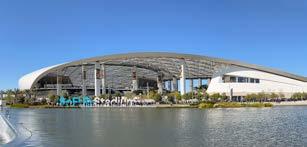
against Paraguay and Türkiye, with its Australia match played in Seattle, making SoFi the heart of American support.
Arts and Architecture: The Getty Center offers spectacular views, gardens, and collections in Richard Meier's modernist campus. The Broad's contemporary collection is free and excellent. LACMA continues expanding under its transformation. For architecture enthusiasts, the concentration of significant residential modernism – Schindler, Neutra, Eames – is unmatched.
Neighbourhoods: Silver Lake and Los Feliz offer walkability and creative energy unusual for LA. Downtown has transformed with
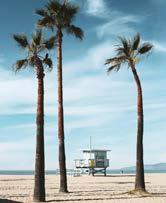
to extraordinary food. The Japanese dining rivals Tokyo in certain categories. Mexican ranges from Oaxacan moles to Baja-style seafood. Korean BBQ in Koreatown is definitive. Contemporary Californian continues evolving at restaurants like Bestia, République, and Providence.
Miami has evolved significantly from its pure beach-andnightclub reputation. Wynwood has become a legitimate arts district, the Design District offers serious luxury retail and museumquality galleries, and the Latin American cultural influence gives it a character distinct from other American cities.
The food scene has genuine depth now – particularly for
Miami
Stadium:Hard Rock Stadium
Capacity: 65,000
Key Matches: Brazil vs Scotland, Portugal vs Colombia, Quarterfinal, Third-Place Match
sportfishing. Key West provides history, architecture, and the southernmost point in the continental United States.
Four Seasons Surf Club: The historic Surf Club, where Winston Churchill and the Duke of Windsor once socialised, has been reimagined by Richard Meier with the Four Seasons' service standards. The beachfront location, Thomas Keller's restaurant, and the
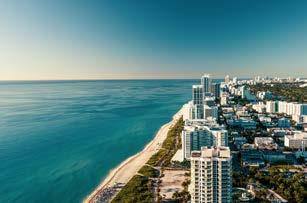
Latin American cuisines from across the Americas, but also with serious fine dining establishments. Hosting the Third-Place match and a Quarterfinal means significant matches without the intensity of hosting a Final.
The Everglades: America's largest subtropical wilderness is an hour away, offering airboat tours, wildlife viewing, and a landscape unlike anywhere else. Shark Valley provides accessible cycling and walking trails.
The Florida Keys: The Overseas Highway to Key West is one of America's great drives. Key Largo offers diving and snorkelling at John Pennekamp Coral Reef State Park. Islamorada is known for
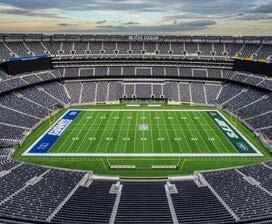
New York/New Jersey
Stadium: MetLife Stadium
Capacity: 82,500
Key Matches: Brazil vs Morocco, France vs Senegal, Germany vs Ecuador, England vs Panama, World Cup Final
balance of historic glamour with contemporary comfort make it one of Miami's most compelling luxury addresses.
Faena Miami Beach: For those seeking theatrical design and scene, the Faena delivers Baz Luhrmann's maximalist vision.
The Damien Hirst woolly mammoth skeleton in the lobby sets the tone. Rooms are lavish, the beach club is excellent, and the programming includes serious cultural events alongside the glamour.
The Setai Miami Beach: A serene counterpoint to Miami's flash, The Setai brings Asian-influenced design and service to South Beach. The three temperaturegraded infinity pools, excellent spa, and sophisticated understatement attract those seeking calm over scene.
New York requires little introduction. The city that never sleeps will host the tournament's most significant matches, including the Final on 19 July. The challenge is that everyone knows this – prices will be elevated and crowds substantial during the tournament. That said, for breadth of offerings – cultural institutions, dining, theatre, shopping, neighbourhoods, energy – New York remains unmatched in the Americas. The concentration of Michelin-starred restaurants, world-class museums, and diverse experiences justifies its position as the tournament's emotionally charged centre.
Museums: The Metropolitan Museum of Art is encyclopaedic and overwhelming in the best way. MoMA offers the definitive modern art collection. The Whitney focuses on American art with excellent temporary exhibitions. The Frick Collection provides intimacy and
masterpieces in a Gilded Age mansion. The Guggenheim is as much about Wright's architecture as the art within.
Neighbourhoods: Each neighbourhood offers distinct character. The West Village maintains its bohemian charm. SoHo and Tribeca offer galleries and excellent dining. Brooklyn's Williamsburg and DUMBO have matured into genuine destinations. The High Line provides an elevated perspective, literally and figuratively. Dining: New York holds more Michelin stars than any other North American city. From Eleven Madison Park to Le Bernardin, the fine dining is exceptional. But the city's diversity means extraordinary options at every price point – from Koreatown to Jackson Heights, Chinatown to Harlem. Theatre and Performance: Broadway remains the world's commercial theatre capital, but off-Broadway and independent venues often offer more adventurous programming.
Lincoln Center hosts opera, ballet, and classical music at the highest level.

This summer, journey across North America through its most exceptional tables, where each destination offers a story told through flavour, craft, and culture.
Canada's three standout tables sit in three different provinces, yet they share a near-total devotion to terroir, the idea that the soil, climate and season of a place shape how its food tastes. Nowhere is that clearer than at Tanière³ in Quebec City. Entry is by personal code through an unmarked door, into the 17thcentury vaults beneath the Old Town, where the two-Michelinstarred restaurant serves a blind tasting menu, every ingredient drawn from the province.
RESTAURANT PEARL MORISSETTE
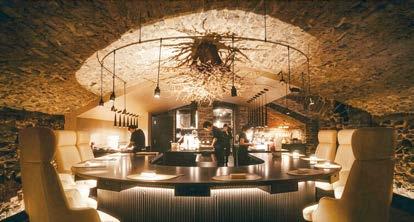
Chef François-Emmanuel Nicol works with a network of foragers, carefully chosen farmers and a childhood friend who grows his vegetables, building each menu around Quebec’s boreal larder. Diners move through a sequence of candlelit stone rooms as the courses arrive, finishing at the chef’s counter. Recent menus have moved from a salmon tartlet brightened with tangy pimbina berries to caviar folded through a crème brûlée. It was the first
restaurant in the province to hold two stars when the Michelin Guide reached Quebec.
An hour south-west of Toronto, in the Niagara wine country of Jordan Station, Restaurant Pearl Morissette occupies the upper floor of a converted black barn ringed by 42 acres of farm, orchard and vineyard. The ever-changing menu leans on produce grown a few steps from the kitchen, French in technique and firmly Ontarian in spirit. A
guinea hen with chanterelles might appear one night and be gone the next.
Chefs Daniel Hadida and Eric Robertson built the place around what the land gives them, pouring their own lowintervention wines and baking in-house. It was named the best restaurant on Canada’s 100 Best Restaurants, and holds two Michelin stars alongside a Green Star for sustainability. Montreal’s contribution is louder and looser. Mon Lapin, in the Little Italy quarter, trades white tablecloths for a buzzing room and a concise run of sharing plates that turns over with the season. Chefs MarcOlivier Frappier and Jessica Noël, who came up through the city’s Joe Beef group, cook generous,
ingredient-led food. The name nods to the Jura winemaker Jean-François Ganevat, who calls his friends mon lapin, or 'my rabbit'.
Sommelier Vanya Filipovic keeps a cellar deep in natural and classic bottles, and the kitchen sends out small wonders such as an olive oil ice cream sandwich. The room has twice topped Canada’s 100 Best Restaurants and placed second on the inaugural North America’s 50 Best list for 2025, ahead of far grander dining rooms.
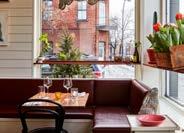
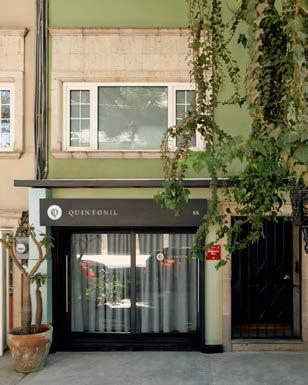
Mexico has spent years dismantling the idea that its cooking belongs only to the street or the home, and Quintonil sits at the head of that movement. In the Polanco district of Mexico City, chef Jorge Vallejo, who trained at Noma and Pujol, and his wife Alejandra Flores, who runs the dining room, send out a contemporary menu rooted in Mexican produce.
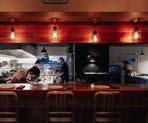
through its dishes and drinks, Quintonil opened in 2012.
On the Caribbean coast, Le Chique has begun a new chapter.
under a veil of mist. Beneath the playfulness sits serious, deeply Mexican cooking. Its new home is an adults-only art hotel, and the Nuevo Sol menu for 2026 moves from escamoles on a crisp buñuelo to ox tongue in black mole.
Guadalajara, one of Mexico’s three World Cup host cities, has its own standard-bearer in Alcalde, whose name means mayor. Chef Francisco Ruano, who trained at Mugaritz, Noma and El Celler de Can Roca, calls his cooking frank, an honest reading of his native Jalisco through its seasons.
A daily menu, best taken at
Best Restaurants, Alcalde has pulled international attention west of the capital. Ingredients travel in from across the country, with fruit and vegetables from Ensenada and fish from Nayarit, and it has sat on the wider 50 Best list for several years running. Further north in Monterrey, KOLI Cocina de Origen makes the case for the cooking of the northeast, a regional tradition rarely given the fine dining treatment. Its name means grandfather in Náhuatl, and family runs through everything. The three Rivera-Río brothers, Rodrigo, Daniel and Patricio, divide the kitchen, the pastry section and the dining
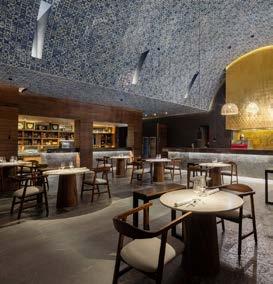
Much of it is grown in the restaurant’s own urban garden, only a short walk from the plate. Tamales of duck pibil and oxtail in black recado share the bill with a counter menu built around grasshoppers and ants. In 2025
Quintonil was named the third best restaurant in the world and the best in North America, and it holds two Michelin stars. Named after a wild green herb that runs
Early in 2026 chef Jonatán Gómez Luna moved his Michelinstarred restaurant to Hotel Xcaret Arte in the Riviera Maya, where it now runs a 27-course menu that travels the country from north to south.
Trained across European kitchens including El Bulli, Arzak and El Celler de Can Roca, Gómez Luna has spent more than 18 years dealing in theatre and surprise, sending out deconstructed classics inside hollowed books or
the chef’s counter, might run from green shrimp aguachile to suckling pig with pipián before closing on jericalla, the region’s burnt custard. Now carrying a Michelin star and a regular presence on Latin America’s 50
room between them. Founded in 2015, KOLI builds each season around a single story of Nuevo León, and its bar ranks among the country’s most admired. Their seasonal menus reframe norteño staples with imagination and a strong sense of origin, from suckling pig with a local mole to a tender take on cabrito, matched by some of the most inventive drink pairings in the country. KOLI earned its Michelin star in 2024 and has become one of northern Mexico’s most celebrated tables.
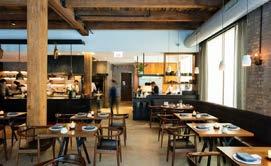
The United States offers the broadest canvas of the three, and its finest kitchens are increasingly shaped by a single point of view. In Chicago’s West Loop, Smyth holds three Michelin stars and topped North America’s 50 Best Restaurants for 2026. The name nods to Smyth County found in rural Virginia, where its chefs once cooked.
John Shields and Karen Urie Shields, who met at Charlie Trotter’s, rewrite their tasting menu daily around Midwest growers and produce at its seasonal peak. The cooking is precise and quietly inventive, taking in smoked quail egg with caviar and whole roasted duck glazed with a savoury duck toffee. A floor below sits their gastropub, The Loyalist, whose burger is regularly counted among the best in the world.
opened in 2016 and earned two stars within months, reaching three by 2023. It is now one of fewer than 20 restaurants in the United States to hold three stars, and it climbed from fourth on the inaugural North America's 50 Best list to number one this year. The couple talk about putting the farm on the plate, with much of it grown in their own garden. A meal might bring Maine uni lifted with peach gel and wasabi cream, or wagyu beside a truffle doughnut glazed with marrow.
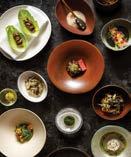
New York’s Atomix has done as much as any restaurant to reshape how Korean food is read beyond Korea. Behind a plain facade in NoMad, chef Junghyun Park and his wife Ellia Park seat just 14 diners at a basement counter for a 12-course menu, each dish is introduced by a dedicated card explaining its ingredients and inspiration. Its name comes from an old Korean word for gift, and the food draws on tradition without being bound by it, from cherry blossom trout to grilled wagyu with cold noodles. Atomix holds two Michelin stars, won a James Beard Award for its hospitality, and was the inaugural number one on North America’s 50 Best in 2025. Opened in 2018, Atomix now anchors
a small group that takes in the casual Atoboy, Naro and the drinks-led Seoul Salon, with a Korean barbecue counter, Kiji, due in London later this year.
A short walk away, near Bryant Park, Sushi Sho brought one of Japan’s most revered sushi masters to Manhattan. Keiji Nakazawa opened his first counter in Tokyo in 1989 and made his international debut in Waikiki before opening this 10-seat New York room in 2024. Within two years it had earned three Michelin stars. His edomae style turns on ageing and curing, drawing umami from more than 40 kinds of fish across a 30-course omakase, each piece set on rice tuned to the fish it carries. Generations of chefs trained under him now run counters of their own, though few seats anywhere are harder to secure than these.
Nakazawa is exacting about time, resting wild yellowtail for days and curing fish in rice bran, koji and banana leaf to draw out depth. The 30 or so courses, from around $450 a head, are set on rice he tints with aged vinegar.
San Francisco closes the journey at Atelier Crenn, where Dominique Crenn became the first female chef in the United States to hold three Michelin stars. Raised in Brittany and made in California, she opened the room in 2011 and refers to her work as 'poetic culinaria'. It is a seafood-focused French cooking shaped by the seasons at her own Bleu Belle Farm in Sonoma, balanced by the pastry of her partner Juan Contreras and a brioche baked to her grandmother’s recipe. Atelier Crenn has held three stars since 2018 and carries a Michelin Green Star for sustainability. Crenn opened Atelier Crenn in 2011 and won a star within a year, then a second the next, the first female chef in the country to hold two. The menu still arrives with a poem, and the desserts are a quiet showpiece.
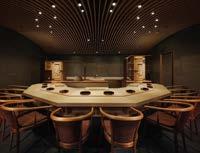
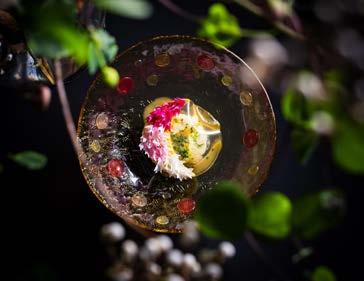




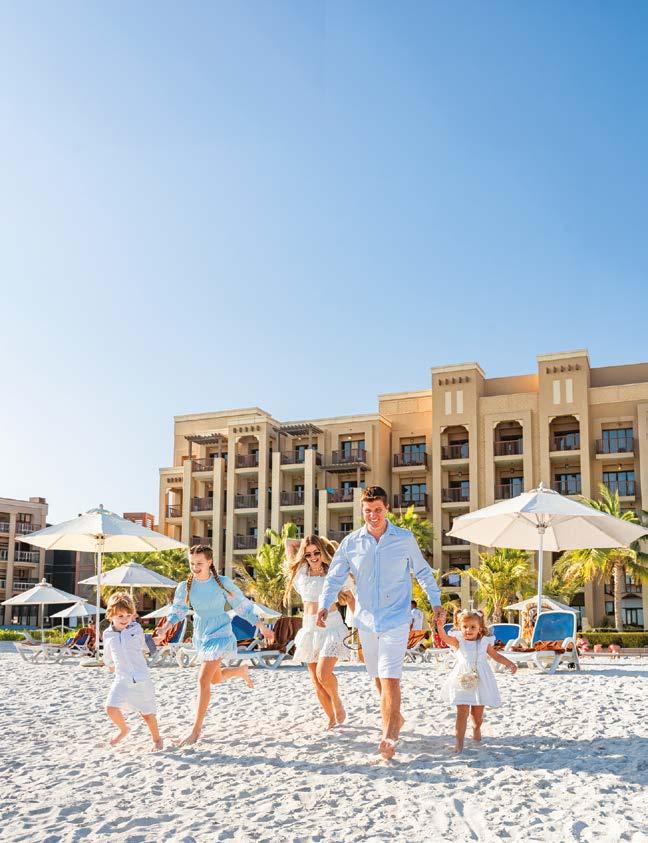
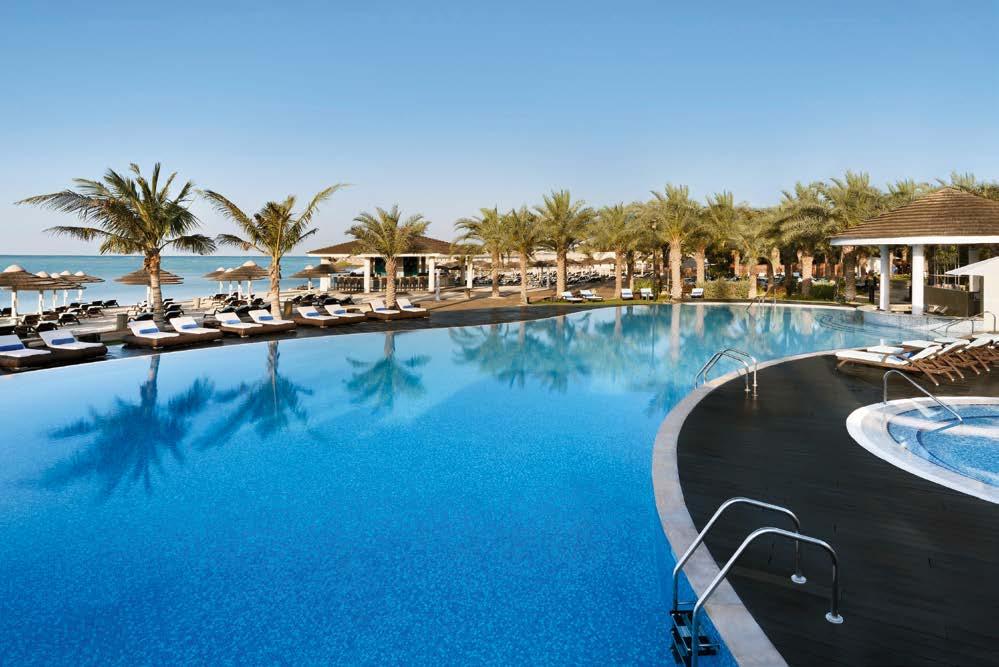
Reseve your stay: reservations.icabudhabi@ihg.com