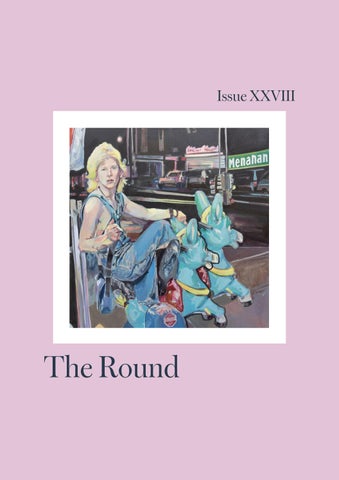
The Round Issue XXVIII
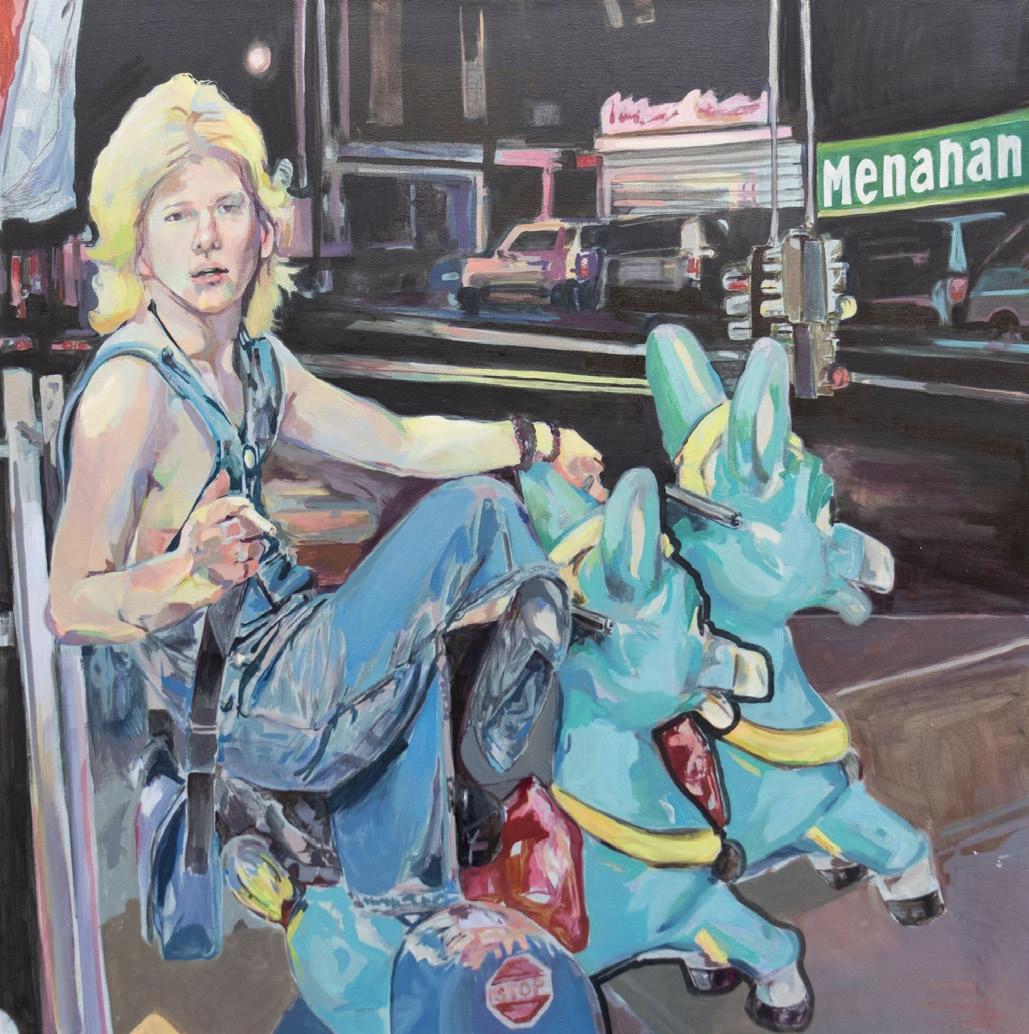
Cover art by Nan Dickerson
Managing Editors
Marlena Brown
Riley Gramley
Kate Rowberry
Associate Editors
Chloe Costa Baker
Ella Ludwig
Design Editors
Jun Fan
Shayna Rudoren
Staff
Rose Farman-Farma
Hallel Abrams Gerber
Sasha Gordon
Paul Hudes
Anika Kotapally
Chelsea Long
Jeffrey Mu
Zachary Woltanski
The Bar Is Dark Kayla Kierulff Sayers
Agony in the Garden Georgia Turman
Too Afraid to Try Nan Dickerson
Leak Paul Hudes
Fragments of Spruce Aidan Kropiwnicki
Don’t Get Me Started
Jeffrey H. MacLachlan
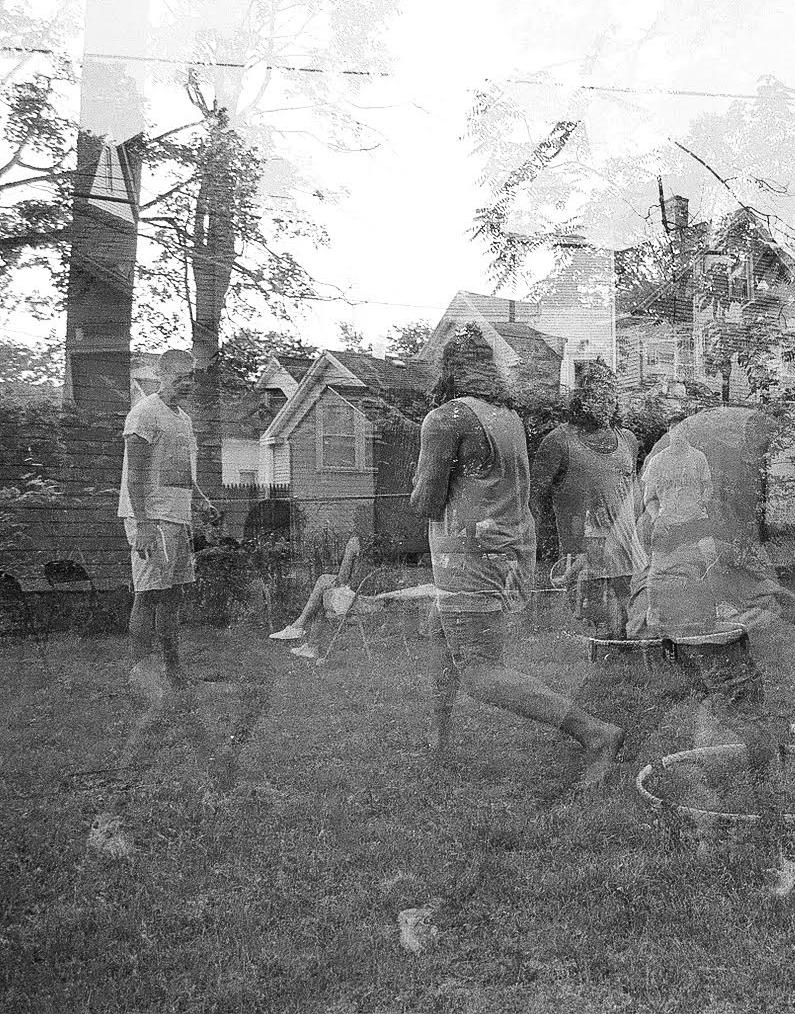
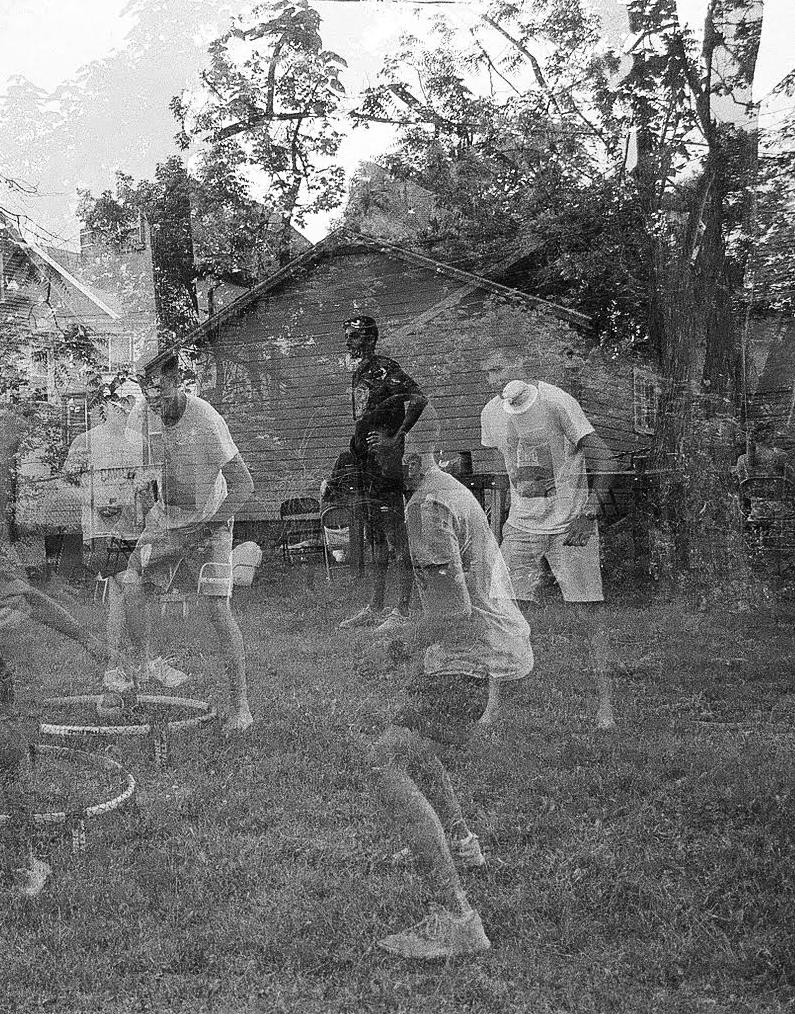
Untitled (Lawn) Charlie Usadi
Hanoi Hanna Jeffrey H. MacLachlan
Untitled Angelina Rios Galindo
On the Potential for Miracles
Anika Kotapally
Three Little Love Stories Sara Kandler
Untitled Angelina Rios Galindo
TOWER OF BABEL Chloe Costa Baker
Riley Orr
Please Tell me Who Taught me
Sam Handwich
Adamantine Michael Moreth
4th of July Iris Lee
Clearance Erik Moyer
Just As the Wind Returned Bill Wolak
Body Print #55 Nan Dickerson
coda Chloe Costa Baker
Flotsam Piper Rasmussen
cityplanningadjusted Charlie Usadi KERMIT
Christopher Barnes
When the Clouds Were Whispering
Bill Wolak
Kayla Kierulff Sayers
shout the drink to me
I want to spell out what you think it tastes like I whisper I don’t wheeze in the corners of my favorite box I nestle and want to eat the hair off my head
I walk in circles around memory until it becomes a prayer. In front of the prayer walks my roommate on her way upstairs. She is wearing a long polka dot dress and blue tights and leather flats. Her hair is as long as her back. She is not exceedingly friendly, but she knows about ornamentation, which is a kind of care, and because of that I have some fondness for her. Or perhaps not fondness. Perhaps awe. There are buds of flowers growing out of the ground of the prayer. I pluck one, pull it open, name its structures. I’ve never been able to name anything like this before. I used to think a flower was a kind of ornamentation, up until this morning actually, but this morning I learned that flowers are much more like buildings than colored tights. They are not for beauty, they are for living. Though isn’t that what beauty is for?
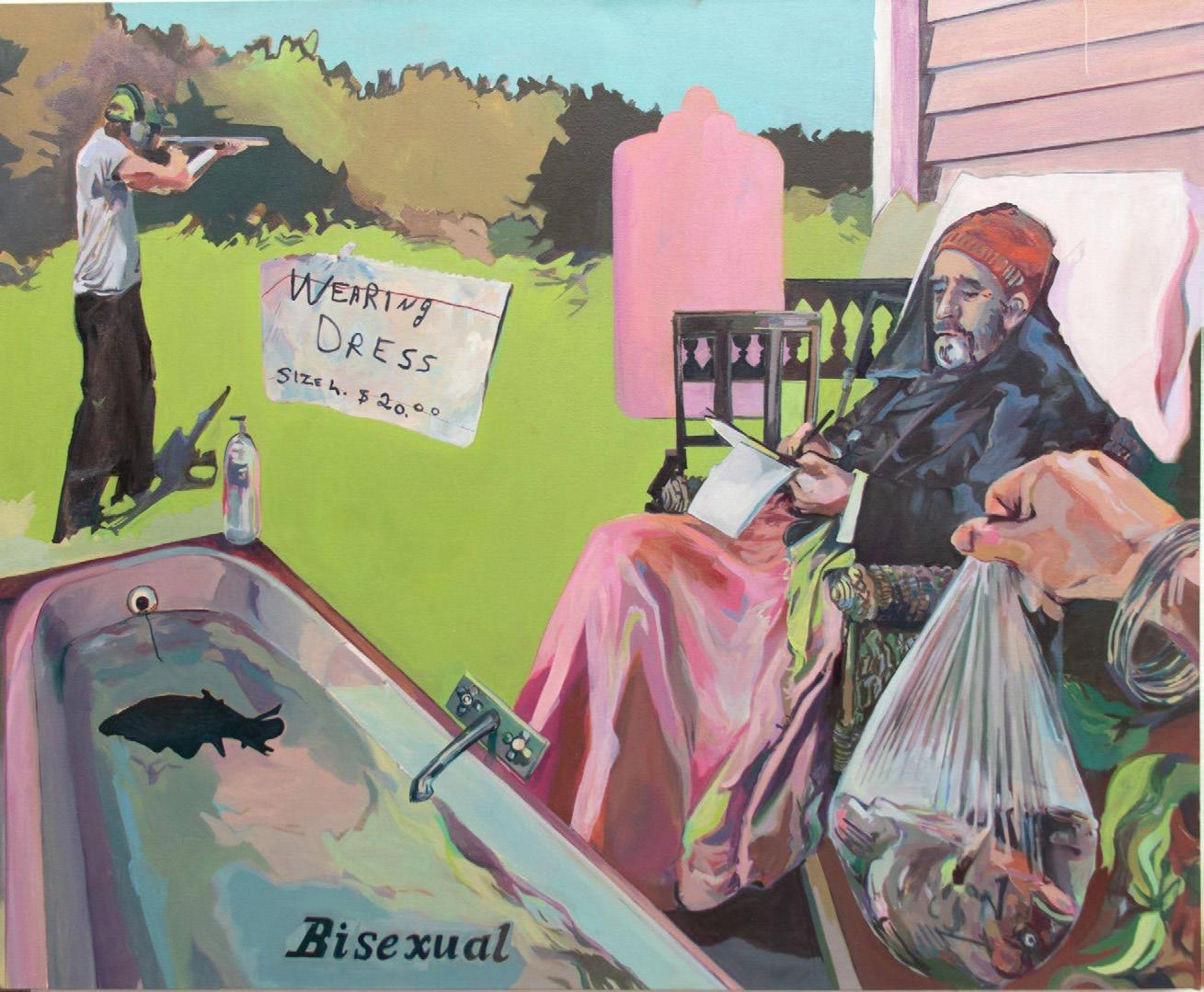
Nan Dickerson
Lola sank the balls of her feet into the floor as the airplane’s weight met the runway. Her mind went to December: the fights with Jim and the eventual postponing of the wedding. She saw the shimmering panels that lined the airport off in the distance and she grew even more nauseous. Airplanes had always made her feel sick. Lola wondered whether Jim would be coming to pick her up himself, or if maybe he’d sent his dad.
The navy Volvo SUV barreled down the left lane of the airport arrivals. It cut off an angry white sedan as it threaded into the right lane, and halted perhaps four inches behind a grey Sprinter being packed by an unenthused Christian youth group. From the driver’s side emerged Jim’s lanky father. He was on time, which was not to be taken for granted. Mr. Davis gave her a side hug and offered some indiscernible welcome. The two sat silently as they pulled away from the airport and onto the highway.
“Some crazy things have been happening,” Mr. Davis said, pausing as he waited for some response. “Some really funny things have been taking place, you know.”
After a moment Lola cocked her head and offered the inquiring expression he had surely been asking for. Sometimes — most times — it was easier to play along.
“Well, I’ve got someone I’d really like for you to meet,” he said, raising his eyebrows at Lola while keeping his eyes fixed upon the road.
“A friend of yours?”
“Yes, precisely, a friend.” Mr. Davis paused and pursed his lips. “And look I’ve decided to tell you this and I don’t want you to
react, alright? It’s important to me, frankly. This friend, I’m seeing her. I mean this woman, this woman, she is truly someone to meet.”
Lola became suddenly aware of her tongue in the back of her throat. She swallowed. It was still there.
“I really think you’re going to love her, and Jim too. I think you’re both going to think she’s great.”
“What about your wife, Mr. Davis?” Lola blurted out, between swallows.
“I think she’ll like her, too. I’m telling you, this woman is really all class. She’s a true intellectual, believe me.”
“What? No. Mr. Davis. What about your wife? Does she know?”
“Of course not. Of course she doesn’t know,” he laughed. Lola kept her eyes fixed forward, not on the road or the windshield or the mountains off in the distance — just forward.
“I suspect she’ll find out soon. You see, Lola, things like this happen. Don’t tell my son. Don’t tell anyone. They have to find out in the right way. I just thought I’d tell you…”
Mr. Davis’ voice meshed in and out with the zipping of the highway. Lola widened her eyes and ran her fingers up and down her flushed cheeks. His words adopted a rhythmic flow. He rhymed and spoke alliteratively, placing accents on what seemed like every fifth and eleventh word, as though he were reading aloud some Dr. Seuss in which fathers grow tired of their families.
Mr. Davis twisted his body and shook Lola by the shoulders, bringing her back to focus.
“... and primarily I must make sure that you understand
that I demand you really don’t tell anyone,” he finished, out of breath.
Lola sat with the barrage of adultery and waited for her response to come. But her mind kept returning to December.
“Do you understand?” he asked, growing agitated in the silence.
Storm clouds swept across the sky, and a blanket of rain dropped onto the car.
“I think you ought to…”
Her mind went to her childhood, to sandcastles on the beach and those little plastic shovels that cracked under any little pressure.
“I think you ought to… I think you ought to dig a large hole, and dump this and all these thoughts into that hole, and then… and then cover it all up and leave it there buried and forget about it.”
He looked at her with a blank face and she stared back, both of their eyes drawn wide open. The silence was filled with the harsh beat of the downpour against the glass sunroof.
“No really, I think the best thing to do in these situations is to just put it all away. End it as soon as possible. Go back to normal and pretend it never existed.”
“Well, I suppose I was hoping you’d take a more agreeable position on the matter,” he said, scrunching up his eyes and nose.
“I mean, after all the support I’ve given you and my son. What’s it to you if I’m having an affair? Don’t I deserve to be happy? In fact I was hoping you’d be happy that I’m happy.”
They still faced one another as they continued on along the highway. The rain intensified and the car began to dent. Lola
narrowed her eyes and saw the man’s worn face — she had never noticed his age. He had cavernous nostrils, a jungle of hair coming from his floppy ears, and his pale skin seemed as though it might bleed if sneezed on. Lola couldn’t believe that this man had found someone who would have an affair with him.
The man blinked, slowly dragged his tongue across his upper lip, and asked, “Don’t you think I should get to be happy?”
Lola considered whether she wanted Mr. Davis to be happy. But they had both turned to face the road again and it seemed as though she had been relieved from the question. Then she was back to December — the headache, the nagging guilt, that horrible look on Jim’s face. Poor Jim. This ordeal would destroy him all over again.
“Mr. Davis, wanting to be happy doesn’t mean you go and get a mistress. You gave up that right when you decided to get married and have a family. Now… now you’re just, excuse me, but, a lonely jerk.”
The rain which had once filled the void of conversation grew stronger and the two struggled to project their voices over the clanging.
“She has a name, you know.”
Lola thought he might cry.
“She has a name,” Mr. Davis shouted, waving around his open palms.
“I’m telling you you’re a lonely jerk and that’s the hill you want to die on?”
The clanging accelerated into a drone. They yelled.
“Look, Lola, I know you understand me.”
Lola gripped her seatbelt as it became tighter and tighter
across her chest.
“No, Mr. Davis, I don’t!”
“And if you cooperate there could be a lot in it for you. You have a stake in me and my son being on good terms, no?”
Water began to seep through the roof, dripping onto the man’s barren head.
“Are you trying to bribe me into picking sides in a divorce that hasn’t happened yet?”
Mr. Davis responded, but the shouts were now fully drowned out by the storm. The man’s eyes were sad and begged for any amount of solace, but Lola’s eyes offered none. She imagined what Mr. Davis had looked like when he was younger, and if he had always seemed so desperate.
Suddenly, there was silence. Lola turned and looked outside the car to discover that the vehicle had been fully submerged under water. It had rained forty or so feet and the road now lay at the bottom of a misplaced sea. A spiderweb of cracks crept out from the center of the windshield. They kicked open their doors and crawled away from the steel box. They swam upwards, breaking through the surface and gasping for air. The tops of trees and some buildings in the distance stuck out from the sheet of rainwater. The storm had cleared and the cloudless sky was at rest. Mr. Davis bobbed up and down and looked at Lola as she paddled and surveyed the horizon.
“You two seem perfect for one another, you really do, Lola, but there’s no way to know so just consider this: one day, you might wake up and realize that you haven’t smiled for a few years and that my son just isn’t who you’re meant to be married to anymore.”
This was the last thing Lola wanted to consider.
“Sure, Mr. Davis. Someday, Jim won’t look the same. He’ll obviously grow old and that’s fine, I guess. But, one day, he might not look the same. I know that, of course I know that.”
Mr. Davis stopped bobbing and lowered his wrinkly neck into the water.
“But to believe it, to really think it… I mean, Mr. Davis I’m sorry, that just seems so stupid. Doesn’t it?”
Before the man could respond, Lola slapped her palms against the surface of the water and stretched out her long body. She let herself go limp, floating on her back. Mr. Davis tucked his chin in and blew bubbles for a moment before doing the same.As the faint chirping of birds came from somewhere far away, Lola felt a buzz come from her pocket. She grabbed the phone without looking and held it up to her face, blocking the sun from her eyes. She craned her neck to see Mr. Davis. He was twisting around to try and blow more bubbles while floating, coughing and flailing as his face fell into the water. Lola put her head back and looked up at the endless blue as she answered the phone.
Paul Hudes
cryptids in the transfer portal / no no no no / let me finish / i know / here goes dad / just listen / football / corn-fed boys locking / horns / between the lines / now / oh no longer haunting farmland / earning college degrees / think of livestock / unless you mutant up / alma mater / no shot / playoff appearance / sorry sorry / can’t say / mutant anymore / cryptid students / wouldn’t want my daughter / group project / imposed / sorry sorry / i’m rigid / as a firehose
Jeffrey H. MacLachlan
defect gi / they lied to gi / melt swamp gi / know you cry gi / male
spit gi / guerilla dreams gi / grass fools gi / napalm brain gi / inhale ghosts gi / voice surrounds gi / like bush mist gi / shard
curse gi / mirror punched gi /
Jeffrey H. MacLachlan
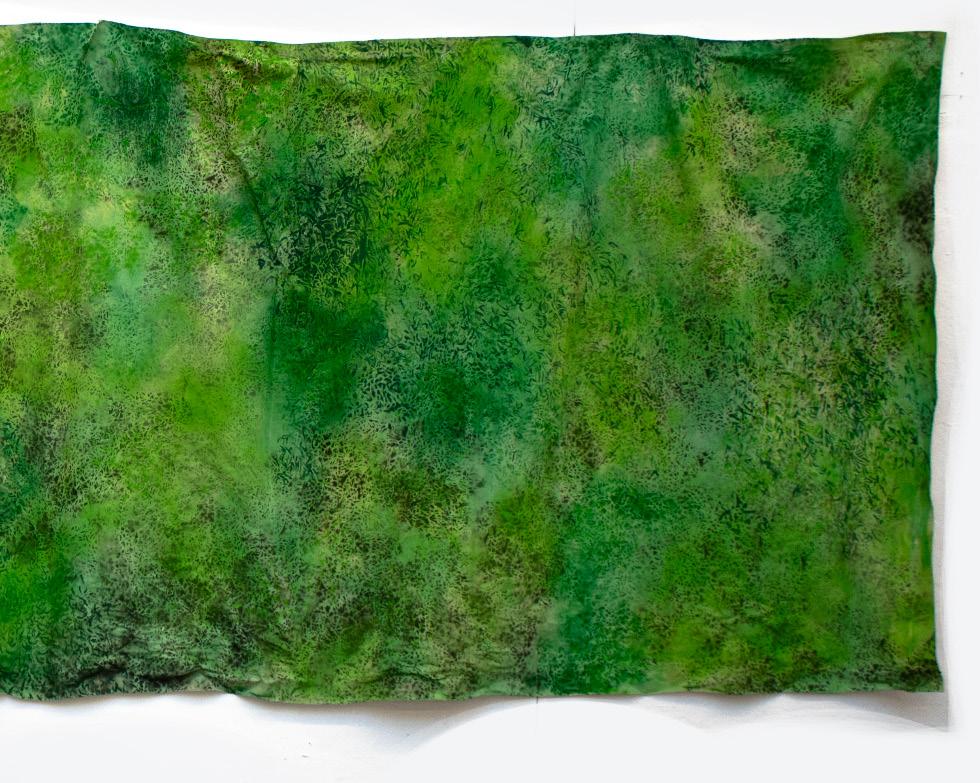
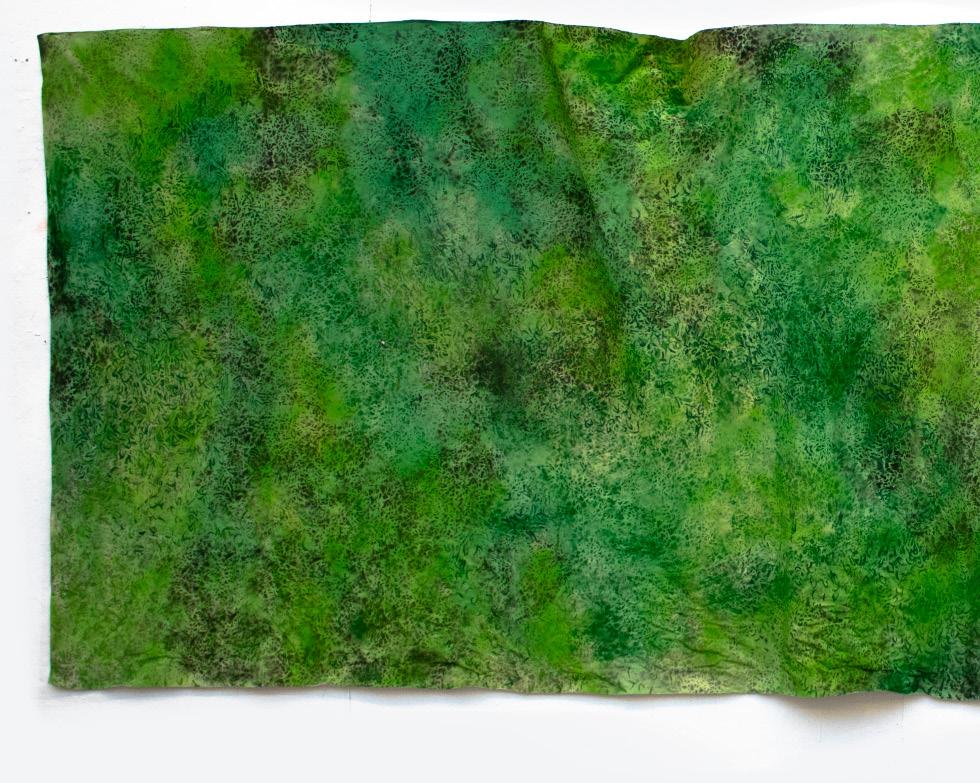
Charlie Usadi
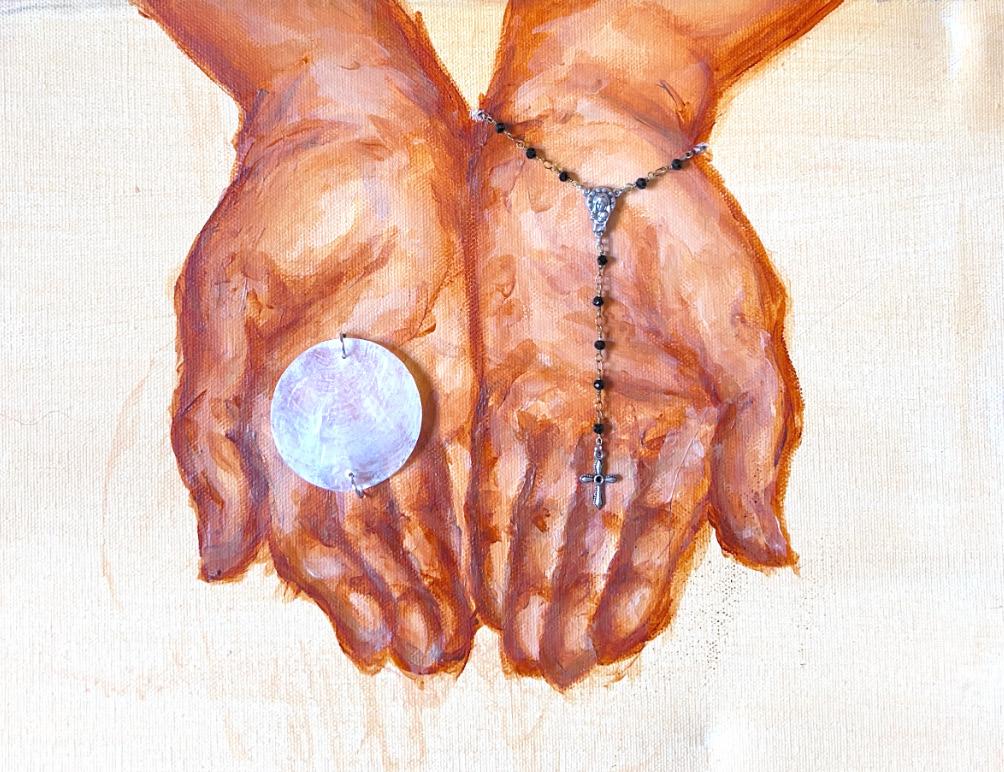
For someone who claims not to believe in God, I look for a lot of signs. Trying, somehow, to place the burden of my being onto other shoulders, the blame, maybe. When, at the lake, 2 AM, every star that had ever been seemed to come out of nowhere, and when I stared too hard at them, I could feel the whole earth spinning, heart beating too fast in my chest, hummingbird, wishing for my mother, or a time machine from which my future self would emerge. God, either of them. God, if God is only someone who always knows
better, like being taught to sew, how my mother’s hands would go first so I knew what exactly to do. But no one could teach me how to live.
When I was learning to walk, I wouldn’t do it on my own
until I knew for a fact I would not fall. Holding onto someone else’s hands before, somehow, I crossed a room all on my own. Show me, then. Come and show me.
Anika Kotapally
We used to raise a lot of eyebrows. “Where’d you say he’s from?” people would ask. Others warned, “You’re better off with someone like yourself.” One day, we were touring the Getz house as a potential wedding venue, and the jazz legend’s bubbly widow beamed, “Sara and Youssef… how biblical!” We basked in her sunlight. Truth is, she’d sensed something. Ties that ran deep. My dad used to muse that he saw threads between Youssef’s Morocco and the Stuttgart he’d fled in 1938 — respected family businesses, elegant parlors, lively gatherings around food and music… I was returning home, after all.

One doctor helped me save my father when no one would listen. Then I got cancer too, and he really seemed to care. He asked for my surgery date, and told me, “Stage one is extremely curable.” A big title and a formidable brain — I believed him. I love my husband a ton. It was Covid, and he accompanied me as much as they’d allow. He kept my secrets until I’d lurched over each hurdle, and gently advised me that we probably couldn’t invite my doctor friend for dinner. Youssef kept me grounded; my medicine man filled me with hope.
Unpacking the shopping bag from Marshalls, my husband sits a chrome cruet on our countertop. He has a thing for olive oil. Its bold ticket, marked “Oil Can,” tickles me. “Let’s see how much American culture you’ve assimilated over the years!” I tease, and grab the oil can, stiffen my body, grit my teeth and screech, “Oil can, oil can…” “Wizard of Oz!” he shouts, proudly. I also know a thing or two about his homeland, like how first cold press is a must, and the age-old olive trees shimmer like silvery fish on the breezy hills above Fez.
by Angelina Rios Galindo
Sara Kandler
Chloe Costa Baker
バ ck to back,
ベcause we were each other’s blind spots, when we ルled the world with a silver tongue, immune to desert rust
ours was the only civilization ours was every civilization
バ ck then, back
ベfore my brainstem was up-
ルted from yours, before our clay foundation cracked then crumbled into dust
sewn together seamlessly
360 degrees of view and zero degrees of separation
ぺn and paper were pre-obsolete
らging river, babbling brook, until the sound became
ぺstle and mortar scraping away
らsping in desperation as the well ran dry
BARricade the doors and BARter syllables for swords
scattered to the corners to rebuild and/or make a profit
ルse to sell clothes that cling to mothers’ bodies tighter than the child whose weight they seek to lose
ルstle up the intrigue of the impossible
レality, the arbitrary hierarchy of consonants that are, by nature, liquid and
モst americans can’t even roll their R’s, but
ンo, how quickly we forget our own blind spots
our own linguistic deserts a drumroll in the roof of your mouth as I tongue my teeth, vibrations through a reed we once held the entire orchestra in our lungs a solo symphony yet now we harmonize harmonize
dissonate
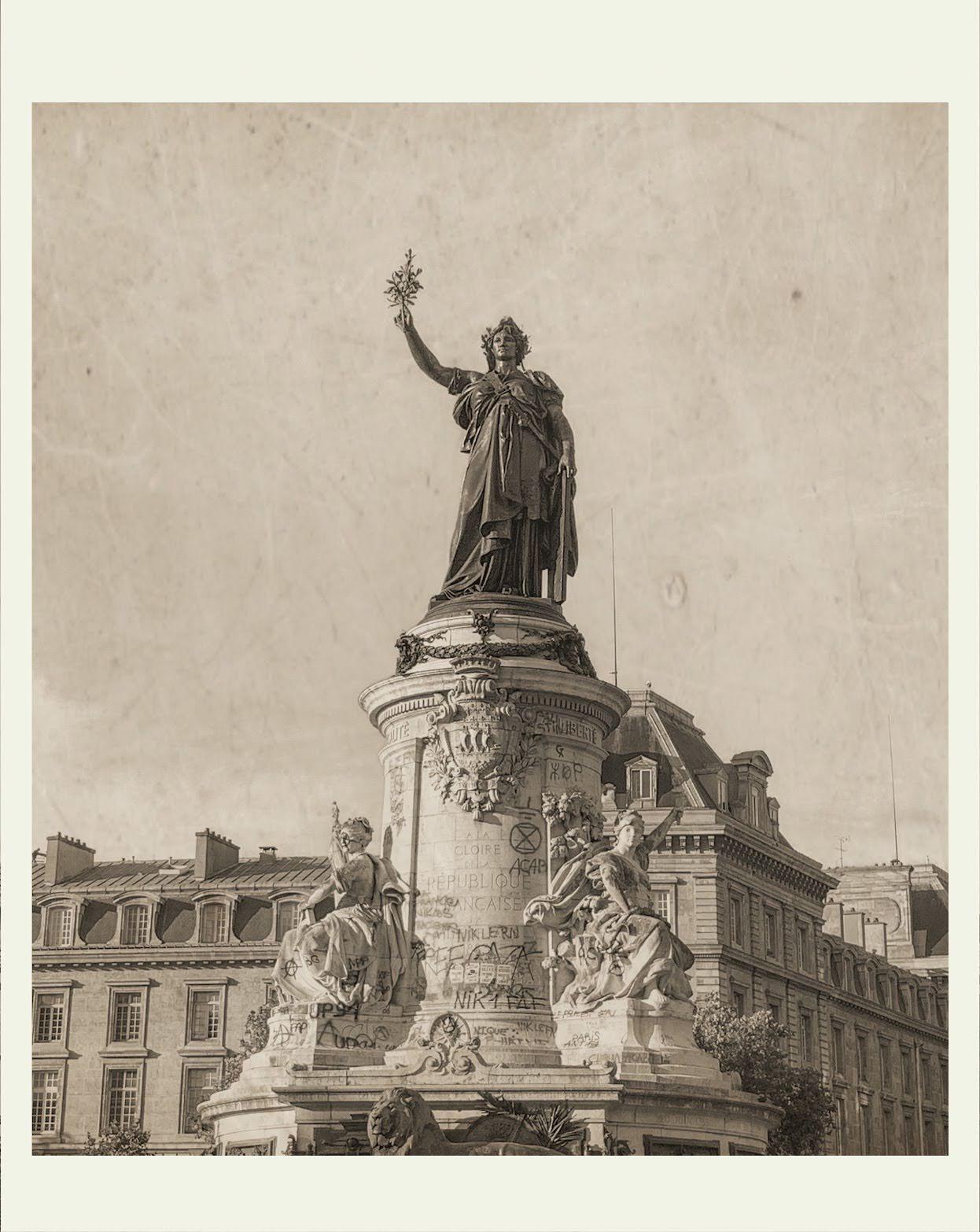
Excerpts from ‘Washington, CT’
X.
Washington, Connecticut is about 80 miles from the nearest form of civilization. Shoved up against the state’s southeast border, it’s closer to drive 10 miles into the Atlantic than it is to both Boston and New York. It’s one of those towns whose fossilized brick buildings creep up between the cornfields and rotting logs. It’s not a poor town by any means – no – its tartan rows of shops along town center are bleach white and minty (on the outside at least). Parents wake early under the cover of starlight to send their pristinely uniformed but booger-eating children to private school and glossy pink pearls hang from wrinkly necked churchgoers, though few of them ever tithe. Crackless sidewalks line almost every spacious street, but there was no need for them; even dog walkers drive to the next town over.
In Washington, news speaks in whispers: in check-out-line gossip and on lazy afternoons by the pool, by children and their parents and their parents. Locals say Washington is about as interesting as toilet paper, but Yitao had heard too many stories to know that isn’t true; notes on single immigrant mothers and suicidal veterans, fake cancer charities and mutual infidelity danced across his notebook.
For the most part, however, they stayed in his notebook. Ma shut down talk of gossip at dinner with a flick of her chopsticks. She often sighed, musing that “private business should stay private,” between bites. “It’s cool though, to hear how messed up some of these people are behind closed doors,” Yitao would retort. They made a routine of this argument; it didn’t
matter if it was Yitao’s friend or Ma’s, the mayor or a lifeguard. Consequently, in the rare moments when Ma disclosed anything about her past, whether it was about the Cultural Revolution or bicycles, she first made Yitao promise to keep his fat mouth shut. Ma told stories as if she were back there herself, her eyes gazing back into her own memory. She was somewhere else in those moments, on paved-over streets that had long since changed their names. Yitao listened along, though his head was also usually elsewhere. Perhaps that’s why it was so easy for him to keep his fat mouth shut.
X.
Chrome History for yittilicious101@gmail.com – Tuesday, August 30th
1:53 AM fastest ways to fall asleep - Google Search
2:37 AM best interview questions for old white history teachers - Google Search
2:47 AM how many questions in a thirty minute interview
2:58 AM Why NYU? :r/urbancolleges - www.reddit.com
3:01 AM Wordle - The New York Timeswww.nytimes.com
3:02 AM Ernest Lance Teacher ProfileWashingtonHighSchool.com
3:03 AM (35) Ernest Lance | LinkedIn - www.linkedin.com
3:15 AM Drafts (98) - yittilicious101@gmail.com - Gmail
X.
“Ma, I didn’t mean to publish it. I swear,” Yitao pleaded to the back of Ma’s head. She hadn’t spoken to him all day, an anomaly even by her standards. He had left her alone until he found a copy of the Tribune on her desk, neatly flipped to the spread with his poem in the bottom right corner, his name below in blocky, dark print. “I know things are hard for you right now, especially with Ba away…”
– Robin had never been so high up before; no buildings in Washington ever peeked over the treeline. Life had always been planar, a series of looking across fields and into stage audiences. But from her vantage point on the 10th floor of the Vessel, the proportions shifted. She imagined she was flying, feeling the wind drag past her neck and feather through her hair. Looking down at her 2D world, she was free of its rules and theorems. She stared at the people and the sidewalk below, watching the distance stretch betweenher and them. She was suddenly aware of how fatal it would be to fly. –
“Dinner’s ready.” Ma slid a bowl of stir fried tomato and egg in front of Yitao, a vermillion chunk slipping out as the bowl shook and quivered. “How we ate dinner from a metal table meant for some richer family’s patio.” As she walked away, Yitao didn’t bother asking if she was going to eat as well. He picked a chubby glob of egg and spooned it into his bowl, though he didn’t eat it. Instead, he shouted to the door shutting behind him, “It wasn’t even about you.”
– As she climbed up a set of stairs, one of Robin’s step brothers mocked from the top, “Bet you can’t catch me!” and took off. Obligingly, Robin chased, following the ripple of their white
shirts in the wind. The Vessel bloomed as she ran, layers shifting and circling wider as she chased the boy up. She didn’t notice, but a smile had pulled itself onto her face as she kept running, and she started laughing. “I’m catching up!” she yelled out, which caused the boy to squeal. It was a hearty, bellied laugh, the type that dripped caramel at its edges. –
The door didn’t open. No desperate knock, punchy kick, or frenzied twist of the knob shook the metal bolt. Even when Yitao pleaded, “Ma, I promise. Nobody will read it anyway,” the door stayed silently shut. A paper – the newspaper – fed through the bottom slit of the door. Yitao picked it up, glancing past the familiar stories. His fingers traced the soft edge of the paper, and it didn’t register that it had been ripped until his eyes found the bottom right corner where his poem had been. “I want you to be happy; to work overtime less and sing more. I want to hear you sing and talk and dance.”
– When Robin reached the 16th floor, the rhythm of her steps slowed to a pause. For a moment, she leaned over with her palms on her thighs, catching her breath as the sharp wind filled her lungs. She looked past the boy, who hadn’t realized she had given up, and at the line in the horizon where the sky met the trees. –
The light in the room had turned off. He was lying down, cheek pressed to the dusty hardwood floor, staring through the gap between the door and floor. The left side of his head dully ached. Periodically, he sobbed. But he mostly begged. “Ma, please. I’m sorry. I didn’t mean to.”
“When I die, what are you going to remember most about me?”
– “Robin, we’re leaving,” someone, maybe Delilah, called, but she had already walked to the glass barriers, letting her palms cool against the metal bars. She stayed fixed on the New Jersey horizon, but she thought of Washington and Yitao, of her Mom’s voice, telling her to go to sleep. She leaned over the edge and swung one foot over the smooth railing, never looking down.
–R Rachel Ricky Roav Rochen Ryan
X.
Washington, Connecticut is about 80 miles from the nearest form of civilization. Shoved up against the state’s southeast border, it’s closer to drive 10 miles into the Atlantic than it is to both Boston and New York. It’s one of those towns whose fossilized brick buildings whisper stories in broad daylight and stagnate in a perpetual state of decay. It’s not a poor town by any means – no –where it is poor in passion it is thick with silent detail: the candied laugh of children on a playground and the hush of confessions eased out by stolen whiskey. The way the sunrise reflects streaks off the glass of the high school on a misty morning.
Yitao did not remember how he ended up sprawled across the oval lawn in front of the high school, nor did he remember
walking or driving there. He sat up and twisted back towards the school, fingers digging into the scratchy grass as he leaned his weight on his palms. He reached for the phone in his pocket and clicked it open. 5:12 AM. He got up, his legs dully itching as he did, and turned to face the school. In the past four years, he had spent more hours in that building than with his own Ba, he thought. Suddenly, he felt the urge to take a picture, to capture the transient moment he had seen dozens of times before in the back field. Slowly, Yitao started home.
In the process, he realized he had never seen Washington at sunrise. He never saw the faerie lights that were strung up by the church or the scratchy man that unloaded groceries into the backdoor of the bagel mart. He never heard a jogger’s rhythmic slap echo against empty roads, nor had he smelled the garbage that was littered behind town hall. He had never seen surges of birds sway in the sky or the pink hue clouds behind the leaves that reminded him of watermelon. When he pushed the front door open and found Ma asleep on the couch, a yarny blanket stretched over her mellow frame, he found that he’d never noticed the bands of white that peppered her hair. He pressed a kiss to her scalp before returning to the front steps and sitting down. A plane coasted past as the clouds drifted away, and the bright chirping of robins melted into the rustle of yawning oaks. An old man with a cane walked with a hiccup. Down the street, a lone dog started to bark. Yitao got up, looking out into the neighborhood, before pushing the door open.
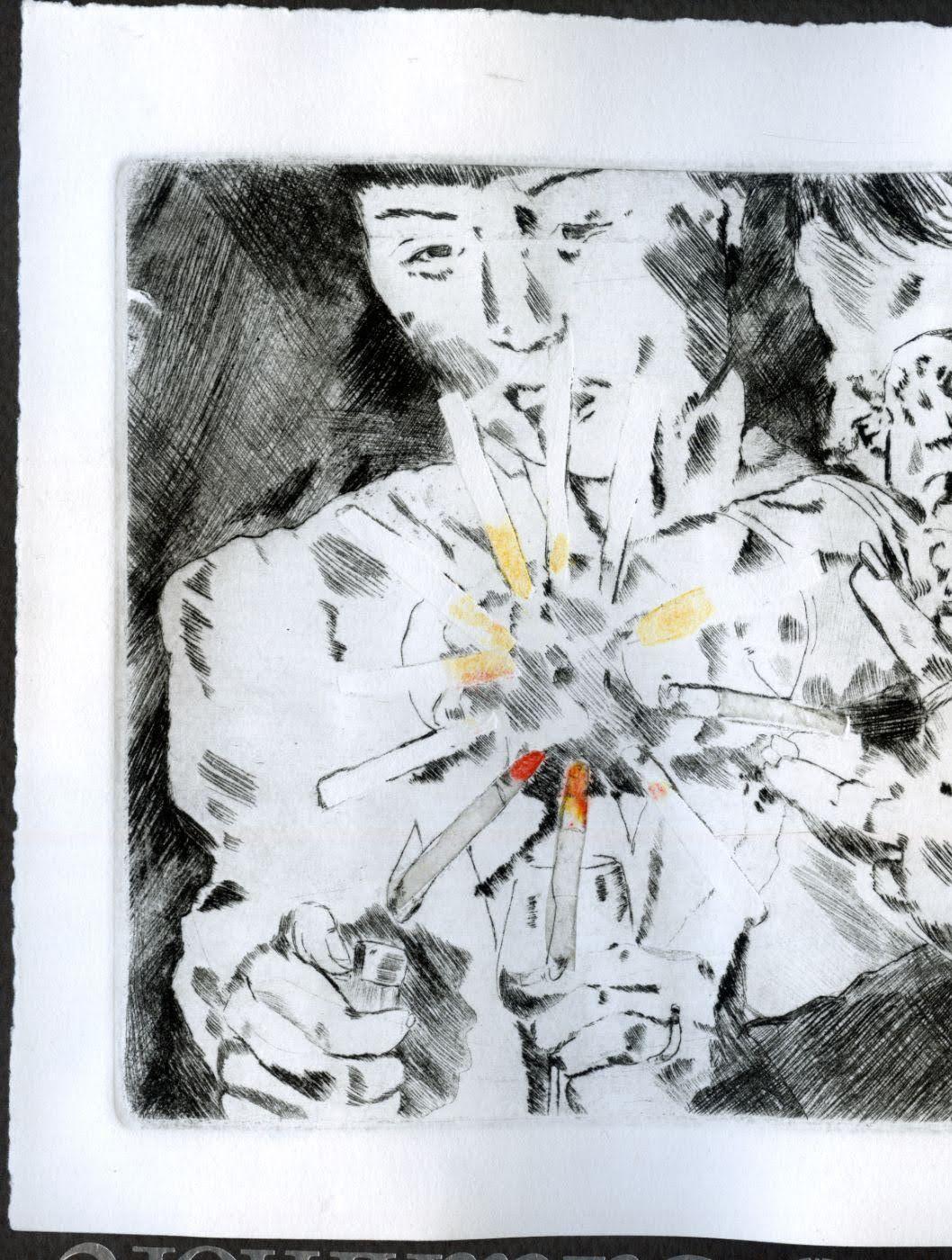
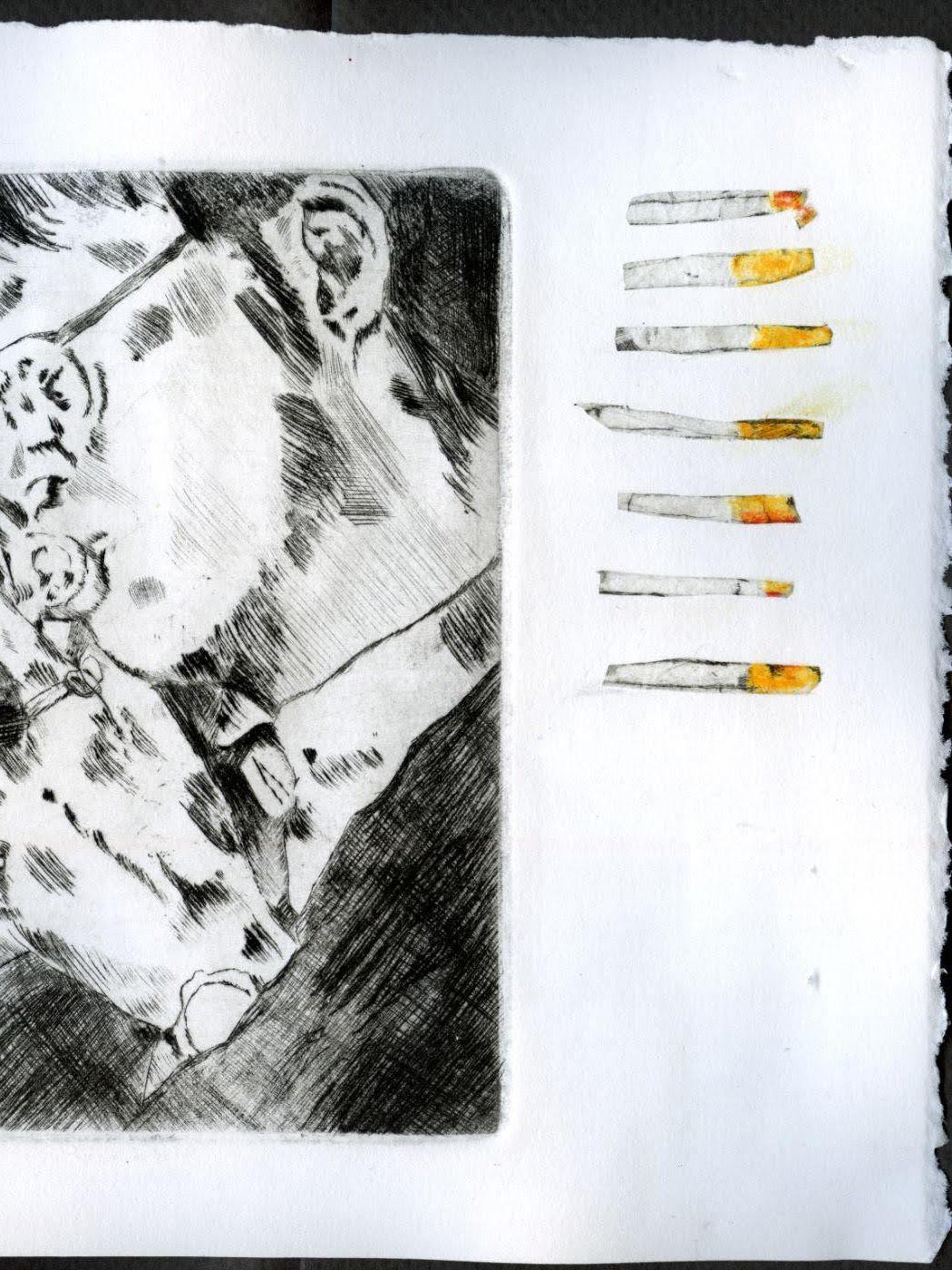
Now I Am Something In Your Secret & Selfish Life, Now You Are
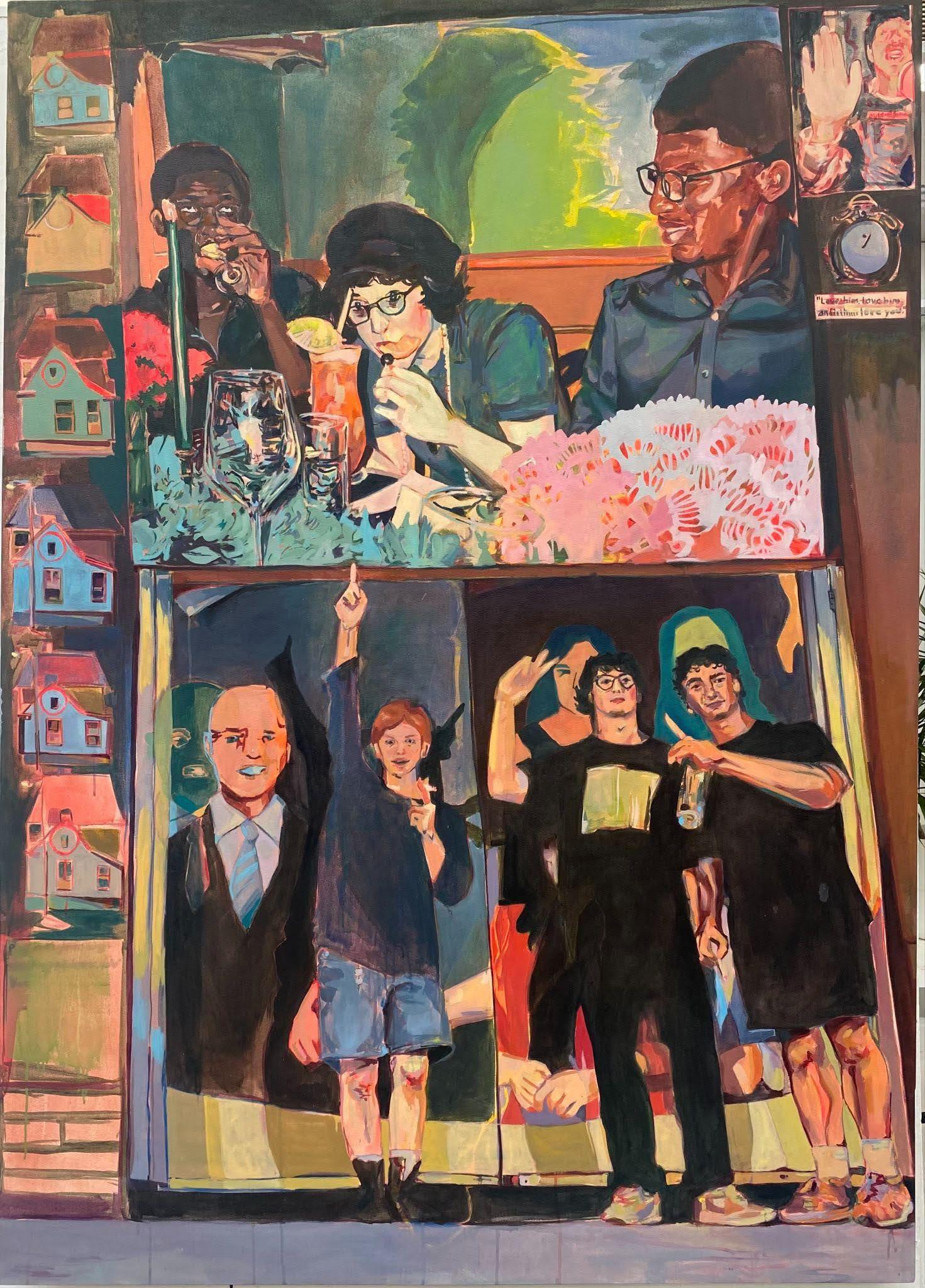
Nan Dickerson
Sam Handwich
Songs we loved then And again and then again
The sycamore can hold me
While I sleep. I only wake so you will Take me to the donut store
The one buried
Under the new bank
I only remember reminiscing
So I forget who I was before
The neighbors left
Or the walls were painted
Before the donut store closed
By my bus stop
Which you could hardly call mine
When I don’t go there anymore
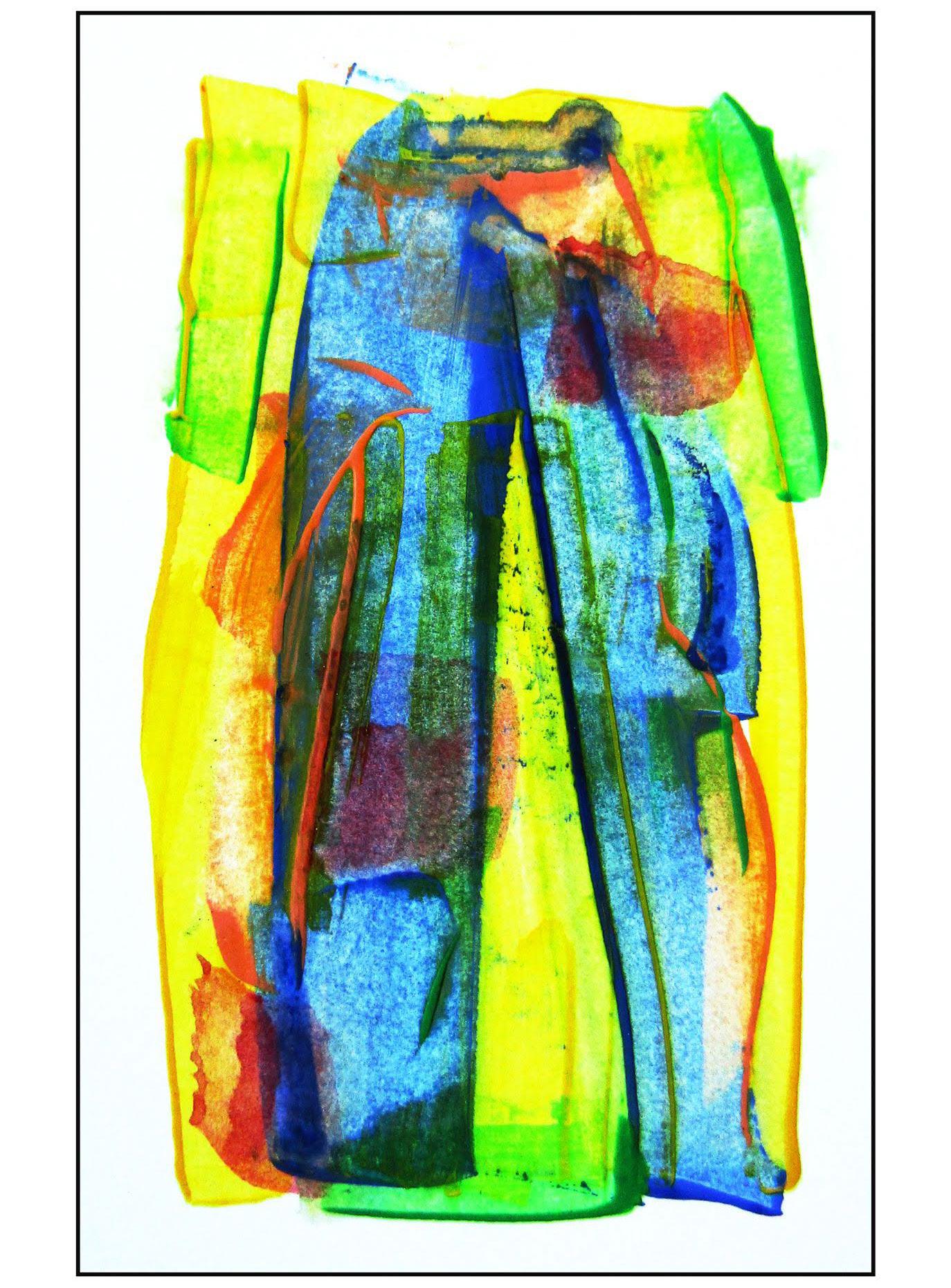
Michael Moreth
a vessel begins. with a shipwreck. to make two girls. who will rupture. on the 4th of July. into an unmovable force. they don’t bear. an american banner. their hips are free. until one of the two. touches sand. it’s not this country. it’s the love. the oil tracking asphalt. the blue eyes. it ends in rhode island. in a bottle. shot through a gun.
The hat shop is under attack. We are surrounded by evil gnomes. I phone my grandmother to tell her that I loved her. She says the only way out is to crack eggs— lots of them. I ask her what she means. My grandmother hangs up. The lovable, senile old coot. Desperate, I instruct my teenage underlings to crack eggs around the perimeter— lots of them. They gawk as though I were the lovable, senile old coot, minus the lovable. I lead by example, hucking eggs at the baseboards. They follow suit in whoops and tears. The gnomes wriggle through the baseboards and are mired in yolk. The teens split skulls like eggs with the heels of their Doc Martens. After, one turns
to say that the greatest mistakes are not birthed from misplaced selfishness, but misplaced selflessness.
Erik Moyer
Bill Wolak
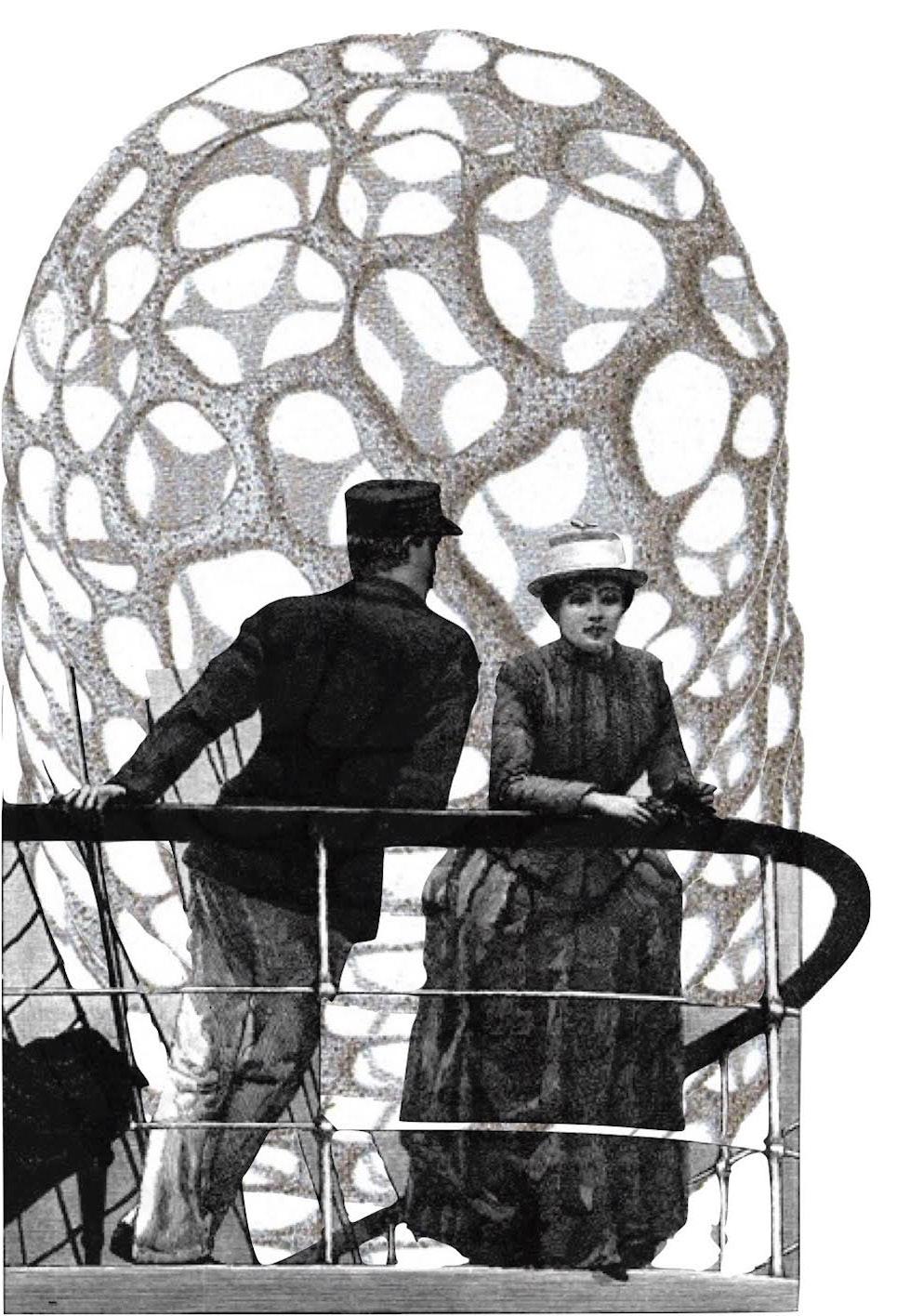
Nan Dickerson
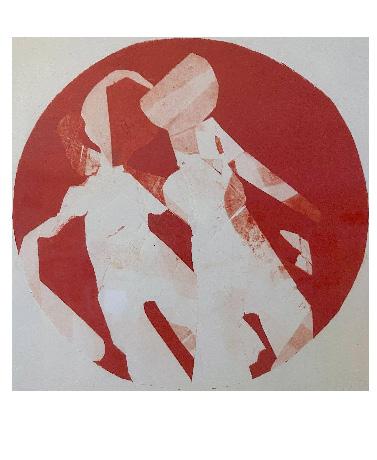
coda your so-called northern lights exist down south you name it for god and goddess, push and pull, how clear which pole you prize maybe if the earth stopped believing he could penetrate the sky he would see she is already full pulsing, brimming with her own ebb and flow so by all means, coin aurora borealis invoke, invent the northern winds, whose imaginary fingerprints bruise the supple flesh of dawn i’ll speak the name with a forked mother tongue and a voice that vibrates through my body alone ouroboros ouroboros
so you're the one who bought our toothpaste it just kept appearing sands carpeted in takeout clean sheets
I am discovering the daylight hours you spent alone unpaired socks surging back from extinction radar pings have stabilized stagnant waters wind chimes heralds of guests boxes regular as waves our cardboard debate you neatly repacked missed the things missing bare beach your dwindling supply
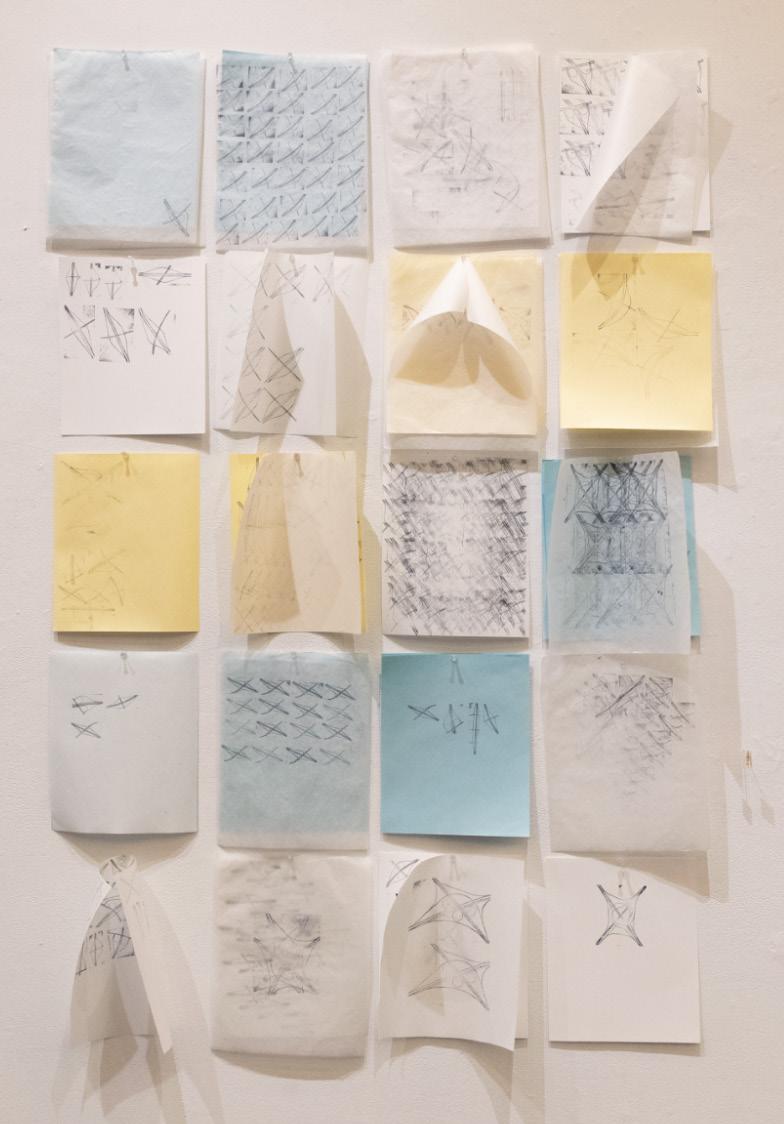
Charlie Usadi
Twirling green mitts, he swings dusk. Hollywood studio materialises. Gateway permit and nitroglycerine in knapsack. Black Liberation Army, crabbit at maid plus mammy repertoires, hang with the frog whose peepers don’t roll as he outstrips Sunset.
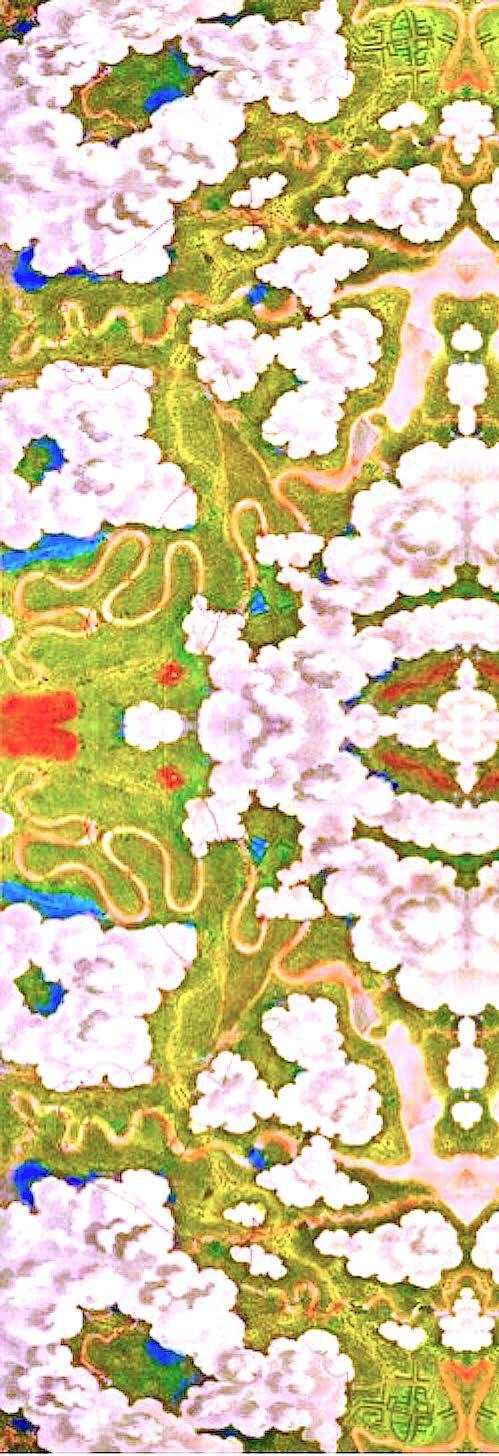
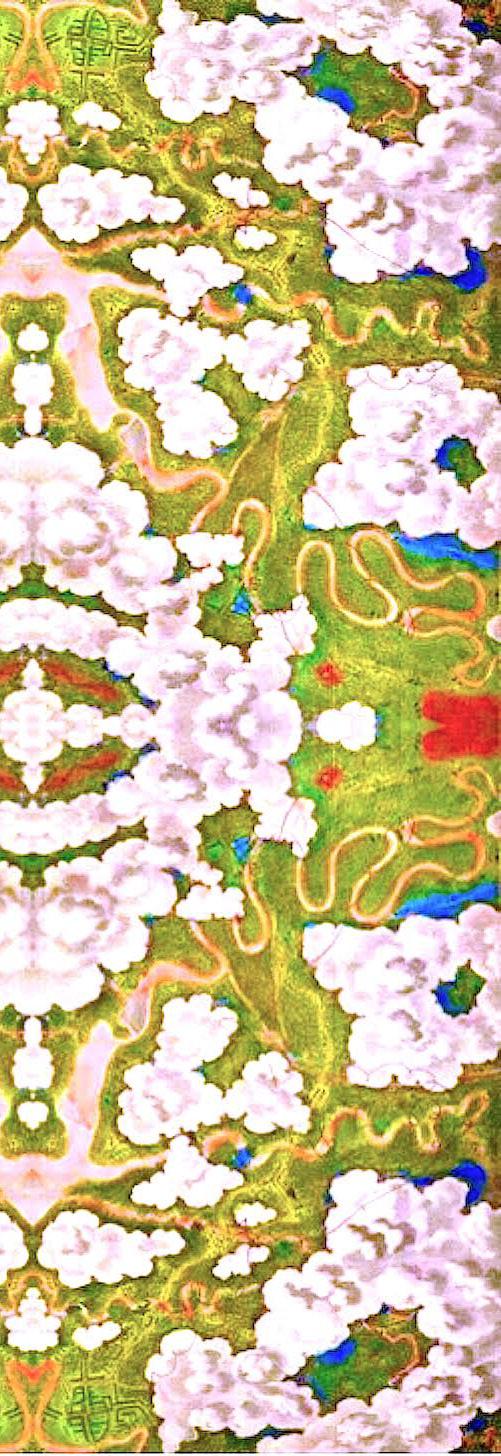
Christopher Barnes
Edging to guesthouse, riskless acceleration. Butterflies lend direction. Keeping cave, Titanred eyes dance at window. Gun-jumping’s pivotal. In five minutes they’ll be pedestrian. Carlos, the Jackal, wheeling though Hampstead.
Bill Wolak
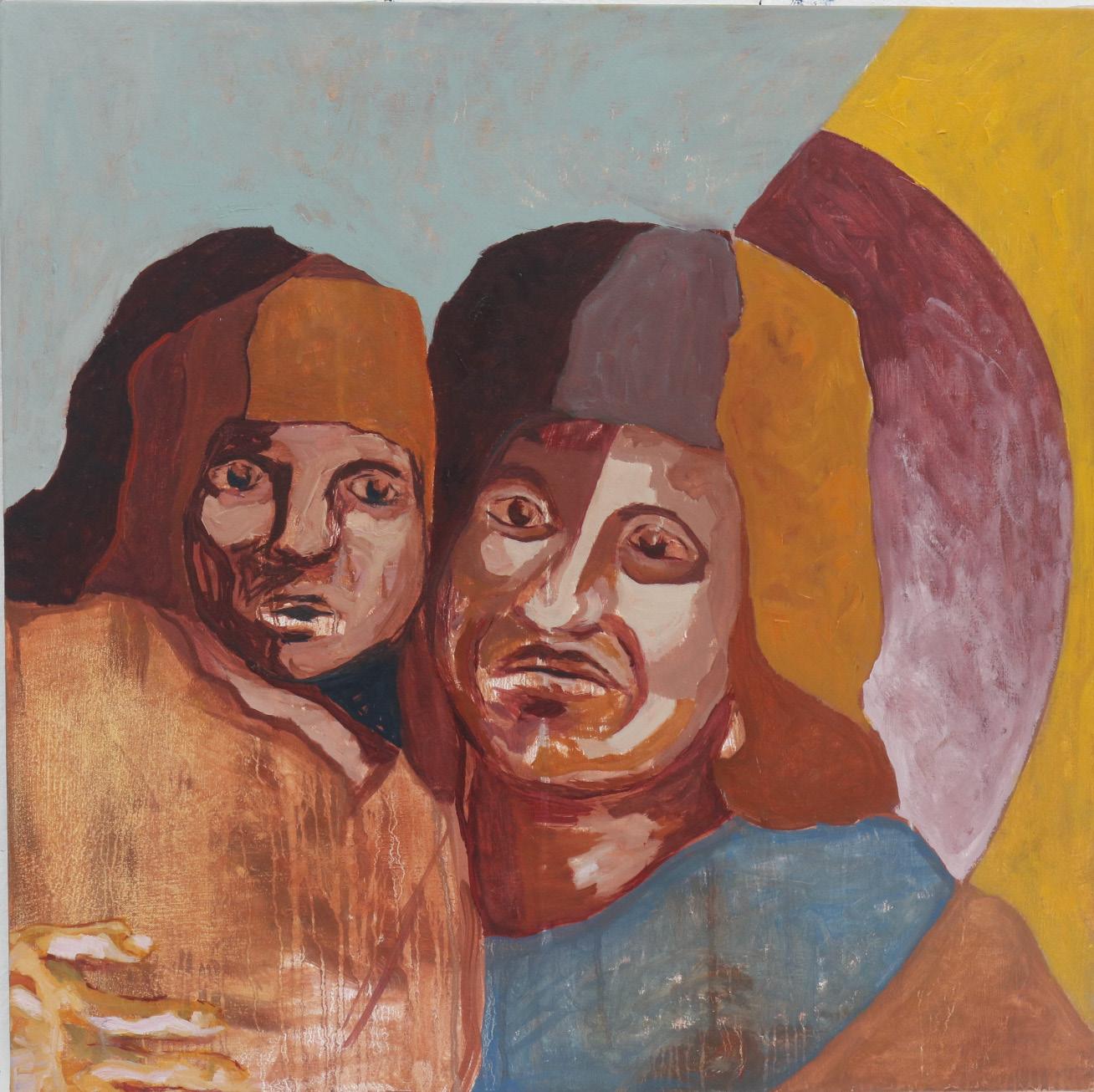
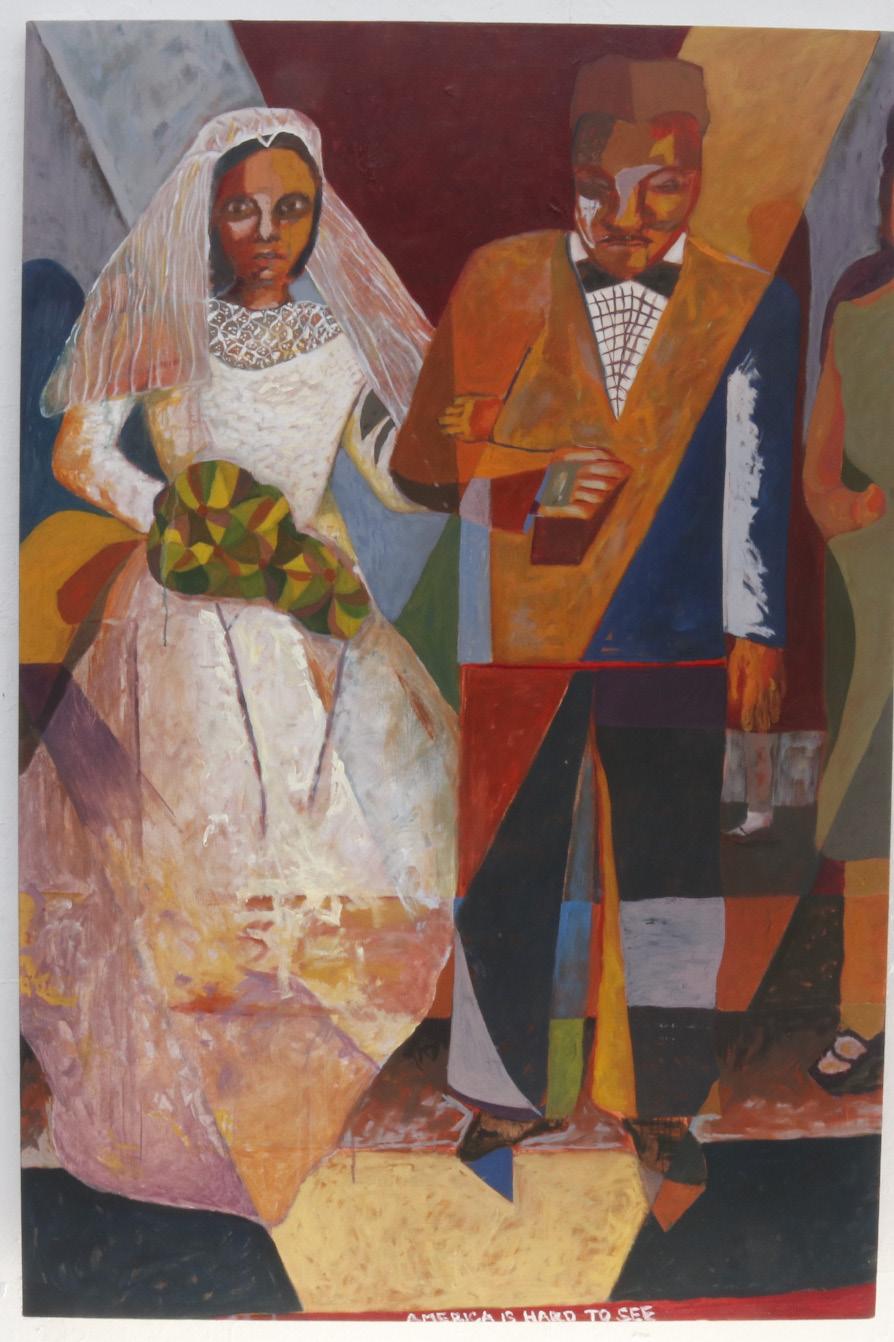
We establish ground rules; they take our hands, warm palms; the ground is illiterate; she hears you, she understands more because she is a mother; you still feel the atmosphere of elitism; I think you see it swinging; like legs, “tough”; round we circle and we listen; make sure you think to care; when we laugh like a symphony after the first wave of the conductor, outsiders won’t know; you enjoy it. Ground rules are elementary; we know common sense; you think in sleep, not beyond that?
I agree, I wanted to be able to think for myself. We all do not know something; you, too, have memorized that portion of Washington’s Farewell Address; take (do not) my words for granted; and you should listen; but the clock is different today; then, you can think; like a toolbox, you quickly retrieved their quotes; in the past, we pasted their experiences into you. It must be hard to tell now; subtle, even, in front of your eyes.
She once, ragged mountains wild in her roaming eyes, signed a post scriptum, cast out like a sigh, a groan; a miraculous good she hoped; formulated belief. Matter of time for matter to muddle a mind; what a world illuminated; share cared; she was told she mistook a simple stage as a staple reality; she was told the truth; oceans heaved; in her ensuing silence, waves tumbled and engulfed her words until the roaring subsided; and there remained the surface still. Don’t you also laugh because he chuckled, scoff because he dismissed her? Forgive her for her sorry emblem, but you, as he, will not forget.
They raised us to be pacifists; thinkers; antagonists; workers; educators; protestors; you model us on; see the tilt of his head, the send of her hands. Do you think you can change the world? Here, Momma may cry to your fragile heart, your stupidity (would it be known when her daughter is taken by combat, her very own?); what a peasant soul, antithetical to purpose; you seek the theoretical, the abstract, that which foams (but clarify, clarify, until all is suckled and un-unkempt to their eyes); overgrown, is your spirit; for what final metaphor does life (see metaphor) deduce to? Words too bemoan your state; institutions are not yours to crumble, but you think it matters now; they tell you and you think; they teach you and you believe; you enjoy marching, treading with shields, recognizing evil in questions and acclaimed sentiments; proud, you must be. Deep down, you are made desperate for the shock. When the time comes, it will all feel too familiar to realize.
What do you want me to change in the world? The devastation stinging in our palms; to slap against a hollow film; how can you expect us to become your text? Inwards we shrink; we have nowhere else left; crate us, Creator; crater holes us; craters within us hold; how can you expect us to heart your hate? Our guts cannot handle the ruminating law of the shadow moon, now you teach us that it shall never turn away; only that it descends by your rhythm of thought; but I believe, I believe; suppose we shall heal; please, direct us to the/ their/our graves; we shall bless them then turn away; now we dig up more. To be filled.
Enough. Today, like you have told us, we listen.
Caroline Jiang
Christopher Barnes worked on a collaborative art and literature project called How Gay Are Your Genes, facilitated by Lisa Mathews (poet) which exhibited at The Hatton Gallery, Newcastle University, including a film piece by the artist Predrag Pajdic in which he read his poem "On Brenkley St."
Chloe Costa Baker is a junior at Brown studying literary arts and linguistics. She enjoys word puzzles, poetry, and talking at length about movies.
Aaron Dai is a current senior from Essex County, New Jersey. His writing has been recognized by the YoungArts foundation and the Scholastic Art and Writing Awards and has appeared in The Sun Magazine. In his free time, he loves to collect vintage typewriters and make stop-motion lego films.
Nan Dickerson
Sam Handwich I'm scared of things that move too quickly so I spend my time with vegetables. Chard is my favorite, then the prickly pear of a cactus. Cacti don’t die easily.
Paul Hudes is a junior at Brown studying English and Applied Math. He is from Baltimore, Maryland. He writes short fiction and screenplays and edits for a few publications on campus.
Caroline Jiang is an emerging young writer from New York, currently attending the Bronx High School of Science. She loves to write in the pitch dark, huddled inside her blankets with disregard
(and hyper-regard) to the outside world. Her poetic journey began in the pandemic, and now she writes poetry fanatically, always looking forward to continuing exploring the breadth of her creative voice. She attended Iowa Young Writers’ Studio’s creative and nonfiction writing courses the past two summers and is an alumna of Kenyon Young Writers Workshop. She has received five Scholastic Art and Writing Awards’ Honorable Mentions and two Silver Keys in poetry.
Sara Kandler teaches English at an international school near New York City, and reads and writes poetry whenever she has a spare moment. Her best ideas come to her while taking long walks or doing piles of dishes. She shares her work in Medium, and has had pieces in The Round, One Art and NYU’s Agora. Sara has an MS in Journalism from Columbia, and a BA in Comparative Literature from Brown (Class of '88). She has lived and taught in France, Morocco, and the US.
Kayla Kierulff Sayers is an online university student whose poems have been featured in Orca, A Literary Journal, Rowayat Journal, and London Arts-Based Research Centre Indelible Journal.
Anika Kotapally is a writer and sophomore at Brown University. In her free time, she likes to play lots of sudoku, take thinking walks, and pretend to read more than she does.
Aidan Kropiwnicki is currently a graduate student in Brown University’s doctoral program in chemistry. When he’s not mixing chemicals at the lab bench, he enjoys exposing a variety of silver halides to sunlight to see if he can capture a slice of life in the results.
Iris Lee is an aspiring poet and artist from Shanghai. She loves her cat Lucy Cleopatra Lee Tickling and food.
Jeffrey H. MacLachlan also has recent work in New York Quarterly, The Penn Review, The Tusculum Review, among others. He is a Senior Lecturer of literature at Georgia College & State University.
Michael Moreth is a recovering Chicagoan living in the rural, micropolitan City of Sterling, the Paris of Northwest Illinois.
Erik Moyer is a writer and data engineer. He holds a PhD from the University of North Texas, an MFA from the University of California, Irvine, and a BS from the University of Virginia. His work appears in Columbia Journal, Oxford Poetry, Penn Review, The Pinch, The Rumpus, and elsewhere. He can be found at erikjosephmoyer.com.
Riley Orr is a writer and photographer based in Canada. His work explores themes of time, paradox, and the tension between presence and absence. In fiction, he examines the weight of suffering, distraction, and transcendence, while his photography captures fleeting moments that reflect similar existential depth. He is interested in how both language and imagery can challenge perception, creating meaning beyond what is immediately seen or understood.
Laura Tamayo
Georgia Turman studies Literary Arts at Brown University. She writes poems, songs, and stories. One day she hopes to be in a rockand-roll band.
Piper Rasmussen (she/her) lives and works from Manhattan with her husband and cats. Her plays have been performed in Ohio, Oregon, and New York. Her poems have appeared in Kyoto Journal, Hare’s Paw Literary Journal, SplashLand Magazine, and others. Piper is a low-residency MFA student with Queens University of Charlotte and a library student (MSLIS) with the University of Illinois at Urbana-Champaign. piperrasmussen.com.
Charlie Usadi (they/he) is an artist and writer living and working in Providence, RI. They received their BA in Visual Art, Architecture, and Environmental Studies from Brown University, where they conducted interviews for the Brown Art Review. Charlie is fascinated by plants, queer landscapes, and boundaries drawn between humans/ nature.
Bill Wolak has just published his nineteenth book of poetry entitled What Love Calms Only With Nakedness with Expeditions International Publishing House. His collages and photographs have appeared as cover art for such magazines as Phoebe, The Passionfruit Review, Inside Voice, and Barfly Poetry Magazine.
The Round is a literary and visual arts magazine based at Brown University.
Our name is adopted from the musical “round,” a composition in which multiple voices form an overlapping conversation. It is our mission to extend and enrich a community of artists across the country and around the globe. We are excited to work on a magazine which brings together contributors with a wide variety of backgrounds, ages, and places they call home.
We welcome submissions in any genre or medium and publish both students and professionals. Send your work, comments, or questions to theroundmagazine@gmail.com.
View submission guidelines and learn more about us by visiting http://students.brown.edu/theroundmagazine. Check out past issues at https://issuu.com/theroundmagazine.
Sincerely,
Marlena, Riley, and Kate