




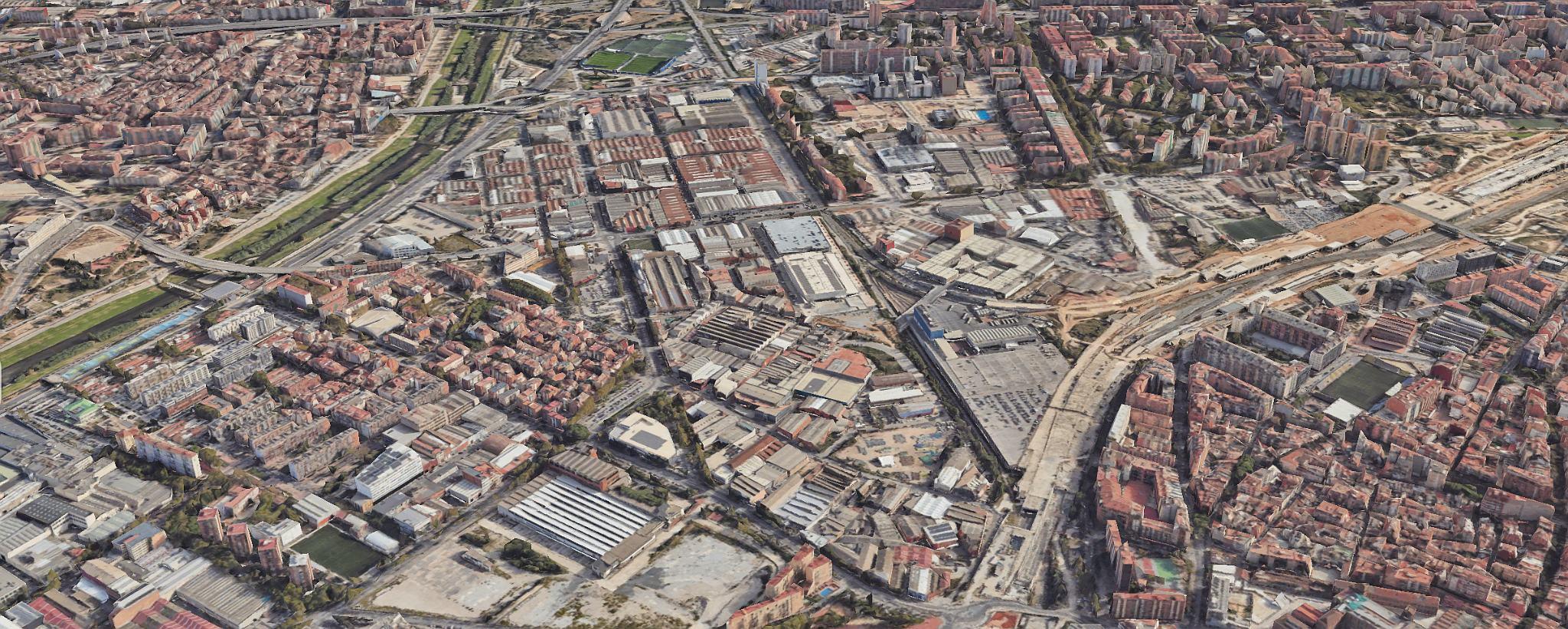
Torrent de l’Estadella is an industrial site located in the district of Sant Andreu, in the North-Eastern part of Barcelona. Like many places in Sant Andreu, it has a strong industrial heritage; the metallic and textile industry have been at the forefront of its history since the late 18th century. Despite being strongly embedded in the urban fabric it remains disconnected from its surrounding neighbourhoods due to discontinuities caused by the Besos river and the neighbouring railway. Recognising these disruptions to the urban fabric is crucial to reconnecting Torrent de l’Estadella to its neighbourhood and creating a space for the community of Sant Andreu to come together.
When analysing the culture of Sant Andreu, we find that it is a close-knit community that regularly aims to foster community-based initiatives. The demographic is diverse consisting of a mix of North Africans, South Asian Eastern europeans and South Americans with a wide range of age groups. In relation to the rest of Barcelona, the average income is quite low (€13978). All these features, will help us to carefully develop our design strategy in accordance with the ‘Green and thriving neighbourhood’ goals and ‘Barcelona’s sustainable development plan’. In order to successfully regenerate this site and create a hub where the neighbourhood comes together, we must take into account the culture and the needs of these diverse demographics so that inclusivity and the people are at the forefront of this urban development.









Torrent de l’Estadella, Barcelona, is currently facing a multitude of issues; social, environmental and in some ways, economical. Identifying these issues is paramount to revitalising the area so that we may create a thriving and sustainable environment in accordance to the Green and Thriving Neighbourhoods’ objectives set by C40 and Barcelona’s Sustainable Development plan
Although the Green and Thriving Neighbourhood’s’ objectives are all crucial in mitigating climate change, promoting a green economy and fostering social cohesion, we must identify the objectives which are best suited for our project

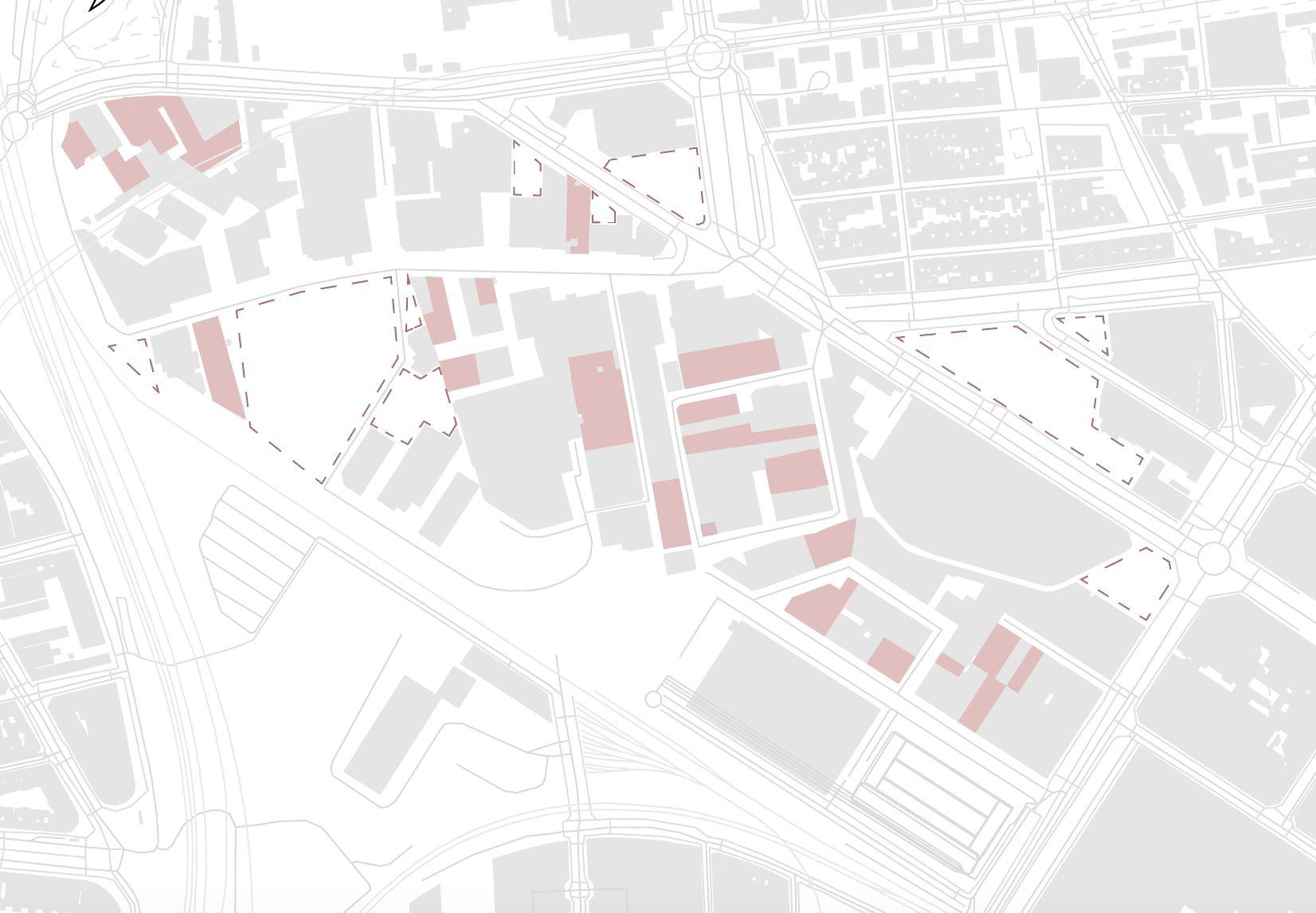
There are a significant number of empty (9) and inactive (27) industrial warehouses, which presents both a challenge and an opportunity for redevelopment. Leaving these warehouses unused is akin to not taking advantage of the potential for economic and social growth. Revitalising these warehouses to promote a greener economy, whilst preserving their industrial heritage, presents an opportunity to transform the urban fabric into a social and economic success.
A lack of recreational green spaces leads to depreciating mental and physical health. Green spaces help to foster social initiatives as well as promote exercise. They are also paramount to regulating urban temperatures, especially in major cities like Barcelona which suffer from the Urban Heat Island Effect and flooding.
Disorganised car parking
Disorganised car parking can lead to congestion, lack of pedestrian safety, an increase in emissions, and can exacerbate the Urban Heat Island effect. It also decreases the aesthetic value of the area, further discouraging residents from going there.
Environmental risks
Barcelona is being subjected to harsher climates and weather year by year. It suffers from severe drought, flooding and heat waves. Creating systems which are able to adapt to these harsh climates, such as rainwater harvesting systems are crucial in ensuring that the surrounding infrastructure doesn’t get affected.
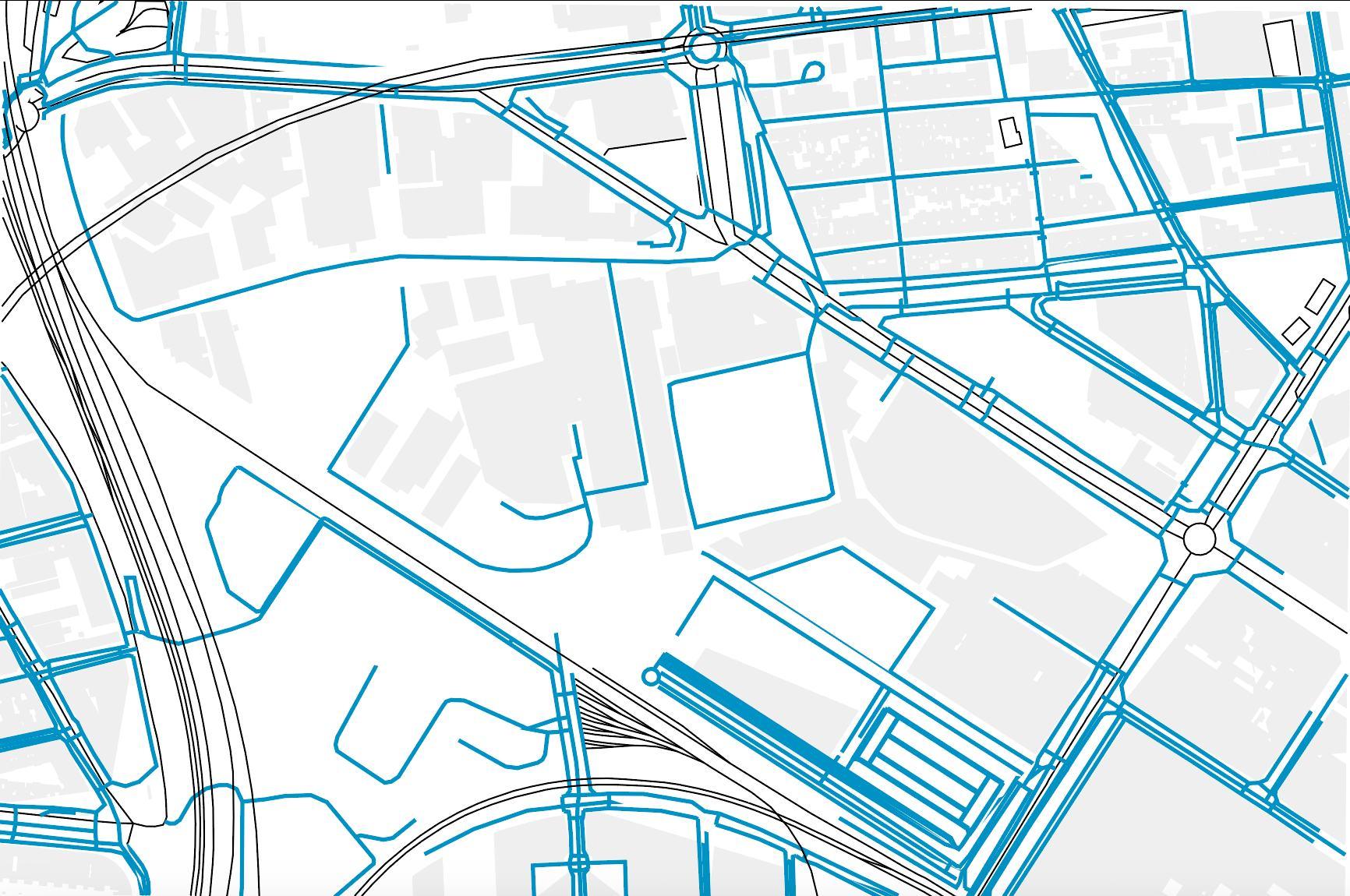
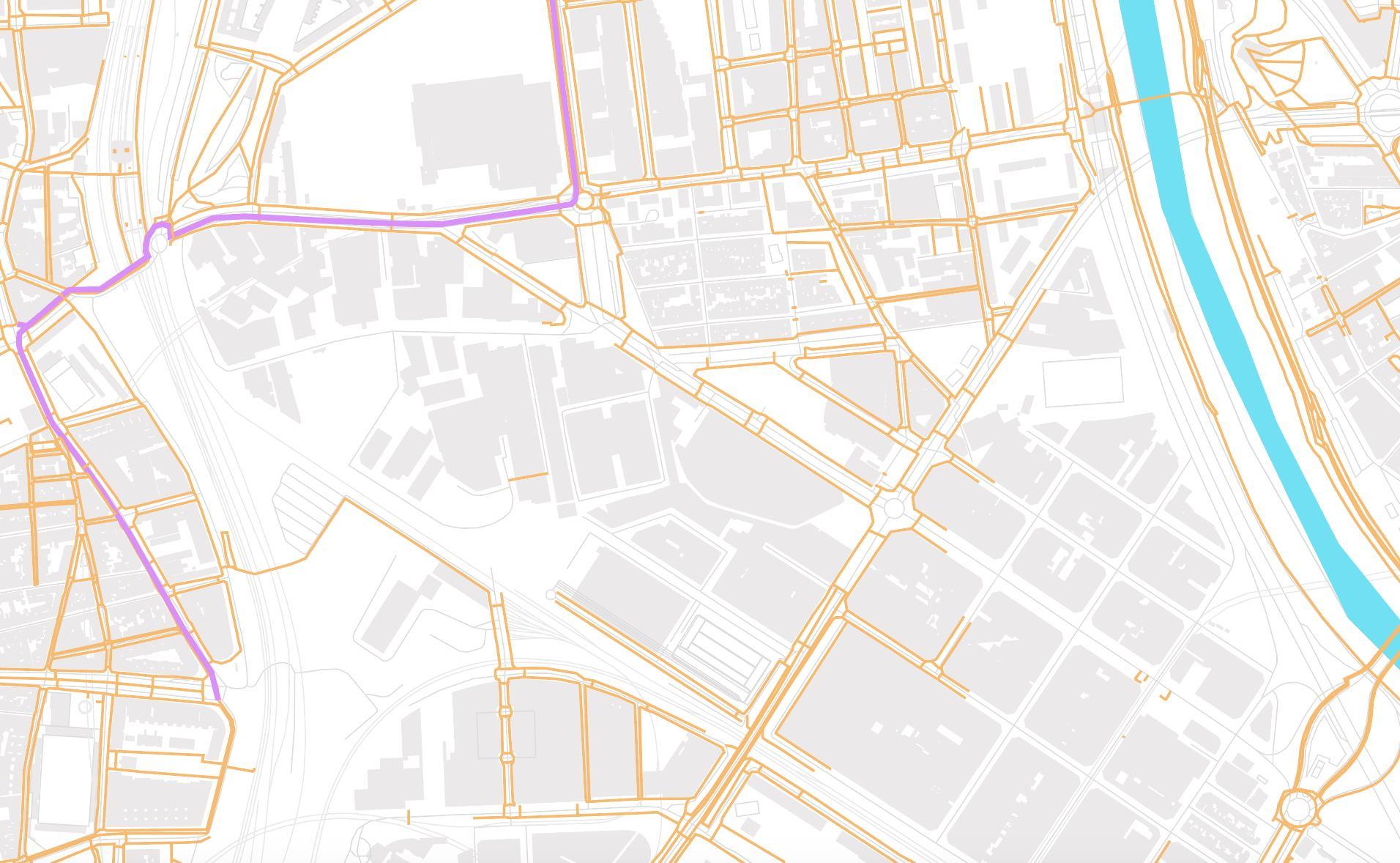
Although Torrent de l’Estadella is at the heart of Sant Andreu, it remains disconnected from its neighbourhood. The lack of public transport, pedestrian and cycle paths linking the neighbourhood to the site as well as the disruption caused to the urban fabric by the River Besos and Railway make accessing the area difficult.
The only way to manouvre in the site is via car. This creates a high emission zone, congestion and discourages people from coming into the site. Due to the lack of pedestrian and cycle paths this could also compromise peoples’ safety.
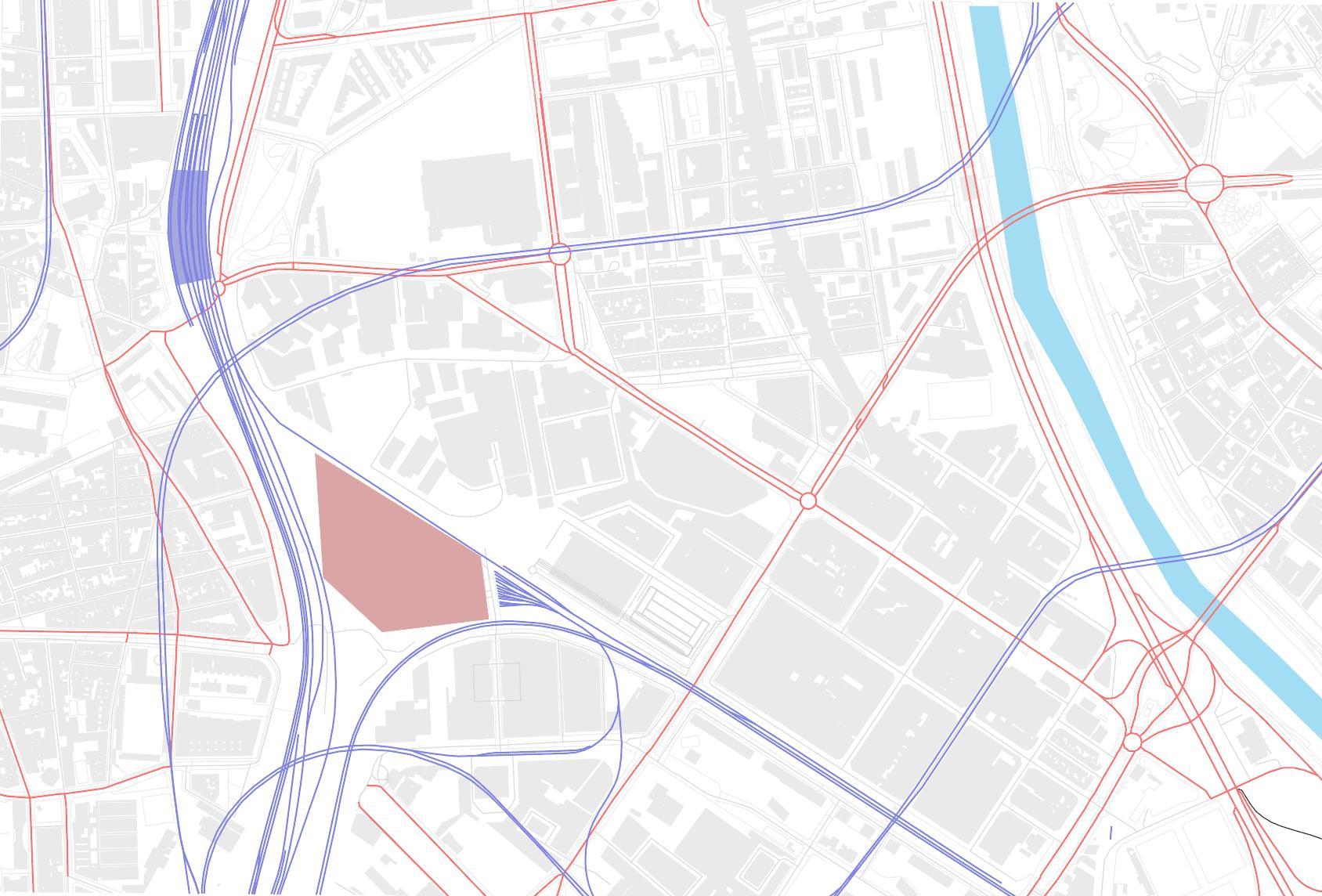
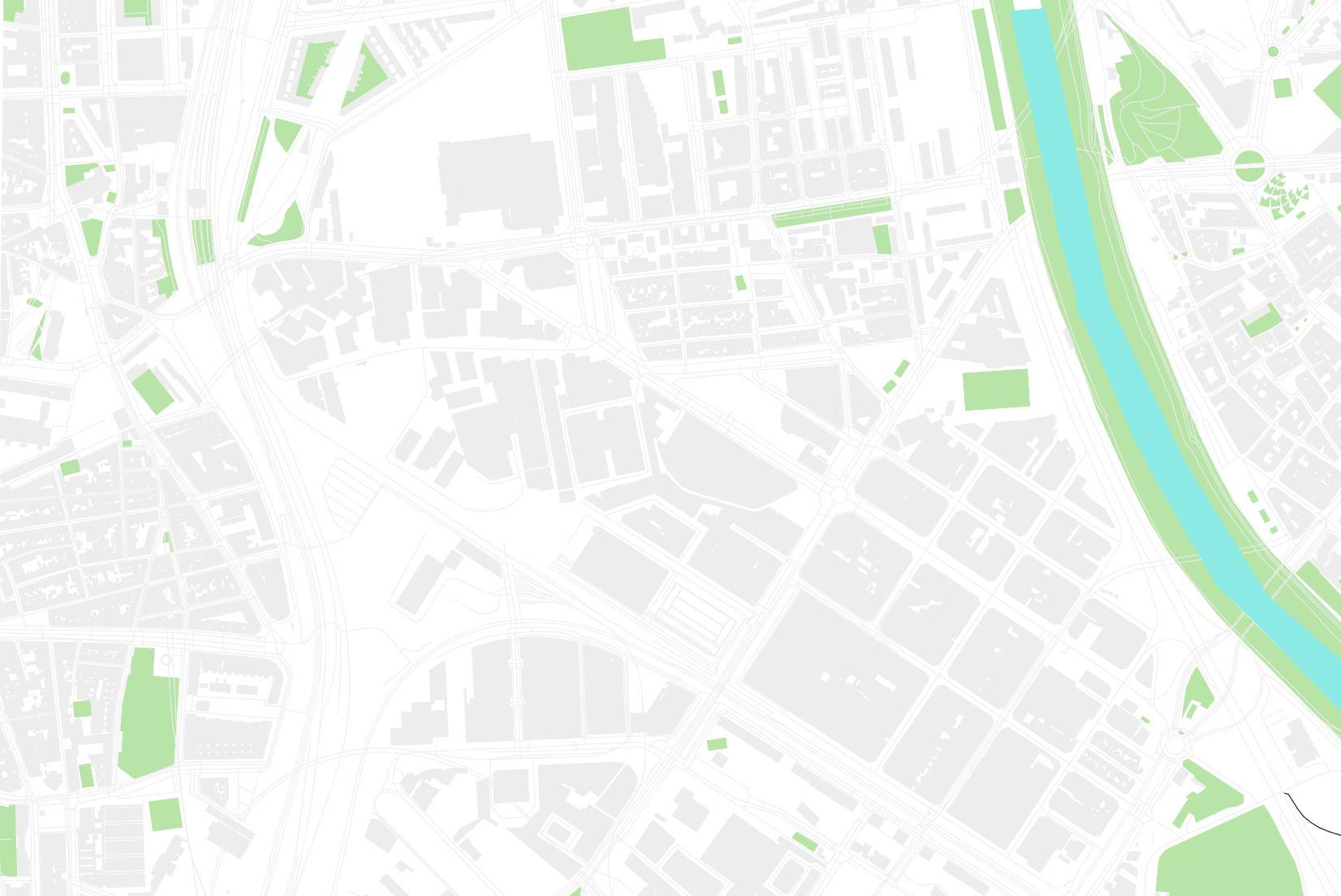
A site analysis is crucial in developing strong tactical and design strategies in accordance with the C40 goals. As we can see, the land usage distribution of our site is a split between industrial warehouses and vehicle lanes with no cycle lanes, foot paths or green spaces. Despite the site being in close proximity to major transport networks and foot/cycle paths, it still remains majorly disconnected from its surrounding neighbourhood.These analyses are a crucial justification for improving connectivity within the neighbourhood and for the addition of green and blue spaces.
Access & Circulation









circular and green economy
neighbourhood
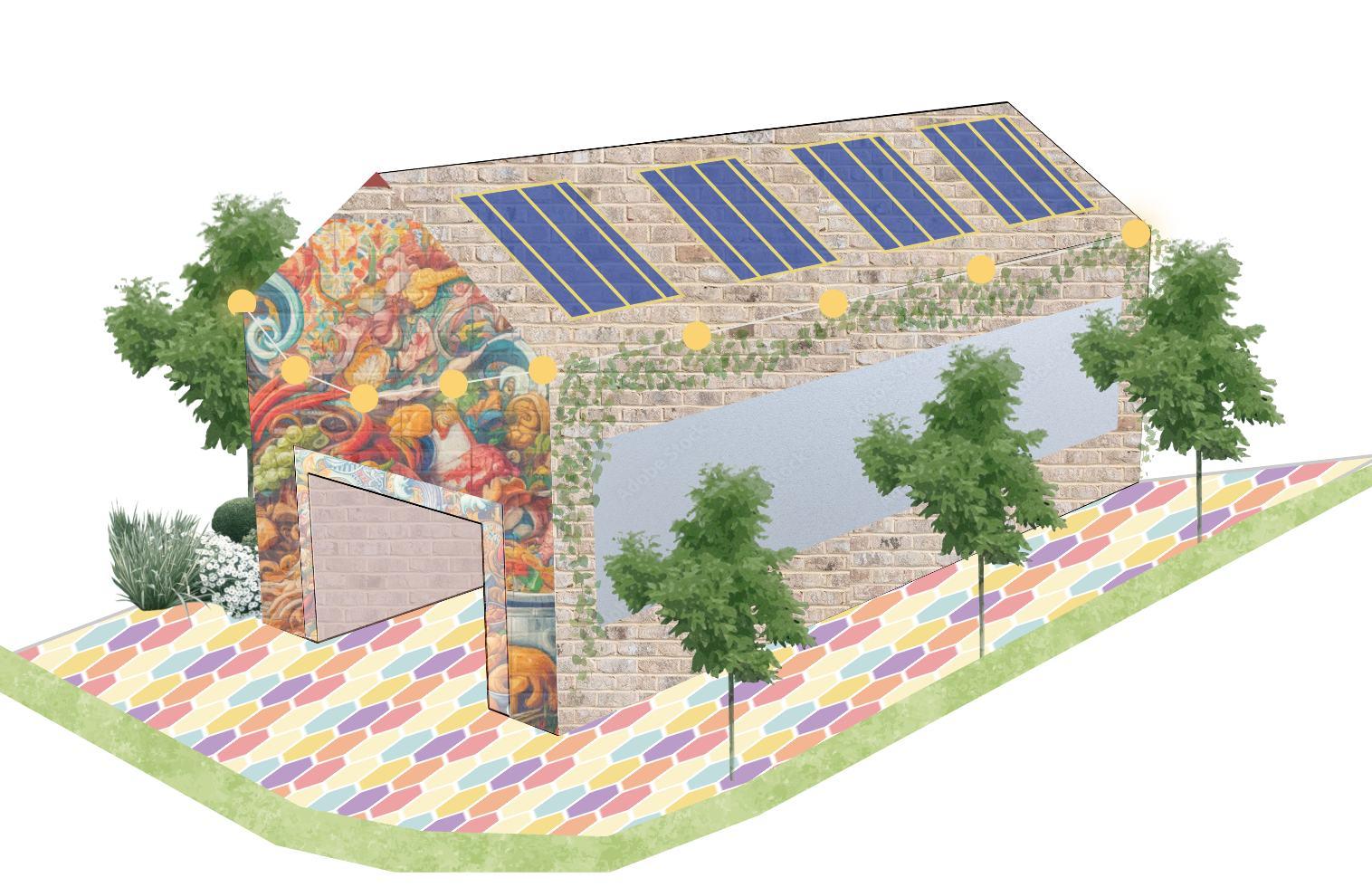
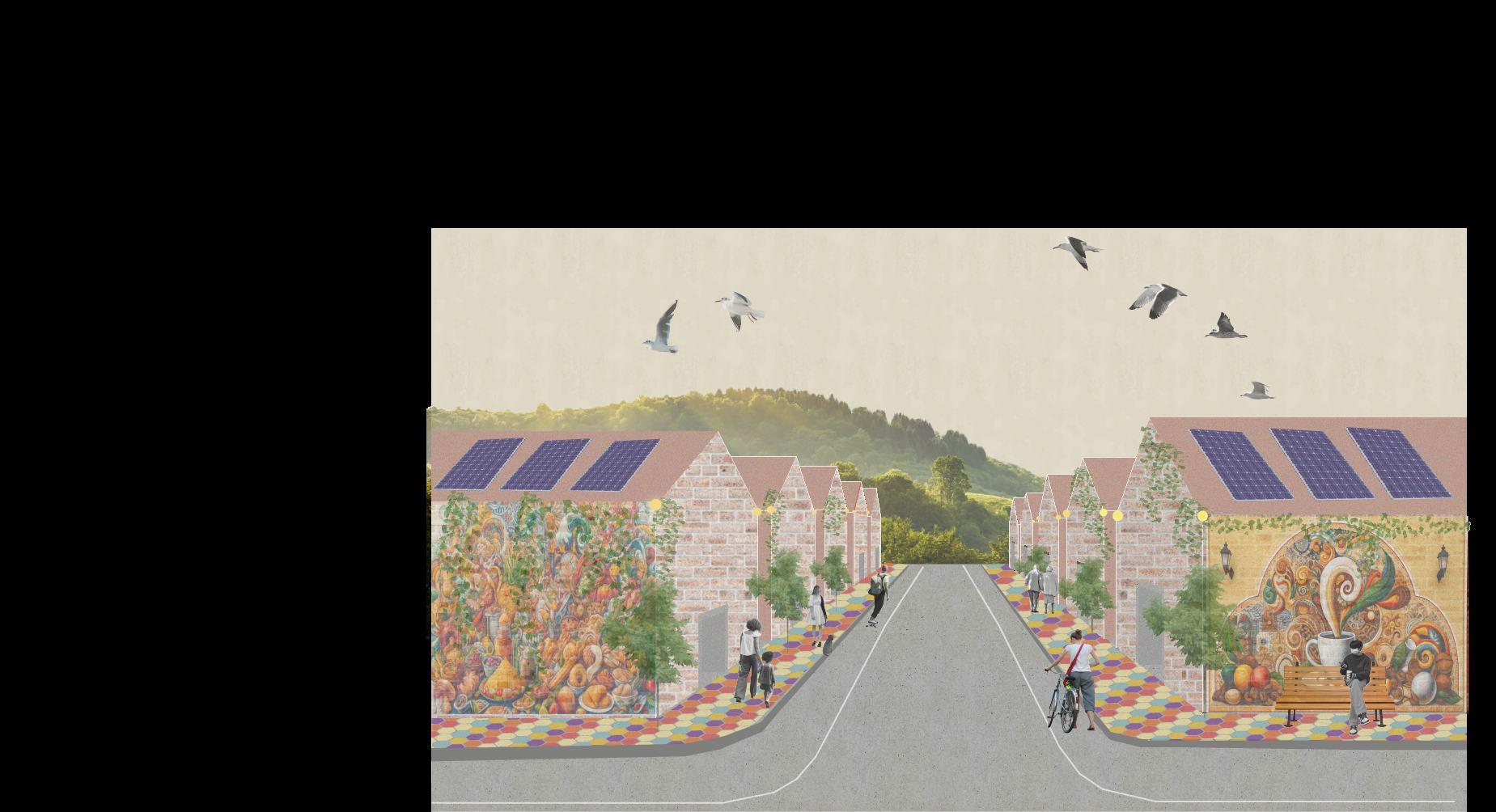
For our inactive warehouses we have specifically focused on internal activities which foster community, create jobs for locals as well as promote a which honours the site’s textile and industrial past. Our warehouse network attempts to move beyond the hyper-individualist city, and instead draws upon Barcelona’s radical city identity, making it a . We are minimising renovation and instead focusing on regeneration as we are keeping sustainability in mind, however, we will be adding slight alterations. Barcelona has a rich, artistic culture; to honour this, an external wall of each renovated warehouse will be painted giving locals an idea of the internal activities of the warehouse. This art will be vibrant with prominent geometry to reflect Barceona’s artistic heritage.
complete
Our Warehouse Network will have some unifying characteristics - first, retrofitting warehouses to a high standard while trying to lower the carbon footprint of the buildings. Where possible, solar panels and energy saving systems would be put onto each warehouse. Supporting a ‘Green Cities’ Apprenticeship - An education programme offered in conjunction with Polytechnic University of Catalonia (for providing a technical education), or also the Municipal Government, which promotes a cohesive sustainable planning and engineering education within a neighbourhood, providing a systems-centric, holistic approach to urban management education.
A large commercial space providing rental spaces for food vendors, to provide an income into the Warehouse Network. This Warehouse will aim to redistribute fresh vegetables, fruits, canned food and meat to locals. It will have a zero plastic packaging policy, where all items are weighed, and then transported back to households with their own containers or paper bags. This should minimise plastic consumption. Local vendors will be encouraged to sell food which they have grown in the Local Community Greenhouse, offering subsidised rental prices for those who do so, and any food waste should be thrown into a food bin to then use for composting for growing community plants.
Timber balcony for dining
Green roof to support biodiversity
This community centre works to facilitate moves towards a circular economy for the local residents. It is a multi-purpose space that aims to provide a space and platform for allowing residents to learn about the circular economy provide the infrastructure to close the loop in their own consumption patterns, and empower entrepreneurs to create circular startups or products. Key facilities will include:
1. A Library of Things Initiative
- a centre for the community to borrow items that are rarely used or large to store, allowing for reduced consumption of these items which otherwise may get little use year-round. The contents of the library would be updated in response to the community, but would include electronics, home tools, kitchen equipment, craft supplies (e.g. sewing machines), gardening equipment, and items for children.
2. Repair Cafe
- An educational space with classes educating members of the community on how to repair certain items e.g. clothing, bicycles, electronics. These would not only provide the opportunity to educate local citizens on practical skills, but also offer them a free way to repair their items, continuing their lifespan. A paid service for repairs could also be offered, for those unable to attend the class.
LED lights for street safety
- A space to rent workshop space for individuals, allowing for a collective sharing of intensive and specialised tools. Priority/discount given to those working specifically on the circular economy - whether that is for up-cycling or assisting with new technology development for supporting the circular transition.
3 Co-Working for Crafts 4. Community K itchen
- A communal kitchen cooking space, for hire and for hosting cooking classes that specifically look at preventing food waste, eating food in season, and nutritional education to prevent obesity. Food will be sourced as locally as possible, potentially from our Local Community Greenhouse.
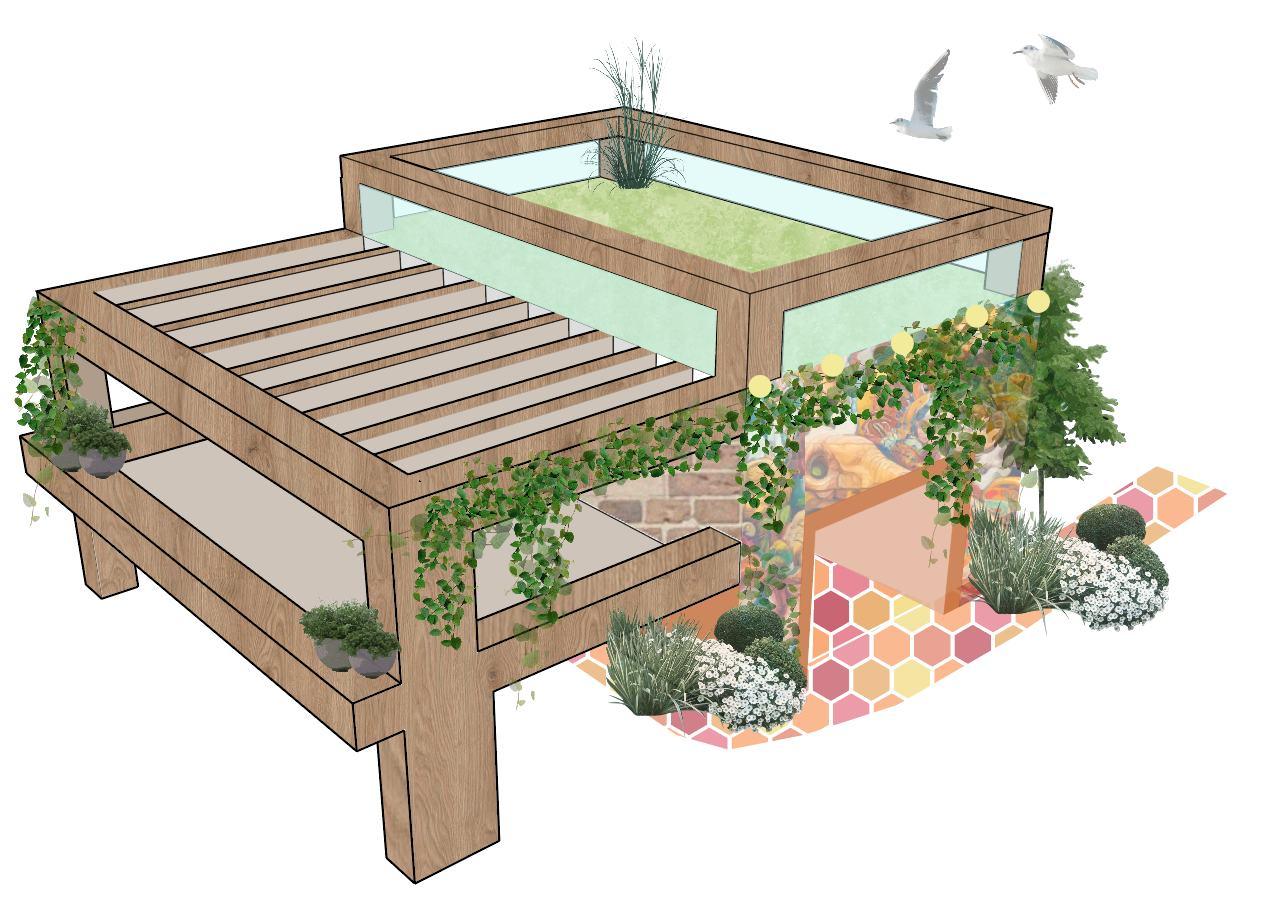
A commercial space where food vendors can sell cooked meals. The food being sold will cater to the diverse ethnic demographic of the area and beyond. This is to try and foster an inclusive community. The Food Court will have a unique design which differentiates it from other warehouses. It will have a balcony composed of sustainably regenerated timber, promoting clean construction, whilst giving diners an option to eat in the open air. The retrofitted balcony will help create a more pleasant experience for diners if they wish to enjoy Barcelona’s warm weather as well as reduce congestion within the Food Court. A green roof will also be introduced to promote sustainability as well as encourage biodiversity. This will be open to the public, however, food in the area will not be permitted to repel vermin
A warehouse converted into a public library and an ‘urban living room’ concept community space, meant to cultivate social interactions and create a ‘third space’ for the local residents, which doesn’t necessarily require the purchasing of items or services to be part of a public space to cate for the relatively low income community of Sant Andreu
- Public library featuring free internet access, study spaces, book collection with focus on children’s books and a sustainability focused curated book collection, which includes guidance and manuals on sustainable decisions in cities (e.g. gardening books, etc.).
- Indoor space with soft furnishings to allow members of the community to meet in a space outside their homes to engage in activities such as board games, film screenings, and general catching up. There is the option to purchase refreshments and drinks from an inbuilt cafe, but these are not necessary for purchase. The Urban Living Room Space would be decorated with rotating art from local schools and artist collectives, as well as community murals to be developed over time.
Place for everyone

Connected place
1. Community Gym - Gym facilities with subsidised local community rates (and non local resident rates), including free weights, cardio machines, but also an extensive range of gym classes, particularly targeted to beginners, children, and older adults. This will also include internal basketball, climbing, and badminton courts.
- Soft play children’s centre with space for adult to socialise adjacent, allowing children to engage in environments helping them to develop their fine motor skills, and provide a year round space for children.
A Warehouse which aims to host gigs, comedy show’s, perfomances, as well as designated music rooms where musical instruments and rooms can be booked in advance. Performances will aim to be as inclusive as possible, encouraging displays from different cultures aimed at a range of age groups. Indoor non alcoholic refreshments will be available to promote a complete and safe environment.
A Warehouse which has been converted into a car park in accordance with our ‘No Street Parking policy. This is to lessen congestion, improve air quality, and promote pedestrian safety. There will also be an hourly fee, to urge citizens to rethink their modes of transport and due to limited spaces.
An indoor thrift shop providing rental spaces for vendor or residents to sell personal items that they no longer want and would otherwise be thrown away. These items would include clothes, cutlery, books, and second hand, they’ll likely be at subsidised prices and will hel to promote circular resources and conscious consumerism Transportation of items may be difficult without car spaces trolley’s will be provided at the warehouse for vendors and buyers alike to transport items to the Car Park located nearby. vendors or collected and transported to local charities by the permission of the vendors.

In order to create a thriving neighbourhood, it is essential that any design decisions take into account environmental sustainability. Our environmental sustainability plan aims to harness renewable energy, retrofit warehouses to be energy efficient and reach net zero, helping Torrent de l’Estadella to become a hub, and introduce systems which minimise the effects of flooding and recycle water for drought preventation. green economy
Given that Barcelona experiences on average 4.5 hours of sunlight per day, averaging 10 hours per day in July, the most feasible renewable energy option would be solar panels. Integrating renewable energy into the urban fabric helps to foster a green economy, mitigates the urban heat island effect and helps individual buildings reach their net zero goals faster. Solar roofs will be integrated into both active and inactive warehouses whenever possible; these solar panels will be used to power the LED lights used to ensure street safety and internal cooling fans. In addition, our choice to use renewable energy to power the warehouses ties into the goal. Green buildings and Energy
As well as opting for renewable energy options, ways to minimise energy loss and usage must also be explored. Given that Barcelona is a hot and dry climate, the main concern would be ensuring that buildings remain cool and less energy is used on ventilation systems and lighting. Ways this will be implemented are as follows:
Lighting optimisation
Place for Everyone.
- Replace traditional lighting with LED fixtures, which are more energy-efficient and have a longer lifespan. These will be lined on the external structure of the warehouse to promote street safety, as well as the internal frame. On the external structure of warehouses, some LED lights will remain permanently on throughout the dark, to maintain street safety, however, the majority will have motion sensors, so that they only switch on when motion is detected so that energy is saved. This will make Torrent de l’Estadella aNatural lighting will also be utilised whenever possible.
double-glaze existing windows so that heat is reflected rather than absorbed.This minimises dependency on heating and air conditioning systems.
Natural Ventilation -
Where possible vents should be installed and windows should be left opened to allow a natural inflow of air into the warehouse. Use high-efficiency fans to improve air circulation without excessive energy use. These fans can be powered using the electricity generated by the integrated solar panels.
- Plant trees strategically around warehouses to provide natural shade and reduce cooling loads. The trees will be mature and drought resistant to minimise the use for maintenance. When necessary, the proposed rainwater harvesting system will be used to water trees.
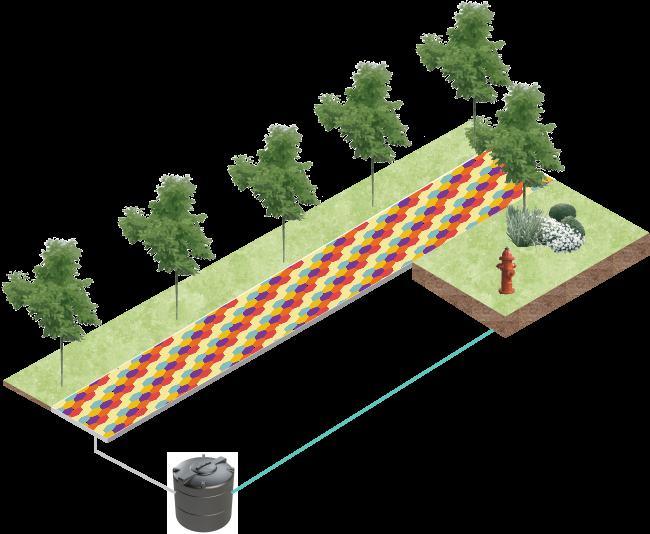
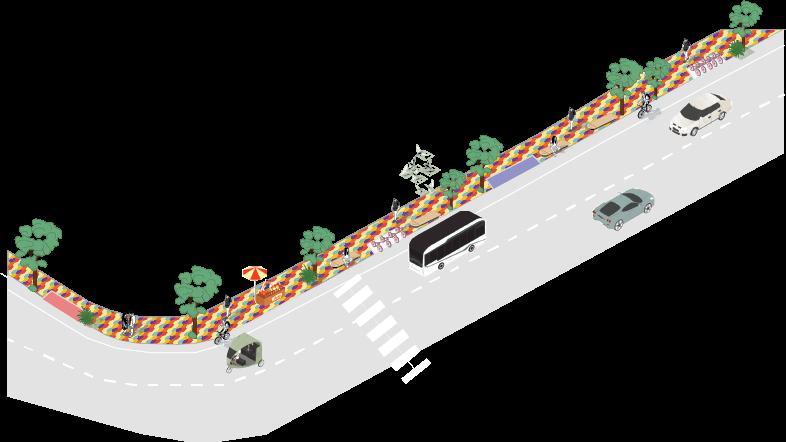
Permeable hexagonal pavements constructed from recycled plastic will be implemented. There will be very small gaps between the modules to allow the water to seep through to the soil and be recycled for watering purposes during water scarce seasons, given that Barcelona is susceptible to drought. In addition, permeable pavements will mitigate flood risk and damage to surrounding infrastructure. The colours and strong geometries are intended to reflect Barcelona’s vibrant, geometric art, the area’s textile heritage and Sant Andreu’s diverse cultural community. This strategy helps to achieve the and goal. Circular Resources
Place for Everyone
ainwater Harvesting System

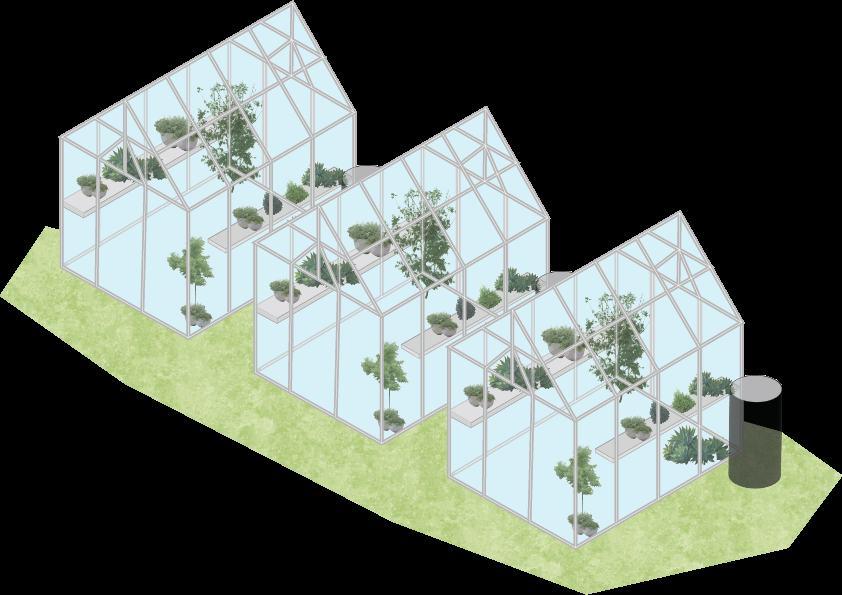
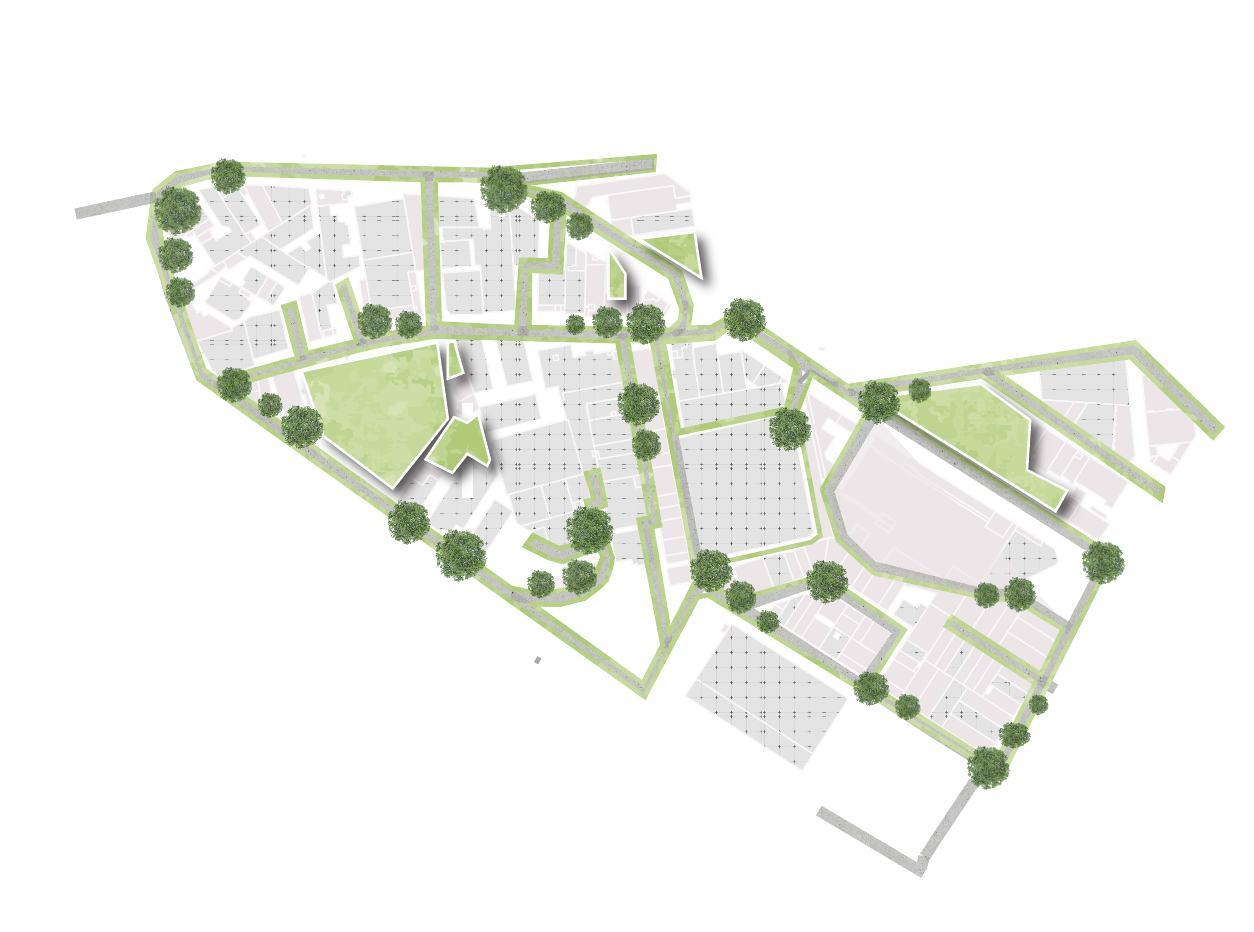
The empty plots within the site will be converted into multi-purpose green spaces which aim to bring the community together in an inexpensive way, help the site ‘bounce-back’ from extreme weather events as well as create holistic low-carbon activities. This aids in achieving the goal as well as ‘Barcelona’s Nature Plan 2050’ which aims to increase green spaces to 160 hectares and promote biodiversity Another reason for creating abundant green spaces is because the construction process of this site aims to be as low-carbon as possible and a featuring characteristic of the site is minimal material usage to promote a Three main green ‘features’ will be implemented and the rest of the empty plots will be converted into pocket parks. green and nature based solutions sustainable lifestyle.
How will boosting recreational greens transform our site?
Reduces Flooding Risk Carbon Emission Absorbance
Improves Air Quality Reduces Urban Heat Island Effect
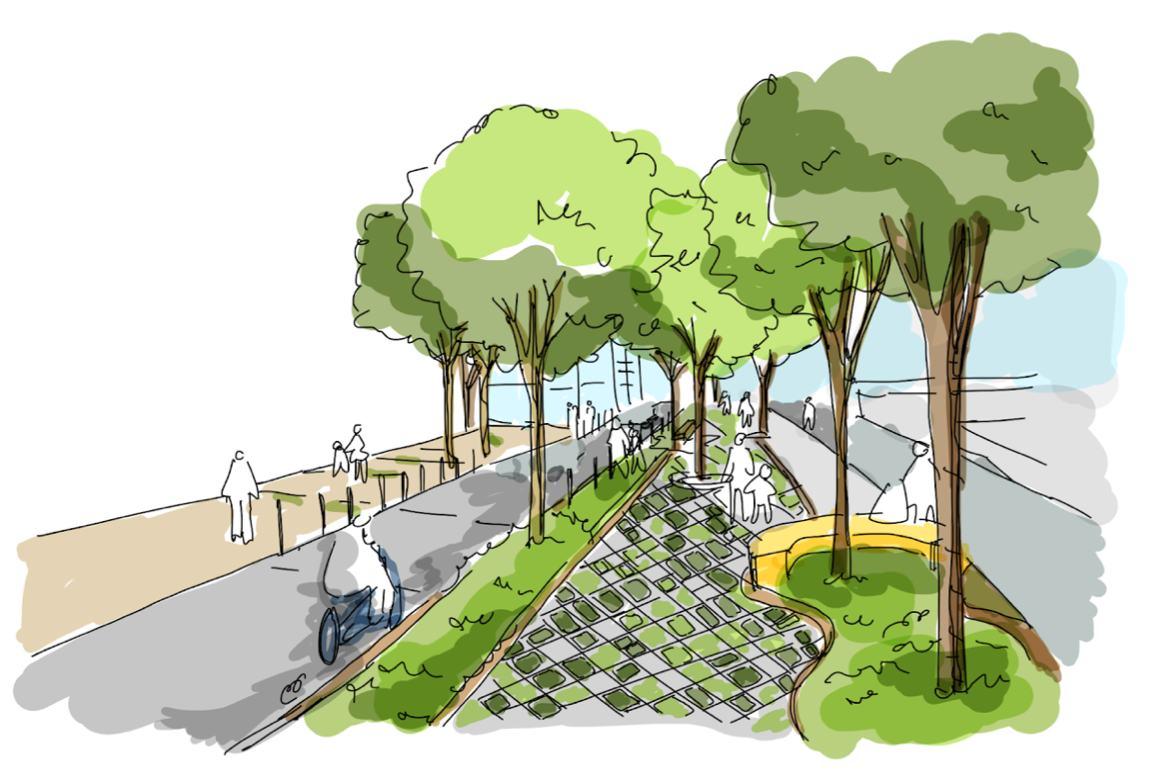
A green corridor will be established along the footpaths that will be developed. This helps to make green spaces more evenly distributed along the site, adding aesthetic value to the footpaths as well as mitigating road flooding and linking isolated habitats together, allowing wildlife to move freely. It also links in to Barcelona Tree Master Plan Policy which aims to ensure Barcelona s Tree Cover is 30% by 2037
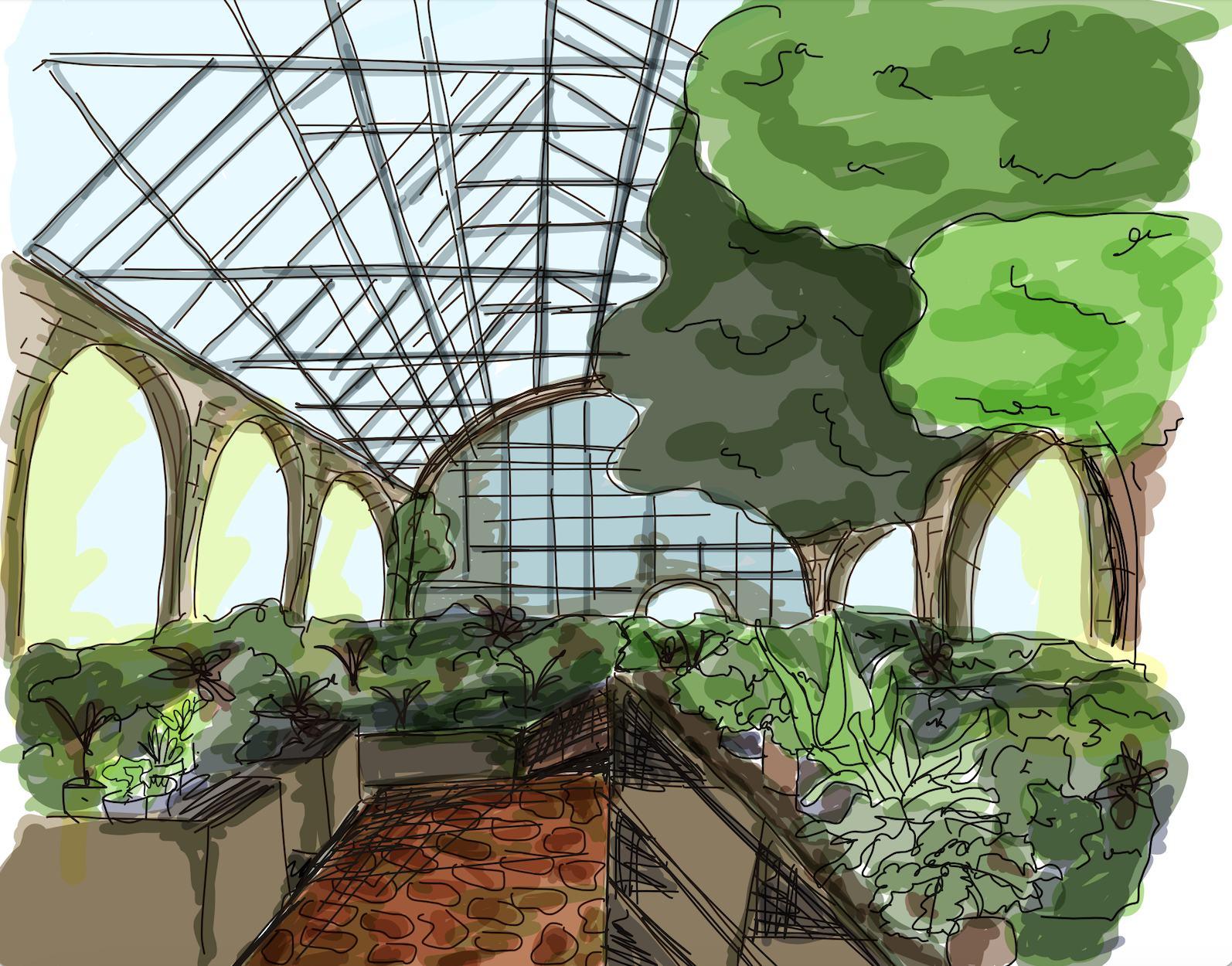
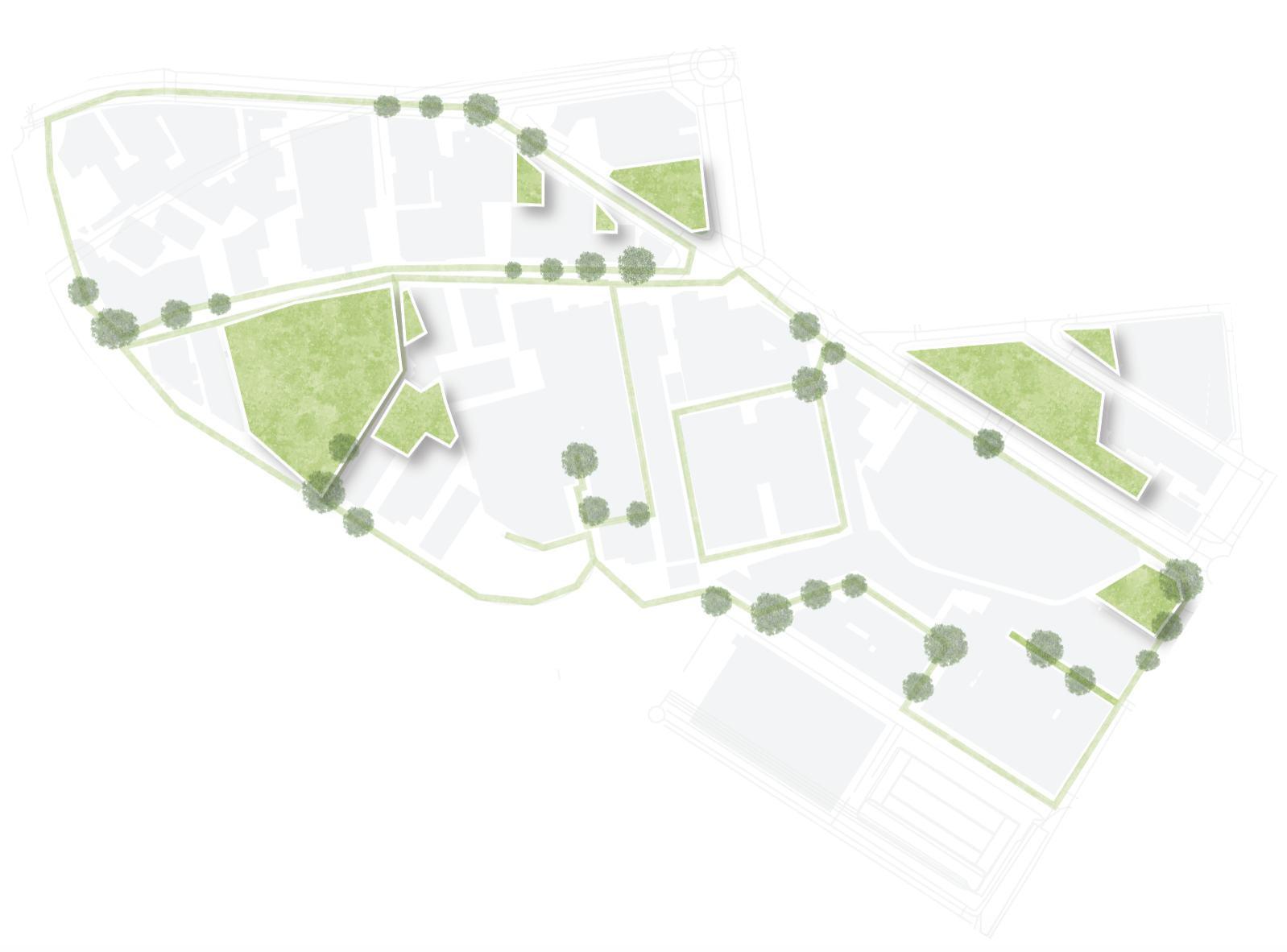
A Local Community Greenhouse open to the surrounding neighbourhood. Locals will be able to rent out spaces within the greenhouse to grow their own vegetation. This will aim to encourage people, especially elderly people, to consume a plant-rich and nutritious diet, promote locally-sourced instead of imported food, and provide new hobbies for the neighbourhood Weekly classes on gardening and community based activities will take place centred around the
greenhouse such as competitions with prizes. This establishes a reward system which encourages the community to engage more with the greenhouse
The greenhouse will also incorporate a rainwater harvesting system which collects water and stores it for plant-watering usage helping to achieve the
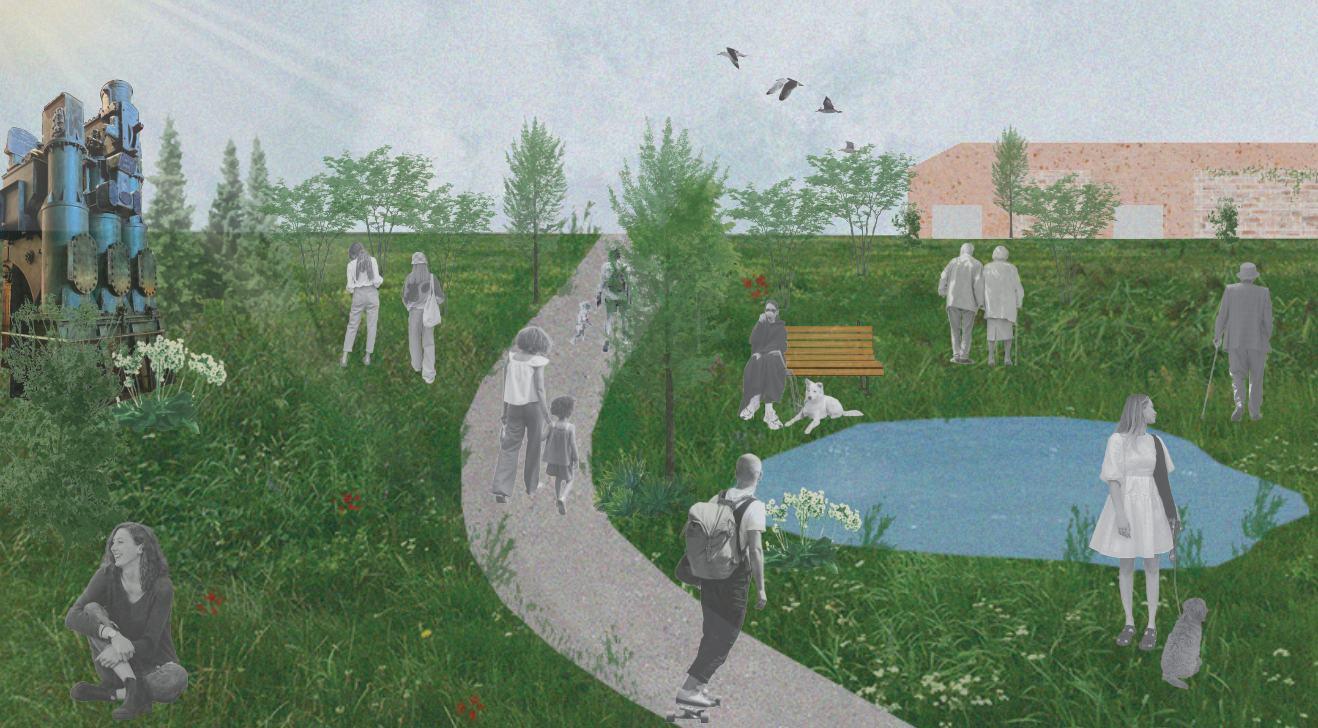
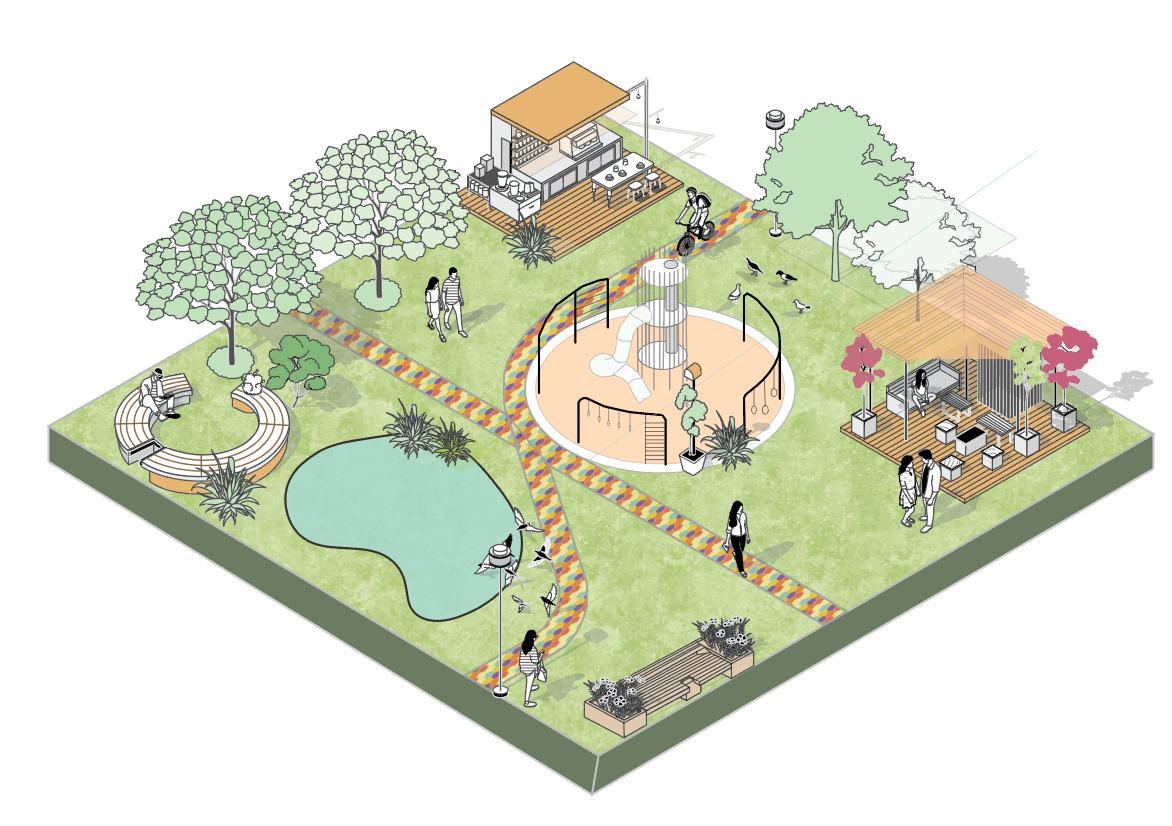
The Tapies Park, named after the Catalan artist Antoni Tàpies, is a green space that seeks to introduce valuable new green space into Torrent de l’Estadella, while also recognising its industrial heritage. The green space will be centred around a sculpture park made from recycled metal scraps from the active warehouses. In addition, Tapies Park will be designed specifically to account for drought and flood resilience due to Barcelona’s water climate being increasingly under strain. Finally, it will also be designed to the highest accessibility standard, ensuring green spaces can be accessible to all.
Promotes Positive Mental & Physical Health Brings Community Together Inexpensively
Stormwater Retention Pond
Retention ponds temporarily hold stormwater runoff, reducing the risk of flooding. This helps to manage the flow of water and prevent overflow into infrastructure. They also help filter out contaminants before returning the water into the ground
Integration of industrial art sculptures throughout the park, made with materials used from metal scraps from active warehouses, and repurposed throughout. These will be made with local artists (potentially a competition/series of workshops to build up these sculptures), before being implemented throughout the park. Small plaques/signage will explain the art
Drought Resilient Plants
To ease the urban heat island effect (especially in the previous industrial zone, which will have large amounts of heat-absorbing materials), mature trees will be planted throughout the park, to specifically create shade and mitigate against higher temperatures. Additionally, there will be a focus on planting diverse drought resilient plants in line with Barcelona’s Tree Master Plan, which aims for diversification from current dominant tree species
Accessibility and nclusivity
All ramp gradients will be 1 20, and of a material that is both permeable and reduces friction, facilitating independent and assisted use. Pavements will be of high tonal contrast to the grass, for those who are sight-impaired, and there will be regular handrails for those with mobility impairments. There will be regular seating areas throughout the park, to both encourage social interactions, but also provide rest stops for those with limited mobility.

The lack of people-centred mobility is undoubtedly a factor which separates Torrent de l’Estadella from the urban fabric. This combined with the congested parking spaces make’s the area far from a people-centred neighbourhood. In order to solve this, design strategies which reconnect Torrent de l’Estadella to the urban fabric and minimise vehicle usage must be implemented, helping to foster whilst taking into account environmental sustainability to create a people-centred mobility 15 minute city.
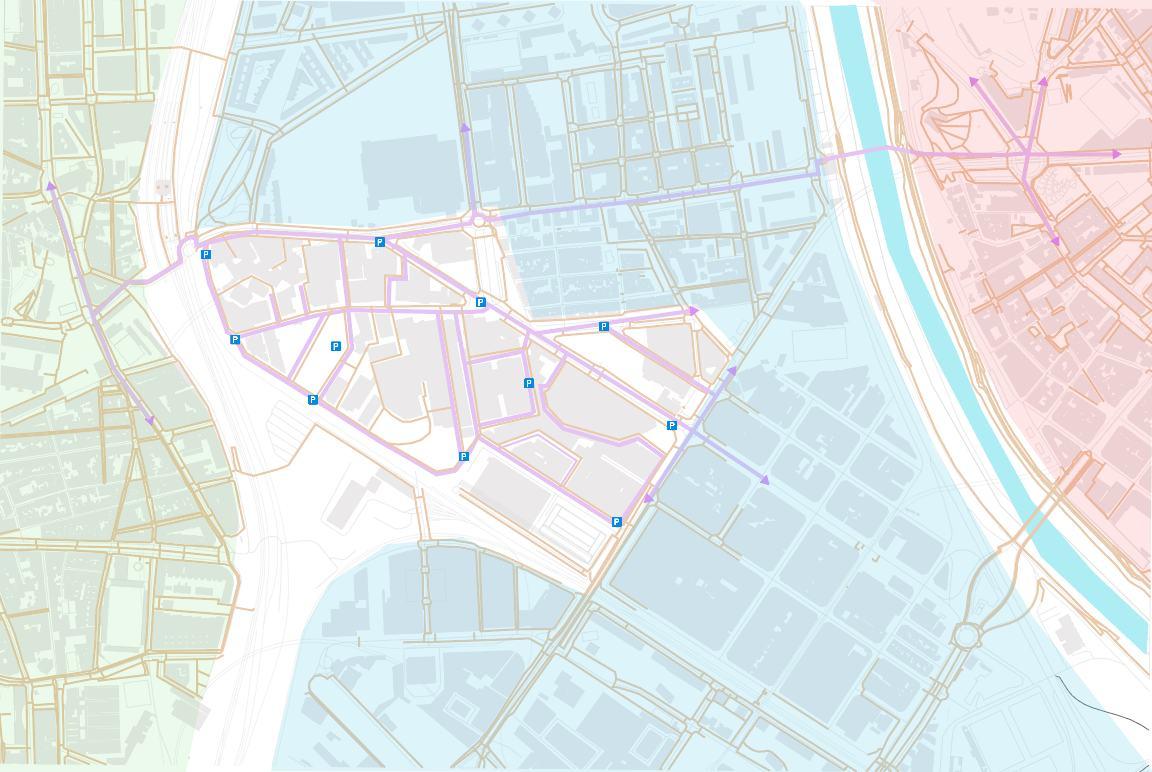
Integrated bike lanes and foot paths connecting Sant Andria de Besos, Bon Pastor and La Sangera Neighbourhood to the site with parking bays for regular bikes and E-bikes.
Our radical sustainable mobility transport system will be e-bike tuk-tuks. The e-bike tuk tuk plan helps to navigate people around Torrent de l’Estadella in a way which is environmentally sustainable, fast, and keeps the driver energised. It will emit no emissions, helping to improve air quality and minimise the urban heat island effect. It will enable fast mobility and the driver will exert less effort navigating passengers due to the bikes being powered by electricity. The tuk tuks will travel using the proposed bike corridor and will have designated charging zones.


133

60 B24
A tactical street plan aimed at enhancing pedestrian and cyclist experience whilst taking into environmental sustainability by boosting sustainable mobility options such as e-bikes and public transport, and flood mitigation strategies such as permeable pavements and green corridors. Bus lines , linking La Sangera Neighbourhood which also helps to address the discontinuity between Torrent de l’Estadella and La Sangera Railway Station, , linking Bon Pastor, and , linking Sant Adri de Besos will be extented to go through Torrent de l’Estadella to improve connectivity between these three neighbourhoods, making Torrent de l’Estadella a and promoting shared mobility.
Complete Neighbourhood
Without a doubt Torrent de l’Estadella depends on the people for it to become a ‘Thriving hub. With user engagement, the neighbourhood could be truly transformed into a social, environmental and economical success. More income can be generated and then reinvested into the neighbourhood, causing a multiplier effect and allowing Torrent de l’Estadella to become an example for Barcelona and further connect the neighbourhood together with more social initiatives.
The ‘Estadella Hub’ app is an interface which aims to connect the neighbourhood together and promote engagement with Torrent de l’Estadella by introducing systems such as carbon footprint monitoring, a rewards/point-based system and sustainable mobility engagement. These initiatives aim to encourage the neighbourhood to engage with the area, growing local businesses’ and encouraging the citizens of Sant Andreu to be more conscious of the environment. In order for the Green and Thriving Neighbourhood’s to be consistently met, the people must be conscious and be encouraged to opt for more sustainable life choices.
arbon Footprint Monitoring
The app will monitor the carbon footprint of the user every time they engage with a specific feature of the site. For example, if they use an e-bike, the app will tell them their carbon footprint in comparison to if they were to use a car to travel the same distance. If they engage with the Urban Food Market, which primarily includes locally sourced foods, their shopping basket would be digitally linked to the app and would tell them their carbon footprint in comparison to if they were to shop from a supermarket with globally imported foods. This coupled with a rewards system, such as a Torrent de l’Estadella leader board which ranks people based on their sustainable choices they have made whilst engaging with the site and a system which offers discounts for regular members and purchasers of the Urban Food Court and Market, will encourage the neighbourhood to continuously visit the site, promoting a close community, generating investment, and encouraging a Sustainable L festyle.
Sustainable Mobility ccess
The sustainable mobility interface will make it easier to engage and access sustainable mobility options and connect the neighbourhoods of Bon Pastor, La Sangera, and Sant Adri de Besos to Torrent de l’Estadella. The app will offer users the ability to track the location of the various mobility options. For example, it will alert users of the locations of the bike parking spaces, what time ro expect specific buses at certain bus stops, and the ability to call e-bike tuk tuk’s to their location like a tax system. The easy accessibility to these sustainable mobility options is what will encourage people to use them and divert from using cars. This is critical in mitigating carbon emissions, improving air quality and promoting People entred Mobility
ommunity Hub
A feature which aims to bring the neighbourhood together and bridge the gaps of culture, gender, race, and income. It will alert users of upcoming events such as thrift shop sales, gym classes, art performances and cooking classes in the regenerated warehouses. It will also give users the ability to monitor their plants at the Urban Farm by alerting them when they need to be watered. This is to keep the warehouses and features of the area continuously in use. It is also a way to ensure that the neighbourhood regularly comes together to foster social initiatives and loneliness is reduced, making it a It will also give us the ability to engage with community stakeholders to receive feedback for the initiatives and to give them an opportunity to tell us what they want from Torrent de l’Estadella such as what sort of performances they’d like from our ‘Art’s and Music Warehouse’.
Place for Everyone
Reward system which allows users to continuously engage with the site and app

Carbon Footprint Tracker to promote conscious consumerism




Provides Comparison so that users are aware of the benefits of local consumerism
Positive reinforcement to encourage sustainable behaviour
Providing awareness of the positive environmental impacts of the site
People-centred obility
. A pedestrian path omposed of re y led plasti permeable pavements alongside a bike orridor and green orridor to boost biodiversity and enhan e arbon sequestration . E-bike tuk tuk s have been introdu ed for small-s ale, fast and arbon neutral mobility
A multitude of green spa es ranging from urban farms to po ket parks. The green spa es mitigate flood and drought risk, honour the site s industrial heritage, aim to redu e loneliness and en ourage a plant-based diet. This helps us to a hieve
Green & Nature Based olutions

Circular Economy Incubator
Regenerated empty arehouses to en ourage minimal onstru tion hi h have been retrofitted it h solar panels and energy effi ient systems. Warehouses repurposed to promote lo al businesses, and bring together the vibrant ommunity of Sant Andreu
Circular Resources
Culturally diverse demographi has been honoured by integrating olourful pavements hi h refle t its diversity as ell as the Arts & Musi Centre arehouse hi h aims to display performan es from a ide s ope of ultural ba kgrounds, making Torrent de ’Estadella a
Place for Everyone
Conne tivity enhan ement bet een neighbourhood. arious bus lines have been extended to pass through Torrent de ’Estadella, en ouraging publi modes of transport and improving onne tivity bet een La Sangera, Bon Pastor and Sant Adri de Besos
Car domination has been addressed. A ar park arehouse ith hourly fees as ell as a ‘No Street Parking poli y has been introdu ed to promote more sustainable mobility options around the area and enhan e pedestrian safety and omfort.
Environmental risks su h as drought and flooding have been mitigated by permeable pavements hi h absorb ater during floods and re y le it during drought to keep green spa es thriving.
Lo ally sour ed fresh food at subsidised pri es hi h promote and a plant-ri h diet hi h enhan es health and life longevity
A ide range of sustainable mobility options hi h allo fast mobility, enhan ed air quality and promote
Urban Food Court
Tapies Park
Transport/bike Corridor
Abundant green spa es su h as Tapies Park, an Urban farm, a green orridor and po ket parks hi h offer free re reational a tivities, mitigate limate hazards and boost mental and physi al health, helping to a hieve
Promoting lo als to gro their o n lo al businesses via the Urban Food Market & Court and Indoor thrift store as ell as reating ne jobs for lo als su h as green spa e maintenan e, leaning jobs, .barista jobs and general keeping. This oupled ith our green energy and energy effi ient arehouses reates a circular resources
people-centred obility green & nature based solutions a place for everyone green econo y
Green Corridor Urban Farm Urban Food Market Arts & Music Centre
Indoor spa es su h as the Urban Living Room hi h bring together the ommunity through inexpensive re reational a tivities su h as film s reenings, board games, and a library ith free ifi. An Arts & Musi Centre aimed to boost ultural in lusivity and support the vibrant Spanish artisti ulture, making the area
Ea h design strategy as based of the Green and Thriving Neighbourhood goals and Bar elona s Sustainable Development plan to reate a 15 minute ity hi h en ompasses in lusivity, ommunity,and most importantly, sustainability
Solar Panel Roofs Urban Living Room Indoor Thrift Store
Indoor Car Park
Sports Centre &
Children’s Play Area
Yearly net Impact:
kg CO₂e per year Total Operational Carbon
kg CO₂e per year Total Plant Sequestration
kg CO₂e per year Total Embodied Carbon
Annual Rainfall Collection
kg CO₂e per year
kg of CO2 per year
As well as being carbon negative, our project manages to save by employing rainwater harvesting and renewable energy systems, making our site regeneration an exemplary net-zero project which encompasses environmental sustainability.