What Are the Key Benefits of Account-Based Marketing
What Are the Key Benefits of AccountBased Marketing?
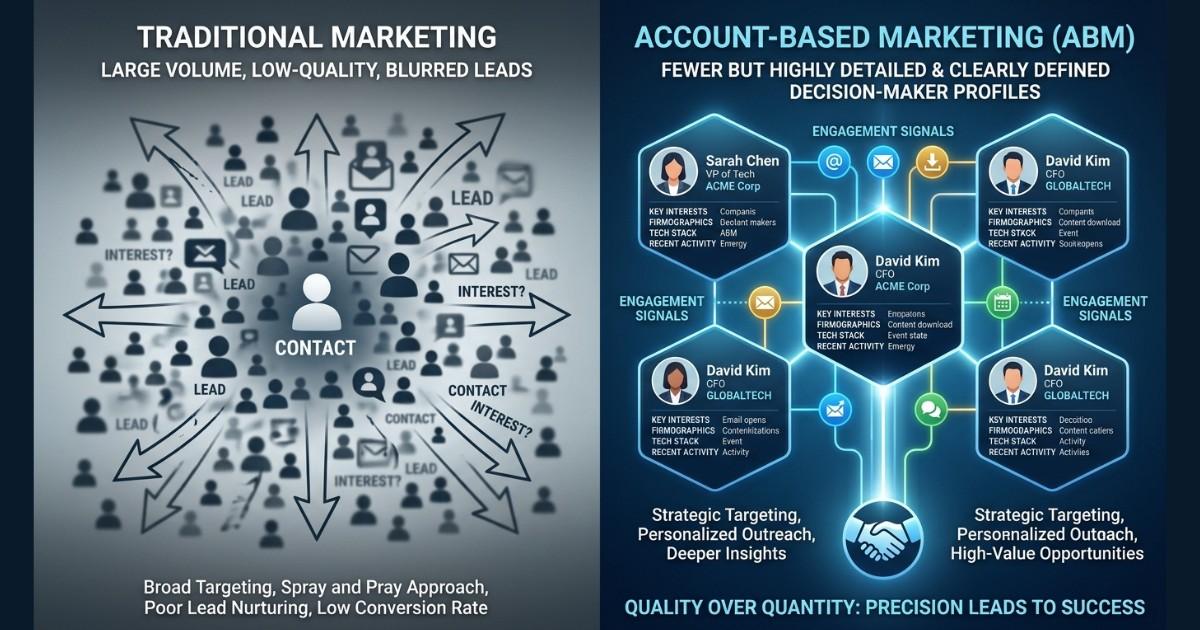
Account-Based Marketing (ABM) has become one of the most effective strategies in modern B2B marketing. Instead of targeting broad and undefined audiences, it focuses on specific high-value accounts and the decision-makers within them. This makes marketing efforts more precise, more relevant, and significantly more aligned with revenue outcomes.
In B2B environments where buying cycles are long and multiple stakeholders are involved, ABM helps companies avoid wasted outreach and instead concentrate only on accounts that actually matter.
Understanding Account-Based Marketing
Account-Based Marketing is a strategy where businesses identify a defined list of target accounts and build highly personalized campaigns around them. Rather than trying to generate a large number of leads, the focus is on engaging a smaller set of companies that have higher revenue potential.
This approach changes how marketing and sales teams operate. Messaging is no longer generic; it is tailored based on industry, company size, pain points, and decision-maker roles. Every interaction is designed with context, which makes communication more relevant and effective.
To execute ABM properly, businesses need structured systems that connect targeting, engagement, and tracking. Tools like Hey Sid, a B2B account targeting marketing software, help unify advertising, outreach, and engagement signals so that marketing and sales teams stay aligned on the same accounts.
ABM works best when companies are able to clearly define:
● Which accounts are high-value
● Who the decision-makers are within those accounts
● How engagement is tracked across channels
● How sales and marketing collaborate around the same data
This structure ensures that every action is tied to real business opportunities instead of broad, unfocused outreach.
Higher Quality Leads
One of the strongest advantages of ABM is the improvement in lead quality. Since businesses are targeting pre-selected accounts, they automatically filter out irrelevant traffic and low-intent prospects.
Instead of focusing on volume, ABM focuses on relevance. This leads to more meaningful conversations and stronger opportunities for conversion. Sales teams also benefit because they spend time only on accounts that match ideal customer profiles.
As a result, businesses experience:
● More qualified opportunities entering the pipeline
● Higher engagement from decision-makers
● Faster progression from awareness to consideration
● Reduced time wasted on unfit leads
This shift from quantity to quality is one of the biggest reasons ABM has become so widely adopted.
Better Alignment Between Marketing and Sales
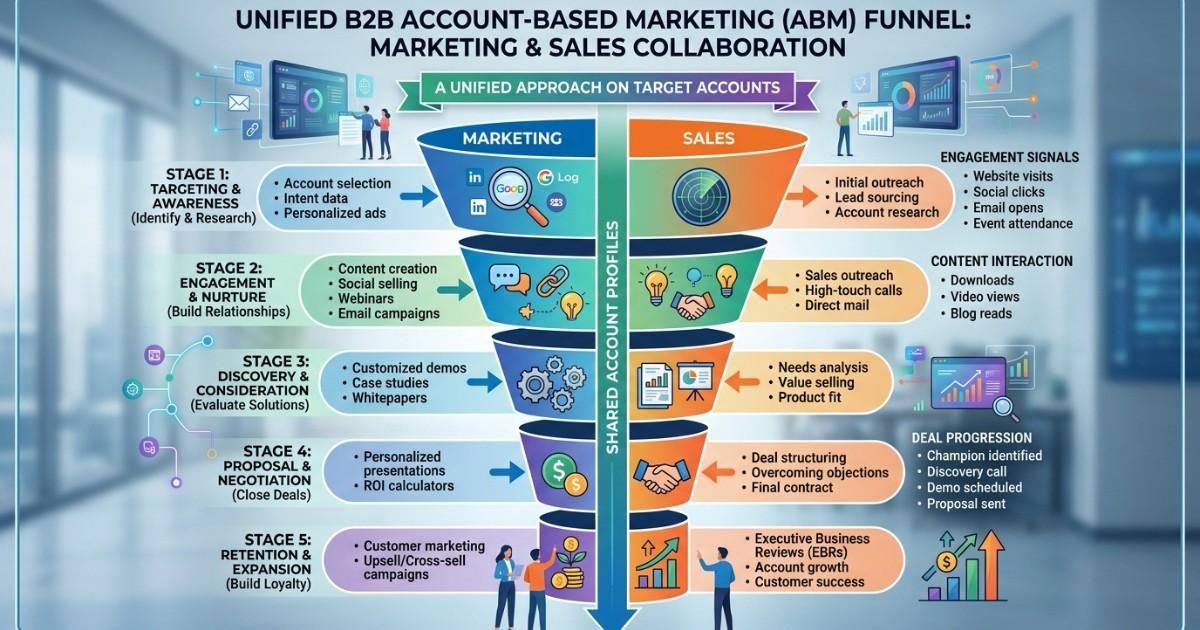
ABM naturally improves coordination between marketing and sales teams because both functions work toward the same set of accounts. Instead of operating in silos, they share responsibility for engaging and converting the same prospects.
Marketing focuses on awareness, content, and engagement signals, while sales focuses on relationship-building and closing deals. When both teams are aligned, the entire funnel becomes more structured and efficient.
This alignment typically results in smoother communication, faster follow-ups, and a clearer understanding of account progress. It also reduces confusion around lead ownership, which is a common issue in traditional B2B setups.
More Personalized Engagement
Personalization is at the heart of ABM. Instead of sending the same message to a wide audience, businesses tailor communication for specific accounts and individuals. This makes outreach far more relevant and impactful.
Decision-makers respond better when messaging reflects their specific challenges and goals. Because of this, ABM campaigns often feel more natural and less like traditional advertising.
Personalization is applied across different channels such as email, LinkedIn, ads, and direct outreach. Each touchpoint reinforces the same message but in a format suited to that channel.
This consistency helps build trust over time and increases the likelihood of meaningful engagement.
Improved ROI and Resource Efficiency
ABM helps businesses use their resources more effectively by focusing only on accounts that have real revenue potential. Instead of spreading budget across a large audience, efforts are concentrated where they are most likely to produce results.
This makes marketing spend more efficiently and reduces waste significantly. Sales teams also benefit because they spend less time chasing unqualified leads and more time engaging with high-value prospects.
Over time, this leads to better ROI because every campaign is tied to a clearly defined set of accounts rather than a broad and unpredictable audience.
Stronger Customer Relationships
ABM is not only useful for acquiring new customers but also for strengthening existing relationships. Since communication is personalized and consistent, trust builds faster between businesses and clients.
When companies continuously engage the same stakeholders with relevant messaging, relationships become deeper and more strategic.
This often results in stronger retention, higher upsell opportunities, and long-term partnerships that extend beyond single transactions.
Better Visibility Into Account Engagement
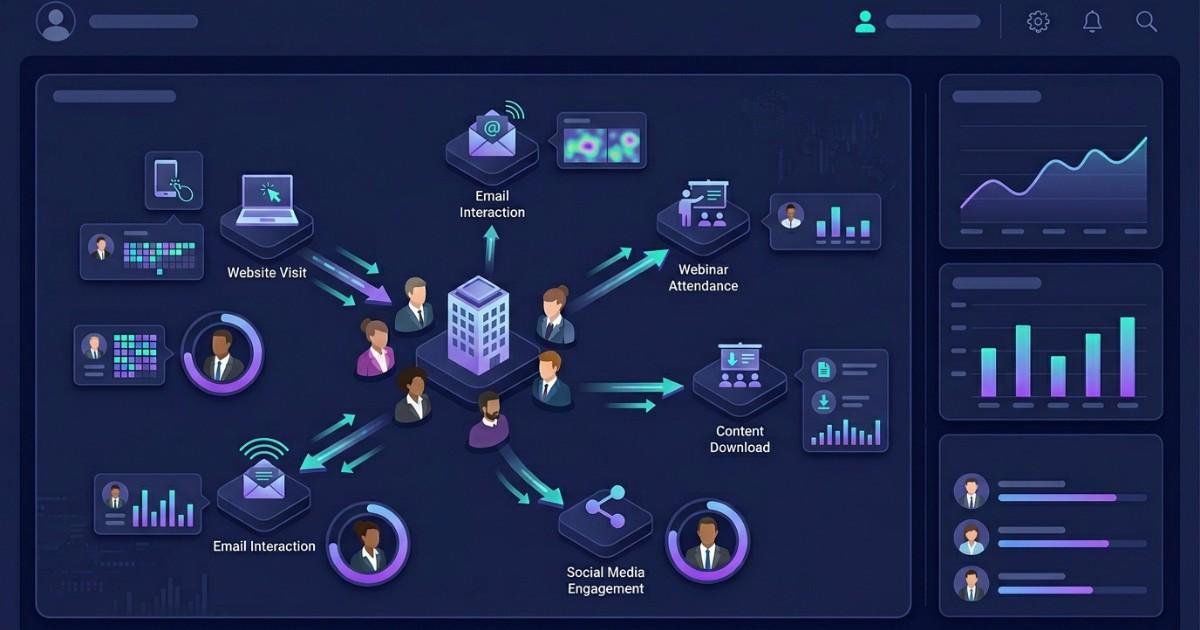
One of the most valuable aspects of ABM is visibility into how accounts are interacting with your brand. Businesses can track engagement at both the account and individual level.
They can understand which content is being consumed, which decision-makers are active, and how interest changes over time. This helps teams make more informed decisions about when and how to engage.
It also allows marketing and sales to prioritize accounts that show higher intent, improving efficiency across the funnel.
Supporting Long and Complex Sales Cycles
ABM is particularly effective for long B2B sales cycles because it focuses on continuous engagement rather than quick conversions. Decision-makers are guided through each stage of the buying journey with relevant information.
Early stages often involve awareness-building, while later stages focus on detailed evaluation and direct engagement. Throughout this journey, ABM ensures consistent communication across multiple stakeholders.
This reduces friction in the decision-making process and helps build confidence in the solution over time.
Scalability with Structure
Although ABM is highly targeted, it can still scale when supported by the right systems. Businesses can start with a small set of accounts and gradually expand their focus as processes mature.
Scalability depends on having structure in place. Without it, managing multiple accounts can become complex and inconsistent.
A scalable ABM approach usually involves organized account segmentation, clear workflows, and consistent tracking across teams.
Challenges to Consider
ABM is powerful, but it does require discipline and coordination. It is not a strategy that delivers instant results without setup.
Common challenges include identifying the right accounts, maintaining personalization at scale, and ensuring strong alignment between sales and marketing teams. Data accuracy also plays an important role in execution.
However, once these systems are in place, the benefits far outweigh the initial effort required.
Final Thoughts
Account-Based Marketing is one of the most effective approaches for modern B2B companies. It shifts focus from broad audience targeting to precise account engagement, making marketing efforts more relevant and impactful.
By aligning sales and marketing, improving personalization, and increasing visibility into account behavior, ABM creates a more structured and efficient growth model.
As competition continues to increase, companies that adopt account-focused strategies will be better positioned to build meaningful relationships and drive longterm revenue growth.