


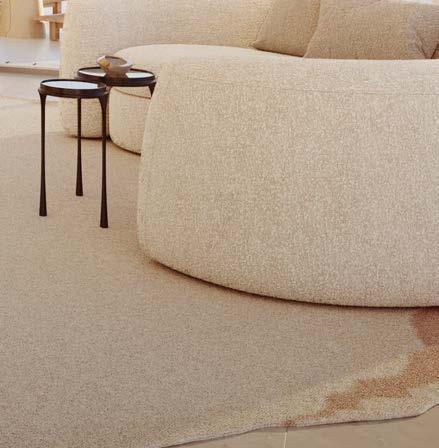
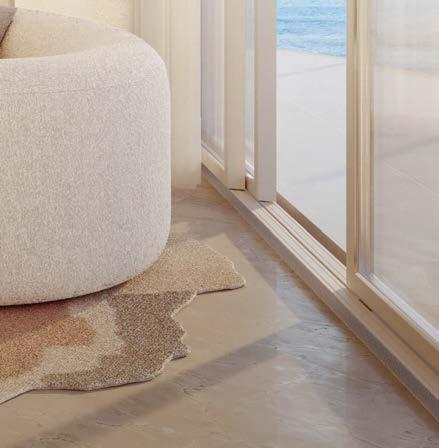
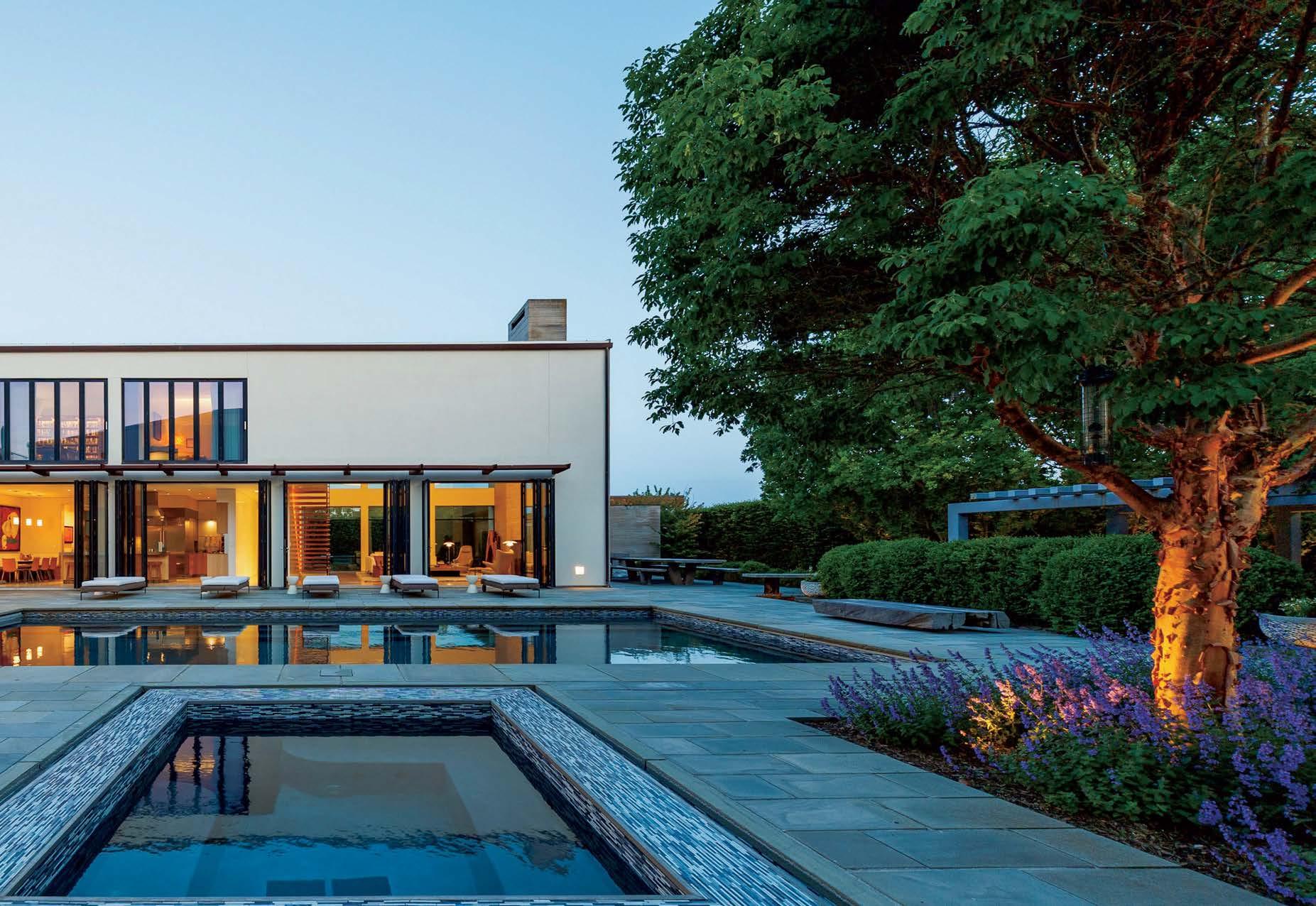
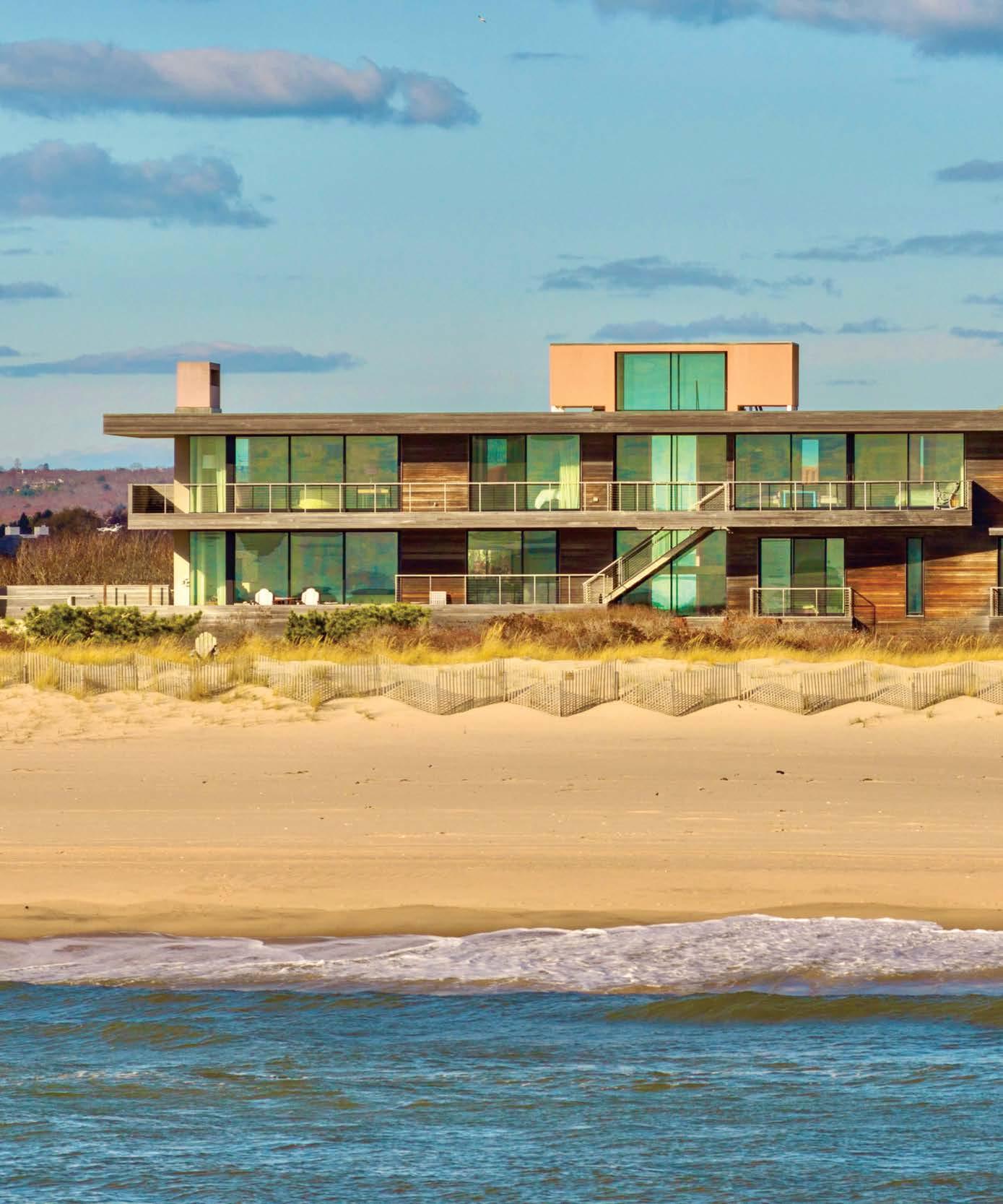
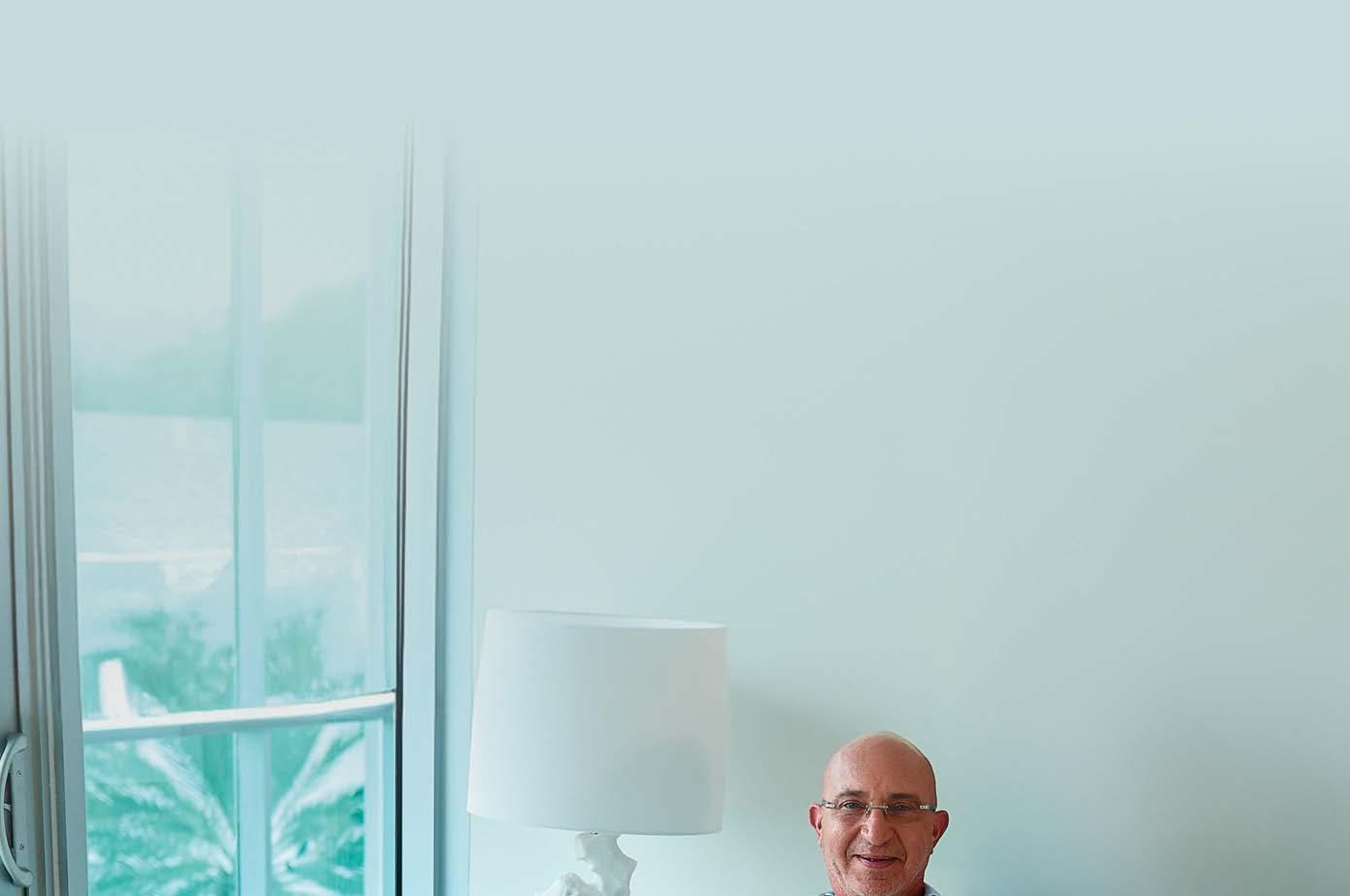
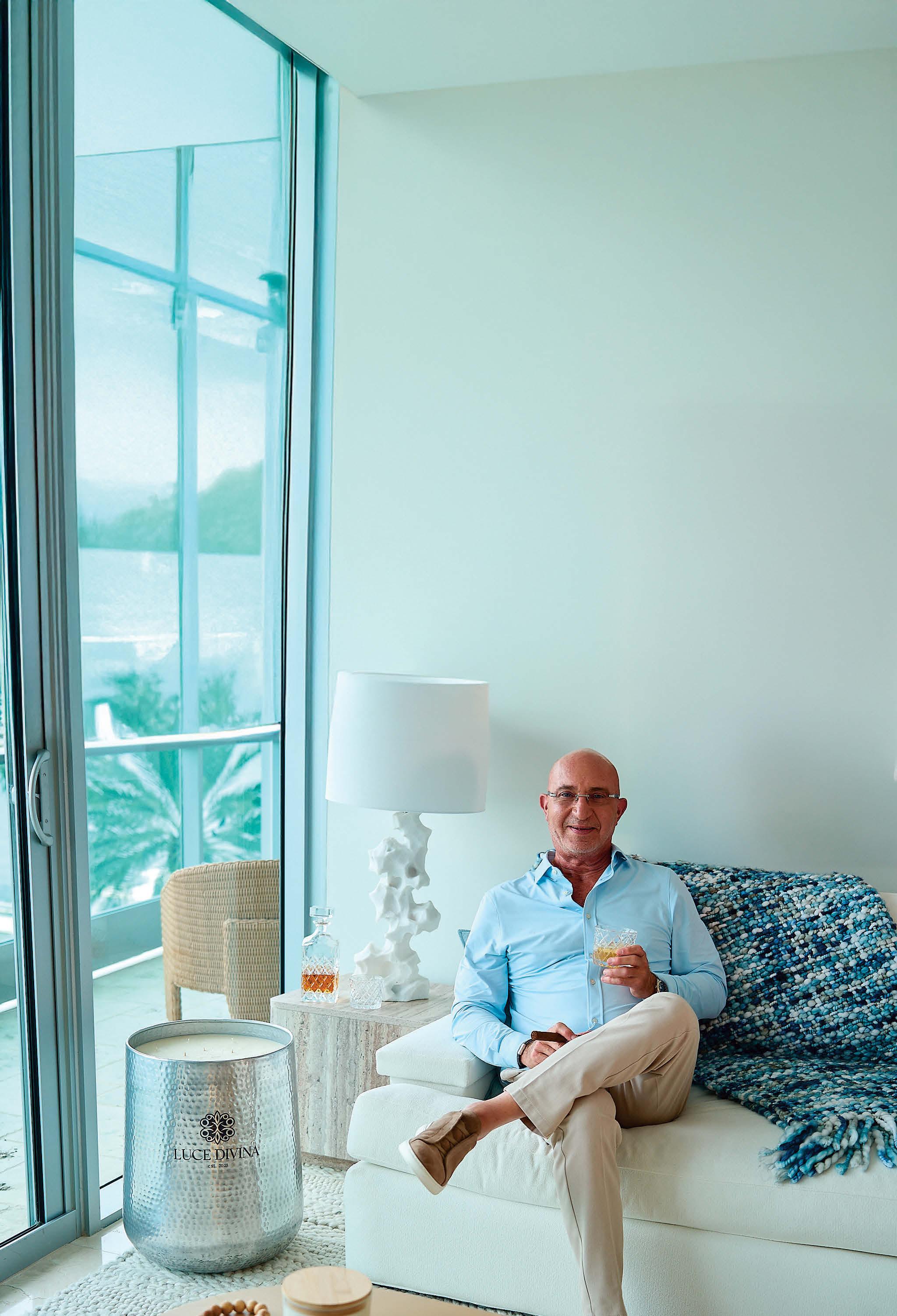
High above the pristine shoreline, the bespoke penthouse living at The Ritz-Carlton Residences, South Beach, invites you to experience a world curatedby design visionary Alessandro Munge and brought to life through the architectural artistry of Kobi Karp. A private rooftop—complete with infi nity poolsand wraparound glass terraces— blurs the boundaries between indoors and out, framing endless views of the ocean and the iconic cityscape. The extraordinary lifestyle is elevated by the seamless, legendary service of The Ritz-Carlton.































There is so much information out there on social media these days on health and wellness, I often get sucked down a rabbit hole researching some hauntingly beautiful aspect of nature, only to discover a link to a product. I find myself ChatGPT-ing and uncovering that the sweet, old doctor with an accent was brilliantly AIgenerated by purveyors to sell a supplement or medication. The words are intentionally confusing or manipulative, a word salad. This doesn’t mean the facts aren’t correct—for example, a traditional Jamaican elixir made from soursop, a tropical fruit also called guanabana, does help with inflammation, stabilizes blood pressure and supports the immune system—but the end game is just a nuanced marketing strategy targeted at this holistic seeker.
There is one area of health and wellness I do find accurate, where there is nothing to buy and the healing is free: spirituality. Not the buzzword, but the practice of opening our sensory gates, peeling the onion of our human layers right down to the energetic layer where faith resides.
True healing (from the immune response our bodies have from, say, stress) is only possible with an inward glance beyond this thin spiritual veil. There, one will find the axis of one’s inner life: love, the source of this energetic realm.
“Trying to intellectually define the undefinable is the antithesis of mystical practice,” as Amely Greeven, our wellness editor (and my cousin, who is on this healing path with me), writes in Angel at My Table on our website,
thepuristonline.com My general rule of thumb: When you sense truth, that is truth, and that is your innate ability, your universal characteristic.
As the great French scientist and theologian Pierre Teilhard de Chardin wrote so poetically to describe the union of science and faith: “Crimson gleams of Matter, gliding imperceptibly into the gold of Spirit, ultimately to become transformed into the incandescence of a Universe that is Person—and through all this there blows, animating it and spreading over it a fragrant balm, a zephyr of Union—and of the Feminine. The Diaphany of the Divine at the heart of a glowing Universe, as I have experienced it through contact with Earth—the Divine radiating from the depths of a blazing Matter…”
Yet, not so simply, this spiritual, emotional connection to oneself, to the universe, can be felt and understood through the joy found in knowledge, in creation, in discovery, in loving. See this practice as the dressing, what we put on the word salad we all battle, online and off…that adds not only flavor but our own individual sense of satisfaction.
@cristinacuomo @thepurist
PHOTOGRAPHY BY CATHRINE WHITE








YOUR WRIST.



From the thrill of competing on American asphalt to the focus of our watchmakers in Geneva, it’s just a stone’s throw away. To celebrate the grand return of one of Britain’s greatest manufacturers to endurance racing, Lorige has partnered with the Heart of Racing Team to unveil the new BL-Evolution Bleu Asphalte.
A trophy on your wrist.
22 IT TAKES A VILLAGE
A Hamptons-based nonprofit that empowers, educates and supports children on the autism spectrum and their families
24 CULTIVATING JOY
A roadmap for creating longerlasting harmony throughout your life.
26 HEALING WORDS
Narrative medicine invites open communication and deeper understanding.
28 WELL-DRESSED, REDEFINED
Celebrity stylist Erin Walsh on the art of intentional dressing
30 PEAK PHILANTHROPY
Aspen Snow Ball fuels pediatric cancer care through the Children’s Oncology Support Fund.
34 THE PSYCHEDELIC FRONTIER
Science and policy accelerate a new era in mental health.
36 THE HORMONE HERO
Estrogen takes center stage, moving from HRT into topical skin care.
38 ASK THE DR.
Dr. Sue DeCotiis maps a datadriven approach on optimizing metabolism, balancing hormones and increasing performance.
40 THE BOOK OF YOU
Longevity AI turns data into a personalized, predictive portrait of health.
42 PEPTIDES: BEYOND THE HYPE
The lowdown on the peptide craze and the importance of clinical guidance
44 SAFE HARBOR
The 411 on how to swim safely in the Hamptons this summer
46 SKIN DEEP
A new era of skin longevity with Dr. Alexes Hazen
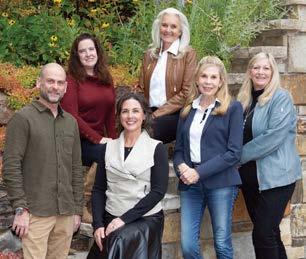
50 HOME AT THE HILLS
Step inside the only gated community in the Hamptons
52 ON VIEW
Must-see exhibits out East
54 ABSTRACT HORIZONS
Exploring BlackBook Art
Gallery’s summer showcase
56 COLLEGE PREP
Expert advise from IvyWise
58 PURE PROPERTY
Not-to-be-missed Aspen and Hamptons real estate

Designer tailoring. Performance stretch. Machine washable.
62 TOP RESORTS AND RETREATS
Purist-approved Luxury wellness escapes
66 FLYING FIT
NICHOLAS AIR pilots share their sleep and fitness routines.
68 OCEAN CLUB STATE OF MIND Wellness coach Nora Tobin’s
restorative reset in the Bahamas.
72 COASTAL TWIST
Aspen Valley Polo Club brings sand, DJs and cold plunges to Sunday polo matches.
74 ROARING FORK VALLEY NEWS
Discover relaxing spas,
boutiques and elevated eats.
76 EDITOR’S PICKS
Cristina Cuomo’ s summer essentials
78 THE SUMMER EDIT
New boutiques to browse this season
80 ENDLESS SUMMER
Dr. Stacie Stephenson’s expert tips for boosting clarity, energy and mobility this summer
86 THE WHOLE YOU
Multi-omics maps our internal ecosystems to transform how we eat, heal and age.
88 RIP, DIP, REPEAT
Chef Ayesha Nurdjaja brings her summer spread to the Food & Wine Classic in Aspen
90 EAT HERE NOW
A new wave of East End culinary hot spots
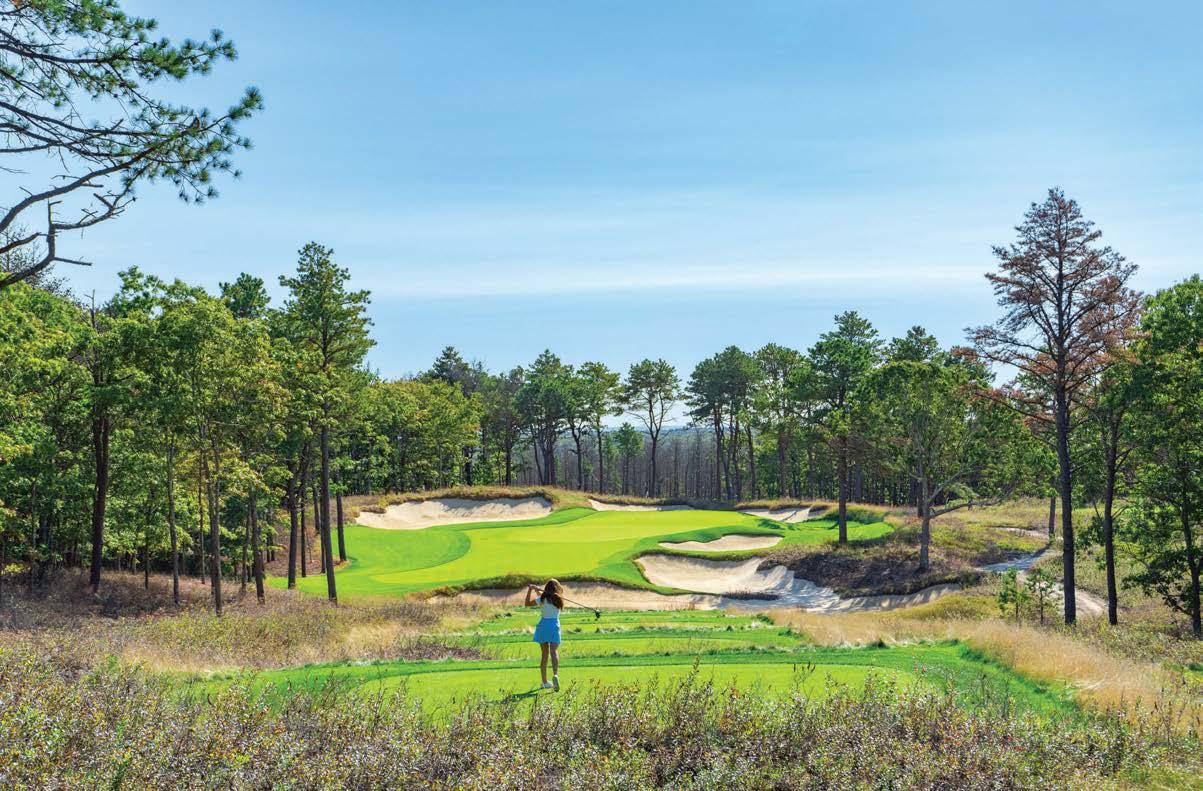
104 THE ZEN OF SHINNECOCK HILLS
The world’s top golfers arrive for the 126th U.S. Open.
106 FITNESS MOVES
New high-tech, and high-heat, studios and pop-ups
108 AT A GLANCE
Mark your calendars for these must-do seasonal events in Aspen, the Hamptons and New York City.
112 NUMEROLOGY
A by-the-numbers look at actress Zendaya






Opening Reception Thursday, June 25 6:30 - 8 PM
June 25 - July 19
26 Main Street, Sag Harbor
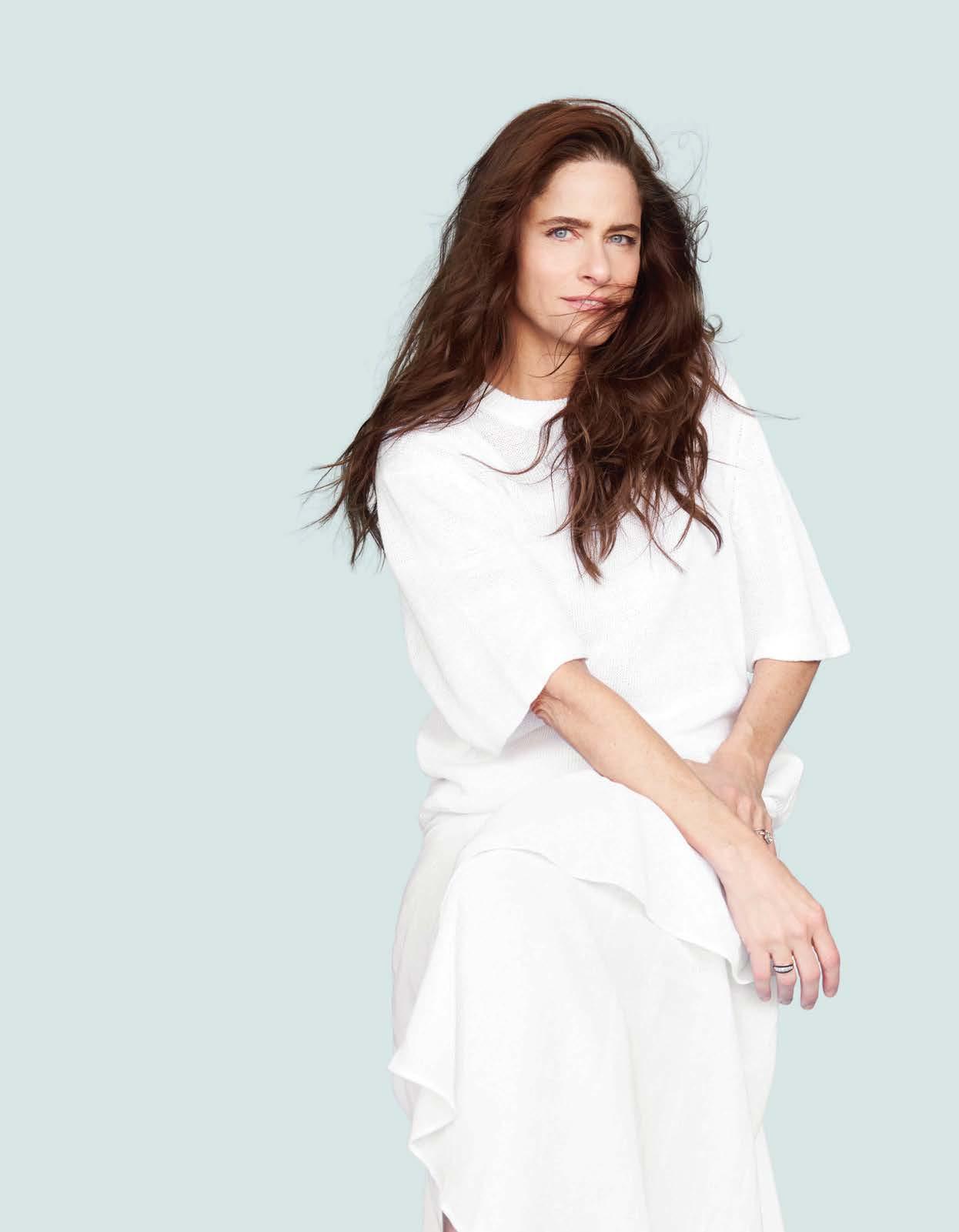
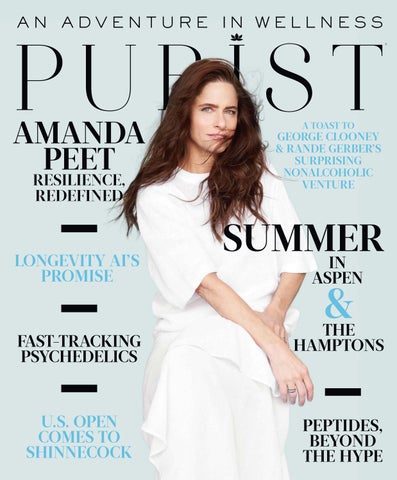
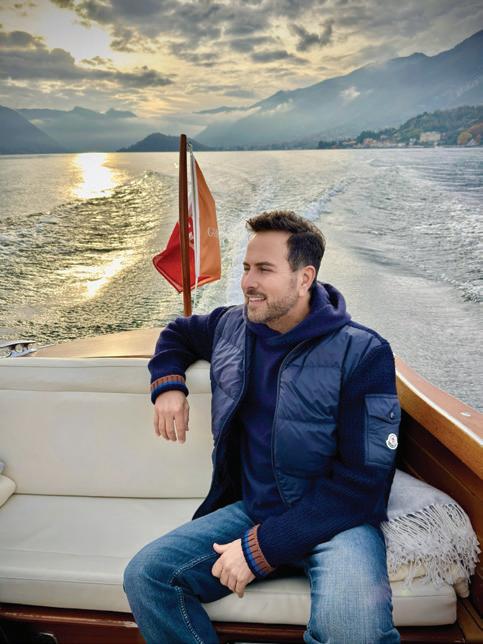
JOHN RUSSO, who photographed cover star Amanda Peet (page 94).
WHAT DOES PRESENCE MEAN TO YOU WHILE SHOOTING?
Being in the moment, enjoying the talent and the overall experience. Being present in everything I do is something I strive for.
John Russo is one of the top celebrity photographers in the world. His work has graced covers of Vogue, Harper’s Bazaar and Esquire, among other publications. He lives between Montecito and Aspen, and can be found on the tennis court perfecting his game.
DONNA BULSECO, who shed light on narrative medicine (page 26).
WHY IS DOCTOR-PATIENT CONNECTION SO IMPORTANT?
In medicine, stories convey meaning and patients benefit when doctors are fully attentive to those stories. Narrative medicine teaches the skills that provide a disciplined focus and close attention to stories during a clinical encounter.
Donna Bulseco is the editor of the new anthology Where It Hurts: Dispatches From the Emotional Frontlines of Medicine (The Experiment, 2026). She holds an M.A. in English from Brown University and an M.S. in narrative medicine from Columbia University.
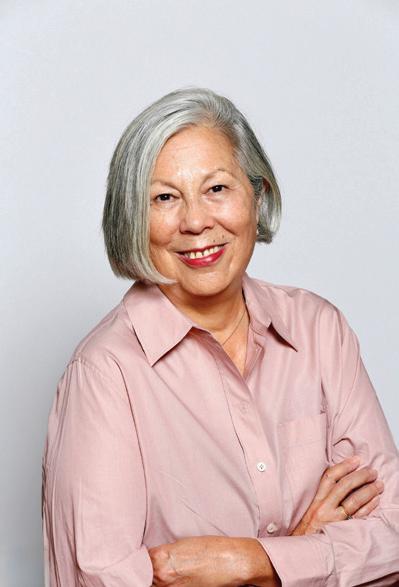
LAVINA SHAMDASANI, who shared the power of cultivating joy (page 24).
WHAT DOES POSITIVE PSYCHOLOGY MEAN TO YOU AS A PRACTITIONER?
In contrast to traditional therapy, positive psychology is the intentional practice of cultivating meaning, purpose, and a more enduring sense of joy—both in how we live and how we relate to others.
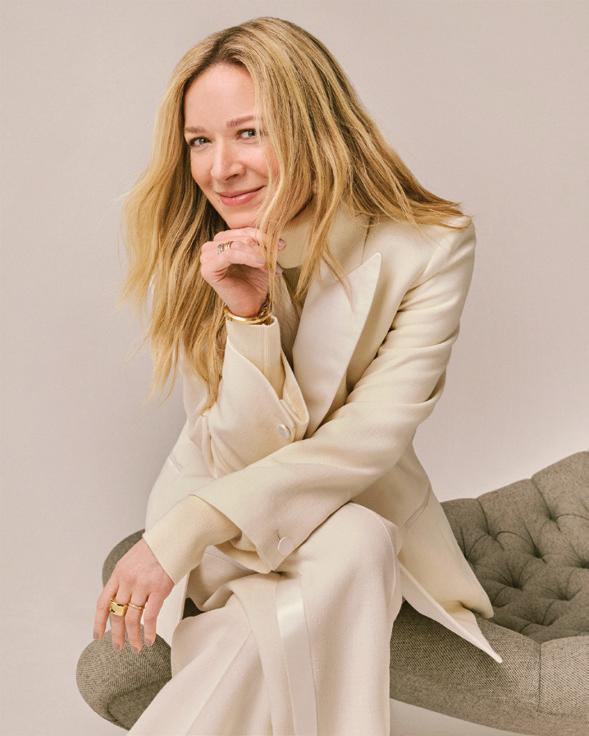
ERIN WALSH , celebrity stylist, on dressing as a wellness practice (page 28).
WHAT IS THE CONNECTION BETWEEN WHAT WE WEAR AND HOW WE FEEL?
The clothes you wear are either confirming your truest and highest self or contradicting her. I see clothes as a catalyst to self-growth, as well as a surprising nervous system regulator.
Erin Walsh is a stylist and creative consultant whose work with Anne Hathaway, Selena Gomez, Mel Robbins and many others has made her one of the most sought-after talents in fashion. Her new book, The Art of Intentional Dressing, translates two decades of expertise into a simple dressing method every woman can use to summon the supernova version of herself.

Lavina Shamdasani draws on positive psychology and mindfulness to support individuals and leaders in building strong families, effective teams and more resilient, intentional ways of being. She partners with clients to cultivate clarity and aligned decisionmaking across their personal and professional lives.
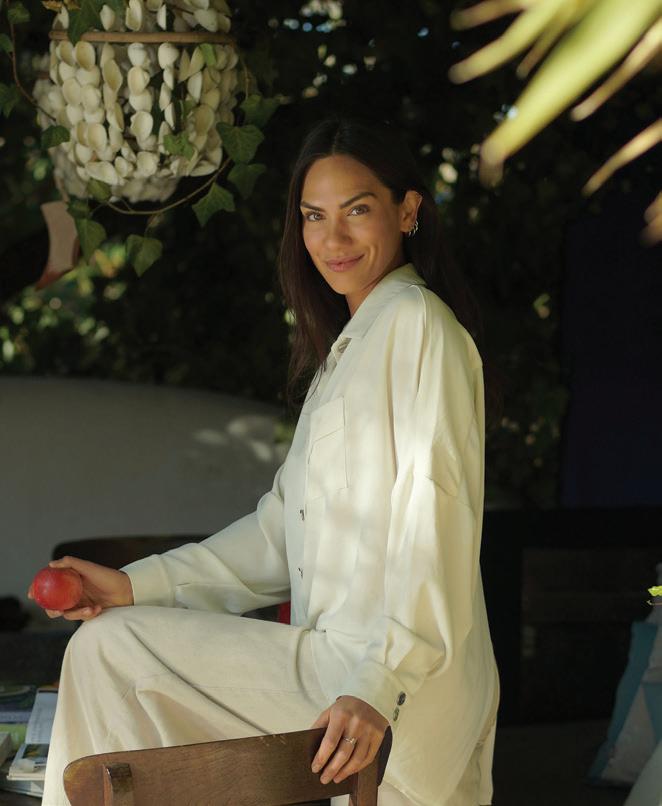
LAKEISHA ALLEN , who shared her experience on the science behind multiomics (page 86).
WHERE DO YOU SEE MULTI-ONOMICS HAVING THE BIGGEST IMPACT ON LONGEVITY IN THE NEXT FIVE YEARS?
It’s driving the shift from reactive to truly proactive health. It will let people catch dysfunction years before it becomes disease, and show them in real time how their interventions (diet, exercise, supplements, etc.) are actually working. It will also remove the guesswork, making every intervention sharper and more effective.
A Lisbon-based longevity coach and nutritional therapy practitioner, Allen designs bespoke, science-based protocols to help executives, founders and athletes perform sharper and age slower.

Founder + Editor Cristina Cuomo
Executive Editor Ray Rogers
Features Editor Jim Servin
Associate Editor + Photo Editor Jenna Lebovits
Editorial + Marketing Assistant Lauren Willett
Senior Wellness + Beauty Editor Amely Greeven
Beauty + Fitness Editor Beth Landman
Wellness Editor Fernanda Niven
Contributing Health Editors Dr. Jeffrey Morrison,The Morrison Center; Tapp Francke Ingolia, MS, CNS, Hamptons BioMed
Copy Editor Michèle Filon
Research Editor Jill Malter
Contributing Food Editor Peter Som
Special Project Editors Jenny Landey,TR Pescod
Contributing Writers Lauren Aiyana, Lakeisha Allen, Isaac Boots, Heidi Brod, Donna Bulseco
Christopher Coy, Michaela Kennedy Cuomo, Dr. Gerry Curatola, Donna D’Cruz
Simon Doonan, Dimitri Ehrlich, Melissa Errico, Pamela Fiori, Marisa Fox, Steve Garbarino
Linda Hayes, Dr Terrie Hope, Nancy Kane, Dr. Frank Lipman, Dr. Lea Lis, Ali Margo,
Myles Mellor, Kevin Menard, Roxanna Namavar, David Nichtern, Dr. Eunice Park
Dr David Perlmutter, Annelise Peterson, Kelly Posner Gerstenhaber
Michele Promaulayko, Dr. Christina Rahm, Lisa Roberts Erica Schwartzberg
Lavina Shamdasani, Biet Simkin, Jolene Star Dr. Stacie J. Stephenson, Julia Szabo
Abby Tegnelia, Rebecca Wallwork, Erin Walsh,Tess Weaver, Regina Weinreich
Constance C.R. White, Sarah Wragge
Contributing Design Director Ben Margherita
Contributing Art Director Mikio Sakai
Contributing Designer Seton Rossini
Web Managers Tarin Keith, Aubrée Mercure
Contributing Photographers Melanie Acevedo, David Bellemere Justin Bettman, Cass Bird, Brian Bowen Smith
Natalie Chitwood, Bob and Dawn Davis, Gregg Delman,Victor Demarchelier
Mikey DeTemple, Sophie Elgort, Francine Fleischer, Marili Forestieri, Diana Frank Morgan Maassen, Roberto Matteo Marchese, Mary Ellen Matthews, Ryan Moore Nino Muñoz, John Russo, Claiborne Swanson Frank, Simon Upton, Cathrine White
Publisher Helen Cleland, helen@thePURISTonline.com
Chief Revenue Officer Andrea Greeven Douzet, andrea@thePURISTonline.com
Head of Partnerships Nicole Levy, nicole@thePURISTonline.com
Executive Sales Directors Tova Bonem, Andrea Garcia, Michelle Johnson,Teresa Sorkin
Eden Williams, Rosalind Zukowski
Luxury Art And Travel Partnerships Lisa Rosenberg
Aspen Publisher Alexandra Halperin
Aspen Media Consultant Cheryl Foerster
Director of Marketing Ilene Frankel
Audience Development Manager Celeste Hortet
Events Director Carolyn Heft-Levinbook
Events Manager Jen Brown
Event Photographer Kristin Gray
Chief Financial Officer Caryn Whitman
Production Direction Digital Workflow Solutions
Purist is distributed in New York City, the Hamptons, Aspen, Miami, Palm Beach, Los Angeles, and now in Chicago and Scottsdale.
For advertising inquiries, please contact sales@thePURISTonline.com
For editorial inquiries, please contact wellness@thePURISTonline.com
For production inquiries, please contact production@thePURISTonline.com
Follow us on Instagram @thePurist and Facebook.com/puristonline www.thePURISTonline.com








nature walks can improve mental health.










On the East End, Hudson’s Helping Hands creates space for children on the autism spectrum and their families to feel seen and supported.
BY JENNA LEBOVITS • PHOTOGRAPHY BY DIANA FRANK
Kristen Teodoro never set out to build a nonprofit; she was simply trying to take care of her son, Hudson. Now 10, Hudson is nonverbal and affectionate—a “people collector,” says Teodoro, who connects through touch rather than words.
While roughly 1 in 31 children in the United States is diagnosed with autism spectrum disorder, the world isn’t always designed for them. “It’s easy to feel invisible when your child can’t attend a Christmas tree lighting due to sensory overload,” Teodoro says. “It’s harder for a special needs parent to do simple things. And then where is your village? You don’t have one.”

The COVID-19 pandemic was the turning point. As in-person therapies vanished on the East End, so did the support and real connection families like hers relied on. In 2020, Teodoro and her husband, Augie, founded Hudson’s Helping Hands. What began as a way to help their own son naturally grew into a community lifeline.
The nonprofit’s growth was organic, evolving from virtual support groups to popular seasonal events such as the Sensory Santa Express. “It was a community effort to carve out a space
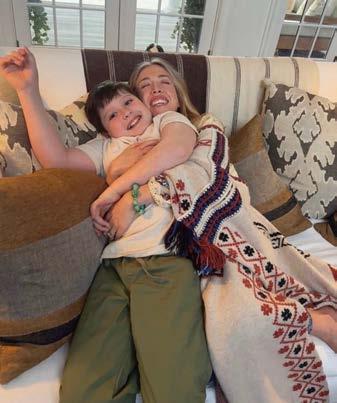
where special needs families feel included,” Teodoro explains. “Their kids can just be their kids and they don’t have to say ‘sorry’—they don’t have to explain their behaviors.”
In a few months, the organization will open the doors to its first permanent center, in Water Mill, a nearly 4,000-squarefoot space with therapy rooms, playrooms and classrooms—a place for children to come as they are, and parents to connect with one another. “We want it to be a beautiful, safe space for our kids to grow, and parents to actually have a moment,” says Teodoro.
To support this mission, Hudson’s Helping Hands will host a Wellness Day fundraiser at Montauk’s Hero Beach Club on June 6. The event is an invitation for parents to reset—a necessity Teodoro learned the hard way after experiencing burnout. “Having a life outside of being a special needs mom is something that can so easily get lost,” she says. To meet the physical and emotional demands of Hudson’s care, Teodoro had to prioritize her own health. Today, she finds that balance through strength training at Post House and quality time with family and friends. hudsonshelpinghands.org










BY LAVINA SHAMDASANI

Practicing compassion can boost mental wellbeing and lower cortisol levels.

What we all share, deep down, as a human species, is a quest for happiness. We seek lasting joy—not fleeting highs—yet we are often misguided into believing that attainment is the path to fulfillment. But pause and reflect: How long did the joy from your last acquisition or accomplishment truly last?
Many of us are caught in what psychologists call the hedonic treadmill—a well-researched phenomenon in which we quickly return to a default emotional state despite positive changes. One milestone leads to the next, one desire replaces another. It can look like chasing the next luxury purchase, the next coveted experience, the next Instagram moment that promises fulfillment—but rarely delivers it in a lasting way.
The truth is, waiting for life to be perfect is an illusion. Life, by its nature, is unpredictable and often imperfect—as are we. Things don’t unfold precisely as we planned. We don’t always become exactly who we imagined. And yet, it is in learning to be with this reality—not resist it—that we begin to access something deeper and more steady.
Inner peace does not come from controlling life’s outcomes, but from cultivating how we meet them.
When we develop an inner openness to life as it is, we create space between what happens and how we respond. Instead of tightening in disappointment or frustration, we can remain steady at our core, confident in our ability to learn from setbacks and move forward. From this place of openness, we are better able to see possibilities, think creatively and respond with intention rather than reactivity.
Compassion becomes a powerful anchor in this process. It is the awareness of suffering combined with a genuine, action-oriented desire to alleviate it for ourselves and for others.
Self-compassion allows us to meet our own disappoint-
ments with understanding instead of harsh judgment. Rather than spiraling into self-criticism or “Why me?” we learn to acknowledge: This is hard, and I can still support myself through it. This simple shift builds resilience and emotional balance.
Extending compassion reminds us that we are not alone. As many wisdom traditions have taught, caring for others is deeply connected to our own sense of well-being. Research supports this: What is often called the “helper’s high” shows that acts of kindness can increase endorphins, dopamine and oxytocin, enhancing mood and connection. More importantly, it allows us to step outside of ourselves, shifting from self-focus into a sense of purpose and meaning, where more lasting joy is found. Small acts—listening fully to a friend, offering warmth to a stranger, expressing appreciation—move us out of isolation and into shared humanity. Perspective widens. Meaning returns.
When we stop waiting for everything to align perfectly, and instead learn to align within ourselves, we discover a different kind of fulfillment—one not dependent on circumstances, but rooted in clarity, presence and a deeper sense of ease.
Don’t take my word for it; try it in the laboratory of your own life this summer. Engage in small, random acts of kindness, offered freely, without turning them into obligation or routine. Listen more fully. Offer presence where it’s needed. In remembering our interconnectedness, we come closer to what we have been seeking all along: a steady, grounded sense of peace and joy.
Lavina Shamdasani uses positive psychology and mindfulness practices to help her clients meet personal and professional goals. Learn about her in-person salons in the Hamptons on Instagram @souljoy.bylavina.

Connect with your doctors in a whole new way, through the power of narrative medicine. BY
DONNA BULSECO
In medicine, stories convey meaning, and as patients, we benefit when doctors, nurses, healers, EMTs, therapists and caregivers listen carefully to the stories we tell. That is one of the tenets of narrative medicine, a multidisciplinary program developed in the early 2000s by internist and literary scholar Rita Charon and a group of clinicians and humanities professors at Columbia University.
Focusing on works of literature, such as Gustave Flaubert’s novella “A Simple Heart,” Virginia Woolf’s modernist novel To the Lighthouse, or “One Minus One,” a short story by Colm Tóibín about the death of the narrator’s mother, narrative medicine teaches clinicians and medical students how to interpret and respond to concepts such as point of view, voice, metaphor and plot through the close reading of a text. Being deeply engaged with stories is a different skill than skimming lab results or doing a physical exam but, as it turns out, narrative skill proves to be just as valuable and equally important for patient care during the clinical encounter—an idea that seemed radical over 25 years ago.
It’s not just the patient that benefits; the practitioner gains self-awareness as well. “The opportunities afforded by close reading bring the reader to look attentively at his or her own ways of making meaning,” says Charon in The Principles and Practices of Narrative Medicine. “Narrative medicine is committed to developing deep and accurate attention to the accounts of
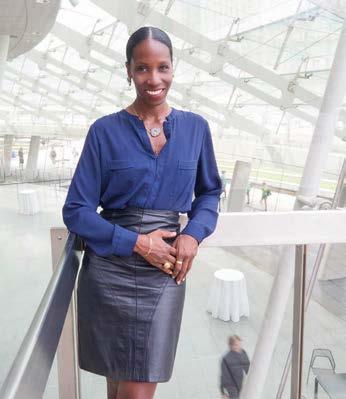
Ssanyu Birigwa, M.S.


self that are told and heard in the contexts of health care.”
The focus on story allows doctors and others to develop a collaborative and deeply empathic approach to healing, says Ssanyu Birigwa, a narrative medicine clinician, Indigenous bone healer and adjunct professor for the Master of Science Narrative Medicine program at Columbia University. “Narrative practice and active listening allow us to be curious about narratives of the body that are layered in so many ways,” says Birigwa. Narrative medicine has also contributed to medical humanities, a writing genre that’s long been in play in the literary world in work by physician/writers such as William Carlos Williams and Anton Chekhov to more recently, Abraham Verghese, Rana Awdish, Suzanne Koven, Paul Kalanithi and Atul Gawande. Clinicians and patients create their own stories born out of reflection and compassionate caregiving.
Two new books out this spring underscore the restorative nature of writing. Where It Hurts: Dispatches From the Emotional Frontlines of Medicine (which I edited) is an anthology of short stories, essays and poems by clinicians that grew out of that impulse to share these stories, calling forth the deep emotions all of us feel. A Prescription for Burnout: Restorative Writing for Healthcare Professionals by Carolyn Roy-Bornstein, M.D., provides the groundwork for those wanting to use writing “to foster mindfulness and gratitude and learn how to build space for these simple but powerful tools” into their daily lives.
As patients, we often feel rushed during medical appointments, but sharing a story can focus the dialogue between you and your doctor so s/he has a moment to take in your side of the story and start assessing your condition. Beforehand, consider what’s relevant to share about why you are there. Use specific details, but prioritize the ones that concern you the most. “You don’t have to share everything—begin with what feels most true or most pressing in your body,” suggests Ssanyu Birigwa. “A simple question like ‘Can I share a bit more about what this has been like for me?’ helps you sense whether the clinician has the space to listen and receive.” It also helps to talk it out ahead of time with a family member or friend, or write to a prompt like “Describe a moment when you felt your body let you down” or “I got worried about my health when...[describe what happened.]” “Putting your concerns in writing or roleplaying them with another person helps you to focus on what you want to say.”



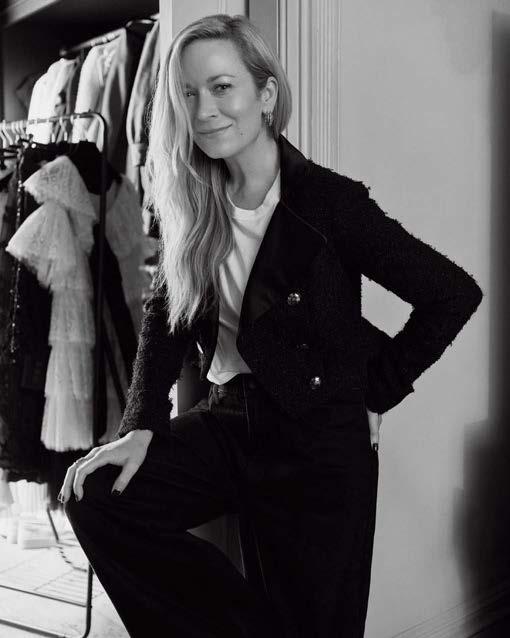
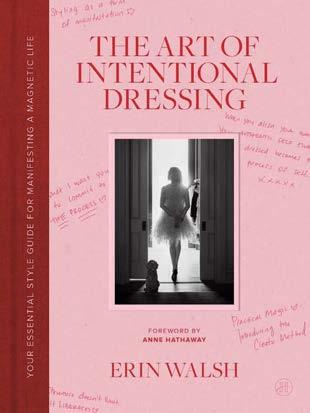
In her new book, The Art of Intentional Dressing, celebrity stylist Erin Walsh reveals how deciding what to wear can be the simplest—and most powerful—form of self-care.
In my nearly two decades as a stylist, I’ve watched trends come and go. But recently, I noticed one that wasn’t fading away. Not the fashion kind. This trend is more universal (and more costly) than anything coming down the runway—and it has less to do with clothes than with our relationship to them. Here’s what I’ve observed: Every morning, most women pull something out of their closet that makes them feel bad about themselves, then spend the rest of the day tolerating that subpar feeling the way you might ignore a pebble in your shoe for way too long.
This daily habit is so ubiquitous, so normalized, that many women don’t even register it as a problem. But I do, because I’ve seen what’s possible when that pattern is broken—when someone opens their closet from a place of intention rather than dread, and walks out the door feeling like the truest version of themselves. I’ve watched it happen during fittings, on red carpets and in ordinary bedrooms, including my own. The transformative impact of dressing from a mindful and authentic place is undeniable—and more importantly, it is available to everyone regardless of budget, body type or how busy they are.
leave the house feeling meh, it erodes your confidence, which leaks out in your interactions with others, creating a negative feedback loop. On the other hand, when your outer expression aligns with your inner truth, you stand taller. You speak more directly. You take up space differently. And that vibe generates what psychologists call a positive, upward spiral. I didn’t always have language for explaining this, but I knew it intuitively. That’s why it made my heart swell several sizes when my client and soul-sister friend Anne Hathaway told The Hollywood Reporter: “Erin sees my idiosyncrasies as a strength.” That is the key—helping someone see themselves clearly enough to dress from that place. In the foreword to the book, Anne wrote: “As my stress about clothes has decreased, a certain boldness and joy has emerged. I find I am more adventurous, and that has made me connect more deeply to feeling powerful.”
My passion around the metamorphic power of clothes is the reason I wrote my new book, The Art of Intentional Dressing. Getting dressed has the potential to bring joy, and I wanted (actually, I needed!) to share exactly how to harness it.
It’s easy to assume that what we wear is a somewhat superficial concern—not something that impacts our overall well-being like sleep, nutrition and exercise. But what you put on your body in the morning is as important as what you put in it, because your outfit sets the tone for your entire day. It influences your mood and how you show up in the world. When you
Her admission reveals another piece of style intel: Whether we realize it or not, there’s a conversation happening between our clothing and our subconscious. In fact, some interesting research has been done around a psychological phenomenon called “enclothed cognition.” It has shown that the symbolic meaning you attach to clothing actually transforms your cognitive processes. When the researchers studying enclothed cognition discovered that participants performed differently in identical white coats simply because one was labeled a “doctor’s coat” and another a “painter’s coat,” they unveiled a profound truth: What we believe about clothing becomes part of our lived experience.
There are dozens of reasons our closets confound us. To name
just a few: Wardrobes have a tendency to become time capsules filled with clothes that reflect past selves...the corporate-era blazers, the single-and-dating dresses, the pandemic athleisure that stealthily took over 70 percent of available space. Also, we’ve all been seduced by trend algorithms and influencer content to buy things. We’ve let salespeople talk us into pieces that were never really us. And, we hold on to expensive shopping mistakes because the price tag makes them too guilt-provoking to release.
On a deeper level, what lives in our closets often reflects a misalignment between who we truly are inside and who we’re presenting to the world. But a closet stuffed with old personae, wrong sizes and guilt on hangers is not just clutter; it’s an energetic obstacle blockading your best self. No wonder we feel off before the day has even started!
The invitation I’m offering is to treat getting dressed as a daily wellness practice. As a genuine, grounded act of selfcare that has also the power to magnetize your dreams. How so? Fashion is one place manifestation finds its physical form. The garments you choose each morning aren’t just covering your body; they’re programming your inner reality. Clothes and accessories can summon aspects of yourself you wish to cultivate and share with the world. In that way, your personal style can help move you in the direction of your desires.
My dressing method, Create, unlocks this power. I use it with every client I work with, famous or not. Create stands for Clarity. Ritual. Edit. Align. Truth. Expansion. The actions behind that acronym are the bedrock of my belief system and the basis of my book. I can’t fully explain it in the space we have here, but I’ll give you a healthy head start on how it works:
Before you even open your closet door, I want you to identify how you want to feel for the day ahead, not how you think you should look. This shift from dressing for others to dressing from yourself changes everything.
So, the question I want you to ask yourself isn’t what should I wear? It’s how do I want to feel? When you start there, with centered intention, your closet stops being a source of anxiety and turns into a portal of possibility. As my friend, renowned spiritual teacher Gabby Bernstein, framed it: “What you wear should be a means of manifesting because it’s part of the process of becoming the person you’re capable of being.”
To get grounded you might want to take a few minutes to settle your thoughts—stillness often helps us hear our inner wisdom more clearly. At other times, movement does that job. Somatic educator Lauren Roxburgh recommends
a quick shake-out—gently bouncing, loosening your hands, arms and shoulders, then stretching and taking a few deep breaths. “The soul doesn’t speak in words,” says Roxburgh. “It speaks through sensation, tension and intuition— and fascia, the body’s intelligent web of connective tissue, is its messenger.” And because fascia holds stress and emotional memory, shaking things out before you get dressed means you’re choosing what to wear from a cleared body rather than an emotionally hijacked one.
If you’re having trouble identifying how you want to feel, I suggest choosing three simple words. My personal go-tos are: effortless, ease and elegance. Or centered, calm and held.
Before a photo shoot, I set up the room: everything merchandised, excess edited out, organized so that there’s room to actually see what’s there. I want you to do the same exercise with your own wardrobe.
Take an afternoon—really block it out—and pull everything out of your closet. Then reintroduce pieces using simple questions to guide your decisions about what stays and what goes. Marie Kondo asked whether something sparked joy; I’d go further and ask you to consider whether a piece of clothing sparks possibility. Every morning is an opportunity to tell the world—and more importantly, yourself—who you are and who you’re becoming. Anything that consistently gets skipped, or that belongs to a version of yourself you’ve outgrown—release it, consign it, donate it, let it go.
Another dear client of mine, actress, comedian, producer and mother of three small children, Mindy Kaling, has developed a rule that exemplifies the power of intentional systems: “When I buy something for myself, I need to wear it within 10 days, otherwise I have to return it,” she told me. “I just won’t let things sit in my closet. They have to be worn or they go back.” This rule creates accountability and prevents the accumulation of purchases that don’t integrate into your current life or serve in fueling the life you’re trying to create.
I suspect there’s often an instinct or inner knowing at work behind the hesitation to wear something. It’s data you can learn to read. Because ultimately, dressing with intention isn’t about looking any particular way. It’s about closing the gap between your inner truth and your outer expression, one day at a time. Operating this way empowers you to use clothes as a catalyst for self-growth—an entry point into a deeper exploration of how you want to live your life. The Art of Intentional Dressing is available now.
The Aspen Snow Ball helps fund the life-changing work of the Children’s Oncology Support Fund. BY
JULIA SZABO
In the U.S. alone, nearly 9,700 children are diagnosed with cancer every year, almost 27 every day. Cancer kills roughly three children every single day, leukemias and malignant brain tumors among the most common cancers. Childhood cancer survivors often experience long-lasting side effects from oncology treatments, including developmental delays, sensory loss and secondary cancers.
Until these devastating statistics are reduced, many nonprofits have committed to helping families stay strong as they battle cancer alongside their children. A dynamic leader in the fight against childhood cancer, the Children’s Oncology Support Fund Foundation has harnessed impressive star power in support of its annual black-tie gala, the Aspen Snow Ball Gala, held every winter.
The star-studded evening— featuring talent on the order of Goldie Hawn, Kurt Russell, Édgar Ramirez, Chelsea Handler and Rumer Willis—has proved so successful that it’s morphed into Aspen Snow Ball Week, a highly anticipated happening across four action-packed days, designed to raise awareness through an invaluable, intangible asset, the very thing cancer tries to steal: joy.

kid-friendly programs, which opened in late 2024. It continues to create space for children and their families to spend precious time together during treatment with music therapy, and an artistin-residence, a place where a kid can simply be a kid.
Meanwhile, back in Aspen, COSF partnered with the Aspen Art Museum to help raise funds for the COSF Fund for Advancement in Wellness, “shedding light on education, holistic modalities and the importance of art therapy as part of the healing journey,” Pierce adds. In his travels, Pierce never sleeps on a chance to recreate the magical community spirit of Colorado’s chic snow village— like the Aspen-themed holiday fundraising dinner he hosted in New York City, featuring Broadway musical artists and drawing many new supporters to the COSF cause.
COSF, says its founder Thomas Pierce, has a bold, ambitious mission: “To eradicate pediatric cancer.” Cancer is a relentless opponent, so COSF fights back, Aspen-style. Sweeping blizzards of positive energy fuel year-round, nonstop efforts to raise funds to battle the deadly disease. The Snow Ball doesn’t vanish when temperatures rise and the winter season ends—the impact of COSF is felt all year. Since its inception in 2023, COSF has raised more than $10 million in charitable donations, helping to fund important pediatric cancer research and wellness initiatives.
The foundation made possible the COSF Activity Room at Children’s Healthcare of Atlanta Arthur M. Blank Hospital— “the Zone”—a medical-free space dedicated solely to
It’s all in a life’s work for Pierce, whose distinguished movie-producing credits include The Brutalist, portraying the fictional story of Hungarian architect László Tóth. Like that Oscar-winning film, the philanthropic projects Pierce spearheads deftly combine drama with true stories of courage—a cross between a compelling documentary, and a narrative feature film. “With Snow Ball, we’re telling an important story that resonates across time: Children need access to childhood, and some sense of normalcy.”
He’s an inspiring example of how one person’s philanthropic vision can galvanize a community to effect positive change. But Pierce always shines the spotlight back on the real heroes: the children battling cancer. “At this year’s Snow Ball, our youth ambassador, Ethan Curtis, stood up and shared his story for the very first time. Ethan was diagnosed with non-Hodgkin Burkitt lymphoma at 15. After treatment at UCLA Mattel Children’s Hospital in Los Angeles, he’s now in full remission, and a student at the University of Utah—an incredible speaker with an incredible story.” aspensnowball.com; cosffoundation.org











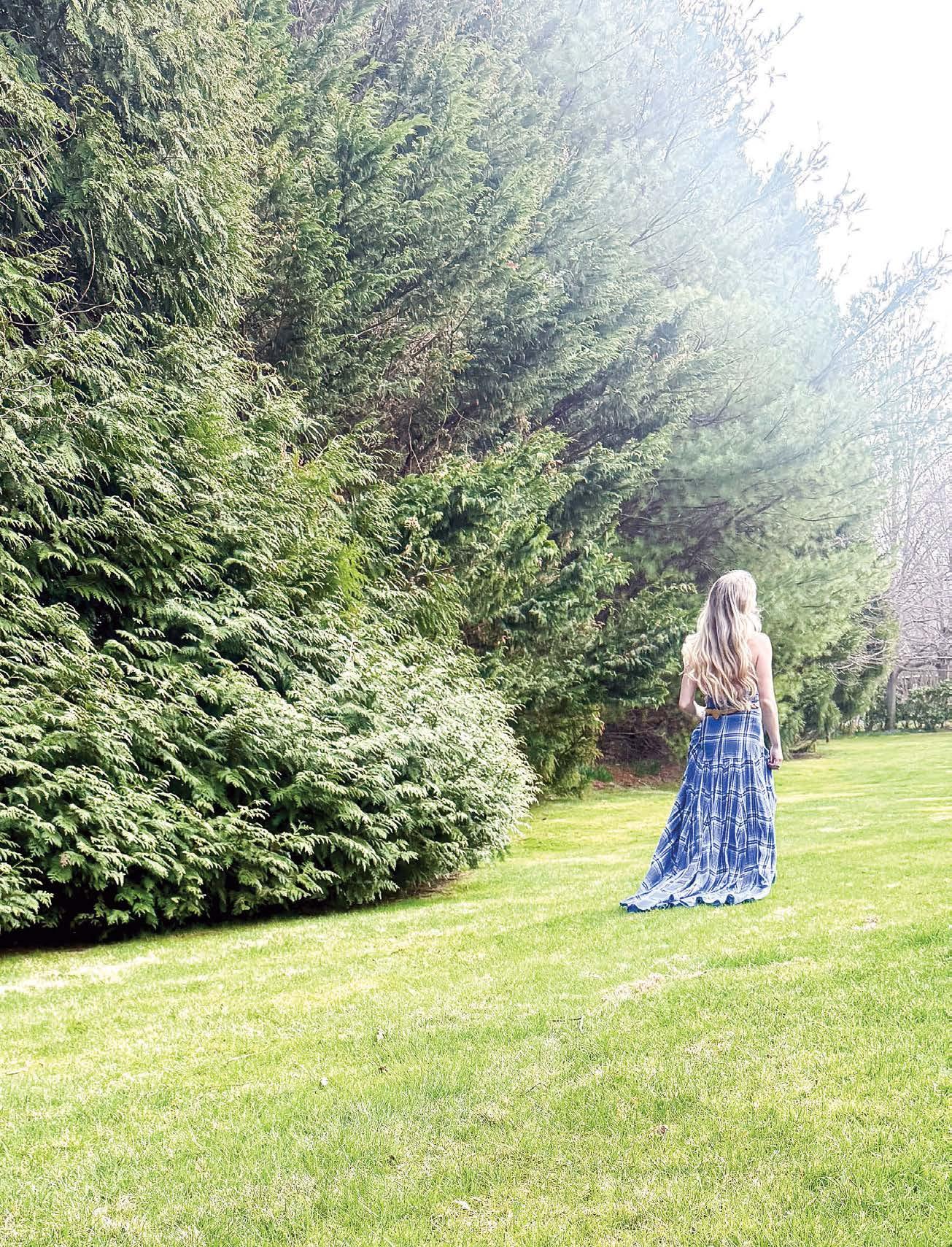
The Japanese practice of Shinrin-yoku, or forest bathing, has been shown to lower blood pressure and cortisol levels, and support immune function. Spend 15 to 20 minutes amid the trees for a gentle nervous system reset.




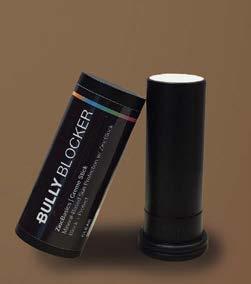
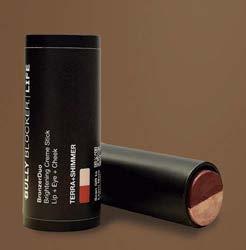
Clean, mineral protection that works as hard as you do — from the slopes to the spotlight.























AMELY GREEVEN

In April, the White House issued an executive order to accelerate research and expand patient access to psychedelic substances for treatment of severe mental health conditions. Behind the scenes, a movement comprising military veterans groups and figures like former Texas Gov. Rick Perry had advocated for sufferers of treatment-resistant PTSD, traumatic brain injury and opioid addiction to gain the right to try psychedelic drugs like MDMA, psilocybin and ibogaine before they received full FDA approval. Their reasoning was that there was no time to waste in pushing for well-studied therapies that can offer lasting recovery: Suicides in the veteran population are twice as common as for nonveterans, and drug overdose deaths nationwide during the pandemic exceeded 100,000 per year.
Mainstreaming psychedelics might seem taboo. But the therapeutic pathway being laid out recognizes that, when used as part of structured treatment overseen by specially trained psychotherapists, mind-altering substances can create profound opportunities for healing, sometimes in ways that no other treatments have been able to do.
MDMA, a synthetic compound that acts on serotonin and dopamine receptors in the brain, can help create an experience of self-acceptance, empathy for self and others, and trust that allows a person to process difficult experiences and go deeper in therapy, potentially rewiring their relationship to trauma. Studies show powerful results when used as part of treatment for complex PTSD cases as well as eating disorders and chronic pain.
(Not technically a psychedelic, MDMA is considered an “empathogen” and was initially used for psychological healing before it infiltrated a recreational market as ecstasy in the ’80s, when its use was criminalized.)
Ketamine, a dissociative anesthetic with psychedeliclike properties, is used for treatment-resistant depression, anxiety and pain. Psilocybin, a compound derived from mushrooms that is considered the “classic psychedelic” because of its action on serotonin receptors to create mystical experiences, is being extensively explored for the treatment of major depression as well as PTSD.
Less familiar to most is ibogaine, a psychoactive alkaloid derived from a plant native to west central Africa. Traditionally used ceremonially as a “bridge to the ancestors,” and inducing the longest, and often most intense or even harrowing, psychedelic journeys of any
substance, it appears to interrupt addiction in powerful ways in some people by helping the brain “reset” cravings for drugs and quell withdrawal symptoms.
Yet working with these substances for healing requires guidance and experienced oversight. These medicines can potentiate transformation, but they require dedication, in the form of therapeutic sessions to integrate experiences. Ibogaine users, who must experience the medicine in a safe, monitored clinical setting due to its very real cardiotoxic risks, and currently have to go outside the country do so, may win a window of time to help their brain consolidate the changes— but they have to earn the results, by doing extensive inner work with support. MDMA itself is no silver bullet, proponents say, but with the right practitioner as an ally, it can make therapy more effective.
Advocates also caution that the push to improve access for complex cases should not be mistaken as a green light for people to experiment on their own. Not simply because of the illegality of using substances still classified as Schedule I drugs—though psychedelic mushrooms are now decriminalized in a few parts of the U.S.—but because of the real risks of harm from unregulated use, such as deadly contamination with fentanyl in street-sourced substances and potential psychotic breaks or interactions with medications.
There are plenty of reasons to watch the evolution of psychedelic medicine closely. Skeptics greeted the executive order with tough questions. Will the sacred contexts from which plant-derived medicines come, as well as the land and people from where they’re sourced, be forgotten and exploited in the rush to commercial use? Will pharmaceutical companies rush to benefit from the new pathway, profiting from molecularly similar medications they produce while the unpatented original substances remain criminalized?
Psychotherapist Shira Myrow, psychedelic integration facilitator and co-founder of I-Psychedelic Therapy, is cautiously optimistic. “The FDA should create a regulatory commission to ensure they truly understand this treatment before scaling. We need to learn from mistakes with the medicalization of marijuana, which led to dangerously potent strains. Yet, if stewarded with reverence, rigor and responsibility, the transformative potential of these medicine protocols is real, and possibly revelatory.”



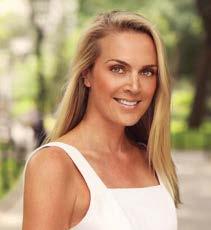
Estrogen’s latest feat: showing up for skin care duty. BY
MICHELE PROMAULAYKO

Until mere moments ago, menopause was treated as an ending—the point at which women were expected to quietly retreat from relevance. But that rude framing has collapsed under the weight of a generation of women proving that midlife looks a lot different than it used to
Hormone replacement therapy (HRT) has shed its bad rap and is finally getting credit for performing a long list of health heroics, empowering women in their 40s, 50s and beyond to amplify their vibrancy.
Also amazing: Prescription estrogen creams originally intended to rejuvenate vaginal tissue have traveled north in new formulations specifically meant for the face. That’s right— menopause, long cast as beauty’s nemesis, is seeking the ultimate revenge by inspiring advancements in skin care.
HRT: The Case for Your Face
Estrogen plays a key role in collagen production, skin thickness and moisture retention, all of which decline when estrogen levels dip in perimenopause and menopause. This isn’t controversial—it’s been known for over 20 years, noted OB-GYN Jennifer Ashton, M.D., in an Instagram post. Ashton also revealed that roughly half of dermal collagen can vanish in the first five years of menopause. Skin becomes thinner, less elastic and drier, and that depletion often shows up first on the face and neck.
The fix seems logical: Put the estrogen back where it’s needed—locally, on the skin. But since estrogen is a regulated pharmaceutical, the research and development pathway is more complex and expensive than it is for
As estrogen declines, so does skin collagen production.
cosmetic active ingredients. In fact, the foundational research for how topical estrogen impacts the complexion comes from two German studies dating back to the mid-’90s. Those found that topical estriol (a naturally occurring estrogen hormone) applied to the faces of pre- and perimenopausal women produced significant improvements in skin firmness, reduced wrinkles, increased skin moisture and elevated levels of type III (aka structural) collagen, with no systemic effect on hormone levels. “The fact that we’re still anchoring to that work 30 years later says everything about how under-resourced this area has been,” says Michelle Montville, M.D., a boardcertified OB-GYN, Menopause Society-certified practitioner and clinical director of Alloy Health. To move the needle forward, Alloy commissioned its own randomized, double-blind, placebocontrolled trial, led by dermatologist Zoe Diana Draelos, M.D. The trial compared a 0.3 percent estriol cream, a 0.01 percent estradiol cream and a placebo over 12 weeks in 90 participants. The results of the trial, which were published in 2024, showed a 68 percent improvement in overall skin health versus placebo for the estriol arm, along with a 29 percent improvement in radiance, 31 percent improvement in skin roughness and 15 percent improvement in firmness. The estradiol produced similar results.
Estriol vs. Estradiol: What’s the Difference?
There are two main forms of estrogen to consider here: estradiol (E2), the
stronger version your body mainly produces during reproductive years and the one used in most systemic HRT and vaginal cream prescriptions, and estriol (E3), its gentler counterpart, which is the type your body makes in higher doses when pregnant. Think of estradiol as the one that grabs onto estrogen receptors and holds on, which is exactly what you want when you’re trying to shift hormone levels throughout the body. Estriol, by contrast, binds more transiently and clears more quickly. Because of their potency differences, they are usually given in different dosages—typically, estradiol at 0.01 percent and estriol at 0.3 percent.
Dermatologic investigators have found that the two forms conduct themselves almost identically, but which does your skin actually prefer? Again, the science is still thin and the skin care category is nascent, but Alloy is pioneering the charge with its M4 line, a trio of prescription products (face cream, face serum and eye cream) built around topical estriol in conjunction with ingredients such as glycerin, oleic acid and vitamin E to support barrier function and hydration. “For facial use, that lower systemic potency is actually an asset,” says Montville, hinting at the question everyone wants answered: Does it get into your bloodstream?
Alloy’s 2024 trial measured hormone levels in participants’ blood at the start of the study and again at week 12. Systemic levels didn’t budge. It’s the same principle behind vaginal estrogen, long prescribed to address the localized dryness and tissue thinning of genitourinary syndrome of menopause, and widely considered safe because it acts locally on the mucosal tissue without meaningfully raising systemic estrogen levels. Which brings us to...
The Vaginal Cream Work-Around
Scroll any menopause-focused account on social media and you’ll land on this hack: using prescription vaginal estradiol cream on the face. Plenty of dermatologists and other doctors are out there demoing this off-label use, including Ashton, Amy Killen, M.D., and Corinne Erickson, M.D.
Despite that, Montville explains why formula intention may matter: “The vehicles, pH and concentrations of vaginal estrogen products are optimized for mucosal tissue with very different absorption characteristics than facial skin,” she says. “Applied to the face, absorption dynamics are unpredictable, and the vehicle itself may cause irritation or other issues unrelated to the estrogen.” Erickson has explained it this way: The specially compounded estriol creams are “a more elegant vehicle.” Meaning, they resemble a luxury face lotion—emollient and silky.
The options and formulations are widening as prescription face creams become increasingly accessible through telehealth platforms such as Alloy (currently the only company with its own clinical study), HerMD, Winona, Musely, Midi, Wisp and others. Most formulations rely on estriol and many layer in other beneficial skin care ingredients, like hyaluronic acid, vitamin C and tretinoin.
For those still interested in exploring the off-label vaginal estradiol route, one approach is to dot a very small amount to targeted areas like crow’s-feet or the “11 lines” that show up between the eyebrows. Or dot a scant amount around the entire face before gently rubbing it in.
Earlier is better. “As estrogen declines, receptor density and responsiveness follow,” explains Montville. So it’s ideal to start before irreversible structural changes, significant collagen loss and deep dermal thinning have fully set in: roughly between ages 45 and 52, during perimenopause or early menopause. That said, later is not too late. “Collagen synthesis and barrier remodeling don’t happen overnight,” cautions Montville. “I tell patients to expect improved skin feel and hydration within four to six weeks, with more visible changes emerging at three months with consistent use.”
A few caveats: If you’re adequately making estrogen, you do not need an estrogen face cream. Anyone with sensitive skin or a history of melasma should patch-test before committing to full facial use; estrogen’s association with melanocyte activity means individual pigmentation responses can vary.
As for women with a history of breast cancer who are still nervous about using anything containing hormones: A large Johns Hopkins cohort study published in Obstetrics & Gynecology in 2023 found no increased risk of breast cancer recurrence within five years in women using vaginal estrogen vaginally, including those with estrogen receptorpositive disease. The same is thought to be true for face creams. “I assess these cases individually,” Montville says, “and always recommend the patient discuss with their own medical team before starting.”
In the end, here’s what the science makes clear: Skin is an estrogen-responsive organ. Declining hormone levels leave visible, measurable, addressable changes, and the most effective way to adequately address these changes is with ongoing attention. “Estrogen deficiency doesn’t resolve, and neither does the skin’s ongoing need for support,” says Montville. “What we can do is meaningfully slow the process and sustain improvements.” For a growing number of women, those alone are worthwhile skin goals.
Dr. Sue DeCotiis on the science of a strong summer: hormones, longevity and the new frontier of peptides.

As the Hamptons shift from quiet spring mornings to the full-tilt summer calendar, the pressure to perform—physically, mentally, socially—lands hard. Staying Hamptons-ready takes more than quick fixes. We sat down with triple board-certified physician and founder of Dr. Sue Skincare, Dr. Sue DeCotiis, to discuss what to test, what to prescribe, and what holds up from Memorial Day to Labor Day.
PURIST: Balancing hormones is often viewed through the lens of reproductive health. For your patients, how does the game change for weight resistance and mental clarity during busy summer months?
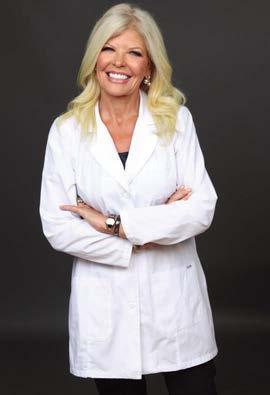
DR. SUE DECOTIIS: Hormones work like a symphony— estrogen, progesterone, testosterone, thyroid and growth hormone all in balance. When they’re not, the body becomes inflamed, and you can’t feel or look your best while hosting dinner or chasing kids at the beach. This decline often starts in the late 30s, long before periods change. Erratic hormones can cost women bone density, brain volume and up to 30 percent of their collagen—the body skin laxity I saw in 40-something patients is why I developed Dr. Sue Skincare Sculptisse Body Contour Cream.
The fix is properly monitored bioidentical estrogen, progesterone and testosterone. I often add a CJC/ ipamorelin peptide injection to restore growth hormone— sharper sleep, better body composition and your mojo back.
The earlier you find a doctor trained in this nuance, the more of yourself you keep.
Weight loss medicine has shifted toward GLP-1s, but you advocate for a more holistic, regenerative approach. How can these be used for longevity rather than just a temporary fix?
GLP-1s are tools for longevity when they’re prescribed with the data behind them. Without that, you’re driving on a highway with no signs. In my practice, every patient uses a sophisticated body composition scale that measures body fat, lean muscle, bone mass and hydration. Consumer scales aren’t nearly as precise.
Dr. Sue DeCotiis

When body fat is high, fat cells produce toxic cytokines that drive inflammation, immune dysfunction and even Alzheimer’s risk. To reverse the damage, body fat has to come down to roughly 20 percent or below. Think of it as pulling weeds out of the garden—leave any behind and they grow back.
How does optimizing hormones like estrogen or testosterone unlock the effectiveness of GLP-1 medications?
Combining bioidentical hormone replacement with medical weight loss is the difference between a GLP-1 working brilliantly or barely at all. Insulin is also a hormone, and its job is to oxidize fat. When estrogen and progesterone become erratic, insulin resistance creeps in, body fat rises and the GLP-1 can’t do its full job. Optimizing bioidentical estrogen, progesterone and testosterone restores insulin sensitivity and gives the medication the metabolic terrain it needs.
I don’t guess at this. A metabolic breathalyzer reveals oxygen utilization, heart rate variability, biological age and metabolic flexibility. The bottom line: Correct insulin resistance and visceral fat comes off automatically— without taking muscle and bone with it. Patients who start in spring are at full effect by summer.
What’s one peptide-driven secret for women who want skin and hair to look as vibrant as they feel?
For glowing facial skin, the Glow peptide injection is my favorite biohack—designed for the face the way the Dr. Sue Skincare Sculptisse Body Contour Cream is designed for the body. Its topical cousin, GHK-Cu, can be applied to the face for skin support and to the scalp to help thicken hair—one of the quieter, more frustrating losses of perimenopause. Both pair beautifully with bioidentical hormone replacement.
Longevity isn’t a finish line. It’s how strong, clear and recovered you feel walking into August—and the August after that.
Dr. Sue DeCotiis is a triple board-certified physician specializing in hormone optimization, medical weight loss and longevity medicine. drdecotiis.com; drsueskincare.com







Longevity AI helps clinicians see the full, predictive story of your health.
BY AMELY GREEVEN

Prevent disease earlier with a datadriven approach.

What would it feel like to meet with your doctor and be handed a mini “book of you” that captures the complexity of your health story—where your health has been, where it’s going, and how your lifestyle choices, right now, are affecting how you age? Your clinician, usually so timepressed or laser-focused on her datafilled screen, looks at you expansively, as if seeing you fully for the first time— your efforts, your obstacles, and your frustrations and fears.
Tuned in to the biological patterns inside your body, she’s aware of subtle disharmonies that could become problems, and she’s noticed how something’s affecting your sleep, or your metabolic function, or hormones, or inflammation—what’s changed? Curious about how you’re doing—how you’re really doing— she’s ready to show you the latest evidence about precise changes she knows can help you feel better, and avoid risks that your genetic profile suggests could cause problems as you get older. She wants to help you chart a path of what actions to take—interventions and lifestyle changes, perhaps screenings and treatments—that feel aligned with your lifestyle and your values.
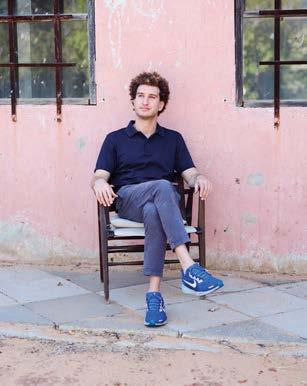
but also the day-to-day data from their wearable technology, if desired—with global health research and populationwide patterns.
“Ninety percent of our unhealthy years as humans are preventable,” says founder and CEO Guy Leitersdorf, but the current “sick care” system, which largely waits for disease to present before bringing solutions, is missing the window. Longevity AI uses an intelligence layer dubbed “Florence” (for Florence Nightingale) to expand what is usually a snapshot of health—through, say, periodic blood or biomarker testing at a routine appointment—to a continuous, predictive view of a patient’s health as it evolves through time. It gives the physician clear data about where your health may be going, and what the evidence shows are some of the best root-cause ways to optimize it. She isn’t starting from scratch during a short appointment or missing important early signals.
You notice that your clinician seems calmer than you’ve ever seen her, because she’s no longer poring over patient reports till the wee hours, synthesizing pages of data from different labs and research on her own. She’s practicing what she trained in: using her expertise to help people to be well. You exhale for the first time in years of medical appointments. You really feel seen.
Making this kind of personalized and effective longevity medicine the new norm is the goal of a technology platform for clinicians called Longevity AI. Created to help doctors improve patient outcomes by helping them easily identify unique risk factors and zero in on the lifestyle changes that will help prevent disease, it offers a state-ofthe-art dashboard that synthesizes patient data—not just from medical testing and appointments over the years,
The company explains that personal patient data is not used to train the AI model, as some might fear. The Florence models are schooled with de-identified data through long-term partnerships where participants have explicitly consented to that use, which is distinct from the clinical care experience. A patient’s data stays private and protected.
Though it centers on algorithms and data synthesis, Leitersdorf says the heart of Longevity AI is people. Already in use at over 100 clinics worldwide, and with its sights set on improving public health worldwide, the company wants to change the providers’ all-too-often harried and pressure-filled experience of modern medicine, in which the time required for administration and analyzing data to give patients the best longevity plans, can be overwhelming, sometimes to the point of burnout. And it wants to help physicians make earlier, informed decisions that are proactive, not reactive.
“Our goal is to deliver 10 billion healthy years to this planet,” says Leitersdorf. “This is something we can do, when your doctor gets the full scoop on you.” longevity-ai.com
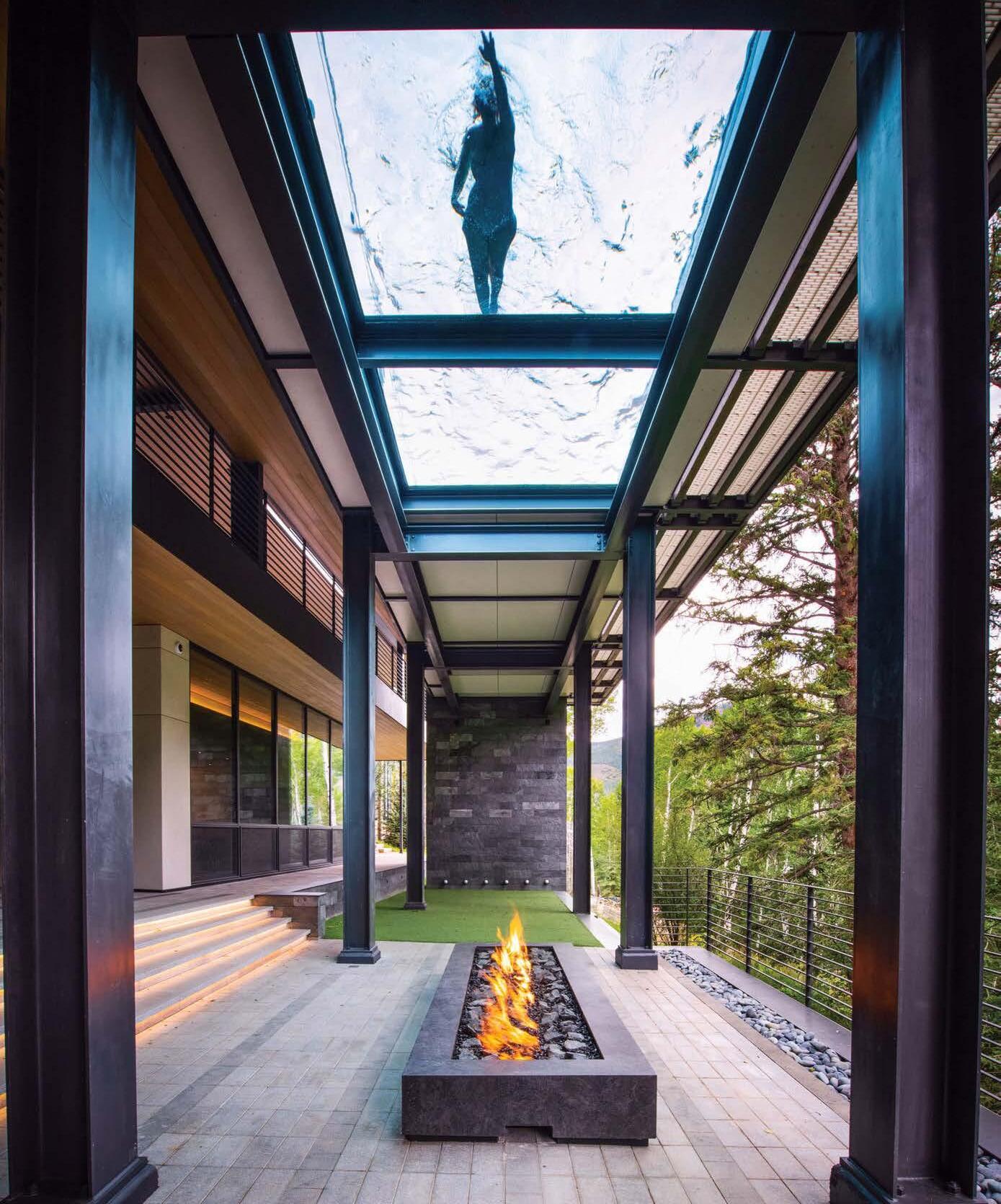
10’ x 86’ x 54”
STAINLESS STEEL
ROOFTOP POOL & SPA WITH GLASS DIVIDER & AUTOCOVER. POOL HAS TWO GLASS OTTOM SECTIONS FOR POOL VIEWING FROM ELOW & GLASS WALL AT END.
Custom Stainless Steel & Copper Aquatic Products
RESIDENTIAL COMMERCIAL HOSPITALITY
Spas Swimming Pools Acrylic-Walled Pools & Spas
Energy-Efficient Portable Spas Swim Spas Tile-ready Pools & Spas
Water Features Cold Therapy Plunge Pools
Luxury Custom Indoor & Outdoor ath Fixtures
SPECIALIZING IN ELEVATED / ROOFTOP POOL & SPA INSTALLATIONS LIGHTWEIGHT & DURA LE
SOPHISTICATED ARTISTIC SUSTAINA LE
SHIPPING WORLDWIDE SINCE 1996
From metabolic health to cellular repair, Tapp Francke Ingolia, MS, CNS, explores why the biological messengers require clinical oversight to be truly effective.

Peptides are quickly becoming one of the most talkedabout innovations in modern health and wellness—and for good reason. These short chains of amino acids act as signaling molecules in the body, telling cells what to do and when to do it Because of this targeted functionality, peptides are being explored for a wide range of applications. From weight management and increased energy to improved skin health and faster injury recovery, peptides offer a highly personalized approach to optimizing the body. The excitement surrounding them is undeniable—scroll through social media or listen to the latest health podcast, and peptides are everywhere.
In fact, medical experts note that peptides have “quickly moved into the spotlight” for uses ranging from anti-aging to metabolic health, says the Atlanta Journal-Constitution’s website. As Dr Michelle Fricke, a dermatologist in San Antonio, explains, peptides are “short chains of amino acids—the building blocks of proteins like collagen…crucial for maintaining the skin’s structure, strength and firmness.” It’s this biological precision that makes peptides so compelling: For nearly every concern, there may be a peptide designed to help address it
However, with this surge in popularity comes a growing concern: access without oversight. When peptides were restricted by the U.S. Food and Drug Administration, demand didn’t disappear; it intensified. In response, a wave of online vendors began selling peptides directly to consumers, often without prescriptions or medical guidance. What has emerged is a peptide free-for-all, where individuals are selecting and dosing compounds on their own without fully understanding what they are taking or how to use it safely.
The associated risks can be significant: cardiovascular strain, cancer, immune system reactions, hormonal imbalances and severe metabolic issues like insulin resistance. As health.com reports, many peptides being sold directly to consumers “aren’t FDA-approved or rigorously studied for safety or effectiveness,” underscoring the uncertainty surrounding their use outside of clinical settings. Even more concerning is the lack of quality control. Without regulatory oversight, there is no guarantee that these products are pure, properly manufactured or even what they claim to be In some cases, they may be ineffective, while in others, potentially harmful.
To understand how peptides reached this point, it’s important to look at their recent regulatory history. While peptides have been studied for decades, their availability has shifted due to evolving FDA policies. Around 2023, increased scrutiny led to many peptides being removed from compounding pharmacy use after the FDA identified them as substances that may pose “significant safety risks.” This decision limited access for both patients and providers, but it also unintentionally fueled the rise of an unregulated market. Now, the landscape is beginning to shift once again. Regulators are actively reviewing certain peptides for reintroduction into compounding pharmacies under physician supervision. The goal is clear: Restore access while maintaining safety by bringing peptide therapy back into a controlled, medical environment.
As peptides reenter the regulated space, the role of medical professionals becomes more important than ever. When prescribed and monitored appropriately, peptides can be truly transformative. The right peptide, at the right dose, used for the right duration, has the potential to support healing, enhance performance and improve overall well-being. Peptides are powerful biological tools, and their effectiveness depends on precision and personalization. As Dr Jeffrey Morrison, medical director of both Hamptons BioMed and The Morrison Center, explains, “Peptides represent one of the most exciting frontiers in personalized medicine. I’ve seen both the science and the real-world results—and when used correctly under expert supervision, they can deliver profoundly impactful improvements in health, performance and longevity.” Moving forward, the hope is that patients will shift away from self-experimentation and toward clinically guided care, where safety and results go hand in hand.
Hamptons BioMed offers a physician-led peptide program designed to bring that level of precision and safety to patients. Through comprehensive lab testing and individualized evaluation, the medical team determines the most appropriate peptide protocols for each patient’s unique biology and goals. By combining advanced diagnostics with expert medical oversight, Hamptons BioMed ensures that peptide therapy is not only effective, but safe, personalized and grounded in clinical care.
hamptonsbiomed.com



While headlines about flesh-eating bacteria have caused a stir, the actual risk is remarkably low. With a few precautions, we can still enjoy our waters. BY
JULIA SZABO

A recent wave of sensational press about the “flesheating bacteria,” Vibrio vulnificus, has the East End community understandably concerned about the potential safety risks of swimming in local waters and eating raw seafood. A virulent, salt-loving bacterium that lives in warm coastal and brackish waters, Vibrio vulnificus has been known to cause devastating injury: Infection leads to excruciating tissue damage (necrotizing fasciitis), sometimes resulting in amputation and death.
However, it’s important to remember that this scary pathogen has been around for centuries. According to The Medical Journal of Australia, Hippocrates described what is likely the first recorded case, that of a fisherman with foot pain, fever, delirium and blistering skin. So, like two other disease-bearing coastal disturbances, ticks and mosquitoes, Vibrio is a summertime nuisance that’s manageable with common sense.
“To put the risk in perspective, this organism is a natural resident of the entire Eastern Seaboard, being most prevalent in warmer Southern states like Florida and Texas,” says professor Christopher Gobler of Stony Brook University, director of the New York State Center for Clean Water Technology. “For the average New York beachgoer, the chance of dying from a Vibrio vulnificus infection is less than 1 in 10 million. Statistically, a bather is more likely to drown than to succumb to this bacterium.”
Even in 2023—a year marked by extreme marine heatwaves and tropical deluges that created ideal conditions for the bacteria—there were only three fatalities among swimmers in the Long Island Sound in New York and Connecticut, and only one of those deaths occurred on Long Island, says Gobler. “In nearly all cases, Vibrio vulnificus is not a threat to the healthy public,” he adds. “It is an opportunistic pathogen that requires a very specific set of circumstances to cause harm.”

Nearly all severe cases involve people with significant preexisting conditions—particularly compromised immune systems—or those who enter the water with an open, unprotected wound. For the vast majority of people swimming in our bays or enjoying our world-class Long Island shellfish, the water remains a safe and vital resource. “The majority of our waters, including all of our ocean beaches and oyster farms, are among the cleanest in the country, and are an absolute treasure,” Gobler says. “Through continued investment in clean water initiatives, we can ensure they remain healthy and vibrant for all to enjoy.”
Summertime in the Hamptons can and will proceed as it always has—with a few preventive precautions. You can reduce your chance of getting a Vibrio infection by following these tips from the Suffolk County Department of Health Services:
If you have a wound (including from a recent surgery, piercing or tattoo), stay out of saltwater or brackish water if possible. This contact can happen during everyday activities, such as swimming, fishing or walking on the beach.
Wash wounds and cuts thoroughly with soap and water after they have contact with saltwater, brackish water, or raw seafood or its juices.
Individuals who are immunocompromised, e.g., those with chronic liver disease or kidney disease, or those taking immunosuppressant medication, should wear proper foot protection to prevent cuts and injury caused by rocks and shells on the beach.
Finally, extend extra protections to children, including babies in utero prior to birth, whose mothers are universally advised by medical doctors to avoid raw and undercooked seafood during pregnancy.







Stops ticks before they spread using an


PEACE OF MIND
Proven to reduce ticks by up to 97% in 6 months with ongoing treatment.






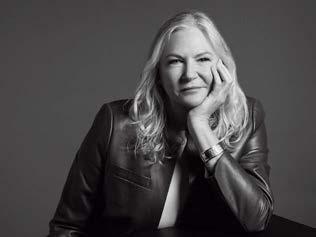
Dr. Alexes Hazen discusses the new frontier of bioregenerative medicine. BY
RAY ROGERS
PURIST: How has our medical understanding of skin longevity shifted recently? Are we moving from antiaging toward a more proactive agemanagement philosophy?
Dr. Alexes Hazen: We realize that the skin is an organ, and needs more than topical or Band-Aid treatments. The skin, just like any organ, responds to its environment, nutrients and stressors, including generic life stress. It reflects overall health and well-being, and therefore we need preventive medicine for the skin, along with the rest of the body.
Can we actually turn off the genes responsible for collagen degradation through lifestyle and topical interventions?
needs a high-tech laser versus a traditional lifestyle shift?
The clinical decision filter I use is a simple question: Is the problem a reversible one with lifestyle changes, or is the damage done? In other words, with changes in topical treatments and diet and wellbeing, can we improve the skin and hair, or is there too much damage and does it require intervention? This answer takes some experience and expertise. Also, one must take into consideration the velocity of change—where there is rapid worsening, often a hormonal or chemical change is the culprit, and that is often reversible.
No, we do not have that ability yet. But we can certainly modulate genes and both upregulate and downregulate, which can influence both collagen degradation— the slowing of that—and the increase in collagen deposition. Retinol, vitamin C, peptides, niacinamide and exosomes can significantly influence the reduction of oxidative stress, which can in turn downregulate collagen breakdown and degradation. Additionally, stress, inflammation and glycation can increase breakdown and damage to collagen.
Skin reflects internal health. Between chronic stress, gut health and sleep, what are the top internal disrupters you see that are prematurely aging patients’ skin and hair?
Top disrupters are what you would suspect: sleep dysregulation, chronic inflammation, chronic stress and poor diet contributing to glucose spiking high in the blood. There are different known mechanisms for each of these as it relates to hair and skin—from disrupting the hair growth cycle to impairing the skin barrier.
Your practice blends traditional wisdom with cuttingedge technology. How do you decide when a patient
You are known for a natural aesthetic. What regenerative intervention—like fat grafting or noninvasive techniques —offers the most significant long-term impact on facial longevity?
Fat is a wonderful biologic that improves both volume— faces lose volume as they age—and quality of skin. This has been studied and proven. Used judiciously, it can yield a wonderful and natural result for the long term; fat injected into the face should last forever.
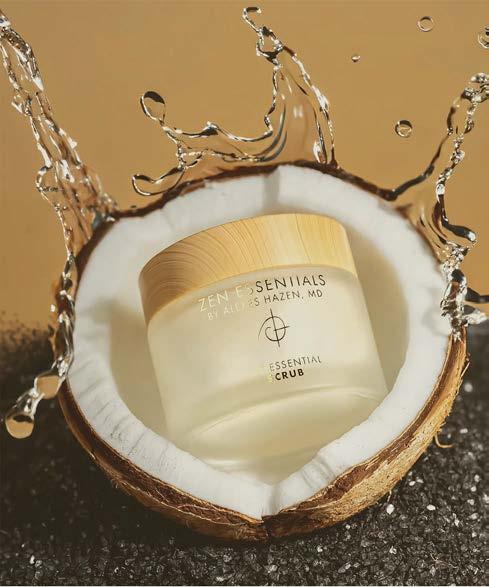
Your line, Zen Essentials, emphasizes protecting the skin barrier rather than simply nourishing it. Why is barrier integrity the holy grail of anti-aging?
As an organ, the skin locks in hydration, prevents toxins and infections from entering our system, helps control inflammation, and regulates healing and repair. As a key regulator of one of our system’s microbiomes, the skin keeps us in proper homeostatis or regulation. Dehydration, stress and poor nutrition can all affect the scalp and hair.
In the next decade, do you believe the focus will stay on fixing features, or will we shift entirely to bioregenerative medicine that heals the skin from within?
We will do both, because both can be an important part of health and the promotion of happy and healthy beings. alexeshazenmd.com
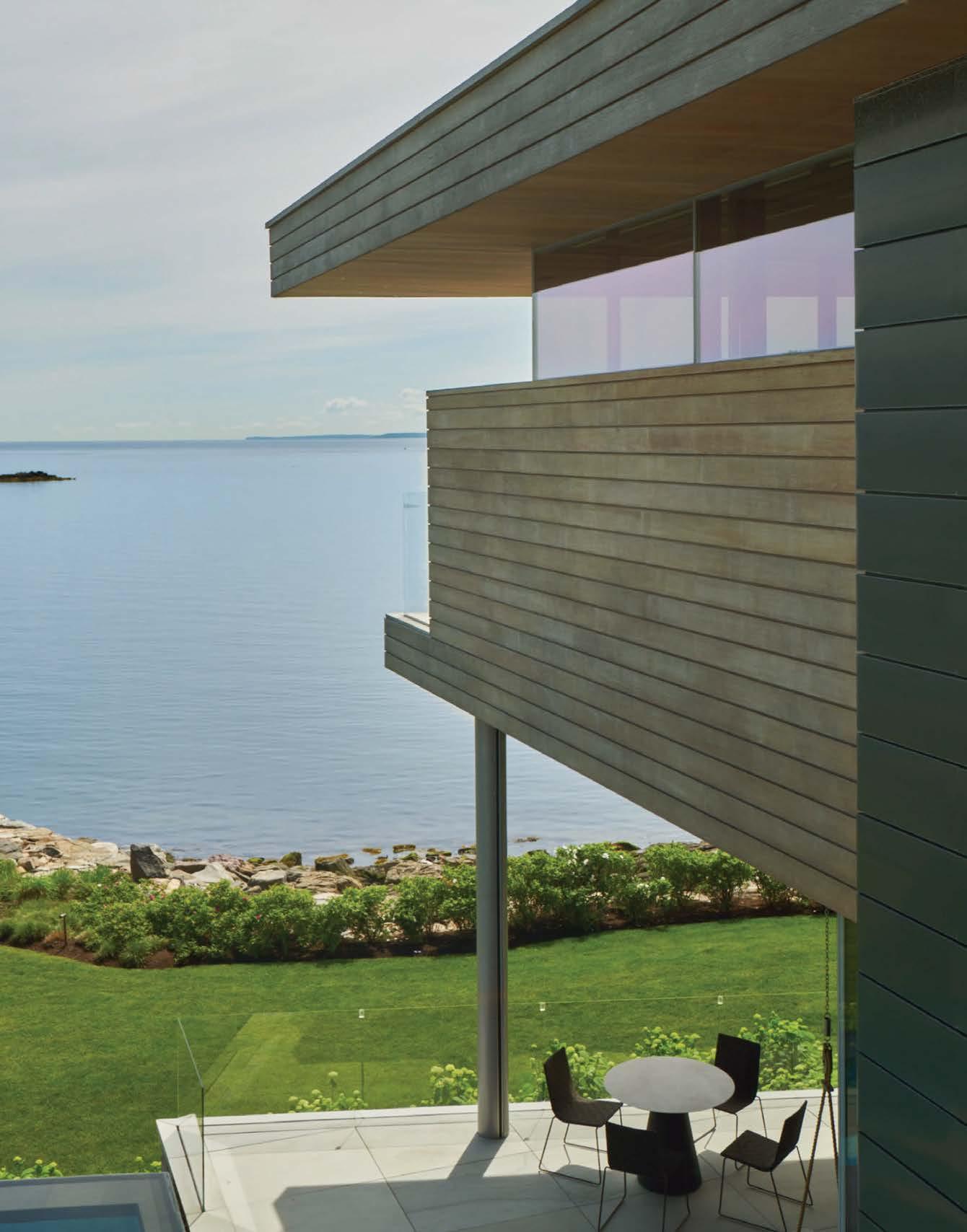
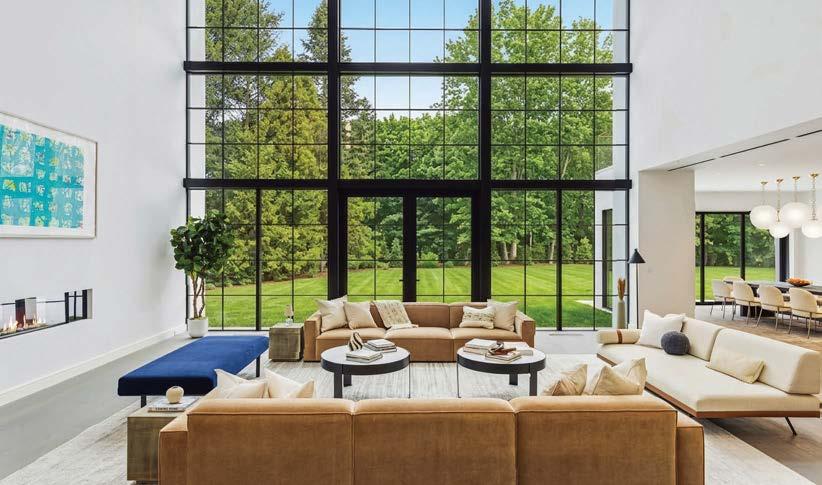


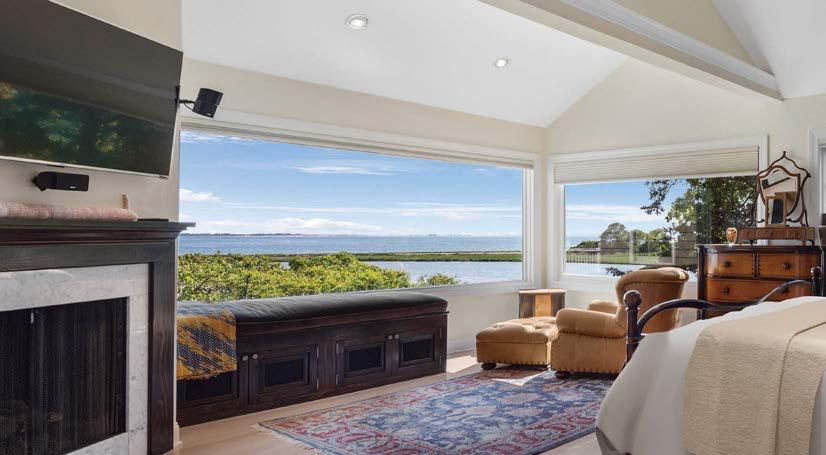


1. Rare, New & Luxurious
Just Completed in East Hampton
$11.25M | Architecturally Stunning Home 1.78± Acres Moments from the Village 6 BR | 5 Full BA | 3 Half BA | 9,200± sf Italian Boffi-designed Kitchen
Soaring 22.6’ Ceilings Incredible Finished Lower Level 43OldOrchardLn.com
James J. MacMillan 516.702.5674 | jmacmillan@bhsusa.com
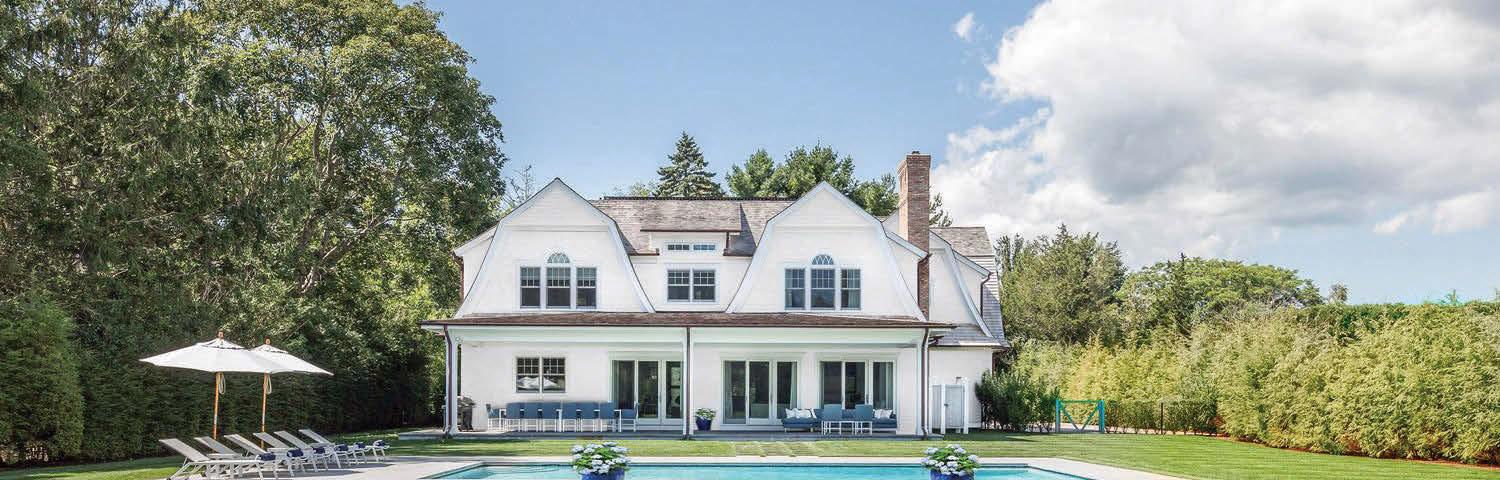
2. East Hampton Village Fringe
$4.595M | 1.5± Acres | 4,650± sf 8 BR | 6 Full BA | Expansive Interior 4,650± sf Plus 2,000± sf Finished Lower Level Heated Pool | Tennis/Pickleball Court 11OwlsNest.com
Timothy R. O'Connor 917.273.7099 | toconnor@bhsusa.com
Jeffrey C. Carter 646.388.2144 | jcarter@bhsusa.com
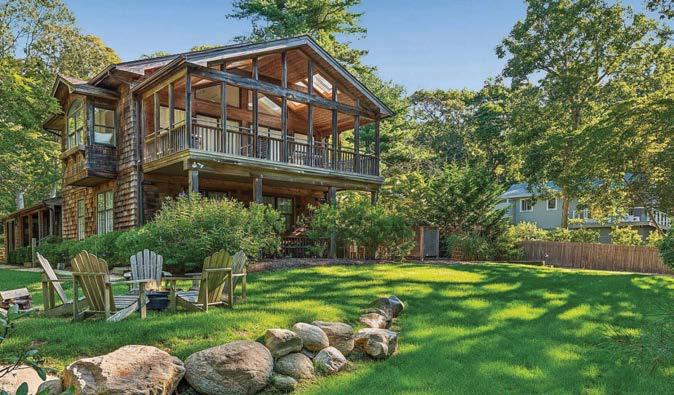
3. Sag Harbor Cove Waterfront
$5.495M | Bay Point Enclave
Architecturally Reimagined in 2018 4 BR | 3 BA | Private Dock 100 ft ± of Bulkheaded Shoreline Waterside Pool and Spa 20WhalersWalk.com
Korine M. Konzet 631.258.8577 | kkonzet@bhsusa.com
4. Unique Southampton Waterfront
$5.5M | 3,800± sf | 4 BR | 5.5 BA 1.6± Acres | Waterfront on Peninsula | Waterside Heated Gunite Pool with Spa Private Dock and Mooring Rights 134MiddlePondRd.com
Amelia M. Doggwiler 631.875.8120 | adoggwiler@bhsusa.com
5. Mediterranean Style in East Norwich
$1.398M | 3,124± sf | 5 BD | 3.5 BA 1.02± Acres | Top-Tier Eat In Kitchen Multi-Level Decks for Easy Entertaining Pearl Silver Certified Energy-Efficient Home 873OysterBayRd.com Shan Chowdhury 917.683.9051 | shan@bhsusa.com
6. Westhampton Beach Waterfront
$8.995M | Spectacular Views From Every Room 4000± sf | 5 BR | 5.5 BA
Heated Gunite Pool + Spa Poolside Cabana Turnkey Luxury | 218DuneRoad.com
William F. LeMaire 631.664.6300 | wlemaire@bhsusa.com

With a golf course, a beach club and every amenity you could dream of, luxury living has a new address. BY NANCY
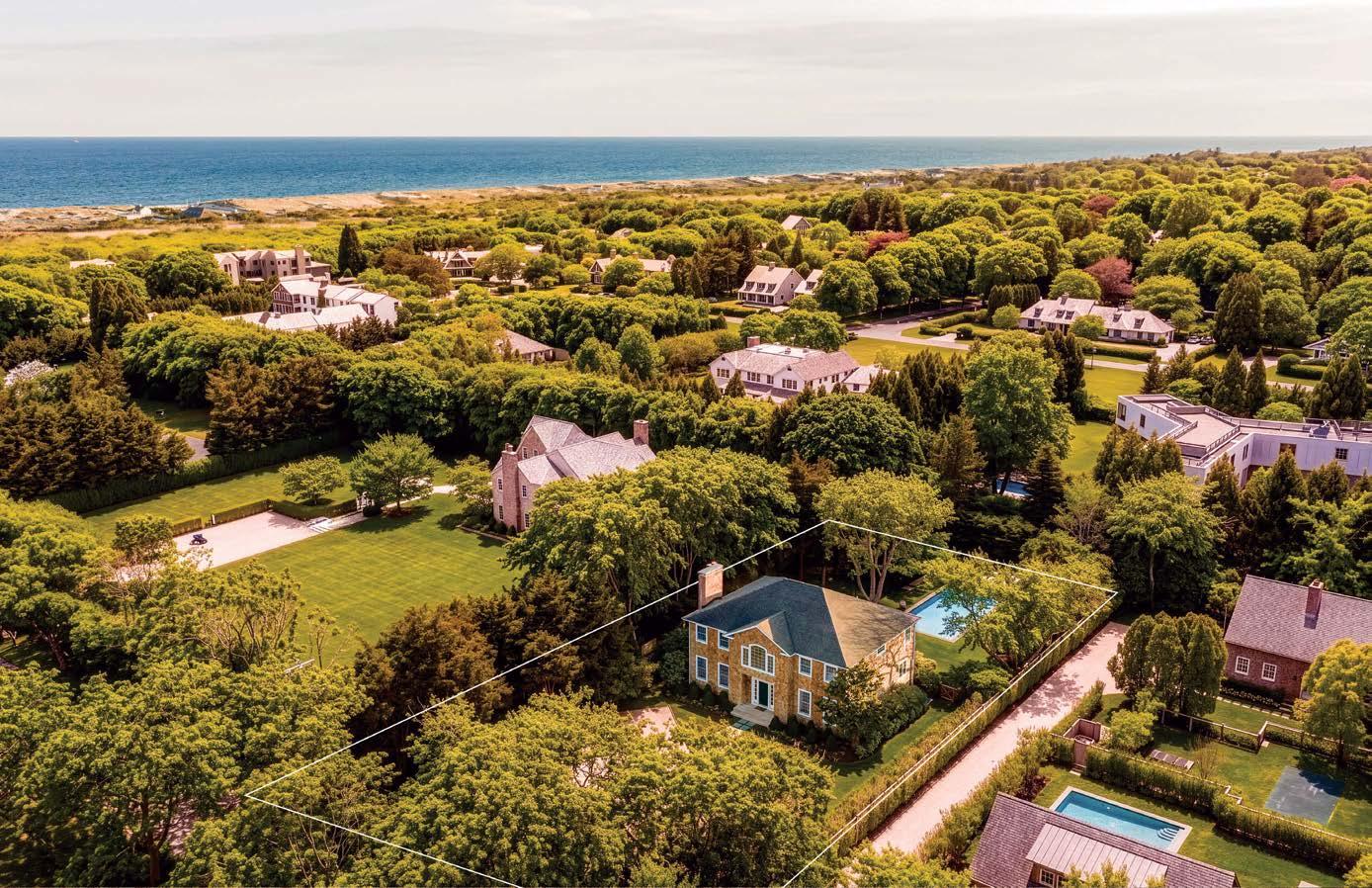
Luxury living in the Hamptons has always featured certain familiar markers: a coveted street address, a gunite pool, proximity to the Village, a water view, But at The Hills in East Quogue, homes come with a way of living and a legacy for generations—not to mention a golf course and a beach club.
As the latest offering from Discovery Land Company, The Hills brings together a rare combination for life out East: a Tom Fazio-designed championship golf course, exclusive access to Dune Deck Beach Club in Westhampton Beach, and a deeply considered approach to wellness, family and community. Just two hours from Manhattan, it offers something increasingly elusive in the Hamptons: space to breathe and room to gather. There’s a sense that every detail has been designed for living well and created for connection.
Set amid the Pine Barrens region, The Hills is the only gated community in the Hamptons, and that distinction alone gives it a singular presence. But what truly sets it apart is the atmosphere. There is prestige here, certainly, but not the buttoned-up kind. The mood is more relaxed, more assured and more modern.
That feeling comes through immediately on the golf course, where Fazio’s 18-hole design winds through the landscape, equal parts polished and wild. As at other Discovery properties, the experience is marked by the brand’s signature comfort
KANE
stations, where handcrafted snacks and local favorites appear along the route, turning a round of golf into something indulgent. Unlike the stricter traditions that define many private clubs, The Hills members can even play barefoot. It’s a small gesture that says a great deal: Luxury doesn’t have to be stuffy.
Life at The Hills extends well beyond the fairway. Homeowners also enjoy access to Dune Deck Beach Club, one of the Hamptons’ popular seaside destinations, with private cabanas, a striking pool and toes-in-the-sand dining that can stretch a lunch into a late evening. Families can relax while children build sandcastles and take part in Outdoor Pursuits: supervised games and outdoor adventures (think surfing, paddleboarding, kayaking, sailing and fishing). The effect is less beach club and more a well-orchestrated summer life.
This spirit carries through the community, where health is part of the foundation. The Wellness Center and Spa reflects a holistic philosophy centered on “movement, nutrition, recovery and rest,” pairing advanced fitness technologies with restorative treatments.
Dining at The Hills has the same level of thoughtfulness. Changing menus draw inspiration from the surrounding region, with local produce and seafood. In an area that has long defined luxury, The Hills feels like a meaningful evolution. It is not simply a new place to live, but a new way to live. thehillsdiscovery.com









From Sanford Biggers’ celestial forms to Arcmanoro Niles’ soulful portraits, the must-see exhibits on the East End this month. BY REGINA WEINREICH
Along the walkway at LongHouse Reserve, a golden goddess greets visitors with hollowed eyes, breasts erect. Renée Cox’s Soul Culture Statue, advocating for racial and gender equality, stands as one of several new pieces gracing the art space—with Sean Scully’s 48, a tower of stacked aluminum beds bright in car paint color, and William Kentridge’s Tap, literally a blown-up silverhued bronze version of a water pipe. Reflecting founder Jack Lenor Larsen’s Asian-inspired vision—gardens and sculpture in serenity and community—LongHouse sets a tone and spirit for the Hamptons arts season with local artists dominating, many having first-time solo exhibitions out East.
This season, Guild Hall features portraits by Arcmanoro Niles: Forgotten Words I Never Got to Say The artist experiments with traditional skin tones to create inner light. “The show marks the 10-year anniversary of my residency at Guild Hall, bringing together work I have made over the last 17 years,” says Niles, a resident of Springs. “My first solo museum show is at a place where I began.” Also on view at Guild Hall: Re-Paired, mixed-media assemblages by Claire Watson, in which the artist reconstructs and refashions leather garments.
Niles also looks forward to being a part of an upcoming exhibition in Sag Harbor. With a nod to painting traditions honoring the beauty of place, The Church will open This Land: Considering the American Landscape, comprising paintings from neighboring institutions such as the Parrish Art Museum and selections from Dan Flavin’s collection of Hudson River School works.
“Landscapes have become an important part of my practice over the years,” says Niles. “I’m excited to be in a show with painters who have inspired me over the years, especially Richard Mayhew, April Gornik and the Hudson River School artists.”
The Parrish will show part-time Sag Harbor resident Biggers. Exploring the movement of clouds, nebulous forms suspended in interior space, Drift is Biggers’ first solo presentation out East.
For this exhibition, Biggers creates a new large-
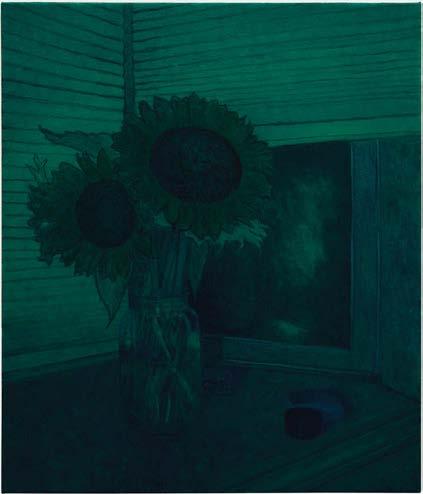

scale Codex series piece that explores the rich and varied histories of African American communities on the East End of Long Island—from Black whalers in the 19th century, to an Eastville church that was a stop along the Underground Railroad, to the SANS (Sag Harbor Hills, Azurest and Ninevah Subdivisions) neighborhood where Biggers lives, a thriving Black community founded by middle-class families during the post-WWII and Jim Crow eras.
In an adjacent gallery, Biggers creates a new site-specific floor-based sand installation inspired by the form and function of prayer rugs, portable breakdance floors and Japanese Buddhist mandalas. Beginning as a complex geometric pattern, the work’s ephemeral surface will be intentionally altered in a performance that disrupts the design’s hard edges to painterly effect, like clouds at the mercy of winds.
Springs being the epicenter of abstraction, the Arts Center at Duck Creek will show Brent Richardson: Everything and Nothing (June 27 to August 2). The coastal landscape of Montauk, where he lives, paints and surfs, appears in the work as atmosphere, in the monochromatic drawings and oil paintings that feel surreal and futuristic.
Basquiat-inspired, the paintings of Robert Nava will be shown in Southampton, at the Peter Marino Art Foundation. Abstract painters Betty Parsons and Carla Accardi, and Iranian-American artist Y.Z. Kami, complete the summer 2026 schedule till October.
Perhaps the most ambitious of all in a resonant birthday year, Southampton Arts Center displays The Story of America: 1776-2026, on view from May 23 through July 18. Featuring 250 years of American presidential campaign history, including the original flag flown at George Washington’s inauguration at Federal Hall in New York, an Eisenhower Corn Flakes box and paper dresses worn during campaign rallies in the 1960s, the exhibition signals hope for constructive and democratic response to our current political moment.



How BlackBook founder Evanly Schindler turns cultural chaos into essential art—one Hamptons exhibition at a time at the new BlackBook Art Gallery. BY RAY ROGERS
There’s a word Evanly Schindler keeps returning to: urgency. It’s the invisible thread connecting the abstract expressionists of the 1940s and ’50s to the artists making work right now, and it’s the force behind BlackBook Art Gallery’s 2026 season in Southampton.
“The emotional temperature is eerily similar,” Schindler says of the parallels between the postwar moment and the present. Where artists like Jackson Pollock and Lee Krasner were building meaning from the rubble of collapsed Old World structures— political, spiritual, aesthetic—today’s artists are navigating something equally unsettling: multiple wars, digital saturation, political polarization, the erosion of shared reality. The answer, both times, is the same—reinvention.
That conviction shapes The Lost Generation: Then and Now, BlackBook’s flagship summer exhibition, which brings New York School legends into conversation with contemporary heavyweights like Julie Mehretu and Rashid Johnson. Schindler is direct about what earns a contemporary artist a place on those walls: “It’s about a lived urgency that artists translate into a distinct visual language. Mehretu maps the velocity and instability of global systems— migration, geopolitics, architecture. Johnson constructs a material and psychological language from black soap, wax, text and grids.” What they share is a refusal to look backward.
The season’s second major show, Summer Figuration, pivots to a different kind of assertion. Where abstraction speaks to shared existential states, the figuration of Amy Sherald, Kerry James Marshall, and Toyin Ojih Odutola insists on the presence of the human form as

a statement of visibility, authorship and control. The two shows are in conversation—deliberately so: what happens when meaning breaks down, and what happens when identity is asserted back into the void?
This curatorial logic flows directly from BlackBook’s origins. Schindler founded the magazine (where this writer worked from 2005-2009) in 1996 as a counterinstitution—”not anti-institutional, big difference”— that moved faster, gave visibility to outlier artists before they were absorbed into the mainstream, and grouped artists by what they had to say to each other, not by period or pedigree. The gallery is, in his words, a physical manifestation of that editorial sensibility. “The walls replace the page, the artists replace the contributors, and the exhibition becomes the editorial argument.”
The next chapter is Detroit, where Schindler and his business partner,
Christos Moisides, who is at the heart of the city’s cultural renaissance, are set to open the new BlackBook Art Gallery in fall 2026. The city will further position itself as an art destination when the Detroit Salon opens in 2028. For Schindler and Moisides, the city’s Eastern Market carries the same electric, pregentrification energy that New York’s Meatpacking District held 25 years ago. The sales ethos aligns with the creative, says Moisides: “it’s high/low; blue chip (like Basquiat, de Kooning, Cecily Brown), and emerging (Elizabeth Neel, Shaina McCoy, Layo Bright, Michael Butler), with price points from thousands to millions.”
After nearly three decades, what remains most gratifying, Schindler says, is simpler than any curatorial thesis: “We never fully behaved the way we were supposed to, have a shit-ton of fun, and somehow that turned into longevity and success.” blackbookartgallery.com

IvyWise’s Dr. Kat Cohen offers insights for navigating the high school years with key strategies that set up students for success.
PURIST: What should students in each grade be doing now to prep for college?
KAT COHEN: All four years of high school are evaluated by colleges, so it’s important to have a strategic four-year plan from day one of ninth grade. In ninth grade, map out a course load that becomes increasingly rigorous, develop strong study and executive functioning skills, and start identifying your interests to build your profile.
Refine interests and add depth in your extracurriculars in 10th grade. Impactful activities, research projects and internships aligned with your passions set the stage for shaping your hook. With many top colleges reinstating standardized test requirements, a personalized prep strategy—supported by expert tutors—is invaluable.
Eleventh grade is the most critical college prep year. Continue achieving strong grades, ace the ACT/SAT, refine your college list, demonstrate leadership skills and impact in extracurriculars, and start brainstorming personal statement/ supplemental essays.
Senior year, maintain strong grades and stay on top of application requirements and deadlines! Expert guidance ensures applications are flawless and compelling.


How has the banning of affirmative action and elimination of legacy considerations changed admissions? While race-conscious admissions have ended, many schools added “community” questions for students to share diverse experiences. Several colleges have also terminated legacy admissions, but at those that do consider legacy status, students must still have strong applications and should apply early.
What do students need to know about application essays?
All essays should reveal something not found elsewhere in
the application, with supplemental essays demonstrating interest in, and fit at, each school. IvyWise’s signature Roundtable process—where our full team of former admissions officers review applications— ensures every essay is compelling and authentic.
How have you seen college lists evolve?
We are seeing what I am calling “the wave” of more schools becoming highly selective. Many schools that were once considered reliable backups, like Colgate, Northeastern, Tulane and UMiami, are becoming increasingly selective. As the list of prestigious colleges becomes longer, more students need expert guidance when applying. IvyWise counselors use their admissions office and enrollment management experience and deep knowledge of application data to predict each student’s chances of admission.
What should students know about applying from a competitive high school?
Applicants are evaluated against others from their high school, so it is imperative to stand out. Students from top schools are expected to submit strong standardized test scores, even to testoptional colleges. They should also take a rigorous curriculum, pursue impactful extracurriculars and strategically use early application rounds.
What should families know about hiring a college admissions consultant?
Look for counselors with admissions and enrollment management experience, verified results, and a comprehensive methodology. At IvyWise, our team’s real-world experience, personalized approach, proven methodology and track record set us apart. Our Unlimited Counseling program provides the most comprehensive college prep guidance to families, and includes additional benefits like project mentorship, tutoring and executive functioning support. ivywise.com















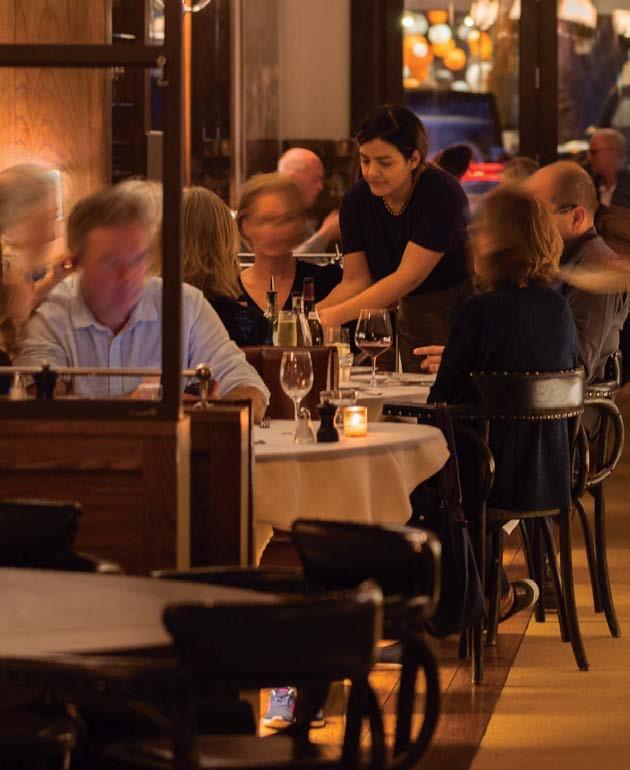

From the beaches of Bridgehampton and Shelter Island to the slopes of Snowmass Village, these homes are redefining modern living. BY
NANCY KANE
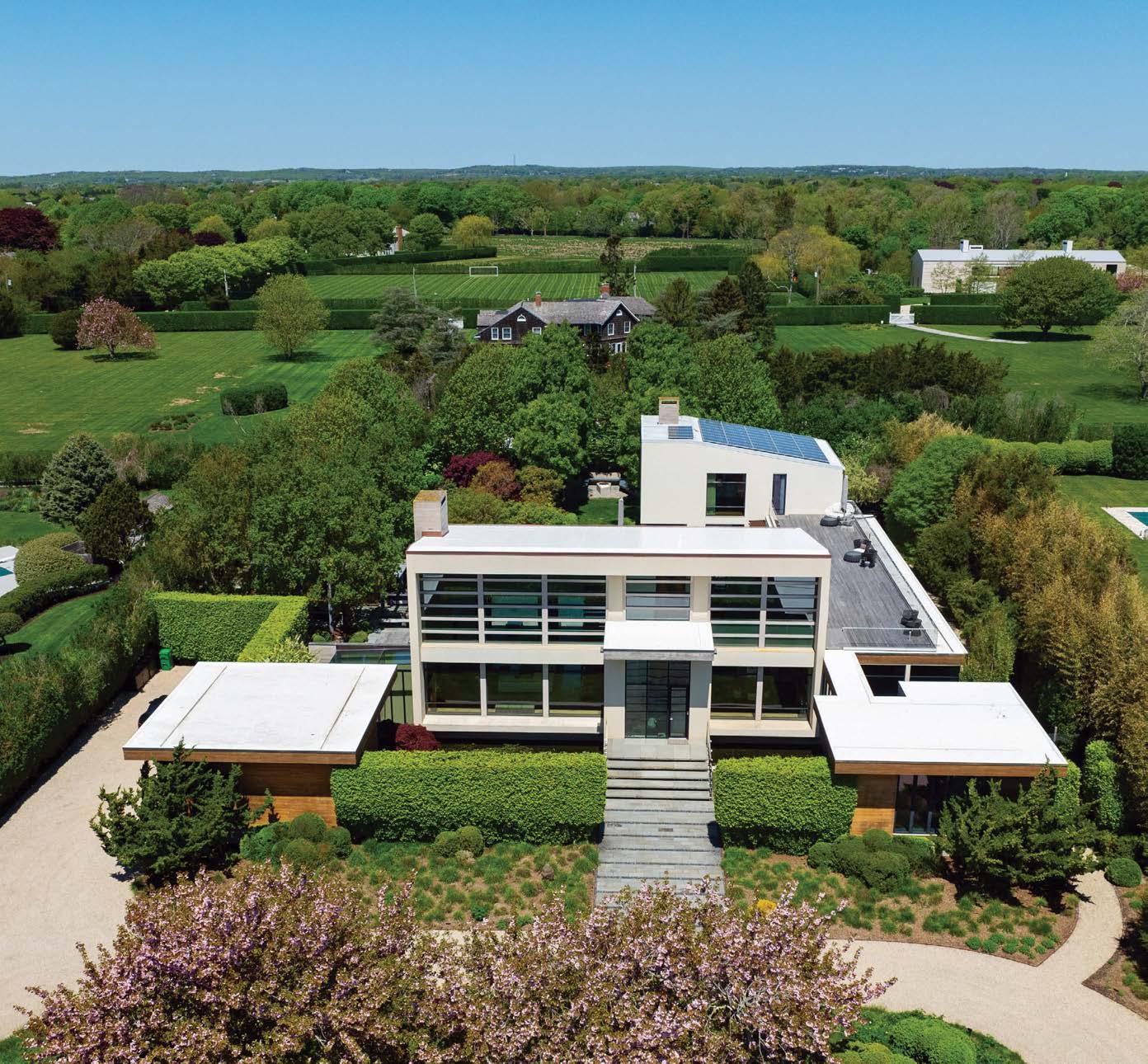
At 144 Meadowlark Lane in Bridgehampton, renowned architect Tommy Zung delivers a masterclass in modern design. Listed for $18.5 million, with Beate V. Moore of Sotheby’s International Realty, the 8,000-square-foot residence seamlessly blends indoor and outdoor living through expansive glass walls, Nana doors and serene landscaped terraces. Rich walnut and terrazzo flooring, Venetian plaster walls and leather-wrapped teak staircases
create warmth within the minimalist aesthetic, while amenities include a teak sauna, marble steam room, oversize heated pool and spa, gas firepit and state-of-theart Lutron and Savant smart systems and three fireplaces. An entertainer’s dream and tranquil private retreat, this 8-bedroom home with 9 full and 2 half-baths embodies the next generation of sustainable luxury living.
A rare opportunity awaits in the exclusive Dering Harbor

enclave of Shelter Island. An 8-plus-acre estate parcel, once part of Oriole Farm, the arboretum and gardens of famed horticulturist Alice Fiske, is listed with Gary DePersia of Corcoran, asking $2.895 million. Steeped in heritage and beauty and surrounded by nature and the sea, the land at 31 Manhanset Road offers ample room for a grand home, pool, tennis and all the accouterments of country living. A service entrance is in place for convenience and privacy. Dering Harbor benefits from its own municipal water supply, ensuring drinking water and a thriving yearround landscape.
Located across from Gardiner’s Bay Country Club, with views of the fourth hole, the estate is perfectly positioned for a walk to beaches, charming shops and fine dining tucked along the waterfront. Shelter Island affords access to both the North and South Forks, and this pristine open space gives homeowners the freedom to craft something timeless: a sanctuary where nature and heritage meet.
Tucked within The Pines at Owl Creek, an exclusive enclave in Snowmass Village, 163 Spruce Ridge Lane captures the grandeur of Rocky Mountain living with refined European craftsmanship and true ski-in/ski-out access.
Asking $20,995,000 and listed with Brittanie Rockhill at Douglas Elliman, the 6-bedroom, 7-bath estate features soaring timber-beamed ceilings, hand-carved woodwork, custom iron detailing, wraparound terraces and panoramic mountain vistas throughout. Designed for year-round

entertaining, the home includes a wine cellar, media room, billiards lounge, steam room, massage room and oversize hot tub, a stone fire pit and expansive covered outdoor living spaces centered around a dramatic waterfall feature. With proximity to downtown Aspen and Aspen/ Pitken County Airport, it’s a residence that effortlessly balances alpine luxury with warmth and intimacy.





Purist’s guide to top global getaways for health and well-being.
Aqua Dome
This spa-focused hideaway has sound bowl sessions, thalassotherapy (therapeutic use of seawater), a kids sauna menu, anti-cellulite treatments and seven luxury saunas. It is also located near Sölden, a renowned winter sports area.
aqua-dome.at/en
Fasano Angra Dos Reis
After a trek up Pico do Frade or a cruise around the archipelago’s 300 islands, decompress with a guided meditation beneath a waterfall, or indulge with Costa Brazil products. fasano.com.br
Casa de Campo
Enjoy gourmet dining, rejuvenate at the state-ofthe-art spa or unwind on pristine private beaches. It’s also home to the Caribbean’s No. 1-ranked golf course. casadecampo.com.do
Punta Cana
Find your perfect moment of rest and relaxation at Punta Cana Resort, where lush living meets nature. Enjoy gorgeous beaches, world-class golf and five-star accommodations. puntacana.com
Six Senses Fiji
Sleep on a Naturalmat organic bed in one of 24

villas located on Malolo Island. There is a full-service marina, a surf school and 60 luxury residences. sixsenses.com
Arctic TreeHouse Hotel
Experience a traditional Finnish sauna and ice-swimming in an Arctic Circle forest where you’ll hopefully catch a glimpse of the northern lights while staying in sustainably built housing. arctictreehousehotel.com
Amanzoe
Relish in the agricultural beauty of Greece and witness the nearby harvesting of olives and
pomegranates. Also, hop in the steam and coldplunge pools before sipping cocktails inspired by the 12 Olympian gods. aman.com
NIHI Sumba by Chris Burch
For a minimum of three nights, engage in philanthropic work with the Sumba Foundation, embark on a spa safari, go deepsea fishing and visit the chocolate factory. nihi.com
Aman Tokyo
Steps away from the Imperial Palace Gardens, Aman offers traditional Kampo herbal remedies, shiatsu and acupuncture. aman.com
MALTA
Iniala Harbour House
A restorative wellness escape set along Valletta’s Grand Harbour. Sundrenched suites, private plunge pools and sweeping views of the Three Cities await. Recharge at the tranquil spa or dine at the two-Michelin-starred ION Harbour. inialamalta.com
MEXICO
Cuixmala
An extraordinary visual feast, this exquisitely appointed eco-estate on Mexico’s West Coast features a vast private nature reserve complete with majestic wild zebras and eland antelopes roaming free. cuixmala.com

COLORADO
Aspen Meadows Resort
Located on 40 acres beside the Roaring Fork River, this secluded sanctuary is in Aspen’s historic West End. Enjoy an art walk at the Herbert Bayer-designed property. aspenmeadows.com
FLORIDA
MIAMI
1 Hotel South Beach
This sustainable oceanfront escape features four pools and the Bamford Wellness Spa, which uses only organic ingredients. 1hotels.com/south-beach
The Ritz-Carlton, South Beach
This oceanfront classic with 1950s art moderne style offers daily beach yoga classes and Pilates sessions, a full-service spa and
an elevated pool scene. ritzcarlton.com/southbeach
PALM BEACH
The Colony Hotel
Escape to “Pink Paradise.”
The historic Colony, with its signature rose-colored exterior, is located steps from the famed Worth Avenue. thecolonypalmbeach.com
Eau Palm Beach Resort & Spa
A private beachfront escape with tropical gardens best known for its five-star spa. Enjoy Champagne soaks and aromatherapy lounges. eaupalmbeach.com
NEW YORK
Baker House 1650
This boutique bed-andbreakfast in East Hampton offers three pools and a modern spa amid the 17thcentury architecture. Hit the
COSTA RICA
Playa Cativo Lodge
Accessible only by boat, this remote sanctuary offers complete nature immersion deep within the rainforest. Discover a wild paradise that pumas, anteaters, scarlet macaws and dolphins call home. playacativo.com
JAPAN
Azuma Farm Koiwai
The newly opened 24villa retreat set within the 130-year-old Koiwai Farm offers private wood-fired saunas, farm-to-table dining and immersive experiences like horseback riding and mountainside cycling. azumafarms.com
MONTANA
The Ranch at Rock Creek
Experience ranch life by glamping on a 19thcentury homestead with the entire family. Find flyfishing, archery, shooting sports, forest bathing and
sauna, and book a facial or massage. bakerhouse1650.com
The Lodge at Woodloch Personal awakening is the order of every day at the Lodge at Woodloch, an adults-only spa resort nestled in the Poconos, an hour and a half from NYC. thelodgeatwoodloch.com
cross-country skiing at Discovery Ski Area. theranchatrockcreek.com
The Resort at Paws Up Montana
Just a half-hour drive or so from Missoula International Airport, the premier luxury ranch resort is located on 37,000 acres in Greenough, Montana, offering guests an active, outdoor-driven escape. Stay in one of the upscale safari-style tents or historic homes, and partake in Western adventures like horseback riding, flyfishing and ATV tours. pawsup.com
7132 Hotel, Switzerland
SAUDI ARABIA
Banyan Tree Alula
A tranquil desert retreat nestled in the secluded Ashar Valley, the hotel is surrounded by sweeping desert sands, towering sandstone cliffs and sculptural rock formations. banyantree.com/saudi-arabia
Black Tomato
Specializing in bespoke itineraries focusing on personal growth and cultural immersion, Black Tomato helps families, couples, groups and solo travelers reconnect through slow-paced exploration, a passion for discovery and a commitment to sustainability. blacktomato.com

Canyon Ranch
This wellness resort in Lenox, Massachusetts, offers a world-class wellness menu. Choose from 1,500 services in a setting that inspire holistic healing. canyonranch.com
Inness
A serene Catskills retreat set on 220 acres, with 28 minimalist cabins and a 12-room farmhouse. inness.co
Kripalu Center for Yoga & Health
This renowned wellness retreat in the Berkshires offers immersive programs across yoga, meditation and mindful living in a lakeside setting. kripalu.org
Mohonk Mountain House
One of the Hudson Valley’s most iconic resorts, with 85 miles of trails, farm-to-table cuisine and an award-winning spa. mohonk.com
The Dutchess Inn and Spa
Catch a break from the city at this Hudson Valley escape with bespoke designed rooms, a full-service spa and access to nearby trails. thedutchessinn.com
The Ranch Hudson Valley
The Ranch fosters a complete health reset, based on the principles of movement, mindful nutrition, wellness in
nature and authentic human connection. theranchlife.com
Troutbeck
A historic Amenia, New York, estate set on 250 acres—home for centuries to naturalists, poets and romantics. Enjoy tennis courts and quiet, creekside trails. troutbeck.com
Valley Rock Inn
Just an hour from NYC in Sloatsburg, New York, surrounded by 70,000 acres of forever-wild Harriman State Park and Sterling Forest, this fabulous inn offers a serene summer escape where nature, wellness and design meet. valleyrockinn.com
Atman Retreat
Located on a historic 18th-century property off the shores of the Montego Bay Lagoon in Jamaica. Gain emotional clarity and insight at one of the four-day experiences, which include preparation, a psilocybin ceremony, integration support and body-based practices and treatments. atmanretreat.com
Beckley Retreats
Spring-clean your psyche and heal alongside a world-class team of facilitators at one of Beckley’s signature five-day programs in the Netherlands or Jamaica. A seamless blend of global wisdom traditions with clinically informed approaches to psychedelic care makes this one of the best psychedelic retreats in the world. beckleyretreats.com
Rythmia Life Advancement Center
Nourishing farm-to-table meals, luxurious amenities and community connection awaits at this allinclusive retreat in Guanacaste, Costa Rica. Accelerate your personal growth and self-discovery with up to four optional ayahuasca medicine ceremonies. All stays include special extras like dance therapy, massage, hydrocolonic cleanses, breath work and more. rythmia.com
Soltara
Specializing in medically supervised ayahuasca ceremonies, this ecoretreat provides safe, transformative spaces for spiritual growth and emotional breakthrough. soltara.co


At NICHOLAS AIR, being a pilot is an athletic feat. From former Navy SEALs to elite smokejumpers, these airmen maintain peak levels of physical and mental readiness to dominate the skies. BY
ABBY TEGNELIA

The cockpit of a NICHOLAS AIR jet is a high-performance environment that demands the same level of physical conditioning as a professional athlete. The company’s recruitment strategy mirrors that of an elite military unit: selecting the best of the best by specifically targeting individuals whose backgrounds in special operations and emergency response have forged a permanent mission-first mindset. For these pilots, maintaining optimal physical fitness is a professional requirement, ensuring they arrive at every destination—from the high-altitude runways of Aspen to the tropical coasts of Puerto Vallarta—with total precision.
To execute a sophisticated 15-day rotation with the highest level of service, the company doesn’t just hire pilots; it selects tactical athletes. “Flying in the private space is all about mental clarity,” says John Simas, a Phenom 300 Captain and instructor. As a former smokejumper, Simas views physical fitness as the foundation of professional excellence. “Staying sharp is a must.”
For these elite airmen, the training never stops. Embraer Phenom 300 Captain and former Navy SEAL George Wehrung treats every layover as an opportunity to maintain his ready-for-anything status. “If I can get in a hotel-gym session before showtime, I do,” Wehrung says. Even without
a gym, the standard remains: five rounds of lunges, incline pushups and air squats. He’s even been known to charge up 18 flights of stairs at the Sonesta in Nashville just to maintain his competitive edge.
This high-performance mentality extends to nutrition. There are no off days for these pilots when it comes to their wellbeing. Wehrung recently dropped 33 pounds by adhering to a strict carnivore diet—meat, eggs and seafood—optimizing his energy levels for the flight deck. “Your brain burns fat as energy,” he notes, emphasizing that a pilot’s diet is a primary source of cognitive power.
Latitude Captain and check airman Clay Scarborough echoes this demand for discipline. Whether it’s a full duty day or a quick hop to Nantucket, the expectation is consistency. Between tracking vitals on Garmin Fenix watches and monitoring recovery via Oura rings, the NICHOLAS AIR cockpit is a place where technology and biology meet. At this altitude, fitness isn’t just a lifestyle; it’s a prerequisite for the safety and precision the brand’s members expect.
At NICHOLAS AIR, the message is clear: To fly the best, one has to be the best—physically, mentally and tactically. Only those who maintain these elite standards earn the wings. nicholasair.com











Performance meets restoration with wellness coach Nora Tobin at The Ocean Club, A Four Seasons Resort, Bahamas. BY RAY ROGERS
“We are essentially helping high performers recalibrate their nervous systems,” says Nora Tobin, describing the philosophy behind her wellness residency at The Ocean Club, A Four Seasons Resort, Bahamas. “Whether they are stepping off a plane from a board meeting or building an empire, these guests operate in environments where cognitive output is constant. We provide the tools to ensure they can maintain that caliber of intelligence without the burnout.”
Tobin, a New York-based performance coach and former rescue specialist trained in helicopter and cliff recoveries, has swapped high-stakes survival for a practical science of restoration—though the two worlds are closer than they might appear. In ocean rescue training, she explains, the first instinct is to act immediately. But the protocol demands something more counterintuitive: Stop and take a breath. “It gives you the ability to regulate your system,” she says. “When you can take that pause before reacting, you think more clearly, you move more deliberately.” It’s a lesson she now repeats to executives and entrepreneurs who face their own version of high-stakes pressure every day.

restored on vacation and staying resilient in the boardroom. To accomplish this, she integrates tools like the 4-5-6 breath— inhaling for four seconds, holding for five, exhaling for six—to target the amygdala and shift the body out of fight-or-flight mode into focus.
Central to Tobin’s philosophy is the conviction that wellness should be enjoyed, not endured. The more joy guests find in the process, the more committed they become to the practice.
At The Ocean Club, that means breath work sessions in the Versailles-inspired gardens—where Tobin sets up what she calls the Versailles Athletic Club, a structured experience in agility, mobility and sport-specific conditioning set amid the sprawling grounds—followed by passion fruit martinis on the terrace overlooking the water. Discipline and indulgence, she argues, are not opposites; they’re partners.
This year, the residency incorporates the resort’s brandnew padel courts. Tobin is also debuting a Fit Family Retreat, designed around the idea that multigenerational wellness travel deserves its own framework—one where parents and children move, eat and restore as a unit.
At The Ocean Club, Tobin translates that survivalist discipline into a framework built on four pillars: stress optimization, cognitive conditioning, reparative sleep and performance nutrition. The setting is luxurious, while the work is practical: bridging the space between feeling
For those looking to reset fully, Tobin is hosting a series of Rejuvenation Getaways throughout the year: June 5-8, July 9-12, October 16-19 and December 4-7. Guests leave with more than a tan—they depart with tools built to last past the airport. fourseasons.com/oceanclub
GET YOUR GOOD HEALTH ON. JOIN US FOR OUR FIFTH ANNUAL

SAVE THE DATE
FRIDAY, JULY 10
11AM-3PM Southampton Arts Center under the lawn tent 25 Jobs Lane Southampton, NY
Learn from the best in wellness—from concierge integrative practitioners to Eastern and Western healing modalities, nutrition, clean beauty, sustainability, and innovators in health—all curated for you under one tent, in one day.

Summer is a prime season for riding and jumping—and new takes on polo.
and athleticism required of a champion.









0 7 . 0 2 . 2 6 5:30PM | ST. REGIS ASPEN RESORT 315 E DEAN ST, | ASPEN, CO 81611

The Best Buddies Aspen Gala and Champion of the Year is an impactful event benefitting Best Buddies’ mission. Limited to 400 attendees, including business leaders, philanthropists, community champions, and notable supporters, the Gala brings together an extraordinary group in support of Best Buddies’ mission of creating friendships, jobs, leadership development, inclusive living, and family support opportunities for people with intellectual and developmental disabilities.

Now in its second year, Aspen Valley Polo Beach Club is a fun Sunday mashup, created by Gregory Kiner, director of Corporate Communications & Sponsorships, head of Live Events. Kiner had produced snow polo in Aspen for the past 14 years. His annual stays in Palm Beach inspired him to add a coastal twist to Sunday games, at 11AM and 1PM: “I wanted to grow the summer program because we’re in Carbondale, 20 minutes from Aspen. It was important to give people a destination,” he says, and so Aspen Valley Polo Beach Club was born.
To manifest beach days in the Rockies, Kiner ordered up three truckloads of sand from an Antero Junction quarry to be spread across a sun-drenched alpine beach club. “We considered white Miami Beach sand, but that doesn’t work in the mountains—it would blow everywhere,” Kiner says. “We chose a sand that wasn’t superfine, and would absorb water and dry out quickly.”
Creating a chic beach environment called for a few key features: “a DJ—very Nikki Beach-style, cold plunges and a boutique,” says Kiner of the weekly party, where the admission fee is $75 per day, $125 with a
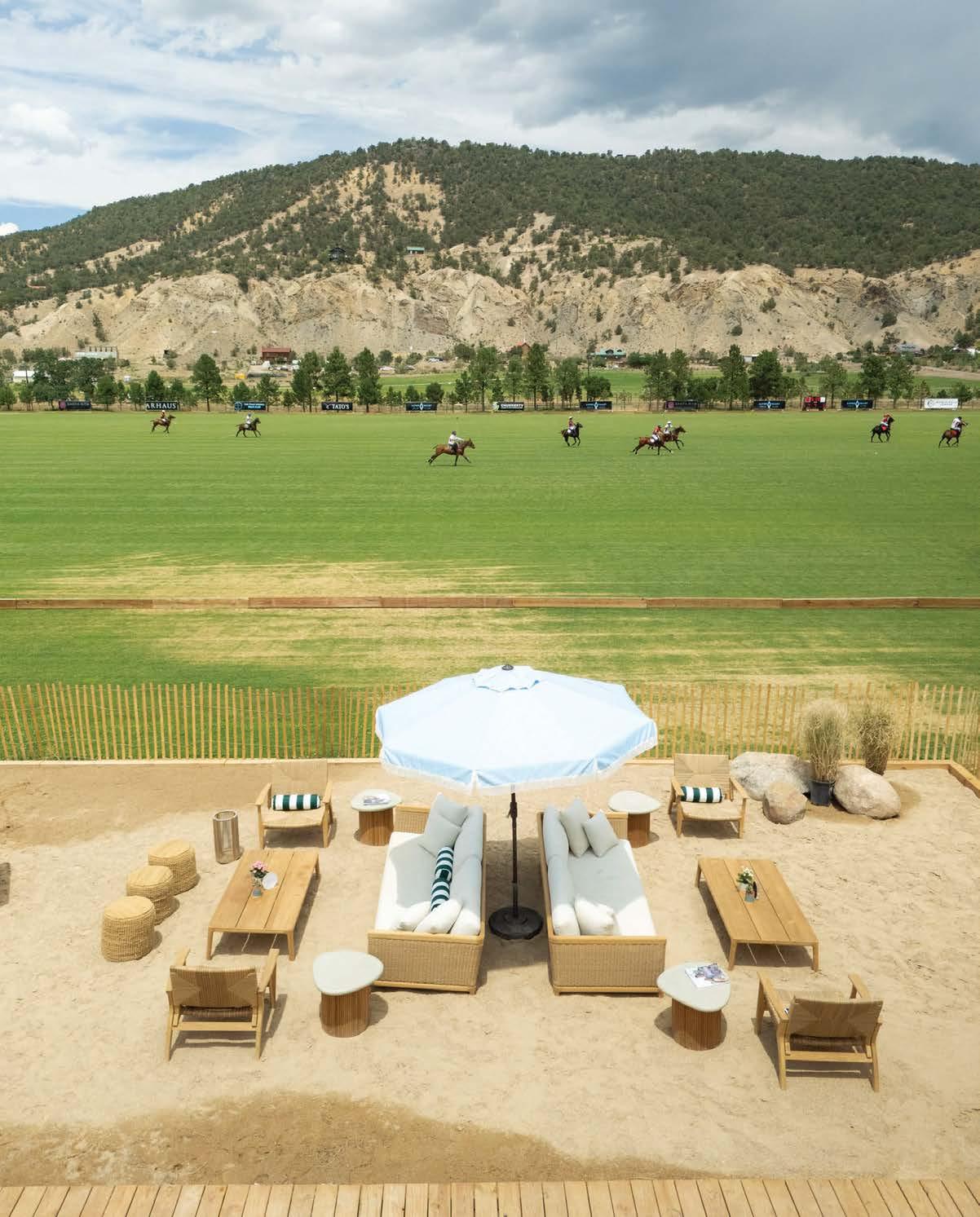
bottle of Champagne or a charcuterie board. The DJ plays house, “get up and dance music,” and the cold plunges are set to a robust 50 degrees. A boutique sells everything you’d need for a day at the beach, as well as sweatshirts for evening, when the temperature cools. At another special event, Twilight Polo Series on Tuesday nights, the game is played until sundown, followed by a spectacular aerial light show.
“We learned a lot last summer—when we started, we did not have enough umbrellas, but by the end of the season, we brought in all the shade that we could possibly need,” says Kiner. This includes military-grade camouflage netting, popular at clubs in the South of France and Italy.
“Where we are is about 1,000 feet closer to the sun,” he adds. “People often forget, even in the winter, that you need to wear sunscreen. Between 11AM and 2PM, you’ve got to have shade. Which is what gets a lot of people into the cold plunges. They’ll say, ‘It’s too cold,’ and the next thing, they’ve got their feet in the water, and they’re sipping a cocktail.” aspenvalleypoloclub.com
Experience summer in the Roaring Fork Valley at Aspen Valley Polo Club in Carbondale, where world-class polo unfolds against a dramatic mountain backdrop.






Join us for Aspen’s most stylish summer tradition.
BEACH CLUB POLO + TUESDAY TWILIGHT POLO
Aspen Valley Polo Club










BEACH CLUB POLO
A vibrant social scene where guests relax in the sand-side Beach Club as spectacular players and horses compete just steps away.
Sundays | 11a – 3p | July 12, 19, 26 | August 2, 9, 16, 23, 30
Beach Club
$75/person
Beach Club with Rosé & Charcuterie $125/person
Grandstand Seating
$25/person
TUESDAY TWILIGHT POLO
Twilight Polo. Beach Club. Laser Lights. The world’s top players battle it out at sunset. Watch the sky explode with lasers over the mountains.
Tuesdays | 6p – 9:30p | July 14, 21, 28 | August 4, 11, 18, 25
Twilight Polo
$75/person
Twilight Polo with Rosé & Charcuterie $125/person
Grandstand Seating $25/person








Discover restorative spas, boutique stays and elevated eats. BY ALI
MARGO
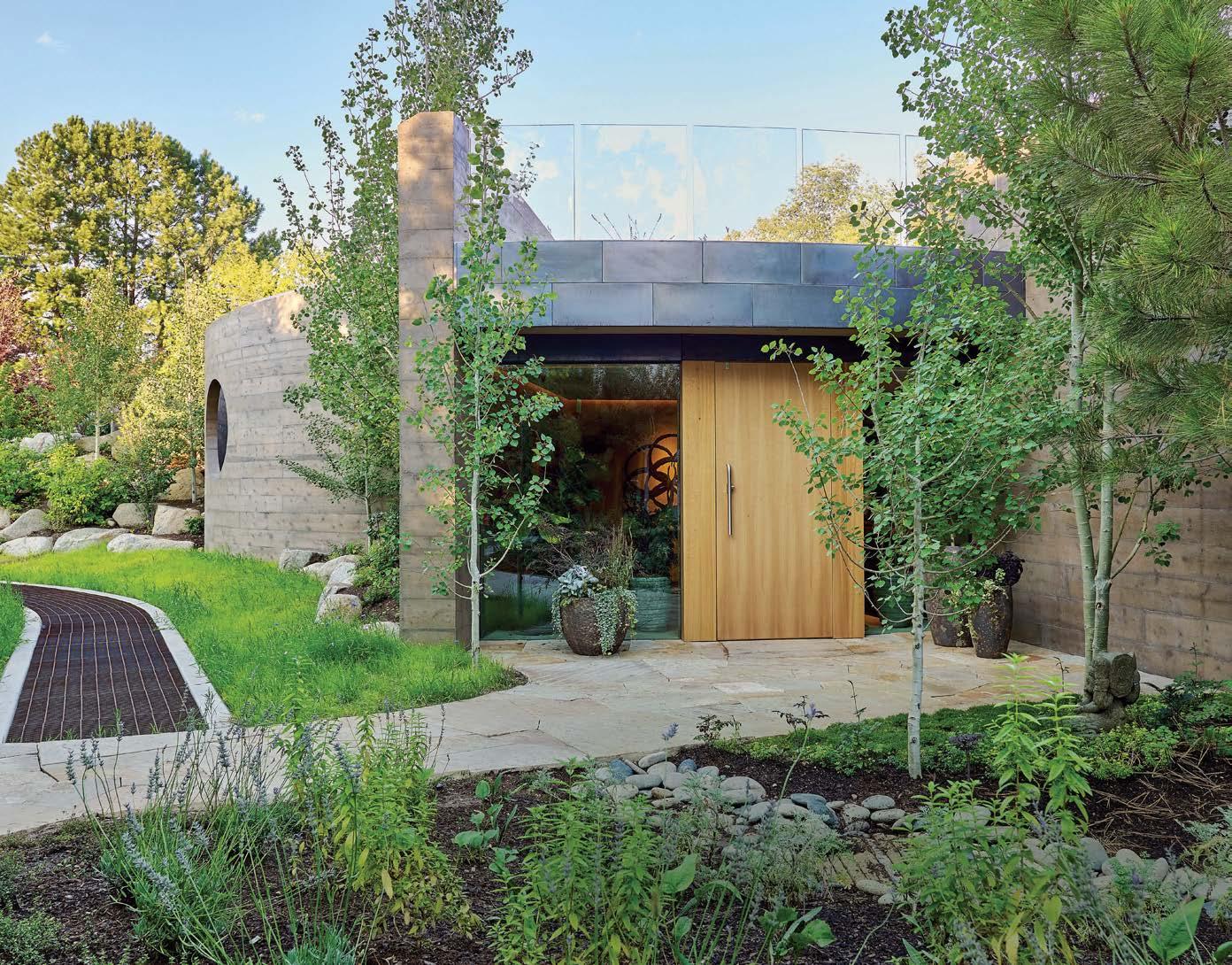
There’s a saying in Aspen that the billionaires pushed the millionaires down valley to the small towns along the Roaring Fork River that include Basalt, Carbondale and Glenwood Springs, which offer community, charm and plenty of free parking. With that exodus came a burgeoning scene of new, upscale restaurants, hotels, shops and spas that rival what you might find in Aspen, but at a fraction of the price. This summer, follow the river down valley for a little field trip and discover your flow.
Glenwood Springs is perhaps best known for its hot springs, but
now a centuries-old tradition is new again at the Bohemian Bier Spa (bohemianbeerspa.com) Dasha Balasova (who has owned the Black Nugget in Carbondale since 2012) brings a unique beer bath experience from the region of Bohemia (not to be confused with the style of clothing worn at Coachella) to the Roaring Fork Valley. The furthest thing from a boozyhippie dip, the modern, elegant and private spa is housed in an extensively renovated 140-year-old building in historic downtown Glenwood Springs. Eight private 90-minute therapy rooms feature handmade European oak


tubs prepared with a combination of hops, barley and brewer’s yeast for an aromatic soak infused with vitamins and antioxidants. Each space has a rainfall shower and infrared sauna with an 11-light chromotherapy spectrum. To round out the spa experience, there’s also beer, of course—available on tap from Eagle River Brewing Company— along with a selection of wine, prosecco and a charcuterie platter.
Make a night of it at Hotel Maxwell Anderson (maxwellandersonhotel.com), a century-old landmark with a recent $5 million upgrade. Formerly Hotel Denver (a moniker that only served to confuse people), old meets new in the 90-room boutique hotel where history, charm and modern luxury capture the evolution of downtown Glenwood.
Witness the burgeoning scene in Carbondale, where Aspen restaurant veterans relocated down valley for a more community-centric vibe. At Amara Kitchen and Wine Bar (amaracarbondale.com), owners Maria J Cardenas (a longtime Aspen sommelier and wine director) and her husband, Ricardo Leyvas (formerly in management at The Little Nell), dish up Mediterranean fare like Spanish-style caviar, swordfish souvlaki and tomato fatoush in an intimate, personal space.
A few blocks away, housed in a historic Main Street building, is Sprazzo (sprazzocarbondale.com), where Chester White created an Italianinspired menu including masterfully handmade pastas from chef Daniel
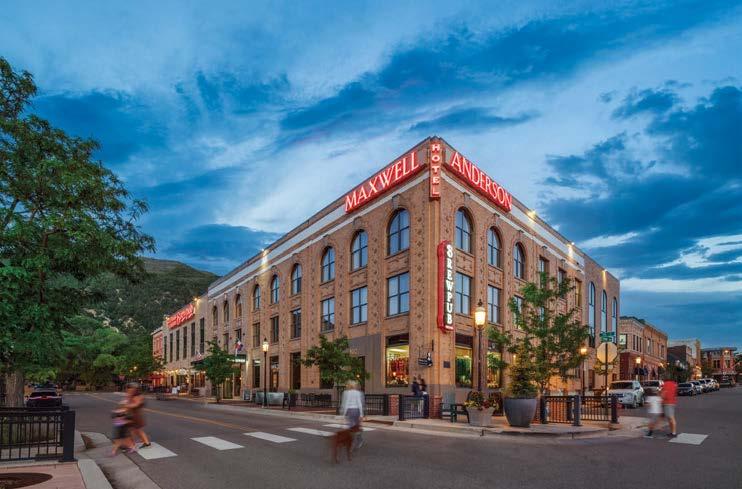
Leon and a wine list curated by longtime local Rodrigo Ramirez. Classic dishes like bucatini carbonara, tonnarelli cacio e pepe, and porchetta suggest that even in this remote little mountain town, all roads lead to Rome.
For a more casual dining experience that doesn’t compromise on quality or variety, check out the lively, small-town vitality at Townline Trucks (townlinetrucks.com) The brainchild of longtime valley locals Rich and Kat Camp and Terrance McGuire (former owner of the legendary Aspen deli Johnny McGuire’s), a 100-year-old miner’s shack was converted into a bar and patio to host a convergence of rotating food trucks. Here, Colorado casual meets elevated eats, with live music four nights a week on the outdoor stage, and yard games.
After a night on the town, plan a day of recovery at True Nature Healing Arts (truenaturehealingarts.com), a wellness oasis hidden just off the Rio Grande Trail recreation biking and hiking path. This expansive sanctuary, co-founded by Deva and Eaden Shantay, offers cosmic slow flow yoga, a holistic spa housed in a modern-day kiva, a socially conscious gift boutique and an organic cafe.
On the way back to Aspen, swing by Trove (52 Pottery Lane, El Jebel; 970.366.5611; IG: @trove_antiques_ and_interiors) to browse a mix of new, vintage, antique and consigned home furnishings curated by local owner Elizabeth Muxworthy. This offthe-beaten-path boutique celebrates
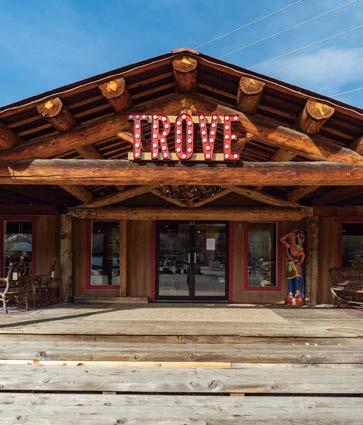
the American West with a focus on local artists and craftsmen, including the largest showing of work by Aspen photographer Norm Clasen and the images made famous by his work on the iconic Marlboro Man campaign. Make it a weekend and stay at The Hoffmann Hotel (30 Kodiak Drive, Basalt; 970.340.8000), a 122-room boutique hotel (part of the Tapestry by Hilton Collection) in the mid valley where owner and part-time-local Jeff Blackman created a community space for locals to connect, as well as for visitors and their families. Its restaurant, The Hoffmann House, became an instant favorite, with outdoor seating overlooking Kodiak Lake. Located across from Whole Foods Market and with easy access to both Aspen and Glenwood on the bus route, the mid valley is a worthy destination in its own right.
From nourishing skin care to standout reads, here are Cristina Cuomo’s go-to seasonal selections. PHOTOGRAPHY BY
CATHRINE WHITE

“This is the best eye cream—no chemicals, and it reduces fine lines with its phytoestrogen formulation.” Flash effect eye cream tx, sumofall.com

“I am a contemporary home hobbyist, and anyone embarking on a build should read David L. Prutting’s A Builder’s Life Done Well.” A Builder’s Life Done Well, prutting.com

“This brown-eyed girl is into brown clothing, and ALC designs the best blazers.” Calla oversized tailored jacket, alcltd.com

“Springtime is about putting your best face forward and getting your house in order. Here are some suggestions.”

“Don’t leave home without Rationale’s tinted SPF 50+ safeguarding serum, which is chock-full of nourishing botanicals.” #3 the tinted serum broad spectrum SPF 50+, us.rationale.com

“Ralph Lauren’s new Catwalk book is the designer’s distinguished fashion compendium that is this summer’s houseguest gift must.” Catwalk, ralphlauren.com
“Heal the soul through scent with this carbon-negative fragrance brand that perfectly balances chakras and even alleviates headaches. WA:IT’s Italian craftsmanship meets Japanese mindfulness and offers candles, incense and skin care, and new pocket-size perfumes that set emotional intentions.” Discovery set, waitbotanicamente.shop




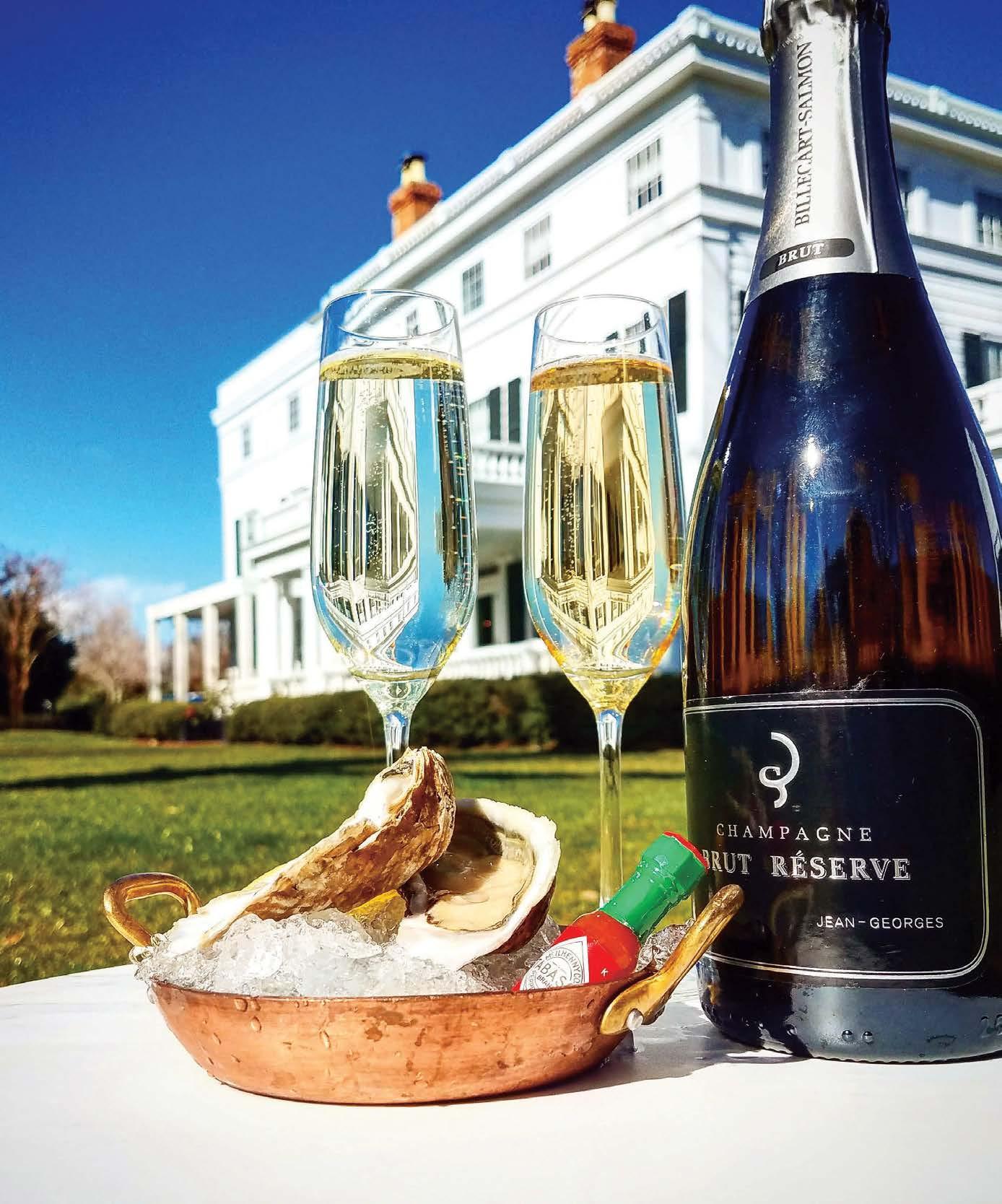





The season’s most anticipated new boutiques across the East End.
BY JULIA SZABO

Madewell, a sister brand to J.Crew, has a new outpost in Sag Harbor that’s bound to be a big fish in this one-of-akind, one-time whaling village. 102 Main St., Sag Harbor
The cult-favorite Nap Dress is also coming to Sag Harbor: Hill House Home is setting up a seasonal store at 127 Main St., offering its signature apparel, bedding, bath and accessories all summer long.
As the East End’s forever fashion influencers, sand and surf crown beach-ready terry cloth a top-tier textile. At J.Crew in Southampton, terry shows up as the Zoe Barrel sweatpant, a natural with tops ranging from a bikini bra by day, to a slinky evening halter after dark. 88 Main St., Southampton
A pebble’s throw away, French terry is a core item at TWP Clothing’ s latest location. Fashion followers embrace the label’s metropolitan-meets-Midwest aesthetic, whose founder, Trish Wescoat Pound, believes women want to dress with “ease and comfort and sophistication.” 2 Main St., Southampton; twpclothing.com
Comfort and sophistication also define the English-rose beauty aesthetic of Violet Grey—and now, its carefully curated selection of wellness skin care options arrives in East Hampton at a new boutique on the stretch of Newtown Lane beside two other stalwart destinations, Kirna Zabête and Sant’Ambroeus. 66 Newtown Lane, East Hampton
At Marina St Barth’ s new Southampton location, step out in the Majestic French terry looped one button blazer, clutching your phone, keys and lipstick in the Aline sponge terry pouch. Celebrate the new store’s grand opening—

which also coincides with the brand’s 20th anniversary—on Saturday, May 23, from 3 to 6PM. 54 Jobs Lane, Southampton
Embrace terry cloth down to your toes with the hotelinspired footwear brand, Brunch, as June marks the debut of its Essentials Terry style, now customizable with charms. To kick off terry time, i.e. the summer season, on Sunday, May 24, from noon to 3PM, the Amagansett store celebrates its reopening, its hospitality aesthetic, and the launch of its Summer Suede collection, serving up music, light bites and fun frosé made with (what else?) Hampton Water Rosé. 14 Amagansett Square, Unit C.; brunch.us
Make every day or night out by the seashore a fashionforward event with wardrobe staples from French fashion expert Saujette, where the curated selection, sold by staff with sharp styling instincts, will help get you Instagramready. 99 Jobs Lane, Southampton
Saturday, June 27 | 6-8 PM
Lana Jokel wit El Next S
Honoring Lana Jokel with the Community Leader Award Committee Co-Chairs: Elyn Kronemeyer + Sylvia Hemingway Next Generation Chair: Sydney Sadick






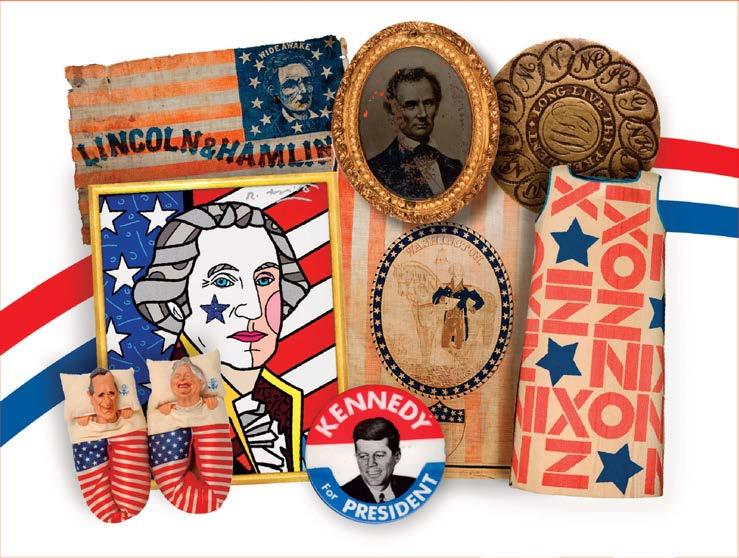



Dr. Stacie Stephenson shares five daily habits for preserving mobility, mental clarity and energy for a lifetime of flourishing.
If spring is a time of birth, summer a time of flourishing, fall a time of slowing down and winter a time of stasis, wouldn’t it be nice if you could spend most of your life in endless summer?
That’s what I’ve been thinking about lately. All around us, life is peaking: flowers in full bloom, trees leafed out and at their brightest green, young critters scampering through the woods and the bluest skies, the whitest clouds, the warmest sun. Summer is bountiful, rich with energy, beauty and vibrant life. And that’s what I want to be, too.
How about you?
This brings me to my favorite subject, and there’s no better time than summer to talk about it: longevity.
When I say longevity, I don’t just mean living for many years. I mean flourishing for many years, feeling young at heart, moving freely, thinking clearly, with the energy and motivation to keep doing, creating, connecting and giving back. I don’t want to live the last half of my long life in pain, unable to do my favorite things with my favorite people. This is why anti-aging medicine has become one of my specialties.
I’ve studied it extensively, looking at everything a person can do to optimize health and maximize the chances of living a long, full life without decline and disease. There’s no guarantee for any of us, but I would put my money on a vibrant lifestyle as the best gamble for getting to 100 with all my faculties intact. There are plenty of fancy, expensive, sometimes illegal anti-aging hacks out there, but most have little to no science behind them. What I know from my studies is what actually works to prolong both health and life.
This is the subject of my forthcoming book, Aging Younger, to be released early next year, and it’s also the inspiration for today’s gift to you: my Endless Summer
Longevity Protocol (let’s call it ESLP for short).
Key to the ESLP is consistency. Living longer isn’t just the result of making healthful choices today, or this week, or even this year. It’s the result of what you do day in, day out, week after week, year after year. Regularity matters far more than good intentions or the occasional effort, when you happen to think about it.
Think of your home. If you only cleaned it when guests were coming, it would be dingy and worn most of the time, and it would break down faster than a well-tended house. You wouldn’t wait for the roof to cave in or the walls to mold over; you’d do the maintenance before things reached disaster level. The same goes for your body. Regular, consistent selfcare is the surest way to get the most good years out of it.
So, let’s talk about what you can start doing this summer and keep doing, not just for a season, but for life. These are small, easy changes, but if you do them every day (or almost every day), I promise you’ll see big returns by next summer, and for many summers to come:
Habit No. 1: Include one serving of fruit with every breakfast, and two servings of vegetables with every lunch and dinner. Think berries on your yogurt or oatmeal, a ripe pear with lunch, or a dish of pineapple with Greek yogurt and a drizzle of raw honey after dinner. So much better for you than ice cream—and honestly, just as satisfying. For lunch, how about a big salad with lots of leafy greens, cucumbers, tomatoes, carrots and peppers? Dinner could include a side of steamed greens, broccoli or asparagus, then mushrooms and onions on your favorite protein. Do this every day, and you’ll infuse your body with the fiber, antioxidants, vitamins
“Let this summer be the one where you commit to living longer and better. A plant-based diet, movement, connection, a moment with the sun, a few deep breaths. None of it is hard, and all of it adds up. Start today.”

and minerals it needs to age gracefully. Filling up on plant foods also helps ward off menopausal weight gain, which is a real gift to your heart and metabolic health.
Habit No. 2: Move for 30 to 60 continuous minutes every day. Morning, after lunch, early evening: It doesn’t matter when, and it doesn’t have to be hard. A walk after a meal counts. So does a bike ride, a swim, a jog, a playground romp with the kids or a sweaty yoga session. Walk the dog, do situps and pushups while watching your show—just keep moving for at least 30 minutes, and over time you’ll preserve both your mobility and your cardiovascular function.
Habit No. 3: Do something social every weekend. As much as you may want to stay home and decompress, make a plan and follow through. Real, face-to-face time with friends, or a date night, or a family outing, does remarkable things for brain chemistry, warding off depression, anxiety and providing a deep sense of being supported and loved. This matters more for healthy aging than most people realize. People need people.
Habit No. 4: Go outside for the sunrise or the sunset. Whatever the weather, wherever you are, step outside for just five minutes (or more) and sync up with the sun. This resets your circadian rhythm, improving both sleep quality and daytime energy. Nature therapy is real, and the mental health benefits compound over time, especially when you are helping your brain distinguish clearly between day and night.
Habit No. 5: Get better at breathing. We all live with stress, but when it never lets up, we damage our nervous systems and, research confirms, compromise our healing, increase our risk of mental health issues, and shorten our lives. Just two minutes of slow, deep breaths, with a longer exhale than inhale, twice a day, sends your brain the message that you’re safe. It also stops the stress cycle cold. I recommend first thing in the morning to set the tone, and last thing at night to ease into sleep.
That’s it. Five small things, minutes a day, with outsize returns. Let this summer be the one where you commit to living longer and better. Plant foods, movement, connection, a moment with the sun, a few deep breaths. None of it is hard, and all of it adds up. Start today. Why waste one more minute to begin aging younger? drstaciestephenson.com
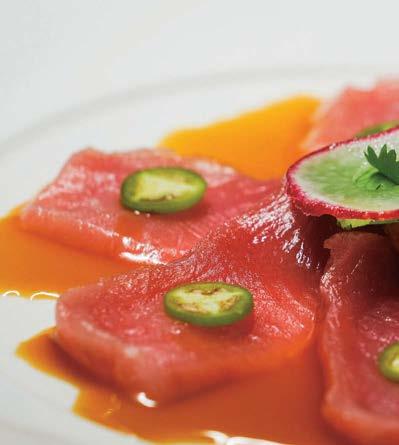
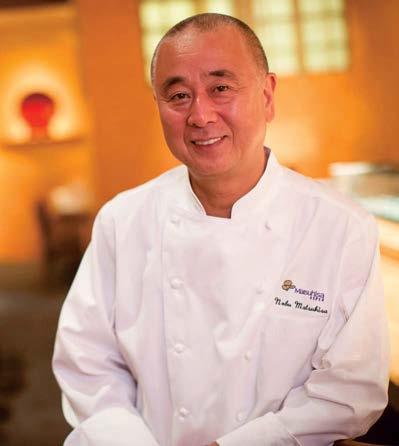
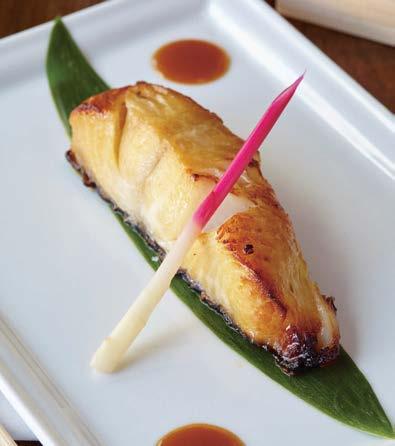


In Ayurveda, summer calls for cooling, hydrating foods like cucumber, melon and coconut, alongside spices like fennel, coriander and mint, which support digestion without overheating the body.















A
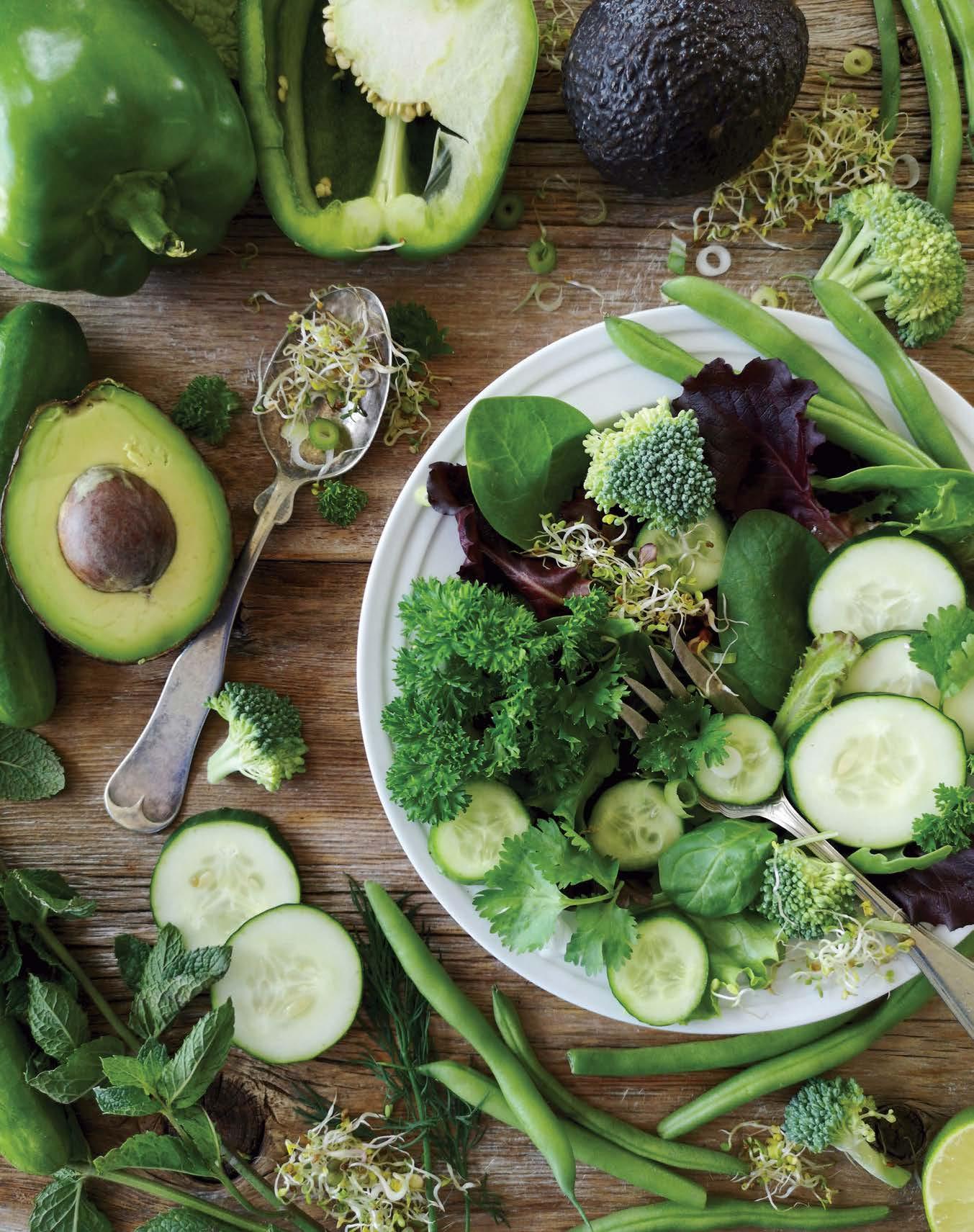




new frontier called multi-omics maps the body’s unique internal ecosystems to transform
how we eat, heal and age. BY LAKEISHA
ALLEN
We are used to thinking about our health in parts. Blood work here, a gut test there, maybe a saliva DNA kit stashed in a drawer. Each offers a glimmer of insight, but none of them tells the whole story.
Enter multi-omics, an integrated approach that reads every biological layer at once. Patterns and root causes become visible, instead of hidden under symptoms.
There are many -omics. Key ones to know include genomics, the study of your DNA, the fixed code you were handed at birth. Epigenomics examines the chemical layer that sits on top of your DNA and decides which of those instructions get switched on or off based on how you live—how you eat, sleep, work and live have very real, measurable impacts on your health. Transcriptomics reads the RNA your cells are copying, a live report of which genes are turned on right now. Proteomics maps the proteins that RNA then builds, the molecular workers running every system in the body. Metabolomics measures the metabolites those proteins produce as they run. Also important are nutrigenomics—how your food talks to your genes, amplifying some and silencing others, even cancer genes, which is why food literally can be medicine. Microbiomics, the study of the trillions of bacteria living in and on you, shows how that inner ecosystem shapes immunity, mood, hormones and every other layer.
For years, multi-omics stayed in research labs

because it was too expensive, too slow and too messy for interpretation by human clinicians. AI is changing this. New platforms like Diadia Health now integrate hundreds of biomarkers and nearly a million genetic variants into clinician-ready answers. What used to take a research team months can now inform a real patient visit.
Functional testing like organic acids test panels and GI-MAP already puts metabolomics, microbiomics and nutrigenomics in my and other nutritionists’ tool kits. Forward-thinking clinicians are going further. Dr. Anil Bajnath, founder of the American Board of Precision Medicine, is pioneering the movement to bring the full suite into everyday clinical practice, running multi-omics as the starting point for every patient at his Institute for Human Optimization and building protocols tailored to the person in front of him. His framing is simple: “To move medicine from reaction to intention.”
The takeaway: You are not a population average, and you never were. If your blood work has ever said “fine” while your body said otherwise, and if you knew spirulina was doing you dirty despite every wellness guru’s advice, you were not wrong. The truth was always more layered than one panel or trend could read. Multi-omics offers much more of the story, and it is finally being told.
Lakeisha Allen is a longevity coach and nutritional therapy practitioner. lakeishaallen.com










Chef Ayesha Nurdjaja brings her summer spread to the Food & Wine Classic in Aspen.
BY RAY ROGERS
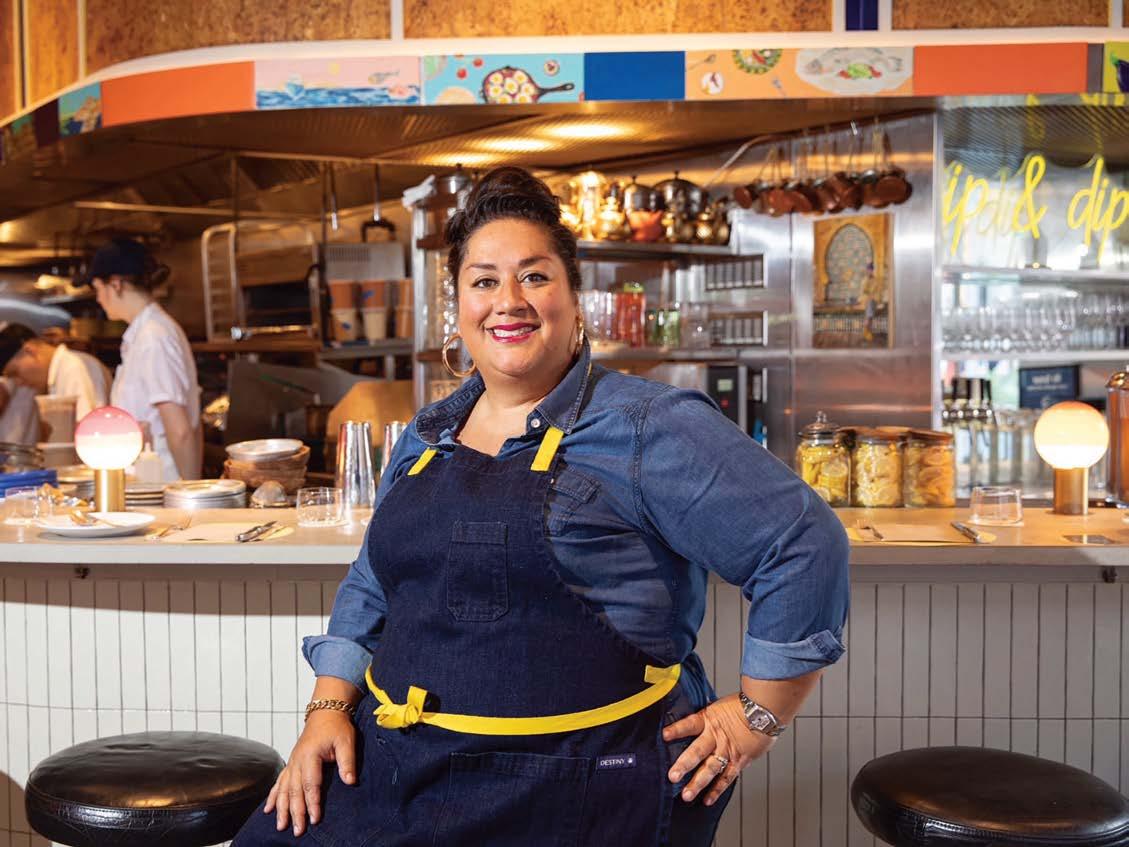
“Both the Hamptons beach scene and the high-altitude glamour of Aspen are big outdoor parties,” says chef Ayesha Nurdjaja, who will be splitting her time this June between her home base of New York City, the East End and the 8,000-foot peaks of Colorado. “They both have that super-easygoing, ‘let’s-live-our-best-life’ vibe. So, my whole ‘rip-and-dip’ philosophy is a perfect match.”
A partner and executive chef at Shuka and Shukette in New York City, Nurdjaja has built her career on bold Eastern Mediterranean cooking. In the process, she’s earned multiple James Beard Foundation nominations, a spot on the Food Network Hot List for 2025, and the 2025 International
Association of Culinary Professionals Trailblazer Award. This June, she takes the stage at the Food & Wine Classic in Aspen with her seminar “Rip, Dip and Dunk: Homemade Flatbreads and the World’s Best Dinner Party Dips.” Her approach is straightforward: Let the produce do the heavy lifting. “I love to use fruits and vegetables during the warm weather and at altitude because they are delicious and juicy,” she says. “I incorporate melon, cherries, nectarines, zucchini and cucumber in simple preparations that pack a lot of flavor.” Her trick for keeping dips and spreads bright on the move—whether for a picnic at a Snowmass concert or a beach day in Amagansett?
Nothing more than a thin layer of olive oil over the surface before storing.
For her Aspen presentation, Nurdjaja is focusing on how the right ingredients can support cellular health, providing a sought-after “summer glow” from the inside out. The foundation of this approach is a trifecta of what she calls her “kitchen ride-or-dies”: garlic, olive oil and citrus. When these staples are paired with turmeric and sumac, they become something almost restorative. “If you get your produce at peak freshness, it’s basically already perfect,” she says. “By keeping it seasonal and local and just letting those beautiful fruits and veggies do their natural thing, you’re basically guaranteeing healthfulness without even trying.”
For celebratory summer eating that doesn’t tip into indulgence, Nurdjaja follows a few guiding principles. She reimagines the familiar—egg salad, say, turned into an unexpected party dip. She lets fruit play savory, a technique she explores in her book, Mediterranean All the Way. And she champions the rip and dip. “Grab a piece of bread, get deep in that delicious, smooth spread, make the perfect bite, and chase it with some Champagne,” she says. “What could be better?”
Her Summer Corn Dip—a seasonal fixture by now— illustrates the whole philosophy: sweetness held in check by garlic, herbs and spices. “It’s a flavor harmony session,” she says. classic.foodandwine.com; shukanewyork.com; shukettenyc.com
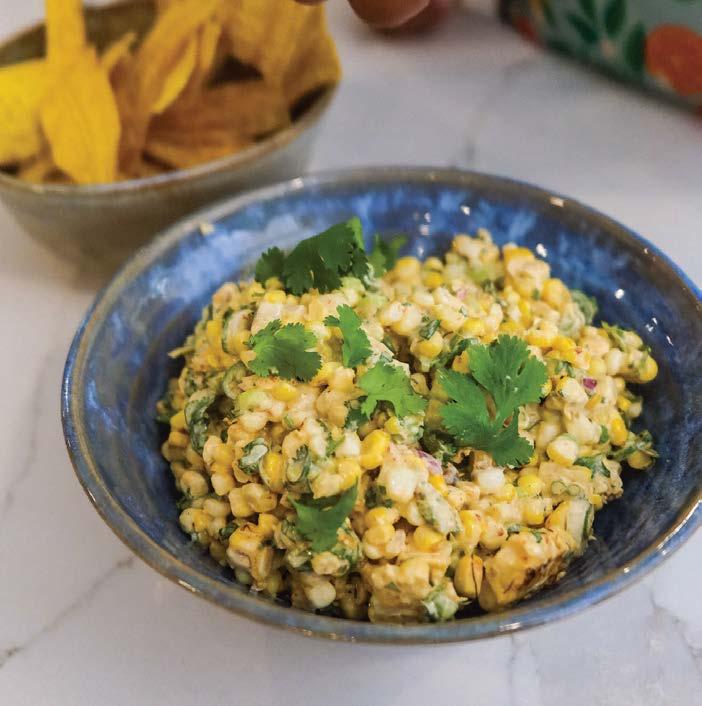
Corn is chock-full of dietary fiber, a boost to digestion, and carotenoids like lutein and zeaxanthin, which support eye health.
“Add this to your summer rotation immediately,” advises chef Nurdjaja. “This corn dip is a total home run. For a summer barbecue or football Sunday, this dish is a winner on any table.”
INGREDIENTS:
For the Corn:
7 ears corn, shucked Extra-virgin olive oil, as needed
Kosher salt, as needed
For the Dip:
3 scallions, white and green parts sliced into thin rounds
1 small serrano pepper, thinly sliced
½ small red onion, diced
1 small bunch cilantro, chiffonade cut, plus additional leaves for garnish
1 lime, juice and zest
2 teaspoons kosher salt
½ cup Greek yogurt
1 teaspoon mustard
2 tablespoons good-quality mayonnaise
1/8 teaspoon ground coriander
¼ teaspoon Aleppo pepper flakes
¼ teaspoon smoked paprika
¼ teaspoon garlic powder
¼ teaspoon onion powder
2 tablespoons extra-virgin
olive oil
Chips, for serving
INSTRUCTIONS:
1. Boil three ears of the corn in salted water for about 4 minutes. Remove and allow to cool.
2 Roast the other four ears of corn in a skillet with a little olive oil and a sprinkle of salt until nicely charred all over. Remove and allow to cool.
3 When the ears of corn are chilled enough to handle, use a serrated knife to slice off the kernels. Add the corn to a large bowl.
4 Cut the scallions, serrano and onion into small pieces, about the
same size as a kernel of corn.
5. Add the scallion, serrano, onion and cilantro to the bowl.
6. Add the zest and juice of the lime to the bowl.
7. Add the remaining ingredients and mix gently with a spatula, folding from the bottom of the bowl and over until well combined.
8. Garnish with reserved cilantro leaves, and serve with chips and cold beer.
From soulful homecomings to historic revivals, the season’s newest tables celebrate the local harvest, the sea and the restorative power of the East End. BY
RAY ROGERS

For third-generation Sag Harbor resident Michael Nolan, opening Miracle at 29 Main Street isn’t a homecoming; it’s just home. Situated in the former Vin Sur Vingt space, the restaurant is a shared vision between Nolan (who cut his teeth at Miracle Grill in NYC in the ’90s) and his partner, lighting designer Helen Gifford of HelenBilt. Gifford has drawn on her London roots to craft a space inspired by traditional English pub culture— prioritizing intimacy and connection over spectacle. “This project is deeply personal,” Gifford shares. “Creating a space that feels enveloping and welcoming through the lighting and design is a means of extending culinary hospitality.”
Under the direction of chef Jesus Gonzales, the menu offers a polished interpretation of modern American cuisine. For Nolan, who co-founded the beloved neighborhood joint Fresno in East Hampton, this debut is about serving his community. “Opening in Sag Harbor isn’t just operating another restaurant—it’s coming home,” he says. The farm-totable ethos shines in signature dishes like the Local Grilled Calamari Salad with napa cabbage and fennel, and the Poached Halibut featuring Montauk littlenecks in a burnt orange saffron broth.

Just steps away, a piece of Sag Harbor history is being lovingly preserved. John and Kelly Piccinnini—the local duo behind The Clam Bar are taking the helm at the iconic Corner Bar at 1 Main Street. Their vision for the newly christened The Corner honors the restaurant’s storied past while ushering in a more modern sensibility.
The mahogany bar is being polished to a high shine, and the forest green trim remains, but the menu is getting a thoughtful refresh. Alongside the signature burger, guests can expect modern comfort food and a tap list featuring local favorites like Kidd Squid and Springs Brewery. It’s a space
designed to be timeless and familiar—a gathering spot that pays homage to the village’s maritime roots. Down the road, Babe’s (babessagharbor.com) brings a “finer diner” concept to 51 Division Street that nods to nostalgia without sacrificing nutrition. Here, the farm-to-table

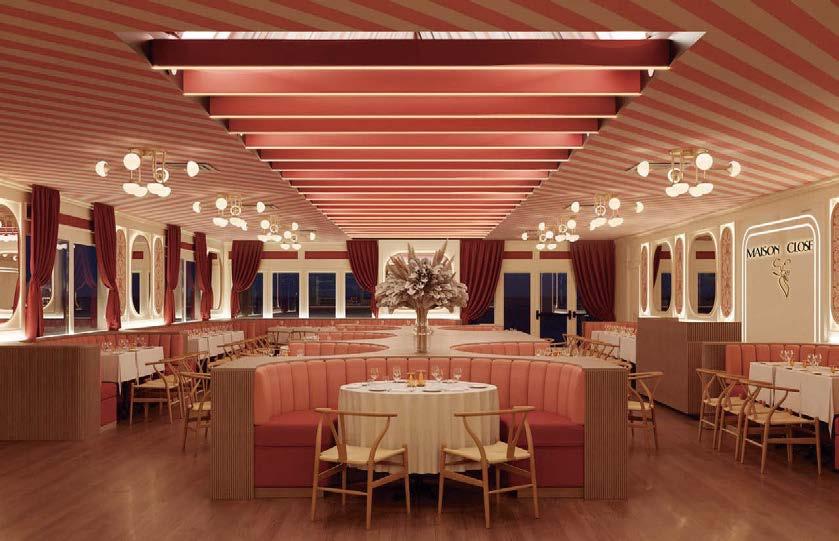
ethos is front and center; expect your morning eggs to come from nearby pastures and your tuna melt to feature local, sustainable catches. For those seeking pure, plant-forward nourishment, the house chopped salad is a standout of seasonal simplicity.
Taking over the former Estia’s Little Kitchen space, SunLife Organics (sunlifeorganics.com) brings a menu of botanicaldriven smoothies and bowls designed to fuel those early summer mornings.
The Piccinninis have also introduced Sett Coffee (settcoffee.com) at 136 Main Street in Amagansett, serving up artisanal pours and a specialty market of provisions and botanical sips like the naturally blue Ocean Blue Latte made with butterfly pea flower.
East Hampton gains a new year-round spot with Lion’s Nook Bar & Grill (lionsnook.com). Taking over the space at 10 Main Street in
Parrish Mews, which formerly housed Rowdy Hall, Alex Rossi of Parioli Hospitality aims to bridge the gap between elegance and approachability. Named in tribute to early settler Lion Gardiner, the Nook pays tribute to the site’s heritage while offering a menu rooted in fresh local fish and seasonal produce. Rossi’s signature attentive service from Springs Tavern & Grill is expected to make this a fast favorite.
In Bridgehampton, raise a Phony Negroni mocktail or Fat Farmer martini to Almond (almondrestaurant.com) as the village institution enters its 25th year. The dynamic duo of Eric Lemonides and chef Jason Weiner has long been the gold standard for community-driven dining. Weiner’s unrivaled relationships with local farmers are the backbone of his French bistro-style menu, while Lemonides remains the quintessential host, welcoming guests with a warmth that has anchored
this East End mainstay for a quarter-century.
The energy shifts toward the Mediterranean at Talya Montauk (talyarestaurant .com), which has found a new, sun-drenched home at 148 South Emerson Avenue. Expect a refined coastal experience where Greek-inspired flavors meet the Montauk shore. The whole branzino and heirloom cauliflower salad are light, clean and a perfect way to refuel after a day on the water at Ditch Plains. Nearby at the docks, the new Lobster House & Clam Bar at Gosman’s (gosmans.com) preserves the laid-back Montauk soul. Under the culinary direction of chefs Tony Cruz and Eddie G, the menu pulls directly from the boats, featuring lobster tacos and mussels in white cream sauce—a pure expression of waterfront dining sourced just steps from the kitchen.
At the Capri Hotel in Southampton, the spirit of Saint-Tropez arrives
with Maison Close (maisoncloserestaurant .com). Under the direction of chef Geoffrey Lechantoux, an alum of Alain Ducasse’s Michelin-starred kitchens, the menu celebrates organic, locally sourced ingredients. The tuna tartare with yuzu is a refreshing choice for an afternoon by the pool, echoing the effortless elegance of the French Riviera.
Canoe Place Inn (canoeplace.com) in Hampton Bays has appointed Michelin-starred chef Mathew Woolf—who has cooked for British royalty and helmed iconic kitchens from The Ritz London to the Rainbow Room—as executive chef, bringing nearly three decades of global culinary experience to the historic East End retreat this summer.
For a more festive indooroutdoor social scene, The Ivy’ s (ivyevents.info) pop-up in Water Mill blends Italian dining with high-energy entertainment, kicking off Memorial Day weekend with a performance by global dance music powerhouse DJ Ian Asher.




Peet drew upon her own perimenopause experience for her role in Your Friends & Neighbors

The charismatic, relatable actress has never been more herself—and she has plenty to say about it. Amanda Peet opens up about starring in the hit Apple TV+ series Your Friends & Neighbors, her new film Fantasy Life, navigating perimenopause on-screen and off, a breast cancer diagnosis she refused to keep quiet, and why her 50s have brought her the one thing no role ever could: the freedom to let go.
BY CRISTINA CUOMO PHOTOGRAPHY BY JOHN RUSSO
PURIST: Your character, Mel, in the popular series Your Friends & Neighbors goes through perimenopause, which is thankfully no longer a sidelined conversation. How significant was it for you to play out that very underserved life cycle given what you were going through? And how hard was it to work during episodes of your personal symptoms?
AMANDA PEET: I could relate to the fact that Mel’s body was betraying her, and it was fun being able to use my experience with menopause at work. At least it’s good for something! Ping-ponging between acting insecure one minute and deeply pissed off the next is a familiar state when you’re in menopause. Just ask my husband. How fun was it to reunite with your old pal Alessandro Nivola in the film Fantasy Life?
I would do anything with Alessandro. His range is insane.
I don’t think people realize how balls-out funny he is. I had a big crush on him in the ’90s and, of course, he’s still so handsome and has the singing voice of an angel. But he’s weirdly good at playing a total jackass. I couldn’t keep a straight face when he said “I gotta take a dump” with the neck brace on. I ruined about nine takes, which, on an indie movie when there’s no time, is really bad.
Your character, Dianne, is also dealing with mental challenges as well as those that come with aging. What did you find exciting about the stories you got to tell in this role?
When I was young I thought it was a sad cliche that people in their 50s were always blathering on about the vagaries of aging. Welp, now that’s me. I found it poignant that Dianne wonders if it’s too late to take another shot at having a career.
The actress credits therapy and working out three to four times weekly as keys to staying balanced.
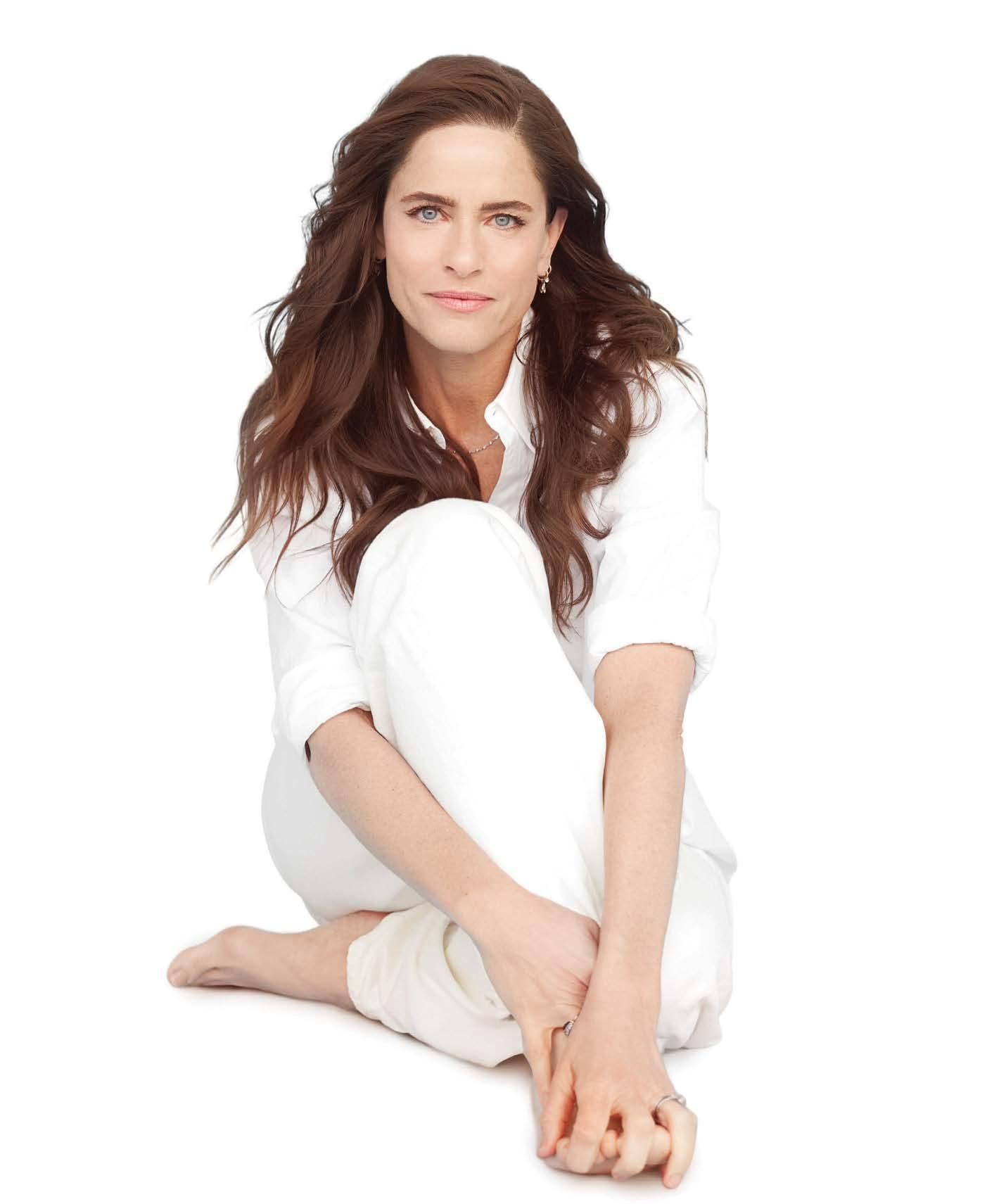
There is an honesty in the way that you openly talk about aging and women like me are grateful to you for that. These characters are also addressing the nuances of the aging experience. With all of the emotional intensity and insecurity in this stage of life for women, and men, what has surprised you the most and what have you found most effective in dealing with it?

I find that texting damning photos of myself to my friends is effective. We have a competition to see who can look the most old, wrinkly and repellent. When I’m writing, I wear noise-cancelling headphones and when I take them off and wear them around my neck to take a break, the way my jowls rest—in puddles—on the ear muffs is deeply upsetting. If you’re in a dark place about getting old and losing your looks, taking photos and sending them around for peoples’ amusement helps.
How does being in your 50s differ from other decades and what shifts have you felt in your relationship to work?
I don’t abide toxic relationships. I’m less perfectionistic. Work is a lot more fun when you’re not stressed about what it might lead to. It’s not like I’m Zen. I’m still plenty neurotic. It’s just easier now that I’m in my 50s to take the little wins and let the rest go.
was. My friend’s chemo had to be changed in the middle of her treatment and her insurance wouldn’t cover it. Another woman I know was let go from her job soon after she found out she had breast cancer because the company was downsizing. I was lucky for many reasons, including the fact that I had child care and good insurance. I was able to keep up with regular screenings over the past few years because I don’t work all the time. The day my doctor found the tumor, she was able to do the biopsy right away because I had child care at home and didn’t have to rush back to my kids. For most people who get cancer, navigating the American health care system is a total shitshow.
What advice would you give to women embarking on this long journey?
I would say be prepared for a period of uncertainty. Also, try to find other women who are open to talking about their breast cancer, because it’s very comforting.
“It’s not like I’m Zen. I’m still plenty neurotic. It’s just easier now that I’m in my 50s to take the little wins and let the rest go.”
Is there a role you’d like to play that you haven’t?
Mary Todd Lincoln in Oh, Mary! But I’ve seen it too many times. I should probably just stay the course as a rabid fan. You bravely shared your breast cancer diagnosis in The New Yorker recently, and have made space for conversations about the importance of early detection and prioritization of community and personal health. How has navigating your breast cancer journey reshaped your perspective on health and staying ahead of it?
Having breast cancer, going through radiation and being in treatment centers made me realize how lucky I
At Purist, we focus on holistic paths to wellbeing. What are some of your daily self-care rituals?
I try to work out three or four times per week and I go to therapy. I have two or three girlfriends, including my sister, to whom I talk every single day. They say good social connections affect longevity, so I’m grateful that I don’t have to go out and find that. Lately, David [Benioff, Peet’s husband, a novelist and producer who co-created Game of Thrones] and I watch Fawlty Towers in bed every night, which is incredibly soothing. I don’t know if these count as self-care rituals, but it’s how I stay sane.
While shouldering that tremendous fearful weight, you also experienced the loss of your mother and father within six months of each other, and on opposite coasts—which I am sorry to hear about. What did you learn about the importance of end-of-life caregiving, especially with your mother, who lived adjacent to you?
It’s a very personal decision and my only point of reference, thank God, is what I went through with my mom. It was important to me to be there when she passed because I was very close to her. I would never have been able to care for her on my own, and I’m so grateful to the caregivers we had. Again, a lot of people in the sandwich generation burn out because they don’t have the money for a nanny and a caregiver.
How has this journey impacted your time spent on everything from family to work to friends?
I would say, if anything, I spend more time with my friends. I try to say yes to my nearest and dearest, and I don’t worry as much about the folks who don’t fall into that category.
I saw you recently discussing your desire to grow old gracefully without any dramatic alterations to your beautiful face—a commitment you made in print in your 40s. How tough is it to stay on that holistic path?
I have ambivalence about it. And I do lasers and dye my hair—these aren’t holistic procedures! But I do love watching actors’ real faces. When I watch Diane Keaton, Emmanuelle Riva, Emma Thompson, Fernanda Torres or Sarah Paulson, part of why I get swept away is because they look real. I want to be able to do a period piece or play someone from a poor rural town who doesn’t have access to cosmetic procedures. Or play someone like my sister, who thinks looksmaxxing is asinine. Actually she probably has never heard of it.
What are your beauty and fitness regimens, and what makes you feel good?
I’ve been seeing Dr. Karyn Grossman since I was 27. She gives me lasers and peels when I have time, and does my skin cancer checks. I trust her, and I’ve never been to
anyone else. I’m sorry to sound like a cliche, but I love pickleball. I can’t stand doing cardio so I had to find a sport and now I’m obsessed. I also love to draw and paint and when I take classes, I get into a flow state.
With your husband, David, also in the entertainment business, how do you find balance and synergy in work and at home as partners?
We try to be as close to 50-50 with child care as possible. My sister and her husband met as first-year medical students, so from the beginning, they were under the same amount of pressure and had the same workload. David and I try to keep things as even as possible, and he doesn’t assume that I’m going to cover all the kids’ stuff. He cooks more than I do. This has been important in our marriage, and I like that my daughters have him and their uncle as models for husbands who pull their weight at home.
Is there one nutritional element you incorporate into your daily diet that keeps you focused and energized?
Nothing keeps me focused—I’m like a chicken with my head cut off. I need to try meditation. I drink tea every morning in the living room while the sun is coming up, before anyone is awake, and I listen to Up First, and it’s pretty lovely.
What makes you laugh the most?
Farts.
What’s your biggest pet peeve?
Too much perfume.
What’s one thing we don’t know about you?
I’ve never read Anna Karenina.
What is the best advice you’ve been given?
To marry David.
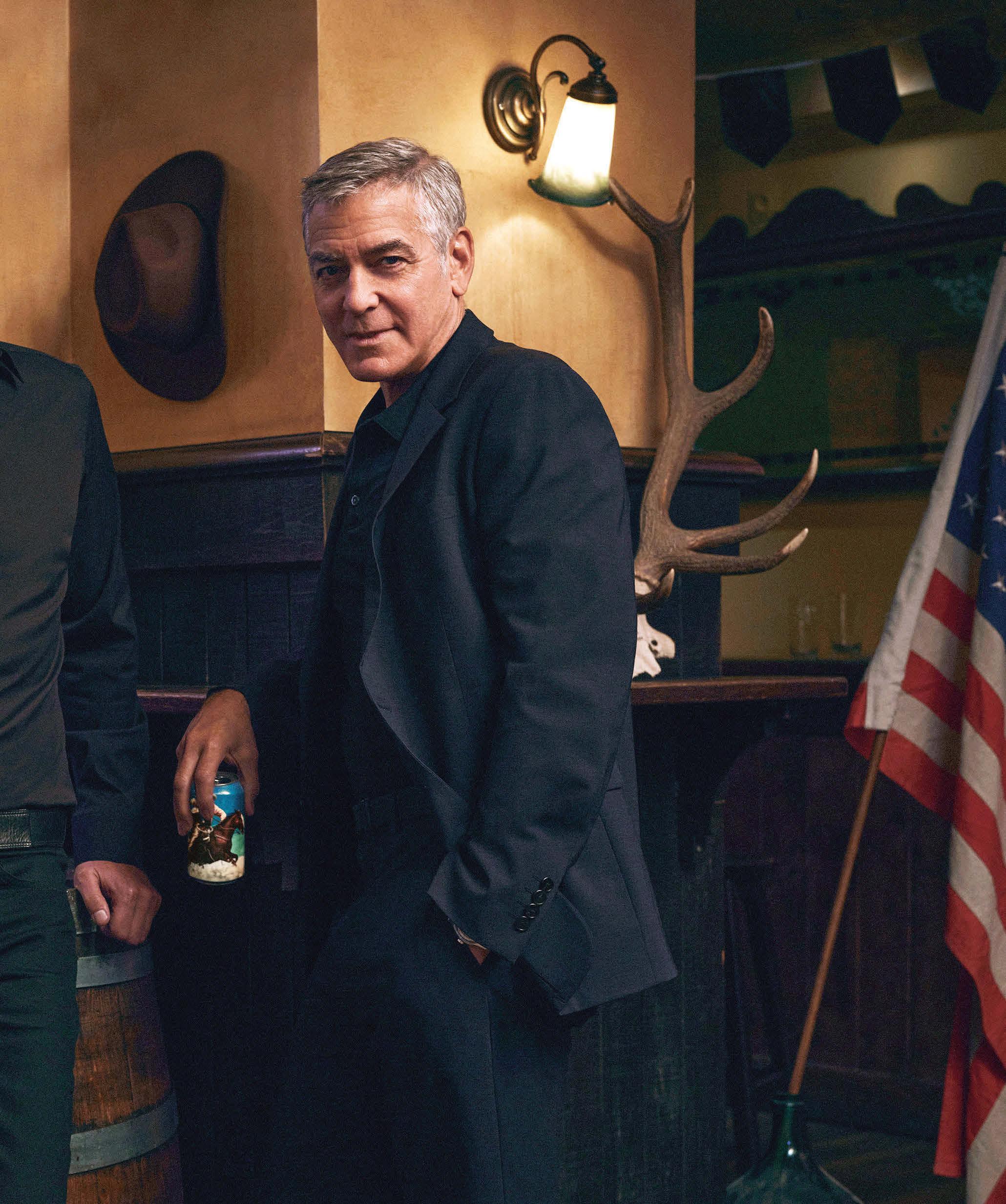
set the bar high with the ultimate nonalcoholic beer. BY JIM SERVIN
A wellness-focused approach to living has given actor-director-producer George Clooney, nightlife entrepreneur Rande Gerber and businessman Michael Meldman incentive to create a new product, the long-elusive, holy grail of libations: a truly cool, clean, crisp nonalcoholic beer. With full-bodied flavor, Crazy Mountain nonalcoholic beer stands tall on its own mojo.
Clooney, a one-time basketball fanatic, has traded hoops for the tennis court and Bikram yoga, stating that these activities go easier on the body while still demanding stamina and speed. Gerber begins his day with a visit to the gym or the ocean, mixing morning workouts with mountain biking, pickleball, stand-up paddleboarding or hiking, and ending with a sauna or a cold plunge.
“I’m living a healthier lifestyle, and so is George. When we sold Casamigos we were done with that, we were finished,” Gerber says, referring to the now-famous billion-dollar transfer to Diageo in 2017 of the company owned by Clooney, Gerber and Discovery Land Company founder and chair Michael Meldman. “Casamigos started with George and I drinking tequila and wanting to create one just for ourselves. Once again, we decided to create a beverage on our own, and came up with the right formula.”
“We love beer; we just don’t always want the effects that come with it,” says Clooney.
What exactly is Crazy Mountain? Think big. “It’s about living wide open,” Gerber says. “Everyone has that crazy mountain in them, whether it’s riding the biggest wave,
or riding the bull for seven seconds, whether it’s climbing the highest mountain or creating a brand. People think I’m crazy creating another brand—I guess that’s my crazy mountain.”
Surging more than 30 percent in sales since 2021, nonalcoholic beer accounts for the majority of growth in the low-to-no alcohol category, according to the Brewers Association. The numbers are predicted to continue to climb, and possibly surpass, sales of traditional ales. Surveys show that younger consumers, especially Gen Z, are cutting back on alcohol consumption or avoiding it altogether, while still craving beverages that feel sophisticated and adult. “I think a lot more people are microdosing,” says Gerber. “They don’t want to have alcohol in their systems, and feel bad the next day. The new way of socializing is at a gym or at a Remedy Place, doing saunas and cold plunges, or playing padel. I hope Crazy Mountain helps the movement toward a more health-conscious generation.”
The genesis for the friends’ newest labor of love began while socializing with musicians in Nashville: “We were sitting around drinking beer,” Gerber recalls, “and it took me a while to notice it was nonalcoholic beer—I thought, Wow, this is actually pretty good. I thought it was just a light beer.”
A spark was lit, and suddenly Gerber, Clooney and Meldman were off on a new adventure. “I’m very creative, and I’m always thinking, What’s next?” says Gerber. With Crazy Mountain, an aura of desirability was infused

Crazy Mountain’s unique brewing process ensures bold flavor.
into the nonalcoholic beer genre, which up until then had a somewhat unassuming image compared to traditional brew. A higher profile was achieved through stellar packaging, featuring portraits of playful, dynamic,
feel good holding that can in your hand. I hired a photographer who was a cowboy, and he hired a bunch of his friends who are world-professional cowboys, as models. It’s all about authenticity.”
“You can’t argue with the health-conscious movement. I listen to my kids. What do they want? To be more healthy.” —RANDE GERBER
modern-day Marlboro men dashing across the West. “I already had in my mind what I wanted the cans to look like,” says Gerber. “I just wanted supercool images that could connect with people, first of all, so you could

Authenticity extends to taste. Available in original lager as well as lime, Crazy Mountain passes the flavor test: “I wanted it to taste like beer,” Gerber states. “You don’t even know that there’s no alcohol in Crazy Mountain. Some of the nonalcoholic beers taste a bit watered down, because they go through a process of stripping it down and removing the alcohol. With the yeast that we use, we never hit the temperature where it will turn into alcohol. So, it’s more bold-tasting.”
The benefits of reduced alcohol intake are being embraced through the generations, a sea change noted by Gerber, his wife, model-businesswoman Cindy Crawford, and their two children, models Presley, 26, and Kaia, 24: “My kids don’t drink much. They’ll sit with their friends and maybe have a nonalcoholic beer or not drink at all,” Gerber says. “I love that. You can’t argue with the health-conscious movement. I listen to my kids. What are they doing? What do they want? There was a pretty unanimous, Yeah, we just want to be more healthy. If I’m going out to the gym in the morning, I love that I’m seeing 20-something-year-olds working out, which you typically wouldn’t see then, but now you really do.”
In 2021, Clooney and wife, human rights lawyer Amal, moved to a 425-acre wine estate in Provence in the South of France, where with twin 8-year-olds, Alexander and Ella, they enjoy a quiet life and healthy eating prepared by the family’s chef—dishes like gnocchi with pesto, risotto, sushi and Indian meals. Meldman “lives in his plane,” Gerber jokes.
While Clooney, Gerber and Meldman have not completely sworn off alcohol, they like how their lives are trending toward enhanced wellness, with Crazy Mountain nonalcoholic beer leading the way. “I still drink, but I don’t drink a lot,” Gerber says. “I think it’s more just limiting the alcohol intake for some people, and understanding that you can have a great time without alcohol—actually a much better time, because you wake up in the morning feeling great. For me, it’s more about the ritual of cracking open a cold one and holding a beer and hanging out with friends, just the camaraderie of it all.”
–With reporting by Cristina Cuomo

Finding resilience and flow on historic ground at the 126th U.S. Open.

When the wind off Peconic Bay picks up mid-round at Shinnecock Hills Golf Club, players don’t just lose their ball flight; they risk losing their composure. This June, the world’s elite return to Southampton for the 126th U.S. Open at a venue that defines the heritage of American golf. Founded in 1891, Shinnecock is the oldest incorporated golf club in the country and one of the few venues to have hosted the national championship across three different centuries. The last Open here, in 2018, was so brutal that the course’s reputation—and its fescue grass—needed years of careful stewardship before the USGA felt ready to return.
The true test at Shinnecock is learning to perform under physiological stress. Performance coach Josh Nichols, founder of Josh Nichols Golf and host of the podcast “The Mental Golf Show,” has said that “cortisol makes us ‘fall back’ into our basic habits”—and under the glare of a major championship, that hormonal spike is inevitable. The fluid, rhythmic movement a consistent swing requires can unravel not from a lack of skill, but from the body’s own chemistry working against itself.
In 1995, Corey Pavin’s iconic 4-wood on the 72nd hole became a definitive moment of composure under exactly that kind of pressure. Three decades later, as the championship returns to these hills, Scottie Scheffler— the world’s top-ranked player—has described a similar
physical reality. Before his first Ryder Cup, he said he was so overcome by nerves that he “literally could not feel my arms.” He didn’t suppress that sensation. He learned from it, and won the Masters the following spring.
To find that essential stillness, elite players rely on the quiet eye—a steady, deliberate gaze before execution that creates a neural buffer against intrusive thought, allowing the subconscious to take over. When it works, the analytical brain quiets and movement becomes automatic. As Dr. Bob Rotella writes in Golf Is Not a Game of Perfect, “The calmer you are and the quieter you keep yourself, the easier it is to play the game.”
When pressure peaks, the fastest path back to baseline is through the breath. Slow, deep exhalations activate the vagus nerve and signal the nervous system to stand down from its fight-or-flight state. Performance coach Dave Alred, author of The Pressure Principle, argues that resilience is not a fixed trait but a trainable one—and that courage, more than talent, tends to separate the best from the rest. The winners at Shinnecock are rarely those who avoid the pressure; they are the ones who learn to breathe through it—and honor the ground they’re standing on.
June 15-21, Shinnecock Hills Golf Club; usopen.com/2026/ tickets.html

The original course, laid out in 1891 by Willie Davis, began as a 12-hole layout and was built with the help of members of the Shinnecock Indian Nation.
The top-ranked contenders to watch at the 126th U.S. Open Championship at Shinnecock Hills Golf Club (June 15–21)
MEN WOMEN

Scottie Scheffler
Dallas, Texas, USA
World No. 1; 4 major championships

Rory McIlroy
Holywood, Northern Ireland, World No 2; 6 major championships

Matt Fitzpatrick
Sheffield, England
World No. 3.; 2022 U.S. Open champion

Xander Schauffele
San Diego, California, USA, World No. 9; 2 major championships

Ludvig Åberg
Eslöv, Sweden
World No. 14; 2 PGA Tour wins


Nelly Korda Bradenton, Florida, USA, World No 1; 17 LPGA wins

Atthaya “Jeeno” Thitikul
Ratchaburi, Thailand
World No. 2; 2 LPGA wins

Hyo Joo Kim
Wonju, South Korea
World No. 3; 1 major championship

Charley Hull
Kettering, England
World No. 4; 2 LPGA wins

Lydia Ko
Auckland, New Zealand, World No 9; 3 major championships
From infrared sanctuaries in Montauk to exclusive studio takeovers in Southampton, the Hamptons’ summer 2026 fitness landscape is all about precision and recovery.
The East End fitness landscape for summer 2026 shifts toward hightech wellness and infraredheated sanctuaries.
Leading the expansion is ID Hot Yoga in Sag Harbor, bringing its signature “Hot Sculpt” method to the village following a successful soft opening this spring. In Montauk, Offshore Montauk debuts a prime oceanfront luxury gym, while Fuze House opens a new location dedicated to infrared-heat, mat Pilates.
Nearby, The Shakes Pilates launches its “Beach House” studio this summer, The Pilates Snob is back for her seventh season at Real Pilates Montauk, Salt Air Beach Pilates is now booking for the season, and Harbor Pilates brings a popup studio to Noyac. In East Hampton, KZ Pilates+ offers a meditative sanctuary where Kevyn Zeller hosts her signature Core Collective
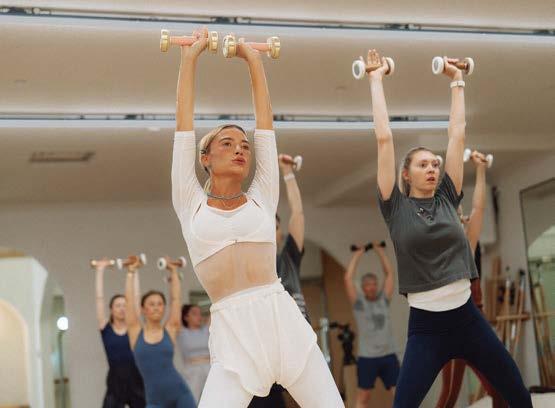
Sessions—intimate, fourperson classes that blend classical Cadillac work with a restorative aesthetic. Seasonal residencies and pop-ups remain the summer’s focal point. Post House continues to evolve as a premier fitness platform, hosting a rotating lineup of celebrity trainers and brand-led takeovers in Sag Harbor. This summer features group studio residencies
from KKSweat and Pvolve, alongside a dedicated Pilates residency from Forma Another favorite, NRTHRN Strong, has a residency at Tremble in Southampton. Expect the signature 50-minute Nordicinspired sessions that utilize a patented ski-simulating trainer to deliver a highintensity, joint-friendly burn.
The East End’s summer race calendar
RJA Memorial Mighty Montauk Triathlon (June 13): The season’s opening endurance test.
Shelter Island 10K
Run/5K Walk (June 20): The classic 10K through the island’s hills.
Montauk Lighthouse Triathlon (July 19): A mid-summer staple finishing at the Point.

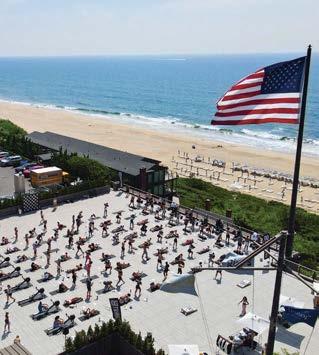


Gurney’s Montauk celebrates its 100th anniversary with a curated outdoor fitness series featuring rotating instructors for sculpt and strength. At The Surf Lodge, look for waterfront morning sessions, while Hero Beach Club hosts yoga teacher Ashley McGee for weekly public outdoor classes starting in June. McGee’s practice is grounded in Iyengar-based alignment, blending Vinyasa with sonic healing and aromatherapy.
At Main Beach in East
Hampton, Jimmy Minardi returns with his legendary barefoot beach workouts, utilizing a 14-station agility course designed to challenge stability on the sand. Over at Yoga Shanti in Sag Harbor, Erika Halweil offers her Dynamic Embodied Yoga three times a week. Established favorites have introduced new tech to the lineup. Tracy Anderson’s Sag Harbor studio now prominently features the RheaMetis Reformer, a machine utilizing multidirectional, spring-based resistance to mirror natural movement. Anderson also continues classes at her newly renovated Water Mill location. Equinox x Hamptons reopens for the season on May 18, and DanceBody returns with pop-up classes spanning from Southampton to Montauk.
WORKING TO PREVENT AND BREAK THE CYCLE OF VIOLENCE.
3,099
Answered nearly 3,099 hotline nswered hotline calls, averaging more than 9 calls each day.
13,996
13,996 advocacy services were provided, with 808 court accompaniments.
701 WORKSHOPS
701 workshops on healthy relationships were taught in schools and the community to 15,336 individuals.



4,938
Provided 4,938 nights of emergency shelter, of which 2,378 were children and 2,560 were adults. NIGHTS
3,600
Adults, children, families & dults, groups received 3,600 counseling sessions. SESSIONS
88
INDIVIDUALS NDIVIDUALS
88 individuals moved towards financial wellness, with a total of 972 services
* These stats reflect work done in 2025 Join Us: The Retreat’s All Against Abuse Gala Saturday, June 6, 2026 | 6:00PM to 9:00PM The Southampton Arts Center, 25 Jobs lane, Southampton, NY 11968 WANT TO MAKE A DIFFERENCE? ANT
Not-to-be-missed Aspen and Hamptons events to add to your calendar this summer. BY
LAUREN WILLETT

ASPEN
JUNE 4
Rodney Crowell at Wheeler Opera House
An evening of soulful music with a live performance by troubadour Rodney Crowell at the Wheeler Opera House. Tickets from $28. Wheeler Opera House, 320 E. Hyman Ave., Aspen; wheeleroperahouse.com
JUNE 6
Megan O’Grady: How It Feels to Be Alive
A discussion between Daniel Merritt and author Megan O’Grady on her new book, How It Feels to Be Alive: Encounters With Art and Our Selves, in which she talks about how creativity helps us find clarity in an uncertain world. Explore Books, 221 E. Main St., Aspen; explorebooks.org
JUNE 19–21
Aspen Food & Wine Classic
The season’s most anticipated culinary gathering returns—it’s where top chefs, winemakers and tastemakers come together for a

weekend of positive vibes, good people and great flavors. Passes from $2,950. classic.foodandwine.com
JUNE 20
Tommy Emmanuel at Wheeler Opera House
Australian guitar virtuoso Tommy Emmanuel brings his dynamic sound to the Wheeler Opera House. Tickets from $40. Wheeler Opera House, 320 E. Hyman Ave., Aspen; wheeleroperahouse.com
JUNE 25
TACAW Gala 2026
An artful celebration of creativity and community, this gala brings together culture, conversation and support for the arts amid Aspen’s vibrant summer backdrop. Tickets $500 per person. tacaw.org
JULY 13
19th Annual Quality of Life Cancer Fund Event
A heartfelt gathering in Roaring Fork Valley honoring community strength and supporting meaningful initiatives
in cancer wellness. Berger Residence, 314 W. Gillespie St., Aspen; aspenchamber.org
JULY 27–31
Air Aspen
Explore the role of art in addressing the complexities of life through collaborations, conversations and sitespecific creations and performances. airaspen.org
JULY 28–AUGUST 1
Intersect Aspen Art and Design Fair
An intimate evening for visitors to experience modern and contemporary art and design presented by top galleries from around the world. Aspen Ice Garden, 233 W. Hyman Ave., Aspen; intersectaspen.com
SEPTEMBER 22–27
Aspen Film Fest
An annual cinematic celebration of films curated to explore the human condition through diverse lenses. 110 E. Hallam St., Suite 115, Aspen; aspenfilm.org



MAY 3–JULY 19
Claire Watson: Re-Paired
A meditation on presence and the human form, Re-Paired invites viewers into Claire Watson’s visual dialogue through sculptures of deconstructed leather garments. Tickets $12 for adults, $10 for seniors, and free for kids and students; 158 Main St., East Hampton; guildhall.org
MAY 23
The Story of America: 1776-2026, Exhibition Opening Reception
This exhibition, which runs until July 18, brings 250 years of American presidential campaign history to life with objects from the Museum of Democracy’s Wright Family Collection. 25 Jobs Lane, Southampton; southamptonartscenter.org
MAY 30
35th Annual Decorators-DesignersDealers Sale and Auction Benefit Gala
This fabulous annual sale features designer furniture, rare antiques, decorative accessories and much more, in support of the Southampton Fresh Air Home, serving youth with physical disabilities. sfah.org
JUNE 5
Hamptons Polo Club: Independence Cup 8 Goal Begins
A social event ushering in the polo season that’s best enjoyed with a glass in hand and eyes on the field. 206 Millstone Road, Water Mill; hamptonspoloclub.com
JUNE 6
All Against Abuse Gala
Join The Retreat for an elegant evening of cocktails, hors d’oeuvres, and inspiring stories of hope and
healing. Proceeds support lifesaving services for survivors of domestic abuse, sexual assault and human trafficking. Tickets from $750. 25 Jobs Lane, Southampton; secure.qgiv.com
JUNE 8
Art Social: Watercolor—Seashell, Feather, & More
A guided watercolor painting session in the Guild Hall garden; all levels of art experience are welcome. Tickets $57. 158 Main St., East Hampton; guildhall.org
Forget-Me-Not Gala
At CaringKind’s 30th anniversary gala, hosted by David Hyde Pierce, support and celebrate the organization’s Connect2Living initiative, designed to help people living with Alzheimer’s disease or dementia and their families live well. Tickets from $1,250. Cipriani 42nd St., 110 E. 42nd St., Manhattan; ckgala.org
JUNE 12 AND 13
CRUCE DE CAMINOS / CROSSROADS: A NIGHT OF SHORT PLAYS
An evening of multilingual short plays led by 2026 Guild Hall Community Artists-in-Residence Margarita Espada and Minerva Perez. Tickets $18. 158 Main St., East Hampton; guildhall.org
JUNE 20
En Plein Air With Howard Rose
An open-air painting class led by Howard Rose that invites artists of all levels to develop their skills on-site at the Southampton Arts Center. Tickets $20. 25 Jobs Lane, East Hampton; southamptonartscenter.org
Hamptons Pride Party
A celebration of love at LongHouse Reserve for Hamptons Pride’s annual
The summer season brings the best in art, sport and philanthropy—with Guild Hall exhibitions and annual benefits.

Pride Party fundraiser. Tickets from $189. 133 Hands Creek Road, East Hampton; hamptonspride.org
JUNE 27
Palm Tree Music Festival Hamptons
The coastal music festival brings together world-class DJs for a sundrenched, high-energy event you won’t want to miss. Tickets from $349. The Shinnecock Nation, Southampton; posh.vip
Unlimited Earth Care
In celebration of Unlimited Earth Care headquarters’ 20 years in Bridgehampton, interior designer Bea Pernia will unveil a curated selection of pieces from her latest sensorial Bubble collection. 2249 Scuttle Hole Road, Bridgehampton; unlimitedearthcare.com
Whimsy Latin Jazz Dance Party
Kick off the summer season and support the Southampton Arts Center’s mission to build community through the arts. Tickets from $200. 25 Jobs Lane, Southampton; southamptonartscenter.org
Beautopia Summer Benefit
An annual art auction held in the spectacular gardens of LongHouse Reserve, where handcrafted cocktails are sipped and live music plays as the sun sets. Tickets from $200. 133 Hands Creek Road, East Hampton; secure.qgiv.com
JUNE 28
Parrish Art Museum Opening Reception
Get an early look at new exhibitions and experiences that Parrish Art Museum brings to the community this year. 279 Montauk Hwy., Water Mill; parrishart.org






Licensed Associate Real Estate Broker
m 516.380.0538 | gdp@corcoran.com
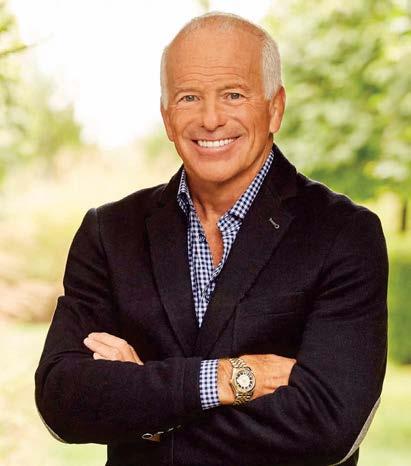



Water Mill. Maybe you were not to the manor born, but for a fortnight this summer you can experience more splendor than the Grantham’s ever imagined if you secure this sensational, 4-acre waterfront estate with dock facing west/southwest along 265’ of Mecox Bay. Designed by Historical Concepts with interiors by Steven Gambrel, this recently completed 17,000 SF, 8-bedroom estate offers the fortunate renter all the comforts and amenities one would expect from a world class custom designed home. A long, gated drive finds an impressive structure stretching nearly the full width of the property. A grand entry gallery over stone floors begins a journey through studied yet relaxed sophistication that offers common rooms including dramatic living room, family room and study, all warmed by fireplaces. The heart and soul of your days will happen in the sensational kitchen featuring marble countertops, a host of professional appliances, huge center island with seating and its own informal living room. Flanking this singular space is both a chef’s prep kitchen with wine room and a morning room, also perfect for intimate lunches or dinners. The formal dining room occupying one end of the entry gallery with a fireplace will be the focal point of lavish dinners. A powder room, mud room with laundry and an additional half bath complete the first floor. Upstairs the primary wing, stretching from the front to the back of the residence, offers an elegant sleeping chamber with fireplace and water view porch, expansive bathroom with steam shower and heated floors, large walk-in dressing room and contiguous half bath and breakfast bar. Three well-spaced guest suites sharing a lounge area and laundry room complete the second floor. Entertaining will be effortless with the attached two story, 4-bedroom guest wing, including two suites with fireplaces, which will house fortunate invitees in incomparable splendor. Outside both covered and uncovered patios overlook the vast grounds, heated pool with spa and the calm waters of Mecox Bay. The pool pavilion houses a cabana kitchen, wellness center, full bathroom, and laundry room. Another structure is home to the large screening room and water view art studio with half bath. Leave the vehicles in the three-car garage while you motor, jet ski, sail, or paddle across the bay for a day of fun on the beach. Amenities include a whole house generator, a full sound system inside and out, heated floors in all bathrooms and even a caretaker who lives in his own apartment on the grounds to manage whatever arises. Available for two weeks this summer, this incomparable offering awaits your private tour Exclusive. Any Two Weeks July - Labor Day $400K | WEB#901545
A by-the-numbers look at Emmy-winning actress and singer Zendaya, who gives a standout performance in The Drama and graces the cast of Christopher Nolan’s summer blockbuster, The Odyssey.
4
7,458
The number of places Zendaya traveled to—Budapest, Abu Dhabi, Italy and Jordan—while filming Dune: Part Two, one of Warner Bros.’ most successful productions.
100
A place on Time’s 100 Most Influential People list in 2022, honoring her impact on audiences and the entertainment industry at large.
2
Major films she has produced— Challengers and Malcolm & Marie—confirming her growing expertise behind the scenes.
The number of copies of her debut album, Zendaya, sold in the first week of its release.The lead single,“Replay,” attained platinum status, selling over 1 million units.

“If you don’t try things and take risks, you don’t really grow and figure out what you want.”
25
The number of Emmy award nominations earned by Euphoria, with Zendaya at the center as its most defining performance.
1
The September day in 1996 that Zendaya was born.The actress-singerdancer-producer would redefine what it means to be a modern multihyphenate in Hollywood.
2021
Year she became the youngest recipient of the Fashion Icon Award by the Council of Fashion Designers of America, recognizing her distinct presence in fashion.
1.5 BILLION
The global box-office earnings of Spider-Man: No Way Home, the film she stars in as MJ—one of the highest-grossing films of the decade.
7
Number of auditions it took before landing her breakthrough role as Rocky Blue on the popular Disney Channel series Shake It Up

JUST REDUCED


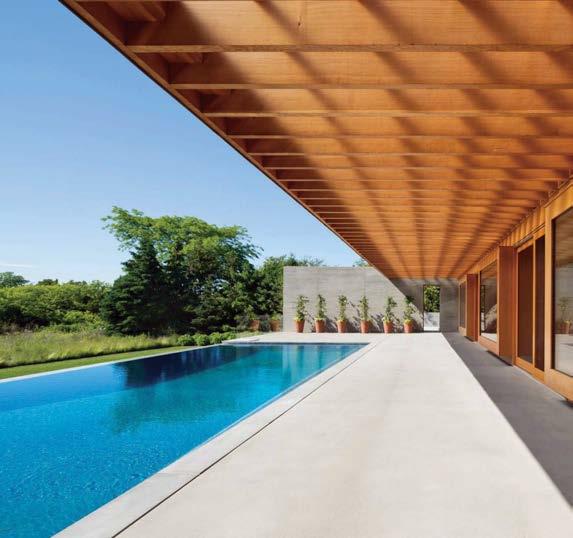


This amazing compound, nicer than any 5 star resort, has it all! Set on 2.68 acres, this Andrew Berman designed estate, is the perfect setting for a fabulous home. Incredible glass walled living and dining rooms overlook the gunite heated pool, the waters of Calf Creek and spectacular quintessential Hampton’s sunsets. Fully equipped kitchen, formal dining, fabulous den and offices, 8 ensuite bedrooms, 2 additional full baths and a powder room. Glass walled gym, sauna and a steam room overlooking the gardens and all-weather tennis court. There is a detached 3-car garage, an apple orchard, grapevines, a picturesque garden and a breathtaking roof garden. $27.5M WEB# 915034

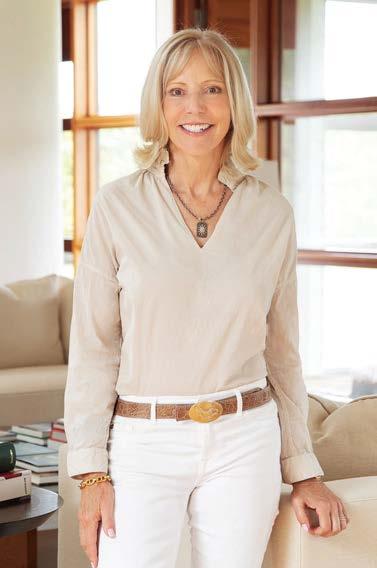
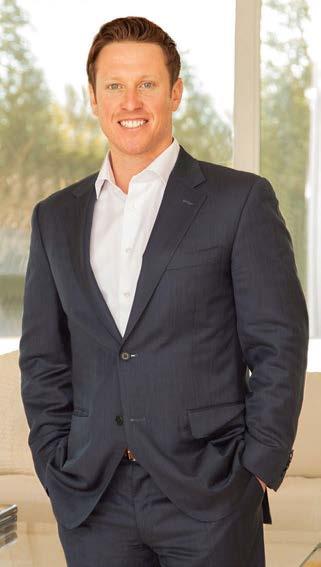


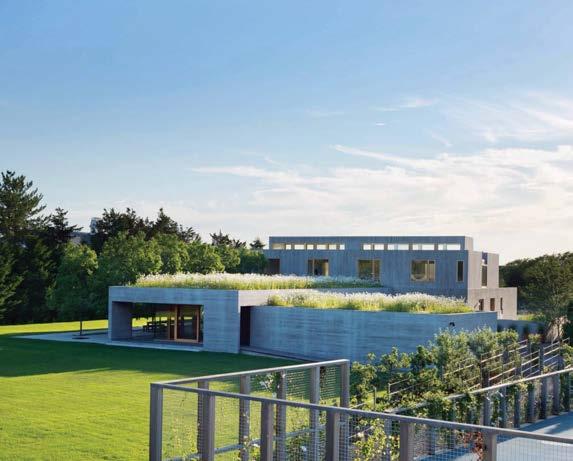
Corcoran’s #1 Hamptons Agent – 2025 2024, 2023, 2021, 2020, 2018, 2017, 2015, 2014, 2012, 2011, 2010 & 2009 With over $70 Million closed in January, Setting the pace for 2026 #1 Individual by Volume in the Hamptons by RealTrends Verified – Top New York Agents 2024
$6.32 Billion Total Career Sales Volume